
Marlo Morgan
Author of Mutant Message Down Under
About the Author
Works by Marlo Morgan
Tagged
Common Knowledge
- Canonical name
- Morgan, Marlo
- Other names
- MORGAN, Marlo
- Birthdate
- 1937-09-29
- Gender
- female
- Nationality
- USA
- Places of residence
- Fort Madison, Iowa, USA
Kansas City, Missouri, USA - Associated Place (for map)
- USA
Members
Reviews
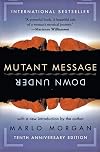
This is a fictional story, made up by the author and the version of the book I read said it was for real. I found it to be unbelievable at times. So finding out it was made up was reassuring. I lived in Australia for over 8 years and the impact of the "red dirt" and the aboriginals is very powerful. The feeling of the outback earth and exploring it caused me to fell very grounded.
I believe there are messages for us from worlds we can't see and we can receive them in very unconventional show more ways. Respecting the Aboriginal culture is of utmost importance. While the author's message was good about trusting your self, the fact that she did not tell the truth about her writing from the beginning tells me she has some personal work and apologies to do. show less
I believe there are messages for us from worlds we can't see and we can receive them in very unconventional show more ways. Respecting the Aboriginal culture is of utmost importance. While the author's message was good about trusting your self, the fact that she did not tell the truth about her writing from the beginning tells me she has some personal work and apologies to do. show less

Em viagem à Austrália para conhecer o sistema de saúde daquele país, Marlo Morgan vivenciou aos 50 anos uma experiência que a modificou profundamente. O resultado foi um best-seller com mais de 600 mil exemplares vendidos somente nos Estados Unidos. “Mensagem do outro lado do mundo” revela como uma médica americana de meia-idade transformou um inofensivo almoço com aborígenes australianos em quatro meses de peregrinação por 1.400 milhas, iniciações, segredos e rituais – show more sendo que num deles a neófita foi enterrada até o pescoço para limpeza do lixo ocidental. Marlo narra sua experiência pessoal com entusiasmo e verdade, sem cair num tom doutrinário ou dogmático. Ela considera-se uma mensageira mutante, disposta a lutar pelo meio ambiente e salvar o espírito da Terra. O relato da autora mostra que a jornada exterior e o processo de iniciação esotérico (interior) reúnem-se num exercício de autoconhecimento, também presente na filosofia aborígene. O resultado final é uma pequena mostra da visão holística, com um toque de magia, aventura, humor e consciência ecológica. show less

I first read this in an edition that claimed it actually happened; and that she was a Ph.D., inferred she was a doctor and an anthropologist. The stories about it all being made up came out after I had finished the book, and made me feel like I had been scammed. Since then she has had a lot of anger from Aboriginals in Australia who deeply resent her misrepresentation of them and their beliefs and way of life. She seems totally uncaring of the truth, of respecting the people she writes show more about, and apparently, she's made a mint and a career from this book. I reread it for a book discussion group, but felt real anger and sadness while doing so. I love fiction, but think there should be some element of truth, truthfulness, honesty in fiction. We'll probably have a pretty hot discussion in our reading group over this book and its author! show less
When this book was originally published in 1991 it was promoted as nonfiction and in the foreword the author says that the story the reader is about to discover is a true account of what happened to her in Australia. Years later however the book was republished as fiction and there are a few websites that post a wide variety of information intended to prove that the account is in fact fictitious. I have read both the book and the articles protesting it, as well as the account of the show more statement Ms. Morgan's made to the representatives of an Australian Aboriginal association acknowledging that her book is a work of fiction, and find that more than anything this whole situation makes me sad and disappointed. If what Ms. Morgan writes about really happened then why are people so determined to discredit her and her book? And if her story is fiction then why did she make such an effort to make people believe that it's not? Why apologize to the Aboriginal representatives if there's nothing to apologize for? And if there is something to apologize for then why shrug it off and continue as if nothing happened? Money seems to be the answer, and if financial gain is based on deception that makes me deeply disappointed in my fellow man.
On one hand I wanted to believe that the book is a memoir because the idea of a small society living in peace with themselves and the world around them, and not upsetting the natural balance of their environment is reassuring at a time when we keep hearing about climate change, whole species disappearing, pockets of land that has not been touched by humans becoming smaller and smaller. Now, I'm not a person who'll willingly move out of the city and live without electricity and plumbing to reduce my carbon footprint, but I will recycle and conserve water and power whenever I can, and I do believe that our actions affect the planet in a way that's ultimately detrimental to the length of time the human race will be able to enjoy themselves on Earth. After all, if one uses resources faster than they can be replenished sooner or later they will run out, and we have not yet figured out a way to make natural gas and oil or grow trees faster than it happens in nature.
On the other hand as I read the book some things struck me as odd. There were mentions of concepts and places that I wouldn't expect to hear from a people who were portrayed as a group who shun technology and all things modern because they see little value in them, such as mutation and outer space. The timeline seemed somewhat flexible at times, to say the least. The author seemed to go between needing an interpreter's help during the simplest of conversations and having complex discussions with members of the tribe without the interpreter present. And speaking of the members of the tribe, I did not understand why everybody had names that meant something when translated, such as Secret Keeper and Female Healer, and even Ms. Morgan was given a name fashioned in the same way, but the man who served as interpreter was known simply as Ooota? I was also put off by frequent talk about how the author was loosing weight on this walkabout, how pounds were literally melting off of her, and yet we have only relatively general depiction of her life with the tribe. I don't know about you, but I would much rather hear more about the daily life of a people so unlike my own than about how much thinner one American has gotten over the course of several months in the outback. There also seemed to be an undercurrent of "if you reject this account as truth then you're with those who say that people living without technology in the bush are lesser beings and that's just wrong", which grated on my nerves with its one-sidedness.
There was quite a bit of what can be referred to as "new age-y" talk about the importance of discovering and developing our own unique gifts, about how all humans are linked to each other, about us covering up the fundamental essense of life by figurative gravies and frostings, honoring animals' purpose by hunting them for food, how every experience is a lesson to be learned and if we don't learn it then we're presented with the same lesson again, etc. In some things the author completely lost me, in others I agreed with her because ultimately there is tremendous personal value in actively pursuing areas in which one is talented, and being aware of our impact on the world has value for all mankind.
Last but not least let's talk about writing. It is a book after all, regardless of whether it's a novel or a memoir. The writing was pretty consistent with what I'd expect from a first novel by a person with no literary aspirations, although it was polished by the Harper Collins team of experts and therefore is generally smoother reading than some independently-published books I've seen over the last year. There was a lot of telling instead of showing and I would have appreciated more scenes depicting the events of the months of the walkabout instead of the simple mentions that things happened and people exist. The author says that the particulars were omitted to protect the privacy of the people, but with everything I've read after finishing the book I can't help but think that it's just a copout.
I'm glad that I've read this book, if nothing else it made me think about the world and my place in it while I was reading and about people's goals and intentions when I finished it. show less
On one hand I wanted to believe that the book is a memoir because the idea of a small society living in peace with themselves and the world around them, and not upsetting the natural balance of their environment is reassuring at a time when we keep hearing about climate change, whole species disappearing, pockets of land that has not been touched by humans becoming smaller and smaller. Now, I'm not a person who'll willingly move out of the city and live without electricity and plumbing to reduce my carbon footprint, but I will recycle and conserve water and power whenever I can, and I do believe that our actions affect the planet in a way that's ultimately detrimental to the length of time the human race will be able to enjoy themselves on Earth. After all, if one uses resources faster than they can be replenished sooner or later they will run out, and we have not yet figured out a way to make natural gas and oil or grow trees faster than it happens in nature.
On the other hand as I read the book some things struck me as odd. There were mentions of concepts and places that I wouldn't expect to hear from a people who were portrayed as a group who shun technology and all things modern because they see little value in them, such as mutation and outer space. The timeline seemed somewhat flexible at times, to say the least. The author seemed to go between needing an interpreter's help during the simplest of conversations and having complex discussions with members of the tribe without the interpreter present. And speaking of the members of the tribe, I did not understand why everybody had names that meant something when translated, such as Secret Keeper and Female Healer, and even Ms. Morgan was given a name fashioned in the same way, but the man who served as interpreter was known simply as Ooota? I was also put off by frequent talk about how the author was loosing weight on this walkabout, how pounds were literally melting off of her, and yet we have only relatively general depiction of her life with the tribe. I don't know about you, but I would much rather hear more about the daily life of a people so unlike my own than about how much thinner one American has gotten over the course of several months in the outback. There also seemed to be an undercurrent of "if you reject this account as truth then you're with those who say that people living without technology in the bush are lesser beings and that's just wrong", which grated on my nerves with its one-sidedness.
There was quite a bit of what can be referred to as "new age-y" talk about the importance of discovering and developing our own unique gifts, about how all humans are linked to each other, about us covering up the fundamental essense of life by figurative gravies and frostings, honoring animals' purpose by hunting them for food, how every experience is a lesson to be learned and if we don't learn it then we're presented with the same lesson again, etc. In some things the author completely lost me, in others I agreed with her because ultimately there is tremendous personal value in actively pursuing areas in which one is talented, and being aware of our impact on the world has value for all mankind.
Last but not least let's talk about writing. It is a book after all, regardless of whether it's a novel or a memoir. The writing was pretty consistent with what I'd expect from a first novel by a person with no literary aspirations, although it was polished by the Harper Collins team of experts and therefore is generally smoother reading than some independently-published books I've seen over the last year. There was a lot of telling instead of showing and I would have appreciated more scenes depicting the events of the months of the walkabout instead of the simple mentions that things happened and people exist. The author says that the particulars were omitted to protect the privacy of the people, but with everything I've read after finishing the book I can't help but think that it's just a copout.
I'm glad that I've read this book, if nothing else it made me think about the world and my place in it while I was reading and about people's goals and intentions when I finished it. show less
Lists
Awards


You May Also Like


Associated Authors
Statistics
- Works
- 5
- Members
- 2,993
- Popularity
- #8,524
- Rating
- 3.3
- Reviews
- 61
- ISBNs
- 134
- Languages
- 20
- Favorited
- 1