

Téa Obreht
Author of The Tiger's Wife
About the Author
Téa Obreht was born in Belgrade in the former Yugoslavia in 1985. She immigrated with her family to the United States in 1997. Her writing has been published in The New Yorker, The Atlantic, Harper's, The New York Times, and The Guardian as well as being anthologized in The Best American Short show more Stories and The Best American Non-Required Reading. Her first novel, The Tiger's Wife, was published in 2011 and won the 2011 Orange Prize for Fiction. (Bowker Author Biography) show less
Image credit: From publisher
Works by Téa Obreht
Blue Water Djinn 1 copy
Associated Works
The Decameron Project: 29 New Stories from the Pandemic (2020) — Contributor — 160 copies, 5 reviews
Tagged
Common Knowledge
- Canonical name
- Obreht, Téa
- Birthdate
- 1985-09-30
- Gender
- female
- Education
- Cornell University
University of Southern California - Occupations
- novelist
- Organizations
- Hunter College
- Awards and honors
- National Book Foundation "5 Under 35" (2010)
- Agent
- Seth Fishman (Gernert Company)
- Nationality
- Yugoslavia
USA - Birthplace
- Belgrade, Yugoslavia
- Places of residence
- Cyprus
Egypt
Ithaca, New York, USA
Belgrade, Serbia
Palo Alto, California, USA
New York, New York, USA - Map Location
- USA
Members
Discussions
The Tiger's Wife by Téa Obreht in Orange January/July (October 2013)
Reviews
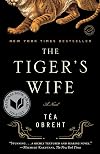
I still haven't made my mind up about "The Tiger's Wife," and I don't know if my conflicted feelings about the book have more to do with the book itself or how I'm supposed to think about it. Let me explain: I expect many readers would probably say that "The Tiger's Wife" fits pretty comfortably into the genre of "magical realism," that genre that deals with the familiar-yet-fantastic that grew up in the wake of Gabriel García Marquez's "One Hundred Years of Solitude." But that book derived show more much of its power from the fact that it seemed a natural -- even logical -- extension of Latin American reactions to the modern world. As well written and affecting as it can be, "The Tiger's Wife" reads a lot like a novel written by somebody who's read a lot of Marquez, and it suffers for it. Yes, Obreht incorporates a number of Balkan legend and folk belief into the book, and much of it is interesting, but while you could imagine that many of the fantastic happenings in "Hundred Years" might have seemed wholly normal to the inhabitants of Macondo, there's a deliberately artificial fairy-tale quality to much of "The Tiger's Wife," including many of the sections dealing with the tiger itself, that make the whole affair more magical than realist, and therefore more cutesy than cutting. I recently read that Albanian writer Ismail Kadere actually rejects the term "magical realism" for his own work, arguing that his characters' mindsets are essentially premodern and belief in the supernatural is entirely guileless. But since tiger's aren't native to Serbia, it's hard to say how near-illiterate, extremely isolated Serbian peasants would react to the appearance of a tiger in the woods near their town. The book, at times, seems less like an honest account than a bit of literary whimsy.
Which isn't to say that there aren't reasons to recommend "The Tiger's Wife." Obreht writes -- let's admit it -- astonishingly fluidly and beautifully for her years, and the book is strongest when it discusses the elements of the novel she probably had first-hand experience with: NATO's bombing campaign, the confused, divided aftermath of the bloody breakup of Yugoslavia, and how teens reacted to a war that was on everyone's mind but that didn't affect their everyday lives all that much. We hear about late night adventures, bootleg tapes of rock music, and the occasional draft evasion. There's also the author's lovely description of the relationship, both personal and professional, between the main character and her grandfather, a man of great dignity and bearing who negotiates with his own demise as best he can throughout much of the book.
As for the moral implications of the book, I'm also of two minds: the suspicious, gossipy village that the author uses as an allegory of sorts for the book doesn't really do much to address the issue of collective guilt that's bound to arise after events of this magnitude. At the same time, novel's focus seems to be squarely on healing and recovery, both of the physical, medically oriented variety and of the deeper spiritual kind. The author's meditation on medicine -- as a form augury, compassion, and control are thoughtful and touching. But, as difficult as parts of this book were to read, particularly those concerning the tortuous home life of the tiger's wife herself, there were times when I wished it was a bit more grounded, and maybe a bit more brutal. Recommended, perhaps, but with many reservations. Dear reader, you'll have to make your own mind up about this one. show less
Which isn't to say that there aren't reasons to recommend "The Tiger's Wife." Obreht writes -- let's admit it -- astonishingly fluidly and beautifully for her years, and the book is strongest when it discusses the elements of the novel she probably had first-hand experience with: NATO's bombing campaign, the confused, divided aftermath of the bloody breakup of Yugoslavia, and how teens reacted to a war that was on everyone's mind but that didn't affect their everyday lives all that much. We hear about late night adventures, bootleg tapes of rock music, and the occasional draft evasion. There's also the author's lovely description of the relationship, both personal and professional, between the main character and her grandfather, a man of great dignity and bearing who negotiates with his own demise as best he can throughout much of the book.
As for the moral implications of the book, I'm also of two minds: the suspicious, gossipy village that the author uses as an allegory of sorts for the book doesn't really do much to address the issue of collective guilt that's bound to arise after events of this magnitude. At the same time, novel's focus seems to be squarely on healing and recovery, both of the physical, medically oriented variety and of the deeper spiritual kind. The author's meditation on medicine -- as a form augury, compassion, and control are thoughtful and touching. But, as difficult as parts of this book were to read, particularly those concerning the tortuous home life of the tiger's wife herself, there were times when I wished it was a bit more grounded, and maybe a bit more brutal. Recommended, perhaps, but with many reservations. Dear reader, you'll have to make your own mind up about this one. show less
Inland by Téa Obreht

Deeply imagined historical fiction based on an unusual episode in the history of Arizona Territory in the mid-to-late 1800s. Obreht threads together two seemingly disparate stories: Lurie, a Turkish immigrant whose alliances have led to his status as a wanted man, and Nora, a mother toiling in a rugged landscape to care for her family in a drought while her husband searches for water. These two storylines eventually merge in a satisfying way. I don’t want to give away too much of the plot, show more as I found part of the enjoyment in reading this novel is figuring out the connections.
The characters are well-crafted, and the style of prose is suited to the time period. The reader is privy to the inner thoughts of the two main characters, how they view what they have done in life, and the stories they tell themselves. They each have experienced grief, and it continues to influence them at a cost to their mental well-being. Their personal stories and a few well-kept secrets are gradually revealed, containing a few surprises for the reader.
The desert is a character unto itself. The author expertly evokes the oppressive heat, arid landscape, and the harsh realities faced by anyone trying to make a life in the desert. It felt authentic in its portrayal of what life may have been like on the lawless, rough frontier. I recommend keeping a water bottle at hand!
I should mention that this book contains a few ghosts, called “the other living,” that can be read either as supernatural elements or as figments of the characters’ imaginations. I found it very easy to explain these apparitions as a product of extreme grief, influence by others, or a deterioration in mental health.
This novel works on several levels: it is a picture of the challenges within a long-term marriage, the lingering impact of the death of loved ones, and the impact of individual choices on a person’s life. I highly enjoyed it.
I received an advance reader’s copy from the publisher. This book is due to be published August 2019. show less
The characters are well-crafted, and the style of prose is suited to the time period. The reader is privy to the inner thoughts of the two main characters, how they view what they have done in life, and the stories they tell themselves. They each have experienced grief, and it continues to influence them at a cost to their mental well-being. Their personal stories and a few well-kept secrets are gradually revealed, containing a few surprises for the reader.
The desert is a character unto itself. The author expertly evokes the oppressive heat, arid landscape, and the harsh realities faced by anyone trying to make a life in the desert. It felt authentic in its portrayal of what life may have been like on the lawless, rough frontier. I recommend keeping a water bottle at hand!
I should mention that this book contains a few ghosts, called “the other living,” that can be read either as supernatural elements or as figments of the characters’ imaginations. I found it very easy to explain these apparitions as a product of extreme grief, influence by others, or a deterioration in mental health.
This novel works on several levels: it is a picture of the challenges within a long-term marriage, the lingering impact of the death of loved ones, and the impact of individual choices on a person’s life. I highly enjoyed it.
I received an advance reader’s copy from the publisher. This book is due to be published August 2019. show less

Death and superstition go hand in hand in this debut novel just as they do in its setting of the Balkans. Natalia, a young doctor who grew up under the influence of her grandfather, also a doctor in war torn Belgrade, is on her way across the newly established border to inoculate orphans of the war when she learns of her grandfather's death. She continues her mission, but is consumed by the memories of her childhood and the stories he doled out to her with the admonition, "there are some show more stories you keep to yourself."
Grandfather was a shepherd, a lonely job with the time for a young boy to teach himself to read and the solitude to foster his imagination. His only book was The Jungle Book so it's no wonder that the legend of a tiger fills his mind and becomes part of his childhood myth. Obreht weaves the stories of the tiger's wife and the deathless man that shadow him throughout the reality of his tumultuous adult years.
So it this book reverie or reality? Does it matter? I found myself succumbing to the past and getting lost in the fuzziness of magic realism which this young Orange Prize winner does so well. Although we get hints of the ethnic hatred of the Balkan region, I don't consider this a historical novel but one of escape reading where the truth can be found at the crossroads of fact and fantasy. Please note that this is my interpretation of the book. You may read it and come to an entirely different conclusion which, to me, is the sign of a reflective book. show less
Grandfather was a shepherd, a lonely job with the time for a young boy to teach himself to read and the solitude to foster his imagination. His only book was The Jungle Book so it's no wonder that the legend of a tiger fills his mind and becomes part of his childhood myth. Obreht weaves the stories of the tiger's wife and the deathless man that shadow him throughout the reality of his tumultuous adult years.
So it this book reverie or reality? Does it matter? I found myself succumbing to the past and getting lost in the fuzziness of magic realism which this young Orange Prize winner does so well. Although we get hints of the ethnic hatred of the Balkan region, I don't consider this a historical novel but one of escape reading where the truth can be found at the crossroads of fact and fantasy. Please note that this is my interpretation of the book. You may read it and come to an entirely different conclusion which, to me, is the sign of a reflective book. show less
The essence of this book is an elegy, narrated by Natalia Stefanovic to her grandfather. As a young doctor, Natalia is on a trip across the border to provide immunizations to an orphanage. While on this journey she learns from her grandmother that her grandfather has died somewhere near Natalia's destination. The family thinks that the grandfather was on his way to meet Natalia, but to Natalia this makes no sense.
While trying to provide care to the orphans, Natalia tries to make sense of and show more some peace with the loss. She tells us that "everything necessary to understand my grandfather lies between two stories: the story of the tiger's wife and the story of the deathless man." From there the narrator takes us through her life with her grandfather and the importance of these two stories in his life.
However, these two stories are only borders of her grandfather's essence and like Russian nesting dolls, there are stories within the stories which open up to us as the narrative progresses. Many of these stories are folkloric with hints of animism and magical realism. War is the back drop for many of these stories and there are often parent-less children at the heart of the stories
I have read this book twice and listened to it as an audiobook once. The narrative is complex in it's structure, but it is complete as the author explores the territory of loss and mourning. Just as geographical boundaries and borders shift as a result of the wars that have scarred the Balkans, the boundaries between life and death as well as hope and despair move in the heart of the narrator as she comes to term with the loss of a grandfather who has been a pillar of strength in her life. show less
While trying to provide care to the orphans, Natalia tries to make sense of and show more some peace with the loss. She tells us that "everything necessary to understand my grandfather lies between two stories: the story of the tiger's wife and the story of the deathless man." From there the narrator takes us through her life with her grandfather and the importance of these two stories in his life.
However, these two stories are only borders of her grandfather's essence and like Russian nesting dolls, there are stories within the stories which open up to us as the narrative progresses. Many of these stories are folkloric with hints of animism and magical realism. War is the back drop for many of these stories and there are often parent-less children at the heart of the stories
I have read this book twice and listened to it as an audiobook once. The narrative is complex in it's structure, but it is complete as the author explores the territory of loss and mourning. Just as geographical boundaries and borders shift as a result of the wars that have scarred the Balkans, the boundaries between life and death as well as hope and despair move in the heart of the narrator as she comes to term with the loss of a grandfather who has been a pillar of strength in her life. show less
Lists
Female Author (1)
Carole's List (1)
Magic Realism (1)
Indie Next Picks (1)
Facebook list (1)
Translingualism (1)
. (1)
New Books March (1)
USA Road Trip (1)
To Read (1)
First Novels (1)
World Books (1)
Overdue Podcast (1)
Awards


You May Also Like


Associated Authors
Statistics
- Works
- 6
- Also by
- 10
- Members
- 7,290
- Popularity
- #3,354
- Rating
- 3.6
- Reviews
- 407
- ISBNs
- 86
- Languages
- 13
- Favorited
- 6
