
Peter Orner
Author of Am I Alone Here?: Notes on Living to Read and Reading to Live
About the Author
He was born in chicago in 1968. After graduating from the University of Michigan, he taught in a rural Catholic mission in Africa, received a law degree in Boston & practiced there as a juvenile public defender & then enrolled in the University of Iowa's Writer's Workshop. He lectured in law & show more English in Prague until joining the English department at Miami University in Ohio, where he now lives. (Bowker Author Biography) show less
Works by Peter Orner
Underground America: Narratives of Undocumented Lives (Voice of Witness) (2008) — Editor — 145 copies, 3 reviews
Associated Works
McSweeney's 12: Unpublished, Unknown, and/or Unbelievable (2003) — Contributor — 290 copies, 4 reviews
High Rise Stories: Voices from Chicago Public Housing (Voice of Witness) (2013) — Advising editor — 81 copies, 1 review
A Fairly Good Time AND Green Water, Green Sky (2016) — Introduction, some editions — 79 copies, 7 reviews
You Must Be This Tall to Ride: Contemporary Writers Take You Inside the Story (2009) — Contributor — 21 copies
Freud's Blind Spot: 23 Original Essays on Cherished, Estranged, Lost, Hurtful, Hopeful, Complicated Siblings (2010) — Contributor — 19 copies
The New Diaspora: The Changing Landscape of American Jewish Fiction (2015) — Contributor — 17 copies
Tagged
Common Knowledge
- Birthdate
- 1968
- Gender
- male
- Awards and honors
- Lannan Literary Fellowship (2006)
- Relationships
- Orner, Eric (brother)
- Nationality
- USA
- Birthplace
- Chicago, Illinois, USA
- Places of residence
- Chicago, Illinois, USA
San Francisco, California, USA - Associated Place (for map)
- USA
Members
Reviews
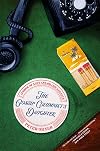
As a newspaper columnist, talk show host, and professional "man about town," Irv Kupcinet (1912-2003) was a fixture on Chicago's celebrity scene. When his daughter, aspiring actress Karyn "Cookie" Kupcinet (1941-1963) was found dead in her Los Angeles apartment, "Kup" and his socialite wife Essee, who were both neglectful parents during Cookie's brief life, deeply mourned her loss. But what really happened to Cookie? Did she kill herself, did her small-time actor boyfriend murder her, or was show more the tragic incident somehow connected to the Kennedy assassination, which had occurred only a few days before Cookie's death?
Novelist Peter Orner's protagonist, second-rate creative writing professor Jed Rosenthal, has a small personal connection to the Kupicet family: his grandparents Lou and Babs were, for a time, Irv and Essee's (fictional) best friends. Jed develops an obsession with unraveling the mysteries surrounding Cookie's death. On a more personal level, Jed also wants to know why, in the days after their daughter's funeral, Irv and Essee abruptly severed all contact with Lou and Babs, a rupture that (fictitiously) lasted the rest of their lives.
The Gossip Columnist's Daughter is very much a Chicago story. Orner effectively captures the singular flavor of the city and environs from the days of Irv's and Lou's youth to the post-COVID 2020s. I loved it. show less
Novelist Peter Orner's protagonist, second-rate creative writing professor Jed Rosenthal, has a small personal connection to the Kupicet family: his grandparents Lou and Babs were, for a time, Irv and Essee's (fictional) best friends. Jed develops an obsession with unraveling the mysteries surrounding Cookie's death. On a more personal level, Jed also wants to know why, in the days after their daughter's funeral, Irv and Essee abruptly severed all contact with Lou and Babs, a rupture that (fictitiously) lasted the rest of their lives.
The Gossip Columnist's Daughter is very much a Chicago story. Orner effectively captures the singular flavor of the city and environs from the days of Irv's and Lou's youth to the post-COVID 2020s. I loved it. show less
Rating: 4.5* of five
All the stars, all the stripes, all the band fanfares for Walt Kaplan is Broke: A Novella! The Chicago stuff, Lighted Windows, not so much; the thematic unity there was love, looking for love, running into it without meaning to, and that's pretty much why short stories get a bad rap from most folks because, in the end, who friggin cares.
Renters: A Sequence was affecting as a group of minor stories, cohesive in their central theme of exploring the disaster and misery of a show more marriage foundering under the skyscraper-tall waves of mental illness; the issue for me, the reason it wasn't as rock-me-back beautiful as Walt Kaplan was, was that the characters were sketched in thin, spidery lines instead of bold, dark strokes.
The Cali stuff, Come Back to California, was okay, I guess, but not excellent the way the Fall River, Mass, Jews in Castaways were. Startlingly rich and layered characterizations in quite compact stories, so compact as to be fleeting in some cases. The best single story in the book is in this section: "Bernard: A Character Study" was a peak read for me, a simple and direct evocation of a simple and direct person's time on this Earth.
The micro-ness of the fictions works best in the novella. They are a perfect meal made of tapas, orchestrated to present a dozen views of the tale; they each have a flavor impact outsized to their physical page presence, but contribute their unique qualities to a whole and satisfying conclusion to one's story hunger:
It's to your taste, or it isn't; but it *is* beautiful. show less
All the stars, all the stripes, all the band fanfares for Walt Kaplan is Broke: A Novella! The Chicago stuff, Lighted Windows, not so much; the thematic unity there was love, looking for love, running into it without meaning to, and that's pretty much why short stories get a bad rap from most folks because, in the end, who friggin cares.
Renters: A Sequence was affecting as a group of minor stories, cohesive in their central theme of exploring the disaster and misery of a show more marriage foundering under the skyscraper-tall waves of mental illness; the issue for me, the reason it wasn't as rock-me-back beautiful as Walt Kaplan was, was that the characters were sketched in thin, spidery lines instead of bold, dark strokes.
The Cali stuff, Come Back to California, was okay, I guess, but not excellent the way the Fall River, Mass, Jews in Castaways were. Startlingly rich and layered characterizations in quite compact stories, so compact as to be fleeting in some cases. The best single story in the book is in this section: "Bernard: A Character Study" was a peak read for me, a simple and direct evocation of a simple and direct person's time on this Earth.
The micro-ness of the fictions works best in the novella. They are a perfect meal made of tapas, orchestrated to present a dozen views of the tale; they each have a flavor impact outsized to their physical page presence, but contribute their unique qualities to a whole and satisfying conclusion to one's story hunger:
And think of the '60s, when the whole country got a little wilder and we joined in and did it twice a night? You remember, Sar? Now twice a night would be like rising from the dead, but history is history, and if not set down on paper it should at least be ruminated upon. Sarah and Walt Kaplan, one night, more than once, two entirely separate fornications.
Now, for a philosophical as well as a practical question: Why didn't we just push the beds together and leave them there? Ah, because that would be a lie, no? The nature of the reaching, the nature of the whispered entreaties, a thousand variations on the same invitation, is that both reaching of the hands and the question in question invariably lead to moments of complete incompleteness. Because the upshot of coupling is uncoupling. The essence of association is disassociation. Because you can fuck till you're blue, but at a certain point the inevitable nightly drawing apart happens for good, am I right or am I right? Spell it out again: the retreat once again to separate beds attains a cementation that precludes any further you wannas. After a certain point you wanna? is no longer an invitation for rumpus; it's a cry from oblivion.
It's to your taste, or it isn't; but it *is* beautiful. show less
Sparse but beautiful writing. It took me a moment to get into this book, but once I was won over, I couldn't put it down. How Orner managed to create such complete characterizations with so few words is a mystery to me; yet the people who populate this book feel known to me in a way that I don't even know myself. I quote a NYTimes review that states: "As Orner unspools their quirks through sharp, eccentric dialogue and interior asides, his characters grow distinct without ever becoming show more Gothic. He hits the right notes and no others.... Orner's thrift only heightens the longing that vibrates throughout the novel." Longing for rain; longing for something new on the horizon of the vast and endlessly arid veld; longing for love or that something that approximates it. show less
In this skillful and varied collection, Peter Orner once again shows us how it's done. "It" in this case being short fiction or brief, exquisite vignettes taken from his own experience. There are short stories here that are rooted firmly in their settings: some in the sleepy, hippie-inflected hills of Northern California, others in Fall River, Massachusetts's Jewish community. There are what I can only assume are semi-autobiographical stories describing how a new marriage breaks down as one show more of the parties slowly succumbs to mental illness. There's a lovely, perhaps necessarily incomplete homage to Len, a wildly inventive, endlessly energetic summer camp director who is slowly losing his life to a terminal illness he's forced to keep secret from his past associates. There are stories about Peter Orner's lawyer dad that are mostly about how different they were and how much he misses his dad anyway. There are a few stories you might have heard in a dorm room late at night as a college junior. And, as in any short story collection of any length, there are some strays. I can particularly recommend the title story, "Padanaram", "Naked Man Hides", and the aforementioned "Ineffectual Tribute to Len" which may be the real heartbreaker here. But Orner's batting average is so much higher than the average Tin House submission rat's that opinions are bound to vary and most things here work on at least one level.
What holds all of this together is an attention to craft and a deeply held appreciation for the short story form. Orner argues that while novels might tell us more about a character and their lives, their very size closes off their narrative: they purport to tell the definitive story of a person or an event. A short story, on the other hand, is, thanks to its very length and structure, half-built, incomplete, and, therefore, always a bit unfinished. It's eternally open and makes no claims to setting down a definitive account of anything or anyone. It's something to consider, and the stories in this volume make the author's case fairly well. So well that Orner himself seems to have come up in the world considerably since the relative success of "Am I Alone Here?" He's now teaching at Dartmouth and, while I'm not sure of the timeframe here, has been awarded a Guggenheim Fellowship and a Fulbright to, of all places, Namibia. Quite frankly, few writers working today deserve it more than he does. Sentence by sentence and story by story, Peter Orner shows that he's the real thing. show less
What holds all of this together is an attention to craft and a deeply held appreciation for the short story form. Orner argues that while novels might tell us more about a character and their lives, their very size closes off their narrative: they purport to tell the definitive story of a person or an event. A short story, on the other hand, is, thanks to its very length and structure, half-built, incomplete, and, therefore, always a bit unfinished. It's eternally open and makes no claims to setting down a definitive account of anything or anyone. It's something to consider, and the stories in this volume make the author's case fairly well. So well that Orner himself seems to have come up in the world considerably since the relative success of "Am I Alone Here?" He's now teaching at Dartmouth and, while I'm not sure of the timeframe here, has been awarded a Guggenheim Fellowship and a Fulbright to, of all places, Namibia. Quite frankly, few writers working today deserve it more than he does. Sentence by sentence and story by story, Peter Orner shows that he's the real thing. show less
Lists
Five star books (1)
Read These Too (1)
Awards


You May Also Like


Associated Authors
Statistics
- Works
- 24
- Also by
- 19
- Members
- 1,196
- Popularity
- #21,486
- Rating
- 3.7
- Reviews
- 51
- ISBNs
- 63
- Languages
- 6
- Favorited
- 1


