
Les Payne (1941–2018)
Author of The Dead Are Arising: The Life of Malcolm X
Works by Les Payne
Associated Works
When Race Becomes Real: Black and White Writers Confront Their Personal Histories (2002) — Contributor — 49 copies
Tagged
Common Knowledge
- Legal name
- Payne, Leslie
- Birthdate
- 1941-07-12
- Date of death
- 2018-03-19
- Gender
- male
- Education
- University of Connecticut (BA - English)
- Occupations
- reporter
deputy managing editor
columnist
professor (journalism) - Organizations
- Newsday (deputy managing editor)
Los Angeles Times (syndicated columnist)
Columbia University (Graduate School of Journalism)
United States Army (Vietnam War) - Awards and honors
- Pulitzer Prize
- Agent
- Faith Childs
- Relationships
- Payne, Tamara (child)
- Nationality
- USA
- Birthplace
- Tuscaloosa, Alabama, USA
- Places of residence
- Hartford, Connecticut, USA
- Place of death
- Manhattan, New York, USA
- Associated Place (for map)
- USA
Members
Reviews
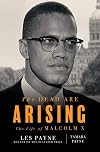
This narrative, sourced from family and Nation Of Islam (NOI) members who had never before spoken out, is well-written, riveting, and a perfect companion to Malcolm X's own 1965 autobiography, written with Alex Haley of Roots fame. Of particular interest and poignancy are the recounting of his early, difficult childhood due to his father's death in a streetcar accident and his mother's mental collapse as she tried to raise eight children alone. His family’s involvement with Marcus show more Garvey’s “Back to Africa” movement is explored as an early influence that can also be seen in Malcolm’s later devotion to father figure Elijah Muhammed. Malcolm X's rough teenage years were spent immersed in criminal activity in Boston and Harlem, here enriched by new insights gathered from his close associates at the time. His subsequent impressive, self-motivated education in prison is stunning in light of his triumphant rebirth as an outstanding and inspiring speaker and leader. Described in detail for the first time is Malcolm’s surreal meeting initiated in January 1961 by KKK leader W.S. Fellows, who thought that his group’s opposition to integration meshed well with the NOI policy of Black separation.
Malcolm's painful break with Elijah Muhammed, whom he had revered as semi-divine, and the subsequent plotting of the assassination and the identification of his murderers (NOI enforcers commanded by Muhammed with the complicity of J. Edgar Hoover) is stunning in its detail. Although the description of Malcolm’s conversion to true Islam in 1964, while making hajj in Mecca, is not as dramatically told as in the autobiography, the only missing element is the very short shrift given to surviving wife Betty Shabazz and his six daughters. An impressive triumph of research and investigation.
Quotes: "Malcolm demonstrated none of the self-doubt, insecurities, or fears that Negroes commonly displayed during close encounters with members of the group dominating American society.”
“Malcolm’s persuasive call to arms was widening the gap between his more global view of the dogma of Muhammed’s sect, weighted down with hocus-pocus religiosity.”
“Beneath this race canopy of the South, a crazy quilt of petit apartheid structures regulated every stage of social contact between black and white individuals, from diapers to the shroud.”
“King and his disciples quickly drew in the journalists who held out hope that their staged, non-violent protests would flare into open violence and front-page news. The unpredictability of this cycle of violence hooked the national media on a gothic civil rights drama that they unfolded on the evening news in the living rooms of America.”
“The rise of the Muslims, and Malcolm especially, made Reverend King all the more appealing to the white, mainstream power brokers.”
“He would redraw a more pragmatic Mason-Dixon line, declaring, “The South to blacks means south of Canada.” show less
Malcolm's painful break with Elijah Muhammed, whom he had revered as semi-divine, and the subsequent plotting of the assassination and the identification of his murderers (NOI enforcers commanded by Muhammed with the complicity of J. Edgar Hoover) is stunning in its detail. Although the description of Malcolm’s conversion to true Islam in 1964, while making hajj in Mecca, is not as dramatically told as in the autobiography, the only missing element is the very short shrift given to surviving wife Betty Shabazz and his six daughters. An impressive triumph of research and investigation.
Quotes: "Malcolm demonstrated none of the self-doubt, insecurities, or fears that Negroes commonly displayed during close encounters with members of the group dominating American society.”
“Malcolm’s persuasive call to arms was widening the gap between his more global view of the dogma of Muhammed’s sect, weighted down with hocus-pocus religiosity.”
“Beneath this race canopy of the South, a crazy quilt of petit apartheid structures regulated every stage of social contact between black and white individuals, from diapers to the shroud.”
“King and his disciples quickly drew in the journalists who held out hope that their staged, non-violent protests would flare into open violence and front-page news. The unpredictability of this cycle of violence hooked the national media on a gothic civil rights drama that they unfolded on the evening news in the living rooms of America.”
“The rise of the Muslims, and Malcolm especially, made Reverend King all the more appealing to the white, mainstream power brokers.”
“He would redraw a more pragmatic Mason-Dixon line, declaring, “The South to blacks means south of Canada.” show less
Having read Malcolm X: A Life of Reinvention by Manning Marable, the winner of the 2012 winner of the Pulitzer Prize for History, I was not keen to read yet another biography of this famed and infamous Black American leader. It did not take long for me to change my mind that, regardless of the scope and quality of Marabel's work, The Dead Are Arising: The Life of Malcolm X has both a unique prespective to bring and important aspects of Malcolm X's life to bring to light. Les Payne most show more certainly deserves the Pulitzer Prize for his work.
More than simply another biography of Malcolm X, this work seems to focus even more on this revolutionary as a political and religious leader with greater emphasis on his political life. It clarifies well Malcolm X's migration from hater of whites as white devils to recognition that not all whites are evil but the system in which they live teaches them to be evil. I was intrigued by his clarification that the problem really is the extreme capitalism of the United States -- that capitalism teaches racism. He stated that those whites he came to know in the US who were not racist tended to mostly be Socialists. I thought that was an interesting perspective.
What I liked most in this book was the ending letter of Malcolm X to the, I believe, Belgium Muslim group who sent him a series of questions to answer regarding his perspectives as a Muslim. (This is the downside of audio books, you can't easily go back and verify information.) He finished answering those question the morning he was killed. What better statement can there be of the true beliefs of Malcolm X than those stated in writing near the very end of his remarkable life.
I remember Malcolm X. I remember being afraid of what he taught because it taught hate. But I never heard any of the ameliorating things he said later in life because that was not the narrative the White establishment taught. My best friend married a black man. She also feared Malcolm X, believing him a bad man. I have spent my lifetime battling the racism I see in myself. That struggle continues today. I have read much and seen much and I try hard to keep a more even perspective. I do not think I am diminished by seeing and admitting I have been and am racist. What is important is that, being aware and willing to admit it, I can take steps to correct myself. Still it continues to unexpectedly surface. Getting my yard cleaned up, I found myself shocked of the words that popped into my mind, words my mother had often said, 'Well lookee here, looks like White folks live here.' DAMN! So the fight against my personal racism goes on. Oh, and, yes, my political leanings are Socialist. show less
More than simply another biography of Malcolm X, this work seems to focus even more on this revolutionary as a political and religious leader with greater emphasis on his political life. It clarifies well Malcolm X's migration from hater of whites as white devils to recognition that not all whites are evil but the system in which they live teaches them to be evil. I was intrigued by his clarification that the problem really is the extreme capitalism of the United States -- that capitalism teaches racism. He stated that those whites he came to know in the US who were not racist tended to mostly be Socialists. I thought that was an interesting perspective.
What I liked most in this book was the ending letter of Malcolm X to the, I believe, Belgium Muslim group who sent him a series of questions to answer regarding his perspectives as a Muslim. (This is the downside of audio books, you can't easily go back and verify information.) He finished answering those question the morning he was killed. What better statement can there be of the true beliefs of Malcolm X than those stated in writing near the very end of his remarkable life.
I remember Malcolm X. I remember being afraid of what he taught because it taught hate. But I never heard any of the ameliorating things he said later in life because that was not the narrative the White establishment taught. My best friend married a black man. She also feared Malcolm X, believing him a bad man. I have spent my lifetime battling the racism I see in myself. That struggle continues today. I have read much and seen much and I try hard to keep a more even perspective. I do not think I am diminished by seeing and admitting I have been and am racist. What is important is that, being aware and willing to admit it, I can take steps to correct myself. Still it continues to unexpectedly surface. Getting my yard cleaned up, I found myself shocked of the words that popped into my mind, words my mother had often said, 'Well lookee here, looks like White folks live here.' DAMN! So the fight against my personal racism goes on. Oh, and, yes, my political leanings are Socialist. show less

I liked Marable's Malcolm X: A Life of Reinvention, and I like this one too. It's funny: two major biographies of Malcolm X in just ten years (2011-2020), Marable's winning the 2012 Pulitzer for history, the Paynes's winning the 2021 Pulitzer for biography. This one is significant for a few reasons. First, most importantly, Les Payne started gathering material for this in 1990 and interviewed numerous people still then alive who remembered Malcolm and other characters going back to the show more 1920s. Interviews with Malcolm's family, particularly his brothers, were very important here. Second, about half of the book covers Malcolm's life up till his release from prison. His family background, their travails, life in the early twentieth century for black Americans, the rise of the Nation of Islam, Garveyism, the Klan, etc., are all discussed in detail. Add to that the childhood, teenage years, and young adulthood of Malcolm are examined at length. For those, like me, who like more early biography in their biographies, this was excellent. Last, this means that Malcolm's public career is rushed through rather quickly, and somewhat out of order. This is a demerit for the Paynes's work. Marable went through Malcolm's career in chronological order and great detail. The Paynes bounced back and forth and spent much time on things like Malcolm's meeting with the Klan, a whole chapter nearly, and a lot of time on Malcolm's last days and the day of his assassination. Perhaps this is because of the reliance on interviews by the elder Payne. It adds great insights, and is well-written, but leaves many gaps. For sheer usefulness, I'd recommend Marable's biography. For a complete picture, I'd recommend you read this one as well. As somebody who is quite interested in W. D. Fard and the creation of the N.O.I., Payne's work is a new piece of the puzzle. Les Payne interviewed an elderly Christopher Alston of early Detroit who apparently knew Fard and his connections to the Moorish Science Temple and the rise of the early N.O.I. This interview is gold for people interested in Fard and hopefully can be deposited in a accessible library and/or a transcript released to an accessible repository. More information on Fard is needed. Still, for some reason, the Payne's buy the weird F.B.I. conclusion that Fard was a "white man" from New Zealand, when he probably wasn't of European descent and probably from South or Central Asia (maybe via New Zealand). The Paynes's don't reference important works on Fard by Arian, Morrow, or Evanzz (they have Evanzz's Judas Factor, but not his Messenger). But, these are personal quibbles. It is a good biography, but I would read Marable's first. show less
This biography of Malcolm X (aka Malcolm Little, El-Hajj Malik El-Shabazz) is thorough and detailed, the result of decades of research by the main author, Les Payne, and his daughter, Tamara Payne. (Les died before completing the book, and Tamara finished it for them after his death.)
I really enjoyed learning about Malcolm’s childhood and particularly his mother, Louise Little. The descriptions of his young adulthood and all the trouble he got himself in was interesting at first, but then show more went on and on it was hard to keep track of all the players. I was really fascinated by the background information about his parents being followers of Marcus Garvey and how that influenced his own philosophies as well as the parallels between Garvey’s KKK meeting and Malcolm’s meeting with the KKK. I was even more fascinated by the stories of two women in the book: Louise Little, his mother, and Elizabeth, the wife of Jeremiah X Shabazz, the Atlanta NOI minister. The authors gave me tidbits of information about what Elizabeth thought of, about Jeremiah being stationed in the Atlanta (they were both from the North) and second, having to serve refreshments at their meeting with the KKK. The tidbits leave me wanting so much more about her story, her opinions, ideas, experiences.
The overlaps and differences between what the NOI and KKK wanted was also interesting - how Malcolm and the NOI insisted on using the term “separation” as opposed to “segregation.” The book tells us that ultimately what the KKK wanted from this meeting with the NOI was information about Dr. Martin Luther King Jr. so that they could kill him, which Malcolm refused to provide.
And my goodness, the KKK was obsessed with white women. It’s obviously racist, but man it was also tiredly objectifying to hear over and over and over.
The book does cover some of the similarities and differences between Malcolm and MLK NOI and the civil rights movement. I did feel at one point it was falling in the trope of dichotomizing them… but I don’t feel like I know enough about the topic to really say either way. It was interesting nonetheless.
It felt rushed at the end - I would have loved to know more about Malcolm’s global work, connecting the oppression of Black people in the US to oppression of colonialism in Asia, Africa and the Middle East. But perhaps it felt rushed because his life was rushed. That period of his life after he left the NOI and began charting a new path was short because he was assassinated. I did not know he was trying to get other countries to pass a UN resolution against the US about its racial injustice. We still need a movement like that today, badly. He saw the connections between injustice in the US and injustices in colonized countries in ways that continue to often be ignored across social justice and global human rights sectors.
It would be a fascinating exercise to reflect on all the ways in which Malcolm's philosophies/positions/ideas changed over the course of his life and activism/organizing, as well as the ways they stayed constant. It is empowering, actually, to think about how much he gained and gave as a member of NOI even though aspects of the movement and its leader he later came to disagree with and found problematic. And yet that does not take away from all he gained and gave from being part of that movement. The lesson being, at least in part, that we can change our minds about positions we took in the past and that doesn’t necessarily have to take away from other position we had at the same time, that we still have. We can be wrong about some things, and right about others, and change over time. There’s a lot of honor and humility in that.
I give it 4 stars because it is a thorough, detailed account. I listened to the audiobook and admit it was boring and difficult to keep up with all the characters at times. There are parts that I definitely missed because I could not pay attention (or was zoning off while traveling in the car) but overall, it’s a treasure of a book that covers such a fascinating, dynamic, brilliantly multidimensional person. show less
I really enjoyed learning about Malcolm’s childhood and particularly his mother, Louise Little. The descriptions of his young adulthood and all the trouble he got himself in was interesting at first, but then show more went on and on it was hard to keep track of all the players. I was really fascinated by the background information about his parents being followers of Marcus Garvey and how that influenced his own philosophies as well as the parallels between Garvey’s KKK meeting and Malcolm’s meeting with the KKK. I was even more fascinated by the stories of two women in the book: Louise Little, his mother, and Elizabeth, the wife of Jeremiah X Shabazz, the Atlanta NOI minister. The authors gave me tidbits of information about what Elizabeth thought of, about Jeremiah being stationed in the Atlanta (they were both from the North) and second, having to serve refreshments at their meeting with the KKK. The tidbits leave me wanting so much more about her story, her opinions, ideas, experiences.
The overlaps and differences between what the NOI and KKK wanted was also interesting - how Malcolm and the NOI insisted on using the term “separation” as opposed to “segregation.” The book tells us that ultimately what the KKK wanted from this meeting with the NOI was information about Dr. Martin Luther King Jr. so that they could kill him, which Malcolm refused to provide.
And my goodness, the KKK was obsessed with white women. It’s obviously racist, but man it was also tiredly objectifying to hear over and over and over.
The book does cover some of the similarities and differences between Malcolm and MLK NOI and the civil rights movement. I did feel at one point it was falling in the trope of dichotomizing them… but I don’t feel like I know enough about the topic to really say either way. It was interesting nonetheless.
It felt rushed at the end - I would have loved to know more about Malcolm’s global work, connecting the oppression of Black people in the US to oppression of colonialism in Asia, Africa and the Middle East. But perhaps it felt rushed because his life was rushed. That period of his life after he left the NOI and began charting a new path was short because he was assassinated. I did not know he was trying to get other countries to pass a UN resolution against the US about its racial injustice. We still need a movement like that today, badly. He saw the connections between injustice in the US and injustices in colonized countries in ways that continue to often be ignored across social justice and global human rights sectors.
It would be a fascinating exercise to reflect on all the ways in which Malcolm's philosophies/positions/ideas changed over the course of his life and activism/organizing, as well as the ways they stayed constant. It is empowering, actually, to think about how much he gained and gave as a member of NOI even though aspects of the movement and its leader he later came to disagree with and found problematic. And yet that does not take away from all he gained and gave from being part of that movement. The lesson being, at least in part, that we can change our minds about positions we took in the past and that doesn’t necessarily have to take away from other position we had at the same time, that we still have. We can be wrong about some things, and right about others, and change over time. There’s a lot of honor and humility in that.
I give it 4 stars because it is a thorough, detailed account. I listened to the audiobook and admit it was boring and difficult to keep up with all the characters at times. There are parts that I definitely missed because I could not pay attention (or was zoning off while traveling in the car) but overall, it’s a treasure of a book that covers such a fascinating, dynamic, brilliantly multidimensional person. show less
Lists
Awards


You May Also Like


Associated Authors
Statistics
- Works
- 2
- Also by
- 2
- Members
- 524
- Popularity
- #47,449
- Rating
- 4.0
- Reviews
- 8
- ISBNs
- 15
- Favorited
- 2