
Patricia Rice
Author of Merely Magic
About the Author
Image credit: Patricia Rice
Series
Works by Patricia Rice
A Regency Christmas Feast [1996: Wassail Bowl/ Sophie's Syllabub/ Gingerbread Man/ Proof Is in the Pudding/ Christmas Goose] (1996) — Contributor — 117 copies, 3 reviews
A Regency Christmas I [1989: Star of Bethlehem/ Gift of Fortune/ Old Acquaintances/ Duke's Progress/ Kissing Bough] (1989) — Contributor — 104 copies
Secrets of the Heart (Besieged Heart / Masquerade / Gambler's Delight / Falling in Love / Keeping the Fire Hot) (1994) 36 copies
The Question of the Wedding Pearls : Gravesyde Priory Mysteries Book Four (2024) 7 copies, 2 reviews
Change and Conflict: Britain, Ireland and Europe from the Late 16th to the Early 18th Centuries (Irish History in Perspective) (1994) 7 copies
The Villain’s Fatal Plot: Gravesyde Village Mystery #1 (Gravesyde Village Mysteries) (2025) 4 copies, 1 review
Mystic Isle, a novella: prequel to the Mystic Isle novels (Mystic Isle series) (2014) 4 copies, 1 review
The Scoundrel’s Deadly Deed: Gravesyde Village Mystery #2 (Gravesyde Village Mysteries) (2025) 3 copies, 1 review
The Pirate's Clever Ruse: Gravesyde Village Mystery #5 (Gravesyde Village Mysteries) 2 copies, 1 review
Midnight Lovers 1 copy
Langersehnter erster Kuß 1 copy
Een romantische fantasie 1 copy
Unruhige Herzen 1 copy
Lady Invisible (short) 1 copy
Associated Works
The Mammoth Book of Regency Romance [Anthology 23-in-1] (2010) — Contributor — 110 copies, 7 reviews
Tagged
Common Knowledge
- Other names
- Quaid, Jamie
- Birthdate
- 1949
- Gender
- female
- Occupations
- CPA
author - Organizations
- Romance Writers of America
Authors Guild
Novelists, Inc. - Relationships
- Word Wenches (writers collective)
- Nationality
- USA
- Birthplace
- New York, New York, USA
- Places of residence
- New York, New York, USA
Kentucky, USA
North Carolina, USA
Missouri, USA
Southern California, USA - Associated Place (for map)
- USA
Members
Reviews

First off, I want to preface this review by saying that I enjoy a good romance novel. I love fantasy. A story with romance, mermaids, and magic was such a hook that I requested this from LibraryThing's early reviewer program immediately. I'm also going to add that I'm usually willing to give a book the benefit of the doubt until I reach the end.
Not this time.
I tried, really I did. I got to 15% (thanks to my Kindle I can keep good track of how far I am in a book- I'm relatively new to ebooks show more and still think this is a neat feature) and even though I wasn't liking it, I gave it a while longer to see if that would change. By 25% I had to admit defeat at the hands of the dreaded beast Misogyny.
I'm assuming that we're supposed to like the male protagonist (Trystan) at least a little and feel some sympathy and attachment to him because he is the main character and half of the "love" story. All I wanted to do was push him- and the other male characters who were all of a similar mold- off a cliff. When the story reached the point that his life had been turned upside down and he was fearing bad things would happen to him, I was cheering on those possibilities of exile and loss of magic so that he would grow up and become a decent character/person. (Perhaps he does; I never got far enough to find out, but I fear things probably just work out for him in the end. Alas.) Far too much of the first quarter of the story (granted that was as far as I got) was dangerously close to him wanting to rape the main female character. Her own reaction to the lust-magic wasn't much better. It skeeved me out so much that I'm surprised I didn't get a headache from all the eye rolling and teeth gnashing I was doing. I had a similar experience with the book "A Spell for Chameleon" by Piers Anthony, which my friends all heartily recommended and I hated with the burning passion of a million suns for the same reason I disliked this book. I will say that this one didn't bother me *quite* as much as Anthony's, but after fighting my way through one misogynistic book to the end, I wasn't willing to do it again.
If there's one thing that breaks a book for me and instantly lowers it by at least 3 stars, it's misogyny. This isn't an automatic "I hate it", though, because if there's enough to redeem a book, there's always a chance of it gaining maybe an extra star or so despite this subject, but I just couldn't find enough good to get me past a theme that I despise and to the end of the book. It would have been different if it would have been characters fighting that outlook towards women, but having it repeated over and over again (only broken by periods of the main male character being instead only patronizing towards women- sheesh) means it broke the entire story for me.
There are redeeming qualities here, so I do want to point those out. The story is well-written and, from what I could tell from what I read, there was a good deal of world, culture, and magic-building in this book. I do appreciate these things and they are what gives this the two stars that I'm using to rate it.
This should have been a story I liked. It had the potential to be a book I enjoyed and I'm sad it didn't work out that way. I really hate giving a book a poor review because generally I'll find something to like in almost everything, which is obvious considering that I give most books between four and five stars. As a writer, I know how much effort and love goes into a novel, so I always feel like I'm being rude on the rare occasion I didn't like a book, but things just didn't work out between me and this one. We need to see other people. Others will probably find this book perfectly good and enjoyable- I know it has an overwhelming number of positive reviews compared to negative ones- but if you're like me and can't stomach misogyny, I'd say to give this one a miss. I'm probably not qualified to review it since I didn't finish it, but I just can't bring myself to spend time reading another three quarters of a book I don't enjoy. show less
Not this time.
I tried, really I did. I got to 15% (thanks to my Kindle I can keep good track of how far I am in a book- I'm relatively new to ebooks show more and still think this is a neat feature) and even though I wasn't liking it, I gave it a while longer to see if that would change. By 25% I had to admit defeat at the hands of the dreaded beast Misogyny.
I'm assuming that we're supposed to like the male protagonist (Trystan) at least a little and feel some sympathy and attachment to him because he is the main character and half of the "love" story. All I wanted to do was push him- and the other male characters who were all of a similar mold- off a cliff. When the story reached the point that his life had been turned upside down and he was fearing bad things would happen to him, I was cheering on those possibilities of exile and loss of magic so that he would grow up and become a decent character/person. (Perhaps he does; I never got far enough to find out, but I fear things probably just work out for him in the end. Alas.) Far too much of the first quarter of the story (granted that was as far as I got) was dangerously close to him wanting to rape the main female character. Her own reaction to the lust-magic wasn't much better. It skeeved me out so much that I'm surprised I didn't get a headache from all the eye rolling and teeth gnashing I was doing. I had a similar experience with the book "A Spell for Chameleon" by Piers Anthony, which my friends all heartily recommended and I hated with the burning passion of a million suns for the same reason I disliked this book. I will say that this one didn't bother me *quite* as much as Anthony's, but after fighting my way through one misogynistic book to the end, I wasn't willing to do it again.
If there's one thing that breaks a book for me and instantly lowers it by at least 3 stars, it's misogyny. This isn't an automatic "I hate it", though, because if there's enough to redeem a book, there's always a chance of it gaining maybe an extra star or so despite this subject, but I just couldn't find enough good to get me past a theme that I despise and to the end of the book. It would have been different if it would have been characters fighting that outlook towards women, but having it repeated over and over again (only broken by periods of the main male character being instead only patronizing towards women- sheesh) means it broke the entire story for me.
There are redeeming qualities here, so I do want to point those out. The story is well-written and, from what I could tell from what I read, there was a good deal of world, culture, and magic-building in this book. I do appreciate these things and they are what gives this the two stars that I'm using to rate it.
This should have been a story I liked. It had the potential to be a book I enjoyed and I'm sad it didn't work out that way. I really hate giving a book a poor review because generally I'll find something to like in almost everything, which is obvious considering that I give most books between four and five stars. As a writer, I know how much effort and love goes into a novel, so I always feel like I'm being rude on the rare occasion I didn't like a book, but things just didn't work out between me and this one. We need to see other people. Others will probably find this book perfectly good and enjoyable- I know it has an overwhelming number of positive reviews compared to negative ones- but if you're like me and can't stomach misogyny, I'd say to give this one a miss. I'm probably not qualified to review it since I didn't finish it, but I just can't bring myself to spend time reading another three quarters of a book I don't enjoy. show less
 This review was written for LibraryThing Early Reviewers.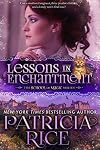
OH! What a perfectly perfect read. This fast-paced, well written, well-plotted first book in the School of Magic series is filled with excitement, danger, and sigh-worthy romance. The characters are memorable and you’ll quickly come to love them. Each of the main characters is strong, independent, self-reliant, and very wrong about what they think they want in life. So, it is a good thing they are both open-minded and accepting of things that don’t necessarily fit with their version of show more ‘normal’. I have absolutely adored the Malcolm family through all of the various series and I know this one will just add to that – especially if this book is an example of what is to come. I did keep waiting for a member of the Ives family to make a showing, but they stayed hidden.
While Lady Phoebe Malcolm Duncan is the daughter of an earl, she lives in a tenement inside the medieval walls of the old town in Edinburgh. She has been living on her own for years – since her mother’s ill health caused her to move to France. Phoebe loves her life, loves the vibrancy of her neighborhood, and loves her neighbors. The only thing that would make it better would be for the veterinary schools to let her take classes. You see, Phoebe can communicate with animals and she is always rescuing them.
Andrew (Drew) Blair is an inventor, builder, and investor. He comes from very humble beginnings and has worked really hard to get to where he is in life. He made a good bit of money from inventing a few things for the railroads – and now he has a tidy sum of that money invested in a consortium that plans to rebuild the old town tenements into modern terraced buildings. However, Drew’s world has been flipped on end for most of the last year. His cousin’s wife died in an accident that almost killed his cousin and their children as well. Only, it wasn’t an accident. His cousin’s wife and three children have the Malcolm gifts – and now the three children are living with Drew. He knows nothing of children and he can’t seem to keep a governess/tutor for any length of time. Where can he find someone who can handle and be accepting of three small children who have special abilities?
Phoebe meets Drew after Drew writes to her aunt’s School of Magic and asks for a tutor for his wards. Phoebe is available because the entire front wall of her tenement building just crumpled and fell away leaving her and the other tenants with no place to live. Just as soon as she arrives at her aunt’s school, they send her out to act as an instructor for Drew’s wards.
I love the interactions between Drew and Phoebe. She is straight-forward, direct, and totally unintimidated by anyone or anything – yet she treats his wards with tenderness, understanding, and care. When danger rears its ugly head and the children are in danger, Drew discovers an appreciation for things he never thought he wanted in life.
I enjoyed this fun and exciting read so much that I couldn’t put it down and read it straight through. One of the very best things about the book – NO, none, nada, zip angst. Dear author, I thank you for that. I hope you love it as much as I did.
I voluntarily read and reviewed an Advanced Reader Copy of this book. All thoughts and opinions are my own. show less
While Lady Phoebe Malcolm Duncan is the daughter of an earl, she lives in a tenement inside the medieval walls of the old town in Edinburgh. She has been living on her own for years – since her mother’s ill health caused her to move to France. Phoebe loves her life, loves the vibrancy of her neighborhood, and loves her neighbors. The only thing that would make it better would be for the veterinary schools to let her take classes. You see, Phoebe can communicate with animals and she is always rescuing them.
Andrew (Drew) Blair is an inventor, builder, and investor. He comes from very humble beginnings and has worked really hard to get to where he is in life. He made a good bit of money from inventing a few things for the railroads – and now he has a tidy sum of that money invested in a consortium that plans to rebuild the old town tenements into modern terraced buildings. However, Drew’s world has been flipped on end for most of the last year. His cousin’s wife died in an accident that almost killed his cousin and their children as well. Only, it wasn’t an accident. His cousin’s wife and three children have the Malcolm gifts – and now the three children are living with Drew. He knows nothing of children and he can’t seem to keep a governess/tutor for any length of time. Where can he find someone who can handle and be accepting of three small children who have special abilities?
Phoebe meets Drew after Drew writes to her aunt’s School of Magic and asks for a tutor for his wards. Phoebe is available because the entire front wall of her tenement building just crumpled and fell away leaving her and the other tenants with no place to live. Just as soon as she arrives at her aunt’s school, they send her out to act as an instructor for Drew’s wards.
I love the interactions between Drew and Phoebe. She is straight-forward, direct, and totally unintimidated by anyone or anything – yet she treats his wards with tenderness, understanding, and care. When danger rears its ugly head and the children are in danger, Drew discovers an appreciation for things he never thought he wanted in life.
I enjoyed this fun and exciting read so much that I couldn’t put it down and read it straight through. One of the very best things about the book – NO, none, nada, zip angst. Dear author, I thank you for that. I hope you love it as much as I did.
I voluntarily read and reviewed an Advanced Reader Copy of this book. All thoughts and opinions are my own. show less
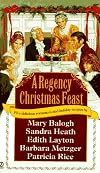
The first story, The Gingerbread Man’, was a decent mystery romance with the ability to make me crave for gingerbread.
I couldn’t get into the second one, so bypassed it.
Tale three, ‘The Christmas Goose’, was quite engaging. I like the relationship between the soldier and the widow. The widow’s daughters added colour. Children always enhance a Christmas story. This is my favourite of the five in this collection.
The fourth story, ‘The Proof’s in the Pudding’, was funny in show more places, but didn’t feel as festive as I would’ve liked. Much of it takes place at different times of the year, which in my view made it a questionable choice to include in this collection.
To my annoyance, it features many archaic words that slow the narrative down by forcing the reader – this one, anyway – to stop mid-sentence to guess the meaning. Sometimes the context makes the meaning clear, but not always.
I believe in using contemporary language for a contemporary audience, so don’t appreciate being faced with words like ‘bumblebroth’ or ‘pettifogger’. It’s not much difference to using a foreign language, which is my ultimate pet hate in English literature. In fact, we do get the French phrase ‘Tant pis’, the meaning of which I haven’t got a clue. It’s bad form for an author to lock a reader out of the narrative by using foreign words or phrases. Same applies to unfathomable archaic English terms.
The fifth story, ‘The Wassail Bowl’, wasn’t a bad tale but was spoiled by the poor writing style. It felt like a third or fourth draft, devoid of polish, and features an overuse of ‘she’:
‘She came. She hesitated for a moment when she was close but she came the rest of the way.’
Three consecutive sentences start with: ‘She knew that', which shows a lack of imagination. Why not substitute the odd ‘she’ with the character’s name? Or revise the sentences so that some don’t start with the same word over and over?
Sometimes the narrative is slowed down by being to wordy, making for a clunky read: ‘Perhaps, she thought, she would be able to learn to let go a little.’
And, two books in a row for me, I came across the most absurd of clichés, namely referring to tears as being silent: ‘blinking away her silent tears.’ Has anyone who’s ever lived known a tear to not be silent? You can cry at different volumes but tears never make a noise. This is not making every word count, which every author should endeavour to do.
So, the writing style in this last story often distracted me. Content-wise, I liked the male and female lead, and more so their two children. The little girl was adorable. Her father’s getting to know her was the most engaging part of the tale. With a little more ‘showing’ and a heck of a lot less ‘telling’, along with another ten thorough revisions, this could’ve been a great story. show less
I couldn’t get into the second one, so bypassed it.
Tale three, ‘The Christmas Goose’, was quite engaging. I like the relationship between the soldier and the widow. The widow’s daughters added colour. Children always enhance a Christmas story. This is my favourite of the five in this collection.
The fourth story, ‘The Proof’s in the Pudding’, was funny in show more places, but didn’t feel as festive as I would’ve liked. Much of it takes place at different times of the year, which in my view made it a questionable choice to include in this collection.
To my annoyance, it features many archaic words that slow the narrative down by forcing the reader – this one, anyway – to stop mid-sentence to guess the meaning. Sometimes the context makes the meaning clear, but not always.
I believe in using contemporary language for a contemporary audience, so don’t appreciate being faced with words like ‘bumblebroth’ or ‘pettifogger’. It’s not much difference to using a foreign language, which is my ultimate pet hate in English literature. In fact, we do get the French phrase ‘Tant pis’, the meaning of which I haven’t got a clue. It’s bad form for an author to lock a reader out of the narrative by using foreign words or phrases. Same applies to unfathomable archaic English terms.
The fifth story, ‘The Wassail Bowl’, wasn’t a bad tale but was spoiled by the poor writing style. It felt like a third or fourth draft, devoid of polish, and features an overuse of ‘she’:
‘She came. She hesitated for a moment when she was close but she came the rest of the way.’
Three consecutive sentences start with: ‘She knew that', which shows a lack of imagination. Why not substitute the odd ‘she’ with the character’s name? Or revise the sentences so that some don’t start with the same word over and over?
Sometimes the narrative is slowed down by being to wordy, making for a clunky read: ‘Perhaps, she thought, she would be able to learn to let go a little.’
And, two books in a row for me, I came across the most absurd of clichés, namely referring to tears as being silent: ‘blinking away her silent tears.’ Has anyone who’s ever lived known a tear to not be silent? You can cry at different volumes but tears never make a noise. This is not making every word count, which every author should endeavour to do.
So, the writing style in this last story often distracted me. Content-wise, I liked the male and female lead, and more so their two children. The little girl was adorable. Her father’s getting to know her was the most engaging part of the tale. With a little more ‘showing’ and a heck of a lot less ‘telling’, along with another ten thorough revisions, this could’ve been a great story. show less
I received a copy of this book through LibraryThing Early Reviewers in the hopes of a fair and honest review.
I squeed with delight when I learnt I was going to be sent this novel which is another instalment in Patricia Rice's long running and much loved Malcolm women world. It didn't disappoint. Reading any other of the series isn't at all necessary as - like all of the series - this book stands alone. It is, however, fun to have an awareness of the Malcolm women's various eccentricities and show more to enjoy, as always, their effect on the relentlessly practical and rational men who cross their paths. Lady Phoebe Douglas is a particularly marvellous heroine - the image of her in a divided skirt, atop a penny farthing bicycle, wearing a porkpie hat trimmed with real roses in an era of women wearing crinoline cages to emphasise their decorative useleness tells the reader from the start that they are in the presence of another stubbornly independent Malcolm heroine. Lady Phoebe has the gift of understanding animals and wants to study to be able to minister their needs, however, she is hampered both by her sex, her poverty and Edinburgh's veterinary schools' resistance to teaching women (and their equal resistance to ministering to any animal smaller than a horse). Circumstances (and her Malcolm aunts) send her into the household of Mr Andrew Blair, an engineer saddled with his gifted nieces and nephew, trying to provide for not only the family under his roof but also his extended family. He wants a conventional society wife to further his ambitions. Lady Phoebe is the reverse of what he thinks he needs in a woman. Sparks fly and hijinks ensue.
Patricia Rice is one of my favourite romance writers - her humour and her feisty stubborn heroines who can survive alone but know they live their best lives in company always make me happy. I don't read her books: I devour them, often at one sitting (as I did this one). This book is another in her usual vein and is a perfect escape for these troublesome times. The writing is assured and skilful and the editing, as always, matches so that nothing jarring disturbs the smooth reading and flow of the tale. The touches of Scottish dialect are superb - just enough to give the story a tang without causing confusion - and the characters are appealing (and you can play, as I do, the guessing game of who will be the star of the next in volume in the series - I was right from the teaser at the end!). If you want a fun, lively romance with quirky characters and an adorable family, this book is perfect. Strongly recommend. show less
I squeed with delight when I learnt I was going to be sent this novel which is another instalment in Patricia Rice's long running and much loved Malcolm women world. It didn't disappoint. Reading any other of the series isn't at all necessary as - like all of the series - this book stands alone. It is, however, fun to have an awareness of the Malcolm women's various eccentricities and show more to enjoy, as always, their effect on the relentlessly practical and rational men who cross their paths. Lady Phoebe Douglas is a particularly marvellous heroine - the image of her in a divided skirt, atop a penny farthing bicycle, wearing a porkpie hat trimmed with real roses in an era of women wearing crinoline cages to emphasise their decorative useleness tells the reader from the start that they are in the presence of another stubbornly independent Malcolm heroine. Lady Phoebe has the gift of understanding animals and wants to study to be able to minister their needs, however, she is hampered both by her sex, her poverty and Edinburgh's veterinary schools' resistance to teaching women (and their equal resistance to ministering to any animal smaller than a horse). Circumstances (and her Malcolm aunts) send her into the household of Mr Andrew Blair, an engineer saddled with his gifted nieces and nephew, trying to provide for not only the family under his roof but also his extended family. He wants a conventional society wife to further his ambitions. Lady Phoebe is the reverse of what he thinks he needs in a woman. Sparks fly and hijinks ensue.
Patricia Rice is one of my favourite romance writers - her humour and her feisty stubborn heroines who can survive alone but know they live their best lives in company always make me happy. I don't read her books: I devour them, often at one sitting (as I did this one). This book is another in her usual vein and is a perfect escape for these troublesome times. The writing is assured and skilful and the editing, as always, matches so that nothing jarring disturbs the smooth reading and flow of the tale. The touches of Scottish dialect are superb - just enough to give the story a tang without causing confusion - and the characters are appealing (and you can play, as I do, the guessing game of who will be the star of the next in volume in the series - I was right from the teaser at the end!). If you want a fun, lively romance with quirky characters and an adorable family, this book is perfect. Strongly recommend. show less
This review was written for LibraryThing Early Reviewers.Awards


You May Also Like


Associated Authors
Statistics
- Works
- 144
- Also by
- 15
- Members
- 4,961
- Popularity
- #5,056
- Rating
- 3.7
- Reviews
- 710
- ISBNs
- 324
- Languages
- 4
- Favorited
- 2

