
Bill Schutt
Author of Cannibalism: A Perfectly Natural History
About the Author
Bill Schutt is an associate professor of biology at C. W. Post College of Long Island University and a research associate at the American Museum of Natural History.
Series
Works by Bill Schutt
Tagged
Common Knowledge
- Gender
- male
- Education
- C.W. Post College (BS|Biology)
Geneseo State College (MS|Biology)
Cornell University (PhD|Zoology) - Occupations
- researcher
associate professor (Biology) - Organizations
- American Museum of Natural History
- Agent
- Gillian MacKenzie (Gillian MacKenzie Agency)
- Nationality
- USA
- Birthplace
- New York, New York, USA
- Places of residence
- New York, New York, USA
- Associated Place (for map)
- New York, New York, USA
Members
Reviews
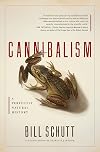
I've been eagerly awaiting this book since I first became aware of its release, which was likely due to Daphne's review. Cannibalism is an undeniably fascinating subject, and [author: Bill Schutt] tackles it with grace and humor, as long for a disdain for the sensationalism that has too long colored all publications on the topic. The book was fascinating from cover to cover, and is extremely well-organized. It begins with the study of it in the animal kingdom, and ends with the much needed show more topic of prion diseases, their spread, and how poorly understood they are.
[book: Cannibalism: A Perfectly Natural History] is destined to become the go-to book on the topic. Well sourced, entertainingly written, and scattered throughout with just enough humor and a large dose of respect, it does its topic justice. [author: Bill Schutt] writes with a deft hand that does much to dispel many of the sensationalized myths that surround some of the better known cases (i.e. Donner Party, Praying Mantises, Black Widows, etc.) and does a good job explaining topics that have never really gotten enough focus (i.e. prion diseases, kuru) or have suffered from the wrong type of focus.
This book was immensely readable, and more in depth and well-sourced than I expected a pop-science book to be. It definitely opened my eyes to the complexity of the topic, and added to disdain I already felt towards one Jared Diamond and his tendency to over simplify nearly everything. I'm very much looking forward to more being published in regards to the Neanderthal hypotheses presented in this book, as well as for more studies being done on the truly terrifying prion diseases. Nothing terrifies me more than the section on prion diseases in this book, and what it may hold in store for our future. show less
[book: Cannibalism: A Perfectly Natural History] is destined to become the go-to book on the topic. Well sourced, entertainingly written, and scattered throughout with just enough humor and a large dose of respect, it does its topic justice. [author: Bill Schutt] writes with a deft hand that does much to dispel many of the sensationalized myths that surround some of the better known cases (i.e. Donner Party, Praying Mantises, Black Widows, etc.) and does a good job explaining topics that have never really gotten enough focus (i.e. prion diseases, kuru) or have suffered from the wrong type of focus.
This book was immensely readable, and more in depth and well-sourced than I expected a pop-science book to be. It definitely opened my eyes to the complexity of the topic, and added to disdain I already felt towards one Jared Diamond and his tendency to over simplify nearly everything. I'm very much looking forward to more being published in regards to the Neanderthal hypotheses presented in this book, as well as for more studies being done on the truly terrifying prion diseases. Nothing terrifies me more than the section on prion diseases in this book, and what it may hold in store for our future. show less
I've always had an interest in the macabre and dark and I a recent interest in biology and evolution and this book struck a chord with both of those things. Bill Schutt is an excellent, down-to-earth science write with a great and often delightfully nerdy sense of humor. This book felt like "A Walk in the Woods" except about Cannibalism.
The book starts out with defining what counts as cannibalism and then goes into a lot of great detail about various forms of cannibalism in the animal show more kingdom. It covers the interesting biology and circumstances in which cannibalism is expressed from insects all the way up to mammals. It gives readers new cannibalistic horrors to consider, but also puts to bed a lot of myths about such maligned creatures as the praying mantis and the hampster.
About halfway through the book the Bill Schutt switches to the topic of human cannibalism. What I loved most about this section was that it remained scientific and biological. I never once trailed off into sensationalism about certain serial killers or salacious recent events. Instead, in order to discuss human cannibalism without those elements the author focuses on The Donner Party and the Fore tribe in Papua New Ginuea. This approach allows readers to really consider the issue generally free from media knowledge of the events. It also protects the book from accusations of cashing in on lurid details of pop culture.
The book closes with some discussions about how and when human cannibalism has reared it's head en-mass and how it could arise again and steps we might take to prevent it. While this section was accurate and good information, it did seem a bit out of scope or off kilter to the rest of the book, like maybe it was trying to get a little pop media cred.
Anyway, I highly recommend this book. It's one that will go on my shelf next to The Moral Animal, A Walk in the Woods, and other great pop science books that I love. show less
The book starts out with defining what counts as cannibalism and then goes into a lot of great detail about various forms of cannibalism in the animal show more kingdom. It covers the interesting biology and circumstances in which cannibalism is expressed from insects all the way up to mammals. It gives readers new cannibalistic horrors to consider, but also puts to bed a lot of myths about such maligned creatures as the praying mantis and the hampster.
About halfway through the book the Bill Schutt switches to the topic of human cannibalism. What I loved most about this section was that it remained scientific and biological. I never once trailed off into sensationalism about certain serial killers or salacious recent events. Instead, in order to discuss human cannibalism without those elements the author focuses on The Donner Party and the Fore tribe in Papua New Ginuea. This approach allows readers to really consider the issue generally free from media knowledge of the events. It also protects the book from accusations of cashing in on lurid details of pop culture.
The book closes with some discussions about how and when human cannibalism has reared it's head en-mass and how it could arise again and steps we might take to prevent it. While this section was accurate and good information, it did seem a bit out of scope or off kilter to the rest of the book, like maybe it was trying to get a little pop media cred.
Anyway, I highly recommend this book. It's one that will go on my shelf next to The Moral Animal, A Walk in the Woods, and other great pop science books that I love. show less
 This review was written for LibraryThing Early Reviewers.
Zoologist Bill Schutt begins by looking at cannibalism in animals, from killer tadpoles to shark fetuses that eat each other in the womb (or, if you want to get super-technical about it, the oviduct). He explores questions like: what animals eat their own kind, and why, and how do we know? Then he turns to cannibalism in humans, which turns out to be an extremely murky subject, since accusing groups of people of cannibalism has long been a go-to slander for justifying treating them poorly or show more taking them as slaves, which makes it very hard to separate truth from fiction when it comes to historical cannibalism.
The book covers a lot of ground, including such topics as mad cow disease and women who eat their own placentas, and features lots of weird and interesting facts. It's got a laudably scientific perspective, as Schutt refuses to take myths or received wisdom at face value, but always asks what the science is and what the scientific controversies are. The writing style is clear and engaging. And while things can get a bit gory, because of course they do, Schutt makes a deliberate point of not sensationalizing the subject.
It seems just a little bit odd to say I really enjoyed a book about cannibalism. But, well. I really enjoyed this book about cannibalism. show less
The book covers a lot of ground, including such topics as mad cow disease and women who eat their own placentas, and features lots of weird and interesting facts. It's got a laudably scientific perspective, as Schutt refuses to take myths or received wisdom at face value, but always asks what the science is and what the scientific controversies are. The writing style is clear and engaging. And while things can get a bit gory, because of course they do, Schutt makes a deliberate point of not sensationalizing the subject.
It seems just a little bit odd to say I really enjoyed a book about cannibalism. But, well. I really enjoyed this book about cannibalism. show less
This review was written for LibraryThing Early Reviewers.It's difficult to think of a book about devouring members of your own species as "fun," but that's the word that springs to mind when thinking back on my reading of Bill Schutt's book. About 40% of the book deals with non-human animals, the remainder with humanity, including a long chapter on the Donner party and two chapters on the varieties of prion diseases (like Mad Cow), although, surprisingly to me, he seems to side with a researcher who believes it's actually a viral disease and the show more prions are a side effect. He also tantalizingly throws out a theory that Neanderthals were done in by a prion disease. Anyway, it's clear the taboo against cannibalism is far from universal, and Schutt has written an interesting, accessible, and yes, fun book. show less
This review was written for LibraryThing Early Reviewers.Lists
Science: Zoology (1)
Awards


You May Also Like


Associated Authors
Statistics
- Works
- 7
- Members
- 1,393
- Popularity
- #18,450
- Rating
- 3.8
- Reviews
- 69
- ISBNs
- 40
- Languages
- 1

