

Ruby Shamir
Author of The Truths We Hold: An American Journey {Young Readers Edition}
Works by Ruby Shamir
The Truths We Hold: An American Journey {Young Readers Edition} (2019) — Adapter — 117 copies, 2 reviews
Chasing the Truth: A Young Journalist's Guide to Investigative Reporting: Young Readers Edition (2021) 48 copies
Make Trouble Young Readers Edition: Standing Up, Speaking Out, and Finding the Courage to Lead (2019) — Adapter — 39 copies, 2 reviews
What If You Could 1 copy
Tagged
Common Knowledge
There is no Common Knowledge data for this author yet. You can help.
Members
Reviews
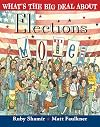
This book for older children begins by noting that almost everyone in the U.S. can vote once they turn eighteen, and asking, “Why does that matter? What’s the big deal about elections anyway?”
The main text is mostly in a question and answer format, with small text boxes on each page supplementing the information given in the main portion of the page. For example, one page asks “Why does government matter?” The book describes some of the government’s functions, such as building show more roads, schools, and parks, and keeping water and food safe. A text box talks about garbage collection, and what life was like in cities before departments of sanitation were established. In New York, for instance, “the city was so stinky that travelers could smell it from six miles away!”
In the section, “”Who votes?” A rosy picture is painted of the current status of voting rights. Voter suppression is mentioned only as a thing of the past.
There is no mention whatsoever of the following important and increasingly salient issues:
Racial and partisan gerrymandering - the act of politicians manipulating the redrawing of legislative district lines in order to help their friends and hurt their enemies - has been an ongoing problem in the country. (In fact, the word was coined by a writer in the Boston Gazette in 1812 in reaction to a redrawing of Massachusetts state senate election districts under Governor Elbridge Gerry.)
Voter ID laws, part of a strategy to roll back decades of progress on voting rights, are depriving many Americans of the right to vote. [11% of U.S. citizens – or more than 21 million Americans – do not have government-issued photo identification. Obtaining ID Costs Money. Even if ID is offered for free, voters must incur numerous costs (such as paying for birth certificates) to apply for a government-issued ID.]
Voter purges, the often-flawed process of cleaning up voter rolls by deleting names from registration lists, and frequently used by Republicans, receive no mention. When done incorrectly, purges disenfranchise legitimate voters (often when it is too close to an election to rectify the mistake), causing confusion and delay at the polls.
Class barriers are not insignificant. In 2012, for example, more than 80 percent of Americans with an annual income over $150,000 turned out to vote, compared with less than half of people earning under $20,000. As the New York Times explains:
“They aren’t negligent: People who are paid hourly or juggle multiple jobs can’t afford to miss work and stand in long lines to vote. And this group includes a large number of racial minorities — precisely the people that the civil rights movement was undertaken to help.”
Closing polling places is another technique used to suppress voting by minorities, who tend to vote for the Democratic party. On Election Day in 2016, there were 868 fewer polling places in states with a long history of voting discrimination, like Arizona, Texas, and North Carolina. These changes impacted hundreds of thousands of mostly would-be-Democratic voters, who did not have either the time off of work or transportation to enable them to get to open polls.
As The Washington Post writes, "voter suppression is a crucial story in America.”
The book also explains what happens in Washington, D.C. (with the author resisting the temptation to say “nothing”) and offers only an inadequate explanation of the thorny Electoral College problem. Just saying it is “baffling” seems less than satisfactory for such an important part of the voting system. She also does not explain the ways in which it has become very non-representational. Certainly many children will be aware that Hillary Clinton won the popular vote for president in 2016 by more than 2 million votes, but lost the vote in the Electoral College to Donald Trump by 306 to 232, and therefore he won the presidency. That seems like a very important situation to clarify.
As US News and World Report explains:
"If the president were elected by popular vote, every voter's ballot would have been given equal weight, or influence, over the outcome, and Hillary Clinton would have won. But, as evidenced by Donald Trump's victory, the Electoral College gives different weights to votes cast in different states.”
For example, individual votes from Wyoming carry 3.6 times more influence, or weight, than those from California. California, as the Washington Post observes, is home to 12 percent of Americans, but holds only 10 percent of electoral votes. A similar pattern repeats in the country’s largest states.
Shouldn’t kids understand how this works? Would this not be a great subject for discussion, as it would stimulate thinking about fairness, historical precedents, and possible solutions?
The author also avers that any citizen can run for office, but elides over the role affluence plays in that determination. She states, “Elections are also about making sure the country is safe, prosperous, and fair well into the future.” That’s a bit of a misstatement, especially to the extent that winning elections is greatly influenced both by outright donations and by “dark money” which in turn ensures that those elected will work to perpetuate the income inequality that helped them gain power. (See, for example, our review of the expose Dark Money: The Hidden History of the Billionaires Behind the Rise of the Radical Right by Jane Mayer.)
Thus billionaires help elect officials who will push the agendas of the rich, and influence legislation to benefit their interests. After this last election, they were rewarded by a huge tax cut that benefitted the wealthy to the detriment of the poor and middle class. One wealthy donor, for example, gave $30 million to help elect Republicans in the 2016 election. He reaped a nearly $700 million windfall from the new tax law they then passed. These rich donors ponied up again for the 2018 election.
To make matters worse, Republican leaders of Congress are now calling for cuts to social security, medicare, and medicaid (which mostly benefit those with less money) to help offset the tax cuts for the rich. The relationship between money and Congress and the Presidency is so critical and so tied to policy initiatives, or the lack thereof, (consider, for example, the influence of a major lobbyist, the National Rifle Association), that it is unconscionable not to include any information about the interrelationship, or its moral considerations.
What about the effects of social media and foreign interference? Surely kids, many of whom have their own phones, should be apprised of the basics of evaluating information as well as the basics of how things work in theory.
The back matter includes a timeline that mostly highlights advances in the history of suffrage, and a list of sources for further reading.
Goauche Illustrations by Matt Faulkner are done in an appealing and colorful comic book style.
Evaluation: I am opposed to telling kids - especially older kids - fairy tales, especially if it prevents the development of their compassion, their ability to analyze and question authority, and their willingness to work for a better world. The age range for whom this book is intended, 7 and up, is surely able to comprehend more complexity and nuance than is provided here.
Nevertheless, the book does a good job in establishing a foundation for further exploration. And it would make an excellent guide for teachers who want to demonstrate the importance of ascertaining what is not included in works of non-fiction, and how that affects perceptions of reality. show less
The main text is mostly in a question and answer format, with small text boxes on each page supplementing the information given in the main portion of the page. For example, one page asks “Why does government matter?” The book describes some of the government’s functions, such as building show more roads, schools, and parks, and keeping water and food safe. A text box talks about garbage collection, and what life was like in cities before departments of sanitation were established. In New York, for instance, “the city was so stinky that travelers could smell it from six miles away!”
In the section, “”Who votes?” A rosy picture is painted of the current status of voting rights. Voter suppression is mentioned only as a thing of the past.
There is no mention whatsoever of the following important and increasingly salient issues:
Racial and partisan gerrymandering - the act of politicians manipulating the redrawing of legislative district lines in order to help their friends and hurt their enemies - has been an ongoing problem in the country. (In fact, the word was coined by a writer in the Boston Gazette in 1812 in reaction to a redrawing of Massachusetts state senate election districts under Governor Elbridge Gerry.)
Voter ID laws, part of a strategy to roll back decades of progress on voting rights, are depriving many Americans of the right to vote. [11% of U.S. citizens – or more than 21 million Americans – do not have government-issued photo identification. Obtaining ID Costs Money. Even if ID is offered for free, voters must incur numerous costs (such as paying for birth certificates) to apply for a government-issued ID.]
Voter purges, the often-flawed process of cleaning up voter rolls by deleting names from registration lists, and frequently used by Republicans, receive no mention. When done incorrectly, purges disenfranchise legitimate voters (often when it is too close to an election to rectify the mistake), causing confusion and delay at the polls.
Class barriers are not insignificant. In 2012, for example, more than 80 percent of Americans with an annual income over $150,000 turned out to vote, compared with less than half of people earning under $20,000. As the New York Times explains:
“They aren’t negligent: People who are paid hourly or juggle multiple jobs can’t afford to miss work and stand in long lines to vote. And this group includes a large number of racial minorities — precisely the people that the civil rights movement was undertaken to help.”
Closing polling places is another technique used to suppress voting by minorities, who tend to vote for the Democratic party. On Election Day in 2016, there were 868 fewer polling places in states with a long history of voting discrimination, like Arizona, Texas, and North Carolina. These changes impacted hundreds of thousands of mostly would-be-Democratic voters, who did not have either the time off of work or transportation to enable them to get to open polls.
As The Washington Post writes, "voter suppression is a crucial story in America.”
The book also explains what happens in Washington, D.C. (with the author resisting the temptation to say “nothing”) and offers only an inadequate explanation of the thorny Electoral College problem. Just saying it is “baffling” seems less than satisfactory for such an important part of the voting system. She also does not explain the ways in which it has become very non-representational. Certainly many children will be aware that Hillary Clinton won the popular vote for president in 2016 by more than 2 million votes, but lost the vote in the Electoral College to Donald Trump by 306 to 232, and therefore he won the presidency. That seems like a very important situation to clarify.
As US News and World Report explains:
"If the president were elected by popular vote, every voter's ballot would have been given equal weight, or influence, over the outcome, and Hillary Clinton would have won. But, as evidenced by Donald Trump's victory, the Electoral College gives different weights to votes cast in different states.”
For example, individual votes from Wyoming carry 3.6 times more influence, or weight, than those from California. California, as the Washington Post observes, is home to 12 percent of Americans, but holds only 10 percent of electoral votes. A similar pattern repeats in the country’s largest states.
Shouldn’t kids understand how this works? Would this not be a great subject for discussion, as it would stimulate thinking about fairness, historical precedents, and possible solutions?
The author also avers that any citizen can run for office, but elides over the role affluence plays in that determination. She states, “Elections are also about making sure the country is safe, prosperous, and fair well into the future.” That’s a bit of a misstatement, especially to the extent that winning elections is greatly influenced both by outright donations and by “dark money” which in turn ensures that those elected will work to perpetuate the income inequality that helped them gain power. (See, for example, our review of the expose Dark Money: The Hidden History of the Billionaires Behind the Rise of the Radical Right by Jane Mayer.)
Thus billionaires help elect officials who will push the agendas of the rich, and influence legislation to benefit their interests. After this last election, they were rewarded by a huge tax cut that benefitted the wealthy to the detriment of the poor and middle class. One wealthy donor, for example, gave $30 million to help elect Republicans in the 2016 election. He reaped a nearly $700 million windfall from the new tax law they then passed. These rich donors ponied up again for the 2018 election.
To make matters worse, Republican leaders of Congress are now calling for cuts to social security, medicare, and medicaid (which mostly benefit those with less money) to help offset the tax cuts for the rich. The relationship between money and Congress and the Presidency is so critical and so tied to policy initiatives, or the lack thereof, (consider, for example, the influence of a major lobbyist, the National Rifle Association), that it is unconscionable not to include any information about the interrelationship, or its moral considerations.
What about the effects of social media and foreign interference? Surely kids, many of whom have their own phones, should be apprised of the basics of evaluating information as well as the basics of how things work in theory.
The back matter includes a timeline that mostly highlights advances in the history of suffrage, and a list of sources for further reading.
Goauche Illustrations by Matt Faulkner are done in an appealing and colorful comic book style.
Evaluation: I am opposed to telling kids - especially older kids - fairy tales, especially if it prevents the development of their compassion, their ability to analyze and question authority, and their willingness to work for a better world. The age range for whom this book is intended, 7 and up, is surely able to comprehend more complexity and nuance than is provided here.
Nevertheless, the book does a good job in establishing a foundation for further exploration. And it would make an excellent guide for teachers who want to demonstrate the importance of ascertaining what is not included in works of non-fiction, and how that affects perceptions of reality. show less
Make Trouble Young Readers Edition: Standing Up, Speaking Out, and Finding the Courage to Lead by Cecile Richards
The famed activist tells her life story.
With emphasis on her subject’s early development, Shamir here carefully adapts Richards’ bestselling 2018 memoir (written with Peterson) for a younger crowd, hoping to inspire fledgling activists to follow Richards’ pathbreaking example in introducing social change. The eldest of four and a “classic all-A’s first child…raised by troublemakers,” Richards was born in 1957 in Texas to “rabble-rousing” civil rights lawyer David Richards show more and Ann Richards, who went from “frustrated housewife” to “the first woman elected in her own right as governor of Texas.” Exposed early on to then-segregated Dallas’ “rampant” racism and homophobia and given her progressive pedigree (“we looked like the quintessential upper-middle-class Dallas family. But while other families bowled, we did politics”), Richards richly details the varied calls to action for social causes she’s answered throughout her career. She started “Youth Against Pollution” in seventh grade in Austin and a food co-op while at Brown University, where she “majored in history” but “minored in agitating”; fought to keep religion out of Texas public schools and nationally to register voters; joined Rep. Nancy Pelosi’s staff; and headed Planned Parenthood for 12 years (2006-18)—not to mention getting married and parenting three children along the way. Throughout the memoir, Richards lends solid practical advice for resisting and organizing while offering a fascinating window into contemporary social struggles.
Gritty, accessible, and sure to strike a chord with action-oriented Gen Z (Memoir. 10-18)
-Kirkus Review show less
With emphasis on her subject’s early development, Shamir here carefully adapts Richards’ bestselling 2018 memoir (written with Peterson) for a younger crowd, hoping to inspire fledgling activists to follow Richards’ pathbreaking example in introducing social change. The eldest of four and a “classic all-A’s first child…raised by troublemakers,” Richards was born in 1957 in Texas to “rabble-rousing” civil rights lawyer David Richards show more and Ann Richards, who went from “frustrated housewife” to “the first woman elected in her own right as governor of Texas.” Exposed early on to then-segregated Dallas’ “rampant” racism and homophobia and given her progressive pedigree (“we looked like the quintessential upper-middle-class Dallas family. But while other families bowled, we did politics”), Richards richly details the varied calls to action for social causes she’s answered throughout her career. She started “Youth Against Pollution” in seventh grade in Austin and a food co-op while at Brown University, where she “majored in history” but “minored in agitating”; fought to keep religion out of Texas public schools and nationally to register voters; joined Rep. Nancy Pelosi’s staff; and headed Planned Parenthood for 12 years (2006-18)—not to mention getting married and parenting three children along the way. Throughout the memoir, Richards lends solid practical advice for resisting and organizing while offering a fascinating window into contemporary social struggles.
Gritty, accessible, and sure to strike a chord with action-oriented Gen Z (Memoir. 10-18)
-Kirkus Review show less
Make Trouble Young Readers Edition: Standing Up, Speaking Out, and Finding the Courage to Lead by Cecile Richards
When I opened this one, I wasn't sure what to expect, and it went in a direction I honestly didn't see coming.
Cecile Richards was born to activist and liberal parents in a very conservative area. Her parents taught her early on to let her voice be heard and push what she saw as correct, even if it wasn't what many would like her to do. This life theory followed her all through school and into her her adult years, where she continued to fight for her ideologies. Sometimes, she found trouble show more and others, gave her success. And this is her tale.
This book has been adapted from her same titled book for adults. It slips quickly over her childhood, in the first chapter, and launches into her life mission to stand up for women's rights and later, the ideologies of Planned Parenthood. While it does dive into a bit about her personal life, most of the book centers on the important moments of her activist efforts and the obstacles she faced. The book is well written and does grab the reader. The pace holds steady throughout the read, making sure there is never a boring moment, while it brings across the important times of her life. It's always clear what she's doing and her reasons behind her actions. For readers who are interested in her life, it's definitely an interesting read. And there is the message that one should stand up and never give up for what they believe in.
While I found this book well-written, I'm not sure it quite fits the advertised audience and would suggest it more for girls ages 13 and up. Not only are there a few scenes parents might want to be aware of before handing this to more sensitive readers, but the writing itself isn't quite right for the younger readers and is more suitable for a slightly older audience.
I received a complimentary copy and am leaving my honest thoughts. show less
Cecile Richards was born to activist and liberal parents in a very conservative area. Her parents taught her early on to let her voice be heard and push what she saw as correct, even if it wasn't what many would like her to do. This life theory followed her all through school and into her her adult years, where she continued to fight for her ideologies. Sometimes, she found trouble show more and others, gave her success. And this is her tale.
This book has been adapted from her same titled book for adults. It slips quickly over her childhood, in the first chapter, and launches into her life mission to stand up for women's rights and later, the ideologies of Planned Parenthood. While it does dive into a bit about her personal life, most of the book centers on the important moments of her activist efforts and the obstacles she faced. The book is well written and does grab the reader. The pace holds steady throughout the read, making sure there is never a boring moment, while it brings across the important times of her life. It's always clear what she's doing and her reasons behind her actions. For readers who are interested in her life, it's definitely an interesting read. And there is the message that one should stand up and never give up for what they believe in.
While I found this book well-written, I'm not sure it quite fits the advertised audience and would suggest it more for girls ages 13 and up. Not only are there a few scenes parents might want to be aware of before handing this to more sensitive readers, but the writing itself isn't quite right for the younger readers and is more suitable for a slightly older audience.
I received a complimentary copy and am leaving my honest thoughts. show less
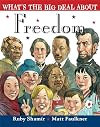
There's a lot that's good about this book. The illustrations are historically accurate, detailed, caricatures. The narrative emphasizes how long was the struggle for various rights in the US. Some of the phrasing is depressingly off target, though, like the "the right to marry whomever you love". I'm not entitled to marry my child, however much I love them. There should be a better phrasing. And so many of the caricatures are caricatures of people I just don't recognize. The book should have show more included a key, to help identify the historical figures. show less
Awards


You May Also Like


Associated Authors
Statistics
- Works
- 12
- Members
- 523
- Popularity
- #47,533
- Rating
- 3.8
- Reviews
- 13
- ISBNs
- 54
- Languages
- 1