
Patrick Smith (3)
Author of Japan: A Reinterpretation
For other authors named Patrick Smith, see the disambiguation page.
Patrick Smith (3) has been aliased into Patrick L Smith.
Works by Patrick Smith
Works have been aliased into Patrick L Smith.
Tagged
Common Knowledge
- Other names
- Smith, Patrick L.
Lawrence, Patrick - Gender
- male
Members
Reviews
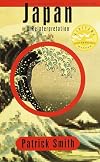
One of the best books I've read on the Japanese history/culture. Though somewhat dated, part 1, especially its first 4 chapters, is fully worth reading today. Smith explains, among other things, why the Japanese are so reluctant to share their true feelings and honest opinions in public by depicting the Edo period as akin to the Stalinist Soviet Union when common people were forced to spy on their neighbors. Smith argues that the real fears that lasted for over 200 years still live on today show more as essential loneliness contemporary Japanese feel in their own society. Part 2 isn't as successful because he is highly opinionated. I have to say I liked the book partly because Smith and I are opinionated in a similar way. For instance, we agree that the works of Haruki Murakami are meaningless fluff devoid of any substance or originality. show less
I clearly and dearly miss Japan. I spent a short six months there in 2002 working as an English teacher, but at the time I knew nothing of teaching, nothing of salesmanship, and certainly nothing of being an adventurer. I left under a cloud and it has taken me years to emerge from its shadow.
I have read numerous books on Japan - Alex Kerr's marvellous 'Lost Japan' and 'Dogs and Demons', 'Looking for the Lost' by Alan Booth, 'The Blue-Eyed Salaryman' by 'Niall Murtagh', as well as a host of show more novels by Japanese, the best of which has surely been 'The Sailor Who Fell From Grace With The Sea' by Yukio Mishima. So I am certainly no beginner to the field.
That said, I learnt a tremendous lot from Patrick Smith's fine work, and a lot of it has helped me to see the Japanese from a more informed perspective - for example, the difference between the way the truth is presented and the reality underneath helps to understand the scandal of the reporter recently subjected to inhumane treatment at Narita - though not to condone it in any way.
There is too much to summarise, but the crux of Smith's work concerns two aspects - the continued challenge for the Japanese to find themselves, their private selves, not their social selves; and for the Japanese to finally (though this was written before the end of the millennium) shake off their American shackles.
The sense of privacy and individuality, and the way that the Japanese suffer from not having either, is detailed at length; the aspect of American interference was, frankly, new to me, and reading it I got the real sense of a tragedy being unfolded before me for the first time in any of the books that I've read.
After the war, when Japan at last surrendered, the Americans came in and occupied the country. For the first year at least they opened the country up to the first stirrings of democracy, and the sense of excitement was palpable. No more martial leadership, no more serving the country instead of oneself. But then the Cold War stretched in its icy fingers and the American government suddenly felt worried by their new colony. Would the Japanese go the right way, or would they go Left? Or even go neither, and sit on the fence? Best not to take the chance; so the 'reverse course' was taken, removing the new and reinstalling the old, putting back in place a gang of old war criminals who nonetheless were anti-commie. Japan is still recovering from this debacle, and it is such a shame when one considers the country it could have grown into over the last fifty years. show less
I have read numerous books on Japan - Alex Kerr's marvellous 'Lost Japan' and 'Dogs and Demons', 'Looking for the Lost' by Alan Booth, 'The Blue-Eyed Salaryman' by 'Niall Murtagh', as well as a host of show more novels by Japanese, the best of which has surely been 'The Sailor Who Fell From Grace With The Sea' by Yukio Mishima. So I am certainly no beginner to the field.
That said, I learnt a tremendous lot from Patrick Smith's fine work, and a lot of it has helped me to see the Japanese from a more informed perspective - for example, the difference between the way the truth is presented and the reality underneath helps to understand the scandal of the reporter recently subjected to inhumane treatment at Narita - though not to condone it in any way.
There is too much to summarise, but the crux of Smith's work concerns two aspects - the continued challenge for the Japanese to find themselves, their private selves, not their social selves; and for the Japanese to finally (though this was written before the end of the millennium) shake off their American shackles.
The sense of privacy and individuality, and the way that the Japanese suffer from not having either, is detailed at length; the aspect of American interference was, frankly, new to me, and reading it I got the real sense of a tragedy being unfolded before me for the first time in any of the books that I've read.
After the war, when Japan at last surrendered, the Americans came in and occupied the country. For the first year at least they opened the country up to the first stirrings of democracy, and the sense of excitement was palpable. No more martial leadership, no more serving the country instead of oneself. But then the Cold War stretched in its icy fingers and the American government suddenly felt worried by their new colony. Would the Japanese go the right way, or would they go Left? Or even go neither, and sit on the fence? Best not to take the chance; so the 'reverse course' was taken, removing the new and reinstalling the old, putting back in place a gang of old war criminals who nonetheless were anti-commie. Japan is still recovering from this debacle, and it is such a shame when one considers the country it could have grown into over the last fifty years. show less
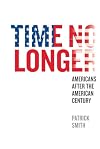
I cannot think of a more timely book.
Wonderful intersection of political critique, anthropology, and history.
If we want to face forward into history and the 21st century we should take head of what Patrick Smith has so eloquently described as to our our country's self-held mythologies.
Wonderful intersection of political critique, anthropology, and history.
If we want to face forward into history and the 21st century we should take head of what Patrick Smith has so eloquently described as to our our country's self-held mythologies.
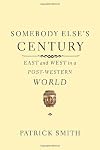
I came to this book on my search for understanding East and West with scholarly depth. My background reading in philosophy gave me tools to understand Patrick’s work.
Patrick writes as an essay and not to give a conclusion.
He writes this from his background on living in Asia for 25 years. He focuses on China, India and Japan. I find myself going in the opposite direction in life with Patrick.
Patrick’s Essays starts with his story in Japan with his friend from Boston and ends with an show more answer from Shiv, from Ahmedabad. He asks the question,
“What does it mean to be Modern?”
“Can Asia understand itself without referring to the West?”
Patrick combines history, an idea of progress, self, time to distinct Eastern ways. He writes that east possibility could refer to themselves to create their own identity in the last chapter from Japan.
I came across a few new scholars from Japan, China that I did not know. Patrick explained the concept of doubling. Doubling he explains as modern-self was something put on above the traditional self. Japanese businessmen might wear western attire. To wear his traditional attire is not considered modern.
A Great Essay to attempt to explore his initial questions.
I would recommend this book to someone who wants to understand West and East. It might be a mini-intro to the history of China, Japan and India
Deus Vult,
Gottfried show less
Patrick writes as an essay and not to give a conclusion.
He writes this from his background on living in Asia for 25 years. He focuses on China, India and Japan. I find myself going in the opposite direction in life with Patrick.
Patrick’s Essays starts with his story in Japan with his friend from Boston and ends with an show more answer from Shiv, from Ahmedabad. He asks the question,
“What does it mean to be Modern?”
“Can Asia understand itself without referring to the West?”
Patrick combines history, an idea of progress, self, time to distinct Eastern ways. He writes that east possibility could refer to themselves to create their own identity in the last chapter from Japan.
I came across a few new scholars from Japan, China that I did not know. Patrick explained the concept of doubling. Doubling he explains as modern-self was something put on above the traditional self. Japanese businessmen might wear western attire. To wear his traditional attire is not considered modern.
A Great Essay to attempt to explore his initial questions.
I would recommend this book to someone who wants to understand West and East. It might be a mini-intro to the history of China, Japan and India
Deus Vult,
Gottfried show less
Awards


You May Also Like


Statistics
- Works
- 4
- Members
- 269
- Popularity
- #85,898
- Rating
- 3.7
- Reviews
- 7
- ISBNs
- 72
- Languages
- 6
- Favorited
- 1