
Ian Buruma
Author of Occidentalism: The West in the Eyes of Its Enemies
About the Author
Ian Buruma is currently the Luce Professor at Bard College.
Works by Ian Buruma
Murder in Amsterdam: The Death of Theo Van Gogh and the Limits of Tolerance (2006) 601 copies, 14 reviews
The Churchill Complex: The Curse of Being Special, from Winston and FDR to Trump and Brexit (2020) 64 copies, 1 review
Theater of Cruelty: Art, Film, and the Shadows of War (New York Review Books Collections) (2014) 60 copies
De boom van Herder 2 copies
The Devils of Hiroshima 2 copies
Shamanee — Introduction — 1 copy
"A New Japanese Nationalism" 1 copy
Associated Works
An Inconvenient Truth [2006 documentary film] (2006) — Contributor, some editions — 279 copies, 8 reviews
Berlin in Lights: The Diaries of Count Harry Kessler, 1918-1937 (1961) — Introduction, some editions — 146 copies, 1 review
Know the Past, Find the Future: The New York Public Library at 100 (2011) — Contributor — 133 copies, 4 reviews
The Company They Kept, Volume Two: Writers on Unforgettable Friendships (2011) — Contributor — 25 copies
Tagged
Common Knowledge
- Canonical name
- Buruma, Ian
- Legal name
- Buruma, Ian
- Birthdate
- 1951-12-28
- Gender
- male
- Education
- Leiden University (Candidate|1975|Chinese Literature)
Nihon University (Tokyo, Japanese Film) - Occupations
- writer
editor
historian
professor - Organizations
- Far Eastern Economic Review
Bard College
New York Review of Books - Awards and honors
- Woodrow Wilson International Center for Scholars Fellowship (Washington|DC)
Oxford Fellowship (St. Antony's College)
Erasmusprijs (2008)
Gouden Ganzenveer (2018) - Relationships
- Buruma, Ybo (cousin)
Schlesinger, John (uncle) - Nationality
- Netherlands (birth)
UK (passport) - Birthplace
- The Hague, Netherlands
- Places of residence
- New York, New York, USA
- Associated Place (for map)
- New York, New York, USA
Members
Reviews
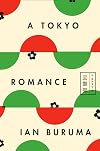
This is an engaging and often very funny memoir of Buruma's period living in Tokyo in the late seventies, initially as a student of Japanese cinema and later on trying to make his way as a photographer and as a (fringe-) member of a couple of experimental theatre companies. Probably required reading if you are interested in the work of Kara Juro, Terayama Shuji, or Butoh dance, but otherwise it's basically just another account of the gaijin experience, albeit one that benefits from being show more written by an intelligent, observant professional journalist with the benefit of forty years of hindsight and no real need to prove himself any more (well, not at the time he wrote this, anyway...). show less

This is one of the Modern Library Chronicles series of brief histories, taking us through the history of modern Japan from Commodore Perry to the Tokyo Olympics in not much more than 150 pages, but it's far from being a mere gallop through the facts. As you might expect from Buruma, the stress is on understanding the development of Japanese political thought and exploring how that led to the peculiarities of the Japanese kokutai (polity) as it leapt from feudalism to Meiji authoritarianism, show more Showa militarism, and the postwar LDP machine. And of course, he's not slow to express his opinion of what went wrong with all these different visions of Japaneseness. Buruma looks not only at the roles played by political and military figures, but also at the cultural background to the main currents of Japanese thought during the period - novelists, film-makers, popular journalism, propaganda, etc.
One thing that struck me from Buruma's account was the extent to which Japanese scholars were already aware of (and using) western ideas during the Dutch period - the idea of Japan suddenly being made to open the shutters and discover the modern world for the first time in the 1850s makes a good story, but of course it couldn't really have been quite as sudden as that in real life. Another was the way that the state reacted to the destabilising effects of outside ideas by inventing new "ancient traditions" to reinforce the links between authority, religion and nationalism - not so very different to what was happening in Britain during the industrial revolution or is happening now in many postcolonial states.
Obviously, there has to be a lot of important material that gets missed out or skipped over lightly in a book this size (quite apart from the fact that the book was written 15 years ago and only takes the main story up to 1964 anyway). Buruma is an opinionated writer, albeit one I usually find myself agreeing with, so it's probably best not to take this book in isolation, but it is a good way to get the broad outlines of the story fixed in your mind. It looks like a useful jumping-off point, and it comes with a comprehensive bibliography to facilitate that kind of use. show less
One thing that struck me from Buruma's account was the extent to which Japanese scholars were already aware of (and using) western ideas during the Dutch period - the idea of Japan suddenly being made to open the shutters and discover the modern world for the first time in the 1850s makes a good story, but of course it couldn't really have been quite as sudden as that in real life. Another was the way that the state reacted to the destabilising effects of outside ideas by inventing new "ancient traditions" to reinforce the links between authority, religion and nationalism - not so very different to what was happening in Britain during the industrial revolution or is happening now in many postcolonial states.
Obviously, there has to be a lot of important material that gets missed out or skipped over lightly in a book this size (quite apart from the fact that the book was written 15 years ago and only takes the main story up to 1964 anyway). Buruma is an opinionated writer, albeit one I usually find myself agreeing with, so it's probably best not to take this book in isolation, but it is a good way to get the broad outlines of the story fixed in your mind. It looks like a useful jumping-off point, and it comes with a comprehensive bibliography to facilitate that kind of use. show less
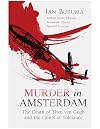
Mohammed Bouyeri was 26 years old when he not only shot Theo van Gogh several times but slashed his throat with a machete as well. He ended his assault by stabbing a note into Van Gogh's lifeless body - however the final insult was kicking the corpse before calmly walking away. The note, oddly enough, wasn't addressed to Van Gogh (rightly so since the dead man couldn't read it) but to anti-Islam politician Hirsi Ali who claimed the Koran was the source of abuse against women. That's not to show more say there weren't plenty of folks in Holland who wished Van Gogh dead. He thrived on being controversial to the point of revolting. Buruma knew Van Gogh in certain circles so I can only imagine what it was like to write about his death as an acquaintance. But, the actual crime is only the centerpiece for the much wider topic of controversies surrounding what happens when nonconformist immigrant populations with differing religions and cultural politics clash against other stringent societies. show less
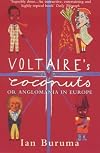
Sometimes a writer and thinker, such as Buruma, will discover an angle of inquiry that is truly revelatory--bringing into relief assumptions and influences that might otherwise be overlooked. Buruma starts with his own and his family's love affair with England (German Jewish emigrant grandparents) widens his scope to examine the influence of various political thinkers and intellectuals from France (Voltaire being the #1 french anglophile) Italy (Mazzini) and Germany, particularly the views show more of German Jews. I didn't know of the German adoption of Shakespeare, through Schlegel's translation as 'theirs' nor did I know that it was Baron de Coubertin's enthusiasm for British public school sportsmanship that inspired the idea of the modern Olympics. It is very difficult to figure out why Great Britain developed its political system and civil liberties the way it did, and how the system has functioned and persisted as well as it has. He makes it clear too that these emigrants and admirers see their own idealized version of Great Britain, that the 'real' Great Britain is a mysterious entity that shouldn't work but does anyway. He also made me feel the mutually beneficial back and forth between the continent and Great Britain. The Europeans have their own take on what makes Great Britain work which in turn has an effect on how the British see themselves which in turn . . . Buruma writes with tremendous insight: "Once people talk of political freedoms as purely native fruits, you know that freedom is no longer the point. Voltaire and Montesquieu recognized that liberties were protected by laws not values. That is why they admired Britain. The idea that society should be ruled by specific national values was in fact that mark of Continental tyrannies, not of British liberalism." I must confess that I wasn't hugely in the mood for this read, but I kept on with it and it really is a fine book. **** show less
Lists
Shaking a Leg (1)
Awards


You May Also Like


Associated Authors
Statistics
- Works
- 56
- Also by
- 13
- Members
- 4,701
- Popularity
- #5,364
- Rating
- 3.7
- Reviews
- 95
- ISBNs
- 270
- Languages
- 16
- Favorited
- 8

