
Peter Stamm
Author of Agnes
About the Author
Image credit: Peter Stamm Foto: privat
Works by Peter Stamm
سبع سنوات 2 copies
In einer dunkelblauen Stunde Roman | "Von großer komischer Leichtigkeit." Neue Zürcher Zeitung (2023) 1 copy
The Natural Way of Things (Electric Literature's Recommended Reading) — Author — 1 copy
Världens milda likgiltighet 1 copy
Associated Works
A Very German Christmas: The Greatest Austrian, Swiss and German Holiday Stories of All Time (2020) — Contributor — 36 copies, 1 review
Tagged
Common Knowledge
- Canonical name
- Stamm, Peter
- Legal name
- Stamm, Peter
- Birthdate
- 1963-01-18
- Gender
- male
- Education
- University of Zurich
- Awards and honors
- Alemannischer Literaturpreis (2011)
Man Booker International Prize Finalist (2013) - Nationality
- Switzerland
- Birthplace
- Weinfelden, Thurgau, Suïssa
- Places of residence
- Weinfelden, Thurgau, Switzerland
Winterthur, Zürich, Switzerland
New York, New York, USA
Paris, France - Map Location
- Schweiz
- Associated Place (for map)
- Switzerland
Members
Reviews
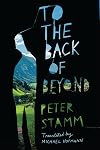
To the Back of Beyond is the first novel by author Peter Stamm that I have read, but hopefully it won’t be the last. This is an unusual story that can affect the reader in many different ways as it slowly draws you into the story of a seemingly happily married man, who one evening while out in the yard, just up and walks away.
He walks across Switzerland, moving mostly at night to avoid being recognized, sleeping in the forest or in abandoned huts, scavenging as he moves along. And what of show more his wife and the two children he has left behind? The book alternates between Thomas, the husband and his wanderings and Astrid, the wife, and how she copes with his disappearance. Walking away from one’s obligations is interesting, but at the same time to abandon one’s family seems unnecessarily cruel so I found it difficult to be too sympathetic towards Thomas. At the same time, I found Astrid’s reluctance to accept his absence, her flimsy excuses to both herself and to others hard to understand. I wanted more, I wanted to understand the character’s motivations but the author kept us at a distance. His measured, cool prose gave us plenty of detail but nothing that truly satisfied my curiosity.
I suspect the author deliberately left his character’s motivations unfocused allowing the readers to ponder upon a variety of questions, is our current life the one we want, are our routines meant to bring comfort or to chain us down, can one ever really know another person? To the Back of Beyond is a perplexing, strange yet fascinating story that I enjoyed but I suspect there could be many readers who would simply want to toss this book against a wall. show less
He walks across Switzerland, moving mostly at night to avoid being recognized, sleeping in the forest or in abandoned huts, scavenging as he moves along. And what of show more his wife and the two children he has left behind? The book alternates between Thomas, the husband and his wanderings and Astrid, the wife, and how she copes with his disappearance. Walking away from one’s obligations is interesting, but at the same time to abandon one’s family seems unnecessarily cruel so I found it difficult to be too sympathetic towards Thomas. At the same time, I found Astrid’s reluctance to accept his absence, her flimsy excuses to both herself and to others hard to understand. I wanted more, I wanted to understand the character’s motivations but the author kept us at a distance. His measured, cool prose gave us plenty of detail but nothing that truly satisfied my curiosity.
I suspect the author deliberately left his character’s motivations unfocused allowing the readers to ponder upon a variety of questions, is our current life the one we want, are our routines meant to bring comfort or to chain us down, can one ever really know another person? To the Back of Beyond is a perplexing, strange yet fascinating story that I enjoyed but I suspect there could be many readers who would simply want to toss this book against a wall. show less
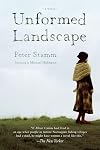
The themes in this novel by Peter Stamm are familiar. Loneliness, impossibility of lasting meaningful connections with others, absurdity of human existence, illusory and ultimately futile attempts to escape. Yet in all this apparent hopelessness, there are some choices that are still better than others. One could refuse to pretend, one could choose not to lie and not to accept being lied to, one could avoid building a make-belief fanciful facade of 'proper' life that hides the emptiness and show more darkness within, one could attempt to be honest first and foremost with oneself. This is probably the most directly Camus-esque of Peter Stamm's novels, the one where he does not yet venture beyond the unformed landscape sketched out by the great existentialist. show less
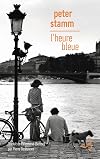
I will keep reading whatever Peter Stamm decides to write. I really enjoy his sparse cinematic prose, internal monologues of his characters that seem to talk to themselves in the same language I use for that purpose. What I find striking is that this sublanguage works equally well whether I read translation of his works in English or in French. Had I been able to read in German, I would have found the same. I am sure of it. This linguistic substrata so closely corresponds to my own stream of show more conscious mumbling that I feel I don't really need a plot at all.
The cinematic aspect of Peter's writing is further enhanced in this book. The protagonist is a film maker after all, we read about making a film, a documentary film about a writer, then film slowly ceases to matter, it is no longer made - we read the echo of the film and the writer in the heads of two women for whom this writer mattered. Were they the only two people that cared about this writer? It is possible. Were they influenced a bit too much? Quite likely. Isn't this writer a bit like a shadow of Peter himself? Who knows.
In any case, objectively speaking the plot or the structure of the novel are not likely to attract many readers. I don't think Peter cares much about that. In the words of his character about what his readers might think - he doesn't give a shit.
If you have not read this author before, I would look elsewhere for the first novel to read. If like me you have read nearly everything he wrote, you must read this one too. show less
The cinematic aspect of Peter's writing is further enhanced in this book. The protagonist is a film maker after all, we read about making a film, a documentary film about a writer, then film slowly ceases to matter, it is no longer made - we read the echo of the film and the writer in the heads of two women for whom this writer mattered. Were they the only two people that cared about this writer? It is possible. Were they influenced a bit too much? Quite likely. Isn't this writer a bit like a shadow of Peter himself? Who knows.
In any case, objectively speaking the plot or the structure of the novel are not likely to attract many readers. I don't think Peter cares much about that. In the words of his character about what his readers might think - he doesn't give a shit.
If you have not read this author before, I would look elsewhere for the first novel to read. If like me you have read nearly everything he wrote, you must read this one too. show less
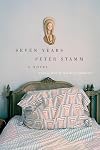
The book is written in a spare, minimalist style similar to other books by Peter Stamm. Despite the stylistic simplicity the language is painstakingly precise and some scenes come to light with an almost cinematic quality. You do not need a movie based on this book, once you read it, you have seen the movie in your head.
While "Seven Years" may appear simple, the characters unlikable, and the plot uninspiring, the book amounts to a lot more than this superficial perception would allow. As show more good literature should, the book asks big questions and does not provide easy answers.
Without giving too much away, I will just mention some of the issues raised in the book and let you discover the other ones.
Is there too much emphasis on professional ambition in the modern western world? Is it a worthy goal to achieve success and living standards desired by and expected from people in certain social strata? Is the feeling of superiority many successful people enjoy justified or is it just a veneer layer below which a common human ugliness prevails? Is the concept of a modern family as a presentable partnership, a successful enterprise created and maintained for the sake of convenience sustainable? Will the underlying suppressed passions and desires rear their ugly heads at some point or other?
What I found most striking in the book, where all people are fundamentally flawed, questionable with respect to their morals, lacking from the point of view of basic decency, is that in some actions or thoughts of these characters the readers recognize themselves. This is where the author aims and, when our defenses are down, when our armor is off, hits the bull's eye. show less
While "Seven Years" may appear simple, the characters unlikable, and the plot uninspiring, the book amounts to a lot more than this superficial perception would allow. As show more good literature should, the book asks big questions and does not provide easy answers.
Without giving too much away, I will just mention some of the issues raised in the book and let you discover the other ones.
Is there too much emphasis on professional ambition in the modern western world? Is it a worthy goal to achieve success and living standards desired by and expected from people in certain social strata? Is the feeling of superiority many successful people enjoy justified or is it just a veneer layer below which a common human ugliness prevails? Is the concept of a modern family as a presentable partnership, a successful enterprise created and maintained for the sake of convenience sustainable? Will the underlying suppressed passions and desires rear their ugly heads at some point or other?
What I found most striking in the book, where all people are fundamentally flawed, questionable with respect to their morals, lacking from the point of view of basic decency, is that in some actions or thoughts of these characters the readers recognize themselves. This is where the author aims and, when our defenses are down, when our armor is off, hits the bull's eye. show less
Lists
Awards


You May Also Like


Associated Authors
Statistics
- Works
- 40
- Also by
- 4
- Members
- 1,861
- Popularity
- #13,831
- Rating
- 3.5
- Reviews
- 87
- ISBNs
- 219
- Languages
- 20
- Favorited
- 4
