
Mark Strand (1934–2014)
Author of The Making of a Poem: A Norton Anthology of Poetic Forms
About the Author
Mark Strand was born on April 11, 1934 in Summerside on Prince Edward Island in Canada. Since his father's job resulted in many transfers, he spent his childhood in Cleveland, Halifax, Montreal, New York and Philadelphia and his teenage years in Colombia, Mexico and Peru. He received a bachelor's show more degree at Antioch College in Ohio in 1957, a bachelor of fine arts in painting from Yale University School of Art and Architecture in 1959, and a master of fine arts from the Iowa Writers' Workshop in 1962. He studied 19th-century Italian poetry in Florence on a Fulbright Grant from 1960-1961. His first poetry collection, Sleeping with One Eye Open, was published in 1964. His other works included Reasons for Moving, Darker, The Story of Our Lives, The Late Hour, A Continuous Life, Dark Harbor, and Collected Poems: Mark Strand. In 1990, he was named the fourth Poet Laureate of the United States. He received the Bollingen Prize for Poetry in 1993 and the Pulitzer Prize for Poetry in 1999 for Blizzard of One. In 1980, he felt that he had reached an impasse and stopped writing poetry for several years. During that time, he wrote several children's books including The Planet of Lost Things and Mr. and Mrs. Baby. He also wrote books on the painters EdwardHopper and William Bailey, and a collection of critical essays entitled The Art of the Real. He died of liposarcoma on November 29, 2014 at the age of 80. (Bowker Author Biography) Pulitzer Prize-winning poet Mark Strand was born in Summerside, Prince Edward Island, Canada, and was raised and educated in the United States and South America. He is the author of a book of stories, "Mr. and Mrs. Baby", several volumes of translations (Rafael Alberti and Carlos Drummond de Andrade among them), a number of anthologies (most recently "The Golden Ecco Anthology") and several monographs on contemporary artists (William Bailey and Edward Hopper). He has received many honors and grants for his poems, including a MacArthur Fellowship, and in 1990 he was chosen as Poet Laureate of the United States. He teaches in the Committee on Social Thought at the University of Chicago. (Publisher Provided) Mark Strand's collection "Blizzard of One" was awarded the Pulitzer Prize. (Publisher Provided) show less
Image credit: Courtesy of the Pulitzer Prizes.
Works by Mark Strand
Looking for Poetry: Poems by Carlos Drummond de Andrade and Rafael Alberti and Songs from the Quechua (2002) 25 copies
Gedichten eten 4 copies
Sleeping with one eye open: Poems 3 copies
Plays in process 2 copies
A Poet's Alphabet of Influences 2 copies
Every Place with a Name: Photographs from the Dakota Photo Documentary Project (1993) — Editor — 1 copy
A suite of appearances 1 copy
Emblemas 1 copy
Mark Strand 1st edit/1 print Blizzard of One Poems First Edition 1998 [Hardcover] Strand, Mark [Hardcover] Strand, Mark (1998) 1 copy
Ac/Su: a History of the North Dakota Agricultural College and North Dakota State University in Photographs (1985) 1 copy
City Secrets: Books: The Essential Reader's Guide — Editor — 1 copy
Nocturnes 1 copy
The King/ King/ Kings 1 copy
20 Poemas 1 copy
Contemporary American Poets 1 copy
Associated Works
For the Love of Books: 115 Celebrated Writers on the Books They Love Most (1999) — Contributor — 479 copies, 4 reviews
Poetry Speaks Expanded: Hear Poets Read Their Own Work from Tennyson to Plath (2007) — Contributor — 158 copies, 2 reviews
The Sonnets: A Dual-Language Edition with Parallel Text (Penguin Classics) (2010) — Translator, some editions — 86 copies, 2 reviews
Orpheus and Company: Contemporary Poems on Greek Mythology (1999) — Contributor — 52 copies, 1 review
Tagged
Common Knowledge
- Canonical name
- Strand, Mark
- Legal name
- Strand, Mark Apter
- Other names
- STRAND, Mark Apter
STRAND, Mark
ストランド, マーク - Birthdate
- 1934-04-11
- Date of death
- 2014-11-29
- Gender
- male
- Education
- Antioch College (BA|1957)
Yale University (BFA|1959)
University of Iowa (MFA|1962) - Occupations
- poet
short story writer
translator - Organizations
- Columbia University
University of Chicago
Johns Hopkins University
University of Utah
Brandeis University - Awards and honors
- Bollingen Prize (1993)
Wallace Stevens Award (2004)
Fellowship of the Academy of American Poets (1979)
American Academy of Arts and Letters Academy Award (Literature ∙ 1975)
U.S. Poet Laureate (1990)
Gold Medal, American Academy of Arts and Letters (Poetry ∙ 2009) (show all 10)
Pulitzer Prize for Poetry (1999)
American Academy of Arts and Letters (1981)
MacArthur Fellowship (1987)
Bobbitt National Prize for Poetry (1992) - Cause of death
- liposarcoma
- Nationality
- Canada
USA - Birthplace
- Summerside, Prince Edward Island, Canada
- Places of residence
- USA
South America
Central America
Italy - Place of death
- Brooklyn, New York, USA
- Map Location
- Canada
- Associated Place (for map)
- Summerside, Prince Edward Island, Canada
Members
Reviews
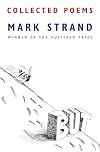
One night, I found myself reading a lot of Mark Strand poetry—though I still wasn’t even halfway through his 500-page Collected Poems. I was dead tired, my eyes were shot, my back ached, but I was absolutely driven to read more. Though I had recently read Louise Glück’s huge book of poetry (Poems 1962-2012) and it had been a great experience, Mark Strand’s poetry is more up my street with his oddness and style. My appreciation for poetry has always been strong, but it is sky-high show more recently. Reading and wandering around in these huge books by Nobel and Pulitzer prize-winning poets is simply surreal and otherworldly at times. Last night, I was already feeling rather emotional, and I was shaken, amused, and drawn in so many directions, from so many poems.
Some of Mark Strand poems go on for pages and pages, but they were working for me in the dark of night. Sometimes, I was stunned and amazed with just a single line, a stanza, or a complete poem. It was one of my favorite and most intense experiences reading poetry by myself ever. Though I was marking the outstanding parts, I still had such a desire to read them to, and share them with my late wife. We were constantly sharing what impressed us in the books we were reading—that was our life together.
Strand wrote a beautiful long poem that was about life being a book, “The Story of Our Lives.” It’s about reading that book, but the line between what’s on the page and what’s actual living is intriguingly unexplained and unexplainable. I was rereading parts over and over for some time. I certainly applied the poem’s premise to my own life, as a vast amount of my life is absorbed by reading and writing the word, and sharing that life. The question of whether we’re living or reading, and of whether we can control any or all of our existence was a great place to be left pondering in the night.
All his thoughts got me to thinking in so many directions that I could never have remembered or recorded half of them. Mark Strand’s poetry is mostly very tight to my own feelings and I’m very grateful for experiencing such a strong connection there … and I can return there again whenever I pick this volume up again.
_____ show less
Some of Mark Strand poems go on for pages and pages, but they were working for me in the dark of night. Sometimes, I was stunned and amazed with just a single line, a stanza, or a complete poem. It was one of my favorite and most intense experiences reading poetry by myself ever. Though I was marking the outstanding parts, I still had such a desire to read them to, and share them with my late wife. We were constantly sharing what impressed us in the books we were reading—that was our life together.
Strand wrote a beautiful long poem that was about life being a book, “The Story of Our Lives.” It’s about reading that book, but the line between what’s on the page and what’s actual living is intriguingly unexplained and unexplainable. I was rereading parts over and over for some time. I certainly applied the poem’s premise to my own life, as a vast amount of my life is absorbed by reading and writing the word, and sharing that life. The question of whether we’re living or reading, and of whether we can control any or all of our existence was a great place to be left pondering in the night.
All his thoughts got me to thinking in so many directions that I could never have remembered or recorded half of them. Mark Strand’s poetry is mostly very tight to my own feelings and I’m very grateful for experiencing such a strong connection there … and I can return there again whenever I pick this volume up again.
_____ show less
Take this one slowly. It's a whole world of information. I read one chapter at a time, diagramming out the poetic forms, trying to decode meter. Learning a ferocious amount. This is a great springboard from which I hope to bounce into learning more about the specific poets and ages of poetry.
Each section describes the rules and history of a type of poem (e.g. pantoum, sonnet) and then gives many examples. While the initial explanation is very helpful, I find myself wishing there were more show more analysis of each poem--but I suppose this book cannot be all things at once.
Also useful is the appendix of brief biographies about each represented poet. The context of the book tends to lean towards drawing a background for modern works, but classic poems are also strongly represented.
I still feel profoundly undereducated in verse, but I have taken one large step towards enlightenment with this book. show less
Each section describes the rules and history of a type of poem (e.g. pantoum, sonnet) and then gives many examples. While the initial explanation is very helpful, I find myself wishing there were more show more analysis of each poem--but I suppose this book cannot be all things at once.
Also useful is the appendix of brief biographies about each represented poet. The context of the book tends to lean towards drawing a background for modern works, but classic poems are also strongly represented.
I still feel profoundly undereducated in verse, but I have taken one large step towards enlightenment with this book. show less
“Something nameless hums us into sleep … We feel dreamed by someone else, a sleeping counterpart…”
"Qualcosa senza nome ci borbotta in sonno ... Siamo sognati da qualcun altro, una controparte che dorme ..."
I sogni sono sempre stati un mistero nella vita degli uomini, indipendentemente dalla loro razza, colore, lingua, cultura o età. Una mia amica virtuale, Marzia Marni Mazzavillani, li studia da anni, non so con quali risultati. Sollecitano da millenni le arti, le scienze e le show more filosofie in egual misura. Ma essi restano un mistero nonostante tutto. Per quanto staccati e indipendenti dalla vita reale, i sogni continuano ad influire sui nostri momenti in cui siamo svegli, così come la vita reale continua ad influenzare la vita notturna.
Ci illudiamo di tenerli a bada, magari cercando di sognare a occhi aperti, ma continuiamo a non sapere nulla di loro nel momento in cui diventiamo prigionieri del sonno. Sembra che solo i poeti siano in grado di "leggerli". Solo i veri poeti, però, come Mark Strand con la poesia che vi propongo qui di seguito e che ho liberamente tradotto.
In uno dei suoi diversi libri di poesie, il vincitore del prestigioso premio Pulitzer Mark Strand esplora in versi il mistero dei sogni. La poesia è anche una specie di testamento artistico che il poeta assegna all'artista: essere testimone di fronte all'universo, sia dentro che fuori se stesso. Inutile dire che la poesia, ogni poesia, tutta la poesia va letta e gustata nella lingua originale in cui il poeta l'ha concepita, dialetto o lingua che sia.
Dreams
Sogni
Trying to recall the plot
And characters we dreamed,
What life was like
Before the morning came,
We are seldom satisfied,
And even then
There is no way of knowing
If what we know is true.
Cercando di ricordare la trama
e i personaggi sognati,
com’era la vita
prima che fosse giorno,
siamo raramente soddisfatti,
ed anche allora
non c’è modo di sapere
se quello che sappiamo è vero.
Something nameless
Hums us into sleep,
Withdraws, and leaves us in
A place that seems
Always vaguely familiar.
Qualcosa senza nome
ci borbotta in sonno,
si ritira e ci lascia
in un posto che sembra
sempre vagamente familiare.
Perhaps it is because
We take the props
And fixtures of our days
With us into the dark,
Assuring ourselves
We are still alive. And yet
Nothing here is certain;
Forse perché
portiamo con noi nel buio
le frattaglie delle nostre giornate,
per sentirci vivi
eppure qui nulla c’è di certo;
Landscapes merge
With one another, houses
Are never where they should be,
Doors and windows
Sometimes open out
To other doors and windows,
Even the person
Who seems most like ourselves
Cannot be counted on,
For there have been
Too many times when he,
Like everything else, has done
The unexpected.
I paesaggi si mescolano
l’uno con l’altro, le case
non sono mai dove dovrebbero essere,
porte e finestre
a volte si aprono verso
altre porte e finestre,
persino le persone che
sembrano come noi
non sono come sono,
ci sono state troppe volte
quando lui, come ogni altra cosa,
ha fatto quello che non ci si aspettava.
And as the night wears on,
The dim allegory of ourselves
Unfolds, and we
Feel dreamed by someone else,
A sleeping counterpart,
Who gathers in
The darkness of his person
Shades of the real world.
E man mano che la notte avanza,
la debole allegoria di noi stessi
si svela e siamo sognati
da qualche altro,
una controparte che dorme,
che raccoglie nel buio
della sua persona
ombre del mondo reale.
Nothing is clear;
We are not ever sure
If the life we live there
Belongs to us.
Each night it is the same;
Just when we’re on the verge
Of catching on,
A sense of our remoteness
Closes in, and the world
So lately seen
Gradually fades from sight.
Nulla è chiaro;
non siamo mai certi
se la vita che viviamo lì
ci appartiene.
Ogni notte è lo stesso:
proprio quando siamo sul punto
di agganciarci,
un senso di lontananza
ci attanaglia, e il mondo
visto poco prima
a poco a poco svanisce.
We wake to find the sleeper
Is ourselves
And the dreamt-of is someone who did
Something we can’t quite put
Our finger on,
But which involved a life
We are always, we feel,
About to discover.
Ci destiamo per scoprire che
chi dorme siamo noi
e il sognato è qualcuno
che ha fatto qualcosa su cui
non possiamo mettere le mani,
ma che coinvolge una vita
che ci accorgiamo di stare sempre
sul punto di scoprire. show less
"Qualcosa senza nome ci borbotta in sonno ... Siamo sognati da qualcun altro, una controparte che dorme ..."
I sogni sono sempre stati un mistero nella vita degli uomini, indipendentemente dalla loro razza, colore, lingua, cultura o età. Una mia amica virtuale, Marzia Marni Mazzavillani, li studia da anni, non so con quali risultati. Sollecitano da millenni le arti, le scienze e le show more filosofie in egual misura. Ma essi restano un mistero nonostante tutto. Per quanto staccati e indipendenti dalla vita reale, i sogni continuano ad influire sui nostri momenti in cui siamo svegli, così come la vita reale continua ad influenzare la vita notturna.
Ci illudiamo di tenerli a bada, magari cercando di sognare a occhi aperti, ma continuiamo a non sapere nulla di loro nel momento in cui diventiamo prigionieri del sonno. Sembra che solo i poeti siano in grado di "leggerli". Solo i veri poeti, però, come Mark Strand con la poesia che vi propongo qui di seguito e che ho liberamente tradotto.
In uno dei suoi diversi libri di poesie, il vincitore del prestigioso premio Pulitzer Mark Strand esplora in versi il mistero dei sogni. La poesia è anche una specie di testamento artistico che il poeta assegna all'artista: essere testimone di fronte all'universo, sia dentro che fuori se stesso. Inutile dire che la poesia, ogni poesia, tutta la poesia va letta e gustata nella lingua originale in cui il poeta l'ha concepita, dialetto o lingua che sia.
Dreams
Sogni
Trying to recall the plot
And characters we dreamed,
What life was like
Before the morning came,
We are seldom satisfied,
And even then
There is no way of knowing
If what we know is true.
Cercando di ricordare la trama
e i personaggi sognati,
com’era la vita
prima che fosse giorno,
siamo raramente soddisfatti,
ed anche allora
non c’è modo di sapere
se quello che sappiamo è vero.
Something nameless
Hums us into sleep,
Withdraws, and leaves us in
A place that seems
Always vaguely familiar.
Qualcosa senza nome
ci borbotta in sonno,
si ritira e ci lascia
in un posto che sembra
sempre vagamente familiare.
Perhaps it is because
We take the props
And fixtures of our days
With us into the dark,
Assuring ourselves
We are still alive. And yet
Nothing here is certain;
Forse perché
portiamo con noi nel buio
le frattaglie delle nostre giornate,
per sentirci vivi
eppure qui nulla c’è di certo;
Landscapes merge
With one another, houses
Are never where they should be,
Doors and windows
Sometimes open out
To other doors and windows,
Even the person
Who seems most like ourselves
Cannot be counted on,
For there have been
Too many times when he,
Like everything else, has done
The unexpected.
I paesaggi si mescolano
l’uno con l’altro, le case
non sono mai dove dovrebbero essere,
porte e finestre
a volte si aprono verso
altre porte e finestre,
persino le persone che
sembrano come noi
non sono come sono,
ci sono state troppe volte
quando lui, come ogni altra cosa,
ha fatto quello che non ci si aspettava.
And as the night wears on,
The dim allegory of ourselves
Unfolds, and we
Feel dreamed by someone else,
A sleeping counterpart,
Who gathers in
The darkness of his person
Shades of the real world.
E man mano che la notte avanza,
la debole allegoria di noi stessi
si svela e siamo sognati
da qualche altro,
una controparte che dorme,
che raccoglie nel buio
della sua persona
ombre del mondo reale.
Nothing is clear;
We are not ever sure
If the life we live there
Belongs to us.
Each night it is the same;
Just when we’re on the verge
Of catching on,
A sense of our remoteness
Closes in, and the world
So lately seen
Gradually fades from sight.
Nulla è chiaro;
non siamo mai certi
se la vita che viviamo lì
ci appartiene.
Ogni notte è lo stesso:
proprio quando siamo sul punto
di agganciarci,
un senso di lontananza
ci attanaglia, e il mondo
visto poco prima
a poco a poco svanisce.
We wake to find the sleeper
Is ourselves
And the dreamt-of is someone who did
Something we can’t quite put
Our finger on,
But which involved a life
We are always, we feel,
About to discover.
Ci destiamo per scoprire che
chi dorme siamo noi
e il sognato è qualcuno
che ha fatto qualcosa su cui
non possiamo mettere le mani,
ma che coinvolge una vita
che ci accorgiamo di stare sempre
sul punto di scoprire. show less
There are good things about this anthology. The explanations of the forms are clear and concise. For the most part, the examples chosen serve the book well in illustrating each form, and the attempt at including diverse voices, which Strand and Boland discuss in their Introductory Statement, is laudable. The prose is readable and poetic.
Those positives were balanced out, however, by a pretty large flaw: for an anthology of English language poetic forms, there are a lot of forms not found in show more The Making of a Poem.
This book omits not just obscure forms, forms only recently introduced into the accepted canon of English poetry at the time of publication (such as the ghazal), or variations on included forms, but also widely used, popular forms that one would expect in a book of this type, such as the limerick, any of the variations of the cinquain, or the rondeau (of In Flanders Field fame).
Ultimately, the omission of multiple important forms felt like a lack of follow through on the premise of the book. show less
Those positives were balanced out, however, by a pretty large flaw: for an anthology of English language poetic forms, there are a lot of forms not found in show more The Making of a Poem.
This book omits not just obscure forms, forms only recently introduced into the accepted canon of English poetry at the time of publication (such as the ghazal), or variations on included forms, but also widely used, popular forms that one would expect in a book of this type, such as the limerick, any of the variations of the cinquain, or the rondeau (of In Flanders Field fame).
Ultimately, the omission of multiple important forms felt like a lack of follow through on the premise of the book. show less
Lists
Awards


You May Also Like


Associated Authors
Statistics
- Works
- 88
- Also by
- 33
- Members
- 4,383
- Popularity
- #5,724
- Rating
- 3.9
- Reviews
- 34
- ISBNs
- 137
- Languages
- 13
- Favorited
- 10


