
Thomas Cathcart (1940–2024)
Author of Plato and a Platypus Walk Into a Bar...: Understanding Philosopy Through Jokes
About the Author
Thomas Cathcart is the author of coauthor of six books, including the New York Times best-seller Plato and a Platypus Walk into a Bar (2007). He has been a college instructor, a hospital administrator, a social worker with inner-city gangs, a hospice director for patients with HIV/AIDS, and a lay show more leader in many congregations. He lives in upstate New York. show less
Image credit: John Burlinson, 9/21/08.
Works by Thomas Cathcart
Plato and a Platypus Walk Into a Bar...: Understanding Philosopy Through Jokes (2006) — Author — 3,370 copies, 119 reviews
Heidegger and a Hippo Walk Through Those Pearly Gates: Using Philosophy (and Jokes!) to Explore Life, Death, the Afterlife, and Everything in Between (2009) 617 copies, 23 reviews
Aristotle and an Aardvark Go to Washington: Understanding Political Doublespeak Through Philosophy and Jokes (2008) 476 copies, 11 reviews
The Trolley Problem, or Would You Throw the Fat Guy Off the Bridge?: A Philosophical Conundrum (2013) 149 copies, 2 reviews
Tagged
Common Knowledge
- Canonical name
- Cathcart, Thomas
- Legal name
- Cathcart, Thomas Wilson
- Other names
- Cathcart, Tom
- Birthdate
- 1940-03-18
- Date of death
- 2024-04-26
- Gender
- male
- Education
- Harvard College (AB|1961|Philosophy)
University of Chicago (theology) - Occupations
- hospital administrator
- Relationships
- Klein, Daniel M. (collaborator)
Cathcart, Eloise Balasco (spouse) - Nationality
- USA
- Birthplace
- Marionville, Pennsylvania, USA
- Places of residence
- Red Hook, New York, USA
Cape Cod, Massachusetts, USA
New York, New York, USA
Chicago, Illinois, USA - Place of death
- Red Hook, New York, USA
- Burial location
- Town of Rhinebeck Natural Burial Ground, Rhinebeck, New York, USA
- Associated Place (for map)
- New York, USA
Members
Reviews
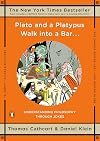
Six-word review: Wisdom is a fool in motley.
Extended review:
Do you think this is funny?
Two cows are standing in a field. One says to the other, "What do you think about this mad cow disease?"
"What do I care?" says the other. "I'm a helicopter."
There's humor in much of what I read, but it's usually of the cerebral variety, mild irony or absurdity, witty turns of phrase, that sort of thing; even Harry Dresden's wisecracks aren't usually laugh-out-loud funny. But this silly two-liner on page show more 120 just struck me as hilarious. If you're giggling too, then you and I have something in common.
If you think it's just dumb, well, never mind. People's senses of humor are pretty idiosyncratic, after all. There's a lot of supposed comedy that I just don't care for at all. But I loved this little book.
What that cow story has to do with existentialism may not be immediately apparent, but the authors will make it clear. It's their gift to be able to encapsulate the chief ideas of several branches of philosophy--metaphysics, logic, epistemology, ethics, and so on--and convey their essential qualities through jokes. Their approach is unabashedly entertaining, and I wish I'd had this light-hearted treatment on hand when I was a philosophy student; but it also rests on a very sound premise for which I've always had immense respect, namely, the efficacy of humor as a vehicle for truth: something cartoonists and satirists know very well.
Watch out, though: there are pop quizzes along the way and a three-point exam at the end. Resisting my native compulsions, I went on past it without completing the assignment. Instead I read the timeline of the history of philosophy, which set me off all over again.
I picked up this small orange-covered volume on a whim a few days ago, and it proved a nice break from far heavier stuff. My daytime sofa read is currently a very serious history of postwar Japan, and my bedtime novel is Adam Bede (1859), full of George Eliot's gently but deftly ironic observations on human nature, but nonetheless with a plot revolving around some deep and earnest characters who don't seem to see much humor in things. It was good for a change just to go ahead and laugh. By the time I got to the end and tried to read one of the stories aloud to my husband, I could hardly get the words out between gasps and tears. And it wasn't even that funny.
My father taught philosophy for 35 years. I know he would have loved this. He was fond of my all-time favorite quotation about philosophy (attributed to Feigl): "Philosophy is the disease for which it ought to be the cure." This book is a cure. show less
Extended review:
Do you think this is funny?
Two cows are standing in a field. One says to the other, "What do you think about this mad cow disease?"
"What do I care?" says the other. "I'm a helicopter."
There's humor in much of what I read, but it's usually of the cerebral variety, mild irony or absurdity, witty turns of phrase, that sort of thing; even Harry Dresden's wisecracks aren't usually laugh-out-loud funny. But this silly two-liner on page show more 120 just struck me as hilarious. If you're giggling too, then you and I have something in common.
If you think it's just dumb, well, never mind. People's senses of humor are pretty idiosyncratic, after all. There's a lot of supposed comedy that I just don't care for at all. But I loved this little book.
What that cow story has to do with existentialism may not be immediately apparent, but the authors will make it clear. It's their gift to be able to encapsulate the chief ideas of several branches of philosophy--metaphysics, logic, epistemology, ethics, and so on--and convey their essential qualities through jokes. Their approach is unabashedly entertaining, and I wish I'd had this light-hearted treatment on hand when I was a philosophy student; but it also rests on a very sound premise for which I've always had immense respect, namely, the efficacy of humor as a vehicle for truth: something cartoonists and satirists know very well.
Watch out, though: there are pop quizzes along the way and a three-point exam at the end. Resisting my native compulsions, I went on past it without completing the assignment. Instead I read the timeline of the history of philosophy, which set me off all over again.
I picked up this small orange-covered volume on a whim a few days ago, and it proved a nice break from far heavier stuff. My daytime sofa read is currently a very serious history of postwar Japan, and my bedtime novel is Adam Bede (1859), full of George Eliot's gently but deftly ironic observations on human nature, but nonetheless with a plot revolving around some deep and earnest characters who don't seem to see much humor in things. It was good for a change just to go ahead and laugh. By the time I got to the end and tried to read one of the stories aloud to my husband, I could hardly get the words out between gasps and tears. And it wasn't even that funny.
My father taught philosophy for 35 years. I know he would have loved this. He was fond of my all-time favorite quotation about philosophy (attributed to Feigl): "Philosophy is the disease for which it ought to be the cure." This book is a cure. show less
Plato and a Platypus Walk into a Bar . . .: Understanding Philosophy Through Jokes by Thomas Cathcart

I picked up Plato and a Platypus... on a whim, an impulse buy as I was heading out of a Barnes & Noble one day. I think the orange cover caught my eye, and then a quick scan of the subject matter piqued my curiosity. Jokes? I like jokes. Philosophy? I don't know much about it, but it always seemed like something I *should* know more about, something I would like to know more about. So I brought it home and started flipping through it.
I'm amazed at how much enjoyment I got out of it. First of show more all, a couple of the jokes I had to bring around to the wife and tell her. A couple of gems in there. (Mostly not, but that wasn't the point of the book. Besides, pick up any book of jokes - and I've picked up my share - and you'll know that it's mostly a collection of banality surrounding a couple of great knee-slappers.)
But mostly I enjoyed how the humor taught me a little about each different school of philosophy discussed. I can't say I'm walking away an expert in any of them, but I'm certainly a little more enlightened now. show less
I'm amazed at how much enjoyment I got out of it. First of show more all, a couple of the jokes I had to bring around to the wife and tell her. A couple of gems in there. (Mostly not, but that wasn't the point of the book. Besides, pick up any book of jokes - and I've picked up my share - and you'll know that it's mostly a collection of banality surrounding a couple of great knee-slappers.)
But mostly I enjoyed how the humor taught me a little about each different school of philosophy discussed. I can't say I'm walking away an expert in any of them, but I'm certainly a little more enlightened now. show less
The philosophy in this book is only superficial, and seems mostly to be an excuse for a large collection of jokes, but I'm not complaining. I listened to it on cd, and must have appeared crazy to others as I often laughed out loud alone in the car. Even the jokes you already know are enhanced by the use of them to illustrate philosophical principles. I wouldn't say this is great literature, but it sure is fun.
(JAF)
(JAF)
Heidegger and a Hippo Walk Through Those Pearly Gates: Using Philosophy (and Jokes!) to Explore Life, Death, the Afterlife, and Everything in Between by Thomas Cathcart
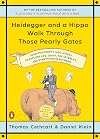
Mostly this is worth reading for the jokes. The author's have a great sense of humor and pick pretty funny material. They say that the jokes are an attempt to illustrate the philosophical ideas they are presenting but that is probably more hit than miss. The other problem is that while they do a really good job of discussing the pros and cons of various philosophies, they do more or less accept one philosophy without any discussion, that accepting a religious explanation is wrong. Still a show more fun read, but a little intellectually dishonest. show less
Lists
Awards


You May Also Like


Associated Authors
Statistics
- Works
- 7
- Members
- 4,724
- Popularity
- #5,330
- Rating
- 3.5
- Reviews
- 155
- ISBNs
- 87
- Languages
- 12