
Kim Thúy
Author of Ru
About the Author
Image credit: Kim Thúy en octobre 2020
Works by Kim Thúy
Tagged
Common Knowledge
- Canonical name
- Thúy, Kim
- Legal name
- Nguyễn An Tịnh Kim Thuy
- Birthdate
- 1968-09-18
- Gender
- female
- Education
- Université de Montréal
- Occupations
- writer
- Awards and honors
- Chevalier de l'Ordre national du Québec (2015)
- Nationality
- Canada
- Birthplace
- Saigon, Vietnam
- Places of residence
- Montreal, Quebec, Canada
- Map Location
- Canada
Members
Discussions
Canadian Author Challenge — January: Robertson Davies & Kim Thúy in 75 Books Challenge for 2016 (February 2016)
Reviews
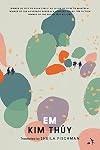
I loved this book. The plot and characters are impactful, and the structure of the book and writing are the epitome of ″write short.″ On one level the book is the story of Tam, Emma-Jade, and Louis, three orphans who survived the Vietnam War, the fall of Saigon, and relocation abroad. On the other hand it is the history of Vietnam told in miniature. It is also a reflection of the difficulty of writing truth, especially historical truth:
I′m going to tell you the truth, some true stories show more at least, but only partially, incompletely, more or less. Because it′s impossible for me to re-create the blue nuances in the sky just as Rob, the marine, was reading a letter from his lover, while at the same time the rebel, Vinh, was writing to his own lover during a brief lull, a moment of deceptive calm. Was it a Mayan and azure blue, or a French and cerulean blue? When Private John discovered the list of insurgents hidden in a pot of manioc flour, how many kilos were there? Had the flour just been milled? What was the temperature of the water when Monsieur Út was thrown into the well before being burned alive by Sergeant Peter′s flame-thrower? Did Monsieur Út weigh half as much as Peter, or two-thirds? Was it the itching of his mosquito bites that so unsettled Peter?
This is the second paragraph of the novel. Already the author has raised questions about the loaded difficulty in deciding which details to include in a story and how that choosing effects the truth of the narrative. She has also provided several different situations and viewpoints, all with their own individual truths and contexts. Because each chapter is only a page or two long, every sentence, every word is important. A character may only have a few paragraphs to reveal themselves, so their description and actions take on layered and textured meaning. If a novel could be a haiku, this would be it. Highly recommended. show less
I′m going to tell you the truth, some true stories show more at least, but only partially, incompletely, more or less. Because it′s impossible for me to re-create the blue nuances in the sky just as Rob, the marine, was reading a letter from his lover, while at the same time the rebel, Vinh, was writing to his own lover during a brief lull, a moment of deceptive calm. Was it a Mayan and azure blue, or a French and cerulean blue? When Private John discovered the list of insurgents hidden in a pot of manioc flour, how many kilos were there? Had the flour just been milled? What was the temperature of the water when Monsieur Út was thrown into the well before being burned alive by Sergeant Peter′s flame-thrower? Did Monsieur Út weigh half as much as Peter, or two-thirds? Was it the itching of his mosquito bites that so unsettled Peter?
This is the second paragraph of the novel. Already the author has raised questions about the loaded difficulty in deciding which details to include in a story and how that choosing effects the truth of the narrative. She has also provided several different situations and viewpoints, all with their own individual truths and contexts. Because each chapter is only a page or two long, every sentence, every word is important. A character may only have a few paragraphs to reveal themselves, so their description and actions take on layered and textured meaning. If a novel could be a haiku, this would be it. Highly recommended. show less
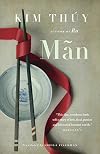
I love Kim Thúy's writing, and this novella is no exception. Whenever I pick up one of her books, I know I am going to be treated to beautiful, evocative writing; a semi-autobiographical plot; a delicate, nuanced view of immigration; a visceral longing for her Vietnamese homeland; and a love for her adopted country (Canada).
Mãn (which means "fulfilled") grew up in Vietnam with her adoptive mother, Maman, who would often leave Mãn with friends or neighbors when she had an assignment as a show more revolutionary. There Mãn learned to be invisible, to serve the families with deft hands, anticipating their wants so they would have no cause to turn on her. This prepared her for the life of a foreign bride to a Vietnamese man in Montreal. Maman wanted her to be assured of a safe life, and Mãn continued to take up as little oxygen as possible.
Once in Montreal, however, Mãn is befriended by Julie, a smiling, open-hearted woman who dissolves the boundaries that Mãn has set up around herself. Soon Mãn is running an increasingly famous restaurant built around remembered and reimagined Vietnamese recipes. In Paris Mãn meets someone who will dissolve the boundaries around her heart as well.
Kim Thúy is a restaurateur and chef, and her passion for food is evident in this novel. If you love food, you will enjoy her descriptions of the tastes and textures of various foods used in Vietnamese cooking. But it's also a novel about a life between worlds and the struggle to find personal fulfillment in such a tenuous space. As in [Em] and [Ru], each chapter is only a page or two long and the book is short, but the language is rich and savory and the images linger. show less
Mãn (which means "fulfilled") grew up in Vietnam with her adoptive mother, Maman, who would often leave Mãn with friends or neighbors when she had an assignment as a show more revolutionary. There Mãn learned to be invisible, to serve the families with deft hands, anticipating their wants so they would have no cause to turn on her. This prepared her for the life of a foreign bride to a Vietnamese man in Montreal. Maman wanted her to be assured of a safe life, and Mãn continued to take up as little oxygen as possible.
Once in Montreal, however, Mãn is befriended by Julie, a smiling, open-hearted woman who dissolves the boundaries that Mãn has set up around herself. Soon Mãn is running an increasingly famous restaurant built around remembered and reimagined Vietnamese recipes. In Paris Mãn meets someone who will dissolve the boundaries around her heart as well.
Kim Thúy is a restaurateur and chef, and her passion for food is evident in this novel. If you love food, you will enjoy her descriptions of the tastes and textures of various foods used in Vietnamese cooking. But it's also a novel about a life between worlds and the struggle to find personal fulfillment in such a tenuous space. As in [Em] and [Ru], each chapter is only a page or two long and the book is short, but the language is rich and savory and the images linger. show less
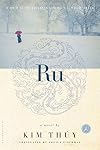
One issue with writers’ festivals is deciding whether to read a book before or after you hear the author speak. This was one instance where I was glad for the latter. I read Ru after Thuy’s packed-house presentation at the Sunshine Coast Writers Festival. Thuy gave a stirring account of her own family’s life in communist-controlled Saigon, their escape from Vietnam via boat, their time in a refugee camp in Malaysia, and adapting to their new home as immigrants in Quebec. Because I show more heard this story so vividly told in a linear format, each of the seemingly temporally random remembrances or vignettes in Ru fit beautifully into that storyline for me. Even though Ru is not a memoir, Thuy shares not only many of the experiences, but also many of the characteristics of the narrator, most notably, a predisposition to value memories over possessions. “Remembering only images that stay luminous behind my closed eyelids…. preferring them because I can shape them according to the colour of time.” (100) show less

Kim Thúy was ten when she fled Vietnam with her family in the wave of "boat people" fleeing the Communist reprisals after the fall of Saigon. After four months in a Malaysian refugee camp, her family was chosen for emigration to Canada based on her parent's French proficiency. They settled in Granby, Quebec (by chance the town my grandfather is from) and were warmly welcomed. Thúy attended the University of Montreal and then worked as an interpreter and translator for a Canadian firm based show more in Vietnam advising the Vietnamese government on their move toward capitalism. She later opened a restaurant in Montreal called Ru de Nam. Ru is her debut novel and highly autobiographical, referring to all the events above, as well as being the parent of an autistic child. The book won the Governor General’s Literary Award and the translation was a finalist for the Giller Prize.
In addition to a mesmerizing story, what draws me to Thúy's books is her writing. It's like reading poetry. Almost every page is a new "chapter", usually only a paragraph or two, and ends with an impactful sentence. Although a complete thought in themselves, they string together flawlessly, creating a beautiful stream of thought moving back and forth in time. I get swept along and usually finish her book in a sitting or two. Highly recommended. show less
In addition to a mesmerizing story, what draws me to Thúy's books is her writing. It's like reading poetry. Almost every page is a new "chapter", usually only a paragraph or two, and ends with an impactful sentence. Although a complete thought in themselves, they string together flawlessly, creating a beautiful stream of thought moving back and forth in time. I get swept along and usually finish her book in a sitting or two. Highly recommended. show less
Lists
First Novels (1)
Translingualism (1)
Awards


You May Also Like


Associated Authors
Statistics
- Works
- 11
- Members
- 1,699
- Popularity
- #15,108
- Rating
- 3.8
- Reviews
- 100
- ISBNs
- 133
- Languages
- 16
- Favorited
- 1

