

Bruce G. Trigger (1937–2006)
Author of A History of Archaeological Thought
About the Author
Bruce G. Trigger is James McGill Professor in the Department of Anthropology at McGill University
Works by Bruce G. Trigger
The Cambridge History of the Native Peoples of the Americas, Vol. 1: North America, Part 1 (1996) 46 copies
The Cambridge History of the Native Peoples of the Americas, Vol. 1: North America, Part 2 (1996) 27 copies
Sociocultural Evolution: Calculation and Contingency (New Perspectives on the Past) (1998) 12 copies
Associated Works
Anthropology and Egyptology: A Developing Dialogue (Monographs in Mediterranean Archaeology, 8) (1997) — Contributor — 1 copy
Tagged
Common Knowledge
- Canonical name
- Trigger, Bruce G.
- Legal name
- Trigger, Bruce Graham
- Birthdate
- 1937-06-18
- Date of death
- 2006-12-01
- Gender
- male
- Education
- University of Toronto (BA|1959)
Yale University (Ph.D|1964) - Occupations
- archaeologist
anthropologist
ethnohistorian - Organizations
- McGill University
Northwestern University - Awards and honors
- Royal Society of Canada (Fellow, 1976)
Innis-Gérin Medal (1985, 1991)
Prix Léon-Gérin (1985)
National Order of Quebec (Officer, 2001)
Order of Canada (Officer, 2005) - Relationships
- Welch, Barbara M. (wife)
- Cause of death
- cancer
- Nationality
- Canada
- Birthplace
- Preston, Ontario, Canada
- Places of residence
- Montréal, Québec, Canada
- Place of death
- Montréal, Québec, Canada
- Associated Place (for map)
- Québec, Canada
Members
Reviews
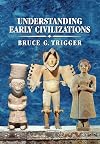
History can be written in many different ways. Many books on ancient history put an excessive focus on political events, with endless sequences of "Prince A inherited the kingship from his father B, but was soon assassinated by usurper C". Other books focus on very narrow topics without general interest. You will not understand much of ancient societies by collecting bare facts from books like that. Bruce Trigger's book is the antithesis of narrowly focused history. It's a superb comparison show more of seven early civilizations on many different levels (as you can see from the table of contents). The primary historical sources from these civilizations are not directly comparable, but Trigger's critical analysis of secondary literature is to my knowledge the most complete comparative synthesis ever written on this topic.
Needless to say, nobody can be an expert on seven different civilizations. But on the other hand the benefit of having just one author is that the analysis remains consistent across civilizations, which is a prerequisite for meaningful comparisons. As a result, this book is much more informative than multi-author collections where each author has chosen his own approach to his "own" civilization. But I think the biggest positive in this book is that Trigger is well acquainted with modern anthropological thought. Especially in the introduction and the concluding chapters, the combination of comparative history and cultural anthropology produces a wealth of insights. It is particularly interesting to learn how a small elite exercised extensive control over the common people in all of these early civilizations, and how this relationship formed the basic structure of society.
The one problem I encountered when reading this book was that seven civilizations is a large number. When you compare this many units to each other, the comparison inevitably takes the form of a list (listing the characteristics of civ1, then civ2, civ3 and so on). There's nothing wrong with that, but reading information in list form can be a bit tedious and requires a lot of concentration. I recommend this book to people who have a serious interest in ancient history and are determined to learn as much as possible on this subject. The title of this book is highly appropriate. After reading this book you will definitely be on your way toward understanding early civilizations. show less
Needless to say, nobody can be an expert on seven different civilizations. But on the other hand the benefit of having just one author is that the analysis remains consistent across civilizations, which is a prerequisite for meaningful comparisons. As a result, this book is much more informative than multi-author collections where each author has chosen his own approach to his "own" civilization. But I think the biggest positive in this book is that Trigger is well acquainted with modern anthropological thought. Especially in the introduction and the concluding chapters, the combination of comparative history and cultural anthropology produces a wealth of insights. It is particularly interesting to learn how a small elite exercised extensive control over the common people in all of these early civilizations, and how this relationship formed the basic structure of society.
The one problem I encountered when reading this book was that seven civilizations is a large number. When you compare this many units to each other, the comparison inevitably takes the form of a list (listing the characteristics of civ1, then civ2, civ3 and so on). There's nothing wrong with that, but reading information in list form can be a bit tedious and requires a lot of concentration. I recommend this book to people who have a serious interest in ancient history and are determined to learn as much as possible on this subject. The title of this book is highly appropriate. After reading this book you will definitely be on your way toward understanding early civilizations. show less
The Canadian archaeologist and anthropologist Bruce Trigger (1937-2006) published this extensive book (600 pages, without footnotes!) not long before his premature death. It was the culmination of more than 40 years of research (ultimately at McGill University in Montreal) in both theoretical as very concrete domains of both sciences. My score is exceptionally generous, I know, but I am aware that this book is not for everyone: it is not only very specialized, but also extremely tough at show more times. After all, Trigger compares 7 early civilizations (Mesopotamia, Egypt, Northern China, Mexico, the Maya, the Inca and the Yoruba), and he does so in great (thematical) detail. His approach is systematic and thorough, but therefore often very dry and sometimes simply tedious.
But he compensates for this with an extremely relevant focus, namely the search for what seems virtually universal in human development and what is specific to concrete historical and geographical settings: “(…) this book seeks to establish empirically what features seven early civilizations, located on four continents, had in common and in what ways they differed from one another. I am assuming that, in the demonstrated absence of historical connections, shared features were either produced by patterns of thought and behavior common to all human groups or shaped by similar environmental or functional constraints and therefore constitute examples of parallel development or coevolution. Cross-cultural variation reflects the influence of cultural patterns that are free of such constraints. I hope that these case studies will reveal to what extent different sorts of explanations of human behavior are useful for explaining particular data.”
His empirical and comparative approach seems to me to be the only way out of the endless debate in which anthropology is caught up in the fierce battle between universalists and cultural relativists. It is also valuable that he also convincingly demonstrates that the neo-evolutionary model (the necessary, unilinear development from 'simple' forms of society such as tribes and chiefdoms to proto-states and states) is a very biased and, above all, reductionist view of human development. I am well aware of how much criticism you can have of Trigger's comparative approach and the empirical data he collected, but I am really impressed by the thoroughness with which he has studied the matter, by his systematic and transparent approach, and his perseverance to come to relevant conclusions. This is how science should always work. More on this in my history account on Goodread: https://www.goodreads.com/review/show/3780438213. show less
But he compensates for this with an extremely relevant focus, namely the search for what seems virtually universal in human development and what is specific to concrete historical and geographical settings: “(…) this book seeks to establish empirically what features seven early civilizations, located on four continents, had in common and in what ways they differed from one another. I am assuming that, in the demonstrated absence of historical connections, shared features were either produced by patterns of thought and behavior common to all human groups or shaped by similar environmental or functional constraints and therefore constitute examples of parallel development or coevolution. Cross-cultural variation reflects the influence of cultural patterns that are free of such constraints. I hope that these case studies will reveal to what extent different sorts of explanations of human behavior are useful for explaining particular data.”
His empirical and comparative approach seems to me to be the only way out of the endless debate in which anthropology is caught up in the fierce battle between universalists and cultural relativists. It is also valuable that he also convincingly demonstrates that the neo-evolutionary model (the necessary, unilinear development from 'simple' forms of society such as tribes and chiefdoms to proto-states and states) is a very biased and, above all, reductionist view of human development. I am well aware of how much criticism you can have of Trigger's comparative approach and the empirical data he collected, but I am really impressed by the thoroughness with which he has studied the matter, by his systematic and transparent approach, and his perseverance to come to relevant conclusions. This is how science should always work. More on this in my history account on Goodread: https://www.goodreads.com/review/show/3780438213. show less
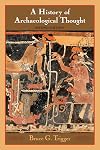
In its original edition, Bruce Trigger's book was the first ever to examine the history of archaeological thought from medieval times to the present in world-wide perspective. Now, in this new edition, he both updates the original work and introduces new archaeological perspectives and concerns. At once stimulating and even-handed, it places the development of archaeological thought and theory throughout within a broad social and intellectual framework. The successive but interacting trends show more apparent in archaeological thought are defined and the author seeks to determine the extent to which these trends were a reflection of the personal and collective interests of archaeologists as these relate - in the West at least - to the fluctuating fortunes of the middle classes. While subjective influences have been powerful, Professor Trigger argues that the gradual accumulation of archaeological data has exercised a growing constraint on interpretation. In turn, this has increased the objectivity of archaeological research and enhanced its value for understanding the entire span of human history and the human condition in general. show less

This is a rather dry presentation of Egyptian social history. I think it brings out the limitations of the historical evidence more than anything else. For the general reader I recommend Trigger's later book, Understanding Early Civilizations, instead of this one.
Lists
Awards


You May Also Like


Associated Authors
Statistics
- Works
- 28
- Also by
- 1
- Members
- 1,302
- Popularity
- #19,719
- Rating
- 3.9
- Reviews
- 11
- ISBNs
- 72
- Languages
- 7