
Michael O. Tunnell
Author of Mailing May
About the Author
Michael O. Tunnell is a professor of children's literature and the author of Mailing May, The Children of Topaz, Wishing Moon, and other books. He lives in Orem, Utah.
Image credit: via Charlesbridge
Series
Works by Michael O. Tunnell
The Prydain Companion: A Reference Guide to Lloyd Alexander's Prydain Chronicles (1989) 143 copies, 4 reviews
The Children of Topaz: The Story of a Japanese-American Internment Camp Based on a Classroom Diary (1996) 90 copies, 4 reviews
Associated Works
Tagged
Common Knowledge
- Birthdate
- 1950
- Gender
- male
- Education
- Brigham Young University (EdD|1986)
- Occupations
- professor
children's author
nonfiction author - Organizations
- The Church of Jesus Christ of Latter-day Saints
Brigham Young University - Short biography
- I taught children's literature at Brigham Young University for many years and have written several books about literature for young readers, including The Story of Ourselves: Teaching History Through Children's Literature and Children's Literature, Briefly. Twice I helped choose the Newbery Medal winner, the most prestigious of children's book awards. My wife, Glenna, and I live in Orem, Utah. We have four grown children and nine grandchildren. We love to travel the world when we can and, in the last few years, have been to Egypt, Israel, Jordan, Japan, New Zealand, Austria, Germany, the Czech Republic, France, England, and Italy. [from: Website]
- Nationality
- USA
- Places of residence
- Orem, Utah, USA
- Associated Place (for map)
- Utah, USA
Members
Discussions
girl sent to her grandmother's by US mail in Name that Book (June 2016)
Reviews
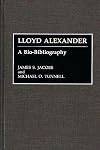
Great minds think alike. So, it seems, to mediocre minds. At least, they all have the same idea at the same time.
Lloyd Alexander's works have not received the critical attention of, say, J. R. R. Tolkien's, but his award-winning Chronicles of Prydain have remained in print for fifty years, and you'll still see him mentioned in occasional works of scholarship in journals such as Mythlore. But the Really Big Year of Alexander scholarship seems to have been 1991, when Jill P. May published show more Lloyd Alexander in the Twayne's United States Authors series and Jacobs and Tunnell published Lloyd Alexander, the first in Greenwood Press's Bio-Biblography series.
I truly have no idea why 1991 was so full of Alexandrine writings, but the two books are very different. May engages in a lot of literary criticism, to the detriment of biography, but her book is a unified whole. Jacobs and Tunnell have a different method: A 36 page (counting footnotes) biography, then an much longer annotated bibliography broken into sections: first Alexander's own works (classified into adult books; books for younger readers; translations by Alexander from French; Alexander's own works published in other countries, usually but not always in translation; and sundry other works), then works about Alexander by other authors (biographical material, scholarly works, book reviews, etc.). This is useful (I would never have guessed that Prydain would be translated into thirteen foreign languages but not Welsh!) but of course now dated, and the number of typos seems a little bit on the high side -- not extremely bad, but enough to make me worry a little. Plus the classification system would work better if there were page headings to make it clearer what section you're examining. And, of course, it's not something you're going to read for fun!
The biography is more interesting but slightly disquieting. There are ninety footnotes (i.e. not quite three per page). Of those ninety, 78 are taken directly from Alexander himself (mostly in interviews or letters; a few from items Alexander sent to magazines). Three are from his wife. Six are letters either to or from his primary editor. That leaves just three -- a primary school record, a contract, and one which is just information about one of the books Alexander reworked in his writings! No conversations with friends. No conversation with his agent. No consultation of his college or military records or his co-workers during his brief periods of having real work. It's not really a biography; it's an organized set of reminiscences.
Does it matter? I'm not sure. If someone were to write a real biography of Alexander, all that conversational material would surely help. And it does give a feeling for Alexander's personality and his quirks. But I can't think it's a complete picture. (This apart from the fact that he lived for another sixteen years after the book was written.) Let's just say that, if this were a Wikipedia article, it would be full of "Citation needed" and "Additional information required" sorts of flags. show less
Lloyd Alexander's works have not received the critical attention of, say, J. R. R. Tolkien's, but his award-winning Chronicles of Prydain have remained in print for fifty years, and you'll still see him mentioned in occasional works of scholarship in journals such as Mythlore. But the Really Big Year of Alexander scholarship seems to have been 1991, when Jill P. May published show more Lloyd Alexander in the Twayne's United States Authors series and Jacobs and Tunnell published Lloyd Alexander, the first in Greenwood Press's Bio-Biblography series.
I truly have no idea why 1991 was so full of Alexandrine writings, but the two books are very different. May engages in a lot of literary criticism, to the detriment of biography, but her book is a unified whole. Jacobs and Tunnell have a different method: A 36 page (counting footnotes) biography, then an much longer annotated bibliography broken into sections: first Alexander's own works (classified into adult books; books for younger readers; translations by Alexander from French; Alexander's own works published in other countries, usually but not always in translation; and sundry other works), then works about Alexander by other authors (biographical material, scholarly works, book reviews, etc.). This is useful (I would never have guessed that Prydain would be translated into thirteen foreign languages but not Welsh!) but of course now dated, and the number of typos seems a little bit on the high side -- not extremely bad, but enough to make me worry a little. Plus the classification system would work better if there were page headings to make it clearer what section you're examining. And, of course, it's not something you're going to read for fun!
The biography is more interesting but slightly disquieting. There are ninety footnotes (i.e. not quite three per page). Of those ninety, 78 are taken directly from Alexander himself (mostly in interviews or letters; a few from items Alexander sent to magazines). Three are from his wife. Six are letters either to or from his primary editor. That leaves just three -- a primary school record, a contract, and one which is just information about one of the books Alexander reworked in his writings! No conversations with friends. No conversation with his agent. No consultation of his college or military records or his co-workers during his brief periods of having real work. It's not really a biography; it's an organized set of reminiscences.
Does it matter? I'm not sure. If someone were to write a real biography of Alexander, all that conversational material would surely help. And it does give a feeling for Alexander's personality and his quirks. But I can't think it's a complete picture. (This apart from the fact that he lived for another sixteen years after the book was written.) Let's just say that, if this were a Wikipedia article, it would be full of "Citation needed" and "Additional information required" sorts of flags. show less
Candy Bomber: The Story of the Berlin Airlift's "Chocolate Pilot" (Junior Library Guild Selection) by Michael O. Tunnell
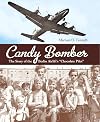
Here's an aspect of post WW2 that I never heard about, food and supply drops on Berlin, but especially candy drops for the children. Lt. Gail Halvorsen comes up with the idea of dropping candy from his C-54 after meeting several hungry children in Berlin. Candy is a scarce commodity in wartime and especially now with the Soviets trying to keep food deliveries from taking place. The idea takes off like gangbusters. What's wonderful about his story is not just the generosity but that Lt. show more Halvorsen is still very active, still flying, and still in touch with the people whose lives he touched over 50 years ago. Great non-fiction for kids and not just because of the idea of candy. show less
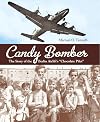
I was familiar with the story of the Berlin Airlift of 1948-49 – the effort by the Allied powers of World War II to use aircraft to circumvent a 16-month ground blockade of West Berlin by the Soviet Union. But until reading "The Candy Bomber," I was unfamiliar with the wonderful story of “Operation Little Vittles.”
On one of his first trips to Berlin, U.S. Air Force Lt. Gail Halvorsen, a pilot charged with flying food and other supplies to West Berlin, met some sad and hungry children show more along a fence at a Berlin airfield. To lift their spirits, Halvorsen decided on future trips to use parachutes made of handkerchiefs to drop chocolate and gum to the city’s children.
In time, other Americans began donating candy and handkerchiefs to the Candy Bomber’s cause, and the children of Berlin wrote him sometimes poignant, sometimes funny letters, giving him detailed maps and directions to their house in the hope he would drop some special treat their way.
Author Michael O. Tunnell gets the story of the Candy Bomber directly from Gail Halvorsen himself, still living in Utah at the age of 94. The book is illustrated with wonderful children's drawings, photos, and letters from Halvorsen’s personal collection, including his heartwarming correspondence with one German girl, whom Halvorsen would finally meet years later while traveling to Berlin for an Airlift anniversary.
A sweet story for children 8 and up, history classes studying the Cold War and post-WWII period, and anyone with a weakness for the triumph of ingenuity and the human spirit. show less
On one of his first trips to Berlin, U.S. Air Force Lt. Gail Halvorsen, a pilot charged with flying food and other supplies to West Berlin, met some sad and hungry children show more along a fence at a Berlin airfield. To lift their spirits, Halvorsen decided on future trips to use parachutes made of handkerchiefs to drop chocolate and gum to the city’s children.
In time, other Americans began donating candy and handkerchiefs to the Candy Bomber’s cause, and the children of Berlin wrote him sometimes poignant, sometimes funny letters, giving him detailed maps and directions to their house in the hope he would drop some special treat their way.
Author Michael O. Tunnell gets the story of the Candy Bomber directly from Gail Halvorsen himself, still living in Utah at the age of 94. The book is illustrated with wonderful children's drawings, photos, and letters from Halvorsen’s personal collection, including his heartwarming correspondence with one German girl, whom Halvorsen would finally meet years later while traveling to Berlin for an Airlift anniversary.
A sweet story for children 8 and up, history classes studying the Cold War and post-WWII period, and anyone with a weakness for the triumph of ingenuity and the human spirit. show less
I'm a big fan of learning about history from the stories of individuals and this book is a great way of learning about the Berlin Airlift. It's also a humorous and touching story about small kindnesses leading to great acts of generosity between former enemies. The first chapter (which gives the historical background) is a bit dry, but I'd say that the rest of the book could be enjoyed even by young children. (It doesn't hurt that the story is largely about Lt. Halvorsen's interactions with show more children.)
Highly recommended. show less
Highly recommended. show less
Lists
Awards


You May Also Like


Associated Authors
Statistics
- Works
- 18
- Also by
- 1
- Members
- 2,541
- Popularity
- #10,105
- Rating
- 4.2
- Reviews
- 232
- ISBNs
- 79