
Alec Wilkinson
Author of The Ice Balloon: S. A. Andree and the Heroic Age of Arctic Exploration
About the Author
Alec Wilkinson is the author of six other books, He has been a Guggenheim Fellow and has won a Lyndhurst Prize, a Pushcart Prize, and a Robert F. Kennedy Book Award. Since 1980 he has been a writer at The New Yorker, and he also contributes to Esquire, DoubleTake, Sports Illustrated, Vogue, and show more Rolling Stone. He lives with his wife and son in New York City show less
Image credit: Photo Credit: Bill Petros
Works by Alec Wilkinson
A Divine Language: Learning Algebra, Geometry, and Calculus at the Edge of Old Age (2022) 117 copies, 3 reviews
Sister Sorry 1 copy
Associated Works
Tagged
Common Knowledge
- Birthdate
- 1952
- Gender
- male
- Occupations
- writer
police officer
musician - Organizations
- The New Yorker
- Nationality
- USA
- Birthplace
- New York, New York, USA
- Places of residence
- New York, New York, USA
- Associated Place (for map)
- New York, New York, USA
Members
Reviews
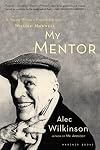
I have been a fan of William Maxwell's beautifully crafted fiction for many years, and after reading Wilkinson's eloquent tribute to a father-figure who helped him become a writer I definitely want to search out the Maxwell books I haven't yet read. Wilkinson quotes liberally from Maxwell's novels, stories, essays and private papers, with the permission of Maxwell's daughters. Wilkinson himself is no slouch as a writer. Indeed, the early chapters of the book often had me chuckling, as Alec show more describes one of his first jobs as a summer cop in Wellfleet, Massachusetts. Things turn largely serious, however, as he meditates on the reasons he was drawn to Maxwell as a young boy. The primary reason was a distant, difficult relationship with his own father, who was himself a close friend of Maxwell's. What this affectionate tribute leaves you with, more than anything else, is a sense of what a kind and decent man William Maxwell was, a man who always had time for a much younger man trying to find his voice as a writer. This mentor-student relationship was to flower into a genuine friendship over the years, despite the generational age difference. Wilkinson's descriptions of the final days of both Bill and Emmy Maxwell are extremely moving, but Maxwell even softens this transition for his protege, telling him "I don't think we'll stop talking just because I'm dead." This is a comment I can understand, because as anyone who has ever lost a dear friend or relative will tell you, the conversations do go on, at least inside your head. And often these "internal conversations" are more satisfying and direct than any you ever had with that person when he or she was still alive. I guess my only complaint with this book was that I wished there were more. But I guess I'll find more by reading those other books - by both Maxwell and Wilkinson. show less
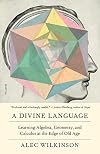
The dust cover blurb for Alec Wilkinson, a longtime writer for The New Yorker, says that he was once a "rock and roll musician," and he looks the part, bearing more than a little resemblance to Paul Weller. But he writes with the carefully controlled precision I associate with mid-century British scientists and men of letters, writers who believed that emotions could be labeled and described, and even, under duress, admitted to, but never directly expressed. And so the style of this show more interesting memoir of trying to learn calculus (should I say "the" calculus?) at an age when one's mathematical faculties have largely calcified undercuts its fascination. Wilkinson describes his interior journey very well, with many an interesting philosophical discussion along the way. But in his somehow British-seeming modesty, he makes his niece Amie Wilkinson, a professor of mathematics at the University of Chicago, seem far more interesting than he does himself, despite her having only a small supporting part in the book. Devoting oneself, intensely, for over a year, to learning a difficult subject that you bombed out of terribly when you were at the best age to learn it seems a little crazy. And Wilkinson doesn't let loose enough for us to identify with and cheer on that crazy man. So this book, although often interesting, is never compelling. show less
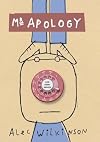
Mr. Apology is a collection of essays written by Alec Wilkinson, largely for the New Yorker. Some of these are good and some failed to capture my attention, like most collections of short stories. I was very disinterested in those about famous people such as Larry King and Paul Simon, but there were just as many about lesser known individuals that were much more entertaining to read.
Wilkinson's writing is engaging and the stories told in the book all carry weighty, if sometimes subtle, show more substance and although some seem insignificant on the surface, it seemed like each story had something about that allowed me to walk away from it feeling more knowledgeable about something; whether it be so simple as the dangers of racing drag cars or the complexities of Asperger's syndrome.
A book I'm glad I found. show less
Wilkinson's writing is engaging and the stories told in the book all carry weighty, if sometimes subtle, show more substance and although some seem insignificant on the surface, it seemed like each story had something about that allowed me to walk away from it feeling more knowledgeable about something; whether it be so simple as the dangers of racing drag cars or the complexities of Asperger's syndrome.
A book I'm glad I found. show less

This is the story of S.A. Andree and his attempt to reach the North Pole by balloon in 1897. It's the kind of tale that makes you wonder what exactly drives certain people. Knowing that many previous expeditions to the Arctic ended tragically, I don't know that a lot of people's reaction would be to want to try it with an experimental mode of transportation. One would think that fewer unknowns would be a better bet instead of more. But Andree obviously didn't think like that. Undaunted by show more the fact that it would require keeping the balloon aloft for longer than had ever been done before, that navigating a balloon against the wind was not an entirely proven concept, and that no one knew exactly how a balloon would perform in Arctic conditions, Andree found two other knuckleheads willing to hop into the basket with him and took off. The last thing he was heard to say was "What was that?" as the lines he was planning to use for control tore off from the balloon and were left behind.
As with many other explorers of the farthest reaches of the globe, Andree disappeared from view and truly disappeared until remains of his expedition were found 30 years later. Even then, it's a mystery exactly how the three men died. Their diaries don't provide clues, and their bodies aren't much help either. That aspect of the story is a little unsatisfying, although hardly unusual with polar exploration. Probably as a result of the relatively scarce data on what happened on the actual expedition, the book is padded out with tales of other Arctic endeavors by ship and sledge. I could have done without those parts, but I guess it provides some insight into what still remained to be explored, and what was at stake. Andree is a pretty well-developed presence, but his two companions remain mostly mysteries because they were younger and not as well-known before setting off (and hadn't caused as much controversy as Andree). With all stories like this, a reader has to resign him or herself to just not knowing everything or getting all the answers. show less
As with many other explorers of the farthest reaches of the globe, Andree disappeared from view and truly disappeared until remains of his expedition were found 30 years later. Even then, it's a mystery exactly how the three men died. Their diaries don't provide clues, and their bodies aren't much help either. That aspect of the story is a little unsatisfying, although hardly unusual with polar exploration. Probably as a result of the relatively scarce data on what happened on the actual expedition, the book is padded out with tales of other Arctic endeavors by ship and sledge. I could have done without those parts, but I guess it provides some insight into what still remained to be explored, and what was at stake. Andree is a pretty well-developed presence, but his two companions remain mostly mysteries because they were younger and not as well-known before setting off (and hadn't caused as much controversy as Andree). With all stories like this, a reader has to resign him or herself to just not knowing everything or getting all the answers. show less
Awards


You May Also Like


Associated Authors
Statistics
- Works
- 16
- Also by
- 1
- Members
- 765
- Popularity
- #33,260
- Rating
- 3.6
- Reviews
- 21
- ISBNs
- 44
- Languages
- 5
- Favorited
- 2