
About the Author
Jack Zipes is Professor of German at the University of Minnesota
Series
Works by Jack Zipes
The Original Folk and Fairy Tales of the Brothers Grimm: The Complete First Edition (2014) — Editor; Translator — 1,151 copies, 13 reviews
Arabian Nights: The Marvels And Wonders Of The Thousand And One Nights (Signet Classics) (1991) — Editor — 624 copies, 6 reviews
Spells of Enchantment: The Wondrous Fairy Tales of Western Culture (1991) — Editor — 604 copies, 5 reviews
Don't Bet on the Prince: Contemporary Feminist Fairy Tales in North America and England (1987) — Editor — 513 copies, 4 reviews
The Great Fairy Tale Tradition: From Straparola and Basile to the Brothers Grimm [Norton Critical Edition] (2001) — Editor; Translator; Contributor — 391 copies, 1 review
Fairy Tales and the Art of Subversion: The Classical Genre for Children and the Process of Civilization (2006) 254 copies, 1 review
The Outspoken Princess and The Gentle Knight: A Treasury of Modern Fairy Tales (1994) 207 copies, 3 reviews
Beauties, Beasts and Enchantment: Classic French Fairy Tales (Meridian) (1989) — Editor — 162 copies, 3 reviews
The Arabian Nights, Volume I: The Marvels and Wonders of The Thousand and One Nights (Signet Classics, 1/2) (2007) 149 copies
The Arabian Nights: More Marvels And Wonders Of The Thousand And One Nights [v. 2/2] (0800) — Adapter — 146 copies, 1 review
When Dreams Came True: Classical Fairy Tales and Their Tradition (Literary Studies) (1998) 93 copies, 1 review
Sticks and Stones: The Troublesome Success of Children's Literature from Slovenly Peter to Harry Potter (2000) 88 copies, 2 reviews
The Oxford Encyclopedia of Children's Literature (4 Volume Set) (2006) — Editor — 51 copies, 1 review
The Sorcerer's Apprentice: An Anthology of Magical Tales (2017) — Editor; Preface; Introduction — 50 copies
Catarina the Wise and Other Wondrous Sicilian Folk and Fairy Tales (2017) — Translator; Editor — 28 copies
The Robber with a Witch's Head : More Stories from the Great Treasury of Sicilian Folk and Fairy Tales (2004) 24 copies
Relentless Progress: The Reconfiguration of Children's Literature, Fairy Tales, and Storytelling (2008) 22 copies, 1 review
Oltre il giardino. L'inquietante successo della letteratura per l'infanzia da Pinocchio a Harry Potter (2002) 5 copies
Snow, Glass, Apples 4 copies
The Green Fairy Book 2 copies
Revisiting the storyteller: Reviving the past to move forwards (Society for Storytelling oracle series) (1996) 2 copies
Französische Märchen 1 copy
Associated Works
The Complete Fairy Tales of the Brothers Grimm (1812) — Translator, some editions — 17,432 copies, 135 reviews
The Fairy Tales of Hermann Hesse (1918) — Introduction, some editions; Translator, some editions — 855 copies, 11 reviews
The Wizard of Oz / The Emerald City of Oz / Glinda of Oz (2012) — Contributor, some editions — 463 copies, 4 reviews
The Grammar of Fantasy: An Introduction to the Art of Inventing Stories (1973) — Translator, some editions — 459 copies, 3 reviews
Nutcracker and Mouse King / The Tale of the Nutcracker (2007) — Introduction, some editions — 226 copies, 8 reviews
The Original Bambi: The Story of a Life in the Forest (2022) — Translation and Introduction — 207 copies, 5 reviews
Should We Burn Babar?: Essays on Children's Literature and the Power of Stories (1995) — Introduction — 177 copies, 2 reviews
Baba Yaga: The Wild Witch of the East in Russian Fairy Tales (2013) — Foreword — 61 copies, 1 review
The Cloak of Dreams: Chinese Fairy Tales (1974) — Editor, Introduction & Translator, some editions — 56 copies
Beautiful Angiola: The Lost Sicilian Folk and Fairy Tales of Laura Gonzenbach (2003) — Translator, some editions — 55 copies
The Castle of Truth and Other Revolutionary Tales (2020) — Editor, some editions; Translator, some editions — 36 copies
The Public Domain Review: Selected Essays, The First Three Years, 2011-2013 (2014) — Contributor — 33 copies, 2 reviews
Children's Literature: Classic Texts and Contemporary Trends (2009) — Contributor — 31 copies, 1 review
Vintage Fear: " The Complete Fairy Tales " , " The Bloody Chamber " (Vintage Classic Twins) (2007) — Translator — 29 copies, 1 review
The Wounded Storyteller : The Traumatic Tales of E. T. A. Hoffmann (2023) — Translator, some editions — 25 copies
Smack-Bam, or The Art of Governing Men: Political Fairy Tales of Édouard Laboulaye (2018) — Translator, some editions — 23 copies
The Reception of Grimms' Fairy Tales: Responses, Reactions, Revisions (1993) — Contributor — 16 copies
Storytelling and theatre : contemporary storytellers and their art (2005) — Foreword — 13 copies, 2 reviews
No Place Else: Explorations in Utopian and Dystopian Fiction (Alternatives) (1983) — Contributor — 11 copies
Green Magic: A Collection of the World's Best Fairy Tales From All Countries (1928) — Editor, some editions — 10 copies
Red Magic: A Collection of the World's Best Fairy Tales From All Countries (1930) — Editor, some editions — 8 copies
Silver Magic: A Collection of the World's Best Fairy Tales From All Countries (1929) — Editor, some editions — 8 copies
The Collected Sicilian Folk and Fairy Tales of Giuseppe Pitré in Two Volumes (2008) — Translator, some editions — 7 copies
The Collected Sicilian Folk and Fairy Tales of Giuseppe Pitré, Vol. 1 (2008) — Translator, some editions — 4 copies
The Story of the Youth Who Went Forth to Learn What Fear Was (2012) — Translator, some editions — 3 copies, 2 reviews
the Maltese Cinderella and the women's storytelling tradition (2017) — Foreword, some editions — 1 copy
Tagged
Common Knowledge
- Legal name
- Zipes, Jack David
- Birthdate
- 1937-06-07
- Gender
- male
- Education
- Dartmouth College (BA, 1959)
Columbia University (Ph.D|1965)
University of Munich (1962)
University of Tübingen (1963)
Columbia University (MA|1960) - Occupations
- professor
- Organizations
- Modern Language Association (Executive Council, 1991-94)
Children's Literature Association
American Folklore Association
International Research Society for Children's Literature
University of Minnesota
University of Florida (show all 8)
University of Wisconsin-Milwaukee
New York University - Awards and honors
- Fulbright Fellowship (1981-82)
Anne Devereaux Jordan Award (1999)
IAFA Distinguished Scholarship (1992)
World Fantasy Award (Life Achievement, 2019)
International Brothers Grimm Award (1999)
Katharine Briggs Award from the Folklore Society (2007) (show all 8)
Chicago Folklore Prize (2015)
International Research Society for Children's Literature Award (2017) - Short biography
- [from The Tale of Tales]
Jack Zipes is a preeminent fairy-tale scholar who has written, translated, or edited dozens of books, including The Original Folk and Fairy Tales of the Brothers Grimm. He is a professor emeritus of German and comparative literature at the University of Minnesota. - Nationality
- USA
- Birthplace
- New York, New York, USA
- Places of residence
- Minneapolis, Minnesota, USA
- Associated Place (for map)
- USA
Members
Discussions
Favourite Grimm translation into English? in Fairy Tale Readers (December 2014)
Reviews
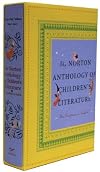
This book has everything. It gives history associated with children's literature generally, with the specific stories (the different versions of "Little Red Riding Hood," for example, are a fascinating study), and even with the content of some specific stories (e.g. the section on alphabet poems describes an older, 24-letter English alphabet). And what a collection! It contains tradition stories, including fairy tales. It contains more modern responses to these fairy tales, such as parodies show more and cynical, worldly retellings. Its collection of literature includes humor and serious works. It includes poetry, prose, plays, and picture books (and yes, the actual pages of the picture books are reproduced as images, so the readers can see more than just the text). It even has a section of full-color pictures. It includes many works that I recall from my own childhood, and it grounds them in context so that I can better understand their history and their context in the canon.
This book brings me joy. show less
This book brings me joy. show less
Don't Bet on the Prince: Contemporary Feminist Fairy Tales in North America and England by Jack David Zipes
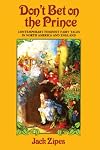
As much as I love fairy tales, the feminist in me found it terribly frustrating that none of the heroines were ever particularly strong, intelligent, or even relatable. So finding this collection of short stories, contemporary fairy tales with a zing of feminism, was very affirming for me. It's not that the men in the stories are all buffoons, or should be gotten rid of (the worst sort of "feminism"). But the women in these updated fairy tales are much more likeable than the fragile show more archetypes in the classic fairy tales.
And even without any ideology attached, this is just a great book of short stories. My favorites were Briar Rose (Sleeping Beauty is now an insomniac), Wolfland (an adaptation of Little Red Riding Hood), and the final story Bluebeard's Egg, by Margaret Atwood show less
And even without any ideology attached, this is just a great book of short stories. My favorites were Briar Rose (Sleeping Beauty is now an insomniac), Wolfland (an adaptation of Little Red Riding Hood), and the final story Bluebeard's Egg, by Margaret Atwood show less
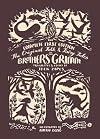
Outstanding and a delight to read, this is essentially a primitivist early edition of Grimm's Fairy Tales. For the first time, all 156 stories from the original 1812 and 1815 editions are available in a new English rendering that effectively rolls back the numerous sentimental edits and changes made by Wilhelm Grimm in later editions which are more commonly known and restores tales that were deleted to avoid offending middle-class religious sensitivities. As a result, there are tales here show more such as "How Some Children Played at Slaughtering" that would be considered politically incorrect today. The original stories remain closer to the more bucolic oral tradition. This edition is to Grimm's Fairy Tales what "The Scroll" edition of "On the Road" is to Kerouac: stories allowed to be wonderfully strange and frightening again. show less
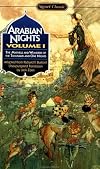
I'm sure I read some of Scheherazade's tales as a child, but any memory of them is hazy at best. Of course, whatever I read as a child would have been sanitized for my protection. Not so this version, which was full of sex and violence.
When King Shahryar and his brother King Shah Zaman discover their wives have been cheating on them, they kill their wives and go off to find someone more unfortunate than themselves, to make them feel better. They find a jinnee who has captured a virgin and show more is keeping her for himself, but unbeknownst to him, to get back at him for holding her captive she is having sex with other men whenever he falls asleep. Of course, instead of feeling sorry for the captive woman, they see this as more evidence that no woman can be trusted, so King Shahryar decides to marry a virgin every night, sleep with her, and then have her killed in the morning. He does this every day for three years, by which time his kingdom is pretty much emptied of virgins. His grand vizier, whose task it is to procure the virgin every day and then kill her the next morning, laments to his daughter Scheherazade that he can't find anyone for the king. The lovely and educated Scheherazade volunteers to marry the king in order to stop the madness. That night, she asks the king if her sister can spend the night in the room with them so she can say goodbye. By prearrangement, her sister asks Scheherazade to tell her a story.
And thus begins the thousand and one nights, with Scheherazade telling tales, and tales within tales, and tales within tales within tales, stopping every night as dawn comes (at a very exciting point!) and tantalizing the king so that he keeps her alive for one more night so he can hear more.
The tales are exciting and fantastical, and the structure is beautiful, with each tale opening the way to a new one. This particular volume (as far as I can tell, there is no one definitive volume) has some familiar stories (like Ali Baba and the 40 Thieves, Aladdin and the Magic Lamp, and the Seven Voyages of Sinbad the Seaman) and unfamiliar ones (like The Ebony Horse and The Hunchback's Tale), with kings and slaves, jinnees and demons, giant birds and dragons. There is a running theme of storytelling to save one's life, which of course eventually works its way up to Scheherazade herself.
The tales of the Arabian Nights were written long, long ago, and I should have expected them to be offensive. I guess I did expect them to be offensive, but somehow I was still shocked and offended over and over again by the sexism, racism, anti-Semitism, and all the other -isms. I think I would have been less offended if some of this had been acknowledged by the editor of this book, which was after all published in the 1990s. But instead, the back-cover copy (and the editor's afterword) refers to "Prince Behram and the Princess Al-Datma" as "a delightful early version of The Taming of the Shrew." This particular story is delightful in the same way as General Hospital charmed us all by having Luke rape Laura late at night in the disco, sparking off their long-running love affair. The Princess Al-Datma has rejected countless suitors and defeated others in one-on-one combat. After losing a jousting match with the princess, Prince Behram disguises himself as an old gardener, charms the princess by pretending to by a harmless crackpot who gives beautiful jewels to her ladies-in-waiting in exchange for kisses, and when she decides to give him a kiss for the jewels, grabs her, throws her to the ground and rapes her. Delightful, right?
On the other hand, I was heartened to discover that the real hero of "Ali Baba and the 40 Thieves" isn't Ali Baba himself, but his slave girl Morgiana, who cleverly discovers the thieves and defeats them, saving Ali Baba numerous times in the process. And I was completely absorbed in Sinbad's seven voyages (although I kept imagining his friends and family begging him not to get on a boat again, since he was clearly cursed!) and the story of The Ebony Horse. Like King Shahryar, I was often entranced, and rather than put the book down, I would push on to hear just one more of Scheherazade's stories. show less
When King Shahryar and his brother King Shah Zaman discover their wives have been cheating on them, they kill their wives and go off to find someone more unfortunate than themselves, to make them feel better. They find a jinnee who has captured a virgin and show more is keeping her for himself, but unbeknownst to him, to get back at him for holding her captive she is having sex with other men whenever he falls asleep. Of course, instead of feeling sorry for the captive woman, they see this as more evidence that no woman can be trusted, so King Shahryar decides to marry a virgin every night, sleep with her, and then have her killed in the morning. He does this every day for three years, by which time his kingdom is pretty much emptied of virgins. His grand vizier, whose task it is to procure the virgin every day and then kill her the next morning, laments to his daughter Scheherazade that he can't find anyone for the king. The lovely and educated Scheherazade volunteers to marry the king in order to stop the madness. That night, she asks the king if her sister can spend the night in the room with them so she can say goodbye. By prearrangement, her sister asks Scheherazade to tell her a story.
And thus begins the thousand and one nights, with Scheherazade telling tales, and tales within tales, and tales within tales within tales, stopping every night as dawn comes (at a very exciting point!) and tantalizing the king so that he keeps her alive for one more night so he can hear more.
The tales are exciting and fantastical, and the structure is beautiful, with each tale opening the way to a new one. This particular volume (as far as I can tell, there is no one definitive volume) has some familiar stories (like Ali Baba and the 40 Thieves, Aladdin and the Magic Lamp, and the Seven Voyages of Sinbad the Seaman) and unfamiliar ones (like The Ebony Horse and The Hunchback's Tale), with kings and slaves, jinnees and demons, giant birds and dragons. There is a running theme of storytelling to save one's life, which of course eventually works its way up to Scheherazade herself.
The tales of the Arabian Nights were written long, long ago, and I should have expected them to be offensive. I guess I did expect them to be offensive, but somehow I was still shocked and offended over and over again by the sexism, racism, anti-Semitism, and all the other -isms. I think I would have been less offended if some of this had been acknowledged by the editor of this book, which was after all published in the 1990s. But instead, the back-cover copy (and the editor's afterword) refers to "Prince Behram and the Princess Al-Datma" as "a delightful early version of The Taming of the Shrew." This particular story is delightful in the same way as General Hospital charmed us all by having Luke rape Laura late at night in the disco, sparking off their long-running love affair. The Princess Al-Datma has rejected countless suitors and defeated others in one-on-one combat. After losing a jousting match with the princess, Prince Behram disguises himself as an old gardener, charms the princess by pretending to by a harmless crackpot who gives beautiful jewels to her ladies-in-waiting in exchange for kisses, and when she decides to give him a kiss for the jewels, grabs her, throws her to the ground and rapes her. Delightful, right?
On the other hand, I was heartened to discover that the real hero of "Ali Baba and the 40 Thieves" isn't Ali Baba himself, but his slave girl Morgiana, who cleverly discovers the thieves and defeats them, saving Ali Baba numerous times in the process. And I was completely absorbed in Sinbad's seven voyages (although I kept imagining his friends and family begging him not to get on a boat again, since he was clearly cursed!) and the story of The Ebony Horse. Like King Shahryar, I was often entranced, and rather than put the book down, I would push on to hear just one more of Scheherazade's stories. show less
Lists
Awards

When Dreams Came True: Classical Fairy Tales and Their Tradition (Literary Studies) (Finalist – Myth and Fantasy Studies – 2000)


You May Also Like


Associated Authors
Statistics
- Works
- 80
- Also by
- 68
- Members
- 7,200
- Popularity
- #3,404
- Rating
- 4.1
- Reviews
- 64
- ISBNs
- 231
- Languages
- 7
- Favorited
- 13