steven03tx's 2012 reading log, part 2
This is a continuation of the topic steven03tx's 2012 reading log, part 1.
This topic was continued by steven03tx's 2012 reading log, part 3.
Talk Club Read 2012
Join LibraryThing to post.
This topic is currently marked as "dormant"—the last message is more than 90 days old. You can revive it by posting a reply.
1StevenTX
Recently Finished
The Alchemist by Paulo Coelho
And Then There Were None by Agatha Christie
Come Back, Dr. Caligari by Donald Barthelme
Farewell, My Lovely by Raymond Chandler
Coin Locker Babies by Haruki Murakami
Currently Reading
(in some cases very slowly)
Peregrine Pickle by Tobial Smollett
Juliette by the Marquis de Sade
Monkey: The Journey to the West by Wu Cheng'en
Plus dipping into various collections of stories, essays, poems and plays.
Future Reading
See post 187 below.
The Alchemist by Paulo Coelho
And Then There Were None by Agatha Christie
Come Back, Dr. Caligari by Donald Barthelme
Farewell, My Lovely by Raymond Chandler
Coin Locker Babies by Haruki Murakami
Currently Reading
(in some cases very slowly)
Peregrine Pickle by Tobial Smollett
Juliette by the Marquis de Sade
Monkey: The Journey to the West by Wu Cheng'en
Plus dipping into various collections of stories, essays, poems and plays.
Future Reading
See post 187 below.
2StevenTX
2012 Statistics
Unless otherwise noted, these statistics are based on works read, not physical books. Every novel or play is a separate work, even if I read them from an omnibus volume. For short stories the physical volume is considered the work. Novellas are counted separately if they were originally published on their own, otherwise they are considered short stories.
Summary of Books Read
80 - works
70 - physical volumes
9 - ebooks
By Type
70 - novels
2 - plays
7 - short story collections
2 - epic verse and prose poems
__ poetry collections
1 - non-fiction
Authors
65 - different authors
35 - first-time authors
49 - male
14 - female
4 - anonymous, unknown or mixed
Authors with Multiple Books Read
Kobo Abe (3), Pierre Louÿs (2), Patrick White (2), Anthony Burgess (2), Roberto Bolaño (2), Shusaku Endo (2), Herta Müller (2), Kenzaburo Oe (2), Hilary Mantel (2), William S. Burroughs (2)
Authors by Country of Origin
12 - United States
10 - England
7 - Japan
4 - China
4 - Ireland
4 - France
3 - Hellenistic Greek
3 - Scotland
1 - Chile
1 - Canada
1 - Egypt
1 - Norway
1 - Croatia
1 - South Africa
1 - Australia
1 - Spain
1 - Colombia
1 - Albania
1 - Romania
1 - Italy
1 - Argentina
1 - Austria
1 - Ukraine
1 - Brazil
1 - Syria
Works by Original Language
40 - English
12 - Japanese
5 - Spanish
5 - French
4 - Chinese
3 - Greek
3 - German
2 - Hebrew
2 - Arabic
1 - Norwegian
1 - Serbo-Croatian
1 - Albanian
1 - Italian
1 - Portuguese
Works by Decade of First Publication
6 - Pre-1700
1 - 1740s
3 - 1820s
1 - 1870s
2 - 1880s
2 - 1890s
2 - 1900s
6 - 1920s
3 - 1930s
4 - 1940s
5 - 1950s
6 - 1960s
8 - 1970s
10 - 1980s
8 - 1990s
7 - 2000s
7 - 2010s
Unless otherwise noted, these statistics are based on works read, not physical books. Every novel or play is a separate work, even if I read them from an omnibus volume. For short stories the physical volume is considered the work. Novellas are counted separately if they were originally published on their own, otherwise they are considered short stories.
Summary of Books Read
80 - works
70 - physical volumes
9 - ebooks
By Type
70 - novels
2 - plays
7 - short story collections
2 - epic verse and prose poems
__ poetry collections
1 - non-fiction
Authors
65 - different authors
35 - first-time authors
49 - male
14 - female
4 - anonymous, unknown or mixed
Authors with Multiple Books Read
Kobo Abe (3), Pierre Louÿs (2), Patrick White (2), Anthony Burgess (2), Roberto Bolaño (2), Shusaku Endo (2), Herta Müller (2), Kenzaburo Oe (2), Hilary Mantel (2), William S. Burroughs (2)
Authors by Country of Origin
12 - United States
10 - England
7 - Japan
4 - China
4 - Ireland
4 - France
3 - Hellenistic Greek
3 - Scotland
1 - Chile
1 - Canada
1 - Egypt
1 - Norway
1 - Croatia
1 - South Africa
1 - Australia
1 - Spain
1 - Colombia
1 - Albania
1 - Romania
1 - Italy
1 - Argentina
1 - Austria
1 - Ukraine
1 - Brazil
1 - Syria
Works by Original Language
40 - English
12 - Japanese
5 - Spanish
5 - French
4 - Chinese
3 - Greek
3 - German
2 - Hebrew
2 - Arabic
1 - Norwegian
1 - Serbo-Croatian
1 - Albanian
1 - Italian
1 - Portuguese
Works by Decade of First Publication
6 - Pre-1700
1 - 1740s
3 - 1820s
1 - 1870s
2 - 1880s
2 - 1890s
2 - 1900s
6 - 1920s
3 - 1930s
4 - 1940s
5 - 1950s
6 - 1960s
8 - 1970s
10 - 1980s
8 - 1990s
7 - 2000s
7 - 2010s
3StevenTX
The most recent addition to my library is Infante's Inferno by Guillermo Cabrera Infante. When I added it to the database, this was the default (in fact, the only) cover. It came from Amazon:

This is the cover of my book I just scanned:

See the difference? I wonder how long it took them to notice it. The publisher is Dalkey Archive, not one you would expect to make that kind of error.

This is the cover of my book I just scanned:

See the difference? I wonder how long it took them to notice it. The publisher is Dalkey Archive, not one you would expect to make that kind of error.
4StevenTX
39. Major Barbara by George Bernard Shaw
Premiered 1905
Read from George Bernard Shaw: Selected Plays


This tightly-structured three-act play presents a moral and social enigma that is still very much with us: that we preach peace while our economy depends on war.
In the first act, Lady Britomart presents her three grown children with a problem: They have limited financial prospects, no career potential, and the only way they can maintain their position in society is to ask for money from their father, Lady Britomart's long-estranged husband Andrew Undershaft, who is a notoriously amoral arms manufacturer and exporter. Their immediate response, especially that of the daughter Barbara who is a major in the Salvation Army, is to refuse to accept his bloodstained money.
In the second act, Barbara has met her father and invited him to visit her and her fiancée at the Salvation Army kitchen where she hopes to convert him. Instead, Barbara begins to see how her followers are only pretending to convert to her teachings in return for a handout. And when her superior officer gladly accepts a contribution from Undershaft, Barbara becomes completely disillusioned and quits her position in the Salvation Army. Her father tells her how he buys civic and political leaders just as easily, and how he manipulates diplomats to start new wars so he can sell more cannons.
The final act takes place outside one of Undershaft's munitions factories where Barbara and the rest of the family see happy and healthy workers in tidy, immaculate houses, all paid for by the profits of war. Barbara resigns herself to living on her father's wealth, but rises again with the resolution to resume her ministry by preaching, not to those who will listen to anything in return for a handout, but to those who already have all they need and whose conversion would be a real triumph.
Other plays I have read by GBS:
Pygmalion
Mrs. Warren's Profession
Caesar and Cleopatra
Man and Superman
Saint Joan
Premiered 1905
Read from George Bernard Shaw: Selected Plays


This tightly-structured three-act play presents a moral and social enigma that is still very much with us: that we preach peace while our economy depends on war.
In the first act, Lady Britomart presents her three grown children with a problem: They have limited financial prospects, no career potential, and the only way they can maintain their position in society is to ask for money from their father, Lady Britomart's long-estranged husband Andrew Undershaft, who is a notoriously amoral arms manufacturer and exporter. Their immediate response, especially that of the daughter Barbara who is a major in the Salvation Army, is to refuse to accept his bloodstained money.
In the second act, Barbara has met her father and invited him to visit her and her fiancée at the Salvation Army kitchen where she hopes to convert him. Instead, Barbara begins to see how her followers are only pretending to convert to her teachings in return for a handout. And when her superior officer gladly accepts a contribution from Undershaft, Barbara becomes completely disillusioned and quits her position in the Salvation Army. Her father tells her how he buys civic and political leaders just as easily, and how he manipulates diplomats to start new wars so he can sell more cannons.
The final act takes place outside one of Undershaft's munitions factories where Barbara and the rest of the family see happy and healthy workers in tidy, immaculate houses, all paid for by the profits of war. Barbara resigns herself to living on her father's wealth, but rises again with the resolution to resume her ministry by preaching, not to those who will listen to anything in return for a handout, but to those who already have all they need and whose conversion would be a real triumph.
Other plays I have read by GBS:
Pygmalion
Mrs. Warren's Profession
Caesar and Cleopatra
Man and Superman
Saint Joan
5AnnieMod
>3 StevenTX:
Actually I had seen a lot of these errors from publishers that should know better. Everyone presumes that the cover is checked more than once and the result is... funny.
Actually I had seen a lot of these errors from publishers that should know better. Everyone presumes that the cover is checked more than once and the result is... funny.
6rebeccanyc
One thing I learned when I worked in a publishing company was that the larger the type, the easier it is to overlook a typo.
9StevenTX
40. Nothing Like the Sun: A Story of Shakespeare's Love Life by Anthony Burgess
First published 1964


Nothing Like the Sun is a playful novel. Anthony Burgess plays with Elizabethan English, and he plays with ideas about the private life England's greatest writer. The novel follows Shakespeare's from his youth to his death, but the final fifteen years of his life are dealt with only briefly in an epilogue. The principal focus is on the playwright's love life, of course, but almost as much space is given to his relationships with his patron, his rival playwrights, and his theatrical collaborators. Ironically we don't see much of Shakespeare's creative side except with respect to the composition of some of his early poetry. Most of his plays are mentioned only in passing, if at all.
Shakespeare is depicted as a rather promiscuous fellow with a penchant for dark-haired and dark-skinned ladies. All that is really known of his love life is that he married Anne Hathaway, an older woman, while he was still a teen and that she had three children by him. Burgess makes Hathaway a seductress and dominatrix who forced Shakespeare into breaking his engagement with his first love, also named Anne, by blaming her pregnancy on him. After the writer moves to London, leaving his wife and children behind in Stratford, he encounters the greatest love of his life, an exotic Indian woman who is the mysterious "Dark Lady" of his sonnets.
Burgess deals rather obliquely with the suspicion that Shakespeare was bisexual by implying, rather than depicting, a reluctant relationship with his patron Henry Wriothesley.
Much has been written lately speculating that Shakespeare could not have been the sole author of his magnificent dramas, based on the notion that a man of his limited education and experience would have had neither the knowledge or sophistication required. This novel sheds little or no light on that controversy, only showing that the Bard was reasonably well-read for his time despite his humble origins. There is no sense, in fact, that Shakespeare was anything other than a somewhat better-than-average writer for his time.
The narrative is mostly in third person, but it is told as though Shakespeare had written his own story in third person, referring to himself as "WS" throughout. The language is that of Shakespeare's time, but simplified enough to make it readily readable without a glossary. This is a means of injecting not only period flavor, but also humor, as Burgess plays at times upon the modern versus the Elizabethan meaning of words.
The novel's setting and background events may be more genuine than its biographical elements. Plagues, wars, political intrigue and religious strife are all represented. There are memorable scenes of a witch hunt, of prisoners being drawn and quartered, of plague victims rotting in the streets of London, and of panic at the rumored approach of the Spanish Armada.
Nothing Like the Sun is imaginative and entertaining. It disappoints a bit in that it is so speculative and sensationalizing regarding Shakepeare's personal life. It addresses the source of his inspiration (at least where the sonnets are concerned) but not his genius. I found it more rewarding as a picture of Elizabethan life in general than of William Shakespeare's life.
Other works I have read by Anthony Burgess:
A Clockwork Orange
First published 1964


Nothing Like the Sun is a playful novel. Anthony Burgess plays with Elizabethan English, and he plays with ideas about the private life England's greatest writer. The novel follows Shakespeare's from his youth to his death, but the final fifteen years of his life are dealt with only briefly in an epilogue. The principal focus is on the playwright's love life, of course, but almost as much space is given to his relationships with his patron, his rival playwrights, and his theatrical collaborators. Ironically we don't see much of Shakespeare's creative side except with respect to the composition of some of his early poetry. Most of his plays are mentioned only in passing, if at all.
Shakespeare is depicted as a rather promiscuous fellow with a penchant for dark-haired and dark-skinned ladies. All that is really known of his love life is that he married Anne Hathaway, an older woman, while he was still a teen and that she had three children by him. Burgess makes Hathaway a seductress and dominatrix who forced Shakespeare into breaking his engagement with his first love, also named Anne, by blaming her pregnancy on him. After the writer moves to London, leaving his wife and children behind in Stratford, he encounters the greatest love of his life, an exotic Indian woman who is the mysterious "Dark Lady" of his sonnets.
Burgess deals rather obliquely with the suspicion that Shakespeare was bisexual by implying, rather than depicting, a reluctant relationship with his patron Henry Wriothesley.
Much has been written lately speculating that Shakespeare could not have been the sole author of his magnificent dramas, based on the notion that a man of his limited education and experience would have had neither the knowledge or sophistication required. This novel sheds little or no light on that controversy, only showing that the Bard was reasonably well-read for his time despite his humble origins. There is no sense, in fact, that Shakespeare was anything other than a somewhat better-than-average writer for his time.
The narrative is mostly in third person, but it is told as though Shakespeare had written his own story in third person, referring to himself as "WS" throughout. The language is that of Shakespeare's time, but simplified enough to make it readily readable without a glossary. This is a means of injecting not only period flavor, but also humor, as Burgess plays at times upon the modern versus the Elizabethan meaning of words.
The novel's setting and background events may be more genuine than its biographical elements. Plagues, wars, political intrigue and religious strife are all represented. There are memorable scenes of a witch hunt, of prisoners being drawn and quartered, of plague victims rotting in the streets of London, and of panic at the rumored approach of the Spanish Armada.
Nothing Like the Sun is imaginative and entertaining. It disappoints a bit in that it is so speculative and sensationalizing regarding Shakepeare's personal life. It addresses the source of his inspiration (at least where the sonnets are concerned) but not his genius. I found it more rewarding as a picture of Elizabethan life in general than of William Shakespeare's life.
Other works I have read by Anthony Burgess:
A Clockwork Orange
10dmsteyn
Good review of Nothing Like the Sun, Steven. Despite your reservations, this still sounds very interesting, so I'll give it a look some time.
11Linda92007
Nice review of Nothing Like the Sun, Steven. Sounds like one to approach simply as a fun read.
12baswood
Excellent review of Nothing Like the Sun, Anthony Burgess I see its subtitled: A story of Shakespeare's love life. Burgess definitely sounds like he is having some fun here. I will read this next year when I get to my Shakespeare reading.
13StevenTX
41. Ratner's Star by Don DeLillo
First published 1976


Ratner's Star is an absurdist satire of the scientific disciplines, but a satire that reaches beyond the humor and examines the nature of meaning and the purpose of language.
The central character is Billy Twillig, a teenage mathematical prodigy who has just been awarded the (new) Nobel Prize in mathematics. He has been summoned to a secret scientific installation in a remote location where the most brilliant minds of the world have been assembled. Their purpose is to decipher an interstellar message originating from a planet circling a distant sun known as Ratner's Star.
Billy soon discovers that he is teamed with an eccentric group of characters whose research, if it can be called that, goes in every conceivable direction except that intended. One group sits in the grass trying to redefine the word "science." Another concentrates on the dreams of an Australian aborigine mystic. A Jesuit priest sits in the sand all day studying the excretion patterns of red ants. The top physicist is basically a lounge lizard, and the top mathematician has retired to a hole in the ground where he lives off insect larvae.
Gradually the purpose of the entire establishment shifts from deciphering the message to coming up with new modes of expressing meaning.
The literary model for Ratner's Star is the duo Alice in Wonderland and Through the Looking Glass. There are holes and mirrors, both literal and figurative, throughout the novel. At one point DeLillo even holds up a funhouse mirror to his own postmodern style:
Other works I have read by Don DeLillo:
White Noise
Libra
Underworld
First published 1976


Ratner's Star is an absurdist satire of the scientific disciplines, but a satire that reaches beyond the humor and examines the nature of meaning and the purpose of language.
The central character is Billy Twillig, a teenage mathematical prodigy who has just been awarded the (new) Nobel Prize in mathematics. He has been summoned to a secret scientific installation in a remote location where the most brilliant minds of the world have been assembled. Their purpose is to decipher an interstellar message originating from a planet circling a distant sun known as Ratner's Star.
Billy soon discovers that he is teamed with an eccentric group of characters whose research, if it can be called that, goes in every conceivable direction except that intended. One group sits in the grass trying to redefine the word "science." Another concentrates on the dreams of an Australian aborigine mystic. A Jesuit priest sits in the sand all day studying the excretion patterns of red ants. The top physicist is basically a lounge lizard, and the top mathematician has retired to a hole in the ground where he lives off insect larvae.
Gradually the purpose of the entire establishment shifts from deciphering the message to coming up with new modes of expressing meaning.
"Not what something really is... but how we think of it. Our struggle to apprehend it. Our need to unify and explain it. Our attempt to peel back experience and reveal the meaning beneath."When Billy announces that he has deciphered the message, no one cares.
The literary model for Ratner's Star is the duo Alice in Wonderland and Through the Looking Glass. There are holes and mirrors, both literal and figurative, throughout the novel. At one point DeLillo even holds up a funhouse mirror to his own postmodern style:
"There's a whole class of writers who don't want their books to be read. This to some extent explains their crazed prose. To express what is expressible isn't why you write if you're in this class of writers. To be understood is faintly embarrassing. What you want to express is the violence of your desire not to be read. The friction of an audience is what drives writers crazy. These people are going to read what you write. The more they understand, the crazier you get. You can't let them know what you're writing about. Once they know, you're finished."It does occasionally seem that DeLillo doesn't really want you to know what he's writing about, and it's frustrating not to know if and when there is serious science behind some of the intriguing theoretical discussions with which the novel abounds. At times it does seem to go on rather pointlessly, but on the whole Ratner's Star is both an entertaining and thoughtful novel.
Other works I have read by Don DeLillo:
White Noise
Libra
Underworld
14labfs39
I love the quote from Ratner's Star. Nice review.
15rebeccanyc
That's an interesting review. I've never read any DeLillo and am not sure that I ever will, with everything else on my TBR. But, who knows?
16StevenTX
What has impressed me about DeLillo from what I have read is that despite the variety in subject matter--from mathematics to baseball to the Kennedy assassination--he always seems to have a good feel for the subject. I would recommend White Noise as the best place to start.
17baswood
Thanks for the recommendation of White Noise I have several of his books around somewhere, I am sure that must be one of them. I enjoyed your excellent review of Ratner's star
18StevenTX
42. Moon Palace by Paul Auster
First published 1989


Moon Palace is the story of a young man's search for identity and purpose. The narrator, Marco Fogg, was orphaned in early childhood, raised by an uncle, and never knew the identity of his father. In 1965 he comes to New York City to attend college, but gradually drifts instead into poverty and homelessness. Rescued by a friend, he finally takes a job as a paid companion to a blind and dying old man named Thomas Effing. One of his tasks is to help Effing compose his own elaborate obituary, and in so doing, Fogg begins not only to grapple with the mysteries of his own origins, but also to see how Effing, not satisfied with who he was, spent a lifetime composing his own identity.
There are stories within stories in this novel, and enough improbable coincidences and chance meetings to make Charles Dickens blush. It is not meant to be taken literally but, like the moon, viewed as myth and inspiration. The moon, in fact, is a recurring motif that takes on several metaphorical meanings in the novel: a distant goal, a mysterious point of origin, a reassuring point of reference, and a questing eye. Auster also paints stark contrasts: urban and desert, starvation and obesity, compassion and violence, bliss and despair, freedom and helplessness. The narrator's weakness and lassitude can be annoying at times, but overall this is a poignant and enjoyable novel.
Other books I have read by Paul Auster:
The New York Trilogy
First published 1989


Moon Palace is the story of a young man's search for identity and purpose. The narrator, Marco Fogg, was orphaned in early childhood, raised by an uncle, and never knew the identity of his father. In 1965 he comes to New York City to attend college, but gradually drifts instead into poverty and homelessness. Rescued by a friend, he finally takes a job as a paid companion to a blind and dying old man named Thomas Effing. One of his tasks is to help Effing compose his own elaborate obituary, and in so doing, Fogg begins not only to grapple with the mysteries of his own origins, but also to see how Effing, not satisfied with who he was, spent a lifetime composing his own identity.
There are stories within stories in this novel, and enough improbable coincidences and chance meetings to make Charles Dickens blush. It is not meant to be taken literally but, like the moon, viewed as myth and inspiration. The moon, in fact, is a recurring motif that takes on several metaphorical meanings in the novel: a distant goal, a mysterious point of origin, a reassuring point of reference, and a questing eye. Auster also paints stark contrasts: urban and desert, starvation and obesity, compassion and violence, bliss and despair, freedom and helplessness. The narrator's weakness and lassitude can be annoying at times, but overall this is a poignant and enjoyable novel.
Other books I have read by Paul Auster:
The New York Trilogy
19rebeccanyc
I found City of Glass so annoying to read when it first came out and was so highly praised in the 80s that I haven't read anything by Auster since. I enjoyed your review of Moon Palace, but I don't feel inspired to try Auster again.
20baswood
I read Moon Palace ages ago and remember really liking it a lot.
21StevenTX
43. The Tree of Man by Patrick White
First published 1955

The Tree of Man begins, some time around 1900, with a solitary man staking a claim to a piece of land on the Australian frontier. He begins to build a house. Periodically he returns to the settled coast where he courts and marries a young woman. Together over the next fifty or so years they grow a farm, raise children, go to war, and survive fire, flood and drought. They also contend with jealousy, deceit, adultery, and the smoldering anguish of disappointed hopes and unrealized dreams.
The man's name is Stan Parker, the wife's Amy, but the author more often simply refers to them as "the man" and "the woman." More than a family saga or a frontier tale, The Tree of Man is an intense inspection of the mind and heart of the man and the woman.
Patrick White's dense but beautiful prose is relentless in its probing intensity. Like a scalpel it slices through the integument of manners and pretense to the cold metal core of each remark, each action, and every thought. It reveals people invariably lonely and isolated, not only from each other, but even from themselves. Amy realizes "...that she was not to come closer to this man, she saw, or perhaps to anyone. Each one was wrapped in his mystery that he could not solve." And Stan finally concludes "I am simple, and do not know myself."
And yet, just as there is the raft in the flood, and the home saved from the fire, there is the lingering sense that perhaps a broader purpose makes sense of life at a level just beyond our discernment. Thus the image of the "Tree of Man," wracked by the storms but standing firm, one generation after the next, held together and given fruit by our words and memories. And by books such as this one.
Other books I have read by Patrick White:
The Living and the Dead
First published 1955

The Tree of Man begins, some time around 1900, with a solitary man staking a claim to a piece of land on the Australian frontier. He begins to build a house. Periodically he returns to the settled coast where he courts and marries a young woman. Together over the next fifty or so years they grow a farm, raise children, go to war, and survive fire, flood and drought. They also contend with jealousy, deceit, adultery, and the smoldering anguish of disappointed hopes and unrealized dreams.
The man's name is Stan Parker, the wife's Amy, but the author more often simply refers to them as "the man" and "the woman." More than a family saga or a frontier tale, The Tree of Man is an intense inspection of the mind and heart of the man and the woman.
Patrick White's dense but beautiful prose is relentless in its probing intensity. Like a scalpel it slices through the integument of manners and pretense to the cold metal core of each remark, each action, and every thought. It reveals people invariably lonely and isolated, not only from each other, but even from themselves. Amy realizes "...that she was not to come closer to this man, she saw, or perhaps to anyone. Each one was wrapped in his mystery that he could not solve." And Stan finally concludes "I am simple, and do not know myself."
And yet, just as there is the raft in the flood, and the home saved from the fire, there is the lingering sense that perhaps a broader purpose makes sense of life at a level just beyond our discernment. Thus the image of the "Tree of Man," wracked by the storms but standing firm, one generation after the next, held together and given fruit by our words and memories. And by books such as this one.
Other books I have read by Patrick White:
The Living and the Dead
22baswood
Wow, an enthusiastic review and five stars for The Tree of Man. I am really looking forward to reading this one now. It is the next one up on my TBR pile.
Steven, I have been asked by people who have never read any Patrick White "What book should they start with" Do you think that this one is a good place to start.
Steven, I have been asked by people who have never read any Patrick White "What book should they start with" Do you think that this one is a good place to start.
23StevenTX
#22 - I've only read two of his novels, so all I can say is that I found The Tree of Man to be a finer novel than The Living and the Dead, and perhaps slightly easier to read because the prose is more consistent and the narrative is chronological.
24StevenTX

I rarely abandon a novel in progress, but I did so recently. The novel was Amadis of Gaul. The only complete modern translation, by Edwin Place and Herbert Behm, costs $80. So I decided to try the 1803 translation by Robert Southey, which is a free ebook.
Southey says in his introduction "There is occasionally, though but rarely, a rude and savage nakedness in the original which I have veiled." I should have stopped at this point, because I hate bowdlerizations, but I thought "rarely" doesn't sound too bad.
After reading about 100 pages, I decided to look at Amazon's preview of the Place & Behm translation to see how it compared with what I had been reading. Almost immediately there was a passage I could not recall. It describes the night Amadis was conceived. Princess Elisena is being led by her maid Darioleta to a midnight rendezvous with young King Perion. This is the modern translation:
When everyone was at rest Darioleta arose and took Elisena as bare as she was in her bed--clad only in her shift and covered with a cloak--and they both went out into the garden. The moon was shining brightly. The maidservant looked at her mistress, and opening the latter's cloak she gazed at her body and said, laughing:
"Madam, in a lucky hour was born the knight who this night will possess you."
And it was well said that of face and body this was the most beautiful maiden then known.
Elisena smiled and said:
"The same you can say for me: that I was born with good luck to be joined with such a knight."
Thus they came to the door of the chamber....
Mr. Southey's "veiled" translation reads thus:
At night when all was husht, Darioleta rose, and threw a mantle over her mistress, and they went into the garden. When Elisena came to the chamber door...
"Rude and savage?" Elisena isn't even naked--she's still wearing her nightgown. By no stretch of the imagination did the standards of Southey's day call for such sanctimonious butchery. Matt Lewis had just published his Monk and ladies like Jane Austen were reading it.
So I will hope to some day find a complete but affordable Amadis. From what I had read, the tale bore a strong resemblance to the Arthurian romances, only this was all supposedly pre-Arthur.
26dchaikin
Great to see your review of Tree of Man. I haven't made progress and have perhaps stopped. The Bible thing is wearing me down, and I feel bad reading this without giving it full attention. I'm reading easier stuff lately.
27Linda92007
Great review of The Tree of Man, Steven. I am among those who has not read Patrick White and this does sound like a good starting point.
28deebee1
Patrick White's dense but beautiful prose is relentless in its probing intensity. Like a scalpel it slices through the integument of manners and pretense to the cold metal core of each remark, each action, and every thought.
Spot on, Steven. You've articulated exactly my feeling about his writing, though I've only read Riders in the Chariot. I found this dissection a bit unsettling sometimes (especially as in this book, the focus was on society's outcasts, including those considered mad) but probably it's only because he goes to places inside us we don't even realise exist or have only a vague sense of.
Spot on, Steven. You've articulated exactly my feeling about his writing, though I've only read Riders in the Chariot. I found this dissection a bit unsettling sometimes (especially as in this book, the focus was on society's outcasts, including those considered mad) but probably it's only because he goes to places inside us we don't even realise exist or have only a vague sense of.
29kidzdoc
Great review of The Tree of Man, Steven. I'll read The Vivisector for the Patrick White 100th Anniversary group later this year, and I may consider reading this book as well.
30StevenTX
44. A Dead Man in Deptford by Anthony Burgess
First published 1993


Almost 30 years after his biographical novel on Shakespeare, Nothing Like the Sun, Anthony Burgess published as a companion piece the novel he says he really wanted to write first, the story of Christopher Marlowe. The two novels are similar in that they are written as the memoirs of an anonymous contemporary using the language of the day. Both novels aim to fill the large gaps in the historical record concerning these two playwrights, and both lean towards the sensational in selecting from among the many theories concerning the lives of the pair.
A Dead Man in Deptford begins with Christopher Marlowe a divinity student at Cambridge, but beginning to sense that he is not meant for the priesthood. He is unsure of his faith, but fond of drink and camaraderie. He has also discovered a knack for poetry. Moreover, Marlowe is homosexual and dangerously forward about finding partners.
Gradually Marlowe becomes more involved in the arts, turning soon to the theater, but he also becomes enmeshed in the religious and political disputes of the day. England's new Protestant church faced threats from those who wished to see a return to Catholicism, as well as Puritans who wanted to see more drastic reforms. In need of money, Marlowe accepts a commission as a spy, traveling to the Continent and posing as one of the Catholics seeking Spanish military aid for a restoration.
The author's interpretation of Marlowe's life and character is largely speculative, as it must be. Perhaps more rewarding is the picture of life in Elizabethan England, with its intrigues, its violence, its plagues, and its everyday bustle. One of the characters we meet is Sir Walter Raleigh, and Marlowe becomes one of the earliest converts to Raleigh's new craze: tobacco. We also see how England reacts to the flood of Huguenot refugees from France, mirroring, perhaps, the English reaction to immigrants during the author's lifetime.
The lengthy dialogues on the political and religious issues of the day are not always easy to follow, nor is Marlowe's surly and disputatious character particularly likeable. This novel will appeal most surely to those with an interest in Elizabethan history or theater. I would recommend first reading Nothing Like the Sun, as it has more variety to offer and a generally lighter tone. If you are ready for more, then read A Dead Man in Deptford.
Other books I have read by Anthony Burgess:
A Clockwork Orange
Nothing Like the Sun: A Story of Shakespeare's Love-Life
First published 1993


Almost 30 years after his biographical novel on Shakespeare, Nothing Like the Sun, Anthony Burgess published as a companion piece the novel he says he really wanted to write first, the story of Christopher Marlowe. The two novels are similar in that they are written as the memoirs of an anonymous contemporary using the language of the day. Both novels aim to fill the large gaps in the historical record concerning these two playwrights, and both lean towards the sensational in selecting from among the many theories concerning the lives of the pair.
A Dead Man in Deptford begins with Christopher Marlowe a divinity student at Cambridge, but beginning to sense that he is not meant for the priesthood. He is unsure of his faith, but fond of drink and camaraderie. He has also discovered a knack for poetry. Moreover, Marlowe is homosexual and dangerously forward about finding partners.
Gradually Marlowe becomes more involved in the arts, turning soon to the theater, but he also becomes enmeshed in the religious and political disputes of the day. England's new Protestant church faced threats from those who wished to see a return to Catholicism, as well as Puritans who wanted to see more drastic reforms. In need of money, Marlowe accepts a commission as a spy, traveling to the Continent and posing as one of the Catholics seeking Spanish military aid for a restoration.
The author's interpretation of Marlowe's life and character is largely speculative, as it must be. Perhaps more rewarding is the picture of life in Elizabethan England, with its intrigues, its violence, its plagues, and its everyday bustle. One of the characters we meet is Sir Walter Raleigh, and Marlowe becomes one of the earliest converts to Raleigh's new craze: tobacco. We also see how England reacts to the flood of Huguenot refugees from France, mirroring, perhaps, the English reaction to immigrants during the author's lifetime.
The lengthy dialogues on the political and religious issues of the day are not always easy to follow, nor is Marlowe's surly and disputatious character particularly likeable. This novel will appeal most surely to those with an interest in Elizabethan history or theater. I would recommend first reading Nothing Like the Sun, as it has more variety to offer and a generally lighter tone. If you are ready for more, then read A Dead Man in Deptford.
Other books I have read by Anthony Burgess:
A Clockwork Orange
Nothing Like the Sun: A Story of Shakespeare's Love-Life
31baswood
Good review of A Dead Man In Deptford steven. I shall take your advice and read Nothing Like the Sun first when I get to my Shakespeare reading next year.
32edwinbcn
Nice review of A Dead Man In Deptford. This book has been on my wish list for a very long time.
A nice variation on the same is Tamburlaine must die by Louise Welsh.
A nice variation on the same is Tamburlaine must die by Louise Welsh.
33StevenTX
45. The Box Man by Kōbō Abe
First published 1973 in Japanese as Hako Otoko
Translation by E. Dale Saunders 1974


"This is the record of a box man. I am beginning this account in a box. A cardboard box that reaches just to my hips when I put it over my head." The unnamed narrator goes on to describe how to become a box man. A box man lives an anonymous life on the streets, never leaving his box, scavenging for food, viewing the world through a narrow slit, and ignored by everyone.
The Box Man seems at first to be a commentary on the alienation of the individual in modern urban society. But then things get more complex and confusing. There is a false box man, who may also be a doctor, but may just be posing as a doctor. There is a nurse who isn't really a nurse. There is a dead box man, washed up drowned on the shore, who may be the narrator, or he may be the doctor, or the doctor whom the doctor is pretending to be. Many or all of the chapters may simply be dreams. The entire story may be a portrait of a mind deranged by a childhood trauma involving voyeurism and urination (interestingly two of the more pervasive elements in Finnegans Wake as well).
At times the novel is overtly metafictional, such as when one of the characters upbraids the narrator, saying he can't possibly have written the manuscript we are reading in the place and time he says he has written it. There are also several photographs in the books with captions that seem to have nothing to do with the pictures. There are inserted affidavits by other (maybe?) narrators. And for a novel in which nothing sexual actually takes place, there are some intensely erotic passages.
So what is one to make of this book? A social message on the repression of individualism? A psychological study of guilt and alienation? A literary thesis on the author (or reader) as voyeur? It may be all of these, and more. The Box Man is easy to read, but difficult to fathom.
Other works I have read by Kōbō Abe:
The Woman in the Dunes
First published 1973 in Japanese as Hako Otoko
Translation by E. Dale Saunders 1974


"This is the record of a box man. I am beginning this account in a box. A cardboard box that reaches just to my hips when I put it over my head." The unnamed narrator goes on to describe how to become a box man. A box man lives an anonymous life on the streets, never leaving his box, scavenging for food, viewing the world through a narrow slit, and ignored by everyone.
The Box Man seems at first to be a commentary on the alienation of the individual in modern urban society. But then things get more complex and confusing. There is a false box man, who may also be a doctor, but may just be posing as a doctor. There is a nurse who isn't really a nurse. There is a dead box man, washed up drowned on the shore, who may be the narrator, or he may be the doctor, or the doctor whom the doctor is pretending to be. Many or all of the chapters may simply be dreams. The entire story may be a portrait of a mind deranged by a childhood trauma involving voyeurism and urination (interestingly two of the more pervasive elements in Finnegans Wake as well).
At times the novel is overtly metafictional, such as when one of the characters upbraids the narrator, saying he can't possibly have written the manuscript we are reading in the place and time he says he has written it. There are also several photographs in the books with captions that seem to have nothing to do with the pictures. There are inserted affidavits by other (maybe?) narrators. And for a novel in which nothing sexual actually takes place, there are some intensely erotic passages.
So what is one to make of this book? A social message on the repression of individualism? A psychological study of guilt and alienation? A literary thesis on the author (or reader) as voyeur? It may be all of these, and more. The Box Man is easy to read, but difficult to fathom.
Other works I have read by Kōbō Abe:
The Woman in the Dunes
35lilisin
Nice review. I'm glad to see that you enjoyed reading the book. It's definitely one of my favorite reads of all time. I think I'll enjoy re-reading it some day in the future and see if my perceptions have changed. Hopefully in Japanese.
36baswood
Great review of The Box Man steven - very amusing.
37Linda92007
Interesting review of The Box Man, Steven. For an introduction to Kobo Abe, would you recommend starting with this or The Woman in the Dunes?
38StevenTX
#37 - For an introduction to Kobo Abe, would you recommend starting with this or The Woman in the Dunes?
Of the two I would definitely say The Woman in the Dunes is the more approachable, and it seems to be the novel for which Abe is best known. But I've only read those two. Lilisin is probably our resident expert on Kobo Abe and might have other titles to recommend.
Of the two I would definitely say The Woman in the Dunes is the more approachable, and it seems to be the novel for which Abe is best known. But I've only read those two. Lilisin is probably our resident expert on Kobo Abe and might have other titles to recommend.
39rebeccanyc
I am still planning to read The Box Man; in fact I opened it yesterday and read the first page to see if I felt like starting it, but I didn't. I was so ambivalent about The Woman in the Dunes, I have no idea what I'll think of this book . . .
40lilisin
I would hardly call myself an expert on Abe, considering I've only read three of his titles myself, but I do feel like I understand him. I just read The Face of Another, however, and it's much, much easier to read and understand. I would consider The Box Man to be a good mix of The Face and The Woman if that helps.
41StevenTX
A total change of subject, but can anyone recommend a good book or series of books on British history? This would be as background reading for a vacation trip, probably a year from now. The "Penguin History of Britain" series looks appealing in size, scope, and price, but there may be other options. Barry, I saw that you were reading a volume in the Oxford series, but called it "a bit of a slog."
I definitely want to start with a general overview, but I'd also be interested in recommendations for social history, biography, historical fiction, etc.--anything to enhance a visitor's experience. (And at this point all we know is that the trip will definitely include London, not where else in the British Isles we may go.)
I definitely want to start with a general overview, but I'd also be interested in recommendations for social history, biography, historical fiction, etc.--anything to enhance a visitor's experience. (And at this point all we know is that the trip will definitely include London, not where else in the British Isles we may go.)
42edwinbcn
A few years ago I enjoyed reading The rise and fall of the British Empire, which does not cover the whole of British history, but covers the British Empire very thoroughly.
43baswood
steven, the oxford series that I am reading are those published in the 1950's and 1960's and as far as I know are only available in hard back. They have a new series now which I believe is comprehensive, but I have not read any and not all books in the new series are available yet. I am continuing with the old series most of which seem to be available as used books.
44Nickelini
I was always a huge anglophile, since way back before kindergarten even, so I've been reading about Britain all my life. Of everything I've read, you know what stands out the most? Sarum, a novel by Edward Rutherfurd. It's sort of like James Mitchner--he goes from when Britain was joined to the rest of Europe, up to almost current times. Of course, he's mostly focused on one area--right around Stonehenge. So not so great if you want to know what happened in the Midlands, the North, or even London. But it hits the highlights.
I took a history of Britain course at uni, and the prof said he was always searching for a really great text, but alas, was unable to find one. We read:
Making of the English Landscape, which was fascinating, but very in depth.
Revel, Riot, Rebellion, which was very academic and more than everything you'll ever want to know about the 1600s
Making of the English Working Class, EP Thompson's famous and very, very long tome.
Good bye to All That, a WWI memoir and commentary on English society
We also watched some of Simon Schama's History of Britain, which you may be able to find at your library or on YouTube. They were excellent.
Depending on your interest, you might want to take a browse through:
How to Read a Village (which told me that the B&B we stayed at in the Cotswolds was 400 years old--the owner had no idea other than "really old")
Hidden Treasures of England
Hope something here helps. I'm really looking forward to hearing others' suggestions and hearing what works out for you.
I took a history of Britain course at uni, and the prof said he was always searching for a really great text, but alas, was unable to find one. We read:
Making of the English Landscape, which was fascinating, but very in depth.
Revel, Riot, Rebellion, which was very academic and more than everything you'll ever want to know about the 1600s
Making of the English Working Class, EP Thompson's famous and very, very long tome.
Good bye to All That, a WWI memoir and commentary on English society
We also watched some of Simon Schama's History of Britain, which you may be able to find at your library or on YouTube. They were excellent.
Depending on your interest, you might want to take a browse through:
How to Read a Village (which told me that the B&B we stayed at in the Cotswolds was 400 years old--the owner had no idea other than "really old")
Hidden Treasures of England
Hope something here helps. I'm really looking forward to hearing others' suggestions and hearing what works out for you.
45StevenTX
Thanks, everyone. Joyce, those are wonderful suggestions. They've gone on my wishlist. I'll start hitting the used book stores tomorrow morning.
46SassyLassy
Pelican/Penguin also had a good series on English history that you should be able to find in a used bookstore. If you are going to places other that England, it's often better to read specific history, ie, Irish, Welsh or Scottish. Often "UK" history has a strong English bias. That may have been part of the problem facing Nickelini's professor.
Since you are going to London, I would definitely recommend Highgate Cemetery: Victorian Valhalla. A trip there is always worthwhile.
The Atlas of Literature is also a great place to look for ideas on where and what to visit, as well as being a beautiful book.
Just a couple of notes: apparently they are building wind turbines at Haworth, so it might be worth seeing it for the right reading mood before they go up, and if you get to Scotland, Abbottsford is closed this year.
Since you are going to London, I would definitely recommend Highgate Cemetery: Victorian Valhalla. A trip there is always worthwhile.
The Atlas of Literature is also a great place to look for ideas on where and what to visit, as well as being a beautiful book.
Just a couple of notes: apparently they are building wind turbines at Haworth, so it might be worth seeing it for the right reading mood before they go up, and if you get to Scotland, Abbottsford is closed this year.
47labfs39
Although rather specific, I enjoyed The Age of Elizabeth: England Under the Later Tudors 1547-1603 by D.M. Palliser. It's part of a series called Social and Economic History of England edited by Asa Briggs. I just went and added the books I could to the series so you can see.
48StevenTX
Thanks again, everyone. There are more than enough ideas here to fill a wishlist and stretch the budget. So far my visits to the used book stores have netted only one find: London: The Biography by Peter Ackroyd.
SassyLassy, I have The Atlas of Literature; I just keep forgetting it's there. Thanks for the reminder.
I'd like to start with a comprehensive chronological history. The Penguin History of Britain series looks great, but some volumes are out of print now there aren't any used copies for sale online. So it looks like the next best alternative may be The Isles by Norman Davies. I've read his Europe: A History, which was pretty good.
Well, no matter what I decide, I first have to build back up a positive balance in the goodwill account with my wife before I dare venture out to another book store.
SassyLassy, I have The Atlas of Literature; I just keep forgetting it's there. Thanks for the reminder.
I'd like to start with a comprehensive chronological history. The Penguin History of Britain series looks great, but some volumes are out of print now there aren't any used copies for sale online. So it looks like the next best alternative may be The Isles by Norman Davies. I've read his Europe: A History, which was pretty good.
Well, no matter what I decide, I first have to build back up a positive balance in the goodwill account with my wife before I dare venture out to another book store.
50StevenTX
46. C by Tom McCarthy
First published 2010

C has all the ingredients to be another Gravity's Rainbow: war, technology, sex, drugs, intrigue, prison escapes, and a touch of the mystical and supernatural. But it isn't even the same type of novel. It is a straightforward coming of age novel with some exotic locales and some interesting tidbits of cultural information thrown in.
Serge Carrefax is born just before the beginning of the 20th century at the family estate in England. His father, an eccentric scientist, runs a school for the deaf and experiments with radio. His mother, who is deaf, runs the family silk works. His older sister Sophie is on her way to becoming a brilliant biologist.
Serge himself is a young man with many interests, some very strong abilities, but no passions. He is so detached from reality that he can't even take an interest in his own survival. Serge is rescued from his aimless existence by World War I. He joins the Royal Flying Corps and becomes an aerial observer, spending his days flying back and forth over the trenches spotting targets for the English artillery. Observers were unofficially encouraged to sharpen their vision by rubbing cocaine on their eyeballs or simply taking it in the more conventional manner. So Serge comes out of the war with a drug habit, and his life starts downhill again.
Every few pages the author gives us a vignette on some aspect of science, history, or culture: radio, silkworms, spiritualism, sound detection, medieval history, Egyptian mythology, etc. These are all to be in some way connected, with the letter "C" being only one of several symbolic links. Serge is the observer who sees the links between early radio technology and the god Osiris, between silk weaving and artillery, and so on. The culmination is a pantheistic fusion of art, technology, and spirituality.
C is an entertaining novel, and its bite-sized samplings of cultural and scientific topics are all interesting. But it's a plate of tasty appetizers with no main course.
First published 2010

C has all the ingredients to be another Gravity's Rainbow: war, technology, sex, drugs, intrigue, prison escapes, and a touch of the mystical and supernatural. But it isn't even the same type of novel. It is a straightforward coming of age novel with some exotic locales and some interesting tidbits of cultural information thrown in.
Serge Carrefax is born just before the beginning of the 20th century at the family estate in England. His father, an eccentric scientist, runs a school for the deaf and experiments with radio. His mother, who is deaf, runs the family silk works. His older sister Sophie is on her way to becoming a brilliant biologist.
Serge himself is a young man with many interests, some very strong abilities, but no passions. He is so detached from reality that he can't even take an interest in his own survival. Serge is rescued from his aimless existence by World War I. He joins the Royal Flying Corps and becomes an aerial observer, spending his days flying back and forth over the trenches spotting targets for the English artillery. Observers were unofficially encouraged to sharpen their vision by rubbing cocaine on their eyeballs or simply taking it in the more conventional manner. So Serge comes out of the war with a drug habit, and his life starts downhill again.
Every few pages the author gives us a vignette on some aspect of science, history, or culture: radio, silkworms, spiritualism, sound detection, medieval history, Egyptian mythology, etc. These are all to be in some way connected, with the letter "C" being only one of several symbolic links. Serge is the observer who sees the links between early radio technology and the god Osiris, between silk weaving and artillery, and so on. The culmination is a pantheistic fusion of art, technology, and spirituality.
C is an entertaining novel, and its bite-sized samplings of cultural and scientific topics are all interesting. But it's a plate of tasty appetizers with no main course.
51dchaikin
Sounds flawed but interesting. (You were a bit kinder than bas, even though you both gave it three stars.) My wife has been encouraging me to read Remainder, one of his previous books.
52baswood
Steven, I read C last year and did not like it. I remember it to be a curious piece of post modernism that somehow seemed as though it ought to have been written in the 1960's. "C" as in cipher?
53kidzdoc
What Barry said. I found the last half or so of C (from the seance scene forward) to be nearly unreadable and incredibly frustrating, so I only gave it two stars.
54edwinbcn
Hmm. That doesn't sound very promising. I bought C last year. Nothing to to but read it and find out for myself.
55StevenTX
47. Justine by Alice Thompson
First published 1996

"The style in which my flat is decorated gives everything away about me." The unnamed narrator of Justine tells us in the novel's very first sentence that he puts faith in appearances, and he values beauty above all things. So did his mother, who has just killed herself in despair as the first ravages of age have marked her face. At his mother's funeral the narrator briefly encounters a stunningly beautiful woman named Justine. Her aloof and secretive manner adds to his instant fascination, and he becomes obsessed with Justine, longing to possess her, haunting the streets of London looking for her.
By chance he comes upon this mysterious woman in an art gallery, only her demeanor is somehow different: careless, outgoing, and unfashionable. She soon tells him that her name is Juliette, and he has mistaken her for her twin sister Justine. He sets about seducing Juliette as a way to get to Justine.
Justine and Juliette are archetypal characters from the novels of the same names by the Marquis de Sade. Sade's Justine is virtuous, virginal (or at least she tries to be), and vulnerable. His Juliette, her sister, is lustful, amoral and predatory. Similarly the two sisters in the modern novel are mirror images, as different in personality as they are alike in physical appearance. Or so, at least, our narrator fantasizes.
The two elusive women haunt the narrator, in his dreams and opium-fueled hallucinations as well as in reality. His obsessive desire for Justine drives him through days of despair to violent and desperate acts. Eventually neither he nor the reader knows what is real and what is not, and he becomes a prisoner of his own delusions.
"All along, I had assumed that I had been bringing her into my world, so that I could put her in a glass case, a private exhibition of her that I could let out at my delectation to taste her sweet flesh," he writes. "I had been tricked by the beautiful object that I had sought to possess. She had had her own thoughts and desires that had manipulated me."
Justine later asserts, "I did nothing but present my image to you. Your obsession decided on a reality of its own. And ignored mine."
This is a Pygmalion story where a feminist Galatea refuses to be sculpted, and instead reshapes the sculptor. It is a gripping tale of suspense that combines the gothic, the erotic and the surreal. Justine won the James Tait Black Memorial Prize in 1996.
First published 1996

"The style in which my flat is decorated gives everything away about me." The unnamed narrator of Justine tells us in the novel's very first sentence that he puts faith in appearances, and he values beauty above all things. So did his mother, who has just killed herself in despair as the first ravages of age have marked her face. At his mother's funeral the narrator briefly encounters a stunningly beautiful woman named Justine. Her aloof and secretive manner adds to his instant fascination, and he becomes obsessed with Justine, longing to possess her, haunting the streets of London looking for her.
By chance he comes upon this mysterious woman in an art gallery, only her demeanor is somehow different: careless, outgoing, and unfashionable. She soon tells him that her name is Juliette, and he has mistaken her for her twin sister Justine. He sets about seducing Juliette as a way to get to Justine.
Justine and Juliette are archetypal characters from the novels of the same names by the Marquis de Sade. Sade's Justine is virtuous, virginal (or at least she tries to be), and vulnerable. His Juliette, her sister, is lustful, amoral and predatory. Similarly the two sisters in the modern novel are mirror images, as different in personality as they are alike in physical appearance. Or so, at least, our narrator fantasizes.
The two elusive women haunt the narrator, in his dreams and opium-fueled hallucinations as well as in reality. His obsessive desire for Justine drives him through days of despair to violent and desperate acts. Eventually neither he nor the reader knows what is real and what is not, and he becomes a prisoner of his own delusions.
"All along, I had assumed that I had been bringing her into my world, so that I could put her in a glass case, a private exhibition of her that I could let out at my delectation to taste her sweet flesh," he writes. "I had been tricked by the beautiful object that I had sought to possess. She had had her own thoughts and desires that had manipulated me."
Justine later asserts, "I did nothing but present my image to you. Your obsession decided on a reality of its own. And ignored mine."
This is a Pygmalion story where a feminist Galatea refuses to be sculpted, and instead reshapes the sculptor. It is a gripping tale of suspense that combines the gothic, the erotic and the surreal. Justine won the James Tait Black Memorial Prize in 1996.
57Linda92007
Great review of Justine, Steven. Sounds a little creepy.
58StevenTX
Never heard of this novel,...
I hadn't either until I did that statistical comparison of major awards recently. This was one of the least widely owned of all award winners. I'm impressed that a major award was given to a novel this edgy, but Alice Thompson lives in Edinburgh where the award is based, which may, if nothing else, have increased the judges' comfort level.
Sounds a little creepy.
My powers of description fall well short of being able to convey its creepiness. There are also literary allusions to more than just de Sade and the Pygmalion myth. Oscar Wilde's The Picture of Dorian Gray and Salome for sure, and probably others that I didn't catch. Thompson did her Ph.D. thesis on Henry James, so I'm sure there's a bit of The Turn of the Screw in it as well.
I hadn't either until I did that statistical comparison of major awards recently. This was one of the least widely owned of all award winners. I'm impressed that a major award was given to a novel this edgy, but Alice Thompson lives in Edinburgh where the award is based, which may, if nothing else, have increased the judges' comfort level.
Sounds a little creepy.
My powers of description fall well short of being able to convey its creepiness. There are also literary allusions to more than just de Sade and the Pygmalion myth. Oscar Wilde's The Picture of Dorian Gray and Salome for sure, and probably others that I didn't catch. Thompson did her Ph.D. thesis on Henry James, so I'm sure there's a bit of The Turn of the Screw in it as well.
59baswood
Great review of Justine steven, as I was reading your review I kept thinking it sounded like a lost Victorian Gothic novel.
60StevenTX
My latest book-related acquisition is a Kindle. Target had a special offer for a $20 gift card rebate with the Kindle Touch.
Why would I buy a Kindle Touch when I already own the much more expensive and versatile Nook Color? The latter was a gift from a non-reader who was impressed by its ability to show movies and play games--something that doesn't interest me. While I have used it regularly, I still wanted the Kindle for two major reasons: e-book selection and reading comfort.
I hope to find a way to get the best out of both devices. We'll see down the road if my assumption is correct that the Kindle is a better fit for my needs.
Why would I buy a Kindle Touch when I already own the much more expensive and versatile Nook Color? The latter was a gift from a non-reader who was impressed by its ability to show movies and play games--something that doesn't interest me. While I have used it regularly, I still wanted the Kindle for two major reasons: e-book selection and reading comfort.
I hope to find a way to get the best out of both devices. We'll see down the road if my assumption is correct that the Kindle is a better fit for my needs.
61StevenTX
48. The Land of Green Plums by Herta Müller
First published 1993 in German as Herztier
English tranlsation by Michael Hofmann 1996


The Land of Green Plums is a partly-autobiographical novel set in Romania under the harsh rule of the dictator Nicolae Ceaușescu. The narrator--a young woman who never gives her name--belongs to the German-speaking minority from western Romania. As the novel opens she is a university student living in a dormitory room with five other girls. Her closest friends, however, are three male students who are also German. They are each the target of suspicion and harassment by the police, as well as occasional persecution by ethnic Romanians. Their belongings are routinely searched, their mail is opened, and they are periodically called in for interrogations by the vile Captain Pjele. At these interrogation sessions the narrator is made to remove all her clothes and, standing naked in the Captain's office, sing a song declaring herself a whore.
The four friends graduate and are given jobs in different cities. Separated, and relying on coded letters which they know are being intercepted by the authorities, they are even more vulnerable to despair. Their thoughts turn to two options: escape to Germany or suicide.
Exactly what the four friends have done, if anything, to provoke such treatment is never revealed. Their fathers were all members of the Waffen SS during the Second World War--the narrator's father still sings songs in praise of the Führer--yet the police leave them alone. We can only assume that the state is especially fearful of these four students because their education and ethnicity makes them potential dissidents. It's goal seems not to uncover any secrets they may be keeping but simply to break their will to resist.
There is actually no mention in the novel of any political or historical issues that are specific to Romania. The narrator could be a member of any ethnic minority in any police state, past, present or future. The focus is entirely on the feelings of the individual who finds herself without freedom, without dignity, and increasingly without friends or hope.
Herta Müller's writing is beautiful and lyrical in spite of the grim subject matter. She draws on folk sayings and song, and uses the imagery of nature even in the midst of urban squalor. Her prose consists of short, simple and natural sentences. You have the feel when reading them that you are sitting at the narrator's side listening to her intimate and tearful testimony--rambling at times when one memory triggers another.
The Land of Green Plums will disappoint those who want a more detailed picture of Romania under Ceaușescu, but it is a moving depiction of the fear and despair that exists under any repressive régime.
First published 1993 in German as Herztier
English tranlsation by Michael Hofmann 1996


The Land of Green Plums is a partly-autobiographical novel set in Romania under the harsh rule of the dictator Nicolae Ceaușescu. The narrator--a young woman who never gives her name--belongs to the German-speaking minority from western Romania. As the novel opens she is a university student living in a dormitory room with five other girls. Her closest friends, however, are three male students who are also German. They are each the target of suspicion and harassment by the police, as well as occasional persecution by ethnic Romanians. Their belongings are routinely searched, their mail is opened, and they are periodically called in for interrogations by the vile Captain Pjele. At these interrogation sessions the narrator is made to remove all her clothes and, standing naked in the Captain's office, sing a song declaring herself a whore.
The four friends graduate and are given jobs in different cities. Separated, and relying on coded letters which they know are being intercepted by the authorities, they are even more vulnerable to despair. Their thoughts turn to two options: escape to Germany or suicide.
Exactly what the four friends have done, if anything, to provoke such treatment is never revealed. Their fathers were all members of the Waffen SS during the Second World War--the narrator's father still sings songs in praise of the Führer--yet the police leave them alone. We can only assume that the state is especially fearful of these four students because their education and ethnicity makes them potential dissidents. It's goal seems not to uncover any secrets they may be keeping but simply to break their will to resist.
There is actually no mention in the novel of any political or historical issues that are specific to Romania. The narrator could be a member of any ethnic minority in any police state, past, present or future. The focus is entirely on the feelings of the individual who finds herself without freedom, without dignity, and increasingly without friends or hope.
Herta Müller's writing is beautiful and lyrical in spite of the grim subject matter. She draws on folk sayings and song, and uses the imagery of nature even in the midst of urban squalor. Her prose consists of short, simple and natural sentences. You have the feel when reading them that you are sitting at the narrator's side listening to her intimate and tearful testimony--rambling at times when one memory triggers another.
The Land of Green Plums will disappoint those who want a more detailed picture of Romania under Ceaușescu, but it is a moving depiction of the fear and despair that exists under any repressive régime.
62dchaikin
Great review. I've had this on the wishlist for a while and almost bought it the other day. But I just won her latest as an Early Reviewer, so I decided i'll read that first. For now I'll keep your review in mind (and others I've read in CR)
63StevenTX
But I just won her latest as an Early Reviewer,...
So did I. I decided to read The Land of Green Plums at this time so I could compare the two.
So did I. I decided to read The Land of Green Plums at this time so I could compare the two.
65Linda92007
Great review of The Land of Green Plums, Steven. I also won her latest as an ER book. I own The Appointment, but I'm not sure I'll get to it before the new one arrives.
66kidzdoc
Excellent review of The Land of Green Plums, Steven. I'm also glad that you liked it, so I won't give away my copy before I read it.
67dchaikin
Club Read almost swept the ER copies!
#63 - I was looking at it the other way around. Your way makes more sense, since it's chronological. I have read two books by her...except I need to look up the titles...The Passport (excellent) and Nadirs (her first book, oppressively bleak).
#63 - I was looking at it the other way around. Your way makes more sense, since it's chronological. I have read two books by her...except I need to look up the titles...The Passport (excellent) and Nadirs (her first book, oppressively bleak).
68baswood
Excellent review steven of The Land of Green Plums. With an absence of background material provided for the four students, it seems like the novel might have had a post-modernist feel about it.
69StevenTX
Thanks for your comments. It's still a bit puzzling to me why Herta Müller depicts the government's persecution of the narrator and her friends as being essentially unprovoked. Müller herself, according to her Nobel Prize bio, associated while in college with a group called "Aktionsgruppe Banat" which opposed Ceauşescu. She published a book of stories while still living in Romania, though it was censored by the authorities. Only when an uncensored version was published in Germany did she begin to be subjected to the worst of the interrogations and threats like the ones she describes in The Land of Green Plums.
The novel is a very intimate story, stressing feelings and fears more than actions and ideas. Perhaps it is meant to be implicit that the narrator and her friends were involved in some activity that caught the eye of the secret police. Or perhaps their being educated and German was enough. Or it may have been Müller's intent to speak of political oppression in general, avoiding issues that would have focused the reader too closely on a specific place and time. The names "Romania" and "Ceauşescu" aren't even mentioned until so far into the novel that I thought for a while she intended to make the setting as nameless as the narrator.
The Nobel Prize web site has a very nice 30-minute video documentary on Müller that would be of interest to those of you who will be reading her latest novel for Early Reviewers:
http://www.nobelprize.org/mediaplayer/index.php?id=1553
The novel is a very intimate story, stressing feelings and fears more than actions and ideas. Perhaps it is meant to be implicit that the narrator and her friends were involved in some activity that caught the eye of the secret police. Or perhaps their being educated and German was enough. Or it may have been Müller's intent to speak of political oppression in general, avoiding issues that would have focused the reader too closely on a specific place and time. The names "Romania" and "Ceauşescu" aren't even mentioned until so far into the novel that I thought for a while she intended to make the setting as nameless as the narrator.
The Nobel Prize web site has a very nice 30-minute video documentary on Müller that would be of interest to those of you who will be reading her latest novel for Early Reviewers:
http://www.nobelprize.org/mediaplayer/index.php?id=1553
70DieFledermaus
Two very good reviews of Justine and The Land of Green Plums. The Muller is sitting on the TBR pile (along with Nadirs and The Passport).
My powers of description fall well short of being able to convey its creepiness.
That sort of makes me want to read it even more.
My powers of description fall well short of being able to convey its creepiness.
That sort of makes me want to read it even more.
71StevenTX
49. Melmoth the Wanderer by Charles Robert Maturin
First published 1820


In 1816 a young man named John Melmoth is summoned from his studies in Dublin to attend to a dying uncle, a strange and reclusive being whom young John hardly knows, even though he is to be his heir. John soon senses that there is a dark secret surrounding his family, and his suspicions are heightened by the unexplained appearance--and equally sudden disappearance--of a mysterious and silent figure.
The uncle's dying bequest to John is the key to a closet, within which he is told is to be found a journal (which he would be better not to read) and a portrait (which he is advised to burn without so much as a glance). Naturally John looks at the portrait, and when he does he sees the image of the mysterious figure he has met on the grounds. But this painting is supposedly of his distant ancestor, 150 years dead! The journal gives further hints of a spectral and evil creature named Melmoth, but it is in such decay that John can extract nothing but fragments.
Barely has young Melmoth been allowed to think on these new discoveries when a fearsome storm deposits at his doorstep a shipwrecked Spaniard who, it turns out, knows enough of the story of the elder (and evidently immortal) Melmoth to fill the remainder of the novel.
Melmoth the Wanderer is a novel told in nested stories. Within the shipwrecked Spaniard's tale of his own encounter with Melmoth is that of Isidora, a Spanish maiden who was herself shipwrecked as a child and grew up entirely alone and innocent on a tropical island. And within Isidora's tale there are others, including that of an English family torn apart by the English Civil War. Melmoth figures in each of these stories, though not always as a central figure.
Most of this Faustian novel takes place in Spain, and the picture Maturin gives us of this country is not a pretty one. Its families are unloving, its clergy are venal and lazy, its monastic institutions are corrupt, and the Inquisition has the entire nation in the grip of a reign of terror. The cause of Spain's misery: Catholicism.
After Isidora (then calling herself Immalee) was "rescued" from her solitary island paradise, she recalls her eagerness to come to a land which practiced the Christian religion she had briefly seen in India:
Maturin, who lived in Catholic Ireland but was descended from French Huguenots and himself a Protestant minister, excoriates Catholic institutions relentlessly. But in his rhapsodies over Immalee/Isidora's pagan innocence he reveals himself to be more Deist than Protestant. (Indeed, he was accused of atheism in his lifetime.) In his scenario on the dispute between Anglicans and Puritans he says the "right conclusion" is "that there must be good on both sides," and that the denominations would in later generations "smile at the differences that divided them."
Rather than a minister to the unsaved, the clergyman Maturin may have felt himself more of an intellectual among the unlearned. His strongest language is used in that context:
The language of Melmoth the Wanderer is that of an erudite scholar who wants to display himself as such. There are numerous untranslated fragments of Greek and Latin, as well as embedded quotations from Shakespeare, Milton, etc. Curiously, much of the Immalee/Isidora story--which is the novel's centerpiece--is a Gothic rendition of a portion of Samuel Richardson's mammoth novel Clarissa. Isidora, like Clarissa, is kept in strict seclusion, betrothed to a man for financial reasons by her unloving father, guarded by her self-absorbed mother and hot-tempered ambitious brother. But she absconds under a promise of marriage through a presumably locked garden, only to find herself deceived.
The horror in Maturin's novel is subtle, as the perils its characters face are spiritual rather than physical. The characters themselves are, for the most part, single-faceted, and we unfortunately learn all too little about The Wanderer himself. There are occasional moments of suspense and of humor, but too widely spaced to make the book very entertaining. Nonetheless, there are enough interesting thoughts, settings and observations in Melmoth the Wanderer, buried under its mulch of prolixity, to recommend it to patient readers.
First published 1820


In 1816 a young man named John Melmoth is summoned from his studies in Dublin to attend to a dying uncle, a strange and reclusive being whom young John hardly knows, even though he is to be his heir. John soon senses that there is a dark secret surrounding his family, and his suspicions are heightened by the unexplained appearance--and equally sudden disappearance--of a mysterious and silent figure.
The uncle's dying bequest to John is the key to a closet, within which he is told is to be found a journal (which he would be better not to read) and a portrait (which he is advised to burn without so much as a glance). Naturally John looks at the portrait, and when he does he sees the image of the mysterious figure he has met on the grounds. But this painting is supposedly of his distant ancestor, 150 years dead! The journal gives further hints of a spectral and evil creature named Melmoth, but it is in such decay that John can extract nothing but fragments.
Barely has young Melmoth been allowed to think on these new discoveries when a fearsome storm deposits at his doorstep a shipwrecked Spaniard who, it turns out, knows enough of the story of the elder (and evidently immortal) Melmoth to fill the remainder of the novel.
Melmoth the Wanderer is a novel told in nested stories. Within the shipwrecked Spaniard's tale of his own encounter with Melmoth is that of Isidora, a Spanish maiden who was herself shipwrecked as a child and grew up entirely alone and innocent on a tropical island. And within Isidora's tale there are others, including that of an English family torn apart by the English Civil War. Melmoth figures in each of these stories, though not always as a central figure.
Most of this Faustian novel takes place in Spain, and the picture Maturin gives us of this country is not a pretty one. Its families are unloving, its clergy are venal and lazy, its monastic institutions are corrupt, and the Inquisition has the entire nation in the grip of a reign of terror. The cause of Spain's misery: Catholicism.
After Isidora (then calling herself Immalee) was "rescued" from her solitary island paradise, she recalls her eagerness to come to a land which practiced the Christian religion she had briefly seen in India:
"Yes, I remember catching a glimpse of that religion so beautiful and pure; and when they brought me to a Christian land, I though I should have found them all Christians." -- "And what did you find them, then, Immalee?" -- "Only Catholics."
Maturin, who lived in Catholic Ireland but was descended from French Huguenots and himself a Protestant minister, excoriates Catholic institutions relentlessly. But in his rhapsodies over Immalee/Isidora's pagan innocence he reveals himself to be more Deist than Protestant. (Indeed, he was accused of atheism in his lifetime.) In his scenario on the dispute between Anglicans and Puritans he says the "right conclusion" is "that there must be good on both sides," and that the denominations would in later generations "smile at the differences that divided them."
Rather than a minister to the unsaved, the clergyman Maturin may have felt himself more of an intellectual among the unlearned. His strongest language is used in that context:
How dreadful is the conflict of superior intellect and a burning heart, with the perfect mediocrity of the characters and circumstances they are generally doomed to live with!
The language of Melmoth the Wanderer is that of an erudite scholar who wants to display himself as such. There are numerous untranslated fragments of Greek and Latin, as well as embedded quotations from Shakespeare, Milton, etc. Curiously, much of the Immalee/Isidora story--which is the novel's centerpiece--is a Gothic rendition of a portion of Samuel Richardson's mammoth novel Clarissa. Isidora, like Clarissa, is kept in strict seclusion, betrothed to a man for financial reasons by her unloving father, guarded by her self-absorbed mother and hot-tempered ambitious brother. But she absconds under a promise of marriage through a presumably locked garden, only to find herself deceived.
The horror in Maturin's novel is subtle, as the perils its characters face are spiritual rather than physical. The characters themselves are, for the most part, single-faceted, and we unfortunately learn all too little about The Wanderer himself. There are occasional moments of suspense and of humor, but too widely spaced to make the book very entertaining. Nonetheless, there are enough interesting thoughts, settings and observations in Melmoth the Wanderer, buried under its mulch of prolixity, to recommend it to patient readers.
73StevenTX
I probably first saw it mentioned in Harold Bloom's The Western Canon, but it's also one of the 1001 Books You Must Read Before You Die. I've seen references to it elsewhere as well as one of the important Gothic novels.
74labfs39
Ah. I have the 1001 Books You Must Read, but I found the selection process to be so bizarre (IMO) that I gave up almost immediately. Lists (and prizes) are one way to broaden my knowledge of what's out there, but I rankle at being told what is worth reading. Catch-22. Now I rely mostly on serendipity and LT recommendations from people whose reading tastes are similar to mine. Very unsystematic, I know, but I have you to keep me abreast of all that I'm missing!
75DieFledermaus
A very thorough review of Melmoth. I felt the same way - it was worth reading but rather fragmented with flimsy characterization. The anti-Catholicism bothered me though I don't think this one was anywhere near as repellent as The Monk.
labfs - Yeah, the 1001 list can be pretty bizarre. I've found some interesting books on it but I think there was one only available in Korean and some more recent ones that were extremely obscure, out of print and hard to find. I also can't believe that someone read Botho Strauss' The Young Man and would recommend it to people. A lot of my recent picks have come from people on LT as well as random ebooks from the library.
labfs - Yeah, the 1001 list can be pretty bizarre. I've found some interesting books on it but I think there was one only available in Korean and some more recent ones that were extremely obscure, out of print and hard to find. I also can't believe that someone read Botho Strauss' The Young Man and would recommend it to people. A lot of my recent picks have come from people on LT as well as random ebooks from the library.
76rebeccanyc
It does sound kind of interesting, and I almost was thinking I should get it, until I got to the last two paragraphs of your review!
I find most of the books I read by browsing in bookstores or by reading reviews and comments here on LT. In fact, LT has broadened my reading tremendously. Like Lisa, I "rankle at being told what is worth reading" and am very skeptical of list.
I find most of the books I read by browsing in bookstores or by reading reviews and comments here on LT. In fact, LT has broadened my reading tremendously. Like Lisa, I "rankle at being told what is worth reading" and am very skeptical of list.
77StevenTX
#74 - but I rankle at being told what is worth reading
Forgive me if I've told this before: About a dozen years ago I was ready for a change of scene in my reading after more than a decade of focusing on a narrow topic in American history. I ran across a list of books called the "Modern Library 100," and was rather surprised to realize how few literary classics I had read. So with no other source of recommendations at hand, and certainly no expertise on my part to draw on, that list became my guidepost and within a few years I had read them all. Along the way I collected other lists, none of them ideal, but each with books that appealed to me. Being a computer programmer by profession, I compiled a database of these lists and made my highest priorities the books that appeared on more than one list. However, as I have become more familiar with literature--and now have LT as a resource--I depend less and less on lists and awards to decide what may be worth reading. *
#75 - I don't think this one was anywhere near as repellent as The Monk.
I enjoyed The Monk myself, and would recommend it over Melmoth the Wanderer. But I am more inclined to find extremes of opinion and behavior in fiction entertaining than offensive.
#76 - I almost was thinking I should get it, until I got to the last two paragraphs of your review
I would hate for any review of mine to steer anyone away from a book that is widely considered a classic. I would, however, recommend that anyone first read some of the earlier Gothic works such as The Mysteries of Udolpho, Vathek, The Castle of Otranto, and The Monk. They are each different but all easier to read than Melmoth. A later but much shorter work that bears an even closer resemblance to Melmoth is The Private Memoirs and Confessions of a Justified Sinner by James Hogg. If you like any of these, you may find Melmoth to be your cup of tea.
* Edited to add: Yet I should also fess up and admit that I enjoy the challenge of collecting and completing a list. At the moment I seem to be the LT member who has read the most of the "1001 Books" (at least among those who track such things) so I have to keep going.
Forgive me if I've told this before: About a dozen years ago I was ready for a change of scene in my reading after more than a decade of focusing on a narrow topic in American history. I ran across a list of books called the "Modern Library 100," and was rather surprised to realize how few literary classics I had read. So with no other source of recommendations at hand, and certainly no expertise on my part to draw on, that list became my guidepost and within a few years I had read them all. Along the way I collected other lists, none of them ideal, but each with books that appealed to me. Being a computer programmer by profession, I compiled a database of these lists and made my highest priorities the books that appeared on more than one list. However, as I have become more familiar with literature--and now have LT as a resource--I depend less and less on lists and awards to decide what may be worth reading. *
#75 - I don't think this one was anywhere near as repellent as The Monk.
I enjoyed The Monk myself, and would recommend it over Melmoth the Wanderer. But I am more inclined to find extremes of opinion and behavior in fiction entertaining than offensive.
#76 - I almost was thinking I should get it, until I got to the last two paragraphs of your review
I would hate for any review of mine to steer anyone away from a book that is widely considered a classic. I would, however, recommend that anyone first read some of the earlier Gothic works such as The Mysteries of Udolpho, Vathek, The Castle of Otranto, and The Monk. They are each different but all easier to read than Melmoth. A later but much shorter work that bears an even closer resemblance to Melmoth is The Private Memoirs and Confessions of a Justified Sinner by James Hogg. If you like any of these, you may find Melmoth to be your cup of tea.
* Edited to add: Yet I should also fess up and admit that I enjoy the challenge of collecting and completing a list. At the moment I seem to be the LT member who has read the most of the "1001 Books" (at least among those who track such things) so I have to keep going.
78Nickelini
Yet I should also fess up and admit that I enjoy the challenge of collecting and completing a list. At the moment I seem to be the LT member who has read the most of the "1001 Books" (at least among those who track such things) so I have to keep going.
I enjoy lists, although completing them is never my goal. I just like to dip into them to try books I wouldn't necessarily read otherwise. I don't look at them as someone telling me what I have to read. When they stop being fun, or feel like homework, I do something else. Of all the lists out there, the 1001 has been my favourite so far.
I enjoy lists, although completing them is never my goal. I just like to dip into them to try books I wouldn't necessarily read otherwise. I don't look at them as someone telling me what I have to read. When they stop being fun, or feel like homework, I do something else. Of all the lists out there, the 1001 has been my favourite so far.
79labfs39
I enjoy the challenge of collecting and completing a list.
Your system seems like a sound one. I like how you prioritize those that have been recommended by more than one list compiler. I too like lists, but I just don't have time for anything but my to-do list these days. Fortunately, your reviews broaden my horizons without any effort on my part!
I seem to be the LT member who has read the most of the "1001 Books" (at least among those who track such things) so I have to keep going..
:-D
Your system seems like a sound one. I like how you prioritize those that have been recommended by more than one list compiler. I too like lists, but I just don't have time for anything but my to-do list these days. Fortunately, your reviews broaden my horizons without any effort on my part!
I seem to be the LT member who has read the most of the "1001 Books" (at least among those who track such things) so I have to keep going..
:-D
80baswood
Excellent review of Melmoth the Wanderer. yet another intriguing review on your thread steven.
Book lists; I love them and I feel you have got to start somewhere. Most of us these days have not had a "classical education" and so recommendations of books that should be read must come from other sources.
steven, you have had 2666 on your reading shelf for ages; are you struggling with it or do you keep putting it back on the shelf.
Book lists; I love them and I feel you have got to start somewhere. Most of us these days have not had a "classical education" and so recommendations of books that should be read must come from other sources.
steven, you have had 2666 on your reading shelf for ages; are you struggling with it or do you keep putting it back on the shelf.
81StevenTX
Barry, I've been reading 2666 a little at a time. I keep several books going at a time, so the fact that I take a long time to finish one this long doesn't mean I'm not enjoying it. I'm about 2/3 through with it, and will be making faster progress now that Melmoth is done. I also picked up some books that I had set aside unfinished (The Reformation and Leviathan), so that's slowing me down. And, finally, I just bought a Kindle, so I had to start a couple of ebooks to test it out. This left me reading 10 books simultaneously. In addition, I put some of the titles on my "shelf" as much as a month before I start them (e.g. Wolf Hall is there because I'm reading with a group in June).
Your question suggests that I'd better divide my "shelf" into sections for clarity.
And thanks for your comments on my reviews.
Your question suggests that I'd better divide my "shelf" into sections for clarity.
And thanks for your comments on my reviews.
82StevenTX
50. 2666 by Roberto Bolaño
First published in Spanish 2004
English translation by Natasha Wimmer 2008


I found this a brutal novel, not so much for what it depicts as for its pervasive sense of emptiness, loss and futility. Much about 2666 is enigmatic, including the title, but Death is central to it all. Its multiple storylines traverse the realms of academia, romance, journalism, and war, but all converge on a despairing Mexican city where over 300 women have been brutally murdered. Sadly, this part of the novel isn't all fiction, as it is based on the largely unsolved murders of an estimated 370 women in Ciudad Juárez.
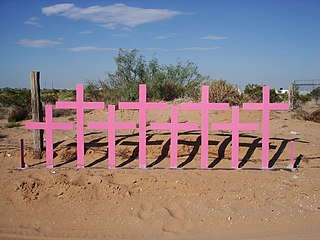
Other books I have read by Roberto Bolaño:
The Savage Detectives
First published in Spanish 2004
English translation by Natasha Wimmer 2008


I found this a brutal novel, not so much for what it depicts as for its pervasive sense of emptiness, loss and futility. Much about 2666 is enigmatic, including the title, but Death is central to it all. Its multiple storylines traverse the realms of academia, romance, journalism, and war, but all converge on a despairing Mexican city where over 300 women have been brutally murdered. Sadly, this part of the novel isn't all fiction, as it is based on the largely unsolved murders of an estimated 370 women in Ciudad Juárez.
Other books I have read by Roberto Bolaño:
The Savage Detectives
84Linda92007
I had not realized 2666 was about the Juarez murders. Knowing that makes me more interested in reading it. I also have The Savage Detectives in line of sight, unread. Thanks for the review, Steven.
85StevenTX
I wasn't up to doing much a review on this one (there are 90 posted already), but I should have added that the writing is excellent and pulls you along even though it's a journey with no destination, only an end (as is life, I suppose). 2666 is ironically similar to the book I read previously, Melmoth the Wanderer, in that it consists of five separate sections, each an independent story, but tied together by the common thread of a mysterious wandering figure. And within each section there are several stories within stories. There are episodes ranging from the Holocaust to Dracula's castle, to the U.S. Civil Rights movement, and more. There is much to appreciate in this novel, notwithstanding its overriding gloominess.
The murders in 2666 take place in a fictional city named Santa Teresa which is supposedly on the Sonora/Arizona border, but it is obviously based on Juárez, which is on the Chihuahua/Texas border. The novel doesn't describe the murders themselves, only the discovery of one body after another. As terrible as the murder of 300+ women in a ten year span sounds, it is a drop in the bucket compared to the level of violence Juárez is currently experiencing with thousands dying every year from drug-related violence.
The central character in 2666 is a German writer who uses the penname "Archimboldi," obviously derived from the 16th century painter Archimboldo. The latter's technique of using disparate elements to create fanciful portraits is perhaps a metaphor for the composition of the novel itself.

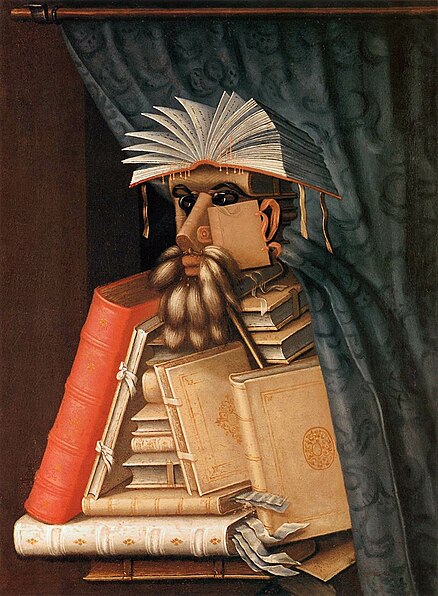
The murders in 2666 take place in a fictional city named Santa Teresa which is supposedly on the Sonora/Arizona border, but it is obviously based on Juárez, which is on the Chihuahua/Texas border. The novel doesn't describe the murders themselves, only the discovery of one body after another. As terrible as the murder of 300+ women in a ten year span sounds, it is a drop in the bucket compared to the level of violence Juárez is currently experiencing with thousands dying every year from drug-related violence.
The central character in 2666 is a German writer who uses the penname "Archimboldi," obviously derived from the 16th century painter Archimboldo. The latter's technique of using disparate elements to create fanciful portraits is perhaps a metaphor for the composition of the novel itself.

86dchaikin
Your first comment was so brief, I thought maybe the book had beaten something out of you. A curious book I need to read sometime.
87baswood
Interesting thoughts on 2666 steven. There is some very good writing and I might go back to it, although I think I would skip the section detailing all those "forensic" murders.
88StevenTX
51. Green Angel by Alice Hoffman
First published 2003


My grandson has a summer reading list of three books from which he must select and read one before starting 8th grade next fall. Since I had the opportunity to stop by a used book store this morning, I went ahead and bought all three for him and have just finished reading the two that interested me. (He'll probably pick the other one.) Last summer his reading assignment (no choice allowed) was The Hound of the Baskervilles. I was rather dismayed that what he was reading a year later seemed so much shorter and simpler. Admittedly, however, these are books that speak more to the concerns of today's youth than does Sherlock Holmes.
Green Angel is narrated by a 15-year-old girl who is known as "Green" because she is so good at growing things. She is told to stay behind one day and tend the family farm while her parents and sister go to the city across the river to market their produce. Green is angry and refuses to say goodbye. Later, though, an immense (and never-explained) fire destroys
the city, killing Green's family, and leaving Green half-blind. Later looters destroy what's left of the family garden, and Green must struggle to survive.
The novel is not so much about survival as it is about how Green deals with her guilt and grief, first by withdrawing into a shell and refusing to interact with others. Gradually she begins to come back to life. The writing is in the form of magical realism and allegory, which may be challenging concepts for young readers even though the language itself isn't difficult. I noticed that when the author introduces a term that her readers may not know (e.g. "feral") she quickly places a simpler synonym in context.
Though Green is dealing grief and guilt, many of her attitudes and experiences are those of teenagers who simply feel alienated from their families, so the novel should be relevant to all young readers.
First published 2003


My grandson has a summer reading list of three books from which he must select and read one before starting 8th grade next fall. Since I had the opportunity to stop by a used book store this morning, I went ahead and bought all three for him and have just finished reading the two that interested me. (He'll probably pick the other one.) Last summer his reading assignment (no choice allowed) was The Hound of the Baskervilles. I was rather dismayed that what he was reading a year later seemed so much shorter and simpler. Admittedly, however, these are books that speak more to the concerns of today's youth than does Sherlock Holmes.
Green Angel is narrated by a 15-year-old girl who is known as "Green" because she is so good at growing things. She is told to stay behind one day and tend the family farm while her parents and sister go to the city across the river to market their produce. Green is angry and refuses to say goodbye. Later, though, an immense (and never-explained) fire destroys
the city, killing Green's family, and leaving Green half-blind. Later looters destroy what's left of the family garden, and Green must struggle to survive.
The novel is not so much about survival as it is about how Green deals with her guilt and grief, first by withdrawing into a shell and refusing to interact with others. Gradually she begins to come back to life. The writing is in the form of magical realism and allegory, which may be challenging concepts for young readers even though the language itself isn't difficult. I noticed that when the author introduces a term that her readers may not know (e.g. "feral") she quickly places a simpler synonym in context.
Though Green is dealing grief and guilt, many of her attitudes and experiences are those of teenagers who simply feel alienated from their families, so the novel should be relevant to all young readers.
89StevenTX
52. The House on Mango Street by Sandra Cisneros
First published 1984


The House on Mango Street is a short and simple autobiographical novel about a Mexican-American girl named Esperanza growing up in an urban neighborhood. Her family is poor, but not impoverished. Esperanza yearns for a bigger house and nicer clothes, but she is also a keen observer of those around her. Each chapter--most no more than a page in length--is a miniature story depicting either a phase in Esperanza's life or an aspect of her surroundings. She describes the lonely immigrant pining for her home far away and refusing to speak English, the child abused at home, the wife running away from her husband, and the old woman dying in solitude. There are also brighter images of girlhood: jumping rope, getting her first job, and discovering the power of hips. This is brilliant little novel about being what you can be without losing touch with where you came from.
The third novel on my grandson's reading list is Taking Sides by Gary Soto. It's about an Hispanic boy who moves into a richer and predominately Anglo neighborhood. He finds that being on the basketball team helps him fit in, but then he must play a game against his old friends from his former neighborhood. I have no interest in reading this one. I hated basketball when I was a kid.
First published 1984


The House on Mango Street is a short and simple autobiographical novel about a Mexican-American girl named Esperanza growing up in an urban neighborhood. Her family is poor, but not impoverished. Esperanza yearns for a bigger house and nicer clothes, but she is also a keen observer of those around her. Each chapter--most no more than a page in length--is a miniature story depicting either a phase in Esperanza's life or an aspect of her surroundings. She describes the lonely immigrant pining for her home far away and refusing to speak English, the child abused at home, the wife running away from her husband, and the old woman dying in solitude. There are also brighter images of girlhood: jumping rope, getting her first job, and discovering the power of hips. This is brilliant little novel about being what you can be without losing touch with where you came from.
The third novel on my grandson's reading list is Taking Sides by Gary Soto. It's about an Hispanic boy who moves into a richer and predominately Anglo neighborhood. He finds that being on the basketball team helps him fit in, but then he must play a game against his old friends from his former neighborhood. I have no interest in reading this one. I hated basketball when I was a kid.
90dchaikin
The House on Mango Street is on my TBR. Enjoyed your comments, and I'm curious which book your grandson will chose.
91StevenTX
I should also mention that about a year ago my wife and I went to a play at the local Latino Cultural Center which was a performance of The House on Mango Street. At the time I thought it was adapted from the novel, but now that I've actually read the book and seen how short it is, I realize that the play was the entire novel, read and acted from beginning to end, word for word. We took along with us a young girl we know whose circumstances are similar to those of Esperanza, the novel's subject and narrator. I think this may have been a formative experience for the young lady.
92edwinbcn
I just bought The House on Mango Street today. Coming home, your review was the first thing I read.
93StevenTX
53. The Name of the Rose by Umberto Eco
First published 1980 as Il nome della rosa
Translation by William Weaver 1983


It is a rare pleasure to read a novel like this that is not only thoroughly entertaining, but equally informative and thought-provoking. The Name of the Rose is set 14th century Italy. The narrator is a young Benedictine novice, Adso of Melk, who has traveled from his native Austria to Italy in the company of William of Baskerville, a Franciscan friar. William is serving as an emissary from the Holy Roman Emperor Louis IV and will be meeting with ambassadors of Pope John XXII at a prominent monastery. Adso refrains from naming the monastery because of the horrendous events that will soon unfold.
The rivalry between Emperor and Pope is the motivating force behind much of what happens in the novel. Essentially a struggle for wealth and power, it came to depend on relatively obscure theological questions, because the answers to such questions could be used to define just how much secular power the priesthood could wield. In this struggle the monastic orders generally sided with the Emperor, the lay clergy and urban bishops with the Pope. This was the ecclesiastical counterpart to the rivalry between the landed aristocracy and the urban mercantile class that would mark European history until the 20th century. One of the weapons at the Pope's command was to declare as heretical any order or sect that espoused views or practices that were a threat to the established order. Thousands of non-conformists died at the hands of the Inquisition.
William of Baskervile had been an inquisitor, but left the ranks in disillusionment without having himself sent anyone to death. Nonetheless, William has earned a reputation as a shrewd investigator. As soon as he arrives at the abbey, the abbot tells William that there has been a murder and asks him to investigate and solve the case before the rest of the envoys arrive. The abbot's evasiveness, and his insistence that William not be allowed to enter the abbey library, convince William that there is some great secret being kept here that involves more than the murder of a single monk. Sure enough, the first murder is followed by another, then another as the tension and mystery continue to build.
Underlying the entire novel are the elements of semiotics, Umberto Eco's principal field of study. Semiotics examines the relationships between things and meanings and the words and symbols we use to express them. There is no overt explanation or lecture embedded in the novel, just subtle driblets of information such as the origins of certain words, the interpretation of some religious symbols and their derivation, and the imagery used to express various concepts. The novel's setting, a community of monks from all over Europe charged with maintaining a vast library of works in many languages, provides ample opportunity for examples that are relevant to the story. William's skill at detective work is simply a practical expression of his combination of astute powers of observation, deep cultural knowledge, and the imagination to see unexpected linkages. All fascinating stuff.
Other books I have read by Umberto Eco:
The Mysterious Flame of Queen Loana
A group I belong to outside LT will be reading The Prague Cemetery in the fall. I hope before then to read at least Foucault's Pendulum, and possibly other works by Eco.
First published 1980 as Il nome della rosa
Translation by William Weaver 1983


It is a rare pleasure to read a novel like this that is not only thoroughly entertaining, but equally informative and thought-provoking. The Name of the Rose is set 14th century Italy. The narrator is a young Benedictine novice, Adso of Melk, who has traveled from his native Austria to Italy in the company of William of Baskerville, a Franciscan friar. William is serving as an emissary from the Holy Roman Emperor Louis IV and will be meeting with ambassadors of Pope John XXII at a prominent monastery. Adso refrains from naming the monastery because of the horrendous events that will soon unfold.
The rivalry between Emperor and Pope is the motivating force behind much of what happens in the novel. Essentially a struggle for wealth and power, it came to depend on relatively obscure theological questions, because the answers to such questions could be used to define just how much secular power the priesthood could wield. In this struggle the monastic orders generally sided with the Emperor, the lay clergy and urban bishops with the Pope. This was the ecclesiastical counterpart to the rivalry between the landed aristocracy and the urban mercantile class that would mark European history until the 20th century. One of the weapons at the Pope's command was to declare as heretical any order or sect that espoused views or practices that were a threat to the established order. Thousands of non-conformists died at the hands of the Inquisition.
William of Baskervile had been an inquisitor, but left the ranks in disillusionment without having himself sent anyone to death. Nonetheless, William has earned a reputation as a shrewd investigator. As soon as he arrives at the abbey, the abbot tells William that there has been a murder and asks him to investigate and solve the case before the rest of the envoys arrive. The abbot's evasiveness, and his insistence that William not be allowed to enter the abbey library, convince William that there is some great secret being kept here that involves more than the murder of a single monk. Sure enough, the first murder is followed by another, then another as the tension and mystery continue to build.
Underlying the entire novel are the elements of semiotics, Umberto Eco's principal field of study. Semiotics examines the relationships between things and meanings and the words and symbols we use to express them. There is no overt explanation or lecture embedded in the novel, just subtle driblets of information such as the origins of certain words, the interpretation of some religious symbols and their derivation, and the imagery used to express various concepts. The novel's setting, a community of monks from all over Europe charged with maintaining a vast library of works in many languages, provides ample opportunity for examples that are relevant to the story. William's skill at detective work is simply a practical expression of his combination of astute powers of observation, deep cultural knowledge, and the imagination to see unexpected linkages. All fascinating stuff.
Other books I have read by Umberto Eco:
The Mysterious Flame of Queen Loana
A group I belong to outside LT will be reading The Prague Cemetery in the fall. I hope before then to read at least Foucault's Pendulum, and possibly other works by Eco.
94rebeccanyc
It is a long time since I read The Name of the Rose and your review makes me think about reading it again. I also read Foucault's Pendulum a long time ago, and have The Prague Cemetery on the TBR
95baswood
Thanks for reminding me of The Name of the Rose in your excellent review. I read this a long time ago and did not pick up on any of the semiotics and also I read it when I had little idea of life in 14th century Italy. Definitely time for a re-read.
96StevenTX
54. Ficciones by Jorge Luis Borges
First published 1941-1944
English edition by various translators first published 1962


The idea of a library as a labyrinth in The Name of the Rose came from a short story by Borges titled "The Library of Babel," and Eco named and modeled one of his characters (though not a very pleasant one) after the Argentinian. I discovered that in reading the collection Labyrinths a few months ago I had also read all but four stories from the earlier collection Ficciones, so I was able to finish the latter in short order by simply reading the four unduplicated pieces.
Borges' stories are wonderful, unconventional and compact expressions of ideas that are both simple and profound. Many of them are labyrinthine in their design, often leading the reader back to the beginning only to discover that the pursuer is the same as the pursued. Others blend--or reverse--dream and reality or play with curious notions of time and space.
First published 1941-1944
English edition by various translators first published 1962


The idea of a library as a labyrinth in The Name of the Rose came from a short story by Borges titled "The Library of Babel," and Eco named and modeled one of his characters (though not a very pleasant one) after the Argentinian. I discovered that in reading the collection Labyrinths a few months ago I had also read all but four stories from the earlier collection Ficciones, so I was able to finish the latter in short order by simply reading the four unduplicated pieces.
Borges' stories are wonderful, unconventional and compact expressions of ideas that are both simple and profound. Many of them are labyrinthine in their design, often leading the reader back to the beginning only to discover that the pursuer is the same as the pursued. Others blend--or reverse--dream and reality or play with curious notions of time and space.
97labfs39
I too enjoyed The House on Mango Street and, like the others, am inspired by your review to mark The Name of the Rose for a reread. Btw, did you read Anathem by Neal Stephenson? I thought the use of mathematics and the mysteries within mysteries kept by the older monks was fascinating. The two books remind me of each other.
(ETA: Congrats on the hot review!)
(ETA: Congrats on the hot review!)
98StevenTX
No, I haven't read anything by Stephenson yet, though I have several of his books. One of these days...
99rebeccanyc
Borges is someone else I mean to read someday (sigh!), and I even own Ficciones!
100Linda92007
Enjoyed your review of Ficciones, Steven. I have a book of his poetry, but none of his short stories. I see that I will need to correct that!
101Rise
I've read Ficciones four books ago. And also dipped into the fiction section of Labyrinths a couple years back. As there's that time gap, I find my memories of the duplicated stories to be different in the two readings. The different translations might also have affected the tone.
102StevenTX
55. Silence by Shusaku Endo
First published 1966
Translation by William Johnston 1969


Silence is the story of a Portuguese missionary, Sebastian Rodrigues, who travels to Japan in the mid-seventeenth century. Having at first let Catholic missionaries operate unmolested, the Japanese authorities are now attempting to eradicate the religion. Some missionaries have been killed; others, apparently including Rodrigues' former teacher Christovao Ferreira, have apostatized under threat of torture. Rodriques, who travels with another priest named Garrpe, has a two-fold mission: to find Ferreira and discover the truth about him, and to minister to the clandestine groups of Japanese Christians around the city of Nagasaki.
After a long and arduous journey, Rodrigues and Garrpe are fortunate in making contact with a Christian village, but they soon realize that their mission is likely to be in vain as they are forced to stay in hiding almost continually. They are barely able to minister to the small village, and there is no question of stirring about in search of Ferreira. In the meantime, their presence is both a threat to the villagers' safely and a drain on its meager food supplies.
Rodriques will watch the Japanese suffer without complaint on behalf of his faith--a faith they barely understand. He will wonder why God remains silent in the face of such sacrifices, he will wonder if he has as much strength as these simple peasants, and he will even begin to question his belief in God. One recurring theme is the distinction between the individual's internal beliefs and their outward manifestations in words, symbols, and actions. While this novel will be most meaningful to those who can relate personally to its questions about faith, it is also interesting as historical fiction depicting Europe's early contacts with Japan.
Other works I have read by Shusaku Endo:
The Sea and Poison
First published 1966
Translation by William Johnston 1969


Silence is the story of a Portuguese missionary, Sebastian Rodrigues, who travels to Japan in the mid-seventeenth century. Having at first let Catholic missionaries operate unmolested, the Japanese authorities are now attempting to eradicate the religion. Some missionaries have been killed; others, apparently including Rodrigues' former teacher Christovao Ferreira, have apostatized under threat of torture. Rodriques, who travels with another priest named Garrpe, has a two-fold mission: to find Ferreira and discover the truth about him, and to minister to the clandestine groups of Japanese Christians around the city of Nagasaki.
After a long and arduous journey, Rodrigues and Garrpe are fortunate in making contact with a Christian village, but they soon realize that their mission is likely to be in vain as they are forced to stay in hiding almost continually. They are barely able to minister to the small village, and there is no question of stirring about in search of Ferreira. In the meantime, their presence is both a threat to the villagers' safely and a drain on its meager food supplies.
Rodriques will watch the Japanese suffer without complaint on behalf of his faith--a faith they barely understand. He will wonder why God remains silent in the face of such sacrifices, he will wonder if he has as much strength as these simple peasants, and he will even begin to question his belief in God. One recurring theme is the distinction between the individual's internal beliefs and their outward manifestations in words, symbols, and actions. While this novel will be most meaningful to those who can relate personally to its questions about faith, it is also interesting as historical fiction depicting Europe's early contacts with Japan.
Other works I have read by Shusaku Endo:
The Sea and Poison
103dchaikin
I stumbled across The Name of the Rose by accident at the end of my freshman year in college. I was selling my books back to the university bookstore, but there was a ridiculously long line. I picked up a book almost at random off a shelf and found it very difficult and yet oddly compelling. I got lost in it, forgot about my wait inline, sold my books for about 1/4 of what I though I would get, and walked out still reading. At some point I realized that I never paid for the book...
Great review on Endo, sounds quite fascinating.
Great review on Endo, sounds quite fascinating.
104StevenTX
56. Wolf Hall by Hilary Mantel
First published 2009

In desperate need of a male heir to solidify the Tudor dynasty, King Henry VIII sought to annul his marriage to Katherine of Aragon so he could wed Anne Boleyn. As the Pope, for political reasons, would not grant the necessary dispensation, Henry's solution was to make the English church independent from Rome. A major player in these monumental events was Thomas Cromwell, a blacksmith's son who rose to a position second in power in England only to the King himself.
Hilary Mantel tells the story of these turbulent times in the third person, but through Cromwell's eyes. The novel begins with a brief scene from Cromwell's harsh childhood in 1500, then shifts to 1527 when Cromwell is an adviser to Cardinal Thomas Wolsey. Cromwell manages to remain on good terms with Henry even as Wolsey incurs the King's disfavor. He adeptly transitions from his position as adviser to the Cardinal to a role as council to the King. Aristocrats who at first look upon the blacksmith's son with disdain soon grudgingly find him useful, then eventually accept his wise leadership. The novel ends in July 1535 when the execution of Sir Thomas More leaves Thomas Cromwell unchallenged and in full control of Henry's affairs.
Wolf Hall is a novel about people, not events. Late in the novel, Mantel states her thesis:
The novel sparkles with intelligent dialog and wit. It also gives some sense of the harshness of life when plagues were an almost annual event and public executions were considered entertainment. Most of all, however, it is a measured, convincing, and captivating look at "how the world changes."
First published 2009

In desperate need of a male heir to solidify the Tudor dynasty, King Henry VIII sought to annul his marriage to Katherine of Aragon so he could wed Anne Boleyn. As the Pope, for political reasons, would not grant the necessary dispensation, Henry's solution was to make the English church independent from Rome. A major player in these monumental events was Thomas Cromwell, a blacksmith's son who rose to a position second in power in England only to the King himself.
Hilary Mantel tells the story of these turbulent times in the third person, but through Cromwell's eyes. The novel begins with a brief scene from Cromwell's harsh childhood in 1500, then shifts to 1527 when Cromwell is an adviser to Cardinal Thomas Wolsey. Cromwell manages to remain on good terms with Henry even as Wolsey incurs the King's disfavor. He adeptly transitions from his position as adviser to the Cardinal to a role as council to the King. Aristocrats who at first look upon the blacksmith's son with disdain soon grudgingly find him useful, then eventually accept his wise leadership. The novel ends in July 1535 when the execution of Sir Thomas More leaves Thomas Cromwell unchallenged and in full control of Henry's affairs.
Wolf Hall is a novel about people, not events. Late in the novel, Mantel states her thesis:
The fate of peoples is made like this, two men in small rooms. Forget the coronations, the conclaves of cardinals, the pomp and processions. This is how the world changes: a counter pushed across the table, a pen stroke that alters the force of a phrase, a woman's sigh as she passes and leaves on the air a trail of orange flower or rose water; her hand pulling close the bed curtains, the discreet sigh of flesh against flesh.The dozens of characters in Wolf Hall each come convincingly alive: Anne Boleyn, seductive, vicious, but, above all, ambitious; her sister Mary Boleyn, laughing, promiscuous, and disarmingly honest; Sir Thomas More, worshiping himself as a martyr even before his death; and Henry himself, a vacillating overgrown adolescent with oversized appetites but the glimmerings of wisdom and humanity.
The novel sparkles with intelligent dialog and wit. It also gives some sense of the harshness of life when plagues were an almost annual event and public executions were considered entertainment. Most of all, however, it is a measured, convincing, and captivating look at "how the world changes."
105Linda92007
Great review of Wolf Hall, Steven, and the perfect selection of a quote. Are you ready for Bring Up the Bodies?
106StevenTX
#105 - I definitely want to read Bring Up the Bodies, but I'm not sure when. The group I read Wolf Hall with hasn't started discussing it yet, and we may decide to read the sequel together as well. I was hoping for an ER copy of it, but I got Herta Müller's The Hunger Angel instead, which I am now reading. In the meantime, Bring Up the Bodies is at the top of my wishlist, and Fathers Day is coming up.
107rebeccanyc
Yes, great review. I loved Wolf Hall and it got me started on reading most of Mantel's work. I'm eager to read Bring up the Bodies, but I'm waiting until I have time to devote to serious reading, not bits and pieces.
108baswood
Excellent review of Wolf Hall. A novel I found entirely convincing. As you say steven the dialogue really sparkles and I though that Mantel showed her skill as a writer by including more dialogue than is usual and yet still managing to keep the narrative flowing.
I agree that she depicts the grime and the harshness of the early 16th century very convincingly. I am waiting for the paperback version of Bring up the Bodies.
I agree that she depicts the grime and the harshness of the early 16th century very convincingly. I am waiting for the paperback version of Bring up the Bodies.
109Nickelini
I am waiting for the paperback version of Bring up the Bodies.
Me too! I remember thinking the paperback of Wolf Hall came out quickly, so I'm hoping for the same (unlike The Cat's Table which still isn't out). In the meantime I'll get my copy of Wolf Hall back and read it.
Me too! I remember thinking the paperback of Wolf Hall came out quickly, so I'm hoping for the same (unlike The Cat's Table which still isn't out). In the meantime I'll get my copy of Wolf Hall back and read it.
110StevenTX
57. The Hunger Angel by Herta Müller
First published in German 2009 as Atemschaukel
English translation by Philip Boehm 2012
This was an Early Reviewer book

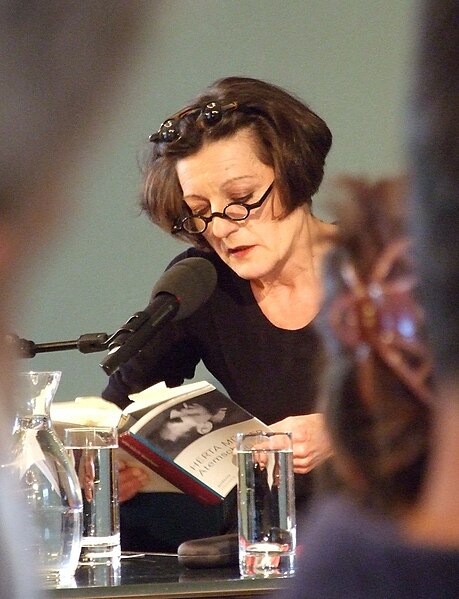
The Hunger Angel is a work of fiction based on the real-life experiences of Herta Müller's mother and, to a greater extent, on those of her friend the poet Oskar Pastior. The novel's narrator and protagonist, Leopold Auberg, is an ethnic German from Romania who is seventeen years old in 1945. Romania had fought on the Fascist side in World War II, with families like the Aubergs being among Hitler's staunchest supporters. When Romania was overrun by the Red Army, the country not only surrendered but switched sides. In January 1945, thousands of German-speaking Romanians, Leopold among them, were shipped east to the Soviet Union and housed in labor camps where they worked to repair war damage.
In the opening pages we learn very little about Leopold except that he is homosexual, and has taken to secret, anonymous rendezvous with older men in secluded parks and public bathhouses. Knowing the risk he is running, it is with a sense of relief that Leopold learns he is to be sent to Russia for a five-year labor term. Arriving at the camp--he never learns where it is--the young man finds the living conditions harsh and the work brutal, but it is his perpetual hunger which overshadows everything. Leopold uses the metaphor of the "hunger angel" to represent its constant, driving presence.
Most of the novel describes the day-to-day routine in the camp and the personalities who share Leopold's privations. The Russians demand of them hard and sometimes dangerous labor, but are not otherwise especially brutal. Inmates can get passes to leave the camp on their own so they can barter their few possessions for food in the local markets. The food shortages are largely the fault of war conditions and of corruption among the Romanians chosen as camp leaders. As conditions gradually improve, Leopold even has mixed feelings about the possibility of returning to a home where he is now a stranger.
The theme of the novel is the many levels of dislocation experienced by the internees. Even before deportation, Leopold is a German in a country of Romanians and a gay male in a culture that punishes homosexuality. Then he is deported to another country and a new way of existence. It doesn't end there, however. His camp experience, by narrowing his horizons to the daily struggle to find something to eat, has permanently dislocated him from his family and everything considered normal--something he realizes long before he leaves the camp to return to Romania. "How can you face the world if all you can say about yourself is that you are hungry?"
Even in language there is dislocation. Certain words take on new meanings that drill themselves into Leopold's mind, just as images trigger unwelcome memories. "There are words that do whatever they want with me," Leopold writes. "They're completely different from me and they think differently from what they really are."
Unfortunately the way the novel is composed doesn't quite do justice to the story it has to tell. The bulk of the narrative is a collection of anecdotal and descriptive chapters with little sense of continuity. Perhaps for this reason I didn't find the novel especially engaging or moving, despite the subject matter and the unforgettable depictions of the privations the characters endured. The metaphors, dream images, and the author's occasional flights into the realm of magical realism were more often a distraction than an enhancement to a story that had no need of such embellishments. The Hunger Angel is a worthwhile addition to the literature about wartime displacement, concentration camps, etc., but it is not among the best of its kind.
Other works I have read by Herta Müller:
The Land of Green Plums
First published in German 2009 as Atemschaukel
English translation by Philip Boehm 2012
This was an Early Reviewer book

The Hunger Angel is a work of fiction based on the real-life experiences of Herta Müller's mother and, to a greater extent, on those of her friend the poet Oskar Pastior. The novel's narrator and protagonist, Leopold Auberg, is an ethnic German from Romania who is seventeen years old in 1945. Romania had fought on the Fascist side in World War II, with families like the Aubergs being among Hitler's staunchest supporters. When Romania was overrun by the Red Army, the country not only surrendered but switched sides. In January 1945, thousands of German-speaking Romanians, Leopold among them, were shipped east to the Soviet Union and housed in labor camps where they worked to repair war damage.
In the opening pages we learn very little about Leopold except that he is homosexual, and has taken to secret, anonymous rendezvous with older men in secluded parks and public bathhouses. Knowing the risk he is running, it is with a sense of relief that Leopold learns he is to be sent to Russia for a five-year labor term. Arriving at the camp--he never learns where it is--the young man finds the living conditions harsh and the work brutal, but it is his perpetual hunger which overshadows everything. Leopold uses the metaphor of the "hunger angel" to represent its constant, driving presence.
Most of the novel describes the day-to-day routine in the camp and the personalities who share Leopold's privations. The Russians demand of them hard and sometimes dangerous labor, but are not otherwise especially brutal. Inmates can get passes to leave the camp on their own so they can barter their few possessions for food in the local markets. The food shortages are largely the fault of war conditions and of corruption among the Romanians chosen as camp leaders. As conditions gradually improve, Leopold even has mixed feelings about the possibility of returning to a home where he is now a stranger.
The theme of the novel is the many levels of dislocation experienced by the internees. Even before deportation, Leopold is a German in a country of Romanians and a gay male in a culture that punishes homosexuality. Then he is deported to another country and a new way of existence. It doesn't end there, however. His camp experience, by narrowing his horizons to the daily struggle to find something to eat, has permanently dislocated him from his family and everything considered normal--something he realizes long before he leaves the camp to return to Romania. "How can you face the world if all you can say about yourself is that you are hungry?"
Even in language there is dislocation. Certain words take on new meanings that drill themselves into Leopold's mind, just as images trigger unwelcome memories. "There are words that do whatever they want with me," Leopold writes. "They're completely different from me and they think differently from what they really are."
Unfortunately the way the novel is composed doesn't quite do justice to the story it has to tell. The bulk of the narrative is a collection of anecdotal and descriptive chapters with little sense of continuity. Perhaps for this reason I didn't find the novel especially engaging or moving, despite the subject matter and the unforgettable depictions of the privations the characters endured. The metaphors, dream images, and the author's occasional flights into the realm of magical realism were more often a distraction than an enhancement to a story that had no need of such embellishments. The Hunger Angel is a worthwhile addition to the literature about wartime displacement, concentration camps, etc., but it is not among the best of its kind.
Other works I have read by Herta Müller:
The Land of Green Plums
111baswood
Excellent review of The Hunger Angel steven
112StevenTX
58. Secret Rendezvous by Kobo Abe
First published in Japanese 1977
English translation by Juliet Winters Carpenter 1979


Secret Rendezvous is a delightfully absurd and confounding novel. It opens with an unnamed man--all the characters in the book are nameless with the exception of one very minor character--going to an abandoned army target range where a person or creature known as "the horse" is training itself to run on four legs. The horse gives the man an assignment to conduct an investigation. The man assumes it is to investigate his own wife's disappearance. Instead, the subject of the investigation is the man himself. He is to listen to surveillance tapes the horse gives him and write a comprehensive report and analysis of his own activities over the past few days, beginning with the day his wife disappeared.
The man is a sales representative for a company making athletic shoes. One night he and his wife are awakened by the arrival of an ambulance. The medics say they have orders to take the wife to the hospital. Both she and her husband are too dumbfounded to resist, nor does it occur to the man that he should ride in the ambulance with her. He doesn't even know to which hospital they have taken her. The following morning, after questioning ambulance personnel, he finally arrives at the correct hospital and confirms with the night watchman that his wife was dropped off at the emergency entrance, but there is no record or trace of her from that point. Nor does anyone in the hospital seem to care that somewhere in the bowels of the hospital is a perfectly healthy woman, lost and confused, with no money or ID and wearing nothing but a skimpy nightgown.
The man eventually assumes the guise of a security staff member so he can explore the hospital on his own. He finds it is an immense labyrinth, more underground than above, with many wings long abandoned and buried. He also discovers that there is an obsession for eavesdropping, with every room bugged and many pieces of clothing containing hidden microphones. Related to this is the discovery that the chief specialty of the hospital--and the obsession of all of its staff--is research into sexual behavior and dysfunction.
To call Secret Rendezvous "enigmatic" would be an understatement. The novel is a labyrinth with no way out. It is absurd, entertaining, funny, erotic, and sometimes disturbing. The most pervasive element is voyeurism, with the watcher watching the watcher watching the watcher... many levels deep at some points, culminating (or maybe not?) with the reader, perplexed but amused.
Other works I have read by Kobo Abe:
The Woman in the Dunes
The Box Man
First published in Japanese 1977
English translation by Juliet Winters Carpenter 1979


Secret Rendezvous is a delightfully absurd and confounding novel. It opens with an unnamed man--all the characters in the book are nameless with the exception of one very minor character--going to an abandoned army target range where a person or creature known as "the horse" is training itself to run on four legs. The horse gives the man an assignment to conduct an investigation. The man assumes it is to investigate his own wife's disappearance. Instead, the subject of the investigation is the man himself. He is to listen to surveillance tapes the horse gives him and write a comprehensive report and analysis of his own activities over the past few days, beginning with the day his wife disappeared.
The man is a sales representative for a company making athletic shoes. One night he and his wife are awakened by the arrival of an ambulance. The medics say they have orders to take the wife to the hospital. Both she and her husband are too dumbfounded to resist, nor does it occur to the man that he should ride in the ambulance with her. He doesn't even know to which hospital they have taken her. The following morning, after questioning ambulance personnel, he finally arrives at the correct hospital and confirms with the night watchman that his wife was dropped off at the emergency entrance, but there is no record or trace of her from that point. Nor does anyone in the hospital seem to care that somewhere in the bowels of the hospital is a perfectly healthy woman, lost and confused, with no money or ID and wearing nothing but a skimpy nightgown.
The man eventually assumes the guise of a security staff member so he can explore the hospital on his own. He finds it is an immense labyrinth, more underground than above, with many wings long abandoned and buried. He also discovers that there is an obsession for eavesdropping, with every room bugged and many pieces of clothing containing hidden microphones. Related to this is the discovery that the chief specialty of the hospital--and the obsession of all of its staff--is research into sexual behavior and dysfunction.
To call Secret Rendezvous "enigmatic" would be an understatement. The novel is a labyrinth with no way out. It is absurd, entertaining, funny, erotic, and sometimes disturbing. The most pervasive element is voyeurism, with the watcher watching the watcher watching the watcher... many levels deep at some points, culminating (or maybe not?) with the reader, perplexed but amused.
Other works I have read by Kobo Abe:
The Woman in the Dunes
The Box Man
113baswood
I enjoy your reviews of Kobo Abe's books, which will probably save me the trouble of reading them.
I don't see them being popular with my book club, but it would be fun to nominate one for them to read.
I don't see them being popular with my book club, but it would be fun to nominate one for them to read.
114Linda92007
I enjoyed your review of The Hunger Angel, Steven. I am reading it now, so I'll save my reactions for later.
Great review also of Secret Rendezvous. Kobo Abe is an author that seems to intrigue and repel me at the same time. I want to read something by him, but can't quite decide what. Which of those you have read would you recommend for an introduction?
Great review also of Secret Rendezvous. Kobo Abe is an author that seems to intrigue and repel me at the same time. I want to read something by him, but can't quite decide what. Which of those you have read would you recommend for an introduction?
115StevenTX
#113 - Good luck doing Abe as a group read, Barry. The two I've read most recently are much too kinky for the group I belong to, though we don't shy away from difficult works as long as they are fairly short. One of our all-time best discussions was last year on Wittgenstein's Mistress by David Markson.
#114 - Thanks, Linda. The Woman in the Dunes is Abe's best known novel. It's been years since I read it, but I recall it as a more straightforward and serious allegorical story than the two novels I've read this year. I think it would be the best place to start. The Face of Another and The Ruined Map are both highly regarded as well. I haven't run across copies that fit my budget, or I would be reading them too. I think they're both being discussed in the Author Themed Reads group.
#114 - Thanks, Linda. The Woman in the Dunes is Abe's best known novel. It's been years since I read it, but I recall it as a more straightforward and serious allegorical story than the two novels I've read this year. I think it would be the best place to start. The Face of Another and The Ruined Map are both highly regarded as well. I haven't run across copies that fit my budget, or I would be reading them too. I think they're both being discussed in the Author Themed Reads group.
116rebeccanyc
Having just finished The Box Man and decided that more Abe probably wasn't in the cards for me, I enjoyed your review of Secret Rendevous. It certainly seems that voyeurism, sexual obsession and dysfunction, and "enigmatic" writing are hallmarks of Abe's works. By the way, I found The Woman in the Dunes almost unbearably claustrophobic, but definitely more understandable than the mystifying The Box Man.
117StevenTX
59. The Investigation: A Novel by Philippe Claudel
First published 2010 in French as L'Enquête
English translation by John Cullen 2012
This was an Early Reviewer selection


The Investigator considers himself "a scrupulous, professional, careful, disciplined, and methodical person who didn't allow himself to surprised or bothered by the circumstances or individuals he was required to encounter." Therefore, when he arrives at the City to conduct his investigation at the Enterprise, and no one meets him at the train station, he waits with perfect patience despite the miserable weather. Eventually, however, he gives up and, finding no cab in sight--indeed not a human soul or vehicle--he makes his way on foot.
The poor Investigator suffers one mishap after another. He is drenched, his clothes are ruined, he catches cold, and when he finally comes upon a gate to the Enterprise it is the middle of the night and he is rudely sent away. When he eventually finds a hotel, his misfortunes only deepen. The rude Giantess takes and loses his identification, the Waiter gives him nothing fit to eat, the Tourist spills scalding coffee all over him, and the Policeman accuses him of vandalizing the ladies' room!
Gradually, however, this novel that starts as a slapstick comedy begins to morph into a surreal, irrational nightmare. The City and the Enterprise are not part of our world as we know it, or perhaps they are a perfect depiction of our world as we refuse to accept it. The Investigator cries out for answers:
The Investigation is a philosophical novel that challenges the need for philosophy. The human mind didn't evolve as a tool for understanding the secrets of the universe, says the author, so why does man "constantly fool himself into thinking his mind can grasp everything and comprehend everything?"
First published 2010 in French as L'Enquête
English translation by John Cullen 2012
This was an Early Reviewer selection


The Investigator considers himself "a scrupulous, professional, careful, disciplined, and methodical person who didn't allow himself to surprised or bothered by the circumstances or individuals he was required to encounter." Therefore, when he arrives at the City to conduct his investigation at the Enterprise, and no one meets him at the train station, he waits with perfect patience despite the miserable weather. Eventually, however, he gives up and, finding no cab in sight--indeed not a human soul or vehicle--he makes his way on foot.
The poor Investigator suffers one mishap after another. He is drenched, his clothes are ruined, he catches cold, and when he finally comes upon a gate to the Enterprise it is the middle of the night and he is rudely sent away. When he eventually finds a hotel, his misfortunes only deepen. The rude Giantess takes and loses his identification, the Waiter gives him nothing fit to eat, the Tourist spills scalding coffee all over him, and the Policeman accuses him of vandalizing the ladies' room!
Gradually, however, this novel that starts as a slapstick comedy begins to morph into a surreal, irrational nightmare. The City and the Enterprise are not part of our world as we know it, or perhaps they are a perfect depiction of our world as we refuse to accept it. The Investigator cries out for answers:
I'm tossed back and forth, bashed around, bruised and then petted, knocked over and then stood upright again. I'm placed and displaced. I'm forbidden to cross a street and then I'm led across it. I'm smiled upon, I'm embraced, I'm cheered, only to be dashed the next minute against a wall.But in return he is castigated for his insistence upon identifying people by their function:
You deny all humanity in yourself and those around you. You see people and the world as an impersonal, asexual system of functions, of cogs and gears, a great mechanism without intelligence in which these functions and cogs operate in order to make it work.The author calls into question the very idea that organization is essential to society. "Man created order at a time when nothing was required of him. He thought himself clever. He's had cause to regret it."
The Investigation is a philosophical novel that challenges the need for philosophy. The human mind didn't evolve as a tool for understanding the secrets of the universe, says the author, so why does man "constantly fool himself into thinking his mind can grasp everything and comprehend everything?"
...thinking is sometimes like running an empty washing machine: The exercise may serve to verify proper functioning, but the dirty laundry left outside the machine stays dirty eternallyThe Investigation is a wonderfully entertaining, unsettling, and thoughtful novel that takes the reader on a journey from the funny, through the absurd, to the profound.
118bragan
Hmm, I requested a copy of The Investigation from Early Reviewers, but didn't get it. I was wondering whether it might be worth hunting up, anyway. Sounds like maybe the answer is yes.
(I gave up on the touchstone, as it keeps wanting to link me to Stansilaw Lem's book of the same title. Which is interesting, because I have the feeling they perhaps have some of the same sensibility.)
(I gave up on the touchstone, as it keeps wanting to link me to Stansilaw Lem's book of the same title. Which is interesting, because I have the feeling they perhaps have some of the same sensibility.)
119StevenTX
#118 - I'm sorry you didn't win the ER copy. I hope you got something else good instead. My copy came by UPS two days after the May batch closed, and just one day after I finally received my book from the April ER batch. I'm taking a break from ER in June.
I could only get the touchstone to work by including "A Novel" in the title. I've just taken that part out of the title for my copy. Let's see if that makes a difference.
Purely by chance I wound up reading two novels in a row that are very similar. Both Secret Rendezvous and The Investigation are about men hopelessly lost in a situation they can't understand. They are both under constant surveillance. And in both novels the characters have no names, only functional titles. The Investigation is, however, more overtly philosophical and does--at least as I see it--come to a conclusion of sorts. Abe's novel doesn't offer any answers, just a labyrinth of enigmas and frustrations that characterize modern life.
I could only get the touchstone to work by including "A Novel" in the title. I've just taken that part out of the title for my copy. Let's see if that makes a difference.
Purely by chance I wound up reading two novels in a row that are very similar. Both Secret Rendezvous and The Investigation are about men hopelessly lost in a situation they can't understand. They are both under constant surveillance. And in both novels the characters have no names, only functional titles. The Investigation is, however, more overtly philosophical and does--at least as I see it--come to a conclusion of sorts. Abe's novel doesn't offer any answers, just a labyrinth of enigmas and frustrations that characterize modern life.
120kidzdoc
Great review of The Investigation: A Novel, Steven. I didn't win this book either (although I was pleased with the book I did receive), so I'll look for it when it becomes available.
121Linda92007
Excellent review of The Investigation: A Novel, Steven. The eerie sense of being lost and disoriented in an unfamiliar city reminds me of Kazuo Ishiguro's The Unconsoled. I am adding Claudel to my wishlist. Several of his other novels also look promising.
122baswood
Oh I like the sound of The Investigation, great review by the way. By the sound of it I might be quite sympathetic to Philippe Claudel's views.
123StevenTX
60. Leviathan by Thomas Hobbes
First published 1651


Leviathan is considered one of the great works of political philosophy, though, as we shall see, only a fraction of it is strictly political in nature. It is firmly grounded in the civil and religious values of the English Reformation, but presages the Enlightenment. And it is both timeless and a product of its time, having been written by Hobbes while in exile during the English Civil War.
The work may be divided into three parts: the first philosophical, the second political, the third religious (though these are not the terms Hobbes would have preferred).
In the first part, "Of Man," Hobbes begins with the basic question: How do we know what is real and true? He discusses the senses, the intellect, rational thought, dreams, and illusions. He goes on to derive a series of "Natural Laws" based upon the logical actions a man must take, and the associations he must form, to secure peace and well-being. But as all men seek their own advantage in competition with others, peace is impossible unless men voluntarily submit themselves to the direction of a higher authority: the Common-wealth.
The second part of Leviathan, "The Common-wealth," is the one most read and studied. Hobbes classifies Common-wealths into three basic types: government by one, by a few, and by all. The attributes of common-wealths and the principles of effective government are the same, he maintains, for all three types. He clearly, however, endorses monarchy as the best form of government, it being the most efficient, the one most reflecting the natural organization of the family, and the one most consistent with Christian scripture.
Hobbes adamantly maintains that all power flows from the Sovereign (be it one person, several or many) and that it is foolish to pretend to contain the Sovereign's authority by constitutions or other forms. If a power exists that can curtail the Sovereign with a constitution, then that power is the true Sovereign, and since whomever makes a constitution can just as easily unmake it, the constitution's authority is just a fiction.
Much of the middle part of Leviathan is a systematic description of the nuts and bolts of government. Hobbes defines and distinguishes between administrators, ambassadors, and councilors. He lays out in some detail the principles of jurisprudence that are still in use today. For example, he discusses rules of evidence and testimony, how to relate the severity of punishment to that of the crime, and when ignorance of the law may or may not be an acceptable excuse.
Though many would argue that it is at odds with his preference for autocratic government, Hobbes' writing reflects his belief in the essential dignity and equality of all men and the principle of seeking the greatest good for the greatest number. He makes no distinction between social classes, and he repeatedly states that a man's thoughts and beliefs are his own business--a radical notion at the time.
The final two sections of Leviathan, comprising the largest segment of the work, are concerned with religious matters. At first Hobbes discusses strictly theological questions, such as how to interpret scripture and how to verify alleged miracles. This seems at first completely unrelated to the preceding discourse on Common-wealth, but it is all building a case in support of the primacy of civil authority over clerical: "...in every Christian Common-wealth, the Civill Soveraign is the supreme Pastor.... It is by his authority that all other Pastors are made, and have the power to teach...."
All of the issues of the English Reformation are revisited in a relentless attack on Catholicism and Papal authority. Yet Hobbes angered the Anglicans as well when he asserted that faith was the only requirement for salvation--that a man, even when compelled to follow the forms of another faith, is free to believe as he chooses, and his belief is all that matters. To us Leviathan reads like a devout religious tract with a bit about government in the middle, but the idea of freedom of conscience led to Hobbes' being labeled an atheist and forbidden to publish in England.
Hobbes has been described as the Shakespeare of English prose. I wouldn't go quite that far, but Leviathan is clear, lucid, and not at all difficult to read notwithstanding the archaic and inconsistent spellings. The first two sections are definitely recommended, while the last parts are chiefly of historical interest. Some familiarity with Plato and Aristotle would be recommended, if for no other reason than to enjoy Hobbes' impassioned attacks on their ideas.
First published 1651


Leviathan is considered one of the great works of political philosophy, though, as we shall see, only a fraction of it is strictly political in nature. It is firmly grounded in the civil and religious values of the English Reformation, but presages the Enlightenment. And it is both timeless and a product of its time, having been written by Hobbes while in exile during the English Civil War.
The work may be divided into three parts: the first philosophical, the second political, the third religious (though these are not the terms Hobbes would have preferred).
In the first part, "Of Man," Hobbes begins with the basic question: How do we know what is real and true? He discusses the senses, the intellect, rational thought, dreams, and illusions. He goes on to derive a series of "Natural Laws" based upon the logical actions a man must take, and the associations he must form, to secure peace and well-being. But as all men seek their own advantage in competition with others, peace is impossible unless men voluntarily submit themselves to the direction of a higher authority: the Common-wealth.
The second part of Leviathan, "The Common-wealth," is the one most read and studied. Hobbes classifies Common-wealths into three basic types: government by one, by a few, and by all. The attributes of common-wealths and the principles of effective government are the same, he maintains, for all three types. He clearly, however, endorses monarchy as the best form of government, it being the most efficient, the one most reflecting the natural organization of the family, and the one most consistent with Christian scripture.
Hobbes adamantly maintains that all power flows from the Sovereign (be it one person, several or many) and that it is foolish to pretend to contain the Sovereign's authority by constitutions or other forms. If a power exists that can curtail the Sovereign with a constitution, then that power is the true Sovereign, and since whomever makes a constitution can just as easily unmake it, the constitution's authority is just a fiction.
Much of the middle part of Leviathan is a systematic description of the nuts and bolts of government. Hobbes defines and distinguishes between administrators, ambassadors, and councilors. He lays out in some detail the principles of jurisprudence that are still in use today. For example, he discusses rules of evidence and testimony, how to relate the severity of punishment to that of the crime, and when ignorance of the law may or may not be an acceptable excuse.
Though many would argue that it is at odds with his preference for autocratic government, Hobbes' writing reflects his belief in the essential dignity and equality of all men and the principle of seeking the greatest good for the greatest number. He makes no distinction between social classes, and he repeatedly states that a man's thoughts and beliefs are his own business--a radical notion at the time.
The final two sections of Leviathan, comprising the largest segment of the work, are concerned with religious matters. At first Hobbes discusses strictly theological questions, such as how to interpret scripture and how to verify alleged miracles. This seems at first completely unrelated to the preceding discourse on Common-wealth, but it is all building a case in support of the primacy of civil authority over clerical: "...in every Christian Common-wealth, the Civill Soveraign is the supreme Pastor.... It is by his authority that all other Pastors are made, and have the power to teach...."
All of the issues of the English Reformation are revisited in a relentless attack on Catholicism and Papal authority. Yet Hobbes angered the Anglicans as well when he asserted that faith was the only requirement for salvation--that a man, even when compelled to follow the forms of another faith, is free to believe as he chooses, and his belief is all that matters. To us Leviathan reads like a devout religious tract with a bit about government in the middle, but the idea of freedom of conscience led to Hobbes' being labeled an atheist and forbidden to publish in England.
Hobbes has been described as the Shakespeare of English prose. I wouldn't go quite that far, but Leviathan is clear, lucid, and not at all difficult to read notwithstanding the archaic and inconsistent spellings. The first two sections are definitely recommended, while the last parts are chiefly of historical interest. Some familiarity with Plato and Aristotle would be recommended, if for no other reason than to enjoy Hobbes' impassioned attacks on their ideas.
124baswood
Excellent review of Leviathan steven. I am glad to hear it is clear and lucid, that will give me a chance of understanding it when I get to it, next year sometime probably. You have provided lots of information to enable readers to put the work into some sort of context.
125StevenTX
I am glad to hear it is clear and lucid...
Hobbes has this to say about his style, giving advice that we often wish others of his time had followed:
There is nothing I distrust more than my Elocution; which nevertheless I am confident (excepting the Mischances of the Presse) is not obscure. That I have neglected the Ornament of quoting ancient Poets, Orators, and Philosophers, contrary to the custome of late time, (whether I have done well or ill in it,) proceedeth from my judgment, grounded on many reasons. For first, all Truth of Doctrine dependeth either upon Reason, or upon Scripture; both which give credit to many, but never receive it from any Writer. Secondly, the matters in question are not of Fact, but of Right, wherein there is no place for Witnesses. There is scarce any of those old Writers, that contradicteth not sometimes both himself, and others; which makes their Testimonies insufficient. Fourthly, such Opinions as are taken onely upon Credit of Antiquity, are not intrinsically the Judgment of those that cite them, but Words that passe (like gaping) from mouth to mouth. Fiftly, it is many times with a fraudulent Designe that men stick their corrupt Doctrine with the Cloves of other mens Wit. Sixtly, I find not that the Ancients they cite, took it for an Ornament, to doe the like with those that wrote before them. Seventhly, it is an argument of Indigestion, when Greek and Latine Sentences unchewed come up again, as they use to doe, unchanged. Lastly, though I reverence those men of Ancient time, that either have written Truth perspicuously, or set us in a better way to find it out our selves; yet to the Antiquity it self I think nothing due: For if we will reverence the Age, the Present is the Oldest.
Hobbes has this to say about his style, giving advice that we often wish others of his time had followed:
There is nothing I distrust more than my Elocution; which nevertheless I am confident (excepting the Mischances of the Presse) is not obscure. That I have neglected the Ornament of quoting ancient Poets, Orators, and Philosophers, contrary to the custome of late time, (whether I have done well or ill in it,) proceedeth from my judgment, grounded on many reasons. For first, all Truth of Doctrine dependeth either upon Reason, or upon Scripture; both which give credit to many, but never receive it from any Writer. Secondly, the matters in question are not of Fact, but of Right, wherein there is no place for Witnesses. There is scarce any of those old Writers, that contradicteth not sometimes both himself, and others; which makes their Testimonies insufficient. Fourthly, such Opinions as are taken onely upon Credit of Antiquity, are not intrinsically the Judgment of those that cite them, but Words that passe (like gaping) from mouth to mouth. Fiftly, it is many times with a fraudulent Designe that men stick their corrupt Doctrine with the Cloves of other mens Wit. Sixtly, I find not that the Ancients they cite, took it for an Ornament, to doe the like with those that wrote before them. Seventhly, it is an argument of Indigestion, when Greek and Latine Sentences unchewed come up again, as they use to doe, unchanged. Lastly, though I reverence those men of Ancient time, that either have written Truth perspicuously, or set us in a better way to find it out our selves; yet to the Antiquity it self I think nothing due: For if we will reverence the Age, the Present is the Oldest.
126StevenTX
61. Kangaroo Notebook by Kobo Abe
First published in Japanese 1991
English translation by Maryellen Toman Mori 1996
While having his breakfast a man discovers that some sort of growth is covering his lower legs. Before long he realizes that they are radish plants growing out of his skin. He rushes to the nearest clinic of urology and dermatology and, after considerable effort because he has no appointment, manages to be seen by a doctor. The doctor admits that he is completely baffled, and sends the man to a spa known as Hell Valley. The man makes the trip on his self-propelled hospital bed, eventually floating down a drainage canal on a squid boat.
Kangaroo Notebook has many of the elements found in Abe's other novels: characters without names, bizarre and senseless events, a cold and fatalistic tone, dysfunctional doctors, a sexually attractive but impersonal nurse, various bodily fluids and functions, and an enigmatic ending. It does, however, become quite clear that this is a novel about death, suicide, and euthanasia.
In spite of the madcap hospital bed ride and the nurse trying to win the coveted "Dracula's Daughter Award" for drawing the most blood, the novel wasn't especially entertaining, nor was the discussion of euthanasia and death coherent enough to make it thoughtful, so I would only recommend Kangaroo Notebook to those readers who are particular fans of Kobo Abe.
Other works I have read by Kobo Abe:
The Woman in the Dunes
The Box Man
Secret Rendezvous
ETA: This is probably also the ugliest book cover I've come across in a long time.
First published in Japanese 1991
English translation by Maryellen Toman Mori 1996
While having his breakfast a man discovers that some sort of growth is covering his lower legs. Before long he realizes that they are radish plants growing out of his skin. He rushes to the nearest clinic of urology and dermatology and, after considerable effort because he has no appointment, manages to be seen by a doctor. The doctor admits that he is completely baffled, and sends the man to a spa known as Hell Valley. The man makes the trip on his self-propelled hospital bed, eventually floating down a drainage canal on a squid boat.
Kangaroo Notebook has many of the elements found in Abe's other novels: characters without names, bizarre and senseless events, a cold and fatalistic tone, dysfunctional doctors, a sexually attractive but impersonal nurse, various bodily fluids and functions, and an enigmatic ending. It does, however, become quite clear that this is a novel about death, suicide, and euthanasia.
In spite of the madcap hospital bed ride and the nurse trying to win the coveted "Dracula's Daughter Award" for drawing the most blood, the novel wasn't especially entertaining, nor was the discussion of euthanasia and death coherent enough to make it thoughtful, so I would only recommend Kangaroo Notebook to those readers who are particular fans of Kobo Abe.
Other works I have read by Kobo Abe:
The Woman in the Dunes
The Box Man
Secret Rendezvous
ETA: This is probably also the ugliest book cover I've come across in a long time.
127rebeccanyc
Interesting review, and as I am now not a "particular fan of Kobo Abe" I think I will avoid it.
128lilisin
Indeed an ugly cover. I like the covers that Vintage Press is doing for Abe. As I am a fan of Abe I've been wanting to read this one to see what I think of it. But I'd have to buy it and since I already have his Ark Sakura that's the one I'll be reading first.
129kidzdoc
Good review, Steven. I liked this novel far less than I thought I might when I read it last year.
130StevenTX
Thanks, Darryl. So what would you do if someone showed up in your emergency room with radishes growing out of his legs?
131kidzdoc
>130 StevenTX: That's easy. I'd consult the horticultural surgeon who was on call that day.
132StevenTX
Everyone seems to be doing a "Top Ten Books by Decade" list, so I decided to do one too. To make it easy to find, maintain and reference in the future I decided to to mine as a personal Wiki page:
http://www.librarything.com/wiki/index.php/User:Steven03tx
http://www.librarything.com/wiki/index.php/User:Steven03tx
133dchaikin
#123 - We covered Hobbes in my one college-level philosophy class, but I didn't take in much. I was woefully unprepared. With Hobbes, it seemed like I was reading one thing and our professor was talking about something completely different. I do recall him asking us why Hobbes' contemporaries accused him of being atheist, which met with blank stares and confused me since Hobbes spends a lot of time talking about God, but I don't remember the explanation he gave, if any.
134StevenTX
I do recall him asking us why Hobbes' contemporaries accused him of being atheist...
I guess their definition of "atheist" was someone whose idea of God differs in any respect from theirs. Hobbes definitely believed in a supreme being and in the divine inspiration of the Bible, but he maintained that the true nature of God was unknowable, and brought up many cases where the scriptures were open to variant interpretations.
For example, Hobbes goes into some detail to show that nowhere does the Bible clearly say that there is literally a place called Hell where sinners will suffer eternal torment. This was bound to infuriate churchmen.
(As an interesting aside: I happen to have been reading Sade's long novel Juliette at the same time. It includes long diatribes against Christianity. In one place Sade appears to have borrowed Hobbes' arguments against Hell point for point.)
I guess their definition of "atheist" was someone whose idea of God differs in any respect from theirs. Hobbes definitely believed in a supreme being and in the divine inspiration of the Bible, but he maintained that the true nature of God was unknowable, and brought up many cases where the scriptures were open to variant interpretations.
For example, Hobbes goes into some detail to show that nowhere does the Bible clearly say that there is literally a place called Hell where sinners will suffer eternal torment. This was bound to infuriate churchmen.
(As an interesting aside: I happen to have been reading Sade's long novel Juliette at the same time. It includes long diatribes against Christianity. In one place Sade appears to have borrowed Hobbes' arguments against Hell point for point.)
135rebeccanyc
#132 Your lists going back so far are an inspiration, and will actually help me as I go through my library.
136baswood
I enjoyed your lists steven. I would support plenty of your choices. Good idea to keep it as an on going list.
137janeajones
I'm impressed by your lists -- how did you manage to compile them so quickly and completely? I don't even know how to do personal Wiki (though I could probably figure it out if I took the time).
138japaul22
I love your lists, Steven! I'm impressed by the thoroughness of your reading (though not surprised!).
139StevenTX
How did you manage to compile them so quickly?
Being a compulsive list maker and a retired computer specialist, I have various forms of computerized reading records that pre-date my LT membership, so it was just a matter of organizing the higher rated books by decade and ranking them. However, the rankings reflect my feelings about the books now, not when I read them.
In case anyone is interested, here is an easy way to start your personal Wiki page:
1. Click on "Help" at the top-right corner of any LT screen.
2. On the left side, under "Navigation," click on "Wiki Help."
3. On the next screen the very last words are "User page." This is a link which you can click on to start your own personal Wiki page.
Note that Wikis don't use HTML. They have their own much simpler markup language. You'll see a link to "Editing help" which opens a separate window that will tell you all about editing Wikis.
You can create as many Wiki pages as you want, just by entering the URL of a Wiki page that doesn't exist. For example, to create a Wiki page for Club Read 2012 you would just enter this as the URL: http://www.librarything.com/wiki/index.php/Club_Read_2012
Here are two more Wiki pages I have created for other groups:
http://www.librarything.com/wiki/index.php/Reading_Globally:_Asia_II
http://www.librarything.com/wiki/index.php/1001_Books:_Finding_Aid
Once you create a Wiki page, anyone may edit it. There are no restrictions, but you can view the page history to see who made what changes.
Being a compulsive list maker and a retired computer specialist, I have various forms of computerized reading records that pre-date my LT membership, so it was just a matter of organizing the higher rated books by decade and ranking them. However, the rankings reflect my feelings about the books now, not when I read them.
In case anyone is interested, here is an easy way to start your personal Wiki page:
1. Click on "Help" at the top-right corner of any LT screen.
2. On the left side, under "Navigation," click on "Wiki Help."
3. On the next screen the very last words are "User page." This is a link which you can click on to start your own personal Wiki page.
Note that Wikis don't use HTML. They have their own much simpler markup language. You'll see a link to "Editing help" which opens a separate window that will tell you all about editing Wikis.
You can create as many Wiki pages as you want, just by entering the URL of a Wiki page that doesn't exist. For example, to create a Wiki page for Club Read 2012 you would just enter this as the URL: http://www.librarything.com/wiki/index.php/Club_Read_2012
Here are two more Wiki pages I have created for other groups:
http://www.librarything.com/wiki/index.php/Reading_Globally:_Asia_II
http://www.librarything.com/wiki/index.php/1001_Books:_Finding_Aid
Once you create a Wiki page, anyone may edit it. There are no restrictions, but you can view the page history to see who made what changes.
140StevenTX
62. The Adventures of Roderick Random by Tobias Smollett
First published 1748


The Adventures of Roderick Random is a picaresque and partly autobiographical novel depicting a young man's quest for rank and fortune. Roderick's father, the son of a Scottish laird, falls in love with and marries a woman well below his social standing. Roderick himself is the issue of this marriage. His grandfather denounces the marriage and disinherits his son. Shortly after Roderick's birth, his mother perishes. Roderick's father, driven by almost mad by grief, abandons Roderick to the presumed mercies of his grandfather and leaves the country, never to be heard from again. The grandfather wants nothing to do with Roderick and pawns him off on a boarding school.
Reaching early manhood, Roderick finds himself educated as a gentleman but without funds or family. His only true friends are his maternal uncle, Tom Bowling, a naval officer, and Hugh Strap, a former schoolmate and apprentice barber who is Roderick's devoted servant and companion (the model of Sancho Panza is obvious here). Roderick's ambitions are, at first, limited and realistic. He becomes an apprentice to an apothecary and is well on his way to establishing himself in the medical profession. A romantic scandal involving the apothecary's daughter ensues, however, and Roderick is once again afoot and without prospects. His next ambition is to follow his uncle into a naval career as a ship's surgeon, but he is thwarted by the military bureaucracy where such appointments are to be had only by means of influence and bribery. Ironically, when his fortunes are almost at their lowest, he is then press-ganged into service as a common seaman.
Roderick's naval career, based on Smollett's own experiences, is probably the highlight of the novel, as it depicts something of the harsh life aboard a British man-of-war during the early 18th century. Roderick's service is principally in the West Indies where the Royal Navy is conducting operations against the Spanish and French. Tropical diseases and incompetence leadership combine to wreak a fearful toll of death among the common sailors. This is, however, only the beginning of Roderick's peregrinations, which will eventually include a stint in the French army and a voyage aboard a slaver carrying a human cargo from Africa to South America.
The novel satirizes the social structures of the time. Titled nobility are invariably figures of ridicule. The government, military and church are riddled with greed and corruption. Few characters at any level are what they seem, as everyone is putting on the pretense wealth and gentility in order to impress or defraud everyone else.
Roderick himself frustrates the reader's attempts at sympathy. He is touchy, hot-tempered and violent. His attempts to earn his living by honest work are short-lived. Finding himself the dupe and victim of every swindler and false friend he comes across, Roderick becomes dishonest himself. Despising others for their pretense of gentility, he becomes a pretender in turn, his defense being that he is trying to restore the position that was his right by birth. He jokes about leaving a serving girl pregnant, then goes off to court rich (or seemingly rich) women for their dowries. His redemption, if we will grant it, comes only with his love for the beautiful and pure Narcissa.
The appeal of The Adventures of Roderick Random as a novel comes indirectly from its portrait of English society and naval life rather than from the unlikely life story of its protagonist. Some of the better chapters are lengthy digressions into the lives of secondary characters, including a prostitute and an aspiring playwright. Overall, the novel is a picture of a world ruled by greed and pretense where honestly and hard work count for little, but a random stroke of good luck may reward the deserving.
First published 1748


The Adventures of Roderick Random is a picaresque and partly autobiographical novel depicting a young man's quest for rank and fortune. Roderick's father, the son of a Scottish laird, falls in love with and marries a woman well below his social standing. Roderick himself is the issue of this marriage. His grandfather denounces the marriage and disinherits his son. Shortly after Roderick's birth, his mother perishes. Roderick's father, driven by almost mad by grief, abandons Roderick to the presumed mercies of his grandfather and leaves the country, never to be heard from again. The grandfather wants nothing to do with Roderick and pawns him off on a boarding school.
Reaching early manhood, Roderick finds himself educated as a gentleman but without funds or family. His only true friends are his maternal uncle, Tom Bowling, a naval officer, and Hugh Strap, a former schoolmate and apprentice barber who is Roderick's devoted servant and companion (the model of Sancho Panza is obvious here). Roderick's ambitions are, at first, limited and realistic. He becomes an apprentice to an apothecary and is well on his way to establishing himself in the medical profession. A romantic scandal involving the apothecary's daughter ensues, however, and Roderick is once again afoot and without prospects. His next ambition is to follow his uncle into a naval career as a ship's surgeon, but he is thwarted by the military bureaucracy where such appointments are to be had only by means of influence and bribery. Ironically, when his fortunes are almost at their lowest, he is then press-ganged into service as a common seaman.
Roderick's naval career, based on Smollett's own experiences, is probably the highlight of the novel, as it depicts something of the harsh life aboard a British man-of-war during the early 18th century. Roderick's service is principally in the West Indies where the Royal Navy is conducting operations against the Spanish and French. Tropical diseases and incompetence leadership combine to wreak a fearful toll of death among the common sailors. This is, however, only the beginning of Roderick's peregrinations, which will eventually include a stint in the French army and a voyage aboard a slaver carrying a human cargo from Africa to South America.
The novel satirizes the social structures of the time. Titled nobility are invariably figures of ridicule. The government, military and church are riddled with greed and corruption. Few characters at any level are what they seem, as everyone is putting on the pretense wealth and gentility in order to impress or defraud everyone else.
Roderick himself frustrates the reader's attempts at sympathy. He is touchy, hot-tempered and violent. His attempts to earn his living by honest work are short-lived. Finding himself the dupe and victim of every swindler and false friend he comes across, Roderick becomes dishonest himself. Despising others for their pretense of gentility, he becomes a pretender in turn, his defense being that he is trying to restore the position that was his right by birth. He jokes about leaving a serving girl pregnant, then goes off to court rich (or seemingly rich) women for their dowries. His redemption, if we will grant it, comes only with his love for the beautiful and pure Narcissa.
The appeal of The Adventures of Roderick Random as a novel comes indirectly from its portrait of English society and naval life rather than from the unlikely life story of its protagonist. Some of the better chapters are lengthy digressions into the lives of secondary characters, including a prostitute and an aspiring playwright. Overall, the novel is a picture of a world ruled by greed and pretense where honestly and hard work count for little, but a random stroke of good luck may reward the deserving.
141baswood
I was trying to think of anything else that Smollett had written, but in the end had to check wiki. It would appear that The Adventures of Roderick Random is his best known work. It would appear that he had fun with characters names - Random, Strap and Bowling, some private joke perhaps?
Anyway excellent review,
Anyway excellent review,
142StevenTX
The Expedition of Humphrey Clinker may be Smollett's most widely read novel. It is said to be quite funny. I will be reading it later this year with my non-LT group. The Adventures of Peregrine Pickle is another major novel of his. It seems to be more like Roderick Random only longer. The illustration used as the cover of several modern editions suggests that Peregrine Pickle may be a bit more risqué than Roderick Random.
Many of the names in Roderick Random are emblematic, if not downright silly: Squire Gawky, Mr Crab, Captain Weazel, Mr Cringer, Staytape, Wagtail, Bragwell, Banter, Chatter, Slyboot, and Ranter.
Many of the names in Roderick Random are emblematic, if not downright silly: Squire Gawky, Mr Crab, Captain Weazel, Mr Cringer, Staytape, Wagtail, Bragwell, Banter, Chatter, Slyboot, and Ranter.
143StevenTX
63. Nip the Buds, Shoot the Kids by Kenzaburo Oe
First published in Japanese 1958
English translation by Paul St. John and Maki Sugiyama 1985


Nip the Buds, Shoot the Kids is a brutal, brilliant novel against the craven mindset of the members of a generation who let Japan's military leadership plunge their country into disaster. The story takes place during World War II, but far away from the front of battle in a nameless setting that can be considered allegorical. It is narrated by a reform school boy who, together with a number of his fellows, has been marched into the countryside where the youths will be billeted as laborers in a farm village. All along the route, and when they finally reach the isolated village itself, the boys are treated as vermin. We get the sense that this is not because of anything they have done, but chiefly because they are outsiders with no status or authority.
The boys' first task at the village is to bury an alarming number of domestic animals that have suddenly taken sick and died. When one of the villagers becomes ill, word spreads that the plague has broken out. That night the villagers silently slip away, leaving the boys to their fate. The only way out of the mountainous village is across a bridge which the villagers have blockaded and where they have left an armed guard to keep the boys from removing the barrier. The abandoned boys must now conquer their fear of the plague and forage for food and other necessities in the dead of winter. As outcasts with nowhere to go and nothing to look forward to, they must also confront the despair of being alone in a world of the small-minded, uncaring, and implacable.
The novel is taut and precise. Every object and event comes to have an importance, and nothing is brought in that isn't necessary to the story, not even the narrator's name. The images are often horrifying, especially when described with a child's innocent and uninhibited fascination. Unfortunately the translation does not do full justice to the novel, as the phrasing is occasionally quite clumsy. Nonetheless, Nip the Buds, Shoot the Kids is a gripping story and highly recommended.
Other works I have read by Kenzaburo Oe:
J and Seventeen
A Personal Matter
First published in Japanese 1958
English translation by Paul St. John and Maki Sugiyama 1985


Nip the Buds, Shoot the Kids is a brutal, brilliant novel against the craven mindset of the members of a generation who let Japan's military leadership plunge their country into disaster. The story takes place during World War II, but far away from the front of battle in a nameless setting that can be considered allegorical. It is narrated by a reform school boy who, together with a number of his fellows, has been marched into the countryside where the youths will be billeted as laborers in a farm village. All along the route, and when they finally reach the isolated village itself, the boys are treated as vermin. We get the sense that this is not because of anything they have done, but chiefly because they are outsiders with no status or authority.
The boys' first task at the village is to bury an alarming number of domestic animals that have suddenly taken sick and died. When one of the villagers becomes ill, word spreads that the plague has broken out. That night the villagers silently slip away, leaving the boys to their fate. The only way out of the mountainous village is across a bridge which the villagers have blockaded and where they have left an armed guard to keep the boys from removing the barrier. The abandoned boys must now conquer their fear of the plague and forage for food and other necessities in the dead of winter. As outcasts with nowhere to go and nothing to look forward to, they must also confront the despair of being alone in a world of the small-minded, uncaring, and implacable.
The novel is taut and precise. Every object and event comes to have an importance, and nothing is brought in that isn't necessary to the story, not even the narrator's name. The images are often horrifying, especially when described with a child's innocent and uninhibited fascination. Unfortunately the translation does not do full justice to the novel, as the phrasing is occasionally quite clumsy. Nonetheless, Nip the Buds, Shoot the Kids is a gripping story and highly recommended.
Other works I have read by Kenzaburo Oe:
J and Seventeen
A Personal Matter
144baswood
steven, Nip the Buds, shoot the Kids sounds like an excellent scenario for a novel.
145kidzdoc
Nice review of the superb Nip the Buds, Shoot the Kids, Steven.
146DieFledermaus
A number of good recent reviews.
The Leviathan review is very clear and informative.
Kangaroo Notebook sounds, if possible, even more bizarre than the other Abes I have seen reviewed. Are you planning to read some more Abe?
Very much enjoyed seeing your best of lists.
The Leviathan review is very clear and informative.
Kangaroo Notebook sounds, if possible, even more bizarre than the other Abes I have seen reviewed. Are you planning to read some more Abe?
Very much enjoyed seeing your best of lists.
147Linda92007
Great review of Nip the Buds, Shoot the Kids, Steven.
148rebeccanyc
Yes, the Oe sounds like a remarkable book; excellent review.
149StevenTX
Thanks, all.
Are you planning to read some more Abe? I would read more if I had it. The Ruined Map and The Face of Another have been on my wishlist for months, but I haven't found copies that fit within my budget. I am, however, looking forward Ryu Murakami next quarter in the Author Themed Reads group. I've read one of his books and have three more ready on the shelf.
Are you planning to read some more Abe? I would read more if I had it. The Ruined Map and The Face of Another have been on my wishlist for months, but I haven't found copies that fit within my budget. I am, however, looking forward Ryu Murakami next quarter in the Author Themed Reads group. I've read one of his books and have three more ready on the shelf.
150rebeccanyc
Which Ryu Murakami have you read and are planning to read? I'm gearing up for it, but they all sound a little extreme for my tastes!
151StevenTX
Rebecca, I've read Almost Transparent Blue and plan to read Coin Locker Babies, Piercing, and In the Miso Soup.
Sixty-Nine also moved up on my wish list when I saw that the title was in reference to the principal character's high school senior year, which is the same as mine.
Almost Transparent Blue did have lots of drugs and graphic sex, as well as a bleak and nihilistic tone. I recall some misogynism as well. I know very little about the other novels, but I assume they are similar. Of course, anyone looking at my past reading can tell that I have a taste for the extreme (e.g. de Sade, Georges Bataille, Kathy Acker, Stewart Home). You may be assured, though, that my reading preferences do not reflect my lifestyle, past or present! I suppose I just like to read books that defy my strict religious upbringing as well as our current political/theocratic leaders. I've mentally labeled one shelf in my collection "Books Rick Perry Would Burn." Ryu is on that shelf.
Sixty-Nine also moved up on my wish list when I saw that the title was in reference to the principal character's high school senior year, which is the same as mine.
Almost Transparent Blue did have lots of drugs and graphic sex, as well as a bleak and nihilistic tone. I recall some misogynism as well. I know very little about the other novels, but I assume they are similar. Of course, anyone looking at my past reading can tell that I have a taste for the extreme (e.g. de Sade, Georges Bataille, Kathy Acker, Stewart Home). You may be assured, though, that my reading preferences do not reflect my lifestyle, past or present! I suppose I just like to read books that defy my strict religious upbringing as well as our current political/theocratic leaders. I've mentally labeled one shelf in my collection "Books Rick Perry Would Burn." Ryu is on that shelf.
152rebeccanyc
You may be assured, though, that my reading preferences do not reflect my lifestyle, past or present!
I laughed when I got to that line!
I've mentally labeled one shelf in my collection "Books Rick Perry Would Burn." Ryu is on that shelf.
I'm sure I have many books that would go on that shelf! But then, I suppose he'd burn most books. On to Ryu!
I laughed when I got to that line!
I've mentally labeled one shelf in my collection "Books Rick Perry Would Burn." Ryu is on that shelf.
I'm sure I have many books that would go on that shelf! But then, I suppose he'd burn most books. On to Ryu!
153stretch
Nice review of Nip the Buds, Shoot the Kids it reminds me of all that I liked about book. I'll have to try Oe's other works at some point.
154dchaikin
Steven - you post so fast I keep falling behind. Love love your list on the wikipage. That's a resource - decade by decade for almost 200 years! Also enjoyed all your recent reviews, and will keep Oe in mind. And, got a chuckle out of post #151. I think Rick Perry would burn my thread.
156DieFledermaus
Books Rick Perry Would Burn would be an entertaining tag!
157StevenTX
64. The Mayor of Casterbridge by Thomas Hardy
First published 1886


Michael Henchard, the mayor of the fictional Wessex town of Casterbridge, is one of the most brilliantly drawn characters of fiction. His story begins when, as a young migrant farm laborer, he comes trudging into a small village one afternoon with his wife and infant daughter. A small fair is under way. Henchard and his wife seek refreshment, but Susan, the wife, knowingly steers her husband away from the tent where liquor is served. It is to no avail, however, as even in the dry establishment a bottle is being passed around. Before long she is wheedling her husband to stop drinking and find a place to stay the night. Henchard responds by publicly berating his spouse, then declaring he will sell her to the highest bidder. To the amazement of all present, an auction takes place and Susan Henchard and her child are sold for five guineas to a passing sailor.
Many years later, Henchard is now a prosperous grain merchant and the mayor of the market town of Casterbridge. Long has he regretted his foul deed, and once in vain he searched for his wife, but little does he now suspect that Susan and her daughter will be only the first of several figures who will come back from his past.
Michael Henchard is a man of great pride but cold demeanor. He is respected but not liked. "It is not by what is, in this life, but by what appears, that you are judged," he asserts. His wife's return threatens him where it will hurt the most: his respectability. Yet Henchard is also a man with a powerful sense of honor and fairness, and any act of deceit on his part gnaws at him like a cancer. His pride and his honor, at war with one another, will be the cause of his own destruction.
The Mayor of Casterbridge gives us a memorable picture of 19th century life in a traditional community where Roman roads have yet to be supplanted by modern rails and whose values and superstitions owe as much to the druids as to the saints. Hardy's prose sparkles with wit while telling a tense and passionate story that has many of the characteristics of Greek tragedy.
Other works I have read by Thomas Hardy:
The Return of the Native
Tess of the d'Urbervilles
Jude the Obscure
First published 1886


Michael Henchard, the mayor of the fictional Wessex town of Casterbridge, is one of the most brilliantly drawn characters of fiction. His story begins when, as a young migrant farm laborer, he comes trudging into a small village one afternoon with his wife and infant daughter. A small fair is under way. Henchard and his wife seek refreshment, but Susan, the wife, knowingly steers her husband away from the tent where liquor is served. It is to no avail, however, as even in the dry establishment a bottle is being passed around. Before long she is wheedling her husband to stop drinking and find a place to stay the night. Henchard responds by publicly berating his spouse, then declaring he will sell her to the highest bidder. To the amazement of all present, an auction takes place and Susan Henchard and her child are sold for five guineas to a passing sailor.
Many years later, Henchard is now a prosperous grain merchant and the mayor of the market town of Casterbridge. Long has he regretted his foul deed, and once in vain he searched for his wife, but little does he now suspect that Susan and her daughter will be only the first of several figures who will come back from his past.
Michael Henchard is a man of great pride but cold demeanor. He is respected but not liked. "It is not by what is, in this life, but by what appears, that you are judged," he asserts. His wife's return threatens him where it will hurt the most: his respectability. Yet Henchard is also a man with a powerful sense of honor and fairness, and any act of deceit on his part gnaws at him like a cancer. His pride and his honor, at war with one another, will be the cause of his own destruction.
The Mayor of Casterbridge gives us a memorable picture of 19th century life in a traditional community where Roman roads have yet to be supplanted by modern rails and whose values and superstitions owe as much to the druids as to the saints. Hardy's prose sparkles with wit while telling a tense and passionate story that has many of the characteristics of Greek tragedy.
Other works I have read by Thomas Hardy:
The Return of the Native
Tess of the d'Urbervilles
Jude the Obscure
158baswood
You can't go wrong with Thomas Hardy, if you don't mind his downbeat view of humanity. I have not read The Mayor of Casterbridge and so I enjoyed reading your excellent review.
159DieFledermaus
A good review of one of my favorite books.
160Linda92007
Great review, Steven. I haven't read anything by Thomas Hardy in many years and this sounds like a good one for becoming reacquainted.
161rebeccanyc
It seems to me, although I don't remember it at all, that I read The Mayor of Casterbridge for high school summer reading. And yet, would they have assigned us a work in which a man sells his wife and children to a sailor???? I believe I can even picture the cover although, as I noted, I remember nothing of what was between those covers. In any case, it sounds like a book I would enjoy.
162StevenTX
I would say that The Mayor of Casterbridge is no more objectionable for young readers than The Scarlet Letter, and almost everyone reads that in high school or earlier, so it's likely that you did read it.
There's a list here: http://homepage.mac.com/mseffie/AP/APtitles.html of works of literature that are cited in AP literature exam questions. This is a pretty good indication of which works are currently being assigned in high school honors English courses. The Mayor of Casterbridge is on that list, as well as Jude the Obscure (which is much more extreme than The Mayor), Tess of the d'Urbervilles (all about pre-marital sex), and The Return of the Native. Of course that doesn't mean these were considered acceptable back when we were in high school, but it doesn't look like things have changed that much.
There's a list here: http://homepage.mac.com/mseffie/AP/APtitles.html of works of literature that are cited in AP literature exam questions. This is a pretty good indication of which works are currently being assigned in high school honors English courses. The Mayor of Casterbridge is on that list, as well as Jude the Obscure (which is much more extreme than The Mayor), Tess of the d'Urbervilles (all about pre-marital sex), and The Return of the Native. Of course that doesn't mean these were considered acceptable back when we were in high school, but it doesn't look like things have changed that much.
163rebeccanyc
Interesting list, especially some of the more recent titles. And yes, of course we read The Scarlet Letter; in fact, I still have my copy. We were pretty advanced in what we read in high school (it was the late 60s and beginning of the 70s, after all), so I suppose I did read The Mayor of Casterbridge and just don't remember it!
165Cariola
I'm a big fan of Thomas Hardy. There's a rather fine film version of The Mayor of Casterbridge, starring Ciarin Hinds. Also a movie adaptation, set in the American west, 'The Claim,' that wasn't bad.
I recommend Far from the Madding Crowd for your next foray into Hardy.
I recommend Far from the Madding Crowd for your next foray into Hardy.
166StevenTX
Yes, I saw the film version with Ciarin Hinds when it was first shown on TV. I remember that it was outstanding. In fact, that's one reason I waited as long as I did before reading the book, as I don't like to have my reading too heavily influenced by a film's interpretation. (I rarely see movies or watch TV anyway.)
Far from the Madding Crowd will definitely be next. I don't know when, though.
Far from the Madding Crowd will definitely be next. I don't know when, though.
167StevenTX
65. The King James Bible

I've finally finished reading the Old Testament, so, having read the New Testament for a course in college, I can at least say that I've read the entire King James Bible. I was originally planning to just keep going and re-read the New Testament, but I need a break, there are other books calling, and when I resume I'll probably try one of the modern translations instead of going back to King James.
My reading was just that, and not a thorough study as Dan is doing. I didn't bother looking up things I didn't understand unless I was particularly interested in that passage. After all, at least according to Protestant teachings, the Bible needs no interpreter.
There are some beautiful bits of poetry in the early parts of Genesis, some of the Psalms, and of course the lustful Song of Solomon. Elsewhere there are some mind-numbing genealogical, survey and census records. But what stands out is the pervasive anger and violence. Either God is wreaking misery and destruction on the enemies of the Jews, or he is goading the Jews to do likewise, or he is punishing or threatening to punish the Jews themselves. I was dismayed by the repeated and remorseless tormenting and killing of children and other persons whose only crime was to be born into the same family or city as the person being punished.
My principal objective in reading the Bible was to better understand the cultural and literary references to it, and I think the reading somewhat achieved that purpose.

I've finally finished reading the Old Testament, so, having read the New Testament for a course in college, I can at least say that I've read the entire King James Bible. I was originally planning to just keep going and re-read the New Testament, but I need a break, there are other books calling, and when I resume I'll probably try one of the modern translations instead of going back to King James.
My reading was just that, and not a thorough study as Dan is doing. I didn't bother looking up things I didn't understand unless I was particularly interested in that passage. After all, at least according to Protestant teachings, the Bible needs no interpreter.
There are some beautiful bits of poetry in the early parts of Genesis, some of the Psalms, and of course the lustful Song of Solomon. Elsewhere there are some mind-numbing genealogical, survey and census records. But what stands out is the pervasive anger and violence. Either God is wreaking misery and destruction on the enemies of the Jews, or he is goading the Jews to do likewise, or he is punishing or threatening to punish the Jews themselves. I was dismayed by the repeated and remorseless tormenting and killing of children and other persons whose only crime was to be born into the same family or city as the person being punished.
My principal objective in reading the Bible was to better understand the cultural and literary references to it, and I think the reading somewhat achieved that purpose.
168Mr.Durick
Among Protestants each person of faith is his or her own interpreter of scripture.
Robert
Robert
169Nickelini
I read the Bible during high school because I was bored in church and my parents let me read that and only that. I can see why the Pentateuch is there, and Psalms and Proverbs, and then the Sunday School stories like Esther and Samuel, and Daniel and Johah, but some of those other books are pretty obscure. I never got why some of them were even included (Nahum, anyone? Zechariah? What about Habakkuk?)
I took a class at university where we studied the book of Job one week. I brought my New International Version, and another student had a Jewish version, and they were quite different in parts. I can't remember the details, but I wished my Bible-literalist relatives had been there. Unerring word of God? Hmmm. Maybe not.
I took a class at university where we studied the book of Job one week. I brought my New International Version, and another student had a Jewish version, and they were quite different in parts. I can't remember the details, but I wished my Bible-literalist relatives had been there. Unerring word of God? Hmmm. Maybe not.
170Mr.Durick
jwfarq over here will tell you that you have to look at the correct word of God, namely the ASV, whatever that is.
Robert
Robert
171dchaikin
Congrats Steven. How long were you working through KJV? I used the KJV for Joshua, without notes. I thought the language was beautifully done. Unfortunately, either Joshua is far simpler than the first five books, or I really need the notes. I'll use a Cambridge annotated version of the "New Revised Standard Version" for Judges, and refer back to KJV for interesting bits, like the Song of Deborah.
172StevenTX
#169-170 - Yes, people are touchy about Bible versions. I can recall in my childhood hearing someone claim that the KJV is the actual English spoken by Jesus and proof that England and America are the two lost tribes of Israel. It was only in recent years that I realized that the Catholic Bible has a dozen or so books that aren't included in most Protestant versions, and that's why many of the subjects popular in art (Judith and Holophernes, for example) were unfamiliar to me.
#171 - Thanks, Dan. I read the King James Version because of its prominent place in English literature. It was also the version I grew up with, so it sounded natural to me and was therefore not difficult to read. I started reading it several years ago, but would put it aside for months at a time and was just about halfway through the O.T. when started reading it on a regular basis around the first of the year. I made no attempt to understand everything I was reading, but was just trying to get an overall impression and to place the well-known "Bible stories" in context.
#171 - Thanks, Dan. I read the King James Version because of its prominent place in English literature. It was also the version I grew up with, so it sounded natural to me and was therefore not difficult to read. I started reading it several years ago, but would put it aside for months at a time and was just about halfway through the O.T. when started reading it on a regular basis around the first of the year. I made no attempt to understand everything I was reading, but was just trying to get an overall impression and to place the well-known "Bible stories" in context.
173SassyLassy
One year in high school, the King James version was a weekly literature class with its own final exam, separate from the regular literature class, which we also had to take, which was separate again from the compulsory grammar class. Anyway, while we were given only excerpts from some of the major writers in English whom it influenced, it has been a huge help in my later reading.
Somewhere along the line I lost my lovely leather bound copy with its tissue thin pages, but I was given a new one fairly recently and I have been dipping into it again for reference, only to find myself reading whole chapters.
Somewhere along the line I lost my lovely leather bound copy with its tissue thin pages, but I was given a new one fairly recently and I have been dipping into it again for reference, only to find myself reading whole chapters.
174labfs39
The Bible is one of those texts that I think a lot of people forget is translated, often from translations of translations.
P.S. I had a lot of catching up to do. You write so well, I had lots of thumbs to add.
P.S. I had a lot of catching up to do. You write so well, I had lots of thumbs to add.
175StevenTX
66. Amok and Other Stories by Stefan Zweig
Collection first published 2006 with all translations by Anthea Bell

Each of the four stories in this collection is about a person with a dangerous obsession.
"Amok" is a novella which comprises more than half of the book. A German doctor, impelled by an unspecified scandal, is serving a tour in rural India. He is surprised one day to be visited by a beautiful European woman whose haughty and commanding presence immediately puts him under a spell. After some evasions, he divines that what she requires is something that will endanger both their reputations. His response sends her away in a rage, but the doctor is suddenly so obsessed with helping her that there is no limit to what he will sacrifice for her sake--a woman whose name he doesn't even know.
The next story, "The Star Above the Forest," would read almost as a parody of "Amok" were its language not so beautiful and sincere. A hotel waiter named François is suddenly stricken with passionate devotion for one of the guests, a beautiful Polish baroness. It instantly seems like his whole life's purpose has been fulfilled by the opportunity to serve this exquisite woman, to whom he is just an anonymous part of the hotel staff. But what will happen to François when she leaves?
In "Leporella" the subject is Crescentia, an ugly, uncouth kitchen maid who has worked in contented silence for two years in a Viennese townhouse while listening to her master, the Baron, fight with his jealous wife. One day quite by accident the Baron discovers that Crescentia is from a village in the Tyrol where he enjoys hunting. He rewards her with a smile and a playful pat on the fanny, a meaningless gesture to him, but to her a touch of kindness that turns Crescentia into his devoted slave and a dangerously single-minded ally.
Finally, "Incident on Lake Geneva," tells the ironic story of an illiterate Russian soldier found mysteriously floating naked on a raft in the middle of Lake Geneva in 1918. Here the dangerous obsession is not with a person but with the idea of returning home.
The mysterious woman in "Amok" makes particular mention of a book she sees in the doctor's collection. It is A Sentimental Education by Flaubert, in which the hero, Frédéric Moreau, is stricken with an obsessive love at first sight for an older married woman. The obsessions in Zweig's stories may have been inspired by Moreau's, but they are even more intense and consuming. Though ostensibly tragic, they seem also to raise the question of whether it is more meaningful to live a long, mundane life fulfilling expectations, or to burn oneself out in a momentary but passionate blaze of glorious devotion.
Other works I have read by Stefan Zweig:
Chess Story
Collection first published 2006 with all translations by Anthea Bell

Each of the four stories in this collection is about a person with a dangerous obsession.
"Amok" is a novella which comprises more than half of the book. A German doctor, impelled by an unspecified scandal, is serving a tour in rural India. He is surprised one day to be visited by a beautiful European woman whose haughty and commanding presence immediately puts him under a spell. After some evasions, he divines that what she requires is something that will endanger both their reputations. His response sends her away in a rage, but the doctor is suddenly so obsessed with helping her that there is no limit to what he will sacrifice for her sake--a woman whose name he doesn't even know.
The next story, "The Star Above the Forest," would read almost as a parody of "Amok" were its language not so beautiful and sincere. A hotel waiter named François is suddenly stricken with passionate devotion for one of the guests, a beautiful Polish baroness. It instantly seems like his whole life's purpose has been fulfilled by the opportunity to serve this exquisite woman, to whom he is just an anonymous part of the hotel staff. But what will happen to François when she leaves?
In "Leporella" the subject is Crescentia, an ugly, uncouth kitchen maid who has worked in contented silence for two years in a Viennese townhouse while listening to her master, the Baron, fight with his jealous wife. One day quite by accident the Baron discovers that Crescentia is from a village in the Tyrol where he enjoys hunting. He rewards her with a smile and a playful pat on the fanny, a meaningless gesture to him, but to her a touch of kindness that turns Crescentia into his devoted slave and a dangerously single-minded ally.
Finally, "Incident on Lake Geneva," tells the ironic story of an illiterate Russian soldier found mysteriously floating naked on a raft in the middle of Lake Geneva in 1918. Here the dangerous obsession is not with a person but with the idea of returning home.
The mysterious woman in "Amok" makes particular mention of a book she sees in the doctor's collection. It is A Sentimental Education by Flaubert, in which the hero, Frédéric Moreau, is stricken with an obsessive love at first sight for an older married woman. The obsessions in Zweig's stories may have been inspired by Moreau's, but they are even more intense and consuming. Though ostensibly tragic, they seem also to raise the question of whether it is more meaningful to live a long, mundane life fulfilling expectations, or to burn oneself out in a momentary but passionate blaze of glorious devotion.
Other works I have read by Stefan Zweig:
Chess Story
176Linda92007
Another excellent review, Steven., and an interesting connection with Flaubert. I really need to get my hands on something by Stefan Zweig.
177janeajones
I read a story or two by Zweig in college German class, but nothing since then. Your review certainly piques my interest!
178JDHomrighausen
I like your mix of fiction and non-fiction. :)
> 169
I remember (when studying Biblical Hebrew) the rabbi telling me that Job is perhaps the hardest to decipher book in the Hebrew Bible. Not just the meaning of the story - the words themselves, their semantic meanings, what verb they are an irregular form of, particularly if that word only happens once in the whole Tanakh. Another teacher in Biblical Studies once remarked that Old Testament translations tend to vary more than New Testament translations, in large part because of the complications of Hebrew.
Which is all too bad, because I love Job, and now I doubt I'll ever be good enough at the language to read it.
> 169
I remember (when studying Biblical Hebrew) the rabbi telling me that Job is perhaps the hardest to decipher book in the Hebrew Bible. Not just the meaning of the story - the words themselves, their semantic meanings, what verb they are an irregular form of, particularly if that word only happens once in the whole Tanakh. Another teacher in Biblical Studies once remarked that Old Testament translations tend to vary more than New Testament translations, in large part because of the complications of Hebrew.
Which is all too bad, because I love Job, and now I doubt I'll ever be good enough at the language to read it.
179rebeccanyc
I like other books I've read by Zweig, and in fact have a few on the TBR, but not that one, so I'll have to look for it.
180baswood
Obsessions are an interesting subject, because I find it is so easy to become obsessive. Excellent review steven
181StevenTX
67. Bring Up the Bodies by Hilary Mantel
First published 2012

The fall of Anne Boleyn, as seen through the eyes of the man who brought it about, Thomas Cromwell, is the subject of this sequel to Wolf Hall. The two novels, together with a projected third, tell Cromwell's story as a single narrative, so Bring Up the Bodies is not meant to be read on its own. Too many references to past events and relationships would be meaningless without having first read Wolf Hall.
The events portrayed in Bring Up the Bodies occupy only about nine months and concern principally just the King and his household. Relationships with the Emperor, France, and the Pope are a constant concern, but remain in the background, as does the ongoing work of remaking the English church. As the novel begins, King Henry VIII's relations with his queen, haughty and flirtatious Anne Boleyn, have soured, and, after a second miscarriage, he despairs of her ever being able to produce a male heir. In the meantime he has fallen in love with Jane Seymour, a meek and delicate young woman from one of England's most prominent families. The King needs to be rid of Anne so he can marry Jane, just as he once needed to be rid of Katherine to marry Anne, and once again it is Cromwell's job to bring it about.
Mantel's portrait of Thomas Cromwell is perhaps overly sympathetic in Wolf Hall. So it begins in Bring Up the Bodies, but about midway through the novel a darker side of Cromwell begins to emerge, one which is capable of ruthlessly setting aside truth and compassion in the service of statecraft and personal ambition.
Other works I have read by Hilary Mantel:
Wolf Hall
First published 2012

The fall of Anne Boleyn, as seen through the eyes of the man who brought it about, Thomas Cromwell, is the subject of this sequel to Wolf Hall. The two novels, together with a projected third, tell Cromwell's story as a single narrative, so Bring Up the Bodies is not meant to be read on its own. Too many references to past events and relationships would be meaningless without having first read Wolf Hall.
The events portrayed in Bring Up the Bodies occupy only about nine months and concern principally just the King and his household. Relationships with the Emperor, France, and the Pope are a constant concern, but remain in the background, as does the ongoing work of remaking the English church. As the novel begins, King Henry VIII's relations with his queen, haughty and flirtatious Anne Boleyn, have soured, and, after a second miscarriage, he despairs of her ever being able to produce a male heir. In the meantime he has fallen in love with Jane Seymour, a meek and delicate young woman from one of England's most prominent families. The King needs to be rid of Anne so he can marry Jane, just as he once needed to be rid of Katherine to marry Anne, and once again it is Cromwell's job to bring it about.
Mantel's portrait of Thomas Cromwell is perhaps overly sympathetic in Wolf Hall. So it begins in Bring Up the Bodies, but about midway through the novel a darker side of Cromwell begins to emerge, one which is capable of ruthlessly setting aside truth and compassion in the service of statecraft and personal ambition.
What is the nature of the border between truth and lies? It is permeable and blurred because it is planted thick with rumour, confabulations, misunderstandings and twisted tales. Truth can break the gates down, truth can howl in the street; unless truth is pleasing, personable and easy to like, she is condemned to stay whimpering at the back door.Bring Up the Bodies is an engrossing and informative look at one of the most sordid episodes in English history. It also demonstrates the uncertainties and moral ambiguities with which we must contend before we can begin to understand events of the past or the present.
Other works I have read by Hilary Mantel:
Wolf Hall
182baswood
Enjoyed your excellent review of Bring up the Bodies.
183labfs39
I still haven't read Wolf Hall, but your review makes me want to read it, just so I can get to Bring Up the Bodies.
P.S. Congratulations on having two Hot Reviews at the same time!
P.S. Congratulations on having two Hot Reviews at the same time!
184DieFledermaus
I love Zweig and his dangerous obsessions - great review of Amok! I need to get that one but have a couple others from Pushkin Press on the pile.
I need to read Wolf Hall also but have been enjoying the reviews around here of Bring Up the Bodies.
I need to read Wolf Hall also but have been enjoying the reviews around here of Bring Up the Bodies.
185Linda92007
Nice review of Bring Up the Bodies, Steven.
Mantel's portrait of Thomas Cromwell is perhaps overly sympathetic in Wolf Hall.
Although I rather liked Mantel's Cromwell, I have wondered about the accuracy of her portrayal and why she approached his character in this way. Someday I'd like to read an actual biography for comparison purposes.
Mantel's portrait of Thomas Cromwell is perhaps overly sympathetic in Wolf Hall.
Although I rather liked Mantel's Cromwell, I have wondered about the accuracy of her portrayal and why she approached his character in this way. Someday I'd like to read an actual biography for comparison purposes.
186dchaikin
Interesting about Bring up the Bodies and wonderful quote.
#185 - I wasn't able to see any possible accuracy in the Cromwell's Wolf Hall character. I decided to pretend that Mantel wasn't concerned with historic accuracy of that type...
#185 - I wasn't able to see any possible accuracy in the Cromwell's Wolf Hall character. I decided to pretend that Mantel wasn't concerned with historic accuracy of that type...
187StevenTX
Mid-Year Report
I haven't done much reading or been able to keep up with LT in about a week due to keeping grandchildren and doing some local travel (in temperatures up to 107F). Now, with a brief rest and respite, it's time to launch the second half of 2012.
I've always had trouble sticking with reading plans and resolutions, so even though I read 70 books in the first half of the year, many of the books I had planned to read remain unread or unfinished. I did, however, complete several major tomes, including Outlaws of the Marsh (2000+ pages), Leviathan, and the King James Bible. I'm also almost halfway through Journey to the West (another 2000+ pages).
For the second half of the year I plan to stay away from any major tomes and focus on readings for the Reading Globally and Author Themed Reads group. I will also be doing the monthly selections for my non-LT reading group. Where possible I will take my selections from the 1001 Books You Must Read Before You Die list, but that is secondary. I will also, as inspired by Linda92007's resolution, be picking as many Nobel laureates as possible.
The authors I plan (hope) to read are...
For Author-Themed Reads:
Ryu Murakami
Yukio Mishima (if I can find any I haven't already read)
Shusaku Endo
Yasunari Kawabata
Banana Yoshimoto
Jun'ichiro Tanizaki
Haruki Murakami
For Reading Globally Middle East:
Naguib Mahfouz
S. Y. Agnon
Dorit Rabinyan
Shahrnush Parsipur
and more TBD
For Reading Globally China (of which I will be co-moderator):
Zhang Xianliang
Mo Yan
Su Tong
Wang Anyi
Ma Jian
Yu Hua
and more TBD
For the Patrick White group, Patrick White, of course.
For my discussion group at Readliterature.com:
Dashiell Hammett
Raymond Chandler
Ahmet Tanpinar
Tobias Smollett
Umberto Eco
David Mitchell
Ernesto Sábato
Elena Garro
Time permitting I will also try to read sequels to books I have read by:
Dan Simmons
China Miéville
Kim Stanley Robinson
Honore de Balzac
William Gibson
And, lastly, the following authors are ones whose complete works I have been trying to collect and read:
Kathy Acker
Stewart Home
John Hawkes
Harry Mathews
Edited periodically to strike through the authors I have read
I haven't done much reading or been able to keep up with LT in about a week due to keeping grandchildren and doing some local travel (in temperatures up to 107F). Now, with a brief rest and respite, it's time to launch the second half of 2012.
I've always had trouble sticking with reading plans and resolutions, so even though I read 70 books in the first half of the year, many of the books I had planned to read remain unread or unfinished. I did, however, complete several major tomes, including Outlaws of the Marsh (2000+ pages), Leviathan, and the King James Bible. I'm also almost halfway through Journey to the West (another 2000+ pages).
For the second half of the year I plan to stay away from any major tomes and focus on readings for the Reading Globally and Author Themed Reads group. I will also be doing the monthly selections for my non-LT reading group. Where possible I will take my selections from the 1001 Books You Must Read Before You Die list, but that is secondary. I will also, as inspired by Linda92007's resolution, be picking as many Nobel laureates as possible.
The authors I plan (hope) to read are...
For Author-Themed Reads:
Yukio Mishima (if I can find any I haven't already read)
Shusaku Endo
Yasunari Kawabata
Banana Yoshimoto
Jun'ichiro Tanizaki
Haruki Murakami
For Reading Globally Middle East:
Naguib Mahfouz
Dorit Rabinyan
Shahrnush Parsipur
and more TBD
For Reading Globally China (of which I will be co-moderator):
Zhang Xianliang
Mo Yan
Su Tong
Wang Anyi
Ma Jian
Yu Hua
and more TBD
For the Patrick White group, Patrick White, of course.
For my discussion group at Readliterature.com:
Ahmet Tanpinar
Tobias Smollett
Umberto Eco
David Mitchell
Ernesto Sábato
Elena Garro
Time permitting I will also try to read sequels to books I have read by:
Dan Simmons
China Miéville
Kim Stanley Robinson
Honore de Balzac
William Gibson
And, lastly, the following authors are ones whose complete works I have been trying to collect and read:
Kathy Acker
Stewart Home
John Hawkes
Harry Mathews
Edited periodically to strike through the authors I have read
189rebeccanyc
Ambitious -- and I'm impressed by your planning ahead like that!
190dchaikin
I'm looking at your reading plan through my little blackberry screen and it just keeps going and going.
191kidzdoc
>187 StevenTX: Nice list, Steven. I'll overlap with you in the Reading Globally, Author Theme Reads (thanks for the reminder), and Patrick White 100th Anniversary groups.
>190 dchaikin: LOL
>190 dchaikin: LOL
192StevenTX
68. Junky by William S. Burroughs
First published 1953 as Junkie
Unexpurgated edition published 1977 as Junky


Junky, William S. Burroughs' first published novel, displays none of the experimental writing techniques that characterize Naked Lunch and other later novels. It is simply a straightforward, hard-boiled autobiographical novel about drug addiction. It begins with the narrator, William Lee's, first experience with morphine. It follows his career as an addict and occasional dealer in New York City, New Orleans, the Rio Grande Valley of Texas, and Mexico City, ending abruptly when Lee decides to leave for South America.
"Junk" is the term Burroughs uses for all opium derivatives. The novel dwells extensively on the various forms of the drug, the culture of addicts and pushers, laws and enforcement practices, and the various methods for breaking an addiction. He develops and expounds his own theories on the physiology of addiction and withdrawal, which he calls "junk sickness." He addresses a number of what he calls myths about drugs, explaining, for example, that marijuana and cocaine are not physically addictive and claiming that it takes at least two months of regular use to create a heroin addiction. He also castigates a society that treats addiction as a crime rather than a "condition of being."
Though Burroughs based Junky closely on his experiences, he screened out anything that wasn't directly related to drugs. He mentions a wife a couple of times, but we have no idea who she is or how she came into his life. Later there is a reference, and only one, to "the children." Nor is there ever the slightest hint that the protagonist is an intellectual associating closely with other poets and writers.
The writing in Junky is mostly cold, clinical and detached. The narrator provides extensive descriptions of his symptoms, but scarcely any of his feelings. Occasionally, however, when describing a setting such as the forlorn landscape of the Texas border, the lineup of addicts in a New Orleans jail, or the shady characters in a Mexican bar, Burroughs' prose ascends to powerful and poetic heights.
Other works I have read by William S. Burroughs:
Naked Lunch
The Soft Machine
The Ticket that Exploded
Nova Express
First published 1953 as Junkie
Unexpurgated edition published 1977 as Junky


Junky, William S. Burroughs' first published novel, displays none of the experimental writing techniques that characterize Naked Lunch and other later novels. It is simply a straightforward, hard-boiled autobiographical novel about drug addiction. It begins with the narrator, William Lee's, first experience with morphine. It follows his career as an addict and occasional dealer in New York City, New Orleans, the Rio Grande Valley of Texas, and Mexico City, ending abruptly when Lee decides to leave for South America.
"Junk" is the term Burroughs uses for all opium derivatives. The novel dwells extensively on the various forms of the drug, the culture of addicts and pushers, laws and enforcement practices, and the various methods for breaking an addiction. He develops and expounds his own theories on the physiology of addiction and withdrawal, which he calls "junk sickness." He addresses a number of what he calls myths about drugs, explaining, for example, that marijuana and cocaine are not physically addictive and claiming that it takes at least two months of regular use to create a heroin addiction. He also castigates a society that treats addiction as a crime rather than a "condition of being."
Though Burroughs based Junky closely on his experiences, he screened out anything that wasn't directly related to drugs. He mentions a wife a couple of times, but we have no idea who she is or how she came into his life. Later there is a reference, and only one, to "the children." Nor is there ever the slightest hint that the protagonist is an intellectual associating closely with other poets and writers.
The writing in Junky is mostly cold, clinical and detached. The narrator provides extensive descriptions of his symptoms, but scarcely any of his feelings. Occasionally, however, when describing a setting such as the forlorn landscape of the Texas border, the lineup of addicts in a New Orleans jail, or the shady characters in a Mexican bar, Burroughs' prose ascends to powerful and poetic heights.
Other works I have read by William S. Burroughs:
Naked Lunch
The Soft Machine
The Ticket that Exploded
Nova Express
194baswood
Interesting stuff steven, I had never previously read a review of Junky by William S Burroughs. It is a bit of a landmark for the "Beat Generation" of writers I believe.
195StevenTX
It is a bit of a landmark...
Yes, but it didn't make a big impression at the time. Burroughs was trying to follow in the footsteps of his friend Kerouac who had just published his first novel, but the publishing house that finally bought the manuscript decided to market it as pulp fiction rather than a literary work. It was published in an "Ace Double" along with Narcotic Agent by Maurice Helbrant. (First editions now sell for $5000.) Some profanity and references to homosexuality (not much of either to begin with) were cut out, along with Burroughs' rants against anti-drug laws. So it wound up being presented as a cautionary tale against drug use.
The Ace edition of Junkie sold well, but chiefly from drugstore racks rather than book stores. It wasn't until the 1960s after the publication of Naked Lunch that Burroughs' first novel received serious attention.
Burroughs titled his manuscript "Junk." Ace Books insisted on changing the title to "Junkie" lest readers think it was about garbage. When Penguin published the first unexpurgated edition in 1977 the same rationale applied, but they changed the spelling to "Junky" to distinguish the full version from the earlier abridged one. The editors of the current "50th Anniversary Edition" decided to retain that title, despite its being contrary to Burroughs' wishes, to avoid academic confusion. Yet they did something interesting with the cover: You'll notice the author's name inserted between the "K" and the "Y" as if to leave the final letter out of his authorship.
Yes, but it didn't make a big impression at the time. Burroughs was trying to follow in the footsteps of his friend Kerouac who had just published his first novel, but the publishing house that finally bought the manuscript decided to market it as pulp fiction rather than a literary work. It was published in an "Ace Double" along with Narcotic Agent by Maurice Helbrant. (First editions now sell for $5000.) Some profanity and references to homosexuality (not much of either to begin with) were cut out, along with Burroughs' rants against anti-drug laws. So it wound up being presented as a cautionary tale against drug use.
The Ace edition of Junkie sold well, but chiefly from drugstore racks rather than book stores. It wasn't until the 1960s after the publication of Naked Lunch that Burroughs' first novel received serious attention.
Burroughs titled his manuscript "Junk." Ace Books insisted on changing the title to "Junkie" lest readers think it was about garbage. When Penguin published the first unexpurgated edition in 1977 the same rationale applied, but they changed the spelling to "Junky" to distinguish the full version from the earlier abridged one. The editors of the current "50th Anniversary Edition" decided to retain that title, despite its being contrary to Burroughs' wishes, to avoid academic confusion. Yet they did something interesting with the cover: You'll notice the author's name inserted between the "K" and the "Y" as if to leave the final letter out of his authorship.
197StevenTX
69. Queer by William S. Burroughs
Written 1951-53, first published 1985


Queer is a companion piece to Burroughs' first novel, Junky, and best read as its sequel even though they actually overlap in time. It is an autobiographical novel depicting the author's period in Mexico City in the early 1950s after curing himself of heroin addiction, followed by a trip to Ecuador in search of an hallucinogenic drug called "Yage" which rumor said could stimulate telepathic powers. As in Junky, Burroughs names his alter-ego William Lee.
One of the symptoms of withdrawal from opiates is an intense sexual craving. Lee's desire for a young man named Eugene Allerton is the underlying theme of the novel. He pursues Allerton through the bars of Mexico City. The youth isn't homosexual, but is willing to put up with Lee's attentions in return for the drinks and meals he buys him. Allerton eventually gives in and agrees to accompany Lee on his Ecuador trip.
Queer isn't an exceptional novel on its own, but when juxtaposed against Junky it makes for a remarkably revealing reading experience. The William Lee of Junky is a man in control of everything but his drug habit. He is focused, businesslike, confident and dignified, even when penniless and dressed in rags. The William Lee of Queer, off the drug habit but drinking heavily to compensate, is brash, obnoxious, insecure, rambling, and, in the author's own words, "painful to watch." Significantly, Junky is written in first person while Queer, except for the epilogue, is in third person. It's as if Burroughs off junk is a stranger even to himself.
Queer was written in the 1950s on the heels of the events it portrays, but because of its pervasive (but never graphic) references to homosexuality it wasn't published until 1985. William Burroughs wrote, at that time, an introduction which is actually much better than the novel itself and just as revealing. He brings up finally the subject that he could not bear to address in his novels, the fact that during the events portrayed in Junky and Queer Burroughs accidentally shot and killed his wife. In fact, if you own both books I would recommend that you first read the 1985 introduction to Queer, then read Junky, then come back and read Queer.
Written 1951-53, first published 1985


Queer is a companion piece to Burroughs' first novel, Junky, and best read as its sequel even though they actually overlap in time. It is an autobiographical novel depicting the author's period in Mexico City in the early 1950s after curing himself of heroin addiction, followed by a trip to Ecuador in search of an hallucinogenic drug called "Yage" which rumor said could stimulate telepathic powers. As in Junky, Burroughs names his alter-ego William Lee.
One of the symptoms of withdrawal from opiates is an intense sexual craving. Lee's desire for a young man named Eugene Allerton is the underlying theme of the novel. He pursues Allerton through the bars of Mexico City. The youth isn't homosexual, but is willing to put up with Lee's attentions in return for the drinks and meals he buys him. Allerton eventually gives in and agrees to accompany Lee on his Ecuador trip.
Queer isn't an exceptional novel on its own, but when juxtaposed against Junky it makes for a remarkably revealing reading experience. The William Lee of Junky is a man in control of everything but his drug habit. He is focused, businesslike, confident and dignified, even when penniless and dressed in rags. The William Lee of Queer, off the drug habit but drinking heavily to compensate, is brash, obnoxious, insecure, rambling, and, in the author's own words, "painful to watch." Significantly, Junky is written in first person while Queer, except for the epilogue, is in third person. It's as if Burroughs off junk is a stranger even to himself.
Queer was written in the 1950s on the heels of the events it portrays, but because of its pervasive (but never graphic) references to homosexuality it wasn't published until 1985. William Burroughs wrote, at that time, an introduction which is actually much better than the novel itself and just as revealing. He brings up finally the subject that he could not bear to address in his novels, the fact that during the events portrayed in Junky and Queer Burroughs accidentally shot and killed his wife. In fact, if you own both books I would recommend that you first read the 1985 introduction to Queer, then read Junky, then come back and read Queer.
199StevenTX
Not that I recall, but it's been quite a while since I read it, and Naked Lunch is a very confusing piece of fiction. I think I would get a lot more out of it after having now read his earlier work.
200JDHomrighausen
> 187
The only one (sadly!) I've read from that list is Shusako Endo. A friend gave me Silence when I was confirmed Episcopalian. I think I read it in one sitting.
I like your ambition!
The only one (sadly!) I've read from that list is Shusako Endo. A friend gave me Silence when I was confirmed Episcopalian. I think I read it in one sitting.
I like your ambition!
201rebeccanyc
Interesting reviews, and especially the comparison.
202zenomax
Burroughs has always interested me. I have both Naked Lunch and Junky but have yet to read either of them. The contrast between the WSB of Junky and that of Queer is fascinating.
203StevenTX
70. Red Harvest by Dashiell Hammett
First published 1929

Hammett's first novel is an intricate masterpiece of crime, revenge, and moral ambiguity. The narrator, whose name is never given, is a private detective working for the Continental Detective Agency. He is summoned to the mining town of Personville (modeled after Butte, Montana) by the local newspaper editor. He never gets a chance to meet his client, however, for the editor is murdered at the very hour in which they were supposed to have met.
The detective soon learns that there is good reason why Personville is more often referred to as "Poisonville." Gangsters have an angle on every business in town, and there isn't a business or agency that isn't corrupt. Any uneasy peace hangs over Personville, but the editor's murder is the first in a chain of events that will soon have rival gangs and police in a state of war where alliances are made and broken by the hour. At the center of everything is the narrator and his dubious ally Dinah Brand, the local femme fatale.
Hammett's witty and laconic phrases have given birth to many of the clichés of the crime genre, but they also are part of a powerful descriptive language. He also manages to spin out a complex plot with a score or more of characters in such a way that the reader is never lost, only eager to see where the next twist will lead.
Other works I have read by Dashiell Hammett:
The Maltese Falcon
First published 1929

Hammett's first novel is an intricate masterpiece of crime, revenge, and moral ambiguity. The narrator, whose name is never given, is a private detective working for the Continental Detective Agency. He is summoned to the mining town of Personville (modeled after Butte, Montana) by the local newspaper editor. He never gets a chance to meet his client, however, for the editor is murdered at the very hour in which they were supposed to have met.
The detective soon learns that there is good reason why Personville is more often referred to as "Poisonville." Gangsters have an angle on every business in town, and there isn't a business or agency that isn't corrupt. Any uneasy peace hangs over Personville, but the editor's murder is the first in a chain of events that will soon have rival gangs and police in a state of war where alliances are made and broken by the hour. At the center of everything is the narrator and his dubious ally Dinah Brand, the local femme fatale.
Hammett's witty and laconic phrases have given birth to many of the clichés of the crime genre, but they also are part of a powerful descriptive language. He also manages to spin out a complex plot with a score or more of characters in such a way that the reader is never lost, only eager to see where the next twist will lead.
Other works I have read by Dashiell Hammett:
The Maltese Falcon
204baswood
Enjoyed your review of Red Harvest
205rebeccanyc
Ditto.
207dchaikin
I've been curious about Burroughs. I once tried the Naked Lunch, but had no clue what to do with it. Not sure I'll try again...
208StevenTX
To be honest, Dan, I didn't get that much out of Naked Lunch either. I would probably get more from it now after having read Burroughs' more conventional autobiographical works, but I'm not sure if and when I'll re-read it. I actually liked his "Nova Trilogy" better, especially The Soft Machine. The experimental writing technique meshed well with the theme of the "word virus."
On the whole what little I've read from the Beat writers (several by Burroughs plus one Kerouac) didn't generate much affinity on my part. The crime, drugs, and anti-establishment attitudes don't bother me, but I guess I was soured by their callous pride in stealing from people poorer than they were (viz. Burroughs rolling drunks on the subway, Kerouac & co stealing gas from every mom&pop station coast to coast).
On the whole what little I've read from the Beat writers (several by Burroughs plus one Kerouac) didn't generate much affinity on my part. The crime, drugs, and anti-establishment attitudes don't bother me, but I guess I was soured by their callous pride in stealing from people poorer than they were (viz. Burroughs rolling drunks on the subway, Kerouac & co stealing gas from every mom&pop station coast to coast).
209DieFledermaus
Pretty ambitious list at #187. Certainly a diverse group of authors for the Readliterature.com list.
Tempting review of Red Harvest - which do you think would be a better introduction to Hammett, that one or The Maltese Falcon?
Tempting review of Red Harvest - which do you think would be a better introduction to Hammett, that one or The Maltese Falcon?
210StevenTX
#209 - Having only read those two I obviously can't say which is the more typical of Hammett, but certainly The Maltese Falcon is more in line with the traditional detective story that has been institutionalized by Hollywood. Red Harvest is more a gangster story than a detective novel, even though the central character is a detective.
The omnibus from which I read both novels put The Maltese Falcon first even though Red Harvest was the first one written, so I guess they think the former makes the best introduction. It may also be because there are elements in Red Harvest that make it a very dark, morally ambiguous story (they're spoilers, so I can't say more than that) which might turn some readers off to Hammett if they started there.
The omnibus from which I read both novels put The Maltese Falcon first even though Red Harvest was the first one written, so I guess they think the former makes the best introduction. It may also be because there are elements in Red Harvest that make it a very dark, morally ambiguous story (they're spoilers, so I can't say more than that) which might turn some readers off to Hammett if they started there.
211StevenTX
71. In the Heart of the Seas by Shmuel Yosef Agnon
First published in Hebrew 1933
English translation by I. M. Lask 1948


In the Heart of the Seas is a short novel depicting the journey of a group of Jews from eastern Europe to Jerusalem circa 1800. Their starting point is the author's home town of Buczacz, a village in Polish Galicia which was at that time part of the Austro-Hungarian Empire. (It is now in the Ukraine and known as Buchach.) The band travels overland to the mouth of the Danube on the Black Sea, where they take ship for Istanbul, sailing from there to Israel (at that time part of the Ottoman Empire).
The novel is written in the stylized language of a legend or medieval travelogue, complete with a sense of wonder and the naïve acceptance of every outlandish story or rumor. The travelers marvel at the strange appearance and practices of the natives of every land, but no less at the different ways in which their fellow Jews of various localities practice their faith. It is a gentle and warm-hearted story with no villains. There is no evidence of anti-Semitism; their journey is an act of devotion, not an escape from persecution. And there is plenty of humor, though often at the expense of women, such as when one Rabbi says: "It is not good for a man to be alone; and when his wife is with him it is no good either. God forbid that I should complain about my virtuous paragon; but if you wish to study or you wish to think some pure thoughts, up she comes with her talk and you have to devote your heart to what is a waste of time."
The central character is a man named Hananiah, a man whose faith and simplicity exemplify the ideals of his religion and lead him to be credited with miracles. The descriptions of Hananiah's deeds and values have a particularly Biblical quality. Indeed, much of the novel is devoted to descriptions of religious practices and discussions on matters of faith between the various characters. Knowing very little about Judaism, I found some of the theology a bit tedious, but was fascinated in the various ways in which the idea of the Land of Israel is central to Judaism.
First published in Hebrew 1933
English translation by I. M. Lask 1948


In the Heart of the Seas is a short novel depicting the journey of a group of Jews from eastern Europe to Jerusalem circa 1800. Their starting point is the author's home town of Buczacz, a village in Polish Galicia which was at that time part of the Austro-Hungarian Empire. (It is now in the Ukraine and known as Buchach.) The band travels overland to the mouth of the Danube on the Black Sea, where they take ship for Istanbul, sailing from there to Israel (at that time part of the Ottoman Empire).
The novel is written in the stylized language of a legend or medieval travelogue, complete with a sense of wonder and the naïve acceptance of every outlandish story or rumor. The travelers marvel at the strange appearance and practices of the natives of every land, but no less at the different ways in which their fellow Jews of various localities practice their faith. It is a gentle and warm-hearted story with no villains. There is no evidence of anti-Semitism; their journey is an act of devotion, not an escape from persecution. And there is plenty of humor, though often at the expense of women, such as when one Rabbi says: "It is not good for a man to be alone; and when his wife is with him it is no good either. God forbid that I should complain about my virtuous paragon; but if you wish to study or you wish to think some pure thoughts, up she comes with her talk and you have to devote your heart to what is a waste of time."
The central character is a man named Hananiah, a man whose faith and simplicity exemplify the ideals of his religion and lead him to be credited with miracles. The descriptions of Hananiah's deeds and values have a particularly Biblical quality. Indeed, much of the novel is devoted to descriptions of religious practices and discussions on matters of faith between the various characters. Knowing very little about Judaism, I found some of the theology a bit tedious, but was fascinated in the various ways in which the idea of the Land of Israel is central to Judaism.
212baswood
Good review steven, I was wondering why you read this and then I saw it was one of the 1001 books to read before you die.
213StevenTX
Thanks, Barry. I also read it for the Reading Globally quarterly theme on Middle Eastern literature and because Agnon is a Nobel laureate I have not read.
215StevenTX
and published in 1933!
I was in doubt at first about the original publication date. My copy shows only a date of 1948, which is the copyright date of the English translation. Some online resources show this date as though it were the date for the original Hebrew as well, but plenty of other sources cite 1933. I don't think anyone could have written a novel so gentle and free of bitterness immediately after the Holocaust.
I was in doubt at first about the original publication date. My copy shows only a date of 1948, which is the copyright date of the English translation. Some online resources show this date as though it were the date for the original Hebrew as well, but plenty of other sources cite 1933. I don't think anyone could have written a novel so gentle and free of bitterness immediately after the Holocaust.
216kidzdoc
Nice review of In the Heart of the Seas, Steven. I didn't find any books by Agnon in San Francisco this past week, so I'll consider buying this book or Only Yesterday from Amazon.
217Linda92007
Great review, Steven. Agnon is one of the Nobel Laureates that I have yet to read, so I will put it on my list of potentials. Athough I'm not sure, based on that quote, that I'd appreciate his particular brand of humor.
218SassyLassy
Great review. Interesting that he wrote in Hebrew, rather than in one of the European languages or Yiddish, which I guess could be considered a European language at that time. He must have been one of the early adapters of Hebrew among European immigrants to Israel.
219StevenTX
72. Coin Locker Babies by Ryū Murakami
First published in Japanese 1980
English translation by Stephen Snyder 1995


Growing up in a hostile world with the knowledge that you were callously abandoned by the mother who had just given you birth--that is the challenge facing the two protagonists of Coin Locker Babies. In 1972 Kiku's mother seals him in a box and locks him in a public coin locker in a Tokyo train station. Hours later his screams alert passersby, and he is rescued. He is raised at a Catholic orphanage where he meets Hashi, a boy his own age who was likewise abandoned in a coin locker. Estranged from the other orphans, the two develop a brotherly bond. When they reach school age, long after the more desirable children have been adopted, the pair are taken together by an older couple who live on an island off the coast of Kyushu.
Kiku and Hashi have both undergone psychological treatment for their recurrent nightmares and their inability to socialize. Eventually the two begin to develop in opposite directions. Kiku is solitary, athletic, and prone to violence. He rages inwardly against, not only his mother, but all of humanity. His only escape is in the sport of pole vaulting which gives him the sense of soaring above and away from other people. Hashi, on the other hand, craves affection and reassurance. He is effeminate, detests sports, loves music, and wishes he could meet his mother and ask her why she abandoned him. Growing up he discovers that he has a remarkable talent for singing and that he is bisexual.
Both boys wind up in Tokyo. There Kiku meets a young woman named Anemone who is his kindred spirit. Though she is a beautiful and popular model, her only companion--until she meets Kiku--is her pet crocodile, on whose behalf she has converted her condo into a tropical swamp. Anemone dreams of a world purged of humanity, a dense steaming jungle where she and Kiku live with their reptilian friends. Hashi, meanwhile, has found his way into "Toxitown," a section of Tokyo contaminated by industrial pollution and cordoned off by authorities. It has become home to a variety of outcasts and criminals and features a market where rich clients from the city can find prostitutes catering to their most bizarre inclinations.
Coin Locker Babies is a dark and violent novel abounding in scenes of decay and corruption. It is built on the disturbing idea that we are indelibly marked by the events of even our earliest infancy. Both Kiku and Hashi seem doomed to spend a lifetime living out the consequences of the hours they each spent in a coin locker. They live in a crowded and decadent world where love and charity are suffocated by deceit, greed and exploitation. The entire world is, to them, nothing but an extension of that claustrophobic coin locker. Murakami set most of his novel ten years into the future (writing in the 1970s of the 1980s), so technically Coin Locker Babies is a work of dystopian science fiction, though it is the psychological element which predominates. The book is double the length of Murakami's other novels, and while the plot drags a bit in the middle, it is overall a thoughtful and often gripping novel recommended for those who can tolerate its graphic violence and misanthropic mood.
Ryū Murakami is the featured author this quarter of the Author Theme Reads group.
Other works I have read by Ryū Murakami:
Almost Transparent Blue
First published in Japanese 1980
English translation by Stephen Snyder 1995


Growing up in a hostile world with the knowledge that you were callously abandoned by the mother who had just given you birth--that is the challenge facing the two protagonists of Coin Locker Babies. In 1972 Kiku's mother seals him in a box and locks him in a public coin locker in a Tokyo train station. Hours later his screams alert passersby, and he is rescued. He is raised at a Catholic orphanage where he meets Hashi, a boy his own age who was likewise abandoned in a coin locker. Estranged from the other orphans, the two develop a brotherly bond. When they reach school age, long after the more desirable children have been adopted, the pair are taken together by an older couple who live on an island off the coast of Kyushu.
Kiku and Hashi have both undergone psychological treatment for their recurrent nightmares and their inability to socialize. Eventually the two begin to develop in opposite directions. Kiku is solitary, athletic, and prone to violence. He rages inwardly against, not only his mother, but all of humanity. His only escape is in the sport of pole vaulting which gives him the sense of soaring above and away from other people. Hashi, on the other hand, craves affection and reassurance. He is effeminate, detests sports, loves music, and wishes he could meet his mother and ask her why she abandoned him. Growing up he discovers that he has a remarkable talent for singing and that he is bisexual.
Both boys wind up in Tokyo. There Kiku meets a young woman named Anemone who is his kindred spirit. Though she is a beautiful and popular model, her only companion--until she meets Kiku--is her pet crocodile, on whose behalf she has converted her condo into a tropical swamp. Anemone dreams of a world purged of humanity, a dense steaming jungle where she and Kiku live with their reptilian friends. Hashi, meanwhile, has found his way into "Toxitown," a section of Tokyo contaminated by industrial pollution and cordoned off by authorities. It has become home to a variety of outcasts and criminals and features a market where rich clients from the city can find prostitutes catering to their most bizarre inclinations.
Coin Locker Babies is a dark and violent novel abounding in scenes of decay and corruption. It is built on the disturbing idea that we are indelibly marked by the events of even our earliest infancy. Both Kiku and Hashi seem doomed to spend a lifetime living out the consequences of the hours they each spent in a coin locker. They live in a crowded and decadent world where love and charity are suffocated by deceit, greed and exploitation. The entire world is, to them, nothing but an extension of that claustrophobic coin locker. Murakami set most of his novel ten years into the future (writing in the 1970s of the 1980s), so technically Coin Locker Babies is a work of dystopian science fiction, though it is the psychological element which predominates. The book is double the length of Murakami's other novels, and while the plot drags a bit in the middle, it is overall a thoughtful and often gripping novel recommended for those who can tolerate its graphic violence and misanthropic mood.
Ryū Murakami is the featured author this quarter of the Author Theme Reads group.
Other works I have read by Ryū Murakami:
Almost Transparent Blue
221StevenTX
73. Farewell, My Lovely by Raymond Chandler
First published 1940


Private Detective Philip Marlowe ju
st happens to get caught up in the middle of a crime scene involving the murder of a black man in a cheap dive. Soon he's being summoned out of the blue to act as a bodyguard for a wealthy playboy who's trying to ransom some stolen jewels. One thing leads to another, a femme fatale comes into the picture, and before long Marlowe's dealing with gamblers, fortune tellers, crooked cops, drug dealers, and a lovesick giant in a story that runs the gamut from high society to skid row. His challenge is to figure out which parts of the puzzle fit together, and which parts are unrelated.
Marlowe's self-deprecating dry wit makes for fun reading, such as when he's desperate for work because "my bank account was trying to crawl under a duck." But equally striking, and occasionally surprising, is his humanity, such as when feeding liquor to an alcoholic old woman to get information out her, he says sarcastically "I liked getting her drunk for my own sordid purposes. I was a swell guy. I enjoyed being me." In the genre of crime fiction, Philip Marlowe leans towards the soft-boiled side, being a tough guy with a soft heart who is ready to find good motives behind bad actions.
Farewell, My Lovely is good, well-written entertainment with a literary touch and a streak of compassion. Just be forewarned that there are some strong racial epithets in the first couple of chapters.
Other works I have read by Raymond Chandler:
The Big Sleep
First published 1940


Private Detective Philip Marlowe ju
st happens to get caught up in the middle of a crime scene involving the murder of a black man in a cheap dive. Soon he's being summoned out of the blue to act as a bodyguard for a wealthy playboy who's trying to ransom some stolen jewels. One thing leads to another, a femme fatale comes into the picture, and before long Marlowe's dealing with gamblers, fortune tellers, crooked cops, drug dealers, and a lovesick giant in a story that runs the gamut from high society to skid row. His challenge is to figure out which parts of the puzzle fit together, and which parts are unrelated.
Marlowe's self-deprecating dry wit makes for fun reading, such as when he's desperate for work because "my bank account was trying to crawl under a duck." But equally striking, and occasionally surprising, is his humanity, such as when feeding liquor to an alcoholic old woman to get information out her, he says sarcastically "I liked getting her drunk for my own sordid purposes. I was a swell guy. I enjoyed being me." In the genre of crime fiction, Philip Marlowe leans towards the soft-boiled side, being a tough guy with a soft heart who is ready to find good motives behind bad actions.
Farewell, My Lovely is good, well-written entertainment with a literary touch and a streak of compassion. Just be forewarned that there are some strong racial epithets in the first couple of chapters.
Other works I have read by Raymond Chandler:
The Big Sleep
222dchaikin
Enjoyed your latest reviews. I know very little about Chandler. The review of Coin Locker Babies has got me thinking about claustrophobia and modern life.
223stretch
I'm putting Coin Locker Babies on the wishlist. I'm reading Murakami's In the Miso Soup right now and I'm hooked.
224kidzdoc
Excellent review of Coin Locker Babies, Steven. I'm planning to read it this quarter, along with In the Miso Soup and Popular Hits of the Showa Era.
225StevenTX
Come Back, Dr. Caligari by Donald Barthelme
First published 1964


Come Back, Dr. Caligari, Barthelme's first published book, is a collection of fourteen short stories dealing either in a satirical or absurdist vein with contemporary American life. One element each of the stories seems to have in common is a deliberate incongruousness in their language or content. The history of a sordid love affair is told in the style of a fairy tale. A society-page profile of two fashion models is intertwined with a clinical discussion of the use of forceps in delivering stillbirths and a list of words beginning with S. A television game show is based on existentialism. And the Batmobile has a pack of cigarettes in the glove compartment and a bottle of vodka under the front seat. These are entertaining little stories, and it's intriguing to see how the author plays with the craft of storytelling itself.
First published 1964


Come Back, Dr. Caligari, Barthelme's first published book, is a collection of fourteen short stories dealing either in a satirical or absurdist vein with contemporary American life. One element each of the stories seems to have in common is a deliberate incongruousness in their language or content. The history of a sordid love affair is told in the style of a fairy tale. A society-page profile of two fashion models is intertwined with a clinical discussion of the use of forceps in delivering stillbirths and a list of words beginning with S. A television game show is based on existentialism. And the Batmobile has a pack of cigarettes in the glove compartment and a bottle of vodka under the front seat. These are entertaining little stories, and it's intriguing to see how the author plays with the craft of storytelling itself.
226Linda92007
Excellent review of Coin Locker Babies, Steven. I have yet to read anything by Murakami and am adding it to the wishlist.
227labfs39
Fascinating reading, as always. I was particularly intrigued by your reviews of Junky and Queer and Coin Locker Babies. The background info on the Burroughs books is very helpful. Not sure I am in the mood for them at the moment, but they are now on my radar.
228StevenTX
And Then There Were None by Agatha Christie
First published 1939 as Ten Little Niggers
Also published as Ten Little Indians


Given this novel's original title I was quite surprised to see it on a list of summer reading for middle school students, but that's what led me to set my planned reading aside today for this classic mystery. My wife furnishes school supplies and required reading materials for a needy friend's large family. Two of the four books they need happened to be in my library, so I decided to quickly read them myself, then give the kids my copies. The other book I'll be reading before sharing is The Alchemist by Paolo Coelho. (The remaining books they need give me an excuse for a trip to the book store tomorrow!)
And Then There Were None is a "locked room" mystery. Ten people are invited under various pretenses to a tiny island where there is only one large house. Each of these people carries a secret guilt. Arriving at the island they discover that their host, a person they've never met, isn't there. Then, one by one, they start dying. Due to a storm there is no way on or off the island, and there is no place to hide. One among them must be the murderer.
The novel is a clever and suspenseful puzzle, but highly contrived and entirely implausible. I don't have much of a taste for crime fiction to begin with, but based on my recent reading of Dashiell Hammett and Raymond Chandler I prefer stories of the more realistic "hard boiled" American style over English "whodunits" such as this one.
Other works I have read by Agatha Christie:
The Murder of Roger Ackroyd
First published 1939 as Ten Little Niggers
Also published as Ten Little Indians


Given this novel's original title I was quite surprised to see it on a list of summer reading for middle school students, but that's what led me to set my planned reading aside today for this classic mystery. My wife furnishes school supplies and required reading materials for a needy friend's large family. Two of the four books they need happened to be in my library, so I decided to quickly read them myself, then give the kids my copies. The other book I'll be reading before sharing is The Alchemist by Paolo Coelho. (The remaining books they need give me an excuse for a trip to the book store tomorrow!)
And Then There Were None is a "locked room" mystery. Ten people are invited under various pretenses to a tiny island where there is only one large house. Each of these people carries a secret guilt. Arriving at the island they discover that their host, a person they've never met, isn't there. Then, one by one, they start dying. Due to a storm there is no way on or off the island, and there is no place to hide. One among them must be the murderer.
The novel is a clever and suspenseful puzzle, but highly contrived and entirely implausible. I don't have much of a taste for crime fiction to begin with, but based on my recent reading of Dashiell Hammett and Raymond Chandler I prefer stories of the more realistic "hard boiled" American style over English "whodunits" such as this one.
Other works I have read by Agatha Christie:
The Murder of Roger Ackroyd
229rebeccanyc
I read tons of Agatha Christie decades ago (probably when I was about 13 or 14) and haven't felt any urge to go back to her, although she did set me off on a lifetime of mystery reading, not as strong now (despite the Inspector Montalbanos) as it used to be.
230LolaWalser
René Clair's 1945 movie version, with Walter Huston and Judith Anderson (among others) is excellent, well worth a watch.
231baswood
Ten Little Indians, Agatha Christie. I remember reading this as a teenager and thinking it was pretty cool. How times have changed and Agatha Christie has been left behind a little. I remember the twist and I never questioned its plausibility back then.
232StevenTX
#229 & 231 - Well, I enjoyed the book but not to the point that I want to pick up another one any time soon. I do plan eventually to try some of the other mystery writers such as Dorothy Sayers. Like much of genre fiction, either you have a taste for it or you don't. In my teenage years I was gobbling up Edgar Rice Burroughs, Robert Heinlein, and C. S. Forester. Maybe one of these days I'll re-read A Princess of Mars to see if I still like it.
#230 - Thanks for the recommendation. I haven't seen any movies based on her books, but I have seen two of her plays performed at the local civil theater: "The Unexpected Guest" and "Love from a Stranger." I enjoyed them both.
#230 - Thanks for the recommendation. I haven't seen any movies based on her books, but I have seen two of her plays performed at the local civil theater: "The Unexpected Guest" and "Love from a Stranger." I enjoyed them both.
233StevenTX
The Alchemist by Paulo Coelho
First published 1988 in Portuguese as O Alquimista
English translation by Alan R. Clarke 1993


The Alchemist is an allegorical story of a young man's spiritual development. Santiago is an educated Andalusian youth who has chosen to become a shepherd because he likes to travel. He dreams twice about the Egyptian Pyramids, and consults a Gypsy woman to see what it means. The woman tells him he must journey to Egypt where he will find his treasure. Then he meets a King who tells him he must fulfill his Personal Legend and pay attention to Omens. Later, on his journey to Egypt, Santiago meets an Alchemist and learns about the Soul of the World.
The spiritual/philosophical basis of The Alchemist seems to be a combination of equal parts Christianity, Pantheism, Medieval mysticism, and every speech by every corporate motivator and pimply high school valedictorian ever inflicted upon a restive audience. "Follow your dream and don't give up!" pretty well sums up any useful message one might draw from this novel. As for the more occult elements, the Alchemist's telling Santiago to be one with the Soul of the World sounds curiously like Obi-wan saying "Use the Force, Luke!"
This is basically a self-help book with a thin veneer of narrative, so if you don't buy the message there isn't much point to the novel itself. It's sold millions of copies and has legions of devoted fans, but then millions of people read horoscopes every day as well. Maybe that's where they find the Omen that will lead them to their Personal Legend.
Other works I have read by Paulo Coelho:
Veronika Decides to Die
First published 1988 in Portuguese as O Alquimista
English translation by Alan R. Clarke 1993


The Alchemist is an allegorical story of a young man's spiritual development. Santiago is an educated Andalusian youth who has chosen to become a shepherd because he likes to travel. He dreams twice about the Egyptian Pyramids, and consults a Gypsy woman to see what it means. The woman tells him he must journey to Egypt where he will find his treasure. Then he meets a King who tells him he must fulfill his Personal Legend and pay attention to Omens. Later, on his journey to Egypt, Santiago meets an Alchemist and learns about the Soul of the World.
The spiritual/philosophical basis of The Alchemist seems to be a combination of equal parts Christianity, Pantheism, Medieval mysticism, and every speech by every corporate motivator and pimply high school valedictorian ever inflicted upon a restive audience. "Follow your dream and don't give up!" pretty well sums up any useful message one might draw from this novel. As for the more occult elements, the Alchemist's telling Santiago to be one with the Soul of the World sounds curiously like Obi-wan saying "Use the Force, Luke!"
This is basically a self-help book with a thin veneer of narrative, so if you don't buy the message there isn't much point to the novel itself. It's sold millions of copies and has legions of devoted fans, but then millions of people read horoscopes every day as well. Maybe that's where they find the Omen that will lead them to their Personal Legend.
Other works I have read by Paulo Coelho:
Veronika Decides to Die
234LolaWalser
chosen to become a shepherd because he likes to travel.
Yes, those dratted shepherds and their sheep are a caution on the Autobahn! :)
I'm guessing it's a reference to Pyrenean transhumance, the seasonal movement of livestock into or from mountains. Now this has just occurred to me: it's common pretty much everywhere in Europe, but I have never heard of it in the US! Is this right, does it not happen in the US?
I'll say this for Coelho: he looks like a lovable old chap.
Yes, those dratted shepherds and their sheep are a caution on the Autobahn! :)
I'm guessing it's a reference to Pyrenean transhumance, the seasonal movement of livestock into or from mountains. Now this has just occurred to me: it's common pretty much everywhere in Europe, but I have never heard of it in the US! Is this right, does it not happen in the US?
I'll say this for Coelho: he looks like a lovable old chap.
235StevenTX
Just reporting what I read... apparently he drove his sheep from one village to another selling his wool straight off the sheep to anyone who would buy it. That, to his mind, constituted "travel" for which he turned down a career in the Church.
Yes, there is seasonal high pasture in the Rocky Mountains. I once talked to a shepherd who spent the summer months of each year alone with his flock living in a tiny shack in the mountains of Montana. He was not very well provisioned with interpersonal skills.
Yes, there is seasonal high pasture in the Rocky Mountains. I once talked to a shepherd who spent the summer months of each year alone with his flock living in a tiny shack in the mountains of Montana. He was not very well provisioned with interpersonal skills.
236rebeccanyc
They also keep sheep in the mountains of western Colorado in the summer and bring them down for the winter. Back when I was there some 20 years ago, the shepherds were largely Greek, and I had the most amazing lamb I've ever eaten.
I have been avoiding Coelho like the plague, and I'm glad to know I've been smart to do so.
I have been avoiding Coelho like the plague, and I'm glad to know I've been smart to do so.
237dchaikin
Oh, very entertaining, Steven. But...why is this required school reading? Will my kids have to read this too one day?
238StevenTX
why is this required school reading?
Good question. Apparently each English teacher in the district makes her or his own reading selections as they are different for every school. This teacher must be a Coelho fan (although the author's name is misspelled on the reading list). We're not even sure if the girl we bought this for will actually need to read it, as she isn't clear herself on whether she's enrolled in "honors" or "AP." If it's the other case, then the reading selection is Fahrenheit 451, which I was pleased to buy for her. The 9th grade summer reading selections for the other campuses include: To Kill a Mockingbird, Animal Farm, Rebecca, and Dr. Jekyll and Mr. Hyde.
I've always been interested in which works of literature are chosen as required or recommended reading for public schools. The "required reading" table at the local Barnes & Noble is always a good indicator. There is also a list available widely on the web (here is one site: http://www.apstudynotes.org/english/bonus/titles-from-free-response-questions/ ) which shows you which works are cited most frequently in English AP exams. This gives a good indication of what the more advanced students are expected to have read.
Good question. Apparently each English teacher in the district makes her or his own reading selections as they are different for every school. This teacher must be a Coelho fan (although the author's name is misspelled on the reading list). We're not even sure if the girl we bought this for will actually need to read it, as she isn't clear herself on whether she's enrolled in "honors" or "AP." If it's the other case, then the reading selection is Fahrenheit 451, which I was pleased to buy for her. The 9th grade summer reading selections for the other campuses include: To Kill a Mockingbird, Animal Farm, Rebecca, and Dr. Jekyll and Mr. Hyde.
I've always been interested in which works of literature are chosen as required or recommended reading for public schools. The "required reading" table at the local Barnes & Noble is always a good indicator. There is also a list available widely on the web (here is one site: http://www.apstudynotes.org/english/bonus/titles-from-free-response-questions/ ) which shows you which works are cited most frequently in English AP exams. This gives a good indication of what the more advanced students are expected to have read.
239dchaikin
wow - 298 books on the AP list - of which, at nearly 2.5 times the typical AP-tester's age, I've read 29.
Coelho and Agatha Christie seem to be missing from the list.
Coelho and Agatha Christie seem to be missing from the list.
240rebeccanyc
Well, I've read 69 of them, but some of them so long ago I don't remember anything about them. It's interesting to see which ones stay on the list for many years and which ones are fashionable for a while and then fall off the list.
241Cariola
That's quite a list! I've read 168 of them--but then, I'm old as dirt and an English professor. I remember having to read Heart of Darkness three times in high school--and hating it more every time.
242StevenTX
I've read 188, but that's counting what I read when I was in high school.
My nephew discovered this list while he was in high school and resolved to read every book on the list before he got to college. I keep forgetting to ask him how far he actually got.
My nephew discovered this list while he was in high school and resolved to read every book on the list before he got to college. I keep forgetting to ask him how far he actually got.
244janeajones
I'm also old as dirt and an English professor, married to an actor -- I've read 210, but that includes all but 2 of the plays -- something that most people don't read.
246japaul22
86 for me with lots of titles on my current TBR pile. Seems like a pretty good list. I think I only read about twenty of them for high school classes though.
248JDHomrighausen
> 233
Very odd - I just finished The Alchemist yesterday and put my own review up. I didn't like it as much as By the River Piedra I Sat Down and Wept, but then again it wasn't bad either. It's a cheesy message but a good one. Coelho's life story definitely legitimates his insistence on following your dream. But often all this "follow your dream" pop psychology can turn into narcissism as well.
Since I assume it's required reading for your teenager, what did said highschooler think of it?
Very odd - I just finished The Alchemist yesterday and put my own review up. I didn't like it as much as By the River Piedra I Sat Down and Wept, but then again it wasn't bad either. It's a cheesy message but a good one. Coelho's life story definitely legitimates his insistence on following your dream. But often all this "follow your dream" pop psychology can turn into narcissism as well.
Since I assume it's required reading for your teenager, what did said highschooler think of it?
249StevenTX
what did said highschooler think of it?
She hasn't read it yet because we haven't had a chance to give it to her. I don't really know the family, so I probably won't find out what she thinks of the book. These my wife's friends, and she takes care of the kids' school needs because the parents are poor and don't speak English.
She hasn't read it yet because we haven't had a chance to give it to her. I don't really know the family, so I probably won't find out what she thinks of the book. These my wife's friends, and she takes care of the kids' school needs because the parents are poor and don't speak English.
250labfs39
Wow, Steven, you have been adding books like crazy lately! New purchases, old books found, or wishlist?
251StevenTX
Lisa, some of the additions are new purchases but mostly I'm just doing some housekeeping on my database. I have lot of omnibus volumes containing several novels. I want to be able to rate and review the novels individually, record separate completion dates, etc. It's also helpful with the LT Mobile App, which I use a lot while shopping, to be be able to tell for sure which works are already in my library. I asked for advice on this a couple of weeks ago on the Club Read Message Board, and learned that several other members are entering the contents of their omnibus volumes as individual books. So I created a collection called "Embedded Works," and I'm gradually working on adding the works to it. I'm adding them with a blank cover and no publication data, so it's obvious it's not a physical book.
I wasn't thinking about all these new additions showing up in "Connections," and I'd rather they didn't because it's a bit misleading. I've just edited my collections so that my "Embedded Works" collection isn't included in Connections.
Incidentally, I don't use the Wishlist collection because with the LT Mobile App you can't tell what collection a book is in, so I might pass up a book that I wanted because it looked like I already had it.
I wasn't thinking about all these new additions showing up in "Connections," and I'd rather they didn't because it's a bit misleading. I've just edited my collections so that my "Embedded Works" collection isn't included in Connections.
Incidentally, I don't use the Wishlist collection because with the LT Mobile App you can't tell what collection a book is in, so I might pass up a book that I wanted because it looked like I already had it.
252DieFledermaus
Agree with rebecca in #236 - I had a vague but negative opinion of Coelho and glad to see it confirmed.
and every speech by every corporate motivator and pimply high school valedictorian ever inflicted upon a restive audience...the Alchemist's telling Santiago to be one with the Soul of the World sounds curiously like Obi-wan saying "Use the Force, Luke!"
Ha ha ha!
and every speech by every corporate motivator and pimply high school valedictorian ever inflicted upon a restive audience...the Alchemist's telling Santiago to be one with the Soul of the World sounds curiously like Obi-wan saying "Use the Force, Luke!"
Ha ha ha!
This topic was continued by steven03tx's 2012 reading log, part 3.

