Baswood's books, music films etc part 4
This is a continuation of the topic Baswood's books, music films etc part 3.
Talk Club Read 2012
Join LibraryThing to post.
This topic is currently marked as "dormant"—the last message is more than 90 days old. You can revive it by posting a reply.
1baswood
OK then it is time to get tough; tough with my rating system that is.
There are five stars available (and five half stars) for use on the Librarything system and I like most people only tend to use two or three of them. This maybe because I do not read books that I would rate lower than three stars, but I suspect it is more likely that I am too generous with my personal ratings. So after much thought (ten minutes at least)I have come up with the following guidelines:
5 Stars - Literary masterpiece, non fiction with real literary merit
4 Stars - Excellent modern fiction or generic novel (sci-fi, crime, thriller) that transcends its genre. A book to keep and re-read. Excellent non fiction, insightful and informative. Excellent poetry collection.
3 Stars - Good novel or good example of it's genre. Enjoyable and informative non-fiction. One to keep on the bookshelf to refer back to.
2 Stars - A disappointing novel or drab piece of non- fiction, just about worth reading, but one for the book swop.
1 star - I did not enjoy this on any level. Trashy.
This is all probably a big waste of time, but it will keep me amused.
There are five stars available (and five half stars) for use on the Librarything system and I like most people only tend to use two or three of them. This maybe because I do not read books that I would rate lower than three stars, but I suspect it is more likely that I am too generous with my personal ratings. So after much thought (ten minutes at least)I have come up with the following guidelines:
5 Stars - Literary masterpiece, non fiction with real literary merit
4 Stars - Excellent modern fiction or generic novel (sci-fi, crime, thriller) that transcends its genre. A book to keep and re-read. Excellent non fiction, insightful and informative. Excellent poetry collection.
3 Stars - Good novel or good example of it's genre. Enjoyable and informative non-fiction. One to keep on the bookshelf to refer back to.
2 Stars - A disappointing novel or drab piece of non- fiction, just about worth reading, but one for the book swop.
1 star - I did not enjoy this on any level. Trashy.
This is all probably a big waste of time, but it will keep me amused.
2edwinbcn
3 out of 5 is 60% - your descriptor is still too generous.
I guess I would put that descriptor against 3.5 out of 5, but I would not keep it on the shelf.
I would put your 5 back to 4.5; I keep 5 for literature that emotionally moves me, a very limited category.
I guess I would put that descriptor against 3.5 out of 5, but I would not keep it on the shelf.
I would put your 5 back to 4.5; I keep 5 for literature that emotionally moves me, a very limited category.
3pamelad
I have been thinking along the same lines, Barry, because I give far too many ratings of 3, 3.5 and 4.
I give 3 to mediocre books - an equivalent of your 2 - am too profligate with 4's, and have become parsimonious with 4.5's and 5's. I normally save 5's for books that have an important theme as well as literary merit.
I give 3 to mediocre books - an equivalent of your 2 - am too profligate with 4's, and have become parsimonious with 4.5's and 5's. I normally save 5's for books that have an important theme as well as literary merit.
4Linda92007
I like you rating system, Barry, but then I am also inclined towards being too generous. I sometimes think that Rebecca (rebeccanyc) has the right idea. Forget the ratings and just let the review stand on its own. Although I do think ratings can be helpful as a general indicator, especially if you are familiar with the reviewer.
5StevenTX
Your system is pretty much in line with mine, at least in theory, but I do tend to take the safe route and put more books than I should in the 3-4 star range. I tend to think of anything below 3 as "I could have done a better job," which is rarely the case. And a rating of 5 says the author belongs on the same level as a Tolstoy or a Faulkner, which is equally rare.
I think ratings are interesting, but I can't say that they've ever influenced my reading decisions.
Do you ever change your rating after you've reflected upon a book? I usually rate a book as soon as I've finished it (and before I've seen what others have rated it), but occasionally in the process of reviewing it I'll decide to raise or lower my rating by a half star. But I don't change the rating after that.
I think ratings are interesting, but I can't say that they've ever influenced my reading decisions.
Do you ever change your rating after you've reflected upon a book? I usually rate a book as soon as I've finished it (and before I've seen what others have rated it), but occasionally in the process of reviewing it I'll decide to raise or lower my rating by a half star. But I don't change the rating after that.
6Nickelini
You're all a tough crowd. I will give 5 stars to a book that isn't Tolstoy. For me, enjoyment is a big factor, so if I think a book is an excellent example of its kind, and I got a lot of enjoyment out of it, I'll give it 5 stars.
I think I'm probably too generous with some of the three star ratings though. But I try to stay positive if I can.
I think I'm probably too generous with some of the three star ratings though. But I try to stay positive if I can.
7baswood
steven, I tend to rate a book after I have written about it. I have never thought of going back to re-rate it after that, even though when I look at ratings for other books I have read I realise it might not fit with their ratings.
With the guidelines above I am hoping to make my ratings more coherent, but I won't be going back to those books I have already rated.
I have given myself some flexibility with the half stars.
With the guidelines above I am hoping to make my ratings more coherent, but I won't be going back to those books I have already rated.
I have given myself some flexibility with the half stars.
8baswood
Parsifal - Wagner
Having read Chretien de Troyes, Wolfram von Eschenbach and Sir Thomas Mallory I thought I would go for the whole Holy Grail experience and so I bought a CD of Richard Wagner’s Parsifal. I have had it in my collection for about 6 months and have been playing various bits of it during that time. I have finally gotten round to listening to the whole thing.
Wagner - Parsifal - Berlin Philharmoniker - Daniel Barenboim featuring Jose van Dam, Mathais Holle, Seigfried Jerusalem, Gunter von Kannen and Waltraud Meier.

It was the story line that interested me first off as Wagner’s libretto takes from von Eschenbach’s Parzival the two encounters of the virgin knight with Amfortas and the Holy Grail, making up acts I and III, but act II is a new episode that takes Parsifal to the magic castle of Klingsor. Act I starts with the knight Gurnemanz explaining that the wounded Knight Amfortas the keeper of the grail had a vision that a blameless fool will arrive at the castle and his compassion for Amortas’s suffering will make him become the new King of the Grail and redeem the knightsl. Only Kundry the visionary woman knows who this stranger is. Parsifal arrives at the castle and witnesses the ceremony of the Holy Grail performed by Amfortas, but does not say anything and his lack of compassion in spite of Amfortas suffering means that he cannot act as the redeemer. Act II finds Parsifal at the magic castle of Klingsor where Kundry is held captive by the evil magician. Kundry is forced to seduce all the knights questing for the grail so that they are not pure in spirit and cannot go back to help Amfortas. Parsifal easily resists the charms of Klingsor’s flower maidens, defeats Klingsor’s knights in battle, but is stopped in his tracks by Kundry who tells him that he was the cause of his mothers death. Kundry however fails to seduce him and when Klingsor hurls the holy spear at Parsifal it hovers above his head allowing him to take hold of it and the magic castle crumbles. Act III and it is some years later; Parsifal has finally found his way back to Amfortas castle where the knights are in disarray, Amfortas is refusing to perform the grail ceremony and longs for death. He recognises the holy spear carried by Parsifal and realises that redemption is near. Parsifal now has the wisdom and the purity to heal Amfortas with the spear (this is the Holy spear that pierced Christ on the cross and has been sullied by Amfortas who was seduced by Kundry) Parsifal can now perform the ceremony of the grail and so redeem the knights and the blighted land around them.
The music throughout the opera is sublime indeed, with some beautiful themes recurring in the score. Once I had got used to all those bass and baritone voices I could appreciate the beauty of Wagner’s creation. As far as I can judge the singing is top notch and the orchestra rises to the occasion and is sumptuous. There were many highlights but I think my favourite passages all came in Act II at Klingsor’s castle. A five star CD
Parsifal Beyreuth 2012 production
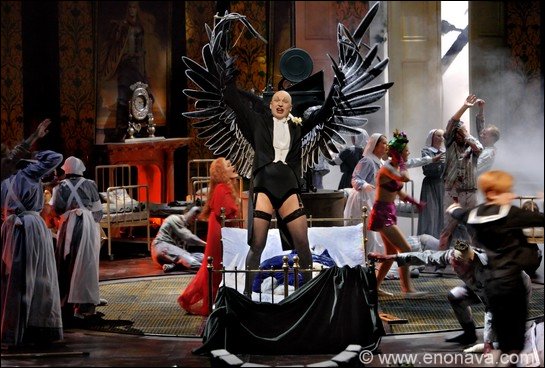

I was lucky enough to record this from a television broadcast and so was able to watch it in bite sized chunks. The opera lasts for 4 hours which is a little beyond my attention span, however director Herheim’s production is sensational. He has transformed Parsifal into a retelling of German history in the 20th century. Once I had gotten over the disappointment of not seeing knights in shining armour, I could marvel at this very lavish production. A bed is prominent on stage at all times and not only acts as Kundry’s implement of seduction, but also as a sort of teleport/time machine. The knights of the Holy Grail and Kundry appear with splendid wings in act I, but are reduced to mere politicians at the Reichstag in Act III. I loved the magician Klingsor’s appearance as a transvestite and the flower maidens were suitably sexy. Through all this Wagner’s music shines through and Burkhardt Fritz (man boobs and all) is a strong presence as Parsifal and Susan Maclean is brilliant as Kundry, but for me Thomas Jesatko as a sinister Klingsor stole the show. I will come back again and again to this splendid production.
Having read Chretien de Troyes, Wolfram von Eschenbach and Sir Thomas Mallory I thought I would go for the whole Holy Grail experience and so I bought a CD of Richard Wagner’s Parsifal. I have had it in my collection for about 6 months and have been playing various bits of it during that time. I have finally gotten round to listening to the whole thing.
Wagner - Parsifal - Berlin Philharmoniker - Daniel Barenboim featuring Jose van Dam, Mathais Holle, Seigfried Jerusalem, Gunter von Kannen and Waltraud Meier.

It was the story line that interested me first off as Wagner’s libretto takes from von Eschenbach’s Parzival the two encounters of the virgin knight with Amfortas and the Holy Grail, making up acts I and III, but act II is a new episode that takes Parsifal to the magic castle of Klingsor. Act I starts with the knight Gurnemanz explaining that the wounded Knight Amfortas the keeper of the grail had a vision that a blameless fool will arrive at the castle and his compassion for Amortas’s suffering will make him become the new King of the Grail and redeem the knightsl. Only Kundry the visionary woman knows who this stranger is. Parsifal arrives at the castle and witnesses the ceremony of the Holy Grail performed by Amfortas, but does not say anything and his lack of compassion in spite of Amfortas suffering means that he cannot act as the redeemer. Act II finds Parsifal at the magic castle of Klingsor where Kundry is held captive by the evil magician. Kundry is forced to seduce all the knights questing for the grail so that they are not pure in spirit and cannot go back to help Amfortas. Parsifal easily resists the charms of Klingsor’s flower maidens, defeats Klingsor’s knights in battle, but is stopped in his tracks by Kundry who tells him that he was the cause of his mothers death. Kundry however fails to seduce him and when Klingsor hurls the holy spear at Parsifal it hovers above his head allowing him to take hold of it and the magic castle crumbles. Act III and it is some years later; Parsifal has finally found his way back to Amfortas castle where the knights are in disarray, Amfortas is refusing to perform the grail ceremony and longs for death. He recognises the holy spear carried by Parsifal and realises that redemption is near. Parsifal now has the wisdom and the purity to heal Amfortas with the spear (this is the Holy spear that pierced Christ on the cross and has been sullied by Amfortas who was seduced by Kundry) Parsifal can now perform the ceremony of the grail and so redeem the knights and the blighted land around them.
The music throughout the opera is sublime indeed, with some beautiful themes recurring in the score. Once I had got used to all those bass and baritone voices I could appreciate the beauty of Wagner’s creation. As far as I can judge the singing is top notch and the orchestra rises to the occasion and is sumptuous. There were many highlights but I think my favourite passages all came in Act II at Klingsor’s castle. A five star CD
Parsifal Beyreuth 2012 production

I was lucky enough to record this from a television broadcast and so was able to watch it in bite sized chunks. The opera lasts for 4 hours which is a little beyond my attention span, however director Herheim’s production is sensational. He has transformed Parsifal into a retelling of German history in the 20th century. Once I had gotten over the disappointment of not seeing knights in shining armour, I could marvel at this very lavish production. A bed is prominent on stage at all times and not only acts as Kundry’s implement of seduction, but also as a sort of teleport/time machine. The knights of the Holy Grail and Kundry appear with splendid wings in act I, but are reduced to mere politicians at the Reichstag in Act III. I loved the magician Klingsor’s appearance as a transvestite and the flower maidens were suitably sexy. Through all this Wagner’s music shines through and Burkhardt Fritz (man boobs and all) is a strong presence as Parsifal and Susan Maclean is brilliant as Kundry, but for me Thomas Jesatko as a sinister Klingsor stole the show. I will come back again and again to this splendid production.
9edwinbcn
Wagner wrote the libretti for his own operas; they were also published separately , and are of value in their own right as German drama.
10DieFledermaus
I tend to over-rate books also as most of the ones I've read have been rated 4's. I drank the Amazon Kool-Aid a long time back so I think of 3's as "okay" and it's hard to change that perception (e.g., I see authors complaining about 3's - they shouldn't be complaining but I wouldn't see it as a great recommendation). I find it hard to rate books too low and am sparing with my 1 stars as Atlas Shrugged set such a high standard of ineptitude.
>8 baswood: - Wonderful! I do love Wagner's music though the plot for that one is a little eye-rolling. (The "loving woman redeems the world or one particular tenor with her death" plot has its own issues but I prefer that.) Do they regularly televise the Bayreuth operas in your neck of the woods? I've heard good/crazy things about Herheim's productions and would love to see one live. It does seem like setting any opera, especially Wagner, during Nazi times is overdone but I'd rate it on a case by case basis.
>8 baswood: - Wonderful! I do love Wagner's music though the plot for that one is a little eye-rolling. (The "loving woman redeems the world or one particular tenor with her death" plot has its own issues but I prefer that.) Do they regularly televise the Bayreuth operas in your neck of the woods? I've heard good/crazy things about Herheim's productions and would love to see one live. It does seem like setting any opera, especially Wagner, during Nazi times is overdone but I'd rate it on a case by case basis.
11edwinbcn
I think it is quite natural that ratings are skewed to the higher categories, as people tend to buy books which they will like, although several voracious readers here at Club Read will try "anything". In that case you would expect to find a fair share of lower ratings.
My rating is based on my own personal experience. If a literary masterpiece is disappointing to me, I will give it a lower rating. However, beside my personal pleasure, I weigh factors such as technical aspects of the book (plot, character development, style, etc) and literary qualities such as novelty, originality, etc.
My rating is based on my own personal experience. If a literary masterpiece is disappointing to me, I will give it a lower rating. However, beside my personal pleasure, I weigh factors such as technical aspects of the book (plot, character development, style, etc) and literary qualities such as novelty, originality, etc.
12DieFledermaus
Found a link to the Parsifal on YouTube
http://www.youtube.com/watch?v=Zwb59zq-J6s
I will have to watch this. I also went back and checked and I saw a production of Herheim's that was streamed by La Monnaie. It was Dvorak's Rusalka and he turned the Czech "Little Mermaid" into a story of a sad streetwalker who is exploited by a married man. It made me think and there were a lot of interesting interpretations though I didn't get everything - he had a lot of people randomly dancing around in giant boob suits (don't remember if the men wore them also).
http://www.youtube.com/watch?v=Zwb59zq-J6s
I will have to watch this. I also went back and checked and I saw a production of Herheim's that was streamed by La Monnaie. It was Dvorak's Rusalka and he turned the Czech "Little Mermaid" into a story of a sad streetwalker who is exploited by a married man. It made me think and there were a lot of interesting interpretations though I didn't get everything - he had a lot of people randomly dancing around in giant boob suits (don't remember if the men wore them also).
13baswood
Thanks for the link Dief. which is a copy from channel Arte, which is where I caught the opera. It is a free to air channel on French and German TV and can be picked up by satellite in most of Europe. Arte is a channel that specialises in the arts and documentaries and it is the first time I have noticed a screening from Beyreuth, but I suspect there have been others.
I have French satellite TV which has two channels dedicated to classical music and jazz called Mezzo. I love Mezzo because it does live broadcasts from the Marciac Jazz festival and so many of the concerts I have seen I can catch later when they are repeated on Mezzo.
Herheim's productions; I gather, have no shortage of ideas and my first thoughts on seeing Parsifal was how well the music fitted what was going on up on the stage. How the libretti fitted was not so easy for me to judge as of course it was sung in German and the sub-titles were French.
Edwin, Wagner's libretti of Parsifal is very interesting, however I can only read it in translation, but there is much to ponder over.
I have French satellite TV which has two channels dedicated to classical music and jazz called Mezzo. I love Mezzo because it does live broadcasts from the Marciac Jazz festival and so many of the concerts I have seen I can catch later when they are repeated on Mezzo.
Herheim's productions; I gather, have no shortage of ideas and my first thoughts on seeing Parsifal was how well the music fitted what was going on up on the stage. How the libretti fitted was not so easy for me to judge as of course it was sung in German and the sub-titles were French.
Edwin, Wagner's libretti of Parsifal is very interesting, however I can only read it in translation, but there is much to ponder over.
14StevenTX
I'm not very keen on the idea of having operas and Shakespearean plays transported to more recent times for the sake of "relevance." While I can understand the producers' desire to do something original, most of us will see something like Parsifal only once in our lives, if that, and it's a shame not to have seen it as the composer or author intended it.
15rebeccanyc
I have to say I have never been able to appreciate Wagner's music -- it just does nothing for me. And I don't think it's just because of his reprehensible beliefs.
16DieFledermaus
>14 StevenTX: – I can understand that since I only go to see musicals and ballets once (well, except for the ubiquitous Nutcracker). I would happily go see most operas multiple times so reading about the weird Regietheater productions does make me want to see them live.
There are more problems with what the composer intended as of course what most really wanted was to have their creations performed, become popular and make money. So they would make changes to please the censors, add in high notes for the singers or let them add extra ornamentation. It was also a regular practice in the past to either encore a song (seems odd to me) or add in a random song. Often, performances would be done in “modern dress” when they were premiered despite the time period indicated in the libretto. Because of this, my take is that there’s a pretty wide range of what people consider traditional and many changes that no one minds (no castratos, transposing the music, most seem indifferent to historically informed period playing, cuts for time, boredom purposes or because no one can sing it) so I don’t mind seeing performances that have even more changes and might provide interesting insights.
It’s probably not a surprise that most of those types of stagings are seen in Europe and are stereotypically associated with Germany, which has the most opera houses and the most houses/population. It sounds like they get pretty generous government subsidization. American houses are fairly conservative and most of the more radical stagings are usually just a time period move. I probably wouldn’t take my friends who are casual operagoers to anything really crazy but it does depend – they didn’t like that the setting for a Fliegende Hollander had a refrigerator but didn’t mind a Lucia transferred from 1700 to Victorian times.
>15 rebeccanyc: – If you’ve already seen some live performances, then it sounds like you gave it a good try. Which ones did you see? I do think there are some that aren’t great first Wagners – Parsifal being one. Tristan is another though that’s one of my favorites. I took a group once and felt a bit bad after for my friend’s brother since it was his first opera and he said it was a something of a slog. I do think live performances are the way to go though – some have made me really enjoy operas where the music wasn’t something that I loved, mainly atonal ones like Berg’s Wozzeck and Shostakovich’s The Nose. (As is probably obvious, I like to proselytize about operagoing.)
There are more problems with what the composer intended as of course what most really wanted was to have their creations performed, become popular and make money. So they would make changes to please the censors, add in high notes for the singers or let them add extra ornamentation. It was also a regular practice in the past to either encore a song (seems odd to me) or add in a random song. Often, performances would be done in “modern dress” when they were premiered despite the time period indicated in the libretto. Because of this, my take is that there’s a pretty wide range of what people consider traditional and many changes that no one minds (no castratos, transposing the music, most seem indifferent to historically informed period playing, cuts for time, boredom purposes or because no one can sing it) so I don’t mind seeing performances that have even more changes and might provide interesting insights.
It’s probably not a surprise that most of those types of stagings are seen in Europe and are stereotypically associated with Germany, which has the most opera houses and the most houses/population. It sounds like they get pretty generous government subsidization. American houses are fairly conservative and most of the more radical stagings are usually just a time period move. I probably wouldn’t take my friends who are casual operagoers to anything really crazy but it does depend – they didn’t like that the setting for a Fliegende Hollander had a refrigerator but didn’t mind a Lucia transferred from 1700 to Victorian times.
>15 rebeccanyc: – If you’ve already seen some live performances, then it sounds like you gave it a good try. Which ones did you see? I do think there are some that aren’t great first Wagners – Parsifal being one. Tristan is another though that’s one of my favorites. I took a group once and felt a bit bad after for my friend’s brother since it was his first opera and he said it was a something of a slog. I do think live performances are the way to go though – some have made me really enjoy operas where the music wasn’t something that I loved, mainly atonal ones like Berg’s Wozzeck and Shostakovich’s The Nose. (As is probably obvious, I like to proselytize about operagoing.)
18rebeccanyc
#16 Unfortunately, I grew up in an opera-hating household. The first time I went to an opera was with my college boyfriend and his mother, both opera lovers. It was a Wagner opera, although I completely forget now, decades later, which one it was. It was a horrendous experience because I was young enough to think I had to pretend to like it. I am embarrassed to say that's the only opera I've seen! I often think that if I had first gone to a Mozart or Verdi opera, I might have liked the music enough to enjoy the opera, and I've heard some on the radio that didn't make me run to turn it off. But you make a good point about live performance being the way to go, and if you keep proselytizing, maybe you will inspire me to go to one.
19DieFledermaus
>18 rebeccanyc: - I usually recommend the popular Verdi or Puccini operas as good first ones. It took me a long time to warm up to Mozart's operas but I'd agree they would be a good choice though I'm kind of eh about Cosi fan Tutte (The Magic Flute, Don Giovanni and The Marriage of Figaro are all quite different but I enjoy them). Some popular one-offs like Bizet's Carmen or Leoncavallo's Pagliacci (often double billed with Mascagni's Cavalleria Rusticana, another good one) are also fine choices.
For Verdi, I'd suggest - Rigoletto, La Traviata, Aida, Otello or Falstaff (Il Trovatore certainly has some thrilling music but one of the stupidest opera plots around). For Puccini - any of the four well-known ones, La Boheme, Tosca, Turandot or Madama Butterfly though I think Butterfly is a bit masochistic for me.
These seem to have worked for the people I've taken though if someone had any specific issues or preferences I'd try to think of something else (e.g., if they thought operas were too depressing, I'd pick a comedy or if they knew they preferred Classical era to Romantic, I'd go with Mozart). I can elaborate on any of the selections and I have a list of various intro books if that would be helpful.
For Verdi, I'd suggest - Rigoletto, La Traviata, Aida, Otello or Falstaff (Il Trovatore certainly has some thrilling music but one of the stupidest opera plots around). For Puccini - any of the four well-known ones, La Boheme, Tosca, Turandot or Madama Butterfly though I think Butterfly is a bit masochistic for me.
These seem to have worked for the people I've taken though if someone had any specific issues or preferences I'd try to think of something else (e.g., if they thought operas were too depressing, I'd pick a comedy or if they knew they preferred Classical era to Romantic, I'd go with Mozart). I can elaborate on any of the selections and I have a list of various intro books if that would be helpful.
20Jargoneer
Opera is my artistic kryptonite. It's not particularly the music - I admit some of it is very good, although Wagner always suggests to me a 1:1 scale map - but the circus around it. It is more-or-less a dead art form that is commercially unviable, kept alive by major Govt subsidies (it gets a disproportionate amount in the UK) that funds a merry-go-round for singers and musicians (mainly the former). For the annual amount of subsidy the National Opera gets in the UK you could fund an artistic renaissance through the country rather than a handful of concerts for a few toffs.
21rebeccanyc
Thanks for the opera recommendations, DieF!
22baswood
Discourses on Livy Niccolo Machiavelli
Titus Livius or Livy {59 BC- AD 17) was the author of A History of Republican Rome originally stretching to 142 books of which only 35 have survived. Machiavelli set out to write a commentary on these gems from antiquity; that were understood by men of the Italian Renaissance to be significant examples of the legacy of classical culture. The myth of classical culture was all pervasive in Florentine intellectual circles of which Machiavelli was an important figure. His aim was to prove that renaissance Florence particularly its republican element could do no better than learn from the lessons contained in Livy’s histories He was preaching to the converted as the humanist movement was based almost entirely on these precepts.
Machiavelli suffered following the overthrow of the Florentine republic and the re-introduction of the Medici family to the positions of power. He was forcibly retired from politics and sought refuge down on his farm. Not being able to finds favour with the new ruling class he sat down to write about his beloved antiquity and said:
“When evening comes, I return home, and I go into my study; and on the threshold, I take off my everyday clothes, which are covered with muck and mire, and I put on regal and curial robes; and dressed in a more appropriate manner I enter into the ancient courts of ancient men and am welcomed by them kindly, and there I taste the food that alone is mine, and for which I was born; and there I am not ashamed to speak to them, to ask them the reasons for their actions; and they, in their humanity, answer me; and for four hours I feel no boredom, I dismiss every affliction, I no longer fear poverty nor do I tremble at the thought of death; I become completely part of them.”
What may have started out as a commentary on Livy’s histories, soon developed into a comparison between the events in classical republican Rome and more recent events in Florence and from this a treatise on the best way to govern a republican state. There are three books containing 142 fairly short chapters with each chapter heading serving as a discussion point for the following text. The chapter headings themselves give the modern reader an idea of some of the tortuous logic that Machiavelli can employ to make his points for example
“Conquests made by republics which are not well organised, and which do not proceed according to Roman standards of excellence bring about their ruin rather than their glorification”
“Whether the guardianship of liberty may be more securely lodged in the people or the upper classes; and who has more reason to create an uprising, he who wishes to acquire or he who wishes to maintain.”
Many of the chapter headings are a lot less complicated but the above examples give an idea of the general direction of the Discourses. One thing remains constant; the examples of classical antiquity should serve as guidelines for all people that wish to be successful leaders in politics and in war.
Familiar themes expounded in The Prince are explored here in more detail; Machiavelli’s deep mistrust of human nature, his ideas that Politics are conflict and conflict is beneficial to the body politic, the way that religion should be used to pacify and encourage the masses and how a ruler or leader in war should not hesitate to be ruthless when necessary. What emerges more particularly from the Discourses is Machiavelli’s belief that republicanism is the best form of government and as such is a tract for how it can work in practice. Machiavelli with his experience in public life became very knowledgeable and cynical about human nature, which is probably an essential requirement for a politician , he says
“…..because men in general live as much by appearances as by realities; indeed, they are often moved more by things as they appear than by things as they really are…….”
Machiavelli also writes about his contemporaries in Florence. He takes quite a sympathetic view towards Savonarola, but can be damming about his own boss Piero Soderini, whom he accuses of being too soft, too soft to deal with the envious men around him. Machiavelli’s dictum was always that if you can rule by love or by fear, it is safer to choose fear.
In a book of this length there is much of interest and much to enjoy, but there is also some pretty turgid stuff. Machiavelli often repeats himself and the continuous use of the same examples from Livy’s histories can get a bit wearing. If you have previously read Machiavelli’s The Prince then the Discourses are on very similar lines and so unless you have an interest in the period, political history, or in Machiavelli then it is probably not necessary to slog through it. The Oxford World Classics edition translated by Julia and Peter Bondanella reads well and gives a flavour of Machiavelli’s syntax. There is a good introduction and some excellent explanatory notes
Titus Livius or Livy {59 BC- AD 17) was the author of A History of Republican Rome originally stretching to 142 books of which only 35 have survived. Machiavelli set out to write a commentary on these gems from antiquity; that were understood by men of the Italian Renaissance to be significant examples of the legacy of classical culture. The myth of classical culture was all pervasive in Florentine intellectual circles of which Machiavelli was an important figure. His aim was to prove that renaissance Florence particularly its republican element could do no better than learn from the lessons contained in Livy’s histories He was preaching to the converted as the humanist movement was based almost entirely on these precepts.
Machiavelli suffered following the overthrow of the Florentine republic and the re-introduction of the Medici family to the positions of power. He was forcibly retired from politics and sought refuge down on his farm. Not being able to finds favour with the new ruling class he sat down to write about his beloved antiquity and said:
“When evening comes, I return home, and I go into my study; and on the threshold, I take off my everyday clothes, which are covered with muck and mire, and I put on regal and curial robes; and dressed in a more appropriate manner I enter into the ancient courts of ancient men and am welcomed by them kindly, and there I taste the food that alone is mine, and for which I was born; and there I am not ashamed to speak to them, to ask them the reasons for their actions; and they, in their humanity, answer me; and for four hours I feel no boredom, I dismiss every affliction, I no longer fear poverty nor do I tremble at the thought of death; I become completely part of them.”
What may have started out as a commentary on Livy’s histories, soon developed into a comparison between the events in classical republican Rome and more recent events in Florence and from this a treatise on the best way to govern a republican state. There are three books containing 142 fairly short chapters with each chapter heading serving as a discussion point for the following text. The chapter headings themselves give the modern reader an idea of some of the tortuous logic that Machiavelli can employ to make his points for example
“Conquests made by republics which are not well organised, and which do not proceed according to Roman standards of excellence bring about their ruin rather than their glorification”
“Whether the guardianship of liberty may be more securely lodged in the people or the upper classes; and who has more reason to create an uprising, he who wishes to acquire or he who wishes to maintain.”
Many of the chapter headings are a lot less complicated but the above examples give an idea of the general direction of the Discourses. One thing remains constant; the examples of classical antiquity should serve as guidelines for all people that wish to be successful leaders in politics and in war.
Familiar themes expounded in The Prince are explored here in more detail; Machiavelli’s deep mistrust of human nature, his ideas that Politics are conflict and conflict is beneficial to the body politic, the way that religion should be used to pacify and encourage the masses and how a ruler or leader in war should not hesitate to be ruthless when necessary. What emerges more particularly from the Discourses is Machiavelli’s belief that republicanism is the best form of government and as such is a tract for how it can work in practice. Machiavelli with his experience in public life became very knowledgeable and cynical about human nature, which is probably an essential requirement for a politician , he says
“…..because men in general live as much by appearances as by realities; indeed, they are often moved more by things as they appear than by things as they really are…….”
Machiavelli also writes about his contemporaries in Florence. He takes quite a sympathetic view towards Savonarola, but can be damming about his own boss Piero Soderini, whom he accuses of being too soft, too soft to deal with the envious men around him. Machiavelli’s dictum was always that if you can rule by love or by fear, it is safer to choose fear.
In a book of this length there is much of interest and much to enjoy, but there is also some pretty turgid stuff. Machiavelli often repeats himself and the continuous use of the same examples from Livy’s histories can get a bit wearing. If you have previously read Machiavelli’s The Prince then the Discourses are on very similar lines and so unless you have an interest in the period, political history, or in Machiavelli then it is probably not necessary to slog through it. The Oxford World Classics edition translated by Julia and Peter Bondanella reads well and gives a flavour of Machiavelli’s syntax. There is a good introduction and some excellent explanatory notes
23Linda92007
An interesting review of Discourses on Livy, Barry. I like his description of returning home at the end of a hard day, to escape into his "beloved antiquity". A well chosen quote.
24StevenTX
An interesting document and an informative review. It seems odd, though, that someone with such a cynical view of human nature would favor a republican form of government.
25DieFledermaus
>20 Jargoneer: - Jargoneer - it does seem a shame to avoid going to live performances if you like the music. Are you turned off specifically by productions (your average Aida or something like the Herheim) or by too many toffs? Have never noticed much snobbery when I've gone (only in the U.S. though) but some of the comments/posts in the British papers that I look at echo that idea. Are there any differences between the English National and the Royal Opera in terms of toff-iness and expense? I always thought of the ROH as the one with the expensive singers and giant productions. Of course in the U.S., government funding for the arts is very poor so my complaints are about unadventurous repertoire and productions. I don't know which system is better at making opera accessible but since we have the one, that's what I complain about.
Glyndebourne gets accusations of snobbery but I guess they're trying to be a bit more accessible - they're streaming some of their productions -
Here's Ravel's charming and short (under an hour) L'Enfant et les Sortileges
http://www.guardian.co.uk/music/video/2012/aug/22/glyndebourne-watch-ravels-lenf...
Also has links to the farcical (and also short) L'Heure Espagnole (also Ravel) and The Marriage of Figaro
(Sorry for cluttering your thread with links, Baswood!)
>22 baswood: - A very informative review of Discourses on Livy as usual. Your review makes it sound kind of tempting but also like I can give it a pass.
Glyndebourne gets accusations of snobbery but I guess they're trying to be a bit more accessible - they're streaming some of their productions -
Here's Ravel's charming and short (under an hour) L'Enfant et les Sortileges
http://www.guardian.co.uk/music/video/2012/aug/22/glyndebourne-watch-ravels-lenf...
Also has links to the farcical (and also short) L'Heure Espagnole (also Ravel) and The Marriage of Figaro
(Sorry for cluttering your thread with links, Baswood!)
>22 baswood: - A very informative review of Discourses on Livy as usual. Your review makes it sound kind of tempting but also like I can give it a pass.
26baswood
Hi Linda steven and Dief, the quote that you like Linda makes Machiavelli seem almost human.
Thanks for the links Dief.
Thanks for the links Dief.
27edwinbcn
Nice review of The discourses. I have a copy and was thinking of reading along with you, but you read too fast. Couldn't keep up with you.
28SassyLassy
When evening comes I return home... Wonderful picture of a man preserving his dignity in the face of oppression.
>24 StevenTX: Cynic or realist? After his experiences with the Medici, republics must have seemed the lesser evil, as at least there is a chance of relief from an entrenched oligarchy or autocrat, as the case might be.
So much that is still topical.
>24 StevenTX: Cynic or realist? After his experiences with the Medici, republics must have seemed the lesser evil, as at least there is a chance of relief from an entrenched oligarchy or autocrat, as the case might be.
So much that is still topical.
29baswood
Edwin, i did find it a bit of a slog at times.
Sassylassy, absolutely right there is much that is still topical, although then again there is much that is not.
Sassylassy, absolutely right there is much that is still topical, although then again there is much that is not.
30baswood


Brad Mehldau - Live in Marciac
This package comes as a double CD and DVD of Brad Mehldau's concert at the Marciac Jazz Festival on 2 August 2006. He played solo piano for 1 hour and 40 minutes and held the audience enraptured for the whole time. People still talk about Brad's concert here. It is all about the music: Brad hunched over his piano on that warm August night produced some wonderfully improvised piano music. From those first rapid single notes that heralded in "Storm" which after four minutes or so segued into Cole Porter's "Its All right with me" when everybody in the audience had found their seat the shuffling around had stopped and a hushed quiet as if people were holding their breath greeted the notes that were tumbling out to us from the stage. The old Fain/Webster tune "Secret Love" made popular in the 1960's by Kathy Kirby's hit recording was given the full ballad treatment before Brad launched into three of his own compositions "Unrequited" "Resignation" and "Trailer Park Ghost" which for me were the highlight of the concert. During theses numbers it seemed that Brad's non stop invention took us all with him. There was no showboating, no fiddling with the inside of the piano, no percussive effects and in a word no compromise just great piano playing.
Brad continued to plunder some unlikely tunes for his next series of pieces Radiohead's "Exit Music", Kurt Cobain's "Lithium" and Nick Drake's "Things Behind the Sun" The concert ended with another gorgious ballad "Lilac Wine" The encores followed and the audience politely stamped their feet and called for more. A seemingly humbled Brad Mehldau came out to thank the audience with a few hesitant words of French and the houselights went up and left us to chat about the amazing concert we had just witnessed.
Here is a link to "Lilac Wine" http://www.youtube.com/watch?v=FnSJMH2P44k

32baswood
Utopia, by Thomas More
“Thus I am wholly convinced that unless private property is entirely done away with, there can be no fair or just distribution of goods”
“When I run over in my mind the various commonwealths flourishing today, so help me God, I can see nothing in them, but a conspiracy of the rich, who are fattening up their own interests under the name and title of the commonwealth”
“If money disappeared, so would fear, anxiety, worry, toil, and sleepless nights. Even poverty, which seems to need money more than anything else for its relief, would vanish if money were entirely done away with.
Sir Thomas More’s Utopia is littered with seemingly revolutionary thoughts and ideas like those above; has been claimed as an early example of medievalism, modernism, socialism, communism; it has also been claimed by protestants, catholics, idealists and even Nazis, but why on earth would a reactionary churchman like Thomas More write and publish such a tract? It has to be a joke doesn't it?. If it is then the joke is on More because his invented Utopia has passed into common usage today as an ideal world.
More’s story is simplicity itself. He is introduced by his friend Peter Giles to Raphael Hythloday, who is visiting London after a voyages across uncharted seas searching for new lands. He has chanced upon the island of Utopia where he believes he has found the perfect society and is eager to return. Before Raphael can tell his story of the wonders of Utopia, he describes a dinner he had attended with Cardinal Morton and a distinguished lawyer. More uses a first person narrative for Raphael to describe the evils of the way England is currently ruled paying particular attention to the plight of the poor and the infirm. Rafael’s knowledge of foreign countries and the society’s he has witnessed on his travels leads him to propose alternative ways of dealing with the ills of England. The Utopians are introduced into the conversation and More and Peter Giles are eager to learn more details of how their society is organised and so they arrange to have dinner with Raphael and his descriptions of Utopia take up the whole of Book Two.
Utopia’s geography (although not where it can be found), its cities, its social organisation, its work habits, its relations with other countries, moral philosophy, art of warfare and their religion are all lovingly described by Raphael. There are no interruptions from More or his friend as a picture of Utopia emerges. Of course there are contradictions in the story and it soon emerges that a Utopian society is based on discipline at the expense of liberty. The pursuit of pleasure for all and the good of the commonwealth cannot be achieved without restrictions on freedom that would be unacceptable to people in Thomas Mores’s circle. A point he makes on the final page of his book when he allows himself to think about what he has heard:
“……but my chief concern was to the basis of the whole system, that is, their communal living, and their moneyless economy. This one thing alone takes away all the nobility, magnificence, splendour, and majesty which (in the popular view) are considered the true ornaments of any nation”
Utopia was published in 1516 just about the same time as copies of Machiavelli’s “The Prince” were appearing and on the face of it the books are worlds apart. Machiavelli’s advice to his Prince is based on pragmatism and commercialism with the basic premise that a ruler always needs to be tougher and/or fairer than his opponents to maintain his position and/or increase his power.. More’s Utopia is based on a shared communalism where everybody benefits from just laws with the pursuit of pleasure for all being the chief aim. However running underneath both books is an undercurrent of pessimism; a pessimism that bites deep into the human psyche. I think that Machiavelli and More took a similar view of mankind, they saw around them people whose natural instincts were totally selfish, anarchic and sinful, whose wilful pursuit of riches and power had to be kept in check.
Thomas More as far as we can judge was an ambiguous character; "a man for all seasons", in his early life particularly he was much respected in humanist circles, a friend of Erasmus and known for his wit and sagacity, however when he became active in public life; C R Elton says that “he remained determined to apply coercion and judgement to dangerous sinners, rather than compassion and comprehension.” (he was instrumental in enforcing the ultimate penalty of burning for heretics). There is evidence that he regretted the publication of Utopia and certainly when his circle of friends commented on it they thought it was a delightful little joke. The way More told his story especially by including real people in book one, convinced some people at the time of the validity of Utopia, and while today we are sure that the island of Utopia does not exist, there are still plenty of people who can read into More’s book serious political philosophy.
I think it is a satire and no doubt an indictment of early 16th century society, but Raphael Hythloday’s Utopia is an excuse for the witty More to poke as much fun as possible at the society in which he lived. It is a book that is still open to many different interpretations and will produce plenty of ammunition for debate on the ills of current society and how we would like to see a perfect community organised. It is a fun read and at only 85 pages can easily be read in one sitting.
I read the Norton Critical Edition, which has some excellent critical essays following a clear and absorbing translation of the text by Robert M Adams. Some contextual information is also included along with extracts from letters that were written by More and his friends, which add immensely to the enjoyment of More’s little book. There are also extracts from other authors attempts at defining a Utopia, which may be of interest. This is a classic that I thoroughly enjoyed and so I rate it at 5 stars.
“Thus I am wholly convinced that unless private property is entirely done away with, there can be no fair or just distribution of goods”
“When I run over in my mind the various commonwealths flourishing today, so help me God, I can see nothing in them, but a conspiracy of the rich, who are fattening up their own interests under the name and title of the commonwealth”
“If money disappeared, so would fear, anxiety, worry, toil, and sleepless nights. Even poverty, which seems to need money more than anything else for its relief, would vanish if money were entirely done away with.
Sir Thomas More’s Utopia is littered with seemingly revolutionary thoughts and ideas like those above; has been claimed as an early example of medievalism, modernism, socialism, communism; it has also been claimed by protestants, catholics, idealists and even Nazis, but why on earth would a reactionary churchman like Thomas More write and publish such a tract? It has to be a joke doesn't it?. If it is then the joke is on More because his invented Utopia has passed into common usage today as an ideal world.
More’s story is simplicity itself. He is introduced by his friend Peter Giles to Raphael Hythloday, who is visiting London after a voyages across uncharted seas searching for new lands. He has chanced upon the island of Utopia where he believes he has found the perfect society and is eager to return. Before Raphael can tell his story of the wonders of Utopia, he describes a dinner he had attended with Cardinal Morton and a distinguished lawyer. More uses a first person narrative for Raphael to describe the evils of the way England is currently ruled paying particular attention to the plight of the poor and the infirm. Rafael’s knowledge of foreign countries and the society’s he has witnessed on his travels leads him to propose alternative ways of dealing with the ills of England. The Utopians are introduced into the conversation and More and Peter Giles are eager to learn more details of how their society is organised and so they arrange to have dinner with Raphael and his descriptions of Utopia take up the whole of Book Two.
Utopia’s geography (although not where it can be found), its cities, its social organisation, its work habits, its relations with other countries, moral philosophy, art of warfare and their religion are all lovingly described by Raphael. There are no interruptions from More or his friend as a picture of Utopia emerges. Of course there are contradictions in the story and it soon emerges that a Utopian society is based on discipline at the expense of liberty. The pursuit of pleasure for all and the good of the commonwealth cannot be achieved without restrictions on freedom that would be unacceptable to people in Thomas Mores’s circle. A point he makes on the final page of his book when he allows himself to think about what he has heard:
“……but my chief concern was to the basis of the whole system, that is, their communal living, and their moneyless economy. This one thing alone takes away all the nobility, magnificence, splendour, and majesty which (in the popular view) are considered the true ornaments of any nation”
Utopia was published in 1516 just about the same time as copies of Machiavelli’s “The Prince” were appearing and on the face of it the books are worlds apart. Machiavelli’s advice to his Prince is based on pragmatism and commercialism with the basic premise that a ruler always needs to be tougher and/or fairer than his opponents to maintain his position and/or increase his power.. More’s Utopia is based on a shared communalism where everybody benefits from just laws with the pursuit of pleasure for all being the chief aim. However running underneath both books is an undercurrent of pessimism; a pessimism that bites deep into the human psyche. I think that Machiavelli and More took a similar view of mankind, they saw around them people whose natural instincts were totally selfish, anarchic and sinful, whose wilful pursuit of riches and power had to be kept in check.
Thomas More as far as we can judge was an ambiguous character; "a man for all seasons", in his early life particularly he was much respected in humanist circles, a friend of Erasmus and known for his wit and sagacity, however when he became active in public life; C R Elton says that “he remained determined to apply coercion and judgement to dangerous sinners, rather than compassion and comprehension.” (he was instrumental in enforcing the ultimate penalty of burning for heretics). There is evidence that he regretted the publication of Utopia and certainly when his circle of friends commented on it they thought it was a delightful little joke. The way More told his story especially by including real people in book one, convinced some people at the time of the validity of Utopia, and while today we are sure that the island of Utopia does not exist, there are still plenty of people who can read into More’s book serious political philosophy.
I think it is a satire and no doubt an indictment of early 16th century society, but Raphael Hythloday’s Utopia is an excuse for the witty More to poke as much fun as possible at the society in which he lived. It is a book that is still open to many different interpretations and will produce plenty of ammunition for debate on the ills of current society and how we would like to see a perfect community organised. It is a fun read and at only 85 pages can easily be read in one sitting.
I read the Norton Critical Edition, which has some excellent critical essays following a clear and absorbing translation of the text by Robert M Adams. Some contextual information is also included along with extracts from letters that were written by More and his friends, which add immensely to the enjoyment of More’s little book. There are also extracts from other authors attempts at defining a Utopia, which may be of interest. This is a classic that I thoroughly enjoyed and so I rate it at 5 stars.
33StevenTX
Excellent review of Utopia. I read it in college but don't remember much about it. It's definitely on my list for a re-read. I think it's wise advice to read it as satire rather than a proposal for an ideal state, notwithstanding the meaning now attached to the title. It's interesting that you find More and Machiavelli to be much alike in their outlook.
Incidentally, I actually visited Utopia earlier this year. It's a nice place. http://www.utopiatexas.info/
Incidentally, I actually visited Utopia earlier this year. It's a nice place. http://www.utopiatexas.info/
34edwinbcn
Your recent reading of Machiavelli and other Renaissance thinkers makes for a very convincing and insightful review of More's Utopia.
36detailmuse
bas, I loved listening to Brad Mehldau's Lilac Wine. (So you were there, part of that thunderous applause!) It brought to mind my CDs from the Wyndham Hill label, lots of piano and acousticals.
Hmm, browsing Mehldau on iTunes...
Hmm, browsing Mehldau on iTunes...
38Linda92007
Very interesting review of Utopia, Barry. You continue to add to my classical education.
39Jargoneer
Didn't Disney build a modern utopia in Florida?
>32 baswood: - it's a while since I read it but isn't one the biggest discrepancies between Utopia's ideals and More's the status of religion? People can get divorced and their are female priests, if I remember correctly, which clashes head-on with what we know of More's orthodox beliefs.
I would think based on this alone we can say More is being satirical but it seems that he has suffered from the age old problem of satire - if the satire isn't 100% obvious (and satire is?) people will read other things into it.
>32 baswood: - it's a while since I read it but isn't one the biggest discrepancies between Utopia's ideals and More's the status of religion? People can get divorced and their are female priests, if I remember correctly, which clashes head-on with what we know of More's orthodox beliefs.
I would think based on this alone we can say More is being satirical but it seems that he has suffered from the age old problem of satire - if the satire isn't 100% obvious (and satire is?) people will read other things into it.
41dchaikin
Responding way back at top to the rankings...Does anyone else have trouble giving a good book from an relatively unknown author anything less than five stars...even if it isn't really a five star read?
I always imagine someone checking a work page. If they happen to see some five star reviews, they might think, "hmm, wonder what this is about?". But if they see only 4 star rating, they think, "unknown author, no one loves this...moving on."
Silly thoughts like these lead me to not rate a book at all.
I always imagine someone checking a work page. If they happen to see some five star reviews, they might think, "hmm, wonder what this is about?". But if they see only 4 star rating, they think, "unknown author, no one loves this...moving on."
Silly thoughts like these lead me to not rate a book at all.
42avidmom
>30 baswood: Thanks for the Lilac Wine link!
>31 baswood: Utopia is only 85 pages?!?! Nice review. On to the wish list it goes ......
>31 baswood: Utopia is only 85 pages?!?! Nice review. On to the wish list it goes ......
43baswood
You are right Dan, rating systems are personal things and so it is always best to read the reviews that people post. Having said that I have gotten used to some of the regular reviewers rating systems in club read and so I do take notice of the number of stars they award.
avidmom Utopia was only 85 pages in the Norton Critical Edition but with all the commentary criticism and background the edition stretched to 260 pages. There are however many versions available that have just the Utopia Text and most of these I should imagine will come in under 100 pages.
avidmom Utopia was only 85 pages in the Norton Critical Edition but with all the commentary criticism and background the edition stretched to 260 pages. There are however many versions available that have just the Utopia Text and most of these I should imagine will come in under 100 pages.
44baswood

Machaut Chansons - Orlando Consort
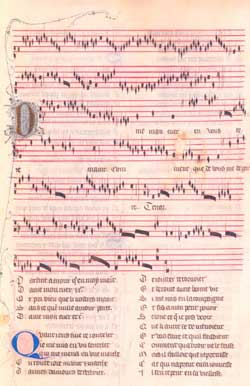
Guillaume Machaut was a 14th century composer from France who was very influential in the development of musical harmony. He was both a poet and a composer of music and these secular songs sung by Orlando Consort come from the middle period of the composers life. The disc contains 14 songs of purely vocal music sung in 4, 3 and two part harmony as well as a couple of solo voiced songs.
Orlando Consort are Robert Harre-Jones (Alto) Angus Smith (Tenor), Charles Daniels (Tenor) and Donald Greig (Baritone). They sing well on this disc which is nicely recorded and has a studio feel to it. What immediately struck me was the complicated vocal lines, especially in the four part harmony songs, which seemed very fluid and so it takes a little time for the ear to get tuned into the shape of these songs, but tunes do emerge and are particularly effective when the Alto voice takes the lead role. The songs are sung in French and the subject is courtly love; the singers rejoice or lament in the pain of seeing the love of their life who remains unobtainable. There is no attempt to fit the music with the meaning of the words as it is how they sound which is all important. Overall I enjoyed the soundworld of this disc and a few of the songs linger in the memory. Not for everybody, but well worth a listen
Here is a link to one of the songs on this disc, but not sung by Orlando Consort. It does give an excellent idea of the music.
http://www.youtube.com/watch?v=NRbpVvzBNnE
45kidzdoc
>41 dchaikin: Does anyone else have trouble giving a good book from an relatively unknown author anything less than five stars...even if it isn't really a five star read?
I don't, although I do think I tend to give the books that I read a higher rating than the average person on LT. I try to look at the body of the review rather than the rating itself, particularly because some people whose opinions I value tend to rate books considerably lower than I do.
I don't, although I do think I tend to give the books that I read a higher rating than the average person on LT. I try to look at the body of the review rather than the rating itself, particularly because some people whose opinions I value tend to rate books considerably lower than I do.
47baswood
The Solid Mandala by Patrick White
The Mandala is a symbol of totality. It is believed to be the ‘dwelling of the Gods’,. Its protective circle is a pattern of order super-imposed on-psychic-chaos. Sometimes it’s geometric form is seen as a vision (either waking or in a dream) or danced…..”
The simple minded Arthur Brown keeps four solid mandalas in his pocket in the shape of marbles (children's toys), which take on an extraordinary significance as the novel progresses.
There was a a five year gap between the appearance of White’s last novel Riders in the Chariot and The Solid Mandala and during that time Patrick White had become stage struck. He had tried his hand at writing plays much earlier in his career when based in London, but now he wanted to become a successful Australian playwright. Success for White was not just getting a play performed with good box office returns it was to produce a play that would satisfy the critics to such an extent he would be considered the greatest living playwright. After some struggles in getting his plays performed there was some success with both the critics and the public, but problems started to emerge. White insisted on maintaining an iron grip on his material and would not agree to changes in the scripts, he had never been a team player and his insistence on attending rehearsals soon led to violent arguments with directors and stage managers. The play that he considered his best “A Cheery Soul” was panned by the critics and shunned by the public. White was mortified complaining that the critics considered him to be “without wit, humour, love or any kind of liking for human beings” White poured out his vitriol into one of the central characters of his new novel; Waldo Brown, who was similarly without wit, humour, love or any kind of liking for human beings.
Other aspects of White’s experiences in the theatre are also apparent in The Solid Mandala. There is far more dialogue than in previous novels and the words used have more crispness and sharpness about them and seem more naturally to come from the mouths of his characters. It would seem also that the more confined nature of a stage play has influenced White in his choice of subject matter. The grand themes of Riders in the Chariot with settings in Europe and Australia have been restricted to a small suburb of Sydney where the characters hardly venture out of Terminus Road; the street where they live. White has concentrated his novel on a few characters leading uneventful lives in a turn of the century suburb, but from such paltry material a fine novel eventually breaks out.
The very short first part introduces us to the central characters the nonidentical twins Waldo and Arthur Brown. They are seen from the top of a bus by Mrs Poulter; out for their daily walk. They are both retired with Waldo the taller of the two leading by the hand his shambling thick set brother. Part two by far the largest section of the book tells the lives of the brothers from Waldo’s point of view. It becomes obvious that Waldo is the cleverer of the two and sees his twin brother as a burden that he now longs to be rid of. Arthur is simple minded, but with an idiot savants grasp of figures which had allowed him to hold down a job at the local general store. Neither of the brothers had married and still live in their parent’s house sharing the same bed and carrying out the daily tasks of keeping themselves alive that they have always done. Waldo Brown must be one of the most dispiriting characters in all of White’s literature (and there are plenty of them). He is timid, fragile totally unforgiving, a man who is afraid to live his life and falls back on the duty of protecting his twin brother whom he blames for his inability to do his life’s work, which he thinks is to become a writer. Waldo is totally selfish entirely wrapped up in himself with all other family and acquaintances barely impinging on his radar. His major concern is that Arthur should not show him up or create “a scene”. He is jealous of Arthur’s attachment to Mrs Poulter who lives across the road and is shocked when he discovers that Arthur has a closer relationship with Dulcie the one girl that Waldo thinks he could marry.
The world through Waldo’s eyes is unrelentingly mean spirited and White does such a good job of conjuring up these feelings that the novel becomes claustrophobic and depressing. People are ugly, lack compassion and are just plain mean; I struggled to read to the end of this section, becoming almost as unreceptive as Waldo, however I am glad that I did because part three sees the story open out through the eyes of Arthur. Some of the events that seem slightly puzzling are clarified through Arthur’s more simple viewpoint.. The twins could hardly be more different; Arthur is trusting outgoing, liked by many people and has the ability to form relationships with those around him. Although he sees well enough the kind of man his brother is, he does not fail to love him and is willing to sacrifice his own needs to protect his brother. This third section with an outlook, that is both loving and kind provides such a contrast to Waldo’s thoughts and actions in the previous part that it is as though White has magically produced a shaft of light to illuminate his novel and on all that has gone before. It is a masterly performance. The short final section that brings the tragic life of the twins to a close is again told through the viewpoint of Mrs Poulter and so completes the circle..
The Mandala represents a totality or protective circle that can only work when the twins are seen as one. Together they might make a more acceptable whole, when both sides of the human psyche are displayed in their thoughts and actions. There is also the feeling of the man woman relationship with Waldo turning on his brother accusing him of being like a woman. They share a bed and Arthur is able to provide comfort there to Waldo when he is at his most perplexed. Their relationship in their years of retirement is curiously similar to a couple rather than brothers.
It is Arthur who has the four solid mandalas in his pocket, he is the positive force that can influence other lives. He is able to give one to Mrs Poulter and one to Dulcie, but Waldo will not take his when it is offered and it rolls away lost, near the end of the novel. Waldo however is White’s portrait of the young Australian intellectual, afraid to live, frightened to pick up his pen and do some real work, content to pass away his time as an underling in the Library service, he can only criticise others and hardly has a good word to say about anybody. No wonder the critics did not like White’s plays. This is not a comfortable read, he pares too close to the bones of his characters for that, but once again the writing is superb and he pulls off the brilliant trick of providing a totality of experience in the lives of his characters. A four star read.
The Mandala is a symbol of totality. It is believed to be the ‘dwelling of the Gods’,. Its protective circle is a pattern of order super-imposed on-psychic-chaos. Sometimes it’s geometric form is seen as a vision (either waking or in a dream) or danced…..”
The simple minded Arthur Brown keeps four solid mandalas in his pocket in the shape of marbles (children's toys), which take on an extraordinary significance as the novel progresses.
There was a a five year gap between the appearance of White’s last novel Riders in the Chariot and The Solid Mandala and during that time Patrick White had become stage struck. He had tried his hand at writing plays much earlier in his career when based in London, but now he wanted to become a successful Australian playwright. Success for White was not just getting a play performed with good box office returns it was to produce a play that would satisfy the critics to such an extent he would be considered the greatest living playwright. After some struggles in getting his plays performed there was some success with both the critics and the public, but problems started to emerge. White insisted on maintaining an iron grip on his material and would not agree to changes in the scripts, he had never been a team player and his insistence on attending rehearsals soon led to violent arguments with directors and stage managers. The play that he considered his best “A Cheery Soul” was panned by the critics and shunned by the public. White was mortified complaining that the critics considered him to be “without wit, humour, love or any kind of liking for human beings” White poured out his vitriol into one of the central characters of his new novel; Waldo Brown, who was similarly without wit, humour, love or any kind of liking for human beings.
Other aspects of White’s experiences in the theatre are also apparent in The Solid Mandala. There is far more dialogue than in previous novels and the words used have more crispness and sharpness about them and seem more naturally to come from the mouths of his characters. It would seem also that the more confined nature of a stage play has influenced White in his choice of subject matter. The grand themes of Riders in the Chariot with settings in Europe and Australia have been restricted to a small suburb of Sydney where the characters hardly venture out of Terminus Road; the street where they live. White has concentrated his novel on a few characters leading uneventful lives in a turn of the century suburb, but from such paltry material a fine novel eventually breaks out.
The very short first part introduces us to the central characters the nonidentical twins Waldo and Arthur Brown. They are seen from the top of a bus by Mrs Poulter; out for their daily walk. They are both retired with Waldo the taller of the two leading by the hand his shambling thick set brother. Part two by far the largest section of the book tells the lives of the brothers from Waldo’s point of view. It becomes obvious that Waldo is the cleverer of the two and sees his twin brother as a burden that he now longs to be rid of. Arthur is simple minded, but with an idiot savants grasp of figures which had allowed him to hold down a job at the local general store. Neither of the brothers had married and still live in their parent’s house sharing the same bed and carrying out the daily tasks of keeping themselves alive that they have always done. Waldo Brown must be one of the most dispiriting characters in all of White’s literature (and there are plenty of them). He is timid, fragile totally unforgiving, a man who is afraid to live his life and falls back on the duty of protecting his twin brother whom he blames for his inability to do his life’s work, which he thinks is to become a writer. Waldo is totally selfish entirely wrapped up in himself with all other family and acquaintances barely impinging on his radar. His major concern is that Arthur should not show him up or create “a scene”. He is jealous of Arthur’s attachment to Mrs Poulter who lives across the road and is shocked when he discovers that Arthur has a closer relationship with Dulcie the one girl that Waldo thinks he could marry.
The world through Waldo’s eyes is unrelentingly mean spirited and White does such a good job of conjuring up these feelings that the novel becomes claustrophobic and depressing. People are ugly, lack compassion and are just plain mean; I struggled to read to the end of this section, becoming almost as unreceptive as Waldo, however I am glad that I did because part three sees the story open out through the eyes of Arthur. Some of the events that seem slightly puzzling are clarified through Arthur’s more simple viewpoint.. The twins could hardly be more different; Arthur is trusting outgoing, liked by many people and has the ability to form relationships with those around him. Although he sees well enough the kind of man his brother is, he does not fail to love him and is willing to sacrifice his own needs to protect his brother. This third section with an outlook, that is both loving and kind provides such a contrast to Waldo’s thoughts and actions in the previous part that it is as though White has magically produced a shaft of light to illuminate his novel and on all that has gone before. It is a masterly performance. The short final section that brings the tragic life of the twins to a close is again told through the viewpoint of Mrs Poulter and so completes the circle..
The Mandala represents a totality or protective circle that can only work when the twins are seen as one. Together they might make a more acceptable whole, when both sides of the human psyche are displayed in their thoughts and actions. There is also the feeling of the man woman relationship with Waldo turning on his brother accusing him of being like a woman. They share a bed and Arthur is able to provide comfort there to Waldo when he is at his most perplexed. Their relationship in their years of retirement is curiously similar to a couple rather than brothers.
It is Arthur who has the four solid mandalas in his pocket, he is the positive force that can influence other lives. He is able to give one to Mrs Poulter and one to Dulcie, but Waldo will not take his when it is offered and it rolls away lost, near the end of the novel. Waldo however is White’s portrait of the young Australian intellectual, afraid to live, frightened to pick up his pen and do some real work, content to pass away his time as an underling in the Library service, he can only criticise others and hardly has a good word to say about anybody. No wonder the critics did not like White’s plays. This is not a comfortable read, he pares too close to the bones of his characters for that, but once again the writing is superb and he pulls off the brilliant trick of providing a totality of experience in the lives of his characters. A four star read.
48rebeccanyc
Very good and intriguing review, Barry, and a reminder that I really mean to read some Patrick White this year.
49Linda92007
Fabulous review of The Solid Mandala, Barry.
50avidmom
The Solid Mandala sounds very interesting. Enjoyed reading your review of it.
51dchaikin
#35 - don't get me started.
I'm caught up now. Your review of The Solid Mandala is beautiful. Also loved your reviews on Machiavelli and Moore's Utopia. Brilliant stuff.
I'm caught up now. Your review of The Solid Mandala is beautiful. Also loved your reviews on Machiavelli and Moore's Utopia. Brilliant stuff.
52kidzdoc
Superb review of The Solid Mandala, Barry. I haven't read anything by Patrick White yet, but I plan to buy Voss and The Tree of Man later this week, assuming I can find them at Foyles or elsewhere in London.
53baswood
Good hunting Darryl, Voss and Tree of Man have been my favourite Patrick White reads so far.
Thanks Dan, have you been to Utopia?
Hi rebecca, Linda and avidmom, I have now read 6 of Patrick White's novels this year and I read Fringe of Leaves a couple of years ago and so I have four more to read by the end of the year.
Thanks Dan, have you been to Utopia?
Hi rebecca, Linda and avidmom, I have now read 6 of Patrick White's novels this year and I read Fringe of Leaves a couple of years ago and so I have four more to read by the end of the year.
55QuentinTom
Awesome, all of it. baz, can I have your life please?
Rereading the Mandala review. I have to get on to PW.
Rereading the Mandala review. I have to get on to PW.
57StevenTX
Wonderful review of The Solid Mandala. I notice you didn't mention any Christian themes or symbolism that prevailed in the two novels that preceded this one, Voss and Riders in the Chariot.
58baswood
Just got in from a hike in the mountains (Pyrenees) and excited to see my review of The Solid Mandala in the hot reviews. Thank you all for the loan of your thumbs.
Nice to see you here again TC and thanks deebee
Nice to see you here again TC and thanks deebee
59baswood
#57 Yes that is interesting steven. Patrick White was at the time of writing this novel going through a bit of a crisis of faith, especially with what he deemed as "organised religion". Some of the characters in the novel are regular church goers, but White stands back from either criticising or praising them for their faith. He does however criticise ministers of the church. Christian themes take a back seat in The Solid Mandala if they are there at all.
60baswood
That hike in the Pyrenees. We were walking for over 9 hours and climbed over 1,300 metres (4,620 feet). I discovered that I was still capable of taking on that kind of hike, but only just. It might take me a couple of days to recover.

This picture shows the climb up to the Col de Madamete (2,500 metres)

And this was the view from the second mountain we climbed Hourquette d'Aubert

This picture shows the climb up to the Col de Madamete (2,500 metres)

And this was the view from the second mountain we climbed Hourquette d'Aubert
62janeajones
Fabulous pictures!
64Linda92007
Nine hours of hiking and two mountains? Not your average Sunday stroll, but certainly gorgeous! I am jealous.
65rebeccanyc
Wow, those are beautiful pictures. Years and years ago (back in the 80s), a friend and I went hiking in the French Alps and we were going to take another trip to the Pyrenees but she got married and didn't want to go on hiking trips with me anymore. I did take a great trip several years later not quite in the Pyrenees but basically from Carcasonne and through the mountains to the Queribus and Peyrepertuse castles. Really spectacular.
ETA I certainly wouldn't be up to those hikes -- or yours -- now!
ETA I certainly wouldn't be up to those hikes -- or yours -- now!
66baswood
yes rebecca those Cathar castles are in spectacular positions.
Have you read Montaillou: The promised land of error A very readable history of a typical Cathar village in the Pyrenees.
Have you read Montaillou: The promised land of error A very readable history of a typical Cathar village in the Pyrenees.
67rebeccanyc
Yes, right after I was there. I bought it in French there, but thought better of it and bought it in English when I got home. I really enjoyed it.
68janeajones
Oh I read Montaillou years ago when I was really intrigued by the Cathars....

70baswood
The Comedy and Tragedy of Machiavelli :Essays on the Literary Works. edited by Vickie B Sullivan
This is a very good selection of Essays on the literary works of Machiavelli and focuses particularly on the lesser known works. It is edited by Vickie B Sullivan whose introduction sets the tone for the essays that follow; it is thoughtful, well written and is of value to both the general reader as well as the student.
Machiavelli was a man of many parts; the serious author of political tracts such as The Prince and his Discourses on Livy and the writer of comedies to be performed on the stage such as Mandragola and Clizia. He wrote poems and fables and Sullivan says that to some degree the tragic and the comic are present in many of Machiavelli’s works and the essays explore this idea. It is significant that there is not an essay on The Prince or “The description of the way Duke Valentino (Cesare Borgia) Killed Vitellozzo Vitelli, Oliverotto da Fermo, Signor Pagolo, and the Duke of Gravini Orsini” as it would be difficult to find elements of comedy in those. There is however much that can be read into the plays and fables and while they purport to make us laugh there is an undertow of tragedy about them and certainly one can sense the darker realities of politics that one could expect from the author of The Prince.
Machiavelli says in one of his letters to Vettori:
Anyone who might see our letters, honourable compare, and see their variety, would be greatly astonished, because at first it would seem that we were serious men completely directed towards weighty matters and that no thought could cascade through our heads that did not have within it probity and magnitude. But later, on turning the page it would seem to the reader that we-still the very same selves-were petty, fickle, lascivious, and were directed towards chimerical matters.
There is no doubt that these studies of Machiavelli’s works tend to humanise the man, but this is not the point. Machiavelli completed much of his writing when in exile from politics at the highest level. His own personal tragedy he equated with the destruction of the republican government of Florence and the disastrous invasions of the Italian states by the French and the Spanish. The wheel of fortune had certainly turned for Machiavelli, but he believed that man could be the master of his own fate and it is this idea that shines through the essays. It lends much credence to a more in depth study of the comedies and I particularly enjoyed the essays by Harvey C Mansfield on Mandragola and Robert Faulkner’s essay on Clizia. Arlene W Saxonhousee’ essay on the letters made me want to dash out and buy a translation of his collected letters (if such a thing exists) and Michael Harvey’s essay on Machiavelli’s fable in rhyme L’Asino, had a similar effect.
It was the final essay by Edmund E Jacobitti on “The Classical Heritage in Machiavelli’s Histories”, that I found perhaps the most thought provoking. He points out the difference between the historical writers of antiquity of which Machiavelli was an imitator and the historians of today. Machiavelli used historical facts or fables and embellished them in such a way that they would be relevant to current events (early 16th century). He believed that history was cyclic in nature, everything that happens had happened before. There was nothing new in the world. He was writing before the industrial or technological revolutions and so examples from antiquity were very much relevant; an historian need not be concerned with the veracity of his material that was something for the chroniclers; mere note makers.
This collection of essays has proven dangerous for me, dangerous to my bank balance, This book has stimulated a desire to read more of Machiavelli and I would recommend it for anyone who has an interest in Machiavelli’s literary works with the proviso that it would be of more interest to those that have at least read something by him. I thought this would be a book that I would dip into, but ended up reading it from cover to cover. In accordance with my harsher rating system; 3.5 stars.
This is a very good selection of Essays on the literary works of Machiavelli and focuses particularly on the lesser known works. It is edited by Vickie B Sullivan whose introduction sets the tone for the essays that follow; it is thoughtful, well written and is of value to both the general reader as well as the student.
Machiavelli was a man of many parts; the serious author of political tracts such as The Prince and his Discourses on Livy and the writer of comedies to be performed on the stage such as Mandragola and Clizia. He wrote poems and fables and Sullivan says that to some degree the tragic and the comic are present in many of Machiavelli’s works and the essays explore this idea. It is significant that there is not an essay on The Prince or “The description of the way Duke Valentino (Cesare Borgia) Killed Vitellozzo Vitelli, Oliverotto da Fermo, Signor Pagolo, and the Duke of Gravini Orsini” as it would be difficult to find elements of comedy in those. There is however much that can be read into the plays and fables and while they purport to make us laugh there is an undertow of tragedy about them and certainly one can sense the darker realities of politics that one could expect from the author of The Prince.
Machiavelli says in one of his letters to Vettori:
Anyone who might see our letters, honourable compare, and see their variety, would be greatly astonished, because at first it would seem that we were serious men completely directed towards weighty matters and that no thought could cascade through our heads that did not have within it probity and magnitude. But later, on turning the page it would seem to the reader that we-still the very same selves-were petty, fickle, lascivious, and were directed towards chimerical matters.
There is no doubt that these studies of Machiavelli’s works tend to humanise the man, but this is not the point. Machiavelli completed much of his writing when in exile from politics at the highest level. His own personal tragedy he equated with the destruction of the republican government of Florence and the disastrous invasions of the Italian states by the French and the Spanish. The wheel of fortune had certainly turned for Machiavelli, but he believed that man could be the master of his own fate and it is this idea that shines through the essays. It lends much credence to a more in depth study of the comedies and I particularly enjoyed the essays by Harvey C Mansfield on Mandragola and Robert Faulkner’s essay on Clizia. Arlene W Saxonhousee’ essay on the letters made me want to dash out and buy a translation of his collected letters (if such a thing exists) and Michael Harvey’s essay on Machiavelli’s fable in rhyme L’Asino, had a similar effect.
It was the final essay by Edmund E Jacobitti on “The Classical Heritage in Machiavelli’s Histories”, that I found perhaps the most thought provoking. He points out the difference between the historical writers of antiquity of which Machiavelli was an imitator and the historians of today. Machiavelli used historical facts or fables and embellished them in such a way that they would be relevant to current events (early 16th century). He believed that history was cyclic in nature, everything that happens had happened before. There was nothing new in the world. He was writing before the industrial or technological revolutions and so examples from antiquity were very much relevant; an historian need not be concerned with the veracity of his material that was something for the chroniclers; mere note makers.
This collection of essays has proven dangerous for me, dangerous to my bank balance, This book has stimulated a desire to read more of Machiavelli and I would recommend it for anyone who has an interest in Machiavelli’s literary works with the proviso that it would be of more interest to those that have at least read something by him. I thought this would be a book that I would dip into, but ended up reading it from cover to cover. In accordance with my harsher rating system; 3.5 stars.
71Linda92007
Excellent review, Barry, but your new harsher rating system will take some getting used to.
72arubabookwoman
Your reviews of your Patrick White readings have been outstanding and insightful. They have certainly added to my appreciation of my White reading this year. I see you will be doing more White reading this year. Although I've put him aside for awhile, I look forward to your further comments.
And how impressive your hiking experience--both the scenery and your ability to complete the hike! Here in the Pacific NW, we are blessed with an abundance of opportunities for spectacular hikes (up to scaling Mt. Ranier), but I'm afraid most are beyond my physical stamina at this point.
And how impressive your hiking experience--both the scenery and your ability to complete the hike! Here in the Pacific NW, we are blessed with an abundance of opportunities for spectacular hikes (up to scaling Mt. Ranier), but I'm afraid most are beyond my physical stamina at this point.
74DieFledermaus
Another excellent review of the Patrick White - a well-deserved hot review. It is very helpful that you've read so many of his books now and can compare and contrast.
The review of the Machiavelli book was informative also.
The review of the Machiavelli book was informative also.
75baswood
Thanks Dief, Rise and arubabookwoman, I have The Vivisector to read next, which at over 600 pages is probably his longest novel and perhaps his magnum opus.
76dchaikin
I'm inspired by your enthusiasm for Machiavelli, and by how much you got out of those essays.
77Linda92007
The Vivisector is the one book by Patrick White that I own, having come across it in a used bookstore this summer. Knowing that you have yet to read this one, I am now wondering if it might not be the best place to start.
78kidzdoc
I love the photos, and your review of The Comedy and Tragedy of Machiavelli is superb.
I did find Voss and The Tree of Man at Foyles today. I'll plan to read one novel by Patrick White per month in the last three months of the year, starting with The Vivisector.
I did find Voss and The Tree of Man at Foyles today. I'll plan to read one novel by Patrick White per month in the last three months of the year, starting with The Vivisector.
79baswood
I am planning to read the Vivisector at the start of next month - Group read perhaps: anybody else interested?
By the way the Vivisector has nothing to do with cruelty to animals.
By the way the Vivisector has nothing to do with cruelty to animals.
80avidmom
Group read perhaps: anybody else interested?
Yes. I've never read this author before but your review of The Solid Mandala has made me want to. Count me in.
Yes. I've never read this author before but your review of The Solid Mandala has made me want to. Count me in.
81baswood

Sonny Rollins - Four Classic Albums
Any lover of 1950’s modern jazz will be familiar with many of the cuts on these albums dating from 1956 and 1957. They are indeed classic albums and it is great to have them on a double CD package. 1956 saw Sonny Rollins as a member of the Max Roach quintet but for the first of these classic albums: Sonny Rollins plus 4 he was the leader in the studio. The quintet featured Clifford Brown on trumpet who was to die tragically in a car crash just three months down the line, but here he recorded some of his best work with some wonderful lyrical playing, just listen to his solo on “Valse Hot” the first track on CD 1 Rollins himself was just starting to make waves as the up and coming voice on the tenor saxophone and his playing here is inventive and assured. Max Roach powers the rhythm section and Richie Powell (also to die in that car crash) was a pianist who was forging his own style on piano. This group made some exciting music and how they must have ‘cooked’ as a live group, it is fortunate they left us with the legacy of this Rollins album, which still sounds great in 2012.
Sonny Rollins volume 1 was his first album for the Blue Note label and Sonny leads Donald Byrd on trumpet, Wynton Kelly on piano, Gene Ramey bass and Max Roach again on drums, through four of his own compositions and a beautiful improvisation on the ballad “How are Things in Glocca Morra?. Sonny’s tone and playing are fully developed on these numbers and his improvisations on the uptempo cuts are original and exciting and much copied. I have always been an admirer of Wynton Kelly’s ability to hit the perfect chords in his piano solos and so it is great to hear him on theses tracks. Sonny’s second album for Blue Note imaginatively titled Sonny Rollins volume 2 features two tracks with Thelonious Monk. The first of these “Misteroso has Sonny and Monk seemingly in perfect accord with Art Blakey on Drums and Paul Chambers on bass. The group hit a typical relaxed Monk groove and the solos come naturally with Monk’s playing a standout. The second cut Reflections is not so successful.. A similar tempo, but Sonny sounds constrained and his aggressive solo break after a typical Monk doodle sounds out of place. The remaining tracks on this album have Horace Silver on piano and his dancing rhythms produce more great solos from Rollins. The group also features Jay Jay Johnson on trombone, who more than holds his own with the stellar young soloists in the group.
The final album is Sonny’s “Saxophone Colossus” and here he leads a quartet of Tommy Flanagan on piano, Doug Watkins on bass and max Roach again on drums. This 1956 album features the classic recording of St Thomas, which has become the tune most associated with Rollins of this period and a great tune it is: Rollins opened his set at the Marciac festival in 2012 with it, almost playing that solo from 1956 note for note. In the quartet setting Rollins is very much the lead soloist in the group and he does not disappoint playing some scintillating stuff. The final track Blue Seven finds Rollins exploring more cerebral sounds as the minor theme leads him to solo with a more thoughtful playing and points towards further development to becoming a master jazz musician of his era.
I picked up this double CD package in a bargain bin in a Parisian record store and was delighted to find when I got home that it contained reproductions of the original album sleeve notes, with details of the recording dates and personnel involved. The sound also was a bright digitally remastered version that made the music sound alive on my stereo.
Deep Joy.
Here is a link to one of the tracks from Saxophone Colossus
http://www.youtube.com/watch?v=L7G4DciALDs
82StevenTX
Group read perhaps: anybody else interested?
Perhaps. I have The Vivisector, but I've also got a rather full reading schedule already planned for the rest of the year. I'll join in if I can.
Perhaps. I have The Vivisector, but I've also got a rather full reading schedule already planned for the rest of the year. I'll join in if I can.
83kidzdoc
Count me in for an early October read of The Vivisector.
Nice summary of Sonny Rollins: Four Classic Albums. I've owned Plus 4 and Saxophone Colossus for years, but I don't own Volume 1 or Volume 2, at least to my knowledge.
Clifford Brown's death was one of the most tragic in jazz, along with the similar death of Scott LaFaro, the brilliant and ground breaking bassist in Bill Evans' great 1961 trio. Richie Powell was the younger brother of famed pianist Bud Powell, and a promising musician in his own right.
Nice summary of Sonny Rollins: Four Classic Albums. I've owned Plus 4 and Saxophone Colossus for years, but I don't own Volume 1 or Volume 2, at least to my knowledge.
Clifford Brown's death was one of the most tragic in jazz, along with the similar death of Scott LaFaro, the brilliant and ground breaking bassist in Bill Evans' great 1961 trio. Richie Powell was the younger brother of famed pianist Bud Powell, and a promising musician in his own right.
84Linda92007
I would like to join in a group read of The Vivisector. October will be an extremely busy month for me, so I may lag behind, but I'll do my best.
85dmsteyn
I also want to join the group read of The Vivisector, as I haven't gotten to Patrick White yet. Are you guys going to read the Penguin edition with the disturbing cover and Coetzee introduction, or is there a better version?
ETA: I forgot to mention how much I've been enjoying your Machiavelli reviews, Barry. Great, interesting stuff!
ETA: I forgot to mention how much I've been enjoying your Machiavelli reviews, Barry. Great, interesting stuff!
86baswood
Hi Dewald, I have got the penguin version with a disturbing cover, You probably mean this one?
:

My version does not have the introduction by Coetzee.
:

My version does not have the introduction by Coetzee.
87StevenTX
I've got one very similar to that (same picture but white background instead of black), and it has no introduction either. He probably means this one:

And I made the picture small on purpose because I don't like to look at it either.

And I made the picture small on purpose because I don't like to look at it either.
88Linda92007
Mine is the Penguin Classics edition with the intro by Coetzee...and the eye. I bought it used, but it looks pristine - the previous owner probably never read it and wanted it gone because of that cover! I may have to rig a cover of some sort.
89StevenTX
Google and ye shall find... Here is an interview with Paul Buckley, the Penguin art director who chose the cover. If you scroll down past the pictures you can find some comments about the Vivisector eyeball cover and Buckley's response as well as a comment from Jen Wang, the person who actually designed the cover.
http://imprint.printmag.com/books/five-questions-with-paul-buckley-penguin-art-d...
And here is Jen Wang's web site showing her other work.
http://www.designrelated.com/profile/scenicroute/page/1#creative-dialogue
http://imprint.printmag.com/books/five-questions-with-paul-buckley-penguin-art-d...
And here is Jen Wang's web site showing her other work.
http://www.designrelated.com/profile/scenicroute/page/1#creative-dialogue
90Linda92007
Thanks for posting those links, Steven. I have never spent much time contemplating the issue of book covers, but Buckley's candidness was refreshing and Penguin 75 seems like it might be very interesting.
91baswood
I went to a birthday celebration lunch today and was on my third pudding when someone started to extoll the virtues of 50 shades of Grey - I nearly threw up.
92avidmom
>91 baswood: LOL!!!! Am reeling from the fact that 50 Shades of Grey has "virtues" or that anyone has the audacity to "extoll" them. *snort* What a party!
93janeajones
Your THIRD pudding???
94Jargoneer
Remember what the great Homer said about these situations:
Homer: OK Brain. What should I do?
Homer's Brain: Eat the pudding eat the pudding eat the pudding eat the pudding eat the pudding eat the pudding eat the pudding.
Homer: OK Brain. What should I do?
Homer's Brain: Eat the pudding eat the pudding eat the pudding eat the pudding eat the pudding eat the pudding eat the pudding.
95baswood

Danse Macabre: Francois Villon Poetry and Murder in Medieval France.
The life of one of France’s most eminent medieval poets remains shrouded in mystery, which is hardly surprising for a man who lived in the mid 15th century and was not either a noble, a cleric, a famous mercenary fighter or a great land owner. We must rely on Villon’s own writing, which is helpfully autobiographical in nature and from some of the criminal records of the time. Aubrey Burl’s task then is not an easy one, but in erring perhaps a little too much towards a popular biography he has produced an entertaining but not always balanced read.
Much of the information about Villon comes from his poetry, especially his Magnum Opus The Testament, which stretches to 205 stanzas and contains within it; ballads, songs and rondeau. A biographer one would think should be asking himself; how reliable a witness would a convicted criminal be, who uses his pen to pour out his scorn against his enemies in verses of biting satire? However in the absence of very little other information Burl tends to take Villon very much at his word and perhaps this is the sensible option. Burl’s wide reading of: I suspect mainly secondary sources has enabled him to piece together a story of Villon’s “colourful” life, but how accurate a story remains uncertain.
Using Villon’s own poetry as a source for details of his life has led Burl to surmise on the many characters named in The Testament and he takes the opportunity to indulge in some criticism of the poetry. Burl is clear that Villon is the great French poet of the middle ages and his love of the poetry should encourage many readers to seek out Villon’s works for themselves, especially as Villon’s poetry is shot through with realism and shuns the courtly allegorical style that was in vogue at the time. Much of it can appeal to the modern reader, however Burl warns his readers in no uncertain terms that any translation of metrical verse will lose far too much of the original:
“The difficulty, already stated, is that it is impossible to make an accurate translation of a great poem into a different language. There are impassable barriers: the order of the words, their meaning, the scansion, the rhyme scheme and the rhymes themselves.”
While all of this may be arguable, it feels disjointed, even out of place in a book that purports to be a biography and uses the words of the poet as a major source for details of his life. I think this is the main issue I have with Burl’s book, it tries to be everything at once: literary criticism, biography and thoughts on medieval life, but at times the balance seems not quite right. It is as though the book has been rushed and so lacks some focus.
The book does succeed in painting a lively portrait of medieval Paris and the horrors of the ravaged countryside around it. Villon lived most of his life far away from the rich and patronised men of arts and Burl emphasises his criminal connections. Villon was convicted of murder and robbery and he used the patois of the criminal gangs in some of his poetry and so Burl is on fairly safe ground with most of his conjectures even if he pushes them a little far at times.
I think this book provides much useful background for people interested in Francois Villon, his poetry and medieval Paris. It is an entertaining read and might serve to interest the more casual reader. A three star read
96baswood
Ballade: Epistre
Have pity now, have pity now on me,
If you at least would, friends of mine.
I'm in the depths, not holly or may,
In exile, where I've been consigned
By Fortune, as God too has designed.
Girls, lovers, youngsters, fresh to hand,
Dancers, tumblers that leap like lambs,
Agile as arrows, like shots from a cannon,
Throats tinkling, clear as bells on rams,
Will you leave him here, your poor old Villon?
Singers, singing in lawless freedom,
Jokers, pleasant in word and deed,
Run free of false gold, alloy, come,
Men of wit - somewhat deaf indeed -
Hurry, be quick now, he's dying poor man.
Makers of lays, motets and rondeaux,
Will you bring him warmth when he's down below?
No lightning or storm reach where he's gone.
With these thick walls they've blinded him so.
Will you leave him here, your poor old Villon?
Come see him here, in his piteous plight,
Noblemen, free of tax and tithe,
Holding nothing by king or emperor's right,
But by grace of the God of Paradise.
Sundays and Tuesdays he fasts and sighs,
His teeth are as sharp as the rats' below,
After dry bread, and no gateaux,
Water for soup that floats his guts along.
With no table or chair, he's lying low.
Will you leave him here, your poor old Villon?
Princes of note, old, new, don't fail:
Beg the king's pardon for me, and seal,
And a basket to raise me, I'll sit upon:
So pigs behave, to each other, they say,
When one pig squeals, all rush that way.
Will you leave him here, your poor old Villon?
Francois Villon (translation unknown)
Have pity now, have pity now on me,
If you at least would, friends of mine.
I'm in the depths, not holly or may,
In exile, where I've been consigned
By Fortune, as God too has designed.
Girls, lovers, youngsters, fresh to hand,
Dancers, tumblers that leap like lambs,
Agile as arrows, like shots from a cannon,
Throats tinkling, clear as bells on rams,
Will you leave him here, your poor old Villon?
Singers, singing in lawless freedom,
Jokers, pleasant in word and deed,
Run free of false gold, alloy, come,
Men of wit - somewhat deaf indeed -
Hurry, be quick now, he's dying poor man.
Makers of lays, motets and rondeaux,
Will you bring him warmth when he's down below?
No lightning or storm reach where he's gone.
With these thick walls they've blinded him so.
Will you leave him here, your poor old Villon?
Come see him here, in his piteous plight,
Noblemen, free of tax and tithe,
Holding nothing by king or emperor's right,
But by grace of the God of Paradise.
Sundays and Tuesdays he fasts and sighs,
His teeth are as sharp as the rats' below,
After dry bread, and no gateaux,
Water for soup that floats his guts along.
With no table or chair, he's lying low.
Will you leave him here, your poor old Villon?
Princes of note, old, new, don't fail:
Beg the king's pardon for me, and seal,
And a basket to raise me, I'll sit upon:
So pigs behave, to each other, they say,
When one pig squeals, all rush that way.
Will you leave him here, your poor old Villon?
Francois Villon (translation unknown)
97QuentinTom
absolutely brilliant. I love Villon, from him comes all those ranters and ragers: Celine, Cendrars, Rimbaud, etc
wasn't it Villlon who wrote the immortal line:
ou sont les nieges d'antan? Where are the snows of yesteryear?
Great stuff, thanks bas.
wasn't it Villlon who wrote the immortal line:
ou sont les nieges d'antan? Where are the snows of yesteryear?
Great stuff, thanks bas.
98baswood
Where are the snows of yesteryear? They are here:
Ballad Of The Ladies Of Yore
Tell me where, in what country,
Is Flora the beautiful Roman,
Archipiada or Thais
Who was first cousin to her once,
Echo who speaks when there's a sound
On a pond or a river
Whose beauty was more than human?
But where are the snows of yesteryear?
Where is the leamed Heloise
For whom they castrated Pierre Abelard
And made him a monk at Saint-Denis,
For his love he took this pain,
Likewise where is the queen
Who commanded that Buridan
Be thrown in a sack into the Seine?
But where are the snows of yesteryear?
The queen white as a lily
Who sang with a siren's voice,
Big-footed Bertha, Beatrice, Alice,
Haremburgis who held Maine
And Jeanne the good maid of Lorraine
Whom the English bumt at Rouen, where,
Where are they, sovereign Virgin?
But where are the snows of yesteryear?
Prince, don't ask me in a week
or in a year what place they are;
I can only give you this refrain:
Where are the snows of yesteryear?
François Villon
Ballad Of The Ladies Of Yore
Tell me where, in what country,
Is Flora the beautiful Roman,
Archipiada or Thais
Who was first cousin to her once,
Echo who speaks when there's a sound
On a pond or a river
Whose beauty was more than human?
But where are the snows of yesteryear?
Where is the leamed Heloise
For whom they castrated Pierre Abelard
And made him a monk at Saint-Denis,
For his love he took this pain,
Likewise where is the queen
Who commanded that Buridan
Be thrown in a sack into the Seine?
But where are the snows of yesteryear?
The queen white as a lily
Who sang with a siren's voice,
Big-footed Bertha, Beatrice, Alice,
Haremburgis who held Maine
And Jeanne the good maid of Lorraine
Whom the English bumt at Rouen, where,
Where are they, sovereign Virgin?
But where are the snows of yesteryear?
Prince, don't ask me in a week
or in a year what place they are;
I can only give you this refrain:
Where are the snows of yesteryear?
François Villon
99rebeccanyc
Loved reading the poems and your review.
100dchaikin
Agree with Rnyc. You are my introduction to and source for everything I know about Villon.
101Linda92007
Fabulous review and poems, Barry. Villon does seem to be a very accessible poet for the time period, albeit a convicted criminal. A fascinating individual, certainly.
102avidmom
That's fascinating stuff on Villon. Loved the poetry. Can you tell me more about the image included with your review? I've never seen that painting.
103SassyLassy
Catching up, so I'm way behind. You have me adding Utopia to my reread list, with Machiavelli as a companion.
On a more mundane level, wasn't Jim Morrison also a big Villon and Rimbaud fan? It seems to me that was the first introduction many people had to them.
I was wondering about the artwork too.
On a more mundane level, wasn't Jim Morrison also a big Villon and Rimbaud fan? It seems to me that was the first introduction many people had to them.
I was wondering about the artwork too.
104baswood
Hi folks,
The artwork at #95 had been used by recollection books, a used bookstore in Seattle. I don't have any other information.
SassyLassy - yes that would be poet Jim Morrison did indeed talk about his love of French poets. I am a Doors fan. Hope you enjoy Utopia again
rebecca, Dan, Linda - anyone interested in Villon's poems in translation then I can recommend Francois Villon: Selected Poems translated by Peter Dale in the Penguin Classics edition, which I reviewed last year
The artwork at #95 had been used by recollection books, a used bookstore in Seattle. I don't have any other information.
SassyLassy - yes that would be poet Jim Morrison did indeed talk about his love of French poets. I am a Doors fan. Hope you enjoy Utopia again
rebecca, Dan, Linda - anyone interested in Villon's poems in translation then I can recommend Francois Villon: Selected Poems translated by Peter Dale in the Penguin Classics edition, which I reviewed last year
105baswood


Motored down to the Guggenheim museum yesterday in Bilbao (Spain) to see the David Hockney exhibition "A Bigger Picture". Absolutely blown away by the images that I saw there. More later when I have got my breath back.
106detailmuse
WOW! Always much to learn and think about here but >105 baswood: those images are fresh! Look forward to your more later.
108avidmom
>105 baswood: Ooooooooh!!!!! Thanks for sharing.
109janeajones
Gorgeous pics! How far are you from Bilbao?
110DieFledermaus
>87 StevenTX: – That eye cover is rather disturbing – Un Chien Andalou-esque. The cover with the implements is also somewhat unpleasant. I guess there will be a lot of those popping up in people’s threads.
>91 baswood: – Baswood, I hope you gave them some alternative suggestions for Renaissance erotica when you finished not throwing up the pudding. Sometimes people ask me about 50 Shades because they know I like books and have heard something about it. I always tell them that there is better written BDSM erotica and they should look for some of those if they are so inclined. Also, apparently it takes place in Seattle and I heard that there's a 50 Shades tour somewhere in the city. Shudder.
>95 baswood: – Very informative review of Danse Macabre
Looking forward to reading your Hockney review. I think there was a bio of him published recently (maybe a part I?)
>91 baswood: – Baswood, I hope you gave them some alternative suggestions for Renaissance erotica when you finished not throwing up the pudding. Sometimes people ask me about 50 Shades because they know I like books and have heard something about it. I always tell them that there is better written BDSM erotica and they should look for some of those if they are so inclined. Also, apparently it takes place in Seattle and I heard that there's a 50 Shades tour somewhere in the city. Shudder.
>95 baswood: – Very informative review of Danse Macabre
Looking forward to reading your Hockney review. I think there was a bio of him published recently (maybe a part I?)
112Linda92007
Beautiful paintings, Barry. You are indeed fortunate to live so close to wonderful museums and concert venues. And we are fortunate to see and hear them a bit through you!
113StevenTX
#104 - I just ordered my copy of the Penguin edition of Villon. It's out of print but Amazon had a used copy in "very good" condition.
114Jargoneer
From my desk calendar -
Birthday of Girolamo Savonrola (1452-1498)
Dominican monk, iconoclast, and book-and-luxuries-burner, who as brought to Florence by Lorenzo de Medici and governed that town from 1492 until near his death. Born into a noble family, he railed against the worldliness of the Church and it's corrupt practices, and persuaded many well-to-do Florentines to burn their valuables - "immoral art", as he called these possessions - in the Piazza della Signoria in 1497. As fuel for his "bonfire of the vanities", as he called it, he sent boys door to door to collect pricey symbols of secular wealth, such as mirrors, nude sculptures and paintings, some by such masters as Sandro Botticello, gaming tables, chess sets, works by "immoral writers", musical instruments, and lavish clothing - of women only.
But the fickle Florentine mood for reform eventually waned, in part because of Savonrola's insistence that trade and commerce should also be scaled back, depriving many citizens of their livelihood. For his trouble, Savonrola was excommunicated by Pope Alexander VI, branded a heretic, and burned alive on the site of his famous bonfire.
Birthday of Girolamo Savonrola (1452-1498)
Dominican monk, iconoclast, and book-and-luxuries-burner, who as brought to Florence by Lorenzo de Medici and governed that town from 1492 until near his death. Born into a noble family, he railed against the worldliness of the Church and it's corrupt practices, and persuaded many well-to-do Florentines to burn their valuables - "immoral art", as he called these possessions - in the Piazza della Signoria in 1497. As fuel for his "bonfire of the vanities", as he called it, he sent boys door to door to collect pricey symbols of secular wealth, such as mirrors, nude sculptures and paintings, some by such masters as Sandro Botticello, gaming tables, chess sets, works by "immoral writers", musical instruments, and lavish clothing - of women only.
But the fickle Florentine mood for reform eventually waned, in part because of Savonrola's insistence that trade and commerce should also be scaled back, depriving many citizens of their livelihood. For his trouble, Savonrola was excommunicated by Pope Alexander VI, branded a heretic, and burned alive on the site of his famous bonfire.
115baswood
Wonderful Turner.
Machiavelli had good things to say about how Savonarola set about trying to govern Florence.
Machiavelli had good things to say about how Savonarola set about trying to govern Florence.
117SassyLassy
Savonarola seems to be getting better press these days; a fascinating character.
George Eliot is one of many writers of fiction to feature him. He is a major character in Romola, a novel which always seemed somewhat odd to me, considering its author.
George Eliot is one of many writers of fiction to feature him. He is a major character in Romola, a novel which always seemed somewhat odd to me, considering its author.
119baswood
The Guggenheim museum in Bilbao is about 4 hours drive from where I live, far enough to warrant an overnight stop. The old town of Bilbao is lively and a good place to spend an evening, the tapas are wonderful and the wine is good and cheap.
The David Hockney expo. was beautifully presented in the large spaces available in the Guggenheim. The space needed to be large because some of the paintings were massive, usually consisting of several canvases joined together:

There was a brief retrospective of some of his earlier work, but most of the exhibition focused on his pictures produced over the last five years, when he has concentrated on landscapes and has been painting in a more natural style. On one wall he had 36 water colours of countryside near where he mainly resides in East Yorkshire and this faced a series of oil paintings on the same subject. There were also video installations and examples of his pictures on the IPad.
It is art that most people can understand and I have never been to an exhibition where so many viewers had smiles on their faces. Of course the large canvases are breathtaking, but there was also plenty of charcoal sketches and pen and ink drawings that show off his prodigious talent as a draughtsman. I spent four hours looking at his work and it was not long enough.

The David Hockney expo. was beautifully presented in the large spaces available in the Guggenheim. The space needed to be large because some of the paintings were massive, usually consisting of several canvases joined together:

There was a brief retrospective of some of his earlier work, but most of the exhibition focused on his pictures produced over the last five years, when he has concentrated on landscapes and has been painting in a more natural style. On one wall he had 36 water colours of countryside near where he mainly resides in East Yorkshire and this faced a series of oil paintings on the same subject. There were also video installations and examples of his pictures on the IPad.
It is art that most people can understand and I have never been to an exhibition where so many viewers had smiles on their faces. Of course the large canvases are breathtaking, but there was also plenty of charcoal sketches and pen and ink drawings that show off his prodigious talent as a draughtsman. I spent four hours looking at his work and it was not long enough.

123baswood
A Bigger Message: Conversations with David Hockney
A book of conversations that have taken place over the last ten years between David Hockney and Martin Gayford that ties in nicely with Hockney’s A Bigger Picture exhibition. Gayford says that the words accumulated over the months and years have been exchanged by a variety of media; telephone, email, text, sitting face to face talking in studios, drawing rooms, kitchens and cars. He says that many of the thoughts are Hockney’s, but the arrangement of them are by Gayford. The book takes the form of a conversation with DH and MG highlighted in the left hand margin, but with paragraphs by Gayford interspersed to link it all together and to provide some context. It works smoothly and well with Gayford using his own thoughts to lead Hockney into talking about his art.
Although much of the book does concentrate on Hockney’s more recent work, some of the chapters backtrack on Hockney’s previous artistic explorations and so there are short chapters on his early success as a “Pop Artist”, his work with Polaroid cameras, his work in painting back sets for operas and his foray into the world of art criticism; with his controversial writing about the camera obscura. Success came early for Hockney and he has more or less been able to do exactly as he wanted since his late twenties and has ploughed his own furrow through the art world. Gayford’s conversations give us a well rounded synopsis of his career to date. The book is about Hockney’s art rather than his life, but in the conversations tantalising glimpses of his life show through, however it is his thoughts on the process of making pictures which form the backbone of this book.
I was particularly interested in Hockney’s ideas on the differences between photography and painting as art forms; he has worked in both media and at one time he battled with the idea that photographs could be made into paintings, but now says:
“Most people feel that the world looks like a photograph. I have always assumed that the photograph is nearly right, but that little bit by which it misses makes it miss by a mile. This is what I grope at”
Hockney goes onto explain that photographs make the world look very very dull and they do not record what we see, because everyone sees the world differently. When we look at a view or an interior our mind will focus our vision on certain aspects making them stand out, perhaps become bigger, and with colours that the camera does not record, therefore when we see the picture that the camera has recorded it is usually a disappointment. Hockney sees his role as sharing his vision of the world and so perspectives will not be linear, colours may well be different and he will struggle to incorporate space in his pictures.
Hockney talks enthusiastically about the great painters of the past, he is particularly fond of Van Gogh, Matisse and Picasso and has interesting things to say about what they achieved in their painting. Hockney has always embraced new technological products adapting them to his artistic vision. He has used computers, Xerox machines and Iphones, but now well into his seventies he has become excited by the possibilities of the Ipad, He says:
“I love it, I must admit. The Ipad can be what you want it to be……. Picasso would have gone mad with this. I don’t know an artist who wouldn’t actually. I thought the Iphone was great, but this takes it to a new level - simply because it’s eight times the size of the Iphone, as big as a reasonably sized sketchbook."
Hockney has some important things to say about seeing, how many of us see very little of what is around us and in many ways the role of the artist is to make us see things that we might not otherwise see. He talks about the pleasures of seeing and how he will spend a long time just looking at an object before he will make an image. There are chapters on The Power of Images, Painting with Memory, The importance of Drawing, Music and Movement and the problems of how to put marks on a blank canvas. The book ends with a chapter on Hockney’s latest preoccupation, but it is one he has struggled with all his artistic life; how to capture time and space. He wants to capture the hawthorn blossom that bursts out in spring and he and his team are working with nine video cameras all pointing in different directions, with different exposures and zooms to provide an all round view of a walk down a country lane. He wants to capture that feeling of seeing everything that you can; as you peer at the hedgerow or look up at the branches of the trees as they pass by. The results can be seen at the Bigger Picture exhibition as the viewer looks at nine split screens with the images married together to provide the feeling of that walk down a country lane. A fascinating experience for those with the patience to see.
A Bigger Message will certainly appeal to anyone who has enjoyed Hockney’s exhibition as it provides valuable insights into what the artist is trying to achieve and the problems that he faces in producing the work. It will also appeal to anyone who is interested in how an artist looks at the world and how this artist in particular sets about making his pictures. Hockney’s enthusiasm for his work comes bubbling over during these conversations and the reader comes away with a lasting impression of an artist at work in a fairly rarefied atmosphere. A great read that once I started I could not put down. Thank you David Hockney and Martin Gayford. 4 stars.
A book of conversations that have taken place over the last ten years between David Hockney and Martin Gayford that ties in nicely with Hockney’s A Bigger Picture exhibition. Gayford says that the words accumulated over the months and years have been exchanged by a variety of media; telephone, email, text, sitting face to face talking in studios, drawing rooms, kitchens and cars. He says that many of the thoughts are Hockney’s, but the arrangement of them are by Gayford. The book takes the form of a conversation with DH and MG highlighted in the left hand margin, but with paragraphs by Gayford interspersed to link it all together and to provide some context. It works smoothly and well with Gayford using his own thoughts to lead Hockney into talking about his art.
Although much of the book does concentrate on Hockney’s more recent work, some of the chapters backtrack on Hockney’s previous artistic explorations and so there are short chapters on his early success as a “Pop Artist”, his work with Polaroid cameras, his work in painting back sets for operas and his foray into the world of art criticism; with his controversial writing about the camera obscura. Success came early for Hockney and he has more or less been able to do exactly as he wanted since his late twenties and has ploughed his own furrow through the art world. Gayford’s conversations give us a well rounded synopsis of his career to date. The book is about Hockney’s art rather than his life, but in the conversations tantalising glimpses of his life show through, however it is his thoughts on the process of making pictures which form the backbone of this book.
I was particularly interested in Hockney’s ideas on the differences between photography and painting as art forms; he has worked in both media and at one time he battled with the idea that photographs could be made into paintings, but now says:
“Most people feel that the world looks like a photograph. I have always assumed that the photograph is nearly right, but that little bit by which it misses makes it miss by a mile. This is what I grope at”
Hockney goes onto explain that photographs make the world look very very dull and they do not record what we see, because everyone sees the world differently. When we look at a view or an interior our mind will focus our vision on certain aspects making them stand out, perhaps become bigger, and with colours that the camera does not record, therefore when we see the picture that the camera has recorded it is usually a disappointment. Hockney sees his role as sharing his vision of the world and so perspectives will not be linear, colours may well be different and he will struggle to incorporate space in his pictures.
Hockney talks enthusiastically about the great painters of the past, he is particularly fond of Van Gogh, Matisse and Picasso and has interesting things to say about what they achieved in their painting. Hockney has always embraced new technological products adapting them to his artistic vision. He has used computers, Xerox machines and Iphones, but now well into his seventies he has become excited by the possibilities of the Ipad, He says:
“I love it, I must admit. The Ipad can be what you want it to be……. Picasso would have gone mad with this. I don’t know an artist who wouldn’t actually. I thought the Iphone was great, but this takes it to a new level - simply because it’s eight times the size of the Iphone, as big as a reasonably sized sketchbook."
Hockney has some important things to say about seeing, how many of us see very little of what is around us and in many ways the role of the artist is to make us see things that we might not otherwise see. He talks about the pleasures of seeing and how he will spend a long time just looking at an object before he will make an image. There are chapters on The Power of Images, Painting with Memory, The importance of Drawing, Music and Movement and the problems of how to put marks on a blank canvas. The book ends with a chapter on Hockney’s latest preoccupation, but it is one he has struggled with all his artistic life; how to capture time and space. He wants to capture the hawthorn blossom that bursts out in spring and he and his team are working with nine video cameras all pointing in different directions, with different exposures and zooms to provide an all round view of a walk down a country lane. He wants to capture that feeling of seeing everything that you can; as you peer at the hedgerow or look up at the branches of the trees as they pass by. The results can be seen at the Bigger Picture exhibition as the viewer looks at nine split screens with the images married together to provide the feeling of that walk down a country lane. A fascinating experience for those with the patience to see.
A Bigger Message will certainly appeal to anyone who has enjoyed Hockney’s exhibition as it provides valuable insights into what the artist is trying to achieve and the problems that he faces in producing the work. It will also appeal to anyone who is interested in how an artist looks at the world and how this artist in particular sets about making his pictures. Hockney’s enthusiasm for his work comes bubbling over during these conversations and the reader comes away with a lasting impression of an artist at work in a fairly rarefied atmosphere. A great read that once I started I could not put down. Thank you David Hockney and Martin Gayford. 4 stars.
124avidmom
A Bigger Message sounds like a fascinating book. Excellent review.
125QuentinTom
fabulous. I love the fact that DH is constantly experimenting. My mother, who is the same age as DH also recently got an ipad, and raves about it. I can't bear the things.
127StevenTX
Barry your two iPad pictures are just showing up as dead links. It looks like they are both linked via a Google e-mail account, so it's probably a permissions issue.
129dchaikin
I'm now fascinated by Hockney, and your review has a lot to do with it. You do have a way with reviews. Love the lines you quoted.
131detailmuse
“Most people feel that the world looks like a photograph. I have always assumed that the photograph is nearly right, but that little bit by which it misses makes it miss by a mile. This is what I grope at”
...many of us see very little of what is around us and in many ways the role of the artist is to make us see things that we might not otherwise see.
Art = interpretation and emphasis; so much there to apply to writing too. My library system has lots of his books. Wonderful to discover him through you Bas!
...many of us see very little of what is around us and in many ways the role of the artist is to make us see things that we might not otherwise see.
Art = interpretation and emphasis; so much there to apply to writing too. My library system has lots of his books. Wonderful to discover him through you Bas!
133baswood
The Letters of Machiavelli
64 of the 84 surviving letters of Machiavelli are edited and translated by Allan Gilbert in this edition published in 1961. It is a curiously tantalising book in as much as we get only one side of the correspondence. Many of the letters deal with Machiavelli’s thoughts on the political situation that faced Florence under the Medicis after they had been restored to power in 1512 and Machiavelli had been exiled from politics. He is writing as an outsider and while he had met or had intimate knowledge of the major players involved (Kings of France and Spain and the Pope) it all feels a little once removed. His letters are mainly to Francesco Vettori who was still employed by the Florentine government and Francesco Guicciardini who served the Pope in Rome and so it is frustrating not to have sight of their correspondence.
A theme of the earlier letters is Machiavelli’s desire to get back into politics and there is a constant feeling that he is trying to prove how useful he could be, later on he seems more resigned to his fate as a watcher from the sidelines and then towards the end of his life when he does get the unenviable position of Procurator of the Walls of Florence he is back into the swing of political business. I say unenviable position because Florence was trying to defend itself from being overrun by the Spanish or the French armies and had to negotiate with the Pope in Rome on how to organise its defensive positions, still Machiavelli was back in business and no doubt relished the task.
In one of his final letters to Francesco Vettori Machiavelli says “I love my native city more than my own soul” and from reading his previous correspondence there is no doubt that this is true. In an age of corruption Machiavelli appears as an honest man, he did not profit overmuch from his official government positions and remained relatively poor throughout his life. The letters do of course bring out the human side of his character, his concerns over his family and friends, his advice and encouragement to his children to work hard in order to gain advancement and good practical advice to relatives on how to conduct themselves.
Allan Gilbert’s lengthy introduction gives a potted history of the life of Machiavelli, which would be essential reading for anybody coming to his book with little knowledge of its subject.. He also brings out some salient points from the letters on various topics such as: The Mind of a Statesmen and A Poet, Thinking towards the Prince, Florentine Marriages etc. these are useful, but not essential as many readers with some knowledge of the period will be able to pick out these themes for themselves.
Had this book been the only available translation of Machiavelli’s letters then it would certainly be essential for anyone interested in the correspondence, it would also serve as useful material for the student or the more casual reader. However there is a more recent book “Machiavelli and his Friends: their personal correspondence, which might suit the enthusiast even more. I think I might be tempted.
64 of the 84 surviving letters of Machiavelli are edited and translated by Allan Gilbert in this edition published in 1961. It is a curiously tantalising book in as much as we get only one side of the correspondence. Many of the letters deal with Machiavelli’s thoughts on the political situation that faced Florence under the Medicis after they had been restored to power in 1512 and Machiavelli had been exiled from politics. He is writing as an outsider and while he had met or had intimate knowledge of the major players involved (Kings of France and Spain and the Pope) it all feels a little once removed. His letters are mainly to Francesco Vettori who was still employed by the Florentine government and Francesco Guicciardini who served the Pope in Rome and so it is frustrating not to have sight of their correspondence.
A theme of the earlier letters is Machiavelli’s desire to get back into politics and there is a constant feeling that he is trying to prove how useful he could be, later on he seems more resigned to his fate as a watcher from the sidelines and then towards the end of his life when he does get the unenviable position of Procurator of the Walls of Florence he is back into the swing of political business. I say unenviable position because Florence was trying to defend itself from being overrun by the Spanish or the French armies and had to negotiate with the Pope in Rome on how to organise its defensive positions, still Machiavelli was back in business and no doubt relished the task.
In one of his final letters to Francesco Vettori Machiavelli says “I love my native city more than my own soul” and from reading his previous correspondence there is no doubt that this is true. In an age of corruption Machiavelli appears as an honest man, he did not profit overmuch from his official government positions and remained relatively poor throughout his life. The letters do of course bring out the human side of his character, his concerns over his family and friends, his advice and encouragement to his children to work hard in order to gain advancement and good practical advice to relatives on how to conduct themselves.
Allan Gilbert’s lengthy introduction gives a potted history of the life of Machiavelli, which would be essential reading for anybody coming to his book with little knowledge of its subject.. He also brings out some salient points from the letters on various topics such as: The Mind of a Statesmen and A Poet, Thinking towards the Prince, Florentine Marriages etc. these are useful, but not essential as many readers with some knowledge of the period will be able to pick out these themes for themselves.
Had this book been the only available translation of Machiavelli’s letters then it would certainly be essential for anyone interested in the correspondence, it would also serve as useful material for the student or the more casual reader. However there is a more recent book “Machiavelli and his Friends: their personal correspondence, which might suit the enthusiast even more. I think I might be tempted.
134StevenTX
Machiavelli appears as an honest man....his concerns over his family and friends, his advice and encouragement to his children to work hard...
Certainly not the image of unprincipled ruthlessness commonly associated with The Prince, is it?
Certainly not the image of unprincipled ruthlessness commonly associated with The Prince, is it?
135baswood
Machiavelli seems to be so typical of many men of the Renaissance period. They looked at the world very differently to me and probably other posters on LT today. Of course their world was very different and they had an ability to compartmentalise their thoughts. Individual suffering was all around them, nothing to get excited about. The greater good, the future generations were all important.
136baswood
Black Cherry Blues - James Lee Burke
A plot driven crime novel described as a page tuner and so I turned the pages - quicker and quicker as this pedestrian thriller started to leave a very bad taste in my mouth. There would appear to be 15 novels featuring the ex-cop Dave Robicheaux and this is the third in the series, heaven forbid that I would have to read another one
The novel is set in the Cajun world of the Louisiana Bayous, which would appear to be brim full of psychopaths and sociopaths, only slightly less dangerous than the hills of Montana which is the other destination for this novel. Robicheaux, who is probably more sociopathic than psychopathic, fits into this world like a glove as he bullies his way to the stories inevitable conclusion. It is indeed a man’s world, a sort of survival of the fittest, where the only mature person that shows any love and affection is brutally murdered - well it just serves her right for being so soft. The novel is written in the first person and so it is an unrelenting tract featuring Robicheaux view of the world.
…ask yourself, have you ever known anyone whose marriage was saved by a marriage counselor, whose drinking was cured by a psychiatrist, whose son was kept out of a reform school by a social worker? In a badass, beer-glass brawl, would you rather have an academic liberal covering your back or a hobnailed redneck?”
But of course it is all OK because Robicheaux is a good catholic and he can find redemption by talking to and confessing to a local priest.
The novel was published in 1990 and so may be a fairly early example of a modern day cop thriller. The sort of thing that is made into endless American movies, where only the really tough survive and almost everybody else is a victim, and the institutions are so corrupt that the only way through is by doing “what a mans got to do”. No doubt more recent novelists have taken this genre to new heights by making the violence even more visceral, the cops even more corrupt and the politicians and power junkies even more manic. If they have I do not want to read them
On the plus side Burke writes well and does his best to avoid some of the clichés. His descriptions of the Bayou country are vivid and his use of metaphors can be inventive. He largely avoids the temptation to slip into porn when talking about his female characters but his insistence in describing in detail the clothes of the six year old Alafair is a little weird. Women are either whores or virgins and sexism abounds.
This book was chosen by a member of my book club who is visiting the U S A soon and was keen to read a novel to tie in with her trip. If I was her after reading this I would cancel the trip. No I did not like this book, all that machismo was too much for me. I can enjoy a trashy book if there is some humour, some interest or some wit but this stuff is just sick. 2 stars
A plot driven crime novel described as a page tuner and so I turned the pages - quicker and quicker as this pedestrian thriller started to leave a very bad taste in my mouth. There would appear to be 15 novels featuring the ex-cop Dave Robicheaux and this is the third in the series, heaven forbid that I would have to read another one
The novel is set in the Cajun world of the Louisiana Bayous, which would appear to be brim full of psychopaths and sociopaths, only slightly less dangerous than the hills of Montana which is the other destination for this novel. Robicheaux, who is probably more sociopathic than psychopathic, fits into this world like a glove as he bullies his way to the stories inevitable conclusion. It is indeed a man’s world, a sort of survival of the fittest, where the only mature person that shows any love and affection is brutally murdered - well it just serves her right for being so soft. The novel is written in the first person and so it is an unrelenting tract featuring Robicheaux view of the world.
…ask yourself, have you ever known anyone whose marriage was saved by a marriage counselor, whose drinking was cured by a psychiatrist, whose son was kept out of a reform school by a social worker? In a badass, beer-glass brawl, would you rather have an academic liberal covering your back or a hobnailed redneck?”
But of course it is all OK because Robicheaux is a good catholic and he can find redemption by talking to and confessing to a local priest.
The novel was published in 1990 and so may be a fairly early example of a modern day cop thriller. The sort of thing that is made into endless American movies, where only the really tough survive and almost everybody else is a victim, and the institutions are so corrupt that the only way through is by doing “what a mans got to do”. No doubt more recent novelists have taken this genre to new heights by making the violence even more visceral, the cops even more corrupt and the politicians and power junkies even more manic. If they have I do not want to read them
On the plus side Burke writes well and does his best to avoid some of the clichés. His descriptions of the Bayou country are vivid and his use of metaphors can be inventive. He largely avoids the temptation to slip into porn when talking about his female characters but his insistence in describing in detail the clothes of the six year old Alafair is a little weird. Women are either whores or virgins and sexism abounds.
This book was chosen by a member of my book club who is visiting the U S A soon and was keen to read a novel to tie in with her trip. If I was her after reading this I would cancel the trip. No I did not like this book, all that machismo was too much for me. I can enjoy a trashy book if there is some humour, some interest or some wit but this stuff is just sick. 2 stars
137Linda92007
It sounds dreadful, Barry.
138rebeccanyc
Wow! I hope your book club member will read some better US fiction! Where is she going? Maybe I can think of some recommendations.
139StevenTX
Well, I enjoyed you review of Black Cherry Blues, but until the last paragraph I was wondering why you had regressed from the Late Middle Ages back into the Dark Ages in your reading. I've lived in both Louisiana and Montana. I don't recall meeting more than the ordinary proportion of psychopaths in either state, but there are certainly rednecks aplenty in both.
140Jargoneer
I'm surprised to hear how bad you thought Burke was. People I know who read detective novels have suggested I give him a try but I think I'll give him a miss now.
The paragraph about American movies struck a chord with me - it seems every trailer now contains a scene where the hero(ine) pulls out a pistol and cocks it. It's gotten so bad I'm half expecting to see one for My Little Pony: Payback - "They took her foals and now she wants them back." I'm beginning to wonder if the whole of Hollywood have misread Chekhov - he didn't say introduce a gun in the first act, he said if you introduce a gun.
The paragraph about American movies struck a chord with me - it seems every trailer now contains a scene where the hero(ine) pulls out a pistol and cocks it. It's gotten so bad I'm half expecting to see one for My Little Pony: Payback - "They took her foals and now she wants them back." I'm beginning to wonder if the whole of Hollywood have misread Chekhov - he didn't say introduce a gun in the first act, he said if you introduce a gun.
141baswood
Within its genre I am sure that Black Cherry Blues is a good novel. It's just not the type of book that gives me any pleasure. A very personal view.
steven, I like your quip about back to the Dark ages
rebecca, the other book chosen to be read by my book club is The innocents abroad by Mark Twain, which I might find more to my liking.
steven, I like your quip about back to the Dark ages
rebecca, the other book chosen to be read by my book club is The innocents abroad by Mark Twain, which I might find more to my liking.
142rebeccanyc
I'm sure I read The Innocents Abroad but probably way back when I was in school, and I have no memory of it. My thinking was that the book club member who is traveling to the US might want to read some better, contemporary fiction about the US on her own, not necessarily as part of the book club, and particularly about places she might be going to.
143kidzdoc
Yikes. Black Cherry Blues sounds dreadful. I think I'd rather read Fifty Shades of Grey.
145deebee1
Titles with names of colors in them should be sufficient warning then. Enjoyed your review just the same, Barry. 2 stars sound generous.
146rebeccanyc
On the other hand, just from recent reads.
The Devil in Silver
The Blackbirder (well, maybe that's a bird, not a color)
White Guard
The Devil in Silver
The Blackbirder (well, maybe that's a bird, not a color)
White Guard
147baswood
Album of the Week

The Felice Brothers - The Felice Brothers
This is the third album released in 2008 by this American roots band. Three brothers playing guitars, accordion and drums write most of their own material and are joined on this CD by a bass guitarist, pianist and sometime brass section. The first thing that strikes you is how much they sound like late period Bob Dylan, especially when brother Ian takes the vocals. His nasal yet tuneful croak of a voice had me thinking that Dylan had been taking singing lessons. The thoughtful and witty lyrics to the songs as well as the vocal phrasing all add to the effect, but this is not Dylan this is the Felice Brothers and their distinctive sound emerges.
Accordion, barrel house piano and acoustic guitars have a downhome rootsy feel, touches of bluegrass, folk and good time jazz all add to the mix. Tempos are on the slow side giving all the songs room to breathe and a chance for the listener to catch some imaginative lyrics as they spin out from the music. There are some very good songs on this disc and none of them would make me reach for the skip button; the ballads are particularly strong with "Wonderful Life" Saint Stephens Band" and "Murder by Mistletoe" being my favourites. "Tip Your Way" is a good example of what this group is about, with the lyrics being a list of all the people you need to tip to get to Heaven's Gate. It is witty and amusing and there is plenty of variety in the musical backing. The lyrics focus on low life criminal drug culture with a certain redneck quality, but they never get to be morose and there is usually some humour/play on words to spice up the mixture. By no means an essential album, but if you like the sound that these guys make then the strong material will ensure you come back again to a fine CD.
Here is Wonderful Life on Youtube http://www.youtube.com/watch?v=9njt8LuDgS4

The Felice Brothers - The Felice Brothers
This is the third album released in 2008 by this American roots band. Three brothers playing guitars, accordion and drums write most of their own material and are joined on this CD by a bass guitarist, pianist and sometime brass section. The first thing that strikes you is how much they sound like late period Bob Dylan, especially when brother Ian takes the vocals. His nasal yet tuneful croak of a voice had me thinking that Dylan had been taking singing lessons. The thoughtful and witty lyrics to the songs as well as the vocal phrasing all add to the effect, but this is not Dylan this is the Felice Brothers and their distinctive sound emerges.
Accordion, barrel house piano and acoustic guitars have a downhome rootsy feel, touches of bluegrass, folk and good time jazz all add to the mix. Tempos are on the slow side giving all the songs room to breathe and a chance for the listener to catch some imaginative lyrics as they spin out from the music. There are some very good songs on this disc and none of them would make me reach for the skip button; the ballads are particularly strong with "Wonderful Life" Saint Stephens Band" and "Murder by Mistletoe" being my favourites. "Tip Your Way" is a good example of what this group is about, with the lyrics being a list of all the people you need to tip to get to Heaven's Gate. It is witty and amusing and there is plenty of variety in the musical backing. The lyrics focus on low life criminal drug culture with a certain redneck quality, but they never get to be morose and there is usually some humour/play on words to spice up the mixture. By no means an essential album, but if you like the sound that these guys make then the strong material will ensure you come back again to a fine CD.
Here is Wonderful Life on Youtube http://www.youtube.com/watch?v=9njt8LuDgS4
148dchaikin
Thoroughly entertaining review of Black Cherry Blues, wondering what your book club member now expects of their trip!?
Very interesting about Machiavelli's (apparent) honesty and poverty.
Very interesting about Machiavelli's (apparent) honesty and poverty.
149Jargoneer
>147 baswood: - you may be interested in this - God Bless You Amigo, a download only album from the Felice Brothers released last month, 20 tracks for $5.

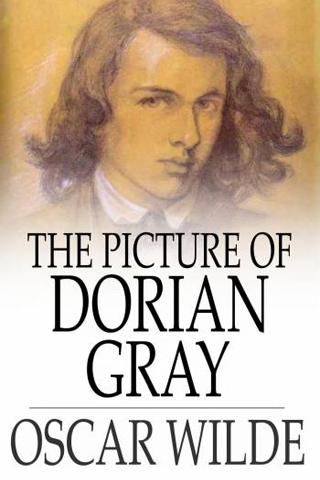

152baswood
Dorian: An Imitation Will Self
“Violent crimes are in astonishingly bad taste, just as bad taste is a violent crime”
“Evil is to morality as magnolia is to paint,’ Wotton said after a while; ‘it’s an unpleasant shade of meaning, far too liberally applied, purely on the basis that it isn’t white”
“Oh Good! Wotton guffawed. ‘Confession is such a Bodily relief, don’t you agree? It’s like shitting out guilt - no wonder the Catholics and Freudians have made an entire system of mind control out of it.”
Just like Oscar (Wilde) - perhaps, but then again not really. The first epigram above could have been lifted straight from “The Picture of Dorian Gray” but I am not so sure that Oscar would have been so aware of magnolia paint or that he would have dared use such language about the Catholics and Confession.
On the inside cover Will Self’s book is entitled “Dorian; An Imitation”, which is a pretty accurate description. He has taken Oscar Wilde’s The Picture of Dorian Gray which was set in the 1880’s and re-invented it for the 1980’s. The three major characters Henry Wotton, Basil Hallward and Dorian Grey reappear in a new but similar disguise and the famous painting has been updated to a nine screen video projection, other than that the story is largely the same.
My first thoughts when the story started to unroll was ‘Why bother’, why would an author want to take such a famous story and provide us with an imitation, where is the integrity in that, was this just a cheap shot to get into the best sellers listings? These thoughts persisted until about halfway through, until I discovered that I was really enjoying Dorian. Self takes us into a world that he knows well; the drug fuelled homosexual scene of the 1980’s, a world that probably existed in another form in the 1880’s but Wilde could not have hoped to get his novel published had he dared to go there. The angel of death in Self’s novel is the AIDs virus and Basil Hallward repeats the rumour that is spreading around town that the rich, beautiful and seemingly eternally youthful Dorian Gray was “the AIDS Mary, the malevolent and intentional transmitter of the virus.”
The AIDS virus and the drug culture is something new that Self brings to the table, but there are other ideas as well that reflect back on Wilde’s novel. There is a continual feeling of a roman a clef as Self introduces characters and event from the 1980’s; the worship of Princess Diana as the Queen of Hearts, the gay scene around the photographer Robert Mapplethorpe and the jiggling man (who is he?). There is also the feeling of a society going horribly to the dogs and the only way to combat this is through a breaking of the rules with a cynical view of the straight and narrow. This is of course self destructive and is as effectively portrayed in Self’s novel as it is in Wilde’s .There is no doubt that to pull off such an imitation calls for writing of exceptional wit and vocabulary, after all Self is asking us to compare him to Oscar Wilde. He is largely successful although the harder edge to his writing loses some of the charm in Wilde’s novel. Wilde was able to take his readers to the darkest places in A Picture of Dorian Grey and Self can do just as well in Dorian.
Self shifts the focus a little in the second part of his book; Henry Wotton becomes the central character along with the AIDS virus. The malevolent Dorian almost seems to flicker in and out rather like his video images. There is also a twist to the ending that brings the whole thing down to earth in a very effective way and by this time I was completely won over with Self’s book. No doubt Dorian could be enjoyed as a stand alone novel, however it gains in scope if you have read Oscar Wilde’s novel. The Picture of Dorian Gray is a great gothic horror story and while Self has lost the Gothicism his retelling has much to admire. Bravo I say and 4 stars.
“Violent crimes are in astonishingly bad taste, just as bad taste is a violent crime”
“Evil is to morality as magnolia is to paint,’ Wotton said after a while; ‘it’s an unpleasant shade of meaning, far too liberally applied, purely on the basis that it isn’t white”
“Oh Good! Wotton guffawed. ‘Confession is such a Bodily relief, don’t you agree? It’s like shitting out guilt - no wonder the Catholics and Freudians have made an entire system of mind control out of it.”
Just like Oscar (Wilde) - perhaps, but then again not really. The first epigram above could have been lifted straight from “The Picture of Dorian Gray” but I am not so sure that Oscar would have been so aware of magnolia paint or that he would have dared use such language about the Catholics and Confession.
On the inside cover Will Self’s book is entitled “Dorian; An Imitation”, which is a pretty accurate description. He has taken Oscar Wilde’s The Picture of Dorian Gray which was set in the 1880’s and re-invented it for the 1980’s. The three major characters Henry Wotton, Basil Hallward and Dorian Grey reappear in a new but similar disguise and the famous painting has been updated to a nine screen video projection, other than that the story is largely the same.
My first thoughts when the story started to unroll was ‘Why bother’, why would an author want to take such a famous story and provide us with an imitation, where is the integrity in that, was this just a cheap shot to get into the best sellers listings? These thoughts persisted until about halfway through, until I discovered that I was really enjoying Dorian. Self takes us into a world that he knows well; the drug fuelled homosexual scene of the 1980’s, a world that probably existed in another form in the 1880’s but Wilde could not have hoped to get his novel published had he dared to go there. The angel of death in Self’s novel is the AIDs virus and Basil Hallward repeats the rumour that is spreading around town that the rich, beautiful and seemingly eternally youthful Dorian Gray was “the AIDS Mary, the malevolent and intentional transmitter of the virus.”
The AIDS virus and the drug culture is something new that Self brings to the table, but there are other ideas as well that reflect back on Wilde’s novel. There is a continual feeling of a roman a clef as Self introduces characters and event from the 1980’s; the worship of Princess Diana as the Queen of Hearts, the gay scene around the photographer Robert Mapplethorpe and the jiggling man (who is he?). There is also the feeling of a society going horribly to the dogs and the only way to combat this is through a breaking of the rules with a cynical view of the straight and narrow. This is of course self destructive and is as effectively portrayed in Self’s novel as it is in Wilde’s .There is no doubt that to pull off such an imitation calls for writing of exceptional wit and vocabulary, after all Self is asking us to compare him to Oscar Wilde. He is largely successful although the harder edge to his writing loses some of the charm in Wilde’s novel. Wilde was able to take his readers to the darkest places in A Picture of Dorian Grey and Self can do just as well in Dorian.
Self shifts the focus a little in the second part of his book; Henry Wotton becomes the central character along with the AIDS virus. The malevolent Dorian almost seems to flicker in and out rather like his video images. There is also a twist to the ending that brings the whole thing down to earth in a very effective way and by this time I was completely won over with Self’s book. No doubt Dorian could be enjoyed as a stand alone novel, however it gains in scope if you have read Oscar Wilde’s novel. The Picture of Dorian Gray is a great gothic horror story and while Self has lost the Gothicism his retelling has much to admire. Bravo I say and 4 stars.
153Nickelini
That sounds very interesting! On to the wishlist it goes. And I see a pattern in your review that fits in with this week's question over at the question thread: how do you decide whether a book is just exploitation or not? You started out questioning whether you should bother with this retelling, and wondering if it was a cheap shot attempt to make a best seller list, but then you saw "exceptional wit" and could appreciate what the author was doing. This is exactly what I was asking in the question. Where is the line between cash-grab rip off and art?
I've never heard of this book, so thanks for introducing it to me.
I've never heard of this book, so thanks for introducing it to me.
154StevenTX
Very interesting review. I would start with mixed feelings as well about a novel based on another's work. I'm glad it turned out worthwhile. I have this and a couple other novels by Self but haven't managed to get to any of them yet.
155baswood
Joyce, exactly right about the question I will post something on the questions thread.
steven, I think you might like Will Self, England's answer to Murakami?
steven, I think you might like Will Self, England's answer to Murakami?
156dchaikin
Freaked out when that book cover came up in my office at work... but enjoyed your thoughts. I'm wondering, if it takes half a book for us to like it, is there a problem with the book, or with my impatience as revealed in asking this question?
157Linda92007
Fabulous review of Dorian: An Imitation, Barry. Since Will Self's Umbrella made the Booker short-list, I have been seeing much more about him on the threads. He seems to be an author that many consider difficult.
158baswood
oops sorry about that cover Dan
Linda, Will Self has a large vocabulary,which he is not frightened to use and so I found myself reaching for the dictionary a few times. Apart from that he is not difficult, although assuming that you are not familiar with the drug scene in London in the 1980's Then you have to believe what Self tells you about it. I have it on good authority that he gets it about right.
I have another couple of books on my shelf by Will Self and I am tempted to get to them soon. An exciting talent I think, but perhaps not for the squeamish.
Linda, Will Self has a large vocabulary,which he is not frightened to use and so I found myself reaching for the dictionary a few times. Apart from that he is not difficult, although assuming that you are not familiar with the drug scene in London in the 1980's Then you have to believe what Self tells you about it. I have it on good authority that he gets it about right.
I have another couple of books on my shelf by Will Self and I am tempted to get to them soon. An exciting talent I think, but perhaps not for the squeamish.
159kidzdoc
Fabulous review of Dorian: An Imitation, Barry. I'll add it to my wish list.
160Jargoneer
I've always been put off reading Self by the man himself, who, early in his career, went out of his way to be shocking - I'm sure that his novel that came out after American Psycho was promoted as being even more extreme. From your review it sounds like he has more to offer but I may wait until you have read and reviewed a second one - just in case Dorian was a fluke.
161baswood
A big change in books on my TBR shelf this week; I now have in front of me:
Effortless Mastery: Liberating the Master Musician Within by Kenny Werner
How to appreciate music by Sidney Harrison
Scales and Arpeggios: fundamental exercises for the saxophone by Marcel Mule
Complete Method for all Saxophones by H Klose
I Thought it was about time I learnt to play a musical instrument and so I have bought myself a tenor saxophone, which is sitting nicely on its stand in the corner of my room. I am also trying to learn to read music and so I am on a steep learning curve. It's exciting.
Effortless Mastery: Liberating the Master Musician Within by Kenny Werner
How to appreciate music by Sidney Harrison
Scales and Arpeggios: fundamental exercises for the saxophone by Marcel Mule
Complete Method for all Saxophones by H Klose
I Thought it was about time I learnt to play a musical instrument and so I have bought myself a tenor saxophone, which is sitting nicely on its stand in the corner of my room. I am also trying to learn to read music and so I am on a steep learning curve. It's exciting.
162avidmom
Cool! Good luck on your saxophone lessons! I found reading music easy (we were taught to read music in music class in grade school) - it's the whole playing the right note(s) at the right time that was hard.
163StevenTX
Wow, that is a big change in the TBR. Good luck with the saxophone, but after all that Renaissance reading I thought you'd be playing a lute or a sackbut.
164DieFledermaus
>161 baswood: - How exciting! Too bad there's no Renaissance saxophone music but maybe eventually some jazz? I'll be interested in reviews of any music books that you read.
Also, a thorough review of Dorian.
Also, a thorough review of Dorian.
165rebeccanyc
Very exciting indeed! Have you ever played any other instruments? It seems daunting to start with the saxophone, with all that breath stuff! Well, the whole thing seems daunting to me, as I've been thinking about trying to relearn (from the beginning) piano one of these days (last had lessons as a child) for at least five years now.
166Linda92007
Congratulations on deciding to play the saxophone, Barry. I feel certain you will be a fast learner!
167SassyLassy
I love it when people leap wholeheartedly into a new pursuit and this one sounds fabulous. Waiting for the reviews and progress reports.
168detailmuse
bas, the saxophone, fabulous! Like rebecca I've thought to get back to the piano of childhood. Looking forward to your experience.
I've wishlisted the pair of Wilde and Self though I'm not sure I'm in a place for disturbing/shocking just now.
I've wishlisted the pair of Wilde and Self though I'm not sure I'm in a place for disturbing/shocking just now.
169kidzdoc
Congratulations on your decision to pick up the saxophone, Barry! I've also thought about learning to play an instrument, but I have no musical background and was reluctant to take the plunge. I also look forward to your experiences with your new instrument.
Do let us know when you make your first appearance at the Marciac Jazz Festival alongside Brad Mehldau.
Do let us know when you make your first appearance at the Marciac Jazz Festival alongside Brad Mehldau.
170baswood
Rebecca, I am a complete beginner, but even though I am struggling to make some notes out of the saxophone at the moment, I have already learnt so much about music and the playing of it. A whole new world has opened up.
Darryl, Brad would be astonished at my version of When The Saints Go Marching In.
Darryl, Brad would be astonished at my version of When The Saints Go Marching In.
171baswood


Disc of the week - Two Originals; Karuna Supreme & Rainbow; John Handy, Ali Akbar Khan
This is a double CD featuring; Karuna Supreme released in 1975 and Rainbow released in 1981. There have been many attempts to fuse jazz with classical Indian music on the basis that they both feature improvisation on a theme or chord structure. One of the earliest and still one of the best was "Indo-Jazz Fusions by the Joe Harriot-John Mayer double quintet released in 1966. Like John Handy, Joe Hariott also played Alto Saxophone and his Indo Jazz fusion suite featured his regular quintet playing alongside a group of classical Indian musicians. The music that resulted was a carefully arranged fusion of the two musical syles, with only limited solo space for improvisation. John Handy's recording are very different; he plays as part of an Indian classical music ensemble and so the rhythms and structure and sound are Indian.
John Handy was an influential figure on the West Coast avante garde scene in the 1960's, but although he embraced part of the free jazz philosophy he was all along a hard bop alto saxophone player, but with an individual voice. He tends to improvise on the higher notes of the saxophone and this suits the sound world of the Indian classical musicians. Karuna Supreme is a delight from beginning to end with both Handy and Ali Akbar Khan playing sumptuous music. They sound wonderful together and the level of interplay is astonishing. Beautiful, beautiful music. The second disc Rainbow introduces the classical Indian Violinist; Dr L. Subramanium and he pushes the music in different directions. There is more space for solos and there is more of a jazz feel about this disc although it still features Indian classical musicians. Subramaniam's violin playing is exciting as he bows deep chordal playing from the instrument. These two discs stand out in the now heavily populated world of Indo-Jazz fusion; the musicianship and musicality is of the highest order.
172kidzdoc
Thanks for that enticing review of Two Originals, Barry. I'm a bit familiar with John Handy from his work on Charles Mingus's albums Mingus Ah Um and Blues & Roots, so I'll look for this CD later this month in New Orleans, or next month in San Francisco.
173JDHomrighausen
Good luck with the saxophone lessons! Just think of Lisa Simpson for inspiration. :)
174baswood
Darryl, The John Handy quintet featuring Michael White on Violin released some great albums in the 1960's.
Thanks Librattyteen, I am still struggling with my embouchure
Thanks Librattyteen, I am still struggling with my embouchure
175janemarieprice
Good luck on the new pursuit! I'm trying to learn more about music theory now so I look forward to your thoughts on your reading material.
176Jargoneer
I'm surprised you picked the saxamaphone, given your reading this year I would have placed money on the lute. Can we look forward to reviews of the Beats and other jazz related writers as you create the right atmosphere in which to practice?
On a not unrelated note, I was browsing in a record store (do people remember them?) last week and saw a Mingus compilation - 8 albums for £8. It was such a bargain that I couldn't believe that there wasn't a catch. Checking up on the web it transpires that this collection owes itself to European copyright laws - recordings now older than 50 years are in the public domain, meaning that anyone can release versions of them. I understand that these collections are now known as 'needle-drops' due the fact they are probably taken from vinyl recordings.
Of course, this leads to a debate about the sound quality - some people saying that they are surprisingly good while others dismiss them. However one person pointed that this may be the future of jazz releases, as the market decreases major labels won't release material so what will be left is high-end expensive sets and these cheap recordings.
On a not unrelated note, I was browsing in a record store (do people remember them?) last week and saw a Mingus compilation - 8 albums for £8. It was such a bargain that I couldn't believe that there wasn't a catch. Checking up on the web it transpires that this collection owes itself to European copyright laws - recordings now older than 50 years are in the public domain, meaning that anyone can release versions of them. I understand that these collections are now known as 'needle-drops' due the fact they are probably taken from vinyl recordings.
Of course, this leads to a debate about the sound quality - some people saying that they are surprisingly good while others dismiss them. However one person pointed that this may be the future of jazz releases, as the market decreases major labels won't release material so what will be left is high-end expensive sets and these cheap recordings.
177baswood
Turner, interesting stuff about those European copyright laws. 50 years takes us back to 1962 and so in 10 years time there will a case to be made that all the best music is now out of copyright.
Much great Mingus music before 1962, but 1962 saw my favourite Mingus albums released - "Oh Yeah" and New Tijuana Moods"
Much great Mingus music before 1962, but 1962 saw my favourite Mingus albums released - "Oh Yeah" and New Tijuana Moods"
178baswood

Disc of the Week : well six discs actually that have taken up much of my listening time this last week. These are live recordings made in 1994 and fully document the Keith Jarrett trio's three nights at the Blue Note Club. Jarrett of course plays acoustic piano throughout and is backed by Gary Peacock on bass and Jack DeJohnette on drums. The trio had been together a long time when these recordings were made and so the interplay between these master musicians appears seamless. There is some stunning music on these discs and if you had been present at the club then you may want to have it all, however I found that taken together the quality of music was not maintained over the 6 discs, which is hardly surprising. Much of the music is jazz standards given an extended treatment by the trio and the highlights are a magisterial rendition of Autumn Leaves (26 minutes and not a note too long) and equally fine versions of On Green Dolphin Street and How Long has this been Going On. Uptempo numbers are interspersed with ballads and on a few numbers such as The Fire Within the group swing like mad. There are missteps however an unfortunate attempt to update Clifford Brown's Le Valse Hot and dull versions of Nows the Time and Things ain't what they used to be.
I found the lack of original material surprising and a long version of Jarret's Desert Sun outstayed its welcome. Perhaps it is too much to expect that everything on 6 cds should be wonderful, but at the end of the sixth CD I was beginning to see some limitations in Jarretts music. This is live music and there is of course much audience applause, but this is mainly confined to the end of each number. Jarrett himself has a tendency to sing along in a tuneless croak to much of his music and some of this is in evidence here along with a few Aaahs, it does nothing for the music. The recording quality is reasonable with a club atmosphere throughout. I hope I have not sounded too negative about this music which if it had been limited to three Cds would have been excellent. There is no shortage of keith Jarretts music out there and so this 6 CD set would probably appeal more to fans and completists.
179QuentinTom
I've been listening to this set of CDs regularly for about 15 years, and still hear stuff I didn't notice or appreciate before. I heard the trio play in
London in 2000, and it was an overwhelming experience.
Jarrett's moaning and groaning is all part of the experience. Sometimes it's a bit intrusive, but you have to get over it. He has claimed he doesn't know he's doing it, and I can well imagine. Jarrett believes in total immersion, and gives it to his listeners in spades. Sure it's not all consistently brtilliant, but as live performance, improvisation, you can't expect perfection every time. You never know what will happen in a jazz concert, or at least, you shouldn't expect to know.
In spite of this, Jarrett is still the greatest living jazz pianist, and this is the greatest living jazz trio, probably greatest jazz trio of all time.
London in 2000, and it was an overwhelming experience.
Jarrett's moaning and groaning is all part of the experience. Sometimes it's a bit intrusive, but you have to get over it. He has claimed he doesn't know he's doing it, and I can well imagine. Jarrett believes in total immersion, and gives it to his listeners in spades. Sure it's not all consistently brtilliant, but as live performance, improvisation, you can't expect perfection every time. You never know what will happen in a jazz concert, or at least, you shouldn't expect to know.
In spite of this, Jarrett is still the greatest living jazz pianist, and this is the greatest living jazz trio, probably greatest jazz trio of all time.
180Jargoneer
>179 QuentinTom: - Jarrett is still the greatest living jazz pianist - that's a big statement with players like McCoy Tyner and Cecil Taylor still breathing. Personally I prefer Taylor but in terms of influence etc it probably is Tyner.
181QuentinTom
McCoy Tyner
Cecil Taylor
who dey?
Cecil Taylor
who dey?
182baswood
#181 Murr's joking again?
I have got to agree with Turner, certainly in terms of influence on other musicians, McCoy Tyner has the best claim to be the greatest living jazz pianists. His trio played Marciac a couple of years ago and it was like paying homage to one of the all time greats.
What great fun, I can think of nothing better than debating the merits of jazz pianists - it makes you want to put another CD in the player.
Here is McCoy playing Marciac in 2002 http://www.youtube.com/watch?v=1t5jQYkCoZI
I have got to agree with Turner, certainly in terms of influence on other musicians, McCoy Tyner has the best claim to be the greatest living jazz pianists. His trio played Marciac a couple of years ago and it was like paying homage to one of the all time greats.
What great fun, I can think of nothing better than debating the merits of jazz pianists - it makes you want to put another CD in the player.
Here is McCoy playing Marciac in 2002 http://www.youtube.com/watch?v=1t5jQYkCoZI
183baswood
Forgot to mention Ahmad Jamal still going strong at 80 years young.
Ahmad Jamal http://www.youtube.com/watch?v=q--WcKYyWoQ
The greatest ever piano trio ever is probably this one.....
Thelonious Monk Trio http://www.youtube.com/watch?v=uhs05YBjSUs
Ahmad Jamal http://www.youtube.com/watch?v=q--WcKYyWoQ
The greatest ever piano trio ever is probably this one.....
Thelonious Monk Trio http://www.youtube.com/watch?v=uhs05YBjSUs


185baswood
The Vivisector by Patrick White
The Vivisector is about a painter, the one I was destined not to become - another of my frustrations. I had imagined that if I could acquire the technique I might give visual expression to what I have inside me, and that the physical act of painting would exhilarate me far more than grinding away at grey, bronchial prose
extract from Patrick White’s autobiography Flaws in the Glass
Hurtle Duffield could almost be Patrick White’s alter ego. He is fictionalised as one of the greatest painters that Australia has produced and White tells his story from childhood to his final moments when he collapses, paintbrush in hand: reaching for that final insight into the soul of man. Hurtle is obsessive; right from early childhood he was aware that he saw the world differently to most people and he had a compulsion to express these insight in drawing and painting. He was only happy when he was painting and all his personal relationships with other non artists had to be sacrificed on the altar of his canvases.
White tells his story in chronological order and like any biography Hurtle is never out of view and White’ elegant prose slips from first person to omnipresent third person with consummate ease. The first quarter of the book tells of Hurtle’s early childhood and later upbringing. He was born to a poor family, but his natural intelligence brought him to the attention of a rich family and he was adopted by them. Maman and Harry Courtenay were a family of some standing and desperately wanted another child as a companion for their hunchbacked daughter Rhoda. Hurtle prospers but his sprit feels constricted to such an extent that he enlists as a soldier in the first world war to escape from the family. White’s evocation of Hurtle’s childhood and early teens is handled brilliantly and his characteristic selfishness is already to the fore. The world revolves around Hurtle and it is no surprise to him that he survives the war.
There is a short time jump and we catch up with Hurtle still in Europe after the war, he is making a living as an odd job man, only painting when he can afford to. His existence is fairly aimless and his only positive thought is to avoid contact with his family. He does drift back to Australia but Harry has died, Maman has re-married and moved to England taking Rhoda with her. Hurtle is penniless but free, however a chance encounter with Nance Lightfoot a Sydney prostitute becomes a catalyst and inspiration for his first important phase of paintings. Nance and Caldicott the homosexual art dealer both in love with Hurtle are sucked in chewed up and thrown out by the juggernaut that is Hurtle’s art.
White then engineers another jump in time, in a masterly short chapter of 9 pages, we meet a mysterious stranger, being propositioned by the homosexual grocer Mr Cutbush. We soon realise that the stranger is an older Hurtle, now a successful painter with a large house in the Sydney suburbs. Through his conversation with Cutbush; White expertly feeds his readers the essentials of the intervening years. The short conversation with the unlikely grocer also sparks in Hurtle another phase in his painting cycle. He meets his patroness Mrs Davenport; a rich society lady with connections to the Courtenay family and she introduces or rather procures for him: Hero; the wife of a wealthy Greek shipping magnate.
Another short linking chapter introduces us to Hurtles final creative phase: Rhoda has drifted back into his life and now lives with him. The couple befriend a thirteen year old girl Kathy Volkov, who has a a talent for music that burns as fiercely and egotistically as Hurtle’s own. The two collide in an unlikely relationship that inspires Hurtle’s next phase of painting, but Kathy's artistic integrity and strength allows her to survive and benefit from their connection. The book ends on a high note with a major retrospective exhibition of Hurtle’s paintings which is attended by the Prime Minister. Hurtle now a stroke sufferer enjoys to some extent his celebrity status, but it still cannot get in the way of his work.
Whites portrayal of the obsessive artist that destroys many of whom come into contact with him and yet still has the capacity to inspire others is extraordinary. Hurtle lives on these pages along with the unfortunate women who love him and those that are strong enough to survive him. White takes his readers on a voyage through the mind of an artist, he makes us see the world through Hurtle’s eyes. He explains how events trigger Hurtles works of art in language that is astonishingly vivid.:
“During the days which followed Kathy Volkov’s necessary but forgettable visit, he drew constantly and furiously. He did many drawings of what he could see was becoming his ‘Girl at Piano’ Out of numerous false starts and the vulgar gloss of a concert grand, the old upright piano grew, the sloping line of the inclined case almost parallel to the straight line of the young girl’s back, her thick plait, the candlestick empty except for the solid drifts of wax and encrustations of verdigris. As he saw it any light must flow from a suggestion of the girl’s face.”
Kathy says in a letter to Hurtle that “It was you who taught me how to see, to be, to know immediately”, surely an attribute that all great artist have and White knows this through his own frustrations in not being able to paint, but he does the next best thing here; by making the reader see his visions through his descriptions of Hurtle’s paintings.
This is a superbly written novel with plenty of White’s sometimes sardonic sometimes caustic remarks. He has Mr Cutbush say about an immoral man of many affairs “He only lets the wrong ones choose him” But what of Hurtle himself? is he just a “Viscous bastard”?: a vivisector of the faults and weaknesses of the people who inspire him? The question is certainly posed and White provides enough characterisation for the reader to make up his own mind. White’s more understanding portrait of the ageing iconoclast in the final sections of the novel and his partial redemption through Kathy Volkova leads me to see where his sympathies lie; after all when describing another of Hurtles proposed pictures he says of him “ But he knew. Where and when doesn’t in the end matter” It is the search for truth that is important.
Over the last year or two I have read eight of White’s novels and “The Vivisector is right up there with the best. In my opinion it ranks with His two great Australian novels “Tree Of Man” and “Voss”. It is by far his longest novel weighing in at over 600 pages, but I get the feeling that it was an inspirational novel, one that White could not let go, could not bear to trim. It is passionate, it is intense and contains much of White himself in his characterisation of Hurtle Duffield. A supreme achievement and a five star read. .
The Vivisector is about a painter, the one I was destined not to become - another of my frustrations. I had imagined that if I could acquire the technique I might give visual expression to what I have inside me, and that the physical act of painting would exhilarate me far more than grinding away at grey, bronchial prose
extract from Patrick White’s autobiography Flaws in the Glass
Hurtle Duffield could almost be Patrick White’s alter ego. He is fictionalised as one of the greatest painters that Australia has produced and White tells his story from childhood to his final moments when he collapses, paintbrush in hand: reaching for that final insight into the soul of man. Hurtle is obsessive; right from early childhood he was aware that he saw the world differently to most people and he had a compulsion to express these insight in drawing and painting. He was only happy when he was painting and all his personal relationships with other non artists had to be sacrificed on the altar of his canvases.
White tells his story in chronological order and like any biography Hurtle is never out of view and White’ elegant prose slips from first person to omnipresent third person with consummate ease. The first quarter of the book tells of Hurtle’s early childhood and later upbringing. He was born to a poor family, but his natural intelligence brought him to the attention of a rich family and he was adopted by them. Maman and Harry Courtenay were a family of some standing and desperately wanted another child as a companion for their hunchbacked daughter Rhoda. Hurtle prospers but his sprit feels constricted to such an extent that he enlists as a soldier in the first world war to escape from the family. White’s evocation of Hurtle’s childhood and early teens is handled brilliantly and his characteristic selfishness is already to the fore. The world revolves around Hurtle and it is no surprise to him that he survives the war.
There is a short time jump and we catch up with Hurtle still in Europe after the war, he is making a living as an odd job man, only painting when he can afford to. His existence is fairly aimless and his only positive thought is to avoid contact with his family. He does drift back to Australia but Harry has died, Maman has re-married and moved to England taking Rhoda with her. Hurtle is penniless but free, however a chance encounter with Nance Lightfoot a Sydney prostitute becomes a catalyst and inspiration for his first important phase of paintings. Nance and Caldicott the homosexual art dealer both in love with Hurtle are sucked in chewed up and thrown out by the juggernaut that is Hurtle’s art.
White then engineers another jump in time, in a masterly short chapter of 9 pages, we meet a mysterious stranger, being propositioned by the homosexual grocer Mr Cutbush. We soon realise that the stranger is an older Hurtle, now a successful painter with a large house in the Sydney suburbs. Through his conversation with Cutbush; White expertly feeds his readers the essentials of the intervening years. The short conversation with the unlikely grocer also sparks in Hurtle another phase in his painting cycle. He meets his patroness Mrs Davenport; a rich society lady with connections to the Courtenay family and she introduces or rather procures for him: Hero; the wife of a wealthy Greek shipping magnate.
Another short linking chapter introduces us to Hurtles final creative phase: Rhoda has drifted back into his life and now lives with him. The couple befriend a thirteen year old girl Kathy Volkov, who has a a talent for music that burns as fiercely and egotistically as Hurtle’s own. The two collide in an unlikely relationship that inspires Hurtle’s next phase of painting, but Kathy's artistic integrity and strength allows her to survive and benefit from their connection. The book ends on a high note with a major retrospective exhibition of Hurtle’s paintings which is attended by the Prime Minister. Hurtle now a stroke sufferer enjoys to some extent his celebrity status, but it still cannot get in the way of his work.
Whites portrayal of the obsessive artist that destroys many of whom come into contact with him and yet still has the capacity to inspire others is extraordinary. Hurtle lives on these pages along with the unfortunate women who love him and those that are strong enough to survive him. White takes his readers on a voyage through the mind of an artist, he makes us see the world through Hurtle’s eyes. He explains how events trigger Hurtles works of art in language that is astonishingly vivid.:
“During the days which followed Kathy Volkov’s necessary but forgettable visit, he drew constantly and furiously. He did many drawings of what he could see was becoming his ‘Girl at Piano’ Out of numerous false starts and the vulgar gloss of a concert grand, the old upright piano grew, the sloping line of the inclined case almost parallel to the straight line of the young girl’s back, her thick plait, the candlestick empty except for the solid drifts of wax and encrustations of verdigris. As he saw it any light must flow from a suggestion of the girl’s face.”
Kathy says in a letter to Hurtle that “It was you who taught me how to see, to be, to know immediately”, surely an attribute that all great artist have and White knows this through his own frustrations in not being able to paint, but he does the next best thing here; by making the reader see his visions through his descriptions of Hurtle’s paintings.
This is a superbly written novel with plenty of White’s sometimes sardonic sometimes caustic remarks. He has Mr Cutbush say about an immoral man of many affairs “He only lets the wrong ones choose him” But what of Hurtle himself? is he just a “Viscous bastard”?: a vivisector of the faults and weaknesses of the people who inspire him? The question is certainly posed and White provides enough characterisation for the reader to make up his own mind. White’s more understanding portrait of the ageing iconoclast in the final sections of the novel and his partial redemption through Kathy Volkova leads me to see where his sympathies lie; after all when describing another of Hurtles proposed pictures he says of him “ But he knew. Where and when doesn’t in the end matter” It is the search for truth that is important.
Over the last year or two I have read eight of White’s novels and “The Vivisector is right up there with the best. In my opinion it ranks with His two great Australian novels “Tree Of Man” and “Voss”. It is by far his longest novel weighing in at over 600 pages, but I get the feeling that it was an inspirational novel, one that White could not let go, could not bear to trim. It is passionate, it is intense and contains much of White himself in his characterisation of Hurtle Duffield. A supreme achievement and a five star read. .
186janeajones
Great review, Barry -- this one goes on the wishlist.
187StevenTX
I'm about halfway through The Vivisector. I'll come back and savor your review when I have finished. It is slow going simply because White's descriptive power is so amazing that I've read many passages over and over, then turned back pages later to enjoy them again.
For example, here Duffield enters a room with a party in progress:
"As he was led in, the expressions of some of his fellow guests showed they were prepared to carry on as though he hadn't arrived. One or two, whom he met on and off, looked at him with the eyes of amateur blackmailers. Some he didn't know pretended that they did, and a lady of Presbyterian cast and inherited pendant locked up her long cupboard of a face, and turned her back.
"He stood in the arena, his chin sunken, like a bull waiting for the first sign of treachery."
For example, here Duffield enters a room with a party in progress:
"As he was led in, the expressions of some of his fellow guests showed they were prepared to carry on as though he hadn't arrived. One or two, whom he met on and off, looked at him with the eyes of amateur blackmailers. Some he didn't know pretended that they did, and a lady of Presbyterian cast and inherited pendant locked up her long cupboard of a face, and turned her back.
"He stood in the arena, his chin sunken, like a bull waiting for the first sign of treachery."
188SassyLassy
Great review of what sounds like an incredible book. I can understand steven's approach and your excerpts and steven's give a real flavour to it.
189edwinbcn
Excellent review, Barry. I found that reading White takes a great deal of dedication. He just isn't the kind of author to read on the bus or in the subway. Reading his books will have to wait till the holiday.
190avidmom
Half-way through The Vivisector myself so am skipping your review for now. Hope to get through it soon. I like White's writing a lot but T.V. is probably the most challenging book I've read this year.
191detailmuse
Fascinating review of The Vivisector and terrific collage of covers, which makes me ask which you think is most representative of the novel? The dissections seem givens, but the females (redemption?) also appeal.
192deebee1
Terrific review, Barry! It is impressive that you have read eight of White's novels in the last year or two. I myself find I need the right mix of mood, dedication, and time to get into his books. Unfortunately, it happens less often that I would like.
193rebeccanyc
Great review. I still have to get to White -- was hoping to do it for this anniversary year, but I echo deebee's comment that I've been waiting for the "right mix of mood, dedication, and time to get into" the book I have (Riders in the Chariot), and I haven't found that yet.
194Linda92007
Fabulous review of The Vivisector, Barry. I am also about midway through, but could not resist reading your review. I agree completely with Steven's comments on White's descriptive abilities. I have you to thank for introducing me to this wonderful author and I'm looking forward to reading many more of his novels.
195baswood
Thanks folks I really enjoyed reading THe Vivisector despite feeling a nagging doubt about it's length. IT does require slower reading, because some of Whites sentences don't read as you might expect them to: they can be quirky in the extreme. That is part of his greatness; making the reader stop and puzzle over a different way of seeing things. The actual story itself is not difficult to follow.
detailmuse, the cover I think that is most appropriate is the top left hand cover. It is I think a German one and it shows a human form with a paint palette instead of a head, which is witty and appropriate.
Glad you are enjoying the book Linda, if you like this one then Voss and Tree of Man are waiting to be read.
steven I agree that White's prose can rise to magnificent heights and he can use examples to make the reader truly see his characters. Early on in the novel we are reminded as to how Hurtle sees the world when he is taken round the sheep station/farm owned by Harry Coutney; He meets the foreman and his men who know all about sheep, but Hurtle knows more:
"Hurtle too knew better than everybody, than all these anyway, Sid Cupples (the foreman) included: not that he could have explained what he knew : because he saw rather than thought. He often wished he could think like people think in books, but he could only see or feel his way. Again he saw in his mind the rough looking sheep. He itched to get his fingers in their wool, for the feel of it"
An example of White's ability to make us think of things in a different light:
"Kathy had come, and was sitting beside him, warm and superior in her dress; but it was the warmth of railway stations : the trains were hooting their woolly, false-maternal assurances"
detailmuse, the cover I think that is most appropriate is the top left hand cover. It is I think a German one and it shows a human form with a paint palette instead of a head, which is witty and appropriate.
Glad you are enjoying the book Linda, if you like this one then Voss and Tree of Man are waiting to be read.
steven I agree that White's prose can rise to magnificent heights and he can use examples to make the reader truly see his characters. Early on in the novel we are reminded as to how Hurtle sees the world when he is taken round the sheep station/farm owned by Harry Coutney; He meets the foreman and his men who know all about sheep, but Hurtle knows more:
"Hurtle too knew better than everybody, than all these anyway, Sid Cupples (the foreman) included: not that he could have explained what he knew : because he saw rather than thought. He often wished he could think like people think in books, but he could only see or feel his way. Again he saw in his mind the rough looking sheep. He itched to get his fingers in their wool, for the feel of it"
An example of White's ability to make us think of things in a different light:
"Kathy had come, and was sitting beside him, warm and superior in her dress; but it was the warmth of railway stations : the trains were hooting their woolly, false-maternal assurances"
196Rise
Now I'd like to read The Vivisector. In the Penguin's eye-opening cover if I can help it.
198baswood
Disc of the Week
Gustav Mahler - Das Lied von der Erde

Janet Baker . James King Royal Concertgebouw Orchestra, Bernard Haitink
Das Lied von der Erde (The song of the Earth) is a series of six songs scored for two vocalists (tenor and contralto) backed by a full symphonic orchestra. The vocalists have alternate songs never singing together. The songs express the beauty of the earth and it and our transient presence and were inspired by Mahler's reading of translations of Chinese poetry.
The first thing that strikes the listener is the symphonic nature of the orchestral score as the first song crashes out of the speakers with it hunting horn motif and complex arrangement where James King's tenor strives to match the intensity of the orchestral sound. This first song in particular stretches the vocal range of the tenor singer nearly to its limits and King just about copes. It is thrilling stuff. King is more comfortable with his second song; Von der Jugend (Youth) with its jaunty theme featuring flutes and piccolos.
The star of this show is Janet Baker, whose mezzo-soprano voice copes wonderfully well with these songs written for a contralto range. Many of the songs feature writing in the lower register and Baker is thrilling with these low notes. It is magnificent singing which reaches a peak in the final song Der Abschied (Farewell) which lasts for over 30 minutes and ends with wonderful mellifluous final notes that Baker merges hypnotically into the orchestration and so achieving a beautiful poignancy.
This is divine music. Wonderful tunes and motifs throughout with some exciting orchestration very much in the tradition of romantic 19th century music rather than 20th century. The Philips disc that I listened to is in their bargain range with the recording dating from 1975, but I don't think I need to bother with a more modern recording. This will do fine.
Gustav Mahler - Das Lied von der Erde

Janet Baker . James King Royal Concertgebouw Orchestra, Bernard Haitink
Das Lied von der Erde (The song of the Earth) is a series of six songs scored for two vocalists (tenor and contralto) backed by a full symphonic orchestra. The vocalists have alternate songs never singing together. The songs express the beauty of the earth and it and our transient presence and were inspired by Mahler's reading of translations of Chinese poetry.
The first thing that strikes the listener is the symphonic nature of the orchestral score as the first song crashes out of the speakers with it hunting horn motif and complex arrangement where James King's tenor strives to match the intensity of the orchestral sound. This first song in particular stretches the vocal range of the tenor singer nearly to its limits and King just about copes. It is thrilling stuff. King is more comfortable with his second song; Von der Jugend (Youth) with its jaunty theme featuring flutes and piccolos.
The star of this show is Janet Baker, whose mezzo-soprano voice copes wonderfully well with these songs written for a contralto range. Many of the songs feature writing in the lower register and Baker is thrilling with these low notes. It is magnificent singing which reaches a peak in the final song Der Abschied (Farewell) which lasts for over 30 minutes and ends with wonderful mellifluous final notes that Baker merges hypnotically into the orchestration and so achieving a beautiful poignancy.
This is divine music. Wonderful tunes and motifs throughout with some exciting orchestration very much in the tradition of romantic 19th century music rather than 20th century. The Philips disc that I listened to is in their bargain range with the recording dating from 1975, but I don't think I need to bother with a more modern recording. This will do fine.
199Linda92007
I can almost hear the beginning of that recording, Barry! How are your saxophone studies coming? I have been negligent of late in practicing piano and my efforts to teach myself guitar.
200avidmom
Hoping to finish The Vivisector in the next few days. Reading your review will be my reward for my efforts.
>199 Linda92007: Speaking of saxophones, pianos, etc. Someone here on LT had started a group for people who played instruments - I lurked around a bit - but now have lost that group entirely. Can't find it anywhere, even on the LT "groups" home page. Any clues out there?
>199 Linda92007: Speaking of saxophones, pianos, etc. Someone here on LT had started a group for people who played instruments - I lurked around a bit - but now have lost that group entirely. Can't find it anywhere, even on the LT "groups" home page. Any clues out there?
201Mr.Durick
There's a thread: http://www.librarything.com/topic/9716
That points to a group: http://www.librarything.com/groups/thankyouforthemusic
Robert
That points to a group: http://www.librarything.com/groups/thankyouforthemusic
Robert
202avidmom
>201 Mr.Durick: Aha! That's IT! Thank you Mr. Durick.
203baswood
Thanks folks I've joined the group.
Linda, I am progressing slowly but I think surely with the saxophone. I have bought a stand for it and it sits in the corner of my room daring me to pick it up, which I am always tempted to do, but a sore mouth restricts me a bit. I can get notes out of it now and play a couple of scales and a couple of tunes.
It is so much fun - it is like another person has entered my life.
Linda, I am progressing slowly but I think surely with the saxophone. I have bought a stand for it and it sits in the corner of my room daring me to pick it up, which I am always tempted to do, but a sore mouth restricts me a bit. I can get notes out of it now and play a couple of scales and a couple of tunes.
It is so much fun - it is like another person has entered my life.
204QuentinTom
http://www.theatlantic.com/magazine/archive/2012/11/the-end-of-jazz/309112/?sing...
Baz, I thought this would interest you.
re Das Lied: Baker is always sublime in whatever she does. I bet she sounds sublime singing in the shower. But you should also check out Alfreda Hodgson's recording, and of course the immortal Kathleen Ferrier's, conducted by Mahler's pupil Bruno Walter
Baz, I thought this would interest you.
re Das Lied: Baker is always sublime in whatever she does. I bet she sounds sublime singing in the shower. But you should also check out Alfreda Hodgson's recording, and of course the immortal Kathleen Ferrier's, conducted by Mahler's pupil Bruno Walter
206baswood

Effortless Mastery: Liberating the Master Musician within. By Kenny Werner
This book comes with four CDs which provide background and instructions on how to meditate to release that master musician within - well I think they do because my borrowed copy of Werner’s book was missing the CDs. Perhaps the previous borrower is still meditating about returning them sometime, however you don’t necessarily need the CDs to enjoy this inspirational book
Kenny Werner is a successful jazz pianist who has played with some of the greatest names in jazz and his book is mainly aimed at the practicing musician, but also has plenty of good advice for the beginner. The advice is centered around the need to come to terms with yourself as a musician, to practice a form of meditation that will get you in a good frame of mind to play your instrument whether it is piano, woodwinds or brass. Werner repeats this message throughout the book and sums it up near the end like this:
“The space itself is the teacher, and life becomes centered around learning to connect with the space. Music becomes secondary. You remember gigs not by how well you played, but by how much you let go. Those are usually the best gigs anyway, but now the priority has changed. You’re no longer bothered by what is out there, but absorbed by what is in here “
Werner says that many practicing musicians are held back from achieving more by the fear of sounding and playing badly. The fear factor; the pressure to perform, plays havoc with many musicians and Werner says that to overcome this they should let go of their ego’s become more humble and go back to playing what they know. He advocates practicing a piece of music until it can be played without thinking, only then should the musician allow himself to move on or in the case of a jazz musician to improvise. His method of preparing the musician is through a simple meditation routine, which he claims will help them become better players.
Werner has plenty of experience as a teacher and musician playing at the top level and has found a method that obviously works for him and may well work for many others. Music should be easy he says, that’s the secret. He is careful to widen the scope of his book to include classical as well as jazz musicians and much of what he says is common sense for anyone who has played an instrument. His book is shot through with anecdotes which alleviate the sometimes repetitive nature of his message and for some readers the spiritual journey that is advocated may not appeal.
For a beginner in music like myself the upbeat nature of the book is encouraging, anyone can learn to play well if they set about it in the right way and in the right frame of mind. I also found the practical advice on how to be comfortable with your instrument extremely useful and I have started to use some of this when practising. A friend of mine who is a professional musician and who lent me the book is very enthusiastic about the wise words inside, which obviously rings true with him. I am not about to search out those missing CDs because I am not sure I will ever need them, but I believe I have benefited much from reading Kenny’s book. A four star read.
207baswood
Discs of the week

The Best of Tony Joe White - Tony Joe White
I am not a fan of best of collections, because the difference in sound quality of the tracks on offer is sometimes very off putting and then there is the choice of material which naturally tends to be the more commercial material of the artist concerned and can be restricted by licensing agreements. The Best of Tony Joe White suffers from all these problems and yet I found that the majority of the 20 songs on this disc were well worth listening to.
I first heard Tony Joe Whites' group on BBC radio's country club programme and they sounded nothing like any country music that I had heard before. Nicknamed "The Swamp Fox" Tony Joe's music has echoes of Cajun, blues and boogie style music. His Southern drawl of a voice sounds rich and dark well suited to blues, but it is his guitar playing that makes him really special. It drives his songs along in a sort of John Lee Hooker boogie style, but his use of the wah wah pedal takes it into another dimension; exciting and exhilarating. He is also a gifted song writer with much of his material drawn from life in the swamp lands; Polk Salad Annie, Roosevelt and Ira Lee, High Sheriff of Calhoun Parish are typical vignettes that pack a real punch, stories in song. There are a couple of ballads in the collection, but it is his blues playing that is most heavily featured. The only disappointment is that there is far too little of his electric guitar playing, but there is a glimpse of this in "Even Trolls love Rock and Roll ". There is no shortage of good material in this best of collection and it would serve as an excellent introduction to the unique sound of Tony Joe White.

Illumination - Paul Weller
I have always approached Weller's solo material with caution. There is no doubting his talent which first emerged with "The Jam" one of the most musical groups of the early punk revolution. His guitar playing and rough edged vocals drove those early songs along, but I always felt he was somewhat hampered by his material. His songs tended to be very one dimensional and his attempts to broaden his writing were not that successful. This is not the case with Illumination his sixth solo album, because he has written some excellent songs for this release. not only that but his vocals have never sounded better. Many of them are underpinned by some fine acoustic guitar and the arrangements above this are imaginative without being over polished. A fine collection of songs.

The Best of Tony Joe White - Tony Joe White
I am not a fan of best of collections, because the difference in sound quality of the tracks on offer is sometimes very off putting and then there is the choice of material which naturally tends to be the more commercial material of the artist concerned and can be restricted by licensing agreements. The Best of Tony Joe White suffers from all these problems and yet I found that the majority of the 20 songs on this disc were well worth listening to.
I first heard Tony Joe Whites' group on BBC radio's country club programme and they sounded nothing like any country music that I had heard before. Nicknamed "The Swamp Fox" Tony Joe's music has echoes of Cajun, blues and boogie style music. His Southern drawl of a voice sounds rich and dark well suited to blues, but it is his guitar playing that makes him really special. It drives his songs along in a sort of John Lee Hooker boogie style, but his use of the wah wah pedal takes it into another dimension; exciting and exhilarating. He is also a gifted song writer with much of his material drawn from life in the swamp lands; Polk Salad Annie, Roosevelt and Ira Lee, High Sheriff of Calhoun Parish are typical vignettes that pack a real punch, stories in song. There are a couple of ballads in the collection, but it is his blues playing that is most heavily featured. The only disappointment is that there is far too little of his electric guitar playing, but there is a glimpse of this in "Even Trolls love Rock and Roll ". There is no shortage of good material in this best of collection and it would serve as an excellent introduction to the unique sound of Tony Joe White.

Illumination - Paul Weller
I have always approached Weller's solo material with caution. There is no doubting his talent which first emerged with "The Jam" one of the most musical groups of the early punk revolution. His guitar playing and rough edged vocals drove those early songs along, but I always felt he was somewhat hampered by his material. His songs tended to be very one dimensional and his attempts to broaden his writing were not that successful. This is not the case with Illumination his sixth solo album, because he has written some excellent songs for this release. not only that but his vocals have never sounded better. Many of them are underpinned by some fine acoustic guitar and the arrangements above this are imaginative without being over polished. A fine collection of songs.
208baswood
Renaissance, Andrew Graham-Dixon
Published in 1999 this book coincided with a six part BBC documentary series presented by Graham-Dixon. It is lavishly illustrated, but proved to be much more than a coffee table book. It provides an overview of the Renaissance period centered in Italy and concentrating on painting, sculpture and architecture. Graham-Dixon is described on his website as one of the worlds leading art critics and so his book focuses on the subjects that he knows best, and although there is some historical context, I would hesitate to recommend it as a mere introduction.
The Renaissance has been covered many times on TV and so a relatively recent programme (and one that runs to six episodes) would need to offer a somewhat different angle to what has gone before, whilst still providing a coherent overview to the more casual viewer. Graham-Dixon’s book achieves similar aims as the TV programme and is presented as a series of six essays that cover the period from its origins to its end and subsequent influence. The most famous and influential of the Renaissance artists are subject to the authors critical scrutiny and he obliges with some thought provoking writing on Giotto, Donatello, Da Vinci, Michelangelo, Corregio and Tintorreto among others. He often picks a particular work of art with which to underline his thoughts, (usually with a fine illustration) and so also provides something of a brief history of art.
Graham-Dixon is concerned with presenting an up to date view of the period and consciously goes about the task of exploding some of the myths that have built up around the Italian renaissance. He is particularly keen to refute some of the claims made by Victorian critics and writers , who he thinks overstated their case. He pays particular attention to Jacob Burchhardt whose view was that the Italian renaissance signalled a new objectivity a new spirit of individualism that weakened the bonds of religion. Graham-Dixon points out that the catholic church was the prime mover in providing subject matter and commissions for much of the 15th century art and by and large supported the artistic innovations that resulted. He also makes a case for a more gradual development from Medieval art, tracing the origins of the Renaissance to Byzantine art. None of this is particularly new, but Graham-Dixon does not have the time or space in this book to verify his claims and he left me feeling that he in turn might have overstated his case in some respects. He ends his chapter on 15th century Florentine art with a paragraph with which Burkhardt himself would probably not disagree:
“Looking back to antiquity, perhaps what the great Florentine artists of the fifteenth century really discovered was themselves. Their legacy to the future was a heightened curiosity about character, identity and motive: an immensely richer sense of what it might mean to be a human being.”
Graham-Dixon follows the well-trodden path of following the Italian renaissance as its centres of influence moved from Florence to Rome and finally to Venice and provides enough context for the reader to appreciate why this was so. He also spends a little time on the renaissance in Northern Europe, but again I feel that lack of space has probably prevented him from developing his ideas further on these aspects. I did get the feeling however that his love of Italian Renaissance art might have coloured his judgement a little, but then he would have been in good company with M. Jacob Burckhardt.
Graham-Dixon writes very well and with some passion, but I just wish that he had more space to develop his arguments further, however that would have made it a more academic book, which was not the purpose of this publication. There was enough in his observations, especially in his critiques of individual works of art, to keep me interested and I found myself making plenty of notes for further investigation. A very entertaining and informative read which should appeal to anyone interested in the subject; particularly if they plan to see any renaissance art sometime soon. Not quite enough to make me to plan to go to Florence for my next holiday, but a four star read nonetheless.
209Linda92007
Barry, I had been wondering what you were reading as a follow-up to Patrick White. Nice review!
210Jargoneer
>207 baswood: - I think my problem with Paul Weller is that I've never really warmed to the man (I do own Jam and Style Council collections - like yourself I prefer real albums but there are some bands where the singles will suffice. In this case for different reasons - I always found The Jam albums a bit hit-and-miss while Style Council albums tend to bullocks). Part of this is down to the modfather image and the links to lumpen rock bands like Oasis and Ocean Colour Scene. I know I should give him another chance but I just can't bring myself to make the effect. (However I will be listening to Radio 4's 'Mastertapes' episode this week where he discusses the recording of The Gift).
My problem with Tony Joe White is different - I like his music but I find a little goes a long way. (Linking his style to John Lee Hooker seems a really apt one to me) I can't imagine myself listening to him on a regular basis and yet when I do make the effort I enjoy what I hear. I find his distinctiveness works against a little at times - it makes him stand out from the music around him but it can get wearying after a while.
>208 baswood: - I must have watched that programme but can't remember anything about it. Graham-Dixon is always good value though (his series on Spain, Russia, Germany, Christian Art, etc are all worth seeing) - I like the way (some) art critics like GD have strong opinions and don't mind sharing them. Beats the pants off so much of the insipid arts coverage elsewhere.
My problem with Tony Joe White is different - I like his music but I find a little goes a long way. (Linking his style to John Lee Hooker seems a really apt one to me) I can't imagine myself listening to him on a regular basis and yet when I do make the effort I enjoy what I hear. I find his distinctiveness works against a little at times - it makes him stand out from the music around him but it can get wearying after a while.
>208 baswood: - I must have watched that programme but can't remember anything about it. Graham-Dixon is always good value though (his series on Spain, Russia, Germany, Christian Art, etc are all worth seeing) - I like the way (some) art critics like GD have strong opinions and don't mind sharing them. Beats the pants off so much of the insipid arts coverage elsewhere.
211StevenTX
I did a lot of reading on the Renaissance about ten years ago, and the chief ideas I brought away from that were exactly what Graham-Dixon is expressing: that it wasn't the fundamental change in outlook that the Enlightenment would be, that it was sponsored and approved of by the Church, and that it consisted chiefly of the rediscovery and incorporation of classical forms into already evolving visual arts. The fact that Renaissance Italy produced no writers comparable to Dante, Petrarch and Boccaccio underscores the limits of what the Renaissance actually entailed. Thanks for sharing your excellent review.
212rebeccanyc
Very thought-provoking and interesting comments, both in your review and afterwards. Thanks.
213baswood
steven, my own view is that there was more of a fundamental shift in attitudes in certain of the Italian city states than Graham-Dixon would have us believe, but I do agree with him that the Victorian writers overstated the case and unlike the Enlightenment the renaissance was not European wide. As usual the answer probably lies between the two views. I find it interesting that the counter reformation in Italy tried hard and was largely successful in turning back the clock.
I feel I have much more to read on the subject.
I feel I have much more to read on the subject.
214Jargoneer
>213 baswood: - I watched a series on BBC4 a couple of years ago called The Northern Renaissance about how artistic ideas spread out across Europe. (It actually refers to anything outside of Italy but since most of the major artists came from places like the Netherlands and Germany the name Northern Renaissance has stuck). The timescale is slightly later, late 15th century on. I know that two of the artists covered were Durer and Bosch.
215SassyLassy
>211 StevenTX:->214 Jargoneer: Can any of you suggest any reasonably current book on the counter reformation in Italy? Is it just me, or does it seem as if much of the teaching about Italy ends with the Reformation? That is probably a silly question, but I am just starting to read bits and pieces and obviously have huge gaps.
216baswood
Sassy Lassy, I am reading Renaissance in Italy, The Catholic Reaction by John Addington Symonds. His "Victorian" views are particularly vitriolic about the Jesuits, but he does provide much useful information and he writes very well. It is free to download from the Gutenberg Project.
217baswood

Norwegian Wood by Haruki Murakami
How cool is Toru Watanabe? the hero of Norwegian Wood. He continually re-reads The Great Gatsby and even in a noisy café he can get immersed in Thomas Mann’s Magic Mountain. He listens to Miles Davis and John Coltrane, he attends all his lectures at college and seems totally self sufficient. He tries to be totally honest in his dealings with people and his manner and way of speaking attracts girls, who seek him out and of course he is knowledgeable understanding and great in bed. His cool detachment enables him to see the student demonstrations for what they are and he becomes a close friend of the go-getting super-rich student Nagasawa. He seems wise beyond his 19 years, and although he struggles to come to terms with his sexuality and need for other people, in all other respects he is totally cool. Norwegian Wood is the sort of book that can make the reader nostalgic for his/her own student days. I too went away to college; listened to Miles Davis and John Coltrane and even attempted to read Magic Mountain, but as for the rest of the cool stuff well……..
Norwegian Wood is Murakami’s most popular book and in Japan it elevated him to celebrity status and one can see why. It is beautifully written and touches on many issues that will resonate with it’s readers. Toru’s story is told in the first person and we first meet him on an aeroplane where the Beatle’s song Norwegian Wood sends him into a dream-memory of Naoko the lost love of his student days; it is both poignant and mysterious and we want to know more. Murakami duly obliges by telling the story of the events that happened twenty years ago through the eyes and thoughts of Toru who we soon come to love, despite his almost total involvement with himself. This is the key point about Toru and we are horrified when Nagasawa says this about him:
“We’re a lot alike, though Watanabe and me” said Nagasawa. “Neither of us is interested, essentially, in anything but ourselves. OK, so I’m arrogant and he’s not, but neither of us is able to feel any interest in anything other than what we ourselves think or feel or do. That’s why we can think about things in a way that’s totally divorced from anybody else. That’s what I like about him. The only difference is that he hasn’t realised this about himself, and so he hesitates and feels hurt…………. “Where Watanabe and I are alike is, we don’t give a shit if nobody understands us. That’s what makes us different from everybody else. They’re all worried about whether the people around them understand them, but not me and Watanabe. We just don’t give a shit. Self and others are separate.”
This speech about Toru feels like a bucket of cold water being thrown over you. It is all so true and Murakami’s skill had been to make us feel sympathetic to this thoughtful, sensitive student. Of course when Nagasawa’s girlfriend asks Toru if it is true what Nagasawa says about him, Toru hotly denies it, but it casts him in a new light and perhaps as an unreliable narrator despite his protestations stated in a letter to Reiko; a doctor/friend of Naoko:
“I’m not trying to make excuses for myself, but I do believe that I have lived as sincerely as I know how. I have never lied to anyone, and I have taken care over the years not to hurt other people. And yet I find myself tossed in this labyrinth.”
Yes of course this is a somewhat tragic tale, but Murukami is not interested in dwelling on these aspects too much. He is more interested in the human condition. Would we not all want to be as admirable as Toru see’s himself; yet why does he find himself in this labyrinth. Is it because life is “just like that?”. There are no answers, but Murakami has posed plenty of questions and I found this rather softly spoken book to be thoroughly enchanting. It is also sensitively sexy and does not fail to weave it’s spell throughout it’s length. A four star read.
218Linda92007
Barry, your enticing review of Norwegian Wood has caused me to move it much higher up the TBR pile! Great photo also.
219StevenTX
Excellent review of Norwegian Wood and a wonderful photo. I read it several years ago and don't recall much in detail except that my thoughts--and those of the group I read it with--were generally focused on the female characters. Your assessment of Toru's self-image is a different perspective.
220SassyLassy
Wonderful review. I have read only a handful of books by Japanese authors and now I think I should do something about that.
Thanks for the Symonds reference.
et correct spelling
Thanks for the Symonds reference.
et correct spelling
221Jargoneer
>216 baswood:/220 - John Hale's The Civilisation of Europe in the Renaissance roams widely across the continent and subject matter. Hale was Britain's leading renaissance historian and this is seen as the culmination of his career. (My confession is that I have owned a copy for years and still haven't got round to reading it).
222baswood
Hi Turner, I have a copy of The Civilization of Europe in the Renaissance which has been kicking around for ages, but it has recently made my reading shortlist and so I hope to get to it before the end of the year.
steven, I read Norwegian Wood as a book club choice and I will be interested to hear what other members think of the book. We are a mixed group but I have a hunch that it is a book that will be liked by both male and female members, despite the obvious (to me anyway) male pov that dominates the writing.
SassyLassy and Linda, it is such an easy book to enjoy, I sort of floated through it.
steven, I read Norwegian Wood as a book club choice and I will be interested to hear what other members think of the book. We are a mixed group but I have a hunch that it is a book that will be liked by both male and female members, despite the obvious (to me anyway) male pov that dominates the writing.
SassyLassy and Linda, it is such an easy book to enjoy, I sort of floated through it.
223Mr.Durick
So is the movie Norwegian Wood really based on the book? The description here didn't ring any bells at all for me, and I have seen the movie.
Robert
Robert
225baswood
Although I might have floated through Norwegian Wood I am finding Patrick White's The Eye of the Storm a very different kettle of Fish, I feel like I am swimming against the current trying to get into this book. Perhaps the contrast is just too much.
226detailmuse
Oh terrific review of Norwegian Wood and what a photo!
227DieFledermaus
>185 baswood: - Another excellent review of The Vivisector. Your reviews of the White books are always enlightening.
>198 baswood: - Good review of the Mahler, I need to listen to that one but working on the symphonies right now.
The review of Renaissance was very informative despite the issues you had with the book.
Glad you liked Norwegian Wood, Murakami is one of my favorites.
>198 baswood: - Good review of the Mahler, I need to listen to that one but working on the symphonies right now.
The review of Renaissance was very informative despite the issues you had with the book.
Glad you liked Norwegian Wood, Murakami is one of my favorites.
228kidzdoc
Fabulous review of Norwegian Wood, Barry! I loved that book.
229baswood
Disc of the week - What the Hell is This - Johnny Guitar Watson


Here is a classic from the late 1970's - 1979 in fact. When Johnny Guitar Watson played on Frank Zappa's One size fits all LP; his vocals were described as "Flambe" and thats a pretty good description of his unique sound. Equally at home playing soul or jazz, he managed to combine the two magnificently in a series of LPs released in the 1970's, producing a sound that he labelled as Funk. What the Hell is This is one of the best of those LPs, Watson's songs are all excellent here and there is some wonderfully adventurous playing, just listen to the fractured rhythms of the title track and his guitar work shines throughout, with some brilliant solos on Mother in Law and I Don't Want to be President. In some cases the fabric of the songs seem to be stretched to their limit, but Watson never loses the beat and his smart-ass lyrics hit the right note. Watson makes this music sound easy, but the arrangements must have been extremely complicated to play and his vocal stylings on "Strung Out" the final one of the seven tracks would probably make plenty of would be jazz vocalists just want to give up. Absolutely brilliant music.
A track from the LP http://www.youtube.com/watch?v=uoXzyuf6sU8


Here is a classic from the late 1970's - 1979 in fact. When Johnny Guitar Watson played on Frank Zappa's One size fits all LP; his vocals were described as "Flambe" and thats a pretty good description of his unique sound. Equally at home playing soul or jazz, he managed to combine the two magnificently in a series of LPs released in the 1970's, producing a sound that he labelled as Funk. What the Hell is This is one of the best of those LPs, Watson's songs are all excellent here and there is some wonderfully adventurous playing, just listen to the fractured rhythms of the title track and his guitar work shines throughout, with some brilliant solos on Mother in Law and I Don't Want to be President. In some cases the fabric of the songs seem to be stretched to their limit, but Watson never loses the beat and his smart-ass lyrics hit the right note. Watson makes this music sound easy, but the arrangements must have been extremely complicated to play and his vocal stylings on "Strung Out" the final one of the seven tracks would probably make plenty of would be jazz vocalists just want to give up. Absolutely brilliant music.
A track from the LP http://www.youtube.com/watch?v=uoXzyuf6sU8


231baswood
The Eye of the Storm by Patrick White
Patrick White was 61 when The Eye of the storm was published, his mother Ruth had died six years previously and the novel would appear to be some attempt at coming to terms with the difficult relationship between mother and son. Ruth’s final illness following a collapse was spent largely bed ridden surrounded by her acolytes. She had been a society woman, proud and overbearing towards her son and Patrick who was equally strong willed, found it difficult to get close to his mother and there was little love lost between them. The Eye of the Storm is centered around the final illness of Elizabeth Hunter, an ex-society hostess of indomitable will, known and feared for her cruelty towards friends and enemies alike. She is bed ridden and attended by a small team of nurses. Her two children Sir Basil Hunter a famous stage actor and his sister Dorothy: Princess of Lascabanes have long been estranged from her and each other, but both come to visit their mother during the final weeks, although they are mostly concerned about their inheritance. The parallels between fact and fiction in White’s novel are impossible to ignore.
Equally impossible to ignore is White’s passion for the theatre. He had some success in Australia as a playwright and burned to be considered as his Country’s most successful writer for the stage, this had always eluded him and so his character Sir Basil Hunter by now an overblown windbag of an actor completely self absorbed can be seen as an attempt to exorcise these ghosts from White’s own past. White however cannot carry out his exorcism because I think he is too intent in trying to turn sections of this novel into a play; born out by a couple of short passages where he uses dialogue as one would in a play.
Sir Basil Hunter becomes both this novels strength and its weakness, there is no doubt that White brings this character superbly alive, but the continual use of stage imagery whenever he appears becomes too obvious and in the end a little boring. Here is an example taken from late on in the novel when Basil and Dorothy are slumming it out in their old house, now owned by a poor family while waiting for their mother to die:
“When Sir Basil made his entrance with a real limp instead of that mannerism which passed for one, he advanced a shoulder, exorcised the wrinkles from his brow, exposed his jaw, and waited for the recognition he was not accorded. Again he found it was not his scene……….Dorothy Hunter realised somebody had mistimed an entrance. She frowned ferociously, not at a star actor, but at her tiresome brother.”
Very little happens in this novel which stretches to nearly 600 pages. Elizabeth Hunter lingers on in her final illness, developing increasingly strange relationships with the nurses looking after her. Basil and Dorothy arrive and soon leave for their old house a days drive away, Sister Flora Manhood’s life outside of the invalid’s house is taken into account as is Basil and Dorothy’s stay with the Macrory’s. There are some flashbacks to key events in Elizabeth Hunter’s life and the novels conclusion comes not unexpectedly with Elizabeth’s long awaited death. Having read all of Patrick White’s previous novels I am used to the fact that they generally start slowly as White feels his way into telling his story, however in Eye of the Storm he out-does himself and it is not until 120 pages into the novel that we first get to meet Sir Basil Hunter. Usually the slow starts to his novels are enlivened by some startling prose passages, but they are sadly lacking here. There is much to slog through before this novel gets airborne. When it does finally take off over half way through, with the flashback to Elizabeth and Dorothy’s trip to the uninhabited island owned by the Warming family and where Elizabeth gets to the eye of the storm; we find Patrick White writing at his thrilling best.
As usual in Whites novels his central characters are all deeply flawed, and The Eye of the Storm proves to be no exception. How much of this reflects White’s own difficulties in forming relationships is open to debate, but because much of this novel parallels his own family situation then there is much here that points to this being autobiographical in nature. Amidst all the greedy, self absorbed loveless characters in White’s novels there is usually a saintly female character and there is one here and so as not to leave us in any doubt Sister de Santis is continually referred to as Saint Mary. White is always in danger of alienating his readers from his characters, but in this case their sheer neediness of love or admiration just about keeps them as recognisably human in nature.
I found this novel overlong and badly structured, White does not bring anything new to the table and much of what is in this novel can be found better developed and written with more style in his previous books. I would recommend this novel to fans of Patrick White {I consider myself as one) but would advise that new readers of this author, should approach with caution. 3 stars
Patrick White was 61 when The Eye of the storm was published, his mother Ruth had died six years previously and the novel would appear to be some attempt at coming to terms with the difficult relationship between mother and son. Ruth’s final illness following a collapse was spent largely bed ridden surrounded by her acolytes. She had been a society woman, proud and overbearing towards her son and Patrick who was equally strong willed, found it difficult to get close to his mother and there was little love lost between them. The Eye of the Storm is centered around the final illness of Elizabeth Hunter, an ex-society hostess of indomitable will, known and feared for her cruelty towards friends and enemies alike. She is bed ridden and attended by a small team of nurses. Her two children Sir Basil Hunter a famous stage actor and his sister Dorothy: Princess of Lascabanes have long been estranged from her and each other, but both come to visit their mother during the final weeks, although they are mostly concerned about their inheritance. The parallels between fact and fiction in White’s novel are impossible to ignore.
Equally impossible to ignore is White’s passion for the theatre. He had some success in Australia as a playwright and burned to be considered as his Country’s most successful writer for the stage, this had always eluded him and so his character Sir Basil Hunter by now an overblown windbag of an actor completely self absorbed can be seen as an attempt to exorcise these ghosts from White’s own past. White however cannot carry out his exorcism because I think he is too intent in trying to turn sections of this novel into a play; born out by a couple of short passages where he uses dialogue as one would in a play.
Sir Basil Hunter becomes both this novels strength and its weakness, there is no doubt that White brings this character superbly alive, but the continual use of stage imagery whenever he appears becomes too obvious and in the end a little boring. Here is an example taken from late on in the novel when Basil and Dorothy are slumming it out in their old house, now owned by a poor family while waiting for their mother to die:
“When Sir Basil made his entrance with a real limp instead of that mannerism which passed for one, he advanced a shoulder, exorcised the wrinkles from his brow, exposed his jaw, and waited for the recognition he was not accorded. Again he found it was not his scene……….Dorothy Hunter realised somebody had mistimed an entrance. She frowned ferociously, not at a star actor, but at her tiresome brother.”
Very little happens in this novel which stretches to nearly 600 pages. Elizabeth Hunter lingers on in her final illness, developing increasingly strange relationships with the nurses looking after her. Basil and Dorothy arrive and soon leave for their old house a days drive away, Sister Flora Manhood’s life outside of the invalid’s house is taken into account as is Basil and Dorothy’s stay with the Macrory’s. There are some flashbacks to key events in Elizabeth Hunter’s life and the novels conclusion comes not unexpectedly with Elizabeth’s long awaited death. Having read all of Patrick White’s previous novels I am used to the fact that they generally start slowly as White feels his way into telling his story, however in Eye of the Storm he out-does himself and it is not until 120 pages into the novel that we first get to meet Sir Basil Hunter. Usually the slow starts to his novels are enlivened by some startling prose passages, but they are sadly lacking here. There is much to slog through before this novel gets airborne. When it does finally take off over half way through, with the flashback to Elizabeth and Dorothy’s trip to the uninhabited island owned by the Warming family and where Elizabeth gets to the eye of the storm; we find Patrick White writing at his thrilling best.
As usual in Whites novels his central characters are all deeply flawed, and The Eye of the Storm proves to be no exception. How much of this reflects White’s own difficulties in forming relationships is open to debate, but because much of this novel parallels his own family situation then there is much here that points to this being autobiographical in nature. Amidst all the greedy, self absorbed loveless characters in White’s novels there is usually a saintly female character and there is one here and so as not to leave us in any doubt Sister de Santis is continually referred to as Saint Mary. White is always in danger of alienating his readers from his characters, but in this case their sheer neediness of love or admiration just about keeps them as recognisably human in nature.
I found this novel overlong and badly structured, White does not bring anything new to the table and much of what is in this novel can be found better developed and written with more style in his previous books. I would recommend this novel to fans of Patrick White {I consider myself as one) but would advise that new readers of this author, should approach with caution. 3 stars
232Linda92007
Great review of The Eye of the Storm, Barry. I am at the final 100 pages of The Vivisector and have plenty others of White to explore before this one.
233StevenTX
Excellent review, as always. Too bad this one wasn't quite up to the standard of White's previous novels. Maybe he was too close personally to the story to turn it into good fiction.
"Sister Flora Manhood": what a name! It conjures up all kinds of contradictory images.
"Sister Flora Manhood": what a name! It conjures up all kinds of contradictory images.
234SassyLassy
I've being following the Patrick White reading all year and vacillating about reading him. Last week I found one on the TBR pile which will make it easier to start. Luckily it wasn't The Eye of the Storm... it was The Twyborn Affair, though your earlier review of The Vivisector is still calling.
235avidmom
Great review of The Eye of the Storm. Where are the pictures in #230 from? A movie?
236baswood
Hope you are enjoying The Vivisector linda
Steven, White continues to amuse with the names of his characters. apart from sister Flora Manhood, there is Cherry Cheeseman, sister Badgery, solicitor Wyburd and Mitty Jacka
SassyLassy The Twyborn Affair was White's last published completed novel and I will be reading it next month.
Steven, White continues to amuse with the names of his characters. apart from sister Flora Manhood, there is Cherry Cheeseman, sister Badgery, solicitor Wyburd and Mitty Jacka
SassyLassy The Twyborn Affair was White's last published completed novel and I will be reading it next month.
237baswood
avidmom, the picture came from the 2011 Australian movie The Eye of the Storm, which according to IMDB was released in the USA in September 2012, I have not seen it yet, but the reviews I have read have been mixed.
238rebeccanyc
I was planning on reading some Patrick White this year, and even own Riders in the Chariot, but like Sassy, none have been calling to me. I have been enjoying all your reviews, though, so at least I am learning about White if not reading him.
239dchaikin
Great review of The Eye of the Storm, very interesting about the biographical parallels.
240deebee1
Wonderful review of Eye of the Storm. I'm probably not going to read any Patrick White soon, but your reviews have been really helpful. Just last week, I was at Charing Cross looking at second-hand copies of several of his books which I don't own yet. As I could pick up only one, it was a critical choice. Thanks to a post you made mentioning liking The Tree of Man the most -- The Tree of Man it was! That's thanks to you, Barry.
241baswood
You have picked a good one deebee.
It's a long time since I hit those bookshops in the Charring Cross road.
It's a long time since I hit those bookshops in the Charring Cross road.
242DieFledermaus
Great review of The Eye of the Storm. Too bad it didn't live up to his other works but I did find your explanations of what didn't work very helpful.
243baswood
I. NAMING OF PARTS
To-day we have naming of parts. Yesterday,
We had daily cleaning. And to-morrow morning,
We shall have what to do after firing. But to-day,
To-day we have naming of parts. Japonica
Glistens like coral in all of the neighboring gardens,
And to-day we have naming of parts.
This is the lower sling swivel. And this
Is the upper sling swivel, whose use you will see,
When you are given your slings. And this is the piling swivel,
Which in your case you have not got. The branches
Hold in the gardens their silent, eloquent gestures,
Which in our case we have not got.
This is the safety-catch, which is always released
With an easy flick of the thumb. And please do not let me
See anyone using his finger. You can do it quite easy
If you have any strength in your thumb. The blossoms
Are fragile and motionless, never letting anyone see
Any of them using their finger.
And this you can see is the bolt. The purpose of this
Is to open the breech, as you see. We can slide it
Rapidly backwards and forwards: we call this
Easing the spring. And rapidly backwards and forwards
The early bees are assaulting and fumbling the flowers:
They call it easing the Spring.
They call it easing the Spring: it is perfectly easy
If you have any strength in your thumb: like the bolt,
And the breech, and the cocking-piece, and the point of balance,
Which in our case we have not got; and the almond-blossom
Silent in all of the gardens and the bees going backwards and forwards,
For to-day we have naming of parts.
Herbert Read

To-day we have naming of parts. Yesterday,
We had daily cleaning. And to-morrow morning,
We shall have what to do after firing. But to-day,
To-day we have naming of parts. Japonica
Glistens like coral in all of the neighboring gardens,
And to-day we have naming of parts.
This is the lower sling swivel. And this
Is the upper sling swivel, whose use you will see,
When you are given your slings. And this is the piling swivel,
Which in your case you have not got. The branches
Hold in the gardens their silent, eloquent gestures,
Which in our case we have not got.
This is the safety-catch, which is always released
With an easy flick of the thumb. And please do not let me
See anyone using his finger. You can do it quite easy
If you have any strength in your thumb. The blossoms
Are fragile and motionless, never letting anyone see
Any of them using their finger.
And this you can see is the bolt. The purpose of this
Is to open the breech, as you see. We can slide it
Rapidly backwards and forwards: we call this
Easing the spring. And rapidly backwards and forwards
The early bees are assaulting and fumbling the flowers:
They call it easing the Spring.
They call it easing the Spring: it is perfectly easy
If you have any strength in your thumb: like the bolt,
And the breech, and the cocking-piece, and the point of balance,
Which in our case we have not got; and the almond-blossom
Silent in all of the gardens and the bees going backwards and forwards,
For to-day we have naming of parts.
Herbert Read

244baswood
The Green Child by Herbert Read
Part mystical, part political, certainly philosophical with a sense of a search for a Utopia, Sir Herbert Reads only novel has a magical feel. I first came across Herbert Read through his poetry, a celebrated first world war poet whose better poems were heavily anthologised in the 1950’s and 60’s. You could hardly open a poetry anthology without coming across ‘The Naming of Parts.
To-day we have naming of parts. Yesterday,
We had daily cleaning. And to-morrow morning,
We shall have what to do after firing. But to-day,
To-day we have naming of parts. Japonica
Glistens like coral in all of the neighboring gardens,
And to-day we have naming of parts.
This first stanza depicts a soldier recruit attending a lecture on how to operate a gun, but the droning voice of the instructor cannot hold his attention, which wanders to the garden through the window outside. Another world from the lecture room and it's as though the recruit is caught between the two worlds. Olivero the hero of The Green Child is also a man caught between two worlds, the brutal present and a world of his imagination which becomes almost tangible as he first tries and fails to shape a better world, but must then settle for following the mystical Green Child into her own very different world.
This short novel published in 1935 has three distinct parts: we first meet Olivero on his way back to England in 1861 after having faked his own assassination as President of a South American Republic. He is drawn back to his home village in a search for the Green Child who had mysteriously appeared in the village of his youth and who was clearly not of this world. He finds her by following a stream that is flowing the wrong way back to its source, she has grown into a woman and is being held captive by the evil Kneeshaw who owns the village mill. Olivero realises that he must release the woman (Siloen) and she leads him to the source of the stream. This first part reads like a mystery/fantasy story and ends with Olivero and Siloen sinking down into the sandy bottom of the pool at the stream head.
The second part is a long flashback describing Olivero’s adventures from the time he left England restlessly searching for a different life. After being imprisoned in Spain as a suspected Jacobin (revolutionary) he is mistaken for an ideological leader who will assist a planned revolution in South America. He goes along with the deception and finds himself eventually President of a small South American Republic. Using Volney and Rousseau as models he puts forward a new constitution for the Government of Roncador based on egality, fraternity and liberty. He is so successful that the people of this agrarian country, now saved from exploitation, lose interest in government and revolution and Olivero becomes President for life and sets about creating a seemingly Utopian society. However once this Utopia has been created he discovers it is not enough and the human condition reasserts itself:
“This condition lasted for several years, until finally I could no longer evade the truth . My spiritual complaint was produced by the very stagnation around me, which I regarded as the triumph of my policy. In the absence of conflict, of contending interests of anguish and agitation, I had introduced into my environment a moral flaccidity, a fatness of living, an ease and a torpor which had now produced in me inevitable ferment…… Without eccentric elements, no progress is possible; not even that simple progress which consists in whipping a spinning top from one place to another.”
This long second part has been told in the first person but Read reverts back to the third person when he takes us back to the pool at the source of the upward flowing stream. Olivero and Siloen enter into another world, another Utopia of sorts and we are back into the fantasy world that this book had always threatened to take us. Is this world the solution to what Olivero describes as the agitation of the soul? He has no choice, now there is no way back for him and when at his death he finally merges into the living rock he is conscious that he has stilled that agitation in his soul.
I found this novel absolutely enchanting, from the mystery of the first part, to the excitement and adventure of the second and finally to the fantasy and introspection of the third. Herbert Read writes like an angel with just enough continuity of style to link the three parts together. There is certainly much to think about as Olivero’s quest raises essential questions about the meaning of life, but this is no dry philosophical tract, Read combines elements of mystery. adventure and fantasy in his story telling to keep most readers interested until its deeply satisfying conclusion. This is the book that C S Lewis (author of the Narnia chronicles) may have wished he could have written, had his Catholicism not got in the way. It really is a little gem of a book, a four star read.
Part mystical, part political, certainly philosophical with a sense of a search for a Utopia, Sir Herbert Reads only novel has a magical feel. I first came across Herbert Read through his poetry, a celebrated first world war poet whose better poems were heavily anthologised in the 1950’s and 60’s. You could hardly open a poetry anthology without coming across ‘The Naming of Parts.
To-day we have naming of parts. Yesterday,
We had daily cleaning. And to-morrow morning,
We shall have what to do after firing. But to-day,
To-day we have naming of parts. Japonica
Glistens like coral in all of the neighboring gardens,
And to-day we have naming of parts.
This first stanza depicts a soldier recruit attending a lecture on how to operate a gun, but the droning voice of the instructor cannot hold his attention, which wanders to the garden through the window outside. Another world from the lecture room and it's as though the recruit is caught between the two worlds. Olivero the hero of The Green Child is also a man caught between two worlds, the brutal present and a world of his imagination which becomes almost tangible as he first tries and fails to shape a better world, but must then settle for following the mystical Green Child into her own very different world.
This short novel published in 1935 has three distinct parts: we first meet Olivero on his way back to England in 1861 after having faked his own assassination as President of a South American Republic. He is drawn back to his home village in a search for the Green Child who had mysteriously appeared in the village of his youth and who was clearly not of this world. He finds her by following a stream that is flowing the wrong way back to its source, she has grown into a woman and is being held captive by the evil Kneeshaw who owns the village mill. Olivero realises that he must release the woman (Siloen) and she leads him to the source of the stream. This first part reads like a mystery/fantasy story and ends with Olivero and Siloen sinking down into the sandy bottom of the pool at the stream head.
The second part is a long flashback describing Olivero’s adventures from the time he left England restlessly searching for a different life. After being imprisoned in Spain as a suspected Jacobin (revolutionary) he is mistaken for an ideological leader who will assist a planned revolution in South America. He goes along with the deception and finds himself eventually President of a small South American Republic. Using Volney and Rousseau as models he puts forward a new constitution for the Government of Roncador based on egality, fraternity and liberty. He is so successful that the people of this agrarian country, now saved from exploitation, lose interest in government and revolution and Olivero becomes President for life and sets about creating a seemingly Utopian society. However once this Utopia has been created he discovers it is not enough and the human condition reasserts itself:
“This condition lasted for several years, until finally I could no longer evade the truth . My spiritual complaint was produced by the very stagnation around me, which I regarded as the triumph of my policy. In the absence of conflict, of contending interests of anguish and agitation, I had introduced into my environment a moral flaccidity, a fatness of living, an ease and a torpor which had now produced in me inevitable ferment…… Without eccentric elements, no progress is possible; not even that simple progress which consists in whipping a spinning top from one place to another.”
This long second part has been told in the first person but Read reverts back to the third person when he takes us back to the pool at the source of the upward flowing stream. Olivero and Siloen enter into another world, another Utopia of sorts and we are back into the fantasy world that this book had always threatened to take us. Is this world the solution to what Olivero describes as the agitation of the soul? He has no choice, now there is no way back for him and when at his death he finally merges into the living rock he is conscious that he has stilled that agitation in his soul.
I found this novel absolutely enchanting, from the mystery of the first part, to the excitement and adventure of the second and finally to the fantasy and introspection of the third. Herbert Read writes like an angel with just enough continuity of style to link the three parts together. There is certainly much to think about as Olivero’s quest raises essential questions about the meaning of life, but this is no dry philosophical tract, Read combines elements of mystery. adventure and fantasy in his story telling to keep most readers interested until its deeply satisfying conclusion. This is the book that C S Lewis (author of the Narnia chronicles) may have wished he could have written, had his Catholicism not got in the way. It really is a little gem of a book, a four star read.
245Linda92007
Fascinating review of The Green Child, Barry. I am not usually drawn to fantasy, but will look for this one, as well as for Read's poetry. I found The Naming of Parts very compelling in the way he juxtaposed the gun with the garden.
246StevenTX
Herbert Read writes like an angel...
That alone would make anything of his worth reading, but The Green Child sounds like a particularly intriguing story. I have a copy already, so I'll try to get to it as soon as I can.
I was curious why such a talented writer would have produced only one novel, so I've just read through the Wikipedia entry on Read. It's really fascinating, especially his views and writings on Anarchism. I've recently been exploring the various forms of anarchist thought and have found some of the ideas quite attractive.
That alone would make anything of his worth reading, but The Green Child sounds like a particularly intriguing story. I have a copy already, so I'll try to get to it as soon as I can.
I was curious why such a talented writer would have produced only one novel, so I've just read through the Wikipedia entry on Read. It's really fascinating, especially his views and writings on Anarchism. I've recently been exploring the various forms of anarchist thought and have found some of the ideas quite attractive.
247edwinbcn
Great review of The Green Child, Barry! I have heard about this book, and may even have a copy of it somewhere.
248rebeccanyc
What a fascinating and intriguing book, one I'd never heard of. Nor, although I knew the poem "The Naming of the Parts," I could not have told you who wrote it!
249baswood
Thanks steven, edwin, rebecca and Linda. I am tempted to read some more of Herbert Read although of course it won't be novels. He wrote a number of books on art, which I am tempted to dip into.
Careful with those attractive anarchist ideas steven.
Careful with those attractive anarchist ideas steven.
252detailmuse
Wonderful review and intro to Herbert Read. The poem mesmerizes.
253Nickelini
Regarding Herbert Read . . . am I the only one who thinks he looks like Hermey the Elf/dentist from the 1960s Rudolph the Red-nosed Reindeer cartoon?

Sorry if this is offensive or lowers the literary quality of this conversation. I just can't get past it.
Sorry if this is offensive or lowers the literary quality of this conversation. I just can't get past it.
254Jargoneer
>253 Nickelini: - it's the hair!
Sounds a very interesting novel. Looking at his wikipedia entry he was an an equally interesting character. Didn't know he was the father of the novelist Piers Paul Read - this is interesting in light of your last line as PPR is often described as a Catholic writer.
Sounds a very interesting novel. Looking at his wikipedia entry he was an an equally interesting character. Didn't know he was the father of the novelist Piers Paul Read - this is interesting in light of your last line as PPR is often described as a Catholic writer.
257baswood
Centennial readings
Centennial Group readings?
I mentioned over at the Author theme reads thread that I would be reading Albert Camus next year as he was born in 1913.
I have also noticed that Robertson Davies would also have been celebrating his 100th birthday next year.
And then there is Laurence Stern who would have been 300 in 2013 and so Tristram Shandy. has got to be a must read for me.
I know that some of you have expressed an interest in reading Albert Camus and also that Robertson Davies is very popular on these threads and so if we are going to do some group reads I was thinking about where we should post the threads, for example:
1) We could set up threads within club read 2013
2) We could set up new groups rather like the Patrick White group this year, the only problem with the Patrick White separate group was that postings tailed off quite drastically thorough the year and to set it up in the first place there would need to be invitations sent6 out.
3) Another option would be to use the Author theme reads thread if lilisin thinks it is appropriate.
Any thoughts?
Centennial Group readings?
I mentioned over at the Author theme reads thread that I would be reading Albert Camus next year as he was born in 1913.
I have also noticed that Robertson Davies would also have been celebrating his 100th birthday next year.
And then there is Laurence Stern who would have been 300 in 2013 and so Tristram Shandy. has got to be a must read for me.
I know that some of you have expressed an interest in reading Albert Camus and also that Robertson Davies is very popular on these threads and so if we are going to do some group reads I was thinking about where we should post the threads, for example:
1) We could set up threads within club read 2013
2) We could set up new groups rather like the Patrick White group this year, the only problem with the Patrick White separate group was that postings tailed off quite drastically thorough the year and to set it up in the first place there would need to be invitations sent6 out.
3) Another option would be to use the Author theme reads thread if lilisin thinks it is appropriate.
Any thoughts?
258dchaikin
Very interested in the Davies. CR is best for me because it's where I spend most of my time. But I have no strong preference where is should go.
259StevenTX
I'm very interested in Camus, not much in Davies, and I read Laurence Sterne recently enough that I wouldn't be re-reading this soon.
I just set up a group for Mo Yan and, in announcing that group in Author Theme Reads I asked if you were going to set up a Camus group, not knowing you had already broached the issue here. It doesn't seem like lilisin is eager to add Camus to her group in 2013.
Another option would be to create a "Centennial" group with different feature and secondary authors each year (there's bound to be at least one major anniversary every year). This simplifies the question somewhat, but I don't know if it would pull in as many readers as a group with "Camus" in the title, and it would look like a competitor with Author Theme Reads. What do you think?
Creating Camus and Davies threads in Club Read 2013 would certainly work and would be the simplest and easiest approach, but if you get a lot of participation it becomes difficult to track discussions of individual works, and it wouldn't be likely to pull in people who aren't already Club Readers.
As I said in ATR, if the decision is to create a new group and it comes down to finding someone willing to create and administer it, I don't mind doing it.
Incidentally, I just checked and there is a dormant "Robertson Davies" group, but there are no groups with Camus, Sterne, Centennial, or Anniversary in the names except for the Patrick White Anniversary group of course.
I just set up a group for Mo Yan and, in announcing that group in Author Theme Reads I asked if you were going to set up a Camus group, not knowing you had already broached the issue here. It doesn't seem like lilisin is eager to add Camus to her group in 2013.
Another option would be to create a "Centennial" group with different feature and secondary authors each year (there's bound to be at least one major anniversary every year). This simplifies the question somewhat, but I don't know if it would pull in as many readers as a group with "Camus" in the title, and it would look like a competitor with Author Theme Reads. What do you think?
Creating Camus and Davies threads in Club Read 2013 would certainly work and would be the simplest and easiest approach, but if you get a lot of participation it becomes difficult to track discussions of individual works, and it wouldn't be likely to pull in people who aren't already Club Readers.
As I said in ATR, if the decision is to create a new group and it comes down to finding someone willing to create and administer it, I don't mind doing it.
Incidentally, I just checked and there is a dormant "Robertson Davies" group, but there are no groups with Camus, Sterne, Centennial, or Anniversary in the names except for the Patrick White Anniversary group of course.
260baswood
I like the idea of A centennial reading group. I wonder if it would catch on.
Other notable centenarians for next year are Barbara Pym, Kiekegaard Dennis Diderotand Boccaccio
Other notable centenarians for next year are Barbara Pym, Kiekegaard Dennis Diderotand Boccaccio
261Mr.Durick
I also like the idea of a centennial group. I don't know how much I would participate, but I would at least read it all. What 100th birthdays are coming up in 2014?
Robert
PS I found some, so the question might be can such a group sustain itself after 2013?
R
Robert
PS I found some, so the question might be can such a group sustain itself after 2013?
R
262Nickelini
so the question might be can such a group sustain itself after 2013?
Interesting point. Wasn't the birthrate low through WWI and the Spanish influenza? When did the birthrate increase again?
Interesting point. Wasn't the birthrate low through WWI and the Spanish influenza? When did the birthrate increase again?
263StevenTX
I had checked before I made the suggestion. Though there is a decline during the war years, there are still plenty of possibilities (100th birthday unless otherwise noted):
2014: William S. Burroughs, Marguerite Duras, Ralph Ellison, Octavio Paz, Bernard Malamud, Julio Cortázar
2015: Saul Bellow, Arthur Miller, Anthony Trollope (200)
2016: Penelope Fitzgerald, Walker Percy, Charlotte Brontë (200)
2017: Anthony Burgess, Heinrich Böll
2018: Muriel Spark, Aleksandr Solzhenitsyn, Emily Brontë (200), Ivan Turgenev (200)
These aren't the only possibilities, just the ones most familiar to me. A quick way to find anniversaries is to do a search in Wikipedia such as "1919 in Literature." Their lists aren't perfect, but they should have the major authors.
2014: William S. Burroughs, Marguerite Duras, Ralph Ellison, Octavio Paz, Bernard Malamud, Julio Cortázar
2015: Saul Bellow, Arthur Miller, Anthony Trollope (200)
2016: Penelope Fitzgerald, Walker Percy, Charlotte Brontë (200)
2017: Anthony Burgess, Heinrich Böll
2018: Muriel Spark, Aleksandr Solzhenitsyn, Emily Brontë (200), Ivan Turgenev (200)
These aren't the only possibilities, just the ones most familiar to me. A quick way to find anniversaries is to do a search in Wikipedia such as "1919 in Literature." Their lists aren't perfect, but they should have the major authors.
264edwinbcn
It might be very interesting as a permanent group, which, for example has some all-year threads of centennial or bi-centennial authors, along incidental threads on books which were published 100, 200 (or 300) years ago.
I would spend a lot of time in a group like that.
I would spend a lot of time in a group like that.
265rebeccanyc
I like the idea of a Centennial group for some of the reasons expressed here, particularly the difficulty of engaging in conversation about multiple works within a single thread.
Once it's established, I can post a link to it near the top of the Club Read 2013 group page, and we can announce it in the Club Read Message Board, so we should be able to get some Club Readers over to it.
Once it's established, I can post a link to it near the top of the Club Read 2013 group page, and we can announce it in the Club Read Message Board, so we should be able to get some Club Readers over to it.
267kidzdoc
I also like the idea of a Centennial group.
Although I still haven't read anything by Patrick White yet I do plan to participate in a centennial read of Albert Camus in 2013.
Although I still haven't read anything by Patrick White yet I do plan to participate in a centennial read of Albert Camus in 2013.
268StevenTX
To move this discussion off Barry's thread, I have created a prototype "Literary Centennials" group. Please continue the discussion here on the "General Discussion" thread. If you like the idea, then we'll go with it. If not, then we'll create a different group with a different scope.
269DieFledermaus
Terrific review of The Green Child which sounds bizarre and interesting.

271baswood
The Burnt Ones - Patrick White
Eleven short stories of varying length by this Nobel prize winning Author, in which he demonstrates his skill to write in a variety of voices. There are stories of Anatolian Greeks living in Europe and Africa following their expulsion from Smyrna; who are now businessmen, intellectuals and some who have made good in America and returned to Greece. There are the voices from the various strata of Australian society; stories of poor country folk, stories of life in the Sydney suburbs, the upwardly mobile and finally tales of the rich and super rich, wherever White pitches his stories he makes his characters reach out to us as they wrestle with their lives, their difficulties, their relationships.
For these stories White delves back to his own experiences to provide us with a seemingly authentic background for his tales of fidelity, love and sacrifice. His lifetime partner was Manoloy Lascaris who spent his childhood in the Greek community in Alexandria and witnessed the diaspora from Smyrna, which features strongly in three of the stories. The two men thought of setting up home in Greece but eventually settled in White’s native Australia. White himself came from an agricultural background and struggled to make a living from the land. His family were relatively rich and his mother in particular was a socialite, he was therefore familiar with both rich and poor Australians. It is also probably true to say that White struggled with relationships and would have been able to identify with many of the central characters in these stories, whose individualism places them a little apart from the characters around them.
The stories are of varying lengths and the collection gets off to a great start with “Dead Roses”, which at 65 pages is the longest. Anthea is a typical White character, we meet her as a young woman, heavily built, who is invited to stay on a small partly uninhabited island by some rich friends. She meets one of her fellow guests on the seashore but his attempt to make love to her shocks her sensibilities and she flees from the island back home to her mother. She then marries a much older rich businessman who turns out to be a skinflint. Anthea remains a dutiful wife until his death, but finds herself unexpectedly plunged back to that moment on the island when she bumps into the man who made her feel “Like an Animal” This strong story with it’s themes of unfulfilled sexuality, sacrifice, fidelity and unlikely partnerships sets the scene for many of the tales that follow.
I particularly enjoyed the Greek stories; A Glass of Tea” has a subtle twist, “The Evening at Sissy Kamara’s” is portent with the exodus from Smyrna and “The woman who was not Allowed to Keep Cats” has much to say about Greeks returning to their native land and the love that keeps an unlikely couple together. There are also some fine Australian stories; “Miss Slattery and her Demon Lover” has a woman turning the tables on a macho man to delightful effect and “Being Kind to Titina” shows that duty and kindness can have its rewards. There is humour aplenty in “Willy-wagtails by Moonlight”is where White is at his bitchy best and the final story “Down at the Dump” has an earthiness that is reminiscent of Emile Zola.
This is a fine collection of short stories, which left me wanting more. The writing throughout is from the top drawer and if the experimental thought projection of “Clay” does not quite work then at only 21 pages we can forgive White for this. As usual White has fun with his names: The old skinflint of the first story is Mr Mortlock, The woman who tames the demon lover is Miss Slattery and the birds that inadvertently reveal an adultery are Willy-wagtails. I would recommend these stories for people who are hesitant about plunging into one of White’s longer novels as they provide a taste of his style of writing and the themes running through them are typical White themes. They may lack the power that he can generate in a longer piece of fiction, but lovers of his novels should enjoy these short stories.
Eleven short stories of varying length by this Nobel prize winning Author, in which he demonstrates his skill to write in a variety of voices. There are stories of Anatolian Greeks living in Europe and Africa following their expulsion from Smyrna; who are now businessmen, intellectuals and some who have made good in America and returned to Greece. There are the voices from the various strata of Australian society; stories of poor country folk, stories of life in the Sydney suburbs, the upwardly mobile and finally tales of the rich and super rich, wherever White pitches his stories he makes his characters reach out to us as they wrestle with their lives, their difficulties, their relationships.
For these stories White delves back to his own experiences to provide us with a seemingly authentic background for his tales of fidelity, love and sacrifice. His lifetime partner was Manoloy Lascaris who spent his childhood in the Greek community in Alexandria and witnessed the diaspora from Smyrna, which features strongly in three of the stories. The two men thought of setting up home in Greece but eventually settled in White’s native Australia. White himself came from an agricultural background and struggled to make a living from the land. His family were relatively rich and his mother in particular was a socialite, he was therefore familiar with both rich and poor Australians. It is also probably true to say that White struggled with relationships and would have been able to identify with many of the central characters in these stories, whose individualism places them a little apart from the characters around them.
The stories are of varying lengths and the collection gets off to a great start with “Dead Roses”, which at 65 pages is the longest. Anthea is a typical White character, we meet her as a young woman, heavily built, who is invited to stay on a small partly uninhabited island by some rich friends. She meets one of her fellow guests on the seashore but his attempt to make love to her shocks her sensibilities and she flees from the island back home to her mother. She then marries a much older rich businessman who turns out to be a skinflint. Anthea remains a dutiful wife until his death, but finds herself unexpectedly plunged back to that moment on the island when she bumps into the man who made her feel “Like an Animal” This strong story with it’s themes of unfulfilled sexuality, sacrifice, fidelity and unlikely partnerships sets the scene for many of the tales that follow.
I particularly enjoyed the Greek stories; A Glass of Tea” has a subtle twist, “The Evening at Sissy Kamara’s” is portent with the exodus from Smyrna and “The woman who was not Allowed to Keep Cats” has much to say about Greeks returning to their native land and the love that keeps an unlikely couple together. There are also some fine Australian stories; “Miss Slattery and her Demon Lover” has a woman turning the tables on a macho man to delightful effect and “Being Kind to Titina” shows that duty and kindness can have its rewards. There is humour aplenty in “Willy-wagtails by Moonlight”is where White is at his bitchy best and the final story “Down at the Dump” has an earthiness that is reminiscent of Emile Zola.
This is a fine collection of short stories, which left me wanting more. The writing throughout is from the top drawer and if the experimental thought projection of “Clay” does not quite work then at only 21 pages we can forgive White for this. As usual White has fun with his names: The old skinflint of the first story is Mr Mortlock, The woman who tames the demon lover is Miss Slattery and the birds that inadvertently reveal an adultery are Willy-wagtails. I would recommend these stories for people who are hesitant about plunging into one of White’s longer novels as they provide a taste of his style of writing and the themes running through them are typical White themes. They may lack the power that he can generate in a longer piece of fiction, but lovers of his novels should enjoy these short stories.
272Linda92007
Another excellent Patrick White review, Barry. I consider you LT's resident expert in White and wondered if you know the source of his affinity for Greece and Greek characters?
273deebee1
Lovely review, barry, I think it's a book I would enjoy.
For these stories White delves back to his own experiences to provide us with a seemingly authentic background for his tales of fidelity, love and sacrifice. His lifetime partner was Manoloy Lascaris who spent his childhood in the Greek community in Alexandria and witnessed the diaspora from Smyrna, which features strongly in three of the stories.
Linda, it seems to explains this affinity.
For these stories White delves back to his own experiences to provide us with a seemingly authentic background for his tales of fidelity, love and sacrifice. His lifetime partner was Manoloy Lascaris who spent his childhood in the Greek community in Alexandria and witnessed the diaspora from Smyrna, which features strongly in three of the stories.
Linda, it seems to explains this affinity.
274StevenTX
I was wondering the same thing about White's Greek connections. I've noticed that while writers are often savage in their treatment of their own country, they are usually very sympathetic to their spouse or partner's nationality.
275Linda92007
>273 deebee1: Of course. I must have needed another cup of coffee when I was reading the review!


277baswood
Patrick White: A Life by David Marr
What do we look for in a biography of a famous author? An accurate account of the subjects life, his childhood, family and friends, his religious beliefs, trials, tribulations and passions, his involvement with the community around him, his relationships his sexual identity, his loves and hates, the historical events and the impact they had on his life and how they shaped his character; his achievements, successes and failures and his standing amongst his peers. All these things certainly, but we demand more; we want to get to peer into the very heart and the soul of the man to pass judgement on him as a human being. David Marr achieves all of this, but it could be argued that his task was made easier because his subject was still alive and co-operated with his biographer.
David Marr asked Patrick White why he had allowed and co-operated with the biography:
“He replied that he was sick of the books academics had written about him and hoped a biographer might show him as a real person. ‘And I thought it might be just as well to be around when that person is writing about that person”
White had gone to great lengths to get Marr access to his friends and his enemies, doors were opened to him and he was given authority to collect any surviving letters. Marr goes on to say that White had no veto on the text, but there was an agreement that he could check the book for errors once it was with the publishers. Apparently he corrected many spelling mistakes and identified about 25 errors of detail, which were corrected. Marr says:
“He confessed that he found the book so painful that he often found himself reading through tears. He did not ask me to cut or change a line.”
None of this is surprising from the character that emerges from Marr’s book. White was an intensely proud man sure of his talent, but he did not trust the critics, whom he thought, particularly in his native Australia, were “out to get him” He would have therefore wanted his biography written by a person whom he could trust. He was also bluntly honest both with himself and the people around him, making many enemies along the way. He did not forget or forgive easily, but would stand by his convictions, he was not the sort of man who would want to change the historical record, or care if he was not seen in the best possible light.
Patrick White was the author of twelve novels two collections of short stories a number of plays, essays and published speeches. He lived in London, Australia and briefly in Greece and America, he was in active service in the second world war. He was homosexual living in a same sex partnership, when it was illegal to do so and towards the end of his life he became something of a political activist. He was always a patron of the arts and generous to those in need. An eventful life giving Marr much to write about and his researches have enabled him to paint a full picture with few if any gaps.
It is Marr’s deep understanding of the man that allows him also to write intelligently about the novels and the plays. This is not a book of literary criticism, but Marr finds plenty of space to link the themes within Whites’ literature to the man and his beliefs and the historical context in which he lived. I had set myself a challenge to read all of White’s novels in this his centenerary year. Marr’s accurate and insightful readings of White’s work have enhanced my own reading and the index and notes at the back of the book are models of their kind.
White did not think much of the human race and his views hardened with age, however lack of energy made him a little more mellow and Marr’s short paragraph in the final chapter is revealing of the man:
“White went on complaining that age was a dreadful mess: that his life would be a shambles in the end, ‘led between stove and desk, burnt food and chaotic foolscap, that the demand made on him were never ending; that his country was vile and the world was vile and the human race pretty appalling - but he was alive.’ Life itself was thrilling and he would put every ounce of his determination into the task of being alive”
This is by no means a sympathetic biography, but White was not a sympathetic man, it is however a vey excellent one and I fail to see how it could have been improved. At this moment in time it is the definitive biography, but to be able to judge White’s place in the literary canon we will have to wait for future generations to do that. The book will of course be of limited interest; aimed at those who wish to read about Patrick White, but perhaps also for would-be writers who want to see just how to compile a biography - Yes it is that good, a five star read.
What do we look for in a biography of a famous author? An accurate account of the subjects life, his childhood, family and friends, his religious beliefs, trials, tribulations and passions, his involvement with the community around him, his relationships his sexual identity, his loves and hates, the historical events and the impact they had on his life and how they shaped his character; his achievements, successes and failures and his standing amongst his peers. All these things certainly, but we demand more; we want to get to peer into the very heart and the soul of the man to pass judgement on him as a human being. David Marr achieves all of this, but it could be argued that his task was made easier because his subject was still alive and co-operated with his biographer.
David Marr asked Patrick White why he had allowed and co-operated with the biography:
“He replied that he was sick of the books academics had written about him and hoped a biographer might show him as a real person. ‘And I thought it might be just as well to be around when that person is writing about that person”
White had gone to great lengths to get Marr access to his friends and his enemies, doors were opened to him and he was given authority to collect any surviving letters. Marr goes on to say that White had no veto on the text, but there was an agreement that he could check the book for errors once it was with the publishers. Apparently he corrected many spelling mistakes and identified about 25 errors of detail, which were corrected. Marr says:
“He confessed that he found the book so painful that he often found himself reading through tears. He did not ask me to cut or change a line.”
None of this is surprising from the character that emerges from Marr’s book. White was an intensely proud man sure of his talent, but he did not trust the critics, whom he thought, particularly in his native Australia, were “out to get him” He would have therefore wanted his biography written by a person whom he could trust. He was also bluntly honest both with himself and the people around him, making many enemies along the way. He did not forget or forgive easily, but would stand by his convictions, he was not the sort of man who would want to change the historical record, or care if he was not seen in the best possible light.
Patrick White was the author of twelve novels two collections of short stories a number of plays, essays and published speeches. He lived in London, Australia and briefly in Greece and America, he was in active service in the second world war. He was homosexual living in a same sex partnership, when it was illegal to do so and towards the end of his life he became something of a political activist. He was always a patron of the arts and generous to those in need. An eventful life giving Marr much to write about and his researches have enabled him to paint a full picture with few if any gaps.
It is Marr’s deep understanding of the man that allows him also to write intelligently about the novels and the plays. This is not a book of literary criticism, but Marr finds plenty of space to link the themes within Whites’ literature to the man and his beliefs and the historical context in which he lived. I had set myself a challenge to read all of White’s novels in this his centenerary year. Marr’s accurate and insightful readings of White’s work have enhanced my own reading and the index and notes at the back of the book are models of their kind.
White did not think much of the human race and his views hardened with age, however lack of energy made him a little more mellow and Marr’s short paragraph in the final chapter is revealing of the man:
“White went on complaining that age was a dreadful mess: that his life would be a shambles in the end, ‘led between stove and desk, burnt food and chaotic foolscap, that the demand made on him were never ending; that his country was vile and the world was vile and the human race pretty appalling - but he was alive.’ Life itself was thrilling and he would put every ounce of his determination into the task of being alive”
This is by no means a sympathetic biography, but White was not a sympathetic man, it is however a vey excellent one and I fail to see how it could have been improved. At this moment in time it is the definitive biography, but to be able to judge White’s place in the literary canon we will have to wait for future generations to do that. The book will of course be of limited interest; aimed at those who wish to read about Patrick White, but perhaps also for would-be writers who want to see just how to compile a biography - Yes it is that good, a five star read.
278SassyLassy
Wonderful review. Your regard for White and his writing shines through without a trace of bias.
279Linda92007
Your fabulous review has brought Patrick White: A Life onto my must-read list, Barry. I love your last quote for how strongly reminiscent it is of Hurtle Duffield.
280baswood
Linda interesting you should say that about Hurtle Duffield, because he is recognised as one of the most White like characters in the novels. However, David Marr claims that most of White's central characters have bits of Patrick White in them to a more or lesser degree and I think that is probably true.
281StevenTX
he was not the sort of man who would want to change the historical record, or care if he was not seen in the best possible light
How very, very rare. Great review.
How very, very rare. Great review.
282kidzdoc
Fabulous review of Patrick White: A Life, Barry.
284baswood
Have not been reading so much lately as bathroom renovations, saxophone practice and pre xmas socialising seems to have leeched all my time, but this has not stopped me from thinking about the books I want to read.
Living here in rural South-West France means I have no access to English bookshops and so all of my book buying must be done on-line. This restricts a little bit the impulsive purchases that I used to make whilst in book shops and so my book buying now is more considered - well most of the time.
I discount book buying on my Kindle because that really is instant gratification and there is no suspense in either waiting for the book delivery from the postman or clutching books bought in a shop until you get home
My December purchases (most of which should arrive before Xmas) have been:
The Hare with Amber Eyes by Edward de Waal and What Maisie Knew by Henry James which are the two bookclub choices
Infinite Jest by David Foster Wallace in preparation for the group read on the Infinite Jest thread on Librarything
Albert Camus: A life, Albert Camus : Elements of a life The stranger: a critical guide and The Stranger in preparation for the centennial reading thread
The Salterton Trilogy by Robertson Davies which is another centennial read
Leonardo's Judas and Fortune is a River both recommendations from people in club read, which tie in with my renaissance reading.
Memoirs of Memory in One Patrick White's last completed novel
And finally;
Blues: paperback song book, Creative saxophone and Blues Improvisation for Bflat instruments
Living here in rural South-West France means I have no access to English bookshops and so all of my book buying must be done on-line. This restricts a little bit the impulsive purchases that I used to make whilst in book shops and so my book buying now is more considered - well most of the time.
I discount book buying on my Kindle because that really is instant gratification and there is no suspense in either waiting for the book delivery from the postman or clutching books bought in a shop until you get home
My December purchases (most of which should arrive before Xmas) have been:
The Hare with Amber Eyes by Edward de Waal and What Maisie Knew by Henry James which are the two bookclub choices
Infinite Jest by David Foster Wallace in preparation for the group read on the Infinite Jest thread on Librarything
Albert Camus: A life, Albert Camus : Elements of a life The stranger: a critical guide and The Stranger in preparation for the centennial reading thread
The Salterton Trilogy by Robertson Davies which is another centennial read
Leonardo's Judas and Fortune is a River both recommendations from people in club read, which tie in with my renaissance reading.
Memoirs of Memory in One Patrick White's last completed novel
And finally;
Blues: paperback song book, Creative saxophone and Blues Improvisation for Bflat instruments
285baswood

Thank goodness there are plenty of pictures of Patrick White, still enjoying his sex life in his seventies.
286baswood
The Twyborn Affair by Patrick White
Patrick White saved the best till last, The Twyborn Affair is his last great novel, written when he was in his late sixties and it proves to be a masterpiece. It has the structure, the form and the sensibility that some of his earlier work strived to attain. The passion is still there but the overly written sentences have been pared back and White takes his readers on an unforgettable journey, writing with more clarity and with more wisdom about his characters habitual struggle with their relationships and their sexuality.
Patrick White believed that his homosexuality was the key to his greatness as a writer. He felt that it gave him an intuitive approach to the art of writing and was at times at a loss to find himself being criticised as being too intellectual. White has been quoted as saying “My homosexuality gives me all the insights that make me a great writer” and David Marr in his biography Patrick White: A life says:
White was one of those homosexuals who see themselves as part woman and part man: not so much a woman as to be effeminate, but enough to understand and share feminine virtues. He admired in others signs of his own ambivalence: men of unexpected gentleness and women with masculine strength.”
Eddie Twyborn is the hero of Whites book, we meet him in part one as Eudoxia or Madame Vatatses a 25 year old woman in a relationship with a 60 year old Greek man Angelos Vatatses. In part 2 he is Eddie Twyborn a ranch hand or jackeroo working on a farm in rural Australia and in part 3 he is Mrs Trist the owner and madame of a fashionable brothel in Chelsea London. It is White’s skill as a writer that make the Eddie of these three incarnations totally believable. The character flows from one part to another searching for identity, for love perhaps, but finally reaching an acceptance of his own sexuality..
Part 1 starts with Joannie a very respectable woman married into the rich Australian Golson family who are temporarily living in the South of France. It is 1914 and the storm clouds of the coming war are making the Golsons prepare for their return to Australia. Joannie is struggling to write a letter to Eadie Twyford an old friend with whom she had a lesbian relationship, but while out for a drive she spies the Vatatses couple and becomes fascinated by Eudoxia. They meet in town and an uneasy social visit sparks with sexual tension. White continues the story from the first person perspective of Eudoxia who realise that her man smell had really shocked poor Joannie Golson. Angelos and Eudoxia leave town and Angelos dies in a shabby hotel, while Joannie completes her letter to Eadie Twyford.
Eudoxia has become Eddie Twyford in part 2, now a decorated war hero who has returned to his family in Australia. He soon leaves to take up a job as a farm hand at a remote sheep station. He is accepted as a hard working ranch hand and is seduced by the bosses wife. White recalls his own experience as a jackeroo to paint perhaps his best picture of life in a remote sheep station; the hard life, the unforgiving landscape in frosty winters and hot summers, the sexual tensions that exist between the men and with the women. A visit from the Golsons and an explosion of repressed sexuality causes Eddie to flee again.
Eddie’s third incarnation is as Mrs Trist, who has drifted into establishing a fashionable brothel in London. She takes her sexual pleasure vicariously now through the girls who work for her. She becomes well connected with the minor nobility many of them struggling to keep up standards in a time just before the second world war. White has taken his story back to the pre-war tensions of the first part, where Eddie is again an established woman, who is now wooed by Gravenor; a Lord and frequent visitor to the brothel. White brings his story round almost full circle, but now Eddie/Mrs Trist has come to terms with his/her sexuality, she has found love with Gravenor, but knows it is not for her, there is a poignant meeting with her mother Eadie Twyford, before the war brings her story to an end. White is equally at home with life in the brothel and the weekend visits to houses in the country, his ear for the speech patterns of this slightly desperate set is as assured as his farm hands rough conversations at the sheep station.
White has one of his characters say “Old men know more perhaps, but never grow as wise as they hope”. This pithy summary of the human condition serves White very well I think. All his novels are autobiographical to a certain extent. In The Vivisector he had explored the passions of an obsessional artist, in The Eye of the Storm he had worked through his difficult relationship with his mother and his love of the stage. Voss and The Tree of Man had been his love/hate relationship with Australia and its people; here in The Twyborn Affair he at last delves deeply into his own sexual identity and in doing so has created his finest novel. A must read for anyone interested in Patrick White, one of the literary greats of the 20th century. A five star read.
Patrick White saved the best till last, The Twyborn Affair is his last great novel, written when he was in his late sixties and it proves to be a masterpiece. It has the structure, the form and the sensibility that some of his earlier work strived to attain. The passion is still there but the overly written sentences have been pared back and White takes his readers on an unforgettable journey, writing with more clarity and with more wisdom about his characters habitual struggle with their relationships and their sexuality.
Patrick White believed that his homosexuality was the key to his greatness as a writer. He felt that it gave him an intuitive approach to the art of writing and was at times at a loss to find himself being criticised as being too intellectual. White has been quoted as saying “My homosexuality gives me all the insights that make me a great writer” and David Marr in his biography Patrick White: A life says:
White was one of those homosexuals who see themselves as part woman and part man: not so much a woman as to be effeminate, but enough to understand and share feminine virtues. He admired in others signs of his own ambivalence: men of unexpected gentleness and women with masculine strength.”
Eddie Twyborn is the hero of Whites book, we meet him in part one as Eudoxia or Madame Vatatses a 25 year old woman in a relationship with a 60 year old Greek man Angelos Vatatses. In part 2 he is Eddie Twyborn a ranch hand or jackeroo working on a farm in rural Australia and in part 3 he is Mrs Trist the owner and madame of a fashionable brothel in Chelsea London. It is White’s skill as a writer that make the Eddie of these three incarnations totally believable. The character flows from one part to another searching for identity, for love perhaps, but finally reaching an acceptance of his own sexuality..
Part 1 starts with Joannie a very respectable woman married into the rich Australian Golson family who are temporarily living in the South of France. It is 1914 and the storm clouds of the coming war are making the Golsons prepare for their return to Australia. Joannie is struggling to write a letter to Eadie Twyford an old friend with whom she had a lesbian relationship, but while out for a drive she spies the Vatatses couple and becomes fascinated by Eudoxia. They meet in town and an uneasy social visit sparks with sexual tension. White continues the story from the first person perspective of Eudoxia who realise that her man smell had really shocked poor Joannie Golson. Angelos and Eudoxia leave town and Angelos dies in a shabby hotel, while Joannie completes her letter to Eadie Twyford.
Eudoxia has become Eddie Twyford in part 2, now a decorated war hero who has returned to his family in Australia. He soon leaves to take up a job as a farm hand at a remote sheep station. He is accepted as a hard working ranch hand and is seduced by the bosses wife. White recalls his own experience as a jackeroo to paint perhaps his best picture of life in a remote sheep station; the hard life, the unforgiving landscape in frosty winters and hot summers, the sexual tensions that exist between the men and with the women. A visit from the Golsons and an explosion of repressed sexuality causes Eddie to flee again.
Eddie’s third incarnation is as Mrs Trist, who has drifted into establishing a fashionable brothel in London. She takes her sexual pleasure vicariously now through the girls who work for her. She becomes well connected with the minor nobility many of them struggling to keep up standards in a time just before the second world war. White has taken his story back to the pre-war tensions of the first part, where Eddie is again an established woman, who is now wooed by Gravenor; a Lord and frequent visitor to the brothel. White brings his story round almost full circle, but now Eddie/Mrs Trist has come to terms with his/her sexuality, she has found love with Gravenor, but knows it is not for her, there is a poignant meeting with her mother Eadie Twyford, before the war brings her story to an end. White is equally at home with life in the brothel and the weekend visits to houses in the country, his ear for the speech patterns of this slightly desperate set is as assured as his farm hands rough conversations at the sheep station.
White has one of his characters say “Old men know more perhaps, but never grow as wise as they hope”. This pithy summary of the human condition serves White very well I think. All his novels are autobiographical to a certain extent. In The Vivisector he had explored the passions of an obsessional artist, in The Eye of the Storm he had worked through his difficult relationship with his mother and his love of the stage. Voss and The Tree of Man had been his love/hate relationship with Australia and its people; here in The Twyborn Affair he at last delves deeply into his own sexual identity and in doing so has created his finest novel. A must read for anyone interested in Patrick White, one of the literary greats of the 20th century. A five star read.
287JDHomrighausen
Mrs. Trist . . . what a predictable name for a brothel proprietress. I especially enjoyed your review of White's biography. I plan to get into that group read too, particularly because I understand some of his books deal with the mystical!
288StevenTX
The Twyborn Affair doesn't get as much mention as several of White's other novels, so I wasn't expecting such a glowing review. I'll have to get this one.
When you say that Eudoxia, Eddie and Mrs. Trist are the same person, how do you determine this? Is it explicit in the text or are there clues to lead us to this interpretation?
When you say that Eudoxia, Eddie and Mrs. Trist are the same person, how do you determine this? Is it explicit in the text or are there clues to lead us to this interpretation?
289edwinbcn
>286 baswood:
The Twyborn Affair was my failed attempt to read White in the spring of this year. I attempted a second read, but feel I need a much more concentrated moment to read this book.
The Twyborn Affair was my failed attempt to read White in the spring of this year. I attempted a second read, but feel I need a much more concentrated moment to read this book.
290baswood
steven, White makes it clear in the text that Eudoxia, Eddie and Mrs Trist are the same person. If he had written this book earlier in his career he would have probably left his readers guessing.
Johnathan, see the above comment to steven. White seems to have got less mystical as he got older.
White always has fun with his names; the woman who seduces Eddie on the farm is Mrs Lushington and of course Eddie's surname Twyborn is pretty good too.
edwin, White always seems to start slowly with his novels. It takes him a long time to get his story moving and this allied with the fact that the reader has to get used to his style is perhaps one of the reasons why he is not so much read.
Johnathan, see the above comment to steven. White seems to have got less mystical as he got older.
White always has fun with his names; the woman who seduces Eddie on the farm is Mrs Lushington and of course Eddie's surname Twyborn is pretty good too.
edwin, White always seems to start slowly with his novels. It takes him a long time to get his story moving and this allied with the fact that the reader has to get used to his style is perhaps one of the reasons why he is not so much read.
291Linda92007
Another excellent Patrick White review, Barry. Following your reviews has been almost like taking a mini-course in his works. Thanks!
292detailmuse
>285 baswood: Beautiful still-life quality to this photo! I've thoroughly enjoyed your writings on White. I added The Burnt Ones to my wishlist as an entry point.
294tonikat
I have The Twyborn Affair on my shelves, it tempted me for some reason, it'd be my first White novel, I've read a short story or two -- do you think it's a good place to start the novels?
295avidmom
I'm glad to hear that his "overly written sentences have been pared back" in this one. Goodness, did you really read all of Patrick White's works this year? Your attention span and levels of concentration must be ions beyond my own! Congrats on that. I like the way you summarized his novels there at the end of your last review; The Solid Mandala is still on my wishlist.
296baswood
TonyH I think The Twyborn Affair is a good place to start with one of White's novels. It is not quite so dense as some of his longer novels and once you have got through a relatively slow beginning, the story starts to hold the interest.
White's own favourites were The Aunt's Story The Solid Mandala and The Twyborn Affair
Thanks Dan, detailmuse and avidmom.
White's own favourites were The Aunt's Story The Solid Mandala and The Twyborn Affair
Thanks Dan, detailmuse and avidmom.

298baswood
Flaws in the Glass or as one critic labelled it Claws in the Ass. Patrick White subtitled his autobiography “A Self Portrait” in which he publicly acknowledged his homosexuality and took time out to take a couple of vitriolic swipes at Australian public figures, hence the critical epithet. White makes no secret of his character flaws and what emerges is an honest account of a man’s struggle to live in a world whose people he did not care for over much. He saw himself as a writer first and foremost and railed against the low esteem that artists had to suffer in his native Australia.
The book is in three sections, as are most of his novels. Part one is the story of his life up until the time of his writing in his late 60’s. It concentrates on his childhood and his war years. It is a series of impressions which have a vague chronology about them that enables the reader to follow the story. Mostly it is written in short sections and as one would expect it is beautifully written; he is at pains to give some idea of how his life has influenced his writing and there is some background to his novels, but only really snippets. The second part is entitled "Journeys" and describes his travels with Manoly his life long partner through Greece. There are some wonderful descriptions of landscape and the people that he observed in them, but as this is Patrick White there is much to complain about as well; so much so that at the end of this section I wondered why he bothered to travel at all. The answer of course is that he was gaining material for his books. The final section is a series of essays on important events in his life; including his winning of the Nobel Prize, his “shocking career” as a political activist, those infamous putdowns and his acceptance by a younger generation of artists.
Why would Patrick White want to write an autobiography? One of the reasons must have been to answer his critics. He clearly and concisely answers them on his supposed intellectual aloofness and misogyny in his novels, both charges that anyone who takes the time to read him would find unjust in the extreme. He explains his position on his homosexuality and the criticism he has received from the homosexual community for not “coming out” publicly. He even takes time to answer those who complain of too much farting in his novels:
“Some critics complain that my characters are always farting. Well, we do, don’t we? Fart. Nuns fart according to tradition and patisserie. I have actually heard one.”
Another reason for writing his autobiography must have been his love of writing and what better subject than himself. He readily admits to being vain, he does not attempt to gloss over his foul temper, his impatience and irritability. He says “I have to admit to a bitter nature, the only sweetness in it comes from Manoly”. He can also give vent to his feelings about the world around him and his views on his fellow human beings and whereas White himself may be found wanting, that is nothing compared to most other people:
“I tell myself I must not hate other human beings. I try to conjure up my vision of an actual landscape and the inhabitants to whom it belongs. But it is hard for visions to survive in the plastic present, as mascara trickles from smeared eyes and blown-up lips gorge themselves on mass-produced food. There comes a time when a stream of semi-digested eggplant, mincemeat and tomato is vomited across the screen of memory in a sour splurge”
White in later life became incensed by the corruption and dishonesty of the ruling classes in Australia and campaigned against many local injustices. He found himself moving further and further to the left, hating the money get-rich culture and championing the rights of the working classes.
Anybody interested in Patrick White would probably want to read these words from the man himself, however much of this material has been re-cycled in David Marr’s excellent biography Patrick White; a life. A generous three stars from me because I enjoyed what Patrick had to say and there is some fine wring here.
The book is in three sections, as are most of his novels. Part one is the story of his life up until the time of his writing in his late 60’s. It concentrates on his childhood and his war years. It is a series of impressions which have a vague chronology about them that enables the reader to follow the story. Mostly it is written in short sections and as one would expect it is beautifully written; he is at pains to give some idea of how his life has influenced his writing and there is some background to his novels, but only really snippets. The second part is entitled "Journeys" and describes his travels with Manoly his life long partner through Greece. There are some wonderful descriptions of landscape and the people that he observed in them, but as this is Patrick White there is much to complain about as well; so much so that at the end of this section I wondered why he bothered to travel at all. The answer of course is that he was gaining material for his books. The final section is a series of essays on important events in his life; including his winning of the Nobel Prize, his “shocking career” as a political activist, those infamous putdowns and his acceptance by a younger generation of artists.
Why would Patrick White want to write an autobiography? One of the reasons must have been to answer his critics. He clearly and concisely answers them on his supposed intellectual aloofness and misogyny in his novels, both charges that anyone who takes the time to read him would find unjust in the extreme. He explains his position on his homosexuality and the criticism he has received from the homosexual community for not “coming out” publicly. He even takes time to answer those who complain of too much farting in his novels:
“Some critics complain that my characters are always farting. Well, we do, don’t we? Fart. Nuns fart according to tradition and patisserie. I have actually heard one.”
Another reason for writing his autobiography must have been his love of writing and what better subject than himself. He readily admits to being vain, he does not attempt to gloss over his foul temper, his impatience and irritability. He says “I have to admit to a bitter nature, the only sweetness in it comes from Manoly”. He can also give vent to his feelings about the world around him and his views on his fellow human beings and whereas White himself may be found wanting, that is nothing compared to most other people:
“I tell myself I must not hate other human beings. I try to conjure up my vision of an actual landscape and the inhabitants to whom it belongs. But it is hard for visions to survive in the plastic present, as mascara trickles from smeared eyes and blown-up lips gorge themselves on mass-produced food. There comes a time when a stream of semi-digested eggplant, mincemeat and tomato is vomited across the screen of memory in a sour splurge”
White in later life became incensed by the corruption and dishonesty of the ruling classes in Australia and campaigned against many local injustices. He found himself moving further and further to the left, hating the money get-rich culture and championing the rights of the working classes.
Anybody interested in Patrick White would probably want to read these words from the man himself, however much of this material has been re-cycled in David Marr’s excellent biography Patrick White; a life. A generous three stars from me because I enjoyed what Patrick had to say and there is some fine wring here.
299Linda92007
Excellent review of Flaws in the Glass, Barry.
300StevenTX
...championing the rights of the working classes.
Did you see much of this in his novels? In the ones I read White certainly portrayed the upper classes in a harsh light, but that seemed to be more misanthropy than class consciousness.
Did you see much of this in his novels? In the ones I read White certainly portrayed the upper classes in a harsh light, but that seemed to be more misanthropy than class consciousness.
301baswood
steven, it is strange that White found his political voice late in life probably from the time of Eye of the Storm onwards.
I take your point about misanthropy and this was indeed at the core of his being. He was I think always sympathetic to the hard working honest farmers and what he hated most was the corruption of the rich. This increasingly put him far out on the left wing of politics, where the working classes became his natural allies. He may well have found himself in this position through accident rather than design.
While White was working on Flaws in the Glass he was having his portrait painted and the artist asked him to write down his loves and his hates, this was the result:
LOVES
Silence
The company of friends
Unexpected honesty
Reading
Going to the Pictures
Dreams
Uncluttered landscapes
City streets
Faces
Good food
Cooking small meals
Whiskey
Sex
Pugs
The thought of an Australian Republic
My ashes floating off at last
HATES
The PR machine
Pretentious socialists
Money grabbers
Writing
First nights and film premiers
Insomnia
The 'Show' (RAS)
Sport
Noise
Motels
Liars
TV
Jet flights
Unesccessary cars
Unendsing worthy radio talks
The overgrown school prefects from whom we nwver escape
The artist; Brett Whiteley pasted this onto the canvas. White was furious.
I take your point about misanthropy and this was indeed at the core of his being. He was I think always sympathetic to the hard working honest farmers and what he hated most was the corruption of the rich. This increasingly put him far out on the left wing of politics, where the working classes became his natural allies. He may well have found himself in this position through accident rather than design.
While White was working on Flaws in the Glass he was having his portrait painted and the artist asked him to write down his loves and his hates, this was the result:
LOVES
Silence
The company of friends
Unexpected honesty
Reading
Going to the Pictures
Dreams
Uncluttered landscapes
City streets
Faces
Good food
Cooking small meals
Whiskey
Sex
Pugs
The thought of an Australian Republic
My ashes floating off at last
HATES
The PR machine
Pretentious socialists
Money grabbers
Writing
First nights and film premiers
Insomnia
The 'Show' (RAS)
Sport
Noise
Motels
Liars
TV
Jet flights
Unesccessary cars
Unendsing worthy radio talks
The overgrown school prefects from whom we nwver escape
The artist; Brett Whiteley pasted this onto the canvas. White was furious.
302tonikat
296, Thanks Barry, it moves up my tbr pile. Also for your review of his autobiography, I like to hear writers on themselves in their own words. I'm curious about his views of gender and sexuality, to learn the character's view of this.
Edit - read how that reads, I meant I'm curious about this character and White too of his relationship to gender which is different from sexuality, just what this characters path with this is.
Edit - read how that reads, I meant I'm curious about this character and White too of his relationship to gender which is different from sexuality, just what this characters path with this is.
303detailmuse
>298 baswood: A generous three stars from me
Drat, only 3? Because it has all kinds of interesting topics and ventings and I think you've hooked me.
Drat, only 3? Because it has all kinds of interesting topics and ventings and I think you've hooked me.
304janeajones
301> Love the lists.
305baswood
detailmuse, you would be in good company. When the book was published in 1981 it became front page news in England and Australia, reviews were good and it became the best seller of White's career. Patrick White was not impressed he put the books success down to smutty curiosity and was quoted as saying "People wanted to have a perv."
Jane, I like those lists too, and find myself agreeing with many of White's choices.
Jane, I like those lists too, and find myself agreeing with many of White's choices.
307edwinbcn
Excellent and very inspiring reviews of Patrick White's book. I have nearly all his books, but wasn't up to the challenge this year.
308dchaikin
Flaws in the Glass has appeal for me. I still have Tree of Man sitting around, partially read, but at this point i will need to start over at the beginning.
309baswood
Memoirs of Many in One by Patrick White
Patrick White was 73 when he started writing his last completed novel and unsurprisingly it’s theme was old age and worries of approaching senility. The author was complaining that age was a dreadful mess and that his life would be a shambles to the end. In Memoirs of Many in One he took the point of view of an elderly woman whose mind was being overtaken by confusion and delusion.
The Book cover proudly announces that Memoirs of Many in One is by Alex Xenophon Demirjian Gray “edited” by Patrick White. His publishers thought that this would be confusing but White refused to change it. The idea behind the book is that Alex Xenophon Demirijian Gray has recently been writing her memoirs scribbling away at every opportunity, but with a decline in health she asks her friend Patrick White to edit them for her. In this way White gets to explore the mind of an elderly woman on the edge of senility from a first person perspective, but he can also intervene as the editor and where required he can slip into the third person to provide some continuity. There is much of Patrick White in his created character Alex Gray but he also appears as himself in the story, giving him some great opportunities to put his stamp; his outlook, his perspective on all the issues in this novel. .
After a short introduction by the editor (White) explaining how the novel will work, the reader is immediately plunged into the mind of Alex and taken on a roller coaster through her current fears: that her family are planning to have her locked away in a mental hospital, through to her thoughts about her past life, some of which may be imaginary and some of which is certainly from her dreams. As the novel progresses, her increasing inability to separate past events from current actions and her now fading memory is handled well. White presents us with a very realistic portrait of an elderly woman still at odds with the world. We follow Alex on a jaunt through the city on foot when she gets it into her head to escape from her daughter, we also follow her as a member of a drama group on a cash strapped tour through the Australian outback and we are with her when she tries to carry out the most basic functions in the house where she lives..
Critics have compared this novel with the much earlier The Aunt's Story, where White took his readers inside the head of an elderly woman on the edge of mental health. That novel published 38 years earlier contains some of Whites best experimental writing where he was pushing the boundaries of his art and managed to produce a portrait that had a certain mysticism amidst the confused mind of his central character: Memoirs never reaches those heights, but the more prosaic writing achieves a full and rounded picture of a woman losing her mind, in a very different situation.; a situation where the ageing process is wholly responsible for the loss of mental faculties, but the protagonist is still struggling to make sense of it all. Patrick White never ceased to try and make sense of the world he lived in and it seemed to become increasingly more important as he got older. He joked that he wanted to finish his novel about a senile woman before senility overtook him.
Memoirs of Many in One is a fine achievement, there is a light hearted feel about much of the story telling and White does well in avoiding making this too grim a subject. It is not so dense as many of his novels and at just over 190 well spaced pages can be read in one sitting. I enjoyed it and would rate it at 3.5 stars.
Patrick White was 73 when he started writing his last completed novel and unsurprisingly it’s theme was old age and worries of approaching senility. The author was complaining that age was a dreadful mess and that his life would be a shambles to the end. In Memoirs of Many in One he took the point of view of an elderly woman whose mind was being overtaken by confusion and delusion.
The Book cover proudly announces that Memoirs of Many in One is by Alex Xenophon Demirjian Gray “edited” by Patrick White. His publishers thought that this would be confusing but White refused to change it. The idea behind the book is that Alex Xenophon Demirijian Gray has recently been writing her memoirs scribbling away at every opportunity, but with a decline in health she asks her friend Patrick White to edit them for her. In this way White gets to explore the mind of an elderly woman on the edge of senility from a first person perspective, but he can also intervene as the editor and where required he can slip into the third person to provide some continuity. There is much of Patrick White in his created character Alex Gray but he also appears as himself in the story, giving him some great opportunities to put his stamp; his outlook, his perspective on all the issues in this novel. .
After a short introduction by the editor (White) explaining how the novel will work, the reader is immediately plunged into the mind of Alex and taken on a roller coaster through her current fears: that her family are planning to have her locked away in a mental hospital, through to her thoughts about her past life, some of which may be imaginary and some of which is certainly from her dreams. As the novel progresses, her increasing inability to separate past events from current actions and her now fading memory is handled well. White presents us with a very realistic portrait of an elderly woman still at odds with the world. We follow Alex on a jaunt through the city on foot when she gets it into her head to escape from her daughter, we also follow her as a member of a drama group on a cash strapped tour through the Australian outback and we are with her when she tries to carry out the most basic functions in the house where she lives..
Critics have compared this novel with the much earlier The Aunt's Story, where White took his readers inside the head of an elderly woman on the edge of mental health. That novel published 38 years earlier contains some of Whites best experimental writing where he was pushing the boundaries of his art and managed to produce a portrait that had a certain mysticism amidst the confused mind of his central character: Memoirs never reaches those heights, but the more prosaic writing achieves a full and rounded picture of a woman losing her mind, in a very different situation.; a situation where the ageing process is wholly responsible for the loss of mental faculties, but the protagonist is still struggling to make sense of it all. Patrick White never ceased to try and make sense of the world he lived in and it seemed to become increasingly more important as he got older. He joked that he wanted to finish his novel about a senile woman before senility overtook him.
Memoirs of Many in One is a fine achievement, there is a light hearted feel about much of the story telling and White does well in avoiding making this too grim a subject. It is not so dense as many of his novels and at just over 190 well spaced pages can be read in one sitting. I enjoyed it and would rate it at 3.5 stars.
310baswood
And finally in this year of Patrick White reading there is Three Uneasy Pieces A very slim volume of 59 pages containing an essay "The Screaming Potato" and a couple of short stories; "Dancing with both feet on the Ground" and "the Age of a Wart" All worth reading especially if you like Patrick White.
311avidmom
Memoirs of Many in One sounds quite unique! This one will get added to the wishlist for next year along with The Solid Mandala.
313SassyLassy
bas, congratulations on your Year of Reading Whitely and all its wonderful reviews.
Do you have an author in mind for next year?
Do you have an author in mind for next year?
314baswood
#313 I sure do. It will be two next year, two more centennial authors. Albert Camus and Robertson Davies stevcen03tx has set up a new group on Librarything, http://www.librarything.com/groups/literarycentennials
Come over and join us, there are lots of people there that you already know.
Come over and join us, there are lots of people there that you already know.
315baswood
Here endeth the thread
New thread over at club read 2013 http://www.librarything.com/topic/147183#3799058
New thread over at club read 2013 http://www.librarything.com/topic/147183#3799058

