StevenTX's Progress to 1001 - Part 2
This is a continuation of the topic steven03tx's progress to 1001.
Talk 1001 Books to read before you die
Join LibraryThing to post.
This topic is currently marked as "dormant"—the last message is more than 90 days old. You can revive it by posting a reply.
1StevenTX
Welcome to my second 1001 Books thread. I'm going to try to keep the top several messages updated as an ongoing reference showing what I'm reading, what I've read, etc.
Reading Shelf - 1001 Books in Progress

Reading Shelf - 1001 Books in Progress

2StevenTX
Statistics
As of 1 January 2014
563 books read (43% of 1305)
476 books read from the 2006 edition
473 books read from the 2010 edition
1281 books owned or read (collection 98% complete)
372 avg. pages per book read (per JonnySaunders)
1939 median date for books read
18% of my books read are by women authors
21% of the list as a whole is by women authors
Percentage read by language (languages with 5+ books)
100% - Chinese (7 of 7)
80% - Arabic (4 of 5)
80% - Japanese (16 of 20)
61% - Russian (20 of 33)
57% - French (65 of 114)
45% - English (350 of 785)
44% - Czech (4 of 9)
33% - Greek (4 of 12)
33% - Hungarian (2 of 6)
33% - Polish (3 of 9)
33% - Portuguese (6 of 18)
32% - German (29 of 91)
30% - Spanish (21 of 70)
30% - Italian (11 of 37)
20% - Serbo-Croatian (2 of 10)
17% - Norwegian (1 of 6)
10% - Dutch (2 of 21)
9% - Swedish (1 of 11)
As of 1 January 2014
563 books read (43% of 1305)
476 books read from the 2006 edition
473 books read from the 2010 edition
1281 books owned or read (collection 98% complete)
372 avg. pages per book read (per JonnySaunders)
1939 median date for books read
18% of my books read are by women authors
21% of the list as a whole is by women authors
Percentage read by language (languages with 5+ books)
100% - Chinese (7 of 7)
80% - Arabic (4 of 5)
80% - Japanese (16 of 20)
61% - Russian (20 of 33)
57% - French (65 of 114)
45% - English (350 of 785)
44% - Czech (4 of 9)
33% - Greek (4 of 12)
33% - Hungarian (2 of 6)
33% - Polish (3 of 9)
33% - Portuguese (6 of 18)
32% - German (29 of 91)
30% - Spanish (21 of 70)
30% - Italian (11 of 37)
20% - Serbo-Croatian (2 of 10)
17% - Norwegian (1 of 6)
10% - Dutch (2 of 21)
9% - Swedish (1 of 11)
3StevenTX
Books Read - Pre-1800
-4 - Aesopus - Aesop’s Fables
8 - Ovid - Metamorphoses
200 - Chariton - Chaireas and Kallirhoe
250 - Heliodorus - Aithiopika
850 - anon - The Thousand and One Nights
900 - anon - The Tale of the Bamboo Cutter
1000 - Shikibu, Murasaki - The Tale of Genji
1300 - Luó Guànzhong - Romance of the Three Kingdoms
1370 - Shi Nai'an & Luó Guànzhong - The Water Margin
1469 - Apuleius, Lucius - The Golden Ass
1490 - Martorell, Joanot - Tirant Lo Blanc
1499 - Rojas, Fernando de - La Celestina
1508 - Montalvo, Garci Rodriguez de - Amadis of Gaul
1554 - anon - The Life of Lazarillo de Tormes
1564 - Rabelais, François - Gargantua and Pantagruel
1572 - Camöes, Luis Vaz de - The Lusiads
1578 - Lyly, John - Euphues: The Anatomy of Wit
1592 - Wú Chéng'en - Monkey: A Journey to the West
1594 - Nashe, Thomas - The Unfortunate Traveller
1600 - Deloney, Thomas - Thomas of Reading
1615 - Cervantes Saavedra, Miguel de - Don Quixote
1617 - Cervantes Saavedra, Miguel de - The Travels of Persiles and Sigismunda
1632 - Castillo, Bernal Diaz del - The Conquest of New Spain
1668 - Grimmelshausen, Hans Jakob - The Adventurous Simplicissimus
1678 - Bunyan, John - The Pilgrim’s Progress
1678 - La Fayette, Comtesse de - The Princesse of Clèves
1688 - Behn, Aphra - Oroonoko
1704 - Swift, Jonathan - A Tale of a Tub
1719 - DeFoe, Daniel - Robinson Crusoe
1719 - Haywood, Eliza - Love in Excess
1722 - DeFoe, Daniel - Moll Flanders
1724 - DeFoe, Daniel - Roxana
1726 - Swift, Jonathan - Gulliver's Travels
1729 - Swift, Jonathan - A Modest Proposal
1742 - Arbuthnot, Gay, Parnell, Pope & Swift - Memoirs of Martinus Scriblerus
1742 - Fielding, Henry - Joseph Andrews
1742 - Richardson, Samuel - Pamela
1749 - Cleland, John - Fanny Hill
1749 - Fielding, Henry - Tom Jones
1749 - Richardson, Samuel - Clarissa
1749 - Smollett, Tobias George - Roderick Random
1751 - Smollett, Tobias George - Peregrine Pickle
1759 - Johnson, Samuel - Rasselas
1759 - Voltaire - Candide
1760 - Rousseau, Jean-Jacques - Julie; or, The New Eloise
1765 - Walpole, Horace - The Castle of Otranto
1766 - Goldsmith, Oliver - The Vicar of Wakefield
1767 - Sterne, Laurence - Tristram Shandy
1768 - Sterne, Laurence - A Sentimental Journey
1771 - Mackenzie, Henry - The Man of Feeling
1771 - Smollett, Tobias George - Humphry Clinker
1774 - Goethe, Johann Wolfgang von - The Sorrows of Young Werther
1778 - Burney, Fanny - Evelina
1782 - Laclos, Choderlos De - Dangerous Liaisons
1785 - Sade, Marquis de - The 120 days of Sodom
1786 - Beckford, William - Vathek
1791 - Cao Xueqin - A Dream of Red Mansions
1791 - Sade, Marquis de - Justine
1794 - Godwin, William - The Adventures of Caleb Williams
1794 - Radcliffe, Anne - The Mysteries of Udolpho
1796 - Diderot, Denis - The Nun
1796 - Diderot, Denis - Jacques the Fatalist
1796 - Lewis, M. G. - The Monk
-4 - Aesopus - Aesop’s Fables

8 - Ovid - Metamorphoses

200 - Chariton - Chaireas and Kallirhoe
250 - Heliodorus - Aithiopika

850 - anon - The Thousand and One Nights
900 - anon - The Tale of the Bamboo Cutter
1000 - Shikibu, Murasaki - The Tale of Genji
1300 - Luó Guànzhong - Romance of the Three Kingdoms

1370 - Shi Nai'an & Luó Guànzhong - The Water Margin

1469 - Apuleius, Lucius - The Golden Ass
1490 - Martorell, Joanot - Tirant Lo Blanc
1499 - Rojas, Fernando de - La Celestina
1508 - Montalvo, Garci Rodriguez de - Amadis of Gaul
1554 - anon - The Life of Lazarillo de Tormes
1564 - Rabelais, François - Gargantua and Pantagruel
1572 - Camöes, Luis Vaz de - The Lusiads
1578 - Lyly, John - Euphues: The Anatomy of Wit
1592 - Wú Chéng'en - Monkey: A Journey to the West
1594 - Nashe, Thomas - The Unfortunate Traveller
1600 - Deloney, Thomas - Thomas of Reading
1615 - Cervantes Saavedra, Miguel de - Don Quixote
1617 - Cervantes Saavedra, Miguel de - The Travels of Persiles and Sigismunda
1632 - Castillo, Bernal Diaz del - The Conquest of New Spain
1668 - Grimmelshausen, Hans Jakob - The Adventurous Simplicissimus
1678 - Bunyan, John - The Pilgrim’s Progress

1678 - La Fayette, Comtesse de - The Princesse of Clèves
1688 - Behn, Aphra - Oroonoko
1704 - Swift, Jonathan - A Tale of a Tub
1719 - DeFoe, Daniel - Robinson Crusoe
1719 - Haywood, Eliza - Love in Excess
1722 - DeFoe, Daniel - Moll Flanders
1724 - DeFoe, Daniel - Roxana
1726 - Swift, Jonathan - Gulliver's Travels
1729 - Swift, Jonathan - A Modest Proposal
1742 - Arbuthnot, Gay, Parnell, Pope & Swift - Memoirs of Martinus Scriblerus
1742 - Fielding, Henry - Joseph Andrews
1742 - Richardson, Samuel - Pamela
1749 - Cleland, John - Fanny Hill
1749 - Fielding, Henry - Tom Jones
1749 - Richardson, Samuel - Clarissa
1749 - Smollett, Tobias George - Roderick Random
1751 - Smollett, Tobias George - Peregrine Pickle
1759 - Johnson, Samuel - Rasselas
1759 - Voltaire - Candide
1760 - Rousseau, Jean-Jacques - Julie; or, The New Eloise
1765 - Walpole, Horace - The Castle of Otranto
1766 - Goldsmith, Oliver - The Vicar of Wakefield
1767 - Sterne, Laurence - Tristram Shandy
1768 - Sterne, Laurence - A Sentimental Journey
1771 - Mackenzie, Henry - The Man of Feeling
1771 - Smollett, Tobias George - Humphry Clinker
1774 - Goethe, Johann Wolfgang von - The Sorrows of Young Werther
1778 - Burney, Fanny - Evelina
1782 - Laclos, Choderlos De - Dangerous Liaisons
1785 - Sade, Marquis de - The 120 days of Sodom
1786 - Beckford, William - Vathek
1791 - Cao Xueqin - A Dream of Red Mansions
1791 - Sade, Marquis de - Justine
1794 - Godwin, William - The Adventures of Caleb Williams
1794 - Radcliffe, Anne - The Mysteries of Udolpho
1796 - Diderot, Denis - The Nun
1796 - Diderot, Denis - Jacques the Fatalist
1796 - Lewis, M. G. - The Monk
4StevenTX
Books Read - 1800-1899
1800 - Edgeworth, Maria - Castle Rackrent
1805 - Diderot, Denis - Rameau's Nephew
1810 - Kleist, Heinrich von - Michael Kohlhaas
1811 - Austen, Jane - Sense and Sensibility
1813 - Austen, Jane - Pride and Prejudice
1814 - Austen, Jane - Mansfield Park
1816 - Austen, Jane - Emma
1817 - Scott, Sir Walter - Rob Roy
1818 - Austen, Jane - Northanger Abbey
1818 - Austen, Jane - Persuasion
1818 - Shelly, Mary - Frankenstein
1820 - Maturin, Chalres Robert - Melmoth the Wanderer
1820 - Scott, Walter - Ivanhoe
1822 - Hoffmann, E. T. A. - The Life and Opinions of the Tomcat Murr
1824 - Hogg, James - The Private Memoirs and Confessions of a Justified Sinner
1826 - Cooper, James Fenimore - Last of the Mohicans
1827 - Manzoni, Alessandro - The Betrothed
1831 - Stendhal - The Red and the Black
1834 - Balzac, Honoré - Eugénie Grandet
1835 - Balzac, Honoré - Le Père Goriot
1836 - Gogol, Nikolay - The Nose
1838 - Dickens, Charles - Oliver Twist
1839 - Dickens, Charles - The Life and Adventures of Nicholas Nickleby
1839 - Poe, Edgar Allen - The Fall of the House of Usher
1839 - Stendhal - The Charterhouse of Parma
1840 - Lermontov, Mikhail Yu - A Hero of Our Time
1842 - Gogol, Nikolay - Dead Souls
1843 - Balzac, Honoré - Lost Illusions
1843 - Dickens, Charles - A Christmas Carol
1843 - Poe, Edgar Allen - The Pit and the Pendulum
1844 - Dumas, Alexander - The Three Musketeers
1844 - Poe, Edgar Allen - The Purloined Letter
1845 - Sarmiento, Domingo F. - Facundo: or, Civilization and Barbarism
1845 - Dumas, Alexander - La Reine Margot
1846 - Dumas, Alexander - The Count of Monte-Cristo
1847 - Brontë, Anne - Agnes Grey
1847 - Brontë, Charoltte - Jane Eyre
1847 - Brontë, Emily - Wuthering Heights
1847 - Thackeray, William Makepeace - Vanity Fair
1848 - Brontë, Anne - Tenant of Wildfell Hall
1848 - Gaskell, Elizabeth - Mary Barton
1849 - Brontë, Charlotte - Shirley
1850 - Dickens, Charles - David Copperfield
1850 - Hawthorne, Nathaniel - The Scarlet Letter
1851 - Hawthorne, Nathaniel - The House of the Seven Gables
1851 - Melville, Herman - Moby-Dick
1852 - Stowe, Harriet Beecher - Uncle Tom's Cabin
1853 - Brontë, Charlotte - Villette
1853 - Dickens, Charles - Bleak House
1853 - Gaskell, Elizabeth - Cranford
1854 - Dickens, Charles - Hard Times
1854 - Thoreau, Henry - Walden
1857 - Flaubert, Gustave - Madame Bovary
1859 - Dickens, Charles - A Tale of Two Cities
1859 - Eliot, George - Adam Bede
1859 - Goncahrov, Ivan - Oblomov
1860 - Collins, Wilkie - Woman in White
1860 - Eliot, George - The Mill on the Floss
1860 - Turgenev, Ivan - On the Eve
1861 - Dickens, Charles - Great Expectations
1861 - Eliot, George - Silas Marner
1862 - Hugo, Victor - Les Misérables
1862 - Turgenev, Ivan - Fathers and Sons
1863 - Kingsley, Charles - The Water-Babies
1864 - Dostoevsky, Fyodor - Notes from the Underground
1865 - Carrol, Lewis - Alice's Adventures in Wonderland
1865 - Dickens, Charles - Our Mutual Friend
1866 - Dostoevsky, Fyodor - Crime and Punishment
1866 - Verne, Jules - Journey to the Centre of the Earth
1867 - Trollope, Anthony - The Last Chronicle of Barset
1867 - Zola, Émile - Thérèse Raquin
1868 - Alcott, Louisa May - Little Women
1868 - Collins, Wilkie - The Moonstone
1869 - Dostoevsky, Fyodor - The Idiot
1869 - Flaubert, Gustave - Sentimental Education
1869 - Lautreamont, Comte de - Maldoror
1869 - Tolstoy, Leo - War and Peace
1871 - Carrol, Lewis - Through the Looking Glass
1872 - Butler, Samuel - Erewhon
1872 - Eliot, George - Middlemarch
1872 - LeFanu, Sheridan - In a Glass Darkly
1872 - Turgenev, Ivan - Spring Torrents
1873 - Verne, Jules - Around the World in Eighty Days
1876 - Eliot, George - Daniel Deronda
1877 - Tolstoy, Leo - Anna Karenina
1878 - Hardy, Thomas - Return of the Native
1879 - Hernandez, Jose - Mart¡n Fierro
1880 - Dostoevsky, Fyodor - The Brothers Karamazov
1881 - James, Henry - The Portrait of a Lady
1881 - Machado de Assis, Joaquim Maria - The Posthumous Memoirs of Bras Cuba
1881 - Verga, Giovanni - The House by the Medlar Tree
1883 - Maupassant, Guy de - A Woman's Life
1883 - Stevenson, Robert Louis - Treasure Island
1884 - Huysmans, Joris-Karl - Against the Grain
1885 - Haggard, H. Rider - King Solomon's Mines
1885 - Maupassant, Guy de - Bel-Ami
1885 - Twain, Mark - The Adventures of Huckleberry Finn
1885 - Zola, Émile - Germinal
1886 - Hardy, Thomas - The Mayor of Casterbridge
1886 - Stevenson, Robert Louis - The Strange Case of Dr Jekyll and Mr Hyde
1887 - Haggard, H. Rider - She
1887 - Pérez Galdós, Benito - Fortunata y Jacinta
1888 - Maupassant, Guy de - Pierre and Jean
1890 - France, Anatole - Thaïs
1890 - Hamsun, Knut - Hunger
1891 - Hardy, Thomas - Tess of the D'Urbervilles
1891 - Huysmans, Joris-Karl - Down There
1891 - Wilde, Oscar, - The Picture of Dorian Gray
1892 - Doyle, Arthur Conan - The Adventures of Sherlock Holmes
1895 - Hardy, Thomas - Jude the Obscure
1895 - Wells, H. G. - The Time Machine
1896 - Wells, H. G. - The Island of Dr Moreau
1897 - Gide, André - The Fruits of the Earth
1897 - James, Henry - What Maisie Knew
1897 - Stoker, Bram - Dracula
1897 - Wells, H. G. - The Invisible Man
1898 - James, Henry - The Turn of the Screw
1898 - Wells, H. G. - The War of the Worlds
1800 - Edgeworth, Maria - Castle Rackrent
1805 - Diderot, Denis - Rameau's Nephew
1810 - Kleist, Heinrich von - Michael Kohlhaas
1811 - Austen, Jane - Sense and Sensibility
1813 - Austen, Jane - Pride and Prejudice
1814 - Austen, Jane - Mansfield Park
1816 - Austen, Jane - Emma
1817 - Scott, Sir Walter - Rob Roy
1818 - Austen, Jane - Northanger Abbey
1818 - Austen, Jane - Persuasion
1818 - Shelly, Mary - Frankenstein
1820 - Maturin, Chalres Robert - Melmoth the Wanderer
1820 - Scott, Walter - Ivanhoe
1822 - Hoffmann, E. T. A. - The Life and Opinions of the Tomcat Murr
1824 - Hogg, James - The Private Memoirs and Confessions of a Justified Sinner
1826 - Cooper, James Fenimore - Last of the Mohicans
1827 - Manzoni, Alessandro - The Betrothed
1831 - Stendhal - The Red and the Black
1834 - Balzac, Honoré - Eugénie Grandet
1835 - Balzac, Honoré - Le Père Goriot
1836 - Gogol, Nikolay - The Nose
1838 - Dickens, Charles - Oliver Twist
1839 - Dickens, Charles - The Life and Adventures of Nicholas Nickleby
1839 - Poe, Edgar Allen - The Fall of the House of Usher
1839 - Stendhal - The Charterhouse of Parma
1840 - Lermontov, Mikhail Yu - A Hero of Our Time
1842 - Gogol, Nikolay - Dead Souls
1843 - Balzac, Honoré - Lost Illusions
1843 - Dickens, Charles - A Christmas Carol
1843 - Poe, Edgar Allen - The Pit and the Pendulum
1844 - Dumas, Alexander - The Three Musketeers
1844 - Poe, Edgar Allen - The Purloined Letter
1845 - Sarmiento, Domingo F. - Facundo: or, Civilization and Barbarism
1845 - Dumas, Alexander - La Reine Margot
1846 - Dumas, Alexander - The Count of Monte-Cristo
1847 - Brontë, Anne - Agnes Grey
1847 - Brontë, Charoltte - Jane Eyre
1847 - Brontë, Emily - Wuthering Heights
1847 - Thackeray, William Makepeace - Vanity Fair
1848 - Brontë, Anne - Tenant of Wildfell Hall
1848 - Gaskell, Elizabeth - Mary Barton
1849 - Brontë, Charlotte - Shirley
1850 - Dickens, Charles - David Copperfield
1850 - Hawthorne, Nathaniel - The Scarlet Letter
1851 - Hawthorne, Nathaniel - The House of the Seven Gables
1851 - Melville, Herman - Moby-Dick
1852 - Stowe, Harriet Beecher - Uncle Tom's Cabin
1853 - Brontë, Charlotte - Villette
1853 - Dickens, Charles - Bleak House
1853 - Gaskell, Elizabeth - Cranford
1854 - Dickens, Charles - Hard Times
1854 - Thoreau, Henry - Walden
1857 - Flaubert, Gustave - Madame Bovary
1859 - Dickens, Charles - A Tale of Two Cities
1859 - Eliot, George - Adam Bede
1859 - Goncahrov, Ivan - Oblomov
1860 - Collins, Wilkie - Woman in White
1860 - Eliot, George - The Mill on the Floss
1860 - Turgenev, Ivan - On the Eve
1861 - Dickens, Charles - Great Expectations
1861 - Eliot, George - Silas Marner
1862 - Hugo, Victor - Les Misérables
1862 - Turgenev, Ivan - Fathers and Sons
1863 - Kingsley, Charles - The Water-Babies
1864 - Dostoevsky, Fyodor - Notes from the Underground
1865 - Carrol, Lewis - Alice's Adventures in Wonderland
1865 - Dickens, Charles - Our Mutual Friend
1866 - Dostoevsky, Fyodor - Crime and Punishment
1866 - Verne, Jules - Journey to the Centre of the Earth
1867 - Trollope, Anthony - The Last Chronicle of Barset
1867 - Zola, Émile - Thérèse Raquin
1868 - Alcott, Louisa May - Little Women
1868 - Collins, Wilkie - The Moonstone
1869 - Dostoevsky, Fyodor - The Idiot
1869 - Flaubert, Gustave - Sentimental Education
1869 - Lautreamont, Comte de - Maldoror
1869 - Tolstoy, Leo - War and Peace
1871 - Carrol, Lewis - Through the Looking Glass
1872 - Butler, Samuel - Erewhon
1872 - Eliot, George - Middlemarch
1872 - LeFanu, Sheridan - In a Glass Darkly
1872 - Turgenev, Ivan - Spring Torrents
1873 - Verne, Jules - Around the World in Eighty Days
1876 - Eliot, George - Daniel Deronda
1877 - Tolstoy, Leo - Anna Karenina
1878 - Hardy, Thomas - Return of the Native
1879 - Hernandez, Jose - Mart¡n Fierro
1880 - Dostoevsky, Fyodor - The Brothers Karamazov
1881 - James, Henry - The Portrait of a Lady
1881 - Machado de Assis, Joaquim Maria - The Posthumous Memoirs of Bras Cuba
1881 - Verga, Giovanni - The House by the Medlar Tree
1883 - Maupassant, Guy de - A Woman's Life
1883 - Stevenson, Robert Louis - Treasure Island
1884 - Huysmans, Joris-Karl - Against the Grain
1885 - Haggard, H. Rider - King Solomon's Mines
1885 - Maupassant, Guy de - Bel-Ami
1885 - Twain, Mark - The Adventures of Huckleberry Finn
1885 - Zola, Émile - Germinal
1886 - Hardy, Thomas - The Mayor of Casterbridge
1886 - Stevenson, Robert Louis - The Strange Case of Dr Jekyll and Mr Hyde
1887 - Haggard, H. Rider - She
1887 - Pérez Galdós, Benito - Fortunata y Jacinta
1888 - Maupassant, Guy de - Pierre and Jean
1890 - France, Anatole - Thaïs
1890 - Hamsun, Knut - Hunger
1891 - Hardy, Thomas - Tess of the D'Urbervilles
1891 - Huysmans, Joris-Karl - Down There
1891 - Wilde, Oscar, - The Picture of Dorian Gray
1892 - Doyle, Arthur Conan - The Adventures of Sherlock Holmes
1895 - Hardy, Thomas - Jude the Obscure
1895 - Wells, H. G. - The Time Machine
1896 - Wells, H. G. - The Island of Dr Moreau
1897 - Gide, André - The Fruits of the Earth
1897 - James, Henry - What Maisie Knew
1897 - Stoker, Bram - Dracula
1897 - Wells, H. G. - The Invisible Man
1898 - James, Henry - The Turn of the Screw
1898 - Wells, H. G. - The War of the Worlds
5StevenTX
Books Read - 1900-1949
1900 - Conrad, Joseph - Lord Jim
1900 - Dreiser, Theodore - Sister Carrie
1901 - Kipling, Rudyard - Kim
1901 - Mann, Thomas - Buddenbrooks
1901 - Schnitzler, Arthur - None but the Brave
1902 - Conrad, Joseph - Heart of Darkness
1902 - Doyle, Arthur Conan - The Hound of the Baskervilles
1902 - Gide, André - The Immoralist
1902 - James, Henry - The Wings of the Dove
1903 - Butler, Samuel - The Way of All Flesh
1903 - James, Henry - The Ambassadors
1903 - London, Jack - Call of the Wild
1904 - Conrad, Joseph - Nostromo
1904 - James, Henry - The Golden Bowl
1905 - Wharton, Edith - The House of Mirth
1906 - Sinclair, Upton - The Jungle
1907 - Conrad, Joseph - The Secret Agent
1908 - Bennett, Arnold - The Old Wive's Tale
1908 - Forster, E. M. - A Room with a View
1908 - Hodgson, Willaim Hope - The House on the Borderland
1910 - Forster, E. M. - Howards End
1910 - Rilke, Rainer Maria - The Notebooks of Malte Laurids Brigge
1912 - Mann, Thomas - Death in Venice
1913 - Lawrence, D. H. - Sons and Lovers
1914 - Jiménez, Juan Ramón - Platero and I
1914 - Burroughs, Edgar Rice - Tarzan of the Apes
1914 - Natsume Sōseki - Kokoro
1914 - Roussel, Raymond - Locus Solus
1915 - Akutagawa, Ryūnosuke - Rashōmon
1915 - Buchan, John - The Thirty-Nine Steps
1915 - Ford, Ford Madox - The Good Soldier
1915 - Lawrence, D. H. - The Rainbow
1915 - Maugham, William Somerset - Of Human Bondage
1915 - Woolf, Virginia - The Voyage Out
1916 - Joyce, James - A Portrait of the Artist as a Young Man
1916 - Tagore, Rabindranath - Home and the World
1916 - Barbusse, Henri - Under Fire
1918 - Lewis, Wyndham - Tarr
1918 - West, Rebecca - The Return of the Soldier
1919 - Woolf, Virginia - Night and Day
1920 - Junger, Ernst - The Storm of Steel
1920 - Lawrence, D. H. - Women in Love
1920 - Lewis, Sinclair - Main Street
1920 - Wharton, Edith - The Age of Innocence
1921 - Huxley, Aldous - Crome Yellow
1922 - Hesse, Hermann - Siddhartha
1922 - Joyce, James - Ulysses
1922 - Mansfield, Katherine - The Garden Party
1922 - Zweig, Stefan - Amok
1923 - Radiguet, Raymond - The Devil in the Flesh
1923 - Svevo, Italo - Zeno's Conscience
1924 - Forster, E. M. - A Passage to India
1924 - Mann, Thomas - The Magic Mountain
1924 - Melville, Herman - Billy Budd, Foretopman
1924 - Zamyatin, Yevgeny - We
1925 - Fitzgerald, F. Scott - The Great Gatsby
1925 - Kafka, Franz - The Trial
1925 - Mofolo, Thomasa - Chaka the Zulu
1925 - Woolf, Virginia - Mrs. Dalloway
1926 - Christie, Agatha - The Murder of Roger Ackroyd
1926 - Hašek, Jaroslav - The Good Soldier Švejk
1926 - Hemingway, Ernest - The Sun Also Rises
1926 - Kafka, Franz - The Castle
1927 - Hesse, Hermann - Steppenwolf
1927 - Proust, Marcel - Remembrance of Things Past
1927 - Woolf, Virginia - To The Lighthouse
1928 - Bataille, Georges - Story of the Eye
1928 - Breton, André - Nadja
1928 - Ford, Ford Madox - Parade's End
1928 - Lawrence, D. H. - Lady Chatterley's Lover
1928 - Tanizaki, Junichiro - Some Prefer Nettles
1928 - Waugh, Evelyn - Decline and Fall
1929 - Bowen, Elizabeth - The Last September
1929 - Döblin, Alfred - Berlin Alexanderplatz
1929 - Faulkner, William - The Sound and the Fury
1929 - Hammett, Dashiell - Red Harvest
1929 - Hemingway, Ernest - A Farewell to Arms
1929 - Remarque, Erich Maria - All Quiet on the Western Front
1929 - Wolfe, Thomas - Look Homeward, Angel
1930 - Hammett, Dashiell - The Maltese Falcon
1930 - Lewis, Saunders - Monica
1932 - Céline, Louis-Ferdinand - Journey to the End of the Night
1932 - Huxley, Aldous - Brave New World
1932 - Krleža, Miroslav - The Return of Philip Latinowicz
1932 - Roth, Joseph - The Radetzky March
1933 - Elsschot, Willem - Cheese
1933 - Malraux, André - Man's Fate
1933 - Musil, Robert - The Man without Qualities
1933 - West, Nathaniel - Miss Lonelyhearts
1934 - Ageyev, M. - Novel With Cocaine
1934 - Cain, James M. - The Postman Always Rings Twice
1934 - Cioran, Emil - On the Heights of Despair
1934 - Fitzgerald, F. Scott - Tender is the Night
1934 - Miller, Henry - Tropic of Cancer
1934 - Schulz, Bruno - The Street of Crocodiles
1934 - Waugh, Evelyn - A Handful of Dust
1935 - Canetti, Elias - Auto-da-Fé
1935 - Isherwood, Christopher - The Last of Mr. Norris
1935 - Laxness, Halldór - Independent People
1936 - Barnes, Djuna - Nightwood
1936 - Capek, Karel - War with the Newts
1936 - Faulkner, William - Absalom, Absalom!
1936 - Lao She - Rickshaw Boy
1936 - Lovecraft, H. P. - At The Mountains of Madness
1936 - Mitchell, Margaret - Gone With the Wind
1937 - Gombrowicz, Witold - Ferdydurke
1937 - Hedeyat, Sadeq - The Blind Owl
1937 - Hemingway, Ernest - To Have and Have Not
1937 - Hurston, Zora Neale - Their Eyes Were Watching God
1937 - Steinbeck, John - Of Mice and Men
1937 - Tolkien, J. R. R. - The Hobbit
1938 - Beckett, Samuel - Murphy
1938 - Dos Passos, John - U.S.A.
1938 - Greene, Graham - Brighton Rock
1939 - Chandler, Raymond - The Big Sleep
1939 - Isherwood, Christopher - Goodbye to Berlin
1939 - Joyce, James - Finnegans Wake
1939 - O'Brien, Flann - At Swim-Two-Birds
1939 - Steinbeck, John - The Grapes of Wrath
1940 - Chandler, Raymond - Farewell My Lovely
1940 - Greene, Graham - The Power and the Glory
1940 - Hemingway, Ernest - For Whom the Bell Tolls
1940 - Stead, Christina - The Man Who Loved Children
1940 - Wright, Richard - Native Son
1941 - White, Patrick - The Living and the Dead
1942 - Camus, Albert - The Outsider
1942 - Márai, Sándor - Embers
1942 - Zweig, Stefan - Chess Story
1943 - Hesse, Hermann - The Glass Bead Game
1943 - Saint-Exupéry, Antione de - The Little Prince
1944 - Borges, Jorge Luis - Ficciones
1945 - Andrić, Ivo - The Bridge on the Drina
1945 - Broch, Hermann - The Death of Virgil
1945 - Green, Henry - Loving
1945 - Lindgren, Astrid - Pippi Longstocking
1945 - Orwell, George - Animal Farm
1945 - Waugh, Evelyn - Brideshead Revisited
1946 - Kazantzakis, Nikos - Zorba the Greek
1947 - Calvino, Italo - The Path to the Nest of Spiders
1947 - Camus, Albert - The Plague
1947 - Lowry, Malcolm - Under the Volcano
1947 - Mahfouz, Naguib - Midaq Alley
1947 - Queneau, Raymond - Exercises in Style
1948 - Agnon, Shmuel Yosef - In the Heart of the Seas
1948 - Blanchot, Maurice - Death Sentence
1948 - Greene, Graham - The Heart of the Matter
1949 - Orwell, George - Nineteen Eighty-Four
1900 - Conrad, Joseph - Lord Jim
1900 - Dreiser, Theodore - Sister Carrie
1901 - Kipling, Rudyard - Kim
1901 - Mann, Thomas - Buddenbrooks
1901 - Schnitzler, Arthur - None but the Brave
1902 - Conrad, Joseph - Heart of Darkness
1902 - Doyle, Arthur Conan - The Hound of the Baskervilles
1902 - Gide, André - The Immoralist
1902 - James, Henry - The Wings of the Dove
1903 - Butler, Samuel - The Way of All Flesh
1903 - James, Henry - The Ambassadors
1903 - London, Jack - Call of the Wild
1904 - Conrad, Joseph - Nostromo
1904 - James, Henry - The Golden Bowl
1905 - Wharton, Edith - The House of Mirth
1906 - Sinclair, Upton - The Jungle
1907 - Conrad, Joseph - The Secret Agent
1908 - Bennett, Arnold - The Old Wive's Tale
1908 - Forster, E. M. - A Room with a View
1908 - Hodgson, Willaim Hope - The House on the Borderland
1910 - Forster, E. M. - Howards End
1910 - Rilke, Rainer Maria - The Notebooks of Malte Laurids Brigge
1912 - Mann, Thomas - Death in Venice
1913 - Lawrence, D. H. - Sons and Lovers
1914 - Jiménez, Juan Ramón - Platero and I
1914 - Burroughs, Edgar Rice - Tarzan of the Apes
1914 - Natsume Sōseki - Kokoro
1914 - Roussel, Raymond - Locus Solus
1915 - Akutagawa, Ryūnosuke - Rashōmon
1915 - Buchan, John - The Thirty-Nine Steps
1915 - Ford, Ford Madox - The Good Soldier
1915 - Lawrence, D. H. - The Rainbow
1915 - Maugham, William Somerset - Of Human Bondage
1915 - Woolf, Virginia - The Voyage Out
1916 - Joyce, James - A Portrait of the Artist as a Young Man
1916 - Tagore, Rabindranath - Home and the World
1916 - Barbusse, Henri - Under Fire
1918 - Lewis, Wyndham - Tarr
1918 - West, Rebecca - The Return of the Soldier
1919 - Woolf, Virginia - Night and Day
1920 - Junger, Ernst - The Storm of Steel
1920 - Lawrence, D. H. - Women in Love
1920 - Lewis, Sinclair - Main Street
1920 - Wharton, Edith - The Age of Innocence
1921 - Huxley, Aldous - Crome Yellow
1922 - Hesse, Hermann - Siddhartha
1922 - Joyce, James - Ulysses
1922 - Mansfield, Katherine - The Garden Party
1922 - Zweig, Stefan - Amok
1923 - Radiguet, Raymond - The Devil in the Flesh
1923 - Svevo, Italo - Zeno's Conscience
1924 - Forster, E. M. - A Passage to India
1924 - Mann, Thomas - The Magic Mountain
1924 - Melville, Herman - Billy Budd, Foretopman
1924 - Zamyatin, Yevgeny - We
1925 - Fitzgerald, F. Scott - The Great Gatsby
1925 - Kafka, Franz - The Trial
1925 - Mofolo, Thomasa - Chaka the Zulu
1925 - Woolf, Virginia - Mrs. Dalloway
1926 - Christie, Agatha - The Murder of Roger Ackroyd
1926 - Hašek, Jaroslav - The Good Soldier Švejk
1926 - Hemingway, Ernest - The Sun Also Rises
1926 - Kafka, Franz - The Castle
1927 - Hesse, Hermann - Steppenwolf
1927 - Proust, Marcel - Remembrance of Things Past
1927 - Woolf, Virginia - To The Lighthouse
1928 - Bataille, Georges - Story of the Eye
1928 - Breton, André - Nadja
1928 - Ford, Ford Madox - Parade's End
1928 - Lawrence, D. H. - Lady Chatterley's Lover
1928 - Tanizaki, Junichiro - Some Prefer Nettles
1928 - Waugh, Evelyn - Decline and Fall
1929 - Bowen, Elizabeth - The Last September
1929 - Döblin, Alfred - Berlin Alexanderplatz
1929 - Faulkner, William - The Sound and the Fury
1929 - Hammett, Dashiell - Red Harvest
1929 - Hemingway, Ernest - A Farewell to Arms
1929 - Remarque, Erich Maria - All Quiet on the Western Front
1929 - Wolfe, Thomas - Look Homeward, Angel
1930 - Hammett, Dashiell - The Maltese Falcon
1930 - Lewis, Saunders - Monica
1932 - Céline, Louis-Ferdinand - Journey to the End of the Night
1932 - Huxley, Aldous - Brave New World
1932 - Krleža, Miroslav - The Return of Philip Latinowicz
1932 - Roth, Joseph - The Radetzky March
1933 - Elsschot, Willem - Cheese
1933 - Malraux, André - Man's Fate
1933 - Musil, Robert - The Man without Qualities
1933 - West, Nathaniel - Miss Lonelyhearts
1934 - Ageyev, M. - Novel With Cocaine
1934 - Cain, James M. - The Postman Always Rings Twice
1934 - Cioran, Emil - On the Heights of Despair
1934 - Fitzgerald, F. Scott - Tender is the Night
1934 - Miller, Henry - Tropic of Cancer
1934 - Schulz, Bruno - The Street of Crocodiles
1934 - Waugh, Evelyn - A Handful of Dust
1935 - Canetti, Elias - Auto-da-Fé
1935 - Isherwood, Christopher - The Last of Mr. Norris
1935 - Laxness, Halldór - Independent People
1936 - Barnes, Djuna - Nightwood
1936 - Capek, Karel - War with the Newts
1936 - Faulkner, William - Absalom, Absalom!
1936 - Lao She - Rickshaw Boy
1936 - Lovecraft, H. P. - At The Mountains of Madness
1936 - Mitchell, Margaret - Gone With the Wind
1937 - Gombrowicz, Witold - Ferdydurke
1937 - Hedeyat, Sadeq - The Blind Owl
1937 - Hemingway, Ernest - To Have and Have Not
1937 - Hurston, Zora Neale - Their Eyes Were Watching God
1937 - Steinbeck, John - Of Mice and Men
1937 - Tolkien, J. R. R. - The Hobbit
1938 - Beckett, Samuel - Murphy
1938 - Dos Passos, John - U.S.A.
1938 - Greene, Graham - Brighton Rock
1939 - Chandler, Raymond - The Big Sleep
1939 - Isherwood, Christopher - Goodbye to Berlin
1939 - Joyce, James - Finnegans Wake

1939 - O'Brien, Flann - At Swim-Two-Birds
1939 - Steinbeck, John - The Grapes of Wrath
1940 - Chandler, Raymond - Farewell My Lovely
1940 - Greene, Graham - The Power and the Glory
1940 - Hemingway, Ernest - For Whom the Bell Tolls
1940 - Stead, Christina - The Man Who Loved Children
1940 - Wright, Richard - Native Son
1941 - White, Patrick - The Living and the Dead
1942 - Camus, Albert - The Outsider
1942 - Márai, Sándor - Embers
1942 - Zweig, Stefan - Chess Story
1943 - Hesse, Hermann - The Glass Bead Game
1943 - Saint-Exupéry, Antione de - The Little Prince
1944 - Borges, Jorge Luis - Ficciones
1945 - Andrić, Ivo - The Bridge on the Drina
1945 - Broch, Hermann - The Death of Virgil
1945 - Green, Henry - Loving
1945 - Lindgren, Astrid - Pippi Longstocking
1945 - Orwell, George - Animal Farm
1945 - Waugh, Evelyn - Brideshead Revisited
1946 - Kazantzakis, Nikos - Zorba the Greek
1947 - Calvino, Italo - The Path to the Nest of Spiders
1947 - Camus, Albert - The Plague
1947 - Lowry, Malcolm - Under the Volcano
1947 - Mahfouz, Naguib - Midaq Alley
1947 - Queneau, Raymond - Exercises in Style
1948 - Agnon, Shmuel Yosef - In the Heart of the Seas
1948 - Blanchot, Maurice - Death Sentence
1948 - Greene, Graham - The Heart of the Matter
1949 - Orwell, George - Nineteen Eighty-Four
6StevenTX
Books Read - 1950-1974
1950 - Asimov, Isaac - I Robot
1950 - Bataille, Georges - The Abbot C
1950 - Greene, Graham - The Third Man
1950 - Thurber, James - The 13 Clocks
1951 - Asimov, Isaac - Foundation
1951 - Beckett, Samuel - Malone Dies
1951 - Beckett, Samuel - Molloy
1951 - Camus, Albert - The Rebel
1951 - Greene, Graham - The End of the Affair
1951 - Salinger, J. D. - The Catcher in the Rye
1951 - Wyndham, John - Day of the Triffids
1951 - Yourcenar, Marguerite - Memoirs of Hadrian
1952 - Ellison, Ralph - The Invisible Man
1952 - Hemingway, Ernest - Old Man and the Sea
1952 - O'Connor, Flannery - Wise Blood
1952 - Thompson, Jim - The Killer Inside Me
1953 - Baldwin, James - Go Tell it on the Mountain
1953 - Beckett, Samuel - The Unnamable
1953 - Bellow, Saul - The Adventures of Augie March
1953 - Burroughs, William S. - Junkie
1953 - Carpentier, Alejo - The Lost Steps
1954 - Beauvoir, Simone de - The Mandarins
1954 - Golding, William - Lord of the Flies
1954 - Koeppen, Wolfgang - Death in Rome
1954 - Kosmac, Ciril - A Day in Spring
1954 - Mishima, Yukio - The Sound of Waves
1954 - Murdoch, Iris - Under the Net
1954 - Réage, Pauline - The Story of O
1954 - Sagan, Françoise - Bonjour Tristesse
1955 - Gaddis, William - The Recognitions
1955 - Nabokov, Vladimir - Lolita
1955 - Pasolini, Pier Paulo - The Ragazzi
1955 - Rulfo, Juan - The Burning Plain
1955 - White, Patrick - The Tree of Man
1956 - Tolkien, J. R. R. - The Lord of the Rings
1957 - Bataille, Georges - Blue of Noon
1957 - Durrell, Lawrence - Justine
1957 - Kerouac, Jack - On the Road
1957 - Pasternak, Boris - Doctor Zhivago
1957 - Robbe-Grillet, Alain - Jealousy
1957 - Thurber, James - The Wonderful “O”
1957 - White, Patrick - Voss
1958 - Achebe, Chinua - Things Fall Apart
1958 - Lampedusa, Giussepe Tomasi di - The Leopard
1958 - Oe, Kenzaburo - Pluck the Bud and Destroy the Offspring
1959 - Bellow, Saul - Henderson the Rain King
1959 - Burroughs, William S. - Naked Lunch
1959 - Grass, Günter - The Tin Drum
1959 - Lee, Laurie - Cider with Rosie
1959 - Spark, Muriel - Memento Mori
1960 - Lee, Harper - To Kill a Mockingbird
1960 - Updike, John - Rabbit, Run
1961 - García Márquez, Gabriel - No One Writes to the Colonel
1961 - Heinlein, Robert - Stranger in a Strange Land
1961 - Heller, Joseph - Catch-22
1961 - Lem, Stanislav - Solaris
1961 - Murdoch, Iris - A Severed Head
1961 - Salinger, J. D. - Franny and Zooey
1961 - Spark, Muriel - The Prime of Miss Jean Brodie
1962 - Ballard, J. G. - The Drowned World
1962 - Borges, Jorge Luis - Labyrinths
1962 - Bowen, Elizabeth - Eva Trout
1962 - Burgess, Anthony - A Clockwork Orange
1962 - Lessing, Doris - The Golden Notebook
1962 - Nabokov, Vladimir - Pale Fire
1962 - Vargas Llosa, Mario - The Time of the Hero
1963 - Le Carré, John - The Spy who came in From the Cold
1963 - Plath, Silvia - The Bell Jar
1963 - Solzhenitsyn, Aleksandr Isayevich - One Day in the Life of Ivan Denisovich
1963 - Vonnegut, Kurt - Cat's Cradle
1964 - Achebe, Chinua - Arrow of God
1964 - Barthelme, Donald - Come Back, Dr. Caligari
1964 - Bellow, Saul - Herzog
1964 - Duras, Marguerite - The Ravishing of Lol V. Stein
1964 - Lispector, Clarice - The Passion According to G. H.
1965 - Hrabal, Bohumil - Closely Watched Trains
1965 - Ngugi Wa Thiong'o - The River Between
1966 - Barth, John - Giles Goat Boy
1966 - Bulgakov, Mikhail - The Master and Margarita
1966 - Duras, Marguerite - The Vice-Consul
1966 - Endo, Shusaku - Silence
1966 - Fowles, John - The Magus
1966 - Pynchon, Thomas - The Crying of Lot 49
1966 - Rhys, Jean - Wide Sargasso Sea
1967 - García Márquez, Gabriel - 100 years of Solitude
1967 - Richardson, Dorothy - Pilgrimage
1967 - Vargas Llosa, Mario - The Cubs and Other Stories
1968 - Clarke, Arthur C. - 2001: A Space Odyssey
1968 - Dick, Philip K. - Do Androids Dream of Electronic Sheep?
1969 - Coover, Robert - Pricksongs and Descants
1969 - Fowles, John - The French Lieutenant's Woman
1969 - Oates, Joyce Carol - them
1969 - Roth, Philip - Portnoy's Compaint
1969 - Salih, Tayeb - Seasons of Migration to the North
1969 - Vonnegut, Kurt, Jr. - Slaughterhouse Five
1970 - Ballard, J. G. - The Atrocity Exhibition
1970 - Davies, Robertson - Fifth Business
1970 - Didion, Joan - Play it as it Lays
1970 - Mishima, Yukio - The Sea of Fertility
1970 - Morrisson, Toni - The Bluest Eye
1971 - Munro, Alice - Lives of Girls and Women
1971 - Updike, John - Rabbit Redux
1972 - Atwood, Margaret - Surfacing
1972 - Calvino, Italo - Invisible Cities
1972 - Roth, Philip - The Breast
1973 - Ballard, J.G - Crash
1973 - Head, Bessie - A Question of Power
1973 - Pynchon, Thomas - Gravity's Rainbow
1973 - Vonnegut, Kurt - Breakfast of Champions
1974 - Coetzee, J. M. - Dusklands
1950 - Asimov, Isaac - I Robot
1950 - Bataille, Georges - The Abbot C
1950 - Greene, Graham - The Third Man
1950 - Thurber, James - The 13 Clocks
1951 - Asimov, Isaac - Foundation
1951 - Beckett, Samuel - Malone Dies
1951 - Beckett, Samuel - Molloy
1951 - Camus, Albert - The Rebel
1951 - Greene, Graham - The End of the Affair
1951 - Salinger, J. D. - The Catcher in the Rye
1951 - Wyndham, John - Day of the Triffids
1951 - Yourcenar, Marguerite - Memoirs of Hadrian
1952 - Ellison, Ralph - The Invisible Man
1952 - Hemingway, Ernest - Old Man and the Sea
1952 - O'Connor, Flannery - Wise Blood
1952 - Thompson, Jim - The Killer Inside Me
1953 - Baldwin, James - Go Tell it on the Mountain
1953 - Beckett, Samuel - The Unnamable
1953 - Bellow, Saul - The Adventures of Augie March
1953 - Burroughs, William S. - Junkie
1953 - Carpentier, Alejo - The Lost Steps
1954 - Beauvoir, Simone de - The Mandarins
1954 - Golding, William - Lord of the Flies
1954 - Koeppen, Wolfgang - Death in Rome
1954 - Kosmac, Ciril - A Day in Spring
1954 - Mishima, Yukio - The Sound of Waves
1954 - Murdoch, Iris - Under the Net
1954 - Réage, Pauline - The Story of O
1954 - Sagan, Françoise - Bonjour Tristesse
1955 - Gaddis, William - The Recognitions
1955 - Nabokov, Vladimir - Lolita
1955 - Pasolini, Pier Paulo - The Ragazzi
1955 - Rulfo, Juan - The Burning Plain
1955 - White, Patrick - The Tree of Man
1956 - Tolkien, J. R. R. - The Lord of the Rings
1957 - Bataille, Georges - Blue of Noon
1957 - Durrell, Lawrence - Justine
1957 - Kerouac, Jack - On the Road
1957 - Pasternak, Boris - Doctor Zhivago
1957 - Robbe-Grillet, Alain - Jealousy
1957 - Thurber, James - The Wonderful “O”
1957 - White, Patrick - Voss
1958 - Achebe, Chinua - Things Fall Apart
1958 - Lampedusa, Giussepe Tomasi di - The Leopard
1958 - Oe, Kenzaburo - Pluck the Bud and Destroy the Offspring
1959 - Bellow, Saul - Henderson the Rain King
1959 - Burroughs, William S. - Naked Lunch
1959 - Grass, Günter - The Tin Drum
1959 - Lee, Laurie - Cider with Rosie
1959 - Spark, Muriel - Memento Mori
1960 - Lee, Harper - To Kill a Mockingbird
1960 - Updike, John - Rabbit, Run
1961 - García Márquez, Gabriel - No One Writes to the Colonel
1961 - Heinlein, Robert - Stranger in a Strange Land
1961 - Heller, Joseph - Catch-22
1961 - Lem, Stanislav - Solaris
1961 - Murdoch, Iris - A Severed Head
1961 - Salinger, J. D. - Franny and Zooey
1961 - Spark, Muriel - The Prime of Miss Jean Brodie
1962 - Ballard, J. G. - The Drowned World
1962 - Borges, Jorge Luis - Labyrinths
1962 - Bowen, Elizabeth - Eva Trout
1962 - Burgess, Anthony - A Clockwork Orange
1962 - Lessing, Doris - The Golden Notebook
1962 - Nabokov, Vladimir - Pale Fire
1962 - Vargas Llosa, Mario - The Time of the Hero
1963 - Le Carré, John - The Spy who came in From the Cold
1963 - Plath, Silvia - The Bell Jar
1963 - Solzhenitsyn, Aleksandr Isayevich - One Day in the Life of Ivan Denisovich
1963 - Vonnegut, Kurt - Cat's Cradle
1964 - Achebe, Chinua - Arrow of God
1964 - Barthelme, Donald - Come Back, Dr. Caligari
1964 - Bellow, Saul - Herzog
1964 - Duras, Marguerite - The Ravishing of Lol V. Stein
1964 - Lispector, Clarice - The Passion According to G. H.
1965 - Hrabal, Bohumil - Closely Watched Trains
1965 - Ngugi Wa Thiong'o - The River Between
1966 - Barth, John - Giles Goat Boy
1966 - Bulgakov, Mikhail - The Master and Margarita
1966 - Duras, Marguerite - The Vice-Consul
1966 - Endo, Shusaku - Silence
1966 - Fowles, John - The Magus
1966 - Pynchon, Thomas - The Crying of Lot 49
1966 - Rhys, Jean - Wide Sargasso Sea
1967 - García Márquez, Gabriel - 100 years of Solitude
1967 - Richardson, Dorothy - Pilgrimage
1967 - Vargas Llosa, Mario - The Cubs and Other Stories
1968 - Clarke, Arthur C. - 2001: A Space Odyssey
1968 - Dick, Philip K. - Do Androids Dream of Electronic Sheep?
1969 - Coover, Robert - Pricksongs and Descants
1969 - Fowles, John - The French Lieutenant's Woman
1969 - Oates, Joyce Carol - them
1969 - Roth, Philip - Portnoy's Compaint
1969 - Salih, Tayeb - Seasons of Migration to the North
1969 - Vonnegut, Kurt, Jr. - Slaughterhouse Five
1970 - Ballard, J. G. - The Atrocity Exhibition
1970 - Davies, Robertson - Fifth Business
1970 - Didion, Joan - Play it as it Lays
1970 - Mishima, Yukio - The Sea of Fertility
1970 - Morrisson, Toni - The Bluest Eye
1971 - Munro, Alice - Lives of Girls and Women
1971 - Updike, John - Rabbit Redux
1972 - Atwood, Margaret - Surfacing
1972 - Calvino, Italo - Invisible Cities
1972 - Roth, Philip - The Breast
1973 - Ballard, J.G - Crash
1973 - Head, Bessie - A Question of Power
1973 - Pynchon, Thomas - Gravity's Rainbow
1973 - Vonnegut, Kurt - Breakfast of Champions
1974 - Coetzee, J. M. - Dusklands
7StevenTX
Books Read - 1975-1999
1975 - Amis, Martin - Dead Babies
1975 - Bellow, Saul - Humboldt's Gift
1975 - Bernhard, Thomas - Correction
1975 - Doctorow, E.L. - Ragtime
1975 - Kertész, Imre - Fateless
1975 - Powell, Anthony - A Dance to the Music of Time
1975 - Rushdie, Salman - Grimus
1975 - Sadaawi, Nawal E. - Woman at Point Zero
1976 - DeLillo, Don - Ratner’s Star
1976 - Murakami, Ryu - Almost Transparent Blue
1976 - Puig, Manuel - Kiss of the Spider Woman
1977 - Carter, Angela - The Passion of New Eve
1977 - Ngugi Wa Thiong'o - Petals of Blood
1977 - Nin, Anaïs - Delta of Venus
1978 - Irving, John - The World According to Garp
1978 - McEwan, Ian - The Cement Garden
1978 - Perec, Georges - Life: A User's Manual
1979 - Adams, Douglas - Hitchhikers' Guide to the Galaxy
1979 - Bâ, Mariama - So Long a Letter
1979 - Calvino, Italo - If on a Winter's Night a Traveler
1979 - Naipaul, V. S. - A Bend in the River
1980 - Coetzee, J. M. - Waiting for the Barbarians
1980 - Eco, Umberto - The Name of the Rose
1980 - Golding, William - Rites of Passage
1980 - Kadare, Ismail - Broken April
1980 - Nooteboom, Cees - Rituals
1980 - Rushdie, Salman - Midnight's Children
1980 - Toole, John Kennedy - Confederacy of Dunces
1981 - McEwan, Ian - The Comfort of Strangers
1981 - Tsypkin, Leonard - Summer in Baden Baden
1981 - Updike, John - Rabbit is Rich
1981 - Vargas Llosa, Mario - The War of the End of the World
1981 - Zhang, Jie - Leaden Wings
1982 - Keneally, Thomas - Schindler's Ark
1982 - Saramago, José - Baltazar and Blimunda
1982 - Walker, Alice - The Color Purple
1983 - Coetzee, J. M. - The Life and Times of Michael K
1983 - Saer, Juan José - The Witness
1984 - Acker, Kathy - Blood and Guts in High School
1984 - Ballard, J. G. - Empire of the Sun
1984 - Banks, Iain - The Wasp Factory
1984 - Barnes, Julian - Flaubert's Parrot
1984 - Carter, Angela - Nights at the Circus
1984 - Duras, Marguerite - The Lover
1984 - Gibson, William - Neuromancer
1984 - Kundera, Milan - The Unbearable Lightness of Being
1985 - Ackroyd, Peter - Hawksmoor
1985 - Atwood, Margaret - The Handmaid's Tale
1985 - Burroughs, William S. - Queer
1985 - DeLillo, Don - White Noise
1985 - Ellis, Bret Easton - Less Than Zero
1985 - Hempel, Amy - Reasons to Live
1985 - McCarthy, Cormac - Blood Meridian
1985 - Winterson, Jeanette - Oranges Are Not the Only Fruit
1985 - Zhang Xianliang - Half of Man is Woman
1986 - Galeano, Eduardo - Memory of Fire
1986 - Moore, Alan - Watchmen
1986 - Ngugi Wa Thiong'o - Matigari
1987 - Auster, Paul - The New York Trilogy
1987 - Morrisson, Toni - Beloved
1987 - Winterson, Jeanette - The Passion
1987 - Yoshimoto, Banana - Kitchen
1988 - Atwood, Margaret - Cat’s Eye
1988 - Carey, Peter - Oscar and Lucinda
1988 - DeLillo, Don - Libra
1988 - Eco, Umberto - Foucault's Pendulum
1988 - Huong, Duong Thu - Paradise of the Blind
1988 - Markson, David - Wittgenstein's Mistress
1989 - Auster, Paul - Moon Palace
1989 - Esquivel, Laura - Like Water for Chocolate
1989 - Saramago, José - The History of the Seige of Lisbon
1990 - Byatt, A. S. - Possession
1990 - O'Brien, Tim - The Things They Carried
1991 - Barker, Pat - Regeneration
1991 - Chang, Jung - Wild Swans
1991 - Ellis, Bret Easton - American Psycho
1992 - McCabe, Patrick - The Butcher Boy
1992 - McCarthy, Cormac - All the Pretty Horses
1992 - Ondaatje, Michael - The English Patient
1992 - Sebald, W. G. - The Emigrants
1993 - Endo, Shusaku - Deep River
1993 - Eugenides, Jeffrey - The Virgin Suicides
1993 - Malouf, David - Remembering Babylon
1993 - Seth, Vikram - A Suitable Boy
1993 - Shields, Carol - The Stone Diaries
1994 - Coetzee, J. M. - The Master of Petersburg
1994 - Murakami, Haruki - The Wind-Up Bird Chronicle
1995 - Mistry, Rohinton - A Fine Balance
1995 - Roth, Philip - Sabbath’s Theater
1995 - Schlink, Bernhard - The Reader
1995 - Sebald, W. G. - The Rings of Saturn
1996 - Atwood, Margaret - Alias Grace
1996 - Baricco, Alessandro - Silk
1996 - Barker, Pat - Ghost Road
1996 - Michaels, Ann - Fugitive Pieces
1996 - Wallace, David Foster - Infinte Jest
1997 - DeLillo, Don - Underworld
1997 - Pelevin, Victor - The Life of Insects
1997 - Roy, Arundhati - The God of Small Things
1998 - Bolaño, Roberto - Savage Detectives
1998 - Coelho, Paulo - Veronika Decides to Die
1998 - Cunningham, Michael - The Hours
1998 - Houellebecq, Michel - Elementary Particles
1998 - Waters, Sarah - Tipping the Velvet
1999 - Coetzee, J. M. - Disgrace
1999 - Kennedy, A. L. - Everything You Need
1999 - Nothomb, Amélie - Fear and Trembling
1975 - Amis, Martin - Dead Babies
1975 - Bellow, Saul - Humboldt's Gift
1975 - Bernhard, Thomas - Correction
1975 - Doctorow, E.L. - Ragtime
1975 - Kertész, Imre - Fateless
1975 - Powell, Anthony - A Dance to the Music of Time
1975 - Rushdie, Salman - Grimus
1975 - Sadaawi, Nawal E. - Woman at Point Zero
1976 - DeLillo, Don - Ratner’s Star
1976 - Murakami, Ryu - Almost Transparent Blue
1976 - Puig, Manuel - Kiss of the Spider Woman
1977 - Carter, Angela - The Passion of New Eve
1977 - Ngugi Wa Thiong'o - Petals of Blood
1977 - Nin, Anaïs - Delta of Venus
1978 - Irving, John - The World According to Garp
1978 - McEwan, Ian - The Cement Garden
1978 - Perec, Georges - Life: A User's Manual
1979 - Adams, Douglas - Hitchhikers' Guide to the Galaxy
1979 - Bâ, Mariama - So Long a Letter
1979 - Calvino, Italo - If on a Winter's Night a Traveler
1979 - Naipaul, V. S. - A Bend in the River
1980 - Coetzee, J. M. - Waiting for the Barbarians
1980 - Eco, Umberto - The Name of the Rose
1980 - Golding, William - Rites of Passage
1980 - Kadare, Ismail - Broken April
1980 - Nooteboom, Cees - Rituals
1980 - Rushdie, Salman - Midnight's Children
1980 - Toole, John Kennedy - Confederacy of Dunces
1981 - McEwan, Ian - The Comfort of Strangers
1981 - Tsypkin, Leonard - Summer in Baden Baden
1981 - Updike, John - Rabbit is Rich
1981 - Vargas Llosa, Mario - The War of the End of the World
1981 - Zhang, Jie - Leaden Wings
1982 - Keneally, Thomas - Schindler's Ark
1982 - Saramago, José - Baltazar and Blimunda
1982 - Walker, Alice - The Color Purple
1983 - Coetzee, J. M. - The Life and Times of Michael K
1983 - Saer, Juan José - The Witness
1984 - Acker, Kathy - Blood and Guts in High School
1984 - Ballard, J. G. - Empire of the Sun
1984 - Banks, Iain - The Wasp Factory
1984 - Barnes, Julian - Flaubert's Parrot
1984 - Carter, Angela - Nights at the Circus
1984 - Duras, Marguerite - The Lover
1984 - Gibson, William - Neuromancer
1984 - Kundera, Milan - The Unbearable Lightness of Being
1985 - Ackroyd, Peter - Hawksmoor
1985 - Atwood, Margaret - The Handmaid's Tale
1985 - Burroughs, William S. - Queer
1985 - DeLillo, Don - White Noise
1985 - Ellis, Bret Easton - Less Than Zero
1985 - Hempel, Amy - Reasons to Live
1985 - McCarthy, Cormac - Blood Meridian
1985 - Winterson, Jeanette - Oranges Are Not the Only Fruit
1985 - Zhang Xianliang - Half of Man is Woman
1986 - Galeano, Eduardo - Memory of Fire
1986 - Moore, Alan - Watchmen

1986 - Ngugi Wa Thiong'o - Matigari
1987 - Auster, Paul - The New York Trilogy
1987 - Morrisson, Toni - Beloved
1987 - Winterson, Jeanette - The Passion
1987 - Yoshimoto, Banana - Kitchen
1988 - Atwood, Margaret - Cat’s Eye
1988 - Carey, Peter - Oscar and Lucinda
1988 - DeLillo, Don - Libra
1988 - Eco, Umberto - Foucault's Pendulum
1988 - Huong, Duong Thu - Paradise of the Blind
1988 - Markson, David - Wittgenstein's Mistress
1989 - Auster, Paul - Moon Palace
1989 - Esquivel, Laura - Like Water for Chocolate
1989 - Saramago, José - The History of the Seige of Lisbon
1990 - Byatt, A. S. - Possession
1990 - O'Brien, Tim - The Things They Carried
1991 - Barker, Pat - Regeneration
1991 - Chang, Jung - Wild Swans
1991 - Ellis, Bret Easton - American Psycho
1992 - McCabe, Patrick - The Butcher Boy
1992 - McCarthy, Cormac - All the Pretty Horses
1992 - Ondaatje, Michael - The English Patient
1992 - Sebald, W. G. - The Emigrants
1993 - Endo, Shusaku - Deep River
1993 - Eugenides, Jeffrey - The Virgin Suicides
1993 - Malouf, David - Remembering Babylon
1993 - Seth, Vikram - A Suitable Boy
1993 - Shields, Carol - The Stone Diaries
1994 - Coetzee, J. M. - The Master of Petersburg
1994 - Murakami, Haruki - The Wind-Up Bird Chronicle
1995 - Mistry, Rohinton - A Fine Balance
1995 - Roth, Philip - Sabbath’s Theater
1995 - Schlink, Bernhard - The Reader
1995 - Sebald, W. G. - The Rings of Saturn
1996 - Atwood, Margaret - Alias Grace
1996 - Baricco, Alessandro - Silk
1996 - Barker, Pat - Ghost Road
1996 - Michaels, Ann - Fugitive Pieces
1996 - Wallace, David Foster - Infinte Jest
1997 - DeLillo, Don - Underworld
1997 - Pelevin, Victor - The Life of Insects
1997 - Roy, Arundhati - The God of Small Things
1998 - Bolaño, Roberto - Savage Detectives
1998 - Coelho, Paulo - Veronika Decides to Die
1998 - Cunningham, Michael - The Hours
1998 - Houellebecq, Michel - Elementary Particles
1998 - Waters, Sarah - Tipping the Velvet
1999 - Coetzee, J. M. - Disgrace
1999 - Kennedy, A. L. - Everything You Need
1999 - Nothomb, Amélie - Fear and Trembling
8StevenTX
Books Read - 2000-2011
2000 - Atwood, Margaret - The Blind Assassin
2000 - Danielewski, Mark Z. - House of Leaves
2000 - Kadare, Ismail - Spring Flowers, Spring Frost
2000 - Murakami, Haruki - After the Quake
2000 - Roth, Philip - The Human Stain
2000 - Smith, Zadie - White Teeth
2000 - Vargas Llosa, Mario - The Feast of the Goat
2001 - Cercas, Javier - Soldiers of Salamis
2001 - Franzen, Jonathan - The Corrections
2001 - Houellebecq, Michel - Platform
2001 - Martel, Yan - The Life of Pi
2001 - McEwan, Ian - Atonement
2001 - Palahniuk, Chuck - Choke
2001 - Sebald, W. G. - Austerlitz
2002 - Foer, Jonathan Safran - Everything is Illuminated
2002 - Murakami, Haruki - Kafka on the Shore
2002 - Pamuk, Orhan - Snow
2003 - Haddon, Mark - The Curious Incident of the Dog in the Night Time
2003 - Pierre, DBC - Vernon God Little
2004 - Bolaño, Roberto - 2666
2004 - Levy, Andrea - Small Island
2004 - Markson, David - Vanishing Point
2004 - Némirovski, Irène - Suite Française
2004 - Tóibón, Colm - The Master
2005 - Banville, John - The Sea
2005 - Ishiguro, Kazuo - Never Let Me Go
2005 - McEwan, Ian - Saturday
2006 - Adichie, Chimamanda Ngozi - Half of a Yellow Sun
2006 - Desai, Kiran - The Inheritance of Loss
2006 - Hamid, Mohsin - The Reluctant Fundamentalist
2007 - Enright, Anne - The Gathering
2008 - Adiga, Aravind - The White Tiger
2009 - Murakami, Haruki - 1Q84
2010 - Franzen, Jonathan - Freedom
2011 - Barnes, Julian - The Sense of an Ending
2000 - Atwood, Margaret - The Blind Assassin
2000 - Danielewski, Mark Z. - House of Leaves
2000 - Kadare, Ismail - Spring Flowers, Spring Frost
2000 - Murakami, Haruki - After the Quake
2000 - Roth, Philip - The Human Stain
2000 - Smith, Zadie - White Teeth
2000 - Vargas Llosa, Mario - The Feast of the Goat
2001 - Cercas, Javier - Soldiers of Salamis
2001 - Franzen, Jonathan - The Corrections
2001 - Houellebecq, Michel - Platform
2001 - Martel, Yan - The Life of Pi
2001 - McEwan, Ian - Atonement
2001 - Palahniuk, Chuck - Choke
2001 - Sebald, W. G. - Austerlitz
2002 - Foer, Jonathan Safran - Everything is Illuminated
2002 - Murakami, Haruki - Kafka on the Shore
2002 - Pamuk, Orhan - Snow
2003 - Haddon, Mark - The Curious Incident of the Dog in the Night Time
2003 - Pierre, DBC - Vernon God Little
2004 - Bolaño, Roberto - 2666
2004 - Levy, Andrea - Small Island
2004 - Markson, David - Vanishing Point
2004 - Némirovski, Irène - Suite Française
2004 - Tóibón, Colm - The Master
2005 - Banville, John - The Sea
2005 - Ishiguro, Kazuo - Never Let Me Go
2005 - McEwan, Ian - Saturday
2006 - Adichie, Chimamanda Ngozi - Half of a Yellow Sun
2006 - Desai, Kiran - The Inheritance of Loss
2006 - Hamid, Mohsin - The Reluctant Fundamentalist
2007 - Enright, Anne - The Gathering
2008 - Adiga, Aravind - The White Tiger
2009 - Murakami, Haruki - 1Q84
2010 - Franzen, Jonathan - Freedom
2011 - Barnes, Julian - The Sense of an Ending
9StevenTX
I've been needing to start a new thread because my old one was getting too slow (and to reflect my new, shorter username), and the first day of the new year seemed appropriate to do so.
My reading goals for 2014 aren't too specific, but I hope to read at least 120 books overall, and for at least half of them to be from the 1001 Books list (which would be an improvement over 2013). Two monster books I'd like to read in 2014 are Amadis of Gaul and Joseph and His Brothers.
My reading goals for 2014 aren't too specific, but I hope to read at least 120 books overall, and for at least half of them to be from the 1001 Books list (which would be an improvement over 2013). Two monster books I'd like to read in 2014 are Amadis of Gaul and Joseph and His Brothers.
10CayenneEllis
Welcome to a shiny new thread! I'm glad to see I can scroll through my feelings of inadequacy over your demolition of the list in a much shorter time span now.
11StevenTX
564. Celestina by Fernando de Rojas
First published in Spanish 1499
English translation by Peter Bush 2009
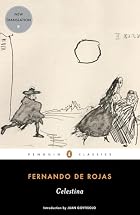

Celestina is described by its author as a "tragicomedy." It is indeed a mixture of tragedy, comedy, buffoonery, folk wisdom and social satire--much like Don Quixote, which it preceded by more than a century. The novel is told almost entirely in dialogue, and is often published in the form of a play.
The story begins with a young Spanish gentleman named Calisto who falls madly in love with Melibea, the sheltered daughter of one of the town's leading citizens. Calisto enlists the help of two of his servants, Sempronio and Pármeno, in finding a way for him to meet Melibea and tell her of his love for her. They, in turn, contact Celestina, madame of the local brothel, whose many talents include witchcraft, matchmaking, the concocting of potions, and the repairing of maidenheads. Sempronio gets Celestina to agree to give him a share of whatever reward she can squeeze out of Calisto. It turns out that Celestina's job is a piece of cake, for Melibea is as much in love with Calisto as he is with her.
But the love of Calisto and Melibea, like that of Romeo and Juliet, comes to a bad end. The author (who was a university student in his 20s when he wrote Celestina), tells us that his work is a cautionary tale on the evils of romantic love. But I suspect this was said somewhat tongue in cheek. Greed is actually the passion at the root of the novel's tragic outcome.
While the beautiful people of the upper classes fall victims to their passion, it is the servants and prostitutes--spouting proverb after proverb--who prove themselves wiser and more clever. There is a clear message of egalitarianism in the novel. As one prostitute says, "We're all children of Adam and Eve, after all. We should try to be good in ourselves and not base our virtue on the nobility of our forbears."
Celestina is worth reading chiefly for its memorable characters, the title character herself, but especially Sempronio who is the prototype for Sancho Panza.
First published in Spanish 1499
English translation by Peter Bush 2009

Celestina is described by its author as a "tragicomedy." It is indeed a mixture of tragedy, comedy, buffoonery, folk wisdom and social satire--much like Don Quixote, which it preceded by more than a century. The novel is told almost entirely in dialogue, and is often published in the form of a play.
The story begins with a young Spanish gentleman named Calisto who falls madly in love with Melibea, the sheltered daughter of one of the town's leading citizens. Calisto enlists the help of two of his servants, Sempronio and Pármeno, in finding a way for him to meet Melibea and tell her of his love for her. They, in turn, contact Celestina, madame of the local brothel, whose many talents include witchcraft, matchmaking, the concocting of potions, and the repairing of maidenheads. Sempronio gets Celestina to agree to give him a share of whatever reward she can squeeze out of Calisto. It turns out that Celestina's job is a piece of cake, for Melibea is as much in love with Calisto as he is with her.
But the love of Calisto and Melibea, like that of Romeo and Juliet, comes to a bad end. The author (who was a university student in his 20s when he wrote Celestina), tells us that his work is a cautionary tale on the evils of romantic love. But I suspect this was said somewhat tongue in cheek. Greed is actually the passion at the root of the novel's tragic outcome.
While the beautiful people of the upper classes fall victims to their passion, it is the servants and prostitutes--spouting proverb after proverb--who prove themselves wiser and more clever. There is a clear message of egalitarianism in the novel. As one prostitute says, "We're all children of Adam and Eve, after all. We should try to be good in ourselves and not base our virtue on the nobility of our forbears."
Celestina is worth reading chiefly for its memorable characters, the title character herself, but especially Sempronio who is the prototype for Sancho Panza.
12paruline
Darn, you beat me for the group read! I'll be reading the last few pages of my copy in the bus this afternoon. Isn't Celestina a great character?
13StevenTX
#12 - Sorry about that. For me it was a case of being late rather than early. This was the November selection for another group I'm in, but now that I've finally gotten around to it, the group seems to have folded.
14StevenTX
565. Facundo: or, Civilization and Barbarism by Domingo F. Sarmiento
First published in Spanish 1845
English translation by Mary Peabody Mann 1868


Argentina had only recently become independent from Spain when it fell into a prolonged series of civil wars lasting from 1814 to 1880. The conflict was chiefly between two factions, the Unitarios, who favored a strong central government headquartered in Buenos Aires, and the Federales, who preferred provincial autonomy in a weak confederation. In 1845 Domingo Sarmiento, a Unitario living in exile in Chile, published what was ostensibly a biography of Juan Facundo Quiroga, one of the Federales leaders. This highly polemicized biography of his now-dead enemy was also an attack on Juan Manuel de Rosas, the Federalist governor of Buenos Aires and de facto dictator of Argentina.
Sarmiento begins with several chapters on the geography and demographics of Argentina. His sentiments are immediately clear: "Civilization" is represented by urban life and European ideas. "Barbarism" is found in the countryside among the ignorant and brutal gauchos (cowboys) and the savage Indians. The goal of the Federales, as he saw it, was to keep Argentina divided and undeveloped so these "gaucho-outlaws" (as he frequently calls them) can pursue their careers of dissolution and banditry unmolested by any civil authority.
Facundo Quiroga (the two surnames are used interchangeably) was the foremost of the gaucho generals in the early stages of the war. His undeniable talents and powerful charisma were only partially offset by his ignorance and reckless behavior. He was especially known for his capricious and arbitrary brutality. When in a foul mood he would torture a man to death for an unintended slight, but on other days would not only pardon but reward an enemy who had the courage to defy or insult him. Sarmiento even shows a grudging admiration for Facundo's strength of character and occasional flashes of nobility. He is always quick to note, however, that Rosas has no such qualities. In the end, after a spell of residence in Buenos Aires, Facundo begins to show leanings toward the Unitario side, so Rosas has him assassinated.
It is impossible not to sympathize with Sarmiento, the author, a self-proclaimed child of the Enlightenment. He idolized French philosophers, believed in the separation of church and state, and later in his life, as Argentina's president, made public education his top priority. His ideas on education came from his friendship with Horace Mann, called the father of American public education. Sarmiento translated a biography of Mann into Spanish, and Mann's wife, Mary, translated Facundo into English. (Mary and Sarmiento are also presumed to have been lovers.) But critics have said there is more fiction than fact in Facundo, and the Uruguayan writer Eduardo Galeano excoriates Sarmiento for his disenfranchisement as president of the rural poor and Native Americans. So we must take everything in this book with a hefty dose of skepticism.
Though it is beautifully written, Facundo is probably best read by someone who has more background than I do in Argentine history or is planning further reading. The many factions and shifting alliances of the civil war period are confusing, and Sarmiento is writing to an audience of his compatriots and contemporaries. Several times he says that something is too well known for him to bother describing or recounting it. So I would recommend this work chiefly to those with a special interest in the subject matter.
First published in Spanish 1845
English translation by Mary Peabody Mann 1868


Argentina had only recently become independent from Spain when it fell into a prolonged series of civil wars lasting from 1814 to 1880. The conflict was chiefly between two factions, the Unitarios, who favored a strong central government headquartered in Buenos Aires, and the Federales, who preferred provincial autonomy in a weak confederation. In 1845 Domingo Sarmiento, a Unitario living in exile in Chile, published what was ostensibly a biography of Juan Facundo Quiroga, one of the Federales leaders. This highly polemicized biography of his now-dead enemy was also an attack on Juan Manuel de Rosas, the Federalist governor of Buenos Aires and de facto dictator of Argentina.
Sarmiento begins with several chapters on the geography and demographics of Argentina. His sentiments are immediately clear: "Civilization" is represented by urban life and European ideas. "Barbarism" is found in the countryside among the ignorant and brutal gauchos (cowboys) and the savage Indians. The goal of the Federales, as he saw it, was to keep Argentina divided and undeveloped so these "gaucho-outlaws" (as he frequently calls them) can pursue their careers of dissolution and banditry unmolested by any civil authority.
Facundo Quiroga (the two surnames are used interchangeably) was the foremost of the gaucho generals in the early stages of the war. His undeniable talents and powerful charisma were only partially offset by his ignorance and reckless behavior. He was especially known for his capricious and arbitrary brutality. When in a foul mood he would torture a man to death for an unintended slight, but on other days would not only pardon but reward an enemy who had the courage to defy or insult him. Sarmiento even shows a grudging admiration for Facundo's strength of character and occasional flashes of nobility. He is always quick to note, however, that Rosas has no such qualities. In the end, after a spell of residence in Buenos Aires, Facundo begins to show leanings toward the Unitario side, so Rosas has him assassinated.
It is impossible not to sympathize with Sarmiento, the author, a self-proclaimed child of the Enlightenment. He idolized French philosophers, believed in the separation of church and state, and later in his life, as Argentina's president, made public education his top priority. His ideas on education came from his friendship with Horace Mann, called the father of American public education. Sarmiento translated a biography of Mann into Spanish, and Mann's wife, Mary, translated Facundo into English. (Mary and Sarmiento are also presumed to have been lovers.) But critics have said there is more fiction than fact in Facundo, and the Uruguayan writer Eduardo Galeano excoriates Sarmiento for his disenfranchisement as president of the rural poor and Native Americans. So we must take everything in this book with a hefty dose of skepticism.
Though it is beautifully written, Facundo is probably best read by someone who has more background than I do in Argentine history or is planning further reading. The many factions and shifting alliances of the civil war period are confusing, and Sarmiento is writing to an audience of his compatriots and contemporaries. Several times he says that something is too well known for him to bother describing or recounting it. So I would recommend this work chiefly to those with a special interest in the subject matter.
15StevenTX
566. Night and Day by Virginia Woolf
First published 1919


Virginia Woolf's second novel has none of the daring stylistic innovations that would characterize her later work, and in its barest outline the plot resembles that of a 19th century romance. But Night and Day is very forward-looking in its examination of relationships under the stress of the culture shift was occurring in the early 20th century.
Katharine Hilbery, one of the two central characters, is the strikingly beautiful only child of a wealthy London couple who are immersed in the literary world. Her father publishes a review, and her mother worships the 19th century poets, especially her own father whose biography she is perpetually compiling. But Katharine, entirely unbeknownst to her parents, has no interest in the arts. She secretly studies mathematics and yearns to be an astronomer so she can spend her time with the stars that are as cold and distant and unemotional as she feels herself to be. The law of science appeals to her "because she could find nothing like it in the possession of human lives."
The other central figure is Ralph Denham, a penniless lawyer who lives in a shabby house with his mother and many siblings. Like Katharine he shuns the "damned romantic nonsense" of the past century and takes private refuge in the sciences, only his passion is botany. But he loses control of his passions when he makes Katharine's acquaintance while transacting business with her father.
The story proceeds with the untangling of an awkward chain of romantic and social entanglements. Mary Datchett, a suffragist, loves Ralph Denham. Ralph is secretly infatuated with Katharine Hilbery. Katharine is resignedly engaged to a bad poet, William Rodney, who thinks he loves Katharine until he meets her cousin Cassandra.
But the real focus of the novel is on the inner turmoil of Katharine and Ralph. They both ruthlessly examine their own feelings and try to suppress what they consider irrational. Both are withdrawn and reticent by nature, but brutally honest when forced to reveal their thoughts. They are the intellectual children of Darwin, Freud and Wells living in a world whose approved emotions are those of Byron, Keats and Shelley.
"You come and see me among flowers and pictures," Katharine warns Ralph, "and think me mysterious, romantic, and all the rest of it. Being yourself very inexperienced and very emotional, you go home and invent a story about me, and now you can't separate me from the person you've imagined me to be. You call that, I suppose, being in love; as a matter of fact it's being in delusion."
But what is left of life when one rejects the idea of love? Is Katharine right to resign herself to "a perfectly loveless marriage, as the thing one actually did in real life"?
In the passage which gives the novel its title, Katharine finally challenges herself to reconcile the conflict between her public persona and her dark and troubled inner self. "'Why,' she reflected, 'should there be this perpetual disparity between the thought and the action, between the life of solitude and the life of society, this astonishing precipice on one side of which the soul was active and in broad daylight, on the other side of which it was contemplative and dark as night?'"
Night and Day is a brilliant, beautifully written and thoughtful novel full of interesting and refreshingly distinctive characters who must find a way to reconcile their new ideals with their primitive feelings.
First published 1919


Virginia Woolf's second novel has none of the daring stylistic innovations that would characterize her later work, and in its barest outline the plot resembles that of a 19th century romance. But Night and Day is very forward-looking in its examination of relationships under the stress of the culture shift was occurring in the early 20th century.
Katharine Hilbery, one of the two central characters, is the strikingly beautiful only child of a wealthy London couple who are immersed in the literary world. Her father publishes a review, and her mother worships the 19th century poets, especially her own father whose biography she is perpetually compiling. But Katharine, entirely unbeknownst to her parents, has no interest in the arts. She secretly studies mathematics and yearns to be an astronomer so she can spend her time with the stars that are as cold and distant and unemotional as she feels herself to be. The law of science appeals to her "because she could find nothing like it in the possession of human lives."
The other central figure is Ralph Denham, a penniless lawyer who lives in a shabby house with his mother and many siblings. Like Katharine he shuns the "damned romantic nonsense" of the past century and takes private refuge in the sciences, only his passion is botany. But he loses control of his passions when he makes Katharine's acquaintance while transacting business with her father.
The story proceeds with the untangling of an awkward chain of romantic and social entanglements. Mary Datchett, a suffragist, loves Ralph Denham. Ralph is secretly infatuated with Katharine Hilbery. Katharine is resignedly engaged to a bad poet, William Rodney, who thinks he loves Katharine until he meets her cousin Cassandra.
But the real focus of the novel is on the inner turmoil of Katharine and Ralph. They both ruthlessly examine their own feelings and try to suppress what they consider irrational. Both are withdrawn and reticent by nature, but brutally honest when forced to reveal their thoughts. They are the intellectual children of Darwin, Freud and Wells living in a world whose approved emotions are those of Byron, Keats and Shelley.
"You come and see me among flowers and pictures," Katharine warns Ralph, "and think me mysterious, romantic, and all the rest of it. Being yourself very inexperienced and very emotional, you go home and invent a story about me, and now you can't separate me from the person you've imagined me to be. You call that, I suppose, being in love; as a matter of fact it's being in delusion."
But what is left of life when one rejects the idea of love? Is Katharine right to resign herself to "a perfectly loveless marriage, as the thing one actually did in real life"?
In the passage which gives the novel its title, Katharine finally challenges herself to reconcile the conflict between her public persona and her dark and troubled inner self. "'Why,' she reflected, 'should there be this perpetual disparity between the thought and the action, between the life of solitude and the life of society, this astonishing precipice on one side of which the soul was active and in broad daylight, on the other side of which it was contemplative and dark as night?'"
Night and Day is a brilliant, beautifully written and thoughtful novel full of interesting and refreshingly distinctive characters who must find a way to reconcile their new ideals with their primitive feelings.
16StevenTX
567. Locus Solus by Raymond Roussel
First published in French 1914
English translation by Rupert Copeland-Cunningham 1970

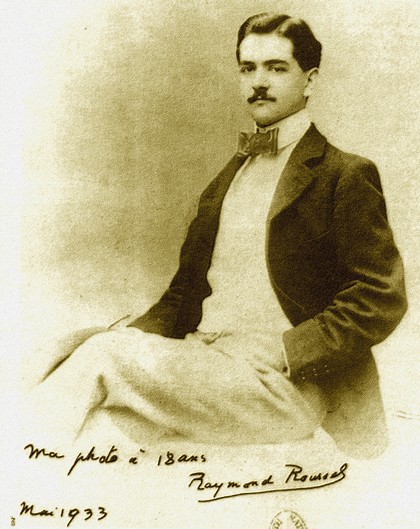
A brilliant scientist named Canterel takes a group of visiting dignitaries around the grounds of his estate named Locus Solus. They see a series of artifacts, presentations and demonstrations, each more amazing than the last.
--A mud sculpture of a naked child from the fabled city of Timbuctoo has been the making and breaking of great empires. --A mechanism made from a road mender's tool and a balloon is slowly constructing an elaborate mosaic entirely of human teeth. --Inside a giant aquarium in the shape of a diamond, a dancing woman produces enchanting music simply by waving her hair. She breathes the water itself without harm, as does a completely hairless cat that uses an electrical apparatus to stimulate the preserved but skinless severed head of Danton, making him speak. --Inside a glass cage a beautiful young woman accidentally pricks herself with a thorn and goes insane at the sight of her own blood. It turns out she is a reanimated corpse, as is the man in the next chamber who reenacts his own suicide. --A fortune-teller uses musical insects embedded in a Tarot card to extract gunpowder from the arm of a woman. --A chicken composes poetry and writes it to a canvas by coughing up its own blood in alphabetical shapes.
These are only a few of the dozens of marvels on display at Locus Solus. Each is described in minute detail, along with the scientific principals that explain them and the history of their discovery. Inevitably this leads to equally intricate background stories whose relationship to the items on exhibit are as bizarre and unexpected as the items themselves. Not infrequently there are stories within the stories invoking oddities of history, exotic faraway lands, myths and legends, and famous figures from the past.
What makes this a notable work is the way Roussel uses technical language and anecdote to make creations sound almost credible that, on the surface, are implausible at best, and often preposterous or silly. Yet all of his science, all of his legends, all of his historical anecdotes and quotations from ancient authors are entirely fabricated. Everything is the product of the author's imagination.
First published in French 1914
English translation by Rupert Copeland-Cunningham 1970

A brilliant scientist named Canterel takes a group of visiting dignitaries around the grounds of his estate named Locus Solus. They see a series of artifacts, presentations and demonstrations, each more amazing than the last.
--A mud sculpture of a naked child from the fabled city of Timbuctoo has been the making and breaking of great empires. --A mechanism made from a road mender's tool and a balloon is slowly constructing an elaborate mosaic entirely of human teeth. --Inside a giant aquarium in the shape of a diamond, a dancing woman produces enchanting music simply by waving her hair. She breathes the water itself without harm, as does a completely hairless cat that uses an electrical apparatus to stimulate the preserved but skinless severed head of Danton, making him speak. --Inside a glass cage a beautiful young woman accidentally pricks herself with a thorn and goes insane at the sight of her own blood. It turns out she is a reanimated corpse, as is the man in the next chamber who reenacts his own suicide. --A fortune-teller uses musical insects embedded in a Tarot card to extract gunpowder from the arm of a woman. --A chicken composes poetry and writes it to a canvas by coughing up its own blood in alphabetical shapes.
These are only a few of the dozens of marvels on display at Locus Solus. Each is described in minute detail, along with the scientific principals that explain them and the history of their discovery. Inevitably this leads to equally intricate background stories whose relationship to the items on exhibit are as bizarre and unexpected as the items themselves. Not infrequently there are stories within the stories invoking oddities of history, exotic faraway lands, myths and legends, and famous figures from the past.
What makes this a notable work is the way Roussel uses technical language and anecdote to make creations sound almost credible that, on the surface, are implausible at best, and often preposterous or silly. Yet all of his science, all of his legends, all of his historical anecdotes and quotations from ancient authors are entirely fabricated. Everything is the product of the author's imagination.
17StevenTX
568. Things As They Are; or, The Adventures of Caleb Williams by William Godwin
First published 1794


"I will write a tale that shall constitute an epoch in the mind of the reader, that no one, after he has read it, shall ever be exactly the same man that he was before."
Those who shorten the title of this novel to "Caleb Williams" and consign it to the Gothic genre of entertainments are missing the point that it is indeed a cold, hard look at "things as they are," specifically the English social structure and, in particular, its courts and prisons. "They told me what a fine thing it was to be an Englishman, and about liberty and property, and all that there; and I find it is all a flam. Lord, what fools we be!"
Caleb William narrates his own life story, beginning as a newly-orphaned and penniless young man who nonetheless has an exceptional mind and has managed to acquire an excellent education. He is taken in by a member of the local gentry, Mr. Falkland, as a private secretary. Falkland is a man of spotless reputation whose employees hold him in high regard, but he is surprisingly moody and secretive and shuns all unnecessary human contact. When Caleb finds that there is a locked chest which Falkland guards obsessively, he begins to suspect that there is some dark secret in his employer's past. Eventually he gets one of his fellow servants to tell him Falkland's story.
Falkland's history occupies about a fourth of the novel. For the most part it seems to be a typical scenario of a noble hero (Falkland), a despicable villain, and a damsel in distress. There are elements that may have been borrowed deliberately from earlier 18th century fiction. Falkland's rescue of a young lady in dishabille from a burning building recalls similar scenes in the novels of Tobias Smollett. Later this same young woman is kept prisoner by her family in her own home to force her to marry a loutish neighbor, but she escapes via the garden gate only to find that her rescuer is intent on becoming her ravisher. This comes from Samuel Richardson's novel Clarissa; or, The History of a Young Lady.
But Godwin then takes first Falkland's story, and then Caleb's on a series of unpredictable twists and turns. And having first given us a picture of a noble and respected gentry class, he turns that around as well, particularly in regard to the complete and arbitrary power the rich hold over of the poor through the system of courts and assizes. Instead of nobles and commoners, he characterizes English society as comprised of "tyrants and slaves." Caleb declares "I was astonished at the folly of my species, that they did not rise up as one man, and shake off chains so ignominious, and misery so insupportable."
Caleb reaches these conclusions after having been framed for a crime he did not commit. With his accuser serving as magistrate, he is imprisoned for months awaiting a trial that will surely result in his execution. Godwin's strongest words are used in describing the English gaols: "Go, go, ignorant fool! and visit the scenes of our prisons! witness their unwholesomeness, their filth, the tyranny of their governors, the misery of their inmates! After that, show me the man shameless enough to triumph, and say, England has no Bastile!" In prison, Caleb comes to the realization that the majority of inmates are innocent, and their innocence is known to their accusers. And those who are guilty are punished out of proportion to the severity of their crime by a system of "justice, which is too solemn and dignified to accommodate itself to the rights or benefit of an insignificant individual."
Caleb manages to escape, only to be pursued relentlessly from one end of Britain to the other by the fanatical bounty hunter Gines. It is this phase of the novel which gives it a Gothic flavor, though there is nothing whatsoever supernatural about Gines, a fact which makes the story all the more horrifying. Nonetheless it is impossible not to recognize the similarities between Gines's pursuit of Caleb Williams and Frankenstein's pursuit of his escaped monster. Mary Shelley was, after all, William Godwin's daughter.
Things As They Are; or, The Adventures of Caleb Williams is an important novel that manages to straddle the divide between the Gothic novels of Godwin's time and the Realist novels advocating social reform that were yet to come. It is a novel which first lulls readers into a sense of comfort by giving us familiar scenes and stereotypical characters, only to defy those stereotypes and become completely unpredictable. The overall effect of the novel is to be unsettling, which is probably exactly what the author was aiming for.
First published 1794


"I will write a tale that shall constitute an epoch in the mind of the reader, that no one, after he has read it, shall ever be exactly the same man that he was before."
Those who shorten the title of this novel to "Caleb Williams" and consign it to the Gothic genre of entertainments are missing the point that it is indeed a cold, hard look at "things as they are," specifically the English social structure and, in particular, its courts and prisons. "They told me what a fine thing it was to be an Englishman, and about liberty and property, and all that there; and I find it is all a flam. Lord, what fools we be!"
Caleb William narrates his own life story, beginning as a newly-orphaned and penniless young man who nonetheless has an exceptional mind and has managed to acquire an excellent education. He is taken in by a member of the local gentry, Mr. Falkland, as a private secretary. Falkland is a man of spotless reputation whose employees hold him in high regard, but he is surprisingly moody and secretive and shuns all unnecessary human contact. When Caleb finds that there is a locked chest which Falkland guards obsessively, he begins to suspect that there is some dark secret in his employer's past. Eventually he gets one of his fellow servants to tell him Falkland's story.
Falkland's history occupies about a fourth of the novel. For the most part it seems to be a typical scenario of a noble hero (Falkland), a despicable villain, and a damsel in distress. There are elements that may have been borrowed deliberately from earlier 18th century fiction. Falkland's rescue of a young lady in dishabille from a burning building recalls similar scenes in the novels of Tobias Smollett. Later this same young woman is kept prisoner by her family in her own home to force her to marry a loutish neighbor, but she escapes via the garden gate only to find that her rescuer is intent on becoming her ravisher. This comes from Samuel Richardson's novel Clarissa; or, The History of a Young Lady.
But Godwin then takes first Falkland's story, and then Caleb's on a series of unpredictable twists and turns. And having first given us a picture of a noble and respected gentry class, he turns that around as well, particularly in regard to the complete and arbitrary power the rich hold over of the poor through the system of courts and assizes. Instead of nobles and commoners, he characterizes English society as comprised of "tyrants and slaves." Caleb declares "I was astonished at the folly of my species, that they did not rise up as one man, and shake off chains so ignominious, and misery so insupportable."
Caleb reaches these conclusions after having been framed for a crime he did not commit. With his accuser serving as magistrate, he is imprisoned for months awaiting a trial that will surely result in his execution. Godwin's strongest words are used in describing the English gaols: "Go, go, ignorant fool! and visit the scenes of our prisons! witness their unwholesomeness, their filth, the tyranny of their governors, the misery of their inmates! After that, show me the man shameless enough to triumph, and say, England has no Bastile!" In prison, Caleb comes to the realization that the majority of inmates are innocent, and their innocence is known to their accusers. And those who are guilty are punished out of proportion to the severity of their crime by a system of "justice, which is too solemn and dignified to accommodate itself to the rights or benefit of an insignificant individual."
Caleb manages to escape, only to be pursued relentlessly from one end of Britain to the other by the fanatical bounty hunter Gines. It is this phase of the novel which gives it a Gothic flavor, though there is nothing whatsoever supernatural about Gines, a fact which makes the story all the more horrifying. Nonetheless it is impossible not to recognize the similarities between Gines's pursuit of Caleb Williams and Frankenstein's pursuit of his escaped monster. Mary Shelley was, after all, William Godwin's daughter.
Things As They Are; or, The Adventures of Caleb Williams is an important novel that manages to straddle the divide between the Gothic novels of Godwin's time and the Realist novels advocating social reform that were yet to come. It is a novel which first lulls readers into a sense of comfort by giving us familiar scenes and stereotypical characters, only to defy those stereotypes and become completely unpredictable. The overall effect of the novel is to be unsettling, which is probably exactly what the author was aiming for.
18StevenTX
569. Platero and I by Juan Ramón Jiménez
Serialized 1914, first book publication with added chapters 1917
English translation by Eloïse Roach 1957


Platero and I is a collection of 138 prose poems in which the poet addresses himself to his donkey, Platero, as they wander the streets of his native Andalusian town and the nearby countryside. There are many simple tales of the joys that Jiménez shares with Platero and often with the village children--eating pomegranates, picking flowers, and telling stories. There are sad tales as well of seeing animals abused, of families in poverty, and of the deaths of children. But many of the prose poems simply celebrate the beauty of nature--sunsets, falling leaves, butterflies, raindrops caught in roses--all against the backdrop of the passage of the seasons of a single year.
The following chapter, titled "Promenade," seems to capture best the essence of the poet's simple and joyous view of life.
Serialized 1914, first book publication with added chapters 1917
English translation by Eloïse Roach 1957


Platero and I is a collection of 138 prose poems in which the poet addresses himself to his donkey, Platero, as they wander the streets of his native Andalusian town and the nearby countryside. There are many simple tales of the joys that Jiménez shares with Platero and often with the village children--eating pomegranates, picking flowers, and telling stories. There are sad tales as well of seeing animals abused, of families in poverty, and of the deaths of children. But many of the prose poems simply celebrate the beauty of nature--sunsets, falling leaves, butterflies, raindrops caught in roses--all against the backdrop of the passage of the seasons of a single year.
The following chapter, titled "Promenade," seems to capture best the essence of the poet's simple and joyous view of life.
How pleasantly we go along the deep, honeysuckle-hung roads of summer. I read or sing or recite verses to the sky. Platero nibbles the thin grass on the shady roadside, the dusty blooms of the mallows, the yellow vinegar flowers. He spends more time standing than walking. I let him...Jiménez finds beauty and nobility everywhere he looks, and his lyrical prose conveys a simple philosophy of living and loving each moment to its fullest.
The infinitely blue sky, receiving the arrows of my ecstatic eyes, rises to glorious space above the laden almond trees. The entire ardent and silent countryside is gleaming. In the river a small sail stands still in the windless water. The compact smoke of a fire swells in round black clouds toward the hills.
But our journey is short. It is like a sweet defenseless day in the midst of multiple life. Not the apotheosis of the day, nor the sea to which the river goes; not even the tragedy of the flames.
When in the smell of orange blossoms the gay, cool sound of the well pulley is heard, Platero brays and frisks with delight. What a simple daily pleasure. At the cistern I fill my glass and drink that liquid snow. Platero sinks his mouth in the dark water and sips greedily here and there in the cleanest spots.
19StevenTX
570. Chaka the Zulu by Thomas Mofolo
First published in Sesotho 1925
English translation by Daniel P. Kunene 1981
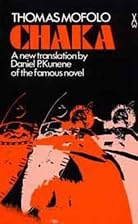

Chaka, or "Shaka" as his name is more commonly written, was the greatest king of the Zulu nation, reigning from approximately 1816 to his death in 1828. Thomas Mofolo's novel presents Chaka as a tragic and semi-mythical hero who owed much of his military success to a Faustian deal with a sorcerer. From being a brave and virtuous youth, Chaka is corrupted by his unlimited ambition, becoming a cruel and ruthless conqueror who bases his power on the awe and fear he instills in his followers by arbitrarily killing friends and enemies alike, even members of his own family. Eventually he find himself hemmed in by his own web of fear and distrust.
The basic facts in the novel are true to the historical record. Chaka is a king's oldest but illegitimate son, and he and his mother are banished from their homes because of his illegitimacy. His remarkable bravery and prowess in combat, however, earn Chaka the patronage of another king, Dingiswayo, to whom Chaka's father owes tribute. Through a mixture of violence and charisma, Chaka first succeeds his father, killing his younger brother in the process, then Dingiswayo himself. As king among kings, he revolutionizes the Zulu army by developing new weapons, tactics, organization and training regimens. He literally restructures Zulu society around his military aims, subordinating everything to conquest. The results are remarkably successful but devastating to the countryside and the people of southern Africa.
The novel's Chaka gradually goes from being a sympathetic character, to a tragic hero, to a heinous villain. Chaka ceases to rely upon his own merits and depends on the magical aid of his mentor. This sends him into a spiral self-delusion and moral decay. This is a sophisticated and entertaining novel that teaches us much about Zulu culture and history, but whether it is a fair portrayal of Chaka is open to conjecture.

First published in Sesotho 1925
English translation by Daniel P. Kunene 1981

Chaka, or "Shaka" as his name is more commonly written, was the greatest king of the Zulu nation, reigning from approximately 1816 to his death in 1828. Thomas Mofolo's novel presents Chaka as a tragic and semi-mythical hero who owed much of his military success to a Faustian deal with a sorcerer. From being a brave and virtuous youth, Chaka is corrupted by his unlimited ambition, becoming a cruel and ruthless conqueror who bases his power on the awe and fear he instills in his followers by arbitrarily killing friends and enemies alike, even members of his own family. Eventually he find himself hemmed in by his own web of fear and distrust.
The basic facts in the novel are true to the historical record. Chaka is a king's oldest but illegitimate son, and he and his mother are banished from their homes because of his illegitimacy. His remarkable bravery and prowess in combat, however, earn Chaka the patronage of another king, Dingiswayo, to whom Chaka's father owes tribute. Through a mixture of violence and charisma, Chaka first succeeds his father, killing his younger brother in the process, then Dingiswayo himself. As king among kings, he revolutionizes the Zulu army by developing new weapons, tactics, organization and training regimens. He literally restructures Zulu society around his military aims, subordinating everything to conquest. The results are remarkably successful but devastating to the countryside and the people of southern Africa.
The novel's Chaka gradually goes from being a sympathetic character, to a tragic hero, to a heinous villain. Chaka ceases to rely upon his own merits and depends on the magical aid of his mentor. This sends him into a spiral self-delusion and moral decay. This is a sophisticated and entertaining novel that teaches us much about Zulu culture and history, but whether it is a fair portrayal of Chaka is open to conjecture.

20StevenTX
571. Grimus by Salman Rushdie
First published 1975


Grimus is either a fantasy or science fiction novel--depending on how you define the terms--that explores various notions of ideology, personality, and cultural equivalence through the mechanisms of myth, literature and language. If that sounds rather vague, it is probably by the author's design that it is so. One of his characters says: "I do not care for stories that are so, so tight. Stories should be like life, slightly frayed at the edges, full of loose ends and lives juxtaposed by accident rather than some grand design. Most of life has no meaning--so it must surely be a distortion of life to tell tales in which every single element is meaningful."
The protagonist of the novel is an American Indian named Flapping Eagle. Whether he is of our own time, or even our own reality, is unclear and immaterial. Following the lead of his older sister (and lover!) Bird-Dog, Flapping Eagle takes a potion which promises him immortality. After 700 years of basically kicking around in a sailboat and getting bored, Flapping Eagle decides he wants to experience old age. He learns from another immortal of a mysterious place called Calf Island, where all immortals eventually go when they've had their fill of life.
Flapping Eagle comes shipwrecked to the shore of Calf Island, which consists of a single mountain called Calf Mountain. He is welcomed by a man named Virgil Jones, who becomes his guide and mentor. Halfway up Calf Island is a town called K, where most of the immortals live. K is like nothing so much as the setting for a Western movie, complete with its saloon and whorehouse. At the top of the mountain, some believe, lives a man named Grimus who subtly controls Calf Island with the help of a device named the Stone Rose. But Grimus is a megalomaniac, and the Stone Rose is broken, threatening to plunge Calf Island and its inhabitants into interdimensional chaos.
Some of the many literary allusions in the novel are obvious in the preceding summary. Virgil is Flapping Eagle's guide up Calf Mountain just as Virgil was Dante's guide down into Hell. K can only be an allusion to Kafka, and the Stone Rose evokes the Rosetta Stone. There are many other references to various mythologies and literatures. Grimus (as we are told in the novel) is an anagram of Simurg, the mythical flying creature found in Persian and other Asian myths, the equivalent of the Roc or Phoenix. Much of the novel is said also to be based on Sufi concepts and literature, with which I am unacquainted. Likewise I'm sure there are references to as many different Asian cultural ideas as there are Western.
One of the common themes in the novel is dualities--the juxtaposition of the Asian Simurg and the American Eagle, for example. (Probably also the juxtaposition of the Asian Indian author and the American Indian character.) People are repeated paired with their equivalents and opposites just as cultural ideas and mythological symbols from East and West are seen as mirror images. The text is also full of anagrams (Grimus=Simug, Thera=Earth, etc.) to the point where I got distracted trying to find anagrams where there probably weren't any, and the chief scientific notion behind the novel is the idea of parallel universes.
Ideologically if there is one clear point in Grimus, it is of people's lives "ruined for the sake of an idea...," of people "...clutching obsessively at the shreds their individuality, knowing within themselves that they were powerless to alter the circumstances in which they lived" in the face of "unlimited power, unlimited learning, and a rarefied, abstract attitude to life which exalted these two into the greatest goals of humanity." This would appear to be a swipe both at utopianism and theocracy.
But much of Grimus appears to be an assortment of ideas, allusions, and gimmicks with no clear and coherent theme behind them. It's an often entertaining novel, but one which would almost certainly have sunk into oblivion had its author not subsequently written Midnight's Children and The Satanic Verses.
Rushdie was the last of the authors on the 1001 list by whom I had 6 or more unread books. So I will now work on the following remaining 5-book authors:
Salman Rushdie (obviously)
Virginia Woolf
J. M. Coetzee
Paul Auster
Thomas Bernhard
Henry Green
First published 1975


Grimus is either a fantasy or science fiction novel--depending on how you define the terms--that explores various notions of ideology, personality, and cultural equivalence through the mechanisms of myth, literature and language. If that sounds rather vague, it is probably by the author's design that it is so. One of his characters says: "I do not care for stories that are so, so tight. Stories should be like life, slightly frayed at the edges, full of loose ends and lives juxtaposed by accident rather than some grand design. Most of life has no meaning--so it must surely be a distortion of life to tell tales in which every single element is meaningful."
The protagonist of the novel is an American Indian named Flapping Eagle. Whether he is of our own time, or even our own reality, is unclear and immaterial. Following the lead of his older sister (and lover!) Bird-Dog, Flapping Eagle takes a potion which promises him immortality. After 700 years of basically kicking around in a sailboat and getting bored, Flapping Eagle decides he wants to experience old age. He learns from another immortal of a mysterious place called Calf Island, where all immortals eventually go when they've had their fill of life.
Flapping Eagle comes shipwrecked to the shore of Calf Island, which consists of a single mountain called Calf Mountain. He is welcomed by a man named Virgil Jones, who becomes his guide and mentor. Halfway up Calf Island is a town called K, where most of the immortals live. K is like nothing so much as the setting for a Western movie, complete with its saloon and whorehouse. At the top of the mountain, some believe, lives a man named Grimus who subtly controls Calf Island with the help of a device named the Stone Rose. But Grimus is a megalomaniac, and the Stone Rose is broken, threatening to plunge Calf Island and its inhabitants into interdimensional chaos.
Some of the many literary allusions in the novel are obvious in the preceding summary. Virgil is Flapping Eagle's guide up Calf Mountain just as Virgil was Dante's guide down into Hell. K can only be an allusion to Kafka, and the Stone Rose evokes the Rosetta Stone. There are many other references to various mythologies and literatures. Grimus (as we are told in the novel) is an anagram of Simurg, the mythical flying creature found in Persian and other Asian myths, the equivalent of the Roc or Phoenix. Much of the novel is said also to be based on Sufi concepts and literature, with which I am unacquainted. Likewise I'm sure there are references to as many different Asian cultural ideas as there are Western.
One of the common themes in the novel is dualities--the juxtaposition of the Asian Simurg and the American Eagle, for example. (Probably also the juxtaposition of the Asian Indian author and the American Indian character.) People are repeated paired with their equivalents and opposites just as cultural ideas and mythological symbols from East and West are seen as mirror images. The text is also full of anagrams (Grimus=Simug, Thera=Earth, etc.) to the point where I got distracted trying to find anagrams where there probably weren't any, and the chief scientific notion behind the novel is the idea of parallel universes.
Ideologically if there is one clear point in Grimus, it is of people's lives "ruined for the sake of an idea...," of people "...clutching obsessively at the shreds their individuality, knowing within themselves that they were powerless to alter the circumstances in which they lived" in the face of "unlimited power, unlimited learning, and a rarefied, abstract attitude to life which exalted these two into the greatest goals of humanity." This would appear to be a swipe both at utopianism and theocracy.
But much of Grimus appears to be an assortment of ideas, allusions, and gimmicks with no clear and coherent theme behind them. It's an often entertaining novel, but one which would almost certainly have sunk into oblivion had its author not subsequently written Midnight's Children and The Satanic Verses.
Rushdie was the last of the authors on the 1001 list by whom I had 6 or more unread books. So I will now work on the following remaining 5-book authors:
Salman Rushdie (obviously)
Virginia Woolf
J. M. Coetzee
Paul Auster
Thomas Bernhard
Henry Green
21StevenTX
(re-read) Frankenstein; or, The Modern Prometheus by Mary Shelley
First published 1818, revised by the author 1831
I previously read the 1831 version; this review is of the 1818 version
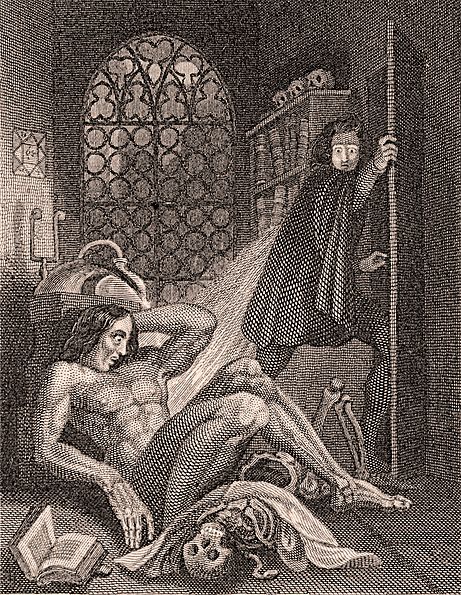

The basic outline of Frankenstein is well known thanks to film adaptations, so the briefest summary will suffice: Victor Frankenstein, a Swiss student of natural philosophy at Ingolstadt in Germany, succeeds in creating artificial life--a man-shaped monster eight feet tall. As soon as his monster comes to life, Frankenstein sees how repulsive it is and instantly regrets what he has done. The monster escapes, only to reappear near Geneva years later after having learned to speak and read French. He begins a series of murders aimed at forcing Victor to create a female monster to be his companion. We know that the story will end with Victor pursuing the monster across the Arctic ice cap, because this is actually how the novel begins in a framing narrative by an English explorer.
Mary Shelley packed a lot of thoughtful content into her short and suspenseful novel. First and foremost there is the analogy of Frankenstein and his monster, creator and his creation, as God and Man. The essential questions of how could a benevolent God create evil, and how could an all-powerful God punish Man for being what he was created to be are both here in the monster's plea: "Remember, that I am thy creature: I ought to be thy Adam; but I am rather the fallen angel, whom thou drivest from joy for no misdeed." And later: "‘Cursed creator! Why did you form a monster so hideous that even you turned from me in disgust?" The monster reads Milton's Paradise Lost and sees it as a "picture of an omnipotent God warring with his creatures."
Another facet of the novel is the duality, or yin/yang of the human spirit represented by Frankenstein and his monster just as it would later be depicted by Stevenson as Dr. Jekyll and Mr. Hyde. "Was man, indeed, at once so powerful, so virtuous, and magnificent, yet so vicious and base?" the monster asks himself. Recognizing that they are two facets of the same being, he tells Frankenstein that they are "bound by ties only dissoluble by the annihilation of one of us." In the incredible ending scenes of the novel we see that Frankenstein and his monster are indeed bound for eternity in the mutual grip of love and hate, creation and destruction. Each is driven to destroy that which he knows he cannot live without.
Frankenstein is also a cautionary tale of science without conscience and of knowledge without wisdom. In its first pages Frankenstein commands, "Learn from me, if not by my precepts, at least by my example, how dangerous is the acquirement of knowledge, and how much happier that man is who believes his native town to be the world, than he who aspires to become greater than his nature will allow." Later the monster echoes this sentiment, promising that if he is given his Eve he will renounce civilization and return to Eden. "I will quit the neighbourhood of man, and dwell, as it may chance, in the most savage of places. My evil passions will have fled, for I shall meet with sympathy; my life will flow quietly away, and, in my dying moments, I shall not curse my maker.”
The above sentiments are closely related to Rousseau's political idea of the "noble savage," which we find expressed several times in Frankenstein. For example: "Alas! why does man boast of sensibilities superior to those apparent in the brute; it only renders them more necessary beings. If our impulses were confined to hunger, thirst, and desire, we might be nearly free."
The only directly political statement comes when Victor Frankenstein praises his native Switzerland: "The republican institutions of our country have produced simpler and happier manners than those which prevail in the great monarchies that surround it. Hence there is less distinction between the several classes of its inhabitants; and the lower orders being neither so poor nor so despised, their manners are more refined and moral."
In other reflections of the time we see the Romantic Age's fascination with "the awful and majestic in nature," and we learn that Victor is an habitual user of opiates. Nature plays a major symbolic role in the novel as well, for example the traditional symbolism of water as salvation and ice as salvation denied. The novel begins and ends on a sheet of ice, and the key encounter between Victor and the monster takes place on a glacier. Each of the monster's killings takes place on the shore of a lake or sea.
Frankenstein was first published in 1818. Mary Shelley revised it for publication in 1831. The revisions largely reflected the conservatism of the times. Some expressions of religious piety were added to make the novel less agnostic. And Elizabeth, Victor Frankenstein's fiancée, who is his first cousin in the original version is changed into an unrelated orphan raised by the family. The 1831 novel is the one most widely reprinted today, but the bolder 1818 version is probably closer to the author's original intent. They can be distinguished most easily by the chapter numbering. The 1818 edition has three volumes of seven, nine, and seven chapters respectively. The 1831 edition simply has chapters numbered 1-24.
First published 1818, revised by the author 1831
I previously read the 1831 version; this review is of the 1818 version

The basic outline of Frankenstein is well known thanks to film adaptations, so the briefest summary will suffice: Victor Frankenstein, a Swiss student of natural philosophy at Ingolstadt in Germany, succeeds in creating artificial life--a man-shaped monster eight feet tall. As soon as his monster comes to life, Frankenstein sees how repulsive it is and instantly regrets what he has done. The monster escapes, only to reappear near Geneva years later after having learned to speak and read French. He begins a series of murders aimed at forcing Victor to create a female monster to be his companion. We know that the story will end with Victor pursuing the monster across the Arctic ice cap, because this is actually how the novel begins in a framing narrative by an English explorer.
Mary Shelley packed a lot of thoughtful content into her short and suspenseful novel. First and foremost there is the analogy of Frankenstein and his monster, creator and his creation, as God and Man. The essential questions of how could a benevolent God create evil, and how could an all-powerful God punish Man for being what he was created to be are both here in the monster's plea: "Remember, that I am thy creature: I ought to be thy Adam; but I am rather the fallen angel, whom thou drivest from joy for no misdeed." And later: "‘Cursed creator! Why did you form a monster so hideous that even you turned from me in disgust?" The monster reads Milton's Paradise Lost and sees it as a "picture of an omnipotent God warring with his creatures."
Another facet of the novel is the duality, or yin/yang of the human spirit represented by Frankenstein and his monster just as it would later be depicted by Stevenson as Dr. Jekyll and Mr. Hyde. "Was man, indeed, at once so powerful, so virtuous, and magnificent, yet so vicious and base?" the monster asks himself. Recognizing that they are two facets of the same being, he tells Frankenstein that they are "bound by ties only dissoluble by the annihilation of one of us." In the incredible ending scenes of the novel we see that Frankenstein and his monster are indeed bound for eternity in the mutual grip of love and hate, creation and destruction. Each is driven to destroy that which he knows he cannot live without.
Frankenstein is also a cautionary tale of science without conscience and of knowledge without wisdom. In its first pages Frankenstein commands, "Learn from me, if not by my precepts, at least by my example, how dangerous is the acquirement of knowledge, and how much happier that man is who believes his native town to be the world, than he who aspires to become greater than his nature will allow." Later the monster echoes this sentiment, promising that if he is given his Eve he will renounce civilization and return to Eden. "I will quit the neighbourhood of man, and dwell, as it may chance, in the most savage of places. My evil passions will have fled, for I shall meet with sympathy; my life will flow quietly away, and, in my dying moments, I shall not curse my maker.”
The above sentiments are closely related to Rousseau's political idea of the "noble savage," which we find expressed several times in Frankenstein. For example: "Alas! why does man boast of sensibilities superior to those apparent in the brute; it only renders them more necessary beings. If our impulses were confined to hunger, thirst, and desire, we might be nearly free."
The only directly political statement comes when Victor Frankenstein praises his native Switzerland: "The republican institutions of our country have produced simpler and happier manners than those which prevail in the great monarchies that surround it. Hence there is less distinction between the several classes of its inhabitants; and the lower orders being neither so poor nor so despised, their manners are more refined and moral."
In other reflections of the time we see the Romantic Age's fascination with "the awful and majestic in nature," and we learn that Victor is an habitual user of opiates. Nature plays a major symbolic role in the novel as well, for example the traditional symbolism of water as salvation and ice as salvation denied. The novel begins and ends on a sheet of ice, and the key encounter between Victor and the monster takes place on a glacier. Each of the monster's killings takes place on the shore of a lake or sea.
Frankenstein was first published in 1818. Mary Shelley revised it for publication in 1831. The revisions largely reflected the conservatism of the times. Some expressions of religious piety were added to make the novel less agnostic. And Elizabeth, Victor Frankenstein's fiancée, who is his first cousin in the original version is changed into an unrelated orphan raised by the family. The 1831 novel is the one most widely reprinted today, but the bolder 1818 version is probably closer to the author's original intent. They can be distinguished most easily by the chapter numbering. The 1818 edition has three volumes of seven, nine, and seven chapters respectively. The 1831 edition simply has chapters numbered 1-24.
22.Monkey.
*Eight, nine, and seven, which equals 24 ;) You made me curious so I just checked my B&N leatherbounds edition (not yet read) and it appears to be the 1818 one, three volumes, VIII, IX, and VII chapters. :) Which makes me happy, boo for conservative edits! Lol.
23StevenTX
*Eight, nine, and seven, which equals 24 ;)
The 1818 edition starts with four letters, then has seven chapters in the first volume. There are a total of 23 chapters in all. In the revised 1831 edition Chapter II of Volume I was split in two and became Chapters 2 and 3, yielding a total of 24.
The 1818 edition starts with four letters, then has seven chapters in the first volume. There are a total of 23 chapters in all. In the revised 1831 edition Chapter II of Volume I was split in two and became Chapters 2 and 3, yielding a total of 24.
24.Monkey.
Hm. Mine is Volume One - Letter I through IV then Chapter I through VIII; Volume Two - Chapter I through IX; Volume Three - Chapter I through VII.
Do you happen to know any specific locations of the changes?
Do you happen to know any specific locations of the changes?
25StevenTX
It is curious that your edition has the format of the original edition but an extra chapter. You might want to compare the beginnings of the first few chapters with online texts of both editions to see what they did.
There is a detailed listing of changes in an appendix to the Oxford World's Classics edition. You can actually read all but a few pages of the appendix online in Amazon's preview of the book. Just open the preview to the Table of Contents and click on Appendix B.
http://www.amazon.com/gp/product/0199537151
Reading it in more detail myself I see that it was actually Chapter I of the first volume that was split into new Chapters 1 and 2 rather than Chapter II being split. I misinterpreted their numbering convention.
There is a detailed listing of changes in an appendix to the Oxford World's Classics edition. You can actually read all but a few pages of the appendix online in Amazon's preview of the book. Just open the preview to the Table of Contents and click on Appendix B.
http://www.amazon.com/gp/product/0199537151
Reading it in more detail myself I see that it was actually Chapter I of the first volume that was split into new Chapters 1 and 2 rather than Chapter II being split. I misinterpreted their numbering convention.
26.Monkey.
Interesting. I'm hoping to get to it this year, so I will look further into it then, and figure it out for sure! :)
27StevenTX
572. Under Fire by Henri Barbusse
First published 1916 as Le Feu
English translation by Robin Buss 2003


"...this war is about appalling, superhuman exhaustion, about water up to your belly and about mud, dung and repulsive filth. It is about moulding faces and shredded flesh and corpses that do not even look like corpses any more, floating on the greedy earth. It is this, this infinite monotony of miseries, interrupted by sharp, sudden drama. This is what it is--not the bayonet glittering like silver or the bugle's call in the sunlight!"
At age 41, writer Henri Barbusse enlisted as a common private in the French infantry. For the next seventeen months he served in some of the fiercest fighting and most miserable conditions on the Western Front. During one five-day period alone, half of the men in Barbusse's unit were killed. Barbusse himself was twice cited for bravery, but by the end of 1915 when he was reassigned to a desk job because of failing health, he had become completely disillusioned with war. His novel Under Fire is a fictionalized compilation of his personal experiences.
The novel gives us a comprehensive picture of the life of a poilu, a French infantryman, starting with the boredom of life "in the ground" in the reserve trenches. The narrator never names himself, and is rarely the focus of the story. Instead we see and hear through his eyes and ears as his unit goes from the trenches, to a rear area camp, and finally back on rotation to the front lines. Actual combat takes up a fairly small part of the novel, just as it occupies a small proportion of military life. "You are always waiting in wartime. We have become machines for waiting." The author further emphasizes the dehumanizing effect of war with such startling phrases as "...he wants to see the village where he used to live happily, in former times, when he was a man."
What distinguishes Under Fire from many other war novels and memoirs is the expressiveness of its language: "Night is falling over the trenches. All day long, invisible as fate, it has been approaching and now it encroaches on the embankments of the long ditches like the lips of an unending wound." The horrors of trench warfare are vividly depicted. The narrator and his companions live in a landscape which has become imbued with human remains, with body parts embedded in trench walls and carpeting the ground of No Man's Land. Fear and bravery are concepts equally and utterly without meaning in an alien existence beyond the comprehension of those who have not experienced it.
Barbusse became a communist after the war, and it is obvious that his sympathies were already tending in that direction. He sees the war as part of a broader conflict "between those who profit and those who toil," where the common soldiers of both nations are the pawns of the arms merchants and other capitalists who profit from the conflict. Speaking of the Germans he has helped to kill, he says "My poor fellow men, poor unknown brothers, it is your turn for sacrifice. Another time it will be ours."
Of his own fellow soldiers, Barbusse writes: "They are not careless of their own lives, like bandits, or blind with fury, like savages. Despite all the propaganda, they are not inflamed... Fully conscious of what they are doing, fully fit and in good health, they have massed there to throw themselves once more into the madman's role that is imposed on them by the folly of the human race.... They are not the sort of heroes that people think they are, but their sacrifice has greater value than those who have not seen them will ever be able to understand."
The "sacrifice" he speaks of in the last two quotations comes from the idea that The Great War was the "War to End All Wars," as many others hoped and believed. He felt it would lead to a revolution of the common people of all nations, modeled on the French Revolution, against wealth, church, and privilege. He would see the Russian Revolution, two years later, as the beginnings of just such a revolt. For all the miseries and horrors it depicts, Under Fire ends on a hopeful note which, unfortunately, history has not sustained.
The weakest parts of the novel are when the author has common soldiers deliver sustained, eloquent, and well-structured ideological arguments in the midst of appalling conditions. There aren't very many of these episodes, but when they occur they detract from the realism of the work. Ironically, they are also completely superfluous, for Barbusse's depiction of war has already made his case far more convincingly than any amount of rhetoric could do. And perhaps the most poignant part of the novel is completely unintentional--the closing dateline: "December 1915." Could he have imagined at the time that the nightmare would continue for three more years?

First published 1916 as Le Feu
English translation by Robin Buss 2003


"...this war is about appalling, superhuman exhaustion, about water up to your belly and about mud, dung and repulsive filth. It is about moulding faces and shredded flesh and corpses that do not even look like corpses any more, floating on the greedy earth. It is this, this infinite monotony of miseries, interrupted by sharp, sudden drama. This is what it is--not the bayonet glittering like silver or the bugle's call in the sunlight!"
At age 41, writer Henri Barbusse enlisted as a common private in the French infantry. For the next seventeen months he served in some of the fiercest fighting and most miserable conditions on the Western Front. During one five-day period alone, half of the men in Barbusse's unit were killed. Barbusse himself was twice cited for bravery, but by the end of 1915 when he was reassigned to a desk job because of failing health, he had become completely disillusioned with war. His novel Under Fire is a fictionalized compilation of his personal experiences.
The novel gives us a comprehensive picture of the life of a poilu, a French infantryman, starting with the boredom of life "in the ground" in the reserve trenches. The narrator never names himself, and is rarely the focus of the story. Instead we see and hear through his eyes and ears as his unit goes from the trenches, to a rear area camp, and finally back on rotation to the front lines. Actual combat takes up a fairly small part of the novel, just as it occupies a small proportion of military life. "You are always waiting in wartime. We have become machines for waiting." The author further emphasizes the dehumanizing effect of war with such startling phrases as "...he wants to see the village where he used to live happily, in former times, when he was a man."
What distinguishes Under Fire from many other war novels and memoirs is the expressiveness of its language: "Night is falling over the trenches. All day long, invisible as fate, it has been approaching and now it encroaches on the embankments of the long ditches like the lips of an unending wound." The horrors of trench warfare are vividly depicted. The narrator and his companions live in a landscape which has become imbued with human remains, with body parts embedded in trench walls and carpeting the ground of No Man's Land. Fear and bravery are concepts equally and utterly without meaning in an alien existence beyond the comprehension of those who have not experienced it.
Barbusse became a communist after the war, and it is obvious that his sympathies were already tending in that direction. He sees the war as part of a broader conflict "between those who profit and those who toil," where the common soldiers of both nations are the pawns of the arms merchants and other capitalists who profit from the conflict. Speaking of the Germans he has helped to kill, he says "My poor fellow men, poor unknown brothers, it is your turn for sacrifice. Another time it will be ours."
Of his own fellow soldiers, Barbusse writes: "They are not careless of their own lives, like bandits, or blind with fury, like savages. Despite all the propaganda, they are not inflamed... Fully conscious of what they are doing, fully fit and in good health, they have massed there to throw themselves once more into the madman's role that is imposed on them by the folly of the human race.... They are not the sort of heroes that people think they are, but their sacrifice has greater value than those who have not seen them will ever be able to understand."
The "sacrifice" he speaks of in the last two quotations comes from the idea that The Great War was the "War to End All Wars," as many others hoped and believed. He felt it would lead to a revolution of the common people of all nations, modeled on the French Revolution, against wealth, church, and privilege. He would see the Russian Revolution, two years later, as the beginnings of just such a revolt. For all the miseries and horrors it depicts, Under Fire ends on a hopeful note which, unfortunately, history has not sustained.
The weakest parts of the novel are when the author has common soldiers deliver sustained, eloquent, and well-structured ideological arguments in the midst of appalling conditions. There aren't very many of these episodes, but when they occur they detract from the realism of the work. Ironically, they are also completely superfluous, for Barbusse's depiction of war has already made his case far more convincingly than any amount of rhetoric could do. And perhaps the most poignant part of the novel is completely unintentional--the closing dateline: "December 1915." Could he have imagined at the time that the nightmare would continue for three more years?

28paruline
Great review! I've got this one lined up for this year in honour of the centenary of the Great War.
29StevenTX
573. Amadis of Gaul by Garci Rodríguez de Montalvo
First published 1508 in Castillian
English translation by Edwin Place and Herbert Behm 1974
Published as Amadis of Gaul: Books I and II
and Amadis of Gaul: Books III and IV

Anyone who has read Don Quixote should recognize the name Amadis of Gaul. He was Quixote's role model as the perfect example of a chivalrous knight-errant. By the time Cervantes wrote his novel, the story of Amadis had been in print in Spanish for over a century, and parts of it in a more primitive form had existed in Spanish and other languages since the 14th century. Garci Rodríguez de Montalvo collected and translated the early Amadis texts--which consisted at the time of three books--modified them and added a fourth book entirely of his own invention. He died in 1504, leaving his Amadis to be published posthumously in 1508.
The story of Amadis takes place at a time several generations before that of King Arthur. There is still a Roman Empire, as well as a Byzantine Empire, but Great Britain, Gaul and Spain are independent kingdoms. The tale begins with the meeting of Amadis's parents, King Perion of Gaul and Princess Elisena of Brittany. They have a secret moonlight tryst, then separate. Elisena becomes pregnant as a result, but manages to hide her condition from her parents. When she gives birth to Amadis, her maid takes the baby, puts him in a boat along with a note, a ring and a sword, and shoves him out to sea. He is found (of course), and reared by foster parents in Scotland who call him just "Child of the Sea." Years later Amadis's parents actually get married, but Elisena doesn't tell her husband about the child she bore and abandoned.
The Child of the Sea, having remarkable good looks, physical prowess and moral rectitude, desires nothing more than to become a knight. He finds a patron in King Lisuarte of Great Britain, and falls madly and permanently in love with the king's daughter Oriana. Just as Amadis is the most perfect knight in the world, Oriana is the most beautiful woman in the world. Amadis goes on one adventure after another, fighting other knights, rescuing captives, slaying giants, and doing battle with a fire-breathing monster. Along the way his parentage is disclosed, he learns his real name, and he finds that he has two brothers--both of them exemplary knights. His travels take him to the shores of Bohemia and the isles of Romania (obviously Montalvo's geography was a little fuzzy) and as far as Constantinople. He is aided from time to time by the mysterious sorceress Urganda the Unknown, and tangles more than once with her arch-enemy Arcalus the Enchanter.
Amadis pines constantly for his lady love, Oriana, who loves him just as much in return. They keep their affections secret from all but their closest friends, but when Fortune gives them a night together they make the most of it. Oriana gets pregnant, secretly bears a son named Esplandian, and in trying to hide him accidentally loses him in the woods where he is nursed by a lioness, then reared by a hermit. He is destined, as we are told many times, to become an even greater knight than Amadis and eventually Emperor of Constantinople.
The overriding theme of Amadis of Gaul is the institution of knight-errantry. A knight is expected to go in search of adventures which will add to his glory and honor. His first duty is to help maidens and matrons in need, but he is also to aid and defend the poor and downtrodden of either gender. He is devoutly religious and displays proper Christian virtues, but he fights for personal glory, not the glory of the Church. He also seeks to be worthy of his lady love, if he should have one. Those knights who do not have a lady are free to enjoy the bed of any willing maiden, but once a knight-errant has fallen in love--even if it is his own secret--he must be true to his lady, no matter how many years it will take him to win her. A knight's martial prowess reflects his moral worth, for God would not have made him strong unless he were good. This leads to a system of justice based on trial by combat. Even a beauty contest is decided by a joust, with the damsel whose champion emerges victorious being crowned most beautiful.
Knights-errant usually go about in full armor with their helmets secured, thus keeping their identity hidden. Inevitably this leads to several accidental battles between brothers, friends, father and son, etc. Amadis especially seems to make a fetish of secrecy, using assumed names on most of his adventures. (One wonders how he expects to earn glory if no one knows who he is.) In this and other respects, knights-errant are the precursors of our modern-day fictional costumed superheroes. In their less noble aspects they resemble Wild West gunfighters.
The first book of Amadis of Gaul consists of a series of loosely connected short adventures, some of which readers of Arthurian legends will easily recognize as having been borrowed from the exploits of Lancelot, Parzival, Tristan and Gawain. The second and third books, however, appear to have been heavily re-written by Montalvo to weave Amadis's adventures and those of his friends and brothers into a larger, more coherent story. The author keeps several quests going at once, shifting scenes to maintain the suspense. In the fourth book, which is Montalvo's own, action is on a much grander scale, as Amadis and Oriana are the focus of a clash of empires.
The novel regularly addresses several moral and emotional dilemmas. Are we obliged to sacrifice our personal honor for the general good or the welfare of our friends? (Amadis refuses to.) What do we do when our personal honor and our duty to our sovereign are at odds? (Amadis puts his pride before his king, and is praised for doing so.) And how do we handle that moment when we realize that we are past our prime and it is time to let the next generation take the spotlight?
The writing in Amadis of Gaul is the least stylized and formulaic of any of the romances of chivalry I have read. This is not to say that it is the best, or that the language is modern, but that the dialog and feelings of the characters are the most natural, and the actions are the most believable. This is especially true of the many combat scenes. Montalvo writes like a man who has been there. Every joust and every battle is distinctly different and filled with believable and vivid detail.
Montalvo followed up his Amadis with a volume called The Exploits of Esplandian (which he shamelessly plugs throughout Book IV). Other writers of various nationalities followed it up with their own sequels until, by Don Quixote's time, the Amadis franchise consisted of at least 24 volumes. The sequels, however, are markedly inferior to the original four books of Montalvo's as Cervantes himself tells us in Don Quixote. The only complete modern English translation is the edition in two volumes by Edwin Place and Herbert Behm, which is the one I am reviewing. It appears to be a very literal translation, preserving the occasional long and ornate phase at the expense of readability. For a work of such size and antiquity, there are surprisingly few explanatory notes or other aids. Robert Southey's 1803 translation is also widely available, but the prudish poet removed the few references to sexual activity and the female body, as well as some moral asides by Montalvo that he thought were boring. Southey's translation was published in three volumes, but it does contain all four original books. Sue Burke is publishing a translation of Amadis of Gaul on her blog in biweekly installments, but is only about half finished. If you want to sample the story, you can do so at http://amadisofgaul.blogspot.com/.
I found Amadis of Gaul to be often entertaining and occasionally moving or suspenseful even though the leading characters, as is typical of medieval romances, are unbelievably perfect. It would certainly be more widely read if it were shorter, but its length of 1400+ pages no doubt has intimidated translators, publishers and readers alike.
"The Knight-errant" by John Everett Millais shows what could be a typical scene from Amadis of Gaul, the rescuing of a damsel in distress. Amadis finds at least one damsel tied to a tree by a would-be rapist, but her state of dress isn't specified. Note that Millais's knight is wearing armor from a period later than Montalvo's. His moon is also impossible--for the crescent to be perpendicular to the horizon the sun would also have to be in the sky.

This painting, "I Am Sir Launcelot du Lake" by N. C. Wyeth, is probably a more accurate depiction of the armor worn by Amadis than the Millais painting. The helmet did not have a hinged visor, so it had to be unlaced and removed to reveal the knight's face. The body was covered mostly by chain mail, with armor plate in the more exposed areas, but this appears to have varied according to the wearer's wealth and taste. The fallen horse in the background is typical, as horses suffered a higher casualty rate than their riders, mostly from high-speed collisions, but also from errant sword strokes hitting them in the back of the neck. Every knight was also accompanied by one or more squires, as you see in the background. They carried his provisions, extra lances, etc., but were not allowed to participate in combat against knights. On the other hand, if a common thief or other lower-class villain appeared, only the squire could fight him. Knights were prohibited from fighting non-knights except in self defense.
First published 1508 in Castillian
English translation by Edwin Place and Herbert Behm 1974
Published as Amadis of Gaul: Books I and II
and Amadis of Gaul: Books III and IV

Anyone who has read Don Quixote should recognize the name Amadis of Gaul. He was Quixote's role model as the perfect example of a chivalrous knight-errant. By the time Cervantes wrote his novel, the story of Amadis had been in print in Spanish for over a century, and parts of it in a more primitive form had existed in Spanish and other languages since the 14th century. Garci Rodríguez de Montalvo collected and translated the early Amadis texts--which consisted at the time of three books--modified them and added a fourth book entirely of his own invention. He died in 1504, leaving his Amadis to be published posthumously in 1508.
The story of Amadis takes place at a time several generations before that of King Arthur. There is still a Roman Empire, as well as a Byzantine Empire, but Great Britain, Gaul and Spain are independent kingdoms. The tale begins with the meeting of Amadis's parents, King Perion of Gaul and Princess Elisena of Brittany. They have a secret moonlight tryst, then separate. Elisena becomes pregnant as a result, but manages to hide her condition from her parents. When she gives birth to Amadis, her maid takes the baby, puts him in a boat along with a note, a ring and a sword, and shoves him out to sea. He is found (of course), and reared by foster parents in Scotland who call him just "Child of the Sea." Years later Amadis's parents actually get married, but Elisena doesn't tell her husband about the child she bore and abandoned.
The Child of the Sea, having remarkable good looks, physical prowess and moral rectitude, desires nothing more than to become a knight. He finds a patron in King Lisuarte of Great Britain, and falls madly and permanently in love with the king's daughter Oriana. Just as Amadis is the most perfect knight in the world, Oriana is the most beautiful woman in the world. Amadis goes on one adventure after another, fighting other knights, rescuing captives, slaying giants, and doing battle with a fire-breathing monster. Along the way his parentage is disclosed, he learns his real name, and he finds that he has two brothers--both of them exemplary knights. His travels take him to the shores of Bohemia and the isles of Romania (obviously Montalvo's geography was a little fuzzy) and as far as Constantinople. He is aided from time to time by the mysterious sorceress Urganda the Unknown, and tangles more than once with her arch-enemy Arcalus the Enchanter.
Amadis pines constantly for his lady love, Oriana, who loves him just as much in return. They keep their affections secret from all but their closest friends, but when Fortune gives them a night together they make the most of it. Oriana gets pregnant, secretly bears a son named Esplandian, and in trying to hide him accidentally loses him in the woods where he is nursed by a lioness, then reared by a hermit. He is destined, as we are told many times, to become an even greater knight than Amadis and eventually Emperor of Constantinople.
The overriding theme of Amadis of Gaul is the institution of knight-errantry. A knight is expected to go in search of adventures which will add to his glory and honor. His first duty is to help maidens and matrons in need, but he is also to aid and defend the poor and downtrodden of either gender. He is devoutly religious and displays proper Christian virtues, but he fights for personal glory, not the glory of the Church. He also seeks to be worthy of his lady love, if he should have one. Those knights who do not have a lady are free to enjoy the bed of any willing maiden, but once a knight-errant has fallen in love--even if it is his own secret--he must be true to his lady, no matter how many years it will take him to win her. A knight's martial prowess reflects his moral worth, for God would not have made him strong unless he were good. This leads to a system of justice based on trial by combat. Even a beauty contest is decided by a joust, with the damsel whose champion emerges victorious being crowned most beautiful.
Knights-errant usually go about in full armor with their helmets secured, thus keeping their identity hidden. Inevitably this leads to several accidental battles between brothers, friends, father and son, etc. Amadis especially seems to make a fetish of secrecy, using assumed names on most of his adventures. (One wonders how he expects to earn glory if no one knows who he is.) In this and other respects, knights-errant are the precursors of our modern-day fictional costumed superheroes. In their less noble aspects they resemble Wild West gunfighters.
The first book of Amadis of Gaul consists of a series of loosely connected short adventures, some of which readers of Arthurian legends will easily recognize as having been borrowed from the exploits of Lancelot, Parzival, Tristan and Gawain. The second and third books, however, appear to have been heavily re-written by Montalvo to weave Amadis's adventures and those of his friends and brothers into a larger, more coherent story. The author keeps several quests going at once, shifting scenes to maintain the suspense. In the fourth book, which is Montalvo's own, action is on a much grander scale, as Amadis and Oriana are the focus of a clash of empires.
The novel regularly addresses several moral and emotional dilemmas. Are we obliged to sacrifice our personal honor for the general good or the welfare of our friends? (Amadis refuses to.) What do we do when our personal honor and our duty to our sovereign are at odds? (Amadis puts his pride before his king, and is praised for doing so.) And how do we handle that moment when we realize that we are past our prime and it is time to let the next generation take the spotlight?
The writing in Amadis of Gaul is the least stylized and formulaic of any of the romances of chivalry I have read. This is not to say that it is the best, or that the language is modern, but that the dialog and feelings of the characters are the most natural, and the actions are the most believable. This is especially true of the many combat scenes. Montalvo writes like a man who has been there. Every joust and every battle is distinctly different and filled with believable and vivid detail.
Montalvo followed up his Amadis with a volume called The Exploits of Esplandian (which he shamelessly plugs throughout Book IV). Other writers of various nationalities followed it up with their own sequels until, by Don Quixote's time, the Amadis franchise consisted of at least 24 volumes. The sequels, however, are markedly inferior to the original four books of Montalvo's as Cervantes himself tells us in Don Quixote. The only complete modern English translation is the edition in two volumes by Edwin Place and Herbert Behm, which is the one I am reviewing. It appears to be a very literal translation, preserving the occasional long and ornate phase at the expense of readability. For a work of such size and antiquity, there are surprisingly few explanatory notes or other aids. Robert Southey's 1803 translation is also widely available, but the prudish poet removed the few references to sexual activity and the female body, as well as some moral asides by Montalvo that he thought were boring. Southey's translation was published in three volumes, but it does contain all four original books. Sue Burke is publishing a translation of Amadis of Gaul on her blog in biweekly installments, but is only about half finished. If you want to sample the story, you can do so at http://amadisofgaul.blogspot.com/.
I found Amadis of Gaul to be often entertaining and occasionally moving or suspenseful even though the leading characters, as is typical of medieval romances, are unbelievably perfect. It would certainly be more widely read if it were shorter, but its length of 1400+ pages no doubt has intimidated translators, publishers and readers alike.
"The Knight-errant" by John Everett Millais shows what could be a typical scene from Amadis of Gaul, the rescuing of a damsel in distress. Amadis finds at least one damsel tied to a tree by a would-be rapist, but her state of dress isn't specified. Note that Millais's knight is wearing armor from a period later than Montalvo's. His moon is also impossible--for the crescent to be perpendicular to the horizon the sun would also have to be in the sky.

This painting, "I Am Sir Launcelot du Lake" by N. C. Wyeth, is probably a more accurate depiction of the armor worn by Amadis than the Millais painting. The helmet did not have a hinged visor, so it had to be unlaced and removed to reveal the knight's face. The body was covered mostly by chain mail, with armor plate in the more exposed areas, but this appears to have varied according to the wearer's wealth and taste. The fallen horse in the background is typical, as horses suffered a higher casualty rate than their riders, mostly from high-speed collisions, but also from errant sword strokes hitting them in the back of the neck. Every knight was also accompanied by one or more squires, as you see in the background. They carried his provisions, extra lances, etc., but were not allowed to participate in combat against knights. On the other hand, if a common thief or other lower-class villain appeared, only the squire could fight him. Knights were prohibited from fighting non-knights except in self defense.
30StevenTX
574. The Trials of Persiles and Sigismunda by Miguel de Cervantes
First published posthumously 1617
English translation by Celia Richmond Weller and Clark A. Colahan 1989


Cervantes considered The Trials of Persiles and Sigismunda to be his best work, and for at least the first century after its publication most readers agreed with him, even though his Don Quixote had been highly popular.
The story follows a brother and sister named Periandro and Auristela as they make a much-interrupted pilgrimage from somewhere in northern Europe to Rome. We learn immediately that these aren't their real names, however, and that they are actually a betrothed couple. Auristela has made a vow to make this pilgrimage to the seat of the Catholic church before she gives herself to Periandro, though their reasons for concealing their identities and relationship is not revealed until the final chapters of the novel.
The novel consists of a series of adventures and encounters as the pair (who are often involuntarily separated) travel mostly by sea from the islands of the far north to Lisbon, then overland through Portugal, Spain and France to Italy. The opening chapters are especially chaotic, as every ship they board is either wrecked or taken by pirates. And at every turn they meet other travelers or exiles who have their own stories to tell. One castaway, for example, had been kidnapped in Italy and flown to the northern wastes on a magic carpet by a witch who turns out to have been a werewolf. There are also sea monsters, sorcerers, and cannibals. Cervantes drew much of his inspiration from the History of the Northern Peoples, published in 1555 by Olaf Mansson (also written as Olaus Magnus), and his descriptions of Scandinavia are bizarre to say the least.
Once the travelers reach Portugal the adventures into which they stumble are more conventional, usually involving jealous lovers or girls running away from forced marriages. Auristela stirs up quite a bit of jealousy herself, because she is the most beautiful woman in the world, according to the narrator. Periandro is also extraordinarily good-looking as are all the young people who have become their friends along the way and are taking the pilgrimage with them. Their physical beauty reflects both their noble birth and their goodness. As one character put it: "Never, or very rarely, do high virtues find a place in lowborn people, and the beauty of the body is often an indication of the beauty of the soul."
The Trials of Persiles and Sigismunda is a product of the Catholic Counter-Reformation. We are told repeatedly that the northern countries have fallen into error and heresy, and Catholicism is no longer perfectly practiced or understood. Auristela is making the pilgrimage to perfect her understanding of the Catholic religion. The novel is both pious and patriotic, as Cervantes never fails to praise the Church or his native country. Though the novel is sprinkled with wit, it is on the whole a serious work with a message that was designed to endear Cervantes to the establishment.
For modern readers there are some subtle themes running through the book that make it worth study. One of them is Cervantes's curious treatment of sexuality. When we first meet Periandro and Auristela they are each dressed as the opposite sex (and each considered remarkably attractive in such guise). There are several other episodes of cross-dressing in the novel. The name "Periandro" itself suggests an uncertain gender, and Auristela is not the only female character to assume an assertive role while a male takes the passive. There is even a confession of lesbian love.
Another undercurrent is found in the author's repeated comments on the nature of narrative itself. Cervantes not only tells us the story, but also tells us how he is telling it and why. He frequently digresses on the art of storytelling and at one point even asserts that books teach us more than reality. "But lessons learned in books often teach us more about things than is known by people who have actually seen them, since a person who reads with care thinks over and over again about what he's reading, while a person who looks without paying attention observes nothing, and so reading can, indeed, surpass seeing."
As a novel The Trials of Persiles and Sigismunda can not begin to compare, of course, with Don Quixote. There is no development of characters--they are perfect from beginning to end--and its message is a product of the religious climate of a different age. But it is a novel by Cervantes, and that means it is peppered with his wit, wisdom and invention. The translation I read by Weller and Colahan did an excellent job of preserving the atmosphere of a 17th century text while using clear, modern English, and was enhanced by very useful end notes.
First published posthumously 1617
English translation by Celia Richmond Weller and Clark A. Colahan 1989

Cervantes considered The Trials of Persiles and Sigismunda to be his best work, and for at least the first century after its publication most readers agreed with him, even though his Don Quixote had been highly popular.
The story follows a brother and sister named Periandro and Auristela as they make a much-interrupted pilgrimage from somewhere in northern Europe to Rome. We learn immediately that these aren't their real names, however, and that they are actually a betrothed couple. Auristela has made a vow to make this pilgrimage to the seat of the Catholic church before she gives herself to Periandro, though their reasons for concealing their identities and relationship is not revealed until the final chapters of the novel.
The novel consists of a series of adventures and encounters as the pair (who are often involuntarily separated) travel mostly by sea from the islands of the far north to Lisbon, then overland through Portugal, Spain and France to Italy. The opening chapters are especially chaotic, as every ship they board is either wrecked or taken by pirates. And at every turn they meet other travelers or exiles who have their own stories to tell. One castaway, for example, had been kidnapped in Italy and flown to the northern wastes on a magic carpet by a witch who turns out to have been a werewolf. There are also sea monsters, sorcerers, and cannibals. Cervantes drew much of his inspiration from the History of the Northern Peoples, published in 1555 by Olaf Mansson (also written as Olaus Magnus), and his descriptions of Scandinavia are bizarre to say the least.
Once the travelers reach Portugal the adventures into which they stumble are more conventional, usually involving jealous lovers or girls running away from forced marriages. Auristela stirs up quite a bit of jealousy herself, because she is the most beautiful woman in the world, according to the narrator. Periandro is also extraordinarily good-looking as are all the young people who have become their friends along the way and are taking the pilgrimage with them. Their physical beauty reflects both their noble birth and their goodness. As one character put it: "Never, or very rarely, do high virtues find a place in lowborn people, and the beauty of the body is often an indication of the beauty of the soul."
The Trials of Persiles and Sigismunda is a product of the Catholic Counter-Reformation. We are told repeatedly that the northern countries have fallen into error and heresy, and Catholicism is no longer perfectly practiced or understood. Auristela is making the pilgrimage to perfect her understanding of the Catholic religion. The novel is both pious and patriotic, as Cervantes never fails to praise the Church or his native country. Though the novel is sprinkled with wit, it is on the whole a serious work with a message that was designed to endear Cervantes to the establishment.
For modern readers there are some subtle themes running through the book that make it worth study. One of them is Cervantes's curious treatment of sexuality. When we first meet Periandro and Auristela they are each dressed as the opposite sex (and each considered remarkably attractive in such guise). There are several other episodes of cross-dressing in the novel. The name "Periandro" itself suggests an uncertain gender, and Auristela is not the only female character to assume an assertive role while a male takes the passive. There is even a confession of lesbian love.
Another undercurrent is found in the author's repeated comments on the nature of narrative itself. Cervantes not only tells us the story, but also tells us how he is telling it and why. He frequently digresses on the art of storytelling and at one point even asserts that books teach us more than reality. "But lessons learned in books often teach us more about things than is known by people who have actually seen them, since a person who reads with care thinks over and over again about what he's reading, while a person who looks without paying attention observes nothing, and so reading can, indeed, surpass seeing."
As a novel The Trials of Persiles and Sigismunda can not begin to compare, of course, with Don Quixote. There is no development of characters--they are perfect from beginning to end--and its message is a product of the religious climate of a different age. But it is a novel by Cervantes, and that means it is peppered with his wit, wisdom and invention. The translation I read by Weller and Colahan did an excellent job of preserving the atmosphere of a 17th century text while using clear, modern English, and was enhanced by very useful end notes.
31andejons
>30 StevenTX:
"Cervantes drew much of his inspiration from the History of the Northern Peoples, published in 1555 by Olaf Mansson (also written as Olaus Magnus), and his descriptions of Scandinavia are bizarre to say the least."
I have read Olaus Magnus work, and it does not surprise me in the least that Scandinavia comes across as a very strange place. One can take a look at his Carta Marina.
And what you say about the perfect looks of the people seems perfectly unsurprising as well. The same thing annoyed me a lot in Don Quijote.
"Cervantes drew much of his inspiration from the History of the Northern Peoples, published in 1555 by Olaf Mansson (also written as Olaus Magnus), and his descriptions of Scandinavia are bizarre to say the least."
I have read Olaus Magnus work, and it does not surprise me in the least that Scandinavia comes across as a very strange place. One can take a look at his Carta Marina.
And what you say about the perfect looks of the people seems perfectly unsurprising as well. The same thing annoyed me a lot in Don Quijote.
32StevenTX
575. The Labyrinth of Solitude and Other Writings by Octavio Paz
Essays first published 1950 to 1979
English translations by Lysander Kemp, Yara Milos and Rachel Phillips Belash

Octavio Paz is considered Mexico's most important modern poet, but his best-known work--at least in English translation--is this collection of essays. "The Labyrinth of Solitude," first published in 1950, was an multi-part essay examining the Mexican national character. The other, later essays in the collection expand on that theme. "The Other Mexico" looks at the Aztec component of Mexican culture. "Return to the Labyrinth of Solitude" is an interview in which he reassesses his original work. "Mexico and the United States" contrasts Mexico's culture and world view with that of its neighbor to the north (a subject prominent as well in "The Labyrinth of Solitude"). And "The Philanthropic Ogre" looks at Mexico's unique single-party system of government.
The root of Mexico's unique identity, according to Paz, is a synthesis of Spanish Catholic forms with a pre-Columbian Mesoamerican world view. Mexico, he says, is the "most Indian" of Latin American nations. "In the Valley of Mexico man feels himself suspended between heaven and earth, and he oscillates between contrary powers and forces, and petrified eyes, and devouring mouths. Reality -- that is the world that surrounds us -- exists by itself here, has a life of its own, and was not invented by man as it was in the United States." There are a number of other ways in which the author contrasts Mexico (communal, fatalistic, collectivist) with the United States (Puritanical, individualistic, self-assured). One of the best examples of contrast is seen in the fact that the North American spends his money acquiring personal possessions, while the Mexican spends his on public fiestas.
Paz also contrasts Mexico with the other countries of Latin America. Mexico, he says (writing in 1969), "lives in a post-revolutionary period while the majority of the other Latin American countries are going through a pre-revolutionary stage." This observation has certainly proven true, as nearly every Latin American nation has, since that time, undergone violent civil wars or military dictatorships. Mexico's (at that time) single-party system of government is unique, according to Paz, in that it is a structure of power without an ideology. While Mexico has political violence and corruption, it has avoided terror; public expression is unimpeded as long as it does not directly threaten the ruling party. This freedom has made Mexico City a haven for decades for refugee intellectuals from Europe and Latin America.
The Labyrinth of Solitude is essential reading for anyone with a serious interest in Mexican history and culture, but Paz's observations have a wider relevancy. His outsider's view of American culture, for example, is very interesting. And his description of Mexico's single-party post-revolutionary state of the 1970s has many parallels in today's post-Maoist single-party China.
Essays first published 1950 to 1979
English translations by Lysander Kemp, Yara Milos and Rachel Phillips Belash

Octavio Paz is considered Mexico's most important modern poet, but his best-known work--at least in English translation--is this collection of essays. "The Labyrinth of Solitude," first published in 1950, was an multi-part essay examining the Mexican national character. The other, later essays in the collection expand on that theme. "The Other Mexico" looks at the Aztec component of Mexican culture. "Return to the Labyrinth of Solitude" is an interview in which he reassesses his original work. "Mexico and the United States" contrasts Mexico's culture and world view with that of its neighbor to the north (a subject prominent as well in "The Labyrinth of Solitude"). And "The Philanthropic Ogre" looks at Mexico's unique single-party system of government.
The root of Mexico's unique identity, according to Paz, is a synthesis of Spanish Catholic forms with a pre-Columbian Mesoamerican world view. Mexico, he says, is the "most Indian" of Latin American nations. "In the Valley of Mexico man feels himself suspended between heaven and earth, and he oscillates between contrary powers and forces, and petrified eyes, and devouring mouths. Reality -- that is the world that surrounds us -- exists by itself here, has a life of its own, and was not invented by man as it was in the United States." There are a number of other ways in which the author contrasts Mexico (communal, fatalistic, collectivist) with the United States (Puritanical, individualistic, self-assured). One of the best examples of contrast is seen in the fact that the North American spends his money acquiring personal possessions, while the Mexican spends his on public fiestas.
Paz also contrasts Mexico with the other countries of Latin America. Mexico, he says (writing in 1969), "lives in a post-revolutionary period while the majority of the other Latin American countries are going through a pre-revolutionary stage." This observation has certainly proven true, as nearly every Latin American nation has, since that time, undergone violent civil wars or military dictatorships. Mexico's (at that time) single-party system of government is unique, according to Paz, in that it is a structure of power without an ideology. While Mexico has political violence and corruption, it has avoided terror; public expression is unimpeded as long as it does not directly threaten the ruling party. This freedom has made Mexico City a haven for decades for refugee intellectuals from Europe and Latin America.
The Labyrinth of Solitude is essential reading for anyone with a serious interest in Mexican history and culture, but Paz's observations have a wider relevancy. His outsider's view of American culture, for example, is very interesting. And his description of Mexico's single-party post-revolutionary state of the 1970s has many parallels in today's post-Maoist single-party China.
33StevenTX
576. The Conquest of New Spain by Bernal Díaz del Castillo
First published posthumously 1632.
English translation by J. M. Cohen 1963.


In 1519 Hernán Cortés burned his ships to eliminate the possibility of retreat and set off with an army of 400 men to conquer a mighty empire with a population several times that of his native Spain. Bernal Díaz was one of those 400, and he left a gripping account of one of the most extraordinary episodes in history.
Díaz had sailed on two previous expeditions under other leaders to explore the mainland of what is now Mexico, landing both times on the Yucatan peninsula which was dominated by the Maya. He returned to Cuba, which by now had a substantial Spanish population, and joined a third expedition which elected Hernán Cortés as its commander. They returned to the Yucatan, where they learned of an empire to the northwest that was rich in gold. The Spaniards sailed on, landing and establishing a base at the site of the modern city of Vera Cruz.
The Aztecs (who are referred to in the book as the Mexicans) were a warlike people who were fairly recent arrivals to central Mexico. They had conquered their neighbors and quickly established a large empire of tributary city states. The tribute was paid both in gold and in young men and women who would be sacrificed to the Aztec gods. Díaz gives us a vivid and horrifying picture of these sacrifices and ritual cannibalism, which he says were practiced daily in every major city. By focusing on these barbaric rites, Díaz is able to portray the Spaniards as liberators and humanitarians, though he doesn't hide the fact that they were constantly impressed by the Indians' sophistication in arts, architecture, craftsmanship and warfare.
Cortés skillfully took advantage of the internal divisions within the Aztec empire to win allies, but only after several desperate battles against overwhelming odds. The Indians soon lost their fear of the Spaniards' horses and muskets. He was also aided by a prophecy which had told the Aztec emperor Montezuma that his empire was destined to be ruled by men with beards who would come by ship from the east. After a year of wars, truces, mutinies, betrayals, and shifting alliances, Cortés and his allies finally conquered the city of Mexico. Most of his troops had died in the process, as had Montezuma--ironically stoned to death by his own people after having been taken captive by Cortés but eventually becoming his friend.
Díaz's portrayal of Cortés comes close at times to hero worship. Cortés was a masterful leader but a fair and compassionate one. He always preferred to make peace rather than fight the Indians. He demanded only that they accept the King of Spain as their master, that they stop the practices of human sacrifice, cannibalism and sodomy, and that they permit the teaching of Catholic Christianity. But Díaz is harshly critical of Cortés's greed for gold--though it seems that greed was the chief motivation for all of the Spaniards including Díaz himself. He infers on many occasions that Cortés appropriated more than his portion of the plunder, then tricked his soldiers out of their meager shares.
In addition to gold, the Spaniards were also after women. Most of the soldiers came as colonizers, never expecting to return to Spain, but hardly any of them brought wives with them. The Indians often made gifts of women to the conquistadors, and when capturing a town the first thing the Spaniards did was to round up all the pretty women and girls. Díaz himself became a favorite of Montezuma when the latter was under house arrest, and boldly asked the emperor for a pretty girl in exchange for his friendship. Montezuma gladly gave him the daughter of one his chieftains. Unfortunately, Díaz never tells us what became of her during the subsequent battles and retreats.
Díaz was an ordinary soldier whose plain and simple Spanish translates very well into modern English. He gives us a remarkable and vivid picture of brutal warfare in an alien land. There is, for example, the battle fought under a cloud of swarming locusts where the Spaniards mistook insects for incoming arrows and arrows for insects, sometimes with fatal results. There is the initial peaceful entry of the conquistadors into the city of Mexico, a city built on the water like Venice and so magnificent and ornate that many of the Spaniards thought they were in a dream. And there are the desperate and nightmarish day-long hand-to-hand battles fought outside the city with it's towers looming in the background atop which captured Spanish soldiers were being sacrificed in full view of their countrymen, all to the deafening accompaniment of gigantic drums and horns.
The Conquest of New Spain is no doubt a biased work and subject to the inaccuracies you would expect of a man writing about his experiences of years past, but it is the source most respected by historians. It requires no background on the subject, and is thoroughly entertaining and often suspenseful. The translation by J. M. Cohen which I read is slightly abridged. There are passages where Díaz disputes the accounts of his contemporaries; Cohen has opted to summarize these passages rather than give them in full.
First published posthumously 1632.
English translation by J. M. Cohen 1963.


In 1519 Hernán Cortés burned his ships to eliminate the possibility of retreat and set off with an army of 400 men to conquer a mighty empire with a population several times that of his native Spain. Bernal Díaz was one of those 400, and he left a gripping account of one of the most extraordinary episodes in history.
Díaz had sailed on two previous expeditions under other leaders to explore the mainland of what is now Mexico, landing both times on the Yucatan peninsula which was dominated by the Maya. He returned to Cuba, which by now had a substantial Spanish population, and joined a third expedition which elected Hernán Cortés as its commander. They returned to the Yucatan, where they learned of an empire to the northwest that was rich in gold. The Spaniards sailed on, landing and establishing a base at the site of the modern city of Vera Cruz.
The Aztecs (who are referred to in the book as the Mexicans) were a warlike people who were fairly recent arrivals to central Mexico. They had conquered their neighbors and quickly established a large empire of tributary city states. The tribute was paid both in gold and in young men and women who would be sacrificed to the Aztec gods. Díaz gives us a vivid and horrifying picture of these sacrifices and ritual cannibalism, which he says were practiced daily in every major city. By focusing on these barbaric rites, Díaz is able to portray the Spaniards as liberators and humanitarians, though he doesn't hide the fact that they were constantly impressed by the Indians' sophistication in arts, architecture, craftsmanship and warfare.
Cortés skillfully took advantage of the internal divisions within the Aztec empire to win allies, but only after several desperate battles against overwhelming odds. The Indians soon lost their fear of the Spaniards' horses and muskets. He was also aided by a prophecy which had told the Aztec emperor Montezuma that his empire was destined to be ruled by men with beards who would come by ship from the east. After a year of wars, truces, mutinies, betrayals, and shifting alliances, Cortés and his allies finally conquered the city of Mexico. Most of his troops had died in the process, as had Montezuma--ironically stoned to death by his own people after having been taken captive by Cortés but eventually becoming his friend.
Díaz's portrayal of Cortés comes close at times to hero worship. Cortés was a masterful leader but a fair and compassionate one. He always preferred to make peace rather than fight the Indians. He demanded only that they accept the King of Spain as their master, that they stop the practices of human sacrifice, cannibalism and sodomy, and that they permit the teaching of Catholic Christianity. But Díaz is harshly critical of Cortés's greed for gold--though it seems that greed was the chief motivation for all of the Spaniards including Díaz himself. He infers on many occasions that Cortés appropriated more than his portion of the plunder, then tricked his soldiers out of their meager shares.
In addition to gold, the Spaniards were also after women. Most of the soldiers came as colonizers, never expecting to return to Spain, but hardly any of them brought wives with them. The Indians often made gifts of women to the conquistadors, and when capturing a town the first thing the Spaniards did was to round up all the pretty women and girls. Díaz himself became a favorite of Montezuma when the latter was under house arrest, and boldly asked the emperor for a pretty girl in exchange for his friendship. Montezuma gladly gave him the daughter of one his chieftains. Unfortunately, Díaz never tells us what became of her during the subsequent battles and retreats.
Díaz was an ordinary soldier whose plain and simple Spanish translates very well into modern English. He gives us a remarkable and vivid picture of brutal warfare in an alien land. There is, for example, the battle fought under a cloud of swarming locusts where the Spaniards mistook insects for incoming arrows and arrows for insects, sometimes with fatal results. There is the initial peaceful entry of the conquistadors into the city of Mexico, a city built on the water like Venice and so magnificent and ornate that many of the Spaniards thought they were in a dream. And there are the desperate and nightmarish day-long hand-to-hand battles fought outside the city with it's towers looming in the background atop which captured Spanish soldiers were being sacrificed in full view of their countrymen, all to the deafening accompaniment of gigantic drums and horns.
The Conquest of New Spain is no doubt a biased work and subject to the inaccuracies you would expect of a man writing about his experiences of years past, but it is the source most respected by historians. It requires no background on the subject, and is thoroughly entertaining and often suspenseful. The translation by J. M. Cohen which I read is slightly abridged. There are passages where Díaz disputes the accounts of his contemporaries; Cohen has opted to summarize these passages rather than give them in full.
34StevenTX
577. Julie; or, The New Heloise by Jean-Jacques Rousseau
First published 1761
English translation by Philip Stewart and Jean Vaché 1997

Julie; or, The New Heloise is an epistolary novel of forbidden love and seduction that serves as vehicle for many of Rousseau's ideas on morality, religion, and social justice. The subtitle refers to the medieval lovers Abelard and Héloïse, whose published letters tell a similar tale.
The story takes place in the 18th century in western Switzerland in various locations around Lake Geneva. Julie d'Étange is the beautiful and well-mannered daughter of a baron. The Baron d'Étange hires a tutor to complete her daughter's education, but the two fall hopelessly in love. The tutor's name is eventually given as St. Preux, but we are told this is an assumed name to conceal his identity in their secret correspondence. Julie's saucy cousin and best friend Claire is her confidante and the lovers' go-between. Eventually, after St. Preux has seduced Julie, the two make their passion known to Julie's father. In a rage, he banishes St. Preux from his house, declaring that Julie will marry a man of his choosing who is suitable to her station in society.
The novel continues for some dozen years with correspondence between Julie, St. Preux, Claire, and a friend of St. Preux's. Among the subjects addressed are the decadence of Parisian society, the contrast between Catholicism and Calvinism, and Rousseau's ideas on such diverse topics as aristocracy, household management, education and gardening. The author uses footnotes to make sure we know when one of his characters is expressing an opinion with which he agrees or disagrees.
The principal theme of the novel is of a morality of conscience rather than one of convention, and Julie is its exemplar. Rousseau was at this time a Calvinist, but an unconventional one. He maintains that a life well-lived will be rewarded, even if the outward signs of religious devotion are omitted. Julie's seduction, however, is not excused. Quite the opposite--it is the burden for which she must atone the rest of her life, a form of Original Sin. Rousseau is quite prudish, in fact, when it comes to sexual matters, and eventually appears to be endorsing the Baron's idea that all marriages should be arranged parings between social equals. Chastity, however, is upheld as the purest form of existence.
For a thinker who is considered a revolutionary, Rousseau's ideas in Julie; or, The New Heloise are disappointingly mild and conventional. He speaks against some aristocratic privileges, but not against the aristocracy. He recommends humane treatment of servants and peasants, but never suggests eliminating class distinctions. He favors educating girls and giving wives an active role in the management of estates, but only in subjects that are considered appropriate to a woman's interest. He excuses sexual misconduct by men, but a woman who has been adulterous or promiscuous is shamed for life and defiles those around her. He encourages religious toleration, but condemns atheism as he does Catholicism.
There are a few fine and moving moments in the novel, but overall it oozes sentimentality. St. Preux's whining and Julie's preaching are annoying and interminable. The one breath of fresh air is cousin Claire, whose playful but pragmatic letters are a delight to read. The chief benefit from reading the book, however, is the historical insight into Rousseau's potpourri of ideas, many of them considered radical at the time, but from our perspective merely a first step toward modern egalitarianism and secular liberalism.
The modern English translation by Steward and Vache is an excellent edition containing illustrations from the original French edition, a glossary, summaries of each letter, and copious notes on the text and the historical and biographical context.
First published 1761
English translation by Philip Stewart and Jean Vaché 1997

Julie; or, The New Heloise is an epistolary novel of forbidden love and seduction that serves as vehicle for many of Rousseau's ideas on morality, religion, and social justice. The subtitle refers to the medieval lovers Abelard and Héloïse, whose published letters tell a similar tale.
The story takes place in the 18th century in western Switzerland in various locations around Lake Geneva. Julie d'Étange is the beautiful and well-mannered daughter of a baron. The Baron d'Étange hires a tutor to complete her daughter's education, but the two fall hopelessly in love. The tutor's name is eventually given as St. Preux, but we are told this is an assumed name to conceal his identity in their secret correspondence. Julie's saucy cousin and best friend Claire is her confidante and the lovers' go-between. Eventually, after St. Preux has seduced Julie, the two make their passion known to Julie's father. In a rage, he banishes St. Preux from his house, declaring that Julie will marry a man of his choosing who is suitable to her station in society.
The novel continues for some dozen years with correspondence between Julie, St. Preux, Claire, and a friend of St. Preux's. Among the subjects addressed are the decadence of Parisian society, the contrast between Catholicism and Calvinism, and Rousseau's ideas on such diverse topics as aristocracy, household management, education and gardening. The author uses footnotes to make sure we know when one of his characters is expressing an opinion with which he agrees or disagrees.
The principal theme of the novel is of a morality of conscience rather than one of convention, and Julie is its exemplar. Rousseau was at this time a Calvinist, but an unconventional one. He maintains that a life well-lived will be rewarded, even if the outward signs of religious devotion are omitted. Julie's seduction, however, is not excused. Quite the opposite--it is the burden for which she must atone the rest of her life, a form of Original Sin. Rousseau is quite prudish, in fact, when it comes to sexual matters, and eventually appears to be endorsing the Baron's idea that all marriages should be arranged parings between social equals. Chastity, however, is upheld as the purest form of existence.
For a thinker who is considered a revolutionary, Rousseau's ideas in Julie; or, The New Heloise are disappointingly mild and conventional. He speaks against some aristocratic privileges, but not against the aristocracy. He recommends humane treatment of servants and peasants, but never suggests eliminating class distinctions. He favors educating girls and giving wives an active role in the management of estates, but only in subjects that are considered appropriate to a woman's interest. He excuses sexual misconduct by men, but a woman who has been adulterous or promiscuous is shamed for life and defiles those around her. He encourages religious toleration, but condemns atheism as he does Catholicism.
There are a few fine and moving moments in the novel, but overall it oozes sentimentality. St. Preux's whining and Julie's preaching are annoying and interminable. The one breath of fresh air is cousin Claire, whose playful but pragmatic letters are a delight to read. The chief benefit from reading the book, however, is the historical insight into Rousseau's potpourri of ideas, many of them considered radical at the time, but from our perspective merely a first step toward modern egalitarianism and secular liberalism.
The modern English translation by Steward and Vache is an excellent edition containing illustrations from the original French edition, a glossary, summaries of each letter, and copious notes on the text and the historical and biographical context.
35StevenTX
578. The Underdogs by Mariano Azuela
First published 1916
English translation by E. Munguía, Jr.


The Underdogs is a story of the Mexican Revolution, told by a man who participated in it. Mariano Azuela was a physician who joined the army of Pancho Villa full of liberal idealism and enthusiasm. Eventually, however, he became disillusioned, moved to the United States, and wrote The Underdogs to express his frustration.
The novel follows Demetrio Macías, a peasant who becomes a renowned guerrila leader. He and his followers are, at first, focused on the cause and true to their principals. But gradually numbed by death and violence they evolve into nothing more than bandits, preying upon the very people they once sought to liberate.
"I hoped to find a meadow at the end of the road," one of them confesses, "I found a swamp. Facts are bitter; so are men. That bitterness eats your heart out; it is poison, dry rot. Enthusiasm, hope, ideals, happiness--vain dreams, vain dreams."
This is not a particularly well-written novel. Its message is delivered with a heavy hand and sometimes childish dialogue. But the scenes and characters it presents, coming from the author's own experience, are vivid and memorable. And what Azuela has to say about the Mexican Revolution no doubt applies to any prolonged conflict where idealism gives way to self-perpetuating violence.
First published 1916
English translation by E. Munguía, Jr.


The Underdogs is a story of the Mexican Revolution, told by a man who participated in it. Mariano Azuela was a physician who joined the army of Pancho Villa full of liberal idealism and enthusiasm. Eventually, however, he became disillusioned, moved to the United States, and wrote The Underdogs to express his frustration.
The novel follows Demetrio Macías, a peasant who becomes a renowned guerrila leader. He and his followers are, at first, focused on the cause and true to their principals. But gradually numbed by death and violence they evolve into nothing more than bandits, preying upon the very people they once sought to liberate.
"I hoped to find a meadow at the end of the road," one of them confesses, "I found a swamp. Facts are bitter; so are men. That bitterness eats your heart out; it is poison, dry rot. Enthusiasm, hope, ideals, happiness--vain dreams, vain dreams."
This is not a particularly well-written novel. Its message is delivered with a heavy hand and sometimes childish dialogue. But the scenes and characters it presents, coming from the author's own experience, are vivid and memorable. And what Azuela has to say about the Mexican Revolution no doubt applies to any prolonged conflict where idealism gives way to self-perpetuating violence.
36StevenTX
579. Insatiability by Stanislaw Ignacy Witkiewicz
First published in Polish 1930
English translation by Louis Iribarne 1977

Insatiability is an Absurdist vision of the author's native Poland at some point in the future when Poland sees itself as the last bulwark of heroic fascism in a world being overrun by Chinese Communists. The protagonist is a young disinherited nobleman, Genezip Kapen (known as "Zipcio"). He progresses rapidly from being a naïve innocent, through a period of sexual debauchery, until he finally becomes a remorseless and fearless killing machine. His transformation parallels that of his country, where a decadent aristocracy is losing power to a crude but charismatic military dictator while the country's intellectuals wallow in increasingly abstruse and irrelevant experimental forms.
Insatiability is by no means, however, just a novel about Poland. It is rich in philosophical ideas (citing Schopenhauer, Nietzsche and Bergson for example), full of commentary on music and theater, and sparkling with multilingual wordplay much like the novels of James Joyce. It is also an incredibly daring novel for its time with its free use of profanity and its frequent and often explicit references to sex and reflections on sexuality. The ideas brought forth in this dense novel range from such things as Taylorism (the scientific management theories of Frederick Taylor) to a cult of drug-fueled Eastern mysticism that seems to foretell the 1960s.
Those who are up for a challenging but mind-stretching reading experience will find Insatiability something of a cross between The Man Without Qualities by Robert Musil, with its philosophical ruminations on national destiny and individuality, and Gravity's Rainbow by Thomas Pynchon, with its complex conspiratorial fantasies and dark eroticism.
First published in Polish 1930
English translation by Louis Iribarne 1977

Insatiability is an Absurdist vision of the author's native Poland at some point in the future when Poland sees itself as the last bulwark of heroic fascism in a world being overrun by Chinese Communists. The protagonist is a young disinherited nobleman, Genezip Kapen (known as "Zipcio"). He progresses rapidly from being a naïve innocent, through a period of sexual debauchery, until he finally becomes a remorseless and fearless killing machine. His transformation parallels that of his country, where a decadent aristocracy is losing power to a crude but charismatic military dictator while the country's intellectuals wallow in increasingly abstruse and irrelevant experimental forms.
Insatiability is by no means, however, just a novel about Poland. It is rich in philosophical ideas (citing Schopenhauer, Nietzsche and Bergson for example), full of commentary on music and theater, and sparkling with multilingual wordplay much like the novels of James Joyce. It is also an incredibly daring novel for its time with its free use of profanity and its frequent and often explicit references to sex and reflections on sexuality. The ideas brought forth in this dense novel range from such things as Taylorism (the scientific management theories of Frederick Taylor) to a cult of drug-fueled Eastern mysticism that seems to foretell the 1960s.
Those who are up for a challenging but mind-stretching reading experience will find Insatiability something of a cross between The Man Without Qualities by Robert Musil, with its philosophical ruminations on national destiny and individuality, and Gravity's Rainbow by Thomas Pynchon, with its complex conspiratorial fantasies and dark eroticism.
37StevenTX
580. A Ballad for Georg Henig by Victor Paskov
First published in Bulgarian 1987
English translation by Robert Sturm 1988

In this short, poignant novel the narrator tells how, in his youth, he and his family befriended an aging Czech violin maker named Georg Henig living in Sofia, Bulgaria. Henig is on the verge of starvation when they discover him. The boy, named Victor like the author, adopts Henig as his grandfather and helps him make one last violin once he has regained his health. In return, Henig teaches Victor and his family the simple lesson that what is important in life is not what you own, but what you are. Nothing is as fulfilling as putting your best and most patient effort into perfecting your art, whether it is music, writing, craftsmanship, or some other talent. And it does not matter whether anyone else appreciates or even knows about it.
The setting is communist Bulgaria, and there are some bleak scenes of tenement life in the capital, but in its commentary on materialism the novel can be read more as a critique of post-communist society. Poverty is a relative term, and those who have less will always consider themselves impoverished when compared with those who have more. What Georg Henig warns against, however, is the spiritual poverty of making one's possessions the measure of one's life.
A Ballad for Georg Henig is a brief and simple novel with a clear message. It would be a suitable and effective reading experience for teenagers.
First published in Bulgarian 1987
English translation by Robert Sturm 1988

In this short, poignant novel the narrator tells how, in his youth, he and his family befriended an aging Czech violin maker named Georg Henig living in Sofia, Bulgaria. Henig is on the verge of starvation when they discover him. The boy, named Victor like the author, adopts Henig as his grandfather and helps him make one last violin once he has regained his health. In return, Henig teaches Victor and his family the simple lesson that what is important in life is not what you own, but what you are. Nothing is as fulfilling as putting your best and most patient effort into perfecting your art, whether it is music, writing, craftsmanship, or some other talent. And it does not matter whether anyone else appreciates or even knows about it.
The setting is communist Bulgaria, and there are some bleak scenes of tenement life in the capital, but in its commentary on materialism the novel can be read more as a critique of post-communist society. Poverty is a relative term, and those who have less will always consider themselves impoverished when compared with those who have more. What Georg Henig warns against, however, is the spiritual poverty of making one's possessions the measure of one's life.
A Ballad for Georg Henig is a brief and simple novel with a clear message. It would be a suitable and effective reading experience for teenagers.
38StevenTX
581. How It Is by Samuel Beckett
First published in French 1961
English translation by the author 1964


How It Is was Samuel Beckett's last novel before turning his focus to the theatre. It is a radical experiment in prose writing, consisting of text passages separated by blank lines and varying in length from one word to about a dozen lines. Everything is run-on as a stream of consciousness, and there is absolutely no punctuation. For example, here are the opening three passages:
"how it was I quote before Pim with Pim after Pim how it is three parts I say it as I hear it
"voice once without quaqua on all sides then in me when the panting stops tell me again finish telling me invocation
"past moments old dreams back again or fresh like those that pass or things things always and memories I say them as I hear them murmur them into the mud"
Through constant repetitions and variations we learn that the unnamed narrator is a man crawling face down in the mud. He wears no clothing, but has a sack tied around his neck that contains canned food and an opener. He crawls slowly for "vast stretches of time" until he meets Pim. The book is divided into three parts, before Pim, Pim, and after Pim. This Pim is another naked man face down in the mud, but he is temporarily immobile. The narrator, having lost his sack of cans, steals Pim's sack and torments him with the can opener, plunging it into his ass and then hitting him on the head. Eventually the narrator moves on, only to be tormented in turn by another man. In the final section of the novel we get the nightmare vision of a million men lined up in pairs in the dark mud, each either tormenting his partner or being tormented in an endless panorama of absurdity.
There are a few passages that suggest the infinite mud plain is a form of afterlife. The narrator refers to things that happened "above." In particular, there are passages that indicate he had a wife with whom he at first had a healthy sexual relationship. Then it deteriorated, and they tried to revive it through anal sex. When that failed, she killed herself by jumping out a window:
"love birth of love increase decrease death efforts to resuscitate through the arse joint vain through the cunt anew vain jumped from window or fell broken column hospital marguerites lies about mistletoe forgiven"
But the endless mud doesn't appear to represent Hell. Statements about God are ambiguous, such as this one which is describing Pim's beliefs:
"God on God desperation utter confustion did he believe he believed then not couldn't any more his reasons both cases my God"
Instead How It Is appears to be more of a metaphor for the way we cling to the patterns of life in the face of the absurd, but it's also likely that Beckett was more concerned with language and form than with meaning. It is a novel that will appeal to those intrigued by experimental fiction. The regular repetitions make it easier to read than it would at first appear, and one soon adapts to the absence of punctuation. For those new to Beckett it would probably be best to start with one of his earlier works such as Molloy or the play Waiting for Godot.
Other works I have read by Samuel Beckett:
Murphy
Waiting for Godot
Molloy
Malone Dies
The Unnamable
First published in French 1961
English translation by the author 1964


How It Is was Samuel Beckett's last novel before turning his focus to the theatre. It is a radical experiment in prose writing, consisting of text passages separated by blank lines and varying in length from one word to about a dozen lines. Everything is run-on as a stream of consciousness, and there is absolutely no punctuation. For example, here are the opening three passages:
"how it was I quote before Pim with Pim after Pim how it is three parts I say it as I hear it
"voice once without quaqua on all sides then in me when the panting stops tell me again finish telling me invocation
"past moments old dreams back again or fresh like those that pass or things things always and memories I say them as I hear them murmur them into the mud"
Through constant repetitions and variations we learn that the unnamed narrator is a man crawling face down in the mud. He wears no clothing, but has a sack tied around his neck that contains canned food and an opener. He crawls slowly for "vast stretches of time" until he meets Pim. The book is divided into three parts, before Pim, Pim, and after Pim. This Pim is another naked man face down in the mud, but he is temporarily immobile. The narrator, having lost his sack of cans, steals Pim's sack and torments him with the can opener, plunging it into his ass and then hitting him on the head. Eventually the narrator moves on, only to be tormented in turn by another man. In the final section of the novel we get the nightmare vision of a million men lined up in pairs in the dark mud, each either tormenting his partner or being tormented in an endless panorama of absurdity.
There are a few passages that suggest the infinite mud plain is a form of afterlife. The narrator refers to things that happened "above." In particular, there are passages that indicate he had a wife with whom he at first had a healthy sexual relationship. Then it deteriorated, and they tried to revive it through anal sex. When that failed, she killed herself by jumping out a window:
"love birth of love increase decrease death efforts to resuscitate through the arse joint vain through the cunt anew vain jumped from window or fell broken column hospital marguerites lies about mistletoe forgiven"
But the endless mud doesn't appear to represent Hell. Statements about God are ambiguous, such as this one which is describing Pim's beliefs:
"God on God desperation utter confustion did he believe he believed then not couldn't any more his reasons both cases my God"
Instead How It Is appears to be more of a metaphor for the way we cling to the patterns of life in the face of the absurd, but it's also likely that Beckett was more concerned with language and form than with meaning. It is a novel that will appeal to those intrigued by experimental fiction. The regular repetitions make it easier to read than it would at first appear, and one soon adapts to the absence of punctuation. For those new to Beckett it would probably be best to start with one of his earlier works such as Molloy or the play Waiting for Godot.
Other works I have read by Samuel Beckett:
Murphy
Waiting for Godot
Molloy
Malone Dies
The Unnamable
39annamorphic
Beckett was a great discovery for me from the 1001 list; I've read a couple of the ones you've read plus Watt which is fabulous. I was put off volunteering to do How It Is for the challenge because the reviews made it sound just impossible to read. But you make me think that, eventually, I'll be able to read this one too!
Your reviews are so useful because you read so many books I have not read, and really tough ones, so a great guide for my future reading. Thank you!
Your reviews are so useful because you read so many books I have not read, and really tough ones, so a great guide for my future reading. Thank you!
40StevenTX
582. The Death of Artemio Cruz by Carlos Fuentes
First published 1962
English translation by Alfred Mac Adam 1991


From his death bed Artemio Cruz reflects upon the episodes in his life: his revolutionary battles, his great lost love, his disillusionment, his loveless marriage, his rise to power, his triumphs and tragedies, and now his cynical old age. The novel is structured in alternating sections--a scene from the past followed by the thoughts of Cruz as slips closer and closer to death. The episodes from his life are not in chronological order but leap from period to period as memories do. His deathbed thoughts and sensations are in the form of a stream of consciousness that grows steadily more fragmented and incoherent as the end approaches.
We very quickly learn that Cruz was a soldier allied with Pancho Villa during the Mexican Revolution, but at some point he compromised his ideals, married for money, became a landowner and then an industrialist. He rose to power by bribing officials, controlling the press, and making deals with exploitative American corporations. Artemio Cruz is representative of the ills of Mexico as a whole--the idealism of the Revolution corrupted by the violence of the Revolution itself into greed and conflicting interests. Eventually the corruption spreads into every facet of society until the revolutionaries become the very people they were trying to overthrow, and the disenfranchised gain nothing but new masters.
The episodes from Cruz's life take the reader on a vivid tour of Mexico's history, cultures and landscapes, from jungles to deserts and from hovels to mansions. Attitudes about Artemio Cruz himself are likely to be ambiguous, for the novel raises some good questions about self interest versus idealism. The Death of Artemio Cruz is a gripping and moving novel about 20th century Mexico and about the fate of social revolutions in general. I highly recommend it.
First published 1962
English translation by Alfred Mac Adam 1991


From his death bed Artemio Cruz reflects upon the episodes in his life: his revolutionary battles, his great lost love, his disillusionment, his loveless marriage, his rise to power, his triumphs and tragedies, and now his cynical old age. The novel is structured in alternating sections--a scene from the past followed by the thoughts of Cruz as slips closer and closer to death. The episodes from his life are not in chronological order but leap from period to period as memories do. His deathbed thoughts and sensations are in the form of a stream of consciousness that grows steadily more fragmented and incoherent as the end approaches.
We very quickly learn that Cruz was a soldier allied with Pancho Villa during the Mexican Revolution, but at some point he compromised his ideals, married for money, became a landowner and then an industrialist. He rose to power by bribing officials, controlling the press, and making deals with exploitative American corporations. Artemio Cruz is representative of the ills of Mexico as a whole--the idealism of the Revolution corrupted by the violence of the Revolution itself into greed and conflicting interests. Eventually the corruption spreads into every facet of society until the revolutionaries become the very people they were trying to overthrow, and the disenfranchised gain nothing but new masters.
The episodes from Cruz's life take the reader on a vivid tour of Mexico's history, cultures and landscapes, from jungles to deserts and from hovels to mansions. Attitudes about Artemio Cruz himself are likely to be ambiguous, for the novel raises some good questions about self interest versus idealism. The Death of Artemio Cruz is a gripping and moving novel about 20th century Mexico and about the fate of social revolutions in general. I highly recommend it.
41StevenTX
583. Retreat without Song by Shahan Shahnour
First published in Armenian 1929
English translation by Mischa Kudian 1982


Retreat without Song is the story of a young Armenian man named Bedros who has left his home in Istanbul, Turkey, to start a new life in Paris in the 1920s. A talented photographer, Bedros takes the French name Pierre and is soon immersed in a world of glamour and sexual freedom he could not have imagined. Prostitutes, actresses, and even society women have him take their nude portraits. Girls offer themselves to him, but the woman he falls in love with is his employer, Madame Jeanne, a beautiful but older woman with a hidden past.
The author, Shahan Shahnour, had a background similar to that of Bedros/Pierre, so the novel is largely autobiographical. It is a universal story of a difficult love affair, but also a picture of the cultural dislocation of emigres like the people of the Armenian Diaspora. Bedros and his Armenian friends are torn between the seductive attractions of Paris and their feelings for families they may never see again. It is difficult for them to know how to feel about a troubled homeland most of them have never seen at all. Unfortunately Shahnour was writing for Armenian readers, so an understanding of Armenian culture and history is taken for granted. The English translation has no introduction or notes.
The novel is told entirely from Bedros/Pierre's point of view, often in stream-of-consciousness form. The characters are well-developed, and there are some episodes of exquisite emotional tension. Unfortunately the author's or translator's language can be awkward and unnatural at times. For anyone with a particular interest in the Armenian Diaspora, Retreat without Song would probably be essential reading. Other readers will find it a good portrait of immigrant life in Paris in the 1920s and a poignant love story, but not exceptional on either count.
First published in Armenian 1929
English translation by Mischa Kudian 1982


Retreat without Song is the story of a young Armenian man named Bedros who has left his home in Istanbul, Turkey, to start a new life in Paris in the 1920s. A talented photographer, Bedros takes the French name Pierre and is soon immersed in a world of glamour and sexual freedom he could not have imagined. Prostitutes, actresses, and even society women have him take their nude portraits. Girls offer themselves to him, but the woman he falls in love with is his employer, Madame Jeanne, a beautiful but older woman with a hidden past.
The author, Shahan Shahnour, had a background similar to that of Bedros/Pierre, so the novel is largely autobiographical. It is a universal story of a difficult love affair, but also a picture of the cultural dislocation of emigres like the people of the Armenian Diaspora. Bedros and his Armenian friends are torn between the seductive attractions of Paris and their feelings for families they may never see again. It is difficult for them to know how to feel about a troubled homeland most of them have never seen at all. Unfortunately Shahnour was writing for Armenian readers, so an understanding of Armenian culture and history is taken for granted. The English translation has no introduction or notes.
The novel is told entirely from Bedros/Pierre's point of view, often in stream-of-consciousness form. The characters are well-developed, and there are some episodes of exquisite emotional tension. Unfortunately the author's or translator's language can be awkward and unnatural at times. For anyone with a particular interest in the Armenian Diaspora, Retreat without Song would probably be essential reading. Other readers will find it a good portrait of immigrant life in Paris in the 1920s and a poignant love story, but not exceptional on either count.
42StevenTX
584. The Newton Letter by John Banville
First published 1982


My first reaction as I started reading The Newton Letter--after having read Banville's superb biographical novels Doctor Copernicus and Kepler--was disappointment that it isn't really about Isaac Newton. But it turns out to be a wonderful short novel on its own right, closely resembling Banville's masterpiece The Sea.
The narrator, a historian, begins by telling us he has abandoned his book on Newton and temporarily withdrawn from life. After working for seven years on the book, he explains, he had felt it necessary to leave Dublin and go into seclusion at a quiet place in the country where he could finish his work. He chose a decaying estate called the Ferns where a small lodge house was available for rent. But the lodge, it turns out, is so close to the family house that he can't help but be caught up in their lives. He is drawn into a passionate love affair with one of its members even as he struggles to unravel the secret he is sure the family is hiding.
Late in his life, Isaac Newton suffered a nervous breakdown, was accused of insanity, and gave up his scientific studies in favor of religion and the occult. This is mirrored by the narrator's abandonment of his Newton book in a paroxysm of self-doubt. Events will lead him to question his ability to understand and judge people, himself included. Likewise we must learn to question the narrator's version of events. The Newton Letter is an excellent, captivating and unsettling work. A cover blurb calls it "The best introduction to Banville," and that may be the case.
First published 1982


My first reaction as I started reading The Newton Letter--after having read Banville's superb biographical novels Doctor Copernicus and Kepler--was disappointment that it isn't really about Isaac Newton. But it turns out to be a wonderful short novel on its own right, closely resembling Banville's masterpiece The Sea.
The narrator, a historian, begins by telling us he has abandoned his book on Newton and temporarily withdrawn from life. After working for seven years on the book, he explains, he had felt it necessary to leave Dublin and go into seclusion at a quiet place in the country where he could finish his work. He chose a decaying estate called the Ferns where a small lodge house was available for rent. But the lodge, it turns out, is so close to the family house that he can't help but be caught up in their lives. He is drawn into a passionate love affair with one of its members even as he struggles to unravel the secret he is sure the family is hiding.
Late in his life, Isaac Newton suffered a nervous breakdown, was accused of insanity, and gave up his scientific studies in favor of religion and the occult. This is mirrored by the narrator's abandonment of his Newton book in a paroxysm of self-doubt. Events will lead him to question his ability to understand and judge people, himself included. Likewise we must learn to question the narrator's version of events. The Newton Letter is an excellent, captivating and unsettling work. A cover blurb calls it "The best introduction to Banville," and that may be the case.
43StevenTX
585. The Adventures of Simplicius Simplicissimus by Hans Jacob Christoffel von Grimmelshausen
First published in German 1669
English translation by George Schulz-Behrend 1993
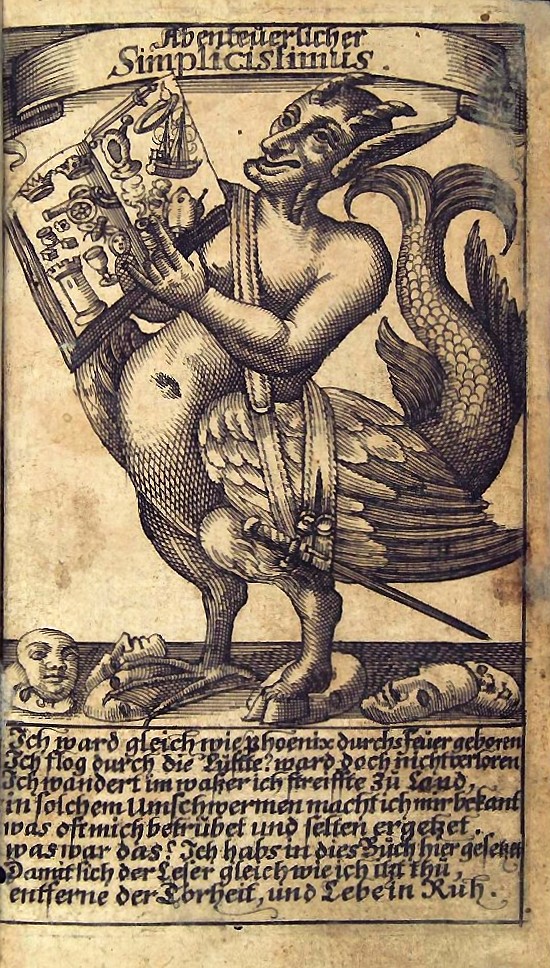

The Adventures of Simplicius Simplicissimus is a picaresque novel set during and after the Thirty Years' War. While it contains much that is light-hearted and fantastical, the novel is chiefly read for its depiction of the lawless chaos which reigned during the religious wars of the 17th century. The author's personal experiences as refugee, captive and soldier formed the basis of the story of Simplicius.
Simplicius is a German farm boy who has been raised in such ignorance and isolation that he doesn't even know his own name, nor has he seen anything of the outside world until a troop of cavalry descend upon his farm, torture the men, rape the women, plunder the stores and burn the buildings. He eventually escapes into the woods where he meets and is taken in by a hermit. The hermit teaches the boy to read and makes a devout Christian out of him. Simplicius is happy alone in the woods with his tutor until the hermit finally dies, and need forces him into the company of others.
Simplicius is at first a pure-minded observer of the sins and follies of the age, but he is gradually corrupted until there are few sins that he, himself hasn't committed. In his wanderings the boy becomes a court jester, a soldier, a guerrilla leader, a bandit, a doctor, a con artist, a pilgrim, a merchant, a galley slave, and a farmer. His sexual escapades are numerous and include being the erotic plaything of a masked French noblewoman. He travels from Germany to France, Switzerland, Poland, Russia, Korea, Macau, Istanbul, Egypt and Italy. He also makes an epic underwater journey to the kingdom of the water sprites at the center of the earth. Finally, Simplicius writes his memoirs after being shipwrecked and learning to survive on a desert island in the South Atlantic (a half century before Robinson Crusoe).
During his military career Simplicius switches sides so often that it is difficult to keep track of whether he's fighting and looting for the Imperial (Catholic) or Swedish (Protestant) side. This casual attitude toward allegiance was widespread, and Grimmelshausen means to show us that it was a symptom of the general amorality of the age. The violence, lawlessness and licentiousness don't end with the Peace of Westphalia in 1648, but continue unabated in new and more devious forms. In the end The Adventures of Simplicius Simplicissimus delivers a strong lecture on faith and morality, but only after entertaining us with the hero's immoral misadventures.
The modern translation by George Schulz-Behrend is highly readable and appropriately annotated to explain references to historical persons and events. The translator chose to abridge it slightly, giving us only summaries of some long chapters that are incidental to the main story line. I found the early chapters to be both highly entertaining and vividly informative, as Simplicius gives us a naïve view of the conflict that is ravaging Germany. But the young man seems to learn too much too soon, and his matchless prowess at swordplay, banditry, subterfuge and lovemaking makes Simplicius a less likable character and his adventures less amusing. I would recommend the novel chiefly as a first-hand account of life in Germany during the Thirty Years' War.
First published in German 1669
English translation by George Schulz-Behrend 1993

The Adventures of Simplicius Simplicissimus is a picaresque novel set during and after the Thirty Years' War. While it contains much that is light-hearted and fantastical, the novel is chiefly read for its depiction of the lawless chaos which reigned during the religious wars of the 17th century. The author's personal experiences as refugee, captive and soldier formed the basis of the story of Simplicius.
Simplicius is a German farm boy who has been raised in such ignorance and isolation that he doesn't even know his own name, nor has he seen anything of the outside world until a troop of cavalry descend upon his farm, torture the men, rape the women, plunder the stores and burn the buildings. He eventually escapes into the woods where he meets and is taken in by a hermit. The hermit teaches the boy to read and makes a devout Christian out of him. Simplicius is happy alone in the woods with his tutor until the hermit finally dies, and need forces him into the company of others.
Simplicius is at first a pure-minded observer of the sins and follies of the age, but he is gradually corrupted until there are few sins that he, himself hasn't committed. In his wanderings the boy becomes a court jester, a soldier, a guerrilla leader, a bandit, a doctor, a con artist, a pilgrim, a merchant, a galley slave, and a farmer. His sexual escapades are numerous and include being the erotic plaything of a masked French noblewoman. He travels from Germany to France, Switzerland, Poland, Russia, Korea, Macau, Istanbul, Egypt and Italy. He also makes an epic underwater journey to the kingdom of the water sprites at the center of the earth. Finally, Simplicius writes his memoirs after being shipwrecked and learning to survive on a desert island in the South Atlantic (a half century before Robinson Crusoe).
During his military career Simplicius switches sides so often that it is difficult to keep track of whether he's fighting and looting for the Imperial (Catholic) or Swedish (Protestant) side. This casual attitude toward allegiance was widespread, and Grimmelshausen means to show us that it was a symptom of the general amorality of the age. The violence, lawlessness and licentiousness don't end with the Peace of Westphalia in 1648, but continue unabated in new and more devious forms. In the end The Adventures of Simplicius Simplicissimus delivers a strong lecture on faith and morality, but only after entertaining us with the hero's immoral misadventures.
The modern translation by George Schulz-Behrend is highly readable and appropriately annotated to explain references to historical persons and events. The translator chose to abridge it slightly, giving us only summaries of some long chapters that are incidental to the main story line. I found the early chapters to be both highly entertaining and vividly informative, as Simplicius gives us a naïve view of the conflict that is ravaging Germany. But the young man seems to learn too much too soon, and his matchless prowess at swordplay, banditry, subterfuge and lovemaking makes Simplicius a less likable character and his adventures less amusing. I would recommend the novel chiefly as a first-hand account of life in Germany during the Thirty Years' War.
44StevenTX
586. Love in Excess by Eliza Haywood
First published 1719
The Count D'Elmont is so attractive in his person, so noble in his bearing, that almost every woman who sees him falls instantly in love with him. But the 18th century is a time when women of rank are strictly forbidden from showing their affection for a man until he has asked for their hand. To flirt is to be branded a coquette, which is scarcely better than being a common prostitute. Some ladies wait in desperate anxiety to be noticed by the Count, others resort to various subterfuges. The Count himself doesn't mind playing around a bit, but he has one fixed goal: he must marry for money. Unfortunately it is only after he has done so that he falls madly, desperately in love--and it isn't with his wife.
Love in Excess is a bold novel about frustrated female sexual desire. Whether their motives are noble or craven, D'Elmont's lovers are all described as "burning" with a passion that drives them to rashness or despair. The story includes many predictable plot elements of the era such as garden gate elopements, hidden identities, interrupted assignations, coincidental encounters, and fatal misunderstandings. But the novel occasionally shocks the reader with unanticipated violence and death. It is also surprisingly bawdy, such as in a scene where one of D'Elmont's rejected admirers manages to secrete herself into his bed in place of his expected lover. The inevitable interruption and discovery come only after he has taken her virginity.
The novel is set initially in Paris, but moves later to Italy. There are some interesting observations about how Italian women, who are traditionally veiled in public, are compensated by being permitted to be slightly more forward in their behavior. Love will find a way to prevail no matter what obstacles society puts in its way.
I haven't mentioned any of the female characters by name because it would give away too many plot details, but I should at least give Eliza Haywood credit for coming up with a roster of unusual and beautiful names, including Amena, Alovysa, Melliora, Ansellina, Melantha, Ciamara, and Violetta.
For all its predictable plot twists and unbelievable coincidences, Love in Excess is a thoroughly entertaining story with enough suspense to keep the reader interested. It's unfortunate that it gets less notice than later novels such as Samuel Richardson's Pamela. I read the edition from Broadview Literary Texts with annotations by David Oakleaf. It includes Haywood's original and sometimes creative (and inconsistent) spelling, which isn't at all hard to read. It also has some very nice footnotes that use definitions from Dr. Johnson's Dictionary to show how the meanings of certain words have changed from Haywood's time to ours. This book really surprised me, and I was sorry to see it come to an end.
First published 1719
The Count D'Elmont is so attractive in his person, so noble in his bearing, that almost every woman who sees him falls instantly in love with him. But the 18th century is a time when women of rank are strictly forbidden from showing their affection for a man until he has asked for their hand. To flirt is to be branded a coquette, which is scarcely better than being a common prostitute. Some ladies wait in desperate anxiety to be noticed by the Count, others resort to various subterfuges. The Count himself doesn't mind playing around a bit, but he has one fixed goal: he must marry for money. Unfortunately it is only after he has done so that he falls madly, desperately in love--and it isn't with his wife.
Love in Excess is a bold novel about frustrated female sexual desire. Whether their motives are noble or craven, D'Elmont's lovers are all described as "burning" with a passion that drives them to rashness or despair. The story includes many predictable plot elements of the era such as garden gate elopements, hidden identities, interrupted assignations, coincidental encounters, and fatal misunderstandings. But the novel occasionally shocks the reader with unanticipated violence and death. It is also surprisingly bawdy, such as in a scene where one of D'Elmont's rejected admirers manages to secrete herself into his bed in place of his expected lover. The inevitable interruption and discovery come only after he has taken her virginity.
The novel is set initially in Paris, but moves later to Italy. There are some interesting observations about how Italian women, who are traditionally veiled in public, are compensated by being permitted to be slightly more forward in their behavior. Love will find a way to prevail no matter what obstacles society puts in its way.
I haven't mentioned any of the female characters by name because it would give away too many plot details, but I should at least give Eliza Haywood credit for coming up with a roster of unusual and beautiful names, including Amena, Alovysa, Melliora, Ansellina, Melantha, Ciamara, and Violetta.
For all its predictable plot twists and unbelievable coincidences, Love in Excess is a thoroughly entertaining story with enough suspense to keep the reader interested. It's unfortunate that it gets less notice than later novels such as Samuel Richardson's Pamela. I read the edition from Broadview Literary Texts with annotations by David Oakleaf. It includes Haywood's original and sometimes creative (and inconsistent) spelling, which isn't at all hard to read. It also has some very nice footnotes that use definitions from Dr. Johnson's Dictionary to show how the meanings of certain words have changed from Haywood's time to ours. This book really surprised me, and I was sorry to see it come to an end.
45Nickelini
It is also surprisingly bawdy
When it comes to sexuality in the past, I think our culture has a simplistic historical re-visioning that is strongly influenced by the later Victorian era. Love in Excess sounds interesting. How long was it?
When it comes to sexuality in the past, I think our culture has a simplistic historical re-visioning that is strongly influenced by the later Victorian era. Love in Excess sounds interesting. How long was it?
47StevenTX
587. The Apes of God by Wyndham Lewis
First Published 1930
In the 1920s cities like Paris and London became homes to colonies of so-called Bohemian artists, living in poverty for the sake of their Art. These same cities also hosted large populations of would-be artists of the leisure class. They set themselves up in lavish studios in the most fashionable quarters of the city while dressing in Bohemian rags, and they talked endlessly about their Art to conceal the fact that they had no genius whatsoever. These are the "Apes of God" whom Wyndham Lewis satirizes viciously, relentlessly (and interminably), in his novel of that name.
The novel takes place over a few days in London and is seen mostly through the eyes of Dan Boleyn, a wimpish moron (to use the author's term) whom a practical joker, Horace Zagreus, has adopted as his protégé and is presenting to the art world as its next great genius. Dan is introduced to the "Apes," one after another, while Horace provides biting commentary on their faults and foibles. Dan is a mostly silent observer whose cognitive abilities and social awareness are so limited that it is as though we were seeing London society through the eyes of a terrified dog or a lost child from some primitive tribe.
Wyndham Lewis does not use real names in his novel (except for some writers of the past), but it was obvious to his contemporaries that he based his characters in part on real acquaintances. The editor has identified some of them as Horace de Vere Cole, Lytton Strachey, Dora Carrington, Arthur Waley, Dame Edith Sitwell, and many others less well known today. His scathing parody of these figures was one of several factors that made Lewis an outcast in the literary world. He seems to have anticipated this reaction, and tried to defend himself by having one of his characters draw parallels with Proust's depiction of his milieu in In Search of Lost Time. It appears that Lewis would have been not at all displeased to have been named "the English Proust," but such was not to be the case.
There are some interesting ideas in this novel, though you have to wade through a lot of verbiage to get to them. Why there should be such a sudden profusion of dilettantism, is one question he brings up. The answer, he says, is World War I and its acknowledged social leveling. If it's true that any one can be a prime minister or a president, then it should be equally true that any one can be a great artist. "Was not the War fought to that end--to make the World safe for Democracy, and free of disturbing 'Lions', for ever more? It is the Paradise of the Apes of God, we are to understand!" Lewis depicts many of his "Apes," particularly those from the aristocracy, as adults behaving as children. This is perhaps another consequence of the First World War and the Russian Civil War (which he lumps together as one event), that people reject the horrors of the real world by trying to prolong their childhood indefinitely.
Bigotry, especially antisemitism, is one reason Wyndham Lewis is no longer popular. In The Apes of God he gives a negative and highly stereotyped portrayal of Jews, homosexuals, and women, but every character in the novel is presented in a negative light, and it's difficult to say whether the prejudices are the author's or those of the characters he is satirizing. But when it comes to race the author uses some highly offensive language, and it isn't in dialog. Lewis has also been accused of being sympathetic to fascism, but, in this novel at least, he very clearly ridicules fascism along with communism.
There are some funny moments in The Apes of God, and a few thought-provoking observations, but nothing to make it worth wading through 625 pages of bitter and some times offensive satire unless you are particularly familiar with the persons being satirized. I read the novel because it is on the "1001 books" list and because I had really enjoyed Lewis's first novel, Tarr, but The Apes of God is not a book I would recommend.
First Published 1930
In the 1920s cities like Paris and London became homes to colonies of so-called Bohemian artists, living in poverty for the sake of their Art. These same cities also hosted large populations of would-be artists of the leisure class. They set themselves up in lavish studios in the most fashionable quarters of the city while dressing in Bohemian rags, and they talked endlessly about their Art to conceal the fact that they had no genius whatsoever. These are the "Apes of God" whom Wyndham Lewis satirizes viciously, relentlessly (and interminably), in his novel of that name.
The novel takes place over a few days in London and is seen mostly through the eyes of Dan Boleyn, a wimpish moron (to use the author's term) whom a practical joker, Horace Zagreus, has adopted as his protégé and is presenting to the art world as its next great genius. Dan is introduced to the "Apes," one after another, while Horace provides biting commentary on their faults and foibles. Dan is a mostly silent observer whose cognitive abilities and social awareness are so limited that it is as though we were seeing London society through the eyes of a terrified dog or a lost child from some primitive tribe.
Wyndham Lewis does not use real names in his novel (except for some writers of the past), but it was obvious to his contemporaries that he based his characters in part on real acquaintances. The editor has identified some of them as Horace de Vere Cole, Lytton Strachey, Dora Carrington, Arthur Waley, Dame Edith Sitwell, and many others less well known today. His scathing parody of these figures was one of several factors that made Lewis an outcast in the literary world. He seems to have anticipated this reaction, and tried to defend himself by having one of his characters draw parallels with Proust's depiction of his milieu in In Search of Lost Time. It appears that Lewis would have been not at all displeased to have been named "the English Proust," but such was not to be the case.
There are some interesting ideas in this novel, though you have to wade through a lot of verbiage to get to them. Why there should be such a sudden profusion of dilettantism, is one question he brings up. The answer, he says, is World War I and its acknowledged social leveling. If it's true that any one can be a prime minister or a president, then it should be equally true that any one can be a great artist. "Was not the War fought to that end--to make the World safe for Democracy, and free of disturbing 'Lions', for ever more? It is the Paradise of the Apes of God, we are to understand!" Lewis depicts many of his "Apes," particularly those from the aristocracy, as adults behaving as children. This is perhaps another consequence of the First World War and the Russian Civil War (which he lumps together as one event), that people reject the horrors of the real world by trying to prolong their childhood indefinitely.
Bigotry, especially antisemitism, is one reason Wyndham Lewis is no longer popular. In The Apes of God he gives a negative and highly stereotyped portrayal of Jews, homosexuals, and women, but every character in the novel is presented in a negative light, and it's difficult to say whether the prejudices are the author's or those of the characters he is satirizing. But when it comes to race the author uses some highly offensive language, and it isn't in dialog. Lewis has also been accused of being sympathetic to fascism, but, in this novel at least, he very clearly ridicules fascism along with communism.
There are some funny moments in The Apes of God, and a few thought-provoking observations, but nothing to make it worth wading through 625 pages of bitter and some times offensive satire unless you are particularly familiar with the persons being satirized. I read the novel because it is on the "1001 books" list and because I had really enjoyed Lewis's first novel, Tarr, but The Apes of God is not a book I would recommend.
48StevenTX
>45 Nickelini: - Love in Excess is about 235 pages long, not counting the editor's introduction and appendices.
What's chiefly surprising about it to me is that it was written by a woman and published under her own name. Its level of sexual candor is roughly on a par with that of Henry Fielding.
What's chiefly surprising about it to me is that it was written by a woman and published under her own name. Its level of sexual candor is roughly on a par with that of Henry Fielding.
50japaul22
I think it's safe to say that I feel comfortable skipping The Apes of God. It does not sound appealing!
51hdcclassic
Hmm, right. The idea of The Apes of God sounds rather interesting if it had been written by, dunno, Dorothy Parker, but 600 pages of quasi-Proust does not sound like my cup of tea.
52QuartInSession
Ugh...I've got The Apes of God coming up shortly in my 'alphabetical quest' (provided I can get it via an interlibrary loan) and am decidedly not looking forward to it. Thanks for yet another detailed review!
53StevenTX
>52 QuartInSession: I hope you can take it with an open mind in spite of my review and that you will find reasons to love The Apes of God that I was too dense to appreciate.
54StevenTX
588. Fool's Gold by Maro Douka
First published in Greek 1979
English translation by Roderick Beaton 1991


Myrsini Panayotou is an Athenian student preparing to enter the university when the government of Greece is overthrown in 1967 by a group of officers who form a military junta known as "The Colonels." Partly through the influence of her lover, Paul, Myrsini has become active in leftist political groups even though she is from a bourgeois background. After the coup, Paul disappears, and Myrsini joins a cell of the Communist Party. She is arrested for distributing anti-government leaflets, is tortured by the secret police, and then is released through the influence of a family member. Meanwhile her personal life is as stressful as her political life. Her father flaunts his latest mistress, a girl Myrsini's age, in front of his wife. Her relatives and friends are deeply divided on politics even to the point of betraying one another to the police. And Myrsini herself has difficulty separating her romantic feelings about her male friends from her admiration for their revolutionary work and the risks they are taking.
Fool's Gold follows Myrsini through the fall of the dictatorship in 1973 and the restoration of democracy in 1974. Though this is mostly a political novel that condemns the junta and those who failed to speak up against its human rights abuses, it is also an important statement about individualism. Throughout the story, Myrsini falls deeper and deeper into depression and withdrawal because she is unable to identify with the individuals and groups who claim her allegiance. Her parents' marital troubles and dissension among her relatives weigh heavily on her. She is also wounded by the criticism of her communist colleagues that she is a spoiled rich girl playing at being a revolutionary. (Throughout the story she is supported by her father with income he receives from owning shares in a mining company which brutally exploits its workers. One of the mine's products is iron pyrite, which is where the title "Fool's Gold" comes from.)
Maro Douka was writing for a contemporary Greek readership, and her novel assumes familiarity with political figures from pre- and post-WWII Greece. The Kedros Publishers edition acknowledges this and has an historical chronology in the back of the book. It can still be confusing, however, when the story jumps back and forth in time and the only clue is the historical context. The novel is still worthwhile even when the political background isn't clear, though some may not care for the overall gloomy atmosphere. Much of Myrsini's story is apparently autobiographical, so don't expect a tight plot with no loose ends. I would especially recommend Fool's Gold for anyone interested in modern Greece or the experiences of leftist underground movements.
First published in Greek 1979
English translation by Roderick Beaton 1991


Myrsini Panayotou is an Athenian student preparing to enter the university when the government of Greece is overthrown in 1967 by a group of officers who form a military junta known as "The Colonels." Partly through the influence of her lover, Paul, Myrsini has become active in leftist political groups even though she is from a bourgeois background. After the coup, Paul disappears, and Myrsini joins a cell of the Communist Party. She is arrested for distributing anti-government leaflets, is tortured by the secret police, and then is released through the influence of a family member. Meanwhile her personal life is as stressful as her political life. Her father flaunts his latest mistress, a girl Myrsini's age, in front of his wife. Her relatives and friends are deeply divided on politics even to the point of betraying one another to the police. And Myrsini herself has difficulty separating her romantic feelings about her male friends from her admiration for their revolutionary work and the risks they are taking.
Fool's Gold follows Myrsini through the fall of the dictatorship in 1973 and the restoration of democracy in 1974. Though this is mostly a political novel that condemns the junta and those who failed to speak up against its human rights abuses, it is also an important statement about individualism. Throughout the story, Myrsini falls deeper and deeper into depression and withdrawal because she is unable to identify with the individuals and groups who claim her allegiance. Her parents' marital troubles and dissension among her relatives weigh heavily on her. She is also wounded by the criticism of her communist colleagues that she is a spoiled rich girl playing at being a revolutionary. (Throughout the story she is supported by her father with income he receives from owning shares in a mining company which brutally exploits its workers. One of the mine's products is iron pyrite, which is where the title "Fool's Gold" comes from.)
Maro Douka was writing for a contemporary Greek readership, and her novel assumes familiarity with political figures from pre- and post-WWII Greece. The Kedros Publishers edition acknowledges this and has an historical chronology in the back of the book. It can still be confusing, however, when the story jumps back and forth in time and the only clue is the historical context. The novel is still worthwhile even when the political background isn't clear, though some may not care for the overall gloomy atmosphere. Much of Myrsini's story is apparently autobiographical, so don't expect a tight plot with no loose ends. I would especially recommend Fool's Gold for anyone interested in modern Greece or the experiences of leftist underground movements.
55StevenTX
589. Roxana; or, The Fortunate Mistress by Daniel Defoe
First published 1724
Subsequent editions were amended by anonymous contributors
Version reviewed published 1745

The narrator of Roxana is, at the beginning of her story, a young woman of French birth, the daughter of Huguenots who have emigrated to England. She is orphaned just as she comes of age but takes a respectable dowry into an arranged marriage with an English brewer. Over the next decade she bears him five children (plus others that don't survive infancy) and lives in reasonable contentment only to see her profligate husband squander his inheritance and her dowry and flee the country to avoid his creditors, leaving her in poverty with five children she cannot afford to feed.
(We will eventually learn that the narrator's name is Susan, but it is only mentioned once. The names of all the other characters of substance are withheld--only the servants' names are mentioned.)
The narrator, being a young woman of great beauty but no practical talents, first farms out her children to her husband's reluctant relatives. She is at her wit's end what to do next when her landlord, a jewelry merchant, offers to pay her debts if she will become his mistress and accompany him to Paris.
"I say, I could not but reflect upon the brutality and blindness of mankind; that because nature had given me a good skin and some agreeable features, should suffer that beauty to be such a bait to appetite as to do such sordid, unaccountable things to obtain the possession of it."
After the jeweler's death she becomes the mistress of one man after another, eventually winding up in London as a fashionable courtesan. Here her admirers give her the name "Roxana" after the fabled Asian beauty who married Alexander the Great. Despite living in luxury, Roxana manages to accumulate a great amount of wealth through covetousness and shrewd management. Money is never far from her thoughts, and she often conceals her wealth from her lovers to encourage them to be more generous.
Roxana rejects several offers of marriage, even from members of the nobility:
"I found that a wife is treated with indifference, a mistress with a strong passion; a wife is looked upon as but an upper servant, a mistress is a sovereign; a wife must give up all she has, have every reserve she makes for herself be thought hard of, and be upbraided with her very pin-money, whereas a mistress makes the saying true, that what the man has is hers, and what she has is her own; the wife bears a thousand insults, and is forced to sit still and bear it, or part, and be undone; a mistress insulted helps herself immediately, and takes another."
Roxana bears several more children, each to a different father, and "settles" them with foster parents as she did her first brood, never wanting or expecting to see them again. Eventually, as her beauty begins to fade with age, she repents of her promiscuity and assumes another identity to hide her past. She never loses her fondness for lucre, however, nor does she regret abandoning her offspring. Eventually the sins she will commit in trying to hide her past are far greater than the sins of that past.
Defoe brought the novel to a shockingly abrupt and dissatisfying end in the original 1724 edition. After his death publishers added "continuations" by anonymous authors. The 1745 ending which I read is typical--it softens Roxana's character somewhat but preserves the stern moral lesson that a life devoted to sensuality will come to a bad end.
Roxana; or, The Fortunate Mistress combines some very modern feminist sentiments where economic freedom and marriage are concerned with a very traditional outlook on moral issues. The first half of the novel has some fairly bawdy scenes that appear to celebrate sexual freedom, but the second half becomes a sermon on the evils of adultery and promiscuity. It is a very long novel full of extraneous detail and bogs down in the middle, but the final third of the story picks up the pace and is quite suspenseful. Roxana herself is a fascinating and surprisingly complex character who repents of crimes we would easily excuse but never recognizes her more serious flaws.
First published 1724
Subsequent editions were amended by anonymous contributors
Version reviewed published 1745

The narrator of Roxana is, at the beginning of her story, a young woman of French birth, the daughter of Huguenots who have emigrated to England. She is orphaned just as she comes of age but takes a respectable dowry into an arranged marriage with an English brewer. Over the next decade she bears him five children (plus others that don't survive infancy) and lives in reasonable contentment only to see her profligate husband squander his inheritance and her dowry and flee the country to avoid his creditors, leaving her in poverty with five children she cannot afford to feed.
(We will eventually learn that the narrator's name is Susan, but it is only mentioned once. The names of all the other characters of substance are withheld--only the servants' names are mentioned.)
The narrator, being a young woman of great beauty but no practical talents, first farms out her children to her husband's reluctant relatives. She is at her wit's end what to do next when her landlord, a jewelry merchant, offers to pay her debts if she will become his mistress and accompany him to Paris.
"I say, I could not but reflect upon the brutality and blindness of mankind; that because nature had given me a good skin and some agreeable features, should suffer that beauty to be such a bait to appetite as to do such sordid, unaccountable things to obtain the possession of it."
After the jeweler's death she becomes the mistress of one man after another, eventually winding up in London as a fashionable courtesan. Here her admirers give her the name "Roxana" after the fabled Asian beauty who married Alexander the Great. Despite living in luxury, Roxana manages to accumulate a great amount of wealth through covetousness and shrewd management. Money is never far from her thoughts, and she often conceals her wealth from her lovers to encourage them to be more generous.
Roxana rejects several offers of marriage, even from members of the nobility:
"I found that a wife is treated with indifference, a mistress with a strong passion; a wife is looked upon as but an upper servant, a mistress is a sovereign; a wife must give up all she has, have every reserve she makes for herself be thought hard of, and be upbraided with her very pin-money, whereas a mistress makes the saying true, that what the man has is hers, and what she has is her own; the wife bears a thousand insults, and is forced to sit still and bear it, or part, and be undone; a mistress insulted helps herself immediately, and takes another."
Roxana bears several more children, each to a different father, and "settles" them with foster parents as she did her first brood, never wanting or expecting to see them again. Eventually, as her beauty begins to fade with age, she repents of her promiscuity and assumes another identity to hide her past. She never loses her fondness for lucre, however, nor does she regret abandoning her offspring. Eventually the sins she will commit in trying to hide her past are far greater than the sins of that past.
Defoe brought the novel to a shockingly abrupt and dissatisfying end in the original 1724 edition. After his death publishers added "continuations" by anonymous authors. The 1745 ending which I read is typical--it softens Roxana's character somewhat but preserves the stern moral lesson that a life devoted to sensuality will come to a bad end.
Roxana; or, The Fortunate Mistress combines some very modern feminist sentiments where economic freedom and marriage are concerned with a very traditional outlook on moral issues. The first half of the novel has some fairly bawdy scenes that appear to celebrate sexual freedom, but the second half becomes a sermon on the evils of adultery and promiscuity. It is a very long novel full of extraneous detail and bogs down in the middle, but the final third of the story picks up the pace and is quite suspenseful. Roxana herself is a fascinating and surprisingly complex character who repents of crimes we would easily excuse but never recognizes her more serious flaws.
56StevenTX
590. The Revenge for Love by Wyndham Lewis
First published 1937
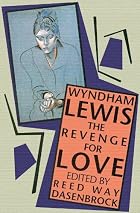

The Revenge for Love profiles the members of a fictional circle of British Marxist artists in 1936 who are supporting communist revolutionaries in Spain. They are meant to represent the typical European socialist intellectuals of the 1930s, from whom Wyndham Lewis was estranged. His novel is a hard look at the hypocrisy of such groups and the unpleasant realities behind their altruistic facade.
The story begins in Spain with the adventures of Percy Hardcaster, an English workingman who is attempting to smuggle rifles to Catalan communists. Returning from Spain seriously wounded, Hardcaster is lionized by the painters, poets and dilettantes who consider themselves loyal soldiers in Moscow's struggle against capitalism. These intellectuals tend to be divided into three groups: the manipulators who use the Party and its believers as a tool to acquire personal wealth and power, the hypocrites who feign poverty and an interest in the working class for the prestige it gives them, and the pathetic true believers who are exploited ruthlessly by the others. Meanwhile the working classes, far from believing in the Worker's Paradise, have one simple dream: to become the ones on top so they can exploit others as they have been exploited.
The middle group of the three, the pseudo-poor, come in for the most direct criticism as in this scene where Margot Stamp, whose husband Victor is a truly starving artist, visits the apartment of a fashionably shabby communist:
"Margot understood that no bridge existed across which she could pass to commune as an equal with this communist 'lady'--living in a rat-infested cellar out of swank (as it appeared to her) from her painfully constructed gimcrack pagoda of gentility. Nor did she wish to very much, because--for Victor's sake--she dreaded and disliked all these false politics, of the sham underdogs (as she felt them to be), politics which made such lavish use of the poor and the unfortunate, of the 'proletariat'--as they called her class--to advertise injustice to the profit of a predatory Party, of sham-underdogs athirst for power: whose doctrine was a universal Sicilian Vespers, and which yet treated the real poor, when they were encountered, with such overweening contempt and even derision."
Wyndham Lewis's attack on the communist movement is not necessarily an attack on communism itself, nor is it a defense of capitalism. As one of his characters admits, "The capitalist will sell you bombs to blow up other capitalists. Or blow himself up with, for that matter! That is the beauty of the capitalist system. You can do anything you like in it. Even destroy it--if you can only get money enough to do it with."
A sense of dark and ironic humor pervades the novel. The husband of the "communist lady" mentioned above is a painter who refuses to sell one of his own works to his friend, who is also his accountant, because the friend's money represents ill-gotten gains. (He has no compunction, though, against sharing his wife's body with that same friend and considers her promiscuity to be a praiseworthy political statement.) But since he won't sell his own creations, he earns a living working for a nefarious art dealer creating forgeries of Van Goghs to sell to unsuspecting capitalists. The motif of forgery and pretense occurs throughout the novel.
The Revenge for Love is entertaining, fast paced, and full of fascinating character studies. I found its dark nihilism very relevant to today's world. Of the few works I have read by Wyndham Lewis it is the one I would most recommend as an introduction to this controversial artist/author.
First published 1937

The Revenge for Love profiles the members of a fictional circle of British Marxist artists in 1936 who are supporting communist revolutionaries in Spain. They are meant to represent the typical European socialist intellectuals of the 1930s, from whom Wyndham Lewis was estranged. His novel is a hard look at the hypocrisy of such groups and the unpleasant realities behind their altruistic facade.
The story begins in Spain with the adventures of Percy Hardcaster, an English workingman who is attempting to smuggle rifles to Catalan communists. Returning from Spain seriously wounded, Hardcaster is lionized by the painters, poets and dilettantes who consider themselves loyal soldiers in Moscow's struggle against capitalism. These intellectuals tend to be divided into three groups: the manipulators who use the Party and its believers as a tool to acquire personal wealth and power, the hypocrites who feign poverty and an interest in the working class for the prestige it gives them, and the pathetic true believers who are exploited ruthlessly by the others. Meanwhile the working classes, far from believing in the Worker's Paradise, have one simple dream: to become the ones on top so they can exploit others as they have been exploited.
The middle group of the three, the pseudo-poor, come in for the most direct criticism as in this scene where Margot Stamp, whose husband Victor is a truly starving artist, visits the apartment of a fashionably shabby communist:
"Margot understood that no bridge existed across which she could pass to commune as an equal with this communist 'lady'--living in a rat-infested cellar out of swank (as it appeared to her) from her painfully constructed gimcrack pagoda of gentility. Nor did she wish to very much, because--for Victor's sake--she dreaded and disliked all these false politics, of the sham underdogs (as she felt them to be), politics which made such lavish use of the poor and the unfortunate, of the 'proletariat'--as they called her class--to advertise injustice to the profit of a predatory Party, of sham-underdogs athirst for power: whose doctrine was a universal Sicilian Vespers, and which yet treated the real poor, when they were encountered, with such overweening contempt and even derision."
Wyndham Lewis's attack on the communist movement is not necessarily an attack on communism itself, nor is it a defense of capitalism. As one of his characters admits, "The capitalist will sell you bombs to blow up other capitalists. Or blow himself up with, for that matter! That is the beauty of the capitalist system. You can do anything you like in it. Even destroy it--if you can only get money enough to do it with."
A sense of dark and ironic humor pervades the novel. The husband of the "communist lady" mentioned above is a painter who refuses to sell one of his own works to his friend, who is also his accountant, because the friend's money represents ill-gotten gains. (He has no compunction, though, against sharing his wife's body with that same friend and considers her promiscuity to be a praiseworthy political statement.) But since he won't sell his own creations, he earns a living working for a nefarious art dealer creating forgeries of Van Goghs to sell to unsuspecting capitalists. The motif of forgery and pretense occurs throughout the novel.
The Revenge for Love is entertaining, fast paced, and full of fascinating character studies. I found its dark nihilism very relevant to today's world. Of the few works I have read by Wyndham Lewis it is the one I would most recommend as an introduction to this controversial artist/author.
57StevenTX
591. Z by Vassilis Vassilikos
First published 1966
English translation by Marilyn Calmann 1968


On the night of 22 May 1963, shortly after he had delivered a speech at a peace rally, liberal activist Grigoris Lambrakis was assassinated in the streets of Thessaloniki, Greece, by two hired thugs in a pickup truck. Elements in the conservative government and the regional police were believed to be behind the attack. Soon the graffito "Zi" ("He lives") began appearing throughout Greece.
Vassilikos's novel reconstructs the assassination and the investigation which followed it. Lambrakis is known only as "Z," and the names of other historical figures have been similarly disguised, but the novel is based on known events. Almost half of the book is a detailed account from quickly shifting perspectives of the three hours centered on the attack on Z. The illiterate assassins are hired by a police inspector general. Other police officers recruit a mob of anti-communist dockworkers to demonstrate outside the rally where Z is speaking. The attack is staged to look like a hit and run accident, but one brave defender leaps into the back of the speeding truck and grapples with one of the assassins. This forces the police to arrest their own hirelings, and in the inquiry which follows a fearless investigator peels back one layer of conspiracy after another. His findings shock the nation and lead to the fall of the Greek government.
The first half of the novel is fast-paced and highly suspenseful. The story later assumes a grim and fatalistic air, for even as Vassilikos was writing the surge of liberalism was waning. The conspirators were being rehabilitated as fast as they could be sentenced, and those who brought the crime to light were being persecuted. Even as it was being published in 1967 the novel would be banned in Greece by the U.S.-backed military junta which had just seized power. Since the restoration of democracy, the Lambrakis assassination has become an emotional landmark in modern Greek history much as the Kennedy assassination later that same year has in the U.S. I would recommend this novel to anyone interested in modern Greece or who likes a good political thriller.
First published 1966
English translation by Marilyn Calmann 1968


On the night of 22 May 1963, shortly after he had delivered a speech at a peace rally, liberal activist Grigoris Lambrakis was assassinated in the streets of Thessaloniki, Greece, by two hired thugs in a pickup truck. Elements in the conservative government and the regional police were believed to be behind the attack. Soon the graffito "Zi" ("He lives") began appearing throughout Greece.
Vassilikos's novel reconstructs the assassination and the investigation which followed it. Lambrakis is known only as "Z," and the names of other historical figures have been similarly disguised, but the novel is based on known events. Almost half of the book is a detailed account from quickly shifting perspectives of the three hours centered on the attack on Z. The illiterate assassins are hired by a police inspector general. Other police officers recruit a mob of anti-communist dockworkers to demonstrate outside the rally where Z is speaking. The attack is staged to look like a hit and run accident, but one brave defender leaps into the back of the speeding truck and grapples with one of the assassins. This forces the police to arrest their own hirelings, and in the inquiry which follows a fearless investigator peels back one layer of conspiracy after another. His findings shock the nation and lead to the fall of the Greek government.
The first half of the novel is fast-paced and highly suspenseful. The story later assumes a grim and fatalistic air, for even as Vassilikos was writing the surge of liberalism was waning. The conspirators were being rehabilitated as fast as they could be sentenced, and those who brought the crime to light were being persecuted. Even as it was being published in 1967 the novel would be banned in Greece by the U.S.-backed military junta which had just seized power. Since the restoration of democracy, the Lambrakis assassination has become an emotional landmark in modern Greek history much as the Kennedy assassination later that same year has in the U.S. I would recommend this novel to anyone interested in modern Greece or who likes a good political thriller.
59StevenTX
592. Life of a Good-for-nothing by Joseph von Eichendorff
First published 1826
English translation by J. G. Nichols 2002
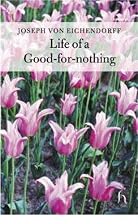
Life of a Good-for-nothing is a happy little picaresque romance in which the unnamed hero and narrator journeys from Austria to Italy and back, finding love, joy, and friendship at almost every turn. The novel begins with the narrator's father, a miller, calling him a "good-for-nothing" and sending him out into the world with nothing but a few pennies and his beloved violin. But he soon learns that someone who can make people happy with his music need never go hungry (nor work very hard either). He is quite content to live from day to day with no regrets about the past or worries for the future. Given a job that includes a small hut and vegetable garden, he pulls up the vegetables and plants flowers.
If only the world were as Eichendorff depicts it! Almost all the men whom the traveler encounters are generous and convivial. The women are are beautiful and lively. The air is balmy and full of birdsong, and the way is lined with flowers. At every village if the folk aren't already outside singing and dancing, they will be as soon as he pulls out his violin. Rank, class, nationality and language are never barriers to having a good time together.
The only thing even approaching darkness in the novel is a rather farcical Gothic-like scene in an Italian castle--a scene that is probably intended as a parody of the Gothic novel. There are other metafictional moments, such as when characters deliberately construct a scene based on a story by E. T. A. Hoffmann, and in the closing paragraphs when another character tells the narrator that he has been taking part in a romantic novel. In all, Life of a Good-for-nothing is an excellent short example of German romanticism at its cheeriest.
First published 1826
English translation by J. G. Nichols 2002
Life of a Good-for-nothing is a happy little picaresque romance in which the unnamed hero and narrator journeys from Austria to Italy and back, finding love, joy, and friendship at almost every turn. The novel begins with the narrator's father, a miller, calling him a "good-for-nothing" and sending him out into the world with nothing but a few pennies and his beloved violin. But he soon learns that someone who can make people happy with his music need never go hungry (nor work very hard either). He is quite content to live from day to day with no regrets about the past or worries for the future. Given a job that includes a small hut and vegetable garden, he pulls up the vegetables and plants flowers.
If only the world were as Eichendorff depicts it! Almost all the men whom the traveler encounters are generous and convivial. The women are are beautiful and lively. The air is balmy and full of birdsong, and the way is lined with flowers. At every village if the folk aren't already outside singing and dancing, they will be as soon as he pulls out his violin. Rank, class, nationality and language are never barriers to having a good time together.
The only thing even approaching darkness in the novel is a rather farcical Gothic-like scene in an Italian castle--a scene that is probably intended as a parody of the Gothic novel. There are other metafictional moments, such as when characters deliberately construct a scene based on a story by E. T. A. Hoffmann, and in the closing paragraphs when another character tells the narrator that he has been taking part in a romantic novel. In all, Life of a Good-for-nothing is an excellent short example of German romanticism at its cheeriest.
60annamorphic
This sounds charming, not to mention short! Just the qualities I will need in the book I read after Extinction. I am ordering a copy now...
61StevenTX
593. Ethan Frome by Edith Wharton
First published 1911


The author and work are too familiar to need another review from me, so I can only concur with a contemporary reviewer who called this short novel "compelling and haunting." Penniless Ethan Frome, trapped in a loveless marriage to an older, manipulative, hypochondriac wife suddenly sees life as it might have been. Many of us come to a point like this in our lives when we are overwhelmed by regret for choices that cannot be undone except by an act of heroic desperation, but his poverty puts even heroism out of Ethan's reach.
It is impressive that Edith Wharton can write so convincingly about an environment vastly removed from her accustomed New York aristocracy.
First published 1911


The author and work are too familiar to need another review from me, so I can only concur with a contemporary reviewer who called this short novel "compelling and haunting." Penniless Ethan Frome, trapped in a loveless marriage to an older, manipulative, hypochondriac wife suddenly sees life as it might have been. Many of us come to a point like this in our lives when we are overwhelmed by regret for choices that cannot be undone except by an act of heroic desperation, but his poverty puts even heroism out of Ethan's reach.
It is impressive that Edith Wharton can write so convincingly about an environment vastly removed from her accustomed New York aristocracy.
62Nickelini
What a great description of Ethan Frome. Great pictures too.
63M1nks
I'm currently listening to House of Mirth which is my second of her books. She is such a writer of beauty both scene and language - I'm very taken with her. I'd like to read her works but I'll space them out so I can have some relief against the Jack Kerouac books of the world.
64StevenTX
594. The Pigeon by Patrick Süskind
First published 1987
English translation 1988, translator not identified


"At the time the pigeon affair overtook him, unhinging his life from one day to the next, Jonathan Noel, already past fifty, could look back over a good twenty-year period of uneventfulness and would never have expected anything of importance could ever overtake him again--other than death some day. And that was perfectly all right with him."
Jonathan works by day as a bank guard, a post he knows is largely useless and symbolic. It has been decades since he has seen one of his relatives or had anything but a nodding acquaintance with another human being. He spends the rest of his time in his tiny but cozy rented room. But one morning, on his way to the shared lavatory down the hall, he opens the door to his room there it is: a pigeon! Jonathan retreats in terror before the pigeon's cold, menacing stare. Something new has come into the world, and his beloved room had now become a trap.
Things only go downhill from here, as Jonathan has the most traumatic day in his life. He worries himself sick over events he cannot control. He torments himself with guilt over things that weren't his fault. He is wracked with shame for things nobody else notices. He boils over with anger against people who are more fortunate, happier, less hard-working, or simply different. He sees his life spiraling into a pit of despair with no escape.
The Pigeon is an entertaining little novel with obvious therapeutic value. It reads like a lighter version of Kafka's The Metamorphosis. In some part of our lives we each have our cozy little room, and at some point we all come face to face with our pigeon.
First published 1987
English translation 1988, translator not identified


"At the time the pigeon affair overtook him, unhinging his life from one day to the next, Jonathan Noel, already past fifty, could look back over a good twenty-year period of uneventfulness and would never have expected anything of importance could ever overtake him again--other than death some day. And that was perfectly all right with him."
Jonathan works by day as a bank guard, a post he knows is largely useless and symbolic. It has been decades since he has seen one of his relatives or had anything but a nodding acquaintance with another human being. He spends the rest of his time in his tiny but cozy rented room. But one morning, on his way to the shared lavatory down the hall, he opens the door to his room there it is: a pigeon! Jonathan retreats in terror before the pigeon's cold, menacing stare. Something new has come into the world, and his beloved room had now become a trap.
Things only go downhill from here, as Jonathan has the most traumatic day in his life. He worries himself sick over events he cannot control. He torments himself with guilt over things that weren't his fault. He is wracked with shame for things nobody else notices. He boils over with anger against people who are more fortunate, happier, less hard-working, or simply different. He sees his life spiraling into a pit of despair with no escape.
The Pigeon is an entertaining little novel with obvious therapeutic value. It reads like a lighter version of Kafka's The Metamorphosis. In some part of our lives we each have our cozy little room, and at some point we all come face to face with our pigeon.
65Nickelini
#63 - Minks, I like your strategy!
#64 - The Pigeon is one that hasn't caught my radar yet, but it sounds great. Adding it to my wishlist. Thanks for making sound so appealing.
#64 - The Pigeon is one that hasn't caught my radar yet, but it sounds great. Adding it to my wishlist. Thanks for making sound so appealing.
66StevenTX
595. Mercier and Camier by Samuel Beckett
Written 1946
First published in French 1970
English translation by the author 1974
Two aging friends, Mercier and Camier, the one tall, thin and hirsute, the other short, plump and bald, set forth on a journey. We never learn where they are going, for they never get there. They never get anywhere, in fact, but the outskirts of the city where they started (presumably Dublin). From the beginning they are beset by distractions, disagreements, and mishaps, such as when it begins to pour and Mercier is unable to open their only umbrella and loses his temper.
There is lyricism in the novel as well as absurdity and vulgarity. In a long and beautiful passage, Beckett speaks of the passage of time and the close of day, but surely of the passage of life and old age as well. Here are only some fragments:
Written 1946
First published in French 1970
English translation by the author 1974
Two aging friends, Mercier and Camier, the one tall, thin and hirsute, the other short, plump and bald, set forth on a journey. We never learn where they are going, for they never get there. They never get anywhere, in fact, but the outskirts of the city where they started (presumably Dublin). From the beginning they are beset by distractions, disagreements, and mishaps, such as when it begins to pour and Mercier is unable to open their only umbrella and loses his temper.
With both hands Mercier raised the umbrella high above his head and dashed it to the ground. He used another nasty expression. And to crown all, lifting to the sky his convulsed and streaming face, he said, As for thee, fuck thee.Mercier and Camier, like Vladimir and Estragon in Beckett's play Waiting for Godot, often question the meaning of life and the existence of God, but in a less abstract and allegorical manner. Beckett wrote the novel before the play, but left it unpublished for 24 years. Its profanity and blasphemy may have been one reason, the title characters' bisexuality another. Their are several passages such as: "...their naked bodies mingled, fingering and fondling with the languorous tact of hands arranging flowers...."
Decidedly Mercier's grief, heroically contained since morning, could be no longer so.
Is it our little omniomni you are trying to abuse? said Camier. You should know better. It's he on the contrary fucks thee. Omniomni, the all-unfuckable.
Kindly leave Mrs Mercier outside this discussion, said Mercier.
There is lyricism in the novel as well as absurdity and vulgarity. In a long and beautiful passage, Beckett speaks of the passage of time and the close of day, but surely of the passage of life and old age as well. Here are only some fragments:
There is no time left and yet how it drags. Even the flowers seem past their time to close and a kind of panic seizes on tired wings.... Day is over long before it ends, man ready to drop long before the hour of rest. But not a word, evening is all fever, a scurrying to and fro to no avail. So short it is not worth their while beginning, too long for them not to begin, that is the time they are pent up in.... Ask the hour of a passer-by and he'll throw it at you over his shoulder...with a furious weary gesture he gives the hour that besets him, the hour it always was and will be.... you look behind and there you are, every day a little closer, all life a little closer.Mercier and Camier is a hilarious slapstick comedy that asks sobering questions about the meaning of life. It is described as one of Beckett's most "approachable" works, and probably is a good place to start in reading this important writer.
67StevenTX
596. The Deadbeats by Ward Ruyslinck
First published in Flemish 1956
English translation by R. B. Powell 1968


This short, dark novel is a portrait of two Belgians: Silvester, a chronically unemployed middle-aged man living on welfare, and Margriet, his neurotic wife who cannot escape her memories of the horrors of World War II and her fears of another war. The two live in poverty and indolence in a shack in the suburbs. They do very little but eat and sleep, and often don't even bother to get dressed. Each owns only one set of clothes, and it has been months or years since either of them had a proper bath. Their contact with other humans is minimal, and they have no news whatsoever of the outside world.
The Deadbeats is a vivid demonstration of the nihilist's quandary: if life has no purpose, why make the effort? Why even live it at all? Added to this there are the social themes of the problem of chronic unemployment and what we would now call post-traumatic stress syndrome among the millions of Europeans who lived through World War II.
First published in Flemish 1956
English translation by R. B. Powell 1968


This short, dark novel is a portrait of two Belgians: Silvester, a chronically unemployed middle-aged man living on welfare, and Margriet, his neurotic wife who cannot escape her memories of the horrors of World War II and her fears of another war. The two live in poverty and indolence in a shack in the suburbs. They do very little but eat and sleep, and often don't even bother to get dressed. Each owns only one set of clothes, and it has been months or years since either of them had a proper bath. Their contact with other humans is minimal, and they have no news whatsoever of the outside world.
The Deadbeats is a vivid demonstration of the nihilist's quandary: if life has no purpose, why make the effort? Why even live it at all? Added to this there are the social themes of the problem of chronic unemployment and what we would now call post-traumatic stress syndrome among the millions of Europeans who lived through World War II.
68StevenTX
Many of us track the authors we haven't read yet, or the ones with the most unread books on the list. So I was curious to turn that around and see which authors I have read most listed books by. They are:
9 - Charles Dickens (1 more to go)
6 - Jane Austen (complete)
6 - Henry James (complete)
6 - Samuel Beckett (2 more to go)
9 - Charles Dickens (1 more to go)
6 - Jane Austen (complete)
6 - Henry James (complete)
6 - Samuel Beckett (2 more to go)
69StevenTX
597. The Wild Boys: A Book of the Dead by William S. Burroughs
Written 1969
First published 1971


In a near future setting, with the world already in chaos and decline, an ever growing movement of young homosexual men called the "Wild Boys" brings down the vestiges of the old establishment in an orgy of sex and violence. It takes about half of this short novel, however, for this to emerge as the dominant theme. Typical of Burroughs's writing, The Wild Boys is a collage of scenes, some unrelated to the rest and some out of chronological order. Some of the prose is also comprised of seemingly random streams of words and phrases.
Burroughs wrote The Wild Boys at a time when he was experimenting with various other media, and he would soon write a screenplay based on the novel. Some chapters of the book itself are written as set directions. Other passages, including the opening chapter, depict apparently real events until we finally step back and see that we have been watching the filming of a movie scene. Some scenes are repeated over and over with minor variations like multiple takes of a film. I found I could better understand the novel if I imagined it as a conceptualization of a film.
When Burroughs wrote this book in 1969 there had recently been student riots in many parts of the world, some of them put down violently. The Wild Boys reflects the anti-establishment attitude of its time. "The young are an alien species," says one of his characters, an American army officer. Their difference is emphasized by their homosexuality as well as various modifications the Wild Boys make to their bodies as though trying to become a new species.
The Wild Boys is full of explicit sex, drug use and gratuitous violence, and it is written in experimental forms--all typical of William S. Burroughs. It's certainly not for everyone, but those who lived through the 1960s will know where its rage, frustration and daring are coming from.
Other novels I have read by William S. Burroughs:
Naked Lunch
The Soft Machine
The Ticket that Exploded
Nova Express
Junky
Queer
Written 1969
First published 1971

In a near future setting, with the world already in chaos and decline, an ever growing movement of young homosexual men called the "Wild Boys" brings down the vestiges of the old establishment in an orgy of sex and violence. It takes about half of this short novel, however, for this to emerge as the dominant theme. Typical of Burroughs's writing, The Wild Boys is a collage of scenes, some unrelated to the rest and some out of chronological order. Some of the prose is also comprised of seemingly random streams of words and phrases.
Burroughs wrote The Wild Boys at a time when he was experimenting with various other media, and he would soon write a screenplay based on the novel. Some chapters of the book itself are written as set directions. Other passages, including the opening chapter, depict apparently real events until we finally step back and see that we have been watching the filming of a movie scene. Some scenes are repeated over and over with minor variations like multiple takes of a film. I found I could better understand the novel if I imagined it as a conceptualization of a film.
When Burroughs wrote this book in 1969 there had recently been student riots in many parts of the world, some of them put down violently. The Wild Boys reflects the anti-establishment attitude of its time. "The young are an alien species," says one of his characters, an American army officer. Their difference is emphasized by their homosexuality as well as various modifications the Wild Boys make to their bodies as though trying to become a new species.
The Wild Boys is full of explicit sex, drug use and gratuitous violence, and it is written in experimental forms--all typical of William S. Burroughs. It's certainly not for everyone, but those who lived through the 1960s will know where its rage, frustration and daring are coming from.
Other novels I have read by William S. Burroughs:
Naked Lunch
The Soft Machine
The Ticket that Exploded
Nova Express
Junky
Queer
70StevenTX
Statistics
As of 1 January 2015
597 books read (46% of 1305)
493 books read from the 2006 edition
499 books read from the 2010 edition
1286 books owned or read (collection 98% complete)
1938 median date for books read
1958 median date for the list as a whole
18% of my books read are by women authors
21% of the list as a whole is by women authors
Percentage read by language (languages with 5+ books)
100% - Chinese (7 of 7)*
80% - Arabic (4 of 5)*
80% - Japanese (16 of 20)*
61% - Russian (20 of 33)*
61% - French (70 of 114)
50% - Greek (6 of 12)
46% - English (360 of 785)
44% - Czech (4 of 9)*
44% - Polish (4 of 9)
43% - Spanish (30 of 70)
35% - German (32 of 91)
33% - Hungarian (2 of 6)*
33% - Portuguese (6 of 18)*
30% - Italian (11 of 37)*
20% - Serbo-Croatian (2 of 10)*
17% - Norwegian (1 of 6)*
14% - Dutch (3 of 21)
9% - Swedish (1 of 11)*
* no change in 2014
0 authors left with 6+ unread books
6 authors left with 5+ unread books
19 authors left with 4+ unread books
0 authors I've never read with 5+ unread books
3 authors I've never read with 4+ unread books
18 authors I've never read with 3+ unread books
1742, date of oldest unread book
1492 pages, longest unread book**
5 unread 1000+ page books**
318 pages average length of unread books**
**excludes books not translated into English
As of 1 January 2015
597 books read (46% of 1305)
493 books read from the 2006 edition
499 books read from the 2010 edition
1286 books owned or read (collection 98% complete)
1938 median date for books read
1958 median date for the list as a whole
18% of my books read are by women authors
21% of the list as a whole is by women authors
Percentage read by language (languages with 5+ books)
100% - Chinese (7 of 7)*
80% - Arabic (4 of 5)*
80% - Japanese (16 of 20)*
61% - Russian (20 of 33)*
61% - French (70 of 114)
50% - Greek (6 of 12)
46% - English (360 of 785)
44% - Czech (4 of 9)*
44% - Polish (4 of 9)
43% - Spanish (30 of 70)
35% - German (32 of 91)
33% - Hungarian (2 of 6)*
33% - Portuguese (6 of 18)*
30% - Italian (11 of 37)*
20% - Serbo-Croatian (2 of 10)*
17% - Norwegian (1 of 6)*
14% - Dutch (3 of 21)
9% - Swedish (1 of 11)*
* no change in 2014
0 authors left with 6+ unread books
6 authors left with 5+ unread books
19 authors left with 4+ unread books
0 authors I've never read with 5+ unread books
3 authors I've never read with 4+ unread books
18 authors I've never read with 3+ unread books
1742, date of oldest unread book
1492 pages, longest unread book**
5 unread 1000+ page books**
318 pages average length of unread books**
**excludes books not translated into English
71StevenTX
598. Seize the Day by Saul Bellow
First published 1956


"A person can become tired of looking himself over and trying to fix himself up. You can spend the entire second half of your life recovering from the mistakes of the first half."
Tommy Wilhelm realizes he has a lot of mistakes to recover from. He is a college dropout who has lost his job, left his wife, and now has given a man he doesn't even like or trust the power of attorney to invest what little money he has left in the commodities market. His rent is due, and his father, a retired physician who lives in the same Manhattan hotel, has refused to help Tommy, saying he must suffer for his own mistakes.
Tommy is not a likable character. He is lazy, careless and slovenly. He jumps at get-rich-quick schemes but scorns honest work if he can live on the charity of others instead. He is increasingly dependent on liquor and drugs and quick to find others to blame for his failures. But his growing despair echoes that of others who are less culpable for their own failings. In one of his more thoughtful moments he ponders the idea that "the business of life, the real business--to carry his peculiar burden, to feel shame and impotence, to taste these quelled tears--the only important business, the highest business was being done. Maybe the making of mistakes expressed the very purpose of his life and the essence of his being here. Maybe he was supposed to make them and suffer from them on this earth."
Money is the cause of Tommy Wilhelm's suffering, but those who have material success have their own failings and miseries in other dimensions. Who is without introspection, regret and suffering? In the end, even though we may despise him, most of us can join in Tommy's cry of existential despair.
I wasn't fond of this short novel at first, but in the last third or so it really began to sink in, and the ending was dynamite. Highly recommended.
First published 1956


"A person can become tired of looking himself over and trying to fix himself up. You can spend the entire second half of your life recovering from the mistakes of the first half."
Tommy Wilhelm realizes he has a lot of mistakes to recover from. He is a college dropout who has lost his job, left his wife, and now has given a man he doesn't even like or trust the power of attorney to invest what little money he has left in the commodities market. His rent is due, and his father, a retired physician who lives in the same Manhattan hotel, has refused to help Tommy, saying he must suffer for his own mistakes.
Tommy is not a likable character. He is lazy, careless and slovenly. He jumps at get-rich-quick schemes but scorns honest work if he can live on the charity of others instead. He is increasingly dependent on liquor and drugs and quick to find others to blame for his failures. But his growing despair echoes that of others who are less culpable for their own failings. In one of his more thoughtful moments he ponders the idea that "the business of life, the real business--to carry his peculiar burden, to feel shame and impotence, to taste these quelled tears--the only important business, the highest business was being done. Maybe the making of mistakes expressed the very purpose of his life and the essence of his being here. Maybe he was supposed to make them and suffer from them on this earth."
Money is the cause of Tommy Wilhelm's suffering, but those who have material success have their own failings and miseries in other dimensions. Who is without introspection, regret and suffering? In the end, even though we may despise him, most of us can join in Tommy's cry of existential despair.
I wasn't fond of this short novel at first, but in the last third or so it really began to sink in, and the ending was dynamite. Highly recommended.
72annamorphic
Your statistics for the New Year were very impressive -- especially how many of the long books you have already read. I am afraid that if I ever approach the end of the list I will have a pile of 1000+ pagers before me. And you've read all the Chinese books! Wow.
73StevenTX
599. Orlando by Virginia Woolf
First published 1928

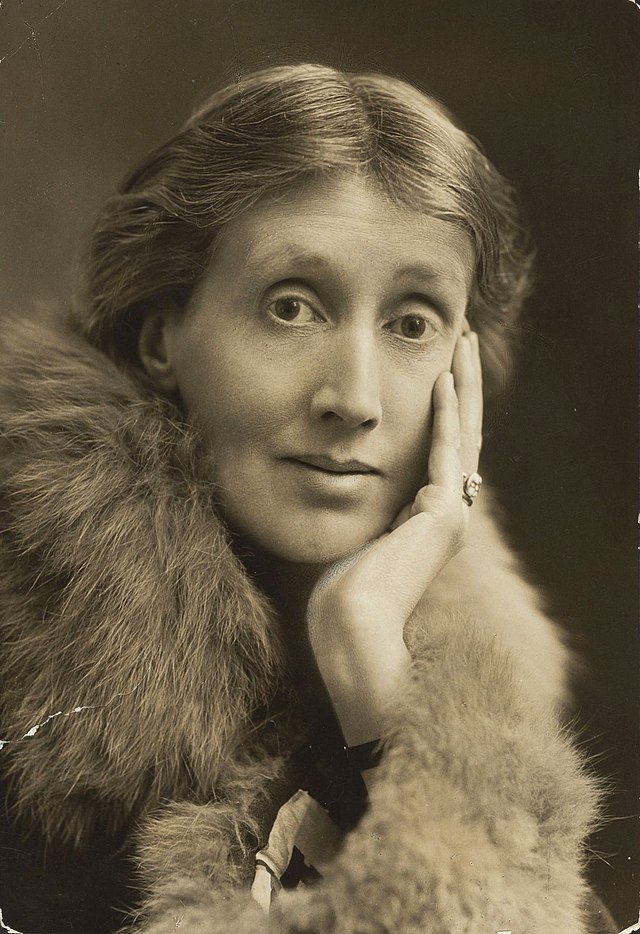
"Different though the sexes are, they intermix. In every human being a vacillation from one sex to the other takes place, and often it is only the clothes that keep the male or female likeness, while underneath the sex is the very opposite of what it is above."
Virginia Woolf's Orlando is a character whose change of sex is physiological as well as psychological. Born a man in the 16th century, after a series of relationships (including being Queen Elizabeth's lover) Orlando wakes up one day to discover that he is now a she. He/she takes this change with equanimity, as she does the inexplicable fact that her lifespan encompasses centuries, not decades. When her story ends it is 1928, and Orlando is still physically only thirty-five years old.
Gender identity and the role of women in society are the principal themes of the first half of the novel. Most major characters exhibit some degree of androgyny in their behavior, attire, or sexual orientation. And Woolf makes a powerful feminist argument when she shows how Orlando's rights and roles become circumscribed when his body morphs into that of a woman, even though her mind and personality have not changed. The prose in this portion of the book is simple and whimsical, with the author often making wry comments about her role as "biographer."
Orlando is born an English nobleman, and serves for a while as a diplomat in Constantinople. But in his heart, he is a poet, and when she returns from the East, Orlando attempts to associate with the famous minds of the day. The novel now assumes a more satirical tone as it lampoons writers, publishers, and critics. But as the centuries roll past, Orlando's life becomes more of an internal dialogue with her own memories as she attempts to find a voice and a purpose. Woolf's language at this point is no longer simple and whimsical, but has become a lush and dreamlike prose poem.
One of the more interesting aspects of this novel is to encounter Virginia Woolf's disparaging view of the 19th century and its literature. She sees the 20th century as only imperfectly able to recapture the social and artistic heights of the 18th century.
Orlando is a fantastic work of the imagination full of relevant commentary on gender roles. It is modeled on the life and work of Woolf's lover Vita Sackville-West, but no doubt reveals much about the author's own personality and internal conflicts.
First published 1928

"Different though the sexes are, they intermix. In every human being a vacillation from one sex to the other takes place, and often it is only the clothes that keep the male or female likeness, while underneath the sex is the very opposite of what it is above."
Virginia Woolf's Orlando is a character whose change of sex is physiological as well as psychological. Born a man in the 16th century, after a series of relationships (including being Queen Elizabeth's lover) Orlando wakes up one day to discover that he is now a she. He/she takes this change with equanimity, as she does the inexplicable fact that her lifespan encompasses centuries, not decades. When her story ends it is 1928, and Orlando is still physically only thirty-five years old.
Gender identity and the role of women in society are the principal themes of the first half of the novel. Most major characters exhibit some degree of androgyny in their behavior, attire, or sexual orientation. And Woolf makes a powerful feminist argument when she shows how Orlando's rights and roles become circumscribed when his body morphs into that of a woman, even though her mind and personality have not changed. The prose in this portion of the book is simple and whimsical, with the author often making wry comments about her role as "biographer."
Orlando is born an English nobleman, and serves for a while as a diplomat in Constantinople. But in his heart, he is a poet, and when she returns from the East, Orlando attempts to associate with the famous minds of the day. The novel now assumes a more satirical tone as it lampoons writers, publishers, and critics. But as the centuries roll past, Orlando's life becomes more of an internal dialogue with her own memories as she attempts to find a voice and a purpose. Woolf's language at this point is no longer simple and whimsical, but has become a lush and dreamlike prose poem.
One of the more interesting aspects of this novel is to encounter Virginia Woolf's disparaging view of the 19th century and its literature. She sees the 20th century as only imperfectly able to recapture the social and artistic heights of the 18th century.
Orlando is a fantastic work of the imagination full of relevant commentary on gender roles. It is modeled on the life and work of Woolf's lover Vita Sackville-West, but no doubt reveals much about the author's own personality and internal conflicts.
74Nickelini
Great review of Orlando. I really like that book too. I find it quite different from her other novels.
75StevenTX
600. Joseph Andrews by Henry Fielding
Full title, The History of the Adventures of Joseph Andrews and of His Friend Mr. Abraham Adams.
Written in Imitation of the Manner of Cervantes, Author of Don Quixote.
First published 1742


In 1740, Samuel Richardson published his landmark epistolary novel Pamela; or, Virtue Rewarded, in which a lowly servant girl, through her moral rectitude in rejecting her master's lustful advances, not only reforms her master's character but herself ascends to the ranks of the genteel. Henry Fielding parodied Pamela in his first work of prose fiction, Shamela. He then broadened the attack with Joseph Andrews, which satirizes not only the content but the very style of Richardson's novel by importing the comic forms of the Spanish picaresque novel.
Joseph Andrews is the brother of Richardson's heroine, Pamela Andrews. Like his sister, Joseph is a servant in the household of the local gentry, the Booby family. Pamela's master, known in that novel only as "Mr. B," is the nephew of Joseph's mistress, the widowed Lady Booby. Lady Booby is secretly in love with Joseph, and constantly torn between her feelings and the potential shame of having an affair with her footman. To complicate matters, her wicked housekeeper, Mrs. Slipslop, is also lusting after Joseph. But Joseph himself is true to his hometown sweetheart, an orphaned girl named Fanny.
After Lady Booby fires Joseph for his rejection of her overt advances, Joseph, Fanny, and their friend and mentor Abraham Adams go on an extended road journey which forms the bulk of the novel. Adams, a scholarly but impoverished Anglican pastor, is an absent-minded and often deluded comic figure like Quixote. He is constantly the butt of practical jokes and mishaps, having his clothes reduced to scanty rags, chamber pots dumped over his head, etc. Fanny, meanwhile, is so beautiful and shapely that she attracts libertines and potential rapists wherever she goes.
The three penniless wanderers meet a variety of people on their journey, being at times robbed, beaten, jailed, swindled, and starved. At other times they are rescued, nursed, feasted and consoled. Most of the people they meet are hypocrites, especially those of the upper classes. A nobleman might have them hunted like foxes for sport, while a bedraggled peddler would give them his last sixpence. The overriding moral message of the novel is to judge people by what they do, not by what they say, by the amount of wealth they have accumulated, or by their position in society.
Fielding also satirizes the prolixity of Richardson's work. At one point in the middle of an exciting fight scene, the author interjects: "Reader, we would make a simile on this occasion, but for two reasons: the first is, it would interrupt the description, which should be rapid in this part; but that doth not weigh much, many precedents occurring for such an interruption: the second and much the greater reason is, that we could find no simile adequate to our purpose: for indeed, what instance could we bring to set before our reader’s eyes at once the idea of friendship, courage, youth, beauty, strength, and swiftness? all which blazed in the person of Joseph Andrews. Let those, therefore, that describe lions and tigers, and heroes fiercer than both, raise their poems or plays with the simile of Joseph Andrews, who is himself above the reach of any simile."
Notwithstanding Fielding's admonition against interruptions, he does digress frequently in the typical manner of the 18th century novel into the backgrounds of secondary characters. Every character must "tell his story," only some of which are directly relevant to the plot. On the whole, though, Joseph Andrews is a funny, uninhibited novel that, while it may not measure up to the author's masterpiece, Tom Jones, is still both fun to read and a noteworthy milestone in the history of the English novel.
Full title, The History of the Adventures of Joseph Andrews and of His Friend Mr. Abraham Adams.
Written in Imitation of the Manner of Cervantes, Author of Don Quixote.
First published 1742


In 1740, Samuel Richardson published his landmark epistolary novel Pamela; or, Virtue Rewarded, in which a lowly servant girl, through her moral rectitude in rejecting her master's lustful advances, not only reforms her master's character but herself ascends to the ranks of the genteel. Henry Fielding parodied Pamela in his first work of prose fiction, Shamela. He then broadened the attack with Joseph Andrews, which satirizes not only the content but the very style of Richardson's novel by importing the comic forms of the Spanish picaresque novel.
Joseph Andrews is the brother of Richardson's heroine, Pamela Andrews. Like his sister, Joseph is a servant in the household of the local gentry, the Booby family. Pamela's master, known in that novel only as "Mr. B," is the nephew of Joseph's mistress, the widowed Lady Booby. Lady Booby is secretly in love with Joseph, and constantly torn between her feelings and the potential shame of having an affair with her footman. To complicate matters, her wicked housekeeper, Mrs. Slipslop, is also lusting after Joseph. But Joseph himself is true to his hometown sweetheart, an orphaned girl named Fanny.
After Lady Booby fires Joseph for his rejection of her overt advances, Joseph, Fanny, and their friend and mentor Abraham Adams go on an extended road journey which forms the bulk of the novel. Adams, a scholarly but impoverished Anglican pastor, is an absent-minded and often deluded comic figure like Quixote. He is constantly the butt of practical jokes and mishaps, having his clothes reduced to scanty rags, chamber pots dumped over his head, etc. Fanny, meanwhile, is so beautiful and shapely that she attracts libertines and potential rapists wherever she goes.
The three penniless wanderers meet a variety of people on their journey, being at times robbed, beaten, jailed, swindled, and starved. At other times they are rescued, nursed, feasted and consoled. Most of the people they meet are hypocrites, especially those of the upper classes. A nobleman might have them hunted like foxes for sport, while a bedraggled peddler would give them his last sixpence. The overriding moral message of the novel is to judge people by what they do, not by what they say, by the amount of wealth they have accumulated, or by their position in society.
Fielding also satirizes the prolixity of Richardson's work. At one point in the middle of an exciting fight scene, the author interjects: "Reader, we would make a simile on this occasion, but for two reasons: the first is, it would interrupt the description, which should be rapid in this part; but that doth not weigh much, many precedents occurring for such an interruption: the second and much the greater reason is, that we could find no simile adequate to our purpose: for indeed, what instance could we bring to set before our reader’s eyes at once the idea of friendship, courage, youth, beauty, strength, and swiftness? all which blazed in the person of Joseph Andrews. Let those, therefore, that describe lions and tigers, and heroes fiercer than both, raise their poems or plays with the simile of Joseph Andrews, who is himself above the reach of any simile."
Notwithstanding Fielding's admonition against interruptions, he does digress frequently in the typical manner of the 18th century novel into the backgrounds of secondary characters. Every character must "tell his story," only some of which are directly relevant to the plot. On the whole, though, Joseph Andrews is a funny, uninhibited novel that, while it may not measure up to the author's masterpiece, Tom Jones, is still both fun to read and a noteworthy milestone in the history of the English novel.
77annamorphic
Wow! 600 books. How does it feel?
78StevenTX
601. The Midwich Cuckoos by John Wyndham
First published 1957


Midwich is an ordinary little English village until the strangest thing happens. Late one evening everyone simply falls unconscious. They stay that way for 24 hours, and anyone who steps within a certain radius of the village collapses as well. An aerial photograph shows a strange, ovoid object near the center of town. But the next day, when everyone wakes up, the object is gone. Things seem to be perfectly normal in Midwich until several weeks later when the inhabitants come to the shocking realization: every woman and girl of childbearing age in Midwich is pregnant.
John Wyndham's novels have been described as "cosy apocalypses," and that is certainly the case with The Midwich Cuckoos. Everything is told from the perspective of the village's inhabitants as they decide to keep the existence of a strange brood of children to themselves. The government is not unaware of the happenings in Midwich, but it has reasons of its own for keeping things low key and under wraps. What we have is a story of ordinary people trying to fit extraordinary circumstances into their comfort zones, and largely succeeding for a number of years.
There are manifestations of the Cold War mindset in the novel, but what is particularly interesting is how it speaks almost directly to the problem Europe is currently confronting with a growing Muslim minority that refuses to assimilate and which many see as a threat to the Western way of life. "Can any State, however tolerant, afford to harbour an increasingly powerful minority which it has no power to control?," asks a character at one point. In answer to his own question, he cites the problem of "...your sham idealists: the quite large number of people who profess ideals as a form of premium for other-life insurance, and are content to lay up slavery and destitution for their descendants so long as they are enabled to produce personal copybooks of elevated views at the gate of heaven." A very timely question: Do our principles of personal liberty compel us to tolerate, even empower, those who are expressly intent on destroying us?
The Midwich Cuckoos is occasionally thoughtful, sometimes frightening, and always entertaining--highly recommended.
The novel has been filmed several times, but under the titles "Village of the Damned" and "Children of the Damned," so you may find the plot familiar even if you don't recognize the title.
The copy I read was the inexpensive e-book issued by Rosetta Books. It is full of typos and spacing errors. If you can find a used print copy, I would recommend that instead.
First published 1957


Midwich is an ordinary little English village until the strangest thing happens. Late one evening everyone simply falls unconscious. They stay that way for 24 hours, and anyone who steps within a certain radius of the village collapses as well. An aerial photograph shows a strange, ovoid object near the center of town. But the next day, when everyone wakes up, the object is gone. Things seem to be perfectly normal in Midwich until several weeks later when the inhabitants come to the shocking realization: every woman and girl of childbearing age in Midwich is pregnant.
John Wyndham's novels have been described as "cosy apocalypses," and that is certainly the case with The Midwich Cuckoos. Everything is told from the perspective of the village's inhabitants as they decide to keep the existence of a strange brood of children to themselves. The government is not unaware of the happenings in Midwich, but it has reasons of its own for keeping things low key and under wraps. What we have is a story of ordinary people trying to fit extraordinary circumstances into their comfort zones, and largely succeeding for a number of years.
There are manifestations of the Cold War mindset in the novel, but what is particularly interesting is how it speaks almost directly to the problem Europe is currently confronting with a growing Muslim minority that refuses to assimilate and which many see as a threat to the Western way of life. "Can any State, however tolerant, afford to harbour an increasingly powerful minority which it has no power to control?," asks a character at one point. In answer to his own question, he cites the problem of "...your sham idealists: the quite large number of people who profess ideals as a form of premium for other-life insurance, and are content to lay up slavery and destitution for their descendants so long as they are enabled to produce personal copybooks of elevated views at the gate of heaven." A very timely question: Do our principles of personal liberty compel us to tolerate, even empower, those who are expressly intent on destroying us?
The Midwich Cuckoos is occasionally thoughtful, sometimes frightening, and always entertaining--highly recommended.
The novel has been filmed several times, but under the titles "Village of the Damned" and "Children of the Damned," so you may find the plot familiar even if you don't recognize the title.
The copy I read was the inexpensive e-book issued by Rosetta Books. It is full of typos and spacing errors. If you can find a used print copy, I would recommend that instead.
79StevenTX
Thanks, >76 puckers: and >77 annamorphic:. 600 looked like a large number until I realized it is still less than halfway to the combined total of 1305. Fortunately things look a little brighter when I look at the individual lists. I've now read 502 out of the 1001 in the 2010 edition.
82Nickelini
Steven, you always write such thoughtful and interesting reviews. I really enjoyed Midwich Cuckoos too, although I didn't describe it with such eloquence. I've since read Chocky which I also liked and plan to read everything of his that I come across.
83StevenTX
602. Nausea by Jean-Paul Sartre
First published 1938
English translation by Lloyd Alexander 1959

In a life devoid of belief, stripped of illusion, and skeptical about the impressions of the senses, what can one actually know? What should one do? If life has no meaning, why even bother to live? "I exist--the world exists--and I know that the world exists. That's all." This is the conclusion of Antoine Roquentin, a French writer who chronicles his intellectual and emotional struggles in Sartre's novel Nausea.
Roquentin's crisis begins with the unsettling feeling that the objects of everyday life are not as they appear to be; they are even threatening. He feels manipulated by them. "Objects should not touch because they are not alive.... But they touch me, it is unbearable. I am afraid of being in contact with them as though they are living beasts." This fear produced in Roquentin a vertiginous feeling he calls Nausea.
As the days pass, the diarist's feeling shift. There are spells of normalcy when the Nausea does not strike him. He continues his work, researching the life of an 18th century French diplomat. But at one point he encounters a document that invalidates everything he has learned about his subject. It was all a pretense established for the sake of the man's legacy. History is nothing but lies. Its truths are forever hidden, if they existed at all. The past is meaningless. Roquentin's life's work is pointless.
Eventually Roquentin questions even his own right to exist. He sinks further into despair and Nausea as he wanders the streets of the port city where he has been working. He clings to the one incontrovertible fact: "I exist." And as for the rest of the world, "things are entirely what they appear to be--and behind them . . . there is nothing."
Many of Roquentin's ideas are expressed in his dialogues with a fellow library patron whom he knows only as the Self-Taught Man. This gentleman educates himself simply by reading the contents of the public library, shelf by shelf, in alphabetical order. He accepts everything, questions nothing, and is the novel's spokesman for conventional wisdom and community values. One of the novel's most interesting passages is when the Self-Taught Man defends humanism, insisting that there is a natural moral law. Roquentin refutes this with view that there is only the self in a life devoid of meaning or purpose.
Nausea is one of the key texts of Existentialism. Its message is simple and powerful. The prose--which includes Roquentin's dreams, hallucinations and occasional paranoid imaginings--is vivid and occasionally disturbing. This is an important novel which challenges our beliefs and perceptions, and is highly recommended.
First published 1938
English translation by Lloyd Alexander 1959

In a life devoid of belief, stripped of illusion, and skeptical about the impressions of the senses, what can one actually know? What should one do? If life has no meaning, why even bother to live? "I exist--the world exists--and I know that the world exists. That's all." This is the conclusion of Antoine Roquentin, a French writer who chronicles his intellectual and emotional struggles in Sartre's novel Nausea.
Roquentin's crisis begins with the unsettling feeling that the objects of everyday life are not as they appear to be; they are even threatening. He feels manipulated by them. "Objects should not touch because they are not alive.... But they touch me, it is unbearable. I am afraid of being in contact with them as though they are living beasts." This fear produced in Roquentin a vertiginous feeling he calls Nausea.
As the days pass, the diarist's feeling shift. There are spells of normalcy when the Nausea does not strike him. He continues his work, researching the life of an 18th century French diplomat. But at one point he encounters a document that invalidates everything he has learned about his subject. It was all a pretense established for the sake of the man's legacy. History is nothing but lies. Its truths are forever hidden, if they existed at all. The past is meaningless. Roquentin's life's work is pointless.
Eventually Roquentin questions even his own right to exist. He sinks further into despair and Nausea as he wanders the streets of the port city where he has been working. He clings to the one incontrovertible fact: "I exist." And as for the rest of the world, "things are entirely what they appear to be--and behind them . . . there is nothing."
Many of Roquentin's ideas are expressed in his dialogues with a fellow library patron whom he knows only as the Self-Taught Man. This gentleman educates himself simply by reading the contents of the public library, shelf by shelf, in alphabetical order. He accepts everything, questions nothing, and is the novel's spokesman for conventional wisdom and community values. One of the novel's most interesting passages is when the Self-Taught Man defends humanism, insisting that there is a natural moral law. Roquentin refutes this with view that there is only the self in a life devoid of meaning or purpose.
Nausea is one of the key texts of Existentialism. Its message is simple and powerful. The prose--which includes Roquentin's dreams, hallucinations and occasional paranoid imaginings--is vivid and occasionally disturbing. This is an important novel which challenges our beliefs and perceptions, and is highly recommended.
84StevenTX
603. Song of Solomon by Toni Morrison
First published 1978

Just some brief comments on this one since it has already been well-reviewed...
I found the folkloric but realistic approach in Song of Solomon to be much more powerful than the magical realism of Beloved. Its message about a search for identity by uncovering one's past is also more universal. The importance of names, language and literacy in both understanding oneself and relating to the community is universal as well.
Of course race is a major theme, as the characters' confused identities, hidden pasts, and interpersonal conflicts are mostly the consequences of slavery and its legacy. But apart from two or three anonymous and innocuous characters, there are no white characters in the novel. Racism is always in the past or an assumption; what we see instead are the conflicts between African Americans who try either to live within or reject the prevailing system of materialist values, to embrace or reject their past, and to celebrate their uniqueness or be ashamed of it.
Song of Solomon is one of the best novels I've read. Toni Morrison's writing talents are such that she can make any scene, no matter how mundane, come alive as a window into the souls of her characters.
First published 1978

Just some brief comments on this one since it has already been well-reviewed...
I found the folkloric but realistic approach in Song of Solomon to be much more powerful than the magical realism of Beloved. Its message about a search for identity by uncovering one's past is also more universal. The importance of names, language and literacy in both understanding oneself and relating to the community is universal as well.
Of course race is a major theme, as the characters' confused identities, hidden pasts, and interpersonal conflicts are mostly the consequences of slavery and its legacy. But apart from two or three anonymous and innocuous characters, there are no white characters in the novel. Racism is always in the past or an assumption; what we see instead are the conflicts between African Americans who try either to live within or reject the prevailing system of materialist values, to embrace or reject their past, and to celebrate their uniqueness or be ashamed of it.
Song of Solomon is one of the best novels I've read. Toni Morrison's writing talents are such that she can make any scene, no matter how mundane, come alive as a window into the souls of her characters.
85StevenTX
604. The Third Policeman by Flann O'Brien
Written 1939-40
First published posthumously 1967
In this bizarre dark comedy the narrator can't give us his name because he has forgotten it. All we know about him is that he has a wooden leg and has devoted his life to the study of the works of and about a scientist-philosopher named de Selby. While some of de Selby's manuscripts are utterly undecipherable, it is at least known that he believed night was a recent phenomenon caused by the intrusion of a noxious pollutant called "dark air." He also devoted much of his life to studying how to dilute water. The narrator has prepared a manuscript about de Selby which will be his own life's work, but he is desperately short of the the funds it will take to subsidize its publication--desperate enough to resort to robbery, even murder.
While the narrator may not know his own name, he does know that his soul's name is Joe, and the two carry on an ongoing conversation during their travels and adventures. They have much to discuss, including a trio of obese policemen who are obsessed with bicycle thefts, but also possess the uncanny means to manipulate time and space.
The Third Policeman is a marvelous, often funny, occasionally unsettling, wildly imaginative absurdist fantasy.
Written 1939-40
First published posthumously 1967
In this bizarre dark comedy the narrator can't give us his name because he has forgotten it. All we know about him is that he has a wooden leg and has devoted his life to the study of the works of and about a scientist-philosopher named de Selby. While some of de Selby's manuscripts are utterly undecipherable, it is at least known that he believed night was a recent phenomenon caused by the intrusion of a noxious pollutant called "dark air." He also devoted much of his life to studying how to dilute water. The narrator has prepared a manuscript about de Selby which will be his own life's work, but he is desperately short of the the funds it will take to subsidize its publication--desperate enough to resort to robbery, even murder.
While the narrator may not know his own name, he does know that his soul's name is Joe, and the two carry on an ongoing conversation during their travels and adventures. They have much to discuss, including a trio of obese policemen who are obsessed with bicycle thefts, but also possess the uncanny means to manipulate time and space.
The Third Policeman is a marvelous, often funny, occasionally unsettling, wildly imaginative absurdist fantasy.
86StevenTX
605. The Awakening by Kate Chopin
First published 1899.
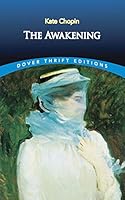

Edna Pontellier is the young wife of a rising New Orleans financier and the mother of two happy children. She has a fashionable house in the city and spends her summer at a beach resort on Grand Isle on the Louisiana Gulf Coast. But one summer the attentions of a younger man convince her that she is not destined to spend her life as one of those "women who idolized their children, worshiped their husbands, and esteemed it a holy privilege to efface themselves as individuals...."
Even before returning to New Orleans, "Mrs. Pontellier was beginning to realize her position in the universe as a human being, and to recognize her relations as an individual to the world within and about her." She begins to spend her time in activities she finds pleasurable and fulfilling, not in routine social calls or the duties of housekeeper and mother. Her husband is dismayed; "he could not see that she was becoming herself and daily casting aside that fictitious self which we assume like a garment with which to appear before the world."
Unfortunately for Edna, the blossoming of her sense of self is accompanied by her first genuine experience with love, and it is an intoxicating mixture that is driving her too hard and fast to stay within the bounds of propriety, even in permissive New Orleans society.
The Awakening is a beautifully written and powerful short novel about a woman's quest for independence and fulfillment.
First published 1899.

Edna Pontellier is the young wife of a rising New Orleans financier and the mother of two happy children. She has a fashionable house in the city and spends her summer at a beach resort on Grand Isle on the Louisiana Gulf Coast. But one summer the attentions of a younger man convince her that she is not destined to spend her life as one of those "women who idolized their children, worshiped their husbands, and esteemed it a holy privilege to efface themselves as individuals...."
Even before returning to New Orleans, "Mrs. Pontellier was beginning to realize her position in the universe as a human being, and to recognize her relations as an individual to the world within and about her." She begins to spend her time in activities she finds pleasurable and fulfilling, not in routine social calls or the duties of housekeeper and mother. Her husband is dismayed; "he could not see that she was becoming herself and daily casting aside that fictitious self which we assume like a garment with which to appear before the world."
Unfortunately for Edna, the blossoming of her sense of self is accompanied by her first genuine experience with love, and it is an intoxicating mixture that is driving her too hard and fast to stay within the bounds of propriety, even in permissive New Orleans society.
The Awakening is a beautifully written and powerful short novel about a woman's quest for independence and fulfillment.
87annamorphic
I loved The Third Policeman but your review makes me want to reread it!
88StevenTX
606. The Lost Honor of Katharina Blum by Heinrich Böll
First published 1974
English translation by Leila Vennewitz 1975
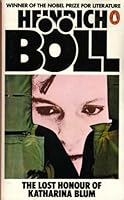

Katharina Blum has murdered a reporter; we are told that at the beginning of the novel. What the author then unfolds, step-by-step, are the events that led this young woman, a seemingly happy and well-liked domestic servant and part-time waitress, to invite the reporter into her apartment, kill him with a pistol, then drive to the home of a police officer and turn herself in.
That the true villain in the novel will be the reporter's newspaper is obvious even before you start the first chapter. The author's disclaimer says, in part, "Should the description of certain journalistic practices result in a resemblance of to the practices of the Bild-Zeitung, such resemblance is neither intentional nor fortuitous, but unavoidable." Bild-Zeitung (now simply called Bild) was, and still is, Germany's most popular tabloid newspaper. Böll shows in the novel how the newspaper deliberately misquotes interviewees, twists stories, and manufactures lies to sensationalize its stories. In the process it callously destroys reputations, ruins careers, breaks up families, and drives some people to acts of desperation and violence.
But while the author shows us lies and distortions from one source, are we really being told the truth? It's intriguing that there are still unanswered questions and unexplained events when we finally see Katharina off to prison. Can the truth of things in a complex network of people, relationships and events ever be fully known? That's the question we are left with at the end of this fascinating and fast-paced little novel.
First published 1974
English translation by Leila Vennewitz 1975

Katharina Blum has murdered a reporter; we are told that at the beginning of the novel. What the author then unfolds, step-by-step, are the events that led this young woman, a seemingly happy and well-liked domestic servant and part-time waitress, to invite the reporter into her apartment, kill him with a pistol, then drive to the home of a police officer and turn herself in.
That the true villain in the novel will be the reporter's newspaper is obvious even before you start the first chapter. The author's disclaimer says, in part, "Should the description of certain journalistic practices result in a resemblance of to the practices of the Bild-Zeitung, such resemblance is neither intentional nor fortuitous, but unavoidable." Bild-Zeitung (now simply called Bild) was, and still is, Germany's most popular tabloid newspaper. Böll shows in the novel how the newspaper deliberately misquotes interviewees, twists stories, and manufactures lies to sensationalize its stories. In the process it callously destroys reputations, ruins careers, breaks up families, and drives some people to acts of desperation and violence.
But while the author shows us lies and distortions from one source, are we really being told the truth? It's intriguing that there are still unanswered questions and unexplained events when we finally see Katharina off to prison. Can the truth of things in a complex network of people, relationships and events ever be fully known? That's the question we are left with at the end of this fascinating and fast-paced little novel.
89StevenTX
607. Blindness by Henry Green
First published 1926


Henry Green wrote most of Blindness, his first novel, while still a student at Eton College. It was published in 1926 but received little notice. It wasn't until after Green's death in 1973 that the novel was reprinted. It is a work showing both promise and immaturity.
The story follows John Haye, a youth whose age and upper class background are similar to the author's, who is blinded by a freak accident while on holiday from school. Previously something of a loner and indifferent student, John quickly resolves that he will make himself into a writer. For companionship he turns to Joan Entwhistle, the daughter of a defrocked, gin-soaked minister and a girl whose whose education and experience are so limited that the two struggle to find a subject of conversation.
Blindness is told largely through interior monologue, with the perspective shifting from character to character, sometimes in mid-chapter. In addition to John and Joan, the characters whose thoughts we surveil include John's stepmother (the mistress of the estate) and his old nurse. It is the style--reminiscent of Virginia Woolf's--more than the content that makes this novel noteworthy. The story strikes out in many directions but never gives us sense of reconciliation or insight. We actually spend surprisingly little time with John himself, so neither the subject of his blindness nor that of his decision to become a writer is satisfactorily explored. And while most of the prose is quite fine, there are some rather sophomoric passages, such as when a house feels sad because it isn't loved or loved in and when the sunset sky was "enjoying herself after the boredom of being blue all day."
Blindness will appeal chiefly to Henry Green fans, but readers looking for something with the feel of Downton Abbey might want to consider it as well.
First published 1926


Henry Green wrote most of Blindness, his first novel, while still a student at Eton College. It was published in 1926 but received little notice. It wasn't until after Green's death in 1973 that the novel was reprinted. It is a work showing both promise and immaturity.
The story follows John Haye, a youth whose age and upper class background are similar to the author's, who is blinded by a freak accident while on holiday from school. Previously something of a loner and indifferent student, John quickly resolves that he will make himself into a writer. For companionship he turns to Joan Entwhistle, the daughter of a defrocked, gin-soaked minister and a girl whose whose education and experience are so limited that the two struggle to find a subject of conversation.
Blindness is told largely through interior monologue, with the perspective shifting from character to character, sometimes in mid-chapter. In addition to John and Joan, the characters whose thoughts we surveil include John's stepmother (the mistress of the estate) and his old nurse. It is the style--reminiscent of Virginia Woolf's--more than the content that makes this novel noteworthy. The story strikes out in many directions but never gives us sense of reconciliation or insight. We actually spend surprisingly little time with John himself, so neither the subject of his blindness nor that of his decision to become a writer is satisfactorily explored. And while most of the prose is quite fine, there are some rather sophomoric passages, such as when a house feels sad because it isn't loved or loved in and when the sunset sky was "enjoying herself after the boredom of being blue all day."
Blindness will appeal chiefly to Henry Green fans, but readers looking for something with the feel of Downton Abbey might want to consider it as well.
90StevenTX
608. Interview with the Vampire by Anne Rice
First published 1976


I had every expectation that I would like Interview with the Vampire: It is both very popular and critically well received. The subject matter interested me; I had enjoyed Dracula immensely. And I had recently vacationed in New Orleans, the novel's principal setting. But, instead, I found it dreary and lacking in suspense. Nor did I gain much from its existentialist theme, and it took me weeks to get through the book at a few pages a day. Yet considering all the endorsements it has received, I'm fully prepared to blame my failure to enjoy it on the reader and not on the work. So I won't say anything more about the novel, and may even give Anne Rice another try some time.
First published 1976


I had every expectation that I would like Interview with the Vampire: It is both very popular and critically well received. The subject matter interested me; I had enjoyed Dracula immensely. And I had recently vacationed in New Orleans, the novel's principal setting. But, instead, I found it dreary and lacking in suspense. Nor did I gain much from its existentialist theme, and it took me weeks to get through the book at a few pages a day. Yet considering all the endorsements it has received, I'm fully prepared to blame my failure to enjoy it on the reader and not on the work. So I won't say anything more about the novel, and may even give Anne Rice another try some time.
91Yells
I have tried reading Interview so many times and it bores me to tears! I am willing to give it one more go (because I hate giving up on something) but if it doesn't work after 100 pages or so, I am checking it off the list and counting it done. I have never tried anything else by her because this one was just that boring.
92M1nks
You're not alone. In fact I think you're soundly within the majority camp. I know that some people must like this book but I've never meet any.
I'm probably going to have to reread this someday because I read it when I was a teenager and although I can't remember much (hence the re-read) I can still remember how deadly dull I found it.
I'm probably going to have to reread this someday because I read it when I was a teenager and although I can't remember much (hence the re-read) I can still remember how deadly dull I found it.
93StevenTX
609. Under the Skin by Michel Faber
First published 2000

Very good book. Some will find it disturbing, but its horrors are tempered by humor and irony. I don't have time just now to write a review of it, but it would be almost impossible to say much about it without spoilers that would take away much of the experience of reading it.
First published 2000

Very good book. Some will find it disturbing, but its horrors are tempered by humor and irony. I don't have time just now to write a review of it, but it would be almost impossible to say much about it without spoilers that would take away much of the experience of reading it.
94StevenTX
610. In the Heart of the Country by J. M. Coetzee
First published 1977
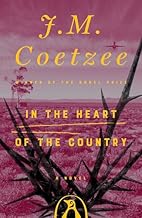

The title of In the Heart of the Country may not have been an intentional reference to Conrad's Heart of Darkness, but the two stories are each a bleak journey into physical, social and spiritual isolation. In the Heart of the Country is set in the author's South Africa and narrated by a woman named Magda, the daughter and apparently only child of a widowed rancher. They live on the arid veldt where rain is an event almost as rare as a visitor from the outside world. Their only companions are the black maid and farmhands they employ but scarcely know. Magda, by her own description, is a thin, ugly and lonely young woman whose days are as barren as the land she lives on.
On the very first pages of the novel we learn that Magda is an unreliable narrator. She gives us several contradictory descriptions of her father bringing his new bride to their house, an event that may never have happened at all. There are other instances throughout the book of episodes being retold several times with different outcomes. Magda admits that many of her memories may be manufactured from conjecture or dreams, but inevitably it is her sanity which is in doubt.
Magda's self-pity turns to despair and a feverish longing for the life of companionship and sexual fulfillment that she knows will never be hers, even though it is largely her own fears and inhibitions which deny her the life she wants. She puts all the blame on her father, fantasizing his death even as she dreams of being sexually used by him. Then her fantasies extend to the African workers whose seemingly carefree and sensual lives she begins to envy. "I can never be the rapture of pure self that they are," she writes.
Colonialism and apartheid are obviously at the root of Magda's despair and instability, but the novel goes deeper than just being a condemnation of racism and exploitation. It is also a sympathetic look at those, like Magda, who feel themselves trapped in and blamed for a system they did not create and do not uphold. Speaking to Hendrik, a black farmhand, Magda complains, "You are so bitter that you are completely blinded. I am not simply one of the whites, I am I! I am I, not a people. Why have I to pay for other people's sins?"
On another level altogether, In the Heart of the Country is also a lament on behalf of those whose literacy and understanding condemns them to a life of introspection and confrontation with their inner darkness. Magda writes that she is "alas forever set off from them by the babble of words within me that fabricate and refabricate me as something else, something else.... Would that I had never learned to read."
In the Heart of the Country is a searing journey into a mind torn and twisted by an uncaring parent, an unforgiving land, and a heritage of injustice. It is a violent and visceral story of hopeless despair and emotional self-mortification. The novel also reflects its author's plight, for those who have the gift for telling the story must bear the burden of telling it, even though it consumes them.
First published 1977

The title of In the Heart of the Country may not have been an intentional reference to Conrad's Heart of Darkness, but the two stories are each a bleak journey into physical, social and spiritual isolation. In the Heart of the Country is set in the author's South Africa and narrated by a woman named Magda, the daughter and apparently only child of a widowed rancher. They live on the arid veldt where rain is an event almost as rare as a visitor from the outside world. Their only companions are the black maid and farmhands they employ but scarcely know. Magda, by her own description, is a thin, ugly and lonely young woman whose days are as barren as the land she lives on.
On the very first pages of the novel we learn that Magda is an unreliable narrator. She gives us several contradictory descriptions of her father bringing his new bride to their house, an event that may never have happened at all. There are other instances throughout the book of episodes being retold several times with different outcomes. Magda admits that many of her memories may be manufactured from conjecture or dreams, but inevitably it is her sanity which is in doubt.
Magda's self-pity turns to despair and a feverish longing for the life of companionship and sexual fulfillment that she knows will never be hers, even though it is largely her own fears and inhibitions which deny her the life she wants. She puts all the blame on her father, fantasizing his death even as she dreams of being sexually used by him. Then her fantasies extend to the African workers whose seemingly carefree and sensual lives she begins to envy. "I can never be the rapture of pure self that they are," she writes.
Colonialism and apartheid are obviously at the root of Magda's despair and instability, but the novel goes deeper than just being a condemnation of racism and exploitation. It is also a sympathetic look at those, like Magda, who feel themselves trapped in and blamed for a system they did not create and do not uphold. Speaking to Hendrik, a black farmhand, Magda complains, "You are so bitter that you are completely blinded. I am not simply one of the whites, I am I! I am I, not a people. Why have I to pay for other people's sins?"
On another level altogether, In the Heart of the Country is also a lament on behalf of those whose literacy and understanding condemns them to a life of introspection and confrontation with their inner darkness. Magda writes that she is "alas forever set off from them by the babble of words within me that fabricate and refabricate me as something else, something else.... Would that I had never learned to read."
In the Heart of the Country is a searing journey into a mind torn and twisted by an uncaring parent, an unforgiving land, and a heritage of injustice. It is a violent and visceral story of hopeless despair and emotional self-mortification. The novel also reflects its author's plight, for those who have the gift for telling the story must bear the burden of telling it, even though it consumes them.
95annamorphic
What an interesting review. I'd like to read this beside The Grass is Singing to which it sounds like some kind of response.
96Yells
I love Coetzee's work. I just finished reading a collection of letters between him and Paul Auster. It made me fall in love with Coetzee that much more.
97Nickelini
>94 StevenTX: Great review! Onto my list.
>95 annamorphic: What an interesting review. I'd like to read this beside The Grass is Singing to which it sounds like some kind of response.
I didn't know much about In the Heart of the Country until this conversation, but based on Steven's great review, I see all your connections to the Grass is Singing (which I recently read). I saw lots of people compare it to Disgrace, which I have read, but In the Heart of the Country sounds much closer. They would make an interesting companion read.
>95 annamorphic: What an interesting review. I'd like to read this beside The Grass is Singing to which it sounds like some kind of response.
I didn't know much about In the Heart of the Country until this conversation, but based on Steven's great review, I see all your connections to the Grass is Singing (which I recently read). I saw lots of people compare it to Disgrace, which I have read, but In the Heart of the Country sounds much closer. They would make an interesting companion read.
98StevenTX
611. Yes by Thomas Bernard
First published in German 1978
English translation by Ewald Osers 1991

The reclusive scientist who narrates this stream-of-consciousness novel tells us in the opening sentence that he is suffering from an "emotional and mental sickness." But is he really sick, or has he just failed to divert himself from the bitter truth that life has no meaning or purpose?
The plot of the novel is very simple. The scientist is attempting to unburden himself of his fears about his mental condition to his only friend, a real estate agent, when he is interrupted by the arrival of a couple who want to see some nearby property. The buyers are a Swiss engineer nearing retirement and his companion, a younger Persian woman who gave up a career in the arts years ago for the sake of her Swiss lover. The engineer winds up buying a miserable piece of property at full price and building a horrible concrete house, all with the apparent intention of tormenting the helpless Persian woman. The narrator and the woman go on several walks together in the woods, during which time they say almost nothing to each other.
The plot is almost meaningless, which is part of the novel's message. It only deepens the air of helpless despair as a background for passages like the following existentialist credo:
Other works I have read by Thomas Bernhard:
Correction
First published in German 1978
English translation by Ewald Osers 1991

The reclusive scientist who narrates this stream-of-consciousness novel tells us in the opening sentence that he is suffering from an "emotional and mental sickness." But is he really sick, or has he just failed to divert himself from the bitter truth that life has no meaning or purpose?
The plot of the novel is very simple. The scientist is attempting to unburden himself of his fears about his mental condition to his only friend, a real estate agent, when he is interrupted by the arrival of a couple who want to see some nearby property. The buyers are a Swiss engineer nearing retirement and his companion, a younger Persian woman who gave up a career in the arts years ago for the sake of her Swiss lover. The engineer winds up buying a miserable piece of property at full price and building a horrible concrete house, all with the apparent intention of tormenting the helpless Persian woman. The narrator and the woman go on several walks together in the woods, during which time they say almost nothing to each other.
The plot is almost meaningless, which is part of the novel's message. It only deepens the air of helpless despair as a background for passages like the following existentialist credo:
“We brood about what we should have done differently or better or what perhaps we should not have done, because we are doomed to do so, but it does not lead anywhere. The disaster was inevitable, is what we then say and for a while, if only a short while, we are quiet. Then we start all over again asking questions and probing and probing until we have gone half crazy. We constantly look for someone responsible, or for several persons responsible, in order to make things bearable for ourselves for at least a moment, and naturally, if we are honest, we invariably end up with ourselves. We have reconciled to the fact that we have to exist, even though most of the time against our will, because we have no other choice, and only because we have again and again reconciled ourselves to this fact, every day and every moment anew, can we progress at all. And where we are progressing to, we have, if we are honest, known all our lives, to death, except that most of the time we are careful not to admit it. And because we have that certainty of doing nothing other than progressing towards death and because we realize what that means, we try to employ all kinds of aids to divert us from that realization, and thus, if we only look closely, we see in this world nothing except people continually and all their lives engaged in such a diversion…. Everything about everybody is nothing but diversion from death.”Bernhard's signature style of long, flowing sentences with no paragraph or chapter breaks is perfect for this kind of narration. It conveys the scientist's obsessive mental condition, yet, because of frequent repetitions and minimal dialogue, is quite easy to read. There are strong similarities between Yes and Sartre's Nausea, even to the point that the narrator experiences vertigo when contemplating everyday objects. With its relentless nihilism this is not a book everyone will enjoy, but it is a fine expression of existential despair.
Other works I have read by Thomas Bernhard:
Correction
99StevenTX
612. Pereira Declares: A Testimony by Antonio Tabucchi
First published in Italian 1994
English translation by Patrick Creagh 1995

Pereira is a newspaperman in Lisbon in 1938. Under Portugal's right-wing dictatorship, newspapers are expected to show their loyalty by supporting Portugal's volunteers on the Nationalist side in the Spanish Civil War and by praising Portugal's unofficial allies, fascist Germany and Italy. But as the editor of the culture page, Pereira considers himself aloof from all of that. He is concerned with affairs of the body and the soul, not with politics, and is content to publish his translations of French short stories and the obituaries of great writers.
That trouble is headed Pereira's way is hinted by the construction of the novel itself. It is as though a skeptic were reading a testimony dictated by Pereira, interjecting "Pereira declares this" and "Pereira declares that" every so often. Pereira's priest and his doctor warn the editor that he won't be able to stay neutral forever. And, sure enough, when the assistant editor he hires turns out to be something other than what he claims to be, Pereira's hand is forced.
Much of the appeal of this short novel is in the character of Pereira himself. He is an honest, unassuming, paunchy widower who loves his omelets and his lemonade. Like so many of us, he rationalizes against giving up the food he loves for the sake of his heart and his waistline. Similarly he rationalizes against giving up his placid comforts to take a stand on behalf of what he believes.
Most novels about life under a dictatorship are tragic and depressing, but Pereira Declares manages to not only have a serious message, but to be light and uplifting at the same time. This brilliant look at life in Europe on the eve of World War II is highly recommended.
First published in Italian 1994
English translation by Patrick Creagh 1995

Pereira is a newspaperman in Lisbon in 1938. Under Portugal's right-wing dictatorship, newspapers are expected to show their loyalty by supporting Portugal's volunteers on the Nationalist side in the Spanish Civil War and by praising Portugal's unofficial allies, fascist Germany and Italy. But as the editor of the culture page, Pereira considers himself aloof from all of that. He is concerned with affairs of the body and the soul, not with politics, and is content to publish his translations of French short stories and the obituaries of great writers.
That trouble is headed Pereira's way is hinted by the construction of the novel itself. It is as though a skeptic were reading a testimony dictated by Pereira, interjecting "Pereira declares this" and "Pereira declares that" every so often. Pereira's priest and his doctor warn the editor that he won't be able to stay neutral forever. And, sure enough, when the assistant editor he hires turns out to be something other than what he claims to be, Pereira's hand is forced.
Much of the appeal of this short novel is in the character of Pereira himself. He is an honest, unassuming, paunchy widower who loves his omelets and his lemonade. Like so many of us, he rationalizes against giving up the food he loves for the sake of his heart and his waistline. Similarly he rationalizes against giving up his placid comforts to take a stand on behalf of what he believes.
Most novels about life under a dictatorship are tragic and depressing, but Pereira Declares manages to not only have a serious message, but to be light and uplifting at the same time. This brilliant look at life in Europe on the eve of World War II is highly recommended.
100StevenTX
613. Dangling Man by Saul Bellow
First published 1944

In Chicago in 1942 a young man named Joseph applies for induction into the Army. Anticipating a quick enlistment, he quits his job. But his Canadian birth proves to be a problem for the Army. His application is deferred and, month after month, he is left dangling. He can't get his job back--or any job--because of his imminent induction, so he starts keeping a diary as he lives precariously off his wife's meager income.
Joseph is an intellectual, a former communist, and an introspective man of strong feelings. He also has more than his share of personal pride, and being an able-bodied man unemployed during wartime puts an enormous chip on his shoulder. "I feel I am a sort of human grenade whose pin has been withdrawn," he writes. "I know I am going to explode and I am continually anticipating the time...." Joseph's diary alternates between accounts of his short-tempered run-ins with wife, family, friends and neighbors and calm ruminations on the purpose of life itself. In particular he muses on the contradictory expectations of our personal and social selves. "Great pressure is brought to bear to make us undervalue ourselves," he writes, "On the other hand civilization teaches that each of us is an inestimable prize."
Dangling Man was Saul Bellow's first novel, and the author himself has described it as an "apprentice work." Like many first novels it shows a lack of patience by the author as he launches straight into direct statements of his ideas without developing them through characters and plot. Plot, in fact, is minimal. What we see is largely Joseph's gradual emotional deterioration as he awaits his induction. His philosophical self-examination never provides him with the solace he seeks, only with questions he can't answer. On the plus side, Joseph, despite his short fuse, is one Bellow's more appealing protagonists. And the novel provides a vivid picture of life in the boarding houses that were home to many urban Americans before and during World War II. This was the life that so many veterans were eager to put behind them in the great suburban building boom that followed the war.
First published 1944

In Chicago in 1942 a young man named Joseph applies for induction into the Army. Anticipating a quick enlistment, he quits his job. But his Canadian birth proves to be a problem for the Army. His application is deferred and, month after month, he is left dangling. He can't get his job back--or any job--because of his imminent induction, so he starts keeping a diary as he lives precariously off his wife's meager income.
Joseph is an intellectual, a former communist, and an introspective man of strong feelings. He also has more than his share of personal pride, and being an able-bodied man unemployed during wartime puts an enormous chip on his shoulder. "I feel I am a sort of human grenade whose pin has been withdrawn," he writes. "I know I am going to explode and I am continually anticipating the time...." Joseph's diary alternates between accounts of his short-tempered run-ins with wife, family, friends and neighbors and calm ruminations on the purpose of life itself. In particular he muses on the contradictory expectations of our personal and social selves. "Great pressure is brought to bear to make us undervalue ourselves," he writes, "On the other hand civilization teaches that each of us is an inestimable prize."
Dangling Man was Saul Bellow's first novel, and the author himself has described it as an "apprentice work." Like many first novels it shows a lack of patience by the author as he launches straight into direct statements of his ideas without developing them through characters and plot. Plot, in fact, is minimal. What we see is largely Joseph's gradual emotional deterioration as he awaits his induction. His philosophical self-examination never provides him with the solace he seeks, only with questions he can't answer. On the plus side, Joseph, despite his short fuse, is one Bellow's more appealing protagonists. And the novel provides a vivid picture of life in the boarding houses that were home to many urban Americans before and during World War II. This was the life that so many veterans were eager to put behind them in the great suburban building boom that followed the war.
101hdcanis
>99 StevenTX: good description and the book I liked too. I've read since couple of other Tabucchis and they haven't made much of an impression but Pereira is good.
102StevenTX
614. The Forbidden Kingdom by J. J. Slauerhoff
First published in Dutch 1932
English translation by Paul Vincent 2012
Also translated as The Forbidden Realm


The Forbidden Kingdom is an unusual and unpredictable novel that centers on the Portuguese colony of Macau (near Hong Kong) and the life of Luis Vaz de Camões, author of Portugal's national epic, The Lusiads. After a prologue which depicts the founding of Macao, the novel focuses on the life of Camões, beginning at the point when a love affair with a member of the royal household results in his being sent into exile. The story does not faithfully follow the life of the real Camões, but it does eventually lead to his being stranded by shipwreck at Macao.
Midway through the novel the narrative abruptly shifts to the 20th century with the story of an unnamed Irish radio operator whose peregrinations likewise lead to his being stranded at Macao. The stories of the two then merge as though they were a single individual living simultaneously in the 16th and 20th centuries. They experience the same dangers and privations, both become increasingly alienated from society, and they both lose their senses of identity and humanity.
Slauerhoff writes in a mixture of first and third person that appears almost random, and the line between dream and reality is often as blurred as the line between the two characters, yet the novel is very easy to read in its recent translation. There is a sense of constantly teetering on the edge of an abyss that is unfathomable and unknowable. In geographic terms the abyss is China, a vast and alien empire that is indifferent to the fate of the puny European colony perched on its shore. In metaphysical terms, however, the abyss is the dark subconscious where identity evaporates and time is meaningless.
The Forbidden Kingdom bears a strong thematic resemblance to Conrad's Heart of Darkness, while the plot device of merging two characters from the 16th and 20th centuries is similar to that used by Virginia Woolf in Orlando. It is not a landmark work of fiction, but The Forbidden Kingdom does provide fascinating insight into aspects of Portugal's colonial empire and the lives of the traders and missionaries who first ventured to the other side of the world.
First published in Dutch 1932
English translation by Paul Vincent 2012
Also translated as The Forbidden Realm


The Forbidden Kingdom is an unusual and unpredictable novel that centers on the Portuguese colony of Macau (near Hong Kong) and the life of Luis Vaz de Camões, author of Portugal's national epic, The Lusiads. After a prologue which depicts the founding of Macao, the novel focuses on the life of Camões, beginning at the point when a love affair with a member of the royal household results in his being sent into exile. The story does not faithfully follow the life of the real Camões, but it does eventually lead to his being stranded by shipwreck at Macao.
Midway through the novel the narrative abruptly shifts to the 20th century with the story of an unnamed Irish radio operator whose peregrinations likewise lead to his being stranded at Macao. The stories of the two then merge as though they were a single individual living simultaneously in the 16th and 20th centuries. They experience the same dangers and privations, both become increasingly alienated from society, and they both lose their senses of identity and humanity.
Slauerhoff writes in a mixture of first and third person that appears almost random, and the line between dream and reality is often as blurred as the line between the two characters, yet the novel is very easy to read in its recent translation. There is a sense of constantly teetering on the edge of an abyss that is unfathomable and unknowable. In geographic terms the abyss is China, a vast and alien empire that is indifferent to the fate of the puny European colony perched on its shore. In metaphysical terms, however, the abyss is the dark subconscious where identity evaporates and time is meaningless.
The Forbidden Kingdom bears a strong thematic resemblance to Conrad's Heart of Darkness, while the plot device of merging two characters from the 16th and 20th centuries is similar to that used by Virginia Woolf in Orlando. It is not a landmark work of fiction, but The Forbidden Kingdom does provide fascinating insight into aspects of Portugal's colonial empire and the lives of the traders and missionaries who first ventured to the other side of the world.
103annamorphic
#614, what a great review of a book that I too really liked. And I'm not certain I even knew that Camões was a real historical figure!
104StevenTX
615. Amelia by Henry Fielding
First published 1751

Amelia was Henry Fielding's final novel and his most conventional one. It is a moral tale concerning the troubles and triumphs of a married couple, William and Amelia Booth. Booth is an English soldier, an infantry officer with no fortune of his own who dares to love and marry Amelia Harris, a stunningly beautiful middle class girl from a prosperous family. Amelia's family does not react well to the match, and, when Amelia's mother dies, a sister cheats Amelia out of her inheritance by means of a fraudulent will.
We learn of the Booths' early history as William tells his life story in Newgate prison in the opening chapters. He has been arrested for assault when he was actually trying to help a person who was being mugged on a London street. The person he is telling this to is a female fellow prisoner, Miss Matthews, who manages to seduce Booth before the two of them are released. Booth's infidelity is a secret guilt which will hang over him for the rest of the book.
Amelia, meanwhile, is not only faithful to her wayward husband, but completely innocent of any impure thoughts. Her beauty attracts many would-be seducers--most of them men that Booth considers his friends--but she remains unwary and oblivious to their intentions. One of her friends, in frustration, declares Amelia to be "the most confounded prude on earth." Booth is a good-hearted man, but not so flawless as his wife. As a discharged officer on half-pay he barely has enough money to support his growing family, yet he wastes most of his resources through profligate spending and gambling. He is deeply in debt and constantly on the run from the bailiff while his wife is the intended prey of his lecherous friends. At every turn their one true friend, a cleric named Dr. Harrison, delivers a sermon appropriate to Booth's most recent failings.
Aside from its moral lessons on adultery, gambling, dueling, and other sins, the novel attacks some of the social ills of the day: inequality, a corrupt justice system, a Parliament out of touch with the needs of the people, and the lack of religious piety even among the clergy. But these are more asides than themes. One of the more entertaining debates, however, is on whether women should be educated. "Education" in this context means being taught Greek and Latin so they could memorize the ancient classics. Fielding documents the debate but doesn't appear to take sides.
Amelia is a good novel but not in the same class as Fielding's earlier works. It lacks humor and is often preachy. It does give a nice picture of some aspects of life in mid-18th century London, but Fielding doesn't dig as deeply as we might like into the institutions he criticizes. This may be one of the best novels before Dickens and Gaskell to portray the corruption and poverty of urban England, but you have to wade through a lot of sentimentality and moralizing to glean a sense of the times.
First published 1751

Amelia was Henry Fielding's final novel and his most conventional one. It is a moral tale concerning the troubles and triumphs of a married couple, William and Amelia Booth. Booth is an English soldier, an infantry officer with no fortune of his own who dares to love and marry Amelia Harris, a stunningly beautiful middle class girl from a prosperous family. Amelia's family does not react well to the match, and, when Amelia's mother dies, a sister cheats Amelia out of her inheritance by means of a fraudulent will.
We learn of the Booths' early history as William tells his life story in Newgate prison in the opening chapters. He has been arrested for assault when he was actually trying to help a person who was being mugged on a London street. The person he is telling this to is a female fellow prisoner, Miss Matthews, who manages to seduce Booth before the two of them are released. Booth's infidelity is a secret guilt which will hang over him for the rest of the book.
Amelia, meanwhile, is not only faithful to her wayward husband, but completely innocent of any impure thoughts. Her beauty attracts many would-be seducers--most of them men that Booth considers his friends--but she remains unwary and oblivious to their intentions. One of her friends, in frustration, declares Amelia to be "the most confounded prude on earth." Booth is a good-hearted man, but not so flawless as his wife. As a discharged officer on half-pay he barely has enough money to support his growing family, yet he wastes most of his resources through profligate spending and gambling. He is deeply in debt and constantly on the run from the bailiff while his wife is the intended prey of his lecherous friends. At every turn their one true friend, a cleric named Dr. Harrison, delivers a sermon appropriate to Booth's most recent failings.
Aside from its moral lessons on adultery, gambling, dueling, and other sins, the novel attacks some of the social ills of the day: inequality, a corrupt justice system, a Parliament out of touch with the needs of the people, and the lack of religious piety even among the clergy. But these are more asides than themes. One of the more entertaining debates, however, is on whether women should be educated. "Education" in this context means being taught Greek and Latin so they could memorize the ancient classics. Fielding documents the debate but doesn't appear to take sides.
Amelia is a good novel but not in the same class as Fielding's earlier works. It lacks humor and is often preachy. It does give a nice picture of some aspects of life in mid-18th century London, but Fielding doesn't dig as deeply as we might like into the institutions he criticizes. This may be one of the best novels before Dickens and Gaskell to portray the corruption and poverty of urban England, but you have to wade through a lot of sentimentality and moralizing to glean a sense of the times.
106StevenTX
616. Phineas Finn by Anthony Trollope
First published 1869


The title character of Phineas Finn is a handsome and sociable Irishman. At the beginning of the novel he is 25 and studying law in London while being supported on a slender allowance from his father, a doctor back in Ireland. It is Phineas's ambition, however, to serve in Parliament. (At this time, the 1860s, Ireland was part of the U.K.) With the help of some political friends and an unexpected aristocratic patron, Phineas wins a seat representing his home borough. But Members of Parliament aren't paid, and Phineas must face the unpleasant necessity of finding a way to support himself.
Of course one alternative to working for one's money is to marry for it. The dilemma of whether to marry for love, for money, or for social position is a common one in 19th century fiction, and Phineas's romantic conundrums are the principal subject of the novel. But the focus isn't entirely on Phineas. Each of his female acquaintances is a major character in her own right, and through them Trollope gives a very sympathetic portrayal of problems of women who had limited range to exercise their talents and interests and were often helplessly at the mercy of a domineering father or husband. As in some of Trollope's other novels, the women in Phineas Finn are his deepest and most interesting characters.
The second major theme of the novel is the political debate in Britain over electoral reform. Phineas enters Parliament as a Liberal and a supporter of what would become the Reform Act of 1867. This act extended voting rights to the urban working class, but proposals for further reforms such as the introduction of a secret ballot failed after much debate. I found the novel to be a painless introduction to some of the workings of the British parliamentary system and its history.
Phineas Finn is the second novel in Trollope's Palliser series, but it stands alone quite well. Some of the characters from the first novel, Can You Forgive Her?, make an appearance, but their role is secondary, and nothing demands that you know their history.
Phineas Finn is an enjoyable and informative novel that I would recommend to anyone who enjoys 19th century fiction, and especially to anyone interested in British political history. The characters are generally likable, and their moral and marital dilemmas are still relevant. Trollope doesn't always wrap things up in a conventional happy ending, and knowing this keeps the reader in suspense about Phineas's fate to the very end.
First published 1869


The title character of Phineas Finn is a handsome and sociable Irishman. At the beginning of the novel he is 25 and studying law in London while being supported on a slender allowance from his father, a doctor back in Ireland. It is Phineas's ambition, however, to serve in Parliament. (At this time, the 1860s, Ireland was part of the U.K.) With the help of some political friends and an unexpected aristocratic patron, Phineas wins a seat representing his home borough. But Members of Parliament aren't paid, and Phineas must face the unpleasant necessity of finding a way to support himself.
Of course one alternative to working for one's money is to marry for it. The dilemma of whether to marry for love, for money, or for social position is a common one in 19th century fiction, and Phineas's romantic conundrums are the principal subject of the novel. But the focus isn't entirely on Phineas. Each of his female acquaintances is a major character in her own right, and through them Trollope gives a very sympathetic portrayal of problems of women who had limited range to exercise their talents and interests and were often helplessly at the mercy of a domineering father or husband. As in some of Trollope's other novels, the women in Phineas Finn are his deepest and most interesting characters.
The second major theme of the novel is the political debate in Britain over electoral reform. Phineas enters Parliament as a Liberal and a supporter of what would become the Reform Act of 1867. This act extended voting rights to the urban working class, but proposals for further reforms such as the introduction of a secret ballot failed after much debate. I found the novel to be a painless introduction to some of the workings of the British parliamentary system and its history.
Phineas Finn is the second novel in Trollope's Palliser series, but it stands alone quite well. Some of the characters from the first novel, Can You Forgive Her?, make an appearance, but their role is secondary, and nothing demands that you know their history.
Phineas Finn is an enjoyable and informative novel that I would recommend to anyone who enjoys 19th century fiction, and especially to anyone interested in British political history. The characters are generally likable, and their moral and marital dilemmas are still relevant. Trollope doesn't always wrap things up in a conventional happy ending, and knowing this keeps the reader in suspense about Phineas's fate to the very end.
107StevenTX
617. Shame by Salman Rushdie
First published 1983

Shame is a family saga depicting the history of modern Pakistan as the intertwined lives of two related families. Members of the two families rise in succession to become, respectively, the president and dictator of the country, so this is a very politically-charged novel. It is also a novel of magical realism. There are bizarre and magical events such as a virgin birth from three wombs, a clairvoyant police officer who arrests people for crimes they are planning to commit, and a mass beheading of turkeys. There is also a metafictional side to the novel. Rushdie interjects episodes from his own life and occasionally speaks directly to the reader, complaining that his characters have their own minds. He also tells us several times that the Pakistan of his novel is a fictional country, thus making sure that we know it isn't.
The largest characters in the book are Iskander Harappa, who represents Zulfikar Ali Bhutto, Pakistan's elected leader from 1971 to 1977, and Raza "Razor Guts" Hyder, who represents General Muhammad Zia-Ul-Haq, dictator from 1977 to 1988. Also appearing is Harappa's daughter, Arjumand, representing Benazir Bhutto, who would become prime minister after the book's publication. In the novel, Rushdie nicknames her "the Virgin Ironpants," but Bhutto appears not to have taken serious offence at this. Rushdie depicts each family as being racked by internal division and plagued by the shame of their past crimes, though it is clear that he favors the liberal political aims of the Harappas/Bhuttos.
I'm sure many of the minor characters represented historical figures or factions as well and would be recognized as such by reader more versed in Pakistan's history. But even without any background in the subject, I found Shame to be both enlightening and entertaining, especially after I had briefed myself with a couple of visits to Wikipedia. The magical realism worked very well--it was clearly allegorical and to a purpose and never descended to silliness. I would recommend Shame for its literary qualities alone, but especially to anyone interested in the modern history of South Asia.
First published 1983

Shame is a family saga depicting the history of modern Pakistan as the intertwined lives of two related families. Members of the two families rise in succession to become, respectively, the president and dictator of the country, so this is a very politically-charged novel. It is also a novel of magical realism. There are bizarre and magical events such as a virgin birth from three wombs, a clairvoyant police officer who arrests people for crimes they are planning to commit, and a mass beheading of turkeys. There is also a metafictional side to the novel. Rushdie interjects episodes from his own life and occasionally speaks directly to the reader, complaining that his characters have their own minds. He also tells us several times that the Pakistan of his novel is a fictional country, thus making sure that we know it isn't.
The largest characters in the book are Iskander Harappa, who represents Zulfikar Ali Bhutto, Pakistan's elected leader from 1971 to 1977, and Raza "Razor Guts" Hyder, who represents General Muhammad Zia-Ul-Haq, dictator from 1977 to 1988. Also appearing is Harappa's daughter, Arjumand, representing Benazir Bhutto, who would become prime minister after the book's publication. In the novel, Rushdie nicknames her "the Virgin Ironpants," but Bhutto appears not to have taken serious offence at this. Rushdie depicts each family as being racked by internal division and plagued by the shame of their past crimes, though it is clear that he favors the liberal political aims of the Harappas/Bhuttos.
I'm sure many of the minor characters represented historical figures or factions as well and would be recognized as such by reader more versed in Pakistan's history. But even without any background in the subject, I found Shame to be both enlightening and entertaining, especially after I had briefed myself with a couple of visits to Wikipedia. The magical realism worked very well--it was clearly allegorical and to a purpose and never descended to silliness. I would recommend Shame for its literary qualities alone, but especially to anyone interested in the modern history of South Asia.
108StevenTX
618: Lanark: A Life in 4 Books by Alasdair Gray
First published 1981
Lanark: A Life in 4 Books, is a highly unusual novel that defies any attempt at a succinct description. The story begins in the middle with Book 3, a Kafkaesque tale of a young man who finds himself in a city trapped in perpetual darkness. The man, who takes the name Lanark, does not know who he is or where he comes from. He falls in with set of intellectuals who meet regularly in a cafe, and he becomes involved in the group's inner rivalries and love affairs. He also discovers he has some kind of disease which is gradually turning his skin into hard, reptilian scales. This is only the beginning of Lanark's bizarre experiences and transformations.
Next come Book's 1 and 2 of the novel, which are the completely conventional coming of age story of a young Scot named Duncan Thaw. Duncan is a bright boy but afflicted with asthma and tormented by the sickness and early death of his mother. His chief passion is art, and he neglects everything else for it. But he also has a young man's yearning for love and doubts about religion. His demands that art, religion, and love all be on his own terms gradually alienate him from those who care for him. Duncan's home is Glasgow, and we recognize that the dark city of Book 3 is also Glasgow. Lanark is, presumably, Duncan in some sort of dream or afterlife.
Book 4 returns to the world of the darkened city and finds Lanark becoming increasingly involved in the world of politics. This portion of the novel is partly a statement on the way multi-national corporations wield power and how that power threatens not only individual workers but the earth itself. Yet at one point Lanark steps through a hidden door and comes face to face with the author of the book. In this metafictional segment the author explains to Lanark how his life and world have been drawn from works as varied as The Iliad, Leviathan, Alice in Wonderland, and Breakfast of Champions.
Whether it was meant to be a political statement, the story of a lonely and angry artist, a multifaceted portrait of Glasgow, a potpourri of literary imitations, or all of the above, Lanark is an absorbing and thoughtful novel that I recommend to anyone with a taste for the unorthodox.
First published 1981
Lanark: A Life in 4 Books, is a highly unusual novel that defies any attempt at a succinct description. The story begins in the middle with Book 3, a Kafkaesque tale of a young man who finds himself in a city trapped in perpetual darkness. The man, who takes the name Lanark, does not know who he is or where he comes from. He falls in with set of intellectuals who meet regularly in a cafe, and he becomes involved in the group's inner rivalries and love affairs. He also discovers he has some kind of disease which is gradually turning his skin into hard, reptilian scales. This is only the beginning of Lanark's bizarre experiences and transformations.
Next come Book's 1 and 2 of the novel, which are the completely conventional coming of age story of a young Scot named Duncan Thaw. Duncan is a bright boy but afflicted with asthma and tormented by the sickness and early death of his mother. His chief passion is art, and he neglects everything else for it. But he also has a young man's yearning for love and doubts about religion. His demands that art, religion, and love all be on his own terms gradually alienate him from those who care for him. Duncan's home is Glasgow, and we recognize that the dark city of Book 3 is also Glasgow. Lanark is, presumably, Duncan in some sort of dream or afterlife.
Book 4 returns to the world of the darkened city and finds Lanark becoming increasingly involved in the world of politics. This portion of the novel is partly a statement on the way multi-national corporations wield power and how that power threatens not only individual workers but the earth itself. Yet at one point Lanark steps through a hidden door and comes face to face with the author of the book. In this metafictional segment the author explains to Lanark how his life and world have been drawn from works as varied as The Iliad, Leviathan, Alice in Wonderland, and Breakfast of Champions.
Whether it was meant to be a political statement, the story of a lonely and angry artist, a multifaceted portrait of Glasgow, a potpourri of literary imitations, or all of the above, Lanark is an absorbing and thoughtful novel that I recommend to anyone with a taste for the unorthodox.
109StevenTX
619. The Female Quixote; or, The Adventures of Arabella by Charlotte Lennox
First published (anonymously) in 1752

The premise of The Female Quixote is easily discerned from its title. Arabella is an English girl--17 years old when the novel begins--who has been raised in the secluded luxury of her father's country estate to which he retired in self-imposed exile after falling politically out of favor. Arabella's mother died young, leaving her daughter little but a collection of French romance novels of the previous century in bad English translations. Having no contact with the outside world, and being largely neglected by her father, Arabella has filled her head with romances of chivalry which she believes to be a faithful depiction of the world outside her estate. (Her favorite writer is Madeleine de Scudéry (1607-1701), whose novel Artamène ou Le Grand Cyrus, at 2 million words, is considered the longest ever published.)
When Arabella's father suddenly dies, she is pushed into contact with the real world. Being both exquisitely beautiful and extremely rich, she is set upon by suitors both sincere and opportunistic. But her code of honor, that of a world that never was, demands that no man may speak to her of love until he has vanquished armies, slain his challengers, and appeared at her feet oozing the last drops of his blood in her honor as he awaits the word from her lips that will let him live. Her imagination also sees threats to her chastity in every direction. When a young man applies for work as an assistant gardener, she sees him as a prince in disguise trying to infiltrate her castle. Imagining that he is plotting to abduct and ravish her, she flees desperately into the night.
Arabella's uncle and cousins are hard-pressed to understand, much less correct, her extravagant and often bloodthirsty view of the world. Eventually they decide to remove her to Bath and then London, hoping that exposure to society will cure her of her delusions. But Arabella only continues to see the world through the lens of her reading, and causes a sensation by her outrageous ideas and behavior.
The Female Quixote is hilarious from beginning to end. Just when you think the joke has played out, Lennox comes up with yet another twist to the story to keep it fresh. There is nothing like the depth of Don Quixote, but Lennox effectively satirizes the shallow, insipid society of her time by contrasting it with the heroism and passion of Arabella's imaginary world. The novel also shows how empty were the lives of young, upper class women when they had little to fill their time but primping and gossip.
I would recommend The Female Quixote for anyone with a strong interest in 18th century English literature, especially women's writing. The novel was very popular in its day and earned praise from contemporary writers such as Samuel Richardson and Henry Fielding.
First published (anonymously) in 1752

The premise of The Female Quixote is easily discerned from its title. Arabella is an English girl--17 years old when the novel begins--who has been raised in the secluded luxury of her father's country estate to which he retired in self-imposed exile after falling politically out of favor. Arabella's mother died young, leaving her daughter little but a collection of French romance novels of the previous century in bad English translations. Having no contact with the outside world, and being largely neglected by her father, Arabella has filled her head with romances of chivalry which she believes to be a faithful depiction of the world outside her estate. (Her favorite writer is Madeleine de Scudéry (1607-1701), whose novel Artamène ou Le Grand Cyrus, at 2 million words, is considered the longest ever published.)
When Arabella's father suddenly dies, she is pushed into contact with the real world. Being both exquisitely beautiful and extremely rich, she is set upon by suitors both sincere and opportunistic. But her code of honor, that of a world that never was, demands that no man may speak to her of love until he has vanquished armies, slain his challengers, and appeared at her feet oozing the last drops of his blood in her honor as he awaits the word from her lips that will let him live. Her imagination also sees threats to her chastity in every direction. When a young man applies for work as an assistant gardener, she sees him as a prince in disguise trying to infiltrate her castle. Imagining that he is plotting to abduct and ravish her, she flees desperately into the night.
Arabella's uncle and cousins are hard-pressed to understand, much less correct, her extravagant and often bloodthirsty view of the world. Eventually they decide to remove her to Bath and then London, hoping that exposure to society will cure her of her delusions. But Arabella only continues to see the world through the lens of her reading, and causes a sensation by her outrageous ideas and behavior.
The Female Quixote is hilarious from beginning to end. Just when you think the joke has played out, Lennox comes up with yet another twist to the story to keep it fresh. There is nothing like the depth of Don Quixote, but Lennox effectively satirizes the shallow, insipid society of her time by contrasting it with the heroism and passion of Arabella's imaginary world. The novel also shows how empty were the lives of young, upper class women when they had little to fill their time but primping and gossip.
I would recommend The Female Quixote for anyone with a strong interest in 18th century English literature, especially women's writing. The novel was very popular in its day and earned praise from contemporary writers such as Samuel Richardson and Henry Fielding.
110Nickelini
>109 StevenTX: Although I own that book, I didn't have any plans to read it. Now I think I just might. Sounds interesting!
111StevenTX
620. The Player of Games by Iain M. Banks
First published 1988

Jernau Gurgeh is a member of a vast community of humanoid species and machine intelligences known as the Culture. Technology has freed its members from want and fear to the extent that they have no need of laws or money and can basically spend their endlessly prolonged lives doing whatever they find fulfilling. Gurgeh's passion is playing games, and he is a renowned master. But his greatest challenge comes when the Culture's Contact group asks him to go to the Azad Empire as a special envoy. Game-playing is such an integral part of the Azad culture that it is the basis for selecting their rulers. Gurgeh will enter a tournament where the ultimate prize is the Empire itself.
The story is basically a vehicle for contrasting the power-based Azad Empire with the freedom-based Culture. In many ways the Empire is a composite of all that is wrong with our world today--inequality, exploitation, pollution, crime, etc. But this isn't just a political critique; The Player of Games is a thoughtful look at how our ingrained value systems manifest themselves in ways we don't expect--even in how we play games. Yet it is also a highly entertaining novel with plenty of action, intrigue and suspense.
The Player of Games is the second of Banks's Culture novels. There is no direct connection with the first novel, Consider Phlebas, but I would still recommend reading Consider Phlebas first because it introduces you to many of the technologies and social concepts used by the Culture which aren't much explained in The Player of Games.
First published 1988

Jernau Gurgeh is a member of a vast community of humanoid species and machine intelligences known as the Culture. Technology has freed its members from want and fear to the extent that they have no need of laws or money and can basically spend their endlessly prolonged lives doing whatever they find fulfilling. Gurgeh's passion is playing games, and he is a renowned master. But his greatest challenge comes when the Culture's Contact group asks him to go to the Azad Empire as a special envoy. Game-playing is such an integral part of the Azad culture that it is the basis for selecting their rulers. Gurgeh will enter a tournament where the ultimate prize is the Empire itself.
The story is basically a vehicle for contrasting the power-based Azad Empire with the freedom-based Culture. In many ways the Empire is a composite of all that is wrong with our world today--inequality, exploitation, pollution, crime, etc. But this isn't just a political critique; The Player of Games is a thoughtful look at how our ingrained value systems manifest themselves in ways we don't expect--even in how we play games. Yet it is also a highly entertaining novel with plenty of action, intrigue and suspense.
The Player of Games is the second of Banks's Culture novels. There is no direct connection with the first novel, Consider Phlebas, but I would still recommend reading Consider Phlebas first because it introduces you to many of the technologies and social concepts used by the Culture which aren't much explained in The Player of Games.
112StevenTX
621. The Music of Chance by Paul Auster
First published 1990


The Music of Chance is the unusual, and intentionally outlandish, story of a Boston fireman named Jim Nashe who comes into a modest inheritance, quits his job, and starts randomly driving across the country. When his money starts to run low he picks up a brash young man named Jack Pozzi who is stumbling along the road with his clothes torn and bloody. Pozzi is a would-be professional gambler who has just had his winnings in an all-night poker game stolen from him. He tells Nashe how he is desperate to build up a stake so he can fulfill an invitation to play poker at the home of a couple of offbeat millionaires. Nashe decides to give Pozzi every penny he has so the youth can play the rich guys. They will split the winnings 50/50, and Nashe will be able to continue his aimless driving.
Needless to say, chance takes the wheel and steers Nashe's life in directions he could never have expected or planned for. How we let fate reshape our lives, and whether we fight or adapt, is essentially the theme of the novel. The Music of Chance is a short and entertaining novel, though I didn't find anything exceptional in it to warrant its place on the "1001 Books You Must Read Before You Die" list, which is what led me to read it.
Paul Auster was the last of my authors with 5 unread books on the combined list. This completes one of the mini-goals I set for myself this year. Now no author has more than 4 books on the list I haven't read (and there are 17 of those).
First published 1990


The Music of Chance is the unusual, and intentionally outlandish, story of a Boston fireman named Jim Nashe who comes into a modest inheritance, quits his job, and starts randomly driving across the country. When his money starts to run low he picks up a brash young man named Jack Pozzi who is stumbling along the road with his clothes torn and bloody. Pozzi is a would-be professional gambler who has just had his winnings in an all-night poker game stolen from him. He tells Nashe how he is desperate to build up a stake so he can fulfill an invitation to play poker at the home of a couple of offbeat millionaires. Nashe decides to give Pozzi every penny he has so the youth can play the rich guys. They will split the winnings 50/50, and Nashe will be able to continue his aimless driving.
Needless to say, chance takes the wheel and steers Nashe's life in directions he could never have expected or planned for. How we let fate reshape our lives, and whether we fight or adapt, is essentially the theme of the novel. The Music of Chance is a short and entertaining novel, though I didn't find anything exceptional in it to warrant its place on the "1001 Books You Must Read Before You Die" list, which is what led me to read it.
Paul Auster was the last of my authors with 5 unread books on the combined list. This completes one of the mini-goals I set for myself this year. Now no author has more than 4 books on the list I haven't read (and there are 17 of those).
113StevenTX
622. The Year of the Hare by Arto Paasilinna
First published in Finnish 1975
English translation by Herbert Lomas 1995


A journalist named Vatanen is riding through the Finnish countryside in a car with a photographer on their way to an assignment. Their car strikes a young hare that can't get out of the way in time. Vatanen gets out and follows the injured animal into the forest. He finds the terrified hare and uses twigs and a strip of cloth to splint its broken leg. The photographer is angrily honking the horn to get him to return to the car, but Vatanen asks himself why he should go back to a life he hates, a failing marriage, and a miserable job. He never returns.
Vatanen and the hare (who is never given a name) become devoted to one another and go on an odyssey through the Finnish countryside. The man takes odd jobs wherever he can find them, looking for peace and solitude. But like Don Quixote and Sancho Panza, he and the hare always seems to be stirring up the most madcap adventures.
The Year of the Hare is about breaking out of the system to be your own person. It is a lyrical and joyful book, but there is an edge of bitterness because the system inevitably fights back to try to force you back into conformity.
First published in Finnish 1975
English translation by Herbert Lomas 1995


A journalist named Vatanen is riding through the Finnish countryside in a car with a photographer on their way to an assignment. Their car strikes a young hare that can't get out of the way in time. Vatanen gets out and follows the injured animal into the forest. He finds the terrified hare and uses twigs and a strip of cloth to splint its broken leg. The photographer is angrily honking the horn to get him to return to the car, but Vatanen asks himself why he should go back to a life he hates, a failing marriage, and a miserable job. He never returns.
Vatanen and the hare (who is never given a name) become devoted to one another and go on an odyssey through the Finnish countryside. The man takes odd jobs wherever he can find them, looking for peace and solitude. But like Don Quixote and Sancho Panza, he and the hare always seems to be stirring up the most madcap adventures.
The Year of the Hare is about breaking out of the system to be your own person. It is a lyrical and joyful book, but there is an edge of bitterness because the system inevitably fights back to try to force you back into conformity.
114StevenTX
623. The Body Artist by Don DeLillo
First published 2001


The Body Artist begins with a recently-married couple having breakfast in a large house they have rented for a few months as a getaway. The focus of the narrative is on how much and how little they each know of the other and how each retains his or her own sense of ownership and personal space. Between this chapter and the next one there is an obituary from which we learn that the man has gone to New York and committed suicide in the apartment of his ex wife.
The story resumes with the widow, a performance artist named Lauren Hartke, returning to the lonely house. She encounters a man who is apparently mentally deficient and probably homeless, but who utters some bizarre and seemingly profound remarks that suggest his perception of time is somehow different. Lauren becomes fascinated, then obsessed with this man, and treats his occasional utterances as the key to turning back the clock and understanding the husband she barely got to know.
The Body Artist is a short novella, easily read in a single sitting, written in sparse but poetic language. There is a disquieting air about it, but I'm not sure what to take away from it.
First published 2001


The Body Artist begins with a recently-married couple having breakfast in a large house they have rented for a few months as a getaway. The focus of the narrative is on how much and how little they each know of the other and how each retains his or her own sense of ownership and personal space. Between this chapter and the next one there is an obituary from which we learn that the man has gone to New York and committed suicide in the apartment of his ex wife.
The story resumes with the widow, a performance artist named Lauren Hartke, returning to the lonely house. She encounters a man who is apparently mentally deficient and probably homeless, but who utters some bizarre and seemingly profound remarks that suggest his perception of time is somehow different. Lauren becomes fascinated, then obsessed with this man, and treats his occasional utterances as the key to turning back the clock and understanding the husband she barely got to know.
The Body Artist is a short novella, easily read in a single sitting, written in sparse but poetic language. There is a disquieting air about it, but I'm not sure what to take away from it.
115StevenTX
624. Faceless Killers by Henning Mankell
First published in Swedish 1991
English translation by Steven T. Murray 1997


I won't attempt a formal review of this novel, since I've only read a handful of examples of detective fiction, all of them much older, and have little basis to compare it with other works of its kind. Like the others that I read, Faceless Killers was on the "1001 Books" list, and I am glad I was introduced to it. It is a gripping, intelligent and believable story about a police detective's attempt to solve the apparently senseless but brutal murder of an elderly couple living on a farm in southern Sweden. Clues suggest that the murderer or murderers may have been foreigners. When this information is leaked to the press, there are threats of violence against refugee camps in the area, sidetracking the murder investigation. The novel explores the causes and consequences of racism in modern Sweden.
I will resist--for now--the temptation to add murder mysteries to my already bloated TBR pile, but if I were to delve into the genre I would certainly want to read more by Henning Mankell.
First published in Swedish 1991
English translation by Steven T. Murray 1997


I won't attempt a formal review of this novel, since I've only read a handful of examples of detective fiction, all of them much older, and have little basis to compare it with other works of its kind. Like the others that I read, Faceless Killers was on the "1001 Books" list, and I am glad I was introduced to it. It is a gripping, intelligent and believable story about a police detective's attempt to solve the apparently senseless but brutal murder of an elderly couple living on a farm in southern Sweden. Clues suggest that the murderer or murderers may have been foreigners. When this information is leaked to the press, there are threats of violence against refugee camps in the area, sidetracking the murder investigation. The novel explores the causes and consequences of racism in modern Sweden.
I will resist--for now--the temptation to add murder mysteries to my already bloated TBR pile, but if I were to delve into the genre I would certainly want to read more by Henning Mankell.
117streamsong
>112 StevenTX: Congrats on making it to your mini-goal. That's quite an accomplishment as well as a brillliant idea (she says eyeing the virtual stack of unread Dickens).
118StevenTX
625. News from Nowhere by William Morris
First published 1890
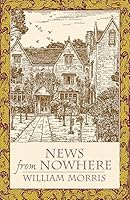

News from Nowhere is a Utopian novel using the common "sleeper wakes" device to portray an ideal society of the future and contrast it with the 19th century. The "sleeper" is author William Morris himself. Following a socialist political meeting he goes to bed in the west London borough of Hammersmith and, for reasons he cannot explain, awakens more than two hundred years in the future. He finds himself in a paradise peopled by beautiful, happy and healthy people. He explains himself as a traveler from distant lands--an explanation the people seem willing to accept even though he betrays a detailed knowledge of London's geography and history.
The pastoral paradise of News from Nowhere is based on pure agrarian communism. There is no private property, no money, no industry, no laws, and practically no government. People meet periodically in councils to make decisions on things like irrigation plans, erecting buildings for community enterprises, and dealing with dangerously insane individuals. But no one has the authority to tell anyone else what to do.
The crux of Morris's Utopia is the notion that people will work simply because they enjoy it, and they will work for the benefit of others as willingly as they work for their own benefit. Artisans make or grow whatever they are best at and bring their goods to market where those who want them will take what they need while the artisans help themselves to the produce of others. Trade exists over longer distances because what some people like to do is drive wagons or sail ships to other regions carrying things they know people will like.
Family life is equally informal. People cohabitate mostly as couples, though group relationships are acceptable. Children are raised mostly by women who simply like to raise children, no matter who the parents may have been. People move about at will, sharing large houses or finding an empty cottage somewhere and simply moving in. There is no system of education. A child or adult who wants to learn to read finds it easy enough to teach him or herself, and there are plenty of books because there are people who choose to employ themselves as printers and bookbinders. With no money or industry, there is no need to learn arithmetic. Morris's pastoral Utopia resembles a romantic view of the Middle Ages, minus Church and State. The people consciously abandoned all technology beyond water and animal power, and in their lives of vigorous contentment they have little need for medical science.
News from Nowhere was written in response to Looking Backward: 2000-1887, a similar "sleeper wakes" Utopian vision by the American socialist, Edward Bellamy. Bellamy describes a highly organized egalitarian and collectivist society based on centralized control of labor. Where Morris's Utopia is rural and shuns technology, Bellamy's is urban and embraces it. In describing how his ideal society developed, Morris says that, following the collapse of capitalism, there was an abortive phase of state socialism (Bellamy's ideal), but centralized management of the economy turned out to be corrupt and inefficient, leading to labor revolt, civil war, a collapse of all institutions and governments, and the emergence of pure communism. Neither of these novels has much of a plot: The narrator wakes up, is shown around, is told how things came to be, and falls in love with a pretty girl. But they are both very readable presentations of contrasting ideological solutions to the social and economic ills of the 19th century.
First published 1890

News from Nowhere is a Utopian novel using the common "sleeper wakes" device to portray an ideal society of the future and contrast it with the 19th century. The "sleeper" is author William Morris himself. Following a socialist political meeting he goes to bed in the west London borough of Hammersmith and, for reasons he cannot explain, awakens more than two hundred years in the future. He finds himself in a paradise peopled by beautiful, happy and healthy people. He explains himself as a traveler from distant lands--an explanation the people seem willing to accept even though he betrays a detailed knowledge of London's geography and history.
The pastoral paradise of News from Nowhere is based on pure agrarian communism. There is no private property, no money, no industry, no laws, and practically no government. People meet periodically in councils to make decisions on things like irrigation plans, erecting buildings for community enterprises, and dealing with dangerously insane individuals. But no one has the authority to tell anyone else what to do.
The crux of Morris's Utopia is the notion that people will work simply because they enjoy it, and they will work for the benefit of others as willingly as they work for their own benefit. Artisans make or grow whatever they are best at and bring their goods to market where those who want them will take what they need while the artisans help themselves to the produce of others. Trade exists over longer distances because what some people like to do is drive wagons or sail ships to other regions carrying things they know people will like.
Family life is equally informal. People cohabitate mostly as couples, though group relationships are acceptable. Children are raised mostly by women who simply like to raise children, no matter who the parents may have been. People move about at will, sharing large houses or finding an empty cottage somewhere and simply moving in. There is no system of education. A child or adult who wants to learn to read finds it easy enough to teach him or herself, and there are plenty of books because there are people who choose to employ themselves as printers and bookbinders. With no money or industry, there is no need to learn arithmetic. Morris's pastoral Utopia resembles a romantic view of the Middle Ages, minus Church and State. The people consciously abandoned all technology beyond water and animal power, and in their lives of vigorous contentment they have little need for medical science.
News from Nowhere was written in response to Looking Backward: 2000-1887, a similar "sleeper wakes" Utopian vision by the American socialist, Edward Bellamy. Bellamy describes a highly organized egalitarian and collectivist society based on centralized control of labor. Where Morris's Utopia is rural and shuns technology, Bellamy's is urban and embraces it. In describing how his ideal society developed, Morris says that, following the collapse of capitalism, there was an abortive phase of state socialism (Bellamy's ideal), but centralized management of the economy turned out to be corrupt and inefficient, leading to labor revolt, civil war, a collapse of all institutions and governments, and the emergence of pure communism. Neither of these novels has much of a plot: The narrator wakes up, is shown around, is told how things came to be, and falls in love with a pretty girl. But they are both very readable presentations of contrasting ideological solutions to the social and economic ills of the 19th century.
120StevenTX
626. August Is a Wicked Month by Edna O'Brien
First published 1965


Ellen is a 28-year-old Irish woman living in London. She is divorced and lives with her young son who is leaving to spend a vacation with his father. A brief affair has culminated with a night in bed with a lover, but it will go no further because the man's wife refuses to separate. So Ellen decides on a whim to take advantage of her son's absence and books a room in a hotel on the French Rivera, even though she can barely afford it. Whether she is chiefly looking for romance or sexual adventure is something Ellen probably could not have said, but she is determined to leave motherhood and responsibility behind.
Ellen is so desperate to be loved that she responds to all male advances, ranging from the hotel staff to a locally-famous actor. But either her own inhibitions or her companion's duplicity become an obstacle to the carefree adventure she is seeking. Then, as her mood turns to despair, tragedy strikes, leaving Ellen devastated, betrayed and benumbed.
August Is a Wicked Month is tightly-constructed novel that explores many facets of Ellen's physical desires and emotional needs. When it was first published in 1965 the novel was banned in Ireland and elsewhere because of its sexual frankness. Yet its overall impression is that a focus on sensuality leads to emotional vacuum. The luxurious villa of an aging aristocratic playboy is every bit as sordid as the squeaky, threadbare attic bed of a hotel employee where there is no love, only desire.
First published 1965


Ellen is a 28-year-old Irish woman living in London. She is divorced and lives with her young son who is leaving to spend a vacation with his father. A brief affair has culminated with a night in bed with a lover, but it will go no further because the man's wife refuses to separate. So Ellen decides on a whim to take advantage of her son's absence and books a room in a hotel on the French Rivera, even though she can barely afford it. Whether she is chiefly looking for romance or sexual adventure is something Ellen probably could not have said, but she is determined to leave motherhood and responsibility behind.
Ellen is so desperate to be loved that she responds to all male advances, ranging from the hotel staff to a locally-famous actor. But either her own inhibitions or her companion's duplicity become an obstacle to the carefree adventure she is seeking. Then, as her mood turns to despair, tragedy strikes, leaving Ellen devastated, betrayed and benumbed.
August Is a Wicked Month is tightly-constructed novel that explores many facets of Ellen's physical desires and emotional needs. When it was first published in 1965 the novel was banned in Ireland and elsewhere because of its sexual frankness. Yet its overall impression is that a focus on sensuality leads to emotional vacuum. The luxurious villa of an aging aristocratic playboy is every bit as sordid as the squeaky, threadbare attic bed of a hotel employee where there is no love, only desire.
121StevenTX
627. Memoirs of a Peasant Boy by Xosé Neira Vilas
First published in Galician 1961
English translation by Camilo Ogando Vázquez 2004
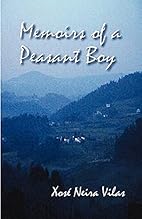

This short novel is the coming of age story of Balbino, a poor peasant boy in Galicia, the northwestern province of Spain which preserves its own language and cultural traditions. In each chapter Balbino narrates an incident or aspect of his childhood: the death of a relative, his crush on a beautiful young schoolteacher, finding a best friends, and being persecuted by the landlord's son. The work is strewn with folk wisdom and the general sense of Balbino realizing that, even though he just the child of poor tenant farmers, he can find a way to make his life matter.
Memoirs of a Peasant Boy is written in simple language that would make it suitable for a young adult audience. Its insights into childhood are more universal than they are specific to the author's native land, which is actually a disappointment. There are hints at the ways Galicia is different from the rest of Spain and, in the aftermath of the Spanish Civil War, at odds with the Nationalist government, but I would liked to have learned more. Balbino grows up in poverty, but not destitution, and his experiences are simply typical of an intellectually active youth who feels acutely the fetters that his social rank has placed upon him.
Memoirs of a Peasant Boy is included in the "1001 Books You Must Read Before You Die" list and is a nice example of a coming of age story, but not a novel I would especially recommend unless you are particularly interested in Galicia and its literature.
First published in Galician 1961
English translation by Camilo Ogando Vázquez 2004

This short novel is the coming of age story of Balbino, a poor peasant boy in Galicia, the northwestern province of Spain which preserves its own language and cultural traditions. In each chapter Balbino narrates an incident or aspect of his childhood: the death of a relative, his crush on a beautiful young schoolteacher, finding a best friends, and being persecuted by the landlord's son. The work is strewn with folk wisdom and the general sense of Balbino realizing that, even though he just the child of poor tenant farmers, he can find a way to make his life matter.
Memoirs of a Peasant Boy is written in simple language that would make it suitable for a young adult audience. Its insights into childhood are more universal than they are specific to the author's native land, which is actually a disappointment. There are hints at the ways Galicia is different from the rest of Spain and, in the aftermath of the Spanish Civil War, at odds with the Nationalist government, but I would liked to have learned more. Balbino grows up in poverty, but not destitution, and his experiences are simply typical of an intellectually active youth who feels acutely the fetters that his social rank has placed upon him.
Memoirs of a Peasant Boy is included in the "1001 Books You Must Read Before You Die" list and is a nice example of a coming of age story, but not a novel I would especially recommend unless you are particularly interested in Galicia and its literature.

