steven03tx's progress to 1001
This topic was continued by StevenTX's Progress to 1001 - Part 2.
Talk 1001 Books to read before you die
Join LibraryThing to post.
This topic is currently marked as "dormant"—the last message is more than 90 days old. You can revive it by posting a reply.
1StevenTX
My goal is to read 1001 works of the 1273 in the two "1001 Books" editions combined (to be expanded when the third edition comes out). So far I am about a third of the way through (344 books).
Here is the list of what I've finished so far, in chronological order. I'll append individual books as I finish them.
Part 1 - to 1800.
1. Aesopus - Aesop’s Fables (4 BCE)
2. Ovid - Metamorphoses (2 CE)
3. Apuleius, Lucius - The Golden Ass (260)
4. traditional - The Tale of the Bamboo Cutter (900)
5. Shikibu, Murasaki - The Tale of Genji (1000)
6. Rabelais, Francois - Gargantua and Pantagruel (1564)
7. Nashe, Thomas - The Unfortunate Traveller (1594)
8. Cervantes, Miguel - Don Quixote (1615)
9. Bunyan, John - The Pilgrim’s Progress (1678) - Choked with dogma telling you, not how to live, but how to sanctimoniously disapprove of almost everyone else.
10. La Fayette, Madame de - Princesse de Cleves (1678)
11. Behn, Aphra - Oroonoko (1688)
12. DeFoe, Daniel - Robinson Crusoe (1719)
13. DeFoe, Daniel - Moll Flanders (1722)
14. Swift, Jonathan - Gulliver's Travels (1726) - The version we read as kids was heavily censored. Surprisingly scandalous fun.
15. Swift, Jonathan - A Modest Proposal (1729)
16. Richardson, Samuel - Pamela (1742) - The heroine of this moralizing tale is so annoying that she had me rooting for the villain, Mr. B. Still, it tells us a lot about gender and class inequities of the time.
17. Cleland, John - Memoirs of a Woman of Pleasure: Fanny Hill (1749)
18. Fielding, Henry - Tom Jones (1749)
19. Voltaire - Candide (1759)
20. Walpole, Horace - The Castle of Otranto (1765)
21. Goldsmith, Oliver - The Vicar of Wakefield (1766)
22. Sterne, Laurence - Tristram Shandy (1767)
23. Goethe, Johann W. von - The Sorrows of Young Werther (1774)
24. Laclos, Cholderlos De - Dangerous Liaisons (1782) - Terrific. Epistolary novels are often clumsy and overlong, but not this one.
25. Beckford, William - Vathek (1786) - A bizarre and cruel allegorical fantasy somewhat like an extended tale from the Arabian Nights.
26. Sade, Marquis de - Justine (1791) - One of Sade's milder works, but still not for the squeamish.
27. Radcliffe, Anne - The Mysteries of Udolpho (1794) - Long but quite entertaining and suspenseful as long as you don't get too annoyed at the heroine's helplessness.
28. Lewis, Matthew G. - The Monk (1796) - I was astonished that something this horrific and explicit could have been published in England 200 years ago.
Here is the list of what I've finished so far, in chronological order. I'll append individual books as I finish them.
Part 1 - to 1800.
1. Aesopus - Aesop’s Fables (4 BCE)
2. Ovid - Metamorphoses (2 CE)
3. Apuleius, Lucius - The Golden Ass (260)
4. traditional - The Tale of the Bamboo Cutter (900)
5. Shikibu, Murasaki - The Tale of Genji (1000)
6. Rabelais, Francois - Gargantua and Pantagruel (1564)
7. Nashe, Thomas - The Unfortunate Traveller (1594)
8. Cervantes, Miguel - Don Quixote (1615)
9. Bunyan, John - The Pilgrim’s Progress (1678) - Choked with dogma telling you, not how to live, but how to sanctimoniously disapprove of almost everyone else.
10. La Fayette, Madame de - Princesse de Cleves (1678)
11. Behn, Aphra - Oroonoko (1688)
12. DeFoe, Daniel - Robinson Crusoe (1719)
13. DeFoe, Daniel - Moll Flanders (1722)
14. Swift, Jonathan - Gulliver's Travels (1726) - The version we read as kids was heavily censored. Surprisingly scandalous fun.
15. Swift, Jonathan - A Modest Proposal (1729)
16. Richardson, Samuel - Pamela (1742) - The heroine of this moralizing tale is so annoying that she had me rooting for the villain, Mr. B. Still, it tells us a lot about gender and class inequities of the time.
17. Cleland, John - Memoirs of a Woman of Pleasure: Fanny Hill (1749)
18. Fielding, Henry - Tom Jones (1749)
19. Voltaire - Candide (1759)
20. Walpole, Horace - The Castle of Otranto (1765)
21. Goldsmith, Oliver - The Vicar of Wakefield (1766)
22. Sterne, Laurence - Tristram Shandy (1767)
23. Goethe, Johann W. von - The Sorrows of Young Werther (1774)
24. Laclos, Cholderlos De - Dangerous Liaisons (1782) - Terrific. Epistolary novels are often clumsy and overlong, but not this one.
25. Beckford, William - Vathek (1786) - A bizarre and cruel allegorical fantasy somewhat like an extended tale from the Arabian Nights.
26. Sade, Marquis de - Justine (1791) - One of Sade's milder works, but still not for the squeamish.
27. Radcliffe, Anne - The Mysteries of Udolpho (1794) - Long but quite entertaining and suspenseful as long as you don't get too annoyed at the heroine's helplessness.
28. Lewis, Matthew G. - The Monk (1796) - I was astonished that something this horrific and explicit could have been published in England 200 years ago.
2StevenTX
Part 2 - 1800 to 1850
29. Austen, Jane - Sense and Sensibility (1811)
30. Austen, Jane - Pride and Prejudice (1813)
31. Austen, Jane - Mansfield Park (1814) - This is my favorite Austen for the very reason some people like it the least: the heroine isn't very likable. This leads to a more balanced and insightful picture of the social structure of the time.
32. Austen, Jane - Emma (1816)
33. Austen, Jane - Persuasion (1818)
34. Shelly, Mary - Frankenstein (1818)
35. Scott, Walter - Ivanhoe (1820)
36. Cooper, James Fenimore - Last of the Mohicans (1826)
37. Manzoni, Alessandro - The Betrothed (1827)
38. Stendhal - The Red and the Black, (1831)
39. Balzac, Honore - Le Pere Goriot (1835)
40. Gogol, Nikolay - The Nose (1836)
41. Dickens, Charles - Oliver Twist (1838)
42. Poe, Edgar Allen - The Fall of the House of Usher (1839)
43. Stendhal - The Charterhouse of Parma (1839) - This has one of the most appealing female characters in all of fiction, but the plot is rather unfocused.
44. Lermontov, Mikhail - A Hero of Our Time (1840)
45. Gogol, Nikolay - Dead Souls (1842)
46. Poe, Edgar Allen - The Pit and the Pendulum (1843)
47. Dumas, Alexander - The Three Musketeers (1844)
48. Dumas, Alexander - La Reine Margot (1845) - A very saucy tale where neither marital nor religious fidelity counts for much.
49. Dumas, Alexander - The Count of Monte-Cristo (1846)
50. Bronte, Charoltte - Jane Eyre (1847)
51. Bronte, Emily - Wuthering Heights (1847)
52. Thackeray, William - Vanity Fair (1847)
53. Bronte, Anne - Tenant of Wildfell Hall (1848)
54. Dickens, Charles - David Copperfield (1850)
55. Hawthorne, Nathaniel - The Scarlet Letter (1850)
29. Austen, Jane - Sense and Sensibility (1811)
30. Austen, Jane - Pride and Prejudice (1813)
31. Austen, Jane - Mansfield Park (1814) - This is my favorite Austen for the very reason some people like it the least: the heroine isn't very likable. This leads to a more balanced and insightful picture of the social structure of the time.
32. Austen, Jane - Emma (1816)
33. Austen, Jane - Persuasion (1818)
34. Shelly, Mary - Frankenstein (1818)
35. Scott, Walter - Ivanhoe (1820)
36. Cooper, James Fenimore - Last of the Mohicans (1826)
37. Manzoni, Alessandro - The Betrothed (1827)
38. Stendhal - The Red and the Black, (1831)
39. Balzac, Honore - Le Pere Goriot (1835)
40. Gogol, Nikolay - The Nose (1836)
41. Dickens, Charles - Oliver Twist (1838)
42. Poe, Edgar Allen - The Fall of the House of Usher (1839)
43. Stendhal - The Charterhouse of Parma (1839) - This has one of the most appealing female characters in all of fiction, but the plot is rather unfocused.
44. Lermontov, Mikhail - A Hero of Our Time (1840)
45. Gogol, Nikolay - Dead Souls (1842)
46. Poe, Edgar Allen - The Pit and the Pendulum (1843)
47. Dumas, Alexander - The Three Musketeers (1844)
48. Dumas, Alexander - La Reine Margot (1845) - A very saucy tale where neither marital nor religious fidelity counts for much.
49. Dumas, Alexander - The Count of Monte-Cristo (1846)
50. Bronte, Charoltte - Jane Eyre (1847)
51. Bronte, Emily - Wuthering Heights (1847)
52. Thackeray, William - Vanity Fair (1847)
53. Bronte, Anne - Tenant of Wildfell Hall (1848)
54. Dickens, Charles - David Copperfield (1850)
55. Hawthorne, Nathaniel - The Scarlet Letter (1850)
3StevenTX
Part 3 - 1851 to 1900
56. Hawthorne, Nathaniel - The House of the Seven Gables (1851)
57. Melville, Herman - Moby Dick (1851)
58. Dickens, Charles - Bleak House (1853) - My favorite Dickens. Memorable characters and an almost believable plot.
59. Thoreau, Henry - Walden (1854)
60. Flaubert, Gustave - Madame Bovary (1857)
61. Dickens, Charles - A Tale of Two Cities (1859)
62. Eliot, George - Adam Bede (1859)
63. Goncahrov, Ivan - Oblomov (1859)
64. Collins, Wilkie - Woman in White (1860)
65. Eliot, George - The Mill on the Floss (1860)
66. Turgenev, Ivan - On the Eve (1860) - My favorite work of Turgenev's. It combines romance, tragedy and historical interest. Somewhat like A Farewell to Arms.
67. Dickens, Charles - Great Expectations (1861)
68. Eliot, George - Silas Marner (1861)
69. Hugo, Victor - Les Miserables (1862)
70. Turgenev, Ivan - Fathers and Sons (1862)
71. Dostoevsky, Fyodor - Notes from the Underground (1864)
72. Carrol, Lewis - Alice's Adventures in Wonderland (1865)
73. Dickens, Charles - Our Mutual Friend (1865)
74. Dostoevsky, Fyodor - Crime and Punishment (1866)
75. Verne, Jules - Journey to the Centre of the Earth (1866)
76. Trollope, Anthony - The Last Chronicle of Barset (1867) - I loved all the Barsetshire novels. I highly recommend reading the entire series of six in sequence so that you become properly acquainted with all the characters.
77. Alcott, Louisa May - Little Women (1868)
78. Collins, Wilkie - The Moonstone (1868)
79. Flaubert, Gustav - Sentimental Education (1869)
80. Tolstoy, Leo - War and Peace (1869) - This is absolutely my most favorite book of all time.
81. Carrol, Lewis - Through the Looking Glass (1871)
82. Eliot, George - Middlemarch (1872)
83. LeFanu, Sheridan - In a Glass Darkly (1872)
84. Turgenev, Ivan - Spring Torrents (1872)
85. Verne, Jules - Around the World in Eighty Days (1873)
86. Eliot, George - Daniel Deronda (1876) - A very serious and thoughtful novel that would probably get more attention if it weren't overshadowed by Middlemarch.
87. Tolstoy, Leo - Anna Karenina (1877)
88. Hardy, Thomas - Return of the Native (1878) - One of my all-time favorites. I fell instantly in love with Eustacia Vye, the femme fatale.
89. Dostoevsky, Fyodor - The Brothers Karamazov (1880)
90. James, Henry - The Portrait of a Lady (1881)
91. Verga, Giovanni - The House by the Medlar Tree (1881)
92. Stevenson, Robert Louis - Treasure Island (1883)
93. Huysmans, J.K. - Against the Grain (1884)
94. Haggard, Rider - King Solomon's Mines (1885)
95. Twain, Mark - Adventures of Huckleberry Finn (1885)
96. Stevenson, Robert Louis - The Strange Case of Dr Jeckyll and Mr Hyde (1886)
97. Haggard, H. Rider - She (1887)
98. Hardy, Thomas - Tess of the D'Urbervilles (1891)
99. Wilde, Oscar, - The Picture of Dorian Gray (1891)
100. Doyle, Arthur Conan - The Adventures of Sherlock Holmes (1892)
101. Hardy, Thomas - Jude the Obscure (1895)
102. Wells, H.G., - The Time Machine (1895)
103. Wells, H.G., - The Island of Dr Moreau (1896)
104. James, Henry - What Maisie Knew (1897)
105. Stoker, Bram - Dracula (1897)
106. Wells, H. G. - The Invisible Man (1897)
107. James, Henry - The Turn of the Screw (1898)
108. Wells, H.G., - The War of the Worlds (1898)
109. Conrad, Joseph - Lord Jim (1900)
110. Dreiser, Theodore - Sister Carrie (1900)
56. Hawthorne, Nathaniel - The House of the Seven Gables (1851)
57. Melville, Herman - Moby Dick (1851)
58. Dickens, Charles - Bleak House (1853) - My favorite Dickens. Memorable characters and an almost believable plot.
59. Thoreau, Henry - Walden (1854)
60. Flaubert, Gustave - Madame Bovary (1857)
61. Dickens, Charles - A Tale of Two Cities (1859)
62. Eliot, George - Adam Bede (1859)
63. Goncahrov, Ivan - Oblomov (1859)
64. Collins, Wilkie - Woman in White (1860)
65. Eliot, George - The Mill on the Floss (1860)
66. Turgenev, Ivan - On the Eve (1860) - My favorite work of Turgenev's. It combines romance, tragedy and historical interest. Somewhat like A Farewell to Arms.
67. Dickens, Charles - Great Expectations (1861)
68. Eliot, George - Silas Marner (1861)
69. Hugo, Victor - Les Miserables (1862)
70. Turgenev, Ivan - Fathers and Sons (1862)
71. Dostoevsky, Fyodor - Notes from the Underground (1864)
72. Carrol, Lewis - Alice's Adventures in Wonderland (1865)
73. Dickens, Charles - Our Mutual Friend (1865)
74. Dostoevsky, Fyodor - Crime and Punishment (1866)
75. Verne, Jules - Journey to the Centre of the Earth (1866)
76. Trollope, Anthony - The Last Chronicle of Barset (1867) - I loved all the Barsetshire novels. I highly recommend reading the entire series of six in sequence so that you become properly acquainted with all the characters.
77. Alcott, Louisa May - Little Women (1868)
78. Collins, Wilkie - The Moonstone (1868)
79. Flaubert, Gustav - Sentimental Education (1869)
80. Tolstoy, Leo - War and Peace (1869) - This is absolutely my most favorite book of all time.
81. Carrol, Lewis - Through the Looking Glass (1871)
82. Eliot, George - Middlemarch (1872)
83. LeFanu, Sheridan - In a Glass Darkly (1872)
84. Turgenev, Ivan - Spring Torrents (1872)
85. Verne, Jules - Around the World in Eighty Days (1873)
86. Eliot, George - Daniel Deronda (1876) - A very serious and thoughtful novel that would probably get more attention if it weren't overshadowed by Middlemarch.
87. Tolstoy, Leo - Anna Karenina (1877)
88. Hardy, Thomas - Return of the Native (1878) - One of my all-time favorites. I fell instantly in love with Eustacia Vye, the femme fatale.
89. Dostoevsky, Fyodor - The Brothers Karamazov (1880)
90. James, Henry - The Portrait of a Lady (1881)
91. Verga, Giovanni - The House by the Medlar Tree (1881)
92. Stevenson, Robert Louis - Treasure Island (1883)
93. Huysmans, J.K. - Against the Grain (1884)
94. Haggard, Rider - King Solomon's Mines (1885)
95. Twain, Mark - Adventures of Huckleberry Finn (1885)
96. Stevenson, Robert Louis - The Strange Case of Dr Jeckyll and Mr Hyde (1886)
97. Haggard, H. Rider - She (1887)
98. Hardy, Thomas - Tess of the D'Urbervilles (1891)
99. Wilde, Oscar, - The Picture of Dorian Gray (1891)
100. Doyle, Arthur Conan - The Adventures of Sherlock Holmes (1892)
101. Hardy, Thomas - Jude the Obscure (1895)
102. Wells, H.G., - The Time Machine (1895)
103. Wells, H.G., - The Island of Dr Moreau (1896)
104. James, Henry - What Maisie Knew (1897)
105. Stoker, Bram - Dracula (1897)
106. Wells, H. G. - The Invisible Man (1897)
107. James, Henry - The Turn of the Screw (1898)
108. Wells, H.G., - The War of the Worlds (1898)
109. Conrad, Joseph - Lord Jim (1900)
110. Dreiser, Theodore - Sister Carrie (1900)
4StevenTX
Part 4 - 1901 to 1925
111. Kipling, Rudyard - Kim (1901) - I didn't get much out of this one.
112. Mann, Thomas - Buddenbrooks (1901) - A wonderful family saga.
113. Conrad, Joseph - Heart of Darkness (1902)
114. James, Henry - The Wings of the Dove (1902)
115. Butler, Samuel - The Way of All Flesh (1903)
116. James, Henry - The Ambassadors (1903) - A very difficult book, but probably my favorite Henry James.
117. London, Jack - Call of the Wild (1903)
118. Conrad, Joseph - Nostromo (1904)
119. James, Henry - The Golden Bowl (1904)
120. Wharton, Edith - The House of Mirth (1905)
121. Sinclair, Upton - The Jungle (1906)
122. Conrad, Joseph - The Secret Agent (1907) - This had me completely confused. I need to try it again sometime.
123. Bennett, Arnold - The Old Wive's Tale (1908)
124. Forster, E.M. - A Room with a View (1908)
125. Forster, E.M. - Howards End (1910) - My favorite work by Forster. Great characters.
126. Mann, Thomas - Death in Venice (1912)
127. Lawrence, D.H - Sons and Lovers (1913) - One of my all time favorite novels. I don't think any author can describe the subtleties of relationships as well as Lawrence.
128. Natsume, Soseki - Kokoro (1914)
129. Burroughs, Edgar Rice - Tarzan of the Apes (1914)
130. Buchan, John - The 39 Steps (1915)
131. Ford, Ford Madox - The Good Soldier (1915)
132. Lawrence, D.H - The Rainbow (1915)
133. Maugham, W. Somerset - Of Human Bondage (1915)
134. Woolf, Virginia - The Voyage Out (1915)
135. Joyce, James - Portrait of the Artist as a Young Man (1916)
136. West, Rebecca - The Return of the Soldier (1918)
137. Lawrence, D.H - Women in Love (1920)
138. Lewis, Sinclair - Main Street (1920)
139. Wharton, Edith - The Age of Innocence (1920)
140. Hesse, Hermann - Siddhartha (1922)
141. Joyce, James - Ulysses (1922)
142. Mansfield, Katherine - The Garden Party (1922)
143. Forster, E.M. - Passage to India (1924)
144. Mann, Thomas - The Magic Mountain (1924) - This book is so rich with ideas it can be overwhelming, but it's entirely readable. It might get my vote as the greatest novel of the 20th century.
145. Melville, Herman - Billy Budd, Foretopman (1924)
146. Zamyatin, Yevgeny - We (1924)
147. Fitzgerald, F. Scott - The Great Gatsby (1925)
148. Kafka, Franz - The Trial (1925)
149. Woolf, Viginia, - Mrs Dalloway (1925)
111. Kipling, Rudyard - Kim (1901) - I didn't get much out of this one.
112. Mann, Thomas - Buddenbrooks (1901) - A wonderful family saga.
113. Conrad, Joseph - Heart of Darkness (1902)
114. James, Henry - The Wings of the Dove (1902)
115. Butler, Samuel - The Way of All Flesh (1903)
116. James, Henry - The Ambassadors (1903) - A very difficult book, but probably my favorite Henry James.
117. London, Jack - Call of the Wild (1903)
118. Conrad, Joseph - Nostromo (1904)
119. James, Henry - The Golden Bowl (1904)
120. Wharton, Edith - The House of Mirth (1905)
121. Sinclair, Upton - The Jungle (1906)
122. Conrad, Joseph - The Secret Agent (1907) - This had me completely confused. I need to try it again sometime.
123. Bennett, Arnold - The Old Wive's Tale (1908)
124. Forster, E.M. - A Room with a View (1908)
125. Forster, E.M. - Howards End (1910) - My favorite work by Forster. Great characters.
126. Mann, Thomas - Death in Venice (1912)
127. Lawrence, D.H - Sons and Lovers (1913) - One of my all time favorite novels. I don't think any author can describe the subtleties of relationships as well as Lawrence.
128. Natsume, Soseki - Kokoro (1914)
129. Burroughs, Edgar Rice - Tarzan of the Apes (1914)
130. Buchan, John - The 39 Steps (1915)
131. Ford, Ford Madox - The Good Soldier (1915)
132. Lawrence, D.H - The Rainbow (1915)
133. Maugham, W. Somerset - Of Human Bondage (1915)
134. Woolf, Virginia - The Voyage Out (1915)
135. Joyce, James - Portrait of the Artist as a Young Man (1916)
136. West, Rebecca - The Return of the Soldier (1918)
137. Lawrence, D.H - Women in Love (1920)
138. Lewis, Sinclair - Main Street (1920)
139. Wharton, Edith - The Age of Innocence (1920)
140. Hesse, Hermann - Siddhartha (1922)
141. Joyce, James - Ulysses (1922)
142. Mansfield, Katherine - The Garden Party (1922)
143. Forster, E.M. - Passage to India (1924)
144. Mann, Thomas - The Magic Mountain (1924) - This book is so rich with ideas it can be overwhelming, but it's entirely readable. It might get my vote as the greatest novel of the 20th century.
145. Melville, Herman - Billy Budd, Foretopman (1924)
146. Zamyatin, Yevgeny - We (1924)
147. Fitzgerald, F. Scott - The Great Gatsby (1925)
148. Kafka, Franz - The Trial (1925)
149. Woolf, Viginia, - Mrs Dalloway (1925)
5StevenTX
Part 5 - 1926 to 1950
150. Hasek, Jaroslav - The Good Soldier Svejk (1926)
151. Hemmingway, Ernest - The Sun Also Rises (1926)
152. Kafka, Franz - The Castle (1926)
153. Hesse, Hermann - Steppenwolf (1927)
154. Proust, Marcel - In Search of Lost Time (1927)
155. Woolf, Viginia, - To The Lighthouse (1927)
156. Bataille, Georges - Story of the Eye (1928)
157. Ford, Ford Madox - Parade's End (1928)
158. Lawrence, D.H - Lady Chatterly's Lover (1928)
159. Waugh, Evelyn - Decline and Fall (1928)
160. Bowen, Elizabeth - The Last September (1929) - This is one of my favorites. It looks at the end of British rule in Ireland through the eyes of a young woman who wants to see a future rather than a past.
161. Faulkner, William - The Sound and the Fury (1929) - Very meaningful for me personally because my roots are the same as Faulkner's.
162. Hammett, Dashiell - The Maltese Falcon (1929)
163. Hemmingway, Ernest - A Farewell to Arms (1929)
164. Remarque, Erich Maria - All Quiet on the Western Front (1929)
165. Wolfe, Thomas - Look Homeward, Angel (1929)
166. Celine, Louis Ferdinand - Journey to the End of the Night (1932)
167. Huxley, Aldous - Brave New World (1932)
168. Roth, Joseph - The Radetzky March (1932)
169. Musil, Robert - The Man without Qualities (1933)
170. Ageyev, M. - Novel With Cocaine (1934)
171. Cain, James M. - The Postman Always Rings Twice (1934)
172. Fitzgerald, F. Scott - Tender is the Night (1934)
173. Miller, Henry - Tropic of Cancer (1934)
174. Schulz, Bruno - The Street of Crocodiles (1934)
175. Waugh, Evelyn - A Handful of Dust (1934)
176. Isherwood, Christopher - The Last of Mr. Norris (1935)
177. Laxness, Halldor - Independent People (1935) - Absolutely wonderful. A common man's tragedy and a look at a very unique place and way of life.
178. Barnes, Djuna - Nightwood (1936) - I didn't connect with this one.
179. Capek, Karel - War with the Newts (1936)
180. Faulkner, William - Absalom Absalom! (1936)
181. Hemingway, Ernest - To Have and Have Not (1937)
182. Hurston, Zora Neale - Their Eyes Were Watching God (1937)
183. Steinbeck, John - Of Mice and Men (1937)
184. Tolkien, J.R.R. - The Hobbit (1937)
185. Beckett, Samuel - Murphy (1938) - If this is what Beckett thought of the Irish, it's no wonder he decided to become French! Actually very funny.
186. Passos, John Dos - USA (1938)
187. Isherwood, Christopher - Goodbye to Berlin (1939)
188. O'Brien, Flann - At Swim-Two-Birds (1939)
189. Steinbeck, John - The Grapes of Wrath (1939)
190. Hemmingway, Ernest - For Whom the Bell Tolls (1940)
191. Joyce, James - Finnegans Wake (1940) - My eyes saw the words. My hand turned the pages. I was doing well if one line per page made any sense. Joyce's intellect and ego on display for the rest of us to grovel before.
192. Wright, Richard - Native Son (1940)
193. Camus, Albert - The Outsider (1942)
194. Marai, Sandor - Embers (1942)
195. Zweig, Stefan - Chess Story (Royal Game) (1942)
196. Hesse, Hermann - The Glass Bead Game (1943)
197. Andric, Ivo - The Bridge Over the Drina (1945)
198. Broch, Hermann - The Death of Virgil (1945) - A very difficult book to be sure, but if there is one work that has managed to capture the sum total of Western culture in a single, staggering, breathtaking passage -- this is it.
199. Green, Henry - Loving (1945)
200. Orwell, George - Animal Farm (1945)
201. Waugh, Evelyn - Brideshead Revisited (1945)
202. Kazantzakis, Nikos - Zorba the Greek (1946)
203. Camus, Albert - The Plague (1947)
204. Lowry, Malcolm - Under the Volcano (1947) - I desperately wanted to like this book because of its theme and setting, but I couldn't.
205. Greene, Graham - The Heart of the Matter (1948) - My favorite by Greene of what I've read so far. A perfect exposition of a moral quandary and meat for hours of discussion.
206. Orwell, George - Nineteen Eighty-Four (1949)
207. Asimov, Isaac - I Robot (1950)
150. Hasek, Jaroslav - The Good Soldier Svejk (1926)
151. Hemmingway, Ernest - The Sun Also Rises (1926)
152. Kafka, Franz - The Castle (1926)
153. Hesse, Hermann - Steppenwolf (1927)
154. Proust, Marcel - In Search of Lost Time (1927)
155. Woolf, Viginia, - To The Lighthouse (1927)
156. Bataille, Georges - Story of the Eye (1928)
157. Ford, Ford Madox - Parade's End (1928)
158. Lawrence, D.H - Lady Chatterly's Lover (1928)
159. Waugh, Evelyn - Decline and Fall (1928)
160. Bowen, Elizabeth - The Last September (1929) - This is one of my favorites. It looks at the end of British rule in Ireland through the eyes of a young woman who wants to see a future rather than a past.
161. Faulkner, William - The Sound and the Fury (1929) - Very meaningful for me personally because my roots are the same as Faulkner's.
162. Hammett, Dashiell - The Maltese Falcon (1929)
163. Hemmingway, Ernest - A Farewell to Arms (1929)
164. Remarque, Erich Maria - All Quiet on the Western Front (1929)
165. Wolfe, Thomas - Look Homeward, Angel (1929)
166. Celine, Louis Ferdinand - Journey to the End of the Night (1932)
167. Huxley, Aldous - Brave New World (1932)
168. Roth, Joseph - The Radetzky March (1932)
169. Musil, Robert - The Man without Qualities (1933)
170. Ageyev, M. - Novel With Cocaine (1934)
171. Cain, James M. - The Postman Always Rings Twice (1934)
172. Fitzgerald, F. Scott - Tender is the Night (1934)
173. Miller, Henry - Tropic of Cancer (1934)
174. Schulz, Bruno - The Street of Crocodiles (1934)
175. Waugh, Evelyn - A Handful of Dust (1934)
176. Isherwood, Christopher - The Last of Mr. Norris (1935)
177. Laxness, Halldor - Independent People (1935) - Absolutely wonderful. A common man's tragedy and a look at a very unique place and way of life.
178. Barnes, Djuna - Nightwood (1936) - I didn't connect with this one.
179. Capek, Karel - War with the Newts (1936)
180. Faulkner, William - Absalom Absalom! (1936)
181. Hemingway, Ernest - To Have and Have Not (1937)
182. Hurston, Zora Neale - Their Eyes Were Watching God (1937)
183. Steinbeck, John - Of Mice and Men (1937)
184. Tolkien, J.R.R. - The Hobbit (1937)
185. Beckett, Samuel - Murphy (1938) - If this is what Beckett thought of the Irish, it's no wonder he decided to become French! Actually very funny.
186. Passos, John Dos - USA (1938)
187. Isherwood, Christopher - Goodbye to Berlin (1939)
188. O'Brien, Flann - At Swim-Two-Birds (1939)
189. Steinbeck, John - The Grapes of Wrath (1939)
190. Hemmingway, Ernest - For Whom the Bell Tolls (1940)
191. Joyce, James - Finnegans Wake (1940) - My eyes saw the words. My hand turned the pages. I was doing well if one line per page made any sense. Joyce's intellect and ego on display for the rest of us to grovel before.
192. Wright, Richard - Native Son (1940)
193. Camus, Albert - The Outsider (1942)
194. Marai, Sandor - Embers (1942)
195. Zweig, Stefan - Chess Story (Royal Game) (1942)
196. Hesse, Hermann - The Glass Bead Game (1943)
197. Andric, Ivo - The Bridge Over the Drina (1945)
198. Broch, Hermann - The Death of Virgil (1945) - A very difficult book to be sure, but if there is one work that has managed to capture the sum total of Western culture in a single, staggering, breathtaking passage -- this is it.
199. Green, Henry - Loving (1945)
200. Orwell, George - Animal Farm (1945)
201. Waugh, Evelyn - Brideshead Revisited (1945)
202. Kazantzakis, Nikos - Zorba the Greek (1946)
203. Camus, Albert - The Plague (1947)
204. Lowry, Malcolm - Under the Volcano (1947) - I desperately wanted to like this book because of its theme and setting, but I couldn't.
205. Greene, Graham - The Heart of the Matter (1948) - My favorite by Greene of what I've read so far. A perfect exposition of a moral quandary and meat for hours of discussion.
206. Orwell, George - Nineteen Eighty-Four (1949)
207. Asimov, Isaac - I Robot (1950)
6StevenTX
Part 6 - 1951 to 1975
208. Asimov, Isaac - Foundation (1951)
209. Beckett, Samuel - Malone Dies (1951)
210. Beckett, Samuel - Molloy (1951)
211. Salinger, J.D - The Catcher in the Rye (1951)
212. Wyndham, John - Day of the Triffids (1951)
213. Yourcenar, Marguerite - Memoirs of Hadrian (1951)
214. Ellison, Ralph - The Invisible Man (1952)
215. Hemmingway, Ernest - Old Man and the Sea (1952)
216. O'Connor, Flannery - Wise Blood (1952)
217. Baldwin, James - Go Tell it on the Mountain (1953)
218. Beckett, Samuel - The Unnamable (1953) - Draws characters from all of Beckett's works in a setting based on the cave allegory from Plato's The Republic.
219. Bellow, Saul - The Adventures of Augie March (1953)
220. de Beauvoir, Simone - The Mandarins (1954)
221. Golding, William - Lord of the Flies (1954)
222. Koeppen, Wolfgang - Death in Rome (1954) - A gripping and perverse twist on Mann's Death in Venice set in the post-fascist world. Highly recommended.
223. Mishima, Yukio - The Sound of Waves (1954)
224. Murdoch, Iris - Under the Net (1954)
225. Reage, Pauline - The Story of O (1954)
226. Nabokov, Vladimir - Lolita (1955)
227. Rulfo, Juan - The Burning Plain (1955)
228. Tolkien, J.R.R. - The Lord of the Rings (1956)
229. Bataille, Georges - Blue of Noon (1957)
230. Durrell, Lawrence - Justine (1957) - To get the sense of Durrell's work you have to read the entire Alexandria Quartet, not just this first volume.
231. Kerouac, Jack - On the Road (1957)
232. Pasternak, Boris - Doctor Zhivago (1957)
233. Robbe-Grillet, Alain - Jealousy (1957)
234. Achebe, Chinua - Things Fall Apart (1958)
235. Lampedusa, Giussepe di - The Leopard (1958)
236. Bellow, Saul - Henderson the Rain King (1959)
237. Burroughs, William S. - The Naked Lunch (1959)
238. Grass, Gunter - The Tin Drum (1959)
239. Lee, Harper - To Kill a Mocking Bird (1960)
240. Heinlein, Robert - Stranger in a Strange Land (1961)
241. Heller, Joseph - Catch-22 (1961)
242. Lem, Stanislav - Solaris (1961)
243. Salinger, J.D - Franny and Zooey (1961)
244. Spark, Muriel - The Prime of Miss Jean Brodie (1961)
245. Burgess, Anthony - A Clockwork Orange (1962)
246. Nabokov, Vladimir - Pale Fire (1962)
247. Le Carre, John - The Spy who came in From the Cold (1963)
248. Plath, Silvia - The Bell Jar (1963)
249. Solzhenitsyn, Alexander - One Day in the Life of Ivan Denisovich (1963)
250. Vonnegut, Kurt - Cat's Cradle (1963)
251. Bellow, Saul - Herzog (1964)
252. Barth, John - Giles Goat Boy (1966)
253. Bulgakov, Mikhail - The Master and Margarita (1966) - Quirky, sexy and wonderful. What a bold imagination!
254. Fowles, John - The Magus (1966)
255. Pynchon, Thomas - The Crying of Lot 49 (1966)
256. Rhys, Jean - Wide Sargasso Sea (1966)
257. Garcia Marquez, Gabriel - 100 years of Solitude (1967)
258. Bowen, Elizabeth - Eva Trout (1968)
259. Clarke, Arthur C. - 2001: A Space Odyssey (1968) - I've read most of what Clarke has written, and they've done him an injustice by picking this instead of Childhood's End.
260. Oates, Joyce Carol - them (1969) - This is marketed as the third volume of the "Wonderland Quartet," but that's just a publisher's gimmick. It reads quite well on its own.
261. Roth, Philip - Portnoy's Compaint (1969)
262. Vonnegut, Kurt - The Slaughterhouse Five (1969)
263. Davies, Robertson - Fifth Business (1970) - First volume of the Deptford Trilogy. I didn't think too highly of any of them.
264. Mishima, Yukio - The Sea of Fertility (1970) - This is a four-volume work in which a character is reincarnated as a different person each time, representing different faces of Japan's ebbing national and spiritual identity. There are other works by Mishima I like more than this one.
265. Morrisson, Toni - The Bluest Eye (1970)
266. Atwood, Margaret - Surfacing (1972)
267. Ballard, J.G - Crash (1973)
268. Pynchon, Thomas - Gravity's Rainbow (1973)
269. Vonnegut, Kurt - Breakfast of Champions (1973)
270. Amis, Martin - Dead Babies (1975)
271. Doctorow, E.L. - Ragtime (1975)
272. Kertesz, Imre - Fateless (1975)
273. Powell, Anthony - A Dance to the Music of Time (1975)
208. Asimov, Isaac - Foundation (1951)
209. Beckett, Samuel - Malone Dies (1951)
210. Beckett, Samuel - Molloy (1951)
211. Salinger, J.D - The Catcher in the Rye (1951)
212. Wyndham, John - Day of the Triffids (1951)
213. Yourcenar, Marguerite - Memoirs of Hadrian (1951)
214. Ellison, Ralph - The Invisible Man (1952)
215. Hemmingway, Ernest - Old Man and the Sea (1952)
216. O'Connor, Flannery - Wise Blood (1952)
217. Baldwin, James - Go Tell it on the Mountain (1953)
218. Beckett, Samuel - The Unnamable (1953) - Draws characters from all of Beckett's works in a setting based on the cave allegory from Plato's The Republic.
219. Bellow, Saul - The Adventures of Augie March (1953)
220. de Beauvoir, Simone - The Mandarins (1954)
221. Golding, William - Lord of the Flies (1954)
222. Koeppen, Wolfgang - Death in Rome (1954) - A gripping and perverse twist on Mann's Death in Venice set in the post-fascist world. Highly recommended.
223. Mishima, Yukio - The Sound of Waves (1954)
224. Murdoch, Iris - Under the Net (1954)
225. Reage, Pauline - The Story of O (1954)
226. Nabokov, Vladimir - Lolita (1955)
227. Rulfo, Juan - The Burning Plain (1955)
228. Tolkien, J.R.R. - The Lord of the Rings (1956)
229. Bataille, Georges - Blue of Noon (1957)
230. Durrell, Lawrence - Justine (1957) - To get the sense of Durrell's work you have to read the entire Alexandria Quartet, not just this first volume.
231. Kerouac, Jack - On the Road (1957)
232. Pasternak, Boris - Doctor Zhivago (1957)
233. Robbe-Grillet, Alain - Jealousy (1957)
234. Achebe, Chinua - Things Fall Apart (1958)
235. Lampedusa, Giussepe di - The Leopard (1958)
236. Bellow, Saul - Henderson the Rain King (1959)
237. Burroughs, William S. - The Naked Lunch (1959)
238. Grass, Gunter - The Tin Drum (1959)
239. Lee, Harper - To Kill a Mocking Bird (1960)
240. Heinlein, Robert - Stranger in a Strange Land (1961)
241. Heller, Joseph - Catch-22 (1961)
242. Lem, Stanislav - Solaris (1961)
243. Salinger, J.D - Franny and Zooey (1961)
244. Spark, Muriel - The Prime of Miss Jean Brodie (1961)
245. Burgess, Anthony - A Clockwork Orange (1962)
246. Nabokov, Vladimir - Pale Fire (1962)
247. Le Carre, John - The Spy who came in From the Cold (1963)
248. Plath, Silvia - The Bell Jar (1963)
249. Solzhenitsyn, Alexander - One Day in the Life of Ivan Denisovich (1963)
250. Vonnegut, Kurt - Cat's Cradle (1963)
251. Bellow, Saul - Herzog (1964)
252. Barth, John - Giles Goat Boy (1966)
253. Bulgakov, Mikhail - The Master and Margarita (1966) - Quirky, sexy and wonderful. What a bold imagination!
254. Fowles, John - The Magus (1966)
255. Pynchon, Thomas - The Crying of Lot 49 (1966)
256. Rhys, Jean - Wide Sargasso Sea (1966)
257. Garcia Marquez, Gabriel - 100 years of Solitude (1967)
258. Bowen, Elizabeth - Eva Trout (1968)
259. Clarke, Arthur C. - 2001: A Space Odyssey (1968) - I've read most of what Clarke has written, and they've done him an injustice by picking this instead of Childhood's End.
260. Oates, Joyce Carol - them (1969) - This is marketed as the third volume of the "Wonderland Quartet," but that's just a publisher's gimmick. It reads quite well on its own.
261. Roth, Philip - Portnoy's Compaint (1969)
262. Vonnegut, Kurt - The Slaughterhouse Five (1969)
263. Davies, Robertson - Fifth Business (1970) - First volume of the Deptford Trilogy. I didn't think too highly of any of them.
264. Mishima, Yukio - The Sea of Fertility (1970) - This is a four-volume work in which a character is reincarnated as a different person each time, representing different faces of Japan's ebbing national and spiritual identity. There are other works by Mishima I like more than this one.
265. Morrisson, Toni - The Bluest Eye (1970)
266. Atwood, Margaret - Surfacing (1972)
267. Ballard, J.G - Crash (1973)
268. Pynchon, Thomas - Gravity's Rainbow (1973)
269. Vonnegut, Kurt - Breakfast of Champions (1973)
270. Amis, Martin - Dead Babies (1975)
271. Doctorow, E.L. - Ragtime (1975)
272. Kertesz, Imre - Fateless (1975)
273. Powell, Anthony - A Dance to the Music of Time (1975)
7StevenTX
Part 7 - 1976 to 2000
274. Murakami, Ryu - Almost Transparent Blue (1976)
275. Carter, Angela - The Passion of New Eve (1977)
276. Nin, Anais - Delta of Venus (1977)
277. Irving, John - The World According to Garp (1978) - Don't have enough sex and violence in your life? Join the Garps! Modern life viewed through fractured glass.
278. Perec, Georges - Life: A User's Manual (1978)
279. Adams, Douglas - Hitchhikers' Guide to the Galaxy (1979)
280. Calvino, Italo - If on a Winter's Night a Traveler (1979)
281. Naipaul, V.S - A Bend in the River (1979)
282. Coetzee, J. M. - Waiting for the Barbarians (1980)
283. Golding, William - Rites of Passage (1980)
284. Nooteboom, Cees - Rituals (1980) - This one didn't mean much to me.
285. Rushdie, Salman - Midnight's Children (1980)
286. Toole, John Kennedy - Confederacy of Dunces (1980)
287. McEwan, Ian - The Comfort of Strangers (1981)
288. Tsypkin, Leonard - Summer in Baden Baden (1981) - This biographical novel is very revealing about Dostoevsky, but the portrait is so unflattering at times it is uncomfortable to read.
289. Walker, Alice - The Color Purple (1982)
290. Acker, Kathy - Blood and Guts in High School (1984)
291. Barnes, Julian - Flaubert's Parrot (1984)
292. Carter, Angela - Nights at the Circus (1984)
293. Duras, Marguerite - The Lover (1984)
294. Gibson, William - Neuromancer (1984)
295. Kundera, Milan - The Unbearable Lightness of Being (1984)
296. Atwood, Margaret - The Handmaid's Tale (1985)
297. DeLillo, Don - White Noise (1985)
298. Ellis, Bret Easton - Less Than Zero (1985)
299. McCarthy, Cormac - Blood Meridian (1985) - A great novel, with horrific violence described in beautiful prose. Full of subtle allusions to the Bible and Moby Dick among others.
300. Moore, Alan - Watchmen (1986) - Just a comic book. It gave me a headache. Thankfully this is the only "graphic novel" on the list.
301. Morrisson, Toni - Beloved (1987)
302. Winterson, Jeanette - The Passion (1987)
303. Carey, Peter - Oscar and Lucinda (1988)
304. Byatt, A. S. - Possession (1990)
305. Barker, Pat - Regeneration (1991)
306. Ellis, Bret Easton - American Psycho (1991)
307. McCarthy, Cormac - All the Pretty Horses (1992) - The first book of the Border Trilogy. I liked the second, The Crossing, even better, but the third, Cities of the Plain, was a bit of a letdown.
308. Sebald, W. G. - The Emigrants (1992)
309. Eugenides, Jeffrey - The Virgin Suicides (1993)
310. Seth, Vikram - A Suitable Boy (1993)
311. Shields, Carol - The Stone Diaries (1993)
312. Coetzee, J. M. - The Master of Petersburg (1994)
313. Mistry, Rohinton - A Fine Balance (1995) - A great epic novel of modern India.
314. Roth, Philip - Sabbath’s Theater (1995)
315. Schlink, Bernhard - The Reader (1995)
316. Sebald, W. G. - The Rings of Saturn (1995)
317. Atwood, Margaret - Alias Grace (1996)
318. Barker, Pat - Ghost Road (1996)
319. DeLillo, Don - Underworld (1997)
320. Pelevin, Victor - The Life of Insects (1997)
321. Roy, Arundhati - The God of Small Things (1997)
322. Coelho, Paulo - Veronika Decides to Die (1998) - Pop psychology turned into literature. Interesting and fast moving, but not convincing.
323. Cunningham, Michael - The Hours (1998)
324. Houellbecq, Michel - Elementary Particles (1998)
325. Coetzee, J. M. - Disgrace (1999)
326. Kennedy, A. L. - Everything You Need (1999) - A young woman moves to a secluded writers' retreat not knowing that her neurotic mentor is actually her father.
327. Atwood, Margaret - The Blind Assassin (2000)
328. Roth, Philip - The Human Stain (2000)
274. Murakami, Ryu - Almost Transparent Blue (1976)
275. Carter, Angela - The Passion of New Eve (1977)
276. Nin, Anais - Delta of Venus (1977)
277. Irving, John - The World According to Garp (1978) - Don't have enough sex and violence in your life? Join the Garps! Modern life viewed through fractured glass.
278. Perec, Georges - Life: A User's Manual (1978)
279. Adams, Douglas - Hitchhikers' Guide to the Galaxy (1979)
280. Calvino, Italo - If on a Winter's Night a Traveler (1979)
281. Naipaul, V.S - A Bend in the River (1979)
282. Coetzee, J. M. - Waiting for the Barbarians (1980)
283. Golding, William - Rites of Passage (1980)
284. Nooteboom, Cees - Rituals (1980) - This one didn't mean much to me.
285. Rushdie, Salman - Midnight's Children (1980)
286. Toole, John Kennedy - Confederacy of Dunces (1980)
287. McEwan, Ian - The Comfort of Strangers (1981)
288. Tsypkin, Leonard - Summer in Baden Baden (1981) - This biographical novel is very revealing about Dostoevsky, but the portrait is so unflattering at times it is uncomfortable to read.
289. Walker, Alice - The Color Purple (1982)
290. Acker, Kathy - Blood and Guts in High School (1984)
291. Barnes, Julian - Flaubert's Parrot (1984)
292. Carter, Angela - Nights at the Circus (1984)
293. Duras, Marguerite - The Lover (1984)
294. Gibson, William - Neuromancer (1984)
295. Kundera, Milan - The Unbearable Lightness of Being (1984)
296. Atwood, Margaret - The Handmaid's Tale (1985)
297. DeLillo, Don - White Noise (1985)
298. Ellis, Bret Easton - Less Than Zero (1985)
299. McCarthy, Cormac - Blood Meridian (1985) - A great novel, with horrific violence described in beautiful prose. Full of subtle allusions to the Bible and Moby Dick among others.
300. Moore, Alan - Watchmen (1986) - Just a comic book. It gave me a headache. Thankfully this is the only "graphic novel" on the list.
301. Morrisson, Toni - Beloved (1987)
302. Winterson, Jeanette - The Passion (1987)
303. Carey, Peter - Oscar and Lucinda (1988)
304. Byatt, A. S. - Possession (1990)
305. Barker, Pat - Regeneration (1991)
306. Ellis, Bret Easton - American Psycho (1991)
307. McCarthy, Cormac - All the Pretty Horses (1992) - The first book of the Border Trilogy. I liked the second, The Crossing, even better, but the third, Cities of the Plain, was a bit of a letdown.
308. Sebald, W. G. - The Emigrants (1992)
309. Eugenides, Jeffrey - The Virgin Suicides (1993)
310. Seth, Vikram - A Suitable Boy (1993)
311. Shields, Carol - The Stone Diaries (1993)
312. Coetzee, J. M. - The Master of Petersburg (1994)
313. Mistry, Rohinton - A Fine Balance (1995) - A great epic novel of modern India.
314. Roth, Philip - Sabbath’s Theater (1995)
315. Schlink, Bernhard - The Reader (1995)
316. Sebald, W. G. - The Rings of Saturn (1995)
317. Atwood, Margaret - Alias Grace (1996)
318. Barker, Pat - Ghost Road (1996)
319. DeLillo, Don - Underworld (1997)
320. Pelevin, Victor - The Life of Insects (1997)
321. Roy, Arundhati - The God of Small Things (1997)
322. Coelho, Paulo - Veronika Decides to Die (1998) - Pop psychology turned into literature. Interesting and fast moving, but not convincing.
323. Cunningham, Michael - The Hours (1998)
324. Houellbecq, Michel - Elementary Particles (1998)
325. Coetzee, J. M. - Disgrace (1999)
326. Kennedy, A. L. - Everything You Need (1999) - A young woman moves to a secluded writers' retreat not knowing that her neurotic mentor is actually her father.
327. Atwood, Margaret - The Blind Assassin (2000)
328. Roth, Philip - The Human Stain (2000)
8StevenTX
Part 8 - from 2001
329. Houellbecq, Michel - Platform (2001)
330. Martel, Yan - The Life of Pi (2001)
331. McEwan, Ian - Atonement (2001)
332. Palahniuk, Chuck - Choke (2001)
333. Sebald, W.G. - Austerlitz (2001)
334. Murakami, Hauki - Kafka on the Shore (2002)
335. Pamuk, Orhan - Snow (2002) - Entertaining but pretentious. One thing you should know if you read it is that the Turkish word for "snow" is "kar," thus filling in the sequence Kars - Kar - Ka - K with which Pamuk tells you he is the next Kafka.
336. Foer, Jonathan Safran - Everything is Illuminated (2002)
337. Haddon, Mark - The Curious Incident of the Dog in the Night Time (2003)
338. Markson, David - Vanishing Point (2004)
339. Nemirovski, Irene - Suite Francaise (2004)
340. Toibin, Colm - The Master (2004) - An outstanding biographical novel about Henry James. I did some fact checking on some of the more surprising events and opinions, and found they were spot on.
341. Banville, John - The Sea (2005) - A subtle but magnificent book--the best thing I've read from the 21st century. Read Lolita first.
342. McEwan, Ian - Saturday (2005) - My least favorite McEwan (so far) because the hero is so insufferably perfect.
343. Desai, Kiran - The Inheritance of Loss (2006)
344. Adichie, Chimamanda Ngozi - Half of a Yellow Sun (2007)
329. Houellbecq, Michel - Platform (2001)
330. Martel, Yan - The Life of Pi (2001)
331. McEwan, Ian - Atonement (2001)
332. Palahniuk, Chuck - Choke (2001)
333. Sebald, W.G. - Austerlitz (2001)
334. Murakami, Hauki - Kafka on the Shore (2002)
335. Pamuk, Orhan - Snow (2002) - Entertaining but pretentious. One thing you should know if you read it is that the Turkish word for "snow" is "kar," thus filling in the sequence Kars - Kar - Ka - K with which Pamuk tells you he is the next Kafka.
336. Foer, Jonathan Safran - Everything is Illuminated (2002)
337. Haddon, Mark - The Curious Incident of the Dog in the Night Time (2003)
338. Markson, David - Vanishing Point (2004)
339. Nemirovski, Irene - Suite Francaise (2004)
340. Toibin, Colm - The Master (2004) - An outstanding biographical novel about Henry James. I did some fact checking on some of the more surprising events and opinions, and found they were spot on.
341. Banville, John - The Sea (2005) - A subtle but magnificent book--the best thing I've read from the 21st century. Read Lolita first.
342. McEwan, Ian - Saturday (2005) - My least favorite McEwan (so far) because the hero is so insufferably perfect.
343. Desai, Kiran - The Inheritance of Loss (2006)
344. Adichie, Chimamanda Ngozi - Half of a Yellow Sun (2007)
9StevenTX
345. Cheese by Willem Elsschot
This is considered a comedy, but I found it a rather sad, all too true-to-life story about a simple man who gets himself into a lot of trouble (and a lot of cheese) by trying to live up to the expectations of others.
346. At the Mountains of Madness by H. P. Lovecraft
This gripping story is considered part of the horror genre, but it is legitimately science fiction as well. Lovecraft put a lot of thought and research into every aspect of his writing, and it shows.
This is considered a comedy, but I found it a rather sad, all too true-to-life story about a simple man who gets himself into a lot of trouble (and a lot of cheese) by trying to live up to the expectations of others.
346. At the Mountains of Madness by H. P. Lovecraft
This gripping story is considered part of the horror genre, but it is legitimately science fiction as well. Lovecraft put a lot of thought and research into every aspect of his writing, and it shows.
10StevenTX
347. Crome Yellow by Aldous Huxley
A humorous but sometimes bitter satire of the English intelligentsia's flight from reality with a preview of some of the themes in his later novel Brave New World.
A humorous but sometimes bitter satire of the English intelligentsia's flight from reality with a preview of some of the themes in his later novel Brave New World.
11StevenTX
348. Cranford by Elizabeth Gaskell
I interrupted other reading to insert Cranford so I could read it before watching the PBS series. It was delightful to start the new year with a gentle, warm-hearted but witty English satire.
I interrupted other reading to insert Cranford so I could read it before watching the PBS series. It was delightful to start the new year with a gentle, warm-hearted but witty English satire.
12StevenTX
349. Miss Lonelyhearts by Nathanael West
Rather the opposite of Cranford. A dark, bitter story of an advice columnist's self-destructive quest to reconcile his religious beliefs with the existence of so much human misery during the Depression of the 1930s.
Rather the opposite of Cranford. A dark, bitter story of an advice columnist's self-destructive quest to reconcile his religious beliefs with the existence of so much human misery during the Depression of the 1930s.
13StevenTX
350. A Tale of a Tub and Other Works by Jonathan Swift.
This was difficult reading as many of the people and issues Swift addresses in this broad-ranging satire have been obscured by time.
351. The New York Trilogy by Paul Auster.
Musings on the nature of identity and language told in the form of a gripping set of detective stories. Wonderful!
352. The Breast by Philip Roth.
A very short novel playfully exploring concepts of self-knowledge through language and literature.
This was difficult reading as many of the people and issues Swift addresses in this broad-ranging satire have been obscured by time.
351. The New York Trilogy by Paul Auster.
Musings on the nature of identity and language told in the form of a gripping set of detective stories. Wonderful!
352. The Breast by Philip Roth.
A very short novel playfully exploring concepts of self-knowledge through language and literature.
14StevenTX
---. The Woman in White by Wilkie Collins
The typical Victorian plot of inheritance and marriage turned into a novel of suspense. (Doesn't get a number because this was my 2nd reading, and I'd already counted it above.)
353. Northanger Abbey by Jane Austen
Jane Austen's lightest novel is still better than most authors' best.
354. The Golden Notebook by Doris Lessing
A memorable and complex novel with many themes: feminism, mental illness, colonialism, and politics.
The typical Victorian plot of inheritance and marriage turned into a novel of suspense. (Doesn't get a number because this was my 2nd reading, and I'd already counted it above.)
353. Northanger Abbey by Jane Austen
Jane Austen's lightest novel is still better than most authors' best.
354. The Golden Notebook by Doris Lessing
A memorable and complex novel with many themes: feminism, mental illness, colonialism, and politics.
15StevenTX
355. Kiss of the Spider Woman by Manuel Puig
An innovative story about gay relationships and self sacrifice
356. The Wind-Up Bird Chronicle by Haruki Murakami
A bizarre but appealing story of a search for a lost cat, a lost wife, and the meaning of life
357. The Thousand and One Nights
I read the two-volume Everyman's Library edition translated by Husain Haddawy
An innovative story about gay relationships and self sacrifice
356. The Wind-Up Bird Chronicle by Haruki Murakami
A bizarre but appealing story of a search for a lost cat, a lost wife, and the meaning of life
357. The Thousand and One Nights
I read the two-volume Everyman's Library edition translated by Husain Haddawy
16StevenTX
358. House of Leaves by Mark Z. Danielewski.
A fascinating and thoroughly absorbing exercise in experimental fiction.
359. Auto-da-Fe by Elias Canetti.
A modernist satire. The story of a bibliophile who must finally cope with the real world.
360. The Gathering by Anne Enright.
I read this a couple of years ago, but it has just been added to the 1001 list in the latest edition.
361. The 120 Days of Sodom by the Marquis de Sade.
The ultimate in sex and violence, and it was written more than 200 years ago.
Benchmark: I have now read more than one third (336) of the books in the original 2006 edition.
A fascinating and thoroughly absorbing exercise in experimental fiction.
359. Auto-da-Fe by Elias Canetti.
A modernist satire. The story of a bibliophile who must finally cope with the real world.
360. The Gathering by Anne Enright.
I read this a couple of years ago, but it has just been added to the 1001 list in the latest edition.
361. The 120 Days of Sodom by the Marquis de Sade.
The ultimate in sex and violence, and it was written more than 200 years ago.
Benchmark: I have now read more than one third (336) of the books in the original 2006 edition.
17StevenTX
362. Oranges are Not the Only Fruit by Jeanette Winterson
Autobiographical novel about the conflict between a young woman's religion and her sexuality.
363. Berlin Alexanderplatz by Alfred Doblin
An ex-con makes poor choices in the unrestrained world of 1920s Berlin.
(I've been doing lots of reading lately, but very little has come from the 1001 lists.)
Autobiographical novel about the conflict between a young woman's religion and her sexuality.
363. Berlin Alexanderplatz by Alfred Doblin
An ex-con makes poor choices in the unrestrained world of 1920s Berlin.
(I've been doing lots of reading lately, but very little has come from the 1001 lists.)
18StevenTX
364. A Sentimental Journey through France and Italy by Laurence Sterne
I actually read this last year, but failed to add it to the list.
365. The Drowned World by J. G. Ballard
Not so much about climate change as the hidden and uncontrollable keys to human behavior.
366. The Big Sleep by Raymond Chandler
Dark but thoroughly enjoyable detective story.
367. Spring Flowers, Spring Frost by Ismail Kadare
A short novel, interwoven with fable and allegory, about the difficulties of Albania's transition from dictatorship to democracy.
I actually read this last year, but failed to add it to the list.
365. The Drowned World by J. G. Ballard
Not so much about climate change as the hidden and uncontrollable keys to human behavior.
366. The Big Sleep by Raymond Chandler
Dark but thoroughly enjoyable detective story.
367. Spring Flowers, Spring Frost by Ismail Kadare
A short novel, interwoven with fable and allegory, about the difficulties of Albania's transition from dictatorship to democracy.
19StevenTX
368. Remembering Babylon by David Malouf
Australian pioneers must decide how to deal with an English boy raised by the Aborigines.
369. The Notebooks of Malte Laurids Brigge by Rainer Maria Rilke
Beautifully written but morbid and rather disjointed memoirs of a Danish youth in Paris reflecting on his ghost-filled childhood.
Australian pioneers must decide how to deal with an English boy raised by the Aborigines.
369. The Notebooks of Malte Laurids Brigge by Rainer Maria Rilke
Beautifully written but morbid and rather disjointed memoirs of a Danish youth in Paris reflecting on his ghost-filled childhood.
20StevenTX
370. The Ravishing of Lol Stein by Marguerite Duras
Haunting portrayal of a young woman unhinged by her lover's abandonment.
371. Baltasar and Blimunda by Jose Saramago
A beautiful and moving story, part fantasy and part historical fiction, about 18th century Portugal.
372. The Vice-Consul by Marguerite Duras
Bleak and bizarre novel about people with a hidden past who come together in Calcutta
373. Brighton Rock by Graham Greene
Ideas of sin and redemption explored in this story of the English underworld
Haunting portrayal of a young woman unhinged by her lover's abandonment.
371. Baltasar and Blimunda by Jose Saramago
A beautiful and moving story, part fantasy and part historical fiction, about 18th century Portugal.
372. The Vice-Consul by Marguerite Duras
Bleak and bizarre novel about people with a hidden past who come together in Calcutta
373. Brighton Rock by Graham Greene
Ideas of sin and redemption explored in this story of the English underworld
21socialpages
I love your book reviews - all you need to know about a book in one sentence.
Keep them coming!
Keep them coming!
22annamorphic
This is an amazing list. Bravo! And thanks for the quickie reviews.
23StevenTX
>21 socialpages: & 22 Thanks for the feedback. I do full reviews as well on just about every book I read. I should probably link to them here, but it seemed that it would be too cluttered to add a bunch of links. They're easy enough to find, at least on the recent ones, by clicking on the touchstone links.
24StevenTX
---. The Heart of the Matter by Graham Greene
(Re-read, so there is no number)
An English official in wartime Africa finds his sense of duty in conflict with his instinct for right and wrong, and his Catholic faith at odds with his feelings of love.
374. Wild Swans: Three Daughters of China by Jung Chang
A moving memoir about three generations of women coping with the incredible social changes that have occurred in China.
375. The Atrocity Exhibition by J. G. Ballard
An odd and somewhat dated piece of experimental fiction on mass culture's absorption with the trivial.
---. The Lover by Marguerite Duras
(Re-read, so there is no number)
Haunting, disjointed autobiographical fiction about the author's teenage affair in Saigon with a Chinese man. I recommend reading her earlier work, The Vice-Consul, first to understand references to characters that cross over from that novel.
376. Man's Fate by Andre Malraux
A grim depiction of the Shanghai uprising of 1927 with meditations on death.
(Re-read, so there is no number)
An English official in wartime Africa finds his sense of duty in conflict with his instinct for right and wrong, and his Catholic faith at odds with his feelings of love.
374. Wild Swans: Three Daughters of China by Jung Chang
A moving memoir about three generations of women coping with the incredible social changes that have occurred in China.
375. The Atrocity Exhibition by J. G. Ballard
An odd and somewhat dated piece of experimental fiction on mass culture's absorption with the trivial.
---. The Lover by Marguerite Duras
(Re-read, so there is no number)
Haunting, disjointed autobiographical fiction about the author's teenage affair in Saigon with a Chinese man. I recommend reading her earlier work, The Vice-Consul, first to understand references to characters that cross over from that novel.
376. Man's Fate by Andre Malraux
A grim depiction of the Shanghai uprising of 1927 with meditations on death.
25StevenTX
377. Clarissa, or The History of a Young Lady by Samuel Richardson
Tragic story of a young woman who strives to maintain her moral focus when she is ostracized by her family and persecuted by a would-be seducer.
378. The Little Prince by Antoine de Saint-Exupery
Charming fable about how our imagination can lead us to what's most important in life.
379. Pricksongs & Descants: Fictions by Robert Coover
A collection of stories that illustrate the art of storytelling itself.
Tragic story of a young woman who strives to maintain her moral focus when she is ostracized by her family and persecuted by a would-be seducer.
378. The Little Prince by Antoine de Saint-Exupery
Charming fable about how our imagination can lead us to what's most important in life.
379. Pricksongs & Descants: Fictions by Robert Coover
A collection of stories that illustrate the art of storytelling itself.
26StevenTX
380. The Hound of the Baskervilles by Arthur Conan Doyle
The most famous Sherlock Holmes tale of them all, but I've enjoyed some of the earlier short stories even more.
381. Infinite Jest by David Foster Wallace
The term "hysterical realism" definitely fits this one: a mix of absurd fantasy with hyper-detailed realism (depicting drug addiction and competitive Junior tennis) told with great wit in colorful prose.
The most famous Sherlock Holmes tale of them all, but I've enjoyed some of the earlier short stories even more.
381. Infinite Jest by David Foster Wallace
The term "hysterical realism" definitely fits this one: a mix of absurd fantasy with hyper-detailed realism (depicting drug addiction and competitive Junior tennis) told with great wit in colorful prose.
27StevenTX
382. The Lusiads by Luis Vaz de Camoes
An amusing attempt to equate Portugal with Rome and Camoes with Virgil, worth reading, if for no other reason, than to see how Camoes manages to make lustful pagan gods actors in a Christian epic.
(Which brings up the obvious question: Why is an epic poem by Camoes on the list of 1001 best books, and not the vastly better and more important epic poems by Homer, Virgil and Milton? I guess the answer is that one purpose of the list is to introduce readers to works they would otherwise miss, and who hasn't heard of Homer, Virgil and Milton?)
An amusing attempt to equate Portugal with Rome and Camoes with Virgil, worth reading, if for no other reason, than to see how Camoes manages to make lustful pagan gods actors in a Christian epic.
(Which brings up the obvious question: Why is an epic poem by Camoes on the list of 1001 best books, and not the vastly better and more important epic poems by Homer, Virgil and Milton? I guess the answer is that one purpose of the list is to introduce readers to works they would otherwise miss, and who hasn't heard of Homer, Virgil and Milton?)
28hdcclassic
27> If that were true, bunch of Dickens, Austen and Dostoevsky would be dropped too.
My guess is that there were a number of editors and helpers from different countries, who were picking books of their cultures, and some of them were following guidelines more closely than others, thus a less-known epic poem slipped through the system.
I haven't read the actual 1001 book, but at least 1001 Children's Books book used several assistants from all over the world.
My guess is that there were a number of editors and helpers from different countries, who were picking books of their cultures, and some of them were following guidelines more closely than others, thus a less-known epic poem slipped through the system.
I haven't read the actual 1001 book, but at least 1001 Children's Books book used several assistants from all over the world.
29StevenTX
28> Yes, what you say is certainly true about classic novels. The inconsistencies in the selections are puzzling, but its unpredictability is perhaps what makes the 1001 list so appealing to us. In addition to the core list of consensus classic novels, it scrapes up some obscure and offbeat selections that represent a contributor's personal favorites. The list is supposedly of 1001 novels, but Peter Boxall says in the introduction that "there is no definite boundary that separates a novel from a short story, from a novella, from a prose poem, from autobiography, witness testimony, or journalism, from a fable, or a myth." It seems that when they are stretching the boundary they have purposefully introduced works that are not the most obvious choices: The Lusiads instead of the Iliad, a play by Karl Kraus rather than one by Shakespeare, etc. Ethnic diversity is obviously another goal, especially in the 2008/2010 editions.
The list of contributors is long--close to 200. Many of them are teachers, writers or editors, but some are only graduate students and a few have no relevant credentials at all.
The list of contributors is long--close to 200. Many of them are teachers, writers or editors, but some are only graduate students and a few have no relevant credentials at all.
30hdcclassic
Could be that the idea of including couple of noteworthy-but-obscure plays, poems etc is intentional.
And I must say that if the list would include all the major plays and poems it would quickly suffer from the same problem 1001 Albums book has...it's a nice source if you are really a beginner, but it is also quite superficial and quickly exhausted once you start to dig deeper (and even with the current list I wouldn't mind them dropping some of the big authors' works).
And I must say that if the list would include all the major plays and poems it would quickly suffer from the same problem 1001 Albums book has...it's a nice source if you are really a beginner, but it is also quite superficial and quickly exhausted once you start to dig deeper (and even with the current list I wouldn't mind them dropping some of the big authors' works).
31andejons
But why do they then include collections of short stories about Sherlock Holmes? It's not even like he wouldn't be on the list otherwise!
33annamorphic
I understand why they don't include plays--the corpus would be too large, the genre really too different--but excluding epic poems has always struck me as absurd, especially if they are including modern ones.
34StevenTX
383. Jacques the Fatalist and His Master by Denis Diderot
A delightful and often hilarious piece of irreverent satire and creative storytelling.
384. Humboldt's Gift by Saul Bellow
Not my favorite Bellow--a rather pathetic narrator strives to use spiritualism to balance the demands of the material world with the artistic.
385. Storm of Steel by Ernst Junger
One of the non-fiction selections in the list--a WWI German war memoir that is frightening, not just for the violence and suffering it depicts, but for the equanimity with which the author and his comrades appear to adapt to such a life.
A delightful and often hilarious piece of irreverent satire and creative storytelling.
384. Humboldt's Gift by Saul Bellow
Not my favorite Bellow--a rather pathetic narrator strives to use spiritualism to balance the demands of the material world with the artistic.
385. Storm of Steel by Ernst Junger
One of the non-fiction selections in the list--a WWI German war memoir that is frightening, not just for the violence and suffering it depicts, but for the equanimity with which the author and his comrades appear to adapt to such a life.
35StevenTX
386. Zeno's Conscience by Italo Svevo.
A hard-to-categorize novel narrated by a character who manages to be contemptible and lovable at the same time.
387. The Cubs and Other Stories by Mario Vargas Llosa
Short stories about the cruel, macho existence of Peruvian youth, perhaps as metaphor for the political frustrations of a repressed people.
388. After the Quake by Haruki Murakami
Another collection of short stories, this time sharing the theme of a person re-examining his or her life after news of the 1995 Earthquake in Kobe, Japan.
A hard-to-categorize novel narrated by a character who manages to be contemptible and lovable at the same time.
387. The Cubs and Other Stories by Mario Vargas Llosa
Short stories about the cruel, macho existence of Peruvian youth, perhaps as metaphor for the political frustrations of a repressed people.
388. After the Quake by Haruki Murakami
Another collection of short stories, this time sharing the theme of a person re-examining his or her life after news of the 1995 Earthquake in Kobe, Japan.
36StevenTX


389. Memento Mori by Muriel Spark
A darkly humorous book on aging and death depicting a group of elderly Londoners who receive the same anonymous phone call: "Remember you must die."
390. Closely Watched Trains by Bohumil Hrabal
Brilliant short novel of a young man's coming of age and sexual anxieties in Nazi-occupied Czechoslovakia.
391. Pippi Longstocking by Astrid Lindgren
A startlingly irreverent children's novel about a young girl who knows no rules and no limits. my review
37StevenTX


392. Romance of the Three Kingdoms by Lo Kuan-Chung
China's oldest and most revered historical novel tells of a century of ceaseless strife, heroism and guile. my review
393. Invisible Cities by Italo Calvino
This plotless novel takes us on a tour of the imagination with the concept of a city as its unifying metaphor.
394. Empire of the Sun by J. G. Ballard
This autobiographical novel shows how a young English boy, interned in a Japanese detention camp in China, came to wish the war would never end. my review
395. The Time of the Hero by Mario Vargas Llosa
Intricately structured novel about the brutal lives of cadets in a Peruvian military academy. my review
396. Rabbit, Run by John Updike
A grim and gritty novel about a young man unable to face the responsibilities and defeats of adult life.
38annamorphic
I am in awe of your approach to 400. I'm nearing 250 and really wondering how many more of the books I'll want to read. Maybe another 50 or 100, but probably not 150 and definitely not 750! Even just looking at your recent reads, a "plotless novel" is never going to appeal to me!
39StevenTX
#38> Of course one of the reasons for using the 1001 and similar lists is the inducement to try books that you would otherwise have never picked up. I might have read Invisible Cities, but I would never had read Pippi Longstocking at my age. The selections haven't all been equally satisfying, but I can't think of any of these books that I regret having read. The list is certainly not without flaws, but I haven't found any reason not to keep going.
40StevenTX


397. The Devil in the Flesh by Raymond Radiguet
Autobiographical novel coldly dissecting a young man's love affair with an older married woman while her soldier husband is away at the front. A study in psychological domination. my review
398. The Idiot by Fyodor Dostoevsky
Dostoevsky postulates what would happen if a Christ-like man, only mortal, were to come into St. Petersburg society. Full of eccentrics--the so-called "Idiot" is probably the least crazy character in the novel--and a femme fatale who can destroy a man's soul with a glance. my review
399. Hunger by Knut Hamsun
Another autobiographical novel, this one a psychological study of a starving writer on the brink of delirium. Not the social realism I expected. Much like Dostoevsky only less entertaining as it is essentially a one-character novel. my review
400. Fear and Trembling by Amelie Nothomb.
Yet another autobiographical novel, this one a funny but scathing satire on Japanese corporate culture and the treatment of women in modern Japan. my review
43StevenTX
Thanks! It sounds like a lot until I look at the 601 left to go. Well, one book at a time...
44StevenTX
Two of the bigger ones:


401. Gone with the Wind by Margaret Mitchell
An entertaining novel and an excellent depiction of the siege and fall of Atlanta, but I wouldn't call it a literary classic. Even by the standards of the 1930s, Mitchell's interpretation of history was racist and elitist. my review
402. Lost Illusions by Honoré de Balzac
Two young, idealistic and ambitious young men are headed for grief. I hope that publishing and journalism aren't half as corrupt today as what Balzac depicts here in the 1820s, but I wouldn't bet on it. my review
(I've modified the format of my posting to include cover images and links to my reviews. If there is any interest in it, I can add these to previous postings as well.)


401. Gone with the Wind by Margaret Mitchell
An entertaining novel and an excellent depiction of the siege and fall of Atlanta, but I wouldn't call it a literary classic. Even by the standards of the 1930s, Mitchell's interpretation of history was racist and elitist. my review
402. Lost Illusions by Honoré de Balzac
Two young, idealistic and ambitious young men are headed for grief. I hope that publishing and journalism aren't half as corrupt today as what Balzac depicts here in the 1820s, but I wouldn't bet on it. my review
(I've modified the format of my posting to include cover images and links to my reviews. If there is any interest in it, I can add these to previous postings as well.)
45socialpages
I'd like the links to your reviews though I do enjoy your pithy summations of each novel.
46StevenTX


403. A Severed Head by Iris Murdoch
In 1960s London a middle-aged man discovers that complete sexual freedom can be too much of a good thing. my review
404. The Wasp Factory by Iain Banks
The unsettling story of a disturbed and solitary youth who invents bizarre rituals involving animal cruelty and murder. my review
405. The Cement Garden by Ian McEwan
Four orphaned children living secretly alone break taboos as they explore their sexuality. my review
47StevenTX


406. Dusklands by J. M. Coetzee
Novellas about America's war in Vietnam and the exploitation of South Africa by Dutch settlers examine cultural violence against a mythological framework. my review
407. The War of the End of the World by Mario Vargas Llosa
This historical epic about the war against religious dissenters in Canudos, Brazil, in the 1890s portrays the revolt as a tragedy of misunderstandings on both sides. my review
408. The Power and the Glory by Graham Greene
Another story of religious conflict in Latin America, but at a more intimate level as a disgraced "whiskey priest" in Mexico seeks to evade capture by anti-clerical government forces while confronting his own sinful past. my review
48kiwiflowa
I've been reading your club read 2011 thread. You write fantastic reviews so thank you very much for taking the time. You have firmly nudged a few books closer to the top of my tbr pile or at the very least bought them to my attention and onto my wish list.
50StevenTX


409. Rabbit Redux by John Updike
A decade has gone by in the life of Rabbit Angstrom, and his concerns are now more social than spiritual. Read Rabbit, Run first.
410. Wittgenstein's Mistress by David Markson
These memoirs of the last living creature on Earth are a journey in experimental fiction through the labyrinths of language, culture and meaning. my review
411. The 13 Clocks by James Thurber
A dark and enigmatic fairy tale. I'm not sure how this one makes the list. my review
412. The French Lieutenant's Woman by John Fowles
A marvelous metafictional look into the life and mind of the 19th century. my review
(edited to add links to reviews)
51StevenTX


413. Season of Migration to the North by Tayeb Salih
A Sudanese writer's view of the futility of trying to leave one's roots behind. my review
414. The Blind Owl by Sadegh Hedayat
An hallucinatory and pessimistic allegorical vision of life and fate by an Iranian writer. my review
415. Castle Rackrent by Maria Edgeworth
A gentle satire of Irish ways, addressed to their new British countrymen in 1800. my review
416. The Corrections by Jonathan Franzen
A blend of humor and grief in this look at family life in the 1990s, aging in particular. my review
52BekkaJo
Really impressed at how many 1,001 you're getting through - and some great books recently from the look of it. A lot of them are ones I haven't got round to - but several have moved up my list thanks to your reviews. Ta for the TBR increase, I think...
53StevenTX


417. Woman at Point Zero by Nawal El Saadawi
A bitter account of a woman whose futile struggle against gender bias in modern-day Egypt leads her only to prostitution and murder. my review
418. The Third Man by Graham Greene
Multiple layers of deception and mystery in this thriller set in post-WWII Vienna. my review
419. On the Heights of Despair by Emil Cioran
One of the few non-fiction works on the 1001 list, this is a collection of brief, morbid and nihilistic philosophical essays written by a young man under the stress of prolonged insomnia. my review
420. The Immoralist by André Gide
After almost dying from tuberculosis, a young intellectual opens his mind to a new philosophy of life and a new sexuality. Partly autobiographical. my review
(edited to fix Touchstones)
54StevenTX


421. The Life and Opinions of the Tomcat Murr by E. T. A. Hoffmann
An experimental and satirical novel in dual narratives telling of life in a German court from the perspective of a cat. my review
422. Never Let Me Go by Kazuo Ishiguro
An allegorical dystopian novel about children raised in seclusion for a hidden purpose. (no review--there are hundreds already)
423. "Michael Kohlhaas" by Heinrich von Kleist
read from The Marquise of O-- and Other Stories
A novella set in Reformation Germany about a merchant who rebels against all authority after having been cheated by a nobleman. my review
55StevenTX


424. The Feast of the Goat by Mario Vargas Llosa
Gripping historical novel depicting the events and persons centered around the 1961 assassination of Dominican dictator Rafael Trujillo. my review
425. L'Abbe C by Georges Bataille
Disappointing philosophical novel about the seduction and downfall of a priest. my review
426. Silk by Alessandro Baricco
A brief but beautiful and memorable story of Frenchman's forbidden love for a mysterious Japanese girl. my review
56StevenTX


427. Rabbit Is Rich by John Updike
The third of the series finds "Rabbit" Angstrom, in 1979, concerned chiefly with preserving his inherited wealth until yet another family crisis broadens his perspective.
428. Germinal by Emile Zola
A moving and captivating story of coal miners in 19th century France struggling, not just against injustice, but for their very survival. This is the best book I've read so far this year. my review
429. The Fruits of the Earth by Andre Gide
A work of philosophy, not fiction, whose simple message is to get as much out of life as you can while helping others to do the same. This is essentially the same story that The Immoralist (see msg 53 above} tells in a more conventional fictional form. my review
430. "The Purloined Letter" by Edgar Allan Poe
A very short (14 pages in my edition) detective story featuring the character who is said to have inspired Arthur Conan Doyle to created Sherlock Holmes.
57StevenTX


431. Uncle Tom's Cabin by Harriet Beecher Stowe
A better written book than I expected, but toward the end the author seems to be promoting religion more than emancipation.
432. Play It As It Lays by Joan Didion
A really well-written and fast paced novel about the barrenness of life in America's glamour capital in the 1960s. my review
433. The Killer Inside Me by Jim Thompson
A deputy sheriff in West Texas in 1952 is actually a psychopathic killer. my review
Halfway through 2011 I've read 36 books from the 1001 list this year, and roughly an equal number of books that aren't from the list. The temptation is there to make a big push to reach the halfway mark of 501 books by the end of the year, but I could probably only do so by avoiding the really big ones.
58paruline
mmmmm.... At the rate I'm going, I'm probably going to hit 500 in ten years. So, congratulations on being so close. Your thread is great for ideas!
59BekkaJo
#58 Ditto me Paruline!
I agree with Paruline though - always some good ideas for the next 1,001 read on your thread Steven. Ta!
I agree with Paruline though - always some good ideas for the next 1,001 read on your thread Steven. Ta!
60StevenTX


434. Soldiers of Salamis by Javier Cercas
A Spanish journalist researching an incident of rare mercy at the end of his country's civil war comes to a broader understanding of the nature of history and heroism.
435. Labyrinths by Jorge Luis Borges
An anthology of philosophical short stories and essays with the idea of the infinite labyrinth as the unifying theme.
436. The Path to the Spiders' Nests by Italo Calvino
The Italian underground during World War II as seen through the eyes of a child. This was Calvino's first novel and bears little resemblance in style or theme to his later works.
437. The Recognitions by William Gaddis
Forgery, counterfeiting, pretense and imitation are the characteristics of a society facing cultural and spiritual bankruptcy in this massive and darkly humorous novel. Considering length as well as complexity, I would rate The Recognitions as the third hardest book of those I've read from the 1001 list after Finnegans Wake and Ulysses.
61StevenTX


438. Vernon God Little by DBC Pierre
A madcap look at America's media culture through the eyes of a kid accused of being an accessory to mass murder. my review
439. The Wonderful O by James Thurber
A children's story celebrating the richness of language by imagining a land where the letter "O" is banned. my review
440. The History of the Siege of Lisbon by Jose Saramago
A rebellious proofreader inserts a defiant "no" in a work of history, but it is his own life that is changed most.
441. Libra by Don DeLillo
A generally plausible imagining of the Kennedy assassination as part of a plot involving the CIA.
The last two books have in common that they caution us that history is a complex process which we can never perfectly explain or understand.
62StevenTX


442. The Story of the Stone (a Dream of Red Mansions) by Cao Xueqin
Vol. 1 The Golden Days
Vol. 2 The Crab-Flower Club
Vol. 3 The Warning Voice
Vol. 4 The Debt of Tears
Vol. 5 The Dreamer Wakes
This is one of the longest works in the 1001 Books list, and surely one of the greatest, so I'll devote more space than usual to it.
Cao Xueqin (1715?-1763) died leaving various manuscript copies, none of them without gaps or inconsistencies. Only the first 80 chapters of an intended 120 were complete. Gao E (1740?-1815) undertook to finish and publish the novel. He said he was using Cao's notes for the final 40 chapters, but some experts dispute this. His version appeared first in print in 1792. Other publishers printed just what Cao Xueqin had written. Using different draft manuscript sources, every early published edition is different, and there is no way of establishing one as being more "definitive" than the others.
Some of the editions in English translation are of just the first 80 chapters. The Penguin edition in five volumes includes the material furnished by Gao E. Even though Gao's writing is clearly not as lucid or poetic as Cao's, I am immensely glad that I chose to read the version that included his chapters, and I highly recommend the Penguin edition of this work.
Now on to the story....
The novel tells the story of the a great Chinese family in its years of crisis and decline. The principal character is Jia Bao-yu, a privileged son mysteriously born with a piece of jade in his mouth. Most of the novel concerns Bao-yu's teenage years, which he spends in close association with his beautiful cousins Dai-yu and Bao-chai, the three eventually forming a love triangle. But there are many more characters, and a lot more going on than just Bao-yu's coming of age.
If you've read The Romance of the Three Kingdoms, this couldn't be more different. A Dream of Red Mansions is a sensitive, feminine work. Not that there isn't conflict and violence, but most of the characters are women and most of the story takes place within the confines of the family estate. For much of the novel the most intense conflict is a poetry contest. This is an intimate, insightful look into the family life of the upper class Chinese and their servants. Much of it is quite surprising: the social liberties enjoyed by family servants, the economic power and political influence of women, and a cult of youth to rival that of our own times.
This is a highly readable and enjoyable story offering considerable insight into Chinese culture and human nature in general.
63StevenTX


443. Fugitive Pieces by Anne Michaels
A child Holocaust survivor turns to poetry to cope with his loss of family and cultural identity.
444. The Reluctant Fundamentalist by Mohsin Hamid
An ambitious Pakistani pursues the American dream until 9/11 makes him see the US as many of his countrymen do.
445. The White Tiger by Aravind Adiga
Jocular language contrasts with a jarring message in this book about poverty and corruption in modern India.
446. Do Androids Dream of Electric Sheep? by Philip K. Dick
A blend of SF and noir is used to explore what it means to be human in this story of man against android.
64annamorphic
Thanks for the long, thoughtful look at A Dream of Red Mansions. I would have been inclined to give this one a miss based just on its extreme length (having just done Don Quixote) but now I'm thinking to reconsider that. Possibly next year...
65StevenTX


447. Bonjour Tristesse by Françoise Sagan
A pampered but confused teenage girl spends a summer on the French Riviera in a state of turmoil over her father's impending remarriage. my review
448. The Home and the World by Rabindranath Tagore
Men with rival views over the way to break India free from England become rivals for the heart of a woman. my review
449. Erewhon by Samuel Butler
A visit to an imaginary land is the basis for a satire of English politics and religion. my review
450. Arrow of God by Chinua Achebe
A sensitive and balanced look at the unintended damage that occurs when two very different cultures collide in colonial Nigeria. my review
66StevenTX


Re-read: The Betrothed (I promessi sposi) by Alessandro Manzoni
A young Italian couple prove that social injustice, religious corruption, and not even the plague are stronger than their love. One of the first and greatest historical novels.
451. The Man Who Loved Children by Christina Stead
A young woman comes of age in the Great Depression torn between two irreconcilable parents.
452. Nadja by André Breton
The philosophy of Surrealism is explored through the author's spontaneous relationship with a mysterious young woman.
453. The River Between by Ngũgĩ wa Thiong'o
An African community is torn apart when Christian converts oppose the tribal ritual of female circumcision, and a young teacher tries to mend the rift.
67StevenTX
Just for fun, here is a breakout of the 1294 books in all three 1001 editions according to the language in which each book was originally written (which is not the same as the author's nationality, of course). In parentheses I've shown the number of those books that I have read, followed by the percentage.
(For example, out of the 1294 books, 776 were written in English, of which I've read 297, which is 38 percent of 776.)
Of the dozen languages with 10 or more books on the list it doesn't surprise me that I've read the highest percentage of those in Russian, since they are mostly from the 19th century and that is where I have done the larger share of my reading from the list. What surprises me is that I've read a higher percentage of Japanese and French works than English. I'm also surprisingly low in Spanish-language literature, considering that I live in an Anglo-Hispanic household.
776 English (297 = 38%)
114 French (51 = 45%)
91 German (26 = 29%)
70 Spanish (10 = 14%)
37 Italian (8 = 22%)
33 Russian (20 = 61%)
21 Dutch (2 = 10%)
19 Japanese (9 = 47%)
17 Portuguese (4 = 24%)
12 Greek (2 = 17%)
11 Swedish (1 = 9%)
10 Serbo-Croatian (1 = 10%)
9 Czech (4 = 44%)
9 Polish (2 = 22%)
7 Chinese (2 = 29%)
6 Hungarian (2 = 33%)
6 Norwegian (1 = 17%)
5 Arabic (3 = 60%)
5 Yiddish
3 Albanian (1 = 33%)
3 Finnish
3 Hebrew
2 Afrikaans
2 Bulgarian
2 Korean
2 Latin (2 = 100%)
2 Romanian (1 = 50%)
2 Slovenian
2 Ukrainian
1 Armenian
1 Basque
1 Bengali (1 = 100%)
1 Catalan
1 Danish
1 Estonian
1 Ethiopic
1 Gaelic
1 Galician
1 Icelandic (1 = 100%)
1 Kikuyu
1 Persian (1 = 100%)
1 Sesotho
1 Turkish (1 = 100%)
1 Vietnamese
1 Welsh
1294 Overall (453 = 35%)
(For example, out of the 1294 books, 776 were written in English, of which I've read 297, which is 38 percent of 776.)
Of the dozen languages with 10 or more books on the list it doesn't surprise me that I've read the highest percentage of those in Russian, since they are mostly from the 19th century and that is where I have done the larger share of my reading from the list. What surprises me is that I've read a higher percentage of Japanese and French works than English. I'm also surprisingly low in Spanish-language literature, considering that I live in an Anglo-Hispanic household.
776 English (297 = 38%)
114 French (51 = 45%)
91 German (26 = 29%)
70 Spanish (10 = 14%)
37 Italian (8 = 22%)
33 Russian (20 = 61%)
21 Dutch (2 = 10%)
19 Japanese (9 = 47%)
17 Portuguese (4 = 24%)
12 Greek (2 = 17%)
11 Swedish (1 = 9%)
10 Serbo-Croatian (1 = 10%)
9 Czech (4 = 44%)
9 Polish (2 = 22%)
7 Chinese (2 = 29%)
6 Hungarian (2 = 33%)
6 Norwegian (1 = 17%)
5 Arabic (3 = 60%)
5 Yiddish
3 Albanian (1 = 33%)
3 Finnish
3 Hebrew
2 Afrikaans
2 Bulgarian
2 Korean
2 Latin (2 = 100%)
2 Romanian (1 = 50%)
2 Slovenian
2 Ukrainian
1 Armenian
1 Basque
1 Bengali (1 = 100%)
1 Catalan
1 Danish
1 Estonian
1 Ethiopic
1 Gaelic
1 Galician
1 Icelandic (1 = 100%)
1 Kikuyu
1 Persian (1 = 100%)
1 Sesotho
1 Turkish (1 = 100%)
1 Vietnamese
1 Welsh
1294 Overall (453 = 35%)
68johnnypies
Wow, interesting stuff, well done on pulling it together.
I think one of my reading resolutions for 2012 needs to be to widen my coverage of books not originally in English. (Otherwise, I may look instead at countries/regions by author origin/subject.)
I'm interested to see so many originally Dutch books in the list - I wouldn't perhaps have expected that. Do you know which book was originally in Welsh? Something tells me it should be obvious but I can't think of it.
I think one of my reading resolutions for 2012 needs to be to widen my coverage of books not originally in English. (Otherwise, I may look instead at countries/regions by author origin/subject.)
I'm interested to see so many originally Dutch books in the list - I wouldn't perhaps have expected that. Do you know which book was originally in Welsh? Something tells me it should be obvious but I can't think of it.
69StevenTX
I noticed the disproportionate Dutch presence as well. The count includes Flemish, which is considered a dialect of Dutch rather than a separate language. Some of the Dutch novels aren't even available in English translation as far as I can tell.
The Welsh book is Monica by Saunders Lewis.
Several authors have books on the list in more than one language: Ngugi wa Thiong'o (English and Kikuyu), Samuel Beckett (English and French), Milan Kundera (Czech and French), and Flann O'Brien (English and Gaelic).
The Welsh book is Monica by Saunders Lewis.
Several authors have books on the list in more than one language: Ngugi wa Thiong'o (English and Kikuyu), Samuel Beckett (English and French), Milan Kundera (Czech and French), and Flann O'Brien (English and Gaelic).
70johnnypies
Ah, thanks for that. I think I'll put Monica on my TBR pile for 2012, though possibly not in the original Welsh.
71hdcclassic
Dutch presence seems to be really strong also on the 1001 Children's Books list, so maybe there's some really persuasive contributor from there...
72BekkaJo
I'm so tempted to go and do this for my list! Hmmm - I could add it on to my spreadsheet... bit of geek joy going here.
73StevenTX
More interesting data.
Of the 1294 books from all three editions of the list combined:
274 are by women (of which I have read 82 or 29%)
1016 are by men (of which I have read 368 or 35%)
4 are by anonymous authors (of which I have read 3 or 75%)
It doesn't surprise me that I've read a higher percentage of the books by men than women, since I have read more extensively from the 19th century works where female authors are rarer. In fact the percentages are a little closer than I feared they might be.
It's obvious to anyone who compares the lists that the nearly identical 2008 and 2010 editions were a deliberate attempt to make the list less Anglo-centric than the much-criticized 2006 list:
714 books from the 2006 list were written in English
523 books from the 2010 list were written in English
Yet, somewhat surprisingly, no such attempt was made to increase the proportion of female authors:
210 books from the 2006 list were written by women
207 books from the 2010 list were written by women
Of the 1294 books from all three editions of the list combined:
274 are by women (of which I have read 82 or 29%)
1016 are by men (of which I have read 368 or 35%)
4 are by anonymous authors (of which I have read 3 or 75%)
It doesn't surprise me that I've read a higher percentage of the books by men than women, since I have read more extensively from the 19th century works where female authors are rarer. In fact the percentages are a little closer than I feared they might be.
It's obvious to anyone who compares the lists that the nearly identical 2008 and 2010 editions were a deliberate attempt to make the list less Anglo-centric than the much-criticized 2006 list:
714 books from the 2006 list were written in English
523 books from the 2010 list were written in English
Yet, somewhat surprisingly, no such attempt was made to increase the proportion of female authors:
210 books from the 2006 list were written by women
207 books from the 2010 list were written by women
74hdcclassic
Interesting data here...I notice I am a bit on the lead with my women, 31 books of mine are by women which is about 11%, when I have read 9,4% of the list overall...
I wonder to what extent it is reasonably possible to increase the number of female authors without it being forced, as you pointed out they are rarer in 19th century and not that common on the first half of 20th century either so mathematically there should be a bigger number of worthy books by male authors...
I wonder to what extent it is reasonably possible to increase the number of female authors without it being forced, as you pointed out they are rarer in 19th century and not that common on the first half of 20th century either so mathematically there should be a bigger number of worthy books by male authors...
75StevenTX


454. Maldoror by Comte de Lautreamont
A prose poem that purports to depict the nature of evil, more noteworthy in my opinion for how it is written than what it says. my review
455. Schindler's List by Thomas Keneally
A shattering non-fiction novel about the unlikely German who saved hundreds from the full horrors of the holocaust. my review
456. Small Island by Andrea Levy
A moving portrait of a Jamaican couple immigrating to London after World War II; a story that enfolds not only racial issues and the immigrant experience but the effects of the war itself on the English population. my review
76StevenTX


457. Rickshaw by Lao She
An ambitious young man struggles to rise out of poverty in 1920s Beijing. my review
458. Cat's Eye by Margaret Atwood
A Canadian artist reflects upon her childhood in this moving study of memory and relationships.
459. The Murder of Roger Ackroyd by Agatha Christie
Hercule Poirot comes out of retirement to confront a roomful of people, each with something to hide, one of them a murderer.
77Nickelini
Post #2 :
Yea! Another Mansfield Park fan!
Your #48, Le Reine Margot --I don't think it's linking to the right book. Based on your comments though, I want to add that one to my wishlist. Sounds great!
Yea! Another Mansfield Park fan!
Your #48, Le Reine Margot --I don't think it's linking to the right book. Based on your comments though, I want to add that one to my wishlist. Sounds great!
78Nickelini
Why haven't I noticed your delightful thread before?
1. Bleak House is my favourite Dickens too.
2. Good to hear that Elizabeth Bowen wrote one of your favourites. I've read two of her novels and she seems like an author that I'd love, but so far, no. Maybe you can help me next time I try her. Because I will try again. I'm determined to love her.
3. Fabulous comments on Finnigan's Wake.
1. Bleak House is my favourite Dickens too.
2. Good to hear that Elizabeth Bowen wrote one of your favourites. I've read two of her novels and she seems like an author that I'd love, but so far, no. Maybe you can help me next time I try her. Because I will try again. I'm determined to love her.
3. Fabulous comments on Finnigan's Wake.
79StevenTX
Thanks, Joyce. I've fixed the touchstone on Queen Margot. You've also reminded me that I was intending to add more comments to the lists at the top of the thread but forgot to come back to it.
80Nickelini
Looking forward to more comments. You have a real knack for the one sentence summary. Have you ever seen the Book-a-Minute Classics? (Or is it your website?). http://www.rinkworks.com/bookaminute/classics.shtml
They are versions of the classics for people who are too busy to read the whole book. One of my philosophy profs at uni pointed me to it. There's also Book-a-Minute Bedtime stories, for parents who are tired. I really like Where the Wild Things Are: "Once there was a boy who wanted to have adventures with wild things. He discovered if he used his imagination instead of pestering his parents to read to him, he could do just that."
Anyway, I digress. I also to came here to say that I am awed by how many 1001 books you've read. I remember when I started following 1001 groups back in 2008, I couldn't find anyone who'd read more than 200-250. So your number is impressive. And around the total that I expect to read--I have no interest in completing the list, but I sure am having a lot of fun picking my way through it. I hope to be close to 200 this time next year. This year I focused on longer and denser books, so didn't make much progress in terms of numbers.
They are versions of the classics for people who are too busy to read the whole book. One of my philosophy profs at uni pointed me to it. There's also Book-a-Minute Bedtime stories, for parents who are tired. I really like Where the Wild Things Are: "Once there was a boy who wanted to have adventures with wild things. He discovered if he used his imagination instead of pestering his parents to read to him, he could do just that."
Anyway, I digress. I also to came here to say that I am awed by how many 1001 books you've read. I remember when I started following 1001 groups back in 2008, I couldn't find anyone who'd read more than 200-250. So your number is impressive. And around the total that I expect to read--I have no interest in completing the list, but I sure am having a lot of fun picking my way through it. I hope to be close to 200 this time next year. This year I focused on longer and denser books, so didn't make much progress in terms of numbers.
81StevenTX
No, I hadn't seen Book-a-Minute, but I do recognize some of the lines that have been quoted around here. I certainly didn't write it--I'm not that vicious :) (at least I don't think so). I just wish I were better at writing longer, more thoughtful reviews.
My reading from the 1001 list is slowing down, but I still target the books on the list to some degree. For example, I wanted to read an Agatha Christie mystery, so I chose the one from the list. But most of the ones I've read recently are works I would have read whether they were on the list or not.
My reading from the 1001 list is slowing down, but I still target the books on the list to some degree. For example, I wanted to read an Agatha Christie mystery, so I chose the one from the list. But most of the ones I've read recently are works I would have read whether they were on the list or not.
82annamorphic
I'm another fan of your reviews! You once commented on my thread that we read and like many of the same books. Sometimes that is because I choose my next read based on your review!
Oh -- how do you attach the covers into your messages? I want to do that too!
Oh -- how do you attach the covers into your messages? I want to do that too!
83StevenTX
There's a thorough explanation here: http://www.librarything.com/topic/104943#2373661 of how to insert book covers into your posts.
In addition, when placing two or more images together, I do two things to make it look nicer. First, I make all the covers the same height using "height=200" as explained in that post. Second, I put an extra space between each picture so they don't run together. You can hit the spacebar all you want, but the pictures will still touch each other. Instead, you have to insert the following code between the two image tags:
For example, the code for the three cover images in message 76 looks like this:
<img src="http://pics.librarything.com/picsizes/52/26/5226cab8d8861fe59794e435567434d414f4541.jpg" height=200> <img src="http://pics.librarything.com/picsizes/ca/4b/ca4b65337887d10597845435441434d414f4541.jpg" height=200> <img src="http://images.amazon.com/images/P/1579126278.01._SX140_SY225_SCLZZZZZZZ_.jpg" height=200>
I've bolded the separator code just for clarity, but it doesn't normally look like that. I hope this helps.
In addition, when placing two or more images together, I do two things to make it look nicer. First, I make all the covers the same height using "height=200" as explained in that post. Second, I put an extra space between each picture so they don't run together. You can hit the spacebar all you want, but the pictures will still touch each other. Instead, you have to insert the following code between the two image tags:
For example, the code for the three cover images in message 76 looks like this:
<img src="http://pics.librarything.com/picsizes/52/26/5226cab8d8861fe59794e435567434d414f4541.jpg" height=200> <img src="http://pics.librarything.com/picsizes/ca/4b/ca4b65337887d10597845435441434d414f4541.jpg" height=200> <img src="http://images.amazon.com/images/P/1579126278.01._SX140_SY225_SCLZZZZZZZ_.jpg" height=200>
I've bolded the separator code just for clarity, but it doesn't normally look like that. I hope this helps.
84StevenTX


460. The Life and Adventures of Nicholas Nickleby by Charles Dickens
Nicholas and his sister Kate struggle to rise above misfortune while their evil usurious uncle schemes to exploit them. my review
461. A Christmas Carol by Charles Dickens
Scrooge, of course, but also a nice panorama of Victorian Christmas customs.
462. Petals of Blood by Ngũgĩ wa Thiong'o
Politically charged story of villagers struggling against corruption and exploitation in newly-independent Kenya. my review
463. Matigari by Ngũgĩ wa Thiong'o
In this parable set in an unnamed African country Matigari is a freedom-fighter who emerges from the forest wondering where is the truth and justice for which he fought. my review
85StevenTX


464. The Savage Detectives by Roberto Bolaño
An autobiographical novel in pseudo-documentary style tells of the dissolute lives of two Latin American poets from the perspectives of dozens of friends and acquaintances. my review
465. The End of the Affair by Graham Greene
Bitter story of a love triangle in wartime London and a woman's secret battle with her conscience. my review
466. The Private Memoirs and Confessions of a Justified Sinner by James Hogg
Gothic story of a young man led down the path of sin, not through the pursuit pleasure, but from self-righteousness. my review
467. Exercises in Style by Raymond Queneau
This delightful exercise in theme and variations tells the same little story over and over in 99 different ways. my review
(edited to add links to reviews)
86StevenTX


468. The Return of Philip Latinowicz by Miroslav Krleža
An artist returns after 23 years to his native town in Croatia seeking new inspiration. Instead he finds a mixture of fresh air and stale ideas, along with a provocative femme fatale. my review
469. Rashōmon and 17 Other Stories by Ryūnosuke Akutagawa
Sometimes shocking, sometimes playful, but always turbulent stories from an author battling mental illness writing in a time of fundamental social change. my review
470. A Question of Power by Bessie Head
A woman of mixed race leaves apartheid South Africa for Botswana, but the evils of the régime follow her in the form of mental illness, with elaborate hallucinations in which her mind becomes a battleground between the forces of good and evil. my review
471. Some Prefer Nettles by Jun'ichirō Tanizaki
A couple's decision to seek a divorce becomes a reflection on the tug of war between Eastern and Western values and customs in 1920s Japan. my review
88StevenTX
Thanks, Bekka. I'll have earned the "master" label when I reach 1001--maybe 10 years from now :-)
89StevenTX


472. The Living and the Dead by Patrick White
An English family in the 1930s finds class barriers falling but interpersonal barriers harder to surmount. my review
473. Callirhoe by Chariton (also published as Chaireas and Kallirhoe)
An ill-starred Greek couple faces piracy, kidnapping, premature burial, slavery, crucifixion, jealousy and war in a rollicking adventure that spans the ancient world. my review
474. Aethiopica by Heliodorus of Emesa
A Greek priestess learns she is actually an Ethiopian princess, but she and her betrothed must endure a host of dangers and narrow escapes before she can claim her heritage and her husband. (no review, but read my write-up in my Club Read 2012 thread.)
475. Heavy Wings by Zhang Jie (also published as Leaden Wings)
Daring reforms in a Beijing truck factory set off a war of ideologies in the Ministry of Heavy Industry. my review
90StevenTX

476. Fortunata and Jacinta by Benito Pérez Galdós
A young woman's beauty inspires love and jealousy, and she finds herself torn between her love for a rich and irresponsible married man and her sense of duty to the sickly husband she despises. The setting is Madrid in the 1870s, a time of political upheaval mirrored in the characters' love affairs. my review
91StevenTX

477. Outlaws of the Marsh by Shi Nai'an
Also published as Water Margin
In this huge but incredibly entertaining 14th-century novel a band of outlaws and outcasts taking refuge in a Chinese marsh gradually grows into a great army fighting for honor and against the corrupt leaders of a fading dynasty. my review
92StevenTX
478. No One Writes to the Colonel and Other Stories by Gabriel García Márquez
A retired officer and his asthmatic wife waste away for years in a backwater town living on little more than the hope that the government will approve his pension. Meanwhile they sacrifice what little they have to keep feeding their dead son's fighting cock.
The title story is the "1001 Book," but the entire collection is worth reading.
A retired officer and his asthmatic wife waste away for years in a backwater town living on little more than the hope that the government will approve his pension. Meanwhile they sacrifice what little they have to keep feeding their dead son's fighting cock.
The title story is the "1001 Book," but the entire collection is worth reading.
93StevenTX
479. Broken April by Ismail Kadare
The brutal culture of the Albanian highlands, where blood feuds last for centuries and determine the course of daily life, is examined from inside and outside in a fascinating and disturbing novel.
The brutal culture of the Albanian highlands, where blood feuds last for centuries and determine the course of daily life, is examined from inside and outside in a fascinating and disturbing novel.
94StevenTX
480. The Butcher Boy by Patrick McCabe
A teenager narrates his own descent into delinquency, drunkenness and insanity in a small town in Ireland in the 1960s. my review
A teenager narrates his own descent into delinquency, drunkenness and insanity in a small town in Ireland in the 1960s. my review
95annamorphic
#477 - I had to check out your review and this book because I thought "huge and incredibly entertaining 14th-century novel' sounded very intriguing. Yikes! Over 2000 pages and (according to your review) 108 major characters! How long did it take you to read this?
96StevenTX
I read Outlaws of the Marsh in a little over two months, but that was with several other books going at the same time. Yes, it's 2100 pages long, but the edition I read is in a small paperback format so the page length is deceptive. I see that you've read Clarissa--Outlaws isn't half as long. The number of characters isn't much of a problem either--most of the 108 heroes are kind of interchangeable.
97StevenTX
481. Ratner's Star by Don DeLillo
The story of quest to decipher an interstellar message is both an absurdist satire of the sciences and a serious look at the nature of language and its meanings.
The story of quest to decipher an interstellar message is both an absurdist satire of the sciences and a serious look at the nature of language and its meanings.
98StevenTX
482. Moon Palace by Paul Auster
A young man ignorant of his origins and unsure of his purpose begins to find answers in the most unlikely places when takes a job as companion to a dying old man.
A young man ignorant of his origins and unsure of his purpose begins to find answers in the most unlikely places when takes a job as companion to a dying old man.
99StevenTX
483. The Tree of Man by Patrick White
Family saga of a couple who settle on the Australian frontier, with the focus, however, on the individual's sense of isolation and search for meaning in life.
Family saga of a couple who settle on the Australian frontier, with the focus, however, on the individual's sense of isolation and search for meaning in life.
100StevenTX
484. Melmoth the Wanderer by Charles Robert Maturin
Interesting but wordy and not very suspenseful Gothic novel about an agent of the Devil and the evils (per the author) of Catholicism.
Interesting but wordy and not very suspenseful Gothic novel about an agent of the Devil and the evils (per the author) of Catholicism.
102StevenTX
486. The Name of the Rose by Umberto Eco
Wonderful combination of historical fiction, murder mystery, and novel of ideas. Probably my favorite so far this year.
Wonderful combination of historical fiction, murder mystery, and novel of ideas. Probably my favorite so far this year.
103StevenTX
487. Ficciones by Jorge Luis Borges
Borges' stories helped inspire Eco's The Name of the Rose, and in return Eco named one of the characters in the novel after Borges.
Borges' stories helped inspire Eco's The Name of the Rose, and in return Eco named one of the characters in the novel after Borges.
104StevenTX
488. Silence by Shusaku Endo
A Portuguese missionary faces a crisis of faith in 17th-century Japan when he sees Japanese Christians facing torture and death to protect him.
A Portuguese missionary faces a crisis of faith in 17th-century Japan when he sees Japanese Christians facing torture and death to protect him.
105StevenTX
489. The Adventures of Roderick Random by Tobias Smollett
Picaresque novel with a strong historical interest as it is partly based on Smollett's experiences in the Royal Navy in the West Indies.
490. Nip the Buds, Shoot the Kids by Kenzaburo Oe
Powerful anti-war novel about a group of Japanese boys mistreated and then abandoned by their elders in a remote village during WWII.
Picaresque novel with a strong historical interest as it is partly based on Smollett's experiences in the Royal Navy in the West Indies.
490. Nip the Buds, Shoot the Kids by Kenzaburo Oe
Powerful anti-war novel about a group of Japanese boys mistreated and then abandoned by their elders in a remote village during WWII.
106StevenTX
491. The Mayor of Casterbridge by Thomas Hardy
In a momentary rage, a drunken laborer sells his wife and child to another man. Years later her return starts a chain of events that brings the now prosperous man's world down on top of him.
In a momentary rage, a drunken laborer sells his wife and child to another man. Years later her return starts a chain of events that brings the now prosperous man's world down on top of him.
107StevenTX
492. Amok by Stefan Zweig
A gripping story set in colonial India where a lonely doctor is suddenly obsessed with a proud, commanding woman and heedlessly sacrifices everything for her sake.
Edited to add: I read this story from the collection Amok and Other Stories, and that is where my full review is posted.
A gripping story set in colonial India where a lonely doctor is suddenly obsessed with a proud, commanding woman and heedlessly sacrifices everything for her sake.
Edited to add: I read this story from the collection Amok and Other Stories, and that is where my full review is posted.
108The_Hibernator
Wow! 344 books! I wonder if I'll EVER have that many of them read! I was also unaware that there are 1273 books now on the list. *sigh* I'm going to have to find the updated lists!
109lilisin
I'm happy to see that Zweig is on the 1001 list. He's one of my favorite authors and I always try to recommend him to whomever I can. The list is a great way to get more to read his works.
110StevenTX
#108 - Actually, Rachel, the count of 1273 in my inaugural posting is now out of date. There have been three editions of 1001 Books You Must Read Before You Die, and the count is now 1294. And there is a fourth edition coming out in October that will no doubt add more to the list, but it is apparently being published only in the U.K. and Canada.
My goal is not to read all 1294 (or however many there will eventually be), but 1001 from any of the 3+ lists. I am now almost halfway, but since some of these are books I read almost 50 years ago, that's not exactly an impressive record considering how long it took.
Arukiyomi, who is a member of this group, offers a spreadsheet and an iPhone app that will give you the complete contents of each edition. There is a thread about the spreadsheet here: http://www.librarything.com/topic/87702
You will find that some of the books on the lists are difficult, if not impossible to obtain, and some have never been translated into English. I've put together a Wiki page here to help readers with some of the difficult titles as you build your collection: http://www.librarything.com/wiki/index.php/1001_Books:_Finding_Aid
My goal is not to read all 1294 (or however many there will eventually be), but 1001 from any of the 3+ lists. I am now almost halfway, but since some of these are books I read almost 50 years ago, that's not exactly an impressive record considering how long it took.
Arukiyomi, who is a member of this group, offers a spreadsheet and an iPhone app that will give you the complete contents of each edition. There is a thread about the spreadsheet here: http://www.librarything.com/topic/87702
You will find that some of the books on the lists are difficult, if not impossible to obtain, and some have never been translated into English. I've put together a Wiki page here to help readers with some of the difficult titles as you build your collection: http://www.librarything.com/wiki/index.php/1001_Books:_Finding_Aid
111Britt84
I have to admit that right now 1294 books seems just as unreachable as 1001 books, so I guess it doesn't matter that much which of the two I choose as a goal :/ And I am sort of guessing that I'll tire of this project long before I reach the 1001 mark.
That being said, I'm counting on having at least some 45 years of reading ahead of me, so, if I do stick to it, I should be able to make those 1294 books quite easily... :)
That being said, I'm counting on having at least some 45 years of reading ahead of me, so, if I do stick to it, I should be able to make those 1294 books quite easily... :)
112The_Hibernator
Hmmm....and here I figured at 10 a year, I ought to be done in 91 years.
113Britt84
Steven, I'm guessing you're a bit older already, given the fact you read some of the books 50 years ago... How long do you think it's going to take you to finish the rest of the books on the list? Do you think you're going to make it to complete the list?
And Rachel, I'm guessing I won't live long enough to take 91 more years :P But at a rate of 2 or 3 books per month I should be done in 45 years, and 2 or 3 books a month isn't that bad, I should be able to do that...
And Rachel, I'm guessing I won't live long enough to take 91 more years :P But at a rate of 2 or 3 books per month I should be done in 45 years, and 2 or 3 books a month isn't that bad, I should be able to do that...
114StevenTX
#113 - Well, I'm older than most of the books on the list if that's any clue. At my current rate of about 50 books from the list per year I could reach 1001 (not the full 1294) in a little over 10 years, but as you get further along the choices narrow. So far this year about half of the books I've read have been from the list. Every time I resolve to focus more on the 1001 books, another project comes along and pulls me away.
115StevenTX
493. Junky by William S. Burroughs
A short autobiographical novel focusing, rather doggedly at times, on nothing but the narrator's addiction to opium derivatives, or "junk."
A short autobiographical novel focusing, rather doggedly at times, on nothing but the narrator's addiction to opium derivatives, or "junk."
118StevenTX
#117 - Yes, maybe this month.
495. Red Harvest by Dashiell Hammett
A detective finds a town riddled with corruption, and soon it is all he can do to keep himself from being riddled with bullets.
495. Red Harvest by Dashiell Hammett
A detective finds a town riddled with corruption, and soon it is all he can do to keep himself from being riddled with bullets.
119StevenTX
496. In the Heart of the Seas by Shmuel Yosef Agnon
Short and pious novel about a devout group of Jews making the perilous journey from eastern Europe to Jerusalem around 1800.
Short and pious novel about a devout group of Jews making the perilous journey from eastern Europe to Jerusalem around 1800.
120StevenTX
497. Farewell, My Lovely by Raymond Chandler
Fun, and often funny, classic detective story where Private Eye Philip Marlowe tries to piece together a series of loosely related crimes to see who's behind it all.
Fun, and often funny, classic detective story where Private Eye Philip Marlowe tries to piece together a series of loosely related crimes to see who's behind it all.
121StevenTX
498. Come Back, Dr. Caligari by Donald Barthelme
A collection of short stories dealing in a satirical or absurdist manner with American life in the early 1960s. The style is often experimental, but still fun to read.
A collection of short stories dealing in a satirical or absurdist manner with American life in the early 1960s. The style is often experimental, but still fun to read.
122StevenTX
499. Reasons to Live by Amy Hempel
A short collection of stories largely about death, loss, illness and self-doubt with touches of humor sprinkled in to lighten things up.
A short collection of stories largely about death, loss, illness and self-doubt with touches of humor sprinkled in to lighten things up.
123Nickelini
Steven . . . something tells me you're about to read your 500th book (wow!!). Are you making it something outstanding, or is that just silly at this point?
124Nickelini
Okay, I went and looked at our shared libraries (over 600 books, and wow, how scary similar our ratings are on the books we've read).
If the unrated books in your library signify unread books, here are my recommendations (I'm not going to bother with finicky touchstones--they're in your library, you know what I speak of):
Orlando *
Jacob's Room
Vile Bodies *
Story of Lucy Gault
Unless
The Ground Beneath Her Feet
Shame (rather heavy for Rushdie though)
All Quiet on the Western Front
The Shipping News
Rebecca (give it a chance....it gathers gravitas)
Amsterdam
Enduring Love *
Siddhartha *
Cranford
Like Water for Chocolate *
* = special extra favourite, but really, they're all super in their own way
(And not on the 1001 list, but very good too ..... Anil's Ghost (an all-time fav, and why isn't this on the 1001 list?); many books by Douglas Coupland, but I haven't read the ones you've listed; Lady Audley's Secret; and The Hiding Place
If the unrated books in your library signify unread books, here are my recommendations (I'm not going to bother with finicky touchstones--they're in your library, you know what I speak of):
Orlando *
Jacob's Room
Vile Bodies *
Story of Lucy Gault
Unless
The Ground Beneath Her Feet
Shame (rather heavy for Rushdie though)
All Quiet on the Western Front
The Shipping News
Rebecca (give it a chance....it gathers gravitas)
Amsterdam
Enduring Love *
Siddhartha *
Cranford
Like Water for Chocolate *
* = special extra favourite, but really, they're all super in their own way
(And not on the 1001 list, but very good too ..... Anil's Ghost (an all-time fav, and why isn't this on the 1001 list?); many books by Douglas Coupland, but I haven't read the ones you've listed; Lady Audley's Secret; and The Hiding Place
125StevenTX
Thanks for the recommendations, Joyce. All but three of the books you listed are ones I haven't read. (Two were read long ago; the third I apparently just forgot to rate.)
I hadn't thought seriously about reading anything special for #500. (Or #501, which takes me across the halfway point to 1001.) I usually have four or five books in progress at any point in time, and two of the ones I'm reading now are from the 1001 list, but they are both huge. I'm more than halfway through Journey to the West but still have about 1000 pages to go, and I'm also about halfway through The Adventures of Peregrine Pickle which is about 750 pages in print (but I'm reading it on the Kindle). I may pick up something shorter and lighter if I need a break from these two, but it will likely be something for one of several group and theme reads on LT and not from the 1001 list. So these two behemoths are likely to be #s 500 and 501.
Over the years I've acquired most of the books on the three 1001 lists, so deciding what to read next can be a dilemma, especially if you want to achieve some balance and not leave all the hard books for last. Group projects account for many of the selections. Between now and the end of the year I plan to finish all the books by Japanese authors (for Author Theme Reads) and by authors from China and the Middle East (for Reading Globally). My next priority, I think, will be to read at least one book by each author who has four or more books on the list I haven't read. Thomas Bernhard, for example, has 6 books on the list. I have them all, but haven't read any of them yet. There are 26 such authors in all.
Three of those multi-book authors are on your list:
Virginia Woolf (9 books listed, 6 unread)
Salman Rushdie (7 books listed, 6 unread)
Ian McEwan (8 books listed, 4 unread)
I hadn't thought seriously about reading anything special for #500. (Or #501, which takes me across the halfway point to 1001.) I usually have four or five books in progress at any point in time, and two of the ones I'm reading now are from the 1001 list, but they are both huge. I'm more than halfway through Journey to the West but still have about 1000 pages to go, and I'm also about halfway through The Adventures of Peregrine Pickle which is about 750 pages in print (but I'm reading it on the Kindle). I may pick up something shorter and lighter if I need a break from these two, but it will likely be something for one of several group and theme reads on LT and not from the 1001 list. So these two behemoths are likely to be #s 500 and 501.
Over the years I've acquired most of the books on the three 1001 lists, so deciding what to read next can be a dilemma, especially if you want to achieve some balance and not leave all the hard books for last. Group projects account for many of the selections. Between now and the end of the year I plan to finish all the books by Japanese authors (for Author Theme Reads) and by authors from China and the Middle East (for Reading Globally). My next priority, I think, will be to read at least one book by each author who has four or more books on the list I haven't read. Thomas Bernhard, for example, has 6 books on the list. I have them all, but haven't read any of them yet. There are 26 such authors in all.
Three of those multi-book authors are on your list:
Virginia Woolf (9 books listed, 6 unread)
Salman Rushdie (7 books listed, 6 unread)
Ian McEwan (8 books listed, 4 unread)
127StevenTX
500. The Adventures of Peregrine Pickle by Tobias Smollett
The life, laughs, and loves of Peregrine Pickle, a pretentious prankster, who eventually learns the hard way that he must govern his temper and curtail his extravagance if he is to win the hand of his beloved Emilia. A nice story but marred by lengthy dry digressions and anecdotes about characters that have nothing to do with the plot.
The life, laughs, and loves of Peregrine Pickle, a pretentious prankster, who eventually learns the hard way that he must govern his temper and curtail his extravagance if he is to win the hand of his beloved Emilia. A nice story but marred by lengthy dry digressions and anecdotes about characters that have nothing to do with the plot.
128puckers
Congratulations on the 500 Steven!
I'm about one third of the way through Peregrine Pickle at the moment. Enjoying it but wondering where it can go for the remaining two thirds - sounds like I've got a bit of padding to get through.
I'm about one third of the way through Peregrine Pickle at the moment. Enjoying it but wondering where it can go for the remaining two thirds - sounds like I've got a bit of padding to get through.
129StevenTX
501. Journey to the West by Wu Cheng'en
A fun, albeit immense (2346 pages), adventure story following a magical Monkey and his companions on an epic journey of 14 years and 36,000 miles to fetch the sacred Buddhist scriptures from the Western Heaven in India back to China.
A fun, albeit immense (2346 pages), adventure story following a magical Monkey and his companions on an epic journey of 14 years and 36,000 miles to fetch the sacred Buddhist scriptures from the Western Heaven in India back to China.
130StevenTX
502. The Things They Carried by Tim O'Brien
A gut-wrenching but superbly told series of linked stories based on the author's experiences in the Vietnam War.
A gut-wrenching but superbly told series of linked stories based on the author's experiences in the Vietnam War.
131StevenTX
503. Agnes Grey by Anne Brontë
A governess must endure a succession of willful brats, demanding parents, and coquettish debutantes before love can find a way into her life.
A governess must endure a succession of willful brats, demanding parents, and coquettish debutantes before love can find a way into her life.
132StevenTX
In Message #67 above I did a breakout of the 1294 books from all three editions based on the language in which the work was originally written. Here is a similar breakout, only by the author's nationality. Unfortunately writers tend to move around a lot, so some of this is subjective. In cases of multi-nationals, I've tried to associate them with the country with which their writings are most closely identified. It's still a tossup in some cases.
After each country, in parentheses, is the number of those books I've read and the percentage this represents.
326 - English (135 - 41%)
260 - American (122 - 47%)
97 - French (48 - 49%)
61 - Irish (23 - 38%)
57 - German (16 - 28%)
38 - Italian (9 - 24%)
36 - Scottish (11 - 31%)
33 - Russian (20 - 61%)
33 - Spanish (3 - 9%)
25 - Indian (7 - 28%)
22 - Austrian (6 - 27%)
19 - Canadian (10 - 53%)
19 - Japanese (13 - 68%)
18 - South African (4 - 22%)
15 - Dutch (1 - 7%)
13 - Australian (7 - 54%)
13 - Czech (6 - 46%)
11 - Polish (2 - 18%)
10 - Swedish (1 - 10%)
9 - Argentine (3 - 33%)
9 - Brazilian (1 - 11%)
9 - Greek (1 - 11%)
9 - Swiss (3 - 33%)
8 - Belgian (2 - 25%)
8 - Chinese (7 - 88%)
8 - Portuguese (3 - 38%)
7 - Mexican (1 - 14%)
7 - Peruvian (4 - 57%)
6 - Colombian (2 - 33%)
6 - Hungarian (2 - 33%)
6 - Norwegian (1 - 17%)
5 - Croatian (1 - 20%)
5 - Cuban
5 - Pakistani (1 - 20%)
5 - Trinidadian (1 - 20%)
4 - Bosnian (1 - 25%)
4 - Chilean (2 - 50%)
4 - Finnish
4 - Kenyan (3 - 75%)
4 - Nigerian (3 - 75%)
3 - Albanian (2 - 67%)
3 - Ancient Greek (3 - 100%)
3 - Egyptian (1 - 33%)
3 - Israeli (1 - 33%)
2 - Armenian
2 - Bulgarian
2 - Danish
2 - Korean
2 - New Zealander (1 - 50%)
2 - Roman (2 - 100%)
2 - Romanian (1 - 50%)
2 - Senegalese
2 - Serbian
2 - Slovenian
2 - Turkish (1 - 50%)
2 - Ukrainian
2 - Uruguayan
2 - Welsh
1 - Antiguan
1 - Botswanan (1 - 100%)
1 - Dominican
1 - Estonian
1 - Ethiopian
1 - Guinean
1 - Guyanese
1 - Icelandic (1 - 100%)
1 - Iranian (1 - 100%)
1 - Lesothan
1 - Medieval Arab (1 - 100%)
1 - Moroccan
1 - Sri Lankan
1 - Sudanese (1 - 100%)
1 - Vietnamese
1 - Zimbabwean
I've been concentrating on Chinese and Japanese literature lately, and it shows in these percentages. Obviously I need to do some more reading in Spanish literature (only 3 out of 33 so far), and except for Peru my numbers are weak throughout Latin America.
As far as the overall representation, what stands out to me is that there is only one book (a Vietnamese) from all of southeast Asia. Nothing at all from Indonesia, the Philippines, Malaysia, Singapore, etc. Perhaps the next edition will include some authors from this region.
After each country, in parentheses, is the number of those books I've read and the percentage this represents.
326 - English (135 - 41%)
260 - American (122 - 47%)
97 - French (48 - 49%)
61 - Irish (23 - 38%)
57 - German (16 - 28%)
38 - Italian (9 - 24%)
36 - Scottish (11 - 31%)
33 - Russian (20 - 61%)
33 - Spanish (3 - 9%)
25 - Indian (7 - 28%)
22 - Austrian (6 - 27%)
19 - Canadian (10 - 53%)
19 - Japanese (13 - 68%)
18 - South African (4 - 22%)
15 - Dutch (1 - 7%)
13 - Australian (7 - 54%)
13 - Czech (6 - 46%)
11 - Polish (2 - 18%)
10 - Swedish (1 - 10%)
9 - Argentine (3 - 33%)
9 - Brazilian (1 - 11%)
9 - Greek (1 - 11%)
9 - Swiss (3 - 33%)
8 - Belgian (2 - 25%)
8 - Chinese (7 - 88%)
8 - Portuguese (3 - 38%)
7 - Mexican (1 - 14%)
7 - Peruvian (4 - 57%)
6 - Colombian (2 - 33%)
6 - Hungarian (2 - 33%)
6 - Norwegian (1 - 17%)
5 - Croatian (1 - 20%)
5 - Cuban
5 - Pakistani (1 - 20%)
5 - Trinidadian (1 - 20%)
4 - Bosnian (1 - 25%)
4 - Chilean (2 - 50%)
4 - Finnish
4 - Kenyan (3 - 75%)
4 - Nigerian (3 - 75%)
3 - Albanian (2 - 67%)
3 - Ancient Greek (3 - 100%)
3 - Egyptian (1 - 33%)
3 - Israeli (1 - 33%)
2 - Armenian
2 - Bulgarian
2 - Danish
2 - Korean
2 - New Zealander (1 - 50%)
2 - Roman (2 - 100%)
2 - Romanian (1 - 50%)
2 - Senegalese
2 - Serbian
2 - Slovenian
2 - Turkish (1 - 50%)
2 - Ukrainian
2 - Uruguayan
2 - Welsh
1 - Antiguan
1 - Botswanan (1 - 100%)
1 - Dominican
1 - Estonian
1 - Ethiopian
1 - Guinean
1 - Guyanese
1 - Icelandic (1 - 100%)
1 - Iranian (1 - 100%)
1 - Lesothan
1 - Medieval Arab (1 - 100%)
1 - Moroccan
1 - Sri Lankan
1 - Sudanese (1 - 100%)
1 - Vietnamese
1 - Zimbabwean
I've been concentrating on Chinese and Japanese literature lately, and it shows in these percentages. Obviously I need to do some more reading in Spanish literature (only 3 out of 33 so far), and except for Peru my numbers are weak throughout Latin America.
As far as the overall representation, what stands out to me is that there is only one book (a Vietnamese) from all of southeast Asia. Nothing at all from Indonesia, the Philippines, Malaysia, Singapore, etc. Perhaps the next edition will include some authors from this region.
133StevenTX
504. Deep River by Shusaku Endo
Four troubled Japanese travelers come to India looking for a sense of renewal or redemption. On the banks of the sacred Ganges they find, if not what they were looking for, at least a greater sense of spiritual understanding.
Four troubled Japanese travelers come to India looking for a sense of renewal or redemption. On the banks of the sacred Ganges they find, if not what they were looking for, at least a greater sense of spiritual understanding.
134StevenTX
505. Half of Man Is Woman by Zhang Xianliang
Autobiographical novel about a man in a labor camp during the Cultural Revolution whose sexual and marital frustrations are a metaphor for the political impotence of the Chinese people.
Autobiographical novel about a man in a labor camp during the Cultural Revolution whose sexual and marital frustrations are a metaphor for the political impotence of the Chinese people.
135annamorphic
You sped past 500 while I was on holiday! Congratulations!
136StevenTX
Thanks, Anna. I hope you had a nice holiday.
I guess the next milestone I'll be aiming for is to have read 500 just from the original 2006 list. I'm currently at 441 so that'll be sometime next year at the earliest.
I guess the next milestone I'll be aiming for is to have read 500 just from the original 2006 list. I'm currently at 441 so that'll be sometime next year at the earliest.
137StevenTX
506. Voss by Patrick White
An explorer enters the Australian outback in the 1840s leaving behind the woman he loves. As their separate travails intensify, their relationship becomes a spiritual bond, and the nature of the novel becomes increasingly metaphysical.
An explorer enters the Australian outback in the 1840s leaving behind the woman he loves. As their separate travails intensify, their relationship becomes a spiritual bond, and the nature of the novel becomes increasingly metaphysical.
138StevenTX
507. Midaq Alley by Naguib Mahfouz
A colorful look at the lives and relationships of the residents of a small street in Cairo in the 1940s.
A colorful look at the lives and relationships of the residents of a small street in Cairo in the 1940s.
139StevenTX
508. The Expedition of Humphrey Clinker by Tobias Smollett
First published 1771.

Tobias Smollett’s last and greatest novel, The Expedition of Humphrey Clinker, is a both a satire and a travelogue. It is an epistolary novel with five letter-writers, all part of a family group that makes an eight-month tour of the island of Great Britain.
Matthew Bramble, the leader of the expedition, is a gouty Welsh gentleman, a confirmed bachelor who admits to being a libertine in his youth, and something of a hypochondriac. His health is the reason for the trip, and the letters he writes are to his doctor, who is also his closest friend. Bramble is a bit of a misanthrope, or at least likes to appear to, but his innate humanity and generosity never fail to show through. “If the morals of mankind have not contracted an extraordinary degree of depravity, within these thirty years,” he writes, “then I must be infected with the common vice of old men.”
Bramble’s sister, Tabitha, likewise never married, is a selfish, miserly spinster whose narrow-mindedness is always set in contrast to the broader views of her brother. Her nephew writes on one occasion that she “found new matter of offence; which, indeed, she has a particular genius for extracting at will from almost every incident in life.” She writes back to the family housekeeper constantly reminding her to keep the servants under control and not to lose count of the spoons.
The most perceptive observer of the group is Bramble’s nephew, Jery Melford who reports with wry detachment on the family’s foibles to his friend back at Oxford. In London Jery associates with both literary and political circles, reporting in astonishment on the corruption and hypocrisy he finds in both.
Jery’s younger sister Lydia enters the scene already stricken with love for a mysterious actor who calls himself “Wilson,” but who confesses this is neither his real name nor his true station in life. This Wilson will appear in various guises throughout the journey, sending the fragile Lydia into a faint and her protective brother into a raging fury.
Lastly there is Tabitha’s young maid Winifred Jenkins, whose struggles with spelling in her letters to her friend back in Wales provide the novel's funniest moments. Of her visit to London she writes: “And I have seen the Park, and the paleass of Saint Gimses, and the king's and the queen's magisterial pursing, and the sweet young princes, and the hillyfents, and pye bald ass, and all the rest of the royal family.” She later asserts she is not given to “tailbaring,” and righteously proclaims “that by the new light of grease, I may deify the devil and all his works.”
So who is Humphrey Clinker? He is a young man the family hire on the road between Bath and London to replace a dismissed footman. He’s so poor that the rags he wears don’t even properly cover his behind (bare buttocks, as you can see, are a recurrent gag in the novel). But Clinker, a devout Wesleyan, becomes the moral center of the group, and changes each of them the longer they are around him.
As a travel narrative, the novel focuses on three locales: Bath, London, and Scotland. The first two are treated satirically, with the family members giving accounts contrasting as widely as their temperaments. To young Lydia they are sparkling jewels of social delight. To her uncle they are Sodom and Gomorrah. But the tone changes when the group reaches Scotland, the author’s native land. “The people at the other end of the island know as little of Scotland as of Japan,” Jery asserts, and Smollet sets out to rectify that ignorance with an extensive and loving description of urban and rural scenes, lowlands and highlands, and the people therein. Near the end of the novel there is this excellent observation: “Without all doubt, the greatest advantage acquired in travelling and perusing mankind in the original, is that of dispelling those shameful clouds that darken the faculties of the mind, preventing it from judging with candour and precision.”
The Expedition of Humphrey Clinker is a warm and funny novel, and many of the author’s observations on politics, public health and human nature are as applicable today as they were in 1771. Anyone who likes the novels of Charles Dickens or the travel narratives of Mark Twain will find that this was their prototype.
First published 1771.

Tobias Smollett’s last and greatest novel, The Expedition of Humphrey Clinker, is a both a satire and a travelogue. It is an epistolary novel with five letter-writers, all part of a family group that makes an eight-month tour of the island of Great Britain.
Matthew Bramble, the leader of the expedition, is a gouty Welsh gentleman, a confirmed bachelor who admits to being a libertine in his youth, and something of a hypochondriac. His health is the reason for the trip, and the letters he writes are to his doctor, who is also his closest friend. Bramble is a bit of a misanthrope, or at least likes to appear to, but his innate humanity and generosity never fail to show through. “If the morals of mankind have not contracted an extraordinary degree of depravity, within these thirty years,” he writes, “then I must be infected with the common vice of old men.”
Bramble’s sister, Tabitha, likewise never married, is a selfish, miserly spinster whose narrow-mindedness is always set in contrast to the broader views of her brother. Her nephew writes on one occasion that she “found new matter of offence; which, indeed, she has a particular genius for extracting at will from almost every incident in life.” She writes back to the family housekeeper constantly reminding her to keep the servants under control and not to lose count of the spoons.
The most perceptive observer of the group is Bramble’s nephew, Jery Melford who reports with wry detachment on the family’s foibles to his friend back at Oxford. In London Jery associates with both literary and political circles, reporting in astonishment on the corruption and hypocrisy he finds in both.
Jery’s younger sister Lydia enters the scene already stricken with love for a mysterious actor who calls himself “Wilson,” but who confesses this is neither his real name nor his true station in life. This Wilson will appear in various guises throughout the journey, sending the fragile Lydia into a faint and her protective brother into a raging fury.
Lastly there is Tabitha’s young maid Winifred Jenkins, whose struggles with spelling in her letters to her friend back in Wales provide the novel's funniest moments. Of her visit to London she writes: “And I have seen the Park, and the paleass of Saint Gimses, and the king's and the queen's magisterial pursing, and the sweet young princes, and the hillyfents, and pye bald ass, and all the rest of the royal family.” She later asserts she is not given to “tailbaring,” and righteously proclaims “that by the new light of grease, I may deify the devil and all his works.”
So who is Humphrey Clinker? He is a young man the family hire on the road between Bath and London to replace a dismissed footman. He’s so poor that the rags he wears don’t even properly cover his behind (bare buttocks, as you can see, are a recurrent gag in the novel). But Clinker, a devout Wesleyan, becomes the moral center of the group, and changes each of them the longer they are around him.
As a travel narrative, the novel focuses on three locales: Bath, London, and Scotland. The first two are treated satirically, with the family members giving accounts contrasting as widely as their temperaments. To young Lydia they are sparkling jewels of social delight. To her uncle they are Sodom and Gomorrah. But the tone changes when the group reaches Scotland, the author’s native land. “The people at the other end of the island know as little of Scotland as of Japan,” Jery asserts, and Smollet sets out to rectify that ignorance with an extensive and loving description of urban and rural scenes, lowlands and highlands, and the people therein. Near the end of the novel there is this excellent observation: “Without all doubt, the greatest advantage acquired in travelling and perusing mankind in the original, is that of dispelling those shameful clouds that darken the faculties of the mind, preventing it from judging with candour and precision.”
The Expedition of Humphrey Clinker is a warm and funny novel, and many of the author’s observations on politics, public health and human nature are as applicable today as they were in 1771. Anyone who likes the novels of Charles Dickens or the travel narratives of Mark Twain will find that this was their prototype.
140StevenTX
509. Euphues: The Anatomy of Wit by John Lyly
First published 1578

Euphues is a fable from the fifteen-seventies, a time more of courtly manners than manly courtiers. ‘Tis more a manual of speaking than a study of man. ‘Tis style over substance, rhyme over reason, affectation more than effect, more a novel of rhetoric than a realistic novel.
The plot is simply and swiftly put: Euphues, a young scholar of Athens, decides to abandon his studies to sojourn abroad, for the flower blooms brightest where the soil is fresh. He names Naples as his aim, and there befriends Philatus, a noble native. Now Philatus’s finacée is the lovely Lucilla. To see Lucilla is to be stricken by Love, and as Paris to Menelaus ‘twas Euphues to Philatus, taking the heart of his Helen and rewarding friendship with infidelity, repaying trust with treachery. But just as Love is Folly, so Lucilla is fickle. As soon as Euphues breaks with Philatus, does Lucilla betray Euphues, casting her courtesies upon a courtier called Curio.
Euphues is made mature by misfortune, draws discernment from disappointment, and adjourns to Athens to resume his researches. Ere long he is producing essays and penning epistles, perpetually promoting a stern philosophy and a strict piety. Yet the wisdom of Euphues is no more than the wit of a magpie: Lyly but plagiarizes Plutarch and imitates Erasmus. His script “On Education” to cite an example is but the same-named chapter of Plutarch’s “Moralia” with minor amendments.
Euphues: The Anatomy of Wit displays the fanciful style of a frivolous set. ‘Tis a book less read than ridiculed, less studied than satirized. Even Shakespeare found profit in poking fun at its silly alliterations, its rhymes and repetitions, and its ludicrous allusions. Read it, if you will, as a curiosity of the age, not as an ageless creation, for this Lyly smelleth sweet, but nourisheth not.
First published 1578

Euphues is a fable from the fifteen-seventies, a time more of courtly manners than manly courtiers. ‘Tis more a manual of speaking than a study of man. ‘Tis style over substance, rhyme over reason, affectation more than effect, more a novel of rhetoric than a realistic novel.
The plot is simply and swiftly put: Euphues, a young scholar of Athens, decides to abandon his studies to sojourn abroad, for the flower blooms brightest where the soil is fresh. He names Naples as his aim, and there befriends Philatus, a noble native. Now Philatus’s finacée is the lovely Lucilla. To see Lucilla is to be stricken by Love, and as Paris to Menelaus ‘twas Euphues to Philatus, taking the heart of his Helen and rewarding friendship with infidelity, repaying trust with treachery. But just as Love is Folly, so Lucilla is fickle. As soon as Euphues breaks with Philatus, does Lucilla betray Euphues, casting her courtesies upon a courtier called Curio.
Euphues is made mature by misfortune, draws discernment from disappointment, and adjourns to Athens to resume his researches. Ere long he is producing essays and penning epistles, perpetually promoting a stern philosophy and a strict piety. Yet the wisdom of Euphues is no more than the wit of a magpie: Lyly but plagiarizes Plutarch and imitates Erasmus. His script “On Education” to cite an example is but the same-named chapter of Plutarch’s “Moralia” with minor amendments.
Euphues: The Anatomy of Wit displays the fanciful style of a frivolous set. ‘Tis a book less read than ridiculed, less studied than satirized. Even Shakespeare found profit in poking fun at its silly alliterations, its rhymes and repetitions, and its ludicrous allusions. Read it, if you will, as a curiosity of the age, not as an ageless creation, for this Lyly smelleth sweet, but nourisheth not.
142annamorphic
LOVED your review of Euphues so much that I actually ordered a copy so that I can start reading it as soon as I finish the dreadful White Teeth. Did you read it in a modern spelling edition or the original spelling?
143StevenTX
#142 - The copy of Euphues I read was a free ebook from Google Books. It was a 1916 edition in modern spelling and copiously footnoted. This book hasn't been OCR's and proofed, to my knowledge, so I downloaded it as a PDF file. I'm not familiar with the printed editions.
144annamorphic
Hm, well, maybe I was overly optimistic in ordering what I believe was an original spelling version. It was the cheapest one I could find in good condition on Amazon! But it seems to be pretty short (please tell me it is short) and I figure I should challenge myself.
145StevenTX
In the edition I read the text of Euphues itself was 187 pages, but many of these were half taken up with footnotes.
I looked at a preview of an edition in the original spelling. The spelling isn't hard at all once you get used to the "s" looking like an "f".
There is a sequel titled Euphues: His England which is usually found in the same volume. I didn't read this, as it isn't referred to in the "1001 Books" list. From what I've read of it, though, it is an inferior work that is basically just Lyly flattering Queen Elizabeth.
I looked at a preview of an edition in the original spelling. The spelling isn't hard at all once you get used to the "s" looking like an "f".
There is a sequel titled Euphues: His England which is usually found in the same volume. I didn't read this, as it isn't referred to in the "1001 Books" list. From what I've read of it, though, it is an inferior work that is basically just Lyly flattering Queen Elizabeth.
146StevenTX
510. Foucault's Pendulum by Umberto Eco
First published in Italian 1988
English translation by William Weaver 1989

Foucault’s Pendulum begins with the narrator, a man with the unlikely name of Casaubon, preparing to hide past closing time in a Paris museum. Here, at midnight, he expects to observe some sort of rite practiced by a secret and dangerous society. He also hopes to find a clue to the disappearance of his friend and mentor, Jacopo Belbo.
We then go back a number of years to the point where Casaubon, then a graduate student in Milan, first meets Belbo, a publisher. Casaubon is working on a thesis about the Knights Templar, and it just so happens that Belbo has a meeting scheduled with a retired army officer who claims to have uncovered profound secrets about the Templars which he is ready to reveal to the public, not the least of which secrets is that the Templars are still in existence and poised to seize control of the world. Belbo and Casaubon interview the man, whose conspiratorial conjectures they are inclined to dismiss as whimsical until they learn that the officer was found dead in his hotel room that night, only to have his body mysteriously disappear by the following morning.
Years elapse as Casaubon, Belbo, and a third friend named Diotallevi gradually explore the world of secret societies, eventually making it a specialty of Belbo’s publishing firm. The Templars, they find, are linked by some theorists to the Rosicrucians, and thence to the Freemasons. The circle of conspiracy broadens to include groups as diverse as the Druids and the Elders of Zion. Among the people implicated are Sir Francis Bacon, Napoleon, Voltaire, and the head of the Czar’s secret service. The artifacts of the conspiracy include the Pyramids, Stonehenge, the Holy Grail, the great Gothic cathedrals, and the Eifel Tower. Eventually it seems that half the elite of Europe are involved in guarding some great secret, but it appears that not even the guardians themselves know what the secret is.
Connecting symbols, meanings and ideas across languages and cultures is an element of semiotics, the branch of learning pioneered by Umberto Eco. His characters follow clues across historical and literary trails, finding hidden meaning in seeming coincidences, decoding complex messages from isolated fragments, and seeing patterns in distant events. Like others before them, however, their findings are all too likely to conform to their expectations and desires. Finally, and to their peril, they lose the ability to distinguish their discoveries from their inventions.
The seemingly endless litany of secret societies, obscure authorizes, and ancient texts can be mind-numbing at time, but this is a novel that fully rewards perseverance. The concluding chapters are not only very suspenseful, but we also find that the author’s exploration of how we evaluate meanings and associations has led us to much more philosophical observations on how we evaluate and find meaning in life itself.
First published in Italian 1988
English translation by William Weaver 1989

Foucault’s Pendulum begins with the narrator, a man with the unlikely name of Casaubon, preparing to hide past closing time in a Paris museum. Here, at midnight, he expects to observe some sort of rite practiced by a secret and dangerous society. He also hopes to find a clue to the disappearance of his friend and mentor, Jacopo Belbo.
We then go back a number of years to the point where Casaubon, then a graduate student in Milan, first meets Belbo, a publisher. Casaubon is working on a thesis about the Knights Templar, and it just so happens that Belbo has a meeting scheduled with a retired army officer who claims to have uncovered profound secrets about the Templars which he is ready to reveal to the public, not the least of which secrets is that the Templars are still in existence and poised to seize control of the world. Belbo and Casaubon interview the man, whose conspiratorial conjectures they are inclined to dismiss as whimsical until they learn that the officer was found dead in his hotel room that night, only to have his body mysteriously disappear by the following morning.
Years elapse as Casaubon, Belbo, and a third friend named Diotallevi gradually explore the world of secret societies, eventually making it a specialty of Belbo’s publishing firm. The Templars, they find, are linked by some theorists to the Rosicrucians, and thence to the Freemasons. The circle of conspiracy broadens to include groups as diverse as the Druids and the Elders of Zion. Among the people implicated are Sir Francis Bacon, Napoleon, Voltaire, and the head of the Czar’s secret service. The artifacts of the conspiracy include the Pyramids, Stonehenge, the Holy Grail, the great Gothic cathedrals, and the Eifel Tower. Eventually it seems that half the elite of Europe are involved in guarding some great secret, but it appears that not even the guardians themselves know what the secret is.
Connecting symbols, meanings and ideas across languages and cultures is an element of semiotics, the branch of learning pioneered by Umberto Eco. His characters follow clues across historical and literary trails, finding hidden meaning in seeming coincidences, decoding complex messages from isolated fragments, and seeing patterns in distant events. Like others before them, however, their findings are all too likely to conform to their expectations and desires. Finally, and to their peril, they lose the ability to distinguish their discoveries from their inventions.
The seemingly endless litany of secret societies, obscure authorizes, and ancient texts can be mind-numbing at time, but this is a novel that fully rewards perseverance. The concluding chapters are not only very suspenseful, but we also find that the author’s exploration of how we evaluate meanings and associations has led us to much more philosophical observations on how we evaluate and find meaning in life itself.
147StevenTX
511. White Teeth by Zadie Smith
First published 2000


On New Year's Day, 1975, Archie Jones attempts to kill himself. Archie is an ordinary London bloke, age 47, whose wife has just divorced him. A complete stranger foils Archie's clumsy attempt to gas himself, and Archie takes this to be the start of a new life. Indeed it is, for later that morning he meets Clara. Clara is the 19-year-old daughter of Jamaican immigrants who has just fled her parents' home for the first time because of her mother's oppressive religious zealotry (Jehova's Witness). Clara and Archie have nothing more in common than an urgent need for someone to cling to, and a few weeks later they are married.
Archie's best (in fact his only) friend is Samad Iqbal, a Bengali Muslim from Bangladesh. The two were thrown together by chance in the waning days of World War II and renewed their friendship when Samad immigrated to England. Samad's long-awaited arranged marriage to a wife Clara's age occurs at about the same time as Archie's, and the two aging men soon become fathers in the cultural maelstrom that is late 20th century London.
It is the children--Archie's daughter and Samad's twin sons--whose lives are the focus of the novel. They are caught between cultural, religious and social forces and react in often unpredictable ways. Another family then enters the picture, the Chalfens, the husband a brilliant but eccentric geneticist (and a lapsed Jew), the wife a middle-aged flower child (lapsed Roman Catholic) who compulsively mothers every child but her own. Eventually each child, including the Chalfens', winds up espousing a Cause diametrically opposed to the values of its parents.
White Teeth appears in the beginning to be chiefly a light-hearted look at immigrant life in London, and indeed it is up to a point. But the principal theme of the novel is actually the one expressed in the book's epigraph, a quote by E. M. Forster: "There's never any knowing... which of our actions, which of our idlenesses won't have things hanging on it forever." This is highlighted by the indecisive Archie's using a flip of the coin to make all of his life's tough decisions. In the end, his method seems to be as good as any.
I found the first half of the novel, which focused more on the cultural environment of London and the challenges facing immigrants and interracial couples, to be both rewarding and funny. White Teeth began to disappoint me, though, when it got away from these themes with the introduction of the Chalfens. The humor started turning into silliness and the novel seemed to be occurring on a sitcom stage rather than the real world. The author clearly shows us that our life's direction can be made up of seemingly random events, chance encounters, and unportentous choices, but where does that take us? We can only shrug in the face of the obvious and move on. It's still a good novel, and Smith's uninhibited writing style is superbly suited to her subject, but for me the story didn't live up in the end to the high expectations the opening chapters had generated.
First published 2000


On New Year's Day, 1975, Archie Jones attempts to kill himself. Archie is an ordinary London bloke, age 47, whose wife has just divorced him. A complete stranger foils Archie's clumsy attempt to gas himself, and Archie takes this to be the start of a new life. Indeed it is, for later that morning he meets Clara. Clara is the 19-year-old daughter of Jamaican immigrants who has just fled her parents' home for the first time because of her mother's oppressive religious zealotry (Jehova's Witness). Clara and Archie have nothing more in common than an urgent need for someone to cling to, and a few weeks later they are married.
Archie's best (in fact his only) friend is Samad Iqbal, a Bengali Muslim from Bangladesh. The two were thrown together by chance in the waning days of World War II and renewed their friendship when Samad immigrated to England. Samad's long-awaited arranged marriage to a wife Clara's age occurs at about the same time as Archie's, and the two aging men soon become fathers in the cultural maelstrom that is late 20th century London.
It is the children--Archie's daughter and Samad's twin sons--whose lives are the focus of the novel. They are caught between cultural, religious and social forces and react in often unpredictable ways. Another family then enters the picture, the Chalfens, the husband a brilliant but eccentric geneticist (and a lapsed Jew), the wife a middle-aged flower child (lapsed Roman Catholic) who compulsively mothers every child but her own. Eventually each child, including the Chalfens', winds up espousing a Cause diametrically opposed to the values of its parents.
White Teeth appears in the beginning to be chiefly a light-hearted look at immigrant life in London, and indeed it is up to a point. But the principal theme of the novel is actually the one expressed in the book's epigraph, a quote by E. M. Forster: "There's never any knowing... which of our actions, which of our idlenesses won't have things hanging on it forever." This is highlighted by the indecisive Archie's using a flip of the coin to make all of his life's tough decisions. In the end, his method seems to be as good as any.
I found the first half of the novel, which focused more on the cultural environment of London and the challenges facing immigrants and interracial couples, to be both rewarding and funny. White Teeth began to disappoint me, though, when it got away from these themes with the introduction of the Chalfens. The humor started turning into silliness and the novel seemed to be occurring on a sitcom stage rather than the real world. The author clearly shows us that our life's direction can be made up of seemingly random events, chance encounters, and unportentous choices, but where does that take us? We can only shrug in the face of the obvious and move on. It's still a good novel, and Smith's uninhibited writing style is superbly suited to her subject, but for me the story didn't live up in the end to the high expectations the opening chapters had generated.
148StevenTX
512. The Damned (Là-Bas) by Joris-Karl Huysmans
First published in French 1891
English translation Terry Hale 2001


The end of the 19th century was a time when science had battered the foundations of orthodox religion, but could not yet dispel many notions of the supernatural. Spiritualism became an upper class fad, and there was a renewed interest in the darker forms of occultism. Là-Bas both represents and depicts this period of exploring the fringes of the supernatural.
The novel opens with its principle character, a writer named Durtal, having one of many discussions with his friend Hermies, a physician. They are criticizing Naturalism, the literary movement led by Émile Zola. What Durtal finds objectionable is not "the language of the lockup, the doss house and the latrines," but the fact that it "promotes the idea of art as something democratic" and denies the "higher levels of existence."
Durtal announces that he is commencing a writing project that will address the spiritual as well as the material. It is to be a biography of Gilles de Rais, a 15th century military leader, occultist, and serial killer. Throughout the novel, Huysmans interweaves the biographical details of Gilles de Rais with the story of Durtal and his friends. Once a celebrated general under Joan of Arc, Gilles retired to his baronial estates in Brittany where he began dabbling in alchemy. This led to the practice of celebrating the Black Mass, a ceremony meant in this case to invoke Satan's aid in converting lead to gold. But the Black Mass, as Gilles practiced it, required the blood of a freshly slain child. This soon became a sexual fetish for the baron, who became one of history's most notorious child killers.
From Hermies, Durtal learns that there are people practicing the black arts even in his own time. In various dinner table conversations--much of the novel consists of dinner table conversations--Durtal learns about contemporary practitioners of astrology, exorcism, spiritual poisoning, and other rites. He is most fascinated by the Black Mass, however, and eventually gets his chance to observe one with the aid of a mysterious and anonymous female admirer.
The views of Durtal and his friends reflect the author Huysmans's increasing conservatism and orthodoxy. There is a nostalgia for the Middle Ages, a time when the "plebs" knew their place and accepted their lot in life--in contrast to the Paris "rabble" whom Hermies describes as "avaricious, abject and stupid." Most tellingly, Satan is depicted as a Socialist revolutionary in this invocation: "Thou art the champion of the poor, and the staff of the vanquished! Endow them with hypocrisy, ingratitude and pride, that they may defend themselves against the Children of God, the rich and wealthy!"
The author's elitism may be as repugnant to some as the Gilles de Rais's murders, but that doesn't keep Là-Bas from being a fascinating and entertaining novel. The discussion of the dark arts is highly informative but kept light enough--would you be so kind as to pass the creamed peas--by the interjection of small talk to avoid becoming a lecture. While it's rather light on plot, there is enough graphic sex and violence in Là-Bas to make it controversial at the time in France and unpublishable elsewhere. It is very much worth reading for the light it sheds into the darker corners of history and its insight into the intellectual currents of the fin de siècle.
First published in French 1891
English translation Terry Hale 2001


The end of the 19th century was a time when science had battered the foundations of orthodox religion, but could not yet dispel many notions of the supernatural. Spiritualism became an upper class fad, and there was a renewed interest in the darker forms of occultism. Là-Bas both represents and depicts this period of exploring the fringes of the supernatural.
The novel opens with its principle character, a writer named Durtal, having one of many discussions with his friend Hermies, a physician. They are criticizing Naturalism, the literary movement led by Émile Zola. What Durtal finds objectionable is not "the language of the lockup, the doss house and the latrines," but the fact that it "promotes the idea of art as something democratic" and denies the "higher levels of existence."
Durtal announces that he is commencing a writing project that will address the spiritual as well as the material. It is to be a biography of Gilles de Rais, a 15th century military leader, occultist, and serial killer. Throughout the novel, Huysmans interweaves the biographical details of Gilles de Rais with the story of Durtal and his friends. Once a celebrated general under Joan of Arc, Gilles retired to his baronial estates in Brittany where he began dabbling in alchemy. This led to the practice of celebrating the Black Mass, a ceremony meant in this case to invoke Satan's aid in converting lead to gold. But the Black Mass, as Gilles practiced it, required the blood of a freshly slain child. This soon became a sexual fetish for the baron, who became one of history's most notorious child killers.
From Hermies, Durtal learns that there are people practicing the black arts even in his own time. In various dinner table conversations--much of the novel consists of dinner table conversations--Durtal learns about contemporary practitioners of astrology, exorcism, spiritual poisoning, and other rites. He is most fascinated by the Black Mass, however, and eventually gets his chance to observe one with the aid of a mysterious and anonymous female admirer.
The views of Durtal and his friends reflect the author Huysmans's increasing conservatism and orthodoxy. There is a nostalgia for the Middle Ages, a time when the "plebs" knew their place and accepted their lot in life--in contrast to the Paris "rabble" whom Hermies describes as "avaricious, abject and stupid." Most tellingly, Satan is depicted as a Socialist revolutionary in this invocation: "Thou art the champion of the poor, and the staff of the vanquished! Endow them with hypocrisy, ingratitude and pride, that they may defend themselves against the Children of God, the rich and wealthy!"
The author's elitism may be as repugnant to some as the Gilles de Rais's murders, but that doesn't keep Là-Bas from being a fascinating and entertaining novel. The discussion of the dark arts is highly informative but kept light enough--would you be so kind as to pass the creamed peas--by the interjection of small talk to avoid becoming a lecture. While it's rather light on plot, there is enough graphic sex and violence in Là-Bas to make it controversial at the time in France and unpublishable elsewhere. It is very much worth reading for the light it sheds into the darker corners of history and its insight into the intellectual currents of the fin de siècle.
149StevenTX
A number of sources have confirmed that only 11 brand new titles were added to the "1001 Books" list in the 2012 edition (though some books from the first edition were restored to the list), so the aggregate list now contains 1305 books. I've already read two of the 11 new books, so I can add them to my list:
513. 1Q84 by Haruki Murakami
514. The Sense of an Ending by Julian Barnes
It's interesting that these two were opposites in a way, though both came from well-established authors. Murakami's novel was a much-promoted monster novel expected to be his magnum opus, but I think many would agree with me that while 1Q84 is a good novel, it isn't one of his best. On the other hand, The Sense of an Ending, barely long enough to be called a novel, was a surprise winner of the Booker Prize.
513. 1Q84 by Haruki Murakami
514. The Sense of an Ending by Julian Barnes
It's interesting that these two were opposites in a way, though both came from well-established authors. Murakami's novel was a much-promoted monster novel expected to be his magnum opus, but I think many would agree with me that while 1Q84 is a good novel, it isn't one of his best. On the other hand, The Sense of an Ending, barely long enough to be called a novel, was a surprise winner of the Booker Prize.
150StevenTX
515. Therese Raquin by Émile Zola
A tense psychological novel of murder and remorse. my review
516. Villette by Charlotte Brontë
A chilly sort of romance verging on the Gothic but beautifully written. my review
517. Kitchen by Banana Yoshimoto
Two novellas in each of which a young woman and her younger male friend must cope with the death of a loved one. my review
A tense psychological novel of murder and remorse. my review
516. Villette by Charlotte Brontë
A chilly sort of romance verging on the Gothic but beautifully written. my review
517. Kitchen by Banana Yoshimoto
Two novellas in each of which a young woman and her younger male friend must cope with the death of a loved one. my review
151StevenTX
518. Tipping the Velvet by Sarah Waters
First published 1998

Tipping the Velvet is a lesbian love story set in the boisterous London of the 1880-90s. The narrator is Nancy Astley, the daughter of a restaurateur in Whitstable, a town famous for its oysters. Nancy grows up with a passion for the musical variety shows that were the most popular form of stage entertainment for the lower classes. Many of these shows featured male impersonators, young women performing song and dance routines in trousers that showed off their figures. Nancy becomes infatuated with one such performer, a girl only a few years older named Kitty Butler. She attends every one of Kitty's shows, not, of course, without attracting Kitty's notice. Before long the two become acquainted, and Kitty hires Nancy to be her dresser. When Kitty receives an offer to take her show to London, Nancy goes with her. Eventually Nancy's singing talent is discovered, and she becomes part of the act herself. Finally, as Nancy has been hoping all along, the two become lovers.
But her success with Kitty is only the beginning of Nancy's tumultuous life in London. Her experiences will range from abject poverty to luxurious opulence and from prostitution to social work. She will learn that the lesbian women of London have their own working class bars and their own exclusive clubs, and that they are prominent in high society as well as socialist political causes.
Sarah Waters makes Nancy's lesbianism as much a part of the novel--no more and no less--than the heterosexuality of any other 19th century heroine or hero. Though she knows she must conceal her orientation, Nancy Astley neither questions why she is a lesbian nor feels any shame or guilt. It is as natural to her as having two eyes. Religion, it should be noted, is entirely absent from the novel.
Much of the appeal of Tipping the Velvet is in the novel's convincing picture of the English seaside and London circa 1890, especially the working class neighborhoods and the theater scene. There is attention to the smallest detail, from the food on the table, to the clothes, to the furnishings of a room, to the sights and sounds of everyday street scenes. One can read this as a lesbian novel set in the late Victorian era, or as an historical novel that just happens to feature a lesbian character; either way it is a most entertaining book.
First published 1998

Tipping the Velvet is a lesbian love story set in the boisterous London of the 1880-90s. The narrator is Nancy Astley, the daughter of a restaurateur in Whitstable, a town famous for its oysters. Nancy grows up with a passion for the musical variety shows that were the most popular form of stage entertainment for the lower classes. Many of these shows featured male impersonators, young women performing song and dance routines in trousers that showed off their figures. Nancy becomes infatuated with one such performer, a girl only a few years older named Kitty Butler. She attends every one of Kitty's shows, not, of course, without attracting Kitty's notice. Before long the two become acquainted, and Kitty hires Nancy to be her dresser. When Kitty receives an offer to take her show to London, Nancy goes with her. Eventually Nancy's singing talent is discovered, and she becomes part of the act herself. Finally, as Nancy has been hoping all along, the two become lovers.
But her success with Kitty is only the beginning of Nancy's tumultuous life in London. Her experiences will range from abject poverty to luxurious opulence and from prostitution to social work. She will learn that the lesbian women of London have their own working class bars and their own exclusive clubs, and that they are prominent in high society as well as socialist political causes.
Sarah Waters makes Nancy's lesbianism as much a part of the novel--no more and no less--than the heterosexuality of any other 19th century heroine or hero. Though she knows she must conceal her orientation, Nancy Astley neither questions why she is a lesbian nor feels any shame or guilt. It is as natural to her as having two eyes. Religion, it should be noted, is entirely absent from the novel.
Much of the appeal of Tipping the Velvet is in the novel's convincing picture of the English seaside and London circa 1890, especially the working class neighborhoods and the theater scene. There is attention to the smallest detail, from the food on the table, to the clothes, to the furnishings of a room, to the sights and sounds of everyday street scenes. One can read this as a lesbian novel set in the late Victorian era, or as an historical novel that just happens to feature a lesbian character; either way it is a most entertaining book.
152StevenTX
519. The English Patient by Michael Ondaatje
First published 1992


At the end of World War II, four people come together at a partially destroyed villa near Florence. There is Hana, the Canadian nurse. After her father's recent death, she has detached herself from all humanity except for the patient she is treating. Her patient, a man burned beyond recognition and claiming to have forgotten even his own name and nationality, is known only as the "English patient." He is too weak to be moved, Hana claims, so she and he have been left behind when the rest of the field hospital moved on.
But soon Hana is joined by an old friend of her father's, David Caravaggio, a thief turned spy until he was captured by the Germans and mutilated. Now he clings to Hana for companionship and for the morphine he steals from her supplies. Finally there is Kirpal Singh, "Kip," a young Indian Sikh in the British army. Kip is a sapper, highly trained in bomb disposal, and he is billeted alone at the villa to clear the area of unexploded bombs, mines and booby traps.
Much of the novel consists in non-sequential flashbacks telling the past of each of the characters, but especially of the English patient. Though he won't reveal his identity, he tantalizes Hana and her companions with tales of his life as an explorer and archaeologist in the Sahara and of his tragic love affair with his friend's wife, Katherine.
The English Patient is a beautifully told story of four complex characters. It is rich both in humanity and historical insight, as it portrays a time when the future was a bleak unknown for those who had been maimed, physically or emotionally, and cast adrift by war.
First published 1992


At the end of World War II, four people come together at a partially destroyed villa near Florence. There is Hana, the Canadian nurse. After her father's recent death, she has detached herself from all humanity except for the patient she is treating. Her patient, a man burned beyond recognition and claiming to have forgotten even his own name and nationality, is known only as the "English patient." He is too weak to be moved, Hana claims, so she and he have been left behind when the rest of the field hospital moved on.
But soon Hana is joined by an old friend of her father's, David Caravaggio, a thief turned spy until he was captured by the Germans and mutilated. Now he clings to Hana for companionship and for the morphine he steals from her supplies. Finally there is Kirpal Singh, "Kip," a young Indian Sikh in the British army. Kip is a sapper, highly trained in bomb disposal, and he is billeted alone at the villa to clear the area of unexploded bombs, mines and booby traps.
Much of the novel consists in non-sequential flashbacks telling the past of each of the characters, but especially of the English patient. Though he won't reveal his identity, he tantalizes Hana and her companions with tales of his life as an explorer and archaeologist in the Sahara and of his tragic love affair with his friend's wife, Katherine.
The English Patient is a beautifully told story of four complex characters. It is rich both in humanity and historical insight, as it portrays a time when the future was a bleak unknown for those who had been maimed, physically or emotionally, and cast adrift by war.
153StevenTX
520. The Gaucho Martín Fierro by José Hernández
First published in Spanish 1872
English translation by Frank G. Carrino, Alberto J. Carlos, and Norman Mangouni 1974

Considered Argentina's national epic, The Gaucho Martín Fierro is not a story of historic events, heroic deeds, or noble sacrifice. Instead it is the tale of a typical gaucho who struggles to maintain his traditional lifestyle in the face of tyranny and corruption.
The gauchos were the South American equivalent of the North American cowboys: independent, unlettered, hard drinking, often nomadic, and frequently violent. Martín Fierro is one such gaucho, but he lives under a government which disapproves of his freedom. Martín is pressed into military service, ostensibly to defend against bands of raiding natives. But instead he is put to work doing backbreaking labor for his commander and local landowners. He is fed poorly, and the promised pay never seems to arrive. Finally Martín deserts and becomes an outlaw, living by his wits and his prowess with a knife.
The poem is told in simple, homespun language appropriate to its subject. The translators did not attempt to preserve the meter or the rhyme from the original Spanish. Instead, they produced a line-by-line literal translation in free verse. The result is a poem that is extremely easy to read and that can be consumed in a single sitting. But whatever beauty there may have been in the original Spanish verse has been lost.
First published in Spanish 1872
English translation by Frank G. Carrino, Alberto J. Carlos, and Norman Mangouni 1974

Considered Argentina's national epic, The Gaucho Martín Fierro is not a story of historic events, heroic deeds, or noble sacrifice. Instead it is the tale of a typical gaucho who struggles to maintain his traditional lifestyle in the face of tyranny and corruption.
The gauchos were the South American equivalent of the North American cowboys: independent, unlettered, hard drinking, often nomadic, and frequently violent. Martín Fierro is one such gaucho, but he lives under a government which disapproves of his freedom. Martín is pressed into military service, ostensibly to defend against bands of raiding natives. But instead he is put to work doing backbreaking labor for his commander and local landowners. He is fed poorly, and the promised pay never seems to arrive. Finally Martín deserts and becomes an outlaw, living by his wits and his prowess with a knife.
The poem is told in simple, homespun language appropriate to its subject. The translators did not attempt to preserve the meter or the rhyme from the original Spanish. Instead, they produced a line-by-line literal translation in free verse. The result is a poem that is extremely easy to read and that can be consumed in a single sitting. But whatever beauty there may have been in the original Spanish verse has been lost.
154StevenTX
521. Hawksmoor by Peter Ackroyd
First published 1985


Hawksmoor is the story of two lives, eerily synchronized though they are 270 years apart. The stories are told in alternating chapters, starting with that of Nicholas Dyer, a London architect and assistant to Sir Christopher Wren in the early 18th century. His modern counterpart is Nicholas Hawksmoor, a police detective.
Nicholas Dyer is actually loosely based on a real person named Nicholas Hawksmoor who designed and built six churches in London between 1713 and 1733. The Nicholas Dyer of the novel designs the same six churches (plus one more), but his personality is pure invention. As a boy, Dyer survives the two cataclysms that wrack London in 1666: the Great Plague and the Great Fire. He owes his survival to the leader of a satanic cult, whose follower he becomes. Later it becomes his obsession to consecrate the churches he builds to Satan by entombing a murder victim beneath them. The Dyer chapters are narrated in first person using the archaic and irregular spelling and capitalization typical of the time.
Nicholas Hawksmoor, the modern detective, doesn't actually appear until midway through the book. First we are witness to a series of murders, then Hawksmoor comes on the scene to attempt to solve them. In many details his life echoes or parallels the life of Nicholas Dyer. Each has an assistant named Walter. They live in similar circumstances. They experience the same incidents on the streets of London. They hear children singing the same songs. And they visit the same locales, for the murders that Hawksmoor is trying to solve have been committed on the grounds of Dyer's churches.
Nicholas Dyer is a mystic and fatalist at the dawn of the Age of Reason and Enlightenment. When Christopher Wren proudly shows off the newest developments in science, Dyer counters with his belief that mankind is in fatal decline. "And are you acquainted with the Science of Opticks?," Wren asks. "Do I see Visions, sir?" is Dyer's disarming reply. Wren later insists, "But, Nick, our Age can at least take up the Rubbidge and lay the Foundacions: that is why we must study the principles of Nature, for they are out best Draught." But Dyer argues, "No, sir, you must study the Humours and Natures of Men: they are corrupt, and therefore your best Guides to understand Corrupcion."
This same sort of debate occurs internally as Nicholas Hawksmoor searches in vain for clues to the identity of the serial killer. His police work is meticulous and state-of-the-art. But as it avails him nothing, he starts to search for feelings and instincts. Before long his frustration and self-doubt develop into fear and wild imaginings. He goes into a physical decline and even begins to question his perception of reality: "...could it be that the world sprang up around him only as he invented it second by second and that, like a dream, it faded into the darkness from which it had come as soon as he moved forward?"
Our understanding of time and reality and the age-old conflict between the rational and the spiritual are the principal themes in this unusual and captivating novel. Hawksmoor has the attributes of both a mystery novel and historical fiction, but in the end it is neither. It is unique and highly recommended.
First published 1985


Hawksmoor is the story of two lives, eerily synchronized though they are 270 years apart. The stories are told in alternating chapters, starting with that of Nicholas Dyer, a London architect and assistant to Sir Christopher Wren in the early 18th century. His modern counterpart is Nicholas Hawksmoor, a police detective.
Nicholas Dyer is actually loosely based on a real person named Nicholas Hawksmoor who designed and built six churches in London between 1713 and 1733. The Nicholas Dyer of the novel designs the same six churches (plus one more), but his personality is pure invention. As a boy, Dyer survives the two cataclysms that wrack London in 1666: the Great Plague and the Great Fire. He owes his survival to the leader of a satanic cult, whose follower he becomes. Later it becomes his obsession to consecrate the churches he builds to Satan by entombing a murder victim beneath them. The Dyer chapters are narrated in first person using the archaic and irregular spelling and capitalization typical of the time.
Nicholas Hawksmoor, the modern detective, doesn't actually appear until midway through the book. First we are witness to a series of murders, then Hawksmoor comes on the scene to attempt to solve them. In many details his life echoes or parallels the life of Nicholas Dyer. Each has an assistant named Walter. They live in similar circumstances. They experience the same incidents on the streets of London. They hear children singing the same songs. And they visit the same locales, for the murders that Hawksmoor is trying to solve have been committed on the grounds of Dyer's churches.
Nicholas Dyer is a mystic and fatalist at the dawn of the Age of Reason and Enlightenment. When Christopher Wren proudly shows off the newest developments in science, Dyer counters with his belief that mankind is in fatal decline. "And are you acquainted with the Science of Opticks?," Wren asks. "Do I see Visions, sir?" is Dyer's disarming reply. Wren later insists, "But, Nick, our Age can at least take up the Rubbidge and lay the Foundacions: that is why we must study the principles of Nature, for they are out best Draught." But Dyer argues, "No, sir, you must study the Humours and Natures of Men: they are corrupt, and therefore your best Guides to understand Corrupcion."
This same sort of debate occurs internally as Nicholas Hawksmoor searches in vain for clues to the identity of the serial killer. His police work is meticulous and state-of-the-art. But as it avails him nothing, he starts to search for feelings and instincts. Before long his frustration and self-doubt develop into fear and wild imaginings. He goes into a physical decline and even begins to question his perception of reality: "...could it be that the world sprang up around him only as he invented it second by second and that, like a dream, it faded into the darkness from which it had come as soon as he moved forward?"
Our understanding of time and reality and the age-old conflict between the rational and the spiritual are the principal themes in this unusual and captivating novel. Hawksmoor has the attributes of both a mystery novel and historical fiction, but in the end it is neither. It is unique and highly recommended.
155StevenTX
522. Eugénie Grandet by Honoré de Balzac
First published 1833
English translation by Marion Ayton Crawford 1955


Avarice is the subject this early novel by Balzac. The story takes place in the town of Saumur on the Loire River and begins in 1819. We are introduced first to the house of Monsieur Grandet. Though it is in the most respectable part of town, it is drab, even shabby. No one would guess that its owner is the wealthiest man in the region. Monsieur Grandet, a former cooper turned vintner and speculator, lives here in a state of fanatical frugality with his meek and long-suffering wife, his pious and attractive 23-year-old daughter, and his secret hoard of gold. The two men who have more than an inkling of old man Grandet's true wealth are his banker and his notary. They pay particular attention to their client because each has a son of marriageable age and Grandet's unattached daughter, Eugénie, is his only heir.
Eugénie is a simple girl who has grown up in plain surroundings and in complete ignorance of her father's vast wealth. She finds nothing peculiar or shameful in her shabby dress, the meager rations her father doles out each day, or the fact that the entire household must share a single candle. She is all but oblivious to her two provincial courtiers, but is devoted to her parents and her faith. Poor Eugénie is in for a shock when her cousin Charles, a Parisian dandy, comes for a surprise visit. She has never seen anything so fine and beautiful in her life as this young man. Eugénie falls head over heels in love with Charles, setting up a clash with her miserly father that tears the family apart. Her love deepens into devotion when Charles soon learns that the reason he was sent to his uncle's was that his father was about to commit suicide.
Midway through the novel, Balzac states its theme: "Misers hold no belief in a life beyond the grave, the present is all in all to them. This thought throws a pitilessly clear light upon the irreligious times in which we life, for today more than in any previous era money is the force behind the law, politically and socially. Books and institutions, the actions of men and their doctrines, all combine to undermine the belief in a future life upon which the fabric of society has been built for eighteen hundred years."
Though Monsieur Grandet, the miser, is the villain of the story, he is so delightfully eccentric and single-minded that he is almost impossible to hate. He manages to squeeze money out of almost every situation convincing others (and perhaps himself) that he is cash poor. He gives his wife and daughter each the most meager of allowances, then takes it back by leaving them to pay for things he has purchased. Every candle and loaf of bread is accounted for, and woe unto her who wastes as much as a crumb! He won't buy what he can borrow or get one of his tenants to give to him.
Eugénie's character isn't as fully developed as that of her father. She is a young woman with only a child's experiences and a child's trusting view of the world. Even after a series of tragedies disillusions her, she is incapable of engaging fully with life. She is like one of her father's gold pieces, locked up forever and out of circulation. Regarding her impulsive devotion to her popinjay cousin, Balzac says "Quite often the things that human beings do appear literally incredible although in fact they have done them.... The very fact that her life had been so untroubled made feminine pity, that most insidious emotion, take possession of her heart more overwhelmingly."
Eugénie Grandet is a wonderful novel, both simpler and shorter than most of Balzac's works. It would be a great place to start reading this author.
First published 1833
English translation by Marion Ayton Crawford 1955


Avarice is the subject this early novel by Balzac. The story takes place in the town of Saumur on the Loire River and begins in 1819. We are introduced first to the house of Monsieur Grandet. Though it is in the most respectable part of town, it is drab, even shabby. No one would guess that its owner is the wealthiest man in the region. Monsieur Grandet, a former cooper turned vintner and speculator, lives here in a state of fanatical frugality with his meek and long-suffering wife, his pious and attractive 23-year-old daughter, and his secret hoard of gold. The two men who have more than an inkling of old man Grandet's true wealth are his banker and his notary. They pay particular attention to their client because each has a son of marriageable age and Grandet's unattached daughter, Eugénie, is his only heir.
Eugénie is a simple girl who has grown up in plain surroundings and in complete ignorance of her father's vast wealth. She finds nothing peculiar or shameful in her shabby dress, the meager rations her father doles out each day, or the fact that the entire household must share a single candle. She is all but oblivious to her two provincial courtiers, but is devoted to her parents and her faith. Poor Eugénie is in for a shock when her cousin Charles, a Parisian dandy, comes for a surprise visit. She has never seen anything so fine and beautiful in her life as this young man. Eugénie falls head over heels in love with Charles, setting up a clash with her miserly father that tears the family apart. Her love deepens into devotion when Charles soon learns that the reason he was sent to his uncle's was that his father was about to commit suicide.
Midway through the novel, Balzac states its theme: "Misers hold no belief in a life beyond the grave, the present is all in all to them. This thought throws a pitilessly clear light upon the irreligious times in which we life, for today more than in any previous era money is the force behind the law, politically and socially. Books and institutions, the actions of men and their doctrines, all combine to undermine the belief in a future life upon which the fabric of society has been built for eighteen hundred years."
Though Monsieur Grandet, the miser, is the villain of the story, he is so delightfully eccentric and single-minded that he is almost impossible to hate. He manages to squeeze money out of almost every situation convincing others (and perhaps himself) that he is cash poor. He gives his wife and daughter each the most meager of allowances, then takes it back by leaving them to pay for things he has purchased. Every candle and loaf of bread is accounted for, and woe unto her who wastes as much as a crumb! He won't buy what he can borrow or get one of his tenants to give to him.
Eugénie's character isn't as fully developed as that of her father. She is a young woman with only a child's experiences and a child's trusting view of the world. Even after a series of tragedies disillusions her, she is incapable of engaging fully with life. She is like one of her father's gold pieces, locked up forever and out of circulation. Regarding her impulsive devotion to her popinjay cousin, Balzac says "Quite often the things that human beings do appear literally incredible although in fact they have done them.... The very fact that her life had been so untroubled made feminine pity, that most insidious emotion, take possession of her heart more overwhelmingly."
Eugénie Grandet is a wonderful novel, both simpler and shorter than most of Balzac's works. It would be a great place to start reading this author.
156annamorphic
Just another thank you for all your great long reviews. You have read many books that I have not -- of course, because you are 200 further along than I in the quest for 1001. Anyway, I often check your reviews for ideas on where to go next with my reading. I believe that I read Eugenie Grandet long ago, possibly in highschool; but if I did not, I will read it soon!
157StevenTX
523. Mary Barton: A Tale of Manchester Life by Elizabeth Gaskell
First published 1848


Elizabeth Gaskell's first novel focuses on the extreme poverty of textile workers in Manchester in the 1830s and 40s and the desperation to which some of them were driven. The author follows two families, the Bartons and the Wilsons, as they descend through various stages of destitution and suffer one tragedy after another. The central character is the Bartons' daughter, Mary, who comes of age during the novel. First Mary's mother dies in childbirth, then her father, John Barton, begins a long moral and physical decline. As hard times beset the textile industry, Barton first has his work hours cut back, then loses his job altogether. Dependent on his daughter's earnings as an apprentice dressmaker, and facing starvation, he spends his few pennies on opium instead of food.
Mary, however, sees hope on the horizon because her beautiful face has caught the attention of the factory owner's privileged son, Harry Carson. Mary Barton naively dreams of a life of riches and comforts as Carson's wife and spurns the attentions of Jem Wilson who is desperately in love with her. John Barton, meanwhile, becomes involved in an organized labor movement, but his depression deepens when their complaints are ridiculed by the factory owners, young Carson among them. A strike fails to bring the owners around, and with the mills shut down the idle workers have almost nothing to feed their families. Disease and malnutrition take a heavy toll while tempers rise. But when Harry Carson is found murdered, the blame is cast on Jem Wilson, Mary's jealous lover.
Gaskell provides a moving description of urban poverty in Manchester. She shows how the poor are treated with callous indifference by their employers and government. But she clearly abhors violent emotions and actions. Instead, the downtrodden are to rely on their Christian faith. "Shall toil and famine, hopeless, still be borne?," the author asks. "No! God will yet arise and help the poor!" (It's worth noting that the poor are to turn to God, but not to the Church. There is no mention of a clergyman in the entire novel.) Gaskell has much in common with her contemporary Harriet Beecher Stowe who, in Uncle Tom's Cabin, advises American slaves to refrain from resistance and violence and, instead, pray themselves out of oppression. And Gaskell makes it clear that her only goal is ameliorate poverty, not to achieve equality or social mobility.
In the love story between the beautiful and pious Mary and the brave and noble Jem, Gaskell gives us the standard elements of 19th century romance: near-tragic misunderstandings caused by her unwillingness to express her true feelings and his jumping to the wrong conclusions. They are, of course, lovable characters, but where I think Gaskell is at her best is in showing us how their friends and relatives, loving and honorable though they may be, still have their individual moments of selfishness, jealousy, and doubt. The minor characters are deeper and more human than the two principals.
From the sappy poems used as chapter epigraphs to the author's pious sermonizing, there is much to find fault with in Mary Barton: A Manchester Tale. The novel's strength is obviously its depiction of a place and time that is not only interesting in itself but important in the evolution of the English working class and its treatment. It never hurts to remind ourselves how things were not so very long ago and why labor laws are needed. The plot, which seems to simply go from one tragedy to another in the first half of the novel, becomes considerably more interesting after the murder and even somewhat suspenseful; a bit of perseverance on the reader's part will pay off in the end. As fiction, Mary Barton doesn't stack up against the works of Austen, Eliot and Dickens, and I found Gaskell's later novel Cranford to be much better, but it's still worth a look, especially for those interested in the setting and subject matter.
First published 1848


Elizabeth Gaskell's first novel focuses on the extreme poverty of textile workers in Manchester in the 1830s and 40s and the desperation to which some of them were driven. The author follows two families, the Bartons and the Wilsons, as they descend through various stages of destitution and suffer one tragedy after another. The central character is the Bartons' daughter, Mary, who comes of age during the novel. First Mary's mother dies in childbirth, then her father, John Barton, begins a long moral and physical decline. As hard times beset the textile industry, Barton first has his work hours cut back, then loses his job altogether. Dependent on his daughter's earnings as an apprentice dressmaker, and facing starvation, he spends his few pennies on opium instead of food.
Mary, however, sees hope on the horizon because her beautiful face has caught the attention of the factory owner's privileged son, Harry Carson. Mary Barton naively dreams of a life of riches and comforts as Carson's wife and spurns the attentions of Jem Wilson who is desperately in love with her. John Barton, meanwhile, becomes involved in an organized labor movement, but his depression deepens when their complaints are ridiculed by the factory owners, young Carson among them. A strike fails to bring the owners around, and with the mills shut down the idle workers have almost nothing to feed their families. Disease and malnutrition take a heavy toll while tempers rise. But when Harry Carson is found murdered, the blame is cast on Jem Wilson, Mary's jealous lover.
Gaskell provides a moving description of urban poverty in Manchester. She shows how the poor are treated with callous indifference by their employers and government. But she clearly abhors violent emotions and actions. Instead, the downtrodden are to rely on their Christian faith. "Shall toil and famine, hopeless, still be borne?," the author asks. "No! God will yet arise and help the poor!" (It's worth noting that the poor are to turn to God, but not to the Church. There is no mention of a clergyman in the entire novel.) Gaskell has much in common with her contemporary Harriet Beecher Stowe who, in Uncle Tom's Cabin, advises American slaves to refrain from resistance and violence and, instead, pray themselves out of oppression. And Gaskell makes it clear that her only goal is ameliorate poverty, not to achieve equality or social mobility.
In the love story between the beautiful and pious Mary and the brave and noble Jem, Gaskell gives us the standard elements of 19th century romance: near-tragic misunderstandings caused by her unwillingness to express her true feelings and his jumping to the wrong conclusions. They are, of course, lovable characters, but where I think Gaskell is at her best is in showing us how their friends and relatives, loving and honorable though they may be, still have their individual moments of selfishness, jealousy, and doubt. The minor characters are deeper and more human than the two principals.
From the sappy poems used as chapter epigraphs to the author's pious sermonizing, there is much to find fault with in Mary Barton: A Manchester Tale. The novel's strength is obviously its depiction of a place and time that is not only interesting in itself but important in the evolution of the English working class and its treatment. It never hurts to remind ourselves how things were not so very long ago and why labor laws are needed. The plot, which seems to simply go from one tragedy to another in the first half of the novel, becomes considerably more interesting after the murder and even somewhat suspenseful; a bit of perseverance on the reader's part will pay off in the end. As fiction, Mary Barton doesn't stack up against the works of Austen, Eliot and Dickens, and I found Gaskell's later novel Cranford to be much better, but it's still worth a look, especially for those interested in the setting and subject matter.
158StevenTX
#156 - Thanks, annamorphic. I meant to respond to your post earlier but got sidetracked. I haven't been reading very diligently from the 1001 list in recent months, but I'm trying to change that. Finding a few more of the out-of-print titles at affordable prices has kind of gotten me re-energized. I usually try to make my reading selections do double duty by picking a book from the 1001 list that also fits a theme in another group or challenge. I'm going to try, though, to read more works just because they are on the list, starting with authors who have multiple works I haven't read. I wouldn't want to get to the end (wishful thinking!) and find that I have six of those paragraphless novels by Thomas Bernhard left to read.
159Nickelini
I have six of those paragraphless novels by Thomas Bernhard left to read.
He's one of the writers with lots of books on the list who I've never read. I didn't realize he was out sick the week his teacher taught paragraphs at school. Thanks for the warning. Not my favourite writing technique! I will get to him one day, but not any time soon . . .
He's one of the writers with lots of books on the list who I've never read. I didn't realize he was out sick the week his teacher taught paragraphs at school. Thanks for the warning. Not my favourite writing technique! I will get to him one day, but not any time soon . . .
160StevenTX
524. The Nun by Denis Diderot
Written in 1760, revised later and first published posthumously in 1796
English translation by Francis Birrell 1928

The Nun was actually first conceived and written as a hoax played by Diderot and a friend of his upon their friend the Marquis de Croismare. The Marquis had sojourned to his estate in Normandy and, finding country life much to his liking, was reluctant to return to Paris and the company of his friends. Diderot recalled that the Marquis had once taken a strong interest in a case where a nun who had been forced by her family to enter a convent against her will had filed a lawsuit to be allowed to renounce her vows. Diderot concocted a series of letters from this nun to the Marquis recounting how, after years of oppression and temptation, she had escaped from the convent and was now in hiding in Paris imploring his aid. Diderot later reworked the letters into a novel, which was published after his death.
The nun, Susan Simonin, was one of three daughters of a middle class couple. Though she was the most attractive and talented, she was the least favored because she was actually the offspring of Mme. Simonin and an unnamed lover. To avoid an expensive dowry, her parents coerced her into entering a convent. Though she is a devout believer, modest, chaste and dutiful, Susan has no taste for conventual life. Susan's complaints and appeals make her hateful to her Superior, who sees that she is punished and ostracized. Even her friends can offer her little hope. "If you are relieved of your vows," one asks, "what will happen to you? What will you do in the world? You have good looks, intelligence, and talents. But I am told that is all useless for a woman who remains virtuous, and virtuous I know you will always be."
Sister Susan is transferred from one convent to another. In one institution a particularly noxious Superior nearly kills the girl by having her flogged, confining her in a dungeon, and feeding her only scraps of food tainted with filth. In another convent her Superior falls hopelessly in love with Susan and won't relent in her kisses and caresses. Susan remains completely innocent of sexual matters and finds the other nun's attentions only somewhat embarrassing. When the Superior has an orgasm, Susan tries to run off to summon medical aid.
Denis Diderot was an atheist, but The Nun is not anti-religious or anti-Catholic. He is attacking only the idea of monasticism. He maintains that most monks and nuns were either forced or coaxed into taking vows before they were old enough to understand what they were doing, and that the vast majority would leave their cloister if allowed. "Are convents then so necessary to the constitution of a state? Did Jesus Christ institute monks and nuns? Can the Church not possibly get on without them? What need has the Bridegroom of so many foolish virgins? Or the human race of so many victims?... Are all the regulation prayers one repeats there worth one obol given in pity to the poor? Does God, Who made man a social animal, approve of his barring himself from the world?"
As a literary work, The Nun is a bridge between the 18th century novels about female abduction by Samuel Richardson (whom Diderot highly admired) and the subsequent Gothic movement. M. G. Lewis, author of The Monk, and Charles Robert Maturin, in Melmoth the Wanderer, may have lifted scenes directly from Diderot's novel.
Written in 1760, revised later and first published posthumously in 1796
English translation by Francis Birrell 1928

The Nun was actually first conceived and written as a hoax played by Diderot and a friend of his upon their friend the Marquis de Croismare. The Marquis had sojourned to his estate in Normandy and, finding country life much to his liking, was reluctant to return to Paris and the company of his friends. Diderot recalled that the Marquis had once taken a strong interest in a case where a nun who had been forced by her family to enter a convent against her will had filed a lawsuit to be allowed to renounce her vows. Diderot concocted a series of letters from this nun to the Marquis recounting how, after years of oppression and temptation, she had escaped from the convent and was now in hiding in Paris imploring his aid. Diderot later reworked the letters into a novel, which was published after his death.
The nun, Susan Simonin, was one of three daughters of a middle class couple. Though she was the most attractive and talented, she was the least favored because she was actually the offspring of Mme. Simonin and an unnamed lover. To avoid an expensive dowry, her parents coerced her into entering a convent. Though she is a devout believer, modest, chaste and dutiful, Susan has no taste for conventual life. Susan's complaints and appeals make her hateful to her Superior, who sees that she is punished and ostracized. Even her friends can offer her little hope. "If you are relieved of your vows," one asks, "what will happen to you? What will you do in the world? You have good looks, intelligence, and talents. But I am told that is all useless for a woman who remains virtuous, and virtuous I know you will always be."
Sister Susan is transferred from one convent to another. In one institution a particularly noxious Superior nearly kills the girl by having her flogged, confining her in a dungeon, and feeding her only scraps of food tainted with filth. In another convent her Superior falls hopelessly in love with Susan and won't relent in her kisses and caresses. Susan remains completely innocent of sexual matters and finds the other nun's attentions only somewhat embarrassing. When the Superior has an orgasm, Susan tries to run off to summon medical aid.
Denis Diderot was an atheist, but The Nun is not anti-religious or anti-Catholic. He is attacking only the idea of monasticism. He maintains that most monks and nuns were either forced or coaxed into taking vows before they were old enough to understand what they were doing, and that the vast majority would leave their cloister if allowed. "Are convents then so necessary to the constitution of a state? Did Jesus Christ institute monks and nuns? Can the Church not possibly get on without them? What need has the Bridegroom of so many foolish virgins? Or the human race of so many victims?... Are all the regulation prayers one repeats there worth one obol given in pity to the poor? Does God, Who made man a social animal, approve of his barring himself from the world?"
As a literary work, The Nun is a bridge between the 18th century novels about female abduction by Samuel Richardson (whom Diderot highly admired) and the subsequent Gothic movement. M. G. Lewis, author of The Monk, and Charles Robert Maturin, in Melmoth the Wanderer, may have lifted scenes directly from Diderot's novel.
161StevenTX
525. The House on the Borderland by William Hope Hodgson
First published 1908

The House on the Borderland starts like a conventional horror story. Two men take a fishing trip to a remote region of western Ireland. They enter an area that the locals avoid. There they come upon a vast pit in the ground into which an underground river appears to flow. On the edge of the pit are the crumbled ruins of a building of some sort. Among the debris they find a manuscript. It is damaged but mostly readable. They retire to their tent and spend the entire night reading an incredible tale.
The manuscript is the work of a Recluse who built an estate in this wild and forbidding region to which he might retire with his spinster sister. The Recluse first tells of a strange vision in which he is taken on a journey to the stars. Then he begins to live the events of his vision, only in much greater and more frightening detail. What begins as an earthly battle against a horde of terrifying creatures eventually turns into a cosmic journey to the very end of time and space itself.
What are we to make of all of this? What is the connection between the creatures that swarm up from the pit and the Recluse’s ultimate vision of the deaths of worlds? There may be a deeper meaning to all this, or it may be just mind-stretching entertainment.
First published 1908

The House on the Borderland starts like a conventional horror story. Two men take a fishing trip to a remote region of western Ireland. They enter an area that the locals avoid. There they come upon a vast pit in the ground into which an underground river appears to flow. On the edge of the pit are the crumbled ruins of a building of some sort. Among the debris they find a manuscript. It is damaged but mostly readable. They retire to their tent and spend the entire night reading an incredible tale.
The manuscript is the work of a Recluse who built an estate in this wild and forbidding region to which he might retire with his spinster sister. The Recluse first tells of a strange vision in which he is taken on a journey to the stars. Then he begins to live the events of his vision, only in much greater and more frightening detail. What begins as an earthly battle against a horde of terrifying creatures eventually turns into a cosmic journey to the very end of time and space itself.
What are we to make of all of this? What is the connection between the creatures that swarm up from the pit and the Recluse’s ultimate vision of the deaths of worlds? There may be a deeper meaning to all this, or it may be just mind-stretching entertainment.
162StevenTX
526. A Day in Spring by Ciril Kosmac
Originally published in Slovenian 1954
English translation by Fanny S. Copeland 1959


A Day in Spring is a story in which the cycles of love and war mirror the cycles of the seasons. It takes place on the Istrian peninsula, a region formerly part of the Austro-Hungarian Empire which was ceded to Italy after the First World War despite having a population that was mostly Slavic (Croat and Slovene). This was the author, Ciril Kosmac’s, home. As a young man he joined a Slovene anti-Fascist group. He was arrested by Mussolini’s police, imprisoned, released, and went into exile in Yugoslavia. After the Allied victory in World War II, he returned home. This is also the life story of the unnamed narrator of A Day in Spring.
Homecoming after a forced absence of fifteen years is a bittersweet time of reunion and grief. There are the dead—including the narrator’s beloved father, murdered in a German concentration camp—the embittered, and the lost. The sight of his now almost empty family home takes the narrator back to happier times and to his final parting from his father on the Yugoslav border. There is one person especially whom he wants to meet again, a girl nicknamed “Kadetka.”
Born during the First World War, Kadetka was the daughter of an Istrian village girl and her lover, a Czech cadet (ensign) in the Austrian army. Orphaned in her infancy, Kadetka, a beautiful and free-spirited girl, was raised in the narrator’s household. She became the narrator’s favorite, like a baby sister, and the two would spend many days exploring the rugged and beautiful countryside. When the narrator is finally reunited with Kadetka he finds in her story that the cycle of war and death is accompanied by an equally indomitable cycle of life, hope and renewal.
In this beautiful and moving novel, Kosmac gives us stirring images of his homeland on the banks of the Idrijca River. He also tells us something about the unique sentiment of patriots from small countries and how it is expressed in their art: “Yes, it seems to me that we small nations love our land more dearly than great ones do or at least in a manner different from theirs. Our native land is small, and as we cannot sing of its greatness, we celebrate and sing of its details which are full of beauty. Because beauty is like truth. Truth does not require bulky tomes to make herself plain, nor does Beauty need a wide, boundless space herein to unfold herself, to thrive and blossom. Let Expanse thunder forth its mighty song, true beauty glows in silence. We know our country as we know our mother’s face.”
Originally published in Slovenian 1954
English translation by Fanny S. Copeland 1959


A Day in Spring is a story in which the cycles of love and war mirror the cycles of the seasons. It takes place on the Istrian peninsula, a region formerly part of the Austro-Hungarian Empire which was ceded to Italy after the First World War despite having a population that was mostly Slavic (Croat and Slovene). This was the author, Ciril Kosmac’s, home. As a young man he joined a Slovene anti-Fascist group. He was arrested by Mussolini’s police, imprisoned, released, and went into exile in Yugoslavia. After the Allied victory in World War II, he returned home. This is also the life story of the unnamed narrator of A Day in Spring.
Homecoming after a forced absence of fifteen years is a bittersweet time of reunion and grief. There are the dead—including the narrator’s beloved father, murdered in a German concentration camp—the embittered, and the lost. The sight of his now almost empty family home takes the narrator back to happier times and to his final parting from his father on the Yugoslav border. There is one person especially whom he wants to meet again, a girl nicknamed “Kadetka.”
Born during the First World War, Kadetka was the daughter of an Istrian village girl and her lover, a Czech cadet (ensign) in the Austrian army. Orphaned in her infancy, Kadetka, a beautiful and free-spirited girl, was raised in the narrator’s household. She became the narrator’s favorite, like a baby sister, and the two would spend many days exploring the rugged and beautiful countryside. When the narrator is finally reunited with Kadetka he finds in her story that the cycle of war and death is accompanied by an equally indomitable cycle of life, hope and renewal.
In this beautiful and moving novel, Kosmac gives us stirring images of his homeland on the banks of the Idrijca River. He also tells us something about the unique sentiment of patriots from small countries and how it is expressed in their art: “Yes, it seems to me that we small nations love our land more dearly than great ones do or at least in a manner different from theirs. Our native land is small, and as we cannot sing of its greatness, we celebrate and sing of its details which are full of beauty. Because beauty is like truth. Truth does not require bulky tomes to make herself plain, nor does Beauty need a wide, boundless space herein to unfold herself, to thrive and blossom. Let Expanse thunder forth its mighty song, true beauty glows in silence. We know our country as we know our mother’s face.”
163StevenTX
527. Monica by Saunders Lewis
First published in Welsh 1930
English translation by Meic Stephens 1997

Monica is set in the suburbs of Swansea in the 1920s and is a taut story of the meaningless life of the suburban housewife. Monica Sheriff grows up in Cardiff all but chained to the bedside of her consumptive mother. With increasing jealousy she watches her younger sister enjoy the freedom and social pleasures that Monica is denied because of her responsibilities as caregiver. But when the opportunity appears, Monica steals her sister’s boyfriend and—after her mother’s death—marries him. Monica’s character is warped because all she knows of life are envy and death. Sensuous but incapable of affection, naïve but uninhibited, she turns her body and her life into weapons of revenge.
In its depiction of Monica’s neighbors, the novel is a bitter picture of the life of middle-class wives. They thrive on gossip and relentlessly play games of one-upmanship against one another. The banker’s wife who might act kindly to Monica in private won’t be caught speaking to her in public. Most marriages eventually decay into extramarital affairs and alcoholism. The wives’ lives are especially empty because they have no career or education to fall back on.
Saunders Lewis was a Welsh nationalist and wrote Monicain the Welsh language. It is ironic, then, that there is nothing particularly Welsh about it. The setting could be just about any European or American city, and the novel’s literary antecedents are chiefly French works such as Madame Bovary.
First published in Welsh 1930
English translation by Meic Stephens 1997

Monica is set in the suburbs of Swansea in the 1920s and is a taut story of the meaningless life of the suburban housewife. Monica Sheriff grows up in Cardiff all but chained to the bedside of her consumptive mother. With increasing jealousy she watches her younger sister enjoy the freedom and social pleasures that Monica is denied because of her responsibilities as caregiver. But when the opportunity appears, Monica steals her sister’s boyfriend and—after her mother’s death—marries him. Monica’s character is warped because all she knows of life are envy and death. Sensuous but incapable of affection, naïve but uninhibited, she turns her body and her life into weapons of revenge.
In its depiction of Monica’s neighbors, the novel is a bitter picture of the life of middle-class wives. They thrive on gossip and relentlessly play games of one-upmanship against one another. The banker’s wife who might act kindly to Monica in private won’t be caught speaking to her in public. Most marriages eventually decay into extramarital affairs and alcoholism. The wives’ lives are especially empty because they have no career or education to fall back on.
Saunders Lewis was a Welsh nationalist and wrote Monicain the Welsh language. It is ironic, then, that there is nothing particularly Welsh about it. The setting could be just about any European or American city, and the novel’s literary antecedents are chiefly French works such as Madame Bovary.
164StevenTX
528. Like Water for Chocolate by Laura Esquivel
First published in Spanish 1989
English translation by Carol Christensen and Thomas Christensen 1992


In Like Water for Chocolate, food magically becomes a medium like art and music for sharing joys and sorrows. Each chapter is introduced with a recipe, and the cooking instructions blend with the story itself. The cooking is being done by Tita, the youngest of three girls on a ranch outside of Piedras Negras, Coahuila, Mexico. The story takes place in the waning years of the Mexican Revolution.
Because Tita is the youngest daughter, family tradition holds that she must stay at home to take care of her mother, Elena, until Elena dies. This doesn’t prevent Tita from falling in love with a young man named Pedro, but Elena is hard-hearted and will not listen to Tita’s pleas that she be allowed to marry him. Elena instead offers Pedro her oldest daughter, Rosaura. Pedro accepts, but solely because this will allow him to be close to Tita.
Tita’s emotions are transmitted through the food she prepares. A teardrop in the batter sends diners into a pit of misery. Another time her joy from Pedro’s presence becomes an aphrodisiac which turns a dinner party into an orgy. Things are complicated with an American doctor falls in love with Tita, and their lives turn tragic when bandits plunder the ranch.
Like Water for Chocolate is a charming, lustful and colorful novel, easily read in a day and guaranteed to stimulate the appetites.
First published in Spanish 1989
English translation by Carol Christensen and Thomas Christensen 1992


In Like Water for Chocolate, food magically becomes a medium like art and music for sharing joys and sorrows. Each chapter is introduced with a recipe, and the cooking instructions blend with the story itself. The cooking is being done by Tita, the youngest of three girls on a ranch outside of Piedras Negras, Coahuila, Mexico. The story takes place in the waning years of the Mexican Revolution.
Because Tita is the youngest daughter, family tradition holds that she must stay at home to take care of her mother, Elena, until Elena dies. This doesn’t prevent Tita from falling in love with a young man named Pedro, but Elena is hard-hearted and will not listen to Tita’s pleas that she be allowed to marry him. Elena instead offers Pedro her oldest daughter, Rosaura. Pedro accepts, but solely because this will allow him to be close to Tita.
Tita’s emotions are transmitted through the food she prepares. A teardrop in the batter sends diners into a pit of misery. Another time her joy from Pedro’s presence becomes an aphrodisiac which turns a dinner party into an orgy. Things are complicated with an American doctor falls in love with Tita, and their lives turn tragic when bandits plunder the ranch.
Like Water for Chocolate is a charming, lustful and colorful novel, easily read in a day and guaranteed to stimulate the appetites.
165StevenTX
529. The Water-Babies by Charles Kingsley
First published 1863


The Water-Babies is a fairy tale. As the author tells us, “There must be fairies; for this is a fairy tale: and how can one have a fairy tale if there are no fairies?” But the main character isn’t a fairy, he’s a young, ill-treated chimney sweep named Tom who falls into the river and becomes a water-baby.
Being a water-baby, being exactly and only 3.87902 inches long, and being invisible to normal folk, Tom sees his new watery world in ways we can’t. There are observations on the evolution of sea life and on what people should do to protect the aquatic and marine environment. We are told to deplore those cases “where men are wasteful and dirty, and let sewers run into the sea instead of putting the stuff on the fields like thrifty reasonable souls.”
Tom meets other water-babies and finds that, like him, they are children who have “come to grief by ill-usage or ignorance or neglect.” He continues his journey out into the ocean, meeting strange and wonderful denizens of the sea floor. His guides and mentors are two fairies, Mrs. Bedonebyasyoudid, and Mrs. Doasyouwouldbedoneby. Everywhere he gains new ideas about the land he left behind. He learns, sadly, that there are too many doctors “who still fancy that a baby’s inside is much like a Scotch grenadier’s.” He also discovers how much education has been improved, “for in the stupid old time, you must understand, children were taught to know one thing, and to know it well; but in these enlightened new times they are taught to know a little about everything, and to know it all ill; which is a great deal pleasanter and easier and therefore quite right.”
The Water-Babies is a remarkable little novel, beautifully descriptive of the natural world, that speaks moral lessons to children and social reform to adults. Part fairy tale and part satire in the mold of Gulliver’s Travels, it is Christian but progressive, supporting Darwin and various social movements. Kingsley seems not to have had much faith in democracy, though, parodying American government as an assembly of crows, and there are other slurs of ethnic and national groups that may have cost this book its place among children’s classics. But it’s still a delight and a surprise to read.
First published 1863


The Water-Babies is a fairy tale. As the author tells us, “There must be fairies; for this is a fairy tale: and how can one have a fairy tale if there are no fairies?” But the main character isn’t a fairy, he’s a young, ill-treated chimney sweep named Tom who falls into the river and becomes a water-baby.
Being a water-baby, being exactly and only 3.87902 inches long, and being invisible to normal folk, Tom sees his new watery world in ways we can’t. There are observations on the evolution of sea life and on what people should do to protect the aquatic and marine environment. We are told to deplore those cases “where men are wasteful and dirty, and let sewers run into the sea instead of putting the stuff on the fields like thrifty reasonable souls.”
Tom meets other water-babies and finds that, like him, they are children who have “come to grief by ill-usage or ignorance or neglect.” He continues his journey out into the ocean, meeting strange and wonderful denizens of the sea floor. His guides and mentors are two fairies, Mrs. Bedonebyasyoudid, and Mrs. Doasyouwouldbedoneby. Everywhere he gains new ideas about the land he left behind. He learns, sadly, that there are too many doctors “who still fancy that a baby’s inside is much like a Scotch grenadier’s.” He also discovers how much education has been improved, “for in the stupid old time, you must understand, children were taught to know one thing, and to know it well; but in these enlightened new times they are taught to know a little about everything, and to know it all ill; which is a great deal pleasanter and easier and therefore quite right.”
The Water-Babies is a remarkable little novel, beautifully descriptive of the natural world, that speaks moral lessons to children and social reform to adults. Part fairy tale and part satire in the mold of Gulliver’s Travels, it is Christian but progressive, supporting Darwin and various social movements. Kingsley seems not to have had much faith in democracy, though, parodying American government as an assembly of crows, and there are other slurs of ethnic and national groups that may have cost this book its place among children’s classics. But it’s still a delight and a surprise to read.
166StevenTX
530. Correction by Thomas Bernhard
First published in German 1975
English translation by Sophie Wilkins 1979

A troubled Austrian intellectual named Roithamer has killed himself, leaving his papers as a legacy to his lifetime friend, who also holds a position at Cambridge. The friend—never named—is the narrator of the novel. He goes to another friend’s house in an Austria forest where Roithamer had use of the garret as his apartment and study. The narrator moves into the garret where he finds Roithamer’s papers everywhere and in complete disarray.
Roithamer was the middle son of a wealthy and deeply divided family. He grew up hating his home, his country, his mother, and his two brothers. His only allies were his father and his sister. His father died years ago, leaving the family property to Roithamer, knowing that he hated it and would sell it. Roithamer does so, and decides to invest the proceeds—along with several years of his life—into a fantastic house known as the “Cone” where his sister would spend the rest of her days alone and in perfect happiness.
What this bizarre novel comes down to is the notion of correction. “We’re constantly correcting, and correcting ourselves, most rigorously because we recognize at every moment that we did it all wrong (wrote it, thought it, made it all wrong), acted all wrong, how we acted all wrong, that everything to this point in time is a falsification, so we correct this falsification, and then we again correct the correction of this falsification and we correct the result of a correction of a correction andsoforth.” Everything goes back to our childhood and the corrections we have made to that world, and the corrections to the corrections, in the hope that we “can say at last, at the end of our life, that we have lived at least for a time in our own world and not in the given world of our parents.”
Bernhard eschews paragraphs, and some sentences go on for pages. The first half of the novel is the narrator’s stream of consciousness. There are many repetitions of ideas and phrases, so it isn’t as hard to read as it sounds. In the second half, the narrator begins to read from Roithamer’s various scraps of paper. Eventually the voice is all Roithamer. It’s hard in the end to know what to think of this novel. Its ideas are quite thought-provoking, but are they worth the effort of getting to them?
First published in German 1975
English translation by Sophie Wilkins 1979

A troubled Austrian intellectual named Roithamer has killed himself, leaving his papers as a legacy to his lifetime friend, who also holds a position at Cambridge. The friend—never named—is the narrator of the novel. He goes to another friend’s house in an Austria forest where Roithamer had use of the garret as his apartment and study. The narrator moves into the garret where he finds Roithamer’s papers everywhere and in complete disarray.
Roithamer was the middle son of a wealthy and deeply divided family. He grew up hating his home, his country, his mother, and his two brothers. His only allies were his father and his sister. His father died years ago, leaving the family property to Roithamer, knowing that he hated it and would sell it. Roithamer does so, and decides to invest the proceeds—along with several years of his life—into a fantastic house known as the “Cone” where his sister would spend the rest of her days alone and in perfect happiness.
What this bizarre novel comes down to is the notion of correction. “We’re constantly correcting, and correcting ourselves, most rigorously because we recognize at every moment that we did it all wrong (wrote it, thought it, made it all wrong), acted all wrong, how we acted all wrong, that everything to this point in time is a falsification, so we correct this falsification, and then we again correct the correction of this falsification and we correct the result of a correction of a correction andsoforth.” Everything goes back to our childhood and the corrections we have made to that world, and the corrections to the corrections, in the hope that we “can say at last, at the end of our life, that we have lived at least for a time in our own world and not in the given world of our parents.”
Bernhard eschews paragraphs, and some sentences go on for pages. The first half of the novel is the narrator’s stream of consciousness. There are many repetitions of ideas and phrases, so it isn’t as hard to read as it sounds. In the second half, the narrator begins to read from Roithamer’s various scraps of paper. Eventually the voice is all Roithamer. It’s hard in the end to know what to think of this novel. Its ideas are quite thought-provoking, but are they worth the effort of getting to them?
167StevenTX
531. Ferdydurke by Witold Gombrowicz
First published in Polish 1937
English translation by Danuta Borchardt 2000


deebee1 wrote such an excellent review of this novel recently that I will spare myself the time of writing one and yourselves the time of reading it and just throw in a few of my own comments and quotes...
There are several themes, one of which, of course, is the celebration of immaturity: "For there is nothing that the Mature hate more, nothing that disgusts them more, than immaturity. They will tolerate the most rabid destructiveness as long as it happens within the confines of maturity..."
And the Mature, of course, are chained to the beliefs and values of convention: "And so, when a pianist bangs out Chopin in a concert hall, you say that the magic of Chopin's music, masterfully rendered by this master pianist, has thrilled the audience. Yet it's possible that actually no one in the audience has been thrilled." And later: "But in Reality matters stand as follows: a human being does not express himself forthrightly and in keeping with his nature but always in some well-defined form, and this form, this style, this manner of being is not of our making but thrust upon us from the outside..."
And, lastly, and more down to earth a scathing picture of the rural Polish gentry and their relationship to their servants. A patrician's actions are contrived, not for their own sake, but "ïn order to draw the line between himself and the servants, to preserve patrician custom. And everything, no matter what the gentry did, was done with regard to and in face of the servants, in relation to house servants and to farmhands.... It was the rabble that scared the gentry. It was the rabble that constrained them. The rabble had them in their pocket." I've read very similar stuff in relation to American slavery.
I suppose Gombrowicz would class me among the unbending "Mature," because, while I appreciate wit, I have little appetite for silliness. As is often the case with satires, I was ready for the book to be over long before the author was. His two short, and very serious, novels, Cosmos and Pornografia, were much more to my taste.
First published in Polish 1937
English translation by Danuta Borchardt 2000


deebee1 wrote such an excellent review of this novel recently that I will spare myself the time of writing one and yourselves the time of reading it and just throw in a few of my own comments and quotes...
There are several themes, one of which, of course, is the celebration of immaturity: "For there is nothing that the Mature hate more, nothing that disgusts them more, than immaturity. They will tolerate the most rabid destructiveness as long as it happens within the confines of maturity..."
And the Mature, of course, are chained to the beliefs and values of convention: "And so, when a pianist bangs out Chopin in a concert hall, you say that the magic of Chopin's music, masterfully rendered by this master pianist, has thrilled the audience. Yet it's possible that actually no one in the audience has been thrilled." And later: "But in Reality matters stand as follows: a human being does not express himself forthrightly and in keeping with his nature but always in some well-defined form, and this form, this style, this manner of being is not of our making but thrust upon us from the outside..."
And, lastly, and more down to earth a scathing picture of the rural Polish gentry and their relationship to their servants. A patrician's actions are contrived, not for their own sake, but "ïn order to draw the line between himself and the servants, to preserve patrician custom. And everything, no matter what the gentry did, was done with regard to and in face of the servants, in relation to house servants and to farmhands.... It was the rabble that scared the gentry. It was the rabble that constrained them. The rabble had them in their pocket." I've read very similar stuff in relation to American slavery.
I suppose Gombrowicz would class me among the unbending "Mature," because, while I appreciate wit, I have little appetite for silliness. As is often the case with satires, I was ready for the book to be over long before the author was. His two short, and very serious, novels, Cosmos and Pornografia, were much more to my taste.
168StevenTX
532. A Life: The Humble Truth by Guy de Maupassant
First published in French 1883
English translation by Roger Pearson 1999

In 1819 a 17-year-old girl named Jeanne eagerly awaits her departure from the convent where she has been educated for the last five years. Her father, the Baron Le Perthuis de Vauds, has kept his beloved only child in peaceful and virginal seclusion as part of his plan to keep Jeanne innocent of the sins and cares of the world. He is now taking her to the family's estate on the Norman coast which is destined to be her home as soon as she marries.
Life on the coast of Normandy with her idle and free-spending parents continues to be a fairy tale dream for Jeanne. Almost on cue, she is introduced to a dashing young man, the Vicomte Julien de Lamare. After a story-book courtship, the two are married and and installed as master and mistress of the estate. But on Jeanne's wedding night, the fairy tale comes to an end. She is as innocent as possible of conjugal matters, and is shocked into tears at what Julien does to her. It is rather shocking for readers as well that the author of this heretofore chaste and idyllic tale takes us, not only into the bedroom, but between the sheets.
Jeanne eventually overcomes her sexual inhibitions, but also realizes "that there was nothing left for her to do, ever. Her whole childhood at the convent had been taken up with the future, and she had busied herself with fantasies." Her focus had always been on becoming, not on being, and once the honeymoon was over "...there was nothing left to do, today, tomorrow, ever again. And she sensed all this in some way as a kind of disillusion, as the collapse of her dreams."
But much more disillusionment is in store for Jeanne. Those whom she has idolized and idealized begin, one by one, to disappoint her. Her fairy-tale pure world begins to crumble, and she comes to rage and despair "at the cravenness of human beings, slaves to the foul procedures of carnal love that makes cowards of the heart as well as the body. Mankind seemed to her unclean when she thought of all the dirty secrets of the senses, the degrading caresses, and the dimly discerned mysteries of inseparable couplings." Religion ceases to be a consolation when even the parish priest nonchalantly advises her to accept the infidelities she sees around her with a "boys will be boys" attitude. In response, Jeanne "cursed God, whom she hitherto had considered just. She railed against the culpable favouritism of destiny, and the criminal lies of those who preach goodness and the straight path of virtue."
A Life is a very insular story, as the focus stays on Jeanne in her relative seclusion in rural Normandy. Almost thirty years of tumultuous French history go by without notice, even while the passage of the seasons of nature are closely followed. While many might view Jeanne as representative of the idle aristocracy living in its world of self-delusion, there is no overt social agenda to the novel. Nonetheless, one can't help but notice that the lower classes all seem to have happier, healthier and more balanced lives than the gentry who themselves serve no useful role in society. And when Jeanne is sunk deep in self-pity, her maid does finally lose her temper and exclaim: "And what would you say if you had to earn your daily bread, if you had to get up as six o'clock every morning and go and do a full day's work! Yet lots of women have to, and when they get too old, they die of poverty."
A Life was Maupassant's first novel. He started it when he was only 27, but took several years to complete and refine it. When it came out in 1883 it was an immediate and controversial bestseller and established Maupassant as a worthy compatriot of Flaubert and Zola. Though it's a bit uneven at times and circumscribed by the narrow horizons of Jeanne's little world, it is a captivating story, briskly told, and full of beautiful descriptions of the Norman landscape and people.
First published in French 1883
English translation by Roger Pearson 1999

In 1819 a 17-year-old girl named Jeanne eagerly awaits her departure from the convent where she has been educated for the last five years. Her father, the Baron Le Perthuis de Vauds, has kept his beloved only child in peaceful and virginal seclusion as part of his plan to keep Jeanne innocent of the sins and cares of the world. He is now taking her to the family's estate on the Norman coast which is destined to be her home as soon as she marries.
Life on the coast of Normandy with her idle and free-spending parents continues to be a fairy tale dream for Jeanne. Almost on cue, she is introduced to a dashing young man, the Vicomte Julien de Lamare. After a story-book courtship, the two are married and and installed as master and mistress of the estate. But on Jeanne's wedding night, the fairy tale comes to an end. She is as innocent as possible of conjugal matters, and is shocked into tears at what Julien does to her. It is rather shocking for readers as well that the author of this heretofore chaste and idyllic tale takes us, not only into the bedroom, but between the sheets.
Jeanne eventually overcomes her sexual inhibitions, but also realizes "that there was nothing left for her to do, ever. Her whole childhood at the convent had been taken up with the future, and she had busied herself with fantasies." Her focus had always been on becoming, not on being, and once the honeymoon was over "...there was nothing left to do, today, tomorrow, ever again. And she sensed all this in some way as a kind of disillusion, as the collapse of her dreams."
But much more disillusionment is in store for Jeanne. Those whom she has idolized and idealized begin, one by one, to disappoint her. Her fairy-tale pure world begins to crumble, and she comes to rage and despair "at the cravenness of human beings, slaves to the foul procedures of carnal love that makes cowards of the heart as well as the body. Mankind seemed to her unclean when she thought of all the dirty secrets of the senses, the degrading caresses, and the dimly discerned mysteries of inseparable couplings." Religion ceases to be a consolation when even the parish priest nonchalantly advises her to accept the infidelities she sees around her with a "boys will be boys" attitude. In response, Jeanne "cursed God, whom she hitherto had considered just. She railed against the culpable favouritism of destiny, and the criminal lies of those who preach goodness and the straight path of virtue."
A Life is a very insular story, as the focus stays on Jeanne in her relative seclusion in rural Normandy. Almost thirty years of tumultuous French history go by without notice, even while the passage of the seasons of nature are closely followed. While many might view Jeanne as representative of the idle aristocracy living in its world of self-delusion, there is no overt social agenda to the novel. Nonetheless, one can't help but notice that the lower classes all seem to have happier, healthier and more balanced lives than the gentry who themselves serve no useful role in society. And when Jeanne is sunk deep in self-pity, her maid does finally lose her temper and exclaim: "And what would you say if you had to earn your daily bread, if you had to get up as six o'clock every morning and go and do a full day's work! Yet lots of women have to, and when they get too old, they die of poverty."
A Life was Maupassant's first novel. He started it when he was only 27, but took several years to complete and refine it. When it came out in 1883 it was an immediate and controversial bestseller and established Maupassant as a worthy compatriot of Flaubert and Zola. Though it's a bit uneven at times and circumscribed by the narrow horizons of Jeanne's little world, it is a captivating story, briskly told, and full of beautiful descriptions of the Norman landscape and people.
169StevenTX
533. Paradise of the Blind by Duong Thu Huong
First published in Vietnamese 1988
English translation by Phan Huy Duong and Nina McPherson 1993

Paradise of the Blind tells the story of a Vietnamese woman named Hang growing up in Hanoi in the 1970s and 1980s. Her life reflects the painful conflicts between the deep-rooted traditions and family values of Vietnam's rural past and the harsh, often hypocritical policies and attitudes of its socialist present.
The novel opens with Hang, who is an "imported worker" at a textile plant somewhere in Russia, being summoned to the bedside of her ailing uncle in Moscow. Though Hang is herself quite ill, it is her duty to obey. On the long train journey she reflects back upon her childhood and youth.
Hang grew up the illegitimate and only child of her mother, Que, who works as a street vendor in Hanoi. They live a hand-to-mouth existence in a filthy slum under a leaky tar paper roof. Que lives a simple life "according to proverbs and duties." When her brother, Hang's uncle Chinh, a minor party official, demands money or food, Que obeys even if she and Hang must go hungry.
The other woman in Hang's life is the sister of the father she never knew, her Aunt Tam. Where Que is resigned and fatalistic, Tam is hopeful and defiant. She fights the system that has robbed her family of its former wealth and position, slowly battling her way back to prosperity for the sake of Hang, her only living relative. "It was through her," says Hang, "that I knew the tenderness of this world, and through her too that I was linked to the chains of my past, to the pain of existence." Hang is caught between her filial obligations to her mother, her emotional ties to Aunt Tam, and the demands of society represented by Uncle Chinh.
The novel was first published and sold in Vietnam, then banned. This suggests that the author's depiction of Vietnamese life is right on the borderline of what was considered tolerable at that time. She doesn't criticize the communist system itself, but shows the failures of its policies and the hypocrisy and corruption they engendered. Poverty, malnutrition and a lack of sanitation are everywhere evident, even (and this is most surprising) in the homes of party officials.
But there are bright moments in which we get a look at the traditions of Vietnamese folk life, especially the food. The preparation of everything from simple fare to elaborate feasts is described in considerable detail. Some of the dishes are mouth-watering and tempt the reader to try following the cooking instructions. Others are more daunting, such as Hang's favorite delicacy, a pudding made of congealed duck's blood topped with liver, garlic and peanuts. There is even a glossary of Vietnamese words that is devoted mostly to culinary terms.
Paradise of the Blind is a beautifully written account of life in modern Vietnam, as well as a moving story of the struggle we all face to balance the demands of family, self, and society.
First published in Vietnamese 1988
English translation by Phan Huy Duong and Nina McPherson 1993

Paradise of the Blind tells the story of a Vietnamese woman named Hang growing up in Hanoi in the 1970s and 1980s. Her life reflects the painful conflicts between the deep-rooted traditions and family values of Vietnam's rural past and the harsh, often hypocritical policies and attitudes of its socialist present.
The novel opens with Hang, who is an "imported worker" at a textile plant somewhere in Russia, being summoned to the bedside of her ailing uncle in Moscow. Though Hang is herself quite ill, it is her duty to obey. On the long train journey she reflects back upon her childhood and youth.
Hang grew up the illegitimate and only child of her mother, Que, who works as a street vendor in Hanoi. They live a hand-to-mouth existence in a filthy slum under a leaky tar paper roof. Que lives a simple life "according to proverbs and duties." When her brother, Hang's uncle Chinh, a minor party official, demands money or food, Que obeys even if she and Hang must go hungry.
The other woman in Hang's life is the sister of the father she never knew, her Aunt Tam. Where Que is resigned and fatalistic, Tam is hopeful and defiant. She fights the system that has robbed her family of its former wealth and position, slowly battling her way back to prosperity for the sake of Hang, her only living relative. "It was through her," says Hang, "that I knew the tenderness of this world, and through her too that I was linked to the chains of my past, to the pain of existence." Hang is caught between her filial obligations to her mother, her emotional ties to Aunt Tam, and the demands of society represented by Uncle Chinh.
The novel was first published and sold in Vietnam, then banned. This suggests that the author's depiction of Vietnamese life is right on the borderline of what was considered tolerable at that time. She doesn't criticize the communist system itself, but shows the failures of its policies and the hypocrisy and corruption they engendered. Poverty, malnutrition and a lack of sanitation are everywhere evident, even (and this is most surprising) in the homes of party officials.
But there are bright moments in which we get a look at the traditions of Vietnamese folk life, especially the food. The preparation of everything from simple fare to elaborate feasts is described in considerable detail. Some of the dishes are mouth-watering and tempt the reader to try following the cooking instructions. Others are more daunting, such as Hang's favorite delicacy, a pudding made of congealed duck's blood topped with liver, garlic and peanuts. There is even a glossary of Vietnamese words that is devoted mostly to culinary terms.
Paradise of the Blind is a beautifully written account of life in modern Vietnam, as well as a moving story of the struggle we all face to balance the demands of family, self, and society.
170StevenTX
534. Rob Roy by Sir Walter Scott
First published 1817

Rob Roy is an historical novel set in 1715, a year when many Scots and some English rose up against England's Hanoverian king, George I, in an attempt to restore the Stuart monarchy. The narrator of the story, Frank Osbaldistone, is a young man unwittingly caught up in these events. The only son of a London merchant, Frank announces to his father's intense dismay that he would rather be a poet than a businessman. Frank is exiled to the home of his estranged uncle in the far north of England near the Scottish border. There he is to recruit one of his cousins to replace Frank as his father's assistant and heir.
In contrast to his stern, sober, Puritan father, Frank's uncle and family are fun-loving, hard drinking Catholics. They are also Jacobites--supporters of the Stuart Pretender, even though they are English. Frank finds rapport with only one member of the household, a more distant cousin named Diana Vernon. She is serious and studious and appreciates Frank's poetical talents. He falls in love with her, but she warns him off, saying she is obligated by her late father's will to either marry one of his Catholic cousins or enter a convent. One of those cousins, Rashleigh Osbaldistone, ugly, twisted and sinister, becomes both Frank's surrogate in the family business and his jealous rival for Diana's attention.
Through Rashleigh's machinations, Frank is accused of a crime and his father is robbed of his fortune. Frank is drawn into Scotland to restore both his name and his father's credit. There he meets Rob Roy MacGregor, an historical figure known as the Scottish Robin Hood, a remarkable man who is at the center of the intrigues that will soon break out into open warfare, though the motives and allegiances of Rob Roy himself are often ambiguous and mutable.
Aside from being an entertaining novel, what Rob Roy perhaps does best is to portray the complex pattern of loyalties and rivalries of the time. It wasn't just a case of Jacobite versus Hanoverian, but Catholic versus Protestant, Tory versus Whig, those favoring the Act of Union and those wanting to restore Scotland's independence, Scots Highlanders versus Lowlanders, and Highland clan against clan. Every possible combination of allegiances was possible, leading to a very fluid and unstable political situation. Many Scotsmen favored union with England and its Protestant monarch, especially the Presbyterian citizens of Glasgow who were thriving from new access to American markets. Walter Scott vividly contrasts the bustling prosperity of Glasgow with the severe poverty of the Highlands. But he also gives us a very sympathetic portrait of Highland culture, proud and independent, which was threatened by the imposition of English law, English taxes, and the English language. He also lovingly depicts the Scottish landscape, especially that of Loch Lomond, Rob Roy MacGregor's home and refuge.
The novel stays on the periphery of the major historical events, focusing on the fictional character of its narrator, Frank Osbaldistone, more than Rob Roy MacGregor himself. Of the latter we are given more of a personality study than a biographical treatment. There is plenty of humor and suspense, and even some Gothic elements. The most challenging thing about the novel is the extensive dialogue in Scots dialect, which the author has rendered differently in order to reflect the character's origins, education, and even his mood at the time. MacGregor's dialect changes, for example, depending on whom his is talking to, what he is talking about, and how much he has had to drink. But it's all comprehensible with a bit of work and practice.
This is a very good novel, a little slow in spots but filled with historical and cultural insight and some memorable scenes. It should appeal to anyone who likes historical fiction or is interested in Scotland and its history.
First published 1817

Rob Roy is an historical novel set in 1715, a year when many Scots and some English rose up against England's Hanoverian king, George I, in an attempt to restore the Stuart monarchy. The narrator of the story, Frank Osbaldistone, is a young man unwittingly caught up in these events. The only son of a London merchant, Frank announces to his father's intense dismay that he would rather be a poet than a businessman. Frank is exiled to the home of his estranged uncle in the far north of England near the Scottish border. There he is to recruit one of his cousins to replace Frank as his father's assistant and heir.
In contrast to his stern, sober, Puritan father, Frank's uncle and family are fun-loving, hard drinking Catholics. They are also Jacobites--supporters of the Stuart Pretender, even though they are English. Frank finds rapport with only one member of the household, a more distant cousin named Diana Vernon. She is serious and studious and appreciates Frank's poetical talents. He falls in love with her, but she warns him off, saying she is obligated by her late father's will to either marry one of his Catholic cousins or enter a convent. One of those cousins, Rashleigh Osbaldistone, ugly, twisted and sinister, becomes both Frank's surrogate in the family business and his jealous rival for Diana's attention.
Through Rashleigh's machinations, Frank is accused of a crime and his father is robbed of his fortune. Frank is drawn into Scotland to restore both his name and his father's credit. There he meets Rob Roy MacGregor, an historical figure known as the Scottish Robin Hood, a remarkable man who is at the center of the intrigues that will soon break out into open warfare, though the motives and allegiances of Rob Roy himself are often ambiguous and mutable.
Aside from being an entertaining novel, what Rob Roy perhaps does best is to portray the complex pattern of loyalties and rivalries of the time. It wasn't just a case of Jacobite versus Hanoverian, but Catholic versus Protestant, Tory versus Whig, those favoring the Act of Union and those wanting to restore Scotland's independence, Scots Highlanders versus Lowlanders, and Highland clan against clan. Every possible combination of allegiances was possible, leading to a very fluid and unstable political situation. Many Scotsmen favored union with England and its Protestant monarch, especially the Presbyterian citizens of Glasgow who were thriving from new access to American markets. Walter Scott vividly contrasts the bustling prosperity of Glasgow with the severe poverty of the Highlands. But he also gives us a very sympathetic portrait of Highland culture, proud and independent, which was threatened by the imposition of English law, English taxes, and the English language. He also lovingly depicts the Scottish landscape, especially that of Loch Lomond, Rob Roy MacGregor's home and refuge.
The novel stays on the periphery of the major historical events, focusing on the fictional character of its narrator, Frank Osbaldistone, more than Rob Roy MacGregor himself. Of the latter we are given more of a personality study than a biographical treatment. There is plenty of humor and suspense, and even some Gothic elements. The most challenging thing about the novel is the extensive dialogue in Scots dialect, which the author has rendered differently in order to reflect the character's origins, education, and even his mood at the time. MacGregor's dialect changes, for example, depending on whom his is talking to, what he is talking about, and how much he has had to drink. But it's all comprehensible with a bit of work and practice.
This is a very good novel, a little slow in spots but filled with historical and cultural insight and some memorable scenes. It should appeal to anyone who likes historical fiction or is interested in Scotland and its history.
171StevenTX
535. Cider with Rosie by Laurie Lee
First published 1959

Cider with Rosie is English poet Laurie Lee's story of his childhood in a small village in the Cotswolds. It begins in June 1918 when Lee was just three years old and his family had just moved to the countryside. There are seven in the household: Lee's mother, his three older half-sisters, and his two brothers, one older and one younger. Laurie's father is away at war, but even though he survives the war, he chooses to live apart the rest of his life and rarely sees his children.
Much of Lee's memoir is devoted to painting a portrait of the English village in its primitive and self-sufficient isolation, a way of life that will come to an end before young Laurie reaches adulthood. It was a time "when the village was the world and its happenings all I knew. The village in fact was like a deep-running cave still linked to its antic past, a cave whose shadows were cluttered by spirits and by laws still vaguely ancestral. This cave that we inhabited looked backwards through chambers that led to our ghostly beginnings; and had not, as yet, been tidied up, or scrubbed clean by the electric light, or suburbanized by a Victorian church, or papered by cinema screens."
Lee also gives us his poet's impression of the natural world and the passage of the seasons. He describes winter in his valley as, not a change of seasons, but of another place. "And somehow one never remembered the journey towards it; one arrived, and winter was here. The day came suddenly when all the details were different and the village had to be rediscovered."
Except for a chronic lung disease, young Laurie's life is typical for its time and place. There is the toddler's gradual realization that he is not the center of the universe, his first reluctant days in school, playground fights, secret escapades, holidays, church festivals, family outings, weird neighbors and relatives, village crimes and scandals, and a young man's first sexual experiences.
Regarding the latter, Lee has some interesting observations. "As for us boys, it is certain that most of us, at some stage or other of our growth, would have been rounded up under current law, and quite a few shoved into reform school.... It is not crime that has increased, but its definition. The modern city, for youth, is a police trap."
Cider with Rosie is a beautifully told, simple but revealing tale of English country life in the 1920s. It shows us a way of life forever destroyed, according to the author, by the coming of the automobile, bringing Bristol and London as close as the next town, and spelling the end of the cultural, social and religious traditions that defined the village.
First published 1959

Cider with Rosie is English poet Laurie Lee's story of his childhood in a small village in the Cotswolds. It begins in June 1918 when Lee was just three years old and his family had just moved to the countryside. There are seven in the household: Lee's mother, his three older half-sisters, and his two brothers, one older and one younger. Laurie's father is away at war, but even though he survives the war, he chooses to live apart the rest of his life and rarely sees his children.
Much of Lee's memoir is devoted to painting a portrait of the English village in its primitive and self-sufficient isolation, a way of life that will come to an end before young Laurie reaches adulthood. It was a time "when the village was the world and its happenings all I knew. The village in fact was like a deep-running cave still linked to its antic past, a cave whose shadows were cluttered by spirits and by laws still vaguely ancestral. This cave that we inhabited looked backwards through chambers that led to our ghostly beginnings; and had not, as yet, been tidied up, or scrubbed clean by the electric light, or suburbanized by a Victorian church, or papered by cinema screens."
Lee also gives us his poet's impression of the natural world and the passage of the seasons. He describes winter in his valley as, not a change of seasons, but of another place. "And somehow one never remembered the journey towards it; one arrived, and winter was here. The day came suddenly when all the details were different and the village had to be rediscovered."
Except for a chronic lung disease, young Laurie's life is typical for its time and place. There is the toddler's gradual realization that he is not the center of the universe, his first reluctant days in school, playground fights, secret escapades, holidays, church festivals, family outings, weird neighbors and relatives, village crimes and scandals, and a young man's first sexual experiences.
Regarding the latter, Lee has some interesting observations. "As for us boys, it is certain that most of us, at some stage or other of our growth, would have been rounded up under current law, and quite a few shoved into reform school.... It is not crime that has increased, but its definition. The modern city, for youth, is a police trap."
Cider with Rosie is a beautifully told, simple but revealing tale of English country life in the 1920s. It shows us a way of life forever destroyed, according to the author, by the coming of the automobile, bringing Bristol and London as close as the next town, and spelling the end of the cultural, social and religious traditions that defined the village.
172StevenTX
Hundreds of books left to go... how to pick which to read next?
Borrowing an idea from JonnySaunders thread, I decided to make a list of personal challenges. (Unless otherwise noted, all of these challenges apply to books I haven't already read, so I won't bother to repeat the phrase "...not already read" each time.) There is a lot of overlap in these goals, so a book counts for as many challenges as applicable.
1. Read the ten oldest books. Starting with Tirant Lo Blanc, this will take me to Roxana (1724).
2. Read one book from each decade from the 1740s to the present. This picks up right where Challenge 1 leaves off and includes 28 decades.
3. Read the five longest books. These will be: Pilgrimage, Joseph and His Brothers, Amadis of Gaul, Your Face Tomorrow, and Anniversaries.
4. Read one book from each author with four or more unread books. There are 24 such authors.
5. Read one book from each author with 1500+ total pages of unread books. There are 12, mostly overlapping Challenge 4 but not entirely.
6. Read one book from each nationality with 5 books or more. There are 26.
7. Read 10 books not on the 1001 list that are prequels or sequels to books that are. I'm a stickler about reading series in their proper order, so these books won't count towards my 1001 list, but they are necessary all the same.
8. Re-read 10 books from the list that I've already read. These won't count towards my total either, but I really should re-familiarize myself with some old favorites.
9. Read and review 10 books from the list that no one has ever reviewed for LT. There are more than 40 of these.
10. Read every book from the 1001 list that won the Booker Prize. There are exactly 10 of these left for me.
Borrowing an idea from JonnySaunders thread, I decided to make a list of personal challenges. (Unless otherwise noted, all of these challenges apply to books I haven't already read, so I won't bother to repeat the phrase "...not already read" each time.) There is a lot of overlap in these goals, so a book counts for as many challenges as applicable.
1. Read the ten oldest books. Starting with Tirant Lo Blanc, this will take me to Roxana (1724).
2. Read one book from each decade from the 1740s to the present. This picks up right where Challenge 1 leaves off and includes 28 decades.
3. Read the five longest books. These will be: Pilgrimage, Joseph and His Brothers, Amadis of Gaul, Your Face Tomorrow, and Anniversaries.
4. Read one book from each author with four or more unread books. There are 24 such authors.
5. Read one book from each author with 1500+ total pages of unread books. There are 12, mostly overlapping Challenge 4 but not entirely.
6. Read one book from each nationality with 5 books or more. There are 26.
7. Read 10 books not on the 1001 list that are prequels or sequels to books that are. I'm a stickler about reading series in their proper order, so these books won't count towards my 1001 list, but they are necessary all the same.
8. Re-read 10 books from the list that I've already read. These won't count towards my total either, but I really should re-familiarize myself with some old favorites.
9. Read and review 10 books from the list that no one has ever reviewed for LT. There are more than 40 of these.
10. Read every book from the 1001 list that won the Booker Prize. There are exactly 10 of these left for me.
173StevenTX
These next few posts are checklists for the above challenges. I'll cross the books off as I finish them.
Challenge 1: Read the 10 oldest unread books
1490 - Tirant Lo Blanc
1499 - La Celestina
1508 - Amadis of Gaul
1554 - Lazarillo de Tormes
1600 - Thomas of Reading
1617 - The Travels of Persiles and Sigismunda
1632 - The Conquest of New Spain
1668 - The Adventures of Simplicissimus
1719 - Love in Excess
1724 - Roxana
Challenge 2: Read one book per decade, 1740s to present
1740s - Memoirs of Martinus Scriblerus by Arbuthnot, Pope and Swift
1750s - The History of Rasselas, Prince of Abissinia by Samuel Johnson
1760s
1770s - Evelina by Fanny Burney
1780s
1790s - Things As They Are; or, The Adventures of Caleb Williams
1800s - Rameau's Nephew by Denis Diderot
1810s
1820s
1830s
1840s - Shirley by Charlotte Brontë
1850s - Hard Times by Charles Dickens
1860s
1870s
1880s - Bel-Ami by Guy de Maupassant
1890s - The War of the Worlds by H. G. Wells
1900s - Lieutenant Gustl by Arthur Schnitzler
1910s - Tarr by Wyndham Lewis
1920s
1930s
1940s - Death Sentence by Maurice Blanchot
1950s - The Lost Steps by Alejo Carpentier
1960s - Pilgrimage by Dorothy Richardson
1970s - Lives of Girls and Women by Alice Munro
1980s - Life & Times of Michael K by J. M. Coetzee
1990s
2000s
2010s - Freedom by Jonathan Franzen
Challenge 3: Read the five longest books
Pilgrimage
Joseph and His Brothers
Amadis of Gaul
Your Face Tomorrow (3 vol. series)
Anniversaries
Challenge 1: Read the 10 oldest unread books
1508 - Amadis of Gaul
1617 - The Travels of Persiles and Sigismunda
1632 - The Conquest of New Spain
1668 - The Adventures of Simplicissimus
1719 - Love in Excess
1724 - Roxana
Challenge 2: Read one book per decade, 1740s to present
1760s
1780s
1810s
1820s
1830s
1860s
1870s
1920s
1930s
1990s
2000s
Challenge 3: Read the five longest books
Joseph and His Brothers
Amadis of Gaul
Your Face Tomorrow (3 vol. series)
Anniversaries
174StevenTX
Challenge 4: Read one book from each author with four or more unread books
Six unread:
Salman Rushdie
Virginia Woolf - Night and Day
J. M. Coetzee - Life & Times of Michael K
Five unread:
Wyndham Lewis - Tarr
Paul Auster
Henry Green
Thomas Bernhard
Four unread:
Martin Amis
Iain Banks
John Banville
Samuel Beckett
Heinrich Böll
Elizabeth Bowen
Don DeLillo
Kazuo Ishiguro
James Kelman
Ian McEwan
Iris Murdoch
Edna O'Brien
Georges Perec
Thomas Pynchon
Philip Roth
Jean-Jacques Rousseau
Edith Wharton
Challenge 5: Read one book from each author with unread books totalling 1500 pages or more
Thomas Pynchon (2795)
Salman Rushdie (2495)
Wyndham Lewis (2156) - Tarr
Dorothy Richardson (2118) - Pilgrimage
Jean-Jacques Rousseau (2100)
Thomas Mann (2015)
Fanny Burney (1800) - Evelina
Javier Marías (1763)
Anthony Trollope (1658)
Iain Banks (1655)
Iain Sinclair (1603)
Iris Murdoch (1558)
Six unread:
Salman Rushdie
Five unread:
Paul Auster
Henry Green
Thomas Bernhard
Four unread:
Martin Amis
Iain Banks
John Banville
Samuel Beckett
Heinrich Böll
Elizabeth Bowen
Don DeLillo
Kazuo Ishiguro
James Kelman
Ian McEwan
Iris Murdoch
Edna O'Brien
Georges Perec
Thomas Pynchon
Philip Roth
Jean-Jacques Rousseau
Edith Wharton
Challenge 5: Read one book from each author with unread books totalling 1500 pages or more
Thomas Pynchon (2795)
Salman Rushdie (2495)
Jean-Jacques Rousseau (2100)
Thomas Mann (2015)
Javier Marías (1763)
Anthony Trollope (1658)
Iain Banks (1655)
Iain Sinclair (1603)
Iris Murdoch (1558)
175StevenTX
Challenge 6: Read one book from each nationality with five or more unread books
English (183) - Evelina by Fanny Burney
American (145) - Freedom by Jonathan Franzen
French (43) - Bel-Ami by Guy de Maupassant
German (39)
Irish (38)
Spanish (29) - Lazarillo de Tormes
Italian (28) - The Ragazzi by Pier Paolo Pasolini
Scottish (24) - The Man of Feeling by Henry Mackenzie
Indian (18)
Austrian (15) - Lieutenant Gustl by Arthur Schnitzler
South African (14) - Life & Times of Michael K by J. M. Coetzee
Russian (13)
Dutch (10)
Canadian (9) - Lives of Girls and Women by Alice Munro
Swedish (9)
Brazilian (8) - The Posthumous Memoirs of Brás Cubas by Joachim Maria Machado de Assis
Polish (8)
Czech (7)
Greek (7)
Portuguese (6)
Swiss (6)
Argentine (5) - The Witness by Juan José Saer
Australian (5)
Cuban (5) - The Lost Steps by Alejo Carpentier
Mexican (5)
Norwegian (5)
Challenge 7: Read 10 books not on the 1001 books list that are either prequels or sequels to books that are
Prequels
Consider Phlebas by Iain M. Banks
Kepler by John Banville
Boyhood by J. M. Coetzee
A Study in Scarlet by Arthur Conan Doyle
The Girl at the Lion D'or by Sebastian Faulks
City of Spades by Colin MacInnes
Nineteen Seventy-Four by David Peace
Never Mind by Edward St. Aubyn
Can You Forgive Her? By Anthony Trollope
The Ladies' Paradise by Émile Zola
The Sin of Father Mouret by Émile Zola
The Belly of Paris by Émile Zola
Sequels (to books I've read)
The Kindness of Women by J. G. Ballard
Close Quarters by William Golding
Wonderland by Joyce Carol Oates
The Time Ships by Stephen Baxter (a sequel to H. G. Wells's The Time Machine)
German (39)
Irish (38)
Indian (18)
Russian (13)
Dutch (10)
Swedish (9)
Polish (8)
Czech (7)
Greek (7)
Portuguese (6)
Swiss (6)
Australian (5)
Mexican (5)
Norwegian (5)
Challenge 7: Read 10 books not on the 1001 books list that are either prequels or sequels to books that are
Prequels
Consider Phlebas by Iain M. Banks
Kepler by John Banville
Boyhood by J. M. Coetzee
A Study in Scarlet by Arthur Conan Doyle
The Girl at the Lion D'or by Sebastian Faulks
City of Spades by Colin MacInnes
Nineteen Seventy-Four by David Peace
Never Mind by Edward St. Aubyn
Can You Forgive Her? By Anthony Trollope
The Belly of Paris by Émile Zola
Sequels (to books I've read)
The Kindness of Women by J. G. Ballard
Close Quarters by William Golding
Wonderland by Joyce Carol Oates
176StevenTX
Challenge 8: Re-Read 10 books from the list that I last read more than 20 years ago
Crash
A Clockwork Orange
The Plague
Fanny Hill
The Last of the Mohicans
Moll Flanders
Great Expectations
Oliver Twist
Notes from the Underground
Silas Marner
Lord of the Flies
She
King Solomon's Mines
The Scarlet Letter
Stranger in a Strange Land
The Sun Also Rises
Catch-22
Siddhartha
Brave New World
The Call of the Wild
Moby-Dick
Animal Farm
Nineteen Eighty-Four
The Time Machine
The Invisible Man
The War of the Worlds
Journey to the Center of the Earth
Around the World in Eighty Days
Huckleberry Finn
Walden
Treasure Island
Ivanhoe
Catcher in the Rye
The Story of O
Portnoy's Complaint
All Quiet on the Western Front
Dr. Jekyll and Mr. Hyde
Crash
A Clockwork Orange
The Plague
Fanny Hill
The Last of the Mohicans
Moll Flanders
Great Expectations
Oliver Twist
Notes from the Underground
Silas Marner
Lord of the Flies
She
King Solomon's Mines
The Scarlet Letter
Stranger in a Strange Land
The Sun Also Rises
Catch-22
Siddhartha
Brave New World
The Call of the Wild
Moby-Dick
Nineteen Eighty-Four
The Invisible Man
Around the World in Eighty Days
Huckleberry Finn
Walden
Treasure Island
Ivanhoe
Catcher in the Rye
The Story of O
Portnoy's Complaint
All Quiet on the Western Front
177StevenTX
Challenge 9: Read and review ten books from the list that no one has yet reviewed on LT
Death Sentence by Maurice Blanchot
Arcanum 17 by André Breton
The Guiltless by Hermann Broch
The Trials of Persiles and Sigismunda by Miguel de Cervantes
Thomas of Reading by Thomas Deloney
All About H. Hatterr by G. V. Desani
Small Remedies by Shashi Deshpande
Asphodel by H. D.
Fool's Gold by Maro Douka
Ormond by Maria Edgeworth
The Triple Mirror of the Self by Zulfikar Ghose
Born in Exile by George Gissing
The Artamonovs by Maxim Gorky
The First Garden by Anne Hebert
The Parable of the Blind by Gert Hofmann
Hyperion by Friedrich Hölderlin
Albert Angelo by B. S. Johnson
Tarr by Wyndham Lewis
Self Condemned by Wyndham Lewis
The Man of Feeling by Henry Mackenzie
Wild Harbour by Ian MacPherson
The Daughter by Pavlos Matesis
Cigarettes by Harry Mathews
Albigenses by Charles Robert Maturin
Down Second Avenue by Ezekiel Mphahlele
Life Is a Caravanserai by Emine Sevgi Ozdamar
The Ragazzi by Pier Paolo Pasolini
The Trusting and the Maimed by James Plunkett
The Pharoah by Boleslaw Prus
Larva: A Midsummer Night's Babel by Julian Rios
Love's Work by Gillian Rose
Impressions of Africa by Raymond Roussel
A Lear of the Steppes by Ivan Turgenev
After the Death of Don Juan by Sylvia Townsend Warner
No Laughing Matter by Angus Wilson
I Thought of Daisy by Edmund Wilson
Trawl by B. S. Johnson
Pilgrimage by Dorothy Richardson
Challenge 10: Read all remaining Booker Prize winners from the list
In a Free State by V. S. Naipaul
G by John Berger
The Siege of Krishnapur by J. G. Farrell
The Sea, the Sea by Iris Murdoch
Life & Times of Michael K by J. M. Coetzee
The Old Devils by Kingsley Amis
The Remains of the Day by Kazuo Ishiguro
How Late It Was, How Late by James Kelman
Amsterdam by Ian McEwan
Line of Beauty by Alan Hollinghurst
Arcanum 17 by André Breton
The Guiltless by Hermann Broch
The Trials of Persiles and Sigismunda by Miguel de Cervantes
All About H. Hatterr by G. V. Desani
Small Remedies by Shashi Deshpande
Asphodel by H. D.
Fool's Gold by Maro Douka
Ormond by Maria Edgeworth
The Triple Mirror of the Self by Zulfikar Ghose
Born in Exile by George Gissing
The Artamonovs by Maxim Gorky
The First Garden by Anne Hebert
The Parable of the Blind by Gert Hofmann
Hyperion by Friedrich Hölderlin
Albert Angelo by B. S. Johnson
Self Condemned by Wyndham Lewis
Wild Harbour by Ian MacPherson
The Daughter by Pavlos Matesis
Cigarettes by Harry Mathews
Albigenses by Charles Robert Maturin
Down Second Avenue by Ezekiel Mphahlele
Life Is a Caravanserai by Emine Sevgi Ozdamar
The Trusting and the Maimed by James Plunkett
The Pharoah by Boleslaw Prus
Larva: A Midsummer Night's Babel by Julian Rios
Love's Work by Gillian Rose
Impressions of Africa by Raymond Roussel
A Lear of the Steppes by Ivan Turgenev
After the Death of Don Juan by Sylvia Townsend Warner
No Laughing Matter by Angus Wilson
I Thought of Daisy by Edmund Wilson
Trawl by B. S. Johnson
Challenge 10: Read all remaining Booker Prize winners from the list
In a Free State by V. S. Naipaul
G by John Berger
The Siege of Krishnapur by J. G. Farrell
The Sea, the Sea by Iris Murdoch
The Old Devils by Kingsley Amis
The Remains of the Day by Kazuo Ishiguro
How Late It Was, How Late by James Kelman
Amsterdam by Ian McEwan
Line of Beauty by Alan Hollinghurst
178george1295
When you get this done, you should be a well read man.
180Simone2
What a wonderful time you must have had creating these lists. I envy you! Enjoy your challenges and please keep us posted!
181annamorphic
You'd probably have the best time reading all the Booker winners!
If you decide to do 10 never-reviewed books, make sure to include Parable of the Blind. I guess I read that before I started writing reviews but it is one of my favorite 1001 books, absolutely brilliant. I have told so many people to read it! Anyway, reviewing 10 of those books would be a boon to the rest of us so perhaps I will vote for that solution!
Are there not more prequel/sequel books or have you just read them all? Like Trollope -- they have The Last Chronicle of Barsetshire which as its title suggests is the LAST. I find this very annoying.
Your #4 is the one I set myself as a Reading Goal. We have several of the same authors on our need-to-read lists, although you also have a few (Elizabeth Bowen, Kazuo Ishiguro, Edith Wharton by whom I've read a lot of books.
If you decide to do 10 never-reviewed books, make sure to include Parable of the Blind. I guess I read that before I started writing reviews but it is one of my favorite 1001 books, absolutely brilliant. I have told so many people to read it! Anyway, reviewing 10 of those books would be a boon to the rest of us so perhaps I will vote for that solution!
Are there not more prequel/sequel books or have you just read them all? Like Trollope -- they have The Last Chronicle of Barsetshire which as its title suggests is the LAST. I find this very annoying.
Your #4 is the one I set myself as a Reading Goal. We have several of the same authors on our need-to-read lists, although you also have a few (Elizabeth Bowen, Kazuo Ishiguro, Edith Wharton by whom I've read a lot of books.
183StevenTX
Are there not more prequel/sequel books or have you just read them all?
I don't know of any more prequels. (I did read the entire Barsetshire series.) There are plenty more sequels, but they are sequels to books I haven't read yet--that's why they aren't listed here.
Thanks for the recommendation on The Parable of the Blind.
I don't know of any more prequels. (I did read the entire Barsetshire series.) There are plenty more sequels, but they are sequels to books I haven't read yet--that's why they aren't listed here.
Thanks for the recommendation on The Parable of the Blind.
184JonnySaunders
steven03tx - a man after my own heart!
Some great challenges there, and you've given me some great ideas for my 2014 challenges already! Not to mention all the ideas you've now given for things to add to my spreadsheet (if I ever finish my page count column!) Booker prize winners is a good one. Do you record any other award winners? I'm thinking Novel Laureates, Pulitzer prize...any other good ones?
Some great challenges there, and you've given me some great ideas for my 2014 challenges already! Not to mention all the ideas you've now given for things to add to my spreadsheet (if I ever finish my page count column!) Booker prize winners is a good one. Do you record any other award winners? I'm thinking Novel Laureates, Pulitzer prize...any other good ones?
185hdcclassic
Nice challenges, and noting you still have some good books ahead of you :)
Of prizes, some noteworthy are Prix Goncourt, Premio Strega, Georg Büchner and Miguel de Cervantes prizes (for French, Italian, German and Spanish)
Of prizes, some noteworthy are Prix Goncourt, Premio Strega, Georg Büchner and Miguel de Cervantes prizes (for French, Italian, German and Spanish)
186StevenTX
#184 - I considered various other types of award challenges. I don't have my spreadsheet annotated with Nobel prize winners, but I should and will. The other awards I've kept track of are the James Tait Black Award, Commonwealth Writers Prize, Costa Book Award, Giller Prize, Governor General's Award, Independent Foreign Fiction Award, IMPAC Dublin Award, Irish Book Awards, LA Times Award, Miles Franklin Award, National Book Award, National Book Critics Circle Award, Orange Prize (now the Women's Prize), PEN Faulkner Award, and Pulitzer Prize. My first thought was to do a challenge to read one winner of each, but when I saw that there were exactly ten Booker Prize winners on the 1001 list I hadn't read I decided to go with that. (The editors were obviously very partial to the Booker Prize, as a very high percentage of winners made the list--which makes the omission of Wolf Hall all the more surprising.)
#185 - As you can see from the list above, I've just been tracking English-language awards, but that's a great idea to include awards for other languages. I keep separate spreadsheets for award winners (including science fiction awards) and at various times have set personal challenges for them that were not limited to the 1001 books list.
#185 - As you can see from the list above, I've just been tracking English-language awards, but that's a great idea to include awards for other languages. I keep separate spreadsheets for award winners (including science fiction awards) and at various times have set personal challenges for them that were not limited to the 1001 books list.
187annamorphic
Can your spreadsheet tell me what other modern Chinese novels are on the list? Ie., things that are not medieval epics, but books of under 500 pages! I've got Rickshaw Boy and Leaden Wings but are there more? I don't have the latest editions of the 1001 so it's hard for me to figure these things out. I am trying to read Chinese novels this month in preparation for a trip to Beijing.
188BekkaJo
Oh no....now i'm gonna have to go off and do this! Darn you Jonny and Steven! ;)
FYI - I've read Born in Exile off the non reviewed list... I should go quickly post a review and mess you up :) Nahhh - but I did rather enjoy it.
FYI - I've read Born in Exile off the non reviewed list... I should go quickly post a review and mess you up :) Nahhh - but I did rather enjoy it.
189annamorphic
I am noticing that Wyndham Lewis appears on a lot of these lists -- authors with a lot of books you haven't read, books nobody has reviewed, authors with a LOT of pages.... What's with the 1001 people and this Wyndham Lewis, anyway? He's also on my own list of never-read authors. Maybe one of these books needs to be a Group Read?
190StevenTX
#187 - There are two other modern Chinese works on the list: Half of Man Is Woman by Zhang Xianliang and Wild Swans by Jung Chang. (Wild Swans isn't actually a novel. It's a biographical memoir, and it's a bit over 500 pages.)
Rickshaw Boy and Leaden Wings are both set in Beijing. Half of Man Is Woman takes place in a provincial labor camp. Wild Swans is set partly in Manchuria and partly in Chengdu.
Enjoy your trip to Beijing. I hope the air pollution isn't too bad while you're there. I visited China in 2010, and that's why I've read all the Chinese works on the 1001 list.
#189 - Yes, they seem to have gone overboard on Wyndham Lewis, haven't they? From what I've read, he's known more as a painter than a writer in the first place, and has been vilified for being fascist-leaning, antisemitic and homophobic. I don't mind reading something I don't agree with, but adding to it the fact that his works are long and difficult gives one pause.
Rickshaw Boy and Leaden Wings are both set in Beijing. Half of Man Is Woman takes place in a provincial labor camp. Wild Swans is set partly in Manchuria and partly in Chengdu.
Enjoy your trip to Beijing. I hope the air pollution isn't too bad while you're there. I visited China in 2010, and that's why I've read all the Chinese works on the 1001 list.
#189 - Yes, they seem to have gone overboard on Wyndham Lewis, haven't they? From what I've read, he's known more as a painter than a writer in the first place, and has been vilified for being fascist-leaning, antisemitic and homophobic. I don't mind reading something I don't agree with, but adding to it the fact that his works are long and difficult gives one pause.
191StevenTX
536. Evelina: or, The History of a Young Lady's Entrance into the World by Fanny Burney
First published 1778


Evelina Anville, a fresh and strikingly beautiful young woman of seventeen, has only recently learned her true history: Her French mother was disowned by her wealthy parents because of her elopement with an English lord, who then abandoned his pregnant wife and disavowed their marriage. Evelina's mother then died giving birth to her, but had already bequeathed her child to the care of her only friend, the Reverend Arthur Villars. The vicar raised Evelina as his daughter, giving her an excellent education but shielding her from knowledge of the world's evils. She is the legitimate heir to two fortunes and a title, but has little expectation of either. It is Mr. Villars opinion that "A youthful mind is seldom totally free from ambition; to curb that, is the first step to contentment, since to diminish expectation is to increase enjoyment."
Against Mr. Villars better judgment, he allows Evelina to accompany some friends on her first trip to London. Here she marvels at the theatre and the opera, but from ignorance of the rules and customs of society is constantly in danger of causing offense or creating a scandal. "I am new to the world," Evelina writes to Mr. Villars, "and unused to acting for myself;-my intentions are never willfully blameable, yet I err perpetually!" He cautions her in return: "Remember, my dear Evelina, nothing is so delicate as the reputation of a woman; it is at once the most beautiful and most brittle of all human things."
This is an epistolary novel, and Evelina herself is the chief letter-writer. In form and content there is much resemblance to Samuel Richardson's earlier novel Clarissa, in which an educated young woman also finds herself disowned by her parents and her virginity under siege by a clever libertine. But there is also much resemblance to the picaresque novels of Tobias Smollett. There are a number of outlandish characters, including a sea captain whose practical jokes inject much slapstick humor into the novel.
But Fanny Burney does more than just blend two styles of fiction. She creates characters and a story that are the direct forerunners of those of Jane Austen, where social satire and suspense are secondary to her principal character's growing self-awareness and self-command. Evelina's defining moment comes when she impulsively grabs a pistol to prevent an impoverished poet from killing himself; she is shocked at her own ability to take a decisive action. Burney passed herself as an anonymous male author when she wrote the novel, but her feminist sentiments are obvious when she has Mr. Villars write: "Though gentleness and modesty are the peculiar attributes of your sex, yet fortitude and firmness, when occasion demands them, are virtues as noble and as becoming in women as in men: the right line of conduct is the same for both sexes,..."
Evelina is a very entertaining novel that is, in turns, funny, suspenseful and touching. Much can be learned from it about the customs and entertainments of the day. The story is well-suited to the epistolary format. Like most novels of the time its plot relies overmuch on chance meetings and extraordinary coincidences, but, unlike most 18th century novels, it is quite moderate in length.

This portrait by Thomas Gainsborough was painted around 1777, exactly the time in which Evelina was written. It could easily be a portrait of Evelina herself, dressed for the opera and with her hair "frizzed," as she called it.
First published 1778


Evelina Anville, a fresh and strikingly beautiful young woman of seventeen, has only recently learned her true history: Her French mother was disowned by her wealthy parents because of her elopement with an English lord, who then abandoned his pregnant wife and disavowed their marriage. Evelina's mother then died giving birth to her, but had already bequeathed her child to the care of her only friend, the Reverend Arthur Villars. The vicar raised Evelina as his daughter, giving her an excellent education but shielding her from knowledge of the world's evils. She is the legitimate heir to two fortunes and a title, but has little expectation of either. It is Mr. Villars opinion that "A youthful mind is seldom totally free from ambition; to curb that, is the first step to contentment, since to diminish expectation is to increase enjoyment."
Against Mr. Villars better judgment, he allows Evelina to accompany some friends on her first trip to London. Here she marvels at the theatre and the opera, but from ignorance of the rules and customs of society is constantly in danger of causing offense or creating a scandal. "I am new to the world," Evelina writes to Mr. Villars, "and unused to acting for myself;-my intentions are never willfully blameable, yet I err perpetually!" He cautions her in return: "Remember, my dear Evelina, nothing is so delicate as the reputation of a woman; it is at once the most beautiful and most brittle of all human things."
This is an epistolary novel, and Evelina herself is the chief letter-writer. In form and content there is much resemblance to Samuel Richardson's earlier novel Clarissa, in which an educated young woman also finds herself disowned by her parents and her virginity under siege by a clever libertine. But there is also much resemblance to the picaresque novels of Tobias Smollett. There are a number of outlandish characters, including a sea captain whose practical jokes inject much slapstick humor into the novel.
But Fanny Burney does more than just blend two styles of fiction. She creates characters and a story that are the direct forerunners of those of Jane Austen, where social satire and suspense are secondary to her principal character's growing self-awareness and self-command. Evelina's defining moment comes when she impulsively grabs a pistol to prevent an impoverished poet from killing himself; she is shocked at her own ability to take a decisive action. Burney passed herself as an anonymous male author when she wrote the novel, but her feminist sentiments are obvious when she has Mr. Villars write: "Though gentleness and modesty are the peculiar attributes of your sex, yet fortitude and firmness, when occasion demands them, are virtues as noble and as becoming in women as in men: the right line of conduct is the same for both sexes,..."
Evelina is a very entertaining novel that is, in turns, funny, suspenseful and touching. Much can be learned from it about the customs and entertainments of the day. The story is well-suited to the epistolary format. Like most novels of the time its plot relies overmuch on chance meetings and extraordinary coincidences, but, unlike most 18th century novels, it is quite moderate in length.

This portrait by Thomas Gainsborough was painted around 1777, exactly the time in which Evelina was written. It could easily be a portrait of Evelina herself, dressed for the opera and with her hair "frizzed," as she called it.
192StevenTX
537. The Pleasant History of Thomas of Reading by Thomas Deloney
Written and first published before 1600
Earliest extant edition 1612

Thomas of Reading is one of the earliest novels in the English language and an early example, too, of historical fiction. It was written during the reign of Elizabeth I at roughly the same time that Shakespeare was writing his first historical plays. English history was evidently in vogue at the time, perhaps in response to England's defeat of the Spanish Armada in 1588. The setting for Thomas of Reading is the early 12th century during the reign of Henry I, one of the sons of William the Conqueror.
Thomas of Reading is a collection of episodes loosely woven together into a single narrative. The author begins by recounting a trip by King Henry I where he encounters a convoy of wagons heading to London. He marvels at the size and wealth of this wagon train and learns that it all belongs to just three clothiers from the west of England who are taking their goods to market in London. One of those merchants is Thomas Cole of Reading, and though he gives the novel his name, Thomas Cole is not an especially prominent character in it. It is the clothiers collectively whose prosperity and patriotism are put on display. Each of the chapters connects in some way to one of them, their wives, or servants.
The historical narrative, to which the author turns from time to time, tells how Henry I faces a challenge for the English throne from his older brother Robert, Duke of Normandy. Henry invades Normandy but finds himself short of supplies and cash. His new friends the clothiers step forward and generously contribute everything Henry needs, allowing him to defeat Robert's army and capture his brother. Robert is put in prison for the rest of his life. In an episode from later chapters that is presumably pure fiction, Robert is let out of his dungeon periodically to ride and hunt but manages to fall in love with a beautiful serving maid known as Margaret of the White Hands.
Intermixed with the historical scenes are stories from civil and domestic life similar to those found in the Canterbury Tales and the Decameron. In one chapter the clothiers' wives band together for an excursion to London while their husbands are at market and are dismayed to find that even the poorest tradesman's wife in London is dressed better than they are. Much domestic discord ensues. Another chapter tells how an innkeeper finds his wife and one of the clothiers consorting in a storeroom. When they try to convince him that they were just looking for a cheese, the innkeeper replies "Well, Huswife, qd. he, I will give you as much Credit as a Crocadile, but as for your Companion, I will teach him to come hither to looke Cheeses." The innkeeper then has his men tie the merchant up and hangs him up over the fire to be smoked like a cheese.
Other segments, grounded partially in fact, describe the ludicrous results of an attempt to use Flemish immigrants as catchpoles (assistant bailiffs) in London and the events leading up to the invention of the Halifax Gibbet, an early version of the guillotine.
The strangest chapter is the one midway through the novel describing the murder of Thomas of Reading. He is murdered for his money by an innkeeper and his wife who release a trapdoor that plunges the sleeping Thomas into a vat of boiling water. Deloney turns this into a comic episode by relating how rumors among the servant classes turned it into a horror story of cannibalism and talking horses. But for the most part Deloney's work extols the virtues of the hard-working, civic-minded merchant class.
Deloney's language is simple and straightforward, making him much easier to read than Shakespeare despite some unorthodox phonetic spellings. The dialog of educated people is in the alliterative style known as Euphuism, an example how how people spoke in the 1590s, not the 12th century in which the novel takes place. Thomas of Reading is a short book, so it's a quick and painless introduction to the prose fiction of the period, but as literature it pales in comparison to Elizabethan drama.
Written and first published before 1600
Earliest extant edition 1612

Thomas of Reading is one of the earliest novels in the English language and an early example, too, of historical fiction. It was written during the reign of Elizabeth I at roughly the same time that Shakespeare was writing his first historical plays. English history was evidently in vogue at the time, perhaps in response to England's defeat of the Spanish Armada in 1588. The setting for Thomas of Reading is the early 12th century during the reign of Henry I, one of the sons of William the Conqueror.
Thomas of Reading is a collection of episodes loosely woven together into a single narrative. The author begins by recounting a trip by King Henry I where he encounters a convoy of wagons heading to London. He marvels at the size and wealth of this wagon train and learns that it all belongs to just three clothiers from the west of England who are taking their goods to market in London. One of those merchants is Thomas Cole of Reading, and though he gives the novel his name, Thomas Cole is not an especially prominent character in it. It is the clothiers collectively whose prosperity and patriotism are put on display. Each of the chapters connects in some way to one of them, their wives, or servants.
The historical narrative, to which the author turns from time to time, tells how Henry I faces a challenge for the English throne from his older brother Robert, Duke of Normandy. Henry invades Normandy but finds himself short of supplies and cash. His new friends the clothiers step forward and generously contribute everything Henry needs, allowing him to defeat Robert's army and capture his brother. Robert is put in prison for the rest of his life. In an episode from later chapters that is presumably pure fiction, Robert is let out of his dungeon periodically to ride and hunt but manages to fall in love with a beautiful serving maid known as Margaret of the White Hands.
Intermixed with the historical scenes are stories from civil and domestic life similar to those found in the Canterbury Tales and the Decameron. In one chapter the clothiers' wives band together for an excursion to London while their husbands are at market and are dismayed to find that even the poorest tradesman's wife in London is dressed better than they are. Much domestic discord ensues. Another chapter tells how an innkeeper finds his wife and one of the clothiers consorting in a storeroom. When they try to convince him that they were just looking for a cheese, the innkeeper replies "Well, Huswife, qd. he, I will give you as much Credit as a Crocadile, but as for your Companion, I will teach him to come hither to looke Cheeses." The innkeeper then has his men tie the merchant up and hangs him up over the fire to be smoked like a cheese.
Other segments, grounded partially in fact, describe the ludicrous results of an attempt to use Flemish immigrants as catchpoles (assistant bailiffs) in London and the events leading up to the invention of the Halifax Gibbet, an early version of the guillotine.
The strangest chapter is the one midway through the novel describing the murder of Thomas of Reading. He is murdered for his money by an innkeeper and his wife who release a trapdoor that plunges the sleeping Thomas into a vat of boiling water. Deloney turns this into a comic episode by relating how rumors among the servant classes turned it into a horror story of cannibalism and talking horses. But for the most part Deloney's work extols the virtues of the hard-working, civic-minded merchant class.
Deloney's language is simple and straightforward, making him much easier to read than Shakespeare despite some unorthodox phonetic spellings. The dialog of educated people is in the alliterative style known as Euphuism, an example how how people spoke in the 1590s, not the 12th century in which the novel takes place. Thomas of Reading is a short book, so it's a quick and painless introduction to the prose fiction of the period, but as literature it pales in comparison to Elizabethan drama.
193StevenTX
(I will be reviewing the 13 novels of the Pilgrimage sequence individually as they were published over a span of many years, but it of course won't count as finished until I've read the entire series.)
Pointed Roofs by Dorthy M. Richardson
Volume 1 of the Pilgrimage sequence
First published 1915


In the 19th century it was common for English ladies who were educated but impoverished to venture abroad to earn their keep as teachers and governesses. Charlotte Brontë did so, and her experiences formed the basis for two of her novels. About fifty years later, Dorothy Richardson, third of four daughters of a financially ruined gentleman, also went to the Continent to teach and turned her experiences into an autobiographical novel, Pointed Roofs. But Richardson continued to chronicle her life's experiences, eventually producing thirteen novels which she collectively called "Pilgrimage."
Richardson's fictional self is named Miriam Henderson. Leaving school at age seventeen, "she wondered and wondered. What was she going to do with her life after all these years at the good school?... It was there she belonged." Much to her surprise, Miriam's application for a teaching position at a school in Germany is accepted. She doesn't even know where she is going or what she will be expected to do. But on her arrival in Hanover, Germany, she is enchanted with the city and relieved to learn that she is expected only to tutor four German girls on English pronunciation and vocabulary at a finishing school where most of the students are English.
Miriam is entranced with the German girls, who seem to have every attribute she regretfully lacks. They were "placid and serene, secure in a kind of security Miriam had never met before." They played the piano and sang with an innate feeling for the spirit of the music that none of the English girls could match. And they were physically beautiful in a natural, artless way that Miriam "wished all the world could see."
Miriam's time in Germany is not free from conflict and sorrow, mostly the products of Miriam's own self-doubt and uncertain future. Her thoughts are recorded in what was then a new narrative technique: stream of consciousness. Pointed Roofs is, in fact, considered the first English-language novel to use stream of consciousness. But compared to other novels in this form, Pointed Roofs is not at all difficult to read. The language is simple and straightforward, and while sentences may be long, individual thoughts are clearly separated with ellipses.
Dorothy Richardson had the misfortune to publish a novel praising the German people and culture just as England was fighting a desperate war against Germany. This may be one reason why she isn't better known and more widely read. But Pointed Roofs is by no means just a novel about national characteristics--that is only a small part of it. It is chiefly a novel showing us a woman's view of life as she interacts with other women in a context free of masculine judgments, standards or measures. I'm looking forward to reading the rest of the series.
Pointed Roofs by Dorthy M. Richardson
Volume 1 of the Pilgrimage sequence
First published 1915


In the 19th century it was common for English ladies who were educated but impoverished to venture abroad to earn their keep as teachers and governesses. Charlotte Brontë did so, and her experiences formed the basis for two of her novels. About fifty years later, Dorothy Richardson, third of four daughters of a financially ruined gentleman, also went to the Continent to teach and turned her experiences into an autobiographical novel, Pointed Roofs. But Richardson continued to chronicle her life's experiences, eventually producing thirteen novels which she collectively called "Pilgrimage."
Richardson's fictional self is named Miriam Henderson. Leaving school at age seventeen, "she wondered and wondered. What was she going to do with her life after all these years at the good school?... It was there she belonged." Much to her surprise, Miriam's application for a teaching position at a school in Germany is accepted. She doesn't even know where she is going or what she will be expected to do. But on her arrival in Hanover, Germany, she is enchanted with the city and relieved to learn that she is expected only to tutor four German girls on English pronunciation and vocabulary at a finishing school where most of the students are English.
Miriam is entranced with the German girls, who seem to have every attribute she regretfully lacks. They were "placid and serene, secure in a kind of security Miriam had never met before." They played the piano and sang with an innate feeling for the spirit of the music that none of the English girls could match. And they were physically beautiful in a natural, artless way that Miriam "wished all the world could see."
Miriam's time in Germany is not free from conflict and sorrow, mostly the products of Miriam's own self-doubt and uncertain future. Her thoughts are recorded in what was then a new narrative technique: stream of consciousness. Pointed Roofs is, in fact, considered the first English-language novel to use stream of consciousness. But compared to other novels in this form, Pointed Roofs is not at all difficult to read. The language is simple and straightforward, and while sentences may be long, individual thoughts are clearly separated with ellipses.
Dorothy Richardson had the misfortune to publish a novel praising the German people and culture just as England was fighting a desperate war against Germany. This may be one reason why she isn't better known and more widely read. But Pointed Roofs is by no means just a novel about national characteristics--that is only a small part of it. It is chiefly a novel showing us a woman's view of life as she interacts with other women in a context free of masculine judgments, standards or measures. I'm looking forward to reading the rest of the series.
194StevenTX
The Time Machine by H. G. Wells
First published 1895
(second reading)

In H. G. Wells's short but remarkable first novel a Time Traveler (thus called and never named) journeys from his Victorian London laboratory to the far distant future, then returns to tell his incredulous friends what he found.
On the initial test of his machine, the Time Traveler eschews the near future and leaps forward to the year 802,701. Here he finds a park-like landscape dotted with magnificent but crumbling edifices. Inhabiting these buildings are a people called the Eloi, diminutive and delicate in form, simple and child-like in manner. The Time Traveler is dismayed that humanity has regressed to such an extent in its decaying paradise. "It is a law of nature we overlook," he realizes, "that intellectual versatility is the compensation for change, danger and trouble." He sees a parallel in the decline of physical strength and mental capacity. "For after the battle comes Quiet. Humanity had been strong, energetic and intelligent, and had used all its abundant vitality to alter the conditions under which it lived. And now came the reaction of the altered conditions.... I grieved to think how brief the dream of the human intellect had been."
One characteristic of the Eloi is the absence of sexual differentiation. They are still male and female, they make love and have babies, but all physical secondary sex characteristics have disappeared, and there is no gender distinction in behavior or social roles. The Time Traveler muses that "where violence comes but rarely and off-spring are secure, there is less necessity--indeed there is no necessity--for an efficient family, and the specialization of the sexes with reference to the children's needs disappears." He notes the beginnings of this even in his own day, and I suspect that if the Time Traveler had made a stopover in our own time he would have seen plenty of evidence to confirm his theory that sexual differentiation was already on the wane, at least culturally if not biologically.
The Time Traveler finds it necessary to make some revisions to his theory of human decline when he discovers that there is a second species of hominids, the Morlocks, living underground in perpetual darkness. They are more intelligent than the Eloi--at least to the extent of being able to maintain the vast machines which ventilate their troglodytic haunts--but are just as devoid of any creative impulse or higher passion. The Time Traveler theorizes that they are descendants of the proletariat who, even in his own day, dwelt and labored increasingly in conditions of subterranean confinement and crepuscular gloom.
The Time Traveler does more than just ruminate on the course of human evolution--there is also romance and danger. He forms a warm attachment to an Eloi lady named Weena, but is then relentlessly set upon by the vicious and crafty Morlocks. Finally he escapes into his time machine where he resumes his journey into the distant future, racing through millions of years to witness the dying of the very Earth itself and the Sun it circles.
Why does H. G. Wells give us this last awesome and forlorn look at the Earth's gradual demise? I think chiefly it is to showcase the scientific knowledge of the day, which could now contemplate such immensities free of the restraints of religion. But it also serves to put our own existence doubly into perspective: just as the life of an individual is dwarfed into insignificance by the history of our species, so does humanity itself pale in comparison to the universe we so briefly inhabit.
_01.jpg)
First published 1895
(second reading)

In H. G. Wells's short but remarkable first novel a Time Traveler (thus called and never named) journeys from his Victorian London laboratory to the far distant future, then returns to tell his incredulous friends what he found.
On the initial test of his machine, the Time Traveler eschews the near future and leaps forward to the year 802,701. Here he finds a park-like landscape dotted with magnificent but crumbling edifices. Inhabiting these buildings are a people called the Eloi, diminutive and delicate in form, simple and child-like in manner. The Time Traveler is dismayed that humanity has regressed to such an extent in its decaying paradise. "It is a law of nature we overlook," he realizes, "that intellectual versatility is the compensation for change, danger and trouble." He sees a parallel in the decline of physical strength and mental capacity. "For after the battle comes Quiet. Humanity had been strong, energetic and intelligent, and had used all its abundant vitality to alter the conditions under which it lived. And now came the reaction of the altered conditions.... I grieved to think how brief the dream of the human intellect had been."
One characteristic of the Eloi is the absence of sexual differentiation. They are still male and female, they make love and have babies, but all physical secondary sex characteristics have disappeared, and there is no gender distinction in behavior or social roles. The Time Traveler muses that "where violence comes but rarely and off-spring are secure, there is less necessity--indeed there is no necessity--for an efficient family, and the specialization of the sexes with reference to the children's needs disappears." He notes the beginnings of this even in his own day, and I suspect that if the Time Traveler had made a stopover in our own time he would have seen plenty of evidence to confirm his theory that sexual differentiation was already on the wane, at least culturally if not biologically.
The Time Traveler finds it necessary to make some revisions to his theory of human decline when he discovers that there is a second species of hominids, the Morlocks, living underground in perpetual darkness. They are more intelligent than the Eloi--at least to the extent of being able to maintain the vast machines which ventilate their troglodytic haunts--but are just as devoid of any creative impulse or higher passion. The Time Traveler theorizes that they are descendants of the proletariat who, even in his own day, dwelt and labored increasingly in conditions of subterranean confinement and crepuscular gloom.
The Time Traveler does more than just ruminate on the course of human evolution--there is also romance and danger. He forms a warm attachment to an Eloi lady named Weena, but is then relentlessly set upon by the vicious and crafty Morlocks. Finally he escapes into his time machine where he resumes his journey into the distant future, racing through millions of years to witness the dying of the very Earth itself and the Sun it circles.
Why does H. G. Wells give us this last awesome and forlorn look at the Earth's gradual demise? I think chiefly it is to showcase the scientific knowledge of the day, which could now contemplate such immensities free of the restraints of religion. But it also serves to put our own existence doubly into perspective: just as the life of an individual is dwarfed into insignificance by the history of our species, so does humanity itself pale in comparison to the universe we so briefly inhabit.
_01.jpg)
195StevenTX
538. Memoirs of the Extraordinary Life, Works and Discoveries of Martinus Scriblerus
by John Arbuthnot, Alexander Pope, Jonathan Swift, and perhaps others
Written ca. 1714, first published 1742 as part of Pope's collected works


(Arbuthnot, Pope and Swift)
John Arbuthnot (1667-1735) was physician to Britain's Queen Anne. He was also a talented satirist and humorist, but neither sought to preserve or take credit for his own works. He is considered to be the principle author, in collaboration with his friends Alexander Pope and Jonathan Swift, of Memoirs of Martinus Scriblerus. The authors were members of a group which called itself the "Scriblerians."
The authors' intent was to write an English novel comparable to Cervantes's Don Quixote. Unfortunately, it remained unfinished and somewhat roughly formed, but what there is of Memoirs of Martinus Scriblerus is quite remarkable. It might have been the landmark novel that Laurence Sterne's Tristam Shandy was to be later in the century, and there are so many aspects and incidents in common between the two that it's quite likely Sterne was influenced by the Scriblerians.
The story begins with Cornelius Scriblerus, the father-to-be of Martinus. Cornelius is a scholar so obsessed with the writings of the ancient Greeks that he lives his life only by their beliefs and precepts (just as Don Quixote modeled his life on the romances of Chivalry). His goal in life is to beget and raise a son entirely on Greek principles and methods. He selects for his wife a maiden with the proper characteristics and pedigree, but their union remains childless for ten years despite "a constant and frequent compliance to the chief duty of conjugal life." Fortunately he finds a prescription for infertility in the writings of Galen and for a year feeds his poor wife nothing but goat's milk and honey. Furthermore, following Aristotle's advice, he "with-held the nuptial embrace when the wind was in any point of the South" to ensure that the sex of the child would be male. The couple is finally rewarded with the birth of young Martinus.
Martinus is raised, of course, strictly in accordance with the Ancients. He can have no food, no playthings, and no form of medical care that wasn't written down by the Greeks. For the reader this means a series of lively and often hilarious domestic and scholarly disputes. But the authors often venture aside to satirize writings and political issues of their time. At other times the writing is pure whimsy, such as this series of puns on the suffix "led":
"Our Noblemen and Drunkards are pimp-led, Physicians and Pulses fee-led, their Patients and Oranges pil-led, a New-married Man and an Ass are bride-led, and old-married Man and a Pack-horse sad-led, Cats and Dice are rat-led, Swine and Nobility are sty-led..."
There is only one complete chapter telling of Martinus's adult life, and it describes his bizarre marriage. Attending a display of curiosities--what we would call a freak show--he is entranced by a pair of conjoined twins. Two beautiful young women, each complete but for one detail, are joined such that they share a single "organ of generation." Lindamira and Indamora are their names. Martinus falls in love with Lindamira; later he steals her away from the show and secretly marries her. But Indamora is an unwilling partner to this, which lands Martinus in a court of law accused of both incest and rape. His defense is to claim that Lindamira and Indamora are but a single person because his previous scientific researches have proven that the seat of the human soul is in the genitals, and having only one such organ between the two of them, the sisters have only one soul.
The book concludes with a numbered list of Martins Scriblerus's other deeds and accomplishments, many of which were presumably intended to have been expanded into full chapters. Among other things, Martinus devised "a Computation of the Duration of the Sun, and how long it will last before it be burn'd out." He also calculated "how much the Inhabitants of the Moon eat for Supper, considering that they pass a night equal to fifteen of our natural days," and went on to draft a treaty by which the European powers would divide up the moon and its inhabitants once conquered.
We are also promised the story of Martinus's journeys around the globe in an attempt to experience every form of natural disaster, of which the earthquake was the only one he failed to observe. There is also mention of a series of voyages in which he discovers, first, "the Remains of the ancient Pygmaean Empire." Then he is "happily shipwreck'd on the Land of the Giants," and on his third voyage discovers a "whole Kingdom of Philosophers." These, of course, are what we now know as Gulliver's Travels. It was originally intended to be co-written by the Scriblerians with Martinus Scriblerus as the hero. But after their separation, Jonathan Swift wrote it on its own and made the traveler, Lemuel Gulliver, a physician modeled after Dr. Arbuthnot.
For its historical value alone Memoirs of the Extraordinary Life, Works, and Discoveries of Martinus Scriblerus would be worth reading, but it is also a very entertaining work on its own merits. It's a shame that it was never completed.
by John Arbuthnot, Alexander Pope, Jonathan Swift, and perhaps others
Written ca. 1714, first published 1742 as part of Pope's collected works


(Arbuthnot, Pope and Swift)
John Arbuthnot (1667-1735) was physician to Britain's Queen Anne. He was also a talented satirist and humorist, but neither sought to preserve or take credit for his own works. He is considered to be the principle author, in collaboration with his friends Alexander Pope and Jonathan Swift, of Memoirs of Martinus Scriblerus. The authors were members of a group which called itself the "Scriblerians."
The authors' intent was to write an English novel comparable to Cervantes's Don Quixote. Unfortunately, it remained unfinished and somewhat roughly formed, but what there is of Memoirs of Martinus Scriblerus is quite remarkable. It might have been the landmark novel that Laurence Sterne's Tristam Shandy was to be later in the century, and there are so many aspects and incidents in common between the two that it's quite likely Sterne was influenced by the Scriblerians.
The story begins with Cornelius Scriblerus, the father-to-be of Martinus. Cornelius is a scholar so obsessed with the writings of the ancient Greeks that he lives his life only by their beliefs and precepts (just as Don Quixote modeled his life on the romances of Chivalry). His goal in life is to beget and raise a son entirely on Greek principles and methods. He selects for his wife a maiden with the proper characteristics and pedigree, but their union remains childless for ten years despite "a constant and frequent compliance to the chief duty of conjugal life." Fortunately he finds a prescription for infertility in the writings of Galen and for a year feeds his poor wife nothing but goat's milk and honey. Furthermore, following Aristotle's advice, he "with-held the nuptial embrace when the wind was in any point of the South" to ensure that the sex of the child would be male. The couple is finally rewarded with the birth of young Martinus.
Martinus is raised, of course, strictly in accordance with the Ancients. He can have no food, no playthings, and no form of medical care that wasn't written down by the Greeks. For the reader this means a series of lively and often hilarious domestic and scholarly disputes. But the authors often venture aside to satirize writings and political issues of their time. At other times the writing is pure whimsy, such as this series of puns on the suffix "led":
"Our Noblemen and Drunkards are pimp-led, Physicians and Pulses fee-led, their Patients and Oranges pil-led, a New-married Man and an Ass are bride-led, and old-married Man and a Pack-horse sad-led, Cats and Dice are rat-led, Swine and Nobility are sty-led..."
There is only one complete chapter telling of Martinus's adult life, and it describes his bizarre marriage. Attending a display of curiosities--what we would call a freak show--he is entranced by a pair of conjoined twins. Two beautiful young women, each complete but for one detail, are joined such that they share a single "organ of generation." Lindamira and Indamora are their names. Martinus falls in love with Lindamira; later he steals her away from the show and secretly marries her. But Indamora is an unwilling partner to this, which lands Martinus in a court of law accused of both incest and rape. His defense is to claim that Lindamira and Indamora are but a single person because his previous scientific researches have proven that the seat of the human soul is in the genitals, and having only one such organ between the two of them, the sisters have only one soul.
The book concludes with a numbered list of Martins Scriblerus's other deeds and accomplishments, many of which were presumably intended to have been expanded into full chapters. Among other things, Martinus devised "a Computation of the Duration of the Sun, and how long it will last before it be burn'd out." He also calculated "how much the Inhabitants of the Moon eat for Supper, considering that they pass a night equal to fifteen of our natural days," and went on to draft a treaty by which the European powers would divide up the moon and its inhabitants once conquered.
We are also promised the story of Martinus's journeys around the globe in an attempt to experience every form of natural disaster, of which the earthquake was the only one he failed to observe. There is also mention of a series of voyages in which he discovers, first, "the Remains of the ancient Pygmaean Empire." Then he is "happily shipwreck'd on the Land of the Giants," and on his third voyage discovers a "whole Kingdom of Philosophers." These, of course, are what we now know as Gulliver's Travels. It was originally intended to be co-written by the Scriblerians with Martinus Scriblerus as the hero. But after their separation, Jonathan Swift wrote it on its own and made the traveler, Lemuel Gulliver, a physician modeled after Dr. Arbuthnot.
For its historical value alone Memoirs of the Extraordinary Life, Works, and Discoveries of Martinus Scriblerus would be worth reading, but it is also a very entertaining work on its own merits. It's a shame that it was never completed.
196StevenTX
Note that I have changed my user name on LT to remove the meaningless "03," and I am now simply StevenTX.
197StevenTX
(re-read) A Journey to the Centre of the Earth by Jules Verne
First published in French 1864
English translation by F. A. Malleson 1877

A Journey to the Centre of the Earth is one of Jules Verne's earliest and most celebrated novels. It tells the story of a manic German professor, Otto Liedenbrock, and his reluctant nephew Axel who, together with a phlegmatic Icelander named Hans, attempt to follow the trail of a 16th century explorer who discovered a way to the center of the globe.
Most scientists believed then, as now, that the core of the Earth was molten. Axel believes this, but his uncle does not, leading to much debate as their journey begins. Along the way there is much said about geology, volcanic processes, and pre-historic fossils. (Some English translations abridge the scientific detail.) Their exploration of the Earth's crust becomes a trip into the distant past, as they discover not only fossils but living specimens.
This is a wonderful adventure story, and the wonder begins early with the explorers' journey to Iceland where their descent is to begin. Iceland was, at that time, a remote and exotic location for Europeans. It is fascinating to see how difficult it was 150 years ago to make what is now a routine journey.
Verne's science is probably shaky at best. At one point Axel says that the glyptodon, a mammal, is the ancestor of the modern tortoise, a reptile (though this might have been a deliberate error to show that the young geologist's knowledge of biology was rather shaky). But one thing we can certainly take away from the novel is the infectious, exuberant spirit of adventure and discovery which led explorers of that era to take risks most would now consider unconscionable.
First published in French 1864
English translation by F. A. Malleson 1877

A Journey to the Centre of the Earth is one of Jules Verne's earliest and most celebrated novels. It tells the story of a manic German professor, Otto Liedenbrock, and his reluctant nephew Axel who, together with a phlegmatic Icelander named Hans, attempt to follow the trail of a 16th century explorer who discovered a way to the center of the globe.
Most scientists believed then, as now, that the core of the Earth was molten. Axel believes this, but his uncle does not, leading to much debate as their journey begins. Along the way there is much said about geology, volcanic processes, and pre-historic fossils. (Some English translations abridge the scientific detail.) Their exploration of the Earth's crust becomes a trip into the distant past, as they discover not only fossils but living specimens.
This is a wonderful adventure story, and the wonder begins early with the explorers' journey to Iceland where their descent is to begin. Iceland was, at that time, a remote and exotic location for Europeans. It is fascinating to see how difficult it was 150 years ago to make what is now a routine journey.
Verne's science is probably shaky at best. At one point Axel says that the glyptodon, a mammal, is the ancestor of the modern tortoise, a reptile (though this might have been a deliberate error to show that the young geologist's knowledge of biology was rather shaky). But one thing we can certainly take away from the novel is the infectious, exuberant spirit of adventure and discovery which led explorers of that era to take risks most would now consider unconscionable.
198StevenTX
539. Bel-Ami by Guy de Maupassant
First published in French 1885
English translation by Margaret Mauldon 2001
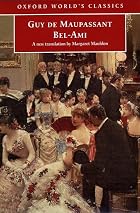

"Bel-Ami" is the nickname given to Georges Duroy, a young man of humble origins who arrives in Paris in 1880 after serving in the cavalry. Duroy is almost penniless, but he has ambition, charm, good looks, and is utterly without scruples. He makes friends with a newspaper reporter and, largely at the insistence of the reporter's young and lovely wife, is invited to submit an article on his experiences with the army in Algeria. The wife helps him write the article, just as she has ghostwritten all of her husband's articles, and soon Duroy finds himself employed as a reporter.
Maupassant's depiction of the Paris press is remarkably similar to that of Honoré de Balzac some fifty years earlier in his novel Lost Illusions. Reporters compose interviews with people they've never met and stories about things that never happened. They write reviews of plays they haven't seen. And newspapers are closely tied financially to the politicians they support, manipulating the news for their mutual gain.
Along with the materialism and absence of integrity comes sexual intrigue. Adultery is as common as prostitution, and Duroy takes full advantage of both. Women are the key to power, not only because they hold the reins of the social world, but because of the secrets they can pry from a husband and pass on to a lover (and vice-versa). Trading on his handsome face, Duroy seduces one woman after another, using them as rungs on his ladder to the top.
Bel-Ami comments on contemporary political events and personalities, substituting names and places in a way that would be transparent to the French reading public in 1885. Footnotes explain these references, but it isn't necessary to understand the political background to enjoy the novel. If anything, though, Bel-Ami is a bit on the shallow side for a nineteenth century novel, with a relatively simple and straightforward plot and a small cast of characters--attributes you might expect from a novelist who was primarily a writer of short stories.
First published in French 1885
English translation by Margaret Mauldon 2001

"Bel-Ami" is the nickname given to Georges Duroy, a young man of humble origins who arrives in Paris in 1880 after serving in the cavalry. Duroy is almost penniless, but he has ambition, charm, good looks, and is utterly without scruples. He makes friends with a newspaper reporter and, largely at the insistence of the reporter's young and lovely wife, is invited to submit an article on his experiences with the army in Algeria. The wife helps him write the article, just as she has ghostwritten all of her husband's articles, and soon Duroy finds himself employed as a reporter.
Maupassant's depiction of the Paris press is remarkably similar to that of Honoré de Balzac some fifty years earlier in his novel Lost Illusions. Reporters compose interviews with people they've never met and stories about things that never happened. They write reviews of plays they haven't seen. And newspapers are closely tied financially to the politicians they support, manipulating the news for their mutual gain.
Along with the materialism and absence of integrity comes sexual intrigue. Adultery is as common as prostitution, and Duroy takes full advantage of both. Women are the key to power, not only because they hold the reins of the social world, but because of the secrets they can pry from a husband and pass on to a lover (and vice-versa). Trading on his handsome face, Duroy seduces one woman after another, using them as rungs on his ladder to the top.
Bel-Ami comments on contemporary political events and personalities, substituting names and places in a way that would be transparent to the French reading public in 1885. Footnotes explain these references, but it isn't necessary to understand the political background to enjoy the novel. If anything, though, Bel-Ami is a bit on the shallow side for a nineteenth century novel, with a relatively simple and straightforward plot and a small cast of characters--attributes you might expect from a novelist who was primarily a writer of short stories.
199StevenTX
540. Pierre et Jean by Guy de Maupassant
First published in installments, 1887-88
English translation by Julie Mead 2001
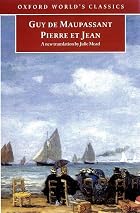
What can you do when you suspect that the person you love most in the world has been living a lie that threatens to destroy your family's happiness? This is the agonizing dilemma that faces Pierre in Guy de Maupassant's short novel Pierre et Jean.
Pierre and Jean Roland are brothers. Pierre has just finished medical school, and his younger brother Jean has completed his training as a lawyer. They have joined their parents in Le Havre, a seaport on the coast of Normandy, for a few weeks of relaxation before embarking on their careers. Their father, a simple man but with a lifetime love of the sea and ships, has retired there with his wife after many years as a jeweler in Paris. The two brothers are close, as is the whole family, but there is a stark contrast in their appearance and temperament. Pierre is dark, slender, ambitious, moody, and quick-witted. Jean is blond, tall, somewhat stout, easygoing, and indolent.
One day, when the family returns from an outing in their boat, they receive a visit from an attorney with the news that an old family friend from Paris has recently died and left his entire fortune to Jean. Pierre joins his parents in rejoicing in Jean's good fortune, but jealousy begins to gnaw at him, and he can't help wondering why only Jean was favored. Then a chance comment by a barmaid makes him suspect the shocking truth that was so obvious to an outsider: the deceased friend was Jean's father. Their mother is an adulteress! And the whole world will know it if Jean accepts the legacy.
Pierre's mental agony and the events which follow take place against the backdrop of a wonderfully evocative picture of the Norman coast where the author grew up. Ships blowing their horns in a dense fog while reaching blindly for a safe port... beach-goers retreating before the oncoming tide... these are vivid scenes that also symbolize Pierre's situation.
Pierre et Jean is an intense and compact psychological drama, quite different from the social realism of Maupassant's earlier novels. It reminds me more of the works of Scandinavian authors Ibsen, Strindberg and Soderberg than it does of Maupassant's mentors, Flaubert and Zola. And what makes this novel all the more poignant is that all the members of the Roland family are likable characters who love one another, yet they are about to be torn apart by an act of good will. Highly recommended.
First published in installments, 1887-88
English translation by Julie Mead 2001
What can you do when you suspect that the person you love most in the world has been living a lie that threatens to destroy your family's happiness? This is the agonizing dilemma that faces Pierre in Guy de Maupassant's short novel Pierre et Jean.
Pierre and Jean Roland are brothers. Pierre has just finished medical school, and his younger brother Jean has completed his training as a lawyer. They have joined their parents in Le Havre, a seaport on the coast of Normandy, for a few weeks of relaxation before embarking on their careers. Their father, a simple man but with a lifetime love of the sea and ships, has retired there with his wife after many years as a jeweler in Paris. The two brothers are close, as is the whole family, but there is a stark contrast in their appearance and temperament. Pierre is dark, slender, ambitious, moody, and quick-witted. Jean is blond, tall, somewhat stout, easygoing, and indolent.
One day, when the family returns from an outing in their boat, they receive a visit from an attorney with the news that an old family friend from Paris has recently died and left his entire fortune to Jean. Pierre joins his parents in rejoicing in Jean's good fortune, but jealousy begins to gnaw at him, and he can't help wondering why only Jean was favored. Then a chance comment by a barmaid makes him suspect the shocking truth that was so obvious to an outsider: the deceased friend was Jean's father. Their mother is an adulteress! And the whole world will know it if Jean accepts the legacy.
Pierre's mental agony and the events which follow take place against the backdrop of a wonderfully evocative picture of the Norman coast where the author grew up. Ships blowing their horns in a dense fog while reaching blindly for a safe port... beach-goers retreating before the oncoming tide... these are vivid scenes that also symbolize Pierre's situation.
Pierre et Jean is an intense and compact psychological drama, quite different from the social realism of Maupassant's earlier novels. It reminds me more of the works of Scandinavian authors Ibsen, Strindberg and Soderberg than it does of Maupassant's mentors, Flaubert and Zola. And what makes this novel all the more poignant is that all the members of the Roland family are likable characters who love one another, yet they are about to be torn apart by an act of good will. Highly recommended.
200StevenTX
Backwater by Dorothy M. Richardson
The second novel in the Pilgrimage sequence
First published 1916
"Life was ugly and cruel." This is the conclusion that Miriam Henderson reaches. She is Dorothy Richardson's alter ego in the series of 13 autobiographical novels titled "Pilgrimage." Backwater is the second in the series. In the first volume, Pointed Roofs, Miriam, still a teenager, spends a term tutoring at an exclusive girl's school in Hanover, Germany. Now she is back home in London and has taken a teaching job at a not-so-exclusive school for girls in North London. First, though, she has several weeks' vacation, during which she has her first experience of the joys and sorrows of romance.
Miriam's problem, though, is that because of her family's sudden poverty, she can see nothing ahead of her but a lifetime as a teacher or governess, eventually becoming a lonely spinster. She deplores North London with it's noise, its accents, it shabbiness, and its plebeian values. Her new pupils have none of the refinement and sensibility of her German students. Instead she finds only "cold English pianos and dreadful English children--and trams going up and down the grey road outside." Miriam's depression leads to a decline in her health and mood so obvious that her employer tries to counsel her. The older lady recommends prayer. Miriam argues back, "How can people, ordinary people, be expected to be like Christ, as they say, when they think that Christ was supernatural? Of course, if He was supernatural, it was easy enough for Him to be as He was; if He was not supernatural, then there's nothing in the whole thing." She finally concludes,"Well. If God made people he is responsible and ought to save them."
Oddly, Miriam, in this novel, seems much younger and less mature than she did in the first volume. Perhaps being in a strange environment forced her to grow up a bit, but back home she lapses back into a late adolescence. She now comes across as petulant and snobbish, more self-centered and less an observer of others, and subject to the pangs of typical teenage angst. On the other hand, at times she is more relaxed and playful, and there are some delightful domestic scenes with her sisters, as well as some picturesque outings. And every once in a while there are those flashes of perception that show us she has the potential to be much more than she can imagine.
The second novel in the Pilgrimage sequence
First published 1916
"Life was ugly and cruel." This is the conclusion that Miriam Henderson reaches. She is Dorothy Richardson's alter ego in the series of 13 autobiographical novels titled "Pilgrimage." Backwater is the second in the series. In the first volume, Pointed Roofs, Miriam, still a teenager, spends a term tutoring at an exclusive girl's school in Hanover, Germany. Now she is back home in London and has taken a teaching job at a not-so-exclusive school for girls in North London. First, though, she has several weeks' vacation, during which she has her first experience of the joys and sorrows of romance.
Miriam's problem, though, is that because of her family's sudden poverty, she can see nothing ahead of her but a lifetime as a teacher or governess, eventually becoming a lonely spinster. She deplores North London with it's noise, its accents, it shabbiness, and its plebeian values. Her new pupils have none of the refinement and sensibility of her German students. Instead she finds only "cold English pianos and dreadful English children--and trams going up and down the grey road outside." Miriam's depression leads to a decline in her health and mood so obvious that her employer tries to counsel her. The older lady recommends prayer. Miriam argues back, "How can people, ordinary people, be expected to be like Christ, as they say, when they think that Christ was supernatural? Of course, if He was supernatural, it was easy enough for Him to be as He was; if He was not supernatural, then there's nothing in the whole thing." She finally concludes,"Well. If God made people he is responsible and ought to save them."
Oddly, Miriam, in this novel, seems much younger and less mature than she did in the first volume. Perhaps being in a strange environment forced her to grow up a bit, but back home she lapses back into a late adolescence. She now comes across as petulant and snobbish, more self-centered and less an observer of others, and subject to the pangs of typical teenage angst. On the other hand, at times she is more relaxed and playful, and there are some delightful domestic scenes with her sisters, as well as some picturesque outings. And every once in a while there are those flashes of perception that show us she has the potential to be much more than she can imagine.
201StevenTX
541. Hard Times by Charles Dickens
First published 1854


Hard Times is the shortest of Dickens's novels and the only one which doesn't use London as a setting. The story takes place in a fictional town named Coketown, a grim and smoky industrial city representative of Manchester and other mill towns of northwest England. It is a story of class conflict between the mill owners, financiers and politicians on the one hand, and the laborers on the other. But the class differences are expressed more in philosophic than economic terms.
Representing the bourgeois managing class there are two men: Thomas Gradgrind and Josiah Bounderby. Gradgrind, an educator-turned-politician, is a fanatical proponent of a utilitarian philosophy which demands nothing but "facts," and abjures all art and sentiment. He attempts to raise his children as heartless automata whose only goal is the amassing of wealth.
Josiah Bounderby is a banker and mill owner who has constructed around himself the myth of the "self-made man." Insisting that he was born in a ditch and abandoned to his own devices as a young child, Bounderby's clear message is "I made it without anyone else's help or compassion, so don't expect any from me."
Among the characters from the lower classes are Sissy Jupe, the abandoned daughter of a circus performer, and Stephen Blackpool, a mill worker who must bear the added burden of having an alcoholic vagrant for a wife. Both Jupe and Blackpool are rich in the traits that their social betters lack: compassion, charity, and self-sacrifice.
Hard Times has the elements of a social reform novel, but that doesn't appear to be its purpose. We never set foot inside a mill, and there is no description of working conditions, harsh or otherwise. The efforts of the workers to unionize are even portrayed in a negative light. Instead of focusing on the symptoms of injustice, Dickens attacks what he must consider the cause: the flawed and hypocritical philosophy of utilitarianism which makes a virtue of selfishness and excuses callous indifference to the sufferings of others.
Hard Times is not without touches of humor, but on the whole it is darker than most of Dickens's works. There are the usual quirky and endearing characters, but a tone of tragedy predominates.
First published 1854


Hard Times is the shortest of Dickens's novels and the only one which doesn't use London as a setting. The story takes place in a fictional town named Coketown, a grim and smoky industrial city representative of Manchester and other mill towns of northwest England. It is a story of class conflict between the mill owners, financiers and politicians on the one hand, and the laborers on the other. But the class differences are expressed more in philosophic than economic terms.
Representing the bourgeois managing class there are two men: Thomas Gradgrind and Josiah Bounderby. Gradgrind, an educator-turned-politician, is a fanatical proponent of a utilitarian philosophy which demands nothing but "facts," and abjures all art and sentiment. He attempts to raise his children as heartless automata whose only goal is the amassing of wealth.
Josiah Bounderby is a banker and mill owner who has constructed around himself the myth of the "self-made man." Insisting that he was born in a ditch and abandoned to his own devices as a young child, Bounderby's clear message is "I made it without anyone else's help or compassion, so don't expect any from me."
Among the characters from the lower classes are Sissy Jupe, the abandoned daughter of a circus performer, and Stephen Blackpool, a mill worker who must bear the added burden of having an alcoholic vagrant for a wife. Both Jupe and Blackpool are rich in the traits that their social betters lack: compassion, charity, and self-sacrifice.
Hard Times has the elements of a social reform novel, but that doesn't appear to be its purpose. We never set foot inside a mill, and there is no description of working conditions, harsh or otherwise. The efforts of the workers to unionize are even portrayed in a negative light. Instead of focusing on the symptoms of injustice, Dickens attacks what he must consider the cause: the flawed and hypocritical philosophy of utilitarianism which makes a virtue of selfishness and excuses callous indifference to the sufferings of others.
Hard Times is not without touches of humor, but on the whole it is darker than most of Dickens's works. There are the usual quirky and endearing characters, but a tone of tragedy predominates.
202StevenTX
Re-read: The War of the Worlds by H. G. Wells
First published 1898


H. G. Wells's classic, thrilling story of alien invasion is a persistent examination of points of view. The unnamed narrator, a writer who happens to live in the village where the Martians first land, is constantly reminding himself to see things impartially. In fact, he claims a special penchant for doing so: "At times I suffer from the strangest sense of detachment from myself and the world about me; I seem to watch it all from the outside, from somewhere inconceivably remote, out of time, out of space, out of the stress and tragedy of it all."
Regarding the invasion itself, the narrator compares it to the European colonization of the less developed world and the extermination of aboriginal populations. "Are we such apostles of mercy as to complain if the Martians warred in the same spirit?" And with respect to the Martians' technology, he begins "to compare the things to human machines, to ask myself for the first time in my life how an ironclad or a steam engine would seem to an intelligent lower animal." And when he first witnesses the Martians' feeding habits, he points out that humans would appear as hideous monsters to an intelligent rabbit.
Another interesting theme emerges when the narrator, in his wandering through the bleak and blasted landscape under Martian occupation, encounters a man whom we would call a survivalist or social Darwinist. This man relishes the catastrophe as an opportunity to renew and advance the human species in its struggle for survival. "Life is real again," the man proclaims, "and the useless and cumbersome and mischievous have to die. They ought to die. They ought to be willing to die. It's a sort of disloyalty, after all, to live and taint the race." Wells dismisses this philosophy with ridicule rather than argument, showing the zealot to be nothing but a lazy, cowardly hypocrite.
Scientifically The War of the Worlds is a mixed bag. Wells perceptively shows how the Martians are affected by, and cope with, Earth's higher gravity, but he fails to see that their method of space travel--being shot out of a giant cannon--would have instantly pulverized their fragile bodies. Their machines and weapons, however, are quite realistic in their capabilities and limitations and anticipate some of the technological developments of our own time.
There is a scale and grandeur to the novel that filmmakers haven't yet captured--I highly recommend it.
First published 1898


H. G. Wells's classic, thrilling story of alien invasion is a persistent examination of points of view. The unnamed narrator, a writer who happens to live in the village where the Martians first land, is constantly reminding himself to see things impartially. In fact, he claims a special penchant for doing so: "At times I suffer from the strangest sense of detachment from myself and the world about me; I seem to watch it all from the outside, from somewhere inconceivably remote, out of time, out of space, out of the stress and tragedy of it all."
Regarding the invasion itself, the narrator compares it to the European colonization of the less developed world and the extermination of aboriginal populations. "Are we such apostles of mercy as to complain if the Martians warred in the same spirit?" And with respect to the Martians' technology, he begins "to compare the things to human machines, to ask myself for the first time in my life how an ironclad or a steam engine would seem to an intelligent lower animal." And when he first witnesses the Martians' feeding habits, he points out that humans would appear as hideous monsters to an intelligent rabbit.
Another interesting theme emerges when the narrator, in his wandering through the bleak and blasted landscape under Martian occupation, encounters a man whom we would call a survivalist or social Darwinist. This man relishes the catastrophe as an opportunity to renew and advance the human species in its struggle for survival. "Life is real again," the man proclaims, "and the useless and cumbersome and mischievous have to die. They ought to die. They ought to be willing to die. It's a sort of disloyalty, after all, to live and taint the race." Wells dismisses this philosophy with ridicule rather than argument, showing the zealot to be nothing but a lazy, cowardly hypocrite.
Scientifically The War of the Worlds is a mixed bag. Wells perceptively shows how the Martians are affected by, and cope with, Earth's higher gravity, but he fails to see that their method of space travel--being shot out of a giant cannon--would have instantly pulverized their fragile bodies. Their machines and weapons, however, are quite realistic in their capabilities and limitations and anticipate some of the technological developments of our own time.
There is a scale and grandeur to the novel that filmmakers haven't yet captured--I highly recommend it.
203annamorphic
Your review of Hard Times is interesting because it made me realize why I accepted Rickshaw as "Dickensian" even though in so many ways it isn't. But Hard Times is the last Dickens I read (a few years ago) and the grim utilitarianism condemned by each is what made the connection.
204StevenTX
542. Lazarillo de Tormes by an anonymous Spaniard
First published 1554
English translation by Michael Alpert 1969
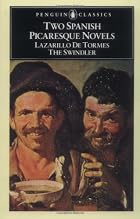
In this short picaresque novel, the oldest known of its kind, Lázaro de Tormes narrates his life as a child and young man. Each of the seven chapters recounts his experiences as servant to a different master. The purpose of the story, stated somewhat tongue in cheek, is to get "people who are proud of being high born to realize how little this really means, as Fortune has smiled on them, and how much more worthy are those who have endured misfortune but have triumphed by dint of hard work and determination." I say "tongue in cheek" because to the extent Lázaro has triumphed it is largely because of guile and cleverness, not hard work.
Illegitimate and impoverished, Lázaro first leaves his mother to become a blind man's servant boy. The blind man is cruel and stingy, but Lázaro finds various ways to cheat him out of money and food in order to survive. Next he takes up with a priest who seems determined to starve the boy to death, so Lázaro must refine his talent for thievery into an art in order to survive.
With his third master Lázaro thinks at first he has had a stroke of fortune, as this man is a well-dressed and mannered gentleman. It turns out, however, that the gentleman is penniless but too proud to work, so he expects Lázaro to beg and steal for him.
In vignettes like these the anonymous author satirizes the pretense and hypocrisy of the time, with the sharpest barbs being directed at the clergy. As a novel Lazarillo de Tormes pales in comparison with Don Quixote, but it's worth reading to see how the picaresque form began and evolved.
First published 1554
English translation by Michael Alpert 1969
In this short picaresque novel, the oldest known of its kind, Lázaro de Tormes narrates his life as a child and young man. Each of the seven chapters recounts his experiences as servant to a different master. The purpose of the story, stated somewhat tongue in cheek, is to get "people who are proud of being high born to realize how little this really means, as Fortune has smiled on them, and how much more worthy are those who have endured misfortune but have triumphed by dint of hard work and determination." I say "tongue in cheek" because to the extent Lázaro has triumphed it is largely because of guile and cleverness, not hard work.
Illegitimate and impoverished, Lázaro first leaves his mother to become a blind man's servant boy. The blind man is cruel and stingy, but Lázaro finds various ways to cheat him out of money and food in order to survive. Next he takes up with a priest who seems determined to starve the boy to death, so Lázaro must refine his talent for thievery into an art in order to survive.
With his third master Lázaro thinks at first he has had a stroke of fortune, as this man is a well-dressed and mannered gentleman. It turns out, however, that the gentleman is penniless but too proud to work, so he expects Lázaro to beg and steal for him.
In vignettes like these the anonymous author satirizes the pretense and hypocrisy of the time, with the sharpest barbs being directed at the clergy. As a novel Lazarillo de Tormes pales in comparison with Don Quixote, but it's worth reading to see how the picaresque form began and evolved.
205StevenTX
543. Tarr by Wyndham Lewis
First published 1916
Revised and expanded by the author 1928

Tarr is an assertive and sometimes brutal novel exploring the relationships of Life, Art, Sex and Death. Ezra Pound called it “the most vigorous and volcanic English novel of our time.” T. S. Eliot said Wyndham Lewis showed “the thought of the modern and the energy of the cave-man.”
Lewis was equally a painter and a novelist. His scathing satires of the art world alienated him from his contemporaries, and his legacy has been tarnished by negative portrayals of Jews and homosexuals in his novels. As Scott W. Klein writes in his superb introduction: “Tarr still snarls, as though through the bars of a cage, challenging approach by adventurous readers only.”
There are two very different versions of Tarr. In 1916 Lewis enlisted in the Royal Artillery and was sent to the front. Wanting to leave a literary legacy in case of his death in battle, with the help of friends Lewis rushed his first novel into print while portions were still in draft form and described as “placeholders.” After the war, the author leisurely revised and expanded the novel, republishing it in 1928. The 1928 version, as published by Oxford World’s Classics, is the version reviewed here, but the 1916 version, because it is in the public domain, is the one more widely available.
The novel takes place chiefly in Paris circa 1910. There are four principal characters whose interactions and conversations form the basis of the simple plot. Frederick Sorbert Tarr, a young English painter, is Wyndham Lewis’s alter ego, though the author explains that while Tarr’s ideas are his own, the events of the story are not the least autobiographical. Tarr is a self-assured modernist, scornful of the ideas and styles of the past. He claims himself to be a new sort of entity, one in whom the “emotionality normally absorbed by sex is so strong that it claims a newer and more exclusive field of deployment. Its first creation is the Artist himself. That is a new sort of person; the creative man.”
The person on whom Tarr’s carefully rationed sexual energies are expended is Bertha Lunken, a pretty German art student and model. Tarr describes his girlfriend as “a bourgeois-bohemian” and “a high-grade aryan bitch, in good condition, superbly made; of the succulent, obedient, clear peasant type.” Tarr, clearly a misogynist, enjoys her body even as he ridicules her attachment to outmoded German Romanticism.
The novel’s most distinctive and entertaining character is another German, Otto Kreisler, a middle-aged man still living on his father’s meager allowance and debts he can’t repay as he moves from city to city to keep ahead of his creditors. Kreisler considers himself an artist and a gentleman, but is neither. His drunken antics and brazen effrontery are the source of the novel’s dark humor, and his attempts at being serious invariably turn into the absurd.
Lastly there is Anastasya Vasek, the “Modern Girl” whose combination of intellect and sexuality send Tarr into confusion and Kreisler on the path of self-destruction. Describing herself, she says “My parents are russian. I was born in Berlin and brought up in America. We live in Vienna… I am a typical Russian therefore.” The term Lewis uses for her disarming sexual openness is “swagger sex.”
As some of the quotations above suggest, Lewis preferred his own rules of capitalization and punctuation, and even invented a few words. He felt, for example, that capitalizing adjectives of nationality placed too much emphasis on a person’s birthplace. The text is also sprinkled with enough French and German phrases and cultural references to make the editor’s footnotes very welcome.
The meat of the novel is found in Tarr’s conversations and pronouncements on the relationship and distinction between art and life, the nature of the artist, the role of sex in the life of the artist and, most disturbingly, what Tarr calls the “tragic theme of existence,” that “pleasure could take no form that did not include death and corruption.” He insists to Anastasya that “Death is the thing that differentiates art and life.”
Tarr is a novel of ideas peppered with enough action and humor to keep it fresh and entertaining throughout. It requires a reader to look past some potentially offensive opinions and characterizations, but has some thought-provoking notions on the nature of art from a man who was at the center of the art world for half a century.
First published 1916
Revised and expanded by the author 1928

Tarr is an assertive and sometimes brutal novel exploring the relationships of Life, Art, Sex and Death. Ezra Pound called it “the most vigorous and volcanic English novel of our time.” T. S. Eliot said Wyndham Lewis showed “the thought of the modern and the energy of the cave-man.”
Lewis was equally a painter and a novelist. His scathing satires of the art world alienated him from his contemporaries, and his legacy has been tarnished by negative portrayals of Jews and homosexuals in his novels. As Scott W. Klein writes in his superb introduction: “Tarr still snarls, as though through the bars of a cage, challenging approach by adventurous readers only.”
There are two very different versions of Tarr. In 1916 Lewis enlisted in the Royal Artillery and was sent to the front. Wanting to leave a literary legacy in case of his death in battle, with the help of friends Lewis rushed his first novel into print while portions were still in draft form and described as “placeholders.” After the war, the author leisurely revised and expanded the novel, republishing it in 1928. The 1928 version, as published by Oxford World’s Classics, is the version reviewed here, but the 1916 version, because it is in the public domain, is the one more widely available.
The novel takes place chiefly in Paris circa 1910. There are four principal characters whose interactions and conversations form the basis of the simple plot. Frederick Sorbert Tarr, a young English painter, is Wyndham Lewis’s alter ego, though the author explains that while Tarr’s ideas are his own, the events of the story are not the least autobiographical. Tarr is a self-assured modernist, scornful of the ideas and styles of the past. He claims himself to be a new sort of entity, one in whom the “emotionality normally absorbed by sex is so strong that it claims a newer and more exclusive field of deployment. Its first creation is the Artist himself. That is a new sort of person; the creative man.”
The person on whom Tarr’s carefully rationed sexual energies are expended is Bertha Lunken, a pretty German art student and model. Tarr describes his girlfriend as “a bourgeois-bohemian” and “a high-grade aryan bitch, in good condition, superbly made; of the succulent, obedient, clear peasant type.” Tarr, clearly a misogynist, enjoys her body even as he ridicules her attachment to outmoded German Romanticism.
The novel’s most distinctive and entertaining character is another German, Otto Kreisler, a middle-aged man still living on his father’s meager allowance and debts he can’t repay as he moves from city to city to keep ahead of his creditors. Kreisler considers himself an artist and a gentleman, but is neither. His drunken antics and brazen effrontery are the source of the novel’s dark humor, and his attempts at being serious invariably turn into the absurd.
Lastly there is Anastasya Vasek, the “Modern Girl” whose combination of intellect and sexuality send Tarr into confusion and Kreisler on the path of self-destruction. Describing herself, she says “My parents are russian. I was born in Berlin and brought up in America. We live in Vienna… I am a typical Russian therefore.” The term Lewis uses for her disarming sexual openness is “swagger sex.”
As some of the quotations above suggest, Lewis preferred his own rules of capitalization and punctuation, and even invented a few words. He felt, for example, that capitalizing adjectives of nationality placed too much emphasis on a person’s birthplace. The text is also sprinkled with enough French and German phrases and cultural references to make the editor’s footnotes very welcome.
The meat of the novel is found in Tarr’s conversations and pronouncements on the relationship and distinction between art and life, the nature of the artist, the role of sex in the life of the artist and, most disturbingly, what Tarr calls the “tragic theme of existence,” that “pleasure could take no form that did not include death and corruption.” He insists to Anastasya that “Death is the thing that differentiates art and life.”
Tarr is a novel of ideas peppered with enough action and humor to keep it fresh and entertaining throughout. It requires a reader to look past some potentially offensive opinions and characterizations, but has some thought-provoking notions on the nature of art from a man who was at the center of the art world for half a century.
206StevenTX
544. The History of Rasselas, Prince of Abissinia by Samuel Johnson
First published 1759

The History of Rasselas, Prince of Abissinia is a moral fable by one of England’s greatest thinkers that gives insight into the ideals and attitudes of the 18th century.
Rasselas and his royal siblings are confined by their father in a remote garden of ease and pleasure known as the Happy Valley. Here they are to remain safe from the cares and evils of the world. But Rasselas, learning something of the outside world from one of his tutors, becomes discontented and yearns to escape from paradise. He discovers that his favorite sister, Nekayah, shares his disquiet. Together with the tutor, Imlac, and Nekayah’s handmaiden Pekuah, they manage to escape from Happy Valley and make their way to Egypt.
Once they have overcome their astonishment at the scope and variety of the real world, they embark systematically on their quest to answer the simple question: How should one live? What is the secret to happiness, they wonder. Is it wealth? power? solitude? service? knowledge? Is the shepherd happier than the king? Is contentment found in monasticism or in family life? Yet each hopeful visit or interview ends in a degree of disillusionment. No state or occupation is without its conflicts, and no life is without regrets.
Yet along the way Rasselas and his sister pick up highly quotable gems of wisdom, usually from the lips of their tutor Imlac. Some examples:
“Great works are performed not by strength, but perseverance.”
“Nothing will ever be attempted if all possible objections must first be overcome.”
“The life that is devoted to knowledge passes silently away, and is very little diversified by events.”
“Be not too hasty to trust or to admire the teachers of morality: they discourse like angels, but they live like men.”
Modern readers will take delight in the fact that Dr. Johnson gives his female characters, Nekayah and Pekuah, every bit as much intelligence and boldness as Rasselas and allows them to use it. In the end the three learn that there is no one “right” answer to life, just wise decisions and worthy goals at each point along the way.
First published 1759

The History of Rasselas, Prince of Abissinia is a moral fable by one of England’s greatest thinkers that gives insight into the ideals and attitudes of the 18th century.
Rasselas and his royal siblings are confined by their father in a remote garden of ease and pleasure known as the Happy Valley. Here they are to remain safe from the cares and evils of the world. But Rasselas, learning something of the outside world from one of his tutors, becomes discontented and yearns to escape from paradise. He discovers that his favorite sister, Nekayah, shares his disquiet. Together with the tutor, Imlac, and Nekayah’s handmaiden Pekuah, they manage to escape from Happy Valley and make their way to Egypt.
Once they have overcome their astonishment at the scope and variety of the real world, they embark systematically on their quest to answer the simple question: How should one live? What is the secret to happiness, they wonder. Is it wealth? power? solitude? service? knowledge? Is the shepherd happier than the king? Is contentment found in monasticism or in family life? Yet each hopeful visit or interview ends in a degree of disillusionment. No state or occupation is without its conflicts, and no life is without regrets.
Yet along the way Rasselas and his sister pick up highly quotable gems of wisdom, usually from the lips of their tutor Imlac. Some examples:
“Great works are performed not by strength, but perseverance.”
“Nothing will ever be attempted if all possible objections must first be overcome.”
“The life that is devoted to knowledge passes silently away, and is very little diversified by events.”
“Be not too hasty to trust or to admire the teachers of morality: they discourse like angels, but they live like men.”
Modern readers will take delight in the fact that Dr. Johnson gives his female characters, Nekayah and Pekuah, every bit as much intelligence and boldness as Rasselas and allows them to use it. In the end the three learn that there is no one “right” answer to life, just wise decisions and worthy goals at each point along the way.
207StevenTX
545. Death Sentence by Maurice Blanchot
First published 1948 as L'Arrêt de Mort
English translation by Lydia Davis 1998

That the title of this novel is wonderfully, but differently, ambiguous in both French and English is highly indicative of its contents. "L'Arrêt de Mort" in French can mean both a legal judgment of death and the end of death. In English "Death Sentence" commonly also means a judgment of death, but it can also be construed to mean a written or spoken sentence that is about death. The fact that meaning is entirely dependent upon the interpretation of language, to the extent that our living and dying is dependent upon language, is interwoven throughout Blanchot's short novel.
The novel, written in the first person by an unnamed narrator, consists of two segments. In the first segment, taking place in 1938, the narrator tells of his relationship with a young woman named "J" who is dying of lung disease. J and the narrator discuss, among other things, her death, her suffering and her wish for suicide. At one point J's doctor insists on discontinuing her morphine shots because her condition is too frail. J screams at him, "If you don't kill me, you're a murderer." Ambiguous ideas about death and its meaning abound in this book. In reference to J's plea, the narrator says "Later I came across a similar phrase attributed to Kafka."
The second and longer segment of Death Sentence takes place in Paris during World War II, though the time and place may be of no significance. From the opening sentences, the narrator alerts us that the telling of the story is going to determine what the story is:
"I will go on with this story, but now I will take some precautions. I am not taking these precautions to cast a veil over the truth. The truth will be told, everything of importance that happened will be told. But not everything has yet happened....
"Even now, I am not sure that I am any more free than I was at the moment when I was not speaking. It may be that I am entirely mistaken. It may be that all these words are a curtain behind which what happened will never stop happening.... But a thought is not exactly a person, even if it lives and acts like one."
The events of this part of the novel, which involve encounters and conversations between the narrator and three different women, are dreamlike, discontinuous and enigmatic. The narrator's thoughts continue to be about death and suicide, but even more about language, silence and solitude. The language can be perplexing, but no less poetic: "...but this solitude has itself begun to speak, and I must in turn speak about this speaking solitude, not in derision, but because a greater solitude hovers above it, and above that solitude, another still greater, and each, taking the spoken word in order to smother and silence it, instead echoes it to infinity, and infinity becomes its echo."
I can't claim to understand everything Blanchot is saying in this novel, but it offers some intriguing interpretations. One is to consider it as metafiction with the narrator speaking, not as the author of a book, but as the book itself. For ideas live, change and develop in the mind, but as they are put into language and written down on paper their development ceases. In a manner of speaking, they die. Creation and death are the same, and language is what makes them so. In a postscript the author says, "These pages can end here, and . . . will remain until the very end. Whoever would obliterate it from me, in exchange for that end which I am searching for in vain, would himself become the beginning of my own story, and he would be my victim."
First published 1948 as L'Arrêt de Mort
English translation by Lydia Davis 1998

That the title of this novel is wonderfully, but differently, ambiguous in both French and English is highly indicative of its contents. "L'Arrêt de Mort" in French can mean both a legal judgment of death and the end of death. In English "Death Sentence" commonly also means a judgment of death, but it can also be construed to mean a written or spoken sentence that is about death. The fact that meaning is entirely dependent upon the interpretation of language, to the extent that our living and dying is dependent upon language, is interwoven throughout Blanchot's short novel.
The novel, written in the first person by an unnamed narrator, consists of two segments. In the first segment, taking place in 1938, the narrator tells of his relationship with a young woman named "J" who is dying of lung disease. J and the narrator discuss, among other things, her death, her suffering and her wish for suicide. At one point J's doctor insists on discontinuing her morphine shots because her condition is too frail. J screams at him, "If you don't kill me, you're a murderer." Ambiguous ideas about death and its meaning abound in this book. In reference to J's plea, the narrator says "Later I came across a similar phrase attributed to Kafka."
The second and longer segment of Death Sentence takes place in Paris during World War II, though the time and place may be of no significance. From the opening sentences, the narrator alerts us that the telling of the story is going to determine what the story is:
"I will go on with this story, but now I will take some precautions. I am not taking these precautions to cast a veil over the truth. The truth will be told, everything of importance that happened will be told. But not everything has yet happened....
"Even now, I am not sure that I am any more free than I was at the moment when I was not speaking. It may be that I am entirely mistaken. It may be that all these words are a curtain behind which what happened will never stop happening.... But a thought is not exactly a person, even if it lives and acts like one."
The events of this part of the novel, which involve encounters and conversations between the narrator and three different women, are dreamlike, discontinuous and enigmatic. The narrator's thoughts continue to be about death and suicide, but even more about language, silence and solitude. The language can be perplexing, but no less poetic: "...but this solitude has itself begun to speak, and I must in turn speak about this speaking solitude, not in derision, but because a greater solitude hovers above it, and above that solitude, another still greater, and each, taking the spoken word in order to smother and silence it, instead echoes it to infinity, and infinity becomes its echo."
I can't claim to understand everything Blanchot is saying in this novel, but it offers some intriguing interpretations. One is to consider it as metafiction with the narrator speaking, not as the author of a book, but as the book itself. For ideas live, change and develop in the mind, but as they are put into language and written down on paper their development ceases. In a manner of speaking, they die. Creation and death are the same, and language is what makes them so. In a postscript the author says, "These pages can end here, and . . . will remain until the very end. Whoever would obliterate it from me, in exchange for that end which I am searching for in vain, would himself become the beginning of my own story, and he would be my victim."
208StevenTX
546. Lieutenant Gustl by Arthur Schniztler
First published 1900 or 1901 (sources disagree) as Leutnant Gustl
English translation by Richard L. Simon 2003
Previously translated as None but the Brave

Told entirely as a stream of consciousness, this short (59 pages) novella puts us in the title character's head for a period of several hours. Gustl is an officer in the Austro-Hungarian army out for a night's recreation in Vienna around the turn of the 20th century. He is attending a concert for which a fellow officer has given him a free ticket. "How long is this thing going to last?" is his first thought. In between checking out the girls in the box seats, he thinks ahead to the duel he will be fighting the next morning. He isn't worried; this isn't his first. Gustl's mind also wanders to the problem of the Jews--there are too many of them in the Army, he thinks.
Waiting in line at the coat check after the concert, eager to find that girl he thinks was giving him the eye, Gustl makes an impatient remark to the large man in front of him. The man turns, grabs the hilt of Gustl's sword with a powerful hand to keep him from drawing it, and calls the young lieutenant a fathead. Gustl is too stunned (or frightened?) to react as the man walks away. But it's now too late. He has been publicly shamed and did not retaliate. There is no way to recover from such a disgrace. As he blunders out into the night, Gustl realizes that the only honorable option is to commit suicide.
Gustl's rambling thoughts give us a compact but vivid picture of aspects of fin de siècle Viennese culture. The novel satirizes the army in particular with its self-destructive honor code, its tolerance of social and sexual escapades, and its pervasive antisemitism. There is also a sense of the fragility of human fate where a single word can destroy a life or reprieve it. Schnitzler was a trained psychologist, and his portrait of this young man is both convincing and entertaining. The use of stream of consciousness was ground-breaking, yet it's delightfully easy to read.
First published 1900 or 1901 (sources disagree) as Leutnant Gustl
English translation by Richard L. Simon 2003
Previously translated as None but the Brave

Told entirely as a stream of consciousness, this short (59 pages) novella puts us in the title character's head for a period of several hours. Gustl is an officer in the Austro-Hungarian army out for a night's recreation in Vienna around the turn of the 20th century. He is attending a concert for which a fellow officer has given him a free ticket. "How long is this thing going to last?" is his first thought. In between checking out the girls in the box seats, he thinks ahead to the duel he will be fighting the next morning. He isn't worried; this isn't his first. Gustl's mind also wanders to the problem of the Jews--there are too many of them in the Army, he thinks.
Waiting in line at the coat check after the concert, eager to find that girl he thinks was giving him the eye, Gustl makes an impatient remark to the large man in front of him. The man turns, grabs the hilt of Gustl's sword with a powerful hand to keep him from drawing it, and calls the young lieutenant a fathead. Gustl is too stunned (or frightened?) to react as the man walks away. But it's now too late. He has been publicly shamed and did not retaliate. There is no way to recover from such a disgrace. As he blunders out into the night, Gustl realizes that the only honorable option is to commit suicide.
Gustl's rambling thoughts give us a compact but vivid picture of aspects of fin de siècle Viennese culture. The novel satirizes the army in particular with its self-destructive honor code, its tolerance of social and sexual escapades, and its pervasive antisemitism. There is also a sense of the fragility of human fate where a single word can destroy a life or reprieve it. Schnitzler was a trained psychologist, and his portrait of this young man is both convincing and entertaining. The use of stream of consciousness was ground-breaking, yet it's delightfully easy to read.
209StevenTX
547. Freedom by Jonathan Franzen
First published 2010


Freedom is the story of an American family from the 1970s to the writer's present day (2010). It is a novel thematically broad in scope and rich in insight.
The story opens with a portrait of the Bergman family of Minnesota. They seem almost too good to be true. Walter is an environmentalist working on important conservation projects. His wife Patty, a former college basketball star, appears to be the ideal happy homemaker and neighbor. Their two children, Joey and Jessica, are bright and successful. The Bergmans are an idealized example of liberal, socially and environmentally responsible, urban gentry.
But there are dark clouds looming. Joey will soon desert the family to move in with his girlfriend's redneck family next door. Patty is still haunted by her infatuation with Richard Katz, the rock musician who is Walter's best friend and whom Patty often wishes she had married, and Walter's idealism will soon be challenged by corruption and compromise.
The novel's narrative focus moves back and forth in time and from character to character. This allows the reader to see relationships and issues from multiple perspectives. On the large scale, Freedom chronicles the shift in American values from the bold, liberal idealism of the '70s to the cynical, materialistic conservatism of today. At the personal level we see individuals shaped by their environment and upbringing with children, more often than not, turning out to be the antitheses of their parents' personalities and values.
The theme of "freedom" is woven throughout the novel, but never pounded upon. It is represented in the yearning for independence by children and spouses. It is also a word used by opposing forces: the environmentalists wanting land free of exploitation, the corporate interests claiming the economic freedom to exploit. What is freedom to one person or group is all to often seen as a transgression by another.
The characters in the novel are, if not typical, at least convincing, and sufficiently complex that the reader can sympathize with, or be infuriated by, each of them. Like all of us they combine grand visions and pure ideals with petty prejudices and self-destructive behavior. Franzen's portrait of America over the last 40 years is written from the perspective of an embittered '70s liberal. Being one myself, I see it as ringing true. Conservatives will probably have a different opinion of the novel.
First published 2010


Freedom is the story of an American family from the 1970s to the writer's present day (2010). It is a novel thematically broad in scope and rich in insight.
The story opens with a portrait of the Bergman family of Minnesota. They seem almost too good to be true. Walter is an environmentalist working on important conservation projects. His wife Patty, a former college basketball star, appears to be the ideal happy homemaker and neighbor. Their two children, Joey and Jessica, are bright and successful. The Bergmans are an idealized example of liberal, socially and environmentally responsible, urban gentry.
But there are dark clouds looming. Joey will soon desert the family to move in with his girlfriend's redneck family next door. Patty is still haunted by her infatuation with Richard Katz, the rock musician who is Walter's best friend and whom Patty often wishes she had married, and Walter's idealism will soon be challenged by corruption and compromise.
The novel's narrative focus moves back and forth in time and from character to character. This allows the reader to see relationships and issues from multiple perspectives. On the large scale, Freedom chronicles the shift in American values from the bold, liberal idealism of the '70s to the cynical, materialistic conservatism of today. At the personal level we see individuals shaped by their environment and upbringing with children, more often than not, turning out to be the antitheses of their parents' personalities and values.
The theme of "freedom" is woven throughout the novel, but never pounded upon. It is represented in the yearning for independence by children and spouses. It is also a word used by opposing forces: the environmentalists wanting land free of exploitation, the corporate interests claiming the economic freedom to exploit. What is freedom to one person or group is all to often seen as a transgression by another.
The characters in the novel are, if not typical, at least convincing, and sufficiently complex that the reader can sympathize with, or be infuriated by, each of them. Like all of us they combine grand visions and pure ideals with petty prejudices and self-destructive behavior. Franzen's portrait of America over the last 40 years is written from the perspective of an embittered '70s liberal. Being one myself, I see it as ringing true. Conservatives will probably have a different opinion of the novel.
210StevenTX
548. Shirley by Charlotte Brontë
First published 1849
"Pantheress! beautiful forest-born! wily, tameless, peerless nature! She gnaws her chain; I see the white teeth working at the steel! She has dreams of her wild woods and pinings after virgin freedom." With these words an admirer describes Shirley Keeldar, the co-heroine of the novel titled Shirley. She is the heiress of a substantial estate. Her parents wanted a boy, so they gave her a man's name and something of a man's independence and temperament. (That "Shirley" has been ever since a girl's name is due to the popularity of Charlotte Brontë's novel.)
The other co-heroine is Shirley's closest friend, Caroline Helstone. Raised by her uncle, the local rector, Caroline is more the typical Brontë heroine, hiding her passions, her intellect, and her opinions behind a quiet, devout and dutiful exterior. But in female company both she and Shirley express surprisingly strong views on the role of women in 19th century England.
"Men, I believe, fancy women's minds something like those of children. Now that is a mistake."
"...I feel there is something wrong somewhere. I believe single women should have more to do--better chances of interesting and profitable occupation than they possess now."
"Men of England! look at your poor girls, many of them fading around you, dropping off in consumption or decline; or, what is worse, degenerating... reduced to strive by scarce modest coquetry and debasing artifice, to gain that position and consideration by marriage which to celibacy is denied."
Nor was marriage always desirable; of one girl's prospects the author says that she, "...inverting the natural order of insect existence, would have fluttered through the honeymoon a bright, admired butterfly, and crawled the rest of her days a sordid, trampled worm."
Caroline Helstone and Shirley Keeldar live in a small Yorkshire community named Briarfield (perhaps modeled on the Brontë home of Haworth) which boasts a fabric mill as its sole industry. But times are hard. It is 1811 and the war with Napoleon has resulted in a trade embargo that is now extended to America, crippling the English economy. The mill's manager, Robert Moore, is undaunted. An immigrant from Belgium, half French and half English, Robert is a distant cousin of Caroline's and a man who will figure in the love lives of both women. To cut labor costs in an attempt to stay afloat, Robert imports machinery to automate his mill. But this eliminates precious jobs, and there are riots. The machinery is destroyed. Robert rebuilds and battles on, in a scene the author says is being played out all over England.
Brontë is even-handed in her treatment of labor-management disputes, showing sympathy with both positions. She is unequivocal, however, in regard to the idea that some can claim superiority by birth over others. The aristocracy is seldom mentioned in the novel, but satirized viciously when it is. One lady candidly admits that the best English governesses are the illegitimate daughters of English lords:
"...we need the imprudences, extravagances, mistakes, and crimes of a certain number of fathers to sow the seed from which we reap the harvest of governesses. The daughters of trades-people, however well educated, must necessarily be underbred, and as such unfit to be inmates of our dwellings, or guardians of our children's minds and persons."
Charlotte Brontë began writing Shirley, her second published novel after Jane Eyre, in 1848. In September of that year Charlotte's brother Branwell died from a complex of problems brought on by heavy drinking. Two months later, Charlotte's younger sister Emily died of tuberculosis in the same room in which the sisters did all their writing. In May of the following year the youngest sister, Anne, died of the same disease.
After Anne's death, Charlotte resumed her composition of Shirley. A discernible loss of focus in the middle of the story may be a consequence of this hiatus. In the later chapters, Brontë has her three principal characters, Caroline, Shirley and Robert, each go into a decline due to illness or injury. Each comes near to death or fears it. But Charlotte could bring them back to life and health with her pen, something she could not do for Branwell, Emily and Anne.
"You held out your hand for an egg," she wrote, "and fate put into it a scorpion." With the scorpion clenched defiantly in her fist, Charlotte Brontë wrote a bold and beautiful novel.
First published 1849
"Pantheress! beautiful forest-born! wily, tameless, peerless nature! She gnaws her chain; I see the white teeth working at the steel! She has dreams of her wild woods and pinings after virgin freedom." With these words an admirer describes Shirley Keeldar, the co-heroine of the novel titled Shirley. She is the heiress of a substantial estate. Her parents wanted a boy, so they gave her a man's name and something of a man's independence and temperament. (That "Shirley" has been ever since a girl's name is due to the popularity of Charlotte Brontë's novel.)
The other co-heroine is Shirley's closest friend, Caroline Helstone. Raised by her uncle, the local rector, Caroline is more the typical Brontë heroine, hiding her passions, her intellect, and her opinions behind a quiet, devout and dutiful exterior. But in female company both she and Shirley express surprisingly strong views on the role of women in 19th century England.
"Men, I believe, fancy women's minds something like those of children. Now that is a mistake."
"...I feel there is something wrong somewhere. I believe single women should have more to do--better chances of interesting and profitable occupation than they possess now."
"Men of England! look at your poor girls, many of them fading around you, dropping off in consumption or decline; or, what is worse, degenerating... reduced to strive by scarce modest coquetry and debasing artifice, to gain that position and consideration by marriage which to celibacy is denied."
Nor was marriage always desirable; of one girl's prospects the author says that she, "...inverting the natural order of insect existence, would have fluttered through the honeymoon a bright, admired butterfly, and crawled the rest of her days a sordid, trampled worm."
Caroline Helstone and Shirley Keeldar live in a small Yorkshire community named Briarfield (perhaps modeled on the Brontë home of Haworth) which boasts a fabric mill as its sole industry. But times are hard. It is 1811 and the war with Napoleon has resulted in a trade embargo that is now extended to America, crippling the English economy. The mill's manager, Robert Moore, is undaunted. An immigrant from Belgium, half French and half English, Robert is a distant cousin of Caroline's and a man who will figure in the love lives of both women. To cut labor costs in an attempt to stay afloat, Robert imports machinery to automate his mill. But this eliminates precious jobs, and there are riots. The machinery is destroyed. Robert rebuilds and battles on, in a scene the author says is being played out all over England.
Brontë is even-handed in her treatment of labor-management disputes, showing sympathy with both positions. She is unequivocal, however, in regard to the idea that some can claim superiority by birth over others. The aristocracy is seldom mentioned in the novel, but satirized viciously when it is. One lady candidly admits that the best English governesses are the illegitimate daughters of English lords:
"...we need the imprudences, extravagances, mistakes, and crimes of a certain number of fathers to sow the seed from which we reap the harvest of governesses. The daughters of trades-people, however well educated, must necessarily be underbred, and as such unfit to be inmates of our dwellings, or guardians of our children's minds and persons."
Charlotte Brontë began writing Shirley, her second published novel after Jane Eyre, in 1848. In September of that year Charlotte's brother Branwell died from a complex of problems brought on by heavy drinking. Two months later, Charlotte's younger sister Emily died of tuberculosis in the same room in which the sisters did all their writing. In May of the following year the youngest sister, Anne, died of the same disease.
After Anne's death, Charlotte resumed her composition of Shirley. A discernible loss of focus in the middle of the story may be a consequence of this hiatus. In the later chapters, Brontë has her three principal characters, Caroline, Shirley and Robert, each go into a decline due to illness or injury. Each comes near to death or fears it. But Charlotte could bring them back to life and health with her pen, something she could not do for Branwell, Emily and Anne.
"You held out your hand for an egg," she wrote, "and fate put into it a scorpion." With the scorpion clenched defiantly in her fist, Charlotte Brontë wrote a bold and beautiful novel.
211StevenTX
549. Life & Times of Michael K by J. M. Coetzee
First published 1983


Life & Times of Michael K is set in a version of apartheid South Africa in which a civil war is raging, though between whom and over what is never explicitly stated. Michael K is a gardener living in poverty in Cape Town with his mother. Michael is severely harelipped and somewhat simple-minded, though he is often taken to be more mentally impaired than he really is. The mother, who is dying, asks her son to take her back to the farm where she grew up. Unable to obtain the necessary travel permits, Michael smuggles his mother out of town in a hand cart. She soon dies, however, and Michael is left with her ashes to carry to a place he knows only by her description. He becomes a solitary fugitive, living off the land, until he is captured and sent to an internment camp.
The first thing that strikes you about this novel is that there is no mention of race whatsoever. We assume that Michael K is black simply from the way he is treated, just as we assume those in authority are white. This is a story set in South Africa and obviously reflecting the apartheid system, yet it clearly isn't the South Africa of past or present. By distancing the narrative from any specific time or issue, the author lets us see Michael K as an individual struggling against the establishment, not as a representative of an ethnic group or political cause. His physical and mental peculiarities make him an outsider even among his fellow outcasts.
The surname "K" is an obvious reference to the works of Franz Kafka, as is the fact that the government headquarters is referred to as "The Castle." Just like K in Kafka's novel The Castle, Michael K is an individual struggling to make sense of a system that contradicts itself at every turn. But unlike Kafka's K, Michael K eventually thwarts the system by withdrawing into his own identity and refusing to act or interact. Eventually it is the Castle which becomes baffled and frustrated trying to figure out K.
First published 1983


Life & Times of Michael K is set in a version of apartheid South Africa in which a civil war is raging, though between whom and over what is never explicitly stated. Michael K is a gardener living in poverty in Cape Town with his mother. Michael is severely harelipped and somewhat simple-minded, though he is often taken to be more mentally impaired than he really is. The mother, who is dying, asks her son to take her back to the farm where she grew up. Unable to obtain the necessary travel permits, Michael smuggles his mother out of town in a hand cart. She soon dies, however, and Michael is left with her ashes to carry to a place he knows only by her description. He becomes a solitary fugitive, living off the land, until he is captured and sent to an internment camp.
The first thing that strikes you about this novel is that there is no mention of race whatsoever. We assume that Michael K is black simply from the way he is treated, just as we assume those in authority are white. This is a story set in South Africa and obviously reflecting the apartheid system, yet it clearly isn't the South Africa of past or present. By distancing the narrative from any specific time or issue, the author lets us see Michael K as an individual struggling against the establishment, not as a representative of an ethnic group or political cause. His physical and mental peculiarities make him an outsider even among his fellow outcasts.
The surname "K" is an obvious reference to the works of Franz Kafka, as is the fact that the government headquarters is referred to as "The Castle." Just like K in Kafka's novel The Castle, Michael K is an individual struggling to make sense of a system that contradicts itself at every turn. But unlike Kafka's K, Michael K eventually thwarts the system by withdrawing into his own identity and refusing to act or interact. Eventually it is the Castle which becomes baffled and frustrated trying to figure out K.
212annamorphic
Thanks for all these great reviews. Very useful as a guide to my future reading. I actually nominated Tarr for the group read based on your review, partly because I felt I would have quite a difficult time reading it myself!
213StevenTX
550. The Man of Feeling by Henry Mackenzie
First Published 1771

Following one of the literary conventions of the time, The Man of Feeling is introduced as an accidentally discovered manuscript. It is a biography of a young acquaintance of the writer's named Harley. The man who discovered it, an English curate, saw no value in it, and has used most of the pages as wadding for his fowling piece. This explains why we are given only fragments--19 chapters that begin with Chapter 11 and end with Chapter 46, and some of them incomplete.
Harley is a country squire, just come of age. His parents are dead, but his aunt lives with him. In the chapters preserved we see him fall in love, only to be later frustrated in love. He then sets out to London on a matter of business and along the way encounters a variety of characters: beggars, swindlers, card sharps, a misanthrope, a prostitute, and a wounded veteran. He even visits Bedlam, London's asylum for the insane. His reactions to each are often naïve, but always marked by sympathy and a desire to understand rather than to judge.
Parts of the novel are satirical (especially the visit to Bedlam), and parts are political, but for the most part it is a treatise on feelings. Novels of "moral instruction" telling you how to act were common in the 18th century. This is a novel demonstrating how one should feel, not what one should do. Harley drops tears of compassion on almost every page, and is never hardened by experience.
For the modern reader these case studies in compassion are nothing new, and the novel as a whole is rather sappy and uneventful. The author, Henry Mackenzie, was an admirer of the works of Laurence Sterne, and there is some resemblance between The Man of Feeling and Sterne's A Sentimental Journey through France and Italy. But Mackenzie's work is not the equal of Sterne's. The part I enjoyed the most was not about Harley and his feelings at all; it was the disabled veteran's diatribe against British imperialism in India. To profit by trade with the Indians was fine, he said, but nothing justified deposing their rulers--however despotic they may have been--and taking over another country.
The Man of Feeling was very popular in its day. It is a book I would recommend chiefly for its historical significance, and since it's very short and a free ebook, little investment of any kind is required. It would be best to approach it as you would a book of maxims or fables with no expectations of plot or character development.
First Published 1771

Following one of the literary conventions of the time, The Man of Feeling is introduced as an accidentally discovered manuscript. It is a biography of a young acquaintance of the writer's named Harley. The man who discovered it, an English curate, saw no value in it, and has used most of the pages as wadding for his fowling piece. This explains why we are given only fragments--19 chapters that begin with Chapter 11 and end with Chapter 46, and some of them incomplete.
Harley is a country squire, just come of age. His parents are dead, but his aunt lives with him. In the chapters preserved we see him fall in love, only to be later frustrated in love. He then sets out to London on a matter of business and along the way encounters a variety of characters: beggars, swindlers, card sharps, a misanthrope, a prostitute, and a wounded veteran. He even visits Bedlam, London's asylum for the insane. His reactions to each are often naïve, but always marked by sympathy and a desire to understand rather than to judge.
Parts of the novel are satirical (especially the visit to Bedlam), and parts are political, but for the most part it is a treatise on feelings. Novels of "moral instruction" telling you how to act were common in the 18th century. This is a novel demonstrating how one should feel, not what one should do. Harley drops tears of compassion on almost every page, and is never hardened by experience.
For the modern reader these case studies in compassion are nothing new, and the novel as a whole is rather sappy and uneventful. The author, Henry Mackenzie, was an admirer of the works of Laurence Sterne, and there is some resemblance between The Man of Feeling and Sterne's A Sentimental Journey through France and Italy. But Mackenzie's work is not the equal of Sterne's. The part I enjoyed the most was not about Harley and his feelings at all; it was the disabled veteran's diatribe against British imperialism in India. To profit by trade with the Indians was fine, he said, but nothing justified deposing their rulers--however despotic they may have been--and taking over another country.
The Man of Feeling was very popular in its day. It is a book I would recommend chiefly for its historical significance, and since it's very short and a free ebook, little investment of any kind is required. It would be best to approach it as you would a book of maxims or fables with no expectations of plot or character development.
214StevenTX
551. So Long a Letter by Mariama Bâ
First published 1980 as Une si longue lettre
English translation 1981 by Modupé Bodé-Thomas


"Fate grasps whom it wants, when it wants. When it moves in the direction of your desires, it brings you plenitude. But more often it unsettles, crosses you. Then one has to endure." A woman's struggle and endurance against fate and unfairness is the theme of this short novel in the form of a single, long letter. The writer of the letter is a Senegalese woman of fifty named Ramatoulaye. She is writing to her former classmate and lifelong best friend Aissatou. The occasion is the recent death of Ramatoulaye's husband, Modou.
Ramatoulaye describes briefly the funeral rites, but when she addresses her own feelings she is led immediately to the great resentment in her life: that Modou had recently taken a second wife. She recaps how this came about, and weaves into the story Aissatou's own personal history. Aissatou's husband, Mawdo, has also taken a second and younger wife. But Ramatoulaye is quick to point out that Mawdo did this only under pressure from his own family, whereas Modou's second marriage was a personal caprice. Modou fell in love with his own teenage daughter's best friend, and showered gifts upon the girl's mother so that she would be forced against her will to marry a man at least thirty years her senior. After thirty years of marriage to Modou, and having borne him twelve children, Ramatoulaye feels betrayed, not just by her husband, but by the male sex in general and the society it has built.
Mariama Bâ's novel is a statement of personal loss, grief, and perseverance, but it is also a manifesto for the cause of women's rights in Africa and elsewhere. She takes on the issues directly, saying "Nearly twenty years of independence! When will we have the first female minister involved in the decisions concerning the development of our country?" And later: "Instruments for some, baits for others, respected or despised, often muzzled, all women have almost the same fate, which religions or unjust legislation have sealed." The key issue is polygamy in Islamic states, but she also addresses arranged marriages, equality of education, political freedoms, inheritance laws and customs, and recognition for the economic value of homemaking services.
Aside from its feminist message, So Long a Letter offers an interesting look at how ancient traditions and modern values clash in today's Africa, even among the most highly educated and empowered classes. The characters in the novel are all university-educated professionals living in relative comfort, so the injustices of which Bâ writes are not to be overcome by money or education. I can't help but wonder, though, what Modou's side of the story would have been had the author allowed him to tell it.
First published 1980 as Une si longue lettre
English translation 1981 by Modupé Bodé-Thomas


"Fate grasps whom it wants, when it wants. When it moves in the direction of your desires, it brings you plenitude. But more often it unsettles, crosses you. Then one has to endure." A woman's struggle and endurance against fate and unfairness is the theme of this short novel in the form of a single, long letter. The writer of the letter is a Senegalese woman of fifty named Ramatoulaye. She is writing to her former classmate and lifelong best friend Aissatou. The occasion is the recent death of Ramatoulaye's husband, Modou.
Ramatoulaye describes briefly the funeral rites, but when she addresses her own feelings she is led immediately to the great resentment in her life: that Modou had recently taken a second wife. She recaps how this came about, and weaves into the story Aissatou's own personal history. Aissatou's husband, Mawdo, has also taken a second and younger wife. But Ramatoulaye is quick to point out that Mawdo did this only under pressure from his own family, whereas Modou's second marriage was a personal caprice. Modou fell in love with his own teenage daughter's best friend, and showered gifts upon the girl's mother so that she would be forced against her will to marry a man at least thirty years her senior. After thirty years of marriage to Modou, and having borne him twelve children, Ramatoulaye feels betrayed, not just by her husband, but by the male sex in general and the society it has built.
Mariama Bâ's novel is a statement of personal loss, grief, and perseverance, but it is also a manifesto for the cause of women's rights in Africa and elsewhere. She takes on the issues directly, saying "Nearly twenty years of independence! When will we have the first female minister involved in the decisions concerning the development of our country?" And later: "Instruments for some, baits for others, respected or despised, often muzzled, all women have almost the same fate, which religions or unjust legislation have sealed." The key issue is polygamy in Islamic states, but she also addresses arranged marriages, equality of education, political freedoms, inheritance laws and customs, and recognition for the economic value of homemaking services.
Aside from its feminist message, So Long a Letter offers an interesting look at how ancient traditions and modern values clash in today's Africa, even among the most highly educated and empowered classes. The characters in the novel are all university-educated professionals living in relative comfort, so the injustices of which Bâ writes are not to be overcome by money or education. I can't help but wonder, though, what Modou's side of the story would have been had the author allowed him to tell it.
215StevenTX
Re-read: Animal Farm by George Orwell
First published 1945
Second reading

This novel is too well known to need another review. My grandson had just read this as a summer reading assignment for high school, and since I hadn't read it since high school myself, I decided to re-read it. When I first read it, it was at the height of the Cold War, and it was presented as a novel about the evils of communism. It isn't that at all, of course, but rather about how Stalin and his followers betrayed the ideals of communism.
I wonder what today's teens can make of this story when they are now generations removed from the era it reflects and haven't yet had any classes in world history or political science that would give them important background. It probably comes across to them as just a moral fable on the evils of selfishness and bullying.
First published 1945
Second reading

This novel is too well known to need another review. My grandson had just read this as a summer reading assignment for high school, and since I hadn't read it since high school myself, I decided to re-read it. When I first read it, it was at the height of the Cold War, and it was presented as a novel about the evils of communism. It isn't that at all, of course, but rather about how Stalin and his followers betrayed the ideals of communism.
I wonder what today's teens can make of this story when they are now generations removed from the era it reflects and haven't yet had any classes in world history or political science that would give them important background. It probably comes across to them as just a moral fable on the evils of selfishness and bullying.
216StevenTX
Re-read: The Strange Case of Dr. Jekyll and Mr. Hyde by Robert Louis Stevenson
First published 1886
Second reading

My grandson's other summer reading assignment. It will be quite a challenge to a vocabulary honed on twelve hours a day of Spongebob Squarepants. He will probably go into it expecting something more like its modern derivative, the Incredible Hulk, and be disappointed that Mr. Hyde doesn't go around smashing stuff.
One of the common misconceptions about this story is that Jekyll represents "good" and Hyde "evil." Jekyll is not, by his own admission, "good." He relishes the sins and pleasures* he enjoys as Hyde, but is tormented by fear and guilt. The serum allows the evil side of Jekyll to operate unfettered by qualms or remorse. But as Jekyll he is fully complicit in Hyde's sins, hiring a separate flat and a housekeeper for Hyde's convenience. There is no formula for isolating Jekyll's good side (nor does he seem interested in finding one).
* What are Hyde's secret pleasures? I suspect we are expected to infer that Jekyll is homosexual. He is a middle-aged man with no wife, children, or female acquaintances. Hyde is allowed to act out what, in Victorian England, were unmentionable desires.
First published 1886
Second reading

My grandson's other summer reading assignment. It will be quite a challenge to a vocabulary honed on twelve hours a day of Spongebob Squarepants. He will probably go into it expecting something more like its modern derivative, the Incredible Hulk, and be disappointed that Mr. Hyde doesn't go around smashing stuff.
One of the common misconceptions about this story is that Jekyll represents "good" and Hyde "evil." Jekyll is not, by his own admission, "good." He relishes the sins and pleasures* he enjoys as Hyde, but is tormented by fear and guilt. The serum allows the evil side of Jekyll to operate unfettered by qualms or remorse. But as Jekyll he is fully complicit in Hyde's sins, hiring a separate flat and a housekeeper for Hyde's convenience. There is no formula for isolating Jekyll's good side (nor does he seem interested in finding one).
* What are Hyde's secret pleasures? I suspect we are expected to infer that Jekyll is homosexual. He is a middle-aged man with no wife, children, or female acquaintances. Hyde is allowed to act out what, in Victorian England, were unmentionable desires.
217StevenTX
552. The Lost Steps by Alejo Carpentier
First published 1953 as Los Pasos Perdidos
English translation by Harriet de Onís 1956


A composer makes an epic journey into the jungles of South America in search of rare native musical instruments but finds, instead, a succession of revelations that transfigure him and his art.
The composer is a man of Latin American origin but multi-national heritage living in what we presume to be New York. His marriage to an actress is failing because their careers separate them physically and emotionally. He has taken a mistress, a French astrologer whom he calls "Mouche." Intellectually they are worlds apart, but their relationship is physically satisfying. When the curator of a museum coaxes the reluctant composer into going in search of a fabled Native American instrument, Mouche insists on going along.
The country to which the composer and his mistress travel is not named in the novel, but in a postscript the author identifies the places visited as composites of actual localities in Colombia and Venezuela. Through various vicissitudes and discomforts, they find themselves journeying as if back in time to ever more primitive means of conveyance and accommodations. More importantly, the human customs, values and beliefs they encounter become more akin to the medieval than the modern. The composer, who begins to gain musical insight from this, is ever more eager to press on. He and Mouche, who misses the comforts of civilization, grow steadily apart. A new woman, Rosario, enters the picture.
Eventually the composer passes from the medieval to the paleolithic, as he comes among tribes so remote that they know almost nothing of the outside world, and are innocent of agriculture, the wheel, and all of modernity. But he sees that they are genuine in a way civilized man has forgotten how to be. We obey customs without bothering to understand their origin or significance, but with the Indians "...not one gesture was made without cognizance of its meaning."
He makes discoveries about himself as well. He passes some tests, but fails others. "I told myself," he reflects, "that the discovery of new routes embarked upon without realization, without awareness of the wonder of it while it is being lived, is so unique, so defies recapture, that man, puffed up with his vanity, thinks he can repeat the feat whenever he wishes, master of a privilege denied to others." But he who turns back and later seeks to recapture the miracle of discovery will find "the setting changed, the landmarks wiped out, and the faces of the guides new."
The Lost Steps is told in language as dense, fragrant, and verdant as the jungle itself. This moving and insightful novel is full of aesthetic insights and reverence for the natural world, not just in musical terms, but in visual modes as well. "A day will come," the composer tells us, "when men will discover an alphabet in the eyes of chalcedonies, in the markings of the moth, and will learn in astonishment that every spotted snail has always been a poem."
First published 1953 as Los Pasos Perdidos
English translation by Harriet de Onís 1956


A composer makes an epic journey into the jungles of South America in search of rare native musical instruments but finds, instead, a succession of revelations that transfigure him and his art.
The composer is a man of Latin American origin but multi-national heritage living in what we presume to be New York. His marriage to an actress is failing because their careers separate them physically and emotionally. He has taken a mistress, a French astrologer whom he calls "Mouche." Intellectually they are worlds apart, but their relationship is physically satisfying. When the curator of a museum coaxes the reluctant composer into going in search of a fabled Native American instrument, Mouche insists on going along.
The country to which the composer and his mistress travel is not named in the novel, but in a postscript the author identifies the places visited as composites of actual localities in Colombia and Venezuela. Through various vicissitudes and discomforts, they find themselves journeying as if back in time to ever more primitive means of conveyance and accommodations. More importantly, the human customs, values and beliefs they encounter become more akin to the medieval than the modern. The composer, who begins to gain musical insight from this, is ever more eager to press on. He and Mouche, who misses the comforts of civilization, grow steadily apart. A new woman, Rosario, enters the picture.
Eventually the composer passes from the medieval to the paleolithic, as he comes among tribes so remote that they know almost nothing of the outside world, and are innocent of agriculture, the wheel, and all of modernity. But he sees that they are genuine in a way civilized man has forgotten how to be. We obey customs without bothering to understand their origin or significance, but with the Indians "...not one gesture was made without cognizance of its meaning."
He makes discoveries about himself as well. He passes some tests, but fails others. "I told myself," he reflects, "that the discovery of new routes embarked upon without realization, without awareness of the wonder of it while it is being lived, is so unique, so defies recapture, that man, puffed up with his vanity, thinks he can repeat the feat whenever he wishes, master of a privilege denied to others." But he who turns back and later seeks to recapture the miracle of discovery will find "the setting changed, the landmarks wiped out, and the faces of the guides new."
The Lost Steps is told in language as dense, fragrant, and verdant as the jungle itself. This moving and insightful novel is full of aesthetic insights and reverence for the natural world, not just in musical terms, but in visual modes as well. "A day will come," the composer tells us, "when men will discover an alphabet in the eyes of chalcedonies, in the markings of the moth, and will learn in astonishment that every spotted snail has always been a poem."
218StevenTX
The Tunnel by Dorothy Richardson
First published 1919
Fourth novel in the Pilgrimage sequence
"I'm so sorry for you. I hate humanity too. Isn't it a lovely day? Isn't it? Just look."
Such jarring juxtapositions of despair and euphoria are found throughout Dorothy Richardson's fourth autobiographical novel, The Tunnel. It portrays events in Richardson's life starting in 1896 when she moved to London's Bloomsbury district. Miriam Henderson, her alter ego, is 21 and for the first time in her life completely independent. "Her mind was alight with the sense of her many beckoning interests, aglow with the fullness of life." She has taken a job as a dental secretary, a position she loves despite the meager salary. But it is in her friendships and the contacts they bring that Miriam begins to blossom. She meets H. G. Wells (called Hypo Wilson in the novel), and finds that though she disagrees with almost everything he says, Miriam is so fascinated by the confident way he expresses himself that she can't wait to hear more. Her enthrallment is dangerous, she thinks, so she avoids him.
Feminism is a recurring theme. Miriam takes delight in the freedoms associated with being a New Woman. She smokes, she buys a pair of knickers, she rides a bicycle, she goes unescorted to the theatre, and she attends scientific lectures. Yet Miriam's every encounter with a man becomes a reflection on the unfair position of the female in society. Thinking of how science categorizes women, she is driven to thoughts of suicide: "There was no getting away from the scientific facts . . . inferior; mentally, morally, intellectually, and physically . . . her development arrested in the interest of her special functions . . . Woman is undeveloped man . . . if one could die of the loathsome visions . . . I must die. I can't go on living in it . . . the whole world full of creatures; half-human. And I am one of the half-human ones, or shall be, if I don't stop now."
At other times, Miriam is more sarcastic: "The knowledge of women is larger, bigger, deeper, less wordy and clever than that of men. Certainly. But why do men not acknowledge this?" She refers often to the language of women as something different than that of men, something men can't understand. Language becomes its own element in the novel. "All that has been said and known in the world is in language, in words . . . all the dogmas of religion are in words; the meaning of words change with people's thoughts. Then no one knows anything for certain. Everything depends upon the way a thing is put . . . language is the only way of expressing anything and it dims everything."
Richardson's style continues to evolve. Most of the novel is now in interior monologue, with few passages of dialogue and even fewer of description. The chapters are snapshots at irregular intervals, and we must often infer what has happened from clues in Miriam's thoughts and moods. The Tunnel isn't at all difficult to read, but there are a few confusing moments when new characters spring into Miriam's consciousness without introduction. As this is a realistic autobiographic work, there is no conventional plot structure or symmetry to the novel. It is simply one phase in the life of a young woman who reflects upon herself and everything around her.
First published 1919
Fourth novel in the Pilgrimage sequence
"I'm so sorry for you. I hate humanity too. Isn't it a lovely day? Isn't it? Just look."
Such jarring juxtapositions of despair and euphoria are found throughout Dorothy Richardson's fourth autobiographical novel, The Tunnel. It portrays events in Richardson's life starting in 1896 when she moved to London's Bloomsbury district. Miriam Henderson, her alter ego, is 21 and for the first time in her life completely independent. "Her mind was alight with the sense of her many beckoning interests, aglow with the fullness of life." She has taken a job as a dental secretary, a position she loves despite the meager salary. But it is in her friendships and the contacts they bring that Miriam begins to blossom. She meets H. G. Wells (called Hypo Wilson in the novel), and finds that though she disagrees with almost everything he says, Miriam is so fascinated by the confident way he expresses himself that she can't wait to hear more. Her enthrallment is dangerous, she thinks, so she avoids him.
Feminism is a recurring theme. Miriam takes delight in the freedoms associated with being a New Woman. She smokes, she buys a pair of knickers, she rides a bicycle, she goes unescorted to the theatre, and she attends scientific lectures. Yet Miriam's every encounter with a man becomes a reflection on the unfair position of the female in society. Thinking of how science categorizes women, she is driven to thoughts of suicide: "There was no getting away from the scientific facts . . . inferior; mentally, morally, intellectually, and physically . . . her development arrested in the interest of her special functions . . . Woman is undeveloped man . . . if one could die of the loathsome visions . . . I must die. I can't go on living in it . . . the whole world full of creatures; half-human. And I am one of the half-human ones, or shall be, if I don't stop now."
At other times, Miriam is more sarcastic: "The knowledge of women is larger, bigger, deeper, less wordy and clever than that of men. Certainly. But why do men not acknowledge this?" She refers often to the language of women as something different than that of men, something men can't understand. Language becomes its own element in the novel. "All that has been said and known in the world is in language, in words . . . all the dogmas of religion are in words; the meaning of words change with people's thoughts. Then no one knows anything for certain. Everything depends upon the way a thing is put . . . language is the only way of expressing anything and it dims everything."
Richardson's style continues to evolve. Most of the novel is now in interior monologue, with few passages of dialogue and even fewer of description. The chapters are snapshots at irregular intervals, and we must often infer what has happened from clues in Miriam's thoughts and moods. The Tunnel isn't at all difficult to read, but there are a few confusing moments when new characters spring into Miriam's consciousness without introduction. As this is a realistic autobiographic work, there is no conventional plot structure or symmetry to the novel. It is simply one phase in the life of a young woman who reflects upon herself and everything around her.
219StevenTX
Interim by Dorothy Richardson
Serialized 1919, first book publication 1920
Interim is the fifth novel in Dorothy Richardson's autobiographical opus Pilgrimage. It's a fairly short work and spans about eight months of the life of Miriam Henderson, Richardson's alter ego. True to its title, this is not a period of great change in Miriam's circumstances, but there is considerable development in her social life and outlook.
At the beginning of the novel, Miriam is rather forlorn, saying things to herself like "Life has passed me by; that is the truth. I am no longer a person." And: "Nobody knows me. I grow more and more unknown and more and more like what people think of me." But change comes about when the rooming house in which she lives becomes a boarding house, and tenants begin to socialize every evening instead of staying alone in their rooms. Most of the tenants are young, single men--doctors and artists--who take an interest in Miriam. She, in turn, begins to grow in confidence and in her ability to express herself in public. The turning point comes one evening when Miriam more than holds her own in a friendly argument against three doctors. Yet it seems that Miriam still doesn't trust men enough to consider a closer type of relationship with one.
Interim is not a novel that in any way stands on its own, and I found it the least interesting thus far of the series. Yet ironically it earned Richardson a much wider and international audience when it was serialized in the American magazine Little Review alongside Joyce's Ulysses. And while largely uneventful, it does contain some of Richardson's most beautiful language, such as this passage describing London as a storm approaches:
"She set out from the house of friends to meet the darkened daylight . . . perhaps the sudden tapping of thunder-drops on her thin blouse. The street was a livid grey, brilliant with hidden sunlight."
Serialized 1919, first book publication 1920
Interim is the fifth novel in Dorothy Richardson's autobiographical opus Pilgrimage. It's a fairly short work and spans about eight months of the life of Miriam Henderson, Richardson's alter ego. True to its title, this is not a period of great change in Miriam's circumstances, but there is considerable development in her social life and outlook.
At the beginning of the novel, Miriam is rather forlorn, saying things to herself like "Life has passed me by; that is the truth. I am no longer a person." And: "Nobody knows me. I grow more and more unknown and more and more like what people think of me." But change comes about when the rooming house in which she lives becomes a boarding house, and tenants begin to socialize every evening instead of staying alone in their rooms. Most of the tenants are young, single men--doctors and artists--who take an interest in Miriam. She, in turn, begins to grow in confidence and in her ability to express herself in public. The turning point comes one evening when Miriam more than holds her own in a friendly argument against three doctors. Yet it seems that Miriam still doesn't trust men enough to consider a closer type of relationship with one.
Interim is not a novel that in any way stands on its own, and I found it the least interesting thus far of the series. Yet ironically it earned Richardson a much wider and international audience when it was serialized in the American magazine Little Review alongside Joyce's Ulysses. And while largely uneventful, it does contain some of Richardson's most beautiful language, such as this passage describing London as a storm approaches:
"She set out from the house of friends to meet the darkened daylight . . . perhaps the sudden tapping of thunder-drops on her thin blouse. The street was a livid grey, brilliant with hidden sunlight."
220StevenTX
553. Memory of Fire by Eduardo Galeano
A trilogy consisting of:
- Genesis (1982)
- Faces and Masks (1984)
- Century of the Wind (1986)
English translation by Cedric Belfrage 1988


Eduardo Galeano best describes the nature and scope of this work in his own words:
"It is not an anthology, but a literary creation, based on solid documentation but moving with complete freedom. The author does not know to what literary form the book belongs: narrative, essay, epic poem, chronicle, testimony . . . Perhaps it belongs to all or none. The author relates what has happened, the history of America, and above all, the history of Latin America; and he has sought to do it in such a way that the reader should feel that what has happened happens again when the author tells it."
Though published in three installments, Memory of Fire is a single continuous work and should be read as such. It consists of over 1000 vignettes, most about a half page in length. The earliest ones relate the various creation myths of the Native American peoples, from Tierra del Fuego to the Bering Strait. From that we jump to 1492 and the voyage of Christopher Columbus to the New World. Each vignette is given a year and a location, and it is footnoted to show the source. They are in chronological order from 1492 to 1984, but the locations jump from place to place. The perspective is sometimes that of a conquistador, a churchman or a political leader, but more often we see history through the eyes of the Indians, the peasants, the guerrilla fighters, and the slum dwellers. Occasionally the narrative jumps across oceans for a bit of context: the Gutenberg Bible, the invention of the electric light, or the stardom of Marilyn Monroe.
Galeano's sympathies are clearly with the downtrodden and the disenfranchised: the Indians, the slaves, the poor, and women. With only a few breaks, the book is a chronicle of conquest, oppression, racial prejudice, exploitation and heroic resistance. The villains are Spain, the Catholic Church, Britain, the United States, and corporate capitalism. What would otherwise be a story of unrelenting horror and despair is elevated to the sublime by Galeano's language and humanity. Each vignette is a poem in prose, uplifting in its beauty and nobility even while describing scenes of murder and torture.
There is no attempt on Galeano's part to give a balanced account or to analyze what he describes. Dictators have no virtues; socialist revolutionaries have no vices and are forgiven their failings. When a liberal government fails to live up to its promises, the blame is always placed on foreign or corporate interference. Some may object to this black and white presentation of history, but one might argue that the privileged have had their say for centuries, so it's only fair to give the disenfranchised a turn at the podium. Given the author's emphasis on the cultural heritage of the American Natives, it's surprising that he omits any pre-Columbian history except for the creation myths--perhaps he felt that stories of Inca, Maya and Aztec conquests would weaken the reader's sympathy for them. But I found the biggest weakness in the work was the lack of an index. The stories of some persons and places are often told in vignettes dozens of pages apart, and it would be nice to be able to locate an earlier piece for review.
Memory of Fire is a magnificent and incredibly moving account of Latin American history and culture. It is rich in detail and human interest, but ties together themes from all over the hemisphere to give the reader a sense of context and perspective. This would be an excellent place to begin a study of the history of the Americas.
A trilogy consisting of:
- Genesis (1982)
- Faces and Masks (1984)
- Century of the Wind (1986)
English translation by Cedric Belfrage 1988

Eduardo Galeano best describes the nature and scope of this work in his own words:
"It is not an anthology, but a literary creation, based on solid documentation but moving with complete freedom. The author does not know to what literary form the book belongs: narrative, essay, epic poem, chronicle, testimony . . . Perhaps it belongs to all or none. The author relates what has happened, the history of America, and above all, the history of Latin America; and he has sought to do it in such a way that the reader should feel that what has happened happens again when the author tells it."
Though published in three installments, Memory of Fire is a single continuous work and should be read as such. It consists of over 1000 vignettes, most about a half page in length. The earliest ones relate the various creation myths of the Native American peoples, from Tierra del Fuego to the Bering Strait. From that we jump to 1492 and the voyage of Christopher Columbus to the New World. Each vignette is given a year and a location, and it is footnoted to show the source. They are in chronological order from 1492 to 1984, but the locations jump from place to place. The perspective is sometimes that of a conquistador, a churchman or a political leader, but more often we see history through the eyes of the Indians, the peasants, the guerrilla fighters, and the slum dwellers. Occasionally the narrative jumps across oceans for a bit of context: the Gutenberg Bible, the invention of the electric light, or the stardom of Marilyn Monroe.
Galeano's sympathies are clearly with the downtrodden and the disenfranchised: the Indians, the slaves, the poor, and women. With only a few breaks, the book is a chronicle of conquest, oppression, racial prejudice, exploitation and heroic resistance. The villains are Spain, the Catholic Church, Britain, the United States, and corporate capitalism. What would otherwise be a story of unrelenting horror and despair is elevated to the sublime by Galeano's language and humanity. Each vignette is a poem in prose, uplifting in its beauty and nobility even while describing scenes of murder and torture.
There is no attempt on Galeano's part to give a balanced account or to analyze what he describes. Dictators have no virtues; socialist revolutionaries have no vices and are forgiven their failings. When a liberal government fails to live up to its promises, the blame is always placed on foreign or corporate interference. Some may object to this black and white presentation of history, but one might argue that the privileged have had their say for centuries, so it's only fair to give the disenfranchised a turn at the podium. Given the author's emphasis on the cultural heritage of the American Natives, it's surprising that he omits any pre-Columbian history except for the creation myths--perhaps he felt that stories of Inca, Maya and Aztec conquests would weaken the reader's sympathy for them. But I found the biggest weakness in the work was the lack of an index. The stories of some persons and places are often told in vignettes dozens of pages apart, and it would be nice to be able to locate an earlier piece for review.
Memory of Fire is a magnificent and incredibly moving account of Latin American history and culture. It is rich in detail and human interest, but ties together themes from all over the hemisphere to give the reader a sense of context and perspective. This would be an excellent place to begin a study of the history of the Americas.
222StevenTX
554. Rameau's Nephew and D'Alembert's Dream by Denis Diderot
La nevue de Rameau written circa 1761, published posthumously 1805
Le rêve de d'Alembert first published 1769
English translation by Leonard Tancock 1966
(Note that only Rameau's Nephew is on the 1001 books list.)


These two philosophical dialogues by Diderot may originally have been written for the author's amusement with no publication in mind. Both of them use the philosopher's personal friends as characters, and they both promote atheism and an open-minded attitude towards sexuality--dangerous ideas in the 18th century.
In Rameau's Nephew the debate is between an unnamed philosopher (not necessarily Diderot himself) and Jean-François Rameau, the nephew of the famous composer Jean-Philippe Rameau. The core of the debate is the question of how one should live if one does not believe in God or in any external system of morality. The philosopher's answer is that one should be virtuous, industrious, patriotic and generous. Rameau's response is to proclaim a philosophical life "devilishly dull," and to assert that you should simply "drink good wine, blow yourself out with luscious food, have a tumble with lovely women, lie on soft beds. Apart from that the rest is vanity." Rameau goes so far as to say that he bears no responsibility for the support or oversight of his offspring, and he feels no remorse that he lives at the expense of others by begging, borrowing and trickery.
There is also much discussion of music and other arts, with many references to contemporary composers and performers. It comes out that Rameau is prodigiously talented and would be considered a man of genius if he chose to put his talents to work. The two debate whether a person so gifted has an obligation or not to develop and display his gifts.
D'Alembert's Dream is a dialogue in three parts featuring four different characters, one of whom is Diderot himself. Again atheism is central to the discussion, only this time in a scientific vein. The basic question is how to explain the existence of life and human consciousness if there is no such thing as a Creator or a soul. Diderot's approach is first to remove the absolute distinctions between human and animal--as well as between animal, vegetable and mineral--by showing that the inanimate atoms in the soil are absorbed into plants, then assimilated into humans when we eat fruits and vegetables. We are the same material as a block of marble, only with a higher degree of organization. Diderot goes on to give mechanical explanations for the senses, thought, memory, dreams and imagination. He even sets forth a theory of evolution, suggesting that "the imperceptible worm wriggling in the mire is probably on its way to becoming a large animal," and theorizing that in the distant future humans may evolve into huge, disembodied brains.
Diderot's writing is lively and irreverent, and these two dialogues show us the mind of one of the greatest geniuses of the Enlightenment at work.
La nevue de Rameau written circa 1761, published posthumously 1805
Le rêve de d'Alembert first published 1769
English translation by Leonard Tancock 1966
(Note that only Rameau's Nephew is on the 1001 books list.)


These two philosophical dialogues by Diderot may originally have been written for the author's amusement with no publication in mind. Both of them use the philosopher's personal friends as characters, and they both promote atheism and an open-minded attitude towards sexuality--dangerous ideas in the 18th century.
In Rameau's Nephew the debate is between an unnamed philosopher (not necessarily Diderot himself) and Jean-François Rameau, the nephew of the famous composer Jean-Philippe Rameau. The core of the debate is the question of how one should live if one does not believe in God or in any external system of morality. The philosopher's answer is that one should be virtuous, industrious, patriotic and generous. Rameau's response is to proclaim a philosophical life "devilishly dull," and to assert that you should simply "drink good wine, blow yourself out with luscious food, have a tumble with lovely women, lie on soft beds. Apart from that the rest is vanity." Rameau goes so far as to say that he bears no responsibility for the support or oversight of his offspring, and he feels no remorse that he lives at the expense of others by begging, borrowing and trickery.
There is also much discussion of music and other arts, with many references to contemporary composers and performers. It comes out that Rameau is prodigiously talented and would be considered a man of genius if he chose to put his talents to work. The two debate whether a person so gifted has an obligation or not to develop and display his gifts.
D'Alembert's Dream is a dialogue in three parts featuring four different characters, one of whom is Diderot himself. Again atheism is central to the discussion, only this time in a scientific vein. The basic question is how to explain the existence of life and human consciousness if there is no such thing as a Creator or a soul. Diderot's approach is first to remove the absolute distinctions between human and animal--as well as between animal, vegetable and mineral--by showing that the inanimate atoms in the soil are absorbed into plants, then assimilated into humans when we eat fruits and vegetables. We are the same material as a block of marble, only with a higher degree of organization. Diderot goes on to give mechanical explanations for the senses, thought, memory, dreams and imagination. He even sets forth a theory of evolution, suggesting that "the imperceptible worm wriggling in the mire is probably on its way to becoming a large animal," and theorizing that in the distant future humans may evolve into huge, disembodied brains.
Diderot's writing is lively and irreverent, and these two dialogues show us the mind of one of the greatest geniuses of the Enlightenment at work.
223StevenTX
555. The Witness by Juan José Saer
First published 1983 as El Entenado
English translation by Margaret Jull Costa 1990

Some twenty years after the first voyage of Christopher Columbus, a 15-year-old Spanish orphan and wharf rat signs on to a ship as cabin boy, not knowing or caring where the ship is bound. It turns out the vessel is bound westward across the Atlantic, hoping to find a southern passage to the East Indies. Instead they find only primitive, forbidding lands. Going ashore, the sailors are ambushed, and all but the cabin boy are killed.
The cabin boy is taken prisoner, but treated with a strange degree of kindness and deference, even as he watches the Indians butcher and eat his shipmates. He lives among the cannibals for ten years, but it is only sixty years later as he his writing his memoirs that he begins to understand why he was treated the way he was.
The Witness is a meditation upon reality as we perceive it, memory, death, and the role of language in shaping our view of the universe. The novel opens with the narrator's lament that we are but insignificant motes in the vastness of the universe, and our lives but an ephemeral glimmer on the earth. And all we know of our lives are fleeting, fragile memories. Each culture finds its own ways of coping with these harsh truths. In piecing together his memories and what he understood of their language, the former cabin boy gradually begins to form a notion of the Indians' world view, one that is radically different from the Europeans', but with just as much claim to validity.
The Witness is a novel that is both thoughtful and suspenseful, both brutal and lyrical. There are many memorable scenes, many passages worth re-reading, and many ideas worth contemplation.
First published 1983 as El Entenado
English translation by Margaret Jull Costa 1990

Some twenty years after the first voyage of Christopher Columbus, a 15-year-old Spanish orphan and wharf rat signs on to a ship as cabin boy, not knowing or caring where the ship is bound. It turns out the vessel is bound westward across the Atlantic, hoping to find a southern passage to the East Indies. Instead they find only primitive, forbidding lands. Going ashore, the sailors are ambushed, and all but the cabin boy are killed.
The cabin boy is taken prisoner, but treated with a strange degree of kindness and deference, even as he watches the Indians butcher and eat his shipmates. He lives among the cannibals for ten years, but it is only sixty years later as he his writing his memoirs that he begins to understand why he was treated the way he was.
The Witness is a meditation upon reality as we perceive it, memory, death, and the role of language in shaping our view of the universe. The novel opens with the narrator's lament that we are but insignificant motes in the vastness of the universe, and our lives but an ephemeral glimmer on the earth. And all we know of our lives are fleeting, fragile memories. Each culture finds its own ways of coping with these harsh truths. In piecing together his memories and what he understood of their language, the former cabin boy gradually begins to form a notion of the Indians' world view, one that is radically different from the Europeans', but with just as much claim to validity.
The Witness is a novel that is both thoughtful and suspenseful, both brutal and lyrical. There are many memorable scenes, many passages worth re-reading, and many ideas worth contemplation.
224Nickelini
Stephen - I see you're 'winning' at reading the 1001 books . . . do you have a plan to read all of them, or 1001, or are you just reading as you find things that interest you?
225StevenTX
Joyce, if I have a plan today, it'll be a different plan tomorrow. I get enthused on different reading projects all the time. At the moment I'm trying to get back into reading some of the 1001 books, but I'm largely doing it by combining goals. The Witness, for example, was for the Reading Globally group, but I did make a point of selecting a book that was also on the 1001 list. I read Rameau's Nephew (and other works by Diderot), not because it's on the list, but because it's Diderot's 300th birthday this month.
I made it a project to collect as many of the 1001 books from all editions as I could, and now have 1280 out of the 1305, so I could go as high as that, longevity permitting. As far as 'winning' is concerned, Eliz_M is reading as many books in a day as I can read in a month, so she will pass me in a few weeks at most. Meanwhile I'll try to resist the temptation to pull out a bunch of short books and read them just to keep my name at the top of that list as long as possible :).
I made it a project to collect as many of the 1001 books from all editions as I could, and now have 1280 out of the 1305, so I could go as high as that, longevity permitting. As far as 'winning' is concerned, Eliz_M is reading as many books in a day as I can read in a month, so she will pass me in a few weeks at most. Meanwhile I'll try to resist the temptation to pull out a bunch of short books and read them just to keep my name at the top of that list as long as possible :).
226Nickelini
Thanks! You certainly are well-read, with our without the 1001 list. You need to write a book "What I learned from reading all these books" because most of us won't ever get to do what you're doing ;-)
227StevenTX
You'll be the one writing that book, not me. When I was your age I had read, at most, 63 of the 1001 books. That's easy to calculate because there was a long span when I read nothing but non-fiction. Most of my literary reading has been either in high school and college or post-retirement. If the progress index were age-adjusted, I'd be near the bottom, not the top.
228StevenTX
556. Lives of Girls and Women by Alice Munro
First published 1971

Lives of Girls and Women is the loosely autobiographical story of a girl's coming of age in a small Canadian town in the 1940s. Each chapter is a separate episode almost like a short story, but the stories are linked and meant to be read as a novel. The narrator, Della Jordan, is from a lower middle class family. Her father farms silver foxes; her mother sells encyclopedias.
Della is a keen observer, and through her eyes we see many sides of life in the town of Jubilee. Each chapter focuses on a different character, and a different facet of life until, in the end, it is Della herself who becomes the focus. Acceptance, rejection, and conformity--those perennial small-town concerns--are the overriding themes. The attitudes of others, even the language that they use around you, "stripped away the freedom to be what you wanted." Della's blossoming intellectual interests are frowned upon. "Reading books was something like chewing gum, a habit to be abandoned when the seriousness and satisfactions of adult life took over. It persisted mainly in unmarried ladies, would have been shameful in a man."
The role of women is a major theme as well. Della's mother defies convention by becoming a wage-earning wife and mother. She is also an agnostic in an age of faith, and a feminist. She lectures her daughter: "There is a change coming I think in the lives of girls and women. Yes. But it is up to us to make it come. All women have had up till now has been their connection with men. All we have had. No more lives of our own, really, than domestic animals." Della defies and disappoints her mother on occasion, but the echo of these words will help point her down the road to independence.
"People's lives, in Jubille as elsewhere, were dull, simple, amazing and unfathomable--deep caves paved with kitchen linoleum." Lives of Girls and Women is an earthy, gritty, deceptively simple but profound descent into those depths.
First published 1971

Lives of Girls and Women is the loosely autobiographical story of a girl's coming of age in a small Canadian town in the 1940s. Each chapter is a separate episode almost like a short story, but the stories are linked and meant to be read as a novel. The narrator, Della Jordan, is from a lower middle class family. Her father farms silver foxes; her mother sells encyclopedias.
Della is a keen observer, and through her eyes we see many sides of life in the town of Jubilee. Each chapter focuses on a different character, and a different facet of life until, in the end, it is Della herself who becomes the focus. Acceptance, rejection, and conformity--those perennial small-town concerns--are the overriding themes. The attitudes of others, even the language that they use around you, "stripped away the freedom to be what you wanted." Della's blossoming intellectual interests are frowned upon. "Reading books was something like chewing gum, a habit to be abandoned when the seriousness and satisfactions of adult life took over. It persisted mainly in unmarried ladies, would have been shameful in a man."
The role of women is a major theme as well. Della's mother defies convention by becoming a wage-earning wife and mother. She is also an agnostic in an age of faith, and a feminist. She lectures her daughter: "There is a change coming I think in the lives of girls and women. Yes. But it is up to us to make it come. All women have had up till now has been their connection with men. All we have had. No more lives of our own, really, than domestic animals." Della defies and disappoints her mother on occasion, but the echo of these words will help point her down the road to independence.
"People's lives, in Jubille as elsewhere, were dull, simple, amazing and unfathomable--deep caves paved with kitchen linoleum." Lives of Girls and Women is an earthy, gritty, deceptively simple but profound descent into those depths.
229annamorphic
Your #555, The Witness, sounds wonderful. Definitely earns a place on my TBR pile ie my Amazon shopping cart. And apparently it's short, too!
230Nickelini
Clever arrangement of the cover and the author's pic! Glad you liked the book. "Deceptively simple" is a great way to describe Munro.
231StevenTX
Clever arrangement of the cover and the author's pic!
Just a lucky coincidence. The only photo on the LT author page wouldn't have looked good at this scale, so I picked this one from Wikipedia since it's public domain. It was their only photo of Munro, so I didn't give a thought to its being the same pose as the cover.
Just a lucky coincidence. The only photo on the LT author page wouldn't have looked good at this scale, so I picked this one from Wikipedia since it's public domain. It was their only photo of Munro, so I didn't give a thought to its being the same pose as the cover.
232StevenTX
557. The Posthumous Memoirs of Brás Cubas by Joaquim Maria Machado de Assis
First published in Portuguese 1881
English translation by Gregory Rabassa 1997


The Posthumous Memoirs of Brás Cubas is a playful, metafictional novel that immediately brings to mind Laurence Sterne's Tristam Shandy. It is "Posthumous" for the simple reason that to write his whole life's story, a man must wait until he is dead so the story is complete. He begins by telling us of his death in his native Brazil, in 1869, at the age of 64--a childless bachelor, so we know ahead of time the fruitless outcome of the love affairs which will dominate his memoirs.
Going back to his beginnings, Brás Cubas describes his ancestry--how he manages to be rich enough never to have to work in his life--and his spoiled childhood. Brás is barely grown before he is squandering a fortune on trinkets for a favorite prostitute. His indulgent father, finally losing patience with him, sends Brás to Europe to finish his education. Returning after having barely eked out a degree, he refuses a career in politics and the marriage his father has arranged to the beautiful Virgília. But then, as soon as Virgília has been wed to someone else, Brás falls madly in love with her.
Brás Cubas, in short, is a no-account dandy whose life is noteworthy only for the trouble he causes those who persistently care for him. His life history would be a dreary novel, except that the novel isn't so much about Brás as about the story itself. The narrator regularly steps back from the narrative to address the reader as audience, accomplice, or adversary. At one point he laments:
"I'm beginning to regret this book. Not that it bores me, I have nothing to do and, really, putting together a few meager chapters for that other world is always a task that distracts me from eternity a little. But the book is tedious, it has the smell of the grave about it; it has a certain cadaveric contraction about it, a serious fault, insignificant to boot because the main defect of the book is you, reader. You're in a hurry to grow old and the book moves slowly. You love direct and continuous narration, a regular and fluid style, and this book and my style are like drunkards, they stagger left and right, they walk and stop, mumble, yell, cackle, shake their fists at the sky, stumble and fall..."
He describes his book very well. There are chapters with typographical flourishes such as dialogue consisting of nothing but punctuation marks, a chapter with a title and no text, and chapters that are simply brief soliloquies. Sometimes Brás pats himself on the back, saying things like "By God, that's a good way to end a chapter!" At another point he suddenly interrupts himself to go back and clarify something from several chapters earlier, closing with "Good Lord! Do I have to explain everything?"
The result is a delightful little satirical novel with all its moving parts fully exposed and vividly painted so reader and author can have a good laugh at one another.
First published in Portuguese 1881
English translation by Gregory Rabassa 1997


The Posthumous Memoirs of Brás Cubas is a playful, metafictional novel that immediately brings to mind Laurence Sterne's Tristam Shandy. It is "Posthumous" for the simple reason that to write his whole life's story, a man must wait until he is dead so the story is complete. He begins by telling us of his death in his native Brazil, in 1869, at the age of 64--a childless bachelor, so we know ahead of time the fruitless outcome of the love affairs which will dominate his memoirs.
Going back to his beginnings, Brás Cubas describes his ancestry--how he manages to be rich enough never to have to work in his life--and his spoiled childhood. Brás is barely grown before he is squandering a fortune on trinkets for a favorite prostitute. His indulgent father, finally losing patience with him, sends Brás to Europe to finish his education. Returning after having barely eked out a degree, he refuses a career in politics and the marriage his father has arranged to the beautiful Virgília. But then, as soon as Virgília has been wed to someone else, Brás falls madly in love with her.
Brás Cubas, in short, is a no-account dandy whose life is noteworthy only for the trouble he causes those who persistently care for him. His life history would be a dreary novel, except that the novel isn't so much about Brás as about the story itself. The narrator regularly steps back from the narrative to address the reader as audience, accomplice, or adversary. At one point he laments:
"I'm beginning to regret this book. Not that it bores me, I have nothing to do and, really, putting together a few meager chapters for that other world is always a task that distracts me from eternity a little. But the book is tedious, it has the smell of the grave about it; it has a certain cadaveric contraction about it, a serious fault, insignificant to boot because the main defect of the book is you, reader. You're in a hurry to grow old and the book moves slowly. You love direct and continuous narration, a regular and fluid style, and this book and my style are like drunkards, they stagger left and right, they walk and stop, mumble, yell, cackle, shake their fists at the sky, stumble and fall..."
He describes his book very well. There are chapters with typographical flourishes such as dialogue consisting of nothing but punctuation marks, a chapter with a title and no text, and chapters that are simply brief soliloquies. Sometimes Brás pats himself on the back, saying things like "By God, that's a good way to end a chapter!" At another point he suddenly interrupts himself to go back and clarify something from several chapters earlier, closing with "Good Lord! Do I have to explain everything?"
The result is a delightful little satirical novel with all its moving parts fully exposed and vividly painted so reader and author can have a good laugh at one another.
233StevenTX
558. The Rebel: An Essay on Man in Revolt by Albert Camus
First published 1951
English translation by Anthony Bower 1956


The Rebel is Albert Camus's response to the idea that European leftists are obligated to follow the lead of the Soviet Union under Stalin. In this essay he discusses the various themes of revolutionary thought in a post-religious world, going back to Jacobins and the French Revolution. He also develops the idea of rebellion as distinct from revolution, and concludes with an argument that in a highly polarized era of extreme ideologies, to be a moderate is to be a rebel.
"Is it possible to find a rule of conduct outside the realm of religion and its absolute values? That is the question raised by rebellion." In the first section of the book, Camus looks at those who have proposed an answer to this question, starting with the negation of all values as proposed by the Marquis de Sade. He looks in more detail, though, at the ideas of Nietzsche, followed by those of the Romantics and other literary movements.
The longest section of the book is an examination of historical rebellion, starting with the Jacobins and continuing through the 20th century. The sharpest focus is on Marxism and, in particular, the idea embodied in the "dictatorship of the proletariat" that Marxism "aims at liberating all men by provisionally enslaving them all." This leads to the mandate that we murder men for the sake of mankind, and the grotesque idea that the victims must exalt their executioner. Camus counters this with the argument that "instead of killing and dying in order to produce the being that we are not, we have to live and let live in order to create what we are."
The problem with much of Camus's writing, as baswood aptly put it in his recent review, is that "he loved a well turned sentence more than the thought within it and he cannot resist an aphorism especially where it includes a play on words. His penchant for short punchy sentences is also not conducive when explaining complicated ideas." Instead of the methodical arguments used by most philosophers, Camus leaps from one bold assertion and generalization to the next. It's possible, however, that someone with more background than I have in the ideas of philosophers such as Hegel, Marx and Nietzsche may find some of Camus's comments more digestible.
It's also unfortunate that when Camus finally comes to his concluding remarks on moderation, he resorts more to poetic metaphors than concrete ideas and recommendations. France at that time in history seemed poised between the influence of Soviet communism and American corporate capitalism. Camus rejected both, but in The Rebel he barely mentions the latter, saying only that, like Marxism, it is a society based on industrial production and that any society based on production is "only productive, not creative."
The Rebel is obviously an important work, and there are many ideas within it which any reader can appreciate. But to understand and judge the book as a whole it is probably best to approach it with a strong background in the writers and ideas on which Camus built his thesis.
First published 1951
English translation by Anthony Bower 1956


The Rebel is Albert Camus's response to the idea that European leftists are obligated to follow the lead of the Soviet Union under Stalin. In this essay he discusses the various themes of revolutionary thought in a post-religious world, going back to Jacobins and the French Revolution. He also develops the idea of rebellion as distinct from revolution, and concludes with an argument that in a highly polarized era of extreme ideologies, to be a moderate is to be a rebel.
"Is it possible to find a rule of conduct outside the realm of religion and its absolute values? That is the question raised by rebellion." In the first section of the book, Camus looks at those who have proposed an answer to this question, starting with the negation of all values as proposed by the Marquis de Sade. He looks in more detail, though, at the ideas of Nietzsche, followed by those of the Romantics and other literary movements.
The longest section of the book is an examination of historical rebellion, starting with the Jacobins and continuing through the 20th century. The sharpest focus is on Marxism and, in particular, the idea embodied in the "dictatorship of the proletariat" that Marxism "aims at liberating all men by provisionally enslaving them all." This leads to the mandate that we murder men for the sake of mankind, and the grotesque idea that the victims must exalt their executioner. Camus counters this with the argument that "instead of killing and dying in order to produce the being that we are not, we have to live and let live in order to create what we are."
The problem with much of Camus's writing, as baswood aptly put it in his recent review, is that "he loved a well turned sentence more than the thought within it and he cannot resist an aphorism especially where it includes a play on words. His penchant for short punchy sentences is also not conducive when explaining complicated ideas." Instead of the methodical arguments used by most philosophers, Camus leaps from one bold assertion and generalization to the next. It's possible, however, that someone with more background than I have in the ideas of philosophers such as Hegel, Marx and Nietzsche may find some of Camus's comments more digestible.
It's also unfortunate that when Camus finally comes to his concluding remarks on moderation, he resorts more to poetic metaphors than concrete ideas and recommendations. France at that time in history seemed poised between the influence of Soviet communism and American corporate capitalism. Camus rejected both, but in The Rebel he barely mentions the latter, saying only that, like Marxism, it is a society based on industrial production and that any society based on production is "only productive, not creative."
The Rebel is obviously an important work, and there are many ideas within it which any reader can appreciate. But to understand and judge the book as a whole it is probably best to approach it with a strong background in the writers and ideas on which Camus built his thesis.
234StevenTX
559. The Ragazzi by Pier Paolo Pasolini
First published in Italian 1955
English translation by Emile Capouye 1968

The Ragazzi is a bleak picture of life in Rome during the final months of World War II and for several years thereafter. It follows the city's boys as they come of age in the rubble of war, impoverished, undernourished, largely fatherless, and with scant hope of employment. They spend their days on the streets living by scavenging, begging, and stealing. For recreation they swim in heavily polluted streams or, when they have the cash, visit the local bordello. Their families live, a half-dozen to a room or more, in filthy, dilapidated and bombed out apartments without running water.
The novel is actually a series of linked stories with a single character, Riccetto, appearing in each chapter. Riccetto is cocky and clever, often cruel, and lives by his wits largely at the expense of others. But he is also prone to spontaneous moments of charity and humanity, such as when he goes out of his way to save a tiny bird that is in danger of drowning.
In its depiction of a society of boys with its own cruel social order, The Ragazzi is a kind of urban version of Lord of the Flies. There is only a glimmer of optimism in Pasolini's portrait of a world that was the legacy of Italy's fascists. It is a grim but memorable work.
First published in Italian 1955
English translation by Emile Capouye 1968

The Ragazzi is a bleak picture of life in Rome during the final months of World War II and for several years thereafter. It follows the city's boys as they come of age in the rubble of war, impoverished, undernourished, largely fatherless, and with scant hope of employment. They spend their days on the streets living by scavenging, begging, and stealing. For recreation they swim in heavily polluted streams or, when they have the cash, visit the local bordello. Their families live, a half-dozen to a room or more, in filthy, dilapidated and bombed out apartments without running water.
The novel is actually a series of linked stories with a single character, Riccetto, appearing in each chapter. Riccetto is cocky and clever, often cruel, and lives by his wits largely at the expense of others. But he is also prone to spontaneous moments of charity and humanity, such as when he goes out of his way to save a tiny bird that is in danger of drowning.
In its depiction of a society of boys with its own cruel social order, The Ragazzi is a kind of urban version of Lord of the Flies. There is only a glimmer of optimism in Pasolini's portrait of a world that was the legacy of Italy's fascists. It is a grim but memorable work.
235StevenTX
560. Pilgrimage by Dorothy M. Richardson
Published as 13 novels from 1915 to 1967
Pointed Roofs - 1915
Backwater - 1916
Honeycomb - 1917
The Tunnel - 1919
Interim - 1919
Deadlock - 1921
Revolving Lights - 1923
The Trap - 1925
Oberland - 1927
Dawn's Left Hand - 1931
Clear Horizon - 1935
Dimple Hill - 1938
March Moonlight - 1967 (posthumously)
In addition to the reviews I have posted on the work pages for each of the thirteen volumes of Pilgrimage I offer the following observations on the work as a whole for those who may be interested.

“I felt all about me an awareness, conscious in the few, shared, like an infection, to some extent by all, of the strangeness of the adventure of being, of the fact of the existence, anywhere, of anything at all.”
Overview
Pilgrimage is a series of thirteen autobiographical novels, a novel in thirteen parts, or not a novel at all depending on how you choose to define it. It is the fictionalized story of the author’s life from the early 1890s to 1915, which is the year she published the first volume of the Pilgrimage itself. Miriam Henderson is the name Richardson uses as her alter ego. A well-educated middle-class girl, Miriam is forced out into the world on her own as a teenager after her father loses everything he owns by speculating on the stock market. She goes first to Germany to be a tutor at a girls’ school, then takes a variety of teaching and governess jobs before settling down for more than ten years as a dentist’s secretary in London.
Through her school friends and other acquaintances, Miriam makes a variety of contacts in the intellectual world of London, the most notable being a friend’s husband named Hypo Wilson. (In real life this was H. G. Wells.) Though doing menial work and living barely above poverty, Miriam is fully engaged in the arts, sciences, and political movements of the day. She becomes a socialist and joins a local club. A voracious reader, she supplements her income by writing book reviews, but for a time rejects Hypo Wilson’s urging that she become a journalist or novelist herself. She meets people from all over the world, and has a prolonged relationship with a Russian political refugee, but eventually rejects his marriage proposal. She also becomes Hypo Wilson’s mistress, and becomes pregnant by him.
Declining Hypo’s offer of support, Miriam has a nervous breakdown and a miscarriage. She flees London, taking a room at a farm house. The family are Quakers, a religion that has exerted for some time an attraction for Miriam. She considers becoming a member, but difficult relationships, the problem of her past, and other issues eventually drive her back to London, on her own, where she embarks on a career as a full-time writer.
The thirteen chapter/novels tell Miriam’s story in scenes that are months and sometimes years apart. There is no attempt at a complete or cohesive narrative. Major events are omitted or alluded to only indirectly. Characters appear without introduction and disappear without explanation. Most of the novels have each a predominate theme, but many of them end abruptly without resolution.
Style
Richardson’s writing has been compared to that of James Joyce, Virginia Woolf, Marcel Proust, and William Faulkner. The term “stream of consciousness” is often used, but Richardson herself preferred “interior monologue.” But Pilgrimage does not have a single consistent style or form. It changes from paragraph to paragraph, chapter to chapter, and novel to novel. Some parts are traditional third person narrative. Some are first person. At times we are inside Miriam’s head with random thoughts and sensations coming rapid fire as sentence fragments. In other passages the sentences may be half a page long. The punctuation is, at times, irregular. German and French phrases and dialogue are occasionally included without translation. Some dialogue is unattributed, and some is lacking quotation marks.
None of these unorthodoxies or inconsistencies of style is so extreme as to make the text unintelligible or more than moderately challenging. But they do constantly remind us that everything we read is an artifact of perception, memory and interpretation.
Feminism
Pilgrimage has rightly been called one of the great feminist novels. Miriam’s feminism is a dominant and powerful message in every installment except the final two where she is being influenced by Quakerism. Her comments about men are often scathing, her point being that women are men’s superiors in many ways, not merely their equals, especially when it comes to perceiving and understanding other people. Her relationships with men are usually tainted by her disdain for male attitudes and behavior. She never has a successful or fulfilling relationship with a man.
Even though one of her closest friends in the novels is a suffragist who goes to gaol for participating in a demonstration, Miriam herself is never politically active in feminist causes. She does, however, seize upon the various freedoms which were considered symbolic of feminine independence: she smokes, she goes to restaurants alone, she wears knickers, and she rides a bicycle.
Socialism
Miriam becomes a socialist largely through her acquaintance with Hypo Wilson, though she holds strong differences of opinion with him on some issues. She joins a club called the Lycurgans and attends regular meetings and lectures. But, just as in so many other areas of her life, she is never active in her beliefs other than to bring up the topic in conversation.
Knowing that Miriam is a socialist, though, is about as far as we go. There are no discussions of principles or issues. There are no descriptions of the social conditions or other factors that may have motivated her convictions. This is not a novel that will enlighten you on socialism in turn-of-the-century England.
Sexuality
Miriam has much closer relationships with women than she does with men, both physically and emotionally. She grew up in a household with three sisters and no brothers where the father was a remote and despised failure. She attended a girls’ school, taught at girls’ schools, and lived in homes and boarding houses run by women. At times she mentions a physical attraction to women (but never to men) and a yearning to touch them. On more than one occasion she pushes back in relationships with other women who she feels are becoming dangerously obsessed with her.
Is Miriam a lesbian, perhaps fighting her natural sexuality? Or is Richardson disguising the true nature of her relationships for the sake of propriety? Some critics have called for reading Pilgrimage as a work of lesbian fiction just as it is a work of feminist literature. It is certainly open to that interpretation, and it is hard to believe the author would have left it so if her feelings for other women were entirely asexual. Still we must avoid labeling Miriam a lesbian, as some would, just because she is aggressively a feminist.
Religion and Spirituality
As with Miriam’s political beliefs, her spiritual beliefs are important to her but appear deliberately to be left vaguely defined. She is never at any time a member of a church. Yet she rejects Hypo Wilson’s scientific socialism because he denies the existence of a soul. At one early phase in her life she reads the Bible and prays, but whether she does this out of faith or a form of meditational self-therapy is unclear. Likewise her attraction to the Quaker church appears to have more to do with their practice of silent communion than with a belief in God. She never, in fact, speaks of God, only of one human soul reaching out to other human souls.
H. G. Wells
Most of the major characters in Pilgrimage are no doubt based on real and identifiable individuals, but H. G. Wells, as Hypo Wilson, is the only prominent public figure among them. Wells is also mentioned by name as an author whom Miriam reads. (One of the few bits of humor in the novel, in fact, comes when Hypo Wilson dismissively mentions H. G. Wells.)
Wells is presented as a person with an overbearing personality and intellectual arrogance. He knows what is best for everyone else and tells them so. But he is so charismatic, and his interest in others so sincere, that Miriam can’t help being fascinated with him and eventually attracted to him. She never agrees, however, with his scientific socialism. Wells is a complete Darwinian who sees people as organisms operating under scientific principles. They can be understood by science, and their lives can be bettered by science. Miriam cannot accept the absence of spirituality.
Wells’s essays are noted several times in passing, but the only novel of his that is mentioned is The Sea Lady, a story about a mermaid who comes ashore and lives for a time disguised as an invalid. “Perhaps there are better dreams,” one of the characters quotes to Miriam in reference to suicide. And elsewhere Miriam suggests that she, herself, is a form of Sea Lady, a creature where she doesn’t belong and whose love would prove destructive to the beloved.
Why isn’t Pilgrimage read?
If Richardson is ranked by experts along with Joyce, Woolf, Proust and Faulkner, why is Pilgrimage relatively unknown? The work was never popular during the author’s lifetime, and wasn’t published in full until 1967, a decade after her death. Two more editions followed during the heyday of feminist activism in the 1970s, with a reprint following in 1989, but it has now been out of print for more than 20 years.
First of all, it is, to be honest, long and hard. Not as hard as Ulysses, but at over 2100 pages it is three times as long. Not quite as long as In Search of Lost Time, but more challenging to read. And it is serious from start to finish, with scarcely a speck of humor.
Richardson was also guilty of some bad timing when she came out with the first volumes, smack in the middle of World War I, that go into raptures of admiration for the German people and their culture. So Pilgrimage did not get off to a fast start. There are also passages that can be taken as anti-Semitic or racist, and the work’s ambivalence on politics and religion is likely to be troublesome for those who want to see a clear position on one or the other.
Perhaps another reason people don’t read Pilgrimage is that Miriam doesn’t let us follow her through the ups and downs of her life that would be the focus of other novels. We are with her chiefly during quiet conversations or moments of reflection. Her refusal to share her more dramatic moments—most of which we can only infer—is frustrating. What we have, though, are intervals in an intensely self-examined life through which we can share the feelings and attitudes—most particularly a woman’s attitudes—of a woman who was remarkably alive and aware of herself and the world around her .
Pilgrimage has been published in four editions of four volumes each: in 1967 by A. Knopf (hardcover), in 1976 by Popular Library (mass market paperback), in 1979 by Virago (mass market paperback), and in 1989 by the University of Illinois Press (mass market paperback). The four editions are identically configured, so it is possible, as I did, to assemble a set consisting of one volume from each edition and still have the complete work.
A new edition from Oxford University Press is in preparation. It is projected to be published in six volumes from 2018 to 2020.
Published as 13 novels from 1915 to 1967
Pointed Roofs - 1915
Backwater - 1916
Honeycomb - 1917
The Tunnel - 1919
Interim - 1919
Deadlock - 1921
Revolving Lights - 1923
The Trap - 1925
Oberland - 1927
Dawn's Left Hand - 1931
Clear Horizon - 1935
Dimple Hill - 1938
March Moonlight - 1967 (posthumously)
In addition to the reviews I have posted on the work pages for each of the thirteen volumes of Pilgrimage I offer the following observations on the work as a whole for those who may be interested.

“I felt all about me an awareness, conscious in the few, shared, like an infection, to some extent by all, of the strangeness of the adventure of being, of the fact of the existence, anywhere, of anything at all.”
Overview
Pilgrimage is a series of thirteen autobiographical novels, a novel in thirteen parts, or not a novel at all depending on how you choose to define it. It is the fictionalized story of the author’s life from the early 1890s to 1915, which is the year she published the first volume of the Pilgrimage itself. Miriam Henderson is the name Richardson uses as her alter ego. A well-educated middle-class girl, Miriam is forced out into the world on her own as a teenager after her father loses everything he owns by speculating on the stock market. She goes first to Germany to be a tutor at a girls’ school, then takes a variety of teaching and governess jobs before settling down for more than ten years as a dentist’s secretary in London.
Through her school friends and other acquaintances, Miriam makes a variety of contacts in the intellectual world of London, the most notable being a friend’s husband named Hypo Wilson. (In real life this was H. G. Wells.) Though doing menial work and living barely above poverty, Miriam is fully engaged in the arts, sciences, and political movements of the day. She becomes a socialist and joins a local club. A voracious reader, she supplements her income by writing book reviews, but for a time rejects Hypo Wilson’s urging that she become a journalist or novelist herself. She meets people from all over the world, and has a prolonged relationship with a Russian political refugee, but eventually rejects his marriage proposal. She also becomes Hypo Wilson’s mistress, and becomes pregnant by him.
Declining Hypo’s offer of support, Miriam has a nervous breakdown and a miscarriage. She flees London, taking a room at a farm house. The family are Quakers, a religion that has exerted for some time an attraction for Miriam. She considers becoming a member, but difficult relationships, the problem of her past, and other issues eventually drive her back to London, on her own, where she embarks on a career as a full-time writer.
The thirteen chapter/novels tell Miriam’s story in scenes that are months and sometimes years apart. There is no attempt at a complete or cohesive narrative. Major events are omitted or alluded to only indirectly. Characters appear without introduction and disappear without explanation. Most of the novels have each a predominate theme, but many of them end abruptly without resolution.
Style
Richardson’s writing has been compared to that of James Joyce, Virginia Woolf, Marcel Proust, and William Faulkner. The term “stream of consciousness” is often used, but Richardson herself preferred “interior monologue.” But Pilgrimage does not have a single consistent style or form. It changes from paragraph to paragraph, chapter to chapter, and novel to novel. Some parts are traditional third person narrative. Some are first person. At times we are inside Miriam’s head with random thoughts and sensations coming rapid fire as sentence fragments. In other passages the sentences may be half a page long. The punctuation is, at times, irregular. German and French phrases and dialogue are occasionally included without translation. Some dialogue is unattributed, and some is lacking quotation marks.
None of these unorthodoxies or inconsistencies of style is so extreme as to make the text unintelligible or more than moderately challenging. But they do constantly remind us that everything we read is an artifact of perception, memory and interpretation.
Feminism
Pilgrimage has rightly been called one of the great feminist novels. Miriam’s feminism is a dominant and powerful message in every installment except the final two where she is being influenced by Quakerism. Her comments about men are often scathing, her point being that women are men’s superiors in many ways, not merely their equals, especially when it comes to perceiving and understanding other people. Her relationships with men are usually tainted by her disdain for male attitudes and behavior. She never has a successful or fulfilling relationship with a man.
Even though one of her closest friends in the novels is a suffragist who goes to gaol for participating in a demonstration, Miriam herself is never politically active in feminist causes. She does, however, seize upon the various freedoms which were considered symbolic of feminine independence: she smokes, she goes to restaurants alone, she wears knickers, and she rides a bicycle.
Socialism
Miriam becomes a socialist largely through her acquaintance with Hypo Wilson, though she holds strong differences of opinion with him on some issues. She joins a club called the Lycurgans and attends regular meetings and lectures. But, just as in so many other areas of her life, she is never active in her beliefs other than to bring up the topic in conversation.
Knowing that Miriam is a socialist, though, is about as far as we go. There are no discussions of principles or issues. There are no descriptions of the social conditions or other factors that may have motivated her convictions. This is not a novel that will enlighten you on socialism in turn-of-the-century England.
Sexuality
Miriam has much closer relationships with women than she does with men, both physically and emotionally. She grew up in a household with three sisters and no brothers where the father was a remote and despised failure. She attended a girls’ school, taught at girls’ schools, and lived in homes and boarding houses run by women. At times she mentions a physical attraction to women (but never to men) and a yearning to touch them. On more than one occasion she pushes back in relationships with other women who she feels are becoming dangerously obsessed with her.
Is Miriam a lesbian, perhaps fighting her natural sexuality? Or is Richardson disguising the true nature of her relationships for the sake of propriety? Some critics have called for reading Pilgrimage as a work of lesbian fiction just as it is a work of feminist literature. It is certainly open to that interpretation, and it is hard to believe the author would have left it so if her feelings for other women were entirely asexual. Still we must avoid labeling Miriam a lesbian, as some would, just because she is aggressively a feminist.
Religion and Spirituality
As with Miriam’s political beliefs, her spiritual beliefs are important to her but appear deliberately to be left vaguely defined. She is never at any time a member of a church. Yet she rejects Hypo Wilson’s scientific socialism because he denies the existence of a soul. At one early phase in her life she reads the Bible and prays, but whether she does this out of faith or a form of meditational self-therapy is unclear. Likewise her attraction to the Quaker church appears to have more to do with their practice of silent communion than with a belief in God. She never, in fact, speaks of God, only of one human soul reaching out to other human souls.
H. G. Wells
Most of the major characters in Pilgrimage are no doubt based on real and identifiable individuals, but H. G. Wells, as Hypo Wilson, is the only prominent public figure among them. Wells is also mentioned by name as an author whom Miriam reads. (One of the few bits of humor in the novel, in fact, comes when Hypo Wilson dismissively mentions H. G. Wells.)
Wells is presented as a person with an overbearing personality and intellectual arrogance. He knows what is best for everyone else and tells them so. But he is so charismatic, and his interest in others so sincere, that Miriam can’t help being fascinated with him and eventually attracted to him. She never agrees, however, with his scientific socialism. Wells is a complete Darwinian who sees people as organisms operating under scientific principles. They can be understood by science, and their lives can be bettered by science. Miriam cannot accept the absence of spirituality.
Wells’s essays are noted several times in passing, but the only novel of his that is mentioned is The Sea Lady, a story about a mermaid who comes ashore and lives for a time disguised as an invalid. “Perhaps there are better dreams,” one of the characters quotes to Miriam in reference to suicide. And elsewhere Miriam suggests that she, herself, is a form of Sea Lady, a creature where she doesn’t belong and whose love would prove destructive to the beloved.
Why isn’t Pilgrimage read?
If Richardson is ranked by experts along with Joyce, Woolf, Proust and Faulkner, why is Pilgrimage relatively unknown? The work was never popular during the author’s lifetime, and wasn’t published in full until 1967, a decade after her death. Two more editions followed during the heyday of feminist activism in the 1970s, with a reprint following in 1989, but it has now been out of print for more than 20 years.
First of all, it is, to be honest, long and hard. Not as hard as Ulysses, but at over 2100 pages it is three times as long. Not quite as long as In Search of Lost Time, but more challenging to read. And it is serious from start to finish, with scarcely a speck of humor.
Richardson was also guilty of some bad timing when she came out with the first volumes, smack in the middle of World War I, that go into raptures of admiration for the German people and their culture. So Pilgrimage did not get off to a fast start. There are also passages that can be taken as anti-Semitic or racist, and the work’s ambivalence on politics and religion is likely to be troublesome for those who want to see a clear position on one or the other.
Perhaps another reason people don’t read Pilgrimage is that Miriam doesn’t let us follow her through the ups and downs of her life that would be the focus of other novels. We are with her chiefly during quiet conversations or moments of reflection. Her refusal to share her more dramatic moments—most of which we can only infer—is frustrating. What we have, though, are intervals in an intensely self-examined life through which we can share the feelings and attitudes—most particularly a woman’s attitudes—of a woman who was remarkably alive and aware of herself and the world around her .
Pilgrimage has been published in four editions of four volumes each: in 1967 by A. Knopf (hardcover), in 1976 by Popular Library (mass market paperback), in 1979 by Virago (mass market paperback), and in 1989 by the University of Illinois Press (mass market paperback). The four editions are identically configured, so it is possible, as I did, to assemble a set consisting of one volume from each edition and still have the complete work.
A new edition from Oxford University Press is in preparation. It is projected to be published in six volumes from 2018 to 2020.
236puckers
Well done on completing Pilgrimage and thank you for the excellent summary. I have the 4 volume Virago books so will get to read it at some point, but based on your overview I'm not in any particular hurry.
237StevenTX
561. Tirant lo Blanc by Joanot Martorell and Martí Joan de Galba
First published in Valencian (a dialect of Catalan) in 1490
English translation by David H. Rosenthal 1984


Tirant lo Blanc is a romance of chivalry. That term evokes images of the knights of King Arthur's Round Table riding lonely forest trails, jousting with other knights, rescuing damsels, battling the occasional dragon, and questing for love, glory and the Holy Grail. But Tirant lo Blanc depicts a later period and is a pseudo-historical epic of a much, much grander scale.
As a form of prologue, the story begins with the exploits of William of Warwick, the knight who will become Tirant's mentor. Some time in the early fifteenth century, Sir William returns from a pilgrimage to the Holy Land. Overcome with piety, he allows his family to think he is dead as he takes up the rags of a hermit and moves into a cave not far from his castle. But his repose is disturbed when the Saracens invade England, sack London (I did say this was pseudo-history), and besiege Warwick. William doffs his rags for his old suit of armor, takes up his sword, gets King Henry to abdicate in his favor, and runs the Saracens out of England. He then resumes his rags, gives the crown back to Henry, and retires to his cave where he will soon encounter a young Breton and would-be knight named Tirant.
Tirant lo Blanc (Tirant the White) is on his way to the festivities celebrating the marriage of young King Henry to a French princess. There he participates in a full year of jousting, feasting and dancing. What is remarkable about the jousting is how bloody it is. Many of the battles are fought until death or dismemberment. Any knight who yields would be committed to a lifetime of shame and chastity in the nearest monastery. Dukes, princes and even kings are killed right and left, but nothing dampens the festive spirits of the celebrants. Tirant slays four opponents in a single day, two dukes and the kings of Friesland and Poland. This wins him top honors for the tournament, and when King Henry creates the Order of the Garter he makes Tirant its first member.
After the festivities in England, Tirant--who now seems to have amassed a vast amount of wealth and powerful allies--decides his first chivalric deed will be to raise the Turkish siege of the island of Rhodes. This he does, having forged an alliance along the way with the Kingdom of Sicily. Next he is called upon to defend Constantinople itself from the Saracen hordes. (The author uses the terms Turk, Saracen, Mohammedan and pagan almost interchangeably.) Tirant takes command of the Byzantine forces along with the substantial forces he has brought with him, and in a series of brilliant maneuvers pushes back the much larger Turkish armies.
But then Tirant catches sight of Carmesina, the Byzantine emperor's beautiful daughter and the heir to his throne. Despite countless allurements, Tirant has never before shown the slightest interest in the opposite sex. But one look at the princess changes everything. "Having forgotten about the war, he only wished to have his way with her, while someone else fretted about military matters. Thus does excessive love often turn wise knights into fools." The narrative becomes surprisingly bawdy as Tirant begs the princess for her favors. At one point he refuses to go fight the Turks unless she lets him put his hand up her skirt. Before long he demands her virginity, but she teases and demurs. Carmesina's lady-in-waiting even urges Tirant to get it over with and rape her: "Tirant, Tirant, never will you be feared in battle if you refuse to use a little force with reluctant damsels! Since your wishes are honorable and your beloved is worthy, go to her bed when she is naked or in her nightshirt and attack bravely.... Oh God, what a wonderful thing it is to hold a soft, naked, fourteen-year-old damsel in one's arms!"
The machinations of a jealous widow, as well as Tirant's gullibility and prickly pride, keep him from achieving his goal before he has to return by ship to the battlefield. But a storm blows him off course and wrecks his ship at the opposite end of the Mediterranean on the shores of Barbary. In four years Tirant then goes from being a naked, unconscious castaway on a hostile shore to being the conqueror and Christianizer of a vast territory stretching from the Atlantic to the Ganges. But, of course, all this time the territory he most wants to conquer is Carmesina's bed.
Joanot Martorell, a Valencian knight, wrote the first three-fourths of the epic. After he died in 1468, his friend Martí Joan de Galba finished the work. There are some noticeable but not egregious changes in style, tempo and attitude when the authorship changes hands, as well as a few inconsistencies in the plot. Both authors borrowed heavily from other sources such as Boccacio's Decameron and The Travels of Sir John Mandeville. The most unappealing part of the work is that none of the characters can do much of anything--fight, make love, sign a treaty, propose marriage--without first quoting at length from Aristotle, Seneca, and other ancients to justify his or her actions. But aside from that, Tirant lo Blanc is a rollicking, blood-drenched, sexy epic of a history that never was.
First published in Valencian (a dialect of Catalan) in 1490
English translation by David H. Rosenthal 1984


Tirant lo Blanc is a romance of chivalry. That term evokes images of the knights of King Arthur's Round Table riding lonely forest trails, jousting with other knights, rescuing damsels, battling the occasional dragon, and questing for love, glory and the Holy Grail. But Tirant lo Blanc depicts a later period and is a pseudo-historical epic of a much, much grander scale.
As a form of prologue, the story begins with the exploits of William of Warwick, the knight who will become Tirant's mentor. Some time in the early fifteenth century, Sir William returns from a pilgrimage to the Holy Land. Overcome with piety, he allows his family to think he is dead as he takes up the rags of a hermit and moves into a cave not far from his castle. But his repose is disturbed when the Saracens invade England, sack London (I did say this was pseudo-history), and besiege Warwick. William doffs his rags for his old suit of armor, takes up his sword, gets King Henry to abdicate in his favor, and runs the Saracens out of England. He then resumes his rags, gives the crown back to Henry, and retires to his cave where he will soon encounter a young Breton and would-be knight named Tirant.
Tirant lo Blanc (Tirant the White) is on his way to the festivities celebrating the marriage of young King Henry to a French princess. There he participates in a full year of jousting, feasting and dancing. What is remarkable about the jousting is how bloody it is. Many of the battles are fought until death or dismemberment. Any knight who yields would be committed to a lifetime of shame and chastity in the nearest monastery. Dukes, princes and even kings are killed right and left, but nothing dampens the festive spirits of the celebrants. Tirant slays four opponents in a single day, two dukes and the kings of Friesland and Poland. This wins him top honors for the tournament, and when King Henry creates the Order of the Garter he makes Tirant its first member.
After the festivities in England, Tirant--who now seems to have amassed a vast amount of wealth and powerful allies--decides his first chivalric deed will be to raise the Turkish siege of the island of Rhodes. This he does, having forged an alliance along the way with the Kingdom of Sicily. Next he is called upon to defend Constantinople itself from the Saracen hordes. (The author uses the terms Turk, Saracen, Mohammedan and pagan almost interchangeably.) Tirant takes command of the Byzantine forces along with the substantial forces he has brought with him, and in a series of brilliant maneuvers pushes back the much larger Turkish armies.
But then Tirant catches sight of Carmesina, the Byzantine emperor's beautiful daughter and the heir to his throne. Despite countless allurements, Tirant has never before shown the slightest interest in the opposite sex. But one look at the princess changes everything. "Having forgotten about the war, he only wished to have his way with her, while someone else fretted about military matters. Thus does excessive love often turn wise knights into fools." The narrative becomes surprisingly bawdy as Tirant begs the princess for her favors. At one point he refuses to go fight the Turks unless she lets him put his hand up her skirt. Before long he demands her virginity, but she teases and demurs. Carmesina's lady-in-waiting even urges Tirant to get it over with and rape her: "Tirant, Tirant, never will you be feared in battle if you refuse to use a little force with reluctant damsels! Since your wishes are honorable and your beloved is worthy, go to her bed when she is naked or in her nightshirt and attack bravely.... Oh God, what a wonderful thing it is to hold a soft, naked, fourteen-year-old damsel in one's arms!"
The machinations of a jealous widow, as well as Tirant's gullibility and prickly pride, keep him from achieving his goal before he has to return by ship to the battlefield. But a storm blows him off course and wrecks his ship at the opposite end of the Mediterranean on the shores of Barbary. In four years Tirant then goes from being a naked, unconscious castaway on a hostile shore to being the conqueror and Christianizer of a vast territory stretching from the Atlantic to the Ganges. But, of course, all this time the territory he most wants to conquer is Carmesina's bed.
Joanot Martorell, a Valencian knight, wrote the first three-fourths of the epic. After he died in 1468, his friend Martí Joan de Galba finished the work. There are some noticeable but not egregious changes in style, tempo and attitude when the authorship changes hands, as well as a few inconsistencies in the plot. Both authors borrowed heavily from other sources such as Boccacio's Decameron and The Travels of Sir John Mandeville. The most unappealing part of the work is that none of the characters can do much of anything--fight, make love, sign a treaty, propose marriage--without first quoting at length from Aristotle, Seneca, and other ancients to justify his or her actions. But aside from that, Tirant lo Blanc is a rollicking, blood-drenched, sexy epic of a history that never was.
238Deern
Great summary... and now I really want to read it again! :-)
Maybe I should get that fresh translation as well.
Maybe I should get that fresh translation as well.
239hdcclassic
I have been thinking of reading Tirant too, since I am quite fond of these chivalry epics...well, I'll go for it at some point.
240StevenTX
562. Thaïs by Anatole France
First published 1890
English translation by Basia Gulati 1976


Thaïs is a story set in Egypt during the 4th century under the reign of Constantine the Great. The principal character is Paphnutius, a Christian anchorite living in a tiny hut in the desert. He is the abbot of a monastery consisting of hermits living in similar huts around him. Paphnutius spends much of his time in prayer and self-mortification to atone for the sinful life he led in his youth before becoming a Christian. In particular he recalls the beautiful courtesan and actress named Thaïs whom he idolized, though his poverty kept him from ever seeing her except on the stage. Overcome with restlessness and spiritual turbulence, Paphnutius decides to seek out Thaïs in Alexandria and make it his life's work to redeem her soul. An older friend and mentor questions his motives and warns Paphnutius that Thaïs could be his undoing, but that only strengthens his resolve.
With the help of a philosopher friend, Paphnutius gains access to Thaïs. She is now the most celebrated courtesan in Egypt and reputed to be the reincarnation of Helen of Troy and the most beautiful woman in history. All the great leaders, thinkers and artists pay her homage. But she is in an emotional crisis herself as her mirror tells her that her beauty is beginning to fade. She is receptive to Paphnutius's message and agrees to burn all her luxurious belongings and retire to a convent. There her piety and good works will earn her sainthood. Paphnutius, meanwhile, returns to the desert only to be tormented by dreams, visions, and the memory of Thaïs. He ends up shamed and despised, groveling in the sand, rejecting Christ and lamenting the life of love and companionship he could have enjoyed.
Many readers have no doubt taken Thaïs as an ironic but pious novel demonstrating that even the most wicked (Thaïs) can be redeemed by faith and good works, and even the most devout (Paphnutius) can fall victim to temptation and pride. But France really seems to be satirizing all dogmas and systems of belief, especially Christianity. The novel features a series of debates between people representing various philosophies, religions, and views of life. We hear from a stoic, a cynic, an Epicurean, a pagan, an Arian Christian, a military leader who worships only the state, and others. At a dinner party which is the centerpiece of the novel, they debate the nature of good and evil. France's satirical voice is especially obvious in this segment.
Even before he suffers the torments of temptation, Paphnutius is a hypocritical and despicable individual. Finding a man living a hermit's life similar to his own but ignorant of Christianity, Paphnutius is dumbfounded that someone would put up with such a life if he weren't promised salvation in return. "Why are you virtuous if you don't believe in Christ? Why have you given up worldly goods, if you are not expecting a reward in heaven?" he asks. And later he says if it weren't for the promise of an eternal reward, "I would go immediately into the world, force myself to amass enough wealth to live as indolently as fortunate men do, and I would say to the Delights: 'Come, my sweets, come, my maidens...'" So the teachings of his religion have no value to him except as the price of a ticket into heaven. And Paphnutius's foul character is displayed when, at the very moment Thaïs is at her most repentant and submissive, "He sprang up and stood before her, pale, terrible, full of God, looked straight into her soul, and spat in her face."
At one point in his travels Paphnutius is given a glimpse into Hell. There he sees sinners and non-believers going cheerfully about their business just as they did in life, utterly unaffected by the fiery lashes of the demons that surround them. His guide explains that even God can't make them suffer because "He cannot do what is absurd." In a curious catch-22 "In order to be punished they would have to see the truth about themselves, but if they could learn the truth, they would be like the elect."
Later Paphnutius admits to himself that the foundation of faith is the absurd. "'In the beginning was the Word, and the Word was with God, and the Word was God.' I firmly believe that, and if what I believe is absurd, then I must believe it more firmly still; I should say it must be absurd. If it were not, I would not believe it, I would know it. Now, knowledge does not give life; faith alone saves." But other observers see it in different terms, saying that the forces which unfortunately are "infinitely more powerful than reason and science" are called simply "ignorance and folly."
In the end I think we can assume that Anatole France agrees with Paphnutius when he laments: "Listen, my Thaïs. I deceived you, I was only a miserable fool. God and heaven, all are nothing. The only truth is in life on earth and human love."
First published 1890
English translation by Basia Gulati 1976


Thaïs is a story set in Egypt during the 4th century under the reign of Constantine the Great. The principal character is Paphnutius, a Christian anchorite living in a tiny hut in the desert. He is the abbot of a monastery consisting of hermits living in similar huts around him. Paphnutius spends much of his time in prayer and self-mortification to atone for the sinful life he led in his youth before becoming a Christian. In particular he recalls the beautiful courtesan and actress named Thaïs whom he idolized, though his poverty kept him from ever seeing her except on the stage. Overcome with restlessness and spiritual turbulence, Paphnutius decides to seek out Thaïs in Alexandria and make it his life's work to redeem her soul. An older friend and mentor questions his motives and warns Paphnutius that Thaïs could be his undoing, but that only strengthens his resolve.
With the help of a philosopher friend, Paphnutius gains access to Thaïs. She is now the most celebrated courtesan in Egypt and reputed to be the reincarnation of Helen of Troy and the most beautiful woman in history. All the great leaders, thinkers and artists pay her homage. But she is in an emotional crisis herself as her mirror tells her that her beauty is beginning to fade. She is receptive to Paphnutius's message and agrees to burn all her luxurious belongings and retire to a convent. There her piety and good works will earn her sainthood. Paphnutius, meanwhile, returns to the desert only to be tormented by dreams, visions, and the memory of Thaïs. He ends up shamed and despised, groveling in the sand, rejecting Christ and lamenting the life of love and companionship he could have enjoyed.
Many readers have no doubt taken Thaïs as an ironic but pious novel demonstrating that even the most wicked (Thaïs) can be redeemed by faith and good works, and even the most devout (Paphnutius) can fall victim to temptation and pride. But France really seems to be satirizing all dogmas and systems of belief, especially Christianity. The novel features a series of debates between people representing various philosophies, religions, and views of life. We hear from a stoic, a cynic, an Epicurean, a pagan, an Arian Christian, a military leader who worships only the state, and others. At a dinner party which is the centerpiece of the novel, they debate the nature of good and evil. France's satirical voice is especially obvious in this segment.
Even before he suffers the torments of temptation, Paphnutius is a hypocritical and despicable individual. Finding a man living a hermit's life similar to his own but ignorant of Christianity, Paphnutius is dumbfounded that someone would put up with such a life if he weren't promised salvation in return. "Why are you virtuous if you don't believe in Christ? Why have you given up worldly goods, if you are not expecting a reward in heaven?" he asks. And later he says if it weren't for the promise of an eternal reward, "I would go immediately into the world, force myself to amass enough wealth to live as indolently as fortunate men do, and I would say to the Delights: 'Come, my sweets, come, my maidens...'" So the teachings of his religion have no value to him except as the price of a ticket into heaven. And Paphnutius's foul character is displayed when, at the very moment Thaïs is at her most repentant and submissive, "He sprang up and stood before her, pale, terrible, full of God, looked straight into her soul, and spat in her face."
At one point in his travels Paphnutius is given a glimpse into Hell. There he sees sinners and non-believers going cheerfully about their business just as they did in life, utterly unaffected by the fiery lashes of the demons that surround them. His guide explains that even God can't make them suffer because "He cannot do what is absurd." In a curious catch-22 "In order to be punished they would have to see the truth about themselves, but if they could learn the truth, they would be like the elect."
Later Paphnutius admits to himself that the foundation of faith is the absurd. "'In the beginning was the Word, and the Word was with God, and the Word was God.' I firmly believe that, and if what I believe is absurd, then I must believe it more firmly still; I should say it must be absurd. If it were not, I would not believe it, I would know it. Now, knowledge does not give life; faith alone saves." But other observers see it in different terms, saying that the forces which unfortunately are "infinitely more powerful than reason and science" are called simply "ignorance and folly."
In the end I think we can assume that Anatole France agrees with Paphnutius when he laments: "Listen, my Thaïs. I deceived you, I was only a miserable fool. God and heaven, all are nothing. The only truth is in life on earth and human love."
241StevenTX
563. The Passion According to G. H. by Clarice Lispector
First published in Portuguese 1964
English translation by Idra Novey 2012

"I'm searching, I'm searching. I'm trying to understand."
A woman whom we know only as "G. H." spends the day alone in her penthouse apartment above Rio de Janeiro. Her maid has quit, so she enters the maid's room thinking to spend the day cleaning and organizing. She finds everything barren, clean, sterile, like a desert. But opening the door of a wardrobe she sees a cockroach. G. H. is frozen with fear. From a childhood spent in poverty in vermin-infested buildings, she has a phobia for cockroaches.
"I saw. I know I saw because I didn't give my meaning to what I saw. I know I saw because--I don't understand. I know I saw because--there's no point to what I saw. Listen, I'm going to have to speak because I don't know what to do with having lived.... Sorry for giving you this, I'd much rather have seen something better."
She starts to scream,...
"Everything could be fiercely summed up in never emitting a first scream--a first scream unleashes all the others, the first scream at birth unleashes a life, if I screamed I would awaken thousands of screaming beings who would loosen upon the rooftops a chorus of screams and horror. If I screamed I would unleash the existence--the existence of what? the existence of the world."
...but summons the courage instead to slam the door, trapping and partially crushing the insect as it emerges from the wardrobe. The sight of the dying cockroach transfixes her.
"It was right now. For the first time in my life it was fully about now. This was the greatest brutality I had ever received."
The sight of the insect's cold, unfeeling tearless eyes carries G. H. back to a primordial age, millions of years before mankind, when these same eyes looked upon dinosaurs. In a maelstrom of ideas, images and metaphors she crosses trackless deserts, gazes out the window upon empires of antiquity, and adds words to the language to express the inexpressible.
Unable to move, G. H. spends the afternoon in silent introspection, examining every corner of her life.
"...for my so-called inner life I'd unconsciously adopted my reputation: I treat myself as others treat me, I am whatever others see of me.... An abyss of nothing. Just that great and empty thing: an abyss."
"I am so afraid that I can only accept that I got lost if I imagine that someone is holding my hand."
What G. H. sees, and begins to accept, is that life isn't composed of answers, but of neutralities, contradictions and uncertainties.
"I was seeing something that would only make sense later--I mean, something that only later would profoundly not make sense. Only later would I understand: what seems like a lack of meaning--that's the meaning."
"The hell I had gone through--how can I explain it to you?--had been the hell that comes from love. Ah, people put the idea of sin in sex. But how innocent and childish that sin is. The real hell is that of love."
A final, unthinkable act of communion will complete her metamorphosis...
"I want to find the redemption in today, in right now, in the reality that is being, and not in the promise, I want to find joy in this instant--I want the God in whatever comes out of the roach's belly--even if that, in my former human terms, means the worst, and, in human terms, the infernal."
"And I don't want the kingdom of heaven, I don't want it, all I can stand is the promise of it! The news I am getting from myself sounds cataclysmic to me, and once again nearly demonic. But it is only out of fear. It is fear. Since relinquishing hope means that I shall have to start living, and not just promise myself life. And this is the greatest fright I can have. I used to hope. But the God is today: his kingdom has already begun."
"Deheroization is the great failure of a life. Not everyone manages to fail because it is so laborious, one must first climb painfully until finally reaching high enough to be able to fall--I can only reach the depersonality of muteness if I have first constructed an entire voice.... It is exactly through the failure of the voice that one comes to hear for the first time one's own muteness and that of others and accepts it as a possible language. Only then is my nature accepted, accepted with its frightening torture, where pain is not something that happens to us, but what we are. And our condition is accepted as the only one possible, since it is what exists, and not another. And since living it is our passion. The human condition is the passion of Christ."
...and her rebirth.
"And now I am not taking your hand for myself. I am the one giving you my hand."
First published in Portuguese 1964
English translation by Idra Novey 2012

"I'm searching, I'm searching. I'm trying to understand."
A woman whom we know only as "G. H." spends the day alone in her penthouse apartment above Rio de Janeiro. Her maid has quit, so she enters the maid's room thinking to spend the day cleaning and organizing. She finds everything barren, clean, sterile, like a desert. But opening the door of a wardrobe she sees a cockroach. G. H. is frozen with fear. From a childhood spent in poverty in vermin-infested buildings, she has a phobia for cockroaches.
"I saw. I know I saw because I didn't give my meaning to what I saw. I know I saw because--I don't understand. I know I saw because--there's no point to what I saw. Listen, I'm going to have to speak because I don't know what to do with having lived.... Sorry for giving you this, I'd much rather have seen something better."
She starts to scream,...
"Everything could be fiercely summed up in never emitting a first scream--a first scream unleashes all the others, the first scream at birth unleashes a life, if I screamed I would awaken thousands of screaming beings who would loosen upon the rooftops a chorus of screams and horror. If I screamed I would unleash the existence--the existence of what? the existence of the world."
...but summons the courage instead to slam the door, trapping and partially crushing the insect as it emerges from the wardrobe. The sight of the dying cockroach transfixes her.
"It was right now. For the first time in my life it was fully about now. This was the greatest brutality I had ever received."
The sight of the insect's cold, unfeeling tearless eyes carries G. H. back to a primordial age, millions of years before mankind, when these same eyes looked upon dinosaurs. In a maelstrom of ideas, images and metaphors she crosses trackless deserts, gazes out the window upon empires of antiquity, and adds words to the language to express the inexpressible.
Unable to move, G. H. spends the afternoon in silent introspection, examining every corner of her life.
"...for my so-called inner life I'd unconsciously adopted my reputation: I treat myself as others treat me, I am whatever others see of me.... An abyss of nothing. Just that great and empty thing: an abyss."
"I am so afraid that I can only accept that I got lost if I imagine that someone is holding my hand."
What G. H. sees, and begins to accept, is that life isn't composed of answers, but of neutralities, contradictions and uncertainties.
"I was seeing something that would only make sense later--I mean, something that only later would profoundly not make sense. Only later would I understand: what seems like a lack of meaning--that's the meaning."
"The hell I had gone through--how can I explain it to you?--had been the hell that comes from love. Ah, people put the idea of sin in sex. But how innocent and childish that sin is. The real hell is that of love."
A final, unthinkable act of communion will complete her metamorphosis...
"I want to find the redemption in today, in right now, in the reality that is being, and not in the promise, I want to find joy in this instant--I want the God in whatever comes out of the roach's belly--even if that, in my former human terms, means the worst, and, in human terms, the infernal."
"And I don't want the kingdom of heaven, I don't want it, all I can stand is the promise of it! The news I am getting from myself sounds cataclysmic to me, and once again nearly demonic. But it is only out of fear. It is fear. Since relinquishing hope means that I shall have to start living, and not just promise myself life. And this is the greatest fright I can have. I used to hope. But the God is today: his kingdom has already begun."
"Deheroization is the great failure of a life. Not everyone manages to fail because it is so laborious, one must first climb painfully until finally reaching high enough to be able to fall--I can only reach the depersonality of muteness if I have first constructed an entire voice.... It is exactly through the failure of the voice that one comes to hear for the first time one's own muteness and that of others and accepts it as a possible language. Only then is my nature accepted, accepted with its frightening torture, where pain is not something that happens to us, but what we are. And our condition is accepted as the only one possible, since it is what exists, and not another. And since living it is our passion. The human condition is the passion of Christ."
...and her rebirth.
"And now I am not taking your hand for myself. I am the one giving you my hand."
242CayenneEllis
Hmmmm that one sounds like something I would really enjoy, except I have a crippling fear of cockroaches as well! Just reading your review gave me the willies... Just thinking about reading your review gives me the willies! I'm glad I was given a heads up about this one - looks like it goes to the back of my list!
243StevenTX
I had childhood experiences similar to the narrator of the novel, and I probably couldn't sleep at night if I thought there was a cockroach anywhere in my house, so I know what you mean. As I mentioned elsewhere, I deliberately avoided reading this book late at night. But it turned out not to be that bad, even when G. H. does what she does at the end of the novel. There's something about the way the author abstracts the insect and makes a symbol of it that desensitizes the reader; or at least it worked that way for me.
This topic was continued by StevenTX's Progress to 1001 - Part 2.

