Richardderus's Homeless Reviews, Thread 2
This is a continuation of the topic Richardderus's Homeless Reviews, Thread 1.
Talk What Are You Reading Now?
Join LibraryThing to post.
This topic is currently marked as "dormant"—the last message is more than 90 days old. You can revive it by posting a reply.

2richardderus
I want to treat the Short Story collection challenge as a ticker-to-itself thread, thinking 48 reviews as my goal. I'll keep the thread over in the Short Stories forum.
My SHORT STORY collections ticker:

The 75 challenge for 2013 will be non-fiction and non-genre-fiction books published in 2012 and 2013, plus recommendations from other 75ers.
My 2014 NEW books ticker:

I'm going to keep a mystery-genre thread over in Crime, Thriller, and Mystery forum, with a goal of 50 reviews. Way way way too many of my reviews this year, in all forums, were mysteries and thrillers, and while I love them, I don't want to get too rut-ified and read only those books while keeping up my self-made review writing census.
My MYSTERY & THRILLER books ticker:

THIS THREAD is the Orphans, which will still catch all the other reading. Thinking 60 reviews as my target.
My ORPHANED books ticker:

Reviews 1-33...thread 1.
Books are reviewed in post:
34. The Cure at Troy...#10.
35. Slaughterhouse-Five...#30.
36. Doc Savage: Fortress of Solitude/The Devil Genghis...#34.
37. All the Pretty Horses...#37.
38. The Machine Stops...#40.
39. Regeneration...#49.
40. Delta Wedding...#54.
41. The Shawl...#57.
42. The Optimist's Daughter...#65.
43. A Far Better Rest...#71.
44. Science Fair...#76.
45. Valley of Day-Glo...#96.
46. A Month in the Country...#103.
47. Taliesin...#114.
48. Merlin...#116.
49. Arthur...#117.
50. Earth Abides...#121.
51. Greybeard...#126.
52. The Man Who Bridged the Mist...#127.
53. Red Shift...#132.
54. Time Commences in Xibalba...#133.
55. The Golden Mean...#135.
56. The Blasphemer...#136.
My SHORT STORY collections ticker:

The 75 challenge for 2013 will be non-fiction and non-genre-fiction books published in 2012 and 2013, plus recommendations from other 75ers.
My 2014 NEW books ticker:

I'm going to keep a mystery-genre thread over in Crime, Thriller, and Mystery forum, with a goal of 50 reviews. Way way way too many of my reviews this year, in all forums, were mysteries and thrillers, and while I love them, I don't want to get too rut-ified and read only those books while keeping up my self-made review writing census.
My MYSTERY & THRILLER books ticker:

THIS THREAD is the Orphans, which will still catch all the other reading. Thinking 60 reviews as my target.
My ORPHANED books ticker:

Reviews 1-33...thread 1.
Books are reviewed in post:
34. The Cure at Troy...#10.
35. Slaughterhouse-Five...#30.
36. Doc Savage: Fortress of Solitude/The Devil Genghis...#34.
37. All the Pretty Horses...#37.
38. The Machine Stops...#40.
39. Regeneration...#49.
40. Delta Wedding...#54.
41. The Shawl...#57.
42. The Optimist's Daughter...#65.
43. A Far Better Rest...#71.
44. Science Fair...#76.
45. Valley of Day-Glo...#96.
46. A Month in the Country...#103.
47. Taliesin...#114.
48. Merlin...#116.
49. Arthur...#117.
50. Earth Abides...#121.
51. Greybeard...#126.
52. The Man Who Bridged the Mist...#127.
53. Red Shift...#132.
54. Time Commences in Xibalba...#133.
55. The Golden Mean...#135.
56. The Blasphemer...#136.
3richardderus
Well-loved books from my past:
Pearl Ruled:

Book Circle Reads:
This Thread
Last Thread
24. An American Tragedy...#104.
25. Advise and Consent...#105.
36. The Maltese Falcon...#5.
55. Babbitt...#54.
56. Elmer Gantry...#55.
75. The Locusts Have No King...#109.
154. Poor Things...#52.
155. The Warden...#16.
158. The Man in the Gray Flannel Suit...#146.
163. A Clockwork Orange...#223.
168. Ceremony...#276.
THIS THREAD
170. The Inferno of Dante...#86.
172. The Day of the Locust...#134.
Pearl Ruled:

Book Circle Reads:
This Thread
Last Thread
24. An American Tragedy...#104.
25. Advise and Consent...#105.
36. The Maltese Falcon...#5.
55. Babbitt...#54.
56. Elmer Gantry...#55.
75. The Locusts Have No King...#109.
154. Poor Things...#52.
155. The Warden...#16.
158. The Man in the Gray Flannel Suit...#146.
163. A Clockwork Orange...#223.
168. Ceremony...#276.
THIS THREAD
170. The Inferno of Dante...#86.
172. The Day of the Locust...#134.
4richardderus
THE PUBLIC SHAMING OF A REVIEW-WRITING SLACKER
updated 21 June 2014 with MORE embarrassing omissions...the bottom of the post
Books I've read that I need to write reviews for because DAMN!
Life After Life--trending towards 5 stars 9 months on
The Golem and the Jinni--settling in at 4-plus stars
The Love Box--short stories with bite, somewhere over 3 stars
The Hill Bachelors--well and truly over 4 stars, William Trevor is a story-writing demigod
An Elegy for Easterly--vacillating between almost-4 and a hair over 4 stars
The Martian--six stars out of five, the most fun I had with my clothes on in 2013
Outerborough Blues--a terrific Brooklyn noir, juuuuuuust misses 4 stars
Hedy's Folly--pretty woman with brains invents stuff the men can't understand, is condescended to and dismissed; blood-boiling almost-4 star read
Consider Phlebas--first Iain M. Banks read, not a huge success; 3 stars but they're grudging
The Player of Games--3-and-a-half because it's better than the first one, and because I suspect reading it too soon after being mad at the first one made me unfairly testy
Empire State--my first Adam Christopher read, I liked it almost 4 stars'-worth
North American Lake Monsters--over-3 star story collection infused with very very weird situations and characters
The Dinosaur Feather--I *loved* this thriller set in Denmark and am horribly ashamed that I haven't written its 4-star review
The Keeper of Lost Causes--simply delicious, 4 stars, go read it NOW if you haven't
Monday or Tuesday--it's Virginnie la Woolf! I'd never read it, and was very excited to; an easy 4 stars
Regeneration--late to the party; easy 5 stars; just...jaw-dropping
The Optimist's Daughter--at best 3.5 stars, my lady wasn't a novelist!
Delta Wedding--a hair more than 3.5 stars because I just *adore* hatin' on Dabney
Slaughterhouse-Five--six stars of five, don't anybody admit to me that they didn't like this book or it will damage our friendship...
The Book of Matt--painful
The Daughters of Mars--trending towards almost-4 stars, the longer I'm away from it the less amazing it seems
The Goldfinch--started at 5, now down to 4-plus; another book where distance isn't making the read better
The Luminaries--oh my heck! At least 5 stars, such a joy to read!
Tomorrow-Land--the 1964 World's Fair! W00t! I'd say 3.5-plus?
1Q84--yes, I read the damned thing, 2.5 stars
Cloud Atlas--see above
Among Others--solid 3.5-plus, I like Walton a lot
The Cusanus Game--wowee read translated from the German, easy 3.5 stars
The Frangipani Hotel--a solid 3.5-star debut story collection, watch out for this lassie, there's better still to come from her pen
The Dark Vineyard--second Bruno-in-Provence mystery and I reveled in its 3.9-star glory
Don't Start Me Talkin'--a strange road novel, indie lit at its best and most interesting, another solid 4 stars
The Merry Misogynist--can you EVEN BELIEVE that I haven't reviewed a Dr. Siri in 2014?! The shame, the shame
Cold Storage, Alaska--not bad, not excellent, and worth your eyeblinks at 3 stars
Black Irish--debut thriller set in Buffalo, very very noir, pulse-pounding action that merits 3.75 stars
Oh gawd there are more, more, ever more, and I really need to get busy writing the reviews.
19 June additions
How can it be that I've never reviewed ANY of the Iron Druid Chronicles? Not ONE, except two of the novellas?!
Hounded
Hexed
Hammered
Tricked
Trapped
Hunted
Shattered (no proper touchstone yet!)
none below 3.5 stars...and I'm not gonna forget the novellas:
Clan Rathskeller
Kaibab Unbound--prequels to Hounded
A Test of Mettle--after Hammered
Two Ravens and One Crow
The Chapel Perilous--after Tricked
*whew*
21 June embarrassing omissions
Let Him Go--4.875 stars, Larry Watson delivers excellence but not *quite* the transcendence of which he is more than capable
Orchard--another Larry close-close, but only 4.5 stars...a little predictable
How to Get Filthy Rich in Rising Asia--3.9-star wry-smirk of a read, thanks Katie!
The Faithful Scribe--3.5-star good tale, but somehow misses catching fire
The Odd Clauses--a 4-star look at the wacky world of our American Constitution, and how very strange some of it really is
Our Magnificent Bastard Tongue
Authorisms--two 3.5-plus star explorations of language, English, and its quirky, unpredictable, and downright capricious development
The Frackers--5-star subject, 3.5-star execution, and made me beyond boilingly furious
Hill William--4-plus stars for McClanahan's spare and simple and gut-punching prose
Throne of the Crescent Moon--I like the author well enough to read his Arab-culture based fantasy novel, so I should review it, right? Say three, three and a quarter stars
An Unnecessary Woman--loved this tale of hidden depths and social invisibility, at least 4 stars
updated 21 June 2014 with MORE embarrassing omissions...the bottom of the post
Books I've read that I need to write reviews for because DAMN!
Life After Life--trending towards 5 stars 9 months on
The Golem and the Jinni--settling in at 4-plus stars
The Love Box--short stories with bite, somewhere over 3 stars
The Hill Bachelors--well and truly over 4 stars, William Trevor is a story-writing demigod
An Elegy for Easterly--vacillating between almost-4 and a hair over 4 stars
The Martian--six stars out of five, the most fun I had with my clothes on in 2013
Outerborough Blues--a terrific Brooklyn noir, juuuuuuust misses 4 stars
Hedy's Folly--pretty woman with brains invents stuff the men can't understand, is condescended to and dismissed; blood-boiling almost-4 star read
Consider Phlebas--first Iain M. Banks read, not a huge success; 3 stars but they're grudging
The Player of Games--3-and-a-half because it's better than the first one, and because I suspect reading it too soon after being mad at the first one made me unfairly testy
Empire State--my first Adam Christopher read, I liked it almost 4 stars'-worth
North American Lake Monsters--over-3 star story collection infused with very very weird situations and characters
The Dinosaur Feather--I *loved* this thriller set in Denmark and am horribly ashamed that I haven't written its 4-star review
The Keeper of Lost Causes--simply delicious, 4 stars, go read it NOW if you haven't
Monday or Tuesday--it's Virginnie la Woolf! I'd never read it, and was very excited to; an easy 4 stars
Regeneration--late to the party; easy 5 stars; just...jaw-dropping
The Optimist's Daughter--at best 3.5 stars, my lady wasn't a novelist!
Delta Wedding--a hair more than 3.5 stars because I just *adore* hatin' on Dabney
Slaughterhouse-Five--six stars of five, don't anybody admit to me that they didn't like this book or it will damage our friendship...
The Book of Matt--painful
The Daughters of Mars--trending towards almost-4 stars, the longer I'm away from it the less amazing it seems
The Goldfinch--started at 5, now down to 4-plus; another book where distance isn't making the read better
The Luminaries--oh my heck! At least 5 stars, such a joy to read!
Tomorrow-Land--the 1964 World's Fair! W00t! I'd say 3.5-plus?
1Q84--yes, I read the damned thing, 2.5 stars
Cloud Atlas--see above
Among Others--solid 3.5-plus, I like Walton a lot
The Cusanus Game--wowee read translated from the German, easy 3.5 stars
The Frangipani Hotel--a solid 3.5-star debut story collection, watch out for this lassie, there's better still to come from her pen
The Dark Vineyard--second Bruno-in-Provence mystery and I reveled in its 3.9-star glory
Don't Start Me Talkin'--a strange road novel, indie lit at its best and most interesting, another solid 4 stars
The Merry Misogynist--can you EVEN BELIEVE that I haven't reviewed a Dr. Siri in 2014?! The shame, the shame
Cold Storage, Alaska--not bad, not excellent, and worth your eyeblinks at 3 stars
Black Irish--debut thriller set in Buffalo, very very noir, pulse-pounding action that merits 3.75 stars
Oh gawd there are more, more, ever more, and I really need to get busy writing the reviews.
19 June additions
How can it be that I've never reviewed ANY of the Iron Druid Chronicles? Not ONE, except two of the novellas?!
Hounded
Hexed
Hammered
Tricked
Trapped
Hunted
Shattered (no proper touchstone yet!)
none below 3.5 stars...and I'm not gonna forget the novellas:
Clan Rathskeller
Kaibab Unbound--prequels to Hounded
A Test of Mettle--after Hammered
Two Ravens and One Crow
The Chapel Perilous--after Tricked
*whew*
21 June embarrassing omissions
Let Him Go--4.875 stars, Larry Watson delivers excellence but not *quite* the transcendence of which he is more than capable
Orchard--another Larry close-close, but only 4.5 stars...a little predictable
How to Get Filthy Rich in Rising Asia--3.9-star wry-smirk of a read, thanks Katie!
The Faithful Scribe--3.5-star good tale, but somehow misses catching fire
The Odd Clauses--a 4-star look at the wacky world of our American Constitution, and how very strange some of it really is
Our Magnificent Bastard Tongue
Authorisms--two 3.5-plus star explorations of language, English, and its quirky, unpredictable, and downright capricious development
The Frackers--5-star subject, 3.5-star execution, and made me beyond boilingly furious
Hill William--4-plus stars for McClanahan's spare and simple and gut-punching prose
Throne of the Crescent Moon--I like the author well enough to read his Arab-culture based fantasy novel, so I should review it, right? Say three, three and a quarter stars
An Unnecessary Woman--loved this tale of hidden depths and social invisibility, at least 4 stars
5michigantrumpet
Safe to stop in? Quite the topper there. Oh my!
6richardderus
Ain't that a hoot? Captured from Google Earth. *snicker*
8bookwoman247
About the topper: I can 't help wondering about the splinters he's probably getting in his butt. *grin*
9richardderus
Proof positive that not all readers are smart....
10richardderus
Review: 34 of sixty
Title: THE CURE AT TROY: A Version of Sophocles' Philoctetes
Author: SEAMUS HEANEY
Rating: 4* of five
The Publisher Says: The Cure at Troy is Seamus Heaney's version of Sophocles' Philoctetes. Written in the fifth century BC, this play concerns the predicament of the outcast hero, Philoctetes, whom the Greeks marooned on the island of Lemnos and forgot about until the closing stages of the Siege of Troy. Abandoned because of a wounded foot, Philoctetes nevertheless possesses an invincible bow without which the Greeks cannot win the Trojan War. They are forced to return to Lemnos and seek out Philoctetes' support in a drama that explores the conflict between personal integrity and political expediency.
Heaney's version of Philoctetes is a fast-paced, brilliant work ideally suited to the stage. Heaney holds on to the majesty of the Greek original, but manages to give his verse the flavor of Irish speech and context.
My Review: Okay, I don't want to alarm anybody, but I am reviewing and rating a playscript written by a poet. And with high praise.
No, I'm not pixilated and I have not been stricken by apoplexy and aliens have not trans-reversed my brain.
The story of the abandoned Philoctetes, a minor moment in the Trojan War saga, is another passage from myth that speaks to me, like The Song of Achilles was. I think this, the myth of the abandoned who is rescued, speaks to many if not most people, at least the ones who feel themselves abandoned or left behind because of their essential selves.
Heaney takes a terrible wrong done to a man who committed no crime and defiled himself with no sin, but whose burden to carry included being too much of a burden for his fellows, his companions, to bear, and cast it in terms we can relate to. Philoctetes is no plaster saint, painted in garish and unreal colors, spouting Love and Tolerance and Forgiveness. He's so goddamned mad he can't see straight and he's so clear-sighted that the nature of the world is plainer to him than to anyone else around him:
And there, in a nutshell, is the Problem of Evil. God is good, not evil. Yet evil exists in God's world. What is one to do with that contradiction? (I know my answer; I don't presume to dictate anyone else's; but I will say that, as phrased by Heaney above, isn't the answer glaringly obvious?)
Philoctetes is tormented by hope, Achilles' son has come (with the wily and amoral Odysseus), to charm him out of the sacred can't-miss bow and the sacred must-kill arrows that he had as his inheritance from semi-divine Herakles. Without these weapons (and Philoctetes to wield them), Troy will never fall; and Achilles' son sets himself to woo the angry, hurt, miserable, ill archer back to a war he could never join because Odysseus couldn't bear his flaw, his wound, his agony sent by the gods to burden him.
And now it is that wounded, flawed man who is the only hope of a Greek victory. Ha ha, Odysseus. Ha ha, world at large. And NO THANKS, Philoctetes shouts, no I won't and no you won't make me! Why should I bother with you, you who left me in my pain and with my own company as you were bound for glory? Achilles' son charms him, but there isn't enough charm in the universe to poultice a wound that deep, a wound of rejection of one's essential self, a throwing away of one's future because in the present the body stinks and hurts.
Philoctetes, by any reasonable person's standards, could be found justified in telling the Greeks to go fuck themselves on foot and on horseback, and all their dreams too. He does, and he does again, and he even does in the face of threats to drag him off to meet his destiny by force.
But then Achilles' son shows his true mettle, and settles in to stay with Philoctetes. He repents of his charm, he even ceremoniously offers Philoctetes his bow and arrows back; Odysseus comes at that moment, full of fear at the failing quest and rants, to no avail; and then deus ex machina (or in this case volcana) arrives as Divine Herakles speaks for the Greeks. Philoctetes understands that his wounds will only be healed when he completes his journey to Troy and fixes his destiny. This is how we remember him three thousand years later: He accepts his burdens and experiences his emotions and defies his fate by embracing his destiny.
Exeunt omnes.

This work is licensed under a Creative Commons Attribution-NonCommercial-ShareAlike 3.0 Unported License.
Title: THE CURE AT TROY: A Version of Sophocles' Philoctetes
Author: SEAMUS HEANEY
Rating: 4* of five
The Publisher Says: The Cure at Troy is Seamus Heaney's version of Sophocles' Philoctetes. Written in the fifth century BC, this play concerns the predicament of the outcast hero, Philoctetes, whom the Greeks marooned on the island of Lemnos and forgot about until the closing stages of the Siege of Troy. Abandoned because of a wounded foot, Philoctetes nevertheless possesses an invincible bow without which the Greeks cannot win the Trojan War. They are forced to return to Lemnos and seek out Philoctetes' support in a drama that explores the conflict between personal integrity and political expediency.
Heaney's version of Philoctetes is a fast-paced, brilliant work ideally suited to the stage. Heaney holds on to the majesty of the Greek original, but manages to give his verse the flavor of Irish speech and context.
My Review: Okay, I don't want to alarm anybody, but I am reviewing and rating a playscript written by a poet. And with high praise.
No, I'm not pixilated and I have not been stricken by apoplexy and aliens have not trans-reversed my brain.
The story of the abandoned Philoctetes, a minor moment in the Trojan War saga, is another passage from myth that speaks to me, like The Song of Achilles was. I think this, the myth of the abandoned who is rescued, speaks to many if not most people, at least the ones who feel themselves abandoned or left behind because of their essential selves.
...their whole life spent admiring themselves
For their own long-suffering.
Licking their wounds
And flashing them around like decorations.
I hate it, I always hated it, and I am
A part of it myself.
.
.
And a part of you,
For my part is the chorus, and the chorus
Is more or less a borderline between
The you and the me and the it of it
.
.
Between
The gods' and human beings' sense of things.
.
.
And that's the borderline that poetry
Operates on too, always in between
What you would like to happen and what will --
Whether you like it or not.
Heaney takes a terrible wrong done to a man who committed no crime and defiled himself with no sin, but whose burden to carry included being too much of a burden for his fellows, his companions, to bear, and cast it in terms we can relate to. Philoctetes is no plaster saint, painted in garish and unreal colors, spouting Love and Tolerance and Forgiveness. He's so goddamned mad he can't see straight and he's so clear-sighted that the nature of the world is plainer to him than to anyone else around him:
Of course. Of course. What else could you expect?
The gods do grant immunity, you see,
To everybody except the true and the just.
The more of a plague you are, and the crueller,
The better your chances of being turned away
From the doors of death. Whose side are gods on?
What are human beings to make of them?
How am I to keep on praising gods
If they keep disappointing me, and never
Match the good on my side with their good?
And there, in a nutshell, is the Problem of Evil. God is good, not evil. Yet evil exists in God's world. What is one to do with that contradiction? (I know my answer; I don't presume to dictate anyone else's; but I will say that, as phrased by Heaney above, isn't the answer glaringly obvious?)
Philoctetes is tormented by hope, Achilles' son has come (with the wily and amoral Odysseus), to charm him out of the sacred can't-miss bow and the sacred must-kill arrows that he had as his inheritance from semi-divine Herakles. Without these weapons (and Philoctetes to wield them), Troy will never fall; and Achilles' son sets himself to woo the angry, hurt, miserable, ill archer back to a war he could never join because Odysseus couldn't bear his flaw, his wound, his agony sent by the gods to burden him.
And now it is that wounded, flawed man who is the only hope of a Greek victory. Ha ha, Odysseus. Ha ha, world at large. And NO THANKS, Philoctetes shouts, no I won't and no you won't make me! Why should I bother with you, you who left me in my pain and with my own company as you were bound for glory? Achilles' son charms him, but there isn't enough charm in the universe to poultice a wound that deep, a wound of rejection of one's essential self, a throwing away of one's future because in the present the body stinks and hurts.
History says, Don't hope
On this side of the grave.
But then, once in a lifetime
The longed-for tidal wave
Of justice can rise up,
And hope and history rhyme.
.
.
So hope for a great sea-change
On the far side of revenge.
Believe that a further shore
Is reachable from here.
Believe in miracles
And cures and healing wells.
Philoctetes, by any reasonable person's standards, could be found justified in telling the Greeks to go fuck themselves on foot and on horseback, and all their dreams too. He does, and he does again, and he even does in the face of threats to drag him off to meet his destiny by force.
But then Achilles' son shows his true mettle, and settles in to stay with Philoctetes. He repents of his charm, he even ceremoniously offers Philoctetes his bow and arrows back; Odysseus comes at that moment, full of fear at the failing quest and rants, to no avail; and then deus ex machina (or in this case volcana) arrives as Divine Herakles speaks for the Greeks. Philoctetes understands that his wounds will only be healed when he completes his journey to Troy and fixes his destiny. This is how we remember him three thousand years later: He accepts his burdens and experiences his emotions and defies his fate by embracing his destiny.
Now it's high watermark
And floodtide in the heart
And time to go
The sea-nymphs in the spray
Will be the chorus now
What's left to say?
.
.
Suspect too much sweet talk
But never close your mind,
It was a fortunate wind
That blew me here. I leave
Half-ready to believe
That a crippled trust might walk
.
.
And the half-true rhyme is love.
Exeunt omnes.

This work is licensed under a Creative Commons Attribution-NonCommercial-ShareAlike 3.0 Unported License.
11EBT1002
>10 richardderus: That is a wonderful review, Richard. The poetry is lovely and it seems accessible to a non-poetry reader like myself (I'm embarrassed to admit it, but I like a story). I'm going to see if I can nab a copy (and I'm off to give you a thumb if you've posted it).
12richardderus
>11 EBT1002: Thanks for the thumb! And never apologize to me for not wanting to read poultry. I detest the stuff. I also loathe plays. That's what makes this review just this side of miraculous!
13maggie1944
I stumbled over here, too, and also enjoyed reading the review. Them Greeks! They keep being timeless, and thanks universe for giving us an occasional talent willing and able to interpret the stories.
14AuntieClio
Oh by the divine, I needed to read that tonight Richard. I need to add that to my wishlist because holy gods that just resonates.
15kidzdoc
Fabulous review of The Cure at Troy, Richard! That definitely goes onto the wish list.
17Matke
Adding my praise to that of everyone else. Clearly this play had a deeply personal meaning for you.
Your review is perfect! And thank you: I love Heaney and would have missed this entirely but for you.
Your review is perfect! And thank you: I love Heaney and would have missed this entirely but for you.
18richardderus
>13 maggie1944: I agree, Karen44, thanks universe for the gigantic gift of poets who can see drama instead of focusing solely on the hairs around their own or others' navels.
>14 AuntieClio: I'm so pleased it made a positive impact, Stephanie! *smooch*
>15 kidzdoc: I expect you'll like it very much, Darryl, very much indeed.
>16 mckait: Thanks sweetness! It was a surprise to me how much I did like the play, given how averse I am to reading them
>17 Matke: *smooch* thank you, Danvers me lurve. Go forth and procure it! The experience is calling out to you.
I wonder if anyone responsible for the psychic healing of returnung soldiers has used this play to help poultice their wounds.
>14 AuntieClio: I'm so pleased it made a positive impact, Stephanie! *smooch*
>15 kidzdoc: I expect you'll like it very much, Darryl, very much indeed.
>16 mckait: Thanks sweetness! It was a surprise to me how much I did like the play, given how averse I am to reading them
>17 Matke: *smooch* thank you, Danvers me lurve. Go forth and procure it! The experience is calling out to you.
I wonder if anyone responsible for the psychic healing of returnung soldiers has used this play to help poultice their wounds.
19TooBusyReading
This one is going on my TBR list, and I would not known of it without your review. Thank you, Richard.
20Meredy
>18 richardderus: So what prompted you to read it, then?
21richardderus
>19 TooBusyReading: WOnderful! I hope you'll get all the enjoyment out of it that I did.
>20 Meredy: Every month I choose a book that I'd rather drink Drano than read, and read it. I am rewarded (seldom, but it happens) with a joyous discovery, or (frequently) with a smug sense of Being Right about something's lack of merit/charm/beauty.
>20 Meredy: Every month I choose a book that I'd rather drink Drano than read, and read it. I am rewarded (seldom, but it happens) with a joyous discovery, or (frequently) with a smug sense of Being Right about something's lack of merit/charm/beauty.
22Meredy
>21 richardderus: Now, that's an interesting policy and practice. (Pardon my question if you've explained this before.) It sounds a little bit like my remedial program of film viewing. I've ranged through decades of movies, many of them foreign, some from the earliest days of filmmaking, choosing and watching some things that I didn't expect to enjoy at all. And some of them have been tests of endurance, all right, but others have been amazingly wonderful.
Do you have a way of designating which books those are in your reading history? I'd be curious.
Do you have a way of designating which books those are in your reading history? I'd be curious.
23richardderus
>22 Meredy: Do you have a way of designating which books those are in your reading history? I'd be curious.
...so would I...it never occurred to me! How foolish.
...so would I...it never occurred to me! How foolish.
24mckait
I am a terrible tagger. Sp terrible that I just don't tag, sometimes to my regret.
Happy day to you rd!
Happy day to you rd!
25richardderus
>24 mckait: I'm terrible at it too, Kath, and man do I kick myself sometimes. Wish I had a better application of system!
26Meredy
>23 richardderus: Well, how about something like a little skull and crossbones next to the title in your full list of books read this year, wherever that may be?
27richardderus
>26 Meredy: I, ummm, I don't keep such a list...and I pretty much always forget who told me about a book. Just not an OCD person.
28Meredy
>27 richardderus: Ok, well, that's all right (she says, clutching her mouse with white knuckles, because she is). I just thought this thread might be it. Anyway, I'll be watching for your Drano reviews.
29richardderus
HA! Maybe I can remember them that way.
30richardderus
Review: 35 of sixty
Title: SLAUGHTERHOUSE-FIVE
Author: KURT VONNEGUT
Rating: 4.5* of five
The Publisher Says: Kurt Vonnegut's absurdist classic Slaughterhouse-Five introduces us to Billy Pilgrim, a man who becomes unstuck in time after he is abducted by aliens from the planet Tralfamadore. In a plot-scrambling display of virtuosity, we follow Pilgrim simultaneously through all phases of his life, concentrating on his (and Vonnegut's) shattering experience as an American prisoner of war who witnesses the firebombing of Dresden.
Don't let the ease of reading fool you - Vonnegut's isn't a conventional, or simple, novel. He writes, "There are almost no characters in this story, and almost no dramatic confrontations, because most of the people in it are so sick, and so much the listless playthings of enormous forces. One of the main effects of war, after all, is that people are discouraged from being characters."
Slaughterhouse-Five is not only Vonnegut's most powerful book, it is also as important as any written since 1945. Like Catch- 22, it fashions the author's experiences in the Second World War into an eloquent and deeply funny plea against butchery in the service of authority. Slaughterhouse-Five boasts the same imagination, humanity, and gleeful appreciation of the absurd found in Vonnegut's other works, but the book's basis in rock-hard, tragic fact gives it a unique poignancy - and humor.
My Review: The Doubleday UK meme, a book a day for July 2014, is the goad I'm using to get through my snit-based unwritten reviews. Today's prompt is to select your very favorite American novel in honor of the Fourth of July. Well! That would take a few zillion hours of internal debate, creation of endless lists, rebellious actions like breaking things down into genre lists, muttering over who counts as American (Teju Cole is, but Henry James isn't: Discuss), etc. etc.
Decision made for me, in this case, by the fact that I'm trying to strong-arm myself into making a dent in the embarrassingly long list of things I've read, re-read, or abandoned since I got all grumpus. And here we are!
If anyone has not read this book, and is under the age of 90 while over the age of 17/senior year of high school, go immediately forth, procure this book, and read it.
Why? Beacuse:
That is all.
This work is licensed under a Creative Commons Attribution-NonCommercial-ShareAlike 3.0 Unported License.
Title: SLAUGHTERHOUSE-FIVE
Author: KURT VONNEGUT
Rating: 4.5* of five
The Publisher Says: Kurt Vonnegut's absurdist classic Slaughterhouse-Five introduces us to Billy Pilgrim, a man who becomes unstuck in time after he is abducted by aliens from the planet Tralfamadore. In a plot-scrambling display of virtuosity, we follow Pilgrim simultaneously through all phases of his life, concentrating on his (and Vonnegut's) shattering experience as an American prisoner of war who witnesses the firebombing of Dresden.
Don't let the ease of reading fool you - Vonnegut's isn't a conventional, or simple, novel. He writes, "There are almost no characters in this story, and almost no dramatic confrontations, because most of the people in it are so sick, and so much the listless playthings of enormous forces. One of the main effects of war, after all, is that people are discouraged from being characters."
Slaughterhouse-Five is not only Vonnegut's most powerful book, it is also as important as any written since 1945. Like Catch- 22, it fashions the author's experiences in the Second World War into an eloquent and deeply funny plea against butchery in the service of authority. Slaughterhouse-Five boasts the same imagination, humanity, and gleeful appreciation of the absurd found in Vonnegut's other works, but the book's basis in rock-hard, tragic fact gives it a unique poignancy - and humor.
My Review: The Doubleday UK meme, a book a day for July 2014, is the goad I'm using to get through my snit-based unwritten reviews. Today's prompt is to select your very favorite American novel in honor of the Fourth of July. Well! That would take a few zillion hours of internal debate, creation of endless lists, rebellious actions like breaking things down into genre lists, muttering over who counts as American (Teju Cole is, but Henry James isn't: Discuss), etc. etc.
Decision made for me, in this case, by the fact that I'm trying to strong-arm myself into making a dent in the embarrassingly long list of things I've read, re-read, or abandoned since I got all grumpus. And here we are!
If anyone has not read this book, and is under the age of 90 while over the age of 17/senior year of high school, go immediately forth, procure this book, and read it.
Why? Beacuse:
“America is the wealthiest nation on Earth, but its people are mainly poor, and poor Americans are urged to hate themselves. To quote the American humorist Kin Hubbard, 'It ain’t no disgrace to be poor, but it might as well be.' It is in fact a crime for an American to be poor, even though America is a nation of poor. Every other nation has folk traditions of men who were poor but extremely wise and virtuous, and therefore more estimable than anyone with power and gold. No such tales are told by the American poor. They mock themselves and glorify their betters. The meanest eating or drinking establishment, owned by a man who is himself poor, is very likely to have a sign on its wall asking this cruel question: 'if you’re so smart, why ain’t you rich?' There will also be an American flag no larger than a child’s hand – glued to a lollipop stick and flying from the cash register.
Americans, like human beings everywhere, believe many things that are obviously untrue. Their most destructive untruth is that it is very easy for any American to make money. They will not acknowledge how in fact hard money is to come by, and, therefore, those who have no money blame and blame and blame themselves. This inward blame has been a treasure for the rich and powerful, who have had to do less for their poor, publicly and privately, than any other ruling class since, say Napoleonic times. Many novelties have come from America. The most startling of these, a thing without precedent, is a mass of undignified poor. They do not love one another because they do not love themselves.”
That is all.
This work is licensed under a Creative Commons Attribution-NonCommercial-ShareAlike 3.0 Unported License.
32Matke
I'm fascinated by what moves other readers. While I noted, and somewhat bitterly agreed with, the passage you cite, I was more impressed, in a way that horribly confirmed my bias, by the descriptions of the Dresden bombing. In fact, it may have been this book that set me on the steady trail to being completely anti-war.
OTOH, I well remember being poor--although not starvingly so--and finding it incredibly embarrassing and somewhat shameful. It's only by sheer luck, and the hard work and scrimping of others, that I'm not poor now. In an about-face, now I'm embarrassed by that.
Sigh.
OTOH, I well remember being poor--although not starvingly so--and finding it incredibly embarrassing and somewhat shameful. It's only by sheer luck, and the hard work and scrimping of others, that I'm not poor now. In an about-face, now I'm embarrassed by that.
Sigh.
33richardderus
>31 mckait: And so it goes.
>32 Matke: The message they sent was internalized, then: You don't deserve. Too much, you don't deserve the luck, look how many people struggle and never get where you are! Too little, you don't deserve any better, look how many people scrimp and deprive themselves and get so much more than you have.
Puritanical self-abnegation is a cancerous tumor in our national belief system. It is disgusting, and pervasive.
>32 Matke: The message they sent was internalized, then: You don't deserve. Too much, you don't deserve the luck, look how many people struggle and never get where you are! Too little, you don't deserve any better, look how many people scrimp and deprive themselves and get so much more than you have.
Puritanical self-abnegation is a cancerous tumor in our national belief system. It is disgusting, and pervasive.
34richardderus
Review: 36 of sixty
Title: DOC SAVAGE: FORTRESS OF SOLITUDE and THE DEVIL GENGHIS
Author: KENNETH ROBESON aka LESTER DENT
Rating: 3* of five
The Publisher Says: Pulp fiction's legendary Man of Bronze returns in two of his most engrossing adventures. In this debut issue, he pulps' greatest superman confronts "The Devil Genghis", a mad genius armed with incredible scientific inventions stolen from Doc Savage's "Fortress of Solitude". This volume reprints both appearances of Doc Savage's greatest enemy, the diabolical John Sunlight, and features the original paperback cover art by James Bama, along with the original interior illustrations by Paul Orban.
My Review: The Doubleday UK meme, a book a day for July 2014, is the goad I'm using to get through my snit-based unwritten reviews. Today's prompt is to discuss the book you'll put down to watch the Wimbledon final.
I can think of few books I'd put down to watch tennis. This double novel is one. I'm not a superhero kinda guy, and I don't like Übermenschen very much in or out of fiction. But Doc Savage...the Man of Bronze...well, he's so, so, innocently perfect, so completely a creation of the desperate, dark, horrible 1930s, that it's not in me to rag on him or on Lester Dent his creator.
I wasn't sure I'd like re-reading any Doc Savage books, since I never caught The Bug and read them all in the first place. I wasn't, as it turns out, so far from wrong to be trepidatious. It was not so easy to push past the silliness of the plots. What let me find my way in to the story was the exuberant silliness of the exercise. I think, in this equally dark and nasty economic passage in American life, the rise of superhero movies and the comic books that spawn them are readily explained by the foreword of this double novel. They're rescue fantasies for the mass of disheartened, disempowered, disgusted humanity.
But good lawsy me, are they a chore to read. Very much like reading the comic books that are so popular among today's youffs. All this work and *this* is all I get? For realz?!
Yep. For realz. This is a classic case of WYSIWYG. If that's not okay with you, if you're looking for Lit'ry Meddit or even just plots that follow common sense, horseman pass on. Otherwise, immerse yourself in the long-surpassed-by-reality fantasies of another time and get the pleasures you can find from them.
This work is licensed under a Creative Commons Attribution-NonCommercial-ShareAlike 3.0 Unported License.
Title: DOC SAVAGE: FORTRESS OF SOLITUDE and THE DEVIL GENGHIS
Author: KENNETH ROBESON aka LESTER DENT
Rating: 3* of five
The Publisher Says: Pulp fiction's legendary Man of Bronze returns in two of his most engrossing adventures. In this debut issue, he pulps' greatest superman confronts "The Devil Genghis", a mad genius armed with incredible scientific inventions stolen from Doc Savage's "Fortress of Solitude". This volume reprints both appearances of Doc Savage's greatest enemy, the diabolical John Sunlight, and features the original paperback cover art by James Bama, along with the original interior illustrations by Paul Orban.
My Review: The Doubleday UK meme, a book a day for July 2014, is the goad I'm using to get through my snit-based unwritten reviews. Today's prompt is to discuss the book you'll put down to watch the Wimbledon final.
I can think of few books I'd put down to watch tennis. This double novel is one. I'm not a superhero kinda guy, and I don't like Übermenschen very much in or out of fiction. But Doc Savage...the Man of Bronze...well, he's so, so, innocently perfect, so completely a creation of the desperate, dark, horrible 1930s, that it's not in me to rag on him or on Lester Dent his creator.
I wasn't sure I'd like re-reading any Doc Savage books, since I never caught The Bug and read them all in the first place. I wasn't, as it turns out, so far from wrong to be trepidatious. It was not so easy to push past the silliness of the plots. What let me find my way in to the story was the exuberant silliness of the exercise. I think, in this equally dark and nasty economic passage in American life, the rise of superhero movies and the comic books that spawn them are readily explained by the foreword of this double novel. They're rescue fantasies for the mass of disheartened, disempowered, disgusted humanity.
But good lawsy me, are they a chore to read. Very much like reading the comic books that are so popular among today's youffs. All this work and *this* is all I get? For realz?!
Yep. For realz. This is a classic case of WYSIWYG. If that's not okay with you, if you're looking for Lit'ry Meddit or even just plots that follow common sense, horseman pass on. Otherwise, immerse yourself in the long-surpassed-by-reality fantasies of another time and get the pleasures you can find from them.
This work is licensed under a Creative Commons Attribution-NonCommercial-ShareAlike 3.0 Unported License.
35Matke
I like a trip down Memory Lane, that lying road, as much as anyone, but a book-length Doc Savage?
Just no.
Just no.
36richardderus
>35 Matke: Co-signed.
37richardderus
Review: 37 of sixty
Title: ALL THE PRETTY HORSES
Author: CORMAC MCCARTHY
Rating: 2* of five
The Publisher Says: The national bestseller and the first volume in Cormac McCarthy's Border Trilogy, All the Pretty Horses is the tale of John Grady Cole, who at sixteen finds himself at the end of a long line of Texas ranchers, cut off from the only life he has ever imagined for himself. With two companions, he sets off for Mexico on a sometimes idyllic, sometimes comic journey to a place where dreams are paid for in blood. Winner of the National Book Award for Fiction.
My Review: The Doubleday UK meme, a book a day for July 2014, is the goad I'm using to get through my snit-based unwritten reviews. Today's prompt is to discuss the "most chocolatey novel" for National Chocolate Day.
I hate chocolate, and I hated this pretentious self-conscious poseur of a novel.
I dont think omitting punctuation is novel since the nouveau roman movement has been doing it since oh I dunno the 1950s AND its pretty much pointless in telling a standard coming-of-age story AND it's an absurd (and inconsistently utilized) affectation whose cynical deployment in this violent animal-abusive Peckinpahesque farrago won the author a National Book Award
Which is not to say that McCarthy can't write very nice lines:
Between the wish and the thing the world lies waiting.
--lovely and precise
Scars have the strange power to remind us that our past is real.
--amen to that one
But that isn't enough to make a book a Modern Classic! A triumph! A brilliant (overused word) novel!
It's a very basic coming-of-age-in-the-West story featuring a blah little boy who becomes a Man because shit happens. Where it isn't tedious it's nauseous. The pornographically sensual descriptions of guns and blood and cruelty are, for this reader at least, off-putting.
Take away the "difficult" "innovative" (really? eighty years after Ulysses and we're calling this crap-fest difficult and innovative?) stylistic quirks and what do you have?
A Louis L'Amour novel written by DH Lawrence.
How horrible is that.
This work is licensed under a Creative Commons Attribution-NonCommercial-ShareAlike 3.0 Unported License.
Title: ALL THE PRETTY HORSES
Author: CORMAC MCCARTHY
Rating: 2* of five
The Publisher Says: The national bestseller and the first volume in Cormac McCarthy's Border Trilogy, All the Pretty Horses is the tale of John Grady Cole, who at sixteen finds himself at the end of a long line of Texas ranchers, cut off from the only life he has ever imagined for himself. With two companions, he sets off for Mexico on a sometimes idyllic, sometimes comic journey to a place where dreams are paid for in blood. Winner of the National Book Award for Fiction.
My Review: The Doubleday UK meme, a book a day for July 2014, is the goad I'm using to get through my snit-based unwritten reviews. Today's prompt is to discuss the "most chocolatey novel" for National Chocolate Day.
I hate chocolate, and I hated this pretentious self-conscious poseur of a novel.
I dont think omitting punctuation is novel since the nouveau roman movement has been doing it since oh I dunno the 1950s AND its pretty much pointless in telling a standard coming-of-age story AND it's an absurd (and inconsistently utilized) affectation whose cynical deployment in this violent animal-abusive Peckinpahesque farrago won the author a National Book Award
Which is not to say that McCarthy can't write very nice lines:
Between the wish and the thing the world lies waiting.
--lovely and precise
Scars have the strange power to remind us that our past is real.
--amen to that one
But that isn't enough to make a book a Modern Classic! A triumph! A brilliant (overused word) novel!
It's a very basic coming-of-age-in-the-West story featuring a blah little boy who becomes a Man because shit happens. Where it isn't tedious it's nauseous. The pornographically sensual descriptions of guns and blood and cruelty are, for this reader at least, off-putting.
Take away the "difficult" "innovative" (really? eighty years after Ulysses and we're calling this crap-fest difficult and innovative?) stylistic quirks and what do you have?
A Louis L'Amour novel written by DH Lawrence.
How horrible is that.
This work is licensed under a Creative Commons Attribution-NonCommercial-ShareAlike 3.0 Unported License.
38Matke
>37 richardderus: Horrible indeed. I do find McCarthy loathsome.
39Meredy
>37 richardderus: The part of me that likes salt better than sugar loves a good scathing (as long as it isn't aimed at me). I take it this was a Drano novel.
I adore chocolate, but I can applaud the parallel just the same.
I adore chocolate, but I can applaud the parallel just the same.
40richardderus
Review: 38 of sixty
Title: THE MACHINE STOPS
Author: E.M. FORSTER
Rating: 3.5* of five
The Publisher Says: The Machine Stops is a science fiction short story (12,300 words) by E. M. Forster. After initial publication in The Oxford and Cambridge Review (November 1909), the story was republished in Forster's The Eternal Moment and Other Stories in 1928. After being voted one of the best novellas up to 1965, it was included that same year in the populist anthology Modern Short Stories. In 1973 it was also included in The Science Fiction Hall of Fame, Volume Two. The book is particularly notable for predicting new technologies such as instant messaging and the internet.
My Review: As amazing as reading about the Internet, streaming video, and instant messaging must have been in 1909, it's more amazing in 2014 to think that, 105 years ago, the ubiquity of such central facets of out lives was placed in a far distant future.
I mean really, what's 105 years in the sweep of history? It's even less impressive measured in geologic time. Electric lighting was still in its infancy then, though, and the automobile was a plaything for the very rich. Much like computers in 1989 and the Internet in 1999.
Well then. Sobering perspective on the speed of change in the modern world, eh what?
What mars this read for me is the vast amount of SFnal reading I've done in my life. Unlike the readers of 1909, I've imbibed the waters of the Styx and forgotten more than they ever knew about things predictive. And the trope of "civilization is making meat-sacks of us all, woe woe" has moved from startling insight and clarion warning to the dreary moaning of the Longface Puritans League that says not to eat anything that has any taste, do anything that is remotely fun, and NEVER EVER EVER have sex. Be miserable, it builds character, as Calvin's father would say! Live longer, as Doctor Oz would say!
What ever for?
Anyway, the story's free here and it'll take about a half-hour to read. I come down on the side of that being a worthwhile investment. Barely.
This work is licensed under a Creative Commons Attribution-NonCommercial-ShareAlike 3.0 Unported License.
Title: THE MACHINE STOPS
Author: E.M. FORSTER
Rating: 3.5* of five
The Publisher Says: The Machine Stops is a science fiction short story (12,300 words) by E. M. Forster. After initial publication in The Oxford and Cambridge Review (November 1909), the story was republished in Forster's The Eternal Moment and Other Stories in 1928. After being voted one of the best novellas up to 1965, it was included that same year in the populist anthology Modern Short Stories. In 1973 it was also included in The Science Fiction Hall of Fame, Volume Two. The book is particularly notable for predicting new technologies such as instant messaging and the internet.
My Review: As amazing as reading about the Internet, streaming video, and instant messaging must have been in 1909, it's more amazing in 2014 to think that, 105 years ago, the ubiquity of such central facets of out lives was placed in a far distant future.
I mean really, what's 105 years in the sweep of history? It's even less impressive measured in geologic time. Electric lighting was still in its infancy then, though, and the automobile was a plaything for the very rich. Much like computers in 1989 and the Internet in 1999.
Well then. Sobering perspective on the speed of change in the modern world, eh what?
What mars this read for me is the vast amount of SFnal reading I've done in my life. Unlike the readers of 1909, I've imbibed the waters of the Styx and forgotten more than they ever knew about things predictive. And the trope of "civilization is making meat-sacks of us all, woe woe" has moved from startling insight and clarion warning to the dreary moaning of the Longface Puritans League that says not to eat anything that has any taste, do anything that is remotely fun, and NEVER EVER EVER have sex. Be miserable, it builds character, as Calvin's father would say! Live longer, as Doctor Oz would say!
What ever for?
Anyway, the story's free here and it'll take about a half-hour to read. I come down on the side of that being a worthwhile investment. Barely.
This work is licensed under a Creative Commons Attribution-NonCommercial-ShareAlike 3.0 Unported License.
41richardderus
>38 Matke: *whew* I can continue to be friends with you.
>39 Meredy: A Drano novel indeed. It was 1993's Most Abhorred Read!
You're in the vast majority re: chocolate, goodness knows. If I am forced to eat the damned stuff (barring peanut butter cups), I want strong coffee or whole milk to swish the glurpch from outta my teeth.
>39 Meredy: A Drano novel indeed. It was 1993's Most Abhorred Read!
You're in the vast majority re: chocolate, goodness knows. If I am forced to eat the damned stuff (barring peanut butter cups), I want strong coffee or whole milk to swish the glurpch from outta my teeth.
42Meredy
>41 richardderus: (barring peanut butter cups)
Don't ever contaminate my chocolate with that unspeakably loathsome substance.
There. Even?
Don't ever contaminate my chocolate with that unspeakably loathsome substance.
There. Even?
43richardderus
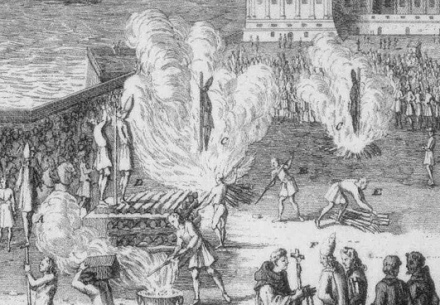
Sorry, I was preparing the auto-da-fé for peanut-butter apostates, did you speak?
44mckait
So many and many a year ago in a kingdom far from the sea...
someone by the name of K sent me All the Pretty Horses on audio.
Since it was K and since I had a short drive to work, I decided to listen and ....listen I ded.
12 minutes each way each day. I found it painful. I admit my feelings might have been affected by the fact that it was an audio. MAybe I would have liked the book better? ( doubt it) but just saying.
eta
thumbed a thing or two
someone by the name of K sent me All the Pretty Horses on audio.
Since it was K and since I had a short drive to work, I decided to listen and ....listen I ded.
12 minutes each way each day. I found it painful. I admit my feelings might have been affected by the fact that it was an audio. MAybe I would have liked the book better? ( doubt it) but just saying.
eta
thumbed a thing or two
45richardderus
>44 mckait: Thanks for thumbing the things (or two), and honest...you do NOT want to revisit this read. No way, no how. So very very not your thing.
xo
xo
46maggie1944
May I join the club of those who find McCarthy's fascination with violence, and all things ugly, completely unnecessary in my reading? Ick. Double Ick. Won't read him any more, and won't go see any films based on his books, neither.
Life is too short.
Hope your next book is a good deal better.
Life is too short.
Hope your next book is a good deal better.
47bookwoman247
>37 richardderus: You. Hate. Chococlate? Not that I think any less of you, but I am astounded and befuddled. Who could posibly hate chocloate? Turnips, yes. Liver, yes. But chocolate?
I am glad I've never felt the need to read Cormac McCarthy. Sounds like I'm better off without him.
I am glad I've never felt the need to read Cormac McCarthy. Sounds like I'm better off without him.
48richardderus
>46 maggie1944: *thwap* Membership approved.
I've been savoring a re-read the past day or so. More anon.
>47 bookwoman247: *I* love liver and like turnips. It's funny, isn't it, how tastes are so different. When I was a kid, I wasn't allowed to have fizzy death juice. I never got a taste for it because of that.
You'll live a full and useful life filled with sunshine, lollipops, and rainbows without McCarthy's bog-mud on your mental sneakers.
I've been savoring a re-read the past day or so. More anon.
>47 bookwoman247: *I* love liver and like turnips. It's funny, isn't it, how tastes are so different. When I was a kid, I wasn't allowed to have fizzy death juice. I never got a taste for it because of that.
You'll live a full and useful life filled with sunshine, lollipops, and rainbows without McCarthy's bog-mud on your mental sneakers.
49richardderus
Review:39 of sixty
Title: REGENERATION
Author: PAT BARKER
Rating: 5* of five
The Publisher Says: Regeneration, one in Pat Barker's series of novels confronting the psychological effects of World War I, focuses on treatment methods during the war and the story of a decorated English officer sent to a military hospital after publicly declaring he will no longer fight. Yet the novel is much more. Written in sparse prose that is shockingly clear -- the descriptions of electronic treatments are particularly harrowing -- it combines real-life characters and events with fictional ones in a work that examines the insanity of war like no other. Barker also weaves in issues of class and politics in this compactly powerful book. Other books in the series include The Eye in the Door and the Booker Award-winner The Ghost Road.
My Review: The Doubleday UK meme, a book a day for July 2014, is the goad I'm using to get through my snit-based unwritten reviews. Today's prompt is to discuss the Great War novel you loved best.
This was *hard* because there have been several, two in the past year!, Great War-themed novels that I really love. I spent a sleepless night thinking about this. I re-read portions of both my recent reads that suit the prompt, and as much as I was enwrapt in The Daughters of Mars, feeling the swirl and ebb of tidal feeling, I was utterly immersed in Regeneration, I felt I was *there* and I was simply, unaccountably, invisible to the characters and so not remarked upon.
I know that Ms. Barker was born in 1943...imagine! 1943! Were there *people* then?...and so could not have witnessed the events that so utterly traumatized Wilfred Owen and Siegfried Sassoon and so many thousands of other men, but you couldn't prove it by this:
If that doesn't sound exactly like something a survivor would think, I don't know what does. And yet she's 25 years younger than Armistice Day! Channeling? Spirit possession? Filing clerk for the Akashic Records Office?
That last sounds about right...anyway, there we are mise en scene with the survivors, the ones confronting a world that feels empowered to judge them for their responses to stimuli unknown to mere civilians:
Doesn't that sound like someone who hasn't had to do the job issuing a pronunciamento? An armchair warrior speaking from the privileged place of one who is defended, not one who defends. It was ever thus.
What a horror, then, to be trapped between a world that you fought to save, and that world's utter inability and complete unwillingness to learn what you lived:
That kind of knowledge would devastate Society! Undermine the Divinely Ordained Rules! Heresy!! It must be the case that these damaged men were weak, weak I say, unmanly and unworthy! It cannot be that what they lived through damaged them by its nature, or else codified gender (and skin-color) inequality is Wrong. And we all know that it is Right!
Ugh. But blessedly, the Great War began a process of (wrenching, painful) psychic change that the Ruling Elite has been resisting, beating back, discrediting at every opportunity, and with increasing success, for 95 years:
Look at the returned Iraq War and Afghan War veterans...disillusioned, mutilated in body and in soul even when bodies are whole, record numbers of veteran suicides stand to our national, human discredit, exactly as they did then, and all because:
If that sentence does not make you weep actual physical tears of helpless sadness and empathetic misery, you are wanting in basic human kindness.
In the end, the reason I selected this book as my favorite Great War novel ahead of all others, is this simple distillation of the pointlessness of war in the face of its costs:
This work is licensed under a Creative Commons Attribution-NonCommercial-ShareAlike 3.0 Unported License.
Title: REGENERATION
Author: PAT BARKER
Rating: 5* of five
The Publisher Says: Regeneration, one in Pat Barker's series of novels confronting the psychological effects of World War I, focuses on treatment methods during the war and the story of a decorated English officer sent to a military hospital after publicly declaring he will no longer fight. Yet the novel is much more. Written in sparse prose that is shockingly clear -- the descriptions of electronic treatments are particularly harrowing -- it combines real-life characters and events with fictional ones in a work that examines the insanity of war like no other. Barker also weaves in issues of class and politics in this compactly powerful book. Other books in the series include The Eye in the Door and the Booker Award-winner The Ghost Road.
My Review: The Doubleday UK meme, a book a day for July 2014, is the goad I'm using to get through my snit-based unwritten reviews. Today's prompt is to discuss the Great War novel you loved best.
This was *hard* because there have been several, two in the past year!, Great War-themed novels that I really love. I spent a sleepless night thinking about this. I re-read portions of both my recent reads that suit the prompt, and as much as I was enwrapt in The Daughters of Mars, feeling the swirl and ebb of tidal feeling, I was utterly immersed in Regeneration, I felt I was *there* and I was simply, unaccountably, invisible to the characters and so not remarked upon.
I know that Ms. Barker was born in 1943...imagine! 1943! Were there *people* then?...and so could not have witnessed the events that so utterly traumatized Wilfred Owen and Siegfried Sassoon and so many thousands of other men, but you couldn't prove it by this:
Sometimes, in the trenches, you get the sense of something, ancient. One trench we held, it had skulls in the side, embedded, like mushrooms. It was actually easier to believe they were men from Marlborough's army, than to think they'd been alive a year ago. It was as if all the other wars had distilled themselves into this war, and that made it something you almost can't challenge. It's like a very deep voice, saying: 'Run along, little man, be glad you've survived'.
If that doesn't sound exactly like something a survivor would think, I don't know what does. And yet she's 25 years younger than Armistice Day! Channeling? Spirit possession? Filing clerk for the Akashic Records Office?
That last sounds about right...anyway, there we are mise en scene with the survivors, the ones confronting a world that feels empowered to judge them for their responses to stimuli unknown to mere civilians:
The way I see it, when you put the uniform on, in effect you sign a contract. And you don't back out of a contract merely because you've changed your mind. You can still speak up for your principles, you can still argue against the ones you're being made to fight for, but in the end you do the job.
Doesn't that sound like someone who hasn't had to do the job issuing a pronunciamento? An armchair warrior speaking from the privileged place of one who is defended, not one who defends. It was ever thus.
What a horror, then, to be trapped between a world that you fought to save, and that world's utter inability and complete unwillingness to learn what you lived:
This reinforced Rivers’s view that it was prolonged strain, immobility and helplessness that did the damage, and not the sudden shocks or bizarre horrors that the patients themselves were inclined to point to as the explanation for their condition. That would help to account for the greater prevalence of anxiety neuroses and hysterical disorders in women in peacetime, since their relatively more confined lives gave them fewer opportunities of reacting to stress in active and constructive ways. Any explanation of war neurosis must account for the fact that this apparently intensely masculine life of war and danger and hardship produced in men the same disorders that women suffered from in peace.
That kind of knowledge would devastate Society! Undermine the Divinely Ordained Rules! Heresy!! It must be the case that these damaged men were weak, weak I say, unmanly and unworthy! It cannot be that what they lived through damaged them by its nature, or else codified gender (and skin-color) inequality is Wrong. And we all know that it is Right!
Ugh. But blessedly, the Great War began a process of (wrenching, painful) psychic change that the Ruling Elite has been resisting, beating back, discrediting at every opportunity, and with increasing success, for 95 years:
It was... the Great White God de-throned, I suppose. Because we did, we quite unselfconsciously assumed we were the measure of all things. That was how we approached them. And suddenly I saw that we weren't the measure of all things, but that there was no measure.
Look at the returned Iraq War and Afghan War veterans...disillusioned, mutilated in body and in soul even when bodies are whole, record numbers of veteran suicides stand to our national, human discredit, exactly as they did then, and all because:
You know you're walking around with a mask on, and you desperately want to take it off and you can't because everybody else thinks it's your face.
If that sentence does not make you weep actual physical tears of helpless sadness and empathetic misery, you are wanting in basic human kindness.
In the end, the reason I selected this book as my favorite Great War novel ahead of all others, is this simple distillation of the pointlessness of war in the face of its costs:
And as soon as you accepted that the man’s breakdown was a consequence of his war experience rather than his own innate weakness, then inevitably the war became the issue. And the therapy was a test, not only of the genuineness of the individual’s symptoms, but also of the validity of the demands the war was making on him. Rivers had survived partly by suppressing his awareness of this. But then along came Sassoon and made the justifiability of the war a matter for constant, open debate, and that suppression was no longer possible.
This work is licensed under a Creative Commons Attribution-NonCommercial-ShareAlike 3.0 Unported License.
50brenzi
Bravo! That may be the best review you've ever written Richard, and that's saying a lot because you have written many great reviews. I read the Barker trilogy years before I joined LT, in the 90s I think and I have to say they didn't stay with me. They may be in need of a reread, or at least Regeneration which was my favorite. Well deserving of thumbs up!
Even though I've read some great novels about the Great War this year my favorite, if you can call it that, remains All Quiet on the Western Front by Erich Maria Remarque.
Even though I've read some great novels about the Great War this year my favorite, if you can call it that, remains All Quiet on the Western Front by Erich Maria Remarque.
51richardderus
>50 brenzi: Why thank you! Such a lovely compliment indeed.
I would encourage you to re-read at least this one. The other two I'm a little worried about reading, since there is NO way they can match this book's shimmering magic.
I would encourage you to re-read at least this one. The other two I'm a little worried about reading, since there is NO way they can match this book's shimmering magic.
52maggie1944
It is indeed an excellent review, Richard. Thank you for writing so well, and for caring that we humans might be able to deal with these issues. War is obsolete, I think. Or at least I Wish.
53richardderus
>52 maggie1944: Such praise is more than I have earned, but thank you Karen44...it is lovely to hear.
War is obsolete. The PTB like killin' the hoi polloi. It cannot be allowed to last. It's time to oil the tumbrils and sharpen the guillotine. We need a LOT fewer billionaires, and the ones that're left need to be runnin' very very scared.
War is obsolete. The PTB like killin' the hoi polloi. It cannot be allowed to last. It's time to oil the tumbrils and sharpen the guillotine. We need a LOT fewer billionaires, and the ones that're left need to be runnin' very very scared.
54richardderus
Review: 40 of sixty
Title: DELTA WEDDING
Author: EUDORA WELTY
Rating: 3.75* of five
The Publisher Says: A vivid and charming portrait of a large southern family, the Fairchilds, who live on a plantation in the Mississippi delta. The story, set in 1923, is exquisitely woven from the ordinary events of family life, centered around the visit of a young relative, Laura McRaven, and the family’s preparations for her cousin Dabney’s wedding.
My Review: The Doubleday UK meme, a book a day for July 2014, is the goad I'm using to get through my snit-based unwritten reviews. Today's prompt, the ninth, is to discuss your favorite character in a novel to hate.
Dabney. Hands down, Dabney. What a self-centered nightmare of a spoiled brat! She's marryin' 'neath her, that no-count Troy is just scramblin' for a place in the Fairchilds! But Dabney, she knows:
And still, there's something deeply Southern in Dabney's greed, something that life in the lush heat of the land down by the water just puts in you, makes you part of it:
Dabney's complete inability to see the other person as real makes her a monster, that familiar monster, The Southern Belle. She hasn't got room for anyone but herself in the movie of her life:
Things, the stuff that surrounds people like the Fairchilds from cradle to grave (and they'd take it on as grave goods if only people still did that), *those* evoke tears and memories. Not the people, not the little damn-near stranger in the Fairchild midst, little motherless Laura whose presence is unwished for but accepted because she is Family.
And in the end, that's where we end up in this novel, in the Family. Like every family, the Fairchilds have codes and shortcuts in their communication that seem designed to exclude others. That includes the reader of the novel, in fact. But it's not that the Fairchilds don't want you to understand them, or that Miss Eudora failed to give you the keys to a roman à clef. It's this very experience that's the point of the novel. Either you like that experience, or you don't, but this is the point:
Now that said, what makes this book fall short of four stars for me, an ardent Eudoraist? Novels aren't like short stories in that the introduction of a character or inclusion of a detail must be part of the essential nature of the book. There are about a squillion voices in this chorus, and that's just way too many. WAY too many. So there isn't a long-term investment in the current carrying us to...to...wherever it is we're going and we don't quite get to. Miss Eudora could've pruned the voices to Dabney, Uncle George, and Laura, and been able to tell the same big, noisy story. But this is a novel, and writing novels was not Miss Eudora's métier. That was the short story, a form of which she was a mistress.
In the end, as much as I loved to hate Dabney and her cut-rate Scarlett-ness, I was only slightly less appalled by the sheer feckless ridiculousness of George, Dabney's uncle and the Fairchild Golden Boy, and the cult surrounding him. His morganatic marriage to Robbie is summed up by Aunt Ellen, one of his groupies:
That gets to the heart of my dislike and discomfort with George. He's so spoiled, so cossetted and babied, that only a severe adrenaline jolt (at someone else's expense) will do to fetch him up among the living.
It's not hard for me to appreciate this novel for what it is, but it's not at all the beau ideal of a novelist's art. I like it, I understand why others don't, but goodness me give me the lush, rich, deeply felt beauty of Welty's prose any old way it comes.
This work is licensed under a Creative Commons Attribution-NonCommercial-ShareAlike 3.0 Unported License.
Title: DELTA WEDDING
Author: EUDORA WELTY
Rating: 3.75* of five
The Publisher Says: A vivid and charming portrait of a large southern family, the Fairchilds, who live on a plantation in the Mississippi delta. The story, set in 1923, is exquisitely woven from the ordinary events of family life, centered around the visit of a young relative, Laura McRaven, and the family’s preparations for her cousin Dabney’s wedding.
My Review: The Doubleday UK meme, a book a day for July 2014, is the goad I'm using to get through my snit-based unwritten reviews. Today's prompt, the ninth, is to discuss your favorite character in a novel to hate.
Dabney. Hands down, Dabney. What a self-centered nightmare of a spoiled brat! She's marryin' 'neath her, that no-count Troy is just scramblin' for a place in the Fairchilds! But Dabney, she knows:
"I will never give up anything!" Dabney thought, bending forward and laying her head against the soft neck. "Never! Never! For I am happy, and to give up nothing will prove it. I will never give up anything, never give up Troy - or to Troy!" She thought smilingly of Troy, coming slowly, this was the last day, slowly plodding and figuring....
And still, there's something deeply Southern in Dabney's greed, something that life in the lush heat of the land down by the water just puts in you, makes you part of it:
The eagerness with which she was now going to Marmion, entering her real life there with Troy, told her enough - all the cotton in the world was not worth one moment of life! It made her know that nothing could ever defy her enough to make her leave it. How sweet life was, and how well she could hold it, pluck it, eat it, lay her cheek to it - oh, no one else knew. The juice of life and the hot, delighting taste and the fragrance and warmth to the cheek, the mouth....
Dabney's complete inability to see the other person as real makes her a monster, that familiar monster, The Southern Belle. She hasn't got room for anyone but herself in the movie of her life:
Life was not ever inviolate. Dabney, poor sister and bride, shed tears this morning (though belatedly) because she had broken the Fairchild night light the aunts had given her; it seemed so unavoidable to Dabney, that was why she cried, as if she had felt it was part of her being married that this cherished little bit of other peoples' lives should be shattered now.
Things, the stuff that surrounds people like the Fairchilds from cradle to grave (and they'd take it on as grave goods if only people still did that), *those* evoke tears and memories. Not the people, not the little damn-near stranger in the Fairchild midst, little motherless Laura whose presence is unwished for but accepted because she is Family.
And in the end, that's where we end up in this novel, in the Family. Like every family, the Fairchilds have codes and shortcuts in their communication that seem designed to exclude others. That includes the reader of the novel, in fact. But it's not that the Fairchilds don't want you to understand them, or that Miss Eudora failed to give you the keys to a roman à clef. It's this very experience that's the point of the novel. Either you like that experience, or you don't, but this is the point:
Indeed the Fairchilds took you in circles, whirling delightedly about, she thought, stirring up confusions, hopefully working themselves up. But they did not really want anything they got - and nothing, really, nothing really so very much, happened!
Now that said, what makes this book fall short of four stars for me, an ardent Eudoraist? Novels aren't like short stories in that the introduction of a character or inclusion of a detail must be part of the essential nature of the book. There are about a squillion voices in this chorus, and that's just way too many. WAY too many. So there isn't a long-term investment in the current carrying us to...to...wherever it is we're going and we don't quite get to. Miss Eudora could've pruned the voices to Dabney, Uncle George, and Laura, and been able to tell the same big, noisy story. But this is a novel, and writing novels was not Miss Eudora's métier. That was the short story, a form of which she was a mistress.
In the end, as much as I loved to hate Dabney and her cut-rate Scarlett-ness, I was only slightly less appalled by the sheer feckless ridiculousness of George, Dabney's uncle and the Fairchild Golden Boy, and the cult surrounding him. His morganatic marriage to Robbie is summed up by Aunt Ellen, one of his groupies:
t seemed to Ellen at moments that George regarded them, and regarded things - just things, in the outside world - with a passion which held him so still that it resembled indifference. Perhaps it was indifference - as though they, having given him this astonishing feeling, might for a time float away and he not care. It was not love or passion itself that stirred him, necessarily, she felt - for instance, Dabney's marriage seemed not to have affected him greatly, or Robbie's anguish. But little Ranny, a flower, a horse running, a color, a terrible story listened to in the store in Fairchilds, or a common song, and yes, shock, physical danger, as Robbie had discovered, roused something in him that was immense contemplation, motionless pity, indifference...Then, he would come forward all smiles as if in greeting - come out of his intensity and give some child a spank or a present. Ellen had always felt this about George and now there was something of surprising kinship in the feeling.
That gets to the heart of my dislike and discomfort with George. He's so spoiled, so cossetted and babied, that only a severe adrenaline jolt (at someone else's expense) will do to fetch him up among the living.
It's not hard for me to appreciate this novel for what it is, but it's not at all the beau ideal of a novelist's art. I like it, I understand why others don't, but goodness me give me the lush, rich, deeply felt beauty of Welty's prose any old way it comes.
This work is licensed under a Creative Commons Attribution-NonCommercial-ShareAlike 3.0 Unported License.
55tututhefirst
>49 richardderus: I did my whole year of WWI last year (or year before?) and somehow missed this one. I think it's definitely one to be read, but also think it's one that I'm going to have to be "in the mood" for. Thanks for another positively mind busting review.
56richardderus
>55 tututhefirst: *blush* Thank YOU, o kindly commenter. It's a powerful book, and yes, wait for your mood to hit the peg at the "get off my lawn you little apes!" end of the scale.
57richardderus
Review: 41 of sixty
Title: THE SHAWL
Author: CYNTHIA OZICK
Rating: 4.5* of five
The Publisher Says: Two award-winning works of fiction by one of America's finest writers, together in one collection.
In "The Shawl," a woman named Rosa Lublin watches a concentration camp guard murder her daughter. In "Rosa," that same woman appears 30 years later, "a mad woman and a scavenger" in a Miami hotel. She has no life in the present because her past will never end. In both stories, there is a shawl—a shawl that can sustain a starving child, inadvertently destroy her, or magically conjure her back to life.
Both stories were originally published in The New Yorker in the 1980s; each was included in the annual Best American Short Stories and awarded First Prize in the annual O. Henry Prize Stories collection. Each succeeds in imagining the unimaginable: the horror of the Holocaust and the unfillable emptiness of its aftermath. Fiercely immediate, complex, and unforgettable, each is a masterwork by a writer the New York Times hailed as "the most accomplished and graceful literary stylist of our time."
My Review: The story "The Shawl" is very short indeed, about six pages, but they are six of the most painful pages in my memory. They chart the descent of a mother from horror, a concentration camp where she exists with her daughter and her niece, to that most hideous and unending of hells: Loss of a child.
To call it harrowing is to deceive you as to the power and poetry of the story.
"Rosa" is the novella that follows the childless mother into her cronehood, a forcibly and fortunately retired fifty-nine-year-old Floridian transplant via New York. Remembering that, in 1980, fifty-nine was older than it is now, and remembering that camp survivors very very often aged (physically, psychically) more rapidly than their peers, and remembering that a parent who has lost a child has very often come unmoored from even the strongest bonds to life, Rosa is unusually situated. She is supported by her niece, whom she saved in the camp, she is free from jail, despite a psychotic break, and she lives in Florida, Death's Waiting Room, an open-air casket:
In the shabby hotel where Stella, her niece, grudgingly supports the woman who saved her, Rosa goes about the quotidian tasks of living with as little care and cheer as an unwanted soul managing to stay alive but not sure why does. Her talisman, the shawl she carried her dead daughter in to the camp inside, is with Stella in Queens. Stella feels this will force Rosa to come to terms with the empty core of her life. When Rosa meets an older not-quite-widower and he determinedly strikes up an acquaintance, Rosa puts into words the reality she lives:
Someone stole her life, and left her body alive. It's what a childless parent lives every day, every minute of every day, and surviving a camp was a doddle for Rosa because what difference does anything make? Her child, her future, her gold and treasure, was stolen from her by a brutal, indifferent guard.
And to make it worse, now she's in Florida! And Doctor Tree, an academic with no smallest grain of comprehension or compassion for Rosa the childless mother, writes to her to request (in terms most peremptory and condescending) that she subject herself to inclusion in A Serious Study while he's in Florida for a convention! The NERVE!
Rosa, rattled by Persky and shat on by Tree, takes solace in writing her fantasy of her grown-up daughter yet another letter. It is heart-wrenching, naturally enough, and reveals the horrors Rosa can't fully repress. It isn't any surprise that this damaged old woman is unbinding her few tenuous ties to life there in Hell's Boiler Room.
But there is, after all, Persky the man whose life is emptied by madness and laziness and America; Persky, who sets his sights on damaged Rosa and simply walks into her world to make it over:
Persky the Pragmatic Pollyanna.
In the end, Rosa isn't a set of symptoms or a desperate survivor of the twentieth century's most horrifying genocide of its many. Rosa is a grieving childless mother who, unable to forgive herself or her only family for surviving, never sees or never cares who inhabits the planet with her. One foot in front of the other, no reason, just do it again; and then she receives the shawl from Stella, the Angel of Death, the cruel and grasping; and she looks at the ikon of her lost motherhood; and she feels...nothing? Can nothing be felt? What does it mean to lose your loss?
For a moment, Rosa loses her loss...for a moment....
This work is licensed under a Creative Commons Attribution-NonCommercial-ShareAlike 3.0 Unported License.
Title: THE SHAWL
Author: CYNTHIA OZICK
Rating: 4.5* of five
The Publisher Says: Two award-winning works of fiction by one of America's finest writers, together in one collection.
In "The Shawl," a woman named Rosa Lublin watches a concentration camp guard murder her daughter. In "Rosa," that same woman appears 30 years later, "a mad woman and a scavenger" in a Miami hotel. She has no life in the present because her past will never end. In both stories, there is a shawl—a shawl that can sustain a starving child, inadvertently destroy her, or magically conjure her back to life.
Both stories were originally published in The New Yorker in the 1980s; each was included in the annual Best American Short Stories and awarded First Prize in the annual O. Henry Prize Stories collection. Each succeeds in imagining the unimaginable: the horror of the Holocaust and the unfillable emptiness of its aftermath. Fiercely immediate, complex, and unforgettable, each is a masterwork by a writer the New York Times hailed as "the most accomplished and graceful literary stylist of our time."
My Review: The story "The Shawl" is very short indeed, about six pages, but they are six of the most painful pages in my memory. They chart the descent of a mother from horror, a concentration camp where she exists with her daughter and her niece, to that most hideous and unending of hells: Loss of a child.
To call it harrowing is to deceive you as to the power and poetry of the story.
"Rosa" is the novella that follows the childless mother into her cronehood, a forcibly and fortunately retired fifty-nine-year-old Floridian transplant via New York. Remembering that, in 1980, fifty-nine was older than it is now, and remembering that camp survivors very very often aged (physically, psychically) more rapidly than their peers, and remembering that a parent who has lost a child has very often come unmoored from even the strongest bonds to life, Rosa is unusually situated. She is supported by her niece, whom she saved in the camp, she is free from jail, despite a psychotic break, and she lives in Florida, Death's Waiting Room, an open-air casket:
It seemed to Rosa Lublin that the whole peninsula of Florida was weighted down with regret. Everyone had left behind a real life. Here they had nothing. They were all scarecrows, blown about under the murdering sunball with empty ribcages.
In the shabby hotel where Stella, her niece, grudgingly supports the woman who saved her, Rosa goes about the quotidian tasks of living with as little care and cheer as an unwanted soul managing to stay alive but not sure why does. Her talisman, the shawl she carried her dead daughter in to the camp inside, is with Stella in Queens. Stella feels this will force Rosa to come to terms with the empty core of her life. When Rosa meets an older not-quite-widower and he determinedly strikes up an acquaintance, Rosa puts into words the reality she lives:
"If you're alone too much," Persky said, "you think too much."
"Without a life," Rosa answered, "a person lives where they can. If all they got is thoughts, that's where they live."
"You ain't got a life?"
"Thieves took it."
Someone stole her life, and left her body alive. It's what a childless parent lives every day, every minute of every day, and surviving a camp was a doddle for Rosa because what difference does anything make? Her child, her future, her gold and treasure, was stolen from her by a brutal, indifferent guard.
And to make it worse, now she's in Florida! And Doctor Tree, an academic with no smallest grain of comprehension or compassion for Rosa the childless mother, writes to her to request (in terms most peremptory and condescending) that she subject herself to inclusion in A Serious Study while he's in Florida for a convention! The NERVE!
Consider also the special word they used: survivor. Something new. As long as they didn't have to say human being. It used to be refugee, but by now there was no such creature, no more refugees, only survivors. A name like a number -- counted apart from the ordinary swarm. Blue digits on the arm, what difference? They don't call you a woman anyhow. Survivor. Even when your bones get melted into the grains of the earth, still they'll forget human being. Survivor and survivor and survivor; always and always. Who made up these words, parasites on the throat of suffering!
Rosa, rattled by Persky and shat on by Tree, takes solace in writing her fantasy of her grown-up daughter yet another letter. It is heart-wrenching, naturally enough, and reveals the horrors Rosa can't fully repress. It isn't any surprise that this damaged old woman is unbinding her few tenuous ties to life there in Hell's Boiler Room.
But there is, after all, Persky the man whose life is emptied by madness and laziness and America; Persky, who sets his sights on damaged Rosa and simply walks into her world to make it over:
"...this is very nice, cozy. You got a nice cozy place, Lublin."
"Cramped," Rosa said.
"I work from a different theory. For everything, there's a bad way of describing, also a good way. You pick the good way, you go along better."
"I don't like to give myself lies," Rosa said.
"Life is short, we all got to lie."
Persky the Pragmatic Pollyanna.
In the end, Rosa isn't a set of symptoms or a desperate survivor of the twentieth century's most horrifying genocide of its many. Rosa is a grieving childless mother who, unable to forgive herself or her only family for surviving, never sees or never cares who inhabits the planet with her. One foot in front of the other, no reason, just do it again; and then she receives the shawl from Stella, the Angel of Death, the cruel and grasping; and she looks at the ikon of her lost motherhood; and she feels...nothing? Can nothing be felt? What does it mean to lose your loss?
For a moment, Rosa loses her loss...for a moment....
This work is licensed under a Creative Commons Attribution-NonCommercial-ShareAlike 3.0 Unported License.
58maggie1944
*hugs* to you, dear man. Thank you, again, for a moving review.
Is the summer moving along just as you wish? For a moment, all is very nice here in the PNW - warm, lovely in the day, and cool enough for sleep in the night.
Is the summer moving along just as you wish? For a moment, all is very nice here in the PNW - warm, lovely in the day, and cool enough for sleep in the night.
60katiekrug
Lovely review of The Shawl which I read in college but have little memory of. I think I will look for a copy to re-visit.
62richardderus
>58 maggie1944: *smooch* Thank you most kindly for the compliment, Karen44!
>59 mckait: *smooch* on principle
>60 katiekrug: Oh my...well...it's not a cheery uplifting bagatelle. No The Uncommon Reader here. Be warned!
>61 Berly: It is both those things, Berly-boo. Beautiful, and so so sad.
>59 mckait: *smooch* on principle
>60 katiekrug: Oh my...well...it's not a cheery uplifting bagatelle. No The Uncommon Reader here. Be warned!
>61 Berly: It is both those things, Berly-boo. Beautiful, and so so sad.
63Matke
Boy, Richard, when you get started on a project, you give it what I can only assume is your all.
>49 richardderus: , >54 richardderus: , and >57 richardderus: are amazing and make me regret your hiatus all the more. Regeneration is on my list and moving up; Welty review spot on; Ozick review moving, but I'm not reading that one. I only know her essays, but if this indicative of her fiction, there's another author to investigate.
Can't you slow up? A girl can hardly catch her breath!
>49 richardderus: , >54 richardderus: , and >57 richardderus: are amazing and make me regret your hiatus all the more. Regeneration is on my list and moving up; Welty review spot on; Ozick review moving, but I'm not reading that one. I only know her essays, but if this indicative of her fiction, there's another author to investigate.
Can't you slow up? A girl can hardly catch her breath!
64richardderus
>63 Matke: *baaaaaaawwwwww* You so sweet to me, Danvers me lurve! If I'm going to get this effin' backlog down, it needs to be in a loose-but-defined structure. This meme is perfect! 31 days, a review a day, and whoop-la if something short or something amazing happens to happen as well!
65richardderus
Review: 42 of sixty
Title: THE OPTIMIST'S DAUGHTER
Author: EUDORA WELTY
Rating: 3.5* of five
The Publisher Says: The Optimist's Daughter is the story of Laurel McKelva Hand, a young woman who has left the South and returns, years later, to New Orleans, where her father is dying. After his death, she and her silly young stepmother go back still farther, to the small Mississippi town where she grew up. Alone in the old house, Laurel finally comes to an understanding of the past, herself, and her parents.
My Review: This is the novel that won Miss Eudora a Pulitzer Prize. She deserved all the awards going, but to select this one of her novels for an overdue honor...? Not that it's bad or anything, it's just...well...beautiful writing telling an ordinary woman's ordinary experience of coping with, understanding, death and aging. Evergreen themes to be sure, and again I stress the beautiful writing bit:
Yes. All of me knows that's true, and my inward ear rejoices in the music of it. But why it comes where it does, well, it's to make or re-make a point that's made.
Fine in shorter fiction. Gets tedious in longer fiction. This is *barely* over novella length and it coulda been shorter. Maybe even shoulda been.
But then there's, “At the sting in her eyes, she remembered for him that there must be no tears in his.” Oh. My. GOODNESS. Or this piece of gorgeousness, a tossaway line: “She was sent to sleep under a velvety cloak of words, richly patterned and stitched with gold, straight out of a fairy tale, while they went reading on into her dreams.” I could faint right now, saying it over and over, absorbing the *exactly*perfect* choice of words, savoring the rhythm, the heartbeat of it.
But the most frequent cry I hear against Miss Eudora's work is, "But NOTHING happens!" That's nonsense. Things happen, things that as we grow older we see clearer, things that don't involve fires and floods, or car, plane, boat trips to places near and far. Things that change the bone and meat of you, not the skin:
And that, that right there, is my personal definition of what a marriage should be. I'd say "don't settle for less!" but there'd be more single people than there are places to house them.
So yes, things happen, yes, things and people change and grow and learn, but it takes a quiet and reserved readerly touch to see it, find it, winkle it out from the words. Action? Little. Characterization? Lots, maybe too much for some characters' ability to sustain our interest (Fay!). Discovery? Well.
In you step, now, and mind the gap.
This work is licensed under a Creative Commons Attribution-NonCommercial-ShareAlike 3.0 Unported License.
Title: THE OPTIMIST'S DAUGHTER
Author: EUDORA WELTY
Rating: 3.5* of five
The Publisher Says: The Optimist's Daughter is the story of Laurel McKelva Hand, a young woman who has left the South and returns, years later, to New Orleans, where her father is dying. After his death, she and her silly young stepmother go back still farther, to the small Mississippi town where she grew up. Alone in the old house, Laurel finally comes to an understanding of the past, herself, and her parents.
My Review: This is the novel that won Miss Eudora a Pulitzer Prize. She deserved all the awards going, but to select this one of her novels for an overdue honor...? Not that it's bad or anything, it's just...well...beautiful writing telling an ordinary woman's ordinary experience of coping with, understanding, death and aging. Evergreen themes to be sure, and again I stress the beautiful writing bit:
“Up home we loved a good storm coming, we’d fly outdoors and run up and down to meet it,” her mother used to say. “We children would run as fast as we could go along the top of that mountain when the wind was blowing, holding our arms right open. The wilder it blew the better we liked it.”
Yes. All of me knows that's true, and my inward ear rejoices in the music of it. But why it comes where it does, well, it's to make or re-make a point that's made.
Fine in shorter fiction. Gets tedious in longer fiction. This is *barely* over novella length and it coulda been shorter. Maybe even shoulda been.
But then there's, “At the sting in her eyes, she remembered for him that there must be no tears in his.” Oh. My. GOODNESS. Or this piece of gorgeousness, a tossaway line: “She was sent to sleep under a velvety cloak of words, richly patterned and stitched with gold, straight out of a fairy tale, while they went reading on into her dreams.” I could faint right now, saying it over and over, absorbing the *exactly*perfect* choice of words, savoring the rhythm, the heartbeat of it.
But the most frequent cry I hear against Miss Eudora's work is, "But NOTHING happens!" That's nonsense. Things happen, things that as we grow older we see clearer, things that don't involve fires and floods, or car, plane, boat trips to places near and far. Things that change the bone and meat of you, not the skin:
And perhaps it didn't matter to them, not always, what they read aloud; it was the breath of life flowing between them, and the words of the moment riding on it that held them in delight. Between some two people every word is beautiful, or might as well be beautiful.
And that, that right there, is my personal definition of what a marriage should be. I'd say "don't settle for less!" but there'd be more single people than there are places to house them.
So yes, things happen, yes, things and people change and grow and learn, but it takes a quiet and reserved readerly touch to see it, find it, winkle it out from the words. Action? Little. Characterization? Lots, maybe too much for some characters' ability to sustain our interest (Fay!). Discovery? Well.
At their very feet had been the river. The boat came breasting out of the mist, and in they stepped. All new things in life were meant to come like that.
In you step, now, and mind the gap.
This work is licensed under a Creative Commons Attribution-NonCommercial-ShareAlike 3.0 Unported License.
66laytonwoman3rd
>65 richardderus: Perfect review, RD. I love Miss Eudora so. People tend to forget that reading isn't just about the author pouring words into our heads; the READER needs to bring something to the experience or it's no good.
67richardderus
>66 laytonwoman3rd: Thank you, Linda, it's often a struggle to get readers to put all their history into the act of reading.
68Matke
>65 richardderus: Well done, Richard.
>66 laytonwoman3rd: , >67 richardderus: Linda, sometimes I'm distressed by how little effort people are willing to make when reading a book they doesn't come to them as easily as, say, Agatha Christie. There's a time for Christie and there's a time for Welty. IMO, of course.
>66 laytonwoman3rd: , >67 richardderus: Linda, sometimes I'm distressed by how little effort people are willing to make when reading a book they doesn't come to them as easily as, say, Agatha Christie. There's a time for Christie and there's a time for Welty. IMO, of course.
69maggie1944
>67 richardderus: agree. I laugh (silently) when people know that I am a dedicated "reader" and then they ask me about whether I've read some of the most popular, mass produced and marketed book. Usually I have to say no, and its all about not wanting to read formulaic books, rather seeking books which will mean something to me, in my life.
Happy new week, Richard.
Happy new week, Richard.
70laytonwoman3rd
>68 Matke: It distresses me, too. I've seen some of it in the AAC challenge, and I've chastised myself for almost doing it too. Usually, for me, the effort is to get started, not to keep at it with a challenging book. I have my favorite "bubblegum" books, but there's nothing so satisfying as getting deeply engrossed in a good think.
>69 maggie1944: Ditto.
>69 maggie1944: Ditto.
71katiekrug
Interesting conversation here. I try not to be judgmental of other readers, but know that I probably often am. I think the thing to remember is that everyone reads for different reasons and that's okay. Some people may not want to be challenged and others may not want to waste their time on "easy" stuff. They are different approaches, but I won't say that one is right and the other wrong.
72richardderus
Review: 43 of sixty
Title: A FAR BETTER REST
Author: SUSANNE ALLEYN
Rating: 4* of five
The Publisher Says: A Tale of Two Cities is the story of Charles Darnay and Lucie Manette, but Sydney Carton is the hero who makes the ultimate sacrifice for love. Sydney disappears from the novel in London and turns up years later in Paris to bring the story to its heartbreaking end. A Far Better Rest imagines his missing personal history and makes him the center of this tragic tale. Born in England of an unloving father and a French mother, Sydney is sent to college in Paris, where he meets Charles Darnay and the other students who will have enormous influence on his life and alter the course of French history -- Robespierre and Camille Desmoulins among them. The beauty and kindness of Charles's wife, Lucie Manette, affects Sydney so deeply that he secretly devotes his life to her happiness.
Sydney becomes a major participant in the formation of the French Republic at the end of the eighteenth century and a witness to one of the most gruesome periods in history, as the significant people in his life fall to the guillotine. A Far Better Rest is a novel of passion, identity, and history that stands fully on its own.
My Review: The Doubleday UK meme, a book a day for July 2014, is the goad I'm using to get through my snit-based unwritten reviews. Today's prompt, in honor of Bastille Day, is to select your favorite novel set in or about France.
Okay. I know this will come as a surprise to y'all, being as how I've kept it such a closely guarded secret, but I have to say this right up front: I don't much care for the novels of Mr. Charles Dickens.
I know, I know, pick your jaws up from the floor, I'm sure you'll recover from the shock soon.
Now, with that bombshell out of the way, consider this: I am rating a book based on Mr. Dickens' dreary, interminable, turgid, jelly-bodied clunking clanking gawdawful sentimental absurdly overblown....
*ahem*
I am rating this novel, even factoring in its source, at four stars. And wanna know a secret? I've read all Alley's Aristide Ravel mysteries, set in Revolutionary Paris. And her novel The Executioner's Heir. And her short fiction, Masquerade. And her non-fiction Medieval UNderpants (I mean, how could one not read something titled Medieval Underpants?).
So absorb for a moment the improbability of a man with the discernment and good taste to loathe Dickens picking up this novel in the first place; reading a snatch of it and getting hooked; buying the Soho Press hardcover at retail; and becoming such a fan that he's read what there is to read by the author.
So I'd say that makes this my favorite novel set in and or about France. Why? Because I've read a lot of books, and unlike most historical fiction, this book reads like it was written by a person from that time who simply, inexplicably, happens to be alive now. The same is true of her Ravel mysteries. I don't know how she does it, exactly, but Alleyn handwaves away the 225 years between the Revolution and today. Forget you're reading a hardcover that did not cost you a month's wages. Or a Kindle whose mere existence would be a marvel to the people you're reading about. And you know what? You *will* forget those things.
I love immersive reads. I love to lose myself in a time and a place not here and not now. And Susanne Alleyn has done that for me again, and again, and never failed to make me happy I've spent time in her company.
Best of all? The Kindle edition of this book is a whopping $2.99. Please go buy it. This author deserves our support!
This work is licensed under a Creative Commons Attribution-NonCommercial-ShareAlike 3.0 Unported License.
Title: A FAR BETTER REST
Author: SUSANNE ALLEYN
Rating: 4* of five
The Publisher Says: A Tale of Two Cities is the story of Charles Darnay and Lucie Manette, but Sydney Carton is the hero who makes the ultimate sacrifice for love. Sydney disappears from the novel in London and turns up years later in Paris to bring the story to its heartbreaking end. A Far Better Rest imagines his missing personal history and makes him the center of this tragic tale. Born in England of an unloving father and a French mother, Sydney is sent to college in Paris, where he meets Charles Darnay and the other students who will have enormous influence on his life and alter the course of French history -- Robespierre and Camille Desmoulins among them. The beauty and kindness of Charles's wife, Lucie Manette, affects Sydney so deeply that he secretly devotes his life to her happiness.
Sydney becomes a major participant in the formation of the French Republic at the end of the eighteenth century and a witness to one of the most gruesome periods in history, as the significant people in his life fall to the guillotine. A Far Better Rest is a novel of passion, identity, and history that stands fully on its own.
My Review: The Doubleday UK meme, a book a day for July 2014, is the goad I'm using to get through my snit-based unwritten reviews. Today's prompt, in honor of Bastille Day, is to select your favorite novel set in or about France.
Okay. I know this will come as a surprise to y'all, being as how I've kept it such a closely guarded secret, but I have to say this right up front: I don't much care for the novels of Mr. Charles Dickens.
I know, I know, pick your jaws up from the floor, I'm sure you'll recover from the shock soon.
Now, with that bombshell out of the way, consider this: I am rating a book based on Mr. Dickens' dreary, interminable, turgid, jelly-bodied clunking clanking gawdawful sentimental absurdly overblown....
*ahem*
I am rating this novel, even factoring in its source, at four stars. And wanna know a secret? I've read all Alley's Aristide Ravel mysteries, set in Revolutionary Paris. And her novel The Executioner's Heir. And her short fiction, Masquerade. And her non-fiction Medieval UNderpants (I mean, how could one not read something titled Medieval Underpants?).
So absorb for a moment the improbability of a man with the discernment and good taste to loathe Dickens picking up this novel in the first place; reading a snatch of it and getting hooked; buying the Soho Press hardcover at retail; and becoming such a fan that he's read what there is to read by the author.
So I'd say that makes this my favorite novel set in and or about France. Why? Because I've read a lot of books, and unlike most historical fiction, this book reads like it was written by a person from that time who simply, inexplicably, happens to be alive now. The same is true of her Ravel mysteries. I don't know how she does it, exactly, but Alleyn handwaves away the 225 years between the Revolution and today. Forget you're reading a hardcover that did not cost you a month's wages. Or a Kindle whose mere existence would be a marvel to the people you're reading about. And you know what? You *will* forget those things.
I love immersive reads. I love to lose myself in a time and a place not here and not now. And Susanne Alleyn has done that for me again, and again, and never failed to make me happy I've spent time in her company.
Best of all? The Kindle edition of this book is a whopping $2.99. Please go buy it. This author deserves our support!
This work is licensed under a Creative Commons Attribution-NonCommercial-ShareAlike 3.0 Unported License.
73Whisper1
>72 richardderus: Another book added to the tbr pile. As always, your reviews are incredible.
74Whisper1
opps, I just discovered that this book is on the tbr pile since 2009. Looks like I better move it up toward the top.
75richardderus
Unbury it and let it roll! I think you'll like it, Linda.
76richardderus
Review: 44 of sixty
Title: SCIENCE FAIR
Author: DAVE BARRY
RIDLEY PEARSON
Rating: 2.5* of five
The Publisher Says: Grdankl the Strong, president of Kprshtskan, is plotting to take over the American government. His plan is to infiltrate the science fair at Hubble Middle School, located in a Maryland suburb just outside Washington. The rich kids at Hubble cheat by buying their projects every year, and Grdankl's cronies should have no problem selling them his government-corrupting software. But this year, Toby Harbinger, a regular kid with Discount Warehouse shoes, is determined to win the $5,000 prize—even if he has to go up against terrorists to do it. With the help of his best friends, Tamara and Micah, Toby takes on Assistant Principal Paul Parmit, aka "The Armpit", a laser-eyed stuffed owl, and two eBay buyers named Darth and the Wookiee who seem to think that the Harrison-Ford-signed BlasTech DL-44 blaster Toby sold them is a counterfeit. What transpires is a hilarious adventure filled with mystery, suspense, and levitating frogs.
My Review: The Doubleday UK meme, a book a day for July 2014, is the goad I'm using to get through my snit-based unwritten reviews. Today's prompt for the 15th is a choose-you-own day! Wheee, right?
Naw. I hadda go an' eff it all up by making this my Drano book of the month. (You know, the one I read because I'd really rather drink Drano than read this author/genre/what's-it.)
So as expected I hated it. It's a middle-school market book. I didn't like middle-schoolers when I was one, and I like them less now. Vicious little bastards. They're hateful and spiteful and brimful of stupid. Yuck.
It doesn't help that the fake country the co-authors invent, Krpshtskan, is something straight out of Borat. (Remember that movie? Ye gawds.) It also doesn't help that the entire plot is such that Spy Kids begins to resemble Strindberg.
But you're not the audience, comes the cry. No indeed I am not. I am an adult with forty-six years of obsessive reading behind me! And yet others have tutted and tsked because there are those of us who don't want to read YA novels. So this random example, a Kindle special today, got the nod as my test subject. I have a Zilpha Keatly Snyder novel cued up to see if it's just humor that doesn't play well to an older audience. I need a respite before I wade into that one. This could easily be the most wonderful thing a kid could find, so I'm not raggin' on it as itself. It's just so extremely ridiculously grotesquely overblown and overplayed and after all, that's how kids like 'em.
But really, moms and dads, read this before giving kids access to it. Every adult is malevolent or stupid or both. Every authority is deaf, every honest person is reviled by all and sundry. Serious question here: Do you want your kid absorbing this message? That s/he's alone against an uncaring-to-hostile world, with parents that won't listen, teachers that smell bad, take bribes, and collude with enemies of the state?
This isn't good. It panders to an invidious set of stereotypes that reinforce a helpless, whadda-ya-gonna-do passivity and does so with "humor" so it slides down their gullets easier.
This bothers the hell out of me.
This work is licensed under a Creative Commons Attribution-NonCommercial-ShareAlike 3.0 Unported License.
Title: SCIENCE FAIR
Author: DAVE BARRY
RIDLEY PEARSON
Rating: 2.5* of five
The Publisher Says: Grdankl the Strong, president of Kprshtskan, is plotting to take over the American government. His plan is to infiltrate the science fair at Hubble Middle School, located in a Maryland suburb just outside Washington. The rich kids at Hubble cheat by buying their projects every year, and Grdankl's cronies should have no problem selling them his government-corrupting software. But this year, Toby Harbinger, a regular kid with Discount Warehouse shoes, is determined to win the $5,000 prize—even if he has to go up against terrorists to do it. With the help of his best friends, Tamara and Micah, Toby takes on Assistant Principal Paul Parmit, aka "The Armpit", a laser-eyed stuffed owl, and two eBay buyers named Darth and the Wookiee who seem to think that the Harrison-Ford-signed BlasTech DL-44 blaster Toby sold them is a counterfeit. What transpires is a hilarious adventure filled with mystery, suspense, and levitating frogs.
My Review: The Doubleday UK meme, a book a day for July 2014, is the goad I'm using to get through my snit-based unwritten reviews. Today's prompt for the 15th is a choose-you-own day! Wheee, right?
Naw. I hadda go an' eff it all up by making this my Drano book of the month. (You know, the one I read because I'd really rather drink Drano than read this author/genre/what's-it.)
So as expected I hated it. It's a middle-school market book. I didn't like middle-schoolers when I was one, and I like them less now. Vicious little bastards. They're hateful and spiteful and brimful of stupid. Yuck.
It doesn't help that the fake country the co-authors invent, Krpshtskan, is something straight out of Borat. (Remember that movie? Ye gawds.) It also doesn't help that the entire plot is such that Spy Kids begins to resemble Strindberg.
But you're not the audience, comes the cry. No indeed I am not. I am an adult with forty-six years of obsessive reading behind me! And yet others have tutted and tsked because there are those of us who don't want to read YA novels. So this random example, a Kindle special today, got the nod as my test subject. I have a Zilpha Keatly Snyder novel cued up to see if it's just humor that doesn't play well to an older audience. I need a respite before I wade into that one. This could easily be the most wonderful thing a kid could find, so I'm not raggin' on it as itself. It's just so extremely ridiculously grotesquely overblown and overplayed and after all, that's how kids like 'em.
But really, moms and dads, read this before giving kids access to it. Every adult is malevolent or stupid or both. Every authority is deaf, every honest person is reviled by all and sundry. Serious question here: Do you want your kid absorbing this message? That s/he's alone against an uncaring-to-hostile world, with parents that won't listen, teachers that smell bad, take bribes, and collude with enemies of the state?
This isn't good. It panders to an invidious set of stereotypes that reinforce a helpless, whadda-ya-gonna-do passivity and does so with "humor" so it slides down their gullets easier.
This bothers the hell out of me.
This work is licensed under a Creative Commons Attribution-NonCommercial-ShareAlike 3.0 Unported License.
78Morphidae
>68 Matke: >70 laytonwoman3rd: >71 katiekrug: Some people like challenging books up to a certain level of challenge. A book one person might find challenging may be impossible for someone else and easy for another.
I've read books that some people would call challenging and, for the same books, others would call easy. People read at all levels. Not everyone is at the same intellectual level. For instance, I don't have any problems with books with a large cast of characters, as I know some do. I have the ability to keep them all separate. Not everyone does.
And people like different types of challenges. I liked A Clockwork Orange. I don't see how many could call that an easy read. I had to read it with a glossary up on my laptop. Same thing with Shakespeare. I haven't read a lot of it but what I have read (side by side with a modern translation), I have liked. So it seems I don't mind books with *language* challenges. Yet, I couldn't get past Welty's writing *style*, for example.
So try to keep these in mind as well when someone says something is too challenging or hard. I doubt it's always because that people are too "lazy" to read something challenging.
I've read books that some people would call challenging and, for the same books, others would call easy. People read at all levels. Not everyone is at the same intellectual level. For instance, I don't have any problems with books with a large cast of characters, as I know some do. I have the ability to keep them all separate. Not everyone does.
And people like different types of challenges. I liked A Clockwork Orange. I don't see how many could call that an easy read. I had to read it with a glossary up on my laptop. Same thing with Shakespeare. I haven't read a lot of it but what I have read (side by side with a modern translation), I have liked. So it seems I don't mind books with *language* challenges. Yet, I couldn't get past Welty's writing *style*, for example.
So try to keep these in mind as well when someone says something is too challenging or hard. I doubt it's always because that people are too "lazy" to read something challenging.
80laytonwoman3rd
>78 Morphidae: Everything you say is absolutely true. But I don't think any of us used the word "lazy". That implies way more than I meant.
>72 richardderus: You need to slow down. My thumb's getting tired.
>72 richardderus: You need to slow down. My thumb's getting tired.
81richardderus
>80 laytonwoman3rd: *snort* One a day, Miss Lady! Just followin' the meme!
82michigantrumpet
>65 richardderus: "But the most frequent cry I hear against Miss Eudora's work is, "But NOTHING happens!" That's nonsense. Things happen, things that as we grow older we see clearer, things that don't involve fires and floods, or car, plane, boat trips to places near and far. Things that change the bone and meat of you, not the skin:"
Love this!
Love this!
83Meredy
>72 richardderus: All right, Richard, you did it. I got my first e-reader, a Kindle Paperwhite, for my birthday yesterday, and just now I made my first e-book purchase, on your recommendation. No more a virgin am I.
84richardderus
>82 michigantrumpet: Thank you most kindly, Marianne!
>83 Meredy: *yyyyyyyyyeeeeeeeeeeeeessssssssssssssssss*
>83 Meredy: *yyyyyyyyyeeeeeeeeeeeeessssssssssssssssss*
85AuntieClio
>84 richardderus: I loved that scene! Poor Ken.
86richardderus
>85 AuntieClio: Heh! Classic.
87richardderus
Book Circle Reads 170
Title: THE INFERNO OF DANTE
Author: DANTE ALIGHIERI
translator: ROBERT PINSKY
Rating: 4* of five
The Publisher Says: This widely praised version of Dante's masterpiece, which won the Los Angeles Times Book Prize and the Harold Morton Landon Translation Award of the Academy of American Poets, is more idiomatic and approachable than its many predecessors. Former U.S. Poet Laureate Pinsky employs slant rhyme and near rhyme to preserve Dante's terza rima form without distorting the flow of English idiom. The result is a clear and vigorous translation that is also unique, student-friendly, and faithful to the original: "A brilliant success," as Bernard Knox wrote in The New York Review of Books.
My Review: The Doubleday UK meme, a book a day for July 2014, is the goad I'm using to get through my snit-based unwritten reviews. Today's prompt is the twenty-fourth, a book that reminds you of your English teacher.
Ninth grade, or freshman high school year, was The Odyssey, and tenth was The Inferno. We used, in 1974, the then-newish Ciardi translation, made in 1954; it was quite an event, since Ciardi (a poet of some renown) translated it as poetry instead of as Italian-to-English words.
Pinsky's translation attempts the damn-near impossible feat of preserving the terza rima (aba, bcb, cdc, etc.) rhyme scheme invented by Dante for this cycle of poems. The result is a noble experiment, one marked by many successes. There are some weird things like quotes flowing over multiple stanzas, and there are some...odd...rhymes. But hell, the man tried a damned near impossible feat! Italian is a language in which it's harder *not* to rhyme than otherwise, and English resists rhyme with all its might and main.
So what is any reviewer to say about a 700-year-old poem? Nothing hasn't been said by now. I am anti-christian. The theology behind the entire Divine Comedy appalls and repulses me. I speak rudimentary Italian. Pinsky's efforts to reproduce terza rima are, to my ears, clunky and unnecessary. But in the end, rating a book like this is about what the take-away is for the reader. I take away a sense of Dante as an intelligent, desperately lonely man, attempting to make a Universe in which his existence matters and is of some moment. I stand in awed amazement at his gloriously baroque imagination. I am gobsmacked by the sheer audacity of a medieval poet writing in the vernacular. If Dante was alive today, he'd be writing raps.
Ugh. Horrible thought.
But nonetheless, I am wowed at a root level by the joyous, exuberant viciousness and the unapologetic cruelty of Dante's score-settling fates for his enemies. What a guy! Those raps he'd be writing today? They'd inspire Wes Craven to make movies and Clive Barker to write gore-fests!
Try this exercise: Imagine a beat-box under the terza rima stanzas. Read a piece aloud imagining hand-claps at the end of each stanza. This is what I think we, in this relativistic age, should strive for: to interpret the classics of literature and poetry by standards relevant to today, in addition to the standards that we know were applied at the time of the work's creation.
Many more layers to this work that way. After all, a literary classic is a work that's never finished saying what it has to say.
And here one is.
This work is licensed under a Creative Commons Attribution-NonCommercial-ShareAlike 3.0 Unported License.
Title: THE INFERNO OF DANTE
Author: DANTE ALIGHIERI
translator: ROBERT PINSKY
Rating: 4* of five
The Publisher Says: This widely praised version of Dante's masterpiece, which won the Los Angeles Times Book Prize and the Harold Morton Landon Translation Award of the Academy of American Poets, is more idiomatic and approachable than its many predecessors. Former U.S. Poet Laureate Pinsky employs slant rhyme and near rhyme to preserve Dante's terza rima form without distorting the flow of English idiom. The result is a clear and vigorous translation that is also unique, student-friendly, and faithful to the original: "A brilliant success," as Bernard Knox wrote in The New York Review of Books.
My Review: The Doubleday UK meme, a book a day for July 2014, is the goad I'm using to get through my snit-based unwritten reviews. Today's prompt is the twenty-fourth, a book that reminds you of your English teacher.
Ninth grade, or freshman high school year, was The Odyssey, and tenth was The Inferno. We used, in 1974, the then-newish Ciardi translation, made in 1954; it was quite an event, since Ciardi (a poet of some renown) translated it as poetry instead of as Italian-to-English words.
Pinsky's translation attempts the damn-near impossible feat of preserving the terza rima (aba, bcb, cdc, etc.) rhyme scheme invented by Dante for this cycle of poems. The result is a noble experiment, one marked by many successes. There are some weird things like quotes flowing over multiple stanzas, and there are some...odd...rhymes. But hell, the man tried a damned near impossible feat! Italian is a language in which it's harder *not* to rhyme than otherwise, and English resists rhyme with all its might and main.
So what is any reviewer to say about a 700-year-old poem? Nothing hasn't been said by now. I am anti-christian. The theology behind the entire Divine Comedy appalls and repulses me. I speak rudimentary Italian. Pinsky's efforts to reproduce terza rima are, to my ears, clunky and unnecessary. But in the end, rating a book like this is about what the take-away is for the reader. I take away a sense of Dante as an intelligent, desperately lonely man, attempting to make a Universe in which his existence matters and is of some moment. I stand in awed amazement at his gloriously baroque imagination. I am gobsmacked by the sheer audacity of a medieval poet writing in the vernacular. If Dante was alive today, he'd be writing raps.
Ugh. Horrible thought.
But nonetheless, I am wowed at a root level by the joyous, exuberant viciousness and the unapologetic cruelty of Dante's score-settling fates for his enemies. What a guy! Those raps he'd be writing today? They'd inspire Wes Craven to make movies and Clive Barker to write gore-fests!
Try this exercise: Imagine a beat-box under the terza rima stanzas. Read a piece aloud imagining hand-claps at the end of each stanza. This is what I think we, in this relativistic age, should strive for: to interpret the classics of literature and poetry by standards relevant to today, in addition to the standards that we know were applied at the time of the work's creation.
Many more layers to this work that way. After all, a literary classic is a work that's never finished saying what it has to say.
And here one is.
This work is licensed under a Creative Commons Attribution-NonCommercial-ShareAlike 3.0 Unported License.
88Meredy
>87 richardderus: Thanks for another great review. I guess there's no distinction among translators on the LT works pages. Here is a link to the Amazon page for the version you're talking about:
http://www.amazon.com/Inferno-Dante-New-Verse-Translation/dp/B001AHE2DI/ref=sr_1...
http://www.amazon.com/Inferno-Dante-New-Verse-Translation/dp/B001AHE2DI/ref=sr_1...
89richardderus
>88 Meredy: It's impossible to make the touchstone go to this translation among the zillions and zillions of books written about/translations of this work. Oh well.
I'm glad you liked the review!
I'm glad you liked the review!
90scaifea
>87 richardderus: I struggle with the notion of trying to make a translation rhyme. You're inevitably going to sacrifice something else for its sake, and to me what you're sacrificing is more important than what will every time come out sounding awkward as an English rhyme. Instead, I like to have a copy of the original (whether I can understand that language or no) next to the translation, then switch back and forth, reading the translation, then hopping over to read - aloud - the original, to get a feel for the rhythm and the sound and the rhyme.
Lovely review, as usual, Richard.
Lovely review, as usual, Richard.
91Morphidae
>90 scaifea: Agreed. Actually tempts me to read it. Up-thumbed.
92maggie1944
You have entered a room which is completely foreign to me. Nice room. I'll believe your review because I trust you. I have no other alternative.
I'm still reading the Regeneration Trilogy and am starting to get into book 3. I am not over the moon about it, but am finding it interesting.
I'm still reading the Regeneration Trilogy and am starting to get into book 3. I am not over the moon about it, but am finding it interesting.
93richardderus
>90 scaifea: Thank you, Amber! It's a never-ending question, translation, and there is no one-size-fits-all answer. To rhyme or not to rhyme? To update or not to update?
I don't know if there is ever a good answer among the many possibilities. In this case, I didn't like the translation too awful terrible much. I still admired the effort, though.
>91 Morphidae: *smooch* Thanks, Morphy!
>92 maggie1944: Thanks, Karen44! I don't hear a ringing endorsement in that...I think I'll let the other two slide.
I don't know if there is ever a good answer among the many possibilities. In this case, I didn't like the translation too awful terrible much. I still admired the effort, though.
>91 Morphidae: *smooch* Thanks, Morphy!
>92 maggie1944: Thanks, Karen44! I don't hear a ringing endorsement in that...I think I'll let the other two slide.
94maggie1944
Given your reading width and breadth and usual numbers, I think letting these two slip away is a reasonable decision.
Hope your weekend is swell! I'm doing the Enforced Reading in my Car tonight and tomorrow morning. I might just finish book 3, and then on to something else. (I did get my first "pay check" from Instacart, and I'm not sure the job is going to work out, I just need to decide how long I'm giving it to turn into a money maker as well as a Best Reading Job I've ever had)
The weather here is rumored to slowly move away from gray skies and rain and drizzles back to It Is Summer... We are usually able to count on good weather in August and September. It has been a lovely year, so far, and now I want that back!
Hope your weekend is swell! I'm doing the Enforced Reading in my Car tonight and tomorrow morning. I might just finish book 3, and then on to something else. (I did get my first "pay check" from Instacart, and I'm not sure the job is going to work out, I just need to decide how long I'm giving it to turn into a money maker as well as a Best Reading Job I've ever had)
The weather here is rumored to slowly move away from gray skies and rain and drizzles back to It Is Summer... We are usually able to count on good weather in August and September. It has been a lovely year, so far, and now I want that back!
95richardderus
Low humidity, sunshine, and 81° today. I call that *perfect* summer weather.
96richardderus
Review: 45 of sixty
Title: VALLEY OF DAY-GLO
Author: NICK DICHARIO
Rating: 3.6* of five
The Publisher Says: "Broadway Danny Rose is on the move!"
In this brightly satiric, postapocalyptic novel of the far future, a young Indian brave named Broadway Danny Rose embarks upon a quest across the desolate planet Earth to find the mysterious Valley of Day-Glo, where plants and animals and large bodies of water are rumoured to still exist, and where, according to legend, "death becomes life."
Valley of Day-Glo is a brilliant blend of Douglas Adams' farcical humour and Kurt Vonnegut's droll absurdity. Hugo Award-nominee Nick DiChario delivers a witty and poignant story that deals with the power of myth, the search for truth, and the meaning of life and death.
My Review: The UK Book-A-Day meme, a book a day for August 2014, is the goad I'm using to get through my snit-based unwritten SF-book reviews. Today's prompt, the first one of August, recalls to mind a book with a memorable first line.
Baseball, post-apocalyptic future, and the kind of names I associate with A Canticle for Leibowitz...okay, I'm in.
And that was the last thing I really grokked for the next 210pp. The Bibles of the various Indian (the word used in the book, leave me alone about it) tribes are all random survivors of the pre-Apocalyptic Honio'o (white) culture. They are some dillies, including a network marketing self-help text and a book of baseball statistics and records.
Broadway Danny Rose, our narrator and the son of Mother Who's Afraid of Virginia Woolf? and Father The Outlaw Josey Wales, appears to be an intersex person. This is a problem for a tribe reduced to three people. In due course, the tribe is reduced to Broadway Danny Rose, and that's the end of that:
And that, laddies and gentlewomen, is the end of this particular road.
As Broadway Danny Rose journeys Candide-like through the landscape of a world brutally and completely destroyed by the Honio'o, he meets several different tribes and nearly succumbs to several different fates, but in the end he fetches up in the Valley of Day-Glo, where death becomes life, and where Mother Who's Afraid of Virginia Woolf? intended to take the murdered carcass of Father The Outlaw Josey Wales so that the tribe might continue to eke an existence out of the way of the great and powerful Seneca people.
Once in the place where death becomes life, Broadway Danny Rose is met by the Cuisinart Coffeepot that rules the Valley of Day-Glo. (Believe me when I tell you that by the time this eventuates, you won't care that it makes little to no sense.) After a discussion with Father The Outlaw Josey Wales in which the naked intersex Broadway Danny Rose learns nothing new, the book ends.
I'm not actually being over-generous with my stars here. There are moments of weirdness that make one impatient, and then there are phrases like this:
I liked the verve and the manic energy of the book. I appreciated that the author and publisher kept it short. I enjoyed the sharpness of the satire, and the mischievous survival of so much bad-book publishing.
But I am not going to warble a paean of praise for it, exhorting all who come into range to buy and consume the story. Most non-SF readers would simply not enjoy the read at all. Bizarro readers will feel it's tame. The Longface Puritans' League will whinny about how pointless and amusing the book is, these being their cardinal sins for writing. (WHAT?! Someone might ENJOY it?! BURN IT NOW!!)
So why should you read it? Cat fur to make kitten britches, as Mama used to say. Read it because it's there, or don't read it at all, or pick it up at a garage sale with a vague memory of an old review...you never know.
This work is licensed under a Creative Commons Attribution-NonCommercial-ShareAlike 3.0 Unported License.
Title: VALLEY OF DAY-GLO
Author: NICK DICHARIO
Rating: 3.6* of five
The Publisher Says: "Broadway Danny Rose is on the move!"
In this brightly satiric, postapocalyptic novel of the far future, a young Indian brave named Broadway Danny Rose embarks upon a quest across the desolate planet Earth to find the mysterious Valley of Day-Glo, where plants and animals and large bodies of water are rumoured to still exist, and where, according to legend, "death becomes life."
Valley of Day-Glo is a brilliant blend of Douglas Adams' farcical humour and Kurt Vonnegut's droll absurdity. Hugo Award-nominee Nick DiChario delivers a witty and poignant story that deals with the power of myth, the search for truth, and the meaning of life and death.
My Review: The UK Book-A-Day meme, a book a day for August 2014, is the goad I'm using to get through my snit-based unwritten SF-book reviews. Today's prompt, the first one of August, recalls to mind a book with a memorable first line.
The day Mother Who's Afraid of Virginia Woolf? killed Father The Outlaw Josey Wales, they were arguing again about the Pre-Reddening game of Major League Baseball.
Baseball, post-apocalyptic future, and the kind of names I associate with A Canticle for Leibowitz...okay, I'm in.
And that was the last thing I really grokked for the next 210pp. The Bibles of the various Indian (the word used in the book, leave me alone about it) tribes are all random survivors of the pre-Apocalyptic Honio'o (white) culture. They are some dillies, including a network marketing self-help text and a book of baseball statistics and records.
Broadway Danny Rose, our narrator and the son of Mother Who's Afraid of Virginia Woolf? and Father The Outlaw Josey Wales, appears to be an intersex person. This is a problem for a tribe reduced to three people. In due course, the tribe is reduced to Broadway Danny Rose, and that's the end of that:
The woman tried her best to entice me, calling me 'dear, sweet boy,' stroking and pumping me as if I were a bleating animal from which she hoped to produce milk. Father turned into a cheerleader when he saw things weren't going well, clapping his hands, patting my back, pushing me on top of the old harlot again and again, as if I might discover some buried treasure deep within the gaping, malodorous hollow between her legs.
And that, laddies and gentlewomen, is the end of this particular road.
As Broadway Danny Rose journeys Candide-like through the landscape of a world brutally and completely destroyed by the Honio'o, he meets several different tribes and nearly succumbs to several different fates, but in the end he fetches up in the Valley of Day-Glo, where death becomes life, and where Mother Who's Afraid of Virginia Woolf? intended to take the murdered carcass of Father The Outlaw Josey Wales so that the tribe might continue to eke an existence out of the way of the great and powerful Seneca people.
Once in the place where death becomes life, Broadway Danny Rose is met by the Cuisinart Coffeepot that rules the Valley of Day-Glo. (Believe me when I tell you that by the time this eventuates, you won't care that it makes little to no sense.) After a discussion with Father The Outlaw Josey Wales in which the naked intersex Broadway Danny Rose learns nothing new, the book ends.
I'm not actually being over-generous with my stars here. There are moments of weirdness that make one impatient, and then there are phrases like this:
I could feel a headache circling in on me with the long, careful, merciless descent of a carrion bird.
I liked the verve and the manic energy of the book. I appreciated that the author and publisher kept it short. I enjoyed the sharpness of the satire, and the mischievous survival of so much bad-book publishing.
But I am not going to warble a paean of praise for it, exhorting all who come into range to buy and consume the story. Most non-SF readers would simply not enjoy the read at all. Bizarro readers will feel it's tame. The Longface Puritans' League will whinny about how pointless and amusing the book is, these being their cardinal sins for writing. (WHAT?! Someone might ENJOY it?! BURN IT NOW!!)
So why should you read it? Cat fur to make kitten britches, as Mama used to say. Read it because it's there, or don't read it at all, or pick it up at a garage sale with a vague memory of an old review...you never know.
This work is licensed under a Creative Commons Attribution-NonCommercial-ShareAlike 3.0 Unported License.
97Jim53
Catching up with your astonishing recent pace... not sure I can read them as quickly as you write them, nor with such care... getting blood all over the rug from having taken several book bullets.
98richardderus
>97 Jim53: Heh! Don't worry about the blood, Perkins (the imaginary butler) will clean the (equally imaginary) rug.
I'm glad you're enjoying them! I have about eighty-five more to go before I'm caught up.
I'm glad you're enjoying them! I have about eighty-five more to go before I'm caught up.
99Matke
Good morning, Richard. Just reading up on the threads as I cautiously restart my LT journey.
100richardderus
>99 Matke: Take your time, Danvers me lurve. It's all still here.
101mckait
The word LAZY only occurs in this thread one time .. I counted. I suspect that there has been a misunderstanding of sorts?
There must be points whizzing over my head...
But then, I'm tired.... and angst-y
There must be points whizzing over my head...
But then, I'm tired.... and angst-y
102richardderus
>101 mckait: Heh. Get some sleep!
103richardderus
Review: 46 of sixty
Title: A MONTH IN THE COUNTRY
Author: J.L. CARR
Rating: 4.75* of five
The Publisher Says: In J. L. Carr's deeply charged poetic novel, Tom Birkin, a veteran of the Great War and a broken marriage, arrives in the remote Yorkshire village of Oxgodby where he is to restore a recently discovered medieval mural in the local church. Living in the bell tower, surrounded by the resplendent countryside of high summer, and laboring each day to uncover an anonymous painter's depiction of the apocalypse, Birkin finds that he himself has been restored to a new, and hopeful, attachment to life. But summer ends, and with the work done, Birkin must leave. Now, long after, as he reflects on the passage of time and the power of art, he finds in his memories some consolation for all that has been lost.
My Review: A few, a precious few only, moments in life are trapped in the diamond facets of unforgettability. The moments that, in the movie we're all directing inside our heads at any given moment, define our character. In all senses of that word. Be they happy, sad, public, private, we all have them; very very few of us talk much about them; and almost no one makes art from them.
Carr made art from a crystalline moment. Cold, glittering art, fire banked in its facets, glinting at the reader from sly angles and unexpected edges. Was this akin to his own character defining moment? I certainly don't know, but I suspect so. It's the best explanation I have for small moments clearly real and recalled in fresh, bright colors and sharp, focused images.
Novelists store moments like this, personal moments, in vaults that all of us have. The difference is the vault of the artist preserves all the details and nuances. Most of us come back from the vault with tatters and shreds; Carr, and others like him, come back with precious parures that flash a dazzle upon us commoners.
The genius of this short novel, under 50,000 words, is that it doesn't tart up the glory of the images with overwrought settings. Keep it simple, make it well, and quality will out. It is a joy to find laughs and savors in the same book. It is a rare joy to find them polished to a deep flash, set at just the right moment, and not vulgarly paraded for our approval but rather simply put in their proper place and left for us to notice as we will.
I made a run at this book after reading most of a very, very unhappy and terrible book. I was weighed down, felt that page-turning was labor. After a good sleep, I picked this gem up again and began at the beginning. It was the correct decision.
How much poorer my world would be without the quiet luxury of these images in it.
This work is licensed under a Creative Commons Attribution-NonCommercial-ShareAlike 3.0 Unported License.
Title: A MONTH IN THE COUNTRY
Author: J.L. CARR
Rating: 4.75* of five
The Publisher Says: In J. L. Carr's deeply charged poetic novel, Tom Birkin, a veteran of the Great War and a broken marriage, arrives in the remote Yorkshire village of Oxgodby where he is to restore a recently discovered medieval mural in the local church. Living in the bell tower, surrounded by the resplendent countryside of high summer, and laboring each day to uncover an anonymous painter's depiction of the apocalypse, Birkin finds that he himself has been restored to a new, and hopeful, attachment to life. But summer ends, and with the work done, Birkin must leave. Now, long after, as he reflects on the passage of time and the power of art, he finds in his memories some consolation for all that has been lost.
My Review: A few, a precious few only, moments in life are trapped in the diamond facets of unforgettability. The moments that, in the movie we're all directing inside our heads at any given moment, define our character. In all senses of that word. Be they happy, sad, public, private, we all have them; very very few of us talk much about them; and almost no one makes art from them.
Carr made art from a crystalline moment. Cold, glittering art, fire banked in its facets, glinting at the reader from sly angles and unexpected edges. Was this akin to his own character defining moment? I certainly don't know, but I suspect so. It's the best explanation I have for small moments clearly real and recalled in fresh, bright colors and sharp, focused images.
She lived at a farmhouse gable end to the road--not a big place. Deep red hollyhocks pressed against the limestone wall and velvet butterflies flopped lazily from flower to flower. It was Tennyson weather, drowsy, warm, unnaturally still. Her father and mother made me very welcome, both declaring they'd never met a Londoner before. They gave me what, in these parts, was called a knife-and-fork "do," a ham off the hook, a deep apple pie, and scalding tea. In conversation it came out that I'd been Over There (as they called it) and this spurred them to thrust more prodigious helpings upon me.
Novelists store moments like this, personal moments, in vaults that all of us have. The difference is the vault of the artist preserves all the details and nuances. Most of us come back from the vault with tatters and shreds; Carr, and others like him, come back with precious parures that flash a dazzle upon us commoners.
The genius of this short novel, under 50,000 words, is that it doesn't tart up the glory of the images with overwrought settings. Keep it simple, make it well, and quality will out. It is a joy to find laughs and savors in the same book. It is a rare joy to find them polished to a deep flash, set at just the right moment, and not vulgarly paraded for our approval but rather simply put in their proper place and left for us to notice as we will.
I made a run at this book after reading most of a very, very unhappy and terrible book. I was weighed down, felt that page-turning was labor. After a good sleep, I picked this gem up again and began at the beginning. It was the correct decision.
We can ask and ask but we can't have again what once seemed ours for ever--the ways things looked, that church alone in the fields, a bed on a belfry floor, a remembered voice, the touch of a hand, a loved face. They've gone and you can only wait for the pain to pass.
How much poorer my world would be without the quiet luxury of these images in it.
This work is licensed under a Creative Commons Attribution-NonCommercial-ShareAlike 3.0 Unported License.
104Meredy
>103 richardderus: Bulleted.
105richardderus
Apply the poultice of reading it immediately!
107richardderus
Thankkkk
109maggie1944
Lovely review, my friend. Clearly, one of the reasons why I visit here often.
I added a thumbs up to your collection, and added the book to my Kindle. Thank you.
I added a thumbs up to your collection, and added the book to my Kindle. Thank you.
110laytonwoman3rd
Another thumbprint on your review from me. I'm wearing the ridges right off.
111EBT1002
>103 richardderus: Lovely review. I'm glad you liked the book as much as I did.
I'm confused about your threads, though.....
I'm confused about your threads, though.....
113richardderus
>108 mckait: ;-)
>109 maggie1944: Thanks for the thumb, Karen44, and you're welcome for the book-bullet.
>110 laytonwoman3rd: *wheeeeeee* Thanks, Linda3rd! Just think of all the mayhem you'll be able to commit prooflessly without thumbprints.
>111 EBT1002: Thank you, dear. I loved it, and I'm so happy to join such a distinguished club of admirers.
What's confusing to you?
>112 katiekrug: Thanks! Can ANYone not see the beauty of the book? I wonder.
>109 maggie1944: Thanks for the thumb, Karen44, and you're welcome for the book-bullet.
>110 laytonwoman3rd: *wheeeeeee* Thanks, Linda3rd! Just think of all the mayhem you'll be able to commit prooflessly without thumbprints.
>111 EBT1002: Thank you, dear. I loved it, and I'm so happy to join such a distinguished club of admirers.
What's confusing to you?
>112 katiekrug: Thanks! Can ANYone not see the beauty of the book? I wonder.
114richardderus
Review: 47 of sixty
Title: TALIESIN
Author: STEPHEN R. LAWHEAD
Rating: 2* of five
The Publisher Says: It was a time of legend, when the last shadows of the mighty Roman conqueror faded from the captured Isle of Britain. While across a vast sea, bloody war shattered a peace that had flourished for two thousand years in the doomed kingdom of Atlantis.
Taliesin is the remarkable adventure of Charis, the Atlantean princess who escaped the terrible devastation of her homeland, and of the fabled seer and druid prince Taliesin, singer at the dawn of the age. It is the story of an incomparable love that joined two worlds amid the fires of chaos, and spawned the miracles of Merlin...and Arthur the king.
My Review: Ohfagawdsake.
An Atlantean princess? Atlantis, assuming Plato told the truth, sank over 3500 years before this book takes place. How old was this broad? How'd she have a kid?
The shuddersome Jesusyness of the book made me itch.
I sent this book on to its reward via Bookmooch. Ghastly.
This work is licensed under a Creative Commons Attribution-NonCommercial-ShareAlike 3.0 Unported License.
Title: TALIESIN
Author: STEPHEN R. LAWHEAD
Rating: 2* of five
The Publisher Says: It was a time of legend, when the last shadows of the mighty Roman conqueror faded from the captured Isle of Britain. While across a vast sea, bloody war shattered a peace that had flourished for two thousand years in the doomed kingdom of Atlantis.
Taliesin is the remarkable adventure of Charis, the Atlantean princess who escaped the terrible devastation of her homeland, and of the fabled seer and druid prince Taliesin, singer at the dawn of the age. It is the story of an incomparable love that joined two worlds amid the fires of chaos, and spawned the miracles of Merlin...and Arthur the king.
My Review: Ohfagawdsake.
An Atlantean princess? Atlantis, assuming Plato told the truth, sank over 3500 years before this book takes place. How old was this broad? How'd she have a kid?
The shuddersome Jesusyness of the book made me itch.
I sent this book on to its reward via Bookmooch. Ghastly.
This work is licensed under a Creative Commons Attribution-NonCommercial-ShareAlike 3.0 Unported License.
116richardderus
Review: 48 of sixty
Title: MERLIN
Author: STEPHEN R. LAWHEAD
Rating: 2.5* of five
The Publisher Says: He was born to greatness, the son of a druid bard and a princess of lost Atlantis. A trained warrior, blessed with the gifts of prophecy and song, he grew to manhood in a land ravaged by the brutal greed of petty chieftains and barbarian invaders.
Merlin: Respected, feared and hated by many, he was to have a higher destiny. for It was he who prepared the way for the momentous event that would unite the Island of the Mighty—the coming of Arthur Pendragon, Lord of the Kingdom of Summer.
My Review: Merlin's first-person narrative of how he makes Arthur into ARTHUR.
More Jesusy stuff. Now admittedly it's not the Roman Catholic horror that's called, very puzzlingly, Christianity (it's not); but the whole subject area grates on me when presented to me as An Undelniable, Inevitable Progressive Event. It wasn't. It made things a lot worse for a lot of people for over a millenium. (Religious wars pretty much non-stop from Western Imperial fall until...wait, until now! So TWO millenia!)
I liked Merlin's first-person narrative voice a lot more than the first book's omniscient narration. But the Atlantean horse pucky and the religious nonsense...well, had it not been for a cute boy wanting me to read his favorite books, I'd've dropped them fast.
This work is licensed under a Creative Commons Attribution-NonCommercial-ShareAlike 3.0 Unported License.
Title: MERLIN
Author: STEPHEN R. LAWHEAD
Rating: 2.5* of five
The Publisher Says: He was born to greatness, the son of a druid bard and a princess of lost Atlantis. A trained warrior, blessed with the gifts of prophecy and song, he grew to manhood in a land ravaged by the brutal greed of petty chieftains and barbarian invaders.
Merlin: Respected, feared and hated by many, he was to have a higher destiny. for It was he who prepared the way for the momentous event that would unite the Island of the Mighty—the coming of Arthur Pendragon, Lord of the Kingdom of Summer.
My Review: Merlin's first-person narrative of how he makes Arthur into ARTHUR.
More Jesusy stuff. Now admittedly it's not the Roman Catholic horror that's called, very puzzlingly, Christianity (it's not); but the whole subject area grates on me when presented to me as An Undelniable, Inevitable Progressive Event. It wasn't. It made things a lot worse for a lot of people for over a millenium. (Religious wars pretty much non-stop from Western Imperial fall until...wait, until now! So TWO millenia!)
I liked Merlin's first-person narrative voice a lot more than the first book's omniscient narration. But the Atlantean horse pucky and the religious nonsense...well, had it not been for a cute boy wanting me to read his favorite books, I'd've dropped them fast.
This work is licensed under a Creative Commons Attribution-NonCommercial-ShareAlike 3.0 Unported License.
117richardderus
Review: 49 of sixty
Title: ARTHUR
Author: STEPHEN R. LAWHEAD
Rating: 2* of five
The Publisher Says: In a forgotten age of darkness a magnificent king arose to light the world.
They called him unfit to rule—a lowborn, callow boy, Uther's bastard. But his coming had been foretold in the songs of the bard Taliesin. He had learned the uses of power from his guide and protector, Merlin. He was Arthur, Pendragon of the Island of the Mighty—who would rise to legendary greatness in a Britain torn by violence, greed and war; the Lord of Summer who would usher in a glorious reign of peace and prosperity . . . and whose noble, trusting heart would be broken by treachery.
My Review: Battle, battle, battle; foreshadowed Religious Event; battle, battle; Merlin and Morgian (variant spelling in the source document, even though I hated it I'm using it) sparring; oh hell, nothing much new.
BORING!
B...O...R...I...N...G!!!
This work is licensed under a Creative Commons Attribution-NonCommercial-ShareAlike 3.0 Unported License.
Title: ARTHUR
Author: STEPHEN R. LAWHEAD
Rating: 2* of five
The Publisher Says: In a forgotten age of darkness a magnificent king arose to light the world.
They called him unfit to rule—a lowborn, callow boy, Uther's bastard. But his coming had been foretold in the songs of the bard Taliesin. He had learned the uses of power from his guide and protector, Merlin. He was Arthur, Pendragon of the Island of the Mighty—who would rise to legendary greatness in a Britain torn by violence, greed and war; the Lord of Summer who would usher in a glorious reign of peace and prosperity . . . and whose noble, trusting heart would be broken by treachery.
My Review: Battle, battle, battle; foreshadowed Religious Event; battle, battle; Merlin and Morgian (variant spelling in the source document, even though I hated it I'm using it) sparring; oh hell, nothing much new.
BORING!
B...O...R...I...N...G!!!
This work is licensed under a Creative Commons Attribution-NonCommercial-ShareAlike 3.0 Unported License.
118richardderus
>115 mckait: I reminded my Gentleman Caller that he's the one who made me read this tripe. He was duly chagrined. It made him happy to learn I'm sending them to a bookmoocher, along with that Dicey Deere thing that came from somewhere or other.
120richardderus
I sorta agree, but on her head be it.
121richardderus
Review: 50 of sixty
Title: EARTH ABIDES
Author: GEORGE R. STEWART
Rating: 4* of five
The Publisher Says: A disease of unparalleled destructive force has sprung up almost simultaneously in every corner of the globe, all but destroying the human race. One survivor, strangely immune to the effects of the epidemic, ventures forward to experience a world without man. What he ultimately discovers will prove far more astonishing than anything he'd either dreaded or hoped for.
My Review: Call him Isherwood. (Cause that's his name.) On a camping trip in the mountains, Ish gets bitten by a rattlesnake and barely survives. Clearly he can't call for help on his cell because 1) the mountains and 2) 1949. After all his sufferings, Ish drives down the mountain and finds humanity...in Los Angeles...gone. Just not there. (Oddly, there are also not heaping mounds of dead bodies everywhere...he's only been gone a week or so, and the Plague killed quick. That nit being picked, I resume.) Ish spends his time alternately looking for survivors and ruminating on the justice and inevitability of the plague:
When he stops being stunned, he sets out to contact and assess his fellow survivors. He spends a lot of the book out a-wanderin', and he picks up here and there some fellow remnants. No one is a medical research genius or a high government official or anything, thank goodness, so no one knows where this plague came from, how many are dead in other places, or any of that other stuff that pockmarks other post-apocalyptic stories I've read. I completely buy that the survivors are shocked and isolated, where I've always been hmmphy about the better-informed-character stories.
Any road, time passes, life goes on, babies are born and people die and food is grown in tune with nature. We revert, in other words, to the way things were for ~10,000 years before monoculture and factory farming. Ish ages, and the younger people without strong attachments to the pre-apocalyptic world start to think about what the meaning of life is:
If there is an apocalypse while I'm alive, I'm makin' this my post-apocalyptic mission: Disestablishing religion. Ish is my soul-brother in this regard. But as you can imagine, he's fighting a rear-guard action despite being the oldest person anyone knows, and also the last survivor of Before in the Now. Having lived through the AIDS apocalypse, some days I feel the same way.
And as it must, Death comes for Ish at last, putting an end to his moanings about the stupidity of the human race for making the same mistakes that cost us so dearly before, his pessimistic views on the sustainability of his made tribe, and his invaluable store of knowledge...despite the fact that the whippersnappers don't listen:
I suspect all of us over a Certain Age feel this way to a greater or lesser degree. Plague or no plague, Youth isn't inclined to listen to Age, and apocalypse is relative. My apocalypse...the endangerment of tree books...is youth's Bright New Dawn, bulkless environmentally sound infinite stories! Yes, I'm going, I'm going, stop pushing me!
This work is licensed under a Creative Commons Attribution-NonCommercial-ShareAlike 3.0 Unported License.
Title: EARTH ABIDES
Author: GEORGE R. STEWART
Rating: 4* of five
The Publisher Says: A disease of unparalleled destructive force has sprung up almost simultaneously in every corner of the globe, all but destroying the human race. One survivor, strangely immune to the effects of the epidemic, ventures forward to experience a world without man. What he ultimately discovers will prove far more astonishing than anything he'd either dreaded or hoped for.
My Review: Call him Isherwood. (Cause that's his name.) On a camping trip in the mountains, Ish gets bitten by a rattlesnake and barely survives. Clearly he can't call for help on his cell because 1) the mountains and 2) 1949. After all his sufferings, Ish drives down the mountain and finds humanity...in Los Angeles...gone. Just not there. (Oddly, there are also not heaping mounds of dead bodies everywhere...he's only been gone a week or so, and the Plague killed quick. That nit being picked, I resume.) Ish spends his time alternately looking for survivors and ruminating on the justice and inevitability of the plague:
As for man, there is little reason to think that he can in the long run escape the fate of other creatures, and if there is a biological law of flux and reflux, his situation is now a highly perilous one. During ten thousand years his numbers have been on the upgrade in spite of wars, pestilences, and famines. This increase in population has become more and more rapid. Biologically, man has for too long a time been rolling an uninterrupted run of sevens.
When he stops being stunned, he sets out to contact and assess his fellow survivors. He spends a lot of the book out a-wanderin', and he picks up here and there some fellow remnants. No one is a medical research genius or a high government official or anything, thank goodness, so no one knows where this plague came from, how many are dead in other places, or any of that other stuff that pockmarks other post-apocalyptic stories I've read. I completely buy that the survivors are shocked and isolated, where I've always been hmmphy about the better-informed-character stories.
Any road, time passes, life goes on, babies are born and people die and food is grown in tune with nature. We revert, in other words, to the way things were for ~10,000 years before monoculture and factory farming. Ish ages, and the younger people without strong attachments to the pre-apocalyptic world start to think about what the meaning of life is:
If there is a God who made us and we did wrong before His eyes—as George says—at least we did wrong only because we were as God made us, and I do not think that He should set traps. Oh, you should know better than George! Let us not bring all that back into the world again—the angry God, the mean God—the one who does not tell us the rules of the game, and then strikes us when we break them. Let us not bring Him back.
If there is an apocalypse while I'm alive, I'm makin' this my post-apocalyptic mission: Disestablishing religion. Ish is my soul-brother in this regard. But as you can imagine, he's fighting a rear-guard action despite being the oldest person anyone knows, and also the last survivor of Before in the Now. Having lived through the AIDS apocalypse, some days I feel the same way.
And as it must, Death comes for Ish at last, putting an end to his moanings about the stupidity of the human race for making the same mistakes that cost us so dearly before, his pessimistic views on the sustainability of his made tribe, and his invaluable store of knowledge...despite the fact that the whippersnappers don't listen:
Then, though his sight was now very dim, he looked again at the young men. "They will commit me to the earth," he thought. "Yet I also commit them to the earth. There is nothing else by which men live. Men go and come, but earth abides."
I suspect all of us over a Certain Age feel this way to a greater or lesser degree. Plague or no plague, Youth isn't inclined to listen to Age, and apocalypse is relative. My apocalypse...the endangerment of tree books...is youth's Bright New Dawn, bulkless environmentally sound infinite stories! Yes, I'm going, I'm going, stop pushing me!
This work is licensed under a Creative Commons Attribution-NonCommercial-ShareAlike 3.0 Unported License.
122katiekrug
Earth Abides has been on my WL for a while now. It's about $6 for Kindle, so I may just bite the proverbial bullet and get it. Nice review!
123richardderus
>122 katiekrug: Thank you most kindly, KAK! It's a damn fine 65-year-old book. I liked it a very great deal.
124maggie1944
Nicely written. I'll think I'll duck the BB, for now. But it is on my radar.
Happy new week. I have a heavy work schedule so I imagine I will do quite a bit of reading. We shall see. The latest book started is the new Alan Furst book. I've not yet fallen in love with it, but I imagine with some good sustained reading time today I'll be all in.
Happy new week. I have a heavy work schedule so I imagine I will do quite a bit of reading. We shall see. The latest book started is the new Alan Furst book. I've not yet fallen in love with it, but I imagine with some good sustained reading time today I'll be all in.
125richardderus
>124 maggie1944: It's Furst, so the odds are excellent that you will.
Thanks for the compliment! Much good reading time this week.
Thanks for the compliment! Much good reading time this week.
126richardderus
Review: 51 of sixty
Title: GREYBEARD
Author: BRIAN W. ALDISS
Rating: 3.5* of five
The Publisher Says: The sombre story of a group of people in their fifties who face the fact that there is no younger generation coming to replace them; instead nature is rushing back to obliterate the disaster they have brought on themselves. Was slighty revised by the author in 2012.
My Review: First published in 1964, at the tail end of one of the scariest passages during the Cold War, this post-apocalyptic look at the resilience and the lack of same in the human spirit was involving and affecting. It was also a disorganized mess.
Chapters 1-3 take place in 2025 and on, or the mid-point of the story. Chapter 4 takes place as the world finds its way through the crisis. Chapter 5 has us back in about 2030...Chapter 6 is early days of the Accident, as the sterilization of Earth's humans is called...and then back to 2030 in Chapter 7. It's kind of a confused way to tell a story. Not that it's a complicated story, but it's always nice to have things move along in sequence when there's no reason, stylistic or otherwise, for them not to.
Aldiss' Introduction to the 2012 edition tells of the genesis of the story...a divorce, a general reduction of his life to solitude, and a desperate yearning for his lost kids...and I must say that this Introduction is what kept me going for the whole short 237ish pages. I could relate to his sense of loss and his almost desperate longing. I looked for those things in his text and really didn't find them too terribly often. Many things occur in the book, but few of them happen, if you see what I mean; Greybeard, the main character, and Martha, Greybeard's wife, aren't prone to overstatement. Jeff, a character whose slippery presence is highly emotionally charged, makes little impact in the end. Charley, the dopey religious nut, isn't much of a shakes for shakin' stuff up either. Dr. Jingadangelow (!) the snake oil salesman is fun...I picture Eddie Izzard playing the role in a movie...but rattles on and rockets off ballistically.
I didn't love the book, but it's got at its heart a futureless bleakness that resonate with. After 50 years, the Accident's specifics don't quite line up with reality, but I have no smallest problem imagining specifics that end us up in the same place. One day soon, y'all should go read Sir Roy Calne's book Too Many People. I can see that causing the Accident with all too great a clarity of inner vision.
On the low end of the recommend-to-others scale, and then only to those who like post-apocalyptic stories.
This work is licensed under a Creative Commons Attribution-NonCommercial-ShareAlike 3.0 Unported License.
Title: GREYBEARD
Author: BRIAN W. ALDISS
Rating: 3.5* of five
The Publisher Says: The sombre story of a group of people in their fifties who face the fact that there is no younger generation coming to replace them; instead nature is rushing back to obliterate the disaster they have brought on themselves. Was slighty revised by the author in 2012.
My Review: First published in 1964, at the tail end of one of the scariest passages during the Cold War, this post-apocalyptic look at the resilience and the lack of same in the human spirit was involving and affecting. It was also a disorganized mess.
Aldiss' Introduction to the 2012 edition tells of the genesis of the story...a divorce, a general reduction of his life to solitude, and a desperate yearning for his lost kids...and I must say that this Introduction is what kept me going for the whole short 237ish pages. I could relate to his sense of loss and his almost desperate longing. I looked for those things in his text and really didn't find them too terribly often. Many things occur in the book, but few of them happen, if you see what I mean; Greybeard, the main character, and Martha, Greybeard's wife, aren't prone to overstatement. Jeff, a character whose slippery presence is highly emotionally charged, makes little impact in the end. Charley, the dopey religious nut, isn't much of a shakes for shakin' stuff up either. Dr. Jingadangelow (!) the snake oil salesman is fun...I picture Eddie Izzard playing the role in a movie...but rattles on and rockets off ballistically.
I didn't love the book, but it's got at its heart a futureless bleakness that resonate with. After 50 years, the Accident's specifics don't quite line up with reality, but I have no smallest problem imagining specifics that end us up in the same place. One day soon, y'all should go read Sir Roy Calne's book Too Many People. I can see that causing the Accident with all too great a clarity of inner vision.
On the low end of the recommend-to-others scale, and then only to those who like post-apocalyptic stories.
This work is licensed under a Creative Commons Attribution-NonCommercial-ShareAlike 3.0 Unported License.
127richardderus
Review: 52 of sixty
Title: THE MAN WHO BRIDGED THE MIST
available for free download here.
Author: KIJ JOHNSON
Rating: 4.5* of five
The Publisher Says: The river of Mist, an almost living organism, divides the Empire in two. A few Ferries make dangerous and treacherous journeys across the Mist when they can, trusting in good fortune and the uncanny skills of those plying the trade. *** A bridge across the Mist will greatly ease the suffering of those who risk crossing the river. The last bridge builder sent by the Empire died while building it. *** Kit now comes to the town of Nearside to complete the task left unfinished by the dead bridge builder. Will he be the man who will finally bridge the Mist?
This novella won the Hugo and the Nebula Awards for Best Novella of 2011.
My Review: My Goodreads friend Nataliya recommended this novella to me today. The title, as beautiful and evocative as this author's debut collection of short fiction's was (At the Mouth of the River of Bees), hooked me; the Doc's warble of rapture sealed the deal.
Bless you, dear Doc, bless you and those whose hurts and harms you heal with that magiqckal ability to see and fix a pattern. This story was a piece of my own pattern that was missing, and you gave it to me.
This tale of a man in a world not entirely like our own, a man whose purpose is to function and whose function is to build, that needs a way to communicate and connect its parts. Technology isn't advanced, and there's not even a HINT of majgicqk to sully the handsome, spare caternary curve of the story. It is a story of a world beset by troubles we know bone-deep, connection and confusion and longing and fear. And every character, no matter how fleeting their time or how small their space on the page, carries the weight of their piece of the pattern fairly and squarely. This is how I know I'm in the presence of top-quality writing. I see the pattern, I sense the supporting structure, and I am still *in* the story. Many writers write lovely sentences and many others imagine some strong characters, relatable and investible, and many many more create stories that bind and grip and sweep and carry me away. A very few do two of these things, and a vanishingly small number do them all. In this work, Johnson has done them all.
In a fortyish-page novella, five years of toil and change and death and learning fold into a structure as deceptively simple as an origami crane. The slow and unhurried pace at which the folds present themselves belies the time it took to craft them as well as the conciseness of their delivery. It is never easy to be brief. It is much more demanding to satisfy the jaded, spoiled-for-choice reader in a compact package.
Simple, direct, truthful, and (for me anyway) resonant with truth.
Perhaps the defining moment of the story, the bridging of the Mist River, came for me when Kit and Rasali experience a deeply, intensely frightening encounter with the Mist. Reflecting on it, and on the death that comes for us all at some time we can't know for sure, Kij Johnson rang my eyes like gongs:
Won't it, though?
This work is licensed under a Creative Commons Attribution-NonCommercial-ShareAlike 3.0 Unported License.
Title: THE MAN WHO BRIDGED THE MIST
available for free download here.
Author: KIJ JOHNSON
Rating: 4.5* of five
The Publisher Says: The river of Mist, an almost living organism, divides the Empire in two. A few Ferries make dangerous and treacherous journeys across the Mist when they can, trusting in good fortune and the uncanny skills of those plying the trade. *** A bridge across the Mist will greatly ease the suffering of those who risk crossing the river. The last bridge builder sent by the Empire died while building it. *** Kit now comes to the town of Nearside to complete the task left unfinished by the dead bridge builder. Will he be the man who will finally bridge the Mist?
This novella won the Hugo and the Nebula Awards for Best Novella of 2011.
My Review: My Goodreads friend Nataliya recommended this novella to me today. The title, as beautiful and evocative as this author's debut collection of short fiction's was (At the Mouth of the River of Bees), hooked me; the Doc's warble of rapture sealed the deal.
There was for everything a possibility, an invisible pattern that could be made manifest given work and the right materials.
Bless you, dear Doc, bless you and those whose hurts and harms you heal with that magiqckal ability to see and fix a pattern. This story was a piece of my own pattern that was missing, and you gave it to me.
This tale of a man in a world not entirely like our own, a man whose purpose is to function and whose function is to build, that needs a way to communicate and connect its parts. Technology isn't advanced, and there's not even a HINT of majgicqk to sully the handsome, spare caternary curve of the story. It is a story of a world beset by troubles we know bone-deep, connection and confusion and longing and fear. And every character, no matter how fleeting their time or how small their space on the page, carries the weight of their piece of the pattern fairly and squarely. This is how I know I'm in the presence of top-quality writing. I see the pattern, I sense the supporting structure, and I am still *in* the story. Many writers write lovely sentences and many others imagine some strong characters, relatable and investible, and many many more create stories that bind and grip and sweep and carry me away. A very few do two of these things, and a vanishingly small number do them all. In this work, Johnson has done them all.
In a fortyish-page novella, five years of toil and change and death and learning fold into a structure as deceptively simple as an origami crane. The slow and unhurried pace at which the folds present themselves belies the time it took to craft them as well as the conciseness of their delivery. It is never easy to be brief. It is much more demanding to satisfy the jaded, spoiled-for-choice reader in a compact package.
“The soul often hangs in a balance of some sort. Tonight do I lie down in the high fields with Dirk Tanner or not? At the fair, do I buy ribbons or wine? For the new ferry’s headboard, do I use camphor or pearwood? Small things. A kiss, a ribbon, a grain that coaxes the knife this way or that. They are not, Kit Meinem of Atyar. Our souls wait for our answer because any answer changes us. This is why I wait to decide what I feel about your bridge. I’m waiting until I know how I will be changed.”
“You never know how things will change you,” Kit said.
“If you don’t, you have not waited to find out.”
Simple, direct, truthful, and (for me anyway) resonant with truth.
Perhaps the defining moment of the story, the bridging of the Mist River, came for me when Kit and Rasali experience a deeply, intensely frightening encounter with the Mist. Reflecting on it, and on the death that comes for us all at some time we can't know for sure, Kij Johnson rang my eyes like gongs:
“If {Death} comes for you?” he said. “Would you be so sanguine then?”
She laughed and the pensiveness was gone. “No indeed. I will curse the stars and go down fighting. But it will still have been a wonderful thing, to cross the mist.”
Won't it, though?
This work is licensed under a Creative Commons Attribution-NonCommercial-ShareAlike 3.0 Unported License.
128maggie1944
Ah, dear man, you go to the heart of the matters once again! Nice review. Just like life.
130Jim53
>127 richardderus: Another bullet. Where's Perkins?
131richardderus
>128 maggie1944: Why thank you kindly, my dear Karen44!
>129 tiffin: I've added a link to the free download, Tui, in case reading it on the computer is more appealing than buying one of the collections in which it appears. And here it is again: http://www.kijjohnson.com/MistBridge.doc
>130 Jim53: Oh dear, Perkins is away on summer hols! But the bar is open, if you'd like to drown your sorrows.
>129 tiffin: I've added a link to the free download, Tui, in case reading it on the computer is more appealing than buying one of the collections in which it appears. And here it is again: http://www.kijjohnson.com/MistBridge.doc
>130 Jim53: Oh dear, Perkins is away on summer hols! But the bar is open, if you'd like to drown your sorrows.
132richardderus
Review: 53 of sixty
Title: RED SHIFT
Author: ALAN GARNER
Rating: 4.8* of five
The Publisher Says: Collins YA editionA disturbing exploration of the inevitability of life. Under Orion's stars, bluesilver visions torment Tom, Macey and Thomas as they struggle with age-old forces. Distanced from each other in time, and isolated from those they live among, they are yet inextricably bound together by the sacred power of the moon's axe and each seek their own refuge at Mow Cop. Can those they love so intensely keep them clinging to reality? Or is the future evermore destined to reflect the past?
NYRB edition In second-century Britain, Macey and a gang of fellow deserters from the Roman army hunt and are hunted by deadly local tribes. Fifteen centuries later, during the English Civil War, Thomas Rowley hides from the ruthless troops who have encircled his village. And in contemporary Britain, Tom, a precocious, love-struck, mentally unstable teenager, struggles to cope with the imminent departure for London of his girlfriend, Jan.
Three separate stories, three utterly different lives, distant in time and yet strangely linked to a single place, the mysterious, looming outcrop known as Mow Cop, and a single object, the blunt head of a stone axe: all these come together in Alan Garner’s extraordinary Red Shift, a pyrotechnical and deeply moving elaboration on themes of chance and fate, time and eternity, visionary awakening and destructive madness.
My Review: Why didn't I hear about this back in 1973? I'd've lapped it right up with happy warbles and gruntled slurps. But what completely baffles me is how anyone could read this unpunctuated marvel of modernism and say, "YA shelves, next!" or even more utterly inapt, "Fantasy novel incoming!" WHAT. THE. ACTUAL. FUCK. are these people thinking? Teens might get absorbed in the time-travel element, and some goodly percentage of them will like the Cormac McCarthy-esque attributionless dialogue, but the fantasy reader is going away very sorely disappointed. Yes, there's a goddess, and heaven knows we're up to our hips in angsty teens. BUT THAT'S NOT THE POINT!
*fantods*
Okay, I've been ungently squawked at for spoilery reviews. (Good lord, grow up people! Don't read reviews of books you want to read if you're phobic about it!) There are three stories here. All of them take place in a very very tight geographical locus. They are separated by 1500 years (earliest to middle) and 300 years (middle to modern). The dialogue is all modern English, and still Alan Garner manages to convey a sense of the temporal location of the story...if you're paying attention!
And all the teens are able to experience each other. It's all psychometric in genesis (go look it up if it's new to you), and Garner handles it *beautifully* by not Explaining it, only making sure you know what happens as a result of the time loops.
I'm not sure what else I can say without giving too much of the game away, so let's cut to the chase: I don't like phauntaisee nawvelles and I'm pretty durned hmmmmm about time travel these post-Outlander days. And this novel, this gem of a McCarthy-writes-The Sound and the Fury-with-Virginia-Woolf novel, hooked me, gaffed me through the gills, landed me in the bottom of the boat and (at the very very end) exploded my teensy ickle brain-like thing with wowee.
So why aren't all sorts of people warbling their lungs out about it? Same reason I didn't until today: Never heard of it. I picked it up, idly, unsuspectingly, from a shelf in the house...looked at the "99¢" Day-Glo orange Jamesway sticker on the silver-foil coated jacket, winced, and then
and then
oh some more and then
And now here I am, warbling about a YA time-travel teen-angsty romantic novel. With me on how weird that is? See the thing that doesn't fit the picture, namely me smiling?
Buy. Read. Yes.
This work is licensed under a Creative Commons Attribution-NonCommercial-ShareAlike 3.0 Unported License.
Title: RED SHIFT
Author: ALAN GARNER
Rating: 4.8* of five
The Publisher Says: Collins YA editionA disturbing exploration of the inevitability of life. Under Orion's stars, bluesilver visions torment Tom, Macey and Thomas as they struggle with age-old forces. Distanced from each other in time, and isolated from those they live among, they are yet inextricably bound together by the sacred power of the moon's axe and each seek their own refuge at Mow Cop. Can those they love so intensely keep them clinging to reality? Or is the future evermore destined to reflect the past?
NYRB edition In second-century Britain, Macey and a gang of fellow deserters from the Roman army hunt and are hunted by deadly local tribes. Fifteen centuries later, during the English Civil War, Thomas Rowley hides from the ruthless troops who have encircled his village. And in contemporary Britain, Tom, a precocious, love-struck, mentally unstable teenager, struggles to cope with the imminent departure for London of his girlfriend, Jan.
Three separate stories, three utterly different lives, distant in time and yet strangely linked to a single place, the mysterious, looming outcrop known as Mow Cop, and a single object, the blunt head of a stone axe: all these come together in Alan Garner’s extraordinary Red Shift, a pyrotechnical and deeply moving elaboration on themes of chance and fate, time and eternity, visionary awakening and destructive madness.
My Review: Why didn't I hear about this back in 1973? I'd've lapped it right up with happy warbles and gruntled slurps. But what completely baffles me is how anyone could read this unpunctuated marvel of modernism and say, "YA shelves, next!" or even more utterly inapt, "Fantasy novel incoming!" WHAT. THE. ACTUAL. FUCK. are these people thinking? Teens might get absorbed in the time-travel element, and some goodly percentage of them will like the Cormac McCarthy-esque attributionless dialogue, but the fantasy reader is going away very sorely disappointed. Yes, there's a goddess, and heaven knows we're up to our hips in angsty teens. BUT THAT'S NOT THE POINT!
*fantods*
Okay, I've been ungently squawked at for spoilery reviews. (Good lord, grow up people! Don't read reviews of books you want to read if you're phobic about it!) There are three stories here. All of them take place in a very very tight geographical locus. They are separated by 1500 years (earliest to middle) and 300 years (middle to modern). The dialogue is all modern English, and still Alan Garner manages to convey a sense of the temporal location of the story...if you're paying attention!
And all the teens are able to experience each other. It's all psychometric in genesis (go look it up if it's new to you), and Garner handles it *beautifully* by not Explaining it, only making sure you know what happens as a result of the time loops.
I'm not sure what else I can say without giving too much of the game away, so let's cut to the chase: I don't like phauntaisee nawvelles and I'm pretty durned hmmmmm about time travel these post-Outlander days. And this novel, this gem of a McCarthy-writes-The Sound and the Fury-with-Virginia-Woolf novel, hooked me, gaffed me through the gills, landed me in the bottom of the boat and (at the very very end) exploded my teensy ickle brain-like thing with wowee.
So why aren't all sorts of people warbling their lungs out about it? Same reason I didn't until today: Never heard of it. I picked it up, idly, unsuspectingly, from a shelf in the house...looked at the "99¢" Day-Glo orange Jamesway sticker on the silver-foil coated jacket, winced, and then
and then
oh some more and then
And now here I am, warbling about a YA time-travel teen-angsty romantic novel. With me on how weird that is? See the thing that doesn't fit the picture, namely me smiling?
Buy. Read. Yes.
This work is licensed under a Creative Commons Attribution-NonCommercial-ShareAlike 3.0 Unported License.
133richardderus
Review: 54 of sixty
Title: TIME COMMENCES IN XIBALBA
Author: LUIS DE LION
Translator: NATHAN C. HENNE
Rating: 3.8* of five
The Publisher Says: Time Commences in Xibalbá tells the story of a violent village crisis in Guatemala sparked by the return of a prodigal son, Pascual. He had been raised tough by a poor, single mother in the village before going off with the military. When Pascual comes back, he is changed—both scarred and “enlightened” by his experiences. To his eyes, the village has remained frozen in time. After experiencing alternative cultures in the wider world, he finds that he is both comforted and disgusted by the village’s lingering “indigenous” characteristics.
De Lión manages to tell this volatile story by blending several modes, moods, and voices so that the novel never falls into the expected narrative line. It wrenches the reader’s sense of time and identity by refusing the conventions of voice and character to depict a new, multi-layered periphery. This novel demands that we leave preconceptions about indigenous culture at the front cover and be ready to come out the other side not only with a completely different understanding of indigeneity in Latin America, but also with a much wider understanding of how supposedly peripheral peoples actually impact the modern world.
The first translation into English of this thought-provoking novel includes a concluding essay by the translator suggesting that a helpful approach for the reader might be to see the work as enacting the never-quite-there poetics of translation underlying Guatemala’s indigenous heart. An afterword by Arturo Arias, the leading thinker on Indigenous modernities in Guatemala, offers important approaches to interpreting this challenging novel by showing how Guatemala’s colonial legacy cannot escape its racial overtones and sexual undertones as the nation-state struggles to find a suitable place in the modern world.
My Review: Eighty-two pages of story; fifteen pages of Translator's Introduction; twenty-five pages of academic essay placing the story and the author into context for the American student.
If you're still reading at this point, you're one tough bugger. The essays are fine, if you're in the mood for academic prose and a discussion of the merits of psychosexual colonial identity theft. I think that's what it's about. The essay, that is.
I don't pretend to know what the story itself is about. Pascual, the main character, is a proper shit of a person, the village that grounds the novel is made up of silly gits, mean girls, a few sluts, one gay guy who lusts after Pascual and is called Hen, not Juan, when the two are alone.
It makes sense in context, I promise.
The village, the real purpose for the story of Pascual, is enchanted and enchanting in the traditional Latin American magical realist way. There's a wind at the beginning of the book...the description can't be excerpted, I'm not up for that much typing...and there are any number of sun-rising-in-the-west moments that make the story itself feel more like a retold folk tale than a novella. (Which this is, despite the insistence of the academics that it's a novel.)
It's a short, interesting moment in Guatemalan cultural studies. It's got some lovely imagery, and it's got copious annotations explaining the concepts that periodic Spanish words connote. It's lyrical in measure, it's beautifully proofread (and isn't it sad as all hell that I mention that in a review?), and I can't quite give it four stars because I don't feel one bit moved to learn more of these characters. I'm incurious. And a big part of that is the brevity wrought by the author's choice of length. More, please. This iteration of the tale is worthy and is even pleasurable in spots. But it just never quite reaches the empyrean blue that's clearly within the author's native grasp.
Read it, by all means, you of Hispanic-colonial descent, to learn how the Maya survived...for you of leftward-leaning politics, it's an endorsement of your smug dismissal of post-colonial guilt-shedding so in vogue. The majority of the readerly public isn't likely to clasp the book to their collective bosom.
This work is licensed under a Creative Commons Attribution-NonCommercial-ShareAlike 3.0 Unported License.
Title: TIME COMMENCES IN XIBALBA
Author: LUIS DE LION
Translator: NATHAN C. HENNE
Rating: 3.8* of five
The Publisher Says: Time Commences in Xibalbá tells the story of a violent village crisis in Guatemala sparked by the return of a prodigal son, Pascual. He had been raised tough by a poor, single mother in the village before going off with the military. When Pascual comes back, he is changed—both scarred and “enlightened” by his experiences. To his eyes, the village has remained frozen in time. After experiencing alternative cultures in the wider world, he finds that he is both comforted and disgusted by the village’s lingering “indigenous” characteristics.
De Lión manages to tell this volatile story by blending several modes, moods, and voices so that the novel never falls into the expected narrative line. It wrenches the reader’s sense of time and identity by refusing the conventions of voice and character to depict a new, multi-layered periphery. This novel demands that we leave preconceptions about indigenous culture at the front cover and be ready to come out the other side not only with a completely different understanding of indigeneity in Latin America, but also with a much wider understanding of how supposedly peripheral peoples actually impact the modern world.
The first translation into English of this thought-provoking novel includes a concluding essay by the translator suggesting that a helpful approach for the reader might be to see the work as enacting the never-quite-there poetics of translation underlying Guatemala’s indigenous heart. An afterword by Arturo Arias, the leading thinker on Indigenous modernities in Guatemala, offers important approaches to interpreting this challenging novel by showing how Guatemala’s colonial legacy cannot escape its racial overtones and sexual undertones as the nation-state struggles to find a suitable place in the modern world.
My Review: Eighty-two pages of story; fifteen pages of Translator's Introduction; twenty-five pages of academic essay placing the story and the author into context for the American student.
If you're still reading at this point, you're one tough bugger. The essays are fine, if you're in the mood for academic prose and a discussion of the merits of psychosexual colonial identity theft. I think that's what it's about. The essay, that is.
I don't pretend to know what the story itself is about. Pascual, the main character, is a proper shit of a person, the village that grounds the novel is made up of silly gits, mean girls, a few sluts, one gay guy who lusts after Pascual and is called Hen, not Juan, when the two are alone.
It makes sense in context, I promise.
The village, the real purpose for the story of Pascual, is enchanted and enchanting in the traditional Latin American magical realist way. There's a wind at the beginning of the book...the description can't be excerpted, I'm not up for that much typing...and there are any number of sun-rising-in-the-west moments that make the story itself feel more like a retold folk tale than a novella. (Which this is, despite the insistence of the academics that it's a novel.)
It's a short, interesting moment in Guatemalan cultural studies. It's got some lovely imagery, and it's got copious annotations explaining the concepts that periodic Spanish words connote. It's lyrical in measure, it's beautifully proofread (and isn't it sad as all hell that I mention that in a review?), and I can't quite give it four stars because I don't feel one bit moved to learn more of these characters. I'm incurious. And a big part of that is the brevity wrought by the author's choice of length. More, please. This iteration of the tale is worthy and is even pleasurable in spots. But it just never quite reaches the empyrean blue that's clearly within the author's native grasp.
Read it, by all means, you of Hispanic-colonial descent, to learn how the Maya survived...for you of leftward-leaning politics, it's an endorsement of your smug dismissal of post-colonial guilt-shedding so in vogue. The majority of the readerly public isn't likely to clasp the book to their collective bosom.
This work is licensed under a Creative Commons Attribution-NonCommercial-ShareAlike 3.0 Unported License.
134richardderus
Book Circle Reads 172
Title: The Day of the Locust
Author: NATHANAEL WEST
Rating: 3* of five
The Publisher Says: The Day of the Locust is a novel about Hollywood and its corrupting touch, about the American dream turned into a sun-drenched California nightmare. Nathaniel West's Hollywood is not the glamorous "home of the stars" but a seedy world of little people, some hopeful, some desparing, all twisted by their by their own desires—from the ironically romantic artist narrator to a macho movie cowboy, a middle-aged innocent from America's heartland, and the hard-as-nails call girl would-be-star whom they all lust after. An unforgettable portrayal of a world that mocks the real and rewards the sham, turns its back on love to plunge into empty sex, and breeds a savage violence that is its own undoing, this novel stands as a classic indictment of all that is most extravagant and uncontrolled in American life.
My Review:
Sad. Yes, that's it, I feel sad. This is a classic of Hollywood literature, I can even sort of see that, but it's as bleak as they come and it's all told, very little shown, at very crucial points. If this is a novel, I'm at a loss to see how; it's some biting character studies glued together by accidents of geography. To me it reads more like a treatment that had to be abandoned, was too dear to West's heart-shaped ice cube, and instead got its B12 shots, 50,000 volts, and liiiiiived.
So Tod (Death in German, get it?) HACKett (movie hanger-on, usu. a writer, get it?) falls for the vapidity that is bleached-blonde Faye Greener, as does poor rube-a-licious Homer Simpson (!!), as does no-bit extra Earle Shoop...I suspect, from some of Faye's father's mannerisms, that he and Faye got up to the badger game a time or two. What in the name of common sense is the appeal?! She's hard as nails, not terribly bright, and unbelievably self-centered. I couldn't abide her from the moment West put this in her mouth:
That wasn't fresh and new in 1939, either. I agree that this person exists in her legions at every doorway to stardom, but Faye doesn't rise above that generic feel at any turn. After each encounter with Faye, particularly the après-cockfight cocktail party and its aftermath, I want to ask West, "...AND?! What is it, why are these men so hot-to-trot for this trollop?" He's dead these 74 years, so he won't answer even if I shout, so I'm left bewildered.
Homer Simpson, apparently the lovable loser who gave cartoonist Matt Groening the name for his quarter-century old cartoon oaf, is the most realistic and fully drawn character in the piece. In creating Homer, West has fully focused our attention on him and relegated narrator Tod to the Nick Carraway position as he focuses on Homer and his back-story, his sad and empty existence (the part about the deck chair and the view is one of the best an most telling character tics West ladles on to Homer), and his doom (in the original Celtic meaning of Bha so an dàn duit, this was destined for thee). Homer tries and misses, tries and misses again, tries.... He's never, ever the fun guy or the sweet guy, he's the useful but horrendously annoying guy with the car and the cards.
His passion for the cipher Faye comes to its absolutely clearly telegraphed and inevitable conclusion, Tod twitters and flails ineffectually to interfere with it, and in the end it drives both Tod and Homer into the climactic ending of the book:
And this at last wove the book together for me, made the preceding ~200pp make some sense to me. This is West's cri de coueur and shout to the gods that Prometheus is back to make trouble again.
A year later he was dead. Hm.
There is no smallest question that West can craft some lovely sentences and some incisive character sketches. He can hang all them on a plot of sorts and make your readerly curiousity bump itch so bad you have to scratch it with his tyrannosaurus-armed stories, even at the risk of running afoul of the brute's severing teeth. But here, in this book, the alchemy that elevates Miss Lonelyhearts to the cold and glittering glory of Everest's heights settles instead into the weirder, less pristine shape of Kilimanjaro: Feet in the humid heat, midsection arid and weirdly populated with things not seen elsewhere, and then the transcendent snowy glory of the ending.
Some years back, my real-life book circle read What Makes Sammy Run? by Budd Schulberg. Sammy Glick, he of the title, is a character I can't forget and find myself thinking about. Sammy's is a story of hustle and flow, make and do and create...Tod never does one damned thing in this book except chase Faye and wander around. Yet which of these two books has been made into a movie? Not the solid, excellent What Makes Sammy Run?, no sirree, but this collection of grotesques gets made. In a weird sort of way, The Day of the Locust feels to me like a precursor to the viciously cuttingly unfunny humor of A Confederacy of Dunces. Both are utterly of a place, can't be told against the backdrop of any other place, and are pitilessly clear of vision. Both are the best-remembered works by their early-dead authors. And each is, taken on its own merits, marvelous parts in search of a gestalt to animate into more than some wonderful, memorable set-pieces embedded in perfunctory plotlike matrices.
This work is licensed under a Creative Commons Attribution-NonCommercial-ShareAlike 3.0 Unported License.
Title: The Day of the Locust
Author: NATHANAEL WEST
Rating: 3* of five
The Publisher Says: The Day of the Locust is a novel about Hollywood and its corrupting touch, about the American dream turned into a sun-drenched California nightmare. Nathaniel West's Hollywood is not the glamorous "home of the stars" but a seedy world of little people, some hopeful, some desparing, all twisted by their by their own desires—from the ironically romantic artist narrator to a macho movie cowboy, a middle-aged innocent from America's heartland, and the hard-as-nails call girl would-be-star whom they all lust after. An unforgettable portrayal of a world that mocks the real and rewards the sham, turns its back on love to plunge into empty sex, and breeds a savage violence that is its own undoing, this novel stands as a classic indictment of all that is most extravagant and uncontrolled in American life.
My Review:
It is hard to laugh at the need for beauty and romance, no matter how tasteless, even horrible, the results of that need are. But it is easy to sigh. Few things are sadder than the truly monstrous.
Sad. Yes, that's it, I feel sad. This is a classic of Hollywood literature, I can even sort of see that, but it's as bleak as they come and it's all told, very little shown, at very crucial points. If this is a novel, I'm at a loss to see how; it's some biting character studies glued together by accidents of geography. To me it reads more like a treatment that had to be abandoned, was too dear to West's heart-shaped ice cube, and instead got its B12 shots, 50,000 volts, and liiiiiived.
So Tod (Death in German, get it?) HACKett (movie hanger-on, usu. a writer, get it?) falls for the vapidity that is bleached-blonde Faye Greener, as does poor rube-a-licious Homer Simpson (!!), as does no-bit extra Earle Shoop...I suspect, from some of Faye's father's mannerisms, that he and Faye got up to the badger game a time or two. What in the name of common sense is the appeal?! She's hard as nails, not terribly bright, and unbelievably self-centered. I couldn't abide her from the moment West put this in her mouth:
“I'm going to be a star some day," she announced as though daring him to contradict her.
"I'm sure you..."
"It's my life. It's the only thing in the whole world that I want."
"It's good to know what you want. I used to be a bookkeeper in a hotel,
but..."
"If I'm not, I'll commit suicide.”
That wasn't fresh and new in 1939, either. I agree that this person exists in her legions at every doorway to stardom, but Faye doesn't rise above that generic feel at any turn. After each encounter with Faye, particularly the après-cockfight cocktail party and its aftermath, I want to ask West, "...AND?! What is it, why are these men so hot-to-trot for this trollop?" He's dead these 74 years, so he won't answer even if I shout, so I'm left bewildered.
Homer Simpson, apparently the lovable loser who gave cartoonist Matt Groening the name for his quarter-century old cartoon oaf, is the most realistic and fully drawn character in the piece. In creating Homer, West has fully focused our attention on him and relegated narrator Tod to the Nick Carraway position as he focuses on Homer and his back-story, his sad and empty existence (the part about the deck chair and the view is one of the best an most telling character tics West ladles on to Homer), and his doom (in the original Celtic meaning of Bha so an dàn duit, this was destined for thee). Homer tries and misses, tries and misses again, tries.... He's never, ever the fun guy or the sweet guy, he's the useful but horrendously annoying guy with the car and the cards.
Only those who still have hope can benefit from tears. When they finish, they feel better. But to those without hope, whose anguish is basic and permanent, no good comes from crying. Nothing changes for them. They usually know this, but still can’t help crying.
His passion for the cipher Faye comes to its absolutely clearly telegraphed and inevitable conclusion, Tod twitters and flails ineffectually to interfere with it, and in the end it drives both Tod and Homer into the climactic ending of the book:
Their boredom becomes more and more terrible. They realize that they’ve been tricked and burn with resentment. Every day of their lives they read the newspapers and went to the movies. Both fed them on lynchings, murder, sex crimes, explosions, wrecks, love nests, fires, miracles, revolutions, war. This daily diet made sophisticates of them. The sun is a joke. Oranges can’t titillate their jaded palates. Nothing can ever be violent enough to make taut their slack minds and bodies. They have been cheated and betrayed. They have slaved and saved for nothing.
And this at last wove the book together for me, made the preceding ~200pp make some sense to me. This is West's cri de coueur and shout to the gods that Prometheus is back to make trouble again.
A year later he was dead. Hm.
There is no smallest question that West can craft some lovely sentences and some incisive character sketches. He can hang all them on a plot of sorts and make your readerly curiousity bump itch so bad you have to scratch it with his tyrannosaurus-armed stories, even at the risk of running afoul of the brute's severing teeth. But here, in this book, the alchemy that elevates Miss Lonelyhearts to the cold and glittering glory of Everest's heights settles instead into the weirder, less pristine shape of Kilimanjaro: Feet in the humid heat, midsection arid and weirdly populated with things not seen elsewhere, and then the transcendent snowy glory of the ending.
Some years back, my real-life book circle read What Makes Sammy Run? by Budd Schulberg. Sammy Glick, he of the title, is a character I can't forget and find myself thinking about. Sammy's is a story of hustle and flow, make and do and create...Tod never does one damned thing in this book except chase Faye and wander around. Yet which of these two books has been made into a movie? Not the solid, excellent What Makes Sammy Run?, no sirree, but this collection of grotesques gets made. In a weird sort of way, The Day of the Locust feels to me like a precursor to the viciously cuttingly unfunny humor of A Confederacy of Dunces. Both are utterly of a place, can't be told against the backdrop of any other place, and are pitilessly clear of vision. Both are the best-remembered works by their early-dead authors. And each is, taken on its own merits, marvelous parts in search of a gestalt to animate into more than some wonderful, memorable set-pieces embedded in perfunctory plotlike matrices.
This work is licensed under a Creative Commons Attribution-NonCommercial-ShareAlike 3.0 Unported License.
135richardderus
Review: 55 of sixty
Title: THE GOLDEN MEAN
Author: ANNABEL LYON
Rating: 3.75* of five
The Publisher Says: On the orders of his boyhood friend, now King Philip of Macedon, Aristotle postpones his dreams of succeeding Plato as leader of the Academy in Athens and reluctantly arrives in the Macedonian capital of Pella to tutor the king’s adolescent sons. An early illness has left one son with the intellect of a child; the other is destined for greatness but struggles between a keen mind that craves instruction and the pressures of a society that demands his prowess as a soldier.
Initially Aristotle hopes for a short stay in what he considers the brutal backwater of his childhood. But, as a man of relentless curiosity and reason, Aristotle warms to the challenge of instructing his young charges, particularly Alexander, in whom he recognizes a kindred spirit, an engaged, questioning mind coupled with a unique sense of position and destiny.
Aristotle struggles to match his ideas against the warrior culture that is Alexander’s birthright. He feels that teaching this startling, charming, sometimes horrifying boy is a desperate necessity. And that what the boy – thrown before his time onto his father’s battlefields – needs most is to learn the golden mean, that elusive balance between extremes that Aristotle hopes will mitigate the boy’s will to conquer.
Aristotle struggles to inspire balance in Alexander, and he finds he must also play a cat-and-mouse game of power and influence with Philip in order to manage his own ambitions.
As Alexander’s position as Philip’s heir strengthens and his victories on the battlefield mount, Aristotle’s attempts to instruct him are honored, but increasingly unheeded. And despite several troubling incidents on the field of battle, Alexander remains steadfast in his desire to further the reach of his empire to all known and unknown corners of the world, rendering the intellectual pursuits Aristotle offers increasingly irrelevant.
Exploring this fabled time and place, Annabel Lyon tells her story in the earthy, frank, and perceptive voice of Aristotle himself. With sensual and muscular prose, she explores how Aristotle’s genius touched the boy who would conquer the known world. And she reveals how we still live with the ghosts of both men.
My Review: I think this is up there in ambition of storytelling with The Song of Achilles, the five-star imaginative tour de force by Madeline Miller. Aristotle as narrator of his time spent in Pella? A good idea! Tutoring Alexander means getting to the heart of the legend that surrounds Alexander and vivifying him, dusting off the fustian and falderol accreted to his tale.
Here's Alexander speaking to Aristotle:
Nice. Not a teenaged person speaking, and no I'm not retroactively applying 21st-century standards to Alexander, I'm fully aware that he was a powerful king's heir and a man before he was 17. But that's not my inner ear's problem with the passage.
It sounds like speechifying. It's not faux archaic, it's not arch or overwrought. It's just...speechy. Like a modern presidential speech to the jus' folks at a Town Hall. Aristotle, a man of immense intellect and unbounded curiosity, attempts to instill those qualities in Alexander's still-forming mind:
Aristotle uses some pretty vulgar (in all senses of the word) subjects to pique the youth's questing intelligence's appetite for information. (If Alexander was alive now, he'd be a Google employee assigned to counter-hacking.)
In the end, the historical Alexander and the historical Aristotle are brighter figures for Lyon's spit-polish of their statues. It's a good book, and I won't read it again. I feel it's delivered its payload of meaning and philosophical pondering to me. Alexander sums up the experience of The Golden Mean quite well:
I can't begin to tell you how tough it was for me to finish this five-star idea and rate it under four stars. I can't honestly push it higher, for the reasons I've given. It might seem to others a perfect five, which rating I can't give but can see how a reader with a more accepting nature would.
Watch this writer. This is a debut novel, following a story collection and a novella collection as well as some YA work. There is nothing in this book, either structural or aesthetic, that suggests to me a career of mediocre ~meh~ness. Fine, imaginitive writing will come forth from her pen. I haven't read the follow-on to this book, The Sweet Girl, about Aristotle's daughter. Happen that I will, with a deal of hope for excellence.
This work is licensed under a Creative Commons Attribution-NonCommercial-ShareAlike 3.0 Unported License.
Title: THE GOLDEN MEAN
Author: ANNABEL LYON
Rating: 3.75* of five
The Publisher Says: On the orders of his boyhood friend, now King Philip of Macedon, Aristotle postpones his dreams of succeeding Plato as leader of the Academy in Athens and reluctantly arrives in the Macedonian capital of Pella to tutor the king’s adolescent sons. An early illness has left one son with the intellect of a child; the other is destined for greatness but struggles between a keen mind that craves instruction and the pressures of a society that demands his prowess as a soldier.
Initially Aristotle hopes for a short stay in what he considers the brutal backwater of his childhood. But, as a man of relentless curiosity and reason, Aristotle warms to the challenge of instructing his young charges, particularly Alexander, in whom he recognizes a kindred spirit, an engaged, questioning mind coupled with a unique sense of position and destiny.
Aristotle struggles to match his ideas against the warrior culture that is Alexander’s birthright. He feels that teaching this startling, charming, sometimes horrifying boy is a desperate necessity. And that what the boy – thrown before his time onto his father’s battlefields – needs most is to learn the golden mean, that elusive balance between extremes that Aristotle hopes will mitigate the boy’s will to conquer.
Aristotle struggles to inspire balance in Alexander, and he finds he must also play a cat-and-mouse game of power and influence with Philip in order to manage his own ambitions.
As Alexander’s position as Philip’s heir strengthens and his victories on the battlefield mount, Aristotle’s attempts to instruct him are honored, but increasingly unheeded. And despite several troubling incidents on the field of battle, Alexander remains steadfast in his desire to further the reach of his empire to all known and unknown corners of the world, rendering the intellectual pursuits Aristotle offers increasingly irrelevant.
Exploring this fabled time and place, Annabel Lyon tells her story in the earthy, frank, and perceptive voice of Aristotle himself. With sensual and muscular prose, she explores how Aristotle’s genius touched the boy who would conquer the known world. And she reveals how we still live with the ghosts of both men.
My Review: I think this is up there in ambition of storytelling with The Song of Achilles, the five-star imaginative tour de force by Madeline Miller. Aristotle as narrator of his time spent in Pella? A good idea! Tutoring Alexander means getting to the heart of the legend that surrounds Alexander and vivifying him, dusting off the fustian and falderol accreted to his tale.
Here's Alexander speaking to Aristotle:
You who understand what a human mind can be, how can you bear it? I don't have the hundredth part of your mind and there are days when I think I'll go mad. I can feel it. Or hear it. It's more like hearing something creeping along the walls, just behind my head, getting closer and closer. A big insect, maybe a scorpion. A dry skittering, that's what madness sounds like to me.
Nice. Not a teenaged person speaking, and no I'm not retroactively applying 21st-century standards to Alexander, I'm fully aware that he was a powerful king's heir and a man before he was 17. But that's not my inner ear's problem with the passage.
It sounds like speechifying. It's not faux archaic, it's not arch or overwrought. It's just...speechy. Like a modern presidential speech to the jus' folks at a Town Hall. Aristotle, a man of immense intellect and unbounded curiosity, attempts to instill those qualities in Alexander's still-forming mind:
You must look for the mean between extremes, the point of balance. The point will differ from man to man. There is not a universal standard of virtue to cover all situations at all times. Context must be taken into account, specificity, what is best at a particular place and time.
Aristotle uses some pretty vulgar (in all senses of the word) subjects to pique the youth's questing intelligence's appetite for information. (If Alexander was alive now, he'd be a Google employee assigned to counter-hacking.)
My father explained to me once that human male sperm was a potent distillation of all the fluids in the body, and that when those fluids became warm and agitated they produced foam, just as in cooking or sea water. The fluid or foam passes from the brain into the spine, and from there through the veins along the kidneys, then via the testicles into the penis. In the womb, the secretion of the man and the secretion of the woman are mixed together, though the man experiences the pleasure in the process and the woman does not. Even so, it is healthy for a woman to have regular intercourse, to keep the womb moist, and to warm the blood.
In the end, the historical Alexander and the historical Aristotle are brighter figures for Lyon's spit-polish of their statues. It's a good book, and I won't read it again. I feel it's delivered its payload of meaning and philosophical pondering to me. Alexander sums up the experience of The Golden Mean quite well:
You and I can appreciate the glory of things. We walk to the very edge of things as everyone else knows and understands and experiences them, and then we walk the next step. We go places no one has ever been. That's who we are. That's who you've taught me to be.
I can't begin to tell you how tough it was for me to finish this five-star idea and rate it under four stars. I can't honestly push it higher, for the reasons I've given. It might seem to others a perfect five, which rating I can't give but can see how a reader with a more accepting nature would.
Watch this writer. This is a debut novel, following a story collection and a novella collection as well as some YA work. There is nothing in this book, either structural or aesthetic, that suggests to me a career of mediocre ~meh~ness. Fine, imaginitive writing will come forth from her pen. I haven't read the follow-on to this book, The Sweet Girl, about Aristotle's daughter. Happen that I will, with a deal of hope for excellence.
This work is licensed under a Creative Commons Attribution-NonCommercial-ShareAlike 3.0 Unported License.
136richardderus
Review: 56 of sixty
Title: THE BLASPHEMER
Author: NIGEL FARNSDALE
Rating: 3.5* of five
The Publisher Says: On its way to the Galapagos Islands, a light aircraft ditches into the sea. As the water floods through the cabin, zoologist Daniel Kennedy faces an impossible choice - should he save himself, or Nancy, the woman he loves?
In a parallel narrative, it is 1917 and Daniel's great grandfather Andrew is preparing to go over the top at Passchendaele. He, too, will have his courage tested, and must live with the moral consequences of his actions.
Back in London, the atheistic Daniel is wrestling with something his 'cold philosophy' cannot explain - something unearthly he thought he saw while swimming for help in the Pacific. But before he can make sense of it, the past must collapse into the present, and both he and Andrew must prove themselves capable of altruism, and deserving of forgiveness.
The Blasphemer is a story about conditional love, cowardice and the possibility of redemption - and what happens to a man of science when forced to question his certainties. It is a novel of rare depth, empathy and ambition that sweeps from the trenches of the First World War to the terrorist-besieged streets of London today: a novel that will speak to the head as well as the heart of any reader.
My Review: Of the three books in here, I like the First World War narrative the best, followed by the London story of academic backbiting and relationship angst, and least of the three the underdeveloped metaphysical events connecting those two. One character says in the course of stitching the stories together that Darwin described angels as creations of Man, which "...have been described as the most beautiful conceit in mortal wit, and I would go along with that."
And that, me hearties, is that.
Daniel, our modern main character, sees his great-grandfather Andrew as he swims to safety. The World War One soldier was a deserter, which is a deeply shocking and shaming thing in the context of the day. Daniel's decision to save himself and not his pill of a baby-mama struck me as most tolerant of him, since I'd've taken the chance to shove her deep into the wreckage so as to be shut of the nightmare carping whinging misery-guts once and for all.
What unites these men across the generations is their cowardly self-preservation, a trait that ultimately lets each create a future for himself and for unknown descendants. It's hard to fault the men. It's hard for them to forgive themselves. It's an interesting counterpoint that Farnsdale sets up: Andrew saves himself from mass insanity and all-but-inevitable senseless death, and Daniel saves his own hide from an accident that will imperil few. Are either of the men "correct" or "justified" in their actions/inactions?
I'm still thinking about them a year after reading the book for the second time. That's a damn good sign.
But I can't go over 3.5 stars of five. The messiness of the story lines is just too egregious for me to go up, and the inventiveness and intriguing premise are too involving for me to go down. It felt to me like the subplot of Daniel's dying father needed to be pruned out, and the characters of Hamsi the teacher and the twirling-mustachioed villain Wetherby were so broadly drawn as to be uninteresting. So while not unflawed, the book was a good, solid read with interesting philosophical points jabbing the soft, lazy parts of one's novel-reading brain.
This work is licensed under a Creative Commons Attribution-NonCommercial-ShareAlike 3.0 Unported License.
Title: THE BLASPHEMER
Author: NIGEL FARNSDALE
Rating: 3.5* of five
The Publisher Says: On its way to the Galapagos Islands, a light aircraft ditches into the sea. As the water floods through the cabin, zoologist Daniel Kennedy faces an impossible choice - should he save himself, or Nancy, the woman he loves?
In a parallel narrative, it is 1917 and Daniel's great grandfather Andrew is preparing to go over the top at Passchendaele. He, too, will have his courage tested, and must live with the moral consequences of his actions.
Back in London, the atheistic Daniel is wrestling with something his 'cold philosophy' cannot explain - something unearthly he thought he saw while swimming for help in the Pacific. But before he can make sense of it, the past must collapse into the present, and both he and Andrew must prove themselves capable of altruism, and deserving of forgiveness.
The Blasphemer is a story about conditional love, cowardice and the possibility of redemption - and what happens to a man of science when forced to question his certainties. It is a novel of rare depth, empathy and ambition that sweeps from the trenches of the First World War to the terrorist-besieged streets of London today: a novel that will speak to the head as well as the heart of any reader.
My Review: Of the three books in here, I like the First World War narrative the best, followed by the London story of academic backbiting and relationship angst, and least of the three the underdeveloped metaphysical events connecting those two. One character says in the course of stitching the stories together that Darwin described angels as creations of Man, which "...have been described as the most beautiful conceit in mortal wit, and I would go along with that."
And that, me hearties, is that.
Daniel, our modern main character, sees his great-grandfather Andrew as he swims to safety. The World War One soldier was a deserter, which is a deeply shocking and shaming thing in the context of the day. Daniel's decision to save himself and not his pill of a baby-mama struck me as most tolerant of him, since I'd've taken the chance to shove her deep into the wreckage so as to be shut of the nightmare carping whinging misery-guts once and for all.
What unites these men across the generations is their cowardly self-preservation, a trait that ultimately lets each create a future for himself and for unknown descendants. It's hard to fault the men. It's hard for them to forgive themselves. It's an interesting counterpoint that Farnsdale sets up: Andrew saves himself from mass insanity and all-but-inevitable senseless death, and Daniel saves his own hide from an accident that will imperil few. Are either of the men "correct" or "justified" in their actions/inactions?
I'm still thinking about them a year after reading the book for the second time. That's a damn good sign.
But I can't go over 3.5 stars of five. The messiness of the story lines is just too egregious for me to go up, and the inventiveness and intriguing premise are too involving for me to go down. It felt to me like the subplot of Daniel's dying father needed to be pruned out, and the characters of Hamsi the teacher and the twirling-mustachioed villain Wetherby were so broadly drawn as to be uninteresting. So while not unflawed, the book was a good, solid read with interesting philosophical points jabbing the soft, lazy parts of one's novel-reading brain.
This work is licensed under a Creative Commons Attribution-NonCommercial-ShareAlike 3.0 Unported License.
137maggie1944
I'll wave, and say "hi" but just don't have the energy to read the reviews just now. I hope I'll return to normal after I take care of all the multiple mini health crises I'm experiencing.
138richardderus
>137 maggie1944: I join you in your hope, Karen44, early and easy resolutions!
139maggie1944
Thanks. I'm developing a new routine every morning: coffee, make the bed, feed the dogs, and do my back exercises. It is helping.
140richardderus
Review: 57 of sixty
Title: EAT THESE WORDS
Author: MICHAEL CADER
Rating: 3* of five
The Publisher Says: Whether we're reducing our intake or increasing our exercise, staving off cravings or indulging with abandon, our relationship with food is nothing if not eternal. For the insatiable and the incurable alike, Eat These Words serves up a banquet of small delights guaranteed to satisfy the soul, if not the you-know-what. Here are nutritious words of wisdom and wit, consolation and consternation, carefully culled from both the great of mind and the great of body, from Plato to Roseanne Barr.
Scientifically organized according to the four basic food-for-thought groups, Eat These Words contains easy-to-digest for every part of the tortured processes we call diet, exercise, and food. It begins by commiserating with your frustration. Like any good book on diet and exercise, it provides timeless advice on Energy Conservation. For those nagging moments of remorse after polishing off the entire chocolate cake by yourself, there are quotes to induce the appropriate shame. But most of all, for the inevitable submission to the pure joys of food, there are expressions of Love.
The next time you think you're the only person who obsesses over the struggle with food, take comfort in the words of Virginia Woolf, Ralph Waldo Emerson, Mark Twain, Bertolt Brecht, Oscar Wilde, Queen Victoria, Thomas Jefferson, and many others. To satisfy all your cravings, simply Eat These Words.
My Review: Chuckles, smiles, snerks, and a belly laugh or two. The collection is 24 years old and feels fresh as the proverbial daisy. I picked this up for the heck of it, needing something that was unchallenging and amusing.
BookMooch and Paperback Swap are the way to go getting it into your library. Paying anything close to jacket price of $12.95 is not warranted.
Laugh on!
Title: EAT THESE WORDS
Author: MICHAEL CADER
Rating: 3* of five
The Publisher Says: Whether we're reducing our intake or increasing our exercise, staving off cravings or indulging with abandon, our relationship with food is nothing if not eternal. For the insatiable and the incurable alike, Eat These Words serves up a banquet of small delights guaranteed to satisfy the soul, if not the you-know-what. Here are nutritious words of wisdom and wit, consolation and consternation, carefully culled from both the great of mind and the great of body, from Plato to Roseanne Barr.
Scientifically organized according to the four basic food-for-thought groups, Eat These Words contains easy-to-digest for every part of the tortured processes we call diet, exercise, and food. It begins by commiserating with your frustration. Like any good book on diet and exercise, it provides timeless advice on Energy Conservation. For those nagging moments of remorse after polishing off the entire chocolate cake by yourself, there are quotes to induce the appropriate shame. But most of all, for the inevitable submission to the pure joys of food, there are expressions of Love.
The next time you think you're the only person who obsesses over the struggle with food, take comfort in the words of Virginia Woolf, Ralph Waldo Emerson, Mark Twain, Bertolt Brecht, Oscar Wilde, Queen Victoria, Thomas Jefferson, and many others. To satisfy all your cravings, simply Eat These Words.
My Review: Chuckles, smiles, snerks, and a belly laugh or two. The collection is 24 years old and feels fresh as the proverbial daisy. I picked this up for the heck of it, needing something that was unchallenging and amusing.
BookMooch and Paperback Swap are the way to go getting it into your library. Paying anything close to jacket price of $12.95 is not warranted.
Laugh on!
141cdyankeefan
Richard!! I'm so happy to see you!! I'm glad you're back and feeling better
142richardderus
>141 cdyankeefan: You have no idea how happy I am to be back! I'm looking at a pile of unwritten reviews the size of a Suburban.
I'm so happy to get such a warm welcome from all who stop by, too. It's a reminder of how many lovely people are gathered here, and how attentive the community is to a member in crisis.
I'm so happy to get such a warm welcome from all who stop by, too. It's a reminder of how many lovely people are gathered here, and how attentive the community is to a member in crisis.
143maggie1944
Stopping by, in the morning, which is about the only time I have for LT. I'm glad you are well situated and can be picking off those reviews. Looking forward to ducking and dodging the BBs.
144richardderus
>143 maggie1944: Hey Karen44! Have a profitable day.
145richardderus
Review: 58 of sixty
Title: O PIONEERS!
Author: WILLA CATHER
Rating: 3.75* of five
The Publisher Says: Set on the Nebraska prairie where Willa Cather (1873–1947) grew up, this powerful early novel tells the story of the young Alexandra Bergson, whose dying father leaves her in charge of the family and of the lands they have struggled to farm. In Alexandra's long flight to survive and succeed, O Pioneers! relates an important chapter in the history of the American frontier.
Evoking the harsh grandeur of the prairie, this landmark of American fiction unfurls a saga of love, greed, murder, failed dreams, and hard-won triumph. In the fateful interaction of her characters, Willa Cather compares with keen insight the experiences of Swedish, French, and Bohemian immigrants in the United States. And in her absorbing narrative, she displays the virtuoso storytelling skills that have made her one of the most admired masters of the American novel.
My Review: Simple, unadorned prose gets very wearing when it's also missing some basic character-building. In 122pp, it's not possible to do a Proustian job of lovingly explaining why people are who they are. But The Picture of Dorian Gray, also a shortie, has the most gorgeously subtle character-building; Mrs. Dalloway is another example; so one concludes that Cather just wasn't interested in Lou or Oscar or the French neighbors.
As a moment in time, the book is invaluable. A concise slice of the life led by the crazy dreamers who decided the Old Country was no longer enough for them and their kids, packed what they could afford to carry, and vamoosed for the New World.
There is a private society that's trying to get together a colony of people with all the talents necessary to keep themselves alive on Mars. It's a one-way ticket...just like the pioneers of old.
How I wish I was young and healthy. I'd be on that rocket in a heartbeat.
Title: O PIONEERS!
Author: WILLA CATHER
Rating: 3.75* of five
The Publisher Says: Set on the Nebraska prairie where Willa Cather (1873–1947) grew up, this powerful early novel tells the story of the young Alexandra Bergson, whose dying father leaves her in charge of the family and of the lands they have struggled to farm. In Alexandra's long flight to survive and succeed, O Pioneers! relates an important chapter in the history of the American frontier.
Evoking the harsh grandeur of the prairie, this landmark of American fiction unfurls a saga of love, greed, murder, failed dreams, and hard-won triumph. In the fateful interaction of her characters, Willa Cather compares with keen insight the experiences of Swedish, French, and Bohemian immigrants in the United States. And in her absorbing narrative, she displays the virtuoso storytelling skills that have made her one of the most admired masters of the American novel.
My Review: Simple, unadorned prose gets very wearing when it's also missing some basic character-building. In 122pp, it's not possible to do a Proustian job of lovingly explaining why people are who they are. But The Picture of Dorian Gray, also a shortie, has the most gorgeously subtle character-building; Mrs. Dalloway is another example; so one concludes that Cather just wasn't interested in Lou or Oscar or the French neighbors.
As a moment in time, the book is invaluable. A concise slice of the life led by the crazy dreamers who decided the Old Country was no longer enough for them and their kids, packed what they could afford to carry, and vamoosed for the New World.
There is a private society that's trying to get together a colony of people with all the talents necessary to keep themselves alive on Mars. It's a one-way ticket...just like the pioneers of old.
How I wish I was young and healthy. I'd be on that rocket in a heartbeat.
146richardderus
Review: 59 of sixty
Title: THE BARON IN THE TREES
Author: ITALO CALVINO
Rating: 4* of five
The Publisher Says: Cosimo, a young eighteenth-century Italian nobleman, rebels by climbing into the trees to remain there for the rest of his life. He adapts efficiently to an arboreal existence and even has love affairs.
My Review: This being a famous and well-studied book, I suppose the publisher didn't feel the need to do a sell-job on it. That little squib is barely a log-line!
I read this book first in ~1974, because it had a cool-looking jacket. It also had an Italian author, which was also cool. But the reading of it was a revelation because the titular Baron was the perfect rebel, firm of purpose and adamant of spirit. And all over what seems, at first anyway, such a ridiculous cause: Refusing to eat snails. I'd never had snails offered to me at that point, and I was in full agreement with the Baron. But as the pages flipped on, I could see what was really at stake was the right to set one's own boundaries, to establish a core identity by and for one's own self.
All adolescents resonate to that theme, I think, and that's why I'm surprised that this book isn't required reading until college. It would serve well in junior or senior year of high school. Anything that deals with the process and price of becoming and being an individual seems to me to be a good fit for that age. Plus it's beautifully translated, so it's easy to read.
And for the record, I ate snails the first time they were offered to me. They were delicious.
Title: THE BARON IN THE TREES
Author: ITALO CALVINO
Rating: 4* of five
The Publisher Says: Cosimo, a young eighteenth-century Italian nobleman, rebels by climbing into the trees to remain there for the rest of his life. He adapts efficiently to an arboreal existence and even has love affairs.
My Review: This being a famous and well-studied book, I suppose the publisher didn't feel the need to do a sell-job on it. That little squib is barely a log-line!
I read this book first in ~1974, because it had a cool-looking jacket. It also had an Italian author, which was also cool. But the reading of it was a revelation because the titular Baron was the perfect rebel, firm of purpose and adamant of spirit. And all over what seems, at first anyway, such a ridiculous cause: Refusing to eat snails. I'd never had snails offered to me at that point, and I was in full agreement with the Baron. But as the pages flipped on, I could see what was really at stake was the right to set one's own boundaries, to establish a core identity by and for one's own self.
All adolescents resonate to that theme, I think, and that's why I'm surprised that this book isn't required reading until college. It would serve well in junior or senior year of high school. Anything that deals with the process and price of becoming and being an individual seems to me to be a good fit for that age. Plus it's beautifully translated, so it's easy to read.
And for the record, I ate snails the first time they were offered to me. They were delicious.
147richardderus
Review: 60 of sixty
Title: THE COLORS OF INFAMY
Author: ALBERT COSSERY
Rating: 4* of five
The Publisher Says: A delightful, deeply funny novel about the triumph of the perfect prankster — an elegant gentleman pickpocket in Cairo.
His eyes “shine with a glimmer of perpetual amusement”; his sartorial taste is impeccable; Ossama is “a thief, not a legitimated thief, such as a minister, banker, or real-estate developer; he is a modest thief.” He knows “that by dressing with the same elegance as the licensed robbers of the people, he could elude the mistrustful gaze of the police,” and so he glides lazily around the cafe´s of Cairo, seeking his prey. His country may be a disaster, but he’s a hedonist convinced that “nothing on this earth is tragic for an intelligent man.”
One fat victim (“everything about him oozed opulence and theft on a grand scale”) is relieved of his crocodile wallet. In it Ossama finds not just a gratifying amount of cash, but also a letter — a letter from the Ministry of Public Works, cutting off its ties to the fat man. A source of rich bribes heretofore, the fat man is now too hot to handle; he’s a fabulously wealthy real-estate developer, lately much in the news because one of his cheap buildings has just collapsed, killing 50 tenants. Ossama “by some divine decree has become the repository of a scandal” of epic proportions. And so he decides he must act. . . .
Among the books to be treasured by the utterly singular Albert Cossery, his last, hilarious novel, The Colors of Infamy, is a particular jewel.
My Review: Another weird little French novel, like the others I've reviewed over the years. Set in Cairo, written by an Egyptian-born French writer, this lovely work pokes ungentle fun at the well-documented foibles of the kleptocracy. Of particular interest to me was the revelation that honor was foisted on the poor by the rich in order to give them something that costs nothing, but will provoke them into spending hugely and warring indiscriminately.
Well! Blow me down and call me shorty! I've always suspected "honor" was some kinda con game.
As one would expect in a short French novel, the pleasures are more subtle and rely on the reader to winkle them out. Cossery wasn't one to revise and extend his remarks, as the politicos in Congress say; he believed laziness was a form of appreciative meditation, offering the lazy man the opportunity to see, really see, the beauties of the world and appreciate them appropriately. Material goods could never compete with the world's splendors. Time spent in offices, robbing the poor, was time never regained to be spent more productively and seductively in idleness.
Every character in this book has hold of a facet or two of this world-view. I think it should be spread far and wide, and made the height of fashionable aspiration.
But wait...isn't the materialism of current culture saying that very thing...? Erm...uh...gee....
Title: THE COLORS OF INFAMY
Author: ALBERT COSSERY
Rating: 4* of five
The Publisher Says: A delightful, deeply funny novel about the triumph of the perfect prankster — an elegant gentleman pickpocket in Cairo.
His eyes “shine with a glimmer of perpetual amusement”; his sartorial taste is impeccable; Ossama is “a thief, not a legitimated thief, such as a minister, banker, or real-estate developer; he is a modest thief.” He knows “that by dressing with the same elegance as the licensed robbers of the people, he could elude the mistrustful gaze of the police,” and so he glides lazily around the cafe´s of Cairo, seeking his prey. His country may be a disaster, but he’s a hedonist convinced that “nothing on this earth is tragic for an intelligent man.”
One fat victim (“everything about him oozed opulence and theft on a grand scale”) is relieved of his crocodile wallet. In it Ossama finds not just a gratifying amount of cash, but also a letter — a letter from the Ministry of Public Works, cutting off its ties to the fat man. A source of rich bribes heretofore, the fat man is now too hot to handle; he’s a fabulously wealthy real-estate developer, lately much in the news because one of his cheap buildings has just collapsed, killing 50 tenants. Ossama “by some divine decree has become the repository of a scandal” of epic proportions. And so he decides he must act. . . .
Among the books to be treasured by the utterly singular Albert Cossery, his last, hilarious novel, The Colors of Infamy, is a particular jewel.
My Review: Another weird little French novel, like the others I've reviewed over the years. Set in Cairo, written by an Egyptian-born French writer, this lovely work pokes ungentle fun at the well-documented foibles of the kleptocracy. Of particular interest to me was the revelation that honor was foisted on the poor by the rich in order to give them something that costs nothing, but will provoke them into spending hugely and warring indiscriminately.
Well! Blow me down and call me shorty! I've always suspected "honor" was some kinda con game.
As one would expect in a short French novel, the pleasures are more subtle and rely on the reader to winkle them out. Cossery wasn't one to revise and extend his remarks, as the politicos in Congress say; he believed laziness was a form of appreciative meditation, offering the lazy man the opportunity to see, really see, the beauties of the world and appreciate them appropriately. Material goods could never compete with the world's splendors. Time spent in offices, robbing the poor, was time never regained to be spent more productively and seductively in idleness.
Every character in this book has hold of a facet or two of this world-view. I think it should be spread far and wide, and made the height of fashionable aspiration.
But wait...isn't the materialism of current culture saying that very thing...? Erm...uh...gee....
148richardderus
Review: 61
Title: A SHORT WALK IN WILLIAMS PARK
Author: C.H.B. KITCHIN
Rating: 3.5* of five
The Publisher Says: Francis Norton is an elderly bachelor who enjoys nothing better than spending a warm day outside in one of London’s parks. When one afternoon he innocently overhears the earnest conversation of two young lovers, Edward and Mirrie, whose relationship is complicated by Edward’s unhappy marriage to a drunken wife, Francis decides to interfere in an attempt to help the pair. But despite his good intentions, his matchmaking efforts have unexpected consequences, and he soon finds himself caught up in a complicated triangle involving blackmail, a mysterious death, and courtroom intrigue. Will Francis’s well-meaning manipulations lead to a happy ending for his two young friends, or will his meddling end in tragedy and disaster?
Found among C.H.B. Kitchin’s papers after his death, A Short Walk in Williams Park was published posthumously in 1971. As L.P. Hartley writes in his Foreword, this short novel has the same distinction of style as Kitchin’s other acclaimed works and displays many of its author’s finest qualities.
My Review: A very short novel indeed, this coda to a fine and distinguished, if unremunerative, career might have been best left in his papers. It's a charming idea, I suppose, but it doesn't develop into much. One is left wondering at the alacrity with which Mirrie rises to catch Francis's fly, how quickly and completely she trusts this stranger, and why in the event George goes along with all of it.
Kitchin's trademark beautiful, precise language is much in evidence; by the end of his career, I suppose he simply couldn't write any other way than beautifully. Lucky us, he's left more novels than just this, and many of those are a bracing, invigorating journey through human nature's many sides. Unless you've read other Kitchin novels, don't pick this one up.
Title: A SHORT WALK IN WILLIAMS PARK
Author: C.H.B. KITCHIN
Rating: 3.5* of five
The Publisher Says: Francis Norton is an elderly bachelor who enjoys nothing better than spending a warm day outside in one of London’s parks. When one afternoon he innocently overhears the earnest conversation of two young lovers, Edward and Mirrie, whose relationship is complicated by Edward’s unhappy marriage to a drunken wife, Francis decides to interfere in an attempt to help the pair. But despite his good intentions, his matchmaking efforts have unexpected consequences, and he soon finds himself caught up in a complicated triangle involving blackmail, a mysterious death, and courtroom intrigue. Will Francis’s well-meaning manipulations lead to a happy ending for his two young friends, or will his meddling end in tragedy and disaster?
Found among C.H.B. Kitchin’s papers after his death, A Short Walk in Williams Park was published posthumously in 1971. As L.P. Hartley writes in his Foreword, this short novel has the same distinction of style as Kitchin’s other acclaimed works and displays many of its author’s finest qualities.
My Review: A very short novel indeed, this coda to a fine and distinguished, if unremunerative, career might have been best left in his papers. It's a charming idea, I suppose, but it doesn't develop into much. One is left wondering at the alacrity with which Mirrie rises to catch Francis's fly, how quickly and completely she trusts this stranger, and why in the event George goes along with all of it.
Kitchin's trademark beautiful, precise language is much in evidence; by the end of his career, I suppose he simply couldn't write any other way than beautifully. Lucky us, he's left more novels than just this, and many of those are a bracing, invigorating journey through human nature's many sides. Unless you've read other Kitchin novels, don't pick this one up.
149richardderus
Review: 62
Title: FLYING TO NOWHERE
Author: JOHN FULLER
Rating: 4.5* of five
The Publisher Says: Flying to Nowhere is a modern Gothic novel with spiritual overtones that open out a set of classic novelistic quests. Set on a remote Welsh island during the Middle Ages, the tale is woven around two main characters&em;Vane, an emissary sent by the Bishop to investigate the disappearance of a number of pilgrims to the island's miraculous well; and the abbot, who dissects cadavers in a desperate attempt to find the human soul. In language that oscillates between graphic and lyrical extremes, John Fuller relates the intricate thematic parallels of their quests which remain unresolved even at the end. Flying to Nowhere, in which the existence of absolute truth is openly challenged, asks unanswerable questions, and encourages provocative speculation.
My Review: Fuller's modern Gothic novel(la, it's so short) is an incantation to Kalliope, a hymn to gods hanging on to existence and power just barely because of hymn-singers like this doing their blessed work.
I loved the idea of a book that juxtaposes ancient and modern journeys (sea and dissection). I felt, as each part of the book wavered into focus, the little shiver of anticipatory longing.
A beautiful word-bath. A pleasure to read. A toe-curling literary satisfaction.
Title: FLYING TO NOWHERE
Author: JOHN FULLER
Rating: 4.5* of five
The Publisher Says: Flying to Nowhere is a modern Gothic novel with spiritual overtones that open out a set of classic novelistic quests. Set on a remote Welsh island during the Middle Ages, the tale is woven around two main characters&em;Vane, an emissary sent by the Bishop to investigate the disappearance of a number of pilgrims to the island's miraculous well; and the abbot, who dissects cadavers in a desperate attempt to find the human soul. In language that oscillates between graphic and lyrical extremes, John Fuller relates the intricate thematic parallels of their quests which remain unresolved even at the end. Flying to Nowhere, in which the existence of absolute truth is openly challenged, asks unanswerable questions, and encourages provocative speculation.
My Review: Fuller's modern Gothic novel(la, it's so short) is an incantation to Kalliope, a hymn to gods hanging on to existence and power just barely because of hymn-singers like this doing their blessed work.
I loved the idea of a book that juxtaposes ancient and modern journeys (sea and dissection). I felt, as each part of the book wavered into focus, the little shiver of anticipatory longing.
A beautiful word-bath. A pleasure to read. A toe-curling literary satisfaction.
150richardderus
Review: 63
Title: SAUVE QUI PEUT
Author: LAWRENCE DURRELL
Rating: 3* of five
The Publisher Says: Here, in the delightful tradition of Esprit de Corps and Stiff Upper Lip, are new stories of life in the diplomatic corps. Career officer Antrobus, experienced man-behind-the scenes in the Iron Curtain post of Vulgaria, does the telling, and a wild assortment of tales the British gentleman has. His nine reminiscences give excellent illustration of the fact that the major problems of a diplomat are seldom diplomatic. And the various crises show that the title of the book could well be the motto of any member of an embassy. For all too often the only solution is literally "save himself who can," or, as it has evolved, "everyone for himself." This, the first collection of Antrobus stories since 1959 (this book was published in 1967), confirms Lawrence Durrell as a master of humor as well as of storytelling.
My Review: Humor dates, and sometimes irretrievably. This isn't quite irretrievable, but it's close. Funny, if you have the information to get the point of the jokes. It's not a book for anyone but Durrell completists, and can even be skipped safely by them.
It's about two hours to read, including TV-watching breaks. Yes, you read that right, I watched TV instead of reading this. Guess that says it all.
Title: SAUVE QUI PEUT
Author: LAWRENCE DURRELL
Rating: 3* of five
The Publisher Says: Here, in the delightful tradition of Esprit de Corps and Stiff Upper Lip, are new stories of life in the diplomatic corps. Career officer Antrobus, experienced man-behind-the scenes in the Iron Curtain post of Vulgaria, does the telling, and a wild assortment of tales the British gentleman has. His nine reminiscences give excellent illustration of the fact that the major problems of a diplomat are seldom diplomatic. And the various crises show that the title of the book could well be the motto of any member of an embassy. For all too often the only solution is literally "save himself who can," or, as it has evolved, "everyone for himself." This, the first collection of Antrobus stories since 1959 (this book was published in 1967), confirms Lawrence Durrell as a master of humor as well as of storytelling.
My Review: Humor dates, and sometimes irretrievably. This isn't quite irretrievable, but it's close. Funny, if you have the information to get the point of the jokes. It's not a book for anyone but Durrell completists, and can even be skipped safely by them.
It's about two hours to read, including TV-watching breaks. Yes, you read that right, I watched TV instead of reading this. Guess that says it all.
151richardderus
Review: 64
Title: THE SUMMER BOOK
Author: TOVE JANSSON
Rating: 4.5* of five
The Publisher Says: In The Summer Book Tove Jansson distills the essence of the summer—its sunlight and storms—into twenty-two crystalline vignettes. This brief novel tells the story of Sophia, a six-year-old girl awakening to existence, and Sophia’s grandmother, nearing the end of hers, as they spend the summer on a tiny unspoiled island in the Gulf of Finland. The grandmother is unsentimental and wise, if a little cranky; Sophia is impetuous and volatile, but she tends to her grandmother with the care of a new parent. Together they amble over coastline and forest in easy companionship, build boats from bark, create a miniature Venice, write a fanciful study of local bugs. They discuss things that matter to young and old alike: life, death, the nature of God and of love. “On an island,” thinks the grandmother, “everything is complete.” In The Summer Book, Jansson creates her own complete world, full of the varied joys and sorrows of life.
Tove Jansson, whose Moomintroll comic strip and books brought her international acclaim, lived for much of her life on an island like the one described in The Summer Book, and the work can be enjoyed as her closely observed journal of the sounds, sights, and feel of a summer spent in intimate contact with the natural world.
The Summer Book is translated from the Swedish by Thomas Teal.
My Review: I am a person who likes quiet. My home environment, when I'm able to force my will on my roommate, is free of audio pollution like TV and radio. Perhaps in compensation, I love spy stories and space-war epics and historical novels with battles, explosions, near misses with the main character dangling from rooftops...the very essence of un-quiet.
The Summer Book is, in contrast, the quietest reading imaginable. Yes, there are storms...an island will experience a lot of those...there are misfit neighbors in ugly houses, and all of it is so much the proper order of things that they fail to create fear in the reader. The two or three hours you'll spend with this family as its members learn to grow, learn to let go, and simply earn their living won't be wasted.
I'd strongly suggest this as a midafternoon sunny-day read, or the quiet and the rightness of story and style will lull the tense, stressed, relaxation-deprived modern person into a deep, satisfying sleep.
Title: THE SUMMER BOOK
Author: TOVE JANSSON
Rating: 4.5* of five
The Publisher Says: In The Summer Book Tove Jansson distills the essence of the summer—its sunlight and storms—into twenty-two crystalline vignettes. This brief novel tells the story of Sophia, a six-year-old girl awakening to existence, and Sophia’s grandmother, nearing the end of hers, as they spend the summer on a tiny unspoiled island in the Gulf of Finland. The grandmother is unsentimental and wise, if a little cranky; Sophia is impetuous and volatile, but she tends to her grandmother with the care of a new parent. Together they amble over coastline and forest in easy companionship, build boats from bark, create a miniature Venice, write a fanciful study of local bugs. They discuss things that matter to young and old alike: life, death, the nature of God and of love. “On an island,” thinks the grandmother, “everything is complete.” In The Summer Book, Jansson creates her own complete world, full of the varied joys and sorrows of life.
Tove Jansson, whose Moomintroll comic strip and books brought her international acclaim, lived for much of her life on an island like the one described in The Summer Book, and the work can be enjoyed as her closely observed journal of the sounds, sights, and feel of a summer spent in intimate contact with the natural world.
The Summer Book is translated from the Swedish by Thomas Teal.
My Review: I am a person who likes quiet. My home environment, when I'm able to force my will on my roommate, is free of audio pollution like TV and radio. Perhaps in compensation, I love spy stories and space-war epics and historical novels with battles, explosions, near misses with the main character dangling from rooftops...the very essence of un-quiet.
The Summer Book is, in contrast, the quietest reading imaginable. Yes, there are storms...an island will experience a lot of those...there are misfit neighbors in ugly houses, and all of it is so much the proper order of things that they fail to create fear in the reader. The two or three hours you'll spend with this family as its members learn to grow, learn to let go, and simply earn their living won't be wasted.
I'd strongly suggest this as a midafternoon sunny-day read, or the quiet and the rightness of story and style will lull the tense, stressed, relaxation-deprived modern person into a deep, satisfying sleep.
152tiffin
I'm doing my Christmas book shopping by going down your list and noting the 4 star or better ones. hehe
153richardderus
>152 tiffin: And my commission is that warm, wonderful robe. It felt so so so goob this morning!
155richardderus
To give your cockles a bit more warming, my roommate tried to take possession of the said robe, arguing his greater disability (stroke, brain injury) made it only fair.
This argument was completely unsuccessful. And now I lock my closet.
This argument was completely unsuccessful. And now I lock my closet.
156tiffin
>155 richardderus:: Cripes!
157richardderus
Review: 65
Title: A MAP OF THE WINDS
Author: MARK STATMAN
Rating: 3.5* of five
The Publisher Says: Mark Stratman's recent books are Tourist at a Miracle (Hanging Loose, 2010), poetry, and the translations Black Tulips: The Selected Poems of José María Hinojosa (University of New Orleans Press, 2012), and, with Pablo Medina, García Lorca's A Poet in New York (Grove Press, 2008). An Associate Professor of Literary Studies atr Eugene Lang College, The New School for Liberal Arts, he has received a number of awards and fellowships from, among others, the National Endowment for the Arts, the National Writers' Project, the Virginia Center for the Creative Arts, and the Columbia Scholastic Press Association. His work has appeared in nine anthologies, and such publications as Tin House,Hanging Loose, South Dakota Review, and APR.
My Review: This being a book of poetry, it's astonishing I'm rating it over 2 stars. This book earns every one of those stars. It's made up of simple language, simple structure, and simple images. As is the case in the very best writing, that very simplicity results in crystal clarity. Statman adds beautiful, prismatic cuts, startling the attentive reader with dazzling moments of grace:
The last part of a poem called "Listener in the Snow." It cost me a bit of time to process the fact that this Brooklyn-dwelling, New-School teaching ambulatory example of why I don't like poets has just seduced my aesthetic brain. I'm a fan now. No one is more surprised about it than I am.
Title: A MAP OF THE WINDS
Author: MARK STATMAN
Rating: 3.5* of five
The Publisher Says: Mark Stratman's recent books are Tourist at a Miracle (Hanging Loose, 2010), poetry, and the translations Black Tulips: The Selected Poems of José María Hinojosa (University of New Orleans Press, 2012), and, with Pablo Medina, García Lorca's A Poet in New York (Grove Press, 2008). An Associate Professor of Literary Studies atr Eugene Lang College, The New School for Liberal Arts, he has received a number of awards and fellowships from, among others, the National Endowment for the Arts, the National Writers' Project, the Virginia Center for the Creative Arts, and the Columbia Scholastic Press Association. His work has appeared in nine anthologies, and such publications as Tin House,Hanging Loose, South Dakota Review, and APR.
My Review: This being a book of poetry, it's astonishing I'm rating it over 2 stars. This book earns every one of those stars. It's made up of simple language, simple structure, and simple images. As is the case in the very best writing, that very simplicity results in crystal clarity. Statman adds beautiful, prismatic cuts, startling the attentive reader with dazzling moments of grace:
X. when you get caught
deny the part
that makes you sad
look me in the eye
and say
so now I know
who you really are
The last part of a poem called "Listener in the Snow." It cost me a bit of time to process the fact that this Brooklyn-dwelling, New-School teaching ambulatory example of why I don't like poets has just seduced my aesthetic brain. I'm a fan now. No one is more surprised about it than I am.
158Storeetllr
Haha, Richard ~ when I saw your comment on drneutron's thread about a book on poultry, I swear I thought of a flock of chickens. I am definitely slipping.
Anyway, I meant to stop by anyway to wish you a Happy New Year and mark my place on your 2016 thread. Which I will do as soon as I post this here. :)
(I'm working on getting those books out but it's been a little nuts around here, what with family and the holidays and a daughter visiting from NYC who wanted us to run around sightseeing, though what sights there are to see in Colorado besides the snowy mountains which you really don't need to leave the house to do is beyond me.)
Anyway, I meant to stop by anyway to wish you a Happy New Year and mark my place on your 2016 thread. Which I will do as soon as I post this here. :)
(I'm working on getting those books out but it's been a little nuts around here, what with family and the holidays and a daughter visiting from NYC who wanted us to run around sightseeing, though what sights there are to see in Colorado besides the snowy mountains which you really don't need to leave the house to do is beyond me.)
159richardderus
Snow, for one thing...we ain't had none here this winter.
NOT THAT I AM COMPLAINING, WEATHER GODDESS, NOT EVEN ONE ITTY SCINTILLA OF COMPLAINT NO MA'AM!
NOT THAT I AM COMPLAINING, WEATHER GODDESS, NOT EVEN ONE ITTY SCINTILLA OF COMPLAINT NO MA'AM!

