Meredy's 2016 Reading Journal: Part I
This is a continuation of the topic Meredy's 2015 Reading Journal: Part II.
This topic was continued by Meredy's 2016 Reading Journal: Part II.
Talk The Green Dragon
Join LibraryThing to post.
This topic is currently marked as "dormant"—the last message is more than 90 days old. You can revive it by posting a reply.
1Meredy
Welcome to my ongoing reading record, and thank you for your interest. This thread covers the first half of the year.
There are no spoilers in my reviews.
Solid star (★) = 1 star. Open star (☆) = ½ star. Post references are links. Reviews are posted on the works pages as well as in this thread, and I'm tickled to death when someone gives me a little thumb now and then.
To jump to the end of this post (which will grow long in time), click this link to message #2 and scroll up.
Current fast-track read:

January
• Jade Dragon Mountain, by Elsa Hart (2015), 1/4/16; 321 pages (★★★☆); review: post 57.
• The Talisman, by Walter Scott (1829), 1/15/16; 358 pages (★★★★); review: post 24.
• The Brief History of the Dead, by Kevin Brockmeier (2006), 1/20/16; abandoned after 129 of 252 pages (51.2%) for stultifying aimlessness (not rated); comments: post 49.
• Turn Coat (Dresden 11), by Jim Butcher (2009), 1/21/16; 418 pages (★★★☆); review: post 20.
• Lights Out, by Ted Koppel (2015), 1/26/16; 268 pages (★★★★); review: post 38.
• Jamaica Inn, by Daphne du Maurier (1936), 1/30/16; 332 pages (★★★★); review: post 46.
January totals: 5 books finished (1697 pages); 1 book abandoned (129 pages)
February
• The Watchmaker of Filigree Street, by Natasha Pulley (2015), 2/5/16; 319 pages (★★★); review: post 73.
• Changes (Dresden 12), by Jim Butcher (2010), 2/11/16; 438 pages (★★★★); review: post 76.
• The Secret Life of Algernon Pendleton, by Russell H. Greenan (1973), 2/13/16; 247 pages (★★★★); review: post 67.
• Numero Zero, by Umberto Eco (2015), 2/17/16; 191 pages (?); review: post 85.
• Ghost Story (Dresden 13), by Jim Butcher (2011), 2/20/16; 477 pages (★★★★); review: post 86.
• Reclaim Your Brain: How to Calm Your Thoughts, Heal Your Mind, and Bring Your Life Back Under Control, by Joseph A. Annibali, M.D. (2015), 2/20/16; 276 pages (★★★☆); review: forthcoming.
February totals: 6 books finished (1948 pages); 0 books abandoned; YTD: 11 books finished (3774 pages)
March
• City of Glass (New York Trilogy 1), by Paul Auster (1987), 3/2/16; 208 pages (★★★); review: post 88.
• Spies, Sadists and Sorcerers: The History You Weren't Taught in School, by Dominic Selwood (2015), 3/3/16; 265 pages (★★★☆); review: post 68 of 2016 journal part II.
• Career of Evil, by Robert Galbraith (2015), 3/6/16; 489 pages (★★★☆); review: post 141.
• Fer-de-Lance (Wolfe 1), by Rex Stout (1934), 3/8/16; 285 pages (★★★☆); review: post 89.
• The Mechanical (Alchemy Wars 1), by Ian Tregillis (2015), 3/11/16; abandoned after 134 of 440 pages (30.4%) for being too labor-intensive (no rating).
• The League of Frightened Men (Wolfe 2), by Rex Stout (1935), 3/13/16; 302 pages (★★★☆); review: forthcoming.
• Maggie Smith: A Biography, by Michael Coveney (2015), 3/21/16; 331 pages plus index (★★★★); review: post 65 of 2016 journal part II.
• Running with Scissors, by Augusten Burroughs (2003), 3/23/16; abandoned after 75 of 304 pages (24.7%) for being too bizarre and gross to live with for as many weeks as it takes to read aloud at about 25 to 30 pages per week (no rating).
• The Rubber Band (Wolfe 3), by Rex Stout (1936), 3/26/16; 189 pages (★★★☆); review: forthcoming.
• Prester John, by John Buchan (1910), 3/31/16; 128 pages (★★★☆); review: post 133.
March totals: 8 books finished (2197 pages); 2 books abandoned; YTD: 19 books finished (5842 pages)
April
• 1000 Years of Annoying the French, by Stephen Clarke (2010), 4/17/16; 517 pages + backmatter (★★★★☆); review: forthcoming.
• Fifty Mice, by Daniel Pyne (2014), 4/22/16; 285 pages (★★★☆); review: forthcoming.
• The Red Box (Wolfe 4), by Rex Stout (1937), 4/26/16; 257 pages (★★★★); review: forthcoming.
• The Thirty-Nine Steps, by John Buchan (1915), 4/28/16; 134 pages (★★★); review: post 135.
April totals: 4 books finished (1193 pages); 0 books abandoned; YTD: 23 books finished (7035 pages)
May
• Brother Cadfael's Penance (Cadfael 20), by Ellis Peters (1994), 5/6/16; 196 pages (★★★★☆); review: post 181.
• The Little Friend, by Donna Tartt (2002), 5/11/16; 555 pages (★★★☆); review: post 153.
• Too Many Cooks (Wolfe 5), by Rex Stout (1938), 5/16/16; 179 pages (★★★); review: post 158.
• Cold Days (Dresden 14), by Jim Butcher (2012), 5/21/16; 515 pages (★★★☆); review: forthcoming.
• The Sybil in Her Grave (Tamar 4), by Sarah Caudwell (2000), 5/27/16; 356 pages (★★★☆); review: forthcoming.
May totals: 5 books finished (1801 pages); 0 books abandoned; YTD: 28 books finished (8836 pages)
June
• Roger Williams and the Creation of the American Soul: Church, State, and the Birth of Liberty, by John M. Barry (2012), 6/4/16; 398 pages + backmatter (★★★★☆); review: forthcoming.
• Greenmantle, by John Buchan (1916), 6/9/16; 150 pages (★★★☆); review: post 32 of 2016 journal part II.
• The Complete Colored Pencil Book, by Bernard Poulin (1992), 6/11/16; 134 pages + index (★★★☆); review: post 31 of 2016 journal part II.
• Amberwell, by D.E. Stevenson (1955), 6/14/16; 248 pages (★★★); review: post 34 of 2016 journal part II.
• Sputnik Sweetheart, by Haruki Murakami (2001), 6/17/176; 210 pages (★★★★); review: post 40 of 2016 journal part II.
• Skin Game (Dresden 15), by Jim Butcher (2014), 6/22/16; 454 pages (★★★☆); review: forthcoming.
• Samurai and the Culture of Japan’s Great Peace, by Fabian Drixler et al. (2015), 6/28/16; 112 pages + backmatter (★★★★); review: post 34 of 2016 journal part II.
June totals: 7 books finished (1706 pages); 0 books abandoned; YTD: 35 books finished (10,542 pages)
[Reviews owed: 11 (& 2 from 2015).]
There are no spoilers in my reviews.
Solid star (★) = 1 star. Open star (☆) = ½ star. Post references are links. Reviews are posted on the works pages as well as in this thread, and I'm tickled to death when someone gives me a little thumb now and then.
To jump to the end of this post (which will grow long in time), click this link to message #2 and scroll up.
Current fast-track read:

January
• Jade Dragon Mountain, by Elsa Hart (2015), 1/4/16; 321 pages (★★★☆); review: post 57.
• The Talisman, by Walter Scott (1829), 1/15/16; 358 pages (★★★★); review: post 24.
• The Brief History of the Dead, by Kevin Brockmeier (2006), 1/20/16; abandoned after 129 of 252 pages (51.2%) for stultifying aimlessness (not rated); comments: post 49.
• Turn Coat (Dresden 11), by Jim Butcher (2009), 1/21/16; 418 pages (★★★☆); review: post 20.
• Lights Out, by Ted Koppel (2015), 1/26/16; 268 pages (★★★★); review: post 38.
• Jamaica Inn, by Daphne du Maurier (1936), 1/30/16; 332 pages (★★★★); review: post 46.
January totals: 5 books finished (1697 pages); 1 book abandoned (129 pages)
February
• The Watchmaker of Filigree Street, by Natasha Pulley (2015), 2/5/16; 319 pages (★★★); review: post 73.
• Changes (Dresden 12), by Jim Butcher (2010), 2/11/16; 438 pages (★★★★); review: post 76.
• The Secret Life of Algernon Pendleton, by Russell H. Greenan (1973), 2/13/16; 247 pages (★★★★); review: post 67.
• Numero Zero, by Umberto Eco (2015), 2/17/16; 191 pages (?); review: post 85.
• Ghost Story (Dresden 13), by Jim Butcher (2011), 2/20/16; 477 pages (★★★★); review: post 86.
• Reclaim Your Brain: How to Calm Your Thoughts, Heal Your Mind, and Bring Your Life Back Under Control, by Joseph A. Annibali, M.D. (2015), 2/20/16; 276 pages (★★★☆); review: forthcoming.
February totals: 6 books finished (1948 pages); 0 books abandoned; YTD: 11 books finished (3774 pages)
March
• City of Glass (New York Trilogy 1), by Paul Auster (1987), 3/2/16; 208 pages (★★★); review: post 88.
• Spies, Sadists and Sorcerers: The History You Weren't Taught in School, by Dominic Selwood (2015), 3/3/16; 265 pages (★★★☆); review: post 68 of 2016 journal part II.
• Career of Evil, by Robert Galbraith (2015), 3/6/16; 489 pages (★★★☆); review: post 141.
• Fer-de-Lance (Wolfe 1), by Rex Stout (1934), 3/8/16; 285 pages (★★★☆); review: post 89.
• The Mechanical (Alchemy Wars 1), by Ian Tregillis (2015), 3/11/16; abandoned after 134 of 440 pages (30.4%) for being too labor-intensive (no rating).
• The League of Frightened Men (Wolfe 2), by Rex Stout (1935), 3/13/16; 302 pages (★★★☆); review: forthcoming.
• Maggie Smith: A Biography, by Michael Coveney (2015), 3/21/16; 331 pages plus index (★★★★); review: post 65 of 2016 journal part II.
• Running with Scissors, by Augusten Burroughs (2003), 3/23/16; abandoned after 75 of 304 pages (24.7%) for being too bizarre and gross to live with for as many weeks as it takes to read aloud at about 25 to 30 pages per week (no rating).
• The Rubber Band (Wolfe 3), by Rex Stout (1936), 3/26/16; 189 pages (★★★☆); review: forthcoming.
• Prester John, by John Buchan (1910), 3/31/16; 128 pages (★★★☆); review: post 133.
March totals: 8 books finished (2197 pages); 2 books abandoned; YTD: 19 books finished (5842 pages)
April
• 1000 Years of Annoying the French, by Stephen Clarke (2010), 4/17/16; 517 pages + backmatter (★★★★☆); review: forthcoming.
• Fifty Mice, by Daniel Pyne (2014), 4/22/16; 285 pages (★★★☆); review: forthcoming.
• The Red Box (Wolfe 4), by Rex Stout (1937), 4/26/16; 257 pages (★★★★); review: forthcoming.
• The Thirty-Nine Steps, by John Buchan (1915), 4/28/16; 134 pages (★★★); review: post 135.
April totals: 4 books finished (1193 pages); 0 books abandoned; YTD: 23 books finished (7035 pages)
May
• Brother Cadfael's Penance (Cadfael 20), by Ellis Peters (1994), 5/6/16; 196 pages (★★★★☆); review: post 181.
• The Little Friend, by Donna Tartt (2002), 5/11/16; 555 pages (★★★☆); review: post 153.
• Too Many Cooks (Wolfe 5), by Rex Stout (1938), 5/16/16; 179 pages (★★★); review: post 158.
• Cold Days (Dresden 14), by Jim Butcher (2012), 5/21/16; 515 pages (★★★☆); review: forthcoming.
• The Sybil in Her Grave (Tamar 4), by Sarah Caudwell (2000), 5/27/16; 356 pages (★★★☆); review: forthcoming.
May totals: 5 books finished (1801 pages); 0 books abandoned; YTD: 28 books finished (8836 pages)
June
• Roger Williams and the Creation of the American Soul: Church, State, and the Birth of Liberty, by John M. Barry (2012), 6/4/16; 398 pages + backmatter (★★★★☆); review: forthcoming.
• Greenmantle, by John Buchan (1916), 6/9/16; 150 pages (★★★☆); review: post 32 of 2016 journal part II.
• The Complete Colored Pencil Book, by Bernard Poulin (1992), 6/11/16; 134 pages + index (★★★☆); review: post 31 of 2016 journal part II.
• Amberwell, by D.E. Stevenson (1955), 6/14/16; 248 pages (★★★); review: post 34 of 2016 journal part II.
• Sputnik Sweetheart, by Haruki Murakami (2001), 6/17/176; 210 pages (★★★★); review: post 40 of 2016 journal part II.
• Skin Game (Dresden 15), by Jim Butcher (2014), 6/22/16; 454 pages (★★★☆); review: forthcoming.
• Samurai and the Culture of Japan’s Great Peace, by Fabian Drixler et al. (2015), 6/28/16; 112 pages + backmatter (★★★★); review: post 34 of 2016 journal part II.
June totals: 7 books finished (1706 pages); 0 books abandoned; YTD: 35 books finished (10,542 pages)
[Reviews owed: 11 (& 2 from 2015).]
4SylviaC
I hope you find many good books to read and review in 2016. In fact, I even hope you find one or two stinkers, because your reviews of those are also enlightening. Happy New Year!
6pgmcc
>1 Meredy: Have a great year of reading in 2016. I will be here enjoying your reviews and comments.
7Sakerfalcon
Happy new year! I look forward to following your reading and reviews and hope that 2016 is a good year for you in all ways.
9jillmwo
>2 Meredy: What, no 6 word review of "placeholder"? ;>)
10Marissa_Doyle
I hope 2016 will bring you many excellent books and a serene time in which to enjoy them.
13Storeetllr
Hi! Hope you are enjoying your weekend! Just stopping by to bookmark your thread so I can get back easily. Cheers!
14Meredy
>3 suitable1: >4 SylviaC: >5 pwaites: >6 pgmcc: >7 Sakerfalcon: >8 majkia: >9 jillmwo: >10 Marissa_Doyle: >11 Peace2: >12 aviddiva: >13 Storeetllr:
Thank you so much for your visits and your kind interest. I have a little catching up to do from the end of 2015, and meanwhile my first review of 2016 is pending: Jade Dragon Mountain. That book (a BB, of course) made a good start to the year.
Currently I'm halfway through The Talisman, by Sir Walter Scott.
(Edited to correct touchstone.)
Thank you so much for your visits and your kind interest. I have a little catching up to do from the end of 2015, and meanwhile my first review of 2016 is pending: Jade Dragon Mountain. That book (a BB, of course) made a good start to the year.
Currently I'm halfway through The Talisman, by Sir Walter Scott.
(Edited to correct touchstone.)
16jillmwo
>14 Meredy: So my question to you re The Talisman is how slow you're finding the pacing. I find I need to take Scott slowly -- chapter by chapter, day by day -- but in particular, I found Talisman to be slow (at least in the first third). Does it accelerate at all?
17Meredy
>16 jillmwo: Well, it depends. When my husband and I took our young boys to Disneyland many years ago, they set the pace with Space Mountain. We were flung about like electrons in orbit around a nucleus. I thought I was going to die.
What was just right? Mark Twain's Riverboat. Slow, yup, but who wants a riverboat to go any faster? It suited my speed, and I knew what to expect. And I wasn't even old (yet).
I expect Space Mountain from our friend Jim Butcher, and I've gotten used to the ride. But when I'm reading Scott, or, let's say, George Eliot, I anticipate the paddlewheel pace and I'm perfectly fine with it.
And besides, Scott packs in a lot of thrilling, fast-moving excitement in slow motion, and that's pretty interesting to watch. It even gives me time to look up things like poniard and morion.
I'm almost at the end now, and I can't actually say it has dragged for me; but I would allow that maybe a side jaunt with Harry Dresden wouldn't go amiss before I tackle another piece of heavy-duty fiction.
What was just right? Mark Twain's Riverboat. Slow, yup, but who wants a riverboat to go any faster? It suited my speed, and I knew what to expect. And I wasn't even old (yet).
I expect Space Mountain from our friend Jim Butcher, and I've gotten used to the ride. But when I'm reading Scott, or, let's say, George Eliot, I anticipate the paddlewheel pace and I'm perfectly fine with it.
And besides, Scott packs in a lot of thrilling, fast-moving excitement in slow motion, and that's pretty interesting to watch. It even gives me time to look up things like poniard and morion.
I'm almost at the end now, and I can't actually say it has dragged for me; but I would allow that maybe a side jaunt with Harry Dresden wouldn't go amiss before I tackle another piece of heavy-duty fiction.
18MrsLee
>17 Meredy: I love that post. Perfectly lovely way to describe reading pace.
20Meredy
Turn Coat (2009), by Jim Butcher (3½ stars)
Six-word review: Everything depends on whom you trust.
Extended review:
Among the Dresden Files novels I've read so far (this being the eleventh), I'd place Turn Coat toward the "best of" end of the scale.
There are interesting complexities and clashes of character, physical and political conflict, love and tenderness, compelling displays of treachery and loyalty, and a toweringly nasty adversary. There's a nice depiction of a mystical bond with place, and the development of Dresden's apprentice is turning out to be far less obnoxious than I had feared.
As usual, the pacing is good, and as usual there are the deft phrases that slip by so easily that they almost seem like throwaway lines. Here's one (page 49): "His abs look like they were added in with CGI." And another (page 311): "Lara and her two sisters walked toward us, and they were good at it." The description that follows is so sensual that it's bound to affect the pulse rate, as does every description of Lara and her kin--without being repetitive; and that's a feat.
Yet somehow Butcher seems to have an absolutely blind eye to repetitions of another sort. For instance, I want to tell him not to use the word "quietly" ever again. It's not just that he uses it a whopping 87 times between the covers of this book (as counted by Amazon's Search Inside feature). It appears five times on one page--368--and three times more on the next two.
And that's not the only word he gets a run on (or the only volume marred by this overuse). People's eyes blink and eyebrows arch, and they chew lips, and they growl and snarl and howl things, as uninhibitedly as if they were auditioning for an operatic version of Charles Darwin's The Expression of the Emotions in Man and Animals.
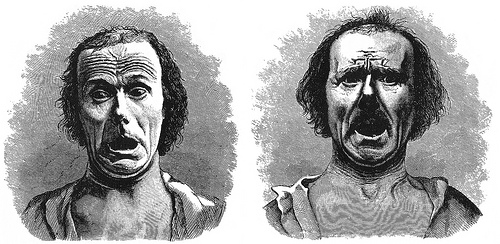
I don't like it when people purr things all the time, either. It happens only nine times in this book; it just seems like more.
I do like the sly little allusions he slides in. For instance, he acknowledges just in passing--in a way that no one would notice who hadn't caught the error in the first place--the messed up quasi-German title of a book that appears in Dead Beat, title 7 of the series (so now we know that he does notice some feedback). He tosses in a plug for the authentic, non-Disneyfied versions of folktales. He spares a scornful sidelong glance at the well-known principle voiced by Arthur C. Clarke: "Any sufficiently advanced technology is indistinguishable from magic."
He also knows how to use "O" as opposed to "oh," says "lent" instead of "loaned," and respects a number of other subtleties of grammar and usage, even if his editor lets a lot of lapses with the subjunctive ("as if he was") pass without remediation.
Another nice aspect is the fact that Harry has helpers, people whom he can trust and who do have his back, people who actually save his life, just as he would do and has done for them. He's not a solo act. The fact that he allows himself to rely on others is not a weakness; it's part of his strength. He tells his apprentice, Molly:
There's also the fact that he habitually tackles things that are a little too big for him, whether they be assignments or foes or forces he taps to fuel his magic. The only assurance we have of a favorable outcome (since we can't even really trust first-person narratives) is that there's still another volume in the series.
So keep them coming, please, Jim Butcher. And don't do it quietly.
Six-word review: Everything depends on whom you trust.
Extended review:
Among the Dresden Files novels I've read so far (this being the eleventh), I'd place Turn Coat toward the "best of" end of the scale.
There are interesting complexities and clashes of character, physical and political conflict, love and tenderness, compelling displays of treachery and loyalty, and a toweringly nasty adversary. There's a nice depiction of a mystical bond with place, and the development of Dresden's apprentice is turning out to be far less obnoxious than I had feared.
As usual, the pacing is good, and as usual there are the deft phrases that slip by so easily that they almost seem like throwaway lines. Here's one (page 49): "His abs look like they were added in with CGI." And another (page 311): "Lara and her two sisters walked toward us, and they were good at it." The description that follows is so sensual that it's bound to affect the pulse rate, as does every description of Lara and her kin--without being repetitive; and that's a feat.
Yet somehow Butcher seems to have an absolutely blind eye to repetitions of another sort. For instance, I want to tell him not to use the word "quietly" ever again. It's not just that he uses it a whopping 87 times between the covers of this book (as counted by Amazon's Search Inside feature). It appears five times on one page--368--and three times more on the next two.
And that's not the only word he gets a run on (or the only volume marred by this overuse). People's eyes blink and eyebrows arch, and they chew lips, and they growl and snarl and howl things, as uninhibitedly as if they were auditioning for an operatic version of Charles Darwin's The Expression of the Emotions in Man and Animals.
I don't like it when people purr things all the time, either. It happens only nine times in this book; it just seems like more.
I do like the sly little allusions he slides in. For instance, he acknowledges just in passing--in a way that no one would notice who hadn't caught the error in the first place--the messed up quasi-German title of a book that appears in Dead Beat, title 7 of the series (so now we know that he does notice some feedback). He tosses in a plug for the authentic, non-Disneyfied versions of folktales. He spares a scornful sidelong glance at the well-known principle voiced by Arthur C. Clarke: "Any sufficiently advanced technology is indistinguishable from magic."
He also knows how to use "O" as opposed to "oh," says "lent" instead of "loaned," and respects a number of other subtleties of grammar and usage, even if his editor lets a lot of lapses with the subjunctive ("as if he was") pass without remediation.
Another nice aspect is the fact that Harry has helpers, people whom he can trust and who do have his back, people who actually save his life, just as he would do and has done for them. He's not a solo act. The fact that he allows himself to rely on others is not a weakness; it's part of his strength. He tells his apprentice, Molly:
Hell's bells, kid. I choose to trust [her] because that's what people do. You don't ever get to know for sure what someone thinks of you. What they really feel inside.... Even psychomancy doesn't give you everything. We aren't meant to know what's going on in there. That's what talking is for. That's what trust is for. (page 256)Harry's down-to-earth manner is part of what keeps him from being a Super-duperman that we just can't identify with.
There's also the fact that he habitually tackles things that are a little too big for him, whether they be assignments or foes or forces he taps to fuel his magic. The only assurance we have of a favorable outcome (since we can't even really trust first-person narratives) is that there's still another volume in the series.
So keep them coming, please, Jim Butcher. And don't do it quietly.
21Storeetllr
Good review. Turncoat was one of my favorite Dresdens, but I have to agree he needs tighter editing.
22Storeetllr
Sorry. Duplicate post. That hasn't happened in awhile!
23MrsLee
>20 Meredy: I wish Jim Butcher could read your reviews. Not that I've noticed the oddities you mention, but he seems the sort of man who would like to improve as he goes from what I've heard, and you say it honestly, but you are encouraging as well.
24Meredy
The Talisman (1825), by Sir Walter Scott (4 stars)
Six-word review: Treachery and chivalry among crusading knights.
Extended review:
An old-fashioned adventure starring a young Scottish knight, his aristocratic lady fair, King Richard the Lion Heart, Sultan Saladin, and a cast of thousands. Honor and chivalry! Treachery and conspiracy! Combat and pageantry! Thwarted true lovers, noble adversaries, and a mad hermit in a desert cave, with bonus dwarves! Who could ask for more?
Some, I suppose, would ask for a modern vocabulary, a faster pace, and an amulet to heal near-lethal levels of political incorrectness. But this novel was published in 1825; it's nearly two hundred years old. So it employs a style of language that may sound a little alien to us now and a vocabulary that sent me to the dictionary: astucious; castramentation; emulously; ebriety. Not to mention a liberal use of terms pertaining to weaponry, armor, combat, and knightly duty. I love reading books that stretch my vocabulary, and I hope to be able to manage with the language as well as did schoolboys of a few generations back.
The rate at which the story unfolds is slow in comparison with current-day action novels. And it is an action novel; it's certainly not about deep probing of character or subtle exploration of themes. It starts right off with a scene of single combat. What's different is that all that thrilling, fast-moving excitement seems to take place in slow motion while we get both description and a lot of atmospheric dialogue that doesn't advance the plot. It's not so much a matter of a slow pace as it is of a great quantity of detailed, unfashionable telling. This is how Scott told his stories, and he was not alone in this. If it's not what we're used to now, that doesn't mean it wasn't the norm then. Neither is a steamboat our customary mode of travel; but when we're on a steamboat, we don't expect it to move like a bullet train. We do best just to settle into it and go with it as it is. When I read Scott this way, I enjoy him very much.
As for political correctness: social attitudes among the reading audience in Scotland and England in the early 1800s were not very much like those in the United States of the twenty-first century. At the time, the U.S. as a nation was less than 50 years old, and the Civil War was still nearly forty years in the future. I may cringe at the language and treatment used toward people not of the race or class or condition of the privileged and educated reader, and toward those of the so-called weaker sex, but I don't condemn those who held the prevailing views of their time and place and were unconscious of any offense. I think we have to be able to read through those things if we're to have any perspective at all on where we've come from. That doesn't mean condoning anything that we view as wrong; it just means recognizing that the views of enlightened, civilized beings vary over time as well as over distance, and we think differently now from Scott and his contemporaries. Think how disgraceful it would be if we hadn't raised our standards in all that time.
This novel takes place in Palestine during the Crusades while a temporary truce is in effect between the European forces, led by King Richard of England, known as the Lion Heart, and the Saracens under Saladin, Sultan and sovereign of Egypt and Syria. An honorable young knight, famed for his prowess in combat, becomes an unwitting pawn in a treasonous political scheme by Richard's rivals through his innocent devotion to the lady of his heart. Meanwhile, Richard is treated in his illness by a Saracen healer who seems to possess special powers.
The Talisman is the fourth Scott novel I've read and the one I'm most inclined to compare with Ivanhoe, published five years earlier. The hero, Sir Kenneth of the Couching Leopard, is far less vexing than Sir Wilfred of Ivanhoe, and the heroine, Lady Edith, is not nearly as insipid as Lady Rowena. The battles play out in the tents rather than on the field, and the villains are not where you'd expect to look for them: Richard's supposed allies are less trustworthy than his arch-foe. As depicted here, Saladin is an honorable and admirable adversary, and there is ample respect shown between the two rulers. The character of King Richard also adds an interesting dimension; certainly he appears more heroic and virtuous than he is painted by history, but he is well endowed with character flaws.
The drama does get a bit corny, I'll admit, and there's an extra helping of characters in disguise whose revealed identities lead to sudden shifts in the plot. But I didn't mind any of that. Again, I was not expecting the style and conventions of modern novels. Rather, I enjoyed the trip into what nineteenth-century readers were consuming, as well as the imaginary leap into an unabashedly imaginary desert war in the twelfth century. Really, this is a historical fantasy as envisioned by a wildly popular author of two centuries ago. Just as with its successful modern counterparts, it creates a world that I missed after I left it.
Six-word review: Treachery and chivalry among crusading knights.
Extended review:
An old-fashioned adventure starring a young Scottish knight, his aristocratic lady fair, King Richard the Lion Heart, Sultan Saladin, and a cast of thousands. Honor and chivalry! Treachery and conspiracy! Combat and pageantry! Thwarted true lovers, noble adversaries, and a mad hermit in a desert cave, with bonus dwarves! Who could ask for more?
Some, I suppose, would ask for a modern vocabulary, a faster pace, and an amulet to heal near-lethal levels of political incorrectness. But this novel was published in 1825; it's nearly two hundred years old. So it employs a style of language that may sound a little alien to us now and a vocabulary that sent me to the dictionary: astucious; castramentation; emulously; ebriety. Not to mention a liberal use of terms pertaining to weaponry, armor, combat, and knightly duty. I love reading books that stretch my vocabulary, and I hope to be able to manage with the language as well as did schoolboys of a few generations back.
The rate at which the story unfolds is slow in comparison with current-day action novels. And it is an action novel; it's certainly not about deep probing of character or subtle exploration of themes. It starts right off with a scene of single combat. What's different is that all that thrilling, fast-moving excitement seems to take place in slow motion while we get both description and a lot of atmospheric dialogue that doesn't advance the plot. It's not so much a matter of a slow pace as it is of a great quantity of detailed, unfashionable telling. This is how Scott told his stories, and he was not alone in this. If it's not what we're used to now, that doesn't mean it wasn't the norm then. Neither is a steamboat our customary mode of travel; but when we're on a steamboat, we don't expect it to move like a bullet train. We do best just to settle into it and go with it as it is. When I read Scott this way, I enjoy him very much.
As for political correctness: social attitudes among the reading audience in Scotland and England in the early 1800s were not very much like those in the United States of the twenty-first century. At the time, the U.S. as a nation was less than 50 years old, and the Civil War was still nearly forty years in the future. I may cringe at the language and treatment used toward people not of the race or class or condition of the privileged and educated reader, and toward those of the so-called weaker sex, but I don't condemn those who held the prevailing views of their time and place and were unconscious of any offense. I think we have to be able to read through those things if we're to have any perspective at all on where we've come from. That doesn't mean condoning anything that we view as wrong; it just means recognizing that the views of enlightened, civilized beings vary over time as well as over distance, and we think differently now from Scott and his contemporaries. Think how disgraceful it would be if we hadn't raised our standards in all that time.
This novel takes place in Palestine during the Crusades while a temporary truce is in effect between the European forces, led by King Richard of England, known as the Lion Heart, and the Saracens under Saladin, Sultan and sovereign of Egypt and Syria. An honorable young knight, famed for his prowess in combat, becomes an unwitting pawn in a treasonous political scheme by Richard's rivals through his innocent devotion to the lady of his heart. Meanwhile, Richard is treated in his illness by a Saracen healer who seems to possess special powers.
The Talisman is the fourth Scott novel I've read and the one I'm most inclined to compare with Ivanhoe, published five years earlier. The hero, Sir Kenneth of the Couching Leopard, is far less vexing than Sir Wilfred of Ivanhoe, and the heroine, Lady Edith, is not nearly as insipid as Lady Rowena. The battles play out in the tents rather than on the field, and the villains are not where you'd expect to look for them: Richard's supposed allies are less trustworthy than his arch-foe. As depicted here, Saladin is an honorable and admirable adversary, and there is ample respect shown between the two rulers. The character of King Richard also adds an interesting dimension; certainly he appears more heroic and virtuous than he is painted by history, but he is well endowed with character flaws.
The drama does get a bit corny, I'll admit, and there's an extra helping of characters in disguise whose revealed identities lead to sudden shifts in the plot. But I didn't mind any of that. Again, I was not expecting the style and conventions of modern novels. Rather, I enjoyed the trip into what nineteenth-century readers were consuming, as well as the imaginary leap into an unabashedly imaginary desert war in the twelfth century. Really, this is a historical fantasy as envisioned by a wildly popular author of two centuries ago. Just as with its successful modern counterparts, it creates a world that I missed after I left it.
25Meredy
I meant to include in my review (#24, above) an arresting quote; but it's too late to work it in now. Remember, this came out in 1825:
"[T]he Saracens...were indeed no longer the fanatical savages who had burst from the centre of Arabian deserts, with the sabre in one hand and the Koran in the other, to inflict death or the faith of Mohammed, or, at the best, slavery and tribute, upon all who dared to oppose the belief of the prophet of Mecca." (page 30)
26hfglen
>25 Meredy: Indeed, you put me in mind of one of the Brother Cadfael books where, speaking of his medical treatment on Crusade, Ellis Peters has him say that the Saracens "were better Christians than the Christians". Happen Scott wasn't able to go quite that far.
27Meredy
I've begun Daphne du Maurier's Jamaica Inn, thanks to several literary gunslingers lurking hereabouts. The author has a lot of fans around here, and they sure are handy with their bullets.
This one starts off very creepily, with a lot of Draculesque atmosphere: the coach tearing across hostile, moody terrain in foul weather, the fearful coachman who doesn't dare venture too close to the destination, the lonely house of evil reputation, the vague warnings, the determined, resourceful protagonist. The heroine of this one, Mary Yellan, is less a Jonathan Harker on a business errand than she is spiritual kin to Flora Poste, who took her sensible good cheer to warm the hollows of Cold Comfort Farm.
Those two British novels were published within four years of each other, with Stella Gibbons' being first, in 1932. Perhaps there was among readers a special appetite for brave, can-do women at that time and place. Surely we don't think they've all surfaced only in our own time.
This one starts off very creepily, with a lot of Draculesque atmosphere: the coach tearing across hostile, moody terrain in foul weather, the fearful coachman who doesn't dare venture too close to the destination, the lonely house of evil reputation, the vague warnings, the determined, resourceful protagonist. The heroine of this one, Mary Yellan, is less a Jonathan Harker on a business errand than she is spiritual kin to Flora Poste, who took her sensible good cheer to warm the hollows of Cold Comfort Farm.
Those two British novels were published within four years of each other, with Stella Gibbons' being first, in 1932. Perhaps there was among readers a special appetite for brave, can-do women at that time and place. Surely we don't think they've all surfaced only in our own time.
29MrsLee
>27 Meredy: I remember liking Jamaica Inn a lot, but I read it way back when I was in high school and have very little memory of the story, except for the atmosphere.
30aviddiva
>24 Meredy: I've been meaning to read Ivanhoe for ages, but based on your review I'm downloading The Talisman.
31Meredy
>30 aviddiva: Ha, a notch for me. Hurray.
I definitely think Ivanhoe is worth reading. I reread it myself just a couple of years ago and wrote a fairly hefty review (here), which includes a bit of commentary on school assignments and the reading of older works. But I have a significantly warmer feeling toward The Talisman, despite the numerous plot absurdities and the lavish romanticizing of history. I hope you enjoy it too.
I definitely think Ivanhoe is worth reading. I reread it myself just a couple of years ago and wrote a fairly hefty review (here), which includes a bit of commentary on school assignments and the reading of older works. But I have a significantly warmer feeling toward The Talisman, despite the numerous plot absurdities and the lavish romanticizing of history. I hope you enjoy it too.
32Sakerfalcon
>27 Meredy: Jamaica Inn is my favourite Du Maurier (not that I've read even close to all her books). I love the setting, the atmosphere, Mary and the romance.
33jillmwo
I have read Ivanhoe and remember with some amusement the chapter where Friar Tuck and King Richard get sozzled together. But you have also persuaded me to hunt down a copy of Jamaica Inn. Conversely, I wasn't a big fan of Cold Comfort Farm when I read it, but perhaps I was just not in the proper mood to appreciate it when it crossed my path. (It was,after all, at least ten years ago.)
34aviddiva
>31 Meredy: I don't know how I missed Ivanhoe -- it is exactly the sort of thing I would happily have plowed through in my teens or early 20's. It came back onto my radar fairly recently when I picked up a hundred year old edition at the book exchange. Inside it was inscribed in a lovely copperplate with a previous owner's name. Underneath in a different hand was a woman's name (daughter?) and the comment, "Classics are not necessarily dry."
35Meredy
I've just posted the following on my 2015 journal page because it was a 2015 read. The link goes to the full review:
The Shelf: From LEQ to LES: Adventures in Extreme Reading (2014), by Phyllis Rose (4 stars)
Six-word review: A reader's book, a writer's book.
Extended review:
The Shelf has the distinction of being one of the very small number of books that I have purchased as a keeper after reading the library copy. (Continued in 2015 journal.)
http://www.librarything.com/topic/192771#5451974
The Shelf: From LEQ to LES: Adventures in Extreme Reading (2014), by Phyllis Rose (4 stars)
Six-word review: A reader's book, a writer's book.
Extended review:
The Shelf has the distinction of being one of the very small number of books that I have purchased as a keeper after reading the library copy. (Continued in 2015 journal.)
http://www.librarything.com/topic/192771#5451974
36Meredy
Confession time. I don't hold out much hope that anyone around here is going to admit to having the same problem, but I'll own up to it anyway. If you do, I embrace you commiseratively.
I have to break a habit that's driving me nuts.
When I read, I make notes. This is not the problem. Everybody is allowed some idiosyncrasies, and I claim my own. I take notes partly because I see things that I want to refer to or check on later--words that I want to look up, for instance, but not while I'm reading in bed; or great quotations that I want to transcribe--but mostly because it satisfies the same urges that made me follow a career as an editor. Mistakes of certain kinds just nag at me unless I mark them. But if the book is from the library, or belongs to somebody else, or is on an e-reader, or I just don't want to have to search through the book later, I can't mark the pages. I'm better off making the notes on a slip of paper, which becomes a sort of index to the things I want to come back to.
Here's the problem. I habitually write very small, especially when I'm cramming a lot of notes onto a little library request or due date slip or Post-It.
But my eyesight isn't what it used to be.
When I go back to my notes, they're too small and I can't read them. Or I can barely read them. It's a struggle. And sometimes I have no idea what they meant because I was too brief or cryptic.
I'm not looking for help with solutions. I know I can write larger, use a bigger piece of paper, dedicate a small notebook, etc. I'm just confessing because being annoyed with myself hasn't been enough of a motivation to change my behavior. So I thought maybe feeling ridiculous would be. There.
I have to break a habit that's driving me nuts.
When I read, I make notes. This is not the problem. Everybody is allowed some idiosyncrasies, and I claim my own. I take notes partly because I see things that I want to refer to or check on later--words that I want to look up, for instance, but not while I'm reading in bed; or great quotations that I want to transcribe--but mostly because it satisfies the same urges that made me follow a career as an editor. Mistakes of certain kinds just nag at me unless I mark them. But if the book is from the library, or belongs to somebody else, or is on an e-reader, or I just don't want to have to search through the book later, I can't mark the pages. I'm better off making the notes on a slip of paper, which becomes a sort of index to the things I want to come back to.
Here's the problem. I habitually write very small, especially when I'm cramming a lot of notes onto a little library request or due date slip or Post-It.
But my eyesight isn't what it used to be.
When I go back to my notes, they're too small and I can't read them. Or I can barely read them. It's a struggle. And sometimes I have no idea what they meant because I was too brief or cryptic.
I'm not looking for help with solutions. I know I can write larger, use a bigger piece of paper, dedicate a small notebook, etc. I'm just confessing because being annoyed with myself hasn't been enough of a motivation to change my behavior. So I thought maybe feeling ridiculous would be. There.
37MrsLee
>36 Meredy: I will make notes of books/people/movies/songs/subjects I want to pursue because they were mentioned in a book I'm reading. I rarely go back later to pursue them. :/
38Meredy
Lights Out: A Cyberattack, A Nation Unprepared, Surviving the Aftermath (2015), by Ted Koppel (4 stars)
(an Early Reviewer review)
Six-word review: Widespread power outages: inevitably massively lethal.
Extended review:
Lights Out is a very scary book. For that reason I had to take a break from reading it over the holidays, even though it made me late with my review. My apologies all around.
This also an important book, important to all of us. If you can read this post, you're affected. So, probably, is everyone else. In contrast, the threat of Ebola sounds like a head cold.
If the writing couldn't be called brilliant, that's a secondary consideration. The main thing is the message. The imaginary horrors of postapocalyptic fiction seem none too extreme when viewed in the light of what could really happen to our communities, our cities, and our world within days and even minutes of a massive cyberattack.
The destruction that once would have taken vast armies, and much later would at least have entailed advanced technology and military power, can now be exceeded in orders of magnitude by the covert actions of a small group of committed fanatics. One solitary, malevolent nut can take out the populated world.
Let me say this right here: yes, I believe this book. I believe it is an accurate report. Veteran newsman Ted Koppel throws all his credibility behind it, a solid reputation gained from his 42-year career in television journalism and his experience in reporting on major events around the world. He includes comments drawn verbatim from experts, both in interviews and in published and unpublished materials, and documents his sources.
Significantly, there is major disagreement among those putative experts, of whom some sound more seriously clueless than others. And some are in frank denial. Koppel reports their contradictory and even self-contradictory assertions, admissions, and arguments in as objective-sounding a way as one would expect a conscientious reporter to do.
And yet, paradoxically, Koppel treats his subject as something too important to be dispassionate about. After laying out all the facts as he has gathered and ordered them, Koppel makes it personal. He gives us autobiographical information, describing his recollections of early childhood in London during the Blitz of World War II, of diving for cover at the sound of an incendiary bomb. He explains how having a plan, being prepared for some kind of emergency, enabled the British to cope with the air raids even if they were not exactly what people had prepared for. He speaks feelingly of personal motives, too, for writing the book--for using the cachet of his journalistic career to seek out the answers to serious questions about our vulnerability to cyberattack--and what the support of his wife and others has meant to him. In these portions of the book he is not striving for objectivity at all; just the opposite.
It gets personal with him because it is and should be personal to every human being on the planet--the more so, the closer one is to all the things we think of as defining the modern world. And the more dependent one is upon them. That includes not only all high-tech devices but everything that depends either directly or indirectly on things that plug in. If the electrical grid goes down, those go down, and they include security, delivery, distribution, and monitoring systems of every kind, not to mention all the things we hardly think of as devices any more, from traffic lights to toasters.
The power grid is extremely vulnerable. The smaller, less cash-rich power companies are less well defended and more vulnerable than the big ones, and even the big ones have inadequate or nonexistent backup systems. The huge power generators on which the major systems depend would take years to replace. The smaller links in the chain are the most easily breached, and one good break could bring down the works or a large part of it. People would be in serious trouble in a couple of days, especially people in urban areas. Communications would be among the first things to go. And the government does not have any reasonable, realistic plan for dealing with such a situation.
A few extra gallons of water, a stockpile of batteries, and a hand-cranked radio are not going to cut it. Not even if you add a gun.
Koppel does not just sound alarms. He also talks about what it would take to improve our chances of survival: how some have already faced the question, from individual "preppers" who go to survivalist shows and spend big bucks on supplies and gear to the tightly organized, community-based self-protection programs of the Mormon church. Most significantly, he spotlights the government's failure to draft any sort of a reasonable plan or even to recognize the need for one. Unless we belong to a self-selecting community that has taken it upon itself to identify and fill the need, we're pretty much on our own. And few of us are equipped to deal with that in even the most basic ways.
The answers are not in this book. The answers may not exist anywhere. But one thing is sure: until the questions themselves are taken seriously, there will be none, either now or when it's already too late.
(Edited to correct the touchstone.)
(an Early Reviewer review)
Six-word review: Widespread power outages: inevitably massively lethal.
Extended review:
Lights Out is a very scary book. For that reason I had to take a break from reading it over the holidays, even though it made me late with my review. My apologies all around.
This also an important book, important to all of us. If you can read this post, you're affected. So, probably, is everyone else. In contrast, the threat of Ebola sounds like a head cold.
If the writing couldn't be called brilliant, that's a secondary consideration. The main thing is the message. The imaginary horrors of postapocalyptic fiction seem none too extreme when viewed in the light of what could really happen to our communities, our cities, and our world within days and even minutes of a massive cyberattack.
The destruction that once would have taken vast armies, and much later would at least have entailed advanced technology and military power, can now be exceeded in orders of magnitude by the covert actions of a small group of committed fanatics. One solitary, malevolent nut can take out the populated world.
Let me say this right here: yes, I believe this book. I believe it is an accurate report. Veteran newsman Ted Koppel throws all his credibility behind it, a solid reputation gained from his 42-year career in television journalism and his experience in reporting on major events around the world. He includes comments drawn verbatim from experts, both in interviews and in published and unpublished materials, and documents his sources.
Significantly, there is major disagreement among those putative experts, of whom some sound more seriously clueless than others. And some are in frank denial. Koppel reports their contradictory and even self-contradictory assertions, admissions, and arguments in as objective-sounding a way as one would expect a conscientious reporter to do.
And yet, paradoxically, Koppel treats his subject as something too important to be dispassionate about. After laying out all the facts as he has gathered and ordered them, Koppel makes it personal. He gives us autobiographical information, describing his recollections of early childhood in London during the Blitz of World War II, of diving for cover at the sound of an incendiary bomb. He explains how having a plan, being prepared for some kind of emergency, enabled the British to cope with the air raids even if they were not exactly what people had prepared for. He speaks feelingly of personal motives, too, for writing the book--for using the cachet of his journalistic career to seek out the answers to serious questions about our vulnerability to cyberattack--and what the support of his wife and others has meant to him. In these portions of the book he is not striving for objectivity at all; just the opposite.
It gets personal with him because it is and should be personal to every human being on the planet--the more so, the closer one is to all the things we think of as defining the modern world. And the more dependent one is upon them. That includes not only all high-tech devices but everything that depends either directly or indirectly on things that plug in. If the electrical grid goes down, those go down, and they include security, delivery, distribution, and monitoring systems of every kind, not to mention all the things we hardly think of as devices any more, from traffic lights to toasters.
The power grid is extremely vulnerable. The smaller, less cash-rich power companies are less well defended and more vulnerable than the big ones, and even the big ones have inadequate or nonexistent backup systems. The huge power generators on which the major systems depend would take years to replace. The smaller links in the chain are the most easily breached, and one good break could bring down the works or a large part of it. People would be in serious trouble in a couple of days, especially people in urban areas. Communications would be among the first things to go. And the government does not have any reasonable, realistic plan for dealing with such a situation.
A few extra gallons of water, a stockpile of batteries, and a hand-cranked radio are not going to cut it. Not even if you add a gun.
Koppel does not just sound alarms. He also talks about what it would take to improve our chances of survival: how some have already faced the question, from individual "preppers" who go to survivalist shows and spend big bucks on supplies and gear to the tightly organized, community-based self-protection programs of the Mormon church. Most significantly, he spotlights the government's failure to draft any sort of a reasonable plan or even to recognize the need for one. Unless we belong to a self-selecting community that has taken it upon itself to identify and fill the need, we're pretty much on our own. And few of us are equipped to deal with that in even the most basic ways.
The answers are not in this book. The answers may not exist anywhere. But one thing is sure: until the questions themselves are taken seriously, there will be none, either now or when it's already too late.
(Edited to correct the touchstone.)
39aviddiva
I can't decide whether that makes me really want to read Lights Out or avoid it and continue to live in blissful denial.
40Meredy
>39 aviddiva: I believe in denial the way I believe in chocolate: sometimes it's the only thing that helps.
If there's anything to be done, though, it has to start with information. And I don't expect too much of that from people who hate to scare their constituency. That's why someone like Koppel is the right person to write a book like this. I didn't enjoy it, but I'm glad I read it.
If there's anything to be done, though, it has to start with information. And I don't expect too much of that from people who hate to scare their constituency. That's why someone like Koppel is the right person to write a book like this. I didn't enjoy it, but I'm glad I read it.
41hfglen
>38 Meredy: Local experience here suggests that to at least some extent, the external hacker is unnecessary. Since about 2008 our electricity monopoly's refusal to spend money on maintenance (management bonuses are so much more important ...) started to show, in the form of "load shedding"-- 2-hour power outages timed for maximum inconvenience. And so it came to pass that they went to the energy regulator for an extortionate price increase, just a few months before the 2014 general and provincial elections, reinforced by more intensive load shedding. The increase the regulator granted was little more than the rate of inflation. To nobody's surprise except the electricity monopoly's and the ruling party's, this handed the latter their worst result since 1994. Curiously, after the election the outages tailed off, and there have been none in several months. What else happened? It was widely reported that since about 2013, the most popularly sold new hardware item is petrol-driven generators, and since last year (about), one of the best ways for a seller to increase the value of a house is to install a bank of solar panels and advertise the house as "off the grid". So now the electricity monopoly wants a 17% price increase because "sales are not reaching expectations" (and electricity theft remains un-addressed). That we are three months away from municipal elections suggests that their management and politicians have learned nothing.
I deduce from this that all you need is a bunch of incompetents in key positions, and you'll soon learn how to cope with no power and no internet (servers and modems being mains-powered, of course).
I deduce from this that all you need is a bunch of incompetents in key positions, and you'll soon learn how to cope with no power and no internet (servers and modems being mains-powered, of course).
43Meredy
>41 hfglen: No Internet is the least of it. We're talking about no water, no food, no lights, no gasoline (pumps have to be powered), no garbage collection, no toilet flushing, no electricity-based equipment, no transportation, and law enforcement unprepared to cope with mass panic.
45Meredy
>44 hfglen: I read NoViolet Bulawayo's book, and yes, it does, only worse.
46Meredy
Jamaica Inn (1936), by Daphne du Maurier (4 stars)
Six-word review: Atmospheric thriller, strong heroine, literate author.
Extended review:
Daphne du Maurier has an extraordinary knack for creating atmosphere. She gives us the moors of Cornwall, "a silent, desolate country...vast and untouched by human hand." Bleak expanses of hard, scrubby ground and soggy, treacherous marshes are broken by the high tors, massive slabs and towers of stone that are monstrous, moody presences:
And this is the place to which young Mary Yellan comes, bound by a deathbed promise to her mother. Rogues and thieves and drunkards are not the worst of what she will meet as her drama plays out. Mystery and menace darken the wintry days she spends under the roof of her evil uncle, and there is little enough to give her hope of escape to a better life.
But Mary is made of sturdy stuff, despite the repeated reminders, in several characters' voices, of the presumed weakness of her sex. It's not a matter of defying the clichés; they're treated as natural limitations, as they were for centuries before feminism raised awareness. But they don't define Mary. She has natural advantages, too, such as strength, determination, and loyalty. She's not a quitter, even against all the odds. The horrors she's forced to face and the challenges she must meet would be enough to bring down many a lesser character of either sex.
One of the things I especially like about this tale is that the author doesn't try to justify everything her protagonist does. We don't have to be badgered or maneuvered into agreeing with Mary or necessarily thinking we'd have done the same in her place. We just have to believe that what she does is honestly within her character, and it is. This gives the author leeway to show us a pleasing complexity of character, with the kinds of flaws that make it ring true. Like Eustacia Vye, Mary shows a strong silhouette against a grim background, while still being both feminine and vulnerable.
There are several places where I wondered why something happened as it did, but there's only one plot point that I found truly jarring. As the momentum accelerates, a scene occurs in which Mary must provide access to a second-floor bedroom:
The deep interconnections of character and place, out of which events proceed with a seeming inevitability, create a satisfying unfolding of plot, even if you guess the key to the mystery a little too soon. The exciting finish is worth the wait.
Six-word review: Atmospheric thriller, strong heroine, literate author.
Extended review:
Daphne du Maurier has an extraordinary knack for creating atmosphere. She gives us the moors of Cornwall, "a silent, desolate country...vast and untouched by human hand." Bleak expanses of hard, scrubby ground and soggy, treacherous marshes are broken by the high tors, massive slabs and towers of stone that are monstrous, moody presences:
Wild sheep dwelt on the high tors, and there were ravens too, and buzzards; the hills were homing places for all solitary things.... When the wind blew on the hills it whistled mournfully in the crevices of granite, and sometimes it shuddered like a man in pain. Strange winds blew from nowhere; they crept along the surface of the grass, and the grass shivered; they breathed upon the little pools of rain in the hollowed stones, and the pools rippled. Sometimes the wind shouted and cried, and the cry echoed in the crevices, and moaned, and was lost again. There was a silence on the tors that belonged to another age; an age that is past and vanished as though it had never been, an age when man did not exist, but pagan footsteps trod upon the hills. And there was a stillness in the air, and a stranger, older peace, that was not the peace of God. (page 42)In this country there are men as savage as the land, men who are beyond knowing the horror of their own deeds.
And this is the place to which young Mary Yellan comes, bound by a deathbed promise to her mother. Rogues and thieves and drunkards are not the worst of what she will meet as her drama plays out. Mystery and menace darken the wintry days she spends under the roof of her evil uncle, and there is little enough to give her hope of escape to a better life.
But Mary is made of sturdy stuff, despite the repeated reminders, in several characters' voices, of the presumed weakness of her sex. It's not a matter of defying the clichés; they're treated as natural limitations, as they were for centuries before feminism raised awareness. But they don't define Mary. She has natural advantages, too, such as strength, determination, and loyalty. She's not a quitter, even against all the odds. The horrors she's forced to face and the challenges she must meet would be enough to bring down many a lesser character of either sex.
One of the things I especially like about this tale is that the author doesn't try to justify everything her protagonist does. We don't have to be badgered or maneuvered into agreeing with Mary or necessarily thinking we'd have done the same in her place. We just have to believe that what she does is honestly within her character, and it is. This gives the author leeway to show us a pleasing complexity of character, with the kinds of flaws that make it ring true. Like Eustacia Vye, Mary shows a strong silhouette against a grim background, while still being both feminine and vulnerable.
There are several places where I wondered why something happened as it did, but there's only one plot point that I found truly jarring. As the momentum accelerates, a scene occurs in which Mary must provide access to a second-floor bedroom:
She...tied one end of her blanket to the foot of her bed, throwing the other out the window.... (page 234 in this 1936 edition)I'd like to see that done. Try tying a knot in a blanket, enough of a knot to support someone's weight when secured to--what, a bedpost? The thickness of a blanket, any blanket, even one as thin as a sheet, is going to make it very difficult to tie, with a knot so bulky that it will gather up a lot of material and leave little to hang down. This sort of thing works in movies and animated cartoons, but could it possibly work in a realistic environment? I doubted it enough to stall out temporarily at that point; but of course I came back to find out what happened to Mary. And I blamed the author for that absurdity, not the character.
The deep interconnections of character and place, out of which events proceed with a seeming inevitability, create a satisfying unfolding of plot, even if you guess the key to the mystery a little too soon. The exciting finish is worth the wait.
47pgmcc
>46 Meredy: Great review.
48Meredy
>47 pgmcc: Thank you so much, Peter. A little encouragement goes a long way, doesn't it?
49Meredy
The Brief History of the Dead (2014), by Kevin Brockmeier (abandoned; not rated)
Comments, but not a review:
I wanted to like this book, and I tried. But in the end I was defeated. I abandoned it just past the halfway mark. By then I had long since stopped caring what happened, because I'd been given way too little to grab onto emotionally. And I haven't spent a minute since wondering how it turned out.
Well, that's not quite so. Before letting it go, I tried reading the final chapter. I was puzzled to learn who was the focal character at that point, because by the midpoint there was no reason to expect that outcome. I expected to be able to make some link between the ending and the first half of the book, but one was not apparent.
However, I couldn't even stand the whole last chapter. Halfway through that, I skipped to the last page--something I've never done before.
And the irresolute ending made me glad I hadn't gone on with it any longer.
What was it that killed me about this book? I'll tell you.
It's the heaps and heaps and heaps of detail, oppressive and stultifying enough to remind me of the dust heaps of London in Our Mutual Friend:

In a contradictory metaphor, the indiscriminate helpings of detail create a flat, featureless storyscape. Everything is spelled out exhaustively, whether it's important or not. And the result is that nothing is important. As I used to hear in the business world, "If everything is top priority, then nothing is."
Writers who are advised by instructors and workshop leaders to provide plenty of concrete detail should not forget about selectivity. Without selectivity, we don't know where to fasten our attention, and we are worn out with trying to distinguish figure from ground. Or at least I am.
The story is told in parallel narratives. With a structure like that, we normally expect that the narrative threads will cross or somehow relate to one another eventually. By a little way before the midpoint, there was some connection indicated, but I kept waiting, and it just took too, too long to happen.
In other words, the book simply did not look like it was ever going to deliver on its implied promises. It just droned on with nothing happening. Thick, suffocating, aimless nothing.
As I have told a number of clients, the author has to give us a reason to turn the page, and it can't be just because he or she wants us to. I had one client who kept insisting, "But they have to know this in order to get what's going to happen on page 40." Well, but they're never going to get to page 40 if they're not interested enough to go past page 2. They don't know what's coming. They don't know that anything's coming. If there's nothing to draw us on, we're probably going to stop.
And that's what I did.
Comments, but not a review:
I wanted to like this book, and I tried. But in the end I was defeated. I abandoned it just past the halfway mark. By then I had long since stopped caring what happened, because I'd been given way too little to grab onto emotionally. And I haven't spent a minute since wondering how it turned out.
Well, that's not quite so. Before letting it go, I tried reading the final chapter. I was puzzled to learn who was the focal character at that point, because by the midpoint there was no reason to expect that outcome. I expected to be able to make some link between the ending and the first half of the book, but one was not apparent.
However, I couldn't even stand the whole last chapter. Halfway through that, I skipped to the last page--something I've never done before.
And the irresolute ending made me glad I hadn't gone on with it any longer.
What was it that killed me about this book? I'll tell you.
It's the heaps and heaps and heaps of detail, oppressive and stultifying enough to remind me of the dust heaps of London in Our Mutual Friend:

In a contradictory metaphor, the indiscriminate helpings of detail create a flat, featureless storyscape. Everything is spelled out exhaustively, whether it's important or not. And the result is that nothing is important. As I used to hear in the business world, "If everything is top priority, then nothing is."
Writers who are advised by instructors and workshop leaders to provide plenty of concrete detail should not forget about selectivity. Without selectivity, we don't know where to fasten our attention, and we are worn out with trying to distinguish figure from ground. Or at least I am.
The story is told in parallel narratives. With a structure like that, we normally expect that the narrative threads will cross or somehow relate to one another eventually. By a little way before the midpoint, there was some connection indicated, but I kept waiting, and it just took too, too long to happen.
In other words, the book simply did not look like it was ever going to deliver on its implied promises. It just droned on with nothing happening. Thick, suffocating, aimless nothing.
As I have told a number of clients, the author has to give us a reason to turn the page, and it can't be just because he or she wants us to. I had one client who kept insisting, "But they have to know this in order to get what's going to happen on page 40." Well, but they're never going to get to page 40 if they're not interested enough to go past page 2. They don't know what's coming. They don't know that anything's coming. If there's nothing to draw us on, we're probably going to stop.
And that's what I did.
50pgmcc
>49 Meredy: I like that review too. Your reaction to that book reminds me of how I felt about Ken Follett's The Pillars of the Earth and I abandoned it about page 220 for the same reason.
51Sakerfalcon
>46 Meredy: I'm glad you enjoyed Jamaica Inn. Du Maurier writes about the Cornish landscape and character so well.
52MrsLee
>46 Meredy: I haven't read Jamaica Inn since high school; now I want to own a copy and go for a reread. All I have a pleasant memories of atmosphere, no plot or story. So what do you call a book bullet that makes you want to go buy a book you read long ago?
53pgmcc
>52 MrsLee: A head shot.
54Meredy
>52 MrsLee: Collateral damage?
55aviddiva
>52 MrsLee: An old war wound.
56MrsLee
>55 aviddiva: The winner!
57Meredy
Jade Dragon Mountain (2015), by Elsa Hart (3½ stars)
Six-word review: Stories reveal truth, stories conceal it.
Extended review:
I really liked this book, and so I'm inclined to be forgiving of its little lapses; but that does not necessarily mean that they pass without notice.
The setting is a provincial city in China, far from the capital of Beijing and close to the Tibetan border, in the early eighteenth century. The Western world is eager for trade, coveting the marvelous Chinese artisanry and craftsmanship such as the making of exquisite porcelain, but China is self-sufficient and does not need Western technology. So far the only foreigners welcomed are the Jesuits, with their scholarship and love of learning and their special knowledge of astronomy; but whoever can gain favor with the all-powerful emperor will enjoy a great advantage.
Former librarian Li Du, a wanderer exiled from the capital, arrives in the city on the eve of a visit from the emperor, for which the local government has been preparing for a year. As it happens, the local magistrate is his cousin. Thus Li Du is on the scene when a sudden and unexplained death occurs. It becomes his duty to establish that a crime has occurred and discover the criminal without allowing a disturbance to blight the ceremonial grandeur of the occasion or upset the emperor.
The political crossfire between the Jesuits and the rival Dominicans, between imperial dynasties old and new, and among the several interests that can profit or lose by the impact of the emperor's state visit create a complex situation that our recluse scholar has no desire to navigate; but he is committed to finding out the truth and naming the culprit. At the same time he must discover which other players are false deceivers and whom, if anyone, he can trust.
I don't know much about the time and place, myself, but the author sounds to me like someone who has done her homework. Certainly she may have taken some artistic liberties; nevertheless there is to me an authentic feel to her rendition of the setting and the representative characters, and that's a quality that I always prize.
Woven throughout is an intriguing theme, namely, fiction as falsehood versus fiction as a vehicle for truth. The author has handled it nicely, allowing it to develop a multilayered webwork that can sustain more than one narrative. She has created some interesting characters, too, especially Hamza the storyteller and the crafty Lady Chen, both of whom I hope to meet again.
It bothered me that the title was never explained. There's a mountain in the story, but it's not named.
It also bothered me that the book started in the manner of a frame tale--a setup outside the story that furnishes a context and a pretext for the narrative that follows--but the frame is never completed: it ends without coming back out to the frame and closing it. Now, that's okay, and sometimes it's done that way, but when the frame leaves questions hanging, there's an expectation that they'll be answered before we're done. And they weren't.
What bothered me most, however, was the author's use, or more accurately her misuse, of certain words. It reads in places like the writing of someone who's employing vocabulary that's a little bit out of her reach, as if she'd been consulting a thesaurus and were trying to use words before she'd fully mastered them. Examples follow (with definitions from Dictionary.com):
(page 8) "He came to the street of tea and regarded the dusty leaves with some solidarity."
(page 19) "Naturally, public acknowledgment of their role was forbidden, as it would tarnish the pageantry of the Emperor's predictions."
(page 24) "the sweep of her brush as it imparted a slope of gray mountain onto the white paper"
(page 143) "this city in a valley, redolent with gold and musks and posturing tourists"
(page 204) "It will augment the festival, not detract from it."
Again, these are just examples selected from a longer list. The problem when you use showy words that you haven't quite conquered is that what they show is not to your advantage.
And finally, irritatingly, the author introduces a character named Sir Nicholas Gray and then proceeds to refer to him in both narrative and dialogue as "Sir Gray" rather than "Sir Nicholas"--even in the voice of a British character, who ought to have known better.
And now for my favorite refrain: Where was the editor? Where was the editor? Where was the editor?
I've called attention to things that I'd have liked to see handled better, not because I want to justify deducting points but because this sounds like the start of an interesting, appealing series, and I'd like to see the next installment get a much more thorough polishing before it comes out.
And I do hope there'll be a next installment. The ending is plainly a setup for a sequel; but it's a good setup, in that it doesn't leave a conspicuous hook or a disappointing cliffhanger. Rather, I'd liken it to an orchard in blossom. I'm looking forward to seeing it bear fruit.
Six-word review: Stories reveal truth, stories conceal it.
Extended review:
I really liked this book, and so I'm inclined to be forgiving of its little lapses; but that does not necessarily mean that they pass without notice.
The setting is a provincial city in China, far from the capital of Beijing and close to the Tibetan border, in the early eighteenth century. The Western world is eager for trade, coveting the marvelous Chinese artisanry and craftsmanship such as the making of exquisite porcelain, but China is self-sufficient and does not need Western technology. So far the only foreigners welcomed are the Jesuits, with their scholarship and love of learning and their special knowledge of astronomy; but whoever can gain favor with the all-powerful emperor will enjoy a great advantage.
Former librarian Li Du, a wanderer exiled from the capital, arrives in the city on the eve of a visit from the emperor, for which the local government has been preparing for a year. As it happens, the local magistrate is his cousin. Thus Li Du is on the scene when a sudden and unexplained death occurs. It becomes his duty to establish that a crime has occurred and discover the criminal without allowing a disturbance to blight the ceremonial grandeur of the occasion or upset the emperor.
The political crossfire between the Jesuits and the rival Dominicans, between imperial dynasties old and new, and among the several interests that can profit or lose by the impact of the emperor's state visit create a complex situation that our recluse scholar has no desire to navigate; but he is committed to finding out the truth and naming the culprit. At the same time he must discover which other players are false deceivers and whom, if anyone, he can trust.
I don't know much about the time and place, myself, but the author sounds to me like someone who has done her homework. Certainly she may have taken some artistic liberties; nevertheless there is to me an authentic feel to her rendition of the setting and the representative characters, and that's a quality that I always prize.
Woven throughout is an intriguing theme, namely, fiction as falsehood versus fiction as a vehicle for truth. The author has handled it nicely, allowing it to develop a multilayered webwork that can sustain more than one narrative. She has created some interesting characters, too, especially Hamza the storyteller and the crafty Lady Chen, both of whom I hope to meet again.
It bothered me that the title was never explained. There's a mountain in the story, but it's not named.
It also bothered me that the book started in the manner of a frame tale--a setup outside the story that furnishes a context and a pretext for the narrative that follows--but the frame is never completed: it ends without coming back out to the frame and closing it. Now, that's okay, and sometimes it's done that way, but when the frame leaves questions hanging, there's an expectation that they'll be answered before we're done. And they weren't.
What bothered me most, however, was the author's use, or more accurately her misuse, of certain words. It reads in places like the writing of someone who's employing vocabulary that's a little bit out of her reach, as if she'd been consulting a thesaurus and were trying to use words before she'd fully mastered them. Examples follow (with definitions from Dictionary.com):
(page 8) "He came to the street of tea and regarded the dusty leaves with some solidarity."
solidaritySolidarity is not a way of regarding things and does not express a feeling of kinship or similarity. It's political. Even if she meant that he felt dusty like the leaves, it's an inept application of the term.
1. union or fellowship arising from common responsibilities and interests, as between members of a group or between classes, peoples, etc.:
to promote solidarity among union members.
2. community of feelings, purposes, etc.
3. community of responsibilities and interests.
(page 19) "Naturally, public acknowledgment of their role was forbidden, as it would tarnish the pageantry of the Emperor's predictions."
tarnishPredictions are not things that possess pageantry. There might be pageantry around the making or fulfilling of them, but pageantry itself is not a property that predictions have. And even if it were, you can't tarnish pageantry. It's not a metallic surface. This is not a metaphor. It's just a nonsensical combination of words that sounds like it means something when it doesn't.
1. to dull the luster of (a metallic surface), especially by oxidation; discolor.
2. to diminish or destroy the purity of; stain; sully:
The scandal tarnished his reputation.
pageantry
1. spectacular display; pomp:
the pageantry of a coronation.
2. mere show; empty display.
(page 24) "the sweep of her brush as it imparted a slope of gray mountain onto the white paper"
impartThere are many words that could be used for the action of brush on paper or the action of rendering an image on a surface, but "impart" is not one of them.
1. to make known; tell; relate; disclose:
to impart a secret.
2. to give; bestow; communicate:
to impart knowledge.
3. to grant a part or share of.
(page 143) "this city in a valley, redolent with gold and musks and posturing tourists"
redolentRedolence involves an aroma. Gold doesn't smell. Tourists might, but a city can't be redolent of (not with) tourists. She simply doesn't know what the word means.
1. having a pleasant odor; fragrant.
2. odorous or smelling (usually followed by of):
redolent of garlic.
3. suggestive; reminiscent (usually followed by of):
verse redolent of Shakespeare.
(page 204) "It will augment the festival, not detract from it."
augmentShe's talking about the presentation of a gift. Perhaps she means supplement or complement; certainly she does not mean "increase." That makes no sense.
to make larger; enlarge in size, number, strength, or extent; increase:
His salary is augmented by a small inheritance.
Again, these are just examples selected from a longer list. The problem when you use showy words that you haven't quite conquered is that what they show is not to your advantage.
And finally, irritatingly, the author introduces a character named Sir Nicholas Gray and then proceeds to refer to him in both narrative and dialogue as "Sir Gray" rather than "Sir Nicholas"--even in the voice of a British character, who ought to have known better.
And now for my favorite refrain: Where was the editor? Where was the editor? Where was the editor?
I've called attention to things that I'd have liked to see handled better, not because I want to justify deducting points but because this sounds like the start of an interesting, appealing series, and I'd like to see the next installment get a much more thorough polishing before it comes out.
And I do hope there'll be a next installment. The ending is plainly a setup for a sequel; but it's a good setup, in that it doesn't leave a conspicuous hook or a disappointing cliffhanger. Rather, I'd liken it to an orchard in blossom. I'm looking forward to seeing it bear fruit.
58pgmcc
>57 Meredy: It is only 7:30 in the morning and I believe I have been shot by a skilled BB sniper. Great review. I am intrigued by the truth/fiction- fiction/truth aspect.
59SylviaC
I would just like to repeat how much I love your reviews, @Meredy. Whether I have any interest in the book or not, just reading your review is satisfying. You think everything through so carefully, give credit where it's due, and view the technicalities with an editor's eye. Your reviews are works of art!
60pgmcc
>57 Meredy:
Your reviews always contain wonderful sentences. One I will take away from this is:
It's just a nonsensical combination of words that sounds like it means something when it doesn't.
That sentence can be used in so many situations. Thank you!
Your reviews always contain wonderful sentences. One I will take away from this is:
It's just a nonsensical combination of words that sounds like it means something when it doesn't.
That sentence can be used in so many situations. Thank you!
61hfglen
>60 pgmcc: What a wonderful summary of Peter Sellers's Political Speech!
62pgmcc
>61 hfglen: I think it is a wonderful summary of more than just Peter Seller's political speech.
63hfglen
And to add more detail would contravene Pub rules, but I fully agree. Just couldn't resist linking to that surprisingly elderly piece of Sellersiana.
64LolaWalser
>59 SylviaC:
What she said. I'm quietly lurking but I want you to know we who lurk enjoy your reviews too! :)
What she said. I'm quietly lurking but I want you to know we who lurk enjoy your reviews too! :)
65Meredy
Thank you all and each for your kind comments. I really appreciate them here on my thread, where we can exchange opinions. I also love to get a few thumbs over on the book page, and that happens sometimes too.
There's a sort of Jabberwocky principle that applies to those odd malapropisms in Hart's book and a good many others. When Lewis Carroll writes:
And, as in uffish thought he stood,
The Jabberwock, with eyes of flame,
Came whiffling through the tulgey wood,
And burbled as it came!
he knows very well which are legitimate English words and which are made-up nonsense words. He also knows that he's providing enough of what we would now call "context clues" to give us the gist of it, even if we can't define all the expressions. We tend to read each other's informal writing with the same sort of forgiving indulgence, making up the difference from our own knowledge and experience.
Indeed, unless we're reading with a trained eye, we may not even notice the lapses.
But unless an author is deliberately making an art form of that particular brand of obscurity, and possibly even using it to circumvent a literal interpretation or to layer meaning, we should not have to compensate for that kind of imprecision in narrative prose. My job as a good reader is to receive the communication and complete the circuit that results in the transfer of meaning; but it is not my job to perform the writer's task of supplying the correct signals on her end.
There's a sort of Jabberwocky principle that applies to those odd malapropisms in Hart's book and a good many others. When Lewis Carroll writes:
And, as in uffish thought he stood,
The Jabberwock, with eyes of flame,
Came whiffling through the tulgey wood,
And burbled as it came!
he knows very well which are legitimate English words and which are made-up nonsense words. He also knows that he's providing enough of what we would now call "context clues" to give us the gist of it, even if we can't define all the expressions. We tend to read each other's informal writing with the same sort of forgiving indulgence, making up the difference from our own knowledge and experience.
Indeed, unless we're reading with a trained eye, we may not even notice the lapses.
But unless an author is deliberately making an art form of that particular brand of obscurity, and possibly even using it to circumvent a literal interpretation or to layer meaning, we should not have to compensate for that kind of imprecision in narrative prose. My job as a good reader is to receive the communication and complete the circuit that results in the transfer of meaning; but it is not my job to perform the writer's task of supplying the correct signals on her end.
66jillmwo
>57 Meredy: I noticed that same use of redolent in Jade Mountain but at the time, I assumed that the author was going for humor by suggesting the idea of unwashed tourists having an aroma. The gold in that sentence eluded me entirely.
67Meredy
The Secret Life of Algernon Pendleton (1973), by Russell H. Greenan (4 stars)
Six-word review: Oddly gentle, artfully persuasive horror story.
Extended review:
In 1971 I read a gripping and stupidly titled novel called It Happened in Boston? and promptly put it on my "favorites" bookshelf. From this distance I remember that it contained some stunning imagery and a plot that enthralled me, but I've forgotten the specifics. I never read it again, and, more strangely, for me, I never once looked for other works by the same author, Russell H. Greenan.
A week ago I read a review on LT of that novel (here), and it sent me to check my oldest bookcase: yes, the book is still there, several moves and four and a half decades later. I recall that it caught me right from the first line and pulled me in. I also have a recollection of reading a portion of it while sitting in a small, nondescript restaurant in Boston and suddenly feeling very nervous about doing that.
The author apparently has amassed a respectable list of credits since that first novel, but they don't seem to have been widely read. The only one my local library has, besides the one I own, is The Secret Life of Algernon Pendleton. I brought it home and read it in two days. Now I'm going to go looking for the rest.
It's no spoiler to remark that the narrator and title character occupies a reality that's markedly different from that of most of us (not that anyone actually has any idea what reality is). Early on we can see that his actions are guided by a thought process that entitles him to his own personal mental health diagnosis. This does not prevent us from becoming caught up in his vision of the world, not even when it sounds like this:
It's just that easy to be drawn into Algernon's head space and begin to take a sympathetic view of his actions. By the time I reached the end--a marvelously deft conclusion--I didn't know how to answer whether Algernon really did what he said he did, but I think I believe him.
I believe him about the murders, the mistakes, and the memories. And the madness. Especially the madness.
By his skillful handling of plot and character details, Greenan both prepares us for the revelations that will unfold and yet still surprises us by them. Could Algernon really have done this? Yes, he could; after all, before this he did that. I don't mind having my perceptions and reactions managed in this way, especially in a psychological novel of this caliber. That's what an author does. The more he lets us into the mind of his character, the more sense the character's actions seem to make--even as we (and he) realize that he is holding two contradictory notions in mind at the same time. Someone defined a first-rate intelligence that way. It's also a kind of insanity.
The allure and mystique of ancient Egypt cast a shadow over this story in much the same way as they do in Arthur Phillips's similarly Boston-based novel The Egyptologist, both with spectacularly unreliable narrators. (Had Phillips read the Greenan novel? I can't help thinking so.) Greenan also owes something to Poe, Lovecraft, and other classic writers of the creepy-horror genre, as well as (in my opinion) the Existentialists and the Russians. But this is not to call him derivative, except insofar as all literate authors reflect something of their literary heritage.
The writing itself is exceptional. Like Dostoevsky, Greenan has the knack of showing us things through the narrator's eyes while at the same time revealing to the reader things that the speaker can't see.
The book is short and the language succinct, but I would not call it a spare prose style; it has lyricism, ornamentation, rumination, and texture. However, there are no false words, no padding, no hesitant strokes. In a way, it's like a piano sonata beautifully executed, with all the notes exposed, no cover from the orchestra, no waste, and a direction and resolution that are honest but not predictable.
At the end--a shiver and a satisfied sigh.
Six-word review: Oddly gentle, artfully persuasive horror story.
Extended review:
In 1971 I read a gripping and stupidly titled novel called It Happened in Boston? and promptly put it on my "favorites" bookshelf. From this distance I remember that it contained some stunning imagery and a plot that enthralled me, but I've forgotten the specifics. I never read it again, and, more strangely, for me, I never once looked for other works by the same author, Russell H. Greenan.
A week ago I read a review on LT of that novel (here), and it sent me to check my oldest bookcase: yes, the book is still there, several moves and four and a half decades later. I recall that it caught me right from the first line and pulled me in. I also have a recollection of reading a portion of it while sitting in a small, nondescript restaurant in Boston and suddenly feeling very nervous about doing that.
The author apparently has amassed a respectable list of credits since that first novel, but they don't seem to have been widely read. The only one my local library has, besides the one I own, is The Secret Life of Algernon Pendleton. I brought it home and read it in two days. Now I'm going to go looking for the rest.
It's no spoiler to remark that the narrator and title character occupies a reality that's markedly different from that of most of us (not that anyone actually has any idea what reality is). Early on we can see that his actions are guided by a thought process that entitles him to his own personal mental health diagnosis. This does not prevent us from becoming caught up in his vision of the world, not even when it sounds like this:
The house plants on the window sill began to whisper excitedly, though I wasn't able to distinguish what they said. (page 92)Did it cause me to cast a wary glance toward my houseplants? I hope not, but it might have.
It's just that easy to be drawn into Algernon's head space and begin to take a sympathetic view of his actions. By the time I reached the end--a marvelously deft conclusion--I didn't know how to answer whether Algernon really did what he said he did, but I think I believe him.
I believe him about the murders, the mistakes, and the memories. And the madness. Especially the madness.
By his skillful handling of plot and character details, Greenan both prepares us for the revelations that will unfold and yet still surprises us by them. Could Algernon really have done this? Yes, he could; after all, before this he did that. I don't mind having my perceptions and reactions managed in this way, especially in a psychological novel of this caliber. That's what an author does. The more he lets us into the mind of his character, the more sense the character's actions seem to make--even as we (and he) realize that he is holding two contradictory notions in mind at the same time. Someone defined a first-rate intelligence that way. It's also a kind of insanity.
The allure and mystique of ancient Egypt cast a shadow over this story in much the same way as they do in Arthur Phillips's similarly Boston-based novel The Egyptologist, both with spectacularly unreliable narrators. (Had Phillips read the Greenan novel? I can't help thinking so.) Greenan also owes something to Poe, Lovecraft, and other classic writers of the creepy-horror genre, as well as (in my opinion) the Existentialists and the Russians. But this is not to call him derivative, except insofar as all literate authors reflect something of their literary heritage.
The writing itself is exceptional. Like Dostoevsky, Greenan has the knack of showing us things through the narrator's eyes while at the same time revealing to the reader things that the speaker can't see.
The book is short and the language succinct, but I would not call it a spare prose style; it has lyricism, ornamentation, rumination, and texture. However, there are no false words, no padding, no hesitant strokes. In a way, it's like a piano sonata beautifully executed, with all the notes exposed, no cover from the orchestra, no waste, and a direction and resolution that are honest but not predictable.
At the end--a shiver and a satisfied sigh.
68Meredy
That, by the way, was my 300th posted review (going by the counter on my profile page). I'm thinking that's a pretty good number. If I were caught up, though, it would be 304 by now.
69pgmcc
>68 Meredy: Congratulations on your 300 reviews.
>67 Meredy: I am wondering whether to refer to you as "Dead Eye @Meredy" or "Calamity @Meredy". Either way I am hobbling around with a severe book bullet wound. It could be that you have hit me with an author bullet rather than a single book bullet. That is more like a gunshot wound than a clean rifle bullet wound.
>67 Meredy: I am wondering whether to refer to you as "Dead Eye @Meredy" or "Calamity @Meredy". Either way I am hobbling around with a severe book bullet wound. It could be that you have hit me with an author bullet rather than a single book bullet. That is more like a gunshot wound than a clean rifle bullet wound.
70Meredy
>69 pgmcc: Thank you. Protesting too much, though, methinks. If we were to match hit for hit, I think you'd come out ahead. For instance, consider my current fast-track read, noted at the top.
This one was a ricochet, though. I could have reviewed the first Greenan novel anytime in the past 45 years, but it took another member's post to send me after this book. Now I'm going to have to count all the remaining Greenan novels as BBs. You and I can duck down here together with tape and bandages and see if we can patch ourselves up.
This one was a ricochet, though. I could have reviewed the first Greenan novel anytime in the past 45 years, but it took another member's post to send me after this book. Now I'm going to have to count all the remaining Greenan novels as BBs. You and I can duck down here together with tape and bandages and see if we can patch ourselves up.
72pgmcc
>70 Meredy: I look forward to your take on Numero Zero.
73Meredy
The Watchmaker of Filigree Street (2015), by Natasha Pulley (3 stars)
Six-word review: Engaging, original concept not fully realized.
Extended review:
Nineteenth-century London, Japanese culture, bombs, clockwork, terrorists, politics, physics, romance; memory, foreknowledge, consciousness, choice, consequences. And an endearing mechanical mascot. What a promising list of ingredients!
Unfortunately the author just doesn't have the muscle to pull off what she's trying to do here. She's the singer who breaks on the high note, the gymnast who can't stick her dismount.
Not that we aren't rooting for her. The idea is strong. The main character is appealing. The devices she imagines sound almost plausible enough to be real (in a magical sort of way), and the notion of a character who remembers alternative futures before they occur works as a concept within the bounds of the world she creates.
But something happens between the plan and the execution. Little fumbles along the way--muddled sentences, minor logical slips, small missed connections--seem to snowball in the last fifty pages or so, and suddenly we're lost. What just happened? Did I completely lose the thread? Did the story slip a gear? Did somebody's character come completely undone?
Is this the outcome we've been building up to? Really?
Actually, no, I don't think it is. Rather, the author seems to have lost control of her material, and nobody pulled her back in.
Nobody made her go back and look at colorless-green-ideas sentences like these:
68, Ito, who had just returned from a long stint in America, thought of escaping oranges.
241, But he wanted to lock himself upstairs and sleep until he could wake into something else.
308, 'I don't like being a future goldfish, it makes me perpetually mistrustful of my past self.'
Nobody made her ditch some terrible coined adverbs:
133, piggily
207, purply
272, tinily
Nobody helped her correct numerous wrongly nuanced expressions and overt malapropisms:
49, The watchmaker must have been waiting to hear the clatter of fabric
A clatter is a percussive sound made by the impact of hard things striking one another. Fabric does not clatter.
65, ...dropped straight down on to his knees and pressed his forehead to the cobblestones. This genuflection...
Genuflection means bending the knee--not a full kowtow, which is what's being described here.
214, I really haven't the time to soothe your ensuing alcoholism
Surely she meant "incipient," not "ensuing."
239, He pulled Fanshaw's dictionary across the desk and stole a supernumerary pencil
"Supernumerary" doesn't just mean "spare," never mind "available." It's in excess of some proper or prescribed amount; or it's the term you use for so-called spear-carriers in an opera, extras who stand silent guard by the gates or fill out a crowd scene but have no actual role. The number of pencils on hand is both unstated and irrelevant here; nothing (except a needless distraction) is lost if the six-syllable adjective is simply deleted. He picked up a pencil. Who cares if it's extra, borrowed, stray, or one of a perfect set? It's just a writing implement and has no importance in the story, much less the weight attached to it by an ostentatious word like "supernumerary."
Nobody told her that narrative prose isn't the place for a writer's-notebook line like this:
99, the grumbling humming of the bumblebees
Nobody, in fact, seems to have been on duty for the whole last muddy sixth of it. What actually happened? Where did that come from? How does this explain what went before?
All this notwithstanding, I liked this book. I wanted it to be better. It's good in a way that The Night Circus should have been but wasn't. By that I mean that it has an honest feel, it shows some depth, and it aspires to be something more than the average crowd-pleaser without preening and posturing. The misuse of words looks more like an excess of enthusiasm than pretentiousness to me.
What I'd really like to see, if it were up to me, would be for the author to get on with her writing career, publish three or four more novels (maybe bringing back the delightful Katsu?), and then come back and rewrite this one when she's gained a lot more experience. She may not have the muscle right now, but she looks like someone who can build it up with practice. Oh, and training.
And someone to watch those dismounts.
(Edited to fix rating.)
Six-word review: Engaging, original concept not fully realized.
Extended review:
Nineteenth-century London, Japanese culture, bombs, clockwork, terrorists, politics, physics, romance; memory, foreknowledge, consciousness, choice, consequences. And an endearing mechanical mascot. What a promising list of ingredients!
Unfortunately the author just doesn't have the muscle to pull off what she's trying to do here. She's the singer who breaks on the high note, the gymnast who can't stick her dismount.
Not that we aren't rooting for her. The idea is strong. The main character is appealing. The devices she imagines sound almost plausible enough to be real (in a magical sort of way), and the notion of a character who remembers alternative futures before they occur works as a concept within the bounds of the world she creates.
But something happens between the plan and the execution. Little fumbles along the way--muddled sentences, minor logical slips, small missed connections--seem to snowball in the last fifty pages or so, and suddenly we're lost. What just happened? Did I completely lose the thread? Did the story slip a gear? Did somebody's character come completely undone?
Is this the outcome we've been building up to? Really?
Actually, no, I don't think it is. Rather, the author seems to have lost control of her material, and nobody pulled her back in.
Nobody made her go back and look at colorless-green-ideas sentences like these:
68, Ito, who had just returned from a long stint in America, thought of escaping oranges.
241, But he wanted to lock himself upstairs and sleep until he could wake into something else.
308, 'I don't like being a future goldfish, it makes me perpetually mistrustful of my past self.'
Nobody made her ditch some terrible coined adverbs:
133, piggily
207, purply
272, tinily
Nobody helped her correct numerous wrongly nuanced expressions and overt malapropisms:
49, The watchmaker must have been waiting to hear the clatter of fabric
A clatter is a percussive sound made by the impact of hard things striking one another. Fabric does not clatter.
65, ...dropped straight down on to his knees and pressed his forehead to the cobblestones. This genuflection...
Genuflection means bending the knee--not a full kowtow, which is what's being described here.
214, I really haven't the time to soothe your ensuing alcoholism
Surely she meant "incipient," not "ensuing."
239, He pulled Fanshaw's dictionary across the desk and stole a supernumerary pencil
"Supernumerary" doesn't just mean "spare," never mind "available." It's in excess of some proper or prescribed amount; or it's the term you use for so-called spear-carriers in an opera, extras who stand silent guard by the gates or fill out a crowd scene but have no actual role. The number of pencils on hand is both unstated and irrelevant here; nothing (except a needless distraction) is lost if the six-syllable adjective is simply deleted. He picked up a pencil. Who cares if it's extra, borrowed, stray, or one of a perfect set? It's just a writing implement and has no importance in the story, much less the weight attached to it by an ostentatious word like "supernumerary."
Nobody told her that narrative prose isn't the place for a writer's-notebook line like this:
99, the grumbling humming of the bumblebees
Nobody, in fact, seems to have been on duty for the whole last muddy sixth of it. What actually happened? Where did that come from? How does this explain what went before?
All this notwithstanding, I liked this book. I wanted it to be better. It's good in a way that The Night Circus should have been but wasn't. By that I mean that it has an honest feel, it shows some depth, and it aspires to be something more than the average crowd-pleaser without preening and posturing. The misuse of words looks more like an excess of enthusiasm than pretentiousness to me.
What I'd really like to see, if it were up to me, would be for the author to get on with her writing career, publish three or four more novels (maybe bringing back the delightful Katsu?), and then come back and rewrite this one when she's gained a lot more experience. She may not have the muscle right now, but she looks like someone who can build it up with practice. Oh, and training.
And someone to watch those dismounts.
(Edited to fix rating.)
74Sakerfalcon
Excellent review, Meredy. I think you articulate perfectly what so many of us were trying to say in the group read thread.
75SylviaC
Nicely summed up, Meredy. I wasn't bothered by the small fumbles—didn't even notice most of them, or accepted them as fitting into the semi-fantastical setting—but that mess near the end just doesn't work. Still, I liked the book so much that I've bought a brand new hardcover copy so I can reread it. But I'm planning to skip a chunk of it when I do.
76Meredy
Changes (Dresden 12) (2010), by Jim Butcher (4 stars)
Six-word review: Fateful choices lead to epic battle.
Extended review:
Oh, my.
Are you familiar with the use of the reset button technique when it comes to fictional plots? Yes, that's just about the same thing as what the Fairy Godmother tells Cinderella: "At the last stroke of midnight, the spell will be broken, and everything will be as it was before."
Well, that's not what happens here, Fairy Godmother notwithstanding. Just the opposite, in fact.
Changes.
I had to fight off the urge to continue straight on to the thirteenth installment, just to find out what happens next.
I'm tough, though. I read another book instead, and then another. By tomorrow I'll have waited a week, and that seems like long enough.
This is why I prefer to wait until series are complete before I start reading (or watching) them.
Six-word review: Fateful choices lead to epic battle.
Extended review:
Oh, my.
Are you familiar with the use of the reset button technique when it comes to fictional plots? Yes, that's just about the same thing as what the Fairy Godmother tells Cinderella: "At the last stroke of midnight, the spell will be broken, and everything will be as it was before."
Well, that's not what happens here, Fairy Godmother notwithstanding. Just the opposite, in fact.
Changes.
I had to fight off the urge to continue straight on to the thirteenth installment, just to find out what happens next.
I'm tough, though. I read another book instead, and then another. By tomorrow I'll have waited a week, and that seems like long enough.
This is why I prefer to wait until series are complete before I start reading (or watching) them.
77reading_fox
Imagine those of us who read it shortly after release. Knowing the next instalment was a year away....
A week is self restraint indeed. Enjoy.
A week is self restraint indeed. Enjoy.
78MrsLee
We are at the same place in the series now (although I've already read them all, I am now listening to the audio books). I'm looking forward to your take on the future books. Changes is the one I always dread picking up, and yet am compelled to. Actually, the last few books have been stripping Dresden of his supports in a way, letting us know that nothing is untouchable, but it will always be right.
The spoiler phrase above refers to books in the past of the series, but since we haven't yet convinced everyone to read them yet, I thought I would hide it.
The spoiler phrase above refers to books in the past of the series, but since we haven't yet convinced everyone to read them yet, I thought I would hide it.
79Meredy
Thanks very much for the kind comments. They're encouraging, all right. For a little while there, I even had two posts listed under Hot Reviews! That was cool.
>72 pgmcc: I've finished it, and now I'm trying to collect my thoughts. On the one hand, I feel at a disadvantage because I don't have a context for most of the events he writes about. On the other, I'm not sure it matters. I think I see the trick he's trying to play. You supplied the key to it right here:
http://www.librarything.com/topic/210714#5403301
I'm afraid that link doesn't actually go to the BBC documentary, though, but I'd like to see it if it did. I tried and failed to find it on my own.
>72 pgmcc: I've finished it, and now I'm trying to collect my thoughts. On the one hand, I feel at a disadvantage because I don't have a context for most of the events he writes about. On the other, I'm not sure it matters. I think I see the trick he's trying to play. You supplied the key to it right here:
http://www.librarything.com/topic/210714#5403301
I'm afraid that link doesn't actually go to the BBC documentary, though, but I'd like to see it if it did. I tried and failed to find it on my own.
80pgmcc
>79 Meredy: I do not know why that link did not work. I have tried to fix it but had no success. I have added the plain link to the post and am posting the link below. Hopefully you will be able to view the documentary. There is a lot of Italian speaking but there are subtitles.
https://www.youtube.com/watch?v=GGHXjO8wHsA
https://www.youtube.com/watch?v=GGHXjO8wHsA
82Meredy
Yes, so did I. That's a loss, all right.
The BBC story misidentified his last novel as Year Zero. What a shame to make such a mistake.
The BBC story misidentified his last novel as Year Zero. What a shame to make such a mistake.
83Meredy
I've just paged through my entire LT library, which now stands at 1385 (all collections), and added every series title to a new collection called "Series." This includes not only unequivocal selections such as the Nero Wolfe mysteries and Jean Auel's "Earth Children" series but such possibly arguable inclusions as the "Best American Short Stories" anthologies, each of which is a unique collection of short pieces.
I was a bit surprised to see how very much of my reading has in fact been of series titles, especially recently. Of the 1385 titles, I marked 247 as series, even if I read only one or two and stopped. That's more than 17%.
I'm wondering if that means that I'm gravitating toward the safe and predictable these days or just that it's hard enough to find great reading matter and so I'm tending to stick with a fairly sure thing. Or possibly it's the author that I'm following, and in many cases that also means a series character.
I was a bit surprised to see how very much of my reading has in fact been of series titles, especially recently. Of the 1385 titles, I marked 247 as series, even if I read only one or two and stopped. That's more than 17%.
I'm wondering if that means that I'm gravitating toward the safe and predictable these days or just that it's hard enough to find great reading matter and so I'm tending to stick with a fairly sure thing. Or possibly it's the author that I'm following, and in many cases that also means a series character.
84aviddiva
Without looking at your catalog, I can't tell about your specific reading, but I know it's been my experience over at least the last five years, that it seems hard to find good stand-alone fiction, especially genre fiction. It's not that there isn't any, but series are everywhere. They are driving the market. It makes good marketing sense, and readers seem to like it. I don't think it's hard to find great reading matter, but unless you are reading debut authors or deliberately searching for singles, I think it's just getting harder to find fiction that isn't connected to a series in some way or other.
85Meredy
Numero Zero (2015), by Umberto Eco (3 stars)
Six-word review: Eccentric satire of manipulative journalistic practices.
Extended review:
I hardly know what to say about this last work of the late author, who died two days after I finished reading it. It isn't really a novel. In a way it reminds me of some sacred texts of various religions: a little bit of story to provide context--and pretext--and then long, long speeches on matters of supposedly great pith and moment. Setting the sermon or the polemic within a narrative framework makes it more palatable, I suppose, and also allows the author to remain at one remove from the content; perhaps to ascribe it to a greater authority than his own, or else just to make it plausibly deniable.
The fictional situation, in barest terms, is that a group of journalists of somewhat dubious repute are hired to put together back-dated issues of a newspaper that will never be published. It will exist only to make certain prospective readers uncomfortable, for purposes of influencing them. The first-person narrator is engaged to chronicle the project. The absurdity of the premise seems to be irrelevant to the development of the story.
Let me acknowledge candidly that the book seems to require a lot more prior knowledge than I bring to it: an awareness of Italian history, politics, and culture that I simply don't have. As I went on, I saw this as a disadvantage because I don't have a way to think about most of the events that Eco writes about, other than what I've gleaned from more or less random readings about Fascist Italy in the first half of the last century. Most of what I know about Europe in World War II has had a more northerly focus.
But this deficiency may be an illusion. On reflection, I'm not sure it matters because the little joke he's pulling on us would, I think, work just as well using any potentially controversial historical event that could appear different in the light of later discoveries. The art of retroactive prognostication seems to be a rather specialized undertaking.
What's of primary interest here, then, is the exposure of journalistic conjuring tricks that might well be working in anything we read, and especially in any medium that delivers news to the public.
I had prior acquaintance with some of them and have even used one or two of them myself (although, I hasten to add, not to con or deceive) in the course of editing several newsletters over a period of years. But I have never seen them presented quite so baldly or cynically. For example, one of the writers questions the overuse of exaggerated language. The narrator replies:
How to foster suspicion, how to create innuendo, how to intimidate public figures, and other functions of newspapers are neatly revealed through candid dialogue among the staff.
These particulars are potentially both entertaining and enlightening. Most of us know better than to trust the news media very far, but we may have wondered how to recognize the ways in which we're being manipulated. This book might make us a little bit sharper.
I found the whole secondary narrative, however, tedious and stifling. The wall-to-wall monologues that go on for pages with scarcely a paragraph break, as one character reports to another the results of his exhaustive investigation into the death of Mussolini, seem almost like a literary shaggy-dog story. Was this all an elaborate setup for what I took to be an author's prank disguised as philosophy and political history? Or did I just miss the point entirely?
I honestly don't know. And maybe I'll be embarrassed once I read what others have written about this book. (I don't look before posting my own comments.) But that, at any rate, is how it appears to me. And so I have to say truthfully that I'm insufficiently impressed. A waffly rating of three stars is the best I can do.
Six-word review: Eccentric satire of manipulative journalistic practices.
Extended review:
I hardly know what to say about this last work of the late author, who died two days after I finished reading it. It isn't really a novel. In a way it reminds me of some sacred texts of various religions: a little bit of story to provide context--and pretext--and then long, long speeches on matters of supposedly great pith and moment. Setting the sermon or the polemic within a narrative framework makes it more palatable, I suppose, and also allows the author to remain at one remove from the content; perhaps to ascribe it to a greater authority than his own, or else just to make it plausibly deniable.
The fictional situation, in barest terms, is that a group of journalists of somewhat dubious repute are hired to put together back-dated issues of a newspaper that will never be published. It will exist only to make certain prospective readers uncomfortable, for purposes of influencing them. The first-person narrator is engaged to chronicle the project. The absurdity of the premise seems to be irrelevant to the development of the story.
Let me acknowledge candidly that the book seems to require a lot more prior knowledge than I bring to it: an awareness of Italian history, politics, and culture that I simply don't have. As I went on, I saw this as a disadvantage because I don't have a way to think about most of the events that Eco writes about, other than what I've gleaned from more or less random readings about Fascist Italy in the first half of the last century. Most of what I know about Europe in World War II has had a more northerly focus.
But this deficiency may be an illusion. On reflection, I'm not sure it matters because the little joke he's pulling on us would, I think, work just as well using any potentially controversial historical event that could appear different in the light of later discoveries. The art of retroactive prognostication seems to be a rather specialized undertaking.
What's of primary interest here, then, is the exposure of journalistic conjuring tricks that might well be working in anything we read, and especially in any medium that delivers news to the public.
I had prior acquaintance with some of them and have even used one or two of them myself (although, I hasten to add, not to con or deceive) in the course of editing several newsletters over a period of years. But I have never seen them presented quite so baldly or cynically. For example, one of the writers questions the overuse of exaggerated language. The narrator replies:
"No," I said, "these are precisely the expressions readers expect, that's what newspapers have accustomed them to. Readers understand what's going on only if you tell them we're in a no-go situation, the government is forecasting blood and tears, the road is all uphill..." (page 83)There follow two pages of clichés, which lead directly into a discussion of the effects of governments' and institutions' apologizing for something, and how it plays in the press.
How to foster suspicion, how to create innuendo, how to intimidate public figures, and other functions of newspapers are neatly revealed through candid dialogue among the staff.
These particulars are potentially both entertaining and enlightening. Most of us know better than to trust the news media very far, but we may have wondered how to recognize the ways in which we're being manipulated. This book might make us a little bit sharper.
I found the whole secondary narrative, however, tedious and stifling. The wall-to-wall monologues that go on for pages with scarcely a paragraph break, as one character reports to another the results of his exhaustive investigation into the death of Mussolini, seem almost like a literary shaggy-dog story. Was this all an elaborate setup for what I took to be an author's prank disguised as philosophy and political history? Or did I just miss the point entirely?
I honestly don't know. And maybe I'll be embarrassed once I read what others have written about this book. (I don't look before posting my own comments.) But that, at any rate, is how it appears to me. And so I have to say truthfully that I'm insufficiently impressed. A waffly rating of three stars is the best I can do.
86Meredy
Ghost Story (2011), by Jim Butcher (4 stars)
Six-word review: As aftermaths go, this stands out.
Extended review:
Whew. That was something.
I can't say too much without risking spoilers. So I'll just say it was unexpected.
And it played with unintentional irony against my review of the preceding volume.
What I liked about it:
• Stretching of boundaries. The author took us to places I wouldn't have thought he could go.
• Development of Molly's character.
• Introduction of a couple of interesting and complicated new characters.
• Philosophical rumination and speculation.
• Strong, pervasive theme: free will and the power of choice.
• Fun motifs: Star Wars, Star Trek, The Matrix, and other pop-culture allusions, especially movies--integrated into the story and not just amusing ornamentation.
What I didn't like about it:
• Chronic repetitiveness--word ruts. Many. I've commented on this before, and there's no letup in this one.
• Repetition of one dialogue tag in particular. Butcher is still having an unstoppable run on the "said quietlies." Amazon isn't letting me search inside this one, but I counted 77 of them, and that's without all the many instances of "quiet" added in. On page 458, the phrase occurs four times in eight lines.
• Unfinished business with John Marcone. This recurring character is brought in and then just fades from sight.
• Wrong word choices. This surprises me with Butcher because there are so many telltale signs of academic-level literariness that slip in. But there they are. Two out of several examples:
And...
Here's something I've never seen before, ever. They blew the last line. Author, editors, wives, friends, proofreaders--whoever read through the final proofs, they missed a gaffe in the last sentence. The last eight words. Which should be either seven or six. Here's what it says (and no, it isn't a spoiler):
"There is much work to do be done." [sic]
That is just plain sloppiness. Harry knows this: Don't quit before your spell is complete, guys, or the magic has a hole in it--not catastrophic in this case, perhaps, but it still breaks the illusion.
Perhaps the author is getting worn out with this series, although, to be fair, he does not seem to have suffered from any depletion of the imagination to this point. Much as I'd hate to see it end--and right now it appears that we're good for at least seventeen novels, four beyond this one--the author and his team have to stay on top of their game. Otherwise it'll be worse than killing off our hero. It'll be just letting him disintegrate. And that can't happen to Harry Dresden.
Six-word review: As aftermaths go, this stands out.
Extended review:
Whew. That was something.
I can't say too much without risking spoilers. So I'll just say it was unexpected.
And it played with unintentional irony against my review of the preceding volume.
What I liked about it:
• Stretching of boundaries. The author took us to places I wouldn't have thought he could go.
• Development of Molly's character.
• Introduction of a couple of interesting and complicated new characters.
• Philosophical rumination and speculation.
• Strong, pervasive theme: free will and the power of choice.
• Fun motifs: Star Wars, Star Trek, The Matrix, and other pop-culture allusions, especially movies--integrated into the story and not just amusing ornamentation.
What I didn't like about it:
• Chronic repetitiveness--word ruts. Many. I've commented on this before, and there's no letup in this one.
• Repetition of one dialogue tag in particular. Butcher is still having an unstoppable run on the "said quietlies." Amazon isn't letting me search inside this one, but I counted 77 of them, and that's without all the many instances of "quiet" added in. On page 458, the phrase occurs four times in eight lines.
• Unfinished business with John Marcone. This recurring character is brought in and then just fades from sight.
• Wrong word choices. This surprises me with Butcher because there are so many telltale signs of academic-level literariness that slip in. But there they are. Two out of several examples:
20, "If you lie," he said slowly, "I can see no veritable reason for doing so..."This is also not the first time (page 163) that he's referred to a car's parking break instead of a parking brake. Somebody is not paying attention.
Veritable makes no sense in this sentence. It means "being truly or very much so," as in "She's a veritable force of nature." Perhaps he meant something like "logical" or "plausible."
59, Grandma Murphy had been a notorious rose gardener.
If he really meant notorious, surely he'd have added a few words to indicate why she'd have had such a bad reputation for her rose gardening. "Notorious" means "widely and unfavorably known," like a notorious gambler or a notorious underworld figure. Grandmothers who garden are seldom seen as detriments to society.
And...
Here's something I've never seen before, ever. They blew the last line. Author, editors, wives, friends, proofreaders--whoever read through the final proofs, they missed a gaffe in the last sentence. The last eight words. Which should be either seven or six. Here's what it says (and no, it isn't a spoiler):
"There is much work to do be done." [sic]
That is just plain sloppiness. Harry knows this: Don't quit before your spell is complete, guys, or the magic has a hole in it--not catastrophic in this case, perhaps, but it still breaks the illusion.
Perhaps the author is getting worn out with this series, although, to be fair, he does not seem to have suffered from any depletion of the imagination to this point. Much as I'd hate to see it end--and right now it appears that we're good for at least seventeen novels, four beyond this one--the author and his team have to stay on top of their game. Otherwise it'll be worse than killing off our hero. It'll be just letting him disintegrate. And that can't happen to Harry Dresden.
87MrsLee
>86 Meredy: I wish you were on his editing-proof-reading team. He deserves the best help, IMO. :)
88Meredy
City of Glass (New York Trilogy 1) (1987), by Paul Auster (3 stars)
Six-word review: Does anyone here tell the truth?
Extended review:
I really don't know how to rate this. I think it was probably good, but I didn't like it: not because it was weird but because the plot, if it was a plot, changed direction so many times, and in the end I was left only with questions.
In general I try hard to rate on what I consider goodness (well-done-ness) and not personal preference (how much I liked it), but in this case I don't feel qualified to separate them. The best I can do in the direction of objectivity is to say that the writing is very able and that I believe the author is in control of his material; it came out the way he meant it to.
This means that the puzzlement I feel is due to the author's strengths and not his weaknesses. He chose to be mystifying, chose to play with perception and delusion, chose to leave the reader wondering. It's not from any flaw in construction or delivery. I just don't like being strung along like that, feeling as if I'd invested my attention and didn't get the payoff I was expecting. Clearly I was not the intended audience.
I think I'll leave it at that.
Six-word review: Does anyone here tell the truth?
Extended review:
I really don't know how to rate this. I think it was probably good, but I didn't like it: not because it was weird but because the plot, if it was a plot, changed direction so many times, and in the end I was left only with questions.
In general I try hard to rate on what I consider goodness (well-done-ness) and not personal preference (how much I liked it), but in this case I don't feel qualified to separate them. The best I can do in the direction of objectivity is to say that the writing is very able and that I believe the author is in control of his material; it came out the way he meant it to.
This means that the puzzlement I feel is due to the author's strengths and not his weaknesses. He chose to be mystifying, chose to play with perception and delusion, chose to leave the reader wondering. It's not from any flaw in construction or delivery. I just don't like being strung along like that, feeling as if I'd invested my attention and didn't get the payoff I was expecting. Clearly I was not the intended audience.
I think I'll leave it at that.
89Meredy
Fer-de-Lance (1934), by Rex Stout (3½ stars)
Six-word review: Classic mystery still delivers satisfying entertainment.
Extended review:
Following an impulse to renew my former familiarity with the Nero Wolfe series after forty-plus years, I began with a used paperback of the first one, Fer-de-Lance, which I purchased online. This happens to be a 1992 reissue from Bantam, and it begins with an introduction by one Loren D. Estleman, whom I don't know. Estleman gives a brief overview of the series and observes that there's no need to worry about reading the books in order because Rex Stout avoided the problem of confusing chronology "by the simple expedient of never changing his characters." How he got them right from the very beginning is a marvel that I had never contemplated before.
I approached this reread with very few memories of specific cases and none of the outcomes, meaning that I could read them all as if new. What I remember--no spoiler here--is the framework: the house setup, the daily routine, the relationship between Wolfe and Archie, the final showdown scene, and how the culprit is always outed in the end. I'm delighted to return to that world-righting certainty, especially after a few too many contemporary murder mysteries in which the author decided to treat us to existential angst instead of a satisfying solution.
Estleman concludes the introduction with this paragraph:
Not that this 1934 novel fully withstands scrutiny with a 21st-century lens; dated references aside (how many of us remember Decoration Day?), there are clear, inescapable instances of ethnic and gender stereotyping and prejudice that would never get past the guardians of PC today. For example, one character is suspect because he "look(s) like a foreigner"--a defect that narrator Archie expresses using an epithet that I've never heard before, but that plainly isn't very nice; and young female office workers are girls, but when one is replaced by a male of the same age, he's a man.
However, I do believe that we have to allow for attitudes that are products of their place and time, which is not to condone them, but neither is it to condemn them for not being three-quarters of a century ahead of their time. I'm certainly not going to deny myself the pleasure of revisiting the world of Nero Wolfe and Archie Goodwin on that account. Not when I know that I can rely on it, just as Estleman says, to present a place where truth, order, and justice prevail. That's what I want from an old-fashioned murder mystery, that and the illusion that real life could sometimes work that way. Because the world I come from doesn't.
Fer-de-Lance brings us a full-scale exhibition of Nero Wolfe's eccentricity, audacity, and blazing brilliance right from the start: a missing-persons inquiry leads straight to a deduction of murder from a few seemingly unrelated clues. Finding hard evidence to back up what appears to be a bizarre conjecture becomes the task of Wolfe and his associates. Wolfe allows neither convention nor possible legal impediment to stand in the way of his pursuit of the truth.
Although the climactic final confrontation scene that is the hallmark of a Nero Wolfe mystery does not occur in this initial episode, everything necessary is present. The story drew me in, held my attention, fulfilled its promises, and delivered a satisfactory ending. How nice to know there are several dozen more where this came from.
Six-word review: Classic mystery still delivers satisfying entertainment.
Extended review:
Following an impulse to renew my former familiarity with the Nero Wolfe series after forty-plus years, I began with a used paperback of the first one, Fer-de-Lance, which I purchased online. This happens to be a 1992 reissue from Bantam, and it begins with an introduction by one Loren D. Estleman, whom I don't know. Estleman gives a brief overview of the series and observes that there's no need to worry about reading the books in order because Rex Stout avoided the problem of confusing chronology "by the simple expedient of never changing his characters." How he got them right from the very beginning is a marvel that I had never contemplated before.
I approached this reread with very few memories of specific cases and none of the outcomes, meaning that I could read them all as if new. What I remember--no spoiler here--is the framework: the house setup, the daily routine, the relationship between Wolfe and Archie, the final showdown scene, and how the culprit is always outed in the end. I'm delighted to return to that world-righting certainty, especially after a few too many contemporary murder mysteries in which the author decided to treat us to existential angst instead of a satisfying solution.
Estleman concludes the introduction with this paragraph:
This is a world where all things make sense in time, a world better than our own. If you are an old hand making a return swing through its orbit, welcome back; pull up the red leather chair and sit down. If this is your first trip, I envy you the surprises that await you behind that unprepossessing front door.I can't remember the last time, if ever, I was ushered into a book by an introduction that addresses repeat readers. That alone suggests how well the series holds up.
Not that this 1934 novel fully withstands scrutiny with a 21st-century lens; dated references aside (how many of us remember Decoration Day?), there are clear, inescapable instances of ethnic and gender stereotyping and prejudice that would never get past the guardians of PC today. For example, one character is suspect because he "look(s) like a foreigner"--a defect that narrator Archie expresses using an epithet that I've never heard before, but that plainly isn't very nice; and young female office workers are girls, but when one is replaced by a male of the same age, he's a man.
However, I do believe that we have to allow for attitudes that are products of their place and time, which is not to condone them, but neither is it to condemn them for not being three-quarters of a century ahead of their time. I'm certainly not going to deny myself the pleasure of revisiting the world of Nero Wolfe and Archie Goodwin on that account. Not when I know that I can rely on it, just as Estleman says, to present a place where truth, order, and justice prevail. That's what I want from an old-fashioned murder mystery, that and the illusion that real life could sometimes work that way. Because the world I come from doesn't.
Fer-de-Lance brings us a full-scale exhibition of Nero Wolfe's eccentricity, audacity, and blazing brilliance right from the start: a missing-persons inquiry leads straight to a deduction of murder from a few seemingly unrelated clues. Finding hard evidence to back up what appears to be a bizarre conjecture becomes the task of Wolfe and his associates. Wolfe allows neither convention nor possible legal impediment to stand in the way of his pursuit of the truth.
Although the climactic final confrontation scene that is the hallmark of a Nero Wolfe mystery does not occur in this initial episode, everything necessary is present. The story drew me in, held my attention, fulfilled its promises, and delivered a satisfactory ending. How nice to know there are several dozen more where this came from.
90Meredy
I've just started The Mechanical, book 1 of The Alchemy Wars series, by Ian Tregillis. I'm not sure that's one for me. Is it?
91Meredy
After 134 pages, I'm putting The Mechanical aside. If after a few days I don't miss it and start to wonder what happened, I'm afraid it's going back to the library. I just can't seem to get into the flow of it, even though I admire the concept.
Meanwhile, I've picked up the second Nero Wolfe, The League of Frightened Men.
Over on @pgmcc's thread, @jillmwo made the remark: Can't we forgive works of fiction for reflecting the attitudes of the era in which they were published? (link)
I totally agree that we can and indeed must. Not only would it distort our reading of anything out of our own time and place to do otherwise but it would serve an ill purpose to deny that social and political attitudes other than our own exist. (And let's not forget that right here and now, we don't find universal agreement on those.) It's only a short step from there to trying to make sure that those differences don't exist.
Furthermore, if we scrubbed all older works for political correctness, we'd also be destroying evidence of positive changes over time. And of course it would just have to be redone when attitudes change again.
Still--still. In the first Nero Wolfe, just reviewed, I was able to read past the everyday sexism and ethnic prejudice of the 1930s. In this second of the series, from 1935, I tripped almost immediately over a rude-sounding expression (again in Archie's voice) for someone who is lame or handicapped. I hardly expected him to say "differently abled," but I honestly can't avoid some chilling of feeling toward Archie. There was no need at all for a derogatory remark; the conversation could have proceeded just as well without it. Even though the epithet doesn't touch me personally, I felt that somehow it was meaner than looking askance at a Spaniard or condescendingly toward women. Now I'm questioning the consistency of my own attitudes.
Which I guess is not a bad thing for literature to prompt in any case.
Meanwhile, I've picked up the second Nero Wolfe, The League of Frightened Men.
Over on @pgmcc's thread, @jillmwo made the remark: Can't we forgive works of fiction for reflecting the attitudes of the era in which they were published? (link)
I totally agree that we can and indeed must. Not only would it distort our reading of anything out of our own time and place to do otherwise but it would serve an ill purpose to deny that social and political attitudes other than our own exist. (And let's not forget that right here and now, we don't find universal agreement on those.) It's only a short step from there to trying to make sure that those differences don't exist.
Furthermore, if we scrubbed all older works for political correctness, we'd also be destroying evidence of positive changes over time. And of course it would just have to be redone when attitudes change again.
Still--still. In the first Nero Wolfe, just reviewed, I was able to read past the everyday sexism and ethnic prejudice of the 1930s. In this second of the series, from 1935, I tripped almost immediately over a rude-sounding expression (again in Archie's voice) for someone who is lame or handicapped. I hardly expected him to say "differently abled," but I honestly can't avoid some chilling of feeling toward Archie. There was no need at all for a derogatory remark; the conversation could have proceeded just as well without it. Even though the epithet doesn't touch me personally, I felt that somehow it was meaner than looking askance at a Spaniard or condescendingly toward women. Now I'm questioning the consistency of my own attitudes.
Which I guess is not a bad thing for literature to prompt in any case.
92pgmcc
>91 Meredy: I totally agree that we can and indeed must.
Hear! Hear!
Now I'm questioning the consistency of my own attitudes.
It is not possible to control our immediate reactions to a stimulus. The measure of our attitudes is how we proceed from the immediate reaction. You are questioning your reaction which, in my mind, reinforces, in you, the attitudes you hope you have. (I am sure I have tongue tied the grammar in that last sentence and I hope you will forgive me for such a deed.)
Hear! Hear!
Now I'm questioning the consistency of my own attitudes.
It is not possible to control our immediate reactions to a stimulus. The measure of our attitudes is how we proceed from the immediate reaction. You are questioning your reaction which, in my mind, reinforces, in you, the attitudes you hope you have. (I am sure I have tongue tied the grammar in that last sentence and I hope you will forgive me for such a deed.)
93Marissa_Doyle
I agree, Meredy. It troubles me that Laura Ingalls Wilder is now vilified for having written books that honestly depicted the attitudes of her time and place. I would far rather read them and be glad that Ma's attitude toward the Indians in Little House on the Prairie is a thing of the past--and be able to see where we've come from so we can judge how far we have to go.
95pgmcc
>94 jillmwo: I agree. It is much more effective to travel back in time and make the changes directly rather than pussyfooting around with words.
96MrsLee
Here's another thought. I wonder if I can express it correctly. I have met people who are kind, generous, brave, hard-working, decent people who wouldn't think of hurting another person; and indeed have gone way beyond normal in helping many strangers. Those very same people have spoken some of the most unthinkable things in our now "correct" society. For instance, knowing a man they were to meet was named Saaid, when told he had arrived said, "How do you know, is he wearing a rag on his head?" This was not said with evil intent. He was welcomed warmly and treated with all the kindness and consideration they treat everyone with.
My reaction was an immediate facepalm, I think also a gasp. But here's the thing. This thing they said certainly made them sound unenlightened and ignorant to me, but they are not evil. Insensitive, yes, but that also does not make them evil. Having now met Saaid and knowing him better, they will probably never say that sort of thing again.
So here's the thing. Archie is relatively new to New York. He has a whole lot of learning to do, which Wolfe patiently tries to give him by exposure and experience. He came from a small mid-western state and was not raised by wealthy parents. He is also a braggadocio, but able to admit when he is caught out in his assumptions. I think there are many folks like him. Does it bother me to see that he has that in him? Yes, he isn't perfect. But the story is better because now and then he screws up, or lets us see the nastier side of his ignorance which was common to many of his time.
My reaction was an immediate facepalm, I think also a gasp. But here's the thing. This thing they said certainly made them sound unenlightened and ignorant to me, but they are not evil. Insensitive, yes, but that also does not make them evil. Having now met Saaid and knowing him better, they will probably never say that sort of thing again.
So here's the thing. Archie is relatively new to New York. He has a whole lot of learning to do, which Wolfe patiently tries to give him by exposure and experience. He came from a small mid-western state and was not raised by wealthy parents. He is also a braggadocio, but able to admit when he is caught out in his assumptions. I think there are many folks like him. Does it bother me to see that he has that in him? Yes, he isn't perfect. But the story is better because now and then he screws up, or lets us see the nastier side of his ignorance which was common to many of his time.
97clamairy
I am dying to hear the dish on that Maggie Smith bio. Guess I'll have to check back for that. :o)
98Meredy
>97 clamairy: Now, that's a spur. Thanks for the push. I'll make that my next review post. When I fall behind, I always get worse before I get better; time to turn around, though.
99clamairy
>98 Meredy: I don't know how you do it, to be honest. This thread must take up a huge amount of time on your part. (But we are all appreciative!)
100SylviaC
>99 clamairy: Agreed!
105suitable1
Just finished Plainsong.Even with your review, I wasn't sure if I would like it, but I became absorbed and really cared for the characters. An excellent bullet from Meredy.
106Meredy
I've been involved with a single main read since the end of March and am about to finish it. It's a good book, and I'm enjoying it, but I'm having to take it in small bites. Normally I'd have gone through at least three books of 300+ pages in this amount of time.
It's also been a time of turmoil (even without the IRS) and hence difficulty in concentration. So I am behind in everything, including recent reviews.
Thank you so much for your kind and encouraging remarks. I hope to live up to them one of these days, or come as close as I can.
It's also been a time of turmoil (even without the IRS) and hence difficulty in concentration. So I am behind in everything, including recent reviews.
Thank you so much for your kind and encouraging remarks. I hope to live up to them one of these days, or come as close as I can.
107pgmcc
>106 Meredy: Thank you so much for your kind and encouraging remarks. I hope to live up to them one of these days, or come as close as I can.
Fishing for compliments are we? Well, ok then:
The "kind and encouraging remarks" are a result of your living up to them.
I hope the turmoil settles down and gives you some peace.
Fishing for compliments are we? Well, ok then:
The "kind and encouraging remarks" are a result of your living up to them.
I hope the turmoil settles down and gives you some peace.
108Meredy
This is something like the literary equivalent of an ethical dilemma--for me, at least: when the writing is bad, do I go on? Usually I don't. Some people are comfortable reading amateur fiction and can read right over errors or not be bothered by them, but for me I'm afraid they're lit up in neon and doused in itching powder. And yes, I know what a horrible collision of metaphors that is.
It's probably a good thing I never became an English teacher.
I'm nearing the end of an interesting and exciting story written in an overly cute, techniquey style (I do not want to see "raccoon" used as a verb), with numerous errors of ignorance. Now I'm getting near the end, and a character exclaims, "Here, here!" This is even worse than the "door jam" mentioned a few pages earlier or the "little toehead" in the schoolyard. It makes me want to beat the book with a baseball bat.
I will forgive a lot (a lot by my standards) for a good story, and the author did not do everything wrong. But this is like finding grit on the greens in a delicious salad, or a hair in your apple pie. What happens when your appetite turns to disgust?
And yet I do want to know how it turns out.
Bah.
It's probably a good thing I never became an English teacher.
I'm nearing the end of an interesting and exciting story written in an overly cute, techniquey style (I do not want to see "raccoon" used as a verb), with numerous errors of ignorance. Now I'm getting near the end, and a character exclaims, "Here, here!" This is even worse than the "door jam" mentioned a few pages earlier or the "little toehead" in the schoolyard. It makes me want to beat the book with a baseball bat.
I will forgive a lot (a lot by my standards) for a good story, and the author did not do everything wrong. But this is like finding grit on the greens in a delicious salad, or a hair in your apple pie. What happens when your appetite turns to disgust?
And yet I do want to know how it turns out.
Bah.
109Jim53
I sympathize. I'll put up with a fair amount for a good story or a great character. Your examples are a riot. I'm trying to imagine the sentence that uses "raccoon" as a verb.
110jillmwo
Meredy, is this a self-published Kindle book title? (Doesn't excuse it but it's not like paying big bucks for a hard-cover title that emerges from a "reputable" well-known trade publisher.) Admittedly, I'm still trying to imagine how one uses raccoon as a verb.
111Meredy
>109 Jim53:, >110 jillmwo: "raccooned mascara" (p. 123). And how about this dialogue tag? "'Maybe you shouldn't . . . ,'" Barry parents (p. 161).
And no, it's a hardcover library book published by a Penguin subsidiary. With a comatose editor.
And no, it's a hardcover library book published by a Penguin subsidiary. With a comatose editor.
112hfglen
>111 Meredy: good grief! The local Penguin subsidiary employs some of the most wideawake editors I know!
113pgmcc
>108 Meredy: Your post is brilliant but you have to put us out of our misery: we need a quote with raccoon as a verb.
I raccoon
You raccoon
He/She/It racoons
We raccoon
You raccoon
They racoon
I raccooned
You raccooned
He/She/It racooned
We raccooned
You raccooned
They racooned
The mind boggles!
I raccoon
You raccoon
He/She/It racoons
We raccoon
You raccoon
They racoon
I raccooned
You raccooned
He/She/It racooned
We raccooned
You raccooned
They racooned
The mind boggles!
114Marissa_Doyle
"Little toehead" is a terrifying image...though "door jam" sounds pretty funny, except for the bits of hardware (or perhaps, in this case, hardwear.)
And wow. Shame on Random Penguin.
And wow. Shame on Random Penguin.
115Meredy
>113 pgmcc: passive: he/she/it is raccooned
This is the same book with the line "Fish smells bliss in the cold wind from the bay" (p. 65), which I quoted on Marissa's thread. It's a first cousin to "Colorless green ideas sleep furiously," don't you think?
This is the same book with the line "Fish smells bliss in the cold wind from the bay" (p. 65), which I quoted on Marissa's thread. It's a first cousin to "Colorless green ideas sleep furiously," don't you think?
117hfglen
>115 Meredy: One has to ask: is the author (or maybe more accurately, perpetrator) human? One feels that the fish and the colourless green ideas would fail a Turing test.
119Meredy
The "colorless green ideas" line is Chomsky's classic example of a perfectly grammatical construction that has no meaning. I hope it would fail a Turing test, and now I'm curious to know if anyone has ever tried it.
120pgmcc
>118 Jim53: I see what you did there.
121Marissa_Doyle
Wait--this is that book?
My head hurts.
My head hurts.
122Meredy
>121 Marissa_Doyle: Sure is. And what a great example of the difference between concept and execution, between style and substance, and between the roles of writer and editor.
123MrsLee
IMO, skip to the last chapter, read enough to satisfy your curiosity about the plot, and end it. Life is too short, and there are too many wonderful reads awaiting you.
124Meredy
I just finished it. Man, this is going to be hard to rate. Maybe I'll just score it the same as The Rook, which gave me the same sort of trouble.
It's Fifty Mice, by the way.
It's Fifty Mice, by the way.
125Sakerfalcon
Thank you, Meredy, for reading this book so that the rest of us needn't suffer. I hope that the next books you pick up have prose that is a joy to read - you deserve it.
126Meredy
The story held my attention, though! As is so often the case, it was the editing that fell short. Way short. Not that the author was faultless, or those problems wouldn't have been there; but the editor's responsibilities weren't fulfilled. It's like serving good food on dirty plates.
Authors and publishers have bottom-line fever like every other industry and have apparently come to believe that editorial services are dispensable, a luxury or a frill, and a bottleneck ("bottleneck!") in time-to-market. And the pity of it is that they can back that up when people buy the book, read it, and praise it.
Alack for the day when readers can look at a book like this and no longer be able to see anything wrong with it.
Authors and publishers have bottom-line fever like every other industry and have apparently come to believe that editorial services are dispensable, a luxury or a frill, and a bottleneck ("bottleneck!") in time-to-market. And the pity of it is that they can back that up when people buy the book, read it, and praise it.
Alack for the day when readers can look at a book like this and no longer be able to see anything wrong with it.
127pgmcc
>126 Meredy: Hear! Hear!
128hfglen
>126 Meredy: Or indeed, "Here! here!" ;-)
129pgmcc
>128 hfglen: I didn't have the nerve to do that. I know there will be consequences.
131clamairy
>124 Meredy: Well, if that's what The Rook is like I'm knocking it off my wishlist. At least your suffering has given us much to chuckle about. I kind of like the idea of using racoon as a verb, though. Would that relate to washing our food before eating it? Or stealing birdseed, possibly?
132Jarandel
>131 clamairy: I think it's just mascara laid on too thick all around the eye and/or that smudged copiously enough to surround the eye with a, well, raccoon-like darker area. "Raccoon eyes" seems to be in actual use already.
133Meredy
Prester John (1910), by John Buchan (3½ stars)
Six-word review: Well-crafted but dated adventure yarn.
Extended review:
Despite my convictions about not judging older literature by today's standards, I find that a century of social change imposes a heavy moral burden on this work. Colonialism and racism in South Africa are impossible to overlook in this action tale involving a Zulu rebellion, Boer settlers, British troops, treasure, revenge, loss, and heroism.
The main character is a young Scottish man who sets out to be an ordinary storekeeper in a remote outpost of South Africa. His interactions with a charismatic Zulu leader and several treacherous gem traders lead to a quest fraught with violence and daring escape. It's exactly the sort of story that might have been made into a luridly colorful B movie in the 1950s (and maybe it was, I don't know).
It held my attention like a well-made comic book--pardon me, graphic novel--and afforded some absorbing escapism. But a part of my mind could not let go of 21st-century sensibilities, and for that reason my enjoyment was alloyed with discomfort and collective guilt. I tried to look at it as a mirror of social history, even if it's also an improbable thriller of time and place, and learn something from it.
Six-word review: Well-crafted but dated adventure yarn.
Extended review:
Despite my convictions about not judging older literature by today's standards, I find that a century of social change imposes a heavy moral burden on this work. Colonialism and racism in South Africa are impossible to overlook in this action tale involving a Zulu rebellion, Boer settlers, British troops, treasure, revenge, loss, and heroism.
The main character is a young Scottish man who sets out to be an ordinary storekeeper in a remote outpost of South Africa. His interactions with a charismatic Zulu leader and several treacherous gem traders lead to a quest fraught with violence and daring escape. It's exactly the sort of story that might have been made into a luridly colorful B movie in the 1950s (and maybe it was, I don't know).
It held my attention like a well-made comic book--pardon me, graphic novel--and afforded some absorbing escapism. But a part of my mind could not let go of 21st-century sensibilities, and for that reason my enjoyment was alloyed with discomfort and collective guilt. I tried to look at it as a mirror of social history, even if it's also an improbable thriller of time and place, and learn something from it.
135Meredy
The Thirty-Nine Steps (1915), by John Buchan (3 stars)
Six-word review: Preposterous spy story furnishes lightweight diversion.
Extended review:
I'd call this very short novel a goofy romp, secret codes and murders and conspiracies and all. The wonder of it is that after a century it still has an audience. And it has.
My only prior acquaintance with this yarn was the 1935 Hitchcock movie, which turns out not to have much in common with the novel. I recently read the author's first, Prester John, and this does have a lot in common with that, not surprisingly. In his dedication he affectionately likens it to the then-familiar American genre "the dime novel," what we would probably now call pulp fiction: sensational thrillers without much meat to them that deliver easy escapist entertainment.
Published early in the second year of the first World War, the story takes place in the months leading up to it, when suspicion, fear, and paranoia on an international scale must have been very high indeed. The hero, Richard Hannay, is a daring adventurer who takes up the challenge of a spy mission after an agent is killed in his apartment. His escapades across the English countryside are as boldly executed as they are reliant on surpassingly mad coincidence and what must be an entire pantheon of friendly, or at least highly amused, deities.
There is something of substance here, though, and it may be in part the hero's frank appetite for action, in part the sustained theme of imposture and disguise. There is also the better-than-competent prose, ensuring that despite the laughable improbabilities of plot, it remains exciting and absorbing. If you're in the right mood for it, it'll give you a few cheerful hours.
Six-word review: Preposterous spy story furnishes lightweight diversion.
Extended review:
I'd call this very short novel a goofy romp, secret codes and murders and conspiracies and all. The wonder of it is that after a century it still has an audience. And it has.
My only prior acquaintance with this yarn was the 1935 Hitchcock movie, which turns out not to have much in common with the novel. I recently read the author's first, Prester John, and this does have a lot in common with that, not surprisingly. In his dedication he affectionately likens it to the then-familiar American genre "the dime novel," what we would probably now call pulp fiction: sensational thrillers without much meat to them that deliver easy escapist entertainment.
Published early in the second year of the first World War, the story takes place in the months leading up to it, when suspicion, fear, and paranoia on an international scale must have been very high indeed. The hero, Richard Hannay, is a daring adventurer who takes up the challenge of a spy mission after an agent is killed in his apartment. His escapades across the English countryside are as boldly executed as they are reliant on surpassingly mad coincidence and what must be an entire pantheon of friendly, or at least highly amused, deities.
There is something of substance here, though, and it may be in part the hero's frank appetite for action, in part the sustained theme of imposture and disguise. There is also the better-than-competent prose, ensuring that despite the laughable improbabilities of plot, it remains exciting and absorbing. If you're in the right mood for it, it'll give you a few cheerful hours.
136SylviaC
The movie of The Thirty-Nine Steps was one of my first big disillusionments with the film industry. I've never really gotten over it.
137pgmcc
>135 Meredy: That was a nice summary of The 39 Steps. I have, if you excuse the expression, "thumbs upped", your review.
If you like pre-world war I build up stories you may wish to look at The Riddle of the Sands. It has a similar theme as The 39 Steps in that the main character is drawn into an intrigue regarding German activities, this time on the Freisian coast.
If you like pre-world war I build up stories you may wish to look at The Riddle of the Sands. It has a similar theme as The 39 Steps in that the main character is drawn into an intrigue regarding German activities, this time on the Freisian coast.
138pgmcc
>136 SylviaC: Which movie? I believe there are at least three versions starting with the 1930s version mentioned by @Meredy. My recollection is that they all have different endings and that they are all different from the book's ending.
139MDGentleReader
>108 Meredy: Oh, my.
>114 Marissa_Doyle: Yes, I just... ***runs from the room in terror.***
>116 pgmcc: Grin.
>125 Sakerfalcon: very kind of you indeed to save us from this book and entertaining us, too! Thanks!
>114 Marissa_Doyle: Yes, I just... ***runs from the room in terror.***
>116 pgmcc: Grin.
>125 Sakerfalcon: very kind of you indeed to save us from this book and entertaining us, too! Thanks!
140SylviaC
>138 pgmcc: It was black and white, and involved a woman as a significant character. As far as I can recall, the only similarities with the book were that someone came to the door at the beginning, and Hannay rode on a train. Since it's been about 35 years since I saw it, my memories are rather vague.
141Meredy
Career of Evil (2015), by Robert Galbraith (3½ stars)
Six-word review: Fast-moving sequel proves unsatisfying and forgettable.
Extended review:
I read this book in March, a scant two months ago. Here's the start of a review draft that I wrote right afterward:
That's not so good, Robert.
I'll consult my penciled notes, then. I take a lot of notes when I read--good lines, striking thoughts, new vocabulary, grammatical lapses, factual statements to check, self-contradictions, excessive repetition, all kinds of things. I generally don't write down what the book was about, though, because I don't expect to forget it immediately.
Here are a few excerpts that I transcribed in my notebook, all instances of something well done:
6, [Someone male] "imitated her, using the generic voice that stood for all women, high-pitched and imbecilic."
34, "His vague memory of the place...lay like a faded transparency over the scene in front of his eyes."
311, "...he knew how to terrify and intimidate with words alone, with body language, with a sudden revelation of the beast inside."
331, "How many times had their relationship fallen to pieces, and how many times had they tried to reassemble the wreckage? There had been more cracks than substance by the end: they had lived in a spider's web of fault lines, held together by hope, pain, and delusion." (And habit--inertia--the author might have added, but she didn't.)
But these did not remind me of what happened.
And then there was this line, on page 477: "Ill-advisedly, Strike grabbed for the carving knife..." Oh, come on, Robert. That adverb is indefensibly absurd. And it's not as if this were the only lapse. Some authors never leave such sloppiness in their final drafts.
I did write that I liked the character of Shanker, although right now I'm not any too clear on who he is.
Quite a few miscellaneous notes follow, including some egregious editorial misses, and then I see this, written immediately upon completion:"I don't believe that Robin wouldn't have checked her calls or noticed her missing call history in 48 hours' time, which is how long before the wedding Matthew deleted them." How bad is it if I'm not sure whether it's a spoiler because I don't remember what I might be spoiling?
For some reason, and maybe just because there's so much of it and I was so eager to read it and I wanted to like it, I gave it 3½ stars. That's the same rating that I gave to the next book I read, Fer-de-Lance, the original Nero Wolfe mystery, and that delivered a much happier experience. At this point I'm not sure whether I want to follow Cormoran Strike any further.
Six-word review: Fast-moving sequel proves unsatisfying and forgettable.
Extended review:
I read this book in March, a scant two months ago. Here's the start of a review draft that I wrote right afterward:
Decidedly mixed feelings on this one. I pumped through the nearly 500 pages in 3 days, which is much faster than my usual pace or even my usual accelerated reads. It kept me turning pages. But in the end I was dissatisfied.And now, trying to recall what I meant to say, I find that I can scarcely remember a thing about this novel. Not the main characters (other than Cormoran Strike), not the main storyline, no major events, never mind any plot details. I can't even remember what the mystery was.
The telling clue was so obscure that it made Sherlock Holmes's analyses of tobacco ash sound mainstream...and it took one of those Jessica Fletcher moments--someone's chance word and a sudden "That's it!"--to reveal the solution to Strike.
That's not so good, Robert.
I'll consult my penciled notes, then. I take a lot of notes when I read--good lines, striking thoughts, new vocabulary, grammatical lapses, factual statements to check, self-contradictions, excessive repetition, all kinds of things. I generally don't write down what the book was about, though, because I don't expect to forget it immediately.
Here are a few excerpts that I transcribed in my notebook, all instances of something well done:
6, [Someone male] "imitated her, using the generic voice that stood for all women, high-pitched and imbecilic."
34, "His vague memory of the place...lay like a faded transparency over the scene in front of his eyes."
311, "...he knew how to terrify and intimidate with words alone, with body language, with a sudden revelation of the beast inside."
331, "How many times had their relationship fallen to pieces, and how many times had they tried to reassemble the wreckage? There had been more cracks than substance by the end: they had lived in a spider's web of fault lines, held together by hope, pain, and delusion." (And habit--inertia--the author might have added, but she didn't.)
But these did not remind me of what happened.
And then there was this line, on page 477: "Ill-advisedly, Strike grabbed for the carving knife..." Oh, come on, Robert. That adverb is indefensibly absurd. And it's not as if this were the only lapse. Some authors never leave such sloppiness in their final drafts.
I did write that I liked the character of Shanker, although right now I'm not any too clear on who he is.
Quite a few miscellaneous notes follow, including some egregious editorial misses, and then I see this, written immediately upon completion:
Ending: Fie.And finally (possible spoiler) I wrote:
Characters hard to keep track of.
Red herrings sort of more like red whales.
For some reason, and maybe just because there's so much of it and I was so eager to read it and I wanted to like it, I gave it 3½ stars. That's the same rating that I gave to the next book I read, Fer-de-Lance, the original Nero Wolfe mystery, and that delivered a much happier experience. At this point I'm not sure whether I want to follow Cormoran Strike any further.
142Jim53
>141 Meredy: no need to follow Strike further... I hear she's gone back to the Potterverse. A novel and a simultaneous play.
143MrsLee
>141 Meredy: I think I felt the same way about the first Cormorant Strike novel. I was going to say I gave it three stars, but upon checking I find that it was three and a half.
144Meredy
It makes me feel a little better to see some concurrence. Thanks.
Meanwhile, I've just finished the last of the Brother Cadfael books. What a contrast. Four and a half stars for a series mystery--I don't know that I've done that before (SH excepted). I saved that one up for a long while just because I didn't want it to end.
Meanwhile, I've just finished the last of the Brother Cadfael books. What a contrast. Four and a half stars for a series mystery--I don't know that I've done that before (SH excepted). I saved that one up for a long while just because I didn't want it to end.
145SylviaC
Wow, you're finished reading Brother Cadfael, and it doesn't seem that long ago that you started the series. I enjoyed following you through your journey with him.
146Meredy
>145 SylviaC: Thanks. It wasn't that long ago; I read the first in January 2013. I enjoyed them so much that it was hard to space them out. Then, when the end loomed near, I waited for more than a year to read the last one.
This final review deserves some extra thought. I'm working on a draft.
This final review deserves some extra thought. I'm working on a draft.
147MrsLee
>144 Meredy: Ah, the bitter-sweetness of ending a series with no hope for more. I know I constantly scan the shelves hoping I've missed a Cadfael book, but I know I haven't.
148Meredy
>147 MrsLee: On your advice, though, I still have The Heaven Tree in reserve.
149hfglen
>148 Meredy: Oo-er. I gave up on The Heaven Tree after about 50 pages plus a quick skim of the rest. It's in a bag to be returned to the library.
150MrsLee
>148 Meredy: I've only read the first story in it. Felt like >149 hfglen:, but continued to the end of that first story. I haven't been able to pick it up again. I loved the history in it, but I'm not patient to see characters through their development sometimes. Afraid of where the author will take them, sometimes I just let them go. It is excellent writing, but not much of the gentle humor of Cadfael.
151Meredy
Oh, dear, oh, dear. Thanks for the warning. I have been looking upon it as a great big dose of tranquility saved for a time of great need. Which may come sooner rather than later.
What shall I put aside, then, for such a time?
What shall I put aside, then, for such a time?
152MrsLee
>151 Meredy: That is exactly why I save my mysteries by Ellis Peters, Rex Stout, Dorothy L. Sayers and others. Those and other books which I know will not fail me. All unread books are just a roll of the dice. :) I haven't been having great rolls lately, either.
153Meredy
The Little Friend (2002), by Donna Tartt (3½ stars)
Six-word review: Wish I'd known plot wouldn't resolve.
Extended review:
Brilliant prose, exceptional characters, vivid setting, gripping scenes, complex plot: how can a story have so many virtues and yet leave me feeling so ill-served?
I invested many hours in reading this 555-page novel, and it wasn't until I actually reached the last page that it dawned on me that the author was going to leave me in ignorance: not just about the plot's driving question but about thread after thread of subplot and secondary character.
That's not what I expected after reading the author's other two novels, and it's not what I expected from the implicit promises of this one.
It may be that that's life; but that's not a satisfying novel.
I'm not going to cite passages or quote noteworthy excerpts or praise the themes and motifs and figurative language, although I might have. Instead I'm just going to walk away; but I am going to call back over my shoulder and say, "And besides, you don't know how to conjugate 'lay.'"
Six-word review: Wish I'd known plot wouldn't resolve.
Extended review:
Brilliant prose, exceptional characters, vivid setting, gripping scenes, complex plot: how can a story have so many virtues and yet leave me feeling so ill-served?
I invested many hours in reading this 555-page novel, and it wasn't until I actually reached the last page that it dawned on me that the author was going to leave me in ignorance: not just about the plot's driving question but about thread after thread of subplot and secondary character.
That's not what I expected after reading the author's other two novels, and it's not what I expected from the implicit promises of this one.
It may be that that's life; but that's not a satisfying novel.
I'm not going to cite passages or quote noteworthy excerpts or praise the themes and motifs and figurative language, although I might have. Instead I'm just going to walk away; but I am going to call back over my shoulder and say, "And besides, you don't know how to conjugate 'lay.'"
154pgmcc
>153 Meredy: I have thumbed your review. I am not sure why, but your comments piqued my interest in the book. I have it on my shelf.
155Sakerfalcon
>153 Meredy: I have The little friend on a tbr pile. I will bear your warning in mind when I start reading it. It does seem to be her least popular/well-regarded novel so you are not alone in your ambivalence (though you express it better than many).
156LolaWalser
>153 Meredy:
Yes! Sometimes "fade to black" is good. Mostly, it is not so good. I shook a metaphorical fist in Ms Tartt's general direction. I'd have done worse had I been a boy. :)
Yes! Sometimes "fade to black" is good. Mostly, it is not so good. I shook a metaphorical fist in Ms Tartt's general direction. I'd have done worse had I been a boy. :)
157Meredy
>156 LolaWalser: Thanks. For some reason it especially bothers me that the only survivor whose outcomes she tells us is the cobra.
I'm tempted to put a lot of spoilers out there, even though it's against my review practice (and I wish other people would at least give spoiler alerts--unlike the person who posted a review on the book page that recounts the entire plot); but in this case spoilers would essentially amount to a list of things we never find out--an old ring of keys found in the back of a drawer, and nobody remembers what they open.
>154 pgmcc:, >155 Sakerfalcon: I'll certainly take an interest in your comments when you've read it.
I'm tempted to put a lot of spoilers out there, even though it's against my review practice (and I wish other people would at least give spoiler alerts--unlike the person who posted a review on the book page that recounts the entire plot); but in this case spoilers would essentially amount to a list of things we never find out--an old ring of keys found in the back of a drawer, and nobody remembers what they open.
>154 pgmcc:, >155 Sakerfalcon: I'll certainly take an interest in your comments when you've read it.
158Meredy
Too Many Cooks (1938), by Rex Stout (3 stars)
Six-word review: 1930s Southern racism makes story painful.
Extended review:
I've stated my opinion that an author oughtn't to be faulted for accurately reflecting prevailing or common views and attitudes of his or her own time and place; or, I suppose, of others' if faithfully represented. For every way in which social progress has improved conditions, there was a time before that progress in which views were held that we would now consider unacceptable; for example, demeaning attitudes toward women.
Several recent readings have tested my commitment to that opinion, most notably the novels of John Buchan (1910s) and Neville Shute (1940s), with their depiction of native Africans and Australians, respectively; or, more precisely, their depiction of white men's view of them. I've managed to read through the portions that are objectionable by today's standards, saying that people really did think and speak that way and that we shouldn't forget what it is that people have struggled to overcome.
Rex Stout's Too Many Cooks, however, exceeds my limits of tolerance. It is set in a Southern state in 1938, and the race of black Americans is a key issue in the plot. Even though the most offensive speech and behavior are expressed as those of characters belonging to that culture, the language of the narrator and various other characters throughout is simply too condescending, superior, and even contemptuous to be read with equanimity in 2016. Not only blacks but women and even Chinese come in for some heavy-handed stereotyping that is bound to choke most modern readers. Nero Wolfe makes a speech against racism and for justice:
For that reason, even though the story is a good enough series mystery, solved by fair means--an interesting setup, and the clues are all present, but only Nero Wolfe puts them all together--I regret rereading this one and can't recommend it except to students of evolving social attitudes in the United States of the twentieth century.
Six-word review: 1930s Southern racism makes story painful.
Extended review:
I've stated my opinion that an author oughtn't to be faulted for accurately reflecting prevailing or common views and attitudes of his or her own time and place; or, I suppose, of others' if faithfully represented. For every way in which social progress has improved conditions, there was a time before that progress in which views were held that we would now consider unacceptable; for example, demeaning attitudes toward women.
Several recent readings have tested my commitment to that opinion, most notably the novels of John Buchan (1910s) and Neville Shute (1940s), with their depiction of native Africans and Australians, respectively; or, more precisely, their depiction of white men's view of them. I've managed to read through the portions that are objectionable by today's standards, saying that people really did think and speak that way and that we shouldn't forget what it is that people have struggled to overcome.
Rex Stout's Too Many Cooks, however, exceeds my limits of tolerance. It is set in a Southern state in 1938, and the race of black Americans is a key issue in the plot. Even though the most offensive speech and behavior are expressed as those of characters belonging to that culture, the language of the narrator and various other characters throughout is simply too condescending, superior, and even contemptuous to be read with equanimity in 2016. Not only blacks but women and even Chinese come in for some heavy-handed stereotyping that is bound to choke most modern readers. Nero Wolfe makes a speech against racism and for justice:
"The ideal human agreement is one in which distinctions of race and color and religion are totally disregarded; anyone helping to preserve those distinctions is postponing that ideal...." (page 110)but that is not enough to offset the effects of unapologetically racist representations expressed--perhaps even with harmless intent--throughout.
For that reason, even though the story is a good enough series mystery, solved by fair means--an interesting setup, and the clues are all present, but only Nero Wolfe puts them all together--I regret rereading this one and can't recommend it except to students of evolving social attitudes in the United States of the twentieth century.
159SylviaC
I can often filter out casual racism and sexism in older books, but there are limits to what I can stomach. I find that it is becoming more noticeable as I get older. I think it makes a difference if it is a book that I've loved for many years, and have been able to focus on the rest of the story while tuning out the offensive bits. If it is something that I'm reading for the first time, those bits are more likely to jump out at me.
160Marissa_Doyle
Laura Ingalls Wilder's Little House books come to mind...
162Meredy
>160 Marissa_Doyle: For those of us who've never read them, could you please elaborate?
163Marissa_Doyle
Oops--sorry. Laura Ingalls Wilder's Little House series (a rearranged and fictionalized version of events in the author's life) is set in various locations from Kansas to Minnesota to South Dakota in the 1870s-1880s, and contains several scenes of her family's interactions with Native American tribes. The child Laura's attitude toward them is fairly neutral (and often positive--at one point she wishes she could run around in the sunshine with no clothes on, as she saw some Indian children doing.) Her father's attitude toward them is pretty respectful, considering the era. But her mother's attitude is always one of blatant dislike and hostility, and is openly voiced in the stories...and some readers today object to the books' continuing popularity and feel that they should be repressed and not given to children because of the depiction of racist attitudes. Which just seems silly to me; as you said, the author is reflecting the actual opinions and attitudes of her time, and kids are smart enough to know that--heck, I figured it out back when I was reading them in fourth grade, during a much less enlightened time than now.
164MrsLee
>158 Meredy: Hmm, another on which we must disagree. I felt that Stout was purposely shining light on the deeply ingrained racism not only of the South, but also of the North which frequently held itself above the South but had racism as well only in a more subtle and condescending way. He did this to build up to Wolfe's exposition of how things should be and how very difficult it is to make it so. In a later book, some of the same characters return and it is interesting how they have changed by then.
The pain you feel reading it is good, it means we have grown. I have put down books which were full of racism because they were too painful to read.
>163 Marissa_Doyle: As one who has ancestors who were burned out of their homes by the Native Americans, I can understand the fear which is at the bottom of most racism. Not saying it is/was right, I'm just saying that it is what it is and why sugar-coat it? I think Laura's mom's attitude is exactly what many of her age and time felt and believed, should we forget that? No. And I realize you are not saying we should. :)
The pain you feel reading it is good, it means we have grown. I have put down books which were full of racism because they were too painful to read.
>163 Marissa_Doyle: As one who has ancestors who were burned out of their homes by the Native Americans, I can understand the fear which is at the bottom of most racism. Not saying it is/was right, I'm just saying that it is what it is and why sugar-coat it? I think Laura's mom's attitude is exactly what many of her age and time felt and believed, should we forget that? No. And I realize you are not saying we should. :)
165Marissa_Doyle
Yes--mostly I was just trying to explain the controversy, which rears its head now and again in the kidlit circles in which I hang out. I still re-read the series every few years and accept it for what it is--a product of its time (both setting-wise and when it was written.)
166Meredy
>164 MrsLee: Well, perhaps so. I'm rereading them in order, so I'll see what happens when I get to the later ones.
But it wasn't just the bigoted sheriff or the extremely frequent use of the n-word throughout. Wolfe speaks confidently of knowing how to handle colored men. And Archie himself, in his narrative, uses racial epithets and slurs that I would prefer not to quote but that I heard used casually as a child.
Likewise, in Fer-de-Lance Archie speaks disparagingly of foreigners. And in The League of Frightened Men he repeatedly uses the epithet "the cripple" for a character with a permanent injury and also jocularly uses a rude slang nickname for him, explaining to Wolfe that that's what he'd be called "in my circle."
I've noticed numerous other instances of stereotyping and prejudice among Archie's comments in the first five novels. Not that it wasn't commonplace in the thirties and long afterward; many of us Boomers grew up in environments where this was the norm and nobody thought a thing about it. Anyone who was "not like us" was a fair target of ridicule. Caricatures in the Disney movies, even, that would jump out at us now seemed innocent and inoffensive then.
The point is that we can't read or see it all the same way now; and in this novel it is excessive to a degree that, in my opinion, interferes with a comfortable reading of the novel.
But it wasn't just the bigoted sheriff or the extremely frequent use of the n-word throughout. Wolfe speaks confidently of knowing how to handle colored men. And Archie himself, in his narrative, uses racial epithets and slurs that I would prefer not to quote but that I heard used casually as a child.
Likewise, in Fer-de-Lance Archie speaks disparagingly of foreigners. And in The League of Frightened Men he repeatedly uses the epithet "the cripple" for a character with a permanent injury and also jocularly uses a rude slang nickname for him, explaining to Wolfe that that's what he'd be called "in my circle."
I've noticed numerous other instances of stereotyping and prejudice among Archie's comments in the first five novels. Not that it wasn't commonplace in the thirties and long afterward; many of us Boomers grew up in environments where this was the norm and nobody thought a thing about it. Anyone who was "not like us" was a fair target of ridicule. Caricatures in the Disney movies, even, that would jump out at us now seemed innocent and inoffensive then.
The point is that we can't read or see it all the same way now; and in this novel it is excessive to a degree that, in my opinion, interferes with a comfortable reading of the novel.
167imyril
>153 Meredy: thank you. You have just relieved a small burden of guilt I've been carrying around for years on account of never managing to finish The Little Friend. It's on my list of best intentions each year to reread and finish it, and every year I never quite get round to it. Having read your review, I'm going to take it off my list and stop worrying - it sounds like it will only infuriate me. Now I can cheerfully reread The Secret History with a clear conscience.
168Meredy
>167 imyril: You're welcome. And my hat's off to you for being content to take the warning. I have never been at all good at learning from the mistakes of others (and why on earth do parents ever think that's going to work?), but reading The Secret History twice is definitely better than reading those two once each.
Not that it doesn't have its own richness and literary virtue--but really, story. Even old tales with no character development, precious little setting, no dialogue, and sometimes even no names, and with themes and morals and stock elements sticking out all over, deliver more satisfying conclusions with their stories.
Not that it doesn't have its own richness and literary virtue--but really, story. Even old tales with no character development, precious little setting, no dialogue, and sometimes even no names, and with themes and morals and stock elements sticking out all over, deliver more satisfying conclusions with their stories.
169jillmwo
I think I agree, Meredy. There must be some resolution to any worthwhile tale. Otherwise it's just someone's maundering ramble. Sound and fury signifying nothing.
170imyril
>168 Meredy: I might not be so easy to convince if I don't recall my original attempt to read it as being akin to pulling teeth. It rapidly became one of those books I was forcing myself to pick up - so to hear that I could force myself through it and still get no resolution is a really good reason to leave it on the shelf.
*cough* also, I own the hardback. It's REALLY heavy. Any excuse, honestly.
*cough* also, I own the hardback. It's REALLY heavy. Any excuse, honestly.
171Meredy
These days I keep a notebook alongside my reading matter instead of writing on little scraps of paper in characters so tiny that I literally cannot read them later. I copy down bits of description I like, thought-provoking observations, choice turns of phrase, and surprising assertions that invite fact-checking. As well, of course, as egregious errors and repetitive patterns and all those other compulsively editorial things.
Quotation from the book I'm currently reading: Haruki Murakami, Sputnik Sweetheart:
• Rex Stout, The Red Box:
Quotation from the book I'm currently reading: Haruki Murakami, Sputnik Sweetheart:
[I]f I can be allowed a mediocre generalization, don't pointless things have a place, too, in this far-from-perfect world? Remove everything pointless from an imperfect life, and it'd lose even its imperfection.Selected quotations (one each) from the last ten books I've read:
• Rex Stout, The Red Box:
The only thing you could tell from his eyes was that his self-esteem almost hurt him.• John Buchan, The Thirty-Nine Steps:
...three ordinary, suburban, game-playing Englishmen, wearisome, if you like, but sordidly innocent.• Ellis Peters, Brother Cadfael's Penance:
And Olivier was almost excessively sane, so much so that he could see only by his own narrow, stainless standards, and never so far as the hopes and despairs and lame and sorry contrivances by which more vulnerable people cope with a harsh world.• Donna Tartt, The Little Friend:
It was pathetic now, to think back on how he'd looked forward to release from jail, counting the days until he got to go home, because the thing he hadn't understood then (he was happier not knowing) was that once you were in prison, you never got out.• Rex Stout, Too Many Cooks:
Tolman looked as if the one thing he could use to advantage would be a trap door.• Jim Butcher, Cold Days:
...voices that carried the melody with such perfect, razor-edged clarity that it made me want to slash my wrists on it. People always equate beauty with good, but it just ain't so.• Sarah Caudwell, The Sybil in Her Grave:
"Character is a myth invented by novelists for the sake of adding interest to the narrative. Human beings are not so different from one another as the authors of fiction would have us believe. Some people do kind things and are described as kind, but they are not incapable of acts of cruelty. People who shrink from danger are described as cowardly, but they may be capable of acts of heroism. In real life almost anyone might do almost anything."• John M. Barry, Roger Williams and the Creation of the American Soul: Church, State, and the Birth of Liberty:
He was saying that when one mixes religion and politics, one gets politics.• John Buchan, Greenmantle:
"Politics is like a chicken-coop, and those inside get to behave as if their little run were all the world."• D.E. Stevenson, Amberwell:
"Money is a queer thing. If you haven't got enough it's terribly important, but if you have plenty you don't think about it at all...The people you would like to help won't accept it--or if they're in an awful mess they take it as a loan and come and pay you back a little at a time, which makes you feel quite sick and completely spoils your friendship."
173MrsLee
>171 Meredy: Great gleanings.
174SylviaC
That's a nice selection of authors!
I like reading other people's notes in or about books. It's fascinating to see which lines caught someone's attention, or what they disagreed with. Every now and then I try to make notes as I read, but I never manage to stick to it.
I like reading other people's notes in or about books. It's fascinating to see which lines caught someone's attention, or what they disagreed with. Every now and then I try to make notes as I read, but I never manage to stick to it.
175pgmcc
>171 Meredy: I love the quotes, especially the ones about politics.
176Meredy
Thank you.
>175 pgmcc: That book about Roger Williams (Roger Williams and the Creation of the American Soul) was fascinating. The way it intertwines British and colonial American social and political history and shows how one grew out of the other--and the reciprocal effects as well--gave me a perspective on our national story that I've never seen before. Of course, my study of American history is mostly schoolgirl stuff, plus a few narrowly focused books about specific episodes. I actually know more about the history of England than of the U.S.
Even though we don't forget that our first settlers were English (and, before that, Vikings), the telling of American history often gives the impression that we were created one day like Adam out of the soil of the continent and had no parents.
In grade school in New England, I learned about Roger Williams and how he left the Puritan colonies and founded Providence, Rhode Island, because the Puritans' idea of religious freedom was freedom for them but not freedom to challenge them. Roger Wlliams's story goes much, much deeper. His commitment to the separation of church and state was based on a passion not for keeping religion out but for keeping religion pure--which it couldn't be if it were mixed up in secular politics (hence the quote). That idea was and is one of the foundation stones of American government and society--and in these present perilous times, it bears extra remembering.
The one from Buchan is a remark made by the novel's American character, a Midwesterner whose rustic locutions encourage others to underestimate him. (Like Nevil Shute's Americans, he has a maddening habit of beginning his utterances with "Say." I've begun to wonder if a lot of us do--or did--talk that way, enough so that two authors of the last century picked it up as a trait.)
This isn't going to pass for a review, but maybe it's a starter. I've been lagging badly, needing the diversion of reading but avoiding the effort of reviewing in favor of more reading. The longer the list gets, the harder to tackle catching up.
>175 pgmcc: That book about Roger Williams (Roger Williams and the Creation of the American Soul) was fascinating. The way it intertwines British and colonial American social and political history and shows how one grew out of the other--and the reciprocal effects as well--gave me a perspective on our national story that I've never seen before. Of course, my study of American history is mostly schoolgirl stuff, plus a few narrowly focused books about specific episodes. I actually know more about the history of England than of the U.S.
Even though we don't forget that our first settlers were English (and, before that, Vikings), the telling of American history often gives the impression that we were created one day like Adam out of the soil of the continent and had no parents.
In grade school in New England, I learned about Roger Williams and how he left the Puritan colonies and founded Providence, Rhode Island, because the Puritans' idea of religious freedom was freedom for them but not freedom to challenge them. Roger Wlliams's story goes much, much deeper. His commitment to the separation of church and state was based on a passion not for keeping religion out but for keeping religion pure--which it couldn't be if it were mixed up in secular politics (hence the quote). That idea was and is one of the foundation stones of American government and society--and in these present perilous times, it bears extra remembering.
The one from Buchan is a remark made by the novel's American character, a Midwesterner whose rustic locutions encourage others to underestimate him. (Like Nevil Shute's Americans, he has a maddening habit of beginning his utterances with "Say." I've begun to wonder if a lot of us do--or did--talk that way, enough so that two authors of the last century picked it up as a trait.)
This isn't going to pass for a review, but maybe it's a starter. I've been lagging badly, needing the diversion of reading but avoiding the effort of reviewing in favor of more reading. The longer the list gets, the harder to tackle catching up.
177MrsLee
>176 Meredy: "he has a maddening habit of beginning his utterances with "Say." I've begun to wonder if a lot of us do--or did--talk that way, enough so that two authors of the last century picked it up as a trait.)"
My boss does that. I'm not sure I've ever heard anyone else do it though.
My boss does that. I'm not sure I've ever heard anyone else do it though.
178Jim53
>177 MrsLee: Lately at work it seems that a lot of people begin speaking with "So,..."
180Marissa_Doyle
I suspect it's more a matter of lazy characterization on the writers' part than a necessarily widespread speech pattern.
181Meredy
Brother Cadfael's Penance (1994), by Ellis Peters (4½ stars)
Six-word review: Tender, brilliant conclusion to Cadfael's journey.
Extended review:
Never before have I been inclined to use the word "tender" to describe a murder mystery, but it fits this one.
As is the case with a number of the Cadfael books, especially in the later episodes in this twenty-book series, the real focus of the story is not the mystery or the solution of the mystery; that is simply the occasion of it. Something else is more prominent: a romance, medieval political conflict, disguise and deception, the meaning of religion and piety, the secrets of a troubled soul, the inner journey of Brother Cadfael.
In this volume it is the latter that comes to the foreground.
And appropriately so. From the books alone, without consulting other sources, there is no doubt in my mind that the author knew this would be the last Cadfael book. Indeed, it wouldn't surprise me at all if she had written or at least outlined much if it far earlier in the series and saved it up until it was time to draw back the last curtain.
Here at last we see the full flowering of Cadfael's relationship with Olivier de Bretagne; his remembered past with Maryam viewed from the peace of "all passion spent"; his drive to fulfill a mission given uncompromising expression; and his vocation put to a final test, transcending habit--and habit--to become a renewed choice.
I began reading Cadfael in January of 2013, having no notion of how fond of the characters--and of the author's beautiful prose--I would become. Now, sad as I am to reach the series end, I can't imagine a more fitting conclusion. It leaves me free to imagine Cadfael carrying on indefinitely, doing what he does best, yet with the settled serenity of questions answered and doubts resolved. No author could do better for a beloved character than Peters has done for her Brother Cadfael.
Now I wish that I hadn't given my paper copies away as I completed them. This one, at least, is a keeper for my shelf.
Six-word review: Tender, brilliant conclusion to Cadfael's journey.
Extended review:
Never before have I been inclined to use the word "tender" to describe a murder mystery, but it fits this one.
As is the case with a number of the Cadfael books, especially in the later episodes in this twenty-book series, the real focus of the story is not the mystery or the solution of the mystery; that is simply the occasion of it. Something else is more prominent: a romance, medieval political conflict, disguise and deception, the meaning of religion and piety, the secrets of a troubled soul, the inner journey of Brother Cadfael.
In this volume it is the latter that comes to the foreground.
And appropriately so. From the books alone, without consulting other sources, there is no doubt in my mind that the author knew this would be the last Cadfael book. Indeed, it wouldn't surprise me at all if she had written or at least outlined much if it far earlier in the series and saved it up until it was time to draw back the last curtain.
Here at last we see the full flowering of Cadfael's relationship with Olivier de Bretagne; his remembered past with Maryam viewed from the peace of "all passion spent"; his drive to fulfill a mission given uncompromising expression; and his vocation put to a final test, transcending habit--and habit--to become a renewed choice.
I began reading Cadfael in January of 2013, having no notion of how fond of the characters--and of the author's beautiful prose--I would become. Now, sad as I am to reach the series end, I can't imagine a more fitting conclusion. It leaves me free to imagine Cadfael carrying on indefinitely, doing what he does best, yet with the settled serenity of questions answered and doubts resolved. No author could do better for a beloved character than Peters has done for her Brother Cadfael.
Now I wish that I hadn't given my paper copies away as I completed them. This one, at least, is a keeper for my shelf.
182MrsLee
>181 Meredy: :) Glad you enjoyed it. I love the series, and happily, kept my copies! There will be (and have been) rereads.
183SylviaC
I'm glad it ended on a high note for you. I've enjoyed reading your reviews as you travelled through the series. It was particularly impressive that you found something new to say about each one of them. After the first few, I read them pretty much as they came out. Like you, I've given most of mine away, except for A Morbid Taste for Bones (which I keep for sentimental reasons) and A Rare Benedictine (because it is a physically beautiful book). Fortunately, they go on sale for Kindle sometimes, so I've been gradually re-accumulating them electronically.
184MrsLee
My desire is to have the audio versions, but with no more commuting, I really have no excuse to buy them. Sigh.
185Meredy
I'm more in arrears with reviews than I have ever been, and I may have to take a shortcut on some of them. But I'm still imagining that I'll catch up with all sixteen one way or another.
At any rate, here we are at the end of the half-year, so I'm moving over now to a new thread for part 2. Thank you for staying with me so far.
At any rate, here we are at the end of the half-year, so I'm moving over now to a new thread for part 2. Thank you for staying with me so far.
This topic was continued by Meredy's 2016 Reading Journal: Part II.

