Mabith's 2016 Reads (Meredith) Part II
This is a continuation of the topic Mabith's 2016 Reads (Meredith).
This topic was continued by Mabith's 2016 Reads (Meredith) Part III.
Talk Club Read 2016
Join LibraryThing to post.
This topic is currently marked as "dormant"—the last message is more than 90 days old. You can revive it by posting a reply.
1mabith

April-August Reading
Vengeance Road by Erin Bowman
China in Ten Words by Yu Hua
A Very Dangerous Woman by Deborah McDonald
Shadows of the Workhouse by Jennifer Worth
My Brilliant Friend by Elena Ferrante
The Cracks in the Kingdom by Jaclyn Moriarty
Giovanni's Room by James Baldwin
The Colonel by Mahmoud Dowlatabadi
Charity and Sylvia by Rachel Hope Cleves
The Pharos Gate by Nick Bantock
The Battle of Hastings by Harriet Harvey Wood
Chronicle in Stone by Ismail Kadare
Midaq Alley by Naguib Mahfouz
Temples, Tombs, and Hieroglyphs by Barbara Mertz
Lumberjanes Vol 3 by Noelle Stevenson and others
The Language of Goldfish by Zibby Oneal
Blackout by Connie Willis
America's Hidden History by Kenneth C. Davis
Trauma and Recovery by Judith Lewis Herman
Ozma of Oz by L. Frank Baum
Under an English Heaven by Donald E. Westlake
F*ck Feelings by Michael and Sarah Bennett
A Tangle of Gold by Jaclyn Moriarty
Buddha by Karen Armstrong
The Aeneid by Virgil
Blue Moon by Laurell K. Hamilton
The Lady in Gold by Anne-Marie O'Connor
The Terror of the Beagle Boys by Carl Barks
The Warmth of Other Suns by Isabel Wilkerson
Kitchen Privileges by Mary Higgins Clark
A Delusion of Satan by Frances Hill
The Arab of the Future by Riad Sattouf
Mister Monday by Garth Nix
Rebels and Traitors by Lindsey Davis
If the Oceans Were Ink by Carla Power
The Trouble With Women by Jacky Fleming
The Body Keeps the Score by Bessel van der Kolk
The Long Shadow of Small Ghosts by Laura Tillman
The Diary of Frida Kahlo essays/commentary by Sarah M. Lowe
Carmilla by Joseph Sheridan Le Fanu
438 Days by Jonathan Franklin
Rat Queens Vol 3 by Kurtis J. Wiebe
The Vicar of Wakefield by Oliver Goldsmith
Magna Carta by Dan Jones
Grim Tuesday by Garth Nix
The Mummy Case by Elizabeth Peters
The Fishermen by Chigozie Obioma
The Fever of 1721 by Stephen Coss
The Historian by Elizabeth Kostova
The Book of Sand by Jorge Luis Borges
The Suspicions of Mr. Whicher by Kate Summerscale
Life and Death in Shanghai by Nien Cheng
The Argonauts by Maggie Nelson
Drowned Wednesday by Garth Nix
The Bell Jar by Sylvia Plath
Nimona by Noelle Stevenson
The Drone Eats With Me by Atef Abu Saif
Bananeras by Dana Frank
Ms. Marvel Vol 4 by G. Willow Wilson
The Bad-Ass Librarians of Timbuktu by Joshua Hammer
The Life of Elizabeth I by Alison Weir
The Enormous Room by E.E. Cummings
Emma Vol 1 - Vol 7 by Kaoru Mori
Love, Nina by Nina Stibbe
Sir Thursday by Garth Nix
The Man Who Mistook His Wife for a Hat by Oliver Sacks
Agnes Grey by Emily Bronte
A Brief History of Seven Killings by Marlon James
Drowned City by Don Brown
How to be a Tudor by Ruth Goodman
The Prince of Medicine by Susan P Mattern
Relish by Lucy Knisley
The Great Transformation by Karen Armstrong
Rosalie Lightning by Tom Hart
Ms Marvel Vol 5 by G. Willow Wilson
A Silent Voice Vol 1 by Yoshitoki Oima
Lady Friday by Garth Nix
The Awakening by Kate Chopin
Kindred by Octavia E. Butler
Sapiens by Yuval Harari
The Patchwork Girl of Oz by L. Frank Baum
The Invention of Nature by Andrea Wulf
Son of the Shadows by Juliet Marillier
Silent Spring by Rachel Carson
All Clear by Connie Willis
The Taming of the Shrew by William Shakespeare
Vinegar Girl by Anne Tyler
Superior Saturday by Garth Nix
First They Killed My Father by Loung Ung
$2.00 a Day by Kathryn J. Edin and H. Luke Shaefer
Queen Margot by Alexandre Dumas
The Democracy Project by David Graeber
Americanah by Chimamanda Ngozi Adichie
Children of the New World by Assia Djebar
One Dead Spy by Nathan Hale
Free Food for Millionaires by Min Jin Lee
Kaffir Boy by Mark Mathabane
A Thousand Miles to Freedom by Eunsun Kim
See Now Then by Jamaica Kincaid
A Drifting Life by Yoshihiro Tatsumi
Smile by Raina Telgemeier
Sisters by Raina Telgemeier
Guantanamo Diary by Mohamedou Ould Slahi
Lion in the Valley by Elizabeth Peters
Lord Sunday by Garth Nix
Secondhand Time by Svetlana Alexievich
Angel-Seeker by Sharon Shinn
Spark: How Creativity Works by Julie Burstein
The Ghost Road by Pat Barker
Mighty Be Our Powers by Leymah Gbowee
Saga Vol 6 by Brian K. Vaughan
The Power of Habit by Charles Duhigg
A Silent Voice Vol 2 by Yoshitoki Oima
A Silent Voice Vol 3 by Yoshitoki Oima
A Silent Voice Vol 4 by Yoshitoki Oima
2mabith

Vengeance Road by Erin Bowman
Maybe YA historical westerns are going to be the new trend? I found out about this one because kaylaraeintheway posted its cover in the group Cover Love and it sounded like a fun read.
Kate found her father hanged and their house burned and vowed to track down his killers. She disguises herself as a boy and kills one of the men from the gang responsible in the first ten or so pages of the book. So yeah, a quick start to old time western violence...
It wasn't the best book ever, but it was something a little different in the YA market and relatively fun. Bowman falls into a romanticized "wise American Indian guide/sage" trope, but doesn't compound it as horribly as she could have. I think she also complicated the plot a fair bit more than she needed to for a single book and I'm not convinced she did much research for it (too many aspects felt cartoonish).
Interesting to me that the author seems to have absolutely no connection to the American southwest. Her dialogue felt a little off, in terms of the dialect stuff, but I'm not the best judge for that area. She's doing another YA western, but I probably won't particularly look for it. Not a bad read, but I don't have enough interest to keep going.
4mabith

China in Ten Words by Yu Hua
This is a selection of essays focusing on ten Chinese words (and frequently on how their meaning changed over the course of the author's life) and how they relate to Chinese culture and life. Yu Hua is primarily a fiction writer who came of age during the Cultural Revolution.
The essays are frequently autobiographical but drawn from a wider experience as well, and are well-written and considered. They generally end talking about the word's meaning in China today. It was a really interesting read, and I'd generally recommend it.
5SassyLassy
>1 mabith: Great picture. Waiting for Charlie Chaplin to come dancing in.
6mabith

A Very Dangerous Woman: The Lives, Loves, and Lies of Russia's Most Seductive Spy by Deborah McDonald
As seems to frequently be the case, I think the author/publisher went a bit wild with the subtitle of this book. Maria (Moura) Budberg was born into an aristocratic Ukrainian family around 1891. She was very intelligent, reveled in being the center of attention, and was extremely charismatic, one of those people that others can't seem to help but like.
She certainly did some spying against Germany, set up as a bit of a double agent, during WWI, and did her share of whispering important tidbits down the line to the British throughout the years following the Russian revolution. However, facts about was she/wasn't she spying past the 1920s aren't really available. There was largely just an awful lot of rumor, some of which she created herself. Whatever hints we have, they are simply hints and there really isn't any hard evidence and there will likely never be any.
That being said, it was an interesting book because she was an interesting woman. While she destroyed all of her own papers, many letters she sent were kept and she was associated with many interesting people throughout her life, including Maxim Gorky and HG Wells. The book is well written and scrupulously end-noted. It took about a third of the way in to really grip me, but made for a good read.
7mabith
>3 NanaCC: >5 SassyLassy: I was looking for a different specific picture, but couldn't resist using that one. I'm waiting for someone to bring me chocolates!
8mabith

Shadows of the Workhouse by Jennifer Worth
In this second memoir by the author of Call the Midwife, Worth focuses not on births but people met through her work whose lives were impacted by the Victorian workhouse system (relatively unchanged into the 20th century). These are individual tales, told at length. Some of them are so personal that I'm curious how Worth got these stories, but others she tells us. The only deviation from the workhouse theme is the story of Sister Monica Joan's petty thieving and the serious court case that came with it (pretty identical to how it's depicted in the TV show).
One of the few big changes from the books to the TV show is the story of Jane, a quiet, incredibly nervous person who worked in the convent/nurse's home. In the show it's changed pretty much out of all recognition to fit in with a story about homes for children and adults with mental and physical disabilities.
I'm grateful that Worth was a young person who valued these stories and was willing to listen, as there aren't very many records of workhouse life.
9rebeccanyc
China in Ten Words and A Very Dangerous Woman sound intriguing.
10NanaCC
>8 mabith: I haven't read this series, although I have it on my wishlist. I enjoy the TV show, and wondered how closely it represented the books.
11ursula
>4 mabith: That one sounds really interesting to me, particularly as someone who has dabbled in the Chinese language here and there.
12mabith
>9 rebeccanyc: I feel like A Very Dangerous Woman is one where attitude and ideas going into it will greatly shape the reception of it. But she was certainly a unique character and worthy of a book.
>10 NanaCC: It's been a long time since I read the first book, but the stories they used from the books tend to be pretty faithful (there's just a whole lot of added stuff, and I think beyond season 3 there's little used in the show from the books, she wasn't a midwife for all that long). I get a little frustrated lately at the soap-opera-ness of it.
>11 ursula: It was interesting for me, but I'm always happy to read about China (I think left over from knowing almost nothing about the country growing up). Plus language can tell us so much about prevalent thought processes.
>10 NanaCC: It's been a long time since I read the first book, but the stories they used from the books tend to be pretty faithful (there's just a whole lot of added stuff, and I think beyond season 3 there's little used in the show from the books, she wasn't a midwife for all that long). I get a little frustrated lately at the soap-opera-ness of it.
>11 ursula: It was interesting for me, but I'm always happy to read about China (I think left over from knowing almost nothing about the country growing up). Plus language can tell us so much about prevalent thought processes.
13baswood
>6 mabith: It would seem that most famous women of the time "associated" with H G Wells.
14NanaCC
>13 baswood: H G Wells definitely got around didn't he?!
15mabith
He was certainly quite the womanizer! I have a bit more dislike for him now because being totally obsessed with possessing someone while you're having many other simultaneous affairs really annoys me.
16mabith

My Brilliant Friend by Elena Ferrante (thankfully the audio edition has a better cover than the 'totally unrelated to the plot' monstrosity on most of the editions)
Sometimes seeing many reviews before reading helps me with my review, but in this case I think it's hindering me. I liked the book, but didn't love it (I'm not great with unlikable characters and the narrator and her brilliant friend are quite unlikable), which makes me feel slightly like an outsider.
I think I'd probably slate the idea of picking up the next book entirely, except that this one ended SO abruptly and Ferrante engaged me enough that I do want to know what happens to Lenu and Lila. The time and the place are interesting me more than those characters in some ways, and it feels like a realistic snapshot.
Ferrante has said that the four books making up this series should be considered as a single novel published serially, which I didn't realize at all before reading the book, and I think that is important to note. I don't know why I often rebel against reading multiple books by a single author in the same month, but I do internally find it troubling.
17mabith

The Cracks in the Kingdom by Jaclyn Moriarty
I became devoted to Moriarty after reading her WONDERFUL and HILARIOUS YA novel-in-letters/faxes/notes on the fridge, Feeling Sorry for Celia, and that was cemented due to her excellent second novel The Year of Secret Assignments (UK/Australia title Finding Cassie Crazy, sorry, but the American title is so much better on that one). While I think she goes a bit too silly/magical realism-y in other works, I still love her books. I wasn't excited to read her YA full-on-fantasy books, but the first one dragged me in and was quite enjoyable.
This is the second book and it really had me in its grips! Moriarty has always excelled in getting me deeply invested in her characters and this is no different despite my low-level aversion to YA fantasy. Add to that, the fantasy world she created is quite original, which will always win my praise.
I'd start the third book immediately but it doesn't seem to be out in audio yet. The audio editions feature a few different readers and it's done very well. I want to read the last book so much that I went through the trouble of searching the author and sending her a message directly about the audiobook release date.
18mabith

Giovanni's Room by James Baldwin
I'd like to hold this review until my book club discusses the book, but I like my reviews to be in order, and probably my brain could use the exercise.
This is a classic of the LGBT genre, and considered one of the better portrayals of homosexuality of the period. Though I think we should stop saying that, because it mostly just makes you shake your head that THIS is the good portrayal that ends with misery and death, as most of them do. Given that gay characters (particularly women) are still being killed off TV and movies at a hugely alarming rate, it's even more frustrating.
I really enjoyed Baldwin's prose, but felt his dialogue writing was stilted and unnatural. Great dialogue writing is always difficult, and some issues with it stand out hugely when you're listening to an audio edition.
I don't have much to say about it, other than that I think the people putting the main character, David, in the bisexual camp are wrong. His encounters with women always spring from anxiety about the prevalent societal and cultural standards of masculinity and normalcy. Being able to get through a sexual encounter with your non-preferred gender is extremely common now, let alone in the 1950s when the pressure and rigid gender roles were much more intense, and does not negate identifying as gay.
19mabith

The Colonel by Mahmoud Dowlatabadi
This was a interesting read, and a really well-written book. At times the magical realism moments, the narrator seeing the dead or people who aren't there or imagining whole scenes between others, were confusing, but I think overall it worked for me. Wikipeida says Dowlatabadi specifically never sought publication for the book in Iran due to political pressures, and Amazon says the book was banned in Iran but I think the former is correct. The book was written in the 1980s and not published in Germany until around 2009 (I believe). It was published in the US in 2012.
Set over the course of a single night but with many flashbacks, the colonel must bury his daughter who was tortured and killed by the current regime after the Islamic Revolution in Iran. One of the main themes is the murder and imprisonment of the leaders of change in Iran after a different group or movement takes charge. Dowlatabadi did this so well, though I know I'm not describing it well.
A very good read, and very skillfully written (and translated).
20japaul22
I didn't like My Brilliant Friend enough to continue with the series. I thought the idea was interesting and the setting was great, but there was something about the writing that I couldn't connect to.
21mabith
Yes, I definitely didn't connect to it either. I didn't feel invested in it at all, and I didn't feel like Ferrante really cared about the characters either, I guess.
22RidgewayGirl
I think that My Brilliant Friend is the weakest of the series. That said, I loved every book, and am doing my best to make the final book last as long as possible. But if you didn't enjoy the first book, I'm not sure that the later books will draw you in.
23rebeccanyc
>19 mabith: I'm glad you enjoyed The Colonel. I did too.
24mabith
>22 RidgewayGirl: It's one of those annoying middle grounds where I didn't love it, but I didn't dislike it either.
25AlisonY
Those Ferrante covers are common both sides of the Atlantic which is quite unusual. Somebody somewhere is HIGHLY deluded that those are good covers.
26mabith
>23 rebeccanyc: I found it so hard to review in a way that communicated how much I liked it. I'm so glad your review led me to pick it up!
>25 AlisonY: I'm convinced it's Ferrante's idea of an amusing joke or a publisher ploy to get her to reveal her identity in outrage over the covers. I think authors over a certain age are more likely to ignore the audiobook market (in terms of making sure they retain as many rights over those productions and cover designs as they do print editions).
>25 AlisonY: I'm convinced it's Ferrante's idea of an amusing joke or a publisher ploy to get her to reveal her identity in outrage over the covers. I think authors over a certain age are more likely to ignore the audiobook market (in terms of making sure they retain as many rights over those productions and cover designs as they do print editions).
27kidzdoc
Nice reviews, Meredith. I'm also glad that you liked The Colonel. I plan to read his novel Missing Soluch, which he composed internally during his imprisonment in Iran, next month.
28mabith

Charity and Sylvia: A Same-Sex Marriage in Early America by Rachel Hope Cleves
This was a brilliant and refreshing read, just what I needed in all ways. It is positive, upbeat, and rigorously sourced. Charity and Sylvia moved in together, on their own, in the first decade of of the 19th century. They lived together for over forty years, and were integral parts of their town's life.
Dozens of nieces and nephews were named for the women, frequently Charity's family would name children after Sylvia and vice-versa Cleves fills in the detail and fills in why this was an unlikely turn of events (women were rarely able to set up households on their own, and unmarried women were frequently shuffled around between family members).
It's well written and I highly recommend it.
29mabith

The Pharos Gate by Nick Bantock
This new volume in the Griffin and Sabine series fits right in between the two trilogies, filling in their journey to Alexandria.
I have perhaps lost most of the romantic idealism that I ever had, but I think it falls short of the original books and the emotion felt a little forced. I question whether the volume was really necessary, and I'm not convinced it adds to the series.
Unrelated to romanticism, while Griffin and Sabine are trying to elude Frolatti and his mystical agents, perhaps postcards are not the best form of correspondence... Likewise, how on earth is there enough time for the letters to reach them as they're both traveling towards each other. This world has a much more efficient system of mail delivery, apparently. Some of the details were less well-considered than in the originals as well, such as the type written letters. In the original books they're full of typos, adding to the realism (which is necessary in a fantastical series), but in this one they're perfect and in a less real-feeling typewriter font.
As usual, the art is absolutely beautiful, and the enchantment of opening the envelopes and pulling out the pages is lovely. For new readers maybe the extra volume is nice, and perhaps appreciated, though I rather assume the difficulty of receiving mail while on the go is part of why it wasn't done originally.
30mabith

The Battle of Hastings: The Fall of Anglo-Saxon England by Harriet Harvey Wood
I've read a couple other books on the battle, including David Howarth's 1066: The Year of the Conquest. I found Wood's book to be superior in many ways, and it was a great read. Wood puts the Anglo-Saxon period into MUCH better focus, and the detail is fantastic without seeming dry.
Highly recommended to the history lover. The main focus is not the nitty gritty of the battle, though of course that's covered.
31mabith

Chronicle in Stone by Ismail Kadare
After absolutely loving Kadare's The Siege, I had pretty high expectations for this one. It draws on Kadare's own childhood and sometimes verges into the surreal, which in some ways follows reality. The town is taken and lost back and forth between Italians, Greeks, Germans, etc... One group free the prisoners while the next rulers order the freed prisoners back into jail.
It has many comic notes, and many tragic ones, with the chapters alternating between a young boy's viewpoint and the formal tones of the town chronicler. It is a book which warrants a second reading, I think, in print for me as the audiobook reader was not good and impacted my enjoyment of the work. The translation history is a bit checkered, and one does feel that Kadare's including brief bits of Enver Hoxha (dictator of Albania from 1944-1985) towards the end was strictly a political move.
I'm certainly not done with Kadare though. A friend of mine is devoted to him, and I'll hopefully read Twilight of the Eastern Gods next. Kadare is such a good writer, and I'll be thinking about this one for a while.
32mabith

Midaq Alley by Naguib Mahfouz
Mahfouz is one of my favorite authors, and this book in particular was recommended to me by a friend some time ago. Of course my library didn't have it, so I continued reading Mahfouz's other works. This past February I found an anthology of Mahfouz that included this book (also The Thief and the Dogs and Miramar).
One of the joys of reading many works by a single author is the fact that sometimes it takes a while to figure out why you enjoy their writing or pinpoint a specific skill. Of course it's difficult with works in translation, but I think Mahfouz is very gifted at writing his characters without judgement. Yet at the same I think he subtly lets us know when he disagrees with their behavior. The writing without judgement really shone in this one.
Midaq Alley is a poor area of Cairo, and our focus for the novel. Each chapter shifts focus to a different character making up a little microcosm. We follow them for some months, seeing their trials and tribulations. Mahfouz is an excellent character writer, with a very firm grasp on psychology. I believe many of his books also have a timeless quality, both in the sense of "this could have been written any time" but sometimes a sense of "this could be any time" as well (well, within a specific range of times).
33mabith

Temples, Tombs, and Hieroglyphs: A Popular History of Ancient Egypt by Barbara Mertz
Barbara Mertz was a goddess among writers. I was trying to save this one for a rainy day, but I couldn't wait. She was brilliant and so incredibly funny. She's also rigorous about pointing out speculation and guesses and the various sides to various controversies among historians of ancient Egypt.
She was such a fun writer, and you can tell she was passionate about her subject. Yet didn't put it on a high pedestal and had no trouble adjusting to new information or accepting that we may never know certain things. She has her theories, of course, but she's incredibly upfront about them.
And again, she is funny! I laughed so much during this.
34mabith

Lumberjanes Vol 3 by Noelle Stevenson and others.
Still fun, and a very important title in terms of being suitable for kids. Different artists for this collection which sometimes worked and sometimes didn't. First story is all the girls and Jen telling ghost stories, which used different artists for those sequences. That was fine. But the artist who took the last two issues... I think she went too off-model and it just felt wrong.
Buy Lumberjanes to share with your kids, buy Rat Queens to keep for your adult self!
35mabith

The Language of Goldfish by Zibby Oneal RE-READ
This is one of the titles from my middle school years that I re-read a number of times. It may have been the first novel I read that dealt with mental illness.
Carrie is in 8th grade and, to her parents and older sister, she is floating behind the rest of her class, not engaging in the right activities (they are a wealthy fmaily and the girls attend private school). The right activities being a fluttering group of friends, dances, and interest in boys. She tries to pull her sister back into their childhood world of whistling to the goldfish in the pond, but has negative results. She begins to experience what seem to be disassociative fugues or fugue states, particularly when reminded of sex.
She attempts to overdose during a busy party her parents are having, and spends about a month in the hospital. Her parents have told everyone she has bronchitis, which Carrie doesn't like. As she leaves the hospital she seems to have snapped into a calmer state and tries to get her family to accept that while she doesn't want this to happen again, she also doesn't want to bury it. It is part of her. She sees a psychiatrist every day and begins to work on coping mechanisms. One of the strong points is that Carrie just wants her family to accept that something IS happening to her, and accept that she is feeling literally crazy (and her dad is a doctor, COME ON).
It's not too dated a book (originally published in 1980), but I think it's a bit more than a stretch to suggest that simply not wanting to grow up could lead to disassociative states. Also, usually children that age (13-14) who are resisting moving into "normal" adolescent activities have a reason for that, if there IS a reason beyond "different people have different interests, get over it." If published today it might be assumed that Carrie is on the autism spectrum and her fugue states brought on by a sensory overload.
I was pretty bothered by the end where Carrie goes to a dance and then bequeaths the goldfish language to a little girl next door, telling her to pass it on when she outgrows it (reiterating that of course the girl will outgrow it when that's met with protest). The book also treats disinterest in dating as abnormal, which isn't a great lesson. Asexuality is one of a number of normal ranges of human sexuality, one that comes in many shades (asexual vs aromantic vs demi-sexual etc...). It may not be the most common sexual identity, but it is a normal piece of human diversity.
Alternative title: Affluenza Causes Parents to Ignore Cries for Help Over Fear of What the Neighbors Will Think.
36mabith

Blackout by Connie Willis RE-READ
A very satisfying re-read of the first part of Willis' long WWII-based time travel book. Loved it just as much the second time, maybe even a little more actually. Just a brilliant read, with great commentary on history and how we study it (and how we reduce it down to so little when we shouldn't).
I need to read more of her books. I've only read the Oxford time travel ones and her novella Bellwether (which I also loved).
37Nickelini
You've done some interesting reading. Good to be caught up with your literary wanderings once again.
38rebeccanyc
>36 mabith: I read the two previous Oxford time travel books, but I inexplicably never got this one. Thanks for reminding me about it -- off to order it!
39RidgewayGirl
I read The Language of Goldfish years ago and I'm pretty sure I still have my copy. I should find it and reread it, as your description sounded both like and not like the book I remember - of course this was some decades ago.
41deebee1
>31 I, too, love Kadare. Chronicle in Stone was the first Kadare I read, and it turned out to be the least that I enjoyed among his books. Have you read his short stories? I think he's brilliant in them -- Agamemnon's Daughter is wonderful, but my 5 stars go to Three Elegies for Kosovo.
42janeajones
Catching up here -- I've only read one Kadare, Spring Flowers, Spring Frost, but I loved it.
43mabith
>37 Nickelini: Wandering is the world! I've been reading more fiction this year, and throwing my reading life out of balance.
>38 rebeccanyc: I'd say the WWII Willis time travel books are my favorites of them, though I liked the others. In many ways it's the most fraught atmosphere of them, and also the most relate-able.
>39 RidgewayGirl: That's about how I found. As a kid I definitely tuned out the "growing up = interest in dances and boys" thing, and the idea that that's what totally lay behind her fugue states. I didn't want to grow up myself, for various easily understood reasons, so I just clung to that.
>40 baswood: Thanks!
>41 deebee1: I had a feeling it would be a weaker Kadare, since it was the only one of his full length novels I could find as an audiobook (because that's how the universe works.
>42 janeajones: Good to know! I think that was in the list of my friend's favorites.
>38 rebeccanyc: I'd say the WWII Willis time travel books are my favorites of them, though I liked the others. In many ways it's the most fraught atmosphere of them, and also the most relate-able.
>39 RidgewayGirl: That's about how I found. As a kid I definitely tuned out the "growing up = interest in dances and boys" thing, and the idea that that's what totally lay behind her fugue states. I didn't want to grow up myself, for various easily understood reasons, so I just clung to that.
>40 baswood: Thanks!
>41 deebee1: I had a feeling it would be a weaker Kadare, since it was the only one of his full length novels I could find as an audiobook (because that's how the universe works.
>42 janeajones: Good to know! I think that was in the list of my friend's favorites.
44mabith

America's Hidden History by Kenneth C. Davis
This is a small work of Colonial and early US history by the author of the "Don't Know Much About *insert subject*" series. They're supposed to be relatively unknown stories, and probably aren't in any of your kids history textbooks, but the scope is very limited and if you do much US history reading you'll know at least half of the material already.
Because the scope is SO narrow, I don't think I can recommend it. Go with Lies My Teacher Told Me or The People's History of the United States instead. You middle school/high school age children might enjoy using the material to contradict their teachers or put them on the spot, or just randomly impress them (if they have a good teacher).
Though for that last one you could also just give them Walt Kelly's Pogo comics (great for mid-century politics!), Rocky and Bullwinkle, and folk songs. The 10,000 Year Old Man song made my American Studies teacher do a triple-take when he asked us to name Civil War generals and I came up with General Hooker.
45mabith

Trauma and Recovery: The Aftermath of Violence--from Domestic Abuse to Political Terror by Judith Lewis Herman
A serious look at the effects of trauma and how people recover. I would say the focus is a little heavier on child abuse, but it's relatively well-rounded. Herman discusses why one approach won't work for everyone and instances were received wisdom about how to treat trauma goes wrong.
Very good book, though a heavy read. If you're close to anyone who's only recently begun dealing with fallout from trauma I recommend this to get a better understanding.
46mabith

Ozma of Oz by L. Frank Baum RE-READ
My second favorite Oz book (my favorite being Dorothy and the Wizard in Oz, the fourth Oz novel). Dorothy is on her way to Australia with Uncle Henry to help him recover his health. During a storm she is tossed overboard, clinging to a chicken cage. After the storm she finds one chicken has joined her and can talk, making Dorothy realize she must be in a fairy country.
This book introduces Tik-Tok, a mechanical man, the Wheelers, Princes Langwiidere who has 17 heads which she wears in turn, the Hungry Tiger, the Nome King, and of course Ozma who Dorothy meets for the first time. They're on a mission to free the royal family of Ev from the Nome King, one of my favorite characters.
Still feel sad that so many kids never read of the Oz books or only read the first one.
47avidmom
>46 mabith: I grew up watching the "Wizard of Oz" movie every year of my life since I was 5 years old (ah hem, that's a lot of years!) but it wasn't until only recently I realized that the Wizard of Oz was a series! It's on my TBR list. How have I lived most of my life not knowing this? It's baffling.....
48RidgewayGirl
>46 mabith: Billina! How did you forget to mention her?
49mabith
>47 avidmom: They're really wonderful! Even the extension series by Ruth Plumly Thompson is pretty good (she's much more fairy tale oriented than Baum, in my opinion). His world is just SO interesting and fun, for me.
>48 RidgewayGirl: I just didn't mention her name... Shhh - she's the extra special, amazing, surprise perfection of the book! Can't spoil the surprise.
>48 RidgewayGirl: I just didn't mention her name... Shhh - she's the extra special, amazing, surprise perfection of the book! Can't spoil the surprise.
50mabith

Under an English Heaven: Being a true recital of the events leading up to and down from the British invasion of Anguilla on March 19th, 1969, in which nobody was killed but many people were embarrassed by Donald E. Westlake
This was a fascinating and brilliant book, written by one of my favorite authors of comic novels. Perfect subject matter for him, as the events and actions within were frequently ridiculous and nonsensical. I'm just going to paste part of the dustjacket summary and some quotes for you, because that will best describe it.
For reference, this was published in 1972, and Westlake personally spoke to many involved and before memories had faded. Alternating italics just to help separate all this text I'm flinging at you.
“Life is real! Life is earnest!” said Henry Wadsworth Longfellow, but of course he had never been to Anguilla, a quiet Caribbean island so far off the beaten track it doesn't even run television commercials describing how isolated it is.
But Longfellow isn't the only famous person never to have visited Anguilla in the nearly 400 years the island has been a British colony. Charles Dickens, William Gladstone, Twiggy, Lord Thomson of Fleet, and Anastasia are just a few of the great names of history who have never had anything to do with the place. Even Christopher Columbus, who originated the Caribbean cruise, passed Anguilla by.
And yet, on March 19, 1969, this obscure island was invaded by Great Britain in a pre-dawn exercise involving over 300 paratroopers and Marines, plus two frigates, several helicopters and 50 London policemen. The invasion, under the code name Operation Sheepskin (which permitted a hostile MP to call Prime Minister Harold Wilson “a sheep in sheep's clothing”), secured the island with no resistance and no casualties, and was declared by the British to have been a famous vistory. But was it?
Donald E. Westlake, a comic novelist who had been content to invent his own absurdities, took a proprietary interest in the Anguillan affair, since he considered the British action in flagrant an unwarranted competition with his own comic fiction. After a study of the matter, he came to the conclusion that the actual winner of the Battle of Anguilla was Anguilla; only now are the British coming to understand the magnitude of their defeat.
“After a summer as jam-packed with incident as Flash Gordon Conquers the Universe, the fall and winter of 1967 passed with placid serenity on the island of Anguilla, as free from action as a Saul Bellow novel.”
As Nigel Fisher said before leaving, "Our job is to try to find ways of reuniting Anguilla with St. Kitts.” Of course, immediately after that remark he also said, “We have no intention of being seen to be taking sides."
"What the Trinidad Guardian had in 1967 called “the most empty diplomatic threat in history” had now become a reality. Two months after British economic aid to Anguilla had stopped because of the end of the Interim Agreement, the British decided to stop all economic aid."
Anthony Rushford, the legal Counsellor with the Whitlock group, described it in this way: “It was like handing out oranges at a children's party. Mr. Whitlock's private secretary stood up and tried to scatter them {pamphlets} over the crowd in a perfectly good-humored way. They came down like great snowflakes. There was something quite comic about it. Nothing derogatory.”
Nothing derogatory. Handing out oranges at a children's party; nothing derogatory. Something quite comic, but nothing derogatory. … There was also nothing derogatory about Whitlock's refusal to ride in the cars Ronald Webster had had polished and spruced up, nor in his refusal to have lunch with Webster.
51mabith

F*ck Feelings: One Shrink's Practical Advice for Managing All Life's Impossible Problems by Michael Bennett and Sarah Bennett
This is a pretty good basic psychology book which largely focuses on managing expectations in order to have a less frustrating life. It's liberally dosed with profanity, which worked for me. It includes specific and general issues. The sections detailing unhelpful vs helpful responses to specific situations was very well done, I think.
The book does, however, fall into very lazy and pointless sexism which frequently spoiled my reading of it (women are 'crazy,' men are 'difficult'). I think he also largely ignores sexism and misogyny as a factor within relationships and society too, which makes the book less useful, and I believe his attitude about borderline personality disorder is outdated. I forget what exactly in the book made me think about this comic, but I felt he needed to read it: on the 'crazy' ex stories.
52mabith

A Tangle of Gold by Jaclyn Moriarty
The final book in Moriarty's first totally-fantasy YA trilogy. After the second book I was very impatient for this one. Luckily I didn't have long to wait.
Moriarty gives us our regular, non-fantastical world, and a different existential plane ruled by flailing monarchy, with wandering weather patterns, and color attacks. The books make frequent use of a reference to the works of Isaac Newton, Leonardo da Vinci, Lord Byron, and other greats. Moriarty is a tricksy author, and I think her books largely have a good balance of things the reader can predict and things we can't.
I will say the audio edition for this book was rather a fail, despite employing the same readers as in the first two books. In those books our main character groups are quite separate, they're not having true dialogue with each other. In this one, however, they get mixed up and one reader is suddenly having to do very different additional accents (mix of US and UK generally). While I'm not usually a fan of multi-cast recordings (when it comes to dialogue) I think that really should have been employed here. Also I think they changed the pronunciation of one character's name in this book which seriously grated on me.
Very good conclusion to the trilogy though. Moriarty is excellent as usual, and has a real skill for writing teenagers. The pure humor in Feeling Sorry for Celia and The Year of Secret Assignments do still trump all her other books for me though.
53deebee1
>50 mabith: Seems a fascinating read. The only thing I know about this tiny island in the Caribbean is that it is a tax haven. I even read somewhere that it is one of the "respected" tax havens (There are less respected and there are more respected ones?!) Wonder how Westlake would have made of this fact, if he had lived to write a follow-up book. It would be brilliant, I guess.
54mabith
Deebee, it's actually briefly mentioned as a possibility in the book. One of the central figures (Peter Adams, I think) wanted to start anonymous bank accounts to raise funds as other islands were doing. Westlake largely treats it as a pretty sensible suggestion, particularly since St Kitts was withholding all Anguillan mail and freezing bank accounts for at least a year (I believe it was longer than that though). Anguilla has never been suitable for larger scale farming, so their at-home income options have always been extremely limited.
55baswood
>50 mabith: Anguilla now a tax haven I believe. You just can't force people to be independent. Enjoyed your review.
56mabith
What's interesting is that for about 200 years Anguilla was constantly telling Britain "hey, stop letting people from St Kitts be in charge, please rule us yourselves." Total independence wasn't necessarily disliked, but being in an 'independent' grouping with St Kitts is where the trouble started (the president of St. Kitts spoke numerous times about wanting to reduce Anguilla to a desert and similar sentiments). Then because the UK was being so absolutely dismissive and dense during this crisis some of the head people switched to total independence and sort of a rigged a vote by only allowing two options - stay with St. Kitts or be totally independent.
It really was a fascinating book, though perhaps a hard go for anyone with a rosy view of the UK in the 1950s-60s. The people dealing with this largely come off as complete and total twits at best.
It really was a fascinating book, though perhaps a hard go for anyone with a rosy view of the UK in the 1950s-60s. The people dealing with this largely come off as complete and total twits at best.
57deebee1
Interesting to know. But this was 1972, and perhaps it did seem sensible at that time, for the purpose of raising funds. But I wonder if any of the central figures had any inkling of what kind of monster it would breed? Four decades on and Panama Papers being just the tip of the iceberg? About small, island economies having extremely limited revenue options -- you're absolutely right about that. What else would there have been, aside from tourism? Or for other better-endowed islands, bananas and sugar?
Will keep an eye out for this book.
Will keep an eye out for this book.
58mabith
I have a feeling Westlake would say that someone was going to create those banks, so why not the Caribbean, and why not people from the islands setting it up vs the mafia or drug kings or other outsiders etc... It would be interesting to catch up with what the leaders on Anguilla then are doing now (or were doing more recently, anyway).
59mabith

Buddha by Karen Armstrong
This can't quite be called a biography, given the scarcity of information and the nature of the history, but Armstrong does make an effort to focus it as a biography (she discusses the difficulties at the beginning). It serves as an informal history of early Buddhism, but the focus is certainly on Buddha the man.
Armstrong is a skilled writer, and good at bringing out the fundamentals without getting lost in minutiae. I'm eager to read her other books, but I really wish her memoir (The Spiral Staircase) was available as an audiobook.
Recommended.
60mabith

The Aeneid by Virgil
I've been feeling a need for more age in my reading life, and there was a version of the Aeneid read by Michael Page, who I love, so I went for that. This was the Dryden translation, which was pretty lovely to listen to, if wordier than absolutely necessary. I also found that epic poetry via audiobook takes so much more concentration than non-poetry.
The Romans desire for a connection to an older/more advanced culture and the need to suck up to Augustus give us this. I don't think it's a favorite of classicists or lovers of ancient literature, but it was there.
I need to stop being so silly about reading a lot of newer books though (especially since for the non-fiction lover and history nerd that's par for the course).
61mabith

Blue Moon by Laurell K. Hamilton RE-READ
I was tempted to skip this volume, never a favorite, to move straight to Obsidian Butterfly which I much prefer, and which is where my enjoyment of the series ends. While I may not be a completest in terms of authors, I was not capable of skipping a volume.
Anita has to rush off to rescue Eric and his family. Lots of werewolf politics and hired goons and vampire nonsense and increasing power. There are aspects where the writing definitely dips down (exposition was needed about a few things, and the method was so juvenile). Not that I've ever pushed Hamilton as a great writer, though I do feel she's always been better than some similar authors, but it was a pretty jarring "How do I do this? Eh, too complicated, here's an easy way out" moment.
62lesmel
>61 mabith: Ha. I was going to tell you to milk the series for all it's worth up to Obsidian Butterfly...but then I read the rest of your sentence. *sighs* It was such a good series up to O.B. Then it just tanked entirely.
63mabith
Lesmel, yeah, agree. I know some people still loved it, but I guess it depends on why they started reading the series. I started cold, book one, not knowing anything about it. I wasn't expecting it to turn into smut city, and that's not why I read the second, third, etc... I think I read the first two chapters of Incubus Dreams which both included sex scenes and that was it, end of.
64mabith

The Lady in Gold: The Extraordinary Tale of Gustav Klimt's Masterpiece by Anne-Marie O'Connor
This is the story of Adele Bloch-Bauer, the portrait painted of her by Gustav Klimt, her descendant's flight from the Nazis, their stealing of their art collection, and her niece's efforts to recover the painting. It also tells the story of Klimt's life.
It's a well done book, and an interesting journey. Not to mention a reminder of all the stolen art still in museums which refuse to admit any cloudiness to their history. I think O'Connor remains pretty objective throughout. Recommended if you have an interest in the subject or period.

65mabith

The Terror of the Beagle Boys by Carl Barks
The tenth volume to be published in Fantagraphics new complete library of Carl Barks, published without editing of the panels, except for a few color choices. They are not being published in chronological order, but are first focusing on Barks' peak years containing his most well known stories, so this is actually volume 10, featuring comics from 1951.
While this volume doesn't contain any of the really big, longer, adventure stories, it does contain a few favorites from my childhood. "No Such Varmint" which features Donald as finally finding his calling, snake charming, and the nephew's insistence on trying to get him into a 'better' career as the world's greatest detective is one such.
Each volumes contains a very short essay on it by a comics professional/fan/etc... When it's relevant they discuss racist attitudes of the type and the stereotypes displayed in art. They are usually mindful that while Disney was pretty prescriptive in how things should be drawn, not allowing Barks' freedom in many ways, it's not accurate to say Barks' didn't have racist attitudes internalized himself (we still do today, after all). The essays are always interesting, no matter the subject, and it's a strength of this publication series.
I'm feeling a little overwhelmed at the fact that I'll eventually have 30 volumes of this clogging up my shelves, but I love the Duck comics too much to hold back.
66mabith

The Warmth of Other Suns: The Epic Story of America's Great Migration by Isabel Wilkerson
For me this was a wholly good read. I really liked Wilkerson's approach, and it worked well for me. Wilkerson specifically follows three people, who ended up in Los Angeles, Chicago, and New York City, but we hear a lot about their siblings, parents, spouses, and extended family as well, plus a few sparse mentions of her own parents experiences (now I'm forgetting if it was both parents or just her mother). She spent fifteen years researching and writing the book and the quality and depth shows that.
Dan (dchaikin) just wrote a really good, extensive review in his thread which I'll refer you to for more detail.
Towards the end the book made me cry several times (media doesn't usually), as her subjects passed on especially. I felt so attached to them and their journey. I also so wanted Ida Mae to live to see President Obama elected, but she missed it by a couple months.
Extremely worthwhile read, and I highly recommend the audio edition. Robin Miles is such a brilliant narrator.
67mabith

Kitchen Privileges by Mary Higgins Clark
This is a very slim memoir of Clark's life from childhood in the Bronx basically up to her first literary success. Her family were doing well until partway through the Great Depression. Her father died in 1939, when Clark was 11 or 12 and the family struggled to get by. Unable to find work her mother started renting out rooms, the title of the book coming from the fact that the neighbors asked her mother to remove "kitchen privileges" from the sign advertising rooms for rent as it 'brought down the neighborhood.'
I've never actually read any of Clark's fiction, but the time period of her childhood is interesting to me, and she has an interesting accent (I listened to her reading the audiobook) so why not. It was all interesting and well done, if rather matter of fact. Clark did not have an easy life, her older brother died soon after joining the Navy, and she lost her first husband (who she'd loved since she was a young girl) after fourteen years leaving her with five young children to support. Her mother-in-law died the same night her husband did, at his bedside, ostensibly of grief. She struggled for many years as a fiction writer, initially writing short stories and then two not-very-successful historical novels. She attended writing classes after she married and while there formed a writing group that would keep going for forty years.
Enjoyable, reasonably light read (Clark makes it so, despite her personal griefs). Good car-listening audiobook, I'd think.
68japaul22
I read a lot of Mary Higgins Clark's books as a teenager - not sure I'd really like them so much now. I didn't know anything about her personal life though - interesting.
Definitely interested in the Klimt book.
Definitely interested in the Klimt book.
69Nickelini
>64 mabith: So gorgeous. I think I'd like that book, but I know I love that picture.
70NanaCC
>64 mabith: What a lovely picture! The book sounds interesting. I'm also intrigued by The Warmth of Other Suns: The Epic Story of America's Great Migration.
71mabith
>68 japaul22: It was a nice little read, for sure, and always interesting to me when such a big author's career starts later in life.
>68 japaul22: >69 Nickelini: It is pretty amazing, and must be even more so in person, as photography sure can't quite capture the gold leaf details. The biographical details about Klimt really added to the book.
>70 NanaCC: Both were good reads, but The Warmth of Other Suns definitely goes beyond that.
>68 japaul22: >69 Nickelini: It is pretty amazing, and must be even more so in person, as photography sure can't quite capture the gold leaf details. The biographical details about Klimt really added to the book.
>70 NanaCC: Both were good reads, but The Warmth of Other Suns definitely goes beyond that.
72mabith

A Delusion of Satan by Frances Hill
This is a well regarded and in-depth history of the Salem witch trials (the title coming from what one of the accusers stated later on, excusing herself from any wrong-doing). Hill delves deeply into the trials themselves, but also into the politics of Salem, which are relevant to the way the trials went.
It's a good book, well told and rigorously researched. It stays relatively chronological and doesn't stray off topic, except in the preface (pretty sure it was the preface and not the introduction), which started... oddly.
Hill opens talking about a child molestation case brought against a pre-school and other parents falling in line to coach children into accusations and somehow ties this to feminism, likewise with hypnotism recovering memories of early abuse. Which, regardless of why she's dragging feminism into this, regardless of whether the case or single instance was valid, Hill totally divorces the case from its cultural context and I think it was a weird stretch to bring it up at all (ie: a culture in which many people shame and blame those who've been sexually abused, even children, and one in which sexual predators are largely treated very leniently in court). She also makes it sound like repression is 100% impossible, which it's absolutely not (whether hypnotism is any real use in uncovering that is a different matter, but I can definitely see it being helpful as a safe-space and a way to possibly avoid the "well you seemed fine around X person for all these years so it couldn't have happened" disbelief victims of incest often face).
Honestly I almost didn't keep going with the book after reading that nonsense. I'm glad I persevered, but I won't be picking up anything else by Hill.
73mabith

The Arab of the Future: A Childhood in the Middle East 1978-1984 by Riad Sattouf
The first in a graphic memoir trilogy, recounting Sattouf's childhood in France, Libya, and Syria. The art is good, and the story compelling, though his father is/becomes so unpleasant.
Actually the one art problem I had is that Sattouf draws himself in pretty much the exact same way for the entire volume, which made it really hard for me to follow the chronology of how long they stayed places. Also one of the early stories had a strange feel to it. He's talking about how his speech was so much more advanced than his classmates and the translated speech doesn't really resemble how young talkers actually talk (plus then he states all the other children were crazy, and it was just a bit odd). Really throughout the book all children except him are slow, crazy, and/or violent, which makes me roll my eyes pretty hard.
74mabith

Rebels and Traitors by Lindsey Davis
Here's a recent historical fiction novel that absolutely deserves distinction as an Epic. The book spans over fifteen years, and brings a diverse cast of characters who mostly begin separately but gradually overlap to greater or lesser degrees.
While of course there's less humor here than in Davis' Falco books, her dry humor still shows through in parts. As with the Falco books, I think Davis is extremely skilled at bringing in all the little historical details, usually regarding daily life, that really make me feel IN the period.
I absolutely loved the book. I have a feeling a lot of people will dislike the ending (it's quite abrupt), but the whole thing worked for me and I enjoyed every single word. It's quite a long book, but she doesn't waste words or pages, it's all necessary.
Definitely recommended, and confused as to why the average rating on LT isn't higher. Can only think it's because it's quite different from most of her other work.
75mabith

Mister Monday by Garth Nix RE-READ
It's the annual Keys to the Kingdom re-read, required because they're really such great fun, with such an original world, such great characters, and really well written.
Juvenile fantasy is a genre with a LOT of crap, and too many endless super-short book filled series with little literary merit. Doesn't mean they aren't enjoyable when you're a kid, but kids like lots of stuff. These are books you can happily enjoy as an adult too, and read to your kids without pain.
Arthur just wants to go to school, not be hospitalized for asthma so much, and enjoy time with his family. He doesn't care about the weird events/people he's seen until a mysterious plague results and the only way to help his family and world is to step up and be the hero, which is scary and dangerous, not at all fun.
76mabith

If the Oceans Were Ink: An Unlikely Friendship and a Journey to the Heart of the Quran by Carla Power
A great read, a worthy of having been a Pullitzer Prize nominee. It renforced all the reasons I've felt drawn to Islam (since I started reading about it). My brain rebels against faith pretty hard, but if the urge ever strikes, that's where I'm going. The Quran is just so much more appealing (and much better on women) than the Old and New Testaments.
If the Oceans Were Ink is Carla Power’s eye-opening story of how she and her longtime friend Sheikh Mohammad Akram Nadwi found a way to confront ugly stereotypes and persistent misperceptions that were cleaving their communities. Their friendship—between a secular American and a madrasa-trained sheikh—had always seemed unlikely, but now they were frustrated and bewildered by the battles being fought in their names. Both knew that a close look at the Quran would reveal a faith that preached peace and not mass murder; respect for women and not oppression. And so they embarked on a yearlong journey through the controversial text.
That description sounds pat and overly feel-good, and I think the book is much deeper than that. One of the main points is the Akram is a conservative scholar, not a progressive, yet by closely following the Quran and Sunnas (rather than legal texts) his views are pretty close to Power's, a secular liberal. Akram also unearthed a VAST tradition of female Muslim scholarship, one he thought would fill a biographical dictionary pamphlet, but there's enough for over 40 volumes. FORTY VOLUMES.
77baswood
Enjoyed reading about If the Oceans were Ink
78mabith
>77 baswood: It's one I'll definitely be trying to sell everyone on for a while.
79mabith

The Trouble With Women by Jacky Fleming
This is a wonderfully funny, short, illustrated book, looking at 'the history of women's history in history' and what all the male Geniuses thought about women's capacities and roles. Great gift book for history lovers and suitable for age 10 or 12 up (if they can read cursive!), I'd say.
"Jean-Jacques Rousseau, Restless Genius of the Englightenment and keen flasher, said girls needed to be thwarted from an early age, so that their natural role in pleasing men would come more naturally to them."
My one quibble is the usual semi-false view of corsets and impact on health, but I'm trying to resign myself to that (not that they can't be mis-used, but in an era where most wore them that was less likely, and I cannot overstate that benefits for some types of back pain).
80mabith

The Body Keeps the Score: Brain, Mind, and Body in the Healing of Trauma by Bessel van der Kolk
Another book about trauma, because I'm Miss Cheery-Reads! This one is more comprehensive, especially about the types of treatment that have really helped and the types that don't so much. It also goes into detail about how memory works and why traumatic memory is so different and isn't integrated in the story-like way regular memories are.
It also deals with struggles with the DSM (Diagnostic and Statistical Manual of Mental Disorders), and how it has failed those attempting to recover from traumatic histories of childhood abuse in spite of his and others efforts.
A great book, very well done, recommended (particularly if you have any contact with childhood abuse survivors and those with high ACE, Adverse Childhood Event, scores).
81mabith

The Long Shadow of Small Ghosts: Murder and Memory in an American City by Laura Tillman
This is an account of the murder of three small children by their parents in Brownsville, Texas, and the legacy of the crime in the community. Tillman corresponds with the main instigator of the murders (the father/step father of the children) and speaks to whoever she can about it. The community largely want the building it happened in torn down, and our relationship to these spaces.
It's a good, journalistic account, and a pretty short read. Tillman presents it well, though I'd be happy with some length added in terms of bringing up similar crimes and their aftermaths (she mentions a few cases, but only in passing related to people feeling these things 'don't happen').
82mabith

The Diary of Frida Kahlo: An Intimate Self-Portrait by Frida Kahlo with commentary by Sarah M. Lowe
Kahlo kept a diary for a short period, about ten years, from the mid 1940s to her death in 1954. Apart from some letters (some transcribed into the diary before sending, some that are maybe just written in the diary), it's more like a poetry and art journal than a diary. Yet not an artist's sketchbook in the sense that it's a step before starting a larger painting, only one or two of the drawings/paintings in it were turned into larger works.
It's worth flipping through just for the art, some of which are just staggering. The commentary on the text and art from Lowe is great, and very well done, though I'd have been happier if it had appeared next to the scans of the original pages. After the entirety of the journal (it's not that long) the commentary and translations appear above and around black and white thumbnails. The scanning and printing of the original pages is well done. It's a volume I'd love to own myself, but it's too pricey for me. My library doesn't even own it, I had to get it from a university collection through inter-library loan.
It's also a kick in the butt to get back to my Kahlo embroidery piece I started years ago.
83mabith

Carmilla: A Vampyre Tale by Joseph Sheridan Le Fanu
Published in 1871-72, this is a classic of the vampire genre, and an influence on Dracula (the influence was even more notable in Stoker's deleted first chapter of Dracula, posthumously published as the short story, Dracula's Guest). Carmilla was also very blatantly presented as a lesbian (extremely blatant for that time, but still quite clear now).
A very quick read, interesting and not awful, but lacking the creep factor Dracula can still bring.
84dchaikin
>60 mabith: catching up. Cool that you listened to the Aeneid, and Dryden's (!) translation no less. It's still on my plans this year, although I'll use a boring modern translation.
>66 mabith: yeah, I agree with your take on The Warmth of Other Suns. I also got really attached to the three characters, and their families. Thanks for noting my review (and apologies for taking so long to catch this post)
>76 mabith: glad to read your take on If Oceans Were Ink. I've had this one in mind since it won the Pulitzer.
>79 mabith: i love this phrase: 'the history of women's history in history'. It makes me want to read the book.
>81 mabith: I'm oddly intrigued about this book based on your review.
>66 mabith: yeah, I agree with your take on The Warmth of Other Suns. I also got really attached to the three characters, and their families. Thanks for noting my review (and apologies for taking so long to catch this post)
>76 mabith: glad to read your take on If Oceans Were Ink. I've had this one in mind since it won the Pulitzer.
>79 mabith: i love this phrase: 'the history of women's history in history'. It makes me want to read the book.
>81 mabith: I'm oddly intrigued about this book based on your review.
85mabith

438 Days: An Extraordinary True Story of Survival at Sea by Jonathan Franklin
A relatively fast-paced account of Jose Salvador Alvarenga's survival in the Pacific, after his fishing boat is damaged in a storm and flung out far from the Mexican coast. Initially he is with a companion, Ezequiel Cordoba, but his initial refusal to eat anything he can (turtle blood, raw sea birds) and later poisoning after eating a bird who had eaten a poisonous sea snake, he dies relatively quickly into the journey.
It is an absolutely immense period of time to survive at sea, and Alvarenga showed a presence of mind few could summon, I think. He used everything he could find, and went through immense pain catching fish and sea birds with his bare hands. He also opened the stomachs of the animals he caught in order to find edible fish and useful trash (and picked up every bit of trash he could reach in the sea, looking for useful items). Having a companion in the beginning also helped enable his survival, putting routines in place and having to work hard to getting Cordoba to keep going.
Good book, though the telling is perhaps sparser and more basic than it needs to be. It didn't give me the feeling of going through an adventure as I've had with other survival oriented books. Recommended if you have an interest in these stories!
86dchaikin
More reviews!
>82 mabith: The Diary of Frida Kahlo sounds wonderful.
>85 mabith: interesting! I'm afraid to know what he did with Ezequiel.
>82 mabith: The Diary of Frida Kahlo sounds wonderful.
>85 mabith: interesting! I'm afraid to know what he did with Ezequiel.
87mabith

Rat Queens Volume 3 by Kurtis J. Wiebe
New artist for this volume, Tess Fowler, though I think she does do all of the issues in this, which is better than switching more often for the same number of issues. The artist who did the second volume, Stjepan Šejić, is still my favorite of the bunch. The artists have all stuck to the same basic model though, without the huge artistic shifts found in some of the Lumberjanes issues.
Still an enjoyable comic, and feels so different.
88mabith
>86 dchaikin: Dan, Dryden wouldn't have necessarily been my choice for translator, but I just had to go by narrator quality, I felt. I find I'm still thinking about the people in The Warmth of Other Suns. I hope you do pick up If the Oceans Were Ink, it's such an excellent book, the non-winners of that 2016 prize were SO quality.
I got the 'history of women's history...' line from a radio interview with Fleming! It's such a great summary. One of those books that you can easily pick up and read the whole thing in a bookstore.
The Long Shadow of Small Ghosts is a more inward, meandering book than I think some people want (many felt she strayed too often, but it seems a very typical journalist's book to me). I think she focused on the grizzly details enough though, especially since text can't really give us a sense of the full magnitude the way pictures of the scene would. I vividly remember the case of Andrea Yates (also from Texas, I think), who drowned her five children, which partly led to me pick this up.
After reading the book I tend to think that Cordoba died on his own, and just wasn't as geared toward survival as Alvarenga (plus the extra-weakening of his sickness after eating the one bird). Surviving alone is so much harder than with someone else, particularly losing the "I have to help take care of this person" mindset. Cordoba was a FAR less experienced sailor.
I got the 'history of women's history...' line from a radio interview with Fleming! It's such a great summary. One of those books that you can easily pick up and read the whole thing in a bookstore.
The Long Shadow of Small Ghosts is a more inward, meandering book than I think some people want (many felt she strayed too often, but it seems a very typical journalist's book to me). I think she focused on the grizzly details enough though, especially since text can't really give us a sense of the full magnitude the way pictures of the scene would. I vividly remember the case of Andrea Yates (also from Texas, I think), who drowned her five children, which partly led to me pick this up.
After reading the book I tend to think that Cordoba died on his own, and just wasn't as geared toward survival as Alvarenga (plus the extra-weakening of his sickness after eating the one bird). Surviving alone is so much harder than with someone else, particularly losing the "I have to help take care of this person" mindset. Cordoba was a FAR less experienced sailor.
90baswood
It was good to read your thoughts on Carmilla; A vampire tale
91AlisonY
Enjoyed catching up on your reviews. The survival story sounds amazing, even if the writing let it down a little. It really is hard to conjure up how he must have felt being isolated at sea for much of that time.
92AlisonY
I just read a little on Wikipedia about the survivor from your 438 Days... book - apparently the relatives of the other guy sued him for $1 million after the book came out claiming that he survived by eating him (which he denies). I don't think you could really blame the guy if he did.
93mabith
>90 baswood: Always interesting to read these early genre pieces, I think.
>91 AlisonY: True, it's not something that can really adequately be conveyed. A nice touch to the book was having quotes from other lost-at-sea survivors in there.
>92 AlisonY: Yeah, I read that before I started the book, though it was unclear to me whether they thought Alvarenga also murdered him. Whether he ate him after he died I don't really care about, because yeah, survival. And I really don't believe he murdered him, if he had I think he'd have told the story of Cordoba's death VERY differently (I mean, Alvarenga could have just said he got washed overboard in a storm). The timeline and the details Alvarenga put forth rang true for me.
>91 AlisonY: True, it's not something that can really adequately be conveyed. A nice touch to the book was having quotes from other lost-at-sea survivors in there.
>92 AlisonY: Yeah, I read that before I started the book, though it was unclear to me whether they thought Alvarenga also murdered him. Whether he ate him after he died I don't really care about, because yeah, survival. And I really don't believe he murdered him, if he had I think he'd have told the story of Cordoba's death VERY differently (I mean, Alvarenga could have just said he got washed overboard in a storm). The timeline and the details Alvarenga put forth rang true for me.
95mabith
Mahfouz is one of the few authors where I feel a bit personally aggrieved when people don't like him. Admittedly I'm primed to enjoy anything Egyptian after being fascinated with the few years my mother spent there as a kid.
LT is awfully rough on the wish-lists!
LT is awfully rough on the wish-lists!
96mabith

The Vicar of Wakefield by Oliver Goldsmith
I was looking for a nice, old classic and my dad had recommended this one a while back. Being a dutiful daughter, I obviously went for it (also to assuage my guilt about not being an Austen fan).
This one is interesting for sometimes being viewed as a typical sentimental novel and sometimes as satire. I definitely saw the humor in it. It follows a well-off vicar and his family who suddenly lose all of their money. Much of it involves his children and their marriage prospects (and the changing of those with the loss of their fortune).
Originally written in 1761-62, it's an interesting specimen and worth a read. The Patrick Tull audio edition emphasized the humor in it, I think.
97mabith

Magna Carta: The Birth of Liberty by Dan Jones
The subtitle here is interesting, since Jones mostly points out how the Magna Carta was later imbued with a power and history it didn't actually have. The book is quite a short look, focusing on the events of 1215 in general and the later ideas about it.
Jones is still a pretty new non-fiction writer, and I think eventually he'll be a great writer but in the two books I've read by him there's been nothing particularly good or special about his writing yet and he's writing on extremely well covered topics.
98mabith

Grim Tuesday by Garth Nix RE-READ
Second book in the Keys to the Kingdom series. I can't express how much I love Nix's world building. The world in this one is incredibly unique and interesting, and the 'normal' world is mostly like ours but not quite. He does a very good job introducing you to the fantasy world without long exposition (I should hope so, these are children's books).
If you've got a semi-reluctant reader age 9 or so up, give them these. They're fast moving, the books run right into each other (they have a specific arc that ends but the hero doesn't get any kind of break, the minute he's back home there's another emergency (House time moving far more swiftly than the time in his world).
Highly recommended for anyone really. I keep reading children's books because I'm passionate about really quality books for young readers (have to get them hooked!) and there are so many bad fantasy kids books out there. These were such a breath of fresh air.
99mabith

The Mummy Case by Elizabeth Peters
Third in the Amelia Peabody historical mystery series (set in Egypt in the very late Victorian period). Still absolutely loving these books. Peters is getting better with the mystery element too, though that's really not why I read them. They are hilarious books.
One nice thing is that Peters lets Amelia stay true to her character as seen in the first book. Motherhood doesn't suddenly make her super affectionate and mushy, instead her husband Emerson is the emotional, touchy-feely parent. Amelia is shown to be loving and caring, but in her own way. Too often motherhood is depicted as a single dimension and anything outside that is questioned and disliked. Peters does good here.
100mabith

The Fishermen by Chigozie Obioma
A new novel set in the 80s and 90s by a Nigerian author which has gotten a lot of press in the last year or so. If you want a gentle coming of us story, don't pick this one up, as it gets very dark.
The idea for the novel came when he (Obioma) reflected on his father's joy at the growing bond between his two eldest brothers who, as children, had maintained a strong rivalry that would sometimes culminate in fistfights. As Obioma began pondering what was the worst that could have happened at that time, the image of the Agwu family came to him. Then he created Abulu as the facilitator of conflict between the brothers. On a larger thematic note, Obioma wanted the novel to comment on the socio-political situation of Nigeria: the prophesying madman here being the British, and the recipients of the vision being the people of Nigeria (three major tribes cohabiting to form a nation).
While it was well-written it felt a bit meandering and not so well paced. Apparently Obioma wrote a short story version, and I'm not sure which came first. I can see it having more punch as a short story. True to my track record of sometimes not reading much about a novel before starting, I went into this one really blind and I'm not sure if that was good or bad.
In the end I'm not sure how I feel about it, but I'll definitely be looking for Obioma's next book.
101mabith

The Fever of 1721: The Epidemic that Revolutionized Medicine and American Politics by Stephen Coss
This was an ER audiobook. First off, the audiobook wasn't great. Not a great reader (not the worst ever, but extremely robotic), and it came as a single disc with mp3 files. The format was not stated in the information about the book, and it should have been. In the age of smart phones and tablets replacing laptops and desktops not everyone has a CD drive and a typical CD player won't play mp3 files. Plenty of car CD players won't play mp3 files either. The third track was also just a repeat of the second track. Does these mean a chapter or preface was missing? I have no idea.
In general, I felt like Coss was writing two different books which only barely intersected and did not have the cause and effect aspect he proposes. The revolutionary aspect of this smallpox epidemic was that inoculation was used and there was a large battle about whether it was safe or efficacious. The practice was banned despite more success than failure. The idea for inoculation came from African and Asian sources, and the doctor practicing it mostly succeeded (those who died after inoculation were generally the elderly, the weak, and those who had already contracted smallpox prior to being inoculated).
The politics come in due to the battles between the Boston city council and British crown representatives, and the changing of the giving way of the Puritan powers. Also, Benjamin Franklin was working in his brother's printing shop in Boston in this period and had some anonymous editorials published. Coss states that the American Revolution started here, and that Boston was in revolt against the tyrannies of the crown, but I feel this is a pretty big stretch.
Stating that this epidemic radicalized Franklin also seems semi-ridiculous to me. His involvement with the inoculation battle came in his brother printing anti-inoculation articles (and other political items subject to censorship and arrest) solely because Cotton Mather (yes, that one) was a force in suggesting and supporting inoculation. So Franklin was radicalized by his brother unfairly vilifying someone based on personal feelings? Okay...
The two stories are interesting, but tacking them together and attempting to turn them into something extra sensational didn't serve either story well. The history of inoculation is really interesting on its own and doesn't need to be dressed up. Likewise the history of early pushbacks against Crown power in the US is plenty interesting (but since it's mostly about personal gains and losses of a few leading figures I think it's unfair to say the Boston city council was revolutionary).
Not recommended.
102sibylline
That last does sound a dud. Too bad. Possibly some editor pushed somebody's dissertation into "relevance"?
103mabith
>102 sibylline: That was my thought, or that one book was proposed and an editor wanted an extra angle for selling power. It didn't feel like a really natural combination.
104mabith

The Historian by Elizabeth Kostova
Rather a more original take on the classic vampire tale. Kostova sets her novel in three different time periods. A professor in the 1930s (who we hear only a little bit from), one his students and the daughter he didn't know about in the 1950s (who go looking for the professor when he disappears), and the daughter of the student and her sort of chaperone in the 1970s. The stories do not overlap, but rather fill gaps for one another as they go, which was quite skillfully done.
It's not a book I would have picked up on my own, but was one of the SantaThing books I was given last year. I found it quite enjoyable, if a bit slow moving, until the very last page or two. I thought the ending was too pat and perfect for a book dealing with such a dark villain. Otherwise, a good read.
105mabith

The Book of Sand by Jorge Luis Borges
A slim volume of short stories, one of Borges late publications. I didn't enjoy these (though I'm not much for short stories at the best of times). Part of my problem was that the voice of Borges' first person narrators sounds so samey despite wild different settings, time periods, characters, etc... I think all but one or two of the stories had first person narration.
I didn't absolutely hate and despite reading them, but I also didn't even slightly enjoy any of them, I'm afraid.
106mabith

The Suspicions of Mr. Whicher by Kate Summerscale
I really enjoyed Summerscale's book Mrs. Robinson's Disgrace, and knew I wanted to get to the rest of her work, so here's a start on that. This one follows a highly publicized murder and the detective in charge of it, at a time when police detectives were still a new development.
Summerscale tells it in an extremely straight-forward manner, which worked well for the information within. She brings in relevant cases and issues, but they don't come anywhere close to overwhelming the book's focus. Very interesting read, written well. Quick, easy read.
107japaul22
I saw that Kate Summerscale has a new book coming out - The Wicked Boy. I'll definitely read it as I've enjoyed her other books as well.
108mabith
>107 japaul22: I heard an interview about that one. I really want to get her first book now, Queen of Whale Clay, about Marion "Joe" Carstairs, "a wealthy British power boat racer known for her speed and her eccentric lifestyle." Sounds like my kind of biography.
109mabith

Life and Death in Shanghai by Nien Cheng
A long-time classic in the genre of 20th Century China memoirs. Perhaps one of the few by women that details a lengthy prison stay.
Cheng was doing all right in Mao's China until the Cultural Revolution threw everything into chaos. After her home was looted by Red Guards (multiple times), she was initially confined to house arrest and forbidden from seeing her daughter who was viewed as innocent at that early point. Soon Cheng was arrested, largely due to having worked for Shell, despite the fact that the Chinese government specifically allowed them to continue to operate in China.
Cheng refused to admit any guilt or wrong-doing, and was frequently interrogated during her prison stays. She was in prison for over 6 years, basically in solitary confinement. She went through a specific type of torture where handcuffs are applied extremely tightly and left on for extended periods. After an untrained doctor diagnosed her with uterine cancer and as the tide was turning way from the Cultural Revolution she was released, though still kept under surveillance (she did not have uterine cancer).
The book is extremely detailed, and rather addictive reading, even though the reader knows she was eventually released. As soon as she was able to get a passport she fled China, along with many others who were arrested during the Cultural Revolution, as they knew first hand that a similar movement could happen again and they would be the first under the bus.
Recommended, though I found it interesting that she didn't address some of the 'big' policy changes or events after she left prison, such as the one-child policy.
110mabith

The Argonauts by Maggie Nelson
A slim memoir, largely focused on Nelson's relationship to motherhood, first being a step-mother to her partner's son and then having her own child. It's a rambly book, going off on tangents, and pondering how words (particularly relating to gender or sexuality) can free us and limit us.
It was a bit too philosophical for me, maybe (also I've never wanted children, I like being the 'cool aunt'), but an interesting, thought provoking read. Short enough to give it a go without much time investment.
111mabith

Drowned Wednesday by Garth Nix
The third in Nix's Keys to the Kingdom series. Arthur's friend Leaf is with him when he's snatched back to the house to meet with Lady Wednesday who holds the third key and rules over the border sea. Astute readers will have noticed a pattern with the Morrowdays, in that each represents one of the seven deadly sins, Wednesday being gluttony. She's a departure from the other days as she wants Arthur to take her key and free her from the constantly need to eat.
Nix is such a fantastic world builder, and always a shower rather than an explainer. I respect his skills so much, especially given the dreadful stuff you frequently find in children's fantasy books. Highly recommended to give to a child or read as an adult!
112mabith

(I feel like that's probably not an official cover, but I really liked it.)
The Bell Jar by Sylvia Plath
I struggle to read Plath in a fair, open way, as my dad always went on about her suicide making her remembered whereas other women poets (who he thought were better) of that generation were forgotten. Of course, he should really be annoyed at the male poets of the time for shutting out and devaluing the women, and Plath's marriage to a well-known poet is probably the main reason she was able to stay in the public consciousness (though I don't think that would have happened if she hadn't written a novel as well, poets never have it easy).
The Bell Jar is a good read, and earns its place as a classic, I think. It feels quick and breezy for having such a heavy subject matter, and while I didn't fall in love with it, I did like it. It's pretty heavily auto-biographical, though with all the personalities blown up a bit. Esther/Sylvia is in NYC for a summer internship before her final year of college. She finds the opportunity dull and is confused about what she really wants in life, not liking the choices open to young women of the time (mother, secretary, teacher, nurse). She spirals downward eventually ending up at a mental hospital.
One of the strengths of the book is that Esther is somewhat unlikable, and the way events are set up you feel for her but you don't just feel sorry for her. The place Plath chooses to end the novel is such a perfect stopping point too (which plenty of good authors flub).
113mabith

Nimona by Noelle Stevenson
This was initially a web comic (written over a relatively lengthy period, I think), then collected as a graphic novel. It starts out more stand-alone but quickly gets into a longer plot.
I absolutely loved it. Funny, sweet, thought-provoking, and a bit thrilling. It was a really wonderful read. Stevenson became more well known with the success of Lumberjanes, but I just want more Nimona, frankly (it does have a firm conclusion, but it's open enough that there could be more).
Read this and make a bad day better.
114dchaikin
I have Nimona in the house, from the library. My wife and son have read it, but I haven't yet. I have The Bell Jar too, but that's more intimidating. Enjoyed your reviews.
Going back a bit, Life and Death in Shanghai sounds fascinating.
Going back a bit, Life and Death in Shanghai sounds fascinating.
115mabith
The Bell Jar was very unintimidating once begun! Glad I was semi-forced to read it (I'm in a group where each month a stranger picks two titles from you to-read list and you read at least one of them in the month), as I'm not sure when I'd have picked it up otherwise.
Life and Death in Shanghai is perhaps one of the most calm imprisonment memoirs I've read. Cheng was so sharp and quick-witted.
Life and Death in Shanghai is perhaps one of the most calm imprisonment memoirs I've read. Cheng was so sharp and quick-witted.
116mabith

The Drone Eats With Me by Atef Abu Saif
This is Saif's diary of the 2014 war in Gaza, which lasted for 51 days. I hesitate to use the word war, but it's what Saif calls the frequent bombardments which Gaza rarely goes more than a couple years without. Usually they only last for a week or so, and this round of attacks was particularly destructive.
Saif wrote every morning during those 51 days, and it's an important record of being powerless in a world of unpredictable death. I remember seeing pictures when this was taking place, and I wish the book had included some. It's hard to imagine that level of destruction just from the text. His generation and after grew up with these attacks every few years, and it's hard to overestimate the effect of that on the individual.
'Diary' also feels like a bit of a misnomer, as the text is very careful and detailed. However, Saif is a professional writer, and while he may not have started the diary with the intention of publication it may have been started with his children in mind.
Despite the extremely heavy subject matter, the book went by quickly. Each entry is relatively short and I found it somewhat addictive reading. Saif avoids getting into politics and merely presents the circumstances that he and most other Gazans are trying to live through.
Recommended.
117mabith

Bananeras: Women Transforming the Banana Unions of Latin America by Dana Frank
This was a great, if short, read. It has the feel of a dissertation or masters thesis and is only about 100 pages long (the last quarter of the book being notes and sources). Frank is concise in her writing, but it never feels dry and focuses on the individuals who have fought for women's rights to have a say in their unions.
My only quibble is that Frank once or twice forgets that the US, and the vast majority of the world, is a misogynistic culture. It is not a trait unique to particular smaller groups. Not to mention the fact that it sounds like women's union work is far more relevant and important there than in the US. The big banana unions women's committees are dedicated to raising consciousness of a huge range of issues, as well as increasing the women's self-esteem and confidence levels.
Great book, and especially highly recommended if you're a regular reading of labour union books.
118baswood
Interesting reviews as always especially The drone Eats with me It must have been difficult for the author to write without getting involved in the politics.
119mabith
Barry, realistically writing every day in those conditions he probably didn't have time to go into it or space in his mind to think about it much. Too much in survival mode and too many necessary things to do and think about. Politics wait for when you're sure you'll live through the day, particularly when you've got three young children to worry about.
120avidmom
Enjoying your reviews here! I can't imagine trying to raise children in those conditions in Gaza.
121mabith
Given the books I've read about trauma recently I couldn't help but thinking what that kind of environment and these recurring periods of heavy bombardment does to people. The author himself grew up with it too.
122mabith

Ms. Marvel Vol 4 by G. Willow Wilson
I enjoyed this volume much more than the previous one (part of that is due to first artist being back), though I'd forgotten the key events from the previous volume that come into play here.
It's an interesting series, though I find the superhero universe to be a strange world. If you don't get used to it as a child I feel like it's very difficult to adjust to (it's when the different characters meet, Ms Marvel meeting up with Spiderman, etc... that I just can't cope with). If my library weren't buying the volumes I wouldn't feel the need to buy them, but it's a fun series, and one I'd be more likely to give my nieces and nephews.
123mabith

The Bad-Ass Librarians of Timbuktu: And Their Race to Save the World's Most Precious Manuscripts by Joshua Hammer
First, let me convey my eye-rolling at the title, which seems like such a pointless attempt to be 'edgy' and 'modern.' It reeks of publisher involvement, someone who doesn't realize that the title alone is unlikely to draw readers who wouldn't have picked up this type of book already. A catchy title is a thing of beauty, but this isn't really catchy and the book doesn't particularly involve librarians (they're collectors).
The subject was interesting, and it was a good read, but the pacing and balance needed improvement (3 1/2 stars seems a little harsh but 4 seems too generous). Hammer has to fill us in on the history of Al Qaeda in Mali, which is important, but I think he takes far too long on that story and it seems to overwhelm the story of Timbuktu's history as a center of writing and copying manuscripts, the collectors who saved them from various forces, and the man who was the main force on getting them out of the country.
Still a good book, and recommended if it tempts you. At the same time, maybe just a general history of Timbuktu would be more fully interesting and a separate article on the most recent saving of the texts.
124japaul22
>123 mabith: yep, I can't read a book with that title, even though the subject sounds interesting. Bad publishing decision.
125mabith

The Life of Elizabeth I by Alison Weir
A relatively lengthy biography (the audiobook is not quite 24 hours long), and quite fleshed out. I made the mistake of starting this has my kitchen audiobook right before a serious health crash kept me from cooking and cleaning, so it took ages for me to finish it.
I thought I went into it with a relatively full picture of Elizabeth's life, but soon found that was not the case! I suppose it's not surprising with a life as long and rich as that of Elizabeth I.
Weir writes engagingly, and the book itself didn't feel particularly long or tiresome. I've enjoyed another book by Weir too, so I think she's one to bookmark for various English Royal-centric histories (she mostly writes of the Tudor period). Recommended.
126mabith

The Enormous Room by E.E. Cummings
I was reminded of the website DailyLit, which allows to select (mostly public domain) books and receive portions of them via e-mail. You choose between three lengths of excerpt and which days you want to receive them and can then read them up little by little. They always include a link to have the next part sent immediately. I read plenty as it is, but decided to give it a go and see how that worked for me. I was not feeling inspired by the choices (they're quite limited), and then saw this work by Cummings, who is mainly known as a poet, of course.
The novel was his first solo publication, 1922, and is based on his own imprisonment under the French during WWI (they were in an ambulance corps). His friend had made some possibly anti-war statements in some letters and they were arrested by the French together and taken to short-term holding jail, La Ferté-Macé. Because the committee that reviewed cases had just been there, they had to wait three and a half months before the committee would return. In that time Cummings' father was mistaken informed that his son had died when a boat he was on sank, and when it was corrected realized that no one seemed to know where his son was. He eventually found out and getting no response from the Diplomatic service wrote directly to President
The book is extremely autobiographical, including using his name for the narrator. The title comes from the single large room that housed the male prisoners. It is not a novel of plot, but rather one of vignettes of various events at the jail and the people Cummings met there. There is a huge amount of French in it, single words and multiple sentences. Reading it serially via e-mail was the only way I could read it, really, since then I could highlight and past the French into an internet translator rather than having to type it all by hand, but it must have been hard reading 2008 or so (internet translators being kind of awful before then). I assume there's so much French to give the feeling of not being a native speaker that he must have had while in jail. Even with good French he would have run into slang and accents that weren't familiar (which was an occasional issue with my reading, words not spelled conventionally or slang that didn't last).
Did I enjoy this book? I'm not really sure. It was interesting, particularly in the glimpses of Cumming's usual poetical style that shine through. They are spare in the beginning and much more frequent at the end. It has the usual types of casual racism of the period (though those aspects were relatively minor), but it's also such a strange, interesting experience. A US citizen held by the French in these circumstances where 30-40 men mix together. It was an interesting read, and not unpleasant in any way (other than all the sodding French), but not something I loved either.
127bragan
>113 mabith: I second you on wanting more Nimona. I would read the heck out of a sequel to that.
>123 mabith: Will you think less of me if I admit to being really drawn by that title? (I haven't read it yet, but it is on my wishlist.)
>123 mabith: Will you think less of me if I admit to being really drawn by that title? (I haven't read it yet, but it is on my wishlist.)
128dchaikin
nice review of The Enormous Room. And I'm noting Alison Weir for history books on audio.
129mabith
>127 bragan: Ha, well, the title drew my attention to, but it's the type of book I'd have read no matter what the title was. And there are lots of catchy titles which don't use the word 'bad-ass' which just irks me for some reason I can't quite explain.
>128 dchaikin: Thanks! The Weir books generally have good readers.
>128 dchaikin: Thanks! The Weir books generally have good readers.
130mabith


Emma Vol 1 - Vol 7 by Kaoru Mori
Bulk review! I watched the anime series based on these books when it was pretty new. It was a nice, sweet, romancey sort of series, following a maid in Victorian England and the mutual falling-in-love between her and a wealthy young man. He, William, is Emma's mistress' former pupil, and his family has been wealthy for some time but they are merchants. They are finally accepted by the aristocracy when William, the heir, wants to buck expectations to be with Emma.
I'm not much of a romantic, or perhaps I am but it's buried rather deeply, but I did love the series. A comics website reminded me of it with the recommendation of the manga and my library had copies (at 7 volumes it's pretty short for manga).
It's drawn well, and I think Mori totally aces the pacing of it. She apparently stood her ground on taking things very slowly in the first two volumes, and I think that worked really well. She is an extreme Anglophile, but had never actually been to England until halfway through the series.
A nice shōjo series, appropriate for a wide age range. It made me want to watch the anime again, which I think differs pretty radically in some ways, and made me slightly regret that I grew away from anime and manga (you can't cross-stitch and read subtitles at the same time!).
131avidmom
>130 mabith: My oldest is very much into anime and manga so I've seen a little (not this one though).
It would be hard to cross stitch and read subtitles!!!!
It would be hard to cross stitch and read subtitles!!!!
132baswood
I feel sorry for E E Cummings being jailed in Ferté-macé which is now famous for its tripe. I can think of nothing worse than to be jailed and then having to eat tripe.
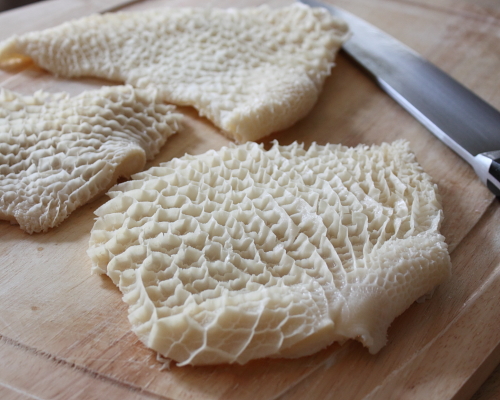
133Nickelini
>132 baswood: I would go on a hunger strike.
134mabith
>131 avidmom: I was very into it during high school, but it was much harder to find them! Libraries didn't have anime DVDs (other than Akira and Ghost in the Shell, maybe) or volumes of manga then. I do still attempt stitching and watching occasionally, but only series I've seen before. As I got older I got really sick of the series that just went on and on and on and never ended.
>132 baswood: Oh dear... Cummings largely just refers to 'la soupe,' which he describes as "a faintly-smoking urine-coloured circular broth, in which soggily hung half-suspended slabs of raw potato" and what sounds like somewhat ersatz bread (perhaps made with pea flour). (Also, CIRCULAR broth? Cummings will be Cummings, I guess.)
>132 baswood: Oh dear... Cummings largely just refers to 'la soupe,' which he describes as "a faintly-smoking urine-coloured circular broth, in which soggily hung half-suspended slabs of raw potato" and what sounds like somewhat ersatz bread (perhaps made with pea flour). (Also, CIRCULAR broth? Cummings will be Cummings, I guess.)
135mabith
Decided to make a map of author nationalities of my reading. I'll update it as I go. I predict more memoirs to keep my current balance of women writers and also read from outside the prominent English speaking countries. I wish more straight history or general non-fiction was translated (and had audio editions). I do feel like I'm getting ever closer to my perfect reading balance.

(There are a few Caribbean countries that should be read but are too small to show up.)

(There are a few Caribbean countries that should be read but are too small to show up.)
136VivienneR
Just catching up and adding to my wishlist, especially Magna Carta: The Birth of Liberty by Dan Jones and The Battle of Hastings: The Fall of Anglo-Saxon England by Harriet Harvey Wood.
Poor Cummings. I remember reading George Orwell's experiences in The Road to Wigan Pier and wondering why he would put himself through all that, especially the tripe!
Poor Cummings. I remember reading George Orwell's experiences in The Road to Wigan Pier and wondering why he would put himself through all that, especially the tripe!
137RidgewayGirl
Having a map on my thread is a good reminder for me to look further afield for my books. You're going gangbusters already, though.
I enjoyed catching up with your reading.
I enjoyed catching up with your reading.
138mabith
>136 VivienneR: The Battle of Hastings book was such a pleasant surprise. Not that I expected it to be a bad read, but I didn't predict how much I'd love it. Cummings seems to have greatly valued the experience of his imprisonment, and the people and types it introduced him to.
>137 RidgewayGirl: My percentage of books by US/UK/Canadian/Australian authors last year really shocked me. So this year I've tried harder to be really aware of it. When you read a lot of history and general non-fiction it's a bit harder.
>137 RidgewayGirl: My percentage of books by US/UK/Canadian/Australian authors last year really shocked me. So this year I've tried harder to be really aware of it. When you read a lot of history and general non-fiction it's a bit harder.
139mabith

Love, Nina: A Nanny Writes Home by Nina Stibbe
This is a selection of letters that Stibbe sent home to Leicester while she worked as a nanny in London. Her employer, MK, is a literary editor and they frequently have neighbor Alan Bennett round for supper. It's a fun, little book, if slightly appalling in terms of "can't adult" sort of behavior (to put it in today's hip, young parlance).
I wish I could absorb from the book how to be less anxious, as Nina, MK, and the kids never seem to worry all that much about anything.
140mabith

Sir Thursday by Garth Nix RE-READ
Fourth in the Keys to the Kingdom series, to which I am heavily devoted. Nix gives us an amazing world, and manages to make each book feel unique and special. Many authors would have ended up with basically the same book seven times over.
Highly recommend the series.
141mabith

The Man Who Mistook His Wife for a Hat by Oliver Sacks
Given that there are newer books that cover the same subjects with more depth and accuracy, given that Sacks' writing style isn't anything special, I'm not sure why this book is still considered a classic.
I RAGED at this book, and regret not setting it aside (that's so hard with audiobooks for some reason). The amount of ableism is astonishing, and it shows heavily in attitude, not just in outdated words and terms. As a disabled woman and someone is involved in disability activism I was largely appalled.
142mabith

Agnes Grey by Anne Bronte
I decided some time again that Anne was probably the Bronte for me. This was my second read via DailyLit e-mail installments and I really enjoyed it, frequently requesting four or five installments per day.
Agnes goes to work as a governess when her family falls on hard times, despite her parents and sister thinking she was unsuited for the work. Her first post is in a hands-off child-rearing household, where the children behave horribly, Agnes isn't allowed to discipline them and their parents never do. The book is humorous and issues of childcare (especially relating to discipline and routine) are still totally relevant and feel very modern. The book settles down a bit with her next post and a low-key love story.
I really liked this book, and it makes me more eager to get to her other novel, The Tenant of Wildfell Hall. I also thought the way she ended the book was kind of hilarious. This is the last sentence:
And now I think I have said sufficient.
144avidmom
I'll have to check out Agnes Grey! (It sounds a bit like the more mod. Nanny Diaries which I really loved quite a few years back.)
145Nickelini
Love Nina sounds interesting (especially since my eldest daughter is named Nina), so adding that to my wishlist.
And it sounds like I need to bump my copy of Agnes Grey up the TBR pile. I did have some problems with Tenant of Wildfell Hall (soooo many words. Those Victorians love them some words), but the heart of the novel was fabulous. And I'd like to do one of those literary retellings (a la Wide Sargasso Sea or The Hours) from the husband's point of view. Because I don't think the heroine would be all that peachy to live with. Also, Anne is the only Bronte who seems to have a clue about men. Yes, I see Agnes Grey in my near future.
And it sounds like I need to bump my copy of Agnes Grey up the TBR pile. I did have some problems with Tenant of Wildfell Hall (soooo many words. Those Victorians love them some words), but the heart of the novel was fabulous. And I'd like to do one of those literary retellings (a la Wide Sargasso Sea or The Hours) from the husband's point of view. Because I don't think the heroine would be all that peachy to live with. Also, Anne is the only Bronte who seems to have a clue about men. Yes, I see Agnes Grey in my near future.
146dchaikin
>141 mabith: I hadn't thought of Sacks and this book from that perspective. I think I knew it was outdated, but I was so interested in the nature of the diseases. (I read it in 1999).
147mabith
>143 AnnieMod: re: Autism, Neurotribes is a great read. I've heard good things about Tales from Both Sides of the Brain: A Life in Neuroscience and Reaching Down the Rabbit Hole. Also Asleep about the epidemic of encephalitis lethargica that occured between 1915-1926. Then you've got patient memoirs like Brain on Fire (very good), Head Case: My Brain and Other Wonders (very mixed reviews, but the issue is fascinating, so it's still on my list).
>144 avidmom: The focus on the kids and minding them fades somewhat with her second position (governess to older teen girls), but the feeling of "nothing ever changes" was so strong.
>145 Nickelini: Agnes Grey is very short, not suffering at all from All The Words! syndrome. It is at least partly based on her own experiences which probably helps.
>146 dchaikin: Other than the terms being so outdated (honestly I think they're a little outdated even for 1985, but no one ever said doctors were good at embracing change), I think a lot of people will overlook his attitudes because they're general attitudes. Every physically disabled person is used to hearing variations of "Oh I could never live like that, I'd just kill myself." Sacks makes it very clear what physical impairments make life not worth living.
>144 avidmom: The focus on the kids and minding them fades somewhat with her second position (governess to older teen girls), but the feeling of "nothing ever changes" was so strong.
>145 Nickelini: Agnes Grey is very short, not suffering at all from All The Words! syndrome. It is at least partly based on her own experiences which probably helps.
>146 dchaikin: Other than the terms being so outdated (honestly I think they're a little outdated even for 1985, but no one ever said doctors were good at embracing change), I think a lot of people will overlook his attitudes because they're general attitudes. Every physically disabled person is used to hearing variations of "Oh I could never live like that, I'd just kill myself." Sacks makes it very clear what physical impairments make life not worth living.
148janeajones
Just catching up on your thread -- interesting variety of reading and great reviews. I saw an exhibit on the Timbuktu books and manuscripts at the International Museum of Muslim Cultures in of all places, Jackson, MS: http://www.muslimmuseum.org/
149mabith

A Brief History of Seven Killings by Marlon James
Wow, this is an epic novel, and incredibly ambitious (James certainly succeeded, in my opinion). He gives us a large pool of narrators who we cycle through starting in 1976 and ending in 1991 over the course of five sections (each representing a single, specific day). The second section deals with the day unknown gunman shot at Bob Marley inside the singer's home. Marley is referred to as The Singer throughout the novel.
Politics plays a large role in the book, especially in the first three sections, primarily the struggle between the Jamaican Labour Party and the People's National Party (the attempt on Marley's life was thought to be political due to his appearance at a concert supposedly to ease tensions between the two parties but many felt it was a support rally for one side).
Our narrators cover a wide range of people with varying motivations and interests, some of whom intersect suddenly. The writing is brilliant, though the time jumps between the sections being very uneven wrong-footed me the feeling was brief (the first two take place on two consecutive days, then 1979, 1985, and 1991). I listened to the audiobook, which was read very well (multiple narrators, not sure if it worked out to one per narrator or if there was doubling up, but the voices are distinct). Was very helpful to have it as a digital loan from my library, as over drive had the narrator listed with the chapter numbers (except for the last part of the book for some reason) so if I got confused I could check that very easily.
Recommended. It's a sweeping book, worthy of its Man Booker award, I think.
150mabith

Drowned City: Hurricane Katrina & New Orleans by Don Brown
This is a comic book telling of the events and aftermath of hurricane Katrina aimed at children and teens. The publishers say age 12 up but I'd knock that down to age 10. The book doesn't pull any punches but it's not super graphic either. It also really just sticks to the facts and doesn't elaborate in any way that I found biased for any one side.
Very good introduction for the younger set, and a nicer reminder/primer for adults too. Brown's illustration style in this is very loose and a little sketchy which really worked will with the subject.
151mabith

How to be a Tudor by Ruth Goodman
Another excellent dawn to dusk book by Goodman about daily life (largely focused on the lives of the ordinary people). Goodman is a historian who has worked on a number of living history projects, actually doing these jobs in period dress, eating what they ate, etc... I am more than slightly in love with her because her passion for social history and enjoyment of those experiments is so monumentally obvious, even when the work is incredibly difficult. I suppose also because that's the sort of thing I might have gone on to do if I hadn't become disabled (in high school I discovered a great love for hard, manual labor, and I've always loved history).
It's a great book, if necessarily less full than her similar work about the Victorian period (due to less documentary evidence). The Tudor period is her favorite, and I think this book showed me why that is. It's perhaps the earliest period where we have abundant markers still with us in our lives from the language down to things like the order of courses in meals.
I recommend every bit of Goodman's work that you can possibly squeeze into your life. She is a JOY.
152mabith

The Prince of Medicine: Galen in the Roman Empire by Susan P. Mattern
While I know the name Galen and that he was an ancient doctor who influenced many periods of history, I didn't really know much more than that. Enter this book. It's a good scholarly biography, well-written and well organized. Recommended to those with an interest.
Notable points:
Galen was such a prolific author that surviving works make up almost half of all the work we have from ancient Greece as a whole. I'd say good medical texts would be more likely to survive, but use of Greek texts went into major decline with the collapse of Rome.
Doctors regularly came up with treatments taken from their dreams. Makes me wonder what kind of dreams they had. Granting if you're greatly invested in an issue you're more likely to dream about it, but I think pretty constantly about embroidery and a load of time doing it (and more time designing the patterns I use), but I've never dreamed about it. (I did have a dream about reading and posting on LT recently.)
Galen describes a patient with an anxiety disorder who worried that Atlas would drop the world. I found that strangely comforting.
153mabith
>148 janeajones: I kind of love when pretty niche museums are in seemingly random places. Thanks for the link!
154mabith

Relish: My Life in the Kitchen by Lucy Knisley
I've been meaning to check out Knisley's published work a long time. I started following a group of young, largely female, comic artists in the early 2000s and would see bits of Knisley's work (self-published) through her connection with Erika Moen.
As the title implies, this is a graphic memoir centering around Knisley's relationship to food and to cooking. Her parents were pretty serious foods in New York City and then in Rhinebeck, NY. It did amuse me that her parents' disdain for junk food and refusal to have certain things in the house was for foodie reasons whereas in my house it was for hippie back-to-the-land reasons (though her mother did turn to gardening pretty hard when they moved).
It's a lovely read, interspersed with a few recipes, and drawn in a very pleasant style. I liked Knisley's defense of junk food in moderation. The focus is more on Knisley's mother and the book made me think of my own relationship to food and cooking and how it came through (or didn't in some cases) through my mom.
155ursula
>149 mabith: I only read the first and last sentences since I'm planning to read that one, but I'm glad to see that you liked it.
156baswood
Encouraged by your review of How to be a Tudor That might be one for me
157dchaikin
Enjoyed these. I'm wondering if my library has A Brief History of Seven Killings on audio. Very entertained by the anxiety order Galen described.
158mabith
>155 ursula: No spoilers in my review anyway! I hope you'll like it as much as I did. I love a long fiction read where the length is justified.
>156 baswood: Goodman is definitely a master at conveying the everyday life side of history. It's interesting which sections end up being longer than you'd expect.
>157 dchaikin: The audio done very well, at least in my uneducated view (in terms of slang and accents). I think any book done with any sort of dialect writing is served better by audio editions (if they're done well). Galen had a whole text dedicated to anxiety disorders, if I recall correctly. Very interesting to see them treated in quite a modern way, and a better way than the average person manages today sometimes.
>156 baswood: Goodman is definitely a master at conveying the everyday life side of history. It's interesting which sections end up being longer than you'd expect.
>157 dchaikin: The audio done very well, at least in my uneducated view (in terms of slang and accents). I think any book done with any sort of dialect writing is served better by audio editions (if they're done well). Galen had a whole text dedicated to anxiety disorders, if I recall correctly. Very interesting to see them treated in quite a modern way, and a better way than the average person manages today sometimes.
159mabith

The Great Transformation: The Beginning of Our Religious Traditions by Karen Armstrong
Another excellent comparative religion book by Armstrong. This one focuses mostly on Jewish, Greek, Chinese, and Indian traditions during the Axial age (between the 8th and 3rd centuries BCE). We move up through time and go back and forth between the different places and religions.
While it was a good read (fascinating topic), and I like Armstrong's writing and clarity, I feel like the organization of the book would have benefited from separating the regions and religions. It felt too hard to keep track of so many threads and yet retain some view of the big picture.
Recommended for the religion/history junkie. Better in print than via audiobook, I think.
160mabith

Rosalie Lightning by Tom Hart
This is a graphic memoir about Hart's daughter Rosalie and her sudden death a few weeks before her second birthday. Hart talks about her, and about the incredibly turmoil he and his wife went through after Rosalie's death. It's about believing in healing even when things are darkest, and taking lessons where you can. It's about recovery, and not letting yourself split in two.
His art style isn't my favorite (I guess it's more the shading method), but it's an intense book as you'd expect, and communicates the devastation well.
161mabith

Ms Marvel Vol 5 by G. Willow Wilson
I go back and forth about continuing reading this series, but while my library gets the volumes I'm pretty happy keeping tabs on Ms. Marvel. I maybe wouldn't hesitate at all, but artist changes... One of the artists in this volume changes Kamala to look like every WASP female character ever drawn for Marvel/DC and that really really rubbed me the wrong way.
My other hesitation is just that the Marvel universe is so strange for the new reader. The X-Men cartoon may have been a favorite when I was a kid, but it didn't engage in the cross-over of the comics generally. Spiderman randomly showing up, Ms. Marvel running with The Avengers... It takes me aback for some reason.
Poor Kamala can't catch a break in this one, and she is still working on balancing her life. But she's a teenager and I'm pretty sure working on life/work/school balance is hard from high school through your twenties (and we're not trying to fight evil). There's lots to love about the series, especially when Alphona is doing the art.
162mabith

A Silent Voice Vol 1 by Yoshitoki Oima
First volume by an award winning young mangaka (manga artist/writer). A very weird moment realizing the author is fourth years younger than me...
It focuses on the bullying directed towards a deaf girl who's new to a school, from the point of view of the main bully. It's good and complex, as we see what happens when the bullying is exposed and the way the kids who happily went along with the bully try to divorce themselves from the fallout.
Very interesting and well drawn. It's a seven volume series, and I'm waiting on my library to order the final two volumes before I continue reading (they were just released in English this past spring).
163mabith

Lady Friday by Garth Nix RE-READ
Fifth out of seven in the series. Arthur becomes more confident though he immediately makes a serious mistake which leaves him on his own for a bit. His earth-world friend Leaf has her own troubles, and Arthur is forced to use more and more magic, making it less likely he can return to his old life.
Seriously, Nix is a genius at world building and plotting. Can't express my admiration for his work enough or my recommendation at his work for juvenile fantasy fans (there's just so much bad children's fantasy).
164mabith

The Awakening and Selected Short Stories by Kate Chopin
My third subscription based read for July (via the site DailyLit. Chosen because I was looking for a book written by a women that wasn't acres long.
I didn't have any clear idea of what to expect with this one, other than being familiar with the title and the author's name. I really liked her writing style, and she kept me interested in the characters to the end. It was published in 1899.
From Wikipedia:
"...the plot centers on Edna Pontellier and her struggle between her increasingly unorthodox views on femininity and motherhood with the prevailing social attitudes of the turn-of-the-century American South. It is one of the earliest American novels that focuses on women's issues without condescension. It is also widely seen as a landmark work of early feminism, generating a mixed reaction from contemporary readers and critics. The novel's blend of realistic narrative, incisive social commentary, and psychological complexity makes The Awakening a precursor of American modernist literature..."
Through the book I was chiefly reminded of Virginia Woolf. Not her writing or her books, but just HER and her life. I hadn't been going to read the short stories, but they were so short I did. Well done as well, and timed quite nicely, they felt like they were the length they needed to be, not shorter or longer. Interesting read, recommended.
165mabith

Kindred by Octavia E. Butler
I really liked this book. It's 1976, Dana, a black woman, and her white husband Kevin are unpacking their books in their new house. Dana suddenly feels ill, swoons, and comes to by the banks of a river where a young white boy is drowning. She saves him, and is drawn back to her own time when her own life is threatened. She can't understand what happened, and Kevin doesn't really believe her. When it happens again she has a chance to question the same boy, Rufus, and learns it's 1815. Again he was in danger when she was drawn back and his name matches the name of her great-great-grandparent.
I'm a sucker for time travel stories in general, and I think Butler does so well with this. She allows the situations to be complex, she does not boil everything down to common denominators, or reduce the shades of grey in Dana's struggle with Rufus and with the realities of the period. Could little bits be improved? Maybe, but I enjoyed the straight forward, no frills narration.
Audio edition was done pretty well, other than the white Marylander accents which felt wrong, but you can't have everything. Recommended.
166mabith

Sapiens: A Brief History of Humankind by Yuval Noah Harari
I was somewhat disappointed in this book. I think Harari attempted too much and wasn't able to give everything the same level of scholarship (I noticed a few instances of relying on common knowledge when it came to daily life in the semi-recent past).
There also seemed to be a focus on the idea that people who aren't religious must have something that takes the place of religion. That whole "people who Believe in science" business, which, to paraphrase Terry Pratchett, science doesn't require belief, we know it's real. I understand why people talk about Communism in those terms, because as practiced in Russia and China there was whole personality cult thing. I'd still argue that seems like a feature of most dictatorships. Harari decided to lump feminism in with the religion substitutes and that seriously rubbed me the wrong way. Patriarchy is a lot closer to a pseudo-religion than feminism, for one thing, but it's never mentioned in that way.
There was interesting stuff in this book, but it's not a subject unique to this work. The earliest parts were the most interesting, and trying to move through more recent history did the book no favors and didn't really add anything to Harari's arguments. Not really recommended.
167ursula
>158 mabith: I like to know nothing about a book if I can manage it. :)
168mabith
>167 ursula: I'm with you there, generally. Once a book is on my to-read list I tend to just start it without a reminder of what it's about.
169mabith

The Patchwork Girl of Oz by L. Frank Baum
I didn't read this one as a kid, which is strange since the later Oz novel by Ruth Plumly Thompson that featured the Patchwork Girl (The Gnome King of Oz) was one of my favorites.
This is a classic Oz journey, and a lot of favorites make an appearance and there's an uppity cat (all of Baum's domestic cats are very self-absorbed, this one has pink brains, you can see 'em work). The Crooked Magician finally finishes a batch of powder of life and after bringing the Patchwork Girl to life petrifaction powder spills on his wife and Ojo's uncle Unc Nunkie, setting off a quest to get the materials to undo the petrifaction spell.
Baum intended to end the Oz series with the previous book, The Emerald City of Oz, but financial hardship required him to start the series again. Fans of many book series have capitalism to thank for a lot of books. I love that Baum felt it necessary to explain how he got back in contact with Oz (copied from Wikipedia):
In the prologue, he explains how he managed to get another story about Oz, even though it is isolated from all other worlds. He explains that a child suggested he make contact with Oz with wireless telegraphy. Glinda, using her book that records everything that happens, is able to know that someone is using a telegraph to contact Oz, so she erects a telegraph tower and has the Shaggy Man, who knows how to make a telegraph reply, tell the story contained in this book to Baum.
My main complaint for the book is that Ozma uses magic to make the Crooked Magician un-crooked even though he was doing fine with a crooked body. Makes me sad in disability activism related way.
One of the few survivors of Baum's short-lived film company is the silent movie version of The Patchwork Girl which I intend on watching soon (it's on YouTube).
170mabith

The Invention of Nature: Alexander von Humboldt's New World by Andrea Wulf
I absolutely loved this book. Humboldt was fascinating and compelling and seemed like such a good human. I loved him, and just wanted to hear more. The science is very interesting, but perhaps his world view, being out of step with his time, is most fascinating.
Wulf uses a final section of the book to talk about how Humboldt influenced many important scientists of the 19th century, which felt somewhat out of proportion (as in too much time and detail devoted to each). Still loved the book though. It's one I'll be recommending all over the place.
Chris/cabegley's review is what made me pick this one up, and it's a much fuller review than I can muster.
171mabith

Son of the Shadows by Juliet Marillier RE-READ
I re-read this less than a year ago, but it's one of my go-to 'feel better' books, and my favorite in this trilogy. Marillier writes mainly historical fantasy, set in a real place and time with real groups of people. Their religion/folklore is real and that brings the fantasy element, but the focus remains firmly on the humans. No dragons, no unicorns, no fey who are best friends with the humans.
I don't quite know how she does it, but Marillier makes me really, truly care about her characters in a very short amount of time. It's a strength with most of her books, even when the content isn't my favorite (as with her fully fantasy YA trilogy, Shadowfell). I am grateful for the authors who suck me into the characters this hard.
172mabith

Silent Spring by Rachel Carson
Talk about a powerful book that unfortunately speaks across the decades since it's initial publication (1962). It was chilling to read at time, and I'm a little glad Carson isn't alive to see the current state of affairs.
Pretty much everything in the book is still totally relevant, and Carson is an absolutely incredible writer. The book remains a classic for her writing as well as the message. Highly recommended.
173mabith

All Clear by Connie Willis RE-READ
Finally got to the second part of this book duo that starts with Blackout. Loved it the first time, and I think I loved it even more this second time. I even still felt my suspense muscles seizing up despite knowing what would happen.
Willis has capture so much with her Oxford time travel books. She challenges our understanding of the past and what the limits of understanding are, even for those thrust into the actual period they study. She brings to light our over-complication of some issues and the simplification of others. As a life-long history fan she speaks to me so much in these books.
I was trying to explain to my five year old niece why history is awesome, if she's still doubtful once she hits middle school age I'll give her Willis' books (who am I kidding, I'll give these books to her no matter what).
174mabith

The Taming of the Shrew by William Shakespeare RE-READ
This play was my introduction to Shakespeare. My dad directed a number of high school theater productions when I was a kid. Somehow 90% the rehearsals were on 'his' nights to have us kids (while my parents still lived in the same time we had dinner with him twice a week, plus every other weekend at his house).
I was in fourth grade when he directed Taming of the Shrew, and attended most of the rehearsals. As well as being made a pet by the girls in the production, it started my interest in Shakespeare which would fully blossom a couple years later when he directed The Tempest. I have also seen a really wonderful performance of Shrew by the Shakespeare Theatre Company in Washington DC.
Re-read this now as I've been meaning to make a project of re-reading the plays and there are a lot of great audio full cast adaptation, and because I was picking up Vinegar Girl next (Anne Tyler's adaptation of the story for the Hogarth Shakespeare series).
It was a pretty fun listen, though this audio play could have used a slightly slower pace and use of spoken stage directions.
175mabith

Vinegar Girl by Anne Tyler
This is Tyler's take on The Taming of the Shrew, which seems like a particularly difficult one to adapt to modern tastes (and really what can compare to the 1990s teen film re-telling 10 Things I Hate About You?). This was written for the Hogarth Shakespeare Series. I'm lukewarm on whether or not to read Margaret Atwood's take on The Tempest, as I think I'm too attached to the play. I am sadly not a very flexible reader when it comes to re-tellings.
Tyler's take is interesting, and not un-enjoyable, but I also didn't love it, and felt it lost most of the humor of the original. I suppose because in a modern setting, without the staging, it's inherently less humorous. I think Shakespeare's comedies are funniest with the visual element. I did really like the scenes of Kate dealing with kids at her daycare job.
Interesting to read, and it's pretty short so you're not devoting too much time to it.
176mabith

Superior Saturday by Garth Nix RE-READ
6th book in the series! Only one battle left for Arthur who would be feeling pretty beleaguered if he weren't fighting the dehumanizing influence of the five keys he's already claimed (this is the Keys to the Kingdom series).
Strange denizens of the house, making deals with Raised Rats, going undercover with Suzy, and worrying about the situation on earth where the army is about to bomb a hospital they've identified as a plague nexus (which was brought to earth when people from The House visited). All he wants is to go back to his cozy family life.
For the nth time, I love these books, I love Garth Nix. This series deserves so much more love.
177mabith

First They Killed My Father by Loung Ung
This is Ung's memoir of her childhood in Cambodia, mostly focusing on five years, the period when her family was driven from Phnom Penh into the countryside, and their struggle to stay under the radar.
It's amazing that five of the seven surviving siblings managed to find each other again after being split up for various reasons. I'm curious about Ung's next memoir covering her life after emigrating with one brother to the US. She talks at the end of this book about throwing herself into being a US citizen and pulling away from Cambodia as hard as she could, which is a relatively common symptom of the severe traumas she experienced in the killing fields.
Recommended. She attempts to keep her child mindset front and center in this rather than examining everything through an adult lens, so it's told in a very straight-forward manor.
178dchaikin
>159 mabith: Armstrong lost me with this one
>166 mabith: Bummer about Sapiens. Such a great title.
>170 mabith: I really need to read this Wulf.
Enjoyed your other reviews too!
>166 mabith: Bummer about Sapiens. Such a great title.
>170 mabith: I really need to read this Wulf.
Enjoyed your other reviews too!
179mabith
>178 dchaikin: Ah, too bad about Armstrong! I'm coming from a place of not really growing up with religion (and for some reason was convinced that everyone treated their monotheistic religions the way Greek mythology was treated in school - I tended to make up my mind about things as a kid and not ask questions of anyone).
I can't recommend The Invention of Nature enough. Stupendous read for me, and Humboldt is just so interesting (plus the novelty of less problematic behaviors and attitudes than 90% of well known figures of that era).
I can't recommend The Invention of Nature enough. Stupendous read for me, and Humboldt is just so interesting (plus the novelty of less problematic behaviors and attitudes than 90% of well known figures of that era).
180mabith

$2.00 a Day: Living on Almost Nothing in America by Kathryn J. Edin, H. Luke Shaefer
A detailed look at US welfare before and after reforms, what life can look like for people at the very bottom, focusing especially on the food stamp (now known as SNAP - Supplemental Nutrition Assistance Program). It does not go into the "well it's cheaper to buy fresh food" stuff except for some brief discussion of food deserts and doesn't bring up the 'food stamp challenge' stunts by politicians, which I'm grateful for. (Living on a limited, very cheap diet for a single month is nothing, they know exactly when it will end. It's a very different proposition living on it for YEARS, not to mention lack of time and energy for cooking, and the fact that home ec. is an elective where it's available at all.)
The book has a relatively narrow focus, on specific families and people, how they've coped, the economic forces acting upon them, etc... A good primer for anyone wanting to start understanding current social welfare in the US in real-world terms.
181mabith

Queen Margot by Alexandre Dumas
This is a historical novel about Marguerite de Valois, the first wife of Henry IV of France. It's Dumas so the writing is good, but it never had me enraptured the way The Count of Monte Cristo, The Three Musketeers, or The Man in the Iron Mask did. I found it very easy to start tuning out. Perhaps because so much of the action is quiet plotting and I really didn't care about any of the characters. Just realized my favorite character was the villain - Catherine de Medici.
Not sorry I picked up, but I certainly won't feel the desire to re-read it the way I do with other Dumas works.
182mabith

The Democracy Project: A History, A Crisis, A Movement by David Graeber
I loved Graeber's book Debt: The First 5,000 Years, and found this title up to snuff as well. The book is partly a history of the Occupy movement, which he was heavily involved in in New York City. What he and other seasoned activists were shocked by wasn't the violence towards protestors or that the city/police managed to shut down the park occupation (which was not the end of the movement, our media just decided that end would make the best story arc), but that the movement actually came together at all, and came together naturally with a huge range of demographics.
His humor is still evident in this, particularly as he muses on the strange positions (small a) anarchists are taking in this world. He recalls being with a group throwing paint at corporate windows shouting "Pay your taxes!" The later chapters about what is meant by capitalism and communism and what they really stand for in our lives were especially interesting and useful for me. Really the whole thing was great, and I really recommend it.
"Submitting oneself to labor discipline - supervision, control, even the self-control of the ambitious self-employed - does not make one a better person. In most really important ways it probably makes one worse. To undergo it is a misfortune that at best is sometimes necessary. Yet it's only when we reject the idea that such labor is virtuous in itself that we can start to ask what actually is virtuous about labor. To which the answer is obvious. Labor is virtuous if it helps others. An abandonment of productivism should make it easier to reimagine the very nature of what work is, since, among other things, it will mean that technological development will be redirected less towards creating ever more consumer products and ever more disciplined labor, and more toward eliminating those forms of labor entirely.
What would remain is the kind of work only human beings will ever be able to do: those forms of caring and helping labor that are, I've argued, at the very center of the crisis that brought about Occupy Wall Street to begin with. What would happen if we stopped acting as if the primordial form of work is laboring at a production line, or wheat field, or iron foundry, or even in an office cubicle, and instead started from a mother, a teacher, or caregiver? We might be forced to conclude that the real business of human life is not contributing toward something called 'the economy' (a concept that didn't even exist three hundred years ago), but the fact that we are all, and have always been, projects of mutual creation."
183mabith

Americanah by Chimamanda Ngozi Adichie
I really loved this book from beginning to end, and particularly Ifemelu, the protagonist. I really related to some of her relationship choices and personality. I have loved all of Adichie's books though, and was saving this one for when I really needed a good read.
A key aspect of the book is Ifemelu's exploration of racism in the US and the strange shift coming from Nigeria where race isn't really a social identifier or divider. Adichie said in an interview, "I became black in America and I really hadn’t thought of myself as black in Nigeria. I think that identity in Nigeria was ethnic, religious…but race just wasn’t present. …"
You can tell that so many of her experiences coming to the US for college were put into this book. Recommended, but I'd advise reading her other two novels first, if only to see how she's grown as a writer.
184mabith

Children of the New World: A Novel of the Algerian War by Assia Djebar
I found this to be a very good novel, with a randomly intersecting group of focal characters taking us through a wide swath of Algerian society. I really felt involved in the character's lives and the novel feels more recent than it's original publication date of 1962 (perhaps this is because of the recent translation though).
I'm pretty rubbish at reviewing this kind of novel, so I'll forward you to Baswood's review of it in tandem with another novel of the Algerian war for independence.
Recommended.
185mabith

One Dead Spy by Nathan Hale
This is the first of a series of comic book histories for children (focusing on US history, I think), called Nathan Hale's Hazardous Tales. The artist's name is actually Nathan Hale, no known connection to the revolutionary spy who is the subject of this first volume.
I checked this out to decide if they were good enough for my nieces and nephews, and I think they are. The book was accessible and interesting and funny, and made me want to know more about Henry Knox. My library has failed me there, having no biography of Knox at all.
These are the types of books I would have loved as a kid (I was a big history fan and a comic book fan) and will perhaps convince my niece Evie that history can be fun. She's only five and already telling me history isn't interesting, I argued in its favor but she is not convinced yet, and she hasn't even started school where the history will focus mostly on men. Sigh. I'll be doing some strategic book buying for her for the next few years.
186mabith

Free Food for Millionaires by Min Jin Lee
I'd put this book on my to-read list a year or more back, probably due to someone here on LT. I'd forgotten about it, as my library doesn't have it, and then my bookclub picked it for this month. In my usual fashion I didn't bother to read any summaries before I started.
It's an every day novel, focusing on Casey Han, the daughter of Korean immigrants and her family and social circle. Casey has a degree in economics and assumes she'll be hired at her choice investment banking house and so only applies there. When she's not her life goes into a bit of a tailspin. Among her friends she is one of the few who grew up in relative poverty and who is reluctant to allow others to help her.
It's a pretty long book, but never felt long and made for very easy reading. Everyone is very human and flawed, and as a debut novel I think it shines brilliantly. I really enjoyed it, and I'm glad to see Lee has a novel due out next February. The last little bit of the novel has my bookclub somewhat divided, one feeling the book was ruined by the last page ambiguous ending whereas I felt that was the perfect end for these characters and this novel (though if Americanah had ended like that I would have been raging). Another felt an incident late in the book was gratuitous, and it was a bit, but it did serve some very real purposes and again, it's Lee's debut novel.
Recommended for the contemporary fiction reader, I guess? I wasn't expecting the bookclub to be so divided on the last fifth of the book, so now I'm unsure about giving a full-throated recommendation. I do believe Lee is a novelist to watch. There were interesting twist parallels for different characters through the book which I found very skillfully done, generally.
187dchaikin
180-186 - you've been reading some great books. Interesting about Graeber's book and nice to see a positive review of Americanah. Reviews seem mixed. The one i'm most interested in is the Djebar.
188mabith
I saw the mixed reviews of Americanah too, so was a bit nervous starting it. It hundred percent worked for me though. A bookclub friend who mostly shares my taste in books had absolutely raved about it.
It has definitely been a great couple months for my reading! I keep bracing myself for a really bad apple to sneak in.
It has definitely been a great couple months for my reading! I keep bracing myself for a really bad apple to sneak in.
189rebeccanyc
>170 mabith: Someone gave me The Invention of Nature and your review makes me eager to get to it.
>181 mabith: I felt the same way about Queen Margot.
>181 mabith: I felt the same way about Queen Margot.
190japaul22
I put the Humboldt book on my library wish list. Looks great! I've also never read anything by Adichie and you have me very interested. I'll probably start at the beginning, as you suggest.
191mabith
>189 rebeccanyc: I felt bad/annoyed that Dumas wasn't gripping me as usual. Happens to the best, I guess.
>190 japaul22: I think there's a fair amount of preference for her first novel Purple Hibiscus over her second, Half of a Yellow Sun, but I think that's because the former is a simpler family story and the latter is more complex, more 'foreign' to US and UK readers, and deals heavily with politics. I read Half of a Yellow Sun first and found it remarkable (and LOVED her short stories volume, The Thing Around Your Neck, and I'm not a short story person). I think she's one of those authors that makes you care about the characters in record time.
>190 japaul22: I think there's a fair amount of preference for her first novel Purple Hibiscus over her second, Half of a Yellow Sun, but I think that's because the former is a simpler family story and the latter is more complex, more 'foreign' to US and UK readers, and deals heavily with politics. I read Half of a Yellow Sun first and found it remarkable (and LOVED her short stories volume, The Thing Around Your Neck, and I'm not a short story person). I think she's one of those authors that makes you care about the characters in record time.
192baswood
Glad you enjoyed Children of the New World: A Novel of the Algerian War
193mabith

Kaffir Boy by Mark Mathabane
Originally published in 1986, this is a memoir covering Mathabane's life under Apartheid rule in South Africa. He was born in 1960 and the memoir covers his early childhood through to getting a tennis scholarship at a US school in 1978.
It is a brutal book, as you might expect. Mathabane grew up in Alexandra, a part of Johannesburg, essentially in a 1 mile square ghetto housing 200,000 people. He lived with extreme daily fear throughout childhood because his parents passes to be there were not valid, meaning they could be arrested at any moment. He talks about contemplating suicide when he was ten, which is common for children growing up in poverty and extreme insecurity in their daily lives.
Highly recommended. The audiobook is well-read by Mathabane, though he occasionally gets a little too theatrical with the dialogue for my tastes (it is definitely not the majority of the dialogue though). I kind of wish I'd read this paired with July's People by Nadine Gordimer.
194mabith

A Thousand Miles to Freedom by Eunsun Kim
The only trouble with trying to read a wider variety of nationalities but also keep my non-fiction ratio up is that I will end up with many depressing memoirs. Books in translation are less likely to be make into audiobooks and the non-fiction that makes it to audiobook is made up of 90% memoirs. I like memoirs, and I've always read a lot of depressing non-fiction, but we'll see if I get burnt out by year's end (luckily the next biggest genre of translated audiobook is popular science/psychology, which I'm a fan of).
Kim is one year younger than me, which lent an extra dimension to this read. While she was days away from death by starvation I was falling in love with Shakespeare while watching my dad direct a performance of The Tempest and enjoying being the only child in the house.
There was nothing left for Kim, her mother, and sister in North Korea. If they stayed they would have almost certainly died, but it took them multiple attempts to fully leave North Korea. After crossing into China the first time they were essentially sold to a Chinese man who wanted a wife to give him a son (in hopes it would move him up in the inheritance roster as his older brothers had daughters). They were eventually informed on and sent back to North Korea. After a reeducation camp convinced the guard to let them go as arrangements had changed and this guard has no paperwork on them (and thus would not be held responsible). After making it back to China again and saving money Kim and her mother paid a smuggler to help them get to Mongolia, where the South Korean embassy would get take them from there.
The book goes on to cover their adjustment to South Korea and Kim's year or so of college in the US. While Kim skims over some of the worst parts of their life and escape, and uses euphemisms for some others, she admits there are parts of her life and escape she has not told, due to the nature of the trauma. I hope she is telling someone about them though. The more we bottle up, the more negative effects those memories have on us, both mentally and physically. I wish I could look her in the eyes and tell her she is being heard and her positive action is appreciated.
195mabith

See Now Then by Jamaica Kincaid
I'd initially planned on reading this during the Reading Globally Caribbean theme for the first quarter of this year. However, Kincaid as a reader has a more sibilant voice than I can usually handle, especially in the first few minutes minutes. I'd forgotten that and gotten the audiobook out again. This time I remembered that I can usually get used to a voice (and most become less sibilant as the reading goes on) after a bit and it's less noticeable if you speed up the recording a bit. I'm so glad I gave it another go, especially since I believe it worked especially well as an audiobook listened to in one sitting.
The book is not overly loved, perhaps in part because of Kincaid's staunch insistence that it isn't about her marriage. Only it parallels 90% of her own life/marriage, so her denial is kind of annoying (I mean, she could have changed just a few surface details and it wouldn't have been looked on as such a mirror). It feels very much like a cathartic book, and the style is unconventional. She uses repetition of words and phrases and it hammers home the emotion of the main subjects - a husband and wife whose relationship is falling apart.
The book actually really worked for me and I found the style very evocative and powerful. Her language is gorgeous and our own thoughts and speech do tend to be repetitive, especially when we're dealing with periods of extreme emotion or anxiety. A negative review stating it was too-repetitive strikes me as ridiculous because it's extremely purposefully repetitive to produce a specific effect, it's not as thought Kincaid did this by accident.
I hesitate to recommend, since I imagine many people will be annoyed by the style (it is stream of consciousness writing on top of that, but this example worked particularly well for me). It is short enough that I really recommend reading it over a single day, and do not think it would serve the book or the reader to break it up over more than a couple days. I definitely recommend the audio edition if you're an audio person already.
196mabith

A Drifting Life by Yoshihiro Tatsumi
I'm reasonably sure that this is the longest graphic memoir (specifically a memoir vs a daily diary comic) ever published at 834 pages. Tatsumi is a well known mangaka (manga artist and writer), and helped pioneer new views of manga in the 1950s. He began writing comics quite young, sending them into contests for 4 panel, usually humorous 'postcard' comics along with his brother. The memoir takes place from 1945 to 1960 and every so often he includes larger Japanese and world events taking place.
For me this was a good read but not a great read. He was a fan of and contemporary of Osamu Tezuka, creator of Astro Boy and Kimba the White Lion (perhaps the first anime to ever be broadcast in the US) among other things. If I were more familiar with Tatsumi's work or manga of the period I'm sure it would have been a more powerful read. As it was I just sort of got through it (the extra pain caused by trying to wrangle such a large book didn't help).
197mabith


Smile and Sisters by Raina Telgemeier
Two graphic memoirs. I started reading Smile in 2004 when it was one of the first batch of comics on the comics subscription site Girl-a-Matic (that day's comic was free but you had to subscribe in order to read the archives). I think maybe she redrew (or perhaps just colorized) the early strips, but I can't really remember the details from back then. She has a great drawing style and I think you can see the influence of For Better or For Worse by Lynn Johnston.
Smile focuses on an accident which knocked out one of her front teeth and drove the other totally up into her gums. Resetting the teeth wasn't effective for various reasons, and Telgemeier goes through a LOT of dental trauma at a really difficult time in her life - 7th, 8th, and 9th grades. Her younger sister is consistently teasing her about her teeth, as were her 'friends' who are generally kind of awful to Telgemeier for being less focused on dating dating makeup dating.
Sisters focuses on a family road/camping trip on the way to and from a family reunion. We see flashbacks of Telgemeier's relationship with her younger sister, Amara, a girl who has always been happy to do her own thing and did not welcome the loving attentions of her big sis at any point. It is full of bickering, as you might expect. I am envious that Amara was always so self-sufficient and confident about what she wanted. Their age difference is the same as the one between me and my older sister, though I'm the youngest in my family, and I was the opposite of Amara, constantly wanting to be part of my older siblings' worlds, especially my sister.
Two good graphic memoirs, with clear narrative arcs. I really like Telgemeier's art style, and her honesty. Both have a theme of learning to accept herself and being less concerned with fitting in. She now draws the Babysitter's Club graphic novels which I hear are good (I never read the books as a kid, as they basically represented everything I hated in children's fiction).
198ELiz_M
>193 mabith: Or, instead of July's People, you could go back in time and read Down Second Avenue, pub. in 1959, and (I think) set in Alexandra as well. No idea if it exists as an audio book, though.
199Nickelini
My daughter brought home Smile years ago, and I read it. Lovely graphic novel. Great gift for the dentist in your life.
200mabith
>198 ELiz_M: Eliz, there are definitely lots of books it could pair well with. My thinking was that July's People and Kaffir Boy came out in a similar time, and Mathabane was almost certainly living through the same riots as Gordimer was thinking about when she wrote her book.
>199 Nickelini: Telgemeier definitely has a gift with those books. I'm not close to any kids the right age to know if her Babysitter's Club graphic novels are any good (and I think the old fans are probably mostly inflexible fans who don't adjust well to change).
>199 Nickelini: Telgemeier definitely has a gift with those books. I'm not close to any kids the right age to know if her Babysitter's Club graphic novels are any good (and I think the old fans are probably mostly inflexible fans who don't adjust well to change).
201mabith
BookRiot posted a great 'think piece' from 1885 about the dangers of children reading novels willy nilly. Just to remind us how silly we'll all be looking about X media in 100 years.
This is a great quote from it:
It is doubted by authority whether a public library confers any benefit by providing boys, who ought to be playing outdoors, with such pabulum. Ten to eleven year old children spend evening after evening in the library reading room pouring over Alger. Their parents, it is presumed, neither know nor care what they are doing.
It was doubly amusing to me due to this quote from the 1960s Addams Family TV show which I've always loved:
Well, I wasn't allowed to even touch Horatio Alger until I was 28.
This is a great quote from it:
It is doubted by authority whether a public library confers any benefit by providing boys, who ought to be playing outdoors, with such pabulum. Ten to eleven year old children spend evening after evening in the library reading room pouring over Alger. Their parents, it is presumed, neither know nor care what they are doing.
It was doubly amusing to me due to this quote from the 1960s Addams Family TV show which I've always loved:
Well, I wasn't allowed to even touch Horatio Alger until I was 28.
202ursula
>193 mabith: I listened to that one on audio a couple of years ago and totally agree with everything you said.
203NanaCC
Wow, you've done a lot of reading in the last month and a half. I'm glad to have caught up with your reading. I'm going to have to go back and re-read a couple of your reviews, although my wish list will not thank you. :) I'll never be able to read everything I want to.
204mabith

Guantánamo Diary by Mohamedou Ould Slahi
This is the only published work written by someone currently detained at Guantánamo Bay. Slahi, a Mauritanian citizen, was taken to Guantánamo Bay in 2002, after he had voluntarily gone for questioning by various authorities and been cleared several times before (while in other countries who did not just hand him to the US authorities). He assumed this was the same thing when he went to Maurtanian authorities in November 2001. He was handed over and held in Jordan for nine months before transfer to Guantánamo Bay. He has never been charged.
It is a hard read, but an important one. The process of it being published was long and there are various redacted sections, sometimes it seems clear that what is redacted here is not redacted a paragraph later. Likewise they seemed to redact every feminine pronoun referring to guards and interrogators, but not masculine ones, making it obvious when the subject is female. These kinds of pointless redactions create an extra atmosphere of annoyance to the general horror of this system. There are footnotes and explorations and the redactions are shown. The audiobook was well done, using separate voices for Slahi's writing, the notes, and the word 'redaction' when it appeared.
Slahi bends over backwards to find and respect humanity in the people holding him. A review board this past July recommended he be released but it doesn't seem to have happened yet.
Recommended. Necessary reading for a lot of reasons.
205mabith

Lion in the Valley by Elizabeth Peters
Another ridiculously fun romp with Amelia Peabody and her gang. These novels are adding a lot of joy to my life. This is the fourth in the series, historical mysteries set in late Victorian Egypt and concerned with archaeology. The author herself has an Egyptology PhD and I HIGHLY recommended her non-fiction works about ancient Egypt (published under her real name, Barbara Mertz, which also showcase her sense of humor).
The mysteries in these are easy to guess, but I don't read mysteries for a challenge. I also enjoy family dynamics. Peabody is the hands-off non-smushy parent and her husband Emerson is the demonstrative one. There's also quite a good cat.
Recommended for a nice, fun, light read. The audio editions read by Barbara Rosenblat are a JOY.
206mabith

Lord Sunday by Garth Nix RE-READ
The final book in the Keys to the Kingdom series. Nix is such an original writer, both in his worlds and how he moves his stories along. Nothing is easy for Nix's protagonists, not ever, and that adds something.
Great juvenile fantasy series, top of the class in quality for that age group, I think.
207mabith

Secondhand Time: The Last of the Soviets by Svetlana Alexievich
The book comprises the subject's side of interviews done over a period of twenty years (starting in 1991). As the subtitle suggests the focus is on the remaining people who grew up as Soviet citizens.
Extremely well done, and such an important record. The subjects cover a huge swath of the public, a wide range of ages and histories. Recommended.
208mabith

Angel-Seeker by Sharon Shinn RE-READ
The last of Shinn's Samaria books. This one takes place just after the final events in Archangel (the first in the series). The inhabitants of this planet came from a more technologically advanced planet ravaged by war. They were set down with only basic tech in hopes of preventing war. There are angels who basically oversee things and who can sing to the god specific prayers for weather intercessions, seeds, medicines, etc...
It follows Obadiah as he moves from the host of angels at the Aerie to another angel hold. He is to serve as Gabriel's (the head of the angels) emissary to the Jansai, a deeply conservative people who were recently enslaving another ethnic group on the planet.
It's a nice addition to the series. As usual there's somewhat of a focus on romance, but there's always a lot going on in Shinn's books. I really enjoy this series and it's been fun rereading them this year. They definitely stradle the SFF line well, though there's less science in this book than in some others. In this book we get a more rounded view of the Jansai.
209mabith

Spark: How Creativity Works by Julie Burstein
Burstein is one of the minds behind the NPR radio show Studio 360, focusing on arts and culture and trying to "get inside the creative mind."
The book features quotes from interviews with various well known creative types and other commentary on how those people work and what seems to have made them successful.
It was an okay book, but not all that compelling in the end. The audio edition was poorly handled as well. The main end message seems to be "keep trying new things and don't stick to a single creative endeavor." Good advice, but I think the book falls short of the subtitle (How Creativity Works).
210mabith

The Ghost Road by Pat Barker
The final installment of Barker's Regeneration trilogy focusing on a handful of shellshock patients during WWI and their doctor, William Rivers, a real psychologist of the period who treated poets Siegfried Sassoon and Wilfred Owen. Owen and Sassoon also appear in the books.
The trilogy is very strong, though I think the second volume is still my favorite. It uses fewer real people or at least focuses on the fictional characters more, giving Barker a lot more freedom. Recommended in general though.
211avidmom
Love your mix of serious and not so serious reads! Those Egyptian mysteries sound like fun but the Guantanamo Diary sounds so upsetting for so many reasons.
*sigh*
*sigh*
212baswood
Very interesting to read about Guantánamo Diary
213mabith
>211 avidmom: The eclectic reading pattern definitely suits me well. Have to soften the horror with some fun.
>211 avidmom: >212 baswood: Even if we ignore the human rights violations, even if we were solely focused on getting intel, the system there hinders that so much. Saying "do you know this person? No, well they say know you to be XYZ, if you give me info on them you'll be okay," is a really ignorant way to go about things. The authorities give all the information they want to the person being treated poorly at best, tortured at worst, and then claim it's all new, totally trustworthy intel. Ugh.
>211 avidmom: >212 baswood: Even if we ignore the human rights violations, even if we were solely focused on getting intel, the system there hinders that so much. Saying "do you know this person? No, well they say know you to be XYZ, if you give me info on them you'll be okay," is a really ignorant way to go about things. The authorities give all the information they want to the person being treated poorly at best, tortured at worst, and then claim it's all new, totally trustworthy intel. Ugh.
214mabith

Mighty Be Our Powers: How Sisterhood, Prayer, and Sex Changed a Nation at War by Leymah Gbowee
A memoir of the Liberian wars that began in the mid-1990s. Gbowee ended up heavily involved in the peace process via women's movements and her work with former child soldiers. She shows so much strength in just surviving, and is seemingly pretty honest about her choices and her mistakes.
Also important is showing the peace process and how their protests came together. So often we (especially those in western media) act like large scale protests grew from nothing with no planning, with no leadership and that's mostly wrong. Getting a large group to adopt the same protest method isn't easy. Gbowee started from a hard place, with a segment of the group angry that the former leader didn't choose someone already in the movement to replace her.
Gbowee admits that there are parts of her past she did not include in the book. I hate to imagine what those were. This is a good memoir, showing a piece of life not covered in conventional histories of the wars.
If you get rubbed really wrong by mention's of "god's plan" this might not be the book for you. Religion does not dominate the book, but it plays a part. Recommended. This is a piece of history that didn't necessarily make it into world consciousness. It's an important resource for protest movements too.
215mabith

Saga Vol 6 by Brian K. Vaughan and Fiona Staples
The family is getting back together! A very good collection of issues, moving the story right along. Curious what the final ending (at least for this storyline) will be though.
I have feel like waiting until the series is done to read anymore. I tend to forget a fair bit from the previous issues.
217mabith

The Power of Habit by Charles Duhigg
Part self-help book, part popular science. This book attempts to explain some of the scientific misconceptions about habit behavior, how we form them, how they are separate from active memory, and how we can change ingrained habits.
For me this book was a bit too in-between. I don't think there was enough focus or enough normal every-day examples of changing deep habits. I just wanted a longer book, I guess. It was very interesting to learn about how Paul O'Neill, after becoming CEO of Alcoa revitalized the company by changing a single keystone habit by focusing on safety. The corporate examples were some of the most interesting to me due to my lifelong interest in worker rights and unions.
A good read but not a great read. Luckily we're not hurting for popular science titles published in the last decade.
This topic was continued by Mabith's 2016 Reads (Meredith) Part III.

