The 2018 Nonfiction Challenge Part VIII: Short and Sweet in August
This is a continuation of the topic The 2018 Nonfiction Challenge Part VII: The Arts in July.
This topic was continued by The 2018 Nonfiction Challenge Part IX: Spirits, Spirituality, Gods, Demons, and Supernatural Beings .
Talk 75 Books Challenge for 2018
Join LibraryThing to post.
This topic is currently marked as "dormant"—the last message is more than 90 days old. You can revive it by posting a reply.
1Chatterbox
It's summer (at least in the Northern hemisphere, it is...) and our attention spans may be taxed by hot weather, vacations, or just other stuff going on. So, why not read some shorter stuff this month? That's the logic behind this month's challenge.
As the moniker suggests, you're free to read essays from any anthology, longform pieces from the New Yorker, or any other magazine or journal of substance. Long speeches transcribed and published would work, too. Please make them reasonably long and not just an 800-word news feature from Mashable. Think, New York Times Magazine, perhaps, or London Review of Books, or...
I'll post a handful of ideas lower down. I probably won't put the covers of every New Yorker or other magazine cover for every article that you're reading this month -- it's just too finicky. Instead, I'll list them. Please forgive me. (It's also a LOT of work.) If you're reading an anthology or from an anthology, or a short tome of any kind, I will post that cover.
As the moniker suggests, you're free to read essays from any anthology, longform pieces from the New Yorker, or any other magazine or journal of substance. Long speeches transcribed and published would work, too. Please make them reasonably long and not just an 800-word news feature from Mashable. Think, New York Times Magazine, perhaps, or London Review of Books, or...
I'll post a handful of ideas lower down. I probably won't put the covers of every New Yorker or other magazine cover for every article that you're reading this month -- it's just too finicky. Instead, I'll list them. Please forgive me. (It's also a LOT of work.) If you're reading an anthology or from an anthology, or a short tome of any kind, I will post that cover.
2Chatterbox
What we're reading this month:





 ,
,


 ,
,
3Chatterbox
Some suggested reading ideas for this challenge
The "Best American Essays" series is a great resource, as is "The Best American Travel Stories", the Best American Science Writing, etc. etc. There are aThe Rub of Time: Bellow, Nabokov, Hitchens, Travolta, Trump: Essays and Reportage, 1986-2017 whole bunch of books in this category.
As discussed previously, the Massey Lectures in Canada are a series of five lectures by public intellectuals which then are published in book form. An example is Margaret Atwood's Payback: Debt and the Shadow Side of Wealth.
Penguin's "Great Ideas" takes segments of larger books and publishes them in very short books that are also diminutive in dimensions. Authors include Orwell, Marcus Aurelius, Seneca, etc.
Consider the Lobster by David Foster Wallace
A lot of Joan Didion's writings are essays
Classic authors like Emerson, Montaigne, Francis Bacon, E.B. White,
George Orwell!
Virginia Woolf's literary essays, especially those in the "Common Reader" collections.
Roxane Gay, Joseph Epstein,
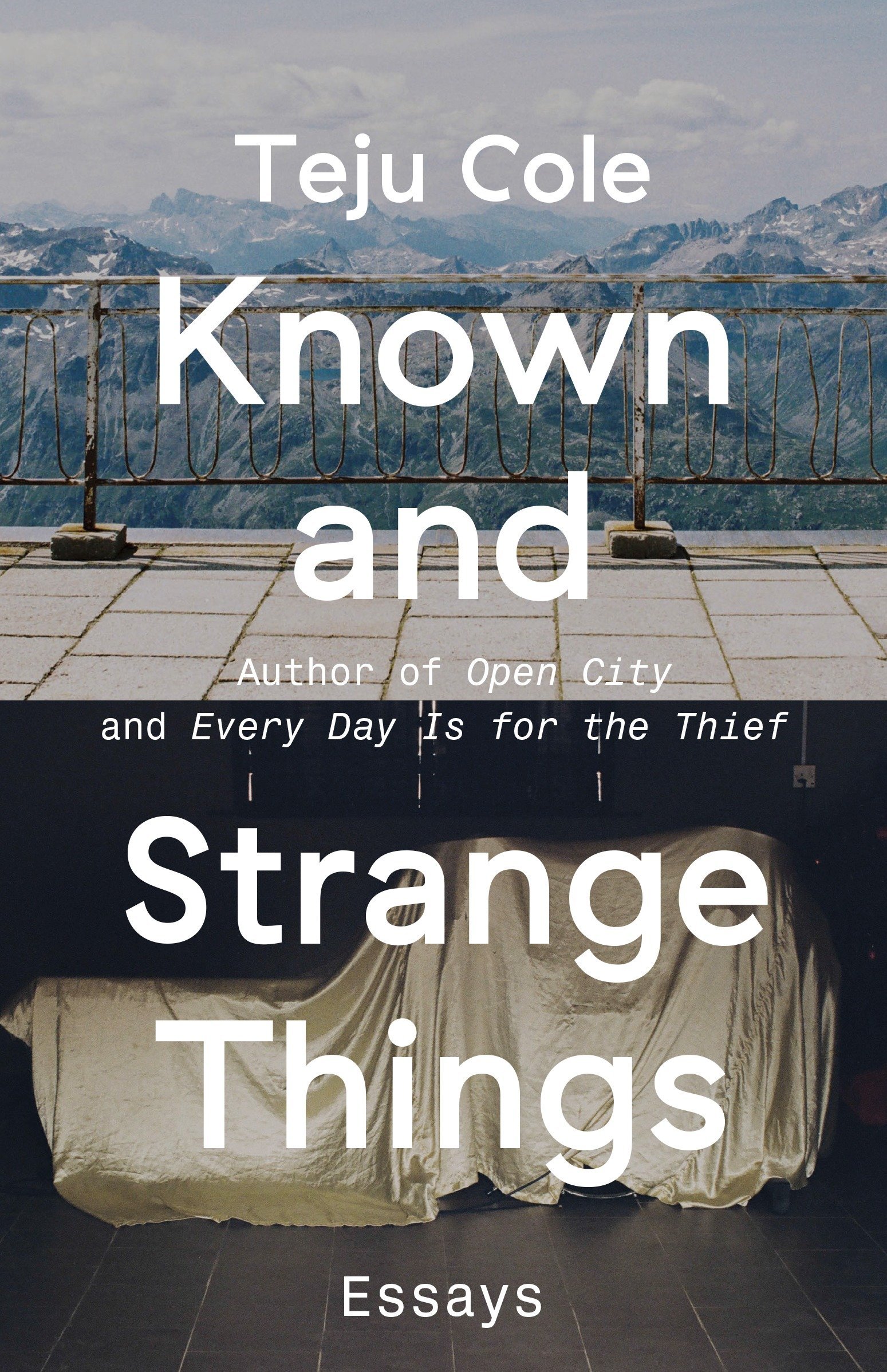
Known and Strange Things by Teju Cole
Men Explain Things to Me by Rebecca Solnit
Jackson, 1964: And Other Dispatches from Fifty Years of Reporting on Race in America by Calvin Trillin
The Rub of Time: Bellow, Nabokov, Hitchens, Travolta, Trump: Essays and Reportage, 1986-2017 by Martin Amis
Why Save the Bankers?: And Other Essays on Our Economic and Political Crisis by Thomas Piketty
The Pleasure of Reading: 43 Writers on the Discovery of Reading and the Books that Inspired Them by Antonia Fraser
Love and Other Ways of Dying: Essays by Michael Paterniti
The Memory Chalet by Tony Judt
Incendiary Circumstances: A Chronicle of the Turmoil of our Times by Amitav Ghosh
Love, Poverty and War: Journeys and Essays by Christopher Hitchens
Waiting for the Barbarians: Essays from the Classics to Pop Culture by Daniel Mendelsohn
The Rights Revolution by Michael Ignatieff
Lectures on Russian Literature by Vladimir Nabokov
Arguably: Selected Essays by Christopher Hitchens
Conducted Tour by Bernard Levin
When I Was a Child I Read Books: Essays by Marilynne Robinson
Essays from the Nick of Time: Reflections and Refutations by Mark Slouka
Hopes and Impediments: Selected Essays by Chinua Achebe
The White Cities: Reports from France 1925-1939 by Joseph Roth
At the Same Time: Essays and Speeches by Susan Sontag
The "Best American Essays" series is a great resource, as is "The Best American Travel Stories", the Best American Science Writing, etc. etc. There are aThe Rub of Time: Bellow, Nabokov, Hitchens, Travolta, Trump: Essays and Reportage, 1986-2017 whole bunch of books in this category.
As discussed previously, the Massey Lectures in Canada are a series of five lectures by public intellectuals which then are published in book form. An example is Margaret Atwood's Payback: Debt and the Shadow Side of Wealth.
Penguin's "Great Ideas" takes segments of larger books and publishes them in very short books that are also diminutive in dimensions. Authors include Orwell, Marcus Aurelius, Seneca, etc.
Consider the Lobster by David Foster Wallace
A lot of Joan Didion's writings are essays
Classic authors like Emerson, Montaigne, Francis Bacon, E.B. White,
George Orwell!
Virginia Woolf's literary essays, especially those in the "Common Reader" collections.
Roxane Gay, Joseph Epstein,
Known and Strange Things by Teju Cole
Men Explain Things to Me by Rebecca Solnit
Jackson, 1964: And Other Dispatches from Fifty Years of Reporting on Race in America by Calvin Trillin
The Rub of Time: Bellow, Nabokov, Hitchens, Travolta, Trump: Essays and Reportage, 1986-2017 by Martin Amis
Why Save the Bankers?: And Other Essays on Our Economic and Political Crisis by Thomas Piketty
The Pleasure of Reading: 43 Writers on the Discovery of Reading and the Books that Inspired Them by Antonia Fraser
Love and Other Ways of Dying: Essays by Michael Paterniti
The Memory Chalet by Tony Judt
Incendiary Circumstances: A Chronicle of the Turmoil of our Times by Amitav Ghosh
Love, Poverty and War: Journeys and Essays by Christopher Hitchens
Waiting for the Barbarians: Essays from the Classics to Pop Culture by Daniel Mendelsohn
The Rights Revolution by Michael Ignatieff
Lectures on Russian Literature by Vladimir Nabokov
Arguably: Selected Essays by Christopher Hitchens
Conducted Tour by Bernard Levin
When I Was a Child I Read Books: Essays by Marilynne Robinson
Essays from the Nick of Time: Reflections and Refutations by Mark Slouka
Hopes and Impediments: Selected Essays by Chinua Achebe
The White Cities: Reports from France 1925-1939 by Joseph Roth
At the Same Time: Essays and Speeches by Susan Sontag
4Chatterbox
To assist you with your planning:
What's on deck for the rest of 2018:
September – Gods, Demons, Spirits, and Supernatural Beliefs -- from the Book of Common Prayer to things that go bump in the night. A biography of the Dalai Lama? Go for it.
October – First Person Singular -- This is the spot for anything first person. Anything that anyone has written about themselves and their lives in any way. Tina Fey? Paul Kalinithi? (sp?)
November – Politics, Economics & Business -- The stuff we all know we should know about but sometimes hate to think about, especially these days. Call it the hot button issues challenge. Immigration/Racism? Banking regulation? Minimum wage debates?
December – 2018 In Review -- Frustrated because you've got leftover books? You've got too many book bullets from other people? Or -- omigod -- that new biography was just published and you must must must read it? Or you've been reading the lists of best reading of 2018 in the NY Times and just realized, omigod, you MUST READ this one book before the end of the year? This is your holiday gift, from the challenge that keeps on giving...
What's on deck for the rest of 2018:
September – Gods, Demons, Spirits, and Supernatural Beliefs -- from the Book of Common Prayer to things that go bump in the night. A biography of the Dalai Lama? Go for it.
October – First Person Singular -- This is the spot for anything first person. Anything that anyone has written about themselves and their lives in any way. Tina Fey? Paul Kalinithi? (sp?)
November – Politics, Economics & Business -- The stuff we all know we should know about but sometimes hate to think about, especially these days. Call it the hot button issues challenge. Immigration/Racism? Banking regulation? Minimum wage debates?
December – 2018 In Review -- Frustrated because you've got leftover books? You've got too many book bullets from other people? Or -- omigod -- that new biography was just published and you must must must read it? Or you've been reading the lists of best reading of 2018 in the NY Times and just realized, omigod, you MUST READ this one book before the end of the year? This is your holiday gift, from the challenge that keeps on giving...
5m.belljackson
"A moody child and wildly wise
Pursued the game with joyful eyes,
Which chose, like meteors, their way,
And rived the dark with private ray;"
From "The Poet" in ESSAYS and POEMS by RALPH WALDO EMERSON...
I plan to complete this tonight, then read many more for August...
beautiful, enduring, and a perfectly slow moving contrast to what is passing for reality.
Pursued the game with joyful eyes,
Which chose, like meteors, their way,
And rived the dark with private ray;"
From "The Poet" in ESSAYS and POEMS by RALPH WALDO EMERSON...
I plan to complete this tonight, then read many more for August...
beautiful, enduring, and a perfectly slow moving contrast to what is passing for reality.
6kidzdoc
I plan to read Known and Strange Things by Teju Cole.
7katiekrug
I'll be reading Bad Feminist by Roxane Gay.
8benitastrnad
I am going to try to read three books for this challenge - since they are short I am sure I can do it.
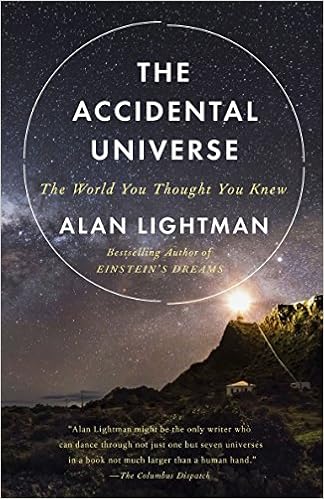
My first book for the month is one I have already started. Accidental Universe: The World You Thought You Knew by Alan Lightman. Lightman has written several books of essays about astrophysics but this will be my first book by him. According to Wikipedia Lightman is the first person to hold an appointment in both science and the humanities at MIT. He has written several pieces for the New Yorker. Even though it doesn’t say so in the introduction to this 176 page book, I think some of the essays in this book can also be found in the New Yorker.
My first book for the month is one I have already started. Accidental Universe: The World You Thought You Knew by Alan Lightman. Lightman has written several books of essays about astrophysics but this will be my first book by him. According to Wikipedia Lightman is the first person to hold an appointment in both science and the humanities at MIT. He has written several pieces for the New Yorker. Even though it doesn’t say so in the introduction to this 176 page book, I think some of the essays in this book can also be found in the New Yorker.
9cbl_tn
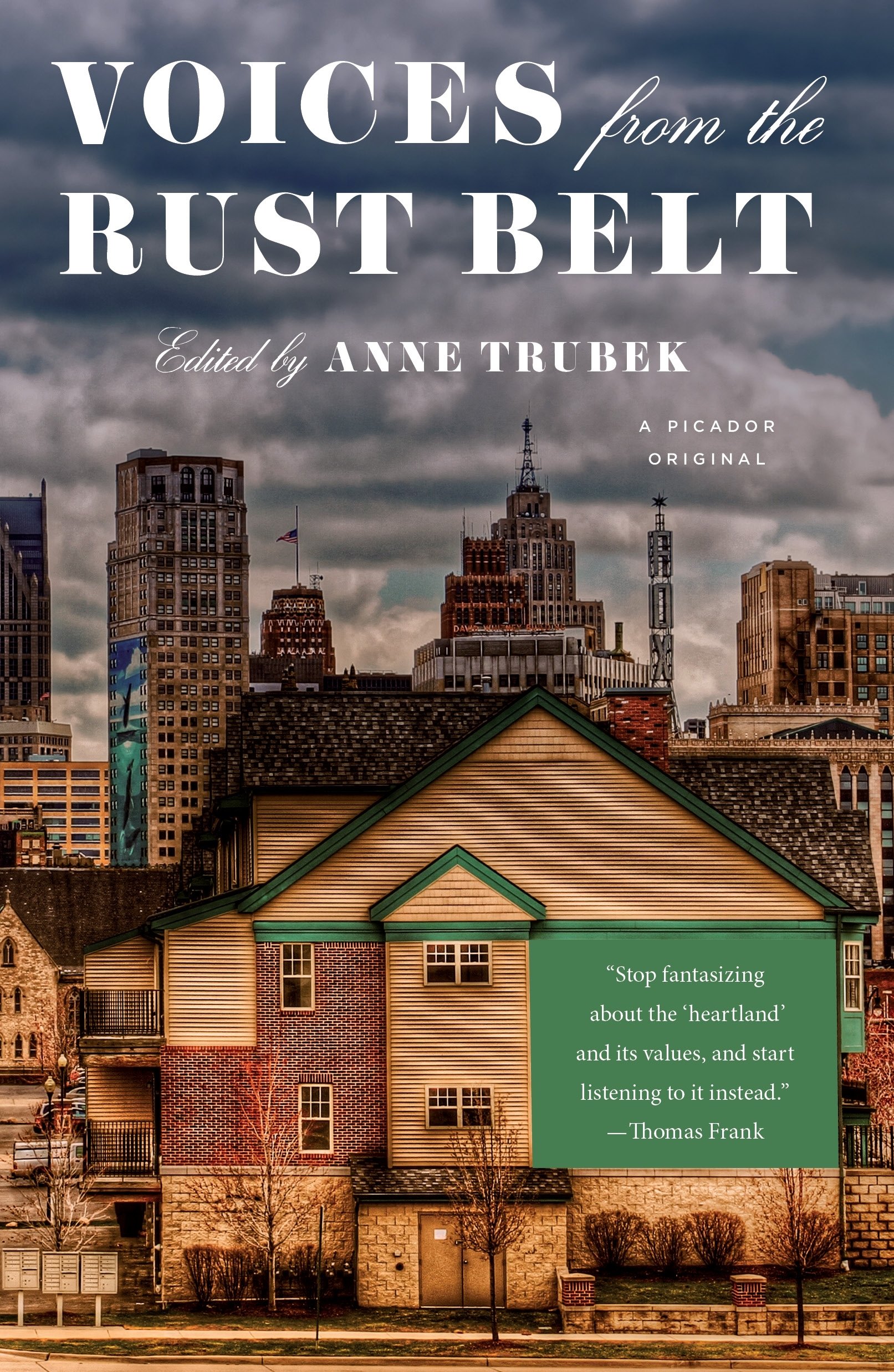
I picked up a book in Pittsburgh last week that I'll plan to read for this challenge - Voices from the Rust Belt edited by Anne Trubek. The essays were previously published in Belt Magazine and in other anthologies on specific Rust Belt cities.
10benitastrnad
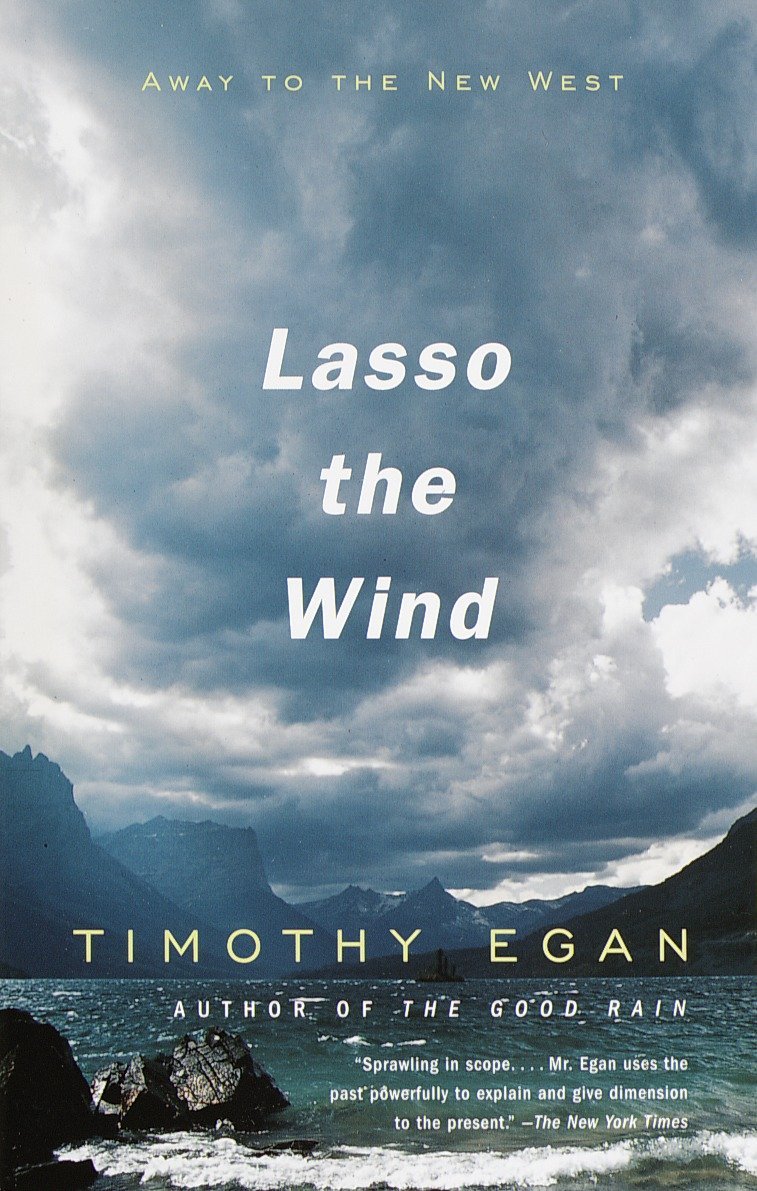
My second book for the month will be Lasso the Wind: Away to the New West by Timothy Egan. Egan is a well known writer of nonfiction, but he started out as a staff writer for the New York Times. He still writes weekly op-ed pieces for the New York Times.
This book is one of his first books and is a collection of related pieces about the 11 states in the American West that are west of the 100th meridian. The Amazon blurb about this book says the following:
Interweaving historical accounts with explorations of the contemporary landscape, Egan shows how and why the region came to its current state. We see why the errors and perils of the past continue to repeat themselves to this day, how enormous reserves of public land are being steadily chipped away by commercial interests and the demands of a growing population. But we also learn how some communities manage to avoid repeating these mistakes and to win successes, played out in the land and water, in the struggle between possibility and possession.
When I looked at this book I thought it was a travel book. I could be classed as that, but the chapters are about diverse places and some of them seem to more commentary than travel writing, so I am thinking it is more a collection of writing that was done while he was traveling. I will know more once I start the book and if it isn’t what I think I will find another. (It’s not as if there is a shortage of books in my house.) This is a longer book (288 pages) than the one I am reading now but I hope to find time to read it.
This book is one of his first books and is a collection of related pieces about the 11 states in the American West that are west of the 100th meridian. The Amazon blurb about this book says the following:
Interweaving historical accounts with explorations of the contemporary landscape, Egan shows how and why the region came to its current state. We see why the errors and perils of the past continue to repeat themselves to this day, how enormous reserves of public land are being steadily chipped away by commercial interests and the demands of a growing population. But we also learn how some communities manage to avoid repeating these mistakes and to win successes, played out in the land and water, in the struggle between possibility and possession.
When I looked at this book I thought it was a travel book. I could be classed as that, but the chapters are about diverse places and some of them seem to more commentary than travel writing, so I am thinking it is more a collection of writing that was done while he was traveling. I will know more once I start the book and if it isn’t what I think I will find another. (It’s not as if there is a shortage of books in my house.) This is a longer book (288 pages) than the one I am reading now but I hope to find time to read it.
11benitastrnad
I am not sure what my third book will be. I have been reading through the National Geographic Directions series. This series is a set of 23 titles that are about specific places. Each one is short - none of them are over 200 pages and are written by well known authors who have some sort of connection with the place about which they are writing. For instance Barry Unsworth wrote about Crete. Anna Quindlin about London and Diane Johnson about Paris. I currently have Sicilian Odyssey by Francine Prose home from the library, so it will probably be that title - if I get to it. It is only 192 pages in length so that shouldn’t be a problem.
This is the Amazon blurb about the book.
Prose examines architectural sites and objects and looks at the ways in which myth and actuality converge. Exploring the intact and beautiful Greek amphitheaters at Siracusa and Taormina, the cathedral at Monreale, the Roman mosaics at Piazza Armerina, and some of the masterpieces of the Baroque scattered throughout the island, Prose focuses her keen insight to imagine them in their own time, to examine the evolution and decline of the cultures that produced them, and to deconstruct powerful responses each evokes in her.
This is the Amazon blurb about the book.
Prose examines architectural sites and objects and looks at the ways in which myth and actuality converge. Exploring the intact and beautiful Greek amphitheaters at Siracusa and Taormina, the cathedral at Monreale, the Roman mosaics at Piazza Armerina, and some of the masterpieces of the Baroque scattered throughout the island, Prose focuses her keen insight to imagine them in their own time, to examine the evolution and decline of the cultures that produced them, and to deconstruct powerful responses each evokes in her.
12Caroline_McElwee
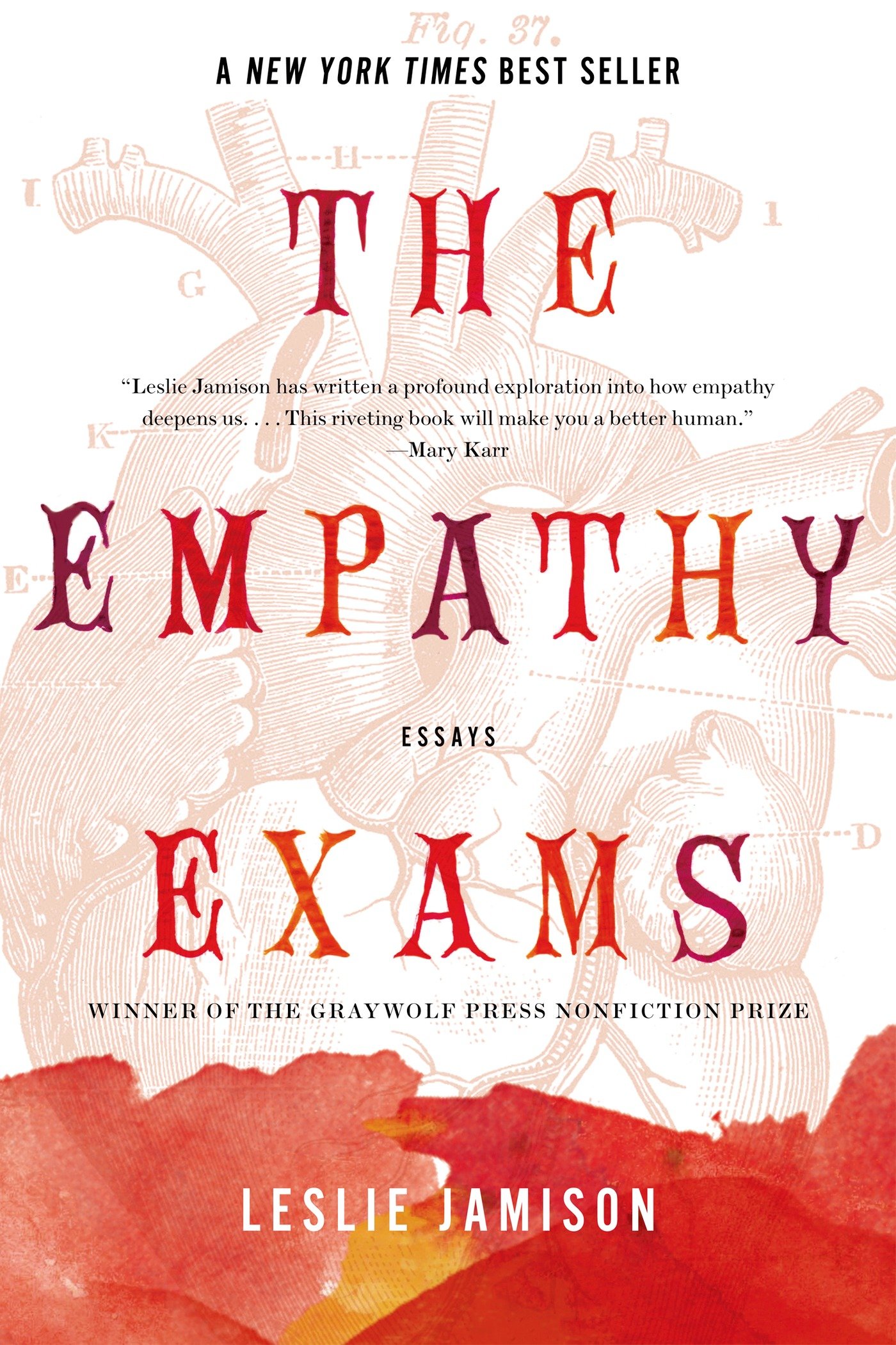
I have so many possibilities for this month, as I'm a big fan of essays, and have many volumes of them. I have already started Leslie Jamison's The Empathy Exams and will finish that. I may pull Roxane Gay's Bad Feminist off the shelf too.
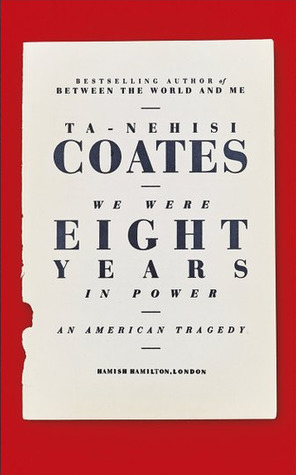
I also want to read Ta-Nehisi Coates's essays We were Eight Years in Power: An American Tragedy.
Those should keep me going for a while.
I also want to read Ta-Nehisi Coates's essays We were Eight Years in Power: An American Tragedy.
Those should keep me going for a while.
13SuziQoregon
>7 katiekrug: I'm probably going to read Bad Feminist too
14Chatterbox
>12 Caroline_McElwee: The Empathy Exams is great. I've read bits of that -- so this may be the month that I finish it!!
Will post images later today.
Will post images later today.
15Jackie_K
It's probably going to be too much hassle to find the cover for this one - it doesn't have an ISBN, and even the download page (here: http://hexhambookfestival.co.uk/10th-anniversary-author-residency-programme/ ) doesn't have a picture of the cover. It's an anthology created for the 10th anniversary of the Hexham Book Festival a few years ago, called "Northumberland: Time and Place", where they got 10 authors to stay in 10 different places in Northumberland and write a thing. Some of it is poetry or fiction, but of the five pieces I've read so far, two have been non-fiction, including a really stunning piece by Melissa Harrison.
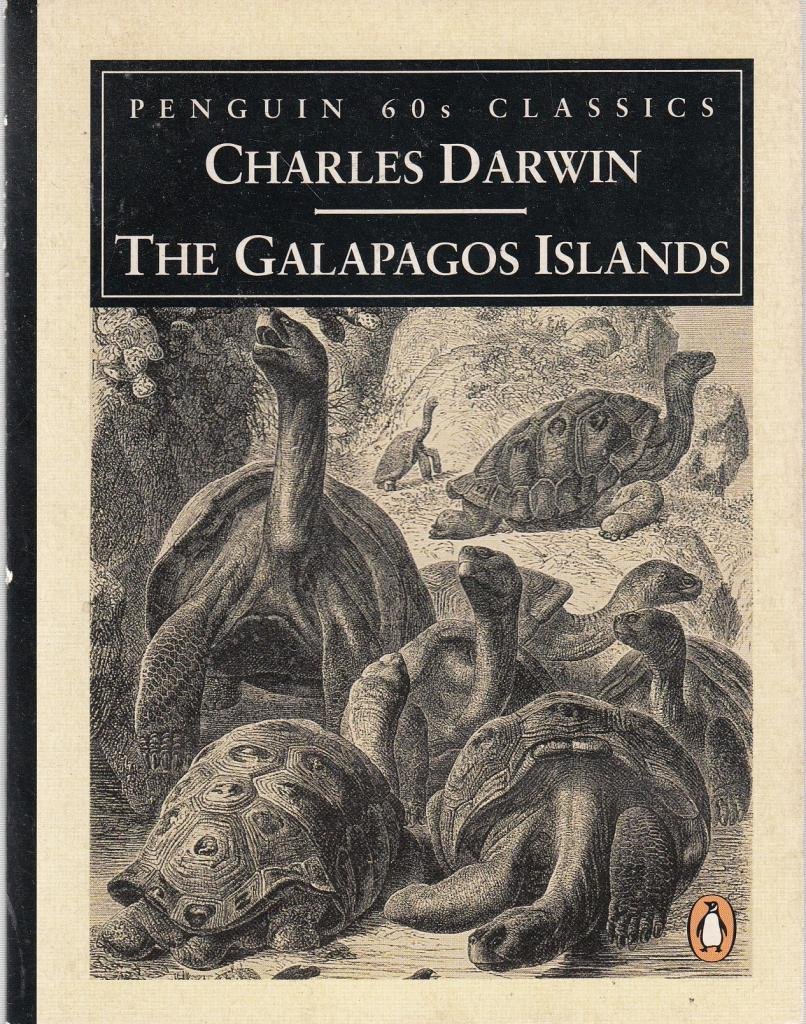
The other one I'm going to read is one of the Penguin 60 classics, The Galapagos Islands by Charles Darwin. It's 60-something pages long; about half of it is the titular essay, and the other half an essay on Tahiti.
The other one I'm going to read is one of the Penguin 60 classics, The Galapagos Islands by Charles Darwin. It's 60-something pages long; about half of it is the titular essay, and the other half an essay on Tahiti.
17brenzi
I’m planning to read Zadie Smith’s Changing My Mind.
18Jackie_K
I finished "Northumberland: Time and Place" and really enjoyed it. About half of the essays were non-fiction, and as mentioned above I think Melissa Harrison's was the stand-out one, although I liked all of them (and actually I also thought the fiction was excellent for the most part - I'm not usually a big fan of the short story).
This is the best I can do in terms of getting you an image of the cover (taken from my kobo propped up on my netbook, sorry about the picture quality!):

This is the best I can do in terms of getting you an image of the cover (taken from my kobo propped up on my netbook, sorry about the picture quality!):

19Chatterbox
>18 Jackie_K: Creative cover addition!! Forgive me if I don't add it up top, but thanks for showing it to us...
Sounds like a good book!
Separately, Knopf is about to release three chapters of Simone de Beauvoir's The Second Sex in a separate short book, "The Independent Woman" (there's no touchstone that I can make work...) I'll be reading an ARC of that for this challenge -- it's a perfect fit.
Sounds like a good book!
Separately, Knopf is about to release three chapters of Simone de Beauvoir's The Second Sex in a separate short book, "The Independent Woman" (there's no touchstone that I can make work...) I'll be reading an ARC of that for this challenge -- it's a perfect fit.
20benitastrnad
I am zipping through Accidental Universe. It has been a summer in which I have become fascinated by things astrophysical in nature. I am still working my way through Seeing in the Dark and am loving the time spent reading it. (It was one of my June selections that I have been slow to finish. But that doesn’t mean it is a bad book. On the contrary. It is excellent and I am enjoying it while I am on my lunch hours. Both Accidental Universe and Seeing in the Dark are about the universe and how it works. In fact reading “Seeing in the Dark” led me to “Accidental Universe.”
21benitastrnad
If you are still looking for something short and sweet to read this month, I just ran across this list of funny essay books from Publisher's Weekly.
https://www.publishersweekly.com/pw/by-topic/industry-news/tip-sheet/article/776...
A couple of them are repeat suggestions mentioned previously upthread, but there are a few other title suggestions that might be of interest.
https://www.publishersweekly.com/pw/by-topic/industry-news/tip-sheet/article/776...
A couple of them are repeat suggestions mentioned previously upthread, but there are a few other title suggestions that might be of interest.
22Jackie_K
>19 Chatterbox: No worries, I didn't expect you to put it up top, I just like seeing the pictures of the covers and am drawn back to that post, so thought I'd add a little visual a bit further down the thread :)
23fuzzi
My choice was short, but not sweet.
Knockout Game a Lie?: Awww, Hell No! by Colin Flaherty
Some of us prefer to "stay in our comfort zone", only read those books we're pretty sure we'll like. So I wasn't sure if I wanted to follow a friend's recommendation to read a book about a controversial topic, the "Knockout Game".
This book wasn't easy to read, not due to the writing style, but because the author did such a thorough job to prove the existence of what many "experts" insisted was a myth. Videos, testimonies, pages of footnotes are offered as conclusive evidence, and helped me see the truth behind the political pontificating.
It's not something I want to read again, but I'm glad I exited my comfort zone long enough to read it once.
Knockout Game a Lie?: Awww, Hell No! by Colin Flaherty
Some of us prefer to "stay in our comfort zone", only read those books we're pretty sure we'll like. So I wasn't sure if I wanted to follow a friend's recommendation to read a book about a controversial topic, the "Knockout Game".
This book wasn't easy to read, not due to the writing style, but because the author did such a thorough job to prove the existence of what many "experts" insisted was a myth. Videos, testimonies, pages of footnotes are offered as conclusive evidence, and helped me see the truth behind the political pontificating.
It's not something I want to read again, but I'm glad I exited my comfort zone long enough to read it once.

24nittnut
I am going to start with The American Spirit: Who We Are and What We Stand For. I did get hit with a BB for The Library Book over on Lori's thread, so if I find a copy, I'll read that too. I am not sure if the Larry McMurty book: Books: A Memoir will work, but I will find out when I read it.
Where the Bluebird Sings to the Lemonade Springs would be a good one for this month. It's a great read.
Where the Bluebird Sings to the Lemonade Springs would be a good one for this month. It's a great read.
25m.belljackson
The free online Literary Hub has a funny and flowing erudite essay from The Los Angeles Review of Books
titled: "The Useless French Language and Why We Learn It" by Colin Marshall.
Entries range from les immortels to Dave Sedaris, Ta-Nehisi Coates, and Peter Mayle.
titled: "The Useless French Language and Why We Learn It" by Colin Marshall.
Entries range from les immortels to Dave Sedaris, Ta-Nehisi Coates, and Peter Mayle.
26benitastrnad
I am having so much fun reading Accidental Universe that I am almost done with it. Who would have thought that a book on astrophysics would be so interesting? And understandable? I should have this one done tomorrow.
27banjo123
I have a book of Mary Oliver's essays, which a friend gave me. It's called Upstream.
28Chatterbox
>27 banjo123: Who knew that Mary Oliver had also written essays? Not me... :-)
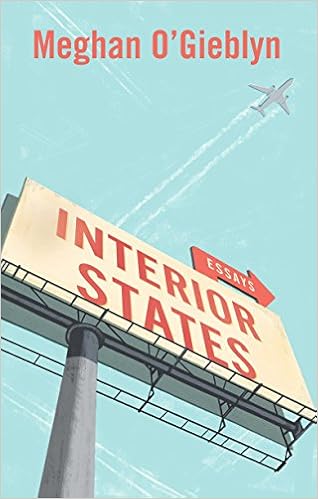
I'm launching into the Simone de Beauvoir book of excerpts. After that, it will be an ARC of a book of essays, Interior States by Meghan O'Gieblyn. And isn't THAT an interesting surname??
I'm launching into the Simone de Beauvoir book of excerpts. After that, it will be an ARC of a book of essays, Interior States by Meghan O'Gieblyn. And isn't THAT an interesting surname??
29kidzdoc
The Kindle edition of Essays After Eighty by the former U.S. Poet Laureate Donald Hall, who died this past June, is on sale today for $2.99. I just purchased a copy of it, and I'll try to read it this month as well.
30m.belljackson
THE BYLINE BIBLE by Susan Shapiro is packed with ideas for writing and selling short essays.
It also features many inspiring examples of published articles written by her students.
It also features many inspiring examples of published articles written by her students.
32SuziQoregon
>27 banjo123: Hmmm - might have to see if my library has that one.
33charl08
I went and browsed a bit in the new library at work today. It turns out we have some books about Eastern Europe, so I picked up The Uses of Adversity by Timothy Garton Ash. In the first essay, he writes about going to live in East Germany in 1980 as part of his doctoral research. He got to work in the 'poison cupboard', where the government put the stuff they didn't want its citizens to read...
34benitastrnad
I finished reading my first short and sweet book of essays for the month. Accidental Universe: The World You Thought You Knew by Alan Lightman.
I found this lovely little volume of science essays while pursuing the stacks in one of our libraries when I was looking for another title. It looked interesting so I checked it out. What a gem it turned out to be.
This 157 page volume is full of nuggets of information and bits of wisdom about science, culture, and philosophy/religion. It is also an apologetic for intellectualism, which is something badly needed in this country where anti-intellectualism rules. I think every school teacher should read this volume as it makes the case for the scientific method and why we can believe the results when this method is used. It is also about astrophysics. While writing about these weighty scientific ideas the author also writes about religion. He acknowledges that we humans are spiritual people and so he has much to say about the connections between science and religion and the attendant controversies involving both subjects.
I am not an astrophysicist and I don’t play one on TV, but this book of essays made me proud to be an intellectual.
Here is one quote from early in the book.
“Theoretical physics is the deepest and purest branch of science. It is the outpost of science closest to philosophy and religion. Experimental scientists occupy themselves with observing and measuring the cosmos, finding out what stuff exists, no matter how trance that stuff my be. Theoretical physicists, ..., are not satisfied with observing the universe. They want to know why. They want to explain all the properties of the universe in terms of a few fundamental principles and parameters. These fundamental principles, ..., lead to the ‘laws of nature’ which govern the behavior of all matter and energy.” Pages 5 &6
I found this lovely little volume of science essays while pursuing the stacks in one of our libraries when I was looking for another title. It looked interesting so I checked it out. What a gem it turned out to be.
This 157 page volume is full of nuggets of information and bits of wisdom about science, culture, and philosophy/religion. It is also an apologetic for intellectualism, which is something badly needed in this country where anti-intellectualism rules. I think every school teacher should read this volume as it makes the case for the scientific method and why we can believe the results when this method is used. It is also about astrophysics. While writing about these weighty scientific ideas the author also writes about religion. He acknowledges that we humans are spiritual people and so he has much to say about the connections between science and religion and the attendant controversies involving both subjects.
I am not an astrophysicist and I don’t play one on TV, but this book of essays made me proud to be an intellectual.
Here is one quote from early in the book.
“Theoretical physics is the deepest and purest branch of science. It is the outpost of science closest to philosophy and religion. Experimental scientists occupy themselves with observing and measuring the cosmos, finding out what stuff exists, no matter how trance that stuff my be. Theoretical physicists, ..., are not satisfied with observing the universe. They want to know why. They want to explain all the properties of the universe in terms of a few fundamental principles and parameters. These fundamental principles, ..., lead to the ‘laws of nature’ which govern the behavior of all matter and energy.” Pages 5 &6
35m.belljackson
Weird - my 4th Grade classes must have been intellectual giants.
Kids memorized and planned their Science Fair projects via the scientific method.
We studied evolution with Lucy as a foremother and australopithicus afarensis as a challenge spelling word.
Our field trips covered Wisconsin's Effigy Mounds.
Kids created their own games and crafts to sell in the weekly School Store which they hosted.
We sponsored a full school celebration of Cinco De Mayo.
We designed our own constellations and set up our own planetarium, then had telescope nights.
For fun, we visited Jimmy the Groundhog for his prognostications, then went roller skating.
These kids would still make great Presidents!
Kids memorized and planned their Science Fair projects via the scientific method.
We studied evolution with Lucy as a foremother and australopithicus afarensis as a challenge spelling word.
Our field trips covered Wisconsin's Effigy Mounds.
Kids created their own games and crafts to sell in the weekly School Store which they hosted.
We sponsored a full school celebration of Cinco De Mayo.
We designed our own constellations and set up our own planetarium, then had telescope nights.
For fun, we visited Jimmy the Groundhog for his prognostications, then went roller skating.
These kids would still make great Presidents!
36Chatterbox
>33 charl08: That's an excellent book. There are about three collections of his essays written before/during the collapse of the Berlin Wall, followed by The File, about his examination of his own Stasi file. Sorry touchstones not working apparently, and I have migraine yet again so do not feel like battling the system...
37torontoc
I am going to find an issue of Granta that I haven't read yet.
oops- there is a fair amount of fiction in Granta- not all non-fiction- will find something else!
oops- there is a fair amount of fiction in Granta- not all non-fiction- will find something else!
38Jackie_K
I've finished Charles Darwin's The Galapagos Islands, it was very interesting. The two essays were largely factual description of the flora, fauna and human inhabitants of Galapagos and Tahiti - there was little to hint of the groundbreaking work that would follow. What I did think was interesting in the Tahiti essay was how supportive he was of the missionaries there, he even defended them quite staunchly against accusations of robbing the local Tahitians of their joy and making them live in fear, considering that some of the changes they'd brought to be an improvement.
39charl08
>36 Chatterbox: Thanks Suzanne. I thought I'd read The File but can't tell from LT (it would have been before I recorded them). Just read a review in the LRB of a similar approach but in Romania. I think Life as a Spy: Investigations in a Secret Police File by Katherine Verdery sounds good, so maybe I'll get to it for 2019?
40Chatterbox
I finished my first essay collection, Interior States: Essays by Meghan O'Gieblyn, and found it to be a rather mixed bag of short pieces (all previously published), as most such anthologies are. Billed as the perspective of someone living in flyover country with the POV of someone not from the coastal elites, I think I expected a bit more. The author was homeschooled by evangelical parents, so is really part of a minority; plus, she is young, still in her early 30s or so. Therefore, the range of experience and insights is necessarily limited. The combination of essays here -- all well-written -- go from the predictable (visits to a Creationist theme park, which felt like several pieces of a similar nature I've read before) to the slightly more interesting (the value of the inexplicable faith in 12-step programs; how "niceness" is kind of a minimum value instead of something to aspire to). I'd recommend a few pieces, but the anthology as a whole would be a lukewarm "take a look at the contents and read one or two before buying" recommendation...
41katiekrug
>13 SuziQoregon: - Have you started it, Juli? I am enjoying it - taking it a few at a time in between other things.
43m.belljackson
Emerson's Essays, so far, "The Poet" and "Nature," make me long for a slowly filling autumn college classroom,
with students emptying old green book bags and tugging chairs up around the very large old hardwood table.
These essays want discussion! What is he saying? Did he really mean THAT?
If you agree, why?
If you don't, why not and what ideas do you want to throw out?
Like Tennyson - "For man is man and master of his fate,"
Emerson deeply believed in the perfectibility of humans by hard work and "self-reliance."
He saw every person as a unique spiritual individual, with near infinite potential, will, and inner resources,
when once removed from conformity, greed, and money.
with students emptying old green book bags and tugging chairs up around the very large old hardwood table.
These essays want discussion! What is he saying? Did he really mean THAT?
If you agree, why?
If you don't, why not and what ideas do you want to throw out?
Like Tennyson - "For man is man and master of his fate,"
Emerson deeply believed in the perfectibility of humans by hard work and "self-reliance."
He saw every person as a unique spiritual individual, with near infinite potential, will, and inner resources,
when once removed from conformity, greed, and money.
44benitastrnad
I finished my travel book essay by Francine Prose. Sicilian Odyssey is another in the National Geographic Directions series that I have been reading. I am trying to read all the titles in the series. I have read 12 titles in the series and this one is number 13 and there are 24 total. I’m half done! Woot! Woot!
This one is not the best in the series. It is about Sicily and that interested me because someday I would like to go and visit Sicily. From all accounts they have terrific food there, and some of the best preserved Greek and Roman ruins in Italy. I am afraid that this book did not do the place justice. It concentrated more on the modern Sicily and its problems with the Mafia. That may be a good thing, as travelers need to know about that, as well as how outside of the cities travel in Sicily is difficult do to terrains and local isolation and sometimes downright hostility. The best parts of this essay were when the author talked about getting along in Sicily as an obvious American and a tourist in the off season and her adventures with food and art in the larger coastal towns and cities. There were some lessons to take to heart in this little volume.
This one is not the best in the series. It is about Sicily and that interested me because someday I would like to go and visit Sicily. From all accounts they have terrific food there, and some of the best preserved Greek and Roman ruins in Italy. I am afraid that this book did not do the place justice. It concentrated more on the modern Sicily and its problems with the Mafia. That may be a good thing, as travelers need to know about that, as well as how outside of the cities travel in Sicily is difficult do to terrains and local isolation and sometimes downright hostility. The best parts of this essay were when the author talked about getting along in Sicily as an obvious American and a tourist in the off season and her adventures with food and art in the larger coastal towns and cities. There were some lessons to take to heart in this little volume.
45benitastrnad
I started reading Lasso the Wind: Away to the New West by Timothy Egan over the weekend. This is one of his early books with a copyright date of 1998. It is gleaned from pieces that he wrote for the New York Times and other newspapers when he was a reporter writing about the West and Western issues. Essay 1 was quite interesting. The second one is about the Acoma Pueblo in New Mexico.
Since this book was published Egan has written several award winning works of nonfiction. I have read two of them, so will be interested to read this earlier work for that reason as well.
Since this book was published Egan has written several award winning works of nonfiction. I have read two of them, so will be interested to read this earlier work for that reason as well.
46Chatterbox
>44 benitastrnad: Pity it wasn't more compelling. I have a giant Tome (it has to have a capital letter) on my shelves that consists of the two volumes of histories by John Julius Norwich of the history of the Normans in Sicily. Like Andalucia, they formed a kind of multi-ethnic state, bits of which endure in architecture, food, etc. Learning about that history has made me want to visit.
47charl08
I'm still reading Edmund White on reading (the Unpunished Vice) - the structure, short essays that are ostensibly around a theme (although mostly, just loosely). He's added to my wishlist (not least his own books, which get a regular mention) but also books from the 50s, most of which I've never heard of. Definitely of interest if you like books about books.
48benitastrnad
#46
I agree. I wanted a little more history in this book. Many of the other volumes in this series have done a very good job of mixing the history and culture. This one just fell a little flat. However, I just placed my ILL request for another in this series. I am going to get Road to Santiago by Kathryn Harrison. It will further my quest to finish all 24 of the volumes in this series and it should work for next month's nonfiction challenge on things religious.
I had hoped to finish the series this year, but I am not going to make it.
I agree. I wanted a little more history in this book. Many of the other volumes in this series have done a very good job of mixing the history and culture. This one just fell a little flat. However, I just placed my ILL request for another in this series. I am going to get Road to Santiago by Kathryn Harrison. It will further my quest to finish all 24 of the volumes in this series and it should work for next month's nonfiction challenge on things religious.
I had hoped to finish the series this year, but I am not going to make it.
49Chatterbox
>47 charl08: Book bullet!!!
50SuziQoregon
>41 katiekrug: No I haven't started it yet. I think I've changed my mind about what book to read for this month. I picked up Upstream by Mary Oliver from the library after >27 banjo123: mentioned it. I still want to read Bad Feminist but maybe not this month.
51Familyhistorian
Mary Beard's manifesto about women and power, Women & Power: a manifesto, was a deep look at the tradition of keeping women from power. It goes back at least to classical times. When women fight to be heard today they are fighting a tradition that is ingrained and has been for thousands of years. It is hard for women's voices to be heard through the filters that silence their voices and the criticism and attacks that those who dare to speak are subject to.
It was particularly interesting how classical references, such as placing the faces of Merkel or Clinton on the severed head of Medusa, are used today to reinforce the criticism of women in power. It seems to mark how the criticism of women in power is more personal than that of male politicians, including as it does their clothing, voices and other minutiae of their appearance. It also shows how far back the criticism of women in power started
I would have liked to have heard the lectures which the book was based on. As it was, the writing packed a punch.

It was particularly interesting how classical references, such as placing the faces of Merkel or Clinton on the severed head of Medusa, are used today to reinforce the criticism of women in power. It seems to mark how the criticism of women in power is more personal than that of male politicians, including as it does their clothing, voices and other minutiae of their appearance. It also shows how far back the criticism of women in power started
I would have liked to have heard the lectures which the book was based on. As it was, the writing packed a punch.

52Familyhistorian
I finally finished a book for the challenge in the month that it was due! As I had recently finished the book for last month Dangerous Books for Girls: The Bad Reputation of Romance Novels Explained, I was struck by the commonalities in the messages of my two recent reads for the nonfiction challenge.
53charl08
>51 Familyhistorian: Me too. I guess there's be a lot of takers for any MOOCs she ran! Thought this was a great, brief read.
>52 Familyhistorian: BB for me.
>52 Familyhistorian: BB for me.
54benitastrnad
I have finished the first two essays in Lasso the Wind by Timothy Egan. They are both written about New Mexico and one is about contemporary politics and the other is more historical. So far they are good reading.
55benitastrnad
#51
I have that short little volume in my collection of books. I just haven’t gotten to it, but after reading your review I moved it from the shelves to the bedside table where it will be in easy reach. Thanks for reading it and letting us know about it.
I have that short little volume in my collection of books. I just haven’t gotten to it, but after reading your review I moved it from the shelves to the bedside table where it will be in easy reach. Thanks for reading it and letting us know about it.
56Familyhistorian
>53 charl08: I would love to see one of her lectures in person, Charlotte, especially one about women and power. I wrote about Dangerous Books for Girls: The Bad Reputation of Romance Novels Explained towards the end of last month's nonfiction thread. The quote that I gave from the book was surprising until I thought about it and realized it is true.
57charl08
I finished Edmund White's The Unpunished Vice and will try and pick up some essays by Zadie Smith before the end of the month. I liked quite a lot of the White book, but Smith is more my bag.
58Chatterbox
I just started reading Three Guineas by Virginia Woolf -- it's a re-read of an old favorite, and remains very, very thought provoking. Just the right length for something at this time of year (temps will be up to 91 F here today, plus humidity) My attention span is indeed low...
59Caroline_McElwee
I was going to dip into a number of volumes, and may do so, but I have been snagged by Roxane Gay's Bad Feminist. I like her writing and her themes are thought provoking, I'm about half through. I'll try and make a few notes of a couple of specific essay's.
60m.belljackson
A few more from Emerson's Nature essay:
Religion includes the personality of God; Ethics does not.
((for those in the heat)) I expand and live in the warm day like corn and melons.
So shall we come to look at the world with new eyes.
It shall answer the endless inquiry of the intellect - What is truth?
and of the affections - What is good?
Religion includes the personality of God; Ethics does not.
((for those in the heat)) I expand and live in the warm day like corn and melons.
So shall we come to look at the world with new eyes.
It shall answer the endless inquiry of the intellect - What is truth?
and of the affections - What is good?
61m.belljackson
Well, at August 19th, we're not exactly close to the fearsome 150,
so Ralph is sending a few more,
this time from his August 31, 1837 Oration, starting with the main influences of education:
I. The first in time and first in importance of the influences upon the mind is that of nature.
Every day, the sun; and, after sunset, night and her stars.
Ever the winds blow; ever the grass grows.
II. The next great influence into the spirit of the scholar, is, the mind of the Past, -
in whatever form, whether of literature, of art, of institutions....
Books are the best type of the influence of the past ....
The theory of books is noble.
so Ralph is sending a few more,
this time from his August 31, 1837 Oration, starting with the main influences of education:
I. The first in time and first in importance of the influences upon the mind is that of nature.
Every day, the sun; and, after sunset, night and her stars.
Ever the winds blow; ever the grass grows.
II. The next great influence into the spirit of the scholar, is, the mind of the Past, -
in whatever form, whether of literature, of art, of institutions....
Books are the best type of the influence of the past ....
The theory of books is noble.
62Chatterbox
>61 m.belljackson: Thank you, Ralph!!!
Meanwhile, an update from my own reading front. I finished a re-read of Three Guineas by Virginia Woolf. It has been many years since I last re-read it, and I only now realize what a debt I owe to this excellent example of logic and reasoning. Less well known than A Room of One's Own, Woolf explores similar themes and ideas about women's lives, prompted by an appeal for a financial contribution (of a guinea) by a man who runs a pacificist organization. Tongue firmly in cheek, Woolf is amazed at being approached at all -- although she is educated, she is merely a woman. And she launches herself into a tough analysis of the merits and lack thereof of the request. Why ask her? Is she assumed to have a voice; to have income? On what basis? Do those assumptions have merit? If so, are there other and better ways that a woman (an educated woman) could pursue the same goal of eradicating war? She breaks down what might be seen as a simple plea for funds for a worthy cause, and in the process exposes the systematic financial and educational discrimination against women that still existed when she wrote this (circa 1938) and the impact of that; the social attitudes (patronizing attitudes toward women; the reluctance to let them pursue more than certain limited career paths and then only if it doesn't interfere with what men want to do), etc. It forces the reader to think critically, challenges assumptions, etc. So why do I say I owe this a debt? Because I think I do a bit of this in never/rarely taking questions at face value. If someone asks me a question, eg. "don't you think democracy is a good thing?" the answer I would give now is never a simple yes or no. Like Woolf, I want to deconstruct the question and look at the assumptions baked into it; assess who is asking the question and what they mean when they use the word democracy, or what is meant by "good", etc. Really, do read this. Yes, it's outdated in some of its specifics and makes me wish that Woolf had lived to be 90, faculties fully intact, so as to reassess her thinking in light of the "second wave" of feminism. But heavens, she even anticipates intersectionality, by pointedly advising educated women not to try and speak on behalf of women from the working class and assuming that their interests are identical...
Meanwhile, an update from my own reading front. I finished a re-read of Three Guineas by Virginia Woolf. It has been many years since I last re-read it, and I only now realize what a debt I owe to this excellent example of logic and reasoning. Less well known than A Room of One's Own, Woolf explores similar themes and ideas about women's lives, prompted by an appeal for a financial contribution (of a guinea) by a man who runs a pacificist organization. Tongue firmly in cheek, Woolf is amazed at being approached at all -- although she is educated, she is merely a woman. And she launches herself into a tough analysis of the merits and lack thereof of the request. Why ask her? Is she assumed to have a voice; to have income? On what basis? Do those assumptions have merit? If so, are there other and better ways that a woman (an educated woman) could pursue the same goal of eradicating war? She breaks down what might be seen as a simple plea for funds for a worthy cause, and in the process exposes the systematic financial and educational discrimination against women that still existed when she wrote this (circa 1938) and the impact of that; the social attitudes (patronizing attitudes toward women; the reluctance to let them pursue more than certain limited career paths and then only if it doesn't interfere with what men want to do), etc. It forces the reader to think critically, challenges assumptions, etc. So why do I say I owe this a debt? Because I think I do a bit of this in never/rarely taking questions at face value. If someone asks me a question, eg. "don't you think democracy is a good thing?" the answer I would give now is never a simple yes or no. Like Woolf, I want to deconstruct the question and look at the assumptions baked into it; assess who is asking the question and what they mean when they use the word democracy, or what is meant by "good", etc. Really, do read this. Yes, it's outdated in some of its specifics and makes me wish that Woolf had lived to be 90, faculties fully intact, so as to reassess her thinking in light of the "second wave" of feminism. But heavens, she even anticipates intersectionality, by pointedly advising educated women not to try and speak on behalf of women from the working class and assuming that their interests are identical...
63Chatterbox
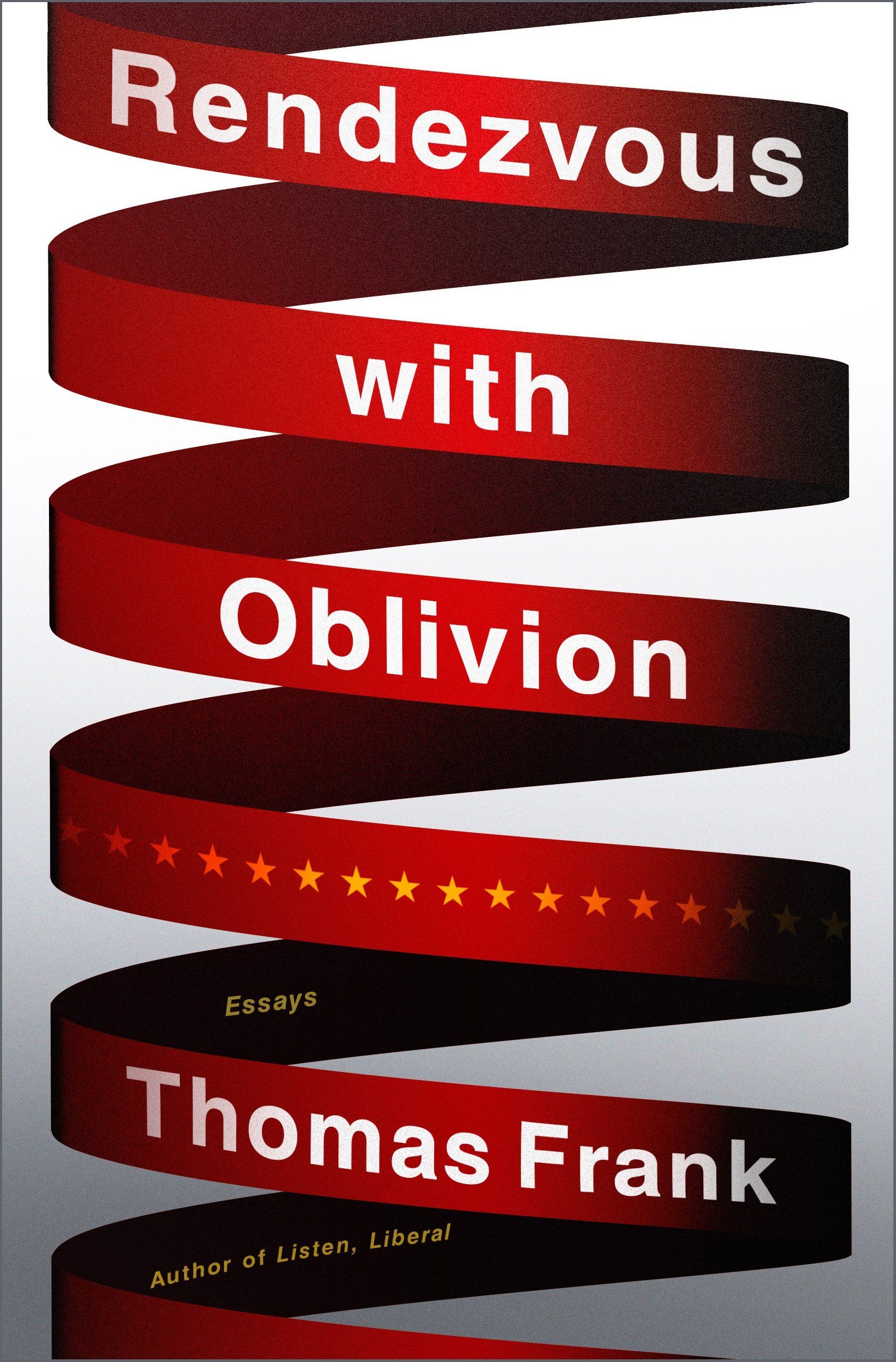
I may tackle the Thomas Frank book of essays next. I read his What's the Matter with Kansas and am in the mood for some pungent political thinking, and preferably not of book length...
I also have a short-ish book by Michiko Kakutani about Trump, the rule of law, democracy, etc., but at 200 pages or so, it's too long to be considered an essay-length piece, I fear, even if it has that kind of tone to it. I'm not sure what category to put it in. It's a political opinion piece, certainly, and so an essay in that sense...
I also have a short-ish book by Michiko Kakutani about Trump, the rule of law, democracy, etc., but at 200 pages or so, it's too long to be considered an essay-length piece, I fear, even if it has that kind of tone to it. I'm not sure what category to put it in. It's a political opinion piece, certainly, and so an essay in that sense...
64Chatterbox
I'm already tripping over books to read next month, from a book about Luther to the book about evangelicals by Frances Fitzgerald. Why does it always seem that I find books that fit the challenges for OTHER months in the wrong month??
65Caroline_McElwee
>62 Chatterbox: Nudging this volume up, it is a rare book of hers I've not yet read. I reread A Room of One's Own earlier this year and it still has plenty to say to us. I'm currently rereading To The Lighthouse.
66Chatterbox
On a separate note: if anyone has suggestions for next year's challenges, do throw them out. What worked for you and what didn't? (Yes, I know we still have some months to go...) There will always be some omissions, and some things that people are bored with that are here, but I try to cover as wide a swathe as possible. That said, there might also be novel ways to put together a challenge. For instance, the year started with a "prizewinners" challenge. We could do more themed challenges of that kind rather than those categories pegged to Dewey decimal numbers, the way most are now. For instance, instead of history, instead of history, we could have a category about "War, Peace, and warriors and peacemakers" or something like that. (Since a lot of history seems to involve war...) Thoughts are welcome, though be aware it's impossible to make everyone happy 100% of the time.
67Chatterbox
No ideas?? or is everyone busily reading??
68raidergirl3
How about science related books? It could be physics, or social sciences, or applied science. Lots of great options!
69Caroline_McElwee
True crime, don't think we have had that before. There are plenty of serious books and studies out there.
What about 'Comfort Zone' ie favourites of any kind. I know we like to stretch ourselves out of our comfort zone normally, but nice to have a month when we might sink into it.
What about 'Comfort Zone' ie favourites of any kind. I know we like to stretch ourselves out of our comfort zone normally, but nice to have a month when we might sink into it.
70Chatterbox
>68 raidergirl3: I think we have gone light on science this year, but have had more science categories in previous years, so that's something already on my radar.
>69 Caroline_McElwee: That would be interesting. Crime and justice? It could be everything from the Nuremberg trials or Devil in the White City by Erik Larson to more conventional true crime narratives. And I love the comfort zone category idea.
>69 Caroline_McElwee: That would be interesting. Crime and justice? It could be everything from the Nuremberg trials or Devil in the White City by Erik Larson to more conventional true crime narratives. And I love the comfort zone category idea.
72benitastrnad
I was thinking that books about weather could be a category in itself. Also, medicine or health.
I really enjoyed the category of outdoors this year. This one was a good one. I also like the idea of splitting biography from memoirs.
I really enjoyed the category of outdoors this year. This one was a good one. I also like the idea of splitting biography from memoirs.
73Chatterbox
>71 charl08: for argument's sake -- wouldn't some of those fit into other categories? We have had a category about the arts, which would work for coffee table art books; one about nature, ditto for gardens. And I'm trying to remember whether we've explicitly had a books about books category (libraries) but that would also fit into the arts.
>72 benitastrnad: Might be possible to set up medicine/health/wellbeing as a spinoff from science in the same way that nature was this year.
I may want to refine the biography/memoir categories somewhat...
>72 benitastrnad: Might be possible to set up medicine/health/wellbeing as a spinoff from science in the same way that nature was this year.
I may want to refine the biography/memoir categories somewhat...
74m.belljackson
>70 Chatterbox:
For sensitive souls - the ones who almost every night dream about what they have read -
who do not want negative images spinning in their imaginations -
if you add crime and justice -
can you offer a list of those crime books that do not have gruesome murders, torture, and other horrors?
September and November already unfold with an abundance of true crime!
Thank you.
For sensitive souls - the ones who almost every night dream about what they have read -
who do not want negative images spinning in their imaginations -
if you add crime and justice -
can you offer a list of those crime books that do not have gruesome murders, torture, and other horrors?
September and November already unfold with an abundance of true crime!
Thank you.
75Chatterbox
>74 m.belljackson: White collar crime could be included in this category, I suspect. Or books about the justice system, or biographies of noted justice campaigners, or even people like Ruth Bader Ginsburg. Just off the top of my head...
Of course the trouble with nonfiction generally is that it deals with ugly reality... I'm sure that when we deal with religion, there are plenty of inspirational books (a book by the Dalai Lama, maybe??) and the same with politics -- books by people who have ideals or constructive things to write about. Or even who are writing even-handedly and analytically.
Of course the trouble with nonfiction generally is that it deals with ugly reality... I'm sure that when we deal with religion, there are plenty of inspirational books (a book by the Dalai Lama, maybe??) and the same with politics -- books by people who have ideals or constructive things to write about. Or even who are writing even-handedly and analytically.
76Jackie_K
I'm probably a bit of a philistine, but I'd be quite happy to have autobiography/biography/memoir all lumped in together, to make room for other categories.
I love the 'comfort zone' idea (please can it be straight after the 'true crime' month, I'm a literary wimp and will need some comfort after the stress!).
So far the category that has worked least well for me (not in terms of the books I read, which I enjoyed, but in terms of interest in the other books being read) was this month's, essays. Most other months - especially the outdoors one, as already mentioned - resulted in a ton of Book Bullets heading my way. I also really liked the Prizewinners category and discovered lots of new books there too.
And to add to the category suggestions (but I'm not at all wedded to this, and won't be offended if it is rejected!), would books about language be sufficient for a category of their own? I'm thinking things about language development, popular linguistics (such as Lingo), translation, etc.
I love the 'comfort zone' idea (please can it be straight after the 'true crime' month, I'm a literary wimp and will need some comfort after the stress!).
So far the category that has worked least well for me (not in terms of the books I read, which I enjoyed, but in terms of interest in the other books being read) was this month's, essays. Most other months - especially the outdoors one, as already mentioned - resulted in a ton of Book Bullets heading my way. I also really liked the Prizewinners category and discovered lots of new books there too.
And to add to the category suggestions (but I'm not at all wedded to this, and won't be offended if it is rejected!), would books about language be sufficient for a category of their own? I'm thinking things about language development, popular linguistics (such as Lingo), translation, etc.
77m.belljackson
>75 Chatterbox:
Okay! Thanks to a previous LT recommendation, I just found Ian Buruma's MURDER IN AMSTERDAM in my TBR bookcase so I'm all set
if you add this category.
Maybe Crime would be a good choice for the month that Mary Shelley wrote Frankenstein?
(All I can find is "early summer." It was published in January.)
Or, "It was on a dreary night of November..."
If you are voting, please hold onto all the Science = Astronomy, Geology, Geography, Climate Change, and so much more = that, unread so far,
fill many of our shelves. I'd also like to see the auto/bio/memoir in one month.
Maybe there are GREAT non-fiction Graphic Novels...
(The Dalai Lama believes in Animal Experimentation.)
Okay! Thanks to a previous LT recommendation, I just found Ian Buruma's MURDER IN AMSTERDAM in my TBR bookcase so I'm all set
if you add this category.
Maybe Crime would be a good choice for the month that Mary Shelley wrote Frankenstein?
(All I can find is "early summer." It was published in January.)
Or, "It was on a dreary night of November..."
If you are voting, please hold onto all the Science = Astronomy, Geology, Geography, Climate Change, and so much more = that, unread so far,
fill many of our shelves. I'd also like to see the auto/bio/memoir in one month.
Maybe there are GREAT non-fiction Graphic Novels...
(The Dalai Lama believes in Animal Experimentation.)
78benitastrnad
Back to the topic of the month for a minute -
I am deep into Timothy Egan's book Lasso the Wind and am loving it! This is a book of pieces that he wrote for the New York Times and some literary journals back in the day when he was a lowly reporter. His beat for the NYT was the West, so all of these essays are about the West. This is great work and reminds me of John McPhee. I imagine this book might be hard to find, but our university library had it in the stacks and I just ran across it when I was looking for some of his other titles. This one is going to be another of my best of the year, and it is so welcome a read that I have ordered a used copy of it to give as a gift for Christmas.
I am deep into Timothy Egan's book Lasso the Wind and am loving it! This is a book of pieces that he wrote for the New York Times and some literary journals back in the day when he was a lowly reporter. His beat for the NYT was the West, so all of these essays are about the West. This is great work and reminds me of John McPhee. I imagine this book might be hard to find, but our university library had it in the stacks and I just ran across it when I was looking for some of his other titles. This one is going to be another of my best of the year, and it is so welcome a read that I have ordered a used copy of it to give as a gift for Christmas.
79benitastrnad
#76
I have been hit by so many book bullets during my reading for this challenge that it isn't even funny. I started this as a way to get some of the books off my shelf, which I have done, but have ended up adding more books to my growing LT wishlist and list of books I want to read.
I have been hit by so many book bullets during my reading for this challenge that it isn't even funny. I started this as a way to get some of the books off my shelf, which I have done, but have ended up adding more books to my growing LT wishlist and list of books I want to read.
80benitastrnad
Due to this challenge, I have about 6 titles that are on my Best-Reads-of-the-Year list, and I rarely have more than two or three on this list. I may have my preferences of what books I want to read, but the categories have all been interesting and great fun to match books to. When I was thinking about categories, I finally decided that I would just read what your topics are for the month. It has worked well for two years, and I suspect will work well for the upcoming years.
I think what makes the topics a success, is that you provide some guidance that broadens the topic for all of us. It reminds me of what I do when I try to teach students in the education pedagogy classes how to do webbing. So many topics are broader and more interconnected than we think. We get so boxed in when we think of topics and when you start rolling with the subtopics that could be included inside of the topic itself, it opens so many wonderful avenues to explore. As an example, the Outdoors topic, I read two great books for that challenge. American Canopy a history of forests and Barbarian Days a memoir of a surfers life surfing around the globe. On the surface neither of these would fit what I would have thought was "the outdoors," but both of the disparate titles worked well inside of the topic of outdoors.
I think you should just keep doing what you do, and do so well. You have allowed me to spread my reading wings and broadened my horizons at the same time.
I think what makes the topics a success, is that you provide some guidance that broadens the topic for all of us. It reminds me of what I do when I try to teach students in the education pedagogy classes how to do webbing. So many topics are broader and more interconnected than we think. We get so boxed in when we think of topics and when you start rolling with the subtopics that could be included inside of the topic itself, it opens so many wonderful avenues to explore. As an example, the Outdoors topic, I read two great books for that challenge. American Canopy a history of forests and Barbarian Days a memoir of a surfers life surfing around the globe. On the surface neither of these would fit what I would have thought was "the outdoors," but both of the disparate titles worked well inside of the topic of outdoors.
I think you should just keep doing what you do, and do so well. You have allowed me to spread my reading wings and broadened my horizons at the same time.
81Caroline_McElwee
>77 m.belljackson: I thought Buruma's Murder in Amsterdam a very good overview of the case, and the problems being experienced.
82Chatterbox
>80 benitastrnad: Thanks, I'm glad it has worked this well for you. And the goal was to get people thinking laterally and creatively about what fits. Often, I find that books can fit in two or three challenges each month (perhaps it's a prizewinner; perhaps it's about a person; perhaps some of those books of essays are about books and reading or about politics, etc.) Some books and topics are a little less flexible, but that's perhaps inevitable -- I think the science-oriented ones are an example of that.
>76 Jackie_K: I take your point about putting bio and memoir together. They are perhaps too similar to be separated, but this was an experiment, because sometimes first person writing can extend to something beyond memoir -- eg, letters, personal essays that revolve around personal experience (like the volume I read earlier this month) or anything else where the first person singular is the primary narrative voice. Based on what people have said about Roxane Gay's "Bad Feminist", that may well fit this category as well -- something to bear in mind for anyone who has been hit by that book bullet.
I would think that you could put language and linguistics into an arts category (or at least, I'd allow it!! :-) ) I have thought about a plain "Books about Books" category, since many of us seem to love reading those, and that would be an even easier fit.
>77 m.belljackson: Re graphic novels -- that's an interesting question. Yes, there is "Maus' and "Persepolis" (although the latter would work in "first person singular" this year) and there have been others ("Zeitoun"?) How many non-fiction graphic books are there out there? I don't have a sense of this because I don't read the genre at all (I find it physically very difficult to process both images and wording all over the place, and also find it distracting -- where is my eye supposed to go??) Can anyone give us a sense of this, who is more familiar with this market? I'd be happy to consider this, if I felt there was enough interest and enough of a variety. Remember that this would be NON-fiction works in graphic "novel" format.
OK, back to deal with my migraine, which is slowing down my reading. Grrrr.
>76 Jackie_K: I take your point about putting bio and memoir together. They are perhaps too similar to be separated, but this was an experiment, because sometimes first person writing can extend to something beyond memoir -- eg, letters, personal essays that revolve around personal experience (like the volume I read earlier this month) or anything else where the first person singular is the primary narrative voice. Based on what people have said about Roxane Gay's "Bad Feminist", that may well fit this category as well -- something to bear in mind for anyone who has been hit by that book bullet.
I would think that you could put language and linguistics into an arts category (or at least, I'd allow it!! :-) ) I have thought about a plain "Books about Books" category, since many of us seem to love reading those, and that would be an even easier fit.
>77 m.belljackson: Re graphic novels -- that's an interesting question. Yes, there is "Maus' and "Persepolis" (although the latter would work in "first person singular" this year) and there have been others ("Zeitoun"?) How many non-fiction graphic books are there out there? I don't have a sense of this because I don't read the genre at all (I find it physically very difficult to process both images and wording all over the place, and also find it distracting -- where is my eye supposed to go??) Can anyone give us a sense of this, who is more familiar with this market? I'd be happy to consider this, if I felt there was enough interest and enough of a variety. Remember that this would be NON-fiction works in graphic "novel" format.
OK, back to deal with my migraine, which is slowing down my reading. Grrrr.
83m.belljackson
>82 Chatterbox:
My daughter just returned from her first Magnesium infusion to try to stem the latest Migraine invasion.
So far only very mild relief, but any port...
Any new word on that once-a-month shot?
Re: NF Graphic Novels (NFGN?)
There was this yesterday in the most recent alumni magazine:
Quiz Kid Grown Up - Now He's At It Again
LIFE AFTER SHOW BIZ
Joel Kupperman's son Michael wrote All the Answers,
a graphic memoir of his dad's life on the radio and TV shows, Quiz Kids,
followed by a "fateful 1957 appearance on The $64,000 Challenge."
++++++++++++++++++++++++++++++++++++++++++++++++++++++++++++++++
If only to solve that mystery (if you know, please enter under SPOILER!), this could be good reading
and may inspire a new imprint in the GN genre.
++++++++++++++++++++++++++++++++++++++++++++++++++++++++++++++++
John Lewis' compelling and dynamic MARCH books would also count.
My daughter just returned from her first Magnesium infusion to try to stem the latest Migraine invasion.
So far only very mild relief, but any port...
Any new word on that once-a-month shot?
Re: NF Graphic Novels (NFGN?)
There was this yesterday in the most recent alumni magazine:
Quiz Kid Grown Up - Now He's At It Again
LIFE AFTER SHOW BIZ
Joel Kupperman's son Michael wrote All the Answers,
a graphic memoir of his dad's life on the radio and TV shows, Quiz Kids,
followed by a "fateful 1957 appearance on The $64,000 Challenge."
++++++++++++++++++++++++++++++++++++++++++++++++++++++++++++++++
If only to solve that mystery (if you know, please enter under SPOILER!), this could be good reading
and may inspire a new imprint in the GN genre.
++++++++++++++++++++++++++++++++++++++++++++++++++++++++++++++++
John Lewis' compelling and dynamic MARCH books would also count.
84benitastrnad
There are lots of graphic memoirs out there. There are also lots of nonfiction graphic books as well, but most of the ones I have are for YA's or children. There are a few science nonfiction graphic books for adult audiencs, but they are fewer in number.
85mdoris
Suggestion ideas for 2019? I think a while back Shelley (Jessibud2) suggested a food category and I second the motion. It could be anti sugar books, chef memoirs, prof. kitchen insights, essays (Best Food Writing has a publication year after year). Just a thought! Anyone read anything by Marion Nestle? Food Politics
86m.belljackson
>84 benitastrnad:
I was thinking about GN memoirs that solve a mystery - this was the first one I've heard about
and haven't heard about hardly any other GN memoirs aside from MARCH.
What GN memoirs do you recommend?
I was thinking about GN memoirs that solve a mystery - this was the first one I've heard about
and haven't heard about hardly any other GN memoirs aside from MARCH.
What GN memoirs do you recommend?
87charl08
I think there is plenty of non-fiction graphics for a month.
I enjoyed this take on gender and the history of equality : Fruit of Knowledge by Liv Strömquist
https://www.theguardian.com/books/2018/aug/21/fruit-of-knowledge-by-liv-stromqui...
Red Rosa is a more traditional bio of Luxemburg.
I enjoyed this take on gender and the history of equality : Fruit of Knowledge by Liv Strömquist
https://www.theguardian.com/books/2018/aug/21/fruit-of-knowledge-by-liv-stromqui...
Red Rosa is a more traditional bio of Luxemburg.
88charl08
There is a whole subgenre of authors writing and drawing about travel: Lucy Knisley, Joe Sacco, Sarah Glidden and Guy Delisle.
89charl08
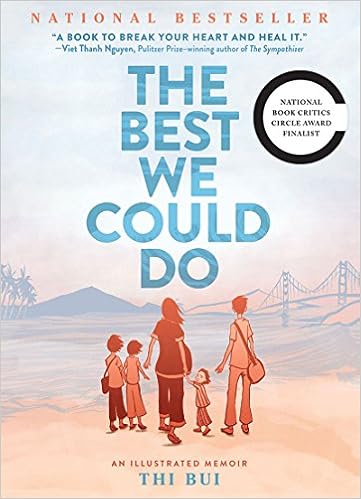
There are also several I've come across recently dealing with the refugee experience, e.g. The Best we Could Do and Threads. From the refugee crisis.
90charl08
>73 Chatterbox: I think I was imagining it could be a category that pulled together lots of different genres of books.
Fiction writers turn to fact? Although I would assume this would be bio heavy. eg Achebe on Nigerian memoir or Douglas Adams on saving rare species?
Fiction writers turn to fact? Although I would assume this would be bio heavy. eg Achebe on Nigerian memoir or Douglas Adams on saving rare species?
91Chatterbox
>90 charl08: Yes, that's an interesting idea, but it would be amply covered in other ways. If I took a different approach to creating challenges, that would be one, but I worry a bit that this might FEEL too restrictive to people. It probably wouldn't be, but my goal is to have categories that don't require a lot of research to fill (i.e. not making it like Take it or leave it challenges, which can get a bit esoteric), or feel eccentric, like read a non-fiction book with a red cover.
Thanks for the insight into the graphic non-novel world --- I'll take it under advisement. Though they'll have to come up with a new moniker for them if they are not novels but marketed as "graphic 'novels'", no?? LOL.
>83 m.belljackson: the McKesson folks who will distribute Aimovig are backlogged, apparently.
Thanks for the insight into the graphic non-novel world --- I'll take it under advisement. Though they'll have to come up with a new moniker for them if they are not novels but marketed as "graphic 'novels'", no?? LOL.
>83 m.belljackson: the McKesson folks who will distribute Aimovig are backlogged, apparently.
92m.belljackson
>91 Chatterbox:
Trying to parse out Graphic "Novel" on WIKI proved unrewarding,
yet yielded plenty of variety in the non-fiction ones to satisfy most readers for a month.
Trying to parse out Graphic "Novel" on WIKI proved unrewarding,
yet yielded plenty of variety in the non-fiction ones to satisfy most readers for a month.
93Jackie_K
I think I ultimately agree with >80 benitastrnad: - whatever the categories end up being, they will be well thought-out and I will have some great reads and discover a lot of awesome titles.
94Jackie_K
Re graphic non-fiction, I am not a big graphic stuff reader (for the same reasons that @chatterbox mentioned above, I find it hard to take in both pictures and text), but I did enjoy Kate Evans' work - Red Rosa was excellent, and I also have her Threads: from the Refugee Crisis on the TBR.
95Chatterbox
I think I have devised a way to make graphic non-novels work as a category, but y'all will just have to wait a few months to see how I've done it. *cue evil chortle*
96SuziQoregon
>95 Chatterbox: LOLOL
Another excellent graphic memoir is Cant' We Talk About Something More Pleasant
I finally started my book for this month. After >27 banjo123: mentioned it I picked up Upstream: Selected Essays at the library. Finished another book yesterday and started it last night. I've read the first couple of essays so far and I'm liking it.
I have no idea about next month. I might take a pass on this one. Of course, that's subject to change after I see what other folks are reading and suggesting.
Another excellent graphic memoir is Cant' We Talk About Something More Pleasant
I finally started my book for this month. After >27 banjo123: mentioned it I picked up Upstream: Selected Essays at the library. Finished another book yesterday and started it last night. I've read the first couple of essays so far and I'm liking it.
I have no idea about next month. I might take a pass on this one. Of course, that's subject to change after I see what other folks are reading and suggesting.
97charl08
>91 Chatterbox: No worries! I am happy to follow along with the categories - as Jackie and Benita said so much more eloquently.
98m.belljackson
>95 Chatterbox:
Well, that sounds promising! and fun, as always!
Bet there will be a lot of fiction GN suggestions to go with this.
Well, that sounds promising! and fun, as always!
Bet there will be a lot of fiction GN suggestions to go with this.
99benitastrnad
I am certainly liking my last selection for this month Lasso the Wind by Timothy Egan. I can’t wait to tell Mark, who is an avid Egan fan that he must find this one and read it. It will certainly make you think about some of the cultural ideas we have about “The West” of John Wayne and John Ford.
100m.belljackson
And, here's Ralph Waldo Emerson, bringing us up to 100
(with 50 more to go in 6 days and nights):
In this radiant summer, it has been a luxury to draw the breath of life.
The air is full of birds, and sweet with the breath of the pine, the balm-of-Gilead, and the new hay.
Night brings no gloom to the heart with its welcome shade.
From An Address, July 15, 1838
(with 50 more to go in 6 days and nights):
In this radiant summer, it has been a luxury to draw the breath of life.
The air is full of birds, and sweet with the breath of the pine, the balm-of-Gilead, and the new hay.
Night brings no gloom to the heart with its welcome shade.
From An Address, July 15, 1838
102Familyhistorian
I like the idea of having a graphic novel month. I have a few non-fiction graphic novels on my shelves:
Woman Rebel: The Margaret Sanger Story
Louis Riel: A Comic-Strip Biography
Burma Chronicles
Famous Players: Mysterious Death of William Desmond Taylor
The Case of Madeleine Smith
The Lindbergh Child
A Treasury of Victorian Murder Compendium
Malcolm X: A Graphic Biography
Alexander Hamilton: The Graphic History of an American Founding Father
Relish: My Life in the Kitchen
An Age of License
Something New: Tales from a Makeshift Bride
Tangles: A Story About Alzheimer's, My Mother and Me
March
Agatha: The Real Life of Agatha Christie
Cartoon Introduction to Philosophy
Maus A Survivors Tale
Maus II: A Survivor's Tale: And Here My Troubles Began
>95 Chatterbox: I hope that some of these work with the method you have devised.
Woman Rebel: The Margaret Sanger Story
Louis Riel: A Comic-Strip Biography
Burma Chronicles
Famous Players: Mysterious Death of William Desmond Taylor
The Case of Madeleine Smith
The Lindbergh Child
A Treasury of Victorian Murder Compendium
Malcolm X: A Graphic Biography
Alexander Hamilton: The Graphic History of an American Founding Father
Relish: My Life in the Kitchen
An Age of License
Something New: Tales from a Makeshift Bride
Tangles: A Story About Alzheimer's, My Mother and Me
March
Agatha: The Real Life of Agatha Christie
Cartoon Introduction to Philosophy
Maus A Survivors Tale
Maus II: A Survivor's Tale: And Here My Troubles Began
>95 Chatterbox: I hope that some of these work with the method you have devised.
103Familyhistorian
>96 SuziQoregon: Is Can't We Talk About Something More Pleasant nonfiction as well? I should have added it to my list.
104Familyhistorian
I am currently supposed to be working on an exhibit for PoCo Heritage museum for 2019. Its theme is a series of disasters one of which is the flu pandemic. It will be the 100th anniversary of when it struck next year. Maybe we could have a medical theme that encompasses pandemics or other disasters.
105Chatterbox
>103 Familyhistorian: Yes it is!!!
OK, I concede that there is a significant mass of graphic non-novels...
You'll just have to wait and see what I do with it... :-)
OK, I concede that there is a significant mass of graphic non-novels...
You'll just have to wait and see what I do with it... :-)
106Chatterbox
Am reading the essay collection by Thomas Frank that was recently published -- they are good, but don't have the same punch as What's the Matter with Kansas. Maybe he needs a larger scope and bigger argument? I just feel as if he's making the same point repeatedly, and it's becoming tedious.
107Familyhistorian
I am currently working my way through Bad Feminist. Not sure if I will be finished it by the end of the month but it will be soon because there are 16 people waiting for it at the library. No pressure!
108m.belljackson
>105 Chatterbox:
Joe and his daughter just went to Comic Con which yielded plenty of GN, but, alas, no NFGN.
Joe and his daughter just went to Comic Con which yielded plenty of GN, but, alas, no NFGN.
109benitastrnad
I just wanted to say thanks for putting up the book covers on the first post. My copy of Lasso the Wind is missing its dust jacket, as are most university library books, and I think that cover is beautiful - almost as good as the contents. I hadn't even gone to Amazon to look at the cover, so this was a very nice thing for you to do.
110katiekrug

I read Bad Feminist over the course of most of this month, trying to give it the time and attention I knew it deserved. I would read an essay here, a couple there, in between other books or when I had a spare 10 minutes. It is a collection to savor and to ponder. Gay’s greatest skill is not necessarily in her writing (which is fine, often powerful, but only occasionally really soars) but in the depth and nuance of her thoughts, opinions, critiques, and criticisms. She takes on everything from Tyler Perry movies to competitive Scrabble to abortion. She has a lot to say, and her perspective as a woman, a person of color, a woman of color, a rape survivor, a professor, and a first generation American is important and timely. Her takes on certain aspects of popular culture are cogent and funny and wince-inducing (I hereby vow to never read The Help or watch the film!). Her takedown of Quentin Tarantino and ‘Django Unchained’ is one for the ages, too.
I’ve included some quotes below that illustrate the power of her writing and the range of her subject matter. I look forward to reading a lot more of her work.
4.5 stars
“There are books written by women. There are books written by men. Somehow, though, it is only books by women, or books about certain topics, that require this special “women’s fiction” designation, particularly when those books have the audacity to explore, in some manner, the female experience, which, apparently, includes the topics of marriage, suburban existence, and parenthood, as if women act alone in these endeavors, wedding themselves, immaculately conceiving children, and the like… As Ruth Franklin notes, ‘The underlying problem is that while women read books by male writers about male characters, men tend not to do the reverse. Men’s novels about suburbia (Franzen) are about society; women’s novels about suburbia (Wolitzer) are about women.’” (page 173)
“If readers discount certain topics as unworthy of their attention, if readers are going to judge a book by its cover or feel excluded from a certain kind of book because the cover is, say, pink, the failure is with the reader, not the writer. To read narrowly and shallowly is to read from a place of ignorance, and women writers can’t fix that ignorance no matter what kind of books we write or how those books are marketed. This is where we should start focusing this conversation: how men (as readers, critics, and editors) can start to bear the responsibility for becoming better, broader readers.” (page 175)
“What struck me most was how ‘Django Unchained’ is a white man’s slavery revenge fantasy, one where white people figure heavily and where black people are, largely, incidental. Tarantino’s arrogance, as always, is impressive. Django is allowed to regain his dignity because he is freed by a white man. He reunites with his wife, again, with the help of a white man. ‘Django Unchained’ isn’t about a black man reclaiming his freedom. It’s about a white man working through his own racial demons and white guilt. There is no collective slavery revenge fantasy among black people, but I am certain, if there was one, it would not be about white people, not at all.” (page 225)
“I struggle to accept that my body is a legislative matter. The truth of this fact makes it difficult for me to breathe. I don’t feel like I have inalienable rights. I don’t feel free. I don’t feel like my body is my own. There is no freedom in any circumstance where the body is legislated, none at all.” (page 273-4)
“Trayvon Martin is neither the first nor the last young black man who will be murdered because of the color of his skin. If there is such a thing as justice for a young man whose life was taken too soon, I hope justice comes from all of us learning from what happened. I hope we can rise to the occasion of greatness, where greatness is nothing more than trying to overcome our lesser selves by seeing a young man like Trayvon Martin for what he is: a young man, a boy without a cape, one who couldn’t even walk home from the store unharmed, let alone fly.” (page 284)
“I have never considered compassion a finite resource. I would not want to live in a world where such was the case.” (page 300)
111Chatterbox
>110 katiekrug: Excellent overview, Katie -- thanks so much for going to the trouble of pulling all those quotes, which are extremely compelling! I just discovered that Gay has edited a book of essays on rape culture, which is one of the ones I can get with some of the credits I've earned via Amazon's new "Better on Kindle" benefit (you get 40% of the purchase price of certain books in credits, which you can then apply to a longish list of non-fiction books only, at least I haven't spotted any novels on the list so far.) I had taken all my coins to a coinstar terminal recently to convert them into an Amazon gift certificate -- something I do every few months -- and bought some Kindle sale books and Chopin's Piano, and have earned about $10 in credits. So the Roxane Gay essays (I already have Bad Feminist somewhere) are one option; another is Mitch Landrieu's book about race and the South and taking down the statues in New Orleans.
112Chatterbox
I have just finished reading Rendezvous with Oblivion, an anthology of essays by Thomas Frank, best known for his cutting and incisive book, What's the Matter with Kansas? Frank is on the left of the Democratic party, a scathing critic of the Clintons, the "neoliberals", global trade, etc. He also feels that the way forward necessarily involves revolutionary change instead of forging consensus. He's at his best here when he points out what the elite liberals get wrong; but he fails to convince when he asserts that revolutionary change is the way forward. Simply wanting it to be so doesn't make it so. For instance, ditching global trade deals isn't going to suddenly bring back jobs. Nafta or no Nafta, those jobs were going to leave the higher-wage US for lower-wage countries, and tariffs are not a solution. And you can't just ordain free college educations, either. Frank doesn't think in nuanced terms or come up with innovative independent ideas of his own (what about taking failing small liberal arts colleges, nationalizing them, turning them into a kind of network of elite academy system such as the French have or the Indian technology academies, and offer free education to, say, the top 5% of students graduating in their class regardless of where their school is located or the average SAT score in that school, etc? Let that demographic apply, and then select the number of attendees that can be accommodated for each course of study on a random basis...) But Frank just hammers away at the usual villains in the usual way and it gets a bit boring. Sometimes it's well written and he scores a point; sometimes the essays are just making the same point that every other Sanders supporter made ad nauseam during the campaigns. I'm glad I read it, but won't be re-reading it. I suppose this means that in Frank's eyes, I'm a horrible elitist, but I've seen the abuses of Wall Street and loathe them too. I just don't see that trying to tackle them from a position of lack of knowledge of how the system functions is any better. Sigh. 3.7 stars, because he can wield a mean pen.
I doubt I'll manage to complete any more essay collections this month; I have, however, been doing some other non-fiction reading, finishing three other non-fiction books and with two more on the go, one of which I will wrap up before the end of the month (about Henry Kissinger in Vietnam.)
I doubt I'll manage to complete any more essay collections this month; I have, however, been doing some other non-fiction reading, finishing three other non-fiction books and with two more on the go, one of which I will wrap up before the end of the month (about Henry Kissinger in Vietnam.)
113Chatterbox
Yes, it's the dreaded 150 post reminder yet again. No, there's no need to clutter up the thread with nonsense posts. But do come back and tell us what you think about essays versus long-form non-fiction. Does it work as well for you? What about anthologies of essays?
Did anyone just pick up the New Yorker and delve into some pieces here and there? Or other publications specializing in great narrative journalism/essays?
Nominations for best single essay of the month? Katie gave some great examples, but did she have a fave from amongst Roxane Gay's essays??
Did anyone just pick up the New Yorker and delve into some pieces here and there? Or other publications specializing in great narrative journalism/essays?
Nominations for best single essay of the month? Katie gave some great examples, but did she have a fave from amongst Roxane Gay's essays??
114Familyhistorian
>110 katiekrug: I agree that Bad Feminist should be read slowly, Katie. I am still working on it. I haven't read any of the parts that you quoted yet so I have those essays to look forward to. I am finding some of her cultural references tough going as she grew up in a different time and country from me but I can relate to the overall feeling that many of her essays evoke.
115mdoris
>113 Chatterbox: I love the essays in the New Yorker and read them all. There are some very interesting profiles....Anthony Bourdain, Chimamanda Ngozi Adichie, Carrie Gracie (BBC editor for China) who recently, stuck to her guns for equal pay for women.
Gracie went high profile with her concerns and when there was a final reckoning she did not take cash settled behind closed doors with a non disclosure agreement (which is usually the case). She got the money ($400, 000) owed for years of service which she then donated to the Fawcett Society a charity established in 1866 by suffragettes with a stipulation that it be used to provide legal assistance to low paid women and to fund strategic litigation. Major hero!
Gracie went high profile with her concerns and when there was a final reckoning she did not take cash settled behind closed doors with a non disclosure agreement (which is usually the case). She got the money ($400, 000) owed for years of service which she then donated to the Fawcett Society a charity established in 1866 by suffragettes with a stipulation that it be used to provide legal assistance to low paid women and to fund strategic litigation. Major hero!
116Familyhistorian
I am looking at my books for next month's challenge. Definitely want to read from my shelves as I have a shelf space issue. I am currently reorganizing my books - why do they take up so much room? I had hoped to stay in my townhouse without moving and my library expanded because of that. Now the developers are sniffing around and it looks like our whole strata will be up for sale so I really need to work on paring things down.
Anyway I have a couple of potential books for next month and wonder if they would work. They are: The Witch of Lime Street, The Strange Case of Hellish Nell: The Story of Helen Duncan and the Witch Trial of World War II and Strange Days: Amazing Stories from Canada's Wildest Decade. Oops it looks like there are three possibilities.
Anyway I have a couple of potential books for next month and wonder if they would work. They are: The Witch of Lime Street, The Strange Case of Hellish Nell: The Story of Helen Duncan and the Witch Trial of World War II and Strange Days: Amazing Stories from Canada's Wildest Decade. Oops it looks like there are three possibilities.
117Caroline_McElwee
>110 katiekrug: I'm only half way through, but couldn't agree more Katie. I'm really enjoying this volume.
118Jackie_K
>113 Chatterbox: I appreciated the short form this month, it was nice to have something a bit lighter for a change, although normally I prefer to read full-length tomes. I am going to experiment with writing some essays myself over the next few months, so it's been really good to see the amazing variety of what's out there. And I think I'm going to add Bad Feminist to my wishlist (Hunger is already on it).
For next month I had a book all lined up, but the book I'm reading for the August RandomCAT in the Category Challenge group is nowhere near finished and I think would fit the theme (it's Educated: A Memoir by Tara Westover - she was brought up in an extremist prepper Mormon family with minimal contact with the outside world). If I finish it and have enough time, I will then read the book I originally planned, which is Threading my Prayer Rug - about identity and belonging as an Pakistani Muslim immigrant in America.
For next month I had a book all lined up, but the book I'm reading for the August RandomCAT in the Category Challenge group is nowhere near finished and I think would fit the theme (it's Educated: A Memoir by Tara Westover - she was brought up in an extremist prepper Mormon family with minimal contact with the outside world). If I finish it and have enough time, I will then read the book I originally planned, which is Threading my Prayer Rug - about identity and belonging as an Pakistani Muslim immigrant in America.
119katiekrug
>111 Chatterbox: - I saw her speak at NYPL about Not That Bad: Dispatches from Rape Culture and bought a copy, so that might be my next of hers. I also have her novel, An Untamed State, on my Kindle, and I want to get a copy of Difficult Women and her collection of short stories, Ayiti, which was just re-released.
>113 Chatterbox: - I don't know if I can pick a favorite, but the one on reproductive freedom might have been the most meaningful, personally, to me. And her analysis of so-called "black" films was eye-opening.
But she also had some more personal, lighter ones that were fun - especially about the Sweet Valley High series and her foray into competitive Scrabble.
>113 Chatterbox: - I don't know if I can pick a favorite, but the one on reproductive freedom might have been the most meaningful, personally, to me. And her analysis of so-called "black" films was eye-opening.
But she also had some more personal, lighter ones that were fun - especially about the Sweet Valley High series and her foray into competitive Scrabble.
120katiekrug
>114 Familyhistorian: and >117 Caroline_McElwee: - I'm glad you both are also finding it worthwhile!
121streamsong
I think some libraries use the category of 'graphic nonfiction.' If you search on that tag here on LT, you will find over 600 books tagged that way, with more tagged graphic non-fiction. (probably quite a bit of overlap).
http://www.librarything.com/tag/graphic+nonfiction
More I've enjoyed that haven't been mentioned:
Fun Home: A Family Tragicomic - Alison Bechdel basis of the smash musical
Relish - Lucy Knisley - bonus - great recipes!
The Property - Rutu Modan
But - the graphics would fit into the other categories, too.
For me, I like the categories as broad as possible, since I am trying to read books I already have.
http://www.librarything.com/tag/graphic+nonfiction
More I've enjoyed that haven't been mentioned:
Fun Home: A Family Tragicomic - Alison Bechdel basis of the smash musical
Relish - Lucy Knisley - bonus - great recipes!
The Property - Rutu Modan
But - the graphics would fit into the other categories, too.
For me, I like the categories as broad as possible, since I am trying to read books I already have.
122m.belljackson
Emerson's "Self-Reliance" was a favorite,
with his "Experience" surprising me.
It was fairly bewildering, overly dense, and depressing:
"It is very unhappy, but too late to be helped,
the discovery we have made, that we exist."
Sure wish that irony or even humor had been intended.
with his "Experience" surprising me.
It was fairly bewildering, overly dense, and depressing:
"It is very unhappy, but too late to be helped,
the discovery we have made, that we exist."
Sure wish that irony or even humor had been intended.
123jnwelch
Has anyone mentioned March, the John Lewis civil rights trilogy? Those are excellent NF graphic memoirs.
124Familyhistorian
>123 jnwelch: March was among my list of non-fiction GNs in >102 Familyhistorian:, Joe. I own the trilogy but have only read book one so far. It was excellent but other reading seems to keep getting in my way for reading the next volume.
125benitastrnad
I generally enjoy essays. At one time I had a subscription to Vanity Fair and it was there that I started reading this kind of literature on a regular basis. I think it is an important, but often overlooked form of literature that oftentimes stimulates intellectual conversation among the egghead class. I don't think that many readers appreciate the essay and prefer works that are even shorter than the multi-part magazine essay or book essay.
I do like the longer forms of essays. For instance, the book I am reading now Lasso the Wind is a book of essays about the American West and includes pieces on forgotten history, current social history, climate change, hiking and fishing, industry, and politics. It is fascinating reading. The earlier book of essays about Francine Prose traveling in Sicily wasn't as much fun. It wasn't nearly the quality of the Timothy Egan's book.
This was a fun category for me. I probably won't finish my book by the end of the week, but when I do finish I will post my thoughts to this thread.
I do like the longer forms of essays. For instance, the book I am reading now Lasso the Wind is a book of essays about the American West and includes pieces on forgotten history, current social history, climate change, hiking and fishing, industry, and politics. It is fascinating reading. The earlier book of essays about Francine Prose traveling in Sicily wasn't as much fun. It wasn't nearly the quality of the Timothy Egan's book.
This was a fun category for me. I probably won't finish my book by the end of the week, but when I do finish I will post my thoughts to this thread.
127cbl_tn
I like to pick up local or regional histories when I travel, and Voices from the Rust Belt came home with me from Pittsburgh last month. Only a couple of the essays are about Pittsburgh. Other cities represented include Cleveland, Akron, Youngstown, Flint, Detroit, Buffalo, and Chicago. It's a strong collection. Among my favorites are Jacqueline Marino's essay about growing up in Youngstown; Ryan Schnurr's essay about his family's old homeplace in Oxford, Indiana; Kathryn M. Flinn's essay about studying and teaching local ecology in Cleveland; and Connor Coyne's essay about his infant daughter's bathtime in Flint, Michigan.
128cbl_tn
I'd like to keep the prize winners category next year. Also the history and travel categories. I liked the addition of the geography/maps category this year, but maybe it could be combined with the travel month.
As for new categories, I love the idea of a graphic non-fiction month and a food month. For a different category, how about books about numbers? Math, statistics, demographics, measurement, time, etc.
As for new categories, I love the idea of a graphic non-fiction month and a food month. For a different category, how about books about numbers? Math, statistics, demographics, measurement, time, etc.
129Chatterbox
>127 cbl_tn: That one sounds interesting, for all kinds of reasons.... As long as the subject matter, too, is diverse. I wouldn't want to read a collection that all hammered away at the same topic (urban blight, etc.) But it sounds fascinating. Off to check it out on Amazon.
130charl08
>121 streamsong: I've added The Property by Rutu Modan to my wishlist. Great to see such enthusiasm for reading GN/ G N-F's.
131charl08
>128 cbl_tn: I have Weapons of Math Destruction in the TBR pile that would fit in this category.
132charl08
Did anyone read We were eight years in power? I know Ellen, Kim and Beth have been reading it with a lot of enthusiasm, and Caroline mentioned wanting to read it upthread.
133Chatterbox
>132 charl08: I know it's on the radar of a lot of people. It would be a great fit with the November thread, devoted to all things political, for anyone who hasn't yet read it. I'm just feeling too exhausted about the looming task of the middterms and the aftermath of the 2016 election (yes, still) to feel like reading an exhaustive analysis of where the Obama administration might have done better. Yes, there probably are lessons to be learned, but my realpolitik (as opposed to be 20/20 hindsight, why didn't we do better, let's make this perfect next time-ism) is dominant right now. Maybe it's a 2019 book for me. Even reading the Thomas Frank essays got on my last nerve.
134m.belljackson
>132 charl08: >133 Chatterbox:
So far for November, I've lined up ON TYRANNY, THERE WAS A COUNTRY, The Noise of Time,
The Things They Carried, and have just ordered We Were Eight Years in Power.
Hope they drain the swamp.
So far for November, I've lined up ON TYRANNY, THERE WAS A COUNTRY, The Noise of Time,
The Things They Carried, and have just ordered We Were Eight Years in Power.
Hope they drain the swamp.
135Chatterbox
>134 m.belljackson: Just a heads up, The Things They Carried is actually fiction (although it's very heavily based on the author's experience. It won an award for a work of fiction. You're fine if "The Noise of Time" you picked is the Mandelstam book that the the touchstone leads to, but not if it you're planning to read the work by Julian Barnes, which also is a novel... If the "On Tyranny" book you're planning to read is by Timothy Snyder (the touchstone leads to a Leo Strauss work, which I figure is unlikely), I may join you in that one! I'm wondering whether I can get a book about Shakespeare and politics to fit into the category that month...
136m.belljackson
>135 Chatterbox:
Yes, the two fiction books will be, if we are still doing that, mentioned to enhance the Non-Fiction.
I also will add HALF OF A YELLOW SUN to follow the tyranny of THERE WAS A COUNTRY.
Yes, the two fiction books will be, if we are still doing that, mentioned to enhance the Non-Fiction.
I also will add HALF OF A YELLOW SUN to follow the tyranny of THERE WAS A COUNTRY.
137m.belljackson
>135 Chatterbox:
One more - just read this today in Emerson's "Spiritual Laws" essay:
"Could Shakespeare give a theory of Shakespeare?"
Political in its own way if you think about his historical sources and conclusions,
notably giving us insights into the minds and contradictory feelings of his tyrants...
One more - just read this today in Emerson's "Spiritual Laws" essay:
"Could Shakespeare give a theory of Shakespeare?"
Political in its own way if you think about his historical sources and conclusions,
notably giving us insights into the minds and contradictory feelings of his tyrants...
138charl08
I inadvertantly got more politics than I expected with the Zadie Smith collection Feel Free - she writes about environmentalism and Brexit in the three I read last night. At first I was feeling like I've read all the Brexit stuff before, but she had a specific point to make about London and diversity, which got me thinking (the impact of gentrification). She also included a speech accepting a prize in Germany, where she discussed the way she is often asked about the so-called 'failure of multiculturalism', and the shift in tone from the optimism of her first book White Teeth. But I think I liked the essay about the facebook film, The Social Network the best - her analysis of it as reflecting the interests of a teenage boy and his attitudes to stuff (why you choose your favourite films and tv programmes, not your favourite plants, why you 'poke' someone) and then shaping your life in that narrow way, definitely something to chew over.
(I'm still less than 20% in)
(I'm still less than 20% in)
139Caroline_McElwee
You are tempting me with that volume Charlotte. I still haven't read all the pieces in her earlier volume of essays, I wanted not to gobble them all up. They were more literary focused.
140Jackie_K
>134 m.belljackson: >135 Chatterbox: I've got On Tyranny lined up for November too (I've got half my library lined up for November, if I'm honest, but that one's at the top of the list!).
141kidzdoc
I haven't cracked open Known and Strange Things yet, so there's no way I'll get to it this month. I do plan to start reading The Blind Spot: An Essay On the Novel by Javier Cercas, which is based on five public lectures that he gave when he was a visiting professor at Oxford in 2014. I don't know if this fits for this month's read, though.
142Chatterbox
>141 kidzdoc: Yup, that fits! You can read for August in September, and pretend it's still summer (if you want too...)
>138 charl08: The comments on "The Social Network" make the essay sound intriguing...
>138 charl08: The comments on "The Social Network" make the essay sound intriguing...
143kidzdoc
>142 Chatterbox: Perfect! I'll finish it no later than next week.
144Chatterbox
I just finished a book for the nature/outdoors challenge... (The Seabird's Cry.) I'm so far behind on so many books...
145Familyhistorian
>144 Chatterbox: I know that feeling of being behind. Do I read a book or try to catch up on LT or maybe even do some real life stuff?
146mdoris
Just finished a great piece in the New Yorker (Aug. 20th, 2018) written by a very good writer Rebecca Mead. Has anyone read My Life in Middlemarch and would you recommend it (or any of her other books)? I have always enjoyed her writing in the NYer. Anyway the article/essay is titled "The Return of the Native" about her personal decision to move, with her family, back to England after 30 years living in the U.S. It was very interesting (short and sweet for August).
147Chatterbox
>146 mdoris: It's funny you ask; I knew Rebecca slightly before she met her current husband, while she was dating a friend of a friend, journalist Peter Maass. So we'd end up at a lot of the same dinner parties for a while in the late 90s, early 2000s. They had all been part of the group that was loosely the basis for the characters in Prague by Arthur Phillips -- all living in Budapest after the fall of the Berlin Wall. (And why is there no touchstone??) I found her book about Middlemarch a bit meh-ish. It became pedantic at times, for my taste, and she just didn't strike me as any more of an interesting person in that book than she was in real life. (Which was, not very...) Her writing on some other topics has been more interesting, and her husband's book about Stefan Zweig, "Impossible Exile", is brilliant. He also has written about noise and quiet.
I'll try to set up the new challenge tomorrow morning. Hopefully we will have passed the 150 post mark?!
I'll try to set up the new challenge tomorrow morning. Hopefully we will have passed the 150 post mark?!
148torontoc
>147 Chatterbox: We should- I will have to read a book for the August challenge later this month. My Granta read really didn't meet the criteria.
149mdoris
>147 Chatterbox: Interesting. I have done some sleuthing and the husband is George Prochnik and my library has his book In Pursuit of Silence: Listening for Meaning in a World of Noise which interests me so I will put a hold on it. With thanks.
151Chatterbox
And it's time to look forward to September!!
152Caroline_McElwee
>146 mdoris: Highly recommend My Life in Middlemarch.
>150 streamsong: I'm the same, I'm just over half through, but got a bit distracted by novels this month! I'll finish it in the next week or so though. It's a good read.
>150 streamsong: I'm the same, I'm just over half through, but got a bit distracted by novels this month! I'll finish it in the next week or so though. It's a good read.
153benitastrnad
I managed to finish my last book for this challenge on the last night before I shut my eyes and went to sleep. Lasso the Wind: Away to the New West by Timothy Egan. This is a sizable book of essays (268 pages - not including bibliography and index) that is a series of essays written by Egan when he was the New York Times bureau chief for the Western U. S. based in Seattle. It was published in 1998 and so many of the population figures that Egan cites are now out-of-date, but even so they get the point across as many of the cities, Las Vegas, Denver, Phoenix, have only grown and grown, and grown, ... It is clear that Egan is one of those tree-hugging liberal conservationists, so this is not a book for people who are pro-development. The essays are part conservation, part history, and part political - probably what essays should be. They are all placed in all 11 states of the West that are beyond the 100th Meridian. I think this book is important reading for anybody who lives in these areas and for people who are trying to gain an understanding of some of the political positions of both sides of many debates that are taking place all across the U. S. today. Even though this book is 20 years old the roots of many a immediate modern issue are dealt with in these essays. Subjects range from the reintroduction of wolves and bison to Yellowstone, to the appearance of the London Bridge in Lake Havasue City, Arizona, to the influx of Mexican migrants in the Yakima Valley of Washington. At times the author is scathing and at times he is crying, as he is when he writes about the disappearance of trout from the rivers and lake of his home state of Idaho, due to climate change.
I got this book from our library and I found so much food for thought in it that I purchased a used copy to keep in my home library.
I got this book from our library and I found so much food for thought in it that I purchased a used copy to keep in my home library.
154nittnut
I can highly recommend The American Spirit: Who We Are and What We Stand For. It is an excellent collection of some of David McCullough's speeches at college graduations and other places - like the White House.
155banjo123
I did finish Mary Oliver's book of essays, Upstream. I think that fans of her poetry would really like the book. I am not a huge Oliver fan, and this book did not convert me. Some interesting thoughts, however. Here is the part I found the most interesting:
"Adults can change their circumstances; children cannot. Children are powerless, and in difficult situations they are the victims of every sorrow and mischance and rage around them, for children feel all of these things but without any of the ability that adults have to change them. Whatever can take a child beyond such circumstances, therefore, is an alleviation and a blessing.
I quickly found for myself two such blessings---the natural world, and thw world of writing: literature. These were the gates through which I vanished from a difficult place."
"Adults can change their circumstances; children cannot. Children are powerless, and in difficult situations they are the victims of every sorrow and mischance and rage around them, for children feel all of these things but without any of the ability that adults have to change them. Whatever can take a child beyond such circumstances, therefore, is an alleviation and a blessing.
I quickly found for myself two such blessings---the natural world, and thw world of writing: literature. These were the gates through which I vanished from a difficult place."
156SuziQoregon
I finished Upstream: Selected Essays by Mary Oliver last week but have yet to write up any sort of review for it. As with most collections of this sort, I liked some better than others.
Like >155 banjo123: I made note of that quote.
Like >155 banjo123: I made note of that quote.
This topic was continued by The 2018 Nonfiction Challenge Part IX: Spirits, Spirituality, Gods, Demons, and Supernatural Beings .

