Labfs39 wanders the world of words in 2022 (pt. 3)
This is a continuation of the topic Labfs39 wanders the world of words in 2022 (pt. 2).
This topic was continued by Labfs39 wanders the world of words in 2022 (pt. 4).
Talk Club Read 2022
Join LibraryThing to post.

2labfs39
Books read in 2022:
January
1. Dare to Disappoint: Growing Up in Turkey by Özge Samancı (GNF, 4.5*)
2. Miyazaki's Spirited Away by Hayao Miyazaki, translated from the Japanese (TGN, 3.5*)
3. Snow by Orhan Pamuk, translated from the Turkish by Maureen Freely (TF, 3*)
4. I have Lived a Thousand Years by Livia Bitton-Jackson (NF, 4.5*)
5. The Bastard of Istanbul by Elif Shafak (F, 3.5*)
6. A Killer in King's Cove by Iona Whishaw (F, 2.5*)
7. Hyperbole and a half : unfortunate situations, flawed coping mechanisms, mayhem, and other things that happened by Allie Brosh (GNF, 4*)
8. Twenty Stories by Turkish Women Writers translated by Nilüfer Mizanoğlu Reddy (TF, 3.5*)
9. In. by Will McPhail (GNF, 4*)
February
10. The Hungry Tide by Amitav Ghosh (F, 4*)
11. Maus: A Survivor's Tale by Art Spiegelman (GNF, 4.5*)
12. Second Generation: Things I Didn't Tell My Father by Michel Kichka, translated from the French by Montana Kane (TGNF, 4.5*)
13. I Will Never See the World Again by Ahmet Altan, translated from the Turkish by Yasemin Çongar (TNF, 5*)
14. Jerusalem: A Family Portrait by Boaz Yakin and Nick Bertozzi (GN, 3.5*)
15. The School for Good Mothers by Jessamine Chan (F, 3*)
16. Palestine by Joe Sacco (GNF, 4*)
March
17. The Palestinian-Israeli Conflict: A Very Short Introduction by Martin Bunton (NF, T16, 4*)
18. Project Hail Mary by Andy Weir (F, T9, 4.5*)
19. A Study in Scarlet by Arthur Conan Doyle (F, T12, 3*)
20. The Property by Rutu Modan, translated from the Hebrew by Jessica Cohen (TGN, T3, 4*)
21. A Dangerous Place by Jacqueline Winspear (F, T11, 4*)
22. An Unnecessary Woman by Rabih Alameddine (F, T17, 4.5*)
23. American Born Chinese by Gene Luen Yang (GN, T16, 4*)
24. Santa Claus in Baghdad and Other Stories about Teens in the Arab World by Elsa Marston (YA, T6, 3.5*)
April
25. Passport by Sophia Glock (GN, T10, 3.5*)
26. In this Grave Hour by Jacqueline Winspear (F, T1, 3*)
27. Reading Lolita in Tehran by Azar Nafisi (NF, T14, 3.5*)
28. The Colonel by Mahmoud Dowlatabadi, translated from the Persian by Tom Patterdale (TF, T17, 4.5*)
29. They Called Us Enemy: the Expanded Edition by George Takei (GNF, T15, 4*)
30. My grandmother's braid by Alina Bronsky, translated from the German by Tim Mohr (TF, T3, 4*)
__ The Caiman by by María Eugenia Manrique, illustrated by Ramón París, and translated by Amy Brill (Kids, T11, 3.5*)
January
1. Dare to Disappoint: Growing Up in Turkey by Özge Samancı (GNF, 4.5*)
2. Miyazaki's Spirited Away by Hayao Miyazaki, translated from the Japanese (TGN, 3.5*)
3. Snow by Orhan Pamuk, translated from the Turkish by Maureen Freely (TF, 3*)
4. I have Lived a Thousand Years by Livia Bitton-Jackson (NF, 4.5*)
5. The Bastard of Istanbul by Elif Shafak (F, 3.5*)
6. A Killer in King's Cove by Iona Whishaw (F, 2.5*)
7. Hyperbole and a half : unfortunate situations, flawed coping mechanisms, mayhem, and other things that happened by Allie Brosh (GNF, 4*)
8. Twenty Stories by Turkish Women Writers translated by Nilüfer Mizanoğlu Reddy (TF, 3.5*)
9. In. by Will McPhail (GNF, 4*)
February
10. The Hungry Tide by Amitav Ghosh (F, 4*)
11. Maus: A Survivor's Tale by Art Spiegelman (GNF, 4.5*)
12. Second Generation: Things I Didn't Tell My Father by Michel Kichka, translated from the French by Montana Kane (TGNF, 4.5*)
13. I Will Never See the World Again by Ahmet Altan, translated from the Turkish by Yasemin Çongar (TNF, 5*)
14. Jerusalem: A Family Portrait by Boaz Yakin and Nick Bertozzi (GN, 3.5*)
15. The School for Good Mothers by Jessamine Chan (F, 3*)
16. Palestine by Joe Sacco (GNF, 4*)
March
17. The Palestinian-Israeli Conflict: A Very Short Introduction by Martin Bunton (NF, T16, 4*)
18. Project Hail Mary by Andy Weir (F, T9, 4.5*)
19. A Study in Scarlet by Arthur Conan Doyle (F, T12, 3*)
20. The Property by Rutu Modan, translated from the Hebrew by Jessica Cohen (TGN, T3, 4*)
21. A Dangerous Place by Jacqueline Winspear (F, T11, 4*)
22. An Unnecessary Woman by Rabih Alameddine (F, T17, 4.5*)
23. American Born Chinese by Gene Luen Yang (GN, T16, 4*)
24. Santa Claus in Baghdad and Other Stories about Teens in the Arab World by Elsa Marston (YA, T6, 3.5*)
April
25. Passport by Sophia Glock (GN, T10, 3.5*)
26. In this Grave Hour by Jacqueline Winspear (F, T1, 3*)
27. Reading Lolita in Tehran by Azar Nafisi (NF, T14, 3.5*)
28. The Colonel by Mahmoud Dowlatabadi, translated from the Persian by Tom Patterdale (TF, T17, 4.5*)
29. They Called Us Enemy: the Expanded Edition by George Takei (GNF, T15, 4*)
30. My grandmother's braid by Alina Bronsky, translated from the German by Tim Mohr (TF, T3, 4*)
__ The Caiman by by María Eugenia Manrique, illustrated by Ramón París, and translated by Amy Brill (Kids, T11, 3.5*)
3labfs39
Books read in 2022:
May
31. Gaza Mom: Palestine, Politics, Parenting, and Everything In Between by Laila El-Haddad (NF, 3.5*)
__999 Tadpoles by Ken Kimura, illustrations by Yasunari Murakami, translated from the Japanese (Kids, 4.5*)
32. The Bad Immigrant by Sefi Atta (F, T3, 4.5*)
33. The Corpse Washer by Sinan Antoon, translated from the Arabic by the author (TF, T9, 4*)
34. Journey to Munich by Jacqueline Winspear (F, T3, 4*)
35. To Die But Once by Jacqueline Winspear (F, T7, 3.5*)
36. The American Agent by Jacqueline Winspear (F, 3.5*)
37. Burnt Shadows by Kamila Shamsie (F, T3, 4.5*)
38. The patience stone: sang-e saboor by Atiq Rahimi, translated from the French by Polly McLean (F, T13, 3.5*)
39. Grunt: The Curious Science of Humans at War by Mary Roach (NF, T6, 4*)
40. The Consequences of Fear by Jacqueline Winspear (F, T3, 3*)
41. The Swallows of Kabul by Yasmina Khadra, translated from the French by John Cullen (TF, 3*)
June
42. A Sunlit Weapon by Jacqueline Winspear (F, T13, 3*)
43. A Thousand Rooms of Dream and Fear by Atiq Rahimi, translated from the Dari by Sarah Maguire and Yama Yari (TF, T17, 3*)
44. Anxious People by Fredrik Backman, translated from the Swedish by Neil Smith (TF, T12, 4.5*)
45. Earth and Ashes by Atiq Rahimi, translated from the Dari by Erdağ M. Göknar (TF, T12, 4*)
46. The Great Fire by Shirley Hazzard (F, T4, 3*)
July
47. Celestine by Kevin St. Jarre (F, T16, 4*)
48. Daughters of the Occupation by Shelly Sanders (F, T10, 3*)
49. A Visit to Moscow by Anna Olswanger, illustrated by Yevgenia Nayberg (GN, T17, 4*)
50. Monastery by Eduardo Halfon, translated from the Spanish by Lisa Dillman and Daniel Hahn (TF, T3, 3.5*)
51. Buying a Fishing Rod for my Grandfather by Gao Xingjian, translated from the Chinese by Mabel Lee (TF, T9, 3*)
52. Born a crime: stories from a South African childhood by Trevor Noah (NF, T7, 4.5*)
August
53. Snow Country by Yasunari Kawabata, translated from the Japanese by Edward G. Seidensticker (TF, T13, 3.5*)
54. The Crazy Iris and Other Stories of the Atomic Aftermath edited by Kenzaburō Ōe (TF, T18, 4*)
55. A Riot of Goldfish by Kanoko Okamoto, translated from the Japanese by J. Keith Vincent (TF, T5, 3*) Note: I only read the first of two stories.
56. Colorless Tsukuru Tazaki and His Years of Pilgrimage by Haruki Murakami, translated from the Japanese by Philip Gabriel (TF, T4, 4.5*)
57. The Easy Life in Kamusari by Shion Miura, translated from the Japanese by Juliet Winters Carpenter (TF, T14, 3.5*)
__DNF: Conversations with People Who Hate Me by Dylan Marron
May
31. Gaza Mom: Palestine, Politics, Parenting, and Everything In Between by Laila El-Haddad (NF, 3.5*)
__999 Tadpoles by Ken Kimura, illustrations by Yasunari Murakami, translated from the Japanese (Kids, 4.5*)
32. The Bad Immigrant by Sefi Atta (F, T3, 4.5*)
33. The Corpse Washer by Sinan Antoon, translated from the Arabic by the author (TF, T9, 4*)
34. Journey to Munich by Jacqueline Winspear (F, T3, 4*)
35. To Die But Once by Jacqueline Winspear (F, T7, 3.5*)
36. The American Agent by Jacqueline Winspear (F, 3.5*)
37. Burnt Shadows by Kamila Shamsie (F, T3, 4.5*)
38. The patience stone: sang-e saboor by Atiq Rahimi, translated from the French by Polly McLean (F, T13, 3.5*)
39. Grunt: The Curious Science of Humans at War by Mary Roach (NF, T6, 4*)
40. The Consequences of Fear by Jacqueline Winspear (F, T3, 3*)
41. The Swallows of Kabul by Yasmina Khadra, translated from the French by John Cullen (TF, 3*)
June
42. A Sunlit Weapon by Jacqueline Winspear (F, T13, 3*)
43. A Thousand Rooms of Dream and Fear by Atiq Rahimi, translated from the Dari by Sarah Maguire and Yama Yari (TF, T17, 3*)
44. Anxious People by Fredrik Backman, translated from the Swedish by Neil Smith (TF, T12, 4.5*)
45. Earth and Ashes by Atiq Rahimi, translated from the Dari by Erdağ M. Göknar (TF, T12, 4*)
46. The Great Fire by Shirley Hazzard (F, T4, 3*)
July
47. Celestine by Kevin St. Jarre (F, T16, 4*)
48. Daughters of the Occupation by Shelly Sanders (F, T10, 3*)
49. A Visit to Moscow by Anna Olswanger, illustrated by Yevgenia Nayberg (GN, T17, 4*)
50. Monastery by Eduardo Halfon, translated from the Spanish by Lisa Dillman and Daniel Hahn (TF, T3, 3.5*)
51. Buying a Fishing Rod for my Grandfather by Gao Xingjian, translated from the Chinese by Mabel Lee (TF, T9, 3*)
52. Born a crime: stories from a South African childhood by Trevor Noah (NF, T7, 4.5*)
August
53. Snow Country by Yasunari Kawabata, translated from the Japanese by Edward G. Seidensticker (TF, T13, 3.5*)
54. The Crazy Iris and Other Stories of the Atomic Aftermath edited by Kenzaburō Ōe (TF, T18, 4*)
55. A Riot of Goldfish by Kanoko Okamoto, translated from the Japanese by J. Keith Vincent (TF, T5, 3*) Note: I only read the first of two stories.
56. Colorless Tsukuru Tazaki and His Years of Pilgrimage by Haruki Murakami, translated from the Japanese by Philip Gabriel (TF, T4, 4.5*)
57. The Easy Life in Kamusari by Shion Miura, translated from the Japanese by Juliet Winters Carpenter (TF, T14, 3.5*)
__DNF: Conversations with People Who Hate Me by Dylan Marron
4labfs39
Reading Globally
Books I've read in 2022 by nationality of author (a tricky business):
Afghani: 3
Algerian: 1
American: 10
Australian: 1
Belgian Israeli: 1
Canadian: 2
Chinese: 1
Chinese American: 1
English: 7
German (Russian): 1
Guatemalan: 1
Indian: 1
Iranian: 2
Iraqi: 1
Israeli: 2
Japanese: 6
Japanese American: 1
Lebanese: 1
Maltese American: 1
Nigerian American: 1
Pakistani: 1
Palestinian: 1
Scottish (English): 2
Slovakian: 1
South African: 1
Swedish: 1
Turkish: 5
Check out my Global Challenge thread, labfs39 reads around the world, for a look at a cumulative list since around 2010. And I've broken out the US by state in my Labfs39 tackles the states thread.
Books I've read in 2022 by nationality of author (a tricky business):
Afghani: 3
Algerian: 1
American: 10
Australian: 1
Belgian Israeli: 1
Canadian: 2
Chinese: 1
Chinese American: 1
English: 7
German (Russian): 1
Guatemalan: 1
Indian: 1
Iranian: 2
Iraqi: 1
Israeli: 2
Japanese: 6
Japanese American: 1
Lebanese: 1
Maltese American: 1
Nigerian American: 1
Pakistani: 1
Palestinian: 1
Scottish (English): 2
Slovakian: 1
South African: 1
Swedish: 1
Turkish: 5
Check out my Global Challenge thread, labfs39 reads around the world, for a look at a cumulative list since around 2010. And I've broken out the US by state in my Labfs39 tackles the states thread.
5labfs39
Asian Book Challenge
January: Turkey
1. Dare to Disappoint: Growing Up in Turkey by Özge Samancı
2. Snow by Orhan Pamuk
3. The Bastard of Istanbul by Elif Shafak
4. Twenty Stories by Turkish Women Writers
5. I Will Never See the World Again by Ahmet Altan
February: Israel & Palestine
1. Jerusalem: A Family Portrait by Boaz Yakin
2. The Property by Rutu Modan
3. Gaza Mom by Laila El-Haddad
Also: Palestine by Joe Sacco
The Palestinian-Israeli Conflict by Martin Bunton
March: Lebanon, Jordan, Saudi Arabia, Syria, Iraq, Oman, Kuwait
1. An Unnecessary Woman by Rabih Alameddine (Lebanon)
2. The Corpse Washer by Sinan Antoon (Iraq)
Also: Santa Claus in Baghdad and Other Stories about Teens in the Arab World by Elsa Marston (Iraq, Syria, Jordan, Lebanon)
April: Iran
1. Reading Lolita in Tehran by Azar Nafisi
2. The Colonel by Mahmoud Dowlatabadi
May: the Stans
1. Burnt Shadows by Kamila Shamsie (Pakistan)
2. The patience stone: sang-e saboor by Atiq Rahimi (Afghanistan)
3. A Thousand Rooms of Dream and Fear by Atiq Rahimi (Afghanistan)
4. Earth and Ashes by Atiq Rahimi (Afghanistan)
Also: The Swallows of Kabul by Yasmina Khadra
June: India, Sri Lanka, Bangladesh
1. The Hungry Tide by Amitav Ghosh (India)
2. "Nosh Daru" by Naiyer Masud (India)
July: China
1. Buying a Fishing Rod for my Grandfather by Gao Xingjian
August: Japan
1. Snow Country by Yasunari Kawabata
2. The Crazy Iris and Other Stories of the Atomic Aftermath edited by Kenzaburō Ōe
3. A Riot of Goldfish by Kanoko Okamoto
4. Colorless Tsukuru Tazaki and His Years of Pilgrimage by Haruki Murakami
5. The Easy Life in Kamusari by Shion Miura
September: Korea
October: Mongolia, Nepal, Burma, Bhutan, Vietnam, Cambodia, Laos, Thailand
November: Malaysia, Singapore, and Indonesia
December: The Asian Diaspora
January: Turkey
1. Dare to Disappoint: Growing Up in Turkey by Özge Samancı
2. Snow by Orhan Pamuk
3. The Bastard of Istanbul by Elif Shafak
4. Twenty Stories by Turkish Women Writers
5. I Will Never See the World Again by Ahmet Altan
February: Israel & Palestine
1. Jerusalem: A Family Portrait by Boaz Yakin
2. The Property by Rutu Modan
3. Gaza Mom by Laila El-Haddad
Also: Palestine by Joe Sacco
The Palestinian-Israeli Conflict by Martin Bunton
March: Lebanon, Jordan, Saudi Arabia, Syria, Iraq, Oman, Kuwait
1. An Unnecessary Woman by Rabih Alameddine (Lebanon)
2. The Corpse Washer by Sinan Antoon (Iraq)
Also: Santa Claus in Baghdad and Other Stories about Teens in the Arab World by Elsa Marston (Iraq, Syria, Jordan, Lebanon)
April: Iran
1. Reading Lolita in Tehran by Azar Nafisi
2. The Colonel by Mahmoud Dowlatabadi
May: the Stans
1. Burnt Shadows by Kamila Shamsie (Pakistan)
2. The patience stone: sang-e saboor by Atiq Rahimi (Afghanistan)
3. A Thousand Rooms of Dream and Fear by Atiq Rahimi (Afghanistan)
4. Earth and Ashes by Atiq Rahimi (Afghanistan)
Also: The Swallows of Kabul by Yasmina Khadra
June: India, Sri Lanka, Bangladesh
1. The Hungry Tide by Amitav Ghosh (India)
2. "Nosh Daru" by Naiyer Masud (India)
July: China
1. Buying a Fishing Rod for my Grandfather by Gao Xingjian
August: Japan
1. Snow Country by Yasunari Kawabata
2. The Crazy Iris and Other Stories of the Atomic Aftermath edited by Kenzaburō Ōe
3. A Riot of Goldfish by Kanoko Okamoto
4. Colorless Tsukuru Tazaki and His Years of Pilgrimage by Haruki Murakami
5. The Easy Life in Kamusari by Shion Miura
September: Korea
October: Mongolia, Nepal, Burma, Bhutan, Vietnam, Cambodia, Laos, Thailand
November: Malaysia, Singapore, and Indonesia
December: The Asian Diaspora
6labfs39
Theme Reads
Jan - March 2022: Around the Indian Ocean
1. The Hungry Tide by Amitav Ghosh (the Sundarbans, India/Bangladesh)
April - June: Outcasts and Castaways
1. My grandmother's braid by Alina Bronsky (Russian immigrants to Germany)
2. Gaza Mom by Laila El-Haddad (occupied Palestine)
3. The Bad Immigrant by Sefi Atta (Nigerian immigrant to US)
4. Burnt Shadows by Kamila Shamsie
July - Sept: "When alphabets collide" - books written in the Slavic languages
Oct - Dec: Prize winners in their own language
Jan - March 2022: Around the Indian Ocean
1. The Hungry Tide by Amitav Ghosh (the Sundarbans, India/Bangladesh)
April - June: Outcasts and Castaways
1. My grandmother's braid by Alina Bronsky (Russian immigrants to Germany)
2. Gaza Mom by Laila El-Haddad (occupied Palestine)
3. The Bad Immigrant by Sefi Atta (Nigerian immigrant to US)
4. Burnt Shadows by Kamila Shamsie
July - Sept: "When alphabets collide" - books written in the Slavic languages
Oct - Dec: Prize winners in their own language
7labfs39
Graphic Novels
1. Dare to Disappoint: Growing Up in Turkey by Özge Samancı
2. Miyazaki's Spirited Away by Hayao Miyazaki
3. Hyperbole and a Half by Allie Brosh
4. In. by Will McPhail
5. Maus: A Survivor's Tale by Art Spiegelman
6. Second Generation: Things I Didn't Tell My Father by Michel Kichka
7. Jerusalem: A Family Portrait by Boaz Yakin and Nick Bertozzi
8. Palestine by Joe Sacco
9. The Property by Rutu Modan
10. American Born Chinese by Gene Luen Yang
11. Passport by Sophia Glock
12. They Called Us Enemy by George Takei
13. A Visit to Moscow by Anna Olswanger, illustrated by Yevgenia Nayberg
1. Dare to Disappoint: Growing Up in Turkey by Özge Samancı
2. Miyazaki's Spirited Away by Hayao Miyazaki
3. Hyperbole and a Half by Allie Brosh
4. In. by Will McPhail
5. Maus: A Survivor's Tale by Art Spiegelman
6. Second Generation: Things I Didn't Tell My Father by Michel Kichka
7. Jerusalem: A Family Portrait by Boaz Yakin and Nick Bertozzi
8. Palestine by Joe Sacco
9. The Property by Rutu Modan
10. American Born Chinese by Gene Luen Yang
11. Passport by Sophia Glock
12. They Called Us Enemy by George Takei
13. A Visit to Moscow by Anna Olswanger, illustrated by Yevgenia Nayberg
8labfs39
Remembering Rebeccanyc
Monica (Trifolia) has set up a thread challenging us to honor Rebecca/Sybil by collectively reading the books she had on her "Hope to Read Soon" list when she passed. It is a robust list of over 600 books. Of these I have read
8. Agus, Milena. From the Land of the Moon
13. Akpan, Uwem. Say You're One of Them
44. Beevor, Antony. Stalingrad
63. Bronsky, Alina. The Hottest Dishes of the Tartar Cuisine
97. Chekhov, Anton. Sakhalin Island
138. Dennys, Joyce. Henrietta's War: News from the Home Front 1939-1942
144. Dickens, Charles. A Tale of Two Cities
179. Ferrante, Elena. My Brilliant Friend
186. Flaubert, Gustave. Madame Bovary
216. Gogol, Nikolai. The Collected Tales of Nikolai Gogol
234. Gruša, Jiří. The Questionnaire, or Prayer for a Town & a Friend
235. Grushin, Olga. The Dream Life of Sukhanov
238. Gurnah, Abdulrazak. Paradise
245. Hašek, Jaroslav. The Good Soldier Švejk: and his fortunes in the world war
255. Hrabal, Bohumil. Dancing Lessons for the Advanced in Age
256. Hrabal, Bohumil. I Served the King of England
286. Khoury, Elias. White Masks
296. Knausgård, Karl Ove. My Struggle: Book 1: A Death in the Family
347. Marai, Sandor. Embers
364. Mendelsund, Peter. What We See When We Read: A Phenomenology
375. Mo Yan. The Garlic Ballads
420. Poulin, Jacques. Mister Blue
433. Redniss, Lauren. Radioactive: Marie & Pierre Curie: A Tale of Love and Fallout
436. Remarque, Erich Maria. All Quiet on the Western Front
469. Sansal, Boualem. The German Mujahid
483. Schulz, Bruno. The Street of Crocodiles and Other Stories (The Complete Fiction of Bruno Schultz
485. Schwarz-Bart, André. The Last of the Just
506. Singer, Isaac Bashevis. Love and Exile: An Autobiographical Trilogy
508. Skloot, Rebecca. The Immortal Life of Henrietta Lacks
516. Solzhenitsyn, Alexander. One Day in the Life of Ivan Denisovich
518. Soskice, Janet Martin. The Sisters of Sinai: How Two Lady Adventurers Discovered the Hidden Gospels
587. Vaculík, Ludvík. The Guinea Pigs
612. Wharton, Edith. The Age of Innocence
613. Wharton, Edith. The House of Mirth
621. Willis, Connie. Blackout
I have the following ones on my physical shelves:
79. Camus, Albert. The Stranger
190. Foster, Thomas C. How To Read Literature Like a Professor
215. Gogol, Nikolai. Taras Bulba
373. Miłosz, Czesław. The Captive Mind
388. Myśliwski, Wiesław. Stone upon Stone
409. Pavić, Milorad. Dictionary of the Khazars
455. Rufin, Jean-Christophe. The Abyssinian
462. Rytkhėu, Yuri. The Chukchi Bible
472. Saramago, José. The Stone Raft
493. Serge, Victor. Memoirs of a Revolutionary
553. Teffi. Memories: From Moscow to the Black Sea
576. Tsypkin, Leonid. Summer in Baden-Baden
577. Tuchman, Barbara W. A Distant Mirror: The Calamitous 14th Century
I will also track books I read that I have marked as recommendations from rebeccanyc, i.e. books she had already read and reviewed. There are 36 of them.
1. The Colonel by Mahmoud Dowlatabadi
Monica (Trifolia) has set up a thread challenging us to honor Rebecca/Sybil by collectively reading the books she had on her "Hope to Read Soon" list when she passed. It is a robust list of over 600 books. Of these I have read
8. Agus, Milena. From the Land of the Moon
13. Akpan, Uwem. Say You're One of Them
44. Beevor, Antony. Stalingrad
63. Bronsky, Alina. The Hottest Dishes of the Tartar Cuisine
97. Chekhov, Anton. Sakhalin Island
138. Dennys, Joyce. Henrietta's War: News from the Home Front 1939-1942
144. Dickens, Charles. A Tale of Two Cities
179. Ferrante, Elena. My Brilliant Friend
186. Flaubert, Gustave. Madame Bovary
216. Gogol, Nikolai. The Collected Tales of Nikolai Gogol
234. Gruša, Jiří. The Questionnaire, or Prayer for a Town & a Friend
235. Grushin, Olga. The Dream Life of Sukhanov
238. Gurnah, Abdulrazak. Paradise
245. Hašek, Jaroslav. The Good Soldier Švejk: and his fortunes in the world war
255. Hrabal, Bohumil. Dancing Lessons for the Advanced in Age
256. Hrabal, Bohumil. I Served the King of England
286. Khoury, Elias. White Masks
296. Knausgård, Karl Ove. My Struggle: Book 1: A Death in the Family
347. Marai, Sandor. Embers
364. Mendelsund, Peter. What We See When We Read: A Phenomenology
375. Mo Yan. The Garlic Ballads
420. Poulin, Jacques. Mister Blue
433. Redniss, Lauren. Radioactive: Marie & Pierre Curie: A Tale of Love and Fallout
436. Remarque, Erich Maria. All Quiet on the Western Front
469. Sansal, Boualem. The German Mujahid
483. Schulz, Bruno. The Street of Crocodiles and Other Stories (The Complete Fiction of Bruno Schultz
485. Schwarz-Bart, André. The Last of the Just
506. Singer, Isaac Bashevis. Love and Exile: An Autobiographical Trilogy
508. Skloot, Rebecca. The Immortal Life of Henrietta Lacks
516. Solzhenitsyn, Alexander. One Day in the Life of Ivan Denisovich
518. Soskice, Janet Martin. The Sisters of Sinai: How Two Lady Adventurers Discovered the Hidden Gospels
587. Vaculík, Ludvík. The Guinea Pigs
612. Wharton, Edith. The Age of Innocence
613. Wharton, Edith. The House of Mirth
621. Willis, Connie. Blackout
I have the following ones on my physical shelves:
79. Camus, Albert. The Stranger
190. Foster, Thomas C. How To Read Literature Like a Professor
215. Gogol, Nikolai. Taras Bulba
373. Miłosz, Czesław. The Captive Mind
388. Myśliwski, Wiesław. Stone upon Stone
409. Pavić, Milorad. Dictionary of the Khazars
455. Rufin, Jean-Christophe. The Abyssinian
462. Rytkhėu, Yuri. The Chukchi Bible
472. Saramago, José. The Stone Raft
493. Serge, Victor. Memoirs of a Revolutionary
553. Teffi. Memories: From Moscow to the Black Sea
576. Tsypkin, Leonid. Summer in Baden-Baden
577. Tuchman, Barbara W. A Distant Mirror: The Calamitous 14th Century
I will also track books I read that I have marked as recommendations from rebeccanyc, i.e. books she had already read and reviewed. There are 36 of them.
1. The Colonel by Mahmoud Dowlatabadi
9labfs39
Book stats for 2022:
I am trying to promote diversity in my reading and, for the lack of a more refined method, am tracking the following:
books total: 57
25 countries
21 (37%) translations
42 (74%) fiction
15 (26%) nonfiction
28 (50%) by women
28 (50%) by men
1 both (anthology)
31 (54%) nonwhite and/or non-European/North American
I am trying to promote diversity in my reading and, for the lack of a more refined method, am tracking the following:
books total: 57
25 countries
21 (37%) translations
42 (74%) fiction
15 (26%) nonfiction
28 (50%) by women
28 (50%) by men
1 both (anthology)
31 (54%) nonwhite and/or non-European/North American
10labfs39
A new month, a new thread. I was hoping to finish Gaza Mom yesterday as a capstone to the last thread, but didn't make it. Nevertheless, I had a good reading month, and I'm happy with the progress I'm making on my various challenges. For someone who's used to free-range reading, having so many topics/countries to cover is a bit daunting, but I've discovered some great books and authors that I may not have read or at least read anytime soon. Favorites include I Will Never See the World Again by Ahmet Altan, An Unnecessary Woman by Rabih Alameddine, and The Colonel by Mahmoud Dowlatabadi, all read for the Asian Book Challenge.
What's on the agenda for May? First up will be The Place of the Skull by Chingiz Aĭtmatov of Kyrgyzstan for "The Stans" month in the Asian Book Challenge. I enjoyed the only other book of his that I have read, Jamilia. I have a couple of books languishing that I may try to finish. Other than that, we'll see!
What's on the agenda for May? First up will be The Place of the Skull by Chingiz Aĭtmatov of Kyrgyzstan for "The Stans" month in the Asian Book Challenge. I enjoyed the only other book of his that I have read, Jamilia. I have a couple of books languishing that I may try to finish. Other than that, we'll see!
11raton-liseur
Happy new thread!
>10 labfs39: This does sound as a nice monthly reading plan!
Looking forward to your review of The Place of the Skull, as Chingiz Aitmatov is an author I know nothing about.
>10 labfs39: This does sound as a nice monthly reading plan!
Looking forward to your review of The Place of the Skull, as Chingiz Aitmatov is an author I know nothing about.
12Trifolia
Happy new thread, Lisa!
I like the way you organize your thread and choose your books (walks away, somewhatjealous inspired).
I like the way you organize your thread and choose your books (walks away, somewhat
13RidgewayGirl
I'm enjoying following your global reading and have added a few books to my wishlist as a result. And your thread is a reminder to me to look for and choose books outside the anglophone world. I picked up a book by an Ivorian author recently - it looks interesting but also I have never read anything by someone from the Côte d'Ivoire.
14labfs39
>11 raton-liseur: Thanks, racoon. I read Jamilia last year and enjoyed his descriptions of nature, especially the steppes. I was able to borrow a copy of The Place of the Skull, and although I'm not sure about the plot, I look forward to the language.
>12 Trifolia: Lol, thanks, Monica. I like lists. :-)
>13 RidgewayGirl: I haven't read anything Ivorian either. What's the name of the book? I'll look forward to your review when you get to it.
>12 Trifolia: Lol, thanks, Monica. I like lists. :-)
>13 RidgewayGirl: I haven't read anything Ivorian either. What's the name of the book? I'll look forward to your review when you get to it.
15labfs39
I watched two movies this week and thought I would give them a shoutout.
The first was Life is Beautiful, co-written, directed, and starring Roberto Benigni. I watched it with my daughter in conjunction with Yom HaShoah. Although the movie won countless awards all over the world, it also received criticism for being unrealistic and the inclusion of humor in a movie set during the Holocaust. Imre Kertész, a Nobel Laureate for Literature and a concentration camp survivor, was a defender of the movie. In his article, Who Owns Auschwitz, he writes about authenticity, Holocaust conformism, and how Benigni's irony works for him.
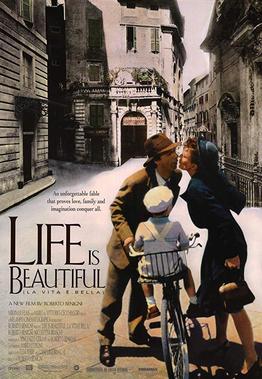
The second was a movie that had been in my Netflix queue for a long time, but it took being stuck in a chair donating platelets to get me to finally watch it. The Dig is about the evacuation of Sutton Hoo in 1939 and stars Ralph Fiennes. It's based on a novel by the same name by John Preston. I knew nothing about the topic and found it interesting and have started reading more nonfiction about it.

The first was Life is Beautiful, co-written, directed, and starring Roberto Benigni. I watched it with my daughter in conjunction with Yom HaShoah. Although the movie won countless awards all over the world, it also received criticism for being unrealistic and the inclusion of humor in a movie set during the Holocaust. Imre Kertész, a Nobel Laureate for Literature and a concentration camp survivor, was a defender of the movie. In his article, Who Owns Auschwitz, he writes about authenticity, Holocaust conformism, and how Benigni's irony works for him.
The second was a movie that had been in my Netflix queue for a long time, but it took being stuck in a chair donating platelets to get me to finally watch it. The Dig is about the evacuation of Sutton Hoo in 1939 and stars Ralph Fiennes. It's based on a novel by the same name by John Preston. I knew nothing about the topic and found it interesting and have started reading more nonfiction about it.

16AlisonY
Oh, we also watched The Dig last week and thoroughly enjoyed it - I love those types of movies. Was Life is Beautiful on Netflix?
17labfs39
>16 AlisonY: Nice. Unfortunately, no. We paid $3 to watch it on Amazon.
18AlisonY
Might be of interest given your Gaza book - read this the other day:
https://www.theguardian.com/film/2022/apr/28/michael-winterbottom-unflinching-fi...
Sounds like a very tough movie to watch, though.
https://www.theguardian.com/film/2022/apr/28/michael-winterbottom-unflinching-fi...
Sounds like a very tough movie to watch, though.
19labfs39
>18 AlisonY: wow. yes, tough. But reflective of not just that 11 day span, but years. I also find it shocking that hundreds of children have been and are imprisoned by Israel, most without charge or charged with throwing rocks.
20labfs39
In other news... a cautionary anecdote about rapid covid tests. Last weekend my sister was exposed to covid (via my dad) and developed symptoms a couple of days later. On day three she did a rapid test, neg. That night, neg. Next day, neg. Did she have a cold that coincided with exposure? PCR test, positive.
21AlisonY
For the first 2 years of Covid all the NHS tests were the nose and throat ones, but in recent months (before they started to do away with the freebies) they were the nose only lateral flows. When my daughter caught Covid we had both and the nose only ones were much clearer than the nose and throat, which I thought was interesting after so many months of being told without swabbing the throat the results wouldn't be anywhere near as accurate.
22raidergirl3
>20 labfs39: Our school system has the rapid tests and all students and teachers have been rapid testing 3 days a week since February. Anecdotally, tons of people who have symptoms, test neg on rapid test, and then a few days later get their pos on the PCR test. But come to school after the neg rapid tests. Interestingly, many the other way as well - test Pos on rapid test, go for PCR test and then be neg. Again, a few days later it'll be positive. So, it's really 'negative, for now'.
23labfs39
Thanks to Jerry (rocketj) for this one:
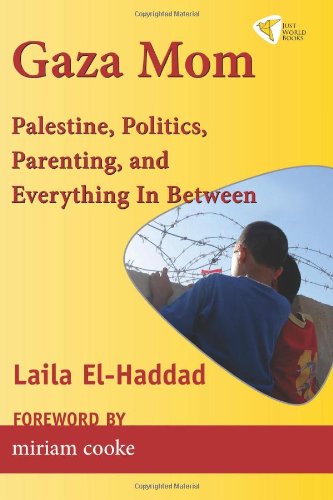
Gaza Mom: Palestine, Politics, Parenting, and Everything In Between by Laila El-Haddad
Published 2010, 442 p.
Laila El-Haddad is a journalist, blogger, and parent who writes passionately about life in the Gaza Strip. This book is a compilation of her blog posts, article excerpts, photos, and interviews from December 2004-August 2010. Each chapter covers a roughly a year and begins with an overview of what happened both politically and personally during that time.
When the book opens, her son Yousuf is nine months old, and much of her blogging is devoted to work-life balance, trying to negotiate border crossings with a baby, and day to day life with a soon-to-be toddler. But interspersed with this are stories about Palestinian children killed by sniper fire while on UN-school grounds, the difficulties of travel in and out of Gaza (even for, or especially for, residents), and corruption. As the book progresses, more and more time is spent on the politics of life in Gaza, including the intifada, infighting between Fateh and Hamas, and the ever draconian measures taken by Israel.
Gaza Mom is a difficult book to read. It's unflinching in describing the impact Israeli occupation and control has on Palestinians, from destroying the economy, razing homes, closing the borders to even humanitarian aid, shutting off electricity and water, to the 2009-2010 outright war the Israeli's called Operation Cast Lead. There are no answers, only questions and growing resentment and anger. The situation is incredibly sad and frustrating. I wish I had read this book when it came out in 2010. It feels a bit dated now, and yet not much has changed on the ground, which is in itself telling.
Gaza Mom: Palestine, Politics, Parenting, and Everything In Between by Laila El-Haddad
Published 2010, 442 p.
Laila El-Haddad is a journalist, blogger, and parent who writes passionately about life in the Gaza Strip. This book is a compilation of her blog posts, article excerpts, photos, and interviews from December 2004-August 2010. Each chapter covers a roughly a year and begins with an overview of what happened both politically and personally during that time.
When the book opens, her son Yousuf is nine months old, and much of her blogging is devoted to work-life balance, trying to negotiate border crossings with a baby, and day to day life with a soon-to-be toddler. But interspersed with this are stories about Palestinian children killed by sniper fire while on UN-school grounds, the difficulties of travel in and out of Gaza (even for, or especially for, residents), and corruption. As the book progresses, more and more time is spent on the politics of life in Gaza, including the intifada, infighting between Fateh and Hamas, and the ever draconian measures taken by Israel.
Gaza Mom is a difficult book to read. It's unflinching in describing the impact Israeli occupation and control has on Palestinians, from destroying the economy, razing homes, closing the borders to even humanitarian aid, shutting off electricity and water, to the 2009-2010 outright war the Israeli's called Operation Cast Lead. There are no answers, only questions and growing resentment and anger. The situation is incredibly sad and frustrating. I wish I had read this book when it came out in 2010. It feels a bit dated now, and yet not much has changed on the ground, which is in itself telling.
24labfs39
Towards the end of Gaza Mom, the author interviews Joe Sacco about his book Footnotes in Gaza, which is about the 1956 massacres. I had read his earlier graphic work, Palestine, in February and was impressed. I found the interview very interesting and wanted to quote a rather lengthy section in its entirety where El-Haddad asks him about objectivity in journalism. Instead of retyping the whole thing, I took photos.


26labfs39
>21 AlisonY: Interesting, Alison. Here in the US we have only had the nose swabs. Only with omicron are people starting to talk about throat swabs.
>22 raidergirl3: I know they say to serial test with rapid tests, but three negatives in a row, followed a few hours after the last one with a positive PCR test, seems ridiculous. What's the point in rapid testing? Fortunately my sister immediately went into lockdown mode with her family after exposure, so they didn't infect anyone else before symptoms, never mind before tests. Fortunately, all three family members that had it have recovered after only a few days illness. Thanks to vaccinations and the less serious omicron variant.
>22 raidergirl3: I know they say to serial test with rapid tests, but three negatives in a row, followed a few hours after the last one with a positive PCR test, seems ridiculous. What's the point in rapid testing? Fortunately my sister immediately went into lockdown mode with her family after exposure, so they didn't infect anyone else before symptoms, never mind before tests. Fortunately, all three family members that had it have recovered after only a few days illness. Thanks to vaccinations and the less serious omicron variant.
27ursula
>24 labfs39: Yes, and yes, and yes.
28avaland
>23 labfs39: Sounds like an interesting book, along with the additional writing you included. I so wish I could read all. the. good. books.
29BLBera
>24 labfs39: Great comments from Sacco.
Happy new thread, Lisa. Your reading is an inspiration.
And yes, the nationality of writers is tricky.
Happy new thread, Lisa. Your reading is an inspiration.
And yes, the nationality of writers is tricky.
30labfs39
>27 ursula: I thought it was an interesting perspective and articulate. In the US currently there is an even stronger push to "present both sides" in every conversation, book, lesson, etc. than there was back then. Such an effort makes every conversation binary. In my opinion, there are very rarely two sides; there is a whole lot of grey, and context is what makes it possible to see that grey. But US politics at the moment is intent on the us-them dichotomy, and it's killing public discourse. IMO
>28 avaland: Right? I wish my life span kept pace with my TBR list. Btw, I started The Bad Immigrant today and am really enjoying it.
>29 BLBera: Thanks, Beth. I feel inspired this year with all the great conversations and challenges happening in CR. I was in a slump for a number of years; it feels great to be reading again (and not just bathtub books).
Tracking nationality has opened my eyes to how multinational so many people in the world are. Reading globally has become a little easier for Americans because more diverse authors are getting published (slow progress). Unfortunately that seems to be true only of authors who write in English. This article from Publisher's Weekly sums it up: US Translation Blues. And because so few Americans are multilingual, we are even more isolated.
>28 avaland: Right? I wish my life span kept pace with my TBR list. Btw, I started The Bad Immigrant today and am really enjoying it.
>29 BLBera: Thanks, Beth. I feel inspired this year with all the great conversations and challenges happening in CR. I was in a slump for a number of years; it feels great to be reading again (and not just bathtub books).
Tracking nationality has opened my eyes to how multinational so many people in the world are. Reading globally has become a little easier for Americans because more diverse authors are getting published (slow progress). Unfortunately that seems to be true only of authors who write in English. This article from Publisher's Weekly sums it up: US Translation Blues. And because so few Americans are multilingual, we are even more isolated.
31raton-liseur
>24 labfs39: Joe Sacco's interview is really in line with the graphic story I read recently. It's interesting how he makes a difference between being objective and being honest, the first not being a guarantee for the second.
Of course, he shows only one point of view, but he is honest about that and is open about the limits of his work. As such, I did not feel that it was not objective. And for sure, it was informative.
Thanks for giving us access to this interview!
Of course, he shows only one point of view, but he is honest about that and is open about the limits of his work. As such, I did not feel that it was not objective. And for sure, it was informative.
Thanks for giving us access to this interview!
32avaland
>30 labfs39: Glad you are enjoying it. I will look forward to your thoughts.
33labfs39
>31 raton-liseur: I agree. I think objectivity can be met through ensuring that all voices are heard. There are a whole lot of books out there with the Israeli perspective, why is it bad if there are books devoted to the lived experiences of the Palestinians?
I found it interesting that he took the lid off a topic that had rarely been discussed or even acknowledged outside Palestine. He found only a single UN report that mentioned it. The author El-Haddad's mom had survived the massacres at the age of 11, but neither mother nor daughter had ever seen it addressed before in print.
>32 avaland: I'm almost halfway through The Bad Immigrant. A bunch of sticky notes marking passages about racism. Interesting perspective from a non-American black, for instance when Lukmon tells his daughter to mark the box "other" for race, because she is Nigerian-American, not African-American. He says the latter term is for descendants of slaves who don't know which country they are from.
I found it interesting that he took the lid off a topic that had rarely been discussed or even acknowledged outside Palestine. He found only a single UN report that mentioned it. The author El-Haddad's mom had survived the massacres at the age of 11, but neither mother nor daughter had ever seen it addressed before in print.
>32 avaland: I'm almost halfway through The Bad Immigrant. A bunch of sticky notes marking passages about racism. Interesting perspective from a non-American black, for instance when Lukmon tells his daughter to mark the box "other" for race, because she is Nigerian-American, not African-American. He says the latter term is for descendants of slaves who don't know which country they are from.
34labfs39
This picture book is too cute not to share.
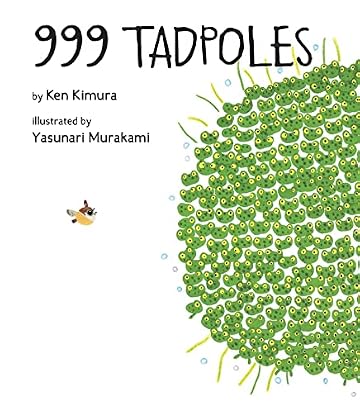
999 Tadpoles by Ken Kimura, illustrations by Yasunari Murakami
A very fun story about 999 tadpoles and their parents who outgrow their pond and have adventures searching for a new home. Bright, bold colors and expressive frog expressions are priceless.
999 Tadpoles by Ken Kimura, illustrations by Yasunari Murakami
A very fun story about 999 tadpoles and their parents who outgrow their pond and have adventures searching for a new home. Bright, bold colors and expressive frog expressions are priceless.
35qebo
>34 labfs39: Amazon shows some of the pages. Cute.
36labfs39
Here's a question for you: Do you prefer writers who are foxes or hedgehogs? In this article, Thu-Huong Ha writes
If you’re reading Elena Ferrante, John McPhee, or Toni Morrison, you can expect consistent style, scenarios, and settings. But there are some writers and creators whose past works don’t predict future ones. And that can be its own beautifully fruitful strategy, too.
The American writer Colson Whitehead is a prime example. Whitehead won the Pulitzer Prize last year for his novel The Underground Railroad, which reimagines the 19th-century network of safe shelters for slaves as a real train. Whitehead’s previous seven books include a zombie novel, an impressionistic ode to New York, an imaginative detective story about an elevator inspector, and a coming-of-age novel about the affluent black community of 1980s Sag Harbor in the Hamptons.
Which animal do you resemble, and do you prefer reading works by authors of a similar ilk or your opposite?
If you’re reading Elena Ferrante, John McPhee, or Toni Morrison, you can expect consistent style, scenarios, and settings. But there are some writers and creators whose past works don’t predict future ones. And that can be its own beautifully fruitful strategy, too.
The American writer Colson Whitehead is a prime example. Whitehead won the Pulitzer Prize last year for his novel The Underground Railroad, which reimagines the 19th-century network of safe shelters for slaves as a real train. Whitehead’s previous seven books include a zombie novel, an impressionistic ode to New York, an imaginative detective story about an elevator inspector, and a coming-of-age novel about the affluent black community of 1980s Sag Harbor in the Hamptons.
Which animal do you resemble, and do you prefer reading works by authors of a similar ilk or your opposite?
37AnnieMod
>36 labfs39: Can I be a cute fox with spines or a hedgehog with a bushy tail? :)
Ah, the good old depth vs breadth question. In my job I am a hedgehog (even if the one thing is pretty broad) and if you leave me on my own, I am more likely to end up deep into things in my reading as well -- my "projects" are an attempt to go deeper into things in an organized way and without ending up reading 10 books about Elizabeth I in a row because I also like to read on a huge variety of topics so it is a very thin line sometimes and I need to pull myself out from the "I really want to go deep into that" mindset.
Defining what authors I prefer is tricky. Some of them can pull off the "every book is different". Some cannot. Good authors tend to know their strengths and tend to not try to push into something they may not be good at. I like both types of writers as long as they know what they are doing...
Ah, the good old depth vs breadth question. In my job I am a hedgehog (even if the one thing is pretty broad) and if you leave me on my own, I am more likely to end up deep into things in my reading as well -- my "projects" are an attempt to go deeper into things in an organized way and without ending up reading 10 books about Elizabeth I in a row because I also like to read on a huge variety of topics so it is a very thin line sometimes and I need to pull myself out from the "I really want to go deep into that" mindset.
Defining what authors I prefer is tricky. Some of them can pull off the "every book is different". Some cannot. Good authors tend to know their strengths and tend to not try to push into something they may not be good at. I like both types of writers as long as they know what they are doing...
38avaland
>33 labfs39: Yes! That's the stuff that I found so interesting.
39labfs39
>35 qebo: I thought Murakami's illustrations were very cute. Evidently there is another 999 tadpole book, I've requested it from the library.
>37 AnnieMod: Can I be a cute fox with spines or a hedgehog with a bushy tail? Lol. It was interesting to read about the fox/hedgehog concept vis a vis authors, something I had never considered before. I do admire authors who can write well in a variety of genres. Mary Doria Russell comes to mind. She wrote science fiction, westerns, historical fiction in WWII Italy and in Michigan. But I also like authors who only do one thing, but do it very well. Professionally I am a definite fox.
>38 avaland: I read the last 1/3 in one sitting. I agree with your review that the very end was... jarring. But the book looks like a hedgehog with all the sticky notes. I'll work on a review a bit later.
>37 AnnieMod: Can I be a cute fox with spines or a hedgehog with a bushy tail? Lol. It was interesting to read about the fox/hedgehog concept vis a vis authors, something I had never considered before. I do admire authors who can write well in a variety of genres. Mary Doria Russell comes to mind. She wrote science fiction, westerns, historical fiction in WWII Italy and in Michigan. But I also like authors who only do one thing, but do it very well. Professionally I am a definite fox.
>38 avaland: I read the last 1/3 in one sitting. I agree with your review that the very end was... jarring. But the book looks like a hedgehog with all the sticky notes. I'll work on a review a bit later.
40labfs39

The Bad Immigrant by Sefi Atta
Published 2022, 362 p.
Lukmon hadn't been keen on immigrating to America, but his wife, Moriam, was a force not lightly denied. She convinced him that their two children would get better educations in the US than in Nigeria, and, educated in London himself, he let himself be convinced. They first stay with his cousin in New Jersey, but soon find their own place. Moriam begins studying for the nursing credentials she needs to practice in the US, and Lukmon begins looking for a job in academia.
Moriam and the kids seem to adjust relatively easily, but Lukmon has a harder time. For him, racism in the US is a complex and pervasive force that is a constant threat to his family.
I was so prepared for being black in America that I could separate the racist from the person and deal with the unracist part of them. In fact, racism was a given now. Yes, because it was safer for me to assume white people were racist until proven otherwise. It was also reasonable to, because if I were white, it would take a lot of effort not to be racist in America. You passed someone sleeping on a street, what color was he or she likely to be? You watched breaking news about an innocent suspect shot to death by the police, well, you could easily misconstrue that black people were inferior.
As for black-on-black crime, or whatever it was called, I wasn't worried about that. I was coming from a country where practically every crime committed was black on black.
As he tries to untangle both interracial and intra-racial relationships in America, he find himself becoming isolated from his wife and children. To them, he is making everything a race issue. To him, they are denying essential parts of themselves in order to fit in.
I was winding {Moriam} up again and she was in no mood. To be honest I was nervous about meeting Alice's parents. I hoped they were my kind of immigrants—bad ones, not the kind who aspired to be honorary whites.
For most of the book, Lukmon is an observer, and the reader sees everything—race, politics, gender roles—through his eyes. It is only at the very end of the book that he acts, and it is in an unexpected and uncomfortable way.
I was very impressed with this novel, the first I've read by Atta. The writing is superb, the plot compelling, and the ideas thought-provoking. The characters are complex, with no easy passes for anyone. It's a book that begs to be discussed, and it would make a great book club selection.
41dchaikin
Your thread snuck by me and now you’re already at 40 posts. Very interesting about Atta. My little workplace is a bit international, including geologists/geophysicists from different parts of Africa (mainly Nigeria, because there’s is lot of oil and no language barrier). But colleagues are also from China, India, Pakistan, Venezuela, Mexico, Indonesia, Korea, several eastern and western European countries, Canada etc, plus 1st generation Americans. We don’t talk about this stuff too much, but of course I think about it and their experiences.
>36 labfs39: I think depth vs breath is an interesting way to think about literature (depth for me, please). But variety can be depth in another way. I haven’t read Whitehead, but I presume he has his themes. Also Morrison, for example, has a lot of variety. I would never have listed her first five novels as consistent in style. Someone clearly does see it that way. It think it illustrates there is a lot of variety within any envelope.
>36 labfs39: I think depth vs breath is an interesting way to think about literature (depth for me, please). But variety can be depth in another way. I haven’t read Whitehead, but I presume he has his themes. Also Morrison, for example, has a lot of variety. I would never have listed her first five novels as consistent in style. Someone clearly does see it that way. It think it illustrates there is a lot of variety within any envelope.
42labfs39
>41 dchaikin: I have worked in mostly nonprofit global health and academic settings, both of which can be very international, but mostly well-educated (and Western-educated) professionals like the character Lukmon. So he felt familiar to me, and yet his self-dialogue was very different from what he said to others, especially whites, making me wonder about conversations I have had with colleagues and students in the past. What sort of filters were we using?
>42 labfs39: I read an article about foxes and hedgehogs in technology. It was saying that although we tend to pooh-pooh the idea of foxes, in tech they are often very valuable. When a hedgehog invests all their time and learning in one product or technology, they can be in high-demand for a short time, but when that tech becomes obsolete, so do they. Foxes on the other hand have the mindset that allows them to adapt to new technologies quickly and to cross-pollinate successfully (although I guess that's the wrong metaphor for foxes).
In terms of literature, I think it matters a bit whether we are talking about fiction or nonfiction. I would expect a nonfiction writer to be more specialized. A paleontologist writing about manga would be odd (but potentially interesting!). I like nonfiction authors who can go to a sufficient depth to be intelligent, but not so esoteric as to lose me completely. Because I am a fox and interested in many different things/cultures/time periods, I tend to read all over the place. I get my variety from reading many different authors or authors who vary their topics. Occasionally I will read more by a single topic author, if their writing is very good, but not often.
>42 labfs39: I read an article about foxes and hedgehogs in technology. It was saying that although we tend to pooh-pooh the idea of foxes, in tech they are often very valuable. When a hedgehog invests all their time and learning in one product or technology, they can be in high-demand for a short time, but when that tech becomes obsolete, so do they. Foxes on the other hand have the mindset that allows them to adapt to new technologies quickly and to cross-pollinate successfully (although I guess that's the wrong metaphor for foxes).
In terms of literature, I think it matters a bit whether we are talking about fiction or nonfiction. I would expect a nonfiction writer to be more specialized. A paleontologist writing about manga would be odd (but potentially interesting!). I like nonfiction authors who can go to a sufficient depth to be intelligent, but not so esoteric as to lose me completely. Because I am a fox and interested in many different things/cultures/time periods, I tend to read all over the place. I get my variety from reading many different authors or authors who vary their topics. Occasionally I will read more by a single topic author, if their writing is very good, but not often.
43labfs39
I am lending my copy of The Bad Immigrant to my aunt, so I want to copy out some more quotes before I lose access to the book:
On racism:
Jill was the sort of American who would fall apart if you accused her of racism. To her being labeled a racist was tantamount to being tarred and feathered. She was always pleasant to me , as she was to everyone else at work, but so long as her store detective continued to profile young, black women, I could trust her no further than the thieves I escorted to her office.
I was leaning about the peculiarities of racism in America., and this was what I'd found out by following public discourse:
One. Racism went in one direction only, white to black, which meant I could say anything I wanted about white people and it wouldn't count as racism.
Two. It was very American, quintessentially so, to deny an accusation of racism. If Jill were English, she would simply blink at her accuser and say, "Don't be silly."
Three. By definition, other minorities could be racist, but their racism was downgraded to prejudice because they had no power. (p. 113)
Everyone knew you could survive cultural insensitivity and even racism in America, if you apologized, but you would never be forgiven for anti-Semitism. (p. ?)
On immigrants:
"Both of you are confused Africans," I said {to his wife and daughter}.
They could imply whatever they wanted. My point was this: We had come from another country and so had Alice's parents. Why did we have to find common ground in Hamburger Helper? I would have preferred to eat Korean food if I were {my daughter}. I would expect Alice's family to speak their language at home. That was the trouble with immigrants. We were always trying to fit in with mainstream America when we ought to be changing it. (p. 183)
On multiculturalism in literature:
We were all multicultural, I said. I didn't tell her, because she might take offense, that I wasn't a fan of that classification either. I'd seen her array of multicultural writers. They were educated in America and proficient in English. Some of them set their stories in their countries of origin. It didn't matter what lofty platforms they stood on—human rights, civil rights, women's rights—they had one culture in common, self-centered middle-class culture, whether they cared to admit it or not. (p. 225)
On holidays:
{Trick-or-treaters} They had such confident stares, as if they knew their homes had equity and their national borders were secure... Had we been in Nigeria, she would have said he had no home training and jack-o'-lanterns were juju.
...On New Year's Day, which was the biggest day in Nigeria, she went to work, like a true American.
On politics:
I remembered Moriam comparing tribalism to racism. Politics in America was tribal in nature; racism really wasn't. Tribalism began with rivalries, the histories of which were distorted over time. Racism began with falsehoods, invented from the outset. That was the difference.
The 2000 presidential elections had taught me to be less scornful of elections in Nigeria. Before the Florida recount, the hanging chads and the Supreme Court's decision, I'd truly believed that voting was problematic only in countries like Nigeria; now, I realized that even under the watchful eye of CNN and other news programs, the voting system in America was equally prone to ineptitude, manipulation, and hysteria. (p. 288)
Obviously a lot of things here to think about and discuss.
On racism:
Jill was the sort of American who would fall apart if you accused her of racism. To her being labeled a racist was tantamount to being tarred and feathered. She was always pleasant to me , as she was to everyone else at work, but so long as her store detective continued to profile young, black women, I could trust her no further than the thieves I escorted to her office.
I was leaning about the peculiarities of racism in America., and this was what I'd found out by following public discourse:
One. Racism went in one direction only, white to black, which meant I could say anything I wanted about white people and it wouldn't count as racism.
Two. It was very American, quintessentially so, to deny an accusation of racism. If Jill were English, she would simply blink at her accuser and say, "Don't be silly."
Three. By definition, other minorities could be racist, but their racism was downgraded to prejudice because they had no power. (p. 113)
Everyone knew you could survive cultural insensitivity and even racism in America, if you apologized, but you would never be forgiven for anti-Semitism. (p. ?)
On immigrants:
"Both of you are confused Africans," I said {to his wife and daughter}.
They could imply whatever they wanted. My point was this: We had come from another country and so had Alice's parents. Why did we have to find common ground in Hamburger Helper? I would have preferred to eat Korean food if I were {my daughter}. I would expect Alice's family to speak their language at home. That was the trouble with immigrants. We were always trying to fit in with mainstream America when we ought to be changing it. (p. 183)
On multiculturalism in literature:
We were all multicultural, I said. I didn't tell her, because she might take offense, that I wasn't a fan of that classification either. I'd seen her array of multicultural writers. They were educated in America and proficient in English. Some of them set their stories in their countries of origin. It didn't matter what lofty platforms they stood on—human rights, civil rights, women's rights—they had one culture in common, self-centered middle-class culture, whether they cared to admit it or not. (p. 225)
On holidays:
{Trick-or-treaters} They had such confident stares, as if they knew their homes had equity and their national borders were secure... Had we been in Nigeria, she would have said he had no home training and jack-o'-lanterns were juju.
...On New Year's Day, which was the biggest day in Nigeria, she went to work, like a true American.
On politics:
I remembered Moriam comparing tribalism to racism. Politics in America was tribal in nature; racism really wasn't. Tribalism began with rivalries, the histories of which were distorted over time. Racism began with falsehoods, invented from the outset. That was the difference.
The 2000 presidential elections had taught me to be less scornful of elections in Nigeria. Before the Florida recount, the hanging chads and the Supreme Court's decision, I'd truly believed that voting was problematic only in countries like Nigeria; now, I realized that even under the watchful eye of CNN and other news programs, the voting system in America was equally prone to ineptitude, manipulation, and hysteria. (p. 288)
Obviously a lot of things here to think about and discuss.
44Trifolia
Lots of interesting things are happening in this thread. So much to think about.
>36 labfs39: As for the hedgehog - fox-dilemma, since I seldom read more than one book by the same author, I'm not well-placed to say which type I prefer. But I suspect that if I do read other books by the same author, I prefer them to be hedgehogs. Because otherwise, I might as well read another author. Which essentially makes me a fox-reader...
>40 labfs39: >43 labfs39: That one looks interesting! I wonder if a non-American reader c.q. European reader would be able to recognize and understand the subtleties of the book.
>36 labfs39: As for the hedgehog - fox-dilemma, since I seldom read more than one book by the same author, I'm not well-placed to say which type I prefer. But I suspect that if I do read other books by the same author, I prefer them to be hedgehogs. Because otherwise, I might as well read another author. Which essentially makes me a fox-reader...
>40 labfs39: >43 labfs39: That one looks interesting! I wonder if a non-American reader c.q. European reader would be able to recognize and understand the subtleties of the book.
45dchaikin
>43 labfs39: huh. Those are all very interesting.
46lisapeet
>43 labfs39: I'm sold on this one. It sounds nuanced and interesting.
I'm fine with a foxy writer if they pull it off well—I think folks who can move from one genre or format to another are on the few and far between side, but when they're good it's a happy surprise. And I also like authors who do one thing really well, as long as they don't start repeating themselves or phoning it in.
I'm fine with a foxy writer if they pull it off well—I think folks who can move from one genre or format to another are on the few and far between side, but when they're good it's a happy surprise. And I also like authors who do one thing really well, as long as they don't start repeating themselves or phoning it in.
47AnnieMod
>43 labfs39: Hm, that makes me want to read that one. Racism is one of those topics that a lot of people expect to be “one size fits all” kinda thing and to be black or white. And in some ways it can be but personal experiences tend to muddle the thing a lot - and a lot of books are almost tone deaf to that.
48labfs39
>44 Trifolia: It's interesting that you tend not to read more than one book by an author. Is that because there are so many authors you want to read? One interpretation of the fox-hedgehog concept is not so much breadth vs depth, but one of a unifying perspective applied to everything or not. In this sense, reading more than one book by an author might not be necessary in order to get their take on the world. Of course, one might want to read more simply for the beautiful writing or what have you, but the POV or philosophy might be the same. Edith Wharton comes to mind. I have read four of her books, and three of them were very similar in perspective (Ethan Frome being the outlier). One might read House of Mirth and "get" Wharton without needing to read Custom of the Country or Age of Innocence. I happen to like her writing, so I will read other books by her for more of the same. Austen too strikes me this way. I read her novels to further explore her world and to enjoy her writing, not expecting novelty. In fact, I think most authors are like this. I think it takes a unique writer to write well on very disparate topics.
As for The Bad Immigrant, I'm not sure how accessible it would be to a non-American. On the one hand, I have never experienced racism, so all books about it are foreign to my experience. On the other hand, this book is very much about the experience of racism in America by an African immigrant. Some familiarity with regional differences (the novel takes place in New Jersey and Mississippi), police brutality, politics, and the history of enslavement seems expected.
I would be curious to hear from anyone else who has read the book, what they think.
As for The Bad Immigrant, I'm not sure how accessible it would be to a non-American. On the one hand, I have never experienced racism, so all books about it are foreign to my experience. On the other hand, this book is very much about the experience of racism in America by an African immigrant. Some familiarity with regional differences (the novel takes place in New Jersey and Mississippi), police brutality, politics, and the history of enslavement seems expected.
I would be curious to hear from anyone else who has read the book, what they think.
49labfs39
>45 dchaikin: It's always dangerous to quote passages out of context, but I didn't want to forget some of these ideas. Since I had to write them out anyway, I thought I would share them. Hopefully it gives a flavor of the types of ideas being explored.
>46 lisapeet: Lois's review of The Bad Immigrant is the only other one I've read, but she enjoyed it too. I think "nuanced and interesting" are good descriptors.
I agree with you. Foxy writers are less common. I've been trying to think of others, as I keep falling to Mary Doria Russell. The Sparrow, Doc, and Dreamers of the Day are such different books, it's hard to believe they are written by the same person. Mark Twain at first glimpse might seem a hedgehog, but his Joan of Arc is a completely different type of book.
>47 AnnieMod: I agree with you Annie. The Bad Immigrant seemed to come at racism from a fresh angle and one that was both nuanced and comfortable in the grey areas. I would be curious as to your thoughts if you read it. I did find myself wondering what the author's experience and thoughts were, as it would be easy to assume that Lukmon was speaking for her, but I have the sense that's not the case. He was too clearly a construct.
>46 lisapeet: Lois's review of The Bad Immigrant is the only other one I've read, but she enjoyed it too. I think "nuanced and interesting" are good descriptors.
I agree with you. Foxy writers are less common. I've been trying to think of others, as I keep falling to Mary Doria Russell. The Sparrow, Doc, and Dreamers of the Day are such different books, it's hard to believe they are written by the same person. Mark Twain at first glimpse might seem a hedgehog, but his Joan of Arc is a completely different type of book.
>47 AnnieMod: I agree with you Annie. The Bad Immigrant seemed to come at racism from a fresh angle and one that was both nuanced and comfortable in the grey areas. I would be curious as to your thoughts if you read it. I did find myself wondering what the author's experience and thoughts were, as it would be easy to assume that Lukmon was speaking for her, but I have the sense that's not the case. He was too clearly a construct.
50labfs39
Goodness. I just realized I'm two reviews behind because I've read two books in two days. That never happens to me. But the first, The Corpse Washer, was hard to put down and not very long. (Thank you, raton liseur!) Then I buzzed through a Maisie Dobbs mystery. Next up is Burnt Shadows by Kamila Shamsie for the Asian Book Challenge - Pakistan. I need to stop yakking about the Bad Immigrant and start talking about the next excellent book on the list.
51qebo
>40 labfs39: it would make a great book club selection
Hmm, it would, and mine is about to compile a list for the next 6 months or so.
Hmm, it would, and mine is about to compile a list for the next 6 months or so.
52msf59
Happy Mother's Day, Lisa. I hope you have a great day. I hope those books are treating you fine.
53labfs39
>52 msf59: Although there is lots to discuss in the book, it could be a difficult book to discuss depending on the members. The topics are fraught, for sure.
>53 labfs39: Thanks, Mark. Hope you have a good day with your bird count, and perhaps a visit to Bree? My daughter made breakfast this morning, then we met one of my sisters at my mother's house to do chores for her as a way to celebrate. We fixed the dryer duct, installed a new kitchen faucet, hung accoutrements around the hot tub, set up her watering hose station, installed motion sensor lights by the carport, and spread 25 bags of mulch. Then I came home and curled up with Burnt Shadows. Phew!
>53 labfs39: Thanks, Mark. Hope you have a good day with your bird count, and perhaps a visit to Bree? My daughter made breakfast this morning, then we met one of my sisters at my mother's house to do chores for her as a way to celebrate. We fixed the dryer duct, installed a new kitchen faucet, hung accoutrements around the hot tub, set up her watering hose station, installed motion sensor lights by the carport, and spread 25 bags of mulch. Then I came home and curled up with Burnt Shadows. Phew!
54labfs39
ETA: A big thank you to raton-liseur for recommending this book!

The Corpse Washer by Sinan Antoon, translated from the Arabic by the author
Published 2010, 185 p.
Jawad remembers clearly the first time his mother took him to his father's workplace. It was the first time he had seen a man cry, and he assumed that his father hurt the man. His mother had to explain that his father is a mghassilchi, or body washer and shrouder. It's a respected, although not well-paid, profession in his traditional Shi'ite neighborhood in Baghdad, and his father inherited the business from his father and his father before that.
Although Jawad learns the art of preparing a body for burial, and it is an art, full of ritual and significance, he wants instead to be an artist. But as the social and economic fabric of Iraqi society is torn apart by war, sanctions, and sectarian violence, Jawad finds himself once again facing death in the intimacy of the washhouse.
The Corpse Washer is a poetic novel that shifts between the past and present, dreams and reality with a fluid grace. Each chapter is short, between a paragraph and a few pages long at most; a series of vignettes that provide glimpses of Jawad's life and dreams. Although terribly sad and sometimes violent, it's a beautifully written book. I'm glad I purchased a copy as I can see myself reading it again. Highly recommended.

The Corpse Washer by Sinan Antoon, translated from the Arabic by the author
Published 2010, 185 p.
Jawad remembers clearly the first time his mother took him to his father's workplace. It was the first time he had seen a man cry, and he assumed that his father hurt the man. His mother had to explain that his father is a mghassilchi, or body washer and shrouder. It's a respected, although not well-paid, profession in his traditional Shi'ite neighborhood in Baghdad, and his father inherited the business from his father and his father before that.
Although Jawad learns the art of preparing a body for burial, and it is an art, full of ritual and significance, he wants instead to be an artist. But as the social and economic fabric of Iraqi society is torn apart by war, sanctions, and sectarian violence, Jawad finds himself once again facing death in the intimacy of the washhouse.
The Corpse Washer is a poetic novel that shifts between the past and present, dreams and reality with a fluid grace. Each chapter is short, between a paragraph and a few pages long at most; a series of vignettes that provide glimpses of Jawad's life and dreams. Although terribly sad and sometimes violent, it's a beautifully written book. I'm glad I purchased a copy as I can see myself reading it again. Highly recommended.
55labfs39
Next I read a quick Maisie Dobbs mystery as a bit of a relief from the heavy topics I've been reading of late...
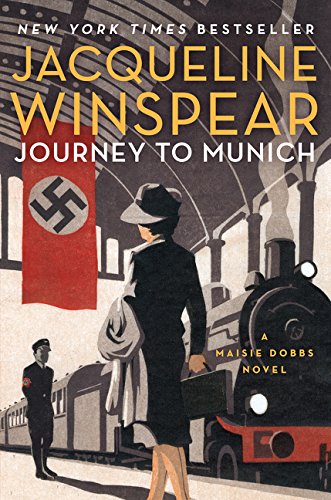
Journey to Munich by Jacqueline Winspear
Published 2016, 287 p.
Maisie Dobbs has returned to England from Spain and is staying with her friend, Priscilla, when she is approached by Robbie MacFarlane on behalf of the Secret Service. Leon Donat is a British engineer and businessman who has run afoul of the Nazis in Munich and has been imprisoned at Dachau. The British have arranged for his release, Maisie's assignment is pretend to be his daughter and go to Munich and bring him home. Before long Maisie realizes that not everything is as it seems and that things in Germany are deteriorating as the Nazis prepare for the Anschluss.
Journey to Munich by Jacqueline Winspear
Published 2016, 287 p.
Maisie Dobbs has returned to England from Spain and is staying with her friend, Priscilla, when she is approached by Robbie MacFarlane on behalf of the Secret Service. Leon Donat is a British engineer and businessman who has run afoul of the Nazis in Munich and has been imprisoned at Dachau. The British have arranged for his release, Maisie's assignment is pretend to be his daughter and go to Munich and bring him home. Before long Maisie realizes that not everything is as it seems and that things in Germany are deteriorating as the Nazis prepare for the Anschluss.
56labfs39
And now I'm reading Burnt Shadows, a book that has been on my wishlist since brenzi reviewed it in 2011. It took the Asian Book Challenge to finally get it in my hands. Another powerfully written book. I'm 60 pages in and mesmerized. I love the cover too, which is not just a generic woman, but depicts a significant moment from the book. There is a subtle overlay of winged cranes that is quite beautiful.


57japaul22
>56 labfs39: I read and really enjoyed Home Fire by Kamila Shamsie - maybe I'll see if this is available at my library since I don't have a next book in mind for fiction right now. I've been meaning to get back to her works.
58BLBera
What a lot of great reading! The Bad Immigrant is definitely one I will pick up, and my library has a copy!
I've loved the other Shamsie books I've read, so I will get to this one eventually.
The Corpse Washer also sounds good.
I've loved the other Shamsie books I've read, so I will get to this one eventually.
The Corpse Washer also sounds good.
59labfs39
>57 japaul22: I've been seeing Shamsie's name around a bit lately, and I chose this book because it begins during WWII, a time period I like reading about. After only thirty pages, however, we leave Nagasaki and are off to 1947 Delhi, then Pakistan in 1982-83, and end in New York and Afghanistan in 2001-02. It took me a few pages to settle into her writing style, but I'm enjoying it now.
>58 BLBera: Thanks, Beth. I've had a string of several very good, if emotionally challenging books. I've been interspersing some lighter historical fiction in between them. I will have a hard time narrowing down my yearly favorites—a good problem to have.
>58 BLBera: Thanks, Beth. I've had a string of several very good, if emotionally challenging books. I've been interspersing some lighter historical fiction in between them. I will have a hard time narrowing down my yearly favorites—a good problem to have.
60labfs39

To Die But Once by Jacqueline Winspear
Published 2018, 325 p.
Private investigator, Maisie Dobbs, is asked to look into the disappearance of a local teen who had been suffering severe headaches while working as a painter on RAF bases. World War II is heating up, France is invaded, and the Battle of Dunkirk has personal repercussions for several of the characters.
In the afterward, the author writes about her personal connections to the story: her father was the boy with headaches, her cousin lives in the area in which much of the novel is set, her aunt was the model for the young WAAF, and two of her uncles were stranded on the beach at Dunkirk. I like Winspear's historical mysteries because she does her research, and the stories feel intimate due to their personal nature.
(As a personal aside, why is it that I get emotional every time I read about Dunkirk?)
61labfs39
Ok, so I was getting a little swept up in the Maisie Dobbs series. Unfortunately, that has come to an abrupt halt as our librarian tested positive for covid. So while the library is shuttered, no more Maisie for me. Back to Burnt Shadows...

The American Agent by Jacqueline Winspear
In this, the fifteenth in the series, Maisie Dobbs is asked to work with American agent Mark Scott, whom she met in Munich a few books ago, to find the murderer of a young American reporter. The reporter had been trying to earn a spot under Edward Murrow and filed stories trying to turn American public opinion toward aiding England, rather than isolationism. Meanwhile the Blitz has begun, there is more bad news for the Partridge's, and Maisie is on tenterhooks about Anna's adoption.
My favorite part of this chapter in the series is the inclusion of excerpts from newspapers and broadcasts, most aimed at an American audience. The words of Edward Murrow, JB Priestley, and other journalistic luminaries lend a nice touch of historical reality to the fiction. The struggle for the hearts and minds (and votes) of Americans was acute during this stage of the war. Joseph Kennedy is in the background of the novel, not a character, but a presence, and his resignation as ambassador to Britain is included.

The American Agent by Jacqueline Winspear
In this, the fifteenth in the series, Maisie Dobbs is asked to work with American agent Mark Scott, whom she met in Munich a few books ago, to find the murderer of a young American reporter. The reporter had been trying to earn a spot under Edward Murrow and filed stories trying to turn American public opinion toward aiding England, rather than isolationism. Meanwhile the Blitz has begun, there is more bad news for the Partridge's, and Maisie is on tenterhooks about Anna's adoption.
My favorite part of this chapter in the series is the inclusion of excerpts from newspapers and broadcasts, most aimed at an American audience. The words of Edward Murrow, JB Priestley, and other journalistic luminaries lend a nice touch of historical reality to the fiction. The struggle for the hearts and minds (and votes) of Americans was acute during this stage of the war. Joseph Kennedy is in the background of the novel, not a character, but a presence, and his resignation as ambassador to Britain is included.
62DieFledermaus
I'm impressed with all the reading you've done for your different projects! I made a note to read The Colonel awhile back but all my lists have been shuffled, so I readded it to the list. Also added An Unnecessary Woman. Mysteries are always good for a reading breather--hope your library is open again soon.
63avaland
>40 labfs39: Excellent review of the book, Lisa. Glad you enjoyed ir. It does beg to be talked about, doesn't it? I should send you books more often :-)
>43 labfs39: Do you think your aunt will like it?
>43 labfs39: Do you think your aunt will like it?
64labfs39
>62 DieFledermaus: I don't think you'll go wrong with either The Colonel or An Unnecessary Woman, Stephanie. Both are excellent. Glad to see you back on LT. Are you still watching your nephew?
>63 avaland: Thanks, Lois. You need to come visit so that we can discuss it. You have very good taste! I had recommended The Mountains Sing to her, and she loved that one. Then she lent me Homegoing, which I loved. So I'm hoping she will enjoy this one as well. She had a couple going at the moment, so I'm not sure when she will get to it. I'll let you know her impressions when she's done. My aunt lives on a pond, so today's "science class" took place over there. My daughter is teaching my niece about frog development. I have some cute photos I'll text you.
>63 avaland: Thanks, Lois. You need to come visit so that we can discuss it. You have very good taste! I had recommended The Mountains Sing to her, and she loved that one. Then she lent me Homegoing, which I loved. So I'm hoping she will enjoy this one as well. She had a couple going at the moment, so I'm not sure when she will get to it. I'll let you know her impressions when she's done. My aunt lives on a pond, so today's "science class" took place over there. My daughter is teaching my niece about frog development. I have some cute photos I'll text you.
65BLBera
Lisa, you are zipping through the Maisie Dobbs series. The American Agent was the last one I read. I think there are two or three after that one...I do love the intimate connection to history in the Winspear books.
67labfs39
>65 BLBera: I had assumed that the Maisie Dobbs books were very popular, and I guess the earlier ones are somewhat, if LT member holdings are anything to go by (4,000+). But fewer than 600 people have made it to The American Agent, and it was published 3 years ago. Too bad, they are quite good.
>66 msf59: You have been busy, Mark. Enjoying the photos from the wildlife rehab center and of Jackson of course. I'll be curious as to what you make of Tunnels. Kerry isn't completely sold on it. I really liked The Property when I read it earlier this year.
>66 msf59: You have been busy, Mark. Enjoying the photos from the wildlife rehab center and of Jackson of course. I'll be curious as to what you make of Tunnels. Kerry isn't completely sold on it. I really liked The Property when I read it earlier this year.
68labfs39
Beautifully sunny day here in Maine, although a little too hot. I went to a church sale I came across and was pleased to find some books:

Cordelia Underwood by Van Reid, because he is a Maine author and the novel is set in late 1900s Portland, ME.
Sorrow Mountain: The Journey of a Tibetan Warrior Nun by Ani Pachen. Sounds like an interesting memoir, with blurbs from authors as diverse as Alice Walker, Daniel Goleman, and Louise Erdrich.

Arthur & George by Julian Barnes
and two I'm not sure of yet:
An Unexpected Light: Travels in Afghanistan by Jason Elliot. I picked it up because we are reading "stan" books this month in the Asian Book Challenge, but am not sure I want to read a white guy falls in love with Afghanistan type travelogue. We'll see.

The Stranger in the Woods: The Extraordinary Story of the Last True Hermit
by Michael Finkel. I bought it because I recently read a review about it, but I'm not sure because I have mixed feelings about this young guy who hid out in the Maine woods for 27 years, stealing from camps.

Cordelia Underwood by Van Reid, because he is a Maine author and the novel is set in late 1900s Portland, ME.
Sorrow Mountain: The Journey of a Tibetan Warrior Nun by Ani Pachen. Sounds like an interesting memoir, with blurbs from authors as diverse as Alice Walker, Daniel Goleman, and Louise Erdrich.

Arthur & George by Julian Barnes
and two I'm not sure of yet:
An Unexpected Light: Travels in Afghanistan by Jason Elliot. I picked it up because we are reading "stan" books this month in the Asian Book Challenge, but am not sure I want to read a white guy falls in love with Afghanistan type travelogue. We'll see.

The Stranger in the Woods: The Extraordinary Story of the Last True Hermit
by Michael Finkel. I bought it because I recently read a review about it, but I'm not sure because I have mixed feelings about this young guy who hid out in the Maine woods for 27 years, stealing from camps.
69msf59
Nice haul, Lisa, I loved both Arthur & George and The Stranger in the Woods. Enjoy!
70raton-liseur
I’ve not posted in the past few days, so I’m now commenting on old posts. I hope you won’t mind if I’m reopening some past conversations…
>33 labfs39: On Joe Sacco, objectivity, Footnotes in Gaza, etc. I actually missed the Israeli side while reading Footnotes in Gaza, as it would have been nice to try to understand why the Isreali soldiers behaved in that way, and I don't know if there is a work as well documented about these events on the Isreali side. But I agree with you in general, even if in France I think the Palestinian voice is more heard (or heardable, if that's a word) than in the US, for historical reasons I am not all clear about.
Thinking about this interview in the past few days, I felt that Joe Sacco describes a fairly limited definition of objectivity ("reporting facts and only facts"). I do not feel that describing the context within which the facts occur would be (according to me) a lack of objectivity, or subjectivity.
On the contrary, despite the fact that Sacco only talks about the Palestinian point of view, I felt that he was always objective (according to my definition of being objective), as he did not comment on how Palestinians behaved, never saying if, according to him, they were right or wrong. On the contrary, I remember all the times he was hiding his personal feelings by cutting short to a conversation, or by a laugh.
He is well immersed in the Palestinian social fabric, so we can assume some empathy for their side of the story, but that’s all. I think that’s how I would summarize his position in this book: empathic, but never subjective.
>40 labfs39: Fascinating review of The Bad Immigrant, for a book that seems as fascinating and showing a different point of view. Adding to my wishlist…
>54 labfs39: I’m glad you enjoyed The Corpse Washer so much. It’s a book that is worth reading by difficult to recommand, as it is so sad and of lack of hope.
>56 labfs39: I have Burnt Shadows on my shelves, but won’t read it this month. Maybe in December for the Asian authors in exile month? Glad to see you like it, it’s an additional hint to finally pick it from the shelves.
ETA: >68 labfs39: Nice and diverse haul! Nothing I'm familiar with, though. Hope you'll enjoy the ones you'll read.
>33 labfs39: On Joe Sacco, objectivity, Footnotes in Gaza, etc. I actually missed the Israeli side while reading Footnotes in Gaza, as it would have been nice to try to understand why the Isreali soldiers behaved in that way, and I don't know if there is a work as well documented about these events on the Isreali side. But I agree with you in general, even if in France I think the Palestinian voice is more heard (or heardable, if that's a word) than in the US, for historical reasons I am not all clear about.
Thinking about this interview in the past few days, I felt that Joe Sacco describes a fairly limited definition of objectivity ("reporting facts and only facts"). I do not feel that describing the context within which the facts occur would be (according to me) a lack of objectivity, or subjectivity.
On the contrary, despite the fact that Sacco only talks about the Palestinian point of view, I felt that he was always objective (according to my definition of being objective), as he did not comment on how Palestinians behaved, never saying if, according to him, they were right or wrong. On the contrary, I remember all the times he was hiding his personal feelings by cutting short to a conversation, or by a laugh.
He is well immersed in the Palestinian social fabric, so we can assume some empathy for their side of the story, but that’s all. I think that’s how I would summarize his position in this book: empathic, but never subjective.
>40 labfs39: Fascinating review of The Bad Immigrant, for a book that seems as fascinating and showing a different point of view. Adding to my wishlist…
>54 labfs39: I’m glad you enjoyed The Corpse Washer so much. It’s a book that is worth reading by difficult to recommand, as it is so sad and of lack of hope.
>56 labfs39: I have Burnt Shadows on my shelves, but won’t read it this month. Maybe in December for the Asian authors in exile month? Glad to see you like it, it’s an additional hint to finally pick it from the shelves.
ETA: >68 labfs39: Nice and diverse haul! Nothing I'm familiar with, though. Hope you'll enjoy the ones you'll read.
71avaland
>64 labfs39: Very good taste...sometimes :-)
72labfs39
Sorry I've been AWOL. Lots going on. I did finish Burnt Shadows, which was excellent. Next up is The Patience Stone by Atiq Rahimi.
>69 msf59: Thanks, Mark. My mom read The Stranger in the Woods over the weekend and found it very interesting. She remembered the incident, as her camp was not far from those that were broken into.
>70 raton-liseur: There is a dearth of documents and information about the massacres; both Sacco and El-Haddad refer to a single UN document. I think that is one of the reasons Sacco chose to write about it. I agree with you that I don't think Sacco was not objective.
In his comments, I think he was referring to how in the US, a news item might be "Israeli soldiers kill three suspected Palestinian terrorists in Gaza today," and while that might be an objective statement, it neglects the context. Suspected by whom? With what evidence? What was the collateral damage? How old were those killed? and most importantly, why is any of it happening?
I've read so many good books lately. The Bad Immigrant was thought-provoking, and while The Corpse Washer was sad, it was also beautifully written. You can tell the author is a poet. I like how he used dreams to reflect deep-seated fears.
That's true, Shamsie would have been better read in December. I had read so many positive reviews and it was already on my wishlist, so I jumped the gun. I hope you get to it. Another excellent book.
Yes, an eclectic selection of books. One of the reasons I love book jumbles, you never know what you might find!
>71 avaland: Lol, yes, despite our best intentions, sometimes our picks go wide of the mark.
>69 msf59: Thanks, Mark. My mom read The Stranger in the Woods over the weekend and found it very interesting. She remembered the incident, as her camp was not far from those that were broken into.
>70 raton-liseur: There is a dearth of documents and information about the massacres; both Sacco and El-Haddad refer to a single UN document. I think that is one of the reasons Sacco chose to write about it. I agree with you that I don't think Sacco was not objective.
In his comments, I think he was referring to how in the US, a news item might be "Israeli soldiers kill three suspected Palestinian terrorists in Gaza today," and while that might be an objective statement, it neglects the context. Suspected by whom? With what evidence? What was the collateral damage? How old were those killed? and most importantly, why is any of it happening?
I've read so many good books lately. The Bad Immigrant was thought-provoking, and while The Corpse Washer was sad, it was also beautifully written. You can tell the author is a poet. I like how he used dreams to reflect deep-seated fears.
That's true, Shamsie would have been better read in December. I had read so many positive reviews and it was already on my wishlist, so I jumped the gun. I hope you get to it. Another excellent book.
Yes, an eclectic selection of books. One of the reasons I love book jumbles, you never know what you might find!
>71 avaland: Lol, yes, despite our best intentions, sometimes our picks go wide of the mark.
73labfs39
Burnt Shadows by Kamila Shamsie
Published 2009, 370 p.
Hiroko Tanaka is a young woman in love with a German dreamer who longs for a world where nationality ceases to define identity. Unfortunately, Hiroko will witness the devastating effects of nationalism over and over again throughout her life. From the the atomic bombing of Nagasaki in 1945 to the partition of India in 1947 to the proxy cold war fought in Afghanistan to the aftermath of the September 11th bombing in the US, Hiroko and her family struggle to survive in a world that is always being defined as us vs them.
Burnt Shadows is beautifully written with a compelling storyline. The characters are almost always outsiders in some way, struggling to define who they are and where they belong. Misunderstandings and betrayals carry consequences that play out over decades and sometimes generations, but so too does familial loyalty and love. Highly recommended.
74labfs39
I finished The Patience Stone by Atiq Rahimi, and it was an okay read for me. Then I went back and read the introduction by Khaled Hosseini, and it made me angry. In it, Hosseini writes that "For far too long, Afghan women have been faceless and voiceless. Until now." Um, pardon me for mentioning this, but the author is male. How have Afghani women been given a voice? It's just another man speaking for them. Yes, the main character is a woman, but one who is completely anonymous, without a face or even a name. Hosseini ends
...this novel's greatest achievement is in giving voice. Giving voice to those who, as the the fable goes, suffer the most and cry out the least. Rahimi's nameless heroine is a conduit, a living vessel for the grievances of millions of women like her, women who have been objectified, marginalized, scorned, beaten, ridiculed, silenced. In The Patience Stone, they have their say at last.
Ugh. I just can't even put into words how offended I am by this.
...this novel's greatest achievement is in giving voice. Giving voice to those who, as the the fable goes, suffer the most and cry out the least. Rahimi's nameless heroine is a conduit, a living vessel for the grievances of millions of women like her, women who have been objectified, marginalized, scorned, beaten, ridiculed, silenced. In The Patience Stone, they have their say at last.
Ugh. I just can't even put into words how offended I am by this.
75AnnieMod
>74 labfs39: I kinda see what he is trying to say though - as much as it is not what we would like to see, even just having the female character in there is a step in the right direction when there are not too many before that. Not that it makes it better but... Afghanistan is not the Western world.
76labfs39
>75 AnnieMod: Hmm. There were lots of things Hosseini could have said about the book, but giving voice to Afghani women is not one of them. There are many Afghani woman authors, including ones whose works have been translated into French and English. I don't buy that we needed Rahimi to speak for them. (Note: I have not read that Rahimi himself said he was giving voice to women, but rather Hosseini did.)
77AnnieMod
>76 labfs39: I did not say that he was right, I said I can see why he said what he said :) Plus I wonder when was the introduction written... things had been changing for the better in that aspect in the last decade.
And maybe this is how he sees the book -- just by being female, an author may not give the voice to the same type of a woman as a another novel, even from a male writer, would. It is all relative sometimes.
Which does not mean one needs to accept or not get offended by what he wrote. I am just thinking aloud - we may be a bit over-conditioned to look for that kind of issues lately. :) Or maybe I am just in a more forgiving and understanding mood than you are.
And maybe this is how he sees the book -- just by being female, an author may not give the voice to the same type of a woman as a another novel, even from a male writer, would. It is all relative sometimes.
Which does not mean one needs to accept or not get offended by what he wrote. I am just thinking aloud - we may be a bit over-conditioned to look for that kind of issues lately. :) Or maybe I am just in a more forgiving and understanding mood than you are.
78labfs39
Ok, so about the book itself:

The patience stone: sang-e saboor by Atiq Rahimi, translated from the French by Polly McLean
Published 2008, 141 p.
An unnamed woman attends to her husband in a room of their house somewhere in Afghanistan. He has been shot in the neck by a fellow fighter and is unconscious. Shells from tanks fall around their house and gunfire erupts even during a purported ceasefire. At first the woman is tender in her ministrations and prays continually for his deliverance. But as the days pass with no change in her husband, she begins to find relief in confessing all her secrets to him, as though he were the fabled patience stone, which according to Persian folklore absorbs all the speaker's grievances until it explodes, taking all the speaker's worries with it.
Although the writing is very sparse (some have likened it to a play script), the emotions evoked by the woman's revelations are complex and layered. Like many Afghani woman, her life has been subjugated to the strictures of her father, her husband, society, and religious politics. Her attempts to exert control over her life, even by giving voice to her feelings and thoughts, have met with violence, so she has learned to remain silent. It is only now, with her husband unconscious and hostage to her ministrations, does she feel free to reveal her innermost secrets.

The patience stone: sang-e saboor by Atiq Rahimi, translated from the French by Polly McLean
Published 2008, 141 p.
An unnamed woman attends to her husband in a room of their house somewhere in Afghanistan. He has been shot in the neck by a fellow fighter and is unconscious. Shells from tanks fall around their house and gunfire erupts even during a purported ceasefire. At first the woman is tender in her ministrations and prays continually for his deliverance. But as the days pass with no change in her husband, she begins to find relief in confessing all her secrets to him, as though he were the fabled patience stone, which according to Persian folklore absorbs all the speaker's grievances until it explodes, taking all the speaker's worries with it.
Although the writing is very sparse (some have likened it to a play script), the emotions evoked by the woman's revelations are complex and layered. Like many Afghani woman, her life has been subjugated to the strictures of her father, her husband, society, and religious politics. Her attempts to exert control over her life, even by giving voice to her feelings and thoughts, have met with violence, so she has learned to remain silent. It is only now, with her husband unconscious and hostage to her ministrations, does she feel free to reveal her innermost secrets.
79labfs39
>77 AnnieMod: Or maybe I am just in a more forgiving and understanding mood than you are.
Lol. It's true that my dander is up. Hosseini's books tend to rub me the wrong way, but this introduction grated. I'm glad I didn't read it first, or I might not have read the book, which would have been unfortunate.
Lol. It's true that my dander is up. Hosseini's books tend to rub me the wrong way, but this introduction grated. I'm glad I didn't read it first, or I might not have read the book, which would have been unfortunate.
80dchaikin
>74 labfs39: I think it’s safe to say that Khaled Hosseini is a pretty simplistic author and that comment is consistent with that. He almost certainly meant well. I’m with you. I find the comment stupidly offensive. When did he write that introduction?
81labfs39
>80 dchaikin: I know many people loved The Kite Runner. I did not. I'm not sure when the introduction was written, and I've returned the book to the library. If he had only written "from a female protagonist's perspective," I wouldn't have had an issue. It was "giving voice to women" that I found objectionable, but perhaps I'm being too literal.
82labfs39
Today was the Cornish library's book sale, so I masked up and headed over. Got a ton of kids picture books, including Madlenka by Sis, and some for me:
The Swallows of Kabul by Yasmina Khadra (aka Mohammed Moulesschoul). I picked it up thinking of the "STAN" book challenge, but quickly saw that the author is Algerian. At first, I was surprised that an Algerian army officer wrote under a female pseudonym, but I learned that he did so to avoid the military censors. Interesting.
Stiff by Mary Roach. I have not read any of her books, so checked Grunt out of the library this week, then stumble across this, her first and probably most famous work.
Dutch House by Ann Patchett. Loved Bel Canto, Run not so much, but have heard good things about this one.
The Schooldays of Jesus by J.M. Coetzee. The sequel to The Childhood of Jesus, which I own but haven't read yet.
Homegoing by Yaa Gyasi. I borrowed the copy I read last year.
The Hunger Games trilogy
The Swallows of Kabul by Yasmina Khadra (aka Mohammed Moulesschoul). I picked it up thinking of the "STAN" book challenge, but quickly saw that the author is Algerian. At first, I was surprised that an Algerian army officer wrote under a female pseudonym, but I learned that he did so to avoid the military censors. Interesting.
Stiff by Mary Roach. I have not read any of her books, so checked Grunt out of the library this week, then stumble across this, her first and probably most famous work.
Dutch House by Ann Patchett. Loved Bel Canto, Run not so much, but have heard good things about this one.
The Schooldays of Jesus by J.M. Coetzee. The sequel to The Childhood of Jesus, which I own but haven't read yet.
Homegoing by Yaa Gyasi. I borrowed the copy I read last year.
The Hunger Games trilogy
83avaland
>78 labfs39: Re: the Rahimi' book
I seldom read an introduction first, sometimes not at all. As I mentioned elsewhere, I did read the book some years ago; it turns out to be 12 years ago!
Here is the link to my first thread of the year 2010 in Club Read:
https://www.librarything.com/topic/78482#n1899702
You might be interested in the reasonably short conversation...Dan makes a quip and Akeela recommends another Rahimi novel, and Rachbxl add some comments. Darryl may have read it later....
That short review is at #145
And, in #187 post, I review the Rahimi book Akeela recommended.(it seems I never reviewed this third book)
I seldom read an introduction first, sometimes not at all. As I mentioned elsewhere, I did read the book some years ago; it turns out to be 12 years ago!
Here is the link to my first thread of the year 2010 in Club Read:
https://www.librarything.com/topic/78482#n1899702
You might be interested in the reasonably short conversation...Dan makes a quip and Akeela recommends another Rahimi novel, and Rachbxl add some comments. Darryl may have read it later....
That short review is at #145
And, in #187 post, I review the Rahimi book Akeela recommended.(it seems I never reviewed this third book)
84dchaikin
>81 labfs39: I enjoyed The Kite Runner, but it’s a kind of reader-rush book. And he basically wrote from his perspective, which I guess worked for me. His second novel, On Thousand Splendid Suns, on woman, required him to see from a different perspective… and I thought the book exposed his limits. Although I’m having trouble finding the right words. Paternalistic maybe. (This is my opinion. A lot of readers like the book.)
I agree that he missed the important difference between those two phrases.
I agree that he missed the important difference between those two phrases.
85AnnieMod
>84 dchaikin: I think that there is some language usage thing happening here. For me “voices of women” in this context is the same as “female protagonist voice as a substitute for the real women like her” or something along these lines. While being more precise would have helped, my brain just does not see the sentence as him claiming anything more. Which may be why it did not strike my as that problematic. I’ve learned to be careful when I am speaking about things like that because words are perceived based on one’s cultural understanding and he should know better and not use such expressions carelessly (being a writer in English and all) but it makes me wonder if that is not part of the issue here.
86dianeham
>82 labfs39: wow, your library sells great books. I read all 3 Of Coetzee’s Jesus books and really liked them. I liked the second best but they were all good. Dutch House was excellent too.
87msf59
>82 labfs39: Nice haul up there. I loved many of them up there, including Stiff, (my first Roach), The Dutch House and of course Homegoing, which was my favorite novel of 2016.
Happy Sunday, Lisa.
Happy Sunday, Lisa.
88labfs39
>83 avaland: Thanks for sharing the conversation, Lois. You did review all three Rahimi books, the other one is post 158. I liked The Patience Stone, so I will look for these as well. I just won't read any more introductions!
>84 dchaikin: Unfortunately I read The Kite Runner a long time ago and didn't write a review, so I cannot give specifics, but it left a lingering dislike that has dissuaded me from reading any of Hosseini's other books, although I own A Thousand Splendid Suns.
>85 AnnieMod: I think you might be right, Annie. To me, "giving voice to women" means giving them space to speak for themselves. I can see how others might interpret it as using female protagonists to bring up women's issues.
>86 dianeham: I was very pleased to find some keepers at the sale. I love the serendipitous nature of these types of purchases.
>87 msf59: Thanks, Mark. I'm a bit of a book hoarder, so when I read a book I really like (i.e. Homegoing), I tend to want to own a copy. I do occasionally reread, but mostly I like being physically surrounded by good books.
>84 dchaikin: Unfortunately I read The Kite Runner a long time ago and didn't write a review, so I cannot give specifics, but it left a lingering dislike that has dissuaded me from reading any of Hosseini's other books, although I own A Thousand Splendid Suns.
>85 AnnieMod: I think you might be right, Annie. To me, "giving voice to women" means giving them space to speak for themselves. I can see how others might interpret it as using female protagonists to bring up women's issues.
>86 dianeham: I was very pleased to find some keepers at the sale. I love the serendipitous nature of these types of purchases.
>87 msf59: Thanks, Mark. I'm a bit of a book hoarder, so when I read a book I really like (i.e. Homegoing), I tend to want to own a copy. I do occasionally reread, but mostly I like being physically surrounded by good books.
89labfs39
I finished Grunt: The Curious Science of Humans at War and really enjoyed it. I look forward to reading more of Mary Roach's books. In the meantime, I started The Swallows of Kabul and wanted to jot down a few quotes right off the bat:
The Afghan countryside is nothing but battlefields, expanses of sand, and cemeteries. (p.1)
Nobody believes in miraculous rains or the magical transformations of spring, and even less in the dawning of a bright new tomorrow. Men have gone mad; they have turned their backs on the day in order to face the night. Patron saints have been dismissed from their posts. Prophets are dead, and their ghosts are crucified even in the hearts of children... (p. 2-3)
Mohsen describes how he used to have terrible nightmares after witnessing a public execution:
Now expiatory victims are dispatched in droves, and Mohsen has gradually stopped dreaming. The light of his conscience has gone out. He drops off the moment he closes his eyes, he sleeps soundly until morning, and when he wakes up, his head is as empty as a jug. For him and everyone else, death is only a banality. Moreover, everything is banality. (p. 9-10)
The Afghan countryside is nothing but battlefields, expanses of sand, and cemeteries. (p.1)
Nobody believes in miraculous rains or the magical transformations of spring, and even less in the dawning of a bright new tomorrow. Men have gone mad; they have turned their backs on the day in order to face the night. Patron saints have been dismissed from their posts. Prophets are dead, and their ghosts are crucified even in the hearts of children... (p. 2-3)
Mohsen describes how he used to have terrible nightmares after witnessing a public execution:
Now expiatory victims are dispatched in droves, and Mohsen has gradually stopped dreaming. The light of his conscience has gone out. He drops off the moment he closes his eyes, he sleeps soundly until morning, and when he wakes up, his head is as empty as a jug. For him and everyone else, death is only a banality. Moreover, everything is banality. (p. 9-10)
90raton-liseur
Enjoyed the discussion around Atiq Rahimi and Khaled Hosseini. I read two books from each of them: Terres et cendres/Earth and Ashes in pre-LT days so not reviewed, and Syngué-Sabour : La pierre de patience/The Patience Stone. I think the first one I read was ok, but I did not like The Patience Stone as it was too focused on sex, as if it is the main (only?) aspect of women's lives.
As for Khaled Hosseini, The Kite Runner made me a bit unconfortable so I can relate to what >88 labfs39: says. And I actually liked One thousand splendid suns (I read both books in English as they were easy enough, so I might have missed some subtleties). From a literary point of view, it's not great, but I liked how he described things, even if a bit naive and, yes >84 dchaikin:, paternalistic.
The sentence in Hosseini introduction is offensive (good that it is not in the French edition, as Hosseini writes in English and Rahimi in French), but I guess it also reflects the difference of what is feminism in different circles. I feel that feminism has greatly evolved in western countries in the past one or two decades, while in some countries, maybe because it is a more recent topic, have not reached that point. I guess feminism is a process and not everybody is at the same stage.
To a certain extend, I had the same issue while reading Ahmet Altan's novels earlier this year. He is clearly a progressist in his country, but I found his descriptions of women characters offensive... (But at least he does not say that he is giving voice to women...).
As for Khaled Hosseini, The Kite Runner made me a bit unconfortable so I can relate to what >88 labfs39: says. And I actually liked One thousand splendid suns (I read both books in English as they were easy enough, so I might have missed some subtleties). From a literary point of view, it's not great, but I liked how he described things, even if a bit naive and, yes >84 dchaikin:, paternalistic.
The sentence in Hosseini introduction is offensive (good that it is not in the French edition, as Hosseini writes in English and Rahimi in French), but I guess it also reflects the difference of what is feminism in different circles. I feel that feminism has greatly evolved in western countries in the past one or two decades, while in some countries, maybe because it is a more recent topic, have not reached that point. I guess feminism is a process and not everybody is at the same stage.
To a certain extend, I had the same issue while reading Ahmet Altan's novels earlier this year. He is clearly a progressist in his country, but I found his descriptions of women characters offensive... (But at least he does not say that he is giving voice to women...).
91raton-liseur
I have not replied to your >72 labfs39: post, but thought about our discussion regarding Sacco and regarding objectivity this morning...
I'm currently reading a non-fiction book set in Bahrain written by a Spanish journalist who lived there for about two years, Une datcha dans le Golfe by Emilio Sánchez Mediavilla (unfortunately not (yet?) translated into English as far as I can see). Talking about the sunni-shiite conflict, he writes:
which would translate:
Another one in agreement with Joe Sacco.
I'm currently reading a non-fiction book set in Bahrain written by a Spanish journalist who lived there for about two years, Une datcha dans le Golfe by Emilio Sánchez Mediavilla (unfortunately not (yet?) translated into English as far as I can see). Talking about the sunni-shiite conflict, he writes:
Un présentateur anglais ennuyeux résume la situation à Bahreïn sur le ton d’un homme qui lit les horaires dans une gare. C’est l’un de ces moments où l’objectivité journalistique la plus impeccable prend des airs de récit complice.
which would translate:
A boring English anchorman summed up the Bahrain situation as if he was reading the train timetable. It is one of those times when the most impeccable journalistic objectivity resembles an accomplice story.
Another one in agreement with Joe Sacco.
92labfs39
>90 raton-liseur: I have requested Earth and Ashes and A Thousand Rooms of Dream and Fear from the library. It's interesting that you felt that The Patience Stone was focused on sex. I experienced it differently and saw her sexuality as only one issue out of several. I do think that the book was "feminist" in that it acknowledged her sexuality. As you say, feminism is on a spectrum, and Afghanistan is not very far along (at least under the Taliban). Female newscaster are currently being required to cover their faces, and some clerics have said that women's voices are seductive and shouldn't be heard outside the home at all...
After reading your reviews, I decided not to read Altan's novels, although I loved his prison memoir, I Will Never See the World Again. I have read a couple of memoirs by Afghan women, but no fiction. I need to broaden my net.
>91 raton-liseur: when the most impeccable journalistic objectivity resembles an accomplice story
I love that.
After reading your reviews, I decided not to read Altan's novels, although I loved his prison memoir, I Will Never See the World Again. I have read a couple of memoirs by Afghan women, but no fiction. I need to broaden my net.
>91 raton-liseur: when the most impeccable journalistic objectivity resembles an accomplice story
I love that.
93labfs39

Grunt: The Curious Science of Humans at War by Mary Roach
Published 2016, 285 p.
Although I have been aware of Mary Roach's books for years, this is the first time I've read one. I wish I had jumped on this bandwagon sooner!
Mary Roach writes with journalistic flair about offbeat scientific topics. In this case, she investigates issues related to modern warfare: how are fighter jet canopies tested? why don't snipers want zippers on their uniforms? what do special ops people do when the local goat menu gives them gastrointestinal distress? how are medics trained to handle the stress of operating under fire? She interviews people and, when possible, goes on location: she spent several days on a Trident submarine, sat in on a penis transplant on cadavers at Johns Hopkins, and participated in a heat survivability experiment. The result is a compulsively readable and fun blend of science, trivia, and expository journalism.
Edited to fix formatting
94labfs39

The Consequences of Fear by Jacqueline Winspear
Published 2021, 341 p.
Maisie Dobbs is now working for the SOE under Robbie MacFarlane giving agents a psychological assessment prior to their deployment overseas. She's also investigating a murder that young Freddie Hackett witnessed while running messages across London. With agents being killed and going missing, and MacFarlane putting up roadblocks to her investigation, Maisie's stress levels are rising and it's trickling over into her personal life and relationship with American Mark Scott. Not one of Winspear's best works, but still a quick enjoyable read with historical interest.
95NanaCC
Wow, you’ve been flying through the books, Lisa. I see you’ve purchased The Dutch House, which I really enjoyed. Tom Hanks read it, and he did a great job. You’ve inspired me to get back to Maisie Dobbs. The last I read was Journey to Munich. I have the next one, In This Grave Hour, on my shelf. I’ll move it to my table as a prompt.
96BLBera
I love Mary Roach, Lisa. She has such an original way of looking at things. I look forward to Grunt.
I agree with Colleen that Tom Hanks does a brilliant job reading The Dutch House; I liked the novel much more after listening to him read it.
My most recent Maisie Dobbs was The American Agent. It's nice to know there's a good series to return to.
I agree with Colleen that Tom Hanks does a brilliant job reading The Dutch House; I liked the novel much more after listening to him read it.
My most recent Maisie Dobbs was The American Agent. It's nice to know there's a good series to return to.
97labfs39
>95 NanaCC: Thanks, Colleen. Some books I've been flying through, others I'm meandering. I am very happy with my pace overall. I've read almost as many books so far this year as I did all of last year. I only have one Maisie Dobbs books left to read, and I'm wondering if I should save it? For what, I'm not sure, but I've read five or six in a row now and am afraid I'll go through withdrawal!
>96 BLBera: I'm very glad I finally read one of Mary Roach's books. When I try to describe Grunt to people, it sounds weird, but it was so interesting (although I could see some people not liking the... earthiness?). Which ones have you read?
>96 BLBera: I'm very glad I finally read one of Mary Roach's books. When I try to describe Grunt to people, it sounds weird, but it was so interesting (although I could see some people not liking the... earthiness?). Which ones have you read?
98labfs39
So at the top of the thread, I said the one book I wanted to read this month was The Place of the Skull by Aitmatov. Never happened! But I did read ten other books, most of which I really enjoyed. Five international fiction, four in the Maisie Dobbs series, and one nonfiction. Two books earned 4.5* The Bad Immigrant and Burnt Shadows.
Up to date stats for the year:
books total: 41
19 countries
11 (27%) translations
28 (68%) fiction
13 (32%) nonfiction
22 (54%) by women
19 (46%) by men
21 (51%) nonwhite and/or non-European/North American
19 Asian Book Challenge
12 Graphic Novels
5 Reading Globally Theme Reads
Next Up: I'll finish the last Maisie Dobbs, then start in on Indian books for the Asian Book Challenge.
Up to date stats for the year:
books total: 41
19 countries
11 (27%) translations
28 (68%) fiction
13 (32%) nonfiction
22 (54%) by women
19 (46%) by men
21 (51%) nonwhite and/or non-European/North American
19 Asian Book Challenge
12 Graphic Novels
5 Reading Globally Theme Reads
Next Up: I'll finish the last Maisie Dobbs, then start in on Indian books for the Asian Book Challenge.
99labfs39

The Swallows of Kabul by Yasmina Khadra, translated from the French by John Cullen
Published 2002, English translation 2004, 195 p.
Except for his wife's, Atiq hasn't seen a woman's face for many years. He's even learned to live without such sights. For him, woman are only ghosts, voiceless, charmless ghosts that pass practically unnoticed along the streets; flocks of infirm swallows—blue, yellow, often faded, several seasons behind—that make a mournful sound when they come into the proximity of men.
Yasmina Khadra is the pseudonym for Mohammed Moulessehoul, an Algerian army officer who writes about issues of fundamentalism and Islam. In The Swallows of Kabul, he follows two couples in Kabul, Afghanistan over the period of a week or so. Atiq Shaukat is a jailor of woman who have been condemned of arbitrary crimes and sentenced to be executed the next day. His wife, Musarrat, is dying of an unnamed illness. Mohsen Ramat is a former professional, now destitute and unmoored, whose only remaining point of reference is his wife, the beautiful former magistrate, Zunaira. The Taliban overshadows all, dictating their public lives, and insidiously invading their personal relationships and inner selves. A damning condemnation of life under the Taliban made more poignant now that the Taliban is back in control after a period of personal freedom.
100labfs39
I started Speaking for Myself: An Anthology of Asian Women's Writing back in January with the intention of reading the stories and poems that were by authors from the relevant country of the month in the Asian Book Challenge. I realized I had gotten behind. Today I read the stories from the "Stans" for May.
"A Letter" by Gulnazar, translated by Sunil Sharma (Tajikistan)
...I pick words from the eagle's footprints,
I take my paper from the mountain snow,
My heart is the abode of caring and hope,
I tame the wandering breeze…
I compose a letter to you
in which my words are my country.
Images of plains and mountains and rivers
are my heart's gift and solace.
I don't know where your home is,
I don't know where you might find a homeland,
Are you me or am I you,
that all my letters are addressed to myself?
"What the Sear Revealed…" and "Voices: Archive of Spines" by Zohra Saed (Afghanistan)
Aunts who have embroidered history onto the hems of sleeves and skirts, exchange coy glances with me, eldest daughter, seeker of stories. I wait until the warmth of the pink tea has coaxed out family legends, still aching from its closeness to their hearts.
Their voices evaporate to the ceiling, then fall on my lips like snow.
I taste the past from which we have escaped with our lives.
"The Ugly Face of Power" and "Ariana" poems by Donia Gobar (Afghanistan)
"The Grass is Really Like Me" by Kishwar Naheed, translated by Rukhsana Ahmad (Pakistan)
...The grass is also like me
As soon as it can raise its head
the lawnmower,
obsessed with fattening it into velvet,
mows it down again…
and "Who Am I?"
I am not that woman selling socks and shoes
I am the one you needed to bury alive
to feel fearless as the wind again
For you never knew
that stones can never suppress a voice.
I am the one you hid beneath
the weight of traditions
For you never knew
that light can never fear pitch darkness.
I am the one from whose lap you picked flowers
and then poured flames and thorns instead
For you never knew
that chains cannot hide the fragrance of flowers.
In the name of modesty
you bought and sold me
For you never knew
that Sohni cannot die braving the river on a fragile pot of clay.
"To Be or Not to Be" by Zaheda Hina, translated by Faiz Ahmad Faiz (Pakistan)
A short story about a woman who overhears her husband and his colleagues talking. She learns that hewas the man in charge of torturing some of her former dissident friends.
"Soul-weary" by Bano Qudsia, translated by M. Asaduddin (Pakistan)
In this short story, a woman seeks to make connections with people throughout her life, but is constrained by her family, poverty, her husband and son.
"A Letter" by Gulnazar, translated by Sunil Sharma (Tajikistan)
...I pick words from the eagle's footprints,
I take my paper from the mountain snow,
My heart is the abode of caring and hope,
I tame the wandering breeze…
I compose a letter to you
in which my words are my country.
Images of plains and mountains and rivers
are my heart's gift and solace.
I don't know where your home is,
I don't know where you might find a homeland,
Are you me or am I you,
that all my letters are addressed to myself?
"What the Sear Revealed…" and "Voices: Archive of Spines" by Zohra Saed (Afghanistan)
Aunts who have embroidered history onto the hems of sleeves and skirts, exchange coy glances with me, eldest daughter, seeker of stories. I wait until the warmth of the pink tea has coaxed out family legends, still aching from its closeness to their hearts.
Their voices evaporate to the ceiling, then fall on my lips like snow.
I taste the past from which we have escaped with our lives.
"The Ugly Face of Power" and "Ariana" poems by Donia Gobar (Afghanistan)
"The Grass is Really Like Me" by Kishwar Naheed, translated by Rukhsana Ahmad (Pakistan)
...The grass is also like me
As soon as it can raise its head
the lawnmower,
obsessed with fattening it into velvet,
mows it down again…
and "Who Am I?"
I am not that woman selling socks and shoes
I am the one you needed to bury alive
to feel fearless as the wind again
For you never knew
that stones can never suppress a voice.
I am the one you hid beneath
the weight of traditions
For you never knew
that light can never fear pitch darkness.
I am the one from whose lap you picked flowers
and then poured flames and thorns instead
For you never knew
that chains cannot hide the fragrance of flowers.
In the name of modesty
you bought and sold me
For you never knew
that Sohni cannot die braving the river on a fragile pot of clay.
"To Be or Not to Be" by Zaheda Hina, translated by Faiz Ahmad Faiz (Pakistan)
A short story about a woman who overhears her husband and his colleagues talking. She learns that he
"Soul-weary" by Bano Qudsia, translated by M. Asaduddin (Pakistan)
In this short story, a woman seeks to make connections with people throughout her life, but is constrained by her family, poverty, her husband and son.
102baswood
>99 labfs39: It is hard for Western people to put themselves in the shoes of the Afghani's who have suffered so much. American influenced then the Russian invasion and now the Taliban twice. They have only their old ways and their old lives to fall back on. Interesting that the book would be describing life under the first Taliban occupation in 2001.
103DieFledermaus
>82 labfs39: - Interesting to hear about the author's pseudonym. I've seen The Swallows of Kabul at the bookstore in the past and assumed the author was a woman.
>93 labfs39: - The Mary Roach bandwagon sounds like a lot of fun. I have a friend who also highly recommends her work.
>93 labfs39: - The Mary Roach bandwagon sounds like a lot of fun. I have a friend who also highly recommends her work.
104labfs39
>101 dchaikin: Thanks, Dan. I'm not sure if it's a recommendation, although it's not a bad book. It's not written by an Afghani woman, but by an Algerian man, which feels a little odd. It's an area of the world that interests me, and the writing is decent, with some poetic lines. The plot is a little, I don't know, romantic (in the classical sense) or sentimental. I gave it three stars.
>102 baswood: Hi, Barry. I agree. The Afghan people have had a series of bad times stretching back generations now. Reading about how the Taliban has reinstated rules like no education for girls above middle school and face coverings for woman newscasters makes me ill. One of the female characters in the book was a magistrate, but under the Taliban is forced to stay in her house or face literal terrors on the streets while enshrouded in a burka. You are right in that it is hard for me to even imagine what that must be like.
>102 baswood: Hi, Barry. I agree. The Afghan people have had a series of bad times stretching back generations now. Reading about how the Taliban has reinstated rules like no education for girls above middle school and face coverings for woman newscasters makes me ill. One of the female characters in the book was a magistrate, but under the Taliban is forced to stay in her house or face literal terrors on the streets while enshrouded in a burka. You are right in that it is hard for me to even imagine what that must be like.
105dchaikin
>104 labfs39: this comment is helpful for me. It might be more interesting to read about something he wrote on Algeria.
106raton-liseur
>105 dchaikin: I feel that Yasmina Khadra would write a bit along the same lines as Khaled Hoseini.
Yasmina Khadra is decently famous in France. I have not read The Swallows of Kabul (that he wrote after many other books on Algeria, and I feel it was written at a time anything about Afghanistan written by an already-established author would sell well).
I am not particularly impressed by his prose (I think I agree with >104 labfs39: the writing is decent), but if you want to explore what he wrote, L'écrivain/The Writer? can be a good entry point. It is autobiographical and talks about his military career and his will to become a writter.
One of his most famous books (which would include The Swallows of Kabul) is The Attack but it is set in Israel. Maybe What the Day Owes the Night (which I have not read) would be his most famous novel set in Algeria.
Edited to correct typos.
Yasmina Khadra is decently famous in France. I have not read The Swallows of Kabul (that he wrote after many other books on Algeria, and I feel it was written at a time anything about Afghanistan written by an already-established author would sell well).
I am not particularly impressed by his prose (I think I agree with >104 labfs39: the writing is decent), but if you want to explore what he wrote, L'écrivain/The Writer? can be a good entry point. It is autobiographical and talks about his military career and his will to become a writter.
One of his most famous books (which would include The Swallows of Kabul) is The Attack but it is set in Israel. Maybe What the Day Owes the Night (which I have not read) would be his most famous novel set in Algeria.
Edited to correct typos.
107dchaikin
>106 raton-liseur: that’s helpful, thanks. The Writer interests me.
108labfs39
>103 DieFledermaus: I thought the same thing when I saw the cover. But the flap had a photo of the (male) author. I thought there must be an interesting story there, but evidently it was so he wouldn't have to submit his writings to the military censors (at the time he was an officer).
Grunt was fun, although I can see how some people might be turned off by some of the topics (penis transplants for instance).
>105 dchaikin: I'm glad that helps, Dan. In my review I didn't want to be too negative, because it's not a bad book, just not great.
>106 raton-liseur: Thanks for the additional information, raton. I had not heard of him before I picked up this book. Was his memoir interesting? I wonder if he was stationed in Afghanistan. I could see that inspiring him to write The Swallows.
Grunt was fun, although I can see how some people might be turned off by some of the topics (penis transplants for instance).
>105 dchaikin: I'm glad that helps, Dan. In my review I didn't want to be too negative, because it's not a bad book, just not great.
>106 raton-liseur: Thanks for the additional information, raton. I had not heard of him before I picked up this book. Was his memoir interesting? I wonder if he was stationed in Afghanistan. I could see that inspiring him to write The Swallows.
109raton-liseur
>107 dchaikin: and >108 labfs39: Thanks! (It's not that often that I know more about an author than you do). ;)
>108 labfs39: As far as I know Khadra has served solely in Algeria.
He has written about various arab or muslim high profile conflict (not sure the "arab" or "muslim" adjective is the good way to describe this, sorry if this sounds bad or insensitive): The Atttack on the Israel-Palestinian conflict, The Sirens of Baghdad about Irak, The Swallows of Kabul about Afghanistan.
The one I mentioned about Algeria, What the Day Owes the Night is about the colonial time I think.
>108 labfs39: As far as I know Khadra has served solely in Algeria.
He has written about various arab or muslim high profile conflict (not sure the "arab" or "muslim" adjective is the good way to describe this, sorry if this sounds bad or insensitive): The Atttack on the Israel-Palestinian conflict, The Sirens of Baghdad about Irak, The Swallows of Kabul about Afghanistan.
The one I mentioned about Algeria, What the Day Owes the Night is about the colonial time I think.
110labfs39
>109 raton-liseur: Thanks, raton. I went on wikipedia and read more about him. Quite prolific.
Last Maisie Dobbs (#17). Phew!

A Sunlit Weapon by Jacqueline Winspear
Published 2022, 359 p.
Great Britain, 1941. Jo Hardy, a pilot with the Air Transport Auxiliary, is shot at while ferrying a Spitfire between bases. When she and a friend try and locate the shooter, they discover a terrified black man tied up and gagged in an old barn. The man is an American soldier, and the MPs are quick to arrest him for the murder of his missing white friend. Maisie Dobbs is retained to discover who is taking potshots at passing planes and to exonerate the black soldier. This latest installation in the Maisie Dobbs series explores the issue of Americans trying to maintain segregation within their troops while stationed and working in Britain, where there is no segregation.
Last Maisie Dobbs (#17). Phew!

A Sunlit Weapon by Jacqueline Winspear
Published 2022, 359 p.
Great Britain, 1941. Jo Hardy, a pilot with the Air Transport Auxiliary, is shot at while ferrying a Spitfire between bases. When she and a friend try and locate the shooter, they discover a terrified black man tied up and gagged in an old barn. The man is an American soldier, and the MPs are quick to arrest him for the murder of his missing white friend. Maisie Dobbs is retained to discover who is taking potshots at passing planes and to exonerate the black soldier. This latest installation in the Maisie Dobbs series explores the issue of Americans trying to maintain segregation within their troops while stationed and working in Britain, where there is no segregation.
111labfs39

A Thousand Rooms of Dream and Fear by Atiq Rahimi, translated from the Dari by Sarah Maguire and Yama Yari
Published 2002, English translation 2006, 152 p.
A man wakes up beaten and bloody in the sewer beside the road unsure of who he is or how he got there. Over the next 24 hours his memory comes back in bits and pieces, told in reverse chronological order in alternating chapters with the present. Within the span of a few days, the life of an ordinary young man is destroyed during the violent, hopeless period of coups and invasion that defined the 1970s in Afghanistan. A grim but moving story of loss and unfulfilled hope.
This is the second book I've read by Atiq Rahimi. The first, The Patience Stone, was translated from the French, this one from the Dari. Both stories depict lives ruined by violence and upheaval, and end without hope. Both are short and told in quick, simple language that nonetheless carries emotional impact. I have one more on hold at the library.
112labfs39
It was a busy weekend, with not a lot of time for reading, but last night I started Anxious People by Fredrik Backman. I've read and enjoyed all of his novels except the Beartown ones. I like his writing, and this one has started off strong.
"Do you know what the worst thing about being a parent is? That you're always judged by your worst moments. You can do a million things right, but if you do one single thing wrong you're forever that parent who was checking his phone in the park when your child was hit in the head by a swing. We don't take our eyes off them for days at a time, but then you read just one text message and it's as if all your best moments never happened. No one goes to see a psychologist to talk about all the times they weren't hit in the head by a swing as a child. Parents are defined by their mistakes." (chapter 10)
That's an impossible thing for sons to grasp, and a source of shame for fathers to have to admit: that we don't want our children to pursue their own dreams or walk in our footsteps. We want to walk in their footsteps while they pursue our dreams. (chapter 13)
"Do you know what the worst thing about being a parent is? That you're always judged by your worst moments. You can do a million things right, but if you do one single thing wrong you're forever that parent who was checking his phone in the park when your child was hit in the head by a swing. We don't take our eyes off them for days at a time, but then you read just one text message and it's as if all your best moments never happened. No one goes to see a psychologist to talk about all the times they weren't hit in the head by a swing as a child. Parents are defined by their mistakes." (chapter 10)
That's an impossible thing for sons to grasp, and a source of shame for fathers to have to admit: that we don't want our children to pursue their own dreams or walk in our footsteps. We want to walk in their footsteps while they pursue our dreams. (chapter 13)
113labfs39
Sad day. My fifty-six year old friend passed away after battling cancer for the last year. Although I knew it was coming, it's still hard. I was hoping for one more conversation...
115labfs39
>114 BLBera: Thanks, Beth.
I stopped by The Bookworm bookshop in Gorham, ME today and came away with two books:

Tracks by Louise Edrich

At Night All Blood is Black by David Diop
I stopped by The Bookworm bookshop in Gorham, ME today and came away with two books:

Tracks by Louise Edrich

At Night All Blood is Black by David Diop
116RidgewayGirl
I'm sorry about the loss of your friend, Lisa. That's far too young. Maybe save At Night All Blood is Black for when you're feeling cheerful? It is quite grim. Very good, but grim.
117raton-liseur
>113 labfs39: Sad, indeed. Sorry for your loss.
120Julie_in_the_Library
>113 labfs39: My condolences on your loss.
122DieFledermaus
Very sorry to hear about your friend, Lisa.
123labfs39
Thanks, everyone. I needed something warm to read, so I picked up Anxious People, which I had been saving for such a time as this. Backman writes about sad topics—mourning, suicide, loss—with such a deft and gently humorous touch, that he never fails to make me feel better. With the exception of Beartown, which was a departure from his usual style, I have enjoyed everything of his that I've read. I know he's not everyone's favorite, but he works for me.

Anxious People by Fredrik Backman, translated from the Swedish by Neil Smith
Published 2019, English translation 2020, 340 p.
On the last day of the year, a desperate parent tries to rob a bank, then flees into an apartment building. The only open door is to an apartment that is having a real estate showing, and suddenly a bank robbery has become a hostage situation. The local police, a father and son duo, try and negotiate a release of the hostages and take the robber into custody. But nothing goes as planned: not the robbery, the hostage-taking, or the investigation. Everyone has problems and secrets that slowly get revealed; no one is exactly as they appear. But like the characters in all of Backman's books, everyone is eminently human, and the invisible threads that bind seeming strangers prove to be the most poignant connections of all.
To give a sense of the writing, I've copied out this long passage from the first page.
This story is about a lot of things, but mostly about idiots. So it needs saying from the outset that it's always very easy to declare that other people are idiots, but only if you forget how idiotically difficult being human is. Especially if you have other people you're trying to be a reasonably good human for.
Because there's such an unbelievable amount that we're all supposed to be able to cope with these days. You're supposed to have a job, and somewhere to live, and a family, and you're supposed to pay taxes and have clean underwear and remember the password to your damn Wi-Fi. Some of us never manage to get the chaos under control, so our lives simply carry on, the world spinning through space at two million miles an hour while we bounce about on its surface like so many lost socks. Our hearts are bars of soap that we keep losing hold of; the moment we relax, they drift off and fall in love and get broken, all in the wink of an eye. We're not in control. So we learn to pretend, all the time, about our jobs and our marriages and our children and everything else. We pretend we're normal, that we're reasonably well educated, that we understand "amortization levels" and "inflation rates." That we know how sex works. In truth, we know as much about sex as we do about USB leads, and it always takes us four tries to get those little buggers in. (Wrong way round, wrong way round, wrong way round, there! In!) We pretend to be good parents when all we really do is provide our kids with food and clothing and tell them off when they put chewing gum they find on the ground in their mouths. We tried keeping tropical fish once and they all died. And we really don't know more about children than tropical fish, so the responsibility frightens the life out of us each morning. We don't have a plan, we just do our best to get through the day, because there'll be another one coming along tomorrow.
Sometimes it hurts, it really hurts, for no other reason than the fact that our skin doesn't feel like it's ours. Sometimes we panic, because the bills need paying and we have to be grown-up and we don't know how, because it's so horribly, desperately easy to fail at being grown-up.
Because everyone loves someone, and anyone who loves someone has had those desperate nights where we lie awake trying to figure out how we can afford to carry on being human beings. Sometimes that makes us do things that seem ridiculous in hindsight, but which felt like the only way out at the time.

Anxious People by Fredrik Backman, translated from the Swedish by Neil Smith
Published 2019, English translation 2020, 340 p.
On the last day of the year, a desperate parent tries to rob a bank, then flees into an apartment building. The only open door is to an apartment that is having a real estate showing, and suddenly a bank robbery has become a hostage situation. The local police, a father and son duo, try and negotiate a release of the hostages and take the robber into custody. But nothing goes as planned: not the robbery, the hostage-taking, or the investigation. Everyone has problems and secrets that slowly get revealed; no one is exactly as they appear. But like the characters in all of Backman's books, everyone is eminently human, and the invisible threads that bind seeming strangers prove to be the most poignant connections of all.
To give a sense of the writing, I've copied out this long passage from the first page.
This story is about a lot of things, but mostly about idiots. So it needs saying from the outset that it's always very easy to declare that other people are idiots, but only if you forget how idiotically difficult being human is. Especially if you have other people you're trying to be a reasonably good human for.
Because there's such an unbelievable amount that we're all supposed to be able to cope with these days. You're supposed to have a job, and somewhere to live, and a family, and you're supposed to pay taxes and have clean underwear and remember the password to your damn Wi-Fi. Some of us never manage to get the chaos under control, so our lives simply carry on, the world spinning through space at two million miles an hour while we bounce about on its surface like so many lost socks. Our hearts are bars of soap that we keep losing hold of; the moment we relax, they drift off and fall in love and get broken, all in the wink of an eye. We're not in control. So we learn to pretend, all the time, about our jobs and our marriages and our children and everything else. We pretend we're normal, that we're reasonably well educated, that we understand "amortization levels" and "inflation rates." That we know how sex works. In truth, we know as much about sex as we do about USB leads, and it always takes us four tries to get those little buggers in. (Wrong way round, wrong way round, wrong way round, there! In!) We pretend to be good parents when all we really do is provide our kids with food and clothing and tell them off when they put chewing gum they find on the ground in their mouths. We tried keeping tropical fish once and they all died. And we really don't know more about children than tropical fish, so the responsibility frightens the life out of us each morning. We don't have a plan, we just do our best to get through the day, because there'll be another one coming along tomorrow.
Sometimes it hurts, it really hurts, for no other reason than the fact that our skin doesn't feel like it's ours. Sometimes we panic, because the bills need paying and we have to be grown-up and we don't know how, because it's so horribly, desperately easy to fail at being grown-up.
Because everyone loves someone, and anyone who loves someone has had those desperate nights where we lie awake trying to figure out how we can afford to carry on being human beings. Sometimes that makes us do things that seem ridiculous in hindsight, but which felt like the only way out at the time.
124FlorenceArt
>123 labfs39: Wow, this sounds like something I could really like! Will check if there is a French translation.
125labfs39

Earth and Ashes by Atiq Rahimi, translated from the Dari by Erdağ M. Göknar
Published 2000, English translation 2002, 81 p.
Earth and Ashes was Rahimi's first novel, and the first film that he directed. It's the story of Dastaguir and his grandson, who have been displaced and are waiting for a ride into the Karkar coal mine region where Dastaguir's son, Murad, works. Dastaguir has bad news to bring to Murad, and over the course of the novella we learn what that news is. This is the third work by Rahimi that I've read, and I've liked them all. Some reviewers have written that his books feel script-like, and I can understand their point. But the tradeoff is that his writing is very cinematic; I can visualize the settings and characters as though I had seen them.
Rahimi was born and raised in Afghanistan, but fled when the Soviets invaded. He was granted political asylum in France and attended the Sorbonne. Taking a break from producing documentaries for French television, in 2000 Rahimi wrote Earth and Ashes, which was a bestseller in Europe and South America. He subsequently directed a movie version of the book, and it was awarded a prize at the 2004 Cannes Film Festival.
126labfs39
>124 FlorenceArt: I'm glad the long excerpt I quoted enticed someone. I take it you haven't read any of Backman's books yet?
127FlorenceArt
>126 labfs39: You’re right, I haven’t, but I now realize I have read about him before. I really need to get around to reading him.
128Dilara86
I watched Anxious People earlier this year on Nextflix, and have been meaning to read the book ever since.
129labfs39
>127 FlorenceArt: I gave 5 stars to And every morning the way home gets longer and longer (a novella), and 4 1/2 stars each to Anxious People and A Man Called Ove. Backman is a consistent favorite.
>128 Dilara86: Interesting, I didn't realize they had made a movie of it.
>128 Dilara86: Interesting, I didn't realize they had made a movie of it.
131dianeham
>123 labfs39: You got me reading this.
132Dilara86
>129 labfs39: It's actually a 6-part series. I enjoyed watching it (the actor who plays Jack is great), but I suspect the book is better - they usually are!
133labfs39
>132 Dilara86: Part of what I like is the narrator/author's comments, like what I quoted above, and I'm not sure how that would be done in a movie. The plot is good too, but it's the philosophical musing that I love.
134labfs39
>131 dianeham: You'll have to let me know what you think, Diane. Not everyone is a fan, but he works for me.
135dianeham
>134 labfs39: I got really bored after they figured out who the bank robber was. But it was also very late so may still may go back to it.
136dianeham
>134 labfs39: I loved it!
137labfs39
>135 dianeham: >136 dianeham: I'm glad it turned around for you, and you ended up enjoying it.
138labfs39
I went to an author talk tonight for the first time since moving to Maine/covid. It was with a local-ish author, Kevin St. Jarre. I enjoyed the talk and chatting with him afterward. He started off writing military thrillers under a pseudonym, but since then has written literary fiction, science fiction, historical fiction, and a very dark thriller bordering on horror. I'm looking forward to his book due out next month about a missing manuscript in a Prague monastery.
St Jarre grew up in northern Maine, studied languages in Monterey while in the army, served as an intelligence officer in the first Gulf War, and is currently a high school teacher. He speaks French, German, Czech, and Arabic.
St Jarre grew up in northern Maine, studied languages in Monterey while in the army, served as an intelligence officer in the first Gulf War, and is currently a high school teacher. He speaks French, German, Czech, and Arabic.
140markon
> 113 Sorry for the loss of your friend Lisa.
Kevin St. Jarre sounds like an interesting writer. And I'm sending part of your Backman quote to some friends. It is so appropriate!
Kevin St. Jarre sounds like an interesting writer. And I'm sending part of your Backman quote to some friends. It is so appropriate!
141labfs39

The Great Fire by Shirley Hazzard
Published 2003, 326 p.
The Great Fire is a novel set in the aftermath of World War II. Aldred Leith is a thirty-two year old British officer, who is writing a book about the destruction in China and Japan and initial rebuilding efforts. Severely wounded in the European fighting, Leith has recovered sufficiently to spend months traipsing across China and is now entering Japan. There he takes quarters on the grounds of the Driscoll compound and soon befriends the young Driscoll's, Ben and Helen. Intelligent and innocent, the adolescents represent both the culture of the past and the hope for the future.
Despite having been written in 2003, the novel feels like a novel of an earlier time. Frocks, gentlemen callers, and afternoons spent reading poetry make much of the action seem disembodied from the setting. Although the bombings of Hiroshima and Nagasaki are alluded to, they are never discussed. The Japanese are servants only, and there is little interaction with them, despite Leith speaking the language. Most of the action centers around the love affair between Leith and Helen, made scandalous by the fifteen year age difference. There was great potential for a book set in this time and place, but the author focuses on the domesticity of a European love story instead.
142labfs39
Goodness, I've been out of sorts. I'm so behind on threads, including my own!
>139 avaland: Thanks, Lois. I enjoy supporting local authors, and I hadn't been out to an author talk since Covid. I'm glad I did, I started reading his book, Celestine, and am enjoying it. Unfortunately the librarian said that someone at the talk reported that they had Covid. Fortunately, I had been masked for part of it and sat in the last row, so I didn't worry too much.
>140 markon: Nice to see you on the threads, Ardene. I'm glad you enjoyed the Backman quote. His work resonates with me.
>139 avaland: Thanks, Lois. I enjoy supporting local authors, and I hadn't been out to an author talk since Covid. I'm glad I did, I started reading his book, Celestine, and am enjoying it. Unfortunately the librarian said that someone at the talk reported that they had Covid. Fortunately, I had been masked for part of it and sat in the last row, so I didn't worry too much.
>140 markon: Nice to see you on the threads, Ardene. I'm glad you enjoyed the Backman quote. His work resonates with me.
143labfs39
Happy Fourth of July to my American friends. I spent the holiday going to library book sales and came away with a nice selection.
Born a Crime: Stories from a South African Childhood by Trevor Noah. I've heard some buzz about it on LT lately and was intrigued.
Warlight by Michael Ondaatje. Why? WWII and Ondaatje. I'm there.
Exit West by Mohsin Hamid. I liked his Reluctant Fundamentalist.
Hillbilly Elegy by J.D. Vance. Because I never got around to it when it was popular.
Small Island by Andrea Levy. I also have The Long Song on my shelves.
Empire of the Summer Moon: Quanah Parker and the Rise and Fall of the Comanches, the Most Powerful Indian Tribe in American History by S.C. Gwynne. A recommendation by Mark (msf50) that's been on my wishlist forever.
Best American Short Stories, 2009. Because I don't read a lot of short stories, but feel like I should shoehorn some in.
The Blue Castle by L.M. Montgomery. Recommended by a couple of LTers as a nice, comfy read. I've only read her Anne and Emily books.
Norwich by Karen Crouse. I lived in Norwich (Vermont) for a summer and was intrigued by the old photos.
Giving Up the Ghost by Hilary Mantel. After reading the Cromwell trilogy last year, I couldn't pass on Mantel's memoir. Plus it's a cute Picador Modern Classic edition.
Plus four children's books and a Ravensburger puzzle for my nieces.
Born a Crime: Stories from a South African Childhood by Trevor Noah. I've heard some buzz about it on LT lately and was intrigued.
Warlight by Michael Ondaatje. Why? WWII and Ondaatje. I'm there.
Exit West by Mohsin Hamid. I liked his Reluctant Fundamentalist.
Hillbilly Elegy by J.D. Vance. Because I never got around to it when it was popular.
Small Island by Andrea Levy. I also have The Long Song on my shelves.
Empire of the Summer Moon: Quanah Parker and the Rise and Fall of the Comanches, the Most Powerful Indian Tribe in American History by S.C. Gwynne. A recommendation by Mark (msf50) that's been on my wishlist forever.
Best American Short Stories, 2009. Because I don't read a lot of short stories, but feel like I should shoehorn some in.
The Blue Castle by L.M. Montgomery. Recommended by a couple of LTers as a nice, comfy read. I've only read her Anne and Emily books.
Norwich by Karen Crouse. I lived in Norwich (Vermont) for a summer and was intrigued by the old photos.
Giving Up the Ghost by Hilary Mantel. After reading the Cromwell trilogy last year, I couldn't pass on Mantel's memoir. Plus it's a cute Picador Modern Classic edition.
Plus four children's books and a Ravensburger puzzle for my nieces.
145labfs39

Celestine by Kevin St. Jarre
Published 2021, 324 p.
Celestine Tolland is not your average teen. She is the survivor of a failed space mission, aborted when the crew came down with a mysterious virus. Although she left in 1984 and was only gone for a year, 38 years have passed on Earth, due to time dilation. She returns to a world where the Internet, laptops, cell phones, a Black president (but no female ones), and coronavirus have altered the once familiar landscape of American life. Back in her hometown in Maine, Celestine tries to fit into the world again.
It's difficult to label this novel. Others have tried—coming of age, psychological thriller, social commentary—but none of these are exactly right. In my mind it's good literary fiction: defying easy categorization, challenging the reader to look both within and without, and raising thoughtful questions without being in a hurry to answer them. The writing prompted me to get out sticky notes to mark passages, and the pacing was perfect. I finished the last 150 pages in one sitting. Both the characters and the plot were well-developed, unusual and yet relatable.
I like it when an author surprises me. Kevin St Jarre has done that. I look forward to reading his next novel, The Book of Emmaus, a mystery about a lost manuscript in a Prague monastery. I have a feeling I will be surprised again.
146labfs39
June was a bit of a slump for me, reading wise. I read fewer books, no nonfiction, no books for the Asian Book Challenge or any of my other soft targets, and three of the five books were only 3* reads.
147BLBera
>143 labfs39: Nice haul, Lisa.
148rhian_of_oz
>145 labfs39: This sounds very interesting so on to the wishlist it goes. I'm not sure whether it will be available here at a reasonable price but fingers crossed.
149dchaikin
I’m sorry about your friend, Lisa. I’m just learning this now. That’s really sad. And I imagine it didn’t help for reading in June. But I like your review posts.
Earth and Ashes interests. And that Mantel memoir! (Great haul. I’ve done the reverse haul. I’m moving 500 books out. I took two boxes to a local used book store. They just offered me $125 in store credit. Whoa. Guess I could replenish a bit….)
Earth and Ashes interests. And that Mantel memoir! (Great haul. I’ve done the reverse haul. I’m moving 500 books out. I took two boxes to a local used book store. They just offered me $125 in store credit. Whoa. Guess I could replenish a bit….)
150labfs39
>144 avaland: >147 BLBera: Thanks, it was fun picking through the boxes and finding some gems. It's one of the my favorite activities.
>148 rhian_of_oz: I think you might like it, Rhian. It might be available as an ebook too, and I saw yesterday that it was on sale through Amazon for only a few bucks (here in the US).
>149 dchaikin: Thanks, Dan. What's prompting the mass exodus of books at your house? How are you making the selections? Lol at the store credit. What would be really funny is if you ended up repurchasing books you gave away. That has happened to me before: divestor's remorse.
>148 rhian_of_oz: I think you might like it, Rhian. It might be available as an ebook too, and I saw yesterday that it was on sale through Amazon for only a few bucks (here in the US).
>149 dchaikin: Thanks, Dan. What's prompting the mass exodus of books at your house? How are you making the selections? Lol at the store credit. What would be really funny is if you ended up repurchasing books you gave away. That has happened to me before: divestor's remorse.
151dchaikin
>150 labfs39: we redid some flooring - kids rooms and other rooms with lots of books. So made sense to purge. A lot of the books are what the kids have basically outgrown.
Hopefully i will buy different books. : )
Hopefully i will buy different books. : )
152labfs39
>151 dchaikin: How do you deaccession your books? Do you delete them from your catalog? Change them to a "previously owned" collection? Tag them in some way? Just curious. I have started a previously owned collection myself. That way my reviews and ratings remain, but they aren't in "my library".
You are a better man than I, Gunga Din.
You are a better man than I, Gunga Din.
153dchaikin
I use a discard collection in my library. : ) And I tagged books by the dates discarded. Actually I got a little sad looking it over recently. Far more discarded kids books, than owned.
154labfs39
It never rains but pours! More books have come my way through various means. First, two Early Reviewer books:

A Visit to Moscow by Anna Olswanger, based on the experiences of Rabbi Rafael Grossman, and illustrated by Yevgenia Nayberg
Moon in Full by Marpheen Chann, the memoir of the son of a Cambodian refugee, who now lives in Maine
Then my daughter gave me a book,

Daughters of the Occupation by Shelly Sanders, a novel about Latvian Jews in WWII
I purchased a book from Amazon,
The Twin by Kevin St. Jarre, the local author whose book, Celestine, I just finished. This novel is about the missing years of Jesus of Nazareth.
and finally, a book from my local library's book sale,
The Ordeal of Elizabeth Marsh by Linda Colley, a biography of a British woman traveler in the late eighteenth century.

A Visit to Moscow by Anna Olswanger, based on the experiences of Rabbi Rafael Grossman, and illustrated by Yevgenia Nayberg
Moon in Full by Marpheen Chann, the memoir of the son of a Cambodian refugee, who now lives in Maine
Then my daughter gave me a book,

Daughters of the Occupation by Shelly Sanders, a novel about Latvian Jews in WWII
I purchased a book from Amazon,
The Twin by Kevin St. Jarre, the local author whose book, Celestine, I just finished. This novel is about the missing years of Jesus of Nazareth.
and finally, a book from my local library's book sale,
The Ordeal of Elizabeth Marsh by Linda Colley, a biography of a British woman traveler in the late eighteenth century.
157labfs39
>153 dchaikin: My kids collection was pruned before I moved, but now I'm adding to it again because of reading to (and homeschooling) my nieces. I love children's books, so I don't mind. The shelves are groaning though, and I still haven't found someone to build the shelves in my back room.
>155 dchaikin: So many options that it can be overwhelming. And it doesn't help that my book intake is increasing at the same time as my reading output is decreasing. Ack!
>156 qebo: Thanks, qebo. Nice to hear from you. I hope your summer is going well.
>155 dchaikin: So many options that it can be overwhelming. And it doesn't help that my book intake is increasing at the same time as my reading output is decreasing. Ack!
>156 qebo: Thanks, qebo. Nice to hear from you. I hope your summer is going well.
158rocketjk
>152 labfs39: "How do you deaccession your books? "
Butting in to say that I have a "released" tag that I use for books I give away or (much more frequently) donate to the Goodwill thrift shop. I can't say that I'm very careful about thusly tagging every book I send away, though.
Butting in to say that I have a "released" tag that I use for books I give away or (much more frequently) donate to the Goodwill thrift shop. I can't say that I'm very careful about thusly tagging every book I send away, though.
160MissBrangwen
I have finally caught up on your thread! So many great books!
I have added Earth and Ashes to my ever-growing wishlist.
Warlight and Exit West were among my favourite novels last year, so I will be interested in your thoughts once you have read them.
I have added Earth and Ashes to my ever-growing wishlist.
Warlight and Exit West were among my favourite novels last year, so I will be interested in your thoughts once you have read them.
161labfs39
>158 rocketjk: Not butting in at all, Jerry. I am always curious as to how other readers organize and classify their books.
>159 markon: Thanks, Ardene!
>160 MissBrangwen: Atiq Rahimi was definitely a good find for me. A very interesting author.
I'm glad to know I have some good books ahead of me in the queue.
>159 markon: Thanks, Ardene!
>160 MissBrangwen: Atiq Rahimi was definitely a good find for me. A very interesting author.
I'm glad to know I have some good books ahead of me in the queue.
162labfs39

I am watching the first season of Pachinko on Apple TV and loving it. Fantastic acting and beautiful cinematography. It's in Japanese, Korean, and English, with different colored subtitles for the Japanese and Korean. It's not a mirror copy of the book, but the way the show runs the two main story lines parallel to one another (Sunja and Solomon) works well, making interesting comparisons. I think I like it even more than the book. The NYT had a mediocre review, but all the metacritic sites rate it in the high 90s, a rare feat. The Guardian writes:
It’s a vast, sumptuous, dynastic political TV series of the kind scarcely made any more, complete with swooning strings from Nico Muhly’s score. It reminds me of the historical television dramas I grew up with – Roots, Tenko, The Forsyte Saga. But there is a difference. Pachinko sophisticatedly cuts across continents and eras, from a rustic fishing village under the Japanese yoke in 1915, to braces-wearing financial workers greed-brokering deals on green computer screens in 1989 New York and Tokyo.
I was worried about how they were going to wrap up the book in eight episodes, but fortunately there is a second season planned, so these eight episodes are roughly the first half of the book.** I love it. Has anyone else seen it?
**Edited to note that I read that there might be four seasons not two, so the story will be even less rushed.
163msf59
Sweet Thursday, Lisa. Sorry, I have not been by in ages. I hope all is well. I have Pachinko on my Watchlist. I also liked the book. I am currently watching Under the Banner of Heaven on Hulu and it is off to a promising start.
164qebo
>162 labfs39: Someone else had mentioned the series, and I read the book so I'm interested, but I'm hesitant to take on another streaming subscription. I'm not so great about unsubscribing and they've piled up these past two years.
165labfs39
>163 msf59: It's hard to keep up, isn't it, Mark? I must confess that I'm a whole thread behind with you. I think you'll like Pachinko. I want to read Under the Banner of Heaven before I watch. Must push it up on the TBR.
>164 qebo: I hear you, qebo. I had to buy a new phone recently, and it came with a free subscription to AppleTV. I was happy because I had been wanting to watch Pachinko, and that is the only place it's available. The acting is superb, from newcomer Minha Kim to veteran, award-winning Yuh-jung Youn. I hope it eventually gets released on other platforms.
>164 qebo: I hear you, qebo. I had to buy a new phone recently, and it came with a free subscription to AppleTV. I was happy because I had been wanting to watch Pachinko, and that is the only place it's available. The acting is superb, from newcomer Minha Kim to veteran, award-winning Yuh-jung Youn. I hope it eventually gets released on other platforms.
167labfs39
Daughters of the Occupation: A Novel of WWII by Shelly Sanders
Published 2022, 364 p.
Sarah's estranged grandmother, Miriam, appears at her mother's funeral and speaks in Hebrew over the casket. Her grandmother was Jewish? Why had her mother and grandmother fallen out? What other secrets did her family hold? Sarah decides to overcome her grandmother's reluctance and learn her family's history. Her investigation leads her to Riga, Latvia in search of a relative who had been left behind when her mother and grandmother fled to America after the war.
Miriam's and Sarah's stories are told in alternating chapters, the former starting in Riga in 1940 and the latter in Chicago in 1975. Loosely based on experiences that members of the author's family had during the war, the novel includes the infamous Rumbula Forest massacre, the successive occupations by the Soviets and Nazis, and life during the 1970s in communist Riga. Fast-paced, it's a quick read, and I enjoyed the afterward by the author which includes a few photos.
To simplify the narrative, the main character experiences almost every aspect of the Latvian Holocaust personally. At times this felt a bit contrived, although taken individually the events are accurate. Overall it was an interesting introduction to the Latvian Holocaust, and the bibliography provides readers an opportunity to learn more.
168labfs39
A Visit to Moscow adapted by Anna Olswanger from a story by Rabbi Rafael Grossman, illustrated by Yevgenia Nayberg
Published 2022, 71 p.
In 1965 Rabbi Grossman travelled to the Soviet Union as part of a group investigating claims that the Soviets were persecuting Jews. He brought with him a letter from a congregant who had not heard from her brother in ten years. Feigning illness, the rabbi evades his Soviet minder and goes looking for him.
The story is an interesting one, although it is unclear which parts are true and which fiction (the rabbi has passed away, so the author is unable to clarify). But what I found most impressive were the illustrations. The illustrator was raised in Ukraine under Soviet rule, although she lives in New York now. In an afterward, she talks about watching old Soviet film noir and looking at photos from the 1960s in order to capture the feel of the time and place. The result is blocky, with colorful backgrounds and figures vividly outlined in ink.
169dchaikin
>167 labfs39: seems like this brings up the question of fiction or nonfiction, which would be better?
>168 labfs39: how fascinating.
>168 labfs39: how fascinating.
170labfs39
>169 dchaikin: When it comes to Holocaust literature, I almost always say nonfiction. An exception is fiction written by someone like Arnošt Lustig or Primo Levi. However, as we get further removed in time from the Holocaust, there are fewer survivors to write about it. Does that mean no more Holocaust literature should be written? Well, no, so I find myself looking more at books written by the survivors' children. In this case, like one of her main characters, the author didn't find out she was Jewish until she was an adult. She then began researching and found out she lost 23 members of her family in the Holocaust (others were deported to Siberia by the Soviets, which is where her grandmother was born). Perhaps I'm too fastidious, but I try to avoid books written by lookie-loos.
171dchaikin
>170 labfs39: My question was pressing insensitivity. Sorry. I wasn’t thinking about who can write about the Holocaust, but about when literature seems contorted to capture history. So I was questioning whether it’s better to force and stretch a novel through a sort of complete history, or to address that history directly in a nonfictional manner.
This line in your review caught my attention, and sent me going probably too far: “To simplify the narrative, the main character experiences almost every aspect of the Latvian Holocaust personally. At times this felt a bit contrived, although taken individually the events are accurate.”
My thoughts leap to several conclusions on that.
This line in your review caught my attention, and sent me going probably too far: “To simplify the narrative, the main character experiences almost every aspect of the Latvian Holocaust personally. At times this felt a bit contrived, although taken individually the events are accurate.”
My thoughts leap to several conclusions on that.
172labfs39
>171 dchaikin: Oh, I didn't take it that way at all. I was just ruminating on my thoughts. Now that you've clarified, I'll add that yes, I agree that it did feel as though the author were forcing the novel to cover a lot of ground.
173labfs39
Watched an interesting lecture about Aleksandr Solzhenitsyn on Lockdown University today. About his life and a closer look at A Day in the Life of Ivan Denisovich. Reminds me that I have a copy of the "new" (2009) uncensored translation of The First Circle on my shelves that I need to get to. Lecturer raised the idea of the process and role of fictionalizing history. Next week: The Gulag Archipelago, which is sometimes subtitled "an experiment in literary investigation."
174BLBera
<167, >168 labfs39: Both of these sound good, Lisa. I'll add them to my list.
I took a class on Solzhenitsyn in college; in one quarter we read most of his books. I have been meaning to look at the newer version of The First Circle as well. Your class sounds interesting.
I took a class on Solzhenitsyn in college; in one quarter we read most of his books. I have been meaning to look at the newer version of The First Circle as well. Your class sounds interesting.
175lisapeet
>173 labfs39: That does sound like an interesting course. Are they asynchronous, so I could look at it later on, or live? I've wanted to read Solzhenitsyn for years... my parents had a copy of The Gulag Archipelago on the shelves and I remember being fascinated by the title alone, before I knew what it was about. And I still remember my mother pronouncing his name "Sole-sun-itsin" so I always have to check myself if I say it out loud (not a common happening in my life, but once in a while).
176labfs39
>174 BLBera: Glad I could help you sustain your TBR, Beth. :-)
>174 BLBera: >175 lisapeet: To clarify, it's not an entire course. Lockdown University is an organization in Britain that is providing daily free online lectures on a variety of topics, but especially history, religion, literature, and music. Sometimes they do a series of lectures on a single topic: WWII, sects in Jerusalem, and the weekly "What's in the Bible and What's Not." I've watched ones on WWI poetry, Mucha, pogroms after WWII, etc. Lockdown University does not have a website, but here is more information:
About LU
Lockdown University started in early 2020, when I set out to enrich the time my family and I were spending in Lockdown. What started as us learning from a few friends expanded to our larger circle of family and friends, and quickly evolved through word of mouth alone into the robust lecture program you see today, each viewed by thousands of people all across the globe. The goal of LU has always been to create free and dynamic educational content, build an engaged and diverse community, and combat feelings of isolation by fostering connection.
Our Sessions
At Lockdown University, my faculty and I strive to introduce a wide variety of topics to our participants. These include Jewish culture and history, geopolitics, current events, art history, contemporary and classical performing arts, design and architecture, literature, psychology, and more! We aim to speak to your current areas of interest while also offering opportunities to explore ideas and subjects that may be new to you.
Our Speakers and Community
Most of our speakers are personally connected to myself or one of our core faculty members in one way or another, and it’s part of what makes Lockdown University so special. Our speakers and community members contribute equally to the LU “ecosystem.” We may not always agree each other, but we ask that everyone be respectful of the diversity of opinions and experiences within our community.
Here is a taste of some of the lectures we offer to get you started:
9Yards Capital- The Economy in 2022
Professor David Peimer- Samuel Beckett’s Life and Plays
Rabbi Lord Sacks and Daniel Finkelstein in Conversation
Trudy Gold- The Jewish World in 1945
William Tyler- Napoleon: A Figure of Controversy
Yotam Polizer- An Unlikely Rescue: IsraAid and Afghanistan
Warmly,
Wendy Fisher
To join, send an email to info@lockdownuniversity.org. If you would like a link to a past lecture, you can email and ask.
>174 BLBera: >175 lisapeet: To clarify, it's not an entire course. Lockdown University is an organization in Britain that is providing daily free online lectures on a variety of topics, but especially history, religion, literature, and music. Sometimes they do a series of lectures on a single topic: WWII, sects in Jerusalem, and the weekly "What's in the Bible and What's Not." I've watched ones on WWI poetry, Mucha, pogroms after WWII, etc. Lockdown University does not have a website, but here is more information:
About LU
Lockdown University started in early 2020, when I set out to enrich the time my family and I were spending in Lockdown. What started as us learning from a few friends expanded to our larger circle of family and friends, and quickly evolved through word of mouth alone into the robust lecture program you see today, each viewed by thousands of people all across the globe. The goal of LU has always been to create free and dynamic educational content, build an engaged and diverse community, and combat feelings of isolation by fostering connection.
Our Sessions
At Lockdown University, my faculty and I strive to introduce a wide variety of topics to our participants. These include Jewish culture and history, geopolitics, current events, art history, contemporary and classical performing arts, design and architecture, literature, psychology, and more! We aim to speak to your current areas of interest while also offering opportunities to explore ideas and subjects that may be new to you.
Our Speakers and Community
Most of our speakers are personally connected to myself or one of our core faculty members in one way or another, and it’s part of what makes Lockdown University so special. Our speakers and community members contribute equally to the LU “ecosystem.” We may not always agree each other, but we ask that everyone be respectful of the diversity of opinions and experiences within our community.
Here is a taste of some of the lectures we offer to get you started:
9Yards Capital- The Economy in 2022
Professor David Peimer- Samuel Beckett’s Life and Plays
Rabbi Lord Sacks and Daniel Finkelstein in Conversation
Trudy Gold- The Jewish World in 1945
William Tyler- Napoleon: A Figure of Controversy
Yotam Polizer- An Unlikely Rescue: IsraAid and Afghanistan
Warmly,
Wendy Fisher
To join, send an email to info@lockdownuniversity.org. If you would like a link to a past lecture, you can email and ask.
177labfs39
>175 lisapeet: I would suggest One Day in the Life of Ivan Denisovitch as a good intro to Solzhenitsyn, Lisa. It's short, but it is an important book, the only one published in Russia (during the thaw), and like most of his works is based partly on his own experiences. I might do a reread soon.
178labfs39

Monastery by Eduardo Halfon, translated from the Spanish by Lisa Dillman and Daniel Hahn
Published 2014, 158 p.
The Polish Boxer was Eduardo Halfon's first book to be translated into English and was highly acclaimed. Its narrator, Eduardo, appears again in this series of interconnected stories. Like the author, Eduardo is a Guatemalan Jew who wanders the world, both comfortable in it and the perpetual outsider. The first and last stories take place in Israel, where Eduardo has travelled to attend his sister's Orthodox wedding. Other stories take place overlooking a Nazi submarine bunker in Breton, at a jazz salon in Harlem, and on the border of Belize. Although Eduardo is the constant, other recurring characters include the seductive Tamara and Eduardo's grandfather, a Holocaust survivor.
Beautifully written vignettes, the stories are almost plotless and capture snapshots of life. As the author writes in Prologue at Saint-Nazaire,
I watch a group of children running around on the roof of the submarine base. An outing from some French school, I think, and I think about the word trivial, about the importance of the trivial in art, in literature. Isn't the trivial, after all, the raw materials of the short story writer? Aren't anecdotes that seem trivial—that is to say, insignificant—the very clay with which the short story writer carries out his craft and shapes his art? All of life, I think, is codified in these trivial, minuscule, transparent details—details that seem not to contain anything of importance (a leaf of grass, wrote Walt Whitman, is no less than the journey-work of the stars). A great short story writer, I think as the children play on the old submarine base, knows how to make something immense of the brief, something transcendent of the insignificant, knows how to transform nothing at all into a few pages that contain everything...
Although I don't think it necessary to have read The Polish Boxer in order to enjoy Monastery, I will seek it out simply to enjoy more of Halfon's trivial transcendences.
179rocketjk
>178 labfs39: Wow. That looks good. I'll have to be on the lookout.
180avaland
>178 labfs39: Great review! Nice to revisit the book through your review. I picked up his 2018 volume "Mourning" (Couldn't find a touchstone!) after enjoying the other two. The three seem to be all he has in English.
181DieFledermaus
>145 labfs39: - Good review, and The Book of Emmaus sounds interesting as well.
>162 labfs39: - I haven't watched Pachinko, but I saw one of the actresses on The Late Show awhile back and thought it sounded interesting--good to see your recommendation. I didn't know Nico Muhly did the score. I had mixed feelings about his operas, but the score sounds like another reason to watch!
>162 labfs39: - I haven't watched Pachinko, but I saw one of the actresses on The Late Show awhile back and thought it sounded interesting--good to see your recommendation. I didn't know Nico Muhly did the score. I had mixed feelings about his operas, but the score sounds like another reason to watch!
182labfs39
>179 rocketjk: I think you would like it, Jerry. Thanks go to Lois for recommending Halfon. Great find.
>180 avaland: Have you read Mourning yet? Is it similar to his other two?
>181 DieFledermaus: Celestine was not something I would have picked up on my own, but I'm glad I did. It was a surprise hit. My library just received a copy of The Book of Emmaus, but it hasn't been catalogued yet.
I enjoyed the first eight episodes of Pachinko the tv series quite a bit. Unfortunately it's going to be a long wait for the next batch of episodes, I don't think they've started filming yet. Plus the showrunner, Soo Hugh, is also working on The White Darkness.
>180 avaland: Have you read Mourning yet? Is it similar to his other two?
>181 DieFledermaus: Celestine was not something I would have picked up on my own, but I'm glad I did. It was a surprise hit. My library just received a copy of The Book of Emmaus, but it hasn't been catalogued yet.
I enjoyed the first eight episodes of Pachinko the tv series quite a bit. Unfortunately it's going to be a long wait for the next batch of episodes, I don't think they've started filming yet. Plus the showrunner, Soo Hugh, is also working on The White Darkness.
183avaland
>182 labfs39: Not yet. From the back of the book:In "Mourning", Eduardo Halfon’s eponymous wanderer travels to Poland, Italy, the U.S., and the Guatemalan countryside in search of secrets he can barely name. He follows memory’s strands back to his maternal roots in Jewish Poland and to the contradictory, forbidden stories of his father’s Lebanese-Jewish immigrant family, specifically surrounding the long-ago childhood death by drowning of his uncle Salomón. But what, or who, really killed Salomón? As he goes deeper, he realizes that the truth lies buried in his own past, in the brutal Guatemala of the 1970s and his subsequent exile to the American South.
Mourning is a subtle and stirring reflection on the formative and destructive power of family mythology, silence, and loss.
Mourning is a subtle and stirring reflection on the formative and destructive power of family mythology, silence, and loss.
184labfs39

Buying a Fishing Rod for my Grandfather by Gao Xingjian, translated from the Chinese by Mabel Lee
Published 2004, 172 p.
This collection of six short stories by Nobel Laureate Gao Xingjian were tied together by their sense of impending doom and loss.
"The Temple" is the story of a couple on their honeymoon who impulsively get off the train in a village and hike up to an old temple. There, a man approaches them while ominous music played in my head. Although nothing untoward happened, the story ends with a loose tile hanging overhead about to fall.
"In the Park" is a conversation between a man and a woman who are meeting after a long separation. There is attraction between them, but the woman is married. Before long the repressed emotions come out as frustrated anger. In the background a woman has clearly been waiting for someone, but when he fails to appear, she bursts into tears.
"Cramp" begins with a man swimming in the ocean at night. He gets a cramp and worries that he won't make it to shore. Does anyone see him out there? The story ends with a woman on crutches watching two friends swimming.
"The Accident" begins almost in slow motion, with a man on a bicycle pulling a child in an attached carrier passing in front of a bus. As a crowd gathers around the accident, the language speeds up until all we hear are snippets of conversation. The story ends with the narrator (author?) saying,
I have been discussing philosophy again, but life is not philosophy, even if philosophy can derive from knowledge of life. And there is no need to turn life's traffic accidents into statistics, because that's a job for the traffic department or the public security department. Of course, a traffic accident can serve as an item for a newspaper. And it can serve as the raw material for literature when it is supplemented by the imagination and written up as a moving narrative: this would then be creation. However, what is related here is simply the process of this traffic accident itself, a traffic accident that occurred at five o'clock, in the central section of Desheng Avenue in front of the radio repair shop.
The title story, although it sounds prosaic, is actually a confused narrative that mixes memories with a dream state while a soccer game plays on tv in the background. It's about lost childhoods, lost family, and the drastic changes brought to a village by modernization.
"In an Instant" begins with a man in a deck chair looking out at the ocean. But this narrative is broken, with paragraphs about a woman and her sexual proclivities interspersed. Each time the story reverts to the man in the chair, the water is higher, until only the chair is floating. Then it gets weird.
I'm glad I read this collection, because I had been wanting to read something by Gao Xingjian, and his Soul Mountain is intimidating. But I'm not sure I liked it. I found the stories difficult without being rewarding. A big caveat, however: First, it is hotter than Hades here, and second, I'm not a huge short fiction aficionado. Could be wrong book for the weather or my own shortcomings. For these reasons, I would not dissuade you from reading this collection, but I can't wholeheartedly recommend it either.
185lisapeet
>184 labfs39: I read Soul Mountain on a flight to Ireland in 2002 because it was the only book I brought... not sure why I did that to myself, but I'm pretty sure that's the only way I would have stuck with the book. "Difficult without being rewarding was my assessment of it too, although some individual parts were fascinating and others really gorgeous and evocative. I'm kind of interested to read the short stories, just to see if I'd like something of his in a more digestible format, but... life is short, I don't know.
186avaland
>185 lisapeet: Agree about Gao Xingjian, generally.
187labfs39
>185 lisapeet: I'm glad I read something by Xianjian, but I think I'm satisfied with this collection. There are so many books competing for my attention. Like you say, life is short.
>186 avaland: Gypsy_Boy (Dave) too. I haven't heard from anyone who loved him. He's hasn't written very much either, I'm surprised he is a Nobel Laureate...
>186 avaland: Gypsy_Boy (Dave) too. I haven't heard from anyone who loved him. He's hasn't written very much either, I'm surprised he is a Nobel Laureate...
188labfs39
Powell's City of Books sent me a list of translated literature that came out in July.
189avaland
>188 labfs39: Temptress!
ETA: I didn't see anything there I just had to have. though.... (I always check who the publishers are...)
ETA: I didn't see anything there I just had to have. though.... (I always check who the publishers are...)
190BLBera
>188 labfs39: Thanks Lisa! Some good suggestions.
191labfs39
>189 avaland: I found this list that Ardene had posted more tempting: Most Anticipated: The Great Second-Half 2022 Book Preview
Will there be a book sale in Lowell this weekend?
>190 BLBera: I love translated literature and am always ready to share the love. The Millions list above has quite a few translated books as well, which is nice.
Will there be a book sale in Lowell this weekend?
>190 BLBera: I love translated literature and am always ready to share the love. The Millions list above has quite a few translated books as well, which is nice.
192labfs39
I reconnected with Dave (Gypsy_Boy) recently, and he recommended the Indian author and Urdu scholar Naiyer Masud. I read a short story by him online called "Nosh Daru."
193Dilara86
>192 labfs39: Thank you very much for this: I've just started it :-)
194labfs39
>193 Dilara86: A pleasure. What did you think?
As some of you know, I've been tracking the diversity of my reading this year by a crude count of various things. I thought I would report out today simply because I hit round numbers. :-)
50% women authors
50% nonwhite and/or non-European/North American
30% translations
30% nonfiction
52 books representing 25 countries
As some of you know, I've been tracking the diversity of my reading this year by a crude count of various things. I thought I would report out today simply because I hit round numbers. :-)
50% women authors
50% nonwhite and/or non-European/North American
30% translations
30% nonfiction
52 books representing 25 countries
195Dilara86
>194 labfs39: I liked it, but I'm not sure I understood the ending, which is frustrating. I mean, I have a theory but no definite answer... I liked the language, although I'll have a couple of vocab questions for my dad (whose mother tongue is Urdu) when I see him next Sunday.
I'm impressed by your figures!
I'm impressed by your figures!
196labfs39
>195 Dilara86: Yeah, I liked the first page best. The descriptions of the yard, the old man peering over the edge of the roof. I looked up some of the words, but nothing beats having a native speaker to hand!
197RidgewayGirl
>194 labfs39: I had noticed that your reading is very global this year, but I hadn't taken in how well you are doing! That's impressive.
198labfs39
>197 RidgewayGirl: Thanks, Kay (and Dilara), I have kept stats on my reading since 2010. Between 2010 and 2014, I averaged between 80 and 110 books a year, and my reading was much like it is this year, heavy on world lit. But then my RL went to hell in a handcart. I went from reading 109 books to 28. Between 2015 and 2021, I read between 10 and 56 books a year. I didn't participate in LT much and didn't create threads those years. But I rejoined in 2021 and felt good about both the quality and quantity (47 books, 57% women authors, 30% nonfiction, 28% translated, 62% non-US/UK). My well-being is reflected by how much and what I read, so you can tell that moving to Maine in 2020 has agreed with me.
Anyone else find their reading correlates more with well-being than free time (although that has an impact, of course)?
Anyone else find their reading correlates more with well-being than free time (although that has an impact, of course)?
199AnnieMod
>198 labfs39: My reading is heavily dependent on my moods - you can map when I am in a really bad shape for one reason or another based on when I am not reading (or hardly reading).
200RidgewayGirl
>198 labfs39: I can't concentrate enough to read when life is stressful. My recent move gave me a few months where I read very little and had to work back into it with very light novels. The more content I am with where I am, the more I can read.
201lisapeet
I don't keep track of my stats, but last night I was scrolling through the authors of my books looking for names for a male kitten (more on that later) and was struck by the low proportion of male authors I've read in the past few years. Not with any real plan to do so, but it made me more interested in taking note of some of the broader categories like yours, Lisa.
202dchaikin
>184 labfs39: great review. I read One Man’s Bible, a later novel by Gao Xingjian. I found him a cantankerous selfish bastard, but still likable and I enjoyed that novel. It hints at how much of the Chinese Communist revolution and deranged oppression (act out the right part of the moment, shamelessly, effusively, or be condemned) is underneath his writing. He hints at the cost and benefits of playing along, which I found interesting. Anyway, it left me interested in Soul Mountain. Based only in that experience, I wouldn’t be surprised if most of his short stories are under-explained and brutal.
203labfs39
>199 AnnieMod: >200 RidgewayGirl: So I'm not alone in the correlation between well-being and reading. It's like a mental thermometer. Too low means I'm "ill" and too high means I need to get out more!
>201 lisapeet: I like lists, so keeping rudimentary stats interests me too. Some folks do amazing data dives into their books and reading. I'm more interested in just making sure I'm going in the general direction I desire. I find it interesting that your reading skews heavily toward female authors. With publishing biases the way they are, I don't hear of that often. Usually I think that if people don't think about it, they will inevitably end up reading more men simply because there are more male authors. But maybe that's a faulty assumption.
>202 dchaikin: I wouldn’t be surprised if most of his short stories are under-explained and brutal.
Surprise! No brutality. The first four were sort of vague slices of life that dealt with some sort of loss or impending loss. A couple could have been set anywhere, without much reference to China. The last two were more experimental perhaps, digressions, stream of thought, dreamlike etc. I bailed halfway through the last story.
>201 lisapeet: I like lists, so keeping rudimentary stats interests me too. Some folks do amazing data dives into their books and reading. I'm more interested in just making sure I'm going in the general direction I desire. I find it interesting that your reading skews heavily toward female authors. With publishing biases the way they are, I don't hear of that often. Usually I think that if people don't think about it, they will inevitably end up reading more men simply because there are more male authors. But maybe that's a faulty assumption.
>202 dchaikin: I wouldn’t be surprised if most of his short stories are under-explained and brutal.
Surprise! No brutality. The first four were sort of vague slices of life that dealt with some sort of loss or impending loss. A couple could have been set anywhere, without much reference to China. The last two were more experimental perhaps, digressions, stream of thought, dreamlike etc. I bailed halfway through the last story.
204labfs39

Born a crime: stories from a South African childhood by Trevor Noah
Published 2016, 288 p.
Trevor Noah is a comedian and current host of The Daily Show. He was born in South Africa in 1984, just before a state of emergency was declared by the Botha government. The townships were rioting in protest of apartheid, and racial tensions were very high. During that tumultuous time, the union of a white man and black woman was dangerous, but Noah's parents took that risk. Trevor was born "colored," neither black nor white according to the government, and he could have been taken to a children's home and his parents imprisoned, if they had been reported. As the title suggests, his birth was a crime.
Noah's mother was a very religious woman with strong views and morals. She raised Trevor outside the box he was born into and instilled the sense that he need not be limited by apartheid or any other construct. She saw to it that he had the best educational opportunities, and that, plus his facility with languages, gave him a strong foundation for rising above his circumstances. She herself, however, would fall victim to the patriarchy that she didn't want to believe applied to her.
This memoir was warm, funny, and insightful into the underpinnings of apartheid and its effects on both Noah and his mother. Most chapters opened with a page about an aspect of apartheid and these were enlightening. I thoroughly enjoyed the book and recommend it highly.
205japaul22
>204 labfs39: I loved this book as well. Also a tip for anyone with tweens/teens that there is a YA version of this as well. My son read it when he was 11 and loved it.
206karspeak
>205 japaul22: Cool, thanks!
207dchaikin
>204 labfs39: great review. I need to read this.
208BLBera
>204 labfs39: Great comments, Lisa. I loved this one as well. The audiobook, read by Noah, is quite good.
209markon
>203 labfs39: No, you're not alone. I still read when I'm stressed, but it's often rereads of things I like, and nothing very meaty.
You make me want to read Born a crime. Next time it comes across the desk at work.
You make me want to read Born a crime. Next time it comes across the desk at work.
210avaland
>194 labfs39: I used to do that, or something like that. Like you say a few posts down: I'm more interested in just making sure I'm going in the general direction I desire... I've loosened up some and don't plan so much, but I do look at my list of reading and 'correct" the direction if I think it needs it. I'm a mood reader myself which is why I have two or three books in the works at any time.
211labfs39
>205 japaul22: Nice, thanks for letting us know, Jennifer.
>206 karspeak: Hi Karen!
>207 dchaikin: It was a fast and compelling read, Dan. Warm and interesting without being melodramatic or sappy.
>208 BLBera: Interesting, not all authors make good narrators. I guess being a comedian means he's a good speaker.
>209 markon: I continue to read as well, just not nearly as much, and like you I reread or pick favorite series. Nothing strenuous.
I look forward to your take if you read Born a Crime. It averages 4.4 stars on LT, which is nearly universal acclaim. Not that that means you will like it, but I have yet to know anyone in my reading circle who disliked it.
>206 karspeak: Hi Karen!
>207 dchaikin: It was a fast and compelling read, Dan. Warm and interesting without being melodramatic or sappy.
>208 BLBera: Interesting, not all authors make good narrators. I guess being a comedian means he's a good speaker.
>209 markon: I continue to read as well, just not nearly as much, and like you I reread or pick favorite series. Nothing strenuous.
I look forward to your take if you read Born a Crime. It averages 4.4 stars on LT, which is nearly universal acclaim. Not that that means you will like it, but I have yet to know anyone in my reading circle who disliked it.
212labfs39
>210 avaland: I'm a mood reader too, which is why, despite my good intentions, I didn't read anything by an Indian author in June for the Asian Book Challenge, and only one book last month for China. I just couldn't find anything that called out to me. This month I had no probably getting started. I had bought Snow Country by Kawabata at the Book Depot when we went last fall. I had been saving it for this challenge, and we are finally to Japan. Yoo hoo! Only twenty pages in but enjoying it.
213LibraryLover23
>204 labfs39: Glad to see you liked it!
214Trifolia
>198 labfs39:Anyone else find their reading correlates more with well-being than free time (although that has an impact, of course)?.
I'm not sure about that, but I seem to get frustrated with books when I 'm stressed. I either make the wrong choices or I cannot relate to them the way I would otherwise. And then, I give up reading for a while. The question is what comes first: the stress or the frustration :-).
I'm not sure about that, but I seem to get frustrated with books when I 'm stressed. I either make the wrong choices or I cannot relate to them the way I would otherwise. And then, I give up reading for a while. The question is what comes first: the stress or the frustration :-).
215msf59
Happy Saturday, Lisa. I also loved Born a Crime. What a natural writer. Have you read Angle of Repose? It is a great novel by Wallace Stegner and we are doing a shared read of it, later this month. This will be a reread for me. Just in case you are interested.
216dchaikin
>198 labfs39: Anyone else find their reading correlates more with well-being than free time (although that has an impact, of course)?
I missed this question. Thanks for highlighting >214 Trifolia:
I think my reading corresponds to low stress. Trump’s election was a very hard shock on me, and made reading more difficult and less pleasant.
Covid has had impact too. I felt so bad the first day, that I read like crazy as i got better. Now I have a rebound case. Minor symptoms. But I’m so disappointed that reading is very hard right now.
I missed this question. Thanks for highlighting >214 Trifolia:
I think my reading corresponds to low stress. Trump’s election was a very hard shock on me, and made reading more difficult and less pleasant.
Covid has had impact too. I felt so bad the first day, that I read like crazy as i got better. Now I have a rebound case. Minor symptoms. But I’m so disappointed that reading is very hard right now.
217labfs39
>213 LibraryLover23: Thanks, LibraryLover. Born a Crime was excellent. I've passed it on to my mom to read.
>214 Trifolia: Interesting variation, Monica. I get stressed and stop reading which increases my stress!
>215 msf59: Thanks for letting me know, Mark. I haven't read anything by Stegner.
>216 dchaikin: The Trump era had a significant impact on my reading as well, then I got covid, over two years ago now. Back before vaccines, before tests, before medications. I had a fever for three months, then heart problems. Those were the days... I hope you feel better soon, Dan.
>214 Trifolia: Interesting variation, Monica. I get stressed and stop reading which increases my stress!
>215 msf59: Thanks for letting me know, Mark. I haven't read anything by Stegner.
>216 dchaikin: The Trump era had a significant impact on my reading as well, then I got covid, over two years ago now. Back before vaccines, before tests, before medications. I had a fever for three months, then heart problems. Those were the days... I hope you feel better soon, Dan.
218labfs39
Ugh, just lost my post. Redoing...
Today I went to the Parsonsfield Seminary fundraiser known as Par Sem Days. There's a car show, music, food, crafts for sale, and a book sale. I got some lovely children's books, and a few for myself:


The longest winter : the Battle of the Bulge and the epic story of WWII's most decorated platoon by Alex Kershaw (because, WWII...)
The Red and the Black by Stendhal, translated by Robert M. Adams (the copy I already owned was translated by Horace B. Samuel. Anyone have a preferred translation?)
By Night in Chile by Roberto Bolaño, translated by Chris Andrews (I have never read anything by Bolaño and am scared of attempting 2666)
Under the banner of heaven : a story of violent faith by Jon Krakauer (I've heard good things about it)
Flight Behavior by Barbara Kingsolver (I've read and enjoyed several other books by her)
Today I went to the Parsonsfield Seminary fundraiser known as Par Sem Days. There's a car show, music, food, crafts for sale, and a book sale. I got some lovely children's books, and a few for myself:


The longest winter : the Battle of the Bulge and the epic story of WWII's most decorated platoon by Alex Kershaw (because, WWII...)
The Red and the Black by Stendhal, translated by Robert M. Adams (the copy I already owned was translated by Horace B. Samuel. Anyone have a preferred translation?)
By Night in Chile by Roberto Bolaño, translated by Chris Andrews (I have never read anything by Bolaño and am scared of attempting 2666)
Under the banner of heaven : a story of violent faith by Jon Krakauer (I've heard good things about it)
Flight Behavior by Barbara Kingsolver (I've read and enjoyed several other books by her)
219dchaikin
>217 labfs39: I’ve thought about your covid experience a lot these last two weeks. You went through so much.
>218 labfs39: fun! I have a copy of By Night in Chile…unread. If you feel a need for a September buddy read, let me know. 🙂
>218 labfs39: fun! I have a copy of By Night in Chile…unread. If you feel a need for a September buddy read, let me know. 🙂
220dianeham
>215 msf59: I loved Angle of Repose. I have to confess I used to think it was Angel of Repose which I found very appealing.
221lisapeet
>220 dianeham: When a friend of mine got married many moons ago, she and her then-husband had a wedding cake made to look like a pile of books that they both loved, and one of them was the Wallace Stegner—but the cake decorator wrote the title as "Angel of Repose." I had made her a marzipan cake topper with the two of them reading, but couldn't do the cake because I was driving with friends down to Savannah from NY/PA for the wedding and a 6" square marzipan decoration was all I could deal with transporting—but through the whole wedding she kept saying, "I should have gotten you to make the whole cake. You would have gotten the title right."
222dchaikin
>221 lisapeet: that’s really funny Lisa.
223rocketjk
>221 lisapeet: " . . . but the cake decorator wrote the title as 'Angel of Repose.'"
Still better than "Anvil of Repose."
Still better than "Anvil of Repose."
224labfs39
>219 dchaikin: If you feel a need for a September buddy read
Thanks, Dan. Let's do it. I feel like I might need emotional support if it's super violent.
>220 dianeham: >221 lisapeet: >222 dchaikin: >223 rocketjk: Chuckling along...
Thanks, Dan. Let's do it. I feel like I might need emotional support if it's super violent.
>220 dianeham: >221 lisapeet: >222 dchaikin: >223 rocketjk: Chuckling along...
225labfs39
As most of you know, I've been homeschooling my niece for the last 8 months. We finished kindergarten and started first grade July 1. We take a project based approach, although reading and math get added on in addition to whatever happens in the project. We spent July studying the human body. In case you are wondering why I didn't get more reading done, here is a list of what I read to her last month:
From Head to Toe: The Amazing Human Body and How It Works by Barbara Seuling
Parts by Tedd Arnold
More Parts by Tedd Arnold
Bones by Stephen Krensky
The Wonders Inside the Human Body
Your Fantastic Elastic Brain by JoAnn Deak
The Human Body Encyclopedia (DK)
Human Body: A Visual Encyclopedia
Gregory the Terrible Eater by Mitchell Sharmat
Good Enough to Eat by Lizzie Rockwell
What Happens to a Hamburger by Paul Showers
The Busy Body Book by Lizzie Rockwell
Cutie Sue Fights the Germs by Kate Melton
Germs, Germs, Germs by Bobbi Katz
Why I Sneeze, Shiver, Hiccup, and Yawn by Melvin Berger
A Drop of Blood by Paul Showers
Amazing You by Gail Saltz
The Edible Pyramid by Loreen Leedy
and we started Pippi Longstocking
From Head to Toe: The Amazing Human Body and How It Works by Barbara Seuling
Parts by Tedd Arnold
More Parts by Tedd Arnold
Bones by Stephen Krensky
The Wonders Inside the Human Body
Your Fantastic Elastic Brain by JoAnn Deak
The Human Body Encyclopedia (DK)
Human Body: A Visual Encyclopedia
Gregory the Terrible Eater by Mitchell Sharmat
Good Enough to Eat by Lizzie Rockwell
What Happens to a Hamburger by Paul Showers
The Busy Body Book by Lizzie Rockwell
Cutie Sue Fights the Germs by Kate Melton
Germs, Germs, Germs by Bobbi Katz
Why I Sneeze, Shiver, Hiccup, and Yawn by Melvin Berger
A Drop of Blood by Paul Showers
Amazing You by Gail Saltz
The Edible Pyramid by Loreen Leedy
and we started Pippi Longstocking
226labfs39
Last week we set up an ant farm and read:
Ants by Melissa Stewart
The Ultimate Bugopedia
The Life and Times of the Ant by Charles Micucci
One Hundred Hungry Ants by Elinor J. Pinczes
Next up: Geography! I expect this will take a couple of months. The reading list I've created is huge. Projects range from cooking to erupting volcanoes to geocaching. Lots of fun planned.
Ants by Melissa Stewart
The Ultimate Bugopedia
The Life and Times of the Ant by Charles Micucci
One Hundred Hungry Ants by Elinor J. Pinczes
Next up: Geography! I expect this will take a couple of months. The reading list I've created is huge. Projects range from cooking to erupting volcanoes to geocaching. Lots of fun planned.
228labfs39
As for the two-year-old, you should hear her talk about her bones and intestines. Very funny. She so wants to keep up with big sister that I've started more structured reading and projects for her too. We spent two weeks on weather with lots of books, art projects, and her favorite- the edible cloud experiments.
232avaland
>221 lisapeet: That is so funny!
>225 labfs39: Hey, we have a nice wooden desk here, if needed. We bought it when we had the grandson doing remote kindergarten here.
>225 labfs39: Hey, we have a nice wooden desk here, if needed. We bought it when we had the grandson doing remote kindergarten here.
233labfs39
>229 msf59: Hi Mark, I think it was on your thread that I first became interested in Under the Banner.
>230 dianeham: Thanks, Diane.
>231 lisapeet: What lucky me! When I was in college, I worked at the college daycare as one of my many jobs and got my K-8 teaching certificate in addition to English/History major. I taught first grade one summer in Boston's Chinatown and was a volunteer ESL teacher for many years, but teaching in a public school was too bureaucratic for me. After one year, I went to grad school in comparative lit and history, and again in information science, and never looked back. Now things have come first circle. Just like I never thought I would return to Maine...
>232 avaland: I'll text you, Lois.
>230 dianeham: Thanks, Diane.
>231 lisapeet: What lucky me! When I was in college, I worked at the college daycare as one of my many jobs and got my K-8 teaching certificate in addition to English/History major. I taught first grade one summer in Boston's Chinatown and was a volunteer ESL teacher for many years, but teaching in a public school was too bureaucratic for me. After one year, I went to grad school in comparative lit and history, and again in information science, and never looked back. Now things have come first circle. Just like I never thought I would return to Maine...
>232 avaland: I'll text you, Lois.
234labfs39

Snow Country by Yasunari Kawabata, translated from the Japanese by Edward G. Seidensticker
Published 1956, translation 1984, 175 p.
Yasunari Kawabata's early life was marked by loss. He was born in 1899 and orphaned as a toddler. He was taken in by his grandparents, but his grandmother died when he was seven and his grandfather when he was fifteen. His only sister died when he was ten. These early losses were compounded by rejection by his first love after she was raped by a monk. Kawabata became well-respected for his short stories while still in college and with other young writers started a literary movement called "Shinkankakuha," with the meaning of "new impressions or sensations." Snow Country was written in installments between 1934 and 1937 and is considered one of his best works. In 1968 he won the Nobel Prize for Literature, the first Japanese person to do so. Four years later, he died by gassing, probably suicide, in the wake of his friend and fellow writer Mishima's own suicide.
Snow Country refers to the area west of the central mountains where there is heavy snowfall, in excess of fifteen feet at times. The area is also known for it's hot springs and hot spring geishas. In his informative introduction, the translator, Seidensticker, writes that at the time men would travel to the snow country to ski or see the leaves or cherry blossoms, but without their wives and families. The hot spring geishas were provincial and little better than prostitutes, as opposed to their urban counterparts. In this short novel, the emotionally stunted dilettante, Shimamura, seduces a young girl without family, then returns two more times over the course of three years. The girl, Komako, is initially described as clean and pure, but inevitably becomes a geisha and begins to decay. Unable to love, Shimamura, can only admire women then move on, both literally and figuratively. Komako, meanwhile, is rooted to the place by her obligations and burdens.
Shimamura is not devoid of self-awareness and the descriptions of him are both beautiful and ugly. He is wealthy enough not to need to work, but amuses himself by publishing articles about western ballet, despite never having seen one himself.
He pampered himself with the somewhat whimsical pleasure of sneering at himself through his work, and it may well have been from such a pleasure that his sad little dream world sprang. Off on a trip, he saw no need to hurry himself.
He spent much of his time watching insects in their death agonies.
The moths that litter his room on his last visit are symbolic of the decay that surrounds him and his own degenerate state.
As he picked up a dead insect to throw it out, he sometimes thought for an instant of the children he had left in Tokyo.
Yet he is also moved by their dead beauty and loneliness.
Although short, this novel needs reflective reading. Much like poetry, it's the images that drive the story forward, not necessarily the plot. On the train, Shimamura spends hours looking at the reflections created by the light from inside the carriage on the window. Although the nature outside is still visible, another surreal world is superimposed, and creates the sort of hazy reality that appeals to him. He falls in love with a woman's face he can barely make out.
Another similarity with poetry, particularly haiku, is Kawabata's use of opposing images in juxtaposition to reflect beauty. For instance,
Black though the mountains were, they seemed at that moment brilliant with the color of snow.
The brightness of the snow was more intense, it seemed to be burning icily.
Black but brilliant with color and snow burning icily are but two of the many such descriptions that I savored.
Quiet, understated, gem-like, all words I could use to describe Kawabata's writing. I have a collection of his short stories, Palm-of-the-Hand Stories, and I look forward to more of the same.
235qebo
>225 labfs39:, >226 labfs39: That list of books looks awfully entertaining. I'd bet you're learning things too.
I've aspired to set up an ant farm. Do you have a queen?
I've aspired to set up an ant farm. Do you have a queen?
236labfs39
>235 qebo: I am indeed learning a lot, not least from my niece who comes out with little tidbits apropos of nothing, like, "Platypus don't have nipples, they lick milk off their mommies' skin."
The ant farm is great fun so far. I got one with sand, not gel, so we must feed and water them, which is interesting. I didn't get a queen this time, but once this batch has died (about three weeks), I will order another colony, this time with a queen. My niece is very insistent on this!
The ant farm is great fun so far. I got one with sand, not gel, so we must feed and water them, which is interesting. I didn't get a queen this time, but once this batch has died (about three weeks), I will order another colony, this time with a queen. My niece is very insistent on this!
237msf59
Happy Sunday, Lisa. I may be reading my favorite GN of the year, Putin's Russia. It is basically a horror story of a modern monster. Excellent stuff.
238BLBera
Wow, Lisa, it is great of you to take on homeschooling. What a lot of work.
>218 labfs39: I loved Flight Behavior. In fact, it may be my favorite Kingsolver. Did you know she has a new one out this fall?
I'm reading a book set in Maine now, Night of the Living Rez, a wonderful collection of linked short stories by an indigenous writer. I think it's his first book.
>218 labfs39: I loved Flight Behavior. In fact, it may be my favorite Kingsolver. Did you know she has a new one out this fall?
I'm reading a book set in Maine now, Night of the Living Rez, a wonderful collection of linked short stories by an indigenous writer. I think it's his first book.
239labfs39
>237 msf59: And to you, Mark. Interesting to read a portrayal of Putin back when some (not the author) thought he was a good guy. I'll look forward to your review.
>238 BLBera: Homeschooling is a lot of work, but quite enjoyable. I lived on the other side of the country the entire time my two nephews were growing up, and I feel as though I hardly know them. Spending so much time with my nieces, we have become quite close. It's nice. (One sister has two boys, the other two girls.)
I didn't know that Kingsolver had a new book coming out. I've read (in descending order of favoritism): Poisonwood Bible, Prodigal Summer, Bean Trees, and Pigs in Heaven. I have Lacuna and now Flight Behavior in the queue.
ETA: I had not read about Night of the Living Rez, although the title had caught my eye, so I didn't know it was set in Maine. I'll have to look for it.
>238 BLBera: Homeschooling is a lot of work, but quite enjoyable. I lived on the other side of the country the entire time my two nephews were growing up, and I feel as though I hardly know them. Spending so much time with my nieces, we have become quite close. It's nice. (One sister has two boys, the other two girls.)
I didn't know that Kingsolver had a new book coming out. I've read (in descending order of favoritism): Poisonwood Bible, Prodigal Summer, Bean Trees, and Pigs in Heaven. I have Lacuna and now Flight Behavior in the queue.
ETA: I had not read about Night of the Living Rez, although the title had caught my eye, so I didn't know it was set in Maine. I'll have to look for it.
240BLBera
I haven't read The Poisonwood Bible yet, Lisa. I started it years ago, but it didn't grab me, so I put it back on my shelf. People who know my reading tastes tell me I will love it. I didn't care for Lacuna, maybe my least favorite Kingsolver.
241dchaikin
>234 labfs39: great post on Snow Country.
242Dilara86
>234 labfs39: This was a fantastic review. I'm tempted to read Snow Country again...
243labfs39
>240 BLBera: I read The Poisonwood Bible a long time ago, but I rated it very highly. I always think of The African Queen when I think of TPB.
>241 dchaikin: >242 Dilara86: Thanks, Dan and Dilara. It was longer than my usual, because I wanted to give some samples of the writing. Quite interesting.
>241 dchaikin: >242 Dilara86: Thanks, Dan and Dilara. It was longer than my usual, because I wanted to give some samples of the writing. Quite interesting.
244Trifolia
>234 labfs39: - Excellent review, Lisa, but probably not my type of book. Not right now, anyway. Never say never.
>233 labfs39: - Ironically, I had to look up "ESL teacher" :-).
You have had a very diverse career so far. Managing an ant farm sounds both itchy and fascinating. I have never seen a real one, i.e. not the educational version. There are plenty of ants in my garden and I'm very much aware of them if I happen to disturb their patch of soil while gardening.
>233 labfs39: - Ironically, I had to look up "ESL teacher" :-).
You have had a very diverse career so far. Managing an ant farm sounds both itchy and fascinating. I have never seen a real one, i.e. not the educational version. There are plenty of ants in my garden and I'm very much aware of them if I happen to disturb their patch of soil while gardening.
245labfs39
>244 Trifolia: Snow Country is definitely the type of book that would need to match my mood for me to enjoy.
I guess the correct acronym is EFL (English as a Foreign Language), as ESL (English as a Second Language) is very American-centric, presupposing that people only learn two languages. When I was teaching, ESL was common usage and I forget.
I have done a lot of different things and being a consultant exacerbated that. Definitely a fox (as opposed to hedgehog).
I'm not sure if our ant farm is an educational one or a real one. It's in a thin, clear container that allows us to see more of the tunnels. Sadly, the ants are dying off at a rapid rate. The remaining ants are busy burying their dead. I think it was too hot to order them through the mail. We might try homegrown ants next, although my niece really wants a queen. I recently had my backyard tilled, and they uncovered a huge ant colony under the hydrangea. I think that's why it was dying. I get a little squirrelly at swarms, so I didn't share them with my nieces.
I guess the correct acronym is EFL (English as a Foreign Language), as ESL (English as a Second Language) is very American-centric, presupposing that people only learn two languages. When I was teaching, ESL was common usage and I forget.
I have done a lot of different things and being a consultant exacerbated that. Definitely a fox (as opposed to hedgehog).
I'm not sure if our ant farm is an educational one or a real one. It's in a thin, clear container that allows us to see more of the tunnels. Sadly, the ants are dying off at a rapid rate. The remaining ants are busy burying their dead. I think it was too hot to order them through the mail. We might try homegrown ants next, although my niece really wants a queen. I recently had my backyard tilled, and they uncovered a huge ant colony under the hydrangea. I think that's why it was dying. I get a little squirrelly at swarms, so I didn't share them with my nieces.
246Trifolia
>245 labfs39: - Oh, I did not know EFL either. I'm supposed to have been taught British English, but now I speak a hodgepodge of all kinds of English that I've picked up here and there through books, television, movies, music lyrics, etc. It may sounds strange to a native speaker. But now that I know that even English speakers from different parts of the world sometimes have trouble understanding each other, I have less trouble with that :-).
Your ant farm reminds me of an experiment I did when I was 6 years old to keep ants in a jar. The first experiment failed because I closed the lid tightly thinking they would have enough oxygen to survive the night.
The second experiment failed, because I made a few holes in the lid to let them breathe... Bad idea to keep them in my bedroom...
Your ant farm reminds me of an experiment I did when I was 6 years old to keep ants in a jar. The first experiment failed because I closed the lid tightly thinking they would have enough oxygen to survive the night.
The second experiment failed, because I made a few holes in the lid to let them breathe... Bad idea to keep them in my bedroom...
247rocketjk
>245 labfs39: It was "ESL" when I was teaching it, as well, in the early 1990s. I just asked my wife, who retired only a few years ago from her job as counselor at our local public school system (this is in a rural area of Northern California) what the current term is and she said, "One of the joys of being retired is that I no longer have to keep up with the current terminology, which is changing all the time and has very little effect on how the students think of the subject matter." But, certainly, I can see that in Europe, where many people speak several languages, calling a class English as a Second Language wouldn't make much sense. Here in Mendocino County, CA, where the preponderance of students needing that course are recent arrivals from Mexico, it makes perfect sense.
It reminds me of my days teaching English Comp at San Francisco State University. I taught a standard English Comp class and a remedial class, except the term "remedial" was no longer in use, as it was deemed to have negative connotations. So it was called "Basic Composition." I was fine with the sentiment, but it didn't really matter what they called it, though, as the students assigned to take the course knew that they were there because their composition skills had been deemed insufficient to take the standard course.
It reminds me of my days teaching English Comp at San Francisco State University. I taught a standard English Comp class and a remedial class, except the term "remedial" was no longer in use, as it was deemed to have negative connotations. So it was called "Basic Composition." I was fine with the sentiment, but it didn't really matter what they called it, though, as the students assigned to take the course knew that they were there because their composition skills had been deemed insufficient to take the standard course.
248labfs39
>246 Trifolia: even English speakers from different parts of the world sometimes have trouble understanding each other
So true! When I went to college my roommates would laugh whenever I spoke to my grandmother on the phone. Not only did the Maine accent come out, but there are terms that seem limited to Downeast Maine lingo. And I went to school in the next state over!
The second experiment failed, because I made a few holes in the lid to let them breathe...
LOL. I can just picture it. My daughter never had ants, but she did raise snails on the back porch. It took her three summers (and learning to read) before she figured out how to get them to breed, but when they did, the babies (100s of them) climbed through the wire mesh top. What a mess!
So true! When I went to college my roommates would laugh whenever I spoke to my grandmother on the phone. Not only did the Maine accent come out, but there are terms that seem limited to Downeast Maine lingo. And I went to school in the next state over!
The second experiment failed, because I made a few holes in the lid to let them breathe...
LOL. I can just picture it. My daughter never had ants, but she did raise snails on the back porch. It took her three summers (and learning to read) before she figured out how to get them to breed, but when they did, the babies (100s of them) climbed through the wire mesh top. What a mess!
249labfs39
>247 rocketjk: It's interesting how usage changes. Sometimes it's helpful, sometimes not so much. My first EFL class was in Boston and most of my kids were Southeast Asian, but some more fluent Chinese students looking for additional practice, and a single Hispanic boy. After that it was a mix of tutoring adults, kids, and families. Once I moved to Seattle, it was all adults with a very wide range of backgrounds. Teaching someone who is illiterate in their first language alongside people who speak multiple languages was challenging. Fun though.
Another interesting aspect to teaching students from other places is the cultural differences. I taught an information literacy course for population health officials from around the world. Some had never used a computer, others had "secretaries" and didn't see why they should learn to do it themselves, some saw using a computer as women's work, and others were highly proficient. Made for interesting discussions.
Another interesting aspect to teaching students from other places is the cultural differences. I taught an information literacy course for population health officials from around the world. Some had never used a computer, others had "secretaries" and didn't see why they should learn to do it themselves, some saw using a computer as women's work, and others were highly proficient. Made for interesting discussions.
250rocketjk
>249 labfs39: Interesting! Most of my ESL teaching took place in a similar setting. I was in San Francisco teaching at a small private ESL school for adults from all over the world. I would have Asian students and European students and Middle Eastern students all in the same class. Part of the cultural differences you speak of had to do, for me, in knowing how the different students were used to interacting with instructors. Some students would never say that they hadn't understood what I'd said, because that was construed in their culture as a criticism of me, which they would never do. So you couldn't say, "Do you understand?" They would never admit they didn't. You'd have to say, "OK, tell me what I just said." Once, when I'd forgotten my own advice and asked a student whether he understood and had him say, "I think so," another student, who'd been in the U.S. longer, turned to him and said, "No. You're in America. If you don't understand something, you have to say so." I considered that a win, somehow, though it certainly didn't reflect my English teaching skills at all.
251karspeak
>247 rocketjk: I work in the Florida public school system, and we use the term ELL, for “English Language Learners”.
252kidzdoc
>234 labfs39: Great review of Snow Country, Lisa. I'm sure that I own a copy of it, but it isn't in my LT library, possibly because I purchased a copy before 2006 and it's sitting in a box of books I haven't touched in 15 years or more. If I can't find it I'll borrow it in the near future.
Interesting discussion of EFL/ESL.
Interesting discussion of EFL/ESL.
253labfs39
>250 rocketjk: Talking about teaching English Language Learners (ELL, I like this acronym best, I think- thanks Karen!) is making me miss those days. Not much call for it here in rural Maine. Volunteering to teach literacy courses would probably be more helpful. Neighboring NH has the highest adult literacy in the US, but Maine doesn't fare as well. "According to the U.S. Department of Education, 54% of adults in the United States have prose literacy below the 6th-grade level." Yikes.
254labfs39
>252 kidzdoc: I hope you like Snow Country when you get to it, Darryl. Most of my history/biography books are still in books from my last move, so I understand your dilemma.
256labfs39
A lot of book related happenings this week:
Today is National Book Lovers Day! To help celebrate the day, here is a list of 50 inspiring quotes about books and reading. Which is your favorite?
Mine is: "Reading makes immigrants of us all. It takes us away from home, but more important, it finds homes for us everywhere." – Jean Rhys
David McCullough died this week. He wrote my favorite (and only??) presidential biography, Mornings on Horseback. It's about the childhood of Theodore Roosevelt. Fascinating. I own four other books by him. I should read one soon in his memory. But which? 1776, John Adams, Johnstown Flood, or Brave Companions?
This week is also the anniversary of the bombings of Hiroshima and Nagasaki. In memory of the event, I am reading The Crazy Iris and Other Stories of the Atomic Aftermath edited by Kenzaburō Ōe.
Today is National Book Lovers Day! To help celebrate the day, here is a list of 50 inspiring quotes about books and reading. Which is your favorite?
Mine is: "Reading makes immigrants of us all. It takes us away from home, but more important, it finds homes for us everywhere." – Jean Rhys
David McCullough died this week. He wrote my favorite (and only??) presidential biography, Mornings on Horseback. It's about the childhood of Theodore Roosevelt. Fascinating. I own four other books by him. I should read one soon in his memory. But which? 1776, John Adams, Johnstown Flood, or Brave Companions?
This week is also the anniversary of the bombings of Hiroshima and Nagasaki. In memory of the event, I am reading The Crazy Iris and Other Stories of the Atomic Aftermath edited by Kenzaburō Ōe.
257rocketjk
>256 labfs39: fwiw, I read, and loved, 1776. It works really well if you follow it up immediately with Washington's Crossing by David Hackett Fischer, although doing so is not necessary for enjoying the McCullough book.
258kidzdoc
>256 labfs39: "You think your pain and your heartbreak are unprecedented in the history of the world, but then you read. It was books that taught me that the things that tormented me most were the very things that connected me with all the people who were alive, who had ever been alive." – James Baldwin
>257 rocketjk: I'll have to make room for 1776 this year. I'll also plan to read Washington's Crossing, as the town is very close to where we live (roughly 10 miles away on the Pennsylvania side).
>257 rocketjk: I'll have to make room for 1776 this year. I'll also plan to read Washington's Crossing, as the town is very close to where we live (roughly 10 miles away on the Pennsylvania side).
259dchaikin
>256 labfs39: probably all those McCulloughs are good. Like Jerry, I really enjoyed 1776 (although on audio).
260Trifolia
>256 labfs39: - Very hard to pick one, but I like this one a.o.: "Reading is an exercise in empathy; an exercise in walking in someone else’s shoes for a while." – Malorie Blackman
261lisapeet
>256 labfs39: My favorite quote is, no surprise, from George Saunders, one of my very favorite people to read on the subject of literature, writing, creativity, and life in general: "Reading is a form of prayer, a guided meditation that briefly makes us believe we’re someone else, disrupting the delusion that we’re permanent and at the center of the universe. Suddenly (we’re saved!) other people are real again, and we’re fond of them."
262rocketjk
>261 lisapeet: That was my favorite of those listed, as well.
263avaland
>256 labfs39: Thanks for posting the "50 Inspiring Quotes" that was wonderful!
I saved the page to my desktop (might pull some "questions" from there. :-)
I saved the page to my desktop (might pull some "questions" from there. :-)
264labfs39
>257 rocketjk: >259 dchaikin: 1776 is getting a lot of love. Once my bookcases are built, and I can finally unpack my history books, I'll look for it.
>258 kidzdoc: >260 Trifolia: >261 lisapeet: >262 rocketjk: >263 avaland: So many good quotes. Thank you all for sharing!
>258 kidzdoc: >260 Trifolia: >261 lisapeet: >262 rocketjk: >263 avaland: So many good quotes. Thank you all for sharing!
265labfs39

The Crazy Iris and Other Stories of the Atomic Aftermath edited by Kenzaburō Ōe
Published 1985, 204 p.
In his outstanding introduction, Nobel Laureate Kenzaburō Ōe writes about the treatment of the atomic bombings of Hiroshima and Nagasaki in literature. Not only survivor stories, but the "second-generation survivors" (children of survivors), and other writers who struggle with the import to humanity. In choosing the stories for inclusion in this anthology, Ōe tried to include writers from all three categories as well as covering a range of topics: the large number of Koreans killed in the bombings, discrimination against survivors, and the future of the world as long as there are nuclear weapons.
"The Crazy Iris" by Masuji Ibuse. Ibuse did not experience the bombings directly, but is the author of the highly acclaimed novel Black Rain. In "The Crazy Iris" he addresses the bombing of Hiroshima from the prospective of the provinces, specifically Fukuyama, about 100 miles outside the city.
"Summer Flower" and "The Land of Heart's Desire" by Tamiki Hara. Hara is a well-known intellectual who lived through the bombing of Hiroshima. He fought the censorship of the Allied Occupation to publish "Summer Flower" and other accounts. He was so distraught by American President Truman's statements regarding the possible use of nuclear weapons in the Korean War that he committed suicide.
"Human Ashes" by Katsuzō Oda. Oda is one of the survivors who felt compelled to document their experiences, despite not being a professional writer. He was a student when he and his parents fled to Hiroshima from the bombings in Osaka.
"Fireflies" by Yōko Ōta. Already a published author by the time she survived the Hiroshima bombing, she turned all her attentions to writing about the aftermath and particularly the physical and mental anguish of survivors. In this story, she meets a young woman horribly disfigured by keloid scars. It begins at the monument to Tamiki Hara.
"The Colorless Paintings" by Ineko Sata. Although she was not a survivor, Sata lived in Nagasaki and wrote about the victims. In this story, she writes about a survivor-painter whose depression is reflected in his artwork.
"The Empty Can" by Kyōko Hayashi. Hayashi survived the bombing of Nagasaki as a young girl. In "The Empty Can" she writes about her classmates, particularly one girl who brings the bones of her parents to school in an empty can.
"The House of Hands" by Mitsuharu Inoue. Inoue was not a survivor, but wrote extensively about the discrimination faced by survivors. In this story, he writes about four women who are ostracized because they had come to the village orphanage after the bombing and now cannot bear children. The village unites against them fearing that their community will become buraku, an outcast community, if word gets out that their women "bleed".
"The Rite" by Hiroko Takenishi. Takenishi is a survivor and intellectual who, in this story, wrote about the inner life of a young woman who pushes away her lover because of fears about how the radiation might have effected her ability to have children. She reflects that although there are rites that help ease the passing of people, there aren't rites suitable for the loss caused by the bombings.
I read this collection on this the 77th anniversary of the bombing of Hiroshima and Nagasaki. Despite the difficult topic, many of the stories were beautifully expressed, and I learned a lot about the lived experience of Japanese survivors.
266arubabookwoman
>265 labfs39: Black Rain is one of the more memorable reads of my lifetime.
267dchaikin
>265 labfs39: wow. This exists. Well, that's my goofy first response because I think if I had known about this, it would have been on my radar at least. I'm going to hunt down a copy.
268Trifolia
>265 labfs39: - Wonderful and thoughtful review. It must have been a hard read though.
269kidzdoc
Great review of The Crazy Iris and Other Stories, Lisa. I'll also be on the lookout for it.
270labfs39
>266 arubabookwoman: I was considering a reread of Black Rain, but saw this on the shelf of books you lent me and picked it up instead. Have you read Crazy Iris?
>267 dchaikin: I have Lois to thank for bringing it to my attention.
>268 Trifolia: Thanks, Monica. I did take "mental health" breaks, but I'm glad I read it. There was a lot I was ignorant of, for instance the discrimination faced by the hibakusha or "atomic bomb affected people" (although that is not a word I remember reading in the book). Or that survivors needed a government document proving they had been affected and therefore allowed certain medical care, especially at the highly sought out Hiroshima Atomic-bomb Hospital, which wasn't even founded until 1956. To be an American and so ignorant of the details of the bombings makes me ashamed. I don't remember ever learning about the bombings in school either.
>269 kidzdoc: Thanks, Darryl. You might be interested in this site, which I stumbled upon while doing some more reading: The Crazy Iris more than one author wrote about how 90% of the physicians in Hiroshima were killed or injured, and how the injured went to first aid stations, but there was no help to be had. And of course, at first, doctors were unsure what was afflicting people, never mind what to do about it.
>267 dchaikin: I have Lois to thank for bringing it to my attention.
>268 Trifolia: Thanks, Monica. I did take "mental health" breaks, but I'm glad I read it. There was a lot I was ignorant of, for instance the discrimination faced by the hibakusha or "atomic bomb affected people" (although that is not a word I remember reading in the book). Or that survivors needed a government document proving they had been affected and therefore allowed certain medical care, especially at the highly sought out Hiroshima Atomic-bomb Hospital, which wasn't even founded until 1956. To be an American and so ignorant of the details of the bombings makes me ashamed. I don't remember ever learning about the bombings in school either.
>269 kidzdoc: Thanks, Darryl. You might be interested in this site, which I stumbled upon while doing some more reading: The Crazy Iris more than one author wrote about how 90% of the physicians in Hiroshima were killed or injured, and how the injured went to first aid stations, but there was no help to be had. And of course, at first, doctors were unsure what was afflicting people, never mind what to do about it.
271labfs39
I meant to add to the post above that I also was ignorant of the censorship imposed by the American occupying forces, which lasted until 1952.
Another good website is Survivors of Hiroshima and Nagasaki by the Atomic Heritage Foundation and National Museum of Nuclear Science & History.
Another good website is Survivors of Hiroshima and Nagasaki by the Atomic Heritage Foundation and National Museum of Nuclear Science & History.
272labfs39
I hit another library book sale today while out driving with my daughter (she just got her permit). I picked up several Jo Nesbo books for my middle sister, a few books for my nieces, and two for me. I also bought Three Men in a Boat, but realized when I got home that I already had a copy. Whoops!

The Mabinogion translated by Sioned Davies

The Polish Officer by Alan Furst, book 3 of the Night Soldiers series of espionage novels set in WWII.

The Mabinogion translated by Sioned Davies

The Polish Officer by Alan Furst, book 3 of the Night Soldiers series of espionage novels set in WWII.
273labfs39

A Riot of Goldfish by Kanoko Okamoto, translated from the Japanese by J. Keith Vincent
PUblished 1937, English translation 2010, 113 p.
This volume is comprised of two stories. I read the first, eponymous one and declined to read the second. Far more interesting than the story is the life of the author.
Kanoko Okamoto was born in 1889, the daughter of a very wealthy family and grew up in privilege, though sickly. She married a poor cartoonist, who with the first blush of success, spent his days with geisha. He came around, however, and devoted himself to his wife's writing career. When Kanoko fell in love with a tubercular young man, her husband invited him to live with them until he died three years later. Husband and wife then turned to the study of religion, and Kanoko became well-known as a speaker and writer on Buddhism. They then took a three year tour of Europe, bringing with them two more of Kanoko's lovers and their son. When they returned, they set up house with one of the men acting as her physician, the other as the maid, and the husband as (celibate) secretary and research assistant. Although many were scandalized by her lifestyle, others compared it to a successful male writer who might have had a wife, maid, and mistress. During her life, Kanoko moved from writing poetry to short fiction, and had she lived longer (she died at 49), she might have written novels as well.
In the introduction, David Mitchell writes that Japanese critics often call her writing "overwrought," and with that I would agree. Here is a passage from early in "A Riot of Goldfish":
It was as if she were allowing the pain caused by the sharp thorns of his words to fill her heart until it overflowed as tears. Soon her face would tremble violently and a single, pearl-coloured tear would emerge from her lower eyelid like the rising moon.
And yet, I kept reading drawn in by the story of the unrequited love held by a goldfish breeder with his patron's daughter. Although Mataichi had known Masako since they were children, it wasn't until a single act of defiance on her part that he fell in love with her. He became obsessed with her, even after she married, and yet had a poor opinion of her.
It was something to do with her lack of personality. She was an unstoppable woman who simply blossomed like a beautiful butterfly. She overflowed with charm, and yet her charm was only of a physiological sort. She sometimes said clever things, but one was left with the impression of a mechanical doll that spoke through a special talking apparatus; or of an ineffable, far-off, and eerie creature.
He goes on to compare her to a mannequin. Yet he cannot stop thinking of her. She had once expressed a desire to see him breed a new type of goldfish, and Mataichi makes that his life's goal. As the years pass, the mythical goldfish he attempts to create becomes a stand-in for Masako herself. The aesthetic becomes his reality.
274FlorenceArt
>273 labfs39: That… sounds weird. The book and the author.
275Trifolia
>273 labfs39: - Yes >274 FlorenceArt: My thoughts exactly. Not what one might expect from a Japanese female writer born in 1889. And "overwrought" is an understatement when I read the quotes.
276labfs39
>274 FlorenceArt: Definitely different. If I had had to guess, I would have said the book was written in the 70s or 80s. I was surprised when I went back and read the introduction and notes from the translator and discovered it was published in the 30s. Particularly interesting to me is that it was written at a time when Japan was embroiled in war, and had been for years. Yet the author was very cosmopolitan. I think I would like her biography more than her writing. I don't think her biography, Kanoko ryoran, has been translated into English, but I did find an article on JSTOR: The Splendor of Self-Exaltation. The Life and Fiction of Okamoto Kanoko. I might see if I can get access through the library or my alma mater.
>275 Trifolia: Other words used by critics to describe her writing include narcissistic and florid. And yet there is something there that kept me reading. Just not enough to carry me into the second story/novella. Yet.
>275 Trifolia: Other words used by critics to describe her writing include narcissistic and florid. And yet there is something there that kept me reading. Just not enough to carry me into the second story/novella. Yet.
277labfs39
In the August State of the Thing, Tim links to an opinion piece in Education Week that takes a different slant to the book banning discussion. In it the teacher describes an "apartheid of education." She has always worked in underfunded schools, where having a library at all was a dream, or at best a closet of silverfish-ridden books published decades ago. And of the 215 Philadelphia public schools, only six have a school librarian.
This gap is profoundly felt in states like my own, where school funding has been long based on property tax. Following many of these funding formulas, the wealthier the neighborhood, denoted by home value, the more funding per student. This has resulted in an apartheid of education based on ZIP code. School funding per student can vary by several thousand dollars within a few miles...
The inequitable funding that exists between districts is the greatest form of censorship—a censorship of equal opportunity. Before we talk about banning books and holding librarians accountable, let’s talk about literacy resourcing in low-income districts like mine in Philadelphia and others across the country.
Makes me wonder if the furor over book banning is a luxury. Censorship in this country in all its forms is dangerous, but so is the complete absence of books. What do you think?
This gap is profoundly felt in states like my own, where school funding has been long based on property tax. Following many of these funding formulas, the wealthier the neighborhood, denoted by home value, the more funding per student. This has resulted in an apartheid of education based on ZIP code. School funding per student can vary by several thousand dollars within a few miles...
The inequitable funding that exists between districts is the greatest form of censorship—a censorship of equal opportunity. Before we talk about banning books and holding librarians accountable, let’s talk about literacy resourcing in low-income districts like mine in Philadelphia and others across the country.
Makes me wonder if the furor over book banning is a luxury. Censorship in this country in all its forms is dangerous, but so is the complete absence of books. What do you think?
278BLBera
>277 labfs39: I've thought that school funding has to change for a long time, Lisa. The inequity in resources is shocking and is a great disservice to large numbers of kids.
>265 labfs39: The Crazy Iris sounds wonderful. Great comments. I will look for that one.
>272 labfs39: I used to buy duplicate books all the time. Now I use my LT app to look up books.
>265 labfs39: The Crazy Iris sounds wonderful. Great comments. I will look for that one.
>272 labfs39: I used to buy duplicate books all the time. Now I use my LT app to look up books.
279labfs39
>278 BLBera: I used to buy duplicate books all the time. Now I use my LT app to look up books.
I sometimes do that as well, but I dislike the side-eye I sometimes get from people who think I'm a reseller looking to skim off the "good" stuff. This particular sale was inexpensive, so I just stuffed things in my bag without checking. Ah well. It's yet another prompt for me to finally build a Little Free Library, something I've wanted to do for years.
I sometimes do that as well, but I dislike the side-eye I sometimes get from people who think I'm a reseller looking to skim off the "good" stuff. This particular sale was inexpensive, so I just stuffed things in my bag without checking. Ah well. It's yet another prompt for me to finally build a Little Free Library, something I've wanted to do for years.
280lisapeet
>265 labfs39: The Crazy Iris sounds fascinating and harrowing—I hadn't heard of it before, but I'll keep my eye out for it now. (A little more dark humor than the subject warrants, but I know I'll remember the title because we have a cat we refer to as Crazy Iris.)
The state of book challenges in school libraries is outside my subject area—I'm only reporting on what's going on with challenges in public libraries—but that's definitely true and has been for a while. A lot more attention is paid publicly to the digital divide than the dearth of school librarians, although it's getting some press in the past few years, and there have been several studies that link student success to school librarians/media specialists. It's all second-wave segregation, this time around by class as well as race.
The state of book challenges in school libraries is outside my subject area—I'm only reporting on what's going on with challenges in public libraries—but that's definitely true and has been for a while. A lot more attention is paid publicly to the digital divide than the dearth of school librarians, although it's getting some press in the past few years, and there have been several studies that link student success to school librarians/media specialists. It's all second-wave segregation, this time around by class as well as race.
281avaland
>265 labfs39: Fabulous review!
282labfs39
>280 lisapeet: Crazy Iris was an interesting collection. I have purchased a copy of Hiroshima Diary: The Journal of a Japanese Physician, August 6-September 30, 1945 that was recommended by Kevin/stretch and am waiting for it to arrive. I find the medical response aspect compelling. How to diagnose and treat an illness you had never seen that was effecting hundreds of thousands simultaneously and instantly with no hospital equipment? Yikes.
>281 avaland: Thanks, Lois. Another good one from your pile.
>281 avaland: Thanks, Lois. Another good one from your pile.
283labfs39
I have started Colorless Tsukuru Tazaki and His Years of Pilgrimage by Murakami and am blown away by the writing. Previously I had read Wind-Up Bird Chronicle and 1Q84, both examples of his magical realism and surrealist style. This one is very different in that it is realistic. No over the top drama. A lonely man is reflecting on how his four closest friends cut him off suddenly, without a word of explanation, years ago when he was in college, and how it still affects him.
Jealousy—at least as far as he understood it from his dream—was the most hopeless prison in the world. Jealousy was not a place he was forced into by someone else, but a jail in which the inmate entered voluntarily, locked the door, and threw away the key. And not another soul in the world knew he was locked inside. Of course if he wanted to escape, he could do so. The prison was, after all, his own heart. But he couldn't make that decision. His heart was as hard as a stone wall. This was the very essence of jealousy.
And
All that remained now was a sort of quiet resignation. A colorless, neutral, empty feeling. He was sitting alone in a huge, old vacant house, listening as a massive grandfather clock hollowly ticked away time. His mouth was closed, his eyes fixed on the clock as he watched the hands move forward. His feelings were wrapped in layer upon layer of thin membrane and his heart was still a blank, as he aged, one hour at a time.
Jealousy—at least as far as he understood it from his dream—was the most hopeless prison in the world. Jealousy was not a place he was forced into by someone else, but a jail in which the inmate entered voluntarily, locked the door, and threw away the key. And not another soul in the world knew he was locked inside. Of course if he wanted to escape, he could do so. The prison was, after all, his own heart. But he couldn't make that decision. His heart was as hard as a stone wall. This was the very essence of jealousy.
And
All that remained now was a sort of quiet resignation. A colorless, neutral, empty feeling. He was sitting alone in a huge, old vacant house, listening as a massive grandfather clock hollowly ticked away time. His mouth was closed, his eyes fixed on the clock as he watched the hands move forward. His feelings were wrapped in layer upon layer of thin membrane and his heart was still a blank, as he aged, one hour at a time.
284cindydavid4
>277 labfs39: This has resulted in an apartheid of education based on ZIP code. School funding per student can vary by several thousand dollars within a few miles...
'taught for 35 years, We were always somewhat underfunded, but usuallly able to get what we needed for daily teaching, and this was in a low income district. Teachers were respected, children were ready for school, and kids with special needs were finally being provided services. Things have gone down hill in the last decade or so esp in our state. Years ago they let go of librarians (and nurses) and having them cover at least 2 schools, hiring aids who would have some training to handle 'day to day' So we dont have quality staff who can help with the lteracy and banning issues
We have teachers taking early retirement or leaving the field all togethre due to low salary, limited money for supplies, lack of administration support of teachers,parents demands, and legislators and a gov who only care about banning books and banning teaching "crt' or basic non white history of the country
Respect is at a all time low. Teacher have been threatened with death when they tried to enforce mask wearing, parents come to school board meetings screaming on issues that we have no control over and demanding that books be banned. And our gov, thinking to solve the teacherb shortages, signed in to law a bill that allowed people with out a degree to be hired to teach (they had to be in college, but not nec for teaching) That was the final straw for many. Its so sad because there are so many excellent teachers who had to leave but miss teaching the kids.
sorry for hijacking your thread. Today I think is a day where I need to vent. I hope I answered the question . And I will delete this if youd prefer
'taught for 35 years, We were always somewhat underfunded, but usuallly able to get what we needed for daily teaching, and this was in a low income district. Teachers were respected, children were ready for school, and kids with special needs were finally being provided services. Things have gone down hill in the last decade or so esp in our state. Years ago they let go of librarians (and nurses) and having them cover at least 2 schools, hiring aids who would have some training to handle 'day to day' So we dont have quality staff who can help with the lteracy and banning issues
We have teachers taking early retirement or leaving the field all togethre due to low salary, limited money for supplies, lack of administration support of teachers,parents demands, and legislators and a gov who only care about banning books and banning teaching "crt' or basic non white history of the country
Respect is at a all time low. Teacher have been threatened with death when they tried to enforce mask wearing, parents come to school board meetings screaming on issues that we have no control over and demanding that books be banned. And our gov, thinking to solve the teacherb shortages, signed in to law a bill that allowed people with out a degree to be hired to teach (they had to be in college, but not nec for teaching) That was the final straw for many. Its so sad because there are so many excellent teachers who had to leave but miss teaching the kids.
sorry for hijacking your thread. Today I think is a day where I need to vent. I hope I answered the question . And I will delete this if youd prefer
285RidgewayGirl
>284 cindydavid4: Everything you said is so true, though. It's not venting when it's a heartfelt plea for children's futures.
>277 labfs39: I worked with a literacy non-profit that sets up free book fairs in schools each spring before school lets out -- each student gets to pick twelve books and the organization works very hard to get the kind of books that kids want, whether graphic novels, Captain Underpants, sports or superheroes. And a lot of work is done so that the books reflect the diversity of the students. It was a thrill this year, when a fourth grader wanted books about girls whose hair looked like hers and I was able to hand her a good half dozen. And I read a news snippet out of a Florida school district saying that Scholastic book fairs were banned and I know they would certainly include an organization like Books for Keeps, which causes student reading levels to actually increase over the summer, when they often slide backwards in lower income communities, where buying books is often not feasible and even accessing the local public library can be difficult.
Children of the wealthy will attend well-resourced private schools and have access to everything they need to excel, while public schools are being slowly dismantled and the programs that would help these bright, deserving kids do well are being targeted by design.
>277 labfs39: I worked with a literacy non-profit that sets up free book fairs in schools each spring before school lets out -- each student gets to pick twelve books and the organization works very hard to get the kind of books that kids want, whether graphic novels, Captain Underpants, sports or superheroes. And a lot of work is done so that the books reflect the diversity of the students. It was a thrill this year, when a fourth grader wanted books about girls whose hair looked like hers and I was able to hand her a good half dozen. And I read a news snippet out of a Florida school district saying that Scholastic book fairs were banned and I know they would certainly include an organization like Books for Keeps, which causes student reading levels to actually increase over the summer, when they often slide backwards in lower income communities, where buying books is often not feasible and even accessing the local public library can be difficult.
Children of the wealthy will attend well-resourced private schools and have access to everything they need to excel, while public schools are being slowly dismantled and the programs that would help these bright, deserving kids do well are being targeted by design.
286labfs39
>280 lisapeet: A lot more attention is paid publicly to the digital divide than the dearth of school librarians
True, Lisa. I've seen some of the studies as well about school librarians having a positive correlation with student test scores and graduation rates, as well as literacy and digital literacy. Regardless of the medium, you still need to be able to read.
>284 cindydavid4: How true, Cindy. And a rant well worth having, although you are probably ranting to the choir here! I was reading about the shortage of teachers nationwide, and how some states are dealing with it. Texas is going to a four day school week in some districts (probably poorer ones), Arizona has done away with requiring a bachelor's degree to teach fulltime in the classroom, and Florida, in all its idiocy, is giving a five year teaching certificate to military veterans, regardless of whether they have been to college at all! Because after all, what the kids need is discipline not that fancy book learning, right??
>285 RidgewayGirl: The literacy work you were doing sounds wonderful, Kay. And I too believe that any book that gets kids reading is a "good" book. I tried to find information about scholastic book fairs being banned in Florida, and if it was Brevard County, it sounds like they aren't banned, but there is lingering confusion over whether the books have to be vetted for age appropriateness first. Good grief.
One area that particularly worries me about this trend toward "age appropriateness" is for gifted kids and avid readers. How many of us were reading far above our grade level from a very young age? I know I read everything I could get my hands on (which was rather limited in my rural area, but still. I guess some would say, yeah, but look how I turned out!) For instance, in Florida, Harry Potter is prohibited before fifth grade. Now while for some kids that might be right (my daughter hated violence of any sort in books, and refused to read HP until she was older even than that), her classmates started reading them in first and second grade.
And this frenzy over books overlooks the fact that in some cases, kids are watching the movie versions before they can even read!
True, Lisa. I've seen some of the studies as well about school librarians having a positive correlation with student test scores and graduation rates, as well as literacy and digital literacy. Regardless of the medium, you still need to be able to read.
>284 cindydavid4: How true, Cindy. And a rant well worth having, although you are probably ranting to the choir here! I was reading about the shortage of teachers nationwide, and how some states are dealing with it. Texas is going to a four day school week in some districts (probably poorer ones), Arizona has done away with requiring a bachelor's degree to teach fulltime in the classroom, and Florida, in all its idiocy, is giving a five year teaching certificate to military veterans, regardless of whether they have been to college at all! Because after all, what the kids need is discipline not that fancy book learning, right??
>285 RidgewayGirl: The literacy work you were doing sounds wonderful, Kay. And I too believe that any book that gets kids reading is a "good" book. I tried to find information about scholastic book fairs being banned in Florida, and if it was Brevard County, it sounds like they aren't banned, but there is lingering confusion over whether the books have to be vetted for age appropriateness first. Good grief.
One area that particularly worries me about this trend toward "age appropriateness" is for gifted kids and avid readers. How many of us were reading far above our grade level from a very young age? I know I read everything I could get my hands on (which was rather limited in my rural area, but still. I guess some would say, yeah, but look how I turned out!) For instance, in Florida, Harry Potter is prohibited before fifth grade. Now while for some kids that might be right (my daughter hated violence of any sort in books, and refused to read HP until she was older even than that), her classmates started reading them in first and second grade.
And this frenzy over books overlooks the fact that in some cases, kids are watching the movie versions before they can even read!
287cindydavid4
>286 labfs39: and the movies being visual have more issues than the written book it adapted from. Not wanting to ban movies but parents are deluding themselves that a movie would be just fine
>286 labfs39: oh yeah,az is following right behind Florida. Anyone who s in college no matter what major is allowed to teach in our schools. Supposedly there is special training but I suspect they will be running for the hills after spending a day in our classrooms.
what is killing me now is that Arizona, along with Texas, is spending millions of dollars to bus immigrants to NYC and DC. Just drop them off, bye, have fun finding work, housing med care....We can use that money here for schools, and other needs,
>286 labfs39: oh yeah,az is following right behind Florida. Anyone who s in college no matter what major is allowed to teach in our schools. Supposedly there is special training but I suspect they will be running for the hills after spending a day in our classrooms.
what is killing me now is that Arizona, along with Texas, is spending millions of dollars to bus immigrants to NYC and DC. Just drop them off, bye, have fun finding work, housing med care....We can use that money here for schools, and other needs,
288labfs39
>287 cindydavid4: Sigh...
289labfs39
I picked up a couple of books from the ongoing library book sale today:

An Orchestra of Minorities by Chigozie Obioma, because I have not read anything by this Nigerian author yet, and this book was on the Booker Prize shortlist

The Water Dancer by Ta-Nehisi Coates, another new to me author that I have been wanting to read

A Piece of the World by Christina Baker Kline, a Maine author. This novel is about the subject of Andrew Wyeth's painting, Christina's World.

An Orchestra of Minorities by Chigozie Obioma, because I have not read anything by this Nigerian author yet, and this book was on the Booker Prize shortlist

The Water Dancer by Ta-Nehisi Coates, another new to me author that I have been wanting to read

A Piece of the World by Christina Baker Kline, a Maine author. This novel is about the subject of Andrew Wyeth's painting, Christina's World.
290Trifolia
>277 labfs39: - Censorship in this country in all its forms is dangerous, but so is the complete absence of books. : that is so true. I'm not a librarian and I'm not a teacher, but I have the impression, from what I hear from friends who do have a qualified background that we don't really have a problem with the availability of books for children in Belgium. I have never heard of any form of censorship or age-restrictions. I'm not sure if school-libraries play the same role here as they so in the US, but I do know that we have well equipped public libraries and they often cooperate with schools to provide a wide range of books.
From my own experience, I know that when I had read all books available in the (small) school-library, my teacher encouraged me to go to the public library, but she also went to the library herself to get an additional batch of books and switched them regularly. Nowadays, it seems all a bit more organized. Unfortunately, it seems that reading skills of Flemish children decline rapidly. But there seems to be other reasons for that than the availabilty of books.
>283 labfs39: - These beautiful quotes make me very curious. I've never read Murakami, but maybe I can start with this one?
>289 labfs39: - Ah, a Maine author! Finally :-)
An interesting choice of books!
ETA typo
From my own experience, I know that when I had read all books available in the (small) school-library, my teacher encouraged me to go to the public library, but she also went to the library herself to get an additional batch of books and switched them regularly. Nowadays, it seems all a bit more organized. Unfortunately, it seems that reading skills of Flemish children decline rapidly. But there seems to be other reasons for that than the availabilty of books.
>283 labfs39: - These beautiful quotes make me very curious. I've never read Murakami, but maybe I can start with this one?
>289 labfs39: - Ah, a Maine author! Finally :-)
An interesting choice of books!
ETA typo
291MissBrangwen
Hi Lisa, I'm finally catching up!
>198 labfs39: "Anyone else find their reading correlates more with well-being than free time (although that has an impact, of course)?" Absolutely! If I am reading or not is a reliable indicator of how the state of my mental health is. Although there are peak times at work when I cannot read for pleasure simply because I am reading/grading papers all day, but might still feel good. And sometimes I am too absorbed in other things I like, such as binge watching a good series or planning a trip. But apart from that, I usually stop reading when life is overwhelming or I am in a bad place mentally, and the years when I did not read a lot were the ones that were not the best.
>216 dchaikin: "Trump’s election was a very hard shock on me, and made reading more difficult and less pleasant."
>217 labfs39: "The Trump era had a significant impact on my reading as well"
Events like that have an impact on my reading, too, but rather in the direction that I read more escapist. The war in Ukraine, the climate crisis and the dangerous fact that Trump has not really (or completely) lost his power (at least that’s what I’m reading in the news?) weigh on my mind so much that right now I cannot stand reading anything difficult or too serious.
>217 labfs39: "then I got covid, over two years ago now. Back before vaccines, before tests, before medications. I had a fever for three months, then heart problems." I have covid now and my night was quite difficult. I just thought: If this is covid after three vaccinations, and the mild variant (Omikron), I cannot imagine what it must have been like in the beginning. I’m lost for words reading about your experience, really.
>234 labfs39: Beautiful quotes.
>249 labfs39: Wow, you have done so many different and interesting things! These examples sound very challenging, indeed.
>284 cindydavid4: >286 labfs39: I read a lot about the situation of teachers in the US, especially on Instagram where many teachers post about it. I am so shocked and half the time can’t believe what I’m reading.
>286 labfs39: "Arizona has done away with requiring a bachelor's degree to teach fulltime in the classroom, and Florida, in all its idiocy, is giving a five year teaching certificate to military veterans, regardless of whether they have been to college at all! Because after all, what the kids need is discipline not that fancy book learning, right??" It’s unbelievable. I want to bang my head against the wall.
"How many of us were reading far above our grade level from a very young age?" I completely agree with all that you have written.
>198 labfs39: "Anyone else find their reading correlates more with well-being than free time (although that has an impact, of course)?" Absolutely! If I am reading or not is a reliable indicator of how the state of my mental health is. Although there are peak times at work when I cannot read for pleasure simply because I am reading/grading papers all day, but might still feel good. And sometimes I am too absorbed in other things I like, such as binge watching a good series or planning a trip. But apart from that, I usually stop reading when life is overwhelming or I am in a bad place mentally, and the years when I did not read a lot were the ones that were not the best.
>216 dchaikin: "Trump’s election was a very hard shock on me, and made reading more difficult and less pleasant."
>217 labfs39: "The Trump era had a significant impact on my reading as well"
Events like that have an impact on my reading, too, but rather in the direction that I read more escapist. The war in Ukraine, the climate crisis and the dangerous fact that Trump has not really (or completely) lost his power (at least that’s what I’m reading in the news?) weigh on my mind so much that right now I cannot stand reading anything difficult or too serious.
>217 labfs39: "then I got covid, over two years ago now. Back before vaccines, before tests, before medications. I had a fever for three months, then heart problems." I have covid now and my night was quite difficult. I just thought: If this is covid after three vaccinations, and the mild variant (Omikron), I cannot imagine what it must have been like in the beginning. I’m lost for words reading about your experience, really.
>234 labfs39: Beautiful quotes.
>249 labfs39: Wow, you have done so many different and interesting things! These examples sound very challenging, indeed.
>284 cindydavid4: >286 labfs39: I read a lot about the situation of teachers in the US, especially on Instagram where many teachers post about it. I am so shocked and half the time can’t believe what I’m reading.
>286 labfs39: "Arizona has done away with requiring a bachelor's degree to teach fulltime in the classroom, and Florida, in all its idiocy, is giving a five year teaching certificate to military veterans, regardless of whether they have been to college at all! Because after all, what the kids need is discipline not that fancy book learning, right??" It’s unbelievable. I want to bang my head against the wall.
"How many of us were reading far above our grade level from a very young age?" I completely agree with all that you have written.
292labfs39
>290 Trifolia: I don't remember any gatekeeping on library books either, Monica, although it's possible I wasn't aware of what the libraries simply weren't purchasing. Today both school and public libraries often have stickers for the spines of kids books (adventure, fantasy, etc.), but sometimes one for YA and there are sometimes restrictions on those. I vaguely remember the librarian wanting to check in with parents of kids who were reading far above grade level, but I don't recall any restrictions, other than you couldn't check out only graphic novels and comics, you had to check out "real" books as well. I had several long conversations with the librarian sharing my thoughts about that. (I believe any book that engages a kid is a good book.)
Colorless Tsukuru is my favorite of the three Murakami's I've read. The other two were surreal, and although I liked 1Q84, I'm not sure it would be your cuppa. For a bit, I was afraid Tsukuru was going to go in a dark direction, but it didn't, and the resolution was nice, I thought. Be careful of some of the reviews, my eyes caught one tidbit when I was on the work page that I wish I hadn't seen.
Lol. I know right? We have a saying in the States: The shoemaker's children go barefoot. It can be made to work in my case: The Maine resident doesn't read books from Maine! I won't be getting to this one any time soon, I just lent it to my stepmother. :-) I do have an Early Reviewer book by a Maine author that I need to get to: Moon in Full.
Colorless Tsukuru is my favorite of the three Murakami's I've read. The other two were surreal, and although I liked 1Q84, I'm not sure it would be your cuppa. For a bit, I was afraid Tsukuru was going to go in a dark direction, but it didn't, and the resolution was nice, I thought. Be careful of some of the reviews, my eyes caught one tidbit when I was on the work page that I wish I hadn't seen.
Lol. I know right? We have a saying in the States: The shoemaker's children go barefoot. It can be made to work in my case: The Maine resident doesn't read books from Maine! I won't be getting to this one any time soon, I just lent it to my stepmother. :-) I do have an Early Reviewer book by a Maine author that I need to get to: Moon in Full.
293labfs39
>291 MissBrangwen: Hi Mirjam, thank you for stopping by despite all that is going on with you. I hope you start feeling better soon. Covid in any of its forms can be quite nasty. I had a hard time for a while, and my daughter, who had a mild form of it at the same time I was ill, has had long covid symptoms that still persist, whereas mine have resolved.
I once brought a graph of my reading to my doctor as evidence that something was off with me!
I fear that you are correct in your assessment of Trump's residual power. The recent primaries have been disheartening, and I fear what will happen in the November mid-term elections. I think it inevitable that the Democrats with lose their tenuous control of Congress. I foresee some rough reading months this winter.
I have been fortunate to have a wide variety of jobs which I have found challenging and interesting. Primarily I am a problem solver and would get hired to create programs or fix information-related problems. I've been a librarian, created a school archives, created a library web portal for the Gates Foundation, turned a reading room into a center library, created taxonomies, resolved library work flows, created the library at the Seattle Athenaeum, been a digit assets manager for an international architecture firm, etc. Along the way I've also taught in different capacities from preschool through graduate programs. I've also been a well driller and an EMT crew chief on an ambulance squad. Lol. Jack of all trades, master of none, I suppose!
Lately I have seen posts by honestteachervibes on Facebook who reads off hilarious and utterly ludicrous requests that parents have made of teachers. I used to avoid FB like the plague, but have been on recently researching homeschooling activities.
I once brought a graph of my reading to my doctor as evidence that something was off with me!
I fear that you are correct in your assessment of Trump's residual power. The recent primaries have been disheartening, and I fear what will happen in the November mid-term elections. I think it inevitable that the Democrats with lose their tenuous control of Congress. I foresee some rough reading months this winter.
I have been fortunate to have a wide variety of jobs which I have found challenging and interesting. Primarily I am a problem solver and would get hired to create programs or fix information-related problems. I've been a librarian, created a school archives, created a library web portal for the Gates Foundation, turned a reading room into a center library, created taxonomies, resolved library work flows, created the library at the Seattle Athenaeum, been a digit assets manager for an international architecture firm, etc. Along the way I've also taught in different capacities from preschool through graduate programs. I've also been a well driller and an EMT crew chief on an ambulance squad. Lol. Jack of all trades, master of none, I suppose!
Lately I have seen posts by honestteachervibes on Facebook who reads off hilarious and utterly ludicrous requests that parents have made of teachers. I used to avoid FB like the plague, but have been on recently researching homeschooling activities.
294labfs39

Colorless Tsukuru Tazaki and His Years of Pilgrimage by Haruki Murakami, translated from the Japanese by Philip Gabriel
Published 2014, 386 p.
In high school, Tsukuru Tazaki is in a tight-knit group of five friends, the other four of whom all have names that reflect a color: red, blue, white, and black. Only Tsukuru is "colorless," and he feels that it is an accurate description of his personality as well. He goes to Tokyo to college—he has always wanted to build train stations—whereas the other four remain in their hometown. On one trip home his sophomore year, he is abruptly cut off from all contact with his friends. They want nothing more to do with him, and it cuts him deeply. Now, sixteen years later, he is encouraged by his girlfriend to track down his friends and resolve the mystery of why he was ostracized, and perhaps heal the pain that he has lived with for so long.
I loved this novel: the writing, the characters, the tone, and even the book design (the cover overlays a map of Japanese train stations). The other two books that I have read by Murakami were representative of his magical-surrealist style, and while I enjoyed them, I found them difficult reading. This one is completely different. There are no talking cats or parallel universes, just characters that I could relate to and empathize with, dealing with problems of belonging, self-awareness, and the unfathomable nature of relationships.
295msf59
Happy Saturday, Lisa. I remember liking Colorless Tsukuru Tazaki well enough but I much preferred 1Q84, which I think was his last masterful work. I sure hope he can return to that level, but I am starting to have my doubts.
296labfs39
>295 msf59: Colorless Tsukuru is a much quieter novel, but I found some of the writing stunning. It's not plot-driven, in the way 1Q84 was, and it's not a complex novel. I really liked it though. It spoke to me in a way that a novel like 1Q84 can't, although I liked 1Q84 too. Did you read Killing Commendatore, his only other novel since 1Q?
297labfs39
I first learned of Hiroshima Diary: The Journal of a Japanese Physician, August 6-September 30, 1945 when Kevin/stretch reviewed it earlier in the summer, and I knew I had to get a copy. It arrived today. I have two books going at the moment (rare for me), and I want to at least finish The Easy Life in Kamusari before I start it.
298labfs39

The Easy Life in Kamusari by Shion Miura, translated from the Japanese by Juliet Winters Carpenter
Published 2012, Translation 2021, 197 p.
Yoki Hirano graduates from high school with no plans for his future. His parents, absorbed with their first grandchild, bundle him off to a remote village to learn forestry. Astonished at his banishment to the backwoods, Yoki is at first resentful and tries to run back to Yokohama. But slowly the villagers, the lovely Nao, and the forest itself become reasons to stay.
This was the first time I have read a Japanese young adult novel, and I might not have read it had I known. I'm glad I did, however. The author researched forestry and interviewed dozens of loggers in the course of writing the book, and I found the descriptions of the forest, the work the foresters do, and the Shinto rituals they practice to be fascinating. I'm inspired to do a little more research of my own.
The novel is rather male-centric, although given the nature of the job in the patriarchal society, it's not surprising. The women are portrayed as strong and, in the case of Nao, daring, but their stories are not explored. The village and the work is romanticized, rather like an ode to the life there. Social issues such as the aging of the rural population, the decline of the forestry industry, and the problems inherent in patriarchy are there, lurking in the subtext, but not unpackaged. I think this could have been a very interesting novel for adults if they had been.
299stretch
>298 labfs39: The Great Passage from Shion Miura ws solight an unexpected. I have the Easy Life in Kamusari but couldn't get a handle on what exactly it was, seems so different. The Shinto rituals and prctices does sound interesting. The informal side of Shinto is something I think is kind of fascinating. The Japanese mixing of faiths and philosophies is such a unique aspect of their culture. If not inhertly complicated. So far I have found the young adult label doesn't exactly apply in the same way as it does in US/European publishing. Light novels and young adult novels don't shy way from the topics, They are aren't as external focused (i.e. realationships amongst a social circle), they still retain an internal focus and be quite surprising in outcomes.
>297 labfs39: I do hope you get something out of this one. had never heard of it before stumbling across it in some offhand list, but I think it is important to round out the other readings of the bombing of Hiroshima from a firsthand account.
>297 labfs39: I do hope you get something out of this one. had never heard of it before stumbling across it in some offhand list, but I think it is important to round out the other readings of the bombing of Hiroshima from a firsthand account.
300labfs39
>299 stretch: Did you like The Great Passage? I was thinking of seeking it out. There was a very acclaimed movie made of it too. There is also a sequel to The Easy Life in Kamusari.
As you say, it was not a typical YA novel, as we think of them here. It dealt with coming of age issues (job, girlfriend) but without the angst that permeates most YA here.
I know very little about Shintoism, but it was interesting to see how beliefs had been adapted to practices specific to the forest.
I'm anxious to start reading Hiroshima Diary. After reading Crazy Iris earlier this month (stories by survivors), I've been primed for more. I thought of rereading Black Rain, it's been so long, but your review enticed me in a new direction.
As you say, it was not a typical YA novel, as we think of them here. It dealt with coming of age issues (job, girlfriend) but without the angst that permeates most YA here.
I know very little about Shintoism, but it was interesting to see how beliefs had been adapted to practices specific to the forest.
I'm anxious to start reading Hiroshima Diary. After reading Crazy Iris earlier this month (stories by survivors), I've been primed for more. I thought of rereading Black Rain, it's been so long, but your review enticed me in a new direction.
301stretch
>300 labfs39: I enjoyed the Great Passage a good deal last year. I was expecting something that was in love with words, there usage, etc. Not something I would find interesting, so it was a happy surprise that it was story about people finding their purpose through the creation of a dictionary. What motivates and drives them through their unique roles. The Kamusari series sounds similar in a lotof ways. I'll look forward to getting to it at some point.
Crazy Iris is not something I've heard of, but now it is certainly on my radar. And a Black Rain rereading actually sounds like an excellent idea.
Crazy Iris is not something I've heard of, but now it is certainly on my radar. And a Black Rain rereading actually sounds like an excellent idea.
302AnnieMod
>298 labfs39: I’ve been looking at this one for a while. I loved The Great Passage a few years ago (review here if you are interested https://www.librarything.com/work/19273310/reviews/149920694) so I had been a bit afraid to read more of the author. Probably should - thanks for the review.
303labfs39
>301 stretch: "Finding their purpose" is a good way to describe The Easy Life too. As Yoki learns more about forestry and the village, he realizes it's not just a job for these folks, it's a way of life and a reason for being. It's a simple book, and quite short, 200 p., but a celebration of a lifestyle that I fear is dying out.
I think you will appreciate Crazy Iris if you get to it.
>302 AnnieMod: That's a wonderful review, Annie. I am looking forward to it even more. I picked up The Easy Life as a free e-book from Amazon on World Book Day and chose to read it now for the Asian Book Challenge.
I think you will appreciate Crazy Iris if you get to it.
>302 AnnieMod: That's a wonderful review, Annie. I am looking forward to it even more. I picked up The Easy Life as a free e-book from Amazon on World Book Day and chose to read it now for the Asian Book Challenge.
304AnnieMod
>303 labfs39: "a celebration of a lifestyle that I fear is dying out."
That seems to be the author's niche -- that definition works for The Great Passage as well.
I also got The Easy Life during the same event (who did not?) but I had been reluctant to open it :) Do you plan to read the second book in that series?
That seems to be the author's niche -- that definition works for The Great Passage as well.
I also got The Easy Life during the same event (who did not?) but I had been reluctant to open it :) Do you plan to read the second book in that series?
305labfs39
>304 AnnieMod: I'm not sure if I'll read the second Kamusari forest book. If I had it to hand, I probably would have started it immediately, but now I'm looking in other directions.
306labfs39
Took my niece to a nearby library for a presentation on biomes last night, and found a couple of keepers on their sale shelves. For who among us can resist the lure of browsing the sale books?

Code Talkers: The First and Only Memoir by One of the Original Navajo Code Talkers of WWII by Chester Nez with Judith Schiess Avila

The Luminaries by Eleanor Catton, which I have never read

Code Talkers: The First and Only Memoir by One of the Original Navajo Code Talkers of WWII by Chester Nez with Judith Schiess Avila

The Luminaries by Eleanor Catton, which I have never read
307lisapeet
>306 labfs39: Interested to hear what you think of The Luminaries. I really enjoyed it, doorstopper that it was, despite the fact that the book had an underlying astrology theme (I'm not a big fan)—but the story itself carried the novel and I always love a big shaggy narrative.
308kidzdoc
I absolutely loved The Luminaries, which Rachael (@FlossieT) highly recommended to me before it made the Booker Prize longlist the year that it won. I don't know anything about astrology, other than I'm an Aries, so I gladly ignored that aspect of the novel, which is probably why I liked it as much as it did.
309labfs39
>307 lisapeet: >308 kidzdoc: I'm not sure when I'll get to The Luminaries, but it's creeping up the TBR thanks to your enthusiastic plugs. The Asian Book Challenge is taking up a lot of my reading bandwidth this year.
This topic was continued by Labfs39 wanders the world of words in 2022 (pt. 4).

