Nonfiction Challenge - Chapter 2
This is a continuation of the topic Nonfiction Challenge.
This topic was continued by Nonfiction Challenge - Chapter 3.
Talk 75 Books Challenge for 2024
Join LibraryThing to post.
1benitastrnad
Hello fellow Nonfiction readers!
Welcome to Chapter 2 of the 75 Books Nonfiction Challenge for 2024. As a reminder of what the focus for this group is, and to make it easy for all of to find the parameter information, I a reposting the guidelines for the group.
I am the moderator for this group. I have been a member of this group for many years ( I didn't want to go back to check exactly how many it was) and am happy to try my hand at taking over the moderation of this group. I have been moderating another group for several years and am a newly retired academic librarian and have taken on moderating this group.
Late last year the group from 2023 decided on a few changes for 2024. We are not going to have a separate thread for each month. We will run a continuous string until we reach the 250 posts line and then I will establish a new thread. This will enable us to have better linkage when we start new threads and it will take less time to administer the group.
This group was established to encourage reading and discussion of works of nonfiction using a guided topics format. That means that you get to read what you want, but the moderator sets the parameters for the topics. At the end of the year, the group decides what topics they will pursue for the coming year. The moderator then assigns months in which these topics will be read and discussed. The list for 2024 will be in the next post on this thread.
The 2023 group decided on the monthly topics and that list will be posted in the next post along with the explanations of what the boundaries are for the topic. Each person generally will post the title and other information about the book they have chosen for the month at the beginning (or whenever they make the decision about what to read) and when they have finished the book write about their opinions, recommendations, and other comments about the book. Thoughts of this nature generally elicit comments so sometimes there will be discussion about the book. In fact, that is what this thread is, a forum for discussing nonfiction titles. You can attack the title you have chosen to read for whatever reason you as a reader have, but do not attack the people in this discussion group. We want to be critical readers, not critical people.
There is no publication limit for the books chosen by readers. If you want to read a classic published in 1820, go ahead.
If you don't finish a book in the month that topic was to be read, don't feel bad, just let us know when you finished the book, and your thoughts about it, then move on to the next topic.
I will try to make a reminder announcement about the next topic on the last day of the month for the next month. Please don't jump the gun and announce what you are going to be reading for the month until the first day of the month. It will get confusing if you post your selection before the moderator has made the beginning post for the month.
Along with the posting of the topic for the month I will sketch out the parameters for that topic. If there are questions about those parameters bring them forward in the discussion posts so that I can clarify the parameters for you. If you can make a good case for choosing that title, even if it may not appear there is a connection between the book and the topic, bring your good reasons to the discussion screen and make your argument. We are a wide open group so generally most titles are acceptable. Just remember, this is a Nonfiction group, so keep the works read to nonfiction.
Welcome to Chapter 2 of the 75 Books Nonfiction Challenge for 2024. As a reminder of what the focus for this group is, and to make it easy for all of to find the parameter information, I a reposting the guidelines for the group.
I am the moderator for this group. I have been a member of this group for many years ( I didn't want to go back to check exactly how many it was) and am happy to try my hand at taking over the moderation of this group. I have been moderating another group for several years and am a newly retired academic librarian and have taken on moderating this group.
Late last year the group from 2023 decided on a few changes for 2024. We are not going to have a separate thread for each month. We will run a continuous string until we reach the 250 posts line and then I will establish a new thread. This will enable us to have better linkage when we start new threads and it will take less time to administer the group.
This group was established to encourage reading and discussion of works of nonfiction using a guided topics format. That means that you get to read what you want, but the moderator sets the parameters for the topics. At the end of the year, the group decides what topics they will pursue for the coming year. The moderator then assigns months in which these topics will be read and discussed. The list for 2024 will be in the next post on this thread.
The 2023 group decided on the monthly topics and that list will be posted in the next post along with the explanations of what the boundaries are for the topic. Each person generally will post the title and other information about the book they have chosen for the month at the beginning (or whenever they make the decision about what to read) and when they have finished the book write about their opinions, recommendations, and other comments about the book. Thoughts of this nature generally elicit comments so sometimes there will be discussion about the book. In fact, that is what this thread is, a forum for discussing nonfiction titles. You can attack the title you have chosen to read for whatever reason you as a reader have, but do not attack the people in this discussion group. We want to be critical readers, not critical people.
There is no publication limit for the books chosen by readers. If you want to read a classic published in 1820, go ahead.
If you don't finish a book in the month that topic was to be read, don't feel bad, just let us know when you finished the book, and your thoughts about it, then move on to the next topic.
I will try to make a reminder announcement about the next topic on the last day of the month for the next month. Please don't jump the gun and announce what you are going to be reading for the month until the first day of the month. It will get confusing if you post your selection before the moderator has made the beginning post for the month.
Along with the posting of the topic for the month I will sketch out the parameters for that topic. If there are questions about those parameters bring them forward in the discussion posts so that I can clarify the parameters for you. If you can make a good case for choosing that title, even if it may not appear there is a connection between the book and the topic, bring your good reasons to the discussion screen and make your argument. We are a wide open group so generally most titles are acceptable. Just remember, this is a Nonfiction group, so keep the works read to nonfiction.
2benitastrnad
The nonfiction topics for 2024!
January - Prize Winners - prize winning books that won literary prizes that are off the beaten tracks. Not the National Book Award, Pulitzer, or other prizes of that ilk. There will be more details in subsequent posts. - DONE
February - Women's Work - what women do or did. This could be books about WWII pilots, civil war nurses, the women who sued Newsweek over pay and promotion issues, or the history of home economics. - DONE
March - Forensic Sciences - forensics is a wide open topic so read about criminal forensics, genetic forensics, even astronomical forensics. - DONE
April - Globalization - all things global, exports, international banking, terrorism, pandemics.
May - Wild Wild West - books about the western U.S. Historical or modern. Indian wars, water wars, conservation, settlement, etc.
June - Middle Europe - anything about Europe from the Elbe to the Ural's, from Finland to Turkey. History, language, travel, etc.
July - Insect World - insects are important. Butterflies, honey bees, mosquitoes, ants, roaches, etc.
August - Being Jewish - this topic is wide open as long as it is nonfiction. Zionism, modern Israel, history, religion, Kabbalah, Judaism.
September - Essays - any book of essays. Scientific, religious, political, racial, social commentary, etc.
October - Music, more music - lots of books being published now about composers, the music industry, history of music, and even memoirs and biography's from the Boss to Bach.
November - Too Small to See - books about Bacteria, Viruses, Atoms, Dust. maybe even microaggressions?
December - This is a dual topic month. As You Like It - whatever you want to catch up on that is nonfiction
OR
Political Biography - ancient or modern, any person who had a role in politics of their day. Even people who might not have had a job or title, like historian Theodore White, or women like Madam Chiang Kai-Shek or Nancy Regan. People who had influence in the politics of their day, but not a job title that would indicate the scope of their power.
Details about these topics will come monthly.
January - Prize Winners - prize winning books that won literary prizes that are off the beaten tracks. Not the National Book Award, Pulitzer, or other prizes of that ilk. There will be more details in subsequent posts. - DONE
February - Women's Work - what women do or did. This could be books about WWII pilots, civil war nurses, the women who sued Newsweek over pay and promotion issues, or the history of home economics. - DONE
March - Forensic Sciences - forensics is a wide open topic so read about criminal forensics, genetic forensics, even astronomical forensics. - DONE
April - Globalization - all things global, exports, international banking, terrorism, pandemics.
May - Wild Wild West - books about the western U.S. Historical or modern. Indian wars, water wars, conservation, settlement, etc.
June - Middle Europe - anything about Europe from the Elbe to the Ural's, from Finland to Turkey. History, language, travel, etc.
July - Insect World - insects are important. Butterflies, honey bees, mosquitoes, ants, roaches, etc.
August - Being Jewish - this topic is wide open as long as it is nonfiction. Zionism, modern Israel, history, religion, Kabbalah, Judaism.
September - Essays - any book of essays. Scientific, religious, political, racial, social commentary, etc.
October - Music, more music - lots of books being published now about composers, the music industry, history of music, and even memoirs and biography's from the Boss to Bach.
November - Too Small to See - books about Bacteria, Viruses, Atoms, Dust. maybe even microaggressions?
December - This is a dual topic month. As You Like It - whatever you want to catch up on that is nonfiction
OR
Political Biography - ancient or modern, any person who had a role in politics of their day. Even people who might not have had a job or title, like historian Theodore White, or women like Madam Chiang Kai-Shek or Nancy Regan. People who had influence in the politics of their day, but not a job title that would indicate the scope of their power.
Details about these topics will come monthly.
3benitastrnad
It is now the end of the month of March and time for us to start reading in a new area. The topic for April is Globalization.
Wikipedia defines Globalization or Globalisation (Commonwealth spelling), as the process of interaction and integration among people, companies, and governments worldwide. The term came into popular use in the 1990's and has been part of the lexicon since then. Globalization is primarily an economic process of interaction and integration that is associated with social and cultural aspects. However, disputes and international diplomacy are also part of the globalization process. This increase in global interactions has caused a growth in international trade and the exchange of ideas, beliefs, and culture, as well as capital and people.
Economically, globalization involves goods, services, data, technology, and the economic resources of capital. Advances in transportation, like the steam locomotive, steamship, jet engine, and container ships, and developments in telecommunication infrastructure such as the telegraph, the Internet, mobile phones, and smartphones, have been major factors in globalization and have generated further interdependence of economic and cultural activities around the globe.
In 2000, the International Monetary Fund (IMF) identified four basic aspects of globalization: trade and transactions, capital and investment movements, migration and movement of people, and the dissemination of knowledge. Globalizing processes affect and are affected by business and work organization, economics, sociocultural resources, and the natural environment. Academic literature commonly divides globalization into three major areas: economic globalization, cultural globalization, and political globalization.
For the purposes of this reading group we are going to be very liberal in our interpretation of the term globalization. This will result in a wide range of topics. You could choose to read historically and read a book on the global spread of Communism in the 20th Century, or you might choose to read that new history of the East India Company. The Anarchy: The East India Company, Corporate Violence, and the Pillage of an Empire by William Dalrymple, or Outside the Box: How Globalization Change From Moving Stuff to Spreading Ideas.
Supply chains are now world wide and so there is also this most timely book Box: How the Shipping Container Made the World Smaller and the World Economy Bigger by Marc Levinson. Pictures of a certain container ship are now plastered all over the news.
You could also choose to read something about world economics. Michael Lewis' book Boomerang, or the Big Short for example, or a book about the rise and fall of Lehman Brothers. Open: The Progressive Case, for Free Trade, Immigration, and Global Capital would be another book in this area. Or Crashed: How a Decade of Financial Crises Changed the World
Global immigration might be another topic. A book like Immigrants: Your Country Needs Them would be an example. We're Here Because You Were There: Immigration and the End of Empire is an example of a book that crosses from global immigration to global governance.
Books on Climate Change will also work because that is a global problem that is creating global problems.
A book on pandemics is also part of the picture. Spillover would be a book that works in category as does Pandemic: Tracking Contagions, from Cholera to Ebola and Beyond. Be careful with this one as a book about the Influenza pandemic in the U.S. is not global in scope.
Food consumption and production is another global topic that might be of interest. This is certainly a current topic because of the year long protests going on in the EU regarding food production and cheap imports. Guns, Germs, and Steel is a title that would work in this area. Waste: Uncovering the Global Food Scandal is another.
Culture and cultural destruction is another area of globalization. How Soccer Explains the World works here as does Fugitive Denim: A Moving Story of People and Pants in the Borderless World of Global Trade or Red Carpet: Hollywood, China, and the Global Battle for Cultural Supremacy
Lastly, there is the globalization of terror and other military and political elements. World on Fire: How Exporting Free Market Democracy Breeds Ethnic Hatred and Global Instability or Tenth Parallel. Thieves of State: Why Corruption Threatens Global Security and Looming Tower: Al-Qaeda and the Road to 9/11 would also be titles of interest in this subcategory.
As you can see there is a wide variety of books on this topic that are available for the nonfiction reader. Take a cruise through your TBR list and see what might be hidden in there on any part of the theme globalization. This might be the perfect opportunity to lighten the load on your book shelves. Don't forget to post what you will be reading for this month here on this thread.
Wikipedia defines Globalization or Globalisation (Commonwealth spelling), as the process of interaction and integration among people, companies, and governments worldwide. The term came into popular use in the 1990's and has been part of the lexicon since then. Globalization is primarily an economic process of interaction and integration that is associated with social and cultural aspects. However, disputes and international diplomacy are also part of the globalization process. This increase in global interactions has caused a growth in international trade and the exchange of ideas, beliefs, and culture, as well as capital and people.
Economically, globalization involves goods, services, data, technology, and the economic resources of capital. Advances in transportation, like the steam locomotive, steamship, jet engine, and container ships, and developments in telecommunication infrastructure such as the telegraph, the Internet, mobile phones, and smartphones, have been major factors in globalization and have generated further interdependence of economic and cultural activities around the globe.
In 2000, the International Monetary Fund (IMF) identified four basic aspects of globalization: trade and transactions, capital and investment movements, migration and movement of people, and the dissemination of knowledge. Globalizing processes affect and are affected by business and work organization, economics, sociocultural resources, and the natural environment. Academic literature commonly divides globalization into three major areas: economic globalization, cultural globalization, and political globalization.
For the purposes of this reading group we are going to be very liberal in our interpretation of the term globalization. This will result in a wide range of topics. You could choose to read historically and read a book on the global spread of Communism in the 20th Century, or you might choose to read that new history of the East India Company. The Anarchy: The East India Company, Corporate Violence, and the Pillage of an Empire by William Dalrymple, or Outside the Box: How Globalization Change From Moving Stuff to Spreading Ideas.
Supply chains are now world wide and so there is also this most timely book Box: How the Shipping Container Made the World Smaller and the World Economy Bigger by Marc Levinson. Pictures of a certain container ship are now plastered all over the news.
You could also choose to read something about world economics. Michael Lewis' book Boomerang, or the Big Short for example, or a book about the rise and fall of Lehman Brothers. Open: The Progressive Case, for Free Trade, Immigration, and Global Capital would be another book in this area. Or Crashed: How a Decade of Financial Crises Changed the World
Global immigration might be another topic. A book like Immigrants: Your Country Needs Them would be an example. We're Here Because You Were There: Immigration and the End of Empire is an example of a book that crosses from global immigration to global governance.
Books on Climate Change will also work because that is a global problem that is creating global problems.
A book on pandemics is also part of the picture. Spillover would be a book that works in category as does Pandemic: Tracking Contagions, from Cholera to Ebola and Beyond. Be careful with this one as a book about the Influenza pandemic in the U.S. is not global in scope.
Food consumption and production is another global topic that might be of interest. This is certainly a current topic because of the year long protests going on in the EU regarding food production and cheap imports. Guns, Germs, and Steel is a title that would work in this area. Waste: Uncovering the Global Food Scandal is another.
Culture and cultural destruction is another area of globalization. How Soccer Explains the World works here as does Fugitive Denim: A Moving Story of People and Pants in the Borderless World of Global Trade or Red Carpet: Hollywood, China, and the Global Battle for Cultural Supremacy
Lastly, there is the globalization of terror and other military and political elements. World on Fire: How Exporting Free Market Democracy Breeds Ethnic Hatred and Global Instability or Tenth Parallel. Thieves of State: Why Corruption Threatens Global Security and Looming Tower: Al-Qaeda and the Road to 9/11 would also be titles of interest in this subcategory.
As you can see there is a wide variety of books on this topic that are available for the nonfiction reader. Take a cruise through your TBR list and see what might be hidden in there on any part of the theme globalization. This might be the perfect opportunity to lighten the load on your book shelves. Don't forget to post what you will be reading for this month here on this thread.
4cbl_tn
I'm going to pull Vermeer's Hat from my TBR stash for the globalization theme.
5benitastrnad
>4 cbl_tn:
I thought about doing that book! But haven't decided yet which one I will pull from my TBR list. I think this one sounds very interesting. And what beautiful paintings to learn from. Lucky you to be reading about it.
Here is the blurb from Amazon about that book on the beginnings of world wide trade. Vermeer's Hat: The Seventeenth Century and the Dawn of the Global World by Timothy Brook
A painting shows a military officer in a Dutch sitting room, talking to a laughing girl. I n another, a woman at a window weighs pieces of silver. Vermeer’s images captivate us with their beauty and mystery: What stories lie behind these stunningly rendered moments? As Timothy Brook shows us, these pictures, which seem so intimate, actually offer a remarkable view of a rapidly expanding world. Moving outward from Vermeer’s studio, Brook traces the web of trade that was spreading across the globe. Vermeer’s Hat shows how the urge to acquire foreign goods was refashioning the world more powerfully than we have yet understood.
I thought about doing that book! But haven't decided yet which one I will pull from my TBR list. I think this one sounds very interesting. And what beautiful paintings to learn from. Lucky you to be reading about it.
Here is the blurb from Amazon about that book on the beginnings of world wide trade. Vermeer's Hat: The Seventeenth Century and the Dawn of the Global World by Timothy Brook
A painting shows a military officer in a Dutch sitting room, talking to a laughing girl. I n another, a woman at a window weighs pieces of silver. Vermeer’s images captivate us with their beauty and mystery: What stories lie behind these stunningly rendered moments? As Timothy Brook shows us, these pictures, which seem so intimate, actually offer a remarkable view of a rapidly expanding world. Moving outward from Vermeer’s studio, Brook traces the web of trade that was spreading across the globe. Vermeer’s Hat shows how the urge to acquire foreign goods was refashioning the world more powerfully than we have yet understood.
6benitastrnad
I have started reading Lexus and the Olive Tree by Thomas L. Friedman. This is sort of the granddaddy of the books about the modern approach to globalization. I have had it on my shelves since it was new. I put it into my collection when I joined LT back in 2008 and it was published in 1999. It might seem dated by now, but I am 50 pages into it and so far it isn't too badly dated. I did have to laugh about the discussion about the invention of the mobile phone and its projected use. I can also say that this is a very dense book and I would like to read two books this month on this topic but given the length of this book that may not happen.
7atozgrl
>3 benitastrnad: I wasn't sure that I would have anything on my shelves for the Globalization topic. But I do have Guns, Germs, and Steel. However, since this topic includes Climate Change, I think I'm going to read Forecast : the consequences of climate change, from the Amazon to the Arctic, from Darfur to Napa Valley which has been sitting in a stack unread for I don't know how long. That looks like a perfect fit for this topic.
8benitastrnad
>7 atozgrl:
That looks like a perfect fit for this topic, as the consequences of climate change have all sorts of economic impacts. It looks like you are picking up a book you have had around for some time as well. I am glad that I am not the only person with books on the shelf - unread - for more than ten years. That is exactly what this challenge is designed to do - motivate us as readers to look at our shelves and pull some things off that we haven't thought about for a long time.
That looks like a perfect fit for this topic, as the consequences of climate change have all sorts of economic impacts. It looks like you are picking up a book you have had around for some time as well. I am glad that I am not the only person with books on the shelf - unread - for more than ten years. That is exactly what this challenge is designed to do - motivate us as readers to look at our shelves and pull some things off that we haven't thought about for a long time.
9alcottacre
I will be reading Lords of Finance: The Bankers Who Broke the World by Liaquat Ahamed for April's globalization topic. According to the cover blurb, "it was the decisions taken bu a small number of central bankers that were the primary cause of the economic meltdown (the Great Depression), the effects of which set the stage for World War II and reverbated for decades." Seems pretty global to me. . .
10Familyhistorian
I'll start with my write up for the book I read for Forensics:
Forensic science was barely in its infancy in the early 1840s when the main case outlined in The Inheritor’s Powder: A Tale of Arsenic, Murder, and the New Forensic Science was brought to trial. The death of George Bodle appeared to have been as the result of poisoning but was it and, if so, who was the poisoner? It was a time when even the experts disagreed on how to test for arsenic. But, scientists were working to develop and perhaps even agree on definitive tests.
Now I need to scan my shelves for something to fit the globalization theme.
Forensic science was barely in its infancy in the early 1840s when the main case outlined in The Inheritor’s Powder: A Tale of Arsenic, Murder, and the New Forensic Science was brought to trial. The death of George Bodle appeared to have been as the result of poisoning but was it and, if so, who was the poisoner? It was a time when even the experts disagreed on how to test for arsenic. But, scientists were working to develop and perhaps even agree on definitive tests.
Now I need to scan my shelves for something to fit the globalization theme.
11alcottacre
>10 Familyhistorian: That one sounds interesting, Meg. I will have to see if I can track down a copy.
12Familyhistorian
>11 alcottacre: It's like a true crime book, with social history thrown in. Good luck on your book hunt, Stasia.
13Familyhistorian
I think I found one for April - A Rabble of Dead Money: The Great Crash and the Global Depression 1929-1939.
14Tess_W
So many good suggestions! I will be taking some BB's for sure. I will begin by reading Globalization: A Very Short Introduction by Manfred Steger. I see this covers loss of economics (job losses) , politics (loss of state sovereignty) , college, sociology, etc. This is only 184 pages. Either through this book or all of your posts, I will choose another book to read that is more in detail. I also have Wasted Lives: Modernity and Its Outcasts on my shelf and I will have to check and see if this would cover this topic appropriately. >4 cbl_tn: is calling my name!
15alcottacre
>4 cbl_tn: I am going to try and get that one from the library, Carrie. If I can, I will join you in that read. The book has been in the BlackHole for far too long. The Lords of Finance may just have to wait, lol.
16cbl_tn
>15 alcottacre: Wonderful! I would enjoy the company!
17alcottacre
>16 cbl_tn: Since I just put it on hold today, it will likely be next week before I have my hands on the book. I will keep you posted!
18Matke
I’ll be reading the Dalrymple book: The Anarchy: The East India Company, Corporate Violence, and the Pillage of an Empire. I’ve had it on my e-Shelbie’s for quite a while, and am glad of this push to get going on it. It’s a subject I’ve been interested in for years, and I’ve read lots of fiction and some nonfiction about it. I’m looking forward to it!
19benitastrnad
>18 Matke:
That will be an interesting read for this category. The East India Company was the one of the first global companies and, I think that it might have been the largest company ever in terms of employees. And maybe profits. Have fun with this one and let us know what you think.
That will be an interesting read for this category. The East India Company was the one of the first global companies and, I think that it might have been the largest company ever in terms of employees. And maybe profits. Have fun with this one and let us know what you think.
20Familyhistorian
I found A Rabble of Dead Money: The Great Crash and the Global Depression 1929-1939 among the stacks.
21Jackie_K
The closest book on my shelves which I think relates to this topic is Noam Chomsky's Who Rules the World?. This will be my first Chomsky, so we'll see how I go...
22cindydavid4
I wonder if africa is not a country would fit here? the books talks about the colonization of the country and the effect it had on life, trade, identity. How the countries involved took a map of Africa and divided up the land any way they wanted.And while I knew a little bit about this, the amount of stolen treasures taken by all of the colonizers shocked me.I know some museums are returning some art, but all need to return it now. I very interesting book
23cindydavid4
I should probably read it; he wrote many of the texts we used in college about language development that were quite good. I havent read his other work tho
24benitastrnad
>22 cindydavid4:
This title would work because colonization was part of what drove globalization. As a reader you might have to make those connections clear to us when you report on what you thought of the book, but go ahead with it.
This title would work because colonization was part of what drove globalization. As a reader you might have to make those connections clear to us when you report on what you thought of the book, but go ahead with it.
25alcottacre
>16 cbl_tn: Carrie, I was able to pick Vermeer's Hat up at the library today, so I will be reading that one along with you.
26cindydavid4
>24 benitastrnad: actually ive already read it, just put it up for a suggestion, still might reread it .
27cbl_tn
>25 alcottacre: Yay!
28Kyler_Marie
I just finished A Life on Our Planet by Sir David Attenborough. It's not too long and it is easy to read in terms of the prose and how it is organized.
However, it was also a difficult read because the subject matter is dire and saddening.
I appreciated that he presented numerous ideas for things that people can do to mitigate the future doom that scientists currently foresee. It's hopeful for the future, but it really is his attempt to make a call to action before he dies.
More people should read this book.
However, it was also a difficult read because the subject matter is dire and saddening.
I appreciated that he presented numerous ideas for things that people can do to mitigate the future doom that scientists currently foresee. It's hopeful for the future, but it really is his attempt to make a call to action before he dies.
More people should read this book.
29Tess_W
I completed Globalization A Very Short Introduction by Manfred Steger. This was a short and unnecessarily belabored book about globalization. The author did provide many real time/life examples of globalization. It is the author’s thesis that globalization has three facets: form, quality, and dimension. I have found several author opinions (and they are opinions!) that I would argue: “Globalism consists of powerful narratives that sell an overarching neoliberal worldview.” Then the author goes on to argue that globalism is sparking a worldwide resurgence of national populism. Populism and neoliberalism are not compatible—it can’t be both—imho. I’m not even sure this was worth the read, but I have been “introduced!” I listened to this on audio. 4 hours 4 mins 3 stars 75's NF Read April-Globalization


30benitastrnad
I am a little over 100 pages into Lexus and the Olive Tree by Thomas Friedman and am finding it to be a dense read. This book was very popular when it was published in 1999 and sold millions of copies. It is now 25 years on and I am wondering why this book was so popular and if all those people really read it. Given my life's experience and the fact that I am a good reader I have significant doubts about this book and all those readers. Did they really read it? Or just say they did? I find I have to read this book with full concentration. It is not easy.
31alcottacre
I finished reading Vermeer's Hat tonight and found it to be an interesting book. I am finally glad to have gotten around to it! Thanks for the suggestion of it, Carrie.
32benitastrnad
I seldom quit on books, especially nonfiction books, but I am about to give up on Lexus and the Olive Tree. I have read 140 pages and I know two things reading this book. Friedman is an unabashed cheerleader for globalization and that this book is sadly out-of-date. I should have known there was a reason why it was on my shelves for almost 25 years. It never appealed to me and it still doesn't. The book was written in 1998 and that age shows. The great disasters of 2007-08 haven't happened yet, and so all the evils of globalization as we know it today haven't happened. Therefore, it is easy to be positive about the idea and how it will lift all boats and bring millions out of poverty. Yada, yada, yada. I think I will quit on this book and start reading World on Fire instead. It was written in 2003 and appears to be a sort of answer to Lexus and the Olive Tree. It may also prove to be dated, but we'll see.
At any rate, I wouldn't recommend anybody waste their time reading Lexus and the Olive Tree unless they are undertaking a historical study on attitudes and ideas about globalization. That sounds like a job for an academic, not somebody who just wants to learn about globalization in 2024.
At any rate, I wouldn't recommend anybody waste their time reading Lexus and the Olive Tree unless they are undertaking a historical study on attitudes and ideas about globalization. That sounds like a job for an academic, not somebody who just wants to learn about globalization in 2024.
33cbl_tn
>31 alcottacre: I finished Vermeer's Hat this afternoon and it was enlightening. I was surprised that so much of it was about China, but it makes sense since China is the author's area of specialization. My favorite part of the book is actually the introduction where the author tells the story of his 20-year-old self's bike wreck in the Netherlands and the kindness of the woman who witnessed his accident and invited him into her home.
34annushka
I finished Boomerang: Travels in the New Third World a few days ago. Enjoyed the book a lot. Liked the author's sense of humor and his ability to represent a lot of information that could be deemed as boring in an easy to follow and engaging format.
35Jackie_K
I've finished Noam Chomsky's Who Rules the World? for April's globalisation topic. It's about American dominance and hypocrisy in geopolitics around the world, and frankly is thoroughly depressing. I do have some faith in the credibility of his argument in that he was equally scathing of both major political parties and their policies, but also got really annoyed at his using Russia/USSR (and Russian/Soviet) interchangeably when someone of his stature really should know better.
36alcottacre
>33 cbl_tn: I found the part about China interesting too, Carrie, especially of how Silver impacted so much of its economy. It was very interesting reading this book in conjunction with The Thirty Years War: Europe's Tragedy since they are essentially covering the same time frames.
I liked the introduction as well. Thank you again for mentioning this one so that I would finally get it read!
I liked the introduction as well. Thank you again for mentioning this one so that I would finally get it read!
37benitastrnad
>36 alcottacre:
Silver also caused a problem in China. Too much coming in to China and a whole lot of trade goods going out to Britain. The Chinese weren't buying from the British because the British didn't have much that they wanted. So Britain started shipping them opium. It made the British East India Company angry that China wouldn't buy from them and wasn't a big purchaser of British goods. It eventually led to war in the 1850's.
Silver also caused a problem in China. Too much coming in to China and a whole lot of trade goods going out to Britain. The Chinese weren't buying from the British because the British didn't have much that they wanted. So Britain started shipping them opium. It made the British East India Company angry that China wouldn't buy from them and wasn't a big purchaser of British goods. It eventually led to war in the 1850's.
39ArlieS
>35 Jackie_K: That usage ("Russia" for "USSR") was pretty much ubiquitous in my corner of the English-speaking world until the end of the Cold War. When I was of an age to learn basic world geography, I pretty much learned them a two names for the same place, kind of like "Great Britain" and "the United Kingdom". (I'm sure someone will pop up now with a correction to my understanding of British geography - in my defence, at least I know that England is not another synonymn for the first two ;-()
40Jackie_K
>39 ArlieS: Yes, it was here too, but for a book published nearly 30 years after the end of the Cold War, by someone proclaimed (by a review on the front cover of the book!) as "the world's greatest public intellectual", it made me cross! (in my defence, I used to teach Central/East European studies, including their history up to 1990, and I don't feel I should be making the same complaint about Noam Chomsky as I did about 1st year undergrads!)
41benitastrnad
I am still reading on my selection for this month. I settled on World On Fire: How Exporting Free Market Democracy Breeds Ethnic Hatred and Global Instability by Amy Chua. I am 120 pages into this book and finding it much more relevant than my first selection. I clearly spent too much time on Freidman's book when I should have been reading this one. I will let you know my final verdict on this book when I finish it, but for now, this is a book that is still setting up its main thesis.
The author says in the Introduction that "This book is about a phenomenon - pervasive outside the West yet rarely acknowledged, indeed often viewed as taboo - that turns free market democracy into an engine of ethnic conflagration. The phenomenon ... is that of Market-dominant minorities: ethnic minorities wo, for widely varying reasons, tend under market conditions to dominate economically, often to a startling extent, the indigenous majorities around them.
So far it has held my attention and this is a book I will finish. Probably not tomorrow, but I will finish this one.
The author says in the Introduction that "This book is about a phenomenon - pervasive outside the West yet rarely acknowledged, indeed often viewed as taboo - that turns free market democracy into an engine of ethnic conflagration. The phenomenon ... is that of Market-dominant minorities: ethnic minorities wo, for widely varying reasons, tend under market conditions to dominate economically, often to a startling extent, the indigenous majorities around them.
So far it has held my attention and this is a book I will finish. Probably not tomorrow, but I will finish this one.
42atozgrl
Yesterday I finished reading Forecast : the consequences of climate change, from the Amazon to the Arctic, from Darfur to Napa Valley by Stephan Faris. The book was published in 2009, but even though it's 15 years old now, the information it contains is still pertinent. Although Faris, a journalist, says
it was still hard to read. The world hasn't gotten serious enough in the past 15 years to make a big enough dent in the problem. Faris was trying to wake people up to all the ways that climate change was already impacting the world. He started with the horrific war in Darfur, which had its roots in a drought all the way back in 1985. He said that war was usually portrayed as a racial one; I saw reports that focused on religion. However, he says there was not much physical difference, and both groups were predominantly Muslim. The main difference was in the lifestyle, with the Arabs being primarily nomadic herders and the black Africans being predominantly farmers. They had lived in peaceful coexistence for a very long time, but drought caused the Sahara to spread south. The farmers started to fence off their land, leading to conflict with the herders, and eventually a terrible war. Analysts initially blamed the farmers for the environmental degradation, but climatologists later showed that rising temperatures caused warming in the tropical and southern oceans, disrupting the African monsoons and leading to the drought back in the '80's. Faris uses this to show how climate change can lead to political chaos.
Faris goes on to provide examples of how climate change is affecting the world. This includes the impact of rising seas and hurricanes on the Florida Keys, leading to enormous losses for insurance companies and resulting drastic increases in the cost of insurance and some insurance companies pulling out of certain areas. Environmental change and disasters is also causing people in poor areas to flee to other countries, and he talks about how people fleeing Africa for Europe is impacting politics in Europe, with a focus on Italy and the UK. He also talks about the Amazon and how deforestation there had led to an increase in malaria (because one of the varieties of mosquito that spreads malaria best breeds much better in deforested areas). Because wine grapes are so sensitive to climate, where these can be grown is changing. We have all seen reports about Churchill in Canada, where the polar bears are struggling to find enough food to survive, due to the drastic decrease in polar ice. However, Faris also points out that it could be beneficial to the port at Churchill, because it is a deep water port. If the reduction in ice makes it possible for large ships to come into the port during more months of the year, they would not have to take the long route through locks to the ports on the Great Lakes. And it's also a shorter trip to ship to Europe from Churchill. But the reduction in polar ice is also leading to territorial disputes between Canada and Denmark and the US and Russia. Faris ends up discussing a potential flashpoint between India and Pakistan, due to disappearing glaciers in the Himalayas, the source of water for much of the area, but especially Pakistan. And on the other side, Bangladesh will be heavily impacted by rising seas, pushing refugees into eastern India.
Overall, the scenarios being presented were rather overwhelming. I know the intent of the book was to push people and governments into doing more, but at this point in time it does not seem like enough has been done to prevent a lot of the problems he pointed out from becoming worse and leading to major crises. The major impacts will happen in the parts of the world that are already the warmest, and also the poorest, with the least ability to adapt. So pressures of climate refugees is only going to get worse, and we already see how the refugee problem is impacting our politics. This did not help me to feel more positive about the future.
In a sense, this book is an exercise in optimism. Just what global warming will mean for the world will depend on just how serious we become in fighting it.
it was still hard to read. The world hasn't gotten serious enough in the past 15 years to make a big enough dent in the problem. Faris was trying to wake people up to all the ways that climate change was already impacting the world. He started with the horrific war in Darfur, which had its roots in a drought all the way back in 1985. He said that war was usually portrayed as a racial one; I saw reports that focused on religion. However, he says there was not much physical difference, and both groups were predominantly Muslim. The main difference was in the lifestyle, with the Arabs being primarily nomadic herders and the black Africans being predominantly farmers. They had lived in peaceful coexistence for a very long time, but drought caused the Sahara to spread south. The farmers started to fence off their land, leading to conflict with the herders, and eventually a terrible war. Analysts initially blamed the farmers for the environmental degradation, but climatologists later showed that rising temperatures caused warming in the tropical and southern oceans, disrupting the African monsoons and leading to the drought back in the '80's. Faris uses this to show how climate change can lead to political chaos.
Faris goes on to provide examples of how climate change is affecting the world. This includes the impact of rising seas and hurricanes on the Florida Keys, leading to enormous losses for insurance companies and resulting drastic increases in the cost of insurance and some insurance companies pulling out of certain areas. Environmental change and disasters is also causing people in poor areas to flee to other countries, and he talks about how people fleeing Africa for Europe is impacting politics in Europe, with a focus on Italy and the UK. He also talks about the Amazon and how deforestation there had led to an increase in malaria (because one of the varieties of mosquito that spreads malaria best breeds much better in deforested areas). Because wine grapes are so sensitive to climate, where these can be grown is changing. We have all seen reports about Churchill in Canada, where the polar bears are struggling to find enough food to survive, due to the drastic decrease in polar ice. However, Faris also points out that it could be beneficial to the port at Churchill, because it is a deep water port. If the reduction in ice makes it possible for large ships to come into the port during more months of the year, they would not have to take the long route through locks to the ports on the Great Lakes. And it's also a shorter trip to ship to Europe from Churchill. But the reduction in polar ice is also leading to territorial disputes between Canada and Denmark and the US and Russia. Faris ends up discussing a potential flashpoint between India and Pakistan, due to disappearing glaciers in the Himalayas, the source of water for much of the area, but especially Pakistan. And on the other side, Bangladesh will be heavily impacted by rising seas, pushing refugees into eastern India.
Overall, the scenarios being presented were rather overwhelming. I know the intent of the book was to push people and governments into doing more, but at this point in time it does not seem like enough has been done to prevent a lot of the problems he pointed out from becoming worse and leading to major crises. The major impacts will happen in the parts of the world that are already the warmest, and also the poorest, with the least ability to adapt. So pressures of climate refugees is only going to get worse, and we already see how the refugee problem is impacting our politics. This did not help me to feel more positive about the future.
43benitastrnad
It is May Day and for most of the world this is International Workers' Day. For most of us here in the US it is a day that children take baskets of spring flowers to friends and neighbors. At least they did when I was a kid. For us, the nonfiction readers, it is time to change topics.
The Wild, Wild West is the topic for May. The Wild Wild West is anything about the American West, modern or not. You can read anything about the Indigenous people of the American West, histories of the settlement of the West, essays about the modern West. Books about the land, climate, and natural world of the West are all acceptable. You can read biographies about important people of the American West from either the indigenous or classic scholarly point-of-view. There is a recent biography of Wild Bill Hickock by Tom Clavin, who is a well known biographer of western heroes. Now is the time to pull of those books about the Indian Wars, the Land Wars, or the Water Wars past, present or future. You can read classic works such as Great Plains by Ian Frazier, or Cadillac Desert by Marc Reisner. Timothy Egan has two books about the American West as well as Worst Hard Time that make for good reading about the American West. Books about the land such as those written by John McPhee would be a good choice for those interested in the Natural World. Down From the Mountain by Bryce Andrews would be a good book about the natural world in the American West that also illustrates how the borders between the natural world and the suburban modern world are getting fuzzy and causing lots of misunderstandings with wildlife often taking the brunt of that clash. Books on climate change such as the resent books on the major fires in the American West would also work.
There is lots to choose from so happy reading.
The Wild, Wild West is the topic for May. The Wild Wild West is anything about the American West, modern or not. You can read anything about the Indigenous people of the American West, histories of the settlement of the West, essays about the modern West. Books about the land, climate, and natural world of the West are all acceptable. You can read biographies about important people of the American West from either the indigenous or classic scholarly point-of-view. There is a recent biography of Wild Bill Hickock by Tom Clavin, who is a well known biographer of western heroes. Now is the time to pull of those books about the Indian Wars, the Land Wars, or the Water Wars past, present or future. You can read classic works such as Great Plains by Ian Frazier, or Cadillac Desert by Marc Reisner. Timothy Egan has two books about the American West as well as Worst Hard Time that make for good reading about the American West. Books about the land such as those written by John McPhee would be a good choice for those interested in the Natural World. Down From the Mountain by Bryce Andrews would be a good book about the natural world in the American West that also illustrates how the borders between the natural world and the suburban modern world are getting fuzzy and causing lots of misunderstandings with wildlife often taking the brunt of that clash. Books on climate change such as the resent books on the major fires in the American West would also work.
There is lots to choose from so happy reading.
44benitastrnad
I have selected Blood and Thunder: The Epic Story of Kit Carson and the Conquest of the American West by Hampton Sides for my May book. I have had this book on my TBR shelf in the bedroom for years, so it is time to get it off and get it read. I hope to start it this weekend.
I had a hard time deciding on a book for this topic because I have so many books on my shelves that would work for this topic. Short Nights of the Shadow Catcher was another title in contention due to the amount of time it has been on my shelves. However, Blood and Thunder won out.
I had a hard time deciding on a book for this topic because I have so many books on my shelves that would work for this topic. Short Nights of the Shadow Catcher was another title in contention due to the amount of time it has been on my shelves. However, Blood and Thunder won out.
45alcottacre
>44 benitastrnad: I will also be reading Blood and Thunder this month, Benita. I bought it last year after a trip to the Bosque Redondo in New Mexico. It was one of the books that the museum recommended.
I enjoyed Short Nights of the Shadow Catcher, so I hope you do as well if and when you get to it.
I enjoyed Short Nights of the Shadow Catcher, so I hope you do as well if and when you get to it.
46Jackie_K
I don't have any unread books that fit these categories, and as usual I'm overcommitted to various challenges, so am going to sit this month out. I did though want to recommend an academic book that I read last year, courtesy of LT Early Reviewers, if anyone's looking for a suggestion: Bears Ears: Landscape of Refuge and Resistance by Andrew Gulliford, about the contested history and culture of the Bears Ears National Monument in Utah. It was very interesting.
47ffortsa
Ah, John McPhee. I have quite a few books of his on the shelf that cry out to be read, so I'll take a look at the titles and see if one fits.
48cbl_tn
I'll be reading Women's Diaries of the Westward Journey. This one has been on my shelves for a long time, and I'm glad for this nudge to finally get it read!
49alcottacre
>48 cbl_tn: That one sounds really good! I will be curious to see what you think of it when you are done.
50Tess_W
I'm going to be reading The Children's Blizzard by David Laskin.
I can recommend:
Down the Santa Fe Trail and into Mexico: The Diary of Susan Shelby Magoffin, 1846-1847 (Yale Western Americana Paperbound) by Susan Shelby Mcgoffin
Narrative of the Texan Santa Fé Expedition: Comprising a Tour Through Texas, and Capture of the Texans by George Wilkins Kendall
West from Home: Letters of Laura Ingalls Wilder, San Francisco, 1915 by Laura Ingalls Wilder
The Frontier in American History by Frederick Jackson Turner To me, not really a history, but more a historiography. A series of 12 essays
Gila: The Life and Death of an American River by Gregory McNamee
The Pioneers: The Heroic Story of the Settlers Who Brought the American Ideal West by David McCullough This is about the Northwest Territory--if that is enough west for you!
Empire of the Summer Moon by S.C. Gwynne Definitely a 5-star read! I have yet to see the movie--not sure it's even out yet.
Blue Jacket: War Chief of the Shawnees by Alan Eckert Again, most of the action takes place in the Northwest Territory.
I can recommend:
Down the Santa Fe Trail and into Mexico: The Diary of Susan Shelby Magoffin, 1846-1847 (Yale Western Americana Paperbound) by Susan Shelby Mcgoffin
Narrative of the Texan Santa Fé Expedition: Comprising a Tour Through Texas, and Capture of the Texans by George Wilkins Kendall
West from Home: Letters of Laura Ingalls Wilder, San Francisco, 1915 by Laura Ingalls Wilder
The Frontier in American History by Frederick Jackson Turner To me, not really a history, but more a historiography. A series of 12 essays
Gila: The Life and Death of an American River by Gregory McNamee
The Pioneers: The Heroic Story of the Settlers Who Brought the American Ideal West by David McCullough This is about the Northwest Territory--if that is enough west for you!
Empire of the Summer Moon by S.C. Gwynne Definitely a 5-star read! I have yet to see the movie--not sure it's even out yet.
Blue Jacket: War Chief of the Shawnees by Alan Eckert Again, most of the action takes place in the Northwest Territory.
51cindydavid4
This message has been deleted by its author.
52benitastrnad
There are some good selections mentioned here. Just remember - this is the Nonfiction Challenge. Nonfiction is generally easy to distinguish from Fiction using the following methods.
If you are accustomed to using the Dewey Decimal System, which is most common in public libraries, check the call number to find out if it is fiction or nonfiction. Nonfiction books have a call number that starts with a number. (The call number is also the spine label on the book.) If the call number on the spine starts with a letter such as F it is a work of fiction and therefore not part of this challenge. Spine labels that start with the letter B are biographies and are part of this challenge.
Larger public libraries and academic libraries tend to use the Library of Congress Classification System. (AKA LC) In this system the call number/spine label will begin with a letter or a series of letters. When I taught undergraduates how to use the library I gave them this simple rule to follow. If the call number/spine label begins with P it is fiction. All other letter combinations are nonfiction. (This is not always a hard and fast rule as biographies about authors and works of criticism about authors will often be found in the P's.) If the call number on a book starts with the letter combinations of PS through PZ they are fiction. Books of poetry or short stories have a call number that can be anywhere between PN - PZ. Poetry and short stories are works of fiction.
Now that many people are reading books digitally, looking at the spine label is oftentimes not available because digital books don't need to be assigned to a specific place on a shelf. Even so, library cataloging rules provide some easy ways to distinguish fiction and nonfiction. To find the call number in a digital book look on the reverse side of the title page. (the page right after the title page) For books published between 2005 and 2020 the LC Classification number and the Dewey number will be printed on that page. Books published before that date might not have this information. Books published after 2020 might or might not have the call number printed there. Check the call number/spine label information printed there. If it starts with the letter P it is probably fiction - unless you are reading a biography of Zane Grey such as Zane Grey: His Life, His Adventures, His Women by Thomas H. Pauly published in 2010 or Zane Grey's Riders of the Purple Sage: The Real Story Behind the Wild West's Greatest Tale by Stephen J. May published in 2021. Both of those books would have a P call number/spine label and yet would qualify for this challenge.
If you have access to WorldCat you can find both the LC Classification and the Dewey numbers in the entry for that title. WorldCat may be hard to find because it is a digital database but it can be very useful if your library has access to it.
If you are accustomed to using the Dewey Decimal System, which is most common in public libraries, check the call number to find out if it is fiction or nonfiction. Nonfiction books have a call number that starts with a number. (The call number is also the spine label on the book.) If the call number on the spine starts with a letter such as F it is a work of fiction and therefore not part of this challenge. Spine labels that start with the letter B are biographies and are part of this challenge.
Larger public libraries and academic libraries tend to use the Library of Congress Classification System. (AKA LC) In this system the call number/spine label will begin with a letter or a series of letters. When I taught undergraduates how to use the library I gave them this simple rule to follow. If the call number/spine label begins with P it is fiction. All other letter combinations are nonfiction. (This is not always a hard and fast rule as biographies about authors and works of criticism about authors will often be found in the P's.) If the call number on a book starts with the letter combinations of PS through PZ they are fiction. Books of poetry or short stories have a call number that can be anywhere between PN - PZ. Poetry and short stories are works of fiction.
Now that many people are reading books digitally, looking at the spine label is oftentimes not available because digital books don't need to be assigned to a specific place on a shelf. Even so, library cataloging rules provide some easy ways to distinguish fiction and nonfiction. To find the call number in a digital book look on the reverse side of the title page. (the page right after the title page) For books published between 2005 and 2020 the LC Classification number and the Dewey number will be printed on that page. Books published before that date might not have this information. Books published after 2020 might or might not have the call number printed there. Check the call number/spine label information printed there. If it starts with the letter P it is probably fiction - unless you are reading a biography of Zane Grey such as Zane Grey: His Life, His Adventures, His Women by Thomas H. Pauly published in 2010 or Zane Grey's Riders of the Purple Sage: The Real Story Behind the Wild West's Greatest Tale by Stephen J. May published in 2021. Both of those books would have a P call number/spine label and yet would qualify for this challenge.
If you have access to WorldCat you can find both the LC Classification and the Dewey numbers in the entry for that title. WorldCat may be hard to find because it is a digital database but it can be very useful if your library has access to it.
53cindydavid4
not a big fan of this topic, since I live in a state associated with the wild west in upteem movies tvs and cigarette ads, so Ive really not read much about it. However, if you can find it, consider death by cactus when nature struck back about a couple of guys with shot guns using the protected by law catci as target practice. the book is funny and enlightning. Unfortunatley I can no longer find it. but it really happened
54kac522
I've pulled out the only nonfiction writing I have about the West: The Silverado Squatters by Robert Louis Stevenson (1883). In 1880 Stevenson married American Fanny Vandegrift in California and for their honeymoon they traveled throughout the Napa Valley, eventually living as "squatters" for several months in an old mining camp. This is a short memoir (about 115 pages) of their travels. The area they stayed in is now called The Robert Louis Stevenson State Park. I enjoy Stevenson's writing style, so it should be interesting reading.
55cindydavid4
>45 alcottacre: oh I loved shadow catcher! was hooked by this man following a goal like this, preserving cultures that at the time was fast disappearing. I know he is criticized for staged photos, but I find them facsinating look at the Native American culture then
56alcottacre
>55 cindydavid4: Since I read Egan's book, I have been looking for Curtis' own book, Sacred Legacy: Edward S Curtis and the North American Indian but have not yet gotten a copy. You might be interested in that one too, Cindy.
57cindydavid4
>56 alcottacre: great thanks for the heads up
58benitastrnad
>56 alcottacre:
The UA library has that book, but it is in our Special Collections. That means it can't be checked out and is considered to be valuable. There are some reprints of Curtis' works with introductions by different experts in the field. You could probably place an ILL request for one of those titles and get it. I think seeing what he wrote along with what he photographed would be very interesting.
The UA library has that book, but it is in our Special Collections. That means it can't be checked out and is considered to be valuable. There are some reprints of Curtis' works with introductions by different experts in the field. You could probably place an ILL request for one of those titles and get it. I think seeing what he wrote along with what he photographed would be very interesting.
59Tess_W
My first read for this topic was unplanned, but when you find a book at a garage sale for 10 cents.......(that's really not like buying a book, right?!)
Grass of the Earth: The Story of A Norwegian Immigrant Family in Dakota as told by Aagot Raaen, a child of 5 when she arrived in the U.S. This is not your glossed-over Little House on the Prairie, but does depict the darker side of immigration settlement. (starvation, alcoholism, abuse) Most of the story takes place in North Dakota and depicts just how hard life was.(1872-1890's) A solid, no frills read. 272 pages 3 stars 75's NF: Wild West, RTT Labour Day
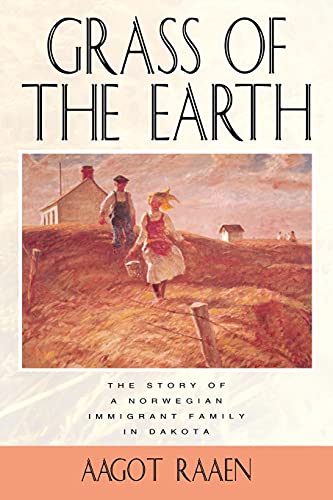
Grass of the Earth: The Story of A Norwegian Immigrant Family in Dakota as told by Aagot Raaen, a child of 5 when she arrived in the U.S. This is not your glossed-over Little House on the Prairie, but does depict the darker side of immigration settlement. (starvation, alcoholism, abuse) Most of the story takes place in North Dakota and depicts just how hard life was.(1872-1890's) A solid, no frills read. 272 pages 3 stars 75's NF: Wild West, RTT Labour Day
60alcottacre
>58 benitastrnad: I think seeing what he wrote along with what he photographed would be very interesting.
Yeah, that is why I want to read it. I may try ILL one of these days. I just hate waiting for the book to arrive, lol, because I might not be in the mood for it when it finally arrives!
ETA: I broke down and bought my own copy. . .
Yeah, that is why I want to read it. I may try ILL one of these days. I just hate waiting for the book to arrive, lol, because I might not be in the mood for it when it finally arrives!
ETA: I broke down and bought my own copy. . .
61Tess_W
>60 alcottacre: Ha! That's what I usually end up doing, too!
62Tess_W
My second entry for this topic is The Children's Blizzard by David Laskin This is a non-fiction account of the blizzard of 1888, sometimes called the schoolhouse blizzard, because 280-300+ children died. While a good, factual account, there were a few chapters that were just mind-numbing boring to me: 68 pages on meteorology, fronts to be exact, and the description of the villages from whence the immigrants came (Norway-primarily). I would have been more interested in the people themselves, but do understand in a work of NF 80+ years later, hard to do! I found interesting the flag system of weather notification for when the telegraph was down (a good deal of the time!). Also, the actual process of the body breakdown when exposed to extreme temperatures was gruesome. Winds so fierce that it peeled the skin off faces in strips. This event took place on the Great Plains--specific to this book the Dakotas, Minnesota, and Nebraska. Native Americans were not mentioned. Might have to research how they managed. 75's NF Wild West 362 pages 3*

ETA: The Native Americans moved to the cover of the forest every winter season. It provided protection from the wind and the snow and gave them more opportunity to secure game. No reported deaths from this blizzard.....but that doesn't mean.........

ETA: The Native Americans moved to the cover of the forest every winter season. It provided protection from the wind and the snow and gave them more opportunity to secure game. No reported deaths from this blizzard.....but that doesn't mean.........
63alcottacre
>61 Tess_W: Yep. It is too easy to do these days, isn't it, Tess?
64thornton37814
>59 Tess_W: Sounds interesting. I've read some accounts like that.
>61 Tess_W: I own that one. It's not reviewed, but I'm pretty sure I read it. It was published in 2004, and I joined LT in 2007, so it's been a long time ago!
>61 Tess_W: I own that one. It's not reviewed, but I'm pretty sure I read it. It was published in 2004, and I joined LT in 2007, so it's been a long time ago!
65streamsong
This is one of my favorite categories of non-fiction, but I am so far behind on books home from the library that I don't think I'll get a new read this month. However my book club read Lewis and Clark Through Indian Eyes at the end of April and I've just posted the review on my thread. https://www.librarything.com/topic/358973#8529426
66markon
>50 Tess_W: & >65 streamsong: Well, you have both added to my to read list. I'm interested in Gila: the life and death of an American River and already have Empire of the summer moon on my to read pile.
I'm currently reading a novel, The lost journals of Sacajewea, so I'm also curious about Lewis and Clark through Indian eyes.
Alas, I will not be reading them this month. I'm currently spending my time on The house on diamond hill: a Cherokee plantation story, and it's going to take me awhile. It's quite interesting and I am learning a bit more about Cherokee history. I live in Georgia in the US, so this is part of the history of the place I live.
I'm currently reading a novel, The lost journals of Sacajewea, so I'm also curious about Lewis and Clark through Indian eyes.
Alas, I will not be reading them this month. I'm currently spending my time on The house on diamond hill: a Cherokee plantation story, and it's going to take me awhile. It's quite interesting and I am learning a bit more about Cherokee history. I live in Georgia in the US, so this is part of the history of the place I live.
67benitastrnad
>66 markon:
I would highly recommend a book I read last summer and it ended up being one of my top books of 2023. Unworthy Republic: The Dispossession of Native Americans and the Road to Indian Territory by Claudio Saunt. This book is about the Indian Removal Act of 1832 and the removal of the Southeastern US tribes to Oklahoma. It was very eye-opening and since you live in Georgia it will be of interest to you. The author is a professor at the University of Georgia.
I would highly recommend a book I read last summer and it ended up being one of my top books of 2023. Unworthy Republic: The Dispossession of Native Americans and the Road to Indian Territory by Claudio Saunt. This book is about the Indian Removal Act of 1832 and the removal of the Southeastern US tribes to Oklahoma. It was very eye-opening and since you live in Georgia it will be of interest to you. The author is a professor at the University of Georgia.
68ffortsa
>59 Tess_W: Tess, this book sounds really good. I'll put it on the never-ending list.
But The Children's Blizzard is probably too horrible for me to read, although I would be interested in the aftermath, and maybe even the meteorology.
But The Children's Blizzard is probably too horrible for me to read, although I would be interested in the aftermath, and maybe even the meteorology.
69alcottacre
I mentioned up at post 60 that I finally broke down and purchased Sacred Legacy: Edward S. Curtis and the North American Indian. Well, the book arrived today. Oh, my. I did not realize that it is a 'coffee table' book and a glimpse through has shown me some amazing pictures.
I will probably end up reading this one instead of Blood and Thunder this month unless I can manage to squeeze both books into May, which I sincerely doubt since I will be out of town for at least a week.
I will probably end up reading this one instead of Blood and Thunder this month unless I can manage to squeeze both books into May, which I sincerely doubt since I will be out of town for at least a week.
70benitastrnad
>69 alcottacre:
Sometimes those coffee table books are the best kind of reading. They engage more than one sense and therefore make a person think more and on several different levels.
Sometimes those coffee table books are the best kind of reading. They engage more than one sense and therefore make a person think more and on several different levels.
71Tess_W
>68 ffortsa: There wasn't a lot of grizzly descriptions.
72alcottacre
>70 benitastrnad: Good point, Benita. I am hoping to get to the book this week.
73cindydavid4
wrong thread,,,
74benitastrnad
I am late to the Globalization party due to spending half of the month of April reading a book that bored me to tears and didn't seem relevant. I am happy to report that today I finished the book I finally selected for the globalization topic - World on Fire: How Exporting Free Market Democracy Breed Ethnic Hatred and Global Instability by Amy Chua. Before I give you my review I will tell you that this book was required reading in academic circles for many years. It is a bit dated now, but in spite of that, I found it very relevant and was able to learn something from it.
This book had a very interesting thesis - the insistence of Western Democracy's, particularly the U. S., to establish free-market democracies without establishing democratic foundations and principles that would allow new democracies to grow slowly and more organically, as well as stating out with some market restraints in place, actually causes destabilization in the areas these Democracies are trying to stabilize. Central to the thesis is the idea that in many extremely unstable parts of the world, where terrorism is know to fester and breed, there is often a small ethnic minority that dominates the economy, thus creating a situation where the ethnic majority is economically and politically suppressed and resentment simmers creating the perfect breeding ground for violence and terror. The author carefully explores the histories of these places and the context in which the ethnic minority gained power. She proposes that often the economically powerful ethnic minority is also involved in corruption at the political and economic level with the full blessing of the authoritarian regimes that take kickbacks and favors from these small groups. In many ways this book is a treatise on how authoritarian demagogues establish power and play off the various ethnic groups in their countries against one another to stay in power.
After the author has made her case, she then explored the histories of authoritarian countries with a record of ethnic violence, she offers some solution to the problem in the last two chapters of the book. She defends the slow moves that China is making towards a more open society and a more free-market economy. This slower movement allows more time for people to become accustomed to the wilder economic ride that free-markets take. She also uses Canada and Malaysia as an examples of how affirmative action policies can make a positive difference in the economic life of a country and break down the ethnic favoritism that has turned so many other countries into large scale terrorist organizations.
This book was written after 9/11 and published in 2003 but before the Forever War in Afghanistan and Iraq became the debacle they were. The planners of that war should have read this book first and that would have saved the U. S. from 20,000 casualties. The author is an academic and so she sets up her argument carefully and then provides example after example of what went wrong along with an analysis of why it went wrong. This is a very thought provoking book and reading it will provide a different view of "why they hate us" from the stock answers the public generally gets.
This is a very academic book and will take much concentration to read and understand. Even so, I recommend this book.
This book had a very interesting thesis - the insistence of Western Democracy's, particularly the U. S., to establish free-market democracies without establishing democratic foundations and principles that would allow new democracies to grow slowly and more organically, as well as stating out with some market restraints in place, actually causes destabilization in the areas these Democracies are trying to stabilize. Central to the thesis is the idea that in many extremely unstable parts of the world, where terrorism is know to fester and breed, there is often a small ethnic minority that dominates the economy, thus creating a situation where the ethnic majority is economically and politically suppressed and resentment simmers creating the perfect breeding ground for violence and terror. The author carefully explores the histories of these places and the context in which the ethnic minority gained power. She proposes that often the economically powerful ethnic minority is also involved in corruption at the political and economic level with the full blessing of the authoritarian regimes that take kickbacks and favors from these small groups. In many ways this book is a treatise on how authoritarian demagogues establish power and play off the various ethnic groups in their countries against one another to stay in power.
After the author has made her case, she then explored the histories of authoritarian countries with a record of ethnic violence, she offers some solution to the problem in the last two chapters of the book. She defends the slow moves that China is making towards a more open society and a more free-market economy. This slower movement allows more time for people to become accustomed to the wilder economic ride that free-markets take. She also uses Canada and Malaysia as an examples of how affirmative action policies can make a positive difference in the economic life of a country and break down the ethnic favoritism that has turned so many other countries into large scale terrorist organizations.
This book was written after 9/11 and published in 2003 but before the Forever War in Afghanistan and Iraq became the debacle they were. The planners of that war should have read this book first and that would have saved the U. S. from 20,000 casualties. The author is an academic and so she sets up her argument carefully and then provides example after example of what went wrong along with an analysis of why it went wrong. This is a very thought provoking book and reading it will provide a different view of "why they hate us" from the stock answers the public generally gets.
This is a very academic book and will take much concentration to read and understand. Even so, I recommend this book.
75benitastrnad
I want to keep on track with our monthly topic and so will be changing the book for this month to one a bit shorter. I will be reading Zane Grey's Riders of the Purple Sage: The Real Story Behind the Wild West's Greatest Tale by Stephen J. May. I requested the book from our ILL department and it came rather speedily, so I need to read it quickly and get it returned. This book is about how Grey came up with the idea for Riders of the Purple Sage and how it, and the three different movie versions made from the novel, created the western fiction genre in literature and the cinematic arts.
This book appears to be self published by a small publisher based in Helena, Montana so it might be a wild ride, but I am going to give it a shot. I will let you know how it is working in a few days.
This book appears to be self published by a small publisher based in Helena, Montana so it might be a wild ride, but I am going to give it a shot. I will let you know how it is working in a few days.
76alcottacre
I finished Sacred Legacy by Edward S. Curtis tonight and it is well worth the read, if just for the photographs alone. Curtis portrayed his subjects with dignity as he truly cared for the Native Americans that he photographed. This turned out to be a 5-star read for me - and the book that led me to this one, Short Nights of the Shadow Catcher by Timothy Egan is not a bad read either.
77Kyler_Marie
I'm reading The Bitter Waters of Medicine Creek and The Egg and I. These are two very different books, but both about Washington State history.
I've been meaning to read The Bitter Waters of Medicine Creek for a while now. I picked it up a couple years ago, but couldn't get engaged past the first chapter, which was a biography of the first Governor of Washington State and felt dry and a bit boring. However, that background set the stage to the rest of the book, which is engaging and an extremely important history for all Washingtonians to learn. While I had a general understanding of how awful the American settlers were to the tribes in the Pacific Northwest, I had/have a lot to learn. This book provides a picture of who the key players were in drafting and signing of the first Indian Reservation treaty in Washington, so you understand their background, motives, and even a glimpse at how the history was written (inaccurately, of course). I'm about 1/3 of the way through but it's already at the top of my recommendations list. I appreciate that this group helped push me to finally get beyond the first chapter of this book, because it is truly worthwhile.
The Egg and I is a book by Betty MacDonald, the author of Mrs. Piggle Wiggle. She wrote about her life on a Washington farm in the mid-20th century. It hasn't fully met my expectations, but it has some interesting information about her life and it is an easy read.
I've been meaning to read The Bitter Waters of Medicine Creek for a while now. I picked it up a couple years ago, but couldn't get engaged past the first chapter, which was a biography of the first Governor of Washington State and felt dry and a bit boring. However, that background set the stage to the rest of the book, which is engaging and an extremely important history for all Washingtonians to learn. While I had a general understanding of how awful the American settlers were to the tribes in the Pacific Northwest, I had/have a lot to learn. This book provides a picture of who the key players were in drafting and signing of the first Indian Reservation treaty in Washington, so you understand their background, motives, and even a glimpse at how the history was written (inaccurately, of course). I'm about 1/3 of the way through but it's already at the top of my recommendations list. I appreciate that this group helped push me to finally get beyond the first chapter of this book, because it is truly worthwhile.
The Egg and I is a book by Betty MacDonald, the author of Mrs. Piggle Wiggle. She wrote about her life on a Washington farm in the mid-20th century. It hasn't fully met my expectations, but it has some interesting information about her life and it is an easy read.
78benitastrnad
>77 Kyler_Marie:
I have Egg and I in my TBR list. I also have the biography of Betty MacDonald in my TBR list. Egg and I is an autobiography and Looking for Betty MacDonald is a biography of MacDonald written by Paula Becker-Brown. I remember reading the review of the biography (I think it was a starred review in Publisher's Weekly but don't remember for sure) and the review said that the biography was very good. I like to read biographies and autobiographies of children's authors and so I added both of these books to my LT TBR list on the same day. April 27, 2020. Egg and I sold a million copies in the first year it was published, so back in the 1940's people loved it. I remember reading the Mrs. Piggle-Wiggle books when I was a kid so I should try to get both of these books and read them.
Glad you are enjoying your journey into the past history of the American Northwest.
I have Egg and I in my TBR list. I also have the biography of Betty MacDonald in my TBR list. Egg and I is an autobiography and Looking for Betty MacDonald is a biography of MacDonald written by Paula Becker-Brown. I remember reading the review of the biography (I think it was a starred review in Publisher's Weekly but don't remember for sure) and the review said that the biography was very good. I like to read biographies and autobiographies of children's authors and so I added both of these books to my LT TBR list on the same day. April 27, 2020. Egg and I sold a million copies in the first year it was published, so back in the 1940's people loved it. I remember reading the Mrs. Piggle-Wiggle books when I was a kid so I should try to get both of these books and read them.
Glad you are enjoying your journey into the past history of the American Northwest.
79cindydavid4
>78 benitastrnad: I remember a similar type book a chicken every Sunday about her family's life in early southern Az Very funny,and well written
80Kyler_Marie
>78 benitastrnad: When you eventually read it, I hope you enjoy The Egg and I! I also own Onions in the Stew by Betty MacDonald and hope to read it at some point. I reread Mrs. Piggle Wiggle last year because it was a childhood favorite. It's neat to hear that the biography has good reviews! I'll have to check it out.
81fuzzi
I'm finally up to the War of the Roses in my choice, The Last Plantagenets. It's very good but I've been so busy in RL I'm only managing read about 50 pages or so before bed every night.
82cindydavid4
>81 fuzzi: I have the entire 4 volume series that david lugged around britain. was not happy that we noticed they were published in NY when we got home!! I had alread some background of the time by reading sharon kay penmanswork, but reading these were enlighting with so much more to learn about
83fuzzi
>82 cindydavid4: I've been having little bursts of "Oh!" as I read, as my first Penman read was The Sunne in Splendour.
My mother would have enjoyed Sharon Kay Penman. It was her hardcover book club editions of Costain's works that got me hooked as a teen. She had a dogeared paperback copy of The Last Plantagenets on her nightstand for years but I didn't actually start reading it until now.
My mother would have enjoyed Sharon Kay Penman. It was her hardcover book club editions of Costain's works that got me hooked as a teen. She had a dogeared paperback copy of The Last Plantagenets on her nightstand for years but I didn't actually start reading it until now.
84cindydavid4
yeah they seem to come from the same sources. both the HF and non fiction versions are very good reading
have you read her Welsh trilogy, starting with here be dragons? introduction to wales and english issues. After I read those I planned a trip to Wales using the information from SKP whenI asked her for suggestions. Ended up going 2 more times!
have you read her Welsh trilogy, starting with here be dragons? introduction to wales and english issues. After I read those I planned a trip to Wales using the information from SKP whenI asked her for suggestions. Ended up going 2 more times!
85fuzzi
>84 cindydavid4: I have read both Here Be Dragons and Falls the Shadow, LOVED them both, but hadn't picked up the third book, The Reckoning yet.
My mother's side of the family was big into genealogy, and some of them traced our ancestry back to the late 1500s. One of the trails led to a saddle-maker in Wales named Isaac Morgan. He emigrated to America at some time in the 1700s. I have a photo of his gravestone in Connecticut, where he died in 1796.
My mother's side of the family was big into genealogy, and some of them traced our ancestry back to the late 1500s. One of the trails led to a saddle-maker in Wales named Isaac Morgan. He emigrated to America at some time in the 1700s. I have a photo of his gravestone in Connecticut, where he died in 1796.
86cindydavid4
When I saw Penman at a reading, I asked her how she could write The Reckoning. Said she needed grief therapy!A lesser HF writer would have just changed it. But she always sticks to the history as much as she can. Really excellent book, but have some kleenex ready
87benitastrnad
>81 fuzzi:
I was surprised to learn that this series Pageant of England and The Plantagenets were nonfiction. I had always thought they were fiction. But Wikipedia says they are nonfiction. But more importantly, their LC call numbers are DA and that designates them as nonfiction. That means that I have just added four more titles to my TBR list.
I was surprised to learn that this series Pageant of England and The Plantagenets were nonfiction. I had always thought they were fiction. But Wikipedia says they are nonfiction. But more importantly, their LC call numbers are DA and that designates them as nonfiction. That means that I have just added four more titles to my TBR list.

89drneutron
>88 OwItherian: Heads up, this is a spoof of Owl/Lily.
90ArlieS
>74 benitastrnad: You didn't get me with a book bullet, but only because it's already on my TBR list. Better yet, the less local of my two local libraries has it, and I hope to pick it up there next week, when I return my current set of books from them.
91quondame
>86 cindydavid4: The Brothers of Gwynedd Quartet by Edith Pargeter made such an intense impression that I've been leery of revisiting conquered Wales.
92cindydavid4
I tried to read that, and have read many of her other books* and know what a wonderful writer she is. But couldnt stop comparing her with Penman so I just stopped trying maybe i should try again
*Cadfael, the heaven tree, and a book that should be more than it is the marriage of meggotta
*Cadfael, the heaven tree, and a book that should be more than it is the marriage of meggotta
94cindydavid4
sorry double post
95quondame
>94 cindydavid4: Oh, I prefer Pargeter to Penman. I can't remember what turned me off to the later, but I bounced hard off When Christ and His Saints Slept and though I finished The Sunne In Splendour, I kept wanting to throw it against the wall.
96ffortsa
>74 benitastrnad: Thanks for the precis. I'm not sure I will read it, but the argument makes complete sense to me.
97ffortsa
>83 fuzzi: Oh Costain! I went through a period in my teens where I read everything of his that the library had, which was a lot. Devoured them as fast as I could turn the pages.
eta: Oh, I meant Costain's novels. I didn't know he wrote a series on English history. Must look it up.
eta: Oh, I meant Costain's novels. I didn't know he wrote a series on English history. Must look it up.
98cindydavid4
>95 quondame: that was a hard one to read, but I was so fascinted by the history of the time that I forgave a lot. skipped some battles here and again. fav moment is when the empress goes out the castle window via rope during a blizzard. wearing white, she manages to sneak past Stephens troop to safety. stuff like that
99cindydavid4
>97 ffortsa: funny because I couldnt get into his novels! should try again sometime
100atozgrl
I'm confused. I thought this month's topic was about the western US, so the discussion about the Plantagenets, etc. is confusing to me. It fits perfectly with The War Room topic for March, but I don't quite see where it fits in here.
I dropped by to say that I've started The Three-Cornered War: the Union, the Confederacy, and Native Peoples in the Fight for the West about the Civil War in the New Mexico territory, and how it helped shape the US up to today. I haven't gotten into it very far yet, but I'm learning things I never knew. The Civil War in the west doesn't get much attention. I hope I will be able to finish it before the end of the month.
I dropped by to say that I've started The Three-Cornered War: the Union, the Confederacy, and Native Peoples in the Fight for the West about the Civil War in the New Mexico territory, and how it helped shape the US up to today. I haven't gotten into it very far yet, but I'm learning things I never knew. The Civil War in the west doesn't get much attention. I hope I will be able to finish it before the end of the month.
101cbl_tn
>100 atozgrl: The May HistoryCAT in the Category Challenge has a medieval theme. It's easy to get them confused if you're doing both challenges.
102atozgrl
>101 cbl_tn: Yes, but this is the Nonfiction challenge. The HistoryCAT looks like it matches the March War Room challenge, so the books could fit both of those places. But Plantagenets don't fit Wild West US, which is supposed to be this month's topic here.
103cbl_tn
>102 atozgrl: I think it's just a case of confusion about which challenge is doing which topic this month.
104atozgrl
>103 cbl_tn: OK, I think I understand now what you're saying.
105cindydavid4
>100 atozgrl: oh Im so sorry! wasnt paying attention to where I was, and saw >83 fuzzi: comment last of the Plantagets which is indeed non fiction, tho not about the wild west. I just saw the title and being the enthusiastic fan of the author just continued the conversation cluelessly. I apologize for your confustion. If youd like I will delete my posts and promise I will pay more attention :(
106atozgrl
>105 cindydavid4: Goodness, no need to delete your posts! I was just so surprised to see such a long discussion related to books and authors on that topic in this thread. I had to keep checking up above to be sure I was on the right thread!
107cindydavid4
:) I can well imagine. I have a bad habit of posting something in the wrong thread. I usually catch it, but not this time. thanks, Ill pay more attention!
108benitastrnad
>100 atozgrl:
There are a plethora of nonfiction threads going right now (which as a former librarian) I am happy to see, but it is easy to forget which one is which. I apologize for adding to the confusion with my post about the series being nonfiction.
Also, I would like the readers here to remember that this year we are experimenting with a running thread, one where we continue until we have 250 posts no matter the month in which the book is finally finished and read. For this reason we could be on a different monthly topic when somebody posts about a previous month. The monthly topic list is posted at the beginning of the thread (post number 2) and if you get lost refer back to that list.
There are a plethora of nonfiction threads going right now (which as a former librarian) I am happy to see, but it is easy to forget which one is which. I apologize for adding to the confusion with my post about the series being nonfiction.
Also, I would like the readers here to remember that this year we are experimenting with a running thread, one where we continue until we have 250 posts no matter the month in which the book is finally finished and read. For this reason we could be on a different monthly topic when somebody posts about a previous month. The monthly topic list is posted at the beginning of the thread (post number 2) and if you get lost refer back to that list.
109benitastrnad
I have started my book for the May topic. It is Zane Grey's Riders of the Purple Sage: The Real Story Behind The Wild West's Greatest Tale by Stephen J. May This work of nonfiction is about the writing of the novel Riders of the Purple Sage, the movie adaptations made from the novel, and how this early western novel created a genre and helped to solidify the myth of the American West into our national mythologies. I will not finish it this month so I will be posting on it in June when our topic will be nonfiction dealing with Middle Europe, so don't get confused next month when I make my book posting.
110atozgrl
I finished reading The three-cornered war : the Union, the Confederacy, and Native peoples in the fight for the West by Megan Kate Nelson today. It was a very interesting look at the Civil War fought in the New Mexico territory, as well as the battles that the Union Army fought against the Chiricahua Apaches and the Navajo. The book begins by setting the background situation in the New Mexico territory, then covers the Civil War from 1861, but continues through 1868 to include army activities against the native tribes. Nelson shows how the events at that time affected the further expansion of the US into the West. The book is thoroughly researched, with many notes and an extensive bibliography. It is an interesting read because Nelson tells the story through the eyes of the people who were involved. I learned a lot that I didn't know about the history of the west.
111Tess_W
>109 benitastrnad: I live about 20 miles from the Zane Grey Museum. Lots of info about Riders of the Purple Sage, there. Very interesting! Went there for the first time in my life last summer. Why did I wait to so long?
112benitastrnad
It is June 1, 2024 and time for us to move on to a new topic. This month the topic is Middle Europe. This is a big topic and one that is very topical at the moment. However, this area of Europe has been a hotbed of violence and political change since the beginning of the 20th Century. It was the assassination of the heir to the Austrian-Hungarian throne that started the conflagration of WWI and the unsettlement that resulted from that war is still playing out in the Middle sections of Europe. For this topic we can read anything about Europe from the Elbe to the Ural's, from Finland to Turkey. History, language, travel, etc. all of this, except fiction, is acceptable. The exception will be that we will leave Germany out of this mix since most often it is counted among the nations of Western Europe. But there is an out even with that country. Germany was not a unified entity until 1870 so if the book is a history of the Iron Chancellor Bismarck or about Prussia or Saxony that will work for this topic. A biography of The Empress Elizabeth of Austria, or that huge biography of Catherine the Great are perfect for this topic. Don't forget the fringes for this month. The Balkans, Turkey and Greece are all part of Middle Europe as are Sweden and Finland. However, Norway is not. That is because up until 1904 it was part of Denmark and has always been more western facing than facing towards the middle. If you want to go ancient books about the Byzantine and Ottoman Empires will also be accepted.
113benitastrnad
For the month of June I am going to read Gates of Europe: A History of Ukraine by Serhii Plokhy. There are several editions of this book and I am going to read the 2021 release. This is a really short history of the part of Europe that has come to be called Ukraine and I hope to learn more this area and its history.
I also thought about reading a cookbook on the food from this area. I have a copy of Mamushka and I know that Olia Hercules has published another cookbook of the foods of the Ukraine.
But first - I need to finish my book for May, and I am making good progress on that one. When I finish it, you will be the first to know.
I also thought about reading a cookbook on the food from this area. I have a copy of Mamushka and I know that Olia Hercules has published another cookbook of the foods of the Ukraine.
But first - I need to finish my book for May, and I am making good progress on that one. When I finish it, you will be the first to know.
114kac522
>112 benitastrnad: I'm finding the boundaries confusing. I guess I thought Ukraine was considered an Eastern European country.
It might be helpful if you could provide a complete list of the countries (as their boundaries are today) that are part of the definition of Middle Europe for this challenge. That way there will be no confusion as to whether a book fits or not.
It might be helpful if you could provide a complete list of the countries (as their boundaries are today) that are part of the definition of Middle Europe for this challenge. That way there will be no confusion as to whether a book fits or not.
115Kyler_Marie
I planned to read White Field, Black Sheep: A Lithuanian-American Life by Daiva Markelis, a memoir written by a Lithuanian-American woman growing up in Chicago. I'm hoping it'll contain information about the author's parents' immigration experience and how Lithuanian culture contrasted with American culture in the 1960s/1970s. I didn't find it easy to identify a Lithuanian focused book that isn't a massive treatise, but that's really the culture I'd like to learn about. Do you view this as within the scope of the Middle Europe topic area?
116benitastrnad
Thanks for those questions. It seems that there is a need to clarify and you are correct. The title for the topic is Middle Europe - but the definition says anything from the Elbe to the Urals. That clearly includes Eastern Europe. Since that was the definition that is what we will go with. In-other-words, it is NOT western Europe.
I think that the title should have been something like "Middle Europe and East to the Urals!" That would have worked better and been much easier to understand.
This reminds me of questions that people have about the Eurovision song contest and wonder how Israel and Azerbaijan got into a European song contest. Or NATO - how does Turkey figure into that? For Turkey the answer is a bit easier as for most of its existence as the Ottoman Empire it sat astride of both Europe and Asia. Most of what we call the Balkans today was part of the Ottoman Empire until in the 1800's. Lvov, in the Ukraine was a city in the Austro-Hungarian Empire and inside of its boundaries the official language was German, but a myriad of languages were spoken.
I didn't give suggestions for titles for this topic because the topic is so wide open. It reminds me of what I would tell students about State Education Standards - they are very broad.
I think that the title should have been something like "Middle Europe and East to the Urals!" That would have worked better and been much easier to understand.
This reminds me of questions that people have about the Eurovision song contest and wonder how Israel and Azerbaijan got into a European song contest. Or NATO - how does Turkey figure into that? For Turkey the answer is a bit easier as for most of its existence as the Ottoman Empire it sat astride of both Europe and Asia. Most of what we call the Balkans today was part of the Ottoman Empire until in the 1800's. Lvov, in the Ukraine was a city in the Austro-Hungarian Empire and inside of its boundaries the official language was German, but a myriad of languages were spoken.
I didn't give suggestions for titles for this topic because the topic is so wide open. It reminds me of what I would tell students about State Education Standards - they are very broad.
117cindydavid4
I dont need titles, but Id like a list of countries, or a map would help (yes I could google, but Id rather see your borderlines)
118cindydavid4
suggestion:border a journey to the edge of europe The author lived near the border of bulgaria where she was from and explores the border it shares with greece and turkey. travellougr, history and some biography I found it a very well done discussion of borders
119annushka
I finished reading Women's Diaries of the Westward Journey for the last month's challenge. I thoroughly enjoyed the book and learned a lot. The bravery and resilience of the people who undertook the journey is a testament to their unwavering spirit and determination in the face of immense challenges and hardships.
120benitastrnad
>117 cindydavid4: Basically the Elbe is the modern border between Germany and Poland. Just draw a line south and north from the city of Stettin on the Baltic and the old Austrian city of Trieste on the Adriatic. (like Winston Churchill said in his Iron Curtain speech.) That is your western line. Or anything in the old Austro-Hungarian Empire, the old Ottoman Empire, and the old Russian/Soviet Empire up to the Ural Mountains. The lines are big and broad - just don't go all Eurovision and include Israel.
The idea here is to gain a broader understanding of these areas that are unknown to most American's and yet have had a big impact on world history.
The idea here is to gain a broader understanding of these areas that are unknown to most American's and yet have had a big impact on world history.
121cbl_tn
>119 annushka: I also finished Women's Diaries of the Westward Journey for May's topic. I like reading diaries and travel accounts from the 19th century so this book appealed to me for several reasons. It didn't disappoint!
For June, I plan to read Between the Woods and the Water by Patrick Leigh Fermor. It's an account of the author's travels through Hungary and Romania in his journey on foot from the Hook of Holland to Constantinople.
For June, I plan to read Between the Woods and the Water by Patrick Leigh Fermor. It's an account of the author's travels through Hungary and Romania in his journey on foot from the Hook of Holland to Constantinople.
122benitastrnad
>121 cbl_tn:
I haven't read Patrick Leigh Fermor but just got done with the series by Laurie Lee and from what I have heard both are beautiful writers. Have fun reading.
I haven't read Patrick Leigh Fermor but just got done with the series by Laurie Lee and from what I have heard both are beautiful writers. Have fun reading.
123cindydavid4
>121 cbl_tn: have you read time of gifts thats the first book on his travels either one is wonderful
124cindydavid4
>122 benitastrnad: love Laurie Lee also; but hope you get to Fermor; probably the best travel writer for that area.
125cindydavid4
>120 benitastrnad: thx , my apologies,I appreciate the idea; my knowledge of geography in the area is not the best, but Im always learning. Ive read a lot about the Ottoman empire , and the Balkans, but Id like to expand my knowlege of the Austro Hungarian Empire since one of my travel bucket lists was Prague, Vienna and Budapest. I might pick something in a travel narrative
126kac522
>125 cindydavid4: Don't feel bad, I'm "geographically challenged" as well, which is why I asked for a list of countries, too. Oh well, I'll probably skip this month rather than worry and feel frustrated about it.
127cindydavid4
well Im reading the world of yesterday Theres a lot out there that might work for you
ETA didn't realize this was a memoir, rather than a history of the time. so I continue my search
ETA didn't realize this was a memoir, rather than a history of the time. so I continue my search
128quondame
If my hold on The Middle Kingdoms, which has been saying available in about 2 weeks for 3 weeks or more, does come in, and I can meet my other challenges, I'll give it another shot.
129ArlieS
>113 benitastrnad: I have Gates of Europe in my in pile too, having picked it up at the library on impulse. I guess I should read it in June.
130cindydavid4
This message has been deleted by its author.
131benitastrnad
>127 cindydavid4:
What about the Everyman's Classics Prague Stories edited by Richard Bassett. This is a mixture of fiction and nonfiction essays and short stories. Normally, this group concentrates on nonfiction but since you are wanting books specifically about Prague it would pass for this month.
There is also Prague in Black and Gold. This is an old book, but if you can find a used copy cheaply on something like Albris or used books on Amazon it would be worth the reading.
Last Palace is a book about the ambassador's residence in Prague. I have a copy of it and intend to read it one of these days. It is easy to get, and cheap, on Alibris.
What about the Everyman's Classics Prague Stories edited by Richard Bassett. This is a mixture of fiction and nonfiction essays and short stories. Normally, this group concentrates on nonfiction but since you are wanting books specifically about Prague it would pass for this month.
There is also Prague in Black and Gold. This is an old book, but if you can find a used copy cheaply on something like Albris or used books on Amazon it would be worth the reading.
Last Palace is a book about the ambassador's residence in Prague. I have a copy of it and intend to read it one of these days. It is easy to get, and cheap, on Alibris.
132cindydavid4
>131 benitastrnad: just ordered prague in black and gold, looks like more than just Prague but the whole of Bohimia as well. looks right up my alley and will definitely give me a better understanding of the area. thx
133annushka
>121 cbl_tn: I normally don't read diaries so this book was not only a pleasant surprise because of the great writing but also helped me better understand what it took to move one's family across the continent.
134cbl_tn
>123 cindydavid4: Yes, I read A Time of Gifts about a year and a half ago. I'm hoping that this one will be as good as the first one was!
>133 annushka: The author does a great job of gathering what might have felt like isolated experiences and finding the commonalities between them. I have a friend who works at my local public library whose family was part of that Oregon migration. I dropped my copy off at the library today when I returned a library book. She told me that her family has some letters that women had written to each other about their experience.
>133 annushka: The author does a great job of gathering what might have felt like isolated experiences and finding the commonalities between them. I have a friend who works at my local public library whose family was part of that Oregon migration. I dropped my copy off at the library today when I returned a library book. She told me that her family has some letters that women had written to each other about their experience.
135Tess_W
I'm going to read Six Years at the Russian Court by Margaretta Eager Eager served the Czar & Czarina from 1894-1906 in caring for their children.
136cindydavid4
>134 cbl_tn: it is! there is a third book that was written postumously that covered his travels to constantinople called broken road thas good as well
137annushka
>134 cbl_tn: That's incredible. Those letters are very precious.
138cindydavid4
planning to readprague in black and goldlooks very interesting. Its a place I always wanted to visit. Looks like I can vicariously here
139benitastrnad
I finished reading Zane Grey's Riders of the Purple Sage: The Real Story Behind the Wild West's Greatest Tale by Stephen J. May. This was my book for the May topic of Wild Wild West. I have to say that I enjoyed this book a whole bunch. I read about half of it while sitting in the lobby of the Arlington Resort Hotel and Spa in Hot Springs, Arkansas on a rainy summer afternoon. When I recall this book I am going to also recall that wonderful Art Deco lobby. What a great atmosphere to read in!
This book was NOT a biography of Zane Grey. Rather it was a biography, of sorts, of the novel Riders of the Purple Sage. It was also a literary analysis of the various literary techniques that Grey used to write the novel. The author did a great job of putting all of this together. Even though this is an academic book and was intended for an academic audience it was a delightful book to read. The author went into detail about the way Grey combined elements of Romanticism and the newer Realism styles of literature to create one of the founding works of the Western genre. One of the great influences on Grey was the publication of Clayton Hamilton's book Materials and Methods of Fiction in 1908. It was this book that Grey used to help him write the book that he knew would capture the imagination of the world and introduce them to the amazing topography of the American Southwest. May managed to make a book about the life, the crafting, and the effort Grey put into writing this one novel very interesting.
May also wrote about the various lives and iterations of the novel. He covered the filming of the first silent movie version of the book and Grey's financial blunders with that venture. He also covered the last film version which was for television and was done in 1998. The last chapter of the book was devoted to the opera that was premiered in 2017 in Phoenix, Arizona and was a hit.
Throughout the book May discusses the place of the novel in the Western genre. He discusses the beginnings of the genre in both literature and film and places Riders of the Purple Sage as one of the foundation novels. He believes that it, and Owen Wister's Virginian cement the myth of the American West into the founding mythologies of the U. S. Both of these novels create the image of the Western gunslinger and move that figure firmly from that of popular hero into the literary realm giving that archetype legitimacy, even though today, we know that it was just a popular creation with no basis in fact.
I had to request this book through our Inter-Library Loan Department and so had to wait a bit for it to get here. Not that many libraries have it, but if you can find a copy of it and are interested in the myths that surround the American West this is a great book to read.
This book was NOT a biography of Zane Grey. Rather it was a biography, of sorts, of the novel Riders of the Purple Sage. It was also a literary analysis of the various literary techniques that Grey used to write the novel. The author did a great job of putting all of this together. Even though this is an academic book and was intended for an academic audience it was a delightful book to read. The author went into detail about the way Grey combined elements of Romanticism and the newer Realism styles of literature to create one of the founding works of the Western genre. One of the great influences on Grey was the publication of Clayton Hamilton's book Materials and Methods of Fiction in 1908. It was this book that Grey used to help him write the book that he knew would capture the imagination of the world and introduce them to the amazing topography of the American Southwest. May managed to make a book about the life, the crafting, and the effort Grey put into writing this one novel very interesting.
May also wrote about the various lives and iterations of the novel. He covered the filming of the first silent movie version of the book and Grey's financial blunders with that venture. He also covered the last film version which was for television and was done in 1998. The last chapter of the book was devoted to the opera that was premiered in 2017 in Phoenix, Arizona and was a hit.
Throughout the book May discusses the place of the novel in the Western genre. He discusses the beginnings of the genre in both literature and film and places Riders of the Purple Sage as one of the foundation novels. He believes that it, and Owen Wister's Virginian cement the myth of the American West into the founding mythologies of the U. S. Both of these novels create the image of the Western gunslinger and move that figure firmly from that of popular hero into the literary realm giving that archetype legitimacy, even though today, we know that it was just a popular creation with no basis in fact.
I had to request this book through our Inter-Library Loan Department and so had to wait a bit for it to get here. Not that many libraries have it, but if you can find a copy of it and are interested in the myths that surround the American West this is a great book to read.
140benitastrnad
I am now about half done with Last Palace: Europe's Turbulent Century In Five Lives and One Legendary House by Norman Eisen. I still plan to read Gates of Europe but this book caught my eye when I was searching for titles for the June topic of Middle Europe and the book started singing to me. I took it with me on my road trip and, like most books, once I got started on it, I couldn't put it down. I will let you know how it goes in a few days when I finish it.
141alcottacre
>121 cbl_tn: Carrie, I got a copy of Between the Woods and the Water so I will be joining you in the read of that one. I also added it to the TIOLI challenges for the month so it will be a shared read there too.
142cbl_tn
>141 alcottacre: Wonderful! I've read the first chapter and so far it's just as delightful as the first book in the triology (A Time of Gifts).
143cindydavid4
>139 benitastrnad: not a fan of westerns, but you are making me change my stanch. will be putting that one on my list
144alcottacre
>142 cbl_tn: I have not read any of Fermor's other books but given how this one is going, I probably need to!
145benitastrnad
I finished reading Last Palace: Europe's Turbulent Century in Five Lives and One Legendary House by Norman Eisen for the June challenge for Middle Europe. I didn't intend to read this book and I am also reading another book for this challenge, but when I was searching around for books for others to read, this one caught my eye. I realized that I had a copy of it, and because of all the book packing I have been doing lately I knew just where it was in the house. I pulled it and started reading. It turned out to be an interesting and entertaining book.
The book tells the history of Czechoslovakia during the twentieth century. Czechoslovakia is no longer a country. It is now two separate countries: The Czech Republic and Slovakia. The story of the 20th Century state of Czechoslovakia is told through the lens of the Petschek Mansion in Prague. The story of the country is told through the lives of five people who lived in and were influenced by the house and the city of Prague. (at least in the opinion of the author.) This impressive house has been called the last palace built in Europe and it is from that the book takes its title.
The mansion was built by Otto Petschek, a banker and industrialist, who was also Jewish. He started building the house in the 1920's and died in 1936, shortly after the rise of the Nazi Party in Germany. The next person featured is Rudolph Toussiant, who was the German general who was in charge of the military occupation of Czechoslovakia. He lived in the house from 1939-1945. The next occupant was Laurence Steinhardt, who as the ambassador to Czechoslovakia who persuaded the US government to purchase the house from the Petschek heirs. The time covered by his tenure was the first years of the Cold War and in these years the country became firmly Stalinist and under the control of the Soviet Union. The next person profiled in the book was Shirley Temple Black who was in Prague when the Soviet's crushed the Prague Spring and who was the ambassador during the Velvet Revolution. The last person in the book was Norman Eisen whose mother was a Czech Jew who had spent the last year of the war in two different concentration camps in Germany and who had half of her family murdered in the war years. Eisen was the first Jewish ambassador to an Central European country.
The entire book was very readable, and my only complaint is that it is not very academic. By that I mean that there is little to no documentation in the printed book. The author says that the documentation is all online. That is OK, but it should be in conjunction with, not the ONLY form of documentation available to readers. Nonfiction books have to have authentic documentation. Without that the veracity of the entire work can be disputed. I know that is a minor quibble in this case, but as a retired academic it does bother me a bit.
I highly recommend this book for anybody seeking an entertaining way to understand a bit more of the history of the more obscure parts of Europe. This book is eminently readable along with being factual (near as I can tell), and that makes it a very useful book.
The book tells the history of Czechoslovakia during the twentieth century. Czechoslovakia is no longer a country. It is now two separate countries: The Czech Republic and Slovakia. The story of the 20th Century state of Czechoslovakia is told through the lens of the Petschek Mansion in Prague. The story of the country is told through the lives of five people who lived in and were influenced by the house and the city of Prague. (at least in the opinion of the author.) This impressive house has been called the last palace built in Europe and it is from that the book takes its title.
The mansion was built by Otto Petschek, a banker and industrialist, who was also Jewish. He started building the house in the 1920's and died in 1936, shortly after the rise of the Nazi Party in Germany. The next person featured is Rudolph Toussiant, who was the German general who was in charge of the military occupation of Czechoslovakia. He lived in the house from 1939-1945. The next occupant was Laurence Steinhardt, who as the ambassador to Czechoslovakia who persuaded the US government to purchase the house from the Petschek heirs. The time covered by his tenure was the first years of the Cold War and in these years the country became firmly Stalinist and under the control of the Soviet Union. The next person profiled in the book was Shirley Temple Black who was in Prague when the Soviet's crushed the Prague Spring and who was the ambassador during the Velvet Revolution. The last person in the book was Norman Eisen whose mother was a Czech Jew who had spent the last year of the war in two different concentration camps in Germany and who had half of her family murdered in the war years. Eisen was the first Jewish ambassador to an Central European country.
The entire book was very readable, and my only complaint is that it is not very academic. By that I mean that there is little to no documentation in the printed book. The author says that the documentation is all online. That is OK, but it should be in conjunction with, not the ONLY form of documentation available to readers. Nonfiction books have to have authentic documentation. Without that the veracity of the entire work can be disputed. I know that is a minor quibble in this case, but as a retired academic it does bother me a bit.
I highly recommend this book for anybody seeking an entertaining way to understand a bit more of the history of the more obscure parts of Europe. This book is eminently readable along with being factual (near as I can tell), and that makes it a very useful book.
146annushka
I selected Border: A Journey to the Edge of Europe by Kapka Kassabova for this month's challenge. This book had been on my TBR list for a while, and I'm thrilled I finally read it. Kassabova delves into the fascinating region where Bulgaria, Greece, and Turkey meet, examining how their histories and cultures intertwine and diverge. She masterfully uses keywords from the local languages to set the theme for each chapter, weaving in local folklore and history to vividly bring the villages and towns to life. By honoring the ancient history of the region, she shows how its remnants continue to shape contemporary life. The book is beautifully written and incredibly timely, as many of the issues Kassabova explores are still highly relevant in this part of the world today.
147ffortsa
I've been listening to a Great Courses course about the history of eastern Europe, and it goes WAY back. I've learned a lot about Poland and Lithuania, and the constant conflicts over this part of the world.
148benitastrnad
I am still working on Gates of Europe by Serhii Plokhy and probably will be for some time. I am finding the book very interesting and especially so when he discusses the religious history of the region. This is something that I know nothing about and so am finding it fascinating. I will give a better report in a week or so.
149annushka
>148 benitastrnad: Have you heard about the free Ukrainian history course offered by Yale (https://online.yale.edu/courses/making-modern-ukraine)? The professor lists this book on the syllabus. The Yale lectures are great.
150benitastrnad
>149 annushka:
Nope. Hadn't heard about the course. It would be interesting so thanks for mentioning it here.
Nope. Hadn't heard about the course. It would be interesting so thanks for mentioning it here.
151annushka
>150 benitastrnad: It was quite popular when the war started. I hope you'll enjoy it.
152Tess_W
Didn't think I would finish before the month was out! But I completed Six Years at the Russian Court by Margaretta Eagar This was a NF account of governess Eagar's time spent with the Romanov family from 1894-1906. The writing was very elementary and seemed like a litany of: we went here, we wore this, we met these people; not to say that it was not somewhat interesting. Ms. Eagar claimed the four princesses to be well behaved and well mannered. Nicholas II and Alexandra Feodorovna appeared to be loving and hands on parents. Ms. Eagar ended her recollections with: Due to personal and private reasons I left my employ with the royal family. She left shortly after the baptism of Alexei Nikolaevich, Tsarevich of Russia. Speculation is that she was dismissed because England sided with Japan in the Russo-Japanese War. She did receive a lifetime pension from the emperor and regularly exchanged letters with the four girls until they were taken captive by the Bolsheviks. 153 pages 3.5 stars
153benitastrnad
I have not finished Gates of Europe but plan to do so and, like always, will report on it to the group when I finish it.
154benitastrnad
Today is the last day of June and so we are moving on to our Nonfiction topic for July. The topic is Insects (from the Latin insectum). This is a very very broad subject because the animal class of Insecta is huge. That is reflected in the definition of insect. According to Wikipedia an insect is defined as Insects are hexapod invertebrates of the class Insecta. They are the largest group within the arthropod phylum. Insects have a chitinous exoskeleton, a three-part body (head, thorax and abdomen), three pairs of jointed legs, compound eyes, and a pair of antennae. Insects are the most diverse group of animals, with more than a million described species; they represent more than half of all animal species.
Insects range from the horrible nasty kind to the most beautiful graceful creatures imaginable. Household pests such as roaches, termites, and ants are insects. Insects are disease carrying. Mosquitoes kill more people on Earth each year than does any other thing, war included. Mosquitoes are an insect. Beetles were sacred to the Egyptians and they are insects. Stinging insects such as wasps and hornets are insects.
Then there is a whole bunch of insects that are beneficial or beautiful to the extent that people love them. The industrious honeybee is an insect. Butterflies are insects. Even the silkworm starts out as a moth - which is an insect. Insecta is a huge phylum in the catalog of life on Earth with over 1,000,000 species of insects that include helpful, horrible, and hateful types. The reading titles available are as big as the phylum itself.
You are free to read about any of them, or the class as a whole. You could read about an individual insect or you could read about groups of insects. You could read about the scientists who study insects. You could read about the war on insects. You could read The Ants by Edward O Wilson and Bert Holldobler which won the Pulitzer Prize for Nonfiction in 1991. (It is encyclopedic at 782 pages). You could read Four Wings and a Prayer: Caught in the Mystery of the Monarch Butterfly by Sue Halpern. Mind of a Bee by Lars Chittka to learn about bees and how their brain works. You could read about the importance of the fruit fly to research ranging from biology to cancer. First in Fly: Drosophila Research and Biological Discovery by Stephanie Elizabeth Mohr would do this. There is also a new book published in April of this year Metamorphosis: How Insects Are Changing Our World by Erica McAlister.
Any of the following titles would also be good books to read.
Insect Crisis: The Fall of the Tiny Empires That Run the World by Oliver Milman
Rebugging the Planet by Vicki Hird
Silken Thread: Five Insects and Their Impact on Human History by Robert N. Wiedenmann
Extraordinary Insects: The Fabulous Indispensable Creatures Who Run Our World by Anne Sverdrup-Thygeson
Bicycling With Butterflies: My 10,201 Mile Journey Following the Monarch Migration by Sara Dykman
If you want to find more titles on specific insects or the decline of insect populations just do a Google search for books on whatever insect you wish and you will find lots of titles.
Recently, on the local PBS Create channel, I watched a program titled "Insect Apocalypse" on the program Georgia Outdoors with host Sharon Collins. Here is the link to that program. I hope the link will allow you to watch it.
https://video.gpb.org/video/insect-apocalypse-es7met/
Happy July reading.
Insects range from the horrible nasty kind to the most beautiful graceful creatures imaginable. Household pests such as roaches, termites, and ants are insects. Insects are disease carrying. Mosquitoes kill more people on Earth each year than does any other thing, war included. Mosquitoes are an insect. Beetles were sacred to the Egyptians and they are insects. Stinging insects such as wasps and hornets are insects.
Then there is a whole bunch of insects that are beneficial or beautiful to the extent that people love them. The industrious honeybee is an insect. Butterflies are insects. Even the silkworm starts out as a moth - which is an insect. Insecta is a huge phylum in the catalog of life on Earth with over 1,000,000 species of insects that include helpful, horrible, and hateful types. The reading titles available are as big as the phylum itself.
You are free to read about any of them, or the class as a whole. You could read about an individual insect or you could read about groups of insects. You could read about the scientists who study insects. You could read about the war on insects. You could read The Ants by Edward O Wilson and Bert Holldobler which won the Pulitzer Prize for Nonfiction in 1991. (It is encyclopedic at 782 pages). You could read Four Wings and a Prayer: Caught in the Mystery of the Monarch Butterfly by Sue Halpern. Mind of a Bee by Lars Chittka to learn about bees and how their brain works. You could read about the importance of the fruit fly to research ranging from biology to cancer. First in Fly: Drosophila Research and Biological Discovery by Stephanie Elizabeth Mohr would do this. There is also a new book published in April of this year Metamorphosis: How Insects Are Changing Our World by Erica McAlister.
Any of the following titles would also be good books to read.
Insect Crisis: The Fall of the Tiny Empires That Run the World by Oliver Milman
Rebugging the Planet by Vicki Hird
Silken Thread: Five Insects and Their Impact on Human History by Robert N. Wiedenmann
Extraordinary Insects: The Fabulous Indispensable Creatures Who Run Our World by Anne Sverdrup-Thygeson
Bicycling With Butterflies: My 10,201 Mile Journey Following the Monarch Migration by Sara Dykman
If you want to find more titles on specific insects or the decline of insect populations just do a Google search for books on whatever insect you wish and you will find lots of titles.
Recently, on the local PBS Create channel, I watched a program titled "Insect Apocalypse" on the program Georgia Outdoors with host Sharon Collins. Here is the link to that program. I hope the link will allow you to watch it.
https://video.gpb.org/video/insect-apocalypse-es7met/
Happy July reading.
155benitastrnad
I checked my LT listing of titles that would work for this month and to my surprise I found I had 11 unread titles listed that had the word Insect in the title. When I did a title search for the word Bugs I found I had 4 unread titles. Mosquito had 3 unread titles, Butterflies had 6 (plus 9 works of fiction with that word in the title), and I had 9 nonfiction titles with the word Bees in the title that I have not read. That is lots to pick from. However, since I am moving I picked books that I could easily find that were not packed up in boxes.
I have two books lined up for this coming month. Both of them are rather short so I should be able to finish them this month. They are:
Buzz, Sting, Bite: Why We Need Insects by Anne Sverdrup-Thygeson has 256 pages.
Mosquito: A Natural History of Our Most Persistent and Deadly Foe by Andrew Spielman has 256 pages.
I have two books lined up for this coming month. Both of them are rather short so I should be able to finish them this month. They are:
Buzz, Sting, Bite: Why We Need Insects by Anne Sverdrup-Thygeson has 256 pages.
Mosquito: A Natural History of Our Most Persistent and Deadly Foe by Andrew Spielman has 256 pages.
156Tess_W
I'm going to do something a little non-traditional, for me. Audible now has some of the Great Courses series for free if you are a member. Thus far I have not listened to any, but they have one entitled Why Insects Matter by Professor Scott Solomon. I think I will try my first one with this topic
157ffortsa
>155 benitastrnad: Lucky you! I did a similar search within my LT library, and discovered a) no books on insects or bugs and b) when I looked for 'ant', I pulled up my entire list of J.D.Robb's In Death series. ???
158alcottacre
I am going to be reading Never Home Alone by Rob Dunn for this month's nonfiction challenge. The subtitle is "From Microbes to Millipedes, Camel Crickets, and Honeybees, the Natural History of Where We Live" and I think that sounds fascinating.
What is a Camel Cricket anyway? lol
What is a Camel Cricket anyway? lol
159atozgrl
>158 alcottacre: I never saw a camel cricket until I moved to the south. They're pretty harmless but kind of creepy looking. Here's some information from NC State: https://content.ces.ncsu.edu/camel-crickets.
160cbl_tn
Between the Woods and the Water wasn't quite as good as A Time of Gifts, but it was still excellent. Leigh Fermor seemed to remember everything he learned about the peoples and languages of Europe and its invaders from the east and south as shown by the anthropological, linguistic, and cultural observations recorded in this memoir.
161cbl_tn
Moving on to July's topic, I've brought home from work Hymenoptera: The Natural History & Diversity of Wasps, Bees & Ants. It's a hefty book and I'm already second-guessing my choice, but it's also heavily illustrated so I think it will be manageable.
162alcottacre
>159 atozgrl: Thanks, Irene. I may have seen one but if I ever have, I do not recall it!
>160 cbl_tn: I am going to get to A Time of Gifts at some point!
>160 cbl_tn: I am going to get to A Time of Gifts at some point!
163ArlieS
>148 benitastrnad: I'm also still working on Gates of Europe. It's interesting, but I don't have enough relevant knowledge to help what I read stick in my memory.
>154 benitastrnad: I'm not trying hard to follow this challenge, but when it coincides with what I'm reading anyway, I post about it here. I'll be reading Silk: A World History by Aarathi Prasad. This will probably have lots more about the product, and the humans who interact with it, than about the insects who make the raw material, so not a great match for the theme, but it'll at least get within shouting distance, and it's what I've got.
>154 benitastrnad: I'm not trying hard to follow this challenge, but when it coincides with what I'm reading anyway, I post about it here. I'll be reading Silk: A World History by Aarathi Prasad. This will probably have lots more about the product, and the humans who interact with it, than about the insects who make the raw material, so not a great match for the theme, but it'll at least get within shouting distance, and it's what I've got.
164ArlieS
>163 ArlieS: I found a better choice in ye olde TBR: The Mosquito: A Human History of Our Deadliest Predator by Timothy C. Winegard
165benitastrnad
>164 ArlieS:
Ohhhhhhh! another Mosquito reader. I have Mosquito: A Natural History by Andrew Spielman lined up. I will have to remember to grab that short stack of books from my bedside before I leave for Kansas. I won't be back in Alabama until mid-August but want to make sure that I have my book selections for July and August with me.
Ohhhhhhh! another Mosquito reader. I have Mosquito: A Natural History by Andrew Spielman lined up. I will have to remember to grab that short stack of books from my bedside before I leave for Kansas. I won't be back in Alabama until mid-August but want to make sure that I have my book selections for July and August with me.
166atozgrl
I don't seem to have anything for this topic on my shelves, but I do have What the Bees See on my wishlist. Unfortunately, the library doesn't have it. If I can manage to get a copy this month, I'll join the read.
167Jackie_K
I'm going to read Sex on Six Legs by Marlene Zuk for this month. I'm still reading Burying the Typewriter by Carmen Bugan (a memoir of 1970s/80s Romania as the child of a jailed dissident) for June. It's very good, I've just had too many other things going on to finish it!
168ArlieS
I just read a review of The ant collective: Inside the world of an Ant Colony by Armin Schieb. LibraryThing appears to be unaware that there's now an English translation of this book available, as well as French and Spanish translations.
In brief, this is a book of info-graphics about red wood ants (Formica rufa). The review I read caused me to add the book to my ever-growing TBR list. If you can find the book in time, it might be a good one for the July non-fiction challenge.
The review can be found at https://inquisitivebiologist.com/2024/07/04/book-review-the-ant-collective-insid...
Warning: Princeton University Press saw fit to omit the reference list that is present in the German edition. Lack of references generally causes me to reject a science book, but I'll give this one a pass, since the omission is presumably not the fault of the author. But this is one stroke towards me removing Princeton University Press from my mental list of reliable publishers of scholarly work.
In brief, this is a book of info-graphics about red wood ants (Formica rufa). The review I read caused me to add the book to my ever-growing TBR list. If you can find the book in time, it might be a good one for the July non-fiction challenge.
The review can be found at https://inquisitivebiologist.com/2024/07/04/book-review-the-ant-collective-insid...
Warning: Princeton University Press saw fit to omit the reference list that is present in the German edition. Lack of references generally causes me to reject a science book, but I'll give this one a pass, since the omission is presumably not the fault of the author. But this is one stroke towards me removing Princeton University Press from my mental list of reliable publishers of scholarly work.
170Jackie_K
>169 ArlieS: Excellent, good to know!
171Tess_W
I listened to The Great Courses series titled Why insects matter : Earth's most essential species by Dr. Scott Solomon, which offers a compelling exploration into the critical roles insects play in our ecosystem. The course delves into their impact on pollination, agriculture, decomposition, and biodiversity. Each lecture focused on a specific insect to prove its thesis. My favorite was the bedbug and the honeybee. The only drawback was most chapters contain statements such as "350 million years ago..." (an actual number used) This was my first ever Great Courses. I liked the format whereby if you purchased the lecture (this one was free with Audible membership), the reader received an accompanying PDF. 4.5 stars 23 lectures, 12 hours 11 mins 75's NF Group July: Insects


172cbl_tn
I just came across a reference to a book that sounds like an interesting read - Six-Legged Soldiers: Using Insects as Weapons of War.
173atozgrl
My copy of What the Bees See has come in, so I'll be reading it for this month's challenge.
174benitastrnad
I am really enjoying Buzz, Sting, Bite for my book. It is easy reading. And so interesting. I suspect that Mosquito: A Natural History by Andrew Spielman will be a bit harder to read.
175ArlieS
I read The mosquito : a human history of our deadliest predator by Timothy C. Winegard
I was somewhat disappointed, because the book was very much a human history, with much less than I wanted about the mosquitos themselves.
This book is about the human-impact of mosquito-borne diseases, and in particular their impact on well-known historical events. It spends a lot of time retelling parts of history most people have heard of, stressing the role of disease.
It uses humor in its retellings, presumably to catch the attention of readers. At its best, this reminds me of certain British books that retell history in a mostly humorous vein, oversimplifying and worse for humorous effect. See, for example, It all started with Europa among many others. At its worst, the repeated references to Generals Anopheles and Aedes got really really old.
The later parts of the book discuss mosquito eradication attempts, including those by Mussolini, later intentionally reversed by Hitler's Germans. I found these parts a lot more interesting; the earlier parts taught me little I didn't already know.
I was somewhat disappointed, because the book was very much a human history, with much less than I wanted about the mosquitos themselves.
This book is about the human-impact of mosquito-borne diseases, and in particular their impact on well-known historical events. It spends a lot of time retelling parts of history most people have heard of, stressing the role of disease.
It uses humor in its retellings, presumably to catch the attention of readers. At its best, this reminds me of certain British books that retell history in a mostly humorous vein, oversimplifying and worse for humorous effect. See, for example, It all started with Europa among many others. At its worst, the repeated references to Generals Anopheles and Aedes got really really old.
The later parts of the book discuss mosquito eradication attempts, including those by Mussolini, later intentionally reversed by Hitler's Germans. I found these parts a lot more interesting; the earlier parts taught me little I didn't already know.
176atozgrl
I have finished What the Bees See. The book teaches us about bees: the different kinds of bees, the hive society of honey bees, how honey bees do what they do, their impact on the environment and people's impact on them, and the beneficial aspects of honey and the other things that honey bees make. It is also full of beautiful photographs by Craig P. Burrows. He uses UVIVF photography to give us as close an approximation as possible to see flowers the way that bees see them. The book finishes up by discussing the health benefits of honey, and especially the remarkable efficacy of manuka honey in helping to heal a wide range of ailments. What the Bees See is a feast for the eyes, and a terrific introduction to bees, especially honey bees.
177Jackie_K
I finished Sex on Six Legs: Lessons on Life, Love, and Language from the Insect World by Marlene Zuk. This is an interesting and scholarly (but very approachable and readable) account of insect life and why it matters.
178benitastrnad
I hope to finish Buzz, Sting, Bite this weekend. However, watching the Olympics has cut into my reading time.
179alcottacre
I got sidetracked Never Home Alone because of, well, life. I am still hopeful of finishing it before the end of the month though. What I have read of it, I have enjoyed!
ETA: I was able to finish Never Home Alone before July was out. I ended up giving the book 4 stars.
ETA: I was able to finish Never Home Alone before July was out. I ended up giving the book 4 stars.
180alcottacre
For August, I am hoping to get 2 reads in although, since I will be out-of-town from August 25th-September 5th it might be a bit of an ask. Sacred Trash and Life is with People: The Culture of the Shtetl are the books I am hoping to read in August.
181benitastrnad
Hi everybody! I am just back in Munden, Kansas. I got back about midnight last night after a one week jaunt across another 1200 miles of the U.S. It was a wonderful short trip with some intense driving thrown in at the beginning and the end.
Now it is on to August. The topic is "Being Jewish." This is another wide open easy topic. Basically it is about the Jewish experience. This could be anything having to do with living as Jewish - Historically or in the present day. Living and culture is the emphasis this month, but you don't have to take that narrowly, it the area that I am asking you to concentrate on. I am going to ask you to NOT read books on the Holocaust for this topic, but if that is where you reading takes you go ahead and run with it. But - you don't have to limit yourselves. Look at what you have on your TBR lists and make a selection... or two.
To give you some ideas (and Stasia has two good ones listed in the previous post) books about living as Jew either historically or in the present day. Those of the Jewish faith, or bloodlines, have lived in many places on this earth. You could read about the Jews of Karalla, Shanghai, or New York City's East End. Last Jews of Shanghai or Last Kings of Shanghai (these two titles are different books about the Jews of Shanghai). Man in the White Sharkskin Suit about the Jews in Cairo. Art of Leaving a book of essays about being a Yemeni Jew in Israel. You can read about Jewish food and how they have incorporated indigenous ingredients into religious beliefs. David Sax's book Save the Deli comes to mind. Or Ted Merwin's book Pastrami on Rye. Koshersoul is another book on food and being Jewish. Kosher USA by Roger Horowitz is full of stories about how kosher foods, including Coke. (Didn't know Coke was kosher - neither did I.)
Since immigration is such a big topic these days, you could read about the Jewish experience as immigrants, historical immigrations or modern day ones. There are a couple of books about the Ethiopian Jews and their migration to Israel. I read a great book last fall about the immigration of the Kurdish Jews to Israel. You could read about Jews and the Inquisition. There are several good books about that historical event. the Guarded Gate is a book about the crusade in the 1920's United States to keep out Jews, Italians, and other immigrants, that resulted in the immigration quota system we currently have in place. Books about the modern experience of American Jews are also pertinent to this topic. Memoirs are also good books to read on this topic. Book of Separation about an orthodox Jewish woman who leaves her marriage. All Who Go Do Not Return is a memoir of a man who was raised in a very strict Hasidic sect. Andre Aciman's book False Papers is essays about his life in various places around the globe. For those who want to read about the American experience of being Jewish there is James McBride's book Color of Water.
Language is another area of being Jewish and here is a book about that How Yiddish Changed America and How America Changed Yiddish. Jewish Comedy: A Serious History by Jeremy Dauber would also be a book that fits this category.
For those interested in the modern era and what that means for Jews there is Semitism: Being Jewish in America in the Age of Trump by Jonathan Weisman or Chosen Wars: How Judaism Became an American Religion. There is also Postwar Stories: How Books Made Judaism American by Rachel Gordan.
Of these titles don't inspire you take a look at the Jewish Book Council web page and find something there. They have all kinds of books about being Jewish listed.
Jewish Book Council - https://www.jewishbookcouncil.org/books
Natan Notable Books - https://www.jewishbookcouncil.org/awards/natan-notable-books/all
There is also the Jordan Schnitzer Book Awards - https://www.associationforjewishstudies.org/professional-development/fellowships...
Have fun selecting a title or two for this months reading.
Now it is on to August. The topic is "Being Jewish." This is another wide open easy topic. Basically it is about the Jewish experience. This could be anything having to do with living as Jewish - Historically or in the present day. Living and culture is the emphasis this month, but you don't have to take that narrowly, it the area that I am asking you to concentrate on. I am going to ask you to NOT read books on the Holocaust for this topic, but if that is where you reading takes you go ahead and run with it. But - you don't have to limit yourselves. Look at what you have on your TBR lists and make a selection... or two.
To give you some ideas (and Stasia has two good ones listed in the previous post) books about living as Jew either historically or in the present day. Those of the Jewish faith, or bloodlines, have lived in many places on this earth. You could read about the Jews of Karalla, Shanghai, or New York City's East End. Last Jews of Shanghai or Last Kings of Shanghai (these two titles are different books about the Jews of Shanghai). Man in the White Sharkskin Suit about the Jews in Cairo. Art of Leaving a book of essays about being a Yemeni Jew in Israel. You can read about Jewish food and how they have incorporated indigenous ingredients into religious beliefs. David Sax's book Save the Deli comes to mind. Or Ted Merwin's book Pastrami on Rye. Koshersoul is another book on food and being Jewish. Kosher USA by Roger Horowitz is full of stories about how kosher foods, including Coke. (Didn't know Coke was kosher - neither did I.)
Since immigration is such a big topic these days, you could read about the Jewish experience as immigrants, historical immigrations or modern day ones. There are a couple of books about the Ethiopian Jews and their migration to Israel. I read a great book last fall about the immigration of the Kurdish Jews to Israel. You could read about Jews and the Inquisition. There are several good books about that historical event. the Guarded Gate is a book about the crusade in the 1920's United States to keep out Jews, Italians, and other immigrants, that resulted in the immigration quota system we currently have in place. Books about the modern experience of American Jews are also pertinent to this topic. Memoirs are also good books to read on this topic. Book of Separation about an orthodox Jewish woman who leaves her marriage. All Who Go Do Not Return is a memoir of a man who was raised in a very strict Hasidic sect. Andre Aciman's book False Papers is essays about his life in various places around the globe. For those who want to read about the American experience of being Jewish there is James McBride's book Color of Water.
Language is another area of being Jewish and here is a book about that How Yiddish Changed America and How America Changed Yiddish. Jewish Comedy: A Serious History by Jeremy Dauber would also be a book that fits this category.
For those interested in the modern era and what that means for Jews there is Semitism: Being Jewish in America in the Age of Trump by Jonathan Weisman or Chosen Wars: How Judaism Became an American Religion. There is also Postwar Stories: How Books Made Judaism American by Rachel Gordan.
Of these titles don't inspire you take a look at the Jewish Book Council web page and find something there. They have all kinds of books about being Jewish listed.
Jewish Book Council - https://www.jewishbookcouncil.org/books
Natan Notable Books - https://www.jewishbookcouncil.org/awards/natan-notable-books/all
There is also the Jordan Schnitzer Book Awards - https://www.associationforjewishstudies.org/professional-development/fellowships...
Have fun selecting a title or two for this months reading.
182benitastrnad
I am going to try to read two books this month. Out of Egypt: A Memoir by Andre Aciman is a memoir by the Jewish essayist Aciman about his life in Alexandria, Egypt and that of his entire clan. Three generations of Aciman's family was born and raised in Alexandria, Egypt after being forced to leave Constantinople during WWI. I have started reading this one and so far it is a delight to read. It is full of laughter and love all the while with a ominous cloud in the background.
My second book is going to be Jew Store by Stella Suberman. Here is the Amazon blurb about this book. I am reading it because it is about being Jewish in the American South.
In 1920, in small-town America, the ubiquitous dry goods store--suits and coats, shoes and hats, work clothes and school clothes, yard goods and notions--was usually owned by Jews and often referred to as "the Jew store." That's how Stella Suberman's father's store, Bronson's Low-Priced Store, in Concordia, Tennessee, was known locally. The Bronsons were the first Jews to ever live in that tiny town (1920 population: 5,318) of one main street, one bank, one drugstore, one picture show, one feed and seed, one hardware, one barber shop, one beauty parlor, one blacksmith, and many Christian churches. Aaron Bronson moved his family all the way from New York City to that remote corner of northwest Tennessee to prove himself a born salesman--and much more. Told by Aaron's youngest child, The Jew Store is that rare thing--an intimate family story that sheds new light on a piece of American history. Here is One Man's Family with a twist--a Jew, born into poverty in prerevolutionary Russia and orphaned from birth, finds his way to America, finds a trade, finds a wife, and sets out to find his fortune in a place where Jews are unwelcome. With a novelist's sense of scene, suspense, and above all, characterization, Stella Suberman turns the clock back to a time when rural America was more peaceful but no less prejudiced, when educated liberals were suspect, and when the Klan was threatening to outsiders. In that setting, she brings to life her remarkable father, a man whose own brand of success proves that intelligence, empathy, liberality, and decency can build a home anywhere. The Jew Store is a heartwarming--even inspiring--story.
My second book is going to be Jew Store by Stella Suberman. Here is the Amazon blurb about this book. I am reading it because it is about being Jewish in the American South.
In 1920, in small-town America, the ubiquitous dry goods store--suits and coats, shoes and hats, work clothes and school clothes, yard goods and notions--was usually owned by Jews and often referred to as "the Jew store." That's how Stella Suberman's father's store, Bronson's Low-Priced Store, in Concordia, Tennessee, was known locally. The Bronsons were the first Jews to ever live in that tiny town (1920 population: 5,318) of one main street, one bank, one drugstore, one picture show, one feed and seed, one hardware, one barber shop, one beauty parlor, one blacksmith, and many Christian churches. Aaron Bronson moved his family all the way from New York City to that remote corner of northwest Tennessee to prove himself a born salesman--and much more. Told by Aaron's youngest child, The Jew Store is that rare thing--an intimate family story that sheds new light on a piece of American history. Here is One Man's Family with a twist--a Jew, born into poverty in prerevolutionary Russia and orphaned from birth, finds his way to America, finds a trade, finds a wife, and sets out to find his fortune in a place where Jews are unwelcome. With a novelist's sense of scene, suspense, and above all, characterization, Stella Suberman turns the clock back to a time when rural America was more peaceful but no less prejudiced, when educated liberals were suspect, and when the Klan was threatening to outsiders. In that setting, she brings to life her remarkable father, a man whose own brand of success proves that intelligence, empathy, liberality, and decency can build a home anywhere. The Jew Store is a heartwarming--even inspiring--story.
183Tess_W
>181 benitastrnad: Oh my! You've dashed me! I read two books related to the Holocaust (they were shorter) on Aug 1 and then finished the other today, before you posted that we not read about it! I'm gonna have to leave it at that for now. School starts in 10 days and with other commitments, not sure I can squeeze anything else in. Had I known earlier......
Anyway, I did complete:
1. The Last Jew in Treblinka by Chil Rajchman Rajchman escaped and took part in the Warsaw ghetto uprising. Not as good a writer as Wiesel or Levi, but the story is still terrifying.
2. The Hell of Treblinka (no touchstone) 62 page published article by Vasily Grossman (a reporter who served with the Red Army), one of the first to enter Treblinka. The author presents the facts as told to him by survivors and captured Nazis. His last comment was, "a story so unreal that it seems like the product of insanity and delirium”.
Anyway, I did complete:
1. The Last Jew in Treblinka by Chil Rajchman Rajchman escaped and took part in the Warsaw ghetto uprising. Not as good a writer as Wiesel or Levi, but the story is still terrifying.
2. The Hell of Treblinka (no touchstone) 62 page published article by Vasily Grossman (a reporter who served with the Red Army), one of the first to enter Treblinka. The author presents the facts as told to him by survivors and captured Nazis. His last comment was, "a story so unreal that it seems like the product of insanity and delirium”.
184annushka
>181 benitastrnad: So many wonderful books to choose from! I want to mention Dwell Time: A Memoir of Art, Exile, and Repair, a wonderful story about Jewish immigrants from Cuba.
185cindydavid4
Not sure why I havent read this yet, its been sitting on my shelf for a few years and the author is one of my fav Jewish fiction writers people love dead jews Dana Horn knows her stuff and knows how to write it. Now I just have to read it and theme is the perfect time
btw may I suggest a fiction that I found quite good? the golem of brooklyn
"The Golem is a repository of Jewish history and trauma. He demands to know what crisis has prompted his re-creation, and whom must he destroy. When Miri shows him a video of white nationalists marching and chanting "Jews will not replace us," the answer becomes clear"--
btw may I suggest a fiction that I found quite good? the golem of brooklyn
"The Golem is a repository of Jewish history and trauma. He demands to know what crisis has prompted his re-creation, and whom must he destroy. When Miri shows him a video of white nationalists marching and chanting "Jews will not replace us," the answer becomes clear"--
186alcottacre
>185 cindydavid4: I second the recommendation of People Love Dead Jews. I found it to be excellent!
187annushka
>186 alcottacre: Everyone in my book club loved People Love Dead Jews and found it excellent.
188alcottacre
>187 annushka: That is terrific!
189cindydavid4
This message has been deleted by its author.
190cindydavid4
Has anyone read her novels? in the imageand world to come are two of her early books I totally agree with this discription from the site "An intoxicating combination of mystery, spirituality, redemption, piety, and passion'
191benitastrnad
>183 Tess_W:
Don't worry - the LT police aren't going to hunt you down and cite you for any violations. Sometimes our reading takes us in different directions so it is OK that you have already read the books for this topic.
Vasily Grossman is a well known Russian author and I didn't know that he had written an essay about his entry into Treblinka.
Don't worry - the LT police aren't going to hunt you down and cite you for any violations. Sometimes our reading takes us in different directions so it is OK that you have already read the books for this topic.
Vasily Grossman is a well known Russian author and I didn't know that he had written an essay about his entry into Treblinka.
192atozgrl
All I have on my shelves is a couple of books on Jewish history. Probably Heritage: Civilization and the Jews by Abba Eban would be the closest fit to the topic. However, I'm already committed to some fairly heavy nonfiction reads for this month, so I don't know if I'll actually be able to fit this one in. We'll see.
193streamsong
After Stasia read Rabbi Joseph Telushkin's very large work entitled Jewish Literacy, I've been slowly picking away at its 750 pages. It's very readable; the first section, The Bible, contrasts Jewish beliefs with Christian beliefs in an easily understood way. I'm currently in Part 2, The Second Commonwealth, The Mishna and the Talmud. I've been slowly reading - easy to do since each chapter/subject is covered in just a few pages. However if I pledge to read 30 pages a day I can finish it within this month.
194benitastrnad
>193 streamsong:
We aren't that picky about when you finish the book, so when you do finish it go ahead and report it here. Even if it isn't in August. We want to hear your thoughts about what you have read.
We aren't that picky about when you finish the book, so when you do finish it go ahead and report it here. Even if it isn't in August. We want to hear your thoughts about what you have read.
195annushka
>190 cindydavid4: I read Eternal Life by Dara Horn. (The touch stone seems not to be working).
197cindydavid4
>192 atozgrl: you might want to try someone else; its wonderful but very dated. Unless you dont mind its very well written but leaves out stuff we know now
198cindydavid4
>195 annushka: the world to come? thats the book that came after in the image see if these work for you
199cindydavid4
dana horn has another book out.The Elements of Marie Curie: How the Glow of Radium Lit a Path for Women in Science I dont know how it relates to jewish issues, but since weve been talking about here, heres the link
200cindydavid4
>195 annushka: how did you like it?
201cindydavid4
I read this book for the RTT theme challennge"biblic times" pirkei avot : a social justice commentary Its written by a local rabbi, who considers the Pirke avok or 'messages from the fathers"sayings of the rabbis interpreting the Talmud. which guided the jews through their lives. If youve heard Hillels "If I am not for me, who will be for me? And when I am for myself alone, what am I? And if not now, then when?" or "dont be daunted by the grief of the world. You are not required yo finish the task (rebuild the world)" but neither are you allowed to walk away from it" this is where it comes from
In his book the rabbi considers each section, many of them are no longer appro for our society and in fact many of them seem to be misogonist. He considers what they meant in biblic time, and how we might reinterpet them for our lives now. he includes many women and minority voices . It took a long time for me to read it, there a lots of these sayings! But what I did read gave me a new appreciation how we can apply them to our own lives
In his book the rabbi considers each section, many of them are no longer appro for our society and in fact many of them seem to be misogonist. He considers what they meant in biblic time, and how we might reinterpet them for our lives now. he includes many women and minority voices . It took a long time for me to read it, there a lots of these sayings! But what I did read gave me a new appreciation how we can apply them to our own lives
202alcottacre
>193 streamsong: I am glad to see that you are still going on it and have not abandoned the book, Janet. Sometimes a book's length can be offputting and intimidating as I am sure you know :)
203benitastrnad
I finished one of my books for the July topic of Insects. I read Buzz, Sting, Bite: Why We Need Insects by Anne Sverdrup-Thygeson for the insect topic. This book was an easy nonfiction to read. It had short concise sections within each of 9 chapters with a total length of 202 reading pages. The notes and index constituted another 33 pages. This book was full of humor and anecdotes about insects, their lives, and how that intersects with the lives and ambitions of humans. The final two chapters were dedicated to discussions of the various kinds of pollution that are endangering the insect population worldwide and why that will have an adverse effect on humans. One of the big surprises in this chapter was the revelation of how much light pollution effects insects. It affects their eating, reproductive, and navigational functions. All of this was news to me. I had a friend in the astronomy department who kept trying to get the University to do something about the light pollution on campus and was always disappointed by decisions that were made based on aesthetes rather than science. The worst offender was the street lighting. The University spent hundreds of thousands of dollars on new street lights. They are pretty but not practical. The globe forces the light to go up and does little to light the sidewalks or streets. All of that effects the ability of the astronomy department to simple night sky viewing - let alone how Sverdrup-Thygeson says that it affects insects.
204streamsong
>196 benitastrnad: >202 alcottacre: I'm ticking along quite well with Jewish Literacy and really finding it fascinating. Sometimes I just need a bit of a goal to push myself along.
205alcottacre
>204 streamsong: I am glad to hear it, Janet!
206atozgrl
>197 cindydavid4: I don't mind it being somewhat dated, I'm sure I'll still learn things. I just don't know if I'll have time to get to it this month.
However, the comments here led me to look into People Love Dead Jews, and when I checked online, it was available at my local library. Since I had a book to return this morning, I thought I would pick that one up and read it instead, but it wasn't on the shelf when I got there. Someone got to it before I did. So I'm back to my original thought.
However, the comments here led me to look into People Love Dead Jews, and when I checked online, it was available at my local library. Since I had a book to return this morning, I thought I would pick that one up and read it instead, but it wasn't on the shelf when I got there. Someone got to it before I did. So I'm back to my original thought.
207ffortsa
Wow. So many books I haven't read about my heritage. Some of the shorter ones may fit into my schedule for the month. It is a little odd for me to think of my history as a subject. But it quite fits the identity 'the people of the book', doesn't it?
209annushka
>200 cindydavid4: I liked Eternal Life a lot although it is not the kind of book I normally read.
210Jackie_K
I'm going to read The Girl Who Stole My Holocaust by Noam Chayut, a memoir of an Israeli soldier, initially a keen Zionist, who has since become a campaigner against Israeli occupation of Palestine.
211LizzieD
I have recently gotten a copy of Jewish Literacy. I'm not Stasia, so I won't be reading the whole thing, especially not in what's left of this month. I will, though, stop in here from time to time to see what the rest of you are reading and maybe look in my monster book for what J. Telushkin has to say about it.
212benitastrnad
I am very much enjoying my reading time with Out of Egypt: A Memoir by Andre Aciman. I am learning quite a bit about the city of Alexandria and the relationships between the various expatriate communities living there from 1940 - 1960. I knew that Egypt was very cosmopolitan at that time, but this is giving me a closer look. I am also interested in the fact that this family immigrated from Constantinople in the 1920's and the older group spoke Ladino. I don't know much about this Latin language and so will have to do some deeper research.
213ffortsa
>212 benitastrnad: Archaic Spanish mixed with Hebrew, originally spoken by the Jews in Spain.
214Kyler_Marie
I am about to finish Loving Our Own Bones, a book about disability and how Biblical stories discuss disabilities. The author is a rabbi and teaches theology. As an atheist/agnostic person, I have practically zero knowledge of biblical stories. This was a huge learning curve but I'm so glad I read it. If you're interested in theology and/or want to learn about life with a disability, this book is worth your time.
215cindydavid4
just happpened upon a book on my shelves that I forgot about noah gordon he wrote the shaman and the physician, as well as my fav of his the jerusalem diamond and many more worth a look
216benitastrnad
I finished one book for this month's Nonfiction Challenge. This one is Out of Egypt: A Memoir by Andre Aciman. I had great fun and enjoyment reading Out of Egypt. It was a memoir from Aciman's young adult years and concerned school boy things, but it also told a great deal about Jewish life in Alexandria, Egypt. Alexandria in the Inter-War years and up until the 1960's was a very cosmopolitan place and this memoir reflects that. Aciman's family was Sephardic Jews who moved to Constantinople and remained there until forced to leave their home in Constantinople in 1919. They choose to make Alexandria their new home and were caught up in WWII. The Suez Crisis of 1956 plays a major part in the family story and is the first major event that Aciman remembers and understands as important to the future fortunes of his family. The book ends with the entire family immigrating, once again, this time to France. The families native language was Ladino and this lead me down the rabbit hole of what this language is and what its status is today. Bluntly, it is a dying language with few native speakers left. Aciman's biography is very interesting and I hope that he writes another memoir about his life after he and his family left Egypt.
The writing in this book is beautiful. It is very atmospheric and critics have compared it with the writing of Lawrence Durrell. I haven't read anything by Durrell, but I do need to get at least one of those books read that are set in Alexandria. That city was clearly a very different place for most of the twentieth century than it is today.
The writing in this book is beautiful. It is very atmospheric and critics have compared it with the writing of Lawrence Durrell. I haven't read anything by Durrell, but I do need to get at least one of those books read that are set in Alexandria. That city was clearly a very different place for most of the twentieth century than it is today.
217benitastrnad
>215 cindydavid4:
Noah Gordon was a novelist with several of his books made into movies. it appears to me that most of his work is historical fiction. His historical fiction has been best sellers all across Europe, but he is not nearly as popular here in the US. Thanks for putting this author on my radar. His titles will work very well for the Historical Fiction Challenge.
Noah Gordon was a novelist with several of his books made into movies. it appears to me that most of his work is historical fiction. His historical fiction has been best sellers all across Europe, but he is not nearly as popular here in the US. Thanks for putting this author on my radar. His titles will work very well for the Historical Fiction Challenge.
218alcottacre
I neglected to mention that I finished Sacred Trash over the weekend. Hats off to all of the scholars mentioned in the book and their persistence!
219cindydavid4
>217 benitastrnad: yeah sorry I got excited about finding them and funny you should mention, I found the first in a Waterstones on a trip to londonI didnt realize they were adapted to film. and yes for the hf challenge. i need to pay more attention to where Im posting, you are being very patient witn me, thanks
220cindydavid4
>218 alcottacre: Oh I need to read that! I first heard about the cario gazina reading another book in an antique land it is fiction, but tells the discovery so well that its worth reading
221LizzieD
>218 alcottacre: Stasia talked me into a copy of Sacred Trash without trying, and I'm eager to read it now.
222alcottacre
>221 LizzieD: That is me, talking you into yet more books. Shoot me :)
Of course, you never buy any books on your own, do you? LOL
Of course, you never buy any books on your own, do you? LOL
223cindydavid4
just got a great BB that is perfect for me, since Ive been reading alot of the author old truths and new cliches a collection of essays that I think it will be very intriguing especially "the satan of our time" he wrote this in the 60s, would be curious what is now
224alcottacre
I am not going to get Life Is With People finished in August. I want to be able to take my time with it so I will finish it in September. I am out-of-town currently and my time for reading right now is fairly limited.
225annushka
>182 benitastrnad: I just finished reading the wonderful memoir The Jew Store, and I wanted to thank you for recommending it. I thoroughly enjoyed it! The book inspired me to pick up another memoir, Child by Judy Goldman, which also explores the experiences of a Jewish family in the South, though from a later period.
226benitastrnad
>225 annushka:
I intended to get to Jew Store this month and didn't. But it is still on my shelf and I plan on getting it read sometime this year. I am glad you liked it. A friend of mine in Tuscaloosa recommended it to me. She had been on some kind of committee for AlLA (Alabama Library Association) and gave the book big positive raves. That's why it was high up on my list of books to read.
I intended to get to Jew Store this month and didn't. But it is still on my shelf and I plan on getting it read sometime this year. I am glad you liked it. A friend of mine in Tuscaloosa recommended it to me. She had been on some kind of committee for AlLA (Alabama Library Association) and gave the book big positive raves. That's why it was high up on my list of books to read.
227annushka
I just finished another book for this month's reading challenge: Child: A Memoir by Judy Goldman. I enjoyed it just as much as the book I mentioned yesterday, The Jew Store.
228benitastrnad
It is now September 1st and time for a new monthly topic in the world of nonfiction. This month the topic is essays. This might seem intimidating but the essay book is more common than most of us think. Essays are in book form, usually collected essay, but they are also found in magazines and newspapers.
The essay has a loose definition but an essay is generally a piece of writing that gives the author's own argument, but the definition is vague overlapping with those of a letter, a paper, an article, a pamphlet, and a short story. For our purposes we are going to be reading essays in book form. This can be a collection of essays on any one topic, or a variety of topics in one book.
Essays have been subclassified as formal and informal. Wikipedia defines formal essays as characterized by serious purpose, dignity, logical organization, length. The informal essay is characterized by "the personal element (self-revelation, individual tastes and experiences, confidential manner), humor, graceful style, rambling structure, unconventionality or novelty of theme.
Essays are commonly used as literary criticism, political manifestos, learned arguments, observations of daily life, recollections, and reflections of the author. Almost all modern essays are written in prose, but works in verse have been dubbed essays (examples would be Alexander Pope's poems Essay on Criticism and An Essay on Man. An essay is usually shorter than a book, but collections of essays can be quite lengthy.
Some people think that Ta-Nehisi Coates book Between the World and Me is a book of essays, so for this month we will accept that book as an essay. John McPhee is another well known essay author and his books such as Control of Nature is a collection of three essays while his book Oranges is a single essay published in a book form. The late Christopher Hitchens was a superb author of essays on various topics. There are travel essay books such as Sun After Dark by Pico Iyer or some of the travel books by Peter Theroux. Rebecca Solnit is another well known author of essays, as is Daniel Mendelsohn. Siri Hustveldt is another well known essayist. There are books of essays about literary criticism and science, such as the writings of Stephen Jay Gould or Diane Ackerman.
There is a wealth of essays from which to pick and so go for it and grab one of those books of essays that has been languishing on your TBR list and start reading.
The essay has a loose definition but an essay is generally a piece of writing that gives the author's own argument, but the definition is vague overlapping with those of a letter, a paper, an article, a pamphlet, and a short story. For our purposes we are going to be reading essays in book form. This can be a collection of essays on any one topic, or a variety of topics in one book.
Essays have been subclassified as formal and informal. Wikipedia defines formal essays as characterized by serious purpose, dignity, logical organization, length. The informal essay is characterized by "the personal element (self-revelation, individual tastes and experiences, confidential manner), humor, graceful style, rambling structure, unconventionality or novelty of theme.
Essays are commonly used as literary criticism, political manifestos, learned arguments, observations of daily life, recollections, and reflections of the author. Almost all modern essays are written in prose, but works in verse have been dubbed essays (examples would be Alexander Pope's poems Essay on Criticism and An Essay on Man. An essay is usually shorter than a book, but collections of essays can be quite lengthy.
Some people think that Ta-Nehisi Coates book Between the World and Me is a book of essays, so for this month we will accept that book as an essay. John McPhee is another well known essay author and his books such as Control of Nature is a collection of three essays while his book Oranges is a single essay published in a book form. The late Christopher Hitchens was a superb author of essays on various topics. There are travel essay books such as Sun After Dark by Pico Iyer or some of the travel books by Peter Theroux. Rebecca Solnit is another well known author of essays, as is Daniel Mendelsohn. Siri Hustveldt is another well known essayist. There are books of essays about literary criticism and science, such as the writings of Stephen Jay Gould or Diane Ackerman.
There is a wealth of essays from which to pick and so go for it and grab one of those books of essays that has been languishing on your TBR list and start reading.
229benitastrnad
I will be traveling tomorrow and Tuesday and headed back to Alabama to start the hard work of decluttering and packing for my move to Kansas. I have picked a couple of books of essays to read for this month and have already started on them. They are all books that have been on my shelves for several years and it is time to get them read. Most of them are shorter books and essays are generally short enough that I can read one or two of them easily in one sitting, so it makes it seem like I make fast progress on them. I am going to read Real Life of the Parthenon by Patricia Vigderman. This is a series of essays and reflections on the controversies surrounding the repatriation of art works in museums. I am also going to read Women & Power: A Manifesto by Mary Beard. This is a short book made up of one essay that was given as two speeches for the London Review of Books. I am going to try to get For the Good of All, Do Not Destroy the Birds by Jennifer Moxley read because this is a work of essays using poems about birds as a starting point for each essay. Some of the essays in this book are only about one page in length, so it should be quite interesting. I am already reading Soul of the Sky and book of collected essays by various authors about weather.
I am also going to tackle a longer book of essays by Daniel Mendelsohn titled Waiting for the Barbarians: Essays From the Classics to Pop Culture. This one is 432 pages in the paperback version and it is from my library and needs to be read and returned before I move in November - so why not now? All of the other books are under 180 pages and should be easily read in one month.
I am also going to tackle a longer book of essays by Daniel Mendelsohn titled Waiting for the Barbarians: Essays From the Classics to Pop Culture. This one is 432 pages in the paperback version and it is from my library and needs to be read and returned before I move in November - so why not now? All of the other books are under 180 pages and should be easily read in one month.
230Tess_W
Thanks so much for this prompt! I will be reading Two Essays (Kindle Single) (Ploughshares Solos) by writer Georgi Markov, the Bulgarian dissident/defector who was killed by a poisonous umbrella in London in 1978.
231cindydavid4
Im reading tremor by Teju Cole, one of my favorite essayists
232Tess_W
>231 cindydavid4: right book for this group, Cindy? When I read that book several years ago, I'm sure it was a novel!
233cindydavid4
mmm, ok never mind
234cindydavid4
since it is possible I somehow confused Ta-Nehisi Coates with TJ Cole, I will start with this.....
235cbl_tn
I finished Sacred Trash on Saturday and it took the top spot on my list of August reads. There were so many documents recovered from the Cairo Geniza and they were in such bad shape that they're still being studied and scholars continue to make new discoveries in these texts. Successive generations of scholars redefine "treasure" and "trash" based on their areas of specialization. The earliest scholars were interested in biblical and apocryphal texts, then in piyyut (Jewish liturgical poetry) from the Middle Ages, then in documents written by, to, or about Maimonides. More recent scholars are finding insights into social and cultural history in the documents.
236cindydavid4
I first discovered this in a book I read in an antique land amazing book I will need to read yours.
237Jackie_K
For August's challenge I just finished The Girl Who Stole My Holocaust, a memoir by Noam Chayut, a former eager Zionist conscript in the Israeli army who gradually begins to question the Israeli-Palestinian conflict and his/Israel's role in the occupation. He ended up as a campaigner against the Israeli occupation of Palestinian land.
This is a really important story, and many of the events of Israeli cruelty he recounts are shocking, even as they're unsurprising. I feel a bit churlish saying it could have done with better editing, but honestly I think it could have been even more forceful without so much repetition and, in places, self-indulgent writing. Despite that though, his is an important message and I also found the account of his early years helpful in understanding Israeli perspectives and accounts, which is something I think I needed. And of course it's very instructive given the current war in Gaza and increased attacks in the West Bank.
----------
I've got several essay collections on the shelves so am looking forward to diving into some of them in September. My problem at the moment is knowing which out of the many books to choose!
This is a really important story, and many of the events of Israeli cruelty he recounts are shocking, even as they're unsurprising. I feel a bit churlish saying it could have done with better editing, but honestly I think it could have been even more forceful without so much repetition and, in places, self-indulgent writing. Despite that though, his is an important message and I also found the account of his early years helpful in understanding Israeli perspectives and accounts, which is something I think I needed. And of course it's very instructive given the current war in Gaza and increased attacks in the West Bank.
----------
I've got several essay collections on the shelves so am looking forward to diving into some of them in September. My problem at the moment is knowing which out of the many books to choose!
238Kyler_Marie
Months ago, I selected a book for this category. But since then, I keep adding to my list of potential options for this. The books I'm considering include:
- Slouching Towards Bethlehem
- Four Hundred Souls
- Freedom is a Constant Struggle
- An Anthropologist on Mars
Each of these books are sitting on my shelves waiting for attention. Hopefully I finish more than one of them. Let me know if you recommend any of them.
- Slouching Towards Bethlehem
- Four Hundred Souls
- Freedom is a Constant Struggle
- An Anthropologist on Mars
Each of these books are sitting on my shelves waiting for attention. Hopefully I finish more than one of them. Let me know if you recommend any of them.
239benitastrnad
It was a surprise last night when I finished reading my first book for this month. Soul of the Sky: Exploring the Human Side of Weather edited by C. Ralph Adler and Dave Thurlow. This was a shorter book with only 148 pages but it was chocked full of essays, both short and long, about how people react to weather, extreme and normal weather. The book was put together by the people at the Mount Washington Observatory in New Hampshire and as always such books have essays of uneven quality. Four of them were standouts. One by Diane Ackerman was particularly good about how to observe weather throughout the year. Another that really caught my interest was about a storm chaser who went looking for when storm chasing started. To his surprise the US Army heard reports about weird storms in the Plains and sent a nascent meteorologist to investigate in 1879. He is created with the first reliable reports of tornado and tornadic activity in the Plains. The essayist then used this report to try to find the town in Kansas that was totally destroyed by two tornados that hit it on the same day about 3 hours apart. It turned out that this town was close to where I live and I knew the area he was talking about. I had never heard about this town, so this was a fun read for me in that regard.
I find essays to be a pleasant reading experience because you can put them down and pick them up more easily than many works of fiction or nonfiction. I am going to start my long book of essays tonight. It will be Waiting For the Barbarians: Essays From the Classics to Pop Culture by Daniel Mendelsohn. This book is almost 300 pages so it will take longer to read.
I find essays to be a pleasant reading experience because you can put them down and pick them up more easily than many works of fiction or nonfiction. I am going to start my long book of essays tonight. It will be Waiting For the Barbarians: Essays From the Classics to Pop Culture by Daniel Mendelsohn. This book is almost 300 pages so it will take longer to read.
240Jackie_K
My first book for this month's challenge is John Green's The Anthropocene Reviewed, mostly based on episodes of his podcast of the same name. It was very enjoyable and easy to read, with some also moving, profound, funny, or annoying. I did expect it to be more about climate change/the environment, but it was more about uniquely human inventions and values and what they say about life.
I've now started Burning Questions: Essays and Occasional Pieces 2004 to 2022 by Margaret Atwood.
I've now started Burning Questions: Essays and Occasional Pieces 2004 to 2022 by Margaret Atwood.
241alcottacre
One of my all-time favorite books is a book of essays, Ex Libris by Anne Fadiman, so I will definitely be reading that one this month. I am also hoping to get to Wonderlands by Charles Baxter and Vesper Flights by Helen MacDonald although since this is a short month for me, I doubt I will get all 3 of them read.
242benitastrnad
I finished another book of essays. Real Life of the Parthenon by Patricia Vigderman. This was a shorter book that I have had sitting on my desk for some time. Back during the COVID lockdown I sorted out a bunch of smaller books (anything under 200 pages) and put them on a pile on the corner of my desk. My idea was that I would just pickup and read from them whenever I was waiting on my computer or wanted to take a break from whatever deskwork I was doing. This trick worked and I did get several shorter books read, but I also added to the pile as time went by, so the overall stack has never really diminished in size. The majority of the books are essays and essays are easy to read in short bursts of time.
This book of essays is about the controversy surrounding the acquisition and taking ancient artifacts from the grounds in which they were found and keeping them in repositories all over the modern world. In particular the western world. It is also a travel book and a personal memoir. The author starts out thinking that any museum keeping artifacts from other countries should return them, however, over the course of the book she rethinks her position and it becomes more nuanced as a result of her travels and study of the subject. The author starts her study of the subject of restoration of artifacts to the places where they were found at the Getty Museum in Los Angeles. This museum has been a hotbed of controversy because some of its prized items have a dubious background that involves acquisitions of items with questionable backgrounds. The museum has been gradually returning some of these items to their places of origin in the last few years. One of those, a sculpture of a woman goddess becomes the object of the author's search for a solution to the problem of incomplete provenance. Her travels take her to several sites in Sicily, Italy, and Greece. Among them is the Parthenon where the author learns about the restoration of the Parthenon and the plans to rebuild it completely. She also travels to Pompeii where excavation continues after three hundred years and tries to decide if that level of activity is necessary for historical purposes or if Pompeii has just become a giant theme park.
This is a good book to study the problems with continued acquisitions of artifacts, continued excavation of historical sites, and who should own these items when they are excavated. She offers no solution but does tell readers that the best thing to do is to travel to the places where these items were excavated and see those places in order to more deeply understand why the items were created. In doing that the the person can learn more about the people who created these items and that is the object of all archeology.
This book of essays is about the controversy surrounding the acquisition and taking ancient artifacts from the grounds in which they were found and keeping them in repositories all over the modern world. In particular the western world. It is also a travel book and a personal memoir. The author starts out thinking that any museum keeping artifacts from other countries should return them, however, over the course of the book she rethinks her position and it becomes more nuanced as a result of her travels and study of the subject. The author starts her study of the subject of restoration of artifacts to the places where they were found at the Getty Museum in Los Angeles. This museum has been a hotbed of controversy because some of its prized items have a dubious background that involves acquisitions of items with questionable backgrounds. The museum has been gradually returning some of these items to their places of origin in the last few years. One of those, a sculpture of a woman goddess becomes the object of the author's search for a solution to the problem of incomplete provenance. Her travels take her to several sites in Sicily, Italy, and Greece. Among them is the Parthenon where the author learns about the restoration of the Parthenon and the plans to rebuild it completely. She also travels to Pompeii where excavation continues after three hundred years and tries to decide if that level of activity is necessary for historical purposes or if Pompeii has just become a giant theme park.
This is a good book to study the problems with continued acquisitions of artifacts, continued excavation of historical sites, and who should own these items when they are excavated. She offers no solution but does tell readers that the best thing to do is to travel to the places where these items were excavated and see those places in order to more deeply understand why the items were created. In doing that the the person can learn more about the people who created these items and that is the object of all archeology.
243benitastrnad
>241 alcottacre:
I read Ex Libris back in 2018 for this same Nonfiction Challenge. It was a good read. I have a couple of her other books of essays on my TBR list as well.
I read Ex Libris back in 2018 for this same Nonfiction Challenge. It was a good read. I have a couple of her other books of essays on my TBR list as well.
244benitastrnad
I had intended to start on Waiting for the Barbarians by Daniel Mendelsohn today but another one of my short books caught my eye so I picked up and started reading Women & Power: A Manifesto by Mary Beard. It is barely 120 pages so I should have it read by tomorrow.
245cindydavid4
>242 benitastrnad: africa is not a country has a good section on this topic, as it related to early colonization by Europeans. Some have started making returns but its a drop in the bucket, more needs to be done
246benitastrnad
I finished reading the single essay book Women & Power: A Manifesto by Mary Beard this last weekend. I have had it sitting beside my laptop on my desk for several years. It is part of my short book project that I started during the lockdown back in 2020.
The author of Women & Power originally gave this essay as a lecture in London, and it was subsequently published in book form by Livewright. The author is an expert on life in Ancient Rome and for this lecture she dealt with the way that women were silenced in the ancient world and drew parallel's to the modern world. She starts with women in ancient literature and uses the Illiad and Odyssey as base points illustrating how women were cut out of the literature even when they were the focus of the story. She then brought this into the modern world by illustrating how this is still done, especially to women who are vying for positions of power. She told about Margaret Thatcher taking voice lessons to lower the timber of her voice so that she would sound more like a man just so that the men in the room would take her seriously. Contrasting the ancient against the modern was a fascinating comparison. There was lots of meat in this little book and it will become a gift for somebody in the near future. Highly recommended.
The author of Women & Power originally gave this essay as a lecture in London, and it was subsequently published in book form by Livewright. The author is an expert on life in Ancient Rome and for this lecture she dealt with the way that women were silenced in the ancient world and drew parallel's to the modern world. She starts with women in ancient literature and uses the Illiad and Odyssey as base points illustrating how women were cut out of the literature even when they were the focus of the story. She then brought this into the modern world by illustrating how this is still done, especially to women who are vying for positions of power. She told about Margaret Thatcher taking voice lessons to lower the timber of her voice so that she would sound more like a man just so that the men in the room would take her seriously. Contrasting the ancient against the modern was a fascinating comparison. There was lots of meat in this little book and it will become a gift for somebody in the near future. Highly recommended.
247benitastrnad
I also finished a second book of essays yesterday morning. This one was For the Good of All, Do Not Destroy the Birds by Jennifer Moxley. I thought this was going to be a book of essays about birds. But no. This book of essays was part essay, part literary criticism. Moxley is a poet and a bird lover. She uses poems and their imagery about birds as a starting point for her essays. The essays are of varying length and quality. The best ones are those that are part literary criticism with the common thread being birds. Moxley takes time to explain some of the inner workings of successful poetry as she is breaking the poems down and relating them to life. This was a very interesting book of essays in which I learned something about modern poetry while also being entertained with her style, imagery, and knowledge. I did not learn much about birds.
248benitastrnad
I am really buzzing through the books of essays. I think it is because the essay format fits into my lifestyle. I read before I go to sleep and in the morning while having my breakfast. I have found that I can generally read one essay at each sitting because the essays are short enough that I can pick them up, read one, then put it down without getting so sucked into it that I spend too much time reading. Right now I have two books of essays going at the same time. Waiting for the Barbarians by Daniel Mendelsohn is a long book with 432 pages. However, I have read the entire first section in three days. The other book is a shorter essay book Soul of the Sky which is a book of essays about weather and is only 150 pages. Both books are easy to pick up and put down when I need to do so.
I hope that the rest of you are enjoying this literary format as much as I am. If you are let us know and if your aren't, also let us know.
I hope that the rest of you are enjoying this literary format as much as I am. If you are let us know and if your aren't, also let us know.
249Tess_W
I read about 50% of Essays by Plutarch. The book was over 400 pages and it seemed that the more I read the more everything was blending together. Perhaps I will finish the remainder of the book for another challenge somewhere along the way in LT. Plutarch's Essays, also known as the Moralia, is a collection that covers a wide range of philosophical, ethical, and practical topics such as the value of listening and the danger of flattery. These essays reflect Plutarch's thoughts on morality, virtue, and the human experience. He uses history, personal anecdotes, and philosophical debate to make his points. Many of the essays seem to be written to encourage the individual to self-examination.
Today I start two more short essays by Georgi Markov and maybe one by Frances Perkins.
Today I start two more short essays by Georgi Markov and maybe one by Frances Perkins.
250benitastrnad
I finished reading Waiting for the Barbarians: Essays from the Classics to Pop Culture by Daniel Mendelsohn. This was the longest book I had selected for the monthly topic of essays at 432 pages. This was a collection of 24 essays that were written, mostly, for the New York Review of Books where he is a regular contributor of book and cultural reviews. (There were a couple of them that were written for other journals.) Mendelsohn is a Classicist and his education in all in that area. In these essays this training and intellectual bent shows clearly as the section on the Classics is the strongest section of the book. The book is largely arranged chronologically by the time period that is the subject of the essay. The strongest essays are at the beginning of the book and this corresponds roughly to how the essays are related to the Classics. The book ends with a series of essays about the modern literary and cultural critics. I found these essays to be the least interesting in the book and indeed, started but didn't finish read two of them. Mendelsohn is usually a very good author and I find his cultural opinions to be insightful and enlightening. They are certainly well worth reading. His essay on the filmography of John Cameron made me think of his work totally different and as inspired me to make an effort to systematically watch these films to see if I view them differently from the way I had in the past. This will force me to watch "Titanic," a film I have not had any desire to see. Mendelsohn opened my eyes to several works of classical literature to the point that I wish I had read them before reading "Song of Achilles," "Circe," and "Silence of the Girls." I did not find as much to interest me when Mendelsohn turned his thoughts to the modern era, and in fact, both essays that I did not read are critical essays about modern authors. Several of his essays about the later Romantic and Early Modern poets did not interest me but they did keep me reading. I also discovered a new German author, Theodor Fontane that I will have to try to read at some point in my lifetime. If I do so it will be purely because of the influence of Mendelsohn. Mendelsohn has another book of essays that was published in 2019 and I will have to read these at some point in the future. The fact that I want to read more of his work is indicative of the quality and the relevance I found in these essays.
251atozgrl
I've had an unexpected influx of books I needed to read this month, so I'm behind on getting to essays. I don't have a lot on my own shelves that fits the topic, but I'm hoping that the book I pulled will fit. Since the definition above mentions articles, I have a book called Why Don't Woodpeckers Get Headaches? based on the articles from a newspaper column. The articles start with a question the author received, and he writes a response giving information about birds, with a humorous touch. My husband gave me this book as a gift some years ago, and I hadn't gotten around to reading it until now. I hope this format does fit the essays category.
252benitastrnad
>251 atozgrl:
Well, I could check WorldCat to see what the classification is, and what subject headings it is assigned, but it is late in the month and so if the book is singing to you to be read, go ahead. Technically newspaper articles are short essays, so read it, and let us know how you liked it.
Well, I could check WorldCat to see what the classification is, and what subject headings it is assigned, but it is late in the month and so if the book is singing to you to be read, go ahead. Technically newspaper articles are short essays, so read it, and let us know how you liked it.
253cindydavid4
I am reading some IB Singers work for the author of the month challenge. reading a collection of his essays called old truths and new clichesSinger wrote these originally in yiddish, translated into english . when he is not talking about literature its a pleasure to read but he really goes off the rails about what is best. Thats fine; Ive enjoyed his stories that it makes up for it. essays include thekabbalah, Yiddish culture (theatre, books, song) Story Telling and Literature, many others about the issues in Judaism .and his Personal writing and Philosophy
254atozgrl
>252 benitastrnad: It looks like the book is getting "Birds" and "Birds--Miscellanea" for subject headings. But since you are giving the go-ahead, I'll take it as my chance to finally read the book. I have dipped my toes in briefly, and what I've read so far has caused me to chuckle out loud, so the humor is working for me.
255Tess_W
I completed Two Essays (Kindle Single) (Ploughshares Solos) by Georgi Markov. Markhov was the self-exiled Bulgarian who was assassinated on London Bridge on Sept 11, 1978, by an umbrella dart. He was a writer and was often critical of those in power. However, I can't imagine that either of these essays would be the cause of said assassination. The first essay, "Prostitution" explored the social, economic, and psychological components of prostitution. There might have been a slight hint of criticism of law enforcement for their part in perpetuating this practice. The second essay, "Wastewaters" brought together technology, public health, and environmental ethics. Markov highlighted the lack of funding and outdated technology which can lead to public health outbreaks of disease. These two essays were quite mild by any standards. Markov did not write these in a militant or demanding style. They were originally radio broadcasts from the BBC in London.
256benitastrnad
It is now the last day of the month and the end of our time with the essay form. I am very surprised at the number of books that this group read that fit into this category. By my count we have 10 completed essay books for the month. That is amazing for a small group and for the essay form. The classical essay form is not as popular for reading material as it once was, so it is nice to see the enthusiastic response from this group to the prompt.
I found that the the essay format was easy and fast for me to read. I could carry the book around with me and put it down and pick it up easily. This surprised me because I thought that essays would demand lots of "deep thinking" and "deep thoughts" in order to get much out of them. It could be the subjects of the books that I choose that made them easy to read, but I think that it was also the way that essays are written that made them easy to put down and pick up. I read two books that would be considered literary essays and I was taken aback to find out that both of them were books that I really enjoyed reading. This may be a format that I will continue to explore.
This morning I happened to be watching the CBS morning program and the last guest of the day was the American author Ta-Nehisi Coates. He has a new book released tomorrow and it has been causing lots of talk. The book is titled The Message and it consists of three long essays. The book is already causing comment and controversy. If you enjoyed reading the essay format you might want to put your name on the wait list at your library because I suspect that the list is only going to grow longer as more people read it and start talking about it.
I found that the the essay format was easy and fast for me to read. I could carry the book around with me and put it down and pick it up easily. This surprised me because I thought that essays would demand lots of "deep thinking" and "deep thoughts" in order to get much out of them. It could be the subjects of the books that I choose that made them easy to read, but I think that it was also the way that essays are written that made them easy to put down and pick up. I read two books that would be considered literary essays and I was taken aback to find out that both of them were books that I really enjoyed reading. This may be a format that I will continue to explore.
This morning I happened to be watching the CBS morning program and the last guest of the day was the American author Ta-Nehisi Coates. He has a new book released tomorrow and it has been causing lots of talk. The book is titled The Message and it consists of three long essays. The book is already causing comment and controversy. If you enjoyed reading the essay format you might want to put your name on the wait list at your library because I suspect that the list is only going to grow longer as more people read it and start talking about it.
257benitastrnad
We are now at 256 entries into this thread so I am going to go ahead and set up a third thread that should last us for the remainder of 2024. It will be linked to this page so you shouldn't have any problem finding it. However, if you have any last minute additions to the September topic of Essays, go ahead and continue to post them here.
I will be out-of-pocket tomorrow because the moving company is coming in the morning to do the walk-around my house to make recommendations for packing and other final preparations for my move to Kansas. I am hoping that we can stick to the planned date of October 22 for the loading of my household as I plan to be in Kansas to vote on November 5.
I will be out-of-pocket tomorrow because the moving company is coming in the morning to do the walk-around my house to make recommendations for packing and other final preparations for my move to Kansas. I am hoping that we can stick to the planned date of October 22 for the loading of my household as I plan to be in Kansas to vote on November 5.
258alcottacre
>256 benitastrnad: I did end up completing 2 books of essays for the September challenge, Ex Libris: Confessions of a Common Reader, a book that I absolutely love, and Wonderlands: Essays on the Life of Literature, which I can see myself reading again in future.
259cindydavid4
A suggestion Last year I read and listened to The Cello Suites: J. S. Bach, Pablo Casals, and the Search for a Baroque Masterpiece A fascinating look at the Bach cello suites from 3 vantage points: Bach's life, cellist Pablo Casal's life, and the author's life. Provides a contemporary view of Bach's cello suites which I found positively delightful! I really enjoyed learning how Casal discovered these"lost" suites and brought them back to life. The author discusses each suite and while I didn;t understand the music theory I understood enough that my enjoyment listenening to them increased. Highly recommended
I do have Bab's memior that I have been avoiding because of its size. But I have always loved her music, and its time
I do have Bab's memior that I have been avoiding because of its size. But I have always loved her music, and its time
260Jackie_K
I'm just over half way through Burning Questions: Essays and Occasional Pieces 2004 to 2022 by Margaret Atwood, and enjoying it immensely.
This topic was continued by Nonfiction Challenge - Chapter 3.

