Nonfiction Challenge
This topic was continued by Nonfiction Challenge - Part 2.
Talk 75 Books Challenge for 2025
Join LibraryThing to post.
1benitastrnad
Hello fellow readers!
I am the moderator for this group. I have been a member of this group for many years ( I didn't want to go back to check exactly how many it was) and am happy to moderator of this group. I have been moderating another group for several years and am a retired academic librarian. Since I have more time I am taking on moderating a couple of threads here on LT.
What follows are the instructions for how we are going to use this thread. The thread is open to anybody who wants to join. I hope that those who participated last year will stay on for 2025. I hope that those of us who participate will post a short introductory post about themselves, but this is not mandatory.
We will run a continuous string on the thread until we reach the 250 posts line and then I will establish a new thread. This will enable us to have better linkage between thread when we start a new one. Last year we had three threads, and I suspect that we will have about the same for 2025.
This group was established to encourage reading and discussion of works of nonfiction using a guided topics format. That means that you get to read what you want, but the moderator sets the parameters for the topics. At the end of the year, the group decides what topics they will pursue for the coming year. The moderator then assigns months in which these topics will be read and discussed. The list for 2025 will be in the next post on this thread.
The 2024 group decided on the monthly topics and that list will be posted in the next post along with the explanations of what the boundaries are for the topic. Each person generally will post the title and other information about the book they have chosen for the month at the beginning (or whenever they make the decision about what to read) and when they have finished the book write about their opinions, recommendations, and other comments about the book. Thoughts of this nature generally elicit comments so sometimes there will be discussion about the book. In fact, that is what this thread is, a forum for discussing nonfiction titles. You can attack the title you have chosen to read for whatever reason you as a reader have, but do not attack the people in this discussion group. We want to be critical readers, not critical people.
There is no publication limit for the books chosen by readers. If you want to read a classic published in 1820, go ahead.
If you don't finish a book in the month that topic was to be read, don't feel bad, just let us know when you finished the book, and your thoughts about it, then move on to the next topic.
I will try to make a reminder announcement about the next topic on the last day of the month for the next month. Please don't jump the gun and announce what you are going to be reading for the month until the first day of the month. It will get confusing if you post your selection before the moderator has made the beginning post for the month.
Along with the posting of the topic for the month I will sketch out the parameters for that topic. If there are questions about those parameters bring them forward in the discussion posts so that I can clarify the parameters for you. If you can make a good case for choosing that title, even if it may not appear there is a connection between the book and the topic, bring your good reasons to the discussion screen and make your argument. We are a wide open group so generally this type of title is acceptable. Just remember, this is a Nonfiction group, so keep the works read to nonfiction.
I am looking forward to sharing this nonfiction reading year with you.
I am the moderator for this group. I have been a member of this group for many years ( I didn't want to go back to check exactly how many it was) and am happy to moderator of this group. I have been moderating another group for several years and am a retired academic librarian. Since I have more time I am taking on moderating a couple of threads here on LT.
What follows are the instructions for how we are going to use this thread. The thread is open to anybody who wants to join. I hope that those who participated last year will stay on for 2025. I hope that those of us who participate will post a short introductory post about themselves, but this is not mandatory.
We will run a continuous string on the thread until we reach the 250 posts line and then I will establish a new thread. This will enable us to have better linkage between thread when we start a new one. Last year we had three threads, and I suspect that we will have about the same for 2025.
This group was established to encourage reading and discussion of works of nonfiction using a guided topics format. That means that you get to read what you want, but the moderator sets the parameters for the topics. At the end of the year, the group decides what topics they will pursue for the coming year. The moderator then assigns months in which these topics will be read and discussed. The list for 2025 will be in the next post on this thread.
The 2024 group decided on the monthly topics and that list will be posted in the next post along with the explanations of what the boundaries are for the topic. Each person generally will post the title and other information about the book they have chosen for the month at the beginning (or whenever they make the decision about what to read) and when they have finished the book write about their opinions, recommendations, and other comments about the book. Thoughts of this nature generally elicit comments so sometimes there will be discussion about the book. In fact, that is what this thread is, a forum for discussing nonfiction titles. You can attack the title you have chosen to read for whatever reason you as a reader have, but do not attack the people in this discussion group. We want to be critical readers, not critical people.
There is no publication limit for the books chosen by readers. If you want to read a classic published in 1820, go ahead.
If you don't finish a book in the month that topic was to be read, don't feel bad, just let us know when you finished the book, and your thoughts about it, then move on to the next topic.
I will try to make a reminder announcement about the next topic on the last day of the month for the next month. Please don't jump the gun and announce what you are going to be reading for the month until the first day of the month. It will get confusing if you post your selection before the moderator has made the beginning post for the month.
Along with the posting of the topic for the month I will sketch out the parameters for that topic. If there are questions about those parameters bring them forward in the discussion posts so that I can clarify the parameters for you. If you can make a good case for choosing that title, even if it may not appear there is a connection between the book and the topic, bring your good reasons to the discussion screen and make your argument. We are a wide open group so generally this type of title is acceptable. Just remember, this is a Nonfiction group, so keep the works read to nonfiction.
I am looking forward to sharing this nonfiction reading year with you.
2benitastrnad
Here is the list of topics for 2025.
January - Prize Winners - This is a traditional topic for January and would like readers to concentrate on the lesser known prizes that are awarded. I will post a list of prizes that will help you to get started. You can check the next couple of posts on this thread for a list of some of those prizes to see what might interest you.
February - Where Are We? Cartography - books about maps and mapping. Think the voyages of Captain Cook. And to pump it up a notch or two, what about mapping the universe. The development of technological mapping - think GPS, or Landsat. What about mapping ocean currents or weather on Mars?
March - Espionage and Counterespionage - This is a topic that the group did in 2022 and it was very popular. We'll do it again as there is a myriad of books on this subject.
April - Revolutions - here is one definition of revolution. A revolution is a fundamental change in a political or socioeconomic system, often involving the overthrow of a government or ruler. Wikipedia definition is more exact. A revolution a rapid, fundamental transformation of a society's class, state, ethnic or religious structures. According to sociologist Jack Goldstone, all revolutions contain "a common set of elements at their core: (a) efforts to change the political regime that draw on a competing vision (or visions) of a just order, (b) a notable degree of informal or formal mass mobilization, and (c) efforts to force change through noninstitutionalized actions such as mass demonstrations, protests, strikes, or violence." Some examples of revolutions include: American Revolution, Haitian Revolution, Industrial Revolution, October Revolution, French Revolution
May - Modern China, the country - this can be historical or contemporary, but it needs to be something about the sociology, history, politics, arts, business of modern China. This is the period from 1911 to the present. The book can be a biography of a person, a history of a movement, a book about modern travel in China, or about some recent Chinese business scandal, or the struggles with Hong Kong.
June - Natural Disasters - Disasters is a big topic and so we are going to limit this one to natural disasters such as tsunami's, earthquakes, snow storms, hurricanes, tornadoes, volcanoes, fires. This is not about climate change so be careful about what book you choose. For example, the Camp Fire in California was a man-made disaster, (PG&E caused that one with the bad maintenance of power lines) but the Peshtigo fire in Wisconsin in 1871 would be OK, as would the Maine fires in 1947.
July - Fish & Fishing - books about fish, the fishing industry, and the fishing experience. A book about sturgeon, cod, etc., would work. The fishing industry as it is currently or historically. A book about fish farming in the Scandinavian countries, or the collapse of the fishing industry in New England is this part of the topic. Then there is the fishing experience with a myriad of books about the zen of fishing including fly fishing. There is also the scourge of invasive species such as the Lionfish to read about.
August - Movies, Movies, Movies - books about the making of movies, the movies themselves, women in the movies, and even biographies of movie stars, so yes, Mommie Dearest would work here as would Barbara Streisand's tome.
September - Transportation - how we get ourselves and our goods about. Books about roads, bridges, trains, planes, automobiles, ships, canals, or even walking. Rebecca Solnit's book on walking would work here, even though that one seems to be a contemplation on walking, but still our own two feet get us from here to somewhere else.
October - Bibliophilia - This word means the love of books. This has been a topic before for this group and it has proved to be very popular, but this time we are going to limit it to those who love to read or collect books. Don't confuse Bibliophilia with Bibliomania. Bibliomania is a compulsion to own books that interferes with a person's ability to interact with others and is a whole different topic.
November - Holidays and Cultural Events - Dig out those books about the history of Christmas, or Mexico's Day of the Dead celebrations. For this one books about the history of the Star Spangled Banner or Silent Night are acceptable. As would be books about this history of Christmas Markets, or the creation of Veteran's Day. Even the recent addition of Juneteenth as a holiday. A book of Saint's Days in the Christian religion or important celebrations in other parts of the world. Chinese New Year would be a good one.
December - As You Like It - whatever catches your fancy at this time of year.
January - Prize Winners - This is a traditional topic for January and would like readers to concentrate on the lesser known prizes that are awarded. I will post a list of prizes that will help you to get started. You can check the next couple of posts on this thread for a list of some of those prizes to see what might interest you.
February - Where Are We? Cartography - books about maps and mapping. Think the voyages of Captain Cook. And to pump it up a notch or two, what about mapping the universe. The development of technological mapping - think GPS, or Landsat. What about mapping ocean currents or weather on Mars?
March - Espionage and Counterespionage - This is a topic that the group did in 2022 and it was very popular. We'll do it again as there is a myriad of books on this subject.
April - Revolutions - here is one definition of revolution. A revolution is a fundamental change in a political or socioeconomic system, often involving the overthrow of a government or ruler. Wikipedia definition is more exact. A revolution a rapid, fundamental transformation of a society's class, state, ethnic or religious structures. According to sociologist Jack Goldstone, all revolutions contain "a common set of elements at their core: (a) efforts to change the political regime that draw on a competing vision (or visions) of a just order, (b) a notable degree of informal or formal mass mobilization, and (c) efforts to force change through noninstitutionalized actions such as mass demonstrations, protests, strikes, or violence." Some examples of revolutions include: American Revolution, Haitian Revolution, Industrial Revolution, October Revolution, French Revolution
May - Modern China, the country - this can be historical or contemporary, but it needs to be something about the sociology, history, politics, arts, business of modern China. This is the period from 1911 to the present. The book can be a biography of a person, a history of a movement, a book about modern travel in China, or about some recent Chinese business scandal, or the struggles with Hong Kong.
June - Natural Disasters - Disasters is a big topic and so we are going to limit this one to natural disasters such as tsunami's, earthquakes, snow storms, hurricanes, tornadoes, volcanoes, fires. This is not about climate change so be careful about what book you choose. For example, the Camp Fire in California was a man-made disaster, (PG&E caused that one with the bad maintenance of power lines) but the Peshtigo fire in Wisconsin in 1871 would be OK, as would the Maine fires in 1947.
July - Fish & Fishing - books about fish, the fishing industry, and the fishing experience. A book about sturgeon, cod, etc., would work. The fishing industry as it is currently or historically. A book about fish farming in the Scandinavian countries, or the collapse of the fishing industry in New England is this part of the topic. Then there is the fishing experience with a myriad of books about the zen of fishing including fly fishing. There is also the scourge of invasive species such as the Lionfish to read about.
August - Movies, Movies, Movies - books about the making of movies, the movies themselves, women in the movies, and even biographies of movie stars, so yes, Mommie Dearest would work here as would Barbara Streisand's tome.
September - Transportation - how we get ourselves and our goods about. Books about roads, bridges, trains, planes, automobiles, ships, canals, or even walking. Rebecca Solnit's book on walking would work here, even though that one seems to be a contemplation on walking, but still our own two feet get us from here to somewhere else.
October - Bibliophilia - This word means the love of books. This has been a topic before for this group and it has proved to be very popular, but this time we are going to limit it to those who love to read or collect books. Don't confuse Bibliophilia with Bibliomania. Bibliomania is a compulsion to own books that interferes with a person's ability to interact with others and is a whole different topic.
November - Holidays and Cultural Events - Dig out those books about the history of Christmas, or Mexico's Day of the Dead celebrations. For this one books about the history of the Star Spangled Banner or Silent Night are acceptable. As would be books about this history of Christmas Markets, or the creation of Veteran's Day. Even the recent addition of Juneteenth as a holiday. A book of Saint's Days in the Christian religion or important celebrations in other parts of the world. Chinese New Year would be a good one.
December - As You Like It - whatever catches your fancy at this time of year.
3PaulCranswick
I will do my best to participate every month, Benita.
I didn't get chance before to wish you a wonderful festive season my good friend.
I didn't get chance before to wish you a wonderful festive season my good friend.
4PaulCranswick
For January I will read :
The Wild Places by Robert MacFarlane which won :
The Boardman Tasker Prize for Mountain Literature
The Scottish Arts Council Non-Fiction Book of the Year &
The Grand Prize at the Banff Mountain Festival
It was also nominated for:
The Orion Book Award
The Dolman Best Travel Book Award
&
John Llewellyn Rhys Prize
The Wild Places by Robert MacFarlane which won :
The Boardman Tasker Prize for Mountain Literature
The Scottish Arts Council Non-Fiction Book of the Year &
The Grand Prize at the Banff Mountain Festival
It was also nominated for:
The Orion Book Award
The Dolman Best Travel Book Award
&
John Llewellyn Rhys Prize
5Tess_W
>2 benitastrnad: Does that include "lists" or alternate winners or honorable mention? Such as "Goodreads Best Non-Fiction of 2020" or Amazon.com best seller of 2019 or Newspaper Serial Award? Or more concrete awards.......
6benitastrnad
>3 PaulCranswick:
Thank you. I have been working on the Christmas epistle and should send it out in a few days.
Thank you. I have been working on the Christmas epistle and should send it out in a few days.
7PaulCranswick
>6 benitastrnad: It is one of the highlights of my year, Benita. I love receiving personal letters.
8benitastrnad
I spent a good deal of time yesterday trying to figure out the new Awards and Prizes feature on LT so that I could give this group better instructions about how to first, find, and then determine what awards, prizes, and lists a book is on. I found the new system confusing at first and had to ask for help from the Talk About Librarything Group. Here is what I found out.
1. Awards, Prizes, and Lists are no longer listed under the Common Knowledge feature as of September.
2. Awards, prizes, and lists are now defined, by the LT Gods. This was done to eliminate confusion regarding what is an award, what is a prize, and what is a list.
3. There is a partial list of Awards and Honors listed under Zeitgeist. (Zeitgeist is found in the top header strip of Librarything. Click on it. On the right hand side, under the heading of Overview, there is list of topics. Awards and Honors is the 7th from the top. Click on that and a whole bunch of awards will pop up. Each of the awards is a link to an LT page with the titles of the winners listed. Be aware that the whole Awards and Honors feature on LT is still a work in progress and so the listings change daily as people work on them.
4. If an award in which you are interested is not listed don't worry. Go ahead and read it. Just tell us what the award is. You can model your post on the one that Paul did in Post #4. Your post doesn't have to be as detailed, just give the rest of us what information you have. Be sure to tell us what you think of the book when you have finished reading it. The finishing comments do NOT have to be done in the same month for which that is the featured topic. The object here is to let us know about what you are reading and then sharing your thoughts with the group.
5. There is also another way to find out if the book you have chosen is an award winner, or appears on Best of Lists. You can go to the main page for the work for which you are interested in reading. Click on the words Main Page. You will have to scroll down, but you will come to a heading titled "Lists." This heading will have any lists on which that title appeared inside of LT. Sometimes it also has other lists - such as Goodreads Best Nonfiction of 2020 also show up here. Sometimes they don't. This heading is part of the ongoing crowd sourcing documentation inside of LT.
If you keep scrolling down on the "Main Page" you will come to a heading titled Awards and Honors. It is below the reviews so you have to scroll a long way down to get to the Awards and Honors, but it is there. This lists all the known awards, honors, prizes, and lists that the title was on, short-listed, long-listed, or won. This section also changes as the information available to the LT minions changes.
6. Lastly, there is a way to sort your individual library. (This is the method I used to find my titles to read for January.) In your library you can create a new Style that allows you to see the awards and honors. You can create this style by going into the Style heading found just under the brown main headings at the top of your page. Go over to the box titled "Settings." If you click on that it takes you to the page that allows you to customize your display settings. Once there you can go to the left hand side of the page where it says "Catalog Fields." Scroll down until you come to "Common Knowledge." Click there and you will see that you can add a column to your permanent display setting by dragging and dropping the heading you want into your display settings. Once you have your columns set in the order you wish to see your display, scroll to the bottom and click on "Save Changes."
I created a whole new display just for Awards and Honors. LT allows you to save up to five different displays and I used my final display just for Awards and Honors.
I hope that this helps. I am also going to post a partial list of awards, prizes, and lists, so that you can get an idea of what kinds of lists there are out there.
1. Awards, Prizes, and Lists are no longer listed under the Common Knowledge feature as of September.
2. Awards, prizes, and lists are now defined, by the LT Gods. This was done to eliminate confusion regarding what is an award, what is a prize, and what is a list.
3. There is a partial list of Awards and Honors listed under Zeitgeist. (Zeitgeist is found in the top header strip of Librarything. Click on it. On the right hand side, under the heading of Overview, there is list of topics. Awards and Honors is the 7th from the top. Click on that and a whole bunch of awards will pop up. Each of the awards is a link to an LT page with the titles of the winners listed. Be aware that the whole Awards and Honors feature on LT is still a work in progress and so the listings change daily as people work on them.
4. If an award in which you are interested is not listed don't worry. Go ahead and read it. Just tell us what the award is. You can model your post on the one that Paul did in Post #4. Your post doesn't have to be as detailed, just give the rest of us what information you have. Be sure to tell us what you think of the book when you have finished reading it. The finishing comments do NOT have to be done in the same month for which that is the featured topic. The object here is to let us know about what you are reading and then sharing your thoughts with the group.
5. There is also another way to find out if the book you have chosen is an award winner, or appears on Best of Lists. You can go to the main page for the work for which you are interested in reading. Click on the words Main Page. You will have to scroll down, but you will come to a heading titled "Lists." This heading will have any lists on which that title appeared inside of LT. Sometimes it also has other lists - such as Goodreads Best Nonfiction of 2020 also show up here. Sometimes they don't. This heading is part of the ongoing crowd sourcing documentation inside of LT.
If you keep scrolling down on the "Main Page" you will come to a heading titled Awards and Honors. It is below the reviews so you have to scroll a long way down to get to the Awards and Honors, but it is there. This lists all the known awards, honors, prizes, and lists that the title was on, short-listed, long-listed, or won. This section also changes as the information available to the LT minions changes.
6. Lastly, there is a way to sort your individual library. (This is the method I used to find my titles to read for January.) In your library you can create a new Style that allows you to see the awards and honors. You can create this style by going into the Style heading found just under the brown main headings at the top of your page. Go over to the box titled "Settings." If you click on that it takes you to the page that allows you to customize your display settings. Once there you can go to the left hand side of the page where it says "Catalog Fields." Scroll down until you come to "Common Knowledge." Click there and you will see that you can add a column to your permanent display setting by dragging and dropping the heading you want into your display settings. Once you have your columns set in the order you wish to see your display, scroll to the bottom and click on "Save Changes."
I created a whole new display just for Awards and Honors. LT allows you to save up to five different displays and I used my final display just for Awards and Honors.
I hope that this helps. I am also going to post a partial list of awards, prizes, and lists, so that you can get an idea of what kinds of lists there are out there.
9benitastrnad
January - Prize Winners
It has been traditional for this group to start off the year with one of our most popular themes - Prize Winners and nominees. This year we are going to change it up a bit and request that you read a winner of a literary prize from off the beaten track. Any prize, any year. Try not to read the well known prizes like the National Book Award, Pulitzer Prize, or other prizes of that ilk, unless these same titles also won a more off the beaten track award. Just make sure it is a work of nonfiction. While it is true that some of these prizes bring large monetary rewards to authors, many of the prizes are not well known. Give some of these prize winning titles a look and see what might be out there hiding in obscurity but be a great read!
Here is a list of some of the many literary prizes given each year and some examples of titles in those prizes to get you started. Web addresses are included in some of these entries so you can go their directly.
Baillie Gifford Prize, formerly Samuel Johnson Prize
An Odyssey: A Father, a Son and An Epic by Daniel Mendelsohn; The Spy and the Traitor by Ben Macintyre; Negroland by Margo Jefferson
PEN/John Kenneth Galbraith Award
Wellcome Book Prize -- mixed fiction/nonfiction, so you'll need to pay attention!
The Orwell Prize -- 2017 longlist -- includes some fiction so read the reviews to see if it is fiction or nonfiction.
Recent nominees include What You Did Not Tell by Mark Mazower and Islamic Enlightenment by Christophe de Bellaigue
Andrew Carnegie Medals of Excellence
Educated by Tara Westover; The Line Becomes a River by Francisco Cantú, The Poisoned City by Anna Clark (about Flint, Mich.), The Feather Thief by Kirk Johnson Wallace, Dopesick by Beth Macy
https://en.wikipedia.org/wiki/Andrew_Carnegie_Medals_for_Excellence_in_Fiction_a....
Edward Stanford Travel Writing Awards
(Where the Wild Winds Are by Nick Hunt; also Border by Kapka Kassabova. The Epic City, about Calcutta, by Kushanava Choudhury.
The James Tait Black Memorial Prize
There's a great biography category here.
Los Angeles Times book prizes -- any non-fiction category
The Death and Life of the Great Lakes by Dan Egan, Democracy in Chains by Nancy MacLean
Royal Society Trivedi Science Book prize
https://royalsociety.org/grants-schemes-awards/book-prizes/science-book-prize/
Testosterone Rex by Cordelia Fine, A (Very) Short History of Life on Earth by Henry Gee
And there's a biography category for the Costa prize (used to be Whitbread).
https://en.m.wikipedia.org/wiki/Costa_Book_Awards
In the Days of Rain by Rebecca Stott; H is for Hawk by Helen Macdonald; Young Stalin by Simon Sebag Montefiore.
the Wainwright Prize
Books (with a focus on England) about nature, the outdoors, and English-focused travel.
The Seabird's Cry by Adam Nicolson
The J. Anthony Lukas Prize Project
The Nieman School at Harvard and the Columbia Journalism School award two book prizes each year to published works and one to works in progress.
The Frederick Douglass Prize
Awarded to books writing about the themes of slavery, abolition, resistance, etc.
The Phi Beta Kappa Society Awards
Rather academic in nature; includes books like Bloodlands by Timothy Snyder or Short Nights of the Shadow Catcher by Timothy Egan (winners of the Ralph Waldo Emerson Award, one of the categories). Siddhartha Mukherjee won their science award for his book on the gene; there's also an award for literary criticism.
The Hawthornden Prize
The majority of books here are fiction, but occasionally a work of non-fiction creeps through, such as Bruce Chatwin's In Patagonia and Stalingrad by Anthony Beevor.
The Chatauqua Prize
NOTE: The nominees include both fiction and non-fiction, so do your due diligence!! The prize goes to "a book of fiction or literary/narrative nonfiction that provides a richly rewarding reading experience and honors the author for a significant contribution to the literary arts."
(examples, Why Read Moby Dick by Nathaniel Philbrick; In the Garden of Beasts by Erik Larson, Devil in the Grove by Gilbert King, It's What I Do by Lynsey Addorio.)
Hilary Weston Writers Trust Prize for Non-Fiction
Awarded to a top work of non-fiction by a Canadian author -- All Things Consoled by Elizabeth Hay, a memoir, by a great Canadian novelist. Nominees in recent past include Mad Enchantment by Ross King, about Monet and his water lily paintings, Seven Fallen Feathers by Tanya Talaga, an indigenous writer, about racism; Pumpkinflowers by Matti Friedman, A Disappearance in Damascus by Deborah Campbell and a book about the Arctic by novelist Kathleen Winter, Boundless: Tracing Land and Dream in a New Northwest Passage.
The Wolfson History Prize
The Wolfson History Prizes are literary awards given annually in the United Kingdom to promote and encourage standards of excellence in the writing of history for the general public.
https://en.wikipedia.org/wiki/Wolfson_History_Prize
The Financial Times & McKinsey Business Book of the Year
Formerly the Financial Times & Goldman Sachs Business Book of the Year. Titles like Black Swan by Nassim Nicholas Taleb; Lean In by Sheryl Sandberg; McMafia by Misha Glenny, Dragnet Nation by Julia Angwin and More Money Than God by Sebastian Mallaby.
Edna Staeble Award for Creative Non-fiction
The Edna Staebler Award for Creative Non-Fiction is an annual literary award recognizing the previous year's best creative nonfiction book with a "Canadian locale and/or significance" that is a Canadian writer's "first or second published book of any type or genre".
https://en.wikipedia.org/wiki/Edna_Staebler_Award
William Hill Sports Book of the Year
The William Hill Sports Book of the Year is an annual British sports literary award sponsored by bookmaker William Hill.
https://en.wikipedia.org/wiki/William_Hill_Sports_Book_of_the_Year
Cundill History Prize
The Cundill History Prize is an annual Canadian book prize for "the best history writing in English". It was established in 2008 by Peter Cundill and is administered by McGill University. The prize encourages "informed public debate through the wider dissemination of history writing to new audiences around the world" and is awarded to an author whose book, published in the past year, demonstrates "historical scholarship, originality, literary quality and broad appeal". No restrictions are set on the topic of the book or the nationality of the author, and English translations are permitted.
https://en.wikipedia.org/wiki/Cundill_Prize#Recipients
Ondaatje Prize
Be careful with this one it can be fiction or nonfiction
The Royal Society of Literature Ondaatje Prize is an annual literary award given by the Royal Society of Literature. The award is for a work of fiction, non-fiction or poetry that evokes the "spirit of a place", and is written by someone who is a citizen of or who has been resident in the Commonwealth or the Republic of Ireland.
https://en.wikipedia.org/wiki/Ondaatje_Prize
Lincoln Prize
The Gilder Lehrman Lincoln Prize, founded by the late Richard Gilder and Lewis Lehrman in partnership with Gabor Boritt, Director Emeritus of the Civil War Institute at Gettysburg College, is administered by the Gilder Lehrman Institute for American History. It has been awarded annually since 1991 for "the finest scholarly work in English on Abraham Lincoln, the American Civil War soldier, or the American Civil War era.
https://en.wikipedia.org/wiki/Lincoln_Prize
Silver Gavel Awards
The Silver Gavel Award (also known as the ABA Silver Gavel Awards for Media and The Arts) is an annual award the American Bar Association gives to honor outstanding work by those who help improve comprehension of jurisprudence in the United States.
National Outdoor Books Awards
The National Outdoor Book Awards (NOBA) is the outdoor world's largest and most prestigious book award program. It is a non-profit, educational program, sponsored by the National Outdoor Book Awards Foundation, Association of Outdoor Recreation and Education, and Idaho State University.
http://www.noba-web.org/
Rachel Carson Environmental Book Awards
The Society of Environmental Journalists' annual Awards for Reporting on the Environment honor the best environmental journalism in 10 categories, bringing recognition to the stories that are among the most important on the planet.
https://www.sej.org/rachel-carson-environment-book-award-sej-22nd-annual-awards-....
Sigurd Olson Nature Writing Award
The Sigurd F. Olson Nature Writing Awards recognize the best in environmental writing in adult nonfiction
https://www.northland.edu/centers/soei/sonwa
There are many other awards, honors, prizes, and lists out there, with no shortage of good books to read and gain some kind of knowledge. You can rely on your own knowledge or mine the LT resources to find one.
It has been traditional for this group to start off the year with one of our most popular themes - Prize Winners and nominees. This year we are going to change it up a bit and request that you read a winner of a literary prize from off the beaten track. Any prize, any year. Try not to read the well known prizes like the National Book Award, Pulitzer Prize, or other prizes of that ilk, unless these same titles also won a more off the beaten track award. Just make sure it is a work of nonfiction. While it is true that some of these prizes bring large monetary rewards to authors, many of the prizes are not well known. Give some of these prize winning titles a look and see what might be out there hiding in obscurity but be a great read!
Here is a list of some of the many literary prizes given each year and some examples of titles in those prizes to get you started. Web addresses are included in some of these entries so you can go their directly.
Baillie Gifford Prize, formerly Samuel Johnson Prize
An Odyssey: A Father, a Son and An Epic by Daniel Mendelsohn; The Spy and the Traitor by Ben Macintyre; Negroland by Margo Jefferson
PEN/John Kenneth Galbraith Award
Wellcome Book Prize -- mixed fiction/nonfiction, so you'll need to pay attention!
The Orwell Prize -- 2017 longlist -- includes some fiction so read the reviews to see if it is fiction or nonfiction.
Recent nominees include What You Did Not Tell by Mark Mazower and Islamic Enlightenment by Christophe de Bellaigue
Andrew Carnegie Medals of Excellence
Educated by Tara Westover; The Line Becomes a River by Francisco Cantú, The Poisoned City by Anna Clark (about Flint, Mich.), The Feather Thief by Kirk Johnson Wallace, Dopesick by Beth Macy
https://en.wikipedia.org/wiki/Andrew_Carnegie_Medals_for_Excellence_in_Fiction_a....
Edward Stanford Travel Writing Awards
(Where the Wild Winds Are by Nick Hunt; also Border by Kapka Kassabova. The Epic City, about Calcutta, by Kushanava Choudhury.
The James Tait Black Memorial Prize
There's a great biography category here.
Los Angeles Times book prizes -- any non-fiction category
The Death and Life of the Great Lakes by Dan Egan, Democracy in Chains by Nancy MacLean
Royal Society Trivedi Science Book prize
https://royalsociety.org/grants-schemes-awards/book-prizes/science-book-prize/
Testosterone Rex by Cordelia Fine, A (Very) Short History of Life on Earth by Henry Gee
And there's a biography category for the Costa prize (used to be Whitbread).
https://en.m.wikipedia.org/wiki/Costa_Book_Awards
In the Days of Rain by Rebecca Stott; H is for Hawk by Helen Macdonald; Young Stalin by Simon Sebag Montefiore.
the Wainwright Prize
Books (with a focus on England) about nature, the outdoors, and English-focused travel.
The Seabird's Cry by Adam Nicolson
The J. Anthony Lukas Prize Project
The Nieman School at Harvard and the Columbia Journalism School award two book prizes each year to published works and one to works in progress.
The Frederick Douglass Prize
Awarded to books writing about the themes of slavery, abolition, resistance, etc.
The Phi Beta Kappa Society Awards
Rather academic in nature; includes books like Bloodlands by Timothy Snyder or Short Nights of the Shadow Catcher by Timothy Egan (winners of the Ralph Waldo Emerson Award, one of the categories). Siddhartha Mukherjee won their science award for his book on the gene; there's also an award for literary criticism.
The Hawthornden Prize
The majority of books here are fiction, but occasionally a work of non-fiction creeps through, such as Bruce Chatwin's In Patagonia and Stalingrad by Anthony Beevor.
The Chatauqua Prize
NOTE: The nominees include both fiction and non-fiction, so do your due diligence!! The prize goes to "a book of fiction or literary/narrative nonfiction that provides a richly rewarding reading experience and honors the author for a significant contribution to the literary arts."
(examples, Why Read Moby Dick by Nathaniel Philbrick; In the Garden of Beasts by Erik Larson, Devil in the Grove by Gilbert King, It's What I Do by Lynsey Addorio.)
Hilary Weston Writers Trust Prize for Non-Fiction
Awarded to a top work of non-fiction by a Canadian author -- All Things Consoled by Elizabeth Hay, a memoir, by a great Canadian novelist. Nominees in recent past include Mad Enchantment by Ross King, about Monet and his water lily paintings, Seven Fallen Feathers by Tanya Talaga, an indigenous writer, about racism; Pumpkinflowers by Matti Friedman, A Disappearance in Damascus by Deborah Campbell and a book about the Arctic by novelist Kathleen Winter, Boundless: Tracing Land and Dream in a New Northwest Passage.
The Wolfson History Prize
The Wolfson History Prizes are literary awards given annually in the United Kingdom to promote and encourage standards of excellence in the writing of history for the general public.
https://en.wikipedia.org/wiki/Wolfson_History_Prize
The Financial Times & McKinsey Business Book of the Year
Formerly the Financial Times & Goldman Sachs Business Book of the Year. Titles like Black Swan by Nassim Nicholas Taleb; Lean In by Sheryl Sandberg; McMafia by Misha Glenny, Dragnet Nation by Julia Angwin and More Money Than God by Sebastian Mallaby.
Edna Staeble Award for Creative Non-fiction
The Edna Staebler Award for Creative Non-Fiction is an annual literary award recognizing the previous year's best creative nonfiction book with a "Canadian locale and/or significance" that is a Canadian writer's "first or second published book of any type or genre".
https://en.wikipedia.org/wiki/Edna_Staebler_Award
William Hill Sports Book of the Year
The William Hill Sports Book of the Year is an annual British sports literary award sponsored by bookmaker William Hill.
https://en.wikipedia.org/wiki/William_Hill_Sports_Book_of_the_Year
Cundill History Prize
The Cundill History Prize is an annual Canadian book prize for "the best history writing in English". It was established in 2008 by Peter Cundill and is administered by McGill University. The prize encourages "informed public debate through the wider dissemination of history writing to new audiences around the world" and is awarded to an author whose book, published in the past year, demonstrates "historical scholarship, originality, literary quality and broad appeal". No restrictions are set on the topic of the book or the nationality of the author, and English translations are permitted.
https://en.wikipedia.org/wiki/Cundill_Prize#Recipients
Ondaatje Prize
Be careful with this one it can be fiction or nonfiction
The Royal Society of Literature Ondaatje Prize is an annual literary award given by the Royal Society of Literature. The award is for a work of fiction, non-fiction or poetry that evokes the "spirit of a place", and is written by someone who is a citizen of or who has been resident in the Commonwealth or the Republic of Ireland.
https://en.wikipedia.org/wiki/Ondaatje_Prize
Lincoln Prize
The Gilder Lehrman Lincoln Prize, founded by the late Richard Gilder and Lewis Lehrman in partnership with Gabor Boritt, Director Emeritus of the Civil War Institute at Gettysburg College, is administered by the Gilder Lehrman Institute for American History. It has been awarded annually since 1991 for "the finest scholarly work in English on Abraham Lincoln, the American Civil War soldier, or the American Civil War era.
https://en.wikipedia.org/wiki/Lincoln_Prize
Silver Gavel Awards
The Silver Gavel Award (also known as the ABA Silver Gavel Awards for Media and The Arts) is an annual award the American Bar Association gives to honor outstanding work by those who help improve comprehension of jurisprudence in the United States.
National Outdoor Books Awards
The National Outdoor Book Awards (NOBA) is the outdoor world's largest and most prestigious book award program. It is a non-profit, educational program, sponsored by the National Outdoor Book Awards Foundation, Association of Outdoor Recreation and Education, and Idaho State University.
http://www.noba-web.org/
Rachel Carson Environmental Book Awards
The Society of Environmental Journalists' annual Awards for Reporting on the Environment honor the best environmental journalism in 10 categories, bringing recognition to the stories that are among the most important on the planet.
https://www.sej.org/rachel-carson-environment-book-award-sej-22nd-annual-awards-....
Sigurd Olson Nature Writing Award
The Sigurd F. Olson Nature Writing Awards recognize the best in environmental writing in adult nonfiction
https://www.northland.edu/centers/soei/sonwa
There are many other awards, honors, prizes, and lists out there, with no shortage of good books to read and gain some kind of knowledge. You can rely on your own knowledge or mine the LT resources to find one.
10alcottacre
I am hoping to read the following in January:
Atlas of Vanishing Places by Travis Elborough - Winner of the Illustrated Book of the Year - Edward Standford Travel Writing Awards, 2020
Pearl Buck in China by Hilary Spurling - Winner of the James Tait Memorial Prize for Biography, 2010
Time’s Echo by Jeremy Eichler - Winner of the Jewish Book of the Year (Jewish Book Council Awards), 2023
Atlas of Vanishing Places by Travis Elborough - Winner of the Illustrated Book of the Year - Edward Standford Travel Writing Awards, 2020
Pearl Buck in China by Hilary Spurling - Winner of the James Tait Memorial Prize for Biography, 2010
Time’s Echo by Jeremy Eichler - Winner of the Jewish Book of the Year (Jewish Book Council Awards), 2023
11benitastrnad
For January I am going to read :
Catfish and Mandala: A Two-Wheeled Voyage Through the Landscape and Memory of Vietnam by Andrew X. Pham
This book won the Kiriyama Prize. The Kiriyama Prize was an international literary award awarded to books about the Pacific Rim and South Asia. Its goal was to encourage greater understanding among the peoples and nations of the region. Established in 1996, the prize was last awarded in 2008. It came with a prize of $15,000.00. This book was published in 1999. To be eligible, a book had to significantly concern some aspect of life or culture in one of the four Pacific Rim subregions: the North Pacific; Southeast Asia and the South Pacific; the Americas; and the Indian subcontinent. Books could be written in or translated into English from another language.
It was also nominated for:
The Guardian First Book Award. The Guardian First Book Award was a literary award presented by The Guardian newspaper. It annually recognized one book by a new writer. It was established in 1999, replacing the Guardian Fiction Award or Guardian Fiction Prize that the newspaper had sponsored from 1965. After 1999 nominated books could be either fiction or nonfiction. The Guardian First Book Award was discontinued in 2016, with the 2015 awards being the last.
Oregon Book Award - shortlist for Nonfiction
I choose this book because it was on my desk. Most of my books are in boxes in my carport and this one was easy to get to. I love travel/memoirs and I have read 15 pages in it already. I am hooked, so it will be my book for January.
If I get time I will also read Rituals of Dinner: The Origins, Evolution, Eccentricities and Meaning of Table Manners by Margaret Visser or Good Virus: The Amazing Story and Forgotten Promise of the Phage by Tom Ireland.
Catfish and Mandala: A Two-Wheeled Voyage Through the Landscape and Memory of Vietnam by Andrew X. Pham
This book won the Kiriyama Prize. The Kiriyama Prize was an international literary award awarded to books about the Pacific Rim and South Asia. Its goal was to encourage greater understanding among the peoples and nations of the region. Established in 1996, the prize was last awarded in 2008. It came with a prize of $15,000.00. This book was published in 1999. To be eligible, a book had to significantly concern some aspect of life or culture in one of the four Pacific Rim subregions: the North Pacific; Southeast Asia and the South Pacific; the Americas; and the Indian subcontinent. Books could be written in or translated into English from another language.
It was also nominated for:
The Guardian First Book Award. The Guardian First Book Award was a literary award presented by The Guardian newspaper. It annually recognized one book by a new writer. It was established in 1999, replacing the Guardian Fiction Award or Guardian Fiction Prize that the newspaper had sponsored from 1965. After 1999 nominated books could be either fiction or nonfiction. The Guardian First Book Award was discontinued in 2016, with the 2015 awards being the last.
Oregon Book Award - shortlist for Nonfiction
I choose this book because it was on my desk. Most of my books are in boxes in my carport and this one was easy to get to. I love travel/memoirs and I have read 15 pages in it already. I am hooked, so it will be my book for January.
If I get time I will also read Rituals of Dinner: The Origins, Evolution, Eccentricities and Meaning of Table Manners by Margaret Visser or Good Virus: The Amazing Story and Forgotten Promise of the Phage by Tom Ireland.
12Tess_W
TY TY! This helps tremendously. Was just wondering if lists would work!
ETA: I did the search with my library and just typed in rewards and it brought them up!
ETA: I did the search with my library and just typed in rewards and it brought them up!
13SandDune
I hope to read English Pastoral: An Inheritance by James Rebanks, winner of the Wainwright Prize for U.K. Nature Writing in 2021.
15alcottacre
>13 SandDune: I just finished that one a few days ago, Rhian. I very much enjoyed the read. It was one of the books for the Anita Memorial Reads, otherwise I might never have picked it up.
16Tess_W
>13 SandDune: I also just read The Shepherd's Life by Rebanks and it was a 5 star read for me.
I'm not going "heavy" this month (although the topic is). I'm going to read Alias Anna: A True Story of Outwitting the Nazis by Susan Hood. This is told in verse and is aimed at students in grades 6-8. I teach a course on the Holocaust so I try to read 5-10 books per year on the subject. This one has been on my shelf for sometime. This book has won dozens of awards. Among them:
The Best Children's Books of the Year (2023)
Capitol Choices Noteworthy Book for Children and Teens (2023)
CCBC Choices (Historical People, Places, and Events – 2023)
Chicago Public Library Best of the Best: Kids (Informational Books for Older Readers – 2022)
Christchurch City Libraries Best of the Year - Tamariki (Children's Nonfiction Books about People and Places – 2023)
I'm not going "heavy" this month (although the topic is). I'm going to read Alias Anna: A True Story of Outwitting the Nazis by Susan Hood. This is told in verse and is aimed at students in grades 6-8. I teach a course on the Holocaust so I try to read 5-10 books per year on the subject. This one has been on my shelf for sometime. This book has won dozens of awards. Among them:
The Best Children's Books of the Year (2023)
Capitol Choices Noteworthy Book for Children and Teens (2023)
CCBC Choices (Historical People, Places, and Events – 2023)
Chicago Public Library Best of the Best: Kids (Informational Books for Older Readers – 2022)
Christchurch City Libraries Best of the Year - Tamariki (Children's Nonfiction Books about People and Places – 2023)
17benitastrnad
>16 Tess_W:
That is an interesting choice. The reason is that the story is told in verse. Verse means poetry. This brings up an interesting question - Can poetry be nonfiction?
In the past the answer to that would have been easy - NO! In the present the answer to that question is not so cut and dried. With the advent of so many new formats in writing (things like graphic novels and works done in verse in particular) the lines between genre's and formats are becoming more and more blurred.
This blurring brings up lots of interesting questions, especially for a retired librarian. For instance, I got into an argument with our catalog department over the book Voices: The Final Hours of Joan of Arc. This book was assigned a Library of Congress Classification number DC103 .E45. A LC number beginning with the letter D means the title is nonfiction and is in the history section. I sent the book back and told them there was a mistake in the classification number. The book was poetry and therefore should classed in the P's (P is the letter for literature). Our catalog department sent the book back because the LC gods had assigned the number and they were not going to argue with god. I sent the book back and said that since when was a horse able to speak? One of the poems in the book is written by Joan's horse. Since when was a sword able to speak? one of the poems was written by Joan's sword. Since when was fire able to speak? One of the poems had the fire calling to Joan and the spectators. The catalog department sent the book back to me and said LC had spoken and that was the end of it. It was because I put the book on the shelf with the LC classification number intact, but every time I looked at that book, that was clearly a fictional retelling of the execution of Joan of Arc, it offended me.
If I had never looked inside, or been curious about a nonfiction work of poetry, I don't think it would have bothered me at all because of the blurring of genre's that is happening throughout literature. Due to the nature of poetry, it is entirely possible to have a nonfiction work written in verse, but it is would be difficult to execute. For that reason nonfiction verse in book length is a new thing in the world of literature.
Classifying things as fiction or nonfiction is important and in the world of today with so many unvetted sources of information classifying something as nonfiction is becoming more important. In Michael Dirda's book Bound to Please he states that the purpose of History is the pursuit of truth. One can't compensate for inequities by wishful thinking or fanciful scholarship. (page 506) Your reading choice for this month might be heavier than it first appeared. It will be interesting to hear what you think about the use of verse to tell nonfiction when you have finished the book.
That is an interesting choice. The reason is that the story is told in verse. Verse means poetry. This brings up an interesting question - Can poetry be nonfiction?
In the past the answer to that would have been easy - NO! In the present the answer to that question is not so cut and dried. With the advent of so many new formats in writing (things like graphic novels and works done in verse in particular) the lines between genre's and formats are becoming more and more blurred.
This blurring brings up lots of interesting questions, especially for a retired librarian. For instance, I got into an argument with our catalog department over the book Voices: The Final Hours of Joan of Arc. This book was assigned a Library of Congress Classification number DC103 .E45. A LC number beginning with the letter D means the title is nonfiction and is in the history section. I sent the book back and told them there was a mistake in the classification number. The book was poetry and therefore should classed in the P's (P is the letter for literature). Our catalog department sent the book back because the LC gods had assigned the number and they were not going to argue with god. I sent the book back and said that since when was a horse able to speak? One of the poems in the book is written by Joan's horse. Since when was a sword able to speak? one of the poems was written by Joan's sword. Since when was fire able to speak? One of the poems had the fire calling to Joan and the spectators. The catalog department sent the book back to me and said LC had spoken and that was the end of it. It was because I put the book on the shelf with the LC classification number intact, but every time I looked at that book, that was clearly a fictional retelling of the execution of Joan of Arc, it offended me.
If I had never looked inside, or been curious about a nonfiction work of poetry, I don't think it would have bothered me at all because of the blurring of genre's that is happening throughout literature. Due to the nature of poetry, it is entirely possible to have a nonfiction work written in verse, but it is would be difficult to execute. For that reason nonfiction verse in book length is a new thing in the world of literature.
Classifying things as fiction or nonfiction is important and in the world of today with so many unvetted sources of information classifying something as nonfiction is becoming more important. In Michael Dirda's book Bound to Please he states that the purpose of History is the pursuit of truth. One can't compensate for inequities by wishful thinking or fanciful scholarship. (page 506) Your reading choice for this month might be heavier than it first appeared. It will be interesting to hear what you think about the use of verse to tell nonfiction when you have finished the book.
18Tess_W
>17 benitastrnad: Interesting.............I was going to message you because I read somewhere that you were a retired librarian. I wasn't sure that the above book was a non-fiction! When you look at people's tags: non-fiction, poetry, historical fiction, etc. I went to Amazon to see how they classified it. Then when I was checking to see if it had won any prizes.....they won a library's award for non-fiction.
I'm in the middle of the book now. It's definitely free verse.
Interesting story about the classification of the Joan of Arc book. When studying the great Depression I make my kids write an ecphrastic poem using an object from one of the Pulitzer Prize photos for that time period. I've gotten some very good poems written as a railcar, a road, a suitcase, a tent, etc.
From the book: Tragedy hangs at the end of a tree. We are all at the end of our ropes. All night the reaper reaps. Wouldest thou hide? He will hunt you down.
I'm in the middle of the book now. It's definitely free verse.
Interesting story about the classification of the Joan of Arc book. When studying the great Depression I make my kids write an ecphrastic poem using an object from one of the Pulitzer Prize photos for that time period. I've gotten some very good poems written as a railcar, a road, a suitcase, a tent, etc.
From the book: Tragedy hangs at the end of a tree. We are all at the end of our ropes. All night the reaper reaps. Wouldest thou hide? He will hunt you down.
19ArlieS
I'll once again be following these threads and maybe participating from time to time if something grabs me.
20karspeak
>9 benitastrnad: Does it have to be a prize winner, or just a nominee for the prize?
21Tess_W
I did in fact finish Alias Anna: A True Story of Outwitting the Nazis by Susan Hood. This book is classified as non-fiction (see >17 benitastrnad:) This was a true story of two young Jewish music prodigies who were on the run from the Nazi's. They were successful because they changed their identities and were overly clever for their age. This incident took place in the Ukraine. The oddity of this book is that it is written in free verse. I'm not a poet or a poet critic, but I just ask "why?" Most of the writing seems to be prose to this non-poem reader. Choppy prose.......Others must like it better than I as it has won a plethora of awards including: The Best Children's Books of the Year (2023)
Capitol Choices Noteworthy Book for Children and Teens (2023)
CCBC Choices (Historical People, Places, and Events – 2023)
Chicago Public Library Best of the Best: Kids (Informational Books for Older Readers – 2022)
Christchurch City Libraries Best of the Year - Tamariki (Children's Nonfiction Books about People and Places – 2023)
It's not even January yet, so I will probably be back with another read for this month.
Capitol Choices Noteworthy Book for Children and Teens (2023)
CCBC Choices (Historical People, Places, and Events – 2023)
Chicago Public Library Best of the Best: Kids (Informational Books for Older Readers – 2022)
Christchurch City Libraries Best of the Year - Tamariki (Children's Nonfiction Books about People and Places – 2023)
It's not even January yet, so I will probably be back with another read for this month.
22Jackie_K
I'm hoping to read Sarn Helen by Tom Bullough, which won the 2024 Wales Book of the Year Award (awarded by Literature Wales).
23SandDune
>22 Jackie_K: That one has been on my radar for some time. I'll be interested to know what you think of it.
24cindydavid4
>22 Jackie_K: oh I love anything about Wales, I hope to be reading this one soon
25cbl_tn
I am planning to read Midnight in the Garden of Good and Evil.
26karspeak
>25 cbl_tn: I think that is fiction, though, so wouldn’t work for this challenge. Having lived in Savannah for 4 years in the early 2000s, I do think the author really captured Savannah’s uniqueness in that novel.
27jnwelch
>>25 cbl_tn:, 26. We were just in lovely Savannah, and Midnight in the Garden of Good and Evil was very top of mind there, as apparently a musical version is in the works in NYC. The tour of his house was a lot of fun - the “murder room” was smaller than we expected..
28cbl_tn
>26 karspeak: I think it's debatable. It was a 1995 Pulitzer Prize finalist in the general nonfiction category, and it won the 1994 Southern Book Critics Circle Award for nonfiction. I'm going to count it.
29karspeak
>28 cbl_tn: Oh, I apologize, I was conflating it with another book! (But my memory of it capturing the flavor of Savannah is correct, ha).
30cbl_tn
>29 karspeak: The author changed names and the timeline of events to make a better story, so he does play with the truth. I wouldn't fault anyone who considers it more fiction than fact on that basis!
31benitastrnad
>20 karspeak:
Nominee for a prize is OK
Nominee for a prize is OK
32benitastrnad
>22 Jackie_K:
that is a BB for me. Hadn't heard about it until now.
that is a BB for me. Hadn't heard about it until now.
33benitastrnad
>26 karspeak:
That is another one of those could be/might not be types of books. Many people in Savannah think it is mostly fiction. However, Library of Congress has it classed in the F's. That means it is nonfiction. It has has a secondary classification of philosophy (B's - for those of you LC watchers) and in the K's (Law in LC), so we will say it is nonfiction.
That is another one of those could be/might not be types of books. Many people in Savannah think it is mostly fiction. However, Library of Congress has it classed in the F's. That means it is nonfiction. It has has a secondary classification of philosophy (B's - for those of you LC watchers) and in the K's (Law in LC), so we will say it is nonfiction.
34weird_O
I'm just beginning to start thinking about whatever in the world I'm going to try to read in 2025. But nonfiction has always been an attraction. I'll pick something and let y'all know.
35cbl_tn
Today I finished the book I didn't quite manage to finish last night, and happily it fits here. Book of Ages: The Life and Opinions of Jane Franklin was nominated for several prizes and it won the Mark Lynton History Prize. The correspondence between Benjamin Franklin and his sister Jane reveals a more private side of Franklin, and it contributes to women's history in 18th century New England.
36thornton37814
I have no idea yet what I'm going to read for this category in January, but I'll try to figure something out this week!
37cindydavid4
>35 cbl_tn: I read that a while back and found its focus was more on Ben, while everything about Jane was possible but they reallly dont know;
but reading your post makes me wonder if I read a different book...
but reading your post makes me wonder if I read a different book...
38cbl_tn
>37 cindydavid4: I felt that somewhat in the early part of the book, and I think it's because none of Jane's early letters survive. Once the biography reached the point where there are surviving letters of Jane's then Benjamin seemed like less of a focus. Since most of the documentation of Jane's life is her correspondence with her famous brother, it's natural that he would have a prominent place in her biography. It would be hard to tell Jane's story without including Benjamin, and Jane's influence on Benjamin adds depth to what we know of his life.
39Tess_W
>35 cbl_tn: Definitely taking a BB for that one!
40benitastrnad
>38 cbl_tn:
I have a copy of that book and it is unpacked on the shelves. However, I have already started my first book for this month and have been hooked by Catfish and Mandala.
The problem with doing women's history is that it is always so sketchy. I know when I read Galileo's Daughter (which I really enjoyed) the author describes the problem deciding if you should fill in the blanks to make the book better, or just go with what is actually written. Discernment and knowledge of the subject and the time period are essential when dealing with women's history. It all comes down to the fact that women's history was not seen as anything important in the past. That is slowly changing, but it is a hard subject in which to work because of the lack of information.
I am glad that you enjoyed the book. That means that this title is one I should keep on my shelves for awhile and definitely get around to reading.
I have a copy of that book and it is unpacked on the shelves. However, I have already started my first book for this month and have been hooked by Catfish and Mandala.
The problem with doing women's history is that it is always so sketchy. I know when I read Galileo's Daughter (which I really enjoyed) the author describes the problem deciding if you should fill in the blanks to make the book better, or just go with what is actually written. Discernment and knowledge of the subject and the time period are essential when dealing with women's history. It all comes down to the fact that women's history was not seen as anything important in the past. That is slowly changing, but it is a hard subject in which to work because of the lack of information.
I am glad that you enjoyed the book. That means that this title is one I should keep on my shelves for awhile and definitely get around to reading.
41Matke
I’ll be reading The Book of Eels by Patrick Svensson. It won the 2020 National Outdoor Book Award in the category of Natural History Literature. It received a couple of other awards as well.
42weird_O
I plucked two Pulitzer winners from the shelves. (They were easy for me to find, since I've added bookcases to my library and started organizing my collection according to Dewey.) I intend to read Evicted: Poverty and Profit in the American City. I suspect the topic will resonate given the Oligarchic government takeover. Too, this is a book I failed to read years ago. The second book is The Emperor of All Maladies: A Biography of Cancer.
Both are intimidating to me.
Both are intimidating to me.
43atozgrl
>9 benitastrnad: So do I understand correctly that if a book shows up on a "best of" list that it would count for this challenge? That a list like that counts, and not just awards and prizes? I have a couple that were on the King County Library System's best books for 2024. If not, I know of at least one I have that won a less well-known award, but I probably can't get to it this month, since I'm already committed to read a chunkster.
44benitastrnad
>43 atozgrl:
Because LT lists "Lists" among its awards and lists category we are going to accept lists. Oftentimes books that made it onto a list have also won an award, so check the Main Works page here in LT. You might be surprised with what you find. But go ahead and read the books you have selected.
Because LT lists "Lists" among its awards and lists category we are going to accept lists. Oftentimes books that made it onto a list have also won an award, so check the Main Works page here in LT. You might be surprised with what you find. But go ahead and read the books you have selected.
45atozgrl
Thanks! I have checked the Work page for the ones I'm thinking of. There's one book that may be short enough for me to fit in this month, if my other reads don't wind up taking all my time. But it's just on the Library's Best Of list. Otherwise, I may be reading something for this challenge into next month.
46benitastrnad
>45 atozgrl:
I you are still reading it next month, that is not a problem. Just report the book back to the group when you finish it.
I you are still reading it next month, that is not a problem. Just report the book back to the group when you finish it.
48SandDune
I've finished English Pastoral: An Inheritance by James Rebanks which I would strongly recommend if you are at all interested in the environment or where our food comes from.
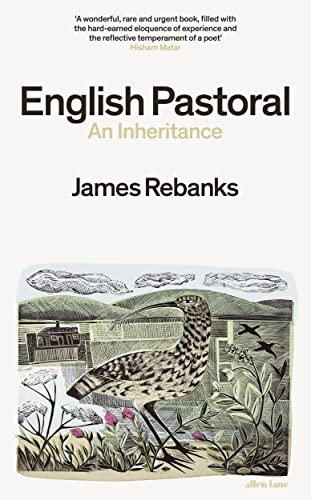
My review is on my thread, here:
https://www.librarything.com/topic/366890#8726622
My review is on my thread, here:
https://www.librarything.com/topic/366890#8726622
49benitastrnad
I finished my first book for the January prompt.
Catfish and Mandala: A Two-Wheeled Voyage Through the Landscape and Memory of Vietnam by Andrew X. Pham
This book won the Kiriyama Pacific Rim Nonfiction Prize in 1999. The Kiriyama Prize was an international literary award awarded to books about the Pacific Rim and South Asia. Its goal was to encourage greater understanding among the peoples and nations of the region. Established in 1996, the prize was last awarded in 2008. I had purchased a paperback copy of it a couple of years ago and it was in an easy-to-reach box, so it was my selection for this month's challenge.
An Pham was born in Vietnam and came to the US as a boatpeople refugee after the end of the Vietnam war. His father served several months in reeducation camps because he had been in the South Vietnamese army. The family made its escape and was sponsored as immigrants to the US by a Baptist Church in Shreveport, Louisiana. After 2 years the family moved to San Jose, California when Pham was 12 years old. When Pham was in his 20's his transgender sister committed suicide and this triggered Pham's pilgrimage to Vietnam. He first traveled by bicycle to the Baja Peninsula in Mexico. From there he biked to the Pacific Northwest. He flew from Seattle, WA to Japan and biked around Japan because Vietnamese people spoke so reverently of the Japanese. Then it was on to Saigon by plane and then up and down the country by bicycle.
I love travelogue's and this book, as a travelogue was very good. The descriptions of the trips were full of interesting people, places, and details about riding a bike. It was also full of intimate bodily details, especially about vomiting and excrement. I am not sure why and was left wondering if the author was trying to prepare tourists for the primitive conditions he found on the trip, or if he was just trying to shock readers. Maybe he was just telling it like it is?
The writing style was a bit odd. It flips back and forth through time giving family background history. None of it is surprising, but Pham takes it all personally and holds this against his family. The problem with this is that he doesn't connect the flashbacks with what he is thinking, doing, or experiencing. Why is he so ashamed of his parents? The answer to that is never made clear. There is an oblique reference to an incident where either his mother, or another relative receives money for sex with an American solider, and equally oblique sentence that leads the reader to believe that Pham's mother might have been a madam running a brothel. This might be the reason why his mother had the money that enabled them to pay to escape from Vietnam in the first place, but it is not clear that this is what happened.
What is clear is that Pham comes from a dysfunctional family where the father is clearly not the person in charge, but in order to save face must conduct himself as if he is the head of the family. There are beatings and psychological abuse on all the children from both parents. The parents can't stand their reduced status in the US and they transfer this to their children. Pham writes about the continued racial injustices the family endured, and wants the reader to believe that they were at the bottom of the social and racial scale. However, the family lived in San Jose, and even in 1980 this was not a cheap place to live. The father eventually became a computer programmer and all the children except the oldest one went to college. They simply were middle class and couldn't stand it that they weren't upper class such as they were in Vietnam. Pham does admit that he was the spoiled eldest son, and longed to be treated in that privileged way even in the US.
The book was good. It also made me angry. That might be good as well. I is hard to come face to face with the fact that sometimes people aren't grateful that they were rescued by people they consider to be inferior. That is a very dangerous two-way street and this book is full of that kind of attitude.
Catfish and Mandala: A Two-Wheeled Voyage Through the Landscape and Memory of Vietnam by Andrew X. Pham
This book won the Kiriyama Pacific Rim Nonfiction Prize in 1999. The Kiriyama Prize was an international literary award awarded to books about the Pacific Rim and South Asia. Its goal was to encourage greater understanding among the peoples and nations of the region. Established in 1996, the prize was last awarded in 2008. I had purchased a paperback copy of it a couple of years ago and it was in an easy-to-reach box, so it was my selection for this month's challenge.
An Pham was born in Vietnam and came to the US as a boatpeople refugee after the end of the Vietnam war. His father served several months in reeducation camps because he had been in the South Vietnamese army. The family made its escape and was sponsored as immigrants to the US by a Baptist Church in Shreveport, Louisiana. After 2 years the family moved to San Jose, California when Pham was 12 years old. When Pham was in his 20's his transgender sister committed suicide and this triggered Pham's pilgrimage to Vietnam. He first traveled by bicycle to the Baja Peninsula in Mexico. From there he biked to the Pacific Northwest. He flew from Seattle, WA to Japan and biked around Japan because Vietnamese people spoke so reverently of the Japanese. Then it was on to Saigon by plane and then up and down the country by bicycle.
I love travelogue's and this book, as a travelogue was very good. The descriptions of the trips were full of interesting people, places, and details about riding a bike. It was also full of intimate bodily details, especially about vomiting and excrement. I am not sure why and was left wondering if the author was trying to prepare tourists for the primitive conditions he found on the trip, or if he was just trying to shock readers. Maybe he was just telling it like it is?
The writing style was a bit odd. It flips back and forth through time giving family background history. None of it is surprising, but Pham takes it all personally and holds this against his family. The problem with this is that he doesn't connect the flashbacks with what he is thinking, doing, or experiencing. Why is he so ashamed of his parents? The answer to that is never made clear. There is an oblique reference to an incident where either his mother, or another relative receives money for sex with an American solider, and equally oblique sentence that leads the reader to believe that Pham's mother might have been a madam running a brothel. This might be the reason why his mother had the money that enabled them to pay to escape from Vietnam in the first place, but it is not clear that this is what happened.
What is clear is that Pham comes from a dysfunctional family where the father is clearly not the person in charge, but in order to save face must conduct himself as if he is the head of the family. There are beatings and psychological abuse on all the children from both parents. The parents can't stand their reduced status in the US and they transfer this to their children. Pham writes about the continued racial injustices the family endured, and wants the reader to believe that they were at the bottom of the social and racial scale. However, the family lived in San Jose, and even in 1980 this was not a cheap place to live. The father eventually became a computer programmer and all the children except the oldest one went to college. They simply were middle class and couldn't stand it that they weren't upper class such as they were in Vietnam. Pham does admit that he was the spoiled eldest son, and longed to be treated in that privileged way even in the US.
The book was good. It also made me angry. That might be good as well. I is hard to come face to face with the fact that sometimes people aren't grateful that they were rescued by people they consider to be inferior. That is a very dangerous two-way street and this book is full of that kind of attitude.
50Jackie_K
We're only 2 weeks in to January and I've already managed to overcommit on reading challenges! I am still going to read Sarn Helen, but I think it's more likely that it will get read in February. I have a perfect book for February's challenge, but it is buried somewhere in our spare room and, realistically, I'm not going to be able to unearth it by then. I'll maybe save that one for the 'As you like it' month in December!
51Familyhistorian
I've been scouring my books to find a nonfiction prize winner and finally came up with one in my collection about Tom Thomson. Northern Light: The enduring mystery of Tom Thomson and the woman who loved him. Leafing through it I can see it has photos!
It was a finalist for the 2011 Ottawa Book Award for Non-Fiction. Sorry, I thought it won but no matter, I'm reading it anyway.
It was a finalist for the 2011 Ottawa Book Award for Non-Fiction. Sorry, I thought it won but no matter, I'm reading it anyway.
52ffortsa
>51 Familyhistorian: Oh my, a mysterious artist I've never heard of. Must look up his work.
eta: Oh, Wikipedia has a number of images of his paintings in his bio. I really like them. Might have to plan a trip somewhere in Canada to see some.
eta: Oh, Wikipedia has a number of images of his paintings in his bio. I really like them. Might have to plan a trip somewhere in Canada to see some.
53mdoris
>51 Familyhistorian: I love Tom Thomson's work. His paintings are stunning! I went to a summer camp on Canoe Lake in Algonquin Park when I was a little kid where Thomson mysteriously drowned. He was way too young (39) and I don't think the death was ever figured out as he was an accomplished canoeist and outdoors person. But maybe you can fill us in Meg when you have read the book.
54alcottacre
I finished Pearl Buck in China, winner of the James Tait Memorial Prize for Biography, 2010, tonight. I enjoyed this one quite a bit as we see how Buck's life in China influenced her writing.
I am also currently reading Atlas of Vanished Places, which I am very much enjoying, and will start Time's Echo tomorrow.
I am also currently reading Atlas of Vanished Places, which I am very much enjoying, and will start Time's Echo tomorrow.
55benitastrnad
I finished my second book for this month's topic. Knife: Meditations After an Attempted Murder by Salman Rushdie. It was a finalist for the National Book Award in the Nonfiction category in 2024. It was also longlisted for the Baillie Gifford Prize for Nonfiction in 2024. I didn't plan on reading it for this month because it is also the March 2025 selection for my real life book discussion group. I got the book this Christmas from the 75'ers Swap and when it came it captured my attention, so I read it now. I have also been to the Chautauqua Institute more than once and sung in the choir there several times, so I was very interested in the book due to the Chautauqua connection.
This book has gotten lots of attention due to what Rushdie calls The Incident. The Incident was the attempted murder of Rushdie in August of 2022 when Rushdie was asked to speak to the members of the Chautauqua Institute about the dangers artists face due to attacks on the freedom of expression. The introduction to the lecture had just started when Rushdie was attacked and stabbed multiple times. This book is Rushdie's attempt to come to terms with what happened to him and a defense of his personal philosophies about art and the suppression of art.
The great strength of the book is in the final third when Rushdie explains his personal belief system and defends the right of artists (and he believes that writing is an art) to express themselves. This section of the book was downright inspiring and encouraging to readers as well as authors.
This book is not lengthy (225 pages) but it sure packs a punch in the battle in defense of freedom of expression. And - it has amazing cover art. The paratext for this book is outstanding. It is compelling. Even the feel of the book cover begs anybody who picks it up to read it.
This book has gotten lots of attention due to what Rushdie calls The Incident. The Incident was the attempted murder of Rushdie in August of 2022 when Rushdie was asked to speak to the members of the Chautauqua Institute about the dangers artists face due to attacks on the freedom of expression. The introduction to the lecture had just started when Rushdie was attacked and stabbed multiple times. This book is Rushdie's attempt to come to terms with what happened to him and a defense of his personal philosophies about art and the suppression of art.
The great strength of the book is in the final third when Rushdie explains his personal belief system and defends the right of artists (and he believes that writing is an art) to express themselves. This section of the book was downright inspiring and encouraging to readers as well as authors.
This book is not lengthy (225 pages) but it sure packs a punch in the battle in defense of freedom of expression. And - it has amazing cover art. The paratext for this book is outstanding. It is compelling. Even the feel of the book cover begs anybody who picks it up to read it.
56mdoris
>55 benitastrnad: Convinced and on the list with thanks!
57ffortsa
I had to look up 'paratext', a word I'd never come across before. Thanks.
And also thanks for mentioning Atlas of Vanished Places, which does sound fascinating. My library has a copy of Atlas of Forgotten Places but that's by a different author, and a novel.
And also thanks for mentioning Atlas of Vanished Places, which does sound fascinating. My library has a copy of Atlas of Forgotten Places but that's by a different author, and a novel.
58alcottacre
>55 benitastrnad: I already have that one in the BlackHole or I would be adding it again. Thanks for your thoughts on it, Benita!
59alcottacre
>57 ffortsa: Judy, Richard recently did a review of Atlas of Vanished Places if you want to check that out: https://www.librarything.com/work/23575105/reviews/276579960
60alcottacre
I finished Time's Echo: The Second World War, The Holocaust, and The Music of Remembrance by Jeremy Eichler this afternoon and gave it 4.5 stars. I am hoping to finish off my reading of Atlas of Vanished Places this evening.
61cbl_tn
I finished The Old Ways: A Journey on Foot by Robert Macfarlane. It was nominated for several awards and won the Dolman Best Travel Book Award. If you like literary travel, you will love this book. Macfarlane travels on foot and by boat through eastern and southern England, Scotland and its islands, the West Bank, Spain, and Tibet. His knowledge of geology and the natural world inform his reflections on the ancient peoples and cultures that moved along these paths. The final section of the book is a mini biography of Edward Thomas, a WWI poet who walked the same paths in southern England a century earlier.
62alcottacre
>61 cbl_tn: Thanks for your thoughts on that one, Carrie. I own it and need to see about getting it read!
I finished Atlas of Vanished Places last night and for the armchair traveler, it is a good read. Tons of pictures and maps. I gave it 4 stars.
I finished Atlas of Vanished Places last night and for the armchair traveler, it is a good read. Tons of pictures and maps. I gave it 4 stars.
63Dejah_Thoris

Red Famine: Stalin's War on Ukraine by Anne Applebaum - 1/1/25 - 5 stars
Red Famine was the first book I completed in 2025. It won both the Pol Roger Duff Cooper Prize (a literary prize awarded annually for the best work of history, biography, political science or occasionally poetry, published in English or French) and the Lionel Gelber Prize (a literary award for English non-fiction books on foreign policy.)
Here's what I wrote about it on my thread:
I don't think I'd ever heard of the Holomodor before Russia invaded Ukraine (again) in 2022. Applebaum (along with many others) contends that Stalin weaponized hunger via a largely created famine in order to ensure that there would be no Ukrainian opposition to him or to the ongoing Revolution, from within the Party or without. It's probable that 3.5 - 5 million people died of starvation in 1932-33 in Ukraine - records were not kept, or were destroyed. The USSR denied the famine was taking place and continued to deny it had happened until glasnost in the 1980s.
This was a terrific book, but not pleasant reading. Nevertheless, I highly recommend it.
64alcottacre
>63 Dejah_Thoris: I am going to have to see if I can find a copy of that one. I read her Gulag: A History shortly after it was published and thought it was terrific.
65Dejah_Thoris
>64 alcottacre: Gulag;A History is definitely on my TBR, along with just about everything else she's written.
66Dejah_Thoris

When Women Ran Fifth Avenue: Glamour and Power at the Dawn of American Fashion by Julie Satow - 1/9/25 - 4 stars
Here's another I finished earlier in the month. It made the Carnegie Medal for Excellence- Nonfiction Long List.
Here's what I posted to my thread:
For all that I gave this 4 stars, I do have somewhat mixed feelings about it. Satow structures her work around the biographies and careers of three women: Hortense Odlum of Bonwit Teller, Dorothy Shaver of Lord & Taylor, and Geraldine Stultz of Henri Bendel. A wide array of others make appearances from aviator Jacqueline Cochran to L. Frank Baum (a retail connection - who knew?) and a host of young American designers, journalists, and fashionistas. There's a fair amount of info about retailing in general, from advertising and merchandising, to the rise of the department store.
Some parts of this book were fascinating - others, not so much. I suspect how compelling any reader finds this book will depend largely in the breadth of their interests. Retail, fashion, NYC, pioneering women in the workplace - an interest in any of these makes it a worthwhile expenditure of reading time.
67alcottacre
Some parts of this book were fascinating - others, not so much. I suspect how compelling any reader finds this book will depend largely in the breadth of their interests. Retail, fashion, NYC, pioneering women in the workplace - an interest in any of these makes it a worthwhile expenditure of reading time.
Well, that lets me out. I have pretty much no interest in any of that except for pioneering women in the workplace and I suspect that does not make the book worth my time.
Well, that lets me out. I have pretty much no interest in any of that except for pioneering women in the workplace and I suspect that does not make the book worth my time.
68cindydavid4
>61 cbl_tn: ok thats a huge BB for me: love travel narratives, love england and scotland and would love to explore the islands Actually his name looks familiarI think I have something else by him Duh desert solitareone of my faves and when I went walking early morning definitely must add to the list
69Tess_W
>63 Dejah_Thoris: Definitely one I'm going to buy on my Thingaversary!
70Matke
>55 benitastrnad: Great review here, Benita. Rushdie is a personal favorite, so I’ll be sure to add this one to the wish/buy list.
>63 Dejah_Thoris: and >66 Dejah_Thoris: are both book bullets for me, Dejah. I’m very interested in Eastern European history, and also vitally interested in fashion. I think I disguise that second interest rather well in my real life.
>63 Dejah_Thoris: and >66 Dejah_Thoris: are both book bullets for me, Dejah. I’m very interested in Eastern European history, and also vitally interested in fashion. I think I disguise that second interest rather well in my real life.
71Dejah_Thoris
>67 alcottacre: You're probably right to take a pass on this one, Stasia - there are certainly plenty of other books about pioneering women in the workplace!
>69 Tess_W: It's well worth reading - I learned so much.
>70 Matke: Woohoo - I got you with both! And I disguise my interest in fashion pretty successfully, too. :)
>69 Tess_W: It's well worth reading - I learned so much.
>70 Matke: Woohoo - I got you with both! And I disguise my interest in fashion pretty successfully, too. :)
72Matke
I finished this month’s book: The Book of Eels by Patrick Svensson. Truly a great in-depth (but not so technical as to be boring) study of a very mysterious animal. Even after a hundred years of close scientific study, no mature eel has ever been seen in the Sargasso Sea. Not a big deal except that every study leads inescapably to the conclusion that the Sargasso Sea is the only place where European and American eels breed.
Sadly eels are disappearing at an alarming rate and most likely will be extinct very soon.
Author Svensson weaves the story of the eel itself into the story of his own life. Well done and, believe it or not, a moving book.
Sadly eels are disappearing at an alarming rate and most likely will be extinct very soon.
Author Svensson weaves the story of the eel itself into the story of his own life. Well done and, believe it or not, a moving book.
73Tess_W
>72 Matke: I have that one on my TBR, I hope to read it for the July theme of fish/fishing!
74nrmay
I’m reading How Does It Feel to Be a Problem?: Being Young and Arab in America by M Bayoumi.
Winner of the American Book Award, 2008.
Winner of the American Book Award, 2008.
75Dejah_Thoris
>72 Matke: >73 Tess_W: That's a great idea for the July theme! I know next to nothing about eels....
76Dejah_Thoris

Earlier this month, I read the fabulous King Leopold's Ghost: A Story of Greed, Terror, and Heroism in Colonial Africa by Adam Hochschild.
Like Red Famine, it won both the Pol Roger Duff Cooper Prize (a literary prize awarded annually for the best work of history, biography, political science or occasionally poetry, published in English or French) and the Lionel Gelber Prize (a literary award for English non-fiction books on foreign policy.) It also won the Mark Lytton History Prize (given to a book "of history, on any subject, that best combines intellectual or scholarly distinction with felicity of expression" per Wikipedia), the Commonwealth Club of California Book Awards - Nonfiction (written by a Californian), and was a Finalist for the National Book Critics Circle Award - General Nonfiction.
Yes, it really is that good.
77Matke
>73 Tess_W: and >75 Dejah_Thoris: I have something else entirely in mind for July. I really wanted to be a marine biologist in my teens, but life got very much in the way.
78benitastrnad
>76 Dejah_Thoris:
I commend you for reading that book. I know it has won all kinds of awards, but I just can't bring myself to read it. Hochschild seems to write about such dark subjects and they bother me to the depths of my soul, so, as much as I read there are certain topics about which I simply cannot read. This is one of them. I find it horrifying, and incomprehensible that people would treat other human beings in such a manner. It is important that books on these subjects be written but I am one of those who simply can't read those books without deep mental anguish. I am glad that you read this book, and that Red Famine got read, because it is important that we learn and remember what happened.
I commend you for reading that book. I know it has won all kinds of awards, but I just can't bring myself to read it. Hochschild seems to write about such dark subjects and they bother me to the depths of my soul, so, as much as I read there are certain topics about which I simply cannot read. This is one of them. I find it horrifying, and incomprehensible that people would treat other human beings in such a manner. It is important that books on these subjects be written but I am one of those who simply can't read those books without deep mental anguish. I am glad that you read this book, and that Red Famine got read, because it is important that we learn and remember what happened.
79Tallulah_Rose
>72 Matke: Just stopping by and reading the thread, though not part of thechallene. But I had to comment on that book.. I never would have thought that I'd say that - but that sounds strangely interesting. I have never thought much about eels...
80Dejah_Thoris
>78 benitastrnad: I absolutey understand! Due to a family situation, there are books (fiction and nonfiction) that i'm deliberately avoiding or abandoning. I'm a big believer in reading what works for you, and I encourage everyone (myself, included) to take a pass when needed.
I'm reading a lot of nonfiction right now, and I've just figured out the the darker, heavier books I'm reading are as some sort of protest. Along the same lines, most of my lighter reading has been lgbtqtia+ romance. The idea that my reading is some sort of metaphorical middle finger to, well, whom - or what- ever, is absurd, but apparently that's what I'm doing.
And I agree - we need to remember.
I'm reading a lot of nonfiction right now, and I've just figured out the the darker, heavier books I'm reading are as some sort of protest. Along the same lines, most of my lighter reading has been lgbtqtia+ romance. The idea that my reading is some sort of metaphorical middle finger to, well, whom - or what- ever, is absurd, but apparently that's what I'm doing.
And I agree - we need to remember.
81Tess_W
I completed The Swerve by Stephen Greenblatt This book was so overwhelming in content that it will be difficult to review more than superficially at this time. I listened to it on audio and jotted down a few notes when I could. I'm going to buy a hard copy and re-read. The Swerve is about the rediscovery of an ancient manuscript, De Rerum Nature, by the Roman poet and philosopher Lucretius. At a loss for words at this time, I will just list what I believe are some strengths and weaknesses of what I have heard.
Strengths:
1. It's scope is broad (could also be a weakness)
2. The author provides a rich historical context and content
3. The author writes about how Lucretius' ideas influenced others such as Darwin and Galileo.
Weaknesses
1. The author is very opinionated as to the thesis that this one particular manuscript was a greater influence that others. (although I will accept, because I have not researched, that it may be the oldest original manuscript still surviving--not a copy)
2. The author's focus on the "swerve" (the idea that atoms can change direction unpredictably, which Lucretius used to explain free will) seems a bit forced or illogical to this reader--it's probably me!
3. Romanticized the past--especially the Renaissance; making it linear.
4. The author really doesn't delve deeply into the content of De Rerum Nature, only the parts the fit the Epicurean argument.
9 hours 41 minutes, tentatively 4 stars--this may change upon my re-reading and digesting more of the content.
This was a recommendation by Tanya
This book won the Cundill History Prize (Longlist) 2012 & The James Russell Lowell Prize in 2011.
This is definitely a rabbit hole for me. I "need" to know more about Herculaneum, Lucretius, Epicureans, etc.
ETA: When I searched for a suitable book, I Googled non-fiction, history, lesser book prizes. They gave me this and since I had it on my TBR, I read it. Now, I find, that it did in fact win a Pulitzer......as well as the ones listed above.
Strengths:
1. It's scope is broad (could also be a weakness)
2. The author provides a rich historical context and content
3. The author writes about how Lucretius' ideas influenced others such as Darwin and Galileo.
Weaknesses
1. The author is very opinionated as to the thesis that this one particular manuscript was a greater influence that others. (although I will accept, because I have not researched, that it may be the oldest original manuscript still surviving--not a copy)
2. The author's focus on the "swerve" (the idea that atoms can change direction unpredictably, which Lucretius used to explain free will) seems a bit forced or illogical to this reader--it's probably me!
3. Romanticized the past--especially the Renaissance; making it linear.
4. The author really doesn't delve deeply into the content of De Rerum Nature, only the parts the fit the Epicurean argument.
9 hours 41 minutes, tentatively 4 stars--this may change upon my re-reading and digesting more of the content.
This was a recommendation by Tanya
This book won the Cundill History Prize (Longlist) 2012 & The James Russell Lowell Prize in 2011.
This is definitely a rabbit hole for me. I "need" to know more about Herculaneum, Lucretius, Epicureans, etc.
ETA: When I searched for a suitable book, I Googled non-fiction, history, lesser book prizes. They gave me this and since I had it on my TBR, I read it. Now, I find, that it did in fact win a Pulitzer......as well as the ones listed above.
82Dejah_Thoris
>81 Tess_W: I had no idea what The Swerve was about - philosophy isn't a strong suit of mine. Thanks for the info!
83Matke
>79 Tallulah_Rose: If you’re at all interested in animals in general, it’s a fascinating story. It’s amazing how little we know about aquatic life forms.
84Kyler_Marie
Not finished yet, but I have been reading William Morris: A Life for Our Time. It won the Wolfson History Prize. I'm 2/3 through, but hope to finish within the next week.

This book is a bit frustrating because the author's writing sometimes feels like a dissertation writing to an audience of art historians. Before picking up this book, I had never heard the term "Pre-Raphaelite" or of any of Morris's author/artist friends. A brief early description of the historical context, the people, and other factors affecting Morris's views would have been helpful. She never provided that. Instead, her introduction barely introduces anything, referring to some of Morris's favorite authors and scholars by last name as if the reader already knows their full catalogue of work. If she provided more context and background, then 700 page book length would have been appreciated. But, the way it is, I feel like I'm missing things due to a lack of background and it feels like the book is dragging on.
The author treats her subjects as history figures rather than people. She has clearly read hundreds of letters, diary entries, and lectures by all of the people she writes about. I'd imagine that they express their feelings quite deeply in those documents. But, she writes about their suffering and stress in a very unempathetic manner.
Regardless, I'm glad I picked this book off the shelf and learned so much about one of my favorite designers/artists. Her decision to include the comics and artwork of Morris (by his friends) was much appreciated. Her descriptions of Morris's socialist views, and of the misalignment of his views with his life as an employer are quite interesting. She mentions several other biographies, which I may check out someday as well. Not sure how I rate this one yet. Probably 3.5 to 4.

This book is a bit frustrating because the author's writing sometimes feels like a dissertation writing to an audience of art historians. Before picking up this book, I had never heard the term "Pre-Raphaelite" or of any of Morris's author/artist friends. A brief early description of the historical context, the people, and other factors affecting Morris's views would have been helpful. She never provided that. Instead, her introduction barely introduces anything, referring to some of Morris's favorite authors and scholars by last name as if the reader already knows their full catalogue of work. If she provided more context and background, then 700 page book length would have been appreciated. But, the way it is, I feel like I'm missing things due to a lack of background and it feels like the book is dragging on.
The author treats her subjects as history figures rather than people. She has clearly read hundreds of letters, diary entries, and lectures by all of the people she writes about. I'd imagine that they express their feelings quite deeply in those documents. But, she writes about their suffering and stress in a very unempathetic manner.
Regardless, I'm glad I picked this book off the shelf and learned so much about one of my favorite designers/artists. Her decision to include the comics and artwork of Morris (by his friends) was much appreciated. Her descriptions of Morris's socialist views, and of the misalignment of his views with his life as an employer are quite interesting. She mentions several other biographies, which I may check out someday as well. Not sure how I rate this one yet. Probably 3.5 to 4.
85cbl_tn
I finished Midnight in the Garden of Good and Evil last night, and I have mixed feelings about it. The true crime part of the story is very good. However, it's embellished with a lot of character sketches of individuals who didn't have anything to do with the murder, with more detail than I needed or wanted about their sexual behavior. If it had been written just as a true crime story it could have stood on its own. In a way, that shows just how good Berendt is as a writer. A less skilled writer would likely expose just how pieced together the book really is.
86alcottacre
For February's nonfiction challenge, I am hoping to read 2 books:
Dislocating the Orient: British Maps and the Making of the Middle East, 1854-1921 by Daniel Foliard
The Map That Changed the World: William Smith and the Birth of Modern Geology by Simon Winchester
I have enjoyed all of Winchester's books that I have read, so I have high hopes for that one. I have not read anything before by Foliard. He is a new-to-me author.
Dislocating the Orient: British Maps and the Making of the Middle East, 1854-1921 by Daniel Foliard
The Map That Changed the World: William Smith and the Birth of Modern Geology by Simon Winchester
I have enjoyed all of Winchester's books that I have read, so I have high hopes for that one. I have not read anything before by Foliard. He is a new-to-me author.
87benitastrnad
>86 alcottacre:
You will like Map That Changed the World. It is the book that introduced me to Winchester.
You will like Map That Changed the World. It is the book that introduced me to Winchester.
88benitastrnad
It is now February 1st and time for a new topic - Cartography.
Cartography is the study, the making of, and the use of maps. Science, art, and technique combine to produce the reality, or the imagined reality of a place that model spatial information effectively. Cartography is a fancy word for asking the question of Where Are We?, or Where are They?
This topic may seem rather restrictive but it can be more wide open than it appears. The titles you select can be about maps themselves, but they can also be about mapmakers. This latter category means that biographies could be read. Biographies of discoverers who were sent out on map making expeditions. That would be people like Captain James Cook, Amerigo Vespucci, or Ferdinand Magellan. Even those who financed or commissioned these voyages like Prince Henry the Navigator.
Places that are mapped are also part of this topic. Mapping Mars (Atlas of Mars), the Moon, or even the Universe, so that books like Glass Universe by Dava Sobel would be part of the effort of map making. Undersea mapping is also an area that could be explored in this part of the topic. Books by, or about, Marie Tharp (the woman who first mapped the ocean floor) could be of interest. (there are several YA books about her, but those would count for this challenge.)
Technological innovation in mapping is also part of the story of maps. Longitude also by Dava Sobel is one of the books that would work in this topic for mapping. Books about the development of GPS or Landsat are also part of this. How about a book about Gladys West one of the "Hidden Figures" of GPS. Her book titled It Began With a Dream. Mercator: the Man Who Mapped the Planet and invented the Mercator projection that is used on most maps today would be a good biography. What about Tracks in the Sea the story of the discovery of ocean currents.
Oftentimes, travel books are about mapping, and or discovery, so the book Midnight Sun, Arctic Moon: Mapping the Wild Heart of Alaska would work. The books about the discovery and mapping of the headwaters of the Nile river would work. The books White Nile and Blue Nile by Alan Moorehead or the Candace Millard book River of the Gods falls into this category.
As you can see this is a much broader category than it might appear. Give it some thought and let us know what you are going to be reading for this months topic.
Cartography is the study, the making of, and the use of maps. Science, art, and technique combine to produce the reality, or the imagined reality of a place that model spatial information effectively. Cartography is a fancy word for asking the question of Where Are We?, or Where are They?
This topic may seem rather restrictive but it can be more wide open than it appears. The titles you select can be about maps themselves, but they can also be about mapmakers. This latter category means that biographies could be read. Biographies of discoverers who were sent out on map making expeditions. That would be people like Captain James Cook, Amerigo Vespucci, or Ferdinand Magellan. Even those who financed or commissioned these voyages like Prince Henry the Navigator.
Places that are mapped are also part of this topic. Mapping Mars (Atlas of Mars), the Moon, or even the Universe, so that books like Glass Universe by Dava Sobel would be part of the effort of map making. Undersea mapping is also an area that could be explored in this part of the topic. Books by, or about, Marie Tharp (the woman who first mapped the ocean floor) could be of interest. (there are several YA books about her, but those would count for this challenge.)
Technological innovation in mapping is also part of the story of maps. Longitude also by Dava Sobel is one of the books that would work in this topic for mapping. Books about the development of GPS or Landsat are also part of this. How about a book about Gladys West one of the "Hidden Figures" of GPS. Her book titled It Began With a Dream. Mercator: the Man Who Mapped the Planet and invented the Mercator projection that is used on most maps today would be a good biography. What about Tracks in the Sea the story of the discovery of ocean currents.
Oftentimes, travel books are about mapping, and or discovery, so the book Midnight Sun, Arctic Moon: Mapping the Wild Heart of Alaska would work. The books about the discovery and mapping of the headwaters of the Nile river would work. The books White Nile and Blue Nile by Alan Moorehead or the Candace Millard book River of the Gods falls into this category.
As you can see this is a much broader category than it might appear. Give it some thought and let us know what you are going to be reading for this months topic.
89alcottacre
>87 benitastrnad: Good to know. Thanks for the input, Benita!
90benitastrnad
I am going to read Fourth Part of the World: The Race to the Ends of the Earth, and the Epic Story of the Map That Gave America Its Name by Toby Lester. This book was published back in 2009 and I have had a copy of it on my TBR shelves for almost that long. This is the perfect time to get it read. (Besides - I found it while unpacking some boxes of books, and so I set it aside to read for this month.) This book was a best seller so there are lots of copies of it in used book outlets. Perhaps some of you would like to join me in reading this book.
91Tess_W
I want to start out by reading Maphead by Ken Jennings (host of Jeopardy). He read atlases and maps as a child, for hours. (as well as encyclopedias)
92benitastrnad
>91 Tess_W:
Jennings has published several books with interesting titles. I have Brainiac: Adventures in the Curious, Competitive, Compulsive World of Trivia Buffs somewhere in the boxes that are still packed. Your book should be a fun read. Be sure to let us know what you think of it.
I read 60 pages in Fourth Part of the World today and learned a great deal about the hoax/myth of Prester John. I also learned about the first Mongol invasion of Russia in the 1200's and how and why Marco Polo went on his journey to China. That invasion was a catalyst that opened Asia up for exploration by Europeans. Hence the need for maps.
Jennings has published several books with interesting titles. I have Brainiac: Adventures in the Curious, Competitive, Compulsive World of Trivia Buffs somewhere in the boxes that are still packed. Your book should be a fun read. Be sure to let us know what you think of it.
I read 60 pages in Fourth Part of the World today and learned a great deal about the hoax/myth of Prester John. I also learned about the first Mongol invasion of Russia in the 1200's and how and why Marco Polo went on his journey to China. That invasion was a catalyst that opened Asia up for exploration by Europeans. Hence the need for maps.
93Tess_W
>92 benitastrnad: I've read the first three chapters and sadly found it juvenile and boring. In my 70's, life is too short to read bad books. I'm returning it to library and have ordered another: The Island of Lost Maps: A True Story of Cartographic Crime by Miles Harvey
94atozgrl
>93 Tess_W: I found The Island of Lost Maps to be fascinating when I read it a couple of years ago. It was better than I expected. I hope you enjoy it too!
95benitastrnad
I have been reading Fourth Part of the World and am loving it. I read for 1 hour in the quiet early morning and both yesterday and this morning I found I didn't want to tear myself away from this book. I have read 150 pages in it in two days! That is a bunch of pages for me as I usually read in dribbles and drabs. But not with this book.
96Familyhistorian
>52 ffortsa: There are lots of galleries in Ontario with Tom Thomson paintings, Judy.
>53 mdoris: How cool that you camped out at Canoe Lake, Mary. The mysterious death/murder of Tom Thomson has spawned many books. I have a collection of them. They are helpful with my family history research as he was a relative.
>53 mdoris: How cool that you camped out at Canoe Lake, Mary. The mysterious death/murder of Tom Thomson has spawned many books. I have a collection of them. They are helpful with my family history research as he was a relative.
97PaulCranswick
I have read The Power of Geography by Tim Marshall for the February challenge and I can recommend him for a very measured and studied review of the issues faced by nations in the coming times.
98mdoris
>96 Familyhistorian: Oh that is intriguing Meg that Tom Thomson was a relative. HIs paintings are superb, utterly stunning IMHO.
99Familyhistorian
For January, I read Northern Light: The enduring mystery of Tom Thomson and the woman who loved him. It turns out that it was a finalist for the Ottawa Book Award for Non-Fiction but not the winner. It was a very interesting read about Thomson’s life and mysterious death and made me wonder if the mystery helped to bring him into the public eye as much as his paintings did. It also proposed something about his relationship with the woman in his life that I hadn’t heard before.
100Tess_W
Ooops, I've had another stinker, The Island of Lost Maps. It was far less about the crime than about the fantasies of the author (Fremont's path, Treasure Island's booty, maps speaking to him to take a roundabout way home through El Dorado, a non existent city). There wasn't enough info for the actual crime/criminal, so to me it just appeared he threw in anything that could be loosely associated with the word map. Boo hiss.
101benitastrnad
>100 Tess_W:
Oh - that's discouraging because it is one of the books that my real life book discussion group has on the reading list.
I am really enjoying my selection for this month. Fourth Part of the World by Toby Lester is very interesting. It is almost 500 pages and I think I will have it finished by Sunday. I started it one week ago and because the weather here, for the most part, has been dark and gloomy, I have spent a great deal of time reading. This book is providing a great winter reading experience.
One thing that the book has already caused me to think on, is the EMPHASIS that was put on in promoting Christianity. I always knew this, but somehow I didn't think it so consuming of an idea, but I was wrong. The other thing that has struck me is how long false ideas hung around, because, just as in modern times, sex, cannibalism, and religion sells books and pamphlets.
Oh - that's discouraging because it is one of the books that my real life book discussion group has on the reading list.
I am really enjoying my selection for this month. Fourth Part of the World by Toby Lester is very interesting. It is almost 500 pages and I think I will have it finished by Sunday. I started it one week ago and because the weather here, for the most part, has been dark and gloomy, I have spent a great deal of time reading. This book is providing a great winter reading experience.
One thing that the book has already caused me to think on, is the EMPHASIS that was put on in promoting Christianity. I always knew this, but somehow I didn't think it so consuming of an idea, but I was wrong. The other thing that has struck me is how long false ideas hung around, because, just as in modern times, sex, cannibalism, and religion sells books and pamphlets.
102atozgrl
>100 Tess_W: >101 benitastrnad: Well, let me just say that my reaction to The Island of Lost Maps was completely the opposite. I read it in 2023, and here's what I said at the time:
"The impetus for the writing of this book was a news story about a man, Gilbert Bland, who was caught stealing maps from the Peabody Library in 1995. As it turned out, this was the tip of the iceberg, as he had already hit many other libraries. Miles Harvey became fascinated by the story and tried to learn more about it. This book is the result of his research.
Unfortunately, Harvey was never able to interview Bland to learn more about his life and his motives, because Bland just did not want to talk to anyone. But Harvey does delve deeply into the world of maps. He gives us a detailed history of maps and map making, the recent surge in interest in collecting maps leading to big increases in price, and a history of map theft, which is apparently a very long-standing tradition. As it turns out, maps were often state secrets, heavily guarded, and objects for theft by other countries.
Harvey also looks into the problem of theft from libraries. He spoke to several librarians and saw the damage that had been done to rare and valuable books mutilated by the thief. Since he was never able to speak to Bland, he investigates the public records of the man, tracing his history in the army and previous run-ins with the law. He also spoke to map dealers and collectors, to understand the passion for collecting maps. He interviewed psychologists who have studied the psychology of collecting. And he spoke to the FBI who had recovered a lot of the stolen maps and were attempting to return them to the libraries where they belonged--a difficult task, as it turned out. In the end, Harvey learns more about himself than he does about Bland.
I found this to be a fascinating tale, and the history of maps and map theft was just as fascinating. This book might not be everyone's cup of tea, but I certainly recommend it to anyone who has an interest in maps."
--------
So if you are interested in the history of maps, map collecting, and/or issues related to theft in libraries, I think you would enjoy the book. If you are looking for something else, maybe not so much. As I said previously, for me the book turned out to be better than I expected.
"The impetus for the writing of this book was a news story about a man, Gilbert Bland, who was caught stealing maps from the Peabody Library in 1995. As it turned out, this was the tip of the iceberg, as he had already hit many other libraries. Miles Harvey became fascinated by the story and tried to learn more about it. This book is the result of his research.
Unfortunately, Harvey was never able to interview Bland to learn more about his life and his motives, because Bland just did not want to talk to anyone. But Harvey does delve deeply into the world of maps. He gives us a detailed history of maps and map making, the recent surge in interest in collecting maps leading to big increases in price, and a history of map theft, which is apparently a very long-standing tradition. As it turns out, maps were often state secrets, heavily guarded, and objects for theft by other countries.
Harvey also looks into the problem of theft from libraries. He spoke to several librarians and saw the damage that had been done to rare and valuable books mutilated by the thief. Since he was never able to speak to Bland, he investigates the public records of the man, tracing his history in the army and previous run-ins with the law. He also spoke to map dealers and collectors, to understand the passion for collecting maps. He interviewed psychologists who have studied the psychology of collecting. And he spoke to the FBI who had recovered a lot of the stolen maps and were attempting to return them to the libraries where they belonged--a difficult task, as it turned out. In the end, Harvey learns more about himself than he does about Bland.
I found this to be a fascinating tale, and the history of maps and map theft was just as fascinating. This book might not be everyone's cup of tea, but I certainly recommend it to anyone who has an interest in maps."
--------
So if you are interested in the history of maps, map collecting, and/or issues related to theft in libraries, I think you would enjoy the book. If you are looking for something else, maybe not so much. As I said previously, for me the book turned out to be better than I expected.
103weird_O
>102 atozgrl: Thanks for that, Irene. I don't have a good non-fiction "map" book on the shelves, and there's still time to order a copy. I do believe I read something of this "maptaker" and others like him. (I think of Jack Nicholson's character Mr. Gits in Chinatown ripping pages out of official tax/census records, the sound masked by a cough or throat-clearing. Not a map, but the same kind of theft.)
I do understand Tess's reaction, but I've got that penchant for veering off track that the author seems to have. I have started a number of books that didn't stick to the subject as I envisioned it and ended up in the DNF stack.
I do understand Tess's reaction, but I've got that penchant for veering off track that the author seems to have. I have started a number of books that didn't stick to the subject as I envisioned it and ended up in the DNF stack.
104EllaTim
>72 Matke: Thanks. This seems just the thing for me. Very interesting.
I’ve always been interested in maps, I will search around for something suitable.
I’ve always been interested in maps, I will search around for something suitable.
105weird_O
>103 weird_O: UPDATE: I check the bookpage for The Island of Lost Maps and noticed under the heading "You May Like This Because You Have..." a book titled The Map Thief by Michael Blanding. So it came to pass that I extracted the Blandings book from the shelves, and I will begin reading by the end of this week. (Coincidentally, I'm reading a book titled In Search of Blandings, written by a fan(atic) of P. G. Wodehouse's many books.)
Oh well. Blandings and Blandings.
Oh well. Blandings and Blandings.
106Tess_W
>103 weird_O: Yep! I kept saying to myself, "Stick to the subject, buddy!" I felt cheated as to the crime and the criminal!
107Dejah_Thoris
>105 weird_O: I love your Blandings/Blanding story!
How odd that so many of us have ended up with books that haven't suited us so far this month - it happened to me, too.
Here's what I wrote on my thread:
I've already bailed on one book - River of the Gods by Candice Millard. I thoroughly enjoyed River of Doubt and have long intended to read more of her work. I thought another exploration story would be a winner. Plus, it's also a TIOLI shared read and works for the Nonfiction Challenge this month - how could I go wrong?
With 'Betrayal' in the subtitle I was warned that things were going to end up badly, and almost from the first I knew I should quit reading, but I persevered. I liked the two protagonists less and less - one was pretty much offensive all the way around - and by the 70% mark I was dreading readling/listening to any more of it. So I stopped.
I don't think I've ever bailed on a book when I was that far along, and I'm rather proud of myself for doing it. I'm sure it's a very worthwhile book, but it wasn't working for me. I may still finish it - I returned the audio to Libby so someone else can have a shot at it, but I've still got a print copy from the library.
I have some other books I'm considering for this challenge, but I'm not certain what I'll end up with at this point.
How odd that so many of us have ended up with books that haven't suited us so far this month - it happened to me, too.
Here's what I wrote on my thread:
I've already bailed on one book - River of the Gods by Candice Millard. I thoroughly enjoyed River of Doubt and have long intended to read more of her work. I thought another exploration story would be a winner. Plus, it's also a TIOLI shared read and works for the Nonfiction Challenge this month - how could I go wrong?
With 'Betrayal' in the subtitle I was warned that things were going to end up badly, and almost from the first I knew I should quit reading, but I persevered. I liked the two protagonists less and less - one was pretty much offensive all the way around - and by the 70% mark I was dreading readling/listening to any more of it. So I stopped.
I don't think I've ever bailed on a book when I was that far along, and I'm rather proud of myself for doing it. I'm sure it's a very worthwhile book, but it wasn't working for me. I may still finish it - I returned the audio to Libby so someone else can have a shot at it, but I've still got a print copy from the library.
I have some other books I'm considering for this challenge, but I'm not certain what I'll end up with at this point.
108weird_O
I did begin reading The Map Thief yesterday. Several chapters into it, and I like it. Not going to be a problem.
109benitastrnad
As I was searching for something else I found a poem that describes, in a very different way, the book I read for this month's challenge - Cartography.
Mappamundi
by Billy Collins
On the pages I am turning are early pictures of the world,
the continents and oceans so erroneously shaped
it is hard to tell which is which at first,
as if they were drawn by a child or someone blindfolded.
Along the shorelines, tiny ships are under sail,
blown by the pursed mouth of a cloud with an angry face,
and sea beasts prowl the waves that lap at the margins
where knowledge trails off and ink lines squiggle
into a vast unknown, an incognita
far from the old garden of Europe in the center
where the mapmaker sits bent over his slanted desk,
touching the contours of the earth with the tip of his pen.
The library windows are streaming with summer rain
as I sit bent over this book of ancient maps,
feeling how the edges of my own world blur into tundra
and imagining what monsters must be illustrated there
far from the middle of what little I know.
But I am oriented here, encased in a local thunderstorm,
flipping through these imagined worlds, noticing
that east, not north, is always at the top where mornings
begin and discovering at the bottom of one intricate page
an early version of Australia, so far from anything
that it evenhas its own sun drawn in the sky overhead.
Now that is the kin of sun I would like to be under
this afternoon, basking naked on an arc of beach
at the end of the world while sea monsters writhe offshore,
then lying down prone on the sand, my arms stretched out
so wide I can feel the slight curvature of the earth
as I work effortlessly on my imaginary tan.
Mappamundi
by Billy Collins
On the pages I am turning are early pictures of the world,
the continents and oceans so erroneously shaped
it is hard to tell which is which at first,
as if they were drawn by a child or someone blindfolded.
Along the shorelines, tiny ships are under sail,
blown by the pursed mouth of a cloud with an angry face,
and sea beasts prowl the waves that lap at the margins
where knowledge trails off and ink lines squiggle
into a vast unknown, an incognita
far from the old garden of Europe in the center
where the mapmaker sits bent over his slanted desk,
touching the contours of the earth with the tip of his pen.
The library windows are streaming with summer rain
as I sit bent over this book of ancient maps,
feeling how the edges of my own world blur into tundra
and imagining what monsters must be illustrated there
far from the middle of what little I know.
But I am oriented here, encased in a local thunderstorm,
flipping through these imagined worlds, noticing
that east, not north, is always at the top where mornings
begin and discovering at the bottom of one intricate page
an early version of Australia, so far from anything
that it evenhas its own sun drawn in the sky overhead.
Now that is the kin of sun I would like to be under
this afternoon, basking naked on an arc of beach
at the end of the world while sea monsters writhe offshore,
then lying down prone on the sand, my arms stretched out
so wide I can feel the slight curvature of the earth
as I work effortlessly on my imaginary tan.
110benitastrnad
Now that we have traveled around the universe of possibilities that the topic "cartography" afforded us, we will be moving on to our March topic for nonfiction reading.
In March we will be reading books about Espionage and Counter-Espionage. Espionage is a French word means "the practice of spying or using spies, typically by governments to obtain political and military information." This is the second year we have done this topic and it is a repeat because the topic was so popular. There are a host of possibilities with this one as Cold War nonfiction is hot on the publisher's lists in recent years.
But - don't limit yourself to the Cold War era. Espionage, or spying, has been around for a long time. Spies were used during the Napoleonic Wars, and there were always court spies prior to that. Think Elizabethan England and Francis Walsingham. There is also George Washington and his ring of spies. And what about Benedict Arnold. There were some famous spies in the American Civil War, especially women about whom books were written. A bit of Internet digging would suss them out.
In recent years the books by Ben Macintyre have been very popular and can be found in many libraries. Agent Zigzag was the first of his books to get attention but there are at least 6 of his titles in my TBR list.
Don't limit yourself to just the topic of the spies. Biographies of famous spies would work for this month. Julius and Ethel Rosenberg have had recent books published about them and their trial. As has Benedict Arnold.
Books about organizations devoted to espionage are also fair game this month. MI5, MI6, the CIA, the FBI, Mossad, are all organizations devoted to espionage. There has been a spate of books published about women in the CIA that might prove to be great blustery March books. Sisterhood: The Secret History of Women at the CIA is one on my list. Rise and Kill First, the book about targeted assassinations is another on my TBR list. Say Nothing and Four Shots in the Night are books about double agents in the IRA that would be acceptable books for the month. There is also the undercover spying done in the US during the Civil Rights Era. Bluff City: The Secret Life of Photographer Ernest Withers is the book about the Civil Rights photographer who was an FBI informant. Enemies: A History of the FBI would also be a title that would work.
This should give you some ideas of what areas of espionage you want to explore this month. So go undercover and find a title, or two, that you want to read this month. Happy reading! Or should I say Happy Sleuthing? Or would that be skulking? Take your pick and learn about some kind of espionage that interests you.
In March we will be reading books about Espionage and Counter-Espionage. Espionage is a French word means "the practice of spying or using spies, typically by governments to obtain political and military information." This is the second year we have done this topic and it is a repeat because the topic was so popular. There are a host of possibilities with this one as Cold War nonfiction is hot on the publisher's lists in recent years.
But - don't limit yourself to the Cold War era. Espionage, or spying, has been around for a long time. Spies were used during the Napoleonic Wars, and there were always court spies prior to that. Think Elizabethan England and Francis Walsingham. There is also George Washington and his ring of spies. And what about Benedict Arnold. There were some famous spies in the American Civil War, especially women about whom books were written. A bit of Internet digging would suss them out.
In recent years the books by Ben Macintyre have been very popular and can be found in many libraries. Agent Zigzag was the first of his books to get attention but there are at least 6 of his titles in my TBR list.
Don't limit yourself to just the topic of the spies. Biographies of famous spies would work for this month. Julius and Ethel Rosenberg have had recent books published about them and their trial. As has Benedict Arnold.
Books about organizations devoted to espionage are also fair game this month. MI5, MI6, the CIA, the FBI, Mossad, are all organizations devoted to espionage. There has been a spate of books published about women in the CIA that might prove to be great blustery March books. Sisterhood: The Secret History of Women at the CIA is one on my list. Rise and Kill First, the book about targeted assassinations is another on my TBR list. Say Nothing and Four Shots in the Night are books about double agents in the IRA that would be acceptable books for the month. There is also the undercover spying done in the US during the Civil Rights Era. Bluff City: The Secret Life of Photographer Ernest Withers is the book about the Civil Rights photographer who was an FBI informant. Enemies: A History of the FBI would also be a title that would work.
This should give you some ideas of what areas of espionage you want to explore this month. So go undercover and find a title, or two, that you want to read this month. Happy reading! Or should I say Happy Sleuthing? Or would that be skulking? Take your pick and learn about some kind of espionage that interests you.
111benitastrnad
I had a great time reading Fourth Part of the World in February. In the past I have had great fun reading a couple of titles for the current nonfiction topic that took place in the Soviet Union. Those were Spy in Moscow Station about a spy threat in the early 1980's in the US embassy in Moscow, and Spy Who Was Left Behind about a CIA agent who was murdered in the early 2000's in Georgia. Both were exciting books and I have no problem recommending them to any of you.
For this month I have selected Agent Sonya: Moscow's Most Daring Wartime Spy by Ben Macintyre. I have 6 of Macintyre's books in my collection and have only read 1 of them, so I decided it was time to read another. Agent Sonya was close at hand this month, so I have grabbed it and set it on the bedside table. I hope to start it tomorrow.
Should I have time this month, I will also try to read Madam Fourcade's Secret War by Lynne Olson. This title is WWII Era and involves the French Resistance.
For this month I have selected Agent Sonya: Moscow's Most Daring Wartime Spy by Ben Macintyre. I have 6 of Macintyre's books in my collection and have only read 1 of them, so I decided it was time to read another. Agent Sonya was close at hand this month, so I have grabbed it and set it on the bedside table. I hope to start it tomorrow.
Should I have time this month, I will also try to read Madam Fourcade's Secret War by Lynne Olson. This title is WWII Era and involves the French Resistance.
112alcottacre
For the first time in recent memory, I was unable to read either one of my picks for a nonfiction read in February. That being said, I am going to try and get both of my February books read in March. I just ran out of month - and my CFS did not do me any favors at all.
For March, I am hoping to get both Comrade J by Pete Earley and In the Enemy’s House by Howard Blum read.
For March, I am hoping to get both Comrade J by Pete Earley and In the Enemy’s House by Howard Blum read.
113benitastrnad
I just read about a new book that is out this month. Art Spy: The Extraordinary Untold Tale of WWII Resistance Hero Rose Valland by Michelle young. This one is about the art plundering done in WWII.
114quondame
>111 benitastrnad: Spy in Moscow Station is my brother's book. The man it was written about, who told the base of the story to Eric, died of Covid. I didn't get to meet him, but his son joined us for Christmas dinner some years back.
115atozgrl
>113 benitastrnad: Funny, I just put Goering's Man in Paris: The Story of a Nazi Art Plunderer and His World on my wishlist. It looks like Art Spy would go right along with it. Unfortunately, I see it's not out until May.
116benitastrnad
>114 quondame:
So your brother is Eric Haseltine? That book was a real life thriller. I kept thinking as I read it that somebody should make it into a movie. It has all the elements of a great thriller and I am somewhat surprised that it isn't, or wasn't, a nonfiction best seller. But then would it be possible to have an IBM Selectric be the the star of a movie? Or, more properly, the antihero?
I remember the IBM Selectric and used one up until about 2015. I loved that machine. It was so practical and dependable. In the case of this book, it was an innocent enabler. But such is the nature of spies. I couldn't believe the tenacity of the man to take apart every one of those machines.
All that to say, that if you can purchase, or do an Inter-Library Loan, or you are lucky enough to find that your library has a copy of this book, you need to read it.
So your brother is Eric Haseltine? That book was a real life thriller. I kept thinking as I read it that somebody should make it into a movie. It has all the elements of a great thriller and I am somewhat surprised that it isn't, or wasn't, a nonfiction best seller. But then would it be possible to have an IBM Selectric be the the star of a movie? Or, more properly, the antihero?
I remember the IBM Selectric and used one up until about 2015. I loved that machine. It was so practical and dependable. In the case of this book, it was an innocent enabler. But such is the nature of spies. I couldn't believe the tenacity of the man to take apart every one of those machines.
All that to say, that if you can purchase, or do an Inter-Library Loan, or you are lucky enough to find that your library has a copy of this book, you need to read it.
117quondame
>116 benitastrnad: Yes, he is. My 3 siblings have all published multiple books, not to mention scientific papers. I have not.
I can just imagine the camera flying through the innards of as Selectric as if were the Deathstar! The altered parts pulsing red as the green target sights point them out.
I loved so much about the IBM Selectrics! Except that I couldn't afford one. Though I did purchase a font ball that I used on office machines to do hobby flyers.
Eric gifted me a copy at his local book signing.
I can just imagine the camera flying through the innards of as Selectric as if were the Deathstar! The altered parts pulsing red as the green target sights point them out.
I loved so much about the IBM Selectrics! Except that I couldn't afford one. Though I did purchase a font ball that I used on office machines to do hobby flyers.
Eric gifted me a copy at his local book signing.
118Tess_W
I'm not going to be very serious this month, as it's only a partial month for me due to my first very ever cruise. I've to two shorties I hope to complete before I sail:
1) Spies! Sneaks, Snoops, and Saboteurs Who Shaped the World by Scott McCormick which is reported to have a comedic streak
2) The Faithful Spy: Dietrich Bonhoeffer and the Plot to Kill Hitler by John Hendrix which is written f0r 10-15 year olds.
I can second the Ben McIntyre books as I've read several. Also, Agent Josephine: American Beauty, French Hero, British Spy by Damien Lewis although at least half of the book is about her professional singing career.
1) Spies! Sneaks, Snoops, and Saboteurs Who Shaped the World by Scott McCormick which is reported to have a comedic streak
2) The Faithful Spy: Dietrich Bonhoeffer and the Plot to Kill Hitler by John Hendrix which is written f0r 10-15 year olds.
I can second the Ben McIntyre books as I've read several. Also, Agent Josephine: American Beauty, French Hero, British Spy by Damien Lewis although at least half of the book is about her professional singing career.
119benitastrnad
>118 Tess_W:
I really enjoyed Faithful Spy. It is a graphic novel format biography but I think it is really mixed media. That is in the sense that some pages are graphic novel in format, some are single page spread illustrations and some pages are mostly text. It is very comprehensive and full of information. I have recommended it to several people as a good place to start to get information about Bonhoeffer and is family.
I really enjoyed Faithful Spy. It is a graphic novel format biography but I think it is really mixed media. That is in the sense that some pages are graphic novel in format, some are single page spread illustrations and some pages are mostly text. It is very comprehensive and full of information. I have recommended it to several people as a good place to start to get information about Bonhoeffer and is family.
120cbl_tn
I snuck in a couple of short map books from my shelves on Friday night. Map Guide to American Migration Routes, 1735-1815 by William Dollarhide is in my genealogy reference collection. It's a nice introduction to the early land routes connecting colonies, states, and regions, but it needs to be used in conjunction with other reference sources. The maps in this book are at the state and territory level, and family history researchers often work at the county level.
Map Basics by Maxwell Baber is written at an upper elementary level. It introduces readers to map features such as projection, scale, and symbols. It would be a good classroom resource for educators who teach map reading skills.
Map Basics by Maxwell Baber is written at an upper elementary level. It introduces readers to map features such as projection, scale, and symbols. It would be a good classroom resource for educators who teach map reading skills.
121Kyler_Marie
For February, I read The Ghost Map. I'm not sure if this group will count it for the mapping category because it doesn't include much cartography, but I really enjoyed learning about how the mapping of cholera patients taught us about cholera transmission. It was a good book if you skip the last chapter where the author tried to apply cholera history to future issues.
For this month, I just started Southern Lady, Yankee Spy about a woman in Virginia during the Civil War who secretly worked to help the Union. This story was featured in The Memory Palace and I've been excited to learn more about this tough lady.
I highly recommend Say Nothing for anyone seeking a book for this month's category. It's one of my all time favorites.
For this month, I just started Southern Lady, Yankee Spy about a woman in Virginia during the Civil War who secretly worked to help the Union. This story was featured in The Memory Palace and I've been excited to learn more about this tough lady.
I highly recommend Say Nothing for anyone seeking a book for this month's category. It's one of my all time favorites.
122benitastrnad
>121 Kyler_Marie:
I would say that Ghost Map counts. It was the first time that mapping was used to pinpoint a spot. Sort of like geocaching is today. It was all about map skills.
I would say that Ghost Map counts. It was the first time that mapping was used to pinpoint a spot. Sort of like geocaching is today. It was all about map skills.
123Kyler_Marie
>122 benitastrnad: Great! Thanks for the confirmation.
124Tess_W
I finished my first short read of March dealing with spies: The Faithful Spy: Dietrich Bonhoeffer and the Plot to Kill Hitler by John Hendrix A graphic novel that explains the life of Bonhoeffer for those aged 10-13. As an educator, I believe this work would be too difficult for most of that age. Of course, the graphics distracted me. It made clear Bonhoeffer's dilemma: should a man dedicated to God become involved in actively opposing the government, even if that government is unjust? I think this book would appeal to a young reader (14-18) who already has a good grasp of WWII and an interest. 176 pages
125klobrien2
>124 Tess_W: I just got The Faithful Spy home from the library. Good to see your report and read what I could expect. I am a fan of the graphic format of books, so that shouldn't slow me down too much.
Have a wonderful Wednesday!
Karen O
Have a wonderful Wednesday!
Karen O
126markon
>118 Tess_W:, >119 benitastrnad: I too enjoyed The faithful spy. I want to mention that there is disagreement in both faith-based and academic communities about whether Bonhoeffer actually participated in the plot to assassinate Hitler. I haven't read all the details, but there is an article in The Plough (dated several years ago) that summarizes some arguments against it.
Here is one quote from the article (though the argument is multi-pronged, and is not based on this alone.)
Here is one quote from the article (though the argument is multi-pronged, and is not based on this alone.)
Since Bonhoeffer’s arrest occurred shortly after the discovery of a failed assassination attempt which he knew of, it’s often assumed that he was arrested as a conspirator. Official documents, however, tell a different story: Bonhoeffer was arrested because of his involvement in Operation 7, a nonviolent if technically fraudulent scheme to help fourteen Jewish men and women escape Germany. When he was finally indicted in September, he was charged with misusing his position in the Abwehr to evade conscription – thus “subverting military power” – and with making efforts “to keep others from fulfilling military service entirely” (87). To put it anachronistically, the Nazis arrested Bonhoeffer not as a would-be assassin but as a draft dodger.
127Tess_W
>126 markon: I am a historian who majored in WWII, the Holocaust specifically. I would concur that I do not believe he participated in the actual plot as far as planning, carrying it out, etc. Bonhoeffer was originally arrested on April 5, 1943 and the plot by von Stauffenburg is attempted on July 20, 1944. Therefore, if Bonhoeffer knew anything about it, it would have had to come into the prison(s) by secreted mail or contraband. I have read where every piece of mail addressed to Bonhoeffer as well as his reading material was diligently searched for weeks by the Germans before giving it to Bonhoeffer. More than likely, Bonhoeffer's name was on a list of possible government officials in the new government once Hitler was gone. (as was Rommel's)
128Tess_W
>125 klobrien2: I hope you like it. I'm not a "fan" of graphic novels.......I guess that my reading is not that refined because to me it appeared to be an illustrated history book.
129Tess_W
I finished my second read for this topic, another supposedly history written for children, which I'm almost positive most of them would not understand the sarcasm and mockery contained within. Just too inane for me, more like slapstick comedy. Spies!: Sneaks, Snoops, and Saboteurs Who Shaped the World (Rivals!, Book 4) by Scott McCormick. I didn't have a problem with the content, just the presentation.
130benitastrnad
Faithful Spy is classed as a mixed media book. It has too much text for a pure graphic novel format and relies on full page spreads that are more like collage illustrations than they are panel illustrations that are the norm for graphic novels. The text is done in a font that is a typical graphic novel font and the size of the font varies from page to page and on each page. That is common in graphic novels. However, the continued used of full page spreads makes it more like an illustrated children's book than a graphic novel. The lack of continuously used panels also places it outside of the norm for graphic novels. For all those reasons it really falls between an illustrated children's/YA book and a graphic novel.
It's targeted age group is YA. The American Library Association classifies YA books as books published for people between the ages of 12-18. I think you are correct that the content is more complicated than what we normally think of as children's books so it is clearly intended for an older audience. I think that it would be suitable for 15-18 year olds, but it has its appeal for adults. I enjoyed reading it, and my 80 year old mother did too. That surprised me because she wasn't a comics reader, but she liked this book.
I don't think that many teens are going to be interested in a philosopher's biography, but I do think that format of this book would appeal to them.
It's targeted age group is YA. The American Library Association classifies YA books as books published for people between the ages of 12-18. I think you are correct that the content is more complicated than what we normally think of as children's books so it is clearly intended for an older audience. I think that it would be suitable for 15-18 year olds, but it has its appeal for adults. I enjoyed reading it, and my 80 year old mother did too. That surprised me because she wasn't a comics reader, but she liked this book.
I don't think that many teens are going to be interested in a philosopher's biography, but I do think that format of this book would appeal to them.
131weird_O
>108 weird_O: I did read The Map Thief, finishing it Feb. 22. Being way behind with comments. But here:
132weird_O
I started reading The Spy in Moscow Station by Eric Haseltine. Read only the introduction and the preface, but will be an entertaining story.
133benitastrnad
>132 weird_O:
It is a very entertaining story. I hope you don't tip-tap your way to striking the platin, rather getting to that 100 words a minute on your amazing old/new IBM Selectric. Enjoy the journey. Just don't get lost in the back of a hot box trailer in a parking lot in summer looking at one after another.
It is a very entertaining story. I hope you don't tip-tap your way to striking the platin, rather getting to that 100 words a minute on your amazing old/new IBM Selectric. Enjoy the journey. Just don't get lost in the back of a hot box trailer in a parking lot in summer looking at one after another.
134weird_O
Damn! This spy book is kinda frightening, Benita. I guess the good guys are gonna win this skirmish, but as it's playing out, it seems the Russians are on top. We are still underestimating them.
135benitastrnad
>134 weird_O:
The Russians show a great ability to be ingenious. They are willing to metamorphize everything in order to make it useful. That book is a great story. A real life spy thriller.
The Russians show a great ability to be ingenious. They are willing to metamorphize everything in order to make it useful. That book is a great story. A real life spy thriller.
136cbl_tn
I listened to the audio of A Spy Among Friends by Ben Macintyre, a biography of MI6 agent Kim Philby who was also a Soviet spy. It was a difficult read for me because Philby was so unlikeable. I was living in the UK when Philby died, and I read a lot of the newspaper coverage at the time.
137atozgrl
I finally finished a book for the January Prize Winners topic, for prizes off the beaten track. The book I read was The Neanderthals rediscovered: how modern science is rewriting their story, which won the Society for American Archaeology Book Award in 2015.
A year ago I read Neanderthal: Neanderthal man and the story of human origins which my husband had picked up years ago. It talked about most of the finds of Neanderthal remains and presented the interpretations of those finds by the time of publication of the book in 1999. It also discussed DNA findings, which at that time were in very early stages and showed no link between Neanderthals and modern humans. Of course, I knew that things had changed on that front, so I looked for a more recent publication to read and learn more, and The Neanderthals Rediscovered was the book I found. I honestly was not aware it was a prize winner when I picked it up, but it was, so it fits the category. My copy is the updated 3rd edition, published in 2022, so it is probably as current as anything available in book format covering the recent discoveries and knowledge about Neanderthals. There is a lot of information about the more recent discoveries scholars have made from DNA investigations. The book is readable for a general audience, and I found it all very interesting.
A year ago I read Neanderthal: Neanderthal man and the story of human origins which my husband had picked up years ago. It talked about most of the finds of Neanderthal remains and presented the interpretations of those finds by the time of publication of the book in 1999. It also discussed DNA findings, which at that time were in very early stages and showed no link between Neanderthals and modern humans. Of course, I knew that things had changed on that front, so I looked for a more recent publication to read and learn more, and The Neanderthals Rediscovered was the book I found. I honestly was not aware it was a prize winner when I picked it up, but it was, so it fits the category. My copy is the updated 3rd edition, published in 2022, so it is probably as current as anything available in book format covering the recent discoveries and knowledge about Neanderthals. There is a lot of information about the more recent discoveries scholars have made from DNA investigations. The book is readable for a general audience, and I found it all very interesting.
138alcottacre
I finished a recommendation from Suzanne (Chatterbox) from a couple of years back for this challenge, In the Enemy's House, and I really enjoyed it. There is a blurb from the New York Times Book Review calling the book "A gripping detective thriller" and that pretty much sums it up. I got swept along in the story and had a hard time putting down the book.
139benitastrnad
I read Agent Sonya: Moscow's Most Daring Wartime Spy by Ben Macintyre for the March topic. I have to say that I buzzed through this book. It was the first book by Macintyre that I have read and he is a wonderful narrative nonfiction writer. Essentially the book was a biography of Ursula Kuczynski, but it read like a novel. That statement puts Macintyre squarely in the ranks the best narrative nonfiction authors, and that list includes Candace Millard, who many regard as the best narrative nonfiction author out there. I fairly buzzed through this book in less than a week.
The book itself has an interesting story. It was first published in 2020 in the US, but it also was published under another title, according to Wikipedia, Agent Sonya: Lover, Mother, Soldier, Spy. The second title is certainly more catchy but the first title is more descriptive. However, both titles are true. Sonya was all of those things.
Ursula Kuczynski was born and raised in Berlin, and became a member of the German Communist party when she was 17 years old. She married and moved to China before WWII broke out. It was there that she was recruited to be a spy for the Communist's. She served faithfully there, and was moved to Poland until just prior to September 1939. She also served as a key member of one of the most famous spy rings in Europe during WWII in Switzerland. When she was in danger of being exposed she closed up shop and left for the UK. There she became the handler of Klaus Fuchs, who was a primary scientist on the Manhattan Project. She was never caught, but MI5 was close due to the capture of Fuchs. Sonya escaped by the skin of her teeth to East Berlin were she lived the rest of her life.
The book explains that there are many mysteries surrounding Agent Sonya. She did so much of her spying out in the open. She never hid her Communist party membership. Likewise for her family members, (father, sisters, and brother) and her involvement in the continued leakage of information from the UK to the Soviets should have made all of them targets for intense scrutiny. But all were only cursorily investigated. All were spies of one ilk or another and MI5 should have been able to figure that out - but didn't. One of the big questions about Agent Sonya is that of protection. Was somebody high up in MI5 protecting the Kuczynski's? That remains one of the unanswered questions about Agent Sonya.
This is an altogether fascinating book about the world of espionage during WWII and at the very beginnings of the Cold War. I highly recommend it. I also recommend it for Reading Groups. It would make for some great discussions.
The book itself has an interesting story. It was first published in 2020 in the US, but it also was published under another title, according to Wikipedia, Agent Sonya: Lover, Mother, Soldier, Spy. The second title is certainly more catchy but the first title is more descriptive. However, both titles are true. Sonya was all of those things.
Ursula Kuczynski was born and raised in Berlin, and became a member of the German Communist party when she was 17 years old. She married and moved to China before WWII broke out. It was there that she was recruited to be a spy for the Communist's. She served faithfully there, and was moved to Poland until just prior to September 1939. She also served as a key member of one of the most famous spy rings in Europe during WWII in Switzerland. When she was in danger of being exposed she closed up shop and left for the UK. There she became the handler of Klaus Fuchs, who was a primary scientist on the Manhattan Project. She was never caught, but MI5 was close due to the capture of Fuchs. Sonya escaped by the skin of her teeth to East Berlin were she lived the rest of her life.
The book explains that there are many mysteries surrounding Agent Sonya. She did so much of her spying out in the open. She never hid her Communist party membership. Likewise for her family members, (father, sisters, and brother) and her involvement in the continued leakage of information from the UK to the Soviets should have made all of them targets for intense scrutiny. But all were only cursorily investigated. All were spies of one ilk or another and MI5 should have been able to figure that out - but didn't. One of the big questions about Agent Sonya is that of protection. Was somebody high up in MI5 protecting the Kuczynski's? That remains one of the unanswered questions about Agent Sonya.
This is an altogether fascinating book about the world of espionage during WWII and at the very beginnings of the Cold War. I highly recommend it. I also recommend it for Reading Groups. It would make for some great discussions.
140alcottacre
>139 benitastrnad: I have not yet read that one by MacIntyre although I have read others of his books. I will have to see if my local library has a copy yet. Last I checked, it did not. Thanks for the reminder, Benita!
141benitastrnad
It is now hours from April and 19 days from the official start date for the American Revolution. For that reason, the topic for our nonfiction reading in April will be Revolutions. I had originally intended this topic to cover only military or political or socioeconomic systems specifically because April 19th is the start date for the American Revolution. That is the date of the Battles of Lexington and Concord in and around those towns in the New England state of Massachusetts.
Here is the most commonly held definition of the word revolution. A revolution is a fundamental change in a political or socioeconomic system, often involving the overthrow of a government or ruler. Wikipedia definition is more exact. A revolution a rapid, fundamental transformation of a society's class, state, ethnic or religious structures. According to sociologist Jack Goldstone, all revolutions contain "a common set of elements at their core: (a) efforts to change the political regime that draw on a competing vision (or visions) of a just order, (b) a notable degree of informal or formal mass mobilization, and (c) efforts to force change through noninstitutionalized actions such as mass demonstrations, protests, strikes, or violence." Some examples of revolutions include: American Revolution, Haitian Revolution, Industrial Revolution, October Revolution, French Revolution. However, when I looked up the definition of Revolutions I found that perhaps that definition was too narrow. Wikipedia, in that same article on Revolutions, goes on to state that "Revolution is now employed most often to denote a change in social and political institutions." That means that social revolutions such as the Industrial Revolution are revolutions. This broadens the topic considerably and leaves all of us a wide range of topics that are acceptable revolutions. That means you could read a book about the American Revolution, the French Revolution, the Revolutions of 1848, etc. etc.
Or you could also read a book about the Industrial Revolution, the Green Revolution, or the Scientific Revolution. There are also social revolutions such as the Cultural Revolution in China, The Civil Rights Movement in the U.S., and the Gay Rights Movement as well. There are also attempted or failed Revolutions, so you could read about the Easter Rising in 1916 Ireland, or the Prague Spring, or Hungary in 1956.
You could read the route I was thinking when I added this topic into the 2025 lineup - which was the American Revolution, or you could take one of the broader approaches and read about a social revolution. Take you pick and enjoy what you are reading this month.
Here are some suggestions for book titles that might work, if you are still puzzled about what to read.
Shanghai Faithful by Jennifer Lin about the Chinese Cultural Revolution
Wild Swans by Jung Chang - biography of sisters caught up in the Chinese Cultural Revolution
World Turned Upside Down by Jisheng Yang - Chinese Cultural Revolution
Founding Brothers by Joseph J. Ellis
Washington's Crossing by David Hackett Fisher
Valiant Ambition by Nathaniel Philbrick
Shaking the Gates of Hell by John Archibald - About the Civil Rights Movement
Crusaders in the Courts by Jack Greenburg - about the Civil Rights Movement
Revolution in Our Time by Kekla Magoon - about the Black Panther Movement
Innovators by Walter Isaacson - about the digital revolution
Domestic Revolution: How the Introduction of Coal into Victorian Homes by Ruth Goodman
Burning Down the Haus by Tim Mohr - about the German revolution of 1989
Book Nobody Read: Chasing the Revolutions of Copernicus by Owen Gingerich
There are a myriad of titles out there on the topic of revolutions, so go to it and find one.
Here is the most commonly held definition of the word revolution. A revolution is a fundamental change in a political or socioeconomic system, often involving the overthrow of a government or ruler. Wikipedia definition is more exact. A revolution a rapid, fundamental transformation of a society's class, state, ethnic or religious structures. According to sociologist Jack Goldstone, all revolutions contain "a common set of elements at their core: (a) efforts to change the political regime that draw on a competing vision (or visions) of a just order, (b) a notable degree of informal or formal mass mobilization, and (c) efforts to force change through noninstitutionalized actions such as mass demonstrations, protests, strikes, or violence." Some examples of revolutions include: American Revolution, Haitian Revolution, Industrial Revolution, October Revolution, French Revolution. However, when I looked up the definition of Revolutions I found that perhaps that definition was too narrow. Wikipedia, in that same article on Revolutions, goes on to state that "Revolution is now employed most often to denote a change in social and political institutions." That means that social revolutions such as the Industrial Revolution are revolutions. This broadens the topic considerably and leaves all of us a wide range of topics that are acceptable revolutions. That means you could read a book about the American Revolution, the French Revolution, the Revolutions of 1848, etc. etc.
Or you could also read a book about the Industrial Revolution, the Green Revolution, or the Scientific Revolution. There are also social revolutions such as the Cultural Revolution in China, The Civil Rights Movement in the U.S., and the Gay Rights Movement as well. There are also attempted or failed Revolutions, so you could read about the Easter Rising in 1916 Ireland, or the Prague Spring, or Hungary in 1956.
You could read the route I was thinking when I added this topic into the 2025 lineup - which was the American Revolution, or you could take one of the broader approaches and read about a social revolution. Take you pick and enjoy what you are reading this month.
Here are some suggestions for book titles that might work, if you are still puzzled about what to read.
Shanghai Faithful by Jennifer Lin about the Chinese Cultural Revolution
Wild Swans by Jung Chang - biography of sisters caught up in the Chinese Cultural Revolution
World Turned Upside Down by Jisheng Yang - Chinese Cultural Revolution
Founding Brothers by Joseph J. Ellis
Washington's Crossing by David Hackett Fisher
Valiant Ambition by Nathaniel Philbrick
Shaking the Gates of Hell by John Archibald - About the Civil Rights Movement
Crusaders in the Courts by Jack Greenburg - about the Civil Rights Movement
Revolution in Our Time by Kekla Magoon - about the Black Panther Movement
Innovators by Walter Isaacson - about the digital revolution
Domestic Revolution: How the Introduction of Coal into Victorian Homes by Ruth Goodman
Burning Down the Haus by Tim Mohr - about the German revolution of 1989
Book Nobody Read: Chasing the Revolutions of Copernicus by Owen Gingerich
There are a myriad of titles out there on the topic of revolutions, so go to it and find one.
142benitastrnad
I have started my reading for this topic and have 2 books going for this month. My first choice was 1776 by David McCullough. This is about the first year of the American Revolution and was what I was traditionally thinking about when I selected this topic for April. I am listening to this book in a recorded version. It is narrated by McCullough and I love his melliferous voice.
My second selection is about the Sexual Revolution. Birth of the Pill: How Four Crusaders Reinvented Sex and Launched a Revolutions by Jonathan Eig. I am already 70 pages into this book.
My second selection is about the Sexual Revolution. Birth of the Pill: How Four Crusaders Reinvented Sex and Launched a Revolutions by Jonathan Eig. I am already 70 pages into this book.
143cindydavid4
>141 benitastrnad: we did a similar theme on Reading through time, and I chose the agriculural revolution. mixed harvest: stories from the human past. is a fascinating look at the neolithic through the people that lived it. what I esp enjoyed were the archaelogical record at each stage. very readable
144cindydavid4
This message has been deleted by its author.
145cindydavid4
sorry trying to find the correct touchstone and ended up with three posts. nothing to see here move along.....
146alcottacre
I have already started my reading for April. I will be lucky if I get one book in, but I have started The Age of Revolution, 1789-1848 by E. J. Hobsbawn in which he discusses not only the Industrial Revolution in Britain but the French Revolution as well. I am only about 50 pages in at this point but the book has my interest.
147atozgrl
I have read several books about the American Revolution off my shelves in the last couple of years, due to various challenges here on LT. But these were some of the shorter ones. I read 1776 a year ago and loved it! This year I will have to tackle one of my longer ones. I think I'll go with The First Salute by Barbara Tuchman. However, given that I have a busy reading month, trying to finish up my current book and then tackling the books for my two RL book clubs, I'm not sure if I'll actually be able to finish it this month. I might be running into May before I finish it. We'll see.
148benitastrnad
>147 atozgrl:
If it is any consolation: I have loved everything I have read by Barbara Tuchman and her stuff is generally easy to read.
If it is any consolation: I have loved everything I have read by Barbara Tuchman and her stuff is generally easy to read.
149alcottacre
>148 benitastrnad: I agree about Tuchman. I think she was the first serious historian that I ever read and I enjoy her stuff to this day.
150atozgrl
>148 benitastrnad: >149 alcottacre: I read The Guns of August back when I was college age and *loved* it, so I'm sure The First Salute will be good. I'm just feeling lack of time this month. But I'm also trying to put less pressure on myself this year to read for LT challenges, and that will also have to include not pushing so hard to finish something the same month as the challenge. If I don't fit it in or finish it until later, so be it.
151cindydavid4
>149 alcottacre: ditto, learned quite a bit from her Medival history A Distant Mirror: The Calamitous 14th Century I was already studying the time period but this book took what I already knew and filled that knowledge 10 fold
152benitastrnad
>150 atozgrl:
No pressure to finish something within a time limit was one of the reasons that I decided to do this "challenge" as a continuous running thread when I started hosting. Previously, it had been a new thread every month and I thought that might make people think that they were confined to one month only. So, when you get done with this book just post it here and let us know what you thought of it. There appears to be a Barbara Tuchman fan club on this thread, so we will be looking forward to hearing what you think about it.
Then, whenever you finish this one for the month of April, you can join us at the next month you are able to do so.
No pressure to finish something within a time limit was one of the reasons that I decided to do this "challenge" as a continuous running thread when I started hosting. Previously, it had been a new thread every month and I thought that might make people think that they were confined to one month only. So, when you get done with this book just post it here and let us know what you thought of it. There appears to be a Barbara Tuchman fan club on this thread, so we will be looking forward to hearing what you think about it.
Then, whenever you finish this one for the month of April, you can join us at the next month you are able to do so.

154atozgrl
>152 benitastrnad: Thanks, I appreciate that very much. The last couple of years, I have been trying to complete a book the same month as the challenge for the various challenges I was participating in, though I wasn't always successful, but this year I want to be more relaxed with my reading. And this month, we've also got yard work to take care of before it gets too hot. (Already 90° this weekend!) I'm also still hoping to get to something for the March Espionage category eventually this year. But I'm glad to know that this challenge is not a real stickler for completing something within the category month.
155quondame
>153 PaulCranswick: I read October purely because the author was Miéville and while I can't say it's a fun read, it's clear and not a difficult read.
156alcottacre
I finished The Age of Revolution, 1789-1848 tonight and gave the book 4.25 stars. I thought it was interesting that William Smith merited a brief mention - I just read Simon Winchester's book about him in February. Hobsbawm lets the reader know from the very beginning of the book that it is Eurocentric as indeed it is. It covers a lot in Europe though and I thought it a very worthwhile read.
157PaulCranswick
>156 alcottacre: Hobsbawm was a great scholar and I have a goodly number of his books especially from the time when I was reasonably close to being his political / philosophical bedfellow. Not always the easiest read though as I recall.
158alcottacre
>157 PaulCranswick: No, I would not say he was extremely easy to read either, Paul, but I did think the book was worth the effort. I knew nothing at all about Hobsbawm prior to reading this book, which was published in 1962.
159benitastrnad
Sorry I have been absent for a couple of days, but sometimes that is unavoidable. Over the weekend I finished reading my first book for this month. Birth of the Pill: How Four Crusaders Reinvented Sex and Launched a Revolution by Jonathan Eig. Eig is a well know author of narrative nonfiction and this book is an easy read about the social and cultural revolution that became known as the Sexual Revolution. It is specifically about the invention, marketing, and battle for acceptance of the Birth Control Pill. Eig uses a narrowing technique to tell this story. He concentrates on four people and tells their intertwined story. The four are Margaret Sanger, the great Women's Social Crusader of the early 20th Century, feminist, and Birth Control advocate. It was she who convinced Biologist/Chemist Dr. Gregory Pincus to devote most of his research to the development of a birth control pill for women and one for men. (the second one - the one for men - never developed) The third person of importance in the book was Katharine McCormick. She was the heiress of the Cyrus McCormick fortune and she spent a large portion of that money on funding the research for the birth control pill. It as her money that made the pill possible. McCormick had been accepted and graduated from the Massachusetts's Institute of Technology in 1904 with a degree in biology. She planned to become a doctor, but instead married Stanley McCormick.
The two men who are central to the story were the scientist, Dr. Gregory Pincus, and the physician Dr. John Rock. Pincus was the head of a public research institute, The Worcester Institute, and had been one of the first biologist to study mammalian reproduction. He was the first person to prove that in vitro fertilization could work. He did it in rabbits in 1934. It was he who discovered the pregnancy suppressing properties of progesterone. His work was done in tandem with Dr. Min Chu Chang. Dr. John Rock was a practicing gynecologist in Brookline, MA. He was interested in infertility and noticed that when he treated his patients with progesterone for several months a higher percentage than normal would get pregnant. This led him to be interested in the study of hormones, which led him to Pincus. The two men started giving the birth control pill to Dr. Rock's patients in the early 1950's. The promising results led them to do the studies with larger numbers of women in Puerto Rico because the population there was more receptive to the use of contraceptives and because of the early work of Dr. Edris Rice-Wray with poor women.
Of course, there is more to the story than this simple introduction. 330 pages more. But, it is easy reading and an engrossing story. Eig is a good writer and he brought the four main characters to life. His writing about Pincus and Rock were especially captivating. The results of the Sexual Revolution have been long reaching. In the first ten years after the large scale release of the Pill, enrollment in colleges and universities jumped to record breaking heights. This in turn fueled the Women's Movement and changed life for women all over the world. Eig makes these connections throughout the book with statistics and facts that enhance the story without dragging it down. This is social history at its best.
I choose this book for this month because it occurred to me that revolutions are often soft. They are social and cultural as well as militaristic and political. Eig made the connections between the freedom that the Pill allowed women to many of the social and cultural changes that have happened since 1958 clear in this book. The birth of the Pill really was the foundation of a social and cultural revolution.
The two men who are central to the story were the scientist, Dr. Gregory Pincus, and the physician Dr. John Rock. Pincus was the head of a public research institute, The Worcester Institute, and had been one of the first biologist to study mammalian reproduction. He was the first person to prove that in vitro fertilization could work. He did it in rabbits in 1934. It was he who discovered the pregnancy suppressing properties of progesterone. His work was done in tandem with Dr. Min Chu Chang. Dr. John Rock was a practicing gynecologist in Brookline, MA. He was interested in infertility and noticed that when he treated his patients with progesterone for several months a higher percentage than normal would get pregnant. This led him to be interested in the study of hormones, which led him to Pincus. The two men started giving the birth control pill to Dr. Rock's patients in the early 1950's. The promising results led them to do the studies with larger numbers of women in Puerto Rico because the population there was more receptive to the use of contraceptives and because of the early work of Dr. Edris Rice-Wray with poor women.
Of course, there is more to the story than this simple introduction. 330 pages more. But, it is easy reading and an engrossing story. Eig is a good writer and he brought the four main characters to life. His writing about Pincus and Rock were especially captivating. The results of the Sexual Revolution have been long reaching. In the first ten years after the large scale release of the Pill, enrollment in colleges and universities jumped to record breaking heights. This in turn fueled the Women's Movement and changed life for women all over the world. Eig makes these connections throughout the book with statistics and facts that enhance the story without dragging it down. This is social history at its best.
I choose this book for this month because it occurred to me that revolutions are often soft. They are social and cultural as well as militaristic and political. Eig made the connections between the freedom that the Pill allowed women to many of the social and cultural changes that have happened since 1958 clear in this book. The birth of the Pill really was the foundation of a social and cultural revolution.
160benitastrnad
>153 PaulCranswick:
Thank you. Just remember that there is no pressure to finish everything that you start reading. When you get done with it post your evaluation/review here. We will look forward to reading it.
Thank you. Just remember that there is no pressure to finish everything that you start reading. When you get done with it post your evaluation/review here. We will look forward to reading it.
161benitastrnad
>154 atozgrl:
It is easy to get lost in the weeds of something. I see the point of this challenge to get us to read more nonfiction and to expose other readers to the wonderful books that are out there.
I also see this as a way to expand our thinking about topics. What does the term Revolution mean to you. There is the convention military/political meaning, but it can also be other things as well. Making those webs of meaning and connection from one topic to another is a technique that is often used in education. Education is where I was first exposed to that kind of thinking and I find it fascinating how a person can make the jump from Revolution to revolution.
It is easy to get lost in the weeds of something. I see the point of this challenge to get us to read more nonfiction and to expose other readers to the wonderful books that are out there.
I also see this as a way to expand our thinking about topics. What does the term Revolution mean to you. There is the convention military/political meaning, but it can also be other things as well. Making those webs of meaning and connection from one topic to another is a technique that is often used in education. Education is where I was first exposed to that kind of thinking and I find it fascinating how a person can make the jump from Revolution to revolution.
162Tess_W
I read Give Me Liberty of Give Me Death by Patrick Henry. Patrick Henry, an American patriot, gave this speech on March 23, 1775, at the Second Virginia Convention in St. John's Church. They met in the church instead of the capitol in Williamsburg. No written copy of this speech in his own hand, or any version, survived. The version we know today was reconstructed decades later by William Wirt, based on recollections of those who heard it.
Some of my favorite lines.........
1) ...ought to be the freedom of the debate. It is only in this way that we can hope to arrive at truth....(sadly something we can not do today)
2) .......Is life so dear, or peace so sweet, as to be purchased at the price of chains and slavery? Forbid it, Almighty God! I know not what course others may take; but as for me, give me liberty or give me death!
Interesting to note, later, Henry became an anti-federalist and fought against ratification of the U.S. Constitution, believing it gave the government too much power and the people not enough. He refused to sign it!
Some of my favorite lines.........
1) ...ought to be the freedom of the debate. It is only in this way that we can hope to arrive at truth....(sadly something we can not do today)
2) .......Is life so dear, or peace so sweet, as to be purchased at the price of chains and slavery? Forbid it, Almighty God! I know not what course others may take; but as for me, give me liberty or give me death!
Interesting to note, later, Henry became an anti-federalist and fought against ratification of the U.S. Constitution, believing it gave the government too much power and the people not enough. He refused to sign it!
163atozgrl
>161 benitastrnad: As I recall, the BBC/PBS series Connections did a lot of that-- showing unexpected connections between different events and inventions. You are right, it is fascinating.
164benitastrnad
I finished my second book for the nonfiction prompt of Revolutions. This book was 1776 by David McCullough. I have had this book in my collection forever and decided that it was a good time to get it listened to. I had purchased an old copy of the recorded version when the library was dumping its CD collection so I listened to it. It was narrated by David McCullough and he did a good job, but it is clear that he is not an actor. He put no expression into the reading. He just read. McCullough's voice is one dimensional and rather soft and even toned. Frankly, he put me to sleep while listening to him read, and in the car I had a hard time picking out his voice above the road noise. I had to really crank up the volume to hear it. It wasn't nearly as much of a problem in the house. I found his reading boring, and I found parts of the book boring also.
This book was a straight narrative. There was no analysis of any kind in the book. No interpretation of the facts. Just the story. This is what I call history light. It is fine for an overview but is not analytical or interpretative. It is clearly written for an audience who doesn't know much about the American Revolution. I wanted to know more about the people on both sides of the conflict, the major players at least, at that early stage of the American Revolution and I didn't really get that. Towards the end of the book there was some attempt to provide interpretation, but that amounted to the last 5 pages and I am the kind of reader who wanted more. This book was published in 2005 and in the early stages of the move toward narrative nonfiction, but this is clearly not the same kind of in-depth analysis such as found in his biography of Truman or John Adams. I liked McCullough's books on the Panama Canal and the Johnstown Flood, but this book just fell a bit flat for me. Perhaps it was because my expectations were set too high.
As a good basic introduction to the early years of the war and the development of George Washington as a military commander.
This book was a straight narrative. There was no analysis of any kind in the book. No interpretation of the facts. Just the story. This is what I call history light. It is fine for an overview but is not analytical or interpretative. It is clearly written for an audience who doesn't know much about the American Revolution. I wanted to know more about the people on both sides of the conflict, the major players at least, at that early stage of the American Revolution and I didn't really get that. Towards the end of the book there was some attempt to provide interpretation, but that amounted to the last 5 pages and I am the kind of reader who wanted more. This book was published in 2005 and in the early stages of the move toward narrative nonfiction, but this is clearly not the same kind of in-depth analysis such as found in his biography of Truman or John Adams. I liked McCullough's books on the Panama Canal and the Johnstown Flood, but this book just fell a bit flat for me. Perhaps it was because my expectations were set too high.
As a good basic introduction to the early years of the war and the development of George Washington as a military commander.
165cindydavid4
my fave of his books is The Greater Journey: Americans in Paris fascinating look at artists and their lives in Paris as well as a history of the time period including the violence of the commune and the courage of the ambassador. Never heard him read, but his writing is so readable; the images and people come alive. think you might enjoy it
166cbl_tn
Just in time for the 250th anniversary of the Battle of Lexington and Concord, I listened to Paul Revere's Ride by David Hackett Fischer. Fischer looks beyond the legend to the history behind it. He weighs conficting evidence and opinion. Fischer looks at both the American and British perspectives on the early days of the American Revolution, and British general and Massachusetts governor Thomas Gage has a secondary role in this book. The audio experience was OK, but I would recommend the print over the audio. The supplemental material is as interesting as the main narrative, and I don't think it can be fully appreciated in the audio format.
167cindydavid4
This message has been deleted by its author.
168cindydavid4
>163 atozgrl: one of the most amazing series I have ever seen; every show was like having a master teacher of history in my living room.
169benitastrnad
>166 cbl_tn:
I have Paul Revere's Ride on my TBR list. However, like so many titles, I just haven't found the time to get to it yet.
I read with interest your comments about the audio experience with this book. It is much the same as I thought about 1776. Somehow, for me, nonfiction just doesn't work as well in the audio format as does fiction. Part of the reason is the lack of being able to see maps and pictures (if there are any in the book.) And the concept of footnotes in an audio format doesn't seem to work very well for me either. I do enjoy recorded books but some of them just don't work that well in the recorded version.
I have Paul Revere's Ride on my TBR list. However, like so many titles, I just haven't found the time to get to it yet.
I read with interest your comments about the audio experience with this book. It is much the same as I thought about 1776. Somehow, for me, nonfiction just doesn't work as well in the audio format as does fiction. Part of the reason is the lack of being able to see maps and pictures (if there are any in the book.) And the concept of footnotes in an audio format doesn't seem to work very well for me either. I do enjoy recorded books but some of them just don't work that well in the recorded version.
170Tess_W
>166 cbl_tn: I read that last year and I felt that the book was more about the revolution than Paul Revere himself. I thought too much time was spent comparing the actual event to Wadsworth's epic poem. That being said, I did not dislike the book, it just wasn't what I had perceived it would be.
171benitastrnad
It is now the last day of April and that means that starting tomorrow we can be reading books for our next topic. May is being devoted to the subject of Modern China. For the purposes of this topic Modern China will be considered to be anything about China starting in 1912. That was the year that Sun Yat-Sen formed the Republic of China. Prior to that starting date would be considered to be Imperial China. But like most things, that is also a fuzzy date. For instance, a biography of the last Empress or the last Emperor of China would be acceptable because the fall of the Qing Dynasty leads directly to the formation of the Republic of China. A biography of the Soong sisters would also be acceptable even if it covers the family prior to 1912. Books about the life of Mao, or any of the other leaders of China would fit.
Don't limit yourself to biographies. Great histories of this period abound. Books about the Long March, or the Cultural Revolution would be great reading. There are also books about the trade wars between China and the rest of the world that would very relevant to today. Books about Tiananmen Square and the crisis there could make great reading. Books about Hong Kong, or the rise of the Chinese megacities. There are books about the building of the Three Gorges Dam that would make great reading. We will even include books about Taiwan for this months reading.
Here is a list of some of the books I found in my TBR list and on Amazon that might be of interest to you and help you to narrow the field into what you might want to read.
Sterling Seagrave is an author who has several books about modern China. Soong Dynasty is one and Lords of the Rim: The Invisible Empire of the Overseas Chinese and Dragon Lady: The Life and Legend of the Last Empress of China.
The Soong Sisters are the subject of many books. Soong Sisters is one and Big Sister, Little Sister, Red Sister by Jung Chang is another. Jung Chang is also the author of Wild Swans and Empress Dowager Cixi: The Concubine Who Launched Modern China.
You can read about cities of China. Shanghai, in particular has had lots of books written about it. There is Remembering Shanghai: A Memoir of Socialites, Scholars and Scoundrels and Last Kings of Shanghai. Or Last Boat Out of Shanghai.
Books on the Cultural Revolution such as Red Memory, Great Transformation, or World Turned Upside Down.
Books on Tiananmen Square such as People's Republic of Amnesia.
Chinese Politics in general with titles such as Hundred Year Marathon
There are books of social and cultural history that would work. At the Edge of Empire by Edward Wong is a newer book that might be of interest. Private Revolutions: Four Women Face China's New Social Order.
Travel books like River Town: Two Years on the Yangtze or River At the Center of the World.
Books about Taiwan such as The Trouble With Taiwan or Struggle for Taiwan. Two Trees make A Memory
Even the classic Stillwell and the American Experience in China would be a good book for this month.
There is lots available to read on this subject that is so relevant to today. Have fun reading this next month.
Don't limit yourself to biographies. Great histories of this period abound. Books about the Long March, or the Cultural Revolution would be great reading. There are also books about the trade wars between China and the rest of the world that would very relevant to today. Books about Tiananmen Square and the crisis there could make great reading. Books about Hong Kong, or the rise of the Chinese megacities. There are books about the building of the Three Gorges Dam that would make great reading. We will even include books about Taiwan for this months reading.
Here is a list of some of the books I found in my TBR list and on Amazon that might be of interest to you and help you to narrow the field into what you might want to read.
Sterling Seagrave is an author who has several books about modern China. Soong Dynasty is one and Lords of the Rim: The Invisible Empire of the Overseas Chinese and Dragon Lady: The Life and Legend of the Last Empress of China.
The Soong Sisters are the subject of many books. Soong Sisters is one and Big Sister, Little Sister, Red Sister by Jung Chang is another. Jung Chang is also the author of Wild Swans and Empress Dowager Cixi: The Concubine Who Launched Modern China.
You can read about cities of China. Shanghai, in particular has had lots of books written about it. There is Remembering Shanghai: A Memoir of Socialites, Scholars and Scoundrels and Last Kings of Shanghai. Or Last Boat Out of Shanghai.
Books on the Cultural Revolution such as Red Memory, Great Transformation, or World Turned Upside Down.
Books on Tiananmen Square such as People's Republic of Amnesia.
Chinese Politics in general with titles such as Hundred Year Marathon
There are books of social and cultural history that would work. At the Edge of Empire by Edward Wong is a newer book that might be of interest. Private Revolutions: Four Women Face China's New Social Order.
Travel books like River Town: Two Years on the Yangtze or River At the Center of the World.
Books about Taiwan such as The Trouble With Taiwan or Struggle for Taiwan. Two Trees make A Memory
Even the classic Stillwell and the American Experience in China would be a good book for this month.
There is lots available to read on this subject that is so relevant to today. Have fun reading this next month.
172alcottacre
I will be reading Private Revolutions: Four Women Face China's New Social Order by Yuan Yang for the challenge in May. It is currently on the short list for the 2025 Women's Prize for Nonfiction.
173benitastrnad
I am going to try to read two books. I will be reading River At the Center of the World: A Journey Up the Yangtze and Back in Chinese Time by Simon Winchester because I love travel books and I have already started reading this one.
I also placed an ILL request for People's Republic of Amnesia: Tiananmen Revisited by Lisa Lim.
I would also like to recommend another more obscure book that I read about 5 years ago. It made a big impression on me. It is about the Cultural Revolution and what happened in one Chinese family during that time. Shanghai Faithful: Betrayal and Forgiveness in a Chinese Christian Family by Jennifer Lin. I read this book because I saw a starred review of it in Booklist. The review sounded good so a couple of years later I requested the book from ILL and it was worth the wait to get the book.
I also placed an ILL request for People's Republic of Amnesia: Tiananmen Revisited by Lisa Lim.
I would also like to recommend another more obscure book that I read about 5 years ago. It made a big impression on me. It is about the Cultural Revolution and what happened in one Chinese family during that time. Shanghai Faithful: Betrayal and Forgiveness in a Chinese Christian Family by Jennifer Lin. I read this book because I saw a starred review of it in Booklist. The review sounded good so a couple of years later I requested the book from ILL and it was worth the wait to get the book.
174Jackie_K
I'm going to read a travel book too, Colin Thubron's The Amur River. This river starts in Mongolia, and becomes 1000+ miles of the Chinese-Russian border. I know there will probably be as much about Russia as there will be about China, but it's the only modern China-related book on my shelves which is still unread.
175elkiedee
>172 alcottacre: Will be looking at this with interest - I've just read Private Revolutions last month - I have quite a lot of non fiction on China but am not sure I'm going to get to finish anything else this month, plus I'm already reading a novel which I suspect is quite autobiographical, about a girl/young woman growing up in China, called Tiananmen Square.
My parents were both academics in Chinese Studies, and long after splitting up and marrying other people, they worked together on translating a collection of oral history interviews, Chinese Lives. The translations was done in 1987, so I assume the interviews come from the early 1980s. I think it's really interesting if you can find a copy.
A few other books I've found really interesting are:
Xiaolu Guo, Once Upon a Time in the East is a memoir of growing up in China - it has a different title in the US I think. The author now lives in Britain and has published a couple more memoirs as many novels.
Jan Wong, Red China Blues is by a Chinese-Canadian journalist who returned to China as a young woman to live, and she has also written a second book about China, Chinese Whispers (UK title) or Beijing Confidential
Leslie T Chang, Factory Girls is probably about 15/20 years old now
Agnes Smedley's non fiction writings on China - I think these are published under more than one title.
My parents were both academics in Chinese Studies, and long after splitting up and marrying other people, they worked together on translating a collection of oral history interviews, Chinese Lives. The translations was done in 1987, so I assume the interviews come from the early 1980s. I think it's really interesting if you can find a copy.
A few other books I've found really interesting are:
Xiaolu Guo, Once Upon a Time in the East is a memoir of growing up in China - it has a different title in the US I think. The author now lives in Britain and has published a couple more memoirs as many novels.
Jan Wong, Red China Blues is by a Chinese-Canadian journalist who returned to China as a young woman to live, and she has also written a second book about China, Chinese Whispers (UK title) or Beijing Confidential
Leslie T Chang, Factory Girls is probably about 15/20 years old now
Agnes Smedley's non fiction writings on China - I think these are published under more than one title.
176Tess_W
I am going to read The Man Who Loved China: The Fantastic Story of the Eccentric Scientist Who Unlocked the Mysteries of the Middle Kingdom written by Simon Winchester. I have read this author before and I really liked him. This is the story of Joseph Needham, a rather "odd" Cambridge scientist who goes to China and travels to the remotest places to "unlock" the secrets of Middle China. I also have Wild Swans Three Daughters of China by Jung Chang. I hope to get to both of them!
177benitastrnad
>176 Tess_W:
Wild Swans is a very interesting memoir. I read it years ago for the Biography group here on LT soon after I joined LT. It is a big book, but it was so interesting that it didn't take me long to read it.
I am also caught up in a Simon Winchester book on China. Winchester is a very good narrative author, and has a wonderful way of telling a story. I am about half-way through the book, and so far, it has been a wild ride up the Yangtze with him.
Wild Swans is a very interesting memoir. I read it years ago for the Biography group here on LT soon after I joined LT. It is a big book, but it was so interesting that it didn't take me long to read it.
I am also caught up in a Simon Winchester book on China. Winchester is a very good narrative author, and has a wonderful way of telling a story. I am about half-way through the book, and so far, it has been a wild ride up the Yangtze with him.
178alcottacre
>176 Tess_W: If I can fit it in, I am hoping to read Wild Swans this month too. I am not committing to it though :)
179cindydavid4
definitely worth committing to if you can, IMHO really excellent history
180Tess_W
I read The Man Who Loved China by Simon Winchester This biography chronicles the life of Joseph Needham, a British scientist, historian, and sinologist. Needham had his eccentricities including involvement in nudist colonies and an open marriage, which was scandalous in the 1930’s. The author glosses over these points. Needham was a relatively obscure biochemist until he met Lu Gwei-djen, a Chinese scientist who introduced him to the Chinese language and culture. From there, he became an “expert” on all things China. During World War II, he was appointed to lead the Sino-British Science Cooperation Office (SBSCO) in Chongqing, where he spent four years traveling the country and gathering material that would become the foundation for Science and Civilisation in China, a multi-volume work. The central thesis—that China developed major innovations like printing, gunpowder, and paper well before the West—may have been new in the 1950s, but by the 1960s these ideas had entered mainstream education. I found myself waiting for a “big bang” moment, but it never arrived. Surprised that he supported Mao after seeing some of the purges. This book was 60% about Needham and 40% about China. Meh 336 pages 3- stars
181atozgrl
I finally finished The First Salute for the April Revolutions challenge. I have had this book on my shelves for a very long time, and this challenge gave me the push to finally pick it up.
Tuchman takes a look at the American Revolution from a different viewpoint than the one we are used to. She doesn't start with the very familiar events in the colonies and the beginning of the war. Instead, she starts with the American ship, Andrew Doria, flying under the flag of the Continental Congress, entering the port at the Dutch island of St. Eustatius. The American ship fired a ritual salute upon entering the port and the guns of Fort Orange on the island returned the salute, marking the first official recognition of the sovereignty of the new country. The British, of course, were quite offended by this. Tuchman's book goes on to focus on the effect of the American rebellion on the countries of Europe and on the naval warfare which is a frequently neglected part of the story of the Revolution.
Tuchman shows that the Americans could not have survived the early years of the war without trade coming through the Caribbean islands, St. Eustatius in particular playing a large part, because they didn't have the capacity to produce their own guns, gunpowder, etc. Britain had kept the colonies dependent on them for military supplies, fearing the rebellious potential of the Americans. The Dutch were supposed to be neutral in the war, which meant that they could continue to trade in commercial good with all parties, but not military supplies. The Dutch merchants, however, did not want to give up their lucrative trade, and defied the embargo, allowing the Americans to continue their fight. Tuchman gives us quite a bit of Dutch history here, and we find out that the Brits were at war with the Dutch state as well as the French before the end of the Revolution, which was something I had never heard before. Reading this, I also see the Dutch merchants as being much more like Americans than the Brits were at this point in time. Their desire for free trade is very like the attitudes that have prevailed throughout much of American history.
While Tuchman does not cover the early battles in the American Revolution, which have been heavily covered in other sources, she does describe what was happening in the last couple of years of the fighting, primarily in the American South. She concludes with a detailed report of the Yorktown campaign and the decision-making that led up to it. She shows us a lot of what was going on on the French side, and the naval fighting between French and British, especially in the Caribbean. One point that I hadn't heard before was that the European powers were more concerned with the lucrative trade they were getting from their Caribbean Islands than they were with North America. The French, in fact, had given Canada to England after the Seven Years War in order to keep her Caribbean possessions.
This book is very well researched. It includes several helpful maps, a bibliography, lots of notes, and an index. Unfortunately, Ms. Tuchman had a tendency to repeat things throughout the book, sometimes multiple times. If you are interested in seeing the American Revolution more from the view of the Europeans, or if you want to learn more about the naval warfare that occurred during the war, then I would recommend this book to you. I did learn a lot that I was not previously aware of from reading it.
Tuchman takes a look at the American Revolution from a different viewpoint than the one we are used to. She doesn't start with the very familiar events in the colonies and the beginning of the war. Instead, she starts with the American ship, Andrew Doria, flying under the flag of the Continental Congress, entering the port at the Dutch island of St. Eustatius. The American ship fired a ritual salute upon entering the port and the guns of Fort Orange on the island returned the salute, marking the first official recognition of the sovereignty of the new country. The British, of course, were quite offended by this. Tuchman's book goes on to focus on the effect of the American rebellion on the countries of Europe and on the naval warfare which is a frequently neglected part of the story of the Revolution.
Tuchman shows that the Americans could not have survived the early years of the war without trade coming through the Caribbean islands, St. Eustatius in particular playing a large part, because they didn't have the capacity to produce their own guns, gunpowder, etc. Britain had kept the colonies dependent on them for military supplies, fearing the rebellious potential of the Americans. The Dutch were supposed to be neutral in the war, which meant that they could continue to trade in commercial good with all parties, but not military supplies. The Dutch merchants, however, did not want to give up their lucrative trade, and defied the embargo, allowing the Americans to continue their fight. Tuchman gives us quite a bit of Dutch history here, and we find out that the Brits were at war with the Dutch state as well as the French before the end of the Revolution, which was something I had never heard before. Reading this, I also see the Dutch merchants as being much more like Americans than the Brits were at this point in time. Their desire for free trade is very like the attitudes that have prevailed throughout much of American history.
While Tuchman does not cover the early battles in the American Revolution, which have been heavily covered in other sources, she does describe what was happening in the last couple of years of the fighting, primarily in the American South. She concludes with a detailed report of the Yorktown campaign and the decision-making that led up to it. She shows us a lot of what was going on on the French side, and the naval fighting between French and British, especially in the Caribbean. One point that I hadn't heard before was that the European powers were more concerned with the lucrative trade they were getting from their Caribbean Islands than they were with North America. The French, in fact, had given Canada to England after the Seven Years War in order to keep her Caribbean possessions.
This book is very well researched. It includes several helpful maps, a bibliography, lots of notes, and an index. Unfortunately, Ms. Tuchman had a tendency to repeat things throughout the book, sometimes multiple times. If you are interested in seeing the American Revolution more from the view of the Europeans, or if you want to learn more about the naval warfare that occurred during the war, then I would recommend this book to you. I did learn a lot that I was not previously aware of from reading it.
182cindydavid4
ive read many of her books but not that one. will have to add it to my list
183atozgrl
>182 cindydavid4: I hope you like it if you read it. It wasn't my favorite of hers, as I loved The Guns of August. And she spends so much time on parts of European history that the book might be boring for some. But there was a lot that was new to me, and I'm glad that I read it.
184Tess_W
>181 atozgrl: I like her as an author. I have read The Guns of August and The Zimmerman Telegram, both WWI.
185cindydavid4
>183 atozgrl: I dont have a lot of history of europe pre revolution, so I wont mind much
186atozgrl
>185 cindydavid4: In that case, you might like it!
187Jackie_K
I just finished The Amur River by Colin Thubron, where the veteran travel writer (now in his 80s) travels the entire length of the river from its source in Mongolia, into Siberia then the 1000+ miles where it is the border between Russia and China, before returning through Siberia as it wends its way eastward to the Pacific. Actually only a couple of chapters were him travelling through the China part of the river (where it is known as the Heilongjiang), but even in the chapters in Russia it felt like China was never far away, in the mutual distrust of the peoples for each other. Many books about contemporary China cover either the big cities or the political players. This part of China is an industrial hinterland, far from the machinations of Beijing and Shanghai, so it was very interesting from that perspective. Despite his age, his ability to evoke a place in glorious detail is undimmed.
188benitastrnad
I finished reading River At the Center of the World: A Journey Up the Yangtze, and Back in Chinese Time by Simon Winchester. This book was a delight to read. I love travel books and this one was first class. It was also more than a travel book. The book was full of history covering the period of involvement of the British Empire with China. Roughly 1850 - to 1999, when the book was published. Much of the history explained in the book was obscure but relevant to the modern world.
Winchester starts his journey in Hong Kong and travels by boat to Shanghai and the ending spot of one of the longest rivers in the world; the 4,000 mile long Yangtze. Once there he has a pass from the Chinese government to take a Chinese Coast Guard vessel out to the buoy that is the official marker of the end of the Yangtze River. This is the start of his journey up the Yangtze all the way to the Tibetan Plateau and the headwaters of the river. The next stop is Shanghai where he discusses the Bund and the real meaning of the Concessions held by various European countries, as well as the US. From there the journey is up the River and through the history of modern China.
Winchester is a very good writer and the story is told with style and panache. Winchester lived in China for many years so he has experience within the country, but he does not hesitate to relate his faux pas as well as his understanding of the history and culture of China. He provides his reader with these insights in an engrossing style. Most of the history is concentrated on the roots of the current government of China, but there is a chapter on Sun Yat-sen and the Republic of China based in Chongqing (Chunking - just in case I spelled the new name wrong).
The journey through the area that will be covered by the now completed Three Gorges Dam was particularly interesting to me. This dam has been controversial since it was conceived. It will displace hundreds of millions of Chinese and bury hundreds of thousands of archeological sites and natural wonders under water. The building of this dam, is in part, the reason why I wanted to read this book. Even though the section on this part of the river was only about a fourth of the book, it was a very powerful section from geological, engineering, and historical points-of-view.
I am very glad I read this book, and even though my copy was published in 2004, I would encourage others to read this book.
Winchester starts his journey in Hong Kong and travels by boat to Shanghai and the ending spot of one of the longest rivers in the world; the 4,000 mile long Yangtze. Once there he has a pass from the Chinese government to take a Chinese Coast Guard vessel out to the buoy that is the official marker of the end of the Yangtze River. This is the start of his journey up the Yangtze all the way to the Tibetan Plateau and the headwaters of the river. The next stop is Shanghai where he discusses the Bund and the real meaning of the Concessions held by various European countries, as well as the US. From there the journey is up the River and through the history of modern China.
Winchester is a very good writer and the story is told with style and panache. Winchester lived in China for many years so he has experience within the country, but he does not hesitate to relate his faux pas as well as his understanding of the history and culture of China. He provides his reader with these insights in an engrossing style. Most of the history is concentrated on the roots of the current government of China, but there is a chapter on Sun Yat-sen and the Republic of China based in Chongqing (Chunking - just in case I spelled the new name wrong).
The journey through the area that will be covered by the now completed Three Gorges Dam was particularly interesting to me. This dam has been controversial since it was conceived. It will displace hundreds of millions of Chinese and bury hundreds of thousands of archeological sites and natural wonders under water. The building of this dam, is in part, the reason why I wanted to read this book. Even though the section on this part of the river was only about a fourth of the book, it was a very powerful section from geological, engineering, and historical points-of-view.
I am very glad I read this book, and even though my copy was published in 2004, I would encourage others to read this book.
189cindydavid4
>187I read that, he is one of my favorite travel writers, think my fav of his was Shadow of the Silk Road but he has several others that you might enjoy.
190Jackie_K
>189 cindydavid4: yes, I've read several of his books and he's definitely a master of the genre. I think Shadow of the Silk Road was the first of his I ever read.
191cbl_tn
May's topic gave me the nudge I needed to read a book from my TBRs, Wuhu Diary: The Mystery of My Daughter Lulu. About 4 1/2 years after adopting an infant in China, the author took her daughter to visit the town where she had spent the first months of her life in an orphanage. Lulu was adopted in December 1994 and their return visit was in the spring of 1999, so the background of their personal story gives readers an insight into China in transition. Old buildings and neighborhoods were giving way to new, modern construction. Prager's visit coincided with the US bombing of the Chinese embassy in Belgrade, and Prager describes how this event was interpreted in the Chinese media and how it affected her as an American visitor.
192benitastrnad
I finished reading People's Republic of Amnesia: Tiananmen Revisited by Louisa Lim. I had wanted to read this book since it was published, but somehow it never worked its way to the top of the pile. This month's prompt got me to request it from our local library's ILL and the timing was just right so that I started it as soon as I got it.
The author was a reporter for the BBC, and then for NPR. I enjoyed listening to her on NPR and that is part of the reason why I wanted to read this book. The book is a memoir of sorts, but it is also more than that. Lim journeyed to China and talked to survivors of the Tiananmen protests. She interviewed people in China and those who have left. She talked to people who spent years in prison and to parents of those students who never came home. Their stories comprise about half of the book.
This book is not a history of the events that led to, or resulted in the Tiananmen events. The reason for that is it is impossible to reconstruct totally a timeline due to the Chinese suppression, and subsequent erasure of the event from Chinese history. One of the people Lim interviewed was a current (2014 because that was when the book was published) university student in China. He knew nothing of the Tiananmen events and thought that what he saw when he visited Hong Kong to purchase a new iPhone, was largely made up by the western press.
Lim also tried to investigate the protests that happened in other cities, because she knew that Beijing was not the only city where university students protested. She had sources in the city of Chengdu and the events there were witnessed by a large number of international students who were housed in one of the hotels in the city. These students, guest professors, and international diplomats from the US, recorded the things they saw in letters, official dispatches, and photographs. Even so, the Western press knows little about the killing of students and dissidents in Chengdu, even though most of them were interviewed by their diplomatic delegations and Amnesty International.
What this book is, is a historiography. It is a study of how the Chinese government has managed to erase this event from Chinese history. The book is the story of how the Chinese government was able to do that. For this reason alone the book should be read. Potential readers should not give much regard to the reviews of the book that are negative because, in my opinion, they do not understand the purpose of the book. It is a valuable book on the way governments can rewrite history and even erase it completely, or turn it into something other than what it was. Americans of today should read this book as a cautionary tale about what can happen when a government seizes control of the media outlets.
The author was a reporter for the BBC, and then for NPR. I enjoyed listening to her on NPR and that is part of the reason why I wanted to read this book. The book is a memoir of sorts, but it is also more than that. Lim journeyed to China and talked to survivors of the Tiananmen protests. She interviewed people in China and those who have left. She talked to people who spent years in prison and to parents of those students who never came home. Their stories comprise about half of the book.
This book is not a history of the events that led to, or resulted in the Tiananmen events. The reason for that is it is impossible to reconstruct totally a timeline due to the Chinese suppression, and subsequent erasure of the event from Chinese history. One of the people Lim interviewed was a current (2014 because that was when the book was published) university student in China. He knew nothing of the Tiananmen events and thought that what he saw when he visited Hong Kong to purchase a new iPhone, was largely made up by the western press.
Lim also tried to investigate the protests that happened in other cities, because she knew that Beijing was not the only city where university students protested. She had sources in the city of Chengdu and the events there were witnessed by a large number of international students who were housed in one of the hotels in the city. These students, guest professors, and international diplomats from the US, recorded the things they saw in letters, official dispatches, and photographs. Even so, the Western press knows little about the killing of students and dissidents in Chengdu, even though most of them were interviewed by their diplomatic delegations and Amnesty International.
What this book is, is a historiography. It is a study of how the Chinese government has managed to erase this event from Chinese history. The book is the story of how the Chinese government was able to do that. For this reason alone the book should be read. Potential readers should not give much regard to the reviews of the book that are negative because, in my opinion, they do not understand the purpose of the book. It is a valuable book on the way governments can rewrite history and even erase it completely, or turn it into something other than what it was. Americans of today should read this book as a cautionary tale about what can happen when a government seizes control of the media outlets.
193cindydavid4
given our history of erasing history , it makes me fearful in the current climate what will be erased from it
194atozgrl
I read Propaganda girls : the secret war of the women in the OSS by Lisa Rogak. I thought it was going to fit the March topic of espionage. Unfortunately, all copies of the book were checked out of the library in March, and there was a fairly substantial hold list. I was surprised by the number of holds, but now that I have the book I see why--it was published this year, so it is new. My hold finally came in this month, so I could read it.
I thought this was an interesting book. Rogak follows four women who wound up working for the Morale Operations branch of the OSS during WWII. Two were Americans, one was Czech born who accompanied her husband to the Belgian Congo at the outbreak of the war and eventually to the United States, and the fourth was Marlene Dietrich. Rogak describes the life of each woman before the war, and how they eventually wound up working for the OSS. All of them had language skills that were in demand, and also had knowledge of the culture of the enemy countries. All four contributed a lot to the propaganda and disinformation that the Morale Operations section was responsible for. Unfortunately, while they were respected in the OSS, they had difficulty getting recognized and promoted by the army unlike men doing similar work. Rogak also tells us about their lives after the war. Each one of them experienced some difficulty readjusting to a humdrum life after the important work they were doing, not to mention the expectation that women would return to a "normal" life of domesticity.
However, now that I have read the book, I'm not sure how well it fits the Espionage and Counterespionage theme. The purpose of the Morale Operations branch was to spread propaganda and disinformation to break the morale of the enemy and to encourage people in occupied countries to resist. While they did receive reports from undercover agents in the field and use the information to inform their propaganda, for the most part they didn't do any espionage themselves. At least one of them did go through the incoming reports to decide which tips and leads were worth using. They were able to get useful intelligence from POWs that they could pass on to agents. They could also develop believable rumors that they could give to those in the field to spread or use in documents sent out into the field. But since they weren't doing espionage themselves, I don't know if the book really fits the topic. Maybe it's more espionage-adjacent than a book about espionage itself. However, it does detail one aspect of the work being done by the OSS during the war.
I thought this was an interesting book. Rogak follows four women who wound up working for the Morale Operations branch of the OSS during WWII. Two were Americans, one was Czech born who accompanied her husband to the Belgian Congo at the outbreak of the war and eventually to the United States, and the fourth was Marlene Dietrich. Rogak describes the life of each woman before the war, and how they eventually wound up working for the OSS. All of them had language skills that were in demand, and also had knowledge of the culture of the enemy countries. All four contributed a lot to the propaganda and disinformation that the Morale Operations section was responsible for. Unfortunately, while they were respected in the OSS, they had difficulty getting recognized and promoted by the army unlike men doing similar work. Rogak also tells us about their lives after the war. Each one of them experienced some difficulty readjusting to a humdrum life after the important work they were doing, not to mention the expectation that women would return to a "normal" life of domesticity.
However, now that I have read the book, I'm not sure how well it fits the Espionage and Counterespionage theme. The purpose of the Morale Operations branch was to spread propaganda and disinformation to break the morale of the enemy and to encourage people in occupied countries to resist. While they did receive reports from undercover agents in the field and use the information to inform their propaganda, for the most part they didn't do any espionage themselves. At least one of them did go through the incoming reports to decide which tips and leads were worth using. They were able to get useful intelligence from POWs that they could pass on to agents. They could also develop believable rumors that they could give to those in the field to spread or use in documents sent out into the field. But since they weren't doing espionage themselves, I don't know if the book really fits the topic. Maybe it's more espionage-adjacent than a book about espionage itself. However, it does detail one aspect of the work being done by the OSS during the war.
195benitastrnad
>194 atozgrl:
There are no Thread police keeping track of whether or not a particular book fits in with a topic. The goal here is to read more nonfiction books and the monthly prompts are a device used to further that goal.
For me the fact that the title of the book has the word "secret" and the acronym "OSS" in it would lead me to believe that it is a book about espionage or counterespionage. You read the book and liked it enough to have benefited from reading it so I would say it counts and move on to the next month's prompt.
There are no Thread police keeping track of whether or not a particular book fits in with a topic. The goal here is to read more nonfiction books and the monthly prompts are a device used to further that goal.
For me the fact that the title of the book has the word "secret" and the acronym "OSS" in it would lead me to believe that it is a book about espionage or counterespionage. You read the book and liked it enough to have benefited from reading it so I would say it counts and move on to the next month's prompt.
196benitastrnad
It is the last day of the month and time to move on to another topic. June is the month to read about natural disasters.
When I started thinking about natural disasters I came up with a very long list, so I decided to consult a dictionary to find out the meaning of the term. That lead me to Wikipedia. Here is the definition of Natural Disaster according to that august depository of accumulated crowd sourced knowledge.
A natural disaster is the very harmful impact on a society or community brought by natural phenomenon or hazard. Some examples of natural hazards include avalanches, droughts, earthquakes, floods, heat waves, landslides - including submarine landslides, tropical cyclones, volcanic activity and wildfires. Additional natural hazards include blizzards, dust storms, firestorms, hails, ice storms, sinkholes, thunderstorms, tornadoes and tsunamis. A natural disaster can cause loss of life or damage property. It typically causes economic damage.
The Wikipedia entry went on to explain that there is a movement to among scholars to do away with the term "natural disaster" and just call them disasters. The reason for the this is the growing confusion between what is a "natural disaster" and what is a man made disaster. This is mostly due to climate change. The boundary between what might have been a natural disaster and what climate change has influenced is growing very fuzzy. There is no doubt that manmade action is making many "natural disasters" worse and so as far back as 1976 scientists have been trying to change the way the terms "natural disasters" and just plain old "disasters are used. An example of this blending of terms is the Fukushima Nuclear Power Plant disaster. Would there have been a melt down at the plant if there had not been an undersea megathrust earthquake that caused a tsunami? Another example is the San Francisco earthquake in 1906. Would there have been a fire to add to the major destruction had there not been an earthquake presiding the fire? What about Hurricane Katrina? Would it have been as bad as it was if man had not destroyed the natural barriers between New Orleans and the ocean?
Although the argument about what is a natural disaster is interesting, for the month of June we are going to read about Natural Disasters and not delve too much into the murky waters of underlying causes that exacerbate these events. Natural Disasters are going to be defined as a harmful impact on a society or community brought by natural phenomenon or hazard. This will include avalanches, droughts, earthquakes, floods, heat waves, landslides, tropical cyclones, volcanic activity, blizzards, dust storms, ice storms, tornadoes, tsunamis, and wildfires. This definition cuts a wide swath for us as readers. We can choose to read about the Dirty Thirties and the Dust Bowl - Worst Hard Time. We can also read about the eruption of Vesuvius in 79 CE or Krakatoa in 1883. Hurricane Katrina or other hurricanes such as the 1935 Labor Day Hurricane or the one that hit Galveston in 1900. There are several books about the San Francisco earthquake and the Alaska earthquake. There are also books about the devastating effects of forest fires. There are books about the Peshtigo Fire of 1871 Ghosts of the Fireground: Echoes of the Great Peshtigo Fire and the Calling of a Wildland Firefighter and Big Burn: Teddy Roosevelt and the Fire That Saved America. Newer books about the Paradise, California fire. Paradise: One Town's Struggle to Survive an American Wildfire and Last Fire Season. There are books about the Mississippi River floods of 1927 Rising Tide: The Great Mississippi Flood of 1927 and How It Changed America and Backwater Blues a book that takes a look at the same event using music as the lens to look through. Lastly there is Blame It On the Rain: How the Weather Has Changed History a catch all of many natural disasters in one book. By now you get the idea and can probably find a book in your list of TBR books that will be about a Natural Disaster.
As always, enjoy the reading.
When I started thinking about natural disasters I came up with a very long list, so I decided to consult a dictionary to find out the meaning of the term. That lead me to Wikipedia. Here is the definition of Natural Disaster according to that august depository of accumulated crowd sourced knowledge.
A natural disaster is the very harmful impact on a society or community brought by natural phenomenon or hazard. Some examples of natural hazards include avalanches, droughts, earthquakes, floods, heat waves, landslides - including submarine landslides, tropical cyclones, volcanic activity and wildfires. Additional natural hazards include blizzards, dust storms, firestorms, hails, ice storms, sinkholes, thunderstorms, tornadoes and tsunamis. A natural disaster can cause loss of life or damage property. It typically causes economic damage.
The Wikipedia entry went on to explain that there is a movement to among scholars to do away with the term "natural disaster" and just call them disasters. The reason for the this is the growing confusion between what is a "natural disaster" and what is a man made disaster. This is mostly due to climate change. The boundary between what might have been a natural disaster and what climate change has influenced is growing very fuzzy. There is no doubt that manmade action is making many "natural disasters" worse and so as far back as 1976 scientists have been trying to change the way the terms "natural disasters" and just plain old "disasters are used. An example of this blending of terms is the Fukushima Nuclear Power Plant disaster. Would there have been a melt down at the plant if there had not been an undersea megathrust earthquake that caused a tsunami? Another example is the San Francisco earthquake in 1906. Would there have been a fire to add to the major destruction had there not been an earthquake presiding the fire? What about Hurricane Katrina? Would it have been as bad as it was if man had not destroyed the natural barriers between New Orleans and the ocean?
Although the argument about what is a natural disaster is interesting, for the month of June we are going to read about Natural Disasters and not delve too much into the murky waters of underlying causes that exacerbate these events. Natural Disasters are going to be defined as a harmful impact on a society or community brought by natural phenomenon or hazard. This will include avalanches, droughts, earthquakes, floods, heat waves, landslides, tropical cyclones, volcanic activity, blizzards, dust storms, ice storms, tornadoes, tsunamis, and wildfires. This definition cuts a wide swath for us as readers. We can choose to read about the Dirty Thirties and the Dust Bowl - Worst Hard Time. We can also read about the eruption of Vesuvius in 79 CE or Krakatoa in 1883. Hurricane Katrina or other hurricanes such as the 1935 Labor Day Hurricane or the one that hit Galveston in 1900. There are several books about the San Francisco earthquake and the Alaska earthquake. There are also books about the devastating effects of forest fires. There are books about the Peshtigo Fire of 1871 Ghosts of the Fireground: Echoes of the Great Peshtigo Fire and the Calling of a Wildland Firefighter and Big Burn: Teddy Roosevelt and the Fire That Saved America. Newer books about the Paradise, California fire. Paradise: One Town's Struggle to Survive an American Wildfire and Last Fire Season. There are books about the Mississippi River floods of 1927 Rising Tide: The Great Mississippi Flood of 1927 and How It Changed America and Backwater Blues a book that takes a look at the same event using music as the lens to look through. Lastly there is Blame It On the Rain: How the Weather Has Changed History a catch all of many natural disasters in one book. By now you get the idea and can probably find a book in your list of TBR books that will be about a Natural Disaster.
As always, enjoy the reading.
197benitastrnad
I am going to be reading Children's Blizzard by David Laskin. I have had this one in my shelves for years and it spoke to me when I did a search of my TBR list here on LT. Time to get it read, so I already have it on the bedside stand and will start it tomorrow. The Children's Blizzard is about the blizzard of 1888 and its impact on the middle of the US.
If I get that one finished in good time I am either going to read Meltdown: Earthquake, Tsunami, and Nuclear Meltdown by Deirdre Langeland. This book is a YA nonfiction that I have wanted to read ever since we got it in the library where I worked. It was a YA Nonfiction Best Book the year it was published. The argument in Wikipedia about what is a natural disaster made me think of this book, so perhaps it is time to get this one off my shelves.
I am also interested in reading Fire in Paradise: An American Tragedy by Alastair Gee. I have had this book on my shelves since it was published so perhaps it is time to get it off the shelves. Especially in the wake of what happened in SoCal with fires.
If I get that one finished in good time I am either going to read Meltdown: Earthquake, Tsunami, and Nuclear Meltdown by Deirdre Langeland. This book is a YA nonfiction that I have wanted to read ever since we got it in the library where I worked. It was a YA Nonfiction Best Book the year it was published. The argument in Wikipedia about what is a natural disaster made me think of this book, so perhaps it is time to get this one off my shelves.
I am also interested in reading Fire in Paradise: An American Tragedy by Alastair Gee. I have had this book on my shelves since it was published so perhaps it is time to get it off the shelves. Especially in the wake of what happened in SoCal with fires.
198atozgrl
>195 benitastrnad: Great! Thanks, Benita!
>196 benitastrnad: For this months topic, I will be reading Krakatoa: the Day the World Exploded: August 27, 1883 by Simon Winchester. I had pulled this one last year to read for a different LT challenge, but ran out of time. I'm glad to finally pick it up.
I also have Rising Tide on my shelves and I might pick it up to read if I have time this month, though that's starting to look a bit unlikely. We'll see.
>196 benitastrnad: For this months topic, I will be reading Krakatoa: the Day the World Exploded: August 27, 1883 by Simon Winchester. I had pulled this one last year to read for a different LT challenge, but ran out of time. I'm glad to finally pick it up.
I also have Rising Tide on my shelves and I might pick it up to read if I have time this month, though that's starting to look a bit unlikely. We'll see.
199Tess_W
>198 atozgrl: I read the Winchester book in 2020 and just "liked" it, noting that it was very scientific.
I'm going to read A Furious Sky which is actually the history of hurricanes in the U.S.
I'm going to read A Furious Sky which is actually the history of hurricanes in the U.S.
200cbl_tn
I'm planning to read Into Thin Air, which I have managed to put off until now because I dislike being cold and miserable so much that I find it hard to even read about it.
201alcottacre
Well, I completely missed doing the May topic, so I am starting on my June book early, The Storm of the Century by Al Roker, about the 1900 hurricane that hit Galveston, Texas.
202cindydavid4
Oh so much to choose from. ill think of something
203alcottacre
I finished Storm of the Century by Al Roker and while I did not think it was as good as Isaac's Storm by Erik Larson, I still thought it was a good read and gave it 4 stars.
204Tess_W
I read A Furious Sky by Eric Dolan. This is the history of hurricanes for the last 500 years specific to the US and the Caribbean. This was really a comprehensive study of the hurricanes including detailed history. One of the most interesting chapters for me was the Sea Venture shipwreck off the coast of Bermuda in 1609 due to a “tropical storm.” Hurricanes were not named until 1950, so there were no name references. The people who crash landed in Bermuda built two more ships and sailed on to Jamestown, Virginia. Upon arrival, they found only 60 people of nearly 500 remaining in starving conditions with the buildings dilapidated. The people there were on death’s door due to starvation, sickness, and exposure to the elements. Dolan also highlights the 1900 Galveston hurricane (which spawned the city-commissioner type of local government), Hurricane Katrina (2005), Hurricane Maria (2017), and even the effect that hurricanes had on 17th century piracy. In the final chapter, Dolan explores and explains how climate change is likely to increase the frequency and strength of future hurricanes. Very good read! I listened to this on audio, but would advise a hard copy. I was jotting down notes for most of the read so that I could look things up at a later date. 10 hours 49 minutes (~450 pages) 4 stars
205atozgrl
I finished Krakatoa : the day the world exploded: August 27, 1883 by Simon Winchester. Winchester tells the story of the famous eruption of Krakatoa in 1883. But he begins much earlier than that, giving us some history of the arrival of the Europeans in the East Indies and the eventual rule established there by the Dutch. He also spends time discussing some history of science that eventually led to the understanding of plate tectonics, which explains what exactly happened when Krakatoa exploded. He also goes into the invention of Morse code and the telegraph, as well as the laying of undersea lines in the 1870's/80's which allowed for the world to hear about the eruption right after it occurred. Then he sets the scene with more detailed description of the society on Java in 1883.
All of this build-up takes up the first half of the book, and worthwhile though it is, I was getting antsy to read about the eruption itself by the time he finally got to it. There were some warnings of the upcoming event when the volcano, which had been considered dead, woke up in May. Winchester reports what is known about the activity of the volcano from that time until the eruption when it blew itself to smithereens. He includes eyewitness accounts from the people who saw it and survived. I was not surprised to find out that the eruption caused a huge tsunami. I was surprised to hear that there were actually four tsunamis caused by several explosions on the final day, the last one being the largest. I was also surprised to find out that the tsunamis were the cause of the vast majority of the over 36,000 deaths from the explosion, because I do not remember ever having heard anyone say anything about a tsunami in relation to Krakatoa before. They talk about the enormous explosion and the loud noise it caused being heard thousands of miles away, but not the tsunamis.
Winchester goes on to tell us about the aftermath, the effects that various parts of the world experienced as a result of the eruption, and the science that was done to investigate after it happened. He also tells us how it inspired anti-European feelings among some of the Muslims in Java, leading to attacks on Dutch soldiers in the immediate aftermath, and a very brief uprising known as the Banten Peasant's Revolt in 1888. He ends up telling us how the volcano is rebuilding itself today.
I appreciated the various maps that appeared in the book, but I did have a complaint about the one showing Sumatra, Java, the island of Krakatoa, and the Sunda Straight. That map shows several of the places mentioned in the text, which was extremely useful, but it fails to include Anjer, which was mentioned multiple times. I finally had to look it up online. But this is a minor quibble.
Krakatoa : the day the world exploded was very interesting to me, covering many different aspects related to the eruption. I learned quite a bit from reading it.
All of this build-up takes up the first half of the book, and worthwhile though it is, I was getting antsy to read about the eruption itself by the time he finally got to it. There were some warnings of the upcoming event when the volcano, which had been considered dead, woke up in May. Winchester reports what is known about the activity of the volcano from that time until the eruption when it blew itself to smithereens. He includes eyewitness accounts from the people who saw it and survived. I was not surprised to find out that the eruption caused a huge tsunami. I was surprised to hear that there were actually four tsunamis caused by several explosions on the final day, the last one being the largest. I was also surprised to find out that the tsunamis were the cause of the vast majority of the over 36,000 deaths from the explosion, because I do not remember ever having heard anyone say anything about a tsunami in relation to Krakatoa before. They talk about the enormous explosion and the loud noise it caused being heard thousands of miles away, but not the tsunamis.
Winchester goes on to tell us about the aftermath, the effects that various parts of the world experienced as a result of the eruption, and the science that was done to investigate after it happened. He also tells us how it inspired anti-European feelings among some of the Muslims in Java, leading to attacks on Dutch soldiers in the immediate aftermath, and a very brief uprising known as the Banten Peasant's Revolt in 1888. He ends up telling us how the volcano is rebuilding itself today.
I appreciated the various maps that appeared in the book, but I did have a complaint about the one showing Sumatra, Java, the island of Krakatoa, and the Sunda Straight. That map shows several of the places mentioned in the text, which was extremely useful, but it fails to include Anjer, which was mentioned multiple times. I finally had to look it up online. But this is a minor quibble.
Krakatoa : the day the world exploded was very interesting to me, covering many different aspects related to the eruption. I learned quite a bit from reading it.
206benitastrnad
>205 atozgrl:
I enjoyed this book when I read it as well. I loved the part at the beginning when he sets up the event. But then I even liked the first 250 pages of Hawaii and Centennial by James Michener where he spends pages and pages telling about the volcanos rising from the sea, or the life of an eagle. Those things really set the stage for me.
Winchester is one of the nonfiction authors that my real life book discussion group really loves to read and talk about.
I enjoyed this book when I read it as well. I loved the part at the beginning when he sets up the event. But then I even liked the first 250 pages of Hawaii and Centennial by James Michener where he spends pages and pages telling about the volcanos rising from the sea, or the life of an eagle. Those things really set the stage for me.
Winchester is one of the nonfiction authors that my real life book discussion group really loves to read and talk about.
207Tess_W
>205 atozgrl: That was my first Winchester and my thought was: too much tangent, too little volcano. The actual eruption, which should be the centerpiece of the book, was for me, surprisingly brief and anticlimactic. I gave him a second chance with last month's NF read The Man Who Loved China and I never felt there was a climax.
I'm glad you enjoyed the book. I think I'm in a minority!
>206 benitastrnad: I love James Michener as well. I think he's one of the best (if not THE best) writer of epic sagas. However, for me, Winchester's NF "sagas" have not yet worked for me, even though I want them to!
I'm glad you enjoyed the book. I think I'm in a minority!
>206 benitastrnad: I love James Michener as well. I think he's one of the best (if not THE best) writer of epic sagas. However, for me, Winchester's NF "sagas" have not yet worked for me, even though I want them to!
208benitastrnad
>207 Tess_W:
I find Winchester to be very simplified. I tend to want to know the background. Not that interested in survivor stories. I wished that he would have gone into the science of the explosion. His book on the San Francisco earthquake was much more detailed about the science.
I also wasn't a fan of Isaac's Storm for the same reason. I thought that Larson had to really stretch and created a dispute between scientists of that time, that wasn't really there. The problem in that era was that the science wasn't there and there is always a resistance to new ideas when those new ideas can't be proved. The science of hurricanes really didn't take off until after the invention of space satellites.
Historical events have to be placed in the context of the time in which they happened.
I find Winchester to be very simplified. I tend to want to know the background. Not that interested in survivor stories. I wished that he would have gone into the science of the explosion. His book on the San Francisco earthquake was much more detailed about the science.
I also wasn't a fan of Isaac's Storm for the same reason. I thought that Larson had to really stretch and created a dispute between scientists of that time, that wasn't really there. The problem in that era was that the science wasn't there and there is always a resistance to new ideas when those new ideas can't be proved. The science of hurricanes really didn't take off until after the invention of space satellites.
Historical events have to be placed in the context of the time in which they happened.
209Tess_W
>208 benitastrnad: I guess we want to know different things! My take on Krakatoa was too much science, not enough history--like in post explosion. I did appreciate the 300 years of trade history pre-explosion. But I did not appreciate the geological periods and what I feel was a resultant confirmation of the theory of evolution, which from then on, for me, made me skeptical of other topics. Too much emphasis on Wallace and Darwin when I was hoping for a before and after of Krakatoa-more of a social and political history.
I so agree with your last statement. It seems too much time is spent teaching that concept (context). I always ask the students (ages 15-19): If you didn't know what a germ was, how would your life be different? They can't even imagine a day in the life.....no washing hands, bathing, bathroom habits, washing dishes, coughs and sneezes weren't covered, no antiseptics, no isolating or staying home when you were sick, etc. They are just stymied when asked to write about a day in the life before Louis Pasteur and Joseph Lister!
I so agree with your last statement. It seems too much time is spent teaching that concept (context). I always ask the students (ages 15-19): If you didn't know what a germ was, how would your life be different? They can't even imagine a day in the life.....no washing hands, bathing, bathroom habits, washing dishes, coughs and sneezes weren't covered, no antiseptics, no isolating or staying home when you were sick, etc. They are just stymied when asked to write about a day in the life before Louis Pasteur and Joseph Lister!
210ffortsa
This is the first time I've looked at this thread this year, and all I can say is wow. You folks have been reading some great books. I'm allergic to completing promises, but I will look through my holdings and see if any of my unread books fit the month.
>205 atozgrl: I seem to remember a PBS dramatization of the Krakatoa, how some people survived, and the tremendous loss of life due to the tsunamis.
eta: I would suggest for this challenge the book The Little Ice Age: How Climate Made History 1300-1850 by Brian Fagan. I found it wonderful and horrifying. There's another book with a similar title by PHillip Blom that I started to read, but decided it wasn't as good as it should be. That's titled Nature's Mutiny: How the Little Ice Age of the Seventeenth Century transformed the West and Shaped the Present. Of course, your mileage may vary.
I do have a copy of The Worst Hard Time, so I may start that this month.
>205 atozgrl: I seem to remember a PBS dramatization of the Krakatoa, how some people survived, and the tremendous loss of life due to the tsunamis.
eta: I would suggest for this challenge the book The Little Ice Age: How Climate Made History 1300-1850 by Brian Fagan. I found it wonderful and horrifying. There's another book with a similar title by PHillip Blom that I started to read, but decided it wasn't as good as it should be. That's titled Nature's Mutiny: How the Little Ice Age of the Seventeenth Century transformed the West and Shaped the Present. Of course, your mileage may vary.
I do have a copy of The Worst Hard Time, so I may start that this month.
211atozgrl
>206 benitastrnad: Looking back over the entire Nonfiction Challenge thread so far, it strikes me how often Winchester's name has come up. I definitely need to read more of his books.
212benitastrnad
>211 atozgrl:
Winchester is very readable. He is also quite knowledgeable in many areas. In our real life book group, he is one of our favorites. I think it is because he delves into the meaning of small things. Our group just finished discussing River At the Center of the World and we found ourselves talking about the obscure people that Winchester wrote a chapter about. The chapter that we talked about the longest was the one on Mao swimming the Yangtze at the age of 70. The whole chapter reminded me of Teddy Roosevelt. There is always something that we can talk about when it is a Winchester book. Partly because there is some element where a group can take a side or interpret things differently than Winchester did. That makes for a good book discussion.
Winchester is very readable. He is also quite knowledgeable in many areas. In our real life book group, he is one of our favorites. I think it is because he delves into the meaning of small things. Our group just finished discussing River At the Center of the World and we found ourselves talking about the obscure people that Winchester wrote a chapter about. The chapter that we talked about the longest was the one on Mao swimming the Yangtze at the age of 70. The whole chapter reminded me of Teddy Roosevelt. There is always something that we can talk about when it is a Winchester book. Partly because there is some element where a group can take a side or interpret things differently than Winchester did. That makes for a good book discussion.
213cbl_tn
I finished Into Thin Air, and it turned out to be a lot different than I expected. It is journalist/author Krakauer's account of the 1996 Mount Everest season and the snow storm with hurricane-force winds that trapped climbers from three guided groups on the side of Everest. I thought it was going to be a survival story, and that's certainly part of it, but it's a bigger picture view. Krakauer describes personalities of the climbers (guides and clients) and identifies decision points - even seemingly unimportant ones - that led to tragedy.
214alcottacre
>213 cbl_tn: I need to get that one read again. It has been quite a while since I read it.
215benitastrnad
>213 cbl_tn:
Krakauer is always a good author. That book was the first of his that I read. I recently read Under the Banner of Heaven and it was also very well done.
Krakauer is always a good author. That book was the first of his that I read. I recently read Under the Banner of Heaven and it was also very well done.

217markon
I am going to shoehorn a book I've started into this challenge, The great displacement by Jake Bittle. While this is not about a specific natural disaster, it is a discussion of disasters that are forcing people to move within the US - fires, floods, hurricanes, etc.
218benitastrnad
>217 markon:
Oh that sounds interesting. Sort of a book about forced migration. I know that the rising cost of insurance in some areas in California (from fire) and some areas in the Gulf Coast (from hurricanes) are forcing people out of the housing markets there. That should be an interesting book to read. Be sure to let us know what you think of it.
Oh that sounds interesting. Sort of a book about forced migration. I know that the rising cost of insurance in some areas in California (from fire) and some areas in the Gulf Coast (from hurricanes) are forcing people out of the housing markets there. That should be an interesting book to read. Be sure to let us know what you think of it.
219benitastrnad
July 1st means that it is now squarely summertime and we now have a summertime topic for our reading pleasure. This month we will be exploring the world of Fish and Fishing. This makes for another wide open topic. You can read about fish, as in a single species, such as sturgeon, or the evolution of fish, which includes books about ancient and extinct species of fish. You can read about fishing, as in the act of catching a fish. There are books about species of fish such as whales or sharks, and there are books about the environment for fish that will border on being a book about climate change. There are also books about the act of fishing. You can read memoirs about fishing, or the contemplative benefits of fishing. You are free to pick anything to read as long as it is about fishing or fish.
Here is a list of some titles that would work for this topic.
Philosopher Fish: Sturgeon, Caviar, and the Geography of Desire by Richard Adams Carey
Your Inner Fish: A Journey Into the 3.5 Billion-Year History of the Human Body by Neil Shubin - this is about the evolution of fish
Zen of Fish by Trevor Corson
Waters Far and Near: Tales of Angling Adventure and Misadventure Around the World by Charles Gaines
Upstream: Searching For Wild Salmon From River to Table by Langdon Cook
Tuna A Love Story by Richard Ellis
Trout Water: A Year on the Au Sable by Josh Greenberg
Soundings: Journeys in the Company of Whales by Doreen Cunningham
Secret Life of Lobsters by Trevor Corson - technically lobsters aren't fish, but I am not going to be picky about this
Overrun: Dispatches From the Asian Carp Crisis by Andrew Reeves
Illuminated by Water: Fly Fishing and the Allure of the Natural World by Malachy Tallack
Fish Market: Inside the Big-Money Battle for the Ocean and Your Dinner Plate by Lee Van Der Voo
Eye of the Shoal: A Fishwatcher's Guide to Life, the Ocean and Everything by Helen Scales
There are plenty of books out there about fish and fishing that span the globe, so have at it and enjoy the water.
Here is a list of some titles that would work for this topic.
Philosopher Fish: Sturgeon, Caviar, and the Geography of Desire by Richard Adams Carey
Your Inner Fish: A Journey Into the 3.5 Billion-Year History of the Human Body by Neil Shubin - this is about the evolution of fish
Zen of Fish by Trevor Corson
Waters Far and Near: Tales of Angling Adventure and Misadventure Around the World by Charles Gaines
Upstream: Searching For Wild Salmon From River to Table by Langdon Cook
Tuna A Love Story by Richard Ellis
Trout Water: A Year on the Au Sable by Josh Greenberg
Soundings: Journeys in the Company of Whales by Doreen Cunningham
Secret Life of Lobsters by Trevor Corson - technically lobsters aren't fish, but I am not going to be picky about this
Overrun: Dispatches From the Asian Carp Crisis by Andrew Reeves
Illuminated by Water: Fly Fishing and the Allure of the Natural World by Malachy Tallack
Fish Market: Inside the Big-Money Battle for the Ocean and Your Dinner Plate by Lee Van Der Voo
Eye of the Shoal: A Fishwatcher's Guide to Life, the Ocean and Everything by Helen Scales
There are plenty of books out there about fish and fishing that span the globe, so have at it and enjoy the water.
220benitastrnad
I did a search of my LT TBR listings using the simple word "fish" and to my surprise the search returned 89 titles. A land loving Kansan like me with 89 titles that associated with fish? Wow!
I have decided that I am going to try to read two books for this topic.
Mattanza: Love and Death in the Sea of Sicily by Theresa Maggio. This is an older book that I purchased at a Used Bookstore in 2020 about fishing for bluefin tuna in Sicily. I found it a few weeks ago as I was unpacking boxes of books and after looking at it decided that it would be a title that fit this category. (besides that, I wouldn't have to put it on the shelf!) Here is the book description from LT: In 1986, love drew Theresa Maggio to Favignana, an island just off the coast of Sicily. There the young journalist encountered the mysterious world of the tonnara-the ritual trapping and killing of bluefin tuna in the Mediterranean Sea-and the mattanza, the stunning, bloody climax of the fishing season when the huge fish are wrestled from the sea and killed. Mattanza is the riveting story of Maggio's annual return to witness this timeless struggle between man and the sea. An alluring blend of memoir, history, and travelogue, Mattanza documents an insular and exotic world where the tonnara continues according to ancient ritual even as modern fishing methods edge it towards extinction.
I also hope to read Founding Fish by John McPhee. I love McPhee's work and try to read one book a year by him. This would fit the bill for this year. However, I haven't had much luck in the last two months of getting more than one book read for this group, so we will see how it goes.
I have decided that I am going to try to read two books for this topic.
Mattanza: Love and Death in the Sea of Sicily by Theresa Maggio. This is an older book that I purchased at a Used Bookstore in 2020 about fishing for bluefin tuna in Sicily. I found it a few weeks ago as I was unpacking boxes of books and after looking at it decided that it would be a title that fit this category. (besides that, I wouldn't have to put it on the shelf!) Here is the book description from LT: In 1986, love drew Theresa Maggio to Favignana, an island just off the coast of Sicily. There the young journalist encountered the mysterious world of the tonnara-the ritual trapping and killing of bluefin tuna in the Mediterranean Sea-and the mattanza, the stunning, bloody climax of the fishing season when the huge fish are wrestled from the sea and killed. Mattanza is the riveting story of Maggio's annual return to witness this timeless struggle between man and the sea. An alluring blend of memoir, history, and travelogue, Mattanza documents an insular and exotic world where the tonnara continues according to ancient ritual even as modern fishing methods edge it towards extinction.
I also hope to read Founding Fish by John McPhee. I love McPhee's work and try to read one book a year by him. This would fit the bill for this year. However, I haven't had much luck in the last two months of getting more than one book read for this group, so we will see how it goes.
221alcottacre
I will be reading Blind White Fish in Persia by Anthony Smith for this month's challenge, a re-read for me, but it has been a while.
222Tess_W
I will be reading What a Fish Knows: The Inner Lives of our Underwater Cousins by Jonathan Balcombe.
223atozgrl
I have had Four fish : the future of the last wild food on my shelves for a long time, so I plan to read this one. I hope I've got time to fit it in this month.
224cbl_tn
One of my favorite book club reads last year was Woman, Captain, Rebel: The Extraordinary True Story of a Daring Icelandic Sea Captain. It's really good narrative nonfiction.
I'm planning to read The Hungry Ocean this month.
I'm planning to read The Hungry Ocean this month.
225benitastrnad
>223 atozgrl:
I have that title on my TBR list. I thought about reading it, but I am trying really hard to stick with my resolution to read books I have on my shelves and not make ILL requests. I can't wait to hear what you think of it.
I have that title on my TBR list. I thought about reading it, but I am trying really hard to stick with my resolution to read books I have on my shelves and not make ILL requests. I can't wait to hear what you think of it.
226PocheFamily
I'm thinking I'll dive into this one with Captains Courageous, a Kipling I've never read.
If it doesn't hook my interest, I'll search for my "fish" in naval history with either the kids' non-fiction Torpedoes, missiles, and cannons: physics goes to war or Torpedo junction: U-boat war off America's East Coast, 1942.
... Sorry, couldn't resist! I'll try not to go overboard ...
If it doesn't hook my interest, I'll search for my "fish" in naval history with either the kids' non-fiction Torpedoes, missiles, and cannons: physics goes to war or Torpedo junction: U-boat war off America's East Coast, 1942.
... Sorry, couldn't resist! I'll try not to go overboard ...
227Tess_W
I read What a Fish Knows by Jonathan Balcombe, a book centered around the author’s thesis that fish are sentient beings. Much of the book is devoted to supporting this claim, as Balcombe challenges the common perception of fish as unfeeling and unintelligent. He references numerous scientific studies to back his argument, for instance, experiments demonstrating that fish can recognize individual human faces and use tools, abilities once thought exclusive to mammals and birds. A significant portion of the book urges readers to reconsider practices such as keeping fish in aquariums or consuming them as sushi, arguing that these are unethical. At times the author personifies fish. Some of the studies the author cites are “way” out there—such as fish who return to the same spot each day to be petted and fish who groom themselves when mirrors are installed. The book reads more like a collection of loosely connected vignettes than a cohesive narrative. Not sure I’m buying into all that is offered without further research, and I’m not interested. Interesting aside: “This book has been endorsed by his Holiness, the Dalai Lama”, on the back cover. 304 pages 3- stars
228PaulCranswick

The Eloquence of the Sardine by Bill Francois
Date of Publication : 2019
Origin of Author : France
Gender of Author : Male
Pages : 194 pp
Did you know that the navies of Sweden and the Soviet Union almost came to blows near the end of the Cold War as a result of the communicative flatulence of herrings?
The and many other wonderful, whimsical and thought provoking stories, anecdotes and factoids light up the darkest depths of the oceans as Francois imparts his knowledge, his enthusiasm and his engaging prose style in this delightful book.
I had little idea that fish and other sea creatures have manifold ways of communication involving smell, colour and sounds and I would heartily recommend this book to anyone with a passing interest in the world all around as it sure helps us to a greater understanding of some of its least understood creatures.
229benitastrnad
Mattanza: Love and Death in the Sea of Sicily by Theresa Maggio
This is the kind of travel book I really like. The book successfully combines travel writing with memoir, making both parts of the book very effective.
The Mattanza takes place on the island of Favignana. This island is located just off the coast of Sicily and one of the last places in the Mediterranean where the ancient practice of trapping the Atlantic Bluefin Tuna is done with a series of nets that traps the fish when they return to their spawning grounds. The practice of Mattanza can be traced back to the Phoenicians and has continued to the present day. This book was published in 2000 and the chronicles the last Mattanza's. Even as the fishermen were doing the last Mattanza's they knew that something was very wrong because the numbers of tuna just weren't there like they had been in the past. The last Mattanza to be held in Favignana was in 2007. In a way the book chronicles the last years of a dying way of life due to the severe decline in tuna stocks. Nowadays, the Mattanza is closely regulated by the Italian government in order to prevent the extinction of the Atlantic Bluefin Tuna. This means that there are only 6 places left in the Mediterranean that can legally harvest the tuna in the old method of trapping the fish. Sections of the book were about the tuna, some chapters were about the fishermen, and some of the book was about the island. Several chapters were about how the life of the islanders has changed as the tuna disappeared from the Mediterranean. What was an island that sustained its working population from fishing is now an island that caters to tourists and what tuna fishing is done today is done simply for the entertainment of tourists with the catch being only small tuna.
There was a great deal of information packed into this 260-page book. I learned a great deal about the Atlantic Bluefin Tuna and about this ancient method of catching the tuna. I also learned that the overfishing that took place in the early parts of the 20th century contributed greatly to the collapse of the fish stocks and that the advent of the overfishing of all fish all over the world after WWII was the final hammer blow to fish in all the oceans of the world. This book is another reason to not eat fish and people who do should feel guilty every time they take a bite - unless it is a farmed fish. But even that is problematic.
This is the kind of travel book I really like. The book successfully combines travel writing with memoir, making both parts of the book very effective.
The Mattanza takes place on the island of Favignana. This island is located just off the coast of Sicily and one of the last places in the Mediterranean where the ancient practice of trapping the Atlantic Bluefin Tuna is done with a series of nets that traps the fish when they return to their spawning grounds. The practice of Mattanza can be traced back to the Phoenicians and has continued to the present day. This book was published in 2000 and the chronicles the last Mattanza's. Even as the fishermen were doing the last Mattanza's they knew that something was very wrong because the numbers of tuna just weren't there like they had been in the past. The last Mattanza to be held in Favignana was in 2007. In a way the book chronicles the last years of a dying way of life due to the severe decline in tuna stocks. Nowadays, the Mattanza is closely regulated by the Italian government in order to prevent the extinction of the Atlantic Bluefin Tuna. This means that there are only 6 places left in the Mediterranean that can legally harvest the tuna in the old method of trapping the fish. Sections of the book were about the tuna, some chapters were about the fishermen, and some of the book was about the island. Several chapters were about how the life of the islanders has changed as the tuna disappeared from the Mediterranean. What was an island that sustained its working population from fishing is now an island that caters to tourists and what tuna fishing is done today is done simply for the entertainment of tourists with the catch being only small tuna.
There was a great deal of information packed into this 260-page book. I learned a great deal about the Atlantic Bluefin Tuna and about this ancient method of catching the tuna. I also learned that the overfishing that took place in the early parts of the 20th century contributed greatly to the collapse of the fish stocks and that the advent of the overfishing of all fish all over the world after WWII was the final hammer blow to fish in all the oceans of the world. This book is another reason to not eat fish and people who do should feel guilty every time they take a bite - unless it is a farmed fish. But even that is problematic.
230atozgrl
Four Fish: the Future of the Last Wild Food by Paul Greenberg
I've had this book on my shelves for many years. I was finally prompted to pick it up for this month's challenge. Paul Greenberg took up fishing as a boy, and it was his main passion until he got old enough to become interested in girls. In his early thirties, he returned to it, and began fishing up and down the east coast of the US. And he noticed something odd in the local fish markets: no matter where he was, "four varieties of fish consistently appeared that had little to do with the waters adjacent to the fish market in question: salmon, sea bass, cod, and tuna." In Four Fish, Greenberg sets out to answer why this has happened. His investigations take him to multiple places, and he interviews many people in his quest.
He starts with salmon, which were harmed over centuries by the building of dams that blocked access to their spawning grounds. People attempted to do things to counter the harm, and salmon became the first fish that were farmed. Their large eggs made this easier than most other fish species whose eggs are tiny and difficult to see. Greenberg visits a fishery in Alaska attempting to harvest salmon in a sustainable way. He also gives us a history of salmon farming and the issues with it: spread of disease and parasites, and concerns with selectively bred salmon escaping and breeding with wild salmon. He next considers the sea bass, and tells us how technological developments allowed Europeans to begin farming them as well, as a profitable fish eaten at the holidays. Then he moves on to consider cod, which was traditionally the fish eaten by average people for their daily meal and was inexpensive due to its abundance, unlike salmon and sea bass which were niche fish. Overfishing and trawling ruined the cod catch. Greenberg points out that destruction of the cod's prey (smaller fish species) also played a part. Some people are trying to farm cod, but Greenberg argues that it's far too expensive for many reasons, and since cod is supposed to be an inexpensive everyday fish, it doesn't make much sense. Therefore, it makes more sense to look for a different whitefish that can replace cod. It turns out that a couple of freshwater fish are much more farmable and are suitable candidates: a Vietnamese fish called tra and tilapia. The Vietnamese have been farming tra for quite a few years, and it is very productive. The Peace Corps (and USAID!) discovered tilapia was a cheap source of protein for poor people in developing countries. Both fish are suitable for farming because they are filter feeders, so don't require expensive feed and feed created from other smaller fish, unlike the carnivorous salmon and sea bass. (Depleting the oceans of smaller feed fish is another issue with fish farming.)
Finally, he looks at tuna, specifically the bluefin. He traces the history of the fish from a sport fish that people really didn't want to eat, to its current popularity, especially for sushi. Bluefin is being seriously overfished, and it is difficult to control because it migrates large distances over many borders and into international waters. Because of its behavior, it isn't suitable for farming. Greenberg says people need to look for a replacement fish that has the thick-fleshed, steaky quality of bluefin. And apparently someone has found one, in a fish that is ocean-farmable. It is known as Almaco jack, was never commercially fished and is therefore abundant, and was being farmed rather successfully as Kona Kampachi at the time of the writing of this book. Although it doesn't have the red color of bluefin, in other respects it could meet the same demand. Greenberg concludes his book with some policy recommendations for how to prevent overfishing and principles for domestication of fish rather than trying to domesticate fish we like that aren't suitable for farming.
My biggest complaint is that the book was published in 2010, and I want an updated status on the issues he wrote about. For one thing, there have been a number of dam removals, and I'd like to know how that has impacted salmon. I did some brief poking around online, and it looks like cod in the Georges Bank have not recovered yet, but Atlantic bluefin has recovered to some extent, though Southern bluefin is still endangered. Unfortunately, the Atlantic bluefin that spawn in the Gulf of Mexico are still depleted, and the Deepwater Horizon oil spill had a major negative effect on those stocks. It would be good to have an updated edition of this book that could cover developments over the last 15 years to evaluate what the current state of affairs is. Nevertheless, I found this a very helpful read, and I learned a lot about fish and aquaculture that I did not know.
I've had this book on my shelves for many years. I was finally prompted to pick it up for this month's challenge. Paul Greenberg took up fishing as a boy, and it was his main passion until he got old enough to become interested in girls. In his early thirties, he returned to it, and began fishing up and down the east coast of the US. And he noticed something odd in the local fish markets: no matter where he was, "four varieties of fish consistently appeared that had little to do with the waters adjacent to the fish market in question: salmon, sea bass, cod, and tuna." In Four Fish, Greenberg sets out to answer why this has happened. His investigations take him to multiple places, and he interviews many people in his quest.
He starts with salmon, which were harmed over centuries by the building of dams that blocked access to their spawning grounds. People attempted to do things to counter the harm, and salmon became the first fish that were farmed. Their large eggs made this easier than most other fish species whose eggs are tiny and difficult to see. Greenberg visits a fishery in Alaska attempting to harvest salmon in a sustainable way. He also gives us a history of salmon farming and the issues with it: spread of disease and parasites, and concerns with selectively bred salmon escaping and breeding with wild salmon. He next considers the sea bass, and tells us how technological developments allowed Europeans to begin farming them as well, as a profitable fish eaten at the holidays. Then he moves on to consider cod, which was traditionally the fish eaten by average people for their daily meal and was inexpensive due to its abundance, unlike salmon and sea bass which were niche fish. Overfishing and trawling ruined the cod catch. Greenberg points out that destruction of the cod's prey (smaller fish species) also played a part. Some people are trying to farm cod, but Greenberg argues that it's far too expensive for many reasons, and since cod is supposed to be an inexpensive everyday fish, it doesn't make much sense. Therefore, it makes more sense to look for a different whitefish that can replace cod. It turns out that a couple of freshwater fish are much more farmable and are suitable candidates: a Vietnamese fish called tra and tilapia. The Vietnamese have been farming tra for quite a few years, and it is very productive. The Peace Corps (and USAID!) discovered tilapia was a cheap source of protein for poor people in developing countries. Both fish are suitable for farming because they are filter feeders, so don't require expensive feed and feed created from other smaller fish, unlike the carnivorous salmon and sea bass. (Depleting the oceans of smaller feed fish is another issue with fish farming.)
Finally, he looks at tuna, specifically the bluefin. He traces the history of the fish from a sport fish that people really didn't want to eat, to its current popularity, especially for sushi. Bluefin is being seriously overfished, and it is difficult to control because it migrates large distances over many borders and into international waters. Because of its behavior, it isn't suitable for farming. Greenberg says people need to look for a replacement fish that has the thick-fleshed, steaky quality of bluefin. And apparently someone has found one, in a fish that is ocean-farmable. It is known as Almaco jack, was never commercially fished and is therefore abundant, and was being farmed rather successfully as Kona Kampachi at the time of the writing of this book. Although it doesn't have the red color of bluefin, in other respects it could meet the same demand. Greenberg concludes his book with some policy recommendations for how to prevent overfishing and principles for domestication of fish rather than trying to domesticate fish we like that aren't suitable for farming.
My biggest complaint is that the book was published in 2010, and I want an updated status on the issues he wrote about. For one thing, there have been a number of dam removals, and I'd like to know how that has impacted salmon. I did some brief poking around online, and it looks like cod in the Georges Bank have not recovered yet, but Atlantic bluefin has recovered to some extent, though Southern bluefin is still endangered. Unfortunately, the Atlantic bluefin that spawn in the Gulf of Mexico are still depleted, and the Deepwater Horizon oil spill had a major negative effect on those stocks. It would be good to have an updated edition of this book that could cover developments over the last 15 years to evaluate what the current state of affairs is. Nevertheless, I found this a very helpful read, and I learned a lot about fish and aquaculture that I did not know.
231benitastrnad
>230 atozgrl:
What you read about the Atlantic Bluefin Tuna in the book published in 2010 is what the author of the book I read had to say about the Tuna. The book I read Mattanza was published in 2000. After reading the book I read on Tuna I will not be one of those people at a fish market purchasing a tuna or swordfish steak. I also don't know why organizations that I normally think of having a high social conscience, such as America's Test Kitchen, continue to have recipes featuring tuna and cod. They should be using fish like tilapia and explaining that these are perfectly good substitutes for endangered tuna and cod.
The hopeful part of your book interests me - the substitution of other species that can be farm raised and therefore taking the pressure off of top predator fish, makes lots of sense. I have several books about fishing by Greenburg in my gargantuan TBR list, but I don't own any of them, so would have had to place an ILL request for the books.
I am glad that you enjoyed this topic and finally got out at least one of those fishing books to read.
What you read about the Atlantic Bluefin Tuna in the book published in 2010 is what the author of the book I read had to say about the Tuna. The book I read Mattanza was published in 2000. After reading the book I read on Tuna I will not be one of those people at a fish market purchasing a tuna or swordfish steak. I also don't know why organizations that I normally think of having a high social conscience, such as America's Test Kitchen, continue to have recipes featuring tuna and cod. They should be using fish like tilapia and explaining that these are perfectly good substitutes for endangered tuna and cod.
The hopeful part of your book interests me - the substitution of other species that can be farm raised and therefore taking the pressure off of top predator fish, makes lots of sense. I have several books about fishing by Greenburg in my gargantuan TBR list, but I don't own any of them, so would have had to place an ILL request for the books.
I am glad that you enjoyed this topic and finally got out at least one of those fishing books to read.
232cbl_tn
Yesterday I finished The Hungry Ocean, the first of several memoirs by fishing boat captain Linda Greenlaw. This memoir describes a typical 30-day fishing trip on a 6-person fishing boat in the Grand Banks off of Newfoundland. Greenlaw first became famous in The Perfect Storm. The Andrea Gail was a sister ship to Greenlaw's Hannah Boden. The Hannah Boden was fishing several hundred miles to the east of the Andrea Gail when the storm hit, and Greenlaw believes she was the last person to speak to the Andrea Gail's captain. The Hannah Boden was able to move to safer waters before the storm reached them thanks to the warning Greenlaw received.
Greenlaw is just a few years older than I am, and it was interesting to read about a woman close to my age who has such different life experience than I do. I'm going to try to squeeze in her second memoir, The Lobster Chronicles, before the end of the month.
Greenlaw is just a few years older than I am, and it was interesting to read about a woman close to my age who has such different life experience than I do. I'm going to try to squeeze in her second memoir, The Lobster Chronicles, before the end of the month.
233karspeak
>230 atozgrl: and >231 benitastrnad:
There are really good online sustainable seafood guides (for deciding what to purchase in a store or restaurant), which can be sorted either by species or by region of the US, at the copy-paste link below. It lists all the current recommendations, etc, so it might answer some of your questions about the current statuses of the fish you read about.
https://www.seafoodwatch.org/recommendations/download-consumer-guides
For example, here is their "quick guide" for cod and haddock, although they have much more detail available:
--Buy Pacific cod caught in the U.S. or Canada.
--Buy haddock caught in the U.S.
--Buy cod and haddock certified by the Marine Stewardship Council (MSC).
--Buy Atlantic cod if you confirm it was caught with pole-and-lines in the U.S. Georges Bank or U.S. Gulf of Maine (scroll down for more information).
--Avoid all other Atlantic cod caught in the U.S. or Canada. Atlantic cod populations are depleted, and the accidental catch or entanglement of other marine life is a serious concern.
--Avoid Pacific cod caught in Russia because bycatch impacts are a critical concern.
--(Due to current import bans, it's illegal for U.S. businesses to purchase cod from Russia. However, there’s a risk that cod from Russia could be mixed into other sources, so it’s best to stick with the sources we recommend and avoid everything else.)
There are really good online sustainable seafood guides (for deciding what to purchase in a store or restaurant), which can be sorted either by species or by region of the US, at the copy-paste link below. It lists all the current recommendations, etc, so it might answer some of your questions about the current statuses of the fish you read about.
https://www.seafoodwatch.org/recommendations/download-consumer-guides
For example, here is their "quick guide" for cod and haddock, although they have much more detail available:
--Buy Pacific cod caught in the U.S. or Canada.
--Buy haddock caught in the U.S.
--Buy cod and haddock certified by the Marine Stewardship Council (MSC).
--Buy Atlantic cod if you confirm it was caught with pole-and-lines in the U.S. Georges Bank or U.S. Gulf of Maine (scroll down for more information).
--Avoid all other Atlantic cod caught in the U.S. or Canada. Atlantic cod populations are depleted, and the accidental catch or entanglement of other marine life is a serious concern.
--Avoid Pacific cod caught in Russia because bycatch impacts are a critical concern.
--(Due to current import bans, it's illegal for U.S. businesses to purchase cod from Russia. However, there’s a risk that cod from Russia could be mixed into other sources, so it’s best to stick with the sources we recommend and avoid everything else.)
234atozgrl
>233 karspeak: Thanks. This sounds good, but I have to say that Greenberg was skeptical of the Marine Stewardship Council. And evidence at the time he published his book indicated that consumer pressure wasn't having any effect on the managment of wild fish or farmed ones, so I don't know if this approach is working. Maybe it's doing more by now.
235benitastrnad
>234 atozgrl:
My sister took some kind of a class from the aquarium in Monterey a few years ago, and they said much the same thing - that consumer pressure wasn't having much effect on fish stocks because people have become convinced that a fish, or mostly fish, diet is healthier. All that publicity keeps the demand for fish higher than it should be. But, I figure it is like my recycling efforts - every little bit helps, so thanks for the tips about where to look for information about what to buy. I like the specificity of that list. That is also a good thing to know. It helps sort out just who is the bad guys.
My sister took some kind of a class from the aquarium in Monterey a few years ago, and they said much the same thing - that consumer pressure wasn't having much effect on fish stocks because people have become convinced that a fish, or mostly fish, diet is healthier. All that publicity keeps the demand for fish higher than it should be. But, I figure it is like my recycling efforts - every little bit helps, so thanks for the tips about where to look for information about what to buy. I like the specificity of that list. That is also a good thing to know. It helps sort out just who is the bad guys.
236alcottacre
All this discussion about where to get your fish from makes me very glad I am a vegan, lol.
237atozgrl
>235 benitastrnad: Yeah, the Monterey aquarium was Greenberg's source for that analysis. I too am one who has eaten more fish because it's healthier. And raising red meat is a problem for the environment too. There's no easy solution, is there? I'll just have to pay more attention to the source for the fish I eat.
238alcottacre
I finished Blind White Fish in Persia this morning. I mentioned above that it was a re-read for me, but when I went to add the reading date, found that it was marked in my library as 'to read,' and to be honest, as I was reading - if I had read it before - I did not remember a thing about it, including the fact that the blind white fish that the expedition was sent to study were found not to exist, so I am not even sure at this point if the book qualifies for this month's topic!
239benitastrnad
>238 alcottacre:
That post made me smile. Of course, it qualifies. It was about fish. Whether they existed, or not, was the object, so it was still fish. It could also have been a voyage of discovery book.
That post made me smile. Of course, it qualifies. It was about fish. Whether they existed, or not, was the object, so it was still fish. It could also have been a voyage of discovery book.
240alcottacre
>239 benitastrnad: Yay! It counts! Woot!!
I just posted on my thread that I thought it should count because I did not know that the fish never made an actual appearance and shouldn't the effort count for something? Lol
Thanks, Benita!
I just posted on my thread that I thought it should count because I did not know that the fish never made an actual appearance and shouldn't the effort count for something? Lol
Thanks, Benita!
241PaulCranswick
For August I plan to read Chaplin : The Tramp's Odyssey by Simon Louvish
242benitastrnad
It is the last day of July and time for us to start a new topic. (And as soon as I get around to it a new thread - so watch for that.)
Our topic for August is Movies, Movies, Movies. This topic is wide ranging, but with a narrow focus on Movies. Books about the making of movies, the movies themselves, women in the movies, and even biographies of movie stars, so yes, Mommie Dearest would work here as would Barbara Streisand's tome. What won't work here is books about TV shows, or YouTube, even though I know that some movies are made especially for other mediums. The focus here should be on the Big Screen. There has been a plethora of books published about many of the aspects of movie making from the business end of things to biographies of those in front of the camera. A biography of Sherry Lansing or Irving Thalberg would be acceptable, even though neither of them were big stars. Group biographies would also work. Wild and Crazy Guys: How the Comedy Mavericks of the 80's Changed Hollywood Forever is an example. There is also one on The Last Action Heroes: The Triumphs, Flops, and Feuds of Hollywood's Kings of Carnage.
There are biographies of famous movies such as Wild Bunch: Sam Peckinpah, a Revolution in Hollywood, and the Making of a Legendary Film. There are books about the cultural impact of movies, such as Star Wars and the Heroes Journey or Empire Triumphant: Race, Religion, and Rebellion in the Star Wars Films, and Fifth Avenue, 5 AM: Audrey Hepburn, Breakfast at Tiffany's and the Dawn of the Modern Woman. Books about plays and novels that were turned into movies would also work. Tradition: The Highly Improbable Ultimately Triumphant Broadway-to-Hollywood Story of Fiddler on the Roof, the World's Most Beloved Musical would be an example of this kind of book.
There are books on the political impact of films. Beginning or the End: How Hollywood - and America - Learned to Stop Worrying and Love the Bomb. The YA book Blacklisted!: Hollywood, The Cold War and the First Amendment or Blacklisted: The Film-Lovers Guide to the Hollywood Blacklist. Leaving Home: A Hollywood Blacklisted Writer's Years Abroad.
There are even books about international movies. Warrior's Camera or Kurosawa's Rashomon: A Vanished City, A Lost Brother and the Voice Inside His Iconic Films; both about Akiro Kurosawa. Sergio Leone: Something to Do With Death that is a biography of Sergio Leone or Dolce Vita Confidential: Fellini, Loren, Pucci, Paparazzi, and the Swinging Life of 1950s Rome about Italian film and filmmakers.
And of course there is Drive-In Dream Girls: A Galaxy of B-Movie Starlets of the Sixties that could be a fun read.
There is lots to choose from in this category, so check your TBR lists and place those Inter-Library Loan requests and go to the movies in your reading chair!
Our topic for August is Movies, Movies, Movies. This topic is wide ranging, but with a narrow focus on Movies. Books about the making of movies, the movies themselves, women in the movies, and even biographies of movie stars, so yes, Mommie Dearest would work here as would Barbara Streisand's tome. What won't work here is books about TV shows, or YouTube, even though I know that some movies are made especially for other mediums. The focus here should be on the Big Screen. There has been a plethora of books published about many of the aspects of movie making from the business end of things to biographies of those in front of the camera. A biography of Sherry Lansing or Irving Thalberg would be acceptable, even though neither of them were big stars. Group biographies would also work. Wild and Crazy Guys: How the Comedy Mavericks of the 80's Changed Hollywood Forever is an example. There is also one on The Last Action Heroes: The Triumphs, Flops, and Feuds of Hollywood's Kings of Carnage.
There are biographies of famous movies such as Wild Bunch: Sam Peckinpah, a Revolution in Hollywood, and the Making of a Legendary Film. There are books about the cultural impact of movies, such as Star Wars and the Heroes Journey or Empire Triumphant: Race, Religion, and Rebellion in the Star Wars Films, and Fifth Avenue, 5 AM: Audrey Hepburn, Breakfast at Tiffany's and the Dawn of the Modern Woman. Books about plays and novels that were turned into movies would also work. Tradition: The Highly Improbable Ultimately Triumphant Broadway-to-Hollywood Story of Fiddler on the Roof, the World's Most Beloved Musical would be an example of this kind of book.
There are books on the political impact of films. Beginning or the End: How Hollywood - and America - Learned to Stop Worrying and Love the Bomb. The YA book Blacklisted!: Hollywood, The Cold War and the First Amendment or Blacklisted: The Film-Lovers Guide to the Hollywood Blacklist. Leaving Home: A Hollywood Blacklisted Writer's Years Abroad.
There are even books about international movies. Warrior's Camera or Kurosawa's Rashomon: A Vanished City, A Lost Brother and the Voice Inside His Iconic Films; both about Akiro Kurosawa. Sergio Leone: Something to Do With Death that is a biography of Sergio Leone or Dolce Vita Confidential: Fellini, Loren, Pucci, Paparazzi, and the Swinging Life of 1950s Rome about Italian film and filmmakers.
And of course there is Drive-In Dream Girls: A Galaxy of B-Movie Starlets of the Sixties that could be a fun read.
There is lots to choose from in this category, so check your TBR lists and place those Inter-Library Loan requests and go to the movies in your reading chair!
243benitastrnad
>241 PaulCranswick:
That would be interesting given his political struggles... and his life in general
That would be interesting given his political struggles... and his life in general
244Jackie_K
I'm going to go for a lighter read - Carrie Fisher's The Princess Diarist.
245benitastrnad
I have already started We'll Always Have Casablanca: The Life, Legend, and Afterlife of Hollywood's Most Beloved Movie by Noah Isenberg. I have also placed an ILL request for Pictures At A Revolution: Five Movies and the Birth of the New Hollywood by Mark Harris. I hope to complete both of them in August. I couldn't find it but I had thought I would read Dolce Vita Confidential: Fellini, Loren, pucci, Paparazzi, and the Swinging High Life of 1950s Rome. If I find it in my boxes I may still get it read this month.
246atozgrl
Beginning or the End: How Hollywood - and America - Learned to Stop Worrying and Love the Bomb is on my wishlist. Unfortunately, my library doesn't have it, and neither do I, so I'd have to go buy a copy. I do have many books about the movies or movie actors on my shelves, so I'll pull one of those. I have one in mind, but it's a pretty big one. Given that we will be doing some traveling this month, I'll have to see if I can finish it before the end of the month. I might be late finishing this time.
247cbl_tn
I've got a couple that I'd like to read in August - Notes on a Cowardly Lion, a biography of actor Bert Lahr, best known for his role in The Wizard of Oz, and My Lucky Life In and Out of Show Business by Dick Van Dyke. He's one of those versatile actors with multiple hits in both film and television.
First I'm going to squeeze in one last fishing book this evening. I have just a few chapters left in The Lobster Chronicles, Linda Greenlaw's second memoir about returning to her family home on one of Maine's islands and taking up lobster fishing.
First I'm going to squeeze in one last fishing book this evening. I have just a few chapters left in The Lobster Chronicles, Linda Greenlaw's second memoir about returning to her family home on one of Maine's islands and taking up lobster fishing.
248alcottacre
I will be reading Backwards & In Heels by Alicia Malone for August. I am not sure if I will get to anything else or not, especially since I will be out of town for a week plus.
249Tess_W
I'm getting ready to start Bogie & Bacall: The Surprising True Story of Hollywood's Greatest Love Affair by William Mann. I bought the book after visiting Malabar Farm in Lucas, Ohio, where Bogie & Bacall were married and honeymooned. It was the home of author Louis Bromfield, a contemporary of Faulkner (who he knew well) and Hemingway (no mention at the home or pics of him). At 650+ pages, I doubt I will read any other for this topic as it's also time to begin school.
ETA: I just found a copy of The Shawshank Experience at a garage sale for $1. It's going for almost $40 on Amazon! It's only 245 pages so I hope to get to it also this month. I visited the on-site shoot location Mansfield, Ohio) on the same day I visited Malabar Farm (see above). About 15 mins apart!
ETA: I just found a copy of The Shawshank Experience at a garage sale for $1. It's going for almost $40 on Amazon! It's only 245 pages so I hope to get to it also this month. I visited the on-site shoot location Mansfield, Ohio) on the same day I visited Malabar Farm (see above). About 15 mins apart!
250atozgrl
>246 atozgrl: After looking at the book I had hoped to read, it's even bigger than I remembered at 1001 pages, of which 878 are the text of the book. Given everything I've got going on in August, I know I won't be able to read that, so I'm going to switch to a different one on my shelf: Clark Gable: a biography by Warren G. Harris. This will be much more doable.
251weird_O
In my mind I sorted through some movie books I've read and still have. Might re-read one or two of them.
A couple books I have yet haven't read.
Pictures At A Revolution: Five Movies and the Birth of the New Hollywood by Mark Harris.
Adventures in the Screen Trade, William Goldman, who scripted "Butch Cassidy...", "All the President's Men", "The Stepford Wives", "Marathon Man", and many others. Published in 1983, four years before the film of "The Princess Bride" was released...and 10 years after Goldman's novel of that name was published.
The Devil's Candy: The Anatomy of a Hollywood Fiasco, Julie Salamon. Filming Tom Wolfe's best-seller The Bonfire of the Vanities.
You'll Never Eat Lunch in This Town Again, Julia Phillips, producer of "The Sting", "Taxi Driver", and "Close Encounters of the Third Kind". Lots of names dropped.
Final Cut: Dreams and Disaster in the Making of Heaven's Gate, Steven Bach. Who remembers this movie? Anyone? Anyone?
A couple books I have yet haven't read.
Trumbo: The Biography of the Oscar-Winning Screenwriter Who Broke the Hollywood Blacklist, Bruce Cook.
Preston Sturges by Preston Sturges, Preston Sturges, adapted and edited by Sandy Sturges.
252alcottacre
>251 weird_O: Looks like you have plenty to choose from, Bill!
253weird_O
Yes, yes, I do, Stasia. And here's another. Not read, but calling...
Picture, Lillian Ross. A long-time writer at The New Yorker, Ross followed John Huston's creation of the film "The Red Badge of Courage". Her report was published as a serial in the magazine and released in book form in 1952. This has a lot of appeal to me.
Picture, Lillian Ross. A long-time writer at The New Yorker, Ross followed John Huston's creation of the film "The Red Badge of Courage". Her report was published as a serial in the magazine and released in book form in 1952. This has a lot of appeal to me.
254alcottacre
>253 weird_O: Cool beans!
I had forgotten that I received a copy of Toms, Coons, Mulattoes, Mammies, and Bucks by Donald Bogle last week. It will fit into this challenge nicely - if I can get to it this month. The week that I will be in Chicago is looming large.
I had forgotten that I received a copy of Toms, Coons, Mulattoes, Mammies, and Bucks by Donald Bogle last week. It will fit into this challenge nicely - if I can get to it this month. The week that I will be in Chicago is looming large.
255Tess_W
I completed Bogie & Bacall: The Surprising True Story of Hollywood’s Greatest Love Affair by William Mann. It is a highly detailed biography that delves into the lives of two of Hollywood’s most iconic stars. To me, it was a deeply sad and often depressing read. Humphrey Bogart was already struggling with alcoholism by age 21, and by 23, he was drinking as early as 9 a.m. and passing out several times a week. Lauren Bacall, just 20 when she became Bogart’s fourth wife, was not an alcoholic herself but admitted to drinking “copious” amounts of alcohol.
Bacall comes across as fiercely ambitious, driven by status at almost any cost. Contemporary accounts often described her as rude, demanding, self-serving, narcissistic, and entitled. She reportedly viewed many of her female co-stars—such as Betty Grable, Marilyn Monroe, and Raquel Welch—as threats, convinced they were trying to upstage her. Despite a longing for friendship, Bacall seemed to have few close companions. One incident in the book involves her long correspondence with Katharine Hepburn, which lasted decades. Bacall believed they were close friends—Hepburn was even the godmother of her youngest child. But when Bacall visited Hepburn during an illness late in life, Hepburn greeted her with, “What are you doing here?”—a remark that left Bacall hurt and stunned.
After Bogart’s death, none of their mutual friends maintained ties with Bacall. She later married actor Jason Robards, another alcoholic, though that marriage only lasted eight years.
The book is extensive and heavy with detail, but over time the chapters start to feel repetitive: audition for a role, complain about the role or co-stars, drink out of frustration, and repeat. I liked that many of the movies sets, locations, and other co-stars were included in this book.
Some of the information for this book was taken from Bacall's two memoirs.
I became interested in this book after I visited (for the 2nd time) Malabar Farm, in Mansfield, Ohio, home to writer Louis Bromfield. He was a contemporary of William Faulkner (mentioned and pictures) and Hemingway (no pics) Bogie and Bacall were married at Malabar Farm and spent their honeymoon there. During the tour somebody asked if the tour guide could recommend a good biography of Bogart and this book was suggested as being fairly authentic.
https://www.life.com/people/bacall-bogart-wedding/
Bacall comes across as fiercely ambitious, driven by status at almost any cost. Contemporary accounts often described her as rude, demanding, self-serving, narcissistic, and entitled. She reportedly viewed many of her female co-stars—such as Betty Grable, Marilyn Monroe, and Raquel Welch—as threats, convinced they were trying to upstage her. Despite a longing for friendship, Bacall seemed to have few close companions. One incident in the book involves her long correspondence with Katharine Hepburn, which lasted decades. Bacall believed they were close friends—Hepburn was even the godmother of her youngest child. But when Bacall visited Hepburn during an illness late in life, Hepburn greeted her with, “What are you doing here?”—a remark that left Bacall hurt and stunned.
After Bogart’s death, none of their mutual friends maintained ties with Bacall. She later married actor Jason Robards, another alcoholic, though that marriage only lasted eight years.
The book is extensive and heavy with detail, but over time the chapters start to feel repetitive: audition for a role, complain about the role or co-stars, drink out of frustration, and repeat. I liked that many of the movies sets, locations, and other co-stars were included in this book.
Some of the information for this book was taken from Bacall's two memoirs.
I became interested in this book after I visited (for the 2nd time) Malabar Farm, in Mansfield, Ohio, home to writer Louis Bromfield. He was a contemporary of William Faulkner (mentioned and pictures) and Hemingway (no pics) Bogie and Bacall were married at Malabar Farm and spent their honeymoon there. During the tour somebody asked if the tour guide could recommend a good biography of Bogart and this book was suggested as being fairly authentic.
https://www.life.com/people/bacall-bogart-wedding/
256Jackie_K
I read The Princess Diarist by Carrie Fisher, which is her recollections of the filming of the first Star Wars film. About half the book was about her on-set affair with Harrison Ford. She also muses on fame and fandom.
257cbl_tn
I listened to Dick Van Dyke's memoir My Lucky Life In and Out of Show Business. He had a long and successful career in stage, film, and television, and he was in a lot of hits over the years. His first movie was Bye Bye Birdie. His other films include Mary Poppins, Chitty Chitty Bang Bang, Dick Tracy, and Night at the Museum. My favorite film story from the book is about Van Dyke's crush on his co-star in the movie Lt. Robin Crusoe, U.S.N. - a chimpanzee named Dinky. They developed quite a friendship on the set.
258Tess_W
I completed The Shawshank Experience: Tracking the History of the World’s Favorite Movie by Maura Grady I read this in connection to my visit to The Mansfield Reformatory where said movie was filmed. This was a very scholarly non-fiction about the namesake movie. I was surprised to find out that the movie was made from a Stephen King novel, Rita Hayworth and the Shawshank Redemption. This book got into a bit more than I wanted concerning the analysis of Andy's race and cross-gender symbolism through his art. (I skimmed those parts) I was most interested in the historical and geographical content as well as the fandom subculture that exists. I'm going to read the King novel next. 245 pages 3 stars
259alcottacre
I finished Toms, Coons, Mulattoes, Mammies, and Bucks by Donald Bogle Saturday on the way to Chicago. It is a hard look at African Americans and their history in the film industry.
260benitastrnad
I finished reading Pictures At a Revolution: Five Movies and the Birth of the New Hollywood by Mark Harris. This was an in-depth look at the 1968 Academy Award nominees for Best Picture. The author maintains that these movies were a watershed in the history of Hollywood and were a reflection of what the historical happenings of that year. The five movies were "In the Heat of the Night," "Doctor Doolittle", "the Graduate", "Bonnie and Clyde", and "Guess Who's Coming to Dinner." There were four hits in the group and one clunker. They all represented a watershed change in how and why movies were made. One was representative of the old system and four were made by the "New Hollywood." Four of the five were made by independent producers and one, the clunker, was the product of the studio system. Two of the five movies were about race relations in the US and both of them starred Sydney Poitier. The four movies all had a pointed message about something, while one, Doctor Doolittle was a big budget movie in the same mold as "Sound of Music" and "Mary Poppins." It was the movie that broke the bank and caused the demise of one of the big movie studios. This was a revolution in Hollywood.
I was surprised at the amount of history that was in this book. It was a long book at 496 pages and had extensive notes, appendix, and index at the end. It was very readable and I found myself picking it up to read whenever I could do so. I was also surprised at the author's take on the acting styles of the major stars. He dealt with the Method Acting of Rod Stieger, and Dustin Hoffman with admiration, but he was also equally admirable of the acting of Sydney Poitier and Ann Bancroft, and the more impromptu acting of Warren Beatty. Warren Beatty, in particular, along with Rod Stieger, come across very favorably in this book. The author believes that Warren Beatty and Mike Nichols MIGHT have been the forces that really changed Hollywood.
There was a great deal of social history in this book as well. The author made the case that the four movies together presented a cultural history that was very grounded in the events of the Civil Rights Movement, the Anti-War Movement, and the Cultural Revolution of the 1960s. In particular he concentrated on the two movies about race - "In the Heat of the Night" and "Guess Who's Coming to Dinner?" This meant that there was a great deal about the career of Sydney Poitier and his role in both of these movies. I was surprised to learn that Sydney Poitier was the actor with the highest grossing movies for two years running (1967 and 1968) and yet he couldn't get the movie masters to give him roles. They insisted on casting him in roles that were "black." However, the two movies nominated for best picture in 1968 offered Poitier very different kinds of "black" roles.
I found this book fascinating and in spite of its length not intimidating at all, and would highly recommend it to anybody interested in the social history of the 1960's. It is a great look at the period through the lens of movie entertainment.
I was surprised at the amount of history that was in this book. It was a long book at 496 pages and had extensive notes, appendix, and index at the end. It was very readable and I found myself picking it up to read whenever I could do so. I was also surprised at the author's take on the acting styles of the major stars. He dealt with the Method Acting of Rod Stieger, and Dustin Hoffman with admiration, but he was also equally admirable of the acting of Sydney Poitier and Ann Bancroft, and the more impromptu acting of Warren Beatty. Warren Beatty, in particular, along with Rod Stieger, come across very favorably in this book. The author believes that Warren Beatty and Mike Nichols MIGHT have been the forces that really changed Hollywood.
There was a great deal of social history in this book as well. The author made the case that the four movies together presented a cultural history that was very grounded in the events of the Civil Rights Movement, the Anti-War Movement, and the Cultural Revolution of the 1960s. In particular he concentrated on the two movies about race - "In the Heat of the Night" and "Guess Who's Coming to Dinner?" This meant that there was a great deal about the career of Sydney Poitier and his role in both of these movies. I was surprised to learn that Sydney Poitier was the actor with the highest grossing movies for two years running (1967 and 1968) and yet he couldn't get the movie masters to give him roles. They insisted on casting him in roles that were "black." However, the two movies nominated for best picture in 1968 offered Poitier very different kinds of "black" roles.
I found this book fascinating and in spite of its length not intimidating at all, and would highly recommend it to anybody interested in the social history of the 1960's. It is a great look at the period through the lens of movie entertainment.
261alcottacre
>260 benitastrnad: Thanks for the recommendation of that one, Benita. I am interested in the social history of the 60s, so I will have to see if I can track down a copy.
262Tess_W
>260 benitastrnad: Love history of the 60's. This sounds right up my alley. Will take a BB for that one!
263benitastrnad
I finished my second book about movies. This one was We'll Always Have Casablanca: The Life, Legend, and Afterlife of Hollywood's Most Beloved Movie by Noah IsenbergI have long been an admirer of the movie Casablanca and decided to read more about it.
Unfortunately, I choose to listen to this book instead of reading it, and as a recorded book, it just didn't work for me. I have problems with listening to nonfiction. I just don't retain, or keep a train of thought easily when listening to nonfiction. I think I get distracted too easily. Even though the narrator was good and I enjoyed listening to him, since it was recorded my assessment of this book might be prejudiced. However, I can say unequivocally that it is a good book about the movie Casablanca - I just didn't get as much out of it as I wanted.
The book was an in-depth look at the creation, making, and long afterlife of the movie. The movie won three major Academy Awards, for Best director, screenplay, and picture. Pretty good for a movie that the studio said would be a B movie and star B stars, such as Ronald Regan. Good for us, that Regan was never seriously considered for the part of Rick.
The book starts with the original screenplay authors and tells how and why they conceived of the basic plot for a play. After it was written, it was never produced as a play because it was sold as a screenplay to Warner Bros. It goes on in detail from there about the screenplay.
What surprised me is that people watching the movie and writing about it many years after the movie was made, call attention to the fact that the movie addresses many of the current happenings in the world in very subtle but effective ways. For instance, immigration. This topic is very relevant today, but the plot of Casablanca is all about illegal immigration. Getting a fake visa is the reason why people come to Rick's Cafe. Furthermore, of the 17 actors who are given screen credits for acting in the movie, 14 of them were immigrants from Europe. The studio employees who made the movie were mostly immigrants as was the director and cinematographer.
Warner Bros., as a studio, was vehemently opposed to Nazism and fully supported movies that showed the evils of fascism. Of course, the movie is all about opposition to fascism and Nazism in particular and so is a form of propoganda.
There are all sorts of tidbits of information about the movie and the people who made it in this book. And as an added bonus, the author quotes from Umberto Eco many many times in the last chapters of the book. The author, and Eco, maintain that this movie in particular has had an unimagined impact on movie goers. Scenes from the movie as well as dialog have become embedded in the psyche of all movie goers to such an extent that they often don't realize where these bits of information have come from. In short, the movie is a cultural touchstone throughout the western world. If you love movies and are curious about the social and cultural impact of the movie, this is the book about movies for you.
Unfortunately, I choose to listen to this book instead of reading it, and as a recorded book, it just didn't work for me. I have problems with listening to nonfiction. I just don't retain, or keep a train of thought easily when listening to nonfiction. I think I get distracted too easily. Even though the narrator was good and I enjoyed listening to him, since it was recorded my assessment of this book might be prejudiced. However, I can say unequivocally that it is a good book about the movie Casablanca - I just didn't get as much out of it as I wanted.
The book was an in-depth look at the creation, making, and long afterlife of the movie. The movie won three major Academy Awards, for Best director, screenplay, and picture. Pretty good for a movie that the studio said would be a B movie and star B stars, such as Ronald Regan. Good for us, that Regan was never seriously considered for the part of Rick.
The book starts with the original screenplay authors and tells how and why they conceived of the basic plot for a play. After it was written, it was never produced as a play because it was sold as a screenplay to Warner Bros. It goes on in detail from there about the screenplay.
What surprised me is that people watching the movie and writing about it many years after the movie was made, call attention to the fact that the movie addresses many of the current happenings in the world in very subtle but effective ways. For instance, immigration. This topic is very relevant today, but the plot of Casablanca is all about illegal immigration. Getting a fake visa is the reason why people come to Rick's Cafe. Furthermore, of the 17 actors who are given screen credits for acting in the movie, 14 of them were immigrants from Europe. The studio employees who made the movie were mostly immigrants as was the director and cinematographer.
Warner Bros., as a studio, was vehemently opposed to Nazism and fully supported movies that showed the evils of fascism. Of course, the movie is all about opposition to fascism and Nazism in particular and so is a form of propoganda.
There are all sorts of tidbits of information about the movie and the people who made it in this book. And as an added bonus, the author quotes from Umberto Eco many many times in the last chapters of the book. The author, and Eco, maintain that this movie in particular has had an unimagined impact on movie goers. Scenes from the movie as well as dialog have become embedded in the psyche of all movie goers to such an extent that they often don't realize where these bits of information have come from. In short, the movie is a cultural touchstone throughout the western world. If you love movies and are curious about the social and cultural impact of the movie, this is the book about movies for you.
264atozgrl
I read Clark Gable: a Biography by Warren G. Harris. This was a pretty standard biography of a celebrity, but I do think that it was better than many of them. Harris obviously had done a lot of research into his subject, and had managed to interview a lot of people who knew Gable before they passed away. I thought he did a good job of mentioning some rumored relationships about which there was no firm proof, and evaluating whether the rumors were accurate or not. I had read a few books about Gable years ago, and from what I recall of them, this is a more complete biography. It's worth reading if you have any interest in Clark Gable or the early sound era of movies.
265Jackie_K
I got a head start on September's Transportation topic, and have just finished Frederic Gros's A Philosophy of Walking. I find philosophy a bit baffling, and this was no exception, but I did find it quite a relaxing read, actually. Along with short chapters of more general musings on walking, he intersperses them with accounts of particular people well-known for their wanderings - Nietzsche, Rousseau, Gandhi, etc - which made it a bit more relatable. I did feel very sad for Nietzsche though, he really had a tough life and walking was a strange but compulsive respite.
266alcottacre
My father and I did not get along but one thing we did have in common was our love of ships. I gave my father The Book of Old Ships several years before his death and upon that, I was given the book back. I will be reading it for "transportation" month in September.
267LizzieD
I'm a tiny bit ahead on September's topic too. I'm reading, Walking to Samarkand, Bernard Olivier's second volume in his trilogy about walking a Silk Road route from Istanbul to Xi'an, China. He naturally has a lot to say about solitary, long-distance walking as well as describing his daily encounters with people whose language he doesn't speak and adventures.
>265 Jackie_K: Jackie, I'm with you. Philosophy is a closed book to me. Good for you for tackling that one!
>266 alcottacre: Stasia, if only I had time, I'd read The Only Way to Cross this month too!
>265 Jackie_K: Jackie, I'm with you. Philosophy is a closed book to me. Good for you for tackling that one!
>266 alcottacre: Stasia, if only I had time, I'd read The Only Way to Cross this month too!
268benitastrnad
There is a new thread.
https://www.librarything.com/topic/373522#n8939758
https://www.librarything.com/topic/373522#n8939758
269alcottacre
>267 LizzieD: I hope that you eventually get to The Only Way to Cross at some point, Peggy!
This topic was continued by Nonfiction Challenge - Part 2.

