1cindydavid4
1. There are many ways you can approach this theme. The easiest would be looking for books with a color in the title likehalf a yellow sun or a main character with a color name
https://www.proofreadingservices.com/pages/books-with-a-color-in-the-title
2 Find a book that feature a specific color as a crucial element in the plot, portrait of Dorian Grey Scarlet Letter
3.Or consider books about color I like this list and will probably read The Anthropology of Turquoise: Reflections on Desert, Sea, Stone, and Sky
https://www.goodreads.com/list/show/15211.Best_Books_About_Colors
4. Color psychology in book covers refers to the strategic use of colors to evoke specific emotions and associations in potential readers, influencing their perception of the book's genre, tone, and content before they even open it, effectively drawing them in based on the visual cues presented on the cover; for example, using bright, warm colors like yellow and orange for feel-good stories, while darker shades like red and black might signal a thriller or mystery.
consider a book with an eye catching cover
Or anything else you want to read with color
have fun!
https://www.proofreadingservices.com/pages/books-with-a-color-in-the-title
2 Find a book that feature a specific color as a crucial element in the plot, portrait of Dorian Grey Scarlet Letter
3.Or consider books about color I like this list and will probably read The Anthropology of Turquoise: Reflections on Desert, Sea, Stone, and Sky
https://www.goodreads.com/list/show/15211.Best_Books_About_Colors
4. Color psychology in book covers refers to the strategic use of colors to evoke specific emotions and associations in potential readers, influencing their perception of the book's genre, tone, and content before they even open it, effectively drawing them in based on the visual cues presented on the cover; for example, using bright, warm colors like yellow and orange for feel-good stories, while darker shades like red and black might signal a thriller or mystery.
consider a book with an eye catching cover
Or anything else you want to read with color
have fun!
2cindydavid4
This message has been deleted by its author.
3DeltaQueen50
I am planning on reading Red Water by Judith Freeman which is about the Mormons and in particular the 1857 Mountain Meadows Massacre.
4Tess_W
I will probably read The Blue Sky by Galsan Tschinag about the childhood of a Mongolian Nomad family.
5cindydavid4
>4 Tess_W: oh we read that for Pauls Asian author challenge; really liked it
6CurrerBell
I'll be reading Dumas père's The Black Tulip, tying in with my Vive la France project. The Black Tulip won't tie in with this first quarter's Renaissance and Sixteenth Century period (it's set in the later Seventeenth Century, opening with a scene of William III of Orange watching the lynching of the DeWitt brothers), but I have plenty of Dumas père for at least the first three quarters of this year – the Valois Trilogy for the first quarter, the d'Artagnan novels for the second quarter, and some of the Marie Antoinette novels (e.g., The Queen's Necklace) for the third quarter. And the not-so-well-known Georges fits into the Napoleonic era for the fourth quarter, although Monte Cristo is really centered in the Bourbon Restoration, bringing me into the first quarter of next year.
7cindydavid4
thats what I call a very handy use for a book! btw if you are a Dumas fan, check out the black count and you can read it for this theme too
8WelshBookworm
>1 cindydavid4: Ooh, that turquoise book is going on my TBR. Turquoise is my favorite color. I'm considering reading The Universe in 100 Colors.
9LibraryCin
OK, I'm going to aim for White Like Her / Gail Lukasik.
I've put a hold at the library and it says about 4 weeks, so I may get to this in Feb or possibly early in March.
I've put a hold at the library and it says about 4 weeks, so I may get to this in Feb or possibly early in March.
10kac522
I only have one history/historical fiction book related to colors: The Red and the Green by Iris Murdoch (1965), which is set during the 1916 Easter Rebellion in Dublin. I've plopped it on top of the massive February TBR--I need more days in February!!!
11BuecherDrache
I'll read Das Geheimnis der Farben. Eine Kulturgeschichte by Victoria Finlay.
You think you need more days in february? Great idea! 👍 I think each book had to come with the corresponding reading time 😊
You think you need more days in february? Great idea! 👍 I think each book had to come with the corresponding reading time 😊
12cindydavid4
hee too bad its not leap year
my copy of The Anthropology of Turquoise: Reflections on Desert, Sea, Stone, and Sky is on its way
my copy of The Anthropology of Turquoise: Reflections on Desert, Sea, Stone, and Sky is on its way
13Tess_W
I found this one in a clearance bin: Red: Passion and Patience in the Desert by Terry Williams. Would have bought it regardless of this read!
14DeltaQueen50
****Please note that when I was updating the Wiki to add March's thread just now, I also moved the Color's list to the current month. If anyone had already entered their book for the Colors challenge, I may have lost it. So if you have already entered a book, could you please check as you will have to enter it again. I apologize for any inconvenience.
15john257hopper
I will be reading one or more books with a colour in the title. I have a good few candidates!
16cfk
I love painting and this book caught my eye: The brilliant History of Color in Art. I checked it out even though I don't know if it will work in this category.
17cindydavid4
why not?
18cfk
>17 cindydavid4: Thanks!
19BuecherDrache
>16 cfk: Sounds really good! Can you please writte the title in Touchstones to identify it easier?
Thanks and have a colorful reading!
Thanks and have a colorful reading!
20john257hopper
For my first read for this theme, I have read The Blue Lagoon by Henry de Vere Stacpoole.
Colour and light are quite strong themes in this novel published in 1908, which has been described as a coming of age romance novel, and so it is, though with a difference. Child cousins Dick and Emmeline are left stranded on a tropical paradise island after a shipwreck leaves them there with just the ship's cook. The latter looks after his charges for a couple of years as they start to grow up, but then is killed by a shark after getting drunk on a stash of rum he uncovers on the island. Dick and Emmeline grow up and the novel's pace slows down as they become more accustomed to and integrated into a rather implausibly idyllic lifestyle. There are some beautiful descriptions of the colours and light on their island. The young couple fall in love and go through a form of marriage ceremony (to accord with the mores of the time of writing) and surprise themselves by having a baby, or rather the baby appears from nowhere to Dick's astonishment. They survive a devastating cyclone, but their island idyll eventually comes to an end when, after an accident, they and the baby are blown out into the open ocean in their dinghy. The final section shows what happened to the few other survivors of the shipwreck, including Dick's father and Emmeline's uncle and guardian, Arthur Lestrange. Years later and rather implausibly Arthur finds a clue to his young relatives' fate and hires a ship and eventually finds the dinghy containing their seeming sleeping forms... but the story ends on a cliffhanger. I found out subsequently the author wrote two sequels later on in the 1920s, which I shall obtain as I rather enjoyed this rather different novel.
Colour and light are quite strong themes in this novel published in 1908, which has been described as a coming of age romance novel, and so it is, though with a difference. Child cousins Dick and Emmeline are left stranded on a tropical paradise island after a shipwreck leaves them there with just the ship's cook. The latter looks after his charges for a couple of years as they start to grow up, but then is killed by a shark after getting drunk on a stash of rum he uncovers on the island. Dick and Emmeline grow up and the novel's pace slows down as they become more accustomed to and integrated into a rather implausibly idyllic lifestyle. There are some beautiful descriptions of the colours and light on their island. The young couple fall in love and go through a form of marriage ceremony (to accord with the mores of the time of writing) and surprise themselves by having a baby, or rather the baby appears from nowhere to Dick's astonishment. They survive a devastating cyclone, but their island idyll eventually comes to an end when, after an accident, they and the baby are blown out into the open ocean in their dinghy. The final section shows what happened to the few other survivors of the shipwreck, including Dick's father and Emmeline's uncle and guardian, Arthur Lestrange. Years later and rather implausibly Arthur finds a clue to his young relatives' fate and hires a ship and eventually finds the dinghy containing their seeming sleeping forms... but the story ends on a cliffhanger. I found out subsequently the author wrote two sequels later on in the 1920s, which I shall obtain as I rather enjoyed this rather different novel.
21CurrerBell
When I saw The Blue Lagoon (which I've never heard of) mentioned, I couldn't help thinking of another children's coming-of-age novel with "blue" in the title and also with a maritime setting: Scott O'Dell's Island of the Blue Dolphins, which has a sequel (this latter of which I've never read) titled Zia. The first of these two, though, Blue Dolphins, is one of the great classics of children's literature and The Scott O'Dell Award is a major award for children's and young adults' historical fiction.
23cindydavid4
I am enjoyingThe Anthropology of Turquoise: Reflections on Desert, Sea, Stone, and Sky a fascinating look at the color that is omnipresent in the desert, sea, stone and sky of the Sonoran desert. from the California coast to Nevada, Utah, Arizona and New Mexico her verse takes the shape of a travel natural history memoir while she revisits the trips her family took when she was a child. This is where I grew up as well and I love her memories of the of the beauty of the desert.She hopes to make pictures as she walks in the desert;\ as she paints you cant help but let the images appear then disappear. "she invites you to appreciat along with her the endless surprises of life and celebrates the seduction to be seen in our natural surrounding" really a brilliant author and seeing how she has several other books, Ill be enjoyinng her work some more
24Tess_W
I read The Rider on a White Horse by Theodor Storm. This was a novella that blends folklore and mystery. The setting is a Frisian (had to look it up!) village and centers upon the return of a ghostly rider on a white horse that brings suspicion, change, and tragedy. I think perhaps some of the symbolism went over my head as this is supposed to be a great work and I found it to be meh. 256 pages 3 stars
25BuecherDrache
>22 cindydavid4: Thanks Cindy!
26BuecherDrache
>24 Tess_W: I love your book description, but specially your honest opinion about it! It made me laugh so much! And you made me very curious about it. As soon as I finish reading Der Klang der Wälder by Natsu Miyashita, I'll turn to Storms' Rider and his horse. 🦄
27Tess_W
>26 BuecherDrache: One of my German friends from another group says she was assigned to read it in school and she remembers it did not make much sense to her at that time.
28CurrerBell
My Soul Looks Back 3½*** by prominent Black theologian James Cone. The first three chapters (authorial disclaimer notwithstanding) tend more toward memoir, but the fourth chapter addresses Black theology and third-world theologies while the fifth chapter addresses Black theology and Marxism and feminism. This book's a bit of a summary and Cone doubtless wrote much more substantial theological works (he died in 2018), but this book was loaned to me by a local pastor last year (before my slip-and-fall broken hip) and I've been wanting to finish it to return it to her.
ETA: Still working to finish up on January, the forty-eight hour Astronomy program in the Great Courses Plus video.
ETA: Still working to finish up on January, the forty-eight hour Astronomy program in the Great Courses Plus video.
29cfk
>19 BuecherDrache: It is colorful and really interesting! Unfortunately, I've never figured touchstones.
31kac522
>29 cfk:, >19 BuecherDrache: Is it this one:
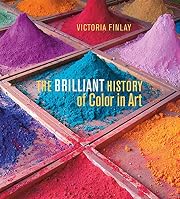
The Brilliant History of Color in Art by Victoria Finlay.
If not, sharing the author's name (along with the title) would be helpful for others to find it and enjoy it, too.
The Brilliant History of Color in Art by Victoria Finlay.
If not, sharing the author's name (along with the title) would be helpful for others to find it and enjoy it, too.
33EGBERTINA
I knew how to do it until i clicked in here to explain it.
touchstones appear by using brackets before title and after title.
bracket cat in the hat bracket
then just double-check to make sure its the right book. click on others to change if it is wrong
touchstones appear by using brackets before title and after title.
bracket cat in the hat bracket
then just double-check to make sure its the right book. click on others to change if it is wrong
34cfk
>33 EGBERTINA: Thanks!!
35atozgrl
I'll be reading The Woman in White for this month's challenge.
37john257hopper
Blue is once again the colour as I have read Agatha Christie's Mystery of the Blue Train. This is one of the fairly early Poirot novels published in 1928. An American millionaire's daughter Ruth Kettering is murdered on the eponymous train in France, and the chief suspects are her estranged husband whom she is about to divorce, and her lover, an unscrupulous opportunist who is, though she does not recognise it yet, just after her money and jewels. Needless to say, it ultimately turns out to be neither of these. Poirot did not appear until chapter 10 but after that soon was playing his usual role and his final exposition of the truth was on the face of it rather ridiculous and contradicted all previous assumptions. Incidentally, one of the characters comes from the village of St Mary Mead, the home village of Miss Marple (who will not appear in a Christie novel for another two years and in which the village of this name will have been transplanted to a different location in Britain). A decent page turner, but not one her best.
38MissWatson
I have read Die goldene Stadt for this, where a German adventurer goes looking for the golden city of the Incas in Peru. He has been obsessed with them since his boyhood and read everything he could lay his hand on, before he actually runs off with his uncle’s money to Peru.
The ups and downs in his career are quite amazing, and you can’t help admiring people who never give up.
The ups and downs in his career are quite amazing, and you can’t help admiring people who never give up.
39DeltaQueen50
I have read Red Water by Judith Freeman which was an interesting look at Mormon life in the 1800s. The story focused on three women who were wives of John D. Lee who was executed for his part in the Mountain Meadow Massacre of 1857.
40john257hopper
I've switched colours and for the third and final book for this month's theme I've read The Orange-Yellow Diamond by Joseph Smith (J S) Fletcher. Fletcher was a prolific author of detective stories and historical fiction from the end of the 19th century and through the first third of the 20th century, but is hardly known today. This novel, published in 1920, sees a young Scotsman Andie Lauriston living in London and trying to make a breakthrough as an author of short stories. Down on his luck and awaiting payment from his first writing endeavours, he pawns a gold watch belonging to his father. Later on, he attempts to do likewise with two rings belonging to his mother, but discovers the pawnbroker dead and on leaving the shop to get help he is stopped by a policeman and suspected of murder. However, the policeman is soon convinced of his innocence and the plot thickens as a rare and valuable book of unknown provenance is discovered in the shop. Another death occurs in the neighbouring shop, and we have a complex plot involving South African diamond merchants, members of Parliament, Chinese and Japanese students and assorted policemen and legal folk, plus an old school friend of Lauriston's, who slightly implausibly puts his life on hold for a man he has had no communication with for many years; indeed Lauriston virtually disappears from the narrative after a while as others seem to take on his cause with slightly unrealistic ease. The eponymous jewel does not appear until over half way through the book and the villains all turn out to be the "Easterns" which is typical of a sub-genre of sensationalist literature from this period. Despite the slightly confusing final section, I enjoyed this whodunnit and would definitely read more by this author.
41Familyhistorian
To fit with the colour theme, I pulled a true crime book off my shelves. Black River Road: An Unthinkable Crime, an Unlikely Suspect, and the Question of Character recounted a murder and the aftermath back in 1869 when Canada was a young country. John Monroe, a well-known architect in St John, New Brunswick was the last person publicly thought to be the culprit. The press had all but convicted James Cain, a grocer who came from Ireland, sold liquor and was reputed to have had a mistress track him down. The narrative revealed information about both the crime and the society in which it occurred.
42MissBrangwen
>37 john257hopper: I am currently reading The Mystery of the Blue Train and wondered if it was the St Mary Mead. Thanks for the info, now I don't need to look it up! I am enjoying the novel and hope to finish it today.
43cfk
I chose "The Brilliant History of Color in Art" by Victoria Finlay for this month's read and have really enjoyed it. It follows the discovery and use of individual colors, mediums, techniques and even the crossover from the canvas used in sails. Even more interesting, she included tidbits of culture and vanity in her stories.
44cindydavid4
>43 cfk: that does sound good think Ill have to read that
45Familyhistorian
I knew I had another colour book. Murder on the Red River featured as the sleuths Wheaton, the local sheriff, and Cash, a tough native field hand who wanted to find the truth about the stabbing death of a native labourer from out of town. It was a desire that put her life in peril more than once.
46LibraryCin
White Like Her / Gail Lukasik
3 stars
Gail Lukasik is a mystery author. As an adult, she sent away for her mother’s birth certificate from New Orleans, only to see “(col.)” after her mother’s name. “Col”? Coloured? What!? This began a genealogical search (after her mother refused to talk about it), with help from the tv show “Genelalogical Roadshow” for her ancestry (much of the searching, and the tv show came after her mother died). Her mother did, indeed, abandon her family in New Orleans so that she could move north and pass for white.
There were some interesting stories in her family’s background, but it was hard to keep track of all the people. And not all the stories were as interesting as others. Doing the tv show also helped reunite her with family she never knew she had, which was interesting.
3 stars
Gail Lukasik is a mystery author. As an adult, she sent away for her mother’s birth certificate from New Orleans, only to see “(col.)” after her mother’s name. “Col”? Coloured? What!? This began a genealogical search (after her mother refused to talk about it), with help from the tv show “Genelalogical Roadshow” for her ancestry (much of the searching, and the tv show came after her mother died). Her mother did, indeed, abandon her family in New Orleans so that she could move north and pass for white.
There were some interesting stories in her family’s background, but it was hard to keep track of all the people. And not all the stories were as interesting as others. Doing the tv show also helped reunite her with family she never knew she had, which was interesting.
47Familyhistorian
>46 LibraryCin: That sounds interesting. I enjoy family mysteries and White Like Her sounds like a good one.
48LibraryCin
>47 Familyhistorian: Ha! Given your username, that makes sense. :-) I hope you like it!
49cindydavid4
>46 LibraryCin: wow that does look good have you read the vanished half?very good tho the ending was off. well worth the read
50LibraryCin
>49 cindydavid4: thxx for the suggestion. May book club reaad it a while ago!
51MissBrangwen
I finally finished The Mystery of the Blue Train by Agatha Christie. Not one of my favourites, but not boring either. The settings of the train and the French Riviera add atmosphere to the story, and the characters are interesting.
52cindydavid4
Last week the new yorker had an article entitled "royal flush". all about the power of the color red."red is the color we wear when we want to be noticed, one that appears in most national flags, the one that ads and casinos use to loosen our wallets. The science is in on that . Red quickens the pulse and sticks in the memory like no other color....Red was the color of authoritythousand of years ago and continues to today stop signs and red lights, red correcting pens. kings robes and popes shoes...." Interesting article and mentions a book Id like to read Red the history of a color
53atozgrl
I have finally finished The Woman in White by Wilkie Collins. I enjoyed it, but I didn't like it as well as The Moonstone.
54cindydavid4
thanks to everyone who joined us in this discussion. If you are still in the middle of your book, feel free to post it anyway
55CurrerBell
Just a few minutes before midnight I finished Red and Black (Norton Critical Edition) 2**. I found the novel itself tedious; and most of the supplemental materials were even more tedious, that kind of highly philosophized meandering that French critics, I think, can sometimes be guilty of. (It even included a few Sartrean paragraphs from Being and Nothingness.)
I'd been planning to do Dumas père's The Black Tulip, but I can do that in the second quarter for the 17th century.
All ties in with my Vive la France project.
I'd been planning to do Dumas père's The Black Tulip, but I can do that in the second quarter for the 17th century.
All ties in with my Vive la France project.
56Tess_W
>55 CurrerBell: I've had The Red and Black on my TBR shelf for years. But reviews haven't been favorable enough for me to want to attempt it!
57WelshBookworm
I finally finished my book Color: The Natural History of the Palette. I had several possiblities all lined up, and they were all hard to get. This one I got through interlibrary loan, and when it had to go back, I put a hold on a Libby copy, which took forever, but I have finally finished it. Here is my review:
Ms. Finlay travels to a lot of exotic places looking for the earliest uses of each of the colors in the rainbow spectrum: red, orange, yellow, green, blue, indigo, and violet (purple). I found the historical details interesting as far as it went. The focus here is really on the travel, not the colors or their history. Some of her "facts" occasionally seemed speculative, and if she was really going to all these places for research, she seemed woefully unprepared most of the time. Each chapter stands on its own. There was really no attempt to integrate the colors into any kind of historical framework, and she didn't venture beyond the mid 19th century. Nothing about modern colors here, and kind of superficial about modern attempts to preserve the techniques to recreate these colors today. In several cases - celadon green, and Tyrian purple, for example - we still don't know exactly what these colors even looked like. There is a small section of color plates (not included in the ebook) but I didn't find them very useful or illustrative. She does have some interesting endnotes and a good bibliography for further reading. Bottom line - this is fine if you enjoy travelogues and trivia. It just wasn't quite what I was expecting.
Description: Roman emperors used to wear togas dyed with a purple color that was made from an odorous Lebanese shellfish–which probably meant their scent preceded them. In the eighteenth century, black dye was called logwood and grew along the Spanish Main. Some of the first indigo plantations were started in America, amazingly enough, by a seventeen-year-old girl named Eliza. And the popular van Gogh painting White Roses at Washington’s National Gallery had to be renamed after a researcher discovered that the flowers were originally done in a pink paint that had faded nearly a century ago. Color is full of extraordinary people, events, and anecdotes–painted all the more dazzling by Finlay’s engaging style. Embark upon a thrilling adventure with this intrepid journalist as she travels on a donkey along ancient silk trade routes; with the Phoenicians sailing the Mediterranean in search of a special purple shell that garners wealth, sustenance, and prestige; with modern Chilean farmers breeding and bleeding insects for their viscous red blood. The colors that craft our world have never looked so bright.
Ms. Finlay travels to a lot of exotic places looking for the earliest uses of each of the colors in the rainbow spectrum: red, orange, yellow, green, blue, indigo, and violet (purple). I found the historical details interesting as far as it went. The focus here is really on the travel, not the colors or their history. Some of her "facts" occasionally seemed speculative, and if she was really going to all these places for research, she seemed woefully unprepared most of the time. Each chapter stands on its own. There was really no attempt to integrate the colors into any kind of historical framework, and she didn't venture beyond the mid 19th century. Nothing about modern colors here, and kind of superficial about modern attempts to preserve the techniques to recreate these colors today. In several cases - celadon green, and Tyrian purple, for example - we still don't know exactly what these colors even looked like. There is a small section of color plates (not included in the ebook) but I didn't find them very useful or illustrative. She does have some interesting endnotes and a good bibliography for further reading. Bottom line - this is fine if you enjoy travelogues and trivia. It just wasn't quite what I was expecting.
Description: Roman emperors used to wear togas dyed with a purple color that was made from an odorous Lebanese shellfish–which probably meant their scent preceded them. In the eighteenth century, black dye was called logwood and grew along the Spanish Main. Some of the first indigo plantations were started in America, amazingly enough, by a seventeen-year-old girl named Eliza. And the popular van Gogh painting White Roses at Washington’s National Gallery had to be renamed after a researcher discovered that the flowers were originally done in a pink paint that had faded nearly a century ago. Color is full of extraordinary people, events, and anecdotes–painted all the more dazzling by Finlay’s engaging style. Embark upon a thrilling adventure with this intrepid journalist as she travels on a donkey along ancient silk trade routes; with the Phoenicians sailing the Mediterranean in search of a special purple shell that garners wealth, sustenance, and prestige; with modern Chilean farmers breeding and bleeding insects for their viscous red blood. The colors that craft our world have never looked so bright.
58cindydavid4
he focus here is really on the travel, not the colors, . I like travelogues but thats not covering history ah well thanks for your review, thats really too bad. I was planning to read that aw guess ill skp it now
59WelshBookworm
>58 cindydavid4: Well, it does talk about history. It's just a lot of trivia, and I did find it interesting. Try a chapter, and then if it's not what you want, you'll know. I think the other book of hers mentioned above might prove more thorough though. Kind of wish I had read that one....

