Rasdhar's 2026 Reading
This topic was continued by Rasdhar's 2026 Reading (Part II) .
Talk Club Read 2026
Join LibraryThing to post.
1rasdhar

Illustration by Maureen M Wilson, as part of her "Introvert Doodles" comics.
This is my third year on Club Read. I work at a university in teaching and research, and read a lot, for work and pleasure. I'll be tracking my non-work-related reading here, although I may be less active than the last two years, because my teaching load has doubled this year. Last year, I had some ambitious reading projects that fell apart because of poor health. This year I've decided to have smaller and more modest goals, and instead of structuring my reading, to just be more intentional about the choices I make. Broadly, I'd like to read more works in translation, less contemporary writing, and make a dent in the book collection that I've accumulated over the years. I'm also going to keep up my attempt to read more short stories, which I began in 2024, following the good example set by others in this group. I'm looking forward to all the book conversations we will have in Club Read in 2026.
2rasdhar
All Books Read:
January
1. Ann Leckie - Ancillary Sword (Orbit, 2013)
2. Ann Leckie - Ancillary Mercy (Orbit, 2014)
3. Tom Holt - The Portable Door (Orbit 2004)
4. Valeria Luiselli - Sidewalks (translated from the Spanish by Christina MacSweeney, Coffee House Press 2014)
5. Ed Park - An Oral History of Atlantis: Stories (Penguin 2025)
6. Graham Greene - The Third Man (Heinemann 1950)
7. Damilare Kuku - Nearly All the Men in Lagos are Mad (Masobe Books, 2021)
8. Maggie O'Farrell - This Must be the Place (Vintage, 2017)
9. Vivek Shanbhag - Sakina's Kiss (translated from the Kannada by Srinath Perur, McNally 2025)
10. Tom Mead - Death and the Conjuror (Mysterious Press 2022)
11. Percival Everett - The Weather and Women Treat Me Fair (Dzanc Books, 1987)
12. Karin Slaughter - Fractured (Random House, 2008)
13. Karin Slaughter - We Are All Guilty Here (William Morrow, 2025)
February
14. Vincenzo Latronico - Perfection (translated from Italian into English by Sophie Hughes, Fitzcarraldo 2025)
15. Balsam Karam - The Singularity (translated from the Swedish by Saskia Vogel, Fitzcarraldo Editions 2025)
15. Adam Plantinga - Hard Town (Grand Central Publishing, 2025)
16. Mariana Enriquez -A Sunny Place for Shady People: Stories (translated from the Spanish by Megan McDowell, Granta 2025)
17. Karin Slaughter - Undone (2009)
18. Percival Everett - Half an Inch of Water (Graywolf Press, 2015)
19. Chantel Acevedo - The Living Infinite (Europa, 2017)
20. Mosab Abu Toha - Forest of Noise (2024)
21. Mike Davis - Dead Cities And Other Tales (The New Press)
22. Jessica Abel - La Perdida (Fantagraphics, 2002)
23. Elisa Shua Dusapin - The Old Fire
March
January
1. Ann Leckie - Ancillary Sword (Orbit, 2013)
2. Ann Leckie - Ancillary Mercy (Orbit, 2014)
3. Tom Holt - The Portable Door (Orbit 2004)
4. Valeria Luiselli - Sidewalks (translated from the Spanish by Christina MacSweeney, Coffee House Press 2014)
5. Ed Park - An Oral History of Atlantis: Stories (Penguin 2025)
6. Graham Greene - The Third Man (Heinemann 1950)
7. Damilare Kuku - Nearly All the Men in Lagos are Mad (Masobe Books, 2021)
8. Maggie O'Farrell - This Must be the Place (Vintage, 2017)
9. Vivek Shanbhag - Sakina's Kiss (translated from the Kannada by Srinath Perur, McNally 2025)
10. Tom Mead - Death and the Conjuror (Mysterious Press 2022)
11. Percival Everett - The Weather and Women Treat Me Fair (Dzanc Books, 1987)
12. Karin Slaughter - Fractured (Random House, 2008)
13. Karin Slaughter - We Are All Guilty Here (William Morrow, 2025)
February
14. Vincenzo Latronico - Perfection (translated from Italian into English by Sophie Hughes, Fitzcarraldo 2025)
15. Balsam Karam - The Singularity (translated from the Swedish by Saskia Vogel, Fitzcarraldo Editions 2025)
15. Adam Plantinga - Hard Town (Grand Central Publishing, 2025)
16. Mariana Enriquez -A Sunny Place for Shady People: Stories (translated from the Spanish by Megan McDowell, Granta 2025)
17. Karin Slaughter - Undone (2009)
18. Percival Everett - Half an Inch of Water (Graywolf Press, 2015)
19. Chantel Acevedo - The Living Infinite (Europa, 2017)
20. Mosab Abu Toha - Forest of Noise (2024)
21. Mike Davis - Dead Cities And Other Tales (The New Press)
22. Jessica Abel - La Perdida (Fantagraphics, 2002)
23. Elisa Shua Dusapin - The Old Fire
March
3rasdhar
Notes
Just a blank post to collect notes, recommendations on this thread, and post assorted links.
Just a blank post to collect notes, recommendations on this thread, and post assorted links.
4rasdhar
Short Stories
As I'm going to attempt to read one a day, this is a place to collect links to short stories that I read online.
1/1 Percival Everett - "Graham Green" (from his collection, Half an Inch of Water, Graywolf 2015), also available as audio read by Levar Burton (Apple Podcasts) - A man is contacted by an elderly woman on the edge of death, and asked to track down her missing son, who might or might not be a TV actor called Graham Greene. A twisty, but warm story.
1/2-1/11 - Ed Park's collection, An Oral History of Atlantis
1/11 - 1/20 - Damilare Kuku's collection, Nearly All the Men in Lagos are Mad
As I'm going to attempt to read one a day, this is a place to collect links to short stories that I read online.
1/1 Percival Everett - "Graham Green" (from his collection, Half an Inch of Water, Graywolf 2015), also available as audio read by Levar Burton (Apple Podcasts) - A man is contacted by an elderly woman on the edge of death, and asked to track down her missing son, who might or might not be a TV actor called Graham Greene. A twisty, but warm story.
1/2-1/11 - Ed Park's collection, An Oral History of Atlantis
1/11 - 1/20 - Damilare Kuku's collection, Nearly All the Men in Lagos are Mad
5rasdhar
January
My bookshelf in January contains a few things that I wanted to start reading in this year. Last night I began Graham Greene's The Third Man, and I plan to follow it with the Carol Reed-directed 1949 film adaptation (if you prefer audio, the Hollywood actor James Mason has narrated it, available on Youtube here). The museum here has a massive impressionist painting exhibit on, so I also collected a copy of Ross King's The Judgement of Paris: The Revolutionary Decade That Gave the World Impressionism to read. I have a copy of Valeria Luiselli's essays, Sidewalks, translated from the Italian by Christina MacSweeney from the library, and from my bookshelves, I plan to read Maggie O'Farrell's novel, This Must Be the Place. I hope also to dip into A Century of Poetry in the New Yorker, an anthology edited by Kevin Young and published last year.
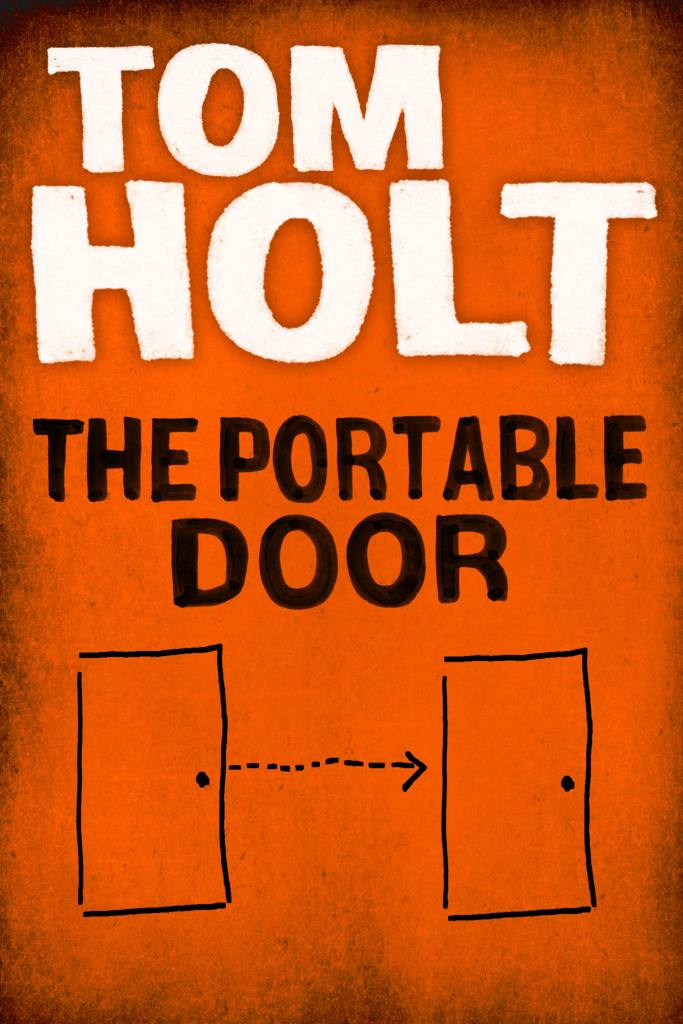
Currently, I'm reading Tom Holt's comic novel, The Portable Door.
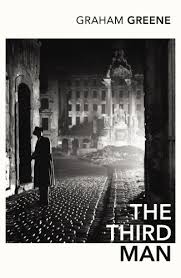
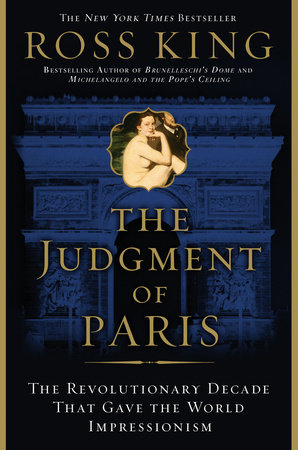
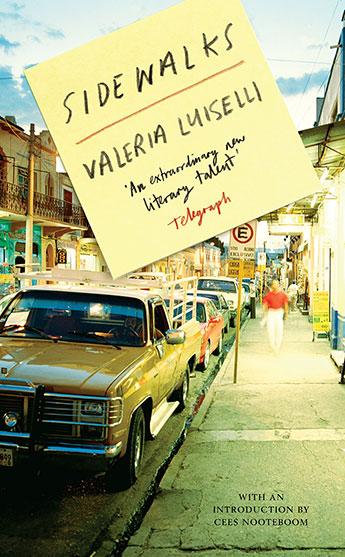
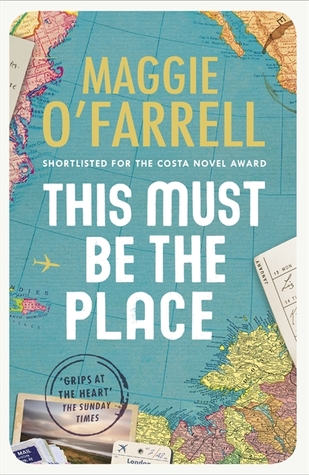
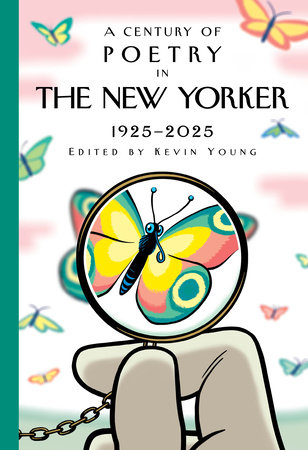
My bookshelf in January contains a few things that I wanted to start reading in this year. Last night I began Graham Greene's The Third Man, and I plan to follow it with the Carol Reed-directed 1949 film adaptation (if you prefer audio, the Hollywood actor James Mason has narrated it, available on Youtube here). The museum here has a massive impressionist painting exhibit on, so I also collected a copy of Ross King's The Judgement of Paris: The Revolutionary Decade That Gave the World Impressionism to read. I have a copy of Valeria Luiselli's essays, Sidewalks, translated from the Italian by Christina MacSweeney from the library, and from my bookshelves, I plan to read Maggie O'Farrell's novel, This Must Be the Place. I hope also to dip into A Century of Poetry in the New Yorker, an anthology edited by Kevin Young and published last year.
Currently, I'm reading Tom Holt's comic novel, The Portable Door.
6wandering_star
That's a great cartoon! It's also interesting to see not just your planned reading but also how it connects to other things like the exhibition and the film. Look forward to following your reading this year.
7kidzdoc
Happy New Year, Rasdhar! I hope that your health, and your reading output, are much improved in 2026.
8RidgewayGirl
I'm glad you're here again this year! And I feel personally attacked by the cartoon.
9dchaikin
>8 RidgewayGirl: 😂
You’re the 1st stop in my New Year’s Day thread tour. I kind of hope there are less brain-sparking associations in other threads, or I won’t make it very far. I’ll almost feel overwhelmed learning Luiselli has an essay collection out i hadn’t heard. (I’d say i need to sit down there, but I’m firmly planted on my couch under a 6 lb cat with a two-ton heart).
I hope your health improves, your academic life rewards, you get some fun reading done, and share your experiences here. Happy New Year, R.
You’re the 1st stop in my New Year’s Day thread tour. I kind of hope there are less brain-sparking associations in other threads, or I won’t make it very far. I’ll almost feel overwhelmed learning Luiselli has an essay collection out i hadn’t heard. (I’d say i need to sit down there, but I’m firmly planted on my couch under a 6 lb cat with a two-ton heart).
I hope your health improves, your academic life rewards, you get some fun reading done, and share your experiences here. Happy New Year, R.
11Ameise1

I wish you a healthy and happy New Year filled with many exciting books. May all your wishes come true.
>5 rasdhar: I hope you enjoy The Third Man. I really liked the book when I read it years ago. During a visit to Vienna in the summer of 2011, I even went on a Third Man tour, which was extremely interesting.
12labfs39
>4 rasdhar: I admire your perseverance in reading short stories. After making desperate yet doomed attempts over the last couple of years, I am going to forego the goal and simply try to work more into my reading. No doubt I will bookmark many of the ones you list with every good intention.
Best wishes for an enjoyable reading year!
Best wishes for an enjoyable reading year!
13LolaWalser
Happy new year, Rasdhar! What a coincidence, yesterday I set out a Greene to read this month, A gun for sale. As you may know, that too was filmed, as This gun for hire (one of my huge faves...) Do you like film noir?
14kjuliff
>5 rasdhar: I can’t wait for you to read The Third Man. I’ve tried reading it several times, but it was ruined because my parents took me with themto see the film when I was a small child. I somehow got the plot mixed up back then - I was about 5 - and I’ve never been able to get it right in my head. My question is: who is the third man?
15Dilara86
Happy new year! Your thread is always very interesting and terrible for my wishlist. A doubling of your workload is a lot: I hope you can maintain some work/life balance and your health improves.
16FlorenceArt
>5 rasdhar: Happy New Year! Took me a second to figure out what the judgment of Paris had to do with Impressionism. And I love the cover of The Portable Door.
17AlisonY
Happy new year! Some great plans you have there for January. Looking forward to hearing more.
18markon
Happy New Year! Hope you can find the necessary work/life balance that we all strive for with your increased workload.
19rasdhar
Happy New Year to all and thank you for all the kind wishes!
>6 wandering_star: Yes, I'm trying to do a sort of 'multimedia' reading experience this time.
>7 kidzdoc: My health is a bit better, I'm just adjusting to some consequent life changes. I hope 2026 is full of good health and good reading for you too!
>8 RidgewayGirl: Haha, yes, I saw it was amused and embarassed in equal measure.
>9 dchaikin: I'm honoured to be the first stop for you. The Luiselli collection is magnificent, by the wa, I finished it last night. Thanks for all your kind words.
>11 Ameise1: A tour premised on the Third Man sounds amazing. I'm adding it to list of literary trips I want to take some day.
>12 labfs39: Thank you! I don't think I am actually going to be able to read one short story per day, but I'll certainly try to read as many as I can!
>13 LolaWalser: A lovely coincidence! A Gun for Sale is actually one Greene that I haven't read yet. I do like film noir! I recently started exploring the genre. I've been watching a lot of Alfred Hitchcock.
>14 kjuliff: Good question! When I find out, I'll tell you!
>15 Dilara86: Thank you, and I feel the same way about your thread :)
>16 FlorenceArt: Yes, without the subtitle it is a bit puzzling!
>17 AlisonY: >18 markon: Thank you both, and I'm looking forward to catching up on your threads too!
>6 wandering_star: Yes, I'm trying to do a sort of 'multimedia' reading experience this time.
>7 kidzdoc: My health is a bit better, I'm just adjusting to some consequent life changes. I hope 2026 is full of good health and good reading for you too!
>8 RidgewayGirl: Haha, yes, I saw it was amused and embarassed in equal measure.
>9 dchaikin: I'm honoured to be the first stop for you. The Luiselli collection is magnificent, by the wa, I finished it last night. Thanks for all your kind words.
>11 Ameise1: A tour premised on the Third Man sounds amazing. I'm adding it to list of literary trips I want to take some day.
>12 labfs39: Thank you! I don't think I am actually going to be able to read one short story per day, but I'll certainly try to read as many as I can!
>13 LolaWalser: A lovely coincidence! A Gun for Sale is actually one Greene that I haven't read yet. I do like film noir! I recently started exploring the genre. I've been watching a lot of Alfred Hitchcock.
>14 kjuliff: Good question! When I find out, I'll tell you!
>15 Dilara86: Thank you, and I feel the same way about your thread :)
>16 FlorenceArt: Yes, without the subtitle it is a bit puzzling!
>17 AlisonY: >18 markon: Thank you both, and I'm looking forward to catching up on your threads too!
21rasdhar
1 & 2. Ann Leckie - Ancillary Sword and Ancillary Mercy (Orbit, 2013 and 2014)
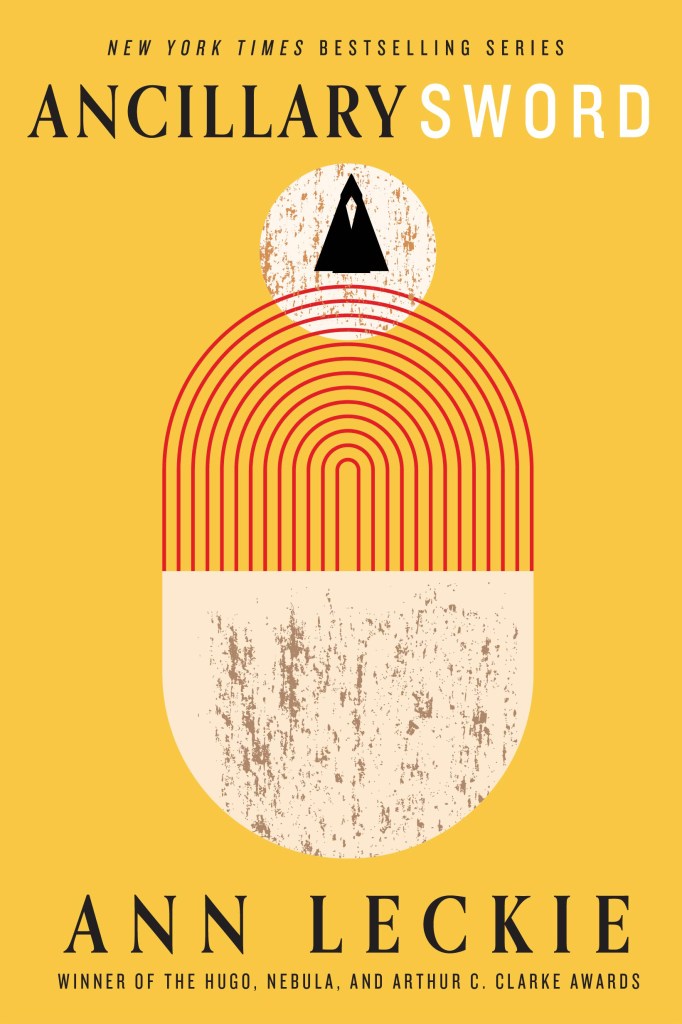
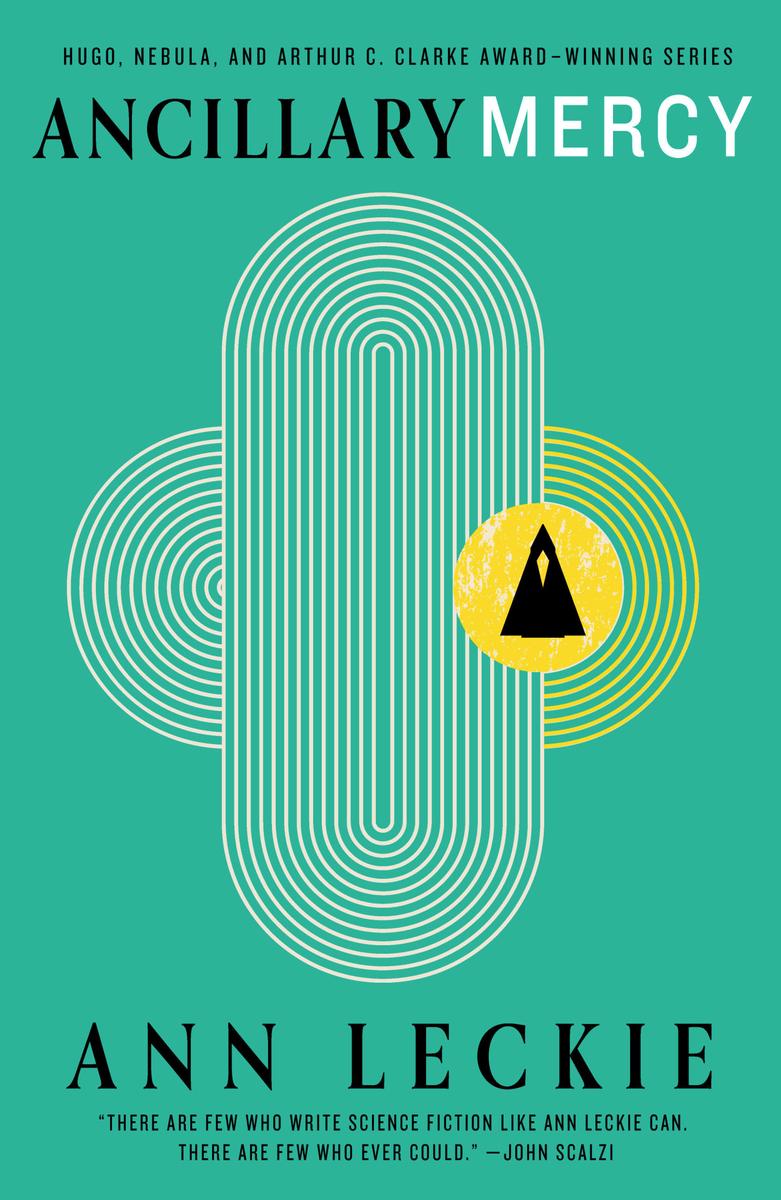
Last year, I read Ann Leckie's Ancillary Justice, the first of this trilogy, and over the start of the new year, I went through the next two books in this 'Imperial Radch' universe at breakneck speed. I really enjoyed reading them, overall - there's this grand sense of adventure, and of vast empires, complex politics, and interesting characters that really moves the story along and grips the reader. Despite this, I felt that at the ending of the third book, the series has a bit of a let-down - it felt rushed and a bit naive, even childish, after the complexity and nuance of the rest of the series. Still, I would say these are absolutely worth the read, because Leckie does something fresh and original and writes excellently to boot.
In book, Ancillary Justice, the AI that powers the battle ship, Justice of Toren, is ordered to kill her captain by the Emperor. In this world, AIs aren't designed to be neutral and disengaged: they are empowered to make judgment calls, and with that comes some amount of emotional engagement. Justice of Toren acts through 'ancillaries' - essentially reanimated human bodies that are controlled by the AI. After being ordered to kill her beloved Captain, Justice of Toren breaks free of imperial control and escapes, to confront the Emperor. Interestingly, this is also a genderless universe, everyone using female pronouns by default, and the book explores the implications of a universe in which relationships are built on power and patronage, rather than gender.
Book 2, Ancillary Sword picks up after the confrontation with the Emperor. The Emperor has used ancillary technology to reproduce herself, becoming something not quite human, and now is at war with herself. Justice of Toren, now calling herself 'Breq' is no longer a ship, but an AI in a human body. With a new crew, Breq goes to an imperial outpost, Athoek Station, ostensibly to help one faction of the warring Emperor, but in reality, to protect the remaining family of her dead captain. In Book 3, Ancillary Mercy, Breq finds someone in the subterranean underworld of Athoek Station who shouldn't be there - leading to a direct confrontation with the divided Emperor(s). The book addresses themes of colonialism, especially in the context of an empire that treats bodies of the conquered as resources, and not as people.
I think of all the three books, the second is possibly the strongest, in terms of plot, keeping one absolutely riveted to the page as you watch events unfold. But the third volume, weakest in plot, is also emotionally the richest, because it examines what it means to be human, and to love - in ways that go beyond romance, and into friendship, authority, and care. A very enjoyable series, and a nice way to start the year.
Last year, I read Ann Leckie's Ancillary Justice, the first of this trilogy, and over the start of the new year, I went through the next two books in this 'Imperial Radch' universe at breakneck speed. I really enjoyed reading them, overall - there's this grand sense of adventure, and of vast empires, complex politics, and interesting characters that really moves the story along and grips the reader. Despite this, I felt that at the ending of the third book, the series has a bit of a let-down - it felt rushed and a bit naive, even childish, after the complexity and nuance of the rest of the series. Still, I would say these are absolutely worth the read, because Leckie does something fresh and original and writes excellently to boot.
In book, Ancillary Justice, the AI that powers the battle ship, Justice of Toren, is ordered to kill her captain by the Emperor. In this world, AIs aren't designed to be neutral and disengaged: they are empowered to make judgment calls, and with that comes some amount of emotional engagement. Justice of Toren acts through 'ancillaries' - essentially reanimated human bodies that are controlled by the AI. After being ordered to kill her beloved Captain, Justice of Toren breaks free of imperial control and escapes, to confront the Emperor. Interestingly, this is also a genderless universe, everyone using female pronouns by default, and the book explores the implications of a universe in which relationships are built on power and patronage, rather than gender.
Book 2, Ancillary Sword picks up after the confrontation with the Emperor. The Emperor has used ancillary technology to reproduce herself, becoming something not quite human, and now is at war with herself. Justice of Toren, now calling herself 'Breq' is no longer a ship, but an AI in a human body. With a new crew, Breq goes to an imperial outpost, Athoek Station, ostensibly to help one faction of the warring Emperor, but in reality, to protect the remaining family of her dead captain. In Book 3, Ancillary Mercy, Breq finds someone in the subterranean underworld of Athoek Station who shouldn't be there - leading to a direct confrontation with the divided Emperor(s). The book addresses themes of colonialism, especially in the context of an empire that treats bodies of the conquered as resources, and not as people.
I think of all the three books, the second is possibly the strongest, in terms of plot, keeping one absolutely riveted to the page as you watch events unfold. But the third volume, weakest in plot, is also emotionally the richest, because it examines what it means to be human, and to love - in ways that go beyond romance, and into friendship, authority, and care. A very enjoyable series, and a nice way to start the year.
22rasdhar
3. Tom Holt - The Portable Door (Orbit 2004)
The Portable Door is a light, comic novel about a young man's first job at a mysterious firm. Starting right of out school, Paul Carpenter attends an interview at the firm of J.W. Wells & Co., even though he's unclear on what exactly they do, and completely flubs the interview itself. He meets Sophie Pettingell, a young women with an array of disgusting habits (nail biting, nose picking) and an unusual level of self possession, at the interview. They are both hired, to his surprise, and spend weeks doing a series of apparently meaningless jobs - organising mysterious papers by date, looking for unspecified things on maps, and getting used to a series of bizarre workplace rules. But when Paul and Sophie break one of those rules, the magical and secretive nature of their workplace is revealed to them, along with its many dangers and possibilities.
This is not a serious book, but it is quite enjoyable, managing to be funny without becoming glib, heavy-handed, or smug (i.e. it does not read like a Marvel script, praise be). It is also not for children, despite the magical themes, but at the same time, I don't think there's depth here to keep my interest for the rest of the series.
The Portable Door is a light, comic novel about a young man's first job at a mysterious firm. Starting right of out school, Paul Carpenter attends an interview at the firm of J.W. Wells & Co., even though he's unclear on what exactly they do, and completely flubs the interview itself. He meets Sophie Pettingell, a young women with an array of disgusting habits (nail biting, nose picking) and an unusual level of self possession, at the interview. They are both hired, to his surprise, and spend weeks doing a series of apparently meaningless jobs - organising mysterious papers by date, looking for unspecified things on maps, and getting used to a series of bizarre workplace rules. But when Paul and Sophie break one of those rules, the magical and secretive nature of their workplace is revealed to them, along with its many dangers and possibilities.
This is not a serious book, but it is quite enjoyable, managing to be funny without becoming glib, heavy-handed, or smug (i.e. it does not read like a Marvel script, praise be). It is also not for children, despite the magical themes, but at the same time, I don't think there's depth here to keep my interest for the rest of the series.
23FlorenceArt
>21 rasdhar: This series was very frustrating for me. The plot was too complex for me to follow, though what else is new. I was also confused and frustrated by the genderless society, and I never connected with the MC. Maybe I should reread it.
>22 rasdhar: Still love the cover!
>22 rasdhar: Still love the cover!
24rhian_of_oz
>21 rasdhar: I was astonished to realise I read these books more than a decade ago. My comment from back then about Ancillary Mercy was "A fitting end to a ground-breaking trilogy" which suggest I liked it!
25ELiz_M
You mentioned on Kay's thread a system of notebook. Please tell me more! (I also hope each year that the right set of notebooks will keep me organized, but am not quite able to maintain the systems.)
26valkyrdeath
>21 rasdhar: I need to get to this series at some point. I've been meaning to read the first book since it was new, which doesn't seem long ago so I'm not sure how it's from 2013!
>22 rasdhar: I read a few books by Tom Holt years ago. They were always fun enough but always felt like there was something lacking somehow. I think I'd been spoiled by Pratchett for comic fantasy and having finished all the then-available Discworld books was hoping for something else to match it, but nothing else I found had the depth.
>22 rasdhar: I read a few books by Tom Holt years ago. They were always fun enough but always felt like there was something lacking somehow. I think I'd been spoiled by Pratchett for comic fantasy and having finished all the then-available Discworld books was hoping for something else to match it, but nothing else I found had the depth.
27SassyLassy
>1 rasdhar: Great opening cartoon. Looking forward to following along again this year.
28rasdhar
>23 FlorenceArt: I think volume 1 puts in a lot of world building, but by the second and third ones you're just neck deep in plot. If you do re-read it, something to keep in mind!
>24 rhian_of_oz: I liked it too! I just felt the ending was a bit too quick, I would have liked more - much more!
>25 ELiz_M: Oh, my goodness, I have dozens of notebooks but right now I have a system of about 3+. I use one as a daily planner, so it has my schedule and reminders, and so on - a kind of bullet journal. I have a second dedicated reading notebook, where I write down what I'm reading and notes on what I've read, and finally I have a personal journal. I have always wanted a commonplace book, where I could save quotes and notes, but ultimately I decided I wanted to have those as index cards, not a notebook. So I jot down stuff like that on index cards and add a subject in the right corner and author in the left corner and a full reference at the back. Then I can either organise them by author or subject, or sometimes just shuffle them for fun. I find that works better for me, but I've considered whether a Locke-style commonplace book might be better. I found that when I let go of the idea that I could have a perfect system, and just accepted that I have *a* system, I could maintain them.
>26 valkyrdeath: I agree - Holt is light and fun, but he's no Pratchett.
>27 SassyLassy: Thanks for stopping by!
>24 rhian_of_oz: I liked it too! I just felt the ending was a bit too quick, I would have liked more - much more!
>25 ELiz_M: Oh, my goodness, I have dozens of notebooks but right now I have a system of about 3+. I use one as a daily planner, so it has my schedule and reminders, and so on - a kind of bullet journal. I have a second dedicated reading notebook, where I write down what I'm reading and notes on what I've read, and finally I have a personal journal. I have always wanted a commonplace book, where I could save quotes and notes, but ultimately I decided I wanted to have those as index cards, not a notebook. So I jot down stuff like that on index cards and add a subject in the right corner and author in the left corner and a full reference at the back. Then I can either organise them by author or subject, or sometimes just shuffle them for fun. I find that works better for me, but I've considered whether a Locke-style commonplace book might be better. I found that when I let go of the idea that I could have a perfect system, and just accepted that I have *a* system, I could maintain them.
>26 valkyrdeath: I agree - Holt is light and fun, but he's no Pratchett.
>27 SassyLassy: Thanks for stopping by!
29rasdhar
4. Valeria Luiselli - Sidewalks (translated from the Spanish by Christina MacSweeney, Coffee House Press 2014)
I came across this in the university library while looking for something else: serendipitous.
I came across this in the university library while looking for something else: serendipitous.
31kidzdoc
I'm a fan of Valeria Luiselli, having read three of her works, most notably Lost Children Archive, and this book sounds just as good. An Oral History of Atlantis: Stories also sounds great. Thanks for these compelling reviews, Rasdhar!
32markon
>29 rasdhar: Sidewalks sounds quite interesting. I may have to pick it up while waiting for Luiselli's new novel, Beginning, middle, end to come out later this year. Likewise, I'm intrigued by several of the stories in Park's collection, especially the one structured around passwords.
33kjuliff
>29 rasdhar: This sounds like an interesting read. When I think about the cities I’ve visited they really do seem to have their own personality.
34kidzdoc
>29 rasdhar: The Free Library of Philadelphia system has one copy of Sidewalks, so I requested it, as I'll have to go to my nearest branch to return the copy of I, Tituba I borrowed recently.
35valkyrdeath
>30 rasdhar: This sounds an interesting collection. I enjoy that sort of experimenting with forms when it's done well, though sometimes it can end up just being a gimmick.
36FlorenceArt
>30 rasdhar: Also interested in this one.
37mabith
A timely reminder that I do keep meaning to read that Ann Leckie trilogy.
38rasdhar
>31 kidzdoc: I haven't read any of Valeria Luiselli's other work, but after Sidewalks I definitely will! Thanks. >34 kidzdoc: Looking forward to your thoughts on Sidewalks, if you manage to get hold of it to read.
>32 markon: I posted a bunch of links in the Short Fiction thread, but the password story is available here if you have access to the New Yorker: https://www.newyorker.com/magazine/2013/06/10/slide-to-unlock
>33 kjuliff: Don't they? I've had the great fortune of having lived in several cities. I am quite happy in the country where I grew up, but I do enjoy how a city also is full of life, and little secrets to uncover.
>35 valkyrdeath: It can definitely get a bit gimmicky, especially when the writing relies extensively on special formatting (like text threads and emojis). I think Park is just about getting away with it here.
>36 FlorenceArt: If you do end up reading it, I would love to know what you think.
>37 mabith: I really enjoyed them! But I think spacing them out would be better than all at once, and the first one is a bit slow compared to the next two.
>32 markon: I posted a bunch of links in the Short Fiction thread, but the password story is available here if you have access to the New Yorker: https://www.newyorker.com/magazine/2013/06/10/slide-to-unlock
>33 kjuliff: Don't they? I've had the great fortune of having lived in several cities. I am quite happy in the country where I grew up, but I do enjoy how a city also is full of life, and little secrets to uncover.
>35 valkyrdeath: It can definitely get a bit gimmicky, especially when the writing relies extensively on special formatting (like text threads and emojis). I think Park is just about getting away with it here.
>36 FlorenceArt: If you do end up reading it, I would love to know what you think.
>37 mabith: I really enjoyed them! But I think spacing them out would be better than all at once, and the first one is a bit slow compared to the next two.
39rasdhar
6. Graham Greene -The Third Man (Heinemann 1950)

Rollo Martins, who writes pulp Western novels, travels to post-WWII Vienna to meet his friend Harry Lime, but arrives just in time for his funeral. Lime was hit by a car and at the funeral, a military policeman, Collins, tells Martins that Lime might have been caught in something illegal. This novela tracks Martins' investigation of Lime's involvement in the black market for medicines, ultimately forcing him to make a diffifcult choice between his loyalty and principles, as narrated by the military officer Collins.
This short novella by Graham Greene was published in 1950, and he adapted it afterwards as a screenplay for the much better known film, The Third Man, directed by Carol Reed and starring Orson Welles, Joseph Cotten, and Alida Valli. In fact, the book was published after the film came out - in this essay Greene says the story was "never written to be read but only to be seen." Naturally, the writing feels a little rough around the edges, and very visual in a way that suggests screenplay, despite the novel format. I did think it was really unusual to see post-war Vienna depicted in this way, with the city divided into quarters between the Allies, and the desperation borne out of years of war. Of course, though the plot is very standard Graham Greene fair, he does well with ratcheting up tension and giving the final scene the sense of a big conflict and ending.
I listened to the audiobook for this as narrated by the actor James Mason, which is available on Youtube here (atleast, in my country, not sure about others). I liked Mason's rather specific style of speaking. https://www.youtube.com/watch?v=EnwO0lwqvKg I'm looking forward to watching the film, next.

Rollo Martins, who writes pulp Western novels, travels to post-WWII Vienna to meet his friend Harry Lime, but arrives just in time for his funeral. Lime was hit by a car and at the funeral, a military policeman, Collins, tells Martins that Lime might have been caught in something illegal. This novela tracks Martins' investigation of Lime's involvement in the black market for medicines, ultimately forcing him to make a diffifcult choice between his loyalty and principles, as narrated by the military officer Collins.
This short novella by Graham Greene was published in 1950, and he adapted it afterwards as a screenplay for the much better known film, The Third Man, directed by Carol Reed and starring Orson Welles, Joseph Cotten, and Alida Valli. In fact, the book was published after the film came out - in this essay Greene says the story was "never written to be read but only to be seen." Naturally, the writing feels a little rough around the edges, and very visual in a way that suggests screenplay, despite the novel format. I did think it was really unusual to see post-war Vienna depicted in this way, with the city divided into quarters between the Allies, and the desperation borne out of years of war. Of course, though the plot is very standard Graham Greene fair, he does well with ratcheting up tension and giving the final scene the sense of a big conflict and ending.
I listened to the audiobook for this as narrated by the actor James Mason, which is available on Youtube here (atleast, in my country, not sure about others). I liked Mason's rather specific style of speaking. https://www.youtube.com/watch?v=EnwO0lwqvKg I'm looking forward to watching the film, next.
40kidzdoc
>38 rasdhar: The Free Library of Philadelphia system has at least one paperback copy of Sidewalks, so I should receive it soon. I was particularly fond of Lost Children Archive and the related Tell Me How It Ends by Luiselli, both of which were written after Sidewalks, IIRC.
41kjuliff
>39 rasdhar: Oh, I adore James Mason’s voice, and will have to listen to the book for that alone.
43labfs39
>42 rasdhar: Sorry this was such a difficult read. I'm making a note to only read this when feeling emotionally resilient. I just finished a book that was equally emotionally draining although in a different way. It can be exhausting, as well as depressing, to be so emotionally affected.
44kjuliff
>42 rasdhar: An enlightening review Rasdhar. Although this book is not for me right now, I love the title.
45Dilara86
>21 rasdhar: >24 rhian_of_oz: >37 mabith: How I love this series! I queued to have two of the books signed by the author, and she was lovely :-)
By the way, it's not a trilogy anymore: there are now five books in the Imperial Radch series.
By the way, it's not a trilogy anymore: there are now five books in the Imperial Radch series.
46RidgewayGirl
>42 rasdhar: Adding this to my list of books to look for, but as I've had a copy of Heart Lamp for several months now still unread, I know it will take a while for me to tackle it.
47AnnieMod
>42 rasdhar: Your thread is really bad for my "read my own book" plan... Wonderful review. And so was >30 rasdhar:
48rasdhar
8. Maggie O'Farrell - This Must be the Place (Vintage, 2017)
I picked this up as part of an effort to clear my bookshelves. A decent read, but I won't hang on to this book.
I picked this up as part of an effort to clear my bookshelves. A decent read, but I won't hang on to this book.
49rasdhar
I read >46 RidgewayGirl: 's review of This Must Be The Place after posting mine and saw that you also felt it would have worked better as short stories - I'm glad to know I'm not the only one. Reading this book I was thinking of Maeve Binchy, who writes fiction about Ireland in the form of interconnected short stories, and carried a very similar feeling to me. I especially liked what you said about how the 'center of the novel' isn't ever shown (in a way that doesn't work here). Linking your review here for anyone who wants to read it: https://www.librarything.com/work/17062356/reviews/140488718
>43 labfs39: Yes, I don't think it is a read for when you're not a good place to begin with. I had a very visceral feeling of disgust reading it, which I can admire in terms of the author's writing skill without particularly enjoying the feeling.
>44 kjuliff: The title drew me in, too!
>45 Dilara86: I saw that there are two more books in the universe, but I understand that they are stand alone novels, and not part of this trilogy. I'm looking forward to reading them!
>46 RidgewayGirl: I didn't like Heart Lamp so much, although I can respect and admire what both Kuku and Mushtaq are doing. But perhaps some books are meant to be uncomfortable to read...
>47 AnnieMod: Thanks!
>43 labfs39: Yes, I don't think it is a read for when you're not a good place to begin with. I had a very visceral feeling of disgust reading it, which I can admire in terms of the author's writing skill without particularly enjoying the feeling.
>44 kjuliff: The title drew me in, too!
>45 Dilara86: I saw that there are two more books in the universe, but I understand that they are stand alone novels, and not part of this trilogy. I'm looking forward to reading them!
>46 RidgewayGirl: I didn't like Heart Lamp so much, although I can respect and admire what both Kuku and Mushtaq are doing. But perhaps some books are meant to be uncomfortable to read...
>47 AnnieMod: Thanks!
50kjuliff
>48 rasdhar: I can understand why O'Farrell has chapters focusing on these characters as they revolve around Daniel and Claudette, but occasionally her decisions are mystifying.
I have noticed this trend in other Maggie O'Farrell books, but I can’t remember which one. Maybe The Marriage Portrait. I try not to see them as padding, but I really am not interested in the way she handles some of her characters that seem to me to be irrelevant to the main theme of the book. I enjoyed Hamnet but have not really been enamored by her other novels.
I have noticed this trend in other Maggie O'Farrell books, but I can’t remember which one. Maybe The Marriage Portrait. I try not to see them as padding, but I really am not interested in the way she handles some of her characters that seem to me to be irrelevant to the main theme of the book. I enjoyed Hamnet but have not really been enamored by her other novels.
51rasdhar
9. Vivek Shanbhag - Sakina's Kiss (translated by Srinath Perur) (McNally 2025)
I came across this book because it was on the Cercador Translation Prize list of finalists.
I came across this book because it was on the Cercador Translation Prize list of finalists.
52kjuliff
>51 rasdhar: compelling review Rasdhar. I’m going to try to get hold of an audible version. I really want to be able to read this book.
53wandering_star
Yes agreed, sounds excellent. I've liked both the McNally Editions that I've read. Will add this to my list
54RidgewayGirl
>48 rasdhar: Yeah, I'm not sure this novel worked in the way O'Farrell intended, but it does seem to mark a transition from her earlier novels to her current work like Hamnet.
55kidzdoc
>51 rasdhar: Great review of an interesting book, Rasdhar.
56RidgewayGirl
I went by the library today for reasons, and somehow came home with a copy of Sakina's Kiss.
57baswood
>51 rasdhar: enjoyed your excellent review of Sakina's Kiss.
Venkat is emblematic of the Indian middle class today, which together votes for hateful and reactionary politics time and time again while ignoring the growing spread of hate crimes, mob violence, and gender disparities around them. If you elect far right politicians you must be prepared for the inevitable racism, mob violence and repression.
Venkat is emblematic of the Indian middle class today, which together votes for hateful and reactionary politics time and time again while ignoring the growing spread of hate crimes, mob violence, and gender disparities around them. If you elect far right politicians you must be prepared for the inevitable racism, mob violence and repression.
58dchaikin
You’re flying through interesting books, R. Enjoying your reviews. Sidewalks by Valeria Luiselli is the book i most want to get to. And I’m excited to learn about her upcoming novel Beginning Middle End. ( >32 markon: )
59rasdhar
10. Tom Mead - Death and the Conjuror (Mysterious Press 2022)
Reading Notes: I don't know why I read this book. I think I came across it at a second hand bookshop and it looked interesting.
Reading Notes: I don't know why I read this book. I think I came across it at a second hand bookshop and it looked interesting.
60rasdhar
>53 wandering_star: It's worth a read in my opinion!
>54 RidgewayGirl: I haven't read any of O'Farrell's books but I am tempted to try Hamnet.
>55 kidzdoc: Thank you!
>56 RidgewayGirl: Somehow, haha! Looking forward to your thoughts when you read it.
>57 baswood: And yet, somehow, people are surprised. Or as someone online put it (I can't remember where) - "I never thought the leopards would eat MY face, says the person who voted for the Leopards-Eating-Faces Party".
>58 dchaikin: This year I'm teaching at a different campus of the same university, so my commute has gone from "right next door" to a one hour bus ride each way. I don't mind because fortunately I'm able to read on a moving bus, so I have two dedicated reading hours a day, and I'm making good use of them. I liked Sidewalks so much, I'll be looking up Luiselli's other work too.
>54 RidgewayGirl: I haven't read any of O'Farrell's books but I am tempted to try Hamnet.
>55 kidzdoc: Thank you!
>56 RidgewayGirl: Somehow, haha! Looking forward to your thoughts when you read it.
>57 baswood: And yet, somehow, people are surprised. Or as someone online put it (I can't remember where) - "I never thought the leopards would eat MY face, says the person who voted for the Leopards-Eating-Faces Party".
>58 dchaikin: This year I'm teaching at a different campus of the same university, so my commute has gone from "right next door" to a one hour bus ride each way. I don't mind because fortunately I'm able to read on a moving bus, so I have two dedicated reading hours a day, and I'm making good use of them. I liked Sidewalks so much, I'll be looking up Luiselli's other work too.
61kjuliff
>60 rasdhar: "I never thought the leopards would eat MY face, says the person who voted for the Leopards-Eating-Faces Party".
So much more colorful and meaningful than the tired “First they came for…”
So much more colorful and meaningful than the tired “First they came for…”
63rasdhar
12. Karin Slaughter - Fractured (Random House, 2008)
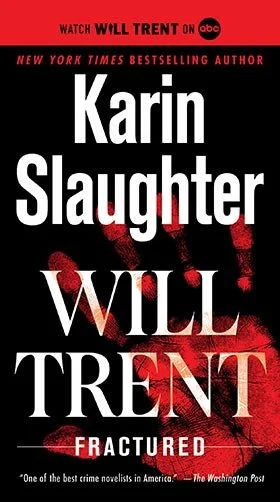
This is the second of Slaughter's Will Trent book series, featuring an Atlanta-based detective who grew up in foster care, and now work in the Georgia Bureau of Investigation. I listened to the audiobook narrated by Kathleen Early during my commute. In this series, a young girl is killed in one of Atlanta's most wealthy suburbs, and her mother, coming home, strangles the man she finds at her daughter's body, killing him. When Will Trent investigates, he finds that this isn't as clear-cut a crime as he thought it was - the man who got strangled is just a boy, and may not have been the killer. The plot of this book is okay, but a lot of the focus is on the personal development of the characters in the series. Will is now engaged to Angie, who grew up in foster care with him and is also a cop, but it isn't a happy situation by any means. Will's new partner happens to the daughter of a cop he sent to jail as part of a corruption investigation, which is undoubtedly awkward for everyone. The new partner, Faith, is grappling with the fact that her own son, born when she was 15, is the same age as the victim, which makes it very personal to her. And the murdered girl's father is Will's childhood bully, one who also grew up in foster care with him and Angie. Slaughter is a good writer, and has a grasp on interpersonal conflict and relationship that carries well. This is an unserious read, an entertainer, and it does the job well.
This is the second of Slaughter's Will Trent book series, featuring an Atlanta-based detective who grew up in foster care, and now work in the Georgia Bureau of Investigation. I listened to the audiobook narrated by Kathleen Early during my commute. In this series, a young girl is killed in one of Atlanta's most wealthy suburbs, and her mother, coming home, strangles the man she finds at her daughter's body, killing him. When Will Trent investigates, he finds that this isn't as clear-cut a crime as he thought it was - the man who got strangled is just a boy, and may not have been the killer. The plot of this book is okay, but a lot of the focus is on the personal development of the characters in the series. Will is now engaged to Angie, who grew up in foster care with him and is also a cop, but it isn't a happy situation by any means. Will's new partner happens to the daughter of a cop he sent to jail as part of a corruption investigation, which is undoubtedly awkward for everyone. The new partner, Faith, is grappling with the fact that her own son, born when she was 15, is the same age as the victim, which makes it very personal to her. And the murdered girl's father is Will's childhood bully, one who also grew up in foster care with him and Angie. Slaughter is a good writer, and has a grasp on interpersonal conflict and relationship that carries well. This is an unserious read, an entertainer, and it does the job well.
64rasdhar
13. Karin Slaughter - We Are All Guilty Here (William Morrow, 2025)
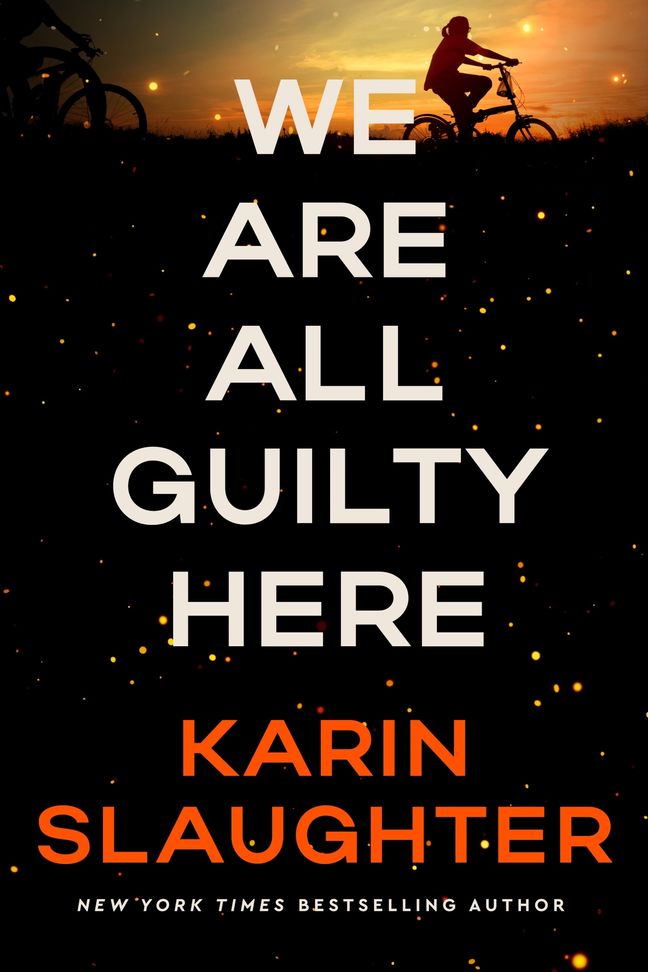
North Falls is a small town: everyone knows everyone, and the wealthiest family, the Cliftons, control everything in town. Emmy Clifton is a police officer, her father is the chief of police, and even though they are one of the poorer Clifton branches, they are no less powerful. On the 4th of July, as everyone gathers for fireworks, Emmy gets into an argument with her no-good, failed musician stoner husband, Jonah. Still smarting from it, she brushes off a teenage girl, her best friend's daughter, who approaches her for help. Hours later, the girl has disappeared, and later, Emmy finds her body, murdered along with another teenager. Racked by guilt, Emmy is determined to find out what happened, and in the process uncovers North Fall's many, dirty hidden secrets.
If the plot sounds somewhat hackneyed and generic, it is rescued by Slaughter's competent prose and plotting. Unlike the 'fair play' style of mystery, where the reader should be able to figure out what happens next from context clues, Slaughter is writing a thriller where you get punched with new information repeatedly, and when you don't expect it. I will confess that I did see some of it coming, but there were additional twists and turns that made the story a quick and entertaining read.
North Falls is a small town: everyone knows everyone, and the wealthiest family, the Cliftons, control everything in town. Emmy Clifton is a police officer, her father is the chief of police, and even though they are one of the poorer Clifton branches, they are no less powerful. On the 4th of July, as everyone gathers for fireworks, Emmy gets into an argument with her no-good, failed musician stoner husband, Jonah. Still smarting from it, she brushes off a teenage girl, her best friend's daughter, who approaches her for help. Hours later, the girl has disappeared, and later, Emmy finds her body, murdered along with another teenager. Racked by guilt, Emmy is determined to find out what happened, and in the process uncovers North Fall's many, dirty hidden secrets.
If the plot sounds somewhat hackneyed and generic, it is rescued by Slaughter's competent prose and plotting. Unlike the 'fair play' style of mystery, where the reader should be able to figure out what happens next from context clues, Slaughter is writing a thriller where you get punched with new information repeatedly, and when you don't expect it. I will confess that I did see some of it coming, but there were additional twists and turns that made the story a quick and entertaining read.
65dchaikin
>62 rasdhar: how interesting you read this early work by Everett. I appreciate all the insight into his writing through these stories.
66kjuliff
>62 rasdhar: An inspiring review Rasdhar. I will be adding this collection of short stories by Everett to my list. I’ve read two of Everett‘s books, both of which I liked. He’s such an engaging writer i’m looking for novellas and short stories lately.
67rasdhar
I had mentioned a medieval Sufi poet called Bulleh Shah in the music thread. He was a Sufi - Sufism, broadly is a syncretic, mystical branch of Islam that is very focused on love, music, and peace. I woke up last week to news that right wing Hindu extremists vandalized his shrine in India. Depressing.
Last week, a shrine of the 17th-century Sufi poet Bulleh Shah was vandalised by miscreants in Mussoorie, Uttarakhand, sparking widespread outrage and calls for the protection of Sufi heritage. The reactions also underscored the continued cultural relevance of Bulleh Shah, one of Punjab’s greatest Sufi poets, who is often likened to Rumi. He preached the primacy of “ishq” (universal love) above all religions, rejecting divisions of caste, creed, religion, and gender. As Punjabi poet and writer Dr Gurbhajan Gill notes, Bulleh Shah was a secular voice whose famous kafi (a type of Sufi poetry) captures his philosophy:
“Masjid dha de, mandir dha de, dha de jo kujh dhainda. Par kisi da dil na dhavin, Rabb dilan vich rehnda.” (Break down the mosque, break down the temple, break down everything that can be broken, but do not break a human heart, for that is where God resides.)”
68kidzdoc
>62 rasdhar: Great review of The Weather and Women Treat Me Fair, Rasdhar. I hadn't heard of this collection so I'll have to look out for it.
>67 rasdhar: That is such a horrible tragedy.
>67 rasdhar: That is such a horrible tragedy.
69labfs39
>62 rasdhar: Interesting review, Rasdhar.
70kjuliff
>64 rasdhar: I have put this on hold at NYPL. I am in the mood for short reads at the moment and your review intrigues.
71AnnieMod
>64 rasdhar: I like Karin Slaughter - she can get a bit out there in some of her plotting but is also one of thew few thriller writers that can write herself seemingly into a corner and still pull it off without making you go "what the hell?!".
Nice review. I need to see where I left off with her books and catch up :)
>63 rasdhar: "This is an unserious read, an entertainer"
Well, we cannot always read serious books :)
Nice review. I need to see where I left off with her books and catch up :)
>63 rasdhar: "This is an unserious read, an entertainer"
Well, we cannot always read serious books :)
72markon
>67 rasdhar: Sorry to hear about the vandalism at Bulleh Shah's shrine.
73bragan
>62 rasdhar: All right, that one's going on the wishlist. So far the only thing of Everett's that I've read is James, but I really do need to sample some more, and that sounds like a really interesting collection.
74rasdhar
February
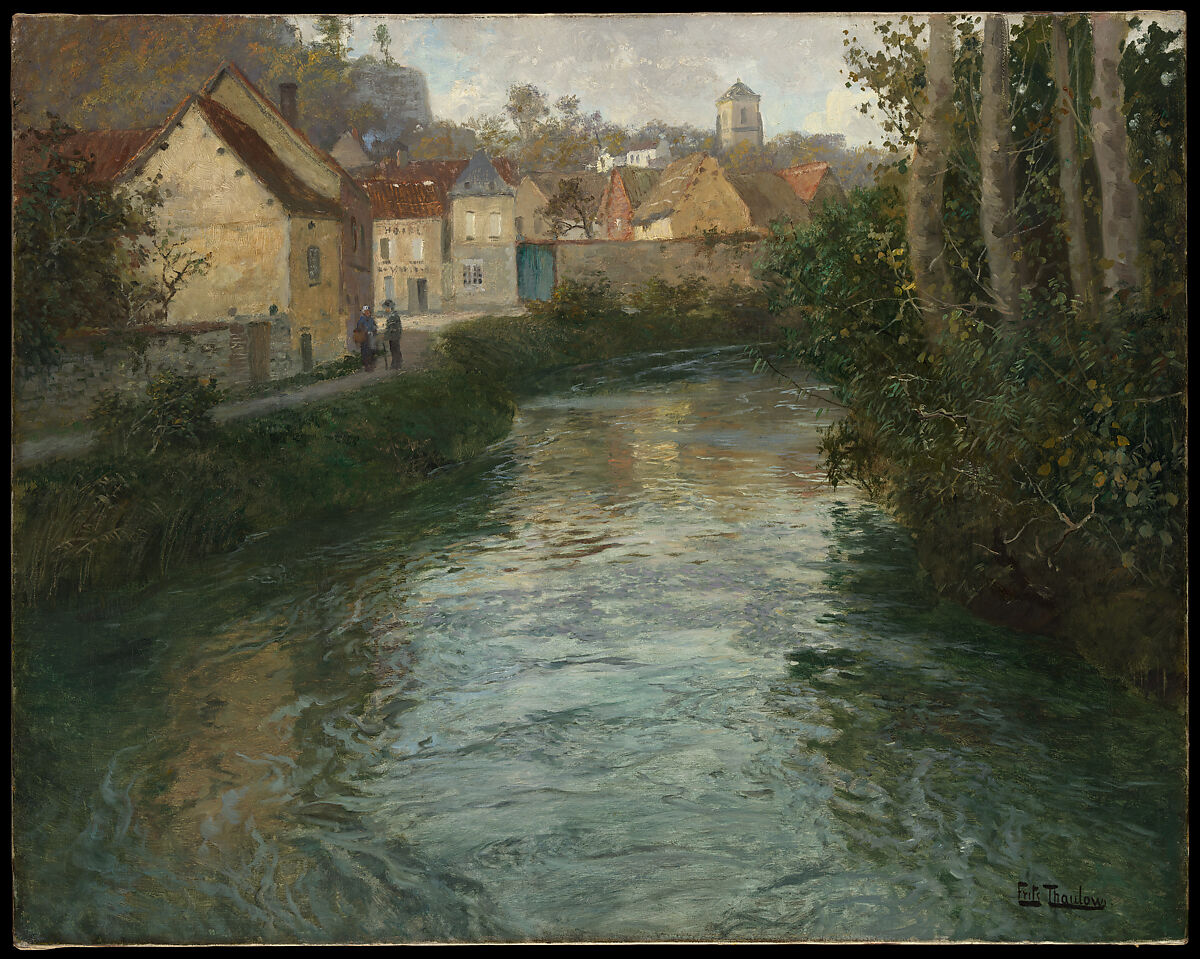
I went to see an exhibition of Impressionist art, and it was glorious. Most of the painters were familiar to me, but I never thought I'd get to see their paintings in real life. One that was new to me was Frits Thaulow, a Norwegian artist who specialised in painting scenes of moving water. He has an extraordinary gift - I felt as though I could see the water move and ripple under my feet as I stood before his paintings. Here is his painting of the French village of Picquigny, via the Met Museum (link to a bigger image here).
Books I'm still reading from last month:
Ross King - The Judgment of Paris: The Revolutionary Decade That Gave the World Impressionism
A Century of Poetry in The New Yorker: 1925-2025
Greg Grandin - America, América: A New History of the New World
Books I have bookmarked for this month:
Can Xue - The Last Lover
Christophe Chabouté - Park Bench
Chantel Acevedo - The Living Infinite
DH Lawrence - The Bad Side of Books: Selected Essays
Kaouther Adimi - Our Riches
I haven't been very active because I have been so busy teaching and working. In addition, I now teach at a differnt campus, so I'm commuting about an hour and a bit each way. It gives me a lot of reading time because I use public transport and walk a fair bit, but I'm quite tired out when I come home and don't feel like getting online. I am trying to check in on threads over the weekends, but if I don't come by as often, I apologise!
I went to see an exhibition of Impressionist art, and it was glorious. Most of the painters were familiar to me, but I never thought I'd get to see their paintings in real life. One that was new to me was Frits Thaulow, a Norwegian artist who specialised in painting scenes of moving water. He has an extraordinary gift - I felt as though I could see the water move and ripple under my feet as I stood before his paintings. Here is his painting of the French village of Picquigny, via the Met Museum (link to a bigger image here).
Books I'm still reading from last month:
Ross King - The Judgment of Paris: The Revolutionary Decade That Gave the World Impressionism
A Century of Poetry in The New Yorker: 1925-2025
Greg Grandin - America, América: A New History of the New World
Books I have bookmarked for this month:
Can Xue - The Last Lover
Christophe Chabouté - Park Bench
Chantel Acevedo - The Living Infinite
DH Lawrence - The Bad Side of Books: Selected Essays
Kaouther Adimi - Our Riches
I haven't been very active because I have been so busy teaching and working. In addition, I now teach at a differnt campus, so I'm commuting about an hour and a bit each way. It gives me a lot of reading time because I use public transport and walk a fair bit, but I'm quite tired out when I come home and don't feel like getting online. I am trying to check in on threads over the weekends, but if I don't come by as often, I apologise!
75kjuliff
>74 rasdhar: I’ve missed your posts Radshar and wondered if you were travelling.
I’ve always associated impressionist art with the French. I had not heard of Frits Thaulow, the Norwegian artist whose water movement paintings sound delightful.
I’ve always associated impressionist art with the French. I had not heard of Frits Thaulow, the Norwegian artist whose water movement paintings sound delightful.
76rasdhar
>75 kjuliff: Alive and kicking, Kate! I hope you've been well, and I've missed chatting with you online too! I had not heard of Frits Thaulow before either. This week I am listening to music inspired by the Impressionist movement - a lot of Debussy and Ravel.
77kidzdoc
>74 rasdhar: The water in that painting is astonishingly real! Thanks for posting that link; I'll plan to look for it the next time I go to The Met, probably this spring.
78rasdhar
14. Vincenzo Latronico - Perfection (translated from Italian into English by Sophie Hughes, Fitzcarraldo 2025)
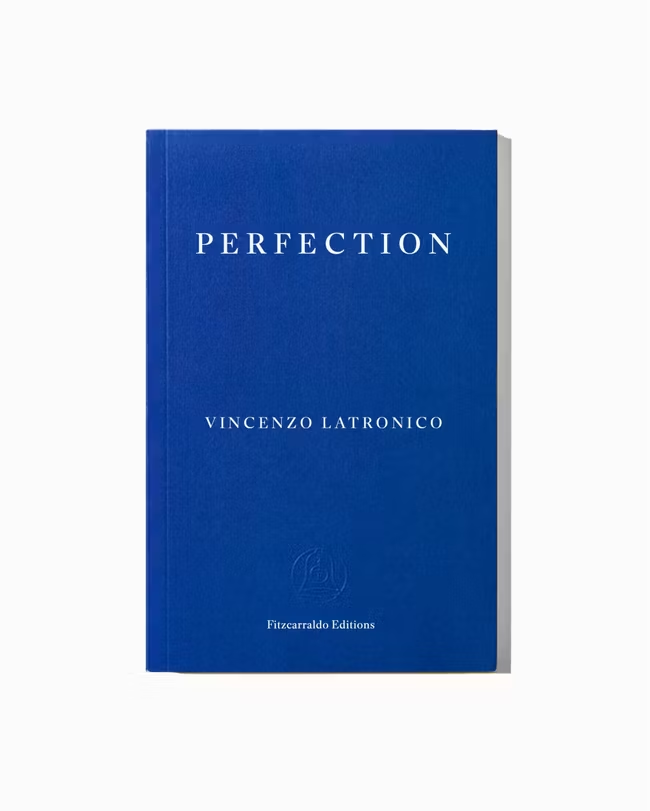
I have been, in a very lazy and sporadic way, working through the International Booker longlist from last year, and therefore came across this short novella about Anna and Tom, an expat couple living in Berlin. Their country of origin is referred to, but never specified, making this a universalised experience of the immigrant, abroad, searching for some kind of direction, and trying to create a home while feeling out of context. I read that this was meant to be a response to a book by Perec, which I haven't read, so perhaps some of his critique eludes me for that reason alone. Latronico's narrator seems to have an acerbic distaste for Tom and Anna, and their disaffection and disengagement from the world. It is, to me, immediately recognisable as a very particular condition of some millenial expats (having lived abroad for most of my life), and his unforgiving eye catches every single misstep in their approach. I read it personally as a bit of a cautionary tale to myself, but beyond that could not understand what the broader point, if any, of this book was.
I have been, in a very lazy and sporadic way, working through the International Booker longlist from last year, and therefore came across this short novella about Anna and Tom, an expat couple living in Berlin. Their country of origin is referred to, but never specified, making this a universalised experience of the immigrant, abroad, searching for some kind of direction, and trying to create a home while feeling out of context. I read that this was meant to be a response to a book by Perec, which I haven't read, so perhaps some of his critique eludes me for that reason alone. Latronico's narrator seems to have an acerbic distaste for Tom and Anna, and their disaffection and disengagement from the world. It is, to me, immediately recognisable as a very particular condition of some millenial expats (having lived abroad for most of my life), and his unforgiving eye catches every single misstep in their approach. I read it personally as a bit of a cautionary tale to myself, but beyond that could not understand what the broader point, if any, of this book was.
79rasdhar
15. Balsam Karam - The Singularity (translated from the Swedish by Saskia Vogel, Fitzcarraldo Editions 2025)
Reading Notes: I came across this list via the Oxford-Weidenfeld Translation Prize 2025 longlist.
Reading Notes: I came across this list via the Oxford-Weidenfeld Translation Prize 2025 longlist.
80rasdhar
15. Adam Plantinga - Hard Town (Grand Central Publishing, 2025)
Book Notes: This was listed for the Mystery Writers Association Best Novel prize in 2026.
Really not a very good mystery novel: there is not much of mystery to speak of, the narrator is unsympathetic, the villain generically disgusting, and the book littered with graphic and gratuitous accounts of sexual violence and animal cruelty. The entire goal seems to be to shock the reader, and the book offers nothing more. I cannot imagine why this was listed, and I question the MWA judges' acumen.
Book Notes: This was listed for the Mystery Writers Association Best Novel prize in 2026.
Really not a very good mystery novel: there is not much of mystery to speak of, the narrator is unsympathetic, the villain generically disgusting, and the book littered with graphic and gratuitous accounts of sexual violence and animal cruelty. The entire goal seems to be to shock the reader, and the book offers nothing more. I cannot imagine why this was listed, and I question the MWA judges' acumen.
81Dilara86
>67 rasdhar: This is beyond depressing.
82rasdhar
16. Mariana Enriquez - A Sunny Place for Shady People: Stories (translated from the Spanish by Megan McDowell, Granta 2025)
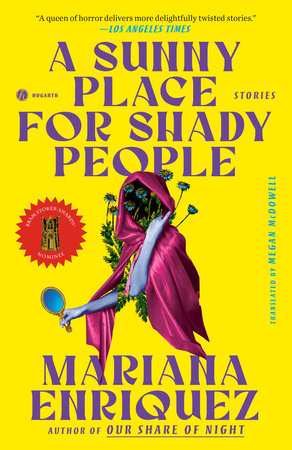
Still keeping up with the reading a short story per day program. This is a collection of Gothic horror tales from an Argentinian writer. I read an interview in which she talked about how 'haunting' doesn't exactly translate to Spanish: her work is situated, therefore, in Spanish-speaking people's traditions and histories - embrujado (bewitched), encantado (enchanted), maldito (cursed) and so on. There is a great deal of body horror, violence, and assault, and the hauntings (enchantings, bewitchings, cursings) are physical, psychological, and most of all, spiritual - seeing ghosts of dead lovers, dying men in mirrors, feeling the absence of a removed tumour as loss and not healing. There's also, inevitably, sex with ghosts. This is an interesting collection, fun to read, but I don't get the sense she's doing anything new. It seems to be riding the current algorithmic interest in Latin American horror fiction, which I certaintly am not going to complain about.
Still keeping up with the reading a short story per day program. This is a collection of Gothic horror tales from an Argentinian writer. I read an interview in which she talked about how 'haunting' doesn't exactly translate to Spanish: her work is situated, therefore, in Spanish-speaking people's traditions and histories - embrujado (bewitched), encantado (enchanted), maldito (cursed) and so on. There is a great deal of body horror, violence, and assault, and the hauntings (enchantings, bewitchings, cursings) are physical, psychological, and most of all, spiritual - seeing ghosts of dead lovers, dying men in mirrors, feeling the absence of a removed tumour as loss and not healing. There's also, inevitably, sex with ghosts. This is an interesting collection, fun to read, but I don't get the sense she's doing anything new. It seems to be riding the current algorithmic interest in Latin American horror fiction, which I certaintly am not going to complain about.
83ELiz_M
>74 rasdhar: I just saw this painting in December! (I am, slowly, trying to visit every room in the Met Museum and room 827 was one of the four rooms I spent time in during my last visit.) That painting caught my eye, but I loved this one:
https://www.metmuseum.org/art/collection/search/435621
https://www.metmuseum.org/art/collection/search/435621
84kjuliff
>82 rasdhar: A short story a day is such a good idea. I’m such an undisciplined reader. I can’t manage that. I go overboard and read the whole collection if I enjoy the first story.
I’ve enjoyed Argentinean writers for some time. I like the upfront-ness of many of their writings. A favorite is The Woman from Uruguay by Pedro Mairal. Gothic sexual infatuation rather than horror. It was one of my favorite reads of 2024.
I’ve enjoyed Argentinean writers for some time. I like the upfront-ness of many of their writings. A favorite is The Woman from Uruguay by Pedro Mairal. Gothic sexual infatuation rather than horror. It was one of my favorite reads of 2024.
85rasdhar
17. Undone by Karin Slaughter (2009)
This is book 3 in Karin Slaughter's series about an Atlanta detective, Will Trent. I've been listening to these on the bus because I've been leaving home a bit later than usual. Because the buses are bit crowded (rush hour) I'm finding it a bit easier to listen than read a physical book like I normally do. The narrator for these audiobooks is really very good and easy to listen to. But I think I've reached my limit of Slaughter's books. She's famously gory, and although I really do enjoy her writing, plotting, and characterisation, my stomach is too weak for all the really gruesome details that she brings in (so, entirely my fault and not hers).
This is book 3 in Karin Slaughter's series about an Atlanta detective, Will Trent. I've been listening to these on the bus because I've been leaving home a bit later than usual. Because the buses are bit crowded (rush hour) I'm finding it a bit easier to listen than read a physical book like I normally do. The narrator for these audiobooks is really very good and easy to listen to. But I think I've reached my limit of Slaughter's books. She's famously gory, and although I really do enjoy her writing, plotting, and characterisation, my stomach is too weak for all the really gruesome details that she brings in (so, entirely my fault and not hers).
86rasdhar
18. Percival Everett - Half an Inch of Water (Graywolf Press, 2015)
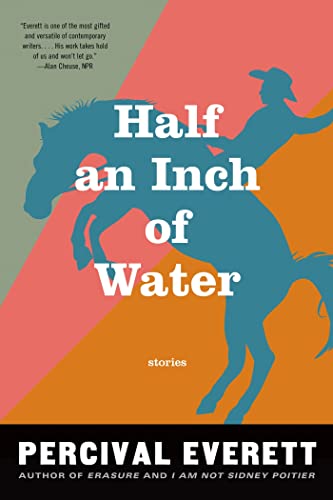
Reading Notes: I read one of the stories included in this collection ("Graham Greene") and it intrigued me enough that I hunted up the whole collection.
I was going to write a review but I recommend you go check out @RidgewayGirl's excellent review instead - here because she has captured everything I liked about this excellent collection of stories.
Reading Notes: I read one of the stories included in this collection ("Graham Greene") and it intrigued me enough that I hunted up the whole collection.
I was going to write a review but I recommend you go check out @RidgewayGirl's excellent review instead - here because she has captured everything I liked about this excellent collection of stories.
87kjuliff
>85 rasdhar: I’ve almost tried a Karin Slaughter book this past year as they look like easy and interesting reads. I used to read books on my commute to work before I retired and it’s a good way to pass that time. Easy to read Books much better when traveling. Is there any particular one you’d recommend?
88rasdhar
>87 kjuliff: Be warned that they are very graphic and gory. I haven't read so many of her's so I don't know which is best. But I thought We Are All Guilty Here was reasonably entertaining.
89rasdhar
19. Chantel Acevedo - The Living Infinite (Europa, 2017)
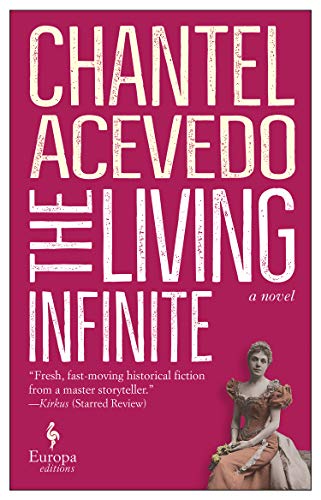
Reading Notes: Saw it in the library, it looked interesting.
Chantel Acevedo has written this fictionalised account of the life of the real Infanta Eulalia of Spain. I found this a very readable and easy account, but I am mystified about the purpose of the novel - apparently the Infanta wrote several memoirs of her own life, but for some reason Acevedo felt the need to add to this life full of drama, romance, politics, and conflict by adding one more imaginary romance with her wet nurse's son. I am left asking 'why' - because the prose itself is not remarkable, nor the story which does not match up to the wild reality of her life.
Reading Notes: Saw it in the library, it looked interesting.
Chantel Acevedo has written this fictionalised account of the life of the real Infanta Eulalia of Spain. I found this a very readable and easy account, but I am mystified about the purpose of the novel - apparently the Infanta wrote several memoirs of her own life, but for some reason Acevedo felt the need to add to this life full of drama, romance, politics, and conflict by adding one more imaginary romance with her wet nurse's son. I am left asking 'why' - because the prose itself is not remarkable, nor the story which does not match up to the wild reality of her life.
90rasdhar
20. Mosab Abu Toha - Forest of Noise (2024)
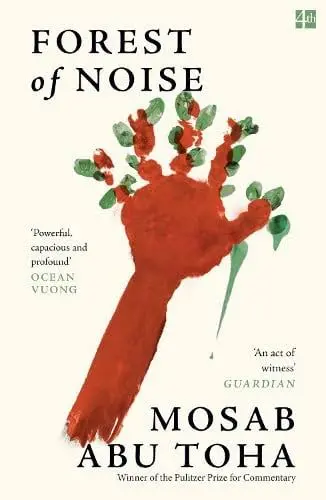
Just an absolutely devastating poetical account of Palestinian life: attacks, bombs, occupations, strip searches. Horrifying and mandatory reading.
Just an absolutely devastating poetical account of Palestinian life: attacks, bombs, occupations, strip searches. Horrifying and mandatory reading.
At fifth grade, I visit the school library.
On a wall by the door, a poster claims,
"If you read books, you live more than one life."
Now I'm thirty and whenever I look at faces
around me, old or young, on each forehead I read,
"If you live in Gaza you die several times."
91labfs39
>90 rasdhar: Everyone who has read Forest of Noise has been impressed: Lois/avaland, Ardene/markon. I don't read poetry very often, but this looks like a must read. And the passage you quote is straightforward, so I might be able to understand it.
92kidzdoc
>90 rasdhar: Thanks, rasdhar. I just requested this collection from one of my local library systems.
93stretch
>82 rasdhar: The recentish shift in Latin American storytelling from traditional magical realism into horror has been a fantastic development for the sometimes stale genre.
94rasdhar
>91 labfs39: It is written in a very straightforward manner, I think it is accessible for people who don't read a lot of poetry.
>92 kidzdoc: I'm looking forward to your thoughts!
>93 stretch: I can't agree more. It's been very exciting to see this genre grow.
>92 kidzdoc: I'm looking forward to your thoughts!
>93 stretch: I can't agree more. It's been very exciting to see this genre grow.
95rasdhar
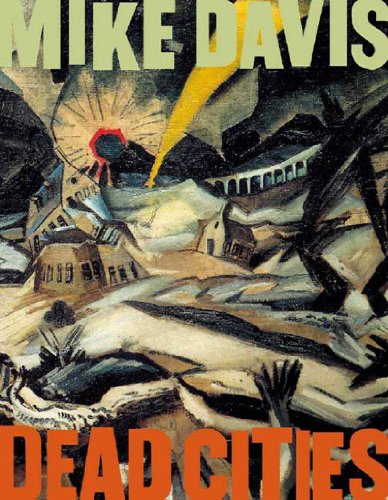
21. Mike Davis - Dead Cities And Other Tales (The New Press)
Some weeks back a friend and I were joking about adopting the Bradbury Challenge - based on a speech by Ray Bradbury in which he encouraged people to read one poem, one short story, and one essay every night. Here's the relevant bit:
I haven't been doing this consistently, but even being vaguely aware of the concept has encouraged me to do more reading in these genres than I would normally, so I consider it a win. As part of the effort to read more essays, I picked up this volume by Mike Davis, a former truck driver, meat cutter, trade union activist and scholar. I once did a university course in which we had to read a chapter from his book, Late Victorian Holocausts which left such a great impression on me that I vowed at once to read more by him, but it has taken me this far to actually do so.
Dead Cities and Other Tales is a collection of 18 essays focused on natural history, urbanisation, geography, environment and culture, through which he connects environmental degradation to urban decay. Many of the themes he draws from seem apocalyptic for the time they were written (1990s), and deeply prescient today as we face water shortages, climate change, polarisation and ghettoisation. In that there is global relevance, even if his specific examples are America-specific (10 of the essays deal with Los Angeles, several others with New York and other American cities). Some of what he was writing was known to me - the culture of fear following 9/11 and how it shaped New York's urban geography in 'The Flames of New York' or 'Tsunami Memories' which is about cultural memory in Honolulu. But others traced bits of American urban history that I had not heard of: 'Berlin's Skeleton in Utah's Closet' is an account of the Dugway Proving Ground, where the US Army constructed a fake village to test bombs and munitions for World War II, leaving a lasting but acknowledged and unaddressed impact on the health and environment in the surrounding area, and 'Ecocide in Marlboro County' which introduced me to the work of photographer Richard Misrach, who created documentation of plutonium dumpsites in Nevada.
Davis' great gift is his wonderful, polemical style, thrumming with rage and care for the people and places he writes about, and particularly for the most vulnerable and the displaced, including particularly Native Americans, and Black people (but notably, without much reference to gender). Often this can feel a bit heavy handed, as though he were not content to make the point but must drive it in over and over. Ordinarily that annoys me, but increasingly I find that such writing has its place especially today, where the concerns he raise have declining purchase and need reiteration. Much of this writing is also now quite dated, and suffers from a style that is fast and loose with facts in service of the rhetoric. There isn't much hope to be found here, but I did come away with a list of poets, writers, activists, and books that I wanted to follow up, which is a marker of his incredible range and erudition.
Some weeks back a friend and I were joking about adopting the Bradbury Challenge - based on a speech by Ray Bradbury in which he encouraged people to read one poem, one short story, and one essay every night. Here's the relevant bit:
“I’ll give you a program to follow every night, a very simple program…one poem a night, one short story a night, one essay a night, for the next 1,000 nights. From various fields: archaeology, zoology, biology, all the great philosophers of time, comparing them…But that means that every night then, before you go to bed, you’re stuffing your head with one poem, one short story, one essay—at the end of a thousand nights, Jesus God, you’ll be full of stuff, won’t you?”- Ray Bradbury, ' "Telling the Truth' the keynote address of The Sixth Annual Writer's Symposium by the Sea, sponsored by Point Loma Nazarene University (listen on Youtube here: https://www.youtube.com/watch?v=_W-r7ABrMYU).
I haven't been doing this consistently, but even being vaguely aware of the concept has encouraged me to do more reading in these genres than I would normally, so I consider it a win. As part of the effort to read more essays, I picked up this volume by Mike Davis, a former truck driver, meat cutter, trade union activist and scholar. I once did a university course in which we had to read a chapter from his book, Late Victorian Holocausts which left such a great impression on me that I vowed at once to read more by him, but it has taken me this far to actually do so.
Dead Cities and Other Tales is a collection of 18 essays focused on natural history, urbanisation, geography, environment and culture, through which he connects environmental degradation to urban decay. Many of the themes he draws from seem apocalyptic for the time they were written (1990s), and deeply prescient today as we face water shortages, climate change, polarisation and ghettoisation. In that there is global relevance, even if his specific examples are America-specific (10 of the essays deal with Los Angeles, several others with New York and other American cities). Some of what he was writing was known to me - the culture of fear following 9/11 and how it shaped New York's urban geography in 'The Flames of New York' or 'Tsunami Memories' which is about cultural memory in Honolulu. But others traced bits of American urban history that I had not heard of: 'Berlin's Skeleton in Utah's Closet' is an account of the Dugway Proving Ground, where the US Army constructed a fake village to test bombs and munitions for World War II, leaving a lasting but acknowledged and unaddressed impact on the health and environment in the surrounding area, and 'Ecocide in Marlboro County' which introduced me to the work of photographer Richard Misrach, who created documentation of plutonium dumpsites in Nevada.
Davis' great gift is his wonderful, polemical style, thrumming with rage and care for the people and places he writes about, and particularly for the most vulnerable and the displaced, including particularly Native Americans, and Black people (but notably, without much reference to gender). Often this can feel a bit heavy handed, as though he were not content to make the point but must drive it in over and over. Ordinarily that annoys me, but increasingly I find that such writing has its place especially today, where the concerns he raise have declining purchase and need reiteration. Much of this writing is also now quite dated, and suffers from a style that is fast and loose with facts in service of the rhetoric. There isn't much hope to be found here, but I did come away with a list of poets, writers, activists, and books that I wanted to follow up, which is a marker of his incredible range and erudition.
96rasdhar
22. Jessica Abel - La Perdida (Fantagraphics, 2002)

Jessica Abel has a great and expressive style: her firm strokes, thick lines, and way with facial expressions almost redeem the pointlessness of this story. It features Carla, an American, whose absent father is from Mexico. Despite speaking no Spanish, having no money, and very little life skills or research, she decides to go to Mexico to live. She takes up residence with a rich trust-fund baby ex boyfriend who quite reasonably kicks her out of his apartment after she ends up staying for three months when she had told him she'd be there for a week's vacation. Through a connection of such 'expats' she gets a job teaching English (by virtue of being raised in America, and no actual teaching credentials) and with her Frida poster on the wall, goes in search of 'authentic' Mexico city, which seems to involve getting drunk, taking drugs and sleeping with strangers (how this is different from authentic Chicago, where she comes from, I don't know). From there it devolves there into stereotypes of Mexican ganglords, kidnappings and crimes, the kind you could find by turning on Fox News for five minutes. So in a sense this is a book about America that happens to be set in 'Mexico' but could be set in any 'exotic' location for the same story. A pass from me.

Jessica Abel has a great and expressive style: her firm strokes, thick lines, and way with facial expressions almost redeem the pointlessness of this story. It features Carla, an American, whose absent father is from Mexico. Despite speaking no Spanish, having no money, and very little life skills or research, she decides to go to Mexico to live. She takes up residence with a rich trust-fund baby ex boyfriend who quite reasonably kicks her out of his apartment after she ends up staying for three months when she had told him she'd be there for a week's vacation. Through a connection of such 'expats' she gets a job teaching English (by virtue of being raised in America, and no actual teaching credentials) and with her Frida poster on the wall, goes in search of 'authentic' Mexico city, which seems to involve getting drunk, taking drugs and sleeping with strangers (how this is different from authentic Chicago, where she comes from, I don't know). From there it devolves there into stereotypes of Mexican ganglords, kidnappings and crimes, the kind you could find by turning on Fox News for five minutes. So in a sense this is a book about America that happens to be set in 'Mexico' but could be set in any 'exotic' location for the same story. A pass from me.
97labfs39
>96 rasdhar: Thanks for the warning on this one. And to think it's the first of five volumes.
98valkyrdeath
>96 rasdhar: Always disappointing when a good art style doesn't have the content to match. I think I'll avoid this one.
99rasdhar
>97 labfs39: >98 valkyrdeath: Yep, I'd give this one a pass.
101kjuliff
>100 rasdhar: Thank you for this wistful review Rasdhar. It sounds like the sort of book that I need right now. I’ve put it onto my list and look forward to it.
102AnnieMod
>100 rasdhar: I read her Winter in Sokcho awhile back and had very similar reaction to it. She seems to be good at writing these slow books that pack a lot of feeling. Need to look for this one.
103rasdhar
>101 kjuliff: hope you enjoy it!
>102 AnnieMod: I read her Vladivostok Circus last year and really enjoy it too.
>102 AnnieMod: I read her Vladivostok Circus last year and really enjoy it too.
104labfs39
>100 rasdhar: Noting this author. She sounds like one I would enjoy when in the mood for this type of book. I'm curious about how she writes about such different locations, but I see she has lived in these various places.
105rasdhar
MARCH
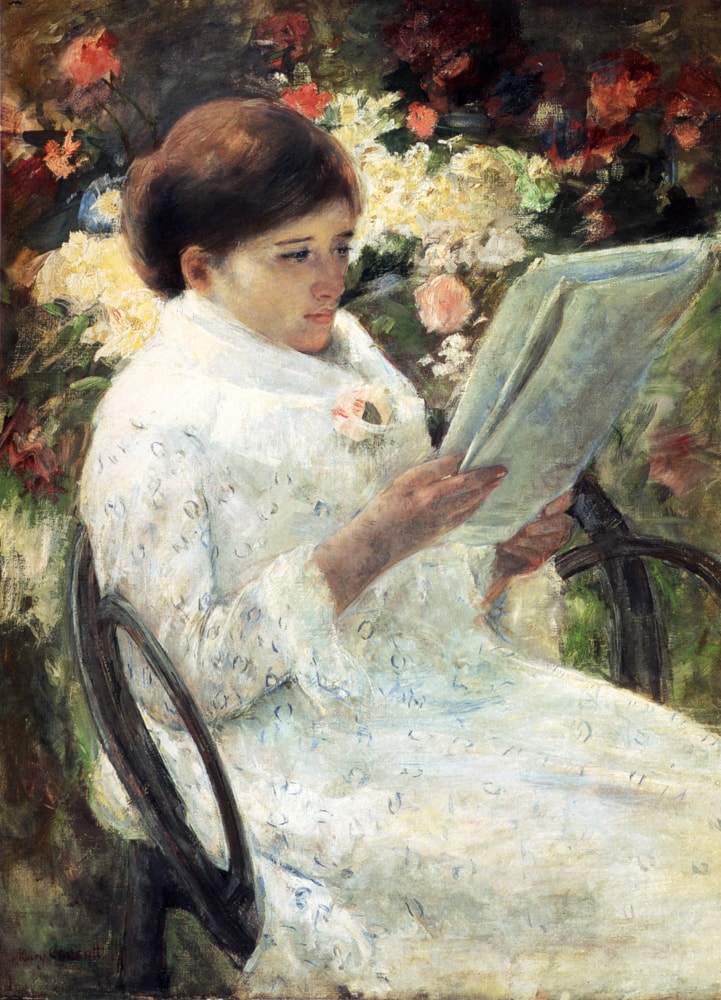
Mary Cassatt, 'Woman Reading in a Garden' (1880, oil on canvas)
image description: an oil painting of a woman in a white dress, sitting on a chair reading a large book or a newspaper, with a backdrop of a blooming garden of flowers.
I am still thinking about the impressionist exhibit I went to last month, and reflecting, in time for Women's History Month, that it contained only two paintings by women in three full galleries of art. So this is a painting by Mary Cassatt, who was one of the few women who exhibited with the key impressionists. She created many paintings of the interior life of women: women reading, bathing, parenting, engaged in living their life. I like her work very much.
In March, I am looking forward to going home to Mumbai: a dear family member will get engaged to be married, and that is a bright spot of joy in a dark world. I have been reading constantly. Last week when one of my classes failed to come prepared for discussion yet again, I made them do the reading in person while I sat there and continued with my novel. I am always being accused of being too soft with my students, and am always inclined to be forgiving and give them the benefit of doubt, so this was difficult for all of us. But, this week, they came prepared.
Here's what I have on my shelf now:
Weipin Tsai - The Making of China’s Post Office: Sovereignty, Modernization, and the Connection of a Nation (Harvard 2024)
Can Xue - The last lover translated by Annelise Finegan Wasmoen
Samanta Schweblin - Mouthful of birds : stories /translated by Megan McDowell.
Andrea Wulf - Magnificent Rebels: The First Romantics and the Invention of the Self (John Murray 2022)
Anjet Daanje - The Remembered Soldier
Shida Bazyar - The Nights are Quiet in Tehran
Mary Cassatt, 'Woman Reading in a Garden' (1880, oil on canvas)
image description: an oil painting of a woman in a white dress, sitting on a chair reading a large book or a newspaper, with a backdrop of a blooming garden of flowers.
I am still thinking about the impressionist exhibit I went to last month, and reflecting, in time for Women's History Month, that it contained only two paintings by women in three full galleries of art. So this is a painting by Mary Cassatt, who was one of the few women who exhibited with the key impressionists. She created many paintings of the interior life of women: women reading, bathing, parenting, engaged in living their life. I like her work very much.
In March, I am looking forward to going home to Mumbai: a dear family member will get engaged to be married, and that is a bright spot of joy in a dark world. I have been reading constantly. Last week when one of my classes failed to come prepared for discussion yet again, I made them do the reading in person while I sat there and continued with my novel. I am always being accused of being too soft with my students, and am always inclined to be forgiving and give them the benefit of doubt, so this was difficult for all of us. But, this week, they came prepared.
Here's what I have on my shelf now:
Weipin Tsai - The Making of China’s Post Office: Sovereignty, Modernization, and the Connection of a Nation (Harvard 2024)
Can Xue - The last lover translated by Annelise Finegan Wasmoen
Samanta Schweblin - Mouthful of birds : stories /translated by Megan McDowell.
Andrea Wulf - Magnificent Rebels: The First Romantics and the Invention of the Self (John Murray 2022)
Anjet Daanje - The Remembered Soldier
Shida Bazyar - The Nights are Quiet in Tehran
106rasdhar
24. Weipin Tsai - The Making of China’s Post Office: Sovereignty, Modernization, and the Connection of a Nation (Harvard 2024)
Reading notes:
- I started this last year, put it down, and picked it up to finish it this year.
- I am fascinated with the post in general and still write letters by hand all the time, so I wanted to read more about the history of postal services
- You'd be surprised at how much Terry Pratchett got right in his fantastic comedy, Going Postal.
Reading notes:
- I started this last year, put it down, and picked it up to finish it this year.
- I am fascinated with the post in general and still write letters by hand all the time, so I wanted to read more about the history of postal services
- You'd be surprised at how much Terry Pratchett got right in his fantastic comedy, Going Postal.
107RidgewayGirl
>105 rasdhar: Have fun in Mumbai. It's really a special place.
108FlorenceArt
>106 rasdhar: Intrigued by the comment on Pratchett! I read Going Postal but it was on paper and I don’t have it any more. You make me want to read it again.
Have a great trip home!
Have a great trip home!
109kidzdoc
Great review of The Making of China’s Post Office. Enjoy your visit home!
110kjuliff
>105 rasdhar: Great news about your upcoming trip to Mumbai. I know you will have a wonderful time.
I think you will appreciate The Nights are Quiet in Tehran. I had just reviewed it a few hours before Iran was bombed. I couldn’t believe it when I woke in the morning to the news. Tehran is a city I’ll always remember fondly. To see the damage done there now is horrifying.
After the events of the last few days I can see why Shida Bazyar had the ending of her book set in 2029. I think I would’ve reviewed the book differently had I written it after the current wars in the Middle East. But I’m leaving the review as it is. Sad times indeed.
I think you will appreciate The Nights are Quiet in Tehran. I had just reviewed it a few hours before Iran was bombed. I couldn’t believe it when I woke in the morning to the news. Tehran is a city I’ll always remember fondly. To see the damage done there now is horrifying.
After the events of the last few days I can see why Shida Bazyar had the ending of her book set in 2029. I think I would’ve reviewed the book differently had I written it after the current wars in the Middle East. But I’m leaving the review as it is. Sad times indeed.
111labfs39
>105 rasdhar: I enjoyed The Remembered Soldier quite a bit, but then I like books that deal with issues of memory. I look forward to your comments.
112mabith
The Making of China's Post Office sounds super fascinating, but I think I feel that way about all post office history. It's such a specific human endeavor with so many obstacles in the way (though I may be biased since my mom worked for the postal service in multiple capacities for decades).
113Dilara86
>106 rasdhar: >108 FlorenceArt: My eye was drawn to the book's title, so I read it before the comment on Terry Pratchett, and my mind went straight to Going Postal :-D Glad but not overly surprised that he got a number of things right.
Enjoy your stay in Mumbai!
Enjoy your stay in Mumbai!
114rasdhar
>107 RidgewayGirl: >108 FlorenceArt: >109 kidzdoc: >110 kjuliff: >111 labfs39: >112 mabith: >113 Dilara86: thanks all, I will be taking some time during my vacation to catch up on everyone's threads.
116rasdhar
26. Karin Slaughter - Fallen
I listened to it while doing chores, a mediocre crime novel marred by gratuitous accounts of violence.
I listened to it while doing chores, a mediocre crime novel marred by gratuitous accounts of violence.
118rasdhar
28. Arturo Perez-Reverte - The Final Problem (translated from the Spanish by Frances Riddle, Little, Brown and Company 2026)
119ELiz_M
>117 rasdhar: that was a fun review to read!
120Dilara86
Well, it looks like you've had some underwhelming reads! I hope you enjoyed your vacation :-)
122raton-liseur
>118 rasdhar: Good you enjoyed it well enough. Arturo Perez-Reverte is a great author, but crime novels is not was I like the most from him. His war and/or history novels are better, IMO.
123cindydavid4
>122 raton-liseur: i read 3 or 4 of those and really enjoyed the writing and the history it taught me
but as usual with me crime novel just doesnt mesh with me
but as usual with me crime novel just doesnt mesh with me
124raton-liseur
>124 raton-liseur: We are on the same page here!
125rasdhar
29. Greg Grandin - America, América: A New History of the New World
I enjoyed this very much. There's a very interesting set of comments on the book discussion thread here: https://www.librarything.com/topic/377289#n9150297
I'll only add that this, reposting from the discussion thread:
I did look over some reviews by professional historians and critics afterwards. Grandin responds to one of them by arguing that his book is "a rehabilitation of colonial Catholicism as the foundation of political and legal modernism" (Times Literary Supplement, May 23 2025). I understood this to be the central claim of the book as well, developed by contrasting it with the legal and moral justifications offered for North American colonialism. I do think that some of the dissatisfaction I see from readers stems from a mismatch between what they expected the book to do (provide a general history) and what Grandin set out to do (present a specific argument, drawing from sources that support it, and refuting counterclaims). To that extent, I think Grandin did exactly what he set out to do and even if I didn't agree with his central premise (I don't think that colonial Catholicism *can* be rehabilitated), I think it is only fair read his book in light of the book he actually wrote and not the book people expected to read.
I enjoyed this very much. There's a very interesting set of comments on the book discussion thread here: https://www.librarything.com/topic/377289#n9150297
I'll only add that this, reposting from the discussion thread:
I did look over some reviews by professional historians and critics afterwards. Grandin responds to one of them by arguing that his book is "a rehabilitation of colonial Catholicism as the foundation of political and legal modernism" (Times Literary Supplement, May 23 2025). I understood this to be the central claim of the book as well, developed by contrasting it with the legal and moral justifications offered for North American colonialism. I do think that some of the dissatisfaction I see from readers stems from a mismatch between what they expected the book to do (provide a general history) and what Grandin set out to do (present a specific argument, drawing from sources that support it, and refuting counterclaims). To that extent, I think Grandin did exactly what he set out to do and even if I didn't agree with his central premise (I don't think that colonial Catholicism *can* be rehabilitated), I think it is only fair read his book in light of the book he actually wrote and not the book people expected to read.
126rasdhar
30. Oyinkan Braithwaite - My Sister, The Serial Killer (Doubleday, 2018)
This is a stupid book, and it's my fault for picking up anything that is advertising as a "Sunday Times Best Seller". The protagonist is a perfect eldest daughter, a nurse who cares about her patients and nurses a crush on a doctor that she works with, but her little sister is a capricious, shallow, serial killer. Family comes first, and so she helps her sister cover each crime, but the police are narrowing in. It is a stupid premise, stupidly executed.
This is a stupid book, and it's my fault for picking up anything that is advertising as a "Sunday Times Best Seller". The protagonist is a perfect eldest daughter, a nurse who cares about her patients and nurses a crush on a doctor that she works with, but her little sister is a capricious, shallow, serial killer. Family comes first, and so she helps her sister cover each crime, but the police are narrowing in. It is a stupid premise, stupidly executed.
127rasdhar
31. Yasuhiko Nishizawa - The Man Who Died Seven Times (Translated from the Japanese by Jesse Kirkwood, Howes 2026)
Ever since he was a child, Hisataro, a mediocre scion of a wealthy business family, has been caught in time loops. Entirely at random, he'll get stuck - and the same day will repeat seven times until time resumes its natural progression. Sometimes, he's able to leverage this to his advantage, to ace exams or impress a girl - but being largely mediocre in every way, once time resumes and he loses his advantage, he cannot keep it up and his grades decline and the girlfriends go away. The stakes have generally been low, but finally, gathering at his grandfather's house to decide who will inherit a sizable fortune, he finds his grandfather bludgeoned to death, and the time loop begins. Hisatoro now has to find out who did it, since everyone seems to have a motive, and somehow prevent it, before the seven days run out.
This is an interesting premise, and I thought it was reasonably well-executed.
Ever since he was a child, Hisataro, a mediocre scion of a wealthy business family, has been caught in time loops. Entirely at random, he'll get stuck - and the same day will repeat seven times until time resumes its natural progression. Sometimes, he's able to leverage this to his advantage, to ace exams or impress a girl - but being largely mediocre in every way, once time resumes and he loses his advantage, he cannot keep it up and his grades decline and the girlfriends go away. The stakes have generally been low, but finally, gathering at his grandfather's house to decide who will inherit a sizable fortune, he finds his grandfather bludgeoned to death, and the time loop begins. Hisatoro now has to find out who did it, since everyone seems to have a motive, and somehow prevent it, before the seven days run out.
This is an interesting premise, and I thought it was reasonably well-executed.
128rasdhar
Don't have time to write full reviews but just listing out the books I read so that I don't forget:
32. Adrian Tchaikovsky - Service Model
33. Solvej Balle - On the Calculation of Volume III
34. Stephen King - Mr Mercedes
35. Zuo Fei, Xiao Yue Shan and Simon Shieh - Ten Thousand Miles of Clouds and Moons: New Chinese Writing
36. Andrea Wulf - Magnificent Rebels: The First Romantics and the Invention of the Self
37. Anjet Daanje - The Remembered Soldier
38. Shida Bazyar - The Nights are Quiet in Tehran
33. Solvej Balle - On the Calculation of Volume III
36. Andrea Wulf - Magnificent Rebels: The First Romantics and the Invention of the Self
37. Anjet Daanje - The Remembered Soldier
38. Shida Bazyar - The Nights are Quiet in Tehran
129labfs39
>125 rasdhar: I've read a few reviews of this and you point is an excellent one in better understanding pov and authorial intent.
>128 rasdhar: I look forward to your impressions of The Remembered Soldier. Although I thought it could have been tightened up, I enjoy reading about memory, and I thought the opening scenes quite touching.
>128 rasdhar: I look forward to your impressions of The Remembered Soldier. Although I thought it could have been tightened up, I enjoy reading about memory, and I thought the opening scenes quite touching.
130kjuliff
>128 rasdhar: I’d be interested to how you rated On the Calculation of Volume (Book III) and The Nights are Quiet in Tehran. I reviewed both before it became too hard. I read the Tehran one before the current invasion. Tehran is one of the many cities that I’ve visited that has been devastated by more or earthquake.
131rasdhar
>130 kjuliff: hi Kate, I have so many reviews to catch up on. I'm going to go look up yours as well. I hope you've been well.
132rasdhar
I have two months' worth of reviews to catch up on, but here's a dent:
39. Patrick Radden Keefe - Rogues (Vintage, 2023)
Patrick Radden Keefe is an American journalist whose nonfiction reportage has covered a range of subjects, from Sackler family's role in driving drug addiction in America Empire of Pain, to the troubles in North Ireland (Say Anything). In Rogues he collects some of his shorter essays reporting on similar subjects from around the world. I found it to be a very engaging, if disturbing, read. He is a good writer, and his narrative comes across as empathetic but not unquestioning.
The weakest link in this collection is the one it begins with - The Jefferson Bottles, describing how German collector Hardy Rodenstock apparently defrauded hundreds of elite and experts on wine by claiming to have found Thomas Jefferson's private collection of vintage bottles. It was a bit disconcerting to read Keefe's amiable interactions with Bill Koch (yes, of that Koch family, who with his brothers bankrolled some of the worst conservative American politicians), and between the thoroughly unlikable Rodenstock and the equally unlikable uber-wealthy that he scammed, it was difficult to read this as anything but an inconsequential dalliance between egregiously self-important people. Fortunately, Keefe does not attempt to make any more of it.
From here, Keefe's essays cover the rapacious projects of Israeli businessman Beny Steinmetz, who was eventually convicted for corruption in relation to his exploitative enterprises in Guinea, Africa. It serves as a lesson that the colonisation of the African continent hasn't ended, it has evolved. The Hunt for El Chapo' similarly covers transnational efforts to trap the leader of the Sinaloa drug cartel, and Winning traces the rise of another criminal empire, following producer Mark Burnett's facilitation of Donald Trump's TV career. Other essays track a Swiss bank heist , the investigation and arrest of a Syrian arms dealer, and a massive hedge fund scam by Wall Street millionaire Steven Cohen. Keefe really excels at drawing together complex threads that tie these wide-ranging webs of corruption into a format that the lay reader can easily parse and understand, without diminishing the scale of the criminal enterprise and corruption that occurs.
In other stories, Keefe's examination becomes much more personal, and here his empathetic but unflinching approach is apparent. He listens, he reports, but he also asks questions. He writes about Astrid Holleeder, a Dutch lawyer who recorded and exposed her brother's murderous mafia enterprise with a sensitive account of the violence and threats she faced, but takes an appropriately sceptical eye to her wilder claims. Similarly, his account of Amy Bishop, a Harvard scientist who shot and killed three of her colleagues portrays the complex grief of her family while also asking if they aren't concealing facts about the death of Amy's brother, in an alleged accidental shooting by Amy, years before. These can be tricky lines to walk, but he does for the most part succeed in doing so carefully. His account of Ken Dornstein's years-long investigation into the Lockerbie bombing, which killed Dornstein's brother, is mindful of Dornstein's personal loss while asking questions about the limits of vigilantism, and a profile of the defence lawyer who represented Dzokhar Tsarnaev after the Boston Bombings considers the costs of a lifelong commitment to forgiveness and advocacy.
These twelve essays were previously published in the New Yorker, and can still be found online (I've tried to link them) and largely revolve around the sub-heading, which describes them as 'True Stories of Grifters, Killers, Rebels and Crooks'. This is true, with one exception: the last essay is a moving account of the life and work of the chef, TV producer, and writer Anthony Bourdain, who certainly does not qualify as any of these. Keefe draws a sympathetic portrait of a principled and pained man. I enjoyed that essay in particular, and it was a nice way to end the collection of sordid tales.
39. Patrick Radden Keefe - Rogues (Vintage, 2023)
Patrick Radden Keefe is an American journalist whose nonfiction reportage has covered a range of subjects, from Sackler family's role in driving drug addiction in America Empire of Pain, to the troubles in North Ireland (Say Anything). In Rogues he collects some of his shorter essays reporting on similar subjects from around the world. I found it to be a very engaging, if disturbing, read. He is a good writer, and his narrative comes across as empathetic but not unquestioning.
The weakest link in this collection is the one it begins with - The Jefferson Bottles, describing how German collector Hardy Rodenstock apparently defrauded hundreds of elite and experts on wine by claiming to have found Thomas Jefferson's private collection of vintage bottles. It was a bit disconcerting to read Keefe's amiable interactions with Bill Koch (yes, of that Koch family, who with his brothers bankrolled some of the worst conservative American politicians), and between the thoroughly unlikable Rodenstock and the equally unlikable uber-wealthy that he scammed, it was difficult to read this as anything but an inconsequential dalliance between egregiously self-important people. Fortunately, Keefe does not attempt to make any more of it.
From here, Keefe's essays cover the rapacious projects of Israeli businessman Beny Steinmetz, who was eventually convicted for corruption in relation to his exploitative enterprises in Guinea, Africa. It serves as a lesson that the colonisation of the African continent hasn't ended, it has evolved. The Hunt for El Chapo' similarly covers transnational efforts to trap the leader of the Sinaloa drug cartel, and Winning traces the rise of another criminal empire, following producer Mark Burnett's facilitation of Donald Trump's TV career. Other essays track a Swiss bank heist , the investigation and arrest of a Syrian arms dealer, and a massive hedge fund scam by Wall Street millionaire Steven Cohen. Keefe really excels at drawing together complex threads that tie these wide-ranging webs of corruption into a format that the lay reader can easily parse and understand, without diminishing the scale of the criminal enterprise and corruption that occurs.
In other stories, Keefe's examination becomes much more personal, and here his empathetic but unflinching approach is apparent. He listens, he reports, but he also asks questions. He writes about Astrid Holleeder, a Dutch lawyer who recorded and exposed her brother's murderous mafia enterprise with a sensitive account of the violence and threats she faced, but takes an appropriately sceptical eye to her wilder claims. Similarly, his account of Amy Bishop, a Harvard scientist who shot and killed three of her colleagues portrays the complex grief of her family while also asking if they aren't concealing facts about the death of Amy's brother, in an alleged accidental shooting by Amy, years before. These can be tricky lines to walk, but he does for the most part succeed in doing so carefully. His account of Ken Dornstein's years-long investigation into the Lockerbie bombing, which killed Dornstein's brother, is mindful of Dornstein's personal loss while asking questions about the limits of vigilantism, and a profile of the defence lawyer who represented Dzokhar Tsarnaev after the Boston Bombings considers the costs of a lifelong commitment to forgiveness and advocacy.
These twelve essays were previously published in the New Yorker, and can still be found online (I've tried to link them) and largely revolve around the sub-heading, which describes them as 'True Stories of Grifters, Killers, Rebels and Crooks'. This is true, with one exception: the last essay is a moving account of the life and work of the chef, TV producer, and writer Anthony Bourdain, who certainly does not qualify as any of these. Keefe draws a sympathetic portrait of a principled and pained man. I enjoyed that essay in particular, and it was a nice way to end the collection of sordid tales.
133rasdhar
40. Jane Pek - The Verifiers
An interesting premise, undermined by an insufferable protagonist and the author's desire to cram as much as possible into one book.
The Verifiers begins with a simple concept: a discreet, high-end, referral-only dating agency called Veracity examines matches from online dating apps to confirm whether people are being truthful about themselves. The work is a combination of online deep-digging and actual private investigation. The narrator and Veracity's latest hire is Claudia, a second-generation Chinese woman who is hiding several things from her family, particularly the fact that she's a lesbian, and that she quit the financial firm job her brother got her, to work at Veracity. In between persistently meddling with her siblings' love lives, she spends her time telling the reader how her senior thesis on Jane Austen somehow qualifies her to be a detective, while making constant references to a Chinese detective series she read growing up.
Jane Pek tries to write three novels in one and manages to complete none of them. This is, ostensibly, a detective story, as Claudia tries to discover how and why one of Veracity's clients went missing. It is also a family saga about the immigrant experience, as Claudia bemoans being raised by a strict mother, the challenges of being queer among conservative family members, and her relationships with her siblings and roommate. Finally, there is an attempt at literary pastiche, combining endless and out-of-place references to Jane Austen and the fictional Detective Yuan. The problem is that Pek does not have the writing chops to balance these various impulses, resulting in a half-baked, superficial take on all of them.
There's a tendency in modern mystery fiction these days to combine elements of appeal (quirky protagonist, dating apps, identity issues) with a protagonist who suffers from the Marvel-film defect of perpetual snark. I can admit that I am the target audience for a book that features an LGBTQ protagonist, a fun mystery, literary references and context, and the immigrant experience. But this feels like a cynical marketing project aimed at readers like me, written without authenticity, substituting empty sarcasm for real humour, and combining issues of interest as if they were items to be checked off a list. It feels inorganic and inauthentic. But isn't just a personal feeling of disappointment: I truly believe a well-written story about these issues and subjects could speak to so many. It's unfortunate that Jane Pek has chosen to speak to only to the algorithm instead.
An interesting premise, undermined by an insufferable protagonist and the author's desire to cram as much as possible into one book.
The Verifiers begins with a simple concept: a discreet, high-end, referral-only dating agency called Veracity examines matches from online dating apps to confirm whether people are being truthful about themselves. The work is a combination of online deep-digging and actual private investigation. The narrator and Veracity's latest hire is Claudia, a second-generation Chinese woman who is hiding several things from her family, particularly the fact that she's a lesbian, and that she quit the financial firm job her brother got her, to work at Veracity. In between persistently meddling with her siblings' love lives, she spends her time telling the reader how her senior thesis on Jane Austen somehow qualifies her to be a detective, while making constant references to a Chinese detective series she read growing up.
Jane Pek tries to write three novels in one and manages to complete none of them. This is, ostensibly, a detective story, as Claudia tries to discover how and why one of Veracity's clients went missing. It is also a family saga about the immigrant experience, as Claudia bemoans being raised by a strict mother, the challenges of being queer among conservative family members, and her relationships with her siblings and roommate. Finally, there is an attempt at literary pastiche, combining endless and out-of-place references to Jane Austen and the fictional Detective Yuan. The problem is that Pek does not have the writing chops to balance these various impulses, resulting in a half-baked, superficial take on all of them.
There's a tendency in modern mystery fiction these days to combine elements of appeal (quirky protagonist, dating apps, identity issues) with a protagonist who suffers from the Marvel-film defect of perpetual snark. I can admit that I am the target audience for a book that features an LGBTQ protagonist, a fun mystery, literary references and context, and the immigrant experience. But this feels like a cynical marketing project aimed at readers like me, written without authenticity, substituting empty sarcasm for real humour, and combining issues of interest as if they were items to be checked off a list. It feels inorganic and inauthentic. But isn't just a personal feeling of disappointment: I truly believe a well-written story about these issues and subjects could speak to so many. It's unfortunate that Jane Pek has chosen to speak to only to the algorithm instead.
134kidzdoc
>133 rasdhar: Great review of Rogues, Rasdhar. I subscribe to the digital and print editions of The New Yorker—although I don't read the magazine as much as I should—so I appreciate you posting those links to those articles. I had forgotten about Amy Bishop, as she was a major news story in nearby Atlanta, where I was living at the time of those murders, so I'll start with her story, followed by the one about Anthony Bourdain.
135labfs39
Two great reviews, Rasdhar. Looking forward to see what else you have been reading—it's always something interesting.
136markon
>128 rasdhar: Good to hear from you. I'm interested in your take on Andrea Wulf's Magnificent Rebels: The First Romantics and the Invention of the Self becaise I'm curious about her newest book, The traveler: one man's quest for humanity from the south seas to revolutionary Paris which sounds fascinating to me.
Also Ten thousand miles of clouds and moons - my library doesn't own this one, but maybe it would be good to browse through on my flight next month . . .
Also Ten thousand miles of clouds and moons - my library doesn't own this one, but maybe it would be good to browse through on my flight next month . . .
137baswood
>132 rasdhar: Enjoying your reviews - looking forward to the rest of them
138rasdhar
>134 kidzdoc: The Amy Bishop story was really upsetting, I should note!
>135 labfs39: Thank you! That's so kind of you.
>136 markon: I haven't written a review of Ten thousand miles of clouds and moons but it is very interesting - a mix of essays, stories, and poems. I am also intrigued by Andrea Wulf's new book, I'll try and get around to a review of Magnificent Rebels soon.
>135 labfs39: Thank you! That's so kind of you.
>136 markon: I haven't written a review of Ten thousand miles of clouds and moons but it is very interesting - a mix of essays, stories, and poems. I am also intrigued by Andrea Wulf's new book, I'll try and get around to a review of Magnificent Rebels soon.
139rasdhar
41. Andrey Kurkov - The Lost Soldiers (Harper Via) (translated by Boris Dralyuk)

Andrey Kurkov's ongoing Kyiv mysteries series is set in the 1910s and 20s, when Ukraine was occupied by the Bolshevik Red Army, but also faced anarchist and White Army factions. In the first book, The Silver Bone, Kolechko and his father are brutally attacked by Cossack horsemen, resulting in his father's death and the loss of one of Samson's ears. Keeping the ear in a small tin, he discovers that it sometimes still transmits sounds to his mind, and this becomes a useful device in his career. An attempt to retrieve his father's writing desk, co-opted by the Bolsheviks, results in him being hired to be a detective, sitting at the same desk inside Bolshevik quarter. Armed with his biological surveillance tool, he proves to be an adept and skilful investigator. In the second book, he is paired with Kholechny, a former priest turned detective, as they try to retrieve Samson's fiancee, who has been kidnapped by striking railway workers.
While these plots may seem facile, they are so deeply grounded in the history and the life of this period that Kurkov has created genuinely moving accounts of life under occupation. This is, of course, no doubt informed by the current war in Ukraine as well. In The Lost Soldiers, Samson (now happily married) and Kholechny must investigate the disappearance of an entire troop of solders who entered a bathhouse, and never emerged, leaving behind their guns, clothes, and equipment. Did they defect? Were they killed? Samson's mystery is couched in the everyday realities of life under occupation: food is available but there are three different currencies in circulation. His wife Nadezhda, who supported the Bolsheviks initially, is increasingly discomfited by the work she is being asked to do as an administrator for them. For Samson and Nadezhda, the ability to navigate working for occupiers presents moral challenges that they've been sidestepping so far, and in this book, Kurkov makes them confront these dilemmas head-on. It is this element that lifts the book beyond a simple detective story, to a novel about war, and life under occupation.

Andrey Kurkov's ongoing Kyiv mysteries series is set in the 1910s and 20s, when Ukraine was occupied by the Bolshevik Red Army, but also faced anarchist and White Army factions. In the first book, The Silver Bone, Kolechko and his father are brutally attacked by Cossack horsemen, resulting in his father's death and the loss of one of Samson's ears. Keeping the ear in a small tin, he discovers that it sometimes still transmits sounds to his mind, and this becomes a useful device in his career. An attempt to retrieve his father's writing desk, co-opted by the Bolsheviks, results in him being hired to be a detective, sitting at the same desk inside Bolshevik quarter. Armed with his biological surveillance tool, he proves to be an adept and skilful investigator. In the second book, he is paired with Kholechny, a former priest turned detective, as they try to retrieve Samson's fiancee, who has been kidnapped by striking railway workers.
While these plots may seem facile, they are so deeply grounded in the history and the life of this period that Kurkov has created genuinely moving accounts of life under occupation. This is, of course, no doubt informed by the current war in Ukraine as well. In The Lost Soldiers, Samson (now happily married) and Kholechny must investigate the disappearance of an entire troop of solders who entered a bathhouse, and never emerged, leaving behind their guns, clothes, and equipment. Did they defect? Were they killed? Samson's mystery is couched in the everyday realities of life under occupation: food is available but there are three different currencies in circulation. His wife Nadezhda, who supported the Bolsheviks initially, is increasingly discomfited by the work she is being asked to do as an administrator for them. For Samson and Nadezhda, the ability to navigate working for occupiers presents moral challenges that they've been sidestepping so far, and in this book, Kurkov makes them confront these dilemmas head-on. It is this element that lifts the book beyond a simple detective story, to a novel about war, and life under occupation.
140kjuliff
Good to see you back Rasdhar. I’ve been on and off a bit these past months due to health issues. I and am glad to see you are back reviewing.
141rasdhar
>140 kjuliff: I hope you're feeling better! I've also had some health issues, which have been keeping me away. I've been reading away, but have had no energy left to get online and write reviews. I'm feeling better now, I hope you are too.
142kjuliff
>141 rasdhar: Thank you. Glad you’re feeling better. I’ve written a few reviews but still have some to catch up on.
143labfs39
I have Death and the Penguin sitting on a shelf right in front of me gathering dust. I need to finally read it. Kurkov sounds like such an interesting writer.
144RidgewayGirl
I'm glad you're feeling better, Rasdhar, and I hope that continues. Now on to the books!
>139 rasdhar: I have to read more by Kurkov, having been charmed earlier this year by Death and the Penguin.
>139 rasdhar: I have to read more by Kurkov, having been charmed earlier this year by Death and the Penguin.
145rasdhar
>143 labfs39: He is doing something interesting, and he is currently, I think, living in Kyiv, which undoubtedly has an impact on his writing.
>144 RidgewayGirl: Thank you! And yes, I recommend his work.
>144 RidgewayGirl: Thank you! And yes, I recommend his work.
146rasdhar
42. John Berendt - Midnight in the Garden of Good and Evil (Random House 1994)
Midnight in the Garden of Good and Evil, directed by Clint Eastwood, 1997
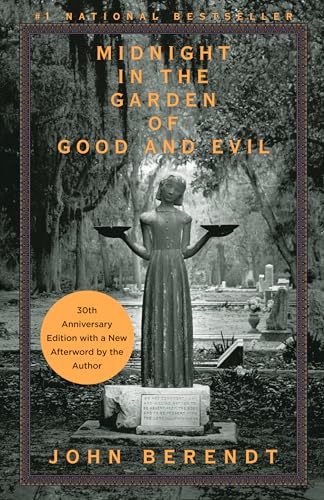

(The first image is the cover of the book, the second is a still from the 1997 Clint Eastwood-directed film adaptation. The image shows John Cusack, on the left, who stands in for Berendt as the narrator of the story, and The Lady Chablis, a transgender actress, performer, and writer, who featured as a character in the book and played herself in the film).
A few years ago, I visited relatives in North Carolina. My aunt, though Indian, is fair-skinned with an American accent and often passes as white. I, small and brown, was mistaken by a camo-clad neighbour with a gun for “one of them Mexicans” hired to do yard work. I spent the rest of my time there trailing behind my aunt and my (large white American) uncle, carrying bags and opening doors with exaggerated meekness and downcast eyes, pretending to be very oppressed, to their mild annoyance and embarrassment. We laughed about it, but I paid attention and the free use of the N word, constant comments, and the unyielding casual racism was disconcerting.
When they suggested a Southern road trip, I was consequently quite nervous, but it turned out to be manageable (we just left when someone said something awful). We stopped in Augusta (and a really fabulous secondhand bookstore that I still think about), Charleston, and Savannah. Of these, Savannah captivated me most: the old trees, the squares, the water, the houses. We spent some time at SCAD, looking at student art exhibits as well and did some walking tours. My uncle, a history buff, gave us a vivid introduction to the city and its tragic past, especially around race, slavery, and the Civil War. It was difficult to divorce that history from the city's physical beauty, and the Southern Gothic feel of some parts, but it gave me such a sombre sense of things I had only ever read about from a distance.
While we were there, my uncle mentioned Midnight in the Garden of Good and Evil, set in Savannah. The book, and to a greater extent, the film, are framed as a true crime story, reporting the events that precede and continue through the trial of Jim Williams, a wealthy antique dealer, for the murder of Danny Hansford, a young male sex worker. But it is also a story about Savannah's society, culture, and people. Central to this narrative is Savannah's history of slavery and continued segregation, told primarily through various accounts of citizen committees that sought to conserve Savannah's architecture and buildings. But at the core, this is also a book about how LGBTQ people navigated life in the South in 1990s, and how race, class, and money conditioned those experiences. With a Pulitzer nomination, Lambda Award (for LGBTQ nonfiction), and weeks on the top of bestseller lists, the book did well, but my uncle insists the film is better. This week I finally got around to reading and watching them both.
For the most part Berendt has done an interesting and complex portrayal of a moment, particular to this time and this place. His writing has a fantastically gossipy feel, like sitting on a porch listening to your elders sitting in rocking chairs, trade stories about so-and-so's son and that one's grandma. Whole chapters wander into little side stories: the elite women’s card club that followed an inviolable schedule, murder notwithstanding; the debutante ball for Black girls crashed by The Lady Chablis, a Black transgender performer, who pointed to some discomfiture how lighter‑skinned girls were favoured even here; the Southern matron devastated when her daughter chose to be a police officer over a career in ballet and what it did to her social standing; and the elderly Black man who kept “walking the dog” long after it died, a fiction politely maintained by the estate of his former employer so they could keep paying him a salary for the work. When Berendt does focus on the trial, he reveals the full spectrum of attitudes toward gay men at the time. Some in high society stood by him because he kept his private life discreet. A witness admitted to the affair but denied being gay himself, citing the Bible and insisting he had 'left all that behind'. Conservatives expressed open disgust. Between this and his sympathetic portrayal of the narrator's friendship with The Lady Chablis, the book provides an incredible window into LGBTQ life at multiple levels.
At the same time, reading this book and watching the film in 2026 is disquieting. Kevin Spacey, who stars as Jim Williams in the film, faces accusations of sexual assault. Clint Eastwood, who directed it, has made his views on race evident. Berendt has admitted that despite what the book says, he was not actually in Savannah when the murder occurred, leaving the reader to navigate how much of it is fictionalised and how much is reporting. Although the book doesn't mention this either, he had a contract with Jim Williams about how how Williams would participate in the book, which casts the entire sympathetic depiction of Williams in a different light. Berendt gives a lot of time to Williams' alleged reliance on a Black root doctor (a spiritual practice by enslaved Americans) and there is a very disconcerting portrayal of her as some kind of mystical/malevolent presence at the trial, which is disputed by court reports and Williams' family. Reporters covering the actual trial have questioned whether the prosecutor did actually conspire with one of Williams' social rivals to manipulate evidence, as Berendt repeatedly suggests.
And, as elegant and entertaining as the prose is, the detachment of the narrator is ultimately jarring. Cusack, or Berendt, or the fictional narrator, is unmoved by anything they encounter: racism, sexism, bigotry, anti-Semitism, the ritualised parading of a fake Union army soldier's corpse as part of a St Patrick's Day parade, segregation among joggers in public parks, the free use of racial slurs, Williams' flying of a Nazi flag from his window to 'deter filming'. It is difficult to move the past the vapidity of this perspective, and I don't know if anyone would have written this in today's times.
Midnight in the Garden of Good and Evil, directed by Clint Eastwood, 1997

(The first image is the cover of the book, the second is a still from the 1997 Clint Eastwood-directed film adaptation. The image shows John Cusack, on the left, who stands in for Berendt as the narrator of the story, and The Lady Chablis, a transgender actress, performer, and writer, who featured as a character in the book and played herself in the film).
A few years ago, I visited relatives in North Carolina. My aunt, though Indian, is fair-skinned with an American accent and often passes as white. I, small and brown, was mistaken by a camo-clad neighbour with a gun for “one of them Mexicans” hired to do yard work. I spent the rest of my time there trailing behind my aunt and my (large white American) uncle, carrying bags and opening doors with exaggerated meekness and downcast eyes, pretending to be very oppressed, to their mild annoyance and embarrassment. We laughed about it, but I paid attention and the free use of the N word, constant comments, and the unyielding casual racism was disconcerting.
When they suggested a Southern road trip, I was consequently quite nervous, but it turned out to be manageable (we just left when someone said something awful). We stopped in Augusta (and a really fabulous secondhand bookstore that I still think about), Charleston, and Savannah. Of these, Savannah captivated me most: the old trees, the squares, the water, the houses. We spent some time at SCAD, looking at student art exhibits as well and did some walking tours. My uncle, a history buff, gave us a vivid introduction to the city and its tragic past, especially around race, slavery, and the Civil War. It was difficult to divorce that history from the city's physical beauty, and the Southern Gothic feel of some parts, but it gave me such a sombre sense of things I had only ever read about from a distance.
While we were there, my uncle mentioned Midnight in the Garden of Good and Evil, set in Savannah. The book, and to a greater extent, the film, are framed as a true crime story, reporting the events that precede and continue through the trial of Jim Williams, a wealthy antique dealer, for the murder of Danny Hansford, a young male sex worker. But it is also a story about Savannah's society, culture, and people. Central to this narrative is Savannah's history of slavery and continued segregation, told primarily through various accounts of citizen committees that sought to conserve Savannah's architecture and buildings. But at the core, this is also a book about how LGBTQ people navigated life in the South in 1990s, and how race, class, and money conditioned those experiences. With a Pulitzer nomination, Lambda Award (for LGBTQ nonfiction), and weeks on the top of bestseller lists, the book did well, but my uncle insists the film is better. This week I finally got around to reading and watching them both.
For the most part Berendt has done an interesting and complex portrayal of a moment, particular to this time and this place. His writing has a fantastically gossipy feel, like sitting on a porch listening to your elders sitting in rocking chairs, trade stories about so-and-so's son and that one's grandma. Whole chapters wander into little side stories: the elite women’s card club that followed an inviolable schedule, murder notwithstanding; the debutante ball for Black girls crashed by The Lady Chablis, a Black transgender performer, who pointed to some discomfiture how lighter‑skinned girls were favoured even here; the Southern matron devastated when her daughter chose to be a police officer over a career in ballet and what it did to her social standing; and the elderly Black man who kept “walking the dog” long after it died, a fiction politely maintained by the estate of his former employer so they could keep paying him a salary for the work. When Berendt does focus on the trial, he reveals the full spectrum of attitudes toward gay men at the time. Some in high society stood by him because he kept his private life discreet. A witness admitted to the affair but denied being gay himself, citing the Bible and insisting he had 'left all that behind'. Conservatives expressed open disgust. Between this and his sympathetic portrayal of the narrator's friendship with The Lady Chablis, the book provides an incredible window into LGBTQ life at multiple levels.
At the same time, reading this book and watching the film in 2026 is disquieting. Kevin Spacey, who stars as Jim Williams in the film, faces accusations of sexual assault. Clint Eastwood, who directed it, has made his views on race evident. Berendt has admitted that despite what the book says, he was not actually in Savannah when the murder occurred, leaving the reader to navigate how much of it is fictionalised and how much is reporting. Although the book doesn't mention this either, he had a contract with Jim Williams about how how Williams would participate in the book, which casts the entire sympathetic depiction of Williams in a different light. Berendt gives a lot of time to Williams' alleged reliance on a Black root doctor (a spiritual practice by enslaved Americans) and there is a very disconcerting portrayal of her as some kind of mystical/malevolent presence at the trial, which is disputed by court reports and Williams' family. Reporters covering the actual trial have questioned whether the prosecutor did actually conspire with one of Williams' social rivals to manipulate evidence, as Berendt repeatedly suggests.
And, as elegant and entertaining as the prose is, the detachment of the narrator is ultimately jarring. Cusack, or Berendt, or the fictional narrator, is unmoved by anything they encounter: racism, sexism, bigotry, anti-Semitism, the ritualised parading of a fake Union army soldier's corpse as part of a St Patrick's Day parade, segregation among joggers in public parks, the free use of racial slurs, Williams' flying of a Nazi flag from his window to 'deter filming'. It is difficult to move the past the vapidity of this perspective, and I don't know if anyone would have written this in today's times.
147FlorenceArt
>146 rasdhar: I can’t believe what you had to go through in North Carolina ! Very interesting review, thank you. I had heard of this book but haven’t read it.
148labfs39
>146 rasdhar: I am sorry you had to experience the ignorance and racism that is the US, but I did have to smile a bit at your response.
I visited Savannah eight years ago or so, and like you enjoyed the history and greenness of the city, but was uncomfortable too. Although I'm white, and so escaped being the target of racism, I did feel as though I had "YANKEE" emblazoned on my forehead. Some places in the deep South don't seem to have moved far beyond the Civil War in their mentalities.
I visited Savannah eight years ago or so, and like you enjoyed the history and greenness of the city, but was uncomfortable too. Although I'm white, and so escaped being the target of racism, I did feel as though I had "YANKEE" emblazoned on my forehead. Some places in the deep South don't seem to have moved far beyond the Civil War in their mentalities.
149markon
>146 rasdhar: Interesting review. I did not make it through the book, in part because of the narrator's attitude and my wondering what was true and what was not, and I have never seen the movie, though I remember when everyone was talking about it.
I'm glad you were able to cope with the racism with some humor.
I'm glad you were able to cope with the racism with some humor.
150kjuliff
>146 rasdhar: I had a poor reception in North Carolina as well, though it wasn’t nearly as bad as yours. It was because I was from New York. I was with a work group all from New York, and so the locals knew. They were particularly nasty when we were out for dinner, hiding the knives and forks, and saying that New Yorkers didn’t use cutlery (flatware).
I also had a few problems in Texas because of being from New York and because Bill Clinton was president at the time. They seem to think that New Yorkers were having kinky sex all the time with different people and were what they called “ungodly”.
What got to me was how politely they spoke their ignorant sentences. If you just listened to the melody of the voices, rather than the content you think you were with very polite and lovely people.
I also had a few problems in Texas because of being from New York and because Bill Clinton was president at the time. They seem to think that New Yorkers were having kinky sex all the time with different people and were what they called “ungodly”.
What got to me was how politely they spoke their ignorant sentences. If you just listened to the melody of the voices, rather than the content you think you were with very polite and lovely people.
151RidgewayGirl
>146 rasdhar: My book club had this chosen a few months ago and I opted to listen to the audiobook, which is, in my opinion, unlistenable because the Southern accent put on by the narrator was a ridiculous stage accent you'd only encounter in Tennessee Williams plays put on in New England. I intended to reread the book, but the accent put me off reading it altogether. Someday, I'll revisit it.
There are ways I think that someone who isn't Black or white has a harder time in parts of the South -- I was in Greenville, SC for fifteen years and volunteered on a political campaign with a young woman from Cleveland, Ohio, whose parents had emigrated from India. People would come into the office and see her and start to grill her about where she was from. It was always polite, but unsettling to see how she had to face that all the time, while no one grilled me on my ancestry at all. Strangely, sometimes someone outside the Black/white divide can work with both groups of people -- Greenville had a very successful Jewish mayor who managed to get some huge changes to the downtown through and I don't think anyone else could have managed that.
There are ways I think that someone who isn't Black or white has a harder time in parts of the South -- I was in Greenville, SC for fifteen years and volunteered on a political campaign with a young woman from Cleveland, Ohio, whose parents had emigrated from India. People would come into the office and see her and start to grill her about where she was from. It was always polite, but unsettling to see how she had to face that all the time, while no one grilled me on my ancestry at all. Strangely, sometimes someone outside the Black/white divide can work with both groups of people -- Greenville had a very successful Jewish mayor who managed to get some huge changes to the downtown through and I don't think anyone else could have managed that.
152rasdhar
>147 FlorenceArt: >150 kjuliff: >151 RidgewayGirl: Eh, I think I only experienced for a moment what other people live through, it was disconcerting but not unexpected. The whole 'Yankee' thing did also come up a few times, mostly because my aunt and uncle moved there from the East Coast (my uncle has family in the area), so they get a lot of comments. I saw a lot of confederate flags, and memorabilia and the Civil War definitely seems very much still in their memories and politics. I do agree about the lovely musical accents, it is especially unnerving how people will say incredibly hateful stuff in that beautiful accent even as they 'ma'am' and 'sir' you through it. Although, I will say that we went to a barbecue place that was Black-owned and operated and had a primarily Black clientele, and it was a vastly different experience. We sat at big communal tables and people were really kind and friendly, and also, I experienced a food coma so intense from the best ribs I ever ate. I might still be recovering.
>149 markon: Yes, it was very frustrating to experience the story through this narrator, and to wonder how much of it was fabricated. He tells a story well, but he's run up hard against the usual problems with true crime writing, and come up short.
>151 RidgewayGirl: The bit about Greenville's mayor is so interesting. My review was so long I didn't include it, but there's reference in Berendt's account to a Jewish businessman in Savannah who is wealthy, well-connected, and is very involved in conserving old historic houses, but at the same time, is always kept at arms-length and excluded from the oldest clubs because of his religion. There's a passage where the narrator is at a party and the old elites of Savannah freely admit this to him.
>149 markon: Yes, it was very frustrating to experience the story through this narrator, and to wonder how much of it was fabricated. He tells a story well, but he's run up hard against the usual problems with true crime writing, and come up short.
>151 RidgewayGirl: The bit about Greenville's mayor is so interesting. My review was so long I didn't include it, but there's reference in Berendt's account to a Jewish businessman in Savannah who is wealthy, well-connected, and is very involved in conserving old historic houses, but at the same time, is always kept at arms-length and excluded from the oldest clubs because of his religion. There's a passage where the narrator is at a party and the old elites of Savannah freely admit this to him.
153rasdhar
32. Adrian Tchaikovsky - Service Model

Tchaikovsky's Service Model is the story of a robot named Charles, who works as a valet and butler to a wealthy human. After an unfortunate incident with a razor blade and his owner, he finds himself out of work. He is supposed to be heading back to a diagnostic center for reprogramming, but an error in the system no longer recognises him as Charles, and he finds himself adrift. He renames himself 'Uncharles' and as he tries to work through his own programming, he meets a friend nicknamed 'The Wonk'. Uncharles seems pretty confident he'll be able to find a new position as a valet. The Wonk is somewhat certain that Uncharles has developed free will, and that the diagonistic center /government/overseers will destroy him. They decide to pair up and head out to find a group of librarian robots who might be able to help.
Although he's evidently addressing serious and difficult questions, the tone is light-hearted, characterised by quips, sarcastic asides, and running gaps. It wears thin after a while and gets annoying pretty rapidly. Despite this it is quite moving in parts, and you feel for poor, confused Uncharles. I'm told it isn't Tchaikovsky's best work, but maybe a younger reader might enjoy this very much. I hope I can get to his Children of Time series later this year.

Tchaikovsky's Service Model is the story of a robot named Charles, who works as a valet and butler to a wealthy human. After an unfortunate incident with a razor blade and his owner, he finds himself out of work. He is supposed to be heading back to a diagnostic center for reprogramming, but an error in the system no longer recognises him as Charles, and he finds himself adrift. He renames himself 'Uncharles' and as he tries to work through his own programming, he meets a friend nicknamed 'The Wonk'. Uncharles seems pretty confident he'll be able to find a new position as a valet. The Wonk is somewhat certain that Uncharles has developed free will, and that the diagonistic center /government/overseers will destroy him. They decide to pair up and head out to find a group of librarian robots who might be able to help.
Although he's evidently addressing serious and difficult questions, the tone is light-hearted, characterised by quips, sarcastic asides, and running gaps. It wears thin after a while and gets annoying pretty rapidly. Despite this it is quite moving in parts, and you feel for poor, confused Uncharles. I'm told it isn't Tchaikovsky's best work, but maybe a younger reader might enjoy this very much. I hope I can get to his Children of Time series later this year.
156rasdhar
44. Adrian Tchaikovsky - Dogs of War (Head of Zeus, 2017)
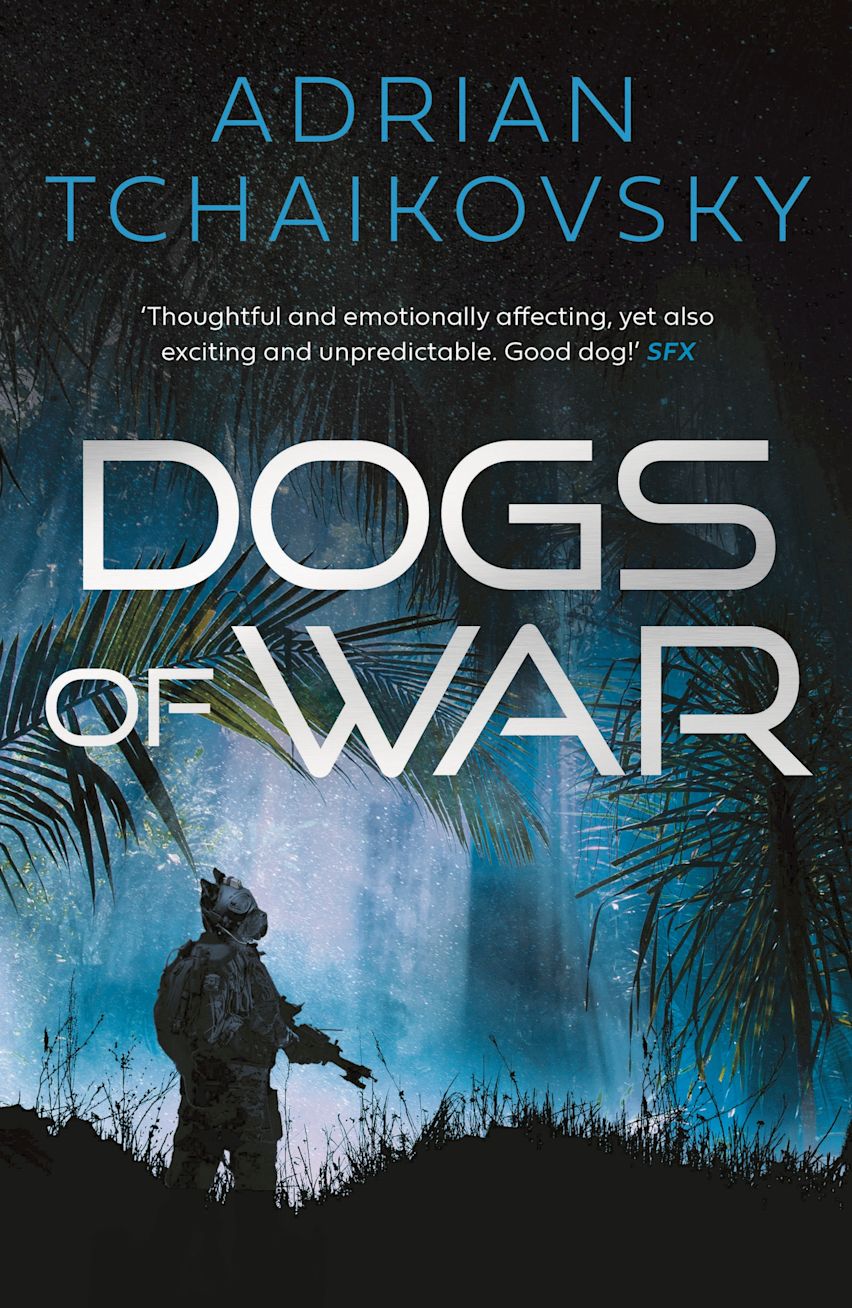
Adrian Tchaikovsky's Dogs of War is narrated through the protagonist, Rex, a seven-foot tall bio-engineered dog. He has had subsonic implants that make every word he says strike fear in the listener. His body is bulletproof, with built in armour and special healing abilities. He has claws, carries weapons, has a level of intelligence and consciousness, and can speak. He's part of a team, consisting of a cloud of sentient bees, a snake (who goes by Dragon) and a bear (who goes by Honey) who are owned by a corporation. In Campeche, Mexico, acting on his owners' instructions, Rex and his team quell human rebellions, killing people. All he wants in return is the positive bio-feedback when someone tells him he is a 'Good Dog' . Implanted coding and conditioning bar him from being disobedient. The first part of the book describes the team's, and Rex's growing realisation of the war they are participating in and eventually, an act of rebellion. The second part of the book places them on trial after their 'Master' is convicted for this crimes, and asks how culpable Rex and the other bio-engineered animals could be.
Tchaikovsky isn't shy to take up the immense and complex challenge that this dilemma presents, and in that sense, feels like a very classic science fiction novel. But Tchaikovksy is suggesting that human problems don't necessarily have technocratic solutions, and that the human condition will replicate in any artificial intelligence that we train. They will imbibe our biases, our conflicts, our flaws, and act accordingly. There's no such thing as 'neutral' tech, and that makes this an interesting read. Besides which, a courtroom drama inside science fiction is just icing on a very interesting cake.
Adrian Tchaikovsky's Dogs of War is narrated through the protagonist, Rex, a seven-foot tall bio-engineered dog. He has had subsonic implants that make every word he says strike fear in the listener. His body is bulletproof, with built in armour and special healing abilities. He has claws, carries weapons, has a level of intelligence and consciousness, and can speak. He's part of a team, consisting of a cloud of sentient bees, a snake (who goes by Dragon) and a bear (who goes by Honey) who are owned by a corporation. In Campeche, Mexico, acting on his owners' instructions, Rex and his team quell human rebellions, killing people. All he wants in return is the positive bio-feedback when someone tells him he is a 'Good Dog' . Implanted coding and conditioning bar him from being disobedient. The first part of the book describes the team's, and Rex's growing realisation of the war they are participating in and eventually, an act of rebellion. The second part of the book places them on trial after their 'Master' is convicted for this crimes, and asks how culpable Rex and the other bio-engineered animals could be.
Tchaikovsky isn't shy to take up the immense and complex challenge that this dilemma presents, and in that sense, feels like a very classic science fiction novel. But Tchaikovksy is suggesting that human problems don't necessarily have technocratic solutions, and that the human condition will replicate in any artificial intelligence that we train. They will imbibe our biases, our conflicts, our flaws, and act accordingly. There's no such thing as 'neutral' tech, and that makes this an interesting read. Besides which, a courtroom drama inside science fiction is just icing on a very interesting cake.
157kidzdoc
>146 rasdhar: Great comments about Midnight in the Garden of Good and Evil, Rasdhar. I sill haven't read it, despite living in relatively nearby Atlanta for nearly 25 years, as I never visited Savannah, Augusta or Charleston, in large part because I feared how I would be treated in those cities as a Black man with a decidedly non-Southern accent. Metropolitan Atlanta, unlike most Southern regions, is very diverse in terms of race, along with region and country of origin, including a sizable Indian population, many of whom migrated there because of several of the city's universities that excel in the sciences and medicine, especially Emory, where I did my postdoctoral training to become a pediatrician, and Georgia Tech. The immediate metro area is ringed by Interstate 295, aslso known as The Perimeter, and people in the region often describe themselves as living ITP, or Inside The Perimeter, which was far more likely to be affluent and well educated, save for the population of poorer African Americans and other people of color, including Latinos, or OTP, Outside the Perimeter, which mostly consisted of hillbillies who were openly hostile towards people of color and non-Southerners. I experienced very little racism when I lived in Atlanta, as I rarely ventured OTP and not very far from the Perimeter whenever I did.
From what little I know North Carolina is a very complicated state, as it has at least two regions that are diverse and well educated, namely metropolitan Charlotte and the Research Triangle, which is home to three leading universities, Chapel Hill (University of North Carolina), Durham (Duke University) and Raleigh (North Carolina State University), with several centers of scientific and biomedical research and very diverse populations. Similar to Georgia much of the rest of the state, save for Asheville, is populated by racist rednecks. In the past few years, since I retired and moved back to the Philadelphia area to become my mother's primary caregiver, I made rest stops on interstate highways in small towns, especially in rural North Carolina and Virginia, to stretch my legs, purchase lunch or take naps during a 16 hour journey by car. The people I encountered there were universally friendly, particularly an older White woman in a rest area shop who I chatted with for at least 15 minutes; she became very emotional when I told her that I had just resigned my longtime position in order to care for my mother, and she blessed me and gave me a gentle hug, which made me tear up as well.
On the other hand a subsequent trip from Philadelphia to Atlanta Google rerouted me onto an unlit two lane state road in the mountains of North Carolina, a few days before Christmas in 2022, just after sunset. I made a stop at a roadside gas station when I was nearly out of gas, and was having a pleasant conversation with the South Asian station attendant when a drunk redneck came inside the store and asked, with great hostility, why I was there and where I was going. I told him that I was briefly going back to Atlanta, a few hours to the south, as I had recently resigned my job as a pediatrician. He grew even more angry, told me "yeah, and I'm a 🤬 brain surgeon," and drove off in a huff. Fortunately none of his buddies were nearby, and after I finished topping off my car with gas I drove away relatively quickly, and I had no further incidents.
Also unfortunately incidents like the ones you experienced occur practically anywhere in the United States, and seem to be happening more frequently. A close neighbor of mine, a very liberal White woman, mentioned on her Facebook page on Friday that while and several friends were having lunch in a local inn a nearby table of fellow diners were repeatedly and loudly spewing the N-word, even though there weren't any Blacks in the dining room. My friend complained to the waitress and the manager of the inn, located roughly a mile north of the border with the City of Philadelphia, both of whom shrugged their shoulders and refused to talk to these men. The famous political strategist James Carville once described Pennsylvania as being Philadelphia at one end, Pittsburgh at the other, and Alabama in between, which is a generalization, but not all that inaccurate.
From what little I know North Carolina is a very complicated state, as it has at least two regions that are diverse and well educated, namely metropolitan Charlotte and the Research Triangle, which is home to three leading universities, Chapel Hill (University of North Carolina), Durham (Duke University) and Raleigh (North Carolina State University), with several centers of scientific and biomedical research and very diverse populations. Similar to Georgia much of the rest of the state, save for Asheville, is populated by racist rednecks. In the past few years, since I retired and moved back to the Philadelphia area to become my mother's primary caregiver, I made rest stops on interstate highways in small towns, especially in rural North Carolina and Virginia, to stretch my legs, purchase lunch or take naps during a 16 hour journey by car. The people I encountered there were universally friendly, particularly an older White woman in a rest area shop who I chatted with for at least 15 minutes; she became very emotional when I told her that I had just resigned my longtime position in order to care for my mother, and she blessed me and gave me a gentle hug, which made me tear up as well.
On the other hand a subsequent trip from Philadelphia to Atlanta Google rerouted me onto an unlit two lane state road in the mountains of North Carolina, a few days before Christmas in 2022, just after sunset. I made a stop at a roadside gas station when I was nearly out of gas, and was having a pleasant conversation with the South Asian station attendant when a drunk redneck came inside the store and asked, with great hostility, why I was there and where I was going. I told him that I was briefly going back to Atlanta, a few hours to the south, as I had recently resigned my job as a pediatrician. He grew even more angry, told me "yeah, and I'm a 🤬 brain surgeon," and drove off in a huff. Fortunately none of his buddies were nearby, and after I finished topping off my car with gas I drove away relatively quickly, and I had no further incidents.
Also unfortunately incidents like the ones you experienced occur practically anywhere in the United States, and seem to be happening more frequently. A close neighbor of mine, a very liberal White woman, mentioned on her Facebook page on Friday that while and several friends were having lunch in a local inn a nearby table of fellow diners were repeatedly and loudly spewing the N-word, even though there weren't any Blacks in the dining room. My friend complained to the waitress and the manager of the inn, located roughly a mile north of the border with the City of Philadelphia, both of whom shrugged their shoulders and refused to talk to these men. The famous political strategist James Carville once described Pennsylvania as being Philadelphia at one end, Pittsburgh at the other, and Alabama in between, which is a generalization, but not all that inaccurate.
158kjuliff
>156 rasdhar: I really enjoyed your review Rasdhar, I think this is just the type of book I have been looking for as I am very interested in whether AI can be sentient — which I don’t believe it can - and this book seems to take on that issue. Certainly it can pretend to have emotions and to be empathetic. I find the whole thing rather scary. I’m going to see if I can get this book in audio and if not, I will keep my eye out for when it is.
ETA - it is and I’ll be getting it soon.
ETA - it is and I’ll be getting it soon.
159rasdhar
>157 kidzdoc: Thank you for this detailed and very interesting account, and I'm sorry about the things you've had to experience (as insufficient as the sentiment may seem). You are very right that incidents like this happen everywhere, and from my friends in the US, I have also heard that they are on the rise. I've never been to Atlanta - I hope I can visit, some day!
>158 kjuliff: I'm interested in hearing what you make of it. It gave me a lot to think about it, although I don't think that the author is really providing any new answers of his own.
>158 kjuliff: I'm interested in hearing what you make of it. It gave me a lot to think about it, although I don't think that the author is really providing any new answers of his own.
160mabith
I'll keep an eye out for Ten Thousand Miles of Clouds and Moons, even though it wasn't a five star collection. I was wearing a shirt with a Chinese phrase on it while grocery shopping, and one of the (white) employees saw it and read it in a flawless accent. Turns out she lived in China for 15 years and now I have some extra incentive to get back to my language studies.
161rasdhar
44. Tana French - The Keeper (Viking 2026)

The Keeper marks the close of Tana French's trilogy of books set in Ardnakelty, a fictional Irish village. Cal Hooper, a retired American cop, moves there on a whim, and settles in. He's dating Lena, a widowed woman living down the road, and has quasi-adopted Trey, a local teenager. In the first two books, French describes Hooper struggling with Ardnakelty's insularity: locals keep to themselves, secrets are closely guarded, and villagers tend to exact their own kind of justice. To stave off some of the hostility, Lena has let slip that she and Cal are engaged, making him one of them, but in truth, both are somewhat ambivalent to marriage. Lena has reacted to Ardnakelty's claustrophobia by withdrawing, and Cal, increasingly, by going local, which pulls them apart. In this final chapter, French digs into those cracks, using the framing of the death of a local young woman that tears apart the village into factions.
A lot of the comments I see about this book seemed negative, describing the plot as meandering, directing a lot of hate to Lena for her withdrawal from Cal, and so on. I think this is a reader error, not a fault of the writer. This isn't a traditional thriller/mystery, nor is it a romance novel. It's really more about how forces of community pull and push together, as internal and external events lay stress on ties that bind. The result can be surprising. Lena unexpectedly rediscovers a community of friends that she thought were no longer available to her, and Cal finds he's one of the men in the village after all, but in a way that leaves a lingering sense of discomfort. Amid this, Trey is perhaps the only one who is settling into herself, rather being unsettled, in no small part because Lena and Cal work hard to make sure that she's given the kind of stable environment that allows this. I enjoyed this book quite a bit, I think you have to let it take you along, and you'll enjoy it.

The Keeper marks the close of Tana French's trilogy of books set in Ardnakelty, a fictional Irish village. Cal Hooper, a retired American cop, moves there on a whim, and settles in. He's dating Lena, a widowed woman living down the road, and has quasi-adopted Trey, a local teenager. In the first two books, French describes Hooper struggling with Ardnakelty's insularity: locals keep to themselves, secrets are closely guarded, and villagers tend to exact their own kind of justice. To stave off some of the hostility, Lena has let slip that she and Cal are engaged, making him one of them, but in truth, both are somewhat ambivalent to marriage. Lena has reacted to Ardnakelty's claustrophobia by withdrawing, and Cal, increasingly, by going local, which pulls them apart. In this final chapter, French digs into those cracks, using the framing of the death of a local young woman that tears apart the village into factions.
A lot of the comments I see about this book seemed negative, describing the plot as meandering, directing a lot of hate to Lena for her withdrawal from Cal, and so on. I think this is a reader error, not a fault of the writer. This isn't a traditional thriller/mystery, nor is it a romance novel. It's really more about how forces of community pull and push together, as internal and external events lay stress on ties that bind. The result can be surprising. Lena unexpectedly rediscovers a community of friends that she thought were no longer available to her, and Cal finds he's one of the men in the village after all, but in a way that leaves a lingering sense of discomfort. Amid this, Trey is perhaps the only one who is settling into herself, rather being unsettled, in no small part because Lena and Cal work hard to make sure that she's given the kind of stable environment that allows this. I enjoyed this book quite a bit, I think you have to let it take you along, and you'll enjoy it.
162rasdhar
34. Stephen King - Mister Mercedes
45. Stephen King - It
46. Stephen King - Pet Sematary
47. Stephen King - Needful Things
I had never read a book by Stephen King before, and I was curious, therefore. I was very put off by IT, bored by Mister Mercedes, unnerved by Pet Sematary. Needful Things was an actually interesting read, but I think I'm done with him now.
45. Stephen King - It
46. Stephen King - Pet Sematary
47. Stephen King - Needful Things
I had never read a book by Stephen King before, and I was curious, therefore. I was very put off by IT, bored by Mister Mercedes, unnerved by Pet Sematary. Needful Things was an actually interesting read, but I think I'm done with him now.
163rasdhar
>160 mabith: That's so unexpected, it must have been fun. I wish you all the best with your Chinese studies. I have been living in Singapore for a while and have only managed to pick up some phrases from Teochew and Hokkien (Chinese dialects/regional languages), none of which is fit for polite company.
164FlorenceArt
>162 rasdhar: I loved It, but that was a long time ago and my tastes have changed. I suspect I would have a different reaction today. The few other books I’ve read by King were not so great to my taste.
165kjuliff
>162 rasdhar: I’ve tried a couple of Stephen King novels but don’t like his writing style. Just not my cup of tea.
166RidgewayGirl
>161 rasdhar: I thought this was the best book of the trilogy, mainly because of all the work done in the first two books to bring the characters to where they are at the start of the third.
167WelshBookworm
>146 rasdhar: Lady Chablis also wrote a memoir - Hiding My Candy - which I found at least somewhat interesting. She is quite witty and clever, but oh so full of herself. It got wearing after awhile. The Lady is all about image, and this book was all about perpetuating that, so it won't give you any "behind the scenes" insight. Still, I found it fascinating to try and understand someone who is on the opposite end of every imaginable spectrum from myself...
168valkyrdeath
>162 rasdhar: I can't say I was bored by Mr Mercedes, but that's because I was too busy being irritated by the terrible plotting and frustrated by the behaviour of the characters. I haven't read the other three.
I've had very mixed results from reading Stephen King. I've enjoyed some of his short stories but I've not found much amongst his longer works to enjoy. The only exception is the Dark Tower series, which I started off quite enjoying, but the fourth book started a flashback scene after the first few pages that I was finding very boring and it seemed to be dragging on and on, bringing the whole plot to a halt. I decided to check how long it was, and when I saw it went on for another 500 pages, almost the whole book, I abandoned the entire series and never went back.
I've had very mixed results from reading Stephen King. I've enjoyed some of his short stories but I've not found much amongst his longer works to enjoy. The only exception is the Dark Tower series, which I started off quite enjoying, but the fourth book started a flashback scene after the first few pages that I was finding very boring and it seemed to be dragging on and on, bringing the whole plot to a halt. I decided to check how long it was, and when I saw it went on for another 500 pages, almost the whole book, I abandoned the entire series and never went back.
169rasdhar
>165 kjuliff: I have reached the same conclusion!
>166 RidgewayGirl: I agree entirely, I enjoyed her development of the characters very much, and I was quite puzzled by all the negative reviews. "Too much description" was one that I saw. I enjoyed the descriptions of the Irish countryside!
>167 WelshBookworm: That's very interesting - I don't think I'll be picking up the memoir, but she certainly seems to have led an interesting life!
>168 valkyrdeath: Perhaps I'll pick up some of the short stories. I'm not sure I can commit to a long book series by him at the moment!
>166 RidgewayGirl: I agree entirely, I enjoyed her development of the characters very much, and I was quite puzzled by all the negative reviews. "Too much description" was one that I saw. I enjoyed the descriptions of the Irish countryside!
>167 WelshBookworm: That's very interesting - I don't think I'll be picking up the memoir, but she certainly seems to have led an interesting life!
>168 valkyrdeath: Perhaps I'll pick up some of the short stories. I'm not sure I can commit to a long book series by him at the moment!
170rasdhar
I've been awful about reviews and keeping up this thread, so just listing out the books I've read in the past two months and failed to review properly, and I will do a better job in the latter half of the year.
48. Louise Welsh - Cutting Room (Canongate 2002)
49. Louise Welsh - The Second Cut (Canongate 2022)
50. Lars Kepler - The Hypnotist (FSG 2009)
51. Don Winslow - City on Fire (William Morrow 2022)
52. Don Winslow - City of Dreams (William Morrow 2023)
53. Don Winslow - City in Ruins (William Morrow 2024)
54. Francine Toon - Bluff
55. The Best American Essays 2025 - Edited by Jia Tolentino, Kim Dana Kupperman (Doubleday 2025)
56. Jane Harper - Last One Out (Macmillan 2025)
57. Belinda Bauer - The Impossible Thing (Transworld 2025)
58. Christianna Brand - Cat and Mouse (reissue, British Library 2025)
59. Frances Louise Davis Lockridge - Death on the Aisle (Penzler Publishers 2019)
48. Louise Welsh - Cutting Room (Canongate 2002)
49. Louise Welsh - The Second Cut (Canongate 2022)
50. Lars Kepler - The Hypnotist (FSG 2009)
51. Don Winslow - City on Fire (William Morrow 2022)
52. Don Winslow - City of Dreams (William Morrow 2023)
53. Don Winslow - City in Ruins (William Morrow 2024)
54. Francine Toon - Bluff
55. The Best American Essays 2025 - Edited by Jia Tolentino, Kim Dana Kupperman (Doubleday 2025)
56. Jane Harper - Last One Out (Macmillan 2025)
57. Belinda Bauer - The Impossible Thing (Transworld 2025)
58. Christianna Brand - Cat and Mouse (reissue, British Library 2025)
59. Frances Louise Davis Lockridge - Death on the Aisle (Penzler Publishers 2019)
171kjuliff
>170 rasdhar: i’m interested in Jane Harper’s Last One Out. I see that it’s another Australian Outback book - I tend to avoid these - but do you think it’s worth a read?
172cindydavid4
his bibliograpy i amazing
https://www.roerich.org/roerich-biography.php#top
https://www.roerich.org/roerich-biography.php#top
173rasdhar
>171 kjuliff: I didn't think Jane Harper's Last One Out was great. She's done one really good outback book before which is why I picked this up. But this one was set in a town that goes into decline after the mining industry takes over there. So it's less outback-y and more just rural, and less of a mystery and more of family drama. I think the broad theme is just decline: a town in decline, a family in decline after a beloved son goes missing, a marriage in decline, etc. All in all, kind of unrelentingly dreary, and felt a bit repetitive to me. Not her best work. I would avoid it if you have any better options!
>172 cindydavid4: Nicholas Roerich had a really fascinating life! Thanks for this link. I saw a wonderful exhibition of his paintings some years ago. He does these incredible blue and grey toned paintings of the Himalayas, and if you visit any of those hill towns, you'll feel like you stepped into one of those paintings.
>172 cindydavid4: Nicholas Roerich had a really fascinating life! Thanks for this link. I saw a wonderful exhibition of his paintings some years ago. He does these incredible blue and grey toned paintings of the Himalayas, and if you visit any of those hill towns, you'll feel like you stepped into one of those paintings.
174cindydavid4
>173 rasdhar: really looking forward to reading it
175kjuliff
>173 rasdhar: Thanks Rasdhar. I think I’ve read Harper’s other books that are published in audio here. But I’m always on the lookout for Australian novels.
This topic was continued by Rasdhar's 2026 Reading (Part II) .

