In which Keith reads some books 2026: part 2
This is a continuation of the topic In which Keith reads some books 2026: part 1.
Talk 2026 Category Challenge
Join LibraryThing to post.
1KeithChaffee
(The first several posts in this thread will be repeating the setup posts from part 1.)
Hello!
This is my fourth full year at Library Thing. I have previously posted my home thread in the Club Read group, and I expect to keep following a lot of people there. But more than half of what I read is now chosen, at least in part, to fill some part of a Category Challenge, so it made sense to move my home base over here. (I tried doing threads in both places one year; I found it cumbersome.)
I'm a retired librarian. Grew up in Vermont; educated at Washington University in St. Louis (they get mildly annoyed if you don't say the whole name) and the University of Michigan; worked in the acquisitions department of the Los Angeles Public Library for 31 years.
I read more fiction than non, and am hoping that the ArtsCat and NonfictionCat will help me add more NF to my diet in 2026. I read a lot of SF and mystery, popular fiction, and books about film/TV/music. Not a big classic literature guy.
On to my challenges!
Hello!
This is my fourth full year at Library Thing. I have previously posted my home thread in the Club Read group, and I expect to keep following a lot of people there. But more than half of what I read is now chosen, at least in part, to fill some part of a Category Challenge, so it made sense to move my home base over here. (I tried doing threads in both places one year; I found it cumbersome.)
I'm a retired librarian. Grew up in Vermont; educated at Washington University in St. Louis (they get mildly annoyed if you don't say the whole name) and the University of Michigan; worked in the acquisitions department of the Los Angeles Public Library for 31 years.
I read more fiction than non, and am hoping that the ArtsCat and NonfictionCat will help me add more NF to my diet in 2026. I read a lot of SF and mystery, popular fiction, and books about film/TV/music. Not a big classic literature guy.
On to my challenges!
2KeithChaffee
ArtsCat
I don't always do the new Cats each year, but since this one was my suggestion, I feel somewhat obliged to join in. Not that it will be an unpleasant thing done grudgingly; I look forward to it, and I like the mix of monthly themes the group came up with. I don't expect it will be too difficult to find interesting books for each month. I'm hosting in October.
JAN: painting -- The Music Lesson, Katharine Weber
FEB: artists' biographies -- Pick Yourself Up, Charlotte Greenspan
MAR: motion pictures -- Viva Hollywood, Luis I. Reyes
APR: museums -- Let's Play Dead, Sheila Connolly
MAY: color and light -- True Color, Kory Stamper
JUN: ballet & Broadway -- Stephen Sondheim: Art Isn't Easy, Daniel Okrent
JUL: fiber arts -- Pockets, Hannah Carlson
AUG: blues music
SEP: rock and roll
OCT: classical music
NOV: culinary arts
DEC: folk arts
I don't always do the new Cats each year, but since this one was my suggestion, I feel somewhat obliged to join in. Not that it will be an unpleasant thing done grudgingly; I look forward to it, and I like the mix of monthly themes the group came up with. I don't expect it will be too difficult to find interesting books for each month. I'm hosting in October.
JAN: painting -- The Music Lesson, Katharine Weber
FEB: artists' biographies -- Pick Yourself Up, Charlotte Greenspan
MAR: motion pictures -- Viva Hollywood, Luis I. Reyes
APR: museums -- Let's Play Dead, Sheila Connolly
MAY: color and light -- True Color, Kory Stamper
JUN: ballet & Broadway -- Stephen Sondheim: Art Isn't Easy, Daniel Okrent
JUL: fiber arts -- Pockets, Hannah Carlson
AUG: blues music
SEP: rock and roll
OCT: classical music
NOV: culinary arts
DEC: folk arts
3KeithChaffee
MysteryKit
A standard part of my year; I'm hosting in February
JAN: female detectives, amateur or professional -- Vera Wong's Unsolicited Advice for Murderers, Jesse Q. Sutanto
FEB: clerical sleuths -- A Morbid Taste for Bones, Ellis Peters
MAR: Nordic mysteries -- The Burning Stones, Antti Tuomainen (trans. by David Hackston)
APR: private eyes -- Shadow of a Broken Man, George C. Chesbro
MAY: hardboiled/noir -- One Deadly Dawn, Harry Whittington
JUN: police procedurals -- Death at La Fenice, Donna Leon
JUL: less than lawful -- The Friends of Eddie Coyle, George V. Higgins
AUG: Grand Master Award winner
SEP: now a major film/TV series
OCT: from your favorite author list
NOV: guns for hire
DEC: wild card/reader’s choice
A standard part of my year; I'm hosting in February
JAN: female detectives, amateur or professional -- Vera Wong's Unsolicited Advice for Murderers, Jesse Q. Sutanto
FEB: clerical sleuths -- A Morbid Taste for Bones, Ellis Peters
MAR: Nordic mysteries -- The Burning Stones, Antti Tuomainen (trans. by David Hackston)
APR: private eyes -- Shadow of a Broken Man, George C. Chesbro
MAY: hardboiled/noir -- One Deadly Dawn, Harry Whittington
JUN: police procedurals -- Death at La Fenice, Donna Leon
JUL: less than lawful -- The Friends of Eddie Coyle, George V. Higgins
AUG: Grand Master Award winner
SEP: now a major film/TV series
OCT: from your favorite author list
NOV: guns for hire
DEC: wild card/reader’s choice
4KeithChaffee
SFFKit
Couldn't not do ths one! I'm hosting in June.
JAN: books that have been adapted for film/TV: Second Foundation, Isaac Asimov
FEB: romantic SF: A Fine and Private Place, Peter S. Beagle; Under the Whispering Door, TJ Klune
MAR: pre-1975 SFF: Dangerous Visions (1967), Harlan Ellison, ed.; Isaac Asimov Presents the Great SF Stories 10 (1948), Isaac Asimov & Martin H. Greenberg, eds.
APR: parallel worlds: A Spindle Splintered and A Mirror Mended, Alix E. Harrow
MAY: Western inspired: Six-Gun Snow White, Catherynne M. Valente
JUN: religion in SFF: Monk and Robot, Becky Chambers
JUL: humorous SFF: The Shadow War of the Night Dragons: Book One: The Dead City: Prologue, John Scalzi
AUG: favorite authors/books
SEP: not a novel
OCT: fantastic beasts
NOV: cozy SFF
DEC: rebels and renegades
Couldn't not do ths one! I'm hosting in June.
JAN: books that have been adapted for film/TV: Second Foundation, Isaac Asimov
FEB: romantic SF: A Fine and Private Place, Peter S. Beagle; Under the Whispering Door, TJ Klune
MAR: pre-1975 SFF: Dangerous Visions (1967), Harlan Ellison, ed.; Isaac Asimov Presents the Great SF Stories 10 (1948), Isaac Asimov & Martin H. Greenberg, eds.
APR: parallel worlds: A Spindle Splintered and A Mirror Mended, Alix E. Harrow
MAY: Western inspired: Six-Gun Snow White, Catherynne M. Valente
JUN: religion in SFF: Monk and Robot, Becky Chambers
JUL: humorous SFF: The Shadow War of the Night Dragons: Book One: The Dead City: Prologue, John Scalzi
AUG: favorite authors/books
SEP: not a novel
OCT: fantastic beasts
NOV: cozy SFF
DEC: rebels and renegades
5KeithChaffee
AlphaKit
Another regular favorite.
JAN:
F: Second Foundation, Isaac Asimov
E/F: Future Home of the Living God, Louise Erdrich
FEB:
B: A Fine and Private Place, Peter S. Beagle; A Morbid Taste for Bones, Ellis Peters
B/O: Only This Beautiful Moment, Abdi Nazemian
MAR:
V: Dangerous Visions, Harlan Ellison, ed.
R/V: Viva Hollywood, Luis I. Reyes
APR:
J: Glitz, Glam, and a Damn Good Time, Jennifer Wright
P: Let's Play Dead, Sheila Connolly; The Paper Menagerie and Other Stories, Ken Liu; "Dr. Werthless", Harold Schechter & Eric Powell
MAY:
A: Brave New Ballet, Robyn McGrath (Alexander Mostov, illustrator); A Particularly Nasty Case, Adam Kay
W: The Summer War, Naomi Novik; The Merge, Grace Walker; Six-Gun Snow White, Catherynne M. Valente; One Deadly Dawn, Harry Whittington; The Grand Scheme of Things, Warona Jay
JUN:
H: Things Will Never Be the Same, Howard Waldrop; Boyfriend Material, Alexis Hall
T: The Best Science Fiction Stories: 1949, ed. by E. F. Bleiler & T. E. Dikty
JUL:
G: The Friends of Eddi Coyle, George V. Higgins
U: Her Smoke Rose Up Forever, James Tiptree, Jr.
AUG: C, Q
SEP: M, Y
OCT: D, N
NOV: I, K
DEC: L, S
Year-long:
X: The Tragedy of X, Ellery Queen
Z: Believing , Zenna Henderson
Another regular favorite.
JAN:
F: Second Foundation, Isaac Asimov
E/F: Future Home of the Living God, Louise Erdrich
FEB:
B: A Fine and Private Place, Peter S. Beagle; A Morbid Taste for Bones, Ellis Peters
B/O: Only This Beautiful Moment, Abdi Nazemian
MAR:
V: Dangerous Visions, Harlan Ellison, ed.
R/V: Viva Hollywood, Luis I. Reyes
APR:
J: Glitz, Glam, and a Damn Good Time, Jennifer Wright
P: Let's Play Dead, Sheila Connolly; The Paper Menagerie and Other Stories, Ken Liu; "Dr. Werthless", Harold Schechter & Eric Powell
MAY:
A: Brave New Ballet, Robyn McGrath (Alexander Mostov, illustrator); A Particularly Nasty Case, Adam Kay
W: The Summer War, Naomi Novik; The Merge, Grace Walker; Six-Gun Snow White, Catherynne M. Valente; One Deadly Dawn, Harry Whittington; The Grand Scheme of Things, Warona Jay
JUN:
H: Things Will Never Be the Same, Howard Waldrop; Boyfriend Material, Alexis Hall
T: The Best Science Fiction Stories: 1949, ed. by E. F. Bleiler & T. E. Dikty
JUL:
G: The Friends of Eddi Coyle, George V. Higgins
U: Her Smoke Rose Up Forever, James Tiptree, Jr.
AUG: C, Q
SEP: M, Y
OCT: D, N
NOV: I, K
DEC: L, S
Year-long:
X: The Tragedy of X, Ellery Queen
Z: Believing , Zenna Henderson
6KeithChaffee
Other Cats and Kits
I don't dare commit to actually completing any more of the Cats and Kits -- need to save some reading space for other choices and spontaneity -- but some of the others seem as if I might well happen across something suitable in a given month. (Or perhaps something I'm reading for another Cat/Kit will also fit one of these; I am happy to count one book for multiple challenges.) So you might occasionally see something pop up from DecadeCat, NonfictionCat, or RandomKit. When that happens, I'll make note of it here.
January
DecadeCat: 50s -- Second Foundation, Isaac Asimov
RandomKit: secrets --The Music Lesson, Katharine Weber
NonfictionCat: science -- Women in Science, Rachel Ignotofsky
February
DecadeCat: 10s/RandomKit: hospitals/NonfictionCat: medicine and disease -- Five Days at Memorial, Sheri Fink
March
DecadeCat: 80s -- The Devil's Arithmetic, Jane Yolen
RandomKit: person's name in title -- A History of the African-American People (Proposed) by Strom Thurmond, Percival Everett & James Kincaid
NonfictionCat: something you've always wanted to know about -- Alternate Channels, Steven Capsuto
April
DecadeCat: 00s/NonfictionCat: history -- Glitz, Glam, and a Damn Good Time, Jennifer Wright
RandomKit: royalty -- A Spindle Splintered & A Mirror Mended, Alix E. Harrow
May
DecadeCat: 30s -- The Tragedy of X, Ellery Queen
RandomKit: dance -- Brave New Ballet, Robyn McGrath (Alexander Mostov, illustrator)
NonfictionCat: archaeology -- Archaeology: A Very Short Introduction, Paul Bahn
June
DecadeCat: choose your own decade/Random Kit: numbers or symbols in title -- The Best Science Fiction Stories: 1949, ed. by E. F. Bleiler & T. E. Dikty
NonfictionCat: animals -- Supersize Crochet Animals, Kristi Simpson
July
DecadeCat: 70s -- Her Smoke Rose Up Forever, James Tiptree, Jr.
NonfictionCat: disasters -- Dark Tide, Stephen Puleo
RandomKit: World War II -- Operation Mincemeat, Ben Macintyre
I don't dare commit to actually completing any more of the Cats and Kits -- need to save some reading space for other choices and spontaneity -- but some of the others seem as if I might well happen across something suitable in a given month. (Or perhaps something I'm reading for another Cat/Kit will also fit one of these; I am happy to count one book for multiple challenges.) So you might occasionally see something pop up from DecadeCat, NonfictionCat, or RandomKit. When that happens, I'll make note of it here.
January
DecadeCat: 50s -- Second Foundation, Isaac Asimov
RandomKit: secrets --The Music Lesson, Katharine Weber
NonfictionCat: science -- Women in Science, Rachel Ignotofsky
February
DecadeCat: 10s/RandomKit: hospitals/NonfictionCat: medicine and disease -- Five Days at Memorial, Sheri Fink
March
DecadeCat: 80s -- The Devil's Arithmetic, Jane Yolen
RandomKit: person's name in title -- A History of the African-American People (Proposed) by Strom Thurmond, Percival Everett & James Kincaid
NonfictionCat: something you've always wanted to know about -- Alternate Channels, Steven Capsuto
April
DecadeCat: 00s/NonfictionCat: history -- Glitz, Glam, and a Damn Good Time, Jennifer Wright
RandomKit: royalty -- A Spindle Splintered & A Mirror Mended, Alix E. Harrow
May
DecadeCat: 30s -- The Tragedy of X, Ellery Queen
RandomKit: dance -- Brave New Ballet, Robyn McGrath (Alexander Mostov, illustrator)
NonfictionCat: archaeology -- Archaeology: A Very Short Introduction, Paul Bahn
June
DecadeCat: choose your own decade/Random Kit: numbers or symbols in title -- The Best Science Fiction Stories: 1949, ed. by E. F. Bleiler & T. E. Dikty
NonfictionCat: animals -- Supersize Crochet Animals, Kristi Simpson
July
DecadeCat: 70s -- Her Smoke Rose Up Forever, James Tiptree, Jr.
NonfictionCat: disasters -- Dark Tide, Stephen Puleo
RandomKit: World War II -- Operation Mincemeat, Ben Macintyre
7KeithChaffee
BingoDog
This might be the challenge I enjoy the most each year. It always forces me to stretch beyond my usual reading and pick a few books that I wouldn't have considered otherwise.
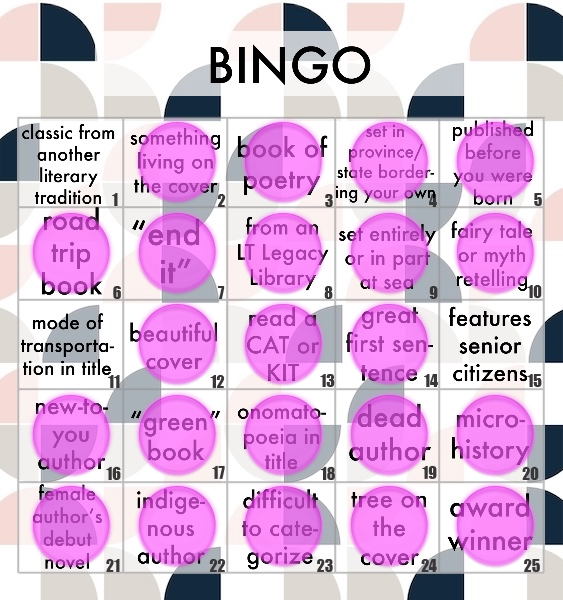
1. classic from another literary tradition
2. something living on the cover: Impossible Things, Connie Willis
3. book of poetry: Baseball Haiku, Cor van den Heuvel & Nanae Tamura, eds.
4. set in province/state bordering your own: Ramona Quimby, Age 8, Beverly Cleary
5. published before you were born: Isaac Asimov Presents the Great SF Stories 10 (1948), Isaac Asimov & Martin H. Greenberg, eds.
6. road trip: I'm Starting to Worry About This Black Box of Doom, Jason Pargin
7. "end it" (involves an ending in some way): Five Days at Memorial, Sheri Fink, in which several lives are ended
8. from an LT Legacy Library: A Fine and Private Place, Peter S. Beagle (in the library of Carl Sandburg)
9. set entirely or partly at sea: Cherry Ames, Cruise Nurse, Helen Wells
10. fairy tale or myth retelling: A Spindle Splintered, Alix E. Harrow
11. mode of transportation in title
12. beautiful cover: Believing, Zenna Henderson
13. read a CAT or KIT: The Music Lesson, Katharine Weber (January ArtsCAT/RandomKIT)
14. great first sentence: Women in Science, Rachel Ignotofsky ("Nothing says trouble like a woman in pants.")
15. features senior citizens
16. new-to-you author: Vera Wong's Unsolicited Advice for Murderers, Jesse Q. Sutanto
17. green book: Dangerous Visions, Harlan Ellison, ed.
18. onomatopoeia in title: The Dogs Do Bark, Jonathan Stagge
19. dead author: Second Foundation, Isaac Asimov
20. microhistory: Pockets, Hannah Carlson
21. female author's debut novel: The Merge, Grace Walker
22. indigenous author: Future Home of the Living God, Louise Erdrich
23. difficult to categorize: Six-Gun Snow White, Catherynne M. Valente
24. tree on the cover: Only This Beautiful Moment, Abdi Nazemian
25. award winner: The Devil's Arithmetic, Jane Yolen (National Jewish Book Award)
This might be the challenge I enjoy the most each year. It always forces me to stretch beyond my usual reading and pick a few books that I wouldn't have considered otherwise.
1. classic from another literary tradition
2. something living on the cover: Impossible Things, Connie Willis
3. book of poetry: Baseball Haiku, Cor van den Heuvel & Nanae Tamura, eds.
4. set in province/state bordering your own: Ramona Quimby, Age 8, Beverly Cleary
5. published before you were born: Isaac Asimov Presents the Great SF Stories 10 (1948), Isaac Asimov & Martin H. Greenberg, eds.
6. road trip: I'm Starting to Worry About This Black Box of Doom, Jason Pargin
7. "end it" (involves an ending in some way): Five Days at Memorial, Sheri Fink, in which several lives are ended
8. from an LT Legacy Library: A Fine and Private Place, Peter S. Beagle (in the library of Carl Sandburg)
9. set entirely or partly at sea: Cherry Ames, Cruise Nurse, Helen Wells
10. fairy tale or myth retelling: A Spindle Splintered, Alix E. Harrow
11. mode of transportation in title
12. beautiful cover: Believing, Zenna Henderson
13. read a CAT or KIT: The Music Lesson, Katharine Weber (January ArtsCAT/RandomKIT)
14. great first sentence: Women in Science, Rachel Ignotofsky ("Nothing says trouble like a woman in pants.")
15. features senior citizens
16. new-to-you author: Vera Wong's Unsolicited Advice for Murderers, Jesse Q. Sutanto
17. green book: Dangerous Visions, Harlan Ellison, ed.
18. onomatopoeia in title: The Dogs Do Bark, Jonathan Stagge
19. dead author: Second Foundation, Isaac Asimov
20. microhistory: Pockets, Hannah Carlson
21. female author's debut novel: The Merge, Grace Walker
22. indigenous author: Future Home of the Living God, Louise Erdrich
23. difficult to categorize: Six-Gun Snow White, Catherynne M. Valente
24. tree on the cover: Only This Beautiful Moment, Abdi Nazemian
25. award winner: The Devil's Arithmetic, Jane Yolen (National Jewish Book Award)
8KeithChaffee
On to a pair of more personal challenges.
During my years at LA Public Library, I wrote weekly posts for the library's blog. My assignment was to help drive traffic to our digital collections. Many of the posts I wrote were in honor of famous people born that week, and a lot of those were authors. They were chosen with an eye towards broad representation of gender, era, ethnicity, and genre, though I'm sure that my favorites are more strongly represented.
I thought it would be an interesting challenge to read something by each of the authors I wrote about. I hope to get to three or four of them each year.
I've already read: Margaret Atwood, Lawrence Block, Ray Bradbury, Arthur C. Clarke, Beverly Cleary, Joseph Conrad, Alexandre Dumas, Dave Eggers, Neil Gaiman, Thomas Hardy, Frank Herbert, Nick Hornby, P. D. James, Ursula K. Le Guin, Madeleine L'Engle, Jonathan Lethem, H. P. Lovecraft, George R. R. Martin, China Mieville, Edgar Allan Poe, Beatrix Potter, Thomas Pynchon, Mary Roach, Dr. Seuss, Jane Smiley, Harry Turtledove, Kurt Vonnegut, Laura Ingalls Wilder, P. G. Wodehouse, and Tom Wolfe.
But that leaves still to be read: Louisa May Alcott, Isabel Allende, Eric Ambler, Jeffrey Archer, Lester Bangs, J. M. Barrie, L. Frank Baum, Michael Bond, Rita Mae Brown, James M. Cain, Truman Capote, Raymond Chandler, Mary Higgins Clark, Philip K. Dick, Emily Dickinson, W. E. B. du Bois, Ralph Ellison, Ian Fleming, Richard Ford, Dick Francis, Gabriel Garcia Marquez, Henry Louis Gates, Jr., Nikolai Gogol, Stephen Jay Gould, Graham Greene, W. E. B. Griffin, Lorraine Hansberry, Ernest Hemingway, Zora Neale Hurston, Pauline Kael, Rudyard Kipling, Mark Kurlansky, Mercedes Lackey, John le Carre, Elmore Leonard, Debbie Macomber, Naguib Mahfouz, Cormac McCarthy, Ian McEwan, Haruki Murakami, Iris Murdoch, Walter Dean Meyers, Vladimir Nabokov, Joyce Carol Oates, Eugene O'Neill, Dorothy Parker, Mary Renault, Ruth Rendell, Nora Roberts, Oliver Sacks, Dorothy L. Sayers, Rex Stout, Alfred, Lord Tennyson, Studs Terkel, Leo Tolstoy, Barbara W. Tuchman, Evelyn Waugh, and Edith Wharton.
Read in 2026: Louise Erdrich.
During my years at LA Public Library, I wrote weekly posts for the library's blog. My assignment was to help drive traffic to our digital collections. Many of the posts I wrote were in honor of famous people born that week, and a lot of those were authors. They were chosen with an eye towards broad representation of gender, era, ethnicity, and genre, though I'm sure that my favorites are more strongly represented.
I thought it would be an interesting challenge to read something by each of the authors I wrote about. I hope to get to three or four of them each year.
I've already read: Margaret Atwood, Lawrence Block, Ray Bradbury, Arthur C. Clarke, Beverly Cleary, Joseph Conrad, Alexandre Dumas, Dave Eggers, Neil Gaiman, Thomas Hardy, Frank Herbert, Nick Hornby, P. D. James, Ursula K. Le Guin, Madeleine L'Engle, Jonathan Lethem, H. P. Lovecraft, George R. R. Martin, China Mieville, Edgar Allan Poe, Beatrix Potter, Thomas Pynchon, Mary Roach, Dr. Seuss, Jane Smiley, Harry Turtledove, Kurt Vonnegut, Laura Ingalls Wilder, P. G. Wodehouse, and Tom Wolfe.
But that leaves still to be read: Louisa May Alcott, Isabel Allende, Eric Ambler, Jeffrey Archer, Lester Bangs, J. M. Barrie, L. Frank Baum, Michael Bond, Rita Mae Brown, James M. Cain, Truman Capote, Raymond Chandler, Mary Higgins Clark, Philip K. Dick, Emily Dickinson, W. E. B. du Bois, Ralph Ellison, Ian Fleming, Richard Ford, Dick Francis, Gabriel Garcia Marquez, Henry Louis Gates, Jr., Nikolai Gogol, Stephen Jay Gould, Graham Greene, W. E. B. Griffin, Lorraine Hansberry, Ernest Hemingway, Zora Neale Hurston, Pauline Kael, Rudyard Kipling, Mark Kurlansky, Mercedes Lackey, John le Carre, Elmore Leonard, Debbie Macomber, Naguib Mahfouz, Cormac McCarthy, Ian McEwan, Haruki Murakami, Iris Murdoch, Walter Dean Meyers, Vladimir Nabokov, Joyce Carol Oates, Eugene O'Neill, Dorothy Parker, Mary Renault, Ruth Rendell, Nora Roberts, Oliver Sacks, Dorothy L. Sayers, Rex Stout, Alfred, Lord Tennyson, Studs Terkel, Leo Tolstoy, Barbara W. Tuchman, Evelyn Waugh, and Edith Wharton.
Read in 2026: Louise Erdrich.
9KeithChaffee
My major personal project is a survey of award-nominated short SF stories. For those awards that give multiple awards for short fiction, I include shorts of all lengths -- short story, novella, novelette -- anything shorter than a novel.
I made the decision a few months ago to shrink the list of awards I consider to US awards It's not that Canadian, Australian, British, and African SF isn't worth reading, but there's only so many years in a life, and even the US-only project is likely too large to ever finish.
My current list of Awards includes the Hugo, Nebula, Ignyte (POC authors), Eugie, Otherwise (SF/fantasy exploring gender issues; doesn't pop up a lot, because most of its winners are novels), and Sturgeon awards. While I don't hold with the theory that all alternate history is by definition science fiction, I do add to my list those titles from the Sidewise Awards that have sufficient SF content to be worth looking at.
Last year, I read almost 200 stories; at that pace, I could finish the project within a decade. (ETA Feb 28: I will not meet that pace this year, because I've decided to prioritize clearing my shelf of my backlog of SF magazine subscriptions, and most of those issues don't have award stories in them. I'll still get to some award stories through anthologies and author best-of collections that I read during the year, but it'll be a smaller number.)
SF STORIES READ JAN-MAR
1. "Jack," Connie Willis -- 1991 Nebula novella nominee; 1992 Hugo novella nominee
2. "And Now You Don't," Isaac Asimov -- 1951 Retro Hugo novella nominee
3. "The Ghost Pit," Stephen Baxter -- 2002 Hugo short story nominee
4. "Magic's Price," Bud Sparhawk -- 2002 Nebula novella nominee
5. "Moon Dogs," Michael Swanwick -- 2001 Hugo short story nominee
6. "Loose Ends," Paul Levinson -- 1997 Nebula novella nominee; 1998 Hugo novella nominee, Sturgeon nominee
7. "Riders of the Purple Wage," Philip Jose Farmer -- 1967 Nebula novella nominee, 1968 Hugo novella winner (tie)
8. "The Jigsaw Man," Larry Niven -- 1968 Hugo short story nominee
9. "If All Men Were Brothers, Would You Let One Marry Your Sister?," Theodore Sturgeon -- 1967 Nebula novella nominee
10. "Aye, and Gomorrah," Samuel R. Delany -- 1967 Nebula short story winner, 1968 Hugo short story nominee
11. The Devil's Arithmetic, Jane Yolen -- 1988 Nebula novella nominee
I made the decision a few months ago to shrink the list of awards I consider to US awards It's not that Canadian, Australian, British, and African SF isn't worth reading, but there's only so many years in a life, and even the US-only project is likely too large to ever finish.
My current list of Awards includes the Hugo, Nebula, Ignyte (POC authors), Eugie, Otherwise (SF/fantasy exploring gender issues; doesn't pop up a lot, because most of its winners are novels), and Sturgeon awards. While I don't hold with the theory that all alternate history is by definition science fiction, I do add to my list those titles from the Sidewise Awards that have sufficient SF content to be worth looking at.
Last year, I read almost 200 stories; at that pace, I could finish the project within a decade. (ETA Feb 28: I will not meet that pace this year, because I've decided to prioritize clearing my shelf of my backlog of SF magazine subscriptions, and most of those issues don't have award stories in them. I'll still get to some award stories through anthologies and author best-of collections that I read during the year, but it'll be a smaller number.)
SF STORIES READ JAN-MAR
1. "Jack," Connie Willis -- 1991 Nebula novella nominee; 1992 Hugo novella nominee
2. "And Now You Don't," Isaac Asimov -- 1951 Retro Hugo novella nominee
3. "The Ghost Pit," Stephen Baxter -- 2002 Hugo short story nominee
4. "Magic's Price," Bud Sparhawk -- 2002 Nebula novella nominee
5. "Moon Dogs," Michael Swanwick -- 2001 Hugo short story nominee
6. "Loose Ends," Paul Levinson -- 1997 Nebula novella nominee; 1998 Hugo novella nominee, Sturgeon nominee
7. "Riders of the Purple Wage," Philip Jose Farmer -- 1967 Nebula novella nominee, 1968 Hugo novella winner (tie)
8. "The Jigsaw Man," Larry Niven -- 1968 Hugo short story nominee
9. "If All Men Were Brothers, Would You Let One Marry Your Sister?," Theodore Sturgeon -- 1967 Nebula novella nominee
10. "Aye, and Gomorrah," Samuel R. Delany -- 1967 Nebula short story winner, 1968 Hugo short story nominee
11. The Devil's Arithmetic, Jane Yolen -- 1988 Nebula novella nominee
10KeithChaffee
SF STORIES READ APR-JUN
12. A Spindle Splintered, Alix E. Harrow -- 2022 Hugo novella nominee
13. A Mirror Mended, Alix E. Harrow -- 2023 Hugo novella nominee
14. "Seasons of Glass and Iron," Amal El-Mohtar -- 2016 Nebula short story winner; 2017 Hugo short story winner, Sturgeon nominee, Aurora short fiction nominee, Eugie nominee
15. "Madeleine," Amal El-Mohtar -- 2015 Nebula short story nominee
16. 'The Green Book," Amal El-Mohtar -- 2010 Nebula short story nominee
17. "The Bookmaking Habits of Select Species," Ken Liu -- 2013 Nebula short story nominee; 2013 Sturgeon nominee
18. "The Regular," Ken Liu -- 2014 Nebula novella nominee; 2015 Sturgeon nominee
19. "The Paper Menagerie," Ken Liu -- 2011 Nebula short story winner; 2012 Hugo short story winner, Sturgeon nominee
20. "Mono no aware," Ken Liu -- 2013 Hugo short story winner, Sturgeon nominee
21. "The Waves," Ken Liu -- 2012 Nebula novelette nominee
22. "All the Flavors," Ken Liu -- 2012 Nebula novella nominee
23. "The Litigation Master and the Monkey King," Ken Liu -- 2011 Nebula novella nominee; 2012 Hugo novella nominee, Sturgeon nominee
24. "The Man Who Ended History: A Documentary," Ken Liu -- 2013 Nebula novelette nominee
25. To Be Taught, if Fortunate, Becky Chambers -- 2020 Hugo novella nominee
26. The Summer War, Naomi Novik -- 2026 Hugo novella nominee
27. Passing Strange, Ellen Klages -- 2017 Nebula novella nominee
28. "Helicopter Story," Isabel Fall -- 2021 Hugo novelette nominee
29. Six-Gun Snow White, Catherynne M. Valente -- 2013 Nebula novella nominee; 2014 Hugo novella nominee
30. "The Ugly Chickens," Howard Waldrop -- 1980 Nebula novelette winner; 1981 Hugo novelette nominee
31. "Flying Saucer Rock and Roll," Howard Waldrop -- 1985 Nebula short story nominee; 1986 Hugo short story nominee
32. "Heirs of the Perisphere," Howard Waldrop -- 1985 Nebula short story nominee
33. "The Lions Are Asleep This Night," Howard Waldrop -- 1986 Nebula short story nominee, Sturgeon nominee
34. "Night of the Cooters," Howard Waldrop -- 1988 Hugo short story nominee
35. "The King of Where-I-Go," Howard Waldrop -- 2006 Hugo novelette nominee
36. A Psalm for the Wild-Built, Becky Chambers -- 2021 Nebula novella nominee; 2022 Hugo novella winner
37. A Prayer for the Crown-Shy, Becky Chambers -- 2022 Nebula novella nominee
12. A Spindle Splintered, Alix E. Harrow -- 2022 Hugo novella nominee
13. A Mirror Mended, Alix E. Harrow -- 2023 Hugo novella nominee
14. "Seasons of Glass and Iron," Amal El-Mohtar -- 2016 Nebula short story winner; 2017 Hugo short story winner, Sturgeon nominee, Aurora short fiction nominee, Eugie nominee
15. "Madeleine," Amal El-Mohtar -- 2015 Nebula short story nominee
16. 'The Green Book," Amal El-Mohtar -- 2010 Nebula short story nominee
17. "The Bookmaking Habits of Select Species," Ken Liu -- 2013 Nebula short story nominee; 2013 Sturgeon nominee
18. "The Regular," Ken Liu -- 2014 Nebula novella nominee; 2015 Sturgeon nominee
19. "The Paper Menagerie," Ken Liu -- 2011 Nebula short story winner; 2012 Hugo short story winner, Sturgeon nominee
20. "Mono no aware," Ken Liu -- 2013 Hugo short story winner, Sturgeon nominee
21. "The Waves," Ken Liu -- 2012 Nebula novelette nominee
22. "All the Flavors," Ken Liu -- 2012 Nebula novella nominee
23. "The Litigation Master and the Monkey King," Ken Liu -- 2011 Nebula novella nominee; 2012 Hugo novella nominee, Sturgeon nominee
24. "The Man Who Ended History: A Documentary," Ken Liu -- 2013 Nebula novelette nominee
25. To Be Taught, if Fortunate, Becky Chambers -- 2020 Hugo novella nominee
26. The Summer War, Naomi Novik -- 2026 Hugo novella nominee
27. Passing Strange, Ellen Klages -- 2017 Nebula novella nominee
28. "Helicopter Story," Isabel Fall -- 2021 Hugo novelette nominee
29. Six-Gun Snow White, Catherynne M. Valente -- 2013 Nebula novella nominee; 2014 Hugo novella nominee
30. "The Ugly Chickens," Howard Waldrop -- 1980 Nebula novelette winner; 1981 Hugo novelette nominee
31. "Flying Saucer Rock and Roll," Howard Waldrop -- 1985 Nebula short story nominee; 1986 Hugo short story nominee
32. "Heirs of the Perisphere," Howard Waldrop -- 1985 Nebula short story nominee
33. "The Lions Are Asleep This Night," Howard Waldrop -- 1986 Nebula short story nominee, Sturgeon nominee
34. "Night of the Cooters," Howard Waldrop -- 1988 Hugo short story nominee
35. "The King of Where-I-Go," Howard Waldrop -- 2006 Hugo novelette nominee
36. A Psalm for the Wild-Built, Becky Chambers -- 2021 Nebula novella nominee; 2022 Hugo novella winner
37. A Prayer for the Crown-Shy, Becky Chambers -- 2022 Nebula novella nominee
11KeithChaffee
SF STORIES READ JUL-SEP
38. The Shadow War of the Night Dragons: Book One: The Dead City: Prologue, John Scalzi -- 2012 Hugo short story nominee
39. "The Last Flight of Dr. Ain," James Tiptree, Jr. -- 1969 Hugo short story nominee
40. "The Screwfly Solution," James Tiptree, Jr. (originally published as by Raccoona Sheldon -- 1977 Nebula novelette winner; 1978 Hugo novelette nominee
41. "And I Awoke and Found Me Here on the Cold Hill's Side," James Tiptree, Jr. -- 1972 Nebula short story nominee
42. "The Girl Who Was Plugged In," James Tiptree, Jr. -- 1973 Nebula novelette nominee; 1974 Hugo novella winner
43. "Houston, Houston, Do You Read?," James Tiptree, Jr. -- 1976 Nebula novella winner; 1977 Hugo novella winner
44. "A Momentary Taste of Being," James Tiptree, Jr. -- 1975 Nebula novella nominee
45. "Love Is the Plan the Plan Is Death," James Tiptree, Jr. -- 1973 Nebula short story winner; 1974 Hugo novelette nominee
38. The Shadow War of the Night Dragons: Book One: The Dead City: Prologue, John Scalzi -- 2012 Hugo short story nominee
39. "The Last Flight of Dr. Ain," James Tiptree, Jr. -- 1969 Hugo short story nominee
40. "The Screwfly Solution," James Tiptree, Jr. (originally published as by Raccoona Sheldon -- 1977 Nebula novelette winner; 1978 Hugo novelette nominee
41. "And I Awoke and Found Me Here on the Cold Hill's Side," James Tiptree, Jr. -- 1972 Nebula short story nominee
42. "The Girl Who Was Plugged In," James Tiptree, Jr. -- 1973 Nebula novelette nominee; 1974 Hugo novella winner
43. "Houston, Houston, Do You Read?," James Tiptree, Jr. -- 1976 Nebula novella winner; 1977 Hugo novella winner
44. "A Momentary Taste of Being," James Tiptree, Jr. -- 1975 Nebula novella nominee
45. "Love Is the Plan the Plan Is Death," James Tiptree, Jr. -- 1973 Nebula short story winner; 1974 Hugo novelette nominee
12KeithChaffee
SF STORIES READ OCT-DEC
13KeithChaffee
And let's end this series of intro posts with a place to keep a running list of all the books I read during the year.
BOOKS READ JAN-MAR
1. Impossible Things, Connie Willis
2. Future Home of the Living God, Louise Erdrich
3. Second Foundation, Isaac Asimov
4. The Music Lesson, Katharine Weber
5. Vera Wong's Unsolicited Advice for Murderers, Jesse Q. Sutanto
6. Believing, Zenna Henderson
7. Women in Science, Rachel Ignotofsky
8. I'm Starting to Worry About This Black Box of Doom, Jason Pargin
9. A Fine and Private Place, Peter S. Beagle
10. A Morbid Taste for Bones, Ellis Peters
11. Five Days at Memorial, Sheri Fink
12. Pick Yourself Up, Charlotte Greenspan
13. Only This Beautiful Moment, Abdi Nazemian
14. Under the Whispering Door, TJ Klune
15. Through Gates of Garnet and Gold, Seanan McGuire
16. Dangerous Visions, Harlan Ellison, ed.
17. Viva Hollywood, Luis I. Reyes
18. The Burning Stones, Antti Tuomainen (trans. by David Hackston)
19. A History of the African-American People (Proposed) by Strom Thurmond, Percival Everett & James Kincaid
20. Alternate Channels, Steven Capsuto
21. The Devil's Arithmetic, Jane Yolen
22. Everyone in This Bank Is a Thief, Benjamin Stevenson
23. Cherry Ames, Cruise Nurse, Helen Wells
24. Isaac Asimov Presents the Great SF Stories 10 (1948), Isaac Asimov & Martin H. Greenberg, eds.
BOOKS READ JAN-MAR
1. Impossible Things, Connie Willis
2. Future Home of the Living God, Louise Erdrich
3. Second Foundation, Isaac Asimov
4. The Music Lesson, Katharine Weber
5. Vera Wong's Unsolicited Advice for Murderers, Jesse Q. Sutanto
6. Believing, Zenna Henderson
7. Women in Science, Rachel Ignotofsky
8. I'm Starting to Worry About This Black Box of Doom, Jason Pargin
9. A Fine and Private Place, Peter S. Beagle
10. A Morbid Taste for Bones, Ellis Peters
11. Five Days at Memorial, Sheri Fink
12. Pick Yourself Up, Charlotte Greenspan
13. Only This Beautiful Moment, Abdi Nazemian
14. Under the Whispering Door, TJ Klune
15. Through Gates of Garnet and Gold, Seanan McGuire
16. Dangerous Visions, Harlan Ellison, ed.
17. Viva Hollywood, Luis I. Reyes
18. The Burning Stones, Antti Tuomainen (trans. by David Hackston)
19. A History of the African-American People (Proposed) by Strom Thurmond, Percival Everett & James Kincaid
20. Alternate Channels, Steven Capsuto
21. The Devil's Arithmetic, Jane Yolen
22. Everyone in This Bank Is a Thief, Benjamin Stevenson
23. Cherry Ames, Cruise Nurse, Helen Wells
24. Isaac Asimov Presents the Great SF Stories 10 (1948), Isaac Asimov & Martin H. Greenberg, eds.
14KeithChaffee
BOOKS READ APR-JUN
25. Shadow of a Broken Man, George C. Chesbro
26. Baseball Haiku, Cor van den Heuvel & Nanae Tamura, eds.
27. A Spindle Splintered, Alix E. Harrow
28. A Mirror Mended, Alix E. Harrow
29. Glitz, Glam, and a Damn Good Time, Jennifer Wright
30. A Meatloaf in Every Oven, Frank Bruni & Jennifer Steinhauer
31. Stews, Xavier Bramble
32. Let's Play Dead, Sheila Connolly
33. Seasons of Glass and Iron, Amal El-Mohtar
34. Mel Fell, Corey R. Tabor
35. Don't Think of Tigers, Alex Latimer
36. The Paper Menagerie and Other Stories, Ken Liu
37. "Dr. Werthless", Harold Schechter & Eric Powell
38. To Be Taught, if Fortunate, Becky Chambers
39. The Summer War, Naomi Novik
40. Brave New Ballet, Robyn McGrath (Alexander Mostov, illustrator)
41. Passing Strange, Ellen Klages
42. True Color, Kory Stamper
43. The Merge, Grace Walker
44. The Tragedy of X, Ellery Queen
45. Six-Gun Snow White, Catherynne M. Valente
46. One Deadly Dawn, Harry Whittington
47. A Particularly Nasty Case, Adam Kay
48. On Michael Jackson, Margo Jefferson
49. A Death in the Rainforest, Don Kulick
50. The Grand Scheme of Things, Warona Jay
51. Archaeology: A Very Short Introduction, Paul Bahn
52. A Psalm for the Wild-Built, Becky Chambers
53. A Prayer for the Crown-Shy, Becky Chambers
54. Things Will Never Be the Same, Howard Waldrop
55. Brown Bear, Brown Bear, What Do You See?, Bill Martin, Jr., illustrated by Eric Carle
56. Polar Bear, Polar Bear, What Do You Hear?, Bill Martin, Jr., illustrated by Eric Carle
57. Baby Bear, Baby Bear, What Do You See?, Bill Martin, Jr., illustrated by Eric Carle
58. Death at La Fenice, Donna Leon
59. Stephen Sondheim: Art Isn't Easy, Daniel Okrent
60. Boyfriend Material, Alexis Hall
61. The Best Science Fiction Stories: 1949, ed. by E. F. Bleiler & T. E. Dikty
62. Ramona Quimby, Age 8, Beverly Cleary
63. Supersize Crochet Animals, Kristi Simpson
64. The Dogs Do Bark, Jonathan Stagge
25. Shadow of a Broken Man, George C. Chesbro
26. Baseball Haiku, Cor van den Heuvel & Nanae Tamura, eds.
27. A Spindle Splintered, Alix E. Harrow
28. A Mirror Mended, Alix E. Harrow
29. Glitz, Glam, and a Damn Good Time, Jennifer Wright
30. A Meatloaf in Every Oven, Frank Bruni & Jennifer Steinhauer
31. Stews, Xavier Bramble
32. Let's Play Dead, Sheila Connolly
33. Seasons of Glass and Iron, Amal El-Mohtar
34. Mel Fell, Corey R. Tabor
35. Don't Think of Tigers, Alex Latimer
36. The Paper Menagerie and Other Stories, Ken Liu
37. "Dr. Werthless", Harold Schechter & Eric Powell
38. To Be Taught, if Fortunate, Becky Chambers
39. The Summer War, Naomi Novik
40. Brave New Ballet, Robyn McGrath (Alexander Mostov, illustrator)
41. Passing Strange, Ellen Klages
42. True Color, Kory Stamper
43. The Merge, Grace Walker
44. The Tragedy of X, Ellery Queen
45. Six-Gun Snow White, Catherynne M. Valente
46. One Deadly Dawn, Harry Whittington
47. A Particularly Nasty Case, Adam Kay
48. On Michael Jackson, Margo Jefferson
49. A Death in the Rainforest, Don Kulick
50. The Grand Scheme of Things, Warona Jay
51. Archaeology: A Very Short Introduction, Paul Bahn
52. A Psalm for the Wild-Built, Becky Chambers
53. A Prayer for the Crown-Shy, Becky Chambers
54. Things Will Never Be the Same, Howard Waldrop
55. Brown Bear, Brown Bear, What Do You See?, Bill Martin, Jr., illustrated by Eric Carle
56. Polar Bear, Polar Bear, What Do You Hear?, Bill Martin, Jr., illustrated by Eric Carle
57. Baby Bear, Baby Bear, What Do You See?, Bill Martin, Jr., illustrated by Eric Carle
58. Death at La Fenice, Donna Leon
59. Stephen Sondheim: Art Isn't Easy, Daniel Okrent
60. Boyfriend Material, Alexis Hall
61. The Best Science Fiction Stories: 1949, ed. by E. F. Bleiler & T. E. Dikty
62. Ramona Quimby, Age 8, Beverly Cleary
63. Supersize Crochet Animals, Kristi Simpson
64. The Dogs Do Bark, Jonathan Stagge
15KeithChaffee
BOOKS READ JUL-SEP
65. Dark Tide, Stephen Puleo
66. The Shadow War of the Night Dragons: Book One: The Dead City: Prologue, John Scalzi
67. Mark Bittman's Quick and Easy Recipes from the New York Times, Mark Bittman
68. Pockets, Hannah Carlson
69. L Is for Librarian, Susan Lendroth/Alexander Vidal, illustrator
70. The Friends of Eddie Coyle, George V. Higgins
71. Operation Mincemeat, Ben Macintyre
72. Now You're Cooking, Elaine Corn
73. Her Smoke Rose Up Forever, James Tiptree, Jr.
74. Three Time Travelers Walk Into..., Michael A. Ventrella, ed.
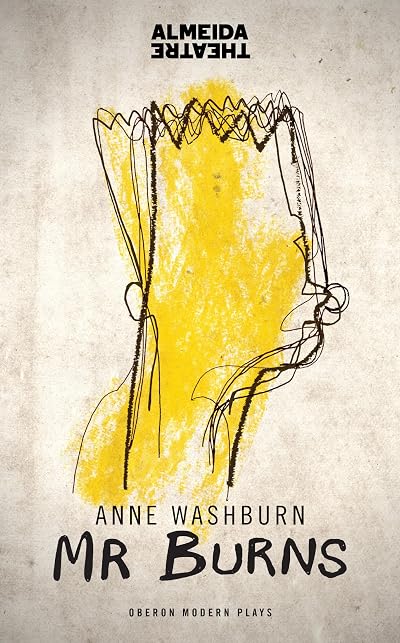
75. Mr. Burns, Anne Washburn
65. Dark Tide, Stephen Puleo
66. The Shadow War of the Night Dragons: Book One: The Dead City: Prologue, John Scalzi
67. Mark Bittman's Quick and Easy Recipes from the New York Times, Mark Bittman
68. Pockets, Hannah Carlson
69. L Is for Librarian, Susan Lendroth/Alexander Vidal, illustrator
70. The Friends of Eddie Coyle, George V. Higgins
71. Operation Mincemeat, Ben Macintyre
72. Now You're Cooking, Elaine Corn
73. Her Smoke Rose Up Forever, James Tiptree, Jr.
74. Three Time Travelers Walk Into..., Michael A. Ventrella, ed.
75. Mr. Burns, Anne Washburn
16KeithChaffee
BOOKS READ OCT-DEC
17KeithChaffee
And with that, we head into the second half of the year!
18MissWatson
Happy new thread, Keith, and good luck with your short story project.
19christina_reads
Happy new thread! You've done some impressive reading so far this year. I notice we're missing some of the same Bingo squares (microhistory, classic from another literary tradition), so I'll be interested to see what you pick for those!
20RidgewayGirl
Happy new thread! Having two of them is indeed cumbersome, although I persisted for years. I still miss choosing the categories and figuring out how to fill them, but only one thread means more reading time.
21lowelibrary
Happy New Thread
23KeithChaffee

65: Dark Tide, Stephen Puleo
(NonfictionCat: disasters)
On January 15, 1919, at the edge of the North End neighborhood of Boston, a giant molasses tank burst, releasing 2.3 million gallons -- 13,000 tons -- of molasses. The wave of molasses swept through the residential neighborhood at 35 miles per hour, killing 21 and injuring about 150.
Molasses behaves strangely compared to other fluids. Its viscosity can change very quickly, which meant that many people were swept away in a fast-moving wave of molasses, then trapped in the suddenly thick and sticky goo when the wave stopped moving.
Puleo divides his narrative into three sections -- the events leading up to the flood, the day of the flood and its immediate aftermath, and the court case that followed. The suit against the tank's owner, United States Industrial Alcohol (*), was not quite what we would now call a class action suit, but it was close to it, with 119 residents filing suit.
(* - If that sounds like an odd name for a molasses company, it's because USIA distilled most of its molasses into industrial alcohol for use in munitions and explosives manufacturing. The late 1910s were a busy era for the company, with demand for guns and explosives at a peak during World War I.)
USIA's attorneys claimed that the tank had been blown up by anarchists, but they offered no evidence, and the testimony about how hastily and carelessly the tank had been built was overwhelming. The company paid out (in today's dollars) more than $11 million in damages.
It's a compelling story, and Puleo tells it well.
24dudes22
>23 KeithChaffee: - I read this quite a few years ago and thought it was very interesting.
25KeithChaffee

66: The Shadow War of the Night Dragons: Book One: The Dead City: Prologue, John Scalzi
(SFFKit: humorous SFF)
This is a short story, less than 20 pages long, but the publisher sells it as an individual audiobook/e-book, and if it's a book to them, it's a book to me.
It began its life as an April Fools Day joke on Scalzi's blog, where it was presented as the first chapter of the first volume in the new series of books he was going to be writing, a massive epic fantasy series. It is, in reality, a terrific parody of such things, playing with and poking fun at the standard tropes. It's a little bit Terry Pratchett, a little bit Douglas Adams, and a healthy dose of Scalzi's own joking bantery style.
The story Scalzi sets up actually could be the basis for a perfectly serviceable series of fantasy books: For centuries, emperors have used the myth of the night dragons to scare the populace into the proper level of obedient subservience. If the rabble starts to get ideas of revolution, fake a few night dragon slayings and warn the people that only a strong emperor can protect them from the horrible beasts. But what is an emperor to do when there are apparent slayings by night dragons, slayings that he is not responsible for?
You get a sense of the style from this passage, in which our narrator shares some of the legends that have grown up around the night dragons:
It is said that if you anger a night dragon, you may appease it with cheese. But you better have a lot of it.
It is said that the only way to truly kill a night dragon is to bore it to death.
It is said that the scales of a night dragon are impervious to cutting, chopping and grinding. It is also said that night dragon scale powder is the most amazing aphrodisiac known to man, but given the first part of this legend, good luck with the whole "making a powder out of a dragon scale" thing.
Cheerfully silly fluff, and like all good parody, written with a deep understanding of and love for the thing it mocks.
26FlorenceArt
>25 KeithChaffee: I’m not a fan of Scalzi, but this sounds fun!
27KeithChaffee
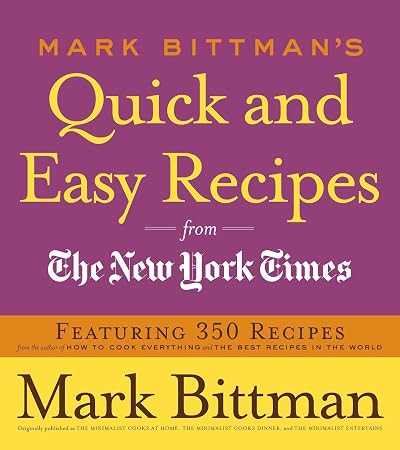
67: Mark Bittman's Quick and Easy Recipes from the New York Times, Mark Bittman
I may be reading a few cookbooks in this vein over the next few weeks. A family member who's setting up housekeeping on his own for the first time has requested a good basic cookbook for Christmas. He doesn't mind doing the work of cooking, he's just never done it before and has no idea where to start. So I'm looking for something that will give basic instructions for roasting a chicken, making roast beef, cooking the basic vegetables, and so on.
Bittman's book is a collection of about 350 recipes from his time writing "The Minimalist" column for the New York Times cooking section. They are recipes with relatively few ingredients that provide a little more explanation of basic techniques than most cookbooks do. The ingredients are easily accessible, and there aren't too many recipes that call for one strange ingredient that you'll have to buy a large jar of and never use in anything else. (I do notice, though, that Bittman is oddly fond of fish sauce, which pops up all over the place.)
It's a good, solid book for a inexperienced cook. The recipes represent the contemporary influence of global cuisine on American tastes and supermarkets. Still, not quite what I'm looking for, I think; it feels to me like a good second book, the one you might give a year later to the cook who's mattered the most basic techniques and is ready to expand to slightly more unusual ingredients and flavors.
28KeithChaffee
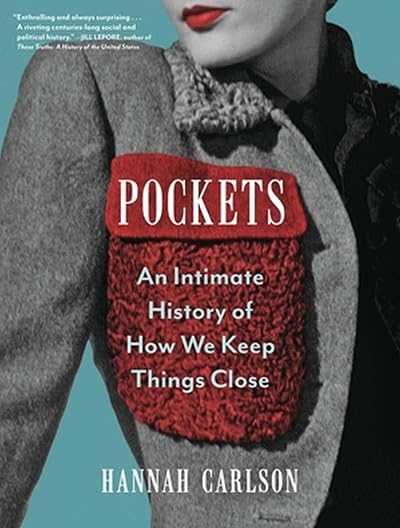
68: Pockets, Hannah Carlson
(ArtsCat: fiber arts; BingoDog: microhistory)
Carlson presents a history of pockets, which were for a surprisingly long time unattached to other clothing. The word derives from the French "poche," meaning bag; that word came into English as "poke," which survives almost exclusively in the phrase "pig in a poke." Add the diminutive suffix "ette," and you get to "pocket" as a word for a small bag.
And the earliest pockets literally were small bags, perhaps attached to a man's belt or tied around a woman's waist. Sewn-in pockets eventually became a standard part of men's clothing, and for a few hundred years, women have rightly complained about the fact that they are still largely expected to make do with separate purses and pocketbooks, the descendants of those original separate bags.
Because pockets are so often located at the front of the body, and at hip level, they have often been vaguely associated with naughtiness. For men in particular, the question of what exactly is being done with hands in those pockets is a frequent one, which is part of the reason that a casual hands-in-pockets stance has been seen as cool and sexy for hundreds of years (though the precise nature of "casual" has changed dramatically over the centuries).
We also get chapters on various moments when decorative pockets have become fashionable, our fascination with what people carry in their pockets, and on assorted imaginings of a futuristic world in which pockets might become obsolete.
Carlson's prose is a touch dry and academic, but not so much as to keep the book from being entertaining. The history is well-organized, and her details are well chosen. There are lots of illustrations from art, advertising, and design history.
29FlorenceArt
>28 KeithChaffee: This sounds interesting!
30dudes22
>28 KeithChaffee: - I came across a reference somewhere else recently about this book and I think I'll put it on my "sometime in the future" list. I just finished Isola by Allegra Goodman which is set in the 1500s and there are mentions of an object that the main character carries in her pocket. I'm now thinking that maybe it wasn't attached to her garment although you don't mention when that change took place. Would the pocket have been a separate bag in the 1500s?
31KeithChaffee
>30 dudes22: Probably, yes.
32KeithChaffee
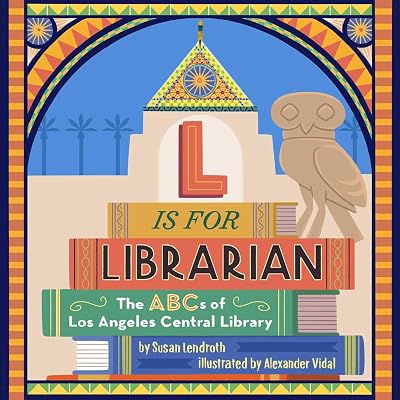
69: L Is for Librarian, Susan Lendroth/Alexander Vidal, illustrator
The Los Angeles Public Library's Central Library celebrated its 100th anniversary on July 6. It hasn't been continuously open for the entire 100 years; it was closed for about 7 years in the late 1980s/early 1990s for renovation, repair, and expansion after a pair of arson fires.
I spent most of my 31-year career with LAPL in that building, so I couldn't pass up this new ABC book about Central Library.
Each letter of the alphabet gets a sentence or two in relatively large type for the smallest kids, with an extra sentence or two in smaller type to provide a little more info for older readers. For instance "R is for Rotunda, a vast and wonderful room where you can hear your voice and footsteps echo" is supplemented by some details about the artwork in the rotunda and the room's former use as home for the library's card catalog.
Some of the entries are obvious -- L is for Librarian, after all -- but most of them are rooted in the specifics of Central Library and its many artworks. The alphabet stretches from "A is for Awesome" ("libraries are some of the most awesome places on earth") to "Z is for Zebra, Ziggurat, or Zombie" (all things that you might make for yourself on the 3-D printers in the Library's Octavia Lab).
Lendroth's text is written in the voice of the Central Library itself, explaining its features to the reader. Vidal's illustrations are bright and cheerful, and he does lovely work in capturing the spirit of the building's many artworks.
This is a book, to be sure, with a fairly limited audience. I don't imagine that many readers outside Los Angeles will find it very interesting. But for Angelenos who use and visit the building, it's a charming souvenir.
33KeithChaffee
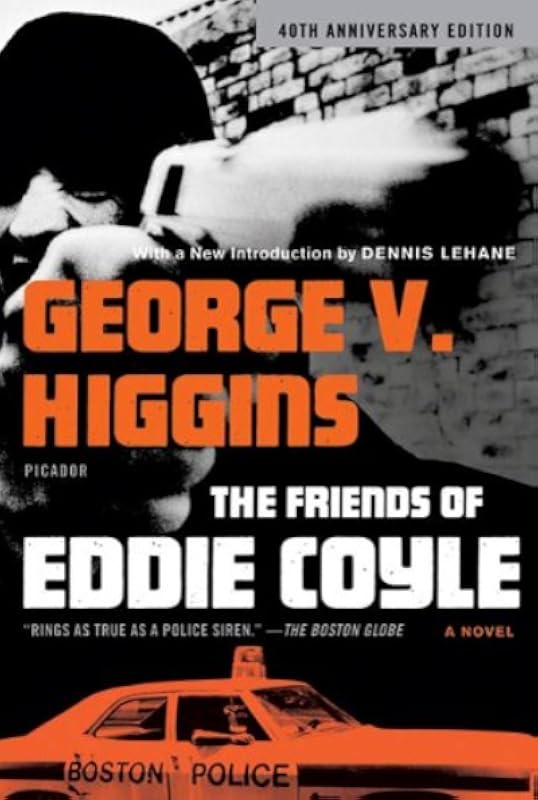
70: The Friends of Eddie Coyle, George V. Higgins
(AlphaKit: G; MysteryKit: less than lawful)
We're in 1970 Boston, where Eddie Coyle is a low-level mobster. He's awaiting sentencing in New Hampshire for stealing a truck of booze, and is desperately pleading with the Feds for a deal that will keep him out of prison. The best that agent Dave Foley can offer him is a promise to talk to the judge if Eddie can give him enough info to get a conviction of someone higher up. That puts Eddie in the position of figuring out which of his "friends" can be sacrificed at the least risk to himself.
The novel is written mostly in dialogue. There's an occasional sentence of scene setting or description of physical action, but at least 80 percent of the text is dialogue. And Higgins does not adorn his dialogue with unnecessary decorative verbs; there's no "cried" or "screamed" or "hissed," everyone just "said" things.
That dialogue is casual, conversational, and incredibly natural sounding. I don't think it would help much to quote a short passage. I found the effect of it to be cumulative. Over the length of the novel, it works to create a strong sense of the criminal underword.
It's a brutal and amoral world. Eddie, of course, doesn't actually have any "friends" in this world -- no one does -- he only has colleagues and acquaintances who are important to him (and he to them) only to the extent that they are useful in any given moment.
Justifiably regarded as a classic crime novel, and I wish I'd gotten to it sooner.
34KeithChaffee

71: Operation Mincemeat, Ben Macintyre
(RandomKit: World War II)
In 1943, it was clear that the next Allied attack on the Axis would come in southern Europe. The Allies wanted to attack at Sicily, and part of the planning was to find a way to convince the Germans that they would attack elsewhere; if Sicily were well defended, an attack there would surely fail.
Operation Mincemeat was an improbable part of the plan to mislead the Germans. British Intelligence dressed up a corpse as a British officer and arranged for the body to float ashore in a part of Spain that was known to be filled with supporters of Germany. They planted on the body several documents that would make the Nazis believe that whatever plans they might stumble across for an invasion of Sicily were mere decoys for the "real" invasion that would come in either Greece or Sardinia.
The plan worked; the Sicilian invasion succeeded; and it was an important step towards ending the war. It's a strange and compelling story, filled with colorful supporting characters, and it's been retold many times. The 1950s book The Man Who Never Was by Ewen Montagu, one of the principal planners of the operation, was turned into a movie starring Clifton Webb; this book by Macintyre was adapted for film in 2022 (Colin Firth played Montagu in that one); it's been the basis of several plays and musicals, including one that played for several months on Broadway last year, in which all the roles are played by a cast of only five with a lot of gender-swapped casting.
So I'm not sure why I found the book so dull and uninvolving. It might be as simple as a long-standing indifference to war stories; I find it difficult to keep track of the 83 different moving parts, and who's told which lies to whom, and which agent has passed document X to agent Y.
I can't say it's a bad book. Macintyre tells the story as clearly as it can be told, and he has a knack for finding amusing details. No book is meant for everyone, I suppose, and this one just wasn't meant for me.
35christina_reads
>34 KeithChaffee: Sorry this one didn't work better for you! But fair point about the 83 different moving parts...it can be hard to keep track of all the threads.
36FlorenceArt
>33 KeithChaffee: Sounds interesting, but probably not for me.
And >34 KeithChaffee: is absolutely not for me, who has trouble following moving parts, whatever their number.
And >34 KeithChaffee: is absolutely not for me, who has trouble following moving parts, whatever their number.
37KeithChaffee
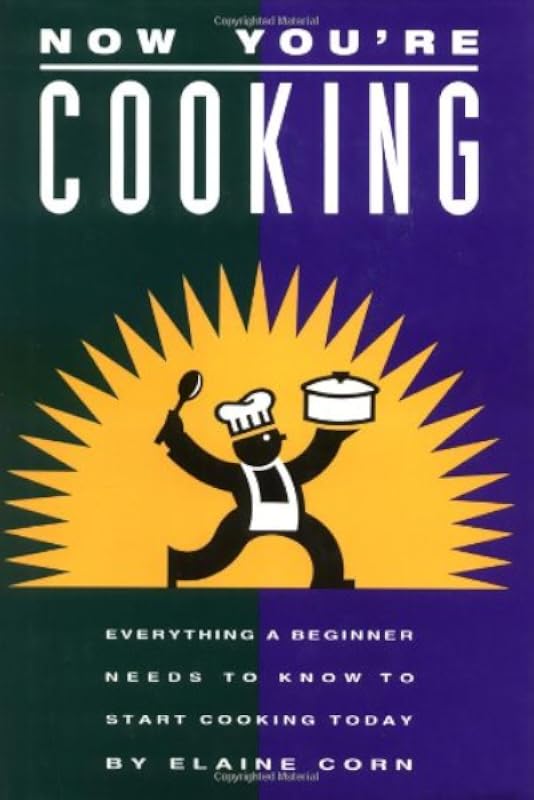
72: Now You're Cooking, Elaine Corn
I mentioned a few posts back that I was in search of a good first cookbook to be given as a Christmas gift. I think this is going to be the one.
It starts with the very basics. In a section called "the eight immortal chores," Corn explains how to chop an onion, mince garlic, peel potatoes, and so on. The onion section even includes actual-size illustrations to show the reader how large cubes, dices, and mince should be.
There are chapters on what basic equipment you should own, what should be in your pantry, and how to perform several of the standard cooking techniques (grilling, sauteing, boiling...).
There are a handful of recipes in those early chapters, but we're 40% of the way through the book before it becomes a recipe-on-every-page cookbook. And when it does, the recipes are simple, easy to read and understand, and filled with notes (both in the body of the recipe and in the wide margins, where supplemental notes are added).
They are fundamental recipes, the sort of thing that every home cook needs to learn to do: chili, meat loaf, baked potatoes, pasta sauce, coleslaw, salsa, chocolate chip cookies. A short final chapter offers some advice on ways to use up leftovers, and an appendix suggests several combinations of recipes from the book that could be combined into menus.
It's a 1994 book, and if I were picking nits, I might wish that the book was a bit more reflective of today's more multicultural landscape; even the average home cook today is more familiar with Asian, Middle Eastern, and even some African dishes and ingredients. This book's most adventurous steps away from stereotypical middle America is a recipe for hummus.
But aside from that, this is a solid introduction to basic techniques and recipes. I think it'll make a fine gift.
38KeithChaffee
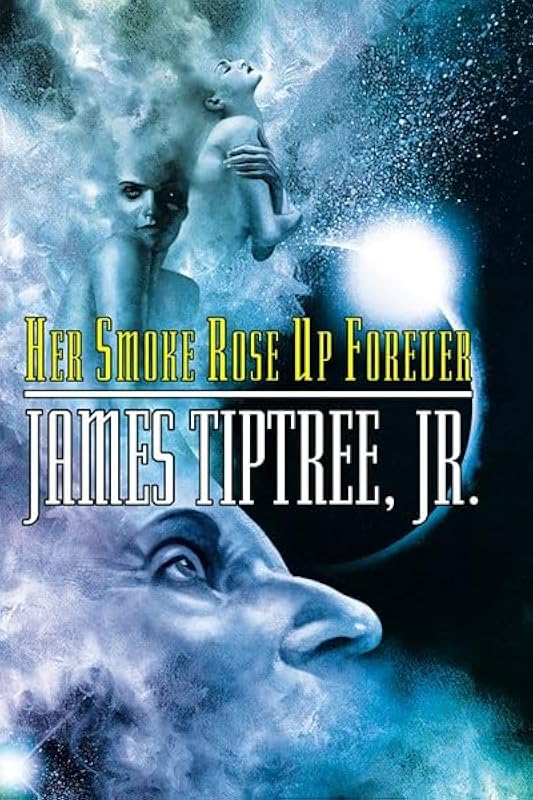
73: Her Smoke Rose Up Forever, James Tiptree, Jr.
(AlphaKit: U; DecadeCat: 70s)
"James Tiptree, Jr." is one of the most famous pseudonyms in the SF genre. The author's real name was Alice Sheldon. She said in an interview that she chose a male pseudonym because she "had the feeling that a man would slip by less observed. I've had too many experiences in my life of being the first woman in some damned occupation." (I'm mostly going to use the name "Tiptree" in these comments, since that's the name under which the work appeared; I'll use "Sheldon" when necessary to distinguish person from pseudonym.)
The author began writing relatively late in life, publishing her first stories in 1968, when she turned 53. Tiptree rose to prominence fairly quickly, and was one of the major writers of short fiction of the 1970s. At the height of Tiptree's success, Sheldon began submitting a few stories under the more female-sounding name "Raccoona Sheldon;" those stories were getting rejected until "Tiptree" intervened by sending letters to "his" publishers recommending Raccoona's work.
(With one major exception, "The Screwfly Solution," the Raccoona Sheldon stories are generally not as well regarded as the James Tiptree stories; "Screwfly" is the only Raccoona story in this best-of collection.)
Under either name, the author's major themes are sex, gender, and death, and the overwhelming emotion is rage, directed primarily at men. Most SF fans of the era knew that "Tiptree" was a pseudonym, and until her cover was blown in 1977, most believed the author to be male. Some did speculate, based on the themes of the work, that Tiptree might be female, and some critics made asses of themselves arguing strenuously against that possibility. Robert Silverberg scoffed at the idea, calling Tiptree's writing "ineluctably masculine," and comparing Tiptree to Hemingway in their "prevailing masculinity."
Tiptree was strongly influenced by the second-wave feminism of the 1960s and 1970s, which helps to explain the anger in her work. Anger can be an important motivator in a political movement, but anger alone is not enough to sustain either a movement or a person. Had I been reading these stories as they were published, one every few months, I might have reacted differently, but taken in a single block, their fury becomes exhausting, and I was burning out on it by the end of the collection. (It's also likely that the feminist anger simply felt more of the moment and less jarring in the 1970s than it does 50 years later.)
Her work is also strongly influenced by the stylistic experimentation that began in the SF of the mid-to-late 1960s. Those stylistic excursions never quite feel natural in her writing, though, too often coming across as an awkward attempt to keep up with what the cool kids are doing. "The Girl Who Was Plugged In," for instance, has a terrific idea at its heart (*), and its story of a world in which traditional advertising has been banned still feels more contemporary than most of Tiptree's work, but is a slightly tough read because Tiptree never quite feels comfortable with her own stylistic indulgences.
(* - It's one of Tiptree's most adapted works; it's been filmed for television and turned into a one-act musical, and a feature film from director Jennifer Kent will start filming later this year.)
But at her best, taken one story at a time, some of Tiptree's work holds up very well, and there can be enormous emotional power in her furious cries of anger. "The Screwfly Solution" suggests that the eternal battle of the sexes might someday be weaponized against us by an outside third force. "Houston, Houston, Do You Read?" imagines an American space crew (all male, of course, in the 1970s), accidentally sent into a future with very different gender roles; and "The Women Men Don't See," as close as Tiptree ever came to writing a funny story, gives us women who are willing to go to extreme lengths to get away from men for good.
I've read a fair number of single-author "best-of" collections in my journey through SF awards history. I don't think I've yet come across an author who feels so specifically locked into their moment in history as Tiptree does. Her preoccupations, while not obsolete today, are so closely tied to the politics of her era that her work feels more dated and less relevant than other authors of her generation. I acknowledge her talent, but I think she is best taken in small doses, and that she'll ultimately be remembered more for a handful of her best stories than for a compelling body of work.
39KeithChaffee
Another month, another few back issues cleared from the shelf of old SF magazines. Actually, not all that "old," as the shelf is almost clear and we're into the current decade, with only another two or three months needed to clear the shelf.
This month, we've got a few issues of Analog and Asimov's from 2021 and 2022, and I read these stories, mostly on the short side:
"Sparrows," Susan Palwick
"The Silence Before I Sleep," Adam-Troy Castro
"Orientation," Adam-Troy Castro
"Never to Happen Again," Bill Pronzini & Barry N. Malzberg
Palwick gives us a short piece about a college student determined to finish her final paper despite the arrival of the climate apocalypse; not much story to speak of, but Palwick's prose is always pleasant to read.
Pronzini and Malzberg offer a fairly standard story of a museum curator getting the news that their museum is about to be closed. It's a punchline story, and the punchline isn't all that surprising.
Castro's "Orientation" is an effective comic monologue, in which an alien explains to the human he has kidnapped (sort of; it's complicated) the experiment that is about to be performed on him. It's an explanation he has clearly given many times before, and he has no patience left for the constant interruptions and complaints of his human subjects.
"Silence Before I Sleep" is the one longer piece of this bunch. A professional killer (she rejects the word "assassin") is summoned to a private planet where the only occupants are an estranged husband and wife, each living in a castle on their own half of the planet. The killer is asked by each member of the couple to resolve the conflict between them, with only her own conscience to guide her in precisely how that should be done.
Neither of the Castro stories is work for the ages, but both are fine entertainment, skillfully conceived and written. And that is, I think, a good summary of Castro's career; he's not going to be remembered as one of the greats, but he's a solid, working author who readers can count on for a consistent level of professionalism.
This month, we've got a few issues of Analog and Asimov's from 2021 and 2022, and I read these stories, mostly on the short side:
"Sparrows," Susan Palwick
"The Silence Before I Sleep," Adam-Troy Castro
"Orientation," Adam-Troy Castro
"Never to Happen Again," Bill Pronzini & Barry N. Malzberg
Palwick gives us a short piece about a college student determined to finish her final paper despite the arrival of the climate apocalypse; not much story to speak of, but Palwick's prose is always pleasant to read.
Pronzini and Malzberg offer a fairly standard story of a museum curator getting the news that their museum is about to be closed. It's a punchline story, and the punchline isn't all that surprising.
Castro's "Orientation" is an effective comic monologue, in which an alien explains to the human he has kidnapped (sort of; it's complicated) the experiment that is about to be performed on him. It's an explanation he has clearly given many times before, and he has no patience left for the constant interruptions and complaints of his human subjects.
"Silence Before I Sleep" is the one longer piece of this bunch. A professional killer (she rejects the word "assassin") is summoned to a private planet where the only occupants are an estranged husband and wife, each living in a castle on their own half of the planet. The killer is asked by each member of the couple to resolve the conflict between them, with only her own conscience to guide her in precisely how that should be done.
Neither of the Castro stories is work for the ages, but both are fine entertainment, skillfully conceived and written. And that is, I think, a good summary of Castro's career; he's not going to be remembered as one of the greats, but he's a solid, working author who readers can count on for a consistent level of professionalism.
40KeithChaffee
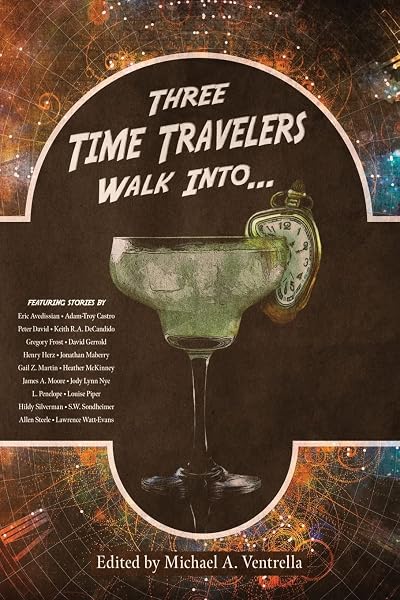
74: Three Tune Travelers Walk Into..., Michael A. Ventrella, ed.
Ventrella's challenge to authors for this collection of original stories was straightforward: "Take any three famous people from history, toss them together, and have an adventure." The results are mixed enough that I wouldn't recommend you rush out to buy a copy of the book, but if it's available at your library, you might get some pleasure from browsing through for the best stories. (And of course, depending on your literary and historical interest, your "best" and mine might be entirely different.)
A couple of writers bent Ventrella's rules a bit. Peter David presses Ali Baba, Don Quixote, and Mephistopheles into service as the three ghosts in "A Christmas Prelude," a Dickens prequel centered on Ebenezer Scrooge's father; David Gerrold has the cheek to use himself as one of his three famous people (along with Harlan Ellison and Dorothy Fontana) in "The Man Who Broke Time," one of the book's high points.
One variety of less interesting stories combine historical figures who are broadly similar and asks them to do exactly what you'd expect. Asking Blackbeard, John Dillinger, and Jesse James to pull off a heist ("Never Meet Your Heroes," by Eric Avedissian) is far less interesting than asking George Washington Carver, Julia Child, and Im-Hotep to do the same ("In the Chocolate Bar," by Jody Lynn Nye).
The other road to failure is to give the historical trio nothing much to do but gawk at how things have changed. Gregory Frost's "Episode in Liminal State Technical Support" strands Ambrose Bierce, Cary Grant, and Amelia Earhart in a plotless story. Even worse is Lawrence Watt-Evans's "The Jurors," which starts with a wonderful premise -- F. Scott Fitzgerald, Mary Wollstonecraft Godwin, and William Tecumseh Sherman are brought to the future to be impartial jurors for a political activist whose crimes are so vile and well-known that no fair jury can be found -- and immediately has the activist assassinated, leaving the time travelers to mope in boredom.
My favorite of the stories is Henry Herz's "A Vampire, an Astrophysicist, and a Mother Superior Walk into a Basilica," in which Herz makes one of his historical figures the narrator, and does a fine job of capturing the voice of Neil deGrasse Tyson, getting just the right blend of dad jokes, intellect, and smug self-satisfaction. Tyson is joined in the story by Vlad Tepes and Mother Teresa, and they are tasked with stealing a piece of art that, should the Nazis get hold of it, will lead to German victory.
There are eighteen stories with no repeated historical characters. Other combinations include Marie Antoinette/Marie Curie/Mary Todd Lincoln, Marlon Brando/Jesus Christ/Cesar Romero, and Zora Neale Hurston/the Queen of Sheba/Tituba.
Far from essential, but I am happy to have read the Nye, Herz, and Gerrold stories.