Peter Weissman: Dec. '09s featured real-life underappreciated author
Talk Le Salon Littéraire du Peuple pour le Peuple
Join LibraryThing to post.
This topic is currently marked as "dormant"—the last message is more than 90 days old. You can revive it by posting a reply.
1absurdeist
An open forum of Q & A with Peter Weissman, author of I Think, Therefore Who Am I? begins this Sunday.
3absurdeist
I did not know, urania, that Lola Walser was a "real-life, underappreciated author". I seriously did not. Now, if she's willing, she's obviously a must choice for January '10. Sound good? Can we pencil you in for January, Lola?
4copyedit52
Thanks for setting up this strand and featuring me as the opening act, Enrique. I guess I am at least somewhat appreciated, no?
5Third_cheek
I don't care for Sunday - there's football to be watched and screamed at - so I have a question.
I've not read the book, but I understand that it offers an unromantic account of living with 60s/70s US psychedelic drug culture. I guess that a lot of accounts of this period have promoted a fairly exciting visual image of the psychedelic experience itself, through language. SO... In writing your book did you make use of the usual literary devices - poetic imagery/metaphor/analogy, elegant sentence construction etc., and, if so, how did you negotiate between the realism/honesty of your depiction and the need for metaphoric/poetic imagery/the elegant sentence in order to convey the experience. In any case, do you recognise that this can be a problem and were you conscious of it?
Thanks
I've not read the book, but I understand that it offers an unromantic account of living with 60s/70s US psychedelic drug culture. I guess that a lot of accounts of this period have promoted a fairly exciting visual image of the psychedelic experience itself, through language. SO... In writing your book did you make use of the usual literary devices - poetic imagery/metaphor/analogy, elegant sentence construction etc., and, if so, how did you negotiate between the realism/honesty of your depiction and the need for metaphoric/poetic imagery/the elegant sentence in order to convey the experience. In any case, do you recognise that this can be a problem and were you conscious of it?
Thanks
6copyedit52
Y'know, I was conscious of that--the drug and nondrug reality--but it was never a problem, since I knew how I wanted to approach the subject from the beginning: the only way I feel comfortable writing, which is in straightforward prose. So no, I didn't make use of the literary devices you mentioned; not metaphor or analogy, at any rate, though perhaps a bit of poetic imagery. It did help that I was not one of those who encountered what are called hallucinations; that is, I found reasonable explanation for the "superreal" things I witnessed, at least until the end of my psychedelic year, when I lost it altogether.
Myth was important; a mythopoeic state of mind. I dealt with that without literary devices too, by describing the state (and presenting its humorous aspects) early on, in the third chapter--following my first acid trip ("My Czechoslovak Awakening")--titled "In the Realm of Mythunderstanding," which ends: "... the gods on Olympus had not been perfect. They were human, after all." (I think I was reading Joseph Campbell, The Hero with a Thousand Faces, when I went over that chapter a final time.) And sometimes I suggest the mythic in a chapter title, as in "Beelzebub and His Sidekick," which features two guys who are archetypally themselves.
Myth was important; a mythopoeic state of mind. I dealt with that without literary devices too, by describing the state (and presenting its humorous aspects) early on, in the third chapter--following my first acid trip ("My Czechoslovak Awakening")--titled "In the Realm of Mythunderstanding," which ends: "... the gods on Olympus had not been perfect. They were human, after all." (I think I was reading Joseph Campbell, The Hero with a Thousand Faces, when I went over that chapter a final time.) And sometimes I suggest the mythic in a chapter title, as in "Beelzebub and His Sidekick," which features two guys who are archetypally themselves.
7absurdeist
Le Salon is very pleased to welcome one of its own, Peter Weissman, to the "real, underappreciated authors" thread.
Peter is the author (I'm aware I'm being redundant, but can a book ever truly get plugged enough? especially from a first time author?) of I Think, Therefore Who Am I?, an autobiographical novel set in New York during one coming-of-age year in the late 1960s, in which our hero, Peter Weissman, goes on (at first blush) an acid odyssey in search of self in the cramped tenements and streets of New York City. Ultimately, I think, Peter (ad)ventures upon a quest much more profound than mere self discovery or figuring out one's identity - and it's a quest we all embark upon eventually whether we write a great book about it like Peter or not: Why am I here on this planet? and how does the answer to that question inform how I'll live the rest of my life?
When Peter's not, uh, "Digging Deeper" into such existential inquiries, he works as a copy editor. In fact, he edited Thomas Berger's 1984 Pulitzer Prize-finalist novel, The Feud.
Peter, do tell how you landed such a cool gig editing an (almost) award-winning book by Thomas Berger?
Peter is the author (I'm aware I'm being redundant, but can a book ever truly get plugged enough? especially from a first time author?) of I Think, Therefore Who Am I?, an autobiographical novel set in New York during one coming-of-age year in the late 1960s, in which our hero, Peter Weissman, goes on (at first blush) an acid odyssey in search of self in the cramped tenements and streets of New York City. Ultimately, I think, Peter (ad)ventures upon a quest much more profound than mere self discovery or figuring out one's identity - and it's a quest we all embark upon eventually whether we write a great book about it like Peter or not: Why am I here on this planet? and how does the answer to that question inform how I'll live the rest of my life?
When Peter's not, uh, "Digging Deeper" into such existential inquiries, he works as a copy editor. In fact, he edited Thomas Berger's 1984 Pulitzer Prize-finalist novel, The Feud.
Peter, do tell how you landed such a cool gig editing an (almost) award-winning book by Thomas Berger?
8Third_cheek
Peter, thanks for the reply, and Peter and Enrique thanks for the thread. Sorry for jumping in early - I'm 8hrs ahead, longtudinally at least.
9copyedit52
Good morning (here), Enrique and Third_cheek:
Jumping in early, eight hours ahead, forced me to work on my chops for this thread, given the perceptive and quick-witted people who inhabit these parts. I must have rewritten the above answer (#6) three times before I felt I got it right--and again this morning--and even then I wasn't satisfied. But then, I edit books for a living--an anal retentive vocation--and it did take me about thirty years to write and rewrite (about a dozen times) I Think, Therefore Who Am I?
Which is to say (a favorite Henry Miller transitioning phrase) that I can be verbose, and I'll try to edit myself on the fly for this thread.
How I got into editing is a long story, and I'll take a rain check on that, except to note that for every Thomas Berger and his like that I edit, I edit about a hundred romances between werewolves, vampires, and their victims. So don't envy me too much on that count.
Anyways, thanks for setting this thread up, Enrique, and for bracing me for what's to come, Third_cheek. And welcome salonistas and guests. I await what I hope will be a deluge.
Jumping in early, eight hours ahead, forced me to work on my chops for this thread, given the perceptive and quick-witted people who inhabit these parts. I must have rewritten the above answer (#6) three times before I felt I got it right--and again this morning--and even then I wasn't satisfied. But then, I edit books for a living--an anal retentive vocation--and it did take me about thirty years to write and rewrite (about a dozen times) I Think, Therefore Who Am I?
Which is to say (a favorite Henry Miller transitioning phrase) that I can be verbose, and I'll try to edit myself on the fly for this thread.
How I got into editing is a long story, and I'll take a rain check on that, except to note that for every Thomas Berger and his like that I edit, I edit about a hundred romances between werewolves, vampires, and their victims. So don't envy me too much on that count.
Anyways, thanks for setting this thread up, Enrique, and for bracing me for what's to come, Third_cheek. And welcome salonistas and guests. I await what I hope will be a deluge.
10absurdeist
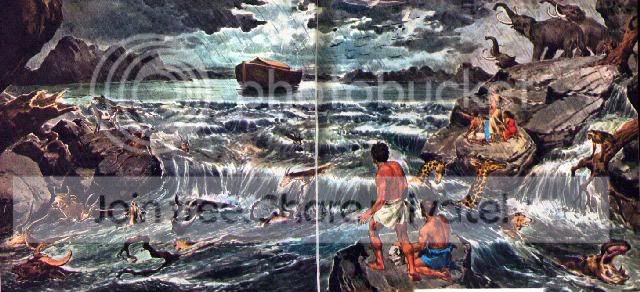
Perhaps a deluge of Biblical proportions you seek?
11absurdeist
Peter, in your book you are a kind of "quiet narrator" much of the time. You describe a lot of what others have to say, but in dialogue with them, you usually say little. You credited, if I recall, the LSD with sharpening into focus what was important to communicate and what was banal - at least that was your perspective in the moment when you lived that life long ago. Do you still agree with that young man, four decades removed, that LSD acted like a psychic sieve crystalizing truth (or, in the least, what's important) while simultaneously filtering out the dross?
12copyedit52
Wow. There's so much I could say about that, with "much of the time" being the key phrase. The short answer is, no, LSD was not a psychic sieve crystallizing truth, though it stripped the extraneous from speech; the little things perceived as petty. There was no small talk among acid heads.
The longer answer: One reflection of the changing states of mind of the young protagonist ("changes," we succinctly called it back then) is how talkative he is. At first, after taking acid, feeling overwhelmed by reality and the people in it, he's mute. Later, as he comes into his own, becomes more self-assured, he talks more, and at points is even eloquent (see the chapter "School of Existential Being"). When hubris overtakes him--as it did after the zenith of many trippers' cycles, marking the end of those cumulative highs--he becomes a verbal tyrant. And still later, alienated in the crash pad world of Haight-Ashbury, he becomes mute again. (If you've read that far, you'll recall what happens at the end of "Summer of Love.")
It should be pointed out that this is me; or rather, my younger self, but as well the present Peter Weissman; speech, self-expression, or the lack of it, as personal manifestation. Other people who took, or used, LSD had their own innate qualities accentuated or diminished. See: Patrick Malone, Arnie Glick, Tom, Carl, Rose, etc.
The longer answer: One reflection of the changing states of mind of the young protagonist ("changes," we succinctly called it back then) is how talkative he is. At first, after taking acid, feeling overwhelmed by reality and the people in it, he's mute. Later, as he comes into his own, becomes more self-assured, he talks more, and at points is even eloquent (see the chapter "School of Existential Being"). When hubris overtakes him--as it did after the zenith of many trippers' cycles, marking the end of those cumulative highs--he becomes a verbal tyrant. And still later, alienated in the crash pad world of Haight-Ashbury, he becomes mute again. (If you've read that far, you'll recall what happens at the end of "Summer of Love.")
It should be pointed out that this is me; or rather, my younger self, but as well the present Peter Weissman; speech, self-expression, or the lack of it, as personal manifestation. Other people who took, or used, LSD had their own innate qualities accentuated or diminished. See: Patrick Malone, Arnie Glick, Tom, Carl, Rose, etc.
13copyedit52
Since there's a lull, Enrique, I'll use that rain check now: how I landed a cool editing gig.
I'd actually wanted to do it for years, since being a mailman was exhausting, and the newspaper jobs I had culminated with a gig for a paper that I eventually discovered was a front for a labor racket (naif that I was, it took me a while to figure out), strongarming ads from building contractors, for which a newspaper was of course required.
... but I didn't know what the job I wanted was called. It took me ten years to find out, and then only because a friend who was proofreading for Dell got the copy chief to give me work--which I took home to my Manhattan apartrment. I did a good job, and voila, I was a freelance proofer. I had what's called a good eye, but had to bone up on the symbols and grammatical rules via Words Into Type and The Chicago Manual of Style. And when Dell cut back on proofreading, its freelancers learned copy editing, a more rigorous part of the book production process that also pays better.
In freelancing anonymity, I did: The Feud, Thomas Berger, and Palm Sunday, Kurt Vonnegut, for Delacorte, and Confessions of a Homing Pigeon, Nicholas Meyer, for Dial (nice book). For Avon: Kiss, John Lutz. For Bantam: Grant and Twain: The Story of an American Friendship, Mark Perry. For Ballantine and DelRey: Evensong by Gail Godwin; Gods and Generals, Jeff Shaara; and The Ringworld Throne by Larry Niven. And my favorite, for William Morrow, Recreational Handicapping, James Quinn, because I enjoy losing a few bucks every now and then at the track.
I'd actually wanted to do it for years, since being a mailman was exhausting, and the newspaper jobs I had culminated with a gig for a paper that I eventually discovered was a front for a labor racket (naif that I was, it took me a while to figure out), strongarming ads from building contractors, for which a newspaper was of course required.
... but I didn't know what the job I wanted was called. It took me ten years to find out, and then only because a friend who was proofreading for Dell got the copy chief to give me work--which I took home to my Manhattan apartrment. I did a good job, and voila, I was a freelance proofer. I had what's called a good eye, but had to bone up on the symbols and grammatical rules via Words Into Type and The Chicago Manual of Style. And when Dell cut back on proofreading, its freelancers learned copy editing, a more rigorous part of the book production process that also pays better.
In freelancing anonymity, I did: The Feud, Thomas Berger, and Palm Sunday, Kurt Vonnegut, for Delacorte, and Confessions of a Homing Pigeon, Nicholas Meyer, for Dial (nice book). For Avon: Kiss, John Lutz. For Bantam: Grant and Twain: The Story of an American Friendship, Mark Perry. For Ballantine and DelRey: Evensong by Gail Godwin; Gods and Generals, Jeff Shaara; and The Ringworld Throne by Larry Niven. And my favorite, for William Morrow, Recreational Handicapping, James Quinn, because I enjoy losing a few bucks every now and then at the track.
14Porius
Berger beats the pants off that silly old thing John Barth but somehow we hear more of Barth than Berger? I will try to track down your book over Xmass vacation. I like the track too as one of my first jobs was a hotwalker for my trainer-uncle. I've donated to the track over the years, considerably. What's better than Del Mar on a sunny day? sunny day? they're all sunny here in San Diego and environs.
15copyedit52
Tricky thing about my book: it can't be tracked down in a bookstore. Alas.
16Porius
As I only allow myself so mush eye time here then where can it be captured. I just can't wade through the minutia, am a reluctant mudder.
17copyedit52
In cyberspace: amazon, barnes&noble, etc.
19Ganeshaka
Hello guys,
In honor of the good old daze, I'd like to contribute this petit madeleine of a link http://lsdex.ru/fla/interactive-kaleidoscope/
(I for one DID hallucinate way back then, much like the link above with an added twist of Peter Max, and one of the flashback effects I experienced, for weeks after, was... to pause while reading a book, look at the ceiling, and watch the line of text continue to unfold like a Joycean gibbering ticker tape. It wasn't pleasant, and, translated in today's terms of reference, would be like falling through the Internet. Aieeeeywheeeee!!!)
And speaking of trippy, that's a very nice deluge, EF. The image should be in the dictionary next to "that ship has sailed, my friend".
Peace,
G
In honor of the good old daze, I'd like to contribute this petit madeleine of a link http://lsdex.ru/fla/interactive-kaleidoscope/
(I for one DID hallucinate way back then, much like the link above with an added twist of Peter Max, and one of the flashback effects I experienced, for weeks after, was... to pause while reading a book, look at the ceiling, and watch the line of text continue to unfold like a Joycean gibbering ticker tape. It wasn't pleasant, and, translated in today's terms of reference, would be like falling through the Internet. Aieeeeywheeeee!!!)
And speaking of trippy, that's a very nice deluge, EF. The image should be in the dictionary next to "that ship has sailed, my friend".
Peace,
G
20absurdeist
I'm wondering, Peter, (and I know you know I know the answer to this forthcoming question, but perhaps a lot out there don't know the answer and are already automatically assuming so, since we've focused so much here at the beginning on LSD...) is your book just about sitting around dropping acid all day? ;-)
Is there more to your book than merely drugs? (as if "merely drugs" weren't enough! - I mean, geeze, Bret Easton Ellis has made a career out of "merely drugs".) But some people might be put off by all this LSD talk, and lump you in with the tuning in, turning on, dropping out likes of Timothy Leary, and I think that would be a mistake. How would you respond to people/potential readers, who might be quick to tune you out right off the bat because they perceive you and your book as perhaps justifying or championing illegal drug use?
Also, I noticed on your author page that you quipped that agents are your enemies. Aren't agents there to help would-be authors? ;-)
Is there more to your book than merely drugs? (as if "merely drugs" weren't enough! - I mean, geeze, Bret Easton Ellis has made a career out of "merely drugs".) But some people might be put off by all this LSD talk, and lump you in with the tuning in, turning on, dropping out likes of Timothy Leary, and I think that would be a mistake. How would you respond to people/potential readers, who might be quick to tune you out right off the bat because they perceive you and your book as perhaps justifying or championing illegal drug use?
Also, I noticed on your author page that you quipped that agents are your enemies. Aren't agents there to help would-be authors? ;-)
21Third_cheek
Were you doing any writing before the period you describe in your book, and, if so, can you identify any negative/positive consequences of that period for your subsequent writing?
22copyedit52
You want to write a story, or a novel, you use what you've got, and I had characters, stories, and ambient flere in that period I'd been through. When I was a lot younger, and more ingenuous, I would have experienced coming of age without the drugs: learning about the world-as-it-is, searching for something more, tasting exaltation and disappointment. As the reviewer sanddancer noted:
I Think, Therefore Who Am I? is essentially a coming of age story, and although some of the specifics relate to that time and place, much of it struck a chord with me despite having been born a couple of decades later.
On agents: I could rant for a while but will merely say that commercial exigencies nowadays in the publishing industry, and everyone connected to that octopus, have made agents less willing to look at much less accept anything that doesn't fit into a niche. Well, maybe "enemies" was too strong a term. But to avoid bad advice (which passes as "help") or outright neglect, I want nothing to do with them. After all, why would I want to be discouraged?
I Think, Therefore Who Am I? is essentially a coming of age story, and although some of the specifics relate to that time and place, much of it struck a chord with me despite having been born a couple of decades later.
On agents: I could rant for a while but will merely say that commercial exigencies nowadays in the publishing industry, and everyone connected to that octopus, have made agents less willing to look at much less accept anything that doesn't fit into a niche. Well, maybe "enemies" was too strong a term. But to avoid bad advice (which passes as "help") or outright neglect, I want nothing to do with them. After all, why would I want to be discouraged?
23copyedit52
Third_cheek: I went to journalism school before my psychedelic year because I wanted to write. Coming from a working-class family, the idea was to be a writer who had a job. What I learned was: you shouldn't go to journalism if you want to write, unless you like writing papers on "The Theory and Process of Communication," and similar stuff. So no, I wasn't doing much writing before. And after the drug year, I could hardly read, much less write. Words danced around too much, aureoled in fluorescence (see Ganeshaka, above). So yeah, that was negative. But when my synapses began to recover, I started anew, as if I'd never written before. (I also had to learn how to concentrate, in order to finish a sentence.) And in retrospect that was a blessing because I'm a better writer because of it.
25absurdeist
Great link G! I've just spent an inordinate amount of time staring mindlessly at it.
What writers, Peter (and which books) have influenced you most in your own writing?
What writers, Peter (and which books) have influenced you most in your own writing?
26copyedit52
Good morning, Enrique:
Henry Miller, of course; his conversational style, albeit with an uncommon vocabulary. My favorites: Sexus, Nexus, Plexus.
Raymond Chandler: because, reading him, I realized it was okay to be funny when describing people and scenes. Though in fact I often have to tone down my own tendency to exaggerate, and not go as far as he so smoothly did. My favorites: Farewell, My Lovely, The Little Sister, The High Window.
Louis-Ferdinand Celine, most recently: for the interjectionary style; the narrator's frenzy, or disgust, or need to get it out fast, which I do a bit of in my own book, which comes across as turning to the reader and speaking directly to him or her. My favorites: Death on the Installment Plan, and Journey to the End of Night.
Henry Miller, of course; his conversational style, albeit with an uncommon vocabulary. My favorites: Sexus, Nexus, Plexus.
Raymond Chandler: because, reading him, I realized it was okay to be funny when describing people and scenes. Though in fact I often have to tone down my own tendency to exaggerate, and not go as far as he so smoothly did. My favorites: Farewell, My Lovely, The Little Sister, The High Window.
Louis-Ferdinand Celine, most recently: for the interjectionary style; the narrator's frenzy, or disgust, or need to get it out fast, which I do a bit of in my own book, which comes across as turning to the reader and speaking directly to him or her. My favorites: Death on the Installment Plan, and Journey to the End of Night.
27Macumbeira
Celine is top !
28aethercowboy
I'm most of the way through I Think, and I've been wondering: What is your opinion of Hunter S. Thompson?
29copyedit52
Hunter Thompson. I like him. He comes across as a wildman at times (I suspect it suited his purposes to acquiesce to that characterization), but if so, he's a pretty canny one. His loosey-goosey style might have led some to overlook the fact that he was a terrific reporter. I'm thinking about Fear and Loathing on the Campaign Trail '72, of course ... oh, and the stuff he was doing for Rolling Stone back then.
30copyedit52
aethercowboy:
Sorry. I tried to finesse Hunter Thompson's drug stuff by not mentioning it. After answering questions yesterday I berated myself for putting too much emphasis on drugs when discussing my memoir. I was doing them, but that doesn't cover what I was attempting to say about myself, my characters, and the meaning of life (!) Still, in answering you I should have also said that coming from a place where drugs were "used" to try to achieve perfection, Thompson's drug binges in Fear and Loathing in Las Vegas perplexed me. His adventures were fun to read about, but it was not something I could identify with.
Sorry. I tried to finesse Hunter Thompson's drug stuff by not mentioning it. After answering questions yesterday I berated myself for putting too much emphasis on drugs when discussing my memoir. I was doing them, but that doesn't cover what I was attempting to say about myself, my characters, and the meaning of life (!) Still, in answering you I should have also said that coming from a place where drugs were "used" to try to achieve perfection, Thompson's drug binges in Fear and Loathing in Las Vegas perplexed me. His adventures were fun to read about, but it was not something I could identify with.
31aethercowboy
>29 copyedit52:-30.
Thanks. I was trying to ask if he influenced your writing without actually asking it. I think, FWIW, you sort of answered my indirect question.
As a follow up: you published I Think through Xlibris, a self-publishing/POD (and I've heard "vanity") service. Did you try to get this book published through a (for lack of a better term) "professional" publishing house, or did your feelings about agents and the like influence this decision to DIY. Likewise, why made you go with Xlibris vs. other SP/POD publishers (I ask because I've heard some pretty nasty things about Xlibris from people in my critique group)?
Thanks. I was trying to ask if he influenced your writing without actually asking it. I think, FWIW, you sort of answered my indirect question.
As a follow up: you published I Think through Xlibris, a self-publishing/POD (and I've heard "vanity") service. Did you try to get this book published through a (for lack of a better term) "professional" publishing house, or did your feelings about agents and the like influence this decision to DIY. Likewise, why made you go with Xlibris vs. other SP/POD publishers (I ask because I've heard some pretty nasty things about Xlibris from people in my critique group)?
32copyedit52
I spent years (and years) trying to get published, seemingly got close a few times but usually was rejected out of hand--more often by agents, actually (perhaps explaining my animus toward them)--than when I managed to sneak in sideways to a publishing house through my editing contacts. But in fact the editing and the acquisitions departments are separate worlds; as I found out.
So, finally, I decided to go it on my own, thinking that as a professional editor, I could forgo the editing services offered by these do-it-yourself outfits and thus afford to do it. Turns out that Xlibris was the only one that let me. iUniverse, for example, would not budge on having me hire their editors to do what I knew I could do as well or better, and for rates almost twice what established publishers pay me . So I went with Xlibris.
In the three years or so of dealing with Xlibris (via the Philippines), I've learned a lot, and seen the nasty things--probably the same ones--that people in your group talk about. Foremost among them are their "marketing" services, which of course you have to pay a lot for. I don't believe I sold a single book through them; a complete waste of money.
I'm beginning to think, now, about what I'll do with my next book, called, at the moment, Digging Deeper, and taking our young protagonist into the world of work and marriage and struggling to write in an inhospitable culture for writers. (I'm about three chapters from the end.) If I go with Xlibris, at least I'll know now what to avoid.
Btw, aethercowboy, a bone to pick with you: What's the meaning of having a separate category, under Tags, in your library for "self-published"? (In which I'm the only entrant.) It made me feel like a second-class citizen.
So, finally, I decided to go it on my own, thinking that as a professional editor, I could forgo the editing services offered by these do-it-yourself outfits and thus afford to do it. Turns out that Xlibris was the only one that let me. iUniverse, for example, would not budge on having me hire their editors to do what I knew I could do as well or better, and for rates almost twice what established publishers pay me . So I went with Xlibris.
In the three years or so of dealing with Xlibris (via the Philippines), I've learned a lot, and seen the nasty things--probably the same ones--that people in your group talk about. Foremost among them are their "marketing" services, which of course you have to pay a lot for. I don't believe I sold a single book through them; a complete waste of money.
I'm beginning to think, now, about what I'll do with my next book, called, at the moment, Digging Deeper, and taking our young protagonist into the world of work and marriage and struggling to write in an inhospitable culture for writers. (I'm about three chapters from the end.) If I go with Xlibris, at least I'll know now what to avoid.
Btw, aethercowboy, a bone to pick with you: What's the meaning of having a separate category, under Tags, in your library for "self-published"? (In which I'm the only entrant.) It made me feel like a second-class citizen.
33aethercowboy
>32 copyedit52:.
I think you're looking at my "currently reading" category. Switch to "All Categories".
I use the tag to keep track of books that are published (a) by the author directly, (b) through a SP/POD/Vanity publisher, or (c) through a publishing house owner by the author.
I do this so I have some correlation between books published through "non-standard" means and how much I actually liked them.
You're not alone, though! My cousin's book Lure Stringed Siren is among those (but yours is MUCH better), as are the books I've read by Gary Wolf (who's kinda like an Ayn Rand of short science fiction).
Edit: But you do make a good point. There are a LOT of books I have neglected to tag that way. I'll add that to my To-Do list.
I think you're looking at my "currently reading" category. Switch to "All Categories".
I use the tag to keep track of books that are published (a) by the author directly, (b) through a SP/POD/Vanity publisher, or (c) through a publishing house owner by the author.
I do this so I have some correlation between books published through "non-standard" means and how much I actually liked them.
You're not alone, though! My cousin's book Lure Stringed Siren is among those (but yours is MUCH better), as are the books I've read by Gary Wolf (who's kinda like an Ayn Rand of short science fiction).
Edit: But you do make a good point. There are a LOT of books I have neglected to tag that way. I'll add that to my To-Do list.
34absurdeist
Ara 13 is another self-published author I've had the pleasure of reading this year. Ara and Peter's books are the only self-published works I've ever recommended to anybody else. These two are diamonds in that proverbial wasteland-rough of self-published garbage.
35copyedit52
Loose ends:
aethercowboy ... Jacob: So far as I know, my writing is not now, nor has it ever been, influenced by Hunter Thompson.
aethercowboy ... Jacob: So far as I know, my writing is not now, nor has it ever been, influenced by Hunter Thompson.
36copyedit52
Cold and crisp this morning; I like it. But with the leaves all fallen, I can see my neighbor's house. Well, you can't have everything, can you?
37geneg
Braggart! I can't see anything but neighbors, with or without leaves. The view from my window sucks!
38copyedit52
Sorry, Gene: I didn't mean to rub it in. Notice you're in the Dylan group. Perhaps I can interest you in my book by telling you (keep it under your hat) that you'll meet St. Annie there ... not exactly as Dylan sees her in the song.
39geneg
I'm still waiting for Madonna to show.
Last time I saw St. Annie I told her thanks a lot. My best friend, my doctor won't even say what it is I've got.
Last time I saw St. Annie I told her thanks a lot. My best friend, my doctor won't even say what it is I've got.
40copyedit52
Yes, that Annie.
41Third_cheek
No crisp leaves here either. Just a slimy carpet of fetid ones. I can see my neighbours though - the 8th floor studios of a national radio station are just across the bald treetops. Each morning they get to see me staggering naked through the flat looking for a lost sock, while I only get their disembodied heads, mouths fishlike into microphones - lucky people.
They do occasionally play a track by Dylan, or I dial one off the net.
Suggestions of appropriate Dylan tracks welcome.
They do occasionally play a track by Dylan, or I dial one off the net.
Suggestions of appropriate Dylan tracks welcome.
42copyedit52
In trying to figure out where you live, Third_cheek, out of curiosity--given your slimy, fetid leaves. I visited your profile and still don't know. However, I did discover that you're a copy editor of translated texts--I often have to translate British English into American English (humour to humor, centre to center, etc.), and adjust the quote marks--and that you've read All That Is Solid Melts Into Air, by Marshall Berman, whom I once knew, in connection with the National Writers Union. And that you have neighbours (!) who work for a national radio station, which sounds socialistic to me; not that there's anything wrong with that.
43Third_cheek
All correct... see private post!
And yeah, I recogniSe the British to American English thing -- I'm sometimes asked to do the same. The locals like to see a little of Europe in the English language and so do I, but I'm ready to admit that 'gas' just is a more convenient word than 'petrol'. Still, I like my British humour.
And yeah, I recogniSe the British to American English thing -- I'm sometimes asked to do the same. The locals like to see a little of Europe in the English language and so do I, but I'm ready to admit that 'gas' just is a more convenient word than 'petrol'. Still, I like my British humour.
44copyedit52
And don't you just adore plimsolls?
I had a hell of a time once, editing British-to-American, for a story in which one of the characters was constantly going to the surgery. I thought, what's going on? What exactly is so wrong with him that he needs an operation? The text, of course, did not reveal it. And then I discovered that what the British call a surgery is just a physician's office. Source: British English, A to Zed by Norman W. Schur.
I had a hell of a time once, editing British-to-American, for a story in which one of the characters was constantly going to the surgery. I thought, what's going on? What exactly is so wrong with him that he needs an operation? The text, of course, did not reveal it. And then I discovered that what the British call a surgery is just a physician's office. Source: British English, A to Zed by Norman W. Schur.
45Third_cheek
Plimsolls! That is a fine word. It deserves a revival.
47absurdeist
I want to know more about Martha, Peter. I found the three chapters featuring her very very compelling. Did you ever see or hear from her again?
I liked the way you introduced her as being some naive appearing country-bumpkin literally fresh off the bus and....yet....she ultimately wasn't quite so naive was she? Well, in regards to certain substances, she may have been inexperienced.
I liked the way you introduced her as being some naive appearing country-bumpkin literally fresh off the bus and....yet....she ultimately wasn't quite so naive was she? Well, in regards to certain substances, she may have been inexperienced.
48copyedit52
Interesting question. I haven't thought about those three chapters as different, but yeah, I see what you mean. There's a different feel to them, isn't there?
Initially working on Martha I intended her as a straight (nondrug) foil to the characters in my drug world--including me. To let her stand as a contrast, in order to show how I'd changed, which presented great opportunity for humor, through juxtaposition.
But then, in one of the numerous rewrites (I rewrote this book about a dozen times over thirty years, and it changed as I did) I became more interested in Martha as a character. (I became more interested in all my characters, as characters, as time went on.) At which point her bedrock common-sensibility (Martha as Martha) began to come through.
Odd, but for some reason I was thinking about this exchange last night (from the chapter "Martha from Minnesota," I Think, Therefore Who Am I?), when I first met her:
"What was your name again?" I asked her.
"Martha," she replied, and fell in beside me with a bouncing gait as I began walking.
Jokingly, I said, "You just get off a bus?"
"Why, yes!" she replied, the thick lenses magnifying her surprise as she tilted her head quizzically and looked up at me. "How did you know?"
"Uh ... " It was her overabundant enthusiasm. But I said, "Your coat ... It's not that cold." Which was true, I realized, even though evening was coming on.
She took a breath and held it, inflating her cheeks, which I now saw were rosy, not flushed, then exhaling with feeling. "You're very observant," she said, impressed.
"Thank you," I replied.
"Though actually, it wasn't a bus--it was a plane--and I didn't 'just' get here--I've been in the city two days already."
* * *
And at the end of those three Martha chapters I do something I don't believe I do anywhere else in the book. Reflecting on Martha, I foreshadow the future:
What I didn't know, of course, was how much I'd miss that sense of reality in the difficult days to come.
Initially working on Martha I intended her as a straight (nondrug) foil to the characters in my drug world--including me. To let her stand as a contrast, in order to show how I'd changed, which presented great opportunity for humor, through juxtaposition.
But then, in one of the numerous rewrites (I rewrote this book about a dozen times over thirty years, and it changed as I did) I became more interested in Martha as a character. (I became more interested in all my characters, as characters, as time went on.) At which point her bedrock common-sensibility (Martha as Martha) began to come through.
Odd, but for some reason I was thinking about this exchange last night (from the chapter "Martha from Minnesota," I Think, Therefore Who Am I?), when I first met her:
"What was your name again?" I asked her.
"Martha," she replied, and fell in beside me with a bouncing gait as I began walking.
Jokingly, I said, "You just get off a bus?"
"Why, yes!" she replied, the thick lenses magnifying her surprise as she tilted her head quizzically and looked up at me. "How did you know?"
"Uh ... " It was her overabundant enthusiasm. But I said, "Your coat ... It's not that cold." Which was true, I realized, even though evening was coming on.
She took a breath and held it, inflating her cheeks, which I now saw were rosy, not flushed, then exhaling with feeling. "You're very observant," she said, impressed.
"Thank you," I replied.
"Though actually, it wasn't a bus--it was a plane--and I didn't 'just' get here--I've been in the city two days already."
* * *
And at the end of those three Martha chapters I do something I don't believe I do anywhere else in the book. Reflecting on Martha, I foreshadow the future:
What I didn't know, of course, was how much I'd miss that sense of reality in the difficult days to come.
49absurdeist
Martha is definitely a foil! Well said.
So did you ever hear from her or see her again?
So did you ever hear from her or see her again?
50copyedit52
No, I didn't. The epilogue reprises some of my characters, but not Martha.
51copyedit52
I was thinking about Patrick Malone last night.
An excerpt from "Truths and Gambits," I Think, Therefore Who Am I?:
This was something else again: the flamboyant entrance, rendering him the center of attention, and now this posture of repose. What was he about? Did he want to be the nexus or to disappear? Since he hadn’t gone so far as to close his eyes, I decided he didn’t know, so I nodded at the chessboard that sat on the trunk, next to the candle, inviting him to play.
In response, he smiled slightly, telling me he found the invitation humorous, and beneath him. Could I be serious? To play a game—of all things—while on acid?
I replied with a slight smile of my own, indicating that a game is only a game, after all, and among those who recognized as much, what harm could it do? Then I pushed a pawn.
He pushed one back.
And we were into it.
* * *
And later:
Patrick hung on stubbornly for a while, but when the board had been simplified to a dozen pieces, he finally set the king on its side. "You thrashed me," he said, leaning back, speaking for the first time since we began playing.
"I wouldn't say that," I replied.
"I was too attentive," he said, lambasting himself with a compliment. “You can’t play chess in a state of heightened awareness. You need to concentrate.”
"You did all right," I said dryly, “until you moved your bishop.”
"Exactly my point."
Martha, in the chair by the window, had been taking us in, along with everything else; her face flushed, animated. "Who won?" she asked.
The question brought the slight smile back to Patrick’s lips, and he looked at me over the board, to see how my ego would handle the challenge. Acknowledging victory can be as difficult as conceding defeat.
"I did," I said, shook a few cigarettes out of the pack and onto the trunk, and offered him one. Patrick raised an eyebrow, as at a diversion, but took it anyway and lit up.
But he wasn’t finished yet; not by a long shot. Accepting defeat can be as difficult as acknowledging victory. “The great chess champions,” he declared, ostensibly speaking to me, but addressing the room-at-large, "are single-minded ... "
An excerpt from "Truths and Gambits," I Think, Therefore Who Am I?:
This was something else again: the flamboyant entrance, rendering him the center of attention, and now this posture of repose. What was he about? Did he want to be the nexus or to disappear? Since he hadn’t gone so far as to close his eyes, I decided he didn’t know, so I nodded at the chessboard that sat on the trunk, next to the candle, inviting him to play.
In response, he smiled slightly, telling me he found the invitation humorous, and beneath him. Could I be serious? To play a game—of all things—while on acid?
I replied with a slight smile of my own, indicating that a game is only a game, after all, and among those who recognized as much, what harm could it do? Then I pushed a pawn.
He pushed one back.
And we were into it.
* * *
And later:
Patrick hung on stubbornly for a while, but when the board had been simplified to a dozen pieces, he finally set the king on its side. "You thrashed me," he said, leaning back, speaking for the first time since we began playing.
"I wouldn't say that," I replied.
"I was too attentive," he said, lambasting himself with a compliment. “You can’t play chess in a state of heightened awareness. You need to concentrate.”
"You did all right," I said dryly, “until you moved your bishop.”
"Exactly my point."
Martha, in the chair by the window, had been taking us in, along with everything else; her face flushed, animated. "Who won?" she asked.
The question brought the slight smile back to Patrick’s lips, and he looked at me over the board, to see how my ego would handle the challenge. Acknowledging victory can be as difficult as conceding defeat.
"I did," I said, shook a few cigarettes out of the pack and onto the trunk, and offered him one. Patrick raised an eyebrow, as at a diversion, but took it anyway and lit up.
But he wasn’t finished yet; not by a long shot. Accepting defeat can be as difficult as acknowledging victory. “The great chess champions,” he declared, ostensibly speaking to me, but addressing the room-at-large, "are single-minded ... "
53copyedit52
The miraculous toilet. Excerpt from "The Eighth Street Commune," I Think, Therefore Who Am I?:
The quilt of tenements filled the foreground at uneven heights, stretching to the red brick border of Stuyvesant Town at Fourteenth Street. To the west, in the distance, the Empire State and a jumble of skyscrapers marked the business district. To the east, thin streams of white smoke rose from the Con Ed smokestacks next to the sluggish East River between Manhattan island and the squat warehouses and factories lining the Brooklyn shoreline. Farther north, the Queensboro Bridge seemed an erector set construction. And around everything, the entire panorama, the ochre smudge of pollution ...
It took my breath away.
Then the toilet flushed and I snapped out of the trance.
The first time it flushed by itself, I was tripping, at night. Alarmed, I’d stared at the door to the water closet in the kitchen and thought a thief had climbed into the narrow window facing the air shaft. He would have had to scale the walls of the building, squeeze in, and then announce it by pulling the chain that flushed the toilet from an overhead tank. It made no sense at all. But I didn’t think it out, or couldn’t, and the sound of the flush drove me from the apartment. Returning in the morning, emboldened by daylight, I peered into the pebbled glass window, trying to see inside, and then, with a frying pan as a weapon, yanked the door open. Of course, there was no one there.
Later, Tom told me it had something to do with water pressure and hydraulics, but the science of it would never be as appealing as the cosmic joke I took it as—the flushing toilet punctuating thought, snapping me back to the present and throwing my musings into perspective. Whenever it happened, I couldn’t help but laugh, for it was uncanny, interrupting me at what always seemed the right moment. Clearly, there was no such thing as a thought worth dwelling upon.
The quilt of tenements filled the foreground at uneven heights, stretching to the red brick border of Stuyvesant Town at Fourteenth Street. To the west, in the distance, the Empire State and a jumble of skyscrapers marked the business district. To the east, thin streams of white smoke rose from the Con Ed smokestacks next to the sluggish East River between Manhattan island and the squat warehouses and factories lining the Brooklyn shoreline. Farther north, the Queensboro Bridge seemed an erector set construction. And around everything, the entire panorama, the ochre smudge of pollution ...
It took my breath away.
Then the toilet flushed and I snapped out of the trance.
The first time it flushed by itself, I was tripping, at night. Alarmed, I’d stared at the door to the water closet in the kitchen and thought a thief had climbed into the narrow window facing the air shaft. He would have had to scale the walls of the building, squeeze in, and then announce it by pulling the chain that flushed the toilet from an overhead tank. It made no sense at all. But I didn’t think it out, or couldn’t, and the sound of the flush drove me from the apartment. Returning in the morning, emboldened by daylight, I peered into the pebbled glass window, trying to see inside, and then, with a frying pan as a weapon, yanked the door open. Of course, there was no one there.
Later, Tom told me it had something to do with water pressure and hydraulics, but the science of it would never be as appealing as the cosmic joke I took it as—the flushing toilet punctuating thought, snapping me back to the present and throwing my musings into perspective. Whenever it happened, I couldn’t help but laugh, for it was uncanny, interrupting me at what always seemed the right moment. Clearly, there was no such thing as a thought worth dwelling upon.
54absurdeist
Great excerpts from your book Peter!
Wasn't Patrick the same guy, if I recall, who went all pseudo-head-trippy-intellectual on you, saying something to the effect that it was bad for you to read so much? Or am I confusing him w/another character?
Regardless who it was, I thought it was interesting, how you cleverly depicted the disdain some had during that era towards those who engaged their brains in actual intellectual, "passe" pursuits like reading of all things...and I believe it was a Buddhist text you were reading (or referencing), that, ironically, the very same individua (Patrick?) had given to you to read previously, which caused him such consternation when he later heard you referencing it.
Not sure if there's a question there, but that section really stood out to me as I was reading it and so I'm glad you've posted it here.
Wasn't Patrick the same guy, if I recall, who went all pseudo-head-trippy-intellectual on you, saying something to the effect that it was bad for you to read so much? Or am I confusing him w/another character?
Regardless who it was, I thought it was interesting, how you cleverly depicted the disdain some had during that era towards those who engaged their brains in actual intellectual, "passe" pursuits like reading of all things...and I believe it was a Buddhist text you were reading (or referencing), that, ironically, the very same individua (Patrick?) had given to you to read previously, which caused him such consternation when he later heard you referencing it.
Not sure if there's a question there, but that section really stood out to me as I was reading it and so I'm glad you've posted it here.
55slickdpdx
I was lurking and I am enjoying the excerpts too. Including the disappearing one about the existential super. Or the non-exististential super as is now the case.
56copyedit52
I'll bring that back, slickdpdx. The book brouhaha, Enrique, appears in the same chapter I excerpted above, "Truths and Gambits," mainly a back and forth simulating a chess game while Patrick and I and others are tripping late at night in my apartment. Here's some more of it, amidst a conversation about the difference between truth and fact, being and becoming:
"That just proves my point," he replied. "When you lead a simple life, you don’t build an edifice of explanation around perception. You don’t crystallize reality, altering it ... Take Buddhism ... I assume you’re still interested in it ... "
"Ever since you gave me that book."
"Okay. That’s what I mean. For you, seeking nirvana became what you read. The Four Truths, the Eightfold Path, a code of behavior—"
"But ... no ... "
"It was probably a mistake, giving you that book. You can’t change yourself by reading about what you should or shouldn’t do. Reading fosters the illusion that you’re getting someplace, but when you put the book down, you’re still here, in the same place. Nothing has changed ... "
Not for the first time, I wondered what Patrick had against reading. I didn’t believe it was a spiritual aversion; he was too adamant about it. But then, what did I know about him beyond what he’d chosen to tell me? He’d been in the army, had a hard time following orders in Vietnam and avoided court-martial by agreeing to become an undercover narcotics agent for the federal government. At some point he went to a monastery. And I recalled something about military school. He recounted his past as the making of a legend; a heroic figure, in his own eyes. If he’d also flunked out of school, or barely scraped through, would he have said so? For all I knew, he might have been given the Coomaraswami by his friend at the monastery and had it in his rucksack for weeks because he found reading a chore, and at the first opportunity gave the book away—to me.
I recalled, then, his uncharacteristic uncertainty the day he drew me aside at Eighth Street to show me a poem he’d written. He’d found a typewriter somewhere, and the six lines were neatly centered on the page. He’d stated, with elegant simplicity, that he was not ready to die because he hadn’t yet discovered the reason he’d been born. I told him I liked it, and he brushed the compliment away, uncomfortable with it, but carefully refolded the page and put it back in his pocket as he backed away.
Now, with the chessboard between us, it struck me that despite what he’d said about the deficiency of words and explanations, he was enjoying himself in a way he couldn’t at Eighth Street, where talk itself was a shibboleth, a shortcoming; that among those who were more exalted, words were unnecessary.
"That just proves my point," he replied. "When you lead a simple life, you don’t build an edifice of explanation around perception. You don’t crystallize reality, altering it ... Take Buddhism ... I assume you’re still interested in it ... "
"Ever since you gave me that book."
"Okay. That’s what I mean. For you, seeking nirvana became what you read. The Four Truths, the Eightfold Path, a code of behavior—"
"But ... no ... "
"It was probably a mistake, giving you that book. You can’t change yourself by reading about what you should or shouldn’t do. Reading fosters the illusion that you’re getting someplace, but when you put the book down, you’re still here, in the same place. Nothing has changed ... "
Not for the first time, I wondered what Patrick had against reading. I didn’t believe it was a spiritual aversion; he was too adamant about it. But then, what did I know about him beyond what he’d chosen to tell me? He’d been in the army, had a hard time following orders in Vietnam and avoided court-martial by agreeing to become an undercover narcotics agent for the federal government. At some point he went to a monastery. And I recalled something about military school. He recounted his past as the making of a legend; a heroic figure, in his own eyes. If he’d also flunked out of school, or barely scraped through, would he have said so? For all I knew, he might have been given the Coomaraswami by his friend at the monastery and had it in his rucksack for weeks because he found reading a chore, and at the first opportunity gave the book away—to me.
I recalled, then, his uncharacteristic uncertainty the day he drew me aside at Eighth Street to show me a poem he’d written. He’d found a typewriter somewhere, and the six lines were neatly centered on the page. He’d stated, with elegant simplicity, that he was not ready to die because he hadn’t yet discovered the reason he’d been born. I told him I liked it, and he brushed the compliment away, uncomfortable with it, but carefully refolded the page and put it back in his pocket as he backed away.
Now, with the chessboard between us, it struck me that despite what he’d said about the deficiency of words and explanations, he was enjoying himself in a way he couldn’t at Eighth Street, where talk itself was a shibboleth, a shortcoming; that among those who were more exalted, words were unnecessary.
57copyedit52
55. slickdpdx: Speaking of existential, thanks for the comment about lurking. Being featured on a thread is new to me, and at times, when there are no voices but my own, it seems I am truly dwelling in nothingness. That you noticed that excerpt appear and disappear ... well, I guess that tree did fall in the forest after all.
58copyedit52
I like this interaction between Patrick and Martha, from "Truths and Gambits," because I think it captures both of them:
He paused and watched the smoke catch in the candle draft and spiral up toward the ceiling. The room was silent, waiting on him.
"The so-called intelligence in game-playing can be measured ... activities that have an end, a goal. But the 'genius' of those who don’t play games—the lunatics, the so-called idiots and psychotics—is immeasurable ... After all, how can you measure a transcendant state of mind? To know nothing and see everything ... that’s the antithesis of having a goal."
"But that’s so extreme, Patrick!" Martha blurted. "Surely we don’t have to be psychotic to see what’s around us!"
"No," he replied. "But it helps."
He paused and watched the smoke catch in the candle draft and spiral up toward the ceiling. The room was silent, waiting on him.
"The so-called intelligence in game-playing can be measured ... activities that have an end, a goal. But the 'genius' of those who don’t play games—the lunatics, the so-called idiots and psychotics—is immeasurable ... After all, how can you measure a transcendant state of mind? To know nothing and see everything ... that’s the antithesis of having a goal."
"But that’s so extreme, Patrick!" Martha blurted. "Surely we don’t have to be psychotic to see what’s around us!"
"No," he replied. "But it helps."
59copyedit52
Why, to this day, I call myself Peter, not Pete. From "Patrick Malone," I Think, Therefore Who Am I?:
At Arnie Glick’s one night, someone I’d often seen there beckoned me into Myron’s back room, away from the noise up front. For a change, Myron wasn’t there. The television was off, and with the light flicked on, the concrete cell was gray instead of blue. The familiar stranger sat down on a stool, the only chair in the tiny room, gestured at the mound of mattresses, and when I was seated, thrust a hand at me.
"Patrick Malone," he said.
"Pete," I replied, nonplused, as we shook, wondering what he wanted.
"Pete?" he said, and leaned back, appraising me. "That’s not a name—it’s an utterance ... I’ll call you Peter."
His presumptuousness annoyed me. What could be more personal than a name? By naming me, it seemed he was telling me who I was. But a moment later I felt pleased, at having been recognized as someone in particular. No one at the basement apartments paid much attention to me, though in fact I rarely gave them reason, since I kept to myself and rarely spoke. In naming me, Patrick Malone had rendered me specific, and substantial.
At Arnie Glick’s one night, someone I’d often seen there beckoned me into Myron’s back room, away from the noise up front. For a change, Myron wasn’t there. The television was off, and with the light flicked on, the concrete cell was gray instead of blue. The familiar stranger sat down on a stool, the only chair in the tiny room, gestured at the mound of mattresses, and when I was seated, thrust a hand at me.
"Patrick Malone," he said.
"Pete," I replied, nonplused, as we shook, wondering what he wanted.
"Pete?" he said, and leaned back, appraising me. "That’s not a name—it’s an utterance ... I’ll call you Peter."
His presumptuousness annoyed me. What could be more personal than a name? By naming me, it seemed he was telling me who I was. But a moment later I felt pleased, at having been recognized as someone in particular. No one at the basement apartments paid much attention to me, though in fact I rarely gave them reason, since I kept to myself and rarely spoke. In naming me, Patrick Malone had rendered me specific, and substantial.
60copyedit52
About thirty years ago, when I unwittingly began work on I Think, Therefore Who Am I?, it consisted of three short stories cobbled together, the first of which was called "Patrick Malone." I presented that at a Wednesday night session of the Berkeley Poets and Writers Coop, and the story made it into the coop magazine. Patrick now appears in the background in the third chapter (I say chapters, but there are no numbers, and each discrete piece is in fact a story, or several stories). He fully emerges in the fifth chapter/story (three stories, actually), called "Patrick Malone."
Somewhere along the way, maybe twenty years and who knows how many rewrites later, when my young alter ego became a more forceful part of my anecdotal opus, I had a new first chapter ... and perhaps ten years ago, I decided to open with a newly written chapter, "Before Almost Everything Changed," and the old first chapter, "My Czechoslovak Awakening," was pushed further back. I still think it made a pretty good beginning:
Day after day I smoked one joint after another, inflating the ordinary into the poetic. My cramped handwriting on yellow scrap paper seemed a precious script, a relic in its time, as I recorded the details of my historical twentieth-century solitude: the zigzag pattern of fire escapes on buildings across the way, the orange-hued light of a setting sun casting long shadows across tenement facades, the landscape of tarpaper rooftops, the city beyond ...
The red brick walls of Stuyvesant Town beyond Fourteenth Street stirred something more personal and definitive, the middle-class housing a doppelganger for my upbringing in a similar project, a comment upon my presence in an apartment whose cracked walls my immigrant grandparents would have recognized, its stark simplicity more real to me than the attitude of acquisitive prosperity. I was turning the clock back beyond my parents, eschewing electricity when the natural light of an overcast day diminished in late afternoon and I lit a candle and wrote by the glow of its flame.
Somewhere along the way, maybe twenty years and who knows how many rewrites later, when my young alter ego became a more forceful part of my anecdotal opus, I had a new first chapter ... and perhaps ten years ago, I decided to open with a newly written chapter, "Before Almost Everything Changed," and the old first chapter, "My Czechoslovak Awakening," was pushed further back. I still think it made a pretty good beginning:
Day after day I smoked one joint after another, inflating the ordinary into the poetic. My cramped handwriting on yellow scrap paper seemed a precious script, a relic in its time, as I recorded the details of my historical twentieth-century solitude: the zigzag pattern of fire escapes on buildings across the way, the orange-hued light of a setting sun casting long shadows across tenement facades, the landscape of tarpaper rooftops, the city beyond ...
The red brick walls of Stuyvesant Town beyond Fourteenth Street stirred something more personal and definitive, the middle-class housing a doppelganger for my upbringing in a similar project, a comment upon my presence in an apartment whose cracked walls my immigrant grandparents would have recognized, its stark simplicity more real to me than the attitude of acquisitive prosperity. I was turning the clock back beyond my parents, eschewing electricity when the natural light of an overcast day diminished in late afternoon and I lit a candle and wrote by the glow of its flame.
61copyedit52
Hey, why not go on? (I do love that old beginning.) From "My Czechoslovak Awakening":
Always, I began with grand thoughts. And then, as the cannabis lost its influence, I’d revisit my overblown prose, cross out lines, whittle them down, strain toward a notion of perfection. By the time I was through, a dozen pages would have been reduced to a short poem, four to eight lines, maybe less, and I’d put down the pen, the indentations on cheap paper a braille, yellow pages curling at the edges like aged parchment.
I was twenty-three, and curiously hopeful, my life just beginning. And at the same time, I lacked confidence. Out on my own, finally, the tenement streets that intrigued me also held dread possibilities. Which might have been why I spent so much time in the apartment, and why, when I left, I’d move quickly, grabbing my coat and rushing out, pulling it on as I hurried down the six flights and into the encroaching darkness of twilight. In my stoned absorption, I’d overlooked my hunger until it gnawed at me, and now the odor of food wafting from the cheap eateries on Avenue A made my stomach rumble.
Always, I began with grand thoughts. And then, as the cannabis lost its influence, I’d revisit my overblown prose, cross out lines, whittle them down, strain toward a notion of perfection. By the time I was through, a dozen pages would have been reduced to a short poem, four to eight lines, maybe less, and I’d put down the pen, the indentations on cheap paper a braille, yellow pages curling at the edges like aged parchment.
I was twenty-three, and curiously hopeful, my life just beginning. And at the same time, I lacked confidence. Out on my own, finally, the tenement streets that intrigued me also held dread possibilities. Which might have been why I spent so much time in the apartment, and why, when I left, I’d move quickly, grabbing my coat and rushing out, pulling it on as I hurried down the six flights and into the encroaching darkness of twilight. In my stoned absorption, I’d overlooked my hunger until it gnawed at me, and now the odor of food wafting from the cheap eateries on Avenue A made my stomach rumble.
62geneg
That second paragraph more than anything else is why I don't write, ar at least attempt to write. I don't have the sticktoitiveness required.
63copyedit52
You can work on that, and call it meditation.
65absurdeist
Why do you write, Peter? Not a flip question. I'm truly curious to understand what drives you to write today, and what drove you to persevere for thirty years to see your novel's completion.
I'm like geneg; I don't possess the perseverance required to maintain that type of undying creative commitment to a novels completion.
I'm like geneg; I don't possess the perseverance required to maintain that type of undying creative commitment to a novels completion.
66copyedit52
I wasn't sure myself, Enrique. I had a psychological explanation going back to when I was a boy, always behind in school, particularly in English, and struggling to prove myself. And I had an innate explanation: who I am; an internal need to express myself.
But you're always hearing how people have to do this or that, that writers write because they have to, and I was fed up with not getting published and with the futility of writing in a vacuum (because a writer needs an audience). So one winter about ten years ago, having put aside the latest iteration of I Think, Therefore Who Am I? for a while, and having finished work on a mystery, which I was sure would also go nowhere, I decided to see if it was true that I "had" to write.
So I stopped, cold turkey, resisted the urge to jot ideas down when they occurred--to let them die, rather than seeing if they went anywhere. Aside from my professional editing, I did simple, nonintellectual things: mainly split wood (from the two cords I had that year) so the pieces could fit into my smallish woodstove, made fires every afternoon and evening, and left the stove door open so I could watch the flames, and watched them dance all winter (which used to last six months around here). And didn't write a thing.
Here's what I discovered: I needed to write because if I didn't, I had no outlet for my internal dialogues and went a bit crazy. Perhaps if I were a more social person and had friends to whom I could have talked, the result of my empirical experiment would have been different. But at this point in my life I find it easier to write than make friends.
However, I also discovered I needed that fallow period--that when I began to write again, working out the rust, then plunging back in, I was exploding with energy to do it, which I hadn't been before.
So, the answer is: I can't say for sure why I write, but I know what happens to me when I don't.
But you're always hearing how people have to do this or that, that writers write because they have to, and I was fed up with not getting published and with the futility of writing in a vacuum (because a writer needs an audience). So one winter about ten years ago, having put aside the latest iteration of I Think, Therefore Who Am I? for a while, and having finished work on a mystery, which I was sure would also go nowhere, I decided to see if it was true that I "had" to write.
So I stopped, cold turkey, resisted the urge to jot ideas down when they occurred--to let them die, rather than seeing if they went anywhere. Aside from my professional editing, I did simple, nonintellectual things: mainly split wood (from the two cords I had that year) so the pieces could fit into my smallish woodstove, made fires every afternoon and evening, and left the stove door open so I could watch the flames, and watched them dance all winter (which used to last six months around here). And didn't write a thing.
Here's what I discovered: I needed to write because if I didn't, I had no outlet for my internal dialogues and went a bit crazy. Perhaps if I were a more social person and had friends to whom I could have talked, the result of my empirical experiment would have been different. But at this point in my life I find it easier to write than make friends.
However, I also discovered I needed that fallow period--that when I began to write again, working out the rust, then plunging back in, I was exploding with energy to do it, which I hadn't been before.
So, the answer is: I can't say for sure why I write, but I know what happens to me when I don't.
67QuentinTom
I needed to write because if I didn't, I had no outlet for my internal dialogues and went a bit crazy.
I hear you.
(sorry, lurking here)
I hear you.
(sorry, lurking here)
68copyedit52
Lurk away, tomcat. This is the cabin fever time of year, and I have a head start anyway: a version of it year-round. So it's good to know there are actually other people out there, lurking or not.
69babygurl14
say what????????????
70copyedit52
Back to I Think, Therefore Who Am I? A disgruntled acid head unknowingly experiencing the early phases of a downward spiral, reading the newspaper. From the chapter " ... and Seeps into My Psyche."
Eventually losing interest, I picked up the yellowing New York Times on the floor. It had been there since Martha left; the same issue she’d plunked down next to my place setting the last time I ate in the apartment. The lines came in and out of focus as I made my way down the columns, but for some reason I kept at it, perhaps in the belief that reading had intrinsic value, proved that I wasn’t merely wasting time. Or it might have been the reputation of the Times itself, the so-called newspaper of record; a grown-up perspective on life, impeccably formulated by implicit grown-up priorities, which accounted for its unquestioned, mature approach to domestic and foreign affairs, the arts, and even leisure, tourism and travel; education, fashion, finance, sport, food—in fact, everything we think and do. And I bought into the con as I labored to read the simple sentences, skimming the wavering lines, thus belonging to a respectable club, one that would obscure the more potent exigencies of existence, with its unrelieved tedium, the effort producing a dull, throbbing ache behind my eyes.
Eventually losing interest, I picked up the yellowing New York Times on the floor. It had been there since Martha left; the same issue she’d plunked down next to my place setting the last time I ate in the apartment. The lines came in and out of focus as I made my way down the columns, but for some reason I kept at it, perhaps in the belief that reading had intrinsic value, proved that I wasn’t merely wasting time. Or it might have been the reputation of the Times itself, the so-called newspaper of record; a grown-up perspective on life, impeccably formulated by implicit grown-up priorities, which accounted for its unquestioned, mature approach to domestic and foreign affairs, the arts, and even leisure, tourism and travel; education, fashion, finance, sport, food—in fact, everything we think and do. And I bought into the con as I labored to read the simple sentences, skimming the wavering lines, thus belonging to a respectable club, one that would obscure the more potent exigencies of existence, with its unrelieved tedium, the effort producing a dull, throbbing ache behind my eyes.
71absurdeist
66> That's a great answer Peter. And a great story. Have you ever considered writing a piece about your quitting-writing episode?
72copyedit52
That would be in the second book I write, after the one I'm working on: becoming a father, fleeing the city with my second wife (actually dragging her along with me) for the so-called country (the first chapter, "Cabin Fever" is already written), splitting wood, making fires, and falling on my face in new, unexpected ways.
73copyedit52
I just got a personal comment from a reader who got I Think, Therefore Who Am I? in the book giveway, and it was so generous, so appreciative, I want to celebrate ... with this excerpt from "My Czechoslovak Awakening":
I had no idea where I was going, the scene brighter each time I blinked, and the world even livelier now, with people and traffic, the streets brimming with life, pulsing with excitement! A dozen clichés came to mind, only they weren’t clichés, but discoveries catalyzed by the scene I was witnessing.
Never in my life had I felt so good!
I could handle whole thoughts now, emotive bursts.
The Revolution is coming!
By which I meant something more than politics, though that was part of it. I meant the resolution of everything, all at once. Belief and actuality. The past and the present. All of it. Right now. Right here. Bursting. At this moment.
Wedged into the walking, talking, gesturing crowd, I thought:
The Revolution is over! And we won!
I had no idea where I was going, the scene brighter each time I blinked, and the world even livelier now, with people and traffic, the streets brimming with life, pulsing with excitement! A dozen clichés came to mind, only they weren’t clichés, but discoveries catalyzed by the scene I was witnessing.
Never in my life had I felt so good!
I could handle whole thoughts now, emotive bursts.
The Revolution is coming!
By which I meant something more than politics, though that was part of it. I meant the resolution of everything, all at once. Belief and actuality. The past and the present. All of it. Right now. Right here. Bursting. At this moment.
Wedged into the walking, talking, gesturing crowd, I thought:
The Revolution is over! And we won!
74Porius
I think you would get much from Lucas' essay HAPPINESS in the collection you questioned me about. As another Peter I think I can appreciate your story, tho I don't worry about making friends, I simply wake up and do it all over again until the gods see fit to remove me from the scene. The Revolution is over and we still got to get up and do it all over again.
75copyedit52
I ordered the Lucas book yesterday, as well as Edmund Wilson, The Sixties.
76clarabel
I see you're working your way from the front of the book in choosing excerpts. I'm waiting to see what you choose to highlight from the Haight-Ashbury section.
77copyedit52
I haven't even been here a week; too soon to bum people out. As you know, Clarabel, that chapter title, "Summer of Love," is ironic.
78copyedit52
Enrique, way back in message 54 (this is the copy editor speaking now), a correction: The book Patrick gave me was Buddha and the Gospel of Buddhism, by the well-known Ananda Coomaraswami. The smaller, much thinner book I thrust at him in "Truths and Gambits" was something on Zen Buddhism; mainly verse, I think. My fault: I did not make that clear, did not cite the author or the title (neither of which I recall). Which of course doesn't negate your incredulity, or your point.
79hippypaul
I was born in 1947 and I shared the world of The Haight with you. I was most gratified by I Think, Therefore Who Am I? as you know. However, the most striking thing to me was the physical descriptions of the environment. I was reminded a lot more of Down and Out in Paris and London and Junky while I was reading it than any of the current “drug writers”.
In looking back on my using years I find that although I feel the use of LSD provided some insight the constant use of any substance forces out everything else in life and quickly brings you into the world of toilets that do not flush. Very few writers have done as good a job as you did in capturing just how sordid much of the life became.
In looking back on my using years I find that although I feel the use of LSD provided some insight the constant use of any substance forces out everything else in life and quickly brings you into the world of toilets that do not flush. Very few writers have done as good a job as you did in capturing just how sordid much of the life became.
80copyedit52
Thank you, Paul, for your appreciation, and your mention of George Orwell. How could I have forgotten to mention him as a seminal influence on my writing? Years ago, after reading just about everything he wrote, I bought the four volume set, The Collected Essays and Journalism of George Orwell.
You know, Orwell was the first, so far as I know, to appreciate the importance of Henry Miller. I like to think that the following, from the essay "Inside the Whale," An Age Like This, 1920-1940, applies to I Think, Therefore Who Am I?:
"Tropic of Cancer is a novel in the first person, or autobiography in the form of a novel, whichever way you like to look at it. Miller himself insists that it is straight autobiography, but the tempo and method of telling the story are those of a novel."
And yes, I am a fan of Down and Out in Paris and London too.
You know, Orwell was the first, so far as I know, to appreciate the importance of Henry Miller. I like to think that the following, from the essay "Inside the Whale," An Age Like This, 1920-1940, applies to I Think, Therefore Who Am I?:
"Tropic of Cancer is a novel in the first person, or autobiography in the form of a novel, whichever way you like to look at it. Miller himself insists that it is straight autobiography, but the tempo and method of telling the story are those of a novel."
And yes, I am a fan of Down and Out in Paris and London too.
81copyedit52
From "Summer of Love," I Think, Therefore Who Am I?:
The idealistic couple in the doughnut shop wanted to start a commune. They wrote down the address so we’d be sure to find their pad.
We showed up early that afternoon, but already more than a dozen people were there, scrambling to claim floor space in what had once been the living room. The following evening there were twice as many, jostling with those who’d staked out spots in the main room, claiming spots in the kitchen and hallways, everywhere but the bathroom and the bedroom, to which our benefactors had now retreated, closing the French doors against the deluge.
Through chintz curtains, their mattress floated in an ocean of space, while on our side of the doors, there was hardly room to turn around. One room for just two people: it smacked of injustice as I lay amidst the wall-to-wall bodies.
Not long ago I’d also had a mattress to myself, in a room I thought of as my own, a curtain separating me from those who slept on mattresses, a sofa, and in the chair by the window. I’d struggled with the meaning of generosity then, pitting comfort and presumed selfishness against sacrifice and sharing, and eventually, unable to tell anyone to leave, I’d left instead, for Haight-Ashbury, and the same moral conundrum, seen from a different point of view.
The idealistic couple in the doughnut shop wanted to start a commune. They wrote down the address so we’d be sure to find their pad.
We showed up early that afternoon, but already more than a dozen people were there, scrambling to claim floor space in what had once been the living room. The following evening there were twice as many, jostling with those who’d staked out spots in the main room, claiming spots in the kitchen and hallways, everywhere but the bathroom and the bedroom, to which our benefactors had now retreated, closing the French doors against the deluge.
Through chintz curtains, their mattress floated in an ocean of space, while on our side of the doors, there was hardly room to turn around. One room for just two people: it smacked of injustice as I lay amidst the wall-to-wall bodies.
Not long ago I’d also had a mattress to myself, in a room I thought of as my own, a curtain separating me from those who slept on mattresses, a sofa, and in the chair by the window. I’d struggled with the meaning of generosity then, pitting comfort and presumed selfishness against sacrifice and sharing, and eventually, unable to tell anyone to leave, I’d left instead, for Haight-Ashbury, and the same moral conundrum, seen from a different point of view.
82copyedit52
A snippet, from "Summer of Love":
... We settled on an alley with an enclosure for garbage cans, which we removed, curling up inside the narrow, roofed shelter. It was a cozy crib. When you have nothing, almost anyplace can be satisfying. Then lights went on in the building overlooking our spot, people talking loudly, silhouettes in a window moving about. It probably had nothing to do with us, but their voices filled the alley, and in our homeless insecurity, we took it personally. Scrambling out of our nook, we ran away.
... We settled on an alley with an enclosure for garbage cans, which we removed, curling up inside the narrow, roofed shelter. It was a cozy crib. When you have nothing, almost anyplace can be satisfying. Then lights went on in the building overlooking our spot, people talking loudly, silhouettes in a window moving about. It probably had nothing to do with us, but their voices filled the alley, and in our homeless insecurity, we took it personally. Scrambling out of our nook, we ran away.
83Third_cheek
Thanks for all these excerpts - it is fine writing.
84copyedit52
Rereading these excerpts, it occurs to me that I use too many commas. I will try to rectify that in my next book.
Here's a bit of existentialism from "My Czechoslovak Awakening," I Think, Therefore Who Am I?:
I picked up the notebook, opened it, and took pen in hand, gripping it with pleasant familiarity between thumb and fingers, as if my hand were an appendage of my thoughts. I expected a torrent of creativity, but no words came as I stared at the lined page. It was puzzling. I felt better than I ever had before. How could I have nothing to say?
Concentrating on the cigarettes, matches, ashtray, and glass of water, I willed them to provide meaning, an explanation for their astonishing voluminousness. Again, nothing. And then, abruptly, I was writing:
The glass is a cylinder three-fourths filled with water.
It rests on a rectangular crate of wood. The person in the room is
writing in a notebook propped against his thigh ...
I paused, read this clinical description, and added:
What more can one write than what one sees?
Here's a bit of existentialism from "My Czechoslovak Awakening," I Think, Therefore Who Am I?:
I picked up the notebook, opened it, and took pen in hand, gripping it with pleasant familiarity between thumb and fingers, as if my hand were an appendage of my thoughts. I expected a torrent of creativity, but no words came as I stared at the lined page. It was puzzling. I felt better than I ever had before. How could I have nothing to say?
Concentrating on the cigarettes, matches, ashtray, and glass of water, I willed them to provide meaning, an explanation for their astonishing voluminousness. Again, nothing. And then, abruptly, I was writing:
The glass is a cylinder three-fourths filled with water.
It rests on a rectangular crate of wood. The person in the room is
writing in a notebook propped against his thigh ...
I paused, read this clinical description, and added:
What more can one write than what one sees?
85copyedit52
It's snowing here now, tiny flakes falling straight down. And it's sticking; the backyard covered, the pine trees mantled. The first snowfall of the year, always a sight to see.
86Porius
It's all about how your sentences breathe it seems to me. I try to write like Richard Burton delivers a line from the Swan of Avon or some other immortal bird. Or like Flann O'Brien or Beckett at their best. Nothing extraneous. But of course I fail to rise to that lofty standard, most of the time.
87copyedit52
I like that: the notion of prose breathing. The rhythm of it.
88copyedit52
This character's fears were not uncommon. And, right or wrong, I could be an arrogant twit; there was a lot of that going around too. From "Mark Greenbaum’s Last Trip":
Mark was hesitant about taking acid again.
"Why?" I asked. "What’re you afraid of?"
"That I’ll change," he replied. "That I won’t feel the same way about things."
"But people change all the time," I said. "If you see things differently, it’s only natural you’ll adapt to your new viewpoint and change."
"But what if what I see differently isn’t real?"
I laughed. "How can what you perceive not be real?"
"Maybe," he said, "it would the drug."
"The drug doesn’t see for you. It just provides a different lens."
"Maybe," he said. "But what if what I see then isn’t true? And thinking it is, I change and I’m not myself anymore? Then where would I be?"
"How can you not be yourself?"
"Well, maybe I won’t believe the same things."
"Okay, but why hang on to something that no longer makes sense? I mean, if your beliefs change—"
"Who am I if not my beliefs?" he said.
"'I think, therefore I am,'" I replied, "doesn’t mean you are what you think, although I can see how you might think so. I mean—"
"But I am what I think!"
"Are you?"
Mark was hesitant about taking acid again.
"Why?" I asked. "What’re you afraid of?"
"That I’ll change," he replied. "That I won’t feel the same way about things."
"But people change all the time," I said. "If you see things differently, it’s only natural you’ll adapt to your new viewpoint and change."
"But what if what I see differently isn’t real?"
I laughed. "How can what you perceive not be real?"
"Maybe," he said, "it would the drug."
"The drug doesn’t see for you. It just provides a different lens."
"Maybe," he said. "But what if what I see then isn’t true? And thinking it is, I change and I’m not myself anymore? Then where would I be?"
"How can you not be yourself?"
"Well, maybe I won’t believe the same things."
"Okay, but why hang on to something that no longer makes sense? I mean, if your beliefs change—"
"Who am I if not my beliefs?" he said.
"'I think, therefore I am,'" I replied, "doesn’t mean you are what you think, although I can see how you might think so. I mean—"
"But I am what I think!"
"Are you?"
89Third_cheek
I agree about some of your commas. I have a similar problem with commas in my own prose, although so far I'm well short of accomplishing anything like your book. Fortunately it doesn't detract from your writing at all. It still "breathes" fluently.
I'd maybe cut the comma that appears immediately after 'narrow' and definitely the one after 'insecurity'. I didn't like the comma in the final sentence either; maybe 'We scrambled out from our nook and ran away.' would have solved that:
Thus:
... We settled on an alley with an enclosure for garbage cans, which we removed, curling up inside the narrow roofed shelter. It was a cozy crib. When you have nothing, almost anyplace can be satisfying. Then lights went on in the building overlooking our spot, people talking loudly, silhouettes in a window moving about. It probably had nothing to do with us, but their voices filled the alley, and in our homeless insecurity we took it personally. We scrambled from our nook and ran away.
Still, that's just my taste in commas. My own writing -- which, unlike yours, is deeply pretentious and uneven -- has it's own punctuation issues, e.g. my tendency to solve structural problems with a long dash instead of ruthlessly rewriting.
Apologies for the egg-sucking class.
I'd maybe cut the comma that appears immediately after 'narrow' and definitely the one after 'insecurity'. I didn't like the comma in the final sentence either; maybe 'We scrambled out from our nook and ran away.' would have solved that:
Thus:
... We settled on an alley with an enclosure for garbage cans, which we removed, curling up inside the narrow roofed shelter. It was a cozy crib. When you have nothing, almost anyplace can be satisfying. Then lights went on in the building overlooking our spot, people talking loudly, silhouettes in a window moving about. It probably had nothing to do with us, but their voices filled the alley, and in our homeless insecurity we took it personally. We scrambled from our nook and ran away.
Still, that's just my taste in commas. My own writing -- which, unlike yours, is deeply pretentious and uneven -- has it's own punctuation issues, e.g. my tendency to solve structural problems with a long dash instead of ruthlessly rewriting.
Apologies for the egg-sucking class.
90copyedit52
I think it would be cool if we had a heated debate about commas; a real slugfest. If we did, I'd feint in another direction and bring up semicolons, the use of which I have nothing to apologize about. I am proud of my semicolons.
91absurdeist
I'm simply mad for dashes and out of control parentheticals myself.
92copyedit52
And then there's Celine and his ellipses. Has any writer made a punctuation mark more totally his or hers than Celine?
93copyedit52
I read your excellent review of A Portrait of the Artist as a Young Man, Enrique, earlier today and just revisited it from a punctuation point of view. You weren't kidding about your love of parentheticals, were you?
94absurdeist
Not kidding at all! And thanks. Ever since first reading David Foster Wallace seven years ago, I've been ruined. We'll be reading the book that ruined me (at least from a parenthetical p.o.v.), Infinite Jest, beginning March.
I hear Third_cheek can't wait until we begin reading Infinite Jest.
I hear Third_cheek can't wait until we begin reading Infinite Jest.
95copyedit52
And now that I see the context of your review (I'm learning how to "lurk"), I should probably read it again.
96absurdeist
Hippy Paul brought up a really interesting point in post 79 that got me thinking: I'm curious, Peter, and perhaps curious too of you, Paul, if your expectations/anticipations of LSD intake, prior to your ever taking it, matched your reality of experiencing it.
And what were your guy's goals in taking LSD? Was it spiritual? Self-actualizing? Seeking a truer/deeper consciousness? All of the above? None? And then, did the experience of LSD, actually take you to deeper/truer places? I know some of the answers having read your book, but for those who haven't, could you elaborate on this: the expectations v. the reality: did they match? (Couple back-to-back colons for you).
And what were your guy's goals in taking LSD? Was it spiritual? Self-actualizing? Seeking a truer/deeper consciousness? All of the above? None? And then, did the experience of LSD, actually take you to deeper/truer places? I know some of the answers having read your book, but for those who haven't, could you elaborate on this: the expectations v. the reality: did they match? (Couple back-to-back colons for you).
98Third_cheek
Sorry to break the flow. I just couldn't resist responding to the amiable snipe from Freeque regarding my appreciation of David Foster Wallace.
Well, I'm still tempted to read the Jest in it's entirety, what with so many people raving about his virtues and all, but having spent a good hour reading the first pages of Infinite Jest in a local bookstore cafe yesterday I think I may be close to a lost cause. He was obviously a precociously industrious writer/thinker, but his prose is an awkward contrivance and the overall structure seemed to me like someone has scraped together the mutilated debris of their collapsed house and then, pointing at the pile, said "Here's the entrance, please come in."
I can well understand the sadness at the writer's death: apart from the particular unhappiness of his personal experience, he seems to have died without having developed a mature prose style (or met a really good editor).
I may yet read the whole book, because I really want to see if I'm missing something, though I'm obviously pessimistic. The Jest might just be too narrowly focused on Americana to be of wider interest.
I am looking forward to the challenge, reluctantly. And honestly Freeque, I do hope you are right.
Well, I'm still tempted to read the Jest in it's entirety, what with so many people raving about his virtues and all, but having spent a good hour reading the first pages of Infinite Jest in a local bookstore cafe yesterday I think I may be close to a lost cause. He was obviously a precociously industrious writer/thinker, but his prose is an awkward contrivance and the overall structure seemed to me like someone has scraped together the mutilated debris of their collapsed house and then, pointing at the pile, said "Here's the entrance, please come in."
I can well understand the sadness at the writer's death: apart from the particular unhappiness of his personal experience, he seems to have died without having developed a mature prose style (or met a really good editor).
I may yet read the whole book, because I really want to see if I'm missing something, though I'm obviously pessimistic. The Jest might just be too narrowly focused on Americana to be of wider interest.
I am looking forward to the challenge, reluctantly. And honestly Freeque, I do hope you are right.
99copyedit52
Responding to Enrique's question, after reconsidering yesterday's answer, which I didn't like and deleted:
It's been said in reviews that I Think, Therefore Who Am I? is a coming of age story. I agree, and not just for my particularly naive character, but all my characters (except Beelzebub), and by extension, a generation.
From "Summer of Love":
I turned away, looked out the window again, at houses across the street stepping down the steep slanting pavement; fragile, insubstantial; plywood facades on a movie set that a slight breeze might topple. Below, on Haight Street, the usual procession was a slow-moving undulation of bodies across the intersection with Ashbury.
Why are we here?
The question came to mind, and an answer arose; not the usual, everyday chatter, but a voice emerging from the question, which had come from some deep core within me:
To be together.
And: " ... we were a gathering herd, a migration of lemmings, a mere phenomenon, nothing more."
These questions, about expectations versus the reality, and what goals people who took LSD had: they're not the questions people pushing twenty or who are a few years beyond ask. At that age, your horizon is different than it will be even a decade later. When I see my daughter, who's twenty-four now (I was younger in my book), I'm amazed at how much she knows and understands, and how much she doesn't.
The question were our goals spiritual, self-actualizing, were we seeking a truer/deeper consciousness? "All of the above? None?"
I'd say none. We wanted to have a good time.
"Did the experience of LSD actually take you to deeper/truer places?"
Yes. But none of us could have guessed at the consequences, and, like my daughter--until recently (she is getting older)--we were not looking that far down the road.
It's been said in reviews that I Think, Therefore Who Am I? is a coming of age story. I agree, and not just for my particularly naive character, but all my characters (except Beelzebub), and by extension, a generation.
From "Summer of Love":
I turned away, looked out the window again, at houses across the street stepping down the steep slanting pavement; fragile, insubstantial; plywood facades on a movie set that a slight breeze might topple. Below, on Haight Street, the usual procession was a slow-moving undulation of bodies across the intersection with Ashbury.
Why are we here?
The question came to mind, and an answer arose; not the usual, everyday chatter, but a voice emerging from the question, which had come from some deep core within me:
To be together.
And: " ... we were a gathering herd, a migration of lemmings, a mere phenomenon, nothing more."
These questions, about expectations versus the reality, and what goals people who took LSD had: they're not the questions people pushing twenty or who are a few years beyond ask. At that age, your horizon is different than it will be even a decade later. When I see my daughter, who's twenty-four now (I was younger in my book), I'm amazed at how much she knows and understands, and how much she doesn't.
The question were our goals spiritual, self-actualizing, were we seeking a truer/deeper consciousness? "All of the above? None?"
I'd say none. We wanted to have a good time.
"Did the experience of LSD actually take you to deeper/truer places?"
Yes. But none of us could have guessed at the consequences, and, like my daughter--until recently (she is getting older)--we were not looking that far down the road.
100copyedit52
Hey, Third_cheek! You want to establish a David Foster Wallace thread? Go do it.
101copyedit52
Addendum to answer, message 99:
But it should be said, back then, whether one took drugs or not, we wanted to change the world. That's what the sixties were about.
But it should be said, back then, whether one took drugs or not, we wanted to change the world. That's what the sixties were about.
102Ganeshaka
Alas, and now we just want to change to Roth IRAs. A goal, by the way, which is just as daunting.
104Third_cheek
(I've just tried to post the same comment twice, and lost the whole post due to a crappy wifi connection. So, the following cryptic reflects my refusal to type the whole passage all over again.)
Joan Didion. Slouching Towards Bethlehem. I just read it. It's bleak. About late 60s SF acid-head lifestyles. Read it? Recognise the picture? (--That the whole scene, while outwardly communal and utopian, was founded on individuals' motives, thus it was inevitable that it would all 'fall apart'.)
Joan Didion. Slouching Towards Bethlehem. I just read it. It's bleak. About late 60s SF acid-head lifestyles. Read it? Recognise the picture? (--That the whole scene, while outwardly communal and utopian, was founded on individuals' motives, thus it was inevitable that it would all 'fall apart'.)
106copyedit52
A couple of guys who wanted to change the world. From "Before Almost Everything Changed," I Think, Therefore Who Am I?:
People hung out on the corner, smoking cigarettes, cars and trucks clattering by on the cobblestone avenue as Mark and I shuffled past, looking at Wechsler’s column in the Post. There were other columnists who were as contemptible; Lerner, for instance, with his ossified anticommunism. But though Wechsler was against the war, as we were, he seemed more offended by the unmannerly protests than the killing, which galled us, and so we focused our anger on him.
"The cretin."
"The shithead."
I smacked my forehead in affected exasperation, to add emphasis, and Mark rattled the paper as if to shake some sense into it.
"The prick."
Then we’d plunge back in, briefly looking up to check the traffic light as we shuffled through the fecund cityscape of tenement buildings and bustling people, consigning them to the periphery, submerging ourselves in a world of commentary, which fell so maddeningly short of our expectations.
People hung out on the corner, smoking cigarettes, cars and trucks clattering by on the cobblestone avenue as Mark and I shuffled past, looking at Wechsler’s column in the Post. There were other columnists who were as contemptible; Lerner, for instance, with his ossified anticommunism. But though Wechsler was against the war, as we were, he seemed more offended by the unmannerly protests than the killing, which galled us, and so we focused our anger on him.
"The cretin."
"The shithead."
I smacked my forehead in affected exasperation, to add emphasis, and Mark rattled the paper as if to shake some sense into it.
"The prick."
Then we’d plunge back in, briefly looking up to check the traffic light as we shuffled through the fecund cityscape of tenement buildings and bustling people, consigning them to the periphery, submerging ourselves in a world of commentary, which fell so maddeningly short of our expectations.
107copyedit52
Changing the world, part II: the same two guys. From "Martha from Minnesota," I Think, Therefore Who Am I?:
"We're going to the Annex," Mark said. "Why don't you come with us" ... and when he added, "My treat," I agreed.
As long as I’d known him, Mark Greenbaum had never offered to buy anything. Even when I was arrested at a draft board sit-in, I had to plead with him—as they loaded us into the paddy wagon—to put up the fifty dollars bail for my release. He agreed, but only with the proviso that I’d pay him back as soon as I could—the next day, in fact, where he waited at the Tombs for my release, and afterward accompanied me to my bank. So it was a big deal that he wanted to buy me a beer.
"We're going to the Annex," Mark said. "Why don't you come with us" ... and when he added, "My treat," I agreed.
As long as I’d known him, Mark Greenbaum had never offered to buy anything. Even when I was arrested at a draft board sit-in, I had to plead with him—as they loaded us into the paddy wagon—to put up the fifty dollars bail for my release. He agreed, but only with the proviso that I’d pay him back as soon as I could—the next day, in fact, where he waited at the Tombs for my release, and afterward accompanied me to my bank. So it was a big deal that he wanted to buy me a beer.
108copyedit52
A Changed world. From “Summer of Love,” I Think, Therefore Who Am I?:
Another day, looking for meaning, I wandered off, eventually found myself downtown, and took a bus across the bay, to Berkeley, in a reverie of recollected demonstrations and protests, the be-ins of another, different community of people, who thought as I did, or once had. In fact, I’d never been comfortable among those as opinionated as me, though we shared the same opinions, but I glossed over that, and getting off on a street with department stores and office buildings, struck off toward the university campus where the great free speech battles had been fought, hoping to find my brethren there.
There were no signs on campus of what had once occurred. Summer school students strolled past as I sat on a bench. They looked young and carefree, with their books and briefcases and knapsacks. A few glanced at me without curiosity, and I felt lost, in my baggy pants and worn-out shirt. Then a man about my age, in a suit and tie, strolled toward me, paused, went to his pocket and pulled out bills, and handed me two dollars, though I hadn’t asked for anything. And I felt poor, and resented my own gratitude as I watched him walk away.
Another day, looking for meaning, I wandered off, eventually found myself downtown, and took a bus across the bay, to Berkeley, in a reverie of recollected demonstrations and protests, the be-ins of another, different community of people, who thought as I did, or once had. In fact, I’d never been comfortable among those as opinionated as me, though we shared the same opinions, but I glossed over that, and getting off on a street with department stores and office buildings, struck off toward the university campus where the great free speech battles had been fought, hoping to find my brethren there.
There were no signs on campus of what had once occurred. Summer school students strolled past as I sat on a bench. They looked young and carefree, with their books and briefcases and knapsacks. A few glanced at me without curiosity, and I felt lost, in my baggy pants and worn-out shirt. Then a man about my age, in a suit and tie, strolled toward me, paused, went to his pocket and pulled out bills, and handed me two dollars, though I hadn’t asked for anything. And I felt poor, and resented my own gratitude as I watched him walk away.
109clarabel
It was ingenious, Peter, how you used your excerpts today to tell a mini-story. Is that how you composed your memoir collage?
110copyedit52
Yes. Exactly.
111absurdeist
99> Great answers Peter! It never occurred to me that of course when you're that young you're not thinking that analytically and philosophically.
And I agree w/Clarabel above. We are watching an abridged, and equally as brilliant, version of I Think, Therefore Who Am I? be composed publicly before our very eyes!
101> This may sound like a naive question (a dumb question perhaps) but what exactly (or broadly) - however you'd like to respond - did you and your communal cohorts want to see changed in the world in the 60s? I was born in 1969, so while I've a pretty good idea of what you wanted to see changed in society and culture at large, my knowledge isn't firsthand, but comes secondhand mostly from movies like Easy Rider and a slew of Vietnam War films and sixties documentaries, the latter of which I think largely over-romanticize and champion the era while ignoring so much of the drug-damage done (unlike your book).
And there's lots of youngsters here who don't even have that arguably faux, cinematic conception of the 60s as a point of reference, so I think it's worthy of some elaboration. And I'll bet you've got some excerpts in your book that already deal w/the question, eh?
And I agree w/Clarabel above. We are watching an abridged, and equally as brilliant, version of I Think, Therefore Who Am I? be composed publicly before our very eyes!
101> This may sound like a naive question (a dumb question perhaps) but what exactly (or broadly) - however you'd like to respond - did you and your communal cohorts want to see changed in the world in the 60s? I was born in 1969, so while I've a pretty good idea of what you wanted to see changed in society and culture at large, my knowledge isn't firsthand, but comes secondhand mostly from movies like Easy Rider and a slew of Vietnam War films and sixties documentaries, the latter of which I think largely over-romanticize and champion the era while ignoring so much of the drug-damage done (unlike your book).
And there's lots of youngsters here who don't even have that arguably faux, cinematic conception of the 60s as a point of reference, so I think it's worthy of some elaboration. And I'll bet you've got some excerpts in your book that already deal w/the question, eh?
112copyedit52
Your questions, Enrique--they make me feel old ... in the same way that a friend (of about my age) who told me they were giving courses in college called "The Sixties" made me feel old.
You know, writing this book, and also the next one, which takes off where this one ends and moves ten years into the seventies, means I dwell in the past more than most, to root out the little details I thought I'd forgotten (I've discovered that you can remember anything if you dwell on it long enough). And then I try to convey that--the details, and my interpretations, of course. But here's what I can't convey and wish I could ... and it actually makes me sad that I can't: there was a sense of imminence back then, which I believe coursed through us as a generation and compelled us to try to bring the world into agreement with the inchoate possibilities we glimpsed.
Yes, after the fifties there was fertile ground for change: civil rights, and then Vietnam; sexual liberation; the women's movement, economic inequality. Question authority! Turn on, tune in, drop out! But those were the issues on the table, and there are issues on the table all the time, for every generation. What made the sixties the sixties was something else, something more ...
... a certain je ne sais quoi that for me was summed up by Dylan in an offhand and poignant comment I read in an interview a bunch of years ago: that it used to be, when he was on the road, anywhere in America, he'd stay in the apartment or house of a friend or acquaintance or even a stranger, and there was a sense about the place that always made him feel at home, and now it was gone.
You know, writing this book, and also the next one, which takes off where this one ends and moves ten years into the seventies, means I dwell in the past more than most, to root out the little details I thought I'd forgotten (I've discovered that you can remember anything if you dwell on it long enough). And then I try to convey that--the details, and my interpretations, of course. But here's what I can't convey and wish I could ... and it actually makes me sad that I can't: there was a sense of imminence back then, which I believe coursed through us as a generation and compelled us to try to bring the world into agreement with the inchoate possibilities we glimpsed.
Yes, after the fifties there was fertile ground for change: civil rights, and then Vietnam; sexual liberation; the women's movement, economic inequality. Question authority! Turn on, tune in, drop out! But those were the issues on the table, and there are issues on the table all the time, for every generation. What made the sixties the sixties was something else, something more ...
... a certain je ne sais quoi that for me was summed up by Dylan in an offhand and poignant comment I read in an interview a bunch of years ago: that it used to be, when he was on the road, anywhere in America, he'd stay in the apartment or house of a friend or acquaintance or even a stranger, and there was a sense about the place that always made him feel at home, and now it was gone.
113copyedit52
Apropos the sixties aesthetic, from "Writers and Poets," the book I'm working on now; working title, "Digging Deeper":
Brilliant morning sunshine suffused the kitchen where Frank and I made a fetish of soft-boiling eggs, cracking them open to eat the liquid yolks with tiny spoons and slivers of toast. We discussed poetry and writing, the goings-on in the writers and poets group, eventually moving to the beat-up couch and chair in the minuscule sitting room, bookshelves crammed with dog-eared paperbacks and chap books, an Oriental rug so frayed the design was a blur. I liked it there--the used furnishings, inexpensive paperbacks, old records; a generational aesthetic of simple possessions and available culture, a scratchy Neil Young record accompanying our usual game of chess.
Brilliant morning sunshine suffused the kitchen where Frank and I made a fetish of soft-boiling eggs, cracking them open to eat the liquid yolks with tiny spoons and slivers of toast. We discussed poetry and writing, the goings-on in the writers and poets group, eventually moving to the beat-up couch and chair in the minuscule sitting room, bookshelves crammed with dog-eared paperbacks and chap books, an Oriental rug so frayed the design was a blur. I liked it there--the used furnishings, inexpensive paperbacks, old records; a generational aesthetic of simple possessions and available culture, a scratchy Neil Young record accompanying our usual game of chess.
115copyedit52
How apt. A young Neil. A friend of mine (my dentist, actually), after reading my book, said, "I liked it, but ... " And went on to talk about the prevalence of music in those years, and why didn't I have more of it?
I replied, "Well, this is a book, Saul. How musical can I get?"
In fact, I did extract a few songs in the book. The always popular "Green door ... " the title of which I don't know. "Teenager in Love." "Strawberry Fields." "Ruby Tuesday." And referred to "All You Need Is Love" and the Sergeant Pepper album. Concerning which I have an excerpt.
From "Summer of Love," I Think, Therefore Who Am I?:
The place was too crowded. It overwhelmed the niceties, only a few people genuinely friendly; space, I’d come to understand, was too valuable for anyone to be pleased about newcomers.
Then Tony led me down a hallway lined with teenagers who sat against the walls, passing a joint as music blaring from the main room coated the place, Sergeant Pepper, which ameliorated the saturated scene, bestowing a loopy, goofy, jolly feel to it.
I replied, "Well, this is a book, Saul. How musical can I get?"
In fact, I did extract a few songs in the book. The always popular "Green door ... " the title of which I don't know. "Teenager in Love." "Strawberry Fields." "Ruby Tuesday." And referred to "All You Need Is Love" and the Sergeant Pepper album. Concerning which I have an excerpt.
From "Summer of Love," I Think, Therefore Who Am I?:
The place was too crowded. It overwhelmed the niceties, only a few people genuinely friendly; space, I’d come to understand, was too valuable for anyone to be pleased about newcomers.
Then Tony led me down a hallway lined with teenagers who sat against the walls, passing a joint as music blaring from the main room coated the place, Sergeant Pepper, which ameliorated the saturated scene, bestowing a loopy, goofy, jolly feel to it.
116Ganeshaka
One song from those days was like looking down a wormhole into the far future. Still sounds good from this end too. The song? http://www.youtube.com/watch?v=X5pkkAhETYg
117copyedit52
Well, that was sobering. While you're still here, Greg (maybe), who sang the song I extracted in "My Czechoslovak Awakening":
Green door, what’s that secret you’re keeping?
Green door, while the morning comes creeping,
Green door ...
I assume it was called "Green Door." Correct me if I'm wrong.
Green door, what’s that secret you’re keeping?
Green door, while the morning comes creeping,
Green door ...
I assume it was called "Green Door." Correct me if I'm wrong.
118Ganeshaka
The original was Bob Davie/Marvin Moore, but I have a fondness for The Cramps
http://www.youtube.com/watch?v=D0YTR-JF5zA
http://www.youtube.com/watch?v=D0YTR-JF5zA
119copyedit52
Okay! You're the man. And while I've got you here, how about this one, which I didn't excerpt, or even mention, but which is certainly of the moment (apologies to Ascap or whomever if I mangled the lyrics). It goes something like this:
Walk right in, sit right down, baby let your mind roll on ...
And later:
Everybody's talkin' 'bout a new way of walkin', do you want to lose your mind?
Walk right in, sit right down, baby let your mind roll on ...
And later:
Everybody's talkin' 'bout a new way of walkin', do you want to lose your mind?
120Ganeshaka
Probably this is the one you remember
http://www.youtube.com/watch?v=vua14HR8Cxg
because this wasn't until later
http://www.youtube.com/watch?v=WPj5O3AMGDA
http://www.youtube.com/watch?v=vua14HR8Cxg
because this wasn't until later
http://www.youtube.com/watch?v=WPj5O3AMGDA
121Ganeshaka
and to digress, I was thinking the answer should have been Jim Kweskin, and lo, I googled, and found that walk right in sort of begat ole Jim
http://en.wikipedia.org/wiki/Jug_band
http://en.wikipedia.org/wiki/Jug_band
122copyedit52
Y'know, I hate to say it because I'm not a fan of Kindle or reading books electronically--all the publishers I freelance for have gone electronic except one, which is a drag because I used to take the manuscipts out back, smoke a cigar, and listen to the birds while I edited--but I suppose you could have music in books that way. I'll have to mention this to Saul the next time he drills my teeth.
124copyedit52
A cacophony of music from "Beelzebub and His Sidekick," I Think, Therefore Who Am I?:
Music swelled out of the sandwich shop when the door opened, was muffled when it closed. "All You Need Is Love." How could that be true? It would play all evening, now louder, now softer, as the door opened and closed, yet always there, mocking the lowdown scene. A few kids were in the head shop, moving spastically with the pulsing of a blue strobe light. In the leather boutique next door, which had recently replaced the Forum, two women in suede halter tops and leather pants who’d been slumped in chairs, looking bored, were now posturing for customers who might be watching beyond the plateglass. Behind me, I heard the indecipherable strains of music from another jukebox, in a bar that had just opened across the street with the awful name the Hippie Drome, the tune garbled, the throbbing beat audible, as traffic picked up on the street and a few neon lights came on.
Music swelled out of the sandwich shop when the door opened, was muffled when it closed. "All You Need Is Love." How could that be true? It would play all evening, now louder, now softer, as the door opened and closed, yet always there, mocking the lowdown scene. A few kids were in the head shop, moving spastically with the pulsing of a blue strobe light. In the leather boutique next door, which had recently replaced the Forum, two women in suede halter tops and leather pants who’d been slumped in chairs, looking bored, were now posturing for customers who might be watching beyond the plateglass. Behind me, I heard the indecipherable strains of music from another jukebox, in a bar that had just opened across the street with the awful name the Hippie Drome, the tune garbled, the throbbing beat audible, as traffic picked up on the street and a few neon lights came on.
125clarabel
After that last excerpt I think "Strange Days" by the Doors would be appropriate. Ganeshaka?
126copyedit52
"People Are Strange" would fit.
128copyedit52
That is one terrific song. Relentless. I'll take it.
129copyedit52
The influence of music, from "In the Realm of Mythunderstanding," I Think, Therefore Who Am I?:
Music would usually save me: Mozart, Telemann, Bach, Vivaldi … The classic orderliness put my mind at ease. I would eventually discover that the playlist had been improvised by Rose, the peasant moll as disc jockey, doing late twentieth century work. If the setting was heating up, the mood a fricassee of unspoken fantasy and unreality, she might go with a cool Miles Davis on the turntable. Or if it was too quiet, verging on the morose, she’d spin, say, uptempo boogie-woogie. Or piano rags to further lubricate the pleasant hum of talk, the place a warm speakeasy as joints and pipes moved from hand to hand.
Music would usually save me: Mozart, Telemann, Bach, Vivaldi … The classic orderliness put my mind at ease. I would eventually discover that the playlist had been improvised by Rose, the peasant moll as disc jockey, doing late twentieth century work. If the setting was heating up, the mood a fricassee of unspoken fantasy and unreality, she might go with a cool Miles Davis on the turntable. Or if it was too quiet, verging on the morose, she’d spin, say, uptempo boogie-woogie. Or piano rags to further lubricate the pleasant hum of talk, the place a warm speakeasy as joints and pipes moved from hand to hand.
131absurdeist
112> Sorry about that Peter! Not my intentions at all! Hey man I'm really old too! I turned 40 this year. Horrible!
You touched on Digging Deeper earlier. Sounds like you're less than three chapters from completion. When do you think it'll be available for us to read?
You touched on Digging Deeper earlier. Sounds like you're less than three chapters from completion. When do you think it'll be available for us to read?
133copyedit52
In post 32, a week ago, I went into the self-publishing experience, which will once again determine when I get this next book out and how long it'll take to publish it ... unless some LTer out there with a position in authority at a traditional publishing outlet wants to offer me a contract based on my excerpts and personality.
134copyedit52
Introducing Tom, a significant character, in "My Czechoslovak Awakening," I Think, Therefore Who Am I?:
It was a basement flat with concrete walls and a low ceiling. The narrow front room contained dilapidated soft chairs, a sofa, and wooden crates that served as end tables for jar-lid ashtrays. To the rear, a doorway led to a tiny bathroom and, beyond that, a bedroom cell with a glimpse of paintings, canvases of what seemed jungle scenes. They’d been done by Lila, Tom’s girlfriend, and I was relieved that she wasn’t there either; just Tom, sitting at his spot behind the table cluttered with books and notebooks, rock samples, stray test tubes and vials.
His long hair, pulled back and tied in a ponytail, accentuated his severe face as he regarded me over his thin-rimmed glasses. But as I approached, his usual detached scrutiny was chased by what seemed a smile. "I got it," he said.
I thought I knew what he meant, but the unfamiliar smile and the lilt to his voice left me at a momentary loss. "You mean ... ?"
"Yes," he said, and unfurling himself with surprising grace, he glided, long and lanky, from the table to the refrigerator, where he removed a tinfoil packet from the freezer. He unwrapped it, plucked two capsules from among two dozen or so, and dropped them in my palm.
It was a basement flat with concrete walls and a low ceiling. The narrow front room contained dilapidated soft chairs, a sofa, and wooden crates that served as end tables for jar-lid ashtrays. To the rear, a doorway led to a tiny bathroom and, beyond that, a bedroom cell with a glimpse of paintings, canvases of what seemed jungle scenes. They’d been done by Lila, Tom’s girlfriend, and I was relieved that she wasn’t there either; just Tom, sitting at his spot behind the table cluttered with books and notebooks, rock samples, stray test tubes and vials.
His long hair, pulled back and tied in a ponytail, accentuated his severe face as he regarded me over his thin-rimmed glasses. But as I approached, his usual detached scrutiny was chased by what seemed a smile. "I got it," he said.
I thought I knew what he meant, but the unfamiliar smile and the lilt to his voice left me at a momentary loss. "You mean ... ?"
"Yes," he said, and unfurling himself with surprising grace, he glided, long and lanky, from the table to the refrigerator, where he removed a tinfoil packet from the freezer. He unwrapped it, plucked two capsules from among two dozen or so, and dropped them in my palm.
135aethercowboy
>133 copyedit52:.
The best I can do is give you the number of a book PRINTER in League City, TX.
My publisher contacts are all SF/F.
The best I can do is give you the number of a book PRINTER in League City, TX.
My publisher contacts are all SF/F.
136copyedit52
I have a few thoughts on where I might place this next book, but I'm pushing them aside for now, since I haven't finished writing the book itself, and mixing the one head with the other (situating the work and doing it) isn't a good idea. But thanks anyway.
137copyedit52
More about Tom, from "School of Existential Being," I Think, Therefore Who Am I?:
You usually had to initiate conversation before Tom would talk, had to ask a question to get him to say anything, and then he’d respond prosaically, with a few words. He was more forthcoming when asked a question, but even then, I found talking to him was often excruciating. In fact, it forced me to think about what I was saying, and as a result the self-examination these pause-laden conversations engendered gave them the aspect of an audience with a sage.
You usually had to initiate conversation before Tom would talk, had to ask a question to get him to say anything, and then he’d respond prosaically, with a few words. He was more forthcoming when asked a question, but even then, I found talking to him was often excruciating. In fact, it forced me to think about what I was saying, and as a result the self-examination these pause-laden conversations engendered gave them the aspect of an audience with a sage.
138copyedit52
I yanked an abridged version of this excerpt a few days ago. Here it is again, unabridged. From "School of Existential Being," I Think, Therefore Who Am I?
I sat smoking for a while, and when he'd put the books away, I browsed through the newly stocked shelves, with their scientific treatises and articles, the textbooks on botany, biology, geology, and chemistry. But what interested me most were the books on Buddhism, the Bhagavad Gita, and the I Ching, which I took from a shelf and leafed through.
"Do you consult this?" I asked.
He looked up, seemingly surprised I was still there.
"The I Ching," I said, tapping it. "Do you, like, read it as if it were philosophy, or do you toss coins and check out the patterns?"
He didn’t answer for several seconds, until I thought he might not answer at all, then said, "Sometimes I toss coins, and sometimes I just read it ... "
We were back to the long silences, ellipses you could fall into, each one an abyss. And as always, the pauses made me nervous. And when I'm nervous, I usually talk. "Lately," I said, "I haven't had much interest in reading, and yet, ironically, I think a lot about it, about what I might read that would be worth the effort ... "
Tom didn’t respond. But then, I hadn't asked him anything.
"Like, the last time I was on acid," I went on, filling the silence, "I didn't realize how strong the dose was, and took two tablets instead of one—"
"The orange tabs?"
" ... Yeah. Those. I took two, and I guess I went supernova, or something, because I blanked out for a while ... When I came to and was cognizant of myself again—of being in my body—I was sitting in a chair, naked. I didn't remember taking my clothes off—or anything, for that matter—and it was, y'know, like I'd been newly born, stripped bare and starting fresh ...
"Anyway, without thinking about it, or even aware of the fact that I'd moved, I found myself in the other room, studying my bookshelves ... standing there, naked, reading the titles. I had to make an effort—the words kept swimming in and out of focus—and then, when I did manage to focus, to understand what they meant. Anyway, when the meaning of a particular phrase or sentence registered, I'd remember the whole book itself, what was inside it, what kind of book it was, and I realized that I'd bought it for a reason, and saved it, as if it were an old friend ... I went through all of them, but couldn’t find the one I wanted—though I didn't know exactly what I was looking for."
I laughed at the absurdity of it, but Tom nodded solemnly.
"I was attracted to The Stranger," I continued, "Camus. My hand moved of its own volition and took it from the shelf. I opened it and read the first sentences: 'Mother died today. Or maybe yesterday; I can't be sure ... ' It knocked me out. Then the rest of the book came back to me, and it was satisfying to recall ... but I knew it wasn't what I’d been looking for. It was description, and I wanted something else ... So I put it back, and another book caught my eye, Time and Free Will, by Henri Bergson ... "
"I know it," Tom said.
"I opened it at random, someplace in the middle, and began reading ... Every sentence was exquisite, a gem, and as I moved from one to another, and they formed paragraphs and then whole sections, the meaning that burst forth as the separate parts meshed knocked me out ... I mean, the mere act of reading made his point, about perception and cognition, being and becoming ... But after a while I realized that as beautiful as it was, it was an explanation, and that’s not what I was looking for either ... "
Tom picked up the I Ching as I spoke, then put it down, resting the book on a thigh as he gazed out the window, now flanked by paisley curtains, at the brick wall across the air shaft and the swatch of sky above the roofline. I was about to go on, to break the lengthening silence, recognized my disquiet and the habit of speaking out of it, and restrained myself.
It was Tom who finally spoke. "When I was living on West Nineteenth Street," he said, "my super ran what he called 'a school of existential being,' which was up the block. There was a sign on the storefront window: 'School of Existential Being.' He lived on the ground floor, and whenever he saw me, he'd tell me to drop in, to meet people or listen to lectures ... He'd stop me in the hallway and tell me that existentialism was really taking hold, with people protesting the war and getting arrested, the demonstrations, the marches ... and when I'd try to say something, he'd start up again. I couldn't get a word in … and all I wanted was for him to fix the kitchen sink."
I sat smoking for a while, and when he'd put the books away, I browsed through the newly stocked shelves, with their scientific treatises and articles, the textbooks on botany, biology, geology, and chemistry. But what interested me most were the books on Buddhism, the Bhagavad Gita, and the I Ching, which I took from a shelf and leafed through.
"Do you consult this?" I asked.
He looked up, seemingly surprised I was still there.
"The I Ching," I said, tapping it. "Do you, like, read it as if it were philosophy, or do you toss coins and check out the patterns?"
He didn’t answer for several seconds, until I thought he might not answer at all, then said, "Sometimes I toss coins, and sometimes I just read it ... "
We were back to the long silences, ellipses you could fall into, each one an abyss. And as always, the pauses made me nervous. And when I'm nervous, I usually talk. "Lately," I said, "I haven't had much interest in reading, and yet, ironically, I think a lot about it, about what I might read that would be worth the effort ... "
Tom didn’t respond. But then, I hadn't asked him anything.
"Like, the last time I was on acid," I went on, filling the silence, "I didn't realize how strong the dose was, and took two tablets instead of one—"
"The orange tabs?"
" ... Yeah. Those. I took two, and I guess I went supernova, or something, because I blanked out for a while ... When I came to and was cognizant of myself again—of being in my body—I was sitting in a chair, naked. I didn't remember taking my clothes off—or anything, for that matter—and it was, y'know, like I'd been newly born, stripped bare and starting fresh ...
"Anyway, without thinking about it, or even aware of the fact that I'd moved, I found myself in the other room, studying my bookshelves ... standing there, naked, reading the titles. I had to make an effort—the words kept swimming in and out of focus—and then, when I did manage to focus, to understand what they meant. Anyway, when the meaning of a particular phrase or sentence registered, I'd remember the whole book itself, what was inside it, what kind of book it was, and I realized that I'd bought it for a reason, and saved it, as if it were an old friend ... I went through all of them, but couldn’t find the one I wanted—though I didn't know exactly what I was looking for."
I laughed at the absurdity of it, but Tom nodded solemnly.
"I was attracted to The Stranger," I continued, "Camus. My hand moved of its own volition and took it from the shelf. I opened it and read the first sentences: 'Mother died today. Or maybe yesterday; I can't be sure ... ' It knocked me out. Then the rest of the book came back to me, and it was satisfying to recall ... but I knew it wasn't what I’d been looking for. It was description, and I wanted something else ... So I put it back, and another book caught my eye, Time and Free Will, by Henri Bergson ... "
"I know it," Tom said.
"I opened it at random, someplace in the middle, and began reading ... Every sentence was exquisite, a gem, and as I moved from one to another, and they formed paragraphs and then whole sections, the meaning that burst forth as the separate parts meshed knocked me out ... I mean, the mere act of reading made his point, about perception and cognition, being and becoming ... But after a while I realized that as beautiful as it was, it was an explanation, and that’s not what I was looking for either ... "
Tom picked up the I Ching as I spoke, then put it down, resting the book on a thigh as he gazed out the window, now flanked by paisley curtains, at the brick wall across the air shaft and the swatch of sky above the roofline. I was about to go on, to break the lengthening silence, recognized my disquiet and the habit of speaking out of it, and restrained myself.
It was Tom who finally spoke. "When I was living on West Nineteenth Street," he said, "my super ran what he called 'a school of existential being,' which was up the block. There was a sign on the storefront window: 'School of Existential Being.' He lived on the ground floor, and whenever he saw me, he'd tell me to drop in, to meet people or listen to lectures ... He'd stop me in the hallway and tell me that existentialism was really taking hold, with people protesting the war and getting arrested, the demonstrations, the marches ... and when I'd try to say something, he'd start up again. I couldn't get a word in … and all I wanted was for him to fix the kitchen sink."
139hippypaul
In catching up with your threads I was struck by Dylan's comment about always feeling at home. I had an almost physical sense of recall of the sure knowledge that if you had a vehicle you always picked up a freak if you saw them with their thumb out and usually asked them if they had a place to crash. That is part of the times that has grown away also.
Acid, and the culture around it, created a community. For good or for bad, if you were a head or a freak you had a family - a large family. That was a big part of what is gone away.
Acid, and the culture around it, created a community. For good or for bad, if you were a head or a freak you had a family - a large family. That was a big part of what is gone away.
140copyedit52
Yes. When I was trying to explain that yesterday, I realized that we carry that within us, a little taste of a better world--that culture, or subculture--which is probably uncommunicable to those who didn't experience what in retrospect seems a brief moment in time.
141clarabel
I feel that state of mind meshed very well with my vocation as a social worker years later.
142copyedit52
Too bad you're only forty, Enrique: you missed out.
143absurdeist
Indeed I did Peter! I would've loved to've been around in those heady days. The closest I ever came to the late great 1960s was 1988: somebody going through their hippy-wannabe-phase brought in a bong wearing tie-dye and blasting The Doors on their ghetto blaster like they owned the place (and I'll let that touchstone, The Doors of Perception, remain in place since I think it's apropos to our discussion). Oh, and that hippy-wannabe, I think, was me.
HippyPaul said: Acid, and the culture around it, created a community. For good or for bad, if you were a head or a freak you had a family - a large family. That was a big part of what is gone away.
Why did it - the "large family" - go away? Can we "get back to that garden," anybody think?
HippyPaul said: Acid, and the culture around it, created a community. For good or for bad, if you were a head or a freak you had a family - a large family. That was a big part of what is gone away.
Why did it - the "large family" - go away? Can we "get back to that garden," anybody think?
144copyedit52
Let's not lose our heads here, about going back, and if we did, finding a garden. Those of us who were there and recall a certain sense of things (the good and the awful) are older now, of course, and have experienced more of life. From "Epilogue: Teenage Artie," I Think, Therefore Who Am I?:
...It was no longer 1967, but the mid-seventies. The psychedelic bus had moved on, into memory. And no one I knew was clambering to get back on board.
And the times themselves have changed: witness Ganeshaka, converting his retirement fund into a Roth 401(k).
And we have other families now, of friends and acquaintances, partners and children.
And the balance between men and women, which was skewed back then, is different now, and better, if not perfect.
And the polar ice cap is melting.
And so on.
...It was no longer 1967, but the mid-seventies. The psychedelic bus had moved on, into memory. And no one I knew was clambering to get back on board.
And the times themselves have changed: witness Ganeshaka, converting his retirement fund into a Roth 401(k).
And we have other families now, of friends and acquaintances, partners and children.
And the balance between men and women, which was skewed back then, is different now, and better, if not perfect.
And the polar ice cap is melting.
And so on.
145copyedit52
Introducing three characters, beginning with Arnie Glick. From "In the Realm of Mythunderstanding," I Think, Therefore Who Am I?:
Up front, three recognizable figures were in a huddle, casting larger-than-life shadows on the wall behind them as they hovered over a joint. I thought of Plato and his cave, though I'd never quite grasped the metaphorical meaning of that required reading in college. Farther back, beneath the suspended light in the kitchen alcove, a woman stood at the stove, stirring a pot, the hem of her peasant dress brushing the floor. And beneath the archetypal table, in its shadow, a dog lay snoring softly; trusty guardian of the hut.
At the edge of the Platonic huddle now, a joint was thrust in my direction, brusquely welcoming me to the order of stoned disciples of the weed. I took a drag and passed it on, to Arnie Glick, the short, balding innkeeper of this establishment, the iron bars on the solitary street-side window a decorative grating, and no less so for being a prosaic defense against thieves. Arnie was out of Dickens, an exaggerated character, wiry and suspicious, his flitting eyes ferreting for interlopers. He wore a leather vest, upon which my impression was built, which all but obscured the ordinary button-down shirt whose sleeves were rolled up fraternity style.
Up front, three recognizable figures were in a huddle, casting larger-than-life shadows on the wall behind them as they hovered over a joint. I thought of Plato and his cave, though I'd never quite grasped the metaphorical meaning of that required reading in college. Farther back, beneath the suspended light in the kitchen alcove, a woman stood at the stove, stirring a pot, the hem of her peasant dress brushing the floor. And beneath the archetypal table, in its shadow, a dog lay snoring softly; trusty guardian of the hut.
At the edge of the Platonic huddle now, a joint was thrust in my direction, brusquely welcoming me to the order of stoned disciples of the weed. I took a drag and passed it on, to Arnie Glick, the short, balding innkeeper of this establishment, the iron bars on the solitary street-side window a decorative grating, and no less so for being a prosaic defense against thieves. Arnie was out of Dickens, an exaggerated character, wiry and suspicious, his flitting eyes ferreting for interlopers. He wore a leather vest, upon which my impression was built, which all but obscured the ordinary button-down shirt whose sleeves were rolled up fraternity style.
146Ganeshaka
Today "getting back to the garden" has morphed to a visit to the farmers market. But at least one of the 60's bands got their message through: http://www.youtube.com/watch?v=BO0aNOpOYF0
147copyedit52
Leo, from “In the Realm of Mythunderstanding,” I Think, Therefore Who Am I?, continued from #145:
He passed the joint to Leo, compact, well-proportioned. An important person, I'd come to understand, though the respectful silence when I first heard Leo speak had been puzzling, the shards and fragments of nearly incomprehensible sentences and gestures eliciting a collective sigh of satisfaction when he finally, excruciatingly, concluded his thoughts. But now his status was confirmed in the way he brought the joint to his lips and inhaled with Levantine facility, an economy of movement, my initial reaction to his faltering speech, splayed fingers, and shrugged shoulders a misconception of my own, dependent as it was on a different notion of intelligence. Clearly, Leo was beyond the judgment I attached to words; leader of the caravan trade operating out of an exotic Flatbush, from where he trafficked in all kinds and varieties of this and that.
He passed the joint to Leo, compact, well-proportioned. An important person, I'd come to understand, though the respectful silence when I first heard Leo speak had been puzzling, the shards and fragments of nearly incomprehensible sentences and gestures eliciting a collective sigh of satisfaction when he finally, excruciatingly, concluded his thoughts. But now his status was confirmed in the way he brought the joint to his lips and inhaled with Levantine facility, an economy of movement, my initial reaction to his faltering speech, splayed fingers, and shrugged shoulders a misconception of my own, dependent as it was on a different notion of intelligence. Clearly, Leo was beyond the judgment I attached to words; leader of the caravan trade operating out of an exotic Flatbush, from where he trafficked in all kinds and varieties of this and that.
149copyedit52
I think I should turn my dentist on to this thread.
151copyedit52
Actually, this dentist, the one who wanted more music in my book, got tired of drilling teeth last spring and converted his office into a liquor store.
152copyedit52
Emery, from "In the Realm of Mythunderstanding," I Think, Therefore Who Am I?, continued from #147:
Emery, Leo's chemist, took the proffered joint from him with skeletal fingers. Ghostly pale skin stretched over bone, accentuated by black-framed glasses and black clothing from collar to boots, his narrow lips turned bloodless as he sucked in the smoke and held his breath.
Without looking, he passed the joint to me, and in moving to take it, I stared into eyes magnified by the thick lenses, the dilated pupils empty pits. I'd gone blank before, looking into them, and quickly averted my eyes. Emery gave me the shivers; an emaciated Baron von Frankenstein working on his own monster, a bomb sight he tinkered with next door, in Tom's pad.
"To blow the White House to smithereens," he'd told me gleefully.
Emery, Leo's chemist, took the proffered joint from him with skeletal fingers. Ghostly pale skin stretched over bone, accentuated by black-framed glasses and black clothing from collar to boots, his narrow lips turned bloodless as he sucked in the smoke and held his breath.
Without looking, he passed the joint to me, and in moving to take it, I stared into eyes magnified by the thick lenses, the dilated pupils empty pits. I'd gone blank before, looking into them, and quickly averted my eyes. Emery gave me the shivers; an emaciated Baron von Frankenstein working on his own monster, a bomb sight he tinkered with next door, in Tom's pad.
"To blow the White House to smithereens," he'd told me gleefully.
153ashleybessbrown
Forgive me, I haven't been following this thread and just skimmed through it now, so if my questions / observations are redundant I apologize.
It's been awhile since I read your book, Peter, but I immediately counted it among my favorites... along with "Be Not Content", another psychedelic memoir. I was surprised to see one of these posts describing your book as an "unromantic" account. I didn't think of it that way at all. At the time I was experiencing a psychedelic year of my own so that may have colored my interpretation. I don't think recounting dark trips among the really high ones makes the recounting 'unromantic'... the book is truthful, I think, but it also seemed a little nostalgic to me, if cautiously so.
Also, I read in an earlier post that you thought you and your friends just wanted to have a good time, not seek a higher consciousness. But I think many people (then and now) drop acid looking for a 'good time' and, bluntly, it knocks them on their asses. Some people flee from the experience, dismiss it as a 'bad trip' akin to a bad dream, meaningless; but for some, a bad trip is a profound learning experience, and a catalyst for seeking. Anyway, that's how it was for me the first time... can you elaborate on the earlier comment?
And though "Be Not Content" was written back then (67 or so) in what I imagine was an amphetamined frenzy, the detail in your book in setting, characters and dialogue is totally comparable... did your memories spur you to write or did you find that you remembered as you began to write?
I love this book! It's been about long enough that it's time for me to re-read...
It's been awhile since I read your book, Peter, but I immediately counted it among my favorites... along with "Be Not Content", another psychedelic memoir. I was surprised to see one of these posts describing your book as an "unromantic" account. I didn't think of it that way at all. At the time I was experiencing a psychedelic year of my own so that may have colored my interpretation. I don't think recounting dark trips among the really high ones makes the recounting 'unromantic'... the book is truthful, I think, but it also seemed a little nostalgic to me, if cautiously so.
Also, I read in an earlier post that you thought you and your friends just wanted to have a good time, not seek a higher consciousness. But I think many people (then and now) drop acid looking for a 'good time' and, bluntly, it knocks them on their asses. Some people flee from the experience, dismiss it as a 'bad trip' akin to a bad dream, meaningless; but for some, a bad trip is a profound learning experience, and a catalyst for seeking. Anyway, that's how it was for me the first time... can you elaborate on the earlier comment?
And though "Be Not Content" was written back then (67 or so) in what I imagine was an amphetamined frenzy, the detail in your book in setting, characters and dialogue is totally comparable... did your memories spur you to write or did you find that you remembered as you began to write?
I love this book! It's been about long enough that it's time for me to re-read...
154copyedit52
Hey, Ashley!
Let me start with the post by talking about "having a good time," because that's not what I intended to say at all (though I did very much like getting high). That response was part of an attempt to explain that we were young (back then) and didn't go into the experience looking for self-actualization or the fulfillment of goals, as we might have had we been older, and as many did later, after minds were blown.
Of course there were a lot of people in it for a good time, and sometimes I envied them, since I have always been an earnest character, for better or worse, even when I would have liked to be carefree and wild. And as you know--having read the book-- those who became my affinity group were not just in it for kicks.
Patrick Malone was a heavyweight, in his own paranoid way, turned on by Leary at Millbrook before playing the role of Jesus Christ in Leary's "Turn On, Tune In, Drop Out" road show on college campuses. Leo might have been the biggest dealer on the East Coast, gave Leary a dose of the (then) new drug STP, which sent Leary into the woods for a week, when no one knew where he was. Tom was a scholarly, scientific sort who had an odd charisma that made people gravitate to him, despite his fierce detachment. (But he could also be curiously childlike. In early versions of the book, I called him Manchild.) Rose knew what she was about, with her aura drawings. Carl was a spiritually oriented person who became the dynamic leader of the "Eighth Street Commune," and his girlfriend--well, I think I told you she was St. Annie, from Dylan's song. Speaking of Dylan, like the Don Juan in "Desolation Row," anyone who had no greater aim than hedonism among that crew would have gotten similar treatment, albeit psychological, not physical.
On remembering: I've given that a lot of thought over the years and still haven't figured it out, probably because after coming up with an answer from one angle, answers from other angles occur to me and I'm left floating in a relative universe: Do I innately have a good memory? Do I have a good memory because of the work I did subsequent to that memoir year: discovering and studying Gurdjieff and Krishnamurti, for instance? Did focusing on the past call forth the details (meaning anyone can do it)? And so on. I'm an egalitarian at heart, so I'd like to believe it's the last possibility, but I just don't know.
Your last question: I suppose you can say the memories spurred me to write, but there was something else ... I've attempted to deconstruct that aspect of me in the book I'm working on now, which moves on from where I leave off in the last chapter of I Think, Therefore Who Am I?--not the epilogue, which jumps ahead twenty years--and covers about eight years, from 1968 to 1976.
Roughly, what I discover in the first six or seven chapters of Digging Deeper, where I focus on the past, while leading a life of drudgery and meeting the woman who will be my wife through the course of the book, is this: I needed to bring my psychedelic year to the surface and reexamine it--what I sensed and thought and felt, but also the people (who became my characters) and what they might have been going through and discovering, or not.
Maybe that's why it took me thirty years and a dozen versions to finally finish I Think, Therefore Who Am I?, though even then I could have gone on and attempted to dig deeper. I said to myself then: "Peter, you will be one of the world's most ludicrous jokes if you spend your entire life writing a book that no one sees. Put it out there already!"
Let me start with the post by talking about "having a good time," because that's not what I intended to say at all (though I did very much like getting high). That response was part of an attempt to explain that we were young (back then) and didn't go into the experience looking for self-actualization or the fulfillment of goals, as we might have had we been older, and as many did later, after minds were blown.
Of course there were a lot of people in it for a good time, and sometimes I envied them, since I have always been an earnest character, for better or worse, even when I would have liked to be carefree and wild. And as you know--having read the book-- those who became my affinity group were not just in it for kicks.
Patrick Malone was a heavyweight, in his own paranoid way, turned on by Leary at Millbrook before playing the role of Jesus Christ in Leary's "Turn On, Tune In, Drop Out" road show on college campuses. Leo might have been the biggest dealer on the East Coast, gave Leary a dose of the (then) new drug STP, which sent Leary into the woods for a week, when no one knew where he was. Tom was a scholarly, scientific sort who had an odd charisma that made people gravitate to him, despite his fierce detachment. (But he could also be curiously childlike. In early versions of the book, I called him Manchild.) Rose knew what she was about, with her aura drawings. Carl was a spiritually oriented person who became the dynamic leader of the "Eighth Street Commune," and his girlfriend--well, I think I told you she was St. Annie, from Dylan's song. Speaking of Dylan, like the Don Juan in "Desolation Row," anyone who had no greater aim than hedonism among that crew would have gotten similar treatment, albeit psychological, not physical.
On remembering: I've given that a lot of thought over the years and still haven't figured it out, probably because after coming up with an answer from one angle, answers from other angles occur to me and I'm left floating in a relative universe: Do I innately have a good memory? Do I have a good memory because of the work I did subsequent to that memoir year: discovering and studying Gurdjieff and Krishnamurti, for instance? Did focusing on the past call forth the details (meaning anyone can do it)? And so on. I'm an egalitarian at heart, so I'd like to believe it's the last possibility, but I just don't know.
Your last question: I suppose you can say the memories spurred me to write, but there was something else ... I've attempted to deconstruct that aspect of me in the book I'm working on now, which moves on from where I leave off in the last chapter of I Think, Therefore Who Am I?--not the epilogue, which jumps ahead twenty years--and covers about eight years, from 1968 to 1976.
Roughly, what I discover in the first six or seven chapters of Digging Deeper, where I focus on the past, while leading a life of drudgery and meeting the woman who will be my wife through the course of the book, is this: I needed to bring my psychedelic year to the surface and reexamine it--what I sensed and thought and felt, but also the people (who became my characters) and what they might have been going through and discovering, or not.
Maybe that's why it took me thirty years and a dozen versions to finally finish I Think, Therefore Who Am I?, though even then I could have gone on and attempted to dig deeper. I said to myself then: "Peter, you will be one of the world's most ludicrous jokes if you spend your entire life writing a book that no one sees. Put it out there already!"
155Porius
I remember this line from somewhere: reality is for people who can't face drugs.
P, are you familiar with Picknett & Prince's STARGATE CONSPIRACY? A very good study of those pfunny years, etc.
P, are you familiar with Picknett & Prince's STARGATE CONSPIRACY? A very good study of those pfunny years, etc.
157copyedit52
NOTE: In case there's any confusion, it needs to be said that I'm not advocating drug use in my book or in discussions about it. I say this not out of the churlish context in which this subject is generally brought up, but to place this discussion in its proper personal and historical setting.
There is much in my book, I Think, Therefore Who Am I?, subtitled Memoir of a Psychedelic Year, that I remember with great affection, and much that I remember without fondness at all, but with acceptance. I got a lot out of the experience--apart from stories and characters--and had to go through a lot afterward to pull myself together and resume my life ... which is the subject of the "sequel," so to speak, the book I'm working on now, the first half-dozen chapters of which look back at the period I deal with in this current book we've been discussing.
And since I'm there now, here's an excerpt from the first chapter, "Rehabilitation," from Digging Deeper:
In the morning, after the alarm went off, I’d pad into the bathroom, splash cold water on my face, brush my teeth; a prisoner of custom and circumstance.
Back in the studio room, I’d put on the white shirt, or maybe the pale blue one, and then the dark blue suit hanging in the otherwise empty closet, the limited wardrobe reminding me of my estrangement.
The super who showed me the one-room apartment had opened the venetian blinds to reveal the concrete courtyard entrance to the building, leading to the most ordinary of streets. I’d stood there looking out longer than made sense, perhaps searching for something beyond concrete and brick, until I sensed her impatience and tore myself from the soporific view. She then led me to the closet, where I averted my eyes from the mirrored doors, to avoid ego confusion, and then she was the one to linger, considering the mirrored doors a selling point, perhaps expecting me to say something. What could I say? That I’d seen myself before? That it wasn’t a sight I wanted to see every moment of the day?
I finessed the medicine cabinet mirror in the bathroom by scrutinizing the shiny faucets and the tile floor, eliciting her impatience again. Clearly, my behavior was inappropriate. Who cares about faucets? But she had a short attention span; not attenuated like mine, by the cumulative effect of psychedelic drugs, but by a notion of propriety that moved her here and there according to internal directives. They moved her out of the bathroom, across the parquet floor to the front door, then up the second floor hallway, and I followed, stopping when she opened another door, to showcase the garbage disposal.
"It’s a good apartment," she said when we were back in the studio, the door closing with a solid thunk that impressed me more than anything else she’d displayed. I’d never heard anything like it in the tenements. "No riffraff," she remarked, and when I looked at her with tilted head, she added, "In the building, you know."
I was clean-shaven, my hair cut and combed. I thought I looked presentable. But her mention of riffraff, in association with the solid thunk that threw me back to flimsy wooden doors … Had she recognized me as an impostor? Seen through my clean-cut look to the person who a few months ago had dealt nickels and dimes of this and that?
No. I was paranoid. She was just waiting on me, as I could see from the pleasure that washed through her when I said I’d take the place.
Now, as I regarded my smooth-walled domain before heading to work, from that solid door to the mattress on the floor in the far corner, beneath the faux Arabian canopy tacked to the ceiling, I knew I’d put something over on her. What would she think to see me at night, when I never turned the lights on but instead burned a candle and sat cross-legged in my hippie corner, staring at the mandala I’d tacked to the wall, breathing methodically, the beat of my heart pounding in my ears? She was Italian, and Catholic. Had she witnessed my nighttime behavior in a monastery, she would have considered it admirable. But here, I had to be careful. One person’s monk is another’s nut job.
There is much in my book, I Think, Therefore Who Am I?, subtitled Memoir of a Psychedelic Year, that I remember with great affection, and much that I remember without fondness at all, but with acceptance. I got a lot out of the experience--apart from stories and characters--and had to go through a lot afterward to pull myself together and resume my life ... which is the subject of the "sequel," so to speak, the book I'm working on now, the first half-dozen chapters of which look back at the period I deal with in this current book we've been discussing.
And since I'm there now, here's an excerpt from the first chapter, "Rehabilitation," from Digging Deeper:
In the morning, after the alarm went off, I’d pad into the bathroom, splash cold water on my face, brush my teeth; a prisoner of custom and circumstance.
Back in the studio room, I’d put on the white shirt, or maybe the pale blue one, and then the dark blue suit hanging in the otherwise empty closet, the limited wardrobe reminding me of my estrangement.
The super who showed me the one-room apartment had opened the venetian blinds to reveal the concrete courtyard entrance to the building, leading to the most ordinary of streets. I’d stood there looking out longer than made sense, perhaps searching for something beyond concrete and brick, until I sensed her impatience and tore myself from the soporific view. She then led me to the closet, where I averted my eyes from the mirrored doors, to avoid ego confusion, and then she was the one to linger, considering the mirrored doors a selling point, perhaps expecting me to say something. What could I say? That I’d seen myself before? That it wasn’t a sight I wanted to see every moment of the day?
I finessed the medicine cabinet mirror in the bathroom by scrutinizing the shiny faucets and the tile floor, eliciting her impatience again. Clearly, my behavior was inappropriate. Who cares about faucets? But she had a short attention span; not attenuated like mine, by the cumulative effect of psychedelic drugs, but by a notion of propriety that moved her here and there according to internal directives. They moved her out of the bathroom, across the parquet floor to the front door, then up the second floor hallway, and I followed, stopping when she opened another door, to showcase the garbage disposal.
"It’s a good apartment," she said when we were back in the studio, the door closing with a solid thunk that impressed me more than anything else she’d displayed. I’d never heard anything like it in the tenements. "No riffraff," she remarked, and when I looked at her with tilted head, she added, "In the building, you know."
I was clean-shaven, my hair cut and combed. I thought I looked presentable. But her mention of riffraff, in association with the solid thunk that threw me back to flimsy wooden doors … Had she recognized me as an impostor? Seen through my clean-cut look to the person who a few months ago had dealt nickels and dimes of this and that?
No. I was paranoid. She was just waiting on me, as I could see from the pleasure that washed through her when I said I’d take the place.
Now, as I regarded my smooth-walled domain before heading to work, from that solid door to the mattress on the floor in the far corner, beneath the faux Arabian canopy tacked to the ceiling, I knew I’d put something over on her. What would she think to see me at night, when I never turned the lights on but instead burned a candle and sat cross-legged in my hippie corner, staring at the mandala I’d tacked to the wall, breathing methodically, the beat of my heart pounding in my ears? She was Italian, and Catholic. Had she witnessed my nighttime behavior in a monastery, she would have considered it admirable. But here, I had to be careful. One person’s monk is another’s nut job.
158Ganeshaka
I just finished reading The Blithedale Romance by Hawthorne. He used impressions of his brief stay at Brooke Farm, in 1841, as a backdrop for the novel. The book wasn't a critique of the utopian experiment but used it as a setting, much like others used aging castles in Gothic romances.
At one point he describes the "vibe" among the young people gathered at the farm. It is striking how similar the hopes, and antipathies, of the young were then, as compared to the 1960s. It makes for a fascinating comparison to your observations. Plus ca change, plus ca reste la meme.
Here's the quote (thanks to gutenberg.org where the novel is available for on line reading)
"And, true enough, there was a look of gloom, as the twilight fell silently and sadly out of the sky, its gray or sable flakes intermingling themselves with the fast-descending snow. The storm, in its evening aspect, was decidedly dreary. It seemed to have arisen for our especial behoof,—a symbol of the cold, desolate, distrustful phantoms that invariably haunt the mind, on the eve of adventurous enterprises, to warn us back within the boundaries of ordinary life.
But our courage did not quail. We would not allow ourselves to be depressed by the snowdrift trailing past the window, any more than if it had been the sigh of a summer wind among rustling boughs. There have been few brighter seasons for us than that. If ever men might lawfully dream awake, and give utterance to their wildest visions without dread of laughter or scorn on the part of the audience,—yes, and speak of earthly happiness, for themselves and mankind, as an object to be hopefully striven for, and probably attained, we who made that little semicircle round the blazing fire were those very men. We had left the rusty iron framework of society behind us; we had broken through many hindrances that are powerful enough to keep most people on the weary treadmill of the established system, even while they feel its irksomeness almost as intolerable as we did. We had stepped down from the pulpit; we had flung aside the pen; we had shut up the ledger; we had thrown off that sweet, bewitching, enervating indolence, which is better, after all, than most of the enjoyments within mortal grasp. It was our purpose—a generous one, certainly, and absurd, no doubt, in full proportion with its generosity—to give up whatever we had heretofore attained, for the sake of showing mankind the example of a life governed by other than the false and cruel principles on which human society has all along been based.
And, first of all, we had divorced ourselves from pride, and were striving to supply its place with familiar love. We meant to lessen the laboring man's great burden of toil, by performing our due share of it at the cost of our own thews and sinews. We sought our profit by mutual aid, instead of wresting it by the strong hand from an enemy, or filching it craftily from those less shrewd than ourselves (if, indeed, there were any such in New England), or winning it by selfish competition with a neighbor; in one or another of which fashions every son of woman both perpetrates and suffers his share of the common evil, whether he chooses it or no. And, as the basis of our institution, we purposed to offer up the earnest toil of our bodies, as a prayer no less than an effort for the advancement of our race.
Therefore, if we built splendid castles (phalansteries perhaps they might be more fitly called), and pictured beautiful scenes, among the fervid coals of the hearth around which we were clustering, and if all went to rack with the crumbling embers and have never since arisen out of the ashes, let us take to ourselves no shame. In my own behalf, I rejoice that I could once think better of the world's improvability than it deserved. It is a mistake into which men seldom fall twice in a lifetime; or, if so, the rarer and higher is the nature that can thus magnanimously persist in error."
At one point he describes the "vibe" among the young people gathered at the farm. It is striking how similar the hopes, and antipathies, of the young were then, as compared to the 1960s. It makes for a fascinating comparison to your observations. Plus ca change, plus ca reste la meme.
Here's the quote (thanks to gutenberg.org where the novel is available for on line reading)
"And, true enough, there was a look of gloom, as the twilight fell silently and sadly out of the sky, its gray or sable flakes intermingling themselves with the fast-descending snow. The storm, in its evening aspect, was decidedly dreary. It seemed to have arisen for our especial behoof,—a symbol of the cold, desolate, distrustful phantoms that invariably haunt the mind, on the eve of adventurous enterprises, to warn us back within the boundaries of ordinary life.
But our courage did not quail. We would not allow ourselves to be depressed by the snowdrift trailing past the window, any more than if it had been the sigh of a summer wind among rustling boughs. There have been few brighter seasons for us than that. If ever men might lawfully dream awake, and give utterance to their wildest visions without dread of laughter or scorn on the part of the audience,—yes, and speak of earthly happiness, for themselves and mankind, as an object to be hopefully striven for, and probably attained, we who made that little semicircle round the blazing fire were those very men. We had left the rusty iron framework of society behind us; we had broken through many hindrances that are powerful enough to keep most people on the weary treadmill of the established system, even while they feel its irksomeness almost as intolerable as we did. We had stepped down from the pulpit; we had flung aside the pen; we had shut up the ledger; we had thrown off that sweet, bewitching, enervating indolence, which is better, after all, than most of the enjoyments within mortal grasp. It was our purpose—a generous one, certainly, and absurd, no doubt, in full proportion with its generosity—to give up whatever we had heretofore attained, for the sake of showing mankind the example of a life governed by other than the false and cruel principles on which human society has all along been based.
And, first of all, we had divorced ourselves from pride, and were striving to supply its place with familiar love. We meant to lessen the laboring man's great burden of toil, by performing our due share of it at the cost of our own thews and sinews. We sought our profit by mutual aid, instead of wresting it by the strong hand from an enemy, or filching it craftily from those less shrewd than ourselves (if, indeed, there were any such in New England), or winning it by selfish competition with a neighbor; in one or another of which fashions every son of woman both perpetrates and suffers his share of the common evil, whether he chooses it or no. And, as the basis of our institution, we purposed to offer up the earnest toil of our bodies, as a prayer no less than an effort for the advancement of our race.
Therefore, if we built splendid castles (phalansteries perhaps they might be more fitly called), and pictured beautiful scenes, among the fervid coals of the hearth around which we were clustering, and if all went to rack with the crumbling embers and have never since arisen out of the ashes, let us take to ourselves no shame. In my own behalf, I rejoice that I could once think better of the world's improvability than it deserved. It is a mistake into which men seldom fall twice in a lifetime; or, if so, the rarer and higher is the nature that can thus magnanimously persist in error."
159copyedit52
Thanks, Greg. It fits, almost astonishingly so, except for the laboring, which we did little of back then. And the divorcing "ourselves from pride," which would have made our eventual sorry fate less certain, or at least would have softened the crash.
160hippypaul
"clarabel
I feel that state of mind meshed very well with my vocation as a social worker years later."
Worked well with me as an RN also. (Grin)
I feel that state of mind meshed very well with my vocation as a social worker years later."
Worked well with me as an RN also. (Grin)
163copyedit52
I was a relistening to the musical selections dropped into this thread by Ganeshaka and Porius, through yesterday, ending with "Johnny's Garden," and this passage from "...and Seeps into My Psyche," I Think, Therefore Who Am I?, occurred to me:
"What brings you here this early, Lulu?" he said, smiling at her, nodding at me, opening the door wider, inviting us in. "Another minute and you’d have missed me."
Clearly, he was dressed for work, and I smelled coffee, which wafted me back to another time and place, not at all unpleasant. Waking up in the morning, coffee brewing, the measured possibilities of a new day. And in my impressionable state, the affable character who led us inside personified that reality, wore his clothes not like a uniform but lightly, a fact of circumstance, conveyed a sense of self-containment that trumped my usual disdain for those who wore a suit.
"Frank," he said when we were in the kitchen, offering his hand.
"Peter," I replied, shaking, studying his face, seeking an answer there, though I hadn’t formulated a question, seeing wide-open eyes and a genuine smile.
"Play us a tune, Frank," Lulu said.
He pulled up his suit-coat sleeve and checked his wristwatch. "I’ve got a minute, if I play fast," he said, grinning, and brought his coffee cup to the upright piano in the adjoining room, which contained little else. He set it on top, sat down on the circular stool and began to play. It was a honky-tonk tune, his suit coat flaring out and back as he pounded the keys, enjoying himself.
Out the window, as he played, the tenement facades took on a ragtime appearance, implied rooms with similar scenes, coffee brewing and pianos rollicking as the day moved from one perfect moment to the next. It wasn’t eye-popping, like the miracle of waves and particles seen simultaneously, but equally glorious in its own way, and unlike the psychedelic mysteries, had the beguiling quality of being ordinary while turning that concept on its head.
"What brings you here this early, Lulu?" he said, smiling at her, nodding at me, opening the door wider, inviting us in. "Another minute and you’d have missed me."
Clearly, he was dressed for work, and I smelled coffee, which wafted me back to another time and place, not at all unpleasant. Waking up in the morning, coffee brewing, the measured possibilities of a new day. And in my impressionable state, the affable character who led us inside personified that reality, wore his clothes not like a uniform but lightly, a fact of circumstance, conveyed a sense of self-containment that trumped my usual disdain for those who wore a suit.
"Frank," he said when we were in the kitchen, offering his hand.
"Peter," I replied, shaking, studying his face, seeking an answer there, though I hadn’t formulated a question, seeing wide-open eyes and a genuine smile.
"Play us a tune, Frank," Lulu said.
He pulled up his suit-coat sleeve and checked his wristwatch. "I’ve got a minute, if I play fast," he said, grinning, and brought his coffee cup to the upright piano in the adjoining room, which contained little else. He set it on top, sat down on the circular stool and began to play. It was a honky-tonk tune, his suit coat flaring out and back as he pounded the keys, enjoying himself.
Out the window, as he played, the tenement facades took on a ragtime appearance, implied rooms with similar scenes, coffee brewing and pianos rollicking as the day moved from one perfect moment to the next. It wasn’t eye-popping, like the miracle of waves and particles seen simultaneously, but equally glorious in its own way, and unlike the psychedelic mysteries, had the beguiling quality of being ordinary while turning that concept on its head.
164absurdeist
I like that last paragraph in post 163 a lot. Turning ordinary on its head is a cool concept. Great writers can stage a scene and somehow visualize it, filter it, and then communicate it so that the extraordinary pops like embossing off that page merely detailing the ordinary.
Peter,
I'd like to go back aways before moving on and hopefully discussing "the writer's craft"- your conception of it - and what your rituals/routines are in the actual writing process, with you.
First, though, you mentioned this idea of imminence, your era having it, that a palpable sense of bonafide change and possibility hung in the air as real, say, as incense. What I'm wondering is a) did you and your peers experience that sense before you experimented with LSD? and b) as LSD undoubtedly heightened this sense, what changes did you and your peers take with you, once the era ended, and do you see any of those changes still at work in your life today?
And I can't believe none of us have commented so far on the role that Eastern Religions and Mysticism played in this sense of imminence you describe. Care to comment? ;-)
I know that's a lot to chew on maybe, but I really am curious about this stuff. Do forgive any obvious naivete on my part please.
Peter,
I'd like to go back aways before moving on and hopefully discussing "the writer's craft"- your conception of it - and what your rituals/routines are in the actual writing process, with you.
First, though, you mentioned this idea of imminence, your era having it, that a palpable sense of bonafide change and possibility hung in the air as real, say, as incense. What I'm wondering is a) did you and your peers experience that sense before you experimented with LSD? and b) as LSD undoubtedly heightened this sense, what changes did you and your peers take with you, once the era ended, and do you see any of those changes still at work in your life today?
And I can't believe none of us have commented so far on the role that Eastern Religions and Mysticism played in this sense of imminence you describe. Care to comment? ;-)
I know that's a lot to chew on maybe, but I really am curious about this stuff. Do forgive any obvious naivete on my part please.
165copyedit52
Not naive, so much, I think, as a Stranger in a Strange Land.
The answer to (a) is most definitely yes. When I got to college in 1961 and a strike was called to protest in loco parentis, freshmen like myself felt we were being ushered into a new and momentous society--this before taking LSD or even smoking pot was prevalent. We took it personally when Kennedy was assassinated, as if, with his youthful image (and no doubt packaging), he was one of us. And (in my circle) we were proud of Muhammad Ali when he refused to go into the army. We were into the beats, into reading poetry and trying to write it, and into going to foreign films: there were hole-in-the-wall theaters back then, which had the feel of places for initiates only. Philip Lopate, who is my contemporary, writes well about this in Against Joie de Vivre, an essay called "Anticipation of La Notte: the 'Heroic' Age of Moviegoing," and no doubt elsewhere as well.) Culture, truly of le peuple, was an exciting presence ... all of this a few years before drugs became prominent, and before even the era of almost continual demonstrations.
As for (b), my impression is that LSD did not heighten this sense of possibility (unless we consider the communes and back-to-the-country movement that came out of it), but was a different manifestation of it. That is, it was, paradoxically, a world unto itself, even as it opened a window into mysticism, Buddhism, the cosmos, etc. (Which maybe we'll get into sometime, though I'm hesitant to tackle that subject.)
My own take on it: Out of these separate strains came the split, and then the chasm, between the political types and the spiritual types; I had been one, and then I was another. Later, John Lennon brought that elephant out of the closet with "Revolution." Were I writing a book on it, the chapter on 1967, with its so-called Summer of Love, would be titled "Hippies"; and the chapter on 1968 (with the Democratic Nat'l Convention in Chicago), "Yippies."
Btw, this dichotomy is touched upon in Uncovering the Sixties:The Life and Times of the Underground Press, as it had an impact on (the extensive) alternative press publishers, editors, and so on, at the time. But there's not much written about it; understandably, I suppose, since it's arcane stuff now and not too many people would be interested. We're not talking, after all, about every young person back then. Clearly, in the reactionary period to come, which brought us Reagan and then more, there were a lot within my generation who hated what many of us thought of as "the sixties." (Some of them must have been "born again" at the time, which could well have been a different side of the same coin.)
What changes did you and your peers take with you, once the era ended, and do you see any of those changes still at work in your life today?
This is such a big question and encourages me to pontificate further, and at a certain point I begin to rebel against myself as the reporter and want to get back to me as the writer. So I'll pass for now, and refer you to the passage in the next message, concerning the "world unto itself" that acid heads inhabited.
The answer to (a) is most definitely yes. When I got to college in 1961 and a strike was called to protest in loco parentis, freshmen like myself felt we were being ushered into a new and momentous society--this before taking LSD or even smoking pot was prevalent. We took it personally when Kennedy was assassinated, as if, with his youthful image (and no doubt packaging), he was one of us. And (in my circle) we were proud of Muhammad Ali when he refused to go into the army. We were into the beats, into reading poetry and trying to write it, and into going to foreign films: there were hole-in-the-wall theaters back then, which had the feel of places for initiates only. Philip Lopate, who is my contemporary, writes well about this in Against Joie de Vivre, an essay called "Anticipation of La Notte: the 'Heroic' Age of Moviegoing," and no doubt elsewhere as well.) Culture, truly of le peuple, was an exciting presence ... all of this a few years before drugs became prominent, and before even the era of almost continual demonstrations.
As for (b), my impression is that LSD did not heighten this sense of possibility (unless we consider the communes and back-to-the-country movement that came out of it), but was a different manifestation of it. That is, it was, paradoxically, a world unto itself, even as it opened a window into mysticism, Buddhism, the cosmos, etc. (Which maybe we'll get into sometime, though I'm hesitant to tackle that subject.)
My own take on it: Out of these separate strains came the split, and then the chasm, between the political types and the spiritual types; I had been one, and then I was another. Later, John Lennon brought that elephant out of the closet with "Revolution." Were I writing a book on it, the chapter on 1967, with its so-called Summer of Love, would be titled "Hippies"; and the chapter on 1968 (with the Democratic Nat'l Convention in Chicago), "Yippies."
Btw, this dichotomy is touched upon in Uncovering the Sixties:The Life and Times of the Underground Press, as it had an impact on (the extensive) alternative press publishers, editors, and so on, at the time. But there's not much written about it; understandably, I suppose, since it's arcane stuff now and not too many people would be interested. We're not talking, after all, about every young person back then. Clearly, in the reactionary period to come, which brought us Reagan and then more, there were a lot within my generation who hated what many of us thought of as "the sixties." (Some of them must have been "born again" at the time, which could well have been a different side of the same coin.)
What changes did you and your peers take with you, once the era ended, and do you see any of those changes still at work in your life today?
This is such a big question and encourages me to pontificate further, and at a certain point I begin to rebel against myself as the reporter and want to get back to me as the writer. So I'll pass for now, and refer you to the passage in the next message, concerning the "world unto itself" that acid heads inhabited.
166copyedit52
From "In the Realm of Mythunderstanding," I Think, Therefore Who Am I?:
Charlie Wu would pop in too, but without flare, on his way home from the nine-to-five job he despised, wearing a cheap, rumpled suit, his tie a loosened noose.
Arnie always greeted him as a special guest, to demonstrate, it seemed, that it was okay with him that Charlie was Chinese. "Wu!" he’d shout across the room. "What’re you up to?"
A vision of tired normalcy, the sardonic Wu would stand near the door shaking his head, clearing it of the fumes on a midtown street at rush hour. Snatching the joint held out to him, he’d smoke it like a cigarette, puffing away. But instead of smoothing his worry lines, the grass would set him off.
"The city sucks!" he’d begin, and from there escalate his rant against the world, indicting everyone in the room with his anger: "You lazy fuckers! You lay around, smoking dope, contemplating your navels, blathering about the meaning of reality ... You don’t know shit about reality! I’ll tell you about reality ... " And he’d spout the story of his day, a grim tale of a Pavlovian dog responding to an alarm, putting on a uniform, dashing through streets filled with other dogs to shoehorn itself into a crowded train so he could get to a desk and sit there hour after hour, doing meaningless paperwork. They let him eat lunch, the bastards, but the food was lousy no matter where you went, processed shit, and after sitting on his ass all day, it congealed in his stomach, which accounted for his chronic constipation. Or else, what with all the coffee he drank to stay awake, he’d have a case of the watery shits.
Once, driving himself to a delirious peak as the daily story built to a crescendo, Wu broke off, turned the radio on full blast, and stomped out.
It was the news in full throat. Casualties in Indochina, an explosion in London, a stabbing in the Bronx. The room sat stunned. This was the other world, whose reality depended upon acquiescence. A shared revulsion rippled within the concrete walls of our cloistered shelter. And then someone turned it off, for why would anyone want to know what was happening out there? What was the benefit of it?
Charlie Wu would pop in too, but without flare, on his way home from the nine-to-five job he despised, wearing a cheap, rumpled suit, his tie a loosened noose.
Arnie always greeted him as a special guest, to demonstrate, it seemed, that it was okay with him that Charlie was Chinese. "Wu!" he’d shout across the room. "What’re you up to?"
A vision of tired normalcy, the sardonic Wu would stand near the door shaking his head, clearing it of the fumes on a midtown street at rush hour. Snatching the joint held out to him, he’d smoke it like a cigarette, puffing away. But instead of smoothing his worry lines, the grass would set him off.
"The city sucks!" he’d begin, and from there escalate his rant against the world, indicting everyone in the room with his anger: "You lazy fuckers! You lay around, smoking dope, contemplating your navels, blathering about the meaning of reality ... You don’t know shit about reality! I’ll tell you about reality ... " And he’d spout the story of his day, a grim tale of a Pavlovian dog responding to an alarm, putting on a uniform, dashing through streets filled with other dogs to shoehorn itself into a crowded train so he could get to a desk and sit there hour after hour, doing meaningless paperwork. They let him eat lunch, the bastards, but the food was lousy no matter where you went, processed shit, and after sitting on his ass all day, it congealed in his stomach, which accounted for his chronic constipation. Or else, what with all the coffee he drank to stay awake, he’d have a case of the watery shits.
Once, driving himself to a delirious peak as the daily story built to a crescendo, Wu broke off, turned the radio on full blast, and stomped out.
It was the news in full throat. Casualties in Indochina, an explosion in London, a stabbing in the Bronx. The room sat stunned. This was the other world, whose reality depended upon acquiescence. A shared revulsion rippled within the concrete walls of our cloistered shelter. And then someone turned it off, for why would anyone want to know what was happening out there? What was the benefit of it?
167Porius
I've always looked for situations, etc. that would keep me from thinking about myself too much. Coaching Tennis and basketball. It works every time, like the horse shoe that hung over that Danish physicists door. I'm always more interested in step back dribble continuation than I am in myself. No contest. I work in middle schools and high schools and I can tell you that if things have changed they have changed for the worse.
http://www.youtube.com/watch?v=QgTNjdPjubE&feature=fvw
http://www.youtube.com/watch?v=d2Z9qN8R9Bg&feature=relatedhttp://www.youtube...
http://www.youtube.com/watch?v=6-a_5JdyLhg&feature=related
http://www.youtube.com/watch?v=QgTNjdPjubE&feature=fvw
http://www.youtube.com/watch?v=d2Z9qN8R9Bg&feature=relatedhttp://www.youtube...
http://www.youtube.com/watch?v=6-a_5JdyLhg&feature=related
169Porius
Indeed. I love old Winslow Homer. Not the conventional sort, certainly. How about out in the woods?
http://www.youtube.com/watch?v=XyOnK-L19TM&feature=relatedhttp://www.youtube...
He just popped his rag and sang a Dixie Lullabye
http://www.youtube.com/watch?v=yB-aVj83KAs&feature=related
http://www.youtube.com/watch?v=XyOnK-L19TM&feature=relatedhttp://www.youtube...
He just popped his rag and sang a Dixie Lullabye
http://www.youtube.com/watch?v=yB-aVj83KAs&feature=related
170Porius
Leon with Joe Cocker in the thick of the old days
http://www.youtube.com/watch?v=SMwXPueu-RM&feature=related
Just a great old song. Some as good but none better. We're just here havin fun till you resume your compelling story of the daze of LSD and morning glories. You are one earnest cat ce52.
http://www.youtube.com/watch?v=V_IBW_fCBGc&feature=related
Just one more
http://www.youtube.com/watch?v=5Miynjikf3U&feature=relatedhttp://www.youtube...
http://www.youtube.com/watch?v=SMwXPueu-RM&feature=related
Just a great old song. Some as good but none better. We're just here havin fun till you resume your compelling story of the daze of LSD and morning glories. You are one earnest cat ce52.
http://www.youtube.com/watch?v=V_IBW_fCBGc&feature=related
Just one more
http://www.youtube.com/watch?v=5Miynjikf3U&feature=relatedhttp://www.youtube...
172copyedit52
Damn! You guys are something else. Outasite! Thank you, Peter, Greg, for saving me from my earnestness: the Leon Russell medley, the rollicking Joe Cocker and Leon Russell! ELO. Led Zep. The lovely James Taylor (I listened to it three times). You added some needed perspective to the conversation.
173copyedit52
At the Fillmore East. From "Fruit Salad for the Head," I Think, Therefore Who Am I?
It was wild up there, in the balcony. An electric bass throbbed, vibrating the walls, and a squealing guitar sent ripples through the collective nervous system of the amorphous crowd, limbs and heads responding to the booms and shrieks, the bass, treble, and percussion that swept up from below in a surf of energy that washed over the rows, rippling the human stalks, hitting the rear wall and ricocheting back down, where it met the next wave, the collision a roiling surf that eddied, frothed, agitated the contact high stew of bodies crammed between sloping walls.
It was wild up there, in the balcony. An electric bass throbbed, vibrating the walls, and a squealing guitar sent ripples through the collective nervous system of the amorphous crowd, limbs and heads responding to the booms and shrieks, the bass, treble, and percussion that swept up from below in a surf of energy that washed over the rows, rippling the human stalks, hitting the rear wall and ricocheting back down, where it met the next wave, the collision a roiling surf that eddied, frothed, agitated the contact high stew of bodies crammed between sloping walls.
174copyedit52
It's cold here now, frigid, and won't reach the unfreezing point today. The ground and the ridge behind my house are crusted with snow from two days ago, and probably will be until April.
So here's this, from "Day at the Beach," I Think, Therefore Who Am I?:
Sitting by the open window, I lit a joint and drifted out beyond the tarpaper rooftops, the Con Ed smokestacks, the sluggish East River, the squat factories on the other side, the ochre haze rimming the scene, to a childhood memory of yellow safety barrels bobbing on the ocean’s surface, wooden jetties marking unseen blocks where people roomed in houses during the summer, canvas-backed chairs and umbrellas camped in the sand where hamlets of adults conversed, babies and toddlers crawled and waddled, children played ...
The beach ...
The cluttered scene out the window as I dripped sweat conjured sweltering millions, summer upon summer, suffering the heat and humidity, all of us together, jamming into trolleys, subways, cars and buses, in utopian exodus.
And later:
And then we were on newer, wider, faster roads, flanked by trees and bushes, in the country, it seemed, now that we’d left behind the trees that cropped up amidst brick and concrete, an exhibit, a limited tableau of nature. Not that the approach to Jones Beach was any less manhandled, but the sky had dominion here, over a tamed landscape that its spaciousness rendered wild, the scrub brush bordering the road as exotic as the Caribbean. There was open bay on both sides, the campanile to the south a beckoning landmark. This was not the beach of my bobbing barrels, but it didn’t matter. That dreamscape had been archetypal, and the ocean is the ocean wherever you go, lapping at all beaches everywhere.
So here's this, from "Day at the Beach," I Think, Therefore Who Am I?:
Sitting by the open window, I lit a joint and drifted out beyond the tarpaper rooftops, the Con Ed smokestacks, the sluggish East River, the squat factories on the other side, the ochre haze rimming the scene, to a childhood memory of yellow safety barrels bobbing on the ocean’s surface, wooden jetties marking unseen blocks where people roomed in houses during the summer, canvas-backed chairs and umbrellas camped in the sand where hamlets of adults conversed, babies and toddlers crawled and waddled, children played ...
The beach ...
The cluttered scene out the window as I dripped sweat conjured sweltering millions, summer upon summer, suffering the heat and humidity, all of us together, jamming into trolleys, subways, cars and buses, in utopian exodus.
And later:
And then we were on newer, wider, faster roads, flanked by trees and bushes, in the country, it seemed, now that we’d left behind the trees that cropped up amidst brick and concrete, an exhibit, a limited tableau of nature. Not that the approach to Jones Beach was any less manhandled, but the sky had dominion here, over a tamed landscape that its spaciousness rendered wild, the scrub brush bordering the road as exotic as the Caribbean. There was open bay on both sides, the campanile to the south a beckoning landmark. This was not the beach of my bobbing barrels, but it didn’t matter. That dreamscape had been archetypal, and the ocean is the ocean wherever you go, lapping at all beaches everywhere.
175polutropos
Hey Peter,
I am still about 70 comments behind on this thread but just had to throw in a few lines before I explode, and then never communicate with you as a result. LOL
I, too, was lurking, on and off for a while. Mainly interested in your discussions of the writing process itself, as opposed to the subject matter proper.
But then in this morning's lurk I came across "Here's what I discovered: I needed to write because if I didn't, I had no outlet for my internal dialogues and went a bit crazy. Perhaps if I were a more social person and had friends to whom I could have talked, the result of my empirical experiment would have been different. But at this point in my life I find it easier to write than make friends." And I went YES YES YES and had to write.
I, too, am writing. I now have about twelve stories written dealing with more or less the same set of characters, and am thinking that at some point down the road they will be cobbled together as a novel. I am probably still at least a year, perhaps two, away from that. But I also tried the not-writing experiment and came up with the exact same conclusion: if I don't write, I will go loony. And writing is SO MUCH easier than making friends. (That's basically why I don't have any friends. LOL).
And I am chuckling about your chapter title, since my interconnected stories take place in Czechoslovakia in the 1960s.
Talk to you again soon. Back to lurking.
I am still about 70 comments behind on this thread but just had to throw in a few lines before I explode, and then never communicate with you as a result. LOL
I, too, was lurking, on and off for a while. Mainly interested in your discussions of the writing process itself, as opposed to the subject matter proper.
But then in this morning's lurk I came across "Here's what I discovered: I needed to write because if I didn't, I had no outlet for my internal dialogues and went a bit crazy. Perhaps if I were a more social person and had friends to whom I could have talked, the result of my empirical experiment would have been different. But at this point in my life I find it easier to write than make friends." And I went YES YES YES and had to write.
I, too, am writing. I now have about twelve stories written dealing with more or less the same set of characters, and am thinking that at some point down the road they will be cobbled together as a novel. I am probably still at least a year, perhaps two, away from that. But I also tried the not-writing experiment and came up with the exact same conclusion: if I don't write, I will go loony. And writing is SO MUCH easier than making friends. (That's basically why I don't have any friends. LOL).
And I am chuckling about your chapter title, since my interconnected stories take place in Czechoslovakia in the 1960s.
Talk to you again soon. Back to lurking.
176copyedit52
Yes, by all means let's get into the process of writing. It will happen; I've got three more weeks here, after all.
As for Czechoslovakia, I wanted to keep the meaning of that chapter title obscure, but since you mentioned it, polutropos, and since I'm letting it all hang out, here it is, from "My Czechoslovak Awakening," I Think, Therefore Who Am I?:
I’d heard a lot about this drug and was looking forward to taking it, but the capsules were ordinary, like those for sinus congestion. I stared at them, looking for more than met the eye.
"They just came in this afternoon," he said. "From Czechoslovakia."
Czechoslovakia!
The word exploded in my head, stranding the two of us in America, the wrong side of the Iron Curtain, where it seemed these capsules had been smuggled from so we could be free too.
As for Czechoslovakia, I wanted to keep the meaning of that chapter title obscure, but since you mentioned it, polutropos, and since I'm letting it all hang out, here it is, from "My Czechoslovak Awakening," I Think, Therefore Who Am I?:
I’d heard a lot about this drug and was looking forward to taking it, but the capsules were ordinary, like those for sinus congestion. I stared at them, looking for more than met the eye.
"They just came in this afternoon," he said. "From Czechoslovakia."
Czechoslovakia!
The word exploded in my head, stranding the two of us in America, the wrong side of the Iron Curtain, where it seemed these capsules had been smuggled from so we could be free too.
177copyedit52
On the birth of I Think, Therefore Who Am?, and the process of writing. From "Writers and Poets," the eighth chapter of a book-in-progress, Digging Deeper:
After a while I said, "I’ve been thinking about Patrick in connection with the other stories I mentioned … a collection of sorts, three characters, each seeking truth in their own way, given their personalities—"
"Patrick, Manchild, and … "
"Carl, though so far his story is just snippets and notes. They overlap, the three of them—that’s the way it was then, or the way I saw it—so I’m thinking if I combine them into a longer piece, stretch out beyond my usual eight to ten pages, I’d be able to say more, show them interacting, better describe the scene—"
"You’re talking about a novel."
I hesitated. "I don’t know if I’d call it that. A novel. That’s a big idea."
"Then don’t think about what to call it. Just do it. When you’re into it, it’s the work that’ll matter, not what you call it."
I sighed. "The thing is, Frank, you put in four hours a day, every day, like clockwork. I admire your discipline. Sometimes days go by and I can’t bring myself to sit down and write. If it weren’t for the group, it would be even worse, since that at least compels me to produce something so I won’t feel like a slacker."
"Don’t worry about the way you work," he said. "So you work in spurts instead of methodically. So what? When you get older, like me, you’ll get more economical. That’s what happens."
I laughed. "What’re you? Thirty-one? Thirty-two?"
"Thirty-three," he said.
"Holy shit! An old man!"
"And you’re in your late twenties," he said. "Old enough to begin your first novel."
After a while I said, "I’ve been thinking about Patrick in connection with the other stories I mentioned … a collection of sorts, three characters, each seeking truth in their own way, given their personalities—"
"Patrick, Manchild, and … "
"Carl, though so far his story is just snippets and notes. They overlap, the three of them—that’s the way it was then, or the way I saw it—so I’m thinking if I combine them into a longer piece, stretch out beyond my usual eight to ten pages, I’d be able to say more, show them interacting, better describe the scene—"
"You’re talking about a novel."
I hesitated. "I don’t know if I’d call it that. A novel. That’s a big idea."
"Then don’t think about what to call it. Just do it. When you’re into it, it’s the work that’ll matter, not what you call it."
I sighed. "The thing is, Frank, you put in four hours a day, every day, like clockwork. I admire your discipline. Sometimes days go by and I can’t bring myself to sit down and write. If it weren’t for the group, it would be even worse, since that at least compels me to produce something so I won’t feel like a slacker."
"Don’t worry about the way you work," he said. "So you work in spurts instead of methodically. So what? When you get older, like me, you’ll get more economical. That’s what happens."
I laughed. "What’re you? Thirty-one? Thirty-two?"
"Thirty-three," he said.
"Holy shit! An old man!"
"And you’re in your late twenties," he said. "Old enough to begin your first novel."
178Porius
Glad to help Peter. I've always agreed with Ambrose Bierce on the definition of Alone in his DEVIL'S DICTIONARY: bad company. I love news from the old hippie days. I lived in Ann Arbor a hippie haven, though I was too interested in Literature to pay much attention to the whole thing. Though I did enjoy some recreational substances. I found hash the most agreeable. LSD25 or otherwise was just too much for my biedermeyer soul. Weed, etc. was helpful. It slowed me down. I have the tendency like a bad drummer to rush the beat. I've learned to slow down in my old age. Frank Isola, a great old drummer taught me much about listening. The drums have much to tell us if we would only get our ears to co-operate. It takes a lot of practice. The insistent drum work in songs like Curtis Mayfield's PUSHER MAN, or the exquisite brush work of my departed friend Frank Isola. Keep up the good work.
179copyedit52
"Occurrence at Owl Creek Bridge": is that Bierce? I read it a long time ago, if so.
I've been in Ann Arbor, more than once. Left my favorite flannel shirt in a bar and didn't realize it until I was in Iowa. I also got married in Michigan, once upon a time, in Midland: home of Dow Chemical, and the father of my first wife, who was a VP at the time, and of course a war criminal as well. I go into it in Digging Deeper.
And hey, thanks for the music. You and G had a great thing going on there this morning. Like an updated Deliverance for the computer age.
I've been in Ann Arbor, more than once. Left my favorite flannel shirt in a bar and didn't realize it until I was in Iowa. I also got married in Michigan, once upon a time, in Midland: home of Dow Chemical, and the father of my first wife, who was a VP at the time, and of course a war criminal as well. I go into it in Digging Deeper.
And hey, thanks for the music. You and G had a great thing going on there this morning. Like an updated Deliverance for the computer age.
180copyedit52
A snippet on my first father-in-law, from Digging Deeper, a work-in-progress:
At times, I’d look for traces of the child he’d once been, beneath the detached exterior, however hidden within the pragmatism of the Hobbesian businessman … in his enthusiasm at flying in the company plane, revealed in his tone as he strove to dispassionately describe his latest business trip, catered to by a fawning stewardess as he and his vice presidents drank their gibsons or martinis or whatever while gliding over a living map of earth. Or the glee of the popgun hunter, as I sat with the family, eating dinner, and nearly broke a tooth on one of the pellets that killed the birds he’d brought home from his most recent foray to the company plantation.
At times, I’d look for traces of the child he’d once been, beneath the detached exterior, however hidden within the pragmatism of the Hobbesian businessman … in his enthusiasm at flying in the company plane, revealed in his tone as he strove to dispassionately describe his latest business trip, catered to by a fawning stewardess as he and his vice presidents drank their gibsons or martinis or whatever while gliding over a living map of earth. Or the glee of the popgun hunter, as I sat with the family, eating dinner, and nearly broke a tooth on one of the pellets that killed the birds he’d brought home from his most recent foray to the company plantation.
181Porius
Bierce it is. Great stories, among other things the DEVIL'S DICTIONARY.
MIDLAND, A BASTION OF 'CONSERVATISM' and some noxious chemicals, not hallucinogenick, for the most part. It has a Mitt Romney feel to it, though I have good friends in Bay City, Republicans, but good friends. They consume the booze pretty heavy, and love their golf and gambling. Not many books to be found there. Hunting and fishing stories. The great Judge John Voelker's trout fishing tales and manuals. Pen name is Robert Travers, he wrote the ANATOMY OF A MURDER, ETC. Further up is Hemingway country. The Big Two-Hearted and all of that. I like shooting but at targets, not at wildlife. On that score I look to the incredible Jane Goodall for advice, etc. And I love being outdoors in No. Mich. Way up there at Isle Royal is very special. But this is about finding yourself, etc. so I better can it. I've given up hope of finding myself. Afraid I wouldn't care too much for the found . . .
MIDLAND, A BASTION OF 'CONSERVATISM' and some noxious chemicals, not hallucinogenick, for the most part. It has a Mitt Romney feel to it, though I have good friends in Bay City, Republicans, but good friends. They consume the booze pretty heavy, and love their golf and gambling. Not many books to be found there. Hunting and fishing stories. The great Judge John Voelker's trout fishing tales and manuals. Pen name is Robert Travers, he wrote the ANATOMY OF A MURDER, ETC. Further up is Hemingway country. The Big Two-Hearted and all of that. I like shooting but at targets, not at wildlife. On that score I look to the incredible Jane Goodall for advice, etc. And I love being outdoors in No. Mich. Way up there at Isle Royal is very special. But this is about finding yourself, etc. so I better can it. I've given up hope of finding myself. Afraid I wouldn't care too much for the found . . .
182copyedit52
I'll start the day, before going to the dump with a month's worth of garbage, with this, from "Trew Love," I Think, Therefore Who Am I?:
Emily wasn’t there ... hadn’t come ... probably wouldn’t. I lost her this morning, by turning her away, I wrote in tiny script inside a matchbook. And when the door opened, I looked up, then down again, and added another lament: Everyone who enters makes it all too clear she’s not here. And then, the inside of the matchbook nearly covered with script, the door swung open and there she was—
My heart leapt into my throat.
I wrote that down too, and looking up again, saw Don Juan Goldberg follow her in.
My heart broke.
I’d just squeezed that in when a shadow fell across me. It was her. She was smiling, or maybe not; the bare bulb behind her, a halo around her head, shaded her face.
"Hi," she said.
And I blurted, "I’ve been waiting for you!"
She moved to one side, and I could see she that she was indeed smiling, in her endearingly modest way. "It’s so noisy in here," she said, leaning down so I could better hear her. "Why don’t we go for a walk?"
"What about Don?" I asked.
"Don?"
"Didn’t you come with him?"
I cringed, hearing myself. My face flamed and I expected her to laugh at me, bourgeois creature that I was.
Instead, she said, "Don Goldberg’s a pain," annoyed. "He followed me here."
A pain?
I was glad to hear it, but also surprised. The offhand dismissal was not what I expected from my belle dame. Pushing it aside, I found my coat and, pulling it on, hurried to catch up.
She was waiting outside, on the sidewalk, where I stood a moment, discombobulated, wasted by the pot. She slipped an arm through mine and, with slight pressure, moved me along, the two of us walking slowly ... so slowly, it was a wonder I kept my balance. Emily didn’t have that problem. I marveled at her gracefulness as she placed one foot in front of the other, managing to get from here to there without stumbling or falling, while I plodded along on the slippery, snow-slick sidewalk, heart pounding.
A picturesque scene, the snow swirling hypnotically toward us, parting magically as we perambulated arm in arm up the block. Actually, it was too picturesque. It was unbelievable. And with Emily next to me, nearly unbearable. It was beyond me how I could possibly continue to function.
Emily wasn’t there ... hadn’t come ... probably wouldn’t. I lost her this morning, by turning her away, I wrote in tiny script inside a matchbook. And when the door opened, I looked up, then down again, and added another lament: Everyone who enters makes it all too clear she’s not here. And then, the inside of the matchbook nearly covered with script, the door swung open and there she was—
My heart leapt into my throat.
I wrote that down too, and looking up again, saw Don Juan Goldberg follow her in.
My heart broke.
I’d just squeezed that in when a shadow fell across me. It was her. She was smiling, or maybe not; the bare bulb behind her, a halo around her head, shaded her face.
"Hi," she said.
And I blurted, "I’ve been waiting for you!"
She moved to one side, and I could see she that she was indeed smiling, in her endearingly modest way. "It’s so noisy in here," she said, leaning down so I could better hear her. "Why don’t we go for a walk?"
"What about Don?" I asked.
"Don?"
"Didn’t you come with him?"
I cringed, hearing myself. My face flamed and I expected her to laugh at me, bourgeois creature that I was.
Instead, she said, "Don Goldberg’s a pain," annoyed. "He followed me here."
A pain?
I was glad to hear it, but also surprised. The offhand dismissal was not what I expected from my belle dame. Pushing it aside, I found my coat and, pulling it on, hurried to catch up.
She was waiting outside, on the sidewalk, where I stood a moment, discombobulated, wasted by the pot. She slipped an arm through mine and, with slight pressure, moved me along, the two of us walking slowly ... so slowly, it was a wonder I kept my balance. Emily didn’t have that problem. I marveled at her gracefulness as she placed one foot in front of the other, managing to get from here to there without stumbling or falling, while I plodded along on the slippery, snow-slick sidewalk, heart pounding.
A picturesque scene, the snow swirling hypnotically toward us, parting magically as we perambulated arm in arm up the block. Actually, it was too picturesque. It was unbelievable. And with Emily next to me, nearly unbearable. It was beyond me how I could possibly continue to function.
183absurdeist
Good morning Peter,
It's raining here in sunny Southern California. Gloomy and doomy, which I actually kind of like. A day to drink hot cocoa and coffee, play SORRY w/the kids, watch an old movie or two, and hopefully do a lot of reading.
A picturesque scene, the snow swirling hypnotically toward us, parting magically as we perambulated arm in arm up the block.
That would be a very good sentence to dissect and discuss it's innate lyricism and rhythm and word play, would it not? May I? I've been macro in my commentary so far, now I'd like to turn micro, and slide that sentence under the scope for a sec, and talk some language.
Listen, in that sentence, to "scene". Hear that "eeeen"? Jump ahead, after a comma, three words later, and listen to the second syllable in "swir-ling": "leeeean". Pretend the sentence ends at "swirling" and read those six words again: "A picturesque scene, the snow swirling". Do you hear that? The poetry of it? But it's hidden because the sentence doesn't end with "swirling", but continues with "hypnotically" which further reinforces, with its last syllable, "leee," the rhythm. This is indeed a craft - it's what we mean when we talk about "the craft of writing," and I'd be mildly surprised if you, Peter, constructed that sentence in one take. Though if you happened to be on one of those magical rolls that come along every so often, I could see a line like that just zipping out like clockwork, but I suspect it's typically not that easy.
There's more in that sentence to place under the scope of course, but I'm getting long winded, and that's a terrible thing to do with a "question". Is there a question here?
Ah, yes: I'm curious to know, seeing as how just one sentence demonstrates such not-obvious-at-first-glance craft, how quickly does the craft - that magic when the lyricism and the rhythm and the alliteration and assonance all conspire to click and elicit music - happen for you? Could you describe a typical day of work in that context?
It's raining here in sunny Southern California. Gloomy and doomy, which I actually kind of like. A day to drink hot cocoa and coffee, play SORRY w/the kids, watch an old movie or two, and hopefully do a lot of reading.
A picturesque scene, the snow swirling hypnotically toward us, parting magically as we perambulated arm in arm up the block.
That would be a very good sentence to dissect and discuss it's innate lyricism and rhythm and word play, would it not? May I? I've been macro in my commentary so far, now I'd like to turn micro, and slide that sentence under the scope for a sec, and talk some language.
Listen, in that sentence, to "scene". Hear that "eeeen"? Jump ahead, after a comma, three words later, and listen to the second syllable in "swir-ling": "leeeean". Pretend the sentence ends at "swirling" and read those six words again: "A picturesque scene, the snow swirling". Do you hear that? The poetry of it? But it's hidden because the sentence doesn't end with "swirling", but continues with "hypnotically" which further reinforces, with its last syllable, "leee," the rhythm. This is indeed a craft - it's what we mean when we talk about "the craft of writing," and I'd be mildly surprised if you, Peter, constructed that sentence in one take. Though if you happened to be on one of those magical rolls that come along every so often, I could see a line like that just zipping out like clockwork, but I suspect it's typically not that easy.
There's more in that sentence to place under the scope of course, but I'm getting long winded, and that's a terrible thing to do with a "question". Is there a question here?
Ah, yes: I'm curious to know, seeing as how just one sentence demonstrates such not-obvious-at-first-glance craft, how quickly does the craft - that magic when the lyricism and the rhythm and the alliteration and assonance all conspire to click and elicit music - happen for you? Could you describe a typical day of work in that context?
184geneg
Jeez, Le Freak, here I thought you were talking about a Dylan album cover. I didn't know it was poetry in stop motion. The music on the inside's not bad either.
185copyedit52
Brent, you have to be the first person, ever, to subject one of my sentences to that kind of scrutiny. In fact, I believe I did construct it in one take, but there's a lot more to that "take" than just sitting down and watching it flow out. Which bears on "how quickly does the craft--that magic when the lyricism and the rhythm and the alliteration and assonance all conspire to click and elicit music--happen ... "
Maybe, had my family been better off when I was a boy, I would sit down at a typewriter today when I start to write, or of course a word processor (I love them!), which I mention because when I say I always, only, sit down with pen and paper when I begin, it's not meant as sage advice; it's just the way it evolved for me. (Truman Capote once spoke with disdain of any writer who did not use a quill; he could certainly be ridiculous.) And then I let it rip: every and any thing that comes out of my head goes on the page. It's pure outflow. Walk in and say something to me when I'm in that state and I'll understand nothing and look at you without quite knowing who you are. It's a writing trance.
But this is not when the lyrical lines appear. Oh, maybe one of two might appear amidst my scribbling, but that's just a bonus.
When I'm through with pen and paper, that is, when I finish everything that wants to be said (because I can hardly take credit for actually composing anything in this stage), I put it aside and usually don't come back to it for a day or so ... though phrases and sometimes sentences will occur to me later in the day, when I'm driving, or taking a bike ride (in motion of some kind)--and these phrases or sentences often are lyrical: they sum up an idea or description in a way that appeals to me.
When I sit down again, with this raw pen-and-paper copy next to me as I park myself at the word processor--as well as the snippets that occurred to me in motion, scribbled on pieces of paper I always have with me--I start again, in a stage I think of as editing, but in fact is both editing and a more intensive writing involvement in each sentence. I reword, add, subtract, and create what feels like a finished product, including more satisfying--and lyrical--sentences than before ... which, if I'm excited about it, leads me to the foolish conclusion that I'm done and can now show this piece to people. Foolish, because I am not in fact done.
That will happen after the next stage, when I print out that version of the piece, sit down with pen again, and read it, once more as an editor ... but this time as an actual editor, cleaning up and polishing the piece for my audience.
Who's in this audience?
Well, when I edit professionally it's romance readers, or those who read science or historical fiction, horror, mysteries, or about vampires and werewolves, etc., and who are at the level of the writing itself, which might be simple, grandiose, flippant, confessional, and so on. My particular audience consists of those I can sit down and have a conversation with, who will understand my sense of humor and admire the same kind of writing I do. And whom I can challenge with a notion or a take on what I consider reality, and hopefully enjoy the way I depict it.
Now (almost finally) I am done ... unless something else occurs to me (rarely more than a passage or two) and I insert it here or there, maybe weeks or months later, and rewrite around the edges so it fits in smoothly.
The thirty or so years it took me to write I Think, Therefore Who Am I? included learning how to express what I wanted to capture, assimilating various influences along the way, and discovering the process that worked for me. So, I can now cheerfully report that today I believe I could write my psychedelic memoir in about two and half, maybe three years--instead of thirty--which is about what it will take me to finish Digging Deeper.
Maybe, had my family been better off when I was a boy, I would sit down at a typewriter today when I start to write, or of course a word processor (I love them!), which I mention because when I say I always, only, sit down with pen and paper when I begin, it's not meant as sage advice; it's just the way it evolved for me. (Truman Capote once spoke with disdain of any writer who did not use a quill; he could certainly be ridiculous.) And then I let it rip: every and any thing that comes out of my head goes on the page. It's pure outflow. Walk in and say something to me when I'm in that state and I'll understand nothing and look at you without quite knowing who you are. It's a writing trance.
But this is not when the lyrical lines appear. Oh, maybe one of two might appear amidst my scribbling, but that's just a bonus.
When I'm through with pen and paper, that is, when I finish everything that wants to be said (because I can hardly take credit for actually composing anything in this stage), I put it aside and usually don't come back to it for a day or so ... though phrases and sometimes sentences will occur to me later in the day, when I'm driving, or taking a bike ride (in motion of some kind)--and these phrases or sentences often are lyrical: they sum up an idea or description in a way that appeals to me.
When I sit down again, with this raw pen-and-paper copy next to me as I park myself at the word processor--as well as the snippets that occurred to me in motion, scribbled on pieces of paper I always have with me--I start again, in a stage I think of as editing, but in fact is both editing and a more intensive writing involvement in each sentence. I reword, add, subtract, and create what feels like a finished product, including more satisfying--and lyrical--sentences than before ... which, if I'm excited about it, leads me to the foolish conclusion that I'm done and can now show this piece to people. Foolish, because I am not in fact done.
That will happen after the next stage, when I print out that version of the piece, sit down with pen again, and read it, once more as an editor ... but this time as an actual editor, cleaning up and polishing the piece for my audience.
Who's in this audience?
Well, when I edit professionally it's romance readers, or those who read science or historical fiction, horror, mysteries, or about vampires and werewolves, etc., and who are at the level of the writing itself, which might be simple, grandiose, flippant, confessional, and so on. My particular audience consists of those I can sit down and have a conversation with, who will understand my sense of humor and admire the same kind of writing I do. And whom I can challenge with a notion or a take on what I consider reality, and hopefully enjoy the way I depict it.
Now (almost finally) I am done ... unless something else occurs to me (rarely more than a passage or two) and I insert it here or there, maybe weeks or months later, and rewrite around the edges so it fits in smoothly.
The thirty or so years it took me to write I Think, Therefore Who Am I? included learning how to express what I wanted to capture, assimilating various influences along the way, and discovering the process that worked for me. So, I can now cheerfully report that today I believe I could write my psychedelic memoir in about two and half, maybe three years--instead of thirty--which is about what it will take me to finish Digging Deeper.
186copyedit52
A young writer getting bad advice from his poet friend. From Digging Deeper, a work-in-progress:
"... But that’s okay. It’s like you said—you’re writing sketches."
Sketches. I had called them that, but now cringed at the word. It sounded insubstantial. "Well, yeah, but I am trying to convey a state of mind, if only my own."
He nodded. "And you do … and with humor, like you said. But don’t sell yourself short, Peter. There’s humor in your novel too, a subtle irony, and this … " He tapped the page with a finger. "It’s exaggeration. It has a slapstick feel to it."
"Well, yeah," I said, and frowned, reluctant to go on. I didn’t want to defend myself, knew it would leave me feeling diminished. But then: "Everything at the post office is so extreme. It lends itself to that kind of treatment."
"Okay," he replied. "It could be I’m off base." And he lifted one shoulder in a self-deprecating shrug. "I mean, I’ve come to expect something else from you … "
"Maybe I was straining too hard to make it humorous."
"Well … maybe. But then, I know you can portray humor and seriousness at the same time. The best thing about your novel is that in the most dire situations, or the most poignant, there’s also something to smile about."
I was both flattered by his praise and upset by the implied criticism of the post office piece. Reacting to the latter, I said, "Maybe I should tone down the description, convey the deadline pressures more realistically, the impervious supervisors, the exhaustion … "
"The thing I don’t understand," he said, "is why you put it aside."
"The drug book, you mean?"
"The novel, yes."
I thought about telling him what I’d told Maggie: how tired I was after work, how difficult it was to write then. But that seemed an inadequate excuse, and I knew he wouldn’t be sympathetic. Had I been more confident, I might have pointed out that not everything in life is deep, that there’s something to be said about capturing the surface of things when it’s of the moment and the deeper things are elusive. Instead, taking his oblique criticism personally, it seemed I’d compromised too much, turned away from the book I wanted to write in order to do something easier.
As if sensing my thoughts, Frank said, "Don’t let yourself be led astray, Peter. What you have to say about the sixties is too important."
It sounded grandiose, but his praise had the usual effect, and I dwelled in that. I had something to tell the world, after all. An era I wanted to capture …
"It seems to me," he was saying, in a gentler tone, "that what you have here," and he held up the pages, "is material for another novel. But first, instead of short-circuiting yourself with this, why not finish what you started?"
Yes. The post office would be my next novel. The working-class novel I wanted to write. But before that, I’d write the one I couldn’t get out of my head.
A week or so later, however, after several unsuccessful attempts at picking up where I’d left off, I put the novel aside, and then I stopped writing altogether.
"... But that’s okay. It’s like you said—you’re writing sketches."
Sketches. I had called them that, but now cringed at the word. It sounded insubstantial. "Well, yeah, but I am trying to convey a state of mind, if only my own."
He nodded. "And you do … and with humor, like you said. But don’t sell yourself short, Peter. There’s humor in your novel too, a subtle irony, and this … " He tapped the page with a finger. "It’s exaggeration. It has a slapstick feel to it."
"Well, yeah," I said, and frowned, reluctant to go on. I didn’t want to defend myself, knew it would leave me feeling diminished. But then: "Everything at the post office is so extreme. It lends itself to that kind of treatment."
"Okay," he replied. "It could be I’m off base." And he lifted one shoulder in a self-deprecating shrug. "I mean, I’ve come to expect something else from you … "
"Maybe I was straining too hard to make it humorous."
"Well … maybe. But then, I know you can portray humor and seriousness at the same time. The best thing about your novel is that in the most dire situations, or the most poignant, there’s also something to smile about."
I was both flattered by his praise and upset by the implied criticism of the post office piece. Reacting to the latter, I said, "Maybe I should tone down the description, convey the deadline pressures more realistically, the impervious supervisors, the exhaustion … "
"The thing I don’t understand," he said, "is why you put it aside."
"The drug book, you mean?"
"The novel, yes."
I thought about telling him what I’d told Maggie: how tired I was after work, how difficult it was to write then. But that seemed an inadequate excuse, and I knew he wouldn’t be sympathetic. Had I been more confident, I might have pointed out that not everything in life is deep, that there’s something to be said about capturing the surface of things when it’s of the moment and the deeper things are elusive. Instead, taking his oblique criticism personally, it seemed I’d compromised too much, turned away from the book I wanted to write in order to do something easier.
As if sensing my thoughts, Frank said, "Don’t let yourself be led astray, Peter. What you have to say about the sixties is too important."
It sounded grandiose, but his praise had the usual effect, and I dwelled in that. I had something to tell the world, after all. An era I wanted to capture …
"It seems to me," he was saying, in a gentler tone, "that what you have here," and he held up the pages, "is material for another novel. But first, instead of short-circuiting yourself with this, why not finish what you started?"
Yes. The post office would be my next novel. The working-class novel I wanted to write. But before that, I’d write the one I couldn’t get out of my head.
A week or so later, however, after several unsuccessful attempts at picking up where I’d left off, I put the novel aside, and then I stopped writing altogether.
187copyedit52
The frozen snow is still on the ground, of course, so here's some more on Michigan (and other things) from "Scenes from a Marriage," Digging Deeper, a work-in-progress:
It started snowing the afternoon of the day before the ceremony. Our contingent was on its own that night, the snow coming down hard as we ate at Luigi’s, a highly recommended, watered-down Italian restaurant on the edge of town. There was nearly a foot on the ground when we drove into the country club lot in our rented cars and hurried into the building.
Except for a caretaker, the place was empty. He led us to the dining room and disappeared, the six of us gathering around a banquet-size table as if it was Passover all over again, except without rituals, or the childhood credulity that made those occasions bearable. Uncle Jack, the family entrepreneur, had bought champagne and two bottles of wine at a liquor store in town on the way back; the most expensive brands they had. It was a good thing too, because we’d said about all anyone could think of while eating our early dinner.
In the recent past, soliciting sympathy for what they had to put up with from their misguided son, my parents had no doubt told Jack and his wife about the drugs, the draft board arrest, and, for all I knew, the job I’d recently lost. I always pretended not to notice the resultant vibe when we got together, and now that I was the center of attention—the reason everyone had come to this midwestern repository of Republicans—I drew on my college readings in history to open conversation with a recitation of nineteenth century politics, when the party financed the settling of German burghers to the state, holding forth in the large, empty room in the deserted club.
But after a while we all got a bit drunk, and with short-term forgetfulness slipped back into a deeper past, when all things had a patina of perfection.
Uncle Jack told the same old story he always did when he got tipsy: about taking me to Ebbets Field when I was three years old. My father recalled the first time I ever saw him, when I was two and he was ushered into my grandparents’ tenement living room. My mother had said to me, "This is your father," pointing at him. And I replied, "No!" and pointed to a framed photo on the wall of a man in military uniform staring at the camera.
As if not to leave my brother out, my mother told several stories about him, how he cried all the time as a baby, and my father added that it took him so long to walk that they assumed there was something wrong with him. They went on for a while in that vein, perhaps making him the foil in order to enhance my standing, since after all, I was the man of the hour.
Meanwhile, the blizzard outside had brought the world to a standstill. When my brother and I finally retreated to the room we shared in another wing of the club, the storm had finally abated, leaving a smooth white landscape that came up to the window ledge.
We were so different. What could we possibly talk about? Years later, in the normal course of aging, I’d come to the simple conclusion that brothers are brothers, no matter what seems to separate them. They can talk about anything, because there’s more between them than they can ever put into words. But that night, to dispel an awkward silence, I suggested we take a walk.
"Your last walk as a free man?" he joked, and followed my lead, the two of us swaddled in overcoats, gloves, scarves, and boots we found in the cloakroom, setting off across the golf course.
It was more a slog than a walk, since the snow came up to our waists and we had to push our way through, huffing clouds of moisture when we finally reached the other side of the course and emerged onto a plowed lane. The nighttime sky was inky black, now that the storm was over, the stars a dazzle of gems, the air cold and crisp. Catching our breath, we set off again, crunching up the road in the absolute silence, past what we’d called "private houses" when we were boys and lived in a project, snowdrifts reaching nearly to the eaves, Christmas lights peeking out.
The unreality of the scene brought out the unreality of what it meant to get married, and echoing his cliché about the last walk of a free man, I said, "Maybe I should just keep walking up this road and never turn back."
My brother laughed, but in that pristine moment of yawning emptiness, it was no joke. I was serious … dumbstruck with longing to walk up that snow-packed road and see where it went. To a place called Alpena, someone would one day tell me, though I’d probably have frozen to death first.
It started snowing the afternoon of the day before the ceremony. Our contingent was on its own that night, the snow coming down hard as we ate at Luigi’s, a highly recommended, watered-down Italian restaurant on the edge of town. There was nearly a foot on the ground when we drove into the country club lot in our rented cars and hurried into the building.
Except for a caretaker, the place was empty. He led us to the dining room and disappeared, the six of us gathering around a banquet-size table as if it was Passover all over again, except without rituals, or the childhood credulity that made those occasions bearable. Uncle Jack, the family entrepreneur, had bought champagne and two bottles of wine at a liquor store in town on the way back; the most expensive brands they had. It was a good thing too, because we’d said about all anyone could think of while eating our early dinner.
In the recent past, soliciting sympathy for what they had to put up with from their misguided son, my parents had no doubt told Jack and his wife about the drugs, the draft board arrest, and, for all I knew, the job I’d recently lost. I always pretended not to notice the resultant vibe when we got together, and now that I was the center of attention—the reason everyone had come to this midwestern repository of Republicans—I drew on my college readings in history to open conversation with a recitation of nineteenth century politics, when the party financed the settling of German burghers to the state, holding forth in the large, empty room in the deserted club.
But after a while we all got a bit drunk, and with short-term forgetfulness slipped back into a deeper past, when all things had a patina of perfection.
Uncle Jack told the same old story he always did when he got tipsy: about taking me to Ebbets Field when I was three years old. My father recalled the first time I ever saw him, when I was two and he was ushered into my grandparents’ tenement living room. My mother had said to me, "This is your father," pointing at him. And I replied, "No!" and pointed to a framed photo on the wall of a man in military uniform staring at the camera.
As if not to leave my brother out, my mother told several stories about him, how he cried all the time as a baby, and my father added that it took him so long to walk that they assumed there was something wrong with him. They went on for a while in that vein, perhaps making him the foil in order to enhance my standing, since after all, I was the man of the hour.
Meanwhile, the blizzard outside had brought the world to a standstill. When my brother and I finally retreated to the room we shared in another wing of the club, the storm had finally abated, leaving a smooth white landscape that came up to the window ledge.
We were so different. What could we possibly talk about? Years later, in the normal course of aging, I’d come to the simple conclusion that brothers are brothers, no matter what seems to separate them. They can talk about anything, because there’s more between them than they can ever put into words. But that night, to dispel an awkward silence, I suggested we take a walk.
"Your last walk as a free man?" he joked, and followed my lead, the two of us swaddled in overcoats, gloves, scarves, and boots we found in the cloakroom, setting off across the golf course.
It was more a slog than a walk, since the snow came up to our waists and we had to push our way through, huffing clouds of moisture when we finally reached the other side of the course and emerged onto a plowed lane. The nighttime sky was inky black, now that the storm was over, the stars a dazzle of gems, the air cold and crisp. Catching our breath, we set off again, crunching up the road in the absolute silence, past what we’d called "private houses" when we were boys and lived in a project, snowdrifts reaching nearly to the eaves, Christmas lights peeking out.
The unreality of the scene brought out the unreality of what it meant to get married, and echoing his cliché about the last walk of a free man, I said, "Maybe I should just keep walking up this road and never turn back."
My brother laughed, but in that pristine moment of yawning emptiness, it was no joke. I was serious … dumbstruck with longing to walk up that snow-packed road and see where it went. To a place called Alpena, someone would one day tell me, though I’d probably have frozen to death first.
188absurdeist
patina of perfection
I'd say that's a pretty perfect turn of phrase, especially considering it's context of age and looking back.
Hey there's snow up in our mountains I can see this morning from yesterday's storm, but nothing but dampness down here in the desert lowlands.
Thank you for that in depth, detailed response to "the craft". Quite an involved process. I really like the idea that when you begin there's no self-editing involved, you just let it cascade out unhindered. I've heard some writers describe, when their work is really rocking and rolling and running on all cylinders, that they experience what I'd call, I guess, a "writer's high" during the process. Something even of a spiritual or mystical experience.
Have you experienced this, Peter - this sense or aura of touching something sublime beyond you when you put pen to paper and the paragraphs gush out of you like geysers - or something like it if perhaps I've not pegged it right?
I'd say that's a pretty perfect turn of phrase, especially considering it's context of age and looking back.
Hey there's snow up in our mountains I can see this morning from yesterday's storm, but nothing but dampness down here in the desert lowlands.
Thank you for that in depth, detailed response to "the craft". Quite an involved process. I really like the idea that when you begin there's no self-editing involved, you just let it cascade out unhindered. I've heard some writers describe, when their work is really rocking and rolling and running on all cylinders, that they experience what I'd call, I guess, a "writer's high" during the process. Something even of a spiritual or mystical experience.
Have you experienced this, Peter - this sense or aura of touching something sublime beyond you when you put pen to paper and the paragraphs gush out of you like geysers - or something like it if perhaps I've not pegged it right?
189copyedit52
Yes, I think I do--get high while writing. It's a trance, like I said, and what I was getting at when I wrote:
"When I'm through with pen and paper, that is, when I finish everything that wants to be said (because I can hardly take credit for actually composing anything in this stage), I put it aside and usually don't come back to it for a day or so." Emphasis mine.
Funny thing, though, how reluctant I am to sit down and do it. I mean, you'd think I'd look forward to writing, to experiencing that high. But no, I procrastinate, find some urgent chore that needs doing or an editing job I should do instead, though the due date might be in two weeks, affording me plenty of time to get to it later. (Maybe the high is unbearable, in retrospect, which is why I avoid it.)
So here's what I do to undermine that reluctance to write, a strategy I can implement since I don't have a nine-to-five job and I work out of my home: I pick a day (the most innocuous one I can find, which everyone else seems to take for granted or ignore)--the same day every week--and put it aside for writing and nothing else. If it turns out that I don't actually write then, because the mental inertia that gets in the way is too viscous, I don't allow myself to do anything else--as penance, perhaps, for being a fuck-up.
The day? you wonder. Why, Tuesday, of course.
"When I'm through with pen and paper, that is, when I finish everything that wants to be said (because I can hardly take credit for actually composing anything in this stage), I put it aside and usually don't come back to it for a day or so." Emphasis mine.
Funny thing, though, how reluctant I am to sit down and do it. I mean, you'd think I'd look forward to writing, to experiencing that high. But no, I procrastinate, find some urgent chore that needs doing or an editing job I should do instead, though the due date might be in two weeks, affording me plenty of time to get to it later. (Maybe the high is unbearable, in retrospect, which is why I avoid it.)
So here's what I do to undermine that reluctance to write, a strategy I can implement since I don't have a nine-to-five job and I work out of my home: I pick a day (the most innocuous one I can find, which everyone else seems to take for granted or ignore)--the same day every week--and put it aside for writing and nothing else. If it turns out that I don't actually write then, because the mental inertia that gets in the way is too viscous, I don't allow myself to do anything else--as penance, perhaps, for being a fuck-up.
The day? you wonder. Why, Tuesday, of course.
190copyedit52
From "Writers and Poets," Digging Deeper, a work-in-progress:
"When I try to write about the bad times," I said when we went back upstairs, "I come up with other things to do to avoid writing."
"Like wash the dishes," he said, and laughed. "Or mop the floor. The other day I even got down on my hands and knees to clean the toilet, if you can believe it."
I laughed too. "My own mode of distraction is usually grocery shopping. I get in the car and drive halfway across town for a container of milk, and then go somewhere else for vegetables, and somewhere else to buy a chicken—"
"But why fear the images our minds create?" he said, as if reasoning with himself. And then to me, in a tougher tone: "It’s no excuse, not to go into it … to let the images penetrate—batter me, if it comes to that. Anything else would be cowardly."
"When I try to write about the bad times," I said when we went back upstairs, "I come up with other things to do to avoid writing."
"Like wash the dishes," he said, and laughed. "Or mop the floor. The other day I even got down on my hands and knees to clean the toilet, if you can believe it."
I laughed too. "My own mode of distraction is usually grocery shopping. I get in the car and drive halfway across town for a container of milk, and then go somewhere else for vegetables, and somewhere else to buy a chicken—"
"But why fear the images our minds create?" he said, as if reasoning with himself. And then to me, in a tougher tone: "It’s no excuse, not to go into it … to let the images penetrate—batter me, if it comes to that. Anything else would be cowardly."
191copyedit52
Quiet day on the thread. Pleasant at home, mainly noodling with the Sunday Times crossword. Hopefully dinnertime will turn out better than this, from Digging Deeper:
After washing my hands I sit down to eat supper in the railroad flat, vaguely noticing that the radio is playing and the room is too brightly lit. Noreen is about to crumple fried bacon into the viscous yellow liquid that will become scrambled eggs.
I say, "Can you put my bacon next to the eggs?"
She dries her hands on a dish towel, waits for the toast to pop. "Then I would have to cook yours and mine separately," she replies.
"All right," I say. "Make them the way you like."
From the counter, she regards me questioningly, across the gaping space between us.
"Make it any way you like," I repeat. In the bright light, reflecting off yellow walls, my half-filled glass of cider looks like urine.
Noreen says, "I can make two batches if you want your eggs plain."
"It’s all right," I say, for the third time, but louder now. "Mix mine with bacon."
"Tell me how you want them," she pleads, looking at me from the stove, gripping the spatula with a fist, as if it’s a hammer.
The music on the radio is raucous, but it doesn’t occur to me to turn it off. Instead I light a cigarette. "It really doesn’t matter," I say, smoke scattering from my mouth.
"I just wanted to make it this way for once," she says. "We always eat it the other way."
Suddenly, I’m shouting: "You’ve lived with me nearly two years and you don’t know me at all!" Whatever that means. And then I’m bellowing: "I don’t give a shit what we eat! What the fuck do I care?"
Noreen, trembling, turns back to the stove as I finish the cigarette, screwing it angrily into the ashtray.
Neither of us talks for a long while. There’s a grating ad on the radio, and still I make no move to turn it off. Noreen brings the frying pan to the table and spoons the bacon-flecked eggs into two plates, her knuckles white from her death grip on the spatula.
The air is screaming, demanding resolution, so it’s almost no surprise when she shouts, "I can’t stand it anymore!" and sweeps the dishes off the table with an arm like a scythe. They shatter on the floor, shards bouncing everywhere, scrambled eggs with bacon bits, cider, heeps of brown sugar—an art piece, I think irrelevantly—as she runs out of the apartment, barefoot, without a coat, in the winter.
After washing my hands I sit down to eat supper in the railroad flat, vaguely noticing that the radio is playing and the room is too brightly lit. Noreen is about to crumple fried bacon into the viscous yellow liquid that will become scrambled eggs.
I say, "Can you put my bacon next to the eggs?"
She dries her hands on a dish towel, waits for the toast to pop. "Then I would have to cook yours and mine separately," she replies.
"All right," I say. "Make them the way you like."
From the counter, she regards me questioningly, across the gaping space between us.
"Make it any way you like," I repeat. In the bright light, reflecting off yellow walls, my half-filled glass of cider looks like urine.
Noreen says, "I can make two batches if you want your eggs plain."
"It’s all right," I say, for the third time, but louder now. "Mix mine with bacon."
"Tell me how you want them," she pleads, looking at me from the stove, gripping the spatula with a fist, as if it’s a hammer.
The music on the radio is raucous, but it doesn’t occur to me to turn it off. Instead I light a cigarette. "It really doesn’t matter," I say, smoke scattering from my mouth.
"I just wanted to make it this way for once," she says. "We always eat it the other way."
Suddenly, I’m shouting: "You’ve lived with me nearly two years and you don’t know me at all!" Whatever that means. And then I’m bellowing: "I don’t give a shit what we eat! What the fuck do I care?"
Noreen, trembling, turns back to the stove as I finish the cigarette, screwing it angrily into the ashtray.
Neither of us talks for a long while. There’s a grating ad on the radio, and still I make no move to turn it off. Noreen brings the frying pan to the table and spoons the bacon-flecked eggs into two plates, her knuckles white from her death grip on the spatula.
The air is screaming, demanding resolution, so it’s almost no surprise when she shouts, "I can’t stand it anymore!" and sweeps the dishes off the table with an arm like a scythe. They shatter on the floor, shards bouncing everywhere, scrambled eggs with bacon bits, cider, heeps of brown sugar—an art piece, I think irrelevantly—as she runs out of the apartment, barefoot, without a coat, in the winter.
192copyedit52
A few days ago I brushed aside a suggestion that we discuss mysticism and eastern religion as part of the imminence, or sense of expectation, young people felt in the sixties. It's a thorny subject, not because I think it's too "sacred" or personal, but because there was and is so much nonsense concerning it, a lot of which among drug-taking hippies back then had to do with the powerful effect of psychedelics, which some said induced a spiritual state, and others that it at least simulated that state.
But there are other complications too in tackling the subject, like: What's the difference between spirituality and religion? Here's an indirect answer to that, from "Patrick Malone," I Think, Therefore Who Am I?:
Three monks in beige robes stood up when we entered. The eldest, with a long face and a garland of gray hair framing his bald head, said, "Patrick," in a soft voice, and with a hand gestured at two canvas-backed chairs that faced the monks’ small semicircle. Patrick’s friend had left as we entered, so it was just the two of us and the three monks.
When we were seated, Patrick said, "I brought a guest, Father ... His name is Peter."
The old man smiled, not with delight or perfunctory politeness, but something in between, making me feel welcome but hardly honored. Patrick sat straight, hands on his thighs in the Egyptian pharaoh posture he’d been hewing to, and I crossed my legs, for comfort. Before I could fully settle in, however, the abbot asked me what my religion was.
"Jewish," I replied, hoping that would be the end of it.
But he said, "Are you of the Orthodox, Conservative, or Reform sect?"
I’d been so busy thinking Jewish, it took me a moment to understand the question. "Branches," a Jew would have said, not "sects." But why not sects? I would no more have gone to an Orthodox synagogue than a Catholic church.
"Reform," I replied, then quickly added, "but I’m not what you’d call a practicing Jew." Practicing? What a stupid thing to say. Why would anyone practice religion? You either belonged to it or you didn’t.
But the abbot nodded as though I’d said something sensible, and to my chagrin went on to expostulate on the difference between Judaism and Christianity. I soon lost the train, and listened to the sound of his soft voice until I recognized the lilt of a question, then paid closer attention. He’d asked me about Yom Kippur, likening it to his own ritual of confession. I was at a loss. On that highest of holy days, my family used to leave the neighborhood, so we wouldn’t be anathema among our dressed-up neighbors heading to synagogue. We were cultural and political Jews, not religious people. Our philosophical framework had been shaped by pogroms and labor unions, and in more recent times we’d adopted everything about America except, thank God, religion ...
But there are other complications too in tackling the subject, like: What's the difference between spirituality and religion? Here's an indirect answer to that, from "Patrick Malone," I Think, Therefore Who Am I?:
Three monks in beige robes stood up when we entered. The eldest, with a long face and a garland of gray hair framing his bald head, said, "Patrick," in a soft voice, and with a hand gestured at two canvas-backed chairs that faced the monks’ small semicircle. Patrick’s friend had left as we entered, so it was just the two of us and the three monks.
When we were seated, Patrick said, "I brought a guest, Father ... His name is Peter."
The old man smiled, not with delight or perfunctory politeness, but something in between, making me feel welcome but hardly honored. Patrick sat straight, hands on his thighs in the Egyptian pharaoh posture he’d been hewing to, and I crossed my legs, for comfort. Before I could fully settle in, however, the abbot asked me what my religion was.
"Jewish," I replied, hoping that would be the end of it.
But he said, "Are you of the Orthodox, Conservative, or Reform sect?"
I’d been so busy thinking Jewish, it took me a moment to understand the question. "Branches," a Jew would have said, not "sects." But why not sects? I would no more have gone to an Orthodox synagogue than a Catholic church.
"Reform," I replied, then quickly added, "but I’m not what you’d call a practicing Jew." Practicing? What a stupid thing to say. Why would anyone practice religion? You either belonged to it or you didn’t.
But the abbot nodded as though I’d said something sensible, and to my chagrin went on to expostulate on the difference between Judaism and Christianity. I soon lost the train, and listened to the sound of his soft voice until I recognized the lilt of a question, then paid closer attention. He’d asked me about Yom Kippur, likening it to his own ritual of confession. I was at a loss. On that highest of holy days, my family used to leave the neighborhood, so we wouldn’t be anathema among our dressed-up neighbors heading to synagogue. We were cultural and political Jews, not religious people. Our philosophical framework had been shaped by pogroms and labor unions, and in more recent times we’d adopted everything about America except, thank God, religion ...
193copyedit52
From "Truths and Gambits," I Think, Therefore Who Am I?, a mystical vision. Was it spiritual or just a so-called hallucination?
We were seated around the candle, the pipe passed from one to the other, each of us inhaling deeply. It came around again, more slowly, with ageless, ceremonial gravity. And with that inhalation, the room expanded, yawned outward, the air a pointillistic ether of energy as slowly, ever so slowly, my hand reached for the pipe as it came around once more, an ancient ritual. The ammonia smell was strong as I inhaled, the drug smoldering in the bowl flaring up, the flow of air and what it contained a seemingly solid substance from mouth to lungs, filling cavities, sacs, and capillaries ... the nervous system, the brain—
The room exploded in light!
It radiated in spokes from the candle’s flame, glowing yellow circles extending up and out to the ceiling, each spoke of bright yellow orbs in perfect symmetry to the others as they fanned out, and between each, another layer of spokes, green and violet bars ...
I gaped, incredulous, at this astounding tapestry. It was dazzling, and yet transparent. I could see Patrick opposite me, and the other two on either side. And at the same time, I was gazing down from the ceiling at four bodies seated around a candle ...
Much later, I would read about a mystical vision of Mohammed, creation in the shape of a peacock formed of white pearls and walled about by veils. And even later, about the purple and green rods and cones in our eyes, the shapes I’d seen that night. But at the time there was just the vision, which I gazed at in astonishment ... and after a while wondered what I was seeing, and then how it was possible to think while witnessing a miracle. Had Moses wondered doubt about the source of the burning bush after staring at it awhile? My inquisitiveness seemed a sacrilege—the pursuit of knowledge, the original sin—which would surely obliterate the amazing vision, for in questioning it, I was no longer worthy of it. And in fact the marvelous tapestry of light flickered then, and a moment later abruptly vanished.
We were seated around the candle, the pipe passed from one to the other, each of us inhaling deeply. It came around again, more slowly, with ageless, ceremonial gravity. And with that inhalation, the room expanded, yawned outward, the air a pointillistic ether of energy as slowly, ever so slowly, my hand reached for the pipe as it came around once more, an ancient ritual. The ammonia smell was strong as I inhaled, the drug smoldering in the bowl flaring up, the flow of air and what it contained a seemingly solid substance from mouth to lungs, filling cavities, sacs, and capillaries ... the nervous system, the brain—
The room exploded in light!
It radiated in spokes from the candle’s flame, glowing yellow circles extending up and out to the ceiling, each spoke of bright yellow orbs in perfect symmetry to the others as they fanned out, and between each, another layer of spokes, green and violet bars ...
I gaped, incredulous, at this astounding tapestry. It was dazzling, and yet transparent. I could see Patrick opposite me, and the other two on either side. And at the same time, I was gazing down from the ceiling at four bodies seated around a candle ...
Much later, I would read about a mystical vision of Mohammed, creation in the shape of a peacock formed of white pearls and walled about by veils. And even later, about the purple and green rods and cones in our eyes, the shapes I’d seen that night. But at the time there was just the vision, which I gazed at in astonishment ... and after a while wondered what I was seeing, and then how it was possible to think while witnessing a miracle. Had Moses wondered doubt about the source of the burning bush after staring at it awhile? My inquisitiveness seemed a sacrilege—the pursuit of knowledge, the original sin—which would surely obliterate the amazing vision, for in questioning it, I was no longer worthy of it. And in fact the marvelous tapestry of light flickered then, and a moment later abruptly vanished.
194copyedit52
... And does it matter, if that vision was real, or not? Or the ability to levitate, which one guru (a favorite of business executives) assured his followers was possible ... proving what, exactly?
A notion of spirituality that dwells on sensational manifestations.
Sometimes, often, what we did with the sense of imminence that characterized the sixties is downright embarrassing.
The once wildly popular guru from India who drove around his spread in Oregon in a caravan of Rolls-Royces. The apartments and houses of various acolytes, without a book in sight, and in which critical thinking—as with much of the New Age folderol—is proof of a lack of spiritual advancement. And then of course there were those who drank the Kool-Aid at Jonestown ...
Then again, it could be that for many, an inkling that there was something more than the daily struggle of ordinary mundane life was stirred by a psychedelic miracle or two, and that the admiration for anything exotic was a necessary growing pain to explore other philosophies and disciplines, an initiation period that for some led to self-study, eating more sensibly, practices such as yoga, lives that reflected more humanitarian impulses and greater awareness.
But I’m not making any great claims that the world has changed all that much since then.
Near the end of his life, when Krishnamurti was asked by a mainstream press reporter whether all his discourses and the books that recorded them had made any difference, he answered, simply: "Perhaps a little."
A notion of spirituality that dwells on sensational manifestations.
Sometimes, often, what we did with the sense of imminence that characterized the sixties is downright embarrassing.
The once wildly popular guru from India who drove around his spread in Oregon in a caravan of Rolls-Royces. The apartments and houses of various acolytes, without a book in sight, and in which critical thinking—as with much of the New Age folderol—is proof of a lack of spiritual advancement. And then of course there were those who drank the Kool-Aid at Jonestown ...
Then again, it could be that for many, an inkling that there was something more than the daily struggle of ordinary mundane life was stirred by a psychedelic miracle or two, and that the admiration for anything exotic was a necessary growing pain to explore other philosophies and disciplines, an initiation period that for some led to self-study, eating more sensibly, practices such as yoga, lives that reflected more humanitarian impulses and greater awareness.
But I’m not making any great claims that the world has changed all that much since then.
Near the end of his life, when Krishnamurti was asked by a mainstream press reporter whether all his discourses and the books that recorded them had made any difference, he answered, simply: "Perhaps a little."
195absurdeist
Hi Peter,
Going back to 189...
Your reluctance to write I think is pretty common among writers. I remember even hearing a guy like Steven Spielberg say once that he gets really anxious at the thought of starting anything new, afraid, no matter how much previous success he's had, that what he's about to embark upon won't quite measure up to his past work.
I'm glad to see you're delving into illusion v. reality / hallucination v. spirituality some. It's one of my favorite areas of interest both philosophically and in fictional realms.
"I gaped, incredulous, at this astounding tapestry. It was dazzling, and yet transparent. I could see Patrick opposite me, and the other two on either side. And at the same time, I was gazing down from the ceiling at four bodies seated around a candle ... "
Thought provoking paragraph, Peter. Perhaps we're living in both reality and illusion, eh, the passage seems to suggest? And maybe there is no distinction between the two? Or have I just ventured into...the Twilight Zone? Regardless, I really like the tension you create between opposing perceptions.
Going back to 189...
Your reluctance to write I think is pretty common among writers. I remember even hearing a guy like Steven Spielberg say once that he gets really anxious at the thought of starting anything new, afraid, no matter how much previous success he's had, that what he's about to embark upon won't quite measure up to his past work.
I'm glad to see you're delving into illusion v. reality / hallucination v. spirituality some. It's one of my favorite areas of interest both philosophically and in fictional realms.
"I gaped, incredulous, at this astounding tapestry. It was dazzling, and yet transparent. I could see Patrick opposite me, and the other two on either side. And at the same time, I was gazing down from the ceiling at four bodies seated around a candle ... "
Thought provoking paragraph, Peter. Perhaps we're living in both reality and illusion, eh, the passage seems to suggest? And maybe there is no distinction between the two? Or have I just ventured into...the Twilight Zone? Regardless, I really like the tension you create between opposing perceptions.
197copyedit52
You give me more credit, Enrique, than I deserve, at least in this instance. At the risk of readers clicking away from here as fast as they can, I have to say that these out-of-body experiences--where you're in two places at the same time--were not common, but not unheard of. Mohammed's peacock vision was one of those instances. But I've experienced it, and I suppose others have too, without drugs, like when you're in a nasty car collision and your spirit, or mind, or whatever it is, starts to leave your skull, and you're both up there, hovering over your forehead, and down here, with hands on the wheel.
On the reluctance to write, despite the high that comes with it ... I really don't know what that's about. My old poet friend "Frank" (a fake name) called it cowardice ... one of the reasons we're not friends anymore.
Sorry to be so contrarian today--it's been that kinda day--but Spielberg's fear of beginning because he thinks his new project won't measure up to his last is something I've never felt. Call me a cockeyed optimist, but I always believe that the next thing I do will be better than the last.
On the reluctance to write, despite the high that comes with it ... I really don't know what that's about. My old poet friend "Frank" (a fake name) called it cowardice ... one of the reasons we're not friends anymore.
Sorry to be so contrarian today--it's been that kinda day--but Spielberg's fear of beginning because he thinks his new project won't measure up to his last is something I've never felt. Call me a cockeyed optimist, but I always believe that the next thing I do will be better than the last.
198copyedit52
Hey Porius! I was wondering where you'd disappeared to. Did my Michigan piece bring back memories? Have you ever actually been to Alpena?
199copyedit52
My mood has abruptly changed; I'm no longer in the dumps. Out of the blue, I just got offered a copyediting job from someone at Penguin, through a recommendation from someone I work for at another company. Penguin is a quality publisher.
Which brings up one of the contradictions of my life. Being a guy who's never shaken the survival instinct, nor my workingclass background, I'm always glad--and sometimes relieved--to get work. But then, soon enough, I'm pissed, because it takes time away from working on my own stuff.
Which brings up one of the contradictions of my life. Being a guy who's never shaken the survival instinct, nor my workingclass background, I'm always glad--and sometimes relieved--to get work. But then, soon enough, I'm pissed, because it takes time away from working on my own stuff.
200copyedit52
Books I've found particularly helpful in looking at myself (or selves) and/or understanding the world:
The Awakening of Intelligence, J. Krishnamurti
Truth and Actuality, J. Krishnamurti
Think on These Things, J. Krishnamurti
Freedom from the Known, J. Krishnamurti
Talks & Dialogues, Saanen 1968, J. Krishnamurti
Views from the Real World, Georges Gurdjieff
In Search of the Miraculous, P.D. Ouspensky
The Fourth Way, P.D. Ouspensky
Psychological Types, C.G. Jung
Ennea-Type Structures, Claudio Naranjo
The Astrology of Personality, Dane Rudhyar
The Awakening of Intelligence, J. Krishnamurti
Truth and Actuality, J. Krishnamurti
Think on These Things, J. Krishnamurti
Freedom from the Known, J. Krishnamurti
Talks & Dialogues, Saanen 1968, J. Krishnamurti
Views from the Real World, Georges Gurdjieff
In Search of the Miraculous, P.D. Ouspensky
The Fourth Way, P.D. Ouspensky
Psychological Types, C.G. Jung
Ennea-Type Structures, Claudio Naranjo
The Astrology of Personality, Dane Rudhyar
202copyedit52
Any day now, Gene, if I keep working like George Orwell's Animal Farm horse, I might be able to afford one of those pump espresso makers.
203copyedit52
I've been trying to more or less stick with a theme today, about spirituality, so here's this, from "Spiritual Valley," Digging Deeper, a work-in-progress. It takes place in Ojai.
I said, "Y’know, Krishnamurti’s discourse this morning … it was powerful. It affected me all day, and is still with me."
He nodded. "It did that for me too … "
The old man had gestured in alarm, flapping a hand to dispel the smattering of applause as he walked onto the stage of the small amphitheater; I recognized the sentiment, since he’d often written and spoken about the pitfalls of following gurus. He was thin, wore gray pants and a plain white shirt, sat down in a straight-back chair and began as if picking up an ongoing conversation. Though he appeared frail, he spoke with a clear, strong voice, in an English accent inflected with his native Indian dialect. And as he spoke, he stared straight ahead, body erect, hands flat on his thighs.
I’d heard Krishnamurti speak before and read many of his discourses, yet fell into an attentive trance as he reiterated his teaching: that we are what we think and feel; that to observe thought, and the feelings that bring thought to the surface and arise in response to it, liberates the thinker from the clutter of thought, into awareness of the present.
"It reminded me of what’s truly important, again," I said. "Weeks or months go by, and I’m enveloped by … all kinds of crap. I get lost in the details, do this and that, y’know, without being truly aware of it, living in a dream of sorts … and then, finally, I wake up, as I did this morning, from an extended interim of taking things for granted … as if from sleep, and sleepwalking, corny as that might sound—"
"No, not at all," Gary said. "We fall into habit. It’s hard not to … and often we need a crisis of some sort to throw everything into turmoil and wake up.”
"Funny you should mention that. I knew someone who actually sought out crises for that reason, a character in the book I’ve been working on. But I like to think it doesn’t have to be that way … that we can get there—be here, now—without that."
"I’d like to think so too," Gary replied, "but everything significant I've ever learned involved suffering."
I said, "Y’know, Krishnamurti’s discourse this morning … it was powerful. It affected me all day, and is still with me."
He nodded. "It did that for me too … "
The old man had gestured in alarm, flapping a hand to dispel the smattering of applause as he walked onto the stage of the small amphitheater; I recognized the sentiment, since he’d often written and spoken about the pitfalls of following gurus. He was thin, wore gray pants and a plain white shirt, sat down in a straight-back chair and began as if picking up an ongoing conversation. Though he appeared frail, he spoke with a clear, strong voice, in an English accent inflected with his native Indian dialect. And as he spoke, he stared straight ahead, body erect, hands flat on his thighs.
I’d heard Krishnamurti speak before and read many of his discourses, yet fell into an attentive trance as he reiterated his teaching: that we are what we think and feel; that to observe thought, and the feelings that bring thought to the surface and arise in response to it, liberates the thinker from the clutter of thought, into awareness of the present.
"It reminded me of what’s truly important, again," I said. "Weeks or months go by, and I’m enveloped by … all kinds of crap. I get lost in the details, do this and that, y’know, without being truly aware of it, living in a dream of sorts … and then, finally, I wake up, as I did this morning, from an extended interim of taking things for granted … as if from sleep, and sleepwalking, corny as that might sound—"
"No, not at all," Gary said. "We fall into habit. It’s hard not to … and often we need a crisis of some sort to throw everything into turmoil and wake up.”
"Funny you should mention that. I knew someone who actually sought out crises for that reason, a character in the book I’ve been working on. But I like to think it doesn’t have to be that way … that we can get there—be here, now—without that."
"I’d like to think so too," Gary replied, "but everything significant I've ever learned involved suffering."
204Porius
Been all over No. Mi., my favorite place by far. Yes Alpena, many were the times. All your pieces bring back memories. I'm enjoying very much so far. We have much in common. We are outsiders. We feel sometimes too much than is good for us. But we survive, we know not else what to do.
205copyedit52
Back to the sixties, again. The early seventies, actually, which was more of the same though maybe better, being less frenetic. You can't talk about that era without recalling Vietnam. I reworked the following piece of a chapter this morning, from Digging Deeper, and will present it in two excerpts:
On the fateful morning, Noreen got up early to make me breakfast and kissed me at the door before I left, as if I were going into battle, which indeed I was.
"Don’t worry," I told her. "It’ll be all right." As if I had any idea.
The psychiatrist I’d seen for a while—part of the deal I’d struck with my parents before they agreed to front me money to rent the apartment in Queens—agreed to write a letter. He showed it to me afterward, to see if I approved, and then I sealed it in an envelope, which I now had with me.
I hadn’t slept much that night but was wide-awake, taking in the scenery as if to commit the details to memory as I walked to Astor Place. The tenement streets, the utilitarian station, the numbing familiarity of the fluorescent-lit subway as the train rattled and shrieked its way down Manhattan and into Brooklyn, where unfamiliar station names conjured exotic aboveground locales; as if, were I to get off there and climb up to the street, I’d find myself in Paris, France.
Perhaps because I knew that after today I might never see those streets, to confirm their no doubt prosaic reality. That I’d be a citizen of Toronto, or Montreal, and my life—our life—would change forever. Because if the army accepted me, despite the shrink’s letter, we would be splitting for Canada that afternoon.
A bit of trickery, then, the marshal gods grinning, when I emerged from the subway, feeling grim, and the street was not at all dreary or mundane. The neighborhood near the induction center was in fact surprisingly, incongruously, attractive. I’d expected some sort of gulag, not tree-lined streets and the startling blue expanse of the Verrazano strait on a pleasant springtime day.
But then I entered the barracks within the leafy fort confines, and it was like being underground in the subway again, only with blackboards, desks, chairs, and official forms, which I filled in amidst the other prospective inductees. And as I moved to the bowels of another building, where we took off our clothes in a locker room and shuffled into line, I could have been Josef K, trapped in a labyrinth of bureaucracy.
On the fateful morning, Noreen got up early to make me breakfast and kissed me at the door before I left, as if I were going into battle, which indeed I was.
"Don’t worry," I told her. "It’ll be all right." As if I had any idea.
The psychiatrist I’d seen for a while—part of the deal I’d struck with my parents before they agreed to front me money to rent the apartment in Queens—agreed to write a letter. He showed it to me afterward, to see if I approved, and then I sealed it in an envelope, which I now had with me.
I hadn’t slept much that night but was wide-awake, taking in the scenery as if to commit the details to memory as I walked to Astor Place. The tenement streets, the utilitarian station, the numbing familiarity of the fluorescent-lit subway as the train rattled and shrieked its way down Manhattan and into Brooklyn, where unfamiliar station names conjured exotic aboveground locales; as if, were I to get off there and climb up to the street, I’d find myself in Paris, France.
Perhaps because I knew that after today I might never see those streets, to confirm their no doubt prosaic reality. That I’d be a citizen of Toronto, or Montreal, and my life—our life—would change forever. Because if the army accepted me, despite the shrink’s letter, we would be splitting for Canada that afternoon.
A bit of trickery, then, the marshal gods grinning, when I emerged from the subway, feeling grim, and the street was not at all dreary or mundane. The neighborhood near the induction center was in fact surprisingly, incongruously, attractive. I’d expected some sort of gulag, not tree-lined streets and the startling blue expanse of the Verrazano strait on a pleasant springtime day.
But then I entered the barracks within the leafy fort confines, and it was like being underground in the subway again, only with blackboards, desks, chairs, and official forms, which I filled in amidst the other prospective inductees. And as I moved to the bowels of another building, where we took off our clothes in a locker room and shuffled into line, I could have been Josef K, trapped in a labyrinth of bureaucracy.
206copyedit52
From Digging Deeper, a work-in-progress; at the draft induction center (continued):
It cauterized my optimism, to stand there in my underwear with the others, waiting for the next in a battery of physical tests and examinations. The letter clutched in my hand—the simple ruse I’d concocted about not knowing what was in the sealed envelope, in order to vehemently deny its assertions—now seemed feeble, a transparent fraud. How could I, a mere individual, prevail against the inexorable designs of a System that could so effortlessly compel us to disrobe?
I thought about Canada then, more seriously than before. In the abstract, the idea of fleeing to another country hadn’t bothered me. But now that it seemed a possibility, if not a certainty, I had second thoughts. This was my country, after all. I knew the callousness of its leaders, the patriotic bombast and self-congratulation of its citizens. How could anyone agree to kill for them? Now that was insane. But it was mine; to picket, to raise my fist and shout in opposition, to demonstrate against. I didn’t want to leave.
Then it was my turn to give blood, and the odds of my prevailing suddenly changed. Life deals you opportunities in the strangest ways and at the oddest times.
My habitual squeamishness at the sight of the red liquid being syringed from my body … what a blessing! If I could hold on to the woozy feeling that made me nearly faint, stay on my feet and nurture that sensation … I knew that with a few deep breaths I might have pulled myself together, but instead I purposely recalled the bright red stuff filling the syringe, and thinking about it, almost fainted again as I moved to the next station, and the one after that, preserving that squeamish head all the way to the last room, a gymnasium where the army psychologist sat at a desk behind a partition that created a cubicle within the larger room.
Swaying on my feet, after another recollected infusion of blood, I collapsed onto the metal folding chair facing his desk and with a trembling hand leaned forward, passed him the sealed letter, and in a weak voice recited my rehearsed line: "My doctor said I shouldn’t open it. It’s for you."
He briskly opened the envelope, read the letter, stole a glance at me, then sat back and said, "It says here that you attempted suicide six times."
Yes, I’d read that too, that I was a suicidal, latent homosexual addicted to narcotic drugs, a paranoid schizophrenic who would be a danger to everyone in my foxhole. The shrink had written everything I’d asked him to, and thrown in a few extras.
Yes, I’d read it all. Only now, as my heart pounded, and the army shrink asked me how I’d tried to kill myself those six times, I realized I hadn’t given it any thought at all.
I had no idea how I tried to kill myself once, much less half a dozen times!
"Well," I said, improvising, while desperately holding to my wobbliness, "the first time, I took an overdose of sleeping pills … "
"Yes," he said when I didn’t continue. "And the other times?"
Perhaps I’d made myself too woozy to think straight, for now, as I frantically tried to imagine another suicide attempt, how I’d gone about it, what method I’d employed, my mind went blank.
I couldn’t think of a thing.
Panic rippled though me …
And then another, less flustered part of me boldly stepped in and took charge, recognizing that anything I said, any attempt to explain myself, would sound false, and that would be that.
So I sat in my self-induced squeamish haze, watching them draw blood from my vein once again … sat staring over the shrink’s head at the partition behind him, at the bright, high-ceilinged gymnasium beyond his ersatz enclosure, and sensing more than seeing him sitting there, waiting on me, did the hardest thing I’d ever done, because I’ve always been a polite person, unable to resist explaining myself, much less filling demanding silences with the sound of my own voice …
I said nothing.
And then, abruptly, he got tired of waiting on me, tore a page from a pad on his desktop, checked something on it with a pen, tore the page off, thrust it at me and said, "You can go now."
I traipsed out without looking down at the notation. Nor did I look while walking through the gym to the locker room where we’d all disrobed earlier. Who knew who might be watching? And even then, sitting on the plank bench in front of my locker, I only peered at it surreptitiously, and then contained my exultation, held onto that feeling until I was outside, then shouted it at the sky.
"Four F!"
Unfit for military service.
It cauterized my optimism, to stand there in my underwear with the others, waiting for the next in a battery of physical tests and examinations. The letter clutched in my hand—the simple ruse I’d concocted about not knowing what was in the sealed envelope, in order to vehemently deny its assertions—now seemed feeble, a transparent fraud. How could I, a mere individual, prevail against the inexorable designs of a System that could so effortlessly compel us to disrobe?
I thought about Canada then, more seriously than before. In the abstract, the idea of fleeing to another country hadn’t bothered me. But now that it seemed a possibility, if not a certainty, I had second thoughts. This was my country, after all. I knew the callousness of its leaders, the patriotic bombast and self-congratulation of its citizens. How could anyone agree to kill for them? Now that was insane. But it was mine; to picket, to raise my fist and shout in opposition, to demonstrate against. I didn’t want to leave.
Then it was my turn to give blood, and the odds of my prevailing suddenly changed. Life deals you opportunities in the strangest ways and at the oddest times.
My habitual squeamishness at the sight of the red liquid being syringed from my body … what a blessing! If I could hold on to the woozy feeling that made me nearly faint, stay on my feet and nurture that sensation … I knew that with a few deep breaths I might have pulled myself together, but instead I purposely recalled the bright red stuff filling the syringe, and thinking about it, almost fainted again as I moved to the next station, and the one after that, preserving that squeamish head all the way to the last room, a gymnasium where the army psychologist sat at a desk behind a partition that created a cubicle within the larger room.
Swaying on my feet, after another recollected infusion of blood, I collapsed onto the metal folding chair facing his desk and with a trembling hand leaned forward, passed him the sealed letter, and in a weak voice recited my rehearsed line: "My doctor said I shouldn’t open it. It’s for you."
He briskly opened the envelope, read the letter, stole a glance at me, then sat back and said, "It says here that you attempted suicide six times."
Yes, I’d read that too, that I was a suicidal, latent homosexual addicted to narcotic drugs, a paranoid schizophrenic who would be a danger to everyone in my foxhole. The shrink had written everything I’d asked him to, and thrown in a few extras.
Yes, I’d read it all. Only now, as my heart pounded, and the army shrink asked me how I’d tried to kill myself those six times, I realized I hadn’t given it any thought at all.
I had no idea how I tried to kill myself once, much less half a dozen times!
"Well," I said, improvising, while desperately holding to my wobbliness, "the first time, I took an overdose of sleeping pills … "
"Yes," he said when I didn’t continue. "And the other times?"
Perhaps I’d made myself too woozy to think straight, for now, as I frantically tried to imagine another suicide attempt, how I’d gone about it, what method I’d employed, my mind went blank.
I couldn’t think of a thing.
Panic rippled though me …
And then another, less flustered part of me boldly stepped in and took charge, recognizing that anything I said, any attempt to explain myself, would sound false, and that would be that.
So I sat in my self-induced squeamish haze, watching them draw blood from my vein once again … sat staring over the shrink’s head at the partition behind him, at the bright, high-ceilinged gymnasium beyond his ersatz enclosure, and sensing more than seeing him sitting there, waiting on me, did the hardest thing I’d ever done, because I’ve always been a polite person, unable to resist explaining myself, much less filling demanding silences with the sound of my own voice …
I said nothing.
And then, abruptly, he got tired of waiting on me, tore a page from a pad on his desktop, checked something on it with a pen, tore the page off, thrust it at me and said, "You can go now."
I traipsed out without looking down at the notation. Nor did I look while walking through the gym to the locker room where we’d all disrobed earlier. Who knew who might be watching? And even then, sitting on the plank bench in front of my locker, I only peered at it surreptitiously, and then contained my exultation, held onto that feeling until I was outside, then shouted it at the sky.
"Four F!"
Unfit for military service.
207Porius
Interesting, UNFIT for Military service. They haven't read their Joe Heller. I had a bad knee, a serious hockey injury, it kept me out of the service, not a tea service at the time - my lottery number was 24 or something like that. I was at Fort Wayne, with my pants down, when they told me I could return home and that they would get back to me. They never did I am happy to say. Very few, almost nobody got drafted of my Catholick school buddies, we all went on to college and somehow evaded the draft even after graduation. Some of the dirt poor kids of the parish got nabbed though though I don't think anyone got killed or went missing in action. The po people always carry most, if not all of the load. That was pretty much the Founders' plan, was it not?
208copyedit52
I wouldn't disagree, Peter.
One reason for my celebratory mood at the time was that they were handing out 2Ys rather than 4Fs, which meant you came back the next year to face that scrutiny again, and all the young men who weren't interested in killing or being killed--those who had some measure of choice, that is--would have to go through the whole playact thing again. So I hit the jackpot, so to speak.
But the larger story included, in my case, that draft board sit-in I've mentioned a few times, in I Think, Therefore Who Am I?, in Digging Deeper, and perhaps in conversation too. I opened myself to retribution by foolishly giving my name to the head of the NY State Selective Service Board (my fellow protestors, all twelve of them, knew enough not to do this, having been disciplined by their political organization--I was the only nonaffiliated person there, I later discovered). A week or two later the draft authorities started to hound me. I filed for CO status, didn't get it, which delayed things a year or two, and then came the scene I described above.
Maybe I would have avoided the whole masquerade had I been one of your Catholick buddies.
One reason for my celebratory mood at the time was that they were handing out 2Ys rather than 4Fs, which meant you came back the next year to face that scrutiny again, and all the young men who weren't interested in killing or being killed--those who had some measure of choice, that is--would have to go through the whole playact thing again. So I hit the jackpot, so to speak.
But the larger story included, in my case, that draft board sit-in I've mentioned a few times, in I Think, Therefore Who Am I?, in Digging Deeper, and perhaps in conversation too. I opened myself to retribution by foolishly giving my name to the head of the NY State Selective Service Board (my fellow protestors, all twelve of them, knew enough not to do this, having been disciplined by their political organization--I was the only nonaffiliated person there, I later discovered). A week or two later the draft authorities started to hound me. I filed for CO status, didn't get it, which delayed things a year or two, and then came the scene I described above.
Maybe I would have avoided the whole masquerade had I been one of your Catholick buddies.
209copyedit52
I should add that I've been to Montreal more than a few times over the years. It's one of the great people friendly cities, which welcomes iconoclasts and oddballs as well as your run-of-the-mill alienated types like you and I. Maybe it wouldn'tve been such a terrible thing to have become a Quebecois.
211copyedit52
They also have something called poutines, which is basically french fries and cheese smothered in gravy. I have yet to bring myself to try it, though Calvin Trillin wrote seriously about it--in his humorous way--in the last food issue of the The New Yorker.
And speaking of food, here are two paragraphs from "Martha from Minnesota," I Think, Therefore Who Am I?, where I'm trying to cheer Martha up about a meal she made for me that she thought I didn't like:
In an instant I began to talk. I hardly ever ate in the apartment, I told her, so the meal she’d made was a real treat. And I wasn’t much of a cook when I’d actually tried. When I first moved in the extent of my efforts had been to heat up soup in a can. Then, ambitious, I went to the supermarket for a chicken, but bought squab instead, because it was more exotic than chicken, used the oven for the first time and overcooked the tiny birds until they nearly disappeared. A while later I attempted a lamb stew, but drowned it in oregano, or maybe nutmeg; I couldn’t remember which. It was awful. Even my scrambled eggs turned out rubbery, and I couldn’t seem to fry an egg without breaking the yolk, though that was the only part of the egg I liked ...
It was all true, but as I got into it, I made myself sound as ridiculous as possible, and finally got her to laugh.
And speaking of food, here are two paragraphs from "Martha from Minnesota," I Think, Therefore Who Am I?, where I'm trying to cheer Martha up about a meal she made for me that she thought I didn't like:
In an instant I began to talk. I hardly ever ate in the apartment, I told her, so the meal she’d made was a real treat. And I wasn’t much of a cook when I’d actually tried. When I first moved in the extent of my efforts had been to heat up soup in a can. Then, ambitious, I went to the supermarket for a chicken, but bought squab instead, because it was more exotic than chicken, used the oven for the first time and overcooked the tiny birds until they nearly disappeared. A while later I attempted a lamb stew, but drowned it in oregano, or maybe nutmeg; I couldn’t remember which. It was awful. Even my scrambled eggs turned out rubbery, and I couldn’t seem to fry an egg without breaking the yolk, though that was the only part of the egg I liked ...
It was all true, but as I got into it, I made myself sound as ridiculous as possible, and finally got her to laugh.
212absurdeist
the marshal gods grinning, when I emerged from the subway, feeling grim
Great line (as usual)...great story!
I'm sitting here at work cracking up when I should be working.
You know, my grandfather got something similar to an unfit for service (due to real medical - but no less bizarre - reasons). This was back in the WWII days.
He was in the navy, and when he'd get in the water, he could float, but he couldn't swim; he couldn't move from point A to point B in the water. Strangest thing. And he swears up and down he wasn't faking it. Apparently he had some wierd equilibrium/ear problem they discovered, and he was medically discharged.
I know it might rub some people the wrong way, but I do indeed admire the lengths you went to to stay out of the Vietnam War. I'm pretty positive I'd of done something similar had I been around back then - and I've got family in the military. Cracks me up how you beat the system.
I'm really looking forward to Digging Deeper Peter! And congrats too on the Penguin gig!
Question? Um, uh, well, today's Tuesday, and this is your writing day, so I don't want to bother you with questions....
Great line (as usual)...great story!
I'm sitting here at work cracking up when I should be working.
You know, my grandfather got something similar to an unfit for service (due to real medical - but no less bizarre - reasons). This was back in the WWII days.
He was in the navy, and when he'd get in the water, he could float, but he couldn't swim; he couldn't move from point A to point B in the water. Strangest thing. And he swears up and down he wasn't faking it. Apparently he had some wierd equilibrium/ear problem they discovered, and he was medically discharged.
I know it might rub some people the wrong way, but I do indeed admire the lengths you went to to stay out of the Vietnam War. I'm pretty positive I'd of done something similar had I been around back then - and I've got family in the military. Cracks me up how you beat the system.
I'm really looking forward to Digging Deeper Peter! And congrats too on the Penguin gig!
Question? Um, uh, well, today's Tuesday, and this is your writing day, so I don't want to bother you with questions....
213copyedit52
Yeah, Tuesday, and this time--ingenious guy that I am--I used this thread as a way to avoid writing. Well, not totally, because I did a fair bit of rewriting on the induction thing before posting it. As a matter of fact, I added the phrase the marshal gods today, just popped into my head, and then I thought, I bet Enrique will highlight this phrase. Sometimes it does happen that way, that it pops into your head, and then you walk around in circles for a minute or so, glowing.
Okay, your grandfather--family in the military ... I was gonna save it till tomorrow, which is my father's birthday, and Beethoven's (and my father always let everyone know it, as if it conferred similar genius upon him) ... My father was a tough guy as a youth--idolized his uncle Yale, who fought for the light heavyweight championship in 1931, and lost to Maxie Rosenbloom in Madison Square Garden--and I guess he wanted to prove to the world (my father did), and to himself, that a Jewish kid from Brooklyn could be as tough as anyone ... so he joined the Marines.
We'd argue, as you can imagine, about Vietnam. I mean, though my father had been a communist in the thirties (briefly one of Paul Robson's bodyguards), when they played the "Shores of Tripoli," say in a movie on TV, he had a hard time staying in his chair and not standing up and saluting. But when I filed for CO status, he went out of his way to find people who would vouch for me, peers of his, respectable people who might put a letter in my file saying I was morally and ethically opposed to killing. (I never knew whether this was actually true, but I couldn't imagine doing it, and still can't, so it probably is.) And he did that because I was his son.
Anyway, I forgot about that until after he died, ten years ago, and I was writing a piece about him--and me--trying to sort out my feelings: "Eulogy for My Father." If I can find it, I'll enter an excerpt in the next post.
Okay, your grandfather--family in the military ... I was gonna save it till tomorrow, which is my father's birthday, and Beethoven's (and my father always let everyone know it, as if it conferred similar genius upon him) ... My father was a tough guy as a youth--idolized his uncle Yale, who fought for the light heavyweight championship in 1931, and lost to Maxie Rosenbloom in Madison Square Garden--and I guess he wanted to prove to the world (my father did), and to himself, that a Jewish kid from Brooklyn could be as tough as anyone ... so he joined the Marines.
We'd argue, as you can imagine, about Vietnam. I mean, though my father had been a communist in the thirties (briefly one of Paul Robson's bodyguards), when they played the "Shores of Tripoli," say in a movie on TV, he had a hard time staying in his chair and not standing up and saluting. But when I filed for CO status, he went out of his way to find people who would vouch for me, peers of his, respectable people who might put a letter in my file saying I was morally and ethically opposed to killing. (I never knew whether this was actually true, but I couldn't imagine doing it, and still can't, so it probably is.) And he did that because I was his son.
Anyway, I forgot about that until after he died, ten years ago, and I was writing a piece about him--and me--trying to sort out my feelings: "Eulogy for My Father." If I can find it, I'll enter an excerpt in the next post.
214copyedit52
The last conversation I had with my father before he died, when he told me a story about his father. Written after I'd given a disjointed eulogy at the chapel in Delray Beach that afternoon. From the short story "Eulogy for My Father."
At the dining room table on that overcast day, George had told me a story about his father:
"I used to hang out at the poolroom," he said, "with guys who had what I guess you’d call a reputation. My father never said anything about it, but he knew … and I knew what he thought about the kind of guys who were there. So, whatever was going on at the poolroom, I’d be sure to get home in time for dinner.
"But one day I got involved in a game and lost track of the time … At one point, maybe lining up a shot, I stepped back from the table and looked up and saw the clock on the wall. It was seven o'clock. Always, I’d be sure to get home at five-thirty, six … and now it was seven. And then, a few tables away, I saw my father, standing there by himself. I guess he’d been there awhile, without saying anything. I was surprised … and embarrassed, of course. I said to him, 'Pa, you want me to come home now?' I didn't know what else to say …
"You have to understand, my father didn’t like everything I did, but he would never embarrass me in front of anyone. Whatever I did, he would never do that. And now, with all the guys there watching me, he said, 'Finish the game first, George, then come home … ' without any tone of disapproval. And then he left the poolroom."
I recalled, then, something else George had said that afternoon, which bothered me afterward, because I pride myself on my memory, yet had completely forgotten it. During the Vietnam War, I’d been a protestor, a demonstrator, and my father, of course, the former Marine, felt differently. It was a subject we couldn’t even talk about. But when I filed as a conscientious objector, he contacted his friends, the old communist network, including a lawyer and a college professor, and asked them to write letters to the draft board supporting me.
I should have said something about that, I thought, sitting there in the Florida sunshine, wearing his pants.
At the dining room table on that overcast day, George had told me a story about his father:
"I used to hang out at the poolroom," he said, "with guys who had what I guess you’d call a reputation. My father never said anything about it, but he knew … and I knew what he thought about the kind of guys who were there. So, whatever was going on at the poolroom, I’d be sure to get home in time for dinner.
"But one day I got involved in a game and lost track of the time … At one point, maybe lining up a shot, I stepped back from the table and looked up and saw the clock on the wall. It was seven o'clock. Always, I’d be sure to get home at five-thirty, six … and now it was seven. And then, a few tables away, I saw my father, standing there by himself. I guess he’d been there awhile, without saying anything. I was surprised … and embarrassed, of course. I said to him, 'Pa, you want me to come home now?' I didn't know what else to say …
"You have to understand, my father didn’t like everything I did, but he would never embarrass me in front of anyone. Whatever I did, he would never do that. And now, with all the guys there watching me, he said, 'Finish the game first, George, then come home … ' without any tone of disapproval. And then he left the poolroom."
I recalled, then, something else George had said that afternoon, which bothered me afterward, because I pride myself on my memory, yet had completely forgotten it. During the Vietnam War, I’d been a protestor, a demonstrator, and my father, of course, the former Marine, felt differently. It was a subject we couldn’t even talk about. But when I filed as a conscientious objector, he contacted his friends, the old communist network, including a lawyer and a college professor, and asked them to write letters to the draft board supporting me.
I should have said something about that, I thought, sitting there in the Florida sunshine, wearing his pants.
215iamdeba
Thanks, today I saw your message and rushed here.. I find it very interesting. I shall take time to give an attention (as Krishmurthi would have suggested) to the relevant paragraphs and get back to you..
Apart from the topic I read many others, it looked like you are directing scenes of a movie..
My heartiest greetings to you.
Apart from the topic I read many others, it looked like you are directing scenes of a movie..
My heartiest greetings to you.
216copyedit52
On the meaning of "wearing his pants," from the above entry. From the story, which might someday be a book chapter, "Eulogy for My Father."
I’d come across them the day before, on a shelf in the walk-in closet, which I’d decided to clean out, to spare my mother this most common of painful associations: his clothes. My brother was in another room, examining old tax returns and notepads of cryptic stock market notes, as I inspected the suit jackets and shirts; brand names, good quality, lightweight, to suit the climate. Most of the jackets were too tight across my shoulders, which surprised me, since George had been broad-chested. Had he shrunk there too, even as his discs disintegrated and he began to walk like an old man?
I tried on some pants, not expecting them to fit, but they did. So I tried on the rest, at one point becoming self-conscious and flashing on the scene of village crones ripping apart a dead woman’s bedroom in Zorba the Greek, his favorite movie. In my defense, I countered that scene with an ersatz assertion of American Indian custom—that wearing a dead man’s clothes does honor to him. But as I pulled on a fine pair of pants I could wear to the chapel the next day, I settled on a simpler explanation: that George would surely have been amused to see me wearing them to his funeral. He did have a good sense of humor.
Now, as the brief service ended and people filed out, I moved in those pants as if in his skin; a young George, looking forward to whatever came next. And that sense of him stayed with me as I eyed the platters of catered food in my mother’s apartment, marveling at the array of cold cuts and cheese, chopped liver, potato salad and coleslaw, smoked and pickled fish, bread and rugelach and miniature chocolate eclairs …
"You can take the boy out of Brooklyn," George used to say, "but you can't take Brooklyn out of the boy."
I’d come across them the day before, on a shelf in the walk-in closet, which I’d decided to clean out, to spare my mother this most common of painful associations: his clothes. My brother was in another room, examining old tax returns and notepads of cryptic stock market notes, as I inspected the suit jackets and shirts; brand names, good quality, lightweight, to suit the climate. Most of the jackets were too tight across my shoulders, which surprised me, since George had been broad-chested. Had he shrunk there too, even as his discs disintegrated and he began to walk like an old man?
I tried on some pants, not expecting them to fit, but they did. So I tried on the rest, at one point becoming self-conscious and flashing on the scene of village crones ripping apart a dead woman’s bedroom in Zorba the Greek, his favorite movie. In my defense, I countered that scene with an ersatz assertion of American Indian custom—that wearing a dead man’s clothes does honor to him. But as I pulled on a fine pair of pants I could wear to the chapel the next day, I settled on a simpler explanation: that George would surely have been amused to see me wearing them to his funeral. He did have a good sense of humor.
Now, as the brief service ended and people filed out, I moved in those pants as if in his skin; a young George, looking forward to whatever came next. And that sense of him stayed with me as I eyed the platters of catered food in my mother’s apartment, marveling at the array of cold cuts and cheese, chopped liver, potato salad and coleslaw, smoked and pickled fish, bread and rugelach and miniature chocolate eclairs …
"You can take the boy out of Brooklyn," George used to say, "but you can't take Brooklyn out of the boy."
217copyedit52
Directing a movie? Is that what I'm doing? Maybe.
That brings to mind something I've noticed about the publishing industry and the people in and associated with it: editors, agents, authors, etc. Over the years I've been editing books, rarely does anyone involved in them feel the need to credit me--or any freelancer or in-house editor--for the work we do. They will no doubt tell you it's work-for-hire so there's no need. And in truth, I don't much care: it's the editing I like, and the credit doesn't matter.
But when I watch the credits on screen at the end of a movie, where everyone, it seems, is cited, from the caterers to the stuntmen to the people who drive the actors to and from the airport, it reminds me that when I've done books that are basically written after the fact--books meant as publicity for movies about to be released (Jaws, I was told, was the first to use this advertising ploy)--the Hollywood people are far more generous than those in publishing. James Cameron, for instance, who gave me credit for working on The Abyss, and credited just about everyone else who had anything to do with that book tie-in to the movie.
I wonder why that is.
That brings to mind something I've noticed about the publishing industry and the people in and associated with it: editors, agents, authors, etc. Over the years I've been editing books, rarely does anyone involved in them feel the need to credit me--or any freelancer or in-house editor--for the work we do. They will no doubt tell you it's work-for-hire so there's no need. And in truth, I don't much care: it's the editing I like, and the credit doesn't matter.
But when I watch the credits on screen at the end of a movie, where everyone, it seems, is cited, from the caterers to the stuntmen to the people who drive the actors to and from the airport, it reminds me that when I've done books that are basically written after the fact--books meant as publicity for movies about to be released (Jaws, I was told, was the first to use this advertising ploy)--the Hollywood people are far more generous than those in publishing. James Cameron, for instance, who gave me credit for working on The Abyss, and credited just about everyone else who had anything to do with that book tie-in to the movie.
I wonder why that is.
218hippypaul
My father who had spent 32 years in the Navy, through way too many wars, always maintained that the right to stand on a street corner wearing funny clothing while shouting foolish things was one of the things he had earned for us all. It annoyed me no end as a young man but as an old man I wonder if he understood the world just a bit better than I ever did at that age.
219copyedit52
Between Enrique last night, and then me, and now you, this seems to be Fathers and Grandfathers Appreciation Day. And at my age now, like you, I too appeciate those old guys more than I once did.
220copyedit52
From "Trouble Walks in the Door … " I Think, Therefore Who Am I?:
"So," I said, moving on, "how’ve you been?"
A casual question, in response to which he rocked forward, placing his forearms on his thighs, a movement that launched a flood of words that threw me back in my chair, a rush of details about where he’d lived, traveled, and worked, from Queens to Chicago to Culver City, California, somewhere near L.A. He lost me out there, in a neighborhood of bungalows and bougainvillea, and I tuned in again as he began to wind down, with criticisms of the laid-back West Coast lifestyle, which hadn’t suited him at all. But then he shifted eras and picked up steam again, throwing up the old college newspaper gang, my old girlfriend, whom he knew had moved to England; the pompous editor-in-chief toward whom he still held a grudge; the reporter, the ad guy, and the disgruntled teacher that Mark Greenbaum had invited to my pad ...
"It was Mark who told me where you live," he said, then shifted gears again, within our mutual past, telling stories, tales of those grand old days, while steering clear of the argument that ended things between us, when he was managing editor and I was in charge of the sports page. Obviously, he wanted me to think well of him. But why? I wondered. What did he want from me?
And then he stopped altogether, and I paid closer attention. He sat on the edge of the couch, regarding me with the expectant look I’d seen earlier.
"That’s why I came here," he said. "I want to try the drugs I’ve heard so much about."
I didn’t know what to say, backtracked to California and the miserable, isolated existence he’d conveyed, to make sense of it.
"Mark told me all about it," he said. "And I can see for myself how much you’ve changed ... Your speech, so sparing, only the important things communicated ... and the way you move, so economically, like the people I saw in the park on my way here, who glide as if in a state of grace, hardly touching the ground ... "
It was a bit much, but penetrated my reserve, flattering me, opening a trapdoor through which I fell.
"Okay, Michael," I said. "I’ll turn you on."
"So," I said, moving on, "how’ve you been?"
A casual question, in response to which he rocked forward, placing his forearms on his thighs, a movement that launched a flood of words that threw me back in my chair, a rush of details about where he’d lived, traveled, and worked, from Queens to Chicago to Culver City, California, somewhere near L.A. He lost me out there, in a neighborhood of bungalows and bougainvillea, and I tuned in again as he began to wind down, with criticisms of the laid-back West Coast lifestyle, which hadn’t suited him at all. But then he shifted eras and picked up steam again, throwing up the old college newspaper gang, my old girlfriend, whom he knew had moved to England; the pompous editor-in-chief toward whom he still held a grudge; the reporter, the ad guy, and the disgruntled teacher that Mark Greenbaum had invited to my pad ...
"It was Mark who told me where you live," he said, then shifted gears again, within our mutual past, telling stories, tales of those grand old days, while steering clear of the argument that ended things between us, when he was managing editor and I was in charge of the sports page. Obviously, he wanted me to think well of him. But why? I wondered. What did he want from me?
And then he stopped altogether, and I paid closer attention. He sat on the edge of the couch, regarding me with the expectant look I’d seen earlier.
"That’s why I came here," he said. "I want to try the drugs I’ve heard so much about."
I didn’t know what to say, backtracked to California and the miserable, isolated existence he’d conveyed, to make sense of it.
"Mark told me all about it," he said. "And I can see for myself how much you’ve changed ... Your speech, so sparing, only the important things communicated ... and the way you move, so economically, like the people I saw in the park on my way here, who glide as if in a state of grace, hardly touching the ground ... "
It was a bit much, but penetrated my reserve, flattering me, opening a trapdoor through which I fell.
"Okay, Michael," I said. "I’ll turn you on."
221copyedit52
From "Trouble Walks in the Door … " I Think, Therefore Who Am I?:
When the blizzard of energy abated, the atmosphere was thick and airless, the candle’s aura a forlorn beacon of light in the dead room. Those of us gathered around it were now capable of speech, but no one said anything.
Michael stared bleakly at the flame, his face a grim map of mortality. He looked at me from his spot on the couch and in a bleak voice said, "Is this all there is?"
Is this all there is?
The question captured the sense of things, yet nevertheless stunned me. A mechanical universe without an animating spirit. I should have led him to the door, with its hinges, and shown him out. Instead, I replied, apologetically, "There are nights like this," doing the inexcusable—excusing reality.
Is this all there is?
It bugged me. And so, following that moribund night, and with the presumptuousness of a spokesman for the universe, I made it my mission to show Michael that life was more, much more, than the nuts and bolts that explained the swinging hinges.
When the blizzard of energy abated, the atmosphere was thick and airless, the candle’s aura a forlorn beacon of light in the dead room. Those of us gathered around it were now capable of speech, but no one said anything.
Michael stared bleakly at the flame, his face a grim map of mortality. He looked at me from his spot on the couch and in a bleak voice said, "Is this all there is?"
Is this all there is?
The question captured the sense of things, yet nevertheless stunned me. A mechanical universe without an animating spirit. I should have led him to the door, with its hinges, and shown him out. Instead, I replied, apologetically, "There are nights like this," doing the inexcusable—excusing reality.
Is this all there is?
It bugged me. And so, following that moribund night, and with the presumptuousness of a spokesman for the universe, I made it my mission to show Michael that life was more, much more, than the nuts and bolts that explained the swinging hinges.
222Third_cheek
Peter, Just wanted to say I'm still tuned into this thread, turned on, and haven't dropped out yet (yeah, I know, but this wasn't intended to be either funny or authentic).
Been a little busy lately, and the lengths of some of these posts, while directly proportional to their interest, makes catching-up difficult.
On credits> What you said earlier, about those behind the literary scenes not getting enough credit. I know what you are saying. Among other things, the credits are also a calling-card for procuring more work. The literary tradition seems painfully conservative in this respect, and it may also be that publishers are all too happy to perpetuate the popular idea that literary works are completed by isolated literary geniuses who all know how to spell correctly, form every sentence perfectly and don't really need to collaborate with editors. Those writers are exceptions.
Of course there's a similar myth of the movie director, but it's different - we focus as much attention on the actors as we do on the director/auteur so already there's at least one other person that the producers can't avoid mentioning in the credits. So, in the movies, pretty soon it's an easy slide down to crediting everyone including the third grip's second cousin who was once asked to run and buy cigarettes so the grip could keep on gripping without interrupting the shoot.
Still, I think the problem is much worse in the theatre. How many times have we seen a set-designer come on stage to take a bow? I've never seen this in the UK.
Back to the thread>
My first experience was also of the "Is that it?" variety. Still, I sense something slightly sinister about your introduction of this particular character, so I'd like to know more about him.
Been a little busy lately, and the lengths of some of these posts, while directly proportional to their interest, makes catching-up difficult.
On credits> What you said earlier, about those behind the literary scenes not getting enough credit. I know what you are saying. Among other things, the credits are also a calling-card for procuring more work. The literary tradition seems painfully conservative in this respect, and it may also be that publishers are all too happy to perpetuate the popular idea that literary works are completed by isolated literary geniuses who all know how to spell correctly, form every sentence perfectly and don't really need to collaborate with editors. Those writers are exceptions.
Of course there's a similar myth of the movie director, but it's different - we focus as much attention on the actors as we do on the director/auteur so already there's at least one other person that the producers can't avoid mentioning in the credits. So, in the movies, pretty soon it's an easy slide down to crediting everyone including the third grip's second cousin who was once asked to run and buy cigarettes so the grip could keep on gripping without interrupting the shoot.
Still, I think the problem is much worse in the theatre. How many times have we seen a set-designer come on stage to take a bow? I've never seen this in the UK.
Back to the thread>
My first experience was also of the "Is that it?" variety. Still, I sense something slightly sinister about your introduction of this particular character, so I'd like to know more about him.
223copyedit52
Your ruminations on movie people vs. literary types and their world are interesting, third_cheek. I do have some theories of my own, but it seems you've thought more about it, and know more about it, so thanks for the insights. The theater world I don't know at all. But I could tell you things, and speculate about, visual artists and their world, which I do a lot of in my work-in-progress, Digging Deeper. My first wife was an art student, an artist, and then a photographer, and through her I met people in that world. I also deal with poets in the new book. Now there's a type I mix with like oil mixes with water.
And the sinister tone you caught in the Is this all there is? chapter tells me I did good. The chapter title is "Trouble Walks in the Door ... " and the following chapter is called " ... and Seeps into My Psyche."
I'll get back to Michael ("that character") soon.
And the sinister tone you caught in the Is this all there is? chapter tells me I did good. The chapter title is "Trouble Walks in the Door ... " and the following chapter is called " ... and Seeps into My Psyche."
I'll get back to Michael ("that character") soon.
224absurdeist
I also deal with poets in the new book. Now there's a type I mix with like oil mixes with water.
Oh do elaborate on this point if you would, Peter. I'm surprised that poets and you are like oil and water, since so much of your work is, well, poetic!
Oh do elaborate on this point if you would, Peter. I'm surprised that poets and you are like oil and water, since so much of your work is, well, poetic!
225copyedit52
I knew I wouldn't be able to slip that past you, Enrique, so it happens that I have an answer at hand: I do like some poetry, and I produce poetic phrases now and then, or perhaps even more often that that--or rather, they come to mind as a concise or humorous or interesting way to put things (I never think "poetry"). It's poets I don't mix well with. And having admitted that, I might as well tell you that I often have trouble connecting with musicians and theatrical types, but not with visual artists, potters, and carpenters.
226copyedit52
... Though after some persuasion, I do mix it up with a poet in the following (prosaic) excerpt. From "Writers and Poets," Digging Deeper, a work-in-progress:
The first time we got together and moved from the dazzling kitchen to the threadbare salon upstairs to this sparse workroom, I caught the shift in mood and hesitated. Frank gestured me closer to the desks, where I leaned over the quilt of neatly arranged typewritten pages, incomprehensibly trying to take in everything at once, then leaning closer to focus on the margin inserts in his calligraphic handwriting. I might have been intimidated, to be invited into what seemed a sanctum, aware of the poets and writers he knew: McClure, Snyder, Creely, Bly, Bremser, Burroughs.
"So what do you think?" he asked, prodding me, thinking I’d read the poem I was hovering over.
"I’m not much of a critic," I replied.
"C’mon, Peter," he said, chiding me, perhaps thinking my modesty false. "I’ve heard you comment at the workshops."
"Yeah, but if you notice, I pretty much confine myself to prose."
"Poetry, prose, what’s the difference? They called Whitman a ‘prose poet,’ but no one takes that seriously anymore. Writing is writing, whether it’s so-called poetry or prose … "
He’d made reference to Whitman before, whom I knew little about. In fact, except for a few poets I’d come across in college--Byron, Keats, and so on--the only ones I’d read on my own were those popularized by the drug subculture: Ginsberg, Ferlinghetti, Blake.
"Or Mayakovsky," he said, and looked at me. "Do you know him?"
"Except that he’s Russian, no."
"Just read this as if you were reading a story," he said, gesturing at the tabletop, "and tell me what you think," and he poked my arm as if he were a tough guy picking a fight. "Go on, I can take it."
So I started to read, carefully, conscious of Frank backing away, as if giving me room to concentrate.
After a while I said, "It flows beautifully, from line to line … "
"And … "
"And nothing," I said, and looked at him. "I like it."
He frowned at me, as though disappointed, then softened, perhaps deciding I merely needed more encouragement. All that, communicated in a glance.
"Well, okay," I said. "It seems to me it falters here," and I pointed at the desktop surface between two pages set side by side.
He moved up next to me and leaned over, though no doubt knew what he’d written and typed; like me, Frank was a meticulous worker.
"I mean, the shift between them is abrupt," I went on. "Here, in ‘Lotus Glow,’ we’re inside your head when you’re glorying in the drug rush … and then you come down and look around and eviscerate the straight world, tear it apart for its pettiness and hypocrisy--which I like, by the way. But abruptly, in the next poem, ‘Resignation,’ you’re reborn—a different person, embracing the world you’ve just derided."
We were standing side by side, peering down at the pages.
"I mean, it’s still what it was—so far as the reader can see—only now you accept it … so I’m left wondering, what happened—in your head—between this poem and the one before, to get you from here to there?"
The first time we got together and moved from the dazzling kitchen to the threadbare salon upstairs to this sparse workroom, I caught the shift in mood and hesitated. Frank gestured me closer to the desks, where I leaned over the quilt of neatly arranged typewritten pages, incomprehensibly trying to take in everything at once, then leaning closer to focus on the margin inserts in his calligraphic handwriting. I might have been intimidated, to be invited into what seemed a sanctum, aware of the poets and writers he knew: McClure, Snyder, Creely, Bly, Bremser, Burroughs.
"So what do you think?" he asked, prodding me, thinking I’d read the poem I was hovering over.
"I’m not much of a critic," I replied.
"C’mon, Peter," he said, chiding me, perhaps thinking my modesty false. "I’ve heard you comment at the workshops."
"Yeah, but if you notice, I pretty much confine myself to prose."
"Poetry, prose, what’s the difference? They called Whitman a ‘prose poet,’ but no one takes that seriously anymore. Writing is writing, whether it’s so-called poetry or prose … "
He’d made reference to Whitman before, whom I knew little about. In fact, except for a few poets I’d come across in college--Byron, Keats, and so on--the only ones I’d read on my own were those popularized by the drug subculture: Ginsberg, Ferlinghetti, Blake.
"Or Mayakovsky," he said, and looked at me. "Do you know him?"
"Except that he’s Russian, no."
"Just read this as if you were reading a story," he said, gesturing at the tabletop, "and tell me what you think," and he poked my arm as if he were a tough guy picking a fight. "Go on, I can take it."
So I started to read, carefully, conscious of Frank backing away, as if giving me room to concentrate.
After a while I said, "It flows beautifully, from line to line … "
"And … "
"And nothing," I said, and looked at him. "I like it."
He frowned at me, as though disappointed, then softened, perhaps deciding I merely needed more encouragement. All that, communicated in a glance.
"Well, okay," I said. "It seems to me it falters here," and I pointed at the desktop surface between two pages set side by side.
He moved up next to me and leaned over, though no doubt knew what he’d written and typed; like me, Frank was a meticulous worker.
"I mean, the shift between them is abrupt," I went on. "Here, in ‘Lotus Glow,’ we’re inside your head when you’re glorying in the drug rush … and then you come down and look around and eviscerate the straight world, tear it apart for its pettiness and hypocrisy--which I like, by the way. But abruptly, in the next poem, ‘Resignation,’ you’re reborn—a different person, embracing the world you’ve just derided."
We were standing side by side, peering down at the pages.
"I mean, it’s still what it was—so far as the reader can see—only now you accept it … so I’m left wondering, what happened—in your head—between this poem and the one before, to get you from here to there?"
229iamdeba
Actually, I wanted to appriciate your way of story telling .. As they seem to me somewhere in between Montaj and Mis-en-scene.. (as they say in movie fraternity).
The message also, though not as a Writer but as an Editor, told us the story of 'real life under-appreciated Editor!'
And thanks, as before I can buy a copy of your featured book, I can read excerpts of it in your messages here... and I can at least ask you important questions and share my thoughts on Krishnamurti and my understanding of how mind works...
The message also, though not as a Writer but as an Editor, told us the story of 'real life under-appreciated Editor!'
And thanks, as before I can buy a copy of your featured book, I can read excerpts of it in your messages here... and I can at least ask you important questions and share my thoughts on Krishnamurti and my understanding of how mind works...
230copyedit52
iamdeba:
I see you live in Kolkata, which according to Google is the city we still call Calcutta. There are two Internet outfits I've come across that offer my book there. One, as I told you, is Flipkart, and the other is infibeam.
But so you won't be disappointed, I should tell you that I don't get into discussing how the mind works in my book. It's not that kind of book, and it's not in my makeup to do that kind of analysis. (I once tried to read a book by Ernst Cassirer, and though I could appreciate his brilliance, it gave me a headache.)
But I do show you my mind at work, particularly in the later chapters--which as you can imagine were harder to write--when I'm out of control and propelled here and there by whatever thought or emotion, or sensation, seizes me. (As someone who's read Krishnamurti, you'll appreciate the title I chose for one of these chapters: "In Thought's Caboose." )
In fact, these latter sections of the book will be harder to extract, and I haven't presented any of that truly hyper reality yet.
I see you live in Kolkata, which according to Google is the city we still call Calcutta. There are two Internet outfits I've come across that offer my book there. One, as I told you, is Flipkart, and the other is infibeam.
But so you won't be disappointed, I should tell you that I don't get into discussing how the mind works in my book. It's not that kind of book, and it's not in my makeup to do that kind of analysis. (I once tried to read a book by Ernst Cassirer, and though I could appreciate his brilliance, it gave me a headache.)
But I do show you my mind at work, particularly in the later chapters--which as you can imagine were harder to write--when I'm out of control and propelled here and there by whatever thought or emotion, or sensation, seizes me. (As someone who's read Krishnamurti, you'll appreciate the title I chose for one of these chapters: "In Thought's Caboose." )
In fact, these latter sections of the book will be harder to extract, and I haven't presented any of that truly hyper reality yet.
231copyedit52
Way back in this thread, when asked about my writing influences, I cited Henry Miller, among others. I also noted that one of the reasons it took me years to write I Think, Therefore Who Am I? was because I had to assimilate my influences, which meant finding what suited me and what didn't. Miller, for instance, sometimes presents the reader with long lists, of a paragraph or more, and though I wasn't completely taken with them--since it seemed to me he was showing off his vocabulary--that technique did stick with me.
When I finally did "assimilate" him, I found a way to use that kind of (not quite as long) list in my own way. The following excerpt, from "Trouble Walks in the Door ... " is an example:
In college, the night before the paper came out, we’d all go to the print shop in lower Manhattan to correct galleys. Often, I went home with Michael afterward, because my parents’ place was another hour away. He lived in an apartment in Jackson Heights with his mother, and when we got off the subway at one or two in the morning, we’d take long, rambling walks through the empty residential streets and talk about the Brooklyn Dodgers, A.J. Leibling, and other arcane trivia. Now, Michael took long walks by himself and returned with a different kind of trivia, which he obviously considered meaningful: a comb with broken teeth, an old shoe without laces, a doll with severed limbs, a scrap of tabloid newspaper, an empty pack of latakia, eyeglasses, buttons, pens and pencils, a conk, a yo-yo without string, a cigarette lighter that didn’t work, a spool of thread ... And he brought back descriptions of bums, sleeping in doorways, lying on subway gratings, begging on street corners, and presented these findings to me along with the rest, as a puzzle, as if they’d be comprehensible if only we could put the pieces together, connect objects and people; an amputated finger and a missing button, a remark overheard while waiting for a light to change, a gesture glimpsed or maybe imagined.
He assumed I would know what this disparate catalogue of found objects meant, since I was his guide, after all, having made it my mission to convince him that life has purpose. But I was at a loss. Jokingly, I told him he was looking through the wrong end of a telescope, but he had no sense of humor about his findings, or about anything, for that matter, and I’d stumble around concocting answers, none of which satisfied him. And after a while he became more demanding, and then disdainful.
When I finally did "assimilate" him, I found a way to use that kind of (not quite as long) list in my own way. The following excerpt, from "Trouble Walks in the Door ... " is an example:
In college, the night before the paper came out, we’d all go to the print shop in lower Manhattan to correct galleys. Often, I went home with Michael afterward, because my parents’ place was another hour away. He lived in an apartment in Jackson Heights with his mother, and when we got off the subway at one or two in the morning, we’d take long, rambling walks through the empty residential streets and talk about the Brooklyn Dodgers, A.J. Leibling, and other arcane trivia. Now, Michael took long walks by himself and returned with a different kind of trivia, which he obviously considered meaningful: a comb with broken teeth, an old shoe without laces, a doll with severed limbs, a scrap of tabloid newspaper, an empty pack of latakia, eyeglasses, buttons, pens and pencils, a conk, a yo-yo without string, a cigarette lighter that didn’t work, a spool of thread ... And he brought back descriptions of bums, sleeping in doorways, lying on subway gratings, begging on street corners, and presented these findings to me along with the rest, as a puzzle, as if they’d be comprehensible if only we could put the pieces together, connect objects and people; an amputated finger and a missing button, a remark overheard while waiting for a light to change, a gesture glimpsed or maybe imagined.
He assumed I would know what this disparate catalogue of found objects meant, since I was his guide, after all, having made it my mission to convince him that life has purpose. But I was at a loss. Jokingly, I told him he was looking through the wrong end of a telescope, but he had no sense of humor about his findings, or about anything, for that matter, and I’d stumble around concocting answers, none of which satisfied him. And after a while he became more demanding, and then disdainful.
232copyedit52
The christening of "The Eighth Street Commune," from I Think, Therefore Who Am I?:
He would have liked to christen the pad with psychedelics, but the good stuff was scarce, what with the cops making life difficult for hippie entrepreneurs, and so he fell back upon the uppers and downers he’d peddled as a teenager: prescription drugs to mute or exaggerate, numb or excite, disorient or bring on a laserlike focus.
With the generosity for which he was known, he distributed them as people arrived, colorful pills and capsules, reds and blackies and all sorts of whatnots in between. The pad quickly filled up with bodies and cigarette smoke, which hovered at the ceiling and became a lowering cloud, working its way down as the jumbled contact high of different points of view and inclinations textured the atmosphere and screeching guitars and a throbbing bass beat vibrated the walls.
In the kitchen, a subculture of speedballers spent the hours talking, talking, talking, striving for the absolute last word to a topic that sprouted new limbs as they gabbed on and on, the next thought and a new last word rendering everything that had been said before irrelevant, forgotten. Around the corner, in the long middle room, a smorgasbord of potato chips and pretzels, Cheezits and Snackos and inedible dips, were gobbled up like manna, the telephone spool table Leo’s teenage lieutenants had lugged in a traffic circle for movement back and forth, in and out, past the dazed and dissociated who reclined on a bank of mattresses pushed against one wall. Behind tacked-up curtains on the small rear room and a walk-in closet, beneath the loud music, groans and moans of sexual ecstasy, or maybe agony, signified that someone in the place, at least, was coming to a conclusion, or not. And yet there was a surprising ordinariness to this variegated scene, like the found objects with which the place was furnished, and eventually the much ado dissipated and transpired from simple exhaustion.
By then Leo had moved on, as he always did before the events he set into motion played out: the place littered with detritus, empty bottles and cans, cigarette packages and butts, a tacky legacy for the bodies sprawled in stupor on the mattresses and floor.
He would have liked to christen the pad with psychedelics, but the good stuff was scarce, what with the cops making life difficult for hippie entrepreneurs, and so he fell back upon the uppers and downers he’d peddled as a teenager: prescription drugs to mute or exaggerate, numb or excite, disorient or bring on a laserlike focus.
With the generosity for which he was known, he distributed them as people arrived, colorful pills and capsules, reds and blackies and all sorts of whatnots in between. The pad quickly filled up with bodies and cigarette smoke, which hovered at the ceiling and became a lowering cloud, working its way down as the jumbled contact high of different points of view and inclinations textured the atmosphere and screeching guitars and a throbbing bass beat vibrated the walls.
In the kitchen, a subculture of speedballers spent the hours talking, talking, talking, striving for the absolute last word to a topic that sprouted new limbs as they gabbed on and on, the next thought and a new last word rendering everything that had been said before irrelevant, forgotten. Around the corner, in the long middle room, a smorgasbord of potato chips and pretzels, Cheezits and Snackos and inedible dips, were gobbled up like manna, the telephone spool table Leo’s teenage lieutenants had lugged in a traffic circle for movement back and forth, in and out, past the dazed and dissociated who reclined on a bank of mattresses pushed against one wall. Behind tacked-up curtains on the small rear room and a walk-in closet, beneath the loud music, groans and moans of sexual ecstasy, or maybe agony, signified that someone in the place, at least, was coming to a conclusion, or not. And yet there was a surprising ordinariness to this variegated scene, like the found objects with which the place was furnished, and eventually the much ado dissipated and transpired from simple exhaustion.
By then Leo had moved on, as he always did before the events he set into motion played out: the place littered with detritus, empty bottles and cans, cigarette packages and butts, a tacky legacy for the bodies sprawled in stupor on the mattresses and floor.
233copyedit52
The epic bathroom confrontation at the Eighth Street Commune, from I Think, Therefore Who Am I?
From his throne chair, Patrick monitored Tom’s presence. The two had never gotten along, but to explain his animus, Patrick complained about paints and brushes Tom left behind when he was through with them, to harden, lose their pliancy, become unusable. And he didn’t like the way Tom wordlessly grubbed cigarettes with an imperious scissoring gesture, perversion of the peace sign, and then forgot about them, leaving one burning in one place while he scissor-cadged another smoke elsewhere. Patrick had been a cop, after all, found logic in the essence of law and order, brooded over transgressions. But aware that his viewpoint was at odds with the commune’s new sensibility, and its tolerant version of acceptance, he said nothing, and bristled with anger. To him, Tom’s lack of discipline was a spiritual failing, Tom himself the personification of entropy—the karmic punishment for a lack of vigilance.
Patrick’s dossier of grievances simmered, until he opened the bathroom door one day, flicked the light on, and saw Tom on the toilet seat, pants collapsed around his ankles.
"What are you doing in here?" he demanded.
"Taking a shit," Tom replied gruffly.
"In the dark?" Patrick said. "How can anyone know you're in here?"
"They’ll turn on the light, like you did."
Patrick had standards of consideration that no amount of drugged experiences had yet obliterated. "That’s ridiculous!" he shouted. "I won’t stand for it!"
"Close the door," Tom replied, "and leave me alone."
Patrick backed out and slammed the door. He couldn’t very well attack someone sitting on a toilet seat, for the same reason he wouldn’t have taken a shit with the light off and the bathroom door open. But he waited there, in the hallway, and hearing the toilet flush, gripped the doorknob with a fist. When Tom tried to open the door, Patrick held on so it didn’t budge, and when Tom struggled to open it, thinking it was merely stuck, Patrick abruptly let go and pushed, smacking Tom in the face and knocking him on his ass.
Later, he characterized it as a Zen act, a calculated awakening, carefully considered and coolly applied to stun Tom into awareness. And in fact Tom’s bloody nose did make him aware—of Patrick, as he fled the spoiled sanctuary, leaving a spattered trail of blood on the floor.
From his throne chair, Patrick monitored Tom’s presence. The two had never gotten along, but to explain his animus, Patrick complained about paints and brushes Tom left behind when he was through with them, to harden, lose their pliancy, become unusable. And he didn’t like the way Tom wordlessly grubbed cigarettes with an imperious scissoring gesture, perversion of the peace sign, and then forgot about them, leaving one burning in one place while he scissor-cadged another smoke elsewhere. Patrick had been a cop, after all, found logic in the essence of law and order, brooded over transgressions. But aware that his viewpoint was at odds with the commune’s new sensibility, and its tolerant version of acceptance, he said nothing, and bristled with anger. To him, Tom’s lack of discipline was a spiritual failing, Tom himself the personification of entropy—the karmic punishment for a lack of vigilance.
Patrick’s dossier of grievances simmered, until he opened the bathroom door one day, flicked the light on, and saw Tom on the toilet seat, pants collapsed around his ankles.
"What are you doing in here?" he demanded.
"Taking a shit," Tom replied gruffly.
"In the dark?" Patrick said. "How can anyone know you're in here?"
"They’ll turn on the light, like you did."
Patrick had standards of consideration that no amount of drugged experiences had yet obliterated. "That’s ridiculous!" he shouted. "I won’t stand for it!"
"Close the door," Tom replied, "and leave me alone."
Patrick backed out and slammed the door. He couldn’t very well attack someone sitting on a toilet seat, for the same reason he wouldn’t have taken a shit with the light off and the bathroom door open. But he waited there, in the hallway, and hearing the toilet flush, gripped the doorknob with a fist. When Tom tried to open the door, Patrick held on so it didn’t budge, and when Tom struggled to open it, thinking it was merely stuck, Patrick abruptly let go and pushed, smacking Tom in the face and knocking him on his ass.
Later, he characterized it as a Zen act, a calculated awakening, carefully considered and coolly applied to stun Tom into awareness. And in fact Tom’s bloody nose did make him aware—of Patrick, as he fled the spoiled sanctuary, leaving a spattered trail of blood on the floor.
234copyedit52
Update from the real world:
I hear deer moving across the backyard on the crusty snow, but can't see them in the dark. They're headed for the compost heap; a winter feast. They could be people, if anyone were insane enough to be out on this frigid night, foraging for frozen food. I stand by an open door, listening to them, smoking a cigarette I rolled; a nasty habit I resumed while working on this latest book, since the somewhat dizzy head the smoke brings on puts me in a slightly different place, which sometimes nurtures unexpected thoughts (nicotine as inspiration), and now and then indicates a new path to follow, one I hadn't considered before.
I hear deer moving across the backyard on the crusty snow, but can't see them in the dark. They're headed for the compost heap; a winter feast. They could be people, if anyone were insane enough to be out on this frigid night, foraging for frozen food. I stand by an open door, listening to them, smoking a cigarette I rolled; a nasty habit I resumed while working on this latest book, since the somewhat dizzy head the smoke brings on puts me in a slightly different place, which sometimes nurtures unexpected thoughts (nicotine as inspiration), and now and then indicates a new path to follow, one I hadn't considered before.
236absurdeist
Me too. I smoked filterless Camels once upon a time. And cloves! Which allegedly would make your lungs bleed (or everyone said) though my lungs never bled.
Peter,
One (or a few) obvious question(s) I seem to have overlooked so far, are....when did the writing bug first bite you, and when did you know that you'd been bitten for good and that it wasn't just some phase or fad? What were your earliest experiences in writing? Your first story or article or anything? Your first published piece? Did you have a writing mentor at some point? Besides writers, who were your greatest influences in becoming a writer?
Peter,
One (or a few) obvious question(s) I seem to have overlooked so far, are....when did the writing bug first bite you, and when did you know that you'd been bitten for good and that it wasn't just some phase or fad? What were your earliest experiences in writing? Your first story or article or anything? Your first published piece? Did you have a writing mentor at some point? Besides writers, who were your greatest influences in becoming a writer?
237copyedit52
The writing bug, earliest experiences in writing, first story, first published piece: I'll roll those together and go back to the proud moment when a story I wrote in fifth grade was published in a mimeographed school "magazine." (It was easier getting published back then.) I have no idea what it was about, but I recall how excited I was to submit this thing I'd written, and how happy to see it in print. Wait, it's coming back to me ... Oh, for chrissakes, it might have been a poem! About the month of March. Lions, lambs, that kind of thing.
But I didn't think of myself as a writer then, so I didn't know it was a bug, and thus that I might have been bitten. It was just something I'd done. I didn't keep a diary or journal at home, I didn't read books (nor was I read to) until way past the age when that's (now) considered evidence of irreparable damage. And in fact in school I was always behind in English. Not surprisingly, in retrospect.
Which brings me to my writing mentor and greatest inflluence, and maybe being bitten by a bug ... in the seventh grade, which was actually part of the seventh-eight-ninth grades done in two years, an accelerated course in New York City schools that was called (and maybe still is, if they have it) SP, or "special progress." You had to take a citywide test to get into it, and I got in because I did well in math and my IQ was high ... high enough so that when I fell short in English comprehension, they gave me the test again, hoping I'd do better, and then gave it to me again. I think I took the test three times, as they tried to shoehorn me into SP, and finally, barely, made the grade. Made the grade. Once in a while a cliche does tell the story.
Anyway, my fellow students--hormone crazy, junior high school boys and girls--didn't know what to make of me since I seemed crude and unlettered, as indeed I was (though sensitive within, of course). The boys finally warmed up to me because I was the only one in class who could dribble a basketball and put it in the hoop. The girls either felt sorry for me or were perhaps curious; this was the Age of Elvis Presley, after all, when outsiders had a certain allure. But in the main, they all thought I was a dope, that there'd been a mistake, that I didn't belong there with them ... until Mr. Lippman, the English teacher everyone feared because he was a challenging oddball who seemed to lack the usual boundaries--he could be bitingly, cleverly sarcastic, for instance--and whom all the girls had a crush on, gave out our first book report assignments. I landed Dr. Jekyll and Mr. Hyde, Robert Louis Stevenson.
The day the reports were passed back to us, everyone quickly checked beneath the construction paper covers (I worked quite hard on mine; I loved to draw) to find out their grades, turning around at their desks to see how everyone else did--a bunch of B's, C's, and D's--with me at the back of the room (a low esteem type), sitting alone, goggling at the big A on my title page. I mean, it was unbelievable! And then Lippman said something like, "None of you appear to know how to write a book report ... except Peter. In fact, he appears to be the only one who knows how to write at all." The whole class turned and looked at me as if I'd just come down from another planet, for indeed I was now not the person they thought I'd been all along ... which is what I was thinking too.
Well, maybe Lippman wasn't exactly my mentor, but he was surely a deus ex machina, bringing to light the possibility that maybe this was something I could actually be good at. Until then, all I'd had was basketball.
But I didn't think of myself as a writer then, so I didn't know it was a bug, and thus that I might have been bitten. It was just something I'd done. I didn't keep a diary or journal at home, I didn't read books (nor was I read to) until way past the age when that's (now) considered evidence of irreparable damage. And in fact in school I was always behind in English. Not surprisingly, in retrospect.
Which brings me to my writing mentor and greatest inflluence, and maybe being bitten by a bug ... in the seventh grade, which was actually part of the seventh-eight-ninth grades done in two years, an accelerated course in New York City schools that was called (and maybe still is, if they have it) SP, or "special progress." You had to take a citywide test to get into it, and I got in because I did well in math and my IQ was high ... high enough so that when I fell short in English comprehension, they gave me the test again, hoping I'd do better, and then gave it to me again. I think I took the test three times, as they tried to shoehorn me into SP, and finally, barely, made the grade. Made the grade. Once in a while a cliche does tell the story.
Anyway, my fellow students--hormone crazy, junior high school boys and girls--didn't know what to make of me since I seemed crude and unlettered, as indeed I was (though sensitive within, of course). The boys finally warmed up to me because I was the only one in class who could dribble a basketball and put it in the hoop. The girls either felt sorry for me or were perhaps curious; this was the Age of Elvis Presley, after all, when outsiders had a certain allure. But in the main, they all thought I was a dope, that there'd been a mistake, that I didn't belong there with them ... until Mr. Lippman, the English teacher everyone feared because he was a challenging oddball who seemed to lack the usual boundaries--he could be bitingly, cleverly sarcastic, for instance--and whom all the girls had a crush on, gave out our first book report assignments. I landed Dr. Jekyll and Mr. Hyde, Robert Louis Stevenson.
The day the reports were passed back to us, everyone quickly checked beneath the construction paper covers (I worked quite hard on mine; I loved to draw) to find out their grades, turning around at their desks to see how everyone else did--a bunch of B's, C's, and D's--with me at the back of the room (a low esteem type), sitting alone, goggling at the big A on my title page. I mean, it was unbelievable! And then Lippman said something like, "None of you appear to know how to write a book report ... except Peter. In fact, he appears to be the only one who knows how to write at all." The whole class turned and looked at me as if I'd just come down from another planet, for indeed I was now not the person they thought I'd been all along ... which is what I was thinking too.
Well, maybe Lippman wasn't exactly my mentor, but he was surely a deus ex machina, bringing to light the possibility that maybe this was something I could actually be good at. Until then, all I'd had was basketball.
239copyedit52
After finally finishing I Think, Therefore Who Am I?, and before starting the next book--Digging Deeper, it's called at the moment--which I knew would begin where the other ended, I wanted to do something different, so I resuscitated a book I'd written, a mystery, about fifteen years before. The setting is a decaying city in the Northeast--Waterbury, Connecticut--once the center of all brass manufacturing in the U.S., but in the late seventies down to one brass foundry, from five. This, together with my hardbitten characters, explains the title: Brass City.
It seems fitting to present an excerpt from my whodunit on a frigid day when you want your car to start when you get up in the morning:
The phone woke Joe Biondi; two rings, then nothing. He looked at the clock on his night table, which read 2:34, swung his legs out of bed and sat up, rubbing his eyes. He followed this with his usual morning exercise: inhaling through one nostril, exhaling out the other, then into the other and out the first. Normally he did it ten times, but he was in a hurry so he stopped at five. A cleansing ritual that left him feeling annoyed, for it had been one of his wife’s rituals, which he’d adopted.
In the bathroom, he splashed cold water on his face, which he’d done every morning for as long as he could remember, which conjured a sense of comfort as subtle as the annoyance he’d felt about his wife’s ritual. It had been six months, and as the routines of his married life receded, he’d come to appreciate old habits.
His face in the mirror appeared brooding, intent, seeking an explanation for some vague malaise. The usual one, he supposed: loneliness. He frowned at it, ran a pick comb through his dark, unruly hair, aiming for an Afro look but producing instead an Italian pompadour. He frowned at that too as he headed back to his bedroom.
He dressed quickly, adjusting the woolen sport jacket to sit flat over the shoulder holster, then sweeping an overcoat around his shoulders like a cape before heading out into the arctic discomfort.
The Celica revved against the cold several seconds before the engine caught, shuddering to life as though breaking through a block of ice. Biondi turned on the fan to clear the inner windshield of condensation, the blast of cold air reminding him of the car’s limitations. He forced the stick shift through the sludge of near-frozen fluid and the car shot out into the street. It fishtailed on the snowpack before he eased up on the accelerator, and the old cop joke occurred to him: What’s the rush? The dead guy ain’t goin’ anywhere.
It seems fitting to present an excerpt from my whodunit on a frigid day when you want your car to start when you get up in the morning:
The phone woke Joe Biondi; two rings, then nothing. He looked at the clock on his night table, which read 2:34, swung his legs out of bed and sat up, rubbing his eyes. He followed this with his usual morning exercise: inhaling through one nostril, exhaling out the other, then into the other and out the first. Normally he did it ten times, but he was in a hurry so he stopped at five. A cleansing ritual that left him feeling annoyed, for it had been one of his wife’s rituals, which he’d adopted.
In the bathroom, he splashed cold water on his face, which he’d done every morning for as long as he could remember, which conjured a sense of comfort as subtle as the annoyance he’d felt about his wife’s ritual. It had been six months, and as the routines of his married life receded, he’d come to appreciate old habits.
His face in the mirror appeared brooding, intent, seeking an explanation for some vague malaise. The usual one, he supposed: loneliness. He frowned at it, ran a pick comb through his dark, unruly hair, aiming for an Afro look but producing instead an Italian pompadour. He frowned at that too as he headed back to his bedroom.
He dressed quickly, adjusting the woolen sport jacket to sit flat over the shoulder holster, then sweeping an overcoat around his shoulders like a cape before heading out into the arctic discomfort.
The Celica revved against the cold several seconds before the engine caught, shuddering to life as though breaking through a block of ice. Biondi turned on the fan to clear the inner windshield of condensation, the blast of cold air reminding him of the car’s limitations. He forced the stick shift through the sludge of near-frozen fluid and the car shot out into the street. It fishtailed on the snowpack before he eased up on the accelerator, and the old cop joke occurred to him: What’s the rush? The dead guy ain’t goin’ anywhere.
240copyedit52
I like mysteries, hardboiled stuff, and one of the things I liked about composing one was that it called for a different sense of humor than in I Think, Therefore Who Am I?
Try this on for size: Joe Biondi discussing the dead man with his recently assigned partner, Peter Lavalliere, an old curmudgeon known as the Canuck. From Brass City:
Rudy’s diner was ablaze with fluorescence. Lavalliere ordered hash and eggs, mashed them together, ate with his head bent over, as if he were alone. Biondi sat opposite him in the booth, sipping lukewarm tea. As if in deference to a solemn ceremony, he waited until his partner mopped up the last of the yolk with toast, then said, “Did you know Pozzuoli?”
"I know everyone," Lavalliere replied with a flippant hand gesture.
"Personally, I mean."
"I knew Fat Pat Pozzuoli when he only weighed four hundred pounds."
Biondi laughed, despite himself. Lavalliere didn’t crack a smile. He pushed his plate aside, reached for his coffee, slurped at it.
"Some will tell you that Fat Pat was a complex sort, full of contradiction. Educated, yet brutal. Eloquent, but crude. In fact, he was a complicated character … but everything he did, everything he wanted to be, was guided by his obsession to be honored and respected." He looked at Biondi. "You oughta know about that, I suppose … an Italian affliction, isn’t it?"
"It’s universal, I think."
Lavalliere grunted. “Fat as he was, Patrice Pozzuoli lacked respect for his own limitations. Now there’s a telling contradiction. You’d think his reflection in the mirror would wise up a clever guy like him, debunk him of his overweening ambition … not for money, you understand, but for respect. Half Jewish, by the way … Rumor is, Pat wanted to be a judge. Never mind the corrupt and petty characters the party nominates and the idiot voters ratify—the idea of it was apple pie to our slobbering victim, whose transgressions chased him through life, made him meaner and meaner as he ran on the hamster wheel of fate."
Dryly, Biondi said, "You have any idea who might have released him from his misery?"
Lavalliere, probing between his teeth with a toothpick, didn’t answer for a moment, then said, “Another hamster, no doubt."
Try this on for size: Joe Biondi discussing the dead man with his recently assigned partner, Peter Lavalliere, an old curmudgeon known as the Canuck. From Brass City:
Rudy’s diner was ablaze with fluorescence. Lavalliere ordered hash and eggs, mashed them together, ate with his head bent over, as if he were alone. Biondi sat opposite him in the booth, sipping lukewarm tea. As if in deference to a solemn ceremony, he waited until his partner mopped up the last of the yolk with toast, then said, “Did you know Pozzuoli?”
"I know everyone," Lavalliere replied with a flippant hand gesture.
"Personally, I mean."
"I knew Fat Pat Pozzuoli when he only weighed four hundred pounds."
Biondi laughed, despite himself. Lavalliere didn’t crack a smile. He pushed his plate aside, reached for his coffee, slurped at it.
"Some will tell you that Fat Pat was a complex sort, full of contradiction. Educated, yet brutal. Eloquent, but crude. In fact, he was a complicated character … but everything he did, everything he wanted to be, was guided by his obsession to be honored and respected." He looked at Biondi. "You oughta know about that, I suppose … an Italian affliction, isn’t it?"
"It’s universal, I think."
Lavalliere grunted. “Fat as he was, Patrice Pozzuoli lacked respect for his own limitations. Now there’s a telling contradiction. You’d think his reflection in the mirror would wise up a clever guy like him, debunk him of his overweening ambition … not for money, you understand, but for respect. Half Jewish, by the way … Rumor is, Pat wanted to be a judge. Never mind the corrupt and petty characters the party nominates and the idiot voters ratify—the idea of it was apple pie to our slobbering victim, whose transgressions chased him through life, made him meaner and meaner as he ran on the hamster wheel of fate."
Dryly, Biondi said, "You have any idea who might have released him from his misery?"
Lavalliere, probing between his teeth with a toothpick, didn’t answer for a moment, then said, “Another hamster, no doubt."
241copyedit52
It's not as different as you might think to write in the third person than the first. The trick is to know how to handle an implied point of view, by which I mean the third person narrator reflecting the POV of whichever character is seeing and/or commenting on the action. The advantage of writing in the third person is that you can directly glimpse different POVs, and more easily construct an ensemble rather than a solo piece. The disadvantage is that you can't dig as deeply into a character's psyche, or at least not without it straining credulity, with the reader asking: How can the narrator possibly know that?
Here's more from Brass City, the odd couple detective pairing of young and old, Biondi and Lavalliere. The narrative POV in this excerpt is actually neutral, except the first paragraph, when only Biondi would know if he was about to say something, and further down, when Biondi wondered if the older man forgot the point he was making, which is also something only he could know:
Biondi was about to say something, but Lavalliere went on, overriding him.
"You know all the procedures. Good for you. Return to the crime scene within twenty-four hours, question everyone in the vicinity, follow up all leads in the first forty-eight, consult Forensics, the M.E., the crime-lab reports, and so on and so forth … But what they don’t teach you in the academy or say in the books is that none of that matters if you don’t have the proper attitude."
"Which is?" Biondi said challengingly.
"Me, I have the right attitude," Lavalliere continued, ignoring him. "I don’t give a shit. Years of seeing too much have worn me down to this fine point of indifference."
He held up a hand to forestall interruption. "By 'indifference' I don’t mean disrespect for circumstance or situation, the parameters of a case, the details of the job. What I mean is a state in which you set aside your thoughts and emotions, because to solve a whodunit, to unravel a homicide, you have to be patient. You don’t so much pursue details as look around, ask questions, let the answers come to you, gather them … "
Lavalliere paused for several seconds, and Biondi wondered if he’d forgotten his point, when his partner declared, "Which means taking your time, slowing yourself down if necessary, despite the apparently pressing needs of the moment … eating lunch, or breakfast or dinner, when your body tells you you’re hungry. You show me a detective eats vitamins for lunch, rushes from place to place because that’s what the procedural book says, I’ll show you a guy hasn’t got the proper attitude … to homicide, or life itself, for that matter."
When he was finally finished, Biondi said, "Is it my turn now?"
"Sure, but hurry up." Lavalliere gestured at the windshield. "I’m starving."
Here's more from Brass City, the odd couple detective pairing of young and old, Biondi and Lavalliere. The narrative POV in this excerpt is actually neutral, except the first paragraph, when only Biondi would know if he was about to say something, and further down, when Biondi wondered if the older man forgot the point he was making, which is also something only he could know:
Biondi was about to say something, but Lavalliere went on, overriding him.
"You know all the procedures. Good for you. Return to the crime scene within twenty-four hours, question everyone in the vicinity, follow up all leads in the first forty-eight, consult Forensics, the M.E., the crime-lab reports, and so on and so forth … But what they don’t teach you in the academy or say in the books is that none of that matters if you don’t have the proper attitude."
"Which is?" Biondi said challengingly.
"Me, I have the right attitude," Lavalliere continued, ignoring him. "I don’t give a shit. Years of seeing too much have worn me down to this fine point of indifference."
He held up a hand to forestall interruption. "By 'indifference' I don’t mean disrespect for circumstance or situation, the parameters of a case, the details of the job. What I mean is a state in which you set aside your thoughts and emotions, because to solve a whodunit, to unravel a homicide, you have to be patient. You don’t so much pursue details as look around, ask questions, let the answers come to you, gather them … "
Lavalliere paused for several seconds, and Biondi wondered if he’d forgotten his point, when his partner declared, "Which means taking your time, slowing yourself down if necessary, despite the apparently pressing needs of the moment … eating lunch, or breakfast or dinner, when your body tells you you’re hungry. You show me a detective eats vitamins for lunch, rushes from place to place because that’s what the procedural book says, I’ll show you a guy hasn’t got the proper attitude … to homicide, or life itself, for that matter."
When he was finally finished, Biondi said, "Is it my turn now?"
"Sure, but hurry up." Lavalliere gestured at the windshield. "I’m starving."
243copyedit52
You caught that. Yes, it's my noir mystery, but like my father said about being able to take the boy out of Brooklyn, but not Brooklyn out of the boy, the former hippie in me can appear at any time or place.
244copyedit52
I just went outside, rolled and smoked a cigarette while staring at the frozen snow, then came back inside (it’s cold out there!) with one of my dizzy inspirations: a new subject. Dialogue.
There’s all kinds of ways to do it. To my mind, the writer who’s done it best, in all its various forms, is John O’Hara, he of Appointment in Samarra, a terrific book, though the most recent examples of his dialogue that I read were in the novella trilogy Sermons and Soda-Water.
Consider the following variations (examples from Brass City):
Unadorned attribution first (I use this simple form in scenes where the characters have been well-established, the setting is clear, and I want a snappy back and forth):
Biondi asked, "How long was it between when Pozzuoli left and Carnera followed him out?"
Attribution first, with a dollop of description:
Dryly, Biondi said, "You have any idea who might have released him from his misery?"
Attribution with a dollop of description but no “said,” “replied,” etc. (I like this a lot, and should use it more often, I think):
Pozzuoli shrugged. "The cat will be out of the bag soon enough."
Or without any attribution, either in a back and forth conversation in which the reader can easily identify the speaker(s), or where the counter speaker in a two person conversation makes it unnecessary to ID the second speaker:
The remark reminded Pozzuoli of something, brightened his mood. "My constituents wouldn’t let me go," he said, his pudgy lips puckered in amusement, his startlingly small head wobbling atop the bloated body. He was referring to the old men upstairs who routinely elected him president of the social club he’d established. "I was compelled by circumstance to play a few hands of pisha-paisha … "
"Never heard of it … "
"It’s rummy, only you monitor what your opponents want, push them a bit of that, or pick 'em up and give 'em back when they’ve given up on them … You don’t try to win, y’see, but to keep them on their heels, suspend the agony as long as possible … until the time is right, and then you knock and catch 'em with unrealized straights and two-card lays."
"If I had your powers of deduction, Pat, I’d be in A.C. instead of beatin’ up on old men for nickels and dimes."
Dialogue interspersed with attribution and description (I use this most often):
"George and his man were here a few minutes ago," DiGarmo said, gesturing at the vacant chairs around the solitary round table. "You just missed ’em."
Dialogue tacked on to the end of a descriptive or narrative paragraph:
Pozzuoli sat back, let several seconds pass as he gathered himself. He didn’t like the former mayor, but knew there was no reason to take that out on DiGarmo. He said, "He won’t get this nomination."
Paragraph-long—or longer—dialogue (which allows a character to stretch out):
See excerpt from the story "Eulogy for My Father," at #214, where he's talking about his father in successive dialogue paragraphs.
And yes, in case anyone is wondering, I did name one of my characters DiGarmo as an homage to Raymond Chandler, and his creepy character in Lady in the Lake.
There’s all kinds of ways to do it. To my mind, the writer who’s done it best, in all its various forms, is John O’Hara, he of Appointment in Samarra, a terrific book, though the most recent examples of his dialogue that I read were in the novella trilogy Sermons and Soda-Water.
Consider the following variations (examples from Brass City):
Unadorned attribution first (I use this simple form in scenes where the characters have been well-established, the setting is clear, and I want a snappy back and forth):
Biondi asked, "How long was it between when Pozzuoli left and Carnera followed him out?"
Attribution first, with a dollop of description:
Dryly, Biondi said, "You have any idea who might have released him from his misery?"
Attribution with a dollop of description but no “said,” “replied,” etc. (I like this a lot, and should use it more often, I think):
Pozzuoli shrugged. "The cat will be out of the bag soon enough."
Or without any attribution, either in a back and forth conversation in which the reader can easily identify the speaker(s), or where the counter speaker in a two person conversation makes it unnecessary to ID the second speaker:
The remark reminded Pozzuoli of something, brightened his mood. "My constituents wouldn’t let me go," he said, his pudgy lips puckered in amusement, his startlingly small head wobbling atop the bloated body. He was referring to the old men upstairs who routinely elected him president of the social club he’d established. "I was compelled by circumstance to play a few hands of pisha-paisha … "
"Never heard of it … "
"It’s rummy, only you monitor what your opponents want, push them a bit of that, or pick 'em up and give 'em back when they’ve given up on them … You don’t try to win, y’see, but to keep them on their heels, suspend the agony as long as possible … until the time is right, and then you knock and catch 'em with unrealized straights and two-card lays."
"If I had your powers of deduction, Pat, I’d be in A.C. instead of beatin’ up on old men for nickels and dimes."
Dialogue interspersed with attribution and description (I use this most often):
"George and his man were here a few minutes ago," DiGarmo said, gesturing at the vacant chairs around the solitary round table. "You just missed ’em."
Dialogue tacked on to the end of a descriptive or narrative paragraph:
Pozzuoli sat back, let several seconds pass as he gathered himself. He didn’t like the former mayor, but knew there was no reason to take that out on DiGarmo. He said, "He won’t get this nomination."
Paragraph-long—or longer—dialogue (which allows a character to stretch out):
See excerpt from the story "Eulogy for My Father," at #214, where he's talking about his father in successive dialogue paragraphs.
And yes, in case anyone is wondering, I did name one of my characters DiGarmo as an homage to Raymond Chandler, and his creepy character in Lady in the Lake.
245absurdeist
hippypaul's review of Peter's book is Hot, as on Hot Reviews, I just noticed. Nice job, you hippy, Paul!
246copyedit52
It was nice to visit Brass City again, but I'm leaving it behind tomorrow. Here's a rather long exchange between Lavalliere and his junkie snitch. (I can't help it. I love dialogue!)
Jumpy inside his skin, the extended silence unnerved Jurow. Recognizing his hyper state and deciding to ride it, he looked at the horse-faced detective and snapped, "What the fuck is it this time?" as if he, not the Canuck, was in control of the situation.
Big mistake. He’d barely drawn a breath before a leather hand was squeezing his throat, a forefinger and thumb cutting into his windpipe.
"I’m not one of your scumbag pals, Ray," Lavalliere said, voice ominously placid, while holding his neck at arm’s length, impaling him against the passenger door. "Speak to me like an actual human being." Then, as suddenly as the arm had shot out, it was gone, back on the steering wheel, resting lightly beside the other gloved hand.
Jurow massaged his neck and cleared his throat, spittle rattling in his larynx. Screwing his bony face into an antagonistic expression, he glared across the seat, said, "What’d you want from me?" his defiant look belied by a plaintive tone.
"Let’s talk about your tooth, Ray," the Canuck said to the windshield. "The chipped one that’s turning blue … "
The junkie sat up halfway, reflexively running his tongue along the jagged edge of the broken tooth. "What about it?"
"Beaded knuckles, you said … "
"Yeah … must’ve been one of your guys."
"We both know that’s garbage, Ray … You were strung out, broke, and after your friendly dealer carried you awhile, you got a visit from Beaded Knuckles … "
Jurow touched the hot spots on his neck where the cop’s fingers had made an impression. "The motherfucker enjoyed it."
"The motherfucker … tell me about him."
"I did … in a different context."
Lavalliere smirked. "I never get anything from you in one piece, do I, Ray?"
"I have what I’d guess you’d call a discursive style," Jurow replied flippantly, then leaned away, put a few more inches distance between them, as if fearing a physical response.
But the detective merely flexed his fingers on the wheel, said, "The motherfucker, Ray … was his name Vincent Carnera?"
"Yeah … as I might’ve said before."
"Refresh my memory … Did you also tell me who Carnera runs with?"
Jurow wondered if he’d ever said, couldn’t recall, replied, "I’m sure I told you."
"Tell me again."
"Mainly, it’s Freddy … "
"Tall, skinny, mean dude … ?"
"Yeah."
"You ever see Carnera with another guy … wide, hefty, resembles a boulder, and almost as expressive?"
"Now and then … not usually."
"So you know who I’m talking about."
It was a statement, not a question, but Jurow answered, "I know of him, but I don’t know him, if you see what I mean. I’m a small fish. I don’t swim those waters."
The Canuck nodded. "Scares you, doesn’t he?"
"Maybe a little."
"Let’s give him a name, Ray, to be sure we’re talking about the same person."
"Tony Dee … his street name."
"Tony DiGarmo."
"Yeah."
Lavalliere said, "You’re always feeding me crumbs, a little at a time … enough, you believe, in your benighted canniness, so I’ll leave you alone for a while, and maybe not break your neck … You know what a maggot is, Ray?"
Jurow shrugged. "Cop talk … like I call guys motherfucker."
"True, usually … but I know your penchant for dead bodies, and when I say you’re a maggot, Ray, I’m thinking about a corpse … "
"I don’t know what you’re talking about."
Lavalliere ignored the disclaimer, said, “Did you know, Ray, that a police medical examiner can determine the time of death by watching maggot larvae hatch?"
Jurow frowned. He didn’t like being led by the nose. "Someone die?"
"'Die' isn’t the right word, Ray. Would a homicide dick talk to a junkie snitch about 'death'?" He gestured out the windshield at a brick rubble lot across the street. "Is this Shakespearean England?"
"Someone was offed … ?"
"That’s what I want to know, and you’re the maggot who’s going to tell me … "
Jumpy inside his skin, the extended silence unnerved Jurow. Recognizing his hyper state and deciding to ride it, he looked at the horse-faced detective and snapped, "What the fuck is it this time?" as if he, not the Canuck, was in control of the situation.
Big mistake. He’d barely drawn a breath before a leather hand was squeezing his throat, a forefinger and thumb cutting into his windpipe.
"I’m not one of your scumbag pals, Ray," Lavalliere said, voice ominously placid, while holding his neck at arm’s length, impaling him against the passenger door. "Speak to me like an actual human being." Then, as suddenly as the arm had shot out, it was gone, back on the steering wheel, resting lightly beside the other gloved hand.
Jurow massaged his neck and cleared his throat, spittle rattling in his larynx. Screwing his bony face into an antagonistic expression, he glared across the seat, said, "What’d you want from me?" his defiant look belied by a plaintive tone.
"Let’s talk about your tooth, Ray," the Canuck said to the windshield. "The chipped one that’s turning blue … "
The junkie sat up halfway, reflexively running his tongue along the jagged edge of the broken tooth. "What about it?"
"Beaded knuckles, you said … "
"Yeah … must’ve been one of your guys."
"We both know that’s garbage, Ray … You were strung out, broke, and after your friendly dealer carried you awhile, you got a visit from Beaded Knuckles … "
Jurow touched the hot spots on his neck where the cop’s fingers had made an impression. "The motherfucker enjoyed it."
"The motherfucker … tell me about him."
"I did … in a different context."
Lavalliere smirked. "I never get anything from you in one piece, do I, Ray?"
"I have what I’d guess you’d call a discursive style," Jurow replied flippantly, then leaned away, put a few more inches distance between them, as if fearing a physical response.
But the detective merely flexed his fingers on the wheel, said, "The motherfucker, Ray … was his name Vincent Carnera?"
"Yeah … as I might’ve said before."
"Refresh my memory … Did you also tell me who Carnera runs with?"
Jurow wondered if he’d ever said, couldn’t recall, replied, "I’m sure I told you."
"Tell me again."
"Mainly, it’s Freddy … "
"Tall, skinny, mean dude … ?"
"Yeah."
"You ever see Carnera with another guy … wide, hefty, resembles a boulder, and almost as expressive?"
"Now and then … not usually."
"So you know who I’m talking about."
It was a statement, not a question, but Jurow answered, "I know of him, but I don’t know him, if you see what I mean. I’m a small fish. I don’t swim those waters."
The Canuck nodded. "Scares you, doesn’t he?"
"Maybe a little."
"Let’s give him a name, Ray, to be sure we’re talking about the same person."
"Tony Dee … his street name."
"Tony DiGarmo."
"Yeah."
Lavalliere said, "You’re always feeding me crumbs, a little at a time … enough, you believe, in your benighted canniness, so I’ll leave you alone for a while, and maybe not break your neck … You know what a maggot is, Ray?"
Jurow shrugged. "Cop talk … like I call guys motherfucker."
"True, usually … but I know your penchant for dead bodies, and when I say you’re a maggot, Ray, I’m thinking about a corpse … "
"I don’t know what you’re talking about."
Lavalliere ignored the disclaimer, said, “Did you know, Ray, that a police medical examiner can determine the time of death by watching maggot larvae hatch?"
Jurow frowned. He didn’t like being led by the nose. "Someone die?"
"'Die' isn’t the right word, Ray. Would a homicide dick talk to a junkie snitch about 'death'?" He gestured out the windshield at a brick rubble lot across the street. "Is this Shakespearean England?"
"Someone was offed … ?"
"That’s what I want to know, and you’re the maggot who’s going to tell me … "
247absurdeist
237> Cool story. You didn't know it at the time, but Mr. Lippman, sounds like, was making a declaration of identity on your behalf. You were a writer, even then.
As your writing has developed and evolved over the years, have you found that it's aided you - the process and labor of writing itself - in answering the core existential question your novel asks (and that most thoughtful novels ultimately ask in their own unique ways): Who Am I? Why am I here?
Or is it the other way around with you: You already know who you are and why you're here, and the "Who Am I?" question is answered, and so the writing then serves more as expression of your philosophy - your manifesto, say - than as the process through which you mine (with pen and paper) your life's identity? Or perhaps it's not either-or for you, but a bit of both? I swear I'm not on LSD at the moment asking you these questions. ;-)
And I'm digging Brass City btw. Thanks for the excerpts.
As your writing has developed and evolved over the years, have you found that it's aided you - the process and labor of writing itself - in answering the core existential question your novel asks (and that most thoughtful novels ultimately ask in their own unique ways): Who Am I? Why am I here?
Or is it the other way around with you: You already know who you are and why you're here, and the "Who Am I?" question is answered, and so the writing then serves more as expression of your philosophy - your manifesto, say - than as the process through which you mine (with pen and paper) your life's identity? Or perhaps it's not either-or for you, but a bit of both? I swear I'm not on LSD at the moment asking you these questions. ;-)
And I'm digging Brass City btw. Thanks for the excerpts.
248copyedit52
On Mr. Lippman: Your question (and thanks for that) made me think about him in more detail than I have before. Usually, I focus on myself: how this effected me, how that effected me. And after composing my answer, I found myself wondering whether he might not have been a writer himself (why not?), who, because few writers actually earn a living writing, was teaching in junior high school. And maybe he not only saw something in me but was aware of my ugly duck status and made a point of altering the way others saw me. I'd like to think that anyway.
It is possible, btw, that a reader might get more out of what I've written than I do. (Or than other writers get out of their own work.) You speculate that he was making a statement of identity on my behalf. Maybe so, but all I saw was that he was saying I wasn't a dope. (Which was good enough!) I mean, we assume that writers know what they're about, particularly if they have the imprimatur of being published. But what sense does that make? Maybe some do, but I'd guess that most know what they're about no more or less than anyone else.
On who I am and why I'm here (this is where hippypaul might write grin, and perhaps why you felt the need to disclaim that you were on anything): I haven't ever asked myself why I'm here. (That was something, you'll recall, Patrick Malone wanted to know in the poem he shyly produced in I Think, Therefore Who Am I?). I wonder why I never wondered that? Maybe it's a clue as to who I am.
No, I don't already know the answer to that, but I'm more aware of my inclinations and characteristics than I once was, and thus function better and lead a more sensible life. As I noted in answer to the question, "Why do you write?" if I don't, I eventually come apart at the seams. That is, I function better when I do. It took me a while, but I figured that out.
But here's where the usefulness of writing is most pronounced for me: living all these years with the certainty that it's my vocation, despite being essentially ignored (or you might say unrequited, since a writer needs an audience), poses a constant challenge. And that almost daily test, which involves facing the world with a secret identity and not resenting that fact or making claims for myself that a crazy person might ("Oh yeah? Well, I'm the greatest writer you never heard of, buddy!") has been a blessing, though only recently have I come to see it that way. Living with disappointment and not letting it show can do that for you.
It is possible, btw, that a reader might get more out of what I've written than I do. (Or than other writers get out of their own work.) You speculate that he was making a statement of identity on my behalf. Maybe so, but all I saw was that he was saying I wasn't a dope. (Which was good enough!) I mean, we assume that writers know what they're about, particularly if they have the imprimatur of being published. But what sense does that make? Maybe some do, but I'd guess that most know what they're about no more or less than anyone else.
On who I am and why I'm here (this is where hippypaul might write grin, and perhaps why you felt the need to disclaim that you were on anything): I haven't ever asked myself why I'm here. (That was something, you'll recall, Patrick Malone wanted to know in the poem he shyly produced in I Think, Therefore Who Am I?). I wonder why I never wondered that? Maybe it's a clue as to who I am.
No, I don't already know the answer to that, but I'm more aware of my inclinations and characteristics than I once was, and thus function better and lead a more sensible life. As I noted in answer to the question, "Why do you write?" if I don't, I eventually come apart at the seams. That is, I function better when I do. It took me a while, but I figured that out.
But here's where the usefulness of writing is most pronounced for me: living all these years with the certainty that it's my vocation, despite being essentially ignored (or you might say unrequited, since a writer needs an audience), poses a constant challenge. And that almost daily test, which involves facing the world with a secret identity and not resenting that fact or making claims for myself that a crazy person might ("Oh yeah? Well, I'm the greatest writer you never heard of, buddy!") has been a blessing, though only recently have I come to see it that way. Living with disappointment and not letting it show can do that for you.
249copyedit52
After a week on the road, hitchhiking west, I get to Haight-Ashbury, then plunge into Golden Gate Park, looking for the be-in I've heard about. I'm somewhat out of my mind when I stumble upon it. From "Summer of Love," I Think, Therefore Who Am I?:
At some point I heard the strains of music and hurried toward the sounds, saw flashes of color through the trees and broke into a run.
Bursting through undergrowth, I emerged on a hillside and looked down upon an immense gathering. It filled a long meadow shouldered by low hills, stretched from a sound stage at one end to distant suburbs at the other, where the crowd dwindled into discrete groups, picnic blankets, children playing.
I panned this assemblage and gazed back down at the dense pack below, where the air shimmered with vibration and color ... and then, before I knew it, I was plunging down, to embrace and be embraced by the horde, sliding, stumbling, taken by gravity down the hillside and onto the field, where I bounded over and around bodies until momentum released me and I stood in the center of everything, lost in a crowd ... where, suddenly claustrophobic, I scrambled as desperately to get out as I had to get in, stumbling through to the other side, gasping for air, relieved at escaping.
But I was torn. The crowd, an immense presence, held me there, in thrall. I wanted to be in it, and of it, but was repelled by it as well. Walking again, I kept to the fringe, close but apart, circling the gathering, two, three, four times, truly in a dream, emotions pulling me this way and that. I traipsed behind the massive sound stage in front and then up to the hillside where I’d begun—thinking, briefly, that this was where I belonged, among the observers—as I kept moving, back down the hill, along the side and to the rear, where smaller sound stages had been set up, and then along the far length of it, a circling sleepwalker.
At some point I heard the strains of music and hurried toward the sounds, saw flashes of color through the trees and broke into a run.
Bursting through undergrowth, I emerged on a hillside and looked down upon an immense gathering. It filled a long meadow shouldered by low hills, stretched from a sound stage at one end to distant suburbs at the other, where the crowd dwindled into discrete groups, picnic blankets, children playing.
I panned this assemblage and gazed back down at the dense pack below, where the air shimmered with vibration and color ... and then, before I knew it, I was plunging down, to embrace and be embraced by the horde, sliding, stumbling, taken by gravity down the hillside and onto the field, where I bounded over and around bodies until momentum released me and I stood in the center of everything, lost in a crowd ... where, suddenly claustrophobic, I scrambled as desperately to get out as I had to get in, stumbling through to the other side, gasping for air, relieved at escaping.
But I was torn. The crowd, an immense presence, held me there, in thrall. I wanted to be in it, and of it, but was repelled by it as well. Walking again, I kept to the fringe, close but apart, circling the gathering, two, three, four times, truly in a dream, emotions pulling me this way and that. I traipsed behind the massive sound stage in front and then up to the hillside where I’d begun—thinking, briefly, that this was where I belonged, among the observers—as I kept moving, back down the hill, along the side and to the rear, where smaller sound stages had been set up, and then along the far length of it, a circling sleepwalker.
250copyedit52
Hey, how 'bout some music, boys? I'll tell you who was there, on the main stage, as I walked around the gathering in a hippie daze: the Dead, Country Joe and the Fish, Big Brother and the Holding Company (with Janis).
251Ganeshaka
Dark Star is the ultimate Dead song (in my not in the least humble opinion)
http://www.youtube.com/watch?v=d1igVj3w8KE
Country Joe's Eastern Jam is the ultimate psychedelic instrumental EVER
http://www.youtube.com/watch?v=rplvJxwBL_c
And of course, if Joplin had ever met Freud, there would have been a nuclear explosion (last half of this clip)
http://www.youtube.com/watch?v=w6ou63LX0NM
http://www.youtube.com/watch?v=d1igVj3w8KE
Country Joe's Eastern Jam is the ultimate psychedelic instrumental EVER
http://www.youtube.com/watch?v=rplvJxwBL_c
And of course, if Joplin had ever met Freud, there would have been a nuclear explosion (last half of this clip)
http://www.youtube.com/watch?v=w6ou63LX0NM
252Lyhenderson
Hellow?
253Ganeshaka
Und THE ONE
who, mit Chopin, und Paganini, ist beyond a mere wiscussion of psychedelia und der 60's
who is you, and me, and the universe
http://www.youtube.com/watch?v=wCQBbgb_Lvo
who, mit Chopin, und Paganini, ist beyond a mere wiscussion of psychedelia und der 60's
who is you, and me, and the universe
http://www.youtube.com/watch?v=wCQBbgb_Lvo
254copyedit52
While I was in the Haight, I wandered down to the (Golden Gate) park panhandle one day (where I would eventually go for free food; excerpt to come later) and saw this guy (I didn't know who he was) playing a guitar with his ass. It was Jimi.
255clarabel
Back to Janis- I am proud to say that I too was in Haight Ashbury in the summer of '67, watched it move from its glory to the sense of a slide into something more weirdly sinister than we had envisioned. An anger, not just from the straights but among the myriad of refugees, young people from across the country, pouring in, making the older, original hippies(of just a few months back) feel usurped, put upon by wannabes. I was in an apartment that was the Louisville connection. Word would spread that Joe from Louisville was there, and by mid-summer, you were lucky if you had a spot on the floor in the living room. Being hooked up with one of the original inhabitants, I had a bedroom, along with the other old-timers, who watched the young ones from an amused distance. Up- stairs from our apartment lived The Holding Company. I didn't know them well, but they, along with Janis would practice in the garage, and the non-hippy neighborhood kids would take records from the garage and roll them down the street, yell obscenities at Janis as she sashayed along in her, to them, flamboyant finery.
Peter, your book always pulls me back into that time with the mixture of acute longing, nostalgia, sadness and amazement that we survived it that your book captures so well. So thanks for the memories, Peter and Ganesheka
Peter, your book always pulls me back into that time with the mixture of acute longing, nostalgia, sadness and amazement that we survived it that your book captures so well. So thanks for the memories, Peter and Ganesheka
256copyedit52
You might call this young love, or, in light of ensuing events, premature love. From "Summer of Love," I Think, Therefore Who Am I?:
Coming to the foot of Haight Street, I veered onto it with quickening step and mounting excitement, cresting a small hill then heading down the long incline that I knew would lead to my destination.
Hippies began to appear at Fillmore, and a few blocks later, at Divisadero, they were everywhere. And then I was swallowed by the sidewalk crowd, borne along in a contact high in a stately procession of headbands, beads, and necklaces, wreaths of flowers, colorful robes and motley fabrics. I floated more than walked, enveloped in a bubble of well-being, anointed by the liquid sun, dazzled by the spectacle.
This is the high point of my life!
I was too besotted, and uneducated, to see the warning in that giddy thought. Things are never as good (or as bad) as they seem.
Basking in the too good to be true, the hippie stream brought me to the intersection of Haight and Ashbury, where I separated myself from the throng, moved aside and stared at those street signs on the corner. It brought tears to my eyes, and I imagined a plaque affixed to the building there, in some distant year, The Future Began Here, at which I’d point with pride and tell my unborn children: "I was there, at that moment!"
Coming to the foot of Haight Street, I veered onto it with quickening step and mounting excitement, cresting a small hill then heading down the long incline that I knew would lead to my destination.
Hippies began to appear at Fillmore, and a few blocks later, at Divisadero, they were everywhere. And then I was swallowed by the sidewalk crowd, borne along in a contact high in a stately procession of headbands, beads, and necklaces, wreaths of flowers, colorful robes and motley fabrics. I floated more than walked, enveloped in a bubble of well-being, anointed by the liquid sun, dazzled by the spectacle.
This is the high point of my life!
I was too besotted, and uneducated, to see the warning in that giddy thought. Things are never as good (or as bad) as they seem.
Basking in the too good to be true, the hippie stream brought me to the intersection of Haight and Ashbury, where I separated myself from the throng, moved aside and stared at those street signs on the corner. It brought tears to my eyes, and I imagined a plaque affixed to the building there, in some distant year, The Future Began Here, at which I’d point with pride and tell my unborn children: "I was there, at that moment!"
257Porius
Says Randy Ca. et al.
http://www.youtube.com/watch?v=Yzdnz82TSZw&feature=related
Not to put too fine a point on it
http://www.youtube.com/watch?v=Bs7qUw3cuYc&feature=related
And finally
http://www.youtube.com/watch?v=YsTK2LHZKPQ&feature=related
Oh just one more for Bambam's 'radical' health care plan. I mean this man is soooo far left he's right, though not about the . . . .
http://www.youtube.com/watch?v=49t2wozu5yw&feature=related
http://www.youtube.com/watch?v=Yzdnz82TSZw&feature=related
Not to put too fine a point on it
http://www.youtube.com/watch?v=Bs7qUw3cuYc&feature=related
And finally
http://www.youtube.com/watch?v=YsTK2LHZKPQ&feature=related
Oh just one more for Bambam's 'radical' health care plan. I mean this man is soooo far left he's right, though not about the . . . .
http://www.youtube.com/watch?v=49t2wozu5yw&feature=related
258copyedit52
That last piece, Peter, could well be the soundtrack for a good portion of what's to come in my book.
259copyedit52
Ah, lucky Clarabel, to have gotten to the Haight before me and settled in with the Louisville commune. I was among the myriad refugees she refers to. It would have been better for me had I known her then. I'm sure she would have given me something to eat.
Still at the be-in in the park, from "Summer of Love," I Think, Therefore Who Am I?:
Maybe I might have continued walking in mindless circles if not for the smell of cooked food, which drew me into a cove I’d somehow overlooked before. This too was a dream, appearing out of nowhere, a crush of people behind a rope barrier, inclining toward racks of chicken grilling over pits. Only now did I realize how hungry I was, and stood there staring at the food along with the others, salivating from the smell of it, cooking. Someone told me the Diggers were barbecuing the meat. I’d heard about them, that they distributed free food and clothes, and as I stood there, starving, took pride in that: that we, all of us, were not ordinary people. We were hippies. We cared about and took care of each other.
But as the wafting smoke from the pits made me faint with hunger, the supplicants around me lost their noble aspect, and in their tattered clothes were merely destitute; emaciated teenagers in baggy pants, young women with gaunt faces and sunken eyes, all of us fixated on the racks of grilling meat, which now seemed a less generous offering. The chicken tenders beyond the rope barrier laughed among themselves as we awaited the next round of handouts, nibbled pieces from the racks, gestured with drumsticks as if enjoying a joke, which was on us. And when they finally approached the barrier to dole out a few pieces, they held the food high, like animal trainers. The crowd would then surge forward, shouting and stretching, a few managing to latch onto a bone, then squirreling out of the crush as the rest of us pressed forward, jostling for position before the next feeding. It seemed we were being taught a lesson: that those who want what others have deserve whatever they get.
Still at the be-in in the park, from "Summer of Love," I Think, Therefore Who Am I?:
Maybe I might have continued walking in mindless circles if not for the smell of cooked food, which drew me into a cove I’d somehow overlooked before. This too was a dream, appearing out of nowhere, a crush of people behind a rope barrier, inclining toward racks of chicken grilling over pits. Only now did I realize how hungry I was, and stood there staring at the food along with the others, salivating from the smell of it, cooking. Someone told me the Diggers were barbecuing the meat. I’d heard about them, that they distributed free food and clothes, and as I stood there, starving, took pride in that: that we, all of us, were not ordinary people. We were hippies. We cared about and took care of each other.
But as the wafting smoke from the pits made me faint with hunger, the supplicants around me lost their noble aspect, and in their tattered clothes were merely destitute; emaciated teenagers in baggy pants, young women with gaunt faces and sunken eyes, all of us fixated on the racks of grilling meat, which now seemed a less generous offering. The chicken tenders beyond the rope barrier laughed among themselves as we awaited the next round of handouts, nibbled pieces from the racks, gestured with drumsticks as if enjoying a joke, which was on us. And when they finally approached the barrier to dole out a few pieces, they held the food high, like animal trainers. The crowd would then surge forward, shouting and stretching, a few managing to latch onto a bone, then squirreling out of the crush as the rest of us pressed forward, jostling for position before the next feeding. It seemed we were being taught a lesson: that those who want what others have deserve whatever they get.
260absurdeist
This thread is just like being at Woodstock!
Were any of you folks actually at Woodstock? And I mean the concert, Peter, not the town you presently live in, okay?. ;-)
Were any of you folks actually at Woodstock? And I mean the concert, Peter, not the town you presently live in, okay?. ;-)
261copyedit52
Interesting that you make a distinction between the name of the town and the festival. You're one of the few people who seem to know the difference ... or maybe it's common knowledge now, what with the movie that came out this year.
The town of Woodstock, though in the Catskill Mountains, is on the other side of the mountains from Bethel, where the festival took place; about eighty miles, I think. But a lot of musicians were living here in town or had homes here: Dylan, Van Morrison, Tim Hardin, Joan Baez, the Band (Levon Helm, Garth Hudson, etc.), and John Sebastian had a place up the road in Saugerties, and still does, I think. And Levon and Garth, I know for sure, still live here.
Which does not answer your question: No, I wasn't there.
The town of Woodstock, though in the Catskill Mountains, is on the other side of the mountains from Bethel, where the festival took place; about eighty miles, I think. But a lot of musicians were living here in town or had homes here: Dylan, Van Morrison, Tim Hardin, Joan Baez, the Band (Levon Helm, Garth Hudson, etc.), and John Sebastian had a place up the road in Saugerties, and still does, I think. And Levon and Garth, I know for sure, still live here.
Which does not answer your question: No, I wasn't there.
262Ganeshaka
Hi EF
I wasn't at Woodstock, but by pure chance I was at this event, in 1968.
excerpt from Wikipedia "George Wallace"
"On October 24, 1968, Wallace spoke at Madison Square Garden before "the largest political rally held in New York City since Franklin Roosevelt had denounced the forces of 'organized money' from the same stage in 1936". An overflow crowd of 20,000 packed the Garden while pro- and anti-Wallace protesters clashed with more than 1,000 police across the street.4 In a now-famous reference to a protester that had lay down in front of Lyndon B. Johnson's limousine the year before, Wallace stated, "I tell you when November comes, the first time they lie down in front of my limousine it'll be the last one they ever lay down in front of; their day is over!"4
Richard Strout, the influential columnist for the New Republic, sat in an upper balcony. For more than forty years, he had reported on the American political scene, under the by-line "T.R.B. from Washington," but nothing had prepared him for the spectacle he encountered at the Garden that night. "There is menace in the blood shout of the crowds," he wrote his readers. "You feel you have known this somewhere; never again will you read about Berlin in the 30's without remembering this wild confrontation here of two irrational forces." The American "sickness" had been localized in the person of George Wallace, the "ablest demagogue of our time, with a voice of venom and a gut knowledge of the prejudices of the low-income class." He would not win, said Strout, and his strength was declining, "but sympathy for him is another matter."5"
I happened to be in Manhattan that day with a buddy. We both had long hair and fit the "hippie" profile. Actually,we were meeting with talent agents, preparing to book a rock concert at our college in New Jersey. We happened to be in the vicinity of Madison Square Garden. George Wallace and his running mate General Curtis LeMay were holding a campaign rally! There was a crowd, lots of noise, people chanting political slogans. We went with the flow - partly as a goof, partly out of curiosity, partly to raise hell. Someone handed us tickets, and we ended up in an anti Wallace balcony section in the Garden. The idea, apparently, was to corral a chorus of hippies to serve as whipping boys during the speeches. We played the role with gusto. Two facets of the experience are still vivid to me. First, what a sensation, what a release, to melt - like into a frog chorus, into a crowd counterpointing an arena of rabid racists. My abs hurt the next day from yelling slogans for an hour. Second, what an unreality. We were cordoned off by a team of NYC SWAT police in black uniforms. I swear they had skull and crossbones on their helmets. It doesn't seem likely, or politically appropriate, but that's what I remember, the totenkopfs!
The good old days.
I wasn't at Woodstock, but by pure chance I was at this event, in 1968.
excerpt from Wikipedia "George Wallace"
"On October 24, 1968, Wallace spoke at Madison Square Garden before "the largest political rally held in New York City since Franklin Roosevelt had denounced the forces of 'organized money' from the same stage in 1936". An overflow crowd of 20,000 packed the Garden while pro- and anti-Wallace protesters clashed with more than 1,000 police across the street.4 In a now-famous reference to a protester that had lay down in front of Lyndon B. Johnson's limousine the year before, Wallace stated, "I tell you when November comes, the first time they lie down in front of my limousine it'll be the last one they ever lay down in front of; their day is over!"4
Richard Strout, the influential columnist for the New Republic, sat in an upper balcony. For more than forty years, he had reported on the American political scene, under the by-line "T.R.B. from Washington," but nothing had prepared him for the spectacle he encountered at the Garden that night. "There is menace in the blood shout of the crowds," he wrote his readers. "You feel you have known this somewhere; never again will you read about Berlin in the 30's without remembering this wild confrontation here of two irrational forces." The American "sickness" had been localized in the person of George Wallace, the "ablest demagogue of our time, with a voice of venom and a gut knowledge of the prejudices of the low-income class." He would not win, said Strout, and his strength was declining, "but sympathy for him is another matter."5"
I happened to be in Manhattan that day with a buddy. We both had long hair and fit the "hippie" profile. Actually,we were meeting with talent agents, preparing to book a rock concert at our college in New Jersey. We happened to be in the vicinity of Madison Square Garden. George Wallace and his running mate General Curtis LeMay were holding a campaign rally! There was a crowd, lots of noise, people chanting political slogans. We went with the flow - partly as a goof, partly out of curiosity, partly to raise hell. Someone handed us tickets, and we ended up in an anti Wallace balcony section in the Garden. The idea, apparently, was to corral a chorus of hippies to serve as whipping boys during the speeches. We played the role with gusto. Two facets of the experience are still vivid to me. First, what a sensation, what a release, to melt - like into a frog chorus, into a crowd counterpointing an arena of rabid racists. My abs hurt the next day from yelling slogans for an hour. Second, what an unreality. We were cordoned off by a team of NYC SWAT police in black uniforms. I swear they had skull and crossbones on their helmets. It doesn't seem likely, or politically appropriate, but that's what I remember, the totenkopfs!
The good old days.
263copyedit52
It is Haight-Ashbury day on this thread, and we would not be the grown-ups we now are if we didn't face reality: the bad as well as the good. From the "Summer of Love," I Think, Therefore Who Am I?:
We’d split up in the morning, from wherever we’d slept the night before. Christine with Tony; Sal with Ernie; and I went off by myself. We’d meet up again in the afternoon, in the park panhandle, to wait with a hundred or so others for the stew the Diggers served out of a van. It was a sorry scene of abject need, bringing to mind the thirties, with its breadlines, not the carelessness of hippie poverty. Christine, worn-out, bedraggled, sat on the grass, looking forlorn, as Sal cracked wise and Ernie grinned at his one-liners. Tony, a sometime participant in their routine, was uncharacteristically silent. And then the van would arrive and we’d wait in line with our bowls, and after eating the watery stew, quickly put that sorry scene behind us and head for hippie hill to bask in the sun as if nothing mattered.
And then one day the van we’d come to take for granted didn’t show up, and the five of us trudged up toward Haight Street in a somber mood.
Sal broke the silence, made a joke of it, said the stew wasn’t much anyway and we’d be better off just stealing our own food instead of standing in line for it. The others quickly agreed, and I was confronted with the same dilemma as when Ernie was caught stealing. I would have begged instead. Perhaps sensing my discomfort, Tony assigned me the role of decoy, an accomplice lingering over candy bars at the front of a store, distracting the grocer while the rest of them snatched food in the aisles and hid them under Christine’s poncho. I wouldn’t do the actual stealing.
It was a small neighborhood store, and we were the only ones in the place. The grocer, waiting on me behind the counter, saw them dart out and ran after them, down the street. I was gone when he returned.
We’d split up in the morning, from wherever we’d slept the night before. Christine with Tony; Sal with Ernie; and I went off by myself. We’d meet up again in the afternoon, in the park panhandle, to wait with a hundred or so others for the stew the Diggers served out of a van. It was a sorry scene of abject need, bringing to mind the thirties, with its breadlines, not the carelessness of hippie poverty. Christine, worn-out, bedraggled, sat on the grass, looking forlorn, as Sal cracked wise and Ernie grinned at his one-liners. Tony, a sometime participant in their routine, was uncharacteristically silent. And then the van would arrive and we’d wait in line with our bowls, and after eating the watery stew, quickly put that sorry scene behind us and head for hippie hill to bask in the sun as if nothing mattered.
And then one day the van we’d come to take for granted didn’t show up, and the five of us trudged up toward Haight Street in a somber mood.
Sal broke the silence, made a joke of it, said the stew wasn’t much anyway and we’d be better off just stealing our own food instead of standing in line for it. The others quickly agreed, and I was confronted with the same dilemma as when Ernie was caught stealing. I would have begged instead. Perhaps sensing my discomfort, Tony assigned me the role of decoy, an accomplice lingering over candy bars at the front of a store, distracting the grocer while the rest of them snatched food in the aisles and hid them under Christine’s poncho. I wouldn’t do the actual stealing.
It was a small neighborhood store, and we were the only ones in the place. The grocer, waiting on me behind the counter, saw them dart out and ran after them, down the street. I was gone when he returned.
265copyedit52
"Summer of Love" is the longest piece in I Think, Therefore Who Am I?, and except for my younger self, has a different cast of characters than elsewhere, thrown together by circumstance. The chapter tracks the dissolution of this situational family as I fall apart in my own way, psychologically and physically (which is why I'm gumming my food in the excerpt below):
At daybreak, stiff and aching, we trod back up to Haight through the chill fog. The street was deserted until we spotted two people in the recessed entrance of a boarded-up store; Sal and Ernie, facing one another, their legs splayed. They were laughing, talking gibberish, and didn’t notice us until we were close enough to see the food on the ground between them.
Sal, startled, shouted, "Hey, you guys, look what we got," and gestured at the spread of cheese and cold cuts, cans of soda, a jar of mustard, a loaf of bread. "Me and Ern struck the mother lode! C’mon, dig in!"
We moved into the enclosure, hunkered down against the walls and reached for the food as Sal told us how he and Ernie had slipped into the kitchen when everyone was asleep, raided the refrigerator, and snuck out before anyone woke up. Christine built herself a sandwich, Tony ate slices of meat and cheese, and I rolled the bread around in my mouth, gumming it up before swallowing. Sal couldn’t stop himself, was on a jag, went on and on, shooting glances at Tony, who wouldn’t look at him until he abruptly interrupted.
"We waited for you last night," he said, and left it at that.
Sal jumped in again, frantic now. By the time they found a place, he explained, it was late, and if they’d left, someone else, of course, would have taken the space, and what good would that have done anyone?
"We slept in the park, Sal," Tony said grimly when he was through.
Sal ducked his head, shattered. And I remembered the day he brought Tony to my pad, how proud he’d been, as if introducing an older brother. Now, with eyes averted, he waited for Tony to say more. Any response would have done. He could at least have been contrite in response to outright anger, or taken a different direction with something else. Anything to heal or paper over the breach. But Tony didn’t look at him or say a word as we sat in the chill silence, eating stolen food.
The next night, when Sal and Ernie didn’t show up at the corner again, none of us even mentioned them as we set off on our own.
At daybreak, stiff and aching, we trod back up to Haight through the chill fog. The street was deserted until we spotted two people in the recessed entrance of a boarded-up store; Sal and Ernie, facing one another, their legs splayed. They were laughing, talking gibberish, and didn’t notice us until we were close enough to see the food on the ground between them.
Sal, startled, shouted, "Hey, you guys, look what we got," and gestured at the spread of cheese and cold cuts, cans of soda, a jar of mustard, a loaf of bread. "Me and Ern struck the mother lode! C’mon, dig in!"
We moved into the enclosure, hunkered down against the walls and reached for the food as Sal told us how he and Ernie had slipped into the kitchen when everyone was asleep, raided the refrigerator, and snuck out before anyone woke up. Christine built herself a sandwich, Tony ate slices of meat and cheese, and I rolled the bread around in my mouth, gumming it up before swallowing. Sal couldn’t stop himself, was on a jag, went on and on, shooting glances at Tony, who wouldn’t look at him until he abruptly interrupted.
"We waited for you last night," he said, and left it at that.
Sal jumped in again, frantic now. By the time they found a place, he explained, it was late, and if they’d left, someone else, of course, would have taken the space, and what good would that have done anyone?
"We slept in the park, Sal," Tony said grimly when he was through.
Sal ducked his head, shattered. And I remembered the day he brought Tony to my pad, how proud he’d been, as if introducing an older brother. Now, with eyes averted, he waited for Tony to say more. Any response would have done. He could at least have been contrite in response to outright anger, or taken a different direction with something else. Anything to heal or paper over the breach. But Tony didn’t look at him or say a word as we sat in the chill silence, eating stolen food.
The next night, when Sal and Ernie didn’t show up at the corner again, none of us even mentioned them as we set off on our own.
266copyedit52
This final excerpt from "Summer of Love" conceals the chapter's denouement, but the alienation is a clue: the older man who had to talk; the hippie who couldn't stand to listen to his painful recitation. From I Think, Therefore Who Am I?:
The boys rolled up their sleeping bags and stood up. As insistent as our host had been before, he now became frantic, darting about the basement room, plucking objects from shelves and countertops and thrusting them at the boys. A bronze skyscraper he’d bought at the Chicago World’s Fair, a petrified rock from the painted dessert in Arizona, a crystal ball Statue of Liberty from New York, where he and his wife had gone on their honeymoon. She’d died of a heart attack seven years ago. He’d owned a gas station then, as his son did now, only his had been in Daly City and his son’s was in Barstow, in the San Joaquin Valley, outside of Los Angeles. His son lived there with his wife and their little girl, his granddaughter, of whom he could not have been more proud.
"Wait!" he said. "I have a photo, upstairs!"
When he left the room, I bolted out the basement door. Fleeing, afraid he’d pursue me, I ran across the lawn to the sidewalk and up the street, and kept running, block after block, until I saw the park. Slowing, catching my breath, I crossed one more street and went inside, to be enveloped, welcomed, by the surrounding trees and the smoky fog. They seemed to protect me. I passed a children’s playground, a shuttered carousel, then came upon the broad meadow I’d often gazed at from hippie hill, on the other side.
A solitary figure sat on the hill, and recognizing Christine’s red poncho, I broke into a jog. As I approached, Tony raised his hand in greeting.
He made room for me as I walked up the hill, patting the poncho he’d spread on the wet grass, inviting me to sit. "Long time no see, Pete," he said.
Pete ...
It startled me. It had been so long since I’d heard my name.
The boys rolled up their sleeping bags and stood up. As insistent as our host had been before, he now became frantic, darting about the basement room, plucking objects from shelves and countertops and thrusting them at the boys. A bronze skyscraper he’d bought at the Chicago World’s Fair, a petrified rock from the painted dessert in Arizona, a crystal ball Statue of Liberty from New York, where he and his wife had gone on their honeymoon. She’d died of a heart attack seven years ago. He’d owned a gas station then, as his son did now, only his had been in Daly City and his son’s was in Barstow, in the San Joaquin Valley, outside of Los Angeles. His son lived there with his wife and their little girl, his granddaughter, of whom he could not have been more proud.
"Wait!" he said. "I have a photo, upstairs!"
When he left the room, I bolted out the basement door. Fleeing, afraid he’d pursue me, I ran across the lawn to the sidewalk and up the street, and kept running, block after block, until I saw the park. Slowing, catching my breath, I crossed one more street and went inside, to be enveloped, welcomed, by the surrounding trees and the smoky fog. They seemed to protect me. I passed a children’s playground, a shuttered carousel, then came upon the broad meadow I’d often gazed at from hippie hill, on the other side.
A solitary figure sat on the hill, and recognizing Christine’s red poncho, I broke into a jog. As I approached, Tony raised his hand in greeting.
He made room for me as I walked up the hill, patting the poncho he’d spread on the wet grass, inviting me to sit. "Long time no see, Pete," he said.
Pete ...
It startled me. It had been so long since I’d heard my name.
267copyedit52
From "Squandered Transition," I Think, Therefore Who Am I?:
I raced upstairs, bursting with unreasonable excitement, taking the worn steps two and three at a time, and rapped loudly on the wooden door. The sound reverberated in the sixth-floor hallway, and as it died away and I stood there waiting, I heard a baby cry somewhere and the dull thud of a jackhammer in the distance. The ordinariness of life. It rendered my outsize expectation foolish. But hearing the shuffle of footsteps inside, my irrational exuberance returned, and when the door swung open, I fairly exploded, shouting, "Michael!"
He might have been asleep and dragged himself out of bed. Startled, he blinked heavily, and then did a curious thing, widening his eyes as he took me in, improvising, feigning astonishment out of genuine surprise. "What are you doing here?" he said. "I thought you’d be gone longer." But because Michael was a thinker, not an actor, his foray into make-believe ended abruptly and he reverted to character, scratching at the Socratic beard that now bristled on his cheeks, then yanking at the hairs, no doubt painfully, perhaps in retribution for his fakery.
"Can I come in?" I said jokingly, slipping into pretense of my own, pretending not to notice the changes he’d just gone through.
"Of course, of course," he replied, still punishing his face as he backed up.
I followed him in and stood in the darkened kitchen. Window shades, which I’d never pulled down, were drawn over the front room windows, and the place had a dim, disreputable feel to it. Not at all like California, I thought, out of the blue. Until then I hadn’t thought about it except as misfortune, and looked forward with anticipation to returning to the city and my pad, recalling the scene out the window, my little room with the mattress on the floor, the old familiarity.
I raced upstairs, bursting with unreasonable excitement, taking the worn steps two and three at a time, and rapped loudly on the wooden door. The sound reverberated in the sixth-floor hallway, and as it died away and I stood there waiting, I heard a baby cry somewhere and the dull thud of a jackhammer in the distance. The ordinariness of life. It rendered my outsize expectation foolish. But hearing the shuffle of footsteps inside, my irrational exuberance returned, and when the door swung open, I fairly exploded, shouting, "Michael!"
He might have been asleep and dragged himself out of bed. Startled, he blinked heavily, and then did a curious thing, widening his eyes as he took me in, improvising, feigning astonishment out of genuine surprise. "What are you doing here?" he said. "I thought you’d be gone longer." But because Michael was a thinker, not an actor, his foray into make-believe ended abruptly and he reverted to character, scratching at the Socratic beard that now bristled on his cheeks, then yanking at the hairs, no doubt painfully, perhaps in retribution for his fakery.
"Can I come in?" I said jokingly, slipping into pretense of my own, pretending not to notice the changes he’d just gone through.
"Of course, of course," he replied, still punishing his face as he backed up.
I followed him in and stood in the darkened kitchen. Window shades, which I’d never pulled down, were drawn over the front room windows, and the place had a dim, disreputable feel to it. Not at all like California, I thought, out of the blue. Until then I hadn’t thought about it except as misfortune, and looked forward with anticipation to returning to the city and my pad, recalling the scene out the window, my little room with the mattress on the floor, the old familiarity.
268copyedit52
Interesting, now that I'm into the last third of I Think, Therefore Who Am I?, that I find it more difficult to excerpt discrete, stand-alone sections. It seems I fell into a longer writing rhythm as I approached the end of the book, which might explain why, in retrospect, I was less satisfied with the first two-thirds; I've been moving toward stretching out--longer scenes and chapters.
From "Squandered Transition":
There’s clarity in contrast, enhanced perception in transition. It’s a natural high, and easily squandered.
Wallowing in recollected gesture and phrase, in personal accomplishment, I bounded downstairs and into the street: You used to stand out there, wearing a turban, peddling speed. That had taken the air out of him! I want your friends out of here by then. My place had become a crash pad before I left, or rather, fled, because I’d lacked the cool, unencumbered state of mind to do what was necessary. But now I was a new man, taking control of my life. Yes, my home was my castle! He was right about that at least.
And just as expectation had blinded me to the mess I’d left behind as I bounded upstairs and pounded on the door, my triumphant moments while up there, confronting a hipster speed freak and his elfin sidekick, now overrode the sorry state that had so recently left me tongue-tied, stealing food, wandering streets in search of a place to sleep. If the crux of a balanced existence is to be indifferent to both the highs and the lows, I’d already gone in a different direction, gotten back on the roller coaster in no time flat, unreflectively welcomed it, catapulting from homeless despair, to giddy ebullience at coming home, to clear-eyed assessment at facing down a slick Visigoth, and back up, or down, to ebullience again as I hurried away, reveling in my vainglorious homecoming. The tenements cut a swath of shade across half the street, the scene not at all like the sun-drenched Haight, with its gingerbread houses. Stoops, doorways, fire escapes, and brick facades fell away as I barreled past. How quickly thought undoes us!
From "Squandered Transition":
There’s clarity in contrast, enhanced perception in transition. It’s a natural high, and easily squandered.
Wallowing in recollected gesture and phrase, in personal accomplishment, I bounded downstairs and into the street: You used to stand out there, wearing a turban, peddling speed. That had taken the air out of him! I want your friends out of here by then. My place had become a crash pad before I left, or rather, fled, because I’d lacked the cool, unencumbered state of mind to do what was necessary. But now I was a new man, taking control of my life. Yes, my home was my castle! He was right about that at least.
And just as expectation had blinded me to the mess I’d left behind as I bounded upstairs and pounded on the door, my triumphant moments while up there, confronting a hipster speed freak and his elfin sidekick, now overrode the sorry state that had so recently left me tongue-tied, stealing food, wandering streets in search of a place to sleep. If the crux of a balanced existence is to be indifferent to both the highs and the lows, I’d already gone in a different direction, gotten back on the roller coaster in no time flat, unreflectively welcomed it, catapulting from homeless despair, to giddy ebullience at coming home, to clear-eyed assessment at facing down a slick Visigoth, and back up, or down, to ebullience again as I hurried away, reveling in my vainglorious homecoming. The tenements cut a swath of shade across half the street, the scene not at all like the sun-drenched Haight, with its gingerbread houses. Stoops, doorways, fire escapes, and brick facades fell away as I barreled past. How quickly thought undoes us!
269copyedit52
Keep in mind how clear-headed I was earlier on this day, when I wallowed "in recollected gesture and phrase." It's nighttime now, in "Squandered Transition," I Think Therefore Who Am I?:
While I was talking, giving vent to whatever popped into my head and then attempting to analyze it, to keep other, more personal things at a distance, Tex, a local bum, familiar in the neighborhood, had been moving unevenly up the block, and now he stopped in front of us and held out a hand, asking for money. I stopped talking, dug into a pocket and pulled out two bills, a five and a one, and stared at them a moment, hardly seeing them, before handing him the five. He looked at it longer than I had, and then, without a word, continued up the block.
"What did you do?"
The sharp question startled me, and realizing what I’d in fact done, I said, “What?” as if I didn’t know what she meant.
Kathy bought my contrived innocence, but didn’t excuse me. "For chrissake, Peter, you can’t just give a five dollar bill to any stranger who puts out his hand!"
I felt foolish, but replied defiantly: "Why shouldn’t I?"
"It’s not a matter of 'should' or 'shouldn’t,'" she said, as if addressing a child. "He was asking for spare change. He would’ve been content with a quarter, and if you felt the need to be particularly generous, he would’ve been more than happy with a dollar ... But five dollars? That’s insane!"
"But I wanted to give it away," I said stubbornly, stupidly.
"Well, if you really wanted to get rid of it, why didn’t you give it to me? At least you know me ... I mean, you’re not making any sense, Peter ... Or maybe you think you’re rich?"
"No, of course not," I said, abashed.
"You don’t have to prove you’re a hippie by giving away your next meal. Or is that something you picked up out there?"
"No," I said. "I guess I just wasn’t thinking."
"You guess?"
"I wasn't thinking."
While I was talking, giving vent to whatever popped into my head and then attempting to analyze it, to keep other, more personal things at a distance, Tex, a local bum, familiar in the neighborhood, had been moving unevenly up the block, and now he stopped in front of us and held out a hand, asking for money. I stopped talking, dug into a pocket and pulled out two bills, a five and a one, and stared at them a moment, hardly seeing them, before handing him the five. He looked at it longer than I had, and then, without a word, continued up the block.
"What did you do?"
The sharp question startled me, and realizing what I’d in fact done, I said, “What?” as if I didn’t know what she meant.
Kathy bought my contrived innocence, but didn’t excuse me. "For chrissake, Peter, you can’t just give a five dollar bill to any stranger who puts out his hand!"
I felt foolish, but replied defiantly: "Why shouldn’t I?"
"It’s not a matter of 'should' or 'shouldn’t,'" she said, as if addressing a child. "He was asking for spare change. He would’ve been content with a quarter, and if you felt the need to be particularly generous, he would’ve been more than happy with a dollar ... But five dollars? That’s insane!"
"But I wanted to give it away," I said stubbornly, stupidly.
"Well, if you really wanted to get rid of it, why didn’t you give it to me? At least you know me ... I mean, you’re not making any sense, Peter ... Or maybe you think you’re rich?"
"No, of course not," I said, abashed.
"You don’t have to prove you’re a hippie by giving away your next meal. Or is that something you picked up out there?"
"No," I said. "I guess I just wasn’t thinking."
"You guess?"
"I wasn't thinking."
271absurdeist
262> what a scene G!
Like nomads, Peter, you guys wandered and didn't always know where your next meal was coming from. You obviously weren't comfortable with stealing food. But how did your friends reconcile what I'm going to call "hippy philosophy" with stealing? If I had been living by the dictates of peace, love, and happiness, I, like you, I think, would not have been able to rationalize hurting somebody elses livelihood (though I stole stuff a time or two back in the day) like that. Seems antithetical to what the hippy subculture was all about.
It makes me wonder, you know how there's non-practicing Jews or non-practicing Catholics, that there were similarly different levels of commitment to living the hippy/60s counterculture ideal. For some it was probably just the "free love;" for others the drugs. You were more idealistic, though - more devout, if you will - than your friends superficial rejection of the societal "standards" and "norms," sounds like. Why? I wonder, unless I'm off-base and reading more into your discomfort with stealing than is warranted.
Does the answer lie, perhaps, in what it meant to be a more devout hippy/counter-culturist? How would you, Peter, define what it meant to be a more "committed hippy"? if you know what I'm driving at. And I do hope it's not an absurd question. Hippy Paul, I'd be happy to hear from you too on this (or anyone around back then) as well.
I looked up "hippy" btw, in the Oxford Compact Eng. Dictionary, and here's the def.: "a young person, esp. in the 1960s, associated with a subculture which advocated peace and free love and adopted an unconventional appearance."
Seems like a rather simplistic def. to me.
Like nomads, Peter, you guys wandered and didn't always know where your next meal was coming from. You obviously weren't comfortable with stealing food. But how did your friends reconcile what I'm going to call "hippy philosophy" with stealing? If I had been living by the dictates of peace, love, and happiness, I, like you, I think, would not have been able to rationalize hurting somebody elses livelihood (though I stole stuff a time or two back in the day) like that. Seems antithetical to what the hippy subculture was all about.
It makes me wonder, you know how there's non-practicing Jews or non-practicing Catholics, that there were similarly different levels of commitment to living the hippy/60s counterculture ideal. For some it was probably just the "free love;" for others the drugs. You were more idealistic, though - more devout, if you will - than your friends superficial rejection of the societal "standards" and "norms," sounds like. Why? I wonder, unless I'm off-base and reading more into your discomfort with stealing than is warranted.
Does the answer lie, perhaps, in what it meant to be a more devout hippy/counter-culturist? How would you, Peter, define what it meant to be a more "committed hippy"? if you know what I'm driving at. And I do hope it's not an absurd question. Hippy Paul, I'd be happy to hear from you too on this (or anyone around back then) as well.
I looked up "hippy" btw, in the Oxford Compact Eng. Dictionary, and here's the def.: "a young person, esp. in the 1960s, associated with a subculture which advocated peace and free love and adopted an unconventional appearance."
Seems like a rather simplistic def. to me.
273copyedit52
Good question, Enrique. It's another instance where not having been there makes you more objective, or unpredictable. In this case, the understandable assumption--given the popular media and how it's pigeonholed the hippies of that era (which of course it does for other types in other eras): that what we were about was peace, love, and understanding, to paraphrase something I once heard, perhaps The Age of Aquarius. It also abashes me that I did not explain it as well as I should have. True, I'm not writing an historical text, so I'm not required to be historically thorough, with footnotes and all, but still ...
Let me come at it this way: Tony, Sal, Ernie, and Christine were part of a "family," as they called themselves, from what at the time was a workingclass neighborhood "out in the boroughs": Sunnyside, in Queens. A neighborhood of firemen, cops, city workers, etc., and children who didn't generally finish high school, or at best went to junior college. I met Tony through Sal (because I was Sal's psychedelic connection, his candyman), with whom I was arrested, one of the dozen people I met in jail and then got to know during the interminable court case that followed the sit-in at N.Y. State draft headquarters. Sal styled himself a tough guy, but in fact was totally in thrall to his mother, a single woman who raised him and who was a fierce communist, which was why he was there at the draft board (to please his mother) that day with other members of the DuBois Club. Me, I just walked in, like Zapata, and had no idea who my compatriots were. As a result I was braver, more straightforward, and infinitely more foolish, becoming Marlon Brando (in the movie) when asked my name, which led to my draft board difficulties.
But I digress. Perhaps the most interesting phenomenon, historically, that occurred in the sixties around the hippie scene and the political scene was that the ethos--and perhaps the generational imminence (again)--of that period, meant that everyone wanted to be part of what was going on ... and as a result, the usual class barriers (though not race, except around the edges) were ignored. Think about that. (And once more put aside the intellectual mind-set implied in "commitment," as to ideals, since it's not relevant to the nonpolitical types back then, at least before, say, the early seventies, when some such people did indeed make certain commitments, to move to the country, for instance.)
It's actually quite amazing. You had all kinds of young people from different settings--farmers' children riding in the back of pickup trucks, flashing the peace sign when you drove down the highway, so their parents, riding up front, wouldn't see it; tough guys with muscles who wore chain necklaces; debutantes--for chrissake--like Christine, who hooked up with guys like Tony, a former NYC cop from Sunnyside ... and yes, all this within the "dictates of peace, love, and happiness," but that wasn't the glue. Again, not an intellectual movement, but something else, less easily explained, was going on.
So it's not surprising that what you call "dictates" were not binding when people were in dire straits in the Haight and elsewhere, when they were hungry or needed a place to crash. Then, what came to the fore was how they'd been taught, or conditioned, to act in hard times. And as I presented it, Tony and Sal and the others thought about stealing food, and I didn't, because I came from a more idealistic milieu, though it might have also had something to do with "character," since not everyone who's poor steals; some of us would rather starve first.
Since I'm presenting excerpts--not everything--and you've read the book, Enrique, you know that I do go into some of this a bit, when Ernie is caught stealing, for instance, and I'm repulsed. But the Sunnyside group--loyal, above all, to one of their own, which is a workingclass good-bad thing--is not repulsed. They decide to sneak food from the kitchen up to him on the roof, because he's been banned from the crash pad. Perhaps I should have gone into it more ... that for some it was indeed the free love and/or the drugs, and for others the rejection of societal norms and expectations. Or maybe not. It could be I did my job by presenting the people I did--and myself--and how they reacted to the highs and the lows. But you've given me something to think about.
Let me come at it this way: Tony, Sal, Ernie, and Christine were part of a "family," as they called themselves, from what at the time was a workingclass neighborhood "out in the boroughs": Sunnyside, in Queens. A neighborhood of firemen, cops, city workers, etc., and children who didn't generally finish high school, or at best went to junior college. I met Tony through Sal (because I was Sal's psychedelic connection, his candyman), with whom I was arrested, one of the dozen people I met in jail and then got to know during the interminable court case that followed the sit-in at N.Y. State draft headquarters. Sal styled himself a tough guy, but in fact was totally in thrall to his mother, a single woman who raised him and who was a fierce communist, which was why he was there at the draft board (to please his mother) that day with other members of the DuBois Club. Me, I just walked in, like Zapata, and had no idea who my compatriots were. As a result I was braver, more straightforward, and infinitely more foolish, becoming Marlon Brando (in the movie) when asked my name, which led to my draft board difficulties.
But I digress. Perhaps the most interesting phenomenon, historically, that occurred in the sixties around the hippie scene and the political scene was that the ethos--and perhaps the generational imminence (again)--of that period, meant that everyone wanted to be part of what was going on ... and as a result, the usual class barriers (though not race, except around the edges) were ignored. Think about that. (And once more put aside the intellectual mind-set implied in "commitment," as to ideals, since it's not relevant to the nonpolitical types back then, at least before, say, the early seventies, when some such people did indeed make certain commitments, to move to the country, for instance.)
It's actually quite amazing. You had all kinds of young people from different settings--farmers' children riding in the back of pickup trucks, flashing the peace sign when you drove down the highway, so their parents, riding up front, wouldn't see it; tough guys with muscles who wore chain necklaces; debutantes--for chrissake--like Christine, who hooked up with guys like Tony, a former NYC cop from Sunnyside ... and yes, all this within the "dictates of peace, love, and happiness," but that wasn't the glue. Again, not an intellectual movement, but something else, less easily explained, was going on.
So it's not surprising that what you call "dictates" were not binding when people were in dire straits in the Haight and elsewhere, when they were hungry or needed a place to crash. Then, what came to the fore was how they'd been taught, or conditioned, to act in hard times. And as I presented it, Tony and Sal and the others thought about stealing food, and I didn't, because I came from a more idealistic milieu, though it might have also had something to do with "character," since not everyone who's poor steals; some of us would rather starve first.
Since I'm presenting excerpts--not everything--and you've read the book, Enrique, you know that I do go into some of this a bit, when Ernie is caught stealing, for instance, and I'm repulsed. But the Sunnyside group--loyal, above all, to one of their own, which is a workingclass good-bad thing--is not repulsed. They decide to sneak food from the kitchen up to him on the roof, because he's been banned from the crash pad. Perhaps I should have gone into it more ... that for some it was indeed the free love and/or the drugs, and for others the rejection of societal norms and expectations. Or maybe not. It could be I did my job by presenting the people I did--and myself--and how they reacted to the highs and the lows. But you've given me something to think about.
274copyedit52
Some good stuff came to me today while working on Digging Deeper. Perhaps I'll go back to that book and present a few things from it tomorrow, if comments don't lead me elsewhere. I do like to work on the fly.
275absurdeist
Please do Peter. I enjoy working on the fly - off the cuff - too!
:)
Oh, and listen...keep in mind, as Christmas approaches, people might not have the time to keep up with this thread - it might get quiet around here - but, regardless, I'll make a point of checking in at least once a day and hopefully, if I'm lucky, saying something, uh, worth responding to.
And when Dec. 31 comes, Peter, this thread doesn't necessarily need to end, okay? If you want to keep posting; if this is a productive, edifying, creative conduit between you and your audience for you, who cares if the "official interview" - whatever that means anyway, is "officially" over. You're a salonista now, and you're forever welcome to post and promote/excerpt/talk about, your great writing at will.
Feel free too, once 2010 arrives, to operate carte blanche in le Salon. When Digging Deeper (or whatever you decide to ultimatley title your follow-up, upon its completion) is published, I'd like to spend another month "officially" discussing the book, if you're game, okay?
:)
Oh, and listen...keep in mind, as Christmas approaches, people might not have the time to keep up with this thread - it might get quiet around here - but, regardless, I'll make a point of checking in at least once a day and hopefully, if I'm lucky, saying something, uh, worth responding to.
And when Dec. 31 comes, Peter, this thread doesn't necessarily need to end, okay? If you want to keep posting; if this is a productive, edifying, creative conduit between you and your audience for you, who cares if the "official interview" - whatever that means anyway, is "officially" over. You're a salonista now, and you're forever welcome to post and promote/excerpt/talk about, your great writing at will.
Feel free too, once 2010 arrives, to operate carte blanche in le Salon. When Digging Deeper (or whatever you decide to ultimatley title your follow-up, upon its completion) is published, I'd like to spend another month "officially" discussing the book, if you're game, okay?
277copyedit52
A most generous offer. I accept ... everything. And about your questions: I had to think about them, and explain myself in more depth than I would have if they hadn't elicted what they did. You were quite good ... But you're still here and intend to ask more, so I should say are quite good, and, "Carry on!"
278copyedit52
On the structure of I Think, Therefore Who Am I?.
I've heard my style characterized as "anecdotal," which seems an accurate label. As noted earlier, the book consists of discrete chapters, a quilt whose pieces create a clear pattern (or plot line) as you continue to read. I might have said that each of these chapters presents a separate story, but if so, that's wrong. There are about three stories in each chapter, and often a few other smaller stories. You can imagine that this might be chaotic (welcome to my mind), but I bring order to it by focusing on two (sometimes three) characters per chapter (including my younger self), and there are exceptions, as explained below.
To illustrate, from the first chapter:
Before Almost Everything Changed: Mark Greenbaum and I
My Czechoslovak Awakening: Tom Eckhart and I (but mainly me)
In the Realm of Mythunderstanding: The aforementioned exception, in which I introduce the ensemble crew (with thumbnail portraits) that hangs out at the basement apartments; important repeating characters Arnie Glick, Rose, Leo, Tom (again), and Patrick, and major minor characters Lila, Emily, Myron, Emery, and L.A. Ray. And my younger self. The text flows from character to character, but along the way you'll discern about four stories.
Trew Love: Emily and I, with some Tom and even less Don Juan Goldberg
You Can't Call Home Again: Mark and I, with Tom
Patrick Malone: Patrick and I
Weird Vibes: Another exception, a chapter consisting of five major stories and eight or so characters. The stories are discrete, each with their own characters (plus me), and what happens in one creates the conditions for what happens in the others, or implies that connection. You might say it's a miniversion of the book's structure.
I do the same thing again later in the book--separate stories, each with its own characters--in Leo's Hexagram, from which I'll present excerpts today. Again, what happens in one story (beginning with an I Ching reading) creates the conditions for what transpires in the others; seven stories, featuring Leo, Rose, Patrick, Carl and Annie, L.A. Ray, Arnie Glick, Emily, and me.
After Weird Vibes comes Mark Greenbaum's Last Trip (Mark and I); The Eighth Street Commune, essentially a three-story, five-character chapter; School of Existential Being (three main stories, Tom, Rose, and I); Martha from Minnesota, two stories, three characters; Truths and Gambits, one story, with numerous arms and legs, featuring Patrick and I, with Martha and the boys from Sunnyside; then Fruit Salad for the Head, Martha and I; and so on.
One more exception to the three major story, two (or sometimes three) character per chapter setup: Summer of Love. This discrete piece, the longest in the book, follows the fortunes of a separate cast of carriers (the Sunnyside group, briefly met in an earlier chapter--Tony, Sal, and Ernie--plus Christine) and my younger self, through four main stories and several minor ones.
I ended yesterday with two excerpts from Squandered Transition, and will continue today, as promised, with excerpts from Leo's Hexagram, as we move toward the end of the book: seven more chapters plus an epilogue.
But first I'll eat breakfast.
I've heard my style characterized as "anecdotal," which seems an accurate label. As noted earlier, the book consists of discrete chapters, a quilt whose pieces create a clear pattern (or plot line) as you continue to read. I might have said that each of these chapters presents a separate story, but if so, that's wrong. There are about three stories in each chapter, and often a few other smaller stories. You can imagine that this might be chaotic (welcome to my mind), but I bring order to it by focusing on two (sometimes three) characters per chapter (including my younger self), and there are exceptions, as explained below.
To illustrate, from the first chapter:
Before Almost Everything Changed: Mark Greenbaum and I
My Czechoslovak Awakening: Tom Eckhart and I (but mainly me)
In the Realm of Mythunderstanding: The aforementioned exception, in which I introduce the ensemble crew (with thumbnail portraits) that hangs out at the basement apartments; important repeating characters Arnie Glick, Rose, Leo, Tom (again), and Patrick, and major minor characters Lila, Emily, Myron, Emery, and L.A. Ray. And my younger self. The text flows from character to character, but along the way you'll discern about four stories.
Trew Love: Emily and I, with some Tom and even less Don Juan Goldberg
You Can't Call Home Again: Mark and I, with Tom
Patrick Malone: Patrick and I
Weird Vibes: Another exception, a chapter consisting of five major stories and eight or so characters. The stories are discrete, each with their own characters (plus me), and what happens in one creates the conditions for what happens in the others, or implies that connection. You might say it's a miniversion of the book's structure.
I do the same thing again later in the book--separate stories, each with its own characters--in Leo's Hexagram, from which I'll present excerpts today. Again, what happens in one story (beginning with an I Ching reading) creates the conditions for what transpires in the others; seven stories, featuring Leo, Rose, Patrick, Carl and Annie, L.A. Ray, Arnie Glick, Emily, and me.
After Weird Vibes comes Mark Greenbaum's Last Trip (Mark and I); The Eighth Street Commune, essentially a three-story, five-character chapter; School of Existential Being (three main stories, Tom, Rose, and I); Martha from Minnesota, two stories, three characters; Truths and Gambits, one story, with numerous arms and legs, featuring Patrick and I, with Martha and the boys from Sunnyside; then Fruit Salad for the Head, Martha and I; and so on.
One more exception to the three major story, two (or sometimes three) character per chapter setup: Summer of Love. This discrete piece, the longest in the book, follows the fortunes of a separate cast of carriers (the Sunnyside group, briefly met in an earlier chapter--Tony, Sal, and Ernie--plus Christine) and my younger self, through four main stories and several minor ones.
I ended yesterday with two excerpts from Squandered Transition, and will continue today, as promised, with excerpts from Leo's Hexagram, as we move toward the end of the book: seven more chapters plus an epilogue.
But first I'll eat breakfast.
279copyedit52
Had a staring contest with a couple of deer in the backyard, who didn’t scare me, and vice versa—well, no, one of them hid behind a tree, thinking I wouldn’t know she was there, the cute bugger; rolled and smoked a cigarette; and I’m ready to move on. From “Leo’s Hexagram,” I Think, Therefore Who Am I?:
Leo's birthday party took place in the backyard terrace of the coffeehouse on Tenth near Avenue B. There had always been a coffeehouse there, and though it had gone through several different owners and name changes, it was still basically the same place—the Omega now, the Blind Justice one night long ago, where he’d danced on a tabletop.
The lantern-lit terrace was always crowded on a summer evening, but Leo had reserved it for the party, and his friends and acquaintances arrived in a festive mood.
Nearly all of the Eighth Street crowd were there. Rose, done up in rouge and kohl and sparkle makeup. Ray, in a cowboy hat and a fringed shirt. Carl wore a toga, and Annie, with whom he shared a closet, an elegant black satin dress and a faux pearl necklace. Leo’s teenage lieutenants, all three of them, sported flashy Hawaiian shirts, and then Emily showed up, in a sari with tiny inset mirrors, and Gary, who’d become religious of late, an acolyte in civilian garb now, ostentatiously nondescript. Richie Klein, who now ran in exclusive speed freak circles, sat fidgeting in a crimson cape and gaucho hat with a peacock feather in the band. And finally Arnie Glick arrived, unfashionably late, and was coolly received, though everyone wanted to pet his dog. He took a seat at a side table with the local dealers, who had been there awhile. They would leave early, after their more expensive, store-bought presents were opened and duly noted by the influential birthday boy.
And later in the scene:
The reading hit Leo hard. He believed in omens, after all, lived in accordance with them. To him, they were reflections of the moment, or of underlying conditions that would play out in time. The clicking sound on pay phones throughout the neighborhood, which it was rumored were tapped. The bearded young men in the old and newer coffeehouses, wearing not baggy, but tailored hippie outfits. And what possible interpretation could there be for the cameras in the park during the day, capturing ordinary scenes as if they were tourist sights? It was all of a piece with the crackdown in hospital laboratories, where orderlies were no longer trusted with keys to cabinets where certain chemicals were kept, which made it hard to supply Emery with the necessary ingredients. And now this I Ching reading with its solemn conclusion:
Contemplate the four directions ...
Keep private counsel ... Work on inner urification ...
In a time of upheaval, the superior man refrains ...
It does not further one to cross the great water.
Leo's birthday party took place in the backyard terrace of the coffeehouse on Tenth near Avenue B. There had always been a coffeehouse there, and though it had gone through several different owners and name changes, it was still basically the same place—the Omega now, the Blind Justice one night long ago, where he’d danced on a tabletop.
The lantern-lit terrace was always crowded on a summer evening, but Leo had reserved it for the party, and his friends and acquaintances arrived in a festive mood.
Nearly all of the Eighth Street crowd were there. Rose, done up in rouge and kohl and sparkle makeup. Ray, in a cowboy hat and a fringed shirt. Carl wore a toga, and Annie, with whom he shared a closet, an elegant black satin dress and a faux pearl necklace. Leo’s teenage lieutenants, all three of them, sported flashy Hawaiian shirts, and then Emily showed up, in a sari with tiny inset mirrors, and Gary, who’d become religious of late, an acolyte in civilian garb now, ostentatiously nondescript. Richie Klein, who now ran in exclusive speed freak circles, sat fidgeting in a crimson cape and gaucho hat with a peacock feather in the band. And finally Arnie Glick arrived, unfashionably late, and was coolly received, though everyone wanted to pet his dog. He took a seat at a side table with the local dealers, who had been there awhile. They would leave early, after their more expensive, store-bought presents were opened and duly noted by the influential birthday boy.
And later in the scene:
The reading hit Leo hard. He believed in omens, after all, lived in accordance with them. To him, they were reflections of the moment, or of underlying conditions that would play out in time. The clicking sound on pay phones throughout the neighborhood, which it was rumored were tapped. The bearded young men in the old and newer coffeehouses, wearing not baggy, but tailored hippie outfits. And what possible interpretation could there be for the cameras in the park during the day, capturing ordinary scenes as if they were tourist sights? It was all of a piece with the crackdown in hospital laboratories, where orderlies were no longer trusted with keys to cabinets where certain chemicals were kept, which made it hard to supply Emery with the necessary ingredients. And now this I Ching reading with its solemn conclusion:
Contemplate the four directions ...
Keep private counsel ... Work on inner urification ...
In a time of upheaval, the superior man refrains ...
It does not further one to cross the great water.
280copyedit52
The second story in "Leo's Hexagram" depicts the end of the Eighth Street Commune, which relied upon Leo's infusions of money to pay the rent; and Leo has eschewed dealing in response to his birthday I Ching reading. Among those who dispersed from the commune was Rose, the "she" in the following excerpt, known for her aura drawings and artistic ways. From I Think, Therefore Who Am I?:
Ed’s pad was curiously bare of all but utilitarian necessities, but thinking to make lemonade out of that lemon, she volunteered to decorate the place. Sure, he said, if it made her happy. So she bought fabric to serve as a bedspread and for curtains, did a few colorful sketches to tack to the walls, and shopped in out of the way places for plants, scatter rugs, and throw pillows.
And it intrigued her to crack his nut, to see what he was about. He was enigmatic, mysterious, and most of all, had no aura she could divine. It didn’t occur to her, however, that the way he doted on her stories and gossip might be a clue to what made him tick. He couldn’t get enough of them, and finding it easy to confide in him, she told him about everything that came her way. The big drug deal in the works that Arnie Glick had boasted about, for instance, and other deals she’d picked up on and revealed more about than she knew she should.
Expressive types can be undone by silence. It all but compels them to spill their guts, out of disquiet at not knowing what the other is thinking.
And then, abruptly, after the vacuum of his silence had sucked up everything she had to offer, Big Ed disappeared, leaving Rose in the apartment she’d decorated, with not a personal thing left anywhere to indicate where he might have gone or who he was.
Ed’s pad was curiously bare of all but utilitarian necessities, but thinking to make lemonade out of that lemon, she volunteered to decorate the place. Sure, he said, if it made her happy. So she bought fabric to serve as a bedspread and for curtains, did a few colorful sketches to tack to the walls, and shopped in out of the way places for plants, scatter rugs, and throw pillows.
And it intrigued her to crack his nut, to see what he was about. He was enigmatic, mysterious, and most of all, had no aura she could divine. It didn’t occur to her, however, that the way he doted on her stories and gossip might be a clue to what made him tick. He couldn’t get enough of them, and finding it easy to confide in him, she told him about everything that came her way. The big drug deal in the works that Arnie Glick had boasted about, for instance, and other deals she’d picked up on and revealed more about than she knew she should.
Expressive types can be undone by silence. It all but compels them to spill their guts, out of disquiet at not knowing what the other is thinking.
And then, abruptly, after the vacuum of his silence had sucked up everything she had to offer, Big Ed disappeared, leaving Rose in the apartment she’d decorated, with not a personal thing left anywhere to indicate where he might have gone or who he was.
281copyedit52
The tail end of a longer story, starring Arnie Glick. From "Leo's Hexagram," I Think, Therefore Who Am I?:
On the big day, Arnie was in the kitchen, taking a bath, when he heard the soft but persistent tap on the door and assumed that someone had gotten the time wrong and arrived early. In fact, an hour early. Annoyed, he stepped out of the tub, tucked a towel around his hips, opened the door, and gaped at the business end of a police revolver.
The three plainclothes cops in the hallway pushed their way in, told him to welcome anyone who showed up, and positioned themselves out of sight. Plaintively, Arnie asked if he could at least get dressed. The lead cop said no, they preferred him that way; it looked more natural.
Half an hour later the parade began. They showed up alone or in pairs, and Arnie opened the door and beckoned them inside. Before anyone could even ask why he wasn't dressed, two of the cops appeared, slammed them against a wall, frisked them, then shoved the startled visitors into the small bedroom, where the third cop ensured their silence with his grim-looking gun.
In all, a dozen were arrested; later to be released for lack of evidence, since the shipment never arrived. A lucky break, for them, yet one more indignity for Arnie Glick, who would become the butt of coffeehouse jokes: caught with his pants down.
On the big day, Arnie was in the kitchen, taking a bath, when he heard the soft but persistent tap on the door and assumed that someone had gotten the time wrong and arrived early. In fact, an hour early. Annoyed, he stepped out of the tub, tucked a towel around his hips, opened the door, and gaped at the business end of a police revolver.
The three plainclothes cops in the hallway pushed their way in, told him to welcome anyone who showed up, and positioned themselves out of sight. Plaintively, Arnie asked if he could at least get dressed. The lead cop said no, they preferred him that way; it looked more natural.
Half an hour later the parade began. They showed up alone or in pairs, and Arnie opened the door and beckoned them inside. Before anyone could even ask why he wasn't dressed, two of the cops appeared, slammed them against a wall, frisked them, then shoved the startled visitors into the small bedroom, where the third cop ensured their silence with his grim-looking gun.
In all, a dozen were arrested; later to be released for lack of evidence, since the shipment never arrived. A lucky break, for them, yet one more indignity for Arnie Glick, who would become the butt of coffeehouse jokes: caught with his pants down.
282copyedit52
A story about Patrick follows the above excerpt, including a backstory on what he'd been doing since the reader last saw him. It ends with the bust at Arnie's, in greater detail, at which Patrick stood out. And then I move on to a story about Emily, who had been living at Eighth Street, then here and there, and finally elsewhere. From "Leo's Hexagram," I Think, Therefore Who Am I?:
Emily was accustomed to feast on the atmosphere of stoned garret settings and basement hovels. With the aid of certain drugs, all manner of ordinary objects could conjure an adventurous life of the mind, populated by poets and artists; accentuated, enhanced, framed and composed in a truer-than-life gallery, an archetypal world of myth.
But now, in crash pads and on the street, she found no elevating beauty, even with the interlocution of drugs. The low-down aspect of the ordinary had no enchanting veneer, it was merely squalid.
At Eighth Street, when she and Carl were working on a wall whose cracks inspired improvisation, the contours of a mural, he’d told her that desire fostered illusion. She suspected he was talking about her, but the intensity of Carl’s declarations was intoxicating, and she fell in love, again. Emily fell in love a lot. But not recently, taxed as she was by a succession of dismal hovels that lacked redeeming aesthetic value.
So she went back to the Gramercy Park penthouse of the rich young socialite, where she’d once stolen shirts and vests from a walk-in closet emporium and brought them downtown to one of the men she’d considered a true love.
The penthouse was a fabulous place, with its expensive oil paintings, thick-pile rugs, and a terrazzo bathroom with a massive Jacuzzi in which she and the other girls reclined with their benefactor, smoking hashish from an ornate hookah. The silk kimonos they wore were embossed with dragons and lotus blossoms, and the Turkish pillows were actually from Turkey, not some bargain store in the West Village. Scented candles burned in ceremonial splendor, and she floated in a Belladonna haze, wind chimes tinkling on the gargoyle-guarded balcony that overlooked the charmingly well-heeled twentieth century scene.
It might have occurred to Emily that she’d sold out. Or maybe not. Sold out what, after all? What was there to sell? In a cruel hand-to-mouth universe, things had fallen apart, entropied, as Carl might have put it. You could almost see it happening before your eyes. In the penthouse the cosmic truisms were of course no less true, but at least it wasn’t decrepit.
Still, encountering the haughty women in the lobby, on their way in or out with their clothed poodles, it had to occur to Emily that poverty was at least honestly unpretentious. And it would have been difficult to laugh silently at these absurd paragons of society when they looked at her condescendingly, like dirt.
Nobody likes feeling cheap.
Emily was accustomed to feast on the atmosphere of stoned garret settings and basement hovels. With the aid of certain drugs, all manner of ordinary objects could conjure an adventurous life of the mind, populated by poets and artists; accentuated, enhanced, framed and composed in a truer-than-life gallery, an archetypal world of myth.
But now, in crash pads and on the street, she found no elevating beauty, even with the interlocution of drugs. The low-down aspect of the ordinary had no enchanting veneer, it was merely squalid.
At Eighth Street, when she and Carl were working on a wall whose cracks inspired improvisation, the contours of a mural, he’d told her that desire fostered illusion. She suspected he was talking about her, but the intensity of Carl’s declarations was intoxicating, and she fell in love, again. Emily fell in love a lot. But not recently, taxed as she was by a succession of dismal hovels that lacked redeeming aesthetic value.
So she went back to the Gramercy Park penthouse of the rich young socialite, where she’d once stolen shirts and vests from a walk-in closet emporium and brought them downtown to one of the men she’d considered a true love.
The penthouse was a fabulous place, with its expensive oil paintings, thick-pile rugs, and a terrazzo bathroom with a massive Jacuzzi in which she and the other girls reclined with their benefactor, smoking hashish from an ornate hookah. The silk kimonos they wore were embossed with dragons and lotus blossoms, and the Turkish pillows were actually from Turkey, not some bargain store in the West Village. Scented candles burned in ceremonial splendor, and she floated in a Belladonna haze, wind chimes tinkling on the gargoyle-guarded balcony that overlooked the charmingly well-heeled twentieth century scene.
It might have occurred to Emily that she’d sold out. Or maybe not. Sold out what, after all? What was there to sell? In a cruel hand-to-mouth universe, things had fallen apart, entropied, as Carl might have put it. You could almost see it happening before your eyes. In the penthouse the cosmic truisms were of course no less true, but at least it wasn’t decrepit.
Still, encountering the haughty women in the lobby, on their way in or out with their clothed poodles, it had to occur to Emily that poverty was at least honestly unpretentious. And it would have been difficult to laugh silently at these absurd paragons of society when they looked at her condescendingly, like dirt.
Nobody likes feeling cheap.
283copyedit52
From "Leo's Hexagram," I Think, Therefore Who Am I?"
... I recognized a compact figure down there, walking briskly, a fedora hat pulled low on his forehead. The last time I’d seen him, he’d been in the backyard terrace of the Omega, and now he was back. He’d stayed away as long as he could, it seemed, before his mission to save himself, and all of us, from our worst selves overcame him. It was sad, seeing Leo down there, recalling the hexagram, knowing that the superior man had not been able to refrain, was no more superior than anyone else.
A few days later, while passing a newsstand, a tabloid headline caught my eye: L.I. Drug Factory Raided. I looked around furtively, afraid someone might find my more than casual interest suspect, moved closer and peered at the full-page photograph.
I recognized Emery covering his head with a Gestapo raincoat while being led into a police station. And next to him, half a head shorter, Leo, trying to shield his face with cuffed hands, the grainy mind-set of the Daily News an everyday distortion I mistook for truth: that he knew what he'd done was wrong.
... I recognized a compact figure down there, walking briskly, a fedora hat pulled low on his forehead. The last time I’d seen him, he’d been in the backyard terrace of the Omega, and now he was back. He’d stayed away as long as he could, it seemed, before his mission to save himself, and all of us, from our worst selves overcame him. It was sad, seeing Leo down there, recalling the hexagram, knowing that the superior man had not been able to refrain, was no more superior than anyone else.
A few days later, while passing a newsstand, a tabloid headline caught my eye: L.I. Drug Factory Raided. I looked around furtively, afraid someone might find my more than casual interest suspect, moved closer and peered at the full-page photograph.
I recognized Emery covering his head with a Gestapo raincoat while being led into a police station. And next to him, half a head shorter, Leo, trying to shield his face with cuffed hands, the grainy mind-set of the Daily News an everyday distortion I mistook for truth: that he knew what he'd done was wrong.
284absurdeist
You open your book with a quote from J. Krishnamurti, "The one true vocation for man is to find out what is real."
Pardon me if I've gone back to the beginning as you're leading us toward the end, but I think it's apropos as you near the end (excerpting & commenting on your novel's culmination) to ask if by the end of your 30 year odyssey writing the novel, you felt like you'd answered for yourself your "one true vocation," and if perhaps the painstaking crafting of your novel, was as much a catalyst for "finding out what is real" in your life, if not more so than actually living the experiences during that psychedelic year?
Pardon me if I've gone back to the beginning as you're leading us toward the end, but I think it's apropos as you near the end (excerpting & commenting on your novel's culmination) to ask if by the end of your 30 year odyssey writing the novel, you felt like you'd answered for yourself your "one true vocation," and if perhaps the painstaking crafting of your novel, was as much a catalyst for "finding out what is real" in your life, if not more so than actually living the experiences during that psychedelic year?
285copyedit52
At first, having gone through an extraordinary year, the writer in me--who'd been there since high school, appearing mainly in newspapers--wanted to get at his stories, characters, adventures. I knew it was all there, if I could pull myself together and begin again. I could hardly finish a sentence, after all, and I'd become highly suspicious of verbal explanation; a legacy of the psychedelic experience.
At some point, as various short stories suggested the possibility of a novel, I realized I didn't know enough about writing to accomplish whatever it was I had in mind (great things, but other than that I couldn't say). That I had to read people I'd only heard about, see how they handled description, dialogue, etc.--and transitions, which became my personal obsession (as befit the anecdotal writer I was, and am)--become a writer, not just a guy who wrote.
Also along the way, writing and rewriting incessantly (while trying to balance that with earning a living, learning how to live with people, being married--the subject matter of Digging Deeper--and later, becoming a father), I entered that world again, dug into who my characters were, who I was, and meanwhile tried to say some things about what I'd learned from all that.
I won't say that this involvement was any more real than what I experienced back then, but, along with other things, the crafting of the novel was indeed helpful in "finding out what is real," as Krishnamurti put it.
At some point, as various short stories suggested the possibility of a novel, I realized I didn't know enough about writing to accomplish whatever it was I had in mind (great things, but other than that I couldn't say). That I had to read people I'd only heard about, see how they handled description, dialogue, etc.--and transitions, which became my personal obsession (as befit the anecdotal writer I was, and am)--become a writer, not just a guy who wrote.
Also along the way, writing and rewriting incessantly (while trying to balance that with earning a living, learning how to live with people, being married--the subject matter of Digging Deeper--and later, becoming a father), I entered that world again, dug into who my characters were, who I was, and meanwhile tried to say some things about what I'd learned from all that.
I won't say that this involvement was any more real than what I experienced back then, but, along with other things, the crafting of the novel was indeed helpful in "finding out what is real," as Krishnamurti put it.
286copyedit52
Somewhere along the way—after haphazardly presenting excerpts from the beginning of I Think, Therefore Who Am I?—I went chronological. Before moving on, and further into the dark days of that year—though I’m not sure yet what to reveal, since I’m hesitant to say too much; I want prospective readers to discover it for themselves—this might be a good place to pause and excerpt from Digging Deeper; a time when I began to write again, after my year-long (and more) hiatus as an acid head.
In the following excerpt, I have a nine-to-five job, moved back to that neighborhood, and I’m living with Noreen, who’s going to art school. (Note my simpler style back then, in the excerpts within the excerpt):
It was inspiring, how much work Noreen did. On the way home one day, I bought a spiral notebook, intending to make creative entries. It was only five-by-seven inches, as if an ordinary size would have been presumptuous. And on the weekend, sitting in the front room, gazing out the window at the street below, with Noreen’s gargantuan canvases surrounding me, I opened it to the first blank page and began to write.
Eventually I’d fill that little notebook with short pieces, a few paragraphs each, always on a single page. It seemed I was learning all over again how to write. And on that afternoon, gazing through the iron bars meant to deter thieves, and the fire escape railings beyond, I made my first entry.
* * *
Halfway down the block, at the top of a stoop, the usual fat guy leans back in a chair propped next to the bathhouse entrance. He sits there napping most of the day. Why? I’ve never seen anyone go in or come out. What is he guarding?
One day, a group of neighborhood kids taunt him from the sidewalk, counting on the fact that he’s too fat to chase them down the steps, knowing they can easily get away. They’re right. The fat man doesn’t even attempt to stand up, just throws a stick at them, shakes his fist, shouts, "Get the fuck outta here or I’ll call the cops!"
"Gaw head," one of the kids says scornfully, "call the cops," sure that he won’t. Like they have something on him.
What exactly is going on in the bathhouse?
And then later:
When I finished the first notebook, I bought another, this one full-sized. And now I no longer confined myself to a single page.
Why had I done that anyway? Was it in overreaction to my former predicament of being unable to sustain more than a thought or two before losing my bearings? That in wariness to the scattered pothead and then the acid head I’d been, I’d settled for—no, embraced—the tight-assed limitations of a rigid self-disciplinarian?
* * *
Up the block there’s a candy store, of sorts, that sells nothing but gum, cigarettes, and a few newspapers. It’s always crowded with middle-aged men smoking, drinking coffee, hanging out as if something unseen were going on.
When I bought a Racing Form there one day, thinking to handicap the day’s races at Aqueduct, the owner, who’d never said a word to me before, when I bought gum or cigarettes, remarked, "They’re good."
"What’s good?" I asked.
"The paper," he replied. "The one you got there."
"Thanks," I said, as if to a compliment, though it didn’t make much sense to me.
Around the corner, the Italian restaurant on First Avenue is never open, yet somehow hasn’t gone out of business. Across the avenue, the People’s Fruit Stand burned down last month, the entire three-story building above it gutted. But the Three Guys From Brooklyn fruit stand next door survived intact, and since then has prospered; everyone shops there now. And then this morning at seven o’clock a limousine pulled up to the Turkish bathhouse up the block. Two guys in expensive suits got out, lugging laundry bags. They went up the stoop and inside, and minutes later came back out without the bags.
I find it hard to believe they were delivering towels.
In the following excerpt, I have a nine-to-five job, moved back to that neighborhood, and I’m living with Noreen, who’s going to art school. (Note my simpler style back then, in the excerpts within the excerpt):
It was inspiring, how much work Noreen did. On the way home one day, I bought a spiral notebook, intending to make creative entries. It was only five-by-seven inches, as if an ordinary size would have been presumptuous. And on the weekend, sitting in the front room, gazing out the window at the street below, with Noreen’s gargantuan canvases surrounding me, I opened it to the first blank page and began to write.
Eventually I’d fill that little notebook with short pieces, a few paragraphs each, always on a single page. It seemed I was learning all over again how to write. And on that afternoon, gazing through the iron bars meant to deter thieves, and the fire escape railings beyond, I made my first entry.
* * *
Halfway down the block, at the top of a stoop, the usual fat guy leans back in a chair propped next to the bathhouse entrance. He sits there napping most of the day. Why? I’ve never seen anyone go in or come out. What is he guarding?
One day, a group of neighborhood kids taunt him from the sidewalk, counting on the fact that he’s too fat to chase them down the steps, knowing they can easily get away. They’re right. The fat man doesn’t even attempt to stand up, just throws a stick at them, shakes his fist, shouts, "Get the fuck outta here or I’ll call the cops!"
"Gaw head," one of the kids says scornfully, "call the cops," sure that he won’t. Like they have something on him.
What exactly is going on in the bathhouse?
And then later:
When I finished the first notebook, I bought another, this one full-sized. And now I no longer confined myself to a single page.
Why had I done that anyway? Was it in overreaction to my former predicament of being unable to sustain more than a thought or two before losing my bearings? That in wariness to the scattered pothead and then the acid head I’d been, I’d settled for—no, embraced—the tight-assed limitations of a rigid self-disciplinarian?
* * *
Up the block there’s a candy store, of sorts, that sells nothing but gum, cigarettes, and a few newspapers. It’s always crowded with middle-aged men smoking, drinking coffee, hanging out as if something unseen were going on.
When I bought a Racing Form there one day, thinking to handicap the day’s races at Aqueduct, the owner, who’d never said a word to me before, when I bought gum or cigarettes, remarked, "They’re good."
"What’s good?" I asked.
"The paper," he replied. "The one you got there."
"Thanks," I said, as if to a compliment, though it didn’t make much sense to me.
Around the corner, the Italian restaurant on First Avenue is never open, yet somehow hasn’t gone out of business. Across the avenue, the People’s Fruit Stand burned down last month, the entire three-story building above it gutted. But the Three Guys From Brooklyn fruit stand next door survived intact, and since then has prospered; everyone shops there now. And then this morning at seven o’clock a limousine pulled up to the Turkish bathhouse up the block. Two guys in expensive suits got out, lugging laundry bags. They went up the stoop and inside, and minutes later came back out without the bags.
I find it hard to believe they were delivering towels.
287copyedit52
Let's go back to that be-in in Golden Gate Park in 1967 (Message #249), from "Summer of Love," because an interesting juxtaposition occurred years later, when I'd just begun working on I Think, Therefore Who Am I? (This kind of thing happens to me all the time--that I unexpectedly run into people from the past.) From Digging Deeper:
"The thing is," I went on, "I’m not sure it was Patrick, but it doesn’t matter anyway, because seeing whoever it was that I thought was him left me thinking about Patrick in a different way. I mean it crystallized something that was in the margins all along." I grinned. "You once told me I notice a lot—and I do—but sometimes it takes years to figure out the import of it."
"Better late than never," he said.
"Well, Noreen and I were at a be-in of sorts, in the sheep meadow. You know it, right?"
"I know it well," Frank said.
"We took a walk in the park after we went to the museum, and we heard music wafting through the trees, which brought to mind another be-in, years ago, which I stumbled across that other be-in the same way … and just like then, when we got there, I was astonished to see so many people sprawled over the open field …
"Anyway, we sat down in the crowd—I was amazed at how many hippies were there, though a lot were younger and might have just dressed the part. We were focused on the band up front, on the stage, though actually I’ve never been able to concentrate on music in those settings, and instead gazed around at those who were sitting, wandering here and there … That’s when I spotted him."
"The guy you thought was Patrick."
"Yeah."
"So, why didn’t you just go talk to him?"
"Well … I guess it’s like that poem you put off doing, and the writing I avoid. I got this queasy feeling that sometimes comes over me when I think back on those days. The bad times, the things I don’t want to recall … it seems they might overwhelm me, again … and in this instance, actually going over to speak to the guy I thought was Patrick … well, I just couldn’t do it."
Frank nodded. "I can understand that."
"He was in the thick of the crowd—Patrick, or his doppelgänger—tossing a football to a teenager who stood about forty feet away … the two of them standing, playing catch amidst the seated people, and this guy who looked like Patrick was throwing with extreme, almost excruciating care, because if he threw too long or short or too much to either side, the ball would’ve hit someone.
"That’s what struck me. He could’ve gone to the side of the field with the kid, or to the back, where the crowd petered out and there was open space. But instead he chose to stay there, surrounded by people … and I realized it was something he’d always done, that it wasn’t accidental or haphazard. It was purposeful."
"You had an epiphany," Frank said.
"Yeah, I guess you could put it that way … and afterward, I went back and redid my piece—a lot of small but essential details—in order to add that aspect of him to the story, because it explained a lot … Patrick always put himself in situations where he had to be hypervigilant, where he had to be alert … "
"The thing is," I went on, "I’m not sure it was Patrick, but it doesn’t matter anyway, because seeing whoever it was that I thought was him left me thinking about Patrick in a different way. I mean it crystallized something that was in the margins all along." I grinned. "You once told me I notice a lot—and I do—but sometimes it takes years to figure out the import of it."
"Better late than never," he said.
"Well, Noreen and I were at a be-in of sorts, in the sheep meadow. You know it, right?"
"I know it well," Frank said.
"We took a walk in the park after we went to the museum, and we heard music wafting through the trees, which brought to mind another be-in, years ago, which I stumbled across that other be-in the same way … and just like then, when we got there, I was astonished to see so many people sprawled over the open field …
"Anyway, we sat down in the crowd—I was amazed at how many hippies were there, though a lot were younger and might have just dressed the part. We were focused on the band up front, on the stage, though actually I’ve never been able to concentrate on music in those settings, and instead gazed around at those who were sitting, wandering here and there … That’s when I spotted him."
"The guy you thought was Patrick."
"Yeah."
"So, why didn’t you just go talk to him?"
"Well … I guess it’s like that poem you put off doing, and the writing I avoid. I got this queasy feeling that sometimes comes over me when I think back on those days. The bad times, the things I don’t want to recall … it seems they might overwhelm me, again … and in this instance, actually going over to speak to the guy I thought was Patrick … well, I just couldn’t do it."
Frank nodded. "I can understand that."
"He was in the thick of the crowd—Patrick, or his doppelgänger—tossing a football to a teenager who stood about forty feet away … the two of them standing, playing catch amidst the seated people, and this guy who looked like Patrick was throwing with extreme, almost excruciating care, because if he threw too long or short or too much to either side, the ball would’ve hit someone.
"That’s what struck me. He could’ve gone to the side of the field with the kid, or to the back, where the crowd petered out and there was open space. But instead he chose to stay there, surrounded by people … and I realized it was something he’d always done, that it wasn’t accidental or haphazard. It was purposeful."
"You had an epiphany," Frank said.
"Yeah, I guess you could put it that way … and afterward, I went back and redid my piece—a lot of small but essential details—in order to add that aspect of him to the story, because it explained a lot … Patrick always put himself in situations where he had to be hypervigilant, where he had to be alert … "
288copyedit52
I could say a lot about astrology, not all of it bad, despite the following excerpt. Perhaps Enrique will pop in tonight or tomorrow morning and ask me about it. From "A Crisis of Meaning," from I Think, Therefore Who Am I?:
I had no energy, felt lethargic. I lingered at Jeffrey and Marlene’s pad most of the day, gazing out the rear window, chewing the fat with Marlene until she tired of my company, found some chore to attend to, and split, leaving me to myself.
That’s when I came across a pulp magazine someone had left there: Astrology Today. Bored, I picked it up, at first merely perusing it, and then poring through it. Afterward, I went out and bought several more of the same type.
The scheme they described fascinated me—sun, moon, and planets passing through astronomical houses, determining behavior, providing answers, predicting the future. I couldn’t get enough of it.
Jeffrey was rarely around during the day. He was out peddling grass. And when he walked in, I’d tell him about my latest discoveries and he’d listen with rapt attention.
"What about me?" he asked, after I’d bent his ear with the pseudo science of it. "What are Cancers like?"
In fact, I wasn’t sure; I’d concentrated on planets and houses that pertained to me. But I discoursed on his sign anyway, embellishing my pulp knowledge with what I’d observed of him in the course of ordinary, earthly life. "You’re a survivor," I told him. "You zig and zag this way and that, like a crab, but you always find your way and never lose your good nature."
Marlene, a solicitous and protective presence who always seemed to loom over him when he was around, said, "I could have told you that myself, Jeff. And I don’t sit around all day thinking about astrology."
I had no energy, felt lethargic. I lingered at Jeffrey and Marlene’s pad most of the day, gazing out the rear window, chewing the fat with Marlene until she tired of my company, found some chore to attend to, and split, leaving me to myself.
That’s when I came across a pulp magazine someone had left there: Astrology Today. Bored, I picked it up, at first merely perusing it, and then poring through it. Afterward, I went out and bought several more of the same type.
The scheme they described fascinated me—sun, moon, and planets passing through astronomical houses, determining behavior, providing answers, predicting the future. I couldn’t get enough of it.
Jeffrey was rarely around during the day. He was out peddling grass. And when he walked in, I’d tell him about my latest discoveries and he’d listen with rapt attention.
"What about me?" he asked, after I’d bent his ear with the pseudo science of it. "What are Cancers like?"
In fact, I wasn’t sure; I’d concentrated on planets and houses that pertained to me. But I discoursed on his sign anyway, embellishing my pulp knowledge with what I’d observed of him in the course of ordinary, earthly life. "You’re a survivor," I told him. "You zig and zag this way and that, like a crab, but you always find your way and never lose your good nature."
Marlene, a solicitous and protective presence who always seemed to loom over him when he was around, said, "I could have told you that myself, Jeff. And I don’t sit around all day thinking about astrology."
289copyedit52
More astrology, from "A Crisis in Meaning," I Think, Therefore Who Am I?:
"Look," I said, "maybe your problem is just astrological."
"You’re kidding."
"No, no, I’m serious."
"I don’t believe that stuff," he said.
"But it’s all very logical. Take the moon, for example. We know it controls the tides, and if it can do that, it obviously must have an effect on the chemicals in the brain."
"Why is that obvious?" he asked.
But my thoughts had already moved on: "I mean, look, the sun just left Leo, and you’re a fire sign—like me. We thrive on a higher energy level, and now it’s in Virgo, a low energy sign, which can be a letdown for types like us. But in a few weeks it’ll enter Libra, an air sign, higher energy, and then reality is bound to feel more amenable to us. I mean, I’m looking forward to the change."
"But I’ve felt this way for a while," Arnie said, "more like months than weeks."
"Yes, but there are also more prolonged periods, the influence of planets that are farther from the sun," and I began to go into their characteristics, beginning with Jupiter, which was my favorite, and then on to Saturn, toward which I’d taken an intense dislike. And then, seeing he was losing interest, I concluded, "So you see, there’re lots of reasons that explain why our moods can last awhile, what with the larger, slower planets moving from one house to the next."
"How long is 'awhile'?" he asked.
"Sometimes years."
"I don’t want to wait years," he replied, and standing up, stretched exaggeratedly, indicating that he wanted me to leave. "And I don’t believe any of that stuff anyway."
"Look," I said, "maybe your problem is just astrological."
"You’re kidding."
"No, no, I’m serious."
"I don’t believe that stuff," he said.
"But it’s all very logical. Take the moon, for example. We know it controls the tides, and if it can do that, it obviously must have an effect on the chemicals in the brain."
"Why is that obvious?" he asked.
But my thoughts had already moved on: "I mean, look, the sun just left Leo, and you’re a fire sign—like me. We thrive on a higher energy level, and now it’s in Virgo, a low energy sign, which can be a letdown for types like us. But in a few weeks it’ll enter Libra, an air sign, higher energy, and then reality is bound to feel more amenable to us. I mean, I’m looking forward to the change."
"But I’ve felt this way for a while," Arnie said, "more like months than weeks."
"Yes, but there are also more prolonged periods, the influence of planets that are farther from the sun," and I began to go into their characteristics, beginning with Jupiter, which was my favorite, and then on to Saturn, toward which I’d taken an intense dislike. And then, seeing he was losing interest, I concluded, "So you see, there’re lots of reasons that explain why our moods can last awhile, what with the larger, slower planets moving from one house to the next."
"How long is 'awhile'?" he asked.
"Sometimes years."
"I don’t want to wait years," he replied, and standing up, stretched exaggeratedly, indicating that he wanted me to leave. "And I don’t believe any of that stuff anyway."
290copyedit52
In which I receive a deserved comeuppance. From "A Crisis of Meaning," I Think, Therefore Who Am I?
Finally, the other shoe dropped. I’d entered the fifth-floor pad one afternoon, rattled on about something or other, and without being asked, began to sum up my day, as I was now in the habit of doing, when Marlene interrupted, saying, "Why does everything always have to be good or bad with you, Peter? Whenever you walk in, you announce that it’s a good day, or a bad day. What’s good? What’s bad? Why do you have to label everything?"
It was the kind of thing Patrick might have said, and it jolted me. I always took Patrick seriously. Marlene, on the other hand, was just someone to deflect.
"You make these pronouncements as if what seems true to you is true for everyone," she went on. "You say, 'It’s weird out there,' or 'It’s ragged'—whatever that means. You’re like Chicken Little, and the sky is always falling down. I have to tell you, Peter, I look at the sky and I don’t see it. To me, one day is pretty much like any other, with its ups and downs."
She held up a hand, to forestall interruption, though I was at a loss as to what I might say, her remarks too pointed, too accurate, to deflect.
"And don’t tell me about the planets, how they explain this or that. Oh, I’ll admit that at first I found it interesting, and I’ll even go so far as to say there might be something to it, but when you say that this happened because of that, and next week or next month something else will happen because of Mars or Venus or whatever, I ask myself, 'What’s the difference?' You know what I’m saying? What’s it matter if a dog barks because the sun goes down or the moon comes up? The fact is: the dog barks. Everything else is bullshit."
Finally, the other shoe dropped. I’d entered the fifth-floor pad one afternoon, rattled on about something or other, and without being asked, began to sum up my day, as I was now in the habit of doing, when Marlene interrupted, saying, "Why does everything always have to be good or bad with you, Peter? Whenever you walk in, you announce that it’s a good day, or a bad day. What’s good? What’s bad? Why do you have to label everything?"
It was the kind of thing Patrick might have said, and it jolted me. I always took Patrick seriously. Marlene, on the other hand, was just someone to deflect.
"You make these pronouncements as if what seems true to you is true for everyone," she went on. "You say, 'It’s weird out there,' or 'It’s ragged'—whatever that means. You’re like Chicken Little, and the sky is always falling down. I have to tell you, Peter, I look at the sky and I don’t see it. To me, one day is pretty much like any other, with its ups and downs."
She held up a hand, to forestall interruption, though I was at a loss as to what I might say, her remarks too pointed, too accurate, to deflect.
"And don’t tell me about the planets, how they explain this or that. Oh, I’ll admit that at first I found it interesting, and I’ll even go so far as to say there might be something to it, but when you say that this happened because of that, and next week or next month something else will happen because of Mars or Venus or whatever, I ask myself, 'What’s the difference?' You know what I’m saying? What’s it matter if a dog barks because the sun goes down or the moon comes up? The fact is: the dog barks. Everything else is bullshit."
291absurdeist
Well it sounds like someone wants to talk more astrology. I'm game. I'm Pisces. What sign are you? Do you come here often? Tell me you've never used astrology as a come-on, please! Though if it worked...hey... more power to you. ;-)
I'm afraid I possess Marlene's sensibilities on the subject. Mostly because I grew up in a strict religious environment that considered astrology a gateway into the occult and damnation. Would you believe, Peter, that even today, I don't read my astrological forecast in the paper (yes, I'm old school in that regard, I still read the newspaper) because of my childhood conditioning against it. Never really considered that unconscious (though I guess now it's conscious!) tendency until just now.
Though your interest in it is intriguing nonetheless, and certainly consistent with your search for meaning and purpose in this chaotic universe - and especially your search amidst that chaotic culture of upheaval and revolution you found yourself immersed in four decades back.
So, how real a determinant of your decisions would you say astrology was in your life back then, as compared to now?
Fascinating subject, btw. I'm glad you brought it up.
I'm afraid I possess Marlene's sensibilities on the subject. Mostly because I grew up in a strict religious environment that considered astrology a gateway into the occult and damnation. Would you believe, Peter, that even today, I don't read my astrological forecast in the paper (yes, I'm old school in that regard, I still read the newspaper) because of my childhood conditioning against it. Never really considered that unconscious (though I guess now it's conscious!) tendency until just now.
Though your interest in it is intriguing nonetheless, and certainly consistent with your search for meaning and purpose in this chaotic universe - and especially your search amidst that chaotic culture of upheaval and revolution you found yourself immersed in four decades back.
So, how real a determinant of your decisions would you say astrology was in your life back then, as compared to now?
Fascinating subject, btw. I'm glad you brought it up.
292copyedit52
No, I never did use astrology as a pickup line. My use of it in I Think, Therefore Who Am I? is of course a sendup. I mean, the chapter is called "A Crisis of Meaning," n'est'ce pas? And as you know, it begins with the loss of a trunk that contains all my possessions (you'll never see me get closer to a metaphor than that). Here, I'm telling Jeffrey about it:
"It's my own fault," I said to him, sitting in a new pad, which he shared with his girlfriend, Marlene. "I never should have left it there."
Sitting in the hallway of the building next door, outside the door of a commune where Jeffrey had been living when I split for Boston, with an Aquarius, as a matter of fact; Noreen, of Digging Depper. Back to the current book:
He frowned, taking the loss to heart, and I quickly added that it only contained some old clothes and books and the notes I'd made while doing research on my master's thesis.
"Your master's thesis?" he said, alarmed.
"It's not a big deal," I assured him. "It was on the Spanish Civil War, and I lost interest in the subject a long time ago."
And then, as you know (Enrique), I return to my pad one afternoon and find a padlock on the door:
I stared at it in disbelief, breathing the mildewed air of the hallway, an incense redolent of chagrin, picturing the main room. My window perch overlooking the city ... the candle's flame, emitting waves and particles ... the stillness of a long, perfect night that seemed to go on forever. Unlike the master's thesis, which was a framework of ideas, these were things I'd perceived. A more profound work in progress, an epiphany of who I might possibly be. My supposed career as a journalist was nothing compared to it.
Enrique: So ... you're a Pisces, brimming with compassion for humankind (and someone who knows something about a religious background, and the solace religion promises): Why would you be surprised that I seized upon astrology for meaning and purpose in what had become a chaotic universe (however much I liked to think I was beyond such needs at the time)?
"It's my own fault," I said to him, sitting in a new pad, which he shared with his girlfriend, Marlene. "I never should have left it there."
Sitting in the hallway of the building next door, outside the door of a commune where Jeffrey had been living when I split for Boston, with an Aquarius, as a matter of fact; Noreen, of Digging Depper. Back to the current book:
He frowned, taking the loss to heart, and I quickly added that it only contained some old clothes and books and the notes I'd made while doing research on my master's thesis.
"Your master's thesis?" he said, alarmed.
"It's not a big deal," I assured him. "It was on the Spanish Civil War, and I lost interest in the subject a long time ago."
And then, as you know (Enrique), I return to my pad one afternoon and find a padlock on the door:
I stared at it in disbelief, breathing the mildewed air of the hallway, an incense redolent of chagrin, picturing the main room. My window perch overlooking the city ... the candle's flame, emitting waves and particles ... the stillness of a long, perfect night that seemed to go on forever. Unlike the master's thesis, which was a framework of ideas, these were things I'd perceived. A more profound work in progress, an epiphany of who I might possibly be. My supposed career as a journalist was nothing compared to it.
Enrique: So ... you're a Pisces, brimming with compassion for humankind (and someone who knows something about a religious background, and the solace religion promises): Why would you be surprised that I seized upon astrology for meaning and purpose in what had become a chaotic universe (however much I liked to think I was beyond such needs at the time)?
293copyedit52
Which brings me to the subject of astrology itself.
Among things I've turned to in my "search for meaning and purpose in this chaotic universe" are theories that can be characterized as "typology." Back in message #200, where I listed books that I've found spiritually helpful, I included Psychological Types, C.G. Jung; Ennea-Type Structures, Claudio Naranjo; and The Astrology of Personality, by Dane Rudhyar.
Only when in my cups, in a confused state of mind, as implied in "A Crisis of Meaning," have I looked to astrology for an answer; as a predictor of events. I know a lot of people do that, including everyone who consults the newspaper horoscopes, unless they're just doing it for a chuckle (and perhaps kidding themselves about that, as heathens will). Otherwise, I've found it useful at times as a way to delinate qualities, tendencies, and inclinations in myself. So I can tell you, without falling into a true believer's swoon, that in the astrological system I am a Sagittarius, moon in Pisces, with other planets here and there within my particular firmament ... and mean no more or less than when I announce that according to Jung I am an extroverted sensory type, a secondary thought type, with a tertiary intuitive manner of operating and a quadriary dollop of emotional awareness. (Which is to say, I don't know what I feel most of the time, but can fake most people out by drawing upon my sensory awareness as an emotional doppelganger.) And in the ennea system ... well, there's no way to make this sound good: I'm a Glutton.
But having said all this, it's important to note that no approach or system can be helpful in a significant or profound way if a person finds it necessary to refer to it intellectually (I use this word as neither compliment nor denigration, but to describe a manner of distancing oneself from perception). In other words, when you get right down to it, it doesn't matter if a dog barks because the sun goes down or the moon comes up. What matters is: the dog barks.
Among things I've turned to in my "search for meaning and purpose in this chaotic universe" are theories that can be characterized as "typology." Back in message #200, where I listed books that I've found spiritually helpful, I included Psychological Types, C.G. Jung; Ennea-Type Structures, Claudio Naranjo; and The Astrology of Personality, by Dane Rudhyar.
Only when in my cups, in a confused state of mind, as implied in "A Crisis of Meaning," have I looked to astrology for an answer; as a predictor of events. I know a lot of people do that, including everyone who consults the newspaper horoscopes, unless they're just doing it for a chuckle (and perhaps kidding themselves about that, as heathens will). Otherwise, I've found it useful at times as a way to delinate qualities, tendencies, and inclinations in myself. So I can tell you, without falling into a true believer's swoon, that in the astrological system I am a Sagittarius, moon in Pisces, with other planets here and there within my particular firmament ... and mean no more or less than when I announce that according to Jung I am an extroverted sensory type, a secondary thought type, with a tertiary intuitive manner of operating and a quadriary dollop of emotional awareness. (Which is to say, I don't know what I feel most of the time, but can fake most people out by drawing upon my sensory awareness as an emotional doppelganger.) And in the ennea system ... well, there's no way to make this sound good: I'm a Glutton.
But having said all this, it's important to note that no approach or system can be helpful in a significant or profound way if a person finds it necessary to refer to it intellectually (I use this word as neither compliment nor denigration, but to describe a manner of distancing oneself from perception). In other words, when you get right down to it, it doesn't matter if a dog barks because the sun goes down or the moon comes up. What matters is: the dog barks.
294copyedit52
I've got half a day today, to edit, write, and keep up with the thread, before heading down to the city to pick up my daughter at the airport. Her Sunday flight was cancelled because of the blizzard down there, and the airline (Delta) did a woeful job--if they even cared--about helping those to whom they'd been so eager to sell tickets. Anyway, I am not a laptop guy, nor a cell phone or even an iPod guy. So when I'm gone, I'm out the in the old-fashioned wilds, beyond the reach of modern civilization.
My daughter is twenty-four now, teaches English (under the aegis of Americorps), in Seattle--the same high school Jimi Hendrix dropped out of. Here's an excerpt about her, and her parents, from a short story that will be a chapter in the book after next. I call the piece "Bubble of Protection":
Mostly, I was amazed at how light the baby felt in my arms, the morning they finally released my wife from the hospital. Eight pounds thirteen ounces, but seemingly composed of weightless material. So light, yet so significant! So tangibly present, yet so light. Amazing contradictions amidst the most ordinary scene: revolving doors opening onto a Manhattan street, pedestrians walking briskly, cars idling at a red light, sun glaring off plate glass and chrome. An unseasonably warm day in early spring, the air a humid ether of dust motes and smoke exhaust.
Brave new world ...
There are moments when cliché has the force of originality, and it seemed so as Rita and I moved along the sidewalk in the valley of buildings, hunched over the baby in protective postures; like Adam and Eve, I thought, in Masaccio's painting, the two expelled from paradise and thrust into dangerous wilderness. Only there were three in our tableau, whose focal point was the bundle, so light in my arms, and nothing was more important than protecting it.
In the car, crossing the bridge, Manhattan was a sprawl of builder's blocks as we left it behind, an architect's three-dimensional rendering stacked north and south. It was familiar, and beautiful, and in the next moment, with tires humming on steel-latticed roadway, a daunting presence: In such a gargantuan world, how could we safeguard a tiny being? What did we even know about taking care of it?
It's a mistake, of course, to believe that those of us who happen to be alive now are less primitive because we've got electricity, indoor plumbing, cars, and such. Our forebears confronting their firstborn no doubt felt helpless too, and theirs, and all the elders who preceded them. The fear had to be the same. I had a steering wheel to which I held tight, a city around me, and a horizon of ocher, polluted haze. And if it seemed to me that civilization was an attempt to prove that the world we inhabit is qualitatively different because it contains more of everything, the baby-skin face in the rearview mirror, eyelids scrunched up in sleep—a life-form that was, somehow, ours—was more convincing proof that we were little different than our ancestors.
My daughter is twenty-four now, teaches English (under the aegis of Americorps), in Seattle--the same high school Jimi Hendrix dropped out of. Here's an excerpt about her, and her parents, from a short story that will be a chapter in the book after next. I call the piece "Bubble of Protection":
Mostly, I was amazed at how light the baby felt in my arms, the morning they finally released my wife from the hospital. Eight pounds thirteen ounces, but seemingly composed of weightless material. So light, yet so significant! So tangibly present, yet so light. Amazing contradictions amidst the most ordinary scene: revolving doors opening onto a Manhattan street, pedestrians walking briskly, cars idling at a red light, sun glaring off plate glass and chrome. An unseasonably warm day in early spring, the air a humid ether of dust motes and smoke exhaust.
Brave new world ...
There are moments when cliché has the force of originality, and it seemed so as Rita and I moved along the sidewalk in the valley of buildings, hunched over the baby in protective postures; like Adam and Eve, I thought, in Masaccio's painting, the two expelled from paradise and thrust into dangerous wilderness. Only there were three in our tableau, whose focal point was the bundle, so light in my arms, and nothing was more important than protecting it.
In the car, crossing the bridge, Manhattan was a sprawl of builder's blocks as we left it behind, an architect's three-dimensional rendering stacked north and south. It was familiar, and beautiful, and in the next moment, with tires humming on steel-latticed roadway, a daunting presence: In such a gargantuan world, how could we safeguard a tiny being? What did we even know about taking care of it?
It's a mistake, of course, to believe that those of us who happen to be alive now are less primitive because we've got electricity, indoor plumbing, cars, and such. Our forebears confronting their firstborn no doubt felt helpless too, and theirs, and all the elders who preceded them. The fear had to be the same. I had a steering wheel to which I held tight, a city around me, and a horizon of ocher, polluted haze. And if it seemed to me that civilization was an attempt to prove that the world we inhabit is qualitatively different because it contains more of everything, the baby-skin face in the rearview mirror, eyelids scrunched up in sleep—a life-form that was, somehow, ours—was more convincing proof that we were little different than our ancestors.
295copyedit52
More on the process of writing:
When I begin a piece--a chapter in a novel, say--I have a notion where I'm going, but no more than that. Same as when I begin a book: I have a sense of what I want to say, but few details. Once in a while, maybe, if I'm getting lost, I'll jot an outline of sorts to steady my course, but it's a malleable plot line and afterward I all but ignore it. This suits my need for spontaneity. I like to let the details come to me after I launch myself into the great unknown.
Here's an example, using this thread, in which for certain stretches I've been composing in the same way I work on a chapter, or a book.
In message #284, Enrique asked me whether crafting my novel was as much a catalyst for "finding out what is real"--keying on the epigraph of I Think, Therefore Who Am I?, a quote from Krishnamurti--as what I actually experienced during my psychedelic year. I didn't know it at the time, but this was to be the beginning of a "piece," played out in the thread.
In message #285 I explained what the year meant to me as a writer. Now, with the bit in my teeth, I followed with:
Message #286, in which I describe beginning to write again, after my psychedelic year (using excerpts within the excerpt, from Digging Deeper, my work-in-progress). Which led to:
Message #287, in which I explain, using another excerpt from Digging Deeper, why I felt it necessary to rethink what I'd written about Patrick Malone (after seeing him, or someone I thought was him, in Golden Gate Park a few years later).
Now, I was poised to move on in I Think, Therefore Who Am I? with an excerpt from "Tough Dharma," a chapter in which I see Patrick in a crowded coffeehouse and have a back-and-forth conversation with him (against the background of jukebox music, "Strawberry Fields Forever") where the Patrick I'd rethought in Digging Deeper is very much in evidence.
Everything was falling into place., But then, alas, it turned out that looking through "Tough Dharma" to find a suitable excerpt, I discovered that the chapter is fairly seamless, that it moves from beginning to end as one long piece, building to its denouement. So it turned out that my on-the-fly composition would not in fact have worked, and seeing as much, I shifted gears, left what I knew would be a failed effort behind and moved on to "A Crisis in Meaning" and the subject of astrology (which sparked another, different, on-the-fly "piece").
Sometimes, given the way I work, things just don't work out the way I hope they will.
When I begin a piece--a chapter in a novel, say--I have a notion where I'm going, but no more than that. Same as when I begin a book: I have a sense of what I want to say, but few details. Once in a while, maybe, if I'm getting lost, I'll jot an outline of sorts to steady my course, but it's a malleable plot line and afterward I all but ignore it. This suits my need for spontaneity. I like to let the details come to me after I launch myself into the great unknown.
Here's an example, using this thread, in which for certain stretches I've been composing in the same way I work on a chapter, or a book.
In message #284, Enrique asked me whether crafting my novel was as much a catalyst for "finding out what is real"--keying on the epigraph of I Think, Therefore Who Am I?, a quote from Krishnamurti--as what I actually experienced during my psychedelic year. I didn't know it at the time, but this was to be the beginning of a "piece," played out in the thread.
In message #285 I explained what the year meant to me as a writer. Now, with the bit in my teeth, I followed with:
Message #286, in which I describe beginning to write again, after my psychedelic year (using excerpts within the excerpt, from Digging Deeper, my work-in-progress). Which led to:
Message #287, in which I explain, using another excerpt from Digging Deeper, why I felt it necessary to rethink what I'd written about Patrick Malone (after seeing him, or someone I thought was him, in Golden Gate Park a few years later).
Now, I was poised to move on in I Think, Therefore Who Am I? with an excerpt from "Tough Dharma," a chapter in which I see Patrick in a crowded coffeehouse and have a back-and-forth conversation with him (against the background of jukebox music, "Strawberry Fields Forever") where the Patrick I'd rethought in Digging Deeper is very much in evidence.
Everything was falling into place., But then, alas, it turned out that looking through "Tough Dharma" to find a suitable excerpt, I discovered that the chapter is fairly seamless, that it moves from beginning to end as one long piece, building to its denouement. So it turned out that my on-the-fly composition would not in fact have worked, and seeing as much, I shifted gears, left what I knew would be a failed effort behind and moved on to "A Crisis in Meaning" and the subject of astrology (which sparked another, different, on-the-fly "piece").
Sometimes, given the way I work, things just don't work out the way I hope they will.
297copyedit52
I see I have 45 books out of the 333 currently in your collection, a pretty good percentage, I'd say. So maybe you'll like my book.
298copyedit52
Since I can't excerpt from "Tough Dharma" without butchering it, as noted above, I'll move on to the following chapter, "Lost Tao," which I have a hard time reading myself. There is no sadder chapter in the book.
I'll have to leave for JFK soon (it's more than a hundred miles away), so knowing I'll be gone awhile, I'll leave you with this longish excerpt, from "Lost Tao," I Think, Therefore Who Am I?:
People lounged against parked cars and congregated at the curb, discrete groupings that would lose definition as night came on, dissolving into the throng that spilled from the sidewalk into the gutter, yet continued to cleave to one side of the block, never turning the corner onto ill-lit Eleventh Street, but instead clinging to its own mass, the illuminated sidewalk strip, a life raft in a hostile universe.
Carl seemed out of place the night I spotted him on that desultory strip of pavement where rumor, gossip, and innuendo flourished.
Seeing him there, I remembered bursting into Eighth Street, agitated, on a bad trip. He drew me aside when I entered, away from the others and into the tiny closet room with its meditation chamber beneath a loft bed. Beads and crystal balls were suspended from the wooden beams, jars of dry flowers, a brazier of incense, and scented candles; the ambience enveloped me as I sat cross-legged on the bamboo mats. My eyes jumped among the titles of the spiritual books on a grapevine of built-in shelves, to the icons of Krishna, Buddha, and Jesus, to the William Blake sketches, and came to rest on the ornate mandala that filled the wall before me.
Carl climbed up to the loft and returned with a sketch pad, colored inks, and drawing pens, and set them before me. Then he left me alone, in the peace and quiet of that cloister. Had he heard about my pen-and-ink drawings from Patrick, who’d been in my pad when I drew my way out of another overwrought state? Or had he merely followed what he would have called his tao, the source of his certainty, which belied his fragile appearance?
I sat in that chamber squiggling ink, changing colors now and then, an unexpected picture taking shape. Concentration routed scattered fragments of thought, and when he looked in on me a while later, I was a different person.
Carl leaned over me and peered at the intricate web with tiny figures doing various human things within each spider cell. He asked if he could look at it more closely, and I handed him the pad. Could he take it into the other room and show it to the others? he asked, and I nodded, wondering if he meant to bolster my morale, though by then I felt fine. But no, Carl wasn’t patronizing or condescending. He was sincerely taken by the drawing. Bringing it back, he handed it to me without comment, leaving me to my therapeutic obsession.
With that night in mind, I watched him move around the corner huddle, trying to catch someone's attention in the tight-knit group. He stretched up on tiptoe and raised a hand. He might have called out a name, but softly, and amidst the talking and gesticulating, wasn't heard. Unnoticed, he moved to another spot, beckoning with a hand, with the same result ...
I'll have to leave for JFK soon (it's more than a hundred miles away), so knowing I'll be gone awhile, I'll leave you with this longish excerpt, from "Lost Tao," I Think, Therefore Who Am I?:
People lounged against parked cars and congregated at the curb, discrete groupings that would lose definition as night came on, dissolving into the throng that spilled from the sidewalk into the gutter, yet continued to cleave to one side of the block, never turning the corner onto ill-lit Eleventh Street, but instead clinging to its own mass, the illuminated sidewalk strip, a life raft in a hostile universe.
Carl seemed out of place the night I spotted him on that desultory strip of pavement where rumor, gossip, and innuendo flourished.
Seeing him there, I remembered bursting into Eighth Street, agitated, on a bad trip. He drew me aside when I entered, away from the others and into the tiny closet room with its meditation chamber beneath a loft bed. Beads and crystal balls were suspended from the wooden beams, jars of dry flowers, a brazier of incense, and scented candles; the ambience enveloped me as I sat cross-legged on the bamboo mats. My eyes jumped among the titles of the spiritual books on a grapevine of built-in shelves, to the icons of Krishna, Buddha, and Jesus, to the William Blake sketches, and came to rest on the ornate mandala that filled the wall before me.
Carl climbed up to the loft and returned with a sketch pad, colored inks, and drawing pens, and set them before me. Then he left me alone, in the peace and quiet of that cloister. Had he heard about my pen-and-ink drawings from Patrick, who’d been in my pad when I drew my way out of another overwrought state? Or had he merely followed what he would have called his tao, the source of his certainty, which belied his fragile appearance?
I sat in that chamber squiggling ink, changing colors now and then, an unexpected picture taking shape. Concentration routed scattered fragments of thought, and when he looked in on me a while later, I was a different person.
Carl leaned over me and peered at the intricate web with tiny figures doing various human things within each spider cell. He asked if he could look at it more closely, and I handed him the pad. Could he take it into the other room and show it to the others? he asked, and I nodded, wondering if he meant to bolster my morale, though by then I felt fine. But no, Carl wasn’t patronizing or condescending. He was sincerely taken by the drawing. Bringing it back, he handed it to me without comment, leaving me to my therapeutic obsession.
With that night in mind, I watched him move around the corner huddle, trying to catch someone's attention in the tight-knit group. He stretched up on tiptoe and raised a hand. He might have called out a name, but softly, and amidst the talking and gesticulating, wasn't heard. Unnoticed, he moved to another spot, beckoning with a hand, with the same result ...
299absurdeist
Have a great time with your daughter, Peter! Do check in once the Christmas festivities are concluded and we'll get down to some final Q&A and excerpts and what-not to bring in the new year.
300copyedit52
Stange people, strange days. From "Lost Tao," I Think, Therefore Who Am I?
Tom had always been detached, but now he was also incurious. He pushed the bowl away, leaned back and probed his mouth with a finger. He could have been in a cave a million years ago. How could you talk to a cavemen, whose life was so basic and severe? What could you say? The accepted social norms meant nothing. Once, months ago, recallling himself as a teenager, he rumbled with an imaginary chain, briefly played a role, smiting his enemies, laughing. It was impossible to imagine anything like that now. He inhabited a psychological plateau of absolute indifference, beyond all sentiment.
With a sharp click that startled me, Lila set a steaming mug of tea on the tabletop in front of me. "Sugar?" she said.
"Uh ... yeah," I replied.
She went to a counter and returned with a dispenser, plunking it solidly down.
Tom looked toward the stove. "Coffee?" he said.
"It’s on the burner," she replied, and turning to me, said, accusingly, "Who told you Tom was here?" protecting him; as if, impenetrable as he was, he needed protection.
"Patrick," I said.
"Some undercover agent," she replied sarcastically. "Can’t even keep his mouth shut."
"He slammed a door in my face," Tom said with sudden resentment. "For no reason."
I knew the story, or at least heard Patrick’s version of it; how Tom had wandered through the rooms at Eighth Street, self-absorbed, bumming cigarettes.
Coincidentally, he now asked me, "Got any smokes?"
"Uh, no ... sorry."
He looked at Lila.
"In the studio," she said.
Abruptly, he got up and left the room.
I blew on my tea, tried to sip it and burned the roof of my mouth. It was an existential rebuke. I’d lost my wits; despite the steam rising from the cup, I ignored the reality of heat. I sat back, waiting for Tom to return, nursing my mouth with a tongue, thinking he might be different when he walked back in. The room was no less suffocating without him there; his deadening emanation still filled the place.
Tom had always been detached, but now he was also incurious. He pushed the bowl away, leaned back and probed his mouth with a finger. He could have been in a cave a million years ago. How could you talk to a cavemen, whose life was so basic and severe? What could you say? The accepted social norms meant nothing. Once, months ago, recallling himself as a teenager, he rumbled with an imaginary chain, briefly played a role, smiting his enemies, laughing. It was impossible to imagine anything like that now. He inhabited a psychological plateau of absolute indifference, beyond all sentiment.
With a sharp click that startled me, Lila set a steaming mug of tea on the tabletop in front of me. "Sugar?" she said.
"Uh ... yeah," I replied.
She went to a counter and returned with a dispenser, plunking it solidly down.
Tom looked toward the stove. "Coffee?" he said.
"It’s on the burner," she replied, and turning to me, said, accusingly, "Who told you Tom was here?" protecting him; as if, impenetrable as he was, he needed protection.
"Patrick," I said.
"Some undercover agent," she replied sarcastically. "Can’t even keep his mouth shut."
"He slammed a door in my face," Tom said with sudden resentment. "For no reason."
I knew the story, or at least heard Patrick’s version of it; how Tom had wandered through the rooms at Eighth Street, self-absorbed, bumming cigarettes.
Coincidentally, he now asked me, "Got any smokes?"
"Uh, no ... sorry."
He looked at Lila.
"In the studio," she said.
Abruptly, he got up and left the room.
I blew on my tea, tried to sip it and burned the roof of my mouth. It was an existential rebuke. I’d lost my wits; despite the steam rising from the cup, I ignored the reality of heat. I sat back, waiting for Tom to return, nursing my mouth with a tongue, thinking he might be different when he walked back in. The room was no less suffocating without him there; his deadening emanation still filled the place.
301copyedit52
If you've read I Think, Therefore Who Am I? or the excerpts in this thread, going back a few weeks now, you'll recall Tom as the character who gave me two capsules, guided Mark and I his first trip, told me about the School of Existential Being, and got hammered in the nose by Patrick at the Eighth Street commune. There are a lot of other excerpts I could have included, but this, from "Lost Tao," is how I'll leave ol' Tom, hardly a figure of Christmas cheer, until perhaps the epilogue:
The room was as bright as the kitchen, but the resemblance ended there, the floor covered with looseleaf pages and splayed bindings. Tom knelt amidst the ransack. I watched him snatch up a handful of pages, look at them briefly, and toss them aside. Then he picked up another loose sheaf, glanced at it, crumpled the pages in a hand like worthless refuse, and flung it aside with disgust.
I flashed, then, on a dimly lit apartment where I moved around shapes, a table and chairs, and toward light spilling from an open doorway on the other side. I’d paused at that threshold too, stared into a tiny room dazzlingly lit by a solitary candle. It took my breath away, the emerald hue to that cell, from the nimbus that outlined the figure who sat at a desk, head bowed over manuscript pages covered with his scrawl.
Merlin!
It popped into my head; a child's explanation of the unknown.
I’d gone there to buy grass, and when I said as much and he got up and glided into the other room, turning on the overhead light, it seemed the most mundane of errands, hardly worth bothering him about. When I paid him for the ounce, the price seemed impossibly insufficient. And leaving, heading downstairs, it seemed that my life till then been pointless.
Now, shaken, I backed away from this latest doorway.
When I reentered the kitchen, Lila was waiting. "He calls it his 'memoirs,'" she said. "Everything he’s ever thought about and written down. He says he’ll burn it all ..."
I couldn’t tell if it was an observation or an endorsement. And as I stood speechless, she frowned, as at a dullard, yanked the door open and said, "He’s got the right idea," ushering me out with disdain.
The room was as bright as the kitchen, but the resemblance ended there, the floor covered with looseleaf pages and splayed bindings. Tom knelt amidst the ransack. I watched him snatch up a handful of pages, look at them briefly, and toss them aside. Then he picked up another loose sheaf, glanced at it, crumpled the pages in a hand like worthless refuse, and flung it aside with disgust.
I flashed, then, on a dimly lit apartment where I moved around shapes, a table and chairs, and toward light spilling from an open doorway on the other side. I’d paused at that threshold too, stared into a tiny room dazzlingly lit by a solitary candle. It took my breath away, the emerald hue to that cell, from the nimbus that outlined the figure who sat at a desk, head bowed over manuscript pages covered with his scrawl.
Merlin!
It popped into my head; a child's explanation of the unknown.
I’d gone there to buy grass, and when I said as much and he got up and glided into the other room, turning on the overhead light, it seemed the most mundane of errands, hardly worth bothering him about. When I paid him for the ounce, the price seemed impossibly insufficient. And leaving, heading downstairs, it seemed that my life till then been pointless.
Now, shaken, I backed away from this latest doorway.
When I reentered the kitchen, Lila was waiting. "He calls it his 'memoirs,'" she said. "Everything he’s ever thought about and written down. He says he’ll burn it all ..."
I couldn’t tell if it was an observation or an endorsement. And as I stood speechless, she frowned, as at a dullard, yanked the door open and said, "He’s got the right idea," ushering me out with disdain.
302copyedit52
Last excerpt before Boxing Day. I've been looking for something less down than where we've recently been (and where we're headed) and found this, from "You Can't Call Home Again," I Think, Therefore Who Am I?, in which Mark Greenbaum takes his first trip.
"It can take a while," I replied.
"Or maybe it won’t work!"
"No, it’ll come on, but—"
"I’ll bet it doesn’t! I’ll bet nothing happens!"
"It hasn’t been that long," I said.
"But it doesn’t always work, does it?" He said this hopefully, and before I could respond, added, gleefully, "It probably won’t! I’m not like other people, y’know. I have an unusual chemical disposition."
I didn’t want to argue. We were all going to die eventually. What was the point of arguing? But his full-of-himself assertion annoyed me, and losing the distance I’d so far managed to maintain, I snapped, "What could be so unusual about your chemical disposition?"
"Well, for one thing," he said, "I’m immune to penicillin ... and also, no matter how much I drink, I never get drunk."
I found it hard to believe he had an iron constitution. Mark was the most psychologically vulnerable person I knew, if not the most contentious.
"I get sleepy instead." He giggled. "Wouldn’t that be something? If I just fell asleep ... and maybe I’d wake up recalling all these great dreams. Maybe ... " he said, drawing out the word, "maybe I’m dreaming all this now," and he gestured at the room with a sweeping arm, from the candles and the now quiet group in back, where violins and cellos wove a lovely, intricate, counterpoint, to the door a few feet away, where his hand lingered, suspended in air. "Or maybe ... maybe ... "
He looked at his hand as though he’d never seen it before, and then at me, his face a play of expressions: surprised, pleased, bewildered, concerned ... "What was I saying ... ?"
"It can take a while," I replied.
"Or maybe it won’t work!"
"No, it’ll come on, but—"
"I’ll bet it doesn’t! I’ll bet nothing happens!"
"It hasn’t been that long," I said.
"But it doesn’t always work, does it?" He said this hopefully, and before I could respond, added, gleefully, "It probably won’t! I’m not like other people, y’know. I have an unusual chemical disposition."
I didn’t want to argue. We were all going to die eventually. What was the point of arguing? But his full-of-himself assertion annoyed me, and losing the distance I’d so far managed to maintain, I snapped, "What could be so unusual about your chemical disposition?"
"Well, for one thing," he said, "I’m immune to penicillin ... and also, no matter how much I drink, I never get drunk."
I found it hard to believe he had an iron constitution. Mark was the most psychologically vulnerable person I knew, if not the most contentious.
"I get sleepy instead." He giggled. "Wouldn’t that be something? If I just fell asleep ... and maybe I’d wake up recalling all these great dreams. Maybe ... " he said, drawing out the word, "maybe I’m dreaming all this now," and he gestured at the room with a sweeping arm, from the candles and the now quiet group in back, where violins and cellos wove a lovely, intricate, counterpoint, to the door a few feet away, where his hand lingered, suspended in air. "Or maybe ... maybe ... "
He looked at his hand as though he’d never seen it before, and then at me, his face a play of expressions: surprised, pleased, bewildered, concerned ... "What was I saying ... ?"
303copyedit52
A whole day without a single excerpt. It feels ... weird. So, take this, which I wrote on a pad a few weeks ago, from Michel de Montaigne, "On Cruelty":
"Virtue demands a rough and thorny road: she wants either external difficulties to struggle against ... by means of which Fortune is pleased to break up the directness of her cause for her, or else inward difficulties furnished by the disordered passions and imperfections of our condition."
"Virtue demands a rough and thorny road: she wants either external difficulties to struggle against ... by means of which Fortune is pleased to break up the directness of her cause for her, or else inward difficulties furnished by the disordered passions and imperfections of our condition."
305copyedit52
Before I move on in I Think, Therefore Who Am I?, consider my state of mind when that psychedelic year was over. Two years passed and I'd just moved back to the alphabet neighborhood from an outer borough with a woman who'd moved in with me. It was her idea, so she could be closer to her art school. I both wanted to revisit those streets and didn't. From Digging Deeper:
... frissons of fear rippled through me when I walked down the six flights from the tenement apartment we found on Tenth and stood on the sidewalk, rooted to the spot. Those old streets were too familiar. Looking up and down the block, I wondered which way to go. To the right, toward the numbered avenues, in order to avoid the associative fear in the other direction? Or to the left, Avenue A, the park, Avenue B, Eleventh Street, Eighth Street between B and C, the trigger points of shame and humiliation?
I went left, east, toward the park, hesitated when it came into view, and ducking my head, walked to the corner and around, onto the avenue. There, in the flimsy refuge of buildings that faced the trees and concrete paths across the way, I trod past the plate-glass window of the Polish restaurant where I’d eaten cheap meals, when I could afford to eat, eyeing the counter stools up front, where a few people were perched, and the empty tables in back.
What was there about that grim, Eastern European ambience that always, perversely, made me feel hopeful? Could it have been that nothing is ever as bad as it seems?
With head down, I kept moving, clanking across the iron sidewalk doors to the storage cellars, walking faster now, as if toward a destination, as I had so often back then, when in truth I was just trying to outrace my fears. I walked as if transported back to the past, as if I were in fact the same person, benighted in the aftermath of the great awakening, having lost all sense of who I was.
How much had I changed since then?
... frissons of fear rippled through me when I walked down the six flights from the tenement apartment we found on Tenth and stood on the sidewalk, rooted to the spot. Those old streets were too familiar. Looking up and down the block, I wondered which way to go. To the right, toward the numbered avenues, in order to avoid the associative fear in the other direction? Or to the left, Avenue A, the park, Avenue B, Eleventh Street, Eighth Street between B and C, the trigger points of shame and humiliation?
I went left, east, toward the park, hesitated when it came into view, and ducking my head, walked to the corner and around, onto the avenue. There, in the flimsy refuge of buildings that faced the trees and concrete paths across the way, I trod past the plate-glass window of the Polish restaurant where I’d eaten cheap meals, when I could afford to eat, eyeing the counter stools up front, where a few people were perched, and the empty tables in back.
What was there about that grim, Eastern European ambience that always, perversely, made me feel hopeful? Could it have been that nothing is ever as bad as it seems?
With head down, I kept moving, clanking across the iron sidewalk doors to the storage cellars, walking faster now, as if toward a destination, as I had so often back then, when in truth I was just trying to outrace my fears. I walked as if transported back to the past, as if I were in fact the same person, benighted in the aftermath of the great awakening, having lost all sense of who I was.
How much had I changed since then?
306absurdeist
Changed, yes. I wonder if there's any part of the Peter Weissman, circa psychedelic year (and its relative immediate aftermath described above) that still bears some semblance to the man Peter Weissman today?
Okay, day after Christmas. HUGE day when people shop and spend money right, and shouldn't some of these people spend some of their money on I Think, Therefore Who Am I? Hell yes they should! Of course!
Peter, I know your book is available on Amazon right here. Are there any other outlets through which one might purchase your fine book today or in many tomorrows?
Okay, day after Christmas. HUGE day when people shop and spend money right, and shouldn't some of these people spend some of their money on I Think, Therefore Who Am I? Hell yes they should! Of course!
Peter, I know your book is available on Amazon right here. Are there any other outlets through which one might purchase your fine book today or in many tomorrows?
307copyedit52
Are we allowed to do this, Enrique? Unabashedly advertise ourselves? If they bring us up on charges, you are now my accomplice.
Via the Internet, there's barnes&noble, powells books, xlibris, abe books, eBay, amazon.co.uk, amazon.fr, a Canadian outfit that visits me at my e-mail address every few days and whose name eludes me at the moment, borders books, flipkart and infobeam in India, and probably a few other places.
Via the Internet, there's barnes&noble, powells books, xlibris, abe books, eBay, amazon.co.uk, amazon.fr, a Canadian outfit that visits me at my e-mail address every few days and whose name eludes me at the moment, borders books, flipkart and infobeam in India, and probably a few other places.
308absurdeist
We can do whatever we want, Peter, as long as we don't violate tos. ;-)
Listen, you've been a part of the LT community for some time and have a slew of books input; in other words, you've been an LTer first. The divide between your style and these self-promoting twits who come in here having input One book (of course the One they're selling) is infinite! You're on the good side. You've engaged the community, you've been one of us! - Le Peuple - so we give back to YOU some love....Free love, eh?
Listen, you've been a part of the LT community for some time and have a slew of books input; in other words, you've been an LTer first. The divide between your style and these self-promoting twits who come in here having input One book (of course the One they're selling) is infinite! You're on the good side. You've engaged the community, you've been one of us! - Le Peuple - so we give back to YOU some love....Free love, eh?
309copyedit52
And speaking of the immediate aftermath, here's some more introspection after-the-year-that-was, from Digging Deeper:
My rehabilitation so far had been easy. I’d adjusted to a new predicament. Overcome a short attention span and reset my metabolism to a workday schedule. I dressed appropriately for the situation and circumstance—except for the thin raincoat with the zip-in lining, as if I could fool winter with it—had relearned old customs, discovered the social utility of responding when spoken to, and begun to speak aloud. The reeducation of a former hippie.
But this was something else. Returning to the scene. The tremulous walk up the block and around the corner. Confronting the past etched into facades, suggested by the shape of things.
The fear of being discovered—which had motivated me to change as an office worker—seemed unworthy of me in this context. There could be no sleight of hand, no trickery, when it came to the larger fear of who I was.
What had happened here? How much of it was real and how much imagined?
Just asking the questions, or seeing them come to mind, unbidden, made a difference, now that I was back in the old neighborhood.
My rehabilitation so far had been easy. I’d adjusted to a new predicament. Overcome a short attention span and reset my metabolism to a workday schedule. I dressed appropriately for the situation and circumstance—except for the thin raincoat with the zip-in lining, as if I could fool winter with it—had relearned old customs, discovered the social utility of responding when spoken to, and begun to speak aloud. The reeducation of a former hippie.
But this was something else. Returning to the scene. The tremulous walk up the block and around the corner. Confronting the past etched into facades, suggested by the shape of things.
The fear of being discovered—which had motivated me to change as an office worker—seemed unworthy of me in this context. There could be no sleight of hand, no trickery, when it came to the larger fear of who I was.
What had happened here? How much of it was real and how much imagined?
Just asking the questions, or seeing them come to mind, unbidden, made a difference, now that I was back in the old neighborhood.
310copyedit52
You bring up an interesting point, Enrique, or one, at least, that has obsessed me for a long time: the balance between being a writer and a person. Or an artist and a person. Or a performer and a person. The notion that a writer, or artist, or performer is something apart. Special. I have always found that noxious. And as one of le peuple, both here on LT and elsewhere, antiegalitarian.
311copyedit52
The Canadian Internet bookstore whose name I couldn't come up with earlier: Chapters.Indigo.ca
But their price for I Think, Therefore Who Am I? seems pretty high. I think prospective buyers will do better with the other book merchants I mentioned in message #307.
But their price for I Think, Therefore Who Am I? seems pretty high. I think prospective buyers will do better with the other book merchants I mentioned in message #307.
312copyedit52
Before we meet him in the next chapter, "Beelzebub and His Sidekick," a bit of backstory on Beelzebub, aka Gazi, whom the reader will have met before, in the days of the basement apartments, “Weird Vibes,” I Think, Therefore Who Am I?:
Tom was moving about, throwing cushions off the chairs and sofa, delving into crevices, as Leo, on the floor, searched beneath the furniture.
"What are you looking for?" Rose asked.
She spoke to Tom, but it was Leo who answered. "Tinfoil," he said, and with his hands, gestured a square shape. "A packet."
Then Tom looked at the group clustered in the doorway and said, "Gazi took it."
There was a long silence. No one knew what to say.
His accusation didn’t surprise me. It fit with everything I’d noticed about Gazi. But like a child in a grown-up world, ceding judgment to those who are apparently more self-assured, I said nothing. Lack of self-confidence—assuming others know things that you don’t— can make you doubt yourself, and now I second-guessed my perceptions.
Gazi was always in Arnie’s place, after all, and had been before I ever arrived. Surely Arnie knew more about him than I did. But Arnie looked at Ray, and Ray looked back at him, silently asking the same question, and in a glance I could see that neither knew Gazi well enough to vouch for him.
Nevertheless, Arnie finally said, "It can’t be Gazi."
"Why not?" Tom snapped.
"Well, because ... " He looked at Ray. "You know him, don’t you?"
Ray shrugged, said, "He seems like a nice enough guy to me."
Rose, the calm voice of reason and of avoiding confrontation, asked Tom, "Are you sure you didn’t just misplace it?"
The question infuriated him. He strode toward the door where we lingered, and everyone stepped back, out onto the sidewalk, where he slammed the door in our faces.
Tom was moving about, throwing cushions off the chairs and sofa, delving into crevices, as Leo, on the floor, searched beneath the furniture.
"What are you looking for?" Rose asked.
She spoke to Tom, but it was Leo who answered. "Tinfoil," he said, and with his hands, gestured a square shape. "A packet."
Then Tom looked at the group clustered in the doorway and said, "Gazi took it."
There was a long silence. No one knew what to say.
His accusation didn’t surprise me. It fit with everything I’d noticed about Gazi. But like a child in a grown-up world, ceding judgment to those who are apparently more self-assured, I said nothing. Lack of self-confidence—assuming others know things that you don’t— can make you doubt yourself, and now I second-guessed my perceptions.
Gazi was always in Arnie’s place, after all, and had been before I ever arrived. Surely Arnie knew more about him than I did. But Arnie looked at Ray, and Ray looked back at him, silently asking the same question, and in a glance I could see that neither knew Gazi well enough to vouch for him.
Nevertheless, Arnie finally said, "It can’t be Gazi."
"Why not?" Tom snapped.
"Well, because ... " He looked at Ray. "You know him, don’t you?"
Ray shrugged, said, "He seems like a nice enough guy to me."
Rose, the calm voice of reason and of avoiding confrontation, asked Tom, "Are you sure you didn’t just misplace it?"
The question infuriated him. He strode toward the door where we lingered, and everyone stepped back, out onto the sidewalk, where he slammed the door in our faces.
313copyedit52
Beelzebub's sidekick was also introduced back in "Weird Vibes," though as far as I know, the two guys didn't know each other then. I've always assumed that karma brought them together, to bedevil me in the penultimate chapters of I Think, Therefore Who Am I? This scene takes place in the not-so-secret pad Leo rented as a laboratory for his chemist:
... Leo drifted to the window and parted the curtains, eyeing the street below.
"You expecting someone?" Patrick asked.
"No," Leo replied, "but you found me, so ... "
The remark seemed prescient when he dropped the curtains and jumped back from the window, saying, "It’s him."
"Who?"
Leo didn’t say, gesturing us to keep quiet as he moved to the kitchen door and cupped an ear to it. Patrick and I moved behind him, the three of us standing there, silent, listening to the door to the building open downstairs.
"Oh, shit," Leo said.
We heard footsteps coming up the stairs and pause on the landing. Then they shuffled down the hall and stopped. I imagined someone checking numbers, working back toward us, where the shuffling stopped, halting just outside.
The sharp rap on the door startled us.
Then, loudly: "I know you’re in there, Leo! You can’t fool me!"
Leo held a finger to his lips.
The same voice came back, pitched higher and in a mocking singsong: "Let me in, little pig, or I’ll bang on your door." And after a second or two of silence, the door rattled with violent pounding that no doubt could be heard throughout the building.
"Okay! Okay!" Leo shouted.
A moment later he yanked the door open, revealing a wiry character standing in the hallway, grinning like a loon. "Hey, Leo," the loon said, sidling past him into the room. "How you doin’?"
... Leo drifted to the window and parted the curtains, eyeing the street below.
"You expecting someone?" Patrick asked.
"No," Leo replied, "but you found me, so ... "
The remark seemed prescient when he dropped the curtains and jumped back from the window, saying, "It’s him."
"Who?"
Leo didn’t say, gesturing us to keep quiet as he moved to the kitchen door and cupped an ear to it. Patrick and I moved behind him, the three of us standing there, silent, listening to the door to the building open downstairs.
"Oh, shit," Leo said.
We heard footsteps coming up the stairs and pause on the landing. Then they shuffled down the hall and stopped. I imagined someone checking numbers, working back toward us, where the shuffling stopped, halting just outside.
The sharp rap on the door startled us.
Then, loudly: "I know you’re in there, Leo! You can’t fool me!"
Leo held a finger to his lips.
The same voice came back, pitched higher and in a mocking singsong: "Let me in, little pig, or I’ll bang on your door." And after a second or two of silence, the door rattled with violent pounding that no doubt could be heard throughout the building.
"Okay! Okay!" Leo shouted.
A moment later he yanked the door open, revealing a wiry character standing in the hallway, grinning like a loon. "Hey, Leo," the loon said, sidling past him into the room. "How you doin’?"
314copyedit52
So that's Gazi, and Roger, who months later would be "reborn" as "Beelzebub and His Sidekick" on the horrific strip of sidewalk known as the Avenue ... where my karma made me their logical prey. From I Think, Therefore Who Am I?:
I leaned back on the car hood and stared at the sky, a carefree pose to convince an invisible observer that I didn’t mind being the only one on the sidewalk strip, that I was self-sufficient just hanging out. But as self-conscious as I was, it was hard to inhabit a particular self for any length of time, and when this one’s pretense mocked me and then crumbled, I sat up and adopted another—rubbing my chin with forefinger and thumb, gesturing absorption in profound thought.
But instead of pondering an idea, my pad on Ninth Street came to mind, which explained why I was on the Avenue before anyone else: I’d fled the pad long before daylight leaked from its rooms and fear set in.
When I was there, to stave off imagination, I’d taken up reading, of all things; Henry Miller’s Cosmological Eye, not because I knew the author—I didn’t then—but because the title flattered me, informed the observer who watched me sitting in the kitchen, reading by candlelight, that I was not frightened, but one in a long line of serious beings, contemplating the cosmos.
But there was no fooling the observer. It knew what I was about. Now, as I sat posing on the car hood, it debunked my latest fiction—the philosopher—and I shifted position again, out of the scholarly pose and into something more prayerful, hands clasped as I stared meditatively across the sidewalk at a brick wall.
I leaned back on the car hood and stared at the sky, a carefree pose to convince an invisible observer that I didn’t mind being the only one on the sidewalk strip, that I was self-sufficient just hanging out. But as self-conscious as I was, it was hard to inhabit a particular self for any length of time, and when this one’s pretense mocked me and then crumbled, I sat up and adopted another—rubbing my chin with forefinger and thumb, gesturing absorption in profound thought.
But instead of pondering an idea, my pad on Ninth Street came to mind, which explained why I was on the Avenue before anyone else: I’d fled the pad long before daylight leaked from its rooms and fear set in.
When I was there, to stave off imagination, I’d taken up reading, of all things; Henry Miller’s Cosmological Eye, not because I knew the author—I didn’t then—but because the title flattered me, informed the observer who watched me sitting in the kitchen, reading by candlelight, that I was not frightened, but one in a long line of serious beings, contemplating the cosmos.
But there was no fooling the observer. It knew what I was about. Now, as I sat posing on the car hood, it debunked my latest fiction—the philosopher—and I shifted position again, out of the scholarly pose and into something more prayerful, hands clasped as I stared meditatively across the sidewalk at a brick wall.
315AlexAustin
100 pages in, I like the book a lot. I think it’s funny and accurate, and I appreciate the influence of Miller and Orwell a (perhaps also Gaddis). Huxley hasn’t come up yet in the text but I’m betting he will. I’ve read most of the posts (300 and counting. Jesus) , but I still have a few questions (if they’ve been covered, forgive me, and point me in the right direction). On the dust jacket, the book is described as a nonfiction novel. What do you see as the ground rules for a nonfiction novel? Are all of the characters real persons that Peter Weissman has known? Is Peter Weissman the narrator? Because of the nonfiction aspect can I assume the narrator is reliable? Or is the narrator inherently unreliable because of subject matter? The cover and the title say Spinal Tap/Being There, but this book is sincere, isn’t it? (It could be read will be read by some as a send-up of the drug culture and Eastern philosophy). The Patrick Malone chapter is brilliant. Great work.
316copyedit52
Hey, Alex. Lot of questions, some more easily dealt with than others. I'll see what comes to mind now, and come back to the others later.
On calling I Think, Therefore Who Am I? a nonfiction novel: I didn't know what to call it, since, with its characters, plot lines (based on reality, and the cyclical influence of certain drugs), dialogue, etc., it seemed that many prospective readers would get the wrong idea if I called it a memoir. (Henry Miller did not confront this problem with the Tropics of Capricorn and Cancer, because, fortunately for him, that genre label had yet to be concocted.) I read that Truman Capote faced a similar problem when it came to labeling In Cold Blood, and decided to go with nonfiction novel, so I decided I'd do that too ... until the various people involved in publicizing books wanted a more recognizable handle, and I sheepishly went along with the more common "memoir."
I never read Gaddis, or maybe I tried and became disgusted when I discovered he didn't deign to distinguish between dialogue and description by using quote marks (I apologize if I'm wrong about this, but I think it was Gaddis; though I put the book down so fast, the name is a blur; maybe it was someone else altogether). In some ways I guess it could be said that I'm ferociously traditional. And I don't get your Aldous Huxley reference. I don't consider him an influence, though I thought The Doors of Perception was a marvelous book, because of its lucid simplicity.
The dust jacket ... that's a story: "Noreen," my first wife, from the book I'm working on now, Digging Deeper, was a photographer, after she was a painter. She eventually ripped me off, badly, but I discovered I still had some of her old photographs in a filing cabinet, including one she took of me in which I looked pensive, as if wondering who I was ... so I used it for the cover (half hoping she'd discover this and challenge me, and that I'd then tell her where to go). In fact, in the realm of fiction/nonfiction that you touch upon, the photo was taken in Amsterdam when I was twenty-eight years old and briefly had a mustache, not when I was twenty-three and clean-shaven, as I was in fact during my psychedelic year.
Yes, all of the characters are real people I knew or encountered then. But in order to craft a novel, I took liberties when it came to situating events, and, even more so, there were lots of things I left out (some of it pretty interesting) because it would have distorted a story, interfered with the flow of chapters, perhaps overlapped with another chapter that basically covered the same ground, and so on. For instance, it took four of us a week to get to Haight-Ashbury, via a deliver-a-car to Missoula, then I tried to teach the others how to ride freights, and one person resisted, so we split up, angrily, which I didn't include in the book; and then we split up and I went on with one of the others, hitchhiking. Also, I met Henry Miller that year, in Golden Gate Park, but to have pointed that out (and in fact I didn't know it was him at the time) would have ruined a perfectly good chapter. And then there was the undercover agent, a real tough guy wearing beaded knuckles, who gave me a blood-gushing punch in the mouth (after I foolishly pointed him out, aloud, on a busy street corner). For years afterward I had a jagged, blue front tooth. I left that out too, though I did give the junkie snitch Ray Jurow a blue jagged tooth in my unpublished detective novel Brass City.
What else? The character, young Peter, might well be unreliable at certain points, because of what he's experiencing, but it would be unforgivable (so far as I'm concerned) if you couldn't trust the narrator. I mean, you'll have to take my word on that Alex. Sincerity might well be my middle name, though I prefer Porius's take on it: he calls me Earnest.
The names, however, have been changed. I mean, we were doing illegal substances, after all. Patrick Malone was not in fact a Malone (btw, thanks for the compliment; I assume you're referring to "Truths and Gambits," which, if so, I was happy with too). Tom Eckhart was not in fact an Eckhart (though there was a philosopher with that name). Which reminds me that sometimes I wanted to have a bit of fun with the names I invented (something I picked up from Celine). Gornish, for instance (for Gerry Gornish), is a Yiddish word meaning "garbage." Dewey Egberts is a brand of rolling tobacco I used. And Arnie Glick owes his provenance to Budd Schulberg and What Makes Sammy Run?
On calling I Think, Therefore Who Am I? a nonfiction novel: I didn't know what to call it, since, with its characters, plot lines (based on reality, and the cyclical influence of certain drugs), dialogue, etc., it seemed that many prospective readers would get the wrong idea if I called it a memoir. (Henry Miller did not confront this problem with the Tropics of Capricorn and Cancer, because, fortunately for him, that genre label had yet to be concocted.) I read that Truman Capote faced a similar problem when it came to labeling In Cold Blood, and decided to go with nonfiction novel, so I decided I'd do that too ... until the various people involved in publicizing books wanted a more recognizable handle, and I sheepishly went along with the more common "memoir."
I never read Gaddis, or maybe I tried and became disgusted when I discovered he didn't deign to distinguish between dialogue and description by using quote marks (I apologize if I'm wrong about this, but I think it was Gaddis; though I put the book down so fast, the name is a blur; maybe it was someone else altogether). In some ways I guess it could be said that I'm ferociously traditional. And I don't get your Aldous Huxley reference. I don't consider him an influence, though I thought The Doors of Perception was a marvelous book, because of its lucid simplicity.
The dust jacket ... that's a story: "Noreen," my first wife, from the book I'm working on now, Digging Deeper, was a photographer, after she was a painter. She eventually ripped me off, badly, but I discovered I still had some of her old photographs in a filing cabinet, including one she took of me in which I looked pensive, as if wondering who I was ... so I used it for the cover (half hoping she'd discover this and challenge me, and that I'd then tell her where to go). In fact, in the realm of fiction/nonfiction that you touch upon, the photo was taken in Amsterdam when I was twenty-eight years old and briefly had a mustache, not when I was twenty-three and clean-shaven, as I was in fact during my psychedelic year.
Yes, all of the characters are real people I knew or encountered then. But in order to craft a novel, I took liberties when it came to situating events, and, even more so, there were lots of things I left out (some of it pretty interesting) because it would have distorted a story, interfered with the flow of chapters, perhaps overlapped with another chapter that basically covered the same ground, and so on. For instance, it took four of us a week to get to Haight-Ashbury, via a deliver-a-car to Missoula, then I tried to teach the others how to ride freights, and one person resisted, so we split up, angrily, which I didn't include in the book; and then we split up and I went on with one of the others, hitchhiking. Also, I met Henry Miller that year, in Golden Gate Park, but to have pointed that out (and in fact I didn't know it was him at the time) would have ruined a perfectly good chapter. And then there was the undercover agent, a real tough guy wearing beaded knuckles, who gave me a blood-gushing punch in the mouth (after I foolishly pointed him out, aloud, on a busy street corner). For years afterward I had a jagged, blue front tooth. I left that out too, though I did give the junkie snitch Ray Jurow a blue jagged tooth in my unpublished detective novel Brass City.
What else? The character, young Peter, might well be unreliable at certain points, because of what he's experiencing, but it would be unforgivable (so far as I'm concerned) if you couldn't trust the narrator. I mean, you'll have to take my word on that Alex. Sincerity might well be my middle name, though I prefer Porius's take on it: he calls me Earnest.
The names, however, have been changed. I mean, we were doing illegal substances, after all. Patrick Malone was not in fact a Malone (btw, thanks for the compliment; I assume you're referring to "Truths and Gambits," which, if so, I was happy with too). Tom Eckhart was not in fact an Eckhart (though there was a philosopher with that name). Which reminds me that sometimes I wanted to have a bit of fun with the names I invented (something I picked up from Celine). Gornish, for instance (for Gerry Gornish), is a Yiddish word meaning "garbage." Dewey Egberts is a brand of rolling tobacco I used. And Arnie Glick owes his provenance to Budd Schulberg and What Makes Sammy Run?
317Porius
I loved WHAT MAKES SAMMY RUN. I'm going to read it again soon. Great work Peter. 2010 should even be more productive. I'll be more responsive as the basketball season winds down. By the time my 60 yr. old body gets home at night I'm spent.
318copyedit52
That would be sometime in July? When the b'ball season winds down.
319hippypaul
Wonderful thread Peter, I have followed it all with enjoyment. I hope you elect to keep the conversation going in some fashion past your “allotted month”.
I noted that you commented to someone about the number of books shared in your collection as a possible measure of how much they might like your book. I remember that you told me that since we only shared one book that I might not enjoy your book. This in turn led to a resolution that I have got to get the rest of my books cataloged. I may be giving a bad impression of myself. (Grin)
In all seriousness do you find that this is a fair tool to predict the compatibility, if you will, of two individuals?
I noted that you commented to someone about the number of books shared in your collection as a possible measure of how much they might like your book. I remember that you told me that since we only shared one book that I might not enjoy your book. This in turn led to a resolution that I have got to get the rest of my books cataloged. I may be giving a bad impression of myself. (Grin)
In all seriousness do you find that this is a fair tool to predict the compatibility, if you will, of two individuals?
321clarabel
Like Paul, I haven't cataloged all my books. Of those I have, you have read only three - including your own book - out of 454. But I liked your book, very much. so maybe Paul is right.
322copyedit52
In all seriousness do you find that this is a fair tool to predict the compatibility, if you will, of two individuals?
Good point, Paul, seconded by Clarabel. Others who also liked the book had a similar lack of concurrence with my library. So I have reassessed that tool (just now) and will no longer use it as a determinant.
Good point, Paul, seconded by Clarabel. Others who also liked the book had a similar lack of concurrence with my library. So I have reassessed that tool (just now) and will no longer use it as a determinant.
323Porius
as a high school coach it is much earlier. depending on the squads success it could close out as early as late Feb.
324copyedit52
You're a basketball coach? I'm impressed. In my mind, I've coached many teams at various levels--high school, college, the pros--to numerous championships. But to actually do it ...
Do you quote great writers and poets in the locker room to boost morale? Do you write stirring sentiments on the blackboard, from Shakespeare and whomever? Do you have a whistle to blow?
Do you quote great writers and poets in the locker room to boost morale? Do you write stirring sentiments on the blackboard, from Shakespeare and whomever? Do you have a whistle to blow?
325copyedit52
Okay, I've put it off long enough. I set up the reptilian characters who bedevil me in messages #312 and #313. I clued you to my woeful state of mind in #314. It's time to deliver ... something. From "Beelzebub and His Sidekick," I Think, Therefore Who Am I?:
"Yes," Gazi said, interrupting me. "I know all that ... "
I waited for him to continue, leaned forward to catch more. But he just looked back at me without expression. Unnerved, I said, "I mean, I don’t care what it looks like, and you’d think that with so little around and everyone eager to buy—"
"What are you babbling about?" he asked.
I recoiled from the pointed question, fell back on my arms, propped against the hood. Short of breath, I gulped air, and attempting to hide my lack of composure, looked away, toward the distant corner, the teenagers gathered there suddenly fascinating me. But I knew I wasn’t fooling anyone. Roger, with his keen sense of attraction for weakness, moved in again as I sat there, pretending. I heard him laugh as Gazi spoke softly a few feet away, words not meant for me and which I both wanted and didn’t want to hear.
He said: "It’s not what a man says, Roger, that is the key to understanding him, but how he expresses it. Always listen to the voice, to the sound and inflections, to the tone of it, while observing the gestures ... "
Peripherally, as I gazed toward the distant corner, I saw Roger listening with a respect.
"The wise man, having nothing of consequence to say, remains silent. The fool, who speaks without thinking, reveals himself in tone and gesture for what he is ... "
Was he talking about me? It had to be. But how could he, with me right there?
And as I continued to avert my eyes while eavesdropping, Roger moved forward and, almost in my ear, said harshly, "You don’t know where you’re at, man."
I’d taken it from Gazi, who knew when to throw me a bone, but Roger was something else, and his obtrusive proximity sparked a defiant reaction. His face was inches from mine; clean shaven, with long sideburns, slicked back hair, and beady pinpoint pupils, his lips a garish smirk. A sense of violation elevating me, I looked directly at him, down into his face, with a righteous glare.
But before I might have said anything, and changed the mood, Gazi lashed out at his companion, apparently having also seen his repellent ugliness, telling him, "You forget what you are, Roger. You know nothing. You are nothing."
The crisp condemnation appeared to crush Roger, who took a backward step and hung his head, chastened, as I welled up with gratefulness toward Gazi, who turned back to me with a half smile, annoyed at having been interrupted, picking up where he’d left off.
"Yes," Gazi said, interrupting me. "I know all that ... "
I waited for him to continue, leaned forward to catch more. But he just looked back at me without expression. Unnerved, I said, "I mean, I don’t care what it looks like, and you’d think that with so little around and everyone eager to buy—"
"What are you babbling about?" he asked.
I recoiled from the pointed question, fell back on my arms, propped against the hood. Short of breath, I gulped air, and attempting to hide my lack of composure, looked away, toward the distant corner, the teenagers gathered there suddenly fascinating me. But I knew I wasn’t fooling anyone. Roger, with his keen sense of attraction for weakness, moved in again as I sat there, pretending. I heard him laugh as Gazi spoke softly a few feet away, words not meant for me and which I both wanted and didn’t want to hear.
He said: "It’s not what a man says, Roger, that is the key to understanding him, but how he expresses it. Always listen to the voice, to the sound and inflections, to the tone of it, while observing the gestures ... "
Peripherally, as I gazed toward the distant corner, I saw Roger listening with a respect.
"The wise man, having nothing of consequence to say, remains silent. The fool, who speaks without thinking, reveals himself in tone and gesture for what he is ... "
Was he talking about me? It had to be. But how could he, with me right there?
And as I continued to avert my eyes while eavesdropping, Roger moved forward and, almost in my ear, said harshly, "You don’t know where you’re at, man."
I’d taken it from Gazi, who knew when to throw me a bone, but Roger was something else, and his obtrusive proximity sparked a defiant reaction. His face was inches from mine; clean shaven, with long sideburns, slicked back hair, and beady pinpoint pupils, his lips a garish smirk. A sense of violation elevating me, I looked directly at him, down into his face, with a righteous glare.
But before I might have said anything, and changed the mood, Gazi lashed out at his companion, apparently having also seen his repellent ugliness, telling him, "You forget what you are, Roger. You know nothing. You are nothing."
The crisp condemnation appeared to crush Roger, who took a backward step and hung his head, chastened, as I welled up with gratefulness toward Gazi, who turned back to me with a half smile, annoyed at having been interrupted, picking up where he’d left off.
326Porius
i help them to think clearly. very important for any undertaking. of course i will have a book chat with the brighter of the players. the school is private and is at least as good academically as the best schools in the city. we had a player go to Penn a couple of years ago, and we have one now who will attend Yale and play football & basketball & is a legitimate all A student. Such a privilege to be around everyday. He's got book smarts and street smarts. In my opinion a lethal combination. I have always admired players like Bill Bradley, Jerry Lucas, Walt Frazier, Dave Debusshere, et al. They used to talk gibberish on the court, naturally this would be confusing for their opponents. Basketball is the most 'intellectual' of the team sports. We use an updated version of Pete Carrils' Princeton Offense. The complexities of which call for maximum concentration and effort by the players. We also require our players to speak clearly and in complete sentences. And the Padre at the school admires us for our attitude towards winning and losing: he has said to anyone who would listen: I can't tell after the game whether these cats have won or lost. The score is always zero to zero and we never feel too good at the expense of our opponents. Oh well. I've blathered on long enough.
327copyedit52
Peter: It's quite clear that you should order my book immediately and read it as soon as possible. From "Before Almost Everything Changed," from I Think, Therefore Who Am I?:
So we set off for Alfie’s, because he had a television set, though on a typical game night Alfie was as likely to be out as not, and then we’d move on to someone else Mark knew less well. That was our routine. We’d traipse, knock, and receiving no response, move on, quickly putting dark and questionable streets behind us, shifting from foot to foot in hallways that conjured danger because they were ill-lit or so brightly lit that we might be seen by anyone watching through a peephole. It was a downward spiral from Mark’s friends to his acquaintances to someone he might have met on a basketball court who had a set ... like the near total stranger who questioned us from behind a door as we stood in a hallway, Mark recounting a schoolyard encounter as a dog threw itself against the barrier separating us, smelling strangers. Eventually, locks were undone and a grim-faced character appeared in the doorway, gesturing us inside with a sawed-off shotgun, the snarling dog chained to a wall now, baring its teeth as we tried to get comfortable in a room illuminated by the glowing screen.
"I’m glad you guys came," our host said. "I didn’t know there was a game on tonight."
But he only paid passing attention to it, his glance skittering from the set to the window, where someone might leap into the room at any moment with a knife between his teeth. And with the growling dog in the kitchen and the sawed-off shotgun propped in a corner, within his reach, Mark and I had a hard time concentrating on the flickering figures on the screen. Afterward, out on the street, we discussed the game, recalling snippets, perhaps to bring it into focus now that we were able to breathe without fear.
So we set off for Alfie’s, because he had a television set, though on a typical game night Alfie was as likely to be out as not, and then we’d move on to someone else Mark knew less well. That was our routine. We’d traipse, knock, and receiving no response, move on, quickly putting dark and questionable streets behind us, shifting from foot to foot in hallways that conjured danger because they were ill-lit or so brightly lit that we might be seen by anyone watching through a peephole. It was a downward spiral from Mark’s friends to his acquaintances to someone he might have met on a basketball court who had a set ... like the near total stranger who questioned us from behind a door as we stood in a hallway, Mark recounting a schoolyard encounter as a dog threw itself against the barrier separating us, smelling strangers. Eventually, locks were undone and a grim-faced character appeared in the doorway, gesturing us inside with a sawed-off shotgun, the snarling dog chained to a wall now, baring its teeth as we tried to get comfortable in a room illuminated by the glowing screen.
"I’m glad you guys came," our host said. "I didn’t know there was a game on tonight."
But he only paid passing attention to it, his glance skittering from the set to the window, where someone might leap into the room at any moment with a knife between his teeth. And with the growling dog in the kitchen and the sawed-off shotgun propped in a corner, within his reach, Mark and I had a hard time concentrating on the flickering figures on the screen. Afterward, out on the street, we discussed the game, recalling snippets, perhaps to bring it into focus now that we were able to breathe without fear.
328absurdeist
Hey Por, didn't you coach someone with the last name of "Walton" once upon a time, if you don't mind me mentioning? (Do forgive me, Por, if that was info meant to be kept private - I'm just braggin' on you is all). ;-)
And I second hippy paul on keeping the conservations going, Peter. You might want to start another thread and call it Part II or, really, anything you like, as by the time Dec.'s done this thread will be well over 400 posts I imagine, and might be unwieldy or intimidating for new comers to enter. You could link this thread at the beginning of the new thread, for those who will come in later....A thought....
310> That's interesting, your observations on not liking the "writer" label setting you apart and somehow making you "special". I mean, a writer already spends an ungodly amount of time locked up inside a room somewhere in self-imposed exile crafting their work, and then when their work sees the light of day - especially if the work is great - people want to set that writer (artist) up on a pedestal and make a human god out of them sometimes, it seems like. That might sound nice, on paper, to some, to be revered as a "human god," but I imagine the experience of that inevitably leads to alienation and anger.
But...aren't you by definition as a "writer" or "artist" set apart, different than us, the audience? You may write about being one of us and relaying experiences that we greatly relate to - your readers - thus demonstrating that, "hey, this cat is one of us!"; but in the nuts-and-bolts action of crafting about being one of us, doesn't the work involved itself, innately, set you apart and make you different than us? We can't do what you're doing - that's one thing we can't relate to, and makes you different from us, your ability to put your (and by extension) our lives on paper.
And I second hippy paul on keeping the conservations going, Peter. You might want to start another thread and call it Part II or, really, anything you like, as by the time Dec.'s done this thread will be well over 400 posts I imagine, and might be unwieldy or intimidating for new comers to enter. You could link this thread at the beginning of the new thread, for those who will come in later....A thought....
310> That's interesting, your observations on not liking the "writer" label setting you apart and somehow making you "special". I mean, a writer already spends an ungodly amount of time locked up inside a room somewhere in self-imposed exile crafting their work, and then when their work sees the light of day - especially if the work is great - people want to set that writer (artist) up on a pedestal and make a human god out of them sometimes, it seems like. That might sound nice, on paper, to some, to be revered as a "human god," but I imagine the experience of that inevitably leads to alienation and anger.
But...aren't you by definition as a "writer" or "artist" set apart, different than us, the audience? You may write about being one of us and relaying experiences that we greatly relate to - your readers - thus demonstrating that, "hey, this cat is one of us!"; but in the nuts-and-bolts action of crafting about being one of us, doesn't the work involved itself, innately, set you apart and make you different than us? We can't do what you're doing - that's one thing we can't relate to, and makes you different from us, your ability to put your (and by extension) our lives on paper.
329copyedit52
Yes, Enrique. Good point. It's true that I take pride in writing, that I know I do it well, and that by definition this sets me apart from others who don't. So let me go into what I was trying to get at. What came to mind immediately was something George Orwell wrote on the subject.
I went through the indices for my four volume The Collected Essays, Journalism and Letters of George Orwell, edited by Sonia Orwell and Ian Angus, trying to find that passage I once read that particularly struck a chord. I rediscovered that Orwell wrote a fanastic amount on writing, but alas, I couldn't find the passage I was looking for, so I'll have to paraphrase it from memory.
Orwell was always concerned with the social and political aspect of things; as I am. And in the passage I was looking for, he spelled out what a writer needs--in order, I think, to explain to himself as much as to the reader why in certain respects he needed more. That is, come the revolution, if everything was leveled, what does the writer say? What is his or her standing to ask for something different? And in his always fair-minded way, Orwell concludes that he needs a quiet place to work (no crowded dormitory), and he needs time to work, more so than others (and of course the basic necessities of life to which everyone is entitled). That denied these basic conditions for writing, he could not do his job, so to speak; not realize his vocation. But other than that, the writer doesn't--or shouldn't--need anything more than the cook, dishwasher, the assembly line worker, or what anyone else requires. That the writer is not entitled to more by dint of what he does, but does have his or her own particular necessities, which others might not.
That's what I was trying to get at when I spoke about egalitarianism, and the distasteful notion that the writer, artist, performer, etc. is "better" or more special than others. But you're right: to deny the work and skill that separates me, and that sets me apart in that way, flies in the face of reality.
And, I suppose, to answer your last observation, that if people respect me because I can do something they can't--my ability to put my (and by extension) your life on paper--that's okay. Then it becomes my challenge to not let that go to my head.
I went through the indices for my four volume The Collected Essays, Journalism and Letters of George Orwell, edited by Sonia Orwell and Ian Angus, trying to find that passage I once read that particularly struck a chord. I rediscovered that Orwell wrote a fanastic amount on writing, but alas, I couldn't find the passage I was looking for, so I'll have to paraphrase it from memory.
Orwell was always concerned with the social and political aspect of things; as I am. And in the passage I was looking for, he spelled out what a writer needs--in order, I think, to explain to himself as much as to the reader why in certain respects he needed more. That is, come the revolution, if everything was leveled, what does the writer say? What is his or her standing to ask for something different? And in his always fair-minded way, Orwell concludes that he needs a quiet place to work (no crowded dormitory), and he needs time to work, more so than others (and of course the basic necessities of life to which everyone is entitled). That denied these basic conditions for writing, he could not do his job, so to speak; not realize his vocation. But other than that, the writer doesn't--or shouldn't--need anything more than the cook, dishwasher, the assembly line worker, or what anyone else requires. That the writer is not entitled to more by dint of what he does, but does have his or her own particular necessities, which others might not.
That's what I was trying to get at when I spoke about egalitarianism, and the distasteful notion that the writer, artist, performer, etc. is "better" or more special than others. But you're right: to deny the work and skill that separates me, and that sets me apart in that way, flies in the face of reality.
And, I suppose, to answer your last observation, that if people respect me because I can do something they can't--my ability to put my (and by extension) your life on paper--that's okay. Then it becomes my challenge to not let that go to my head.
330copyedit52
I have to head down to the big city again, so here's my last post today: more basketball, which was never more essential than when my friend showed up at my pad, babbling to himself. From "Mark Greenbaum's Last Trip," I Think, Therefore Who Am I?:
... I guided him into the front room, saying, "Don’t worry. You’re here now. No one will bother you. You’ll be all right."
Myron’s television was still there. I moved the chair in front of it, sat Mark down, turned on the TV, and found the sports channel as it warmed up. The picture blossomed onto the screen a moment later.
"College Game of the Week!" Mark shouted. "Is it Saturday?" And before I could answer, "Yes it is! It has to be Saturday! The game is on!"
I said, "It’s the NCAA playoffs, I think."
"Yes! Yes, it is!" he replied, excited, his hands on the armrests as he bounced up and down in the chair. "It’s the NCAA playoffs!” He pulled the chair forward and leaned toward the set, his face inches from the screen. "It’s Jimmy Walker! I’d know him anywhere! It’s him, I’m sure of it!" Nevertheless, he looked to me for confirmation.
"It’s him, all right," I said.
He turned back and stared at the screen. "This is just what I need," he exclaimed. "This is just what I need. I’ll be all right now! I know it!"
... I guided him into the front room, saying, "Don’t worry. You’re here now. No one will bother you. You’ll be all right."
Myron’s television was still there. I moved the chair in front of it, sat Mark down, turned on the TV, and found the sports channel as it warmed up. The picture blossomed onto the screen a moment later.
"College Game of the Week!" Mark shouted. "Is it Saturday?" And before I could answer, "Yes it is! It has to be Saturday! The game is on!"
I said, "It’s the NCAA playoffs, I think."
"Yes! Yes, it is!" he replied, excited, his hands on the armrests as he bounced up and down in the chair. "It’s the NCAA playoffs!” He pulled the chair forward and leaned toward the set, his face inches from the screen. "It’s Jimmy Walker! I’d know him anywhere! It’s him, I’m sure of it!" Nevertheless, he looked to me for confirmation.
"It’s him, all right," I said.
He turned back and stared at the screen. "This is just what I need," he exclaimed. "This is just what I need. I’ll be all right now! I know it!"
331Porius
Few things better than watching a player who really knows his craft. Like reading Flann O'Brien or another master. Peter Maravich was the Grand Master. 33 degree. To me it's all the same, all one, writing, basketball, Musick, you must first master the rules, then break them, if you must. There's Plain Style guards like Mark Price and Steve Kerr and there's Jazz players like Maravich and Art Tatum. Earl Monroe - John Havilicek (forgot the spelling of Hondo's surname). F.L. Lucas has an exquisite little book called STYLE, well worth looking into.
an example of Craftsmanship at the highest level: I Get a Kick Out of You
http://www.google.com/search?hl=en&source=hp&q=sinatra+sings+cole+porter...
The 'Pistol' is without equal
http://www.youtube.com/watch?v=fKTLQOF-p18
http://www.youtube.com/watch?v=n8qUZILi8IM&feature=fvw
an example of Craftsmanship at the highest level: I Get a Kick Out of You
http://www.google.com/search?hl=en&source=hp&q=sinatra+sings+cole+porter...
The 'Pistol' is without equal
http://www.youtube.com/watch?v=fKTLQOF-p18
http://www.youtube.com/watch?v=n8qUZILi8IM&feature=fvw
332copyedit52
Turns out, Porius, that I did crack open the F.L. Lucas yesterday, The Greatest Problem and Other Essays, as I thought I might. I began reading "Happiness," which, as you know, opens with numerous literary and other citations on pessimism, and death. And in the context of I Think, Therefore Who Am I?, which I've been discussing, what came to mind was something I quoted a couple days ago (#305), when commenting on a Polish restaurant where I used to eat. From Digging Deeper, a work-in-progress:
What was there about that grim, Eastern European ambience that always, perversely, made me feel hopeful? Could it have been that nothing is ever as bad as it seems?
Sometimes I write something because it just comes to me and I know it's how I feel, but I couldn't precisely tell you why if you asked. The F.L. Lucas essay left me wondering if it wasn't the pessimistic backdrop to my mental take on the world, and the innate optimism that's always waiting to assert itself (I am indeed an optimist, a rare thing for a discerning person, according to Lucas), that accounts for my curious attraction to lugubrious places, overcast skies, and grim Eastern European restaurants. Such settings seem to imply that if a match is struck and a candle lit, out of contrast things will be as bright and cheerful as they can possibly be.
What was there about that grim, Eastern European ambience that always, perversely, made me feel hopeful? Could it have been that nothing is ever as bad as it seems?
Sometimes I write something because it just comes to me and I know it's how I feel, but I couldn't precisely tell you why if you asked. The F.L. Lucas essay left me wondering if it wasn't the pessimistic backdrop to my mental take on the world, and the innate optimism that's always waiting to assert itself (I am indeed an optimist, a rare thing for a discerning person, according to Lucas), that accounts for my curious attraction to lugubrious places, overcast skies, and grim Eastern European restaurants. Such settings seem to imply that if a match is struck and a candle lit, out of contrast things will be as bright and cheerful as they can possibly be.
333copyedit52
Or, to put it another way, from Digging Deeper, a chapter I call "Racetrack Meditation":
It was a period during which I could find nothing attractive about the place, and wondered how I ever had. Between the high rollers who arrived at the clubhouse entrance in limousines, and the more obviously depraved losers who rooted about the littered infield after the last race, looking for redeemable tickets; between such equally meaningless extremes and the dungeon innards of the grandstand, where feverish last minute calculation and unwarranted hopefulness fermented before each race—it seemed something spiritual had to be at play. For God was supposed to be everywhere, even a place as awful as this.
It was a period during which I could find nothing attractive about the place, and wondered how I ever had. Between the high rollers who arrived at the clubhouse entrance in limousines, and the more obviously depraved losers who rooted about the littered infield after the last race, looking for redeemable tickets; between such equally meaningless extremes and the dungeon innards of the grandstand, where feverish last minute calculation and unwarranted hopefulness fermented before each race—it seemed something spiritual had to be at play. For God was supposed to be everywhere, even a place as awful as this.
334Porius
We think alike about many things. It's important to see the 'humor' always under the surface of things Hamlet or Lear.
335copyedit52
Lurking into one of the Les Mis threads the other day, "I don't take Victor Hugo seriously, and here's why ..." I came upon a discussion comparing Hugo with Dickens. I don't think I'm anything like Uriah Heep, but within ourselves, we're all capable of being almost anyone at one time or another, and I might have been a close cousin in the following excerpt from "A Crisis of Meaning," I Think, Therefore Who Am I?:
Spotting me on the Avenue one evening, Arnie Glick offered to buy me dinner, and I of course agreed.
The Forum served food until eight o’clock, and he ordered his usual meat and potatoes. Taking my cue from him, I did too. Since the bust, Arnie had regained his reputation among small-time merchants, and they approached our table as we ate, some to exchange greetings, others to sit down and talk about upcoming possibilities. They nodded vaguely in my direction, and I made myself invisible; concentrating on my plate or staring into the room, pretending not to listen.
It was not the first time I’d retreated into anonymity. In the basement apartments, I’d been a pinhead in a dream; and in Haight-Ashbury, lost in the crowd. Now, diminished by the breezy self-assurance of the dealers, I was a cipher. But I had another eye too, which took in the inconsequential talk and left me unimpressed, disdainful, even, of the shallow characters who seemed to know nothing but buying and selling.
Spotting me on the Avenue one evening, Arnie Glick offered to buy me dinner, and I of course agreed.
The Forum served food until eight o’clock, and he ordered his usual meat and potatoes. Taking my cue from him, I did too. Since the bust, Arnie had regained his reputation among small-time merchants, and they approached our table as we ate, some to exchange greetings, others to sit down and talk about upcoming possibilities. They nodded vaguely in my direction, and I made myself invisible; concentrating on my plate or staring into the room, pretending not to listen.
It was not the first time I’d retreated into anonymity. In the basement apartments, I’d been a pinhead in a dream; and in Haight-Ashbury, lost in the crowd. Now, diminished by the breezy self-assurance of the dealers, I was a cipher. But I had another eye too, which took in the inconsequential talk and left me unimpressed, disdainful, even, of the shallow characters who seemed to know nothing but buying and selling.
337copyedit52
For anyone who saw the deleted post, sorry about that, I got carried away. I have a book to finish discussing, after all, and another book I've vowed to finish writing before the end of January. So I shouldn't be stretching myself too thin just now. I'll come back to the deleted idea another time.
338copyedit52
In I Think, Therefore Who Am I? the chapter "Beelzebub and His Sidekick," from which I presented two excerpts (#314 and #325) is followed by "In Thought's Caboose" (we're hurtling toward the denouement now), which perhaps calls for further explanation of my so-called mental state (though "manic state" might be a better way to put it). This state is not unique to those who take psychedelics, though in "ordinary life" it is not as all-encompassing. The title refers to the daily associative prods that move us this way and that, when thought, often spurred by an emotion or sensation, becomes us, who we think we are ... defines or usurps what might be called our "self."
From "In Thought's Caboose":
Outside on the street, I spotted Gazi and Roger up the block, turning the corner, and was about to shout, but for some reason didn’t, instead heading in the other direction.
I didn’t know where I was going, but walked quickly, movement churning up feelings and thoughts, fragments, shards, the scenery a blur of buildings, shop windows, traffic ... When my feet stopped moving, I was standing before a recessed doorway. On one side there was an empty storefront, the plateglass covered with newspaper behind a lattice of iron bars, and on the other, a statue of Saint Sebastian behind smudged glass, crucified with arrows, splashes of red paint oozing from the wounds.
I plunged into the building and up the worn marble stairs, taking them two and three at a time to the top floor, and knocked on the battered wooden door whose flaking paint was covered with handwritten messages.
This is exactly right! This is exactly where I should be!
But there was no answer and no sound within, and then I remembered that Mark Greenbaum didn’t live there anymore, that he’d moved away weeks ago.
Disappointed, I walked slowly back downstairs and into the street, where I stood on the sidewalk, in a quandary. I took a few steps toward Avenue A, stopped, and following another thought, headed the other way.
From "In Thought's Caboose":
Outside on the street, I spotted Gazi and Roger up the block, turning the corner, and was about to shout, but for some reason didn’t, instead heading in the other direction.
I didn’t know where I was going, but walked quickly, movement churning up feelings and thoughts, fragments, shards, the scenery a blur of buildings, shop windows, traffic ... When my feet stopped moving, I was standing before a recessed doorway. On one side there was an empty storefront, the plateglass covered with newspaper behind a lattice of iron bars, and on the other, a statue of Saint Sebastian behind smudged glass, crucified with arrows, splashes of red paint oozing from the wounds.
I plunged into the building and up the worn marble stairs, taking them two and three at a time to the top floor, and knocked on the battered wooden door whose flaking paint was covered with handwritten messages.
This is exactly right! This is exactly where I should be!
But there was no answer and no sound within, and then I remembered that Mark Greenbaum didn’t live there anymore, that he’d moved away weeks ago.
Disappointed, I walked slowly back downstairs and into the street, where I stood on the sidewalk, in a quandary. I took a few steps toward Avenue A, stopped, and following another thought, headed the other way.
339copyedit52
I jump around from here to there before what occurs next, an excerpt that ends with a dose I'm gifted that will prove significant in ensuing pages; like "Chekhov's gun," you might say, which, once introduced into the plot, must be used. From "In Thought's Caboose," I Think, Therefore Who Am I?:
It was almost full dark now. I hurried down the alley and up the block, heading for the lights of the Avenue. But for some reason I changed my mind, or forgot where I was going, and was almost at Fourteenth Street when I thought I heard someone call my name, and then again. Turning, I watched the approaching figure warily before recognizing Marty, one of Leo’s teenage lieutenants. He held up a hand in greeting, but before he could say anything I began apologizing. I owed Marty twenty dollars.
"Forget it," he said, cutting me off. "I know you’ll pay me when you can."
"Gee, thanks, Marty ... "
"I spotted you a few blocks ago and I’ve been following you ever since. You were really moving ... So how’re you doing, anyway? I haven’t seen you in a while."
Marty was four or five years younger than me, just out of high school, yet he seemed relaxed, self-assured. It left me feeling displaced, as if I were the younger one. "I’m doing fine," I said, trying to sound more confident than I felt; to act my age.
"Good, good," he said. "Hey listen, I got something for you," and he took a tinfoil packet from a jacket pocket and opened it, revealing a dozen or so white tablets. He held it toward me. "From Leo’s stash ... Go on, take one."
I did, held it up and stared at it, a rare pearl.
"Take another," he said, thrusting the open packet at me. "I heard you have a girlfriend ... "
I took another, said, "Gee, Marty, I don’t know what to say ... "
"No need to say anything. I know Leo would want you to have it ... "
It was almost full dark now. I hurried down the alley and up the block, heading for the lights of the Avenue. But for some reason I changed my mind, or forgot where I was going, and was almost at Fourteenth Street when I thought I heard someone call my name, and then again. Turning, I watched the approaching figure warily before recognizing Marty, one of Leo’s teenage lieutenants. He held up a hand in greeting, but before he could say anything I began apologizing. I owed Marty twenty dollars.
"Forget it," he said, cutting me off. "I know you’ll pay me when you can."
"Gee, thanks, Marty ... "
"I spotted you a few blocks ago and I’ve been following you ever since. You were really moving ... So how’re you doing, anyway? I haven’t seen you in a while."
Marty was four or five years younger than me, just out of high school, yet he seemed relaxed, self-assured. It left me feeling displaced, as if I were the younger one. "I’m doing fine," I said, trying to sound more confident than I felt; to act my age.
"Good, good," he said. "Hey listen, I got something for you," and he took a tinfoil packet from a jacket pocket and opened it, revealing a dozen or so white tablets. He held it toward me. "From Leo’s stash ... Go on, take one."
I did, held it up and stared at it, a rare pearl.
"Take another," he said, thrusting the open packet at me. "I heard you have a girlfriend ... "
I took another, said, "Gee, Marty, I don’t know what to say ... "
"No need to say anything. I know Leo would want you to have it ... "
340absurdeist
329> Have you run into your fellow writers who have let their gift (their talent) go to their heads?
I'm curious if perhaps you've encountered these types in your editing? Do you ever hear back from the writers you edit (I don't know the process, forgive me if this is an obvious question) and, if so, is the feedback ever critical? "Hey, why'd you edit that out!"
Did you use an editor (beside yourself, I mean) to edit I Think, Therefore Who Am I?. Any tension between you and the outside editor? And if you didn't use an outside editor, could you comment some on how you're exactly able to step outside yourself, be objective and ruthless with your own work, and cut where necessary? How do you know what works and what doesn't work? Is it an intuitive thing? I know you spoke earlier on your actual crafting process: free associate (no self-editing), sit on it awhile, come back to it, etc. But I'm asking now how do you know if it's even communicable, that a sentence or a phrase needs editing when it needs editing? Know what I mean? Am I making sense? Do you speak aloud and try and hear if it "sounds right"? Seems like a mysterious process to me. And perhaps it is, or perhaps you could help demystify it for us.
I'm curious if perhaps you've encountered these types in your editing? Do you ever hear back from the writers you edit (I don't know the process, forgive me if this is an obvious question) and, if so, is the feedback ever critical? "Hey, why'd you edit that out!"
Did you use an editor (beside yourself, I mean) to edit I Think, Therefore Who Am I?. Any tension between you and the outside editor? And if you didn't use an outside editor, could you comment some on how you're exactly able to step outside yourself, be objective and ruthless with your own work, and cut where necessary? How do you know what works and what doesn't work? Is it an intuitive thing? I know you spoke earlier on your actual crafting process: free associate (no self-editing), sit on it awhile, come back to it, etc. But I'm asking now how do you know if it's even communicable, that a sentence or a phrase needs editing when it needs editing? Know what I mean? Am I making sense? Do you speak aloud and try and hear if it "sounds right"? Seems like a mysterious process to me. And perhaps it is, or perhaps you could help demystify it for us.
341copyedit52
Very cold day here in the Northeast. The Internet has been kerblooey, no doubt because of it. I finally got back on to find a passel of questions, and wouldn't be surprised if I got knocked off before I answered them. So I'll do one at a time, different posts for each.
First, authors who were angry with my editing.
Generally, the way it works for freelancers is that no one at the publishing houses who sends you work ever tells you anything. Consider, for instance, that I have never met, face-to-face, any of the dozen or more in-house editors for whom I've done work. If they walked up to me, I wouldn't know who they were ... a disconnect that I suppose undermines the human impulse to tell someone why you're no longer going to send them work after, say, fifteen years without a single complaint (that you, the freelancer knows about, at any rate).
Usually, unknown and not very good writers complain the most. But I even had one well-known writer (Marge Piercy) grouse about my absolutely saving one of her books by making changes, which in fact fixed her woeful ignorance about how to deal with third person implied point of view presentations. I would have ascribed this to feminist bile if not for the fact that Gail Godwin was quite happy with the job I did on Evensong. Another well-known writer--who got me fired, toot sweet, because he didn't like my editing (he had this power because in-house people, of course, want to appease those who actually make the publishing house some money; and few authors do)--was the science fiction author Piers Anthony. And since I am who I am--a cat who takes everything personally--I will never read another book he writes.
On the other hand, I often get e-mails sent to me by appreciative authors. Foremost among these is John Saul, who writes in the horror genre. I've been editing John's books for years, and he even jokes about how much I eviscerate them. Yet he occasionally acknowledges me in a book and/or sends me e-mails afterward, thanking me.
As for, "Hey, why'd you edit that out!" I never do. For any major changes, I will do what's called "flagging" the relevant passage, or chapter; which is to say I tell the author why I think he or she should change it, suggest solutions, and leave it up to them. I am an "author's copyeditor," with great respect for writers, whatever Piers Anthony might think.
First, authors who were angry with my editing.
Generally, the way it works for freelancers is that no one at the publishing houses who sends you work ever tells you anything. Consider, for instance, that I have never met, face-to-face, any of the dozen or more in-house editors for whom I've done work. If they walked up to me, I wouldn't know who they were ... a disconnect that I suppose undermines the human impulse to tell someone why you're no longer going to send them work after, say, fifteen years without a single complaint (that you, the freelancer knows about, at any rate).
Usually, unknown and not very good writers complain the most. But I even had one well-known writer (Marge Piercy) grouse about my absolutely saving one of her books by making changes, which in fact fixed her woeful ignorance about how to deal with third person implied point of view presentations. I would have ascribed this to feminist bile if not for the fact that Gail Godwin was quite happy with the job I did on Evensong. Another well-known writer--who got me fired, toot sweet, because he didn't like my editing (he had this power because in-house people, of course, want to appease those who actually make the publishing house some money; and few authors do)--was the science fiction author Piers Anthony. And since I am who I am--a cat who takes everything personally--I will never read another book he writes.
On the other hand, I often get e-mails sent to me by appreciative authors. Foremost among these is John Saul, who writes in the horror genre. I've been editing John's books for years, and he even jokes about how much I eviscerate them. Yet he occasionally acknowledges me in a book and/or sends me e-mails afterward, thanking me.
As for, "Hey, why'd you edit that out!" I never do. For any major changes, I will do what's called "flagging" the relevant passage, or chapter; which is to say I tell the author why I think he or she should change it, suggest solutions, and leave it up to them. I am an "author's copyeditor," with great respect for writers, whatever Piers Anthony might think.
342copyedit52
On using an editor myself: It did occur to me that I needed another set of eyes to look at I Think, Therefore Who Am I?, so I asked a friend of mine, Stuart Braman (an LTer, by the way) if he'd proofread the galleys. He did, and had particular problems because I write with WordPerfect, which I prefer to Word, but at the time did not translate well when converted to the .rtf format, which is what Xlibris, and probabaly other companies, require. Thus, all one-em dashes (--) became question marks (?), among other outrageous things. And since Stuart was a friend, I did not go over the result, and in essence had to do it all again. So all the typos in the book (and I cringe whenever I see them--and they most certainly are there) are all mine.
As for how I can be objective and ruthless with my own work and cut where necessary. And how I know what works and what doesn't. A series of questions ending with: Is it an intuitive thing? The answer is, yes, it is an intuitive thing. I just know what to cut and what not to cut ... and when I become too attached to a phrase or a paragraph and don't do what's necessary, I know that too, and walk away from the text with a vague sense of disquiet ... and if I don't go back and take care of business and later see what I missed in the final version, I beat myself like a drum for not listening to the leprechaun that was on my shoulder all along.
As for how I can be objective and ruthless with my own work and cut where necessary. And how I know what works and what doesn't. A series of questions ending with: Is it an intuitive thing? The answer is, yes, it is an intuitive thing. I just know what to cut and what not to cut ... and when I become too attached to a phrase or a paragraph and don't do what's necessary, I know that too, and walk away from the text with a vague sense of disquiet ... and if I don't go back and take care of business and later see what I missed in the final version, I beat myself like a drum for not listening to the leprechaun that was on my shoulder all along.
343copyedit52
Another excerpt from "In Thought's Caboose," I Think, Therefore Who Am I?, not too many sentences after the excerpt presented in #339, but this one ending in an "Uh-oh!" moment for the attentive reader. Chekhov's gun is now in play:
I watched him head up the block, and when he was gone, opened my fist and stared again at the pills. Thrusting them into a pocket, I hurried toward the Avenue, ebullient.
My luck had turned! I’d sell one of them and take the other, and in the morning, coming down, I’d have enough bread to eat a real breakfast, bacon and eggs, in the restaurant facing the park where the sanitation men gathered at seven o’clock, to joke and clown around when they were through for the day. And then, with what was left, I’d buy a hand-rolled Cuban cigar on Astor Place. And bring it back to the park, sit on a bench and smoke it, like the good old days!
I could hardly wait, took out one of the pills and swallowed it, figuring I had time to sell the other one to a customer I had in mind and get back to my pad before the rush came on.
I watched him head up the block, and when he was gone, opened my fist and stared again at the pills. Thrusting them into a pocket, I hurried toward the Avenue, ebullient.
My luck had turned! I’d sell one of them and take the other, and in the morning, coming down, I’d have enough bread to eat a real breakfast, bacon and eggs, in the restaurant facing the park where the sanitation men gathered at seven o’clock, to joke and clown around when they were through for the day. And then, with what was left, I’d buy a hand-rolled Cuban cigar on Astor Place. And bring it back to the park, sit on a bench and smoke it, like the good old days!
I could hardly wait, took out one of the pills and swallowed it, figuring I had time to sell the other one to a customer I had in mind and get back to my pad before the rush came on.
344Porius
This song by JL brings me right back to 1967. I lived in a house with a follower of Janov's techniques etc. Looking back I wonder what the whole mess was all about. Nothing came of all that sound and fury. Nothing. Nothing. Nothing. Nothing. Nothing.
http://www.youtube.com/watch?v=xtcUEP6goZ0&feature=related
http://www.youtube.com/watch?v=xtcUEP6goZ0&feature=related
345ellengryphon
Peter, thanks for the link to this discussion...I have been enjoying my slow read through your memoir. I remember driving with my parents as a gawking kid in the 1960s down SF's Fell Street, then to Haight Street and on through Golden Gate Park, amazed at the explosion of street life; I remember when "the Hippies" renamed Haight Street to "Love Street." It's interesting to contrast those innocent, drug-induced times that your book gives me a glimpse of with the state of "drugs" today. I'll take some grungy, mostly blissful but occasionally paranoid young people then over meth-mouthed desperadoes of today. I've appreciated all the references in this discussion to music of the era...here's my spot-on favorite 60s song (1967) about drugs by one of the most under-appreciated bands of all time: The Small Faces...
http://www.youtube.com/watch?v=wVThzJppeRk
Cheers, Ellen
http://www.youtube.com/watch?v=wVThzJppeRk
Cheers, Ellen
346copyedit52
Gee, Porius. All those nothings! Surely something came out of that era?
347copyedit52
Glad you dropped in, Ellen. I see you're from Oakland, and run a bookstore there no less. Funny how even the miserable things in life can have an appealing aspect in retrospect: like my years working as a mailman (mainly out of Civic Center Station) in Oakland. I've been writing about those days in the book I'm working on now, which I call Digging Deeper. It was such a treat when I was out on a route (none of which I knew well because I was a so-called substitute, which merely meant the P.O. could abuse young carriers like me with mandatory overtime and no home station or regular route) to come across a bookstore.
And by the way, it always annoyed me that Gertrude Stein said of Oakland, "There's no there there."
There's a there there everywhere, Gertrude.
Thanks for the music. You too, Porius (I hope you feel better tomorrow).
And by the way, it always annoyed me that Gertrude Stein said of Oakland, "There's no there there."
There's a there there everywhere, Gertrude.
Thanks for the music. You too, Porius (I hope you feel better tomorrow).
348copyedit52
From "In Thought's Caboose," I Think, Therefore Who Am I?:
Abruptly, I turned and headed back up. "Wait!" I shouted.
I caught her between floors, where she stood with her back to the wall, her hands poised in front of her to ward me off.
"Don’t be afraid," I said gently, gazing up into green eyes. "We met at Jeffrey and Marlene’s, remember?"
Curiosity replacing fear, her hands dropped, and she clasped them at her waist. "Yes, I remember," she said. "I thought you looked familiar ... You wore a red headband."
"That’s right," I replied, touching my forehead where it had been. "Listen, I’ve got a dose of acid ... There’s hardly any around, but this is good stuff. I know because of the source ... Anyway, what I mean is, do you want it?"
"That’s amazing!" she said, color flushing her pale cheeks. "I’ve been all over trying to find some. That’s where I was just going." Her brow creased; she was so lovely, I could hardly bear to look at her. "But I don’t have much. What do you charge?"
"No, no," I said, taking it from my pocket. "I want you to have it."
She was incredulous. "For nothing?"
"Yeah, just take it," and I held it out.
She took the pill, looked down at it in her palm, and I did too, our heads nearly touching as we communed over the shell-white gem.
"And if you want," I said, looking up, "maybe we can get together later ... I mean, I have a dose too ... "
Abruptly, I turned and headed back up. "Wait!" I shouted.
I caught her between floors, where she stood with her back to the wall, her hands poised in front of her to ward me off.
"Don’t be afraid," I said gently, gazing up into green eyes. "We met at Jeffrey and Marlene’s, remember?"
Curiosity replacing fear, her hands dropped, and she clasped them at her waist. "Yes, I remember," she said. "I thought you looked familiar ... You wore a red headband."
"That’s right," I replied, touching my forehead where it had been. "Listen, I’ve got a dose of acid ... There’s hardly any around, but this is good stuff. I know because of the source ... Anyway, what I mean is, do you want it?"
"That’s amazing!" she said, color flushing her pale cheeks. "I’ve been all over trying to find some. That’s where I was just going." Her brow creased; she was so lovely, I could hardly bear to look at her. "But I don’t have much. What do you charge?"
"No, no," I said, taking it from my pocket. "I want you to have it."
She was incredulous. "For nothing?"
"Yeah, just take it," and I held it out.
She took the pill, looked down at it in her palm, and I did too, our heads nearly touching as we communed over the shell-white gem.
"And if you want," I said, looking up, "maybe we can get together later ... I mean, I have a dose too ... "
349copyedit52
I'm not going to excerpt anything that happened or appeared to happen in my pad during the "Dark Night of the Soul." I do want people to buy the book, after all, and withholding information is all the suspense I can offer. But I will bring you to the threshold. From I Think, Therefore Who Am I?:
Glowing globes of lamplight hovered throughout the park, the railings separating bushes and trees from pavement a stark black outline. To the right, in the distance, the hollow band shell brooded over the empty landscape, a trepanned skull, as I hurried down the wide promenade. I hadn’t worn a coat, and hunched my body against the nighttime chill.
Again I outpaced the unwelcome two I’d foolishly invited to accompany me. They scurried behind me, laboring to keep up. Only now I wasn’t hurrying to get away from them, but to get to my pad before the impending rush broke over me. In my panic, the gloomy rooms had become a beckoning sanctuary.
Glowing globes of lamplight hovered throughout the park, the railings separating bushes and trees from pavement a stark black outline. To the right, in the distance, the hollow band shell brooded over the empty landscape, a trepanned skull, as I hurried down the wide promenade. I hadn’t worn a coat, and hunched my body against the nighttime chill.
Again I outpaced the unwelcome two I’d foolishly invited to accompany me. They scurried behind me, laboring to keep up. Only now I wasn’t hurrying to get away from them, but to get to my pad before the impending rush broke over me. In my panic, the gloomy rooms had become a beckoning sanctuary.
350copyedit52
Some backstory is needed here, from "Beelzebub and His Sidekick," before I get to the door of my pad:
The big one flicked open a thin-bladed knife. "Your money or your life,"” he said, and pressed the tip of the switchblade to my chest.
It’s odd, what we fear. It’s not always rational. For weeks I’d been afraid, without any clear idea of what, exactly, threatened me. But now, encountering something solid, I seemed to float free of my body, calmly noticing that the other two were nervous, uncomfortable. It left me almost optimistic, as though true intent, or the lack of it, would determine the course of events. But the big guy with the knife was different, with a desperate look that would trump any second thoughts he might have had. Still, I was more sad than scared as I dug into my pocket for the hard-earned money and the lost electricity.
One of the others snatched the bills from my hand.
"Now go on upstairs," the kid with the knife said, gesturing brusquely with the blade.
And suddenly I was scared, of the unbridled emotion that threatened to possess him, compelling him to obliterate the act he’d just committed by lashing out at its victim. Quickly, I climbed the stairs, and in the half-dark of the first floor landing, partially lit from below, left him behind.
The big one flicked open a thin-bladed knife. "Your money or your life,"” he said, and pressed the tip of the switchblade to my chest.
It’s odd, what we fear. It’s not always rational. For weeks I’d been afraid, without any clear idea of what, exactly, threatened me. But now, encountering something solid, I seemed to float free of my body, calmly noticing that the other two were nervous, uncomfortable. It left me almost optimistic, as though true intent, or the lack of it, would determine the course of events. But the big guy with the knife was different, with a desperate look that would trump any second thoughts he might have had. Still, I was more sad than scared as I dug into my pocket for the hard-earned money and the lost electricity.
One of the others snatched the bills from my hand.
"Now go on upstairs," the kid with the knife said, gesturing brusquely with the blade.
And suddenly I was scared, of the unbridled emotion that threatened to possess him, compelling him to obliterate the act he’d just committed by lashing out at its victim. Quickly, I climbed the stairs, and in the half-dark of the first floor landing, partially lit from below, left him behind.
351Porius
Of course I exaggerate. Though it seems something of a bad dream to me at 60. Lots of self-indulgence. Always mistaking the map for the territory. I always felt best, now that I think of it, with a good buzz, as they used to call it, and my earphones on listening to Neil Young. There are some other moments but they are not appropriate for polite company.
352copyedit52
You are what some of us old-timers would call a kick in the head, Porius: which is a good thing. Someday I would like to spend an afternoon at the racetrack with you.
353copyedit52
From "Dark Night of the Soul," I Think, Therefore Who Am I?:
The promenade ended at the park gates, and I continued without pause onto Ninth Street, making a beeline for my building, Gazi and Roger muttering to each other in my wake. At mid-block I mounted the stoop, then abruptly stopped and peered up toward the open door and the illuminated hallway, arrested by the memory of being mugged.
Gazi, coming up behind me, said with annoyance, "What’re you waiting for?"
"Uh, nothing," I replied, and hurried up and inside.
But as I preceded them upstairs, where it grew dimmer, the stairwell indirectly lit from the working hall light below and another one two floors above, I paused again, on the first landing, glancing at the half-dark cul-de-sacs at either end. The drug was coming on now, and with it a flow of adrenaline, which made me jumpy and played light-flash tricks on my eyes. The walls were wavering when I reached my landing and reeled down the hallway, bouncing off walls, ricocheting drunkenly to my door. I fumbled with the keys, finally got a grip on them, slipped one into the lock and pushed the door open with my shoulder, stumbling inside. Lurching to the candle and box of matches on the kitchen sink, I managed to ignite the wick with trembling fingers as the door closed behind me and the hall light disappeared.
The promenade ended at the park gates, and I continued without pause onto Ninth Street, making a beeline for my building, Gazi and Roger muttering to each other in my wake. At mid-block I mounted the stoop, then abruptly stopped and peered up toward the open door and the illuminated hallway, arrested by the memory of being mugged.
Gazi, coming up behind me, said with annoyance, "What’re you waiting for?"
"Uh, nothing," I replied, and hurried up and inside.
But as I preceded them upstairs, where it grew dimmer, the stairwell indirectly lit from the working hall light below and another one two floors above, I paused again, on the first landing, glancing at the half-dark cul-de-sacs at either end. The drug was coming on now, and with it a flow of adrenaline, which made me jumpy and played light-flash tricks on my eyes. The walls were wavering when I reached my landing and reeled down the hallway, bouncing off walls, ricocheting drunkenly to my door. I fumbled with the keys, finally got a grip on them, slipped one into the lock and pushed the door open with my shoulder, stumbling inside. Lurching to the candle and box of matches on the kitchen sink, I managed to ignite the wick with trembling fingers as the door closed behind me and the hall light disappeared.
355copyedit52
On the origins and construction of my epilogue:
As noted earlier, I Think, Therefore Who Am I? grew out of three short stories I wrote in the early seventies. Once I accepted the fact that I was actually working on a novel, I continued to compose each chapter as if was a stand-alone piece, hewing to a conception in which the whole would emerge from these separate parts. Except for the detective novel excerpted above, it's how I've written ever since, including the book I'm working on now, Digging Deeper.
But along the way I did fill several book-length manuscripts with stories. I excerpted two of these in this thread: "Eulogy for My Father" and "Bubble of Protection." And one such story stepped out of a collection when I thought I'd finished I Think, Therefore Who Am I? and all but said to me: I'm your epilogue.
"Teenage Artie" began, like several pieces I've written, when I spotted someone from the past, or thought I did (as I get older, people begin to resemble each other as types). I spotted Artie--and indeed it was him--sitting on a stoop on Bleecker Street in the West Village in the eighties, about fifteen years after the events described in my psychedelic nonfiction novel, sat down and talked to him, got caught up on on the Eighth Street commune people and other common friends and acquaintances.
About six or seven years later, I saw someone I thought might have been Artie. I had written and rewritten the book several times by then, and also read P.D. Ouspensky--who was essentially to Gurdjieff what Boswell was to Johnson--including a chapter in, I think, The Fourth Way or maybe In Search of the Miraculous, in which it's posited that we have several strands that can describe our lives, different paths we might have taken from the same starting point.
When I saw someone whom I thought might be Artie, again, a few years later, I drew on that Gurdjieffian notion (which seemed, and seems, perfectly logical to me) to structure a story about Artie, a teenager when we first met, who developed one way but could have gone another. And then I saw him, or someone resembling him, still again, a few years after that. And then again, two years later; another doppelganger.
So that's what you'll find in the epilogue: three different stories emerging from the same beginning, and within each, the narrator is in a different place as well. The characters from I Think, Therefore Who Am I? reappear in their latest incarnations in one or another of these stories: most of them recognizable, given who they were back then, but with some surprises.
As noted earlier, I Think, Therefore Who Am I? grew out of three short stories I wrote in the early seventies. Once I accepted the fact that I was actually working on a novel, I continued to compose each chapter as if was a stand-alone piece, hewing to a conception in which the whole would emerge from these separate parts. Except for the detective novel excerpted above, it's how I've written ever since, including the book I'm working on now, Digging Deeper.
But along the way I did fill several book-length manuscripts with stories. I excerpted two of these in this thread: "Eulogy for My Father" and "Bubble of Protection." And one such story stepped out of a collection when I thought I'd finished I Think, Therefore Who Am I? and all but said to me: I'm your epilogue.
"Teenage Artie" began, like several pieces I've written, when I spotted someone from the past, or thought I did (as I get older, people begin to resemble each other as types). I spotted Artie--and indeed it was him--sitting on a stoop on Bleecker Street in the West Village in the eighties, about fifteen years after the events described in my psychedelic nonfiction novel, sat down and talked to him, got caught up on on the Eighth Street commune people and other common friends and acquaintances.
About six or seven years later, I saw someone I thought might have been Artie. I had written and rewritten the book several times by then, and also read P.D. Ouspensky--who was essentially to Gurdjieff what Boswell was to Johnson--including a chapter in, I think, The Fourth Way or maybe In Search of the Miraculous, in which it's posited that we have several strands that can describe our lives, different paths we might have taken from the same starting point.
When I saw someone whom I thought might be Artie, again, a few years later, I drew on that Gurdjieffian notion (which seemed, and seems, perfectly logical to me) to structure a story about Artie, a teenager when we first met, who developed one way but could have gone another. And then I saw him, or someone resembling him, still again, a few years after that. And then again, two years later; another doppelganger.
So that's what you'll find in the epilogue: three different stories emerging from the same beginning, and within each, the narrator is in a different place as well. The characters from I Think, Therefore Who Am I? reappear in their latest incarnations in one or another of these stories: most of them recognizable, given who they were back then, but with some surprises.
356hippypaul
I have followed the conversation with interest all month my friend. You have said some very thought provoking things which is, I think, the greatest thing a writer can achieve. Thank you for your book and for your insights, I hope the conversation continues.
357aethercowboy
Peter, you've done a great job being the Salon's first "underappreciated author."
I certainly hope that this experience has made you ineligible for future "underappreciated" accolades, as I hope that you've gained some well deserved appreciation.
I also look forward to Digging Deeper. Definitely keep us posted when it hits shelves.
Thanks for giving us a grand tour of your mind. I hope we didn't track in too much mud!
(Edited, 'cause spell check thought I meant "unappreciated" when I CLEARLY meant "unDERappreciated")
I certainly hope that this experience has made you ineligible for future "underappreciated" accolades, as I hope that you've gained some well deserved appreciation.
I also look forward to Digging Deeper. Definitely keep us posted when it hits shelves.
Thanks for giving us a grand tour of your mind. I hope we didn't track in too much mud!
(Edited, 'cause spell check thought I meant "unappreciated" when I CLEARLY meant "unDERappreciated")
358copyedit52
Thanks, Paul, for your contributions and uncommon sense.
I've immensely enjoyed participating on this thread; I do like explaining myself: my writing, my editing, my psyche, and other things. And I have some ideas on how to continue some sort of dialogue, and in fact got carried away thinking about it a few days ago, when I put the brakes on myself, remembering that I have a book to finish, after all.
I've immensely enjoyed participating on this thread; I do like explaining myself: my writing, my editing, my psyche, and other things. And I have some ideas on how to continue some sort of dialogue, and in fact got carried away thinking about it a few days ago, when I put the brakes on myself, remembering that I have a book to finish, after all.
359copyedit52
Thanks, Jacob. I do feel more appreciated as a writer, and I have managed to sell a few more books. But I'd be lying to you if I denied that I was hoping to become a household name as ubiquitous, say, as Dan Brown. I don't think that's about to happen; not in this lifetime anyway.
Hey, a little mud in the hallways of my mind can be a good thing for an overperfectionist like myself. And I've said a few muddy things too, and certainly was challenged by some quite lucid questions.
And also, of course, thanks again for telling me how to employ the italicizing function. I went over some of the earlier messages yesterday, altering a few phrases to ital (as we say in the editing business, as distinct from rom), realizing what a rube I'd been a month go.
Hey, a little mud in the hallways of my mind can be a good thing for an overperfectionist like myself. And I've said a few muddy things too, and certainly was challenged by some quite lucid questions.
And also, of course, thanks again for telling me how to employ the italicizing function. I went over some of the earlier messages yesterday, altering a few phrases to ital (as we say in the editing business, as distinct from rom), realizing what a rube I'd been a month go.
360copyedit52
From "Epilogue: Teenage Artie," I Think, Therefore Who Am I?:
I assumed I’d never see Artie again, and now here he was again, in 1992, waddling up the block as I stood on a corner watching him. Suspended from one arm, Artie, or his aged resemblance, gripped a flimsy plastic bag, a grocery-store giveaway containing what might have been laundry detergent and a jumble of clothes, the bag swaying a few inches above the sidewalk as he ambled away.
Since seeing him on Bleecker Street, I’d lived in California, Manhattan again, the boroughs, and now upstate. I’d shed friendships as I changed locales, and gradually, by fits and starts, adapted to a world that veered in unexpected directions and fell short of my expectations—its one constant. Along the way, disappointment had tempered my innate optimism, subdued the sociable exuberance that would once have compelled me to shout his name when I spotted him. Now, preferring anonymity, I merely watched Artie head up the block. But I was still a curious character, and furtively, like a protagonist in the novels of detection I read for pleasure and edited for a living, I discreetly followed him.
I assumed I’d never see Artie again, and now here he was again, in 1992, waddling up the block as I stood on a corner watching him. Suspended from one arm, Artie, or his aged resemblance, gripped a flimsy plastic bag, a grocery-store giveaway containing what might have been laundry detergent and a jumble of clothes, the bag swaying a few inches above the sidewalk as he ambled away.
Since seeing him on Bleecker Street, I’d lived in California, Manhattan again, the boroughs, and now upstate. I’d shed friendships as I changed locales, and gradually, by fits and starts, adapted to a world that veered in unexpected directions and fell short of my expectations—its one constant. Along the way, disappointment had tempered my innate optimism, subdued the sociable exuberance that would once have compelled me to shout his name when I spotted him. Now, preferring anonymity, I merely watched Artie head up the block. But I was still a curious character, and furtively, like a protagonist in the novels of detection I read for pleasure and edited for a living, I discreetly followed him.
361AlexAustin
My favorite chapter was Martha From Minnesota. Funny but handled quite delicately. Good job on the responses to the posts, and I envy your stamina. Dan Brown, watch your back.
363copyedit52
I think Enrique especially liked the Martha chapters; or maybe that's where he was in the book when he said Martha intrigued him.
Funny thing about people's favorite parts: perhaps because the book is written with discrete chapters, the comments I've gotten are all over the map. One reader liked "Trew Love"; a few, "Summer of Love"; my daughter liked "My Czechoslovak Awakening," the first trip; two people liked the epilogue best; another reader, "You Can't Call Home Again." And my personal favorite, which I will not reveal, is not any of the above.
On stamina: If my middle name is Earnest, Stamina is my other middle name. Peter Earnest-Stamina Weissman.
And thanks for your early morning questions a few days ago, Alex. It launched me into the day in fine fettle. As I said, I like being challenged to explain myself.
Funny thing about people's favorite parts: perhaps because the book is written with discrete chapters, the comments I've gotten are all over the map. One reader liked "Trew Love"; a few, "Summer of Love"; my daughter liked "My Czechoslovak Awakening," the first trip; two people liked the epilogue best; another reader, "You Can't Call Home Again." And my personal favorite, which I will not reveal, is not any of the above.
On stamina: If my middle name is Earnest, Stamina is my other middle name. Peter Earnest-Stamina Weissman.
And thanks for your early morning questions a few days ago, Alex. It launched me into the day in fine fettle. As I said, I like being challenged to explain myself.
364absurdeist
Mr. Weissman! You've got less than 12 hours, Sir, and then....YOU ARE OUT OF HERE!
Ha! (how rude!) of course I'm kidding people!
Peter will be back in mid-January sometime or whenever he's ready, with a thread all his own, a "column" of sorts, of which he'll relay the particulars at that time, so Peter's not going anywhere. And seriously, Peter, if between now and then you have some final thoughts you feel like you need to wrap up here (even past midnight tonight) no one's going to slap your wrist for doing so.
I've really enjoyed how you've used the thread. I didn't expect the excerpts. I thought that was a brilliant concept to draw readers in, tease them a little, but leave them always wanting more. A great writer leaves his audience wanting more, and you've done that! And thank you so much for just being you and being so approachable and available to your audience (an audience that has hopefully multiplied even unseen out there as your audience here tells their friends, 'hey, you've really gotta read this book! It's good!')
So, thank you thank you thank you, for such a, is it okay if I say groovy experience man? ;-) And for being the guinea pig in an experiment which I hope will happen every other month or so with more "real life, underappreciated authors".
(**whispers**) your LT friend, Alex Austin, will be featured next in February, let's keep that under wraps so as to build some suspense as to who's next, okay?
p.s. I meant to mention back aways that I've read two of John Saul's books and was curious if you'd edited Creature and Nathaniel?
-and I agree with Alex in 361 re. the Martha From MN chapter - that poignant section really stuck with me since reading it.
Ha! (how rude!) of course I'm kidding people!
Peter will be back in mid-January sometime or whenever he's ready, with a thread all his own, a "column" of sorts, of which he'll relay the particulars at that time, so Peter's not going anywhere. And seriously, Peter, if between now and then you have some final thoughts you feel like you need to wrap up here (even past midnight tonight) no one's going to slap your wrist for doing so.
I've really enjoyed how you've used the thread. I didn't expect the excerpts. I thought that was a brilliant concept to draw readers in, tease them a little, but leave them always wanting more. A great writer leaves his audience wanting more, and you've done that! And thank you so much for just being you and being so approachable and available to your audience (an audience that has hopefully multiplied even unseen out there as your audience here tells their friends, 'hey, you've really gotta read this book! It's good!')
So, thank you thank you thank you, for such a, is it okay if I say groovy experience man? ;-) And for being the guinea pig in an experiment which I hope will happen every other month or so with more "real life, underappreciated authors".
(**whispers**) your LT friend, Alex Austin, will be featured next in February, let's keep that under wraps so as to build some suspense as to who's next, okay?
p.s. I meant to mention back aways that I've read two of John Saul's books and was curious if you'd edited Creature and Nathaniel?
-and I agree with Alex in 361 re. the Martha From MN chapter - that poignant section really stuck with me since reading it.
365copyedit52
It's been a pleasure, Enrique. And as for what comes next, it won't be a column, but a salon newspaper, to come out twice a week, with guest columnists who will have agreed in advance to write a column: three per day, twice a week, with no advance notification as to what will appear, so it will always be a surprise. With, of course, interactions from readers (no subscription necessary). However, I'm going to finish Digging Deeper first, since being editor (and sometime writer) of this "publication" will be a lot of work.
Ideas, suggestions, Bronx cheers, would be appropriate before we launch the first issue. And the name is up for grabs too. I do love the French (there, I've admitted it), so anything in that language is welcome.
As for John Saul: I started editing his books back when Hector was a pup, for Bantam Books, and when he moved to Ballantine, and his personal in-house editor at the time--Linda Grey, who preceded him there--discovered that I freelanced for them too, I seamlessly continued to edit him. I've done every John Saul book in the past twenty-five years or so, except one, when someone decided to economize, declared me too expensive, and went with someone else; which John wasn't crazy about. Yes, I did Creature and about a dozen others, but I don't see Nathaniel in my records.
Ideas, suggestions, Bronx cheers, would be appropriate before we launch the first issue. And the name is up for grabs too. I do love the French (there, I've admitted it), so anything in that language is welcome.
As for John Saul: I started editing his books back when Hector was a pup, for Bantam Books, and when he moved to Ballantine, and his personal in-house editor at the time--Linda Grey, who preceded him there--discovered that I freelanced for them too, I seamlessly continued to edit him. I've done every John Saul book in the past twenty-five years or so, except one, when someone decided to economize, declared me too expensive, and went with someone else; which John wasn't crazy about. Yes, I did Creature and about a dozen others, but I don't see Nathaniel in my records.
366copyedit52
More from "Epilogue: Teenage Artie," I Think, Therefore Who Am I?, continued from message #360:
Crossing the street, I kept parked cars between us and avoided his line of sight, should he happen to turn around, tailed him up the block and around the corner, to Second Avenue, where he headed north. Crossing to the far side again, I dogged him obliquely, stopping as he paused at shop windows, which he perused with apparent indifference, and resumed my surveillance as he moved on. His manner, I noticed, was laid-back, incognito. But the bag he schlepped stirred my speculation. He’d already passed two Laundromats without a glance. If he wasn’t transporting clothes and detergent, what was he carrying?
The answer came to mind immediately: drugs, hidden in dirty laundry, or perhaps in a tinfoil packet buried in a box of Tide. Drugs had been what motivated Artie, after all, as one of Leo’s teenager couriers, and then years later on Bleecker Street, when he’d preached the benefits of homegrown mushrooms long after the psychedelic revolution was over.
But I was hardly a hard-boiled detective on that subject; the hippie past still had a powerful hold on me. Skimming past the flash and glitter of present-day drugs I’d only read and heard about, thinking instead within the mind-set of a bygone era, it wasn’t cocaine he hauled in that too-innocuous plastic bag, but good old LSD. Still.
His demeanor, his casual modus operandi, buttressed the impression. I recalled Artie popping into my pad one morning while I was shaving to tell me about a shipment Leo was expecting later that week; the pills had been dubbed—ironically, in view of his present laundry bag—Blue Cheer. Having bought my doses one at a time to that point, I declined to buy in what for me would have been bulk: twenty capsules. But Artie danced around me, pointing out spots I’d missed while pitching for the sixty dollars in my pocket. And when he left, I’d become a small-time dealer, one who never paid rent again, who would eventually live in febrile transience, peddling nickels and dimes for bigger businessmen than myself.
Crossing the street, I kept parked cars between us and avoided his line of sight, should he happen to turn around, tailed him up the block and around the corner, to Second Avenue, where he headed north. Crossing to the far side again, I dogged him obliquely, stopping as he paused at shop windows, which he perused with apparent indifference, and resumed my surveillance as he moved on. His manner, I noticed, was laid-back, incognito. But the bag he schlepped stirred my speculation. He’d already passed two Laundromats without a glance. If he wasn’t transporting clothes and detergent, what was he carrying?
The answer came to mind immediately: drugs, hidden in dirty laundry, or perhaps in a tinfoil packet buried in a box of Tide. Drugs had been what motivated Artie, after all, as one of Leo’s teenager couriers, and then years later on Bleecker Street, when he’d preached the benefits of homegrown mushrooms long after the psychedelic revolution was over.
But I was hardly a hard-boiled detective on that subject; the hippie past still had a powerful hold on me. Skimming past the flash and glitter of present-day drugs I’d only read and heard about, thinking instead within the mind-set of a bygone era, it wasn’t cocaine he hauled in that too-innocuous plastic bag, but good old LSD. Still.
His demeanor, his casual modus operandi, buttressed the impression. I recalled Artie popping into my pad one morning while I was shaving to tell me about a shipment Leo was expecting later that week; the pills had been dubbed—ironically, in view of his present laundry bag—Blue Cheer. Having bought my doses one at a time to that point, I declined to buy in what for me would have been bulk: twenty capsules. But Artie danced around me, pointing out spots I’d missed while pitching for the sixty dollars in my pocket. And when he left, I’d become a small-time dealer, one who never paid rent again, who would eventually live in febrile transience, peddling nickels and dimes for bigger businessmen than myself.
367clarabel
I too have enjoyed reading your thread, Peter, reliving the sixties, conversing, mostly in my head, with your excerpts and comments from you and others which rekindled not so dormant thoughts about that time in my life. I'm sorry that my own time constraints limited my part in the conversation. Often, by the time I had put together what I wanted to say, the moment had passed and the thread had moved on in a new direction.
So thanks for creating a forum for stimulating thought, not so easy to do.
A note to Porius- I've spent my working life with kids, and your comments on coaching, for me, were a part of the legacy of the 60's; passing on some spirit of thinking and questioning and acceptance, etc. Being able to be an outsider and still find a place in the world.
Back to Peter, and Enrique: Thanks again for making this wonderful conversation happen. Please don't allow its spirit to vanish, even if it morphs into some future shape.
So thanks for creating a forum for stimulating thought, not so easy to do.
A note to Porius- I've spent my working life with kids, and your comments on coaching, for me, were a part of the legacy of the 60's; passing on some spirit of thinking and questioning and acceptance, etc. Being able to be an outsider and still find a place in the world.
Back to Peter, and Enrique: Thanks again for making this wonderful conversation happen. Please don't allow its spirit to vanish, even if it morphs into some future shape.
368copyedit52
Thanks for the kind words, Clarabel. Now I'm even more sure that had I stumbled into the Louisville commune in the Haight, you indeed would have fed me.
369copyedit52
From "Epilogue: Teenage Artie," I Think, Therefore Who Am I?:
In the ad hoc marketplace setting in Eugene, a second or third generation of flower children occupied patches of grass between walkways and aisles, and their presence, the incense, and the sun-splashed day brought Golden Gate Park to mind. But I also viewed the scene with another eye, noticed the obliviousness of these young hippies to the world around them, heard the old slang, often my old words exactly, spoken as fervently, and bemused by my dual perspective, felt excluded from their alternative society.
My wife, whose own experience of the sixties had been gentler and less drug-oriented, was off somewhere, circulating among the booths. My daughter, seven years old, sat on a stone balustrade a few feet from me, holding patiently still while a butterfly was painted on her cheek.
Then Artie appeared.
I don’t say reappeared, because this was a different Artie than the suspect I’d tailed to Union Square. For one thing, he was thinner than his recent look-alike, and his pasty face as he walked along a row of booths in the bright sunlight was pinched; with some discomforting preoccupation, it seemed. For another, he was dressed in clothes that weren’t baggy. They fit him well. He wore a beige short-sleeve shirt with a collar, corduroy pants, leather shoes. Since our last actual encounter, on Bleecker, when he told me he’d changed his name, his life had taken a more complicated turn. Though still restless, he appeared to know, or might have been on the verge of discovering, that whatever contradictions plagued him were not in his circumstance, but in himself.
In the ad hoc marketplace setting in Eugene, a second or third generation of flower children occupied patches of grass between walkways and aisles, and their presence, the incense, and the sun-splashed day brought Golden Gate Park to mind. But I also viewed the scene with another eye, noticed the obliviousness of these young hippies to the world around them, heard the old slang, often my old words exactly, spoken as fervently, and bemused by my dual perspective, felt excluded from their alternative society.
My wife, whose own experience of the sixties had been gentler and less drug-oriented, was off somewhere, circulating among the booths. My daughter, seven years old, sat on a stone balustrade a few feet from me, holding patiently still while a butterfly was painted on her cheek.
Then Artie appeared.
I don’t say reappeared, because this was a different Artie than the suspect I’d tailed to Union Square. For one thing, he was thinner than his recent look-alike, and his pasty face as he walked along a row of booths in the bright sunlight was pinched; with some discomforting preoccupation, it seemed. For another, he was dressed in clothes that weren’t baggy. They fit him well. He wore a beige short-sleeve shirt with a collar, corduroy pants, leather shoes. Since our last actual encounter, on Bleecker, when he told me he’d changed his name, his life had taken a more complicated turn. Though still restless, he appeared to know, or might have been on the verge of discovering, that whatever contradictions plagued him were not in his circumstance, but in himself.
370Porius
Well said Clara, esp. the last sentence. I would say without reservation that that is what I'm after as a teacher, etc. What is your work, if you don't mind me asking?
371Porius
I love Bob Knight tho I keep the f-bombs to an absolute minimum in the school, as they wouldn't appreciate the candor.
http://www.youtube.com/watch?v=m1ihZ5xJSNw&feature=related
Bob explains why he likes that word so much.
http://www.youtube.com/watch?v=0od7spyth_I&feature=related
http://www.youtube.com/watch?v=m1ihZ5xJSNw&feature=related
Bob explains why he likes that word so much.
http://www.youtube.com/watch?v=0od7spyth_I&feature=related
372clarabel
First, a reply for Peter- If we'd met in Haight-Ashbury, we probably would have invited you along to the Hare Krishnas, who gave out wonderful healthy free dinners if you were willing to chant a little first.
Now for Porius: First I looked at the Bob Knight, since I didn't know who he was- very funny, and indeed apropos of working in schools. I have worked , in one form or another with troubled kids for about 35 years. Feel very fortunate to have stumbled on it early in life, and realized I loved it. For myself, it forced me to have some semblance of a normal, structured life and live a bit in the real world. I always thought of my work as helping kids learn to tuck things in so that life would not be so difficult for them. That, of course, oversimplifies.
Now for Porius: First I looked at the Bob Knight, since I didn't know who he was- very funny, and indeed apropos of working in schools. I have worked , in one form or another with troubled kids for about 35 years. Feel very fortunate to have stumbled on it early in life, and realized I loved it. For myself, it forced me to have some semblance of a normal, structured life and live a bit in the real world. I always thought of my work as helping kids learn to tuck things in so that life would not be so difficult for them. That, of course, oversimplifies.
373copyedit52
I'm choosing excerpts from the epilogue that won't color anyone's take on major characters in I Think, Therefore Who Am I? Artie hardly makes an appearance in the book. You'll just have to read it yourself to find out what happened to Patrick, Tom, Arnie Glick, Rose, Michael, even Beelzebub and his sidekick. Here, then, with that excision of the juicy parts, is the final excerpt I'll present on the thread. From "Epilogue: Teenage Artie":
And then I saw Artie again, or his facsimile, in Beaufort, South Carolina.
He had a neatly trimmed fu manchu mustache and was engrossed in conversation with a companion who also wore sandals and shorts. This Artie stood out on the conservative small-town street, in his yellow knit sport shirt with a maroon racing stripe across the chest.
At once it was apparent he was too far removed from the ambling character on the lower east side and the uptight Artie in Oregon to be the descendant of either one; certainly not in two years’ time. No, this Artie was a completely different extension of the teenager who’d watched me shave, and of the skittish young man I’d last spoken to on Bleecker Street.
The sun was high, and puffy, picturesque cotton clouds idled in a blue sky; heaven up there, but down on the restored and renovated main street of the southern town, heavy, humid, clammy. It was August, and the three of us were on vacation again, car-tripping through the South, on our way to bringing my daughter to Disney World. She was nine now. We’d stopped for lunch, and afterward my wife and daughter went into a bookstore while I looked for a post office.
Taking in this Artie’s manner and demeanor at a glance, and seeing in it neither self-absorption or self-consciousness, I thought of him as a peer. In truth, I hadn’t with his other likenesses. And unlike my reaction to each of them, no psychological analyses came to me. I wondered, merely, what he was doing there, in South Carolina, of all places. Seeing him with his somewhat older companion, their heads bobbing close, intimately, as they conversed, and taking in their apparent ease with each other, it struck me that Artie was gay.
Back then it never occurred to me that he might be ...
And then I saw Artie again, or his facsimile, in Beaufort, South Carolina.
He had a neatly trimmed fu manchu mustache and was engrossed in conversation with a companion who also wore sandals and shorts. This Artie stood out on the conservative small-town street, in his yellow knit sport shirt with a maroon racing stripe across the chest.
At once it was apparent he was too far removed from the ambling character on the lower east side and the uptight Artie in Oregon to be the descendant of either one; certainly not in two years’ time. No, this Artie was a completely different extension of the teenager who’d watched me shave, and of the skittish young man I’d last spoken to on Bleecker Street.
The sun was high, and puffy, picturesque cotton clouds idled in a blue sky; heaven up there, but down on the restored and renovated main street of the southern town, heavy, humid, clammy. It was August, and the three of us were on vacation again, car-tripping through the South, on our way to bringing my daughter to Disney World. She was nine now. We’d stopped for lunch, and afterward my wife and daughter went into a bookstore while I looked for a post office.
Taking in this Artie’s manner and demeanor at a glance, and seeing in it neither self-absorption or self-consciousness, I thought of him as a peer. In truth, I hadn’t with his other likenesses. And unlike my reaction to each of them, no psychological analyses came to me. I wondered, merely, what he was doing there, in South Carolina, of all places. Seeing him with his somewhat older companion, their heads bobbing close, intimately, as they conversed, and taking in their apparent ease with each other, it struck me that Artie was gay.
Back then it never occurred to me that he might be ...
375copyedit52
Thank you, Greg. To you and Chris too.
376copyedit52
Hey, Happy New Year, everyone!
A few final words, probably:
In my cups, trying desperately to anchor reality in I Think, Therefore Who Am I?, I used to tell Marlene (in the chapter titled "A Crisis of Meaning") that "This was a good day" or "This was a bad day." She straightened me out about that. Neverthless, December was a good month for me.
Thanks, everyone, for your comments, questions, and presence, lurkers included.
A few final words, probably:
In my cups, trying desperately to anchor reality in I Think, Therefore Who Am I?, I used to tell Marlene (in the chapter titled "A Crisis of Meaning") that "This was a good day" or "This was a bad day." She straightened me out about that. Neverthless, December was a good month for me.
Thanks, everyone, for your comments, questions, and presence, lurkers included.
377absurdeist
How's Digging Deeper coming along, Peter? Is there a light at the end of the tunnel?
378copyedit52
Hey! Back On the old thread again! Thanks for asking Enrique:
I finished Digging Deeper, then went back to the first chapter, thinking I'd skim through and do a bit of touch-up ... forgetting that being a maniacal perfectionist, I would of course find more that needed doing. So I'm presently going through one chapter at a time, with an aim toward either tweaking or doing two or three a day and finishing before the end of the month.
Yesterday I did the ninth chapter, "Suburban Arists," and the day before that "Young Man Goes West," which begins thusly:
Noreen’s parents upset our apple cart. It was one thing to call yourself an artist, and another thing entirely to go to school, which to them implied a goal. And so as her school term drew to a close, they laid down the law: if she didn’t go to an institution in the fall that granted a degree, they would stop paying her tuition.
There was no telephone in our apartment, because I’d ducked out of a massive bill replete with long distance calls from our Manhattan flat and feared the phone company might trace me. So she’d gotten their edict in the mail. When I walked in, she was sitting on the couch, knees and ankles pressed together, calves parallel lines, conjuring the Christian Science schoolgirl whose father sent her to boarding school to toughen her up—or maybe just to get rid of her, since she was a handful, what with the temper tantrums she threw.
It was spring, another glorious day in Brooklyn, and I listened with a sinking sense of déjà vu to the ultimatum she'd been given before she rushed on to tell me about an art school she’d heard about that granted a degree, one she was certain, given her portfolio, she could get into.
How many seconds passed before my brain made its empathic quantum leap? Before I stepped over this latest obstacle to my settled state and moved on without a backward glance, embracing a new challenge?
In fact, I might have already made that leap while drifting toward the bay window overlooking the street and the brownstones across the way, marching up the block to the far corner and the splash of green beyond that indicated Prospect Park.
I finished Digging Deeper, then went back to the first chapter, thinking I'd skim through and do a bit of touch-up ... forgetting that being a maniacal perfectionist, I would of course find more that needed doing. So I'm presently going through one chapter at a time, with an aim toward either tweaking or doing two or three a day and finishing before the end of the month.
Yesterday I did the ninth chapter, "Suburban Arists," and the day before that "Young Man Goes West," which begins thusly:
Noreen’s parents upset our apple cart. It was one thing to call yourself an artist, and another thing entirely to go to school, which to them implied a goal. And so as her school term drew to a close, they laid down the law: if she didn’t go to an institution in the fall that granted a degree, they would stop paying her tuition.
There was no telephone in our apartment, because I’d ducked out of a massive bill replete with long distance calls from our Manhattan flat and feared the phone company might trace me. So she’d gotten their edict in the mail. When I walked in, she was sitting on the couch, knees and ankles pressed together, calves parallel lines, conjuring the Christian Science schoolgirl whose father sent her to boarding school to toughen her up—or maybe just to get rid of her, since she was a handful, what with the temper tantrums she threw.
It was spring, another glorious day in Brooklyn, and I listened with a sinking sense of déjà vu to the ultimatum she'd been given before she rushed on to tell me about an art school she’d heard about that granted a degree, one she was certain, given her portfolio, she could get into.
How many seconds passed before my brain made its empathic quantum leap? Before I stepped over this latest obstacle to my settled state and moved on without a backward glance, embracing a new challenge?
In fact, I might have already made that leap while drifting toward the bay window overlooking the street and the brownstones across the way, marching up the block to the far corner and the splash of green beyond that indicated Prospect Park.
379copyedit52
On the final stage of Digging Deeper, A Memoir of the Seventies, a work still in progress:
How could I have forgotten this stage, which is at least as rewarding as any other? Going through an ostensibly finished book one chapter at a time, from beginning to end, melding what was said later with what was written before, and the later with the earlier? Adjusting the final narrative tone and point of view after two years of work during which it shifted and changed (it takes a long time to write a book).
Editing with an eye toward the greater flow ...
Who knows when I'll finish (I tell myself by the end of the month) ... though I know that when I do (it comes back to me now--how I felt after finishing I Think, Therefore Who Am I?), there will be a sense of loss along with the gain: of leaving the breathing text behind once and for all.
How could I have forgotten this stage, which is at least as rewarding as any other? Going through an ostensibly finished book one chapter at a time, from beginning to end, melding what was said later with what was written before, and the later with the earlier? Adjusting the final narrative tone and point of view after two years of work during which it shifted and changed (it takes a long time to write a book).
Editing with an eye toward the greater flow ...
Who knows when I'll finish (I tell myself by the end of the month) ... though I know that when I do (it comes back to me now--how I felt after finishing I Think, Therefore Who Am I?), there will be a sense of loss along with the gain: of leaving the breathing text behind once and for all.
380Porius
You've got to let that ball fly. If you can write like the early 70's Knicks played, well, you know what I mean.
381copyedit52
Oh yes, I certainly do. That '71 team with Dick Barnett, and the Earl Monroe team two years later. And what kind of writer would I be if I didn't aspire to greatness, however short I might fall?
382absurdeist
Hmmmppphh! I believe it was the those Knicks teams that beat the Lakers in the Finals those years, jerks, though we won in '72 (yeah, I was three at the time and watching Romper Room, but I was still rooting for them!) the year in which we railed off 33 consecutive wins a row - an all time record. Jerry West, Wilt, Goodrich, Pat Riley. And then again in 1980, 1982, 1985, 1987, 1988, 2000, 2001, 2002, 2009. Hail all the Laker banners!
http://www.youtube.com/watch?v=sogKUx_q7ig
http://www.youtube.com/watch?v=sogKUx_q7ig
383copyedit52
Yes, all those Laker teams were great, and the tradition continues. But if I may rain on your "We Are the Champions" parade: what you don't have is the gloriously perverse tradition of lovable losers.
I say this on the heels of the underdog football Jets beating the favored Chargers less than half an hour ago: the Jets, whom I saw after they were just born (shortly after the Mets lost 120 games in their first season), ahead by two touchdowns with two minutes to go in the old Polo Grounds, and lost ... my boyhood Brooklyn Dodgers (I was three years old too once), who abandoned us after they finally, finally, won a World Series, and then went on to become your perpetual winners.
Yes, you've had it sweet, young man, but alas, you don't know bittersweet, which is a different flavor entirely.
I say this on the heels of the underdog football Jets beating the favored Chargers less than half an hour ago: the Jets, whom I saw after they were just born (shortly after the Mets lost 120 games in their first season), ahead by two touchdowns with two minutes to go in the old Polo Grounds, and lost ... my boyhood Brooklyn Dodgers (I was three years old too once), who abandoned us after they finally, finally, won a World Series, and then went on to become your perpetual winners.
Yes, you've had it sweet, young man, but alas, you don't know bittersweet, which is a different flavor entirely.
384Porius
Was a great day when Joe "Willie" Namath beat the hoary Colts with Earl Morrall at the helm for the Baltimore not Ravens but Colts. Wasn't DINER a fun movie? The football quiz was a scream.
I can't bitch about the Lakers since one of our old players got a ring last year. And I do know the taste of bittersweet being from the, ahem, Motor City. I was chatting with a voter the other night who referred to the MC as the place that used to make automobiles. I worked in the iron foundry to get through college, so I am more acclimated to the taste bitter. With respect for Anthony Burgess I won't let the phrase ANY OLD IRON escape my teeth's barrier, false front ones though they may be.
I can't bitch about the Lakers since one of our old players got a ring last year. And I do know the taste of bittersweet being from the, ahem, Motor City. I was chatting with a voter the other night who referred to the MC as the place that used to make automobiles. I worked in the iron foundry to get through college, so I am more acclimated to the taste bitter. With respect for Anthony Burgess I won't let the phrase ANY OLD IRON escape my teeth's barrier, false front ones though they may be.
385absurdeist
Listen guys, I have no problem with the Jets beating the Chargers today. Because the Jets are led on the field by Mark Sanchez - a USC Trojan! Fight on!!!
Since we can't have Green Bay v. Minnesota, and see Favre face his old time, how 'bout the Jets v. Minnesota, so Favre can face his...oh yeah! I forgot...old team, the Jets!
Keep Kicking-A on that novel, Peter. The excerpts leave me wanting more....
Since we can't have Green Bay v. Minnesota, and see Favre face his old time, how 'bout the Jets v. Minnesota, so Favre can face his...oh yeah! I forgot...old team, the Jets!
Keep Kicking-A on that novel, Peter. The excerpts leave me wanting more....
386copyedit52
You're a good sport, Enrique. Maybe I'll name a character after you in this last edit. What is your name anyway?
And Porius: my basketball team, the one I've rooted for ever since I got fed up with the Patrick Ewing dominated thuggish Knicks, has been the Nets (yes, I admit it), this year possibly the worst basketball team ever. Another admission: when two teams are playing that I don't care a whit about, I always root for the team from the more bedragged city. And what city is more bedragged than Detroit?
And Porius: my basketball team, the one I've rooted for ever since I got fed up with the Patrick Ewing dominated thuggish Knicks, has been the Nets (yes, I admit it), this year possibly the worst basketball team ever. Another admission: when two teams are playing that I don't care a whit about, I always root for the team from the more bedragged city. And what city is more bedragged than Detroit?
387Porius
EF is indeed a good sport. As I am what is termed old-school I root for Jerry Sloan's Jazz. And yes dear dirty Detroit is everything you say it is, that's why I spend part of the year in San Diego. I've tramped around So. Cal for the last 30 years or so. I could have given Vollmann a few little titbits for his voluminous book on Imperial County. I love the great desert areas and that place of places the even Greater Salton Sea area. A wonderland for an old city boy like myself used to concrete and the rest of it.
388copyedit52
Part of the year, eh? And you spend the other part where? I'd like to do that, and maybe I will someday. But since I'm a country boy now (been up here in the Catskills for twenty-five years) my other place would be urban. I'd like to live in Marseilles, but Montreal would probably be more practical.
390copyedit52
Welcome to my world, pyrocow.
>387 Porius: Peter: in context I see you had to mean you live the other part of the year in Detroit. It seems I'm a better writer than a reader.
>387 Porius: Peter: in context I see you had to mean you live the other part of the year in Detroit. It seems I'm a better writer than a reader.
392copyedit52
Perhaps of only academic interest (though not to me): The excerpt in #378, above, and the same excerpt after the (absolutely) final edit, with an eye toward greater clarity, jibing later and earlier written chapters with this (seventh) chapter, and eliminating cliches. From Digging Deeper:
Noreen’s parents precipitated our next upheaval. So far as they were concerned, it was one thing to call yourself an artist, and another thing entirely to go to school, which to them implied a goal. And so as her school term drew to a close, they laid down the law: if she didn’t transfer to an institution in the fall that granted a degree, they would stop paying her tuition.
There was no telephone in our apartment, because I’d ducked out of a massive bill replete with long distance calls from our Manhattan flat and feared the phone company might trace me. So she got their edict in the mail. When I walked in, she was sitting on the couch, knees and ankles pressed together, calves parallel lines, conjuring the Christian Science schoolgirl whose father sent her to boarding school to toughen her up—or maybe just to get rid of her, since she was a handful, what with the temper tantrums she threw, which might well have resembled the seizure I’d witnessed.
It was spring, another glorious day in Brooklyn, and I listened with a sinking sense of déjà vu to the ultimatum she’d been given before she rushed on to tell me about an art school she heard about in Oakland, California, that granted a degree, one she was certain, given her portfolio, she could get into.
How many seconds passed before my brain made its empathic quantum leap? Before I stepped over this latest obstacle to my settled state and moved on without a backward glance, embracing a new challenge?
In fact, I might have already made that leap while drifting toward the bay window overlooking the street and the brownstones across the way, marching up the block to the far corner and the splash of green beyond that was Prospect Park.
Noreen’s parents precipitated our next upheaval. So far as they were concerned, it was one thing to call yourself an artist, and another thing entirely to go to school, which to them implied a goal. And so as her school term drew to a close, they laid down the law: if she didn’t transfer to an institution in the fall that granted a degree, they would stop paying her tuition.
There was no telephone in our apartment, because I’d ducked out of a massive bill replete with long distance calls from our Manhattan flat and feared the phone company might trace me. So she got their edict in the mail. When I walked in, she was sitting on the couch, knees and ankles pressed together, calves parallel lines, conjuring the Christian Science schoolgirl whose father sent her to boarding school to toughen her up—or maybe just to get rid of her, since she was a handful, what with the temper tantrums she threw, which might well have resembled the seizure I’d witnessed.
It was spring, another glorious day in Brooklyn, and I listened with a sinking sense of déjà vu to the ultimatum she’d been given before she rushed on to tell me about an art school she heard about in Oakland, California, that granted a degree, one she was certain, given her portfolio, she could get into.
How many seconds passed before my brain made its empathic quantum leap? Before I stepped over this latest obstacle to my settled state and moved on without a backward glance, embracing a new challenge?
In fact, I might have already made that leap while drifting toward the bay window overlooking the street and the brownstones across the way, marching up the block to the far corner and the splash of green beyond that was Prospect Park.
393copyedit52
My word count on my book, Digging Deeper, A Memoir of the Seventies, as I work my way through it chapter by chapter, doing a final edit, tells me I'll have between 100,000 and 120,000 words, which translates to between 270 and 300 book pages; about the same as I Think, Therefore Who Am I? I'd had no idea; now I do.
394absurdeist
Porius, I'm glad you've been exploring the San Diego and Imperial backcountry, there's a wide range of scenery as you know, from the maze of Anza Borrego Badlands to high mountain meadows (unfortunately burned by wildfire) to the 6,500 foot-plus summit of Cuyamaca Peak, of which yours truly walked his 10-speed bicycle to the top in the early 80s and rode it down the ultra-steep paved service road descending from the observatory (or was that Palomar Mtn.? - I forget). Have you been to Salvation Mountain in Slab City yet? That picture in the link is no joke. Religious Dude's been painting that mountain for decades.... Salvation Mountain documentary
386> Peter, can't you read? My "real name" on my profile page is listed as Dick Misanthropic! Okay, okay, it's really Brent. Yes, please do name a character after me; I want to be famous!
Great work on Digging Deeper. How much more time you figure, what with all the various levels of editing you have to take it through, before it's ready?
386> Peter, can't you read? My "real name" on my profile page is listed as Dick Misanthropic! Okay, okay, it's really Brent. Yes, please do name a character after me; I want to be famous!
Great work on Digging Deeper. How much more time you figure, what with all the various levels of editing you have to take it through, before it's ready?
395copyedit52
Yes. I do know your true name, first and last. I was kidding. Now I have to figure which character to affix it to, if any. A tricky business; you might not thank me afterward. And there's no guarantee that your name will jibe onomatopoeically to my satisfaction with anyone floating around my creation. There is a character, an L.A. guy, pretty prominent actually, whose last name (mentioned maybe once or twice) might become your surname. I'll see how it strikes me when I get there, chapter fifteen or so. (I do enjoy inside jokes when it comes to naming characters; and a pretty sneaky way to get a better review, wouldn't you say?)
This indeed is the last layer of editing, and I was aiming for the end of the month. But then I got two books to copyedit, due the first week in February, so I don't think the end of the month is realistic. One is a vampire romance, easily done, but the other is an Alison Weir (big name in English historical writing), lots of footnotes, lot of unanglicizing of commas and quotes, long bibliography, 500 page manuscript, so ...
It tickles me, in an ESP sort of way, that whatever inner mechanism guides me would produce a book of almost the same length as the last. I mean, consider this: instead of covering one year, like I Think, Therefore Who Am I?, I'm covering eight years in Digging Deeper; I set myself an inner directive (about two years ago) to write longer chapters (still all discrete stories), so in fact there are less of them (I think) than in the last; and yet it seems I will have emerged with a book that's maybe ten to fifteen pages longer than the last one, if that.
This indeed is the last layer of editing, and I was aiming for the end of the month. But then I got two books to copyedit, due the first week in February, so I don't think the end of the month is realistic. One is a vampire romance, easily done, but the other is an Alison Weir (big name in English historical writing), lots of footnotes, lot of unanglicizing of commas and quotes, long bibliography, 500 page manuscript, so ...
It tickles me, in an ESP sort of way, that whatever inner mechanism guides me would produce a book of almost the same length as the last. I mean, consider this: instead of covering one year, like I Think, Therefore Who Am I?, I'm covering eight years in Digging Deeper; I set myself an inner directive (about two years ago) to write longer chapters (still all discrete stories), so in fact there are less of them (I think) than in the last; and yet it seems I will have emerged with a book that's maybe ten to fifteen pages longer than the last one, if that.
396SteveZee
Peter,
It is not like me to sign up somewhere just to tell you what a great and enjoyable discovery your tome is/was: "I think..." but i did. I'm no great student of literature, but I know what I like, and you scored it! more later :-)
All the best,
Steve Zee
It is not like me to sign up somewhere just to tell you what a great and enjoyable discovery your tome is/was: "I think..." but i did. I'm no great student of literature, but I know what I like, and you scored it! more later :-)
All the best,
Steve Zee

