This topic is currently marked as "dormant"—the last message is more than 90 days old. You can revive it by posting a reply.
1labfs39
Please see below for comments on individual books. An asterisk means I would recommend it above the others.
59. Barefoot in Baghdad by Manal M. Omar
58. A Frost in the Night by Edith Baer
57. Royal Assassin by Robin Hobb
56. Sarah's Key by Tatiana de Rosnay
55. Assassin's Apprentice by Robin Hobb*
54. Life After Genius by M. Ann Jacoby
53. A Fine and Pleasant Misery by Patrick F. McManus*
52. Every Man Dies Alone by Hans Fallada
51. Skylark Farm by Antonia Arslan
50. The Gendarme by Mark T. Mustian*
49. The Uncommon Reader by Alan Bennett
48. Valeria's Last Stand by Marc Fitten
47. The Whisperers: Private Life in Stalin's Russia by Orlando Figes*
46. A Woman in Jerusalem by A.B. Yehoshua
45. The Girl Who Played Go by Shan Sa
44. Ellen Foster by Kaye Gibbons
43. Six Months in Sudan: A Young Doctor in a War-Torn Village by James Maskalyk
42. The Girl with the Dragon Tattoo by Stieg Larsson
41. Thinking in Pictures and Other Reports from My Life with Autism by Temple Grandin*
40. The Meaning of Matthew: My Son's Murder in Laramie, and a World Transformed by Judy Shepard*
39. Middlesex by Jeffrey Eugenides*
38. The Bride by Julie Garwood
37. The Good Good Pig: The Extraordinary Life of Christopher Hogwood by Sy Montgomery
36. The Last Summer of Reason by Tahar Djaout
35. The Most Beautiful Book in the World by Eric-Emmanuel Schmitt
34. Sweet Dates in Basra by Jessica Jiji*
33. Journey into the Whirlwind by Eugenia Semyonovna Ginzburg*
32. In Search of Fatima: A Palestinian Story by Ghada Karmi*
31. If You Lived Here, I'd Know Your Name by Heather Lende
30. Gardens of Water by Alan Drew
29. Pigs in Heaven by Barbara Kingsolver*
28. A Map of Home by Randa Jarrar
27. A Girl Made of Dust by Nathalie Abi-Ezzi
26. Sharon and My Mother-in-Law: Ramallah Diaries by Suad Amiry
25. Amandine: A Novel by Marlena de Blasi
24. The Housekeeper and the Professor by Yoko Ogawa *
23. Girl in Translation by Jean Kwok *
22. Horse Boy by Rupert Isaacson
21. Shanghai Girls by Lisa See
20. Caspian Rain by Gina B. Nahai
19. The Bookseller of Kabul by Åsne Seierstad *
18. Sepulchre by Kate Moss
17. Incantation by Alice Hoffman
16. Prisoner of Tehran: A Memoir by Marina Nemat
15. How to Ruin a Summer Vacation by Simone Elkeles
14. Does My Head Look Big in This? by Randa Abdel-Fattah *
13. Mornings in Jenin by Susan Abulhawa *
12. Among the Hidden by Margaret Peterson Haddix
11. Hunger Games by Suzanne Collins
10. Finding Nouf by Zoë Ferraris *
9. Not Quite Paradise by Adele Barker
8. The Rabbi by Noah Gordon
7. The Elegance of the Hedgehog by Muriel Barbery *
6. Daemon by Daniel Suarez
5. Emotional Intelligence by Matt Cohen
4. The Spies of Warsaw by Alan Furst
3. Echo in the Bone by Diana Gabaldon
2. Shantaram by Gregory David Roberts
1. The Bean Trees by Barbara Kingsolver *
59. Barefoot in Baghdad by Manal M. Omar
58. A Frost in the Night by Edith Baer
57. Royal Assassin by Robin Hobb
56. Sarah's Key by Tatiana de Rosnay
55. Assassin's Apprentice by Robin Hobb*
54. Life After Genius by M. Ann Jacoby
53. A Fine and Pleasant Misery by Patrick F. McManus*
52. Every Man Dies Alone by Hans Fallada
51. Skylark Farm by Antonia Arslan
50. The Gendarme by Mark T. Mustian*
49. The Uncommon Reader by Alan Bennett
48. Valeria's Last Stand by Marc Fitten
47. The Whisperers: Private Life in Stalin's Russia by Orlando Figes*
46. A Woman in Jerusalem by A.B. Yehoshua
45. The Girl Who Played Go by Shan Sa
44. Ellen Foster by Kaye Gibbons
43. Six Months in Sudan: A Young Doctor in a War-Torn Village by James Maskalyk
42. The Girl with the Dragon Tattoo by Stieg Larsson
41. Thinking in Pictures and Other Reports from My Life with Autism by Temple Grandin*
40. The Meaning of Matthew: My Son's Murder in Laramie, and a World Transformed by Judy Shepard*
39. Middlesex by Jeffrey Eugenides*
38. The Bride by Julie Garwood
37. The Good Good Pig: The Extraordinary Life of Christopher Hogwood by Sy Montgomery
36. The Last Summer of Reason by Tahar Djaout
35. The Most Beautiful Book in the World by Eric-Emmanuel Schmitt
34. Sweet Dates in Basra by Jessica Jiji*
33. Journey into the Whirlwind by Eugenia Semyonovna Ginzburg*
32. In Search of Fatima: A Palestinian Story by Ghada Karmi*
31. If You Lived Here, I'd Know Your Name by Heather Lende
30. Gardens of Water by Alan Drew
29. Pigs in Heaven by Barbara Kingsolver*
28. A Map of Home by Randa Jarrar
27. A Girl Made of Dust by Nathalie Abi-Ezzi
26. Sharon and My Mother-in-Law: Ramallah Diaries by Suad Amiry
25. Amandine: A Novel by Marlena de Blasi
24. The Housekeeper and the Professor by Yoko Ogawa *
23. Girl in Translation by Jean Kwok *
22. Horse Boy by Rupert Isaacson
21. Shanghai Girls by Lisa See
20. Caspian Rain by Gina B. Nahai
19. The Bookseller of Kabul by Åsne Seierstad *
18. Sepulchre by Kate Moss
17. Incantation by Alice Hoffman
16. Prisoner of Tehran: A Memoir by Marina Nemat
15. How to Ruin a Summer Vacation by Simone Elkeles
14. Does My Head Look Big in This? by Randa Abdel-Fattah *
13. Mornings in Jenin by Susan Abulhawa *
12. Among the Hidden by Margaret Peterson Haddix
11. Hunger Games by Suzanne Collins
10. Finding Nouf by Zoë Ferraris *
9. Not Quite Paradise by Adele Barker
8. The Rabbi by Noah Gordon
7. The Elegance of the Hedgehog by Muriel Barbery *
6. Daemon by Daniel Suarez
5. Emotional Intelligence by Matt Cohen
4. The Spies of Warsaw by Alan Furst
3. Echo in the Bone by Diana Gabaldon
2. Shantaram by Gregory David Roberts
1. The Bean Trees by Barbara Kingsolver *
2alcottacre
Welcome to the group, Lisa! Great list of books already.
5dk_phoenix
Wow, great list! I also recently read Mornings in Jenin and a different book by Abdel-Fattah... and I have Prisoner of Tehran on my TBR pile to hopefully be read this year :) I think I'll star your thread...!
6labfs39
Thanks, if you ever want to talk about books set in the Middle East, just let me know! A very interesting YA book I read recently was about a girl in Australia who decides she is ready to begin wearing the hajib as a "full-timer". It's called Does My Head Look Big in This? and was really great. If you read young adult fiction at all, you might try it.
Lisa
7Whisper1
Hi There Lisa
I'm glad you joined us. Welcome to our friendly, chatty, well-read group.
And, by the way, I finished Kindertransport this evening. I found this book on your thread. Thank you!
I'm glad you joined us. Welcome to our friendly, chatty, well-read group.
And, by the way, I finished Kindertransport this evening. I found this book on your thread. Thank you!
8dk_phoenix
I actually have Does My Head Look Big in This? sitting on my shelf... but I haven't read it yet *sigh* I read her 10 Things I Hate About Me recently and thought it was very well done!
9cushlareads
I saw in the intro thread that you liked memoirs set in the Middle East and had to pop in to say so do I and hello!
You have 2 books on your list already that I've read and loved - The Elegance of the Hedgehog and The Bean Trees.
I haven't read Mornings in Jenin but I really liked Sharon and My Mother-in-Law - http://www.librarything.com/work/41547/book/52112569 - sorry, the touchstone always goes to a spam book! It's set in Palestine too. The other novel I've read this year in that region is A Girl Made of Dust, set in Lebanon during the civil war.
You have 2 books on your list already that I've read and loved - The Elegance of the Hedgehog and The Bean Trees.
I haven't read Mornings in Jenin but I really liked Sharon and My Mother-in-Law - http://www.librarything.com/work/41547/book/52112569 - sorry, the touchstone always goes to a spam book! It's set in Palestine too. The other novel I've read this year in that region is A Girl Made of Dust, set in Lebanon during the civil war.
10labfs39
For memoirs, I enjoyed Lipstick Jihad and Honeymoon in Tehran a lot. Stolen Lives was fascinating but set in Morocco. Kabul Beauty School and Bookseller of Kabul were good, but you've probably already read. My Father's Paradise was excellent, although I though the author (the son) whined too much.
Then there is the fiction. Mornings in Jenin was an amazing eye-opener for me: the Palestinian viewpoint on an incident that the UN deemed not as bad as the Palestinian's say, but how bad is bad enough? Finding Nouf was wonderful and I can't wait for the sequel. Dreamers of the Day was historical fiction about the re-creation of the Middle East by the British by one of my favorite authors, Mary Doria Russell. The Bathhouse was like Prisoner of Tehran but "fiction".
I will check out Sharon and My Mother-in-Law. Thanks for the recommendation, and for the hello! Lisa
11elkiedee
You mention lots of fascinating sounding books that I haven't read, many of them that I've not even heard of before. Thanks, I think....
12labfs39
I'm glad the titles sound interesting. :) Do most people add a review directly to this page as well? Or link to their review? I hope you click on a few touchstones and check out the ones that sound interesting.
13cushlareads
I usually put a review in my thread and sometimes on the work page.
I've read Stolen Lives and Dreamers of the Day, but not the others. Have you read Reading Lolita in Tehran? I just finished a good non-fiction on Palestine - A Wall in Palestine by Rene Backmann. Really interesting.
I've read Stolen Lives and Dreamers of the Day, but not the others. Have you read Reading Lolita in Tehran? I just finished a good non-fiction on Palestine - A Wall in Palestine by Rene Backmann. Really interesting.
14Whisper1
Yes, many people do post their reviews on their thread. In this way, we can comment on your impressions of the book.
15markon
I may have to buy Mornings in Jenin since my local library doesn't have it. I have Prisoner in Tehran on my list, and put does my head look big in this on hold this week.
You may want to check out Gardens of water set in Turkey/Kurdistan or A Map of home about an adolescent Palestinian girl whose family moves to Egypt & then to the US.
You may want to check out Gardens of water set in Turkey/Kurdistan or A Map of home about an adolescent Palestinian girl whose family moves to Egypt & then to the US.
17labfs39
#24 The Housekeeper and the Professor has become one of my new favorite books. It reminds me of #7 Elegance of the Hedgehog: both have incredibly well-drawn, quirky characters that are lovable in their unique humaness. Both have highly intelligent characters that are vulnerable because of their very gift. In both books I learned things in fields not particularly close to me: math in Housekeeper and philosophy in Elegance. In an age where intellectualism is a social flaw, I found both books refreshing and hopeful that not all is lost in reality tv and social media posturing.
19labfs39
Don't put off 'til tomorrow what you can read today! Besides, it's a short book and reads quickly. :) Let me know what you think!
20alcottacre
I definitely need to bump up The Housekeeper and the Professor since I absolutely loved The Elegance of the Hedgehog. I just have to find what I did with my copy!
22labfs39
Wow! It's so refreshing to have someone act on one of my recommendations so quickly. I have six year old, and that never happens. :)
I'm glad you enjoyed Housekeeper. I'm going to look for her other work which has been translated into English The Diving Pool, although I'm not crazy about short stories.
P.S. I thoroughly enjoyed your review of The Shack. I HATE poorly written books. Confession: I have never been about to finish Moby Dick, because I think his grammar is poor!
I'm glad you enjoyed Housekeeper. I'm going to look for her other work which has been translated into English The Diving Pool, although I'm not crazy about short stories.
P.S. I thoroughly enjoyed your review of The Shack. I HATE poorly written books. Confession: I have never been about to finish Moby Dick, because I think his grammar is poor!
24dk_phoenix
And me.
25bonniebooks
And me too! Great list of books! Added Girl in Translation.
26swynn
#22: I have finished Moby Dick, but I have love/hate feelings for Melville. I often appreciate what he's trying to do, but clarity is not his strength. The prolix old man never writes "world" when "terraqueous globe" will do.
27labfs39

25. Amandine by Marlena de Blasi
My impressions of the book may have been different if I had been reading the final version. In the advance reading version, I had the impression of reading a book which wasn't quite finished. The prologue was an odd, disjointed thing which I hope will not make it to the final version, and overall, I felt as though the book needed another go by the author.
Some of the characters were compelling, such as Countess Valeska, Pere Philippe, and Catulle, but others were harder to make out. I was never really able to get inside Amandine's head enough to understand her coming of age from her point of view: just unsatisfying glimpses. Other characters fall flat because I could never make sense of their motivation: why would Solange devote her life so entirely to this child, to the exclusion of a potential relationship with the doctor or even thoughts of a child of her own? Andzelika's motivations, both at the beginning and the end of the book, remain a complete mysery to me, despite a chapter two-thirds of the way through the book.
I wanted to enjoy the book more, but I just couldn't engage in the lives of the characters to the depth that I would have liked. Another revision, more introspection, and maybe a wonderful novel could emerge. (3.5 stars)
28alcottacre
#27: I think I will skip that one. I hope you enjoy your next read more!
29labfs39
26. Sharon and My Mother-in-Law by Suad Amiry
I've been trying to read more books by Palestinian authors after reading Mornings in Jenin. "Sharon and My Mother-in-Law" was a look into how ordinary Palestinians in the Occupied Territories live and work: the extraordinary need for permits, the terrors and uncertainies during the curfews, the indignities of being treated like a terrorist simply because you were born in a certain city. Any such view, is for me, an eye-opener, and therefore of interest.
Unfortunately, I found the book's writing distracting in a couple of ways. First, it was hard for me to follow the timeline as it shifted and jumped. I frequently lost track of which intifada we were in or how long the author had been married/in Ramallah/working at any given point. Second, there is very little about the author's mother-in-law, despite the title and book jacket, and I kept wondering when that relationship, and its tensions, were finally going to be explored, or any relationship, for that matter.
So although I respected the author's experiences living in occupied Ramallah, I could never really appreciate her experience because it remained remote for me. (2.5 stars)
30alcottacre
Looks like you have had a couple of duds in a row. You are due for a good read!
31bonniebooks
Good luck on your next one!
33LizzieD
>32 labfs39: Maybe ---- but I find myself saying more and more often that a book could have done with another revision or the with the help of a competent editor. I'm afraid it may be our times.....
(And hello, Lisa. I've lurked but never spoken.)
(And hello, Lisa. I've lurked but never spoken.)
34labfs39
27. A Girl Made of Dust by Nathalie Abi-Ezzi
Thanks to cmt, I read another book set in the Middle East this weekend. This one, A Girl Made of Dust is set in Lebanon in 1982 during the Israeli Invasion. I enjoyed this coming of age story because of its simultaneously naive and wise protagonist, Ruba, and because I know so little of this country and the invasion. The plot line was simple, a family secret that is slowly explained and resolved during the course of the book, and the characters sweet. What intrigued me were the hints of conflict glimpsed only by the corner of the reader's eye: Maronites, Greek Catholics, Greek Orthodox, Sunni, Shi'a, and Druze all living cheek to jowl; the confusion by the Lebanese as to whether the Israeli invasion will help remove the Palestinian terrorists or simply cause unwanted war; the destruction of Beirut and the killing of civilians by both sides. These oblique topics intrigue me to read more about the history of the region, even though they are not the focus of the book per se.
35alcottacre
#34: I have that book in the BlackHole already, but unfortunately is not available at the local library yet. I will have to look further afield.
36aamirq
The best Palestinian book that I have read is In Search of Fatima by Ghada Karmi. The difference between Mornings in Jenin and In Search of Fatima besides the fact that one is a fiction (though not really) and the other is a memoir, is that in In Search of Fatima the conflict sort of runs in the background. It plays a part in every aspect of Ghada's life, but she isn't in the conflict.
A surprising dud is Edward Said's own memoir. One of the best writers of our times, but not the best writer of memoirs!
A surprising dud is Edward Said's own memoir. One of the best writers of our times, but not the best writer of memoirs!
38cushlareads
Sorry you didn't enjoy Sharon and my Mother-in-law - I actually preferred it to A Girl Made of Dust (which I did like). But yes I know what you mean about not much mother-in-law!
Aamirq I'll look out for In Search of Fatima.
Aamirq I'll look out for In Search of Fatima.
39labfs39
It's not that I didn't like Sharon and My Mother-in-Law, it's just that there are others I prefer more. :) Have you read Lipstick Jihad and Honeymoon in Tehran? Suad Amiry writes in the same sort of journalistic, life-in-the-day-of way as the young author of these two memoirs of life inside Iran, but I think Moaveni does a better job of integrating history/current events and life, and of creating a connection with the reader. Granted, different country, but similar difficult issues are addressed.
I too am looking for In Search of Fatima. I responded to Aamirq outside the thread.
And please keep the recommendations coming! I am too ignorant of Middle East issues. Although I do need to read something a little lighter at times, or get depressed that peace will never come...
I too am looking for In Search of Fatima. I responded to Aamirq outside the thread.
And please keep the recommendations coming! I am too ignorant of Middle East issues. Although I do need to read something a little lighter at times, or get depressed that peace will never come...
40labfs39
P.S. I am halfway through A Wall in Palestine, another of your recommendations. But given current events in Gaza, this is a tough read. So much injustice and reprisals begetting reprisals.
41Trifolia
I've added The Elegance of the Hedgehog to my to read-list. And The Bookseller of Kabul by Åsne Seierstad is already on my list, but I'll move it forward a bit. I'll let you know what I think, because I think you, like me, like to hear other people's thoughts on books. Thanks for the recommendations, your list surely has other books I'd like to read.
42klobrien2
Hi, Labfs39 (and 41:JustJoey4):
I'm reading The Elegance of the Hedgehog right now, and am liking it more and more as I proceed. Beautifully-imagined characters, and lots of humor mixed in with the sadness.
Karen O.
I'm reading The Elegance of the Hedgehog right now, and am liking it more and more as I proceed. Beautifully-imagined characters, and lots of humor mixed in with the sadness.
Karen O.
43Trifolia
Ooh, I love the mix of humour and sadness. This reminds me of The Guernsey Literary and Potato Peel Pie Society by Mary Ann Shaffer.
44labfs39
Yes, I loved both Elegance of the Hedgehog and The Guernsey Literary and Potato Peel Pie Society (how sad that the author died and there will never be more books in her voice). And if you like those two, try The Housekeeper and the Professor (see review above)...
45Trifolia
Oh, I didn't know that about Mary Ann Shaffer, how sad. The housekeeper etc. raised my intrest too (from your comments) but it's currently not available here. Anyway, I'll add it to my wish-list and keep my eyes open for it. I'll let you know what I think and if I have similar recommendations for you.
I'm still wondering if it's a good thing or a bad thing that I live in an non-English speaking country. On one hand, it means I can get my hands on Flemish-Dutch, Dutch-Dutch and French literature, but it also means I have to wait a little longer than you for English books. Oh, well, internet surely had widened our scope. And LT certainly has opened my eyes to beautiful books which mostly were there in the library or shop, but which I wouldn't have found if someone on LT had not drawn my attention to it.
I'm still wondering if it's a good thing or a bad thing that I live in an non-English speaking country. On one hand, it means I can get my hands on Flemish-Dutch, Dutch-Dutch and French literature, but it also means I have to wait a little longer than you for English books. Oh, well, internet surely had widened our scope. And LT certainly has opened my eyes to beautiful books which mostly were there in the library or shop, but which I wouldn't have found if someone on LT had not drawn my attention to it.
46labfs39
Oh, I think it's great that you live in a multi-lingual country. Your English is lovely by the way. Well, Elegance of the Hedgehog you probably got first (from the French), we got Guernsey, but we both had to wait for Housekeeper, since it was written in Japanese. In fact, you may have an easier time getting that author's works:
"Hakase no aishi ta sushiki was originally published in Japan in 2003, selling more than 2.5 million copies and garnering the prestigious Yomiuri Prize. The title is more literally translated as The Professor and His Beloved Equation, and is often referred to as such prior to the American publication of The Housekeeper and the Professor. Yoko Ogawa has published more than 20 works of fiction and nonfiction, many translated into French, German, and other languages, but The Housekeeper and the Professor is her first full-length novel to be translated into English."
http://www.bookbrowse.com/mag/nm_reviews/?detail=126369kd
We'll just have to keep each other apprised of good books, and keep an eye out for translations!
"Hakase no aishi ta sushiki was originally published in Japan in 2003, selling more than 2.5 million copies and garnering the prestigious Yomiuri Prize. The title is more literally translated as The Professor and His Beloved Equation, and is often referred to as such prior to the American publication of The Housekeeper and the Professor. Yoko Ogawa has published more than 20 works of fiction and nonfiction, many translated into French, German, and other languages, but The Housekeeper and the Professor is her first full-length novel to be translated into English."
http://www.bookbrowse.com/mag/nm_reviews/?detail=126369kd
We'll just have to keep each other apprised of good books, and keep an eye out for translations!
47Trifolia
Well, I finally tracked down The Housekeeper and the Professor. It seems none of her books have been translated yet, but this one will be published in Dutch in september 2010, so I guess I'll be able to read it in the fall. Of course I could read this in English, but I prefer to read it either in the original lanuage or a Dutch translation.
I found the hedgehog in the library yesterday, so you may find my thoughts on that one soon. I have to admit I'd never have picked this one up if you hadn't recommended it, but I trust you :-).
And yes, living in a multi-lingual country is great. Our literature has a lot in common with the Netherlands (shared prizes, etc.) and we know very little about the literature people write in the south of Belgium (in French). They turn to French literature a lot. It is not uncommon for us to hear about a French-speaking Belgian writer only after he or she's become successful in France (Marguerite Yourcenar, Amélie Nothomb,...
I told you, Belgium is a crazy (but great) country to live.
I found the hedgehog in the library yesterday, so you may find my thoughts on that one soon. I have to admit I'd never have picked this one up if you hadn't recommended it, but I trust you :-).
And yes, living in a multi-lingual country is great. Our literature has a lot in common with the Netherlands (shared prizes, etc.) and we know very little about the literature people write in the south of Belgium (in French). They turn to French literature a lot. It is not uncommon for us to hear about a French-speaking Belgian writer only after he or she's become successful in France (Marguerite Yourcenar, Amélie Nothomb,...
I told you, Belgium is a crazy (but great) country to live.
49Trifolia
Little chance, I couldn't wait to start with the first chapter (a bad habit of mine, which frequently forces me to read three books at a time) and I couldn't stop. I'm already into "the zone"...
50labfs39

28. A Map of Home by Randa Jarrar
I have been trying to read more Middle Eastern books, and I picked up A Map of Home because it is about an American-Palestinian-Egyptian-Greek girl who grows up primarily in Kuwait. Because my goal is to learn more about the Middle East, I may not have been in the best demographic to read this coming of age story. I didn't love A Map of Home, I think partly because the style is written in a way that reminds me of young people text messaging. I feel as though perhaps other teens/young 20's would "get" things to which I was oblivious. In addition, to be honest, I was a bit turned off to the liberal use of f**k and the descriptions of the best ways to masturbate. It just didn't seem central to the plot and rather gratuitous, as though the author occasionally felt the need to stir things up for the reader. I would have enjoyed more about topics she dealt with lightly: identity crisis, family relationships in a dysfuctional home, and repeatedly moving into unknown cultures. This is a first novel, and I hope the author continues to write, as I think she has important things to say, I just didn't hear them all in this book. (three stars)
51bonniebooks
>50 labfs39:: I want to read more Middle Eastern books too, but I think I'll skip that one.
52dk_phoenix
>50 labfs39:: Eee... that sounds like an unfortunate read. I typically enjoy literature from the Middle East, but I'll be sure to keep that one at a safe distance... o_O
53labfs39
You say you like to read Middle Eastern literature--I would love some more suggestions. Any particular books or authors you would recommend? Lisa
54alcottacre
#50: I think I will be skipping that one. Thanks for the heads up, Lisa.
55labfs39
29. Pigs in Heaven by Barbara Kingsolver
Pigs in Heaven is one of those rare sequels that is as good as the original. I have loved everything I've read by Barbara Kingsolver, and Pigs in Heaven is no exception. It picks up shortly after The Bean Trees ends and deals with Turtle's adoption more from the perspective of the Cherokee Nation. Although Taylor appears less in the sequel, their are some new and interesting characters, as well as further development of Taylor's mother, Alice. If you liked The Bean Trees, I wouldn't hesitate to pick up Pigs in Heaven as well.
56dk_phoenix
>53 labfs39:: Er... I wish I had more suggestions for you, but I honestly haven't read a whole lot of it... I've enjoyed Girls of Riyadh, Mornings in Jenin (though that's not technically "from" the M.E., I think), and some YA books by a Lebanese author (Randa Abdel-Fattah)... and I can't recall others off the top of my head. Hrm. I've been told to read lots of Naguib Mahfouz, and I certainly hope to one day soon! His books are classic. Hmm... I feel so useless, I wish I had more to suggest for you...!
57alcottacre
#55: I am going to read The Bean Trees this next week. I will be sure and pick up Pigs in Heaven as soon as I am done with that one. Thanks for the reminder.
58labfs39
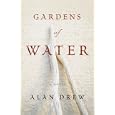
30. Gardens of Water by Alan Drew
I must begin by saying that in general I don't care for books written by authors who are writing from an ethnic/religious viewpoint totally foreign from their own. The one exception I can think of is The Blue Notebook which was amazing. Anyway, Alan Drew taught high school in Istanbul for three years and wrote this book from the perspective of a Kurdish man ostrasized within the Turkish community to which he immigrated. Although the plot is engaging, life for a Kurdish family after an earthquake forces them to move to an American aid camp, many of the characters felt stereotypical. There is the acquiescent traditional wife, the pampered only son, the ignored daughter forced to be more traditional than she wants to be, and the father trying to balance traditions in a time of change. Within that framework, however, some interesting questions did arise. To what extent is America culpable in the war against the Kurds? What future is there for an ethnic minority that straddles three countries? Is American aid altruistic or agenda-laden? Unfortunately, the author's attempt to criticize America from the point of view of a Kurd, just doesn't ring true for me, his being a Southern Californian born, Iowa Writer's Workshop, Cincinnati-living American.
59bonniebooks
One thing I really liked about Gardens of Water was that Drew's story made me shift my alliances as I was reading.
60kirsty
I liked your recommendation of The housekeeper and the professor. Another one for the wishlist. :)
61markon
#58, #59 - I think it's quite difficult to write from the perspective of a culture you don't know well. But I agree with bonniebooks that Drew's writing helped me get inside the character's heads and emphasize with each one.
62labfs39
>59 bonniebooks:, >61 markon: Hmmm. Interesting that you both had that experience reading Gardens of Water. I guess I had a hard time sympathizing with the characters because they felt rather generic. As I mentioned in my review, each character seemed so stereotyped. I didn't empathize with them because they felt more like caricactures to me. Even though Irem's fate was sad, it seemed like what an American would imagine a young Muslim girl's fate to be... she wants more freedom, her parents are conservative, she goes too far, is unforgiven, etc. We feel sorry for her, and "switch" our alliances from her desperate father, but what do we really learn about her? We know what happens to her, but I never felt as though I were inside her head, or that what I did glean about her was authentic. The only character I really connected with was Sinan. The denouement when he has learned about his daughter's defiance and doesn't know what to do was riveting. He knows what his village peers would do, but has fought that vision from his past. Yet, he doesn't know how to deal with the situation. His indecision, his hand in his pocket, his knowledge that he didn't love his daughter as much as his son, his own failings: that moment was the most well-written in the book, I thought.
Not to disagree with the majority, but hope to explain my impressions further...
Not to disagree with the majority, but hope to explain my impressions further...
63labfs39

31. If You Lived Here, I Would Know Your Name by Heather Lende
I picked up this book for a light read, trying to cheer up after a series of rather depressing books. Blurbers compared it to Northern Exposure: notes from a small town in Alaska. Alas for me, the author is the town's obituary writer, and each chapter is a vingette based on the death of one of the town's citizens. Some of the anecdotes were humorous, and all were thoughful, but all-in-all not a light pick-me-up! Good read, but not the Bailey White goes to Alaska I was expecting. :)
64alcottacre
#63: Thanks for the heads up that the book is not a 'light pick-me-up!' I will still try and get my hands on a copy, but change my expectations somewhat.
65bonniebooks
it seemed like what an American would imagine a young Muslim girl's fate to be... she wants more freedom, her parents are conservative, she goes too far, is unforgiven, etc. We feel sorry for her, and "switch" our alliances from her desperate father...
But that's it. I didn't switch my alliances from her father. I switched them toward her father. I don't remember the details of that book anymore, but I just remember that I felt that the daughter went too far; I lost sympathy for her and was then more sympathetic toward her father's concerns and for his traditions.
eta: I'm not necessarily disagreeing with you though. Makes me want to go back to it and see if I see the same thing. Love having more of a discussion about a book -- wish I could remember more.
But that's it. I didn't switch my alliances from her father. I switched them toward her father. I don't remember the details of that book anymore, but I just remember that I felt that the daughter went too far; I lost sympathy for her and was then more sympathetic toward her father's concerns and for his traditions.
eta: I'm not necessarily disagreeing with you though. Makes me want to go back to it and see if I see the same thing. Love having more of a discussion about a book -- wish I could remember more.
66markon
62, 65 - I totally agree that the confrontation of Sinan & Irem was the most powerful scene in the book. For a second I understood, emotionally, the impulse to kill. And then watched while Sinan struggled with what his family and neighbors would expect of him, his love for his daughter, and his own faults.
I'm like Bonnie, I'd like to take another look at it to pay attention to the characterization. And I found this review helpful too (the one that begins, "This novel was a maddening read for me."
I also was intrigued by the section of the story that shows Ismael becoming intrigued with Christianity via the schooling and soccer that the relief workers begin - it raises disturbing questions about the relationship of religious beliefs and charitable work. It's not a perfect book, but it's very layered.
I'm like Bonnie, I'd like to take another look at it to pay attention to the characterization. And I found this review helpful too (the one that begins, "This novel was a maddening read for me."
I also was intrigued by the section of the story that shows Ismael becoming intrigued with Christianity via the schooling and soccer that the relief workers begin - it raises disturbing questions about the relationship of religious beliefs and charitable work. It's not a perfect book, but it's very layered.
67labfs39
>66 markon: I agree that the review you mention is very good. For me, it raises the question of how to evaluate a book that is a good read, but may not be accurate; or as I mentioned in post 58, authored by someone outside the ethnic/religious framework of the characters, but written from the perspective of that ethnicity or religion? Is there something fraudulent about writing as an "insider" when you are an "outsider"? Or is it simply fictional license and a part of all fiction writing?
Perhaps I've been reading too many biographies lately!
But I wonder if novels like The Beans of Egypt, Maine or The Bone People about the Maori would have rung as true or even been accepted by the "locals" if they had been written by a someone outside the culture.
Thoughts?
Perhaps I've been reading too many biographies lately!
But I wonder if novels like The Beans of Egypt, Maine or The Bone People about the Maori would have rung as true or even been accepted by the "locals" if they had been written by a someone outside the culture.
Thoughts?
68Whisper1
Lisa
I read The Beans of Egypt Maine a long time ago. I remember the portrayal of rural, very poor Maine.
I read The Beans of Egypt Maine a long time ago. I remember the portrayal of rural, very poor Maine.
69labfs39
Yes, that is the one. And to continue the discussion above, I wonder if someone from New York City or Wyoming could have written that story.
70Trifolia
Continuing with the discussion of" authenticity" mentioned above, I think you might like The Last Summer of Reason by Tahar Djaout, an Algerian writer who was killed before this book was published. I don't think books can be more authentic and gripping than this one.
71avatiakh
#56> Faith - Randa Abdel-Fattah is an Australian of Egyptian/Palestinian heritage. I haven't read any of her books yet but have a couple on my tbr list.
Lisa - I've been adding several of the books suggested to you to my tbr list. I can't think of anything I've read of late that would interest you too much apart from Apples from the Desert, a short story collection by Savyon Liebrecht. She tackles very subtly the tensions between cultures and also across generations.
Lisa - I've been adding several of the books suggested to you to my tbr list. I can't think of anything I've read of late that would interest you too much apart from Apples from the Desert, a short story collection by Savyon Liebrecht. She tackles very subtly the tensions between cultures and also across generations.
72labfs39
>70 Trifolia:, 71 Thank you both for the suggestions. I'll look for them at the library.
73labfs39
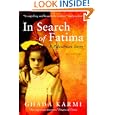
32. In Search of Fatima: A Palestinian Story by Ghada Karmi
Although it is rather long, I am pasting my entire review here because I had so much to say about this amazing book. I would recommend it to everyone.
In Search of Fatima is an amazing book in several regards. It is a well-written memoir of a woman who spent her childhood in Palestine, her young adulthood in England, and her adulthood in limbo between the Arab world and England. It is also an amateur history of the British Mandate in Palestine and the devastation caused by the creation of Israel. Finally, it is a psychological self-study of the effects of dislocation, alienation, and the difficulties of assimilation.
The book begins with the author's childhood in Palestine and the effects of the 1948 exodus of Palestinians from their homeland. As a Jew used to thinking of the creation of Israel as a partial reparation for the horrors of the Holocaust, the utter abandonment of the Palestinians by the British, the aggressive destruction of Palestinian villages by the Israelis, and the plight of everyday Palestinians was heart wrenching and eye-opening. It was, for me, the most compelling part of the book.
The second part of the book deals with Ghada's live in Britain as a teenager and young adult. Her unthinking assimilation into British culture, the gradual isolation from her family of origin, and her friendships with British Jews were described with a remarkable self-insight. Never have I read such a detailed description of the process of assimilation and how that process requires a "forgetting" and denial of self.
The last part of the book was the most difficult for me to appreciate. It describes the author's gradual politicization and, in my opinion, near radicalization. Although I could appreciate her desire to reintegrate with her Arab roots, which given the circumstances, required an awareness and sympathy for the Palestinian movement, I found her growing acceptance and even semi-approval of militant/terrorist actions to be disturbing. My personal opinion is that until both Israelis and Palestinians give up terrorism, peace is unattainable and a solution will never be found. Despite the pride and national self-respect that Palestinian military victories give the Palestinian people, I feel that it is the wrong path and will only lead to more violence.
Despite this, I found the book remarkable and would recommend it to everyone, because the Palestinian viewpoint has been lost to the West and needs to be heard.
74markon
73 - This book sounds interesting - I'll have to see if I can find a copy somewhere.
67: How to evaluate authenticity is an interesting and troubling question, because if I don't know the culture/religion, etc. it's difficult to know how "true to life" the work is. I can evaluate if a work is well written and internally consistent, but if I have no experience of a place or people it's hard to know what jars.
But there is also not ever just one point of view in a situation, and people do write from outside as well as from inside, and I think can do so authentically. I think I have to compare other people's viewpoints/reviews and make a judgement on whether a work is worthwhile. I might not have done that if I hadn't seen your comments, so thanks for posting on this Lisa.
67: How to evaluate authenticity is an interesting and troubling question, because if I don't know the culture/religion, etc. it's difficult to know how "true to life" the work is. I can evaluate if a work is well written and internally consistent, but if I have no experience of a place or people it's hard to know what jars.
But there is also not ever just one point of view in a situation, and people do write from outside as well as from inside, and I think can do so authentically. I think I have to compare other people's viewpoints/reviews and make a judgement on whether a work is worthwhile. I might not have done that if I hadn't seen your comments, so thanks for posting on this Lisa.
75Whisper1
Your recommendation and review of your recent book equates to yet one more of your wonderful reads to be added to my list. And, thanks again for recommending Kindertransport. That book led to reading Into the Arms of Strangers, a book Stasia recommended.
76alcottacre
#73: I already have In Search of Fatima: A Palestinian Story in the BlackHole, just waiting for the library to get a copy. Nice review, Lisa!
77bonniebooks
I added it too. It's hard to imagine a resolution any time soon, but I think it's important to keep reading and hoping.
78dk_phoenix
>71 avatiakh:: *facepalm* Yes, you're right -- I must have had a brain fart. The CHARACTER from the most recent book of hers I read was of Lebanese descent. Apologies to you and the author, I must have been rather tired when I wrote that...
79labfs39
> 74 Thank you, Mark, for your comments on authenticy. I like your suggestion to read multiple perspectives and then make a judgement. Very important, and not only when reading!
> 75 I added the Arms of Strangers DVD to my library list. Usually I go with the book, but in the case, the movie preceded the book, so I thought I would try it. Let's compare after I've seen it!
> 76 Thank you!
>77 bonniebooks: Sad but I agree that we musn't give up hope.
>78 dk_phoenix: No worries!
> 75 I added the Arms of Strangers DVD to my library list. Usually I go with the book, but in the case, the movie preceded the book, so I thought I would try it. Let's compare after I've seen it!
> 76 Thank you!
>77 bonniebooks: Sad but I agree that we musn't give up hope.
>78 dk_phoenix: No worries!
80labfs39
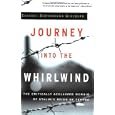
33. Journey into the Whirlwind by Eugenia Semyonovna Ginzburg
This memoir of Genia Ginzburg's life from the beginning of the 1937 Stalinist purges until her departure for the Elgen camp in Kolyma is an amazing testament to how much a person can endure and remain sane and humane. The memoir is continued in Within the Whirlwind.
Ginzburg is arrested on trumped up charges, sent to prison, where she spent two years in solitary confinement with another woman, and was then sent to the Kolyma camps in Siberia for 16 more years. She left behind her parents, husband, and children: some of them she was never to see again.
The memoir is an accessible version of the Stalinist purges and gulags, similar perhaps to the ficticious One Day in the Life of Ivan Denisovich. I found it more accessible than Solzenitsyn's The Gulag Archipelago or First Circle, perhaps because it was a single memoir and less massive in scope. It felt very personal and intimate. I particularly liked how she wrote about women who although unjustly imprisoned, still fell under the spell of Stalin's cult of personality.
81alcottacre
#80: I already have that one in the BlackHole. I definitely need to get to it soon. Thanks for the reminder, Lisa.
82arubabookwoman
I am adding Journey into the Whirlwind onto my wish list. I've been interested in the Stalinist era since I read The Whisperers by Orlando Figes last year, which I highly recommend if you haven't yet read it.
83labfs39
Thank you for the recommendation. It sounds really interesting. I will definitely add it to my list.
84labfs39
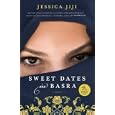
34. Sweet Dates in Basra by Jessica Jiji
Thank you to whomever suggested this book: I really enjoyed it.
Kathmiya Mahmoud grows up in the marshes north of Basra. As a teen, instead of being married off as expected, she is sent by her alcoholic father to Basra as a maid to bring money into the family. In additional to the culture shock of life in the city, Kathmiya is tortured by family secrets: why does her father not love her like her older sister, Fatimah; why does no one want to see her married; what are the items left to her mother and her by the American missionaries for whom her mother used to work?
In her loneliness, Kathimiya turns to friendship with a young Jewish boy, despite the death sentence it would mean if anyone discovered their relationship. Shafiq has grown up with a seamless Iraqi-Jewish identity, but that identity is challenged throughout his adolesence by WWII, one brother's Zionism, another brother's Communism, and the collapse of Iraqi society as Britian becomes an enemy.
The story is a page-turner, but what I found even more appealing was the deft way in which the author created complex characters. Although Kathimiya and Shafiq are caught in a familiar forbidden-love situation, the characters themselves are far from stereotypical, with compex personalities and unexpected facets. Even minor characters are well-drawn and interesting.
If anyone who has read both Gardens of Water and Sweet Dates of Basra would like to discuss and compare them, please let me know!
85labfs39
35. The Most Beautiful Book in the World: 8 Novellas by Éric-Emmanuel Schmitt
The eight novellas that comprise this book are short, with expertly drawn main characters that find happiness, or just miss out on finding happiness, in the most unlikeliest of places. Although the titles and the premise sound cheerful, I did not find the book so. It was quite depressing to read about people who learn what happiness is only to loose it, never achieve it, or be unable to enjoy it. So although the book is very well-written, I only gave it 3 1/2 stars due to my own emotional reaction to it.
86labfs39
36. The Last Summer of Reason by Tahar Djaout
Thank you, Monica (JustJoey4), for a wonderful recommendation!
The Last Summer of Reason is a dystopian novel set in a time when Islamic fundamentalists have taken over a country with Orwellian surveillance. The main character, Boualem, is a bookseller, an occupation doomed under the new regime, but one which Boualem cannot give up without losing his identity. Rather than try to describe the relationship between this man and his books, I am going to let the character speak for himself:
Boualem suddenly thinks of those distant relatives he would occasionally see in the country and who didn't have a single book in their home. Every time he visited, he used to wonder how those people could live, without the smell of paper, without turning pages in which metaphors, ideas, and adventures were rustling. Perhaps now, in the time remaining to him, he himself will be living the life of those people, knowing horizons such as theirs. (p. 118)
He has met so many characters in books, he has come into contact with so many unforgettable destinies that his own life would be nothing without them. It was a little through contact with life and a great deal through contact with books that ideas germinated in him, that ideals took root, that voluptuous feelings and waves of pleasure or anger ran through his trembling body, leaving lasting traces behind. It has happened to him, as to any persevering reader, that he could speak informally with the most prestigious characters, penetrate their intimacy, read their emotions and their thoughts as if through a glass door. (p. 119)
I loved the integrity of the character, and his refusal to let the written word, and memory, be lost to the insanity of fundamentalism (any type of fundamentalism). In this, I was reminded of one of my favorite books of all time, Too Loud a Solitude by Bohumil Hrabal. In Too Loud a Solitude, the evil being resisted is the Stalinesque paranoia of communism.
As regards authenticy, Monica is right, no author can be more so. Tahar Djaout was an Algerian author and journalist who was assassinated leaving his home in Algeria by Islamic fundamentalists. According to the book jacket, one of the assissins said that Djaout was murdered because he "wielded a fearsome pen that could have an effect on Islamic sectors."
87labfs39
37. The Good Good Pig: The Extraordinary Life of Christopher Hogwood by Sy Montgomery
A fan of pigs' intelligence, I expected this book to be a tribute to the relationship between a human and a pig who performed intelligently in a human world. Instead I found the story of a family and an entire community who were held together by their affection for a farm pig.
Saved from the table because he was a sick runt, the pig was raised by the author and her partner, also a writer. Named after a famous conductor, Chris lived an unremarkable "pig" life, except for the affection he elicited from those who knew him. He lived in a barn, ate slops, and didn't seem to do much but enjoy life, and I guess his enthusiasm for living is what was so attractive.
I, however, found the story of the author to be much more intriguing. A famous writer about wild animals in wild country, this book was an interesting look at her personal life. She writes very honestly about her relationships with her parents, her life in New Hampshire, and her eccentric friends with whom she is able to create exceptional friendships. Although Chris may have been a good good pig, I think Sy Montgomery is a good good author.
89alcottacre
Wow! You have been doing some great reading, Lisa. All of your recent reads are already in the BlackHole or I would be adding them again.
90dk_phoenix
I have that pig book on my wishlist already! If you like animal books, I recently read a book about a wildlife rehabilitator who took in several baby beavers -- the book talked about watching them grow up, as well as her personal struggles along the way. I hope to get my review up on my thread this week; it's called Beavers Eh to Bea.
91Trifolia
#86. Thanks for the thanks, Lisa :-) You're welcome.
I tend to forget some books rather quickly, but some of them stick. This was one of them. I'm glad you enjoyed it too.
I've added Too Loud a Solitude by Bohumil Hrabal to my list.
I tend to forget some books rather quickly, but some of them stick. This was one of them. I'm glad you enjoyed it too.
I've added Too Loud a Solitude by Bohumil Hrabal to my list.
92labfs39
>88 Whisper1:, >89 alcottacre: *blush* Thank you for the encouragement! I've gotten so many good ideas from this group. Thank you, Stasia, for inviting me to join!
>90 dk_phoenix: Thanks for the recommendation. I saw a IMAX movie about beavers once, and it was fascinating. Who knew? I checked my library for the book, but they don't have it. I'll keep an eye out. And have you read The Parrot's Lament by Eugene Linden? It's about lots of different animals and their intelligence, and I liked it so much, I've read it more than once. :)
>91 Trifolia: Oh, do look for Too Loud a Solitude. I think you'll like it since you liked The Last Summer of Reason.
>90 dk_phoenix: Thanks for the recommendation. I saw a IMAX movie about beavers once, and it was fascinating. Who knew? I checked my library for the book, but they don't have it. I'll keep an eye out. And have you read The Parrot's Lament by Eugene Linden? It's about lots of different animals and their intelligence, and I liked it so much, I've read it more than once. :)
>91 Trifolia: Oh, do look for Too Loud a Solitude. I think you'll like it since you liked The Last Summer of Reason.
93labfs39
So, guilty pleasures... do you record them on your list? Last night I read a silly romance, and I'm embarrassed to add it to my list! I don't want to lose your good opinion of my reading habits. :) So what do you do with your guilty pleasures?
94labfs39
P.S. Does anyone know what has happened to my touchstones in my first posting? They suddenly appeared with those numbers and not working. Anyone else having this problem?
95sibylline
I had that happen to me when I was setting up my new thread and I just laboriously tidied them up and they went away -- but maybe you should post it to Tim or see if it is on that problem thread, which I forget where it is, or I would direct you......
96avatiakh
#94 - It's the new fix for touchstones to stick. Just give them time to load up correctly and they should be fine.
97alcottacre
#93: I record everything, including guilty pleasures. We all have them, so I see no reason not to list them. It is your thread, Lisa, so list whatever you like.
98Trifolia
#93. So, guilty pleasures... do you record them on your list?
I would (and I do), as I consider every book I read as part of my individual library. Nothing to be ashamed of. I compare it to food: I like exquisite food, but the fastfood goes in easily as well and I don't go into hiding when eating it.
Maybe you'd like to read How to Talk About Books You Haven't Read that might give you a special insight in book-reading (I know I've posted about this book to practically any post, but somehow everything reminds me of this wonderful book with the strange title). It was an eye-opener to me and probably a must-read for everyone on LT :-)
P.S. Does anyone know what has happened to my touchstones in my first posting?
I experienced the same. I also tidied them up and it was ok, but then it happened again. But when I checked later they were ok. I hope avatiakh is right.
I would (and I do), as I consider every book I read as part of my individual library. Nothing to be ashamed of. I compare it to food: I like exquisite food, but the fastfood goes in easily as well and I don't go into hiding when eating it.
Maybe you'd like to read How to Talk About Books You Haven't Read that might give you a special insight in book-reading (I know I've posted about this book to practically any post, but somehow everything reminds me of this wonderful book with the strange title). It was an eye-opener to me and probably a must-read for everyone on LT :-)
P.S. Does anyone know what has happened to my touchstones in my first posting?
I experienced the same. I also tidied them up and it was ok, but then it happened again. But when I checked later they were ok. I hope avatiakh is right.
99avatiakh
Here's the thread about the new touchstone feature: http://www.librarything.com/topic/94341
100labfs39
>95 sibylline:, 98, 99 Thank you for the advice on touchstones. I tried cleaning up and resubmitting, and cutting and pasting the whole section, re-adding the brackets, etc., but can't seem to get them working.
Avatiakh, I went to the thread, and couldn't find any suggestions already listed, so I posted my problem, and am waiting to hear back. Thanks!
Avatiakh, I went to the thread, and couldn't find any suggestions already listed, so I posted my problem, and am waiting to hear back. Thanks!
101markon
34: I will have to buy Sweet dates of Basra since my library doesn't own a copy, but I'd love to read & discuss/compare these two. (I've already read Gardens of Water.)
102markon
37: My library does have The good good pig, so I'm going to check it out.
103labfs39
>34 labfs39:, 37, Hi Markon, Mark? I'm excited you are going to read Sweet Dates of Basra: I'm looking forward to discussing it with you. As for The Good Good Pig, it wasn't what I was expecting, but a solid read. I'm currently reading Middlesex. I had put off reading it for a long time, because of the "unusual" subject of the book. But it's an amazing page turner. Have you read it? I just picked up Girl with the Dragon Tatoo. I have no idea what it is about, but it is the world's most popular book at the moment, and I was starting to feel left out...
104labfs39

38. Middlesex by Jeffrey Eugenides
I'm not going to write an official review because tons of people have, and everyone's probably already read it, but I will share my impressions.
I had put off reading Middlesex for a long time. I knew that it had won the Pulitzer, so I had purchased it at a library book sale, but the topic was so strange, so Other, that I didn't pick it up for a couple of years. I am so glad I did! The first third of the book was interesting: the Turko-Greek War, the forbidden love, and immigration to America. The second third of the book was spell-binding: the Detroit race riots, Calliope's childhood, and school years. I was on tenterhooks, waiting for the big moment of revelation. Unfortunately, I found myself almost let down when it did come. The last part of the book, about Cal's travel to and life in San Fransisco, was my least favorite part. But that said, I loved the ending: the return full-circle to Desdemona, Cal standing in the doorway during the funeral. All-in-all an amazing book about sexual taboos (incest, lesbianism, voyeurism) amidst the "normalcy" of American life.
105dk_phoenix
>92 labfs39:: An IMAX movie about beavers?!?! That sounds FANTASTIC!!! I haven't read Parrot's Lament either, but I sure will now :D thanks for the recommendation!
106klobrien2
104: Thank you for sharing your impressions of Middlesex! I will be reading the book at some point (no, I haven't yet) and I find your comments very helpful in what to expect!
Karen O.
Karen O.
107labfs39
40. The Meaning of Matthew: My Son's Murder in Laramie, and a World Transformed by Judy Shepard
I picked up this book at my local bookstore as I sat down with my tea to continue reading a book by Temple Grandin. The cover, with a picture of Matthew Shepard looking so young and innocent, caught my eye, and then I saw that the book was by his mother. Looking to occupy the time until I had to pick up my daughter, I opened the book to browse. Within minutes I flipped back to the beginning and began to read. A couple of hours later, I had purchased the book and was reflecting on how little we know about what we think we know based on media reporting.
In October 1998 Matthew Shepard was tied to a fence in Laramie, Wyoming and beaten to death for being gay. Few Americans could avoid the media coverage of the horrible hate crime, not long after the dragging death of a African American man in Jasper, Texas. But despite all the coverage, my impressions of Matthew were rather flat and one dimensional. Judy Shepard's memoir of her son changed that. As Matthew's mother reminds us, Matthew was a human, not a saint, and not a stereotype. His life was complex but loving, and in writing the book, Judy Shepard conveys that in an honest, unpitiying way that drew me in and wouldn't let me go.
I would recommend this book to everyone as a reminder that we cannot let hate win, but must actively seek to counter it emphatically and with persistence.
108alcottacre
#107: I already have that one in the BlackHole. Unfortunately, my local library still does not have a copy.
109markon
103 - I've ordered Sweet Dates of Basra, and am looking forward to reading it. I'm also getting a copy of Gardens of Water from the library since it's probably been 2 years since I read it. I'll let you know when I get started!
Hope you enjoy Girl with the dragon tatoo. It was a real page turner. I'm waiting awhile to read the last one.
Middlesex is in my TBR pile - it's one of those books I "should" read, but your review has intrigued me enought that I want to read it now.
Hope you enjoy Girl with the dragon tatoo. It was a real page turner. I'm waiting awhile to read the last one.
Middlesex is in my TBR pile - it's one of those books I "should" read, but your review has intrigued me enought that I want to read it now.
110Trifolia
#103. I'm also curious what you think of Girl with the Dragon Tatoo. I wasn't "wowed" by it, unlike most other people I know who have read the book, but then I'm always rather critical towards "Books Everyone Likes".
111labfs39
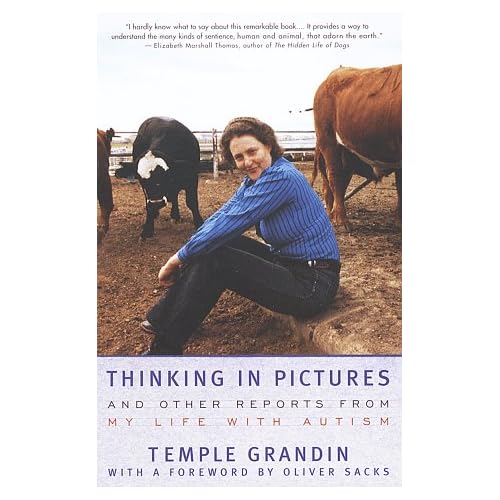
41. Thinking in Pictures and Other Reports from My Life with Autism by Temple Grandin
I saw Temple Grandin speak about a year ago, and I was so impressed that I decided to read some of her books, this being the first.
Temple Grandin is autistic. She is also a brilliant animal scientist who has designed a third of all the livestock handling facilities in the U.S. Highly visual, Grandin is able to design facilities in her mind, turning them in all perspectives like a high-speed CAD machine, and then draw the blueprints in one go. Her objective in building these facilities is to make animal slaughter more humane, with less fear and stress for the animals being handled.
This book, Thinking in Pictures, is her second, barring a livestock handling book and hundreds of animal science articles. The book moves back and forth in an associative style, typical of how Grandin describes her style of thinking, between a memoir of her life as an autistic person, her work as an animal scientist, and a scientific look at autism.
I found all three aspects of the book interesting. Although I have read a number of books about autism, I found Grandin's book unique because she is able to look at her own symptoms and behaviors with the eye of a scientist. Rather than just relate her experiences, she is able to analyse them and relate them to the scientific data. In addition, although unusual, her writing style is clear and engaging. I would recommend the book for anyone interested in autism or the life of an unusual animal scientist.
112labfs39
>105 dk_phoenix: Yes, the IMAX beaver movie was amazing: "The Biggest Dam Movie You Ever Saw"
Synopsis: Beavers plunges the viewer into the aquatic habitat of one of nature's greatest engineers for an intimate look at the life of one beaver family. With breathtaking underwater photography, the viewer travels inside the lodge for a rare look at these charming and industrious creatures. Shot on location in Ontario, Canada and in the Canadian Rocky Mountains, the film follows the beavers as they overcome dangers, grow, play and transform the world around them.
Did you know that beavers leave their childhood home and will walk up to 150 miles to find a mate? That's a long way on little beaver feet.
Synopsis: Beavers plunges the viewer into the aquatic habitat of one of nature's greatest engineers for an intimate look at the life of one beaver family. With breathtaking underwater photography, the viewer travels inside the lodge for a rare look at these charming and industrious creatures. Shot on location in Ontario, Canada and in the Canadian Rocky Mountains, the film follows the beavers as they overcome dangers, grow, play and transform the world around them.
Did you know that beavers leave their childhood home and will walk up to 150 miles to find a mate? That's a long way on little beaver feet.
113labfs39
>106 klobrien2:, 109 I hope you like Middlesex. I always feel such a responsibility for other's reading pleasure if it is a book I recommend. I was talking with a friend today who didn't like either of the books I've recommended to him lately (Too Loud a Solitude, one of my absolute favs, and Elegance of the Hedgehog). I felt so bad that I had steered him wrong!
>108 alcottacre: I'm sorry your library doesn't have The Meaning of Matthew. It only came out last year (she wrote it 11 years after her son's death), so maybe they just haven't processed it yet. Can you interlibrary loan it?
>109 markon:, 110 I am 176 pages into The Girl with the Dragon Tattoo, and although I will keep reading, I must say that so far I don't see what all the fuss is about. The girl is an interesting character, but she is a minor character at this point. Hmmm, I'll keep you posted!
>108 alcottacre: I'm sorry your library doesn't have The Meaning of Matthew. It only came out last year (she wrote it 11 years after her son's death), so maybe they just haven't processed it yet. Can you interlibrary loan it?
>109 markon:, 110 I am 176 pages into The Girl with the Dragon Tattoo, and although I will keep reading, I must say that so far I don't see what all the fuss is about. The girl is an interesting character, but she is a minor character at this point. Hmmm, I'll keep you posted!
114alcottacre
#113: Has it really been 11 years since Matthew Shepard's murder? It does not seem possible that it has been that long.
115sibylline
I thought Middlesex was one of those books that just nudges a person into greater compassion and awareness while telling a ripping good story, quite an achievement.
Temple Grandin is one of my heroes.
Temple Grandin is one of my heroes.
116labfs39
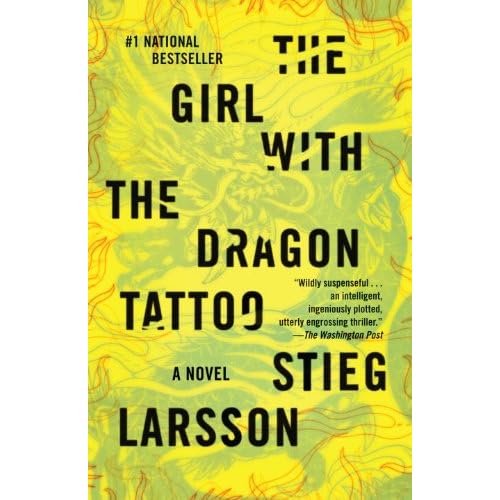
42. The Girl with the Dragon Tattoo by Stieg Larsson
Once again I learned to be wary of wildly popular books...
Stieg Larsson passed away in 2004. His first book, The Girl with the Dragon Tattoo, was published in 2005 in his native Sweden with the title Men Who Hate Women. In 2008 the book was translated into English, and that year Larsson became the second best-selling author in the world.
Despite all the publicity, I knew nothing about the plot of the book before I began reading it. I discovered that it was actually a mystery within a mystery. Journalist Mikael Blomkvist is trying to discover the truth about a financier whom Blomkvist is accused of libeling. At the same time, Blomkvist is hired to investigate the unsolved mystery of a Swedish girl's disappearance over 40 years ago. Running through these two mysteries is the unorthodox character of Lisbeth Salander, a punker with a talent for personal investigations.
I was unprepared for the graphic sexual violence depicted in the book. I should have heeded more closely the blurb comparing it to Silence of the Lambs. As a disclaimer, I should say upfront that I dislike books that depict horrific crimes in great detail because I feel that they perpetuate violence. So, it is no surprise that I did not like the book. In addition, I was turned off by the lengthy set up (I felt that the book didn't really begin to move until half way through) and the extensive genealogy of a ficticious family. That said, by the end of the book I was rather intrigued by the character, Lisbeth. Not enough to run out and buy the second book, but I did read the introduction to it included at the end of this book. Looks like book two continues in much the same vein. Ick.
117Copperskye
Hi - I've just discovered your thread and starred it. You've recently read some of my favorites and a few more I have on my list. I'm sure I'll be adding some new ones!
118labfs39
Thank you! It's always fun to find other people with similar reading tastes. And sometimes I feel like I must have doppelgangers out there, we have so many books in common. :)
119Trifolia
Hi Lisa, thanks for the recommendation of Too Loud a Solitude. I read it and I agree it's a wonderful book. It's not an easy one, but I thought it was very rich and very thought-provoking.
I also agree on The Girl with the Dragon Tattoo. At first I was swept away by the buzz that surrounded it and by a friend who couldn't stop talking about it. I thought I had missed something, but now I think it's a book that could do with a lot less pages, a tighter plot and less details for a start. I did like the setting and the possibilities it had, but that's about it.
Don't bother to read the 2nd and 3rd one like I did because my friend convinced me they were "even better". They're not. I can understand some (most) people like these books, but I prefer other ones.
I also agree on The Girl with the Dragon Tattoo. At first I was swept away by the buzz that surrounded it and by a friend who couldn't stop talking about it. I thought I had missed something, but now I think it's a book that could do with a lot less pages, a tighter plot and less details for a start. I did like the setting and the possibilities it had, but that's about it.
Don't bother to read the 2nd and 3rd one like I did because my friend convinced me they were "even better". They're not. I can understand some (most) people like these books, but I prefer other ones.
120Donna828
Hi Lisa, I'm enjoying your thread and getting a few new titles to add to my wish list. I agree with you about The Girl With the Dragon Tattoo for the most part. I couldn't get past the "lengthy set up" in the beginning and chose to watch the Swedish movie instead. I was repelled by the graphic sexual violence BUT was enthralled with the character of Lisbeth.
My daughter assured me that there is less violence and more Lisbeth in The Girl Who Played with Fire, so I'm going to try to read that one. I may even see the Swedish adaptation of it because the characterization and ambience were perfect.
My daughter assured me that there is less violence and more Lisbeth in The Girl Who Played with Fire, so I'm going to try to read that one. I may even see the Swedish adaptation of it because the characterization and ambience were perfect.
121labfs39
>119 Trifolia: Thank you for your comments. I read your review about Too Loud a Solitude. I hope you found the similarities with The Last Summer of Reason interesting: a book lover confronted with book burning in a repressive regime. I agree that Djaout's book is more timely, but I studied Russian and East European literature in grad school and have an admitted tendancy to promote books from that region. :)
As for GWTDT, I guess we'll have to be maverick's on this one. I did enjoy bringing down the overall star rating for it... Awful, huh?
As for GWTDT, I guess we'll have to be maverick's on this one. I did enjoy bringing down the overall star rating for it... Awful, huh?
123labfs39
<120 Hi Donna! I'm glad you are finding some titles off my list. It's been fun to join this group: although a bit intimidating too! So many fast readers, so many books, so little time...
I agree with you that Lisbeth is an interesting character. Since finishing the book, I've found that I am still thinking about her and what her life was like before GWTDT to make her so crazy yet talented. The Asberger link was an aha moment.
I must say though that I agreed with one reviewer who wrote that Mikael was a disagreeable, womanizing, egotistical, loser. Well, maybe I'm paraphrasing, but still. How many women throw themselves (repeatedly) at a middle-aged, unattractive man with commitment issues? Was Larsson creating some sort of alter ego wanna be or what?
BTW, something weird is happening with my previous post. I am trying again.
I agree with you that Lisbeth is an interesting character. Since finishing the book, I've found that I am still thinking about her and what her life was like before GWTDT to make her so crazy yet talented. The Asberger link was an aha moment.
I must say though that I agreed with one reviewer who wrote that Mikael was a disagreeable, womanizing, egotistical, loser. Well, maybe I'm paraphrasing, but still. How many women throw themselves (repeatedly) at a middle-aged, unattractive man with commitment issues? Was Larsson creating some sort of alter ego wanna be or what?
BTW, something weird is happening with my previous post. I am trying again.
124labfs39
>120 Donna828: Hi Donna! I'm glad you are finding some titles off my list. It's been fun to join this group: although a bit intimidating too! So many fast readers, so many books, so little time...
I agree with you that Lisbeth is an interesting character. Since finishing the book, I've found that I am still thinking about her and what her life was like before GWTDT to make her so crazy yet talented. The Asberger link was an aha moment.
I must say though that I agreed with one reviewer who wrote that Mikael was a disagreeable, womanizing, egotistical, loser. Well, maybe I'm paraphrasing, but still. How many women throw themselves (repeatedly) at a middle-aged, unattractive man with commitment issues? Was Larsson creating some sort of alter ego wanna be or what?
I agree with you that Lisbeth is an interesting character. Since finishing the book, I've found that I am still thinking about her and what her life was like before GWTDT to make her so crazy yet talented. The Asberger link was an aha moment.
I must say though that I agreed with one reviewer who wrote that Mikael was a disagreeable, womanizing, egotistical, loser. Well, maybe I'm paraphrasing, but still. How many women throw themselves (repeatedly) at a middle-aged, unattractive man with commitment issues? Was Larsson creating some sort of alter ego wanna be or what?
125Trifolia
As for GWTDT, I guess we'll have to be maverick's on this one. I did enjoy bringing down the overall star rating for it... Awful, huh?
Well, I don't think the rating will be affected a lot by two mavericks out of over 10.000 :-), but it's the intention that counts.
Btw, do you have recommendations for my "Russian book" for my Europe Endless Challenge? I'm thinking of reading a classic, but then I like to read modern books as well.
Btw 2. Have you read Skylark Farm? It's about the Armenian genocide, it's heart-breaking but yet so beautiful, I think you might like it too.
Well, I don't think the rating will be affected a lot by two mavericks out of over 10.000 :-), but it's the intention that counts.
Btw, do you have recommendations for my "Russian book" for my Europe Endless Challenge? I'm thinking of reading a classic, but then I like to read modern books as well.
Btw 2. Have you read Skylark Farm? It's about the Armenian genocide, it's heart-breaking but yet so beautiful, I think you might like it too.
126labfs39
>125 Trifolia: Oh definitely do a Russian classic: there are so many wonderful ones to choose from!
I'm sure you know all the titles of famous Russian classics, but here are a few that are a little less well known, but worth reading.
Lermontov's A Hero of Our Time
Tolstoy's short works Kreutzer Sonata and The Death of Ivan Ilych, found in many of his short story collections
Gogol's Taras Bulba in a new translation by Peter Constantine (Heminway called it one of the 10 greatest books of all time)
Turgenev's Fathers and Sons is famous but good
Or Solzhenitsyn's In the First Circle: The First Uncensored Edition. I haven't read this edition yet, but another Russian buff said it is amazing. Anything by Solzhenitsyn is long but good.
Or if you want nonfiction, I can do that too!
Edited to try and get some touchstones working...
I'm sure you know all the titles of famous Russian classics, but here are a few that are a little less well known, but worth reading.
Lermontov's A Hero of Our Time
Tolstoy's short works Kreutzer Sonata and The Death of Ivan Ilych, found in many of his short story collections
Gogol's Taras Bulba in a new translation by Peter Constantine (Heminway called it one of the 10 greatest books of all time)
Turgenev's Fathers and Sons is famous but good
Or Solzhenitsyn's In the First Circle: The First Uncensored Edition. I haven't read this edition yet, but another Russian buff said it is amazing. Anything by Solzhenitsyn is long but good.
Or if you want nonfiction, I can do that too!
Edited to try and get some touchstones working...
127labfs39

43. Six Months in Sudan: A Young Doctor in a War-Torn Village by James Maskalyk
Dr. James Maskalyk is young, unattached, and willing to take risks, so he joined Médecins Sans Frontières (Doctors without Borders) and was assigned to a six month mission on the border with Darfur in Sudan. The little village of Abyei is caught between the North and South armies and is full of refugees and disease. For the duration of his experience with MSF, Maskalyk kept an online blog journaling his experiences, and when he returned, he turned his blog into this book. The blog is available at www.sixmonthsinsudan.com.
I think Médecins Sans Frontières is an amazing organization, and I respect the work that Maskalyk did. As opposed to the view that foreign aid is another form of oppression that brings no long term solutions, Maskalyk writes that "The people I left behind in Sudan don't need us to help them towards a health system that can offer immunizations--they need the vaccine. Fucking yesterday." The urgency to save a life today, now, again and again drives his work. Every minute, every dollar wasted is another life lost. His blog makes the work he did on the ground real and personal. Over time, Maskalyk becomes muted, exhausted by lack of sleep, temperatures over 120 F, and the relentless death he faces. His blog, and book, continue after his mission is over, to describe the difficulties in relating his experiences to friends and family and in reassimilation.
I appreciated the book for its honest look at his experience in Sudan. Yet I was aware too of the self-censorship which constrained him. Both MSF and the militias in Sudan restricted either what he could write or what he could photograph. I wonder what he would have written about the other NGOs in Sudan and the UN peacekeepers (off-limit topics). What would he have said about the conflict and the two sides fighting it?
The other nagging distraction as I read was the impression that I probably wouldn't like Maskalyk all that well if we met. I wanted to empathize with him and admire him for his work, but I couldn't help feeling he was a bit of a player, very aware of his image, and coolness factor. That said, what he has to say about the need for people, for us, to narrow the distance between out comfortable lives and the lives of people in the developing world is very true and real.
3.5 stars
128kidzdoc
Hi Lisa! I've starred your thread, and given your review of Six Months in Sudan a well deserved thumbs up.
129labfs39
>128 kidzdoc: Now the pressure is really on. :) I hated to say anything negative about Six Months in Sudan because I admire so much his work with MSF. Yet I want to be honest in my reviews. I'll be interested to see what you think of it.
Btw, I saw that you've read Mountains Beyond Mountains. In addition to reading the book, I've heard Paul and Ophelia speak. They are doing amazing work. And now Jim Yong Kim is president of my alma mater! But what I've been wanting to ask you is: as a doctor, what do you think of Paul's penchant for taking from his hospital in order to stock the clinic in Peru? I've thought a lot about this Robin Hood approach to social equity, but I'm still not sure how I feel about it. Small point given all that Paul has done, but I can't quite forget it either...
Btw, I saw that you've read Mountains Beyond Mountains. In addition to reading the book, I've heard Paul and Ophelia speak. They are doing amazing work. And now Jim Yong Kim is president of my alma mater! But what I've been wanting to ask you is: as a doctor, what do you think of Paul's penchant for taking from his hospital in order to stock the clinic in Peru? I've thought a lot about this Robin Hood approach to social equity, but I'm still not sure how I feel about it. Small point given all that Paul has done, but I can't quite forget it either...
130kidzdoc
#129: I prefer and appreciate your honest opinion about Six Months in Sudan, and it wouldn't dissuade me from deciding to read it or not.
I own but haven't yet read Mountains Beyond Mountains, although I have read two of Paul Farmer's books, Pathologies of Power: Health, Human Rights, and the New War on the Poor and Infections and Inequalities: The Modern Plagues. He is an amazingly dedicated physician and human rights activist, and a very gifted writer.
I didn't know that Jim Yong Kim was appointed as the new president of Dartmouth; that's great! I had meant to look for his written works when I read Pathologies of Power a few years ago, but I forgot about it. I'm very interested in the disparity in allocation of health care resources, both within and outside of the US, and I know that Dr Kim has also written extensively in this area. Okay, I found one of his books, Dying For Growth: Global Inequality and the Health of the Poor, which I've added to my wish list.
I was unaware of Farmer's use of supplies at Mass General (or whichever hospital he works at) to supply his clinic in Peru. I would want to learn more about this (and I will read Mountains Beyond Mountains soon), but I would prefer to see him request donations for these supplies rather than plunder the hospital's stock.
I own but haven't yet read Mountains Beyond Mountains, although I have read two of Paul Farmer's books, Pathologies of Power: Health, Human Rights, and the New War on the Poor and Infections and Inequalities: The Modern Plagues. He is an amazingly dedicated physician and human rights activist, and a very gifted writer.
I didn't know that Jim Yong Kim was appointed as the new president of Dartmouth; that's great! I had meant to look for his written works when I read Pathologies of Power a few years ago, but I forgot about it. I'm very interested in the disparity in allocation of health care resources, both within and outside of the US, and I know that Dr Kim has also written extensively in this area. Okay, I found one of his books, Dying For Growth: Global Inequality and the Health of the Poor, which I've added to my wish list.
I was unaware of Farmer's use of supplies at Mass General (or whichever hospital he works at) to supply his clinic in Peru. I would want to learn more about this (and I will read Mountains Beyond Mountains soon), but I would prefer to see him request donations for these supplies rather than plunder the hospital's stock.
131labfs39
#130 Farmer's premise that you can't cure disease if the patient is living in abject poverty is crucial to our understanding of how to treat, and hopefully cure, people. For instance, in Peru he helped people get a roof over their heads, clean water, etc as part of his "treatment" for their illness. What good are vaccines if the person has no food, sanitation, or other basics? They will die anyway.
I wonder if meetings with Paul were influential in the Gates Foundation expanding their mission from strictly global health (and US Programs) to include global development...
I wonder if meetings with Paul were influential in the Gates Foundation expanding their mission from strictly global health (and US Programs) to include global development...
132TadAD
>129 labfs39:: I've never read anything by Jim Yong Kim. In fact, I confess I didn't even know about him until reading his entry over on IvyGate (where he faired much better that his peers *grin*). Have you read his books and, if so, which would you recommend as a starting point?
On the Paul Farmer/Gates Foundation question, I think it's likely that there's some correlation. The foundation has been involved with Farmer for a decade now and Farmer has stated that they share a philosophy that poverty and disease are related, implying many discussions in the process.
Going back to >126 labfs39:—I've been ambivalent about trying The First Circle: The First Uncensored Edition. I read the original translation back in the 70s and it was one of my favorite books, period. Now there's the opportunity to see the censored parts—which sounds good—but then I read a review comment such as "turning...a truly mindblowing 400-page book into a merely important yet highly digressive thousand-page one" and I wonder if I'll simply ruin the remembered experience. Anyway, no point, just musing...
I've been reading a lot of North Africa/Middle East authors lately, so Mornings in Jenin is duly added to the TBR. Thanks.
On the Paul Farmer/Gates Foundation question, I think it's likely that there's some correlation. The foundation has been involved with Farmer for a decade now and Farmer has stated that they share a philosophy that poverty and disease are related, implying many discussions in the process.
Going back to >126 labfs39:—I've been ambivalent about trying The First Circle: The First Uncensored Edition. I read the original translation back in the 70s and it was one of my favorite books, period. Now there's the opportunity to see the censored parts—which sounds good—but then I read a review comment such as "turning...a truly mindblowing 400-page book into a merely important yet highly digressive thousand-page one" and I wonder if I'll simply ruin the remembered experience. Anyway, no point, just musing...
I've been reading a lot of North Africa/Middle East authors lately, so Mornings in Jenin is duly added to the TBR. Thanks.
133kidzdoc
#131: Farmer's premise that you can't cure disease if the patient is living in abject poverty is crucial to our understanding of how to treat, and hopefully cure, people. For instance, in Peru he helped people get a roof over their heads, clean water, etc as part of his "treatment" for their illness. What good are vaccines if the person has no food, sanitation, or other basics? They will die anyway.
I absolutely agree with him, poverty is inseparably linked to health and well being, both in the developed and developing world.
I'd also like to know if you have read any of Jim Young Kim's books.
I absolutely agree with him, poverty is inseparably linked to health and well being, both in the developed and developing world.
I'd also like to know if you have read any of Jim Young Kim's books.
134labfs39
#132, 133 Dr. Kim has only published one book, The Global Impact of Drug-Resistant Tuberculosis, and edited Dying for Growth. He has written lots of articles. His curriculum vitae can be found at http://www.dartmouth.edu/presidentelect/cv-kim.html. I have read only his speeches and a few articles since he went to D. His work is mentioned a bit in Mountains Beyond Mountains.
Darryl, if I were to read one of Paul Farmer's books, which would you recommend first?
ETA: Touchstones not working.
Darryl, if I were to read one of Paul Farmer's books, which would you recommend first?
ETA: Touchstones not working.
135kidzdoc
#134: I would suggest Pathologies of Power, which has a slightly broader scope than Infections and Inequalities does.
136cushlareads
I've just finished Mountains beyond Mountains and was about to start finding some related reading, so it was great to find your discussion about it. I'll look for Pathologies of Power Darryl. I felt like there was a bit much of Tracy Kidder in the book for my liking, and won't be in a screaming hurry to buy more by him, but at the same time the book will make me go and look for many more on the subject.
137markon
103: Received my copy of Sweet dates of Basra this weekend. I'm also rereading Gardens of Water. Should we start a new thread for our discussion? Not sure how this works.
138bonniebooks
>msgs. #84 & 137: I've read both of those books as well, so I want to listen in, and maybe I'll enter into the discussion if I can review Gardens of Water in the meantime.
140markon
OK, I've started a new topic for discussion of Sweet Dates & Gardens (and anything else that comes up) here. Don't know if I'll have time to type comments today, but at least we have a place to get started.
141labfs39
#140 Thanks for starting the thread. I'll be on shortly, I hope. We just got back on Sunday from 10 days on the East Coast, and I have guests arriving Friday, so I apologize in advance if I don't have much time to participate until next week (guests leave Tuesday). I'm looking forward to the discussion!
142labfs39
44. Ellen Foster by Kaye Gibbons
I had heard much about this novel on other threads, so I took the opportunity to read it while on vacation. Written in the voice of a charming eleven-year-old girl, I found the novel a quick read and rather touching in the juxtaposition of chapters about her early childhood spent with an unloving and abusive family and her current happiness in a foster home. This juxtaposition emphasizes the cruelties of one life by highlighting her happiness in the other. I must admit, however, that I did not find either the narrative or the writing style particularly affecting. I feel as though I should apologize to all those who thought the book was wonderful, but I give it 3.5 stars...
143markon
141 - no hurry, enjoy your company Lisa. Meanwhile, I seem to be reading books faster than I can write about them.
144labfs39
45. The Girl Who Played Go by Shan Sa
As the Japanese army invades 1930's Manchuria, a young girl plays go with strangers in the park as a way to escape the confusion of growing up. Simultaneously, a young Japanese soldier is struggling to reconcile his desire to be an honorable soldier and son with his growing uneasiness with the Japanese campaign. When the Japanese are stationed in the girl's town, the two protagonists meet, and although they never talk other than to arrange go games, a relationship is formed.
The novel is written in the first person, with chapters alternating between the girl's perspective and the soldier's, and the language of the translation is crisp and quick. The plot is rooted in the history of the Japanese invasion and the racism between the Japanese and Chinese. It is the tension of this implicit racism combined with the growing awareness of the two characters for each other that I found most compelling about the book.
145alcottacre
#144: That one looks interesting. Thanks for the recommendation, Lisa. I will see if I can locate a copy.
146markon
That does look good! Unfortunately, my library doesn't have a copy so it goes on my list of things to read someday . . .
147labfs39
46. A Woman in Jerusalem by A.B. Yehoshua
An identified woman is killed in a Jerusalem suicide bombing, and the only clue to her identity is a pay stub from a prominent bakery. A journalist uses the situation to attack the bakery for callousness in allowing the woman's body to remain in the morgue unidentified. The owner of the bakery delegates responsibility of the situation to the company's human resources manager, who undertakes to solve the mystery of the woman's identity.
At times a mystery story and at times a humorous take on the outcomes of our best efforts, the novel is also a commentary on how people can interact without ever truly seeing the other person. And how people can end up interconnected with the most unlikely of other people if we do open our eyes to the possibilities of human relationships.
Recommended 3.5 stars
148alcottacre
#147: That one looks interesting! Thanks for the recommendation, Lisa.
149labfs39
I listen to a lot of children's audio books while driving with my daughter. I haven't been adding these to my 75 books list, but thought I would make a list to see how many I've listened to lately.
1. The Not-Just-Anybody Family by Betsy Byars
2. Wanted--Mud Blossom by Betsy Byars
3-9. Little House on the Prairie books by Laura Ingalls Wilder
10. Cam Jansen and the Mystery Writer Mystery by David Adler
11. Matilda by Roald Dahl
12. Anne of Green Gables by L.M. Montgomery
13. Anne of Avonlea by L.M. Montgomery
14. The Penderwicks by Jeanne Birdsall
1. The Not-Just-Anybody Family by Betsy Byars
2. Wanted--Mud Blossom by Betsy Byars
3-9. Little House on the Prairie books by Laura Ingalls Wilder
10. Cam Jansen and the Mystery Writer Mystery by David Adler
11. Matilda by Roald Dahl
12. Anne of Green Gables by L.M. Montgomery
13. Anne of Avonlea by L.M. Montgomery
14. The Penderwicks by Jeanne Birdsall
150Trifolia
#149 - Oh, what a lovely trip down memory-lane. I loved Matilda in print and also enjoyed 3-9, 12 and 13. Those were the days :-)
151labfs39
#150 I know! It's been so fun to reread or listen to all these old classics. My daughter became so enthralled with the Anne books that last year on our annual trip to Maine to see my family, we actually drove up to Prince Edward Island and did the pilgrimage. It was loads of fun, for me too! :)
152labfs39

47. The Whisperers: Private Life in Stalin's Russia by Orlando Figes
Thank you to arubabookwoman for the suggestion to read this book--I loved it!
Many of the books written about life during Stalin's reign are gulag survivor stories. Little has been written about everyday Soviet life during the years 1930-1953. Even less has been written about the minor bureaucrats who were successful during these years. The Whisperers is a well-researched and -documented account of ordinary individuals and families caught up in the terror, both those who were repressed and some who succeeded during those years.
In Russian there are two words that mean "whisperer": one for those who whisper in fear to avoid being heard, and the other for those who whisper in order to inform behind people's backs. That is the crux of the situation under Stalin and the crux of the book. Everyone was a whisperer of one sort or another and sometimes both. In trying to unravel the complexities and pyschological issues of the times, Orlando Figes interviews hundreds of people, often having to suss out the truth from amidst the reticence, the self-deception, the faulty memories, and the hidden lies. The result is a fascinating account of Soviet Russia that gets at the heart of how people had to whisper, to deceive, and to hide within themselves in order to survive.
I was daunted at first by the book's size (740 pages), but quickly became engrossed. It reads like a novel and includes the stories of dozens of fascinating people. I enjoyed both the mini-memoirs and the more philosophical sections that dealt with the impact of the repression, the psychological trauma that individuals incurred and passed on to their children, and the ways in which people contorted their psyches in order to live in such an Orwellian society. I would highly recommend the book to anyone interested in Russia or oppressed peoples.
153alcottacre
#152: I definitely need to get to that one soon. Thanks for the reminder!
154labfs39
48. Valeria's Last Stand by Marc Fitten
A baudy, funny, and charming first novel about life in small-town Hungary after the downfall of communism, the book reminded me of Chocolat crossed with Gogol's fantasic realism. In a village where everyone knows everything about their neighbors, sixty-eight year old Valerie's sudden infatuation with the local widowed potter is the talk of the town. Especially since the potter has been seeing the proprietess of the local tavern. It's spring, change is in the air, and scandals rock the small town of Zivatar ("thunderstorm"). The mayor, an itinerant chimney sweep, and the apprentice potter all figure into this unlikely love triangle.
I found the first half of the book to be especially funny and touching. Everything seems to be changing in Zivatar: the beginnings of capitalism, Valerie's sexual awakening, and the potter's transformation from craftsman to artist. This latter process is described in part by the following passage:
"The potter recognized that there was nothing better for a man to do--to reflect his godlike image--than create something lasting. Chastity is not God. Benevolence is not God. Honesty is not God. What is God, what is the crux and apex of man's existence, is when he reaches deeply into himself, uses his hands, his mind, his blood, his imagination, and his semen, points to a formless void, the emptiness of his surroundings, and utters the same phrase that began the entire universe: Let there be light!...The potter pointed hopefully at a bag of clay. 'Let there be turnip!'"
The juxtaposition of a familiar analogy with such a humorous ending is one of the stylistic tricks of the author.
The main character, Valerie, is an endearing grouch who is transformed by love. Known as the village hag, one with the cleanest pigs in town and a talent for judging vegetables and fruit, she is also intelligent and surprising self-aware. For her, love is a matter of faith, one that she knowingly acknowledges and decides to embrace.
"Valerie sighed. She understood that she should have had more faith. 'But how does one ever know until they know?' she said to herself...She smiled. 'He can make me new ones (pots),' she said, 'and I'll have faith that everything can work.' She was unsure for a momet about whether she believed that or not, but she decided that she would believe it, and in the decision to do so, she found the strength to finish dressing and wait for the potter to return."
Although I found the second half of the book less enjoyable, in part due to the unlikeable character of the chimney sweep, I looked forward to seeing how it all worked out. I enjoyed this light read and would recommend it particularly to those with an interest in literature set in Eastern Europe. (3.5 stars)
155Eat_Read_Knit
#154 That one sounds good: thank you for that review. (I went to add it to my wishlist only to discover it was already there and I had forgotten about it - so thank you for reminding me!)
156kidzdoc
Great reviews of The Whisperers and Valeria's Last Stand; I'll add the Figes to my wish list.
157labfs39
#153, 156 I hope you enjoy The Whisperers. I studied East European cultural history in grad school, so I may be biased. :)
#155 That's funny...and something I would do! So many books, so little time.
#155 That's funny...and something I would do! So many books, so little time.
158alcottacre
#154: I already have that one in the BlackHole. Unfortunately, my local library still does not have a copy.
159labfs39

49. The Uncommon Reader by Alan Bennett
This book was getting so much buzz that I had to read it. Heartwarming story about the power (and addictiveness) of reading. Not sure how I felt about the shift to writing being the "doing" and more satisfying than "passive" reading. It seems to me that she changed, and had the power to change others, with her reading alone. Is it necessary to become a writer in order to have a voice? Or can you use your oral voice in interaction with others to effect change and create a legacy? When she used her oral voice in the meeting with the Privy Council, she was described as being a teacher. Isn't that as effective as leaving a written voice? I would love to hear what others think.
ETA jacket jpg
160Whisper1
Isn't that as effect as leaving a written voice?
Great question! Actually, the phrase about the power of words and how much they can uphold or tear down is very true.
Great question! Actually, the phrase about the power of words and how much they can uphold or tear down is very true.
161Trifolia
Not sure how I felt about the shift to writing being the "doing" and more satisfying than "passive" reading I think in this case it was plausible. The queen wasn't a "born reader" like most natural readers are, so I think her shift towards wanting to write herself was a natural evolution for her.
162labfs39
#161 That's true. The queen talks about herself as a "doer" by nature, so it is completely plausible for the character. Philosophically though I wonder if it is a natural progression. Do readers naturally think about becoming writers? I've sometimes thought about the type of book I would write, if I ever wrote a book. But I don't really feel the passion to do it.
163labfs39
Btw, the type of book I do think of writing is a la Bailey White's Mama Makes Up Her Mind, but reflective of my growing up years in rural Maine. How about you (plural)?
164Trifolia
# 163 - Well, I'd love to read your book as I have a passion for the north of North-America (recommendations are always welcome, btw).
As for me, I've always wanted to be a writer (even before I could read) but never managed to write fiction. Writing takes a lot of time and concentration and life's too busy right now. I've thought of taking a sabbatical but something always comes up. So maybe I will become a writer one day, but in general, I don't think it comes naturally to readers. We're just too busy reading.
As for me, I've always wanted to be a writer (even before I could read) but never managed to write fiction. Writing takes a lot of time and concentration and life's too busy right now. I've thought of taking a sabbatical but something always comes up. So maybe I will become a writer one day, but in general, I don't think it comes naturally to readers. We're just too busy reading.
166labfs39
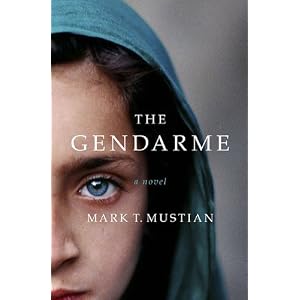
50. The Gendarme by Mark T. Mustian
Every once in a while you read a book that just blows your socks off. For me, The Gendarme by Mark Mustian is such a book. The novel begins with Emmett Conn, a ninety-two year old Turkish-American whose health is starting to fail. Emmett is hardworking, a man who spent years taking care of his ailing and difficult wife, and a father and grandfather who tries to be a better one. I empathized with him immediately as a good and caring man.
Emmett is diagnosed with a brain tumor and as his health worsens, he begins having vivid dreams of himself as a young man. Unusual because he was injured in WWI and has had amnesia of his early life every since waking up in a British hospital. The dreams are disturbing to him, and to the reader, because he begins to piece together that he had a role in the Armenian genocide. The novel switches back and forth between the present and the past, until Emmett Conn, or Ahmet Kahn, has difficulty staying in the present. Nor does he particularly want to, because in the dreams he can be with the young Armenian woman with whom he was passionately in love.
The plot drew me in from page one and never let go. In some novels, the shifts between past and present can be jarring, but not so here, where the old man's dreams are so integrated with his life, that they are nearly seamless. In addition, the characters are so well drawn, lifelike, and captivating that I felt as though I knew them, or wanted to. I sympathized with their situations, wanted them to find happiness, and despaired at their deparate circumstances.
And yet. And yet, Emmett Conn was a willing participant in the Armenian genocide. How can one reconcile such actions with the character one has grown to love? Is it possible to ever atone for such deeds? Can love for one transcend the cruelty to hundreds, thousands? Is it possible to move beyond the horror, either as a perpetrator, a victim, or a country? What role does memory play in atonement? Can love forgive even the worst of actions?
Although I rarely give a book five stars until I have been drawn to reread it at least once, I am incapable of giving this book anything less. It is an amazing novel that I recommend to everyone as a must read. It will be available in the US in September.
167Trifolia
#166 - What a great review. I've added it to my list. I'd love to read it also because a few weeks ago, I read Skylark Farm by Antonia Arslan which dealt with the Armenian genocide through the eyes of an Armenian family. Although it was a very hard book to read, I also thought it was beautiful and relevant (I recommend it to you, btw). I think it will be very interesting to compare the two books. I wonder if the author isn't Armenian himself (it looks as if Armenian names all seem to end with "-ian"), so this would put the book in a different perspective.
168labfs39
#167 Hi! Thanks to your recommendation earlier, I checked Skylark Farm out of the library and started it last night. Mark Mustian is of Armenian heritage, but his family has been in the US for generations (150+ years). However, in his afterward he does write about how the topic was of a more personal nature. I would love to talk about how the two books compare after I finish the Arslan.
169kidzdoc
Fabulous review of The Gendarme; I've added it to my wish list, and will plan to buy it next month.
170avatiakh
I've also added The Gendarme to my tbr list.
171alcottacre
I am adding The Gendarme to the BlackHole too. Thanks for the review and recommendation, Lisa!
172arubabookwoman
Glad you liked The Whisperers. Great review of The Gendarme--I'm adding that to my list. Wasn't it a great day today?
173labfs39
Thanks! It's so much easier to write a review when the book is so good. I struggle when the book is so-so.
#172 I love warm days and cool nights. We just adopted a rescue dog this weekend: a 1 1/2 year old Bernese Mountain Dog (we already have a black lab). We took them to Marymoor dog park yesterday. What a nice way to spend a nice day.
#172 I love warm days and cool nights. We just adopted a rescue dog this weekend: a 1 1/2 year old Bernese Mountain Dog (we already have a black lab). We took them to Marymoor dog park yesterday. What a nice way to spend a nice day.
174labfs39

51. Skylark Farm by Antonia Arslan
Skylark Farm is an autobiographical novel about the author's family during the Armenian genocide. The book begins with a bucolic description of the old country: Armenian Turkey in the years preceeding World War I. But intruding on this idyllic scene are the first rumors and hints of impending disaster. In addition the author intersperses flash forwards of the tragic ends of many of her family members.
Disaster finally strikes, and when it does, it is sudden, brutal, and total. The descriptions are difficult to read, being graphic and violent. Hope, however, is present in the form of a gypsy "wailer" (a woman hired to mourn at funerals), a beggar, and a Greek priest. These three friends of the family risk their lives to help, and some of the family members are saved.
Although I hesitate to offer criticism of such a personal novel, it would have been very helpful to me as a reader if there had been a family tree at the beginning of the book. I spent a considerable amount of time flipping back and forth trying to determine the relationships between characters, and between the characters and the family members of the author, some of whom appear in the book. In addition, I found the flashforwards of the fates of the characters somewhat distracting from the plot. But these are minor points.
A tale of genocide, betrayal, redemption, family solidarity, and survival, Skylark Farm is an important addition to the literature of the Armenian massacre. It is not easy reading but it adds to our understanding, not only of this tragedy, but of all acts of genocide. "At bottom--and he's also ashamed of this, as it if were a military inefficiency--the colonel knows the advantages of tolerance, understands that the darkest day for a country is the one when, in order to feel united, it feels the need to eliminate a defenseless segment of its population." The darkest day indeed.
(4 stars)
175alcottacre
#174: Monice (JustJoey) recently read and recommended taht one. I need to find a copy!
176labfs39
#175 Thank you for the reminder. I meant to credit Monica with the find and the recommendation. She's had lots of good reads lately!
177Trifolia
#174-175 - Well thanks for the credit but all my (good) reads are actually instigated by LT which means Everyone of You. My books-choices had been rather poor, limited and one-sided before I joined LT. So thank You!
I'm glad you enjoyed Skylark Farm although "like" is a weird word for such a tough book. It may take me a while before I get to read The gendarme, because it's not available here yet, but I'll keep you posted.
Good luck with the dog btw.
I'm glad you enjoyed Skylark Farm although "like" is a weird word for such a tough book. It may take me a while before I get to read The gendarme, because it's not available here yet, but I'll keep you posted.
Good luck with the dog btw.
178labfs39
#177 Thanks for the good wishes regarding Jill, the new addition to our family. She's a great dog, most Bernese are, but a bit of a wild child. She hasn't had much attention and no training. She's smart though, so I think it won't be too hard to get her on track. She had only been here an hour, however, before she shook the feathers off one of our hens (also pets although with the added benefit of fresh eggs). Breaking her of chicken chasing may be a harder task. For now we are keeping them separate, but stronger fence building may be in our future...
179arubabookwoman
Hey Lisa--We frequently take our little mutt to Marymoor dog park--maybe we've passed each other. He's a mixture--primarily a Pomeranian (and his picture was once the photo of the day on the National Geographic web site). We until recently also had a large Bouvier. I think the Marymoor dog park is great.
180labfs39

52. Every Man Dies Alone by Hans Fallada
Hans Fallada, the alias for Rudolf Ditzen, wrote his last novel, Every Man Dies Alone, in 24 days and died of a morphine overdose before it could be published. A man tortured by substance abuse and his ambivalent relationship with the Nazis, Fallada wrote prolifically but with few successes. After stints in hospitals and even an insane asylum, Fallada was shown a Gestapo file by a friend and told it would make a good story. The file was on a German couple who resisted the Reich by dispersing hand-written postcards denouncing Hitler and the war throughout Berlin. Fallada uses the basic plot suggested by the file to create the novel.
The story of the ficticious Otto and Anna Quangel is one of an average, working-class couple who live placidly under the Fuhrer until the death of their only son in the war. The senseless death of their son spurs them to defiance, and they begin their postcard campaign. Woven within and around their story are the stories of dozens of other people, resisters, snitchers, and Nazis, who together create a picture of life under Hitler. The richness of the character depictions are the highlights of the book. Even minor characters take on life and draw one in.
Unfortunately, the characters are almost entirely single-faceted. One is either good or evil, and only one character, the Inspector Escherich, seems to have any moral development as the story progresses. Despite this, I was interested in the fate of the characters and found the book a quick and absorbing read. Fallada creates an image of German life during the war as being as morally compromising as life under Stalin, a comparison that came quickly to mind having just finished reading The Whisperers. I was left wondering once again what I would be capable of if I were in such a situation. Would I be capable of resistance or would I collude in silence letting fear prevent action?
181labfs39
Ok. I'm ready for a cheerful book after having read two books on the Armenian Genocide and Every Man Dies Alone in succession. Maybe even a guilty pleasure!
182Trifolia
# 180-181 - I'd already added Fallada's book to my list, so I'll give it a go sooner or later. And I perfectly understand what you mean if you want to read a cheerful book now. I have Robert Goddard's Long time coming smiling at me from the book-shelves, which to me is great comfort-read.
183alcottacre
I have had Every Man Dies Alone in the BlackHole for a long while now. I just found out it is available for my Nook, so I am now a happy camper.
184labfs39
#182 Long Time Coming sounds like a good comfort-read. I'll have to look for it to keep on reserve for such occasions. Last night in an attempt to shift gears, I picked up Fine and Pleasant Misery. I found myself snorting and chuckling under the covers like a kid, while I tried not to wake up my daughter who was sleeping with me while we paint her room. Having grown up in rural Maine and having done a lot of what McManus calls "old-fashioned misery camping", I thought the book was a hoot. The perfect anecdote to my reading of late!
#183 I'll be interested to see what you think, Stasia. Cushla thought it was the best fiction she had read all year. I thought it was a little simple stylistically, but a good fast-moving story.
#183 I'll be interested to see what you think, Stasia. Cushla thought it was the best fiction she had read all year. I thought it was a little simple stylistically, but a good fast-moving story.
185Donna828
>166 labfs39:: Lisa, your review of The Gendarme blew my socks off - to use your phrase. A belated thumbs up from me! I always find something good to take away from your thread.
I've had the Fallada book on my radar for some time now; I may actually read it one of these days!
I've had the Fallada book on my radar for some time now; I may actually read it one of these days!
186labfs39
#185 Thank you, Donna! I thought it was a remarkable book. I hope you like it too. Cushla was the one to alert me to Every Man Dies Alone. She's a great source of good books.
187msf59
Lisa- Terrific reviews of Every Man Dies Alone and The Gendarme! The Fallada book was a top read for me last year! Incredible stuff! The Mustian book needs to go on the list!
It looks like you are having a fantastic reading year! Keep it up!
It looks like you are having a fantastic reading year! Keep it up!
188kidzdoc
Great review of Every Man Dies Alone, Lisa! I'll add this to my wish list, too.
189labfs39

53. A Fine and Pleasant Misery by Patrick F. McManus
If you enjoyed Bill Bryson's A Walk in the Woods, you'll love this book. From his childhood in rural Idaho to his adventures with his family as an experienced outdoorsman, Pat McManus has to be the funniest outdoor writer ever. I spent my time either nodding my head in agreement (his comparison of old-fashioned misery camping and modern ultralight luxury camping was classic) to rolling on the floor laughing (his description of his childhood bicycle had me howling).
Each chapter is a stand-alone vignette written for publication in Field & Stream magazine. They hold together well, however, with only occasional minor repetitions in description. Themes and characters run through the entire book, such as boyhood independence and characters such as his dog, Strange, and his mentor, Rancid Crabtree. Altogether I can't wait to read the next book he wrote, They Shoot Canoes, Don't They? Perfect escapist reading when your reading list gets a little to heavy.
4 stars
190alcottacre
#189: I loved the Bryson book, so I will have to find a copy of the McManus book. Thanks for the recommendation, Lisa!
192labfs39
#191 I've put A Fine and Pleasant Misery in my hubby's pile too. Even though he grew up in Manhattan, he's learned to love hiking, backpacking, and snowshoeing since moving to Seattle. Although he is definitely of the ultralight, new-fangled toys type!
193labfs39
How bizarre. I just received a comment from a LTer I had never heard of before complaining that I had a dog in my profile picture not a picture of my bookshelves! Self-appointed LT photo police...
194alcottacre
#193: That is strange!
195labfs39
54. Life After Genius by M. Ann Jacoby
Theodore Mead Fegley is the stereotypical math genius: sloppy, lovable, single-minded, and without social skills. However, Ann Jacoby takes this stereotype and out of it creates a surprising and unusual mystery/coming of age story.
Mead comes home from college six days before graduation and refuses to tell anyone why. Interspersed with the chapters detailing the next six days of his life back home with his family are chapters describing his life both before and during college. In these flashbacks we get clues as to why Mead ran away from college, and in the chapters set in the present we watch as Mead comes to grips with his decisions.
Nothing earth-shattering, but an interesting read that kept me flipping pages until midnight (which is why this post is so incoherent).
3.5 stars
196alcottacre
#195: I might give that one a try some time. Thanks for the recommendation, Lisa.
197labfs39
What are you doing up, Stasia? It's even later your time! As regards Life After Genius, I wouldn't run right out to buy it, but it's better than being stuck on a plane with only the flight magazine left to read!
198alcottacre
#197: No, I won't rush right out to buy it. I checked and my local library has it, so I will pick it up some time when I am in the mood for something light.
As far as why I am up, this is early for me. I will not be in bed until some time around 9am. Right now, I am at work - and do not get off until 8am.
As far as why I am up, this is early for me. I will not be in bed until some time around 9am. Right now, I am at work - and do not get off until 8am.
199labfs39
#198 Ahh... That explains it. Working nights, plus you homeschool, or did until recently, right? That's a busy schedule!
200alcottacre
#199: Yes, I did homeschool, but not any more. My youngest graduated in June. So, now I am starting up my own business to fill in my free time :)
201labfs39
#200 That sounds intriguing! Let me guess: indie bookstore? all-night helpline for read-a-holics? full-time reviewer? consultant for Nancy Pearl? long distance LT developer? Am I close?
Would this be in addition to whatever you are doing now? You do like to stay busy. ;.)
Would this be in addition to whatever you are doing now? You do like to stay busy. ;.)
202alcottacre
#201: No, you are nowhere close.
Yes, this will be in addition to my regular job. What can I say? I am a workaholic.
Yes, this will be in addition to my regular job. What can I say? I am a workaholic.
203bonniebooks
Lisa, what's all that on your profile about not having the copyright to your image? Yikes! Gonna have to pay attention to what I download here.
Is Every Man Dies Alone in paperback? I really want to buy/read that one.
Is Every Man Dies Alone in paperback? I really want to buy/read that one.
204alcottacre
#203: Bonnie, Every Man Dies Alone is available in paperback - the trade variety, not the mass market kind.
205msf59
Every Man Dies Alone is a stunning book in any format!
206cushlareads
I'm finally getting time to post - I enjoyed reading your review of Every Man Dies Alone and it got me thinking. I didn't really think about whether the characters were either all good or all evil, I was just so wrapped up in the story.
I was going to look for The Whisperers and read Natasha's Dance until the Orlando Figes Amazon review scandal. It has really put me off anything by him, even though both books are great I'm sure. I'm more inclined to try something by one of the authors whose books he trashed under a false name.
Nearly every book you read either goes onto my wishlist or is already there!! I've just added Valeria's Last Stand and the 2 Armenian genocide books. What cheery reading...
I was going to look for The Whisperers and read Natasha's Dance until the Orlando Figes Amazon review scandal. It has really put me off anything by him, even though both books are great I'm sure. I'm more inclined to try something by one of the authors whose books he trashed under a false name.
Nearly every book you read either goes onto my wishlist or is already there!! I've just added Valeria's Last Stand and the 2 Armenian genocide books. What cheery reading...
207labfs39
Bonnie--I'm really looking forward to reading Barefoot in Baghdad, so I scrounged around on the web and read the intro to the book and added all the author info I could find onto the author's page. The photo is actually okay to use, I just didn't know I had to add lots of notes onto the photo page so that everyone else knows it's not infringing copyright. It was my first time uploading an author image, now I know...
#204-206 Every Man Dies Alone (and woman) has a very interesting plot and is a page turner. It's fascinating that he wrote it in 24 days.
Cushla--do tell! I hadn't heard about the Figes scandal. I'm always the last to hear the juicy stories. :) Doesn't sound like a very nice guy. Hmmm. The Whisperers was excellent though. I really would recommend it. Maybe you could borrow it from the library, rather than buy, so that he doesn't get the royalties?
By the way, did you read the chapter at the back of Every Man Dies Alone that describes Fallada's life and the writing of the book? I'm not sure he was a very nice guy either, although weak is perhaps a better word. I felt sorry for all his personal issues and addictions, but his collusion with the Germans is an interesting contrast to the lofty sentiments in the book.
#204-206 Every Man Dies Alone (and woman) has a very interesting plot and is a page turner. It's fascinating that he wrote it in 24 days.
Cushla--do tell! I hadn't heard about the Figes scandal. I'm always the last to hear the juicy stories. :) Doesn't sound like a very nice guy. Hmmm. The Whisperers was excellent though. I really would recommend it. Maybe you could borrow it from the library, rather than buy, so that he doesn't get the royalties?
By the way, did you read the chapter at the back of Every Man Dies Alone that describes Fallada's life and the writing of the book? I'm not sure he was a very nice guy either, although weak is perhaps a better word. I felt sorry for all his personal issues and addictions, but his collusion with the Germans is an interesting contrast to the lofty sentiments in the book.
208labfs39
#206 For those as ignorant as I was on the Figes Amazon review scandal, I found this article from The Sunday Times illuminating: http://entertainment.timesonline.co.uk/tol/arts_and_entertainment/books/non-fict....
It does raise the interesting question of whether reviewers have the right to remain anonymous. And whether academicians should get slightly thicker skins. Why do they care so much about a single Amazon reviewer? Granted it was a self-aggrandizing lying colleague. But still, isn't is possible to get panned by anyone for any reason? He was definitely a snake for offering up his wife as the culprit!
It does raise the interesting question of whether reviewers have the right to remain anonymous. And whether academicians should get slightly thicker skins. Why do they care so much about a single Amazon reviewer? Granted it was a self-aggrandizing lying colleague. But still, isn't is possible to get panned by anyone for any reason? He was definitely a snake for offering up his wife as the culprit!
209labfs39
55. Assassin's Apprentice by Robin Hobb
I haven't read a fantasy series in a couple of years, but after reading the first of the Farseer books, I am completely hooked and eager for the next.
Dumped at the gates of Buckkeep, a six-year-old boy known only as "Boy" learns that he is the illegitimate son of the crown prince of the realm. Raised haphazardly at first by the stablemaster, Fitz (slang for bastard) is eventually apprenticed to the king's assassin. Fitz's loyalty to the king is the only thing keeping him alive, for the son of a popular prince, even an illegitimate son, is always a threat to those who seek power. What happens when that loyalty is threatened?
4 stars (for a fantasy)
210alcottacre
#209: *sigh* another one I need to get to one of these centuries :)
211msf59
Lisa- Yes, I did read the last section of Every Man Dies Alone and it was fascinating. I think I need to buy this book for my "keeper" shelves! Also I've had Assassin's Apprentice in the stacks forever. I'm just hesitant at starting another big series.
212sibylline
I am a Robin Hobb fan -- I'm hoarding the last three of the last series....(Forest Mage etc. )My favorite so far was the LiveShip series. She's very good.
213labfs39
Just finished Sarah's Key last night. There are already a couple of good reviews written about it, but I will add my thoughts in a later posting.
I must admit, I am a bit frustrated with LT right now. I have been trying to post an author photo of Manal Omar, the author of Barefoot in Baghdad. According to the author's website, it is permissible to use the photo, and Lilithcat agrees. Unfortunately, theapparatus disagrees, and the photo keeps getting removed. We have gone back and forth about it, and I have just about had it. The interaction has been so disagreeable, that I don't even want to log on to LT. :(
I must admit, I am a bit frustrated with LT right now. I have been trying to post an author photo of Manal Omar, the author of Barefoot in Baghdad. According to the author's website, it is permissible to use the photo, and Lilithcat agrees. Unfortunately, theapparatus disagrees, and the photo keeps getting removed. We have gone back and forth about it, and I have just about had it. The interaction has been so disagreeable, that I don't even want to log on to LT. :(
214bonniebooks
Well, try to hold on, Lisa! :-) You probably already know that Tim is wanting to change the rules and there were already 240 + votes agreeing with him, so that will mean that you're going to eventually win the battle with theapparatus.
And, I just bought Every Man Dies Alone for one of my official "Thingaversary" books--Yaaay!
And, I just bought Every Man Dies Alone for one of my official "Thingaversary" books--Yaaay!
215labfs39
Thanks, Bonnie. I stayed away from LT for a couple of weeks and that has given me some perspective. I popped on last night for a bit, and it was nice to get your message today. Thanks for checking in!
#214 I'll look forward to hearing your thoughts. Can you imagine writing an entire novel, especially one of that size, in less than a month?
#214 I'll look forward to hearing your thoughts. Can you imagine writing an entire novel, especially one of that size, in less than a month?
216labfs39
I've been busy adding all my tween/young adult books into LT, something I had put off since neither I nor my daugther are reading them, and because they are mostly series, which I find boring to enter. It was fun, however, revisiting all my mom's Cherry Ames and Trixie Belden books which she gave me oh so many years ago. My daughter enjoyed seeing her grandmother's childish writing of her maiden name inside the front covers. Family treasures...
218arubabookwoman
I used to love the Cherry Ames books--but the one where she is a flight nurse during WW II scared me to death--I was frightened at the thought of another war. Little did I know.
219Whisper1
It is good to see you back on LT!
I visited your library. What a labor of love to add all those YA and children's books.
A long time ago I owned my father's copy of Aesop's Fables but I think my mother threw it away. She was nuts like that -- carelessly destroying or throwing out our possessions. I wish I still had the copy of that book.
I visited your library. What a labor of love to add all those YA and children's books.
A long time ago I owned my father's copy of Aesop's Fables but I think my mother threw it away. She was nuts like that -- carelessly destroying or throwing out our possessions. I wish I still had the copy of that book.
220labfs39
#217 Thanks for stopping by. I've missed my LT friends!
I have been stuck on a book for several days, and finally just moved on (which I should have done sooner). I had read Assassin's Apprentice and really enjoyed it. Read Royal Assassin and thought it was okay. Just can not get through Assassin's Quest. Ah well, as someone on LT says, life is too short to read books we don't like. Started A Frost in the Night last night and am much happier.
#218 It's amazing how books we read as children stay with us. My mom had Cherry Ames, Sue Barton, and Kathy Martin. Not all survived to today, some simply fell apart with too many readings. I soooo wanted to be a candy stripper but we lived a million miles out in the boonies.
#219 I am so sorry to hear about Aesop's Fables, and I am sorry that it still pains you. *Big hug*
I have been stuck on a book for several days, and finally just moved on (which I should have done sooner). I had read Assassin's Apprentice and really enjoyed it. Read Royal Assassin and thought it was okay. Just can not get through Assassin's Quest. Ah well, as someone on LT says, life is too short to read books we don't like. Started A Frost in the Night last night and am much happier.
#218 It's amazing how books we read as children stay with us. My mom had Cherry Ames, Sue Barton, and Kathy Martin. Not all survived to today, some simply fell apart with too many readings. I soooo wanted to be a candy stripper but we lived a million miles out in the boonies.
#219 I am so sorry to hear about Aesop's Fables, and I am sorry that it still pains you. *Big hug*
221cushlareads
#218 and #220 I haven't thought of Cherry Ames or Sue Barton for 30 years, but Mum had lots of them and I read some of them. I must find out if they're still boxed up in their garage... hope so. What the heck is a candy stripper?! (I obviously didn't read that one!)
222labfs39
#221 Hee, hee. I made a very funny typo! Instead of candy stripper, I meant to say, candy striper (a young volunteer at a hospital who used to where red and white uniforms). What a hoot!
223Whisper1
Thanks for the laugh! I may have told this story before, if so, I apologize for the redundancy.
My mother was a very untrusting person, to say the least!
When I was 17 she let me go to the drive in movies with my high school boy friend. When I came home she asked me what movie I saw. I smiled and told her I saw The Grand Pricks. I did not know how to pronounce "The Grand Prix (as in Pre).
The look on her face was priceless...I had no idea why she was upset, until I later learned the way to say this word.
My mother was a very untrusting person, to say the least!
When I was 17 she let me go to the drive in movies with my high school boy friend. When I came home she asked me what movie I saw. I smiled and told her I saw The Grand Pricks. I did not know how to pronounce "The Grand Prix (as in Pre).
The look on her face was priceless...I had no idea why she was upset, until I later learned the way to say this word.
224cushlareads
OK, that is my laugh for the night!! The mind was boggling. And if Mum let me read it, it can't have been that bad...
225labfs39
#223 Oh that is priceless! I must say, untrusting or not, having my daughter say that would have raised my eyebrows! Thanks for the belly laugh!
228labfs39

58. A Frost in the Night by Edith Baer
Edith Baer was born in Germany and escaped to the US in 1940 in her mid-teens. The rest of her family was murdered in the Holocaust. This novel is heavily reminiscent of her own experience growing up in 1930's Germany, watching the rise to power of the Nazis.
Eva is a young girl on the cusp of adolescence basking in the love and security of her middle class family. Located in a small city, Eva lives in her grandfather's house with her extended family. At first, Eva's world consists of games with her cousins upstairs, school, and helping her father in the family bookstore. In the summer she visits her maternal grandparents in a rural enclave where her family has lived for generations. Many in her family believe that their long roots and high standing in the community will prevent any of the Nazi rabble-rousers from influencing their way of life.
As the events of 1932-33 unfold, Eva becomes increasingly aware of "the troubles" that the adults talk about only when the children are out of hearing. Schoolmates begin teasing and turning away, her American cousin begs them to move to America, and brownshirts become more vociferous in the streets. Hitler is no longer silly, but threatening somehow. Finally, Eva is the subject of a diatribe that makes her understand the personal nature of the persecution of the Jews.
The power of this short novel is in the innocent description of Eva's childhood as it gives way to understanding of the growing ugliness in the adult world. A palpable tension grows in the book, and I found myself wanting to shout for them to flee will they still can. I sorrowed for the inevitable loss of life to come and by the end of the book was worrying about which characters would die: baby Eli? staunchly confident Grandfather? beautiful Sabine, longing to embrace life? Perhaps most poignantly, I mourned the loss of innocence that would befall them all.
3.5 stars
Edited to correct touchstone and spelling.
229alcottacre
#228: I will have to look for that one as books on the Holocaust are of interest to me. Thanks for the recommendation, Lisa.
230Whisper1
Lisa
Thanks for the great description of your most recent read. It is now added to my list.
Thanks for the great description of your most recent read. It is now added to my list.
231labfs39
#228-230 I should have added that Edith Baer wrote a sequel to A Frost in the Night called Walk the Dark Streets. It continues the story of Eva Bentheim and her family. I'm looking for it now.
232bonniebooks
Nice review, Lisa!
233labfs39
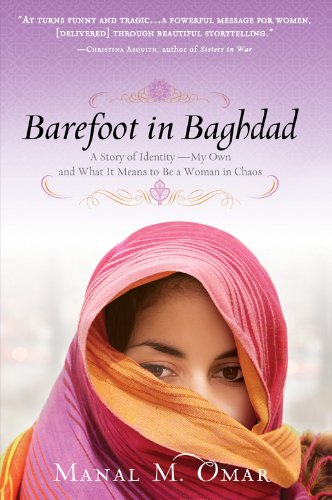
59. Barefoot in Baghdad by Manal Omar
Manal Omar was 28-years-old when she was sent to Iraq as country director for Women for Women, an international humanitarian organization. A Muslim American, Manal was completely trusted by neither the Iraqis nor the American military. But she was used to ambiguity about her identity. Manal was born in Saudi Arabia to Palestinian parents and grew up in various locales around the United States. Throughout her youth, Manal struggled with identity, especially when she began wearing a hijab.
Hoping to be accepted by the Iraqi women she was trying to organize, Manal decided to live in an Iraqi neighborhood, rather than accept the protection of living in the Green Zone. Trying to preserve the non-partisan stance of her organization, she at first eschews collaborating with the American military. As she gains experience, however, Manal learns that all players must work together in order to be effective.
Sharing stories about marginalized girls and women whom she tries to help, Manal describes how the situation in Iraq fell apart for these women. At first hopeful and optimistic about "liberation", Iraqi confidence in the Americans plummets as basic utilities fail to come on, security deteriorates, and promises fail to be fulfilled. Her story is not an unbiased, historical account, rather it is a memoir of the experience of a young woman trying to do good in a country falling apart.
I found the book to be a cross between Honeymoon in Tehran and Kabul Beauty School. Like Azadeh Moaveni in Honeymoon, Manal is young and struggling with a multicultural identity. However, whereas Azadeh is a political journalist and therefore writes about the political situation in Iran, Manal writes about the NGO scene and problems doing business in that arena. Deborah Rodriguez writes about the lives of ordinary Afghani women and in this reminds me of Manal's style. Manal however is a professional humanitarian aid worker and a Muslim, so their perspectives are different.
Overall I enjoyed the book and would recommend it to those interested in Iraqi women or American Muslim identity.
Edited to correct typo.
234alcottacre
#233: Thanks for the recommendation of that one, Lisa. I will see if I can locate a copy.
235dk_phoenix
I have Barefoot in Baghdad on my TBR list already, but I enjoyed you comments on it. More womens' stories from this area of the world need to be told.
236labfs39
We survived! Six Brownie Girl Scouts, two nights camping in platform tents in the pouring rain, fun had by all. Phew! Now to recover...
237alcottacre
Good luck with the recovery, Lisa! I prescribe plenty of rest with a lot of good books.
238labfs39
I've started reading The Coldest Winter by David Halberstam. Although a thick tome, I am enjoying it so far and learning tons about this rather unknown war. For instance, I never knew that Douglas McArthur never spent the night in Korea, but flew back to Tokyo, despite being the architect and commander of the war. In addition, although much of what I thought I knew about the Korean War was from the TV sitcom MASH, the creators of MASH were actually commenting on the Vietnam War, not Korea. According to Halberstam, in 1970 when the MASH movie premiered, it was still controversial to comment on Vietnam, so the producers set it in Korea instead.
I'll let you know if I make it through!
I'll let you know if I make it through!
239alcottacre
#238: I will be interested in seeing what you think of that one, Lisa. My knowledge of the Korean War is pretty much nonexistent.
241alcottacre
I am glad they were able to get them out safely at long last. I thought it rather funny that the miners were squabbling because no one wanted to be first out of the mine!
242labfs39
Started my second LT account. This time for our local Girl Scout troop. I'm excited to have a big stack of books to enter. Kind of sick, huh?
The Coldest Winter is going well. I'm fascinated by all I don't know about the war and the key players. Despite being dense, it is very readable. I just wish I had more time to read! Maybe this weekend.
The Coldest Winter is going well. I'm fascinated by all I don't know about the war and the key players. Despite being dense, it is very readable. I just wish I had more time to read! Maybe this weekend.
243alcottacre
#242: I'm excited to have a big stack of books to enter. Kind of sick, huh?
No, it sounds pretty normal for this group!
No, it sounds pretty normal for this group!
245labfs39
Picked up some new books yesterday: some from a friend, others from Half-Price Books (the one in the university district is quite nice).
Mona in the Promised Land by Gish Jen
A Chinese American girl coming of age and dating a Jewish boy who lives in a teepee.
The Great Influenza by John M. Barry
This is a replacement copy as my original was loaned out and not returned. Grrr.
Excellent and readable history of the 1918 influenza. Did you know they actually had to use mass graves in PA? And nurses were kidnapped off the streets of NYC? One nurse contracted the flu in the morning and died four hours later. Made me take the real flu (not "stomach flu") much more seriously.
The Age of Orphans by Laleh Khadivi
I was supposed to receive this one as an Early Reader, but it never came, so I decided to pick up a copy.
Novel set in Iran and portrays a young Kurdish soldier who is conscripted into the Shah's army.
The Truth about Sacajawea
Part of a series about Native American children. Not sure how historically rigorous it will be, but living in the Pacific Northwest, Lewis and Clark feature big in the regional psyche.
Ruff's War: A Navy Nurse on the Frontline in Iraq
Just as the title suggests!
The Lost Symbol by Dan Brown
Given to me by my friend. Not at the top of my TBR list.
Mountains beyond Mountains by Tracy Kidder
I already owned a copy, but this is one that I like to have extras to hand on to friends.
Great story of a talented doctor who devotes his life to helping the poor and incarcerated, fighting poverty as much as disease. Co-founder of Partners in Health.
Mona in the Promised Land by Gish Jen
A Chinese American girl coming of age and dating a Jewish boy who lives in a teepee.
The Great Influenza by John M. Barry
This is a replacement copy as my original was loaned out and not returned. Grrr.
Excellent and readable history of the 1918 influenza. Did you know they actually had to use mass graves in PA? And nurses were kidnapped off the streets of NYC? One nurse contracted the flu in the morning and died four hours later. Made me take the real flu (not "stomach flu") much more seriously.
The Age of Orphans by Laleh Khadivi
I was supposed to receive this one as an Early Reader, but it never came, so I decided to pick up a copy.
Novel set in Iran and portrays a young Kurdish soldier who is conscripted into the Shah's army.
The Truth about Sacajawea
Part of a series about Native American children. Not sure how historically rigorous it will be, but living in the Pacific Northwest, Lewis and Clark feature big in the regional psyche.
Ruff's War: A Navy Nurse on the Frontline in Iraq
Just as the title suggests!
The Lost Symbol by Dan Brown
Given to me by my friend. Not at the top of my TBR list.
Mountains beyond Mountains by Tracy Kidder
I already owned a copy, but this is one that I like to have extras to hand on to friends.
Great story of a talented doctor who devotes his life to helping the poor and incarcerated, fighting poverty as much as disease. Co-founder of Partners in Health.
246alcottacre
Nice haul, Lisa!
I read The Great Influenza several years ago when the book was first published. I agree with you, it is excellent and very readable.
I read The Great Influenza several years ago when the book was first published. I agree with you, it is excellent and very readable.
247msf59
Lisa- Looks like you landed some good books. The Great Influenza sounds terrific. I recently acquired a copy of Mountains beyond Mountains. Looking forward to it.
