
Lady Windermere's Fan
by Oscar Wilde 
On This Page
Description
Lady Windermere's Fan: A Play About a Good Woman is a play by Oscar Wilde, who uses his sharp wit to satirize Victorian ideals about marriage. Lady Windemere suspects her husband of infidelity and retaliates by taking a lover. Her husband's suspected lover follows her, begging her to return to Lord Windemere. The lover sacrifices her own reputation for that of Lady Windemere, in order to save that lady's marriage..
Tags
Recommendations
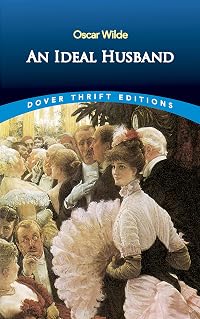
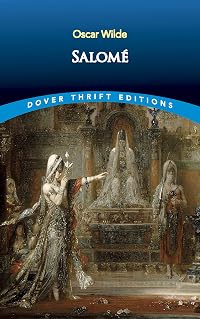
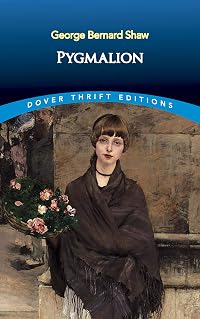
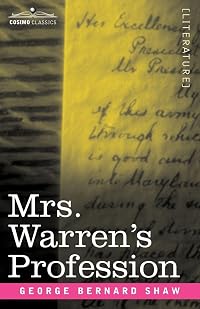








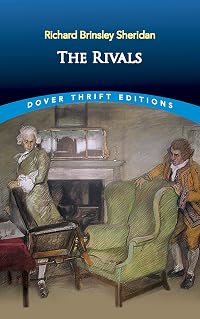
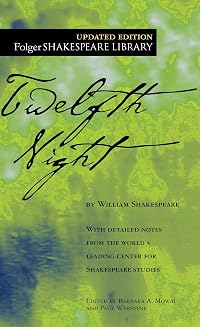
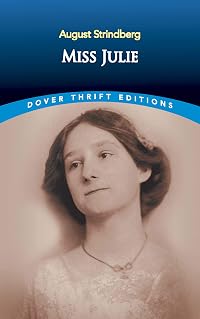
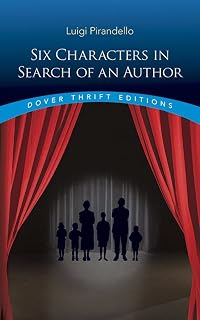

Member Recommendations
chrisjones For a later take on the costs of living with secrets in a repressed society
Member Reviews
Lady Windermere's Fan is classified as a Comedy of Manners, and while there are certainly humorous elements present in the usual clever Wilde manner, I would contend that there is more of drama here than comedy. The story at the base of this play is quite serious. The subject of the ease with which a person (particularly a woman) could be ruined and expelled from society (something that Wilde, even as a man, knew something of) is a serious topic for Wilde. The instinctive love of a mother is a serious topic for me.
As is so often Wilde's technique, there is much misunderstanding and confusion that leads characters to do foolish or socially dangerous things. Mrs. Erlynne might be a bad woman, but she does a very good thing; Lady show more Windermere prides herself on being a good woman, but she does a very bad thing. Perhaps the lines are not that clear or delineated. I particularly enjoy the progress that Lady Windermere makes in her thinking by the end of the play. I also enjoy the contrivance in which we, the audience, share in a secret that the Lady does not know.
Plays are meant to be seen, not read. I have never had the privilege of seeing this play produced, but in 2004 a movie was made based on this play entitled "A Good Woman" and starring Helen Hunt. If you have not seen it, it is worth seeking out. I think Oscar Wilde would be proud. show less
As is so often Wilde's technique, there is much misunderstanding and confusion that leads characters to do foolish or socially dangerous things. Mrs. Erlynne might be a bad woman, but she does a very good thing; Lady show more Windermere prides herself on being a good woman, but she does a very bad thing. Perhaps the lines are not that clear or delineated. I particularly enjoy the progress that Lady Windermere makes in her thinking by the end of the play. I also enjoy the contrivance in which we, the audience, share in a secret that the Lady does not know.
Plays are meant to be seen, not read. I have never had the privilege of seeing this play produced, but in 2004 a movie was made based on this play entitled "A Good Woman" and starring Helen Hunt. If you have not seen it, it is worth seeking out. I think Oscar Wilde would be proud. show less
A short four act play from the master of wit, Oscar Wilde. It threatens to become too melodramatic in its middle sections after a contrived setup, but he brings it all together nicely in the final act, and as always, peppers the script with droll one-liners and a satire of Victorian morality. The plot has a ‘loose’ woman showing up and seeming to have an affair with a married man, since he’s secretly paying her large sums of money and she’s known to be flirtatious. It turns out the woman is his wife’s mother, assumed dead since she was a baby, and she doesn’t want her identity made known to her daughter. Complicating things is the wife has an admirer of her own who wants to whisk her away to a different life abroad. Aside show more from his clever wordplay, I liked how in crafting this story, Wilde pointed out that all in the world cannot be simply be divided into good and evil, moral and immoral. The way sacrifices are made and left unsaid are touching, and fit together well at the conclusion.
Quotes:
On man’s condition:
“We are all in the gutter, but some of us are looking at the stars.”
On not caring what the world thinks:
“I won’t tell you that the world matters nothing, or the world’s voice, or the voice of society. They matter a great deal. They matter far too much. But there are moments when one has to choose between living one’s own life, fully, entirely, completely – or dragging out some false, shallow, degrading existence that the world in its hypocrisy demands. You have that moment now. Choose! Oh, my love, choose.”
On temptation:
“How securely one think one lives – out of reach of temptation, sin, folly. And then suddenly – Oh! Life is terrible. It rules us, we do not rule it.” show less
Quotes:
On man’s condition:
“We are all in the gutter, but some of us are looking at the stars.”
On not caring what the world thinks:
“I won’t tell you that the world matters nothing, or the world’s voice, or the voice of society. They matter a great deal. They matter far too much. But there are moments when one has to choose between living one’s own life, fully, entirely, completely – or dragging out some false, shallow, degrading existence that the world in its hypocrisy demands. You have that moment now. Choose! Oh, my love, choose.”
On temptation:
“How securely one think one lives – out of reach of temptation, sin, folly. And then suddenly – Oh! Life is terrible. It rules us, we do not rule it.” show less
I quite enjoyed Oscar Wilde's collection of short stories that I just read, but his plays are 100% why we came here! Even though the plots are highly melo-dramatic and based on a social class (and their ridiculous ideas of scandals) that most of us can't possibly understand (or want to, for that matter) Wilde's careful use of dialogue and sarcasm are perfection. "Lady Windermere's Fan" is a new play for me, and it didn't seem that great at the outset because the titular character is a bit of a square, but by the finale it had definitely grown on me. More than anything I appreciated that Wilde sought to tackle the subject of gender bias and inequality - a theme that was on point for the burgeoning sufferage movement of his era and still show more rings true today. Wilde may still have missed the mark a touch to be considered a true feminist, but at least he's asking the questions and putting the idea out there for his audience. show less
I usually find Oscar Wilde's plays to be written in a kind of gay code so that they look like one thing on the surface, but underneath are about the lives of queer people in Edwardian England. On the surface Lady Windermere's Fan looks like the story of a happily married couple whose life together is almost destroyed by a grasping yet loving woman. But it's really about having to live with secrets that, if known, would destroy your standing in middle-class Victorian society.
Oh, like so many comedies of manners you do just end up wanting to bang all their heads together, but this is clever and witty and at one and the same time heartwarming, yet deeply depressing. Is Lady Windermere doomed to repeat the mistakes her mother made?
It's young Lady Windermere's birthday and she is going to throw a ball in the evening. In the morning, she receives the first visitors, and a duchess gives her the information that Lord Windermere is having an affair with a certain Mrs Erlynne. Lady Windermere, who has been raised as a Puritan and who follows a rigid moral code, starts looking for evidence of her husband's betrayal. Other characters appear, and a sequence of charades, mistakes and confusions ensues. However, there are also earnest topics and conservations, and the plot itself is exciting. I could not wait to see how it developed.
This play is clever and humorous with a serious undertow, and it was a delight to discover some of the most famous Oscar Wilde quotes within show more the play. The witty dialogue is a joy to read, too. show less
This play is clever and humorous with a serious undertow, and it was a delight to discover some of the most famous Oscar Wilde quotes within show more the play. The witty dialogue is a joy to read, too. show less
This is the first play that I have ever read and I really enjoyed it. I liked Lord and Lady Windermere particularly and love that they learned to trust each other over gossip. The book made me smile and gave me a feeling of contentment that it was a well rounded story in such a short time. My favourite scene was the one of the ball because you could feel the crowded room by the way the characters spoke and you were anticipating what would happen next in childish excitement. I would enjoy watching this play if I ever got the chance and I will probably find myself reading more Wilde in the future.
Members
- Recently Added By
Lists

Plays I Like
230 works; 31 members

One Book, Many Authors
441 works; 40 members
Stage Plays/Screenplays/Dialogues/Anything Dialogue-Storytelling Related
81 works; 2 members

Books Read in 2023
5,547 works; 145 members

AP Lit
363 works; 6 members

Books Read In 2009
43 works; 1 member

Recommended Reading : 600 Classics Reviewed, Editors of Salem Press, 2015
634 works; 6 members

Books Read in 2024
4,623 works; 126 members
My Play Collection
769 works; 3 members

Next Plays / 2025
352 works; 1 member
Author Information

1,783+ Works 121,269 Members
Flamboyant man-about-town, Oscar Wilde had a reputation that preceded him, especially in his early career. He was born to a middle-class Irish family (his father was a surgeon) and was trained as a scholarship boy at Trinity College, Dublin. He subsequently won a scholarship to Magdalen College, Oxford, where he was heavily influenced by John show more Ruskin and Walter Pater, whose aestheticism was taken to its radical extreme in Wilde's work. By 1879 he was already known as a wit and a dandy; soon after, in fact, he was satirized in Gilbert and Sullivan's Patience. Largely on the strength of his public persona, Wilde undertook a lecture tour to the United States in 1882, where he saw his play Vera open---unsuccessfully---in New York. His first published volume, Poems, which met with some degree of approbation, appeared at this time. In 1884 he married Constance Lloyd, the daughter of an Irish lawyer, and within two years they had two sons. During this period he wrote, among others, The Picture of Dorian Gray (1891), his only novel, which scandalized many readers and was widely denounced as immoral. Wilde simultaneously dismissed and encouraged such criticism with his statement in the preface, "There is no such thing as a moral or an immoral book. Books are well written or badly written. That is all." In 1891 Wilde published A House of Pomegranates, a collection of fantasy tales, and in 1892 gained commercial and critical success with his play, Lady Windermere's Fan He followed this comedy with A Woman of No Importance (1893), An Ideal Husband (1895), and his most famous play, The Importance of Being Earnest (1895). During this period he also wrote Salome, in French, but was unable to obtain a license for it in England. Performed in Paris in 1896, the play was translated and published in England in 1894 by Lord Alfred Douglas and was illustrated by Aubrey Beardsley. Lord Alfred was the son of the Marquess of Queensbury, who objected to his son's spending so much time with Wilde because of Wilde's flamboyant behavior and homosexual relationships. In 1895, after being publicly insulted by the marquess, Wilde brought an unsuccessful slander suit against the peer. The result of his inability to prove slander was his own trial on charges of sodomy, of which he was found guilty and sentenced to two years of hard labor. During his time in prison, he wrote a scathing rebuke to Lord Alfred, published in 1905 as De Profundis. In it he argues that his conduct was a result of his standing "in symbolic relations to the art and culture" of his time. After his release, Wilde left England for Paris, where he wrote what may be his most famous poem, The Ballad of Reading Gaol (1898), drawn from his prison experiences. Among his other notable writing is The Soul of Man under Socialism (1891), which argues for individualism and freedom of artistic expression. There has been a revived interest in Wilde's work; among the best recent volumes are Richard Ellmann's, Oscar Wilde and Regenia Gagnier's Idylls of the Marketplace , two works that vary widely in their critical assumptions and approach to Wilde but that offer rich insights into his complex character. (Bowker Author Biography) show less
Oscar Wilde has a Legacy Library. Legacy libraries are the personal libraries of famous readers, entered by LibraryThing members from the Legacy Libraries group.
Some Editions
Series
Belongs to Publisher Series
Work Relationships
Is contained in
The Importance of Being Earnest / Lady Windermere's Fan / A Woman of No Importance / An Ideal Husband / Salomé by Oscar Wilde
Oscar Wilde in 3-Vol Box Set (Stories, Plays, Poems, Essays, Letters) [Folio Society 1993] by Oscar Wilde
Selected Works : The picture of Dorian Grey ; De Profundis ; The Canterville ghost ; The importance of being Ernest ; Lady Windermere's fan by Oscar Wilde
Has the adaptation
Has as a student's study guide
Common Knowledge
- Canonical title
- Lady Windermere's Fan
- Original publication date
- 1892
- People/Characters
- Lord Windermere; Lord and Lady Windermere, Mrs. Erlynne; Lady Windermere; Lord Darlington; The Duchess of Berwick; Lord Augustus Lorton (show all 15); Lady Agatha Carlisle; Mr. Dumby; Lady Plymdale; Mr. Cecil Graham; Lady Stutfield; Mr. Hopper; Lady Jedburgh; Mrs. Cowper-Cowper; Mrs. Erlynne
- Important places
- London, England, UK
- Related movies
- Lady Windermere's Fan (1925 | IMDb)
- Dedication
- To the dear memory of Robert Earl of Lytton in affection and admiration
- First words
- Is your ladyship at home this afternoon?
- Quotations
- Scandal is gossip made tedious by morality.
Crying is the refuge of plain women, but the ruin of pretty ones.
Experience is the name everyone gives to their mistakes.
My own business always bores me to death; I prefer other people's.
Life is far too important a thing ever to talk seriously about.
I can resist anything but temptation. (show all 9)
It is absurd to divide people into good and bad. People are either charming or tedious.
We are all in the gutter, but some of us are looking at the stars.
What is a cynic? A man who knows the price of everything and the value of nothing. - Last words
- (Click to show. Warning: May contain spoilers.)Ah, you're marrying a very good woman!
- Original language*
- English
*Some information comes from Common Knowledge in other languages. Click "Edit" for more information.
Classifications
Statistics
- Members
- 1,215
- Popularity
- 20,399
- Reviews
- 38
- Rating
- (3.83)
- Languages
- 10 — Catalan, English, French, German, Greek, Italian, Japanese, Portuguese, Spanish, Turkish
- Media
- Paper, Audiobook, Ebook
- ISBNs
- 140
- UPCs
- 2
- ASINs
- 38