
Winter in Madrid
by C. J. Sansom
On This Page
Description
Best-selling British author C.J. Sansom has been awarded the Ellis Peters Historical Dagger Award. Winter in Madrid is set just after the bloody Spanish Civil War, with World War II looming over Europe. Reluctantly, Harry Brett looks for an old schoolmate who's become a person of interest for British intelligence.Tags
Recommendations








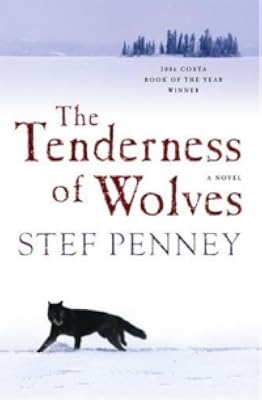
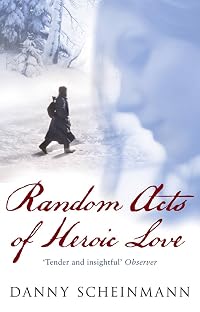
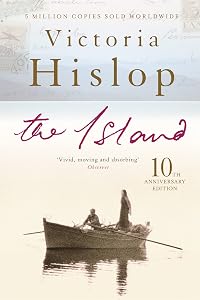
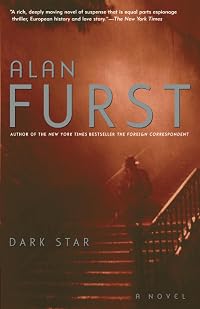
Member Recommendations

by anonymous user
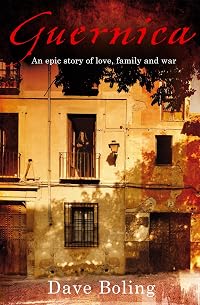
LynnB Set in the same time period, this book tells the story of the Basque people of northern Spain.
Member Reviews
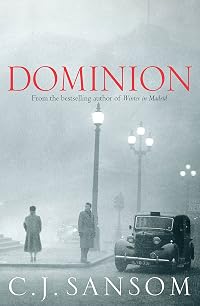
‘Winter in Madrid’ is a solid historical novel, however I could not help noticing that it has an awful lot in common with [b:Dominion|15770927|Dominion|C.J. Sansom|https://images.gr-assets.com/books/1343294802s/15770927.jpg|21478950], the other C.J. Sansom novel I’ve read. Similarities include but are not limited to:
- A male protagonist who is ambivalent about his spying work and does not feel suited to it.
- Said protagonist meets an attractive younger foreign woman with stronger political convictions than he does, promptly beginning an affair with her.
- The initial springboard for the plot relies on the protagonist having strong bonds with male friends from his youth.
- The protagonist is called upon to rescue a male friend from show more aforementioned youth.
- Although the protagonist’s memories of his younger days with his friend are good ones, the unfortunate friend he is trying to rescue had a much worse time. This is uncovered via flashbacks.
- For an extended period in the middle of the novel, the pace of action is quite slow and the reader knows more than the characters, thus is waiting for the other shoe to drop.
- When the other shoe drops, there is a sudden burst of intense violence and several important characters die in quick succession.
- At a critical moment in the climactic struggle, a female character saves the male protagonist at risk of her own life. It works because the antagonists underestimate women.
- By the end, no meaningful political change has occurred, but some good people are dead, some bad people are dead, and a few good people are freer than they were. Some terrible thing that could have happened has not happened, although most likely it would not have happened anyway.
- The setting is beautifully evoked, with considerable attention to detail.
It feels churlish to make that list, given that I genuinely enjoyed the novel and was fascinated to read about Spain during the initial years of Franco's regime. It seems incredible to me that Spain was neutral during the Second World War, despite being ruled by a fascist dictatorship highly supportive of Hitler. Such was the destructive legacy of the civil war, I suppose. To date I’ve read several memoirs of foreign left-wingers who decamped to join the international brigades, but nothing about the civil war’s awful legacy for Spaniards themselves. ‘Winter in Madrid’ very effectively demonstrates the lingering damage to Spain’s economy, infrastructure, political culture, and general morale. Given the list of structural similarities to [b:Dominion|15770927|Dominion|C.J. Sansom|https://images.gr-assets.com/books/1343294802s/15770927.jpg|21478950], I found it somewhat predictable, with the exception of one sudden twist. Nonetheless, it was atmospheric and involving enough to keep me reading happily all the way through. show less
- A male protagonist who is ambivalent about his spying work and does not feel suited to it.
- Said protagonist meets an attractive younger foreign woman with stronger political convictions than he does, promptly beginning an affair with her.
- The initial springboard for the plot relies on the protagonist having strong bonds with male friends from his youth.
- The protagonist is called upon to rescue a male friend from show more aforementioned youth.
- Although the protagonist’s memories of his younger days with his friend are good ones, the unfortunate friend he is trying to rescue had a much worse time. This is uncovered via flashbacks.
- For an extended period in the middle of the novel, the pace of action is quite slow and the reader knows more than the characters, thus is waiting for the other shoe to drop.
- When the other shoe drops, there is a sudden burst of intense violence and several important characters die in quick succession.
- At a critical moment in the climactic struggle, a female character saves the male protagonist at risk of her own life. It works because the antagonists underestimate women.
- By the end, no meaningful political change has occurred, but some good people are dead, some bad people are dead, and a few good people are freer than they were. Some terrible thing that could have happened has not happened, although most likely it would not have happened anyway.
- The setting is beautifully evoked, with considerable attention to detail.
It feels churlish to make that list, given that I genuinely enjoyed the novel and was fascinated to read about Spain during the initial years of Franco's regime. It seems incredible to me that Spain was neutral during the Second World War, despite being ruled by a fascist dictatorship highly supportive of Hitler. Such was the destructive legacy of the civil war, I suppose. To date I’ve read several memoirs of foreign left-wingers who decamped to join the international brigades, but nothing about the civil war’s awful legacy for Spaniards themselves. ‘Winter in Madrid’ very effectively demonstrates the lingering damage to Spain’s economy, infrastructure, political culture, and general morale. Given the list of structural similarities to [b:Dominion|15770927|Dominion|C.J. Sansom|https://images.gr-assets.com/books/1343294802s/15770927.jpg|21478950], I found it somewhat predictable, with the exception of one sudden twist. Nonetheless, it was atmospheric and involving enough to keep me reading happily all the way through. show less
The suspense in this novel builds gradually but relentlessly as the ties among three British citizens in Madrid in 1940, during the immediate aftermath of the Spanish Civil War, pull them ever more tightly into a web of danger. Sansom is more interested in the moral complications created by simplistic loyalties to countries, factions and individuals than he is in writing a nail-biting thriller (though nail-biters will need gloves for the closing chapters), but his writing is always crystal clear, allowing readers to follow a complicated plot with ease, and the suspense builds steadily. Fans of Graham Greene and John le Carré will like Winter in Madrid.
Longer review at www.HistoricalNovels.info
Longer review at www.HistoricalNovels.info
One of the most engrossing novels I have read this year, and a darkly fascinating insight into a twentieth century revolution, the Civil War in Spain.
Harry, Bernie and Sandy are childhood friends at an exclusive public school: the golden boy, the scholarship student from a working class background, and the rebel. Bernie and Harry travel to Spain in the early 1930s and witness the upheaval of a country in political turmoil, Bernie siding with the communist faction and Harry desperate to remain neutral. Only when Bernie is reported missing presumed dead after the Battle of Jarama in 1937 is Harry drawn deeper into a tangled web of espionage and deception, betraying old friends and risking his own life to do what he feels is right.
The show more plot is fast-paced and intricate, carrying the reader along with the same fragile hopes as experienced by the characters, all the while aware that nobody can be trusted. Harry, Bernie, Barbara, Sandy and Sofia are strong, enterprising and brave, living in Franco's Spain, but they are far from heroic. Scarred by the war, either directly like Bernie or through the lives of others, these are people acting out of desperation and humanity. In fact, one of the most intriguing characters is Sandy, who admits to being 'bad', but whose personality is shaded grey by how others view and remember him. I also took to Barbara and Sofia, ordinary women who have to be strong for those they love; in such extreme situations, it is easy to believe that we would all have the courage to do whatever is necessary.
The only letdown for me is the ending, which is far too pat after the layered narrative and steadily building tension of the bulk of the novel. Such a story requires a dramatic conclusion, but after such lengthy planning, the final stage was rushed and almost read like a Hollywood script. I object to epilogues for much the same reason - wondering 'Did everything work out for the best?' is sometimes better,and more fitting, than learning the fate of the characters in a chapter of forced dialogue.
All in all, though, a thoroughly gripping read. show less
Harry, Bernie and Sandy are childhood friends at an exclusive public school: the golden boy, the scholarship student from a working class background, and the rebel. Bernie and Harry travel to Spain in the early 1930s and witness the upheaval of a country in political turmoil, Bernie siding with the communist faction and Harry desperate to remain neutral. Only when Bernie is reported missing presumed dead after the Battle of Jarama in 1937 is Harry drawn deeper into a tangled web of espionage and deception, betraying old friends and risking his own life to do what he feels is right.
The show more plot is fast-paced and intricate, carrying the reader along with the same fragile hopes as experienced by the characters, all the while aware that nobody can be trusted. Harry, Bernie, Barbara, Sandy and Sofia are strong, enterprising and brave, living in Franco's Spain, but they are far from heroic. Scarred by the war, either directly like Bernie or through the lives of others, these are people acting out of desperation and humanity. In fact, one of the most intriguing characters is Sandy, who admits to being 'bad', but whose personality is shaded grey by how others view and remember him. I also took to Barbara and Sofia, ordinary women who have to be strong for those they love; in such extreme situations, it is easy to believe that we would all have the courage to do whatever is necessary.
The only letdown for me is the ending, which is far too pat after the layered narrative and steadily building tension of the bulk of the novel. Such a story requires a dramatic conclusion, but after such lengthy planning, the final stage was rushed and almost read like a Hollywood script. I object to epilogues for much the same reason - wondering 'Did everything work out for the best?' is sometimes better,and more fitting, than learning the fate of the characters in a chapter of forced dialogue.
All in all, though, a thoroughly gripping read. show less
Set in Spain in 1940, protagonist Harry Brett was injured and evacuated from Dunkirk. Medically discharged, he was then trained by British Intelligence to go to Madrid to see what he can find out about a childhood friend, Sandy Forsyth, who is suspected of involvement in a business venture that would facilitate Spain’s entry into WWII. Another friend, Bernie Piper, had joined the fighting in the International Brigade during the Spanish Civil War (1936-1939), and had been reported as missing presumed dead. Bernie’s parents and girlfriend, Barbara, asked Harry to see if he could help find out what happened to Bernie. Harry, Bernie, and Sandy had all attended Rookwood, a public school in England, where they became friends, and the show more storyline flashes back to provide their backstories.
This book starts off as more historical fiction and ends as a spy-thriller. The characters are deeply drawn and realistic. It is intricately plotted, and I found it easy to become immersed in this story. From a historical perspective, the author has clearly done his research. He has fashioned a compelling story out of a complicated historic setting. The momentum comes from multiple elements of mystery regarding Bernie’s fate, Sandy’s business venture, and Harry’s espionage. It will appeal to those who enjoy well-constructed and convincing historical fiction. The reader who is less familiar with this period in history will surely learn something. If you are interested in the Spanish Civil War, I can also recommend George Orwell’s memoir: [b:Homage to Catalonia|13496480|Homage to Catalonia|George Orwell|https://i.gr-assets.com/images/S/compressed.photo.goodreads.com/books/1432606190l/13496480._SY75_.jpg|2566499]. show less
This book starts off as more historical fiction and ends as a spy-thriller. The characters are deeply drawn and realistic. It is intricately plotted, and I found it easy to become immersed in this story. From a historical perspective, the author has clearly done his research. He has fashioned a compelling story out of a complicated historic setting. The momentum comes from multiple elements of mystery regarding Bernie’s fate, Sandy’s business venture, and Harry’s espionage. It will appeal to those who enjoy well-constructed and convincing historical fiction. The reader who is less familiar with this period in history will surely learn something. If you are interested in the Spanish Civil War, I can also recommend George Orwell’s memoir: [b:Homage to Catalonia|13496480|Homage to Catalonia|George Orwell|https://i.gr-assets.com/images/S/compressed.photo.goodreads.com/books/1432606190l/13496480._SY75_.jpg|2566499]. show less
I love it when I unexpectedly come across a book in which the author tells a story around events that actually happened and people who really existed. It makes me want to learn more about the events and how they shaped the lives of the people affected. This is one of those books.
During Spain’s civil war Bernie Piper, a communist from Britain, joined the International Brigades and was sent to fight against the fascists. The last he was heard from was at the battle of Jarama in 1937. Bernie’s parents and his girlfriend, Barbara Clare, ask an old public school friend to help search for him. They come up empty.
Several years later the old friend, Harry Brett, is wounded at Dunkirk and suffers post traumatic stress disorder. Recovering at show more home in England, he is contacted by the British Secret Service. They are interested in Harry because he can speak several languages and therefore can be put to use - ostensibly as a translator. In reality however, Harry is instructed to spy on another old school friend, Sandy Forsyth, who is busily scheming to take financial advantage of the political situation during World War Two.
Harry is surprised to discover that Barbara is still in Spain and has paired up with Sandy. As the story evolves the reader discovers that all three characters, Harry, Sandy and Barbara are concealing secrets from each other that when revealed, will irretrievably alter the course of their lives.
This book is written in a tone that evokes the era in which it takes place like none other that I’ve read in a long time. Written in period detail and expertly researched, it was easy to picture the cold streets of Madrid, the poverty and desperation of the people, the hopes and fears. I could feel the terror of the children as they were unceremoniously rounded up and delivered to church orphanages for ‘processing’ after their parents, who were deemed enemies of the state, disappeared forever. In fact the author dedicates the book “to the memory of the thousands of children of Republican parents who disappeared into the orphanages of Franco’s Spain”.
The politics in Spain during its civil war and the role it played during the Second World War is complicated to say the least. There is a short historical note at the end of the book explaining the political atmosphere during the years the story takes place. This was helpful in giving insight into some of the real people depicted in the book.
Having read Guernica by Dave Boling not long ago, my interest in what happened in Spain during these difficult years was piqued. As a result, I was very pleased to have the opportunity to read C.J. Sansom’s Winter in Madrid and I highly recommend it. show less
During Spain’s civil war Bernie Piper, a communist from Britain, joined the International Brigades and was sent to fight against the fascists. The last he was heard from was at the battle of Jarama in 1937. Bernie’s parents and his girlfriend, Barbara Clare, ask an old public school friend to help search for him. They come up empty.
Several years later the old friend, Harry Brett, is wounded at Dunkirk and suffers post traumatic stress disorder. Recovering at show more home in England, he is contacted by the British Secret Service. They are interested in Harry because he can speak several languages and therefore can be put to use - ostensibly as a translator. In reality however, Harry is instructed to spy on another old school friend, Sandy Forsyth, who is busily scheming to take financial advantage of the political situation during World War Two.
Harry is surprised to discover that Barbara is still in Spain and has paired up with Sandy. As the story evolves the reader discovers that all three characters, Harry, Sandy and Barbara are concealing secrets from each other that when revealed, will irretrievably alter the course of their lives.
This book is written in a tone that evokes the era in which it takes place like none other that I’ve read in a long time. Written in period detail and expertly researched, it was easy to picture the cold streets of Madrid, the poverty and desperation of the people, the hopes and fears. I could feel the terror of the children as they were unceremoniously rounded up and delivered to church orphanages for ‘processing’ after their parents, who were deemed enemies of the state, disappeared forever. In fact the author dedicates the book “to the memory of the thousands of children of Republican parents who disappeared into the orphanages of Franco’s Spain”.
The politics in Spain during its civil war and the role it played during the Second World War is complicated to say the least. There is a short historical note at the end of the book explaining the political atmosphere during the years the story takes place. This was helpful in giving insight into some of the real people depicted in the book.
Having read Guernica by Dave Boling not long ago, my interest in what happened in Spain during these difficult years was piqued. As a result, I was very pleased to have the opportunity to read C.J. Sansom’s Winter in Madrid and I highly recommend it. show less
It takes a darned good book to get a 5-star review out of me. I'd give this one 10 stars if it were an option.
In 1936 Spain, as World War II was gearing up, a military uprising led by General Franco sprang up against a leftist government and the Spanish Civil War began. Unable to obtain help from any other country, the leftist government turned to the Stalin who was all too happy to export his particular brand of "assistance."
And so it was that the Spanish people found themselves in the crossfire between two of the most undesireable factions fighting for control of their country: facists or communists.
The breadth of the destruction of Spain both during the Civil War and the years following the dictator Franco's rule over Spain cannot show more be overstated.
And this is the riveting time period that C.J. Sansom brings to life in his novel, Winter in Madrid.
Harry Brett finds himself at a bit of a loss whenout of the army on a medical discharge after the British retreat from the advancing Germans at Dunkirk. Recruited by British Intelligence, whose goal is to keep Spain from entering WWII on the side of the Axis powers, Harry heads off to Madrid to spy on an old school chum, Sandy Forsyth, who may or may not be supporting Franco's fascist regime.
But Sandy isn't Harry's only connection to Madrid. Bernie Piper, another old schoolmate who dropped out of school to join the International Brigades, died there fighting the fascists during the Civil War.
Except Bernie didn't die. And Sandy isn't who he appears to be.
This novel was nearly as perfect as a novel can be. From a historical perspective, Sansom's research is a wonder and more importantly, his ability to translate his research into a seamless story is nothing shortof amazing.
The Spanish Civil War was a politically convoluted mess. Yet Sansom never loses the reader. It is impossible not to feel incredibly illuminated about a period in history often glossed over.
The plot is perfectly paced, eventually reaching a conclusion that reflects the ambiguity of the time, and the characters are some of the most fully developed ever seen in a historical novel of this scope.
For any historical buff, A Reader's Respite is not just recommending Winter in Madrid to you, we're telling you that you MUST read this book.
If you're looking for an even more comprehensive education about Spain's Civil War and their role in WWII, couple this novel with Dave Boling's award-winning novel, Guernica. show less
In 1936 Spain, as World War II was gearing up, a military uprising led by General Franco sprang up against a leftist government and the Spanish Civil War began. Unable to obtain help from any other country, the leftist government turned to the Stalin who was all too happy to export his particular brand of "assistance."
And so it was that the Spanish people found themselves in the crossfire between two of the most undesireable factions fighting for control of their country: facists or communists.
The breadth of the destruction of Spain both during the Civil War and the years following the dictator Franco's rule over Spain cannot show more be overstated.
And this is the riveting time period that C.J. Sansom brings to life in his novel, Winter in Madrid.
Harry Brett finds himself at a bit of a loss whenout of the army on a medical discharge after the British retreat from the advancing Germans at Dunkirk. Recruited by British Intelligence, whose goal is to keep Spain from entering WWII on the side of the Axis powers, Harry heads off to Madrid to spy on an old school chum, Sandy Forsyth, who may or may not be supporting Franco's fascist regime.
But Sandy isn't Harry's only connection to Madrid. Bernie Piper, another old schoolmate who dropped out of school to join the International Brigades, died there fighting the fascists during the Civil War.
Except Bernie didn't die. And Sandy isn't who he appears to be.
This novel was nearly as perfect as a novel can be. From a historical perspective, Sansom's research is a wonder and more importantly, his ability to translate his research into a seamless story is nothing shortof amazing.
The Spanish Civil War was a politically convoluted mess. Yet Sansom never loses the reader. It is impossible not to feel incredibly illuminated about a period in history often glossed over.
The plot is perfectly paced, eventually reaching a conclusion that reflects the ambiguity of the time, and the characters are some of the most fully developed ever seen in a historical novel of this scope.
For any historical buff, A Reader's Respite is not just recommending Winter in Madrid to you, we're telling you that you MUST read this book.
If you're looking for an even more comprehensive education about Spain's Civil War and their role in WWII, couple this novel with Dave Boling's award-winning novel, Guernica. show less
I didn't enjoy this novel as much as either the author's Shardlake series, or his alternate historical fiction novel, Dominion. The descriptions of oppression and poverty in Franco's Spain are vividly drawn, and one gets a very clear picture of a society riven by stark political and religious divides and chilling refusals to compromise. However, I found the jumping around of the action in the first half of the novel between 1940, 1931 and 1936 quite confusing, and throughout much of the book, the narrative drive was lacking, only the attempt to free Bernie from the labour camp coming across as exciting and dramatic. The Spanish characters were well drawn, while most of the British ones seemed a bit cliched. Ultimately, I found this a show more somewhat unsatisfying read, but one that could probably have been made tighter and more dramatic without a huge amount of change. show less
Members
- Recently Added By
Published Reviews
ThingScore 75
A best seller in Britain, “Winter in Madrid” prompted some reviewers there to compare Sansom to Graham Greene, Sebastian Faulks and even Hemingway, but I came away less convinced. The idea of transferring public school rivalries to a real battleground is certainly clever, but more introspection would have been welcome. Without the compensation of rich language, the novel’s formulaic show more structure becomes all too visible. True, Sansom has come up with a surprise ending, but that’s what you expect of a thriller. The problem is that there aren’t enough thrills in the chapters leading up to it. show less
added by starfishian
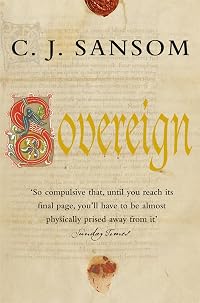
"The uneasy relationship of three British schoolmates haunts their adult lives during the first years of Francisco Franco’s dark Spanish dictatorship in a novel from the author of the excellent Matthew Shardlake Tudor detective stories (Sovereign, 2007, etc.)."
added by bookfitz
It's always a risky strategy for an author to change horses in midstream. If you have enjoyed the critical (and commercial) success that C J Sansom has had with his elegantly written Tudor crime novels, why test the loyalty of your readership by delivering a literary saga set in Spain at the end of the Civil War? Yet if this radical change of direction loses readers, that will be a great show more shame. Sansom establishes that he is as much a master of this era as of that of Henry VIII. show less
added by starfishian
Lists

Best Historical Fiction
620 works; 261 members

Five star books
1,767 works; 110 members

Historical Fiction Lovers
88 works; 4 members

Authors from Scotland
9 works; 1 member

Summer Reading
31 works; 2 members

Blue Pyramid 1,276 Best Books of All Time
1,248 works; 32 members
Author Information

Some Editions
Series
Belongs to Publisher Series
Common Knowledge
- Canonical title
- Winter in Madrid
- Original title
- Winter in Madrid
- Original publication date
- 2006
- People/Characters
- Harry Brett; Bernie Piper; Barbara Clare; Sandy Forsyth; Sofia Roque Casas; Milagros
- Important places
- Spain; Madrid, Spain; Valle del Jarama, Spagna
- Important events
- Spanish Civil War (1936 | 1939); World War II; Battaglia di Dunkerque (1940)
- Dedication
- To the memory of the thousands of children of Republican parents who disappeared into the orphanages of Franco's Spain
- First words
- Bernie had lain at the foot of the knoll for hours, half-conscious.
- Quotations
- Distante, dove la Tierra Muerta si perdeva in una lontananza indistinta, Bernie vide qualcosa dì straordinario. Al di sopra di uno strato di foschia bianca c’era un costone, sul cui fianco si trovavano alcune case, con il ... (show all)sole che luccicava sui vetri. Parevano chiuse, galleggianti sulla foschia. Era uno scherzo che talvolta combinava la luce, una specie di miraggio nel deserto. Bernie diede di gomito a Vicente. “Guarda laggiù, amigo, non è forse uno spettacolo per cui meriti rimanere vivi? Mica tanto spesso ti godi una visione come quella”.
- Last words
- (Click to show. Warning: May contain spoilers.)She watched as Sandy Forsyth walked across the tarmac towards them, smiling like an eager curious schoolboy as he lifted his face to the sunny English afternoon.
- Original language
- English
Classifications
Statistics
- Members
- 2,215
- Popularity
- 9,150
- Reviews
- 80
- Rating
- (3.66)
- Languages
- 14 — Danish, Dutch, English, Finnish, French, German, Italian, Norwegian (Bokmål), Norwegian, Polish, Portuguese, Russian, Spanish, Swedish
- Media
- Paper, Audiobook, Ebook
- ISBNs
- 66
- ASINs
- 24