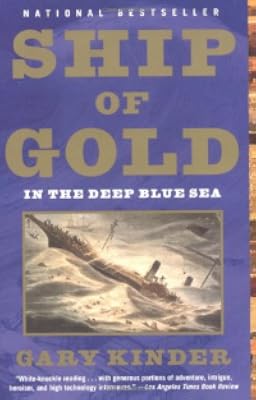
Ship of Gold in the Deep Blue Sea
by Gary Kinder
On This Page
Description
September 1875. With nearly six hundred passengers returning from the California Gold Rush, the side-wheel steamer SS Central America encountered a violent storm and sank two hundred miles off the Carolina coast. More than four hundred lives and twenty-one tons of gold were lost. It was a tragedy lost in legend for more than a century-until a brilliant young engineer named Tommy Thompson set out to find the wreck. Driven by scientific curiosity and resentful of the term "treasure hunt," show more Thompson searched the deep-ocean floor using historical accounts, cutting-edge sonar technology, and an underwater robot of his own design. Navigating greedy investors, impatient crewmembers, and a competing salvage team, Thompson finally located the wreck in 1989 and sailed into Norfolk with her recovered treasure: gold coins, bars, nuggets, and dust, plus steamer trunks filled with period clothes, newspapers, books, and journals. A great American adventure story, Ship of Gold in the Deep Blue Sea is also a fascinating account of the science, technology, and engineering that opened Earth's final frontier. show lessTags
Recommendations
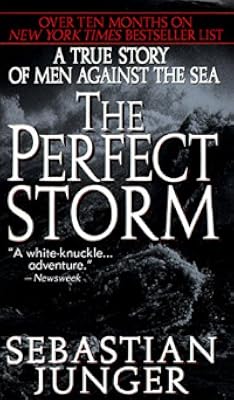
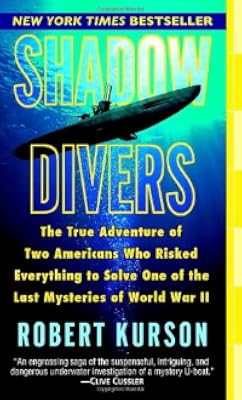
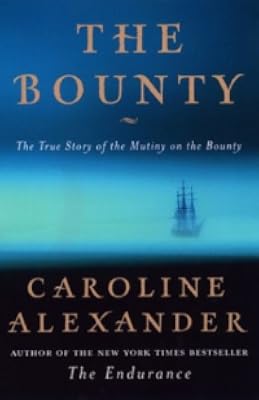

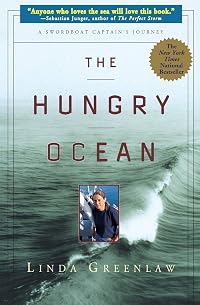






Member Recommendations


Stbalbach Outsider genius uses math to beat old timers and move the field to a new level.
Member Reviews
This is a fascinating look back to the sinking of the SS Central America in 1857, and then to the recovery efforts made some 130 years later -- from the fascination with its treasure, to the hunt, and finally the development of technology that made recovery possible, as well as the people involved at each moment. Kinder's work is brilliantly crafted, with research that takes readers back to the California Gold Rush and the nearly 600 men and women who boarded the SS Central America, as well as the treasure that they and the craft were carrying and the tragedy that unfolded some 200 miles off of North Carolina. As noted on the book jacket, "It was the worst peacetime disaster at sea in American history, a tragedy that remained lost in show more legend for over a century."
Moving between the resent and the ship and the hurricane that it fell to in 1857, Kinder manages to bring 130 years' worth of history into sharp relief, examining human failings, human heroics, and science and technology with an expert eye that brings all of it to life. The result is a fascinating story which is as unbelievable as it is true, and utterly worthwhile.
Absolutely recommended. show less
Moving between the resent and the ship and the hurricane that it fell to in 1857, Kinder manages to bring 130 years' worth of history into sharp relief, examining human failings, human heroics, and science and technology with an expert eye that brings all of it to life. The result is a fascinating story which is as unbelievable as it is true, and utterly worthwhile.
Absolutely recommended. show less
Non-fiction account of the wreck of the Central America in 1857 and the search, spearheaded by inventor and creative thinker Tommy Thompson, for her wreckage in the deep water of the Atlantic Ocean 130 years later. The book is divided into sections, with the first focusing on the experience of the passengers and crew aboard the Central America, the second on the early life of Tommy Thompson, and the third on the development of the technology to search for, locate, and recover artifacts. Did I mention the ship was laden with gold acquired during the California Gold Rush?
This book is so much more than a description of a “treasure hunt.” It is one of the most harrowing accounts of a ship’s sinking I have ever read. The author has show more done an excellent job of reconstructing the events from source material of the time. Even though I knew the eventual outcome, I felt invested in the tale and was rooting for them to overcome the elements and stay afloat. This section was outstanding!
When we get to Tommy Thompson’s early life, it slows down a bit. It laid the groundwork, though, and I think was necessary to tell the entire story of the recovery. Thompson is a creative thinker, inventor, and scientist. At the time (1980’s) the technology to work in deep water was in its infancy and this book shows how Thompson developed a team, pushed boundaries, designed equipment, and raised funds to do what was then considered impossible.
The section on the search and recovery takes the reader into the wide-ranging disciplines required to succeed in this high-risk high-reward endeavor, including engineering, probability theories, risk management, maritime law, fund-raising, teamwork, communications, and fending off the competition. It also covers the history of salvage operations as of the date of publication (1998). This section of the book is for people that like details. Kinder sometimes inserts a bit too much technical jargon and extensive descriptions for my taste, taking away from his main points. The author also seems a bit taken with Thompson to the point of excusing some rather questionable behavior. Overall, though, if you are looking for “non-fiction that reads like fiction,” this story fits the bill. show less
This book is so much more than a description of a “treasure hunt.” It is one of the most harrowing accounts of a ship’s sinking I have ever read. The author has show more done an excellent job of reconstructing the events from source material of the time. Even though I knew the eventual outcome, I felt invested in the tale and was rooting for them to overcome the elements and stay afloat. This section was outstanding!
When we get to Tommy Thompson’s early life, it slows down a bit. It laid the groundwork, though, and I think was necessary to tell the entire story of the recovery. Thompson is a creative thinker, inventor, and scientist. At the time (1980’s) the technology to work in deep water was in its infancy and this book shows how Thompson developed a team, pushed boundaries, designed equipment, and raised funds to do what was then considered impossible.
The section on the search and recovery takes the reader into the wide-ranging disciplines required to succeed in this high-risk high-reward endeavor, including engineering, probability theories, risk management, maritime law, fund-raising, teamwork, communications, and fending off the competition. It also covers the history of salvage operations as of the date of publication (1998). This section of the book is for people that like details. Kinder sometimes inserts a bit too much technical jargon and extensive descriptions for my taste, taking away from his main points. The author also seems a bit taken with Thompson to the point of excusing some rather questionable behavior. Overall, though, if you are looking for “non-fiction that reads like fiction,” this story fits the bill. show less
Buried under a morass of details, which others may appreciate more than I, was the saga of the U.S.S. Central America, a paddle steamer bringing folks from the California Gold Rush, in 1857 from Panama with final destination New York. A devastating hurricane sunk the ship and only 159 of the 600+ people on board were rescued. Captain Herndon went down with his ship and there is a today a memorial to him at Annapolis. Also was the story of Tommy Thompson of Ohio, an eccentric scientist and inventor, who was in charge of its deep sea salvage of all the personal objects and gold that had been on board. We follow how Tommy and his team obtain funding, find the coordinates where the ship had gone down, find a suitable boat to use and from it show more to do their recovery in 1988. Fascinating look at deep sea exploration, not only of old ships and their contents but the discovery of previously unknown species of sea life. It was much too detailed for my taste. There was a drawing of the Central America but no index and no map of the route taken. I regret the lack of both; to me an index greatly enhances the value of a nonfiction book and with the map I could have followed along much more easily. show less
In 1857, the SS Central America, a "side-wheeler steamer" sank, taking over 400 lives--and taking with it 21 tons of gold from the California Gold Rush. The book tells two entwined stories. That of the heroic efforts to save the ship and the struggles of the survivors, and over a hundred years later the tale of Tommy Thompson, a seemingly eccentric inventor, but one with the training of an engineer and the spirit of an entrepreneur who sees the recovery of the ship's treasures not just "as an end in itself, but as a way to learn how to work in the deep ocean" given the wreck was at a crushing depth in the ocean lower than many mountains are high. The author handled both halves of his tale well. I bought this book after reading The show more Perfect Storm, a truly fascinating tale of the sea. Ship of Gold scratched that itch as a great tale of the sea, of science, of human heroism and tragedy and adventure. It's something else I don't see much of--a tale of entrepreneurship. Of smarts and risks and high stakes. The challenges posed in the enterprise included historical, legal, technological, financial, poaching from competitors--and especially the sea, which many experts considered more forbidding to exploration than the moon. Given just the information in the back cover of the book, I thought I knew how this book would turn out, yet the author managed to make it page-turning and suspenseful, making me more riveted to the page the further I read. Kinder had a great story to tell and it wasn't wasted on him. show less
In 1857 the steamship Central America, loaded to the brim with gold from the California gold rush, sank off the coast of North Carolina. 130 years later, Tommy Thompson, brilliant scientist and treasure hunter, put together a team and the technology to locate the Central America and succeeded.
The story alternates between the sinking of the ship and the few survivors and the modern story of locating the ship and the treasure.
Unfortunately, halfway through the book, I looked up what happened to Thompson to discover that his impeccable reputation (as depicted in the book) was in tatters and that he had stiffed his investors and was presently rotting in jail because he will not release or admit to having the funds from the sale of the gold.
The story alternates between the sinking of the ship and the few survivors and the modern story of locating the ship and the treasure.
Unfortunately, halfway through the book, I looked up what happened to Thompson to discover that his impeccable reputation (as depicted in the book) was in tatters and that he had stiffed his investors and was presently rotting in jail because he will not release or admit to having the funds from the sale of the gold.
Nearly a 5-star read. I subtracted a star because the last couple of chapters seemed to drag on a little too long for me, although still very necessary to the story. This is the true story of the sinking of the SS Central America in 1857, but really more about its discovery on the bottom of the ocean floor. You will get behind the scenes of all the troubles that went into this discovery. It's just incredible! The ship was loaded with gold and 474 passengers (plus the crew...around 600 people total) headed home from the years of panning and mining for gold in California. The first half of the book was 5-star. The Prologue, The California Goldrush, really sets the climate in America from 1849 to 1857 before the SS Central America set show more sail, bound for New York from Aspinwall, Panama. When they headed north to catch the Gulf Stream up the East Coast, they were caught in a raging hurricane for four days. The author did great in telling their story from the early 1857 newspaper interviews from the survivors. You really got to know a lot of the characters, especially Tommy Thompson, who was the key player and motivator in this discovery. I loved getting to know Tommy from his childhood to his college days. The back cover of the 1998 hardback shows a photo of Captain William Lewis Herndon, who went down honorably with the ship; the newly married Easton couple, who survived with the other 149 other people saved; the gold at the bottom of the sea; “Nemo”, the exploration vehicle; and crazy, brilliant Tommy Thomas. I'm sure Google would provide the same photos or more.
Although, I would really LOVE to see the sinking of the SS Central America as a movie, the History Channel has a 41-minute documentary on YouTube called, History's Mysteries - The S.S. Central America "Ship of Gold":
https://www.youtube.com/watch?v=wzyHO4Obo78
What you don't see in the documentary is everything that went wrong with the exploration
On page 498, it says there was a book called, "Lady Lee's Widowhood", found in the luggage of John Dement. Goodreads has it and shows there are two volumes and was written by Edward Bruce Hamely. Maybe I will look into reading those later to see what they are about and why someone, a male at that, would carry this in their luggage.
----------
Personal connections to the story:
1. My 4th great-grandfather, William W. West (b. Feb. 17, 1802 – d. in 1856 in California) most likely headed west to California during the goldrush. The Lawrence family of Alabama shows he died there. Where they got that information?...I have no idea. But, their son, Silas Lawrence, my 3rd great-grandfather, left Maine when he was about 13 years old, ditched his father’s surname and took up his mother’s maiden name, Lawrence, and began a whole new family down south in Alabama. I did find in a book where there was a Wm. W. West who boarded the schooner “W.O. Alden”, and sailed for California from Bangor on Dec. 9, 1849. More research is needed to determine if this was my great-grandfather or not.
2. In 1986, Tommy first leased, for a few months, an old 165 foot flat-bottomed Louisiana mudboat, the Pine River, that he found right here in Orange, Texas, and had renovated for their particular use to carry the SeaMARC out to the sight of the shipwreck 200 miles off the Carolina coast, and where a crew of 22 men would reside.
3. While Ben and I were living in Charleston, South Carolina, and hunkering down for Hurricane Hugo to hit us, September 10-25, in 1989, Tommy and his crew were pulling up gold from the SS Central America. They pulled into Wilmington to wait out the storm, me and the kids hunkered down in a shelter closet in Navy housing, and Ben rode it out just up the river in a Coast Guard boat. show less
Although, I would really LOVE to see the sinking of the SS Central America as a movie, the History Channel has a 41-minute documentary on YouTube called, History's Mysteries - The S.S. Central America "Ship of Gold":
https://www.youtube.com/watch?v=wzyHO4Obo78
What you don't see in the documentary is everything that went wrong with the exploration
On page 498, it says there was a book called, "Lady Lee's Widowhood", found in the luggage of John Dement. Goodreads has it and shows there are two volumes and was written by Edward Bruce Hamely. Maybe I will look into reading those later to see what they are about and why someone, a male at that, would carry this in their luggage.
----------
Personal connections to the story:
1. My 4th great-grandfather, William W. West (b. Feb. 17, 1802 – d. in 1856 in California) most likely headed west to California during the goldrush. The Lawrence family of Alabama shows he died there. Where they got that information?...I have no idea. But, their son, Silas Lawrence, my 3rd great-grandfather, left Maine when he was about 13 years old, ditched his father’s surname and took up his mother’s maiden name, Lawrence, and began a whole new family down south in Alabama. I did find in a book where there was a Wm. W. West who boarded the schooner “W.O. Alden”, and sailed for California from Bangor on Dec. 9, 1849. More research is needed to determine if this was my great-grandfather or not.
2. In 1986, Tommy first leased, for a few months, an old 165 foot flat-bottomed Louisiana mudboat, the Pine River, that he found right here in Orange, Texas, and had renovated for their particular use to carry the SeaMARC out to the sight of the shipwreck 200 miles off the Carolina coast, and where a crew of 22 men would reside.
3. While Ben and I were living in Charleston, South Carolina, and hunkering down for Hurricane Hugo to hit us, September 10-25, in 1989, Tommy and his crew were pulling up gold from the SS Central America. They pulled into Wilmington to wait out the storm, me and the kids hunkered down in a shelter closet in Navy housing, and Ben rode it out just up the river in a Coast Guard boat. show less
I think what impressed me most is that while depending on the treasure aspect for funding the whole project Tommy Thompson was excited by what could be learned, both technically from working at that depth, but also scientifically and archaeologically by doing it right.
Members
- Recently Added By
Lists

Best Maritime Non Fiction
11 works; 4 members

Adult Books for YA Readers
194 works; 6 members
Author Information

9+ Works 1,468 Members
Gary Kinder wrote Light Years, a book about Edward Meier's extraterrestrial experiences. He is also the author of Gold in the Deep Blue Sea, a book about the gold recovery expedition and sinking of the SS Central America. (Bowker Author Biography)
Awards and Honors
Awards
Distinctions
Series
Belongs to Publisher Series
Serie Piper (3256)
Work Relationships
Is contained in
Common Knowledge
- Canonical title
- Ship of Gold in the Deep Blue Sea
- Original title
- Ship of Gold in the Deep Blue Sea
- Original publication date
- 1998
- Important places
- Atlantic Ocean; North Atlantic Ocean
- Dedication
- For Kristin and Lindsay from whom but a smile is worth more to me than all the gold on the Central America
- First words
- (Prologue) As was his habit each morning, James Marshall rose early to walk the gravel bar along his millrace to see if the water was yet deep enough and swift enough to turn the wheel for the sawmill he had built for John Su... (show all)tter. (prologue)
The gas lamps of Havana cast erratic ribbons of light out across the harbor, zigzagging among the dark silhouettes of more than a hundred ships at anchor. - Last words
- (Click to show. Warning: May contain spoilers.)Starting the following day, he fought the insurance companies for ownership of the olgd, which would not be determined for another seven years.
(Click to show. Warning: May contain spoilers.)"If you do that," he said, "all kinds of things can blossom." (epilogue) - Original language
- English US
Classifications
- Genres
- History, General Nonfiction, Religion & Spirituality, Nonfiction, Art & Design, Music, Biography & Memoir, Science & Nature, Travel, Business, Food & Cooking
- DDC/MDS
- 910.91631 — History & geography Geography & travel modified standard subdivisions of Geography and travel Explorers & Travelers Geography of and travel in areas, regions, places in general Air And Water Atlantic Ocean
- LCC
- G530 .C4 .K55 — Geography, Anthropology and Recreation Geography (General) Adventures, shipwrecks, buried treasure, etc.
- BISAC
Statistics
- Members
- 1,230
- Popularity
- 20,059
- Reviews
- 31
- Rating
- (4.16)
- Languages
- 11 — Danish, Dutch, English, Finnish, French, German, Italian, Norwegian (Bokmål), Portuguese, Spanish, Swedish
- Media
- Paper, Audiobook, Ebook
- ISBNs
- 33
- ASINs
- 11