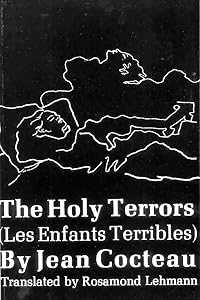
Les enfants terribles
by Jean Cocteau
On This Page
Description
Jean Cocteau -- poet, novelist, dramatist, artist, musician -- was a leading figure in the Surrealist movement. In addition to his popular novel Les Enfants Terribles (1929), he is best remembered in the English-speaking world for the film "Orphee" (1950). "From the Paperback edition.""Tags
Recommendations









Member Recommendations
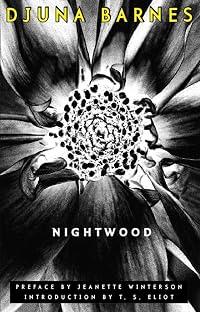
Cecilturtle story of incest
Member Reviews
When me and my sister were younger – like four and five, or five and six – we used to play these epic games in the back seat of our parents' car on long journeys. The car was a big old Citroën estate, like the vehicle from Ghostbusters, and the back seat folded down to form a huge play area (this was before anyone bothered about seat-belts in the back).
The games we played were incomprehensible to everyone but ourselves, and now we're older they've grown incomprehensible to us too. All I can remember are a few titles. One game was called ‘Baby in Australia’, which – bizarrely – was about a baby travelling around the United States having adventures. It was like Rugrats meets The Littlest Hobo. I'm not quite sure why we gave show more this such a confusing name. Another, more logically titled, game was called ‘Strongbaby’ (one word), and involved a baby with superhuman strength. I'm not certain now to what use an infant would really put Hulk-like strength, nor for that matter why we were both so obsessed with babies. But mothers and fathers reading this will readily appreciate that our own parents were happy to tolerate what appeared to be incipient psychological problems on the grounds that it kept us quiet for the length of a three-hour jaunt up the A1M.
I hadn't thought about this for years. Then I read Les Enfants terribles and it all came flooding back. If you've read the book this may sound alarming, but fortunately in our case it apparently never went further than a lot of weirdly regimented transport-based role-plays. For Paul and Élisabeth, the central characters of Cocteau's dark and dreamy novel, the shared world of childhood fantasy takes on a more all-consuming and sinister aspect.
Orphaned twins, they construct a haven of their own in their dead mother's apartment on the rue Montmartre (just round the corner from where I work), where their room is all low lighting, red textiles, pictures pinned up from newspapers, and a collection of hoarded ‘treasure’ brought back from the outside world. Here, in the middle of the night, the teenagers play what is only ever referred to as ‘the game’, a sort of never-ending psychological test of one-upmanship which governs their entire lives: the game is nothing less than a ‘semi-consciousness into which the children plunged’, which ‘dominated space and time; it initiated dreams, blended them with reality’.
Outsiders are brought into this private world, but they are always ultimately cat's-paws used by one sibling to get at the other. The self-imposed rituals are about domination, and there is a crackle of erotic charge everywhere: indeed at times this reads like the most literary treatment of D/S ever made. This is not to say that the book is about sex; it is much more oblique and remarkable than that. In one extraordinary scene, Élisabeth waits until Paul is just dropping off to sleep, and then, at three in the morning, she suddenly produces a bowl of crayfish from under her bed and starts eating them, ignoring Paul's anxious requests for her to share.
‘Gérard,’ [she says to Paul's schoolfriend who is with them,] ‘do you know of anything more depraved that some sixteen-year-old kid reduced to asking for a crayfish? He'd lick the rug, don't you know, he'd crawl on all fours. No! Don't give it to him, let him get up, let him come here! He's so vile, this gangling great oaf who refuses to move, dying for nice food but not able to make the effort. It's because I'm ashamed for him that I'm refusing to give him a crayfish….’
[—Gérard, connaissez-vous une chose plus abjecte qu'un type de seize ans qui s'abaisse à demander une écrevisse? Il lécherait la carpette, vous savez, il marcherait à quatre pattes. Non ! ne la lui portez pas, qu'il se lève, qu'il vienne ! C'est trop infecte, à la fin, cette grande bringue qui refuse de bouger, qui crève de gourmandise et qui ne peut pas faire un effort. C'est parce que j'ai honte pour lui que je lui refuse une écrevisse….]
An hour later, when Paul finally gives up and goes to sleep, Élisabeth wakes him and forces him to eat the crayfish, ‘breaking the carapace, pushing the flesh between his teeth’ as Paul struggles to chew while half-asleep: ‘grave, patient, hunched over, she resembled a madwoman force-feeding a dead child.’
It's an incredible scene the like of which I've never read anywhere else, and all described in this beautiful, verbally rich, precise Coctellian prose. The oppressive and erotic atmosphere is picked up on later by one of Élisabeth's friends, who is pining submissively after Paul: she ‘thrilled to be a victim because she felt the room to be full of an amorous electricity whose most brutal shocks were made inoffensive’. The novel's dénouement is going to prove her horribly wrong on this point.
The conclusion is dark and very French: the quasi-incestuous power-play cannot survive impact with adulthood, and implodes with considerable collateral damage. But how difficult for a writer to enter into this private world of childhood fantasy, and how perfectly Cocteau pulls it off. Some of his lines froze me with horrified delight: when the children find their mother dead in her room, the body is described as a ‘petrified scream’ – ‘ce Voltaire furieux qu'ils ne connaissent pas’. He combines the eye of a poet with a good novelist's willingness to examine the psychic areas usually left unexamined.
This year marks fifty years since Cocteau's death, and it's a good excuse to try him out if you haven't yet (as I hadn't until recently). Reading this is like having a beautiful dream that modulates into a beautiful nightmare. I kind of want to send a copy to my own sister, but I can't help feeling like that might be in bad taste. show less
The games we played were incomprehensible to everyone but ourselves, and now we're older they've grown incomprehensible to us too. All I can remember are a few titles. One game was called ‘Baby in Australia’, which – bizarrely – was about a baby travelling around the United States having adventures. It was like Rugrats meets The Littlest Hobo. I'm not quite sure why we gave show more this such a confusing name. Another, more logically titled, game was called ‘Strongbaby’ (one word), and involved a baby with superhuman strength. I'm not certain now to what use an infant would really put Hulk-like strength, nor for that matter why we were both so obsessed with babies. But mothers and fathers reading this will readily appreciate that our own parents were happy to tolerate what appeared to be incipient psychological problems on the grounds that it kept us quiet for the length of a three-hour jaunt up the A1M.
I hadn't thought about this for years. Then I read Les Enfants terribles and it all came flooding back. If you've read the book this may sound alarming, but fortunately in our case it apparently never went further than a lot of weirdly regimented transport-based role-plays. For Paul and Élisabeth, the central characters of Cocteau's dark and dreamy novel, the shared world of childhood fantasy takes on a more all-consuming and sinister aspect.
Orphaned twins, they construct a haven of their own in their dead mother's apartment on the rue Montmartre (just round the corner from where I work), where their room is all low lighting, red textiles, pictures pinned up from newspapers, and a collection of hoarded ‘treasure’ brought back from the outside world. Here, in the middle of the night, the teenagers play what is only ever referred to as ‘the game’, a sort of never-ending psychological test of one-upmanship which governs their entire lives: the game is nothing less than a ‘semi-consciousness into which the children plunged’, which ‘dominated space and time; it initiated dreams, blended them with reality’.
Outsiders are brought into this private world, but they are always ultimately cat's-paws used by one sibling to get at the other. The self-imposed rituals are about domination, and there is a crackle of erotic charge everywhere: indeed at times this reads like the most literary treatment of D/S ever made. This is not to say that the book is about sex; it is much more oblique and remarkable than that. In one extraordinary scene, Élisabeth waits until Paul is just dropping off to sleep, and then, at three in the morning, she suddenly produces a bowl of crayfish from under her bed and starts eating them, ignoring Paul's anxious requests for her to share.
‘Gérard,’ [she says to Paul's schoolfriend who is with them,] ‘do you know of anything more depraved that some sixteen-year-old kid reduced to asking for a crayfish? He'd lick the rug, don't you know, he'd crawl on all fours. No! Don't give it to him, let him get up, let him come here! He's so vile, this gangling great oaf who refuses to move, dying for nice food but not able to make the effort. It's because I'm ashamed for him that I'm refusing to give him a crayfish….’
[—Gérard, connaissez-vous une chose plus abjecte qu'un type de seize ans qui s'abaisse à demander une écrevisse? Il lécherait la carpette, vous savez, il marcherait à quatre pattes. Non ! ne la lui portez pas, qu'il se lève, qu'il vienne ! C'est trop infecte, à la fin, cette grande bringue qui refuse de bouger, qui crève de gourmandise et qui ne peut pas faire un effort. C'est parce que j'ai honte pour lui que je lui refuse une écrevisse….]
An hour later, when Paul finally gives up and goes to sleep, Élisabeth wakes him and forces him to eat the crayfish, ‘breaking the carapace, pushing the flesh between his teeth’ as Paul struggles to chew while half-asleep: ‘grave, patient, hunched over, she resembled a madwoman force-feeding a dead child.’
It's an incredible scene the like of which I've never read anywhere else, and all described in this beautiful, verbally rich, precise Coctellian prose. The oppressive and erotic atmosphere is picked up on later by one of Élisabeth's friends, who is pining submissively after Paul: she ‘thrilled to be a victim because she felt the room to be full of an amorous electricity whose most brutal shocks were made inoffensive’. The novel's dénouement is going to prove her horribly wrong on this point.
The conclusion is dark and very French: the quasi-incestuous power-play cannot survive impact with adulthood, and implodes with considerable collateral damage. But how difficult for a writer to enter into this private world of childhood fantasy, and how perfectly Cocteau pulls it off. Some of his lines froze me with horrified delight: when the children find their mother dead in her room, the body is described as a ‘petrified scream’ – ‘ce Voltaire furieux qu'ils ne connaissent pas’. He combines the eye of a poet with a good novelist's willingness to examine the psychic areas usually left unexamined.
This year marks fifty years since Cocteau's death, and it's a good excuse to try him out if you haven't yet (as I hadn't until recently). Reading this is like having a beautiful dream that modulates into a beautiful nightmare. I kind of want to send a copy to my own sister, but I can't help feeling like that might be in bad taste. show less
What did I hope for as I opened this slim edition? A deliciously existentialist, aloof, completely confunding French novella to kick start my je ne sais quoi. Happily that is exactly what I found. Eisabeth and Paul are a brother and sister coexisting in their own juvenile world or their ‘Game’ as they prefer to refer to it. Living in a two bed apartment in Paris with their sick (and therefore absentee) mother, the pair have an incredibly volatile, odd relationship, often forgetting themselves entirely and sinking further into a sinister world where naughty schoolboys become mythical heroes and unwitting friends the pawns in their poisonous game.
Playing with themes of incest, life, death, sexuality and areas of the psyche usually show more reserved for examination by the professionals, Paul and Lise live in a Paris of their own making, one completely isolated from reality as we know it. A small yet perfectly formed novel(ella?) this is French melodrama and mauvaise foi at its very juiciest. Although those not familiar with this confuddling concept may leave feeling more than a little confused, the danger, tragedy and taboo Cocteau juggles with in this book of ideas makes this less of a chore and more of an incredibly satisfying education. Cocteau’s own abstract sketches that illustrate the novella perfectly reflect the dream/nightmare like scenario within, allowing us a shadow of the action and allowing our brain to do the rest. If that-website-that-can-not-necessarily-be-believed is anything to go by, Jean Cocteau wrote the book during a week of drug withdrawal. Given the knife-edge tension in this tale I find that easy to believe.
http://relishreads.com/2013/07/09/les-enfants-terribles/ show less
Playing with themes of incest, life, death, sexuality and areas of the psyche usually show more reserved for examination by the professionals, Paul and Lise live in a Paris of their own making, one completely isolated from reality as we know it. A small yet perfectly formed novel(ella?) this is French melodrama and mauvaise foi at its very juiciest. Although those not familiar with this confuddling concept may leave feeling more than a little confused, the danger, tragedy and taboo Cocteau juggles with in this book of ideas makes this less of a chore and more of an incredibly satisfying education. Cocteau’s own abstract sketches that illustrate the novella perfectly reflect the dream/nightmare like scenario within, allowing us a shadow of the action and allowing our brain to do the rest. If that-website-that-can-not-necessarily-be-believed is anything to go by, Jean Cocteau wrote the book during a week of drug withdrawal. Given the knife-edge tension in this tale I find that easy to believe.
http://relishreads.com/2013/07/09/les-enfants-terribles/ show less
I thoroughly enjoyed Jean Cocteau's "The Holy Terrors" -- such fantastic writing really elevates what is a somewhat simple story so it becomes magical.
The novel centers on Elizabeth and Paul, two siblings who have a wholly inappropriate relationship. They are generally apart from the world and completely enmeshed in each other-- so much so they never seem to grow up but continue to play a childhood game of annoying each other as much as possible, with disastrous consequences.
There are some truly wonderful images elicited by this book. It's one I think I'll definitely get more out of with another reading. Really enjoyable stuff.
The novel centers on Elizabeth and Paul, two siblings who have a wholly inappropriate relationship. They are generally apart from the world and completely enmeshed in each other-- so much so they never seem to grow up but continue to play a childhood game of annoying each other as much as possible, with disastrous consequences.
There are some truly wonderful images elicited by this book. It's one I think I'll definitely get more out of with another reading. Really enjoyable stuff.
Two siblings, mixing a large dose of sibling rivalry into an already dysfunctional family spend their lives causing each other a great deal of pain. The book has the virtues of brevity, and high quality french prose. I read it, in part, as a deliberate exercise in broadening my understanding and use of the tongue in a very English dominated environment.
A classic in its way, but really this is a book that shows its age; it no longer shocks as once it might, and the story seems so slight compared to the more fleshed-out pieces that followed.
I'd been wanting to read this for some time. I first came to Cocteau as an artist seeing an exhibition of his works in Montreal. This book definitely has a cool factor to it with the black cover and the drawings throughout the book. That's it though. It's not a bad read, just not compelling. It has it's strange moments with the characterization of the brother and sister and the dynamic of the world they build as they draw people in. But, not a great book. Read it if you have nothing else to do or if you're going to a cafe and want to look cool.
Very distracting book...it provides for a lot of drifting off into languid, scientifically corrupt philosophising. For such a short book it takes a long time to read, as one gets distracted reflecting on vaguely suggested topics. If it is in your personality to enjoy that kind of thing you will love this book :)
Members
- Recently Added By
Lists

The Guardian's 1000 Novels Everyone Must Read
1,005 works; 552 members

Top Five Books of 2014
1,064 works; 398 members

Novels featuring siblings
133 works; 8 members

Publishing Triangle 100 Best Lesbian and Gay Novels
97 works; 6 members

1,001 BYMRBYD Concensus
723 works; 27 members

A Novel Cure
742 works; 23 members

Enfants sans
14 works; 1 member

Books Read in 2020
4,379 works; 124 members

Books Read in 2003
261 works; 7 members

My TBR
371 works; 3 members

Philip Ward's Lifetime Reading Plan
592 works; 22 members

important
24 works; 1 member

Just Kids by Patti Smith
43 works; 1 member

Books Read in 1999
30 works; 1 member

Favorite French Fiction
251 works; 110 members
Author Information

380+ Works 6,665 Members
Born in Maisons-Lafitte, France, on July 5, 1889, Jean Cocteau was a poet, actor, film director, and playwright. Cocteau's first volume of verse, La Lampe d'Aladian, established him as an important contemporary writer. During recuperation from an opium addiction, Cocteau produced some of his best-known work, including his first motion picture, show more Blood of a Poet, the play Orpheus, and the novel Les Enfants Terribles. Cocteau later published Difficulty of Being, a loose collection of autobiographical observations. Jean Cocteau died on October 11, 1963, at the age of 74. (Bowker Author Biography) show less
Some Editions
Awards and Honors
Notable Lists
Series
Belongs to Publisher Series
Work Relationships
Is contained in
Has the adaptation
Common Knowledge
- Canonical title
- Les enfants terribles
- Original title
- Les enfants terribles; Les Enfants terribles
- Alternate titles
- Children of the Game; The Holy Terrors
- Original publication date
- 1929
- People/Characters
- Elisabeth; Paul; Gérard; Agatha; Dargelos
- Important places
- Monthiers, Hauts-de-France, France
- Related movies
- Les enfants terribles (1950 | IMDb)
- First words
- The cité Mothiers is situated between the rue d’Amsterdam and the rue de Clichy.
- Quotations*
- «Combien d'hommes profondément distraits pénétrèrent dans des trompe-l'oeil et ne sont pas revenus. »
«Les privilèges de la beauté sont immenses. Elle agit même sur ceux qui ne la constatent pas.»
«L... (show all)a richesse est une aptitude, la pauvreté de même.» - Last words
- (Click to show. Warning: May contain spoilers.)The thread breaks, and of the flown room there remains only a foul stench and a little lady upon a safety-island, who grows smaller and smaller, fades away, disappears.
- Original language
- French
*Some information comes from Common Knowledge in other languages. Click "Edit" for more information.
Classifications
Statistics
- Members
- 1,954
- Popularity
- 10,922
- Reviews
- 20
- Rating
- (3.65)
- Languages
- 11 — Czech, Dutch, English, Finnish, French, German, Italian, Japanese, Norwegian (Bokmål), Spanish, Swedish
- Media
- Paper, Ebook
- ISBNs
- 51
- ASINs
- 53