On This Page
Description
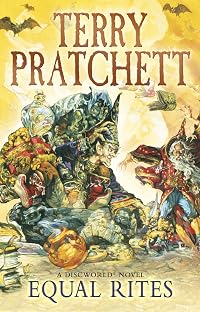
A dying wizard tries to pass on his powers to an eighth son of an eighth son, who is just at that moment being born. The fact that the son is actually a daughter is discovered just a little too late.Tags
Recommendations
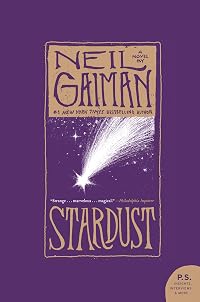
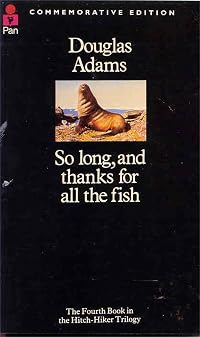
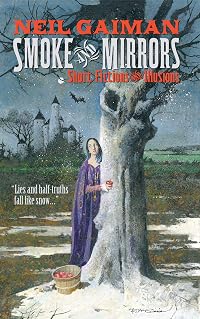
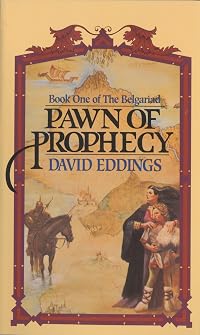


Member Recommendations
MyriadBooks For the appearance of Eskarina Smith.
ijustgetbored To find out what becomes of Esk.
160


Member Reviews
When wizard Drum Billet is about to die, he finds a newborn to follow his steps. Yet, there is a slight mistake, it is not the eighth son of an eighth son, but a girl. The midwife and witch Granny Weatherwax knows immediately what this will mean, Eskarina would become the first female wizard. Except for the fact that there is no such thing as a female wizard. Years go by but ultimately, her family cannot ignore her fate. So quite naturally, she will have to be trained, and therefore Esk and Granny make their way to the Unseen University.
“If you were a boy I'd say are you going to seek your fortune?"
"Can't girls seek their fortune?"
"I think they're supposed to seek a boy with a fortune.”
Terry Pratchett’s Discworld has lost nothing show more of its appeal after all these years. “Equal Rites” was first published in 1987 and is the third novel in the series. The title is a wordplay on equal rights of course, the main topic of the novel and - quite distressingly - not much has changed since then. Old institutions which still refuse women on the basis of the fact that they have never been allowed there, are still a reality. With impressive irony, the author puts the finger in the wound and yet, the effects seem to be weak.
“It is well known that a vital ingredient of success is not knowing that what you're attempting can't be done. A person ignorant of the possibility of failure can be a half-brick in the path of the bicycle of history.”
Esk is a wonderfully stubborn girl who finds her way into a male world. She possesses a natural force and cannot easily be stopped. Luckily, Granny is by her side to guide her and to make up for some foolish steps. She, too, is a great and lovable character. Even though she somehow accepts that women are witches and men wizards, she does not take male magic too seriously, she knows about the fuss they make with words and their weakness. She is a great representative of those women who have seen through the male facade and know how to work their way around big egos.
“I saved a man's life once," said Granny. "Special medicine, twice a day. Boiled water with a bit of berry juice in it. Told him I'd bought it from the dwarves. That's the biggest part of doct'rin, really. Most people’ll get over most things if they put their minds to it, you just have to give them an interest.”
It is most of all the little details that Pratchett has paid so much attention to that make the series an outstanding read. The puns are wonderful and the brilliant irony with which he caricatures the real world made me laugh out loud more than once. Reading it from a feminist point of view, the novel is as current as it might ever be. show less
“If you were a boy I'd say are you going to seek your fortune?"
"Can't girls seek their fortune?"
"I think they're supposed to seek a boy with a fortune.”
Terry Pratchett’s Discworld has lost nothing show more of its appeal after all these years. “Equal Rites” was first published in 1987 and is the third novel in the series. The title is a wordplay on equal rights of course, the main topic of the novel and - quite distressingly - not much has changed since then. Old institutions which still refuse women on the basis of the fact that they have never been allowed there, are still a reality. With impressive irony, the author puts the finger in the wound and yet, the effects seem to be weak.
“It is well known that a vital ingredient of success is not knowing that what you're attempting can't be done. A person ignorant of the possibility of failure can be a half-brick in the path of the bicycle of history.”
Esk is a wonderfully stubborn girl who finds her way into a male world. She possesses a natural force and cannot easily be stopped. Luckily, Granny is by her side to guide her and to make up for some foolish steps. She, too, is a great and lovable character. Even though she somehow accepts that women are witches and men wizards, she does not take male magic too seriously, she knows about the fuss they make with words and their weakness. She is a great representative of those women who have seen through the male facade and know how to work their way around big egos.
“I saved a man's life once," said Granny. "Special medicine, twice a day. Boiled water with a bit of berry juice in it. Told him I'd bought it from the dwarves. That's the biggest part of doct'rin, really. Most people’ll get over most things if they put their minds to it, you just have to give them an interest.”
It is most of all the little details that Pratchett has paid so much attention to that make the series an outstanding read. The puns are wonderful and the brilliant irony with which he caricatures the real world made me laugh out loud more than once. Reading it from a feminist point of view, the novel is as current as it might ever be. show less
Summary: A dying wizard gives Eskarina his staff by mistake and she wants to become a wizard despite no girl ever having been a wizard.
The wizard Drum Billet is dying. Wizards can only pass their staff, and powers, to the eighth son of an eighth son.. He hears of one about to be born in the village of Bad Ass and goes there. Upon the child’s birth, Drum Billet gives bestows his staff. Only afterward does he discover the child is a girl. He cannot withdraw the staff. But no girl has ever become a wizard. Admission to the Unseen University, where wizards receive training is not permitted for girls.
The staff is hidden away. Yet when it is evident that Eskarina has some kind of power, Granny Weatherwax, the local witch mentors her, trying show more to divert her thoughts of wizardry into the perfectly good role of village witch. While she’s a good student, it is evident that Granny can’t help her control the power upon her. It dawns on Granny that it is time to challenge the division of witches and wizard by sex Specifically, Eskarina’s power requires the training of wizards.
So, they set out on a journey to Ankh-Morpork to enroll in the Unseen University. On the way, she meets Simon, an apprentice wizard, also seeking entrance to the Unseen University. He gains entrance and quickly proves his talent for translating the universe into numbers. Those in charge reject Esk. Called on to demonstrate her power, she cannot. But the resourceful Granny finds a “backdoor.” She enters as a servant, using her powers to complete tasks, giving her time to study in the library. Soon she and Simon connect, leading to an adventure to rescue Simon’s mind from the Dungeon Dimensions that will bring wizards and witches together.
Pratchett shows how ridiculous gender-based barriers are in the facetious rationalizations the wizards give for banning girls. In Eskarina, we witness the struggle between calling and convention. And in Granny Weatherwax, Pratchett gives us a delightful character–crotchety and resourceful. I look forward to seeing how Pratchett will develop them in future numbers. show less
The wizard Drum Billet is dying. Wizards can only pass their staff, and powers, to the eighth son of an eighth son.. He hears of one about to be born in the village of Bad Ass and goes there. Upon the child’s birth, Drum Billet gives bestows his staff. Only afterward does he discover the child is a girl. He cannot withdraw the staff. But no girl has ever become a wizard. Admission to the Unseen University, where wizards receive training is not permitted for girls.
The staff is hidden away. Yet when it is evident that Eskarina has some kind of power, Granny Weatherwax, the local witch mentors her, trying show more to divert her thoughts of wizardry into the perfectly good role of village witch. While she’s a good student, it is evident that Granny can’t help her control the power upon her. It dawns on Granny that it is time to challenge the division of witches and wizard by sex Specifically, Eskarina’s power requires the training of wizards.
So, they set out on a journey to Ankh-Morpork to enroll in the Unseen University. On the way, she meets Simon, an apprentice wizard, also seeking entrance to the Unseen University. He gains entrance and quickly proves his talent for translating the universe into numbers. Those in charge reject Esk. Called on to demonstrate her power, she cannot. But the resourceful Granny finds a “backdoor.” She enters as a servant, using her powers to complete tasks, giving her time to study in the library. Soon she and Simon connect, leading to an adventure to rescue Simon’s mind from the Dungeon Dimensions that will bring wizards and witches together.
Pratchett shows how ridiculous gender-based barriers are in the facetious rationalizations the wizards give for banning girls. In Eskarina, we witness the struggle between calling and convention. And in Granny Weatherwax, Pratchett gives us a delightful character–crotchety and resourceful. I look forward to seeing how Pratchett will develop them in future numbers. show less
Ich hatte Das Erbe des Zauberers in der Onleihe meiner Bibliothek vormerken lassen und als es verfügbar wurde, musste ich es einfach lesen. Das erste Mal, dass ich die deutsche Übersetzung gelesen habe, die im übrigen gar nicht soooo schlecht ist. Trotzdem mag ich die englische Version lieber. Im Englischen Titel Equal Rites wird bereits angedeutet, worum es geht und Pratchett, der in seinen Scheibenweltromanen schon immer aktuelle Themen unserer Welt aufgefasst hat, setzt sich hier mit Gleichberechtigung auseinander, wobei das englische rite für Ritus steht, aber gesprochen wird wie right – Recht. In Equal Rites geht es somit nicht nur um Gleiche Riten sondern um Gleiche Rechte und das liebe ich an Pratchett: seinen intelligenten show more Wortwitz, seinen Scharfsinn und seinen ausgeprägten Gerechtigkeitssinn.
Sicherlich ist Das Erbe des Zauberers noch weit von der Brillanz entfernt, die man aus späteren Scheibenwelt-Romanen kennt und liebt, aber es ist im Vergleich mit den beiden Vorgängern schon um einiges besser. Wobei ich hier gestehen muss, dass ich alles von der Scheibenwelt so oft gelesen habe, dass ich auch die ersten beiden Romane rund um Rincewind einfach nur toll finde.
Doch mal zum Buch selbst, in dem Pratchett die nicht vorhandene Gleichberechtigung thematisiert. Die Figur, Oma Wetterwachs, selbst Hexe, ist eine emanzipierte Frau. Sie lässt sich von niemandem klein kriegen und bestreitet ihren Lebensunterhalt als Hexe mit diversen Heiltränken, Elixieren und Sprüchen. Dabei nutzt sie natürlich die Pschikologie zu ihrem Vorteil, bedient mit ihrer Kleidung und ihrem Verhalten ganz bewusst bestimmte Klischees und erfüllt damit selbstbestimmt die Erwartungshaltung der Scheibenweltbewohner. Aber auch sie weiß, dass Frauen höchstens Hexen und nur Männer Zauberer sein können. Als jedoch Eskarina, kurz Esk genannt, nunmal das achte Kind eines achten Sohnes ist, aber selbst kein Sohn sondern eben eine Tochter und Drum Billet seine Magie versehentlich an sie vererbt, steht die Scheibenwelt Kopf. Ein Mädchen, dass Magie kann. Esk wächst normal auf, aber als sie acht ist, bricht die Magie so langsam durch und Esk geht in die Lehre bei Oma. Das läuft anfangs ganz gut, aber bald wird klar, dass die Magie in Esk eine andere ist. Widerwillig gesteht sich Oma ein, dass Esk (und der Scheibenwelt) nur geholfen werden kann, indem man sie lehrt, die Magie zu kontrollieren, aber hier ist Oma mit ihrem Latein am Ende, schließlich kann sie selbst Hexenmagie aber keine Zauberermagie. Es kann also nur die Unsichtbare Universität in Ankh Mopork helfen. Allein die Reise dahin ist nicht von wenigen Turbulenzen begleitet und wie das nunmal so ist, wird Esk nicht angenommen. Immerhin ist sie ein Mädchen und Mädchen werden Hexen, keine Zauberer.
Pratchett hält hier dem Leser den Spiegel vor. Immerhin sind auch in unserer Welt viele Vorurteile und Meinungen so tief verwurzelt, dass wir uns schwer tun, sie zu ändern. War es doch früher unvorstellbar, dass Frauen studieren, wählen, Autofahren können. Aber auch hier war es eigentlich nirgends festgeschrieben sondern es war halt einfach so bis jemand kam und fragte, warum eigentlich. Und so schafft es Esk natürlich in die Unsichtbare Universität, wenn auch über Umwege.
Ich mag dieses Buch. Oma Wetterwachs ist eine meiner Lieblingsfiguren (aber wenn ich ehrlich bin, sind alle Figuren meine Lieblingsfiguren. Oma ist cool. Esk ist cool. Die Scheibenwelt ist toll.
Gespickt mit Pratchetts Wortwitz, der in späteren Romanen noch viel, viel stärker zum Tragen kommt, ist das Buch einfach nur ein Lesevergnügen.
Fazit:
In meinen Augen ist Das Erbe des Zauberers ein leichterer Einstieg in die Scheibenwelt als Die Farben der Magie oder Das Licht der Phantasie und ich empfehle denen, die englisch fließend beherrschen, das Buch in der Originalversion zu lesen. Aber auch die Deutsche Übersetzung ist nicht allzuschlimm. show less
Sicherlich ist Das Erbe des Zauberers noch weit von der Brillanz entfernt, die man aus späteren Scheibenwelt-Romanen kennt und liebt, aber es ist im Vergleich mit den beiden Vorgängern schon um einiges besser. Wobei ich hier gestehen muss, dass ich alles von der Scheibenwelt so oft gelesen habe, dass ich auch die ersten beiden Romane rund um Rincewind einfach nur toll finde.
Doch mal zum Buch selbst, in dem Pratchett die nicht vorhandene Gleichberechtigung thematisiert. Die Figur, Oma Wetterwachs, selbst Hexe, ist eine emanzipierte Frau. Sie lässt sich von niemandem klein kriegen und bestreitet ihren Lebensunterhalt als Hexe mit diversen Heiltränken, Elixieren und Sprüchen. Dabei nutzt sie natürlich die Pschikologie zu ihrem Vorteil, bedient mit ihrer Kleidung und ihrem Verhalten ganz bewusst bestimmte Klischees und erfüllt damit selbstbestimmt die Erwartungshaltung der Scheibenweltbewohner. Aber auch sie weiß, dass Frauen höchstens Hexen und nur Männer Zauberer sein können. Als jedoch Eskarina, kurz Esk genannt, nunmal das achte Kind eines achten Sohnes ist, aber selbst kein Sohn sondern eben eine Tochter und Drum Billet seine Magie versehentlich an sie vererbt, steht die Scheibenwelt Kopf. Ein Mädchen, dass Magie kann. Esk wächst normal auf, aber als sie acht ist, bricht die Magie so langsam durch und Esk geht in die Lehre bei Oma. Das läuft anfangs ganz gut, aber bald wird klar, dass die Magie in Esk eine andere ist. Widerwillig gesteht sich Oma ein, dass Esk (und der Scheibenwelt) nur geholfen werden kann, indem man sie lehrt, die Magie zu kontrollieren, aber hier ist Oma mit ihrem Latein am Ende, schließlich kann sie selbst Hexenmagie aber keine Zauberermagie. Es kann also nur die Unsichtbare Universität in Ankh Mopork helfen. Allein die Reise dahin ist nicht von wenigen Turbulenzen begleitet und wie das nunmal so ist, wird Esk nicht angenommen. Immerhin ist sie ein Mädchen und Mädchen werden Hexen, keine Zauberer.
Pratchett hält hier dem Leser den Spiegel vor. Immerhin sind auch in unserer Welt viele Vorurteile und Meinungen so tief verwurzelt, dass wir uns schwer tun, sie zu ändern. War es doch früher unvorstellbar, dass Frauen studieren, wählen, Autofahren können. Aber auch hier war es eigentlich nirgends festgeschrieben sondern es war halt einfach so bis jemand kam und fragte, warum eigentlich. Und so schafft es Esk natürlich in die Unsichtbare Universität, wenn auch über Umwege.
Ich mag dieses Buch. Oma Wetterwachs ist eine meiner Lieblingsfiguren (aber wenn ich ehrlich bin, sind alle Figuren meine Lieblingsfiguren. Oma ist cool. Esk ist cool. Die Scheibenwelt ist toll.
Gespickt mit Pratchetts Wortwitz, der in späteren Romanen noch viel, viel stärker zum Tragen kommt, ist das Buch einfach nur ein Lesevergnügen.
Fazit:
In meinen Augen ist Das Erbe des Zauberers ein leichterer Einstieg in die Scheibenwelt als Die Farben der Magie oder Das Licht der Phantasie und ich empfehle denen, die englisch fließend beherrschen, das Buch in der Originalversion zu lesen. Aber auch die Deutsche Übersetzung ist nicht allzuschlimm. show less
Third time's the charm. This is the Discworld book where things clicked into place, the first with Granny Weatherwax, and I believe Pratchett's first book featuring a juvenile hero(ine). I think these things are connected. Rincewind in the first two books was a buffoon who drove the story along fantasy spoofing lines. Granny and Eskarina are competent agents, at the opposite ends of the timeline. Granny is mature and respected -- at least in her village -- and Eskarina is young and under-appreciated. These are characters that both writer and reader want to see succeed because of who they are, not because comic plots demand a happy ending. And one you start writing sympathetic main characters, you have to start adding some sympathetic show more grace notes to the secondary characters as well.
Others have noted with disappointment that Esk has not (yet) been featured in another Discworld novel. But to some extent, I think she has in the Tiffany Aching series.
Recommended. show less
Others have noted with disappointment that Esk has not (yet) been featured in another Discworld novel. But to some extent, I think she has in the Tiffany Aching series.
Recommended. show less
Can a girl be a wizard? Esk was given the powers of a wizard moments before he died, moments after she was born, and before it was known that she was indeed a girl. Her father was the eighth of eight sons and she had seven older brothers so they assumed....well it's wrong to make assumptions, isn't it? Granny Weatherwax is the local witch who takes Esk to the Unknown University where wizards get trained and run into typical male wizard bias that girls can't be wizards. Well, they hadn't met these ladies yet. One of the things Esk teaches them is that the threat of the ability to use magic is sometimes much more effective that actually using the magic and this is her ticket into the university.
Pratchett's gift of language and puns makes show more this book so much fun to read. Diving into the Discworld series is daunting since it is so large and rich but my second experience shows me I should keep swimming in this series. He teaches me to NEVER assume.
"Esk, of course, had not been trained, and it is well known that a vital ingredient of success is not knowing that what you're attempting can't be done. A person ignorant of the possibility of failure can be a halfbrick in the path of the bicycle of history." show less
Pratchett's gift of language and puns makes show more this book so much fun to read. Diving into the Discworld series is daunting since it is so large and rich but my second experience shows me I should keep swimming in this series. He teaches me to NEVER assume.
"Esk, of course, had not been trained, and it is well known that a vital ingredient of success is not knowing that what you're attempting can't be done. A person ignorant of the possibility of failure can be a halfbrick in the path of the bicycle of history." show less
The more I read of Terry Pratchett's "Discworld" series, the more I start to understand why he's considered a core foundation of the fantasy genre right alongside Tolkien, Lewis, Le Quinn, and others.
Yes, his world isn't grandiose and as vibrant as Middle Earth, as mythological as Lewis, or has the grittiness of Martin or the pure epic scale of Jordan or any other authors, but what his world is, is FUN, and in the end, isn't that why we read? To have fun?
Yes, there are no epic armies, no chosen ones, and no prophecies, and even if there were, they're part of the makeup and part of the joke, and to me, that's what "Discworld" is best at: taking the tropes we know and having a bit of fun with them while still delivering a pretty good show more story.
And trust me, this one is pretty good. It's about a young girl, Eskarinna Smith, who is put on the path to being the Discworld's first Female Wizard. Female Wizards don't happen on Discworld because no one thought to question why and believed it was just so, but that hasn't stopped this precocious young girl from trying, while her Witch mentor, Granny Weatherwax, follows along and tries to keep her out of trouble.
It's a smaller scope story, and is one certainly set in a time when Fantasy was still very much a boys' club. You know, full of muscly oiled men, powerful wizards, beautiful damsels in distress, and people were all hot. Tabletop Gaming, Books, 80s Video Games, Comics, and more were all like that, set to appeal to a certain young male audience. Nowadays, you can certainly find plenty of women wizards in fantasy fiction - Jaina Proudmore from "Warcraft", Yennefer from "The Witcher", Hermione from "Harry Potter", and the entirety of the Aes Sedai from "Wheel of Time" - but back then, you were hard-pressed to find many female spell casters unless they were tantalizing and sensual.
Does that mean that it's not worth reading today? Actually, it still very much is simply because it's just funny. While I do not doubt that the idea of an 8-year-old little girl as a wizard joining an all-male wizarding college, followed by a withering, powerful witch, was unique at the time, it's still hilarious today simply because of the premise.
I've already gone over the positives above, but are there any real downsides to the book that justify it being a 4-star rather than a 5-star?
Kind of. Pratchett is very much someone whose writing style can be quite concise, and his dialogue - while funny - feels like it goes on a little too long in some places. I generally don't mind it because there are only so many ways you can write "He said," "she said" back and forth dialogue before it gets repetitive, and much of the humor is derived from the character interactions, but I also feel like some conversations could have been a little bit more condensed, or the silliness of the situation could have been moved somewhere else.
Another negative I have is that the ending comes a little too abruptly. I won't spoil it because I do implore people who are interested in reading this book to read it, but the ending feels like it was resolved rather quickly, with only a minor bit of buildup to its ultimate conclusion.
Overall, I'm glad I picked it up. "The Colour of Magic" and "The Light Fantastic" were amazing reads, and this one just continues in this irreverent world where goofiness happens more often than seriousness. Most Pratchett fans say that his later books are better when he's more comfortable in this world, and honestly? Considering I rated these books so far 4, 5, and 4, I'm looking forward to reading "Mort" next. show less
Yes, his world isn't grandiose and as vibrant as Middle Earth, as mythological as Lewis, or has the grittiness of Martin or the pure epic scale of Jordan or any other authors, but what his world is, is FUN, and in the end, isn't that why we read? To have fun?
Yes, there are no epic armies, no chosen ones, and no prophecies, and even if there were, they're part of the makeup and part of the joke, and to me, that's what "Discworld" is best at: taking the tropes we know and having a bit of fun with them while still delivering a pretty good show more story.
And trust me, this one is pretty good. It's about a young girl, Eskarinna Smith, who is put on the path to being the Discworld's first Female Wizard. Female Wizards don't happen on Discworld because no one thought to question why and believed it was just so, but that hasn't stopped this precocious young girl from trying, while her Witch mentor, Granny Weatherwax, follows along and tries to keep her out of trouble.
It's a smaller scope story, and is one certainly set in a time when Fantasy was still very much a boys' club. You know, full of muscly oiled men, powerful wizards, beautiful damsels in distress, and people were all hot. Tabletop Gaming, Books, 80s Video Games, Comics, and more were all like that, set to appeal to a certain young male audience. Nowadays, you can certainly find plenty of women wizards in fantasy fiction - Jaina Proudmore from "Warcraft", Yennefer from "The Witcher", Hermione from "Harry Potter", and the entirety of the Aes Sedai from "Wheel of Time" - but back then, you were hard-pressed to find many female spell casters unless they were tantalizing and sensual.
Does that mean that it's not worth reading today? Actually, it still very much is simply because it's just funny. While I do not doubt that the idea of an 8-year-old little girl as a wizard joining an all-male wizarding college, followed by a withering, powerful witch, was unique at the time, it's still hilarious today simply because of the premise.
I've already gone over the positives above, but are there any real downsides to the book that justify it being a 4-star rather than a 5-star?
Kind of. Pratchett is very much someone whose writing style can be quite concise, and his dialogue - while funny - feels like it goes on a little too long in some places. I generally don't mind it because there are only so many ways you can write "He said," "she said" back and forth dialogue before it gets repetitive, and much of the humor is derived from the character interactions, but I also feel like some conversations could have been a little bit more condensed, or the silliness of the situation could have been moved somewhere else.
Another negative I have is that the ending comes a little too abruptly. I won't spoil it because I do implore people who are interested in reading this book to read it, but the ending feels like it was resolved rather quickly, with only a minor bit of buildup to its ultimate conclusion.
Overall, I'm glad I picked it up. "The Colour of Magic" and "The Light Fantastic" were amazing reads, and this one just continues in this irreverent world where goofiness happens more often than seriousness. Most Pratchett fans say that his later books are better when he's more comfortable in this world, and honestly? Considering I rated these books so far 4, 5, and 4, I'm looking forward to reading "Mort" next. show less
A very enjoyable (re)read, but not vintage Pratchett, as he has not yet climbed to the heights he was to scale later in the Discworld series.
When Pratchett really works, you cannot quote small sections, as it is the overall effect that warms your cockles. However his genius can be glimpsed in quotes such as:
‘What’s an elephant?’ ‘A kind of badger,’ said Granny. She hadn’t maintained forest-credibility for forty years by ever admitting ignorance.
The whole panoply of the universe has been neatly expressed to them as things to (a) mate with, (b) eat, (c) run away from, and (d) rocks. This frees the mind from unnecessary thoughts and gives it a cutting edge where it matters. Your normal animal, in fact, never tries to walk and show more chew gum at the same time.
He had the kind of real deep tan that rich people spend ages trying to achieve with expensive holidays and bits of tinfoil, when really all you need to do to obtain one is work your arse off in the open air every day. show less
When Pratchett really works, you cannot quote small sections, as it is the overall effect that warms your cockles. However his genius can be glimpsed in quotes such as:
‘What’s an elephant?’ ‘A kind of badger,’ said Granny. She hadn’t maintained forest-credibility for forty years by ever admitting ignorance.
The whole panoply of the universe has been neatly expressed to them as things to (a) mate with, (b) eat, (c) run away from, and (d) rocks. This frees the mind from unnecessary thoughts and gives it a cutting edge where it matters. Your normal animal, in fact, never tries to walk and show more chew gum at the same time.
He had the kind of real deep tan that rich people spend ages trying to achieve with expensive holidays and bits of tinfoil, when really all you need to do to obtain one is work your arse off in the open air every day. show less
Members
- Recently Added By
Lists

Best Fantasy Novels
821 works; 361 members

Best Satire
188 works; 29 members
20th Century Literature
1,161 works; 55 members

Books I've Read More Than Once
602 works; 49 members

Female Protagonist
1,056 works; 57 members

Favourite Books
1,819 works; 316 members

1980s
356 works; 23 members

Novels Published in 1987
81 works; 19 members

NPR Readers Poll: 100 Favorite Funny Books
100 works; 5 members

Fantasy novels with a female protagonist
76 works; 15 members

Genre Benders: Comic Fantasy
97 works; 16 members

Books Read in 2014
2,343 works; 89 members

Mind Expanding Books by hackerkid
581 works; 8 members

Huxley's reading log 2016
84 works; 3 members
Speculative Fiction to Read
706 works; 32 members

Books Read in 2023
5,547 works; 145 members

Books You Bought in 2013
35 works; 3 members

Books Read in 2015
3,299 works; 129 members

Books Read in 2005
175 works; 7 members
Books Read in 2016
4,666 works; 199 members

Books Read in 2017
4,249 works; 130 members

Em's (Adult) List of Read Books in 2024
24 works; 1 member
Books We Love to Reread
688 works; 296 members

Humble Bundle Discworld Winter 2024
2 works; 1 member

Books Read in 2024
4,623 works; 126 members

Witchy Fiction
253 works; 126 members

Books Read in 2025
4,091 works; 97 members
Books We Want To Read Again For The First Time
384 works; 160 members

Books Mentioned in the A+ Autostraddle Pop Up Discords Nov 2022 & Dec 2022
223 works; 3 members

Next in Series
85 works; 1 member

Books Read in 2021
5,361 works; 114 members

Books Read in 2019
4,052 works; 110 members

Alphabetical Books
211 works; 3 members

Books Read in 2013
1,630 works; 51 members

Witches and Wizards Oh My
135 works; 12 members
Best Feminist Science Fiction
188 works; 35 members

Unread books
1,063 works; 87 members
Author Information

422+ Works 580,612 Members
Terry Pratchett was on born April 28, 1948 in Beaconsfield, United Kingdom. He left school at the age of 17 to work on his local paper, the Bucks Free Press. While with the Press, he took the National Council for the Training of Journalists proficiency class. He also worked for the Western Daily Press and the Bath Chronicle. He produced a series show more of cartoons for the monthly journal, Psychic Researcher, describing the goings-on at the government's fictional paranormal research establishment, Warlock Hall. In 1980, he was appointed publicity officer for the Central Electricity Generating Board with responsibility for three nuclear power stations. His first novel, The Carpet People, was published in 1971. His first Discworld novel, The Colour of Magic, was published in 1983. He became a full-time author in 1987. He wrote more than 70 books during his lifetime including The Dark Side of the Sun, Strata, The Light Fantastic, Equal Rites, Mort, Sourcery, Truckers, Diggers, Wings, Dodger, Raising Steam, Dragons at Crumbling Castle: And Other Tales, and The Shephard's Crown. He was diagnosis with early onset Alzheimer's disease in 2007. He was knighted for services to literature in 2009 and received the World Fantasy award for life achievement in 2010. He died on March 12, 2015 at the age of 66. (Bowker Author Biography) show less
Some Editions
Awards and Honors
Series

Work Relationships
Is contained in
Pratchett 8 Book Set: Night Watch / Truth / Carpe Jugulum / Color of Magic / Fifth Elephant / Light Fantastic / Equal Rights / Thief of Time by Terry Pratchett
Is abridged in
Common Knowledge
- Canonical title
- Equal Rites
- Original title
- Equal Rites
- Alternate titles
- Ritos iguales (España) (España)
- Original publication date
- 1987-01
- People/Characters
- Drum Billet; Eskarina Smith; Granny Weatherwax; Simon; The Librarian of Unseen University; Death [Discworld] (show all 9); Gordo Smith; Cern Smith; Gulta Smith
- Important places
- Lancre, Discworld; Ankh-Morpork, Discworld; Dungeon Dimensions; Bad Ass, Discworld; Discworld; Unseen University, Ankh-Morpork, Discworld
- Epigraph
- [None]
- Dedication
- Thanks to Neil Gaiman, who loaned us the last surviving copy of the Liber Paginarium Fulvarum, and a big hallo to all the kids at the H.P. Lovecraft Holiday Fun Club.
I would like it to be clearly understood tha... (show all)t this book is not wacky. Only dumb redheads in Fifties' sitcoms are wacky.
No, it's not zany either. - First words
- This is a story about magic and where it goes and perhaps more importantly where it comes from and why, although it doesn't pretend to answer all or any of these questions.
- Quotations
- They both savoured the strange warm glow of being much more ignorant than ordinary people, who were only ignorant of ordinary things.
For animals, the entire universe has been neatly divided into things to (a) mate with, (b) eat, (c) run away from, and (d) rocks.
Esk, of course had not been trained, and it is well known that a vital ingredient of success is not knowing that what you are attempting can't be done. A person ignorant of the possibility of failure can be a half-brick in th... (show all)e path of the bicycle of history.
... she was already learning that if you ignore the rules people will, half the time, quietly rewrite them so that they don't apply to you.
It has already been revealed that light on the Discworld travels slowly, the result of its passage through the Disc’s vast and ancient magical field.
So dawn isn’t the sudden affair that it is on other worlds. The new ... (show all)day doesn’t erupt, it sort of sloshes gently across the sleeping landscape in the same way that the tide sneaks in across the beach, melting the sand castles of the night. It tends to flow around mountains. If the trees are close together it comes out of woods cut to ribbons and sliced with shadows.
On the horizon were low hills, eroded not by wind or rain in this weather-less place, but by the soft sandpaper of Time itself.
“Aye tell you, girl, a white magician is just a black magician with a good housekeeper.” – Mrs. Whitlow
Fossils were well known on the Discworld, great spiraled shells and badly constructed creatures that were left over from the time when the Creator hadn’t really decided what He wanted to make and was, as it were, just idly ... (show all)messing around with the Pleistocene.
One thing the water couldn’t do was gurgle out of the ornamental gargoyles ranged across the roof. This was because the gargoyles wandered off and sheltered in the attics at the first sign of rain. They held that just becau... (show all)se you were ugly didn’t mean you were stupid.
The frills were getting to her, they gave pink a bad name. - Last words
- (Click to show. Warning: May contain spoilers.)They got it absolutely right and it would probably have important implications for the universe if it hadn't, next time the University flooded, been completely washed away.
- Blurbers
- Byatt, A. S.; Peters, Elizabeth; Pournelle, Jerry; Anthony, Piers; Michaels, Barbara; Ellison, Harlan (show all 7); McCaffrey, Anne
- Original language
- English UK
Classifications
Statistics
- Members
- 16,171
- Popularity
- 423
- Reviews
- 280
- Rating
- (3.85)
- Languages
- 25 — Bulgarian, Catalan, Chinese, Czech, Danish, Dutch, English, Estonian, Finnish, French, German, Greek, Hungarian, Italian, Japanese, Norwegian (Bokmål), Polish, Romanian, Russian, Serbian, Slovenian, Spanish, Swedish, Turkish, Portuguese (Portugal)
- Media
- Paper, Audiobook, Ebook
- ISBNs
- 108
- ASINs
- 53