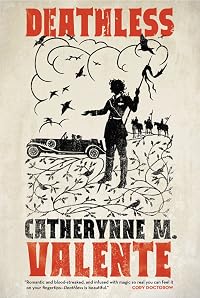
Deathless
by Catherynne M. Valente
On This Page
Description
Set in an alternate version of St. Petersburg in the first half of the twentieth century, Marya Morevna, a clever child of the revolution, is transformed into the beautiful bride of Koschei the Deathless, a menacing overlord.Tags
Recommendations



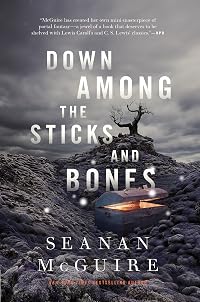
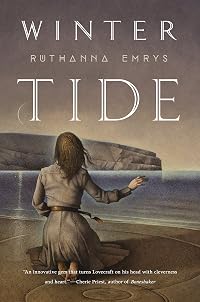
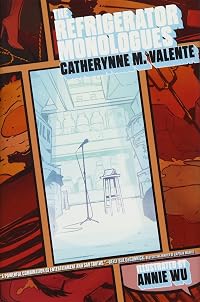
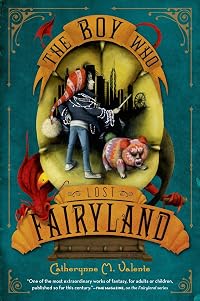
Member Recommendations
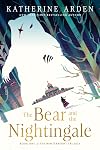
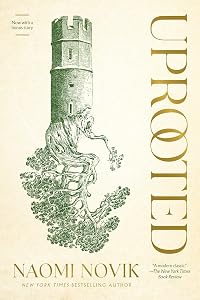
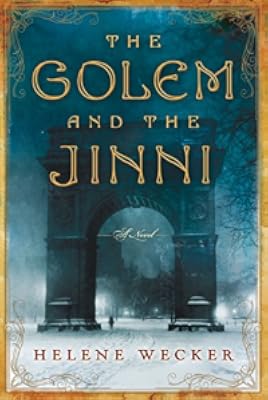
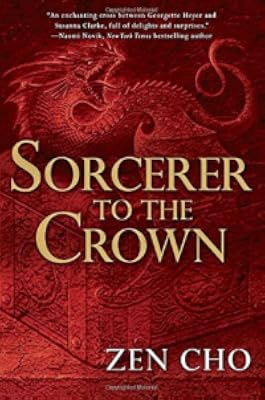
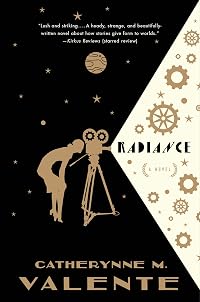
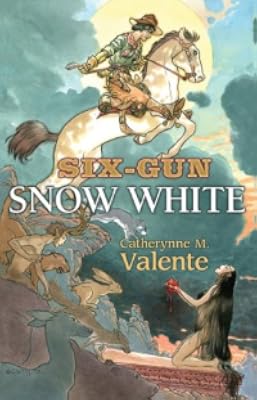
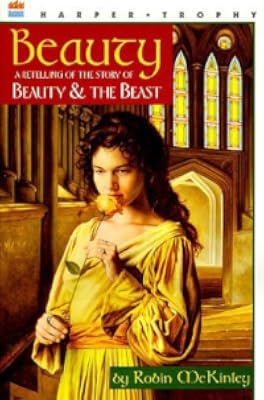
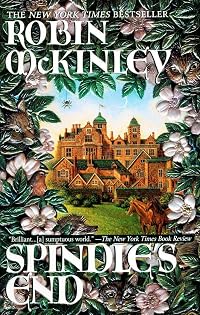
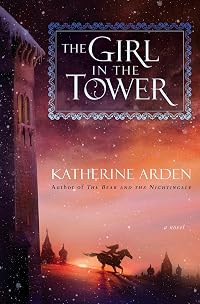
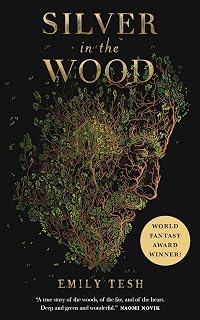
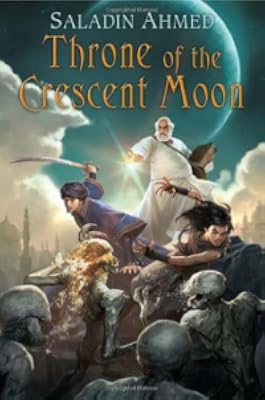
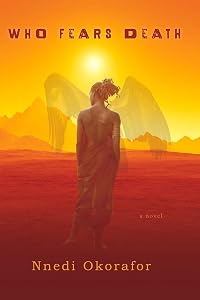
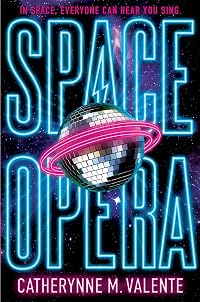
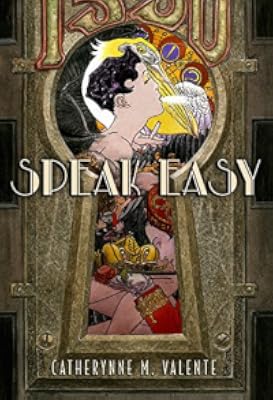
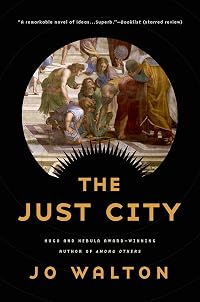
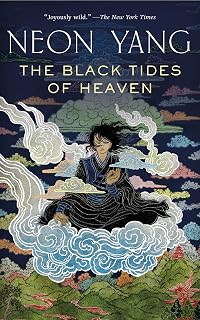
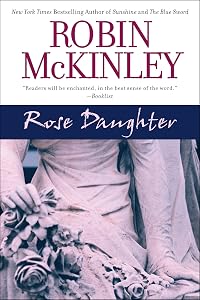
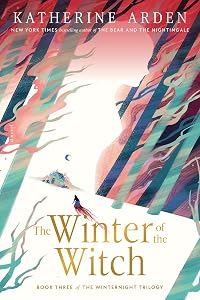
flying_monkeys Both read like novel-length fairy tales based on Russian folklore. Both embrace their cold, wintry setting to superb effect.
30
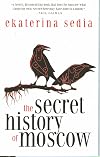
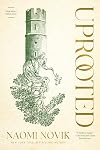
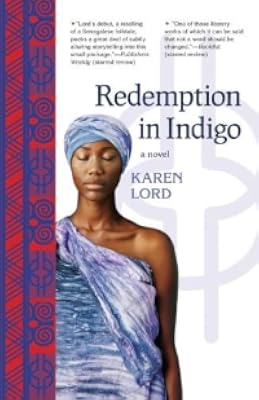
Euryale Another standalone fantasy novel influenced by Eastern European fairy tales, with a clever female protagonist
20
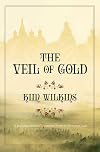
Lucy_Skywalker even though it's quite different :)
Member Reviews
There's a lot to say about this book, but it's left me feeling too drained to say it. Some thoughts:
I think there's merit in the cultural appropriation argument - not because non-Russians can't learn or write about Russians, but because I don't think anybody needs to take another culture's treasured folklore and turn it into BDSM fan fiction.
The abuse and the way Marya and the husbands treated each other was not fun to read about and didn't present a compelling romance. Two separate cases of instant, irrevocable, obsessive, violent "love" in one book are two too many.
In the author's desire to come off as familiar with the folklore she was borrowing, she made the mistake of assuming her audience is familiar with it, too. I kept having to show more put the book down to Google various mythological creatures and characters in order to understand what was going on.
You're telling me that these "devils" have existed since time began, but they're all aboard the Soviet express? Reorganizing themselves according to revolutionary doctrines and memorizing empty slogans? Why? Don't get me wrong, I love this part of history, and I was fascinated by little things like the domovye forming a komityet when all the families have to share a communal home. But why would it even reach Buyan? Why would they all speak in the correct lingo? That's weird.
Some of the chapters were beautifully written stories that left me feeling haunted, hurt, comforted, understood. And others made me want to put the book down and find something else to read. They didn't seem to link up. Marya is a different character with different motivations depending from chapter to chapter. I loved her in the beginning, in the long, thin, house in the long, thin street, but where did that girl go? Why should I be invested in the beastly woman and her beastly husbands who only want to satiate their bodies and hurt everyone else? I wasn't.
I loved Marya's three friends in Buyan, especially Lebedeva. I loved Kseniya. I'd rather read more chapters about them, in life or in death, than have to listen to Koschei talk about fucking for the 47th time.
And the ending? Oh, that ending! Why? How? What was the point of anything? I don't need a happy ending, but can we at least reach a satisfying conclusion?
Basically, the prose is gorgeous, some parts of the story are wonderful - but overall, this falls flat in too many places for me. And I think everyone should read some of the reviews by native Russians - this is their culture we're playing with. show less
I think there's merit in the cultural appropriation argument - not because non-Russians can't learn or write about Russians, but because I don't think anybody needs to take another culture's treasured folklore and turn it into BDSM fan fiction.
The abuse and the way Marya and the husbands treated each other was not fun to read about and didn't present a compelling romance. Two separate cases of instant, irrevocable, obsessive, violent "love" in one book are two too many.
In the author's desire to come off as familiar with the folklore she was borrowing, she made the mistake of assuming her audience is familiar with it, too. I kept having to show more put the book down to Google various mythological creatures and characters in order to understand what was going on.
You're telling me that these "devils" have existed since time began, but they're all aboard the Soviet express? Reorganizing themselves according to revolutionary doctrines and memorizing empty slogans? Why? Don't get me wrong, I love this part of history, and I was fascinated by little things like the domovye forming a komityet when all the families have to share a communal home. But why would it even reach Buyan? Why would they all speak in the correct lingo? That's weird.
Some of the chapters were beautifully written stories that left me feeling haunted, hurt, comforted, understood. And others made me want to put the book down and find something else to read. They didn't seem to link up. Marya is a different character with different motivations depending from chapter to chapter. I loved her in the beginning, in the long, thin, house in the long, thin street, but where did that girl go? Why should I be invested in the beastly woman and her beastly husbands who only want to satiate their bodies and hurt everyone else? I wasn't.
I loved Marya's three friends in Buyan, especially Lebedeva. I loved Kseniya. I'd rather read more chapters about them, in life or in death, than have to listen to Koschei talk about fucking for the 47th time.
And the ending? Oh, that ending! Why? How? What was the point of anything? I don't need a happy ending, but can we at least reach a satisfying conclusion?
Basically, the prose is gorgeous, some parts of the story are wonderful - but overall, this falls flat in too many places for me. And I think everyone should read some of the reviews by native Russians - this is their culture we're playing with. show less
Rating: 4.25* of five
The Book Report: The book description says:
“Koschei the Deathless is to Russian folklore what devils or wicked witches are to European culture: a menacing, evil figure; the villain of countless stories which have been passed on through story and text for generations. But Koschei has never before been seen through the eyes of Catherynne Valente, whose modernized and transformed take on the legend brings the action to modern times, spanning many of the great developments of Russian history in the twentieth century.
Deathless, however, is no dry, historical tome: it lights up like fire as the young Marya Morevna transforms from a clever child of the revolution, to Koschei’s beautiful bride, to his eventual undoing. show more Along the way there are Stalinist house elves, magical quests, secrecy and bureaucracy, and games of lust and power. All told, Deathless is a collision of magical history and actual history, of revolution and mythology, of love and death, which will bring Russian myth back to life in a stunning new incarnation.”
My Review: Remember how I said I didn't like books with majgickq and elves and stuff, and how very resistant I'd be so such stories?
Ha.
Magical to a fault, mystical and full of eyerollingly silly things like big black cars with chicken's feet instead of tires, and factories where soldiers are hand-loomed by the Tsar of Life's cast-off mistresses under the supervision of Baba Yaga.
And what can I say? Like every hard and fast rule, this rule went flooey in no time at all, thanks to some ecstatic carolings and appreciative lowings from some very talented reviewers. You terrible people know who you are. I don't love you for causing me to eat my words so publicly.
Russia is a strange, strange place to me. During some really vicious pogroms they tossed in the 19th century, a Polish Jewish ancestress of mine...great-grandmother...walked away from her shtetl, her family, and her identity, got to Bavaria and married an old Catholic man with no living children but who had a shop, and started again. He died, she sold up, she moved on to the USA via Paris, two kids and an American lover in tow. So thanks Russians for being murderously anti-Semitic or I wouldn't be alive today! But the culture that gave rise to the anti-Semitic stuff has always filled me with disgust and not a little horror at the christian hate and apostolic misery doled out on all the people. The myths of the peasantry seem so unforgiving and tricksy and just plain vicious. Then I contemplate the way the country was run (being polite, not well, not ever)...it makes sense...but it still always made me feel icky to read about it.
Then comes this melding of myth and materialsm, supernatural and Supreme Soviet...and I fell head first into love with the package.
Valente's use of language is exemplary. She never stints or holds back. Descriptions are abundant yet they are never obfuscatory; the idea is to create a 3-D experience in the reader's mind and by GUM (old Cold War humor, sorry) she does just exactly that. She never reaches beyond her grasp or talks down to her audience. If only a Russian word will do, there it is, and the nuances are not Spelled Out For You and neither must you resort to Google and Good Luck to find out what the hell this woman's on about.
This (revoltingly) young writer has the temerity and the confidence and the chops to pull off this melding of modernity and medievalism without breaking a (visible) sweat. That's one sweet achievement. This is a book that's as Russian as hot tea with sour cherry preserves and as American as serving it in a Starbucks cup.
And it's beautiful. And it's moving. And it's graceful and lovely and possessed of the most marvelous ability to switch from tango to waltz to jitterbug. Dance with her. This opportunity doesn't come every day. show less
The Book Report: The book description says:
“Koschei the Deathless is to Russian folklore what devils or wicked witches are to European culture: a menacing, evil figure; the villain of countless stories which have been passed on through story and text for generations. But Koschei has never before been seen through the eyes of Catherynne Valente, whose modernized and transformed take on the legend brings the action to modern times, spanning many of the great developments of Russian history in the twentieth century.
Deathless, however, is no dry, historical tome: it lights up like fire as the young Marya Morevna transforms from a clever child of the revolution, to Koschei’s beautiful bride, to his eventual undoing. show more Along the way there are Stalinist house elves, magical quests, secrecy and bureaucracy, and games of lust and power. All told, Deathless is a collision of magical history and actual history, of revolution and mythology, of love and death, which will bring Russian myth back to life in a stunning new incarnation.”
My Review: Remember how I said I didn't like books with majgickq and elves and stuff, and how very resistant I'd be so such stories?
Ha.
Magical to a fault, mystical and full of eyerollingly silly things like big black cars with chicken's feet instead of tires, and factories where soldiers are hand-loomed by the Tsar of Life's cast-off mistresses under the supervision of Baba Yaga.
And what can I say? Like every hard and fast rule, this rule went flooey in no time at all, thanks to some ecstatic carolings and appreciative lowings from some very talented reviewers. You terrible people know who you are. I don't love you for causing me to eat my words so publicly.
Russia is a strange, strange place to me. During some really vicious pogroms they tossed in the 19th century, a Polish Jewish ancestress of mine...great-grandmother...walked away from her shtetl, her family, and her identity, got to Bavaria and married an old Catholic man with no living children but who had a shop, and started again. He died, she sold up, she moved on to the USA via Paris, two kids and an American lover in tow. So thanks Russians for being murderously anti-Semitic or I wouldn't be alive today! But the culture that gave rise to the anti-Semitic stuff has always filled me with disgust and not a little horror at the christian hate and apostolic misery doled out on all the people. The myths of the peasantry seem so unforgiving and tricksy and just plain vicious. Then I contemplate the way the country was run (being polite, not well, not ever)...it makes sense...but it still always made me feel icky to read about it.
Then comes this melding of myth and materialsm, supernatural and Supreme Soviet...and I fell head first into love with the package.
Valente's use of language is exemplary. She never stints or holds back. Descriptions are abundant yet they are never obfuscatory; the idea is to create a 3-D experience in the reader's mind and by GUM (old Cold War humor, sorry) she does just exactly that. She never reaches beyond her grasp or talks down to her audience. If only a Russian word will do, there it is, and the nuances are not Spelled Out For You and neither must you resort to Google and Good Luck to find out what the hell this woman's on about.
This (revoltingly) young writer has the temerity and the confidence and the chops to pull off this melding of modernity and medievalism without breaking a (visible) sweat. That's one sweet achievement. This is a book that's as Russian as hot tea with sour cherry preserves and as American as serving it in a Starbucks cup.
And it's beautiful. And it's moving. And it's graceful and lovely and possessed of the most marvelous ability to switch from tango to waltz to jitterbug. Dance with her. This opportunity doesn't come every day. show less
I usually don't enjoy the stories of reworked or recombined fairytales all that much--often they feel somewhat contrived, like there's components shoved in just because they're supposed to be there. But here, though I did recognize quite a lot of characters and plots from various Russian fairytales (as luck would have it, turns out that I'd just read a bunch of 'em, though I didn't realize on starting this book that it was based on folklore)--the story was still very much its own thing, the characters seeming to belong wholly to the world created in this book, rather than just a bunch of people thrown into a series of stitched-together scenes. Honestly, though it's always wonderful to feel that recognition when one comes upon a familiar show more detail or idea, I think this book would be equally enjoyable to someone who wasn't well-versed in fairy tales. This story has a life of its own. show less
“You humans, you know, whoever built you sewed irony into your sinews." -Deathless
This book has the strangest power to pull you in completely and compel you to read on no matter how frustrated, angry, or sad you get. I like what a previous reviewer said about it being "terrible" because it does have this awesome power over the reader, it makes me think of a terrible wicked witch-laced with beauty and evil- or even Baba Yaga- with all of her commanding presence despite her lack of beauty-.
The most terrible, amazing thing about this book is the utter confusion Valente throws at us. She blends every line that we may have thought well defined, into a rather dark and depressing mixture. Life and death, domination and love, humans and show more devils, happiness and despair, all flow together to create an ambivalence that is truly terrible. I can't believe how I could possibly feel pity for some of these characters, yet after all of their evilness I still do.
Despite my ranting and raving I have to admit that I didn't actually like the writing very much, especially toward the beginning when it was slow and really seemed forced. However, other chapters where so elegantly written that I had trouble returning to my own world after turning the page- again the ambivalence rears its head.
So I don't know what I'm trying to say about this book... It was great and terrible and sad and beautiful and so damn strange that I can't really explain. show less
This book has the strangest power to pull you in completely and compel you to read on no matter how frustrated, angry, or sad you get. I like what a previous reviewer said about it being "terrible" because it does have this awesome power over the reader, it makes me think of a terrible wicked witch-laced with beauty and evil- or even Baba Yaga- with all of her commanding presence despite her lack of beauty-.
The most terrible, amazing thing about this book is the utter confusion Valente throws at us. She blends every line that we may have thought well defined, into a rather dark and depressing mixture. Life and death, domination and love, humans and show more devils, happiness and despair, all flow together to create an ambivalence that is truly terrible. I can't believe how I could possibly feel pity for some of these characters, yet after all of their evilness I still do.
Despite my ranting and raving I have to admit that I didn't actually like the writing very much, especially toward the beginning when it was slow and really seemed forced. However, other chapters where so elegantly written that I had trouble returning to my own world after turning the page- again the ambivalence rears its head.
So I don't know what I'm trying to say about this book... It was great and terrible and sad and beautiful and so damn strange that I can't really explain. show less
4.5 stars.
Mixed feelings, as is my usual reaction to Valente. Apparently I can't divorce this book from her other works that I've read, because I keep thinking, "oh, this is so much better! Tighter! Only purple in a few places instead of all throughout!" Which sounds meaner than I intend it. I did enjoy this quite a lot, but I would have enjoyed it even more if I hadn't been deeply irritated by previous books by her.
Setting that aside, I wish Marya's entire life and this entire story hadn't been defined by her relationships with men. YES, I get that the fairytale defines Marya's life by her relationships -- that's precisely why I wish THIS Marya could have turned left and made her own fate! Of course, that would totally undercut the show more fatalism of the typical bleak Russian folktale, but it's frustrating. We only see her being satisfied in doing her own thing *before* she finds out Koschei's been lying to her. After that, excepting her period of convenient magical amnesia, her only joy comes from what other people do. It's awful.
SIGH. Mixed feelings, right? I may need to read this one again. The language is lovely and not nearly as overblown as I feared; the structure of the multiple journeys is fitting and complicated without being too confusing; and the world building is aptly heartbreaking. Also, I didn't want to put it down. That's always a good sign. show less
Mixed feelings, as is my usual reaction to Valente. Apparently I can't divorce this book from her other works that I've read, because I keep thinking, "oh, this is so much better! Tighter! Only purple in a few places instead of all throughout!" Which sounds meaner than I intend it. I did enjoy this quite a lot, but I would have enjoyed it even more if I hadn't been deeply irritated by previous books by her.
Setting that aside, I wish Marya's entire life and this entire story hadn't been defined by her relationships with men. YES, I get that the fairytale defines Marya's life by her relationships -- that's precisely why I wish THIS Marya could have turned left and made her own fate! Of course, that would totally undercut the show more fatalism of the typical bleak Russian folktale, but it's frustrating. We only see her being satisfied in doing her own thing *before* she finds out Koschei's been lying to her. After that, excepting her period of convenient magical amnesia, her only joy comes from what other people do. It's awful.
SIGH. Mixed feelings, right? I may need to read this one again. The language is lovely and not nearly as overblown as I feared; the structure of the multiple journeys is fitting and complicated without being too confusing; and the world building is aptly heartbreaking. Also, I didn't want to put it down. That's always a good sign. show less
Deathless, by Catherynne M. Valente, is a terrible book.
WAIT.
Before you stop reading, allow me to explain. When contemporaries dubbed Ivan IV “the terrible,” they didn’t mean “awful” or “horrible” as we understand the word today (although one might argue that dropping puppies off the Kremlin walls as a child is pretty terrible in the modern sense of the term); rather, they meant “awesome” or “mighty”--beyond the comprehension or judgment of mere mortals such as you and I. It’s in this sense that I describe Deathless: To read it is to be struck by its terrible beauty.
The story begins simply enough: Our heroine, Marya Morevna, sits knitting at the window of her pre-revolutionary St. Petersburg home. But things show more immediately take a turn for the terrific (not to be confused with the terrible) when a bird hits the window and, upon dropping into the street, turns into a soldier and marries Marya’s oldest sister. In true folkloric style--and Deathless is a modern retelling of old Russian folklore--the process is repeated twice more, until all of Marya’s sisters are married off. Throughout the Revolution and its ensuing privations, Marya awaits her suitor, longing for the magic that she can see but that her classmates can’t or won’t. When Marya’s future husband finally arrives, Marya is unwittingly drawn into the eternal battle between her betrothed, Koschei the Deathless, or the Tsar of Life, and his brother Viy, the Tsar of Death, which takes place against Stalin’s purges and, eventually, the siege of Leningrad--Marya’s childhood home.
Deathless is jarring in its juxtaposition of Russian folklore and Revolutionary rhetoric: The domovoii, or Russian house elves, on whom Marya spies, reorganize themselves into a committee, as befits the times, and Baba Yaga, the witch of Russian fairy tales, travels by limousine and insists on being referred to as “chairman”; “comrade” won’t do, she explains, because it’s just another way the common people drag their superiors “down into the shit.” Readers who know their history won’t be surprised when the struggle between Koschei and Viy culminates with the siege of Leningrad, a battle that has consequences not just for its human and folkloric actors, but for the cycle of stories itself--stories repeated so often, Baba Yaga explains, that they have achieved immortality through sheer repetition, by wearing ruts into the very fabric of the world.
The real treat of Deathless isn’t the story or its characters--whom, despite, or perhaps because they are all so unlikeable, seem so real--but Valente’s prose. It’s through Valente’s writing that Deathless achieves its terrible power: A cave isn’t just a crevice in the earth, but resembles the space made between the pages of an overturned book; Marya’s attention isn’t merely focused, but is fixated like that of a cat, so that she neither sees nor hears anything but the object of her interest. And so on for over 300 pages! It’s these turns of phrase that are as unexpected and as beautiful as anything else in Deathless, and it’s Valente’s prose that makes it such a terrible book: Amazing, but sometimes difficult to behold.
Deathless isn’t for everyone. It poses as a book for young adults, but is sometimes too gory and suggestive for that audience. (I maintain that there is a big difference between the styles of Deathless and the ultra-violent Hunger Games.) Some readers will dislike the characters; others will be put off by the folktale-like structure of the story, which sometimes seems to meander (and often repeats itself, as folktales do). But those readers willing to brave something terrible will find in Deathless an amazing book.
Originally posted at: http://geekadelphia.com/2011/09/28/book-review-deathless-by-catherynne-m-valente... show less
WAIT.
Before you stop reading, allow me to explain. When contemporaries dubbed Ivan IV “the terrible,” they didn’t mean “awful” or “horrible” as we understand the word today (although one might argue that dropping puppies off the Kremlin walls as a child is pretty terrible in the modern sense of the term); rather, they meant “awesome” or “mighty”--beyond the comprehension or judgment of mere mortals such as you and I. It’s in this sense that I describe Deathless: To read it is to be struck by its terrible beauty.
The story begins simply enough: Our heroine, Marya Morevna, sits knitting at the window of her pre-revolutionary St. Petersburg home. But things show more immediately take a turn for the terrific (not to be confused with the terrible) when a bird hits the window and, upon dropping into the street, turns into a soldier and marries Marya’s oldest sister. In true folkloric style--and Deathless is a modern retelling of old Russian folklore--the process is repeated twice more, until all of Marya’s sisters are married off. Throughout the Revolution and its ensuing privations, Marya awaits her suitor, longing for the magic that she can see but that her classmates can’t or won’t. When Marya’s future husband finally arrives, Marya is unwittingly drawn into the eternal battle between her betrothed, Koschei the Deathless, or the Tsar of Life, and his brother Viy, the Tsar of Death, which takes place against Stalin’s purges and, eventually, the siege of Leningrad--Marya’s childhood home.
Deathless is jarring in its juxtaposition of Russian folklore and Revolutionary rhetoric: The domovoii, or Russian house elves, on whom Marya spies, reorganize themselves into a committee, as befits the times, and Baba Yaga, the witch of Russian fairy tales, travels by limousine and insists on being referred to as “chairman”; “comrade” won’t do, she explains, because it’s just another way the common people drag their superiors “down into the shit.” Readers who know their history won’t be surprised when the struggle between Koschei and Viy culminates with the siege of Leningrad, a battle that has consequences not just for its human and folkloric actors, but for the cycle of stories itself--stories repeated so often, Baba Yaga explains, that they have achieved immortality through sheer repetition, by wearing ruts into the very fabric of the world.
The real treat of Deathless isn’t the story or its characters--whom, despite, or perhaps because they are all so unlikeable, seem so real--but Valente’s prose. It’s through Valente’s writing that Deathless achieves its terrible power: A cave isn’t just a crevice in the earth, but resembles the space made between the pages of an overturned book; Marya’s attention isn’t merely focused, but is fixated like that of a cat, so that she neither sees nor hears anything but the object of her interest. And so on for over 300 pages! It’s these turns of phrase that are as unexpected and as beautiful as anything else in Deathless, and it’s Valente’s prose that makes it such a terrible book: Amazing, but sometimes difficult to behold.
Deathless isn’t for everyone. It poses as a book for young adults, but is sometimes too gory and suggestive for that audience. (I maintain that there is a big difference between the styles of Deathless and the ultra-violent Hunger Games.) Some readers will dislike the characters; others will be put off by the folktale-like structure of the story, which sometimes seems to meander (and often repeats itself, as folktales do). But those readers willing to brave something terrible will find in Deathless an amazing book.
Originally posted at: http://geekadelphia.com/2011/09/28/book-review-deathless-by-catherynne-m-valente... show less
Re-Read 7/13//18:
Valente is always worth re-reading IMHO. And other than making a few grand sweeping comments about birds and husbands, I have nothing to add to this marvelous piece of literature. The land of the dead versus the land of life in Russia. Mythology versus societal upheaval. Love, love, love, and none of it innocent.
Just like Russia. ;)
Original Review:
Breathtaking, quintessential Valente, making what might be a fairy tale into a gorgeously Russian love story between one unlucky girl stuck perpetually in the space of an hour who never got to marry the birds and the God of Life.
Of course, it never ends well, because she's conscripted into his eternal battle with Viy, Death, and regrets it, while simultaneously mastering Life show more in the middle of Leningrad during WWII, which ought to be considered one of the worst moments in human history.
Do we love life? Is he capricious and cruel and uncompromising and sweet? Is he locked in the basement and forced to listen to his wife make love to a mortal man? After that, can he still be true?
I cannot do this justice. Our heroine cannot fully commit to Life, and finally betrays him.
For all the truly magical qualities of this novel, the beautiful writing, the amazing mini-tales, I'm left in a state of profound sadness while being amazed at the sheer beauty of the tale.
It's raw, right down to the core, and horrific, sexy, full of the seeds of hope and longing and everything that makes the world so complicated and scary and wonderful all at once.
I sit in awe. show less
Valente is always worth re-reading IMHO. And other than making a few grand sweeping comments about birds and husbands, I have nothing to add to this marvelous piece of literature. The land of the dead versus the land of life in Russia. Mythology versus societal upheaval. Love, love, love, and none of it innocent.
Just like Russia. ;)
Original Review:
Breathtaking, quintessential Valente, making what might be a fairy tale into a gorgeously Russian love story between one unlucky girl stuck perpetually in the space of an hour who never got to marry the birds and the God of Life.
Of course, it never ends well, because she's conscripted into his eternal battle with Viy, Death, and regrets it, while simultaneously mastering Life show more in the middle of Leningrad during WWII, which ought to be considered one of the worst moments in human history.
Do we love life? Is he capricious and cruel and uncompromising and sweet? Is he locked in the basement and forced to listen to his wife make love to a mortal man? After that, can he still be true?
I cannot do this justice. Our heroine cannot fully commit to Life, and finally betrays him.
For all the truly magical qualities of this novel, the beautiful writing, the amazing mini-tales, I'm left in a state of profound sadness while being amazed at the sheer beauty of the tale.
It's raw, right down to the core, and horrific, sexy, full of the seeds of hope and longing and everything that makes the world so complicated and scary and wonderful all at once.
I sit in awe. show less
Members
- Recently Added By
Published Reviews
ThingScore 63
Deathless performs the highest function of a problematic novel. It reveals more about the writer's technique and strengths than a polished, impregnable work might.
added by Jannes
Another intricate fantasy from Valente, based on what feels like the entire panoply of Russian folktales. ...scenes, people, myths and history intertwine. It's dazzling but intensely self-involved.
added by melonbrawl
Lists

Favorite Fairy Tale Retellings
210 works; 61 members

Best Fantasy Novels
821 works; 361 members

Top Five Books of 2020
982 works; 350 members

A High School Trip to Russia
25 works; 3 members

Bookriot's 100 Must-Read Sci-Fi Fantasy Novels By Female Authors
100 works; 9 members

Myth (Reuse and Retelling)
188 works; 24 members

Books Read in 2022
5,226 works; 112 members

Shelf 101
60 works; 1 member
16 Books About Gods and Mythology
16 works; 1 member

Europe
205 works; 6 members

KayStJ's to-read list
1,616 works; 11 members
Favorite Fairy Tales
269 works; 104 members
Author Information

173+ Works 22,632 Members
Some Editions
Awards and Honors
Awards
Distinctions
Work Relationships
Has the adaptation
Common Knowledge
- Canonical title
- Deathless
- Original publication date
- 2011-03-29
- People/Characters
- Marya Morevna; Koschei the Deathless; Baba Yaga
- Important places
- St. Petersburg, Russia; Russia
- Important events
- Russian Revolution (1917); World War II (1939 | 1945); Siege of Leningrad (1941-09-08 | 1944-01-27)
- Epigraph
- From the year nineteen forty
I look out on everything as if from a high tower
As if bidding farewell
To that from which I long ago parted.
As if crossing myself
And descending beneath dark arches.
—Anna Ak... (show all)hmatova - Dedication
- For Dmitri,
who spirited me away from a dark place - First words
- Woodsmoke hung heavy and golden on the shorn wheat, the earth bristling like an old, bald woman.
- Quotations
- In a city by the sea which was once called St. Petersburg, then Petrograd, then Leningrad, then, much later, St. Petersburg again, there stood a long, thin house on a long, thin street. By a long, thin window, a child in a pa... (show all)le blue dress and pale green slippers waited for a bird to marry her.
“That's how you get deathless, volchitsa. Walk the same tale over and over, until you wear a groove in the world, until even if you vanished, the tale would keep turning, keep playing, like a phonograph, and you'd have to g... (show all)et up again, even with a bullet through your eye, to play your part and say your lines.”
The rapt pupil will be forgiven for assuming the Tsar of Death to be wicked and the Tsar of Life to be virtuous. Let the truth be told: There is no virtue anywhere. Life is sly and unscrupulous, a blackguard, wolfish, severe.... (show all) In service to itself, it will commit any offence. So, too, is Death possessed of infinite strategies and a gaunt nature- but also mercy, also grace and tenderness. In his own country, Death can be kind.
Morality is more dependent on the state of one's stomach than of one's nation.
Death is not like that. [...] You will live as you live anywhere. With difficulty, and grief. Yes, you are dead. And I and my family and everyone, always, forever. All dead like stones. But what does it matter? You still have... (show all) to go to work in the morning. You still have to live. - Last words
- (Click to show. Warning: May contain spoilers.)She did not waver in her path, toward a place underground, down, down into the merciful dark, in a basement where a man with black curls flecked with starry silver would say her name like a confession; and in the place where their hands would touch, Marya Morevna could already see diamonds and black enamel swelling huge and gravid, yolk seeping from their skin like light.
- Publisher's editor
- Gorinsky, Liz
- Blurbers
- Doctorow, Cory; Grossman, Lev; Ellis, Warren
- Original language
- English
- Canonical DDC/MDS
- 813.6
- Canonical LCC
- PS3622.A4258
Classifications
Statistics
- Members
- 1,950
- Popularity
- 10,941
- Reviews
- 82
- Rating
- (3.95)
- Languages
- 5 — Czech, English, French, Hungarian, Polish
- Media
- Paper, Audiobook, Ebook
- ISBNs
- 17
- ASINs
- 8