
On This Page
Description
Jacob Marlowe has lost the will to live. For two hundred years he has wandered the world, enslaved by his lunatic appetites and tormented by the memory of his first and most monstrous crime. Now, the last of his kind, he contemplates suicide -- until a violent murder and an extraordinary meeting plunge him straight back into the desperate pursuit of life -- and love.Tags
Recommendations
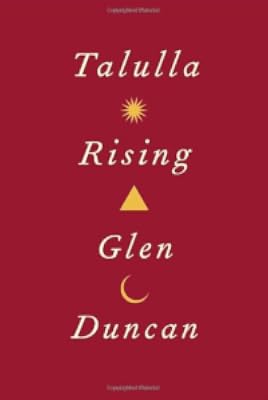
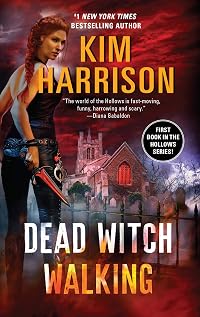
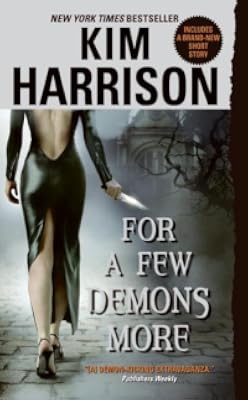
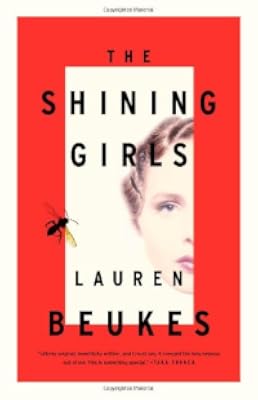
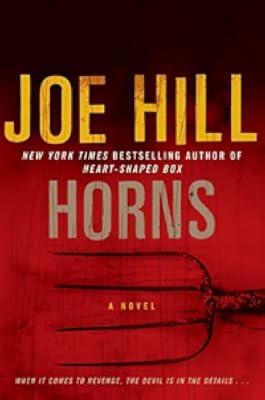

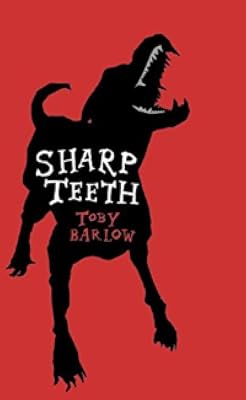
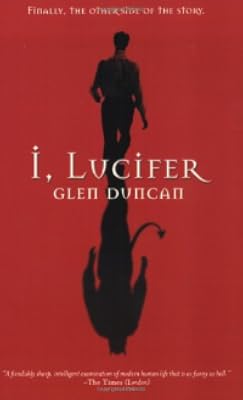
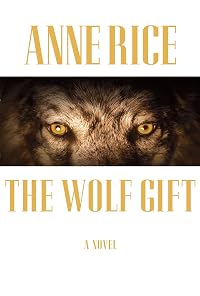
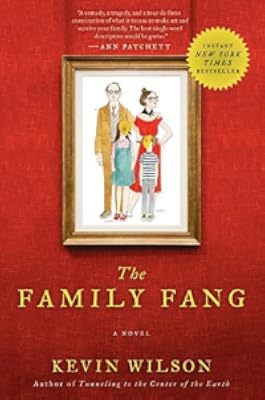


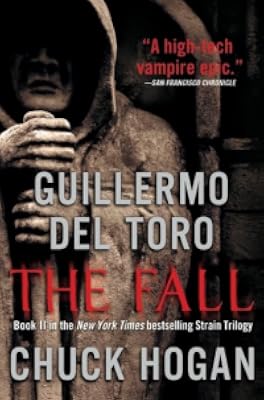
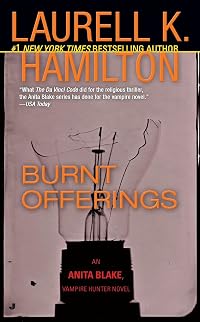
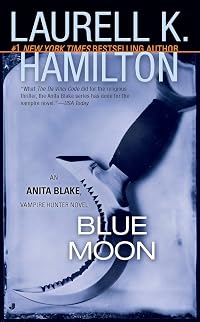
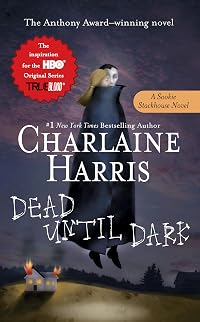
Member Recommendations

MyriadBooks For wolves with teeth, for mated pairs. The Last Werewolf is gritter and more explicit than the dreamy, lyrical The Silver Wolf but the writing and the horror of both of them is top notch.
generalkala An adult novel also about werewolves, in a similar literary style.
anonymous user Not a werewolf but an equally intriguing main protagonist
Member Reviews
A wonderfully engaging and entertaining read, especially if one is not bothered by a lot of sex and violence. I read The Last Werewolf on a flight from LA to Hong Kong, and it just ate up the hours. The beginning was a bit slow, but it quickly picked up and turned into a manic ride through a contemporary world in which werewolves and vampires exist and are not quite the romantic heroes Stephanie Meyer would have us believe. TLW is beautifully written with lush, voluptuous language even when describing the down and dirty doings of our beastly protagonist. Very enjoyable but not for the faint of heart. 3.75 stars
I really disliked this. There were some gems in the purple prose, but for the most part it was dense and overblown. There were all sorts of tropes that were employed, and the narrator talked about how they were tropes, but that was it. There was zero attempt on the author's part to engage with or subvert them.
Also, those last pages that were from the woman's POV--christ, is that what he thinks women think about??
I do not, under any circumstances, recommend this. If you want a good literary horror werewolf book (that covers some of the same themes, even), read Mongrels by Stephen Graham Jones. It was a hundred times better than this drivel.
Also, those last pages that were from the woman's POV--christ, is that what he thinks women think about??
I do not, under any circumstances, recommend this. If you want a good literary horror werewolf book (that covers some of the same themes, even), read Mongrels by Stephen Graham Jones. It was a hundred times better than this drivel.
1. This book really really wants you to know that werewolves Fuck. Werewolves are just big fuckmurder machines. I am capitalizing this because I don't know how else to convey the intensity with which this book needs you to know that werewolves, well, They Fuck. The book jacket/blurbs use the word "sexy" to describe this book quite a lot. It is not sexy, it merely involves a lot of sex. Particularly because much of the sex in the first two-thirds of the book is specifically with women the narrator dislikes, or is, at best, totally personally uninterested in.
2. I'm rating this book two stars instead of one for a few reasons, but it was a close thing. The first is that the lowest you can rate something on Goodreads, in my understanding, is show more one star, and this book is definitely better than the other bad longish werewolf urban fantasy novel that I've read, Martin Millar's Lonely Werewolf Girl, which was dramatically more sexist and also written much more poorly than The Last Werewolf. This doesn't mean that The Last Werewolf is either not sexist nor sometimes not-very-well-written, however. At one point, early on, the narrator specifies that he is not, in fact, a misogynist, and then gives the example of the fact that he goes down on the escort he hires. This is, of course, a joke, but there's something telling about it. Especially the way Duncan talks about the female characters' bodies (here the Horny Werewolf narrator seems mostly like Duncan really wanted a way to talk about lithe tits and soft anuses and call it literary*), or the fact that the first sentence in a woman's POV is "No one raped me," which hits exactly that King-Rat-style trying to be aware of rape culture and structural misogyny and just--missing it.
3. The thing about this book is that it wobbles so close to the exact kind of bad monster (especially bad werewolf) fiction that I adore. This is probably part of why I did finish the entire novel, and there were parts that made me laugh out loud (in genuine enjoyment). There's moments that, like, in their ridiculousness but also excellence, reminded me of, like, Teen Wolf (the TV show, not the homophobic eighties movie with Marty Mcfly or whatever) or The Vampire Lestat. It has a similar willingness to just go for the full over-the-top narrative. Like, there's werewolves, and vampires, and they do hate each other a lot for some sort of instinctual species reason, and there's an elaborate werewolf hunting organization that requires a lot of bullshit spy tactics to evade, and possibly my favorite character of the entire book, Ellis, a werewolf hunter with waist length blond hair and a sort of philosophical hippy aura, a sort of classically-mad-king Luna Lovegood. Like, that's excellent. There's a bit where the main character is just sort of carrying around a sad French former male model who keeps trying to kill him very incompetently because his girlfriend just dumped him (he is, notably, on quite a lot of cocaine for most of this). The ex-model made a silver-tipped javelin to kill the werewolf with. It has his name and his ex-girlfriend's on it in "angelic script." I have no idea what that is. At one point the werewolf and the model are just sitting in the woods, both having injured each other quite a bit, doing cocaine (the model), smoking cigarettes (the werewolf), and eating cashews (the model again).
4. The ending was, genuinely, very good. The switching perspectives was, apart from my complaint above, largely done well, and the sort of bait-and-switch move from the title to the end was clever, and I only suspected it was going to happen a few chapters before it did. It made me want to read the sequel, a little bit--I really like Tallula. But I don't think I'm going to.
___
*I want to be clear, I am not automatically opposed to literature involving significant discussion of tits and anuses, though I feel like I might be done with the word "lithe." I think we could all use a "lithe" moratorium for a while. show less
2. I'm rating this book two stars instead of one for a few reasons, but it was a close thing. The first is that the lowest you can rate something on Goodreads, in my understanding, is show more one star, and this book is definitely better than the other bad longish werewolf urban fantasy novel that I've read, Martin Millar's Lonely Werewolf Girl, which was dramatically more sexist and also written much more poorly than The Last Werewolf. This doesn't mean that The Last Werewolf is either not sexist nor sometimes not-very-well-written, however. At one point, early on, the narrator specifies that he is not, in fact, a misogynist, and then gives the example of the fact that he goes down on the escort he hires. This is, of course, a joke, but there's something telling about it. Especially the way Duncan talks about the female characters' bodies (here the Horny Werewolf narrator seems mostly like Duncan really wanted a way to talk about lithe tits and soft anuses and call it literary*), or the fact that the first sentence in a woman's POV is "No one raped me," which hits exactly that King-Rat-style trying to be aware of rape culture and structural misogyny and just--missing it.
3. The thing about this book is that it wobbles so close to the exact kind of bad monster (especially bad werewolf) fiction that I adore. This is probably part of why I did finish the entire novel, and there were parts that made me laugh out loud (in genuine enjoyment). There's moments that, like, in their ridiculousness but also excellence, reminded me of, like, Teen Wolf (the TV show, not the homophobic eighties movie with Marty Mcfly or whatever) or The Vampire Lestat. It has a similar willingness to just go for the full over-the-top narrative. Like, there's werewolves, and vampires, and they do hate each other a lot for some sort of instinctual species reason, and there's an elaborate werewolf hunting organization that requires a lot of bullshit spy tactics to evade, and possibly my favorite character of the entire book, Ellis, a werewolf hunter with waist length blond hair and a sort of philosophical hippy aura, a sort of classically-mad-king Luna Lovegood. Like, that's excellent. There's a bit where the main character is just sort of carrying around a sad French former male model who keeps trying to kill him very incompetently because his girlfriend just dumped him (he is, notably, on quite a lot of cocaine for most of this). The ex-model made a silver-tipped javelin to kill the werewolf with. It has his name and his ex-girlfriend's on it in "angelic script." I have no idea what that is. At one point the werewolf and the model are just sitting in the woods, both having injured each other quite a bit, doing cocaine (the model), smoking cigarettes (the werewolf), and eating cashews (the model again).
4. The ending was, genuinely, very good. The switching perspectives was, apart from my complaint above, largely done well, and the sort of bait-and-switch move from the title to the end was clever, and I only suspected it was going to happen a few chapters before it did. It made me want to read the sequel, a little bit--I really like Tallula. But I don't think I'm going to.
___
*I want to be clear, I am not automatically opposed to literature involving significant discussion of tits and anuses, though I feel like I might be done with the word "lithe." I think we could all use a "lithe" moratorium for a while. show less
The Last Werewolf by Glen Duncan is a roller coaster ride of violence, romance, action and adventure. While outlining the protocols, manners and habits of the werewolf, Duncan delivers a story of a 200 year old werewolf, weary of it all and ready to die, until he is given a reason to fight for his survival.
Relying on many of the tried and true myths of werewolf-vampire hostility, wooden stakes, silver bullets, and the lure of the full moon, the author also adds an erotic earthiness that some may find offensive but I felt helped to pull the reader into Jake’s lonely, persecuted life. A killer that isn’t always comfortable in the role that nature has given him, Jake journals his life in a wry and cynical manner and adds touches of show more philosophical musings on the nature of his existence.
This is a page turner that will have the reader laughing at one moment, being grossed out the next, and at times actually feeling empathy for this strange, angst-ridden creature. Raw, visceral, and erotic, this will not be a book for everyone, but I thoroughly enjoyed it’s original, adult take on the werewolf legend. show less
Relying on many of the tried and true myths of werewolf-vampire hostility, wooden stakes, silver bullets, and the lure of the full moon, the author also adds an erotic earthiness that some may find offensive but I felt helped to pull the reader into Jake’s lonely, persecuted life. A killer that isn’t always comfortable in the role that nature has given him, Jake journals his life in a wry and cynical manner and adds touches of show more philosophical musings on the nature of his existence.
This is a page turner that will have the reader laughing at one moment, being grossed out the next, and at times actually feeling empathy for this strange, angst-ridden creature. Raw, visceral, and erotic, this will not be a book for everyone, but I thoroughly enjoyed it’s original, adult take on the werewolf legend. show less
“Jake Marlowe is a monster…”
Jake is also very wealthy, smokes like a fiend, has a sex addiction and is a philanthropist.
Once a month, he becomes a werewolf and since he’s been doing this for over 200 years, he is showing signs of depression and weariness.
Over the years, werewolves have been systematically tracked down and exterminated and Jake suddenly finds himself, the last of his kind. He has become a “trophy”, a tool between factions. After someone close to him is brutally murdered, Jake realizes he wants to survive, but the odds are quickly dwindling.
This is a terrific update to the werewolf legend: loaded with wry humor, sex and violence galore, all presented in a smart fast-paced narrative. This might not be for all show more readers, but if you’re willing to take a stroll on the dark side, this should fit the bill. show less
Jake is also very wealthy, smokes like a fiend, has a sex addiction and is a philanthropist.
Once a month, he becomes a werewolf and since he’s been doing this for over 200 years, he is showing signs of depression and weariness.
Over the years, werewolves have been systematically tracked down and exterminated and Jake suddenly finds himself, the last of his kind. He has become a “trophy”, a tool between factions. After someone close to him is brutally murdered, Jake realizes he wants to survive, but the odds are quickly dwindling.
This is a terrific update to the werewolf legend: loaded with wry humor, sex and violence galore, all presented in a smart fast-paced narrative. This might not be for all show more readers, but if you’re willing to take a stroll on the dark side, this should fit the bill. show less
Note: There are no spoilers in this review.
Usually I pick up a book involving the paranormal when I want a light break. I was astonished to discover that this book is more like a China Mieville story than a fluff piece. (Mieville is a brilliant English fantasy fiction writer.) It is quite literary and the prose evinces considerable intelligence and skill. I would in fact conjecture that the author wanted to tackle the subject of weltschmerz but figured you would need a long-lived person to do the feeling justice: thus, a werewolf. (A werewolf is a much more appealing trope for this purpose than a vampire, since a vampire never goes back to being "human" and feeling what he or she used to feel, whereas a werewolf reverts to human form on show more all days except those when the moon is full).
Jacob (“Jake”) Marlowe has been alive 201 years. He is believed to be the last werewolf in existence. Once a month, when the moon is full, he is overtaken by a hunger for human flesh, the sating of which cannot be avoided, and morover arouses a frisson of sexual fulfillment. But he tries to do as little harm as possible by the act:
"Two nights ago I'd eaten a forty-three-year-old hedge fund specialist. I've been in a phase of taking the ones no one wants."
An organization called WOCOP (World Organisation for the Control of Occult Phenomena) is dedicated to the total elimination of all paranormal beings, and WOCOP’s head hunter (double entendre there) - a vigilante Van Helsing type, is after Jake with a vengeance. In addition, the vampires have come to believe that a wolf bite can confer immunity to the sun, and thus they are also after Jake. Jake and his human protector Harley can barely keep up with all the threats to Jake. In fact, Harley himself is struggling with Jake, because Jake is tired of the utter sameness and repetitiveness of life, and just wants to give in and die.
The characters in this book pose so many fascinating questions: What role do monsters play in the collective imagination? Do we mainly talk about vampires and werewolves as romantic characters now because we no longer have need of the monstrous in the imagination? (I.e., we provide sufficient examples of our own monstrousness in real life, what with genocides and terrorist acts, etc.). How far have humans actually evolved from the beasts from which we descended? In light of the beastliness of human behavior, what could the meaning of life possibly be, or is there no meaning? If there is no meaning, is there no God? Jake and Harley continuously ponder these questions, and there are some very intriguing ideas bandied about on their resolution.
One area of inquiry – the beast in the man – is answered in part by the emphasis on sex in Jake’s life. This book has a lot of sex, and much of it is what the characters themselves might define as “beast-like.” I should digress a bit to admit that one of my favorite things to do after reading a book full of outré sex scenes is to plague my husband with questions such as, “Why are male authors always talking about x, y, and z? Did YOU ever do that?” (Depending on his mood, his response is either to laugh uproariously or to pull out the batteries from his hearing aids.) If you too like to play this game, this book will give you plenty of material. The sex may be raunchy to some, but the language is glorious, viz.:
"…six carnal hours had passed. … Now we lay on the bed like starfish. It’s one of the Platonic forms, lying with someone on a hotel bed after transcendent sex.”
"[after meeting someone new]: “These, I knew, were the high-octane minutes, days, weeks, when anything she does can pluck the phallic string.”
It’s not just sex that inspires the author to flights of felicitous prose. He talks about the first time he sees another paranormal:
"I remembered the days when seeing someone move through the air like that would have been a thrilling shock, the days before we’d all seen it countless times in the movies. Modernity’s mimetic inversion: You see the real and are struck by how much it looks like a tediously seamless special effect.”
Ennui itself may be tiresome, but the observations it elicits by the characters are far from it:
"There’s a reason humans peg-out around eighty: prose fatigue. It looks like organ failure or cancer or stroke but it’s really just the inability to carry on clambering through the assault course of mundane cause and effect. If we ask Sheila then we can’t ask Ron. If I have the kippers now then it’s quiche for tea. Four score years is about all the ifs and thens you can take. Dementia’s the sane realization you just can’t be doing with all that anymore.”
"Life, like the boring drunk at the office party, keeps seeking you out, leaning on you, killing you with pointless yarns and laughing bad-breathed in your face at its own unfunny jokes.”
Oh, and listen to the beautifully crafted commentary of Jake's driving trip across Iowa, Nebraska, Wyoming, and Utah:
"Those unritzy states of seared openness, giant arenas for the colossal geometry of light and weather. Here the main performance is still planetary, a lumbering introspective working-out of masses and pressures yielding huge accidents of beauty: thunderheads like floating anvils; a sudden blizzard. Geological time, it dawns on you, is still going on.”
Trenchant and witty cultural references pepper the story. Talking about his preference for younger victims on which to feed when the moon is full, Jake observes: “Nothing like the blood and meat of the young. You can taste the audacity of hope.” …”I was in Europe when Nietzsche and Darwin between them got rid of God, and in the United States when Wall Street reduced the American Dream to a broken suitcase and a worn-out shoe.” Clever references (even direct quotes!) and parallels to Nabokov's Lolita fill the second half of the book. And the pièce de résistance, the absolute best line in the book is a mutation of one of the best lines in Jane Eyre that I won’t spoil for you. But it alone makes the price of the book worthwhile!
Discussion: This is an erudite, thoughtful book with a riveting plot in addition to a contemplative bent. While interrogating moral decency, the author savages it with a complicated choreography of biological compulsion and media-informed indifference. He excoriates people who live in “the opaque plastic bubble of television and booze,” while nature’s magnificence goes unnoted:
"We lay near each other but not touching, silent recipients of Pan’s globally ignored dawn suite, a soft exhalation through turf and leaf, the whirr of small wings, the introspective clambering of beetles, the shiver of water. The world…is oozing, teeming, crawling with miracles.”
He writes about being stuck with what you are, “the lousy furniture you can’t change” – in this case, having a lycanthropic heart.” Is there a hell then? Or is it a fiction we inherit to maintain control over behavior? Or is hell something else; is it life that has gone on too long? Could it simply be life without love?
There are some truly inspirational uses of language in this book, as when, in Wales, Jacob travels through “the vowel-starved hills”; when he, musing on the absence of God, sees the night sky “like an abandoned warehouse of stars”; when he characterizes a scene as like “an eighties album cover”; or when he characterizes himself – half monster, half man, as “a cocktail of contraries.” Even while the story may be bestial and sometimes brutal, the often luminous language is worth celebrating.
Evaluation: Any drawbacks of this book were more than offset for me by the glorious use of language by the author, and his exposing of how much of the beast all of us have within us. The characters are remarkably likeable, in spite of their various eccentricities and predilections. A truly impressive piece of literature. show less
Usually I pick up a book involving the paranormal when I want a light break. I was astonished to discover that this book is more like a China Mieville story than a fluff piece. (Mieville is a brilliant English fantasy fiction writer.) It is quite literary and the prose evinces considerable intelligence and skill. I would in fact conjecture that the author wanted to tackle the subject of weltschmerz but figured you would need a long-lived person to do the feeling justice: thus, a werewolf. (A werewolf is a much more appealing trope for this purpose than a vampire, since a vampire never goes back to being "human" and feeling what he or she used to feel, whereas a werewolf reverts to human form on show more all days except those when the moon is full).
Jacob (“Jake”) Marlowe has been alive 201 years. He is believed to be the last werewolf in existence. Once a month, when the moon is full, he is overtaken by a hunger for human flesh, the sating of which cannot be avoided, and morover arouses a frisson of sexual fulfillment. But he tries to do as little harm as possible by the act:
"Two nights ago I'd eaten a forty-three-year-old hedge fund specialist. I've been in a phase of taking the ones no one wants."
An organization called WOCOP (World Organisation for the Control of Occult Phenomena) is dedicated to the total elimination of all paranormal beings, and WOCOP’s head hunter (double entendre there) - a vigilante Van Helsing type, is after Jake with a vengeance. In addition, the vampires have come to believe that a wolf bite can confer immunity to the sun, and thus they are also after Jake. Jake and his human protector Harley can barely keep up with all the threats to Jake. In fact, Harley himself is struggling with Jake, because Jake is tired of the utter sameness and repetitiveness of life, and just wants to give in and die.
The characters in this book pose so many fascinating questions: What role do monsters play in the collective imagination? Do we mainly talk about vampires and werewolves as romantic characters now because we no longer have need of the monstrous in the imagination? (I.e., we provide sufficient examples of our own monstrousness in real life, what with genocides and terrorist acts, etc.). How far have humans actually evolved from the beasts from which we descended? In light of the beastliness of human behavior, what could the meaning of life possibly be, or is there no meaning? If there is no meaning, is there no God? Jake and Harley continuously ponder these questions, and there are some very intriguing ideas bandied about on their resolution.
One area of inquiry – the beast in the man – is answered in part by the emphasis on sex in Jake’s life. This book has a lot of sex, and much of it is what the characters themselves might define as “beast-like.” I should digress a bit to admit that one of my favorite things to do after reading a book full of outré sex scenes is to plague my husband with questions such as, “Why are male authors always talking about x, y, and z? Did YOU ever do that?” (Depending on his mood, his response is either to laugh uproariously or to pull out the batteries from his hearing aids.) If you too like to play this game, this book will give you plenty of material. The sex may be raunchy to some, but the language is glorious, viz.:
"…six carnal hours had passed. … Now we lay on the bed like starfish. It’s one of the Platonic forms, lying with someone on a hotel bed after transcendent sex.”
"[after meeting someone new]: “These, I knew, were the high-octane minutes, days, weeks, when anything she does can pluck the phallic string.”
It’s not just sex that inspires the author to flights of felicitous prose. He talks about the first time he sees another paranormal:
"I remembered the days when seeing someone move through the air like that would have been a thrilling shock, the days before we’d all seen it countless times in the movies. Modernity’s mimetic inversion: You see the real and are struck by how much it looks like a tediously seamless special effect.”
Ennui itself may be tiresome, but the observations it elicits by the characters are far from it:
"There’s a reason humans peg-out around eighty: prose fatigue. It looks like organ failure or cancer or stroke but it’s really just the inability to carry on clambering through the assault course of mundane cause and effect. If we ask Sheila then we can’t ask Ron. If I have the kippers now then it’s quiche for tea. Four score years is about all the ifs and thens you can take. Dementia’s the sane realization you just can’t be doing with all that anymore.”
"Life, like the boring drunk at the office party, keeps seeking you out, leaning on you, killing you with pointless yarns and laughing bad-breathed in your face at its own unfunny jokes.”
Oh, and listen to the beautifully crafted commentary of Jake's driving trip across Iowa, Nebraska, Wyoming, and Utah:
"Those unritzy states of seared openness, giant arenas for the colossal geometry of light and weather. Here the main performance is still planetary, a lumbering introspective working-out of masses and pressures yielding huge accidents of beauty: thunderheads like floating anvils; a sudden blizzard. Geological time, it dawns on you, is still going on.”
Trenchant and witty cultural references pepper the story. Talking about his preference for younger victims on which to feed when the moon is full, Jake observes: “Nothing like the blood and meat of the young. You can taste the audacity of hope.” …”I was in Europe when Nietzsche and Darwin between them got rid of God, and in the United States when Wall Street reduced the American Dream to a broken suitcase and a worn-out shoe.” Clever references (even direct quotes!) and parallels to Nabokov's Lolita fill the second half of the book. And the pièce de résistance, the absolute best line in the book is a mutation of one of the best lines in Jane Eyre that I won’t spoil for you. But it alone makes the price of the book worthwhile!
Discussion: This is an erudite, thoughtful book with a riveting plot in addition to a contemplative bent. While interrogating moral decency, the author savages it with a complicated choreography of biological compulsion and media-informed indifference. He excoriates people who live in “the opaque plastic bubble of television and booze,” while nature’s magnificence goes unnoted:
"We lay near each other but not touching, silent recipients of Pan’s globally ignored dawn suite, a soft exhalation through turf and leaf, the whirr of small wings, the introspective clambering of beetles, the shiver of water. The world…is oozing, teeming, crawling with miracles.”
He writes about being stuck with what you are, “the lousy furniture you can’t change” – in this case, having a lycanthropic heart.” Is there a hell then? Or is it a fiction we inherit to maintain control over behavior? Or is hell something else; is it life that has gone on too long? Could it simply be life without love?
There are some truly inspirational uses of language in this book, as when, in Wales, Jacob travels through “the vowel-starved hills”; when he, musing on the absence of God, sees the night sky “like an abandoned warehouse of stars”; when he characterizes a scene as like “an eighties album cover”; or when he characterizes himself – half monster, half man, as “a cocktail of contraries.” Even while the story may be bestial and sometimes brutal, the often luminous language is worth celebrating.
Evaluation: Any drawbacks of this book were more than offset for me by the glorious use of language by the author, and his exposing of how much of the beast all of us have within us. The characters are remarkably likeable, in spite of their various eccentricities and predilections. A truly impressive piece of literature. show less
I'm just not into the standard horror tropes of werewolves, zombies, vampires, etc. Let's just start there so there is no confusion. This is promoted as some sort of reinvention or at least a revivification of the werewolf sub-genre. It is a nifty little> supernatural thriller dressed up to be something more. It's not that much more. If they'd been vampires, or aliens, or the last of whatever the story would be the same.
We've seen plenty of lead characters like Jake that are bored with life, given up on love, ready for the final curtain, that somehow find a reason to live (or it finds them). They just don't happen to also turn into a monster once a month. Jake is a well drawn and engaging character nevertheless. The final curtain is show more telegraphed a little early, IMHO, and the only real question is what are going to be the details of Talullah's, no doubt exciting, rescue/escape.
The book is eminently literary while being very readable and I admit that I pushed hard towards the end to see what happens, but I also have to admit a little boredom with the whole WOCOP paramilitary/black ops thing after awhile.
Well we pretty much know what the next volume, [b:Talulla Rising|12981174|Talulla Rising (The Last Werewolf, #2)|Glen Duncan|https://d.gr-assets.com/books/1339696875s/12981174.jpg|18140283], is going to be about, which we didn't have when I started this volume. A problem with series books. show less
We've seen plenty of lead characters like Jake that are bored with life, given up on love, ready for the final curtain, that somehow find a reason to live (or it finds them). They just don't happen to also turn into a monster once a month. Jake is a well drawn and engaging character nevertheless. The final curtain is show more telegraphed a little early, IMHO, and the only real question is what are going to be the details of Talullah's, no doubt exciting, rescue/escape.
The book is eminently literary while being very readable and I admit that I pushed hard towards the end to see what happens, but I also have to admit a little boredom with the whole WOCOP paramilitary/black ops thing after awhile.
Well we pretty much know what the next volume, [b:Talulla Rising|12981174|Talulla Rising (The Last Werewolf, #2)|Glen Duncan|https://d.gr-assets.com/books/1339696875s/12981174.jpg|18140283], is going to be about, which we didn't have when I started this volume. A problem with series books. show less
Members
- Recently Added By
Lists

Best Horror Books
281 works; 85 members

Top Five Books of 2013
1,562 works; 715 members

Favorite Werewolf Novels
62 works; 30 members

Best Urban Fantasy
632 works; 78 members

Recommend the 20 best books you've read in the last five years
2,168 works; 602 members

ALA The Reading List
490 works; 28 members

Best books read in 2011
200 works; 51 members

Best Horror Mega-List
342 works; 6 members

London Urban Fantasy
33 works; 6 members

BingoDOG - Books With Mythical Creatures
57 works; 16 members
Shirley Jackson Award Winners and Shortlist 2007-2020
77 works; 6 members
Reedsydiscovery 100 Best Horror Books of All Time
100 works; 5 members

Contemporary Fantasy to Read
63 works; 5 members

GoodReads Horror Choice Awards
160 works; 4 members
Horror: Creature Features
70 works; 9 members

Kate & Cheyanne's Horror Extravaganza
144 works; 6 members
Best Vampire & Werewolf Fiction
221 works; 146 members
Talk Discussions
Past Discussions
June 2013 Selection: Last Werewolf by Glen Duncan in Night of the Living Book Club (June 2013)
Author Information

12 Works 4,543 Members
Some Editions
Awards and Honors
Awards
Distinctions
Series

Belongs to Publisher Series
Gallimard, Folio SF (496)
Common Knowledge
- Canonical title
- The Last Werewolf
- Original title
- The Last Werewolf
- Original publication date
- 2011
- Dedication
- For Pete and Eva
- First words
- "It's official," Harley said. "They killed the Berliner two nights ago. You're the last."
- Last words
- (Click to show. Warning: May contain spoilers.)Until my baby's born. Then there'll be two of us.
- Blurbers
- Bohjalian, Chris; Cave, Nick; Smith, Scott
- Canonical DDC/MDS
- 823.92
- Canonical LCC
- PR6104.U535
Classifications
Statistics
- Members
- 1,669
- Popularity
- 13,372
- Reviews
- 124
- Rating
- (3.48)
- Languages
- 11 — Danish, Dutch, English, Finnish, French, German, Hungarian, Italian, Portuguese, Spanish, Turkish
- Media
- Paper, Audiobook, Ebook
- ISBNs
- 34
- ASINs
- 8