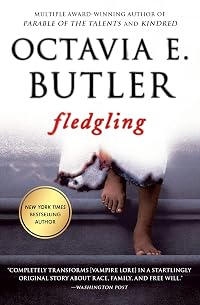
Fledgling
by Octavia E. Butler
On This Page
Description
Fledgling, the late Octavia E. Butler's final novel, is the story of an apparently young, amnesiac girl whose alarmingly un-human needs and abilities lead her to a startling conclusion: she is in fact a genetically modified, 53-year-old vampire. Forced to discover what she can about her stolen former life, she must at the same time learn who wanted--and still wants--to destroy her and those she cares for, and how she can save herself. Fledgling is a captivating novel that tests the limits of show more "otherness" and questions what it means to be truly human.. show less
Tags
Recommendations
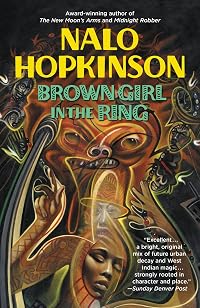
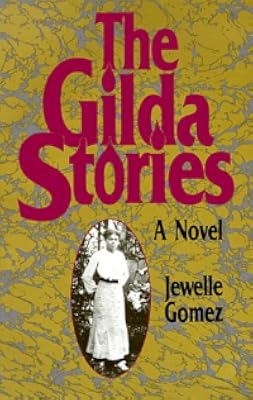
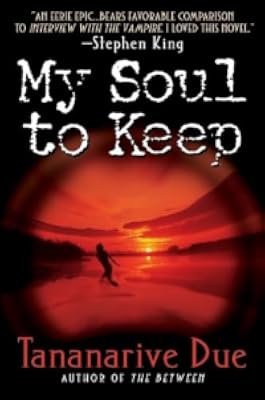
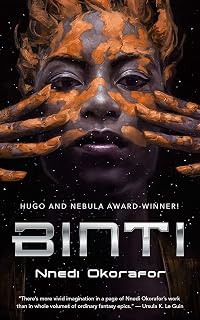


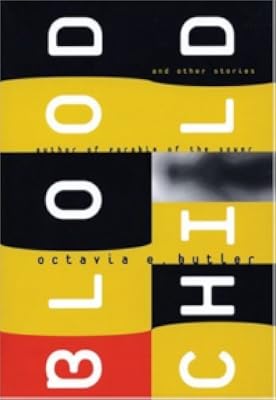
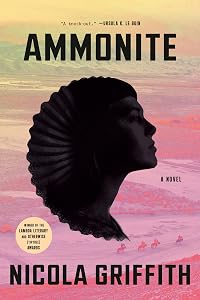
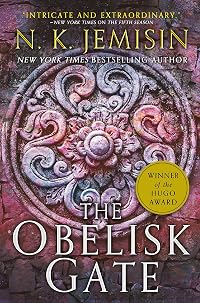
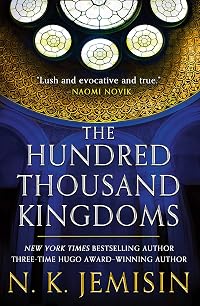
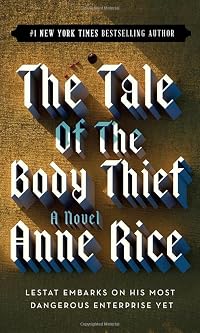
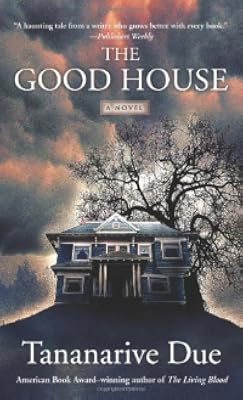
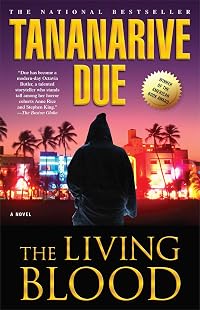
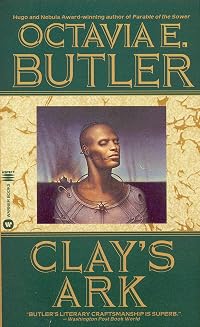

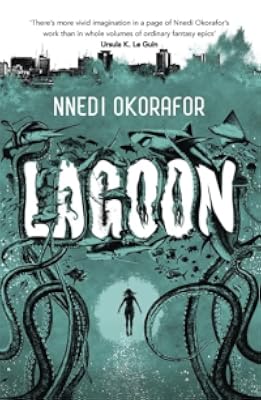
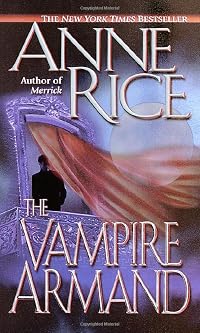
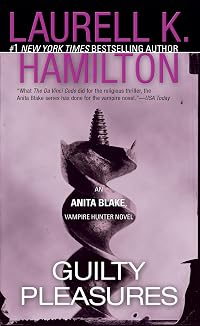
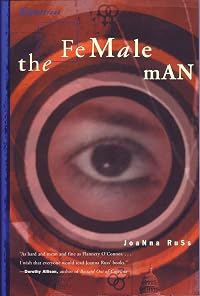
Member Recommendations
Member Reviews
The thing about an effective seduction is that you don't know it's happening to you until it's over. The seducer uses your assumptions, your hopes and your empathy to manipulate your emotions and slowly, step by step, get you to accept the world as they want you to see it. When you look back, you wonder how you could have moved so far away from your own values and how you could have gotten so used to something that would once have shocked you that you not only take it for granted but see it as something positive.
'Fledgling' is a novel-length seduction. From the first page, it nudged me to a view of the world where I accepted slavery as a lifestyle choice, I could see addiction as benign, I could see predators as protectors, I could show more accept men and women having sex with a vampire who is fifty-four but has the body of a ten-year-old as not just normal but almost wholesome and where I saw the good guys as the vampires who were conducting multiple-generation, cross-species eugenics experiments to make vampires harder to kill.
It's a mark of how effective the seduction was that, although I had recurring moments of feeling uncomfortable, I let them slide past because I was invested in the survival of the young vampire and was wrapped up in her trials and tribulations. Most of me was going - Wow, this is a great re-shaping of the vampire myth. Part of me was going, This council hearing scene is a little slow but I like the power dynamics only a very small voice at the back of my mind was saying over and over This is soooo wrong.
Now the book is done and I've had time to think beyond - hey, that was a pretty good vampire story - I'm left with two questions: how was the seduction done and why was the seduction done?
The first step in the seduction was to tell the story from the vampires point of view and to tell it at a point where she's badly hurt, vulnerable and has no memory of who or what she is. She doesn't even know her name. My default assumption was that, as the narrator, she's the hero, the one I should root for. Her being badly injured wins my sympathy and soon classifies her as a victim of violence. Then I see that her home has been burned down, her people are dead. she's still injured and she seems to be a child. Poor thing I think Will anyone help her? and the first hook is in.
Later, as it becomes clear that the vampire is a vampire she still doesn't slide over into the monster category. For one thing, she doesn't see herself that way. Whatever she is she's just her and that can't be bad, right? For another thing, even though she's lost her memory, she's retained her ethics and she's nice and benign and tries hard to not hurt anyone - Except, the small voice at the back of my head says, she still feeds on people without permission and rips out the throat of anyone who opposes her- yeah, except that.
Later still, Shuri is made to look good by comparison to other vampires who are worse and keeps my sympathy because she's alone and under attack and is still trying to do the right thing.
Shuri explains the world to me and I accept her explanations because, well, she's Shuri and I like her and she's sincere and honest so what's not to like? Which is how seduction and abuse survives.
Ok, so I was seduced to be on Shuri's side. Why did Octavia Butler do that? I think she was sending a message
Throughout the story, Octavia Butler constantly offered me small moments where there was an opportunity for my discomfort to triumph over my attraction, not because she wanted me to snap out of it and see through the glamour but because she wanted me to think about it afterwards and say: It's not so easy, is it? To keep your eyes open and stay true to your values when there's charisma in play and your empathy button is being pressed. This is how the wrong becomes normal and resistance becomes not just acquiescence but acceptance.
So, although I was uncomfortable with a very large man in his twenties having sex with a vampire with the body of a ten-year-old, I still let myself be convinced that this was OK because Shuri thought it was OK. Just like I accepted that it was not just OK but good that Shuri was building a family of symbionts, humans she thought of as hers, humans who couldn't survive without her, humans who wanted nothing more than to please her because Shuri was well-intentioned and was only following her nature. I saw family and symbionts because that's what Shuri saw. Why didn't I see people owned and enslaved by someone who addicted them? Why didn't I see hosts being used by a parasite that does its best to keep the host alive?
I think Octavia Butler was doing more than asking me to see how I easily I was seduced and making me wonder how many seductions I fall prey to in real-life. I think she wanted me to consider that simple answers aren't to be trusted.
Shuri is ethical, careful, even loving and yet she binds people to her, thinks of them as hers, as if she owns them. She treats them with care that is given to a well-loved pet. She grants them freedom to do as they wish. She even gives them a choice about becoming addicted to her. It's clear that Shuri's ethics are sincerely held but deeply self-serving. The question that Octavia Butler kept pushing me to ask was, Does the self-serving nature of Shuri's ethics make them invalid or does it make them authentic?
Damned if I know.
I want to say that freedom shouldn't need to be granted or earned. That She free-servitude is a seduction That informed consent doesn't legitimise slavery. That Shuri is monstrous and must be stopped.
But, If I say that, then I'm back on the side of the people who've been trying to kill Shuri and her family since the book started. I'm saying I want to exterminate her because she's an abomination whose existence cannot be allowed? How did my libertarian ethics lead me to that genocidal position?
So, I was seduced. I was shown disturbing things that came to seem normal. Then, when I had time to think, I had all my libertarian ethics subverted and was left wondering if I'd been seduced for a second time.
Perhaps I'm reading to much into a simple tale of every-day vampire life but this kind of thinking was a major source of my enjoyment of the book.
There's also a good adventure in there and Shuri is very easy to like and the vampire world-building is first-rate so it's all very entertaining. There was some loss of momentum in the council meetings towards the end but the argumentation in them kept my attention. The epilogue felt a little tacked on although it did make me hungry for another book, even though I know there isn't one.
This was my first Octavia Butler book and I know it's not always listed as one of her best but I liked it and I'll be back for more. show less
The Ina had always been here alongside humanity. They have longer written records than us and they can pass for us - except that they cannot survive under the sun and they need human blood to survive. Yes, they are the vampires of all the mythologies of the world - except as usual things are not exactly as myths will make you believe them to be.
We do not know this when the novel starts - we are in the head of a creature who can reason but has no memories of what happened. She is badly hurt but seems to be recovering. No memories come back but some feelings and knowledge occasionally filters in and allows our narrator to find some security for awhile. She is the only survivor of her household - everyone else died in the fires that show more destroyed her home - and when she finally finds someone else who knows her and give her back her own name, Shori Matthews, they get destroyed as well. And she is off, trying to find what happened to everyone and why and hot to survive and keep her people safe.
Shori is different - she is black in a race consisting of pale white people. Her family had been playing with genetics after they realized that the answer to the biggest problem for the Ina is melanin - while Shori still burns under the sun, she can stay awake during the day and she can even survive in the light for awhile if needed (although she blisters a bit). And it becomes clear before long that this is the reason for the violence that engulfed the Ina - they may be a different species but they seem to have learned racism from their human companions.
The novel can be disturbing in places - Shori is 53 but he body is that of a 10 years old girl and that makes all of the sexual scenes very disturbing - none of them is really explicit but they are in there. It is an exploration of the difference - you need to remember what she is (even when we did not know what the Ina are, we knew she was different and that she can control people we her bites). It is a coming of age story for an amnesiac child (even if she is old enough in human years, she is still an Ina child - even if that means something else for them) and it is an exploration of a race which looks like us but is not human. The latter part of the novel deals with the politics of the Ina and that's where you start realizing just how different they are - from keeping symbionts (humans tied to Ina) to their understanding of personal freedoms and choices.
This is the last novel published by Butler and it may have become the beginning of another series - the story itself has a good ending in the book but it could have easily been continued. She does not shy from bringing in various vampire lore and myths - sometimes confirming them in her story, sometimes ridiculing them. The Ina are not Dracula and yet they come from the same region and some of their stories match - every myth has a kernel of truth.
Using the vampires to explore gender roles and racism is not something you will see every day. In less capable hands, it could have become a joke. Butler pulls it off - it is not a perfect novel but it is a very good one. And just like Lauren in the Earthseed series, Shori is a flawed young woman who is trying to keep the people she feels responsible for safe. And while doing that, she makes mistakes, people die but ultimately she follows her own path, learning about the world and herself in the process. show less
We do not know this when the novel starts - we are in the head of a creature who can reason but has no memories of what happened. She is badly hurt but seems to be recovering. No memories come back but some feelings and knowledge occasionally filters in and allows our narrator to find some security for awhile. She is the only survivor of her household - everyone else died in the fires that show more destroyed her home - and when she finally finds someone else who knows her and give her back her own name, Shori Matthews, they get destroyed as well. And she is off, trying to find what happened to everyone and why and hot to survive and keep her people safe.
Shori is different - she is black in a race consisting of pale white people. Her family had been playing with genetics after they realized that the answer to the biggest problem for the Ina is melanin - while Shori still burns under the sun, she can stay awake during the day and she can even survive in the light for awhile if needed (although she blisters a bit). And it becomes clear before long that this is the reason for the violence that engulfed the Ina - they may be a different species but they seem to have learned racism from their human companions.
The novel can be disturbing in places - Shori is 53 but he body is that of a 10 years old girl and that makes all of the sexual scenes very disturbing - none of them is really explicit but they are in there. It is an exploration of the difference - you need to remember what she is (even when we did not know what the Ina are, we knew she was different and that she can control people we her bites). It is a coming of age story for an amnesiac child (even if she is old enough in human years, she is still an Ina child - even if that means something else for them) and it is an exploration of a race which looks like us but is not human. The latter part of the novel deals with the politics of the Ina and that's where you start realizing just how different they are - from keeping symbionts (humans tied to Ina) to their understanding of personal freedoms and choices.
This is the last novel published by Butler and it may have become the beginning of another series - the story itself has a good ending in the book but it could have easily been continued. She does not shy from bringing in various vampire lore and myths - sometimes confirming them in her story, sometimes ridiculing them. The Ina are not Dracula and yet they come from the same region and some of their stories match - every myth has a kernel of truth.
Using the vampires to explore gender roles and racism is not something you will see every day. In less capable hands, it could have become a joke. Butler pulls it off - it is not a perfect novel but it is a very good one. And just like Lauren in the Earthseed series, Shori is a flawed young woman who is trying to keep the people she feels responsible for safe. And while doing that, she makes mistakes, people die but ultimately she follows her own path, learning about the world and herself in the process. show less
Butler reimagines vampires as a long-lived humanoid species that has evolved alongside Homo sapiens, with the two species in an allegedly symbiotic relationship but one that has echoes of slavery apologism ("they were happy and better off under the benevolent care...") if the reader looks beneath the surface of the story. The human "symbionts" double their lifespan, quickly heal from any health issues, receive immense pleasure from being fed on, and never have to worry about their material needs, but they also must go wherever their vampire masters go, follow their masters' orders, and will die if separated from them.
Butler's vampire heroine, a black girl with the appearance of a 10 year old child, is thus analogous to a kindly slave show more master. If that isn't enough to make the reader uncomfortable, if it escapes the notice, she also has sexual relationships with her symbionts in her 10-year-old-appearing body; while it's true that she's actually been alive for 53 years, this is still a pre-pubescent in the vampire species, as she's physically unable to reproduce yet. Yet everyone, vampire and human, sees nothing wrong with these relationships.
So we have a slave owner sexually exploiting their slaves with all the apologism for that that once in fact existed, essentially, but the historical associations that conjures in America are flipped, such that the underage black girl is on top of this power structure. For that to happen she'd no doubt have to be a vampire.
However there exist among the vampires families of white supremacists who are angered that some of their species have been using genetic engineering to blend black human DNA with vampire DNA to create black vampires who are not as vulnerable to sunlight. It's a bit confused at times whether they are violently bigoted against humans in general or black humans in particular, both I suppose, but in any event, they mad. Vampire slavery they feel should not be open to individuals who appear black due to spliced-in human DNA.
It sets up an interesting and fun ride particularly if the reader has a soft spot for vampire mythologies, as I confess, I do. It gives us an atypical vampire heroine and shows the seductive power that slavery apologism once wielded, as it's easy to see the symbionts as truly in fact better off while you're immersed in the story, though there are hints otherwise... show less
Butler's vampire heroine, a black girl with the appearance of a 10 year old child, is thus analogous to a kindly slave show more master. If that isn't enough to make the reader uncomfortable, if it escapes the notice, she also has sexual relationships with her symbionts in her 10-year-old-appearing body; while it's true that she's actually been alive for 53 years, this is still a pre-pubescent in the vampire species, as she's physically unable to reproduce yet. Yet everyone, vampire and human, sees nothing wrong with these relationships.
So we have a slave owner sexually exploiting their slaves with all the apologism for that that once in fact existed, essentially, but the historical associations that conjures in America are flipped, such that the underage black girl is on top of this power structure. For that to happen she'd no doubt have to be a vampire.
However there exist among the vampires families of white supremacists who are angered that some of their species have been using genetic engineering to blend black human DNA with vampire DNA to create black vampires who are not as vulnerable to sunlight. It's a bit confused at times whether they are violently bigoted against humans in general or black humans in particular, both I suppose, but in any event, they mad. Vampire slavery they feel should not be open to individuals who appear black due to spliced-in human DNA.
It sets up an interesting and fun ride particularly if the reader has a soft spot for vampire mythologies, as I confess, I do. It gives us an atypical vampire heroine and shows the seductive power that slavery apologism once wielded, as it's easy to see the symbionts as truly in fact better off while you're immersed in the story, though there are hints otherwise... show less
Octavia Butler reimagines what it is to be a vampire, with a far more sensible, caring, symbiotic relationship than the average bite ‘em and leave ‘em plotline. While the frank sexuality is uncomfortable, I was fascinated by Shori’s need to set up a group what is essentially a group marriage in order to survive. I agree with the criticisms that her need to enslave her people is deeply disturbing, but I appreciate that Butler is exploring these themes with an eye to making her audience re-examine and question the parameters of deeply unequal relationships.
Octavia Butler’s Fledgling opens with a young black woman waking up in alone in a cave with no memory and an insatiable craving for fresh meat and blood. After feeding on freshly killed meat, she finds a human man and takes his blood. The experience is physically and emotionally satisfying for them both, although they do not understand what is happening. Eventually, the woman learns that her name is Shori and that she is one of the Ina, a species that appears to be the source of our myths about vampires. Shori also learns that her genetically engineered dark skin that allows her to walk about in daylight has made her a target. Her enemies have killed her family, and they’re coming after her.
Readers who are familiar with Butler’s show more work will no doubt be aware of her interest in exploring racial issues through fantasy and science fiction. In Fledgling, Shori’s dark skin is quite possibly the reason she is being pursued. Is she being persecuted for her race? However, the more interesting question comes up when we consider the Ina/human (read: master/slave) relationship. This is what the best science fiction and fantasy can do. It forces us to question our assumptions and look carefully at the very roots of our morality.
As a copyeditor, I do feel compelled to add one complaint. I’m afraid that Fledgling desperately needed one more pass from a line editor. There were enough dropped words and typos in the hardcover edition I read that I suspect a crucial proofing step was eliminated. Butler’s publisher, Seven Stories Press, did her a disservice with this book. I hope that these problems were fixed in later editions.
My complete review is at my blog. show less
Readers who are familiar with Butler’s show more work will no doubt be aware of her interest in exploring racial issues through fantasy and science fiction. In Fledgling, Shori’s dark skin is quite possibly the reason she is being pursued. Is she being persecuted for her race? However, the more interesting question comes up when we consider the Ina/human (read: master/slave) relationship. This is what the best science fiction and fantasy can do. It forces us to question our assumptions and look carefully at the very roots of our morality.
As a copyeditor, I do feel compelled to add one complaint. I’m afraid that Fledgling desperately needed one more pass from a line editor. There were enough dropped words and typos in the hardcover edition I read that I suspect a crucial proofing step was eliminated. Butler’s publisher, Seven Stories Press, did her a disservice with this book. I hope that these problems were fixed in later editions.
My complete review is at my blog. show less
A thoughtful, well-written take on the vampire mythos. While I admit I haven't read a whole lot of horror, what struck me most about "Fledgling" was the book's physicality. French literary theorists love to talk about "writing the body," but this might as well be this novel's mission statement: the book starts with a searing description of pain and hunger and more or less takes its cue from there. The book's vampires -- and its human characters, too, honestly -- are driven by a need for blood, food, touch, and sex. As Butler writes them, these needs can either beautifully, poetically sensuous or shockingly direct. Lots of readers and moviegoers see vampires as seductive creatures, but the author really brings that subtext forward here. show more This one's recommended to anyone who's interested in how the human form's portrayed in print.
Many reviewers have also mentioned the book's racial angle, and while we're told that the main character of "Fledgling" is one of the world's first black vampires, I don't really think it's the book's focus. Butler's vampires, with a few exceptions, too far removed from human society to worry about that all that much. Shori's race might actually fit more easily into a discussion about genetic engineering. The author's interests seem to be elsewhere: Butler seems fascinated with the vampire society she's created here: they seem to live in groups that are half clans and half communes, which makes the book's West Coast setting all the more appropriate. They latch on to humans because they need to feed, but Butler always makes clear that the humans they adopt -- called "symbionts" -- get a great deal out of this potentially parasitic relationship, from a drug-like high to something like a family. "Fledgling" might be called a meditation on unconventional social structures or the various advantages and dangers of symbiosis. Butler's second focus might be said to be loss and her main character's courageous effort to overcome it. Shori, after all, is half-dead and an orphan when the book begins. A complete amnesiac, she can't even remember what it is she's lost. Over the course of the book, the reader witnesses her attempting both to rebuild her self and to rejoin the community she was once part of, which, even though Shori often comes off as an impossibly perfect and resilient heroine, is, in its own way, rather inspiring. Recommended. show less
Many reviewers have also mentioned the book's racial angle, and while we're told that the main character of "Fledgling" is one of the world's first black vampires, I don't really think it's the book's focus. Butler's vampires, with a few exceptions, too far removed from human society to worry about that all that much. Shori's race might actually fit more easily into a discussion about genetic engineering. The author's interests seem to be elsewhere: Butler seems fascinated with the vampire society she's created here: they seem to live in groups that are half clans and half communes, which makes the book's West Coast setting all the more appropriate. They latch on to humans because they need to feed, but Butler always makes clear that the humans they adopt -- called "symbionts" -- get a great deal out of this potentially parasitic relationship, from a drug-like high to something like a family. "Fledgling" might be called a meditation on unconventional social structures or the various advantages and dangers of symbiosis. Butler's second focus might be said to be loss and her main character's courageous effort to overcome it. Shori, after all, is half-dead and an orphan when the book begins. A complete amnesiac, she can't even remember what it is she's lost. Over the course of the book, the reader witnesses her attempting both to rebuild her self and to rejoin the community she was once part of, which, even though Shori often comes off as an impossibly perfect and resilient heroine, is, in its own way, rather inspiring. Recommended. show less
In Butler's final novel, we meet what appears to be an 11-year-old girl, injured and amnesiac in a cave. After regaining her strength she is picked up by a man in a passing car, Wright, and she finds an uncontrollable desire to feed on his blood. Surprisingly, Wright finds this pleasurable and they form a bond.
Over the course of the novel, we learn that the girl is named Shori, and that she is actually a 53-year-old member of the Ina species. The basis of human vampire myths, the Ina feed on human blood, can live for centuries, and are sensitive to sunlight, although other aspects of the vampire legends prove to not be rooted in Ina reality. Ina form bonds with multiple humans called symbionts, feeding on their blood and living in show more polyamorous relationships. Ina has been genetically modified by her family to be able to survive in the sunlight by making her skin darker. Now someone has massacred her family and are coming for her next.
This novel is an interesting take on vampire lore, building an entire society of beings who live alongside humans. Shori's amnesia allows us to learn about the Ina as she does, although this does lead to a number of lengthy infodumps that tend drag down the narrative. The fact that Shori appears to be a child and has sexual relationships with multiple characters is very unsettling and deliberately provocative on Butler's part. This is not a book that anyone for whom child sexual abuse would be too upsetting to read about. show less
Over the course of the novel, we learn that the girl is named Shori, and that she is actually a 53-year-old member of the Ina species. The basis of human vampire myths, the Ina feed on human blood, can live for centuries, and are sensitive to sunlight, although other aspects of the vampire legends prove to not be rooted in Ina reality. Ina form bonds with multiple humans called symbionts, feeding on their blood and living in show more polyamorous relationships. Ina has been genetically modified by her family to be able to survive in the sunlight by making her skin darker. Now someone has massacred her family and are coming for her next.
This novel is an interesting take on vampire lore, building an entire society of beings who live alongside humans. Shori's amnesia allows us to learn about the Ina as she does, although this does lead to a number of lengthy infodumps that tend drag down the narrative. The fact that Shori appears to be a child and has sexual relationships with multiple characters is very unsettling and deliberately provocative on Butler's part. This is not a book that anyone for whom child sexual abuse would be too upsetting to read about. show less
Members
- Recently Added By
Published Reviews
ThingScore 100
Even for a dyed-in-the-wool science-fiction fan like myself, the opening chapter of "Fledgling" asks a bit much of the reader. Shori, the narrator, awakens in darkness, hungry and in pain without any memory of who or what she is. But within a few pages, we begin to figure things out it along with her. And within a few chapters, we're utterly seduced by the forward motion of the narrative. show more Bitten, is how the narrator herself might put it. show less
added by PhoenixFalls
How many of our happy relationships involve a degree of dominance or dependence that we can't acknowledge? This is Butler's typically insidious method: to create an alternative social world that seems, at first, alien and then to force us to consider the nature of our own lives with a new, anxious eye. It's a pain in the neck, but impossible to resist.
added by PhoenixFalls
A finely crafted character study, a parable about race and an exciting family saga. Exquisitely moving fiction.
added by PhoenixFalls
Lists

Best Feminist Science Fiction
188 works; 35 members

Diversity in Fantasy and Science Fiction
219 works; 33 members

Best Feminist Literature
188 works; 26 members

75 Books Challenge Halloween Read "Official" Selections
71 works; 7 members

Pacific Northwest
2 works; 2 members

Recommended Speculative Fiction by Women and People of Color
298 works; 45 members

Diverse Horror
262 works; 6 members

Best Horror Mega-List
342 works; 6 members

Female Horror Author
35 works; 2 members

Black Authors
384 works; 32 members
LGBTQ+ Speculative Fiction
820 works; 51 members

Books Read in 2020
17 works; 1 member

Reedsydiscovery 100 Best Horror Books of All Time
100 works; 5 members

75 Books Challenge 2015 Halloween Read long list
45 works; 4 members

Kate & Cheyanne's Horror Extravaganza
144 works; 6 members

Books We Couldn't Put Down
443 works; 197 members

2024
34 works; 1 member
Best Vampire & Werewolf Fiction
221 works; 146 members
Books We Love to Reread
688 works; 296 members

Horror: Creature Features
70 works; 9 members

Books Read in 2012
816 works; 31 members

Female Protagonist
1,056 works; 57 members

Vampires: A Biteography
85 works; 5 members
BingoDOG - Books With Mythical Creatures
57 works; 15 members

KayStJ's to-read list
1,616 works; 11 members

The Zora Canon
98 works; 4 members

Biggest Disappointments
606 works; 164 members

Zora Canon
100 works; 6 members
Author Information

58+ Works 56,094 Members
Science-fiction writer and novelist Octavia Estelle Butler was born in Pasadena, California, on June 22, 1947. She earned as Associate of Arts degree from Pasadena City College in 1968 and later attended California State University and the University of California. Her first novel, Patternmaster, was the first in a series about a society run by a show more group of telepaths who are mentally linked to one another. She explored the topics of race, poverty, politics, religion, and human nature in her works. She won a Hugo Award in 1984 for her short story Speech Sounds and a Hugo Award and Nebula Award in 1985 for her novella Bloodchild. She received a MacArthur Grant from the John D. and Catherine T. MacArthur Foundation. The award pays $295,000 over a five-year period to creative people who push the boundaries of their fields. She died in Lake Forest Park, Washington on February 24, 2006 at the age of 58. (Bowker Author Biography) show less
Some Editions
Awards and Honors
Awards
Distinctions
Work Relationships
Is contained in
Has as a commentary on the text
Has as a student's study guide
Common Knowledge
- Canonical title
- Fledgling
- Original title
- Fledgling
- Original publication date
- 2005-10-05
- People/Characters
- Shori Matthews; Wright Hamlin; Theodora Harden; Joel Harrison; Preston Gordon; Russell Silk (show all 7); Katharine Dahlman
- Important places
- Pasadena, California, USA; Seattle, Washington, USA; California, USA; Washington, USA
- Dedication
- To Francis Louis
for listening - First words
- I awoke to darkness.
- Last words
- (Click to show. Warning: May contain spoilers.)I thought about that and nodded. "She's right. I will."
- Blurbers
- Junot Diaz; Los Angeles Times
- Original language
- English
- Canonical DDC/MDS
- 813.54
- Canonical LCC
- PS3552.U827
Classifications
Statistics
- Members
- 3,536
- Popularity
- 4,662
- Reviews
- 164
- Rating
- (3.79)
- Languages
- English, French, Italian, Turkish
- Media
- Paper, Audiobook, Ebook
- ISBNs
- 25
- ASINs
- 14