
On This Page
Description
Harriet Vane's Oxford reunion is shadowed by a rash of bizarre pranks and malicious mischief that include beautifully worded death threats, burnt effigies and vicious poison-pen letters, and Harriet finds herself and Lord Peter Wimsey challenged by an elusive set of clues.Tags
Recommendations






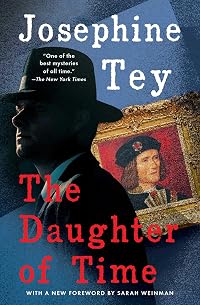




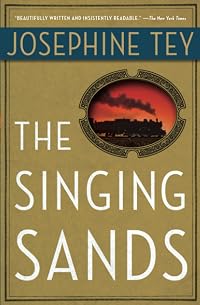
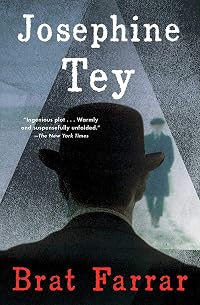
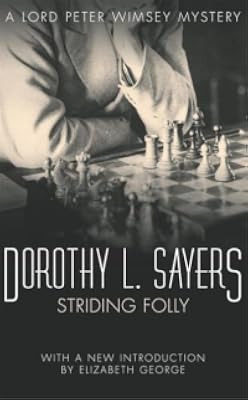











Member Recommendations
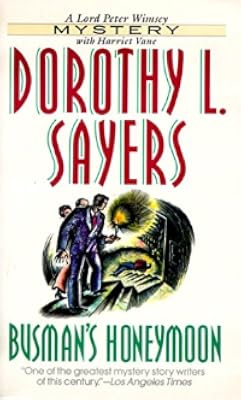
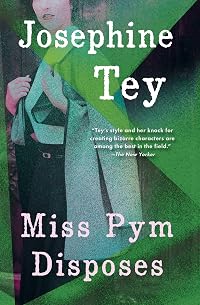
PhoenixFalls A Civil Campaign is Lois McMaster Bujold's attempt to replicate Gaudy Night -- with an infusion of Georgette Heyer -- in her long-running Vorkosigan Saga.
50
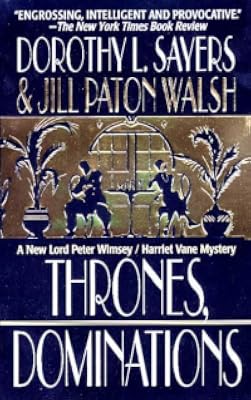
zembla Both feature good banter, a mystery set in a mostly-female environment, and a tentative romance between the sleuth protagonists.
30
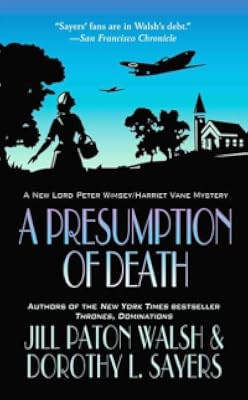
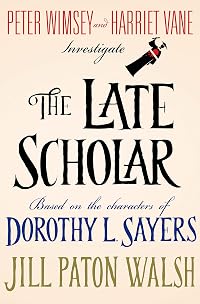
merry10 The Late Scholar is Jill Paton Walsh's further exploration of Dorothy L. Sayers' themes in Gaudy Night.
30

littlegreycloud A murder mystery, an academic setting, an unusual heroine, a knight in shining armour (although John McLeish is more believable than Lord Peter;): check, check, check and check. But most importantly: really good writing.
20
bmlg lively and engaging depiction of the community of women scholars
32

themulhern "Death at the President's Lodging" is a more fun book about people running about an English college in the 1930s in the middle of the night.
10
Member Reviews
The very best of the Wimsey books! When a nasty, anonymous note is slipped into the sleeve of Harriet Vane's gown when she attends the Shrewsbury College Gaudy, she thinks it is a reference to her personal history. But it soon turns out that the animus is directed at the College, and Vane is asked to investigate. In the course of so doing, she begins to wonder if she should return to the scholarly life.
Sayers' great strength as a mystery writer, particularly apparent in the Wimsey-Vane books, was her ability to write about relationships. The working out of Harriet and Peter's relationship is crucial to this book. It is not that the mystery is secondary; indeed, it is in the unraveling of that mystery that Harriet is able to confront her show more concerns about Peter and also learns more about him than in all the time she knew him.
But the crux of this book is the importance of intellectual honesty in the face of personal considerations, of the need to do work that matters to you. It is about women's struggle for a recognized place in the public realm, as well as the private.
There are wonderful by-ways here as well. Harriet's life as a writer, both of mysteries and scholarly works, is described in fine detail, with the addition of a humorous description of the 30's London literary scene. Oxford itself, both town and gown, is a character in the book. How lovingly it is drawn!
This is a book I read over and over again. show less
Sayers' great strength as a mystery writer, particularly apparent in the Wimsey-Vane books, was her ability to write about relationships. The working out of Harriet and Peter's relationship is crucial to this book. It is not that the mystery is secondary; indeed, it is in the unraveling of that mystery that Harriet is able to confront her show more concerns about Peter and also learns more about him than in all the time she knew him.
But the crux of this book is the importance of intellectual honesty in the face of personal considerations, of the need to do work that matters to you. It is about women's struggle for a recognized place in the public realm, as well as the private.
There are wonderful by-ways here as well. Harriet's life as a writer, both of mysteries and scholarly works, is described in fine detail, with the addition of a humorous description of the 30's London literary scene. Oxford itself, both town and gown, is a character in the book. How lovingly it is drawn!
This is a book I read over and over again. show less
"Gaudy Night" is a beautifully written exploration of the importance and difficulty of personal choice, of the nature and relevance of academic life, of the possibility of finding love and the difficulty of deserving it, wrapped up in a mystery set in an all-female Oxford College in 1935-
I'd been told, repeatedly, that this was a wonderful book. I took it on faith, as I had abandoned the first Peter Wimsey book "Whose Body?" because it seemed to me to be a chaotic farce.
I was in the book's thrall before the end of the first chapter. In a few pages I'd already decided that I liked Harriet Vane and wanted to spend time in her company and that I admired Dorothy Sayers' skill in creating empathy for and engagement with an introspective show more intellectual woman working her way through emotions that she's trying to hold at arms-length.
Dorothy Sayers did so much with so few words. I hadn't read the two Harriet Vane books that preceded "Gaudy Night" yet, within a few pages, I learned a lot about Harriet: her history, her character, her mode of thought. She was already real to me.
What caught me by surprise is the emotional impact.
I left my university thirty years ago. I've never been back. I never will go back. I'm not who I was then and he wouldn't recognise who I am now.
Sayers captured this sense of visiting a previous self, one untested and less well-formed than the self you currently inhabit and the anxiety it produces, perfectly.
Harriet Vane thinks:
It was all so long ago; so closely encompassed and complete; so cut off as by swords from the bitter years that lay between. Could one face it now?
"Closely encompassed and complete." I like that. It's an illusion in one way of course but it's a sentiment that strongly persists for me.
Even on her way to Oxford, Harriet'sanxiety persists. She's glad to be driving to Oxford in her own little car rather than entering by train as her undergraduate self always had and she's glad that:
"For a few hours longer she could ignore the whimpering ghost of her dead youth and tell herself that she was a stranger and a sojourner, a well-to-do woman with a position in the world."
This seemed real to me, this telling ourselves stories of who we are and who we've been so that we can cope with what's to come.
I also liked the moments where, as the reader, I was left to draw my own conclusions. When Harriet opens a long-closed chest in the attic and retrieves her academic gown, she finds it in good order:
"Only the flat cap showed a little touch of the moth’s tooth. As she beat the loose fluff from it, a tortoise-shell butterfly, disturbed from its hibernation beneath the flap of the trunk-lid, fluttered out into the brightness of the window, where it was caught and held by a cobweb."
That's a wonderfully gentle way to introduce foreboding that shows Sayers' lightness of touch and clarity of imagination.
I was also surprised that this book was written in 1935. Based on the handed-down version of period dramas and television stereotypes, Harriet Vane seemed a remarkably strong and independent character, especially when written by a woman of a similar background. Clearly my perceptions need to be adjusted if this was contemporary popular literature.
The central mystery of the book involves discovering the identity sf the person who is making repeated attempts to sabotage the reputation of the all-female Oxford college, the individual members of the Senior Common Room and some of the students.
The attacks are vicious, spiteful and well-executed. They seem to be the product hatred, perhaps the darkest of passions, and it seems likely that the culprit is a member of the Senior Common Room.
Harriet is asked to come and live and work at her old college while discretely but with the full knowledge of senior staff, to investigate the acts of sabotage.
Harriet, five years after having been put on trial for her life for a murder she didn't commit, has built a life for herself as a writer of mysteries. She has a genuine passion for writing but she feels the need for something more.
Harriet has reached a point where she understands she must make a choice. At one point, when talking to a student, she says:
"I’m sure one should do one’s own job, however trivial, and not persuade one’s self into doing somebody else’s, however noble.”
Harriet also recognises how hard it is to make the right choice. Talking to a Don at her college Harriet asks:
“But one has to make some sort of choice,” said Harriet. “And between one desire and another, how is one to know which things are really of overmastering importance?”
“We can only know that,” said Miss de Vine, “when they have overmastered us.”
The idea that having the self-awareness and discipline to choose how to live your life to follow your desire is necessary to find fulfillment but that real happiness can only be achieved by opening yourself up to a desire and allowing it to overwhelm you, is central to this book.
Harriet values her intellect and her control over her own life. She is self-aware and tries not to lie to herself. She wants to avoid harming herself or those around her. This makes it difficult for her to surrender to passion. I imagine that letting oneself be overwhelmed must feel a little like drowning to a woman like Harriet Vane. It takes courage not to keep your head below the water.
The mystery at her old college allows Harriet to hear the call of two of her passions: the lure of the academic life where she can excel at something that has more meaning to her than writing the fiction with which she makes her living, and the opportunity to deepen her understanding of Peter Wimsey, by getting to see him in different context, so that she can decide what to do about this man who regularly offers to marry her and will continue to do so until she tells him to stop.
For a while, Harriet lets herself fall back in love with the all-female academic life and the peace it offers. She sees it as:
"a Holy War, and that whole wildly heterogeneous, that even slightly absurd collection of chattering women fused into a corporate unity with one another and with every man and woman to whom integrity of mind meant more than material gain—defenders in the central keep of Man-soul, their personal differences forgotten in face of a common foe. To be true to one’s calling, whatever follies one might commit in one’s emotional life, that was the way to spiritual peace."
She also recognises that academic life could be an opportunity to make herself immune to the interference of men. As Miss Hilyard, one of the Dons, puts it, men:
"have an admirable talent for imposing their point of view on society in general. All women are sensitive to male criticism. Men are not sensitive to female criticism. They despise the critics.”
While Harriet can imagine choosing the academic life, she also recognises its distance from day to day life. As one of the few non-academic women says to the Dons:
None of you care in the least for my interests, and yours all seem to me to be mere beating the air. You don’t seem to have anything to do with real life. You are going about in a dream.” She stopped speaking, and her angry voice softened. “But it’s a beautiful dream in its way.
It seemed to me that Harriet sees the world too clearly and is too honest with herself to be content with "a beautiful dream".
It's also clear that Harriet's attraction to men and to Peter Wimsey in particular, is real and may not easily be ignored. At one point, as Harriet lets Peter Wimsey occupy her thoughts, she reproachfully tells herself:
“This won’t do,” said Harriet. “This really will not do. My sub-conscious has a most treacherous imagination.”
Harriet gains an admirer young male admirer during her stay at college in the form of the charmingly inexperienced Mr. Pomfret. This is her reaction when Pomfret asks her to spend some time with him:
Harriet was opening her mouth to say No, when she looked at Mr. Pomfret, and her heart softened. He had the appeal of a very young dog of a very large breed—a kind of amiable absurdity.
She is kind to Pomfrrz but sees mostly his youth, and in his youth, her own age. This provides a context for her consideration of what to do about Lord Peter Wimsey.
She feels unable to move forward with him because she owes him her life and she fears that there can be no equal partnership when one person is so indebted to the other.
I loved the way Wimesy is depicted in "Gaudy Night". He is mostly physically absent. When he is present, he does not dominate, nor does he seek to replace Harriet's judgment on the mystery with his own. He is attentive and supportive but he doesn't crowd her.
Harriet is given the opportunity to see Peter through the eyes of others and discovers him to be a valued scholar in the eyes of the academics and a revered officer in the eyes of the college Porter, who served under Wimesy in the trenches. She sees him through the eyes of his heir-to-a-major-fortune-one-day nephew, who views his uncle with affection and respect.
Although "Gaudy Night" is a mystery story, it seems to me that it is also something much rarer, at least in fiction: a romance between two intellectual, introverted, independent, habitually rational people, with all the challenges and opportunities that that implies.
I was delighted with it. I want to spend more time with Harriet and Peter so I'll be reading my way through the sub-series.
One thing that did disappoint me was the poor proofing of this particular ebook (ASIN B00R1T46K8). It has dozens of typos, presumably OCR errors, that should have been found and corrected. I think this is disrespectful to the text and to the reader.
show less
I'd been told, repeatedly, that this was a wonderful book. I took it on faith, as I had abandoned the first Peter Wimsey book "Whose Body?" because it seemed to me to be a chaotic farce.
I was in the book's thrall before the end of the first chapter. In a few pages I'd already decided that I liked Harriet Vane and wanted to spend time in her company and that I admired Dorothy Sayers' skill in creating empathy for and engagement with an introspective show more intellectual woman working her way through emotions that she's trying to hold at arms-length.
Dorothy Sayers did so much with so few words. I hadn't read the two Harriet Vane books that preceded "Gaudy Night" yet, within a few pages, I learned a lot about Harriet: her history, her character, her mode of thought. She was already real to me.
What caught me by surprise is the emotional impact.
I left my university thirty years ago. I've never been back. I never will go back. I'm not who I was then and he wouldn't recognise who I am now.
Sayers captured this sense of visiting a previous self, one untested and less well-formed than the self you currently inhabit and the anxiety it produces, perfectly.
Harriet Vane thinks:
It was all so long ago; so closely encompassed and complete; so cut off as by swords from the bitter years that lay between. Could one face it now?
"Closely encompassed and complete." I like that. It's an illusion in one way of course but it's a sentiment that strongly persists for me.
Even on her way to Oxford, Harriet'sanxiety persists. She's glad to be driving to Oxford in her own little car rather than entering by train as her undergraduate self always had and she's glad that:
"For a few hours longer she could ignore the whimpering ghost of her dead youth and tell herself that she was a stranger and a sojourner, a well-to-do woman with a position in the world."
This seemed real to me, this telling ourselves stories of who we are and who we've been so that we can cope with what's to come.
I also liked the moments where, as the reader, I was left to draw my own conclusions. When Harriet opens a long-closed chest in the attic and retrieves her academic gown, she finds it in good order:
"Only the flat cap showed a little touch of the moth’s tooth. As she beat the loose fluff from it, a tortoise-shell butterfly, disturbed from its hibernation beneath the flap of the trunk-lid, fluttered out into the brightness of the window, where it was caught and held by a cobweb."
That's a wonderfully gentle way to introduce foreboding that shows Sayers' lightness of touch and clarity of imagination.
I was also surprised that this book was written in 1935. Based on the handed-down version of period dramas and television stereotypes, Harriet Vane seemed a remarkably strong and independent character, especially when written by a woman of a similar background. Clearly my perceptions need to be adjusted if this was contemporary popular literature.
The central mystery of the book involves discovering the identity sf the person who is making repeated attempts to sabotage the reputation of the all-female Oxford college, the individual members of the Senior Common Room and some of the students.
The attacks are vicious, spiteful and well-executed. They seem to be the product hatred, perhaps the darkest of passions, and it seems likely that the culprit is a member of the Senior Common Room.
Harriet is asked to come and live and work at her old college while discretely but with the full knowledge of senior staff, to investigate the acts of sabotage.
Harriet, five years after having been put on trial for her life for a murder she didn't commit, has built a life for herself as a writer of mysteries. She has a genuine passion for writing but she feels the need for something more.
Harriet has reached a point where she understands she must make a choice. At one point, when talking to a student, she says:
"I’m sure one should do one’s own job, however trivial, and not persuade one’s self into doing somebody else’s, however noble.”
Harriet also recognises how hard it is to make the right choice. Talking to a Don at her college Harriet asks:
“But one has to make some sort of choice,” said Harriet. “And between one desire and another, how is one to know which things are really of overmastering importance?”
“We can only know that,” said Miss de Vine, “when they have overmastered us.”
The idea that having the self-awareness and discipline to choose how to live your life to follow your desire is necessary to find fulfillment but that real happiness can only be achieved by opening yourself up to a desire and allowing it to overwhelm you, is central to this book.
Harriet values her intellect and her control over her own life. She is self-aware and tries not to lie to herself. She wants to avoid harming herself or those around her. This makes it difficult for her to surrender to passion. I imagine that letting oneself be overwhelmed must feel a little like drowning to a woman like Harriet Vane. It takes courage not to keep your head below the water.
The mystery at her old college allows Harriet to hear the call of two of her passions: the lure of the academic life where she can excel at something that has more meaning to her than writing the fiction with which she makes her living, and the opportunity to deepen her understanding of Peter Wimsey, by getting to see him in different context, so that she can decide what to do about this man who regularly offers to marry her and will continue to do so until she tells him to stop.
For a while, Harriet lets herself fall back in love with the all-female academic life and the peace it offers. She sees it as:
"a Holy War, and that whole wildly heterogeneous, that even slightly absurd collection of chattering women fused into a corporate unity with one another and with every man and woman to whom integrity of mind meant more than material gain—defenders in the central keep of Man-soul, their personal differences forgotten in face of a common foe. To be true to one’s calling, whatever follies one might commit in one’s emotional life, that was the way to spiritual peace."
She also recognises that academic life could be an opportunity to make herself immune to the interference of men. As Miss Hilyard, one of the Dons, puts it, men:
"have an admirable talent for imposing their point of view on society in general. All women are sensitive to male criticism. Men are not sensitive to female criticism. They despise the critics.”
While Harriet can imagine choosing the academic life, she also recognises its distance from day to day life. As one of the few non-academic women says to the Dons:
None of you care in the least for my interests, and yours all seem to me to be mere beating the air. You don’t seem to have anything to do with real life. You are going about in a dream.” She stopped speaking, and her angry voice softened. “But it’s a beautiful dream in its way.
It seemed to me that Harriet sees the world too clearly and is too honest with herself to be content with "a beautiful dream".
It's also clear that Harriet's attraction to men and to Peter Wimsey in particular, is real and may not easily be ignored. At one point, as Harriet lets Peter Wimsey occupy her thoughts, she reproachfully tells herself:
“This won’t do,” said Harriet. “This really will not do. My sub-conscious has a most treacherous imagination.”
Harriet gains an admirer young male admirer during her stay at college in the form of the charmingly inexperienced Mr. Pomfret. This is her reaction when Pomfret asks her to spend some time with him:
Harriet was opening her mouth to say No, when she looked at Mr. Pomfret, and her heart softened. He had the appeal of a very young dog of a very large breed—a kind of amiable absurdity.
She is kind to Pomfrrz but sees mostly his youth, and in his youth, her own age. This provides a context for her consideration of what to do about Lord Peter Wimsey.
She feels unable to move forward with him because she owes him her life and she fears that there can be no equal partnership when one person is so indebted to the other.
I loved the way Wimesy is depicted in "Gaudy Night". He is mostly physically absent. When he is present, he does not dominate, nor does he seek to replace Harriet's judgment on the mystery with his own. He is attentive and supportive but he doesn't crowd her.
Harriet is given the opportunity to see Peter through the eyes of others and discovers him to be a valued scholar in the eyes of the academics and a revered officer in the eyes of the college Porter, who served under Wimesy in the trenches. She sees him through the eyes of his heir-to-a-major-fortune-one-day nephew, who views his uncle with affection and respect.
Although "Gaudy Night" is a mystery story, it seems to me that it is also something much rarer, at least in fiction: a romance between two intellectual, introverted, independent, habitually rational people, with all the challenges and opportunities that that implies.
I was delighted with it. I want to spend more time with Harriet and Peter so I'll be reading my way through the sub-series.
One thing that did disappoint me was the poor proofing of this particular ebook (ASIN B00R1T46K8). It has dozens of typos, presumably OCR errors, that should have been found and corrected. I think this is disrespectful to the text and to the reader.
show less
Gaudy Night is set in England during the mid-1930s, an era where the education of women was still not completely accepted by society. It is one of Sayer’s last mysteries about the eccentric English aristocrat and detective, Lord Peter Wimsey and the third book to feature the successful detective novelist, Harriet Vane (who appears in Strong Poison and Have His Carcase). Unlike the other books, it revolves solely around Harriet as the main protagonist. While it makes more sense to read the books chronologically - or to have at least read either (or both) of the previous novels which feature Harriet - Gaudy Night can easily be enjoyed on its own. The relevant details of the characters' past are satisfactorily explained, and the book show more does not spoil the whodunits of previous mysteries.
At the pleading of an old friend, Harriet Vane decides to attend the gaudy for past-students at the all-female Shrewsbury in Oxford. Harriet is apprehensive of the reception that she will receive. What would those women say to her, to Harriet Vane, who had taken her First in English, gone to London to write mystery fiction, to live with a man who was not married to her, and to be tried for his murder amid a roar of notoriety? In the decade since she had received her Master of Arts, she had broken all her old ties and half the commandments, dragged her reputation in the dust and made money, had the rich and amusing Lord Peter Wimsey at her feet, to marry him if she chose, and was full of energy and bitterness and the uncertain rewards of fame…
The reunion – the Gaudy Night – is not a completely agreeable experience, and causes some painful reflection on Harriet’s part as she is confronted with the changes years and hardship have brought. Yet before long, Harriet returns to Shrewsbury - this time at the college’s request, to investigate a series of vindictive anonymous letters and pranks. To avoid the extensive and damaging media attention such news would attract, the college wishes to keep the matter quiet, but not everyone approves of relying on Harriet, given her questionable reputation.
While Harriet’s inner bitterness is partly soothed by the academic focus of life in Oxford, she becomes drawn into the lives and conflicts of students and tutors alike, and tensions and suspicions are rising as the poison-pen letters become more malicious. Harriet is uncertain how to carry the investigation further.
Meanwhile, she has her own struggles - with her latest novel, and with the well-known detective, Lord Peter Wimsey, who acquitted her of murder and who is determined to convince Harriet to marry him. As Oxford causes Harriet to learn more about Lord Peter, she finds herself having to reassess both the man and his proposals in a new light.
The crisis in the college is an opportunity for the academic women to air and argue about their views on truth and honesty, marriage and professional loyalties. Harriet realises she needs to face the truth regarding more than the identity of a potentially-murderous letter-writer before it is too late.
Gaudy Night provides a rich and fascinating insight into the literary scene of London and university life of the mid-30s. Set among the highly educated and opinionated, the story explores philosophy, nostalgia, history, marriage, equality, relationships, honesty and politics. Their discussions can be thought-provoking and quite complex. Harriet’s encounters with others in Oxford are strongly believable and often very, very amusing - particularly the dons and tutors of Shrewsbury's senior common room. One of Gaudy Night's strengths is its humour.
Although most of the out-dated expressions used in the novel are explained by their context and do not detract from the overall story, Sayers' language can be a bit frustrating, particularly the constant quotations and references to literature, and the untranslated French and Latin. Nonetheless, this shouldn't be a deterrent; Gaudy Night is very well written and most definitely worth reading. (Gaudy Night annotated is very useful for explaining any unfamiliar references.)
I feel I have done a poor job of doing justice to this book, which is wonderful, amusing, insightful, quotable and rereadable. It's a mystery, a romance; it is an examination of debate surrounding educated women and about accepting one's past and one's mistakes. It's light-hearted, and it's very serious (and intellectual).
I love this book and highly recommend it. I don't know that I can say much more than that. show less
At the pleading of an old friend, Harriet Vane decides to attend the gaudy for past-students at the all-female Shrewsbury in Oxford. Harriet is apprehensive of the reception that she will receive. What would those women say to her, to Harriet Vane, who had taken her First in English, gone to London to write mystery fiction, to live with a man who was not married to her, and to be tried for his murder amid a roar of notoriety? In the decade since she had received her Master of Arts, she had broken all her old ties and half the commandments, dragged her reputation in the dust and made money, had the rich and amusing Lord Peter Wimsey at her feet, to marry him if she chose, and was full of energy and bitterness and the uncertain rewards of fame…
The reunion – the Gaudy Night – is not a completely agreeable experience, and causes some painful reflection on Harriet’s part as she is confronted with the changes years and hardship have brought. Yet before long, Harriet returns to Shrewsbury - this time at the college’s request, to investigate a series of vindictive anonymous letters and pranks. To avoid the extensive and damaging media attention such news would attract, the college wishes to keep the matter quiet, but not everyone approves of relying on Harriet, given her questionable reputation.
While Harriet’s inner bitterness is partly soothed by the academic focus of life in Oxford, she becomes drawn into the lives and conflicts of students and tutors alike, and tensions and suspicions are rising as the poison-pen letters become more malicious. Harriet is uncertain how to carry the investigation further.
Meanwhile, she has her own struggles - with her latest novel, and with the well-known detective, Lord Peter Wimsey, who acquitted her of murder and who is determined to convince Harriet to marry him. As Oxford causes Harriet to learn more about Lord Peter, she finds herself having to reassess both the man and his proposals in a new light.
The crisis in the college is an opportunity for the academic women to air and argue about their views on truth and honesty, marriage and professional loyalties. Harriet realises she needs to face the truth regarding more than the identity of a potentially-murderous letter-writer before it is too late.
Gaudy Night provides a rich and fascinating insight into the literary scene of London and university life of the mid-30s. Set among the highly educated and opinionated, the story explores philosophy, nostalgia, history, marriage, equality, relationships, honesty and politics. Their discussions can be thought-provoking and quite complex. Harriet’s encounters with others in Oxford are strongly believable and often very, very amusing - particularly the dons and tutors of Shrewsbury's senior common room. One of Gaudy Night's strengths is its humour.
Although most of the out-dated expressions used in the novel are explained by their context and do not detract from the overall story, Sayers' language can be a bit frustrating, particularly the constant quotations and references to literature, and the untranslated French and Latin. Nonetheless, this shouldn't be a deterrent; Gaudy Night is very well written and most definitely worth reading. (Gaudy Night annotated is very useful for explaining any unfamiliar references.)
I feel I have done a poor job of doing justice to this book, which is wonderful, amusing, insightful, quotable and rereadable. It's a mystery, a romance; it is an examination of debate surrounding educated women and about accepting one's past and one's mistakes. It's light-hearted, and it's very serious (and intellectual).
I love this book and highly recommend it. I don't know that I can say much more than that. show less
The very best of the Wimsey books! When a nasty, anonymous note is slipped into the sleeve of Harriet Vane's gown when she attends the Shrewsbury College Gaudy, she thinks it is a reference to her personal history. But it soon turns out that the animus is directed at the College, and Vane is asked to investigate. In the course of so doing, she begins to wonder if she should return to the scholarly life.
Sayers' great strength as a mystery writer, particularly apparent in the Wimsey-Vane books, was her ability to write about relationships. The working out of Harriet and Peter's relationship is crucial to this book. It is not that the mystery is secondary; indeed, it is in the unraveling of that mystery that Harriet is able to confront her show more concerns about Peter and also learns more about him than in all the time she knew him.
But the crux of this book is the importance of intellectual honesty in the face of personal considerations, of the need to do work that matters to you. It is about women's struggle for a recognized place in the public realm, as well as the private.
There are wonderful by-ways here as well. Harriet's life as a writer, both of mysteries and scholarly works, is described in fine detail, with the addition of a humorous description of the 30's London literary scene. Oxford itself, both town and gown, is a character in the book. How lovingly it is drawn! show less
Sayers' great strength as a mystery writer, particularly apparent in the Wimsey-Vane books, was her ability to write about relationships. The working out of Harriet and Peter's relationship is crucial to this book. It is not that the mystery is secondary; indeed, it is in the unraveling of that mystery that Harriet is able to confront her show more concerns about Peter and also learns more about him than in all the time she knew him.
But the crux of this book is the importance of intellectual honesty in the face of personal considerations, of the need to do work that matters to you. It is about women's struggle for a recognized place in the public realm, as well as the private.
There are wonderful by-ways here as well. Harriet's life as a writer, both of mysteries and scholarly works, is described in fine detail, with the addition of a humorous description of the 30's London literary scene. Oxford itself, both town and gown, is a character in the book. How lovingly it is drawn! show less
10/21: I don’t think I have it in me to sufficiently give this book the justice it deserves. I don’t think I ever will; it’s beyond my expression. I could live a hundred years and still not know how (mostly bc I freely admit I’m not born to eloquence). Enough to say that I sat outdoors for three hours on a Monday afternoon desperately trying to not look insane. There’s a lovely little natural seat in a tree by the chapel here; it felt right for this book. It is in fact one ay em at the time of writing this and I’ve just finished it (and subsequently haven’t done a lick of homework today…!) and I’m. To put it lightly. Going insane.
So much in here to think about always as a fellow ‘undergraduette,’ (bonkers) albeit show more one nigh 90 years later in a very different context, but still. Will be contemplating !! things to take to heart even for me.
oh, academia, especially female academia in 1935.
I did instantly remember the culprit of the mystery as soon as I read the name so that was unfortunate I wish I remembered less of the plot than I did because it kind of did drive me forward and the nerve of knowing but not quite (because I didn’t remember anything except the guilty and partially why) is more painful than not knowing or fully knowing. I think not knowing would have helped me move slower and Think More Things at least bc I was less interested in the mystery itself anyway than the humanity it brought out in those affected but that’s kind of the purpose of this novel. Hello to the dons, all of them, and their peculiarities and academics. Hello to the undergrads, too, and the scouts.
BUT. HARRIET VANE AND LORD PETER WIMSEY… I had a lot to say about certain aspects of them (not collective, as separate individuals) I found Very Funny while I was reading but I’ve promptly forgotten those things in light of the ending. Maybe I’ll recall later but that last chapter… placetne, magistra but also the conversations. This entire book as a catalogue of realization and unraveling. Not just them, either, but detective fiction as a vessel for discovery no matter what. they make me crazy though oh my word indistinct screaming i Love Them Thanks
also things to be said about Harriet’s own novels & plots serving in the context of the surrounding beyond just the good old oh yes genre within genre metatextual criticism except I’m not 100 on what so whoops. I mean, just a reflection of her and her own feelings, but also something else I haven’t quite pinned down.
on a lighter note I still think it’s hysterical LPW is canonically not that tall I don’t know why I kept picturing him as taller. incredible.
feminist king LPW is suCH a funny title yet it true hm
St. George is an insane character I’m obsessed
the carrying-ons of undergrads is truly incredible esp Pomfret.
much to be said about every don lmao
maybe I should’ve tried to understand the college system better and the years I was just like okay so this is a female college and there are three years and levels of achievement and terms?? and they’re all specifically studying subjects with history (couldn’t be me) and english as the most popular and there are dons and tutors and scouts are the servants and people wear gowns everywhere ?!? yeah what
John Donne by the way continues to haunt my literary adventures.
this is me realizing I am forever going to aspire to Sayers’ writing and will never reach that level of confident knowledge and reverent beauty and that firm grasp of the human psyche. yeowch :( wish I had a modicum of the intelligence in this book !!
“How fleeting are all human passions compared with the massive continuity of ducks!”
“It will give me great pleasure to strangle you scientifically in several positions.” show less
So much in here to think about always as a fellow ‘undergraduette,’ (bonkers) albeit show more one nigh 90 years later in a very different context, but still. Will be contemplating !! things to take to heart even for me.
oh, academia, especially female academia in 1935.
I did instantly remember the culprit of the mystery as soon as I read the name so that was unfortunate I wish I remembered less of the plot than I did because it kind of did drive me forward and the nerve of knowing but not quite (because I didn’t remember anything except the guilty and partially why) is more painful than not knowing or fully knowing. I think not knowing would have helped me move slower and Think More Things at least bc I was less interested in the mystery itself anyway than the humanity it brought out in those affected but that’s kind of the purpose of this novel. Hello to the dons, all of them, and their peculiarities and academics. Hello to the undergrads, too, and the scouts.
BUT. HARRIET VANE AND LORD PETER WIMSEY… I had a lot to say about certain aspects of them (not collective, as separate individuals) I found Very Funny while I was reading but I’ve promptly forgotten those things in light of the ending. Maybe I’ll recall later but that last chapter… placetne, magistra but also the conversations. This entire book as a catalogue of realization and unraveling. Not just them, either, but detective fiction as a vessel for discovery no matter what. they make me crazy though oh my word indistinct screaming i Love Them Thanks
also things to be said about Harriet’s own novels & plots serving in the context of the surrounding beyond just the good old oh yes genre within genre metatextual criticism except I’m not 100 on what so whoops. I mean, just a reflection of her and her own feelings, but also something else I haven’t quite pinned down.
on a lighter note I still think it’s hysterical LPW is canonically not that tall I don’t know why I kept picturing him as taller. incredible.
feminist king LPW is suCH a funny title yet it true hm
St. George is an insane character I’m obsessed
the carrying-ons of undergrads is truly incredible esp Pomfret.
much to be said about every don lmao
maybe I should’ve tried to understand the college system better and the years I was just like okay so this is a female college and there are three years and levels of achievement and terms?? and they’re all specifically studying subjects with history (couldn’t be me) and english as the most popular and there are dons and tutors and scouts are the servants and people wear gowns everywhere ?!? yeah what
John Donne by the way continues to haunt my literary adventures.
this is me realizing I am forever going to aspire to Sayers’ writing and will never reach that level of confident knowledge and reverent beauty and that firm grasp of the human psyche. yeowch :( wish I had a modicum of the intelligence in this book !!
“How fleeting are all human passions compared with the massive continuity of ducks!”
“It will give me great pleasure to strangle you scientifically in several positions.” show less
Glorious. I knew that a Sayers re-read would have highs and lows — every book thus far has had some kind of racial slur in it, and that’s almost enough of a turn off to stop reading. Lord Peter’s decision to woo Harriet Vane while she was on trial for murder — also a low point.
And then there’s Gaudy Night. The book where I originally fell irrevocably in love with the series. If it let me down, I’d have stopped this nostalgic exploration. Dear reader, it did not. It continues to be a transformative work for me — it is so strongly evocative of both Oxford’s rare and tranquil setting and its fraught and turbulent scholarship. I had two halcyon summers there and this book takes me back there so vividly. I also went to a show more women’s college, and this book captures that experience as well — thoughtful, brave, embattled women scholars, and the constant pull to put study aside for relationships. All of those things are so central to this story, and the mystery is engrossing as well.
It’s worth reading for all of that, but the part which takes my breath away, again! Is the apology at the end. Possibly one of the most romantic conversations in literature, for me, — Lord Peter realizing that trying to woo Harriet when she was vulnerable was a terrible, damaging, unkind thing to do. And he takes responsibility for it and apologizes for it. And then Harriet makes her own decision about what she wants to do next.
Brings a smile to my face every time. show less
And then there’s Gaudy Night. The book where I originally fell irrevocably in love with the series. If it let me down, I’d have stopped this nostalgic exploration. Dear reader, it did not. It continues to be a transformative work for me — it is so strongly evocative of both Oxford’s rare and tranquil setting and its fraught and turbulent scholarship. I had two halcyon summers there and this book takes me back there so vividly. I also went to a show more women’s college, and this book captures that experience as well — thoughtful, brave, embattled women scholars, and the constant pull to put study aside for relationships. All of those things are so central to this story, and the mystery is engrossing as well.
It’s worth reading for all of that, but the part which takes my breath away, again! Is the apology at the end. Possibly one of the most romantic conversations in literature, for me, — Lord Peter realizing that trying to woo Harriet when she was vulnerable was a terrible, damaging, unkind thing to do. And he takes responsibility for it and apologizes for it. And then Harriet makes her own decision about what she wants to do next.
Brings a smile to my face every time. show less
Dorothy L. Sayers was a snob of the highest order, and not at all my cup of tea. Don't get me wrong, I have nothing wrong with authors who are antiquated in style (Proust, one of my homeboys) or problematic (Woody Allen's comedy) or indeed high-and-mighty, antiquated, and problematic (my bookshelf is a shrine to Lawrence Durrell) but something about Sayers puts me off.
Is it her half-page epigraphs at the commencement of each chapter? Her rambling style? Her characters' proclivity to burst into Latin without a footnote, even in a modern edition (not necessarily a problem for a classicist such as myself, but still annoying)? Or the sheer audacity of a 520-page mystery novel? I mean, even at their best, these things - whether by Christie, show more Marsh, Tey, or Innes - were designed to be amusements to pass the time, not Tolstoy. Perhaps it's Harriet Vane's unwillingness to really get involved in solving the mystery, and leaving it up to her bf.
Either way, I didn't enjoy Sayers in highschool and I still don't care for Gaudy Night but I appreciate that - much like my willingness to get lost in Pym or Zola - for some, Sayers fits their heart and soul specifically. I'll stick to the other Golden Age crime writers, thanks. (Delectable speech by the non-murderer at the end, though!) show less
Is it her half-page epigraphs at the commencement of each chapter? Her rambling style? Her characters' proclivity to burst into Latin without a footnote, even in a modern edition (not necessarily a problem for a classicist such as myself, but still annoying)? Or the sheer audacity of a 520-page mystery novel? I mean, even at their best, these things - whether by Christie, show more Marsh, Tey, or Innes - were designed to be amusements to pass the time, not Tolstoy. Perhaps it's Harriet Vane's unwillingness to really get involved in solving the mystery, and leaving it up to her bf.
Either way, I didn't enjoy Sayers in highschool and I still don't care for Gaudy Night but I appreciate that - much like my willingness to get lost in Pym or Zola - for some, Sayers fits their heart and soul specifically. I'll stick to the other Golden Age crime writers, thanks. (Delectable speech by the non-murderer at the end, though!) show less
Members
- Recently Added By
Lists

Top-Rated Books on LibraryThing
272 works; 117 members

Cerebral Mysteries
34 works; 23 members

Best of British Literature
226 works; 41 members

Best Crime Fiction
262 works; 39 members

Favorite Literary Love Stories
182 works; 101 members

Classics you know you should have read but probably haven't
421 works; 408 members
Books I've Read More Than Once
602 works; 49 members

The Top 100 Crime Novels of All Time
100 works; 15 members

Best Campus Novels
99 works; 18 members
Survey of Mysteries and Crime Fiction
96 works; 17 members

100 Mysteries and Thrillers to Read in a Lifetime
99 works; 22 members

Best Female Detectives and "Cozy Mysteries"
23 works; 17 members
501 Must-Read Books
529 works; 72 members

Female Protagonist
1,056 works; 57 members
Comfort Reads
221 works; 41 members
Female Author
1,235 works; 67 members
Top 100 Mystery Novels of All Time
98 works; 9 members

Golden Age of Detection
35 works; 10 members

Crime and Mysteries to Read
746 works; 31 members

Read the book and saw the movie
1,170 works; 195 members

In or About the 1930s
198 works; 27 members

Books Set in Great Britain
191 works; 13 members

Recommend the 20 best books you've read in the last five years
2,168 works; 606 members
British Mystery
469 works; 14 members

Top Five Books of 2013
1,562 works; 721 members

Survey of Classic Crime
39 works; 7 members

Top Cops (Detectives in Fiction)
86 works; 24 members

Best Love Stories
107 works; 14 members
Best Private Eye stories
28 works; 8 members
Readable Classics
110 works; 15 members
all aboard for malory towers (grownups)
28 works; 5 members
MysteryCAT 2014
19 works; 1 member

Best Crime Fiction
48 works; 3 members

Top Five Books of 2020
982 works; 350 members
LibraryThingers' 1001 Books You Must Read Before You Die
442 works; 29 members
Detective Stories
343 works; 5 members
Favourite books by Female Authors
43 works; 4 members

Best Feminist Literature
188 works; 26 members
Favourite Love Stories
53 works; 1 member

Books mentioned in Julian Symons’ Bloody Murder
438 works; 6 members
Literature About Women and Girls
394 works; 39 members

Fiction: Crime, Detective, Mystery
350 works; 3 members
Books We Want To Read Again For The First Time
384 works; 160 members

Books Read in 2020
4,379 works; 124 members

Books Read in 2018
4,360 works; 110 members

Books With Time Words in the Title
160 works; 4 members
Must Read Detective Stories (Nick Fuller)
278 works; 2 members

Books We Couldn't Put Down
443 works; 197 members
Overdue Podcast
806 works; 9 members

1930s
262 works; 5 members

Best Books of 1926-1935
403 works; 10 members

Books Read in 2024
4,623 works; 126 members
College Reads (Lit Edition)
75 works; 5 members
Favorite Romance Fiction
247 works; 115 members

Books Read in 2021
5,361 works; 114 members
Our Favorite Comfort Reads
334 works; 200 members
Books We'd Want on a Desert Island
203 works; 131 members

Books You Read For University
184 works; 3 members
Best Mysteries With a Historical Setting
292 works; 160 members
Books We Love to Reread
688 works; 296 members
Favourite Books
1,817 works; 308 members

Academia in Fiction
158 works; 23 members

Best Young Adult
399 works; 101 members

Books Read in 2014
2,343 works; 89 members
Books tagged favorites
390 works; 30 members
Folio Society
831 works; 53 members
Shakespeare Quote Titles
112 works; 12 members

One Book, Many Authors
441 works; 40 members

Allie's Favourite 150 Books
145 works; 3 members

20th Century Literature
1,161 works; 55 members

Best books I read in 2013
152 works; 3 members

Books Read in 2013
1,630 works; 51 members

Writers as Characters in Fiction
120 works; 19 members

A Novel Cure
742 works; 23 members

Books Read in 2017
4,249 works; 130 members
What Makes This Book So Great
102 works; 16 members
Best Books of the 20th Century
193 works; 5 members
Best School Stories
219 works; 22 members

My favourite books
96 works; 3 members

Top Five Books of 2014
1,064 works; 397 members
Five star books
1,755 works; 108 members

What are your favourite books?
121 works; 11 members

Blue Pyramid 1,276 Best Books of All Time
1,248 works; 32 members

Books Read in 2016
4,666 works; 197 members

Favourite Books
50 works; 1 member

Books Read in 2026
1,882 works; 66 members
Talk Discussions
Past Discussions
156. Gaudy Night by Dorothy L. Sayers in Backlisted Book Club (March 2022)
Author Information

277+ Works 70,811 Members
Dorothy Sayers's impressive reputation as a contemporary master of the classic detective story is eclipsed only by Agatha Christie's. Sayers was born in Oxford and attended Somerville College, where she received a B.A. in 1915 and an M.A. in 1920. During that period, Sayers worked as an instructor of modern languages at Hull High School for Girls show more in Yorkshire and as a reader for a publisher in Oxford. Her early literary work was in poetry; she published several volumes and served as an editor for the journal Oxford Poetry from 1917 to 1919. Sayers also worked as a copywriter for a major advertising firm in London. She was president of the Modern Language Association from 1939 to 1945 and of the Detection Club in the 1950s. Around 1920 Sayers developed the idea for her detective hero Lord Peter Wimsey, and she soon published her first mystery, Whose Body? (1923), in which Lord Peter is introduced. For the next dozen or so years, Sayers wrote prolifically about Wimsey, creating in the process what many critics of the genre consider to be the finest detective novels in the English language. Perhaps her most famous Wimsey mystery was The Nine Tailors (1934). Although Sayers essentially followed the classic form in her detective fiction---a formula in which the plot assumes a greater importance than do the characters---Sayers maintained that a detective hero's greatness depended on how effectively the character was portrayed. All but one of Sayers's mysteries feature Lord Peter Wimsey. By the late 1930s, Sayers had apparently tired of writing detective fiction. She stated in 1947 that she would write no more mysteries, that she wrote detective fiction only when she was young and in need of money. Thus saying, Sayers turned her attention to her early loves, medieval and religious literature, spending her remaining years lecturing on and translating Dante (see Vol. 2). (Bowker Author Biography) show less
Some Editions
Awards and Honors
Awards
Distinctions
Notable Lists
Series


Belongs to Publisher Series
Work Relationships
Is contained in
Has the adaptation
Is abridged in
Inspired
Has as a student's study guide
Common Knowledge
- Canonical title
- Gaudy Night
- Original title
- Gaudy Night
- Original publication date
- 1935
- People/Characters
- Peter Death Bredon Wimsey (Lord Peter Wimsey); Harriet Deborah Vane; Mervyn Bunter; Viscount St. George (Jerry Wimsey); Dr. Margaret Baring (the Warden); Miss Cattermole (undergraduate) (show all 23); Miss Chilperic (Assistant-tutor in English); Helen de Vine (Research Fellow - History); Miss Hillyard (History Tutor); Miss Edwards; Mrs. Goodwin (secretary to the Dean); Miss Lydgate (English Tutor); Letitia Martin (the Dean); Miss Newland (undergraduate); Padgett (College Porter); Reggie Pomfret (Queen's College undergraduate); Annie Wilson (college scout); Miss Stevens (the Bursar); Miss Barton (fellow); Miss Burrows (the Librarian); Miss Allison (College Secretary & Treasurer); Miss Pyke (fellow); Mrs. Burrows (fellow)
- Important places
- University of Oxford, Oxford, Oxfordshire, England, UK (Shrewsbury College); Oxford, Oxfordshire, England, UK; Oxfordshire, England, UK
- Related movies
- "A Dorothy L. Sayers Mystery" Gaudy Night: Episode One (1987 | IMDb); "A Dorothy L. Sayers Mystery" Gaudy Night: Episode Two (1987 | IMDb); "A Dorothy L. Sayers Mystery" Gaudy Night: Episode Three (1987 | IMDb)
- Epigraph
- The University is a Paradise. Rivers of Knowledge are there. Arts and Sciences flow from thence. Counsell Tables are Horti conclusi, (as it is said in the Canticles) Gardens that are walled in, and they are Fontes signati. We... (show all)lls that are sealed up; bottomless depths of unsearchable Counsels there.
John Donne - First words
- Harriet Vane sat at her writing-table and stared out into Mecklenburg Square.
[Introduction] I came to the wonderful detective novels of Dorothy L. Sayers in a way that would probably make that distinguished novelist spin in her grave.
[Author's Note] It would be idle to deny that the City and University of Oxford (in aeternum floreant) do actually exist, and contain a number of colleges and other buildings, some of which are mentioned by name in this book... (show all). - Quotations
- 'The social principle seems to be,' suggested Miss Pyke, 'that we should die for our own fun and not other people's.' 'Of course I admit,' said Miss Barton, rather angrily, 'that murder must be prevented and murderers kept fr... (show all)om doing further harm. But they ought not to be punished and they certainly ought not to be killed.' 'I suppose they ought to be kept in hospitals at vast expense, along with other unfit specimens,' said Miss Edwards. 'Speaking as a biologist, I must say I think public money might be better employed. What with the number of imbeciles and physical wrecks we allow to go about and propagate their species, we shall end by devitalising whole nations.' 'Miss Schuster-Slatt would advocate sterilisation,' said the Dean. 'They're trying it in Germany, I believe,' said Miss Edwards. 'Together,' said Miss Hillyard, 'with the relegation of woman to her proper place in the home.' 'But they execute people there quite a lot,' said Wimsey, 'so Miss Barton can't take over their organisation lock, stock and barrel.'
`Were you really being as cautious and exacting about it as you would be about writing a passage of fine prose?’
‘That’s rather a difficult sort of comparison. One can’t, surely, deal with emotional excitements in ... (show all)that detached spirit’.
‘Isn’t the writing of good prose an emotional excitement?’
‘Yes, of course it is. At least, when you get the thing dead right and know it’s dead right, there’s no excitement like it. It’s marvellous. It makes you feel like God on the Seventh Day – for a bit, anyhow.’
‘Well, that’s what I mean. You expend the trouble and you don’t make any mistake – and then you experience the ecstasy. But if there’s any subject in which you’re content with the second-rate, then it isn’t really your subject.’
All the children seem to be coming out quite intelligent, thank goodness. It would have been such a bore to be the mother of morons, and it's an absolute toss-up, isn't it? If one could only invent them, like characters in bo... (show all)oks, it would be much more satisfactory to a well-regulated mind.
Detachment is a rare virtue, and very few people find it lovable, either in themselves or in others. If you ever find a person who likes you in spite of it--still more, because of it--that liking has very great value, because... (show all) it is perfectly sincere, and because, with that person, you will never need to be anything but sincere yourself.
...never again would she mistake the will to feel for the feeling itself.
All women are sensitive to male criticism. Men are not sensitive to female criticism. They despise the critics.
"The trouble is," said the Librarian, "that everybody sneers at restrictions and demands freedom, till something annoying happens; then they demand angrily what has become of the discipline."
She resented the way in which he walked in and out of her mind as if it was his own flat.
"Lord, teach us to take our hearts and look them in the face, however difficult it may be."
...there is only one kind of wisdom that has any social value, and that is the knowledge of one's own limitations.
'The only ethical principle which has made science possible is that the truth shall be told all the time. If we do not penalize false statements made in error, we open up the way for false statements by intention. And a false... (show all) statement of fact, made deliberately, is the most serious crime a scientist can commit.'
She went to bed thinking more about another person than about herself. This goes to prove that even minor poetry may have its practical uses.
The young were always theoretical; only the middle-aged could realize the deadliness of principles. To subdue one's self to one's own ends might be dangerous, but to subdue one's self to other people's ends was dust and ashes... (show all).
"Placetne, magistra?" "Placet."
"Miss Lydgate's `History of Prosody' was marked PRESS with her own hands this morning. I fled with it and seized on a student to take it down to the printers. I'm almost positive I heard a faint voice crying from the window a... (show all)bout a footnote on page 97 -- but I pretended not to hear."
There's something hypnotic about the word tea. I am asking you to enjoy the beauties of the English countryside, to tell me your adventures and hear mine, to plan a campaign involving... (show all) the comfort and reputation of two hundred people, to honour me with your sole presence and bestow upon me the illusion of Paradise--and I speak as though the pre-eminent object of all desire were a pot of boiled water and a plateful of synthetic pastries in Ye Old Worlde Tudor Tea Shoppe.
Harriet agreed that intellectual women should marry and reproduce their kind; but she pointed out the English husband had something to say in the matter and that, very often, he did not care for an intellectual wife. - Last words
- (Click to show. Warning: May contain spoilers.)He primly settled his white bands and went upon his walk unheeded; and no hand plucked his velvet sleeve.
(Click to show. Warning: May contain spoilers.)[Introduction] But for the balm that reassures one about surviving the vicissitudes of life, one could do not better than to anchor onto a Lord Peter Wimsey.
(Click to show. Warning: May contain spoilers.)[Author's Note] For, however realistic the background, the novelist's only native country is Cloud-Cuckooland, where they do but jest, poison in jest: no offence in the world. - Blurbers
- Hamilton, Edith
- Canonical DDC/MDS
- 823.912
- Canonical LCC
- PR6037.A95
Classifications
Statistics
- Members
- 5,988
- Popularity
- 2,139
- Reviews
- 159
- Rating
- (4.29)
- Languages
- 9 — Chinese, Danish, Dutch, English, Finnish, French, German, Spanish, Swedish
- Media
- Paper, Audiobook, Ebook
- ISBNs
- 74
- UPCs
- 3
- ASINs
- 75