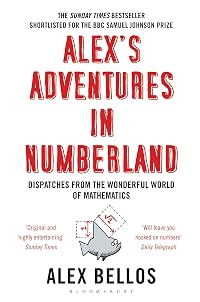
Alex's Adventures in Numberland
by Alex Bellos
On This Page
Description
Whether writing about how algebra solved Swedish traffic problems, visiting the Mental Calculation World Cup to disclose the secrets of lightning calculation, or exploring the links between pineapples and beautiful teeth, Bellos guides his readers into the world of mathematics while uncovering fascinating stories of mathematical achievement--from the breakthroughs of Euclid, the greatest mathematician of all time, to the creations of today's Zen master of origami.Tags
Recommendations
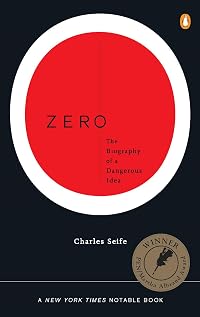
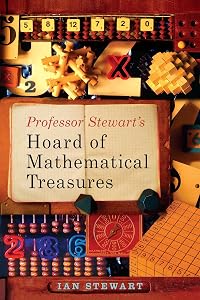
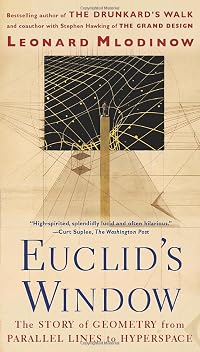
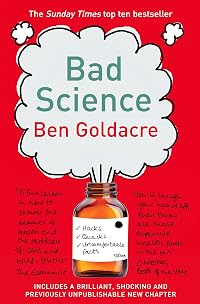
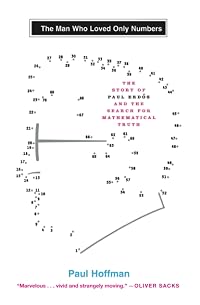
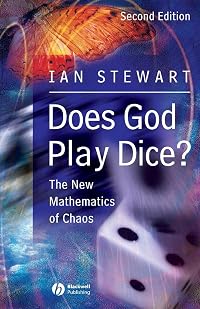
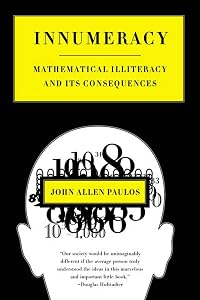
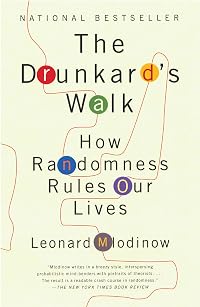





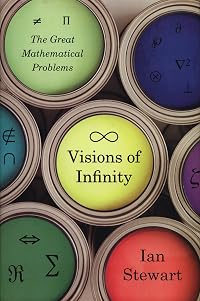
Member Recommendations

misericordia A light exploration of mathematics
In the Land of Invented Languages: Esperanto Rock Stars, Klingon Poets, Loglan Lovers, and the Mad Dreamers Who Tried to Build A Perfect Language by Arika Okrent
wandering_star Similar approach/style, one about words and one about numbers.
The Disappearing Spoon: And Other True Tales of Madness, Love, and the History of the World from the Periodic Table of the Elements by Sam Kean
DetailMuse Kean's essays explore science history and scientists; Bellos's explore math history and mathematicians. All are fun and fascinating.
Member Reviews
There are many books that popularize mathematics by retelling improbable anecdotes about famous mathematicians or by proving counter-intuitive propositions. Few are as amusing, entertaining, or downright clever as Here’s Looking at Euclid, aptly subtitled "A Surprising Excursion through the Astonishing World of Math." This attention grabbing title caught my eye in Chaucer's Books in Santa Barbara, California.
The book consists of a series of not very closely related mathematical topics, lucidly presented. As such, it lends itself to occasional sampling rather than being read straight through. I myself read it a few pages at a time over a period of a month and a half.
It contains many interesting anecdotes, such as a chapter on a show more remarkable chimpanzee who can count up to nine and can identify the appropriate symbol for each of the first nine digits and put them in the correct order. She has significant problems with where the number zero fits in the order, however, even though she seems to know that zero mean no objects. In addition, there are chapters on randomness, interesting sequences or progressions, the decimal expansion of pi, hyperbolic space, and infinity, all of which have surprising properties that Bellos perspicuously explicates.
Evaluation: This is a fun, breezy read that you do not need a Ph.D. in math to enjoy. show less
The book consists of a series of not very closely related mathematical topics, lucidly presented. As such, it lends itself to occasional sampling rather than being read straight through. I myself read it a few pages at a time over a period of a month and a half.
It contains many interesting anecdotes, such as a chapter on a show more remarkable chimpanzee who can count up to nine and can identify the appropriate symbol for each of the first nine digits and put them in the correct order. She has significant problems with where the number zero fits in the order, however, even though she seems to know that zero mean no objects. In addition, there are chapters on randomness, interesting sequences or progressions, the decimal expansion of pi, hyperbolic space, and infinity, all of which have surprising properties that Bellos perspicuously explicates.
Evaluation: This is a fun, breezy read that you do not need a Ph.D. in math to enjoy. show less
I was looking for a book to fill in the first Bingo space: something I don't normally read about. I pulled a few pretty heavy looking science books off the shelf but wasn't really in the mood to dig into gene splicer and DNA sequencing. But, Alex Bellos's ode to the magic of mathematics seemed just right. Alex's Adventures in Numberland takes us through the history and mystery of numbers from figuring out pi to understanding infinity. Along the way, he tells stories and introduces us to interesting people. I don't claim to understand everything he talked about but he did remind me that I used to do Sudoku and loved playing with magic squares when I was a kid. So, i downloaded a Sudoku app and have been having fun!
I read this one slowly show more as each chapter is mostly self-contained and took some time to digest. He does refer back sometimes mostly because he references a lot of historical figures who were involved in various mathematical discoveries. show less
I read this one slowly show more as each chapter is mostly self-contained and took some time to digest. He does refer back sometimes mostly because he references a lot of historical figures who were involved in various mathematical discoveries. show less
Given this as a present, although I like maths I am not sure I would have bought it myself. It is interesting reading the reviews of this book (outside of librarything), they all seem to fall over each other to praise it and say what a wonderful and gripping journey it is throught the oddities and niceties of everyday maths and its history.
Personally, whilst I agree it was readable and my eyes did not glaze over more than a couple of times on subjects which held no interest whatsoever, I felt that in the long run this book did not fully deliver what I thought it would. I believe it has been shortlisted for a book prize, cannot recall which one, and frankly I am surprised.
Without doubt it is a well written book and the research that has show more gone into it is incredible. My only concern is that if I had no interest in Maths I would have given up reading it and indeed on a number of occasions I tried to convey my enthusiasm for some sections to my wife only to see that glazed look that I attribute with "yes dear, but it doesn't sound interesting so why are you telling me this.......?". She has no interest in maths and hence I would not recommend it to her. This is a shame because sections of the book are great but my feeling is that instead of being interesting to all and sundry I believe it has a limited audience which consists of those who are already interested in maths and those who are determined to expand their knowledge. It will not appeal to everyone. show less
Personally, whilst I agree it was readable and my eyes did not glaze over more than a couple of times on subjects which held no interest whatsoever, I felt that in the long run this book did not fully deliver what I thought it would. I believe it has been shortlisted for a book prize, cannot recall which one, and frankly I am surprised.
Without doubt it is a well written book and the research that has show more gone into it is incredible. My only concern is that if I had no interest in Maths I would have given up reading it and indeed on a number of occasions I tried to convey my enthusiasm for some sections to my wife only to see that glazed look that I attribute with "yes dear, but it doesn't sound interesting so why are you telling me this.......?". She has no interest in maths and hence I would not recommend it to her. This is a shame because sections of the book are great but my feeling is that instead of being interesting to all and sundry I believe it has a limited audience which consists of those who are already interested in maths and those who are determined to expand their knowledge. It will not appeal to everyone. show less
I wasn’t very good at maths at school. I found arithmetic easy, but geometry and algebra just did not click. I work in the computer industry and have developed an easy working relationship with maths at a fairly low level. All this does not mean I dislike math, on the contary, I am fascinated by mathematics and the strange worlds it opens up. I would love to be a whiz at maths.
I found Alex Bellos’ book both interesting and frustrating in about equal measure. The book is really a series of connected essays arranged more-or-less chronologically, examining key developments in mathematics and using some of the more exotic byways of the subject to illustrate the underlying concepts. I found most of it easyish to follow and learned a lot show more about what mathematics is, how it works and how it can be used. I was hooked and have vowed to follow up my interest with at least a little research and hard work.
Where I became a little frustrated is when Bellos identifies an ‘interesting mathematical property’ but never clearly shows the significance or underlying structure of it. For example, in the chapter addressing the Fibonacci numbers and the Golden Mean Bellos shows a number of interesting sequences and interrelationships where the Fibonacci sequence is found in various elements of other number sequences. But he never really explains if these are just coincidences or random outcomes from lots of numbers being processed, or if they illustrate some deeper structure. Is it that 1/89 (89 being a Fibonacci number) can be expressed as the sum of a series of decimal fractions that end in the Fibonacci numbers just a bit of razzle-dazzle or is something more fundamental going on?
Perhaps having these reservations and asking these questions means that Bellos has hit the mark and entertained well enough to drive some ongoing thought and interest in the subject. Well done! show less
I found Alex Bellos’ book both interesting and frustrating in about equal measure. The book is really a series of connected essays arranged more-or-less chronologically, examining key developments in mathematics and using some of the more exotic byways of the subject to illustrate the underlying concepts. I found most of it easyish to follow and learned a lot show more about what mathematics is, how it works and how it can be used. I was hooked and have vowed to follow up my interest with at least a little research and hard work.
Where I became a little frustrated is when Bellos identifies an ‘interesting mathematical property’ but never clearly shows the significance or underlying structure of it. For example, in the chapter addressing the Fibonacci numbers and the Golden Mean Bellos shows a number of interesting sequences and interrelationships where the Fibonacci sequence is found in various elements of other number sequences. But he never really explains if these are just coincidences or random outcomes from lots of numbers being processed, or if they illustrate some deeper structure. Is it that 1/89 (89 being a Fibonacci number) can be expressed as the sum of a series of decimal fractions that end in the Fibonacci numbers just a bit of razzle-dazzle or is something more fundamental going on?
Perhaps having these reservations and asking these questions means that Bellos has hit the mark and entertained well enough to drive some ongoing thought and interest in the subject. Well done! show less
This book is an whistle stop tour through maths, alighting at the most interesting parts. Topics include infinity, origin of numbers, probability and statistics, sequences and series -- but these are complemented by more social and cultural references throughout. This, along with numerous illustrations and examples, make this far from being a book for just mathematicians, and the author's background as a journalist shows through in the engaging writing (I've found other popular maths books to be annoyingly smug) .
Whilst some post-16 maths, science or engineering education may be required to appreciate everything in the book, the topics are snapshot enough for anyone who'd browse a popular science section of a bookshop to enjoy it. My show more one disappointment is that we didn't suffer the pun of the US title in the UK. show less
Whilst some post-16 maths, science or engineering education may be required to appreciate everything in the book, the topics are snapshot enough for anyone who'd browse a popular science section of a bookshop to enjoy it. My show more one disappointment is that we didn't suffer the pun of the US title in the UK. show less
Numbers are not ubiquitous in human societies. This is just one of the many facts that can be learned from “Here’s Looking At Euclid,” an entry on popular mathematics from Alex Bellos. That isn’t to say that numbers themselves are useless or that the people have no concept of number, they just don’t need to have numbers past five or so. I have heard of tribes of people that are like this, and it is quite fascinating. For instance, take the number line, you know, that thing you learned in second grade that organizes all the integers into an evenly spaced line. Apparently, if you tell a kindergartner or someone unfamiliar with numbering to arrange numbers from 1 to 10, they will arrange those numbers in a logarithmic fashion. show more After all, 10 is twice as large as 5. Thus, it is thought that ratios play a bigger part than exact answers. This makes sense. If you encounter a pride of lions, why bother counting the exact number of lions in the pride? It is sufficient to know if your tribe or troop has more members.
There is other interesting information in the book as well. Take the idea of changing to base-12 for everything. This so-called “dozenal” system has many ardent supporters. It makes some fractions easier to grok. Some have even tried to go all the way to a base-60 system, but it requires far too many terms. It talks about why your average Chinese person can memorize more digits than your average English speaker (the words for the numbers are shorter, allowing them to fit more into the phonetic loop) and the mastery of the abacus for mental calculations.
Some things seem obvious right now but were not to people of the past. Take the concept of nothing, the zero for instance. The zero has tons of utility as a placeholder and as a concept in and of itself. Without zero we might have to do arithmetic with Roman Numerals or something, and who honestly would want to do something so cumbersome? It talks about Vedic Mathematics, Mental Math, the method of exhaustion for finding the value of pi, and so on.
Speaking of pi, that is another interesting subject. Back before we knew of algebraic expansions and series, we had to put a circle between two polygons. There were tons of contests and shows of prowess to get the number as accurate as possible. The fact that it isn’t practical wasn’t the point; the point was that it could be more accurate. It’s like people climbing Everest or going to the South Pole. Sometimes it is the romance that draws people.
Some of it follows logically from the previously covered material. Take the idea of logarithms; immediately following those is the invention of the Slide Rule, the obsolete tool that got us to the Moon and back. Then there is the section on Recreational Mathematics. It covers Sudoku, Magic Squares, the Fifteen Puzzle, Tangrams, the Rubik’s Cube, Chess Problems, ambigrams, and Martin Gardner.
Throughout the book are such interesting bits of trivia. The book doesn’t really contain many equations that would put a person off of reading it, and Bellos writes in a manner that shows his own fascination with the subject, and his enthusiasm shines through the pages. show less
There is other interesting information in the book as well. Take the idea of changing to base-12 for everything. This so-called “dozenal” system has many ardent supporters. It makes some fractions easier to grok. Some have even tried to go all the way to a base-60 system, but it requires far too many terms. It talks about why your average Chinese person can memorize more digits than your average English speaker (the words for the numbers are shorter, allowing them to fit more into the phonetic loop) and the mastery of the abacus for mental calculations.
Some things seem obvious right now but were not to people of the past. Take the concept of nothing, the zero for instance. The zero has tons of utility as a placeholder and as a concept in and of itself. Without zero we might have to do arithmetic with Roman Numerals or something, and who honestly would want to do something so cumbersome? It talks about Vedic Mathematics, Mental Math, the method of exhaustion for finding the value of pi, and so on.
Speaking of pi, that is another interesting subject. Back before we knew of algebraic expansions and series, we had to put a circle between two polygons. There were tons of contests and shows of prowess to get the number as accurate as possible. The fact that it isn’t practical wasn’t the point; the point was that it could be more accurate. It’s like people climbing Everest or going to the South Pole. Sometimes it is the romance that draws people.
Some of it follows logically from the previously covered material. Take the idea of logarithms; immediately following those is the invention of the Slide Rule, the obsolete tool that got us to the Moon and back. Then there is the section on Recreational Mathematics. It covers Sudoku, Magic Squares, the Fifteen Puzzle, Tangrams, the Rubik’s Cube, Chess Problems, ambigrams, and Martin Gardner.
Throughout the book are such interesting bits of trivia. The book doesn’t really contain many equations that would put a person off of reading it, and Bellos writes in a manner that shows his own fascination with the subject, and his enthusiasm shines through the pages. show less
There is a difference between a primer and something written for laymen. This book more closely aligns with my interpretation of the former. For people who have no familiarity with mathematical concepts, this book would probably be delightful. For those who are aware of the more famous math intrigues but are amateurs (or, like me, more interested in the history, applications, and explanations than the proofs), this book retreads old, familiar ground. Anyone who watched Numb3rs or – painful though it may be to say it – read Dan Brown’s The Da Vinci Code are probably going to find themselves rather bored by many of the chapters. The section on the Golden Ratio is particularly yawn-inducing; it adds nothing more than the basic show more information, including its relation to the Fibonacci sequence and its occurrence in nature.
There were some things that I hadn’t heard about – the musical rendition of Recaman’s Sequence was a particularly pleasing find, and I highly recommend looking it up on YouTube if you read the book but didn’t bother going to check – and a few beloved ones, like Fermat’s Last Theorem, but otherwise it relied on the pop math that is so prevalent as to be commonplace now (See: P versus NP and its increasing ubiquity on TV shows of late).
If the words Reimann’s Hypothesis, Srinivasa Ramanujan, or gambler’s fallacy ring even a distant bell, you will probably not find anything groundbreaking or new in this book.
This is not to say that the book is without merit; for those who don’t know anything about math, I imagine this would be a great introduction to the practical, the theoretical, and the just plain fun aspects of mathematical theory. It helps as well that Alex Bellos is a charming writer. In one chapter, he explains with the glee of a child receiving a present a hundred-day experiment in which he charted the weight of baguettes every morning. His descriptions, particularly of some of the more eccentric people in the field, like Gregory and David Chudnovsky, are delightful. And he has a knack for sliding in humor at just the right moment, as when he is discussing the almost mythical lore of pi: “Pi has gone by this name only since 1706, when the Welshman William Jones introduced the symbol π in his book, the snappily titled, A New Introduction to the Mathematics, for the Use of some Friends who have neither Leisure, Convenience, nor, perhaps, Patience, to search into so many different Authors, and turn over so many tedious Volumes, as is unavoidably required to make but tolerable progress in the Mathematics” (111).
His descriptions of the math are … less charming. He relates his experience meeting Martin Gardner, who explains that it was his own helplessness at anything more difficult than calculus that allowed him to write about it in such a way that even math-dullards could understand; Bellos clearly has no such problems. It is abundantly clear that he is startlingly intelligent, and writes clearly otherwise, but with the restrictions bound to someone who understands something intuitively. I have read other books that explained mathematical problems and theorems in ways that even I – definitely not a math genius – could understand, but the book had numerous instances where Bellos turned to the proofs, apparently assured that this was sufficient to explain. It was not. (Like Martin Gardner, I am similarly hopeless with anything after basic calculus).
He also has a few snide comments that frankly surprised me, as he confessed his love of writing in the introduction. One such that managed to rankle was this gem: “The propositions of The Elements are true in perpetuity. They do not become less certain or indeed less relevant with time (which is why Euclid is still taught at schools and why Greek playwrights, poets and historians are not)” (57).
A. They are, and B. If they weren’t, that would be indicative of a problem, not an indication of their lack of relevance in some kind of academic Darwinism. Or, if one prefers: 1. They are, and 2. If they weren’t… Seriously though, I don't know of anyone who escaped high school without having read at least The Odyssey and probably Oedipus Rex as well. I want to believe that this is sarcasm, but he sounds so sincere in this that I have a hard time convincing myself.
It may sound as if I’m nitpicking, and I am, because truly, this book wasn’t bad. As a primer, it is well-written, with an endearing narrator, and just enough fun to make even the more boring math palatable. Thankfully, most of the math isn’t at all in need of spicing up – the discussion of Cantor’s explanation of the concept of larger/smaller infinities is quietly brilliant, and a treat to read in and of itself, and Bellos’s obvious excitement at its implications make it hard not to be equally swept up by the awesomeness of it all. show less
There were some things that I hadn’t heard about – the musical rendition of Recaman’s Sequence was a particularly pleasing find, and I highly recommend looking it up on YouTube if you read the book but didn’t bother going to check – and a few beloved ones, like Fermat’s Last Theorem, but otherwise it relied on the pop math that is so prevalent as to be commonplace now (See: P versus NP and its increasing ubiquity on TV shows of late).
If the words Reimann’s Hypothesis, Srinivasa Ramanujan, or gambler’s fallacy ring even a distant bell, you will probably not find anything groundbreaking or new in this book.
This is not to say that the book is without merit; for those who don’t know anything about math, I imagine this would be a great introduction to the practical, the theoretical, and the just plain fun aspects of mathematical theory. It helps as well that Alex Bellos is a charming writer. In one chapter, he explains with the glee of a child receiving a present a hundred-day experiment in which he charted the weight of baguettes every morning. His descriptions, particularly of some of the more eccentric people in the field, like Gregory and David Chudnovsky, are delightful. And he has a knack for sliding in humor at just the right moment, as when he is discussing the almost mythical lore of pi: “Pi has gone by this name only since 1706, when the Welshman William Jones introduced the symbol π in his book, the snappily titled, A New Introduction to the Mathematics, for the Use of some Friends who have neither Leisure, Convenience, nor, perhaps, Patience, to search into so many different Authors, and turn over so many tedious Volumes, as is unavoidably required to make but tolerable progress in the Mathematics” (111).
His descriptions of the math are … less charming. He relates his experience meeting Martin Gardner, who explains that it was his own helplessness at anything more difficult than calculus that allowed him to write about it in such a way that even math-dullards could understand; Bellos clearly has no such problems. It is abundantly clear that he is startlingly intelligent, and writes clearly otherwise, but with the restrictions bound to someone who understands something intuitively. I have read other books that explained mathematical problems and theorems in ways that even I – definitely not a math genius – could understand, but the book had numerous instances where Bellos turned to the proofs, apparently assured that this was sufficient to explain. It was not. (Like Martin Gardner, I am similarly hopeless with anything after basic calculus).
He also has a few snide comments that frankly surprised me, as he confessed his love of writing in the introduction. One such that managed to rankle was this gem: “The propositions of The Elements are true in perpetuity. They do not become less certain or indeed less relevant with time (which is why Euclid is still taught at schools and why Greek playwrights, poets and historians are not)” (57).
A. They are, and B. If they weren’t, that would be indicative of a problem, not an indication of their lack of relevance in some kind of academic Darwinism. Or, if one prefers: 1. They are, and 2. If they weren’t… Seriously though, I don't know of anyone who escaped high school without having read at least The Odyssey and probably Oedipus Rex as well. I want to believe that this is sarcasm, but he sounds so sincere in this that I have a hard time convincing myself.
It may sound as if I’m nitpicking, and I am, because truly, this book wasn’t bad. As a primer, it is well-written, with an endearing narrator, and just enough fun to make even the more boring math palatable. Thankfully, most of the math isn’t at all in need of spicing up – the discussion of Cantor’s explanation of the concept of larger/smaller infinities is quietly brilliant, and a treat to read in and of itself, and Bellos’s obvious excitement at its implications make it hard not to be equally swept up by the awesomeness of it all. show less
Members
- Recently Added By
Published Reviews
ThingScore 92
With sprinklings of exclamation marks and anecdotes (mostly of meetings with eccentric mathematicians) among the equations, and chapter headings such as "The Life of Pi" and "The X-Factor", this is as reader-friendly as a book like this is going to get. I cannot promise that it will hold your keen interest all the time, but try not to be scared of it.
added by souloftherose
It’s often said, for instance, that a translation can’t ever be an adequate substitute for the original. But a translation, Bellos writes, isn’t trying to be the same as the original, but to be like it. Which is why the usual conceptual duo of translation — fidelity, and the literal — is too clumsy. These ideas just derive from the misplaced anxiety that a translation is trying to be show more a substitute. show less
added by wandering_star
When his book works, he's like an intrepid cosmic explorer, floating in an airship over a strange planet, and describing the fascinating things he sees. Down there, for example, on the eighth-century Northumbrian coast, he spots the Venerable Bede, who has worked out a way to count to a million simply by holding parts of his body.
added by wandering_star
Lists

Popular science books mentioned on WNYC Radiolab show
9 works; 3 members

Recommend the 20 best books you've read in the last five years
2,168 works; 608 members

HS Mathematics class library
79 works; 6 members
Author Information

Alex Bellos is the bestselling author of ;iAlex's Adventures in Numberland;/i, which was shortlisted for the BBC Samuel Johnson Prize. He is the iGuardian's maths-blogger, and has worked for the paper in London and Rio de Janeiro as its unusually numerate foreign correspondent. He is a curator- in-residence at the Science Museum and has a degree show more ree in Mathematics and Philosophy from the University of Oxford. He made the shortlist for the 2015 Royal Society Winton Prize for Science Books with his title, Alex through the Looking-Glass: How Life Reflects Numbers and Numbers Reflect Life. (Bowker Author Biography) show less
Some Editions
Awards and Honors
Common Knowledge
- Canonical title*
- Alex en el país de los números
- Original title
- Alex´s Adventures in Numberland
- Alternate titles
- Here's Looking at Euclid; Alex's Adventures in Numberland
- Original publication date
- 2010
- Important places
- Numberland
- Dedication
- To my mother and father
- First words
- When I walked into Pierre Pica's cramped paris apartment I was overwhelmed by the stench of mosquito repellent.
- Last words
- (Click to show. Warning: May contain spoilers.)Cantor has provided us with as many numbers as we like, but there are no longer enough things to count.
- Blurbers
- Gardner, Martin; Doxiadis, Apostolos; Stewart, Ian
- Original language
- English
- Disambiguation notice
- Alex's Adventures in Numberland was published under the title Here's Looking at Euclid in the United States.
*Some information comes from Common Knowledge in other languages. Click "Edit" for more information.
Classifications
Statistics
- Members
- 1,444
- Popularity
- 16,369
- Reviews
- 26
- Rating
- (3.92)
- Languages
- 9 — Czech, Dutch, English, Finnish, French, German, Italian, Portuguese, Spanish
- Media
- Paper, Audiobook, Ebook
- ISBNs
- 25
- ASINs
- 10