On This Page
Description
The most beautiful fish in the entire ocean discovers the real value of personal beauty and friendship.Tags
Recommendations













Member Reviews
I came across this book recently while going through old Scholastics lists, and it instantly brought back some fond memories. But I was surprised to see that a 1-star review is the most liked one here, so instead of rating this book a three and moving on, I found a pdf of the book on an archive site to read.
And I agree with the more critical reviewers. Through the eye-catching artwork, this book is essentially a favorable view of conformity and prejudice. It also fits right in with that "everyone is special" message that I was often subject to while growing up. Inevitably, there will be times in life when it's smarter to blend in rather than stick out, but Pfister either doesn't care about showing a bit more depth to the matter, or he show more believes that the jealousy and pressure exerted by the other fish is a valid way to treat those who are different.
This is almost like a modern retelling of the story of Jacob and Joseph from the Bible, except instead of his brothers pushing Joseph into the well, Joseph tears his multi-colored cloak apart and gives pieces of it to his jealous brothers in order to make them happy (although Joseph's sordid tale also brings up the matter of favoritism). And Seuss already satirized something like this with his own story, "The Sneetches". Some of Roald Dahl's stories must've, too, but I can't think of any at the moment. If only Pfister showed an honest continuation of the rainbow fish's life, we would probably witness a lot of the fish's inner turmoil and regret.
At least the art's not too bad. It's much better than the story and its questionable ideas. show less
And I agree with the more critical reviewers. Through the eye-catching artwork, this book is essentially a favorable view of conformity and prejudice. It also fits right in with that "everyone is special" message that I was often subject to while growing up. Inevitably, there will be times in life when it's smarter to blend in rather than stick out, but Pfister either doesn't care about showing a bit more depth to the matter, or he show more believes that the jealousy and pressure exerted by the other fish is a valid way to treat those who are different.
This is almost like a modern retelling of the story of Jacob and Joseph from the Bible, except instead of his brothers pushing Joseph into the well, Joseph tears his multi-colored cloak apart and gives pieces of it to his jealous brothers in order to make them happy (although Joseph's sordid tale also brings up the matter of favoritism). And Seuss already satirized something like this with his own story, "The Sneetches". Some of Roald Dahl's stories must've, too, but I can't think of any at the moment. If only Pfister showed an honest continuation of the rainbow fish's life, we would probably witness a lot of the fish's inner turmoil and regret.
At least the art's not too bad. It's much better than the story and its questionable ideas. show less
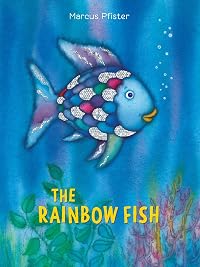
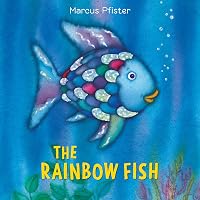
The Rainbow Fish was one of my favorite books as a child and, while I do admit the sentimental value this book holds for me has likely swayed my opinion, I still consider The Rainbow Fish to be a wonderful picturebook after re-reading it from an adult perspective. I loved the book's colorful illustrations, especially the "sparkling silver scales" made from shimmering paper. I thought that the use of mixed media and different textures made the illustrations more visually interesting and captivating for me as a reader, and I was more tempted to interact with the images on the page through touch. I thought that the rest of the illustrations, painted in watercolor with the use of more muted shades served as a perfect backdrop for the silver show more scales because the duller tones really made the shiny paper "pop" in contrast, illustrating just how magnificent the Rainbow Fish's scales were. The watercolors used for the Rainbow Fish's other scales were much brighter than the other colors on the page as well, which made the Rainbow Fish's outstanding beauty all the more noticeable. At first glance, I also liked the "big idea" of the book, which is that friendship is more important than material items, that arrogance and snobbery prevent one from making friends, and that it is good to share with others. At the beginning of the story, the Rainbow Fish had many shimmering scales of which he was very proud, but that pride led to vanity that only served to isolate him from the other fish. After speaking to the wise octopus, the Rainbow Fish decided to give away one of his scales to each of the other fish, sacrificing his beauty for friendship. As a child, I thought that the Rainbow Fish had a very positive "big idea" about the importance of friendship, but when I began to analyze the book through an adult lens, I realized that there were several messages in the book that did not sit right with me. Firstly, I did not like that the solution to the Rainbow Fish's problems was to give away his scales, parts of his body, to others in order to make friends. Rather than mutilating himself, I think that the Rainbow Fish should have learned not to be so preoccupied with his appearance and to be humble while still appreciating his most prized possessions. Furthermore, I did not like that the Rainbow Fish tried to "buy" himself friends with gifts, because those "friends" are not necessarily true friends. The other fish were likely being kind to the Rainbow Fish just to get scales, not because they wanted to be his friend. I also thought that the fact that the Rainbow Fish gave away all of his scales so that everyone had one scale was a bit disconcerting. The Rainbow Fish's problem was solved only when he gave an equal amount of his "wealth" to each of the other fish. This equal allotment of scales seemed somewhat reminiscent of socialist and communist ideals to me. I also think that the fact that all of the fish looked the same in the end was a potentially harmful message, as it suggests that it is much better to conform to a standard and be the same as everyone else than it is to express one's individuality. While these negative messages in The Rainbow Fish did trouble me, I do not think that they were intentional and I think that the positive messages of friendship and sharing are much more apparent when reading the book. For this reason, I would give the book 4 stars. show less
Ideology for children. The book is beautifully made, but I really hated its message. The rainbow fish is born with his pretty scales, he didn't take away anything from anybody. Yet, to be considered a "good fish", he is supposed to give away his pretty scales for free, just because somebody asks for them.
The proper response would have been "Fuck you, other fish! If you only pretend to like me if I give you my scales, you are not real friends. I am better off without you.".
The book ends with the fish having only one scale left, not being beautiful anymore at all. That is supposed to be a happy end. What is not shown is how the other fish stop playing with him anyway, because they will be more interested in the next shiny fish swimming show more along.
Of course sharing is good, and it can help to make friends. But to show it as a socially mandated thing and paint the rainbow fish as egoistic because initially he doesn't want to give up his scales is insane. show less
The proper response would have been "Fuck you, other fish! If you only pretend to like me if I give you my scales, you are not real friends. I am better off without you.".
The book ends with the fish having only one scale left, not being beautiful anymore at all. That is supposed to be a happy end. What is not shown is how the other fish stop playing with him anyway, because they will be more interested in the next shiny fish swimming show more along.
Of course sharing is good, and it can help to make friends. But to show it as a socially mandated thing and paint the rainbow fish as egoistic because initially he doesn't want to give up his scales is insane. show less
OK, it's pretty. But it's message is highly peculiar - give away what makes you special to make others like you. It's not possible and that's not how group dynamics work.
I have never seen a picture book with better illustrations. With all the bright colors, the glittery scales, and the blending, The Rainbow Fish catches its reader’s attention immediately. The development of the main character throughout the story helps bring the theme alive as well, as he learns about the importance of sharing and being nice.
The theme in this picture book is quite possibly one of the most important things a child can learn; you can be pretty and look good, but that won’t get you anywhere unless you’re also nice and likeable.
I’ve loved this book for as long as I can remember, it was always my first pick for silent reading time in elementary school. :)
The theme in this picture book is quite possibly one of the most important things a child can learn; you can be pretty and look good, but that won’t get you anywhere unless you’re also nice and likeable.
I’ve loved this book for as long as I can remember, it was always my first pick for silent reading time in elementary school. :)
I think many people view The Rainbow Fish as nostalgic from their own childhood or they think that the book teaches children a good lesson on sharing but I'll have to disagree. The Rainbow Fish was special because of its colorful scales and other fish were jealous that he was so special. They ostracized him when he refused to give up his scales and that's a form of bullying. They only became friends with him again when he gave up his scales to them. I think this is a bad lesson to teach children because its not all about sharing, it's about giving up a part of you that your proud of in order to fit in. No one is special if everyone is special.
I loved this book as a child, and now I love it even more to read to my classroom. Rainbow Fish was the most beautiful fish in the sea. All the sea creatures admired his beauty and wanted the same for themselves. They often asked to have one of his sparkly scales; however, Rainbow Fish always said "no" and wondered by no one wanted to be his friend. After a discussion with the octopus, he decided to give his scales to local fish in the sea. Everyone wanted to be his friend and Rainbow Fish was filled with happiness. I believe this plot provides a great message for Children. It demonstrates the importance of sharing and being humble for the luxuries provided. The illustrations enhance the story as the illustrator concentrates on the show more scales of the fish. The scales on the fish are full with sparkles just as it was described in the book, this gives the audience the chance the sense the beauty the rest of the fish see. Rainbow Fish is a story children can related to if feeling lonely and wanted to make new friends. It is engaging and clear enough for children to understand the end message. show less
Members
- Recently Added By
Published Reviews
ThingScore 100
Summary: The Rainbow fish is a book about a very beautiful and shimmering fish who finds happiness by sharing his scales with the other fish.
Personal Reaction: This book is a very good book. Its morals are genuine and it not only teaches kindness but also acceptance. It also teaches how to value being yourself. I really liked this book and the pictures. It is a easy to read picture show more book.
Classroom Extension: It would be fun to have children make their own storybook telling/showing how they can be kind to someone. show less
Personal Reaction: This book is a very good book. Its morals are genuine and it not only teaches kindness but also acceptance. It also teaches how to value being yourself. I really liked this book and the pictures. It is a easy to read picture show more book.
Classroom Extension: It would be fun to have children make their own storybook telling/showing how they can be kind to someone. show less
added by rocquel
Lists

Best children's picture books
377 works; 85 members

Brightly Beaming Curriculum Books
281 works; 8 members

Rainbow / Feelings (recc titles)
7 works; 1 member

75 Books for Fall Literacy Block - Dr. Reed
67 works; 2 members

Books about Octopuses
23 works; 1 member

scav
54 works; 2 members

Youth: Marine Science
83 works; 1 member
Written and Illustrated By
805 works; 1 member
Author Information

178+ Works 29,009 Members
Some Editions
Awards and Honors
Awards
Series

Work Relationships
Is contained in
Common Knowledge
- Canonical title*
- Der Regenbogenfisch
- Original title
- Der Regenbogenfisch
- Alternate titles
- Rainbow Fish
- Original publication date
- 1992
- People/Characters
- Rainbow Fish
- Related movies
- The Rainbow Fish (1997 | IMDb)
- First words
- A long way out in the deep blue sea there lived a fish.
- Last words
- (Click to show. Warning: May contain spoilers.)"Here I come," said the Rainbow Fish and, happy as a splash, he swam off to join his friends.
- Original language
- German
- Canonical DDC/MDS
- 833.914
*Some information comes from Common Knowledge in other languages. Click "Edit" for more information.
Classifications
Statistics
- Members
- 10,218
- Popularity
- 958
- Reviews
- 626
- Rating
- (4.24)
- Languages
- 19 — Arabic, Catalan, Chinese, Dutch, English, Finnish, French, German, Hmong, Italian, Japanese, Khmer, Korean, Multiple languages, Portuguese, Russian, Spanish, Thai, Vietnamese
- Media
- Paper, Audiobook, Ebook
- ISBNs
- 151
- UPCs
- 8
- ASINs
- 14