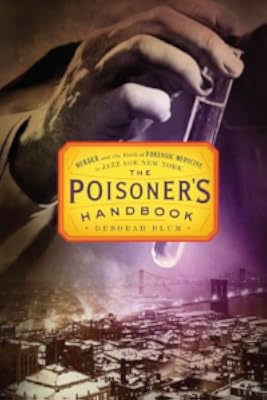
The Poisoner's Handbook: Murder and the Birth of Forensic Medicine in Jazz Age New York
by Deborah Blum
On This Page
Description
History. Medical. Nonfiction. Deborah Blum, writing with the high style and skill for suspense that is characteristic of the very best mystery fiction, shares the untold story of how poison rocked Jazz Age New York City. In The Poisoner's Handbook, Blum draws from highly original research to track the fascinating, perilous days when a pair of forensic scientists began their trailblazing chemical detective work, fighting to end an era when untraceable poisons offered an easy path to the show more perfect crime. Drama unfolds case by case as the heroes of The Poisoner's Handbook-chief medical examiner Charles Norris and toxicologist Alexander Gettler-investigate a family mysteriously stricken bald, Barnum and Bailey's Famous Blue Man, factory workers with crumbling bones, a diner serving poisoned pies, and many others. Each case presents a deadly new puzzle, and Norris and Gettler work with a creativity that rivals that of the most imaginative murderer, creating revolutionary experiments to tease out even the wiliest compounds from human tissue. Yet in the tricky game of toxins, even science can't always be trusted, as proven when one of Gettler's experiments erroneously sets free a suburban housewife later nicknamed "America's Lucretia Borgia" to continue her nefarious work. From the vantage of Norris and Gettler's laboratory in the infamous Bellevue Hospital it becomes clear that killers aren't the only toxic threat to New Yorkers. Modern life has created a kind of poison playground, and danger lurks around every corner. Automobiles choke the city streets with carbon monoxide, while potent compounds such as morphine can be found on store shelves in products ranging from pesticides to cosmetics. Prohibition incites a chemist's war between bootleggers and government chemists, while in Gotham's crowded speakeasies each round of cocktails becomes a game of Russian roulette. Norris and Gettler triumph over seemingly unbeatable odds to become the pioneers of forensic chemistry and the gatekeepers of justice during a remarkably deadly time. A beguiling concoction that is equal parts true crime, twentieth-century history, and science thriller, The Poisoner's Handbook is a compelling account of a forgotten New York. show lessTags
Recommendations

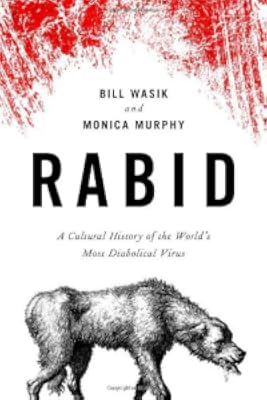
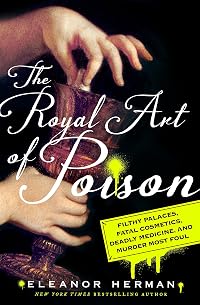

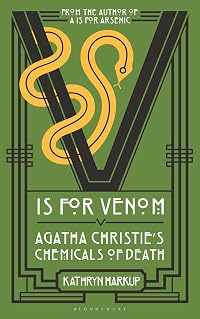
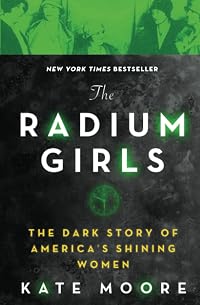
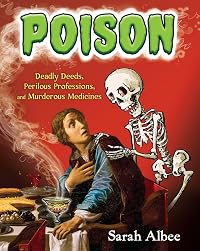
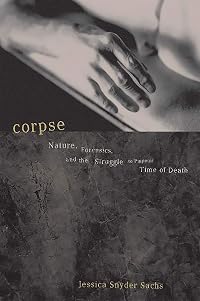
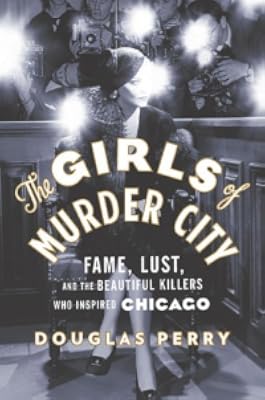
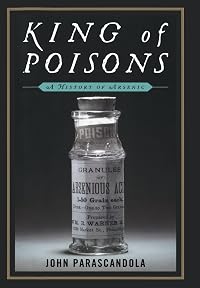

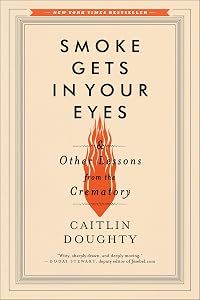
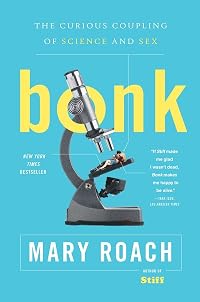
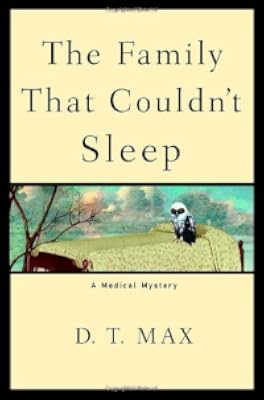

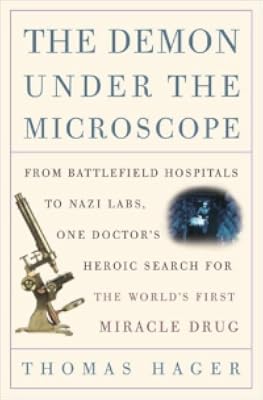
Member Recommendations

391 The Killer of Little Shepherds both have to do with the advent of forensic science; one set in rural France, in the attempt to track down a vicious serial killer, the other set in 1920s New York during Prohibition. Both are excellent books that I would highly recommend to anyone interested in the vanguards of forensics!
20
The Tale of the Dueling Neurosurgeons: The History of the Human Brain as Revealed by True Stories of Trauma, Madness, and Recovery by Sam Kean
KCampana Both books report the history of science (specifically of the human body) in an engaging, approachable manner.
20
The Cadaver King and the Country Dentist: A True Story of Injustice in the American South by Radley Balko
JenniferRobb Both books look at early stages in history of forensics (though in different areas of the USA).
20
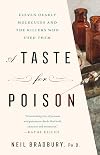
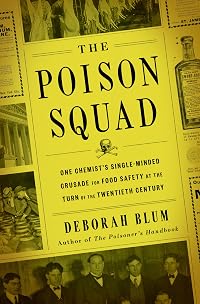
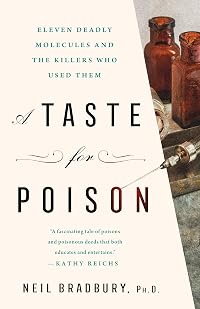
JenniferRobb Both books discuss poisons but from different points of view. Blum's delves into early forensic medicine moreso than Bradbury's book does and Bradbury's book delves into the mechanisms of how the poisons work moreso than Blum's.

mem30472 While different in direction, both works have a share a focus on the interactions of chemistry and history, as well as a one-compound-a-chapter structure.
Member Reviews
This book was on my TBR for years because science, history, and true crime are all interests and a book that blended all three sounded great. And it was! There’s a lot of information, presented without feeling like a lot, nothing’s portrayed too sensationally or sentimentally (I always worry), and Blum’s style’s easy to follow and fairly fast to read.
There wasn’t really anything in this that wasn’t enjoyable, if one can say one enjoys reading about murders and dead bodies. I liked learning the chemistry behind poisons like arsenic, carbon monoxide, and alcohol and the detail Blum went into not only in terms of what was known then, but what’s known now, and I liked that she laid the book out with each chapter or two show more tracking a specific poison. I also enjoyed learning how the scientists came up with the tests and methods and standards they needed to be able to prove and prosecute the crimes, and how New York’s medical examiner’s office kind of set the standard for the rest of the US. There’s a lot to the science side of this that basically ranged from “that’s a cool thing I didn’t know” to “wow, really?!”
Blum weaves the crimes and deaths in nicely too. Every toxin has a case or two associated with it, which illustrate how the poisons got used and the curve balls the cases could throw at the M.E. They also bring the 1920s and 1930s to life, in a way, because Blum takes the time to describe the players and the setting, pull from trial transcripts and news articles, and digress into things like factory safety or the ingredients of rat poisons or the alcoholic arms race that was Prohibition. It’s never a fully realised history—you want a different book for that—but it’s a really neat window into the era and I finished the book knowing much more than I did when I started.
She also does a great job bringing the M.E. and chief toxicologist to life, along with their struggles against apathy, ignorance, corruption, and greed. They didn’t have an easy go of it revolutionising their department, let alone their field, and that makes their achievements that much cooler, their disappointments that much sadder. This book is, among other things, something of a bio of these two men, and a portrait of the sort of politics and law enforcement they were facing. Again, I’m sure it only gives the briefest overview, like with the criminal cases, but it’s a side of the 1920s and Prohibition you don’t see.
In short, while there’s nothing much to see me raving about this book, nothing that was so darn superb I have to tell everyone to read this, The Poisoner’s Handbook is absolutely as it should be and a good, informative, interesting read. It’s a well-told story on a cool subject, that’s guaranteed to have at least one fact you didn’t know per chapter, and if I’ve made you interested in reading it, then you should! I’m not hesitant to rec this at all! But do bear in mind my … bear in mind, because there were a few moments I had to pause at, for squeamishness reasons.
To bear in mind: Contains moderate to graphic descriptions of autopsies, chemical testing of human remains, and the effects of poisons on the human body. Also murders, attempted murders, poisonings, corrupt officials, lax job safety standards, and cruelty to and deaths of animals.
7/10 show less
There wasn’t really anything in this that wasn’t enjoyable, if one can say one enjoys reading about murders and dead bodies. I liked learning the chemistry behind poisons like arsenic, carbon monoxide, and alcohol and the detail Blum went into not only in terms of what was known then, but what’s known now, and I liked that she laid the book out with each chapter or two show more tracking a specific poison. I also enjoyed learning how the scientists came up with the tests and methods and standards they needed to be able to prove and prosecute the crimes, and how New York’s medical examiner’s office kind of set the standard for the rest of the US. There’s a lot to the science side of this that basically ranged from “that’s a cool thing I didn’t know” to “wow, really?!”
Blum weaves the crimes and deaths in nicely too. Every toxin has a case or two associated with it, which illustrate how the poisons got used and the curve balls the cases could throw at the M.E. They also bring the 1920s and 1930s to life, in a way, because Blum takes the time to describe the players and the setting, pull from trial transcripts and news articles, and digress into things like factory safety or the ingredients of rat poisons or the alcoholic arms race that was Prohibition. It’s never a fully realised history—you want a different book for that—but it’s a really neat window into the era and I finished the book knowing much more than I did when I started.
She also does a great job bringing the M.E. and chief toxicologist to life, along with their struggles against apathy, ignorance, corruption, and greed. They didn’t have an easy go of it revolutionising their department, let alone their field, and that makes their achievements that much cooler, their disappointments that much sadder. This book is, among other things, something of a bio of these two men, and a portrait of the sort of politics and law enforcement they were facing. Again, I’m sure it only gives the briefest overview, like with the criminal cases, but it’s a side of the 1920s and Prohibition you don’t see.
In short, while there’s nothing much to see me raving about this book, nothing that was so darn superb I have to tell everyone to read this, The Poisoner’s Handbook is absolutely as it should be and a good, informative, interesting read. It’s a well-told story on a cool subject, that’s guaranteed to have at least one fact you didn’t know per chapter, and if I’ve made you interested in reading it, then you should! I’m not hesitant to rec this at all! But do bear in mind my … bear in mind, because there were a few moments I had to pause at, for squeamishness reasons.
To bear in mind: Contains moderate to graphic descriptions of autopsies, chemical testing of human remains, and the effects of poisons on the human body. Also murders, attempted murders, poisonings, corrupt officials, lax job safety standards, and cruelty to and deaths of animals.
7/10 show less
After a drunk joke of a coroner is booted from office in New York City, Charles Norris arrives in 1918 to revolutionize the office of the medical examiner, hiring a prolific toxicologist named Alexander Gettler. Despite the corruption raging in the city's government, Norris and Gettler are dedicated to their task and above the reproach of the law. Norris grows the medical examiner's office into an integral part of murder investigations, with Gettler probing the frontiers of toxicology in an effort to keep up with the innovations of bootleggers, murderous poisoners, and the government's Prohibition chemists who are trying to make alcohol as dangerous as possible (and succeeding).
Each chapter centers around a particular poison, new at the show more time, and highlights cases that brought to light the use, abuse, and specific anatomical effects of the substance. Just as intriguing as the killers and killings are the creativity and fortitude Norris and Gettler employed in finding solutions.
Blum is a Pulitzer Prize-winning journalist, but she's got some serious suspense chops. Also? I was appalled to read the great lengths our government went to in order to stop people from drinking alcohol during Prohibition, in essence poisoning the citizenry with increasingly lethal processes and chemicals. show less
Each chapter centers around a particular poison, new at the show more time, and highlights cases that brought to light the use, abuse, and specific anatomical effects of the substance. Just as intriguing as the killers and killings are the creativity and fortitude Norris and Gettler employed in finding solutions.
Blum is a Pulitzer Prize-winning journalist, but she's got some serious suspense chops. Also? I was appalled to read the great lengths our government went to in order to stop people from drinking alcohol during Prohibition, in essence poisoning the citizenry with increasingly lethal processes and chemicals. show less
This book by Deborah Blum came out to great acclaim a few years ago, and I can see why it drew so much attention. The Poisoner's Handbook is an excellent example of creative nonfiction, a book that delves into intense scientific data yet is completely approachable by a layman. Most of the book revolves around two key figures in the New York coroner's office: chief medical examiner Charles Norris and toxicologist Alexander Gettler. These two wrote the book on forensic medicine--literally. Their medical studies were exhaustive as they tried to figure out how to measure a variety of poisons within the human body, creating a new kind of science. The background of the Jazz Age confounded their studies; people play up the allure of the show more speakeasy, but it was also a time filled with deaths by toxic wood alcohol and dangerous additives added (on purpose) by the Prohibition federal government.
Chapters on poisons include:
Chloroform
Wood Alcohol
Cyanides
Arsenic
Mercury
Carbon Monoxide
Methyl Alcohol
Radium
Ethyl Alcohol
Thallium
For me, the chapter on Radium was the most tragic. I have read about the "Radium Girls" before, the 1920s clock dial painters who licked their paintbrushes and ended up dying agonizing deaths as their bones splintered apart. There are a few points near the end where the book began to drag because of heavier science and fewer case studies, but overall the book was fascinating and highly readable. This isn't a read for anyone with a weak stomach as it often talks about pureeing brain matter or other cadaver examinations, and there is also testing on live animals. However, as an author, this is definitely a resource book I intend to keep on my shelf show less
Chapters on poisons include:
Chloroform
Wood Alcohol
Cyanides
Arsenic
Mercury
Carbon Monoxide
Methyl Alcohol
Radium
Ethyl Alcohol
Thallium
For me, the chapter on Radium was the most tragic. I have read about the "Radium Girls" before, the 1920s clock dial painters who licked their paintbrushes and ended up dying agonizing deaths as their bones splintered apart. There are a few points near the end where the book began to drag because of heavier science and fewer case studies, but overall the book was fascinating and highly readable. This isn't a read for anyone with a weak stomach as it often talks about pureeing brain matter or other cadaver examinations, and there is also testing on live animals. However, as an author, this is definitely a resource book I intend to keep on my shelf show less
We take for granted in the 21st Century that forensic medicine is and shall always be a trusted arm of criminal investigation. This was not always the case. In the years following World War I, the coroner's office of New York City struggled to dramatically improve its reputation from that of incredible corruption, graft and bungling to being a trusted, sober (in all ways) and scientifically accurate partner in the detection and prosecution of crime, in particular poisonings. The book focuses on two men, the blue-blooded Dr. Charles Norris and the immigrant toxicologist extraordinaire, Alexander Gettler who wrested the grip of the coroner's office from a string of unsuitable (and dangerous) political appointments, and through blood, show more sweat, gobs of their own money and time turned the department around into the premier forensic institution of its day.
Along the way we are introduced to a handful of deadly poisons,(one per chapter), their destructive processes, and the groundbreaking science that was pioneered by this office to detect and prove guilt in poisoning murder cases. The overarching theme of the book is of course the Roaring Twenties and Prohibition, a time when people sometimes unknowingly (but mostly voluntarily) poisoned themselves with bathtub spirits containing ingredients like industrial wood alcohol, kerosene, formaldehyde, mercury, iodine, etc., even knowing that they may one day end up on Dr. Norris' table. But perhaps the most scary thing about this book was the complicity of the bootleggers by the local and state governments either by inter-departmental feuding, political obstruction, fund deprivation, or in the case of the federal government, outright assistance by increasing the availability and deadly quality (especially after 1926) of the poisons. An eye-opening book indeed. show less
Along the way we are introduced to a handful of deadly poisons,(one per chapter), their destructive processes, and the groundbreaking science that was pioneered by this office to detect and prove guilt in poisoning murder cases. The overarching theme of the book is of course the Roaring Twenties and Prohibition, a time when people sometimes unknowingly (but mostly voluntarily) poisoned themselves with bathtub spirits containing ingredients like industrial wood alcohol, kerosene, formaldehyde, mercury, iodine, etc., even knowing that they may one day end up on Dr. Norris' table. But perhaps the most scary thing about this book was the complicity of the bootleggers by the local and state governments either by inter-departmental feuding, political obstruction, fund deprivation, or in the case of the federal government, outright assistance by increasing the availability and deadly quality (especially after 1926) of the poisons. An eye-opening book indeed. show less
A well researched history of the efforts of the New York City's early pathology department to rise up from a sloppy political mayhem to a worldwide respected institution. Each chapter covers a different poison in detail and how the main players selflessly researched its effects , dedicating long hours and sometimes their own money to set up basic labs and supplies. The politics is nasty, and the battles for basic funding is pathetic. Out of frustration I laughed, shaking my head at the similarities a century later. The villains included the US government, poisoning hooch during Prohibition to discourage drinking, and other desperately unhappy and greedy folks. Eventually, science won over stupidity and corruption, a happy ending show more indeed......or is it? show less
RATING: 3.5
“The Poisoner’s Handbook” is somehow both deeply interesting and detailed yet also strangely repetitive and too detailed. So I really did enjoy reading this (part on audiobook and part in print); the early years of forensic science and poison exploration seem downright WILD at times. I was fascinated by the various stories of killers, government agents, and scientists and all the ways they worked to achieve their ends, both good and evil. I also really like how Blum told these real life stories with a fictional voice, narrating like it was a murder mystery.
On the downside, each chapter (focusing on a different poison) felt like they had the same format. At times, I thought I had accidentally rewound the book because show more something sounded familiar. There are also times when the topic becomes focused on law, legislation, and government topics; I understand the need to include some of it but honestly parts of it were SO DRY and I don’t think added very much.
All in all, I have a deeper appreciation for forensic science now, and a couple of the stories Blum told have stuck in my head. show less
“The Poisoner’s Handbook” is somehow both deeply interesting and detailed yet also strangely repetitive and too detailed. So I really did enjoy reading this (part on audiobook and part in print); the early years of forensic science and poison exploration seem downright WILD at times. I was fascinated by the various stories of killers, government agents, and scientists and all the ways they worked to achieve their ends, both good and evil. I also really like how Blum told these real life stories with a fictional voice, narrating like it was a murder mystery.
On the downside, each chapter (focusing on a different poison) felt like they had the same format. At times, I thought I had accidentally rewound the book because show more something sounded familiar. There are also times when the topic becomes focused on law, legislation, and government topics; I understand the need to include some of it but honestly parts of it were SO DRY and I don’t think added very much.
All in all, I have a deeper appreciation for forensic science now, and a couple of the stories Blum told have stuck in my head. show less
The Poisoner's Handbook: Murder and the Birth of Forensic Medicine in Jazz Age New York by Deborah Blum
336 pages
★★★★
This book is a wonderful mix of science, mystery, and science. Starting in 1918 Charles Norris would become the first scientifically trained medical examiner to be appointed in the New York City. Alexander Gettler, the first toxicologist for the city, would join the team shortly afterwards - forever changing how death was investigated. It was the birth of forensic science.
I really enjoyed this book (I listened to the audio version). This was one of those books that I have trouble putting down. I would finish a chapter and think “alright..I’m done…ok…maybe one more chapter” until suddenly it was nearly show more 4am and I had officially chosen this book over sleep. This is my kind of book with my background in science, my degree in history, and my fascination in crime. The author only goes into the basics of chemicals and poisons making this book accessible to all, not just those with a degree in the subject. It all true and it’s all real but this book easily reads like a novel. Definitely worth the read in my opinion.
PS. PBS recently did a 2 hour long special on the book and was fabulous. It follows the book well and merits a watching if you can find the time. show less
336 pages
★★★★
This book is a wonderful mix of science, mystery, and science. Starting in 1918 Charles Norris would become the first scientifically trained medical examiner to be appointed in the New York City. Alexander Gettler, the first toxicologist for the city, would join the team shortly afterwards - forever changing how death was investigated. It was the birth of forensic science.
I really enjoyed this book (I listened to the audio version). This was one of those books that I have trouble putting down. I would finish a chapter and think “alright..I’m done…ok…maybe one more chapter” until suddenly it was nearly show more 4am and I had officially chosen this book over sleep. This is my kind of book with my background in science, my degree in history, and my fascination in crime. The author only goes into the basics of chemicals and poisons making this book accessible to all, not just those with a degree in the subject. It all true and it’s all real but this book easily reads like a novel. Definitely worth the read in my opinion.
PS. PBS recently did a 2 hour long special on the book and was fabulous. It follows the book well and merits a watching if you can find the time. show less
Members
- Recently Added By
Lists

True Crime
216 works; 16 members

Chemistry
53 works; 3 members

75 Books Challenge Halloween Read "Official" Selections
71 works; 7 members

Penguin Random House
458 works; 4 members

The r/Chemistry Recommended Books
87 works; 1 member

Books Read in 2015
3,299 works; 129 members

Weirdo Nonfiction
138 works; 3 members
Author Information

13+ Works 4,788 Members
Deborah Blum won a Pulitzer Prize in 1992 for her writing and reporting about primate experiments and ethics, a subject that she further explored in her first book, The Monkey Wars. Her second book, Sex on the Brain, was a New York Times Notable Book for 1997. Blum is a professor of journalism at the University of Wisconsin, and president-elect of show more the National Association of Science Writers. She lives with her husband and two sons in Madison, Wisconsin show less
Some Editions
Awards and Honors
Awards
Common Knowledge
- Original publication date
- 2010-02
- People/Characters
- Charles Norris; Patrick Riordan; Alexander Gettler; Frederic Mors Milnarik; Mary Frances Creighton; James Young Simpson (show all 60); Edward Applegate; Adam Banger; Marie Curie; William Rice; Menas Gregory; Leonard Wallstein; John F. 'Red Mike' Hylan; Thomas Gonzales; Heinrich Diesbach; Roland Molineux; Izzy Einstein; Moe Smith; Albert Bradicich; Eli Dupuy; George McGrath; Lillian Goetz; Jean Crones; Rudolph Witthaus; Samuel Drexler; Walter Haines; Charles Avery; James Marsh; Annie Creighton; Otto Schultz; Harrison Stanford Martland; Charles Webb; Gertrude Gorman; Olive Thomas; Jack Pickford; William Meyer; Thomas Midgley, Jr.; James J. Walker; Harry Freindlich; Leah Freindlich; Judd Gray; Ruth Snyder; Ruby Gonzales; Amelia "Mollie" Maggia; Quinta Maggia McDonald; Albina Maggia Larice; Harry Mandell; Herbert Hoover; Eben M. Byers; Franklin Delano Roosevelt; Michael Malloy; Tony Marino; Red Murphy; Francis Pasqua; Daniel Kriesberg; Arthur Kallet; F .J. Schlink; Frederick Gross; Fiorello La Guardia; Everett Appelgate
- Important places
- New York, New York, USA; Bellevue Hospital, New York, New York, USA; Hudson River State Hospital for the Insane, Poughkeepsie, New York, USA; Standard Oil Refinery, Elizabeth, New Jersey
- Important events
- World War I; Prohibition--USA; Jazz Age; Great Depression; Volstead Act; Eighteenth Amendment (show all 9); Twenty-First Amendment; Black Tuesday; Food, Drug, and Cosmetic Act
- Dedication
- To the Haugen family- Dave, Helen, Peter (always), Treaka- and in loving memory of Pamela.
- First words
- Until the early nineteenth century few tools existed to detect a toxic substance in a corpse.
- Quotations
- Prohibition is a joke. It has deprived the poor working man of his beer and it has flooded the country with rat poison. - Brooklyn magistrate
The government knows it is not stopping drinking by putting poison in alcohol. It knows what the bootleggers are doing with it and yet it continues its poisoning processes, heedless of the fact that people determined to drink... (show all) are daily absorbing that poison. Knowing this to be true, the United States Government must be charged with the moral responsibility for the deaths that poisoned liquor causes, although it cannot be held legally responsible. - Charles Norris
Only one possessing the instincts of a wild beast would desire to kill or make blind the man who takes a drink of liquor, even if he purchased it from one violating the Prohibition statues. - Last words
- (Click to show. Warning: May contain spoilers.)"I keep asking myself, have I done everything right?"
- Blurbers
- Roach, Mary; Pearl, Matthew; Sims, Michael
- Original language
- English
- Canonical DDC/MDS
- 614.1309747109041
- Canonical LCC
- HV6555.U62
Classifications
- Genres
- General Nonfiction, Science & Nature, History, Nonfiction
- DDC/MDS
- 614.1309747109041 — Applied science & technology Medicine & health Epidemics, Poisons, Alternative Medicine Forensic medicine Forensic toxicology
- LCC
- HV6555 .U62 — Social sciences Social pathology. Social and public welfare. Criminology Social pathology. Social and public welfare. Criminology Crimes and offenses
- BISAC
Statistics
- Members
- 2,659
- Popularity
- 7,021
- Reviews
- 135
- Rating
- (4.07)
- Languages
- English, Korean
- Media
- Paper, Audiobook, Ebook
- ISBNs
- 12
- ASINs
- 16