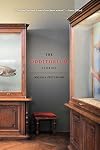
The Odditorium: Stories
by Melissa Pritchard
On This Page
Description
Spine-tingling stories from an author whose previous short fiction collections were New York Times Notable Book and Editor's Choice selections.Tags
Recommendations











Member Recommendations
by hairball
Member Reviews
When I was younger, I didn't like short story collections. I felt teased by only a small portion of a larger story and frustrated when my search for a connecting thread turned up fruitless. Thankfully now, I have case aside my hesitancy and am enjoying short story collections, including my latest read, The Odditorium by Melissa Pritchard.
The Odditorium touches on multiple genres: Westerns, historical fiction, murder mysteries, religious fiction and more. To shape each story, Pritchard plucks out obscure people, places and events from history and the modern world. While I enjoyed all of the stories, here are a few of my favorites:
1. "Watanya Ciclia" is the story about the friendship between Annie Oakley and Sitting Bull. Sitting Bull show more watches Annie at a show, and eventually agrees to join Buffalo Bill Cody's Wild West Show, despite the boos and jeers, to spend time with Annie. The story is a touching tribute to two friends and sympathic view of the plight of Sitting Bull.
2. "Captain Brown and the Royal Victoria Military Hospital" is the longest story in the collection - and one many other readers didn't like. This story resonated with me, however. Captain Brown is an American naval surgeon who must convert a Victorian-era British military hospital into a feat of modern medicine - all before the Allied's planned attack on D-Day. Brown was fallible and honest, and despite his career successes, was guilty about decisions he made in his life. This would have made a wonderful novel.
3. "Patricide" takes place at the hotel that houses a courtyard played in by Edgar Allan Poe. Two sisters meet there to discuss their dying father. The oldest sister, Avis, who was to inherit her father's riches, was considered a disappointment by her father, and he cut Avis out of his will. When Signe, the other sister, sees the pain Avis is in from an arthritic knee, Signe wonders if she could kill her father now so she can rush the money to her ailing sister. Throughout the story, we learn about Signe's life, including a recent scandal from her job as a teacher. Mixed into the story are wonderful lines from Poe's poetry.
All in all, I was immersed in great storytelling and fantastic writing. I highly recommend The Odditorium to readers who enjoyed high-quality short stories and lovers of literary fiction. show less
The Odditorium touches on multiple genres: Westerns, historical fiction, murder mysteries, religious fiction and more. To shape each story, Pritchard plucks out obscure people, places and events from history and the modern world. While I enjoyed all of the stories, here are a few of my favorites:
1. "Watanya Ciclia" is the story about the friendship between Annie Oakley and Sitting Bull. Sitting Bull show more watches Annie at a show, and eventually agrees to join Buffalo Bill Cody's Wild West Show, despite the boos and jeers, to spend time with Annie. The story is a touching tribute to two friends and sympathic view of the plight of Sitting Bull.
2. "Captain Brown and the Royal Victoria Military Hospital" is the longest story in the collection - and one many other readers didn't like. This story resonated with me, however. Captain Brown is an American naval surgeon who must convert a Victorian-era British military hospital into a feat of modern medicine - all before the Allied's planned attack on D-Day. Brown was fallible and honest, and despite his career successes, was guilty about decisions he made in his life. This would have made a wonderful novel.
3. "Patricide" takes place at the hotel that houses a courtyard played in by Edgar Allan Poe. Two sisters meet there to discuss their dying father. The oldest sister, Avis, who was to inherit her father's riches, was considered a disappointment by her father, and he cut Avis out of his will. When Signe, the other sister, sees the pain Avis is in from an arthritic knee, Signe wonders if she could kill her father now so she can rush the money to her ailing sister. Throughout the story, we learn about Signe's life, including a recent scandal from her job as a teacher. Mixed into the story are wonderful lines from Poe's poetry.
All in all, I was immersed in great storytelling and fantastic writing. I highly recommend The Odditorium to readers who enjoyed high-quality short stories and lovers of literary fiction. show less
 This review was written for LibraryThing Early Reviewers.
[this review is of the uncorrected proof]
A fine collection of short fiction (some are historical fiction). One (Captain Brown and the Royal Victoria Hospital) is more a novella than a short story. Looking back over my notes, I ended up marking half of the 8 stories in this collection as exceptional (including Captain Brown); a high percentage relative to most collections I've read. Though the time-frame and the geographical location of these stories vary widely, they all have at least a hint of the supernatural in them. Of particular note is “Patricide”, a story which reads like something by Poe (think "The Tell-Tale Heart", "The Imp of the Perverse" and "The Raven" lurking in the shadows of this story).
Pritchard packs a lot of show more character and atmosphere in a few pages. There is a bittersweet, if not simply disturbing character to these stories, but the best short stories are rarely unceasingly ‘up’. Overall, a fine read, with some real treasures.
Os. show less
A fine collection of short fiction (some are historical fiction). One (Captain Brown and the Royal Victoria Hospital) is more a novella than a short story. Looking back over my notes, I ended up marking half of the 8 stories in this collection as exceptional (including Captain Brown); a high percentage relative to most collections I've read. Though the time-frame and the geographical location of these stories vary widely, they all have at least a hint of the supernatural in them. Of particular note is “Patricide”, a story which reads like something by Poe (think "The Tell-Tale Heart", "The Imp of the Perverse" and "The Raven" lurking in the shadows of this story).
Pritchard packs a lot of show more character and atmosphere in a few pages. There is a bittersweet, if not simply disturbing character to these stories, but the best short stories are rarely unceasingly ‘up’. Overall, a fine read, with some real treasures.
Os. show less
This review was written for LibraryThing Early Reviewers.There’s something for everyone in Melissa Pritchard’s new collection of short stories. From horror to western, across time and continents, her stories are full of lush descriptions and memorable characters. Though I enjoyed some much more than others (loved “Watanya Ciclia” and “The Odditorium”, could have skipped “The Nine-Gated City”), Pritchard’s writing is exceptional and should be experienced by all.
This review was written for LibraryThing Early Reviewers.Collections can be tricky - when you have 8 different stories (in this case), there is a very high chance that at least a few will not work for some readers. But there is an equally good chance that a few will make the readers really like the collection. And this is exactly what happened with this book and this reader.
I don't mind vulgar and explicit language when it is used to enhance the story and not just to shock. A lot of the contemporary stories seem to be more concerned with shocking the reader than telling a story - and this almost always backfires. The very first story ("Pelagia, Holy Fool") seems to be exactly from this type - the story itself could have worked but not in the way it was told - the vulgar language did not show more belong to the story. It looked almost as if the author never tried to find the correct language and just resorted to the easiest one to tell the story.
And then, just when I was wondering if I would like the book at all, came "Watanya Ciclia" - a lyrical (and somewhat tragical) story about Sitting Bull and Annie Oakley which intervenes the world of the show business (as it had been back then) with the cruelty of the dealings of the White Men with the Native Indians. This story made me want to read more from Pritchard - and it is not even the best story in the collection.
The stories are spanning centuries and countries -- "Ecorche: Frayed Man" is a 3-dimensional look at death in Florence at the end of the 18th century, "The Hauser variation" are about a real event in the 19th century Germany (and these two stories are the closest in style with the multidimensional and multi-narrator style of the nartrative), "Captain Brown and the Royal Victoria Military Hospital" is set in England during WWII and "The Nine-Gated City" is set in contemporary India.
The only story that I almost did not finish was the one that gave its name to the collection - it was a disjointed mess that just did not sit right - there were enough interesting elements and it is a short story so it did not bother me too much but it still did not work for me.
The best story in this collection is also the longest one: "Captain Brown and the Royal Victoria Military Hospital". It drags occasionally but it is a little gem. "The Nine-Gated City" has its high moments and is the most real of the stories - partially because of when it is set, partially because India comes up alive in it. Ad then there is "Patricide" - which is making a not even subtle nod to Poe and to the morality (or the appearance of it) that had plagued the last centuries.
Overall a good collection and another author to keep an eye on. I just hope that there will be less stories as the Pelagia one... show less
I don't mind vulgar and explicit language when it is used to enhance the story and not just to shock. A lot of the contemporary stories seem to be more concerned with shocking the reader than telling a story - and this almost always backfires. The very first story ("Pelagia, Holy Fool") seems to be exactly from this type - the story itself could have worked but not in the way it was told - the vulgar language did not show more belong to the story. It looked almost as if the author never tried to find the correct language and just resorted to the easiest one to tell the story.
And then, just when I was wondering if I would like the book at all, came "Watanya Ciclia" - a lyrical (and somewhat tragical) story about Sitting Bull and Annie Oakley which intervenes the world of the show business (as it had been back then) with the cruelty of the dealings of the White Men with the Native Indians. This story made me want to read more from Pritchard - and it is not even the best story in the collection.
The stories are spanning centuries and countries -- "Ecorche: Frayed Man" is a 3-dimensional look at death in Florence at the end of the 18th century, "The Hauser variation" are about a real event in the 19th century Germany (and these two stories are the closest in style with the multidimensional and multi-narrator style of the nartrative), "Captain Brown and the Royal Victoria Military Hospital" is set in England during WWII and "The Nine-Gated City" is set in contemporary India.
The only story that I almost did not finish was the one that gave its name to the collection - it was a disjointed mess that just did not sit right - there were enough interesting elements and it is a short story so it did not bother me too much but it still did not work for me.
The best story in this collection is also the longest one: "Captain Brown and the Royal Victoria Military Hospital". It drags occasionally but it is a little gem. "The Nine-Gated City" has its high moments and is the most real of the stories - partially because of when it is set, partially because India comes up alive in it. Ad then there is "Patricide" - which is making a not even subtle nod to Poe and to the morality (or the appearance of it) that had plagued the last centuries.
Overall a good collection and another author to keep an eye on. I just hope that there will be less stories as the Pelagia one... show less
This review was written for LibraryThing Early Reviewers.This collection of short stories certainly seemed like it would be my thing: full of strangeness, unexpected circumstances, and seemingly no concern for being slotted into one genre or timeframe.
It mostly delivered. I like smart weird, meaning the weird is not done for the sake of weird, it’s naturally the way most things aren’t. If I haven’t lost you in that last sentence, this book is probably for you. The stories are set in a military hospital in WWII, the west of Annie Oakley’s girlhood, in a Virginia hotel that has seen better days, in the New York Public Library, and in modern New Delhi, among other places. They might involve a plan for murder, or actual murder, or wax figurines of the infant Jesus, or the fact-checking. show more In all cases, the language is detailed and sure of itself and there is no hurry (and also no reluctance) to get to the end of the story.
Pritchard’s stories aren’t easy, aren’t obviously trendy, and have a curious staying power. I didn’t fall in love with them, but I did find myself thinking about them long after I’d put the book down. show less
It mostly delivered. I like smart weird, meaning the weird is not done for the sake of weird, it’s naturally the way most things aren’t. If I haven’t lost you in that last sentence, this book is probably for you. The stories are set in a military hospital in WWII, the west of Annie Oakley’s girlhood, in a Virginia hotel that has seen better days, in the New York Public Library, and in modern New Delhi, among other places. They might involve a plan for murder, or actual murder, or wax figurines of the infant Jesus, or the fact-checking. show more In all cases, the language is detailed and sure of itself and there is no hurry (and also no reluctance) to get to the end of the story.
Pritchard’s stories aren’t easy, aren’t obviously trendy, and have a curious staying power. I didn’t fall in love with them, but I did find myself thinking about them long after I’d put the book down. show less
This review was written for LibraryThing Early Reviewers.It has taken me some time to review this book of short stories. Sometimes it takes me a long time to get through a book of short stories because I like to savor them, but that wasn't necessarily the case with this collection. When I received this book, I devoured the first two stories that first day. I still haven't gone back to read the others though. I'm not sure why. Perhaps I'm frightened of what they might contain.
The first story, "Pelagia, Holy Fool" was mind-bending. It's one of those short stories that kind of stops your heart. It makes you wonder, does insanity mask a certain lucidity? Have the so-called "mad" people throughout history been privy to mysteries of the universe most of us can never hope to discover?
The second show more story, "Watanya Ciclia," was amazing too. I'm still haunted by this story of Annie Oakley, Sitting Bull, and the heartbreaking genocide of the American Indians. This story made me cry, and not just in a tears welling up in my eyes sort of way. It made me truly weep in a heaving, sobbing kind of way. It's a brave exploration on the myth of the American West. I don't want to say too much about it other than "read it." This tale can't be summarized, only experienced.
I will definitely read the rest of these stories, but I will wait until the I'm in the right frame of mind. I was incredibly impressed with the two stories I read, but they hit me very hard and tapped into emotions that were almost overwhelming in their intensity. This is historical fiction like I've never experienced it. There are some beautiful images in this book, but the ones I remember the most are not so pretty. I really have to hand it to Melissa Pritchard for writing a book that is simultaneously compelling and uncomfortable to read. Superb writing. show less
The first story, "Pelagia, Holy Fool" was mind-bending. It's one of those short stories that kind of stops your heart. It makes you wonder, does insanity mask a certain lucidity? Have the so-called "mad" people throughout history been privy to mysteries of the universe most of us can never hope to discover?
The second show more story, "Watanya Ciclia," was amazing too. I'm still haunted by this story of Annie Oakley, Sitting Bull, and the heartbreaking genocide of the American Indians. This story made me cry, and not just in a tears welling up in my eyes sort of way. It made me truly weep in a heaving, sobbing kind of way. It's a brave exploration on the myth of the American West. I don't want to say too much about it other than "read it." This tale can't be summarized, only experienced.
I will definitely read the rest of these stories, but I will wait until the I'm in the right frame of mind. I was incredibly impressed with the two stories I read, but they hit me very hard and tapped into emotions that were almost overwhelming in their intensity. This is historical fiction like I've never experienced it. There are some beautiful images in this book, but the ones I remember the most are not so pretty. I really have to hand it to Melissa Pritchard for writing a book that is simultaneously compelling and uncomfortable to read. Superb writing. show less
This review was written for LibraryThing Early Reviewers.http://wineandabook.com/2012/03/06/review-the-odditorium-by-melissa-pritchard/
Melissa Pritchard has some legit authorial street cred. Thus far, her short fiction has won:
*the Flannery O'Connor Award,
*the Carl Sandburg Literary Award,
*the Janet Heidinger Kafka Prize,
*a PEN/Nelson Algren Honorary Mention
*TWO O. Henry Prizes,
*TWO Pushcart Prizes,
*the Ortese Prize in North American Literature from the University of Florence,
*the Barnes & Noble Discover Award,
*fellowships from the National Endowment for the Arts, the Hawthorne Foundation of Scotland, the Bogliasco Foundation of Italy, and the Howard Foundation at Brown University
AND she's been chosen for NPR's Summer Reading List AND her work has been anthologized many times over.
To say show more Pritchard was immensely talented would be a careless understatement.
Now, I usually grab short story collections as my subway reading. I like the feeling of accomplishment I get from being able to finish a short story or two while crushed against complete strangers during my commute.
(sidebar the first: did anyone else die laughing watching Liz Lemon's morning commute on 30 Rock a few weeks ago? For those of you who don't live in New York, that was not at all exaggeration for comedy's sake. That was EXACTLY what Newt Gingrich's "elite" New Yorkers face between the hours of 8-10am and 4:30-7:30pm EVERY SINGLE DAY. Which is probably why we New Yorkers have the reputation of being a bit cranky. The only thing missing from 30 Rock's vignette was the smell. When you're smashed against multiple people in several compromising positions, there's inevitably someone in close proximity who does not believe in deodorant. Or likes to pile on the perfume/cologne. Or who hasn't bathed in several moons. Or probably should see a physician re: what is making their feet smell like moldy cheese. Or all of the above. sidebar the second: perhaps I hold a grudge for an excessively long time, but I'm still in awe of how out of touch Newt Gingrich's comment about "elite" New Yorkers ride the subway. In my job, when I'm out working with schools, I ride the subway all day. I would like to personally invite Newt to commute with me for a day, on my dime, and then ask him how "elite" he feels....might also impact his stance on public school education...two birds, one stone. Now back to our regularly scheduled programming...)
However, this is not the ideal collection for short bursts of reading, because Pritchard is one of those amazingly rare contemporary authors whose prose is so lyrical and so thought-provoking that you're going to want a nice window of quiet time to savor it, like a well poured glass of Malbec on a chilly November evening. (Also, any author who can use the descriptor "labial pink" in a story without it feeling as tawdry as a bodice rippers' various "throbbing members" is truly a master of their craft). Each story in her collection defies the notion of genre, and as uniquely structured as each piece is, as a whole they form a coherent and well curated collection.
A couple highlights:
Captain Brown and the Royal Victoria Medical Hospital: My absolute favorite in the collection, this story focuses on Captain Brown, poetry enthusiast who's somewhat incongruous to what one typically pictures as a military commander, as he takes command of the Royal Victoria Medical Hospital post D-Day. The descriptions of the hospital itself are as haunting as many of the images and characters Pritchard conjures. A highlight of the collection.
Ecorché: Flayed Man: This story felt a bit like the love child of Salman Rushdie's The Enchantress of Florence and anything by the Marquise de Sade. It follows the crucial players who, while performing their collective tasks of "Collector," "Director" and "Anatomist," work to create and maintain 1798's version of the Bodies exhibit. I admire Pritchard's graphic and lyrical yet concise language as she describes the various exhibits and the men who maintain them.
Rubric rating: 8.5. One of the most unique collections I've read in ages. I can't add her to my "personal pantheon of prolific prose-makers" YET, but I have a feeling once I read more of her work, that's where she'll end up. show less
Melissa Pritchard has some legit authorial street cred. Thus far, her short fiction has won:
*the Flannery O'Connor Award,
*the Carl Sandburg Literary Award,
*the Janet Heidinger Kafka Prize,
*a PEN/Nelson Algren Honorary Mention
*TWO O. Henry Prizes,
*TWO Pushcart Prizes,
*the Ortese Prize in North American Literature from the University of Florence,
*the Barnes & Noble Discover Award,
*fellowships from the National Endowment for the Arts, the Hawthorne Foundation of Scotland, the Bogliasco Foundation of Italy, and the Howard Foundation at Brown University
AND she's been chosen for NPR's Summer Reading List AND her work has been anthologized many times over.
To say show more Pritchard was immensely talented would be a careless understatement.
Now, I usually grab short story collections as my subway reading. I like the feeling of accomplishment I get from being able to finish a short story or two while crushed against complete strangers during my commute.
(sidebar the first: did anyone else die laughing watching Liz Lemon's morning commute on 30 Rock a few weeks ago? For those of you who don't live in New York, that was not at all exaggeration for comedy's sake. That was EXACTLY what Newt Gingrich's "elite" New Yorkers face between the hours of 8-10am and 4:30-7:30pm EVERY SINGLE DAY. Which is probably why we New Yorkers have the reputation of being a bit cranky. The only thing missing from 30 Rock's vignette was the smell. When you're smashed against multiple people in several compromising positions, there's inevitably someone in close proximity who does not believe in deodorant. Or likes to pile on the perfume/cologne. Or who hasn't bathed in several moons. Or probably should see a physician re: what is making their feet smell like moldy cheese. Or all of the above. sidebar the second: perhaps I hold a grudge for an excessively long time, but I'm still in awe of how out of touch Newt Gingrich's comment about "elite" New Yorkers ride the subway. In my job, when I'm out working with schools, I ride the subway all day. I would like to personally invite Newt to commute with me for a day, on my dime, and then ask him how "elite" he feels....might also impact his stance on public school education...two birds, one stone. Now back to our regularly scheduled programming...)
However, this is not the ideal collection for short bursts of reading, because Pritchard is one of those amazingly rare contemporary authors whose prose is so lyrical and so thought-provoking that you're going to want a nice window of quiet time to savor it, like a well poured glass of Malbec on a chilly November evening. (Also, any author who can use the descriptor "labial pink" in a story without it feeling as tawdry as a bodice rippers' various "throbbing members" is truly a master of their craft). Each story in her collection defies the notion of genre, and as uniquely structured as each piece is, as a whole they form a coherent and well curated collection.
A couple highlights:
Captain Brown and the Royal Victoria Medical Hospital: My absolute favorite in the collection, this story focuses on Captain Brown, poetry enthusiast who's somewhat incongruous to what one typically pictures as a military commander, as he takes command of the Royal Victoria Medical Hospital post D-Day. The descriptions of the hospital itself are as haunting as many of the images and characters Pritchard conjures. A highlight of the collection.
Ecorché: Flayed Man: This story felt a bit like the love child of Salman Rushdie's The Enchantress of Florence and anything by the Marquise de Sade. It follows the crucial players who, while performing their collective tasks of "Collector," "Director" and "Anatomist," work to create and maintain 1798's version of the Bodies exhibit. I admire Pritchard's graphic and lyrical yet concise language as she describes the various exhibits and the men who maintain them.
Rubric rating: 8.5. One of the most unique collections I've read in ages. I can't add her to my "personal pantheon of prolific prose-makers" YET, but I have a feeling once I read more of her work, that's where she'll end up. show less
This review was written for LibraryThing Early Reviewers.Members
- Recently Added By
Published Reviews
ThingScore 100
“The stories in this strange and original collection bend genres—horror, mystery, Western—into wondrous new shapes.”
One of "Ten Titles to Pick up Now"
One of "Ten Titles to Pick up Now"
added by blpbooks
“The Odditorium is a dazzling wonderment, its cast drawn from the far-flung corners of history and imagination, its language crystalline and high-voltage, its stories fearless and even visionary. Here is an irresistible curiosity cabinet of the famous, the infamous, the mysterious, the half-forgotten—conjured with prodigious empathy, wit, and energy by one of our finest writers. Melissa show more Pritchard is a treasure and this book is her glorious trove.” show less
added by blpbooks
“Melissa Pritchard has her GPS set to find the how it is—out there and in the heart—and she makes her way forward with her language on high alert. The prose is rhythmically astute, finely pitched, serving both imagination and witness.”
added by blpbooks
Author Information
15+ Works 331 Members
Awards and Honors
Common Knowledge
- Original publication date
- 2012-01-10
- People/Characters
- Pelagia Ivanovna Surin Serebrenikova; Annie Oakley (Phoebe Ann Moses); Sitting Bull (Tatanka Yotanka); Captain Clarence Brown; Kaspar Hauser; Georg Friedrich Daumer (show all 9); Robert Ripley; Norbert Pearlroth; Sidonie Recoura
- Important places
- Royal Victoria Military Hospital (Netley Hospital), Hampshire, England, UK (Netley Hospital); Nuremberg, Bavaria, Germany; Delhi, India
- First words
- Listen, wicked children! When une jeune slut-fille dirties her own halo, simple folks cast stones, and it takes the baroque and obstinate solemnity of God to bring them to their knees before a creature of such dire humility.
- Blurbers
- Dillard, Annie; Moody, Rick; Nelson, Antonya; Straub, Peter; Morrow, Bradford; Birkerts, Sven
Classifications
Statistics
- Members
- 70
- Popularity
- 445,943
- Reviews
- 19
- Rating
- (3.15)
- Languages
- English
- Media
- Paper, Ebook
- ISBNs
- 2
- ASINs
- 1