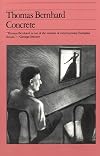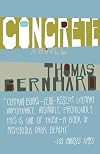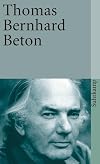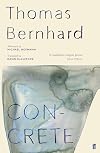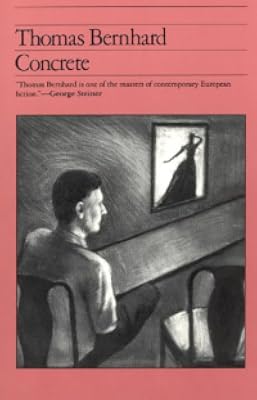
Concrete
by Thomas Bernhard
On This Page
Description
HTML:Instead of the book he’s meant to write, Rudolph, a Viennese musicologist, produces this dark and grotesquely funny account of small woes writ large, of profound horrors detailed and rehearsed to the point of distraction. We learn of Rudolph’s sister, whose help he invites, then reviles as malevolent meddling; his ‘really marvelous’ house, which he hates; the suspicious illness he carefully nurses; his ten-year-long attempt to write the perfect opening sentence; and, finally, show more his escape to the island of Majorca, which turns out to be the site of someone else’s very real horror story.A brilliant and haunting tale of procrastination, failure, and despair, Concrete is a perfect example of why Thomas Bernhard is remembered as “one of the masters of contemporary European fiction” (George Steiner). Literature. Fiction. show less
Tags
Recommendations









Member Reviews
I think it is possible to read only a few hundred words of a book by Thomas Bernhard, and then giddily wonder at how much you have actually read: was it thousands, tens of thousands, dozens. I grasp its meaning, I think, and then I am whooshed away again, on another round of logorrhoea (a continuous stream of words, as in a compulsion of speech). It’s exhilarating like nothing else. While he uses paragraphs, breaks, chapters, full stops, I would not be surprised if such devices exist to disorient or derange you. They are meant to give you pause. But you crash into these punctuating elements like rocky outcrops along a rapidly moving mountain river. There is no rest in a Bernhard novel. You can pause, check your wounds, keep going. I show more can come away from several dozen words and feel completely overwhelmed.
Which makes me wonder, is there a word for a continuous stream of thoughts? Like we find here, or in Jon Fosse, or Jen Craig and that lot. Ideorrhea, perhaps, or skeptorrhea (from the Greek, I’m really inventing here). I bet the Germans have a word for it.
It's hard to get a footing in Bernhard. I keep wanting to devise similes. Here's another: reading him is like attempting to walk down a mountain side made of ice, you don’t really do any walking. So reading this prose is like slipping from one thoughtsentence right into the next one, trying to grip hold of something. None of the prose is difficult, we are not exposed to fancy, or difficult, language. Just everyday language. It’s not magical or mystical.
Half way through, I realised something. Time. As though it doesn't exist because it seems to have no action that can indicate its passage. At one point, around page fifty, the narrator refers to the notes he is writing about his sister and him. The act of writing notes suggests the passage of time. But no other detail is provided. Not an intake of air, the opening of the page of a notebook, the movement of pen across the page to signal time in motion.
So because Concrete begins with no time, all things all at once can be true. Imagine all the thoughts that come to you when you are in a mental reverie, an inescapable internal frisson, a vortex. And in that place you can feel contradictory things all at once. You don’t have hindsight or 20-20 vision of yourself. So, our narrator hates his sister (much of the book's time is spent on this hatred). He is repulsed by her and her narcissistic, money grubbing, manipulative, personality disordered ways. Yet, he is touched by her when she thinks about him, and does something for him, he is disarmed and thoughtful of her in return.
Similarly, Vienna is repulsive, and yet it was the place where he lived the 20 best years of his life. He loathes people, yet had a deep friendship with Paul Wittgenstein, nephew of the philosopher, an artist friend who committed suicide.
Despite what looks like a first-person narrative, the entire work is structured inside a parenthesis, a primary narrator begins the story and ends it. This kind of shocked me because I had forgotten this method at the beginning. It’s strange because, none of the ideas in the book bother me. Just that I was seduced by one narrative having lost track of its source. show less
Which makes me wonder, is there a word for a continuous stream of thoughts? Like we find here, or in Jon Fosse, or Jen Craig and that lot. Ideorrhea, perhaps, or skeptorrhea (from the Greek, I’m really inventing here). I bet the Germans have a word for it.
It's hard to get a footing in Bernhard. I keep wanting to devise similes. Here's another: reading him is like attempting to walk down a mountain side made of ice, you don’t really do any walking. So reading this prose is like slipping from one thoughtsentence right into the next one, trying to grip hold of something. None of the prose is difficult, we are not exposed to fancy, or difficult, language. Just everyday language. It’s not magical or mystical.
Half way through, I realised something. Time. As though it doesn't exist because it seems to have no action that can indicate its passage. At one point, around page fifty, the narrator refers to the notes he is writing about his sister and him. The act of writing notes suggests the passage of time. But no other detail is provided. Not an intake of air, the opening of the page of a notebook, the movement of pen across the page to signal time in motion.
So because Concrete begins with no time, all things all at once can be true. Imagine all the thoughts that come to you when you are in a mental reverie, an inescapable internal frisson, a vortex. And in that place you can feel contradictory things all at once. You don’t have hindsight or 20-20 vision of yourself. So, our narrator hates his sister (much of the book's time is spent on this hatred). He is repulsed by her and her narcissistic, money grubbing, manipulative, personality disordered ways. Yet, he is touched by her when she thinks about him, and does something for him, he is disarmed and thoughtful of her in return.
Similarly, Vienna is repulsive, and yet it was the place where he lived the 20 best years of his life. He loathes people, yet had a deep friendship with Paul Wittgenstein, nephew of the philosopher, an artist friend who committed suicide.
Despite what looks like a first-person narrative, the entire work is structured inside a parenthesis, a primary narrator begins the story and ends it. This kind of shocked me because I had forgotten this method at the beginning. It’s strange because, none of the ideas in the book bother me. Just that I was seduced by one narrative having lost track of its source. show less
A staggering ode to procrastination and much of life's limiting circumstances, Thomas Bernhard's Concerete is laden with provoking musings and festering regrets. Surrounded by the walls of his room, sick Rudolf writes an account of his monotonous days and enduring thoughts: the struggle to start his work on composer Mendelssohn Bartholdy which has been pending for 10 years now, the so-called distractions his sister bring that contribute to the prevention of creative inspiration and motivation's arrival then his seemingly never ending complaints and sentiments about everything that has once been a substantial part of his life as if he won't be fooled with their tomfoolery ever again (past friends, dead parents, nights of parties and show more engagements, and his travels).
** "Friendship—what a leprous word! People use it every day ad nauseam, so that it's become utterly devalued, at least as much as the word Love, which has been trampled to death." (p51)
But other than these lamentations and contradictions—the imminent arrival of death yet the expectation of a hundred tomorrows; the eventual hope to do what one endeavoured to do—Concrete is an intricate and intimate observation of the human condition despite its misanthropy at face value and harsh realisations of a life yet to be lived.
** "We always demand everything, when in the nature of things we should demand little, and that depresses us." (p84)
Concrete culminates to a devastating piece of memory, that of the tragic story of Anna Härdtl and her husband; remembrance cuts as sharp as papers. Rudolf is stricken with all kinds of pain. Bernhard knew the hard life and the suffering existence brings; the utmost and futile desire, its dangers and pitfalls, for perfection.
** "Very often we write down a sentence too early, then another too late; what we have to do is to write it down at the proper time, otherwise it's lost." (p151) show less
** "Friendship—what a leprous word! People use it every day ad nauseam, so that it's become utterly devalued, at least as much as the word Love, which has been trampled to death." (p51)
But other than these lamentations and contradictions—the imminent arrival of death yet the expectation of a hundred tomorrows; the eventual hope to do what one endeavoured to do—Concrete is an intricate and intimate observation of the human condition despite its misanthropy at face value and harsh realisations of a life yet to be lived.
** "We always demand everything, when in the nature of things we should demand little, and that depresses us." (p84)
Concrete culminates to a devastating piece of memory, that of the tragic story of Anna Härdtl and her husband; remembrance cuts as sharp as papers. Rudolf is stricken with all kinds of pain. Bernhard knew the hard life and the suffering existence brings; the utmost and futile desire, its dangers and pitfalls, for perfection.
** "Very often we write down a sentence too early, then another too late; what we have to do is to write it down at the proper time, otherwise it's lost." (p151) show less
A writer spends years attempting to write a study on Mendelssohn Bartholdy. Sickened with chronic ailments and neurotic tendencies he leaves Vienna for a family home in the small rural town Peiskam. There he stews over a mountain of notes unable to grasp the perfect first sentence to start his piece. Instead of the study we are left with 150 odd pages of his inner thoughts and reactions, several reflecting his conflicted feelings towards his older sister, a successful businesswoman who encourages him to no avail.
He finally works up the nerve to plan a vacation in the warmth of Parma and travels there with two suitcases: one filled with clothes and the other with his notes and books on Mendelssohn. Once there he dawdles and becomes show more obsessed with a strange woman whose husband dies in a fall from a hotel balcony.
Reminiscent of Vila-Matas's Montano's Malady this is a strange yet engaging book which leaves a lasting impression.
A favorite passage:
"However old we are. we go on expecting things to change...we're always waiting for a decisive change, because our minds are anything but clear. All the decisive choices took place many years ago, but at the time we didn't recognize them as decisive."
I am left enticed to read more of Bernhard's work starting with The Loser which has sat on my shelf for several years purchased after falling under the guise of Glenn Gould's Goldberg Variations. show less
He finally works up the nerve to plan a vacation in the warmth of Parma and travels there with two suitcases: one filled with clothes and the other with his notes and books on Mendelssohn. Once there he dawdles and becomes show more obsessed with a strange woman whose husband dies in a fall from a hotel balcony.
Reminiscent of Vila-Matas's Montano's Malady this is a strange yet engaging book which leaves a lasting impression.
A favorite passage:
"However old we are. we go on expecting things to change...we're always waiting for a decisive change, because our minds are anything but clear. All the decisive choices took place many years ago, but at the time we didn't recognize them as decisive."
I am left enticed to read more of Bernhard's work starting with The Loser which has sat on my shelf for several years purchased after falling under the guise of Glenn Gould's Goldberg Variations. show less
In the last quarter of the 20th century weren't the wails of intellectual midlife male anguish beginning to die out, dampened by the weight of themselves? Well we are caught for the brief pages of Concrete in a prolonged wail as disgust at nearly everything, self included, isolation and utter self involvement have compacted with a serious degenerative illness to render mentally paralyzed this volume's subject, the matrix of the concrete arbitrarily complicated with a inclusion involving a young woman of infinite misfortune in Palma.
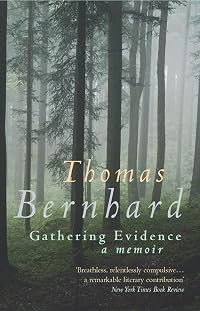
Three books in and it's fairly clear that Bernhard doesn't write books so much as he cuts off sausages from a long sausage tube of anger, disgust, self-disgust, irony, sincerity, satire and self-righteousness. This was more enjoyable than The Loser and Gathering Evidence, in large part because the irony/sincerity levels were a bit more in keeping with, you know, basic human intelligence. There's less of the foolishness that you get in Gathering Evidence, and more humor than The Loser. E.g.,
"People exist for the sole purpose of tracking down the intellect and annihilating it" 8.
Bernhard has a difficult trick, I think. He wants to use exaggeration to shock the reader into seeing our own complicity in injustice, and our stupidity and show more self-righteousness. His narrators are equally complicit, stupid and self-righteous, though they recognize all of this. And Bernhard himself, presumably, must be equally complicit, stupid and self-righteous. Except that he can't be stupid; if he were, he couldn't write such novels. And his self-righteousness is the self-righteousness of the intellect, not of the will. All of this means that his novels are more emotionally and rhetorically affecting when they're most artificial, ironic and ludicrous, as in the above quote, which is obviously not an attempt to say something truthful, but a pointing at something else in the world. Similarly, take the narrator's statement that
"Ninety percent of the time today we are up against subtle exploiters, ten percent of the time against unpardonable idiots," 40.
Again, obviously not true, obviously hyperbolic, points us to something true. But when Bernhard's narrator draw back slightly from the hyperbole, you get revolting things like:
"Poverty can't be eradicated, and anyone who thinks of eradicating it is set on nothing short of the eradication of the human race itself, and hence of nature itself," 41.
Unlike the annihilation of intellect or the fool/knave ratios, there are a great number of people who *actually, seriously* think things like this. By putting them in the mouth of his narrator, otherwise so intelligent, Bernhard allows me, his reader, to separate myself from the narrator. In other words: paradoxically, the less exaggerated the text is, the less rhetorically effective and the less true it is.
Again,
"The world spirit as it were, overestimates the human spirit. We are always bound to fail because we set our sights a few hundred percent higher than is appropriate... but on the other hand, I reflect, where should we be if we constantly set our sights too low?" 84-5.
Ridiculous, exaggerated, fundamentally true. Whereas the nihilism of 106-7 ("All I have left in the end is my present pathetic existence, which no longer has veyr much to offer. But that's how it should be. No doctrine holds water any longer... When we really know the world, we see that it is just a world full of errors"), or 110 or 117 is cringe-worthy.
None of which will stop me reading his little sausages, which show that one can be interesting, enjoyable and challenging in straightforward, beautiful prose books that are less than 800 pages long. show less
"People exist for the sole purpose of tracking down the intellect and annihilating it" 8.
Bernhard has a difficult trick, I think. He wants to use exaggeration to shock the reader into seeing our own complicity in injustice, and our stupidity and show more self-righteousness. His narrators are equally complicit, stupid and self-righteous, though they recognize all of this. And Bernhard himself, presumably, must be equally complicit, stupid and self-righteous. Except that he can't be stupid; if he were, he couldn't write such novels. And his self-righteousness is the self-righteousness of the intellect, not of the will. All of this means that his novels are more emotionally and rhetorically affecting when they're most artificial, ironic and ludicrous, as in the above quote, which is obviously not an attempt to say something truthful, but a pointing at something else in the world. Similarly, take the narrator's statement that
"Ninety percent of the time today we are up against subtle exploiters, ten percent of the time against unpardonable idiots," 40.
Again, obviously not true, obviously hyperbolic, points us to something true. But when Bernhard's narrator draw back slightly from the hyperbole, you get revolting things like:
"Poverty can't be eradicated, and anyone who thinks of eradicating it is set on nothing short of the eradication of the human race itself, and hence of nature itself," 41.
Unlike the annihilation of intellect or the fool/knave ratios, there are a great number of people who *actually, seriously* think things like this. By putting them in the mouth of his narrator, otherwise so intelligent, Bernhard allows me, his reader, to separate myself from the narrator. In other words: paradoxically, the less exaggerated the text is, the less rhetorically effective and the less true it is.
Again,
"The world spirit as it were, overestimates the human spirit. We are always bound to fail because we set our sights a few hundred percent higher than is appropriate... but on the other hand, I reflect, where should we be if we constantly set our sights too low?" 84-5.
Ridiculous, exaggerated, fundamentally true. Whereas the nihilism of 106-7 ("All I have left in the end is my present pathetic existence, which no longer has veyr much to offer. But that's how it should be. No doctrine holds water any longer... When we really know the world, we see that it is just a world full of errors"), or 110 or 117 is cringe-worthy.
None of which will stop me reading his little sausages, which show that one can be interesting, enjoyable and challenging in straightforward, beautiful prose books that are less than 800 pages long. show less
Strangely compulsive. A glass half-empty rant that rarely pauses to draw breath. Not quite stream of consciousness; more what goes through your head and is left unsaid. An ode to pessimism, procrastination, and disgust. Strangely beautiful.
Picked this up as Karl Ove Knausgaard was raving about it (either in an interview or one of his books, I forget) and can definitely see the influence Bernhard had on him. I loved parts - particularly the ranty sections - but it developed into a bit of a slog. Good approximation of the creative process in general though.
Members
- Recently Added By
Lists

1001 Books You Must Read Before You Die
1,448 works; 1,134 members

German Literature
518 works; 56 members

Books Read in 2014
2,343 works; 89 members

Cooper
79 works; 1 member

España en cien libros
100 works; 1 member

Books We Discovered On LibraryThing
530 works; 130 members
Author Information

282+ Works 16,450 Members
Thomas Bernhard was born to Austrian parents in Holland and reared by his mother in the vicinity of Salzburg. His temperament and erratic health created difficulties for him as he grew up in a society governed by National Socialists. Bernhard found the alpine landscapes of his native Austria far more harsh than lyrical. The isolation of the show more characters in his novels is only slightly mitigated by friendship, generally only between men, and never by love. Yet many readers feel this lack of sentimentality gives Bernhard's work an epic power. (Bowker Author Biography) show less
Some Editions
Awards and Honors
Distinctions
Series
Belongs to Publisher Series
Work Relationships
Is contained in
Common Knowledge
- Canonical title
- Concrete
- Original title
- Beton, 1982
- Original publication date
- 1982 (German) (German); 1984 (English translation) (English translation)
- Original language
- German
Classifications
- Genres
- General Fiction, Fiction and Literature
- DDC/MDS
- 833.914 — Literature & rhetoric German & related literatures German fiction 1900- 1900-1990 1945-1990
- LCC
- PT2662 .E7 .B4413 — Language and Literature German, Dutch and Scandinavian literatures German literature Individual authors or works 1961-2000
- BISAC
Statistics
- Members
- 926
- Popularity
- 28,897
- Reviews
- 16
- Rating
- (4.09)
- Languages
- 16 — Catalan, Czech, Danish, English, Finnish, French, German, Greek, Hebrew, Italian, Norwegian (Bokmål), Polish, Portuguese (Portugal), Spanish, Swedish, Turkish
- Media
- Paper, Audiobook, Ebook
- ISBNs
- 41
- ASINs
- 4