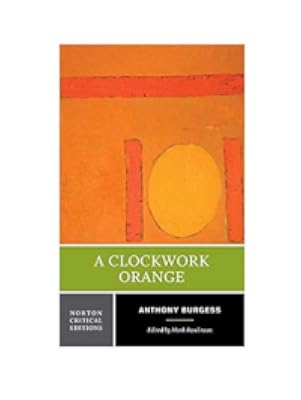
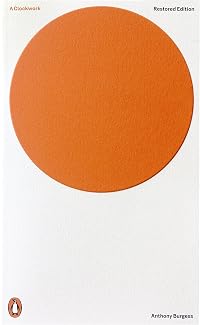
A Clockwork Orange [Norton Critical Edition]
by Anthony Burgess  , Mark Rawlinson (Editor)
On This Page
Description
A disturbing tale about good and evil and the meaning of human freedom, A Clockwork Orange has become a modern classic since its publication in 1962. Anthony Burgess's hero, the hedonistic and violent Alex, is our guide on a journey into a dystopian future where sociopathic youths rule the night and the authorities emulate their moral indifference in the pursuit of social order. This Norton Critical Edition of A Clockwork Orange is based on the first British edition and includes the final show more chapter once omitted from the U.S. edition. It is accompanied by Mark Rawlinson's preface, explanatory annotations, and textual notes. A glossary of the Russian-origin terms that inspired Alex's vocabulary is provided to illustrate the process by which Burgess developed the novel's distinctive style. "Backgrounds and Contexts" presents a wealth of materials chosen to enrich the reader's understanding of the historical roots of what has become an unforgettable work. Many are by Burgess himself, of including accounts of his motives for writing A Clockwork Orange; his exegesis of the novel's theological, political, and philosophical themes; and his provocative interventions in the debates over the British versus the American edition and over the cultural and social impacts of the film adaptation. "Criticism" is divided into two sections, one addressing the novel and the other Stanley Kubrick's film version, which created a scandal and new audiences after 1972. Contemporary reviews of the novel are reprinted alongside a wide range of scholarly commentary, including, among others, David Lodge on the American reader; Andrew Biswell on composition and publication; Julie Carson on linguistic invention; Linovv Zinik on Burgess and the Russian language; Geoffrey Sharpless on education, masculinity, and violence; Shirley Chew on fictional form; Patrick Parrinder on dystopias; and Robbie B.H. Goh on language and social control. An analysis of the him adaptation is provided in reviews by Vincent Canby, Pauline Kael, and Christopher Ricks; in Philip Strick and Penelope Houston's interview with Kubrick; and in interpretive essays by Peter Hughes Jachimiak, Steven M. Cahn, Don Daniels, Alexander Walker, Philip French, Thomas Elsaesser, Tom Dewe Mathews, and Julian Petley. --Book Jacket. show lessTags
Recommendations
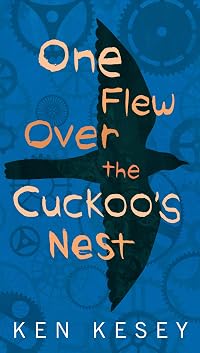
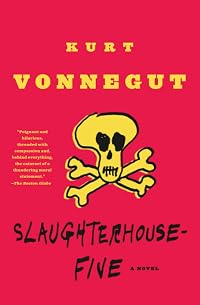
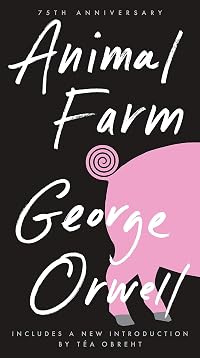
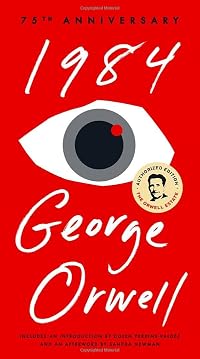





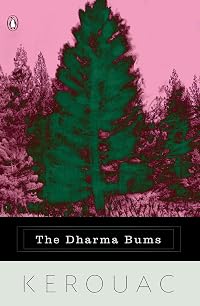
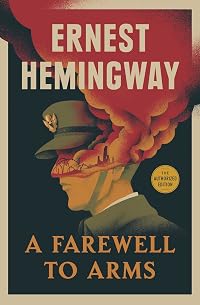
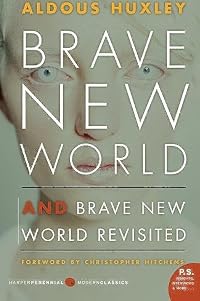
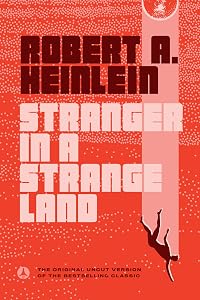
Member Recommendations
Member Reviews
This is one of my absolute favorite books. As wonderful as the film version is, it doesn't compare to the remarkableness of the written work. I love Burgess's ability to make a human, and even a likable one, out of such a truly awful character. I think the horrible gravity of what these young gangs are doing on a regular and casual basis is lessened by the unique made up "Teenage" language and that fact that in the current society where the tale takes place these despicable behaviors are entirely too common, as if it's expected. Despite knowing these things you're able to feel compassion for Alex because of how it's narrated even though you're fully aware that he probably deserved everything he'd gotten.
No one should go on NOT having show more read this book at LEAST once in their lives. show less
No one should go on NOT having show more read this book at LEAST once in their lives. show less
It took me a couple chapters to get into the story because of the different vocabulary that the characters use. Once I was into it though, there was no going back. Burgess shocks the reader by his vivid use of details when describing the violent acts Alex and his "droogs," or friends, engage in, but in a way that makes you want to keep reading. The reader wants to know what their cause is for behaving in this way and what's going to happen to balance out their viscous acts. This book brings several moral questions into context. One being about the idea of freedom...freedom from society's predisposed notions of how a person in certain age groups acts, freedom from government laws and actions that are sometimes unjust or inhumane, freedom show more for an individual himself to determine what's right and wrong (mainly the last one). There's also the idea about how violence or malevolence manifests itself in people necessarily so they are given the opportunity to decide how they shall handle it and what consequences will come of their actions should they choose to indulge this evilness. If you're going to read the book though, you really need to read the edition with 21 chapters instead of the edition with only 20. If I had just stopped reading at the end of the 20th chapter and not reached the conclusion Alex has, I probably would have been disappointed. It makes it into a whole different story that is much more touching. Also, it's how Burgess originally wrote it and wanted it published. All in all though, a real horrorshow dystopian novel! show less
What Fried Chicken and Shepherd’s Pie Teach Us about Free Will and Determinism
What is for dinner tonight? Suppose I gave you two choices: fried chicken or shepherd’s pie. For most people, the corresponding choice defines the philosophical principle of free will. You like shepherd’s pie, so you choose it. You are free to choose fried chicken if you are in the mood, but today, it’s shepherd’s pie.
Philosophers – pesky and annoying as they are known to be – might disagree with your assessment. To them, you choose shepherd’s pie not because you hold the freedom to make a decision between two options; instead, they argue that the rules of causation demand that you choose shepherd’s pie. In other words, your pre-disposed show more likes and desires created by a causal chain throughout your life lead to this very moment where shepherd’s pie is the only choice you could ever make.
Known as free will versus determinism, A Clockwork Orange explores this debate.
An Anti-Hero and His “Droogs”
A Clockwork Orange portrays a dystopian England ruled by violence and anarchy. The main character and anti-hero in the book, Alex, conducts brutal acts with his “droogs” – a term referencing fellow gang members – on the streets of London. With no moral compass, Alex ruins the lives of many for the sake of temporary pleasure.
Leaning heavily on his linguistic virtuosity, Burgess crafts a unique dialect for his ruffians. Amazingly, this Slavic- and Cockney-influenced English can be followed with a slightly focused reading throughout the work. To get a sense of the dialect, here’s a passage where Alex and his “droogs” are torturing a victim:
“’It’s a book,’ I said. ‘It’s a book what you are writing.’ I made the old goloss very course. ‘I have always had the strongest admiration for them as can write books.’ Then I looked at its top sheet, and there was the name – A CLOCKWORK ORANGE – and I said: ‘That’s a fair gloopy title. Who ever heard of a clockwork orange?’ Then I read a malenky bit out loud in a sort of very high type preaching goloss: ‘ – The attempt to impose upon man, a creature of growth and capable of sweetness, to ooze juicily at the last round the bearded lips of God, to attempt to impose, I say, laws and conditions appropriate to a mechanical creation, against this I raise my swordpen –‘ Dim made the old lip-music at that and I had to smeck myself. Then I started to tear up the sheets and scatter the bits over the floor, and this writer moodge went sort of bezoomny and made for me with his zoobies clenched and showing yellow and his nails ready for me like claws” (25-26).
Despite his ferocious nature, Alex contains one endearing quality: he loves classical music. While most teenagers listen to and enjoy technologically advanced music, Alex prefers the stylings of “good ‘ol Ludwig Van.”
To Choose Evil or Be Forced to the Good
As with most morally questionable actions, Alex must eventually face the repercussions of his sins. Faced with endless years locked in the joint, Alex – or 6655231 as he is called in prison – overhears discussion about a new psychological technique announced by the government, one that forces the amoral to always make ethical decisions. In Alex’s mind, freedom carries more importance than choice. The chaplain in the prison, however, disagrees:
“It may not be nice to be good, little 6655321. It may be horrible to be good. And when I say that to you I realize how self-contradictory that sounds. I know I shall have many sleepless nights about this. What does God want? Does God want goodness or the choice of goodness? Is a man who chooses the bad perhaps in some way better than a man who has the good imposed upon him” (106)?
Determinism vs. Free Will
At the core of the novel resides the question of determinism versus free will. Do humans possess the capacity to choose from right and wrong or are they merely a product of their surroundings? Personally, I argue for both. Yet, A Clockwork Orange frighteningly portrays the results of determinism.
To Redeem or Not to Redeem
My version of the book, interestingly, supplies the final chapter not originally published in the first U.S. edition. Where the U.S. edition and the Stanley Kubrick-directed movie conclude on a decidedly negative point, the original edition carries a redemptive storyline in the end.
With the last chapter offering a strikingly different ending than the original U.S. version, the obvious question becomes is it better to end on a redemptive note? From a literary standpoint, I can certainly see the cohesive and exponentially depressing organization of the shortened U.S. version. However, the redemptive thread in the last chapter of the U.K. edition suggests that no matter the nastiness of an individual, he or she eventually grows out of it.
Knowing that the ending is in debate, however, created a better read. A Clockwork Orange is frightening and unpleasant. It explores the centuries-old debate on free will versus determinism. Although I am grateful for reading the book, I find it difficult to recommend.
Originally published at http://wherepenmeetspaper.blogspot.com show less
What is for dinner tonight? Suppose I gave you two choices: fried chicken or shepherd’s pie. For most people, the corresponding choice defines the philosophical principle of free will. You like shepherd’s pie, so you choose it. You are free to choose fried chicken if you are in the mood, but today, it’s shepherd’s pie.
Philosophers – pesky and annoying as they are known to be – might disagree with your assessment. To them, you choose shepherd’s pie not because you hold the freedom to make a decision between two options; instead, they argue that the rules of causation demand that you choose shepherd’s pie. In other words, your pre-disposed show more likes and desires created by a causal chain throughout your life lead to this very moment where shepherd’s pie is the only choice you could ever make.
Known as free will versus determinism, A Clockwork Orange explores this debate.
An Anti-Hero and His “Droogs”
A Clockwork Orange portrays a dystopian England ruled by violence and anarchy. The main character and anti-hero in the book, Alex, conducts brutal acts with his “droogs” – a term referencing fellow gang members – on the streets of London. With no moral compass, Alex ruins the lives of many for the sake of temporary pleasure.
Leaning heavily on his linguistic virtuosity, Burgess crafts a unique dialect for his ruffians. Amazingly, this Slavic- and Cockney-influenced English can be followed with a slightly focused reading throughout the work. To get a sense of the dialect, here’s a passage where Alex and his “droogs” are torturing a victim:
“’It’s a book,’ I said. ‘It’s a book what you are writing.’ I made the old goloss very course. ‘I have always had the strongest admiration for them as can write books.’ Then I looked at its top sheet, and there was the name – A CLOCKWORK ORANGE – and I said: ‘That’s a fair gloopy title. Who ever heard of a clockwork orange?’ Then I read a malenky bit out loud in a sort of very high type preaching goloss: ‘ – The attempt to impose upon man, a creature of growth and capable of sweetness, to ooze juicily at the last round the bearded lips of God, to attempt to impose, I say, laws and conditions appropriate to a mechanical creation, against this I raise my swordpen –‘ Dim made the old lip-music at that and I had to smeck myself. Then I started to tear up the sheets and scatter the bits over the floor, and this writer moodge went sort of bezoomny and made for me with his zoobies clenched and showing yellow and his nails ready for me like claws” (25-26).
Despite his ferocious nature, Alex contains one endearing quality: he loves classical music. While most teenagers listen to and enjoy technologically advanced music, Alex prefers the stylings of “good ‘ol Ludwig Van.”
To Choose Evil or Be Forced to the Good
As with most morally questionable actions, Alex must eventually face the repercussions of his sins. Faced with endless years locked in the joint, Alex – or 6655231 as he is called in prison – overhears discussion about a new psychological technique announced by the government, one that forces the amoral to always make ethical decisions. In Alex’s mind, freedom carries more importance than choice. The chaplain in the prison, however, disagrees:
“It may not be nice to be good, little 6655321. It may be horrible to be good. And when I say that to you I realize how self-contradictory that sounds. I know I shall have many sleepless nights about this. What does God want? Does God want goodness or the choice of goodness? Is a man who chooses the bad perhaps in some way better than a man who has the good imposed upon him” (106)?
Determinism vs. Free Will
At the core of the novel resides the question of determinism versus free will. Do humans possess the capacity to choose from right and wrong or are they merely a product of their surroundings? Personally, I argue for both. Yet, A Clockwork Orange frighteningly portrays the results of determinism.
To Redeem or Not to Redeem
My version of the book, interestingly, supplies the final chapter not originally published in the first U.S. edition. Where the U.S. edition and the Stanley Kubrick-directed movie conclude on a decidedly negative point, the original edition carries a redemptive storyline in the end.
With the last chapter offering a strikingly different ending than the original U.S. version, the obvious question becomes is it better to end on a redemptive note? From a literary standpoint, I can certainly see the cohesive and exponentially depressing organization of the shortened U.S. version. However, the redemptive thread in the last chapter of the U.K. edition suggests that no matter the nastiness of an individual, he or she eventually grows out of it.
Knowing that the ending is in debate, however, created a better read. A Clockwork Orange is frightening and unpleasant. It explores the centuries-old debate on free will versus determinism. Although I am grateful for reading the book, I find it difficult to recommend.
Originally published at http://wherepenmeetspaper.blogspot.com show less
Knock me over with a feather - I liked it. This has never really been on my Must Read list, but I've always felt that it's something that I should get around to doing someday. I was very skeptical of the messed-up teenage world view thing (as I really disliked The Catcher in the Rye), but despite being brutal and sickening, it is fascinating and riveting. Perhaps I'm just old enough to appreciate it now (though I can't make any promises about re-reading Catcher).
So glad to have read the 21-chapter version; it leaves a completely different taste in your mouth than stopping a chapter short (as in Kubrick's film) - there's hope.
So glad to have read the 21-chapter version; it leaves a completely different taste in your mouth than stopping a chapter short (as in Kubrick's film) - there's hope.
Although using it in a classroom may be controversial, there are many great, teachable things about this book. Alex is the leader of a gang in a future where gangs have society in the grips of fear. The novel takes us on a journey with Alex from degenerate, to a controlled beast, and finally to an upstanding citizen. It is a story of intense violence, betrayal, torture, and reformation, possibly an exaggerated reflection of many teens lives in today’s society. Burgess creates a dialect all his own that brings the reader into the ranks of Alex and his “droogs”. It is a great way to show that irreverence to language can be something beautifully crafted and scholarly.
This is one of my top 5 favorite books of all time! I think the first time I read it, I was maybe a freshman in high school. I loved how the invented words added a layer of immersion to the story, and the ways in which one could visualize the scenes. The way in which it is written is just remarkable. Truly a must-read for all, I think. Of course, there is a certain level of violence and sexuality that is not appropriate for all. But the story, the writing, and the social issues the story points to are simply a winning combination. A true masterpiece.
And read the book before you see the film!
And read the book before you see the film!
I love this book. I read it for the first time in 8th grade after I found it in the back of my sister's boyfriend's car. It was so wonderfully odd and creative I just fell in love with the story. It's so easy to sink into this book and once I started it I had trouble putting it down, I would definitely recommend this book as a must read.
Members
- Recently Added By
Lists

David Bowie’s Top 100 Favourite Reads
100 works; 3 members
Author Information

120+ Works 48,185 Members
Anthony Burgess was born in 1917 in Manchester, England. He studied language at Xaverian College and Manchester University. He had originally applied for a degree in music, but was unable to pass the entrance exams. Burgess considered himself a composer first, one who later turned to literature. Burgess' first novel, A Vision of Battlements show more (1964), was based on his experiences serving in the British Army. He is perhaps best known for his novel A Clockwork Orange, which was later made into a movie by Stanley Kubrick. In addition to publishing several works of fiction, Burgess also published literary criticism and a linguistics primer. Some of his other titles include The Pianoplayers, This Man and Music, Enderby, The Kingdom of the Wicked, and Little Wilson and Big God. Burgess was living in Monaco when he died in 1993. (Bowker Author Biography) show less
Anthony Burgess has a Legacy Library. Legacy libraries are the personal libraries of famous readers, entered by LibraryThing members from the Legacy Libraries group.
Mark Rawlinson teaches in the Department of Art History at the University of Nottingham and is author of Charles Sheeler: Modernism, Precisionism and the Borders of Abstraction.
All Editions
Series
Belongs to Publisher Series
Work Relationships
Contains
Common Knowledge
- Canonical title
- A Clockwork Orange [Norton Critical Edition]
- Original publication date
- 2010-12
- People/Characters
- Alex
- Important places
- England, UK
- Disambiguation notice
- The Norton Critical Editions should not be combined with the original work of the same name. Thank you.
Classifications
Statistics
- Members
- 941
- Popularity
- 28,278
- Reviews
- 9
- Rating
- (4.09)
- Languages
- English
- Media
- Paper
- ISBNs
- 1
- ASINs
- 1