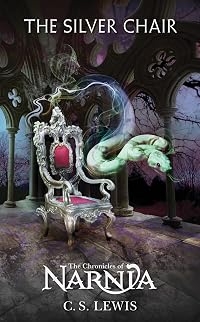
The Silver Chair
by C. S. Lewis, c. s. lewis (Author)
The Chronicles of Narnia: Publication order (4), The Chronicles of Narnia-Chronological (6)
On This Page
Description
A boy and a talking horse share an adventurous and dangerous journey to Narnia to warn of invading barbarians.Tags
Recommendations
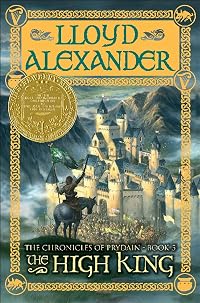

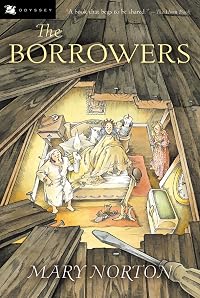
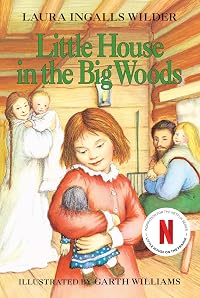
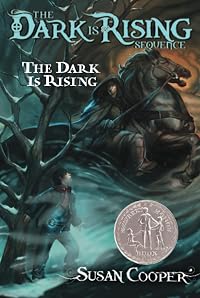

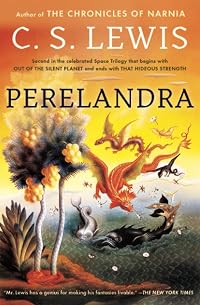
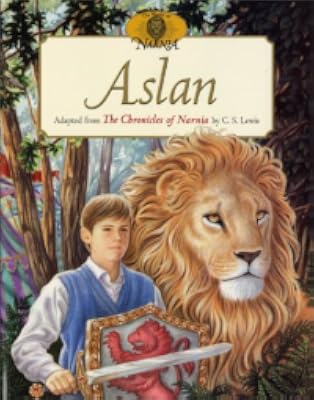
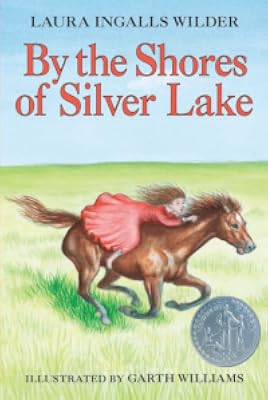
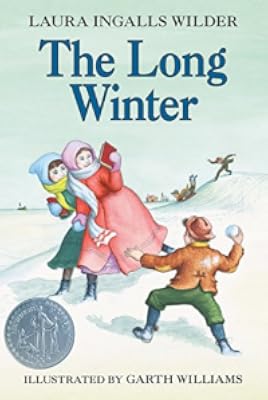
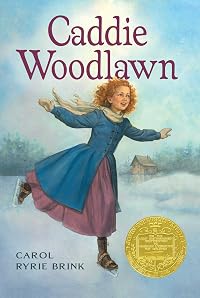
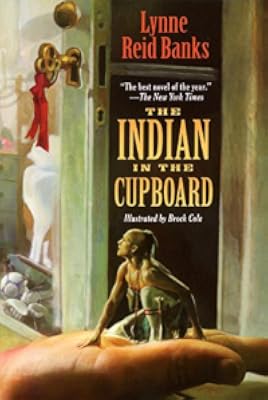

Member Recommendations
Member Reviews
Of the seven Narnia books, my relationship with most is clear. I adore "Nephew", "Lion" and "Horse", am indifferent about "Caspian" and "Voyage", and despise "Battle. But "The Silver Chair" and I have admired and resented each other, equally, since I first read it as a kid.
On the one hand... this is perhaps the most justifiably dark book in the series, as Jill and Eustace (replacing, thankfully, those tiresome Pevensie children) find their own belief in Aslan and themselves fading fast, and their uncertainty as to what to do is quite palpable. Lewis passionately makes us believe that the world of Narnia is falling apart, and references to the past stories actually are quite terrifying, in the same way that most series have to wait for show more their non-canonical installments (e.g. "Return to Oz") to do. It's the most literate of the seven books, also.
Opposing this, of course, is the fact that all of this passion stems from Lewis making each Narnia book more and more of an aggressively Christian allegory. For "belief in Aslan" read "belief in Jesus". For "the world of Narnia is falling apart" read "the world of white, Christian living". This doesn't inherently render the book a failure - after all, Dante was of the same passion, and the Divine Comedy is a masterwork! But it does sadden me a little that my childhood nostalgia is now tainted by the knowledge that Lewis' books are pushing a strong agenda that goes beyond mere children's literature moral fables and into religious propaganda.
Is that unfair? Perhaps. I'm literate enough to be able to enjoy this as a story, and be intrigued by the moral dilemmas of the characters, without hating it just because of the author's beliefs. But at the same time, I don't think kids should be going into this without an adult to guide them through the maze. It's great that Lewis was writing intelligent fiction that would make children ask questions. It's just a pity that he's already decided which answer they should arrive at. show less
On the one hand... this is perhaps the most justifiably dark book in the series, as Jill and Eustace (replacing, thankfully, those tiresome Pevensie children) find their own belief in Aslan and themselves fading fast, and their uncertainty as to what to do is quite palpable. Lewis passionately makes us believe that the world of Narnia is falling apart, and references to the past stories actually are quite terrifying, in the same way that most series have to wait for show more their non-canonical installments (e.g. "Return to Oz") to do. It's the most literate of the seven books, also.
Opposing this, of course, is the fact that all of this passion stems from Lewis making each Narnia book more and more of an aggressively Christian allegory. For "belief in Aslan" read "belief in Jesus". For "the world of Narnia is falling apart" read "the world of white, Christian living". This doesn't inherently render the book a failure - after all, Dante was of the same passion, and the Divine Comedy is a masterwork! But it does sadden me a little that my childhood nostalgia is now tainted by the knowledge that Lewis' books are pushing a strong agenda that goes beyond mere children's literature moral fables and into religious propaganda.
Is that unfair? Perhaps. I'm literate enough to be able to enjoy this as a story, and be intrigued by the moral dilemmas of the characters, without hating it just because of the author's beliefs. But at the same time, I don't think kids should be going into this without an adult to guide them through the maze. It's great that Lewis was writing intelligent fiction that would make children ask questions. It's just a pity that he's already decided which answer they should arrive at. show less
In The Silver Chair we return to Narnia with Eustace Scrubb (the tag-along cousin of the Pevensie's in Voyage of the Dawn Treader). Some time has passed since Dawn Treader and Eustace is at a boarding school. As the book begins, he's just run across a classmate Jill Pole who's crying after being bullied. They are commiserating together about how awful school is and how nice it would be to get away. Eustace starts romanticizing his times in Narnia and before long the two children want to go there. At the same time, the group of bullies is rapidly approaching to continuing their bullying efforts. They find themselves cornered by a door that is always locked. In desperation they try the handle, and it is surprisingly unlocked…and whisks show more them away to Narnia.
Like the previous books, Eustace and Jill are a bit disoriented and unsure of their location upon arriving. In this instance, they aren't in the kingdom of Narnia but rather high high high up in the kingdom of Aslan Himself. This introduction to the world seemed more unique than some of the other entrances to this mystical land. Eustace and Jill find themselves perched on a cliff so high that they aren't entirely sure what they're looking at below them. They encounter Aslan and are given a quest before being blown off (quite literally) to the kingdom of Narnia.
Aslan gives the children a quest to find and return the long lost prince. We learn that the prince is the son of Prince Caspian from the previous two adventures. Eustace is a little dismayed that he didn't get to talk to Caspian and he's also surprised to find that Caspian is now an old man on the verge of death. We learn that the prince went missing after seeking revenge for his mother's death. Many quests were undertaken to find him, but years later there has been no success.
The children seek allies to help in their quest and are guided into the company of a Marsh Wiggle named Puddleglum. I loved the character of Puddleglum. First of all, the Marsh Wiggle creature characteristics are fun in themselves just physically. As a character Puddleglum is a lot of fun because of his personality and the way he interacts with everything. To some degree, he seems to be the eternal pessimist, always imagining the worst possible outcomes to any situation. At the same time, he often finds the most realistic perspective (once you shave away some of the more unlikely scenarios). He also has a bravery and insight that really helps the kids out along the way.
As part of their instructions, Aslan provided certain signs that would help them on their way. They continually "muff up" finding or recognizing the signs until it's too late. Naturally this makes the adventure a lot more interesting, but it certainly frustrates matters for the group.
As the kids encounter various people, creatures and clues along their way most of the time I found the encounters to be fairly predictable (even though the kids and Puddleglum didn't immediately jump to the obvious conclusion). Still, the encounters were pretty fun. There were a lot of different elements and adventures throughout the story. Each new area was unique and interesting.
I found it interesting that we make our way almost to the very end of the book before we come upon the source of the title…The Silver Chair. While it played a key element in the story, I really would like to have had a little more development of the Chair. To learn more about it. To perhaps have found another object, weapon or item that used the same magic as the Chair. I really found it to be very interesting. I also loved the final confrontation with the witch. That whole scene was lightly suspenseful and creepy the way she wrapped them in her spell.
After the successful conclusion of the adventure, I was a little surprised at the sort of postlogue encounter with Aslan and Caspian. As far as the plot of the story, it was completely unnecessary, but it did provide the author with a chance to expand his allegorical allusions. I felt like the God allegories for Aslan were more heavy handed than they'd been in previous books. Granted, there were some pretty overt situations in the earlier books as well, but this time it felt like Lewis was pulling the curtain back even a little farther in case you didn't happen to catch on earlier. He doesn't explicitly say anything overly religious, but the allegory felt even more straightforward to me in this book than it had in the earlier novels.
I really enjoyed this story. As I said, I found a number of the elements to be predictable and I would liked to have seen some elements (especially the Chair) to have been developed a bit more. But overall, this was a lot of fun. I especially loved the characterizations in this book, particularly Puddleglum. They were super fun.
This is a great addition to the Narnia adventures and makes me look forward to the conclusion in The Last Battle.
****
4 out of 5 stars show less
Like the previous books, Eustace and Jill are a bit disoriented and unsure of their location upon arriving. In this instance, they aren't in the kingdom of Narnia but rather high high high up in the kingdom of Aslan Himself. This introduction to the world seemed more unique than some of the other entrances to this mystical land. Eustace and Jill find themselves perched on a cliff so high that they aren't entirely sure what they're looking at below them. They encounter Aslan and are given a quest before being blown off (quite literally) to the kingdom of Narnia.
Aslan gives the children a quest to find and return the long lost prince. We learn that the prince is the son of Prince Caspian from the previous two adventures. Eustace is a little dismayed that he didn't get to talk to Caspian and he's also surprised to find that Caspian is now an old man on the verge of death. We learn that the prince went missing after seeking revenge for his mother's death. Many quests were undertaken to find him, but years later there has been no success.
The children seek allies to help in their quest and are guided into the company of a Marsh Wiggle named Puddleglum. I loved the character of Puddleglum. First of all, the Marsh Wiggle creature characteristics are fun in themselves just physically. As a character Puddleglum is a lot of fun because of his personality and the way he interacts with everything. To some degree, he seems to be the eternal pessimist, always imagining the worst possible outcomes to any situation. At the same time, he often finds the most realistic perspective (once you shave away some of the more unlikely scenarios). He also has a bravery and insight that really helps the kids out along the way.
As part of their instructions, Aslan provided certain signs that would help them on their way. They continually "muff up" finding or recognizing the signs until it's too late. Naturally this makes the adventure a lot more interesting, but it certainly frustrates matters for the group.
As the kids encounter various people, creatures and clues along their way most of the time I found the encounters to be fairly predictable (even though the kids and Puddleglum didn't immediately jump to the obvious conclusion). Still, the encounters were pretty fun. There were a lot of different elements and adventures throughout the story. Each new area was unique and interesting.
I found it interesting that we make our way almost to the very end of the book before we come upon the source of the title…The Silver Chair. While it played a key element in the story, I really would like to have had a little more development of the Chair. To learn more about it. To perhaps have found another object, weapon or item that used the same magic as the Chair. I really found it to be very interesting. I also loved the final confrontation with the witch. That whole scene was lightly suspenseful and creepy the way she wrapped them in her spell.
After the successful conclusion of the adventure, I was a little surprised at the sort of postlogue encounter with Aslan and Caspian. As far as the plot of the story, it was completely unnecessary, but it did provide the author with a chance to expand his allegorical allusions. I felt like the God allegories for Aslan were more heavy handed than they'd been in previous books. Granted, there were some pretty overt situations in the earlier books as well, but this time it felt like Lewis was pulling the curtain back even a little farther in case you didn't happen to catch on earlier. He doesn't explicitly say anything overly religious, but the allegory felt even more straightforward to me in this book than it had in the earlier novels.
I really enjoyed this story. As I said, I found a number of the elements to be predictable and I would liked to have seen some elements (especially the Chair) to have been developed a bit more. But overall, this was a lot of fun. I especially loved the characterizations in this book, particularly Puddleglum. They were super fun.
This is a great addition to the Narnia adventures and makes me look forward to the conclusion in The Last Battle.
****
4 out of 5 stars show less
I utterly adore Silver Chair. It’s my fave Narnia book aside from LWW, and I’ve read it boatloads of times. Prince Rilian is my fave character; I’ve written papers on him and just love him. If I could marry a Narnian it would totally be him (Caspian the Tenth only loses out because I would hate to break up him and Lilliandil).
There is so much richness in this story, it’s unbelievable. Theological gems, allegory like crazy...truly one of the top books of the series. Action, suspense, mistakes, success. Scrubb and Pole are so ridiculously relatable as characters. Scrubb has grown so much from VDT. What’s not to like? (I’m sure Puddleglum could find something.)
There is so much richness in this story, it’s unbelievable. Theological gems, allegory like crazy...truly one of the top books of the series. Action, suspense, mistakes, success. Scrubb and Pole are so ridiculously relatable as characters. Scrubb has grown so much from VDT. What’s not to like? (I’m sure Puddleglum could find something.)
3.5 stars
I’ve enjoyed getting to experience this series for the first time with my siblings. It turns out we all enjoy the Chronicles of Narnia, and I’m sad that this is the second-last book in the series. The end is coming more quickly than I anticipated!
This wasn’t my favorite of the series. I’m not sure what it was that made it less of a favorite—maybe a hint of claustrophobia associated with the setting in this book, or perhaps the fact that it had a darker mood than some of the other stories, or maybe not the same amount of adventure…I don’t know.
As far as characters went, Puddleglum was definitely my favorite. Jill and Eustace, while enjoyable, felt somewhat flat to me, which was a disappointment. But Puddleglum? He show more was downright hilarious at times!
One thing I did enjoy about this story was the way it showed the effects of believing a lie—or allowing yourself to be blinded to the truth. I also appreciated the way Jill had to remember something through the story—and the reminder that it’s important to remember what God tells us, too. Though I didn’t get a lot of the allegorical side of the story, those two things were striking.
Overall, this was a fun adventure. I enjoyed being back in Narnia again, and though this was a bit darker of a tale compared to The Lion, the Witch and the Wardrobe or The Voyage of the Dawn Treader, it was still worth reading. Recommended! show less
I’ve enjoyed getting to experience this series for the first time with my siblings. It turns out we all enjoy the Chronicles of Narnia, and I’m sad that this is the second-last book in the series. The end is coming more quickly than I anticipated!
This wasn’t my favorite of the series. I’m not sure what it was that made it less of a favorite—maybe a hint of claustrophobia associated with the setting in this book, or perhaps the fact that it had a darker mood than some of the other stories, or maybe not the same amount of adventure…I don’t know.
As far as characters went, Puddleglum was definitely my favorite. Jill and Eustace, while enjoyable, felt somewhat flat to me, which was a disappointment. But Puddleglum? He show more was downright hilarious at times!
One thing I did enjoy about this story was the way it showed the effects of believing a lie—or allowing yourself to be blinded to the truth. I also appreciated the way Jill had to remember something through the story—and the reminder that it’s important to remember what God tells us, too. Though I didn’t get a lot of the allegorical side of the story, those two things were striking.
Overall, this was a fun adventure. I enjoyed being back in Narnia again, and though this was a bit darker of a tale compared to The Lion, the Witch and the Wardrobe or The Voyage of the Dawn Treader, it was still worth reading. Recommended! show less
What the hell this book makes me hate C.S. Lewis and all the Narnia fans who insist that Narnia is one of the most fantastic series ever and OMG I have to read it. No no no!
I read this as a kid, when I was eleven or twelve, but I remembered very little of it when I decided to reread the series this last year. I suppose it was awfully boring for me, or something, though as I was reading The Silver Chair the second time through, my memory was jarred and I could predict plot points ahead of them occurring. But the point is that apparently, I didn't care for this book at all thirteen years ago, and if anything, I've grown to like it less.
I don't want to say that I hate this book because of the Christian themes/allegory. That's not why I show more don't like it, though the fact that it is one makes the not-liking thing worse. What I don't like about it is that Aslan is an utter jerkface bastard to the kids and yet Jill and Eustace and all the Narnia fans behave as though he's this wonderful, kind, caring lion-god-thing.
Poor Jill gets the short end of the stick all the frigging time. She's expected to be able to predict what Aslan wants of her, or something like that, even though she never knew who he was before, and she never had any reason to believe that there's an actual place like Narnia with an actual lion-god-thing-Aslan there. She gets into trouble right at the very beginning for listening to her instincts and not jumping right into potential danger. And then, later in the story, when she's acting like the fallible human that she is, she gets guilt-tripped! I wouldn't be surprised for Aslan to have shown up and been all "Jill you're a whore get the eff out of my sight" because she was sleepy and exhausted and forgot to repeat the Signs one night. Of course, those stupid Signs weren't even possible for the kids to be able to follow, yet Aslan expects them to do the impossible? They did the best they could with what they had, and they get reamed for it!
No, I hate this book because it treats Aslan like this benevolent figure while he's actually a jerkface bastard. I hate it even more because as a Christian allegory, it suggests that the reader can never do anything good enough for Jesus/God and he hates us (or else he's condescending to forgive us for not being perfect, wtf?!).
On the positive side, the Narnia described in the book is pretty neat, with cool imagery and a fun adventure story. But that can't save the awful plot and characterizations, sorry. show less
I read this as a kid, when I was eleven or twelve, but I remembered very little of it when I decided to reread the series this last year. I suppose it was awfully boring for me, or something, though as I was reading The Silver Chair the second time through, my memory was jarred and I could predict plot points ahead of them occurring. But the point is that apparently, I didn't care for this book at all thirteen years ago, and if anything, I've grown to like it less.
I don't want to say that I hate this book because of the Christian themes/allegory. That's not why I show more don't like it, though the fact that it is one makes the not-liking thing worse. What I don't like about it is that Aslan is an utter jerkface bastard to the kids and yet Jill and Eustace and all the Narnia fans behave as though he's this wonderful, kind, caring lion-god-thing.
Poor Jill gets the short end of the stick all the frigging time. She's expected to be able to predict what Aslan wants of her, or something like that, even though she never knew who he was before, and she never had any reason to believe that there's an actual place like Narnia with an actual lion-god-thing-Aslan there. She gets into trouble right at the very beginning for listening to her instincts and not jumping right into potential danger. And then, later in the story, when she's acting like the fallible human that she is, she gets guilt-tripped! I wouldn't be surprised for Aslan to have shown up and been all "Jill you're a whore get the eff out of my sight" because she was sleepy and exhausted and forgot to repeat the Signs one night. Of course, those stupid Signs weren't even possible for the kids to be able to follow, yet Aslan expects them to do the impossible? They did the best they could with what they had, and they get reamed for it!
No, I hate this book because it treats Aslan like this benevolent figure while he's actually a jerkface bastard. I hate it even more because as a Christian allegory, it suggests that the reader can never do anything good enough for Jesus/God and he hates us (or else he's condescending to forgive us for not being perfect, wtf?!).
On the positive side, the Narnia described in the book is pretty neat, with cool imagery and a fun adventure story. But that can't save the awful plot and characterizations, sorry. show less
Eustace Scrubb, cousin to the Pevensies, and classmate Jill Pole are transported to Narnia. Aslan directs them to rescue Prince Rilian, son of King Caspian, who has gone missing. Guided by clues from Aslan, Eustace and Jill embark on their journey, accompanied by a pessimistic Marshwiggle called Puddleglum. Their quest takes them through various lands, and they encounter many dangers and challenges. They face obstacles such as giants, underground civilizations, and malevolent enchantments.
This story has strong ties to The Voyage of the Dawn Treader, the first of the Narnia stories featuring Cousin Eustace. It is less strongly tied to the other books in the Chronicles of Narnia series and can be read as a standalone. I found the show more religious symbolism more prominent in this book. Through their adventures, the two protagonists learn valuable lessons about courage, friendship, and faithfulness. It is a charming children’s story, but adults can enjoy it too. show less
This story has strong ties to The Voyage of the Dawn Treader, the first of the Narnia stories featuring Cousin Eustace. It is less strongly tied to the other books in the Chronicles of Narnia series and can be read as a standalone. I found the show more religious symbolism more prominent in this book. Through their adventures, the two protagonists learn valuable lessons about courage, friendship, and faithfulness. It is a charming children’s story, but adults can enjoy it too. show less
I don’t know why I enjoyed this one more than the previous Narnia books, when really it has some of the more unpleasant characters. I mean, the two main kids who are sent on a quest to save a missing prince argue and bicker pretty much the whole time, and their mentor/guide Puddleglum, while taking good care of them and giving sound advice, has a negative way of talking about everything (like Eeyore). Maybe it was just refreshing, after how good and positive the Pevensie kids always seemed (for the most part), or maybe it just felt more interesting because I didn’t remember this one as well as the others, so a new discovery. Especially the parts underground. I had forgotten most of that, although many scenes seemed to jump alive show more with familiarity once I reached them.
It starts in England like the other stories, with Jill (a new character) and Eustace at a miserable boarding school. They’re not really friends, but found themselves both getting chased by bullies out behind the school. They run up a hill through a doorway in a wall, which suddenly opens into Narnia. Not really quite Narnia, they seem to be in Aslan’s country at first, but have a tussle on top of a cliff (because Jill is showing off when she realizes that Eustace is scared of heights) whereupon Eustace falls off, but is saved by Aslan who blows him to Narnia. Jill is then given instructions for their quest- to find and rescue the missing Prince Rillian (son of Caspian, who is now an old man). She’s given four signs to follow, that will help them on their way- and Jill is supposed to recite these regularly, so she doesn’t forget them. But she fails to do that. Their first failure actually occurs because when Jill meets up with Eustace and tells him about Aslan’s instructions, he doesn’t really listen to her, so they miss their chance to follow the first sign. Later they mess up following the guidelines because of squabbling, or not paying attention, or being tempted by something else in their path. When the very last one arises, they are finally working together and astute enough to immediately recognize it, but then are in a bind because then they had promised not to do something the sign said to.
It’s these kind of tricky things that come up making the story so interesting. Jill and Eustace travel across the land, through many hardships, with their solemn guide from the marshes. He was so different from other Narnian creatures I think I found his character so fascinating as a child. They get taken in by giants who act welcoming but really mean them harm (recognizing this before the characters do causes some very tense moments for the reader), escape just in time only to wind up in underground tunnels and caves full of mystery. All controlled by a Witch who has her followers (plus the prince) under an enchantment. She tries to distort their sense of reality, but they manage to see through it just in time and overcome her at the end. Rilian is restored to his rightful place (though not without some grief) and the children are returned home, having through numerous trials completed their mission and hopefully learned some lessons along the way. At the very least, they seem to be actual friends now. For me the ending, with everything set to rights and helpful people welcoming and supporting them again, was much less captivating to read than all the previous chapters with their struggle and inabilities to see clearly. I read the last chapter rather quickly, just to have it over with and move on to the next book. show less
It starts in England like the other stories, with Jill (a new character) and Eustace at a miserable boarding school. They’re not really friends, but found themselves both getting chased by bullies out behind the school. They run up a hill through a doorway in a wall, which suddenly opens into Narnia. Not really quite Narnia, they seem to be in Aslan’s country at first, but have a tussle on top of a cliff (because Jill is showing off when she realizes that Eustace is scared of heights) whereupon Eustace falls off, but is saved by Aslan who blows him to Narnia. Jill is then given instructions for their quest- to find and rescue the missing Prince Rillian (son of Caspian, who is now an old man). She’s given four signs to follow, that will help them on their way- and Jill is supposed to recite these regularly, so she doesn’t forget them. But she fails to do that. Their first failure actually occurs because when Jill meets up with Eustace and tells him about Aslan’s instructions, he doesn’t really listen to her, so they miss their chance to follow the first sign. Later they mess up following the guidelines because of squabbling, or not paying attention, or being tempted by something else in their path. When the very last one arises, they are finally working together and astute enough to immediately recognize it, but then are in a bind because then they had promised not to do something the sign said to.
It’s these kind of tricky things that come up making the story so interesting. Jill and Eustace travel across the land, through many hardships, with their solemn guide from the marshes. He was so different from other Narnian creatures I think I found his character so fascinating as a child. They get taken in by giants who act welcoming but really mean them harm (recognizing this before the characters do causes some very tense moments for the reader), escape just in time only to wind up in underground tunnels and caves full of mystery. All controlled by a Witch who has her followers (plus the prince) under an enchantment. She tries to distort their sense of reality, but they manage to see through it just in time and overcome her at the end. Rilian is restored to his rightful place (though not without some grief) and the children are returned home, having through numerous trials completed their mission and hopefully learned some lessons along the way. At the very least, they seem to be actual friends now. For me the ending, with everything set to rights and helpful people welcoming and supporting them again, was much less captivating to read than all the previous chapters with their struggle and inabilities to see clearly. I read the last chapter rather quickly, just to have it over with and move on to the next book. show less
Members
- Recently Added By
Lists

Favorite Childhood Books
1,651 works; 515 members

Best Fantasy Novels
821 works; 361 members

Books I've Read More Than Once
602 works; 49 members
Favourite High Fantasy Books
113 works; 23 members
NPRs Ultimate Backseat Bookshelf: 100 Must-Reads for kids 9-14
222 works; 30 members
Mensa for Kids Excellence in Reading Award Program (Grades 4-6)
64 works; 9 members

Best Young Adult
399 works; 101 members

1950s
340 works; 22 members
Comfort Reads
221 works; 39 members

Favorite Animal Fiction
359 works; 156 members

Top Five Books of 2013
1,562 works; 721 members

20th Century Literature
1,161 works; 54 members

Christianity Books You've Read
179 works; 19 members

Survey of Fantasy Classics
111 works; 23 members
Mind Expanding Books by hackerkid
581 works; 8 members
Speculative Fiction to Read
706 works; 32 members
Travel from real to fantasy world -- children's/young adult fiction
125 works; 11 members

Books tagged favorites
390 works; 30 members

Books Read in 2023
5,638 works; 147 members

Books with Colourful Titles
171 works; 8 members

Novels Set Underground
28 works; 7 members

Literature for Children and Teens
41 works; 2 members

Books We Loved As Children
603 works; 252 members
Recommended Reading : 600 Classics Reviewed, Editors of Salem Press, 2015
634 works; 6 members
'Books You Can't Live Without: The Top 100', The Guardian, 2007
156 works; 7 members

Read in 1999
62 works; 1 member

Books Read in 2010
631 works; 11 members

Emmanuel Memorial Episcopal Library (Champaign, IL) Catalogue
2 works; 1 member
Science Fiction and Fantasy
63 works; 4 members

Unread books
1,063 works; 86 members
Best books I read in 2013
152 works; 3 members

Books Read in 2021
5,361 works; 113 members
Ambleside Books
459 works; 18 members

A Rainbow of Books: Colors in the Title
570 works; 24 members

Authors from Ireland
17 works; 1 member

Nifty Fifties
129 works; 14 members
LOPC Children's Library Wishlist
62 works; 2 members

Blue Pyramid 1,276 Best Books of All Time
1,248 works; 32 members

Allie's Favourite 150 Books
145 works; 3 members

CCE 1000 Good Books List
1,033 works; 12 members

Books Read in 2014
2,343 works; 86 members
Honey For a Child's Heart
1,152 works; 25 members

Read Aloud Revival
108 works; 4 members
Female Protagonist
1,056 works; 57 members
Author Information

538+ Works 524,482 Members
C. S. (Clive Staples) Lewis, "Jack" to his intimates, was born on November 29, 1898 in Belfast, Ireland. His mother died when he was 10 years old and his lawyer father allowed Lewis and his brother Warren extensive freedom. The pair were extremely close and they took full advantage of this freedom, learning on their own and frequently enjoying show more games of make-believe. These early activities led to Lewis's lifelong attraction to fantasy and mythology, often reflected in his writing. He enjoyed writing about, and reading, literature of the past, publishing such works as the award-winning The Allegory of Love (1936), about the period of history known as the Middle Ages. Although at one time Lewis considered himself an atheist, he soon became fascinated with religion. He is probably best known for his books for young adults, such as his Chronicles of Narnia series. This fantasy series, as well as such works as The Screwtape Letters (a collection of letters written by the devil), is typical of the author's interest in mixing religion and mythology, evident in both his fictional works and nonfiction articles. Lewis served with the Somerset Light Infantry in World War I; for nearly 30 years he served as Fellow and tutor of Magdalen College at Oxford University. Later, he became Professor of Medieval and Renaissance English at Cambridge University. C.S. Lewis married late in life, in 1957, and his wife, writer Joy Davidman, died of cancer in 1960. He remained at Cambridge until his death on November 22, 1963. (Bowker Author Biography) show less
Some Editions
Awards and Honors
Awards
Series


Work Relationships
Is contained in
The Complete Works: Fantasy & Sci-Fi Novels, Religious Studies, Poetry & Autobiography: Enriched edition. The Chronicles of Narnia, The Space Trilogy, The Screwtape Letters by C. S. Lewis (indirect)
Has the adaptation
Has as a commentary on the text
Common Knowledge
- Canonical title
- The Silver Chair
- Original title
- The silver chair
- Alternate titles
- 銀椅; The chronicles of Narnia : the silver chair
- Original publication date
- 1953
- People/Characters
- Eustace Scrubb; Jill Pole; Rilian; Puddleglum; Aslan; Lady of the Green Kirtle (show all 9); Caspian X; Trumpkin; Glimfeather
- Important places
- Harfang; Bism; Experiment House; Aslan's Country; Underland; Narnia (show all 10); Cair Paravel; River Shribble; Sunless Sea; Archenland
- Important events
- Autumn Feast
- Related movies
- The Silver Chair (1990 | IMDb); The Chronicles of Narnia: The Silver Chair (2011 | IMDb)
- Dedication
- To Nicholas Hardie
- First words
- It was a dull autumn day and Jill Pole was crying behind the gym.
- Quotations
- "Suppose we have only dreamed, or made up, all these things—trees and grass and sun and moon and stars and Aslan himself. Suppose we have. Then all I can say is that, in that case, the made up things seem a great deal more ... (show all)important than the real ones. Suppose this black pit of a kingdom of yours is the only world. Well, it strikes me as a pretty poor one. And that’s a funny thing, when you come to think of it. We’re just babies making up a game, if you’re right. But four babies making up a game can make a play-world which licks your real world hollow. That’s why I’m going to stick with the play world."
- Last words
- (Click to show. Warning: May contain spoilers.)If ever you have the luck to go to Narnia yourself, do not forget to have a look at those caves.
- Original language
- English
- Canonical DDC/MDS
- 823.087661
- Disambiguation notice
- Unabridged. Please do NOT combine with any abridged editions.
Please do NOT combine "The Silver Chair" with "The Chronicles of Narnia"
Classifications
- Genres
- Fiction and Literature, Christian Fiction, Fantasy, Kids
- DDC/MDS
- 823.087661 — Literature & rhetoric English & Old English literatures English fiction By type Genre fiction Adventure fiction Speculative fiction Fantasy fiction High fantasy
- LCC
- PZ7 .L58474 .S — Language and Literature Fiction and juvenile belles lettres Fiction and juvenile belles lettres Juvenile belles lettres
- BISAC
Statistics
- Members
- 28,581
- Popularity
- 134
- Reviews
- 226
- Rating
- (3.88)
- Languages
- 30 — Arabic, Armenian, Catalan, Chinese, Czech, Danish, Dutch, English, Estonian, Finnish, French, German, Greek, Hungarian, Indonesian, Italian, Japanese, Korean, Latvian, Norwegian (Bokmål), Norwegian, Farsi/Persian, Polish, Romanian, Russian, Serbian, Spanish, Swedish, Turkish, Portuguese (Brazil)
- Media
- Paper, Audiobook, Ebook
- ISBNs
- 253
- UPCs
- 15
- ASINs
- 154
