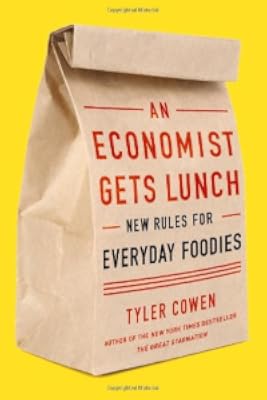
An Economist Gets Lunch: New Rules for Everyday Foodies
by Tyler Cowen
On This Page
Description
One of the most influential economists of the decade-and the New York Times bestselling author of The Great Stagnation-boldly argues that just about everything you've heard about food is wrong.Food snobbery is killing entrepreneurship and innovation, says economist, preeminent social commentator, and maverick dining guide blogger Tyler Cowen. Americans are becoming angry that our agricultural practices have led to global warming-but while food snobs are right that local food tastes better, show more they're wrong that it is better for the environment, and they are wrong that cheap food is bad food. The food world needs to know that you don't have to spend more to eat healthy, green, exciting meals. At last, some good news from an economist!
Tyler Cowen discusses everything from slow food to fast food, from agriculture to gourmet culture, from modernist cuisine to how to pick the best street vendor. He shows why airplane food is bad but airport food is good; why restaurants full of happy, attractive people serve mediocre meals; and why American food has improved as Americans drink more wine. And most important of all, he shows how to get good, cheap eats just about anywhere.
Just as The Great Stagnation was Cowen's response to all the fashionable thinking about the economic crisis, An Economist Gets Lunch is his response to all the fashionable thinking about food. Provocative, incisive, and as enjoyable as a juicy, grass-fed burger, it will influence what you'll choose to eat today and how we're going to feed the world tomorrow.
. show less
Tags
Recommendations
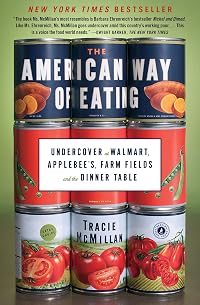
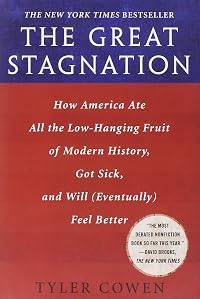
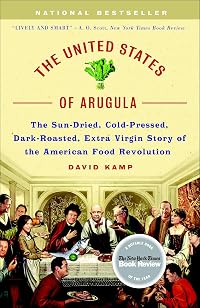


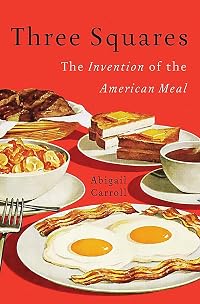






Member Recommendations

Member Reviews
Tyler Cowen’s view of food “An Economist Gets Lunch” is a bit one-note, but still manages to offer interesting morsels for the casual food lover.
To start, let’s get the subtitle “New Rules for Everyday Foodies” out of the way. This book is not for foodies. There is essentially no information on preparing food beyond “shop at your local Asian grocery store because it’s cheaper and still good (not an exact quotation).” Instead, much of the book focuses on how to find good food for low prices which, for Cowen, boils down to two principles: find restaurants with cheap labor and cheap rent. Or, in other words, eat ethnic food. “Exploit[ing] restaurant” is his very un-PC way of saying that family-run, family-owned Asian show more restaurants often pay their workers (who are also often family members) little or nothing, so the food can be of the same quality but for a lower price. If this sounds like an endorsement of indentured servitude, it kind of is. He contrasts this to the supposed “high-quality” restaurants that staff an army of waiters, a maitre d’, multiple sommeliers, and other assorted workers, which drives up the cost of a meal without improving the quality of the food. Cowen also seeks low-rent establishments, eschewing city centers and malls for free-standing restaurants, strip malls, and that holy-grail of low-rent food suppliers, the food truck. Both of these points are his way of arguing that in order to get the best meal for the best price, you need to pay for food, not the experience.
It is unfortunate that so much of “An Economist Gets Lunch” gets bogged down in this relatively simple principle because there are a lot of interesting discussions. In the opening chapter, Cowen expounds on the sad state of American eating today and finds three primary culprits: prohibition, working mothers and their children, and television. Prohibition takes a good chunk of the blame in the demise of the high-end restaurant because—aside from killing French restaurants who could no longer make wine sauces—the forced removal of liquor from restaurant menus eliminated a large profit-center and forced dining establishments to focus on fast, convenient food in order to turn their tables faster and move more customers through. The Roaring Twenties brought with them the diner, the soda fountain, and the penny arcade, all harbingers of the fast food era. The introduction of television into the American home and, more importantly, television advertising led to the proliferation of national brands at the expense of smaller, often better, local producers. And as more women entered the work force mid-century, home meals needed to fast and convenient as well. This then combined with Americans’ penchant for catering to their children’s tastes rather than force the kids to adapt to their own. As Cowen puts it, “American parents produce, buy, cook, and present food that is blander, simpler, and sweeter, and in part because the kiddies are in charge. Children love sweets, French fries, unornamented meats, and snacks. Since it is easier to cook for the whole family, American food followed this simpler, blander path.” These culprits have combined to make a generation of Americans used to bland, subpar food.
Also interesting is Cowen’s take on the green movement and what “conscious consumers” can do to eat well while also protecting the environment. He reserves his strongest vitriol for those locavores who “either mostly or exclusively are also pursuing a feel-good attitude rather than effectiveness.” Essentially, his argument is that “the environmental impact of food comes from its production, not its transportation.” Thus, it makes more sense for people in areas with strained water systems (such as the American southwest) to import their food rather than try to grow it there. It’s also better for the environment for a Kansan to buy Florida oranges and Washington apples than to buy them from a local farmer, who had to use far more energy to grow the fruit than it would take to ship them cross-country.
Ultimately, “An Economist Gets Lunch” provides many interesting tidbits on food production and consumption, but the second half lacks focus while the first half is too focused on Cowen’s relatively simple idea of paying for food, not experience. Don’t expect to have your way of eating or your world view changed by this book, but it is a worthwhile read nonetheless. show less
To start, let’s get the subtitle “New Rules for Everyday Foodies” out of the way. This book is not for foodies. There is essentially no information on preparing food beyond “shop at your local Asian grocery store because it’s cheaper and still good (not an exact quotation).” Instead, much of the book focuses on how to find good food for low prices which, for Cowen, boils down to two principles: find restaurants with cheap labor and cheap rent. Or, in other words, eat ethnic food. “Exploit[ing] restaurant” is his very un-PC way of saying that family-run, family-owned Asian show more restaurants often pay their workers (who are also often family members) little or nothing, so the food can be of the same quality but for a lower price. If this sounds like an endorsement of indentured servitude, it kind of is. He contrasts this to the supposed “high-quality” restaurants that staff an army of waiters, a maitre d’, multiple sommeliers, and other assorted workers, which drives up the cost of a meal without improving the quality of the food. Cowen also seeks low-rent establishments, eschewing city centers and malls for free-standing restaurants, strip malls, and that holy-grail of low-rent food suppliers, the food truck. Both of these points are his way of arguing that in order to get the best meal for the best price, you need to pay for food, not the experience.
It is unfortunate that so much of “An Economist Gets Lunch” gets bogged down in this relatively simple principle because there are a lot of interesting discussions. In the opening chapter, Cowen expounds on the sad state of American eating today and finds three primary culprits: prohibition, working mothers and their children, and television. Prohibition takes a good chunk of the blame in the demise of the high-end restaurant because—aside from killing French restaurants who could no longer make wine sauces—the forced removal of liquor from restaurant menus eliminated a large profit-center and forced dining establishments to focus on fast, convenient food in order to turn their tables faster and move more customers through. The Roaring Twenties brought with them the diner, the soda fountain, and the penny arcade, all harbingers of the fast food era. The introduction of television into the American home and, more importantly, television advertising led to the proliferation of national brands at the expense of smaller, often better, local producers. And as more women entered the work force mid-century, home meals needed to fast and convenient as well. This then combined with Americans’ penchant for catering to their children’s tastes rather than force the kids to adapt to their own. As Cowen puts it, “American parents produce, buy, cook, and present food that is blander, simpler, and sweeter, and in part because the kiddies are in charge. Children love sweets, French fries, unornamented meats, and snacks. Since it is easier to cook for the whole family, American food followed this simpler, blander path.” These culprits have combined to make a generation of Americans used to bland, subpar food.
Also interesting is Cowen’s take on the green movement and what “conscious consumers” can do to eat well while also protecting the environment. He reserves his strongest vitriol for those locavores who “either mostly or exclusively are also pursuing a feel-good attitude rather than effectiveness.” Essentially, his argument is that “the environmental impact of food comes from its production, not its transportation.” Thus, it makes more sense for people in areas with strained water systems (such as the American southwest) to import their food rather than try to grow it there. It’s also better for the environment for a Kansan to buy Florida oranges and Washington apples than to buy them from a local farmer, who had to use far more energy to grow the fruit than it would take to ship them cross-country.
Ultimately, “An Economist Gets Lunch” provides many interesting tidbits on food production and consumption, but the second half lacks focus while the first half is too focused on Cowen’s relatively simple idea of paying for food, not experience. Don’t expect to have your way of eating or your world view changed by this book, but it is a worthwhile read nonetheless. show less
Economists have been writing on any number of topics lately -- having more children, saving the planet, and now, having lunch. In this book, Cowen addresses what he argues are the fallacies of modern "food snobbery," -- the ideas that the best food is expensive, cheap food is bad, and consumers are a poor source of innovation (8). He tests this hypothesis by partaking of local food overseas, shopping in ethnic markets, breaking down the costs of an expensive restaurant, and discussing the child-centric American family table. He examines different facets of American food, from barbeque to sushi, Chinese takeout and Starbucks coffee. He briefly discusses the idea that "rich countries do not need GMOs (genetically modified foods) but poor show more countries do," the trends in eating green, and changes that could be made at both policy and personal levels. Although Cowen has plenty of good ideas, the book tends to bounce from topic to topic without doing more than briefly examining and commenting on each one; by focusing more specifically on the issues mentioned in his first couple of chapters, the book would be a lot stronger. I have to say that I'm not particularly impressed with the overall result. show less
Written with the breathless passion of a blog post, this book would be frustratingly opinionated… if I didn't happen to agree with everything in it.
Sounds interesting--heard about it on the Freakonomics Podcast.
Ratings
Members
- Recently Added By
Author Information

36+ Works 2,651 Members
Tyler Cowen is Professor of Economics at George Mason University, where he directs the Mercatus Center and the James M. Buchanan Center for Political Economy
Classifications
- Genres
- Economics, Nonfiction, General Nonfiction, Food & Cooking
- DDC/MDS
- 394.1 — Society, government, & culture Customs, etiquette & folklore General customs Eating, drinking, using drugs
- LCC
- GT2850 .C69 — Geography, Anthropology and Recreation Manners and customs (General) Manners and customs (General) Customs relative to private life
- BISAC
Statistics
- Members
- 212
- Popularity
- 154,156
- Reviews
- 4
- Rating
- (3.28)
- Languages
- Chinese, English
- Media
- Paper, Audiobook, Ebook
- ISBNs
- 5
- ASINs
- 5